



Long shag haircuts without bangs have a sweet spot a lot of layered cuts miss: they keep movement around the face without asking you to commit to a fringe you have to trim every three weeks. That alone is enough to make them appealing, but the real draw is simpler. They can look soft, edgy, messy, polished, or almost architectural, all from the same basic shape.
The absence of bangs changes the whole mood. Your forehead stays open, your face frame does the work, and the cut grows out in a more forgiving way than a heavy fringe ever does. That matters if your hair gets flat fast, if you wear it up half the week, or if you like the idea of layers but hate the feeling of hair falling into your eyes.
There’s a small trick to making a long shag work. The shortest pieces need a job. They should skim the cheekbone, jaw, or collarbone with a reason, not just sit there because somebody wanted “texture.” A good shag has a line, even when it looks messy. A bad one looks like the ends got bored and gave up.
The range is bigger than most people think. Some versions are feather-light and airy. Others are choppy enough to feel like a nod to classic rock hair, just cleaned up for everyday wear. The details are the whole story.
1. Soft Feathered Long Shag Without Bangs
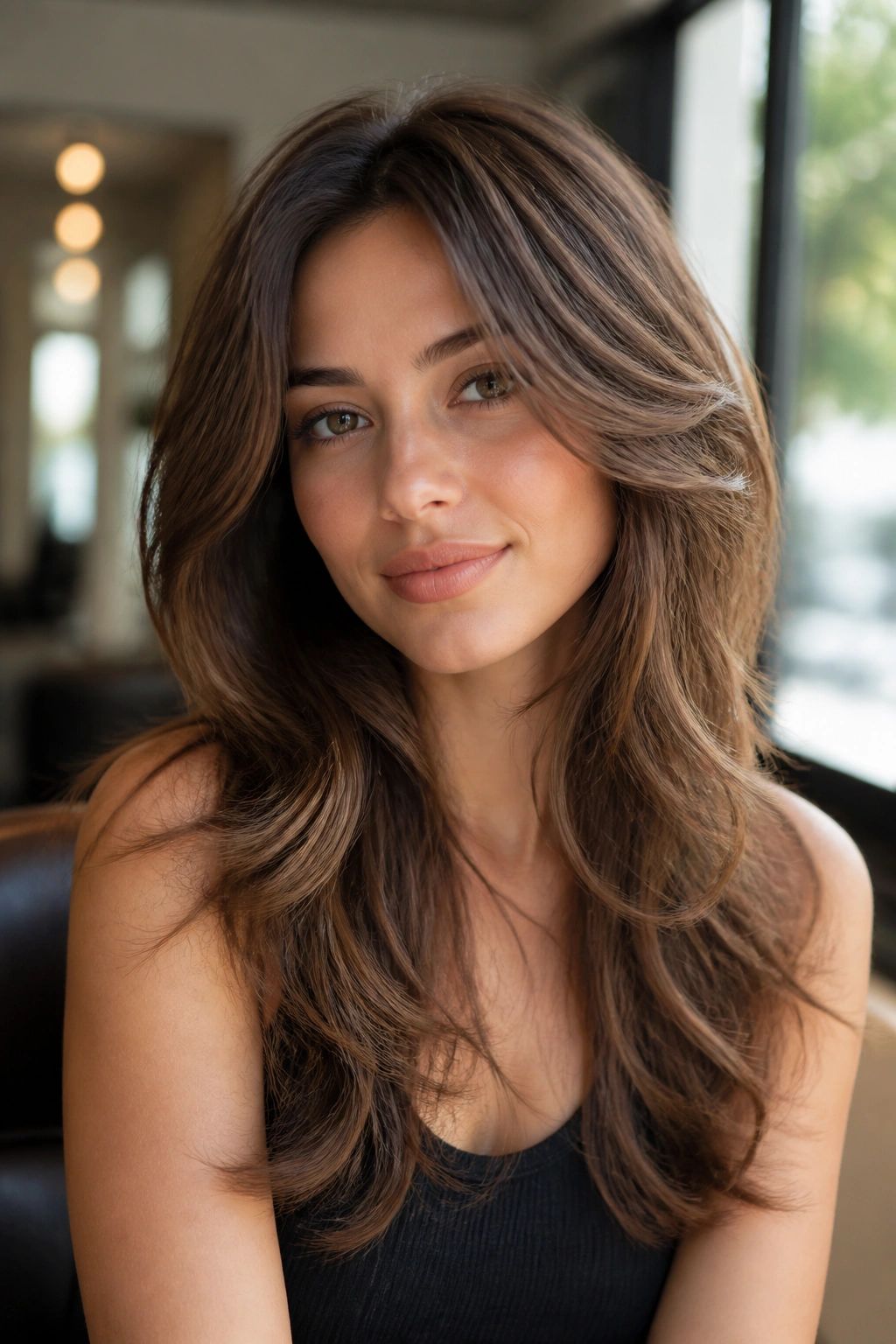
This is the version I reach for when someone wants movement but gets nervous at the salon chair. The shape stays long and feminine, with feathered layers that start low enough to keep the ends full. It’s the least aggressive shag on the list, and that’s exactly why it works so well.
Why It Looks Softer
The cut opens around the cheekbones and jawline instead of hacking into the crown. That keeps the hair from looking spiky or too broken up. A stylist usually uses point cutting or a light razor touch near the front, then leaves the perimeter with enough weight to keep the whole thing grounded.
- Best on straight to softly wavy hair.
- Ask for the shortest face-framing piece to hit around the chin or just below it.
- Keep the back layers longer than the front for a gentle slope.
- Style with a 1.25-inch round brush or large Velcro rollers.
Pro tip: keep the ends a little blunt. That tiny bit of structure stops the haircut from turning wispy and thin at the bottom.
A soft feathered shag is also easy to live with. You can wear it tucked behind one ear, half pinned back, or blown smooth with a bend at the ends. It doesn’t need a dramatic finish to make sense.
2. Face-Framing Long Shag With Barely-There Layers
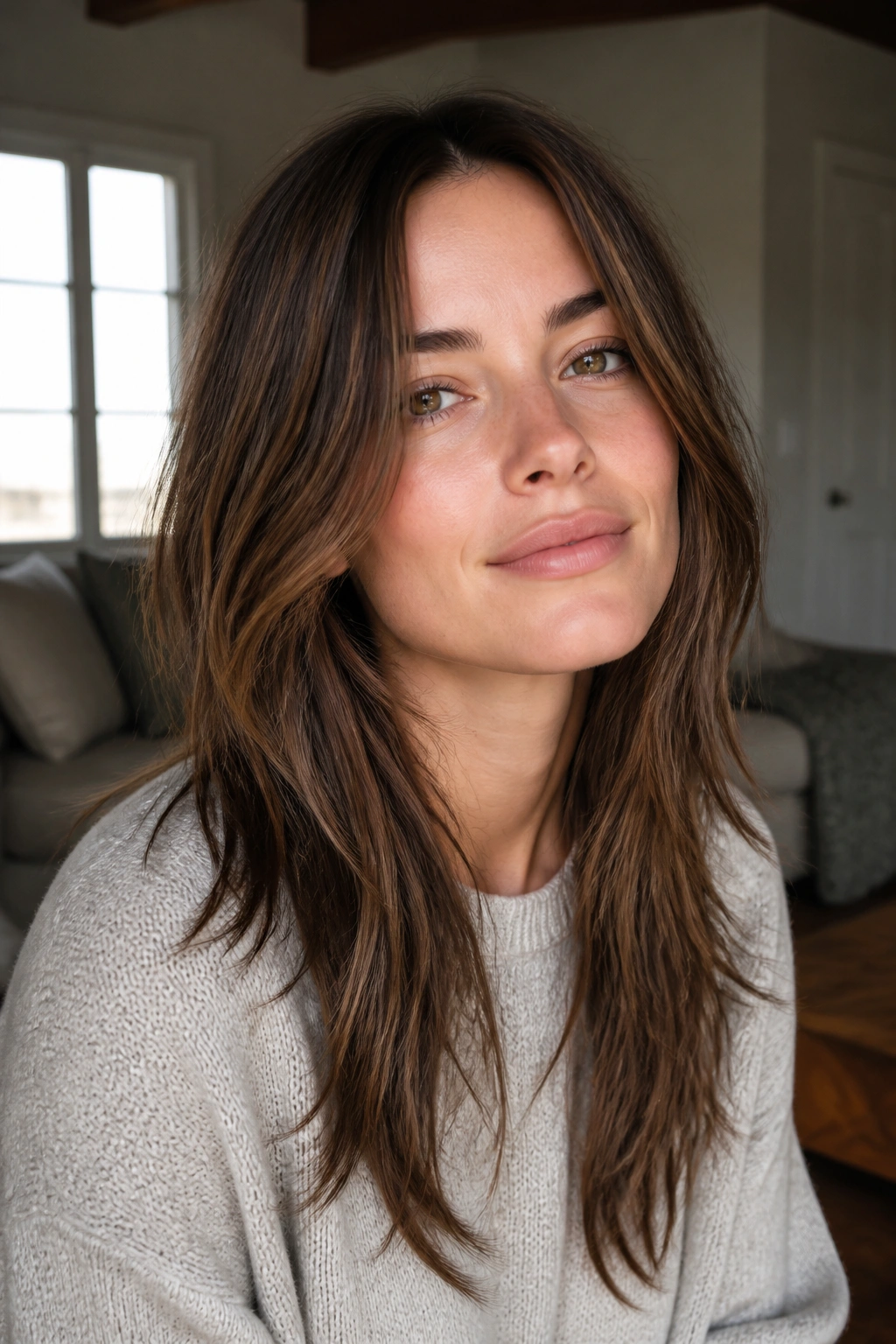
This is the version I’d recommend to anyone who wants a shag shape without looking like they chopped their hair into pieces. The layers are there, but they’re hidden enough that the haircut still reads as long, full, and easy.
The front is the important part. A stylist can keep the longest face-framing pieces around the collarbone while softening the inner lengths just enough to create movement. That gives you shape near the face and a cleaner line through the rest of the hair.
The biggest mistake here is cutting too high around the cheeks. That can make the whole style look like it’s trying too hard. Keep the front long and let the layers whisper instead of shout. That’s the whole point.
If you like hair that slips into a low bun one day and falls in loose waves the next, this is a strong choice. It behaves. Not in a boring way. In a useful way.
3. Razor-Cut Long Shag for Straight Hair
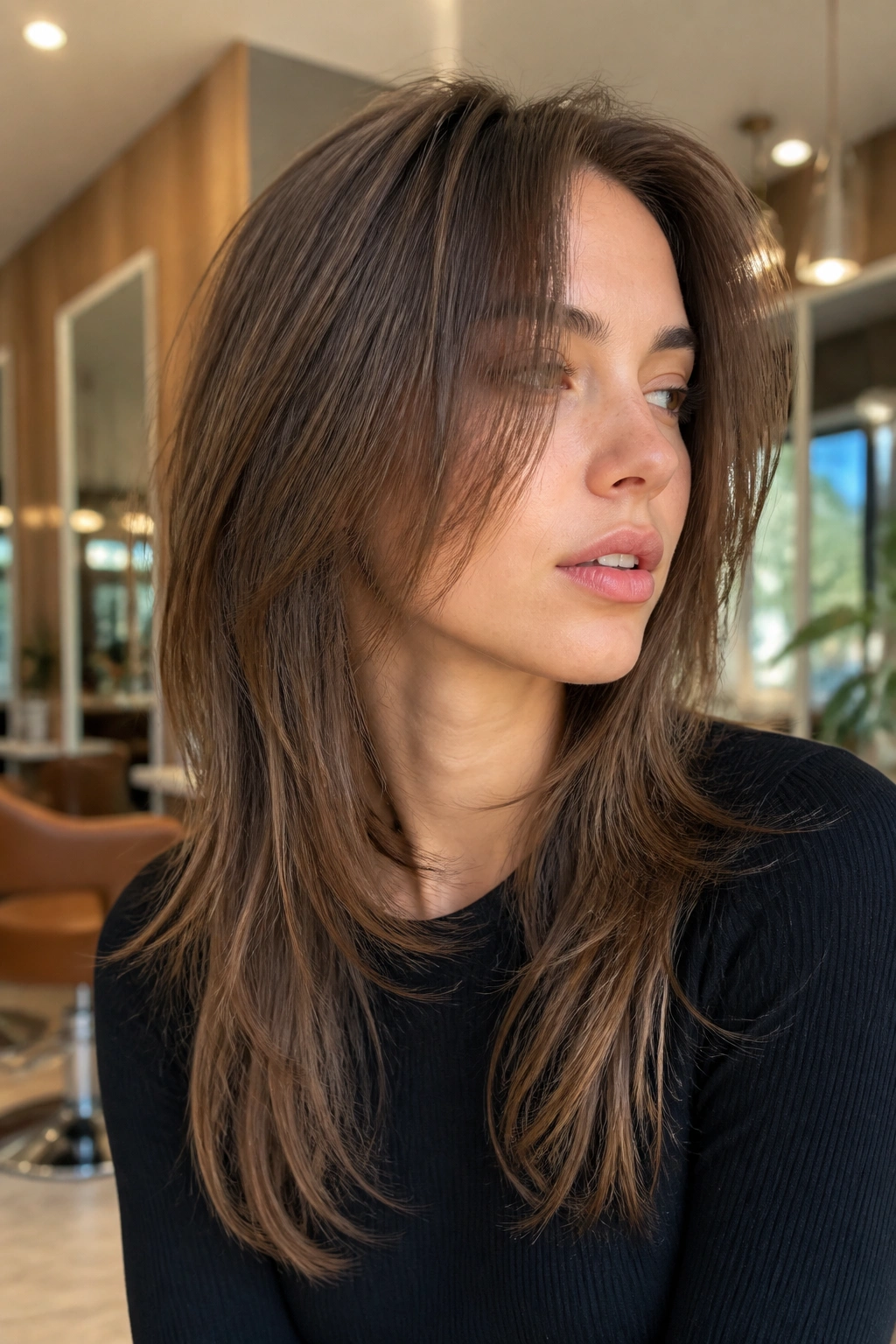
Why does straight hair need a different shag? Because bluntness shows everything. Every layer line, every uneven section, every corner you meant to soften. A razor cut helps the shape melt together instead of sitting in stiff panels.
Straight hair usually needs the layers to be more deliberate. If the shag is cut with scissors alone and the layers are too short, it can look boxy around the mid-lengths. A razor or slide-cut finish softens the edges and gives the hair a little swing when you turn your head.
How to Wear It
Start with a heat protectant and blow-dry using a nozzle so the air goes in the direction you want the hair to fall. Then bend the last 1 to 2 inches with a flat iron or a medium round brush. You do not want tight curls here.
A tiny bit of lightweight cream through the ends keeps the cut from separating into dry little sticks. This style looks best when the movement feels accidental. Too much product kills that fast.
It’s especially good if your hair is naturally sleek and you want a change that doesn’t depend on curling it every morning. A razor-cut shag gives straight hair some attitude.
4. Wavy Long Shag With Cheekbone Layers
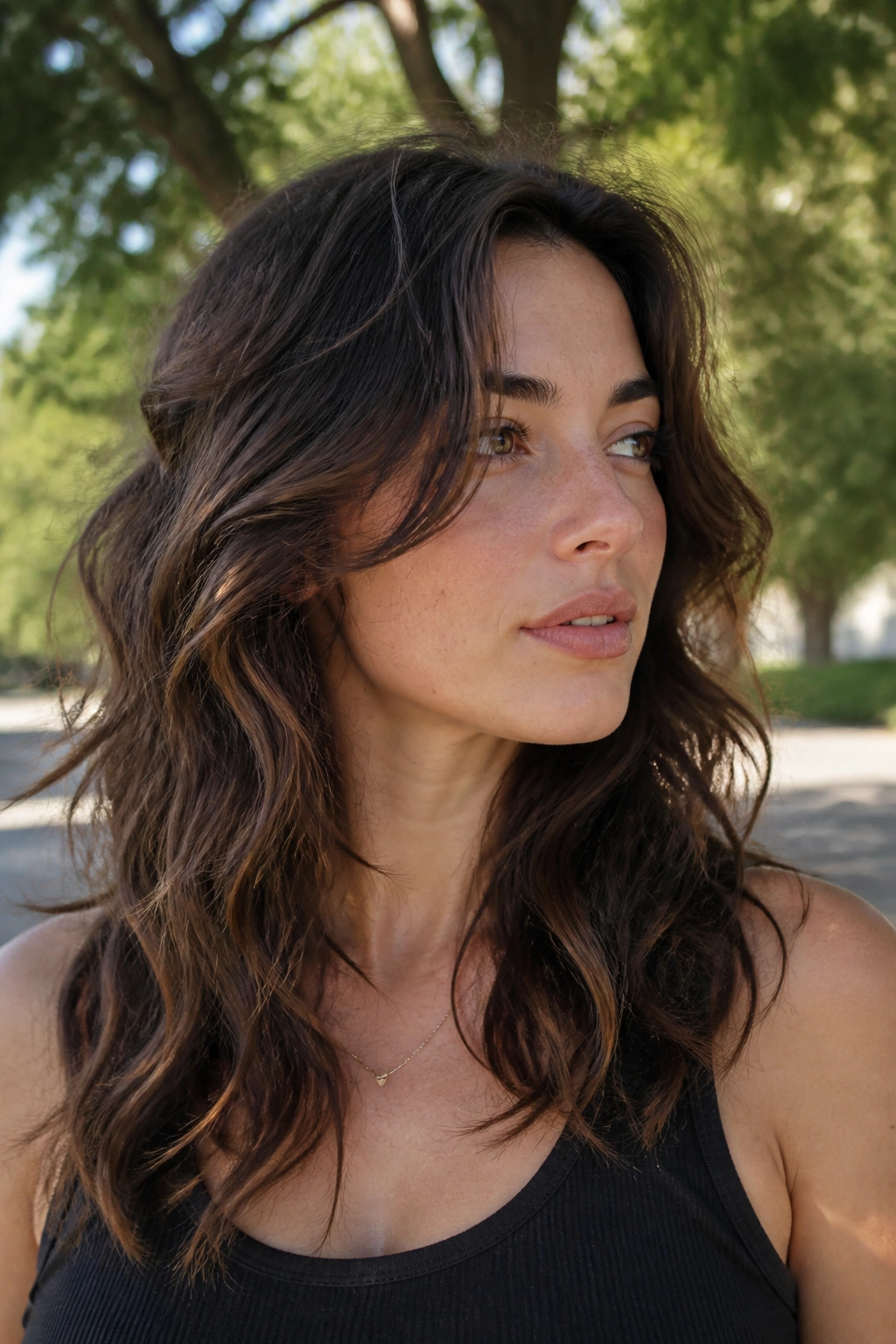
If your hair starts to wave the moment it gets damp, this is where the shag gets fun. The shape works with the wave pattern instead of fighting it, and the cheekbone layers give the front just enough lift to keep the style from collapsing into one long curtain.
The trick is placement. Cheekbone layers catch the bend in the hair and make the waves stack in a way that looks intentional, even if you air-dry. The no-bang setup keeps the face open, so the cut feels lighter than a full fringe version.
What Makes It Work
- Layer the front pieces to sit just under the cheekbone.
- Keep the crown soft, not chopped to bits.
- Use a curl cream or wave lotion on damp hair.
- Scrunch once, then leave it alone.
That last part matters. Seriously. Wavy hair tends to frizz when it gets handled too much.
A good wavy shag has that casual, lived-in look people keep trying to fake with styling sprays. The haircut does most of the work. You just need to let the pattern show up.
5. Curly Long Shag Without Bangs
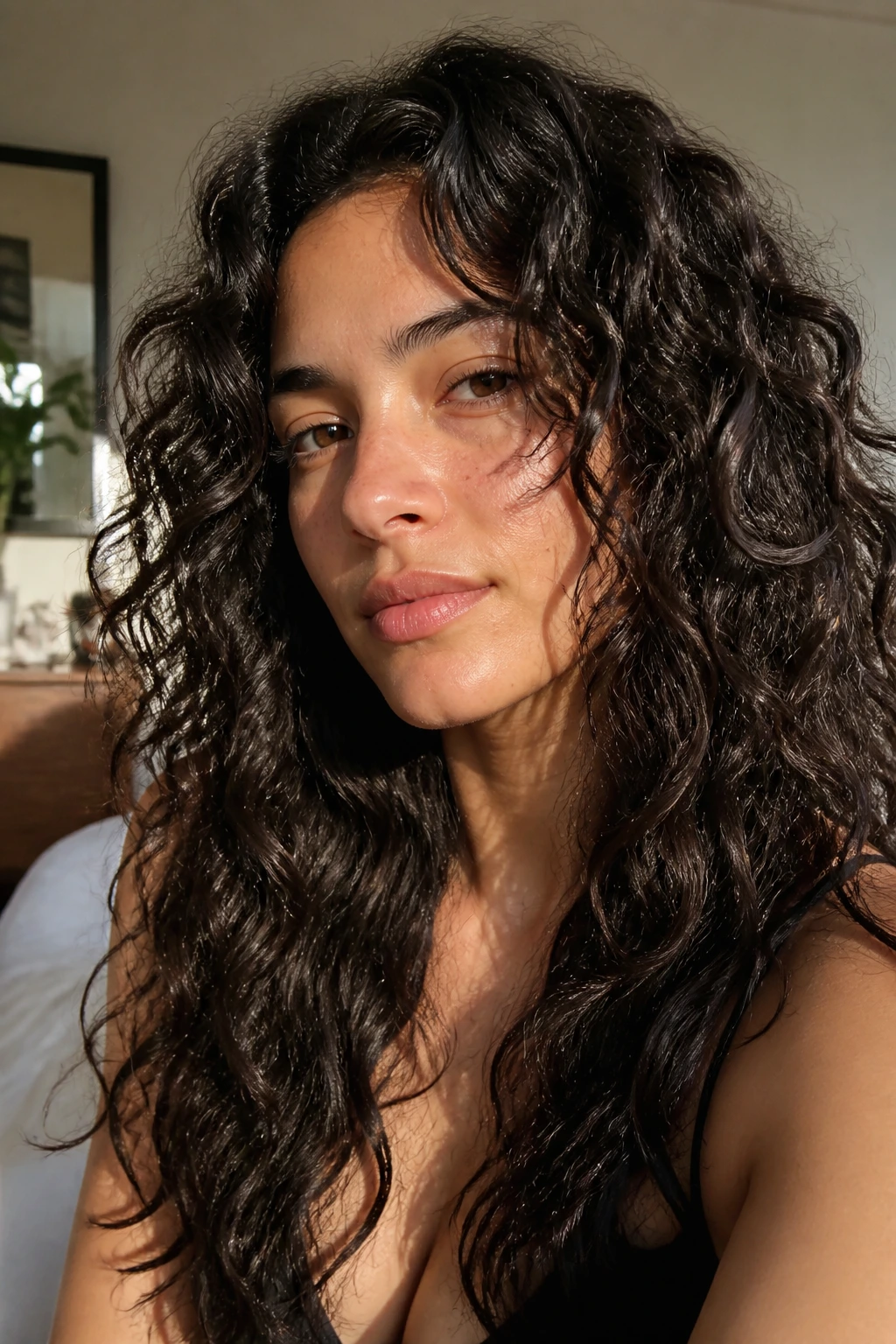
Curly hair and shag cuts have a real relationship, not just a passing one. The layers release bulk, the shape opens up, and the curls get room to spring instead of getting crushed into a triangle. Without bangs, the whole look feels a little cleaner and easier to pull back when you want your face clear.
The best curly shag is usually cut with shrinkage in mind. Wet curls can fool people. A curl that looks like it sits at the chin may bounce up several inches once it dries. That’s why a dry cut or a curl-by-curl shaping session can make such a difference.
The move here is to keep the top soft and let the layers travel through the sides and back. If the layers are too short up top, the crown can puff out and the ends can go thin. That shape is hard to fix later.
Curly hair loves a little air and a little restraint. Use a leave-in, a gel with decent hold, and a wide-tooth comb only when the hair is wet. After that, hands off. The cut will do the rest.
6. Choppy Ends and Center Part
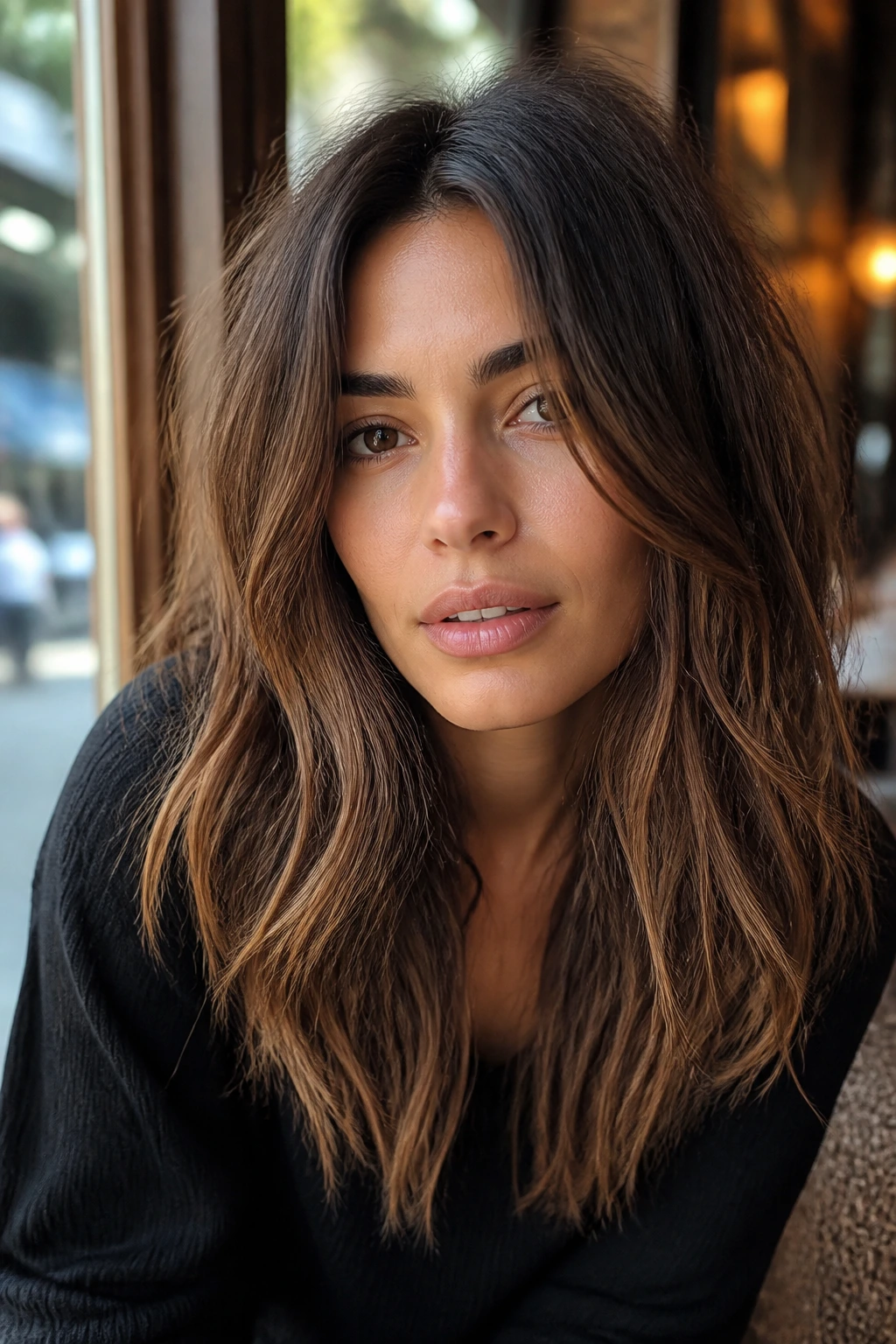
Unlike a blunt cut, this version leans into separation. The ends look piecey on purpose, the center part keeps the shape balanced, and the whole style feels a little more undone than the softer shag options. It’s a good choice if you want your hair to look lived-in rather than polished.
The real difference is in the ends. Choppy layers bring movement through the bottom half of the haircut, so the length doesn’t feel heavy or dense. That helps if your hair tends to sit flat at the sides but still has enough body to hold texture.
This cut suits people who don’t mind a little edge. It’s not precious. It looks better after a messy day than after a fussy one, which is part of its charm.
If you ask for it in the salon, say you want a center part, long face-framing layers, and point-cut ends with no hard line. That gives the stylist a clear target. Vague requests usually turn into vague hair.
7. Long Shag for Thick Hair With Weight Removed
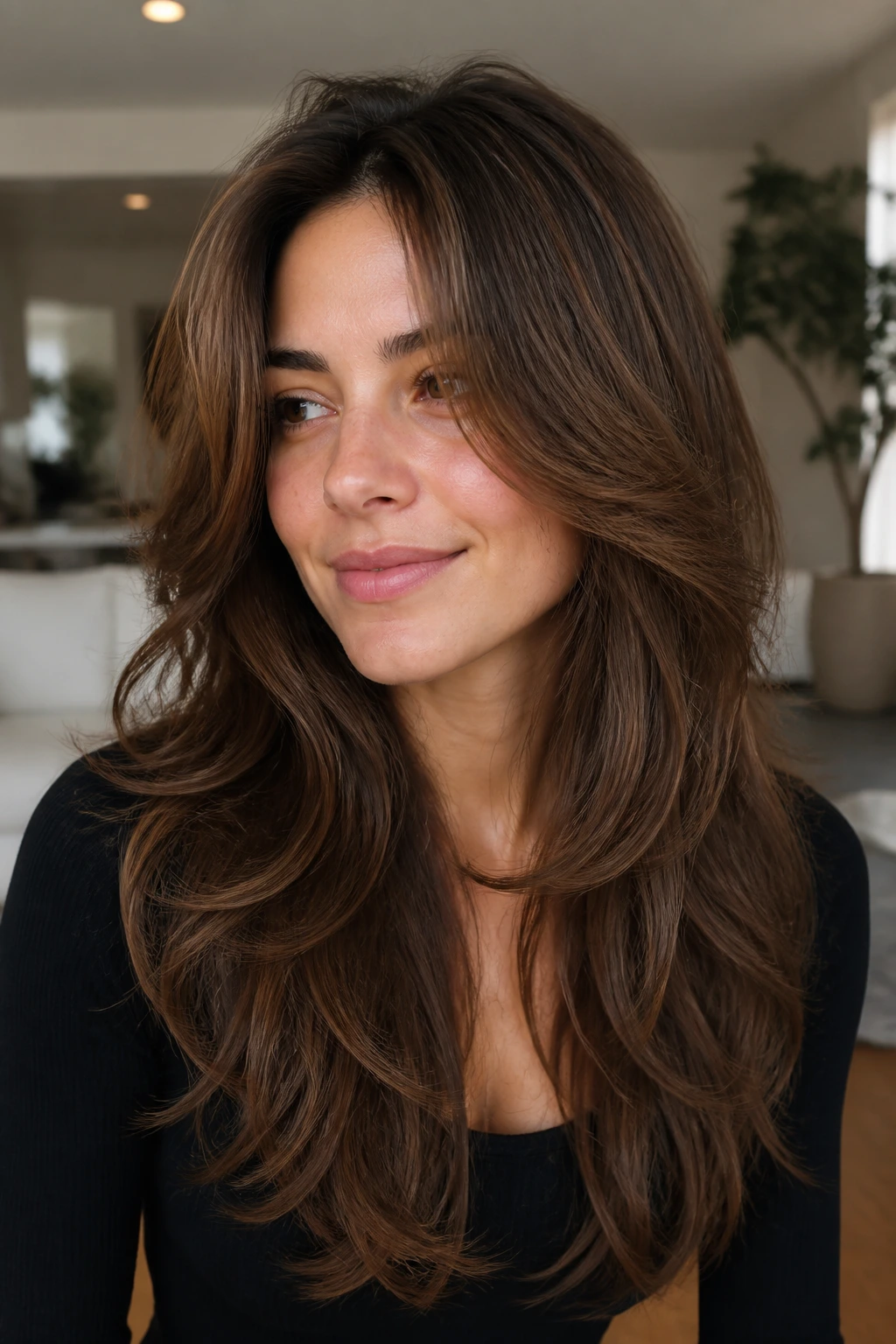
Thick hair is where the long shag earns its keep. Without some internal shaping, thick hair can sit like a blanket. Heavy. Warm. Hard to move. A shag removes weight in the right places so the length can still hang straight without ballooning out at the sides.
The key is not to over-thin the ends. That’s the mistake people make. If you take too much out of the bottom, the haircut can look frayed and fuzzy by the second week. What you want is weight removal through the mid-lengths and a perimeter that still has some strength.
A good thick-hair shag often benefits from dry cutting, because the stylist can see where the hair naturally bulks up. The crown may need some internal layering, while the back can stay a little longer to keep the profile tidy. That balance matters more than dramatic chopping.
For styling, a smoothing cream through the mids and a little bend at the ends keeps the shape from expanding. Thick hair can take it. You don’t need to baby it. You do need to control it.
8. Long Shag for Fine Hair With Lift at the Crown
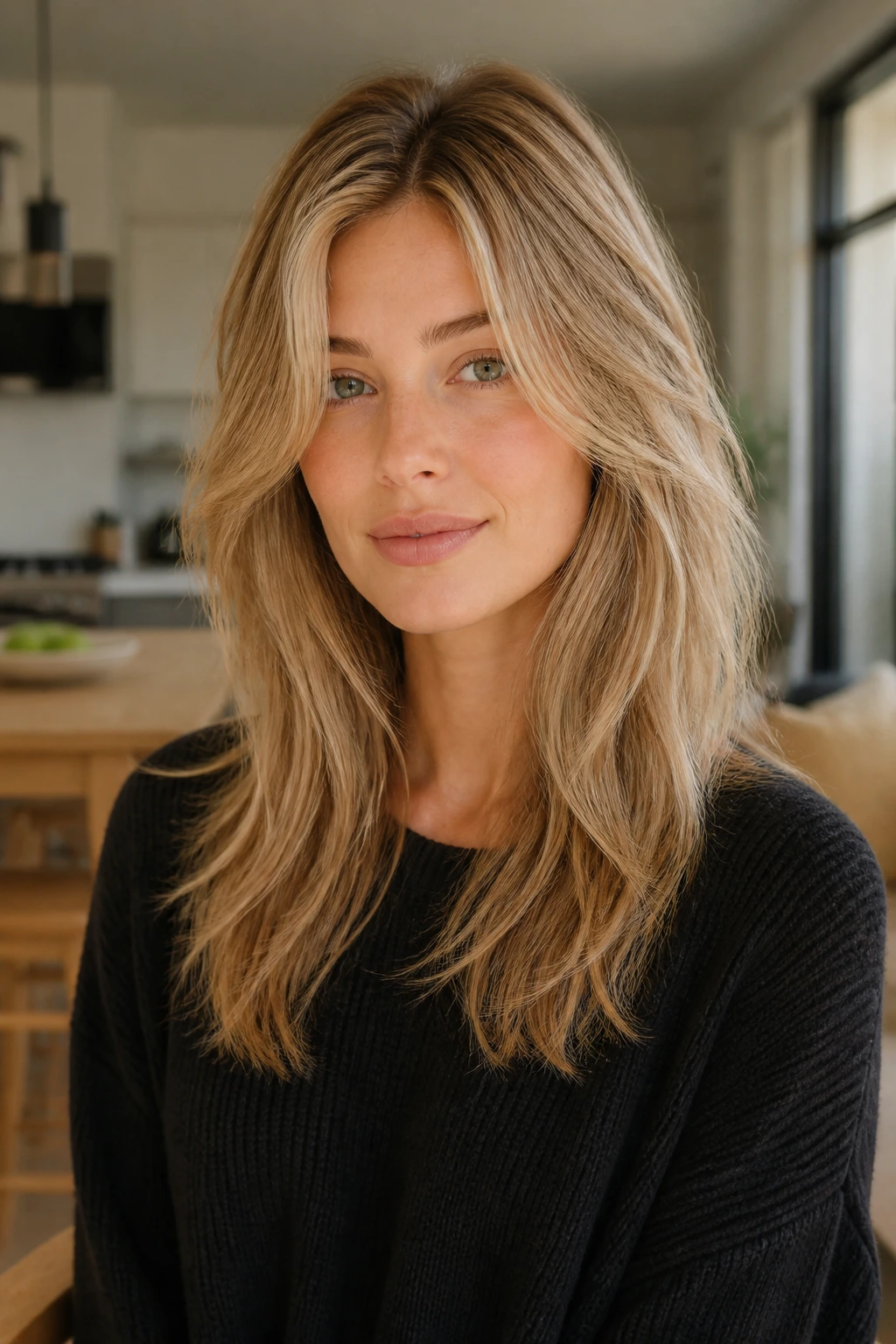
Fine hair needs a different strategy. Too many short layers can leave the ends looking see-through and the top looking flat. The safer move is to keep the long shape intact and place the layers where they create lift instead of gaps.
The crown is the money zone here. A little lift at the top gives the whole haircut life, especially when the hair is parted in the center. The face frame should stay long enough to keep density around the cheeks and jaw. If the front pieces are chopped too short, fine hair starts to look thin fast.
How to Keep It From Falling Flat
Use a root lift spray at the roots only, then blow-dry with a medium round brush, lifting the hair up and away from the scalp. Finish with a cool shot so the volume sets before the hair cools down completely.
- Keep conditioner off the roots.
- Ask for soft internal layers, not a lot of short piecework.
- Use a light mousse on damp hair.
- Avoid heavy oils near the crown.
Fine hair loves a clean cut and hates being overloaded. Less product. Less carving. More shape.
9. Chest-Length Shag With Long Interior Layers
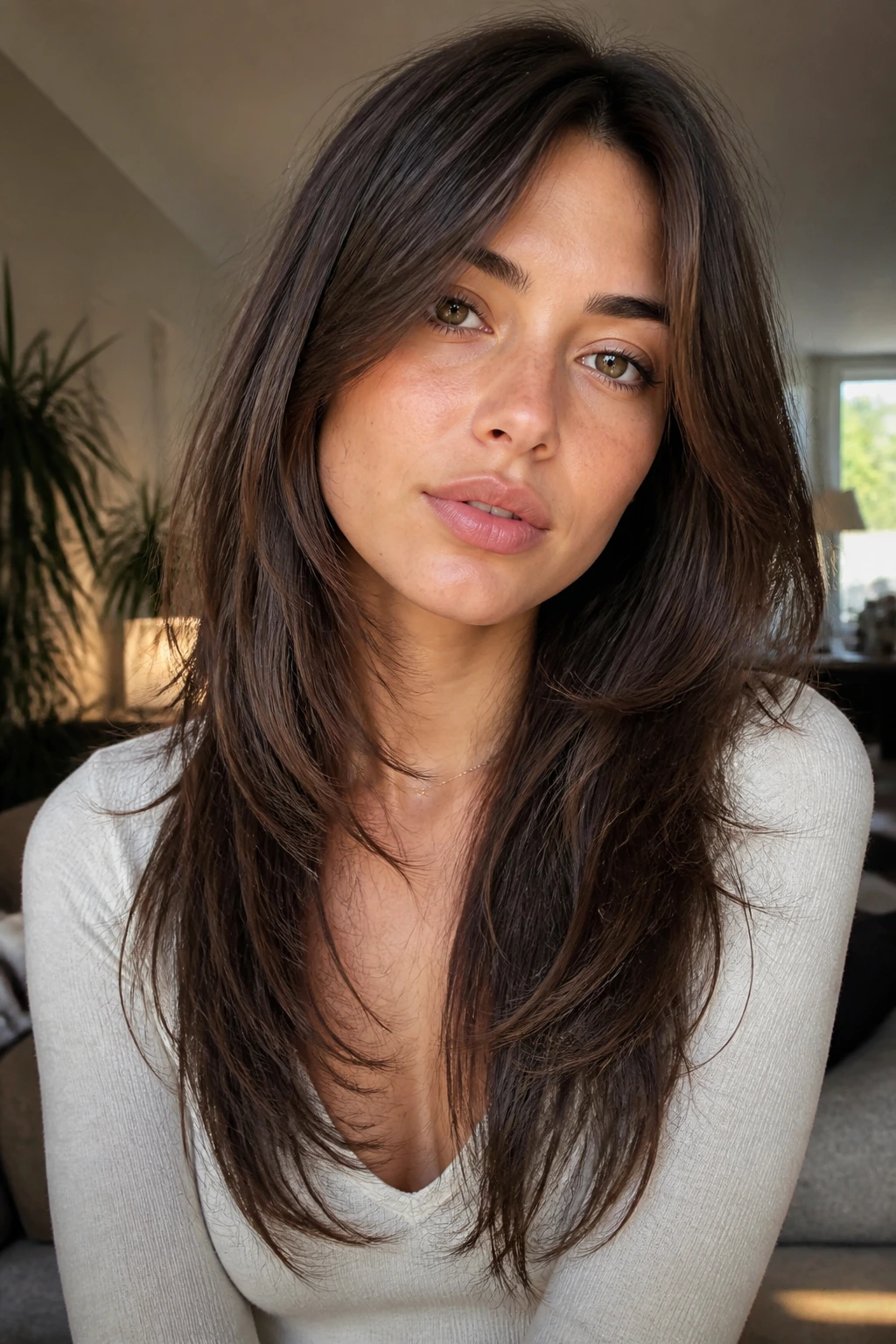
This is the most underrated version on the list. The cut still has shag movement, but the layers are tucked inside the shape so the hair reads as long and full from the outside. If you want softness without looking obviously layered, this is a smart lane.
The chest-length perimeter gives the style some weight, which is useful. The internal layers do the moving, not the outer line. That means the haircut shifts when you walk, but it doesn’t look ragged when you sit still. I like that. It feels expensive in the practical sense, not the flashy one.
It also grows out nicely. That matters more than people admit. A lot of layered cuts look good for two weeks and then start to get weird. This one usually settles into itself.
Wear it straight with a bend, or let it air-dry if your texture already has some wave. Either way, the shape stays readable. That’s the real win.
10. Messy Long Shag for Air-Dry Days

If you hate a long styling routine, this is your cut. The messier long shag is built for air-drying, which means the shape looks best when you let the hair do its own thing and only nudge it a little.
The right version uses texture, not frizz, to create interest. A leave-in conditioner, a small amount of cream, and a microfiber towel are usually enough. Scrunch the mids and ends, part the hair where it naturally wants to sit, and leave the crown alone unless it needs a tiny lift.
What I like here is the lack of fuss. You don’t need polished ends or perfect symmetry. A few uneven bends make the haircut feel relaxed, not sloppy. That distinction matters.
This cut is ideal if your mornings are fast and your hair has some natural pattern. If your strands are dead straight, you can still wear it, but you’ll probably need a little salt spray or light mousse to keep the shape from going limp.
11. Long Shag for Oval Faces
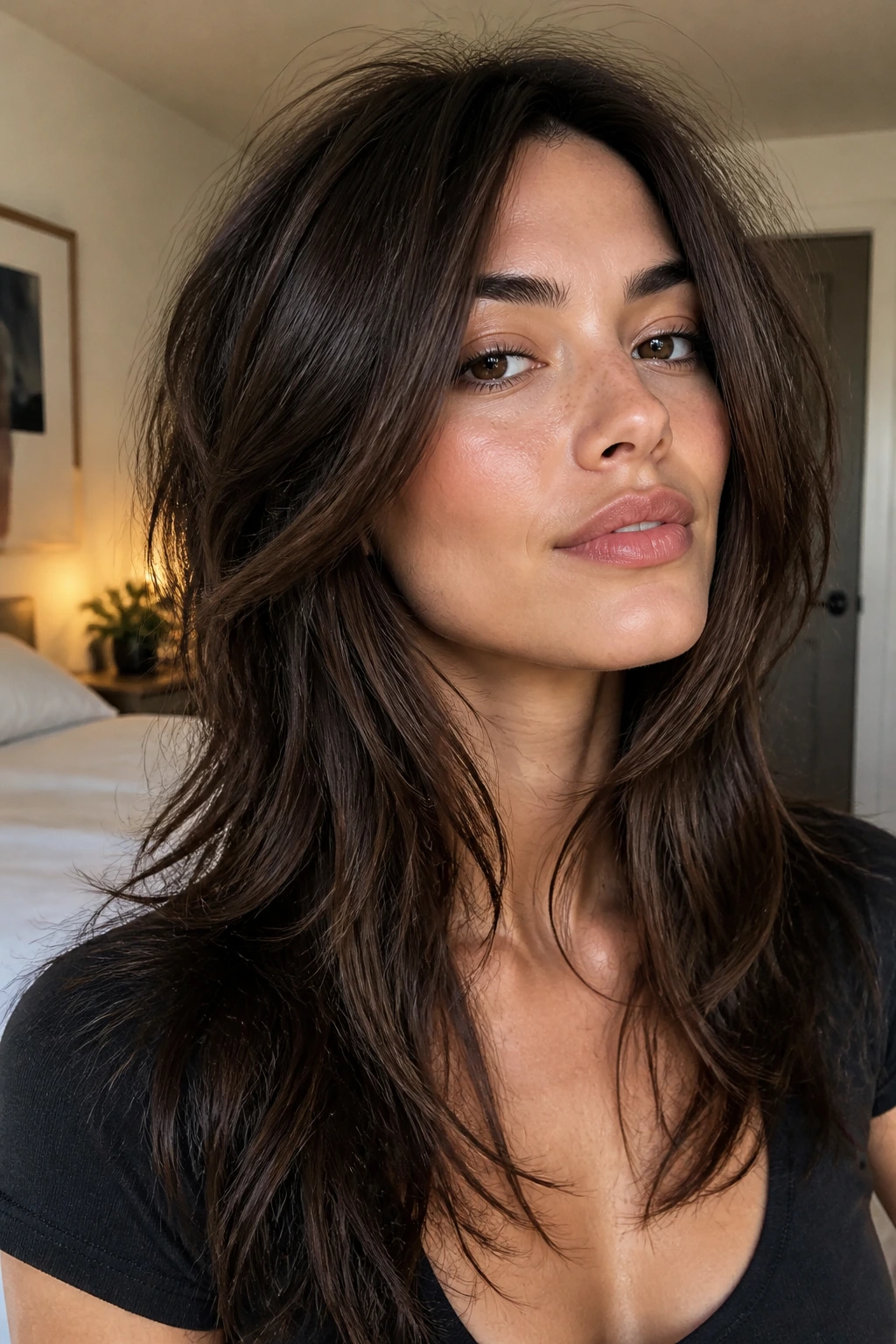
Oval faces can wear a lot, but that doesn’t mean every shag shape flatters them equally. The sweet spot is a cut that keeps the cheekbones visible while letting the length keep the face from looking stretched.
A long shag without bangs works well here because the open forehead keeps the face from feeling boxed in. The front layers should start around the cheekbone or just below it, then taper into the rest of the hair with a soft slope. If the front is too short, the face can lose some of its natural balance.
The good news is that oval faces can handle a more obvious shape in the back. A little extra texture there won’t overwhelm the profile. You can go softer or choppier depending on how much edge you want.
If you’re booking the cut, ask for movement near the face and length through the ends. That sounds simple, and it is. The details are what keep the style from wandering into generic territory.
12. Long Shag for Round Faces
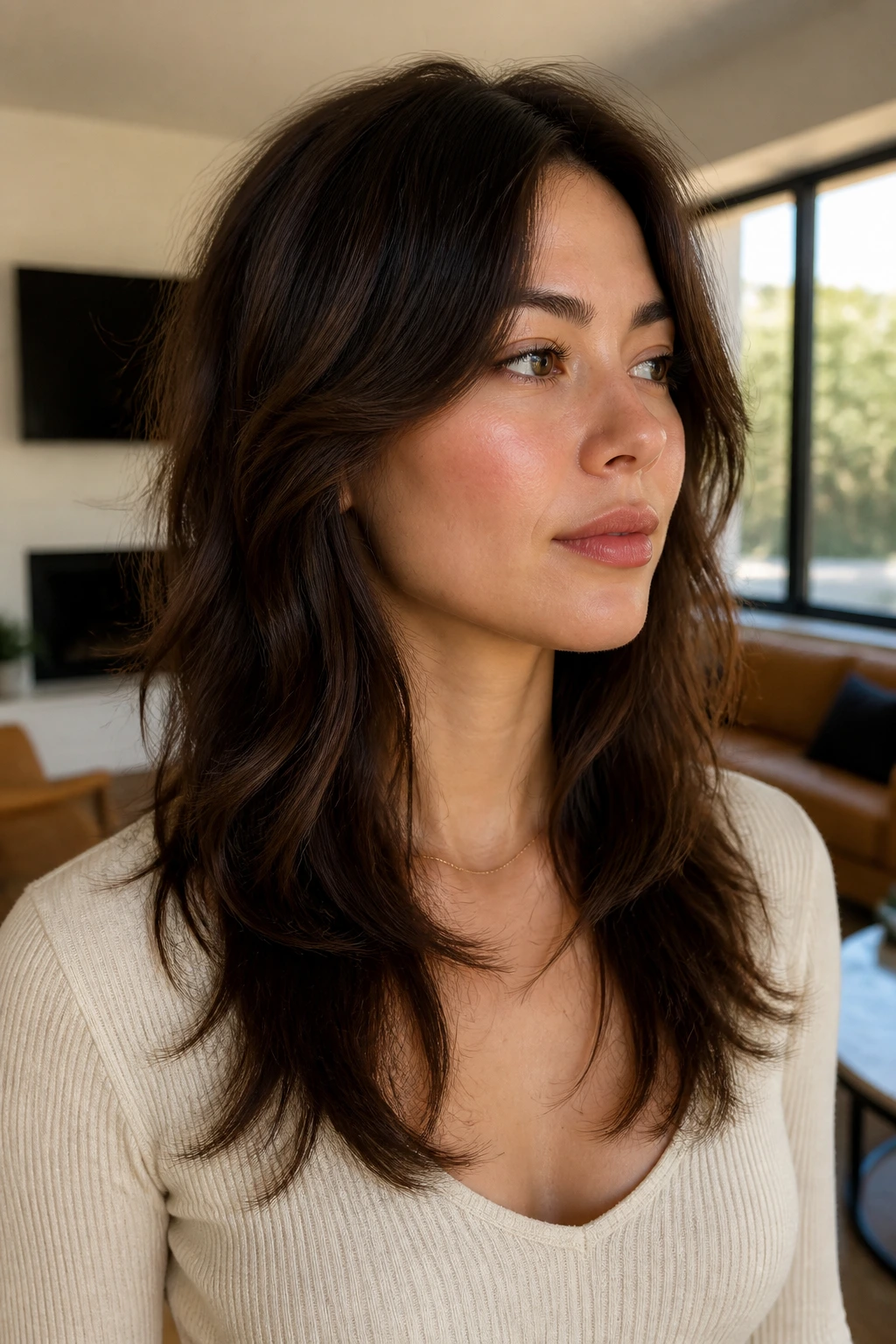
Can a shag make a round face look more structured without getting harsh? Yes, if the layers are placed with some care. The goal is vertical movement, not a puff of volume at the cheeks.
The best version keeps the shortest front layers below the cheekbone and lets the pieces fall along the sides of the face instead of curling inward at the widest point. A center part can work, but a soft off-center part often gives a little more angle. What you do not want is a round, bouncy shape that stops right at the cheeks. That’s the fastest route to making the face look wider.
What to Ask Your Stylist
- Keep the front layers longer than cheek level.
- Avoid heavy rounding around the jaw.
- Leave some length through the lower sides.
- Use texture in the ends, not at the widest part of the face.
That’s the recipe. Not glamorous. Useful.
A round face shag looks best when it creates a little line and a little lift. It should shape the face, not fight it.
13. Long Shag for Square Faces
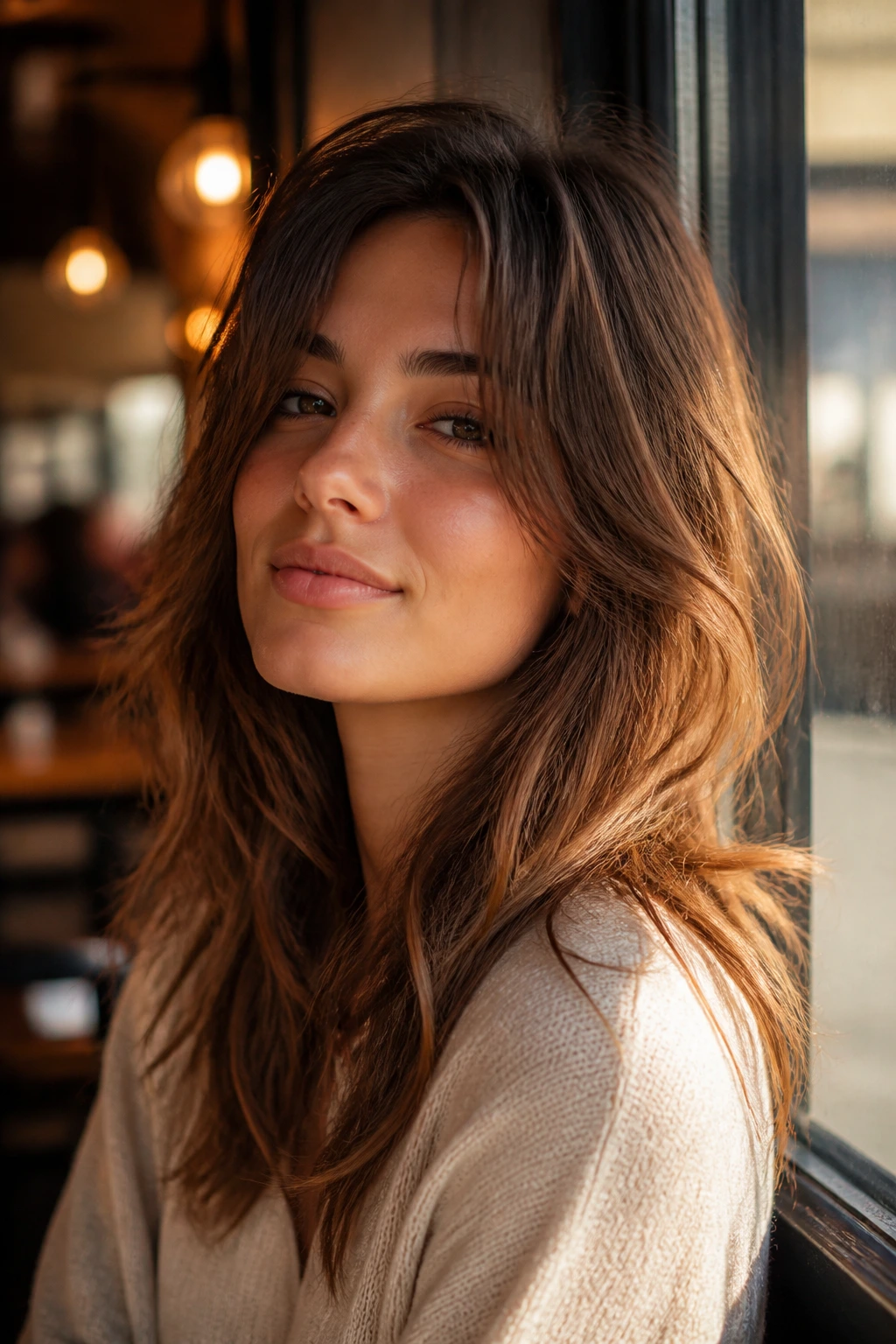
Square faces usually need softness around the jaw, not more hard edges. A long shag without bangs can do that well if the face frame stays long and the layers drape instead of snapping straight across.
The simplest way to think about it is this: keep the shortest layers away from the jawline and let them graze the cheek instead. That softens the lower face without hiding it. A little wave in the mids helps too, because it breaks up the straight line of the cut.
This is one of those styles where the part matters more than people think. A center part is clean and modern, but a slightly off-center part can take some pressure off the jaw and make the whole haircut feel looser. Try both. One usually feels right fast.
Square faces look strong. That’s not a problem. The shag should work with that strength by giving it motion, not by trying to erase it.
14. Long Shag for Natural Curls and Coils
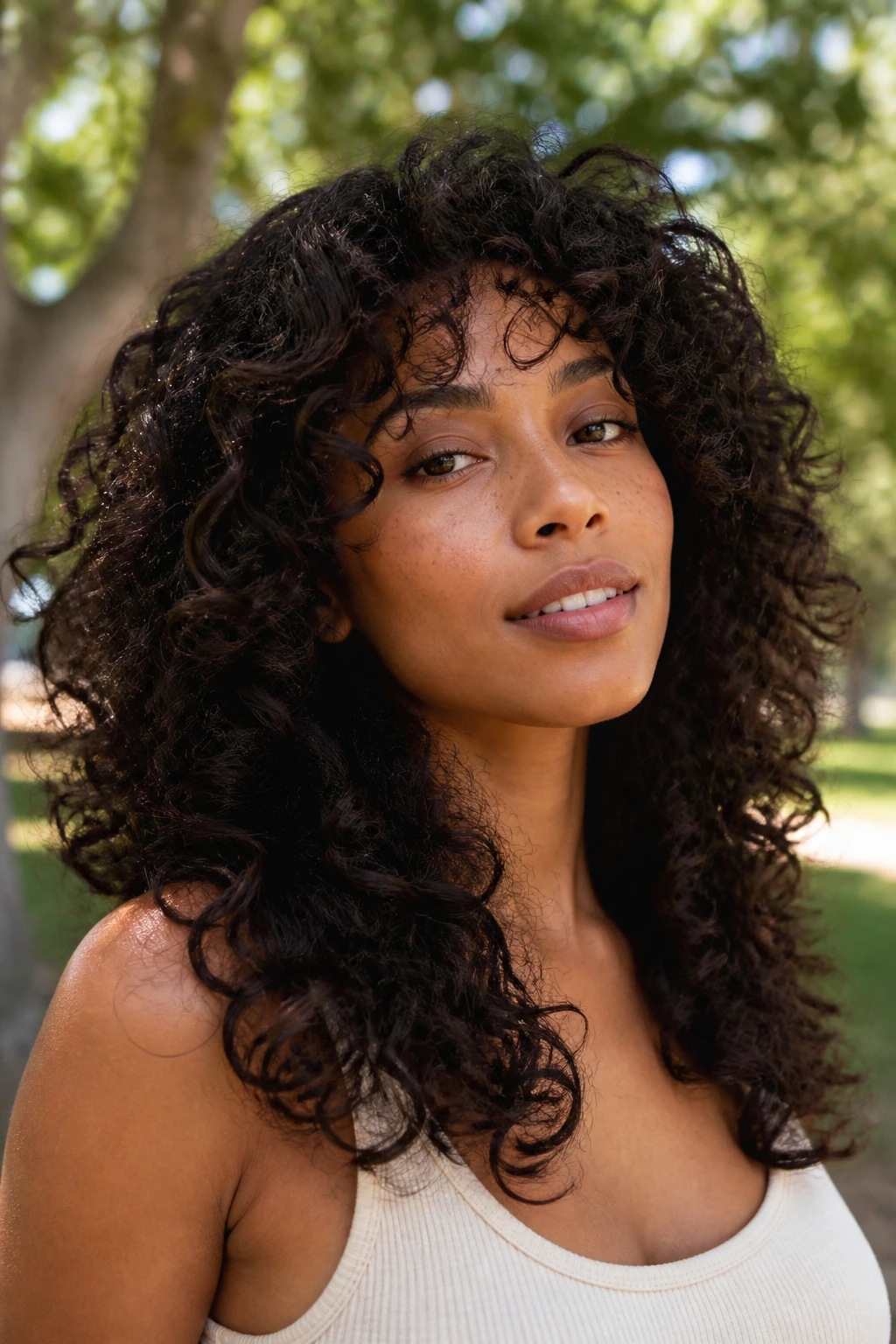
Natural curls and coils need space, and the long shag gives them room in a way blunt cuts often do not. The layers keep the top from becoming a pyramid, while the length keeps the curl pattern from shrinking into a shape that feels too compact.
A dry cut is often the best route here because curls and coils do not tell the truth when they’re wet. They spring, tighten, stretch, and shift. A stylist who understands that can shape the hair where it actually lives, not where it looks like it lives under the sink.
The no-bang version is especially useful if you don’t want shorter curls bouncing right onto the forehead. You can still have a face frame, just keep it longer and let it fall around the cheek and jaw. That keeps the cut open and soft.
Moisture matters. A leave-in conditioner, a curl cream, and a stronger gel or custard can keep the definition in place while the layers move. If the hair feels crunchy after drying, you used too much hold or not enough water at the start. That part is easy to mess up.
15. Rock-Chic Long Shag With Piecey Ends
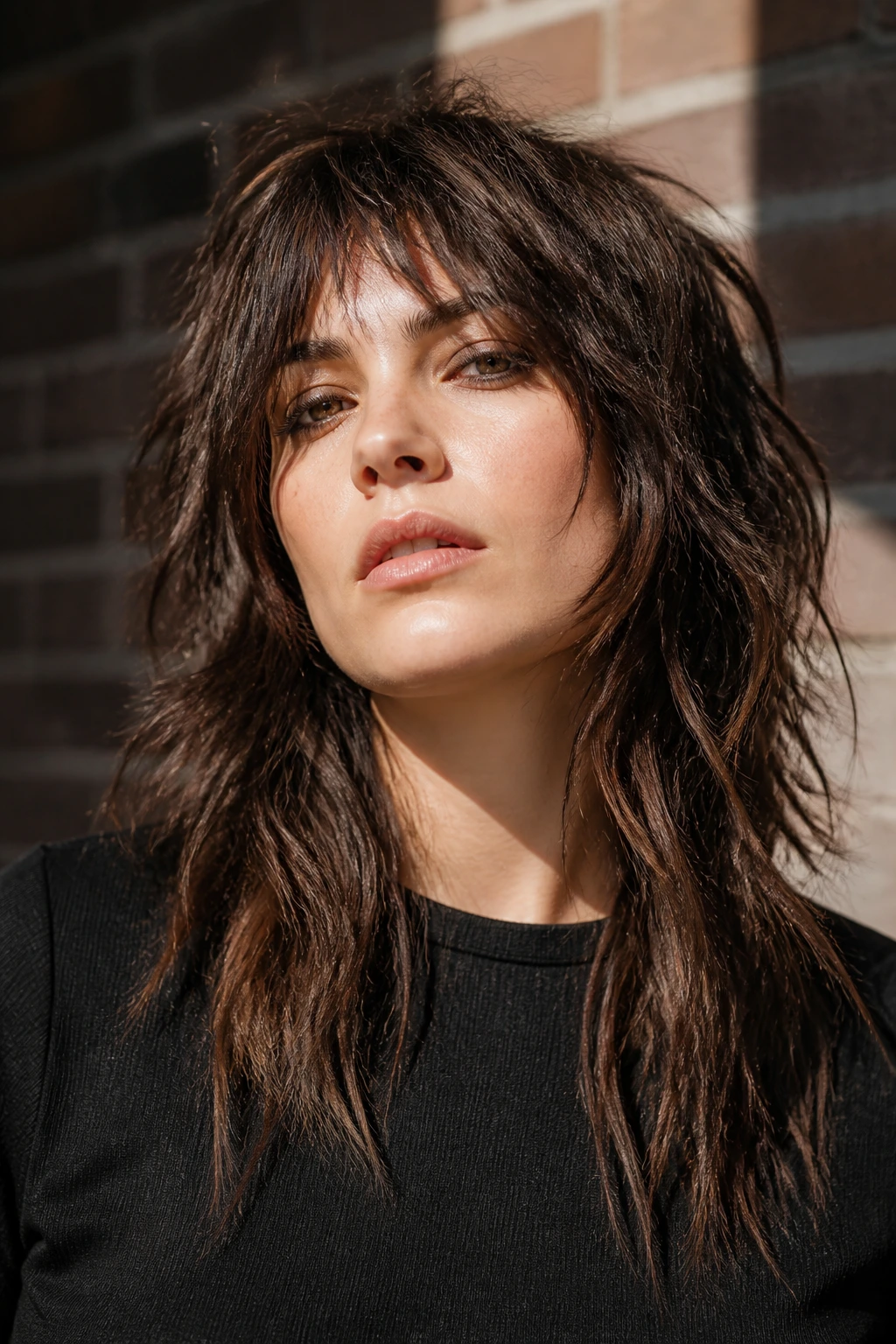
This one has attitude. Not fake attitude. The real kind that comes from hair with separation, grit, and a little edge around the ends. It’s a long shag without bangs, but the finish is more rebellious than romantic.
Unlike the softer feathered version, this cut wants the ends to break apart a bit. The layers are more visible, the texture is more deliberate, and the style works best when the hair has enough density to keep the pieces from disappearing. If your hair is fine and slippery, this shape can get lost. If it has body, it can look very good.
A tiny amount of styling paste on the ends can help, but use a light hand. You want definition, not sticky clumps. The look is strongest when the pieces fall naturally and the front stays clean.
This is a good cut for people who wear leather jackets, boots, or just prefer hair that feels a little less polished. It’s not loud. It does not need to be. The shape carries the attitude for you.
16. Low-Maintenance Long Shag With Minimal Styling
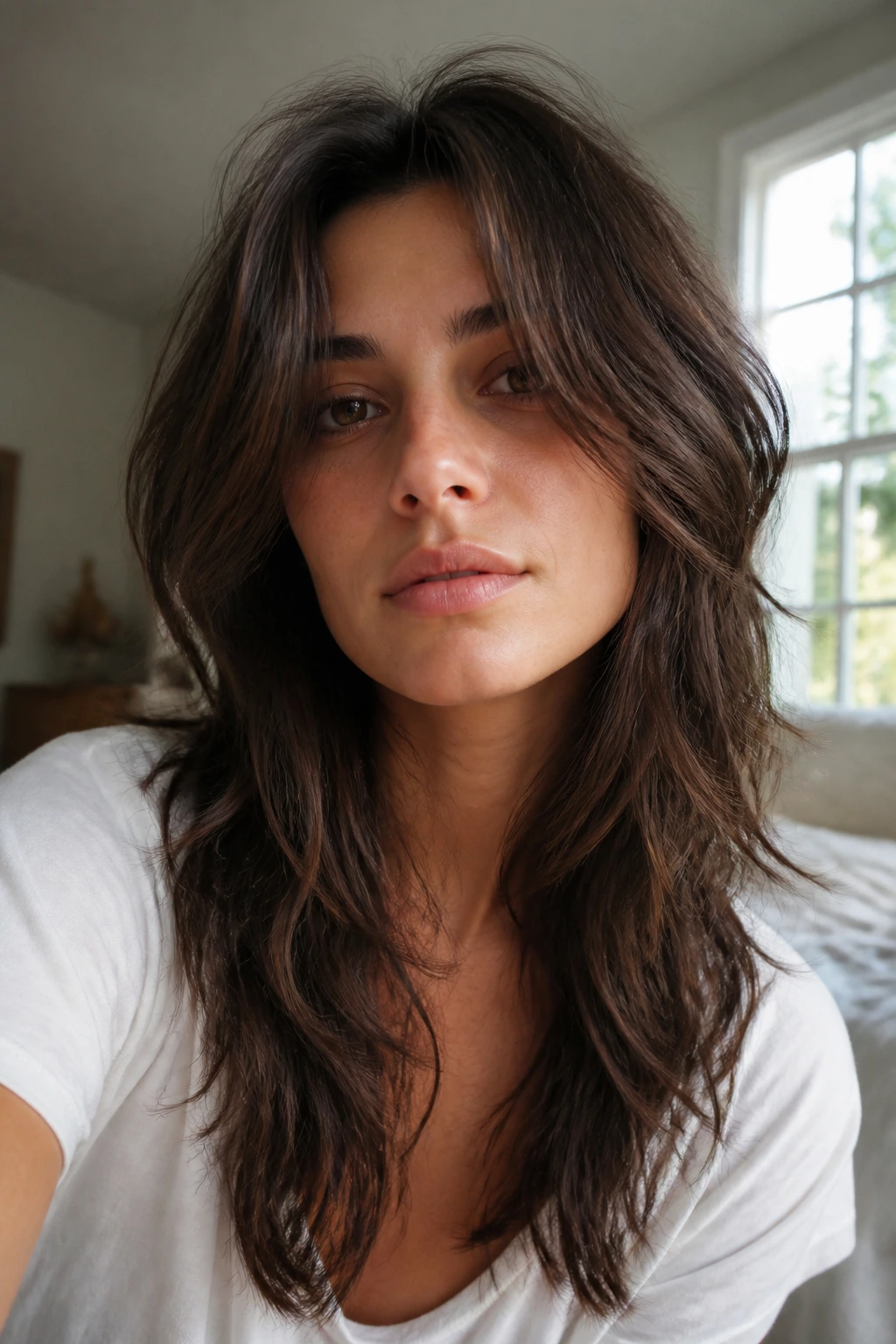
Some haircuts are made to be admired. This one is made to be used. A low-maintenance long shag without bangs keeps the layers quiet, the length generous, and the upkeep low enough that you can forget about it for a bit.
The best version has a controlled face frame and a perimeter that still feels full. You want movement, yes, but not so much chopping that the haircut starts asking for constant blowouts. The styling should be easy enough to do with your fingers, a vent brush, or almost nothing at all.
What Makes It Low-Fuss
- Longer layers that grow out evenly.
- No short fringe to trim.
- A shape that still looks good air-dried.
- Enough length to tie back on rough days.
That last part matters more than people think. If a haircut cannot be pinned, clipped, or tied into a low knot, it gets annoying fast.
I like this cut for people with busy mornings or hair that behaves better when left alone. It is not boring. It is practical, and there’s a difference.
17. Glossy Long Shag for Sleek Blowouts
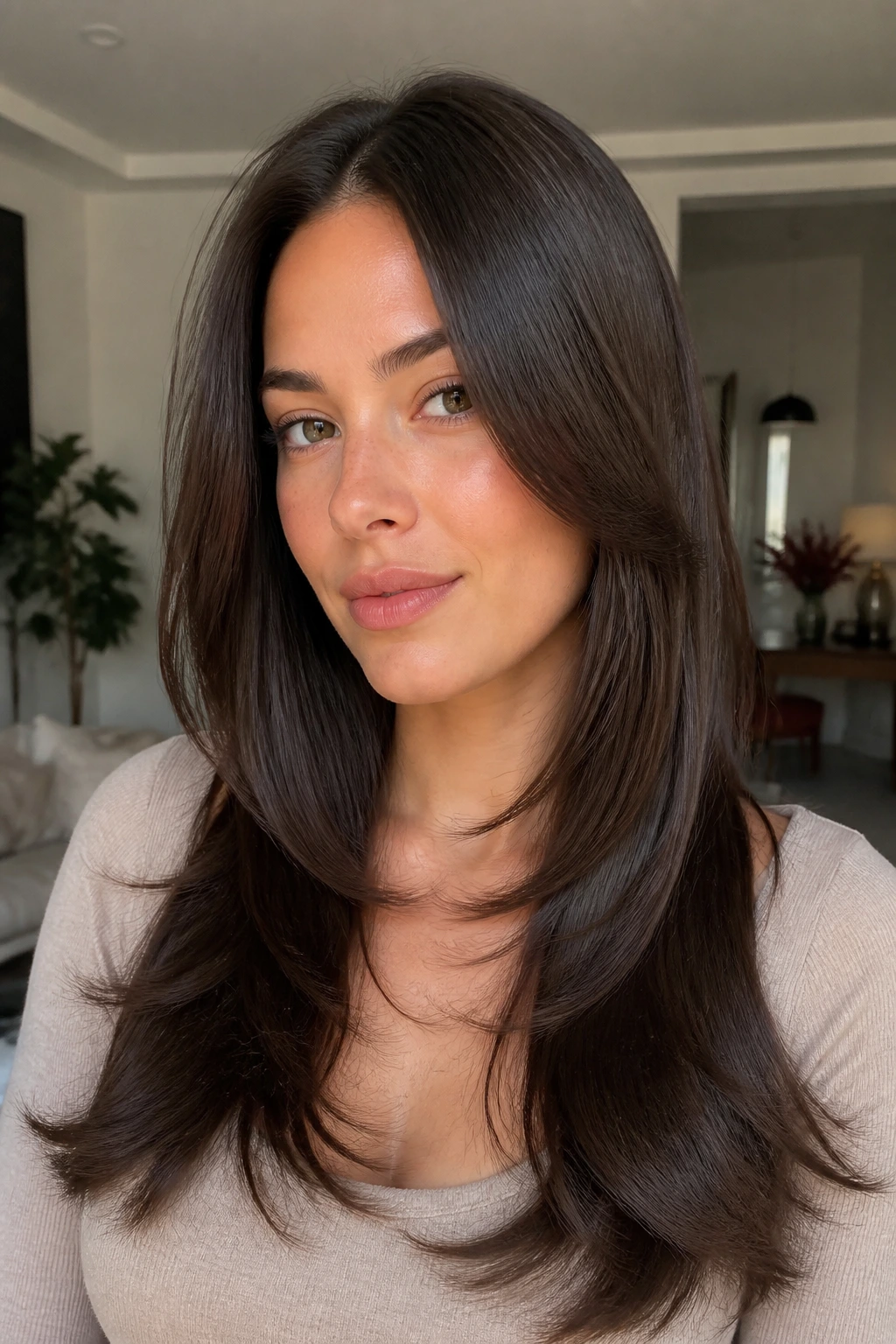
A shag does not have to look messy. That’s a common mistake. If you want smoothness and movement at the same time, a glossy long shag can give you both, as long as the layers are blended enough to lay flat when brushed out.
The blowout matters here. Use a heat protectant, a smoothing cream on the mids and ends, and a medium round brush to pull the hair taut as it dries. The goal is a clean surface with a soft bend, not a puffy curl. The finish should move when you turn your head, but it should still look controlled.
This version works best on hair that already has some density. Very fine hair can lose too much substance if you over-style it smooth. Thick hair, on the other hand, can look sleek and expensive with this shape because the layers keep it from turning into a heavy curtain.
A glossy shag is a nice answer for anyone who wants polish without giving up shape. It’s a little unexpected, which is part of why it works.
18. Grown-Out Wolf Cut Hybrid Without Bangs
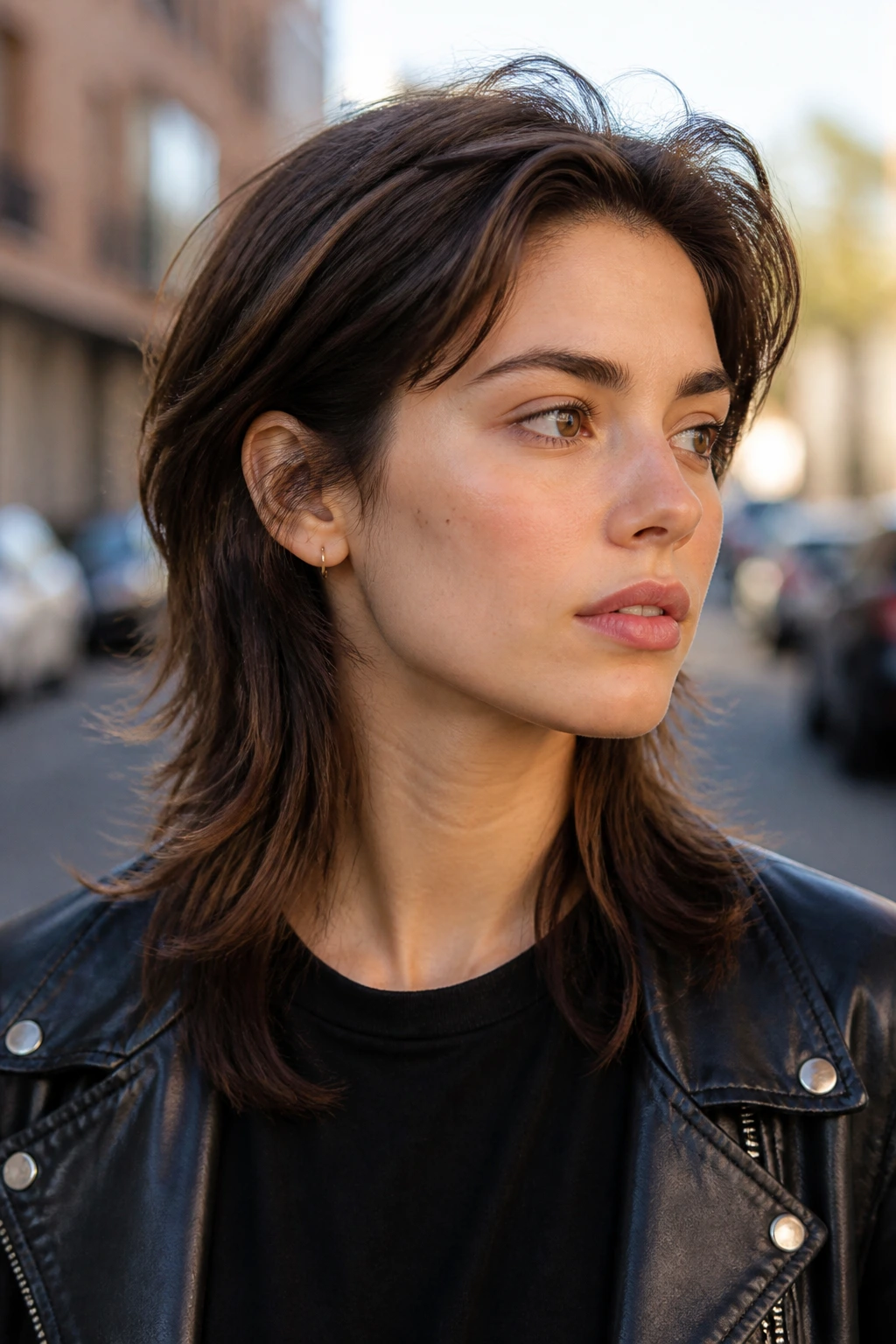
This is the edgier cousin of the classic long shag. It borrows the longer crown and stronger taper of a wolf cut, then softens the whole thing by skipping bangs and keeping more length through the front. The result feels cool without being costume-y.
The trick is contrast. You want visible layers near the crown and around the sides, but not a choppy mess at the forehead. Keep the front long enough to tuck behind the ears or sweep back, and let the back carry some of the shape. That balance keeps the haircut from reading too severe.
How to Ask for It
- Keep the crown shorter than the perimeter.
- Leave the front pieces below the cheekbone.
- Add texture through the mid-lengths.
- Avoid a blunt, heavy edge at the bottom.
This cut suits people who like a little grit and do not mind hair that looks best with some texture in it. Straight hair can wear it, but wavy hair usually gives it the best shape. There’s a reason these hybrid cuts have stuck around. They have range.
If the clean shag feels too neat and the full wolf cut feels like too much, this middle ground makes sense. It has edge, but it still behaves.
