



There is a persistent myth that as we age, hair must inevitably get shorter, flatter, and more uniform. It’s an outdated notion that suggests maturity requires a sort of styling retreat. In reality, some of the most dynamic, flattering, and expressive hair of your life can happen well into your later years. The shag haircut is the perfect antidote to the “matronly” bob. It brings movement, height, and a deliberate sense of chaos to hair that might otherwise be thinning or losing its natural bounce.
When hair starts to change—whether that means losing density at the crown, seeing more gray, or noticing a shift in curl pattern—you need a cut that works with those changes, not against them. A shag haircut does exactly that. By utilizing layers throughout the crown and tapering the ends, you can create the illusion of fullness where there isn’t much, and control volume where there is too much. It is not about looking younger in a forced, unnatural way. It is about looking like a version of yourself that is vibrant, modern, and entirely unbothered by rigid rules.
Let’s look at how you can navigate these styles, from the classic choppy cuts to the modern, edgier interpretations.
1. Classic Choppy Shag
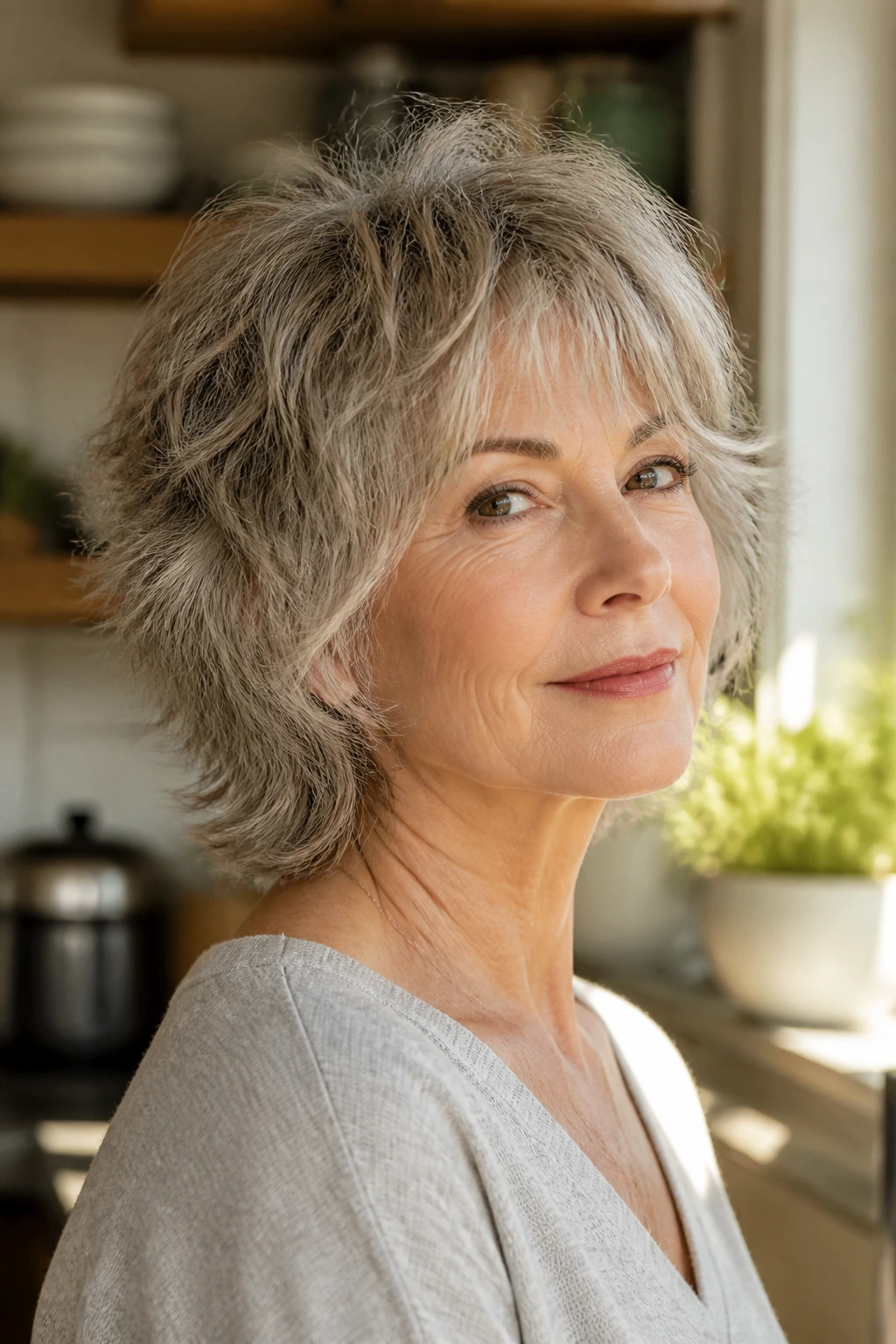
This is the bedrock of the style. It isn’t trying to be too trendy or too subtle; it just works. The classic choppy shag relies on internal layering, which means the stylist cuts into the hair to remove bulk and create texture, rather than just shortening the outer length. For older hair that has lost some of its natural elasticity, this creates an instant, airy volume that doesn’t require a mountain of product.
Why This Style Works
It is essentially a “wash-and-wear” haircut if your natural hair has even a slight wave. The choppiness hides the fact that hair density might be fluctuating. You don’t need a perfectly symmetrical cut because the “messiness” is the entire point. When you have layers that stop at different lengths, it breaks up the monotony of a single-length cut, which can sometimes weigh down fine hair and draw attention to thinning spots.
The Styling Approach
- Keep it raw: Don’t reach for the heavy pomades.
- Salt spray: A light sea salt spray or a texture tonic is your best friend.
- Air dry: Let it do its thing while you get your coffee.
Pro tip: Ask your stylist specifically for “point cutting” on the ends. It stops the bottom from looking blunt and heavy, which is the quickest way to make a shag look like a mistake.
2. Soft Face-Framing Shag
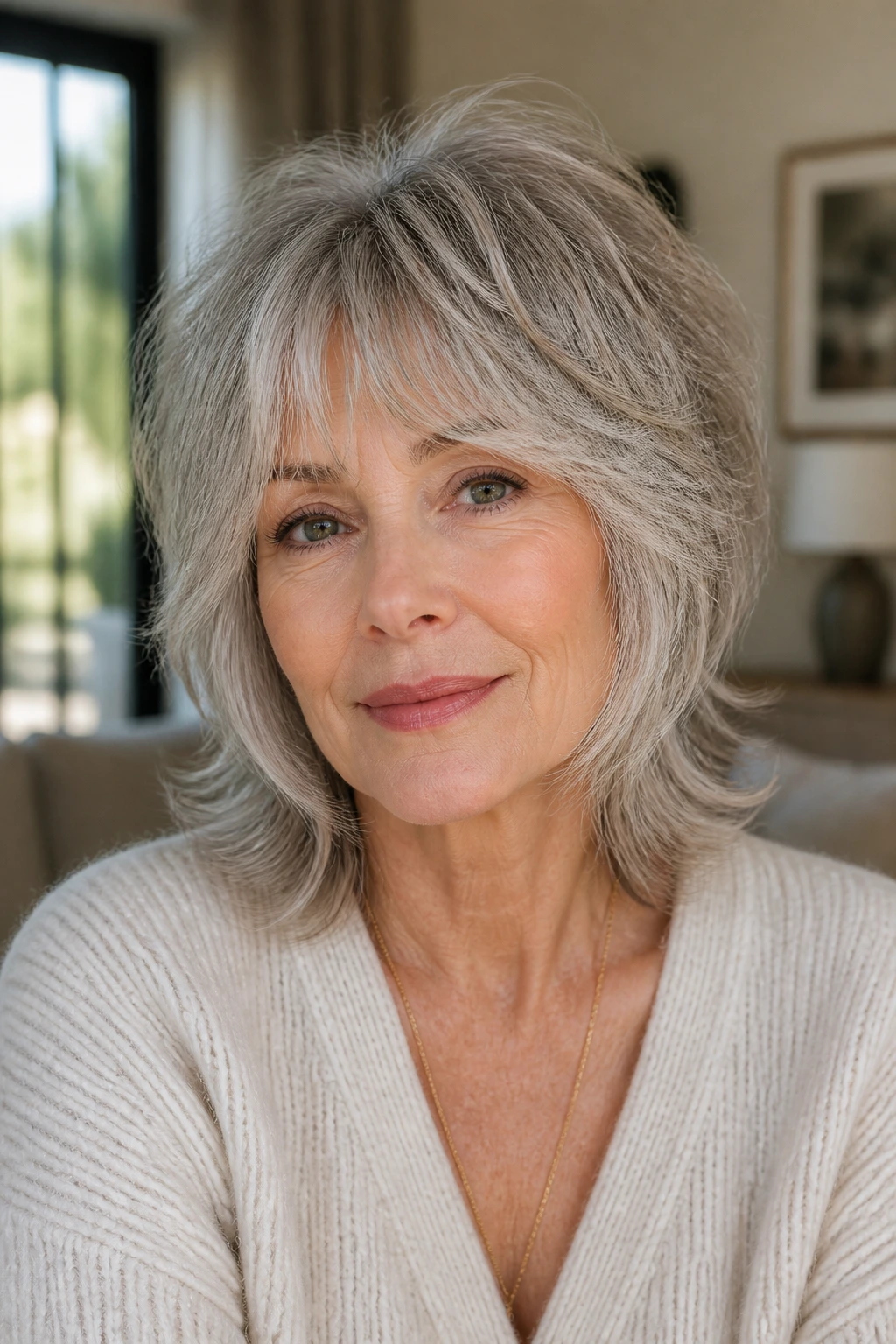
If you aren’t ready to commit to a major overhaul, the soft face-framing shag is the perfect entry point. The focus here is entirely on the front sections. You keep more length in the back, but the front is cut with shorter, layered, face-framing pieces that curve around your cheekbones and jawline. It’s incredibly flattering because it draws the eye toward your features rather than toward the hair itself.
How to Explain This to Your Stylist
Don’t just say “shag.” Bring photos, but specifically point to where you want the shortest layer to hit. For a soft version, you want that layer to hit somewhere between the cheekbone and the chin. Anything shorter can look like an accidental bang, which might be too dramatic if you’re trying to keep things low-maintenance.
Key Characteristics
- Soft edges: No harsh razor lines.
- Gentle layers: The transition from short to long should be gradual.
- Volume focus: The crown should be slightly elevated, not flat.
It’s about creating a halo of softness around your face. This style is particularly effective if you feel like your complexion is losing some of its vibrancy, as the layers can break up the shadow that often collects around the jaw and neck.
3. Curly Shag

For those who have embraced their natural curls—or who are dealing with a changing curl pattern as they age—the curly shag is a total game-changer. Curls often get weighed down by their own gravity, leading to a triangle shape where the hair is flat on top and bushy at the bottom. A shag flips this by removing weight from the top, allowing the curls to spring up and find their natural shape again.
Managing the Texture
As hair matures, curls can become tighter or looser, and sometimes drier. The shag demands moisture. Because layers expose the ends of the hair, you have to ensure those ends are hydrated, or they will frizz. Use a cream-based product designed for curly hair, not a gel that will turn crunchy.
Why It’s Efficient
- Shape: You get a rounded, flattering silhouette.
- Definition: Shorter layers naturally encourage curls to coil.
- Less effort: You spend less time trying to force your hair into a shape it doesn’t want to be.
If you are going gray, this cut looks particularly stunning. The texture of the shag combined with the natural dimension of gray or silver curls creates a look that is sophisticated yet completely effortless.
4. Modern Wolf Cut

You might have heard the term “wolf cut” and assumed it was only for younger crowds, but that is a misperception. The wolf cut is essentially a high-volume, shaggy mullet. It is dramatic, high-energy, and works brilliantly for someone who wants to reclaim some edge. It features shorter, choppy layers on the top and sides, with a longer, tapered tail in the back.
Who Should Try It
If you have thick hair that you want to thin out, this is the style. If you have thin hair, you can still pull this off, but you will need a root lifter or a thickening spray to maintain the volume on top. It’s not a haircut for the faint of heart, but it is incredibly fun to wear.
The Vibe
It screams confidence. It says, “I am not fading into the background.” It’s a bit rebellious, but when styled properly, it looks intentional and sharp. Avoid the urge to over-style it. The wolf cut should look slightly disheveled. If it looks too perfect, it loses the “wolf” aspect entirely.
5. Textured Bob Shag
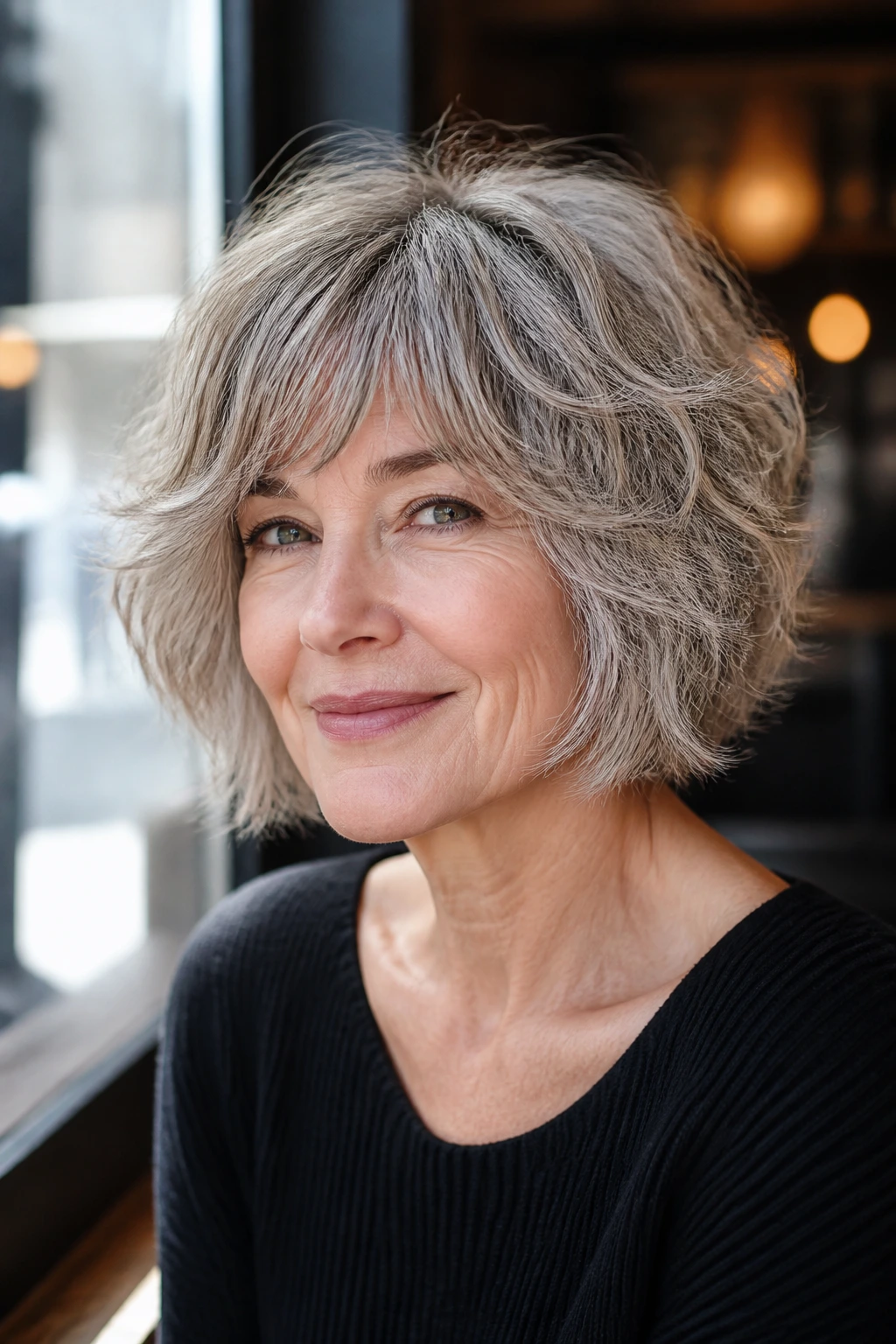
This is the “middle ground” cut. It sits somewhere between a traditional, structured bob and a full-blown, wild shag. You have the perimeter of a bob—meaning the overall length is around the chin or neck—but the interior is heavily layered to provide that shaggy movement.
Why This Is Practical
A standard, blunt-cut bob can sometimes highlight necklines or jawlines you might prefer to soften. By adding shaggy texture to the bob, you get the chic, clean silhouette of the bob with the softening, youthful movement of the shag. It’s the ultimate compromise.
Maintenance
- Trims: You need a trim every 6-8 weeks to keep the bob perimeter looking clean.
- Styling: A quick blow-dry with a round brush will give you the shape, or you can use a bit of texture paste to mess it up.
- Versatility: You can tuck the sides behind your ears for a clean look or pull them forward for a softer, framing effect.
It is arguably the most versatile haircut on this list. It works for almost every hair texture, from stick-straight to wavy.
6. Razor-Cut Shag
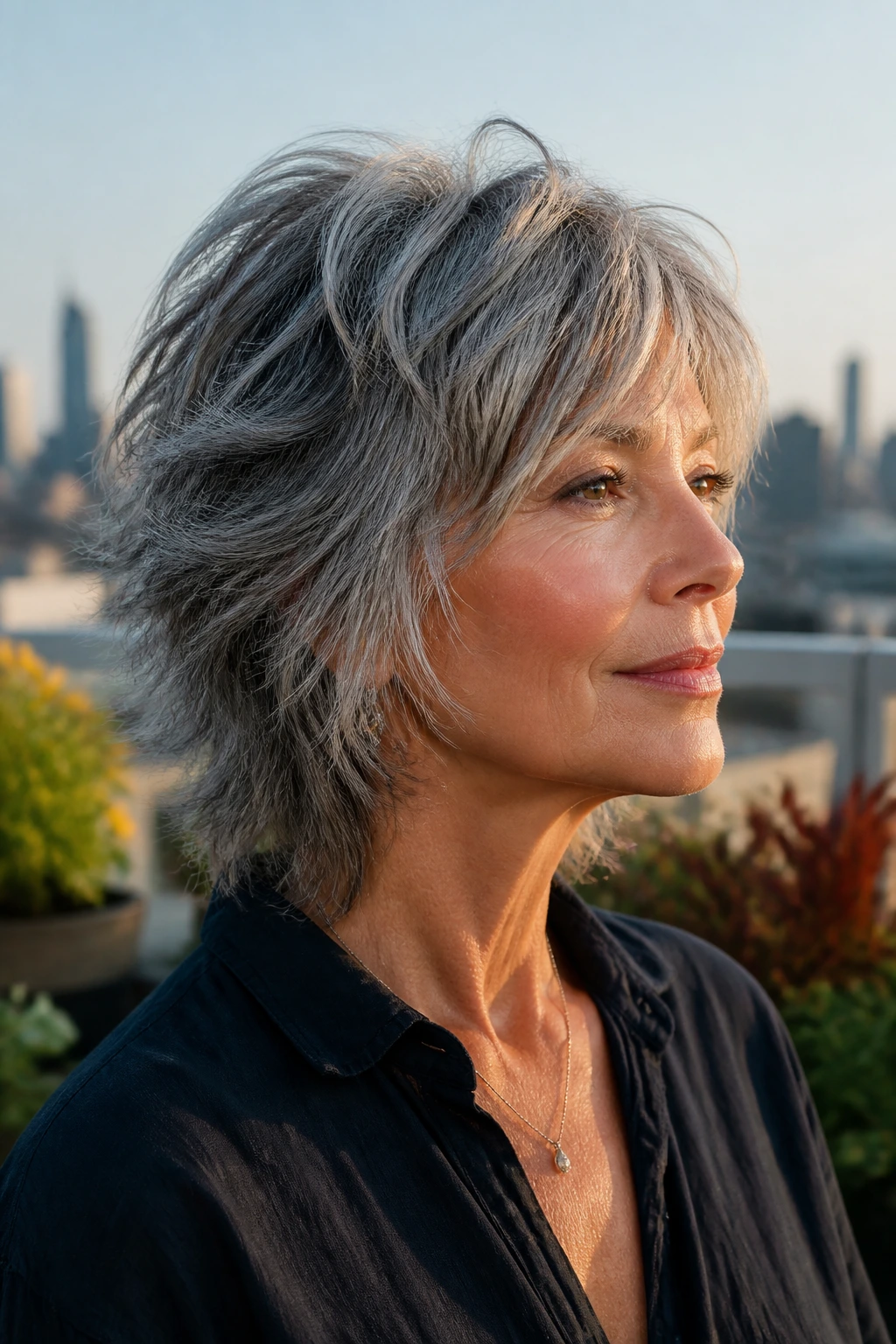
There is a specific technique involving a straight razor that creates a very particular type of texture. Unlike scissors, which create a blunt cut, a razor creates a tapered, feathered edge. When you apply this technique to a shag, the result is hair that moves and dances. It is incredibly lightweight.
The Razor Difference
If your stylist is skilled with a razor, they can make your hair look like it has double the density it actually has. The way the hair stacks upon itself when cut with a razor allows for a sort of “invisible” volume. It doesn’t look like you have heavy layers; it looks like you have naturally thick, flowing hair.
A Word of Caution
This is not a DIY job, and it is not a job for a stylist who isn’t comfortable with a razor. If the blade is dull or the technique is wrong, it can shred the hair and cause split ends. Always ensure you are going to a stylist who lists “razor cutting” as a specialty. When it’s done right, it is a luxurious, expensive-looking texture that scissors just can’t quite replicate.
7. Blunt Fringe Shag
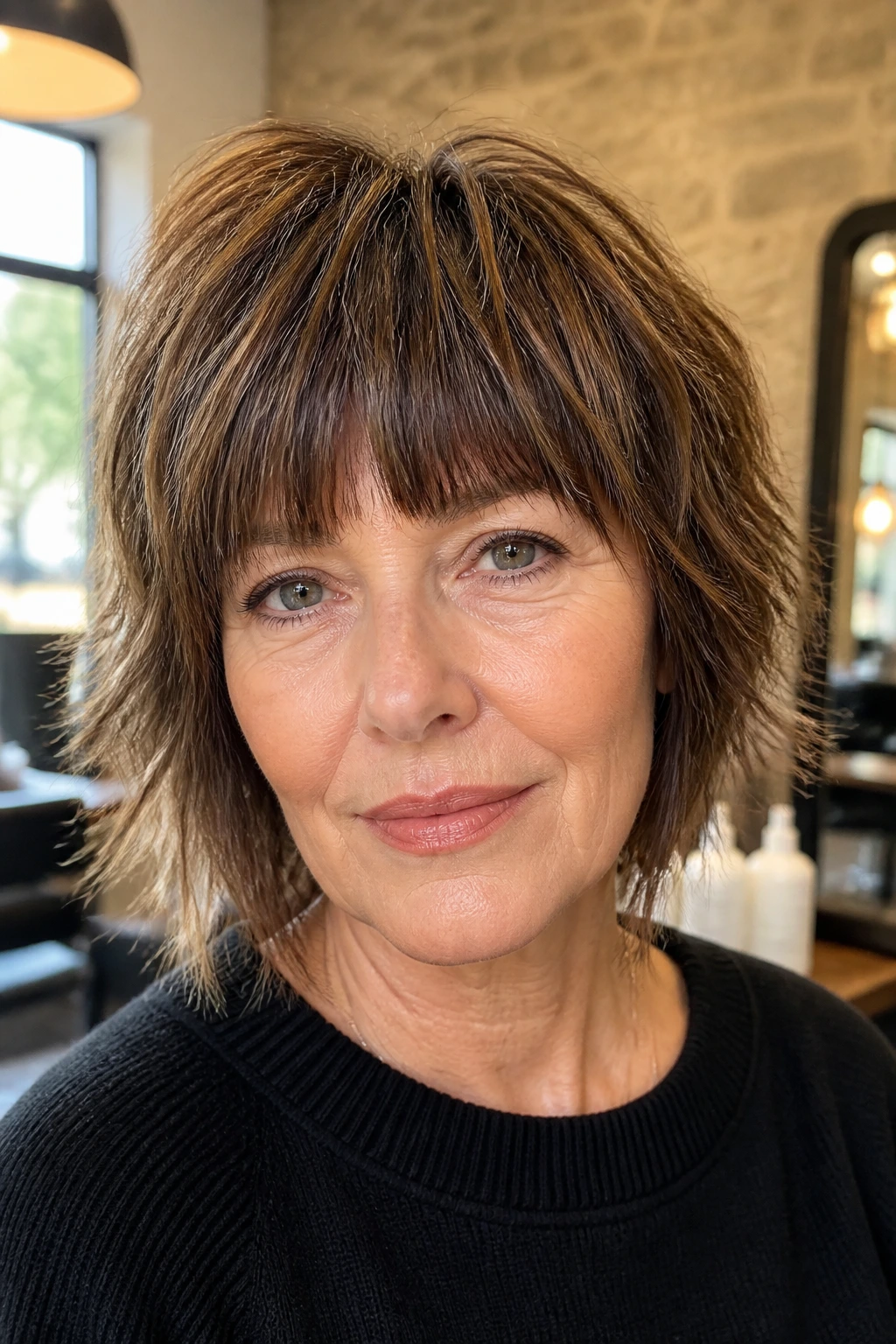
Sometimes, the shag is just the canvas, and the fringe is the statement. Pairing a shaggy, layered cut with a blunt, straight-across fringe creates a fantastic contrast. It’s a very French, very sophisticated look. The bluntness of the bangs grounds the chaos of the shaggy layers, keeping the whole look from feeling messy.
Why It Works for Older Hair
Foreheads change over time—lines appear, skin texture shifts. A blunt fringe is excellent at hiding those lines, but it can also make a face look smaller. A shag balances this by keeping volume on the sides and top, so the bangs don’t just sit there as a heavy curtain. The layers keep the overall look airy.
Styling the Fringe
- Keep it clean: Bangs get oily faster than the rest of your hair.
- Dry shampoo: Your best friend for keeping the fringe looking fresh between washes.
- Round brush: Use a small round brush when blow-drying the bangs to give them just a tiny bit of lift at the roots so they don’t lie flat against your forehead.
8. Wispy Layers Shag
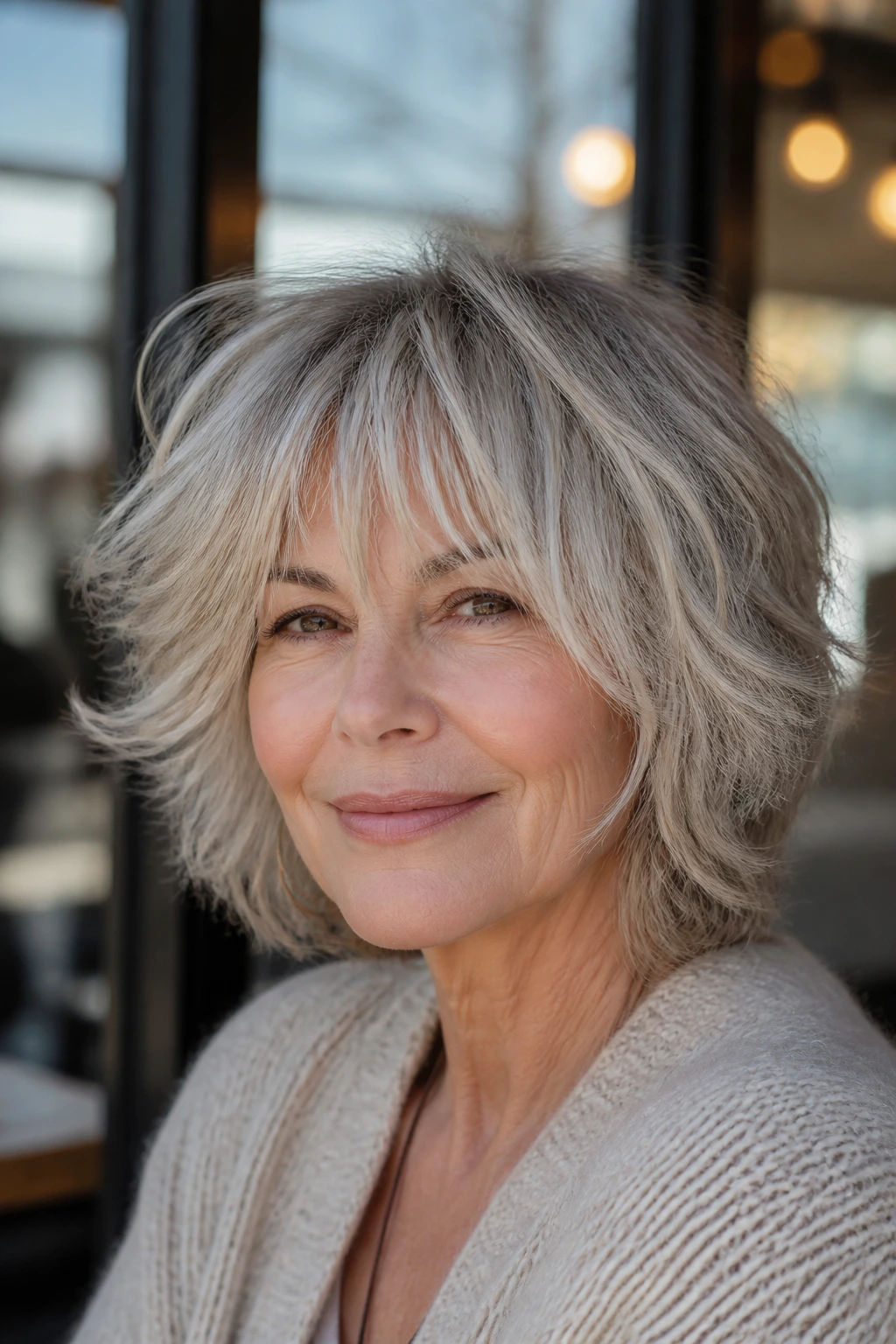
If you have very fine, thinning hair, a heavy shag can actually look too “gappy.” You want a wispy layers shag. Instead of big, chunky sections, this style uses dozens of small, thin, wispy layers. These layers create a dense, feathery effect that looks voluminous without requiring the hair to be thick.
The Visual Illusion
Think of a feather. It’s light, it’s airy, but it has structure. That is what you are aiming for. By creating these tiny, delicate layers, the hair overlaps in a way that hides the scalp and creates a soft, hazy appearance. It’s very romantic and incredibly gentle on the hair.
Essential Products
- Mousse: You need a lightweight mousse that won’t weigh the hair down.
- Volume powder: Sprinkle a tiny bit at the roots for instant lift.
- Avoid heavy oils: Anything that adds weight to the hair will collapse those wispy layers instantly.
9. Silver and Dimensional Shag
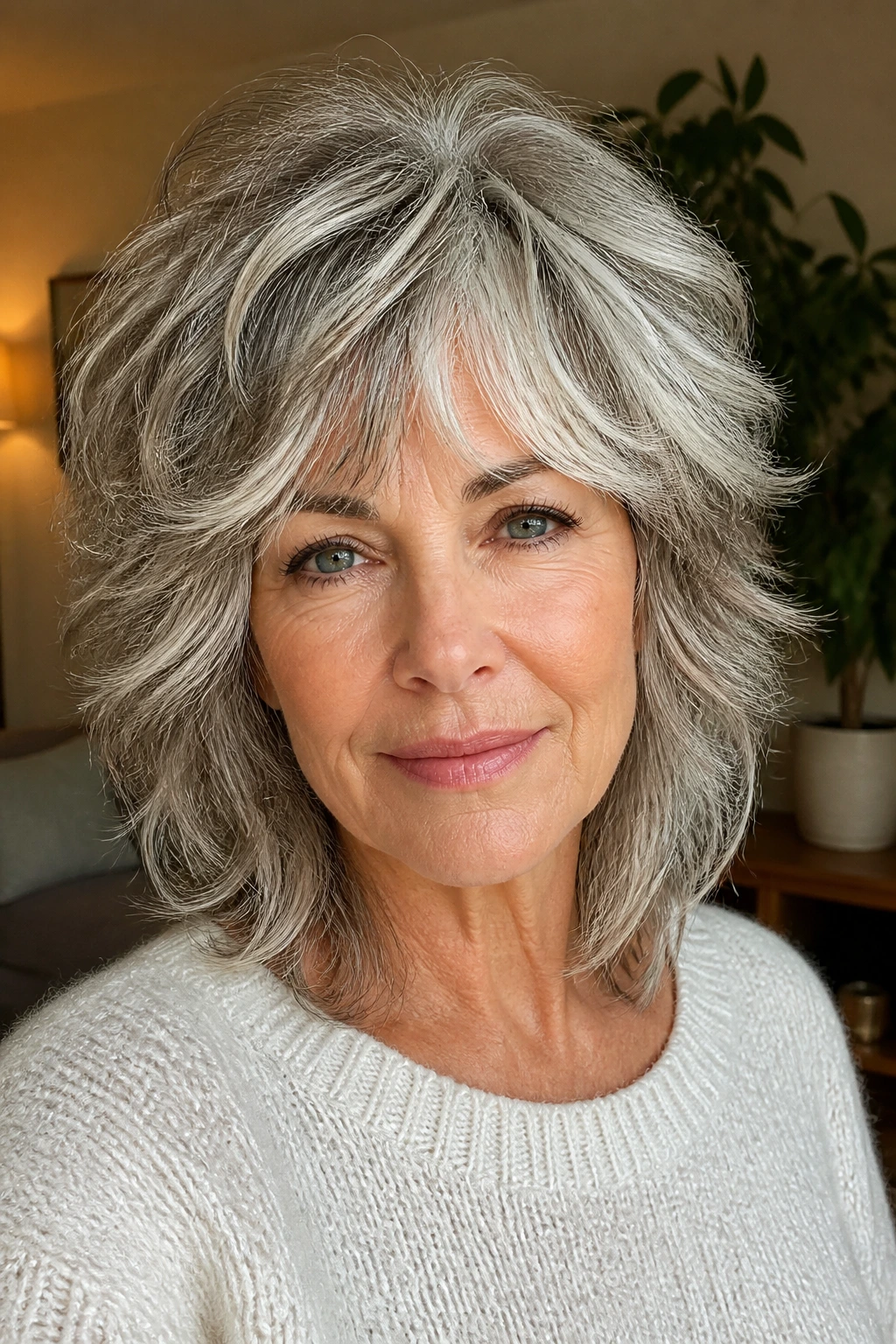
If you have embraced your natural silver or gray, the shag is a fantastic canvas for color dimension. Gray hair often has a different texture—it can be wiry or coarse—and the shag is perfect for taming that. Adding lowlights or highlights to a shaggy cut creates the illusion of even more texture.
Why Color Matters
When you have a one-length cut, color looks uniform. With a shag, the layers catch the light differently. If you have some darker lowlights woven into the silver, the shag will make those colors dance. It highlights the cut and the color simultaneously.
The “Gray” Myth
People often worry that gray hair looks dull. A shag prevents this by being dynamic. Because the hair is constantly moving and catching the light at different angles, the gray doesn’t just sit there. It shimmers. This cut is perfect for showing off the depth and complexity of natural gray hair.
10. Neck-Length Shag
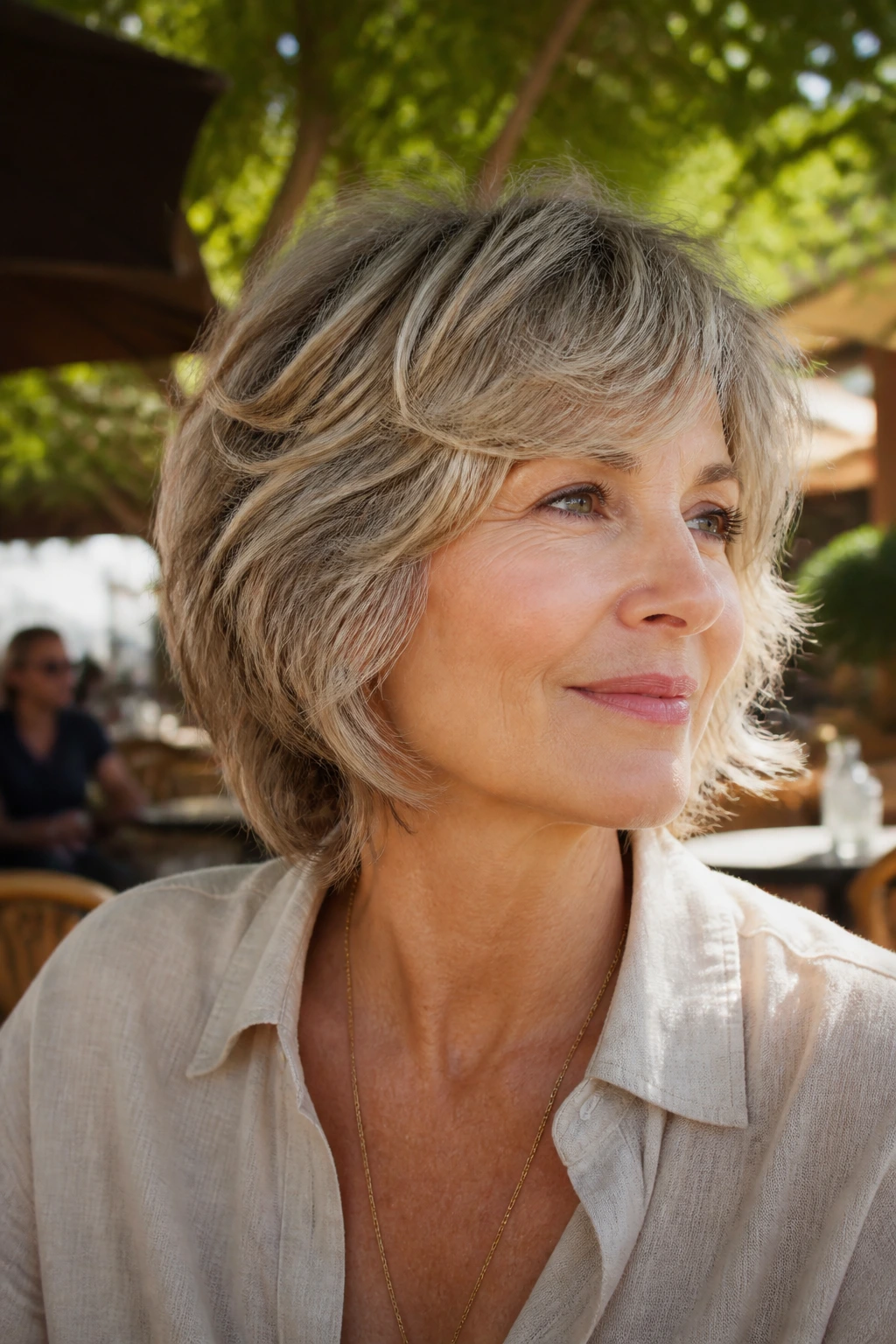
Sometimes you just want the hair off your neck. A neck-length shag is the perfect solution. It’s short enough to be considered a “short haircut,” but it retains enough length to still be feminine and playful. It frames the jaw and creates a nice lift at the back of the neck.
Practicality
This is a low-maintenance powerhouse. It takes very little time to dry because the hair is shorter, and you don’t have a lot of ends to manage. It’s also a great length for glasses wearers—the hair doesn’t get in the way of the frames.
How to Style
- Bedhead: This style loves a bit of “I just woke up” texture.
- Wax/Paste: A pea-sized amount of texturizing paste rubbed into your hands and run through the ends will give it that edgy, piecey look that really makes a neck-length shag pop.
11. Curtain Bang Shag
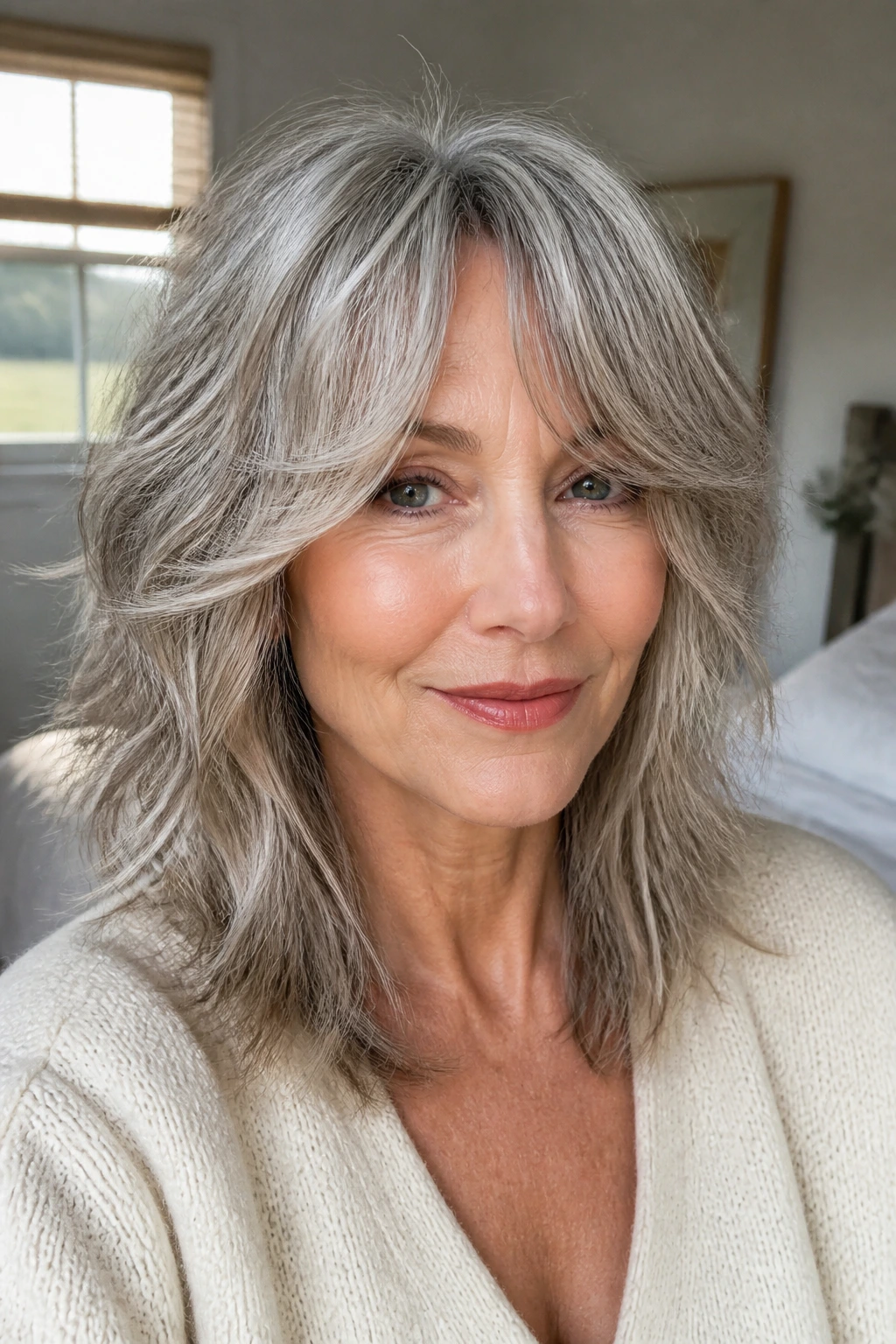
Curtain bangs have been having a moment for a while now, and they aren’t going anywhere. When you pair curtain bangs with a shaggy cut, you get a look that is soft, approachable, and incredibly framing. The bangs start shorter in the middle and grow longer toward the cheekbones, blending seamlessly into the rest of the shaggy layers.
The Benefit
These are the most forgiving bangs in existence. If you decide you don’t want them one day, they just grow out into face-framing layers. They don’t require the commitment of a blunt fringe. They also do a brilliant job of hiding crow’s feet near the eyes without having to cover your entire forehead.
Styling Tip
Use a velcro roller. Seriously. Roll the curtain bangs away from your face while the hair is damp, let it dry (or hit it with a dryer), and when you take the roller out, you’ll get that perfect, effortless sweep.
12. Pixie Shag
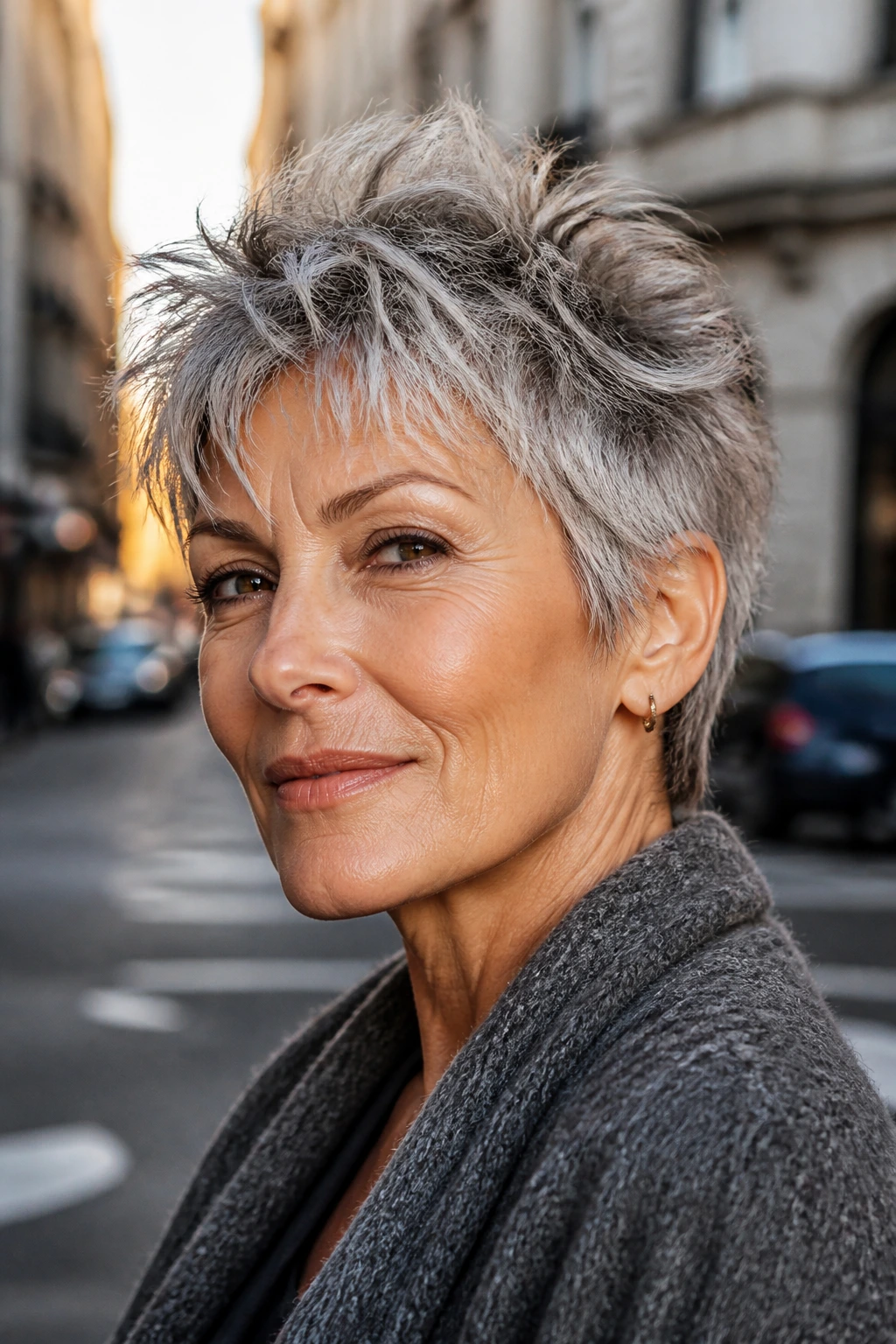
For those who want to go really short, the pixie shag is the way to go. It’s a pixie cut that hasn’t been cut into a perfect, uniform shape. It keeps the length in the back and on the sides a bit longer and choppier, and the top is styled with that signature shag texture.
Why This Style Rocks
It’s incredibly spunky. If you’ve always wanted a pixie but were afraid of it being too severe or exposing too much, the shag elements soften it. It has that “I’m fun, I’m energetic, and I’m definitely not boring” vibe.
Maintenance
- More frequent cuts: Pixies lose their shape faster than any other cut. Expect to be in the chair every 4-5 weeks.
- Styling: This is a “finger-styling” cut. You don’t need a brush. You need your hands and a bit of product.
13. Shaggy Mullet-Lite
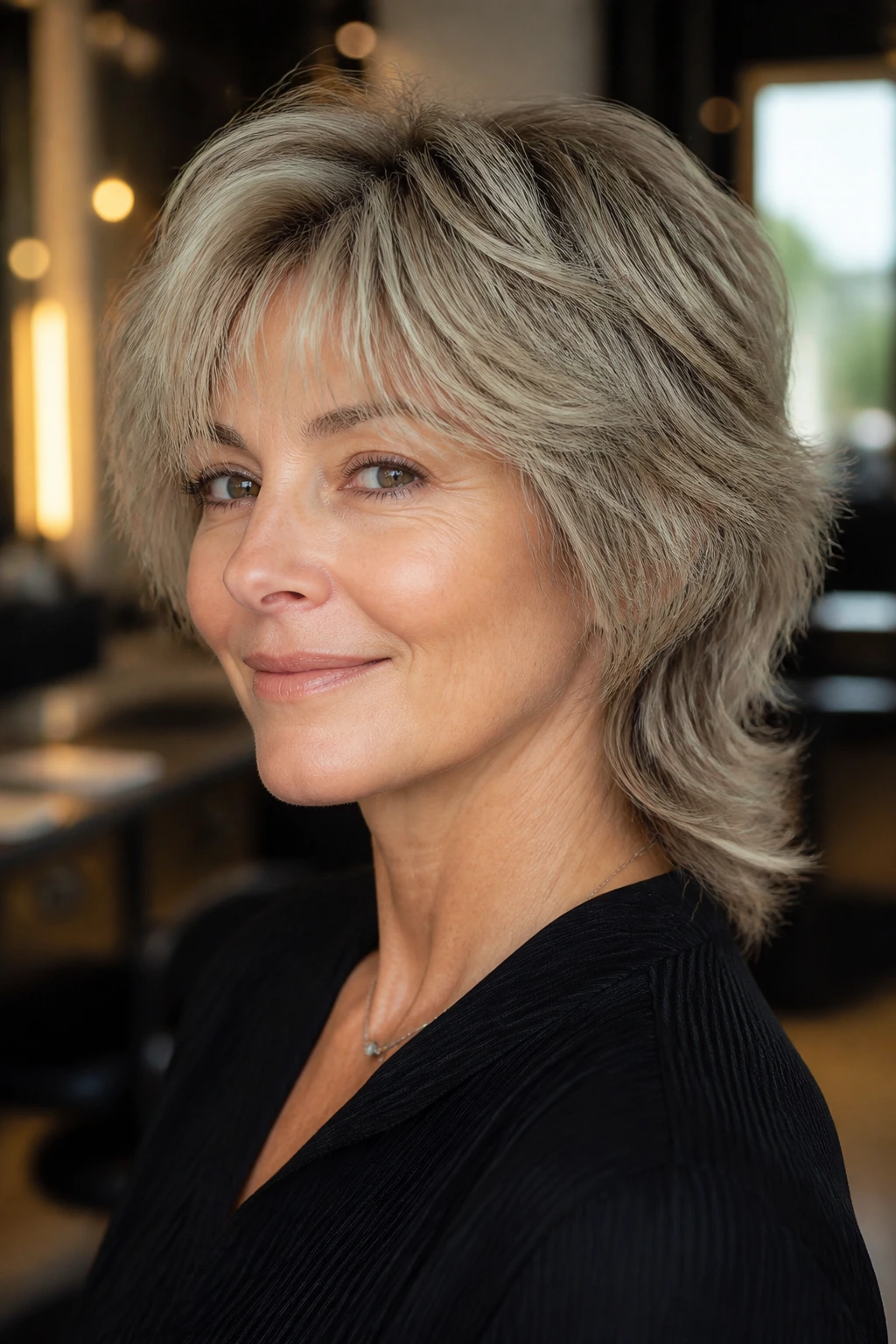
Don’t let the word “mullet” scare you. Modern versions of this are softened, blended, and very chic. The “mullet-lite” features the classic shag layers but keeps a slightly longer, more tapered length at the nape of the neck. It’s a rock-and-roll haircut that feels sophisticated rather than trashy.
Wearing It
This cut is about attitude. It’s for the woman who wants to stand out. It’s actually quite flattering because the length at the neck elongates the silhouette, which can be very elegant.
Balance
The key to a mullet-lite is the blend. You don’t want a harsh line between the short top and the long bottom. The layers need to be expertly blended so the transition is fluid. If the blend is harsh, it’s a mullet. If it’s soft and layered, it’s a modern shag.
14. Side-Swept Bang Shag
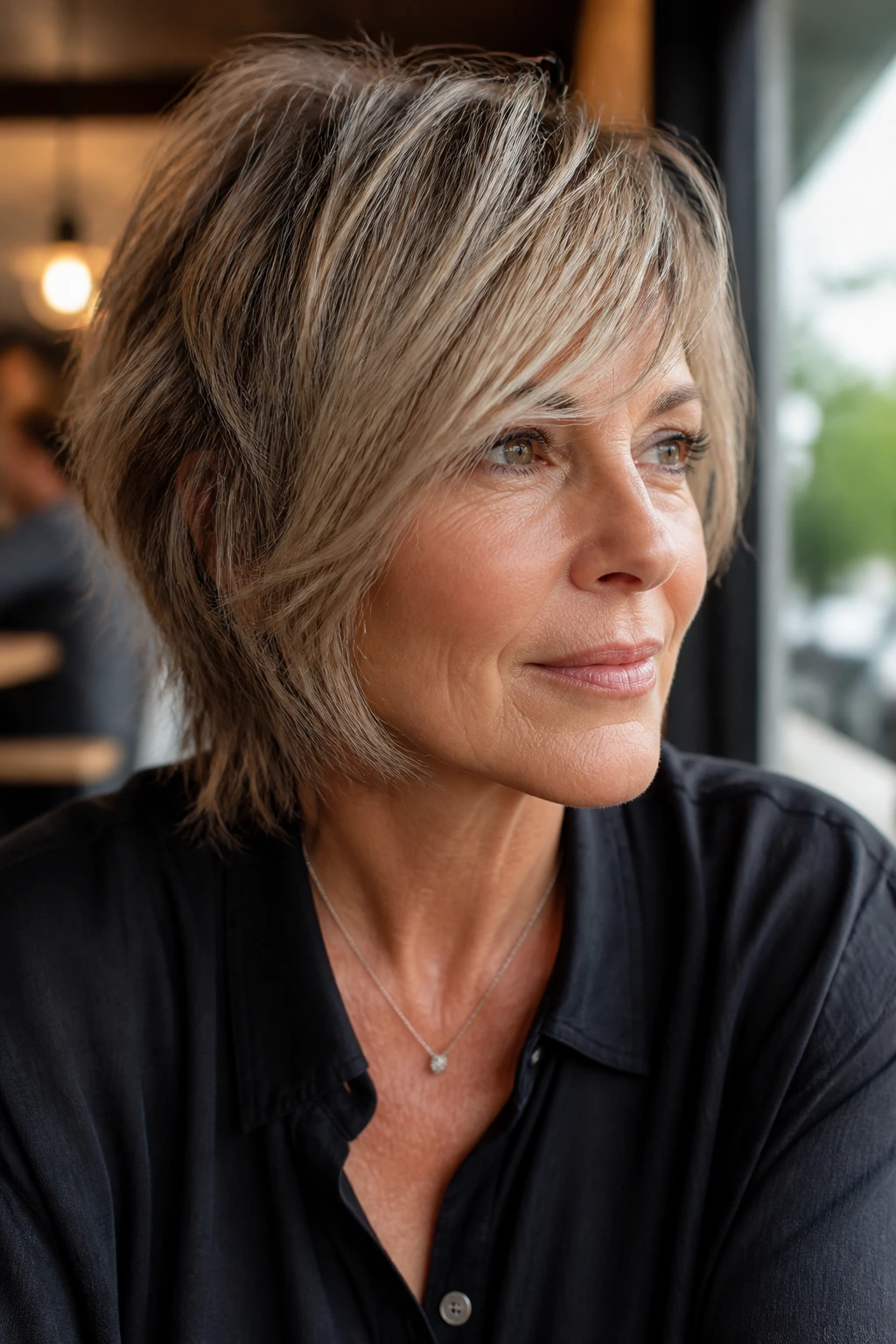
A side-swept bang is the timeless alternative to a full fringe. It works for almost every face shape. By keeping the bangs long and sweeping them to one side, you create a diagonal line across your face, which is visually very slimming and softening.
Styling the Sweep
You want the bangs to have volume. Avoid pulling them flat across your forehead. Use a round brush to pull the hair up and over to the side, creating a swooping motion. This adds height at the temple, which is exactly where you want it to balance out the face.
Who Should Choose This
If you have a rounder face shape, the side-swept shag is ideal. It cuts across the roundness, adding angles and definition. It’s the closest thing to a “contouring” haircut you can get.
15. Undercut Shag
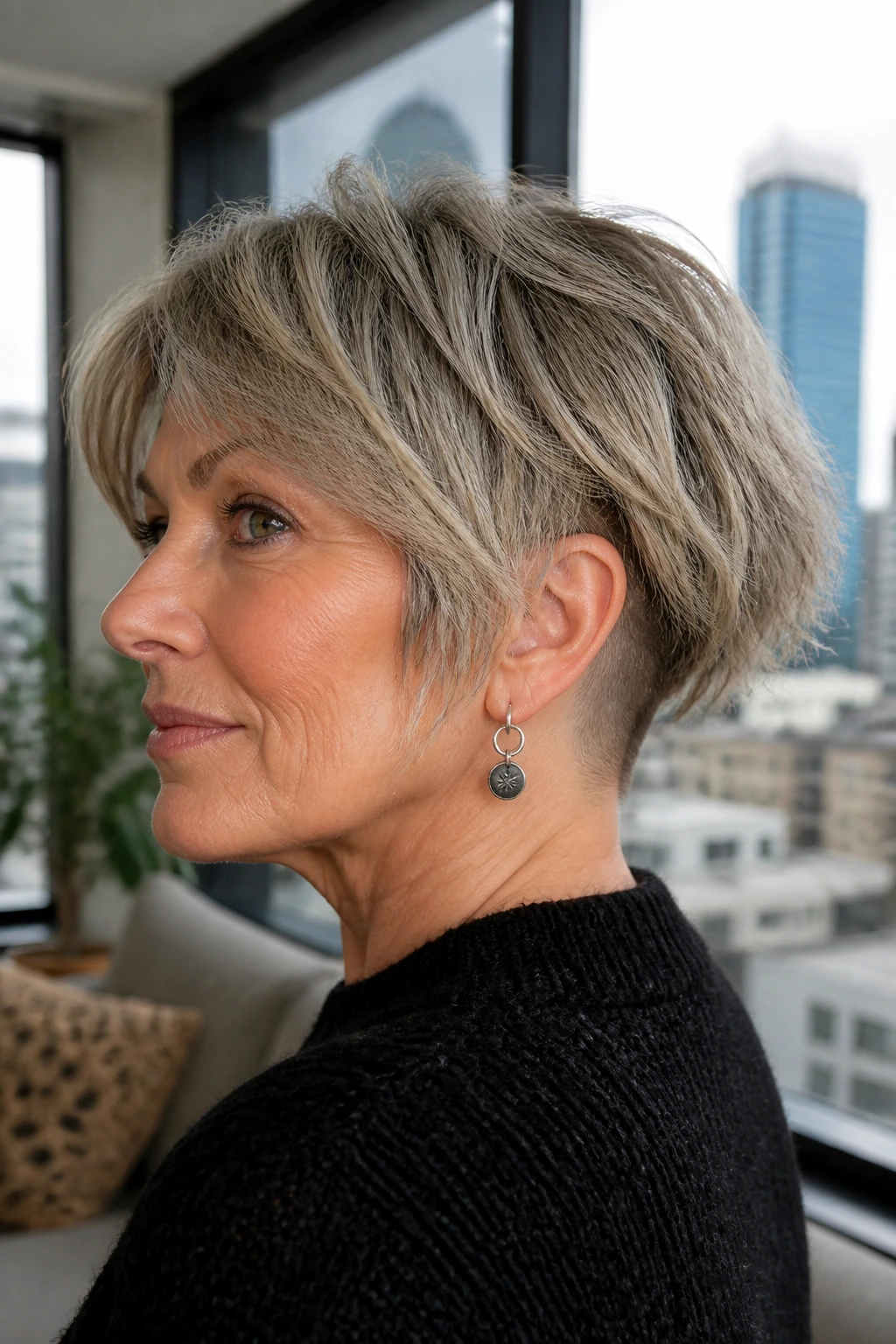
This is for the woman with extremely thick, heavy hair who feels like her hair is a burden. An undercut involves shaving or trimming the hair very short at the nape of the neck, underneath the longer layers. The top of the hair then covers the undercut.
The Effect
It removes so much weight that your head will feel literally lighter. It also prevents the “bushy” effect at the bottom of the shag. You keep the shaggy look on top, but the bulk is gone. It’s a secret technique that makes a thick, unruly shag manageable.
Surprise Factor
It’s a fun little secret. When you pull your hair up, you see the undercut. When your hair is down, it’s completely hidden. It’s practical, it’s cool, and it solves the problem of “too much hair” without sacrificing the style you want.
16. Long-Layer Shag
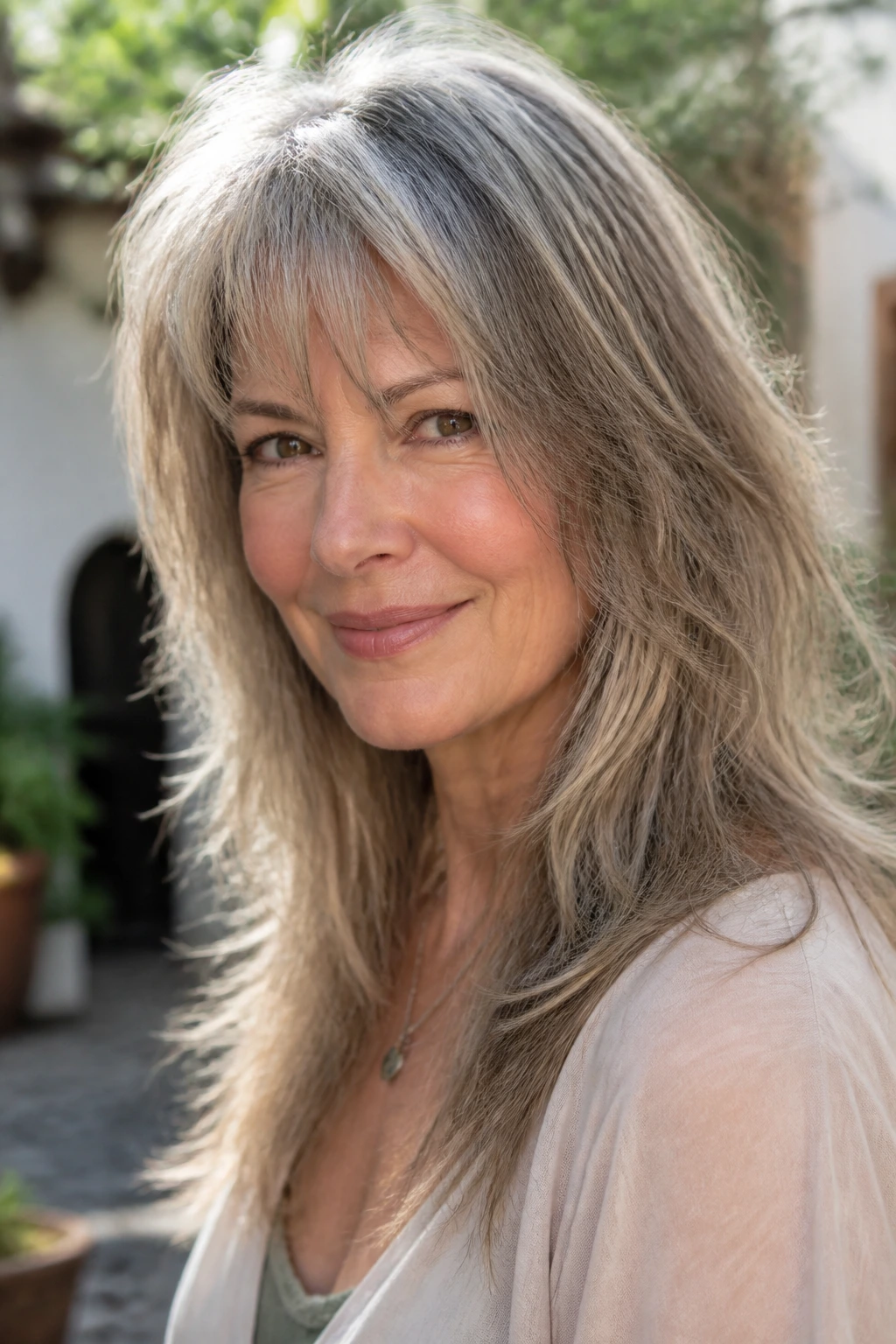
If you aren’t ready to let go of your length, you don’t have to. You can have a “long shag.” This involves keeping the length below the shoulders but adding shaggy, shorter layers throughout the crown and sides. You keep the length but get all the movement of a shag.
Why This Is Different
A long, one-length cut is heavy. A long, layered cut has movement, but can still look dated. A long shag has that intentional, piecey, textured look. It feels youthful.
Warning
You must be diligent with trims on the ends. Long hair is prone to split ends, and in a shag, those split ends are visible. If you are keeping the length, you have to prioritize the health of the ends.
17. Salt-and-Pepper Shag
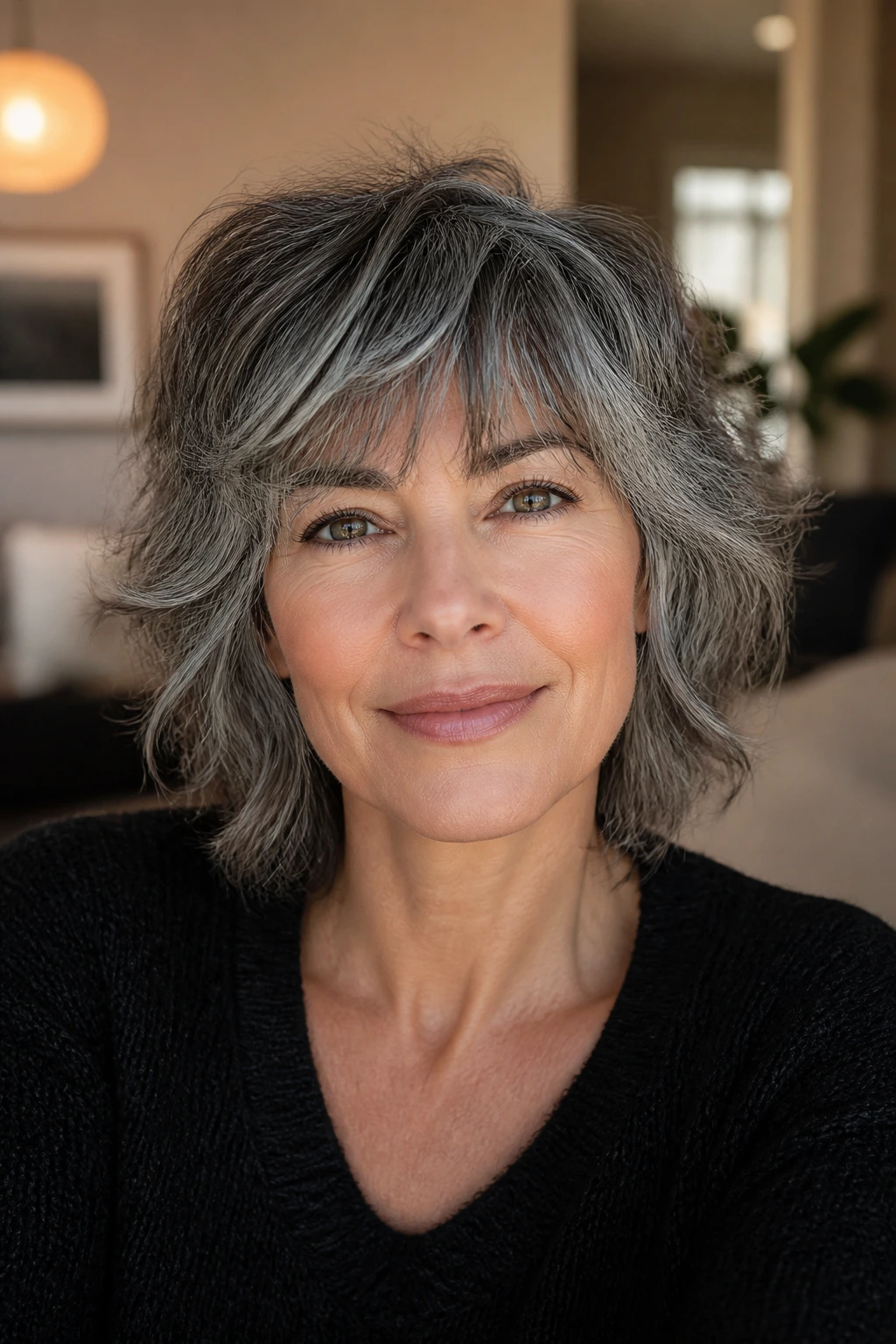
This isn’t a specific cut shape, but rather a styling philosophy. When you have salt-and-pepper hair, you have natural highlights and lowlights. The shag is the best cut to show this off. Because the hair is layered and textured, the light hits the salt (white) and pepper (dark) differently.
Maximizing the Look
Use a clear gloss treatment once a month. Gloss adds shine and makes the contrast between the white and dark strands pop. When your hair is shiny, the gray looks intentional, not neglected.
The Verdict
Pair this with any of the cuts above. The “salt-and-pepper shag” is not about the shape of the cut as much as it is about the celebration of the texture. It’s a bold choice to let your natural colors shine through, and the shag provides the perfect, modern silhouette to house that beauty.
Final Thoughts
Choosing a shag haircut is about embracing the reality of your hair as it is today, not as it was a decade ago. It’s about recognizing that texture, volume, and movement are your best friends in creating a style that feels vibrant and alive. You don’t need to fight your hair; you just need to give it the structure it needs to thrive.
The beauty of these 17 variations is that there is no single right answer. You might start with a soft, face-framing shag and decide you want to go shorter and choppier with a pixie shag later on. That is the nature of the style—it evolves with you. The goal is to walk out of the salon with a cut that makes you feel like yourself, only with a little more bounce and a lot more attitude.
