



Long hair can look expensive and still fall flat. That’s the annoying part. A good cut changes the whole mood of it, and layered haircuts for long hair are the fastest way to get movement without giving up the length you worked to grow.
The catch is that “layers” is not one idea. Some are soft and barely visible. Some are sharp, face-brightening, and obvious from across the room. Some take a heavy curtain of hair and make it swing instead of sit there like a blanket.
I’ve always liked the long cuts that do their job quietly. You notice them when you turn your head and the ends move, or when your hair air-dries without hanging in one thick block. That’s the real test. Not the salon chair mirror. The way it behaves at home, in normal light, on a regular Tuesday.
Thirty versions of layered hair can sound like a lot until you start matching shape to texture, density, and how much styling you’ll actually do. Some cuts are low-drama and forgiving. Others need a round brush and a little patience. Both can be good. They just solve different problems.
1. Feathered Layers That Lighten the Ends
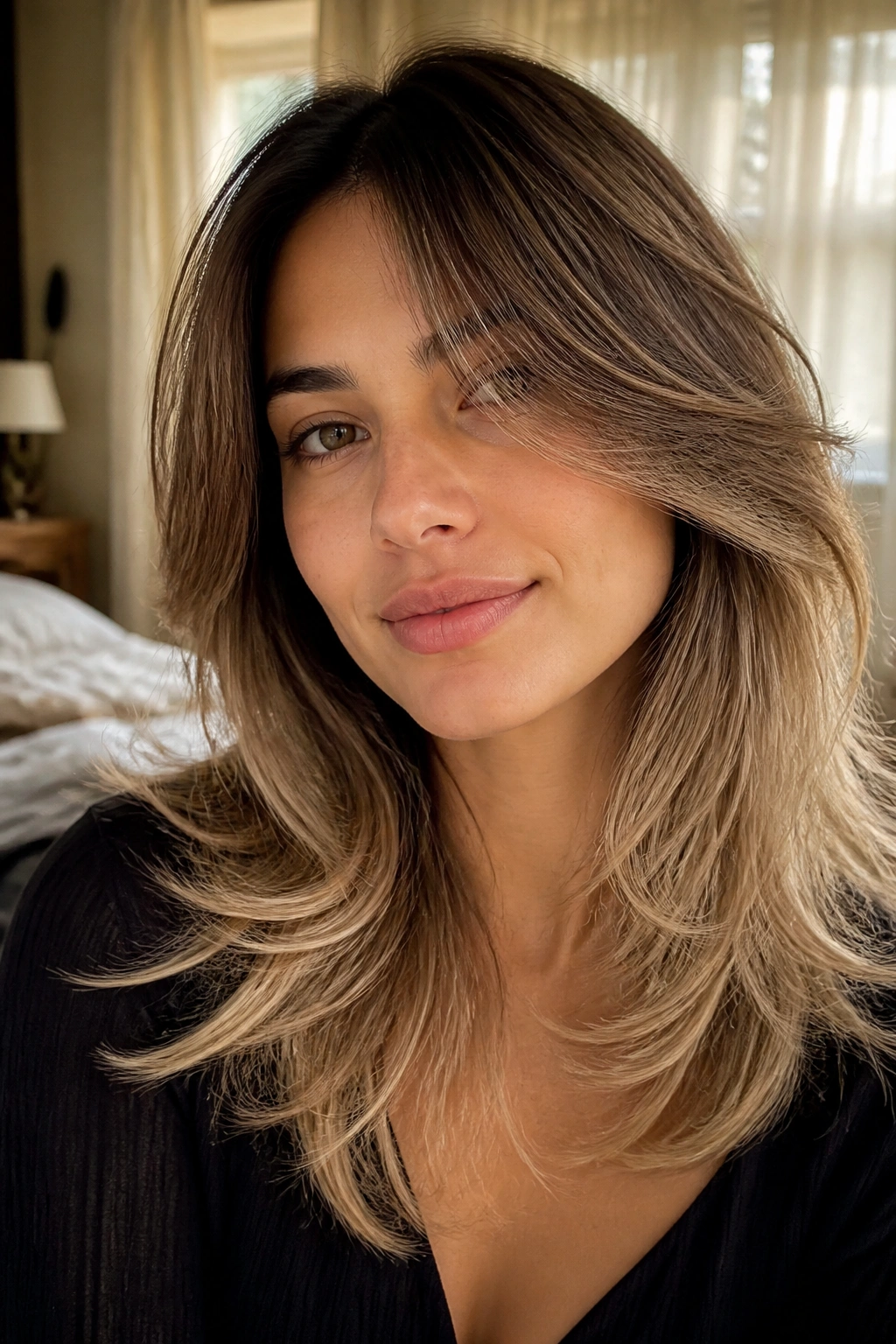
Feathered layers are the first thing I point people toward when they want long hair that moves without looking chopped up. The shape feels soft at the ends, almost airy, and that matters if your hair tends to hang in one heavy sheet.
Why the Shape Works
The idea is simple: the shortest pieces are blended so they melt into the longer lengths instead of sitting on top of them. That keeps the perimeter full while taking weight out of the middle and ends. On thick hair, that balance makes a big difference.
Ask for layers that begin around the collarbone or just below it if you want to keep the length feeling lush. A good feathered cut should still look polished when you skip styling. No hard steps. No chunky shelves.
- Best for thick, straight, or softly wavy hair
- Looks especially good with a round-brush blowout
- Keeps the bottom edge from feeling blunt and heavy
- Needs only a light serum or cream on the ends
Pro tip: If your ends already feel fragile, keep the feathering soft and let the perimeter stay a little blunt. That gives you movement without making the length look thin.
2. Curtain-Framing Layers Around the Face

Curtain-framing layers are one of those cuts that make people think you changed more than you did. They open the face, soften the cheeks, and give long hair a cleaner shape without needing bangs.
What I like here is the grow-out. It stays friendly. If you hate upkeep, this is the kind of long layered haircut that does not punish you after six weeks. The front pieces can start at the cheekbone or jawline and drift down into the rest of the length.
The trick is not to overdo the front. Too much face framing can steal weight from the rest of the cut and make long hair look stringy. A few well-placed pieces are enough.
Best for: anyone who wants shape around the face but still wants to tuck hair behind the ears, clip it up, or pull it into a ponytail without awkward short bits popping out.
3. The Butterfly Cut for Big Movement
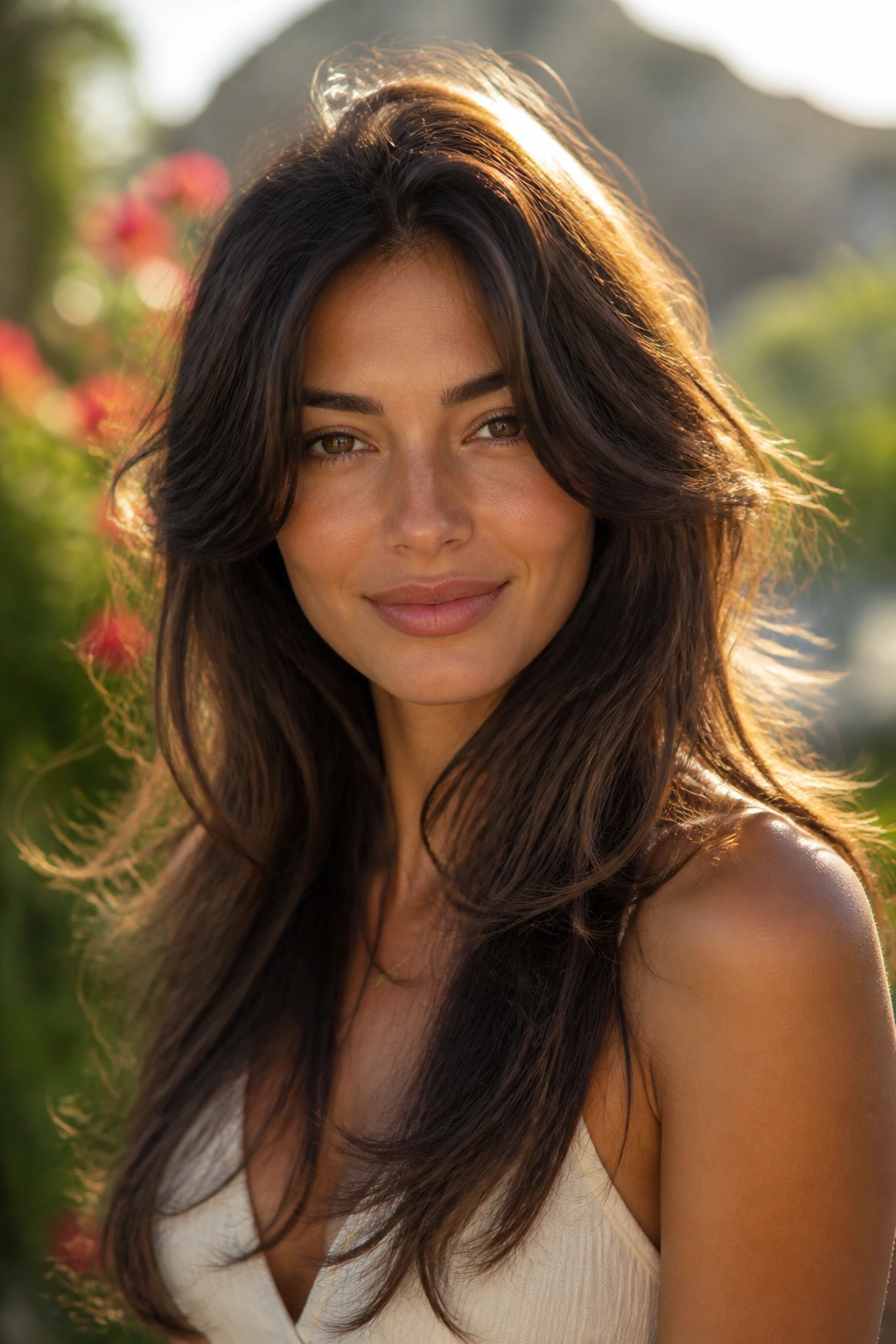
Why does the butterfly cut keep getting attention? Because it gives you the feeling of a shorter, bouncy cut on top while the long length stays in place underneath.
That upper layer is the whole point. It sits high enough to create lift at the crown and around the face, then fades into long, flowing lengths below. The result looks more dramatic than soft feathering, but it still keeps the hair wearable.
How to Style It
A butterfly cut loves a round brush, a large curling iron, or even a few velcro rollers while the hair is still warm. You want the top section to lift away from the head instead of clinging to it. A little bend at the ends helps too.
This cut is especially smart if your hair is long, thick, and a little stubborn. It removes weight where you feel it most, and it gives the illusion of fullness at the top without sacrificing the long tail. That’s the part people usually want.
4. U-Shaped Layers That Keep the Length Full

A U-shaped cut sounds subtle, and it is, but subtle does not mean boring. The outer line curves gently at the back, which gives long hair a softer finish than a straight blunt hemline.
This shape is good when you want to keep the ends looking dense. A sharp cut line can feel too hard on very long hair. The U shape breaks that up while still keeping the whole thing full and long.
You can pair the U with quiet layers through the interior, but the real charm is the silhouette. It looks balanced from the back and flattering when hair is pulled over one shoulder. There’s a nice sweep to it.
A lot of stylists use this as a safe starting point for people who are nervous about layers. Fair enough. It gives movement without turning the haircut into a project.
5. V-Cut Layers for a Sharper Back Shape
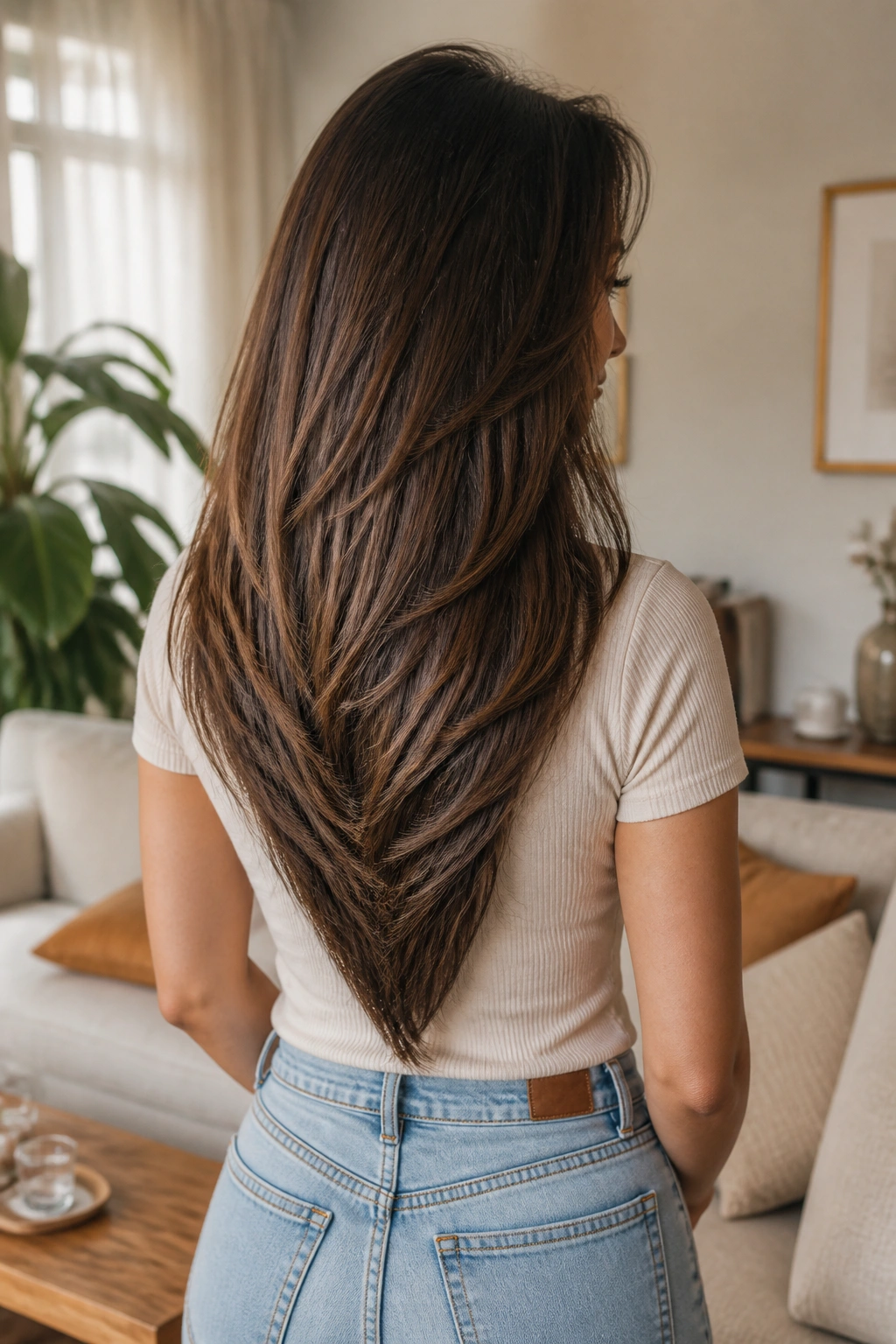
The V-cut is for someone who wants the length to look a little more dramatic. Instead of a rounded edge, the back narrows to a point, which gives long hair a clear directional shape.
It works especially well on thick hair, because the point helps distribute all that weight. If your hair is one of those heavy, back-swaying lengths that takes forever to dry, the V shape can make it feel lighter without cutting off much.
I also like how it looks in motion. A V-cut opens up when the hair moves. The side pieces fall differently than they do in a U-cut, which gives the style a more defined outline.
Not everyone wants that. Fine hair can lose too much visual density if the point gets too sharp, so the cut has to be handled with a light hand. Keep the lowest point soft, not severe. That makes all the difference.
6. Invisible Layers for a Soft, Seamless Finish
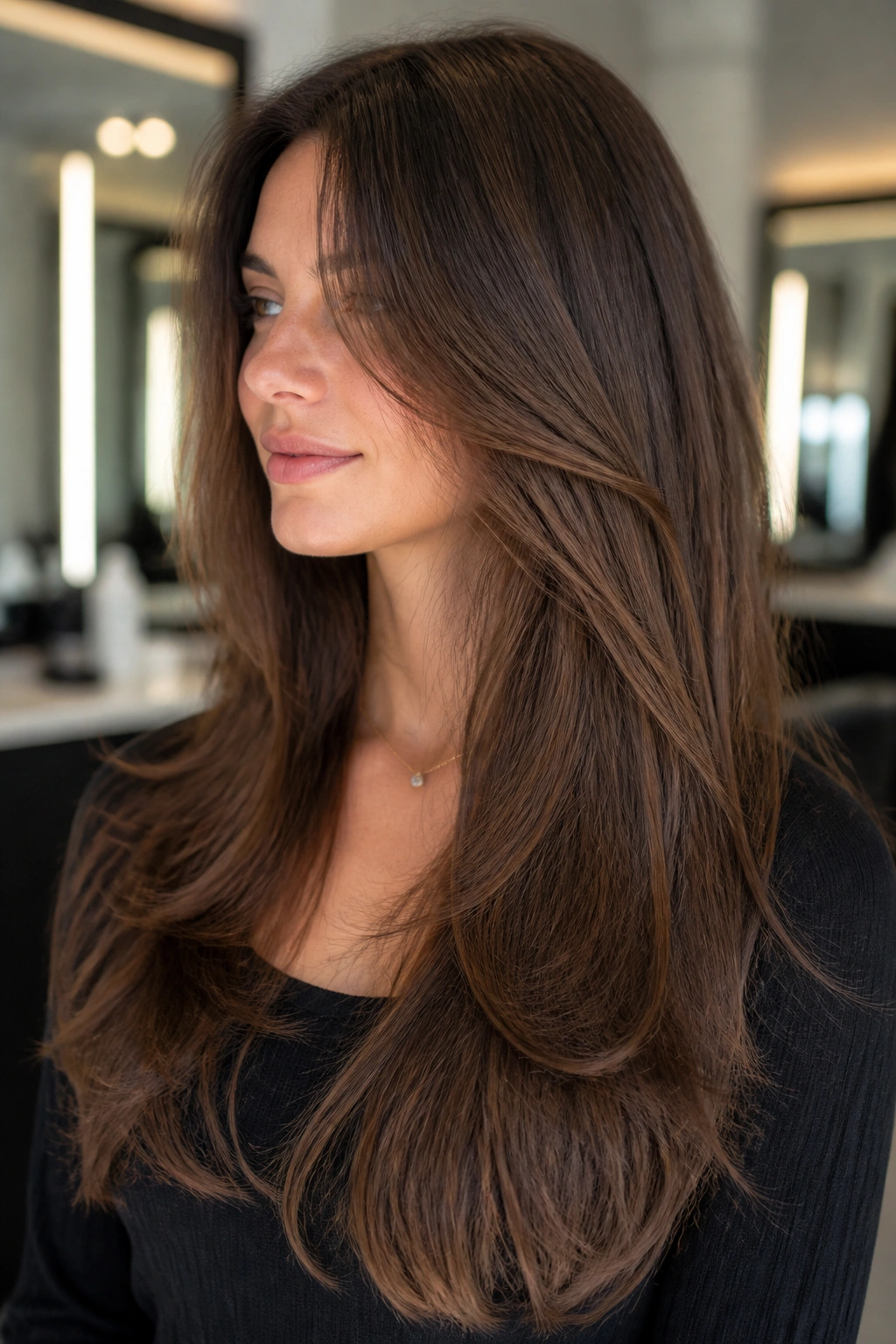
Invisible layers are the sneaky ones. You do not notice them right away, which is exactly why they work so well for people who want shape without obvious chopping.
Unlike a shag or a choppy layered cut, these are cut deep inside the hair. The outer sheet stays smooth, while the hidden structure takes weight out from underneath. It is a smart choice if you like long hair to look polished and expensive, not piecey.
What Makes Them Different
The best invisible layers are about movement, not drama. They help the hair bend more easily and keep the ends from looking too flat, especially on straight or very slightly wavy hair.
- Good for fine hair that needs lift without losing its line
- Works on thicker hair when you want less bulk
- Blends well with blunt ends
- Usually needs less styling than visible layers
A small warning: if your hair is damaged, too much internal cutting can make the ends look wispy. Ask for softness, not thinning.
7. Shaggy Long Layers With a Little Edge

A shaggy long cut has personality. It is looser, messier, and more relaxed than a polished layered style, and that’s exactly the point.
The shape usually starts higher than a classic long layer cut, with texture scattered through the crown and around the sides. It lets waves and bends show up instead of forcing the hair into one clean sheet. If your hair already has some natural texture, this cut makes sense.
What It Feels Like in Real Life
You shake it out, and it moves. You don’t need to baby it. That’s the appeal.
A shag works best when you’re willing to use a texture spray or a light mousse and leave the brush alone. Overcombing kills the shape fast. Air-drying is fine. So is rough-drying with your fingers and a diffuser if your hair bends or curls.
If your style leans polished and glossy, skip this one. If you like hair that looks a little lived-in and never too stiff, this cut has real charm.
8. Choppy Textured Layers That Read Modern
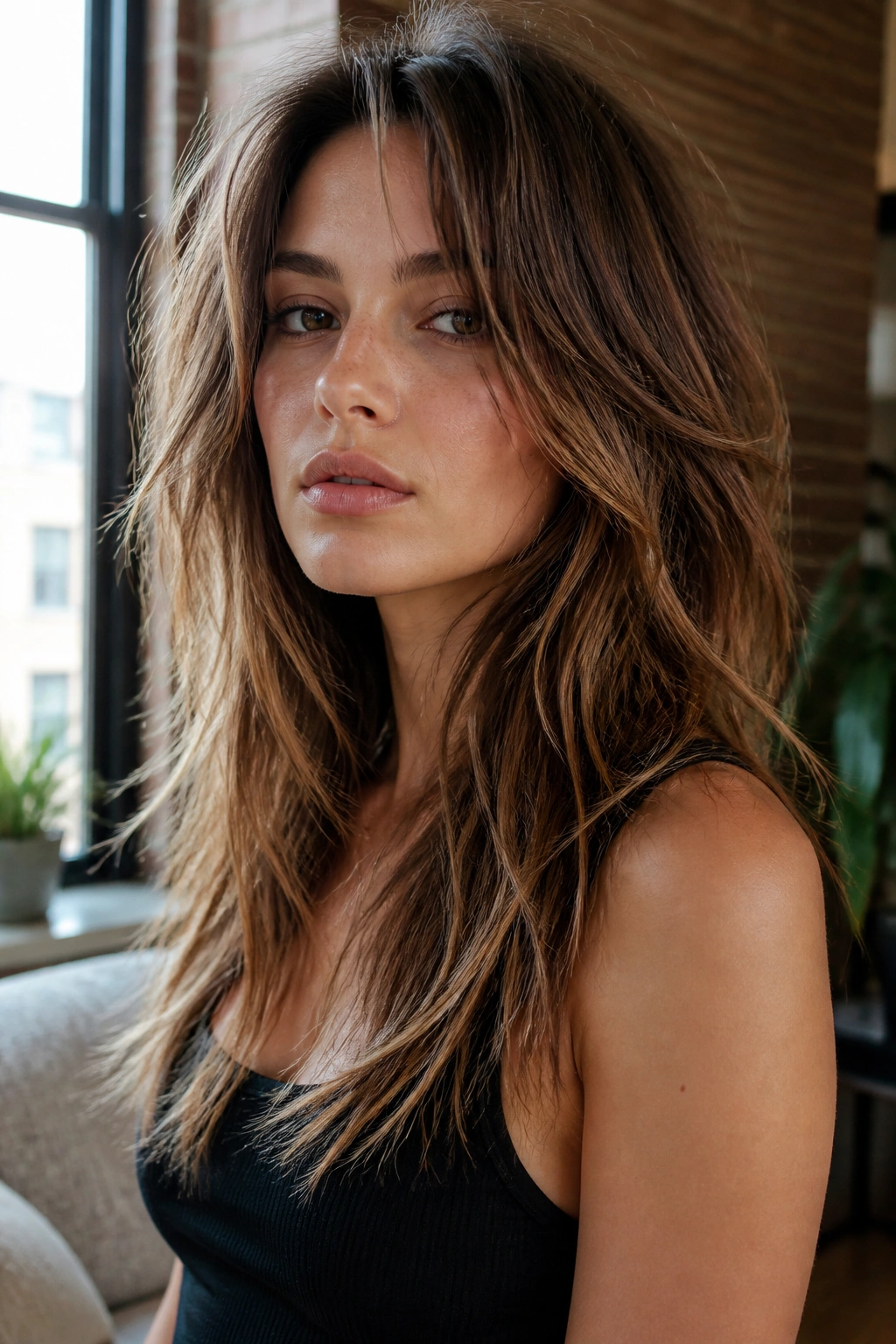
Choppy layers are what you choose when you want separation. Not softness. Not barely-there blending. Separation.
The ends are usually cut with more edge, sometimes with point cutting or a razor, so the pieces sit apart from one another instead of melting together. On long hair, that creates a piecey finish that shows off natural texture and brings a little grit to very straight or heavy lengths.
This cut is best when the styling has some shape to it. A matte texture cream, salt spray, or a dry finishing spray helps the layers show up. If you blow it out sleek, you lose the point of the cut.
Not every hair type can carry this cleanly. Fine ends can look scrappy fast. Thick or wavy hair, though, can take the texture and wear it well. It has bite.
9. Long Layers With Side Bangs
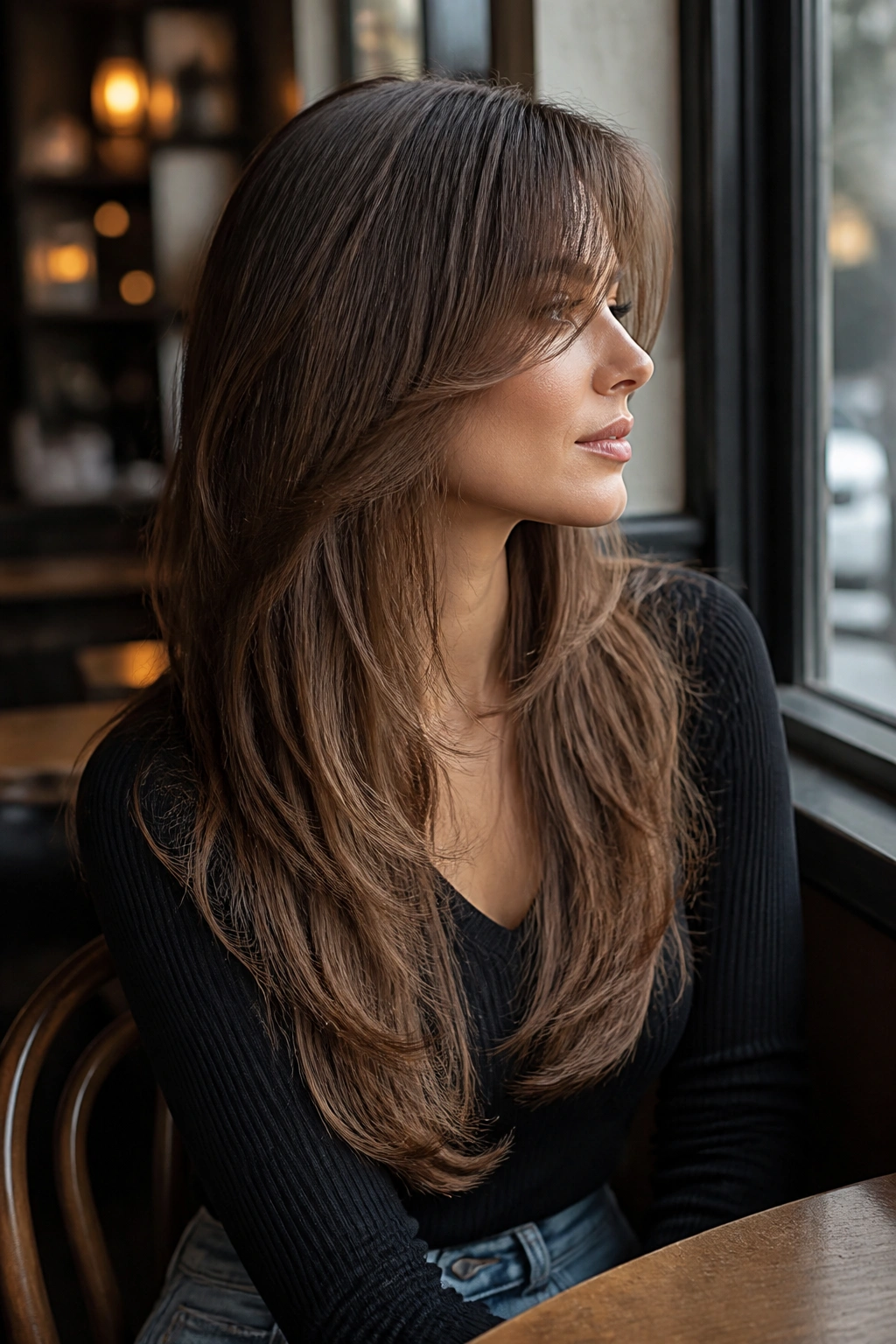
Side bangs change the mood of long layers fast. They push the eye across the face, which can soften strong features and add a little sweep to the whole cut.
The nice thing about side bangs is that they are less of a commitment than blunt fringe. They grow out better, they tuck away more easily, and they blend into the rest of the hair when you want them out of the way. That matters.
How to Wear Them
A side bang should connect to the longest face-framing pieces, not stop awkwardly on its own. Blow-dry it with a round brush or a flat brush and a small bend at the end. You want it to curve, not stick out.
- Good for long faces that need some width
- Helps balance a narrow forehead
- Pairs well with soft layers through the ends
- Needs a trim now and then to keep it from falling into the eyes
This is a cut with some old-school charm, and I mean that in a good way. It makes long hair feel styled even when the rest is simple.
10. Rounded Layers for Fuller Sides

Rounded layers give the hair a softer, more curved outline instead of a pointy or flat shape. Picture the shape hugging the sides of the face and falling in a gentle arc.
That shape is useful if your hair tends to go straight down with no lift at all. The roundness brings body to the sides, which can make long hair feel less bottom-heavy. It also helps if you like a big blowout look.
A round cut works best when the shortest layers sit near the chin or collarbone and the longer lengths keep that curve going all the way down. The silhouette matters more than any one piece.
If you have a strong jawline or a face that feels a little angular, this shape can soften it nicely. If your hair is already very round in volume, though, you may want something leaner. This one has presence.
11. Waterfall Layers That Fall in Soft Stages

Waterfall layers have a lovely way of moving. One section drops into the next, and then the next, so the whole cut feels like it’s cascading instead of stepping.
That stair-step effect is soft when it’s done well. The layers are long enough to stay graceful, but they still create dimension around the face, shoulders, and back. On wavy hair, the shape really shows up when the hair dries on its own.
What I like most is the motion. You turn your head and the layers drift with you instead of sitting there in a solid mass. The effect is subtle in still photos and much better in real life, where hair actually moves.
Ask for soft transitions between the layers, not harsh separations. A waterfall cut should feel fluid. If the layers look too distinct, the whole point gets lost.
12. Razor-Cut Layers With Airy Ends

Razor-cut layers change the texture of long hair fast. The edge comes out softer and lighter, and the hair tends to swing with more freedom than it does with a blunt scissor cut.
That softness can be great on thick, straight hair that feels stiff when cut bluntly. A razor takes some of the hardness out of the line and makes the ends feather slightly. But there is a catch. On fragile or already split ends, too much razor work can make the hair look frayed.
Where It Works Best
A razor is useful through the mid-lengths and face frame when you want a less boxy shape. It is not always the best choice at the very bottom if your ends need strength.
- Best for dense hair that feels heavy
- Can soften a stubborn straight texture
- Needs healthy ends to look clean
- Usually pairs well with light styling cream, not heavy oil
If you like hair that falls with a little movement and isn’t too tidy, this is a sharp choice. Just don’t let anyone shred the ends for the sake of a trend.
13. Blunt Ends With Long Layers
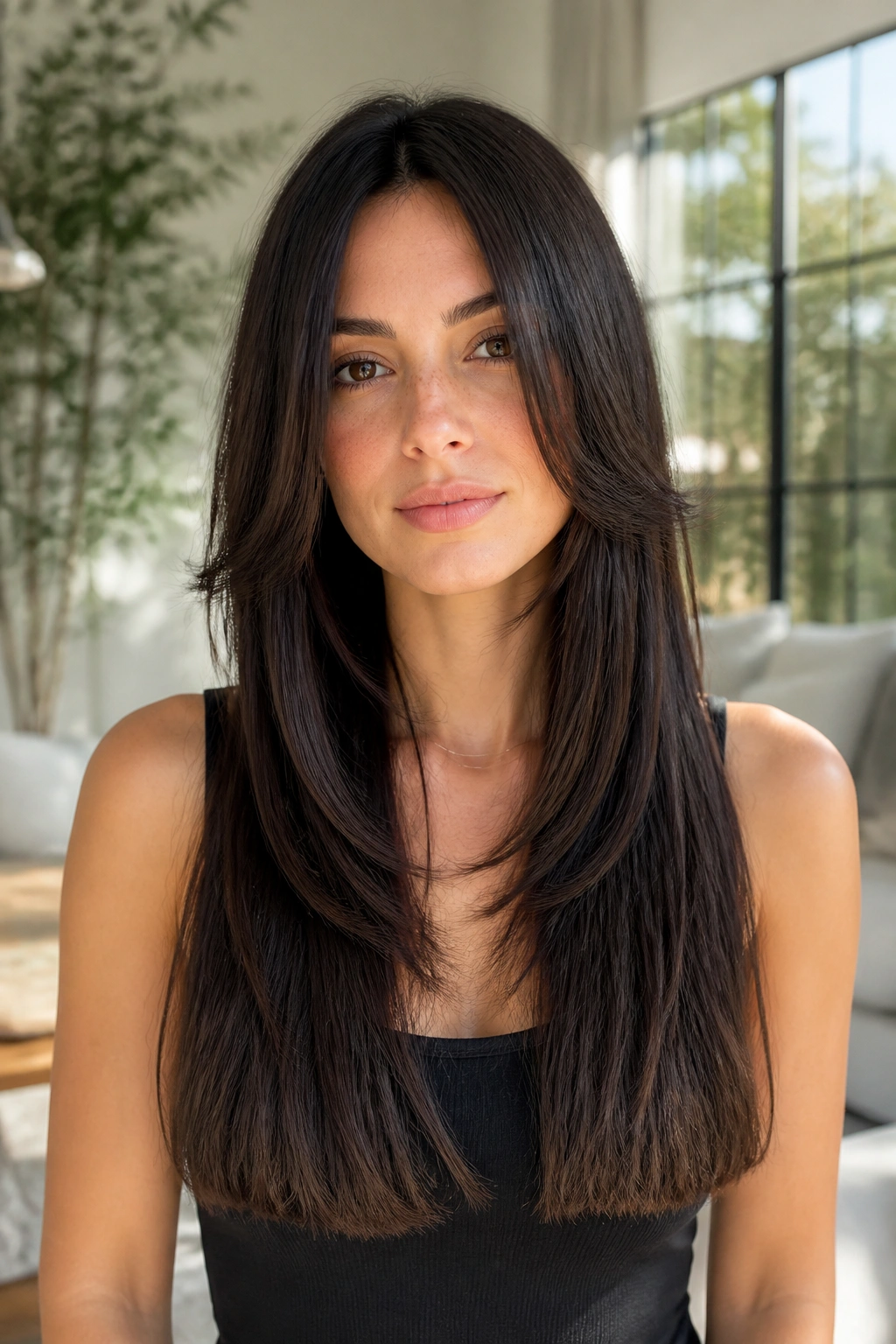
This is the cut for people who want the ends to stay full. The perimeter stays blunt, which gives the hair a solid line, while the layers sit higher and do their work quietly.
That mix matters more than people think. A blunt hemline on long hair can sometimes look too heavy, especially if the hair is thick. Layers solve that, but only if they are placed with care. You still want the bottom to feel dense.
A good version of this cut keeps the longest pieces intact and uses layers up near the mid-lengths or around the face. It is one of the better options if you want polish first and movement second.
I like this on hair that’s worn straight a lot. The clean edge makes the whole thing look more deliberate. It’s also easier to dress up, because the finish already feels neat.
14. Swoopy Cheekbone Layers
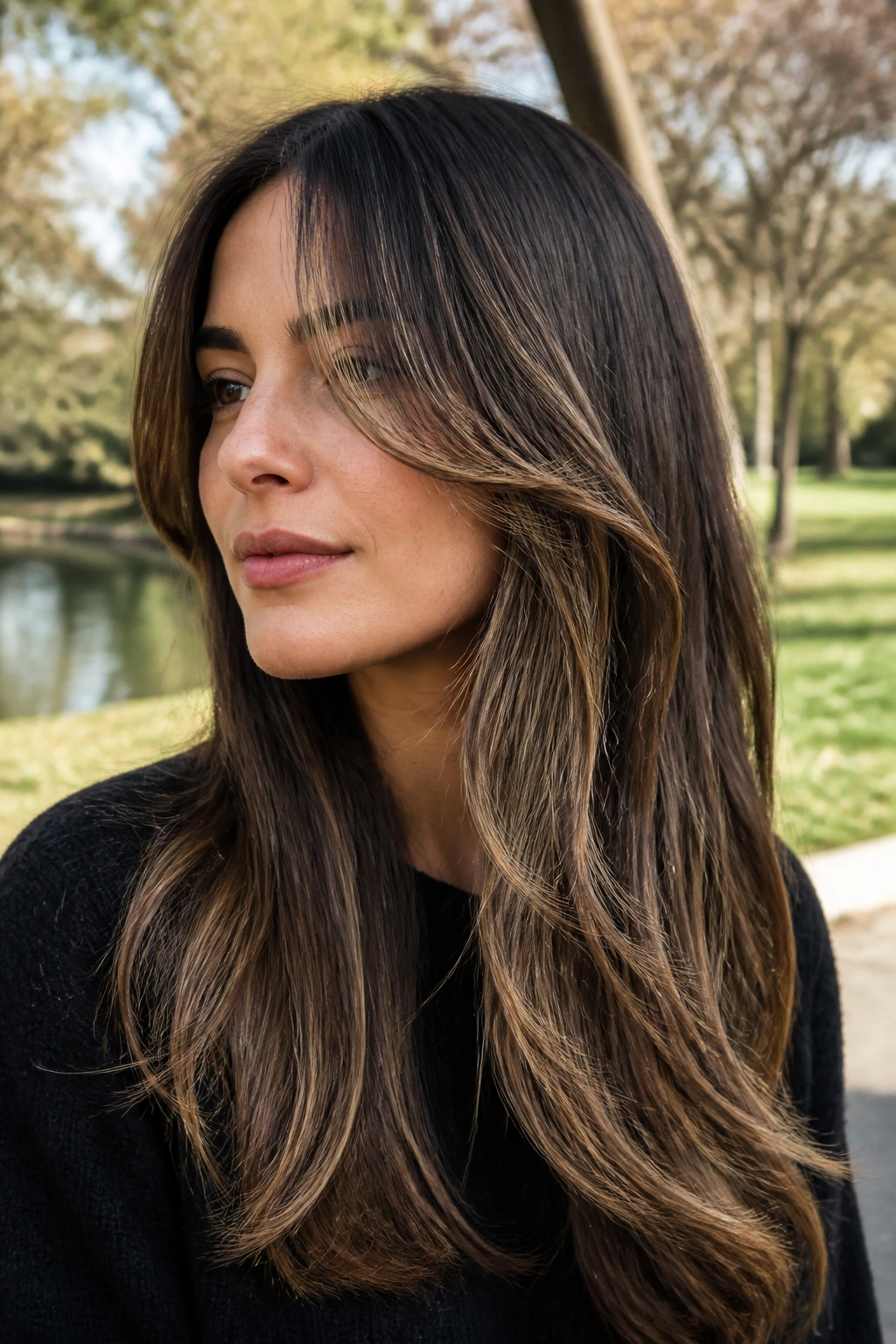
Cheekbone layers do a lot of work for a very small amount of hair. They start right where the face needs shape and sweep back into the length, which makes the whole haircut feel lifted.
The best version begins with a soft angle near the cheekbone and continues down through the jaw and shoulders. That creates movement around the face without cutting the hair into short, obvious pieces. It’s a smart cut for anyone who wants contour without fringe.
Why It Changes the Face
A front layer that sits at cheekbone level changes the eye line. It pulls attention upward, adds width where the face is narrow, and can soften a strong jaw.
You’ll usually style these pieces away from the face with a round brush or a curling wand. The bend matters. If they lie flat, they lose the effect.
This is one of my favorites for round or square faces because it gives shape without forcing drama. Clean, simple, effective.
15. Long Layers With Curtain Bangs
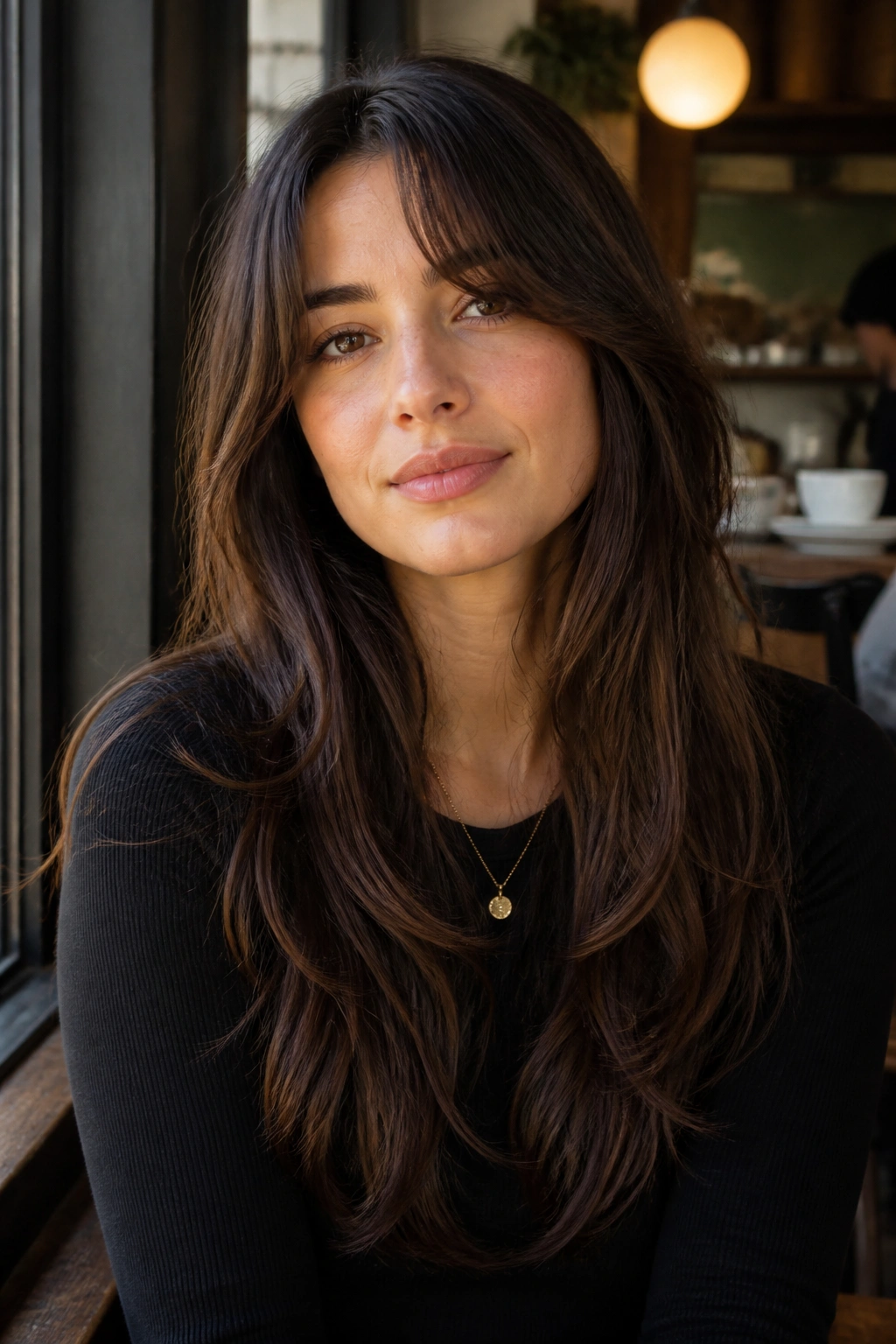
Curtain bangs are not the same thing as face-framing pieces. They behave more like a true fringe, splitting in the center and falling to either side of the forehead.
That makes them a stronger choice if you want a clear style statement. They bring softness to the forehead area and blend naturally into long layers, especially when the rest of the cut is built with a gentle front frame.
The upkeep is real, though. Curtain bangs need regular shaping if you want them to sit properly instead of collapsing into your eyes. They also need to be styled separately from the rest of the hair, which some people love and some people hate. Fair enough.
If you want long hair to feel a little more deliberate, this is a good move. It changes the whole expression of the haircut without touching the length.
16. Debulking Layers for Thick Hair

Thick hair needs a different kind of thinking. Sometimes the problem is not shape. It’s sheer weight.
Debulking layers are built to remove bulk from underneath and through the middle without making the top look thin. That is a delicate job. If it’s done too aggressively, the hair can puff out in odd places or lose its nice line. Done well, the cut feels lighter and moves more easily.
The Best Ask at the Salon
Tell the stylist you want the bulk removed, but you still want the outline to look full. That phrase matters. A lot of thick-hair cuts go wrong because the ends are thinned too much and the hair turns fluffy at the bottom.
- Keep the perimeter solid
- Remove weight under the surface
- Avoid over-texturizing the tips
- Let the longest layers stay long
This cut is for real-life comfort as much as looks. Heavy hair can pull at the scalp, take forever to dry, and feel hot against the neck. Less bulk can be a relief.
17. Soft Lift Layers for Fine Hair
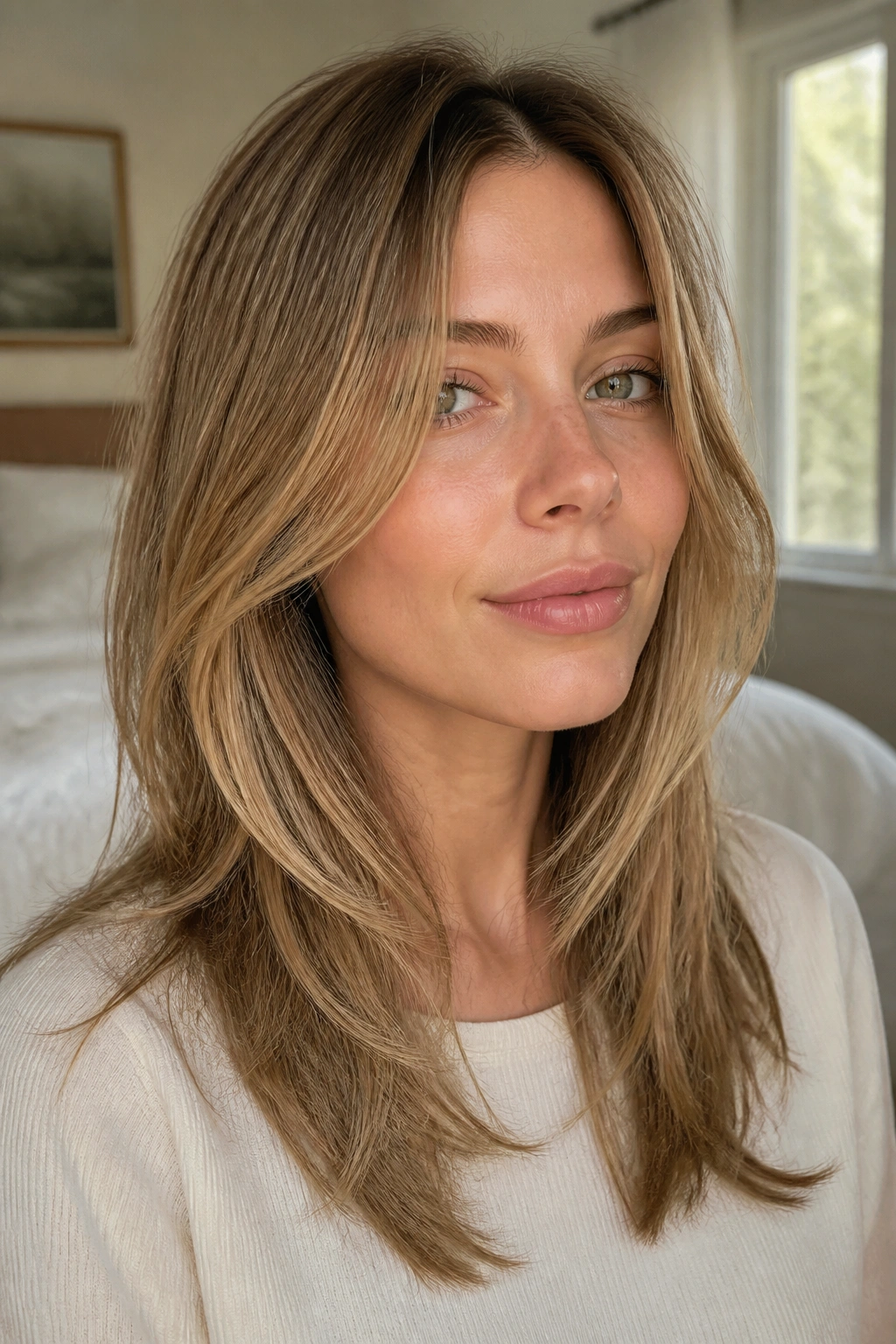
Fine hair needs a gentler hand. Too many short layers can make it look thin at the bottom, which is exactly what you do not want.
Soft lift layers solve that by keeping the layers long and controlled. They usually start lower, near the collarbone or a bit below it, and they add motion without stealing too much density. The shape looks fuller when the hair swings, especially with a little root lift.
A good styling trick here is to dry the roots upward with a small round brush or a roller at the crown for 10 to 15 minutes. You do not need a lot. Fine hair responds fast. Heavy creams are usually a mistake.
This cut is about restraint. The less obvious the layering, the better it tends to look. You want movement, not holes.
18. Wavy Layers That Follow the Bend
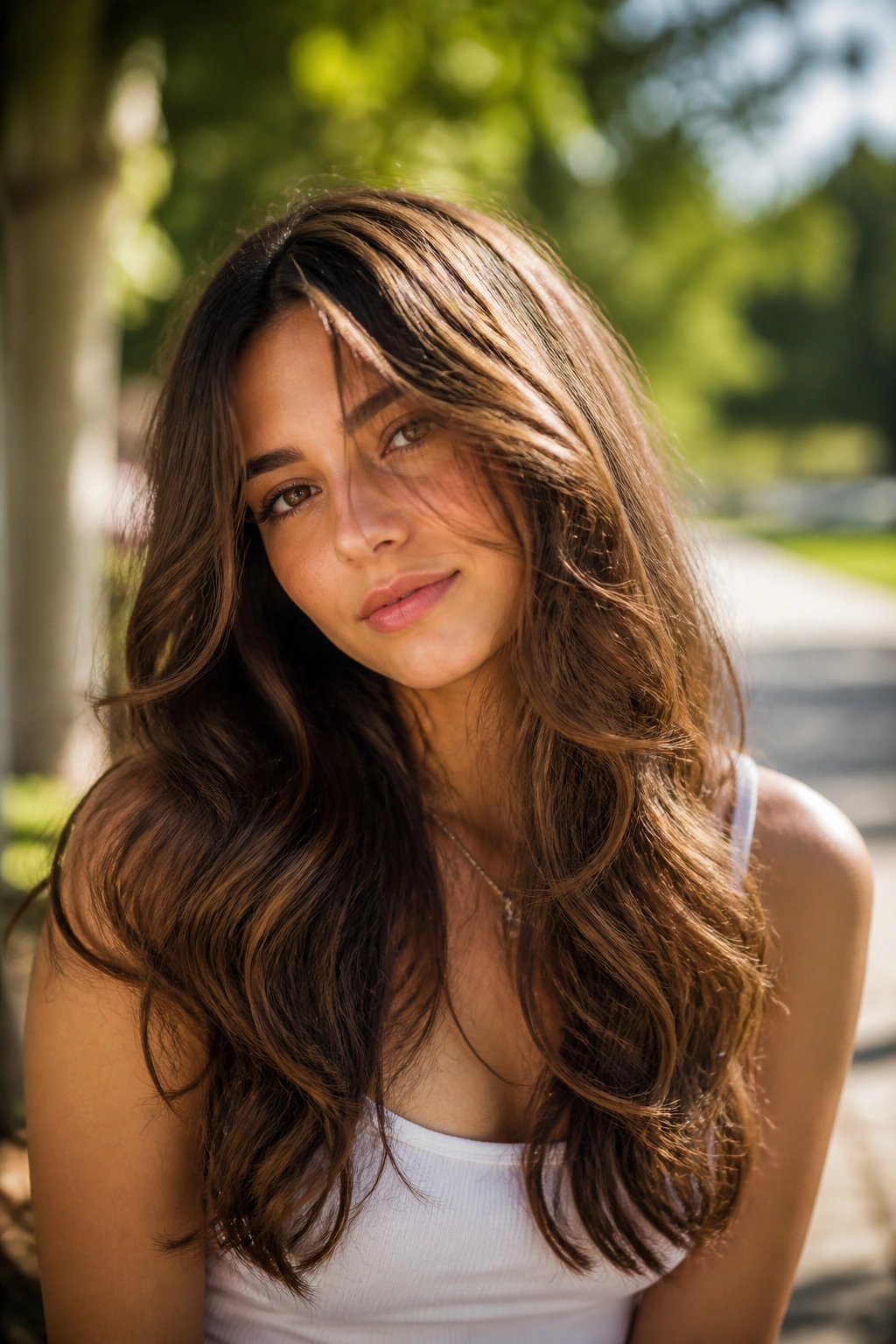
Wavy hair has its own opinion about shape, and it is often right. The best long layers for wavy hair work with the bend instead of fighting it.
That means the layers should be long enough to let waves stack naturally. If they are cut too short, the wave pattern can spring up and get fuzzy. If they are too long and heavy, the hair loses its bounce. The sweet spot is somewhere in the middle, and it depends on how coarse the wave is.
I prefer softer layers for this texture, with a face frame that begins around the cheek or jaw. That keeps the shape open while still letting the wave pattern do most of the work.
Let it air-dry once in a while. You’ll learn fast where the cut is helping and where it’s dragging.
19. Deep Side-Part Layers

A deep side part can change a layered haircut without changing the cut at all. That’s the part people forget. Hair placement matters.
When long layers are worn with a deep side part, the crown lifts more and the face frame falls differently. The result feels fuller on top and a little more dramatic at the front. It’s a small move with a big payoff.
What Makes It Worth Trying
If your hair tends to sit flat at the roots, this is a cheap fix. No extra cut needed. Just move the part and work the front sections with a dryer or brush for a few minutes.
- Gives more height at the crown
- Makes long layers feel less predictable
- Helps side-swept pieces fall with intent
- Works well with both straight and wavy textures
The one downside is that it can feel a little formal if you always wear a center part. Still, it’s one of the fastest ways to make layered hair feel fresh without touching the length.
20. Fringe-Forward Layers

A fringe-forward cut pushes the front pieces into the spotlight. The hair around the forehead is fuller, and the layers behind it support that shape instead of competing with it.
This is a nice choice when you want the front of the haircut to carry more personality. It can mean a soft full fringe, a broken-up fringe, or a textured bang that blends into the sides. The key is that the front matters as much as the length.
The styling is a little more involved because fringe needs its own dry time and direction. If you leave it to air-dry without shaping, it can split in odd ways. Not a disaster. Just not the look you asked for.
Long hair with fringe can be beautiful when the balance is right. The length stays romantic, but the face gets a frame with some real character.
21. Chin-Start Face Framing
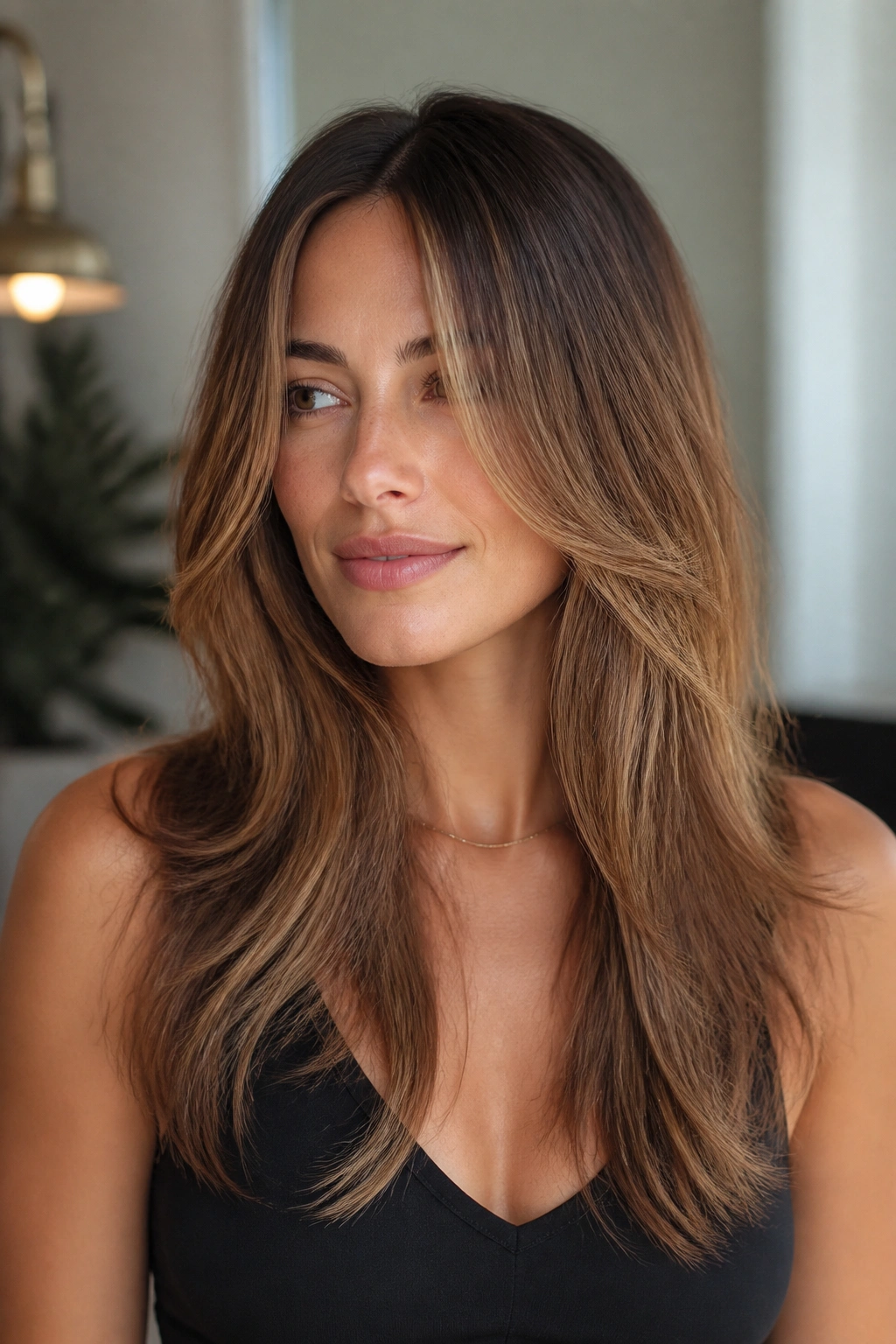
Where the face frame begins changes everything. A chin-start layer gives more obvious contour than a cheekbone-start layer, and that can be a smart move if you want more softness through the jaw.
This shape is especially useful for longer faces or anyone who wants a little visual width lower down. The front pieces skim the chin, then slide into the rest of the length in a clean line. It’s flattering without being fussy.
Ask Your Stylist for This
Say you want the shortest front piece to hit around the chin and blend into the long layers from there. That gives the stylist a clear target, which is better than vague words like “some face framing.”
It also helps to mention whether you usually wear a center part or a side part. The layer placement changes a lot based on that. Hair is annoying like that. Small things matter.
22. Internal Layers for Hidden Movement

Internal layers are the quiet solution for people who want their hair to move but don’t want the outside shape to look too broken up.
The hair looks long and smooth from the outside. Inside, the structure is lighter. That hidden removal of weight can make dense hair fold better, dry faster, and sit closer to the head without puffing out at the sides.
How They Show Up in Real Life
You see them when you brush through the hair and it doesn’t feel so dense. You see them when the ends fan out instead of hanging in one giant curtain. You also feel them when your head is not carrying quite as much bulk.
This is a good middle ground for people who wear their hair down a lot but still want to braid or ponytail it without a thick, blocky shape at the base. The outside stays elegant. The inside does the hard work.
23. Curly Long Layers That Keep the Shape Round

Curly hair and layers can be a beautiful thing when the cut respects the curl pattern. Without layers, long curls often turn into a triangle or a heavy mound at the bottom.
The trick is to cut in a way that lets curls stack with room to spring. That usually means dry cutting or cutting curl by curl so the stylist sees the real shape. Wet cutting can work too, but only if the person knows how your curls behave when they shrink.
Long layers help curls fall in rings instead of clumping into one broad mass. The face frame can be especially nice here, because it gives the front a little lift and keeps the shape open.
Do not ask for a lot of short layers unless you want width at the top. Too many can make curly hair expand in places you don’t want. That’s a mistake people keep making.
24. Beachy Lived-In Layers

Beachy layers are softer and more irregular than a formal blowout cut. They’re built to look a little undone, with pieces that move separately and ends that don’t need to line up perfectly.
This cut is a good match for wave, bend, and texture spray. It works best when the hair is not too polished. If you like a 1.25-inch curling iron and a bit of separation at the ends, you’re in the right lane.
What Sets It Apart
The layers are often mixed in length so the finish looks relaxed, not engineered. That can sound casual, but it takes a careful hand. Too much uniformity and the style loses its softness.
- Good for medium to thick hair
- Pairs well with air-drying
- Looks best with loose bends, not tight curls
- Needs a light finishing spray to keep the shape from falling flat
This is the haircut version of rolling your sleeves up. It does not try too hard.
25. Sleek Straight Layers
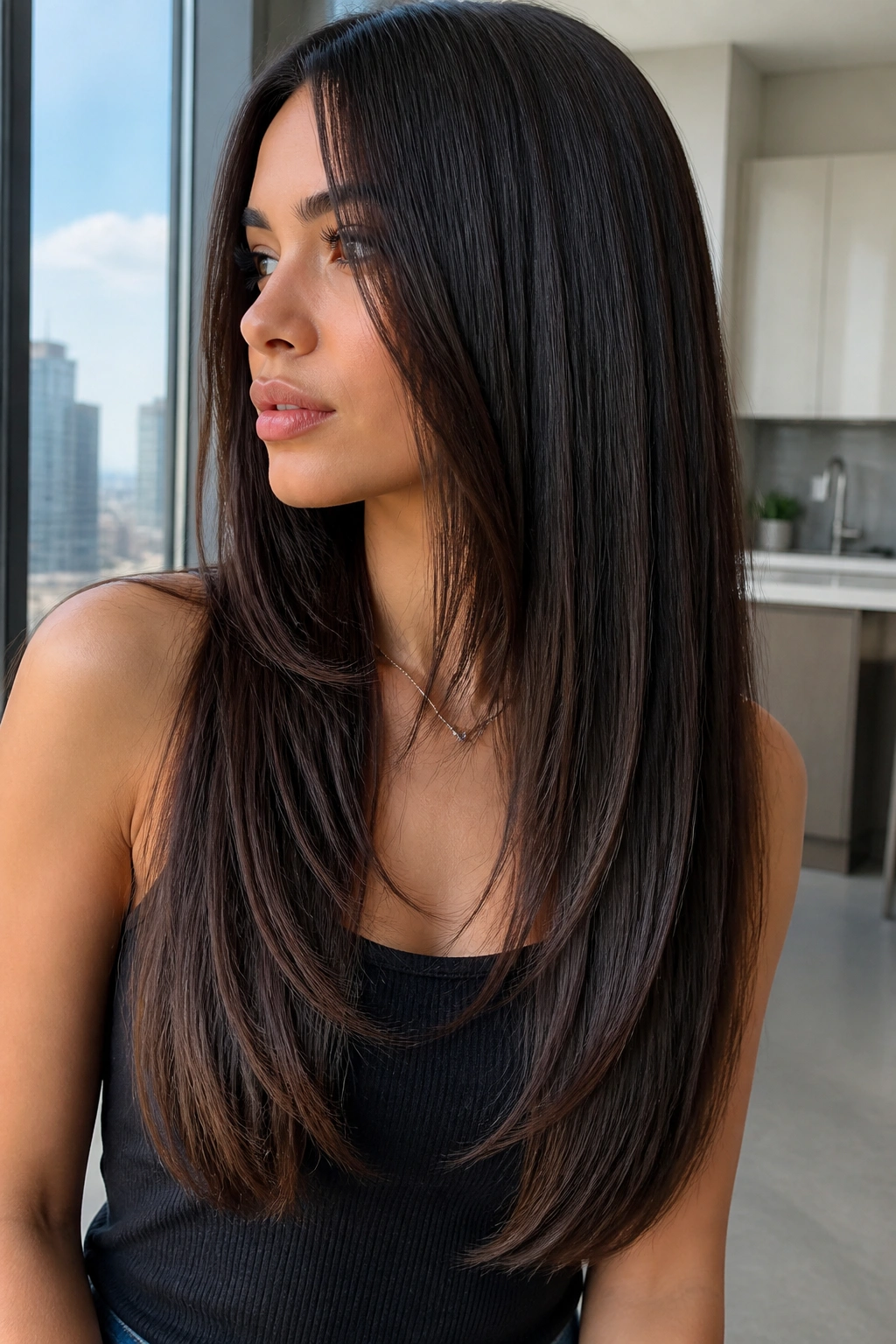
Straight hair needs a clean plan. If the layers are too short or too scattered, the cut can look stringy fast. Sleek straight layers solve that by keeping the shape long and controlled.
The best version preserves a strong line while adding long, slow movement through the sides and back. It’s a good haircut if you wear your hair smooth most of the time and want the finish to feel deliberate rather than soft and fluffy.
What to Ask For
Ask for long layers that start low and blend without removing too much density near the tips. The layers should support the straight texture, not fight it.
A flat iron or a paddle-brush blow-dry finishes the job, but the cut has to be honest on its own. If it only works with a pile of styling products, it’s not the right shape. Keep the ends healthy, and the whole look reads cleaner.
26. Big Blowout Layers

Some layered haircuts are made for volume. This is one of them.
Big blowout layers are cut to lift away from the head, move at the sides, and bounce at the ends. They are a strong choice if you like hair that feels styled, not just neat. The shape usually has long layers through the mid-lengths and a fuller front that can hold a round-brush bend.
A good blowout cut needs a little room to breathe. If the layers are cut too close together, the hair loses its softness and can go fluffy. If they are too long and heavy, the volume collapses. The balance is what matters.
I like this cut on thick hair that can take a brush and a dryer without getting weak. It can feel glamorous, yes, but more than that, it just makes long hair interesting to wear.
27. Grown-Out Soft Layers
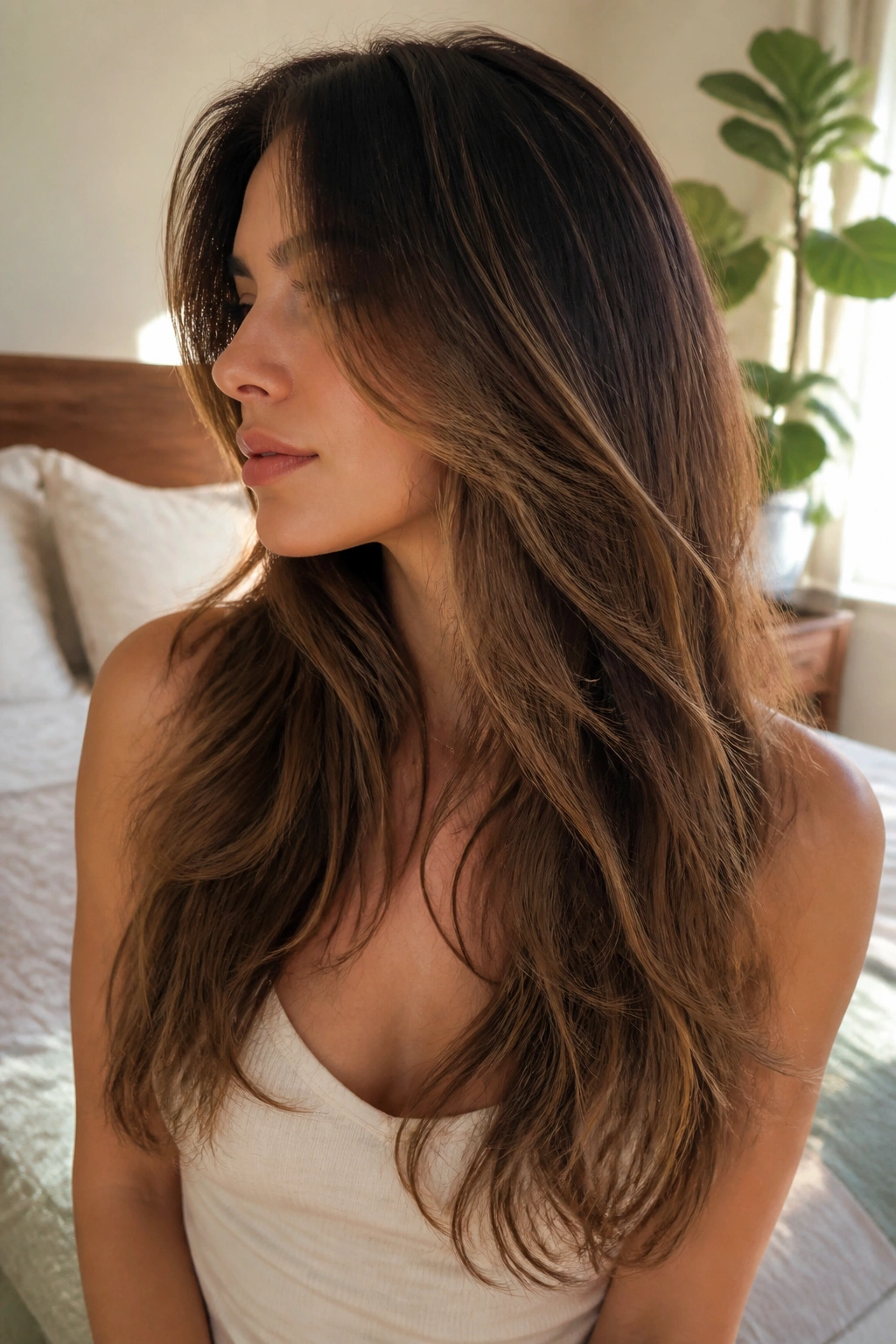
Not everyone wants a haircut that looks fresh for only two weeks. Grown-out soft layers are made for the long haul.
The shape is gentle, with long transitions and very little harshness. That means when it starts growing, it still looks intentional. No obvious shelf. No strange line where the shortest pieces stop and the rest of the hair starts.
Why It Stays Friendly Longer
Because the layers are longer from the start, they keep blending as they grow. That saves you from the awkward phase that shorter, choppier cuts often create.
This is good for people who wear their hair up a lot and want a cut that still falls nicely when it’s down. It also suits anyone who does not want frequent shaping appointments. A soft trim every so often is usually enough.
No drama. No fuss. That’s the whole point.
28. Hidden Underlayer Texture

Hidden underlayer texture gives you movement where you can feel it, not necessarily where everyone else sees it first.
The top surface stays smoother, while the lower sections are opened up to remove weight and create swing. When the hair moves, you notice the difference right away. When it’s still, the cut looks cleaner than a visibly layered shag.
This is a smart option for people who want their hair to look neat at work or in a more dressed-up setting, but still want it to come alive when they flip it over a shoulder or curl it loosely.
Key Details to Ask For
- Keep the top layer long and smooth
- Add texture underneath the crown and mid-lengths
- Leave the ends full enough to hold shape
- Avoid over-thinning the surface
That last one matters. A lot. Too much thinning can make the top look see-through, and nobody wants that.
29. Mermaid-Length Layers
Mermaid-length layers are for very long hair that needs movement without losing its long, dramatic feel. The layers are usually spaced farther apart, so the overall look stays flowing and full.
This cut shines when the hair reaches well past the chest. At that point, one blunt line can feel heavy, almost like a sheet. Long, soft layers break that weight up and let the hair move in bigger waves and folds.
What I love here is the feel of it. The hair swings, but it still looks abundant. There’s a softness to the ends and a certain ease to the shape that shorter layer patterns can’t always give.
If your hair is fine, go carefully. Very long lengths can thin out fast if the layers are too aggressive. But on medium to thick hair, this shape is gorgeous in motion.
30. Length-Preserving Polished Layers
This is the version for people who want shape without sacrificing the line of the hair. The ends stay full, the layers are long, and the whole cut looks clean from every angle.
It’s a quiet haircut. Nothing shouts. Yet it changes the way the hair falls, especially if your current length feels weighed down or a little too straight-edged. The layers work from the inside out, which means the outside still reads as long and healthy.
I’d choose this for someone who likes long hair but gets tired of it feeling heavy around the shoulders and back. It also suits people who wear their hair smooth more often than textured. The polish is built in.
The best part is how little fuss it asks for. A quick blow-dry, a touch of serum on the ends, and the shape holds. That’s enough.
Final Thoughts
The best layered cut is the one that fits the way your hair actually behaves. Not the way it looks in a photo, and not the way someone else wears it. Thick hair usually wants weight removed with care. Fine hair usually wants movement without too much breakup. Curly and wavy hair need room to do their own thing.
Length matters, but shape matters more. A long haircut can look flat, bulky, sharp, or soft depending on where the layers start and how hard the stylist cuts through the ends. That is why the small details — cheekbone start, collarbone start, blunt edge, internal removal — make such a big difference.
If you’re taking one thing from all thirty, take this: bring a clear idea of the silhouette you want. Full and polished. Soft and airy. Piecey and textured. Once you know that, choosing the right long layers gets a lot easier.
