



Thick hair has a personality. When it’s cut well, it falls in rich, expensive-looking sheets with movement at the ends and shape around the face. When it’s cut badly, it turns into a triangle, a shelf, or a heavy curtain that fights every brush stroke. The difference usually has less to do with “more layers” and more to do with where those layers start, how deep they go, and how much weight gets left at the perimeter.
That’s why the best long layered haircut ideas for thick hair are never one-size-fits-all. A blunt bottom with soft internal layers does something very different from a shaggy cut with curtain bangs. A long V-cut can make straight hair swing; a rounded layer pattern can keep curls from exploding outward. Same length. Totally different result.
The trick is to stop thinking about layers as decoration. They’re structure. They move bulk off the head, open up the profile, and decide whether your hair sits close and smooth or puffs out at the sides. If you’ve ever had a cut that looked lovely in the chair and then turned into a helmet at home, the problem was probably placement, not thickness itself.
1. Long U-Shaped Layers That Keep the Ends Full
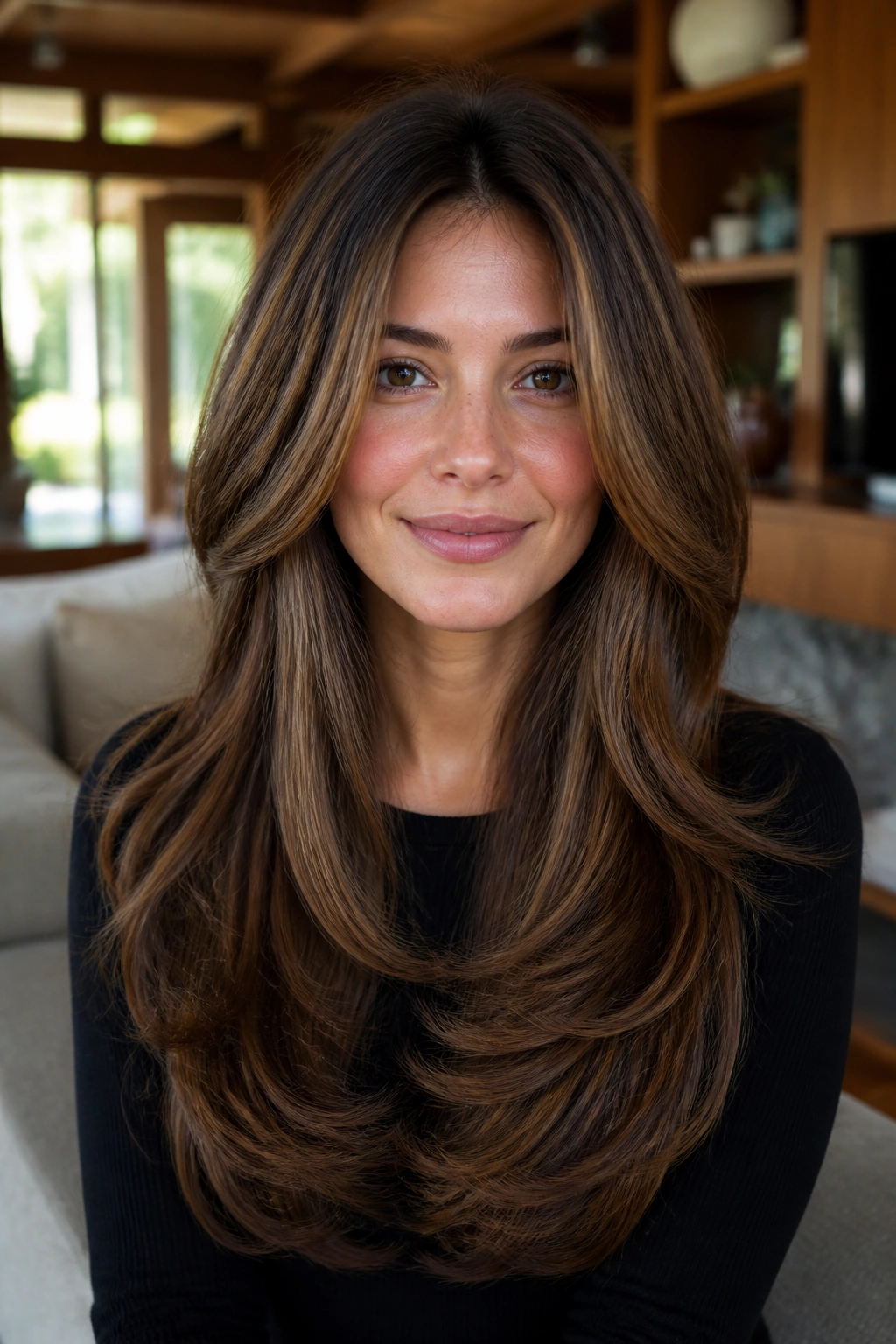
A long U-shape is one of the safest bets for thick hair because it keeps the bottom line soft without making the ends look see-through. The cut curves gently upward at the sides, so the length still feels long and lush, but the middle weight stops the whole style from looking square. It’s especially good if you wear your hair down most days and want movement without a choppy finish.
What to Ask For
Ask for soft layers that begin below the collarbone and stay longer through the back. The goal is not to slice the hair into pieces. It’s to release bulk in the mid-lengths while leaving enough weight at the hemline so the ends still look thick.
- Keep the perimeter full, not wispy.
- Start the shortest face-framing pieces around the chin or a little lower.
- Ask for a gentle U-shape, not a hard curve.
- Avoid heavy texturizing at the very ends if your hair frizzes easily.
Best for: thick hair that gets bulky at the bottom and needs shape without losing density.
Skip it if: you want a dramatic edge or a very obvious layered look.
2. Butterfly Layers with Big Front Pieces
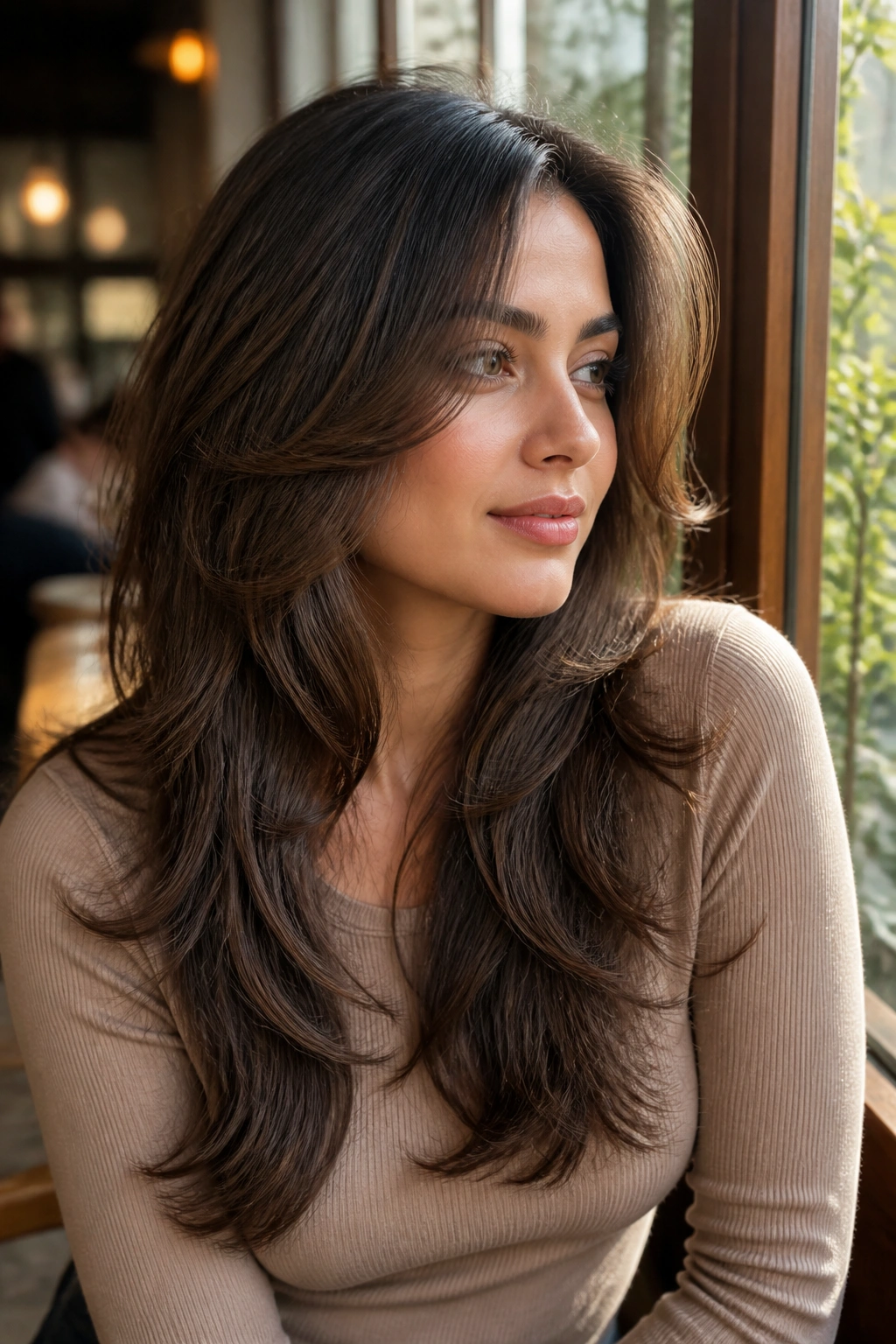
Butterfly layers are a smart move when you want body around the face but do not want your length chopped off. They create that lifted, airy top section while leaving the lower length in place, which is why they work so well on thick hair that tends to go flat at the crown and heavy at the ends. The front pieces do most of the talking here.
What makes this cut work is the contrast. The shorter top layers give you the illusion of a shorter haircut when you curl or blow-dry, but the long section underneath keeps the style from feeling thin. It’s a good compromise if you like the look of a blowout and don’t want to spend all morning building it.
This one shines when the front layers are styled away from the face with a round brush or a large curling iron. If you air-dry and leave it alone, the magic is still there, but it’s quieter. And honestly, that’s part of the appeal.
3. Chin-Starting Face-Framing Layers
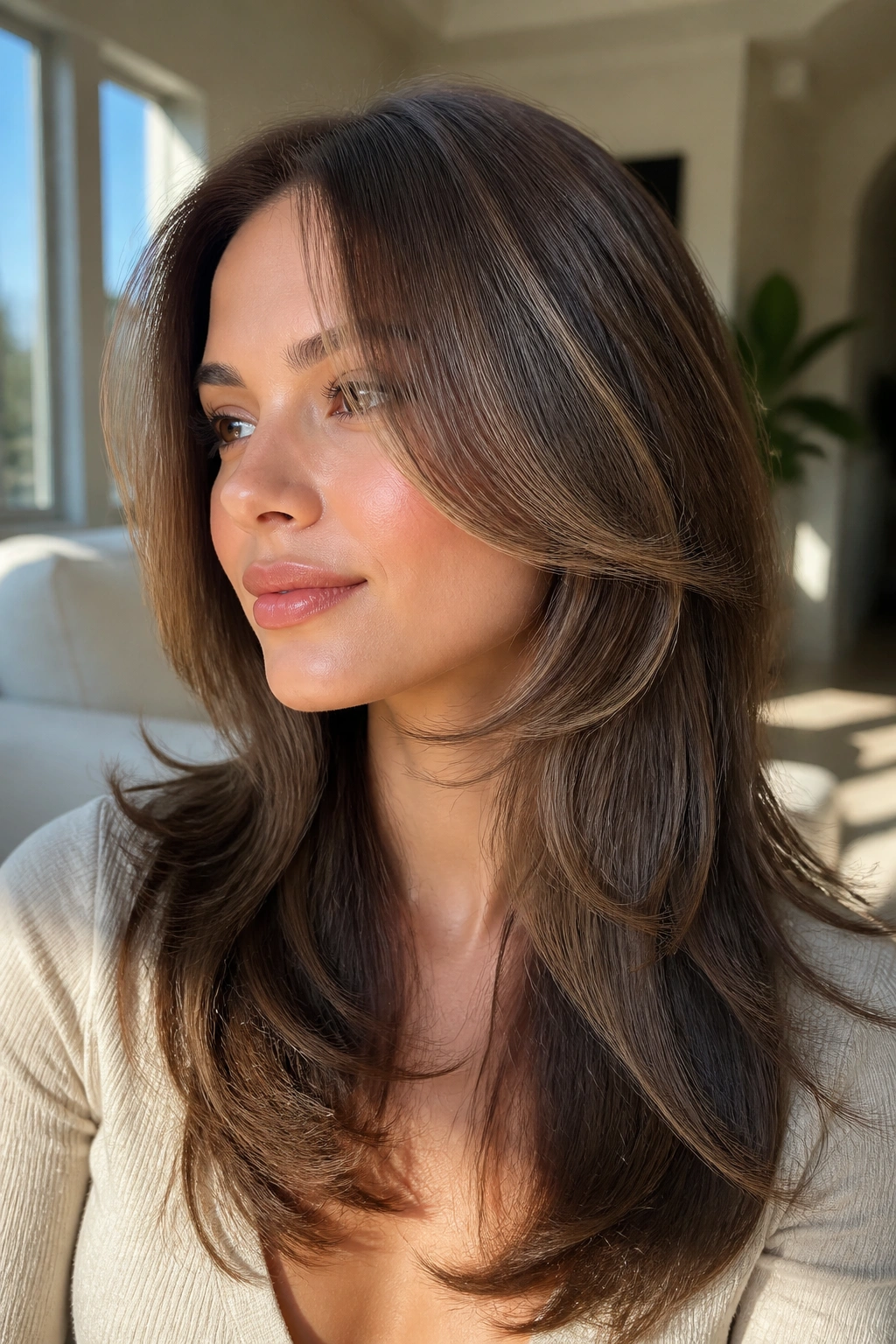
Why do some layers make thick hair look lighter while others just make it look busy? Because the starting point matters. Layers that begin around the chin can open up the face without stripping too much weight from the lengths, which keeps the cut from puffing out at the sides.
This shape is especially useful if your hair is dense through the front panels. Those heavy pieces near the jawline can make the whole cut feel boxy. A chin-length frame softens that line, and the longer sections underneath keep the haircut from collapsing into a bob-like shape.
How to Style It
The easiest way to wear this cut is with a slight bend, not a tight curl. Use a 1.25-inch iron or a round brush, then direct the front pieces away from the face for a soft sweep. A middle part shows off the shape; a side part gives it a little more drama.
- Works well on straight and wavy textures.
- Looks best when the front pieces are dried first.
- Needs only a light smoothing cream at the ends.
- Grows out cleanly if the layers stay connected.
4. Long Shag Layers with Curtain Bangs
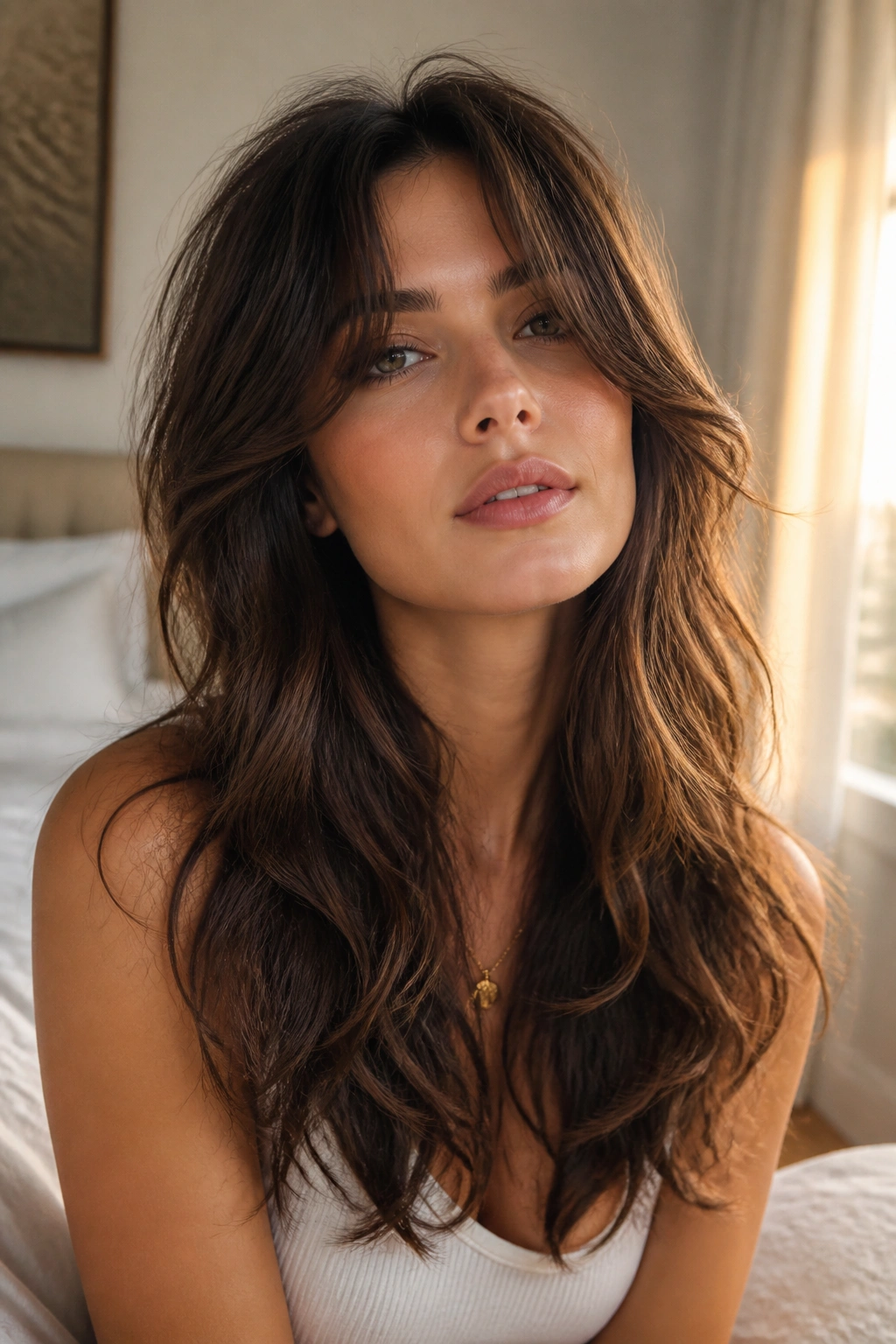
A thick-haired shag can be brilliant or messy, and the difference usually comes down to restraint. Keep the length long, keep the interior layers soft, and let the curtain bangs do the face work. You get movement at the top without turning the whole haircut into a choppy mess.
Picture this: your hair is heavy, your roots go flat by noon, and the front pieces hang straight down in a way that makes your face disappear. Curtain bangs fix that fast. They split the visual weight in the front, and the shag layers underneath keep the rest of the hair from sitting like one solid block.
- Great for hair that air-dries with a bit of bend.
- Best if the bangs are blended into the side layers.
- Needs a trim every 6 to 8 weeks to keep the fringe from collapsing into your eyes.
- Works best with texture spray or a light mousse, not a ton of oil.
A blunt, heavy fringe is a different animal. Curtain bangs are softer and easier to grow out.
5. V-Cut Layers for Straight, Dense Hair
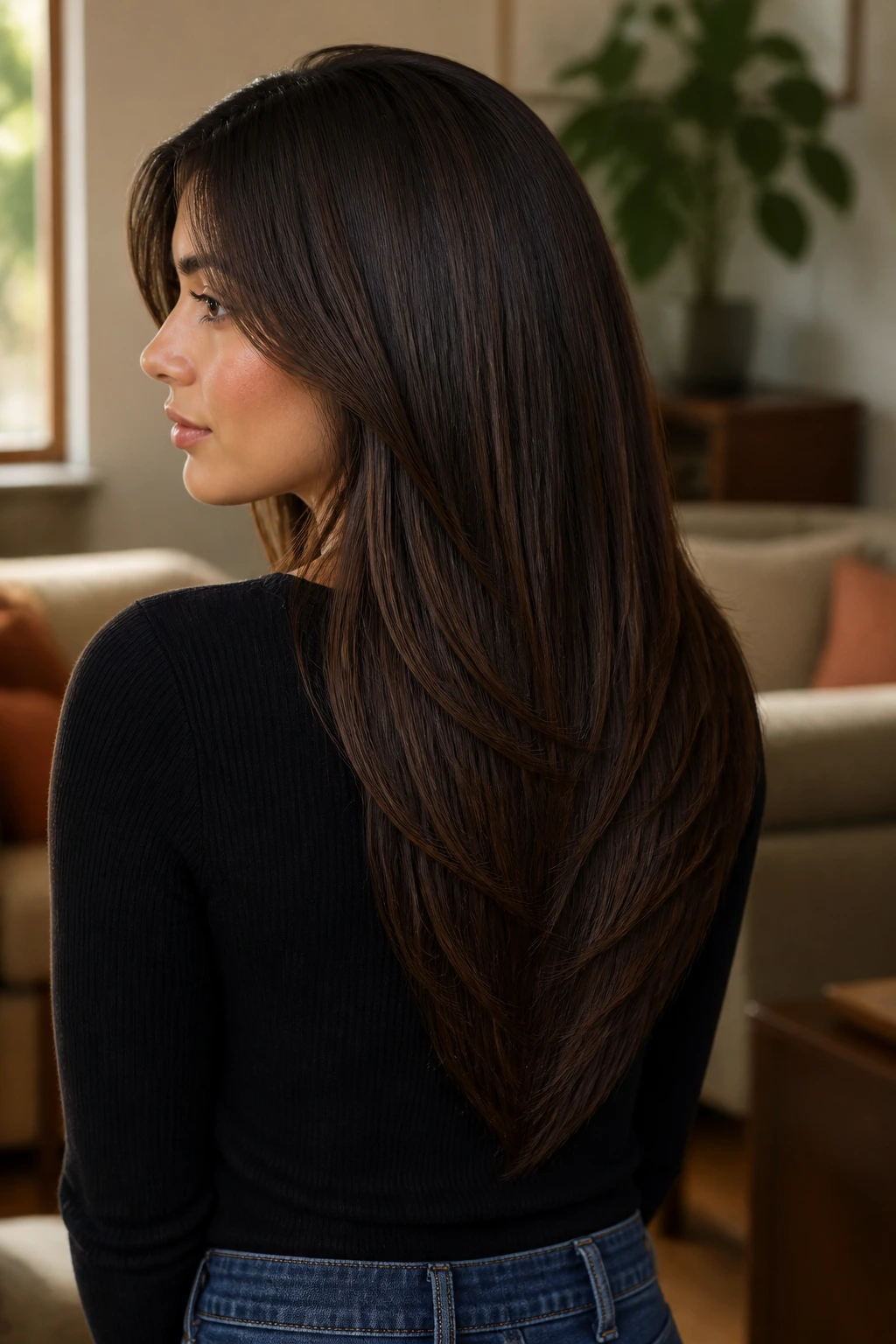
A V-cut is one of those styles that looks simple on paper and feels dramatically different in motion. The longest point sits in the center back, then the hair angles up toward the sides. On thick straight hair, that shape gives the ends a swingy, almost rippling movement that a blunt hemline can’t match.
I like this cut for people whose hair feels like a blanket when it’s all one length. The V removes some of that bottom weight without making the perimeter look thin. It also makes ponytails look longer, which is a small thing until you notice how much better your everyday updo sits.
The catch is obvious. If the layers are pushed too high or the center point gets too sharp, the ends can start to look stringy. Keep the point soft. Keep the transition long. That’s the difference between elegant and overworked.
6. Invisible Layers for Low-Maintenance Movement
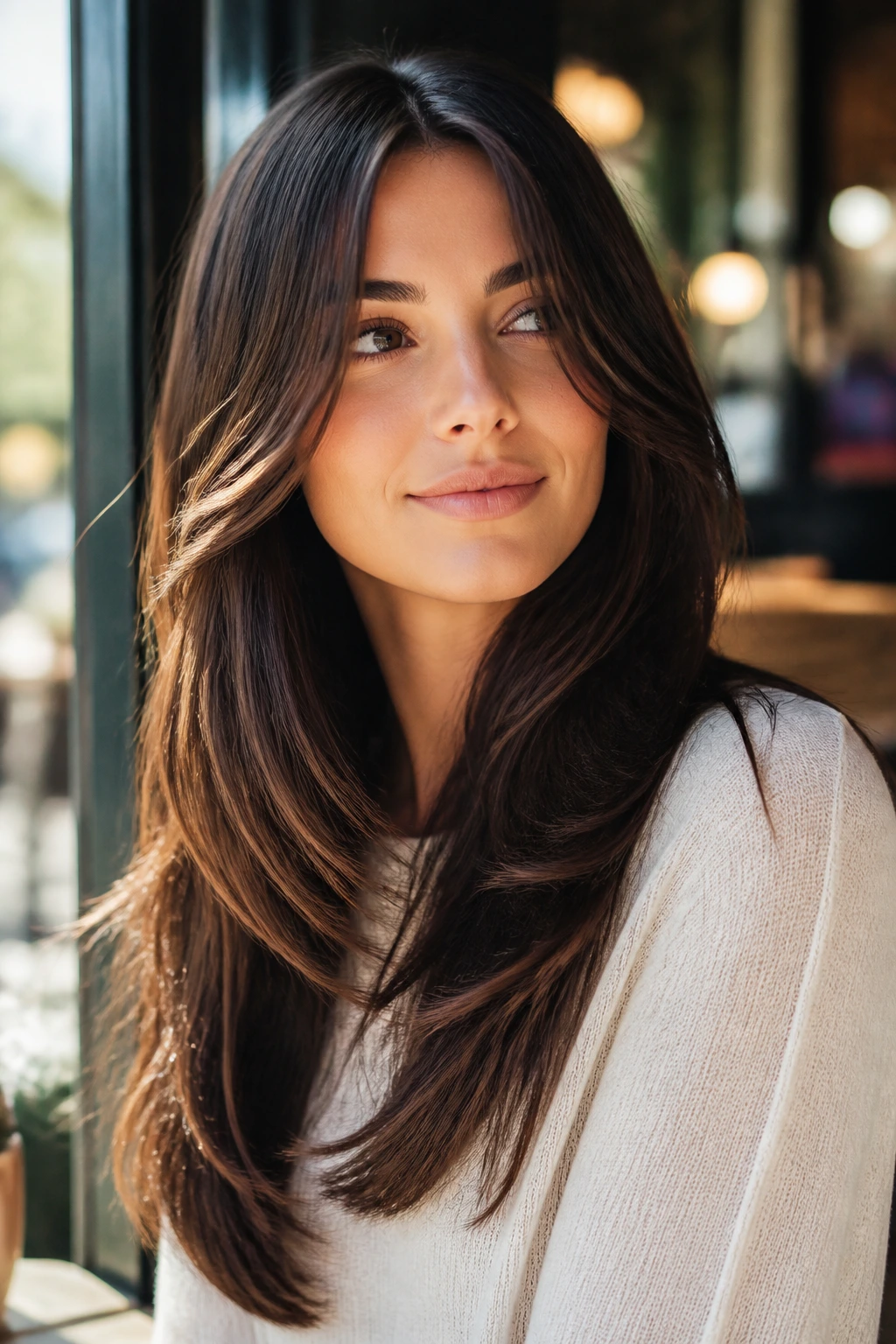
Invisible layers are the quiet answer for thick hair that needs shape but not drama. Unlike obvious step layers, these live inside the haircut, so the outer surface still looks smooth and full. The movement shows up when the hair moves, not when it sits still.
That’s why I like them for people who wear their hair straight or softly waved. You get less bulk in the middle and more bend through the lengths, but the cut doesn’t advertise itself. No choppy pieces. No harsh shelf lines. Just a haircut that behaves better.
They’re also a good choice if your hair is naturally thick but fine in texture, because visible layering can make the ends look overly feathered. Invisible layers give you breathing room without exposing every piece. Quiet. Clean. Practical.
7. Razored Waterfall Layers for Wavy Thick Hair
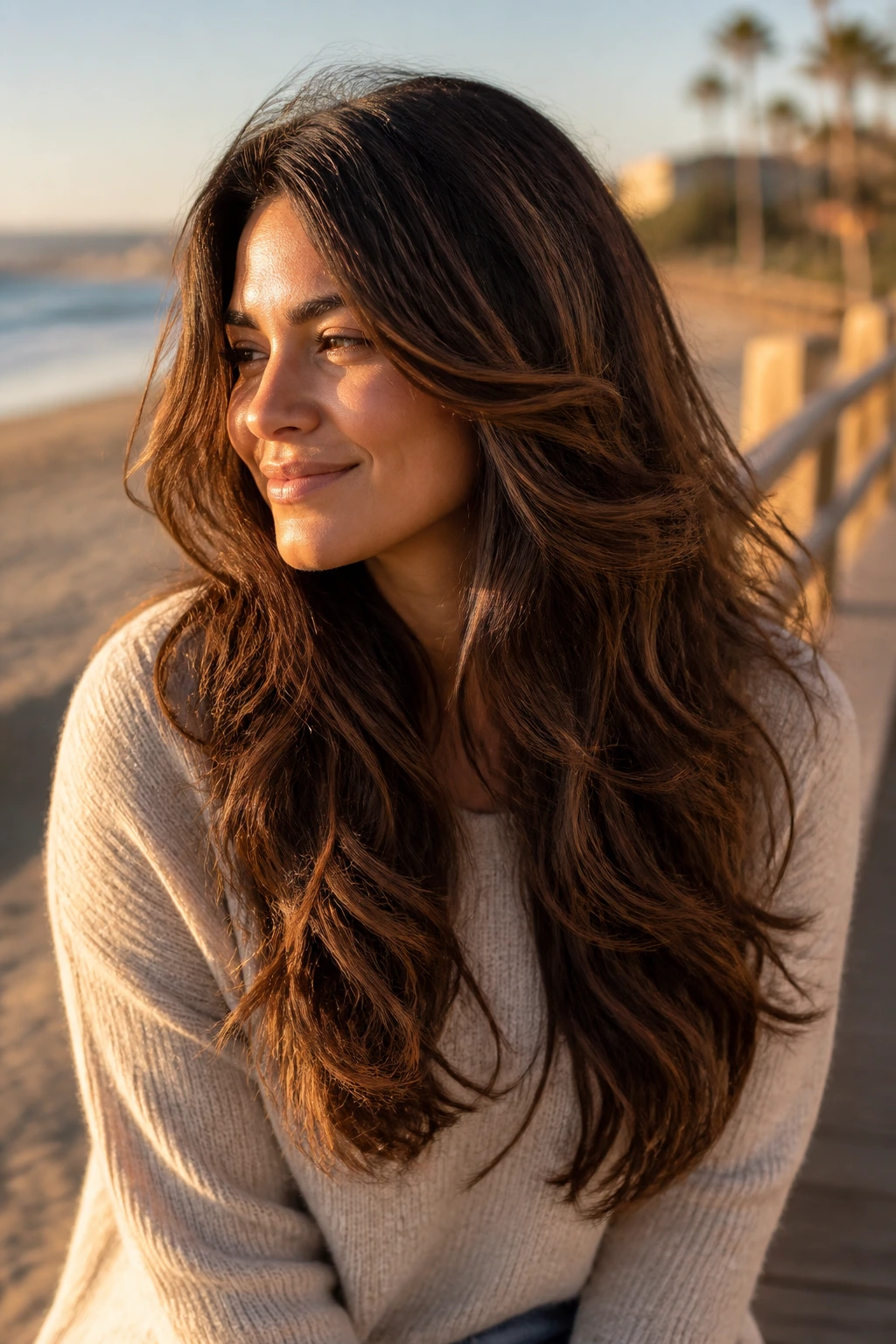
Can a razor cut work on thick hair? Yes, but only when the hair texture can handle it. On soft waves, razored waterfall layers can remove weight and give the ends a looser, more flowing shape. The whole cut feels lighter because the layers taper instead of stopping bluntly.
The waterfall effect is what makes this one stand out. The shortest pieces sit higher in the crown and then cascade down into longer pieces that blend into the rest of the length. It keeps thick wavy hair from ballooning at the sides while still preserving that soft, piece-y look people usually want from waves.
What Makes It Different
A razor creates a different finish than scissors. The ends feel softer, sometimes airier, and the movement is less rigid. That can be a gift on wavy hair.
But there’s a line here. If your hair is coarse, frizz-prone, or already puffy in humidity, too much razor work can make the ends feel rough. In that case, ask for scissor layers with a little point cutting instead.
8. Rounded Layers for Curls That Need Shape
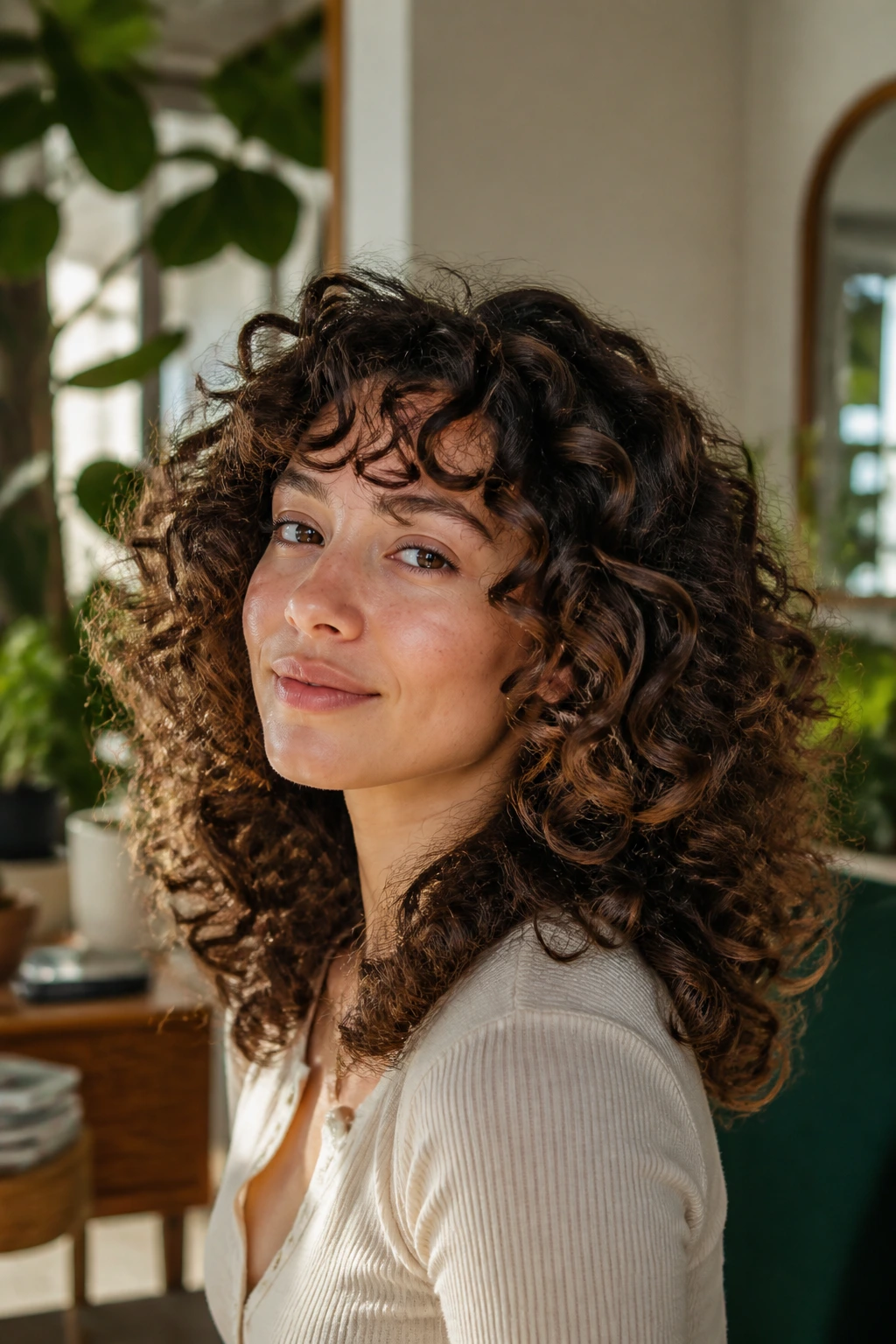
Rounded layers are a gift to thick curls that keep getting wider instead of longer. The idea is simple: keep the silhouette curved around the head so the curl pattern stacks instead of flaring out at the sides. A round shape can make a huge difference if your hair tends to grow outward at the temples and nape.
This cut works best when the stylist respects the curl pattern and doesn’t flatten everything out while wet. Thick curls shrink. Sometimes a lot. If the haircut is planned only on wet hair, the final shape can land too short and too puffy. Dry cutting, or at least checking the shape dry, helps a lot.
The finish should feel full, not heavy. That’s the sweet spot. You want the curls to sit in layers of their own, not in one giant dome.
9. Long Layers with a Blunt Perimeter
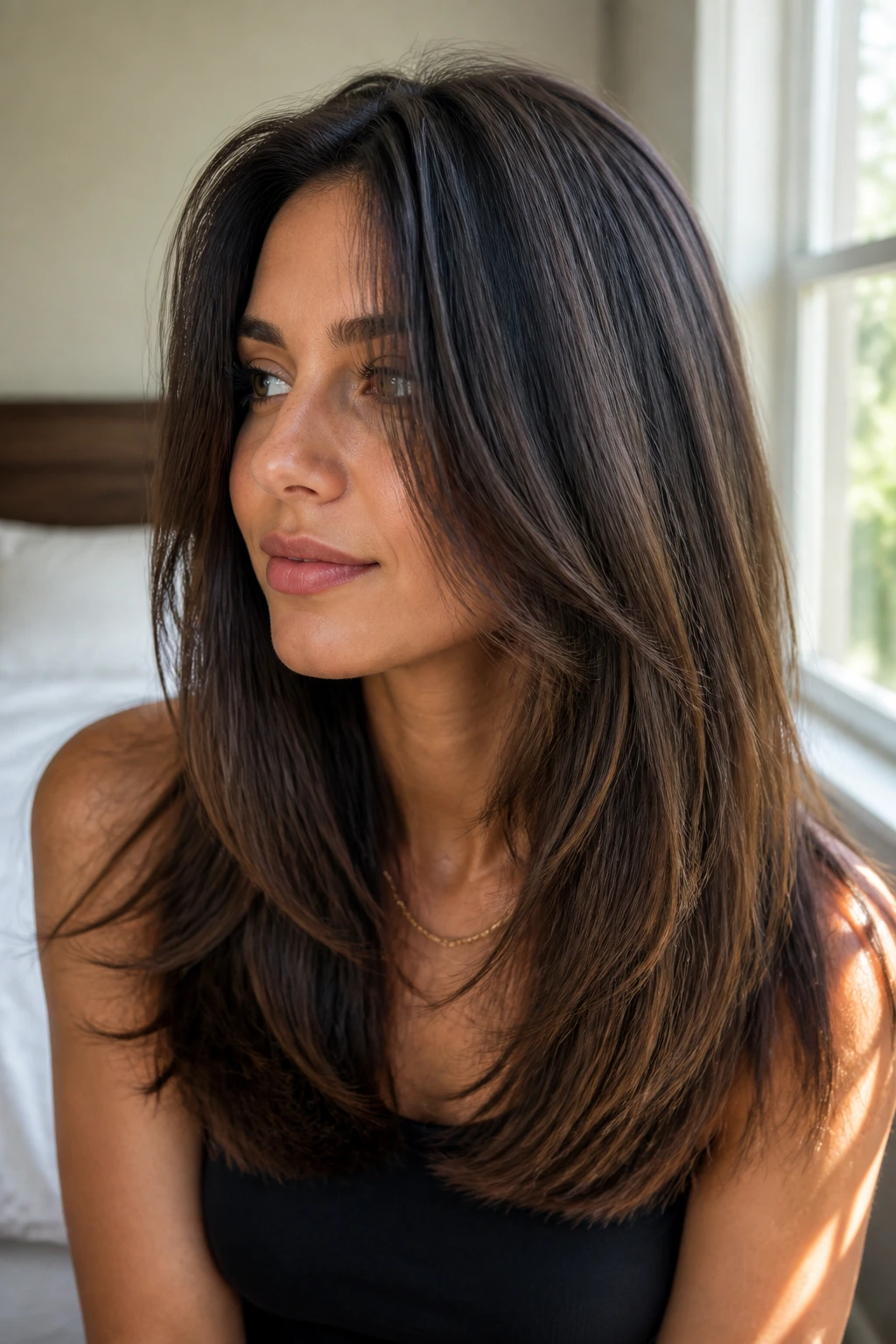
A blunt bottom line with long layers above it is one of my favorite moves for thick hair because it gives you the density people envy while still taking the edge off the bulk. The perimeter stays solid, so the haircut doesn’t look ragged at the ends. The long layers inside do the balancing.
This is a strong choice if your hair breaks at the ends or if you’re trying to grow it out. The blunt line keeps the hemline looking healthy and thick, which is a lot more flattering than a wispy bottom on dense hair. The layers above keep the style from turning into a heavy rectangle.
It also styles well in both straight and wavy finishes. Straight, it looks polished. Wavy, it has more swing. Either way, it feels expensive in the best sense of the word.
10. Deep Side-Part Layers That Lift the Crown
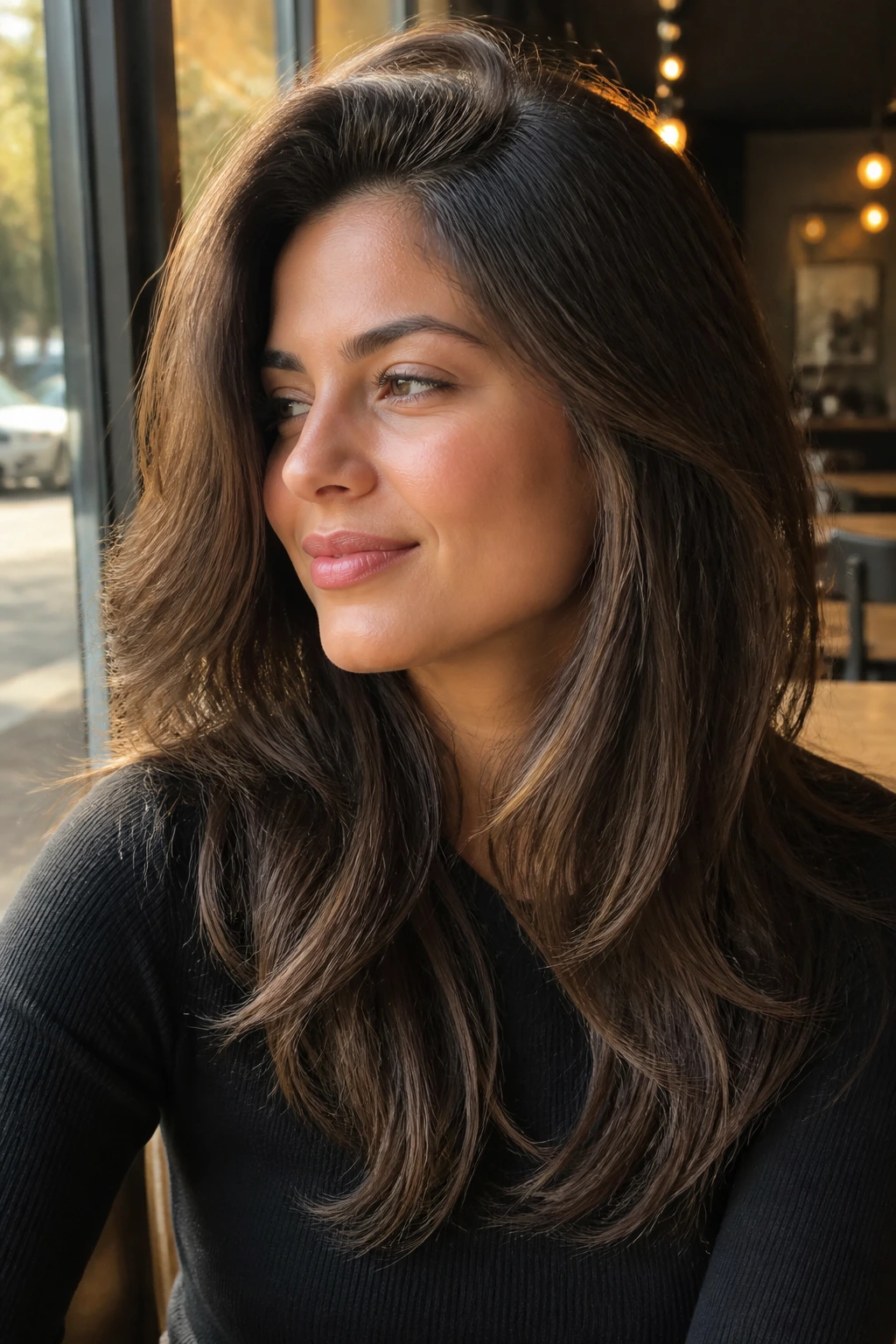
A side part can change the whole mood of thick hair, especially when the crown needs lift and the lower half keeps overpowering the style. The off-center fall shifts weight away from the middle, which gives the roots a little extra air and makes the face framing feel softer.
This cut is useful when your hair lies too flat on top but still feels bulky through the mids. A deep side part plus long layers creates a diagonal line that naturally pulls the eye upward. It also helps if your face gets swallowed by center-part symmetry. Some people love a middle part. Some don’t. Fine.
What I like here is the flexibility. You can wear it sleek, you can wave it, and it still has a bit of shape. Just keep the front layer long enough to tuck behind the ear without looking too chopped.
11. Bottleneck Bang Layers That Open the Face
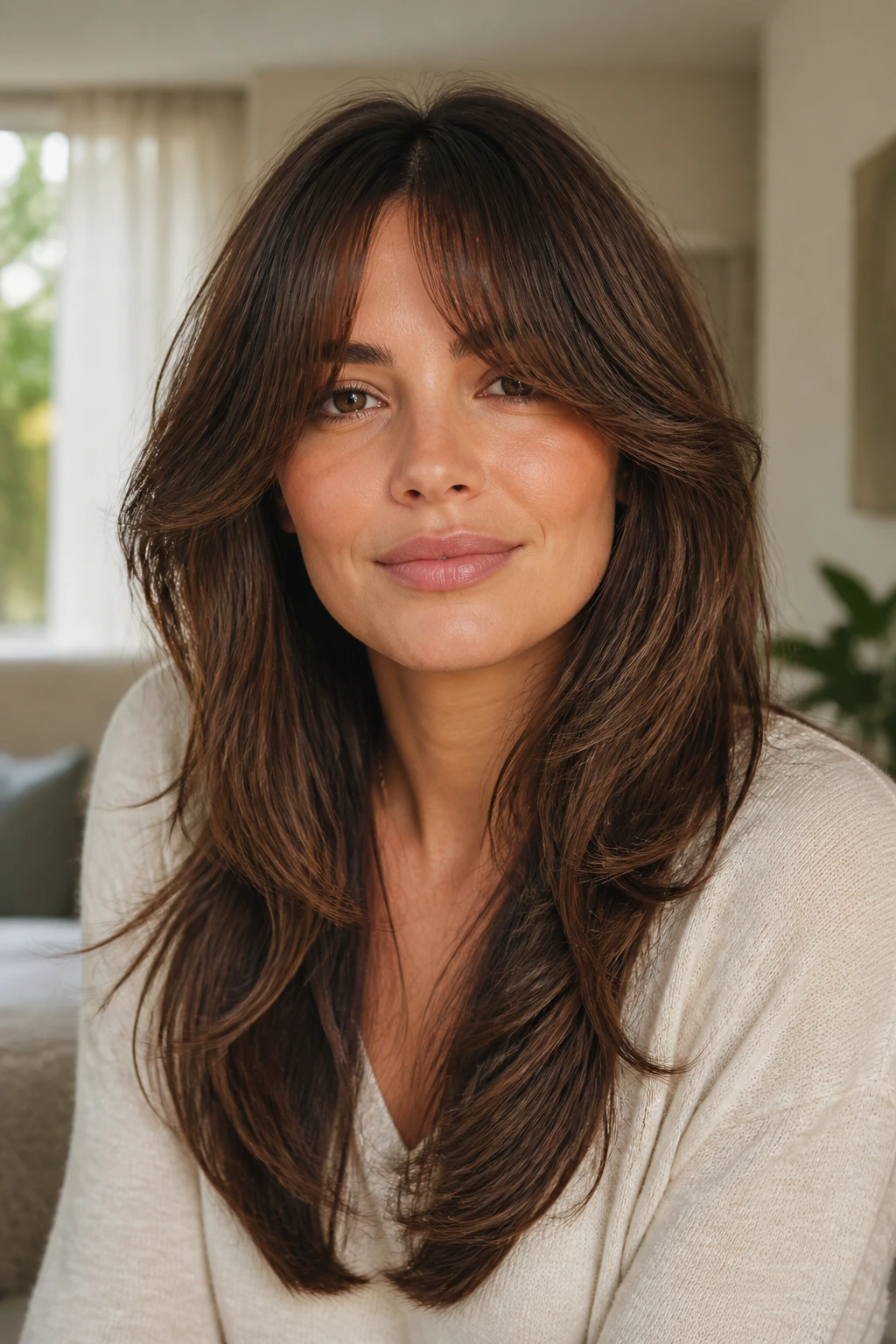
Do bottleneck bangs work on thick hair? They do, and sometimes better than curtain bangs because they start slimmer through the center and widen softly at the temples. That shape helps heavy hair around the front feel lighter without pushing the whole haircut into “bangs everywhere” territory.
The best part is how they blend into long layers. The shortest point sits near the center of the forehead, then the fringe opens out toward the cheekbones and becomes part of the face-framing layers. It’s a clean transition. No hard line. No awkward shelf.
Why They Blend So Well
They grow out with less drama than a blunt fringe because the side pieces are already part of the haircut. That makes maintenance easier, and it keeps the style from looking frozen in place.
- Good for people who want forehead coverage without a heavy bang.
- Works on straight, wavy, and loose curly textures.
- Needs a stylist who can connect the bangs to the front layers cleanly.
- Pairs well with a loose blow-dry or soft bend at the ends.
12. Long Wolf-Influenced Layers
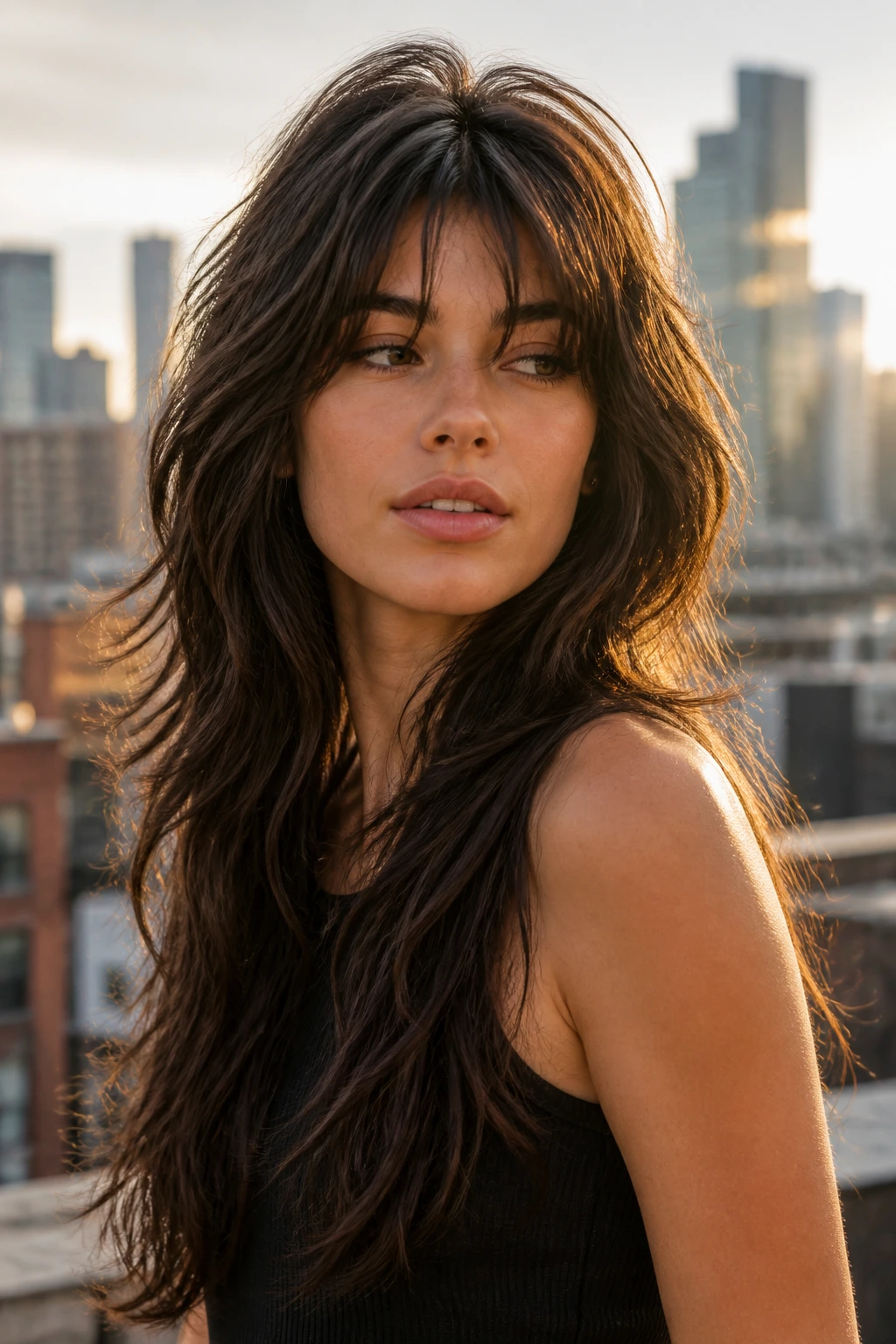
A soft wolf influence can be excellent on thick hair, but I’d keep the edges civilized. Not every wolf cut needs to look like a rock poster from five feet away. On long hair, the softer version gives you crown lift, airy movement, and shorter top layers that break up the bulk near the head.
This style is for someone who likes a little edge and doesn’t mind that the silhouette looks more lived-in than polished. If your hair is heavy at the crown and flat around the roots, the added upper layers can make the whole cut feel lighter almost immediately. The lower length stays in place, which is the part I like most.
Be careful with the extreme version. Too many short layers on thick hair can create a triangle in reverse: fluffy on top, narrow at the bottom. Keep the longest layers long enough to anchor the shape.
13. C-Shaped Layers Around the Cheekbones
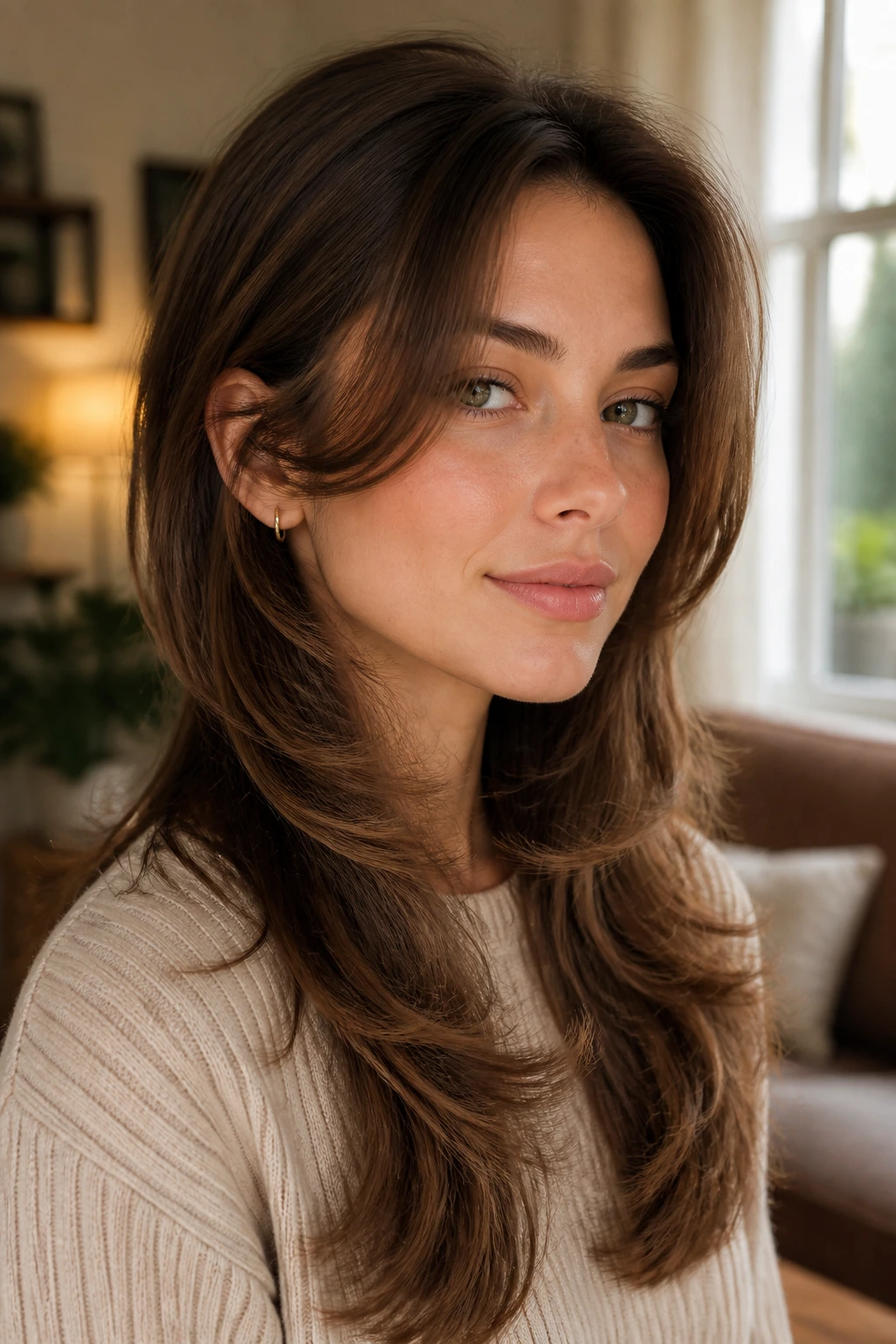
Think of this cut as soft architecture. The front layers curve around the cheekbones in a C shape, then slip into the rest of the length without a hard drop. It’s one of the prettiest ways to frame a face when the hair is thick enough to hold the bend.
The reason it works is simple. Thick hair can look severe when the front pieces hang straight down. A curved layer softens the line and makes the whole haircut feel more fluid. It’s especially nice if you tuck your hair behind one ear a lot, because the shape still reads when the front moves away from the face.
I also like it on longer faces that need width around the middle. The curve adds balance without cutting away much length. It’s subtle, but not boring. There’s a difference.
14. Tapered Layers for Heavy Hair at the Nape
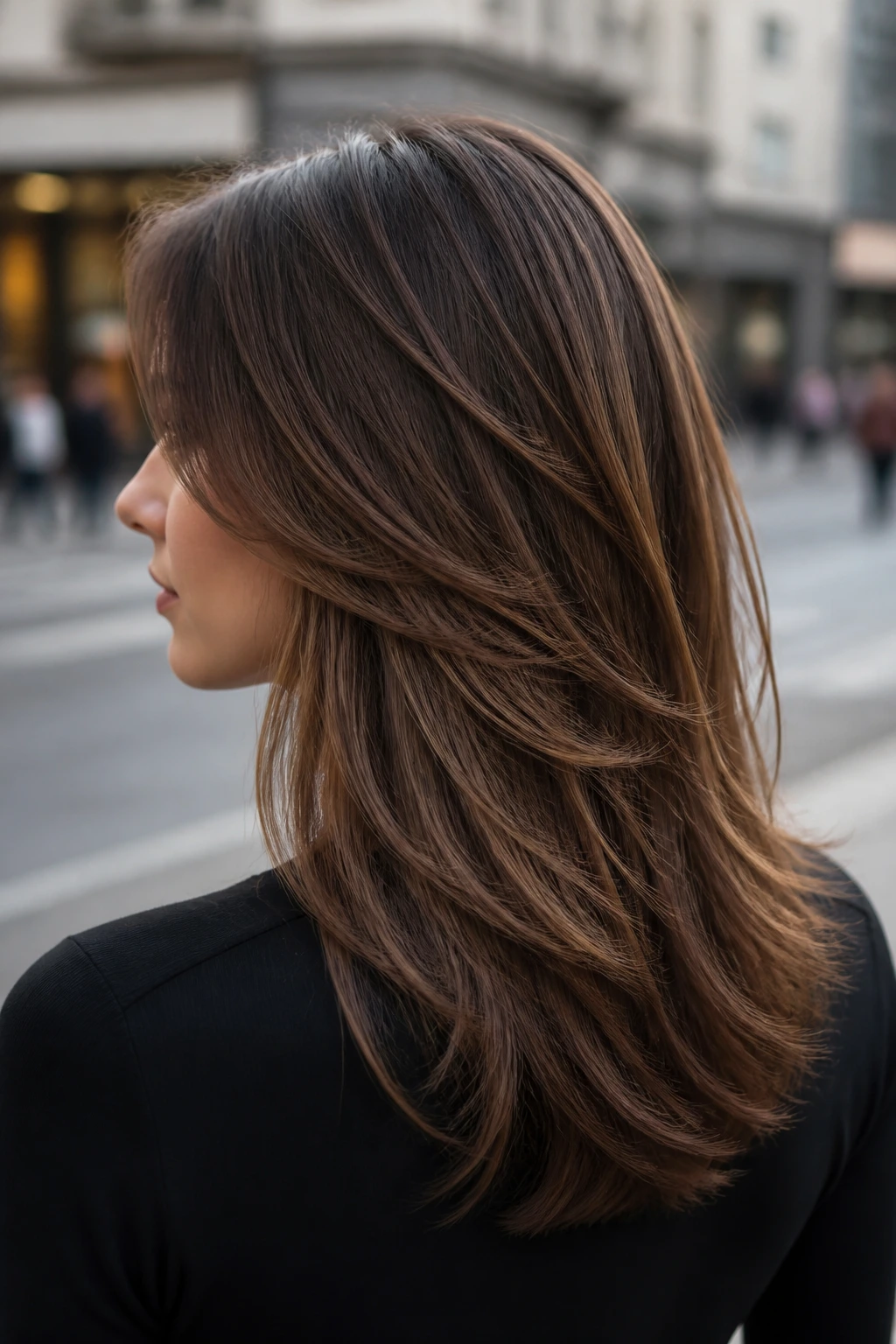
If the back of your head feels like the heaviest part of your haircut, tapered layers are the fix. They take bulk out of the nape and the lower back sections so the hair falls closer to the neck instead of sticking out like a shelf. That’s a common problem with dense, straight hair.
The key is to remove weight underneath without hacking into the visible surface too much. You still want a strong top line and enough length at the bottom to keep the style looking full. A good taper gives you motion where the hair usually balloons and leaves the outer layer smooth.
This one is especially useful for people who wear low ponytails or half-up styles. The back sits better. The shape feels cleaner. And, honestly, your jacket collar won’t fight your hair as much.
15. Long Layers with a Hidden Crown Lift
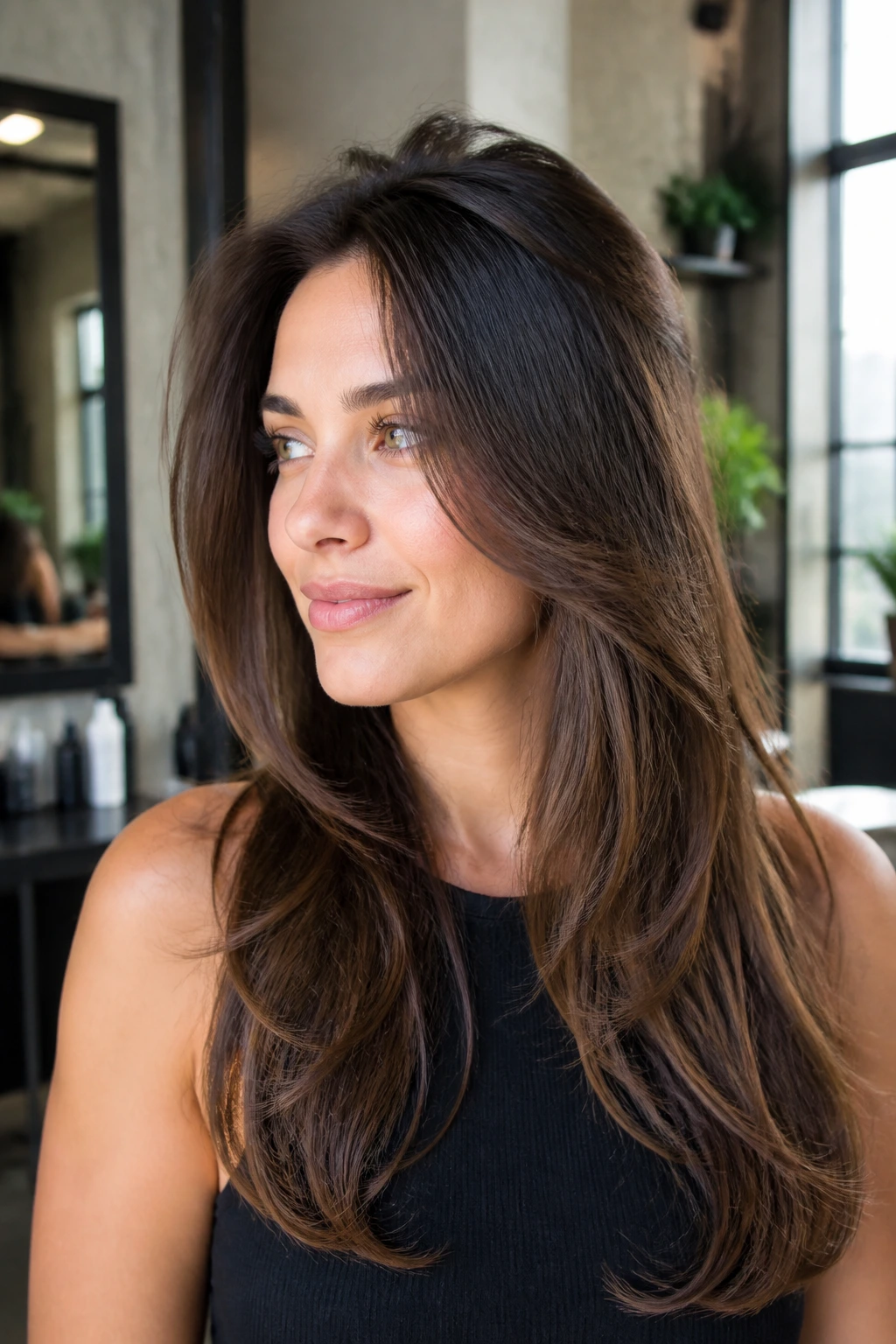
Sometimes thick hair is heavy because it sits too low at the crown, not because the ends are too full. Hidden crown layers fix that by removing internal weight right where the head starts to flatten. The outside still looks long and solid. The lift lives inside the cut.
Signs You Need This Cut
If your roots collapse by midday, or if the back of your head looks flat while the sides look puffy, this is probably the right kind of layering. It gives the top a little height without turning the haircut into a shag.
- Best when the longest layer stays below the shoulders.
- Great for people who blow-dry the top section first.
- Works with round brush styling or a simple root lift spray.
- Needs a stylist who understands internal structure, not just length.
The phrase to ask for is crown support, not “take a lot off.” That distinction matters. A lot.
16. Long Diagonal Layers That Swing Forward
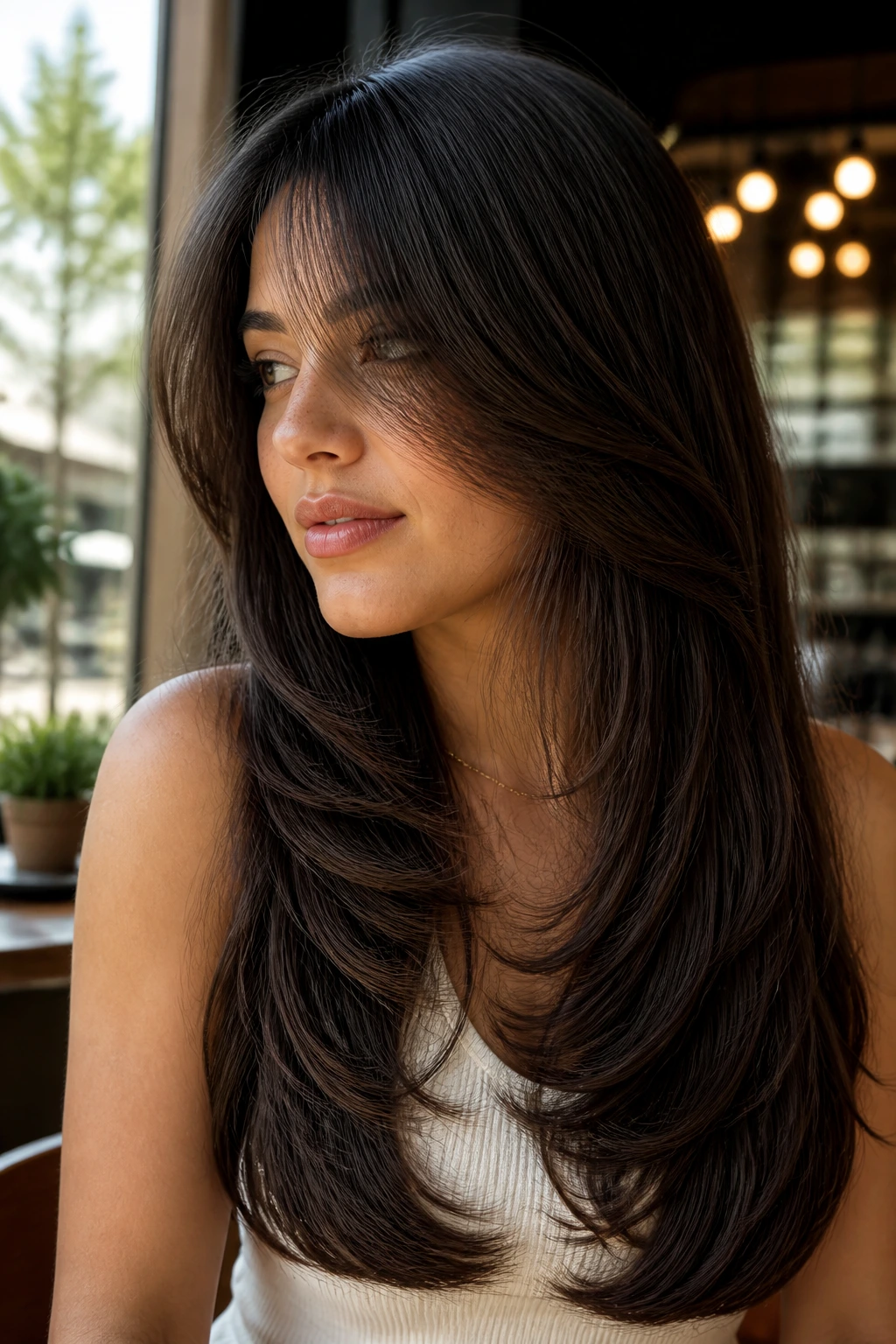
A diagonal layer pattern is one of those cuts that looks small on paper and dramatic in motion. The hair is slightly shorter toward the front and longer toward the back, so everything falls forward in a soft sweep. On thick hair, that forward swing helps keep the style from sitting too square across the shoulders.
It’s a smart choice if your hair has a lot of width and not enough direction. The diagonal line leads the eye. It also makes the ends feel lighter when you wear the hair loose, which is useful if your length tends to drag everything down.
This cut can feel polished without being stiff. That matters. Thick hair can already look formal or heavy, and a diagonal shape breaks that up nicely. I’d choose it over an aggressive face-frame if you want something smoother and less obvious.
17. Soft Step Layers for Extra-Dense Hair
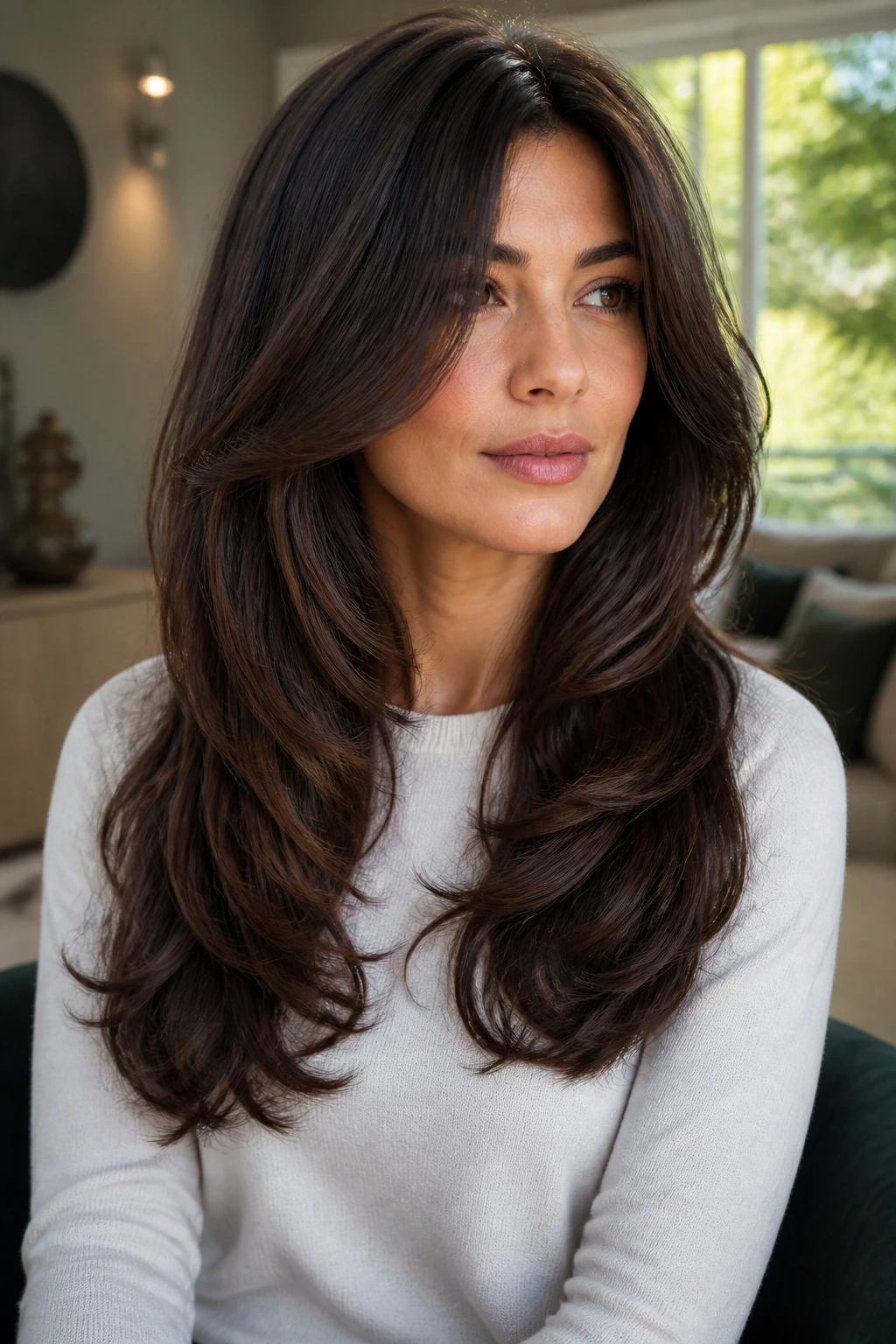
Soft step layers are for hair that feels like it has three separate densities: heavy at the bottom, medium in the middle, and dense at the crown. The steps create breathing room between those areas, but the “soft” part is what keeps the cut from looking choppy. You want separation, not slices.
The stylist should be careful with the distance between each layer. Too much space, and the haircut starts to look patchy. Too little, and you may as well keep the length one solid block. For thick hair, a good step pattern usually has long transitions and only a few visible level changes.
How Much Weight to Remove
Less than you think. Seriously.
- Remove weight in the mid-lengths first.
- Leave the last 2 to 3 inches dense if the ends frizz.
- Keep the top step long enough to blend into the face frame.
- Avoid over-thinning if your hair expands in humidity.
This is a haircut that rewards restraint. The point is movement, not drama.
18. Long Layers with Airy, Feathery Ends
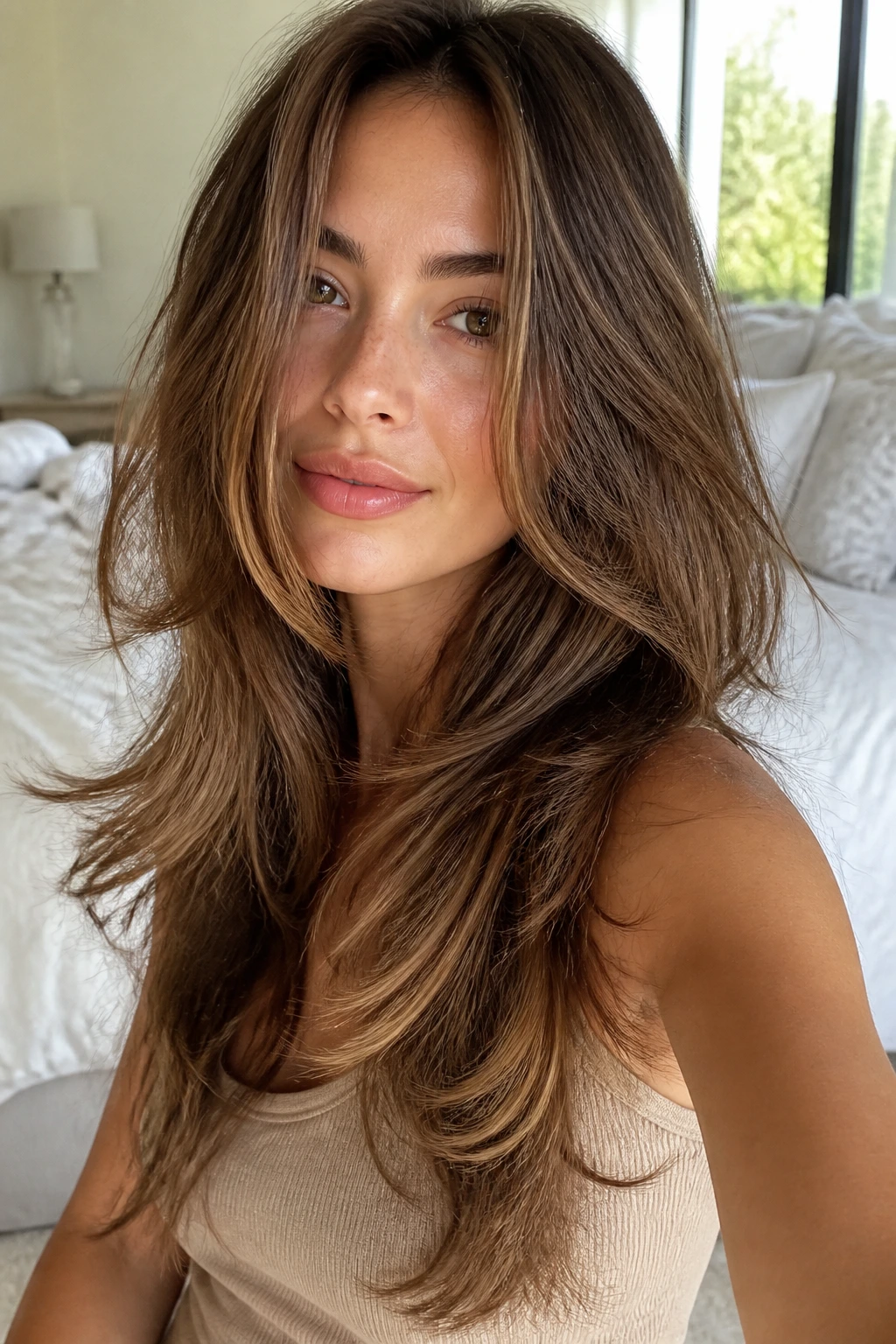
Feathery ends can look gorgeous on thick hair when they’re done with a light hand. The ends feel softer, the whole style moves a little easier, and the length doesn’t sit like a wall. A good feathery finish also helps long layers blend more naturally into one another.
The trick is to keep the texture fine, not shredded. Point cutting works better than aggressive thinning for most people because it softens the line without leaving little frizzy hooks at the bottom. If your hair is coarse, a razor may be too much unless the stylist knows exactly how your texture behaves.
This style is for people who want their hair to look touchable. Not airy in a flimsy way. Just less blunt, less boxy, and easier to wave with a brush or iron. The difference shows most at the ends, where thick hair usually looks heaviest.
19. Mermaid Waves with Long Internal Layers
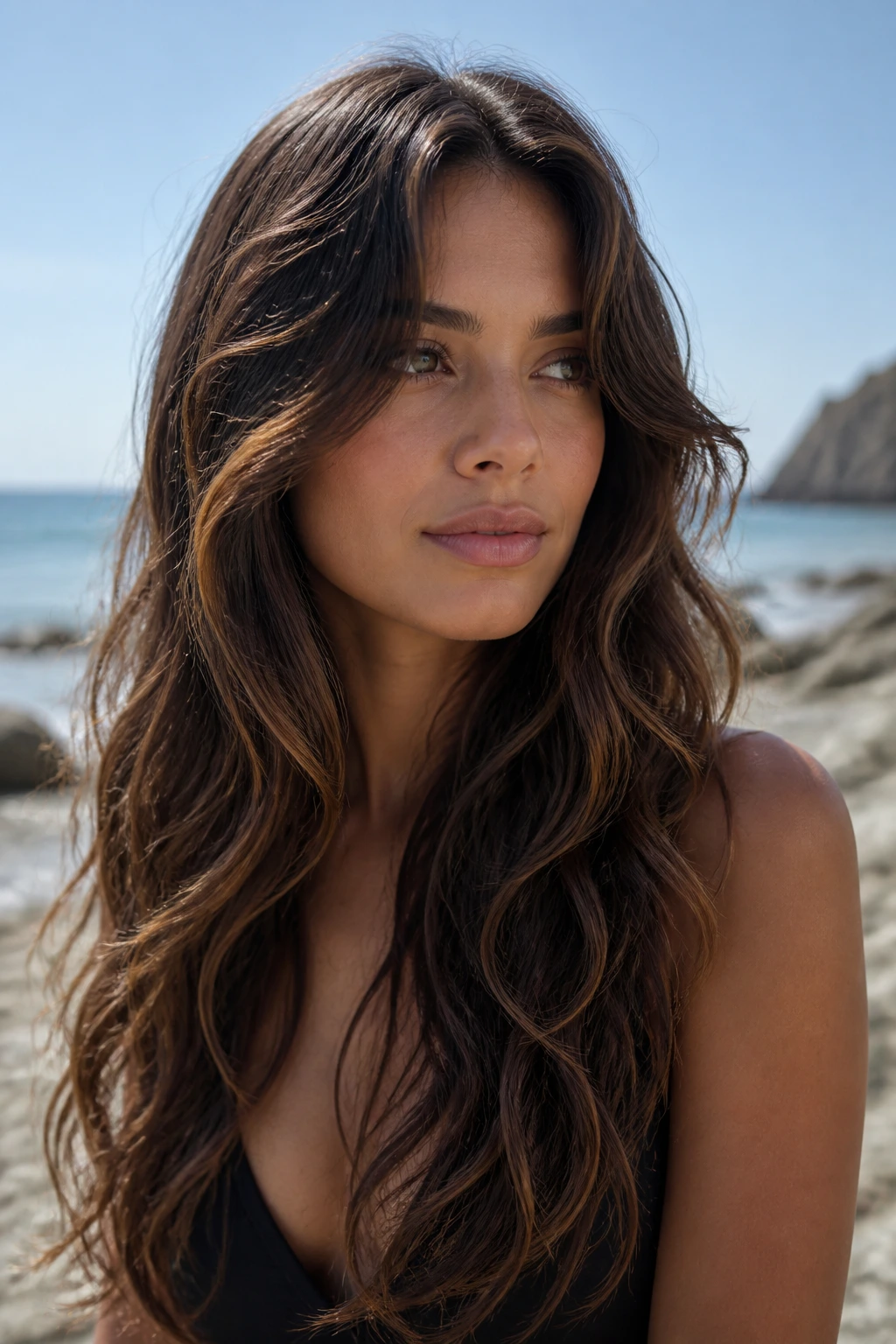
Mermaid waves and thick hair get along because the shape likes a little extra weight. Long internal layers keep the hair from puffing into a triangle while still letting the wave pattern stack in a soft, cascading way. The result feels lush, not stiff.
I like this cut when the length is the main event. You keep the dramatic sweep, but the hidden layers stop the mids from getting bulky. It’s especially flattering if your hair naturally bends when it air-dries. The wave falls into place instead of fighting the cut.
The styling is straightforward: dry about 80 percent, add a few loose bends with a large barrel iron or braids, and leave the ends a little undone. That unfinished finish is part of the charm. Too polished, and it loses the whole point.
20. Long Layers with a Heavy Fringe
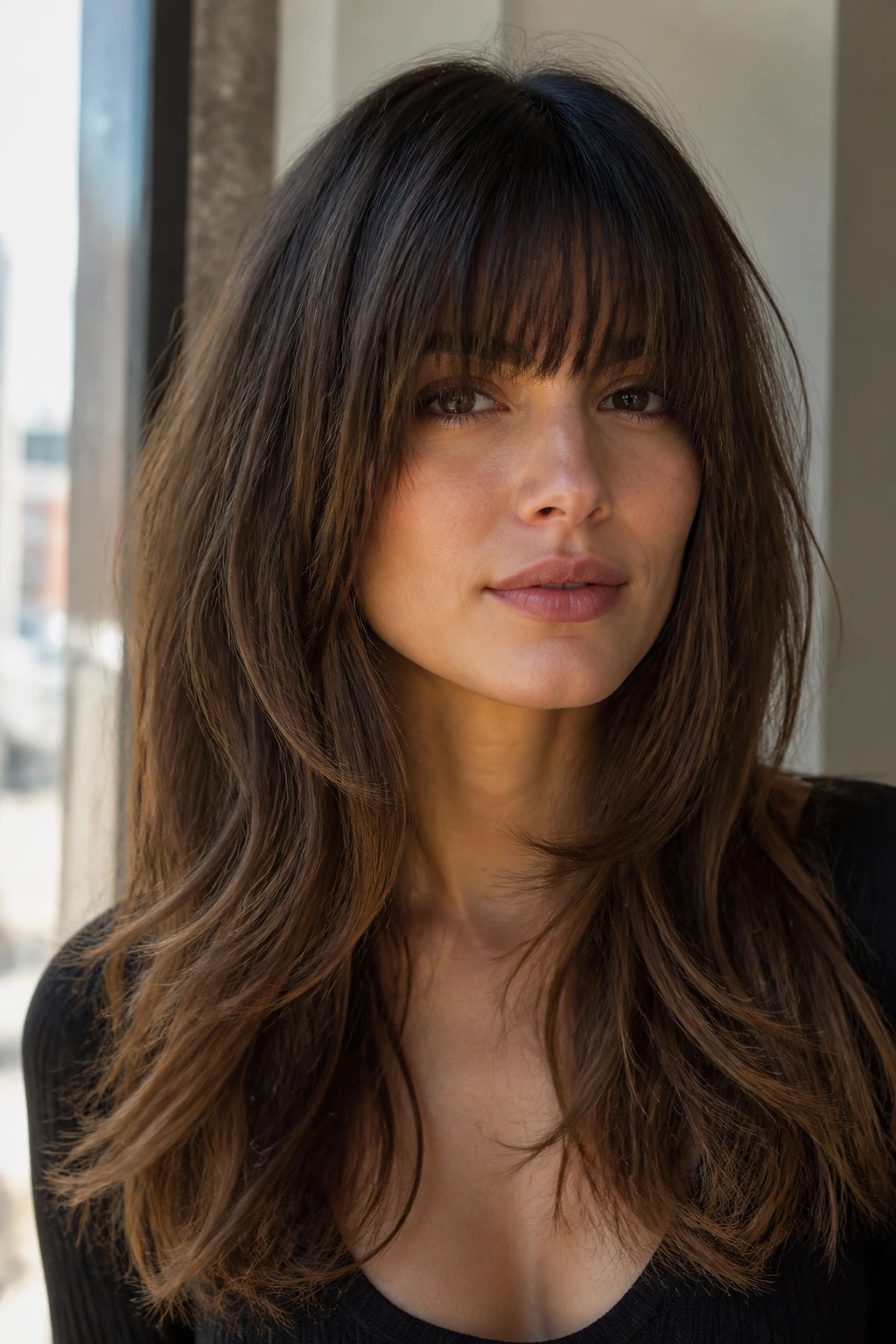
A heavy fringe can be a bold move, and thick hair can carry it better than most textures. The density gives the fringe body, so it doesn’t split apart after five minutes. Paired with long layers, it can balance a big forehead, sharpen a soft face shape, or just give the haircut more attitude.
This is not the same thing as curtain bangs. A heavy fringe sits fuller across the forehead and needs more commitment. It can look gorgeous with long layered hair because the contrast keeps the style from feeling washed out. Lots of hair. Lots of shape. Good combination.
The downside is maintenance. Fringe grows fast in the face, and thick hair can get a little stubborn when it’s wet. If you hate blow-drying your bangs every morning, this cut will test your patience. If you enjoy a little routine, it pays off.
21. Spiral-Friendly Layers for Curly Thick Hair
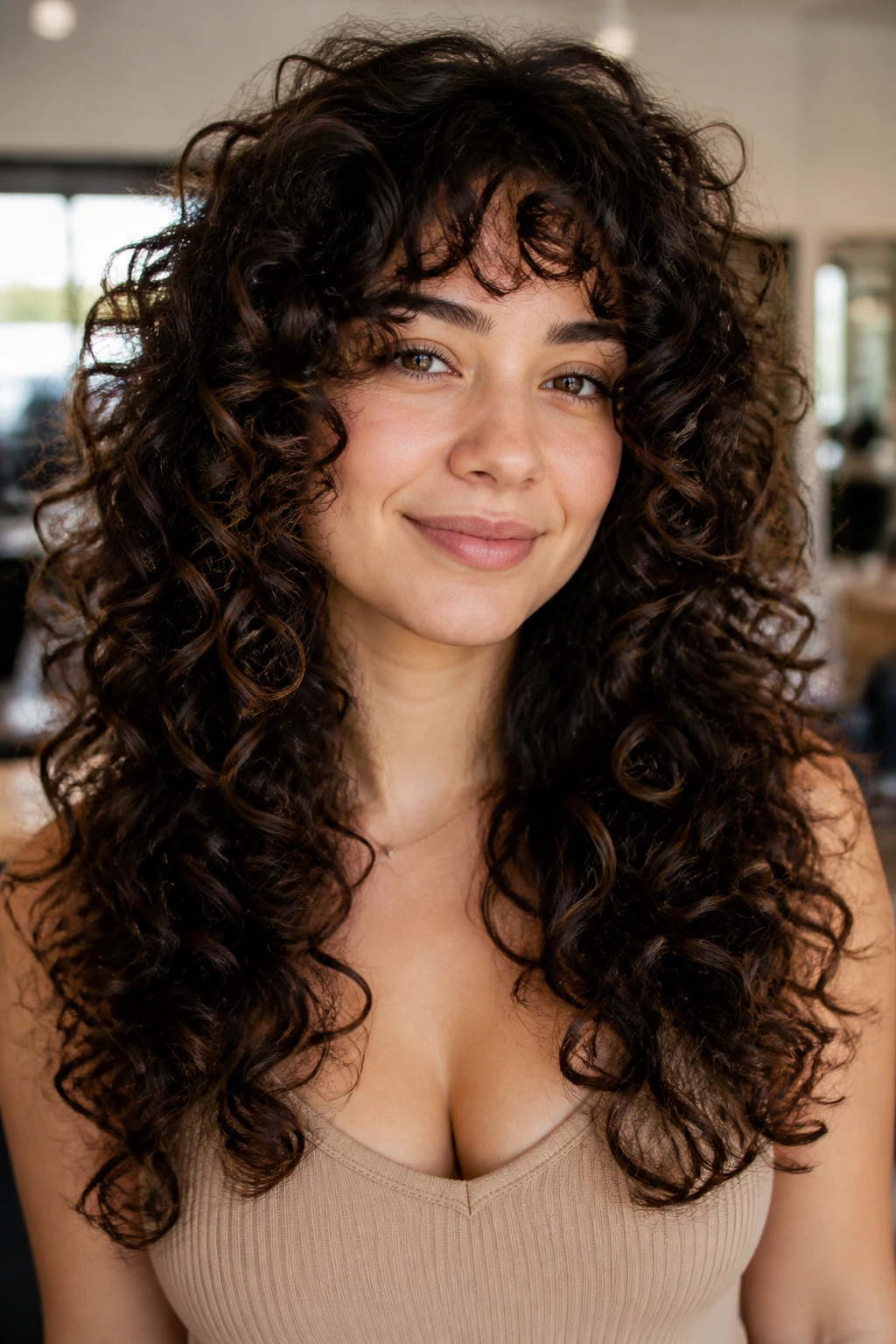
Can curly thick hair have long layers without turning into a puffball? Yes, if the layers respect the curl pattern. Spiral-friendly layering means shaping the curls while they’re in their natural state, or at least checking them dry before the final trim. Wet curls lie.
That matters a lot. A curl that looks shoulder-length when damp can spring up several inches once it dries, and if the layers are cut too short, the result can feel uneven fast. Long layers give the spirals room to stack while keeping the silhouette tall rather than wide.
Why Dry Cutting Helps
Dry cutting lets the stylist see where each curl actually lands. That means the shape can be adjusted where the hair needs it most.
- Keeps the top from getting too short.
- Helps the longest layers stay connected.
- Reduces the odds of one section puffing out more than the others.
- Makes the final shape read cleaner when the curls dry naturally.
If your curls are dense and springy, this is one of the best long layered haircut ideas for thick hair because it works with the pattern instead of flattening it.
22. Long Layers That Grow Out Gracefully
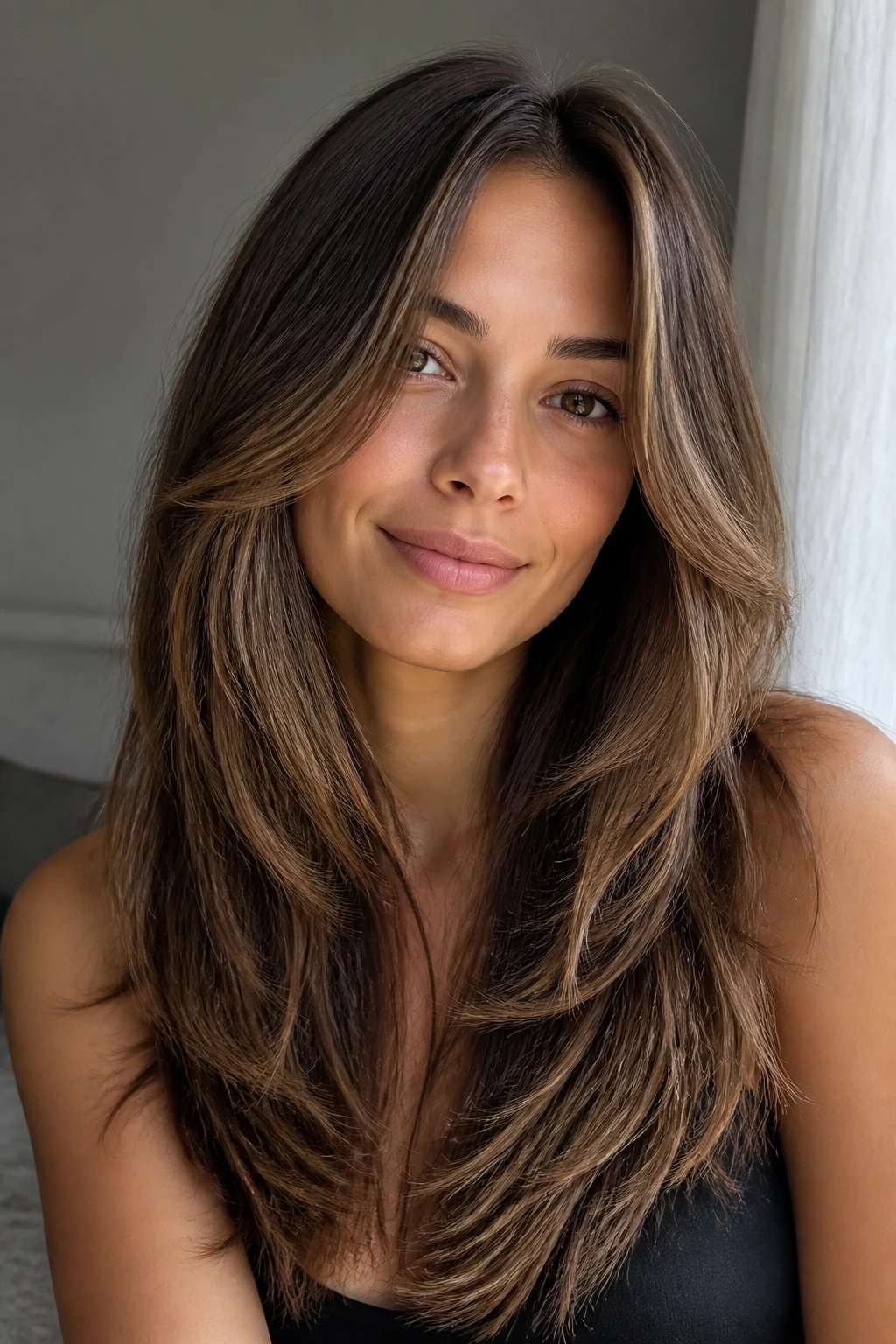
The smartest long layered haircut is sometimes the one that still looks good after it has grown out for a few months. That means soft face framing, long internal layers, and a perimeter that stays strong enough to hold the shape between trims. No harsh steps. No tiny wisps that disappear after a wash or two.
This is the cut for people who like structure but do not want to babysit their hair. It works on straight, wavy, and softly curly textures because the shape is gentle enough to adapt. You can wear it sleek, wave it, clip it up, or throw it into a low ponytail, and the layers still make sense.
The best part is how forgiving it is. If your appointment gets pushed back, the haircut still behaves. If you switch up your part, it still moves. That’s a small luxury, but once you’ve had a thick-hair cut that turns ugly halfway through its grow-out, you start appreciating the quiet ones.
A good long layered cut for thick hair should make your hair feel lighter without making it look thin. That’s the line worth protecting.
