



Long layered cuts for thick curly hair can save a shape that has started to feel boxy, heavy, or wider than you meant it to be. The right cut takes away bulk without taking away the good part — the fullness, the spring, the sense that your hair actually has a life of its own.
The wrong cut does the opposite. It leaves you with a triangle, a puffed-out side wall, or ends that look thinner than the rest of the head after one wash and air-dry. Curl shrinkage is the quiet culprit here. A layer that looks harmless when wet can rise several inches once it dries, and that’s why curly cuts need more thought than a quick snip across the bottom.
The smartest layered shapes for thick curls don’t all do the same job. Some keep the hemline full. Some lift the crown. Some soften the face. Some barely show at all until the hair moves. That range is the whole point, and it’s why the difference between a good curly haircut and a bad one is usually about placement, not length.
1. Long Rounded Layers That Keep the Bottom Full
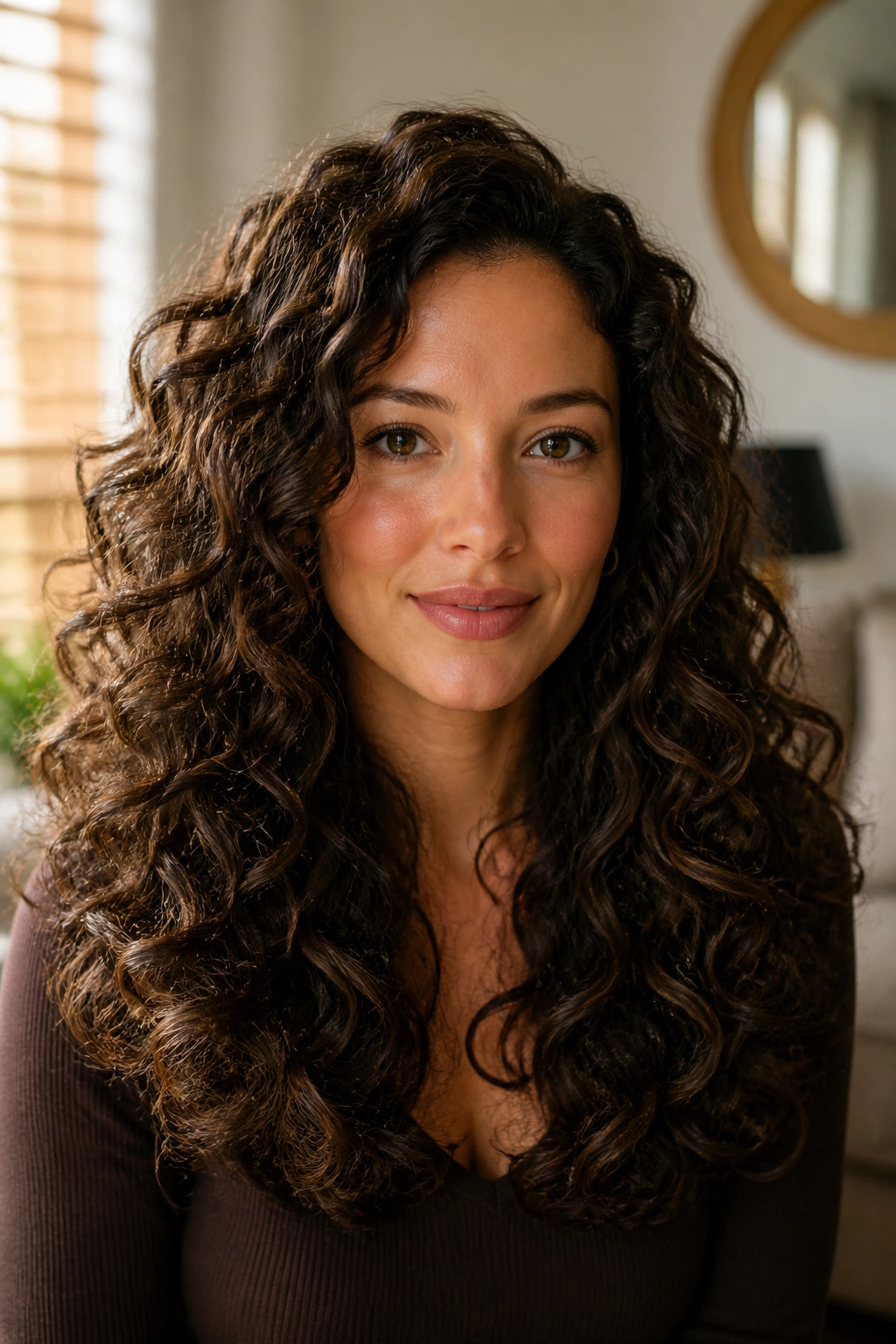
Rounded layers are the safest place to start when thick curls need movement but you still want the ends to look dense. The shape follows a soft curve around the head instead of dropping into a hard corner, so the hair feels lighter without losing its weight line.
That matters more than people think. On thick curly hair, a straight-across hemline can read as bulky, while layers that are too steep can make the bottom look patchy. A rounded cut sits in the middle. It lets the curls stack in a smoother arc, which keeps the silhouette from flaring out at the sides.
What to ask for
- Keep the longest pieces grazing the chest or lower.
- Start the first layer well below the chin.
- Use soft point-cutting at the ends instead of a blunt chop.
- Check the shape dry before removing more length.
A small warning: if the stylist lifts too much weight from the lower third, the whole haircut can pop outward like a bell. You want curve, not mushroom.
2. U-Shape Layers with Soft Face Framing
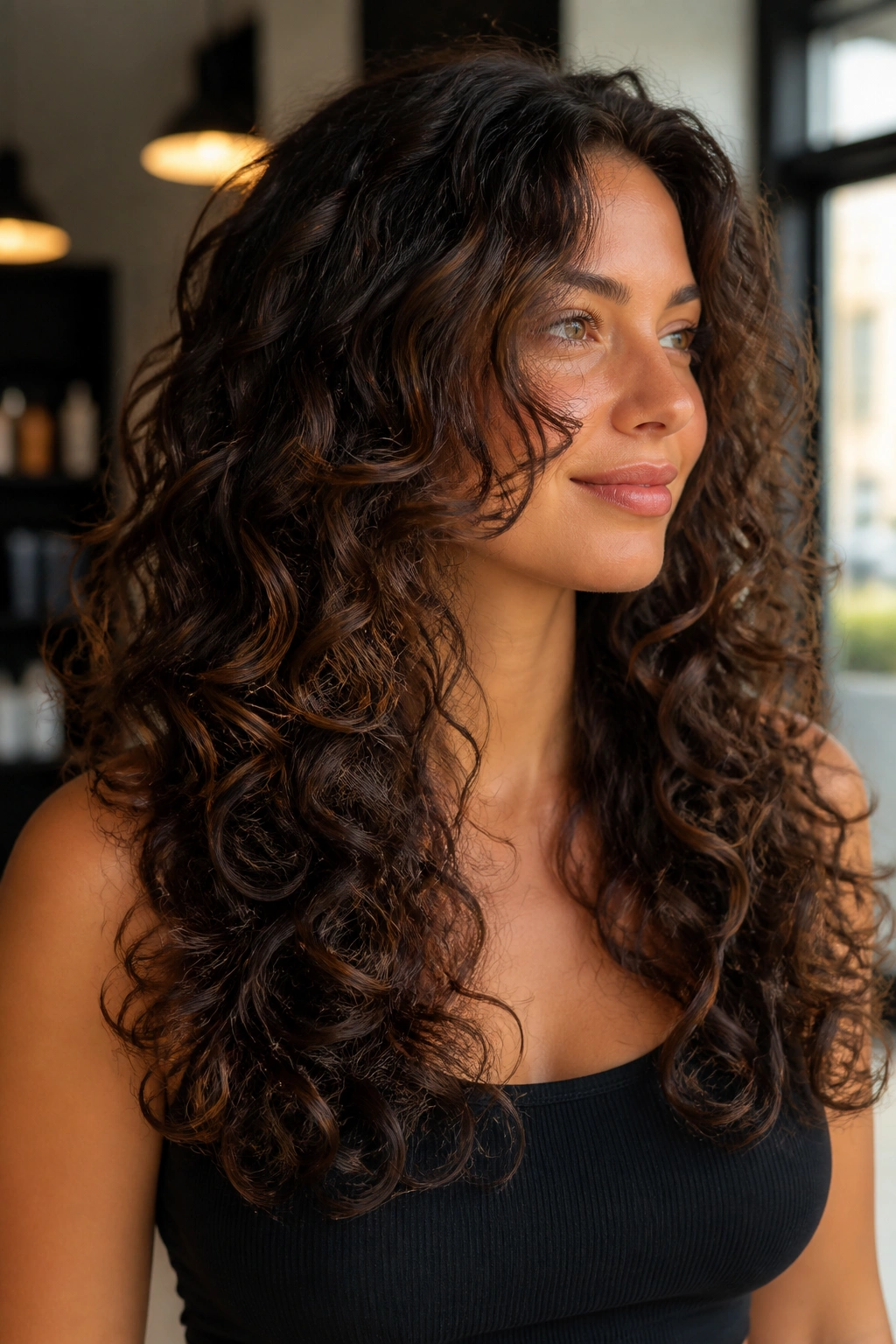
A U-shape is the quiet cousin of the V-cut. It keeps the back long and full, but the sides sweep gently toward the front so the whole haircut feels softer around the shoulders.
I like this shape on thick curly hair because it doesn’t fight the hair’s natural bulk. It works with it. The sides can rest a little shorter than the back without making the outline look sharp, and that slight taper is enough to stop the haircut from feeling like one giant mass.
The face-framing pieces matter here. If they start too high, the front can puff up and sit away from the face. If they start lower — closer to the collarbone than the cheekbone — the curls fall in a calmer way and still open the face. It’s a good cut when you want your hair to feel softer, not smaller.
One sentence. That’s the whole trick.
3. Curly Shag with a Lifted Crown

Want height at the top without turning the ends into frizz? A curly shag does that job better than most cuts.
The shag works because it redistributes weight. Thick curly hair often carries too much volume at the bottom and side panels, which makes the crown feel flat by comparison. A longer shag cuts some of that top heaviness, so the hair rises at the root and stays alive through the mids instead of drooping into one heavy curtain.
Why it works
The crown layers create room for curl pattern to spring. The sides still stay long enough to frame the face, so you do not lose the length that makes the cut feel wearable.
This shape is especially good if your curls look great on day one and then go limp by day three. A lifted crown tends to hold its shape better between washes, mostly because the cut gives the hair somewhere to move. Pair it with a light mousse at the roots and a diffuser on low heat if you want the top to stay away from the scalp.
The catch? Too many short layers near the crown can make thick curls look puffy. The good version of this cut feels shaggy. The bad version looks chopped.
4. Butterfly Layers for Big Volume Up Top
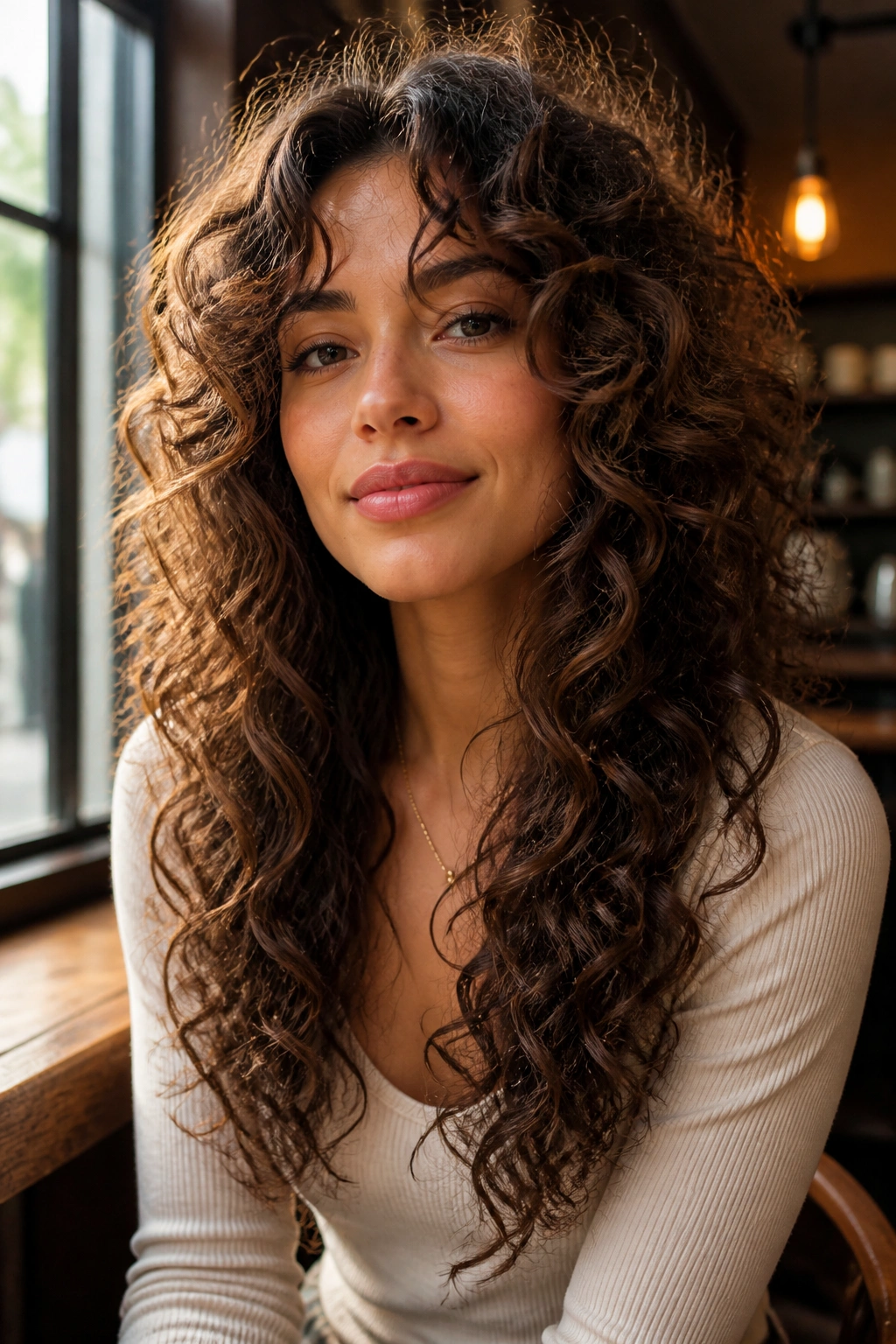
If your hair feels flat at the crown and overloaded at the ends, butterfly layers fix that balance fast. The shape keeps the length in the lower section while lifting the upper section into a lighter frame around the face.
That upper layer is the whole show. It gives the illusion of shorter hair on top without actually sacrificing the long body underneath. On curly hair, that means you get the drama of movement near the face and the weight of length where it belongs.
A good butterfly cut usually has this setup
- The shortest visible layer sits around the cheekbone or a little below.
- The longest layer stays at the chest or past it.
- The transition between the two should be soft, not stepped.
- The back should still feel full enough to hold the curls’ shape.
This cut likes styling that encourages separation. A little curl cream, a soft scrunch, and a careful diffuse can make the top layers fall forward without collapsing into the bottom half. If the blend is too abrupt, the cut loses the airy effect and starts looking like two different haircuts fighting each other.
5. Long Wolf Cut with a Tapered Back
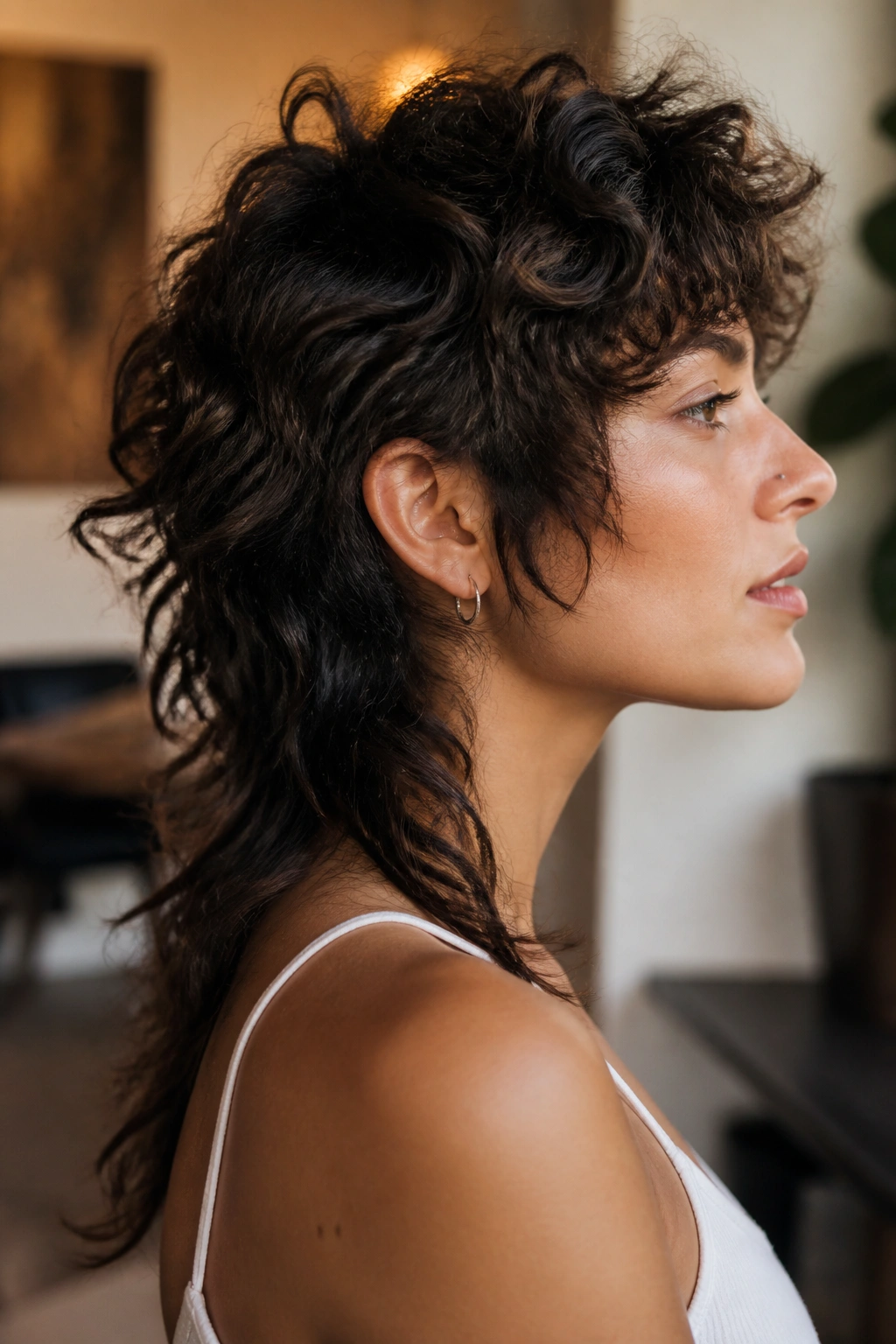
The long wolf cut is the one people ask for when they want shape with attitude. It’s messier than a shag, a little more dramatic than a butterfly cut, and usually a better fit than you’d expect for thick curly hair.
What makes it different is the taper. The crown and upper sides are cut to move, while the back keeps some length so the whole thing still reads as long hair. On curls, that contrast gives a lot of lift without needing to shave off inches from the perimeter.
It’s not a quiet haircut. Fine. That’s the point.
This cut works best when the stylist keeps the nape soft instead of razor-thin. If the back is over-thinned, the bottom can look sparse once the curls dry and expand. A good wolf cut on thick curls keeps enough weight in the lower third to anchor the shape. Otherwise it starts to look unfinished in daylight, and nobody wants that.
6. Ghost Layers You Barely Notice
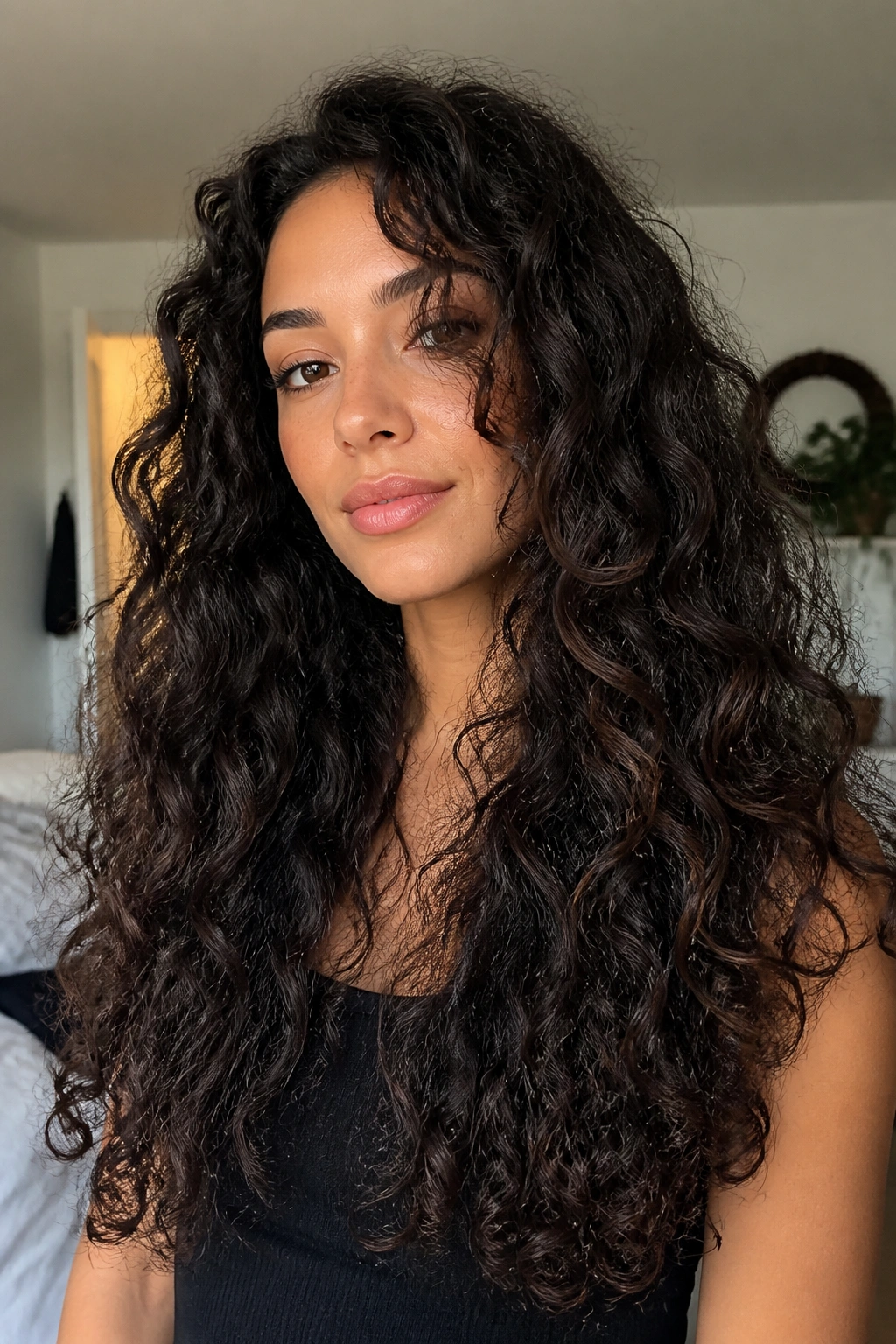
Ghost layers are for the person who likes the idea of layers more than the look of layers. They sit inside the haircut, hidden enough that you mostly feel them in the movement rather than seeing obvious steps.
That’s a smart move on thick curly hair when the perimeter is already strong. You can remove some of the inside bulk, let the curls stack less aggressively, and keep the outside line calm. The haircut still moves, but it doesn’t advertise every cut point.
A lot of people think layers have to be dramatic to matter. They don’t. A set of subtle internal layers can make a huge difference in how fast the hair dries, how it falls over the shoulders, and how much it balloons at the sides. The outline stays long. The inside stops acting like a dense block.
My blunt opinion: if your ends are already fine or see-through, don’t chase ghost layers too hard. They work best when there’s enough density to hide the shaping.
7. V-Cut Layers for a Slimmer Back View
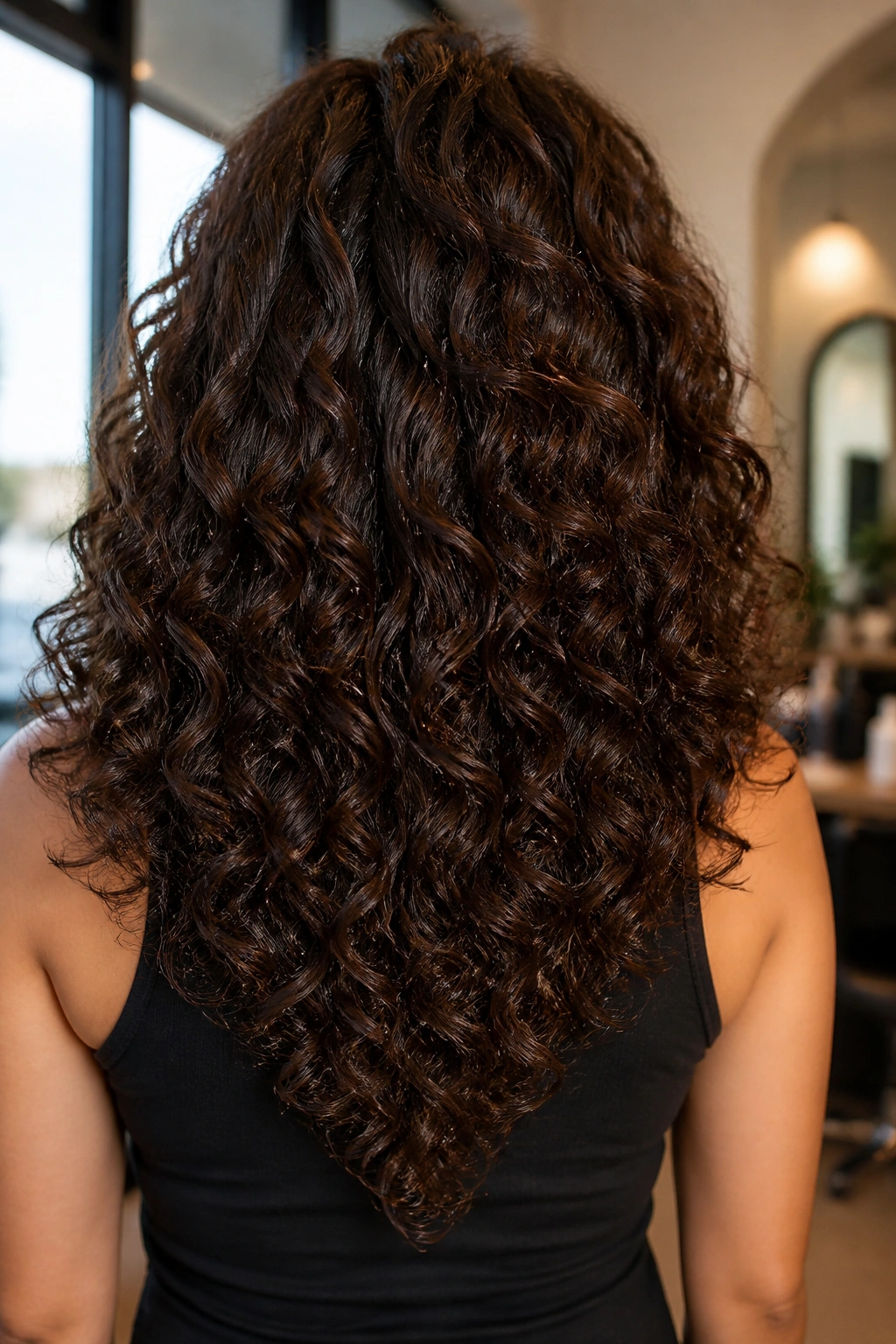
The V-cut is still one of the easiest ways to make thick curly hair feel lighter from behind. The hair tapers gently toward the center of the back, so the silhouette narrows instead of spreading wide at the hem.
What makes it different
The back keeps a pointed fall, while the side pieces stay long enough to frame the shoulders. On curls, the shape needs to stay soft. A sharp V can look choppy once the hair dries and shrinks, especially on tighter textures, so the angle should be more of a curve than a knife edge.
This cut is useful if your hair looks gorgeous from the front but turns into a wall from the back. The V creates a cleaner line, and that can be enough to make the whole style feel easier to live with. It also shows off length better than a blunt hemline because the eye can follow the taper.
If you wear your hair down a lot, this is one of the few cuts that keeps the long feeling while still giving the ends some shape. No drama. Just a cleaner back view.
8. Waterfall Layers That Break Up Heavy Density
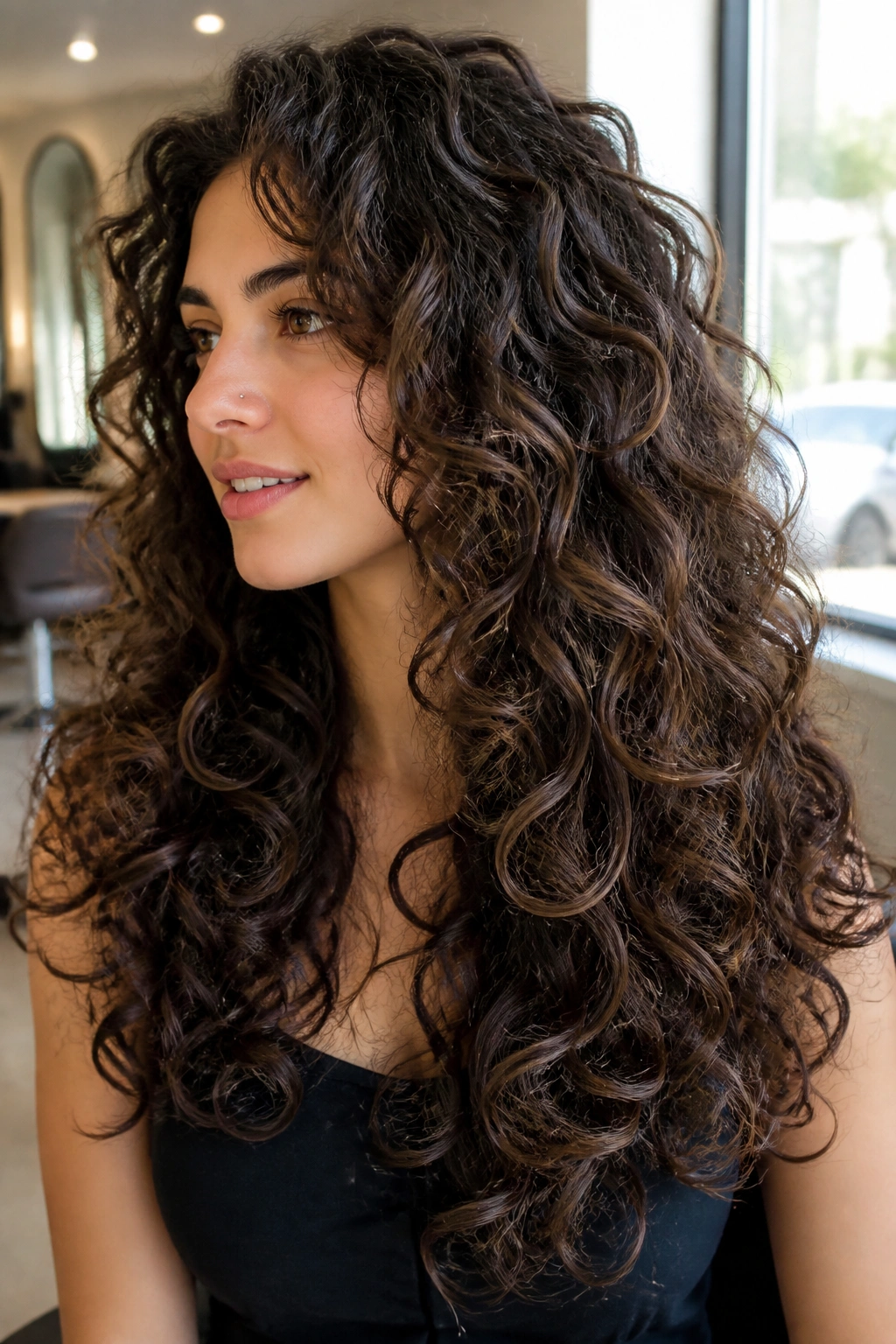
Waterfall layers are made for curls that need visible movement from top to bottom. The layers fall in a cascading order, so the eye sees separation instead of one continuous block of hair.
That’s useful on thick hair because density can hide the curl pattern. You can have gorgeous texture and still end up with a haircut that looks static. Waterfall shaping solves that by opening little windows between the layers. The curls spill over one another, which gives the hair a softer read from every angle.
The styling matters here. If you leave the hair completely untouched, the layers can collapse into each other and lose the effect. A curl cream plus a light gel can help the ends stay together while the shape remains obvious. Diffusing upside down can make the layers separate even more, though some people prefer to air-dry and keep the result calmer.
This cut is less forgiving on damaged ends. When the bottom is frayed, waterfall layers can turn fuzzy fast.
9. Long Layers with Curtain Bangs
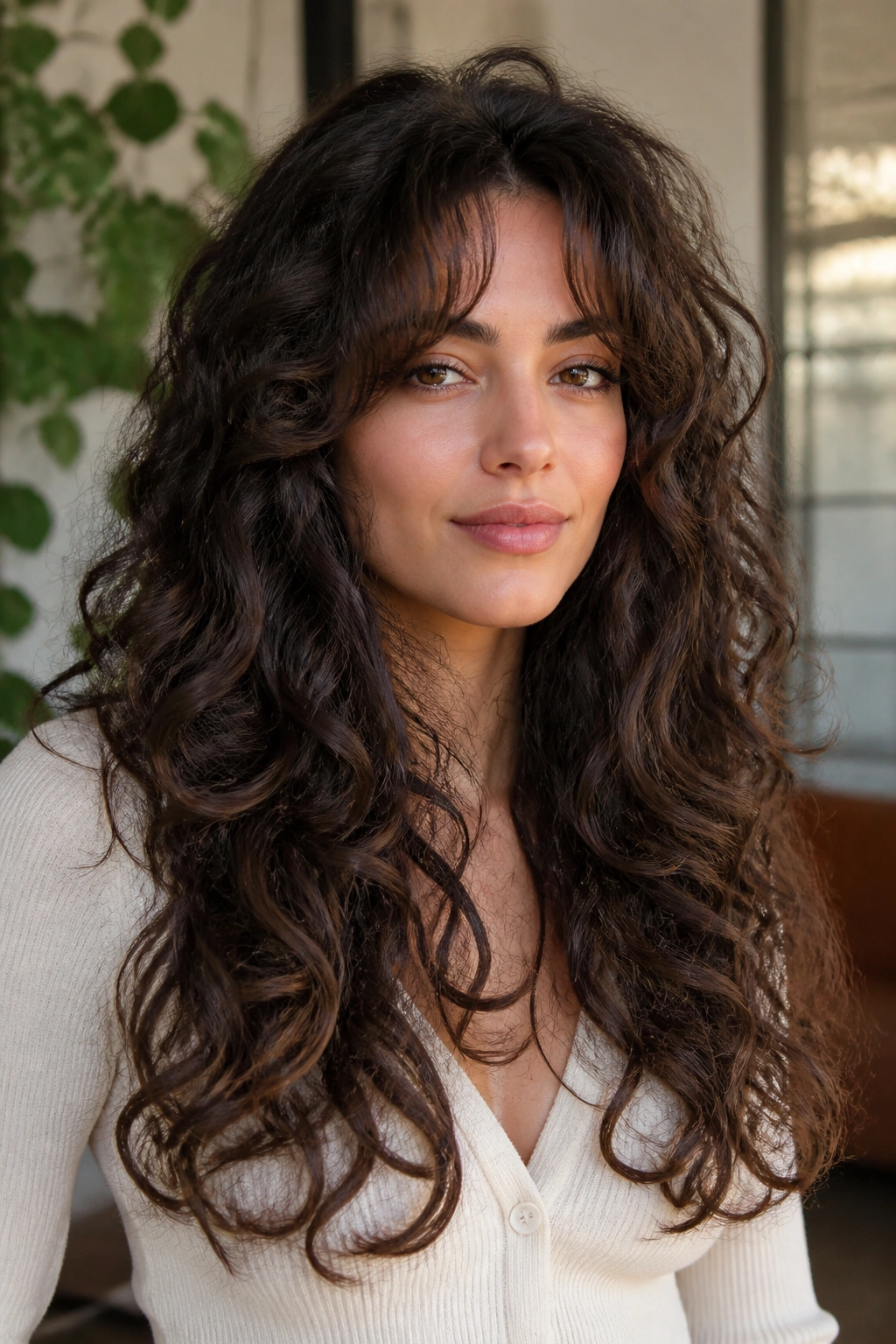
Can you keep your length and still wear bangs? Yes, if the bangs are long enough to respect curl shrinkage.
Curtain bangs on thick curly hair work best when they’re treated like part of the haircut, not a little add-on at the front. They should blend into the first face-framing layer so the front of the cut feels intentional instead of abruptly shorter. When that blend is right, the bangs soften the forehead, open the face, and keep the hair from feeling too heavy around the cheeks.
The mistake I see most often is cutting curly bangs too short while the hair is wet. Dry curls can spring up hard, and once that happens, the fringe may sit above the brow and stay there until the next trim. A better approach is to leave the shortest pieces longer than you think you need, then refine after the curl pattern settles.
The rule: keep the fringe long enough to tuck, twist, or pin on a bad day. That little bit of flexibility saves regret.
10. Internal Layers That Remove Weight From the Inside
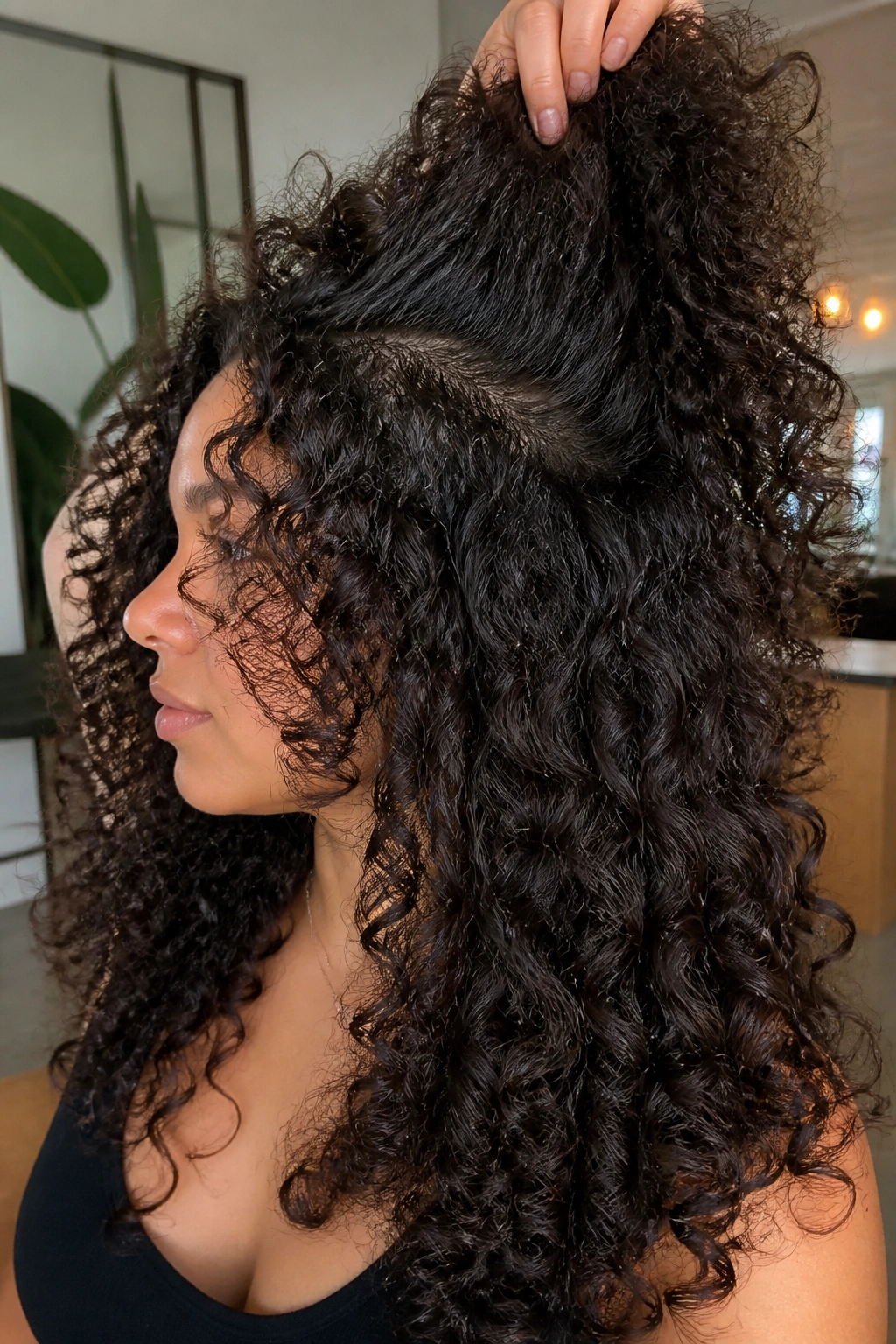
Thick curly hair that feels like a blanket usually needs internal layers more than it needs a dramatic outer shape. This is the haircut for people who want the outside to stay long and familiar while the inside stops acting like a dense brick.
The idea is simple. The stylist removes bulk through the interior in vertical sections, but leaves the perimeter intact. That way the hair dries with more air between the curls, and the whole head moves better without losing its outline. It’s a quiet cut, but the payoff is real: less heaviness at the nape, less puff near the sides, and less time fighting the same volume every morning.
What to ask for
- Keep the outer line long and even.
- Remove bulk from the interior only.
- Avoid aggressive thinning shears unless the hair is truly coarse and dense.
- Leave enough weight at the bottom to keep the curls from fraying outward.
This cut is a good fit when you like your hair long but hate how long it takes to dry. It also helps if your curls tangle at the back of the neck, because the shape stops packing itself so tightly.
11. Razor-Cut Layers with Soft Ends
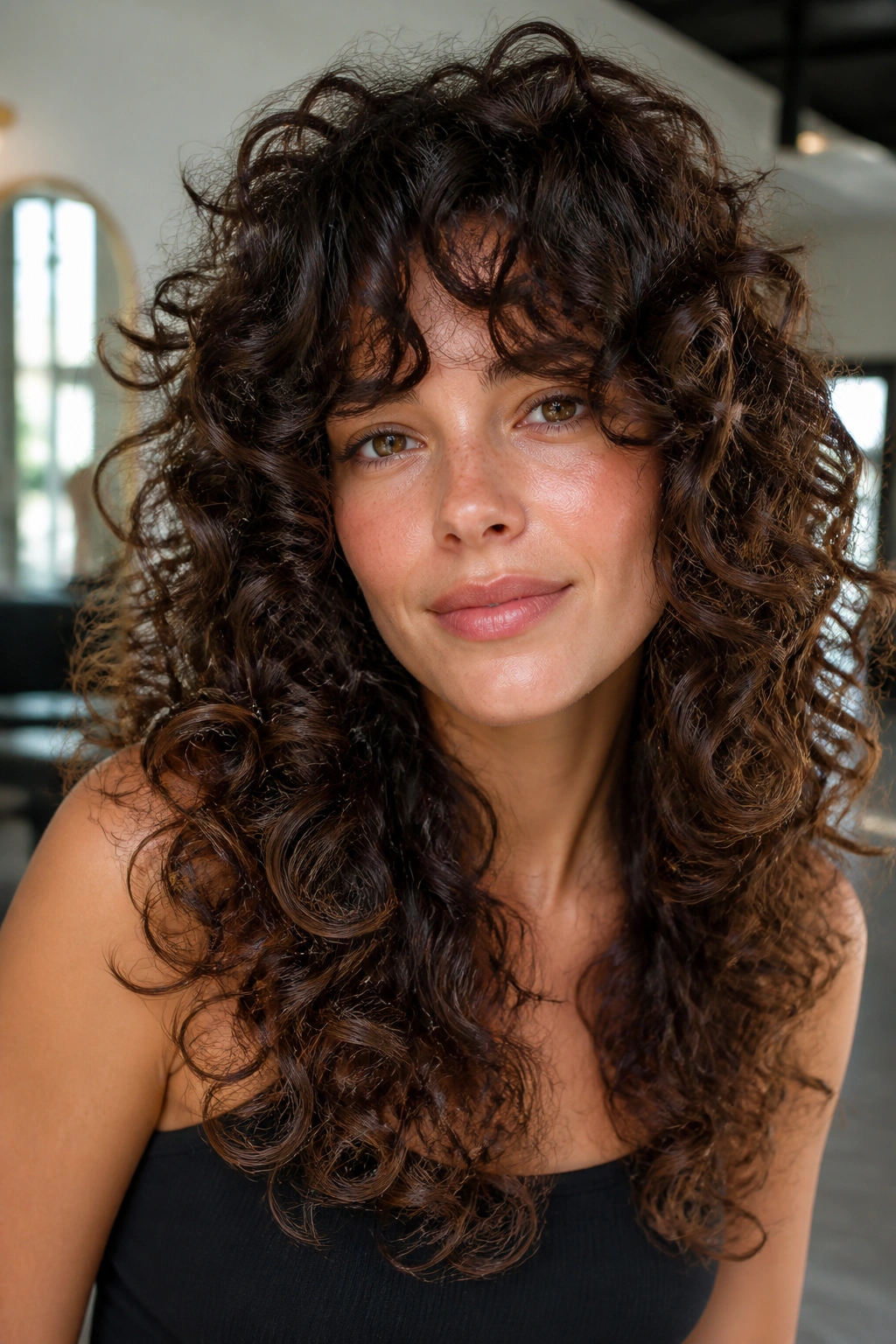
Razor-cut layers can look gorgeous on the right curly head, and messy on the wrong one. That’s the honest version.
When the curl pattern has enough spring and the ends are healthy, a razor can soften the edges of thick hair in a way scissors sometimes cannot. The layers feel feathered, the perimeter moves more freely, and the whole haircut can look lighter without losing much length. On looser curly textures, that softness is a real plus.
But a razor is not a casual tool. If the hair is fragile, overly dry, or already frizzy, razor work can rough up the ends and make the whole shape look fuzzy. So this is one of those cuts that depends heavily on the person holding the tool. You want someone who knows how the curl behaves once it dries, not just someone chasing texture for its own sake.
A dull blade is a disaster.
If you’re curious about this cut, ask for a small test section first. That tiny bit of caution can save you from a head full of shredded ends.
12. Side-Part Layers with an Asymmetrical Fall
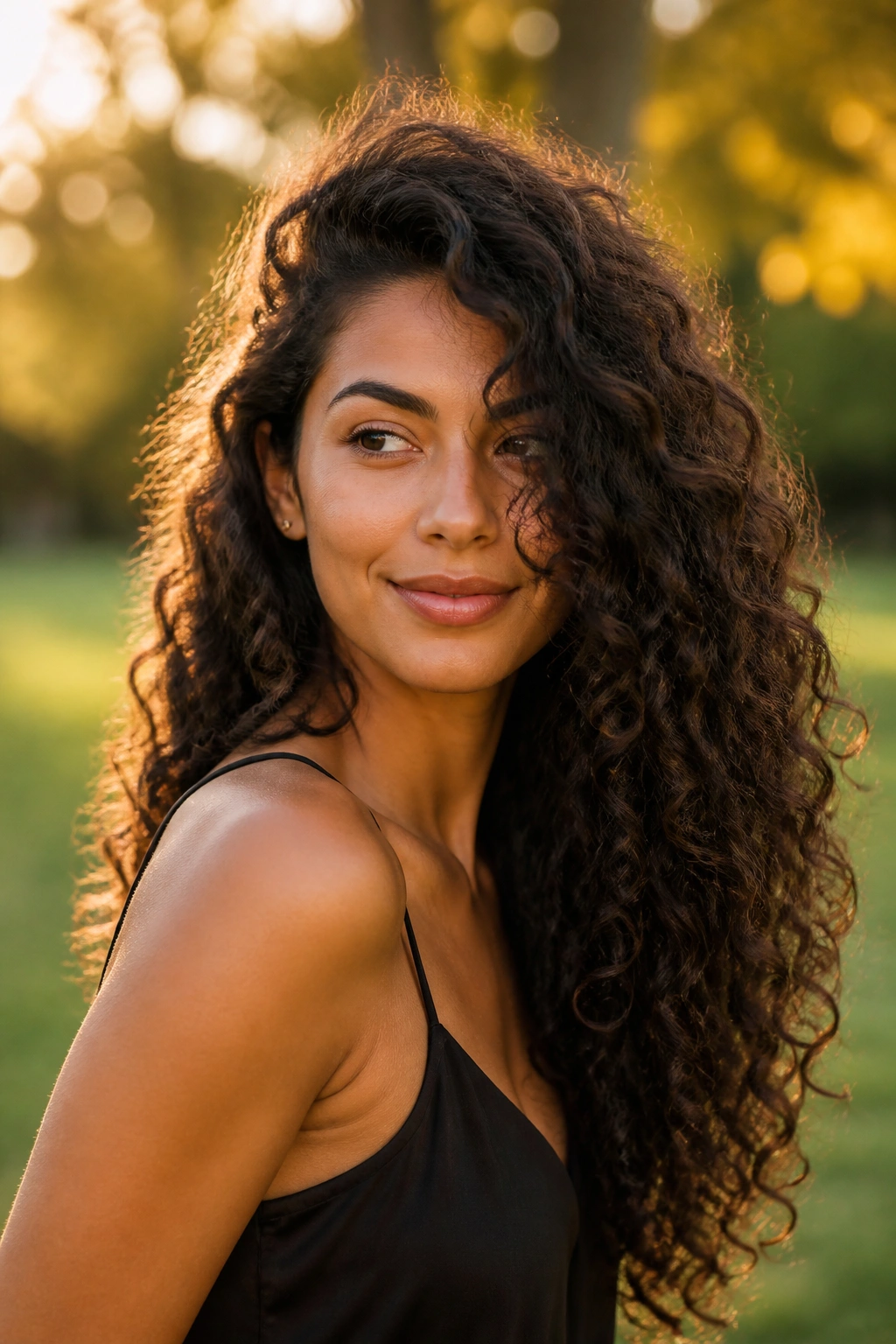
A side part changes the whole haircut before the scissors even touch it. Thick curly hair often stacks too evenly in the middle, which can make the shape feel broad. Moving the part off-center breaks that symmetry and lets the layers fall in a more interesting way.
Unlike a center-part cut, a side-part version lets one side carry a little more length and weight. That can make the face look longer and stop curls from puffing evenly on both sides of the head. It’s especially useful if one temple area is denser than the other or if your hair flares out near the part line.
The best version of this cut is subtle. You’re not building a dramatic asymmetrical chop. You’re shifting the weight so the curls have a better path down the head and across the shoulders. Keep the longest front piece somewhere around the collarbone, and let the other side stay just a touch shorter.
If the center part makes your hair look wide, this is the cleanest fix.
13. Bottleneck Bangs with Long Curly Layers
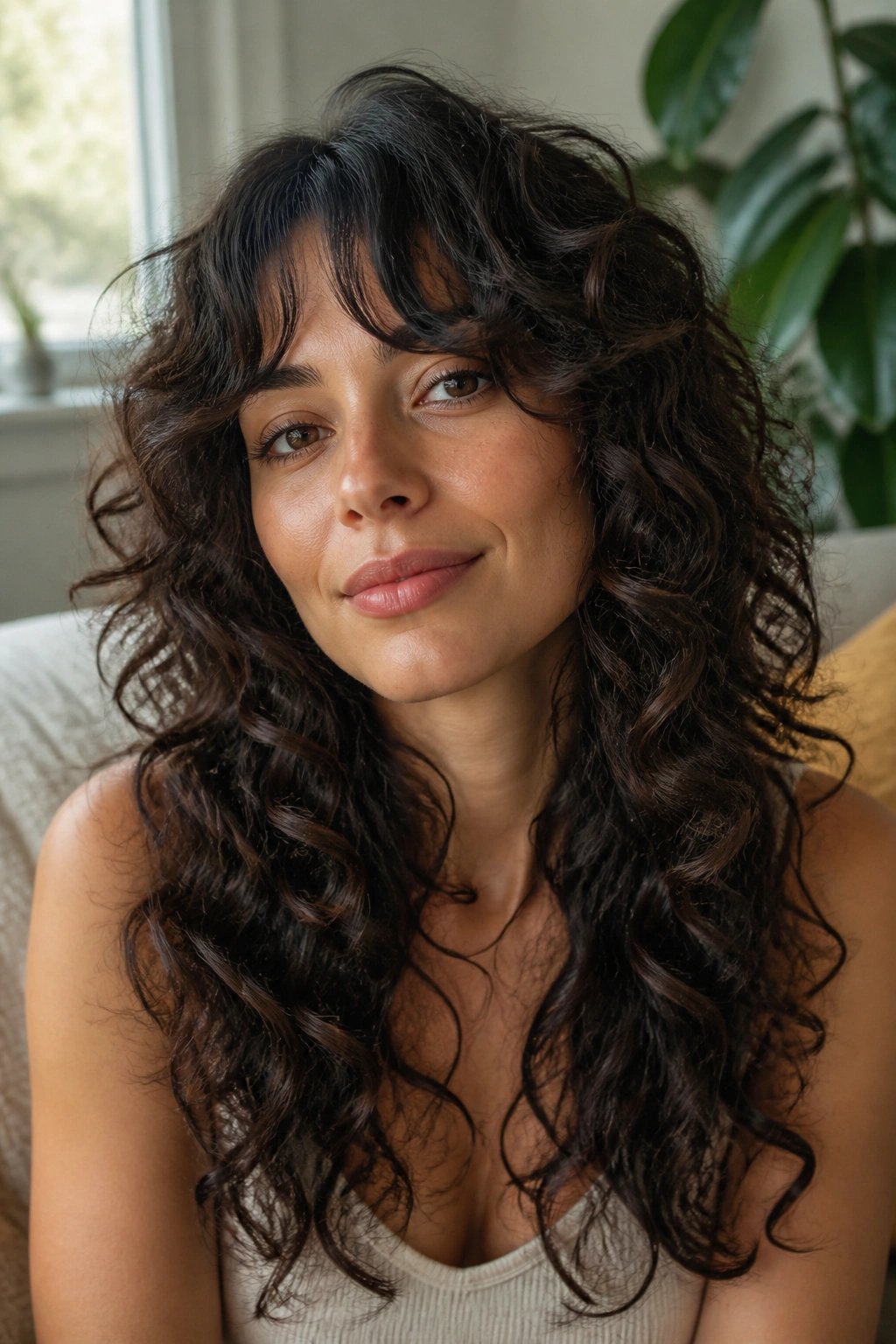
Bottleneck bangs are the middle ground between full fringe and long face-framing pieces. They sit narrow near the center, then open outward as they reach the cheeks, which makes them flexible enough to work with curly hair instead of against it.
Why they suit curls
The shape lets the fringe shrink without looking too blunt. That matters a lot on thick curly hair, where a short bang can jump upward fast and sit in an awkward line across the forehead. Bottleneck bangs soften that problem because the inner pieces stay shorter while the outer pieces connect to the rest of the haircut.
This cut is a smart option if you want movement around the eyes but do not want a heavy curtain of hair across your face. It also blends well with longer layers, especially when the front pieces are cut to taper into the rest of the shape instead of ending abruptly.
A useful detail: dry the bangs separately first. That gives you a better read on the shrinkage and stops the fringe from bouncing up too far while the rest of the hair is still wet.
14. Cheekbone Contour Layers
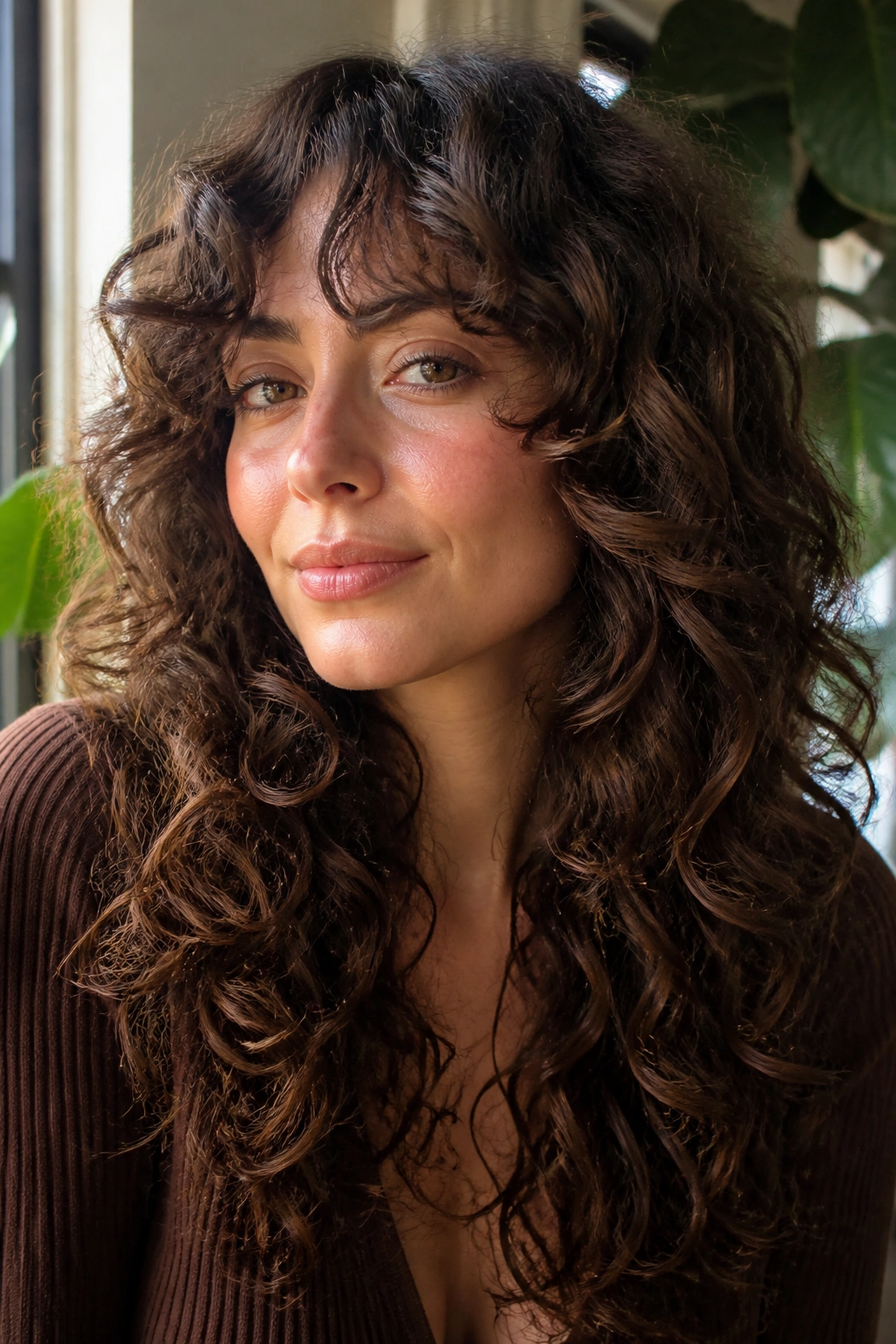
Some haircuts change the face more than they change the length. Cheekbone contour layers are built for that.
These layers bend around the face in a way that highlights the cheekbones and softens the jaw, which is handy when thick curls tend to sit wide at the sides. The shape pulls the eye inward instead of letting it drift outward into the bulk of the hair. On the right face, that little adjustment makes a huge difference.
I like this cut because it doesn’t try to erase the curls. It frames them. The front layers should start low enough to avoid standing away from the face, but high enough to catch the natural bend of the curls around the cheeks. If they begin too high, the front can balloon. Too low, and you lose the contour completely.
A good contour layer does not fight the curl. It follows it.
That’s the whole appeal here: a haircut that gives structure without flattening the texture.
15. Tapered Ringlet Layers for Tight Curls
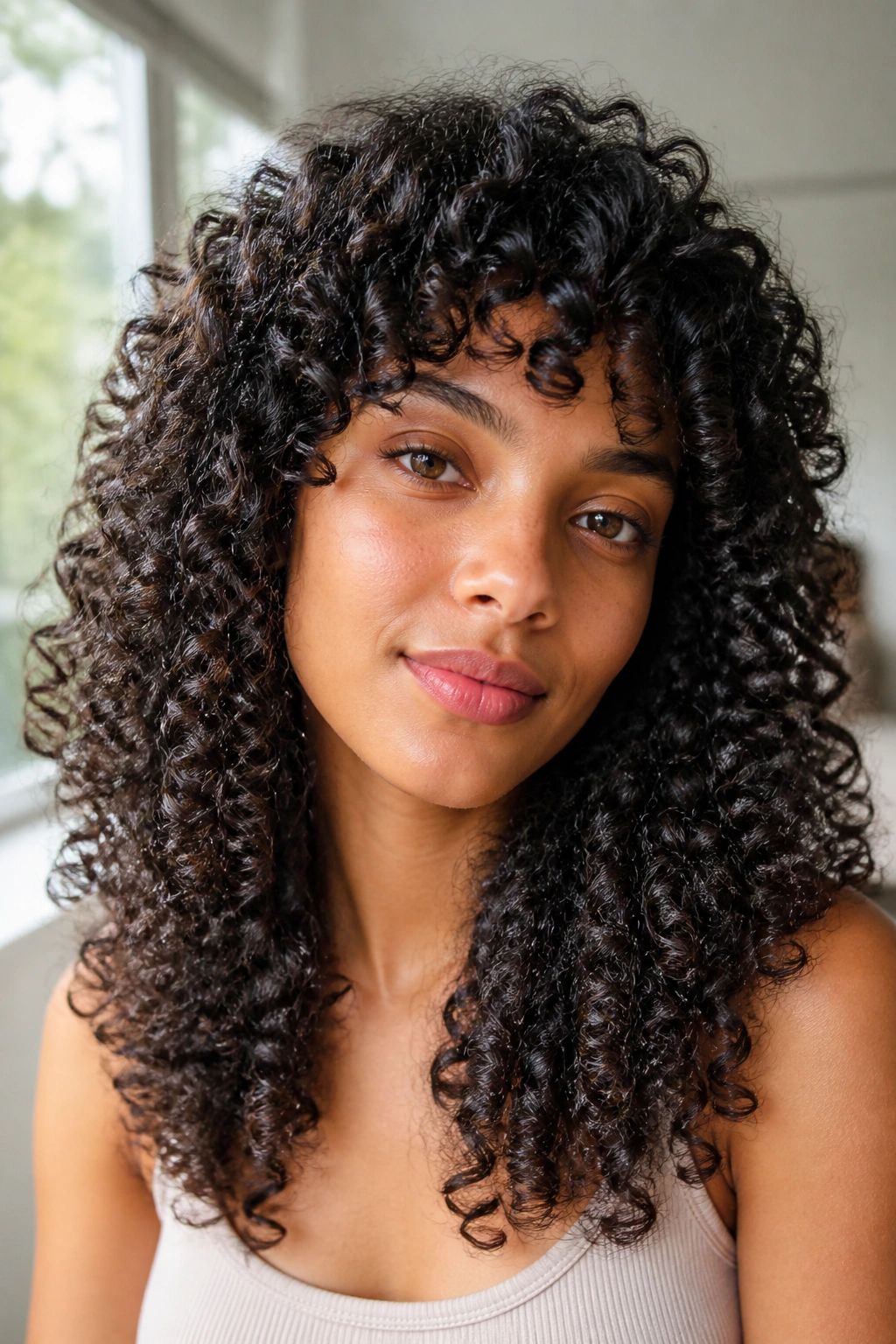
Do tighter curls need a different layering logic? Absolutely. The spring is stronger, the shrinkage is bigger, and heavy-handed thinning can wreck the shape fast.
Tapered ringlet layers keep the curls long enough to coil properly while still taking weight out of the bulk zones. The shape usually follows a vertical fall rather than a wide horizontal shelf, which helps the curls stack without building a triangle. On 3C through 4A textures, that can keep the head from looking overly round in the wrong places.
How to read the cut
- The layers should move down the head, not straight across it.
- The ends need enough weight to keep the ringlets defined.
- The stylist should cut in a way that respects each curl family.
- Over-thinning near the crown usually causes trouble later.
This is one of the cuts that can look small in the chair and much better once dry. That’s normal. The curls contract, the silhouette tightens, and the shape finds itself. Leave a little length in the front pieces if you want room for shrinkage and styling.
16. Blunt Perimeter with Invisible Layers Inside
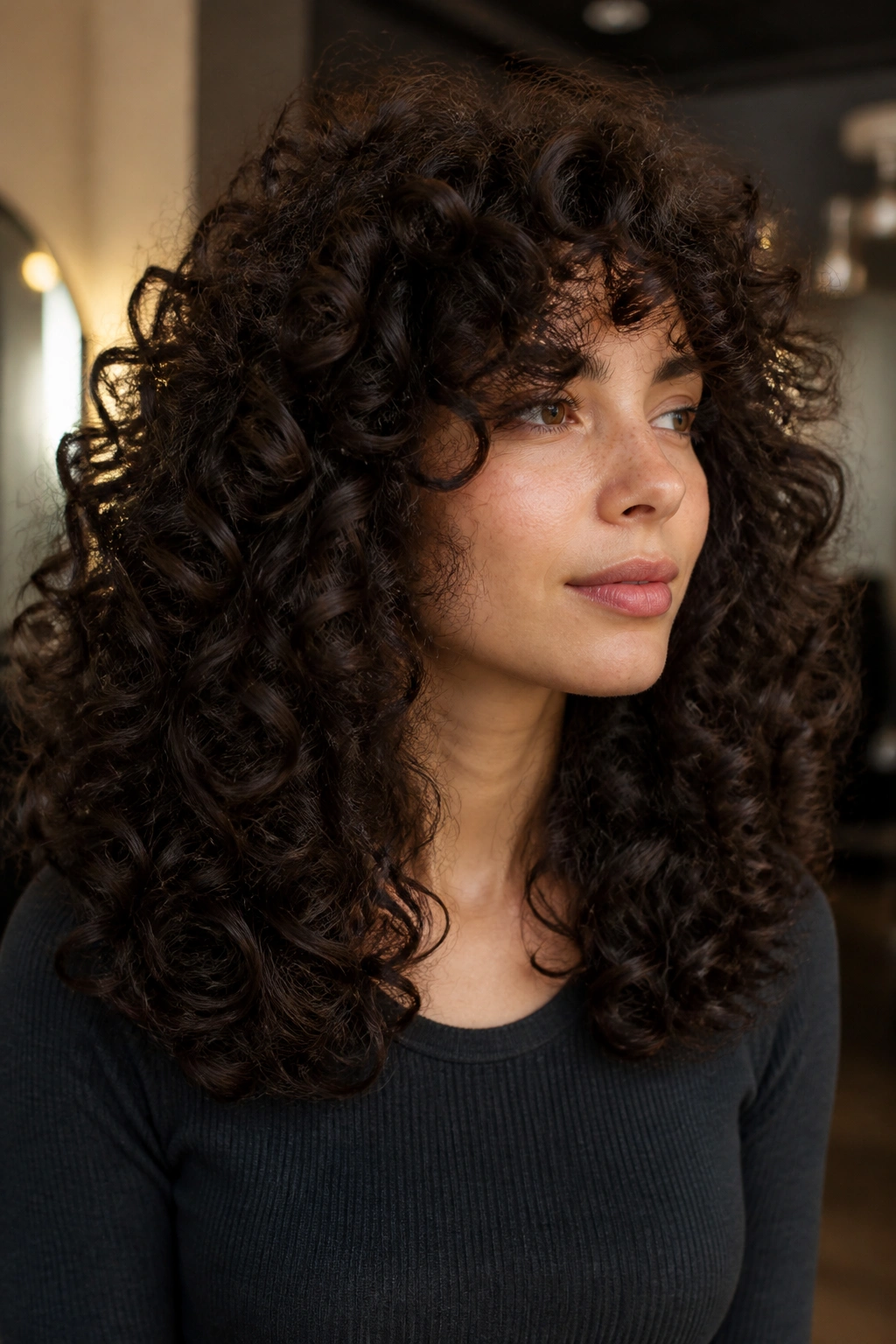
Sometimes the smartest move is to keep the outline blunt and hide the layers inside. That gives thick curly hair a strong bottom edge while still removing the excess weight that can make the mids feel dense.
This cut is useful if you love the look of full ends. A blunt perimeter makes curls look thick and healthy, which is a good thing when the hair is naturally dense and you do not want the bottom to appear wispy. The hidden layers stop the inside from turning into a solid lump, so the style stays movable.
It’s a strong compromise. You get shape without obvious tiers, volume without the helmet effect, and enough length to keep the hair feeling substantial. But if the ends are already thin, this approach can make the contrast too obvious. The bottom line needs enough density to hold its own.
One-sentence verdict: this is the haircut for people who want the ends to look expensive, not airy.
17. Curly Mullet-Lite Layers
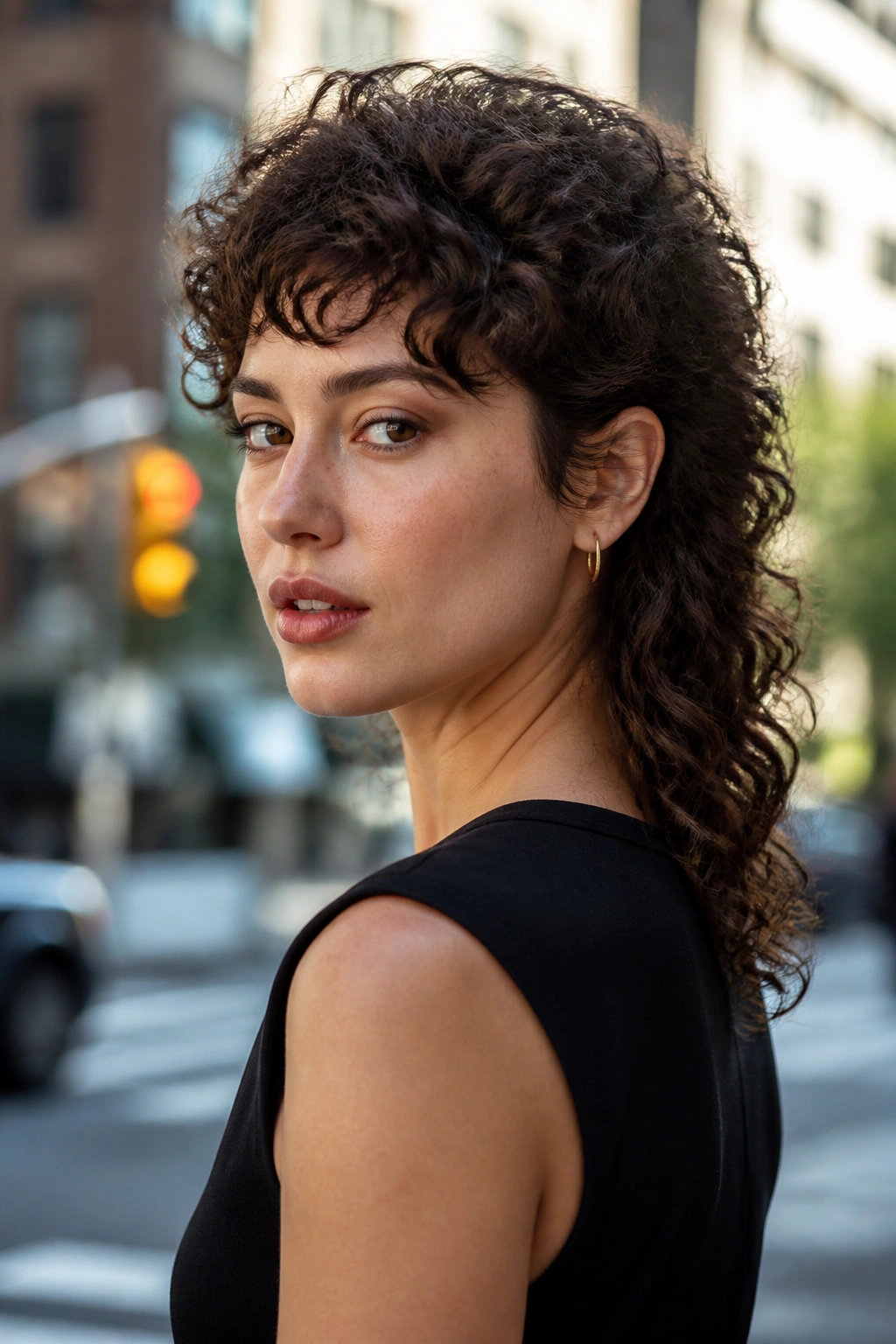
The curly mullet gets a bad rap from people who picture a novelty cut from a decade show. The softer version is much better than that.
A mullet-lite shape keeps the front and crown shorter, then lets the back hang longer so the curls can move instead of sitting in one heavy wall. On thick curly hair, that can be a relief. The weight shifts away from the sides and toward the back, which opens the face and adds a little edge without taking the whole haircut into costume territory.
This cut is not subtle. It leans into texture and shape in a way that feels more playful than polished. If you want sleek and uniform, skip it. If you want a little personality and a haircut that works with a lot of natural volume, it has a lot going for it.
The key is softness. The transition from crown to back should be blended enough that the haircut still feels wearable on an ordinary Tuesday. Otherwise it slips from stylish into awkward, and that line is thinner than people think.
18. Long Face-Framing Layers That Start Below the Chin

If your curls puff out near the jaw, start the face frame lower. That one move can change the whole haircut.
Long face-framing layers that begin below the chin keep the front from ballooning too close to the face. Instead of pushing width right at the jawline, the layers fall past it and give the curls a cleaner route downward. The result feels calmer, especially on thick hair that tends to expand as soon as it dries.
What to ask for
- Start the shortest face-framing piece below the chin.
- Keep the next pieces long enough to blend into the chest length.
- Use soft point cutting rather than a hard edge.
- Let the layers curve inward slightly so they don’t flare outward at the ends.
This cut works well if you like wearing hair loose and tucked behind one ear. It also keeps the front from stealing too much attention. The length still feels full, but the face gets room to breathe. That matters on dense curls, where short front layers can dominate the entire look faster than expected.
19. Soft 90s Layers with Bouncy Movement
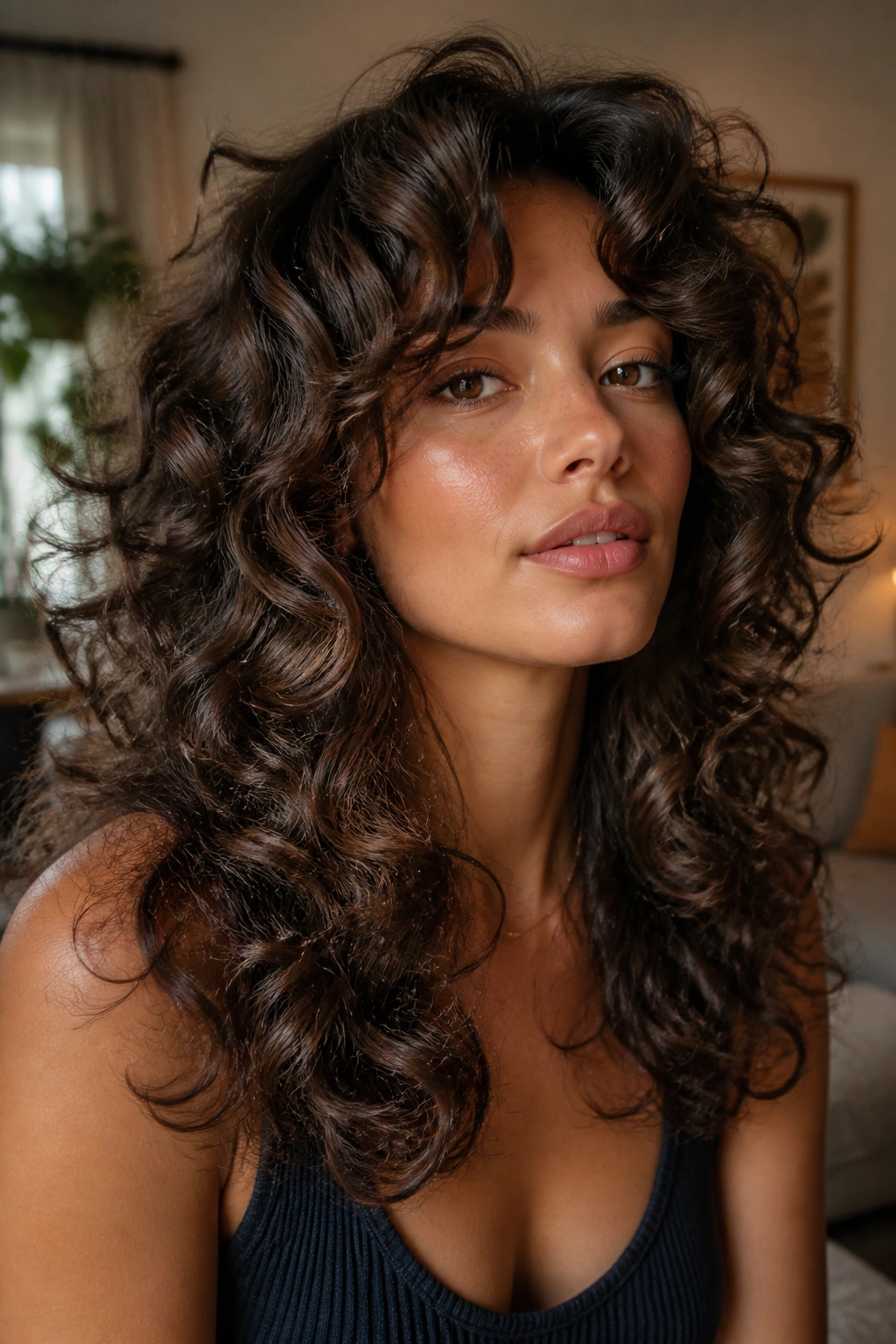
Soft 90s layers are having a long shelf life for a reason: they give curly hair bounce without making it look heavily chopped. The shape usually has a little volume around the crown, long curtainy sides, and movement through the mid-lengths that feels polished but not stiff.
On thick curly hair, the look comes alive when the layers are blended enough to let the curls separate in chunks instead of dropping in one sheet. The hair should feel airy at the sides and soft at the ends, with enough shape near the face to keep the cut from looking plain. That little bit of lift around the upper section is what makes the haircut feel lively.
A good version of this cut should not look frozen. It should move when you walk. When the curls sway and settle, the layers show their work. A bad version looks overworked, with too many short pieces fighting for attention.
If you like a curly style that feels a little dressed up without trying too hard, this is an easy one to love.
20. Center-Part Friendly Layers with Equal Sides
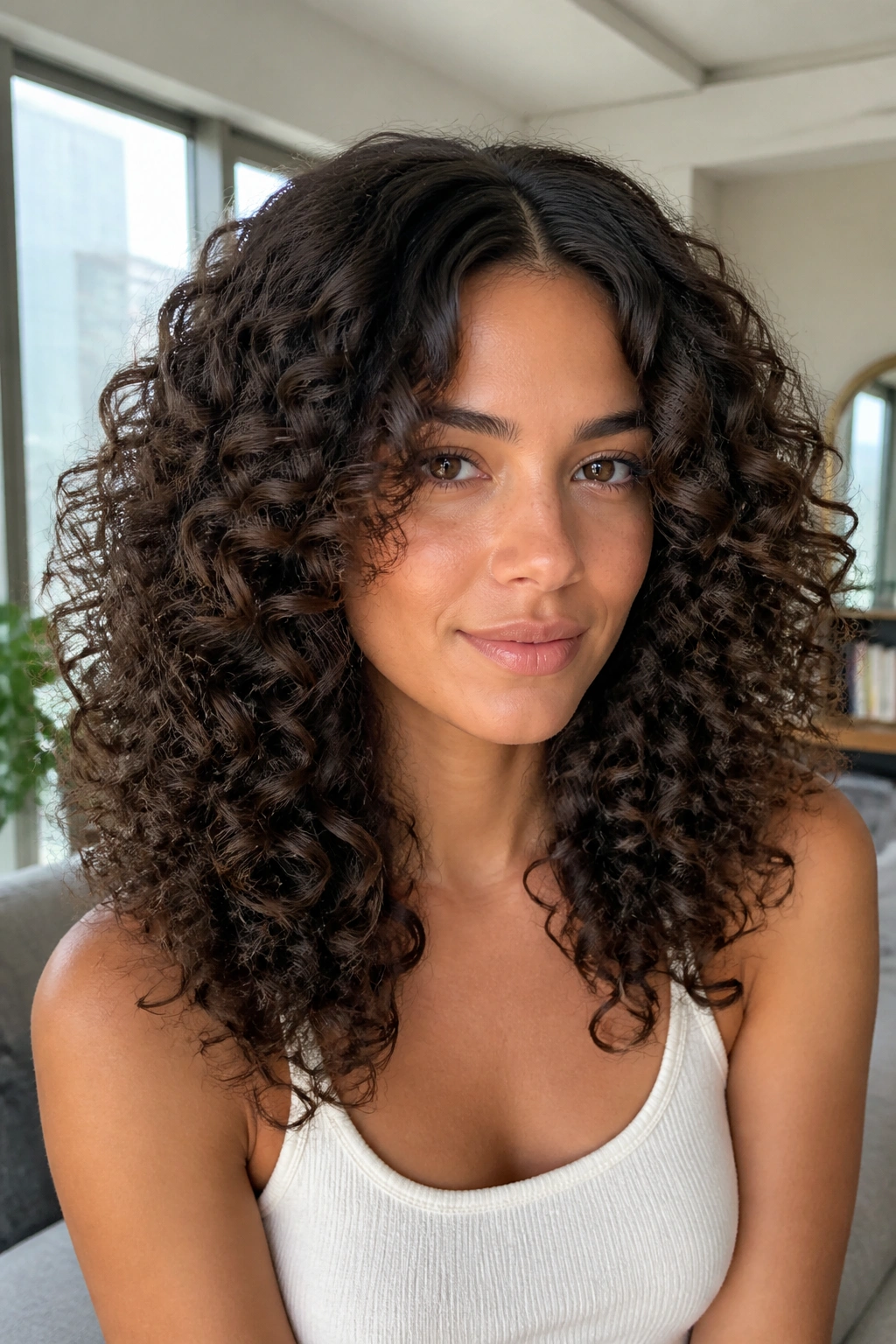
A middle part can be the best friend or worst enemy of thick curly hair. With the right layers, it’s the first.
Center-part friendly layers keep both sides balanced so the curls fall in a mirror-like way down the face and shoulders. That symmetry matters when you want the haircut to feel controlled instead of lopsided. The front pieces should be long enough to frame the face without springing into a short fringe, and the layers around the jaw should taper evenly on both sides.
Why this shape helps
- It keeps the middle part from looking too wide.
- It stops one side from carrying all the bulk.
- It gives the curls a clean fall at the front.
- It works well when you want a steady shape from week to week.
The cut is especially helpful if your curls naturally separate down the center. Instead of forcing the hair into a different pattern, it respects the part and builds shape around it. That usually means less fussing in the morning and fewer moments of “why does one side look twice as big?”
Simple. Balanced. Reliable.
21. S-Curve Cascading Layers

Why do some layered cuts look smooth while others feel chopped into shelves? The answer is often the curve of the cut itself.
S-curve cascading layers follow a softer line than a straight staircase shape. The hair bends gently as it moves down the head, which keeps thick curls from looking stacked in obvious bands. On dense curly hair, that matters because blunt internal steps can show through once the curls dry and expand.
Why the S-shape matters
The curve helps each layer blend into the next, so the haircut has movement without visible ledges. That gives the hair a flowing shape from the crown to the ends, which is especially useful when the curls are large and springy.
This cut takes a stylist with a steady eye. You want someone who looks at the whole form, not just the section in front of them. A few extra minutes of careful layering can keep the curls from bunching up in one place and leaving another area flat. That sort of balance is harder than it sounds, which is why this cut rewards patience.
If your current haircut looks uneven once dry, an S-curve shape can smooth that out without sacrificing length.
22. Heavy-Perimeter Layers for Maximum Length Retention
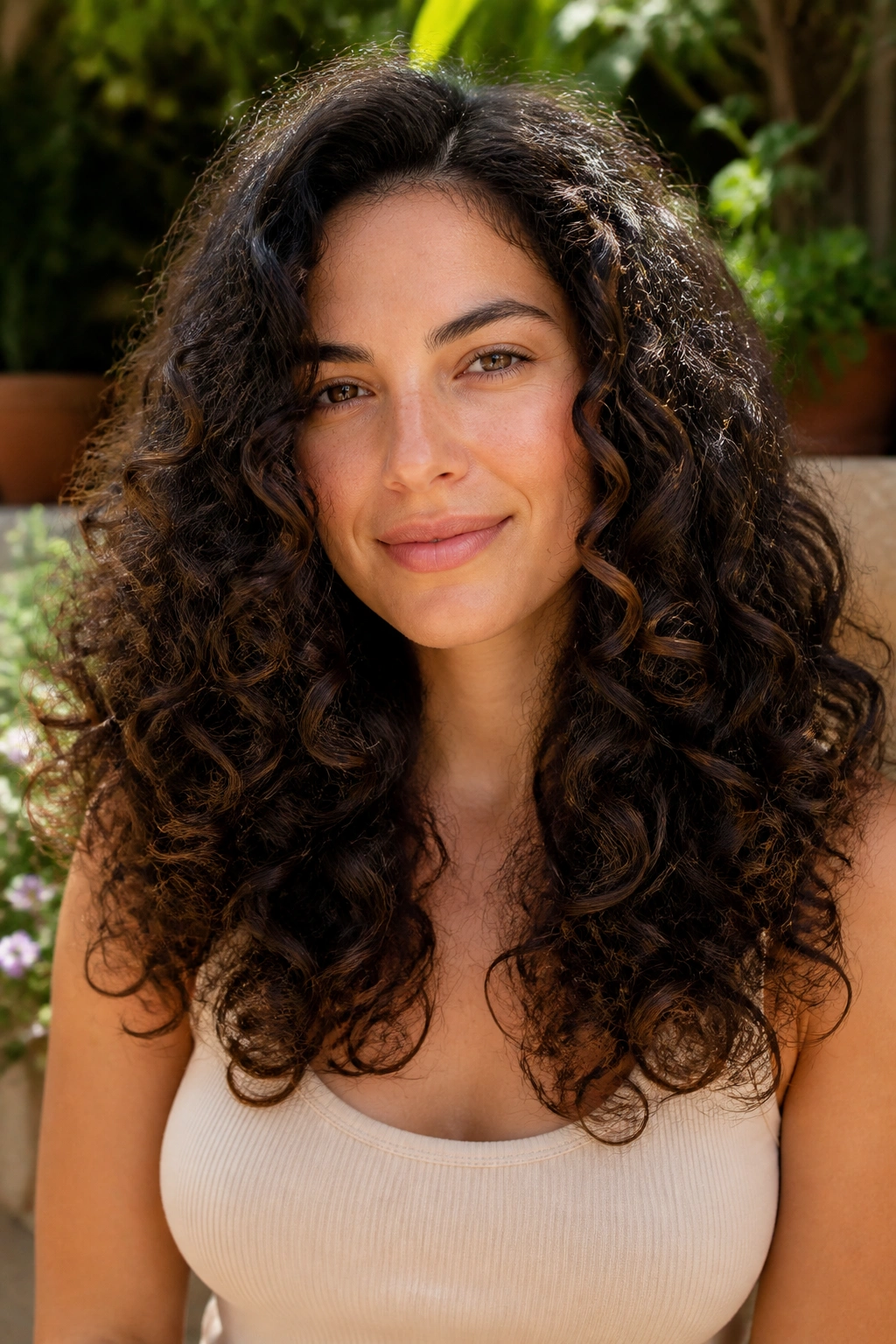
Not every head of thick curly hair needs a lot of layering. Sometimes the smartest cut is the one that keeps the bottom line strong and only trims the weight where it causes trouble.
Heavy-perimeter layers do exactly that. The ends stay full, the overall shape remains long, and the layers sit low enough that you do not lose the feeling of length every time you leave the salon. This is a good choice for anyone growing out a cut, protecting fragile ends, or just preferring a calm outline over a big shape change.
The trick is restraint. Too much shaping at the top and the haircut starts to float away from the body. Too little shaping and the hair can feel like a curtain. Somewhere between those two is the sweet spot, where the curls still move but the bottom holds its own. If your hair already has strong volume, this style keeps things elegant without asking for a dramatic change.
Leave the chair with a strong outline in the mirror. That’s the sign you got the balance right.
