



Straight hair is brutally honest. Give it a blunt cut, and it will sit there like a ruler. Give it bad layers, and it will announce every uneven snip before you’ve even finished your coffee.
That’s why medium-length layered cuts for straight hair are such a smart place to live. Medium length gives you enough hair to shape, not so much that the style drags itself flat, and straight texture makes the cut line visible in a good way. The trick is restraint. Too many short layers can make straight hair look stringy. Too few, and you get a heavy curtain that hangs with all the charm of a wet towel.
The best versions do two things at once: they keep the perimeter clean and give the inside some movement. That balance matters more on straight hair than almost any other texture, because there’s nowhere for a sloppy cut to hide. A strong layered cut should look easy on day one, day ten, and after a quick blow-dry with half-decent effort.
1. Collarbone Layers That Flip Inward

This is one of the safest, prettiest shapes for straight hair because it keeps the line long enough to feel polished while still moving when you turn your head. The longest pieces hit around the collarbone, which gives the cut a soft landing instead of a blunt stop at the shoulders. That matters. Straight hair can go puffy at the ends if the weight is removed too high, and this cut avoids that mess.
Why It Works on Straight Hair
The magic is in the spacing. The layers are placed low enough that they don’t break the silhouette, but they still take a little bulk out of the sides. A round brush or even a quick under-bend with a flat iron makes the ends tuck inward without looking styled to death.
Best for: fine to medium hair, side parts, and anyone who wants movement without a choppy finish.
- Ask for the shortest layer to start around the cheekbone or just below it.
- Keep the perimeter at the collarbone or a touch below.
- Request soft point-cutting at the ends so the line doesn’t look carved.
Pro tip: If your hair falls flat by lunchtime, this cut wakes up fast with a little root lift spray and a 2-inch round brush.
2. Mid-Length Butterfly Layers

This is the cut people ask for when they want body without giving up length. It’s layered, yes, but not in a way that makes straight hair look scattered. The top section gets shorter face-framing pieces, while the bottom stays long and smooth. That gives the style a floating feel, almost like two layers working together instead of one blunt block.
The nice part is that straight hair shows the shape cleanly. You can actually see the difference between the lifted crown area and the sleeker lower half, which is the whole point. On wavy hair, butterfly layers can blur together. On straight hair, the architecture is sharper, and I think that’s where this cut really earns its keep.
It also grows out in a civilized way. You are not stuck with a weird in-between stage after six weeks. The shorter top layers settle into the longer lengths and still look intentional.
Wear it with a middle part if you want a softer, face-opening effect. Wear it with a slight off-center part if you want a little more lift at the roots. Either way, this cut gives straight hair the kind of movement it usually has to fake.
3. Curtain Layers with a Soft Center Part

Why do curtain layers work so well on straight hair? Because straight hair loves symmetry, and this cut gives it symmetry with a little air around the face. The front sections are cut to sweep away from the cheeks, then they blend into longer layers that fall past the shoulders. Nothing feels harsh. Nothing sticks out.
How to Ask for It at the Salon
Tell your stylist you want face-framing pieces that start around the cheekbone and blend into medium length. That starting point matters. If the shortest layer begins too low, the cut can lose its shape. If it starts too high, you can end up with bangs you didn’t ask for.
A good curtain layer cut should do three things at once:
- Open the face without exposing too much forehead.
- Keep the bulk around the bottom so the hair still feels full.
- Move cleanly when tucked behind the ears or worn loose.
Straight hair can make curtain layers look sharper than people expect. That’s a plus if you like a neat finish. It’s also why this cut does so well with a quick blowout and a small round brush at the front. A little bend is enough. You do not need a salon marathon every morning.
4. Textured Lob with Razored Ends
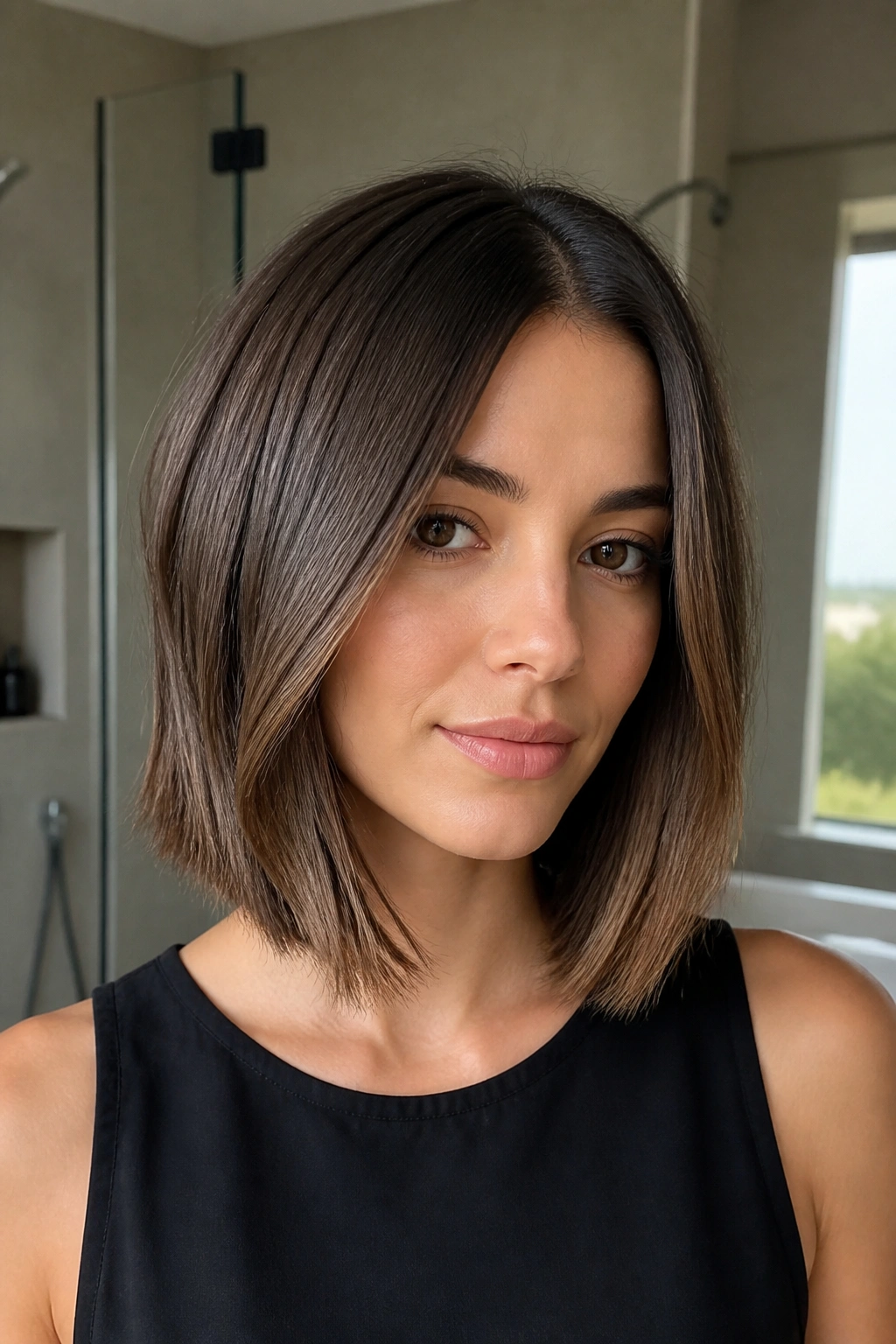
Picture hair that used to hang like one flat sheet and then suddenly gained some life around the edges. That’s the textured lob. On straight hair, the best version stays around the chin-to-collarbone zone and uses light razoring or point-cutting at the ends to keep the line from feeling too heavy.
This cut is not about obvious choppiness. That’s where people go wrong. A good textured lob should still look sleek when you comb it through, just a little airier when you move. The texture lives in the ends and mid-lengths, not in giant broken chunks.
What to Tell Your Stylist
- Keep the base blunt enough to hold shape.
- Add subtle internal texture near the lower third of the hair.
- Avoid over-thinning the ends if your hair is fine.
- Leave enough weight at the perimeter so the cut doesn’t fray out.
A textured lob is the haircut for someone who wants straight hair to look less static without turning it into a shag. It has edge, but not chaos. And yes, there is a difference. A big one.
It also plays nicely with air-drying if your hair is naturally straight and cooperative. A little smoothing cream, a center part, and you’re done. No drama.
5. Sleek U-Shape Layers
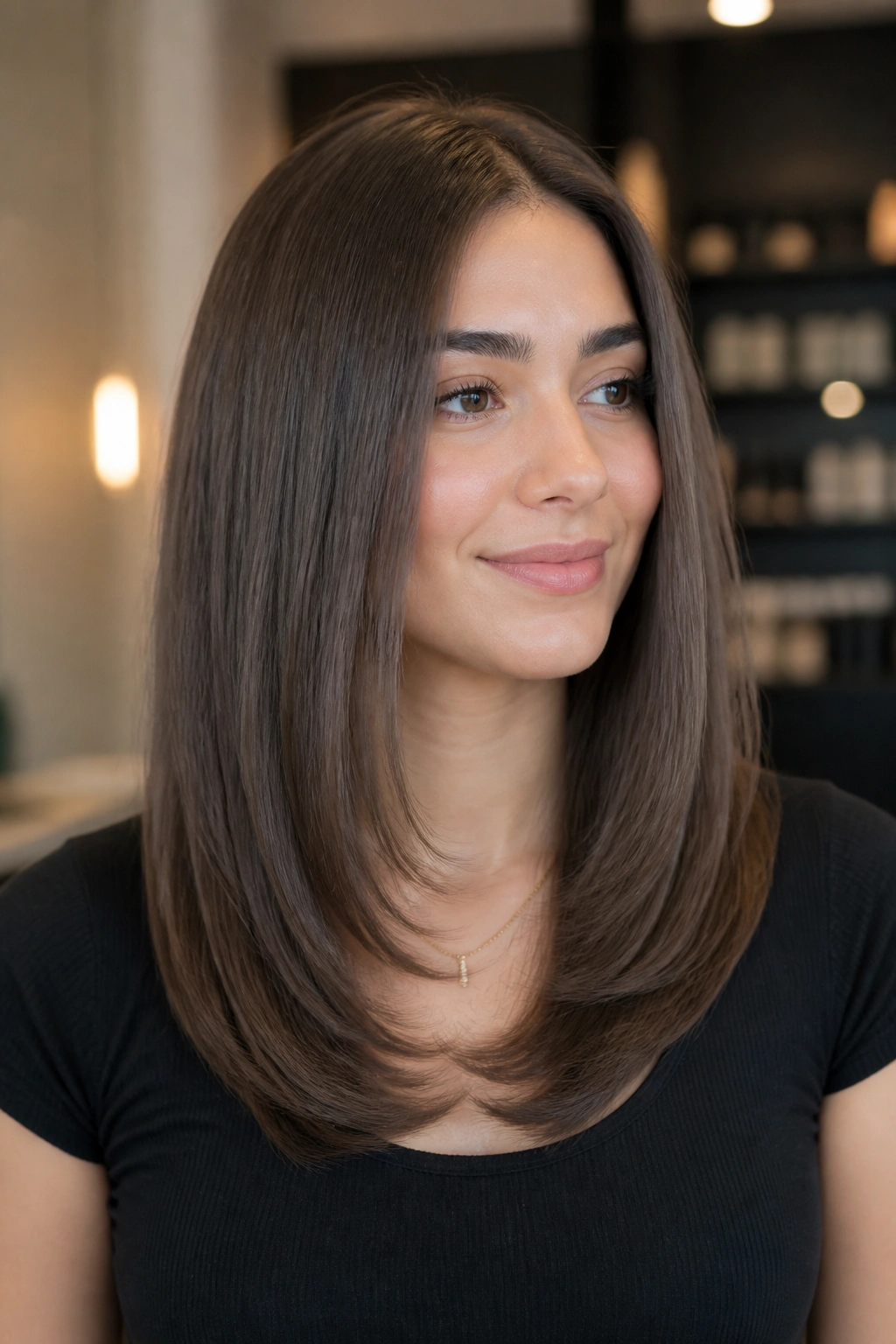
Some haircuts want to shout. This one doesn’t. The U-shape layered cut keeps the longest pieces slightly rounded at the back, which is exactly why it works so well on straight hair. Instead of a blunt horizontal line, you get a soft curve that makes the ends look fuller and more expensive, for lack of a better word.
The layers are usually long and blended, so the silhouette stays clean. That matters when your hair is straight, because the outline is half the story. A U-shape keeps the back from looking boxy and gives the sides enough softness to fall around the collarbones without flaring out.
I like this cut on medium-length hair that tends to look heavy at the ends. The curve takes some of that weight away without making the body disappear. It’s the sort of haircut that looks quietly put together even on days when you don’t do much to it.
If you wear your hair down a lot, this is a strong choice. If you tuck it behind your ears often, it still looks smooth and intentional. Not flashy. Just good.
6. Angled Lob with a Longer Front
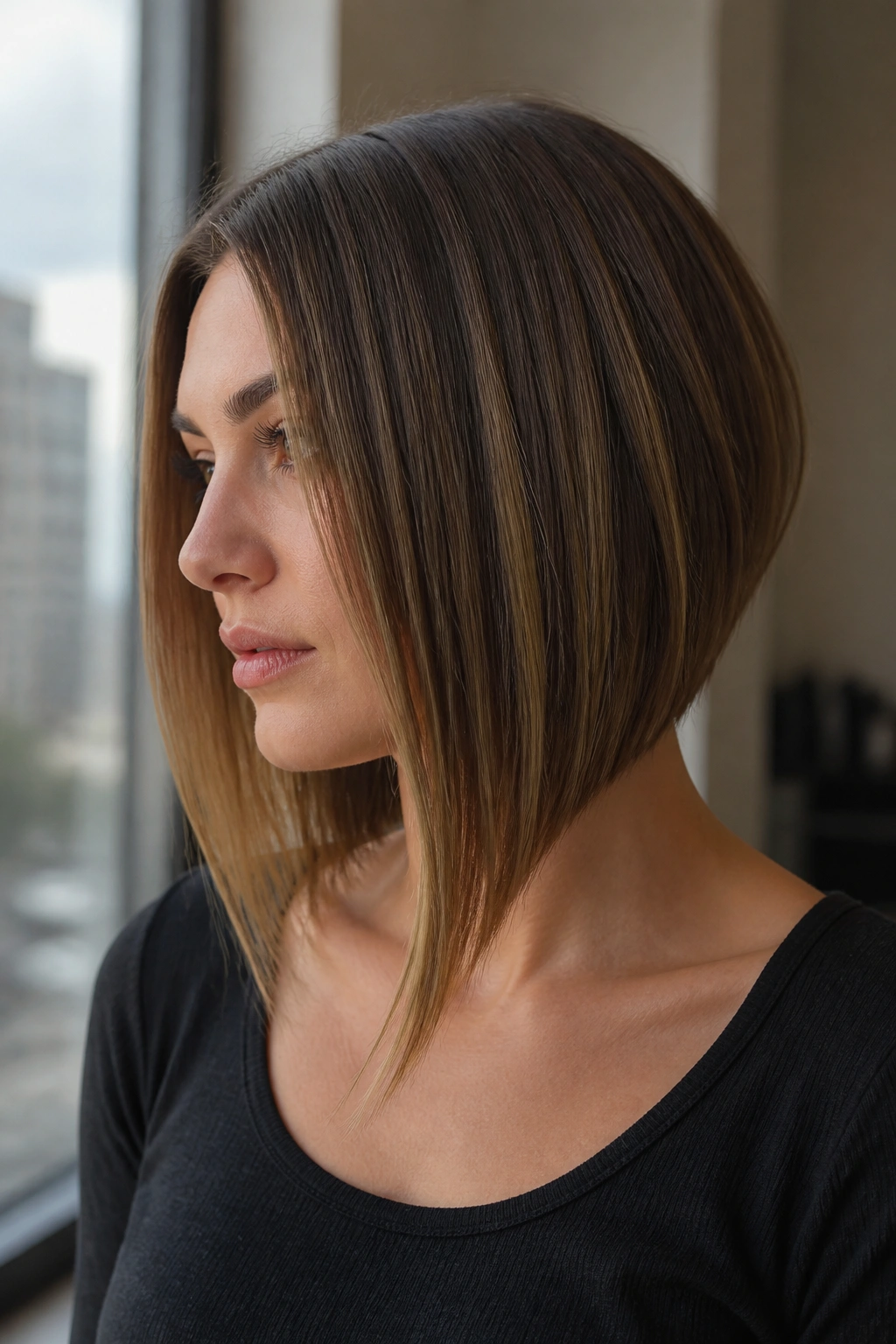
An angled lob gives straight hair a little attitude. Shorter in the back, longer toward the front, it creates a gentle diagonal that makes the neck look longer and the whole cut feel more deliberate. The angle does not have to be severe. In fact, a subtle angle is easier to live with and usually looks better once it grows out a bit.
This cut is especially nice if your straight hair tends to sit flat at the back. The shorter back removes some bulk, while the longer front pieces keep the face framed and the length familiar. It’s a smart trade. You get shape without losing the feeling of having enough hair to pull into a low clip or a tiny bun.
Unlike a blunt lob, the angled version gives you movement even when the hair is completely straight. That’s the whole point. You see a line, but it isn’t a stiff one.
Best of all, it works with a side part or a center part. A side part makes the angle look more dramatic. A center part keeps it calmer. Pick your mood.
7. Invisible Layers for Thick Straight Hair
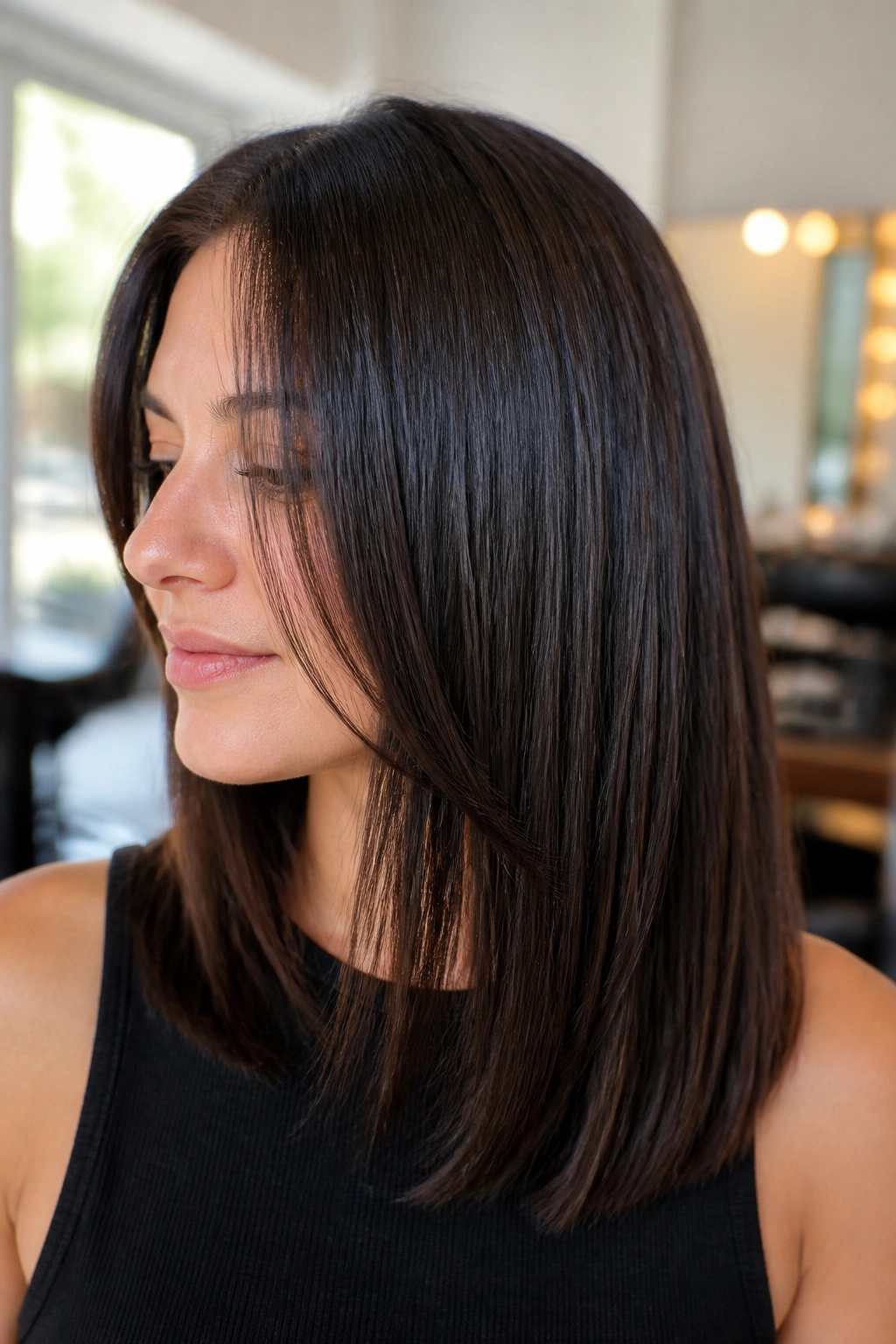
Thick straight hair can be a beast. Beautiful, sure, but heavy. The easiest way to ruin it is to carve in too many visible layers and end up with a puffy top and a bottom that looks too thin. Invisible layers solve that problem by removing weight from the inside while leaving the outside line smooth.
What Makes Them Invisible
The layers sit underneath the top veil of hair, so the haircut keeps its clean outline. You still get movement, but you don’t get obvious steps. That makes this one of the best medium-length layered cuts for straight hair if you want polish and control at the same time.
A stylist will usually use internal sectioning and careful blending rather than obvious choppy cuts. The result feels lighter when you wear it down, but it still gathers neatly into a ponytail or clip. That’s the practical part people forget to mention.
- Keeps the silhouette sleek.
- Reduces bulk through the mid-lengths.
- Helps thick hair dry faster.
- Makes blowouts feel less like a workout.
One warning: if your hair is already fine, invisible layers can disappear too much and leave you with less shape than you wanted. This cut is strongest on dense hair that needs a little breathing room.
8. Airy Shag-Lob with Soft Ends

Straight hair can wear a shag, but only if the cut is kept under control. A shag-lob with soft ends gives you the lifted, slightly undone feel people want from a shag, without turning the whole thing into a jagged mess. The lengths usually sit between the shoulders and collarbone, with layers that start higher than a classic lob but lower than a full shag.
That balance matters. If the layers are too short, straight hair can look sparse and broken. If they’re too long, the shag effect disappears. The sweet spot gives the crown a little life and keeps the ends soft enough to move.
I like this cut for people who want something a little cooler than a standard layered lob but do not want a high-maintenance style. It looks best with a bit of texture spray and a quick scrunch at the ends, though you can also keep it sleek and let the layered shape do the work.
This is the cut for someone who likes a slightly lived-in feel without crossing into messy territory. Clean at the top. Loose at the bottom. Easy.
9. Face-Framing Layers That Start at the Cheekbone
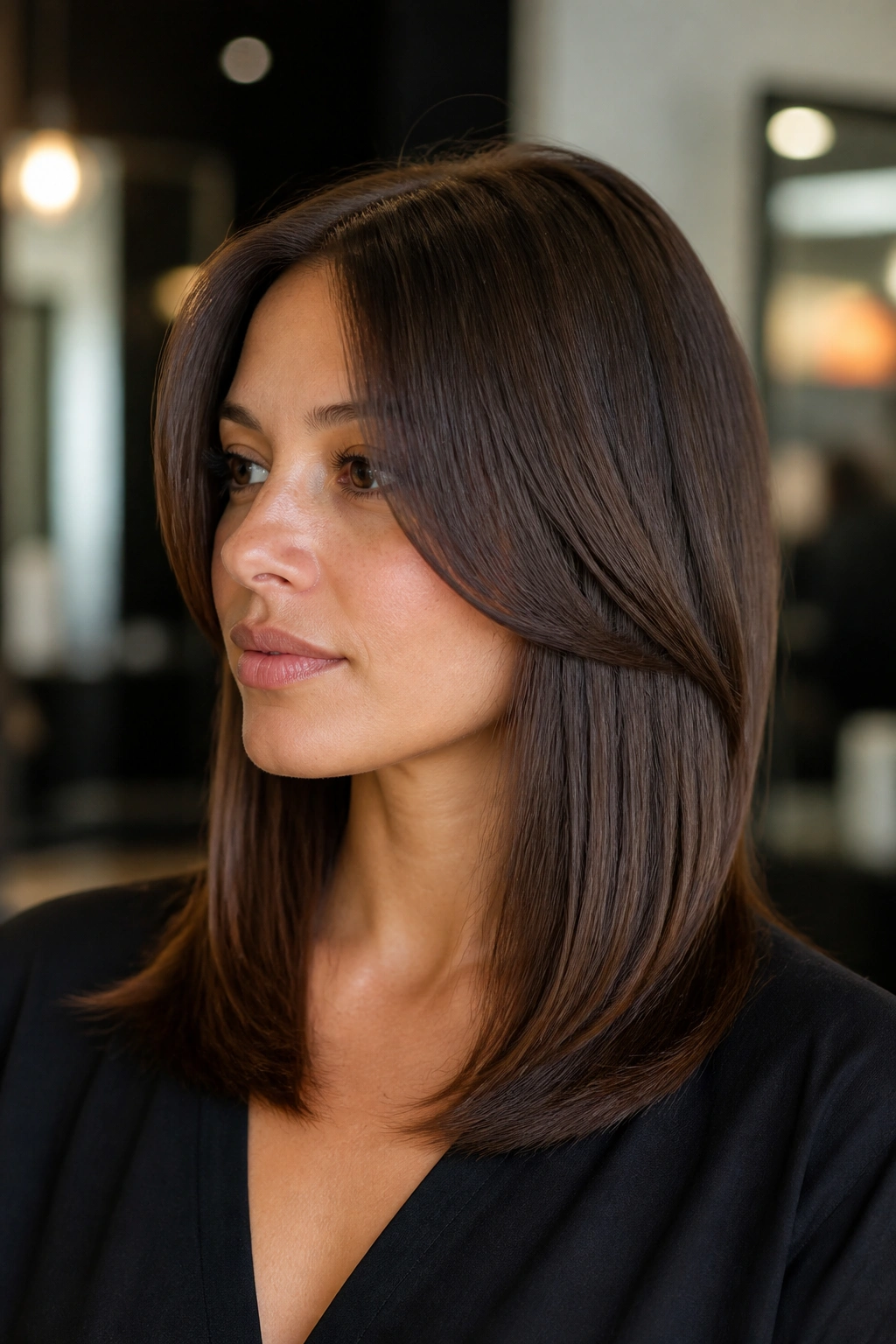
Why does this cut matter so much? Because the face-framing pieces do the heavy lifting while the rest of the hair stays calm. On straight hair, cheekbone-starting layers create the illusion of lift around the face without making the entire head look layered to death. That’s a good trade, especially if you like smooth lengths.
How to Get the Most From It
Ask for the shortest front pieces to hit at the cheekbone or just under it. That point is flattering for a lot of face shapes because it draws attention upward without chopping the front too short. The rest of the hair can stay medium length and softly layered through the back.
This cut works especially well if your hair falls flat around the temples. The front layers give you movement where people actually notice it first, which is smarter than piling shape into the back and hoping for the best. It also plays nicely with both middle and side parts, which gives you some room to switch things up.
There’s a fine line here. Too much front layering and the haircut starts feeling like bangs with a tail. Too little and you lose the face-framing effect. A good stylist will know how to thread that needle without overdoing it.
10. Blunt Lob with Hidden Interior Layers
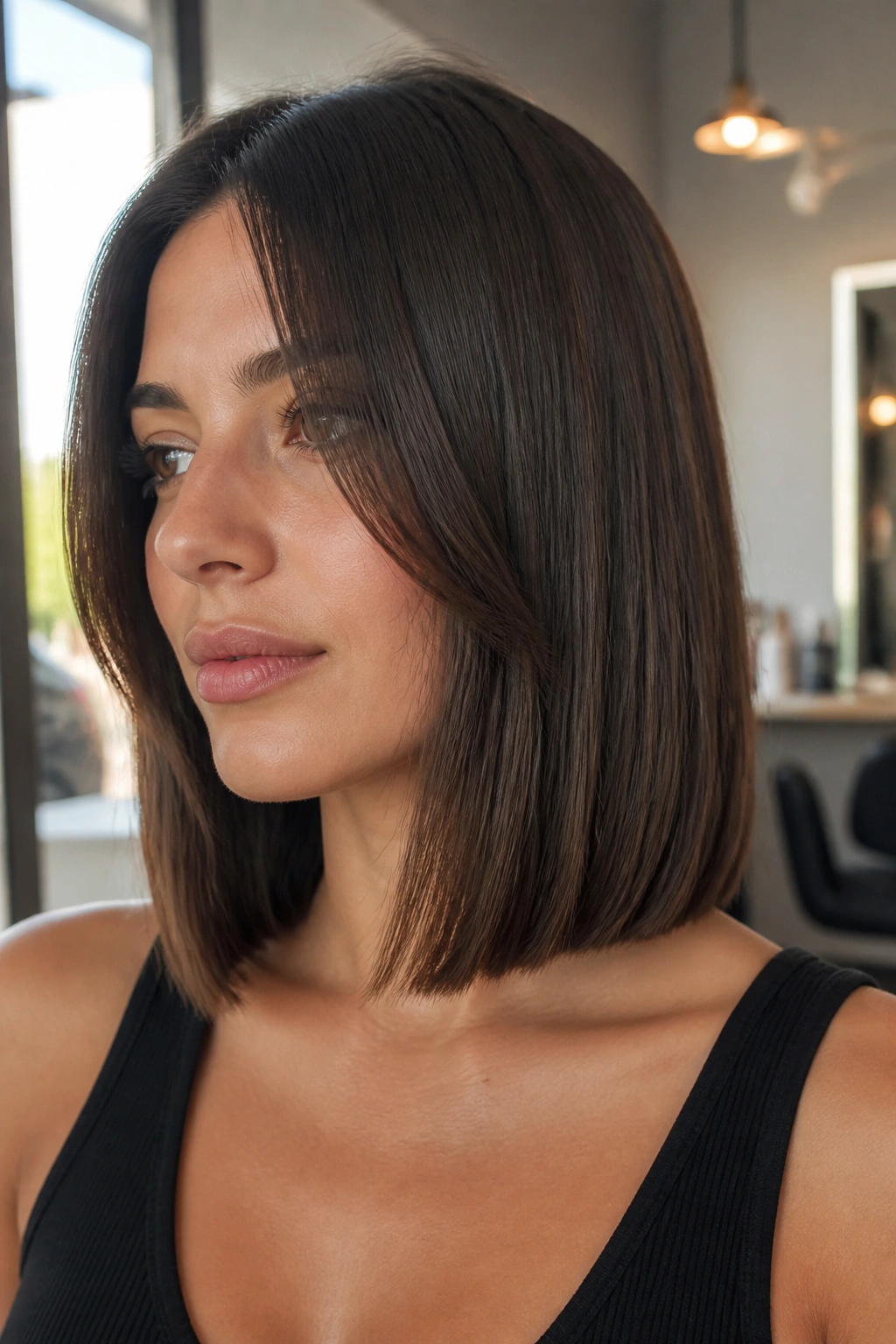
A blunt lob with hidden layers is the haircut equivalent of a tailored jacket. It looks clean at first glance, but there’s more going on underneath. The outer line stays straight and strong, which straight hair wears beautifully. Inside that shape, soft internal layers remove some weight so the whole cut doesn’t sit like a block.
This is a strong option if you like neat hair but hate the feeling of too much bulk at the ends. It gives you the crispness of a blunt cut with a little more swing when you move. That swing is subtle. You won’t catch it from across the room, but you will feel it when you run your fingers through your hair.
- Best when the outer line is kept even.
- Hidden layers should stay low and soft.
- Works well with a flat iron or a round-brush blowout.
- Good choice for people who like polished hair at work and easy hair on weekends.
A lot of people think a blunt cut and layers are opposites. They’re not. When the layering stays inside the shape, the haircut gets smarter, not busier.
11. Side-Part Layers with Crown Lift

Straight hair often falls where gravity tells it to, and gravity is rude. A strong side-part layered cut fights back a little by concentrating volume at the crown and letting the longer pieces sweep down one side. The effect is quiet but real. Your hair looks fuller at the top, slimmer through the sides, and more alive overall.
The layers in this cut are usually long enough to stay soft, which keeps the side part from looking overly styled. That’s the sweet spot. You want lift, not helmet hair. A blow-dryer aimed at the roots near the part can make a big difference, especially if your hair tends to separate and collapse quickly.
This cut is one of my favorites for straight hair that feels too flat in the center. Sometimes the solution is not more layers. Sometimes it’s a better part and a little strategic shape around the crown. Simple. Effective. A little underrated.
It’s also forgiving on busy mornings. Flip, smooth, go. The haircut does some of the work before you even touch it.
12. Soft Step Cut at the Collarbone

Unlike a smooth U-shape or a softly blended lob, the step cut shows its shape on purpose. The lengths change in gentle tiers, usually with a noticeable but not harsh jump between the top and bottom sections. On straight hair, that can look striking if the steps are kept subtle and the ends are finished cleanly.
The collarbone is a good place for this cut because the steps have room to show without becoming too dramatic. You get shape, and you get a little edge. The look can lean modern, almost architectural, if the layers are neat and the styling stays straight and glossy.
This is not the cut I’d hand to someone who wants hair to disappear into the background. It has personality. Still, it can be wearable if the steps are soft and the contrast between lengths is kept modest. Think deliberate, not severe.
It works best when the hair is healthy enough to hold a smooth line. Split ends show more on a step cut than on a shag. That’s the trade. You get a sharper shape, but you need decent upkeep to keep it looking polished.
13. Cheekbone-Brightening Layers with a Tapered Front
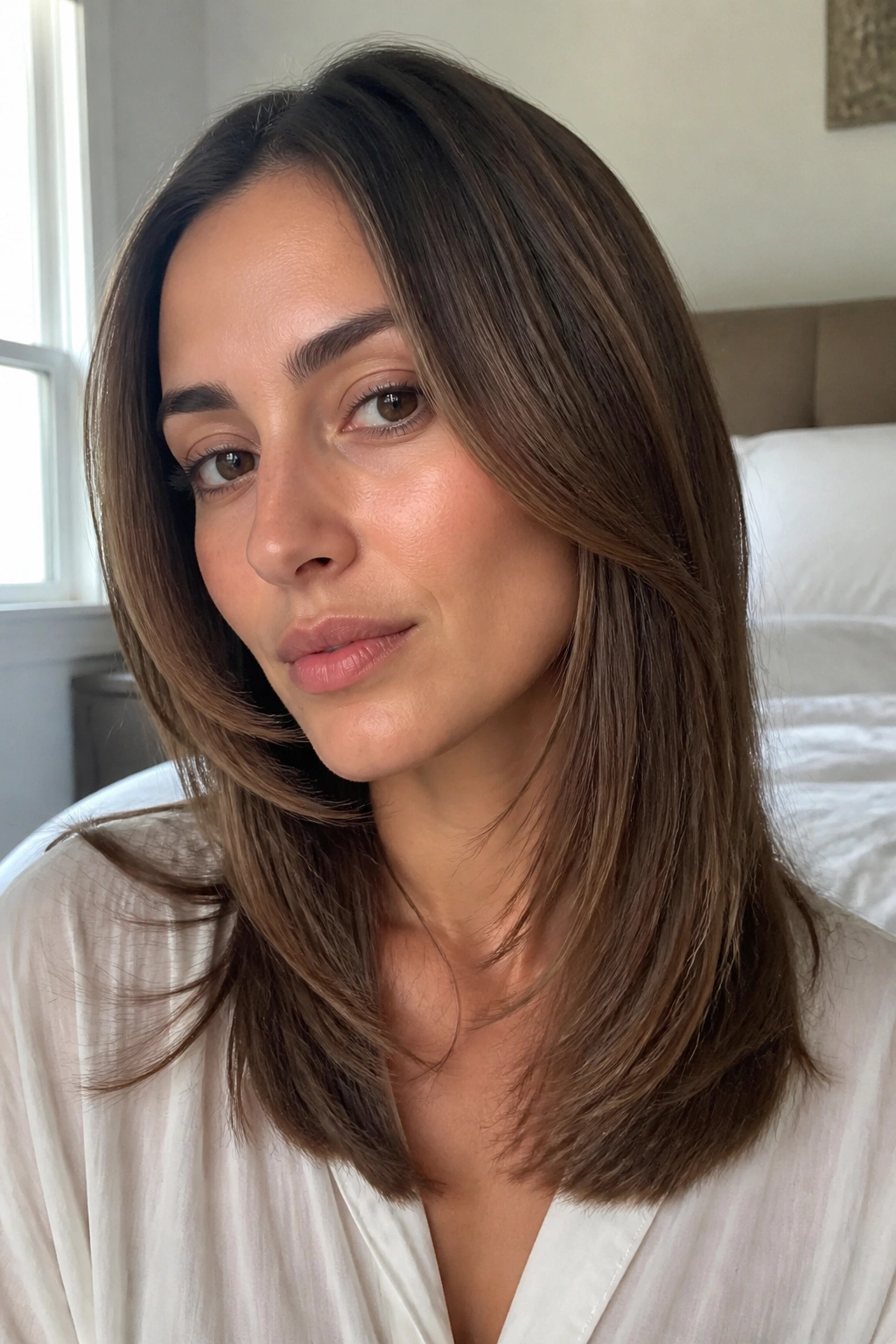
This cut gives the face a bit of lift right where the cheekbones sit, and that is no accident. The front layers are tapered so they feather out rather than hang straight down, which makes the eyes and cheek area stand out more. On straight hair, that effect is crisp and easy to see.
What to Ask Your Stylist
Say you want the front to start at the cheekbone, then taper into medium-length layers through the sides and back. That keeps the front from feeling heavy and gives the overall cut a little shape near the face. If you wear glasses, this can be a sneaky-good choice, because the front pieces soften the area without fighting the frames.
A few details make it work:
- Keep the taper soft, not wispy.
- Leave enough length so the front still tucks behind the ear.
- Blend the side layers into the rest of the cut so the front doesn’t look pasted on.
This is a flattering cut without trying too hard. Which, honestly, is part of its appeal. It has structure, but the structure is hidden in the way it moves rather than shouting for attention.
14. Medium Wolf Cut with Clean Edges
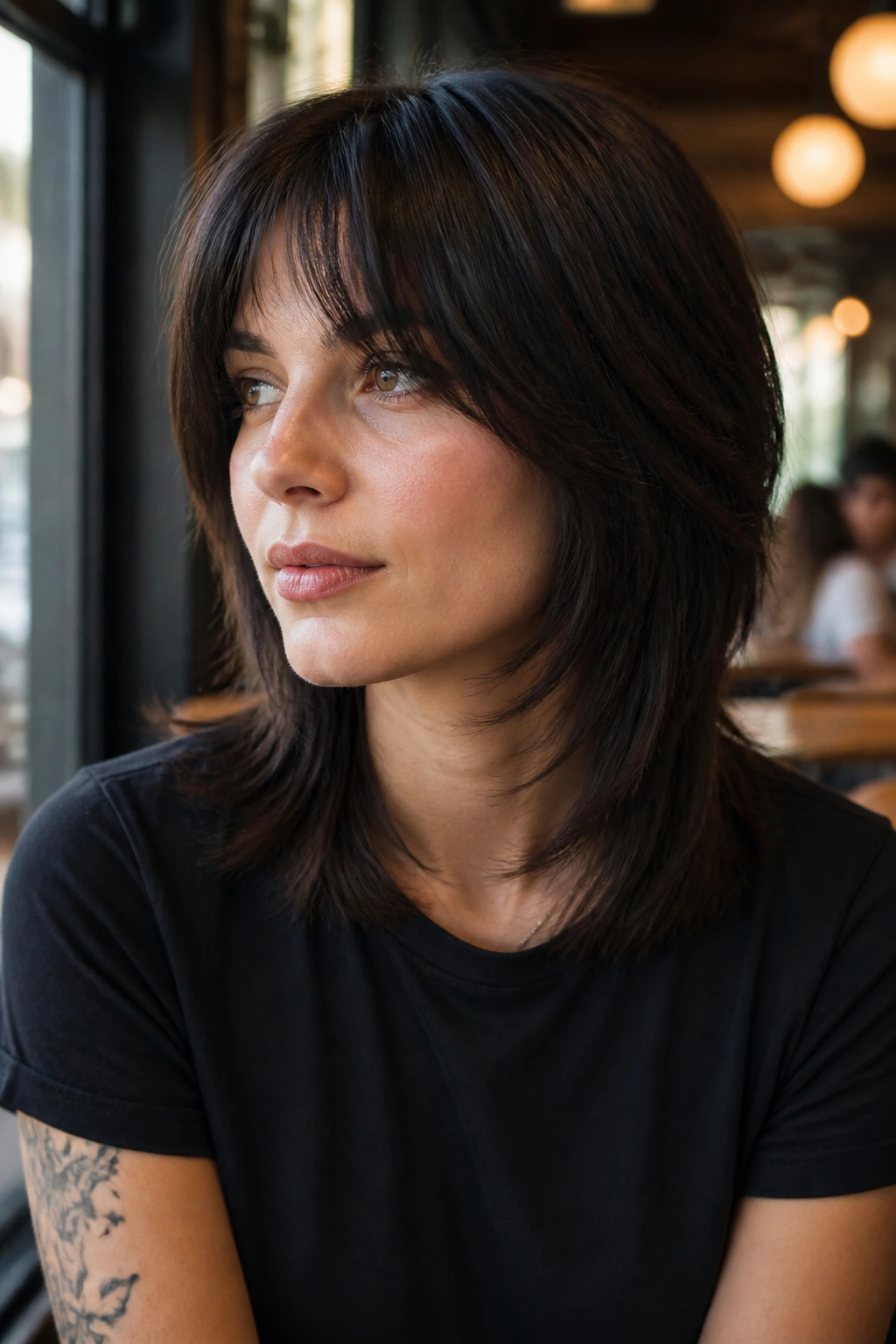
Yes, a wolf cut can work on straight hair. It just needs restraint. The version that lands best at medium length keeps the back long enough to stay wearable, uses softer layers around the crown, and avoids the ultra-choppy, piecey finish that can make straight hair look ragged instead of cool.
The reason this cut has appeal is the contrast. You get some lift at the top, some movement through the sides, and a little edge around the face. Straight hair makes those contrasts look sharper, which can be a good thing if you want shape that reads from across the room.
The trick is not to over-texture it. Straight hair already shows every cut line, so the style works best when the layers are blended and the ends are point-cut rather than brutally razored. A tiny amount of styling paste or dry texture spray can help separate the pieces without making the hair look crunchy.
This is the boldest cut on the list. It is not the easiest. But if you want medium length layered hair with some personality, this one has it.
15. Polished Long Layers with a Swingy Perimeter
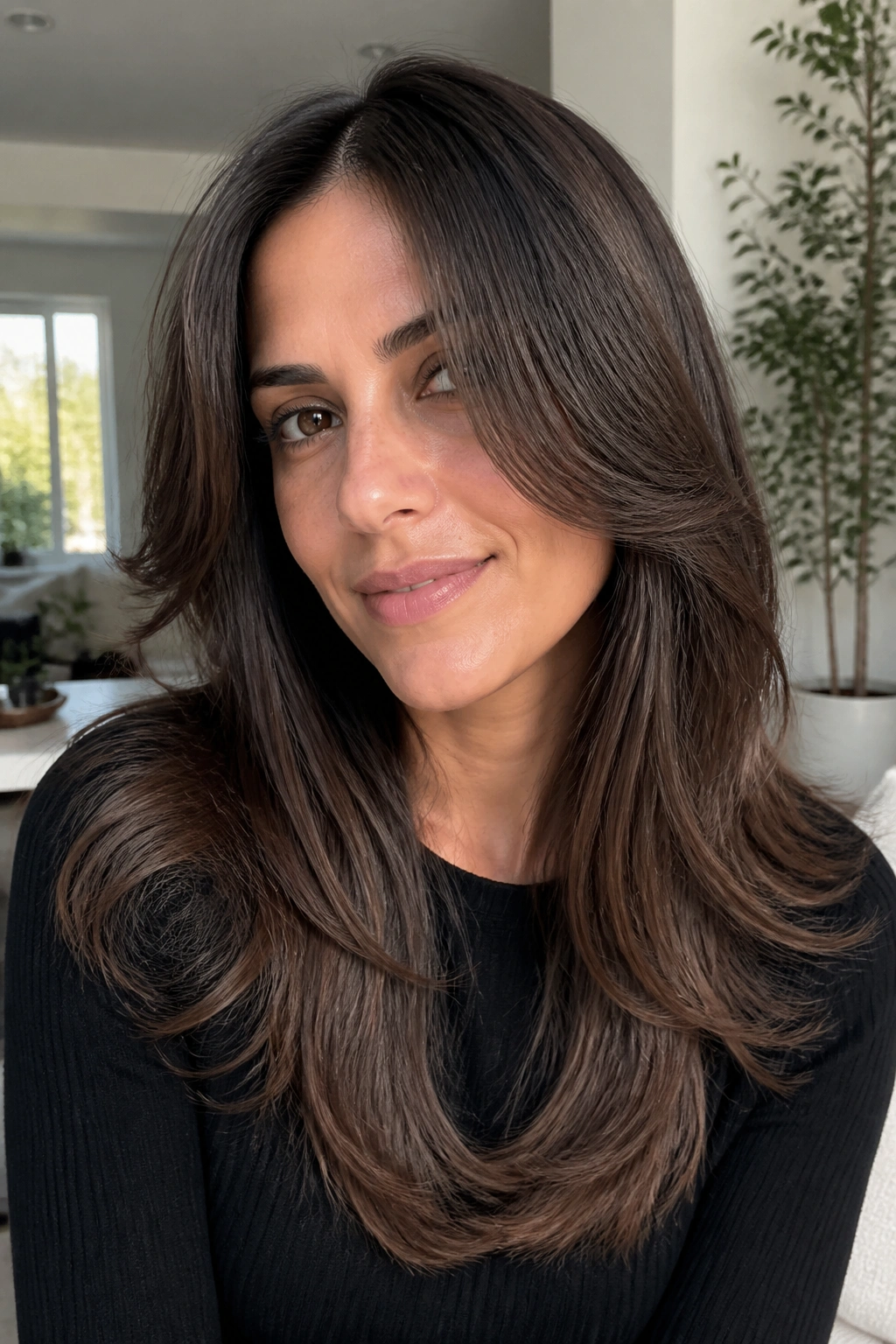
If you want one cut that almost never feels fussy, this is it. Polished long layers keep the perimeter full and swingy, while the interior layering stops the hair from falling flat into a single heavy curtain. On straight hair, that combination is gold. You get movement without losing the clean outline that makes straight textures look expensive in the first place.
This is the haircut I’d point to for someone who wants versatility more than a specific fashion statement. You can wear it center-parted and sleek. You can tuck one side back. You can curl just the ends if you feel like pretending you planned things carefully. It still looks good when you do very little.
The swing comes from keeping the lowest layer line soft and the upper layers long enough to blend. No dramatic jumps. No choppy surprise pieces. Just enough internal shape to stop the hair from lying dead flat against your head.
And that’s the real charm of medium-length layered cuts for straight hair: the best ones don’t fight the texture. They work with it. Clean line, smart layering, a little movement when you walk. That’s usually enough.
