



The best messy layered haircuts do something sneaky: they make it look like you did almost nothing, while hiding a lot of haircut math underneath. A blunt cut can look crisp on day one and flat by day three. Layers break that up. The trick is choosing the kind that bends with your texture instead of fighting it.
That’s where a lot of people go wrong. They ask for “messy” and end up with something flimsy, frizzy, or chopped to bits in the wrong places. A good layered haircut should keep weight where you need it, remove it where the shape gets bulky, and leave enough length that you’re not trapped with a styling routine you hate.
Messy does not mean random. It usually means the cut has movement around the face, a little lift at the crown, and ends that don’t sit in one hard line. If your hair looks better after you sleep on it than after a careful blow-dry, you already understand the appeal.
Below are 15 messy layered haircuts that earn their keep in real life—especially if you want an easy look that doesn’t need a round brush, a gallon of hairspray, or a twenty-minute pep talk every morning.
1. The Soft Shag With Curtain Bangs

The soft shag is the haircut people keep returning to because it does a lot without looking busy. It gives you that undone, air-dried shape, but it still has enough structure to look intentional when you walk out the door. Curtain bangs are what make it feel fresh instead of heavy.
Why it works
The shortest layers sit near the crown and around the cheekbones, which keeps the top from collapsing. The fringe opens in the middle and falls away from the face, so you get movement without a blunt wall of hair. That matters more than people think.
Ask your stylist for layers that start high enough to create lift, but not so high that the ends turn wispy and thin. A razor can help on wavy hair, though point cutting often gives a cleaner, softer finish. If your hair is fine, keep some weight in the bottom third so the cut doesn’t puff out.
Best for: wavy, medium-thick hair that likes a little bend.
Easy styling tip: scrunch in mousse at the roots, twist the front pieces away from your face, and let it dry mostly on its own. Done.
2. Long Layers With Piecey Ends

Why does long hair so often fall flat? Because one long curtain of hair gets heavy fast. Long layers fix that without forcing you to give up length, which is exactly why this cut is such a solid everyday choice.
The key is restraint. You want the layers to be noticeable when the hair moves, not chopped so high that the length loses its weight. I like this cut most when the shortest layers begin below the collarbone and the ends are softened just enough to separate into pieces instead of sitting as one heavy sheet.
What to ask for
- Layers that begin low, around the chest or just below the collarbone.
- Soft face-framing pieces that start near the jaw if you want more shape.
- Light texturizing at the ends, not aggressive thinning.
- A perimeter that still feels full when the hair is down.
This cut works especially well if you wear your hair in a loose wave or a loose braid overnight. The movement shows up without extra effort. And if you’re the kind of person who mostly wants to wash, air-dry, and leave, that’s the point.
3. The Collarbone Lob With Invisible Layers
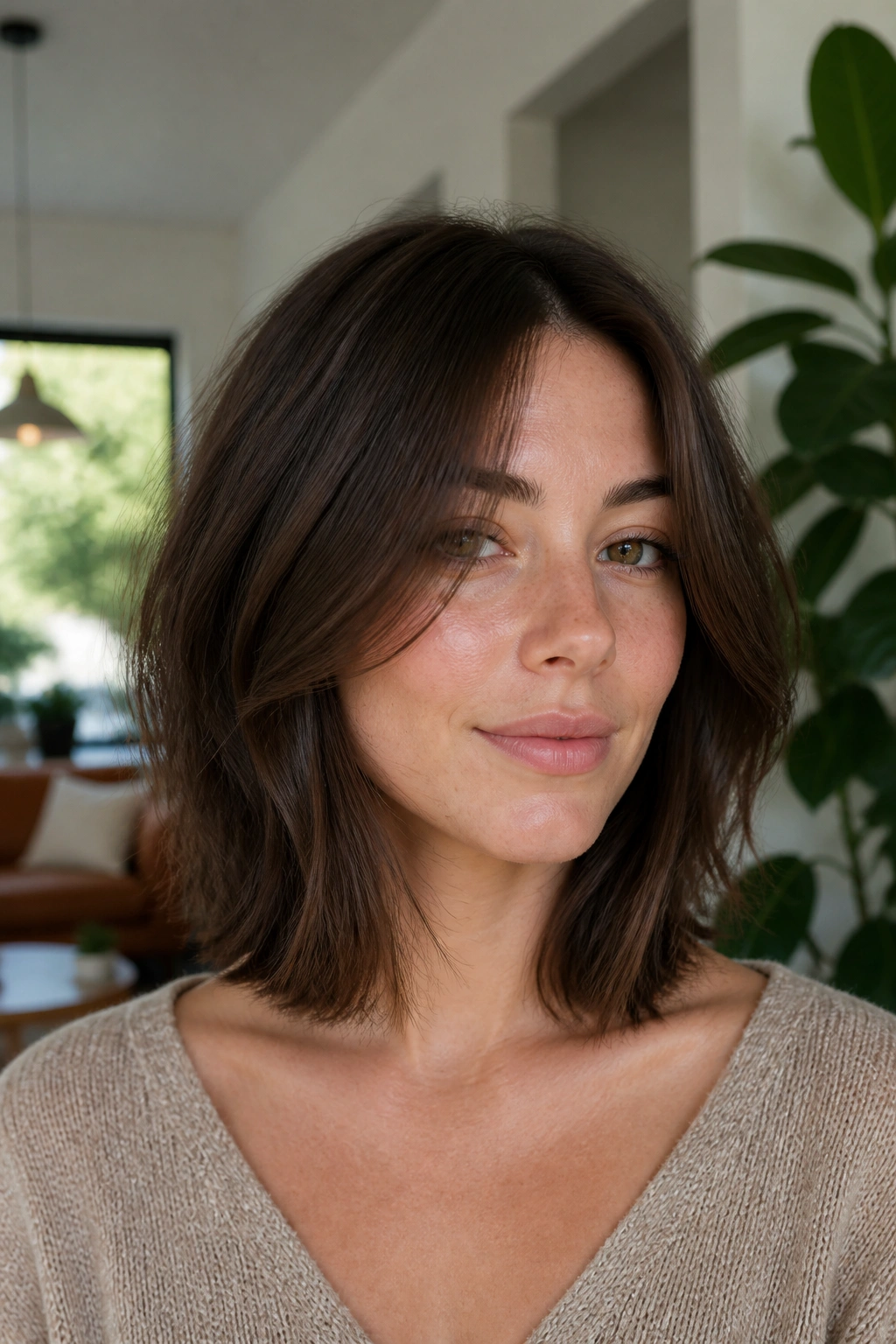
A collarbone lob is the haircut that forgives an awkward air-dry. It lands in that sweet spot where the hair is long enough to tuck behind the ears, short enough to feel light, and versatile enough to go smooth or tousled depending on your mood.
The “invisible” part matters. These aren’t choppy layers you can spot from across the room. They’re internal layers that remove bulk and create bend without messing up the clean outer line. On fine hair, that means the cut looks fuller. On thicker hair, it means the ends don’t sit like a shelf.
Good details to request
Keep the perimeter blunt or almost blunt. That gives the lob its shape.
Ask for internal layering only through the mid-lengths. This keeps the hair from looking stringy.
Leave the front pieces just long enough to hit the collarbone. Anything shorter can start to flip out in a way that feels less easy and more fussy.
This is one of my favorite layered haircuts for people who want a polished look with a messy finish. You can wear it with a side part, a center part, or a tucked-behind-the-ear thing that looks better the second day.
4. The Softer Wolf Cut
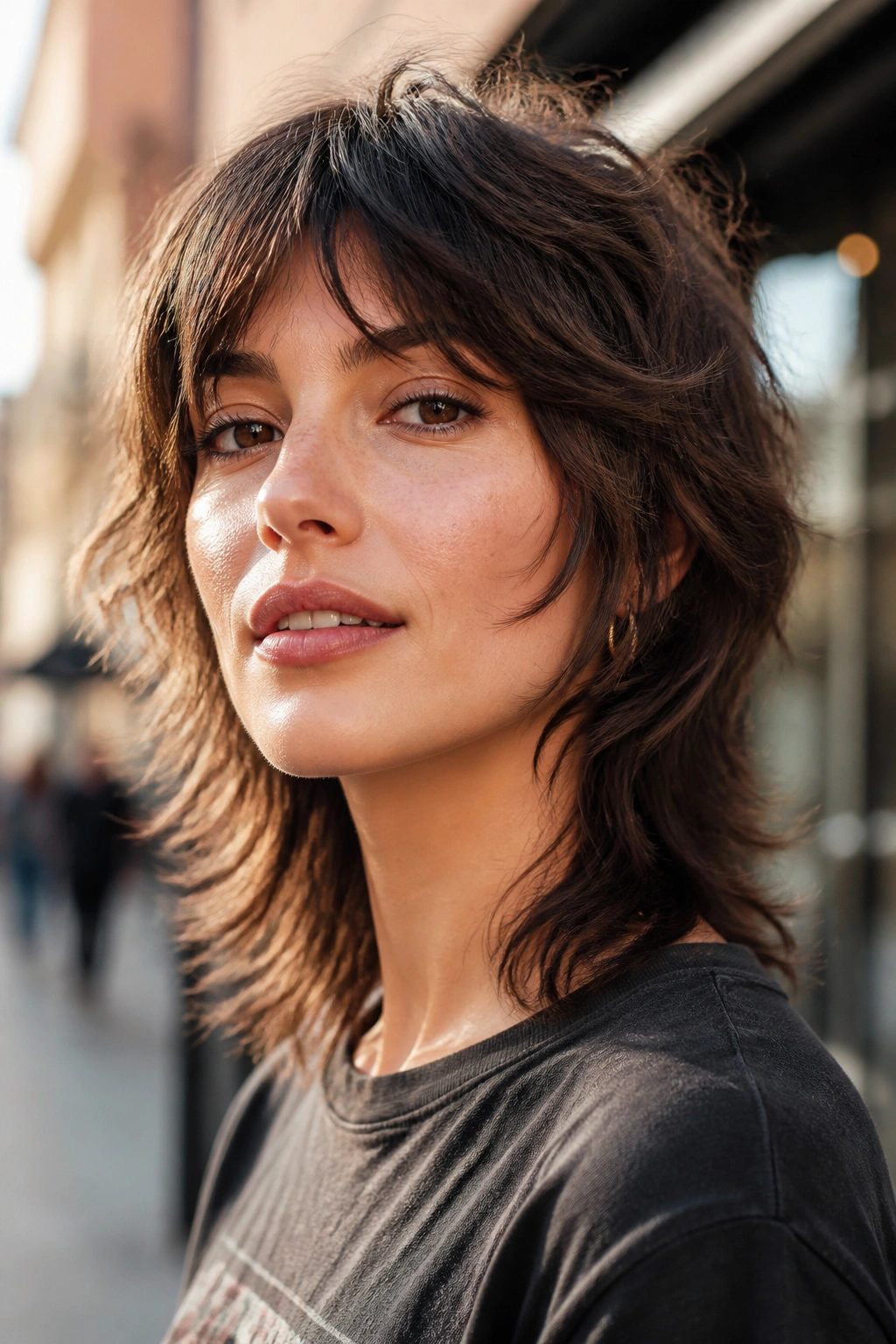
The wolf cut gets a bad reputation because people picture something extreme, heavy on texture, and hard to tame. That’s one version. The softer wolf cut is the one I’d actually recommend to most people who want movement without looking like they borrowed a costume.
This cut keeps the layered crown and the slightly shaggy outline, but it softens the edges so the whole shape feels wearable. The top gets lift, the sides keep enough length to frame the face, and the back falls with a loose, broken-up texture rather than a sharp line.
If you have wave or curl, this shape can be a gift. If your hair is straight, it still works, but you’ll usually want a little heat or mousse to show off the separation. The best part is the grow-out. It tends to age better than more exact cuts because the whole point is a little looseness.
Not every head of hair wants a severe wolf cut. Fair enough. A softer version gives you the vibe without the drama.
5. The Bixie With A Choppy Crown

Run your fingers through a good bixie and you feel it lift before it settles. That’s the whole charm. It sits between a pixie and a bob, so you get short-hair ease without the hard edge of a super cropped cut.
The crown is where the energy lives. Shorter layers there create height, while the sides and nape stay long enough to keep the shape from looking too severe. A little pieceiness around the ears and temples keeps it modern, and honestly, a little messy is what makes it work.
Styling notes
- Use a pea-sized amount of matte paste.
- Rub it between your palms first.
- Push the hair up at the crown, then pinch out a few ends.
- Skip the heavy cream products unless your hair is dry and coarse.
This cut is one of the best messy layered haircuts for people who don’t want to spend time fixing their hair every morning. It’s fast. It’s playful. And if you hate the feeling of hair sticking to your neck, that alone can be a selling point.
6. The Midi Cut With Face-Framing Layers

Shoulder-grazing hair gets forgotten a lot, which is strange because it’s one of the easiest lengths to live with. A midi cut sits in that in-between zone where you still have enough hair for ponytails and clips, but the shape doesn’t drag itself down.
The face-framing layers are the part that keep it from looking plain. They can start around the cheekbones, brush the jaw, or fall just below the chin depending on how much opening you want around the face. That bit matters because the front is what people see first.
A good version usually has:
- Slightly longer layers in the back.
- Shorter front pieces that soften the cheek area.
- A bottom line that stays thick enough to look healthy.
- Enough movement to tuck one side behind the ear without losing shape.
This cut is a nice choice if you want something that air-dries into a decent shape but still looks good with a bend from a curling iron. It also plays well with half-up styles, which is one reason so many people end up liking it more than they expected.
7. Curly Layers That Let The Shape Breathe

Curly hair hates being squeezed into the wrong outline. You can see it immediately when a cut tries to force curls into a triangle or a pyramid. The right layered cut gives the curls room to stack instead of dragging the whole shape downward.
That usually means distributing the layers where the hair needs space, not just hacking away at the surface. A curly cut often works best when the stylist cuts with the curl pattern in mind, because curls shrink, spring, and bunch in ways straight hair never does. Wet cutting can work, but dry cutting or cutting with the natural curl pattern visible often gives a truer shape.
What helps here
Don’t over-thin the ends. That’s how curls turn frizzy and weak.
Ask for layers that remove bulk around the mid-lengths and crown. That keeps the silhouette rounded and light.
Use a diffuser or air-dry with a curl cream. The cut will do more of the work if the curl is encouraged into a clump instead of brushed apart.
For 2C, 3A, and many 3B curls, this kind of layering can make the hair feel lighter without making it look sparse. That’s the sweet spot. Anything too aggressive can ruin the spring.
8. The Razored Bob With Airy Texture

A blunt bob is tidy. A razored bob has attitude. The difference is in the ends: instead of sitting like a flat line, they break up a little and move when you turn your head. That’s what makes the style feel easy rather than stiff.
This cut works best on straight to wavy hair that can handle some feathering. A razor softens the edge and adds separation, but it can look rough on hair that’s already fragile, so the tool matters. If your ends are dry, a stylist may get a similar effect with point cutting instead, which is kinder to delicate hair.
The length usually lands at the jaw or just below it. That keeps the cut feeling crisp, not fussy. A side part can make it look even softer, while a center part gives it a cleaner feel with the same layered movement.
This is one of those easy layered haircuts that looks more styled than it is. A quick bend with a flat iron, a little texturizing spray, and you’re done.
9. Butterfly Layers For Big Movement
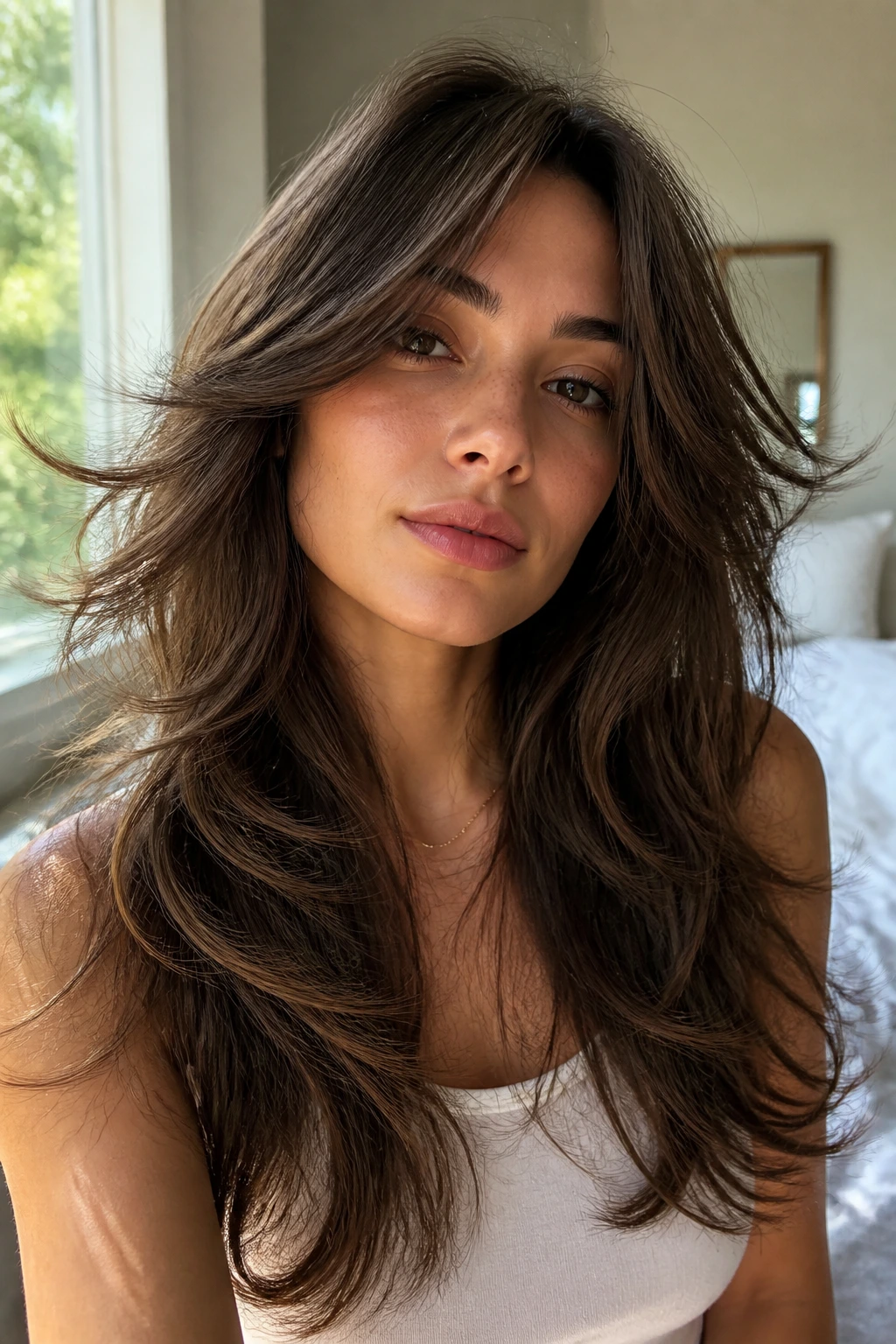
Some cuts make long hair lighter. Butterfly layers make it feel like it has air in it. The shortest layers sit up around the cheekbones or jaw, while the longer lengths stay in place below. You get face framing without losing the drama of long hair.
That shape is why it works so well for anyone who wants volume around the front but doesn’t want the back chopped to pieces. The layers create a floating effect when the hair is blown out or waved. On straight hair, the front pieces lift away from the face. On wavy hair, they break up into soft bends that look easy on purpose.
How to wear it
- Blow-dry the front pieces with a round brush for bend.
- Leave the lower lengths a little looser so the cut doesn’t look overdone.
- Use clips at the crown while your hair cools if you want extra height.
- Keep the ends full; that’s what stops the cut from feeling thin.
This one can lean polished or messy depending on how you style it. That flexibility is the real win. It gives you a haircut that can move between “I made an effort” and “I woke up like this” without needing a completely different routine.
10. The Thick-Hair Cut That Air-Drys Well

If your hair gets puffy the second humidity shows up, you need a different plan than someone with fine hair. Thick hair often needs weight removed from the inside, not shredded off the outside. Done well, that gives you a layered cut that falls neatly even when you don’t touch a blow-dryer.
The trick is balance. Keep enough density at the ends so the hair doesn’t expand like a cloud, but open up the crown and mid-lengths so the shape can move. If a stylist thins the ends too much, thick hair can turn fuzzy. Fast. And then you’re stuck fighting the result every morning.
A light leave-in cream, a wide-tooth comb, and a quick scrunch with a towel are usually enough for this style. You don’t need a dozen products. You need a cut that respects the weight of your hair and stops it from building a shelf at the bottom.
This is one of the messiest layered haircuts in the best possible sense: it looks relaxed without looking unfinished.
11. Feathered Layers With Flipped-Out Ends

A little 1970s. Still works.
Feathered layers have a soft, airy look that’s easy to wear because they don’t sit flat against the head. The ends move away from the face and create a gentle flip, which gives the whole cut a kind of built-in motion. It can look glamorous, but not in a stiff way. More like hair that knows how to behave when you aren’t fussing over it.
This style shines on medium-length hair, especially if you like volume around the cheekbones. A round brush gives the cleanest result, though you can also get the shape with large velcro rollers or a blow-dry brush if that’s more your speed. The front pieces can be slightly shorter than the rest, which helps the flip read as soft rather than dated.
What I like here is how forgiving it is. If one side bends out more than the other, it still works. That’s messy hair at its best. A little movement, a little imperfection, and enough shape that it looks deliberate.
12. The Side-Swept Fringe Layer Cut

Can bangs make layered hair easier? Yes, if you don’t want to fight a center part every day. A side-swept fringe softens the face, breaks up a long forehead, and gives you a ready-made shape even when the rest of the hair is doing its own thing.
This cut works especially well on round, square, and heart-shaped faces because the diagonal line pulls the eye across the face instead of straight down. That gives a more open, less boxy feel. The fringe should be long enough to tuck behind the ear or sweep across the brow without sitting like a helmet. That part matters.
A few things to ask for
- Keep the fringe long enough to blend into the layers.
- Let the shortest front pieces fall around the cheekbone.
- Avoid a blunt line at the bang area.
- Ask for movement through the front, not heavy fullness.
A side fringe can be a little annoying if you hate hair touching your face, so I’m not going to pretend it’s for everyone. But if you want a cut that gives you shape with very little effort, it’s a smart one. It also grows out cleanly, which is more useful than people admit.
13. The Choppy Pixie With A Long Top
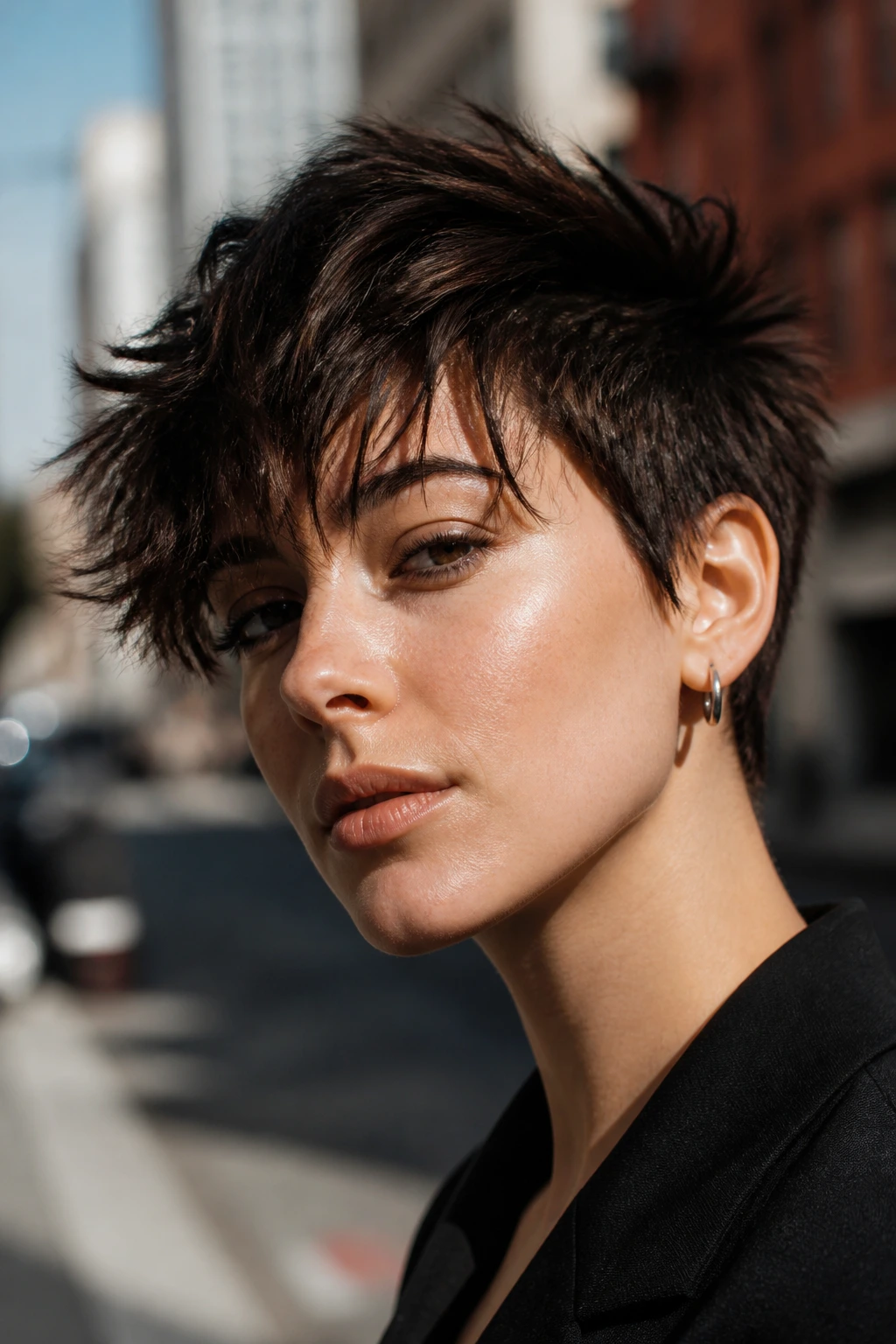
Short hair does not have to look polished to look good. In fact, a choppy pixie usually gets better the less you try to perfect it. The longer top gives you something to piece out with your fingers, while the sides stay tight enough to keep the shape clean.
This is a strong choice if you want to wake up, rough it up with a little product, and leave. A matte wax or soft paste is usually enough. Work a tiny amount through the top, then push a few strands forward and a few up so it doesn’t look helmet-like. The result should feel textured, not sticky.
It can be a little tougher if your hair is very coarse or very curly, because the layers need to be placed carefully. Still, when it works, it really works. The cut shows your cheekbones, opens the neck, and feels lighter than longer messy layers. Different lane. Same easy energy.
14. The V-Cut For Long Hair

When long hair starts feeling like a blanket, this shape helps. A V-cut keeps length in the back while tapering the sides so the outline narrows toward the center. That gives the hair movement and makes the length feel less heavy without chopping it off.
The V shape is especially useful if you like wearing your hair down most of the time. It prevents the back from turning into one flat wall, and it gives loose waves a place to fall. On thick hair, the shape can remove some of the visual bulk. On finer hair, it can create the illusion of more movement without stealing too much density.
Why people ask for it
- The hair still feels long.
- The shape looks more interesting from behind.
- Waves and curls separate better.
- It grows out without a harsh line.
If you wear ponytails a lot, this cut can also be nicer than a blunt long length because the shorter face-framing pieces don’t all get trapped at once. A few stray layers around the front make the whole thing feel softer, which is exactly what a messy layered haircut should do.
15. The Grown-Out Shag With A Long Broken Fringe

Some haircuts are only good when styled. This isn’t one of them.
The grown-out shag with a long, broken fringe is what happens when softness wins over perfection. The layers are still there, but they’re not shouting. The fringe is long enough to split naturally, fall a little crooked, and still look right. The ends have movement without losing too much weight, which keeps the cut from drifting into frizz territory.
This is the version I’d point to if someone says, “I want something messy, but I also want to be able to ignore it.” You can air-dry it, tuck pieces behind one ear, throw in a loose wave, or let it do its own thing after sleep. The cut should still hold together.
Best for: people who want low-maintenance hair that doesn’t look accidental.
Works especially well with: soft waves, medium density, and face-framing pieces that start around the cheekbone or lip.
The honest truth is that the best messy layered haircuts are the ones that make your daily routine smaller, not harder. You want a cut that gives you a shape even when you do almost nothing. That’s the real luxury here. Not perfection. Ease.
