



Straight hair is honest. It shows every line, every weight shift, every shortcut a cutter took when they got lazy with the scissors.
That’s why layered haircuts for straight hair can look either polished or strangely lumpy, with very little middle ground. A good layered cut gives movement without turning the ends into wisps. A bad one leaves you with odd shelves, flat roots, and pieces that seem to have wandered off on their own.
The real trick is placement. Straight hair needs layers that work with the fall of the hair, not against it — especially if your hair is fine, thick, pin-straight, or the kind that refuses to hold a bend for more than an hour. Some cuts need softness around the face. Others need weight removed from the inside so the whole shape stops hanging like a curtain.
These 30 layered haircuts are the ones worth knowing because they solve different problems. Flat crown. Heavy ends. Wide face shape. Boring shoulder length. Too much bulk. Too little movement. That balance is where the good cuts live.
1. Long Face-Framing Layers
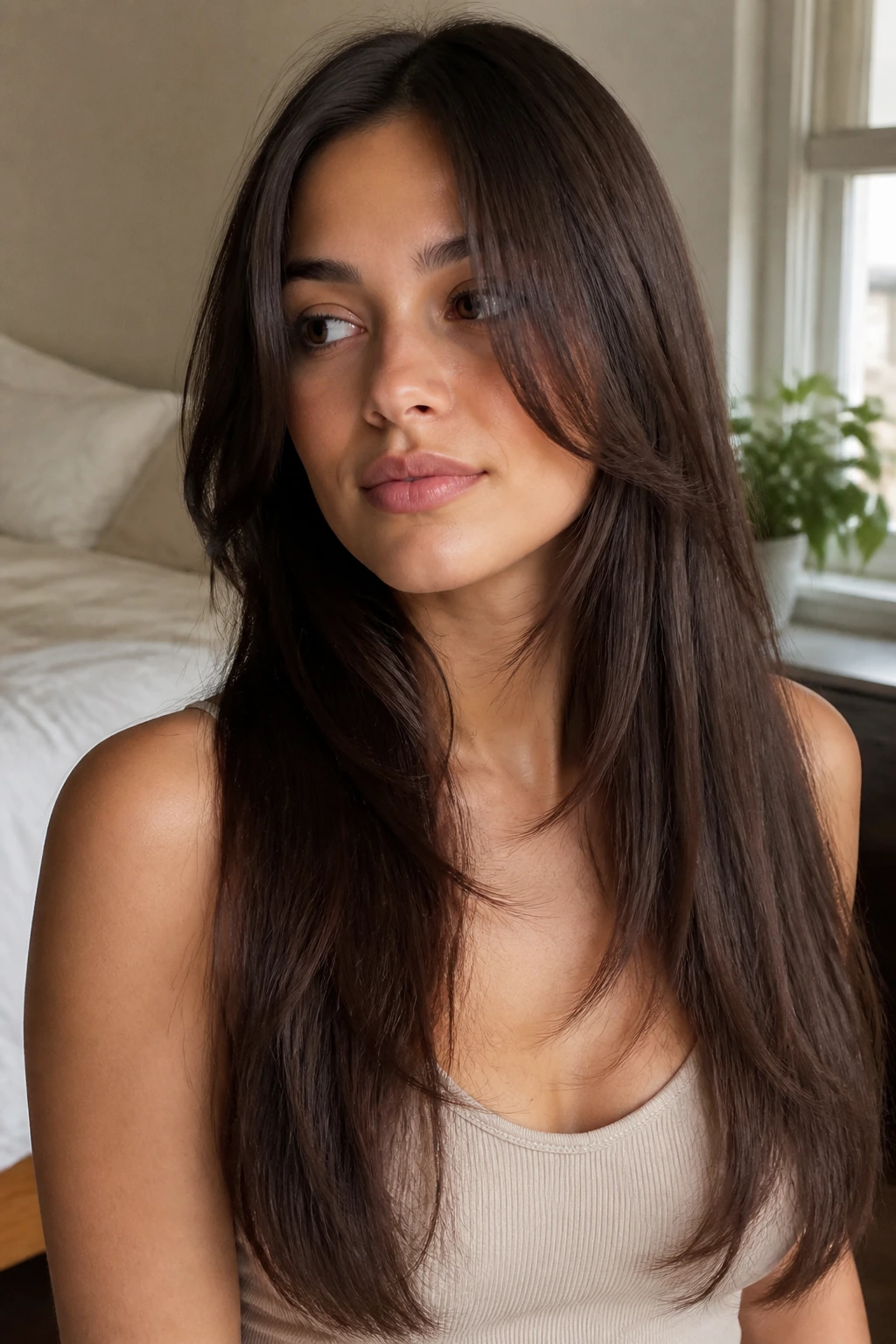
Long face-framing layers are the easiest entry point if you want movement without a dramatic change. They start around the cheekbone or jaw, then drift down into the rest of the length so the cut feels soft instead of chopped up.
Why It Works on Straight Hair
Straight hair shows the face frame right away. There’s no curl pattern to hide a blunt transition, so the angle matters. A skilled stylist will usually keep the back long and clean, then carve just enough shape around the front to stop the hair from hanging flat against your face.
If your hair is fine, this is one of the safer ways to add interest without making the ends look thin. If your hair is thick, it keeps the outline from feeling like a block. Either way, it’s low-drama and easy to grow out.
- Best on medium to long lengths
- Ask for the shortest piece to hit around the cheekbone or jaw
- Works well with a middle part or a soft off-center part
- Needs only a round brush bend or a quick flat-iron curve
Pro tip: keep the front pieces a little longer than you think at first. Too-short face framing on straight hair can turn into a sharp triangle fast.
2. Butterfly Cut

The butterfly cut has a built-in illusion: the top layers look shorter and lighter, while the length underneath stays long and sleek. On straight hair, that contrast can be gorgeous because the shape reads clearly without needing a lot of styling fuss.
Here’s why it gets attention. The upper layers lift the crown and give you that airy, bouncy top section, while the longer bottom layers keep the cut from feeling too thin. Straight hair often needs that split personality. One part creates movement. The other part keeps the shape grounded.
It’s especially useful if you like wearing your hair down but still want to pin the front up sometimes. Those shorter face pieces can frame a blowout, tuck behind the ear, or fall forward around a collarbone-length cut without looking awkward. This cut does ask for some styling if you want the full effect, though. Air-drying alone usually makes it look quieter than the photos suggest.
3. Soft U-Shaped Layers
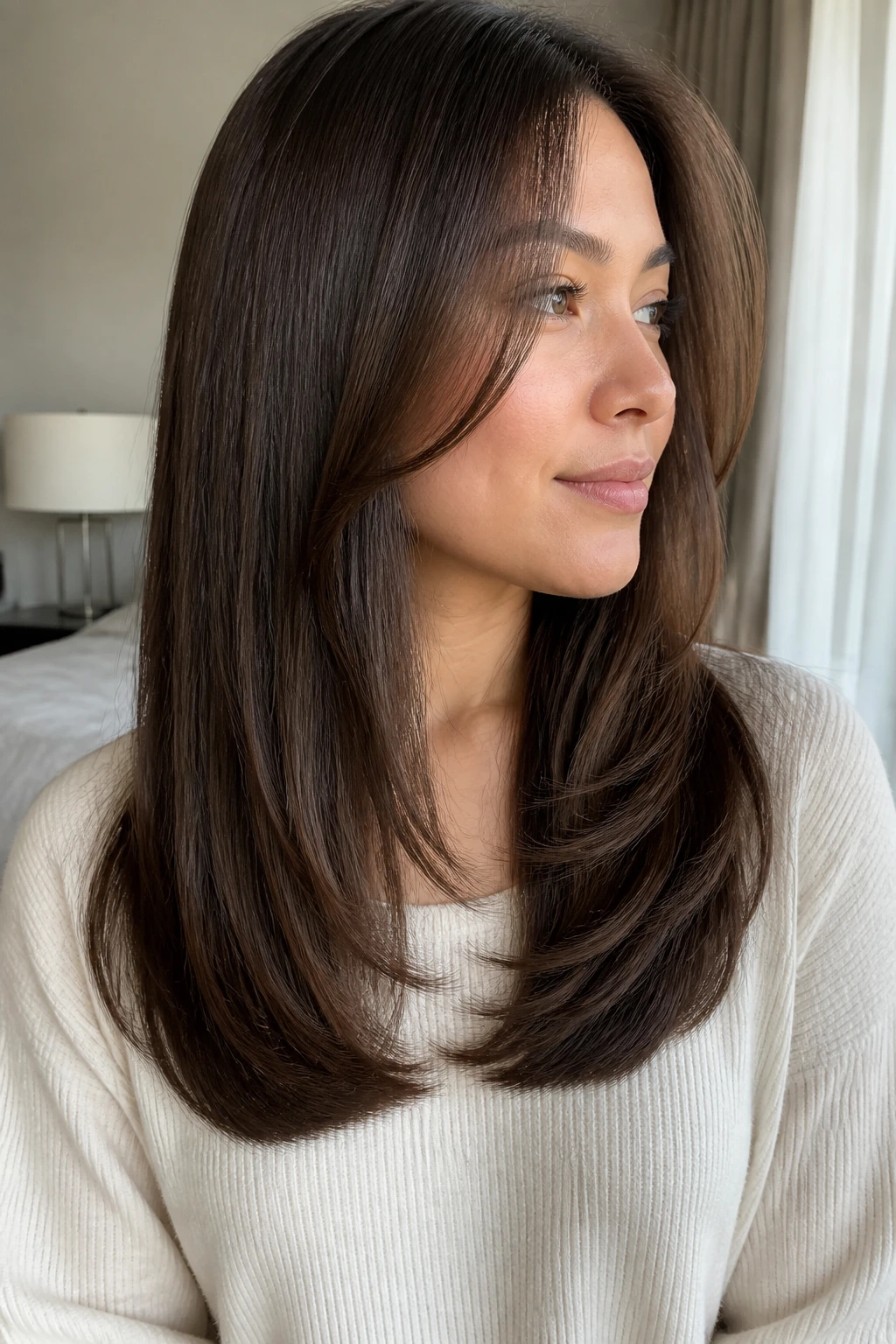
Why does a U-shape work so well on straight hair? Because it keeps the ends soft without making the silhouette look heavy or boxy.
A U-shaped cut is rounded at the back, but the layers are blended in a way that keeps the length full. That matters with straight hair, which can go flat when the bottom line is too harsh. The curve gives the eye somewhere to travel, and the layers stop the sides from hanging straight down like two thick panels.
How to Ask for It
Tell your stylist you want a long, rounded outline with gentle internal layering. That wording helps more than asking for “some layers,” which can mean almost anything depending on who’s holding the scissors.
- Keep the center back the longest point
- Let the sides fall slightly shorter
- Ask for soft blending, not obvious steps
- Trim every 10 to 12 weeks if your ends split easily
A U-shape is a quiet haircut. That’s the charm. It doesn’t shout for attention, but it keeps straight hair from looking stiff.
4. V-Cut Layers
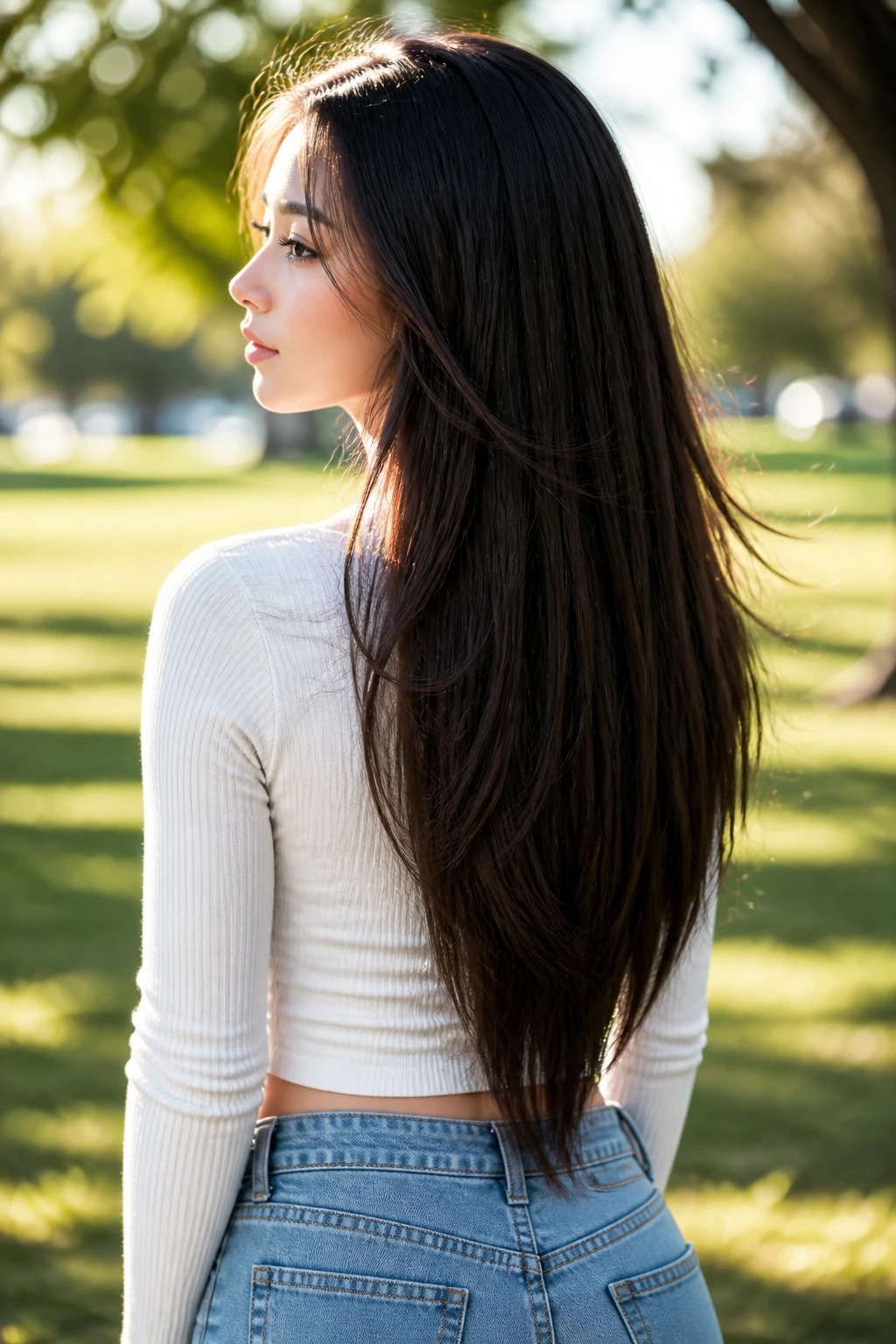
A V-cut gives straight hair a sharper, more dramatic finish. The center back stays longest, and the sides taper in toward it, which creates a pointed outline that looks especially clean on long hair.
This cut is a favorite for people who wear their hair down most of the time. The shape is obvious even when the hair is flat and sleek, which is rare. Straight hair tends to show this design well because the ends stack neatly into that V line instead of puffing out or curling away from the shape.
It does have a catch. If your hair is very fine, a deep V can make the ends look thinner than you want. If your hair is thick, though, the V can remove some of the heaviness that makes long straight hair feel boring. A soft V usually works better than a severe one. Severe shapes look sharp in a salon mirror and a little severe everywhere else.
5. Curtain Bangs With Long Layers

Curtain bangs are one of those rare fringe styles that can behave on straight hair without a daily wrestling match. They part in the middle, sweep outward, and melt into long layers so the front of the haircut feels light instead of boxed in.
Straight hair is actually a good match here because the bangs lie flat and show the shape cleanly. You do not need a heavy blowout to make the effect visible. A quick pass with a round brush or even a bend from a flat iron can open the fringe enough to frame the face.
The main thing to watch is length. If the bangs are cut too short, they can sit like a shelf. Too long, and they disappear into the rest of the hair before they’ve done any real work. The sweet spot is usually somewhere between the eyebrow and cheekbone, depending on your forehead height and where you want the frame to land.
6. Layered Lob With Blunt Ends
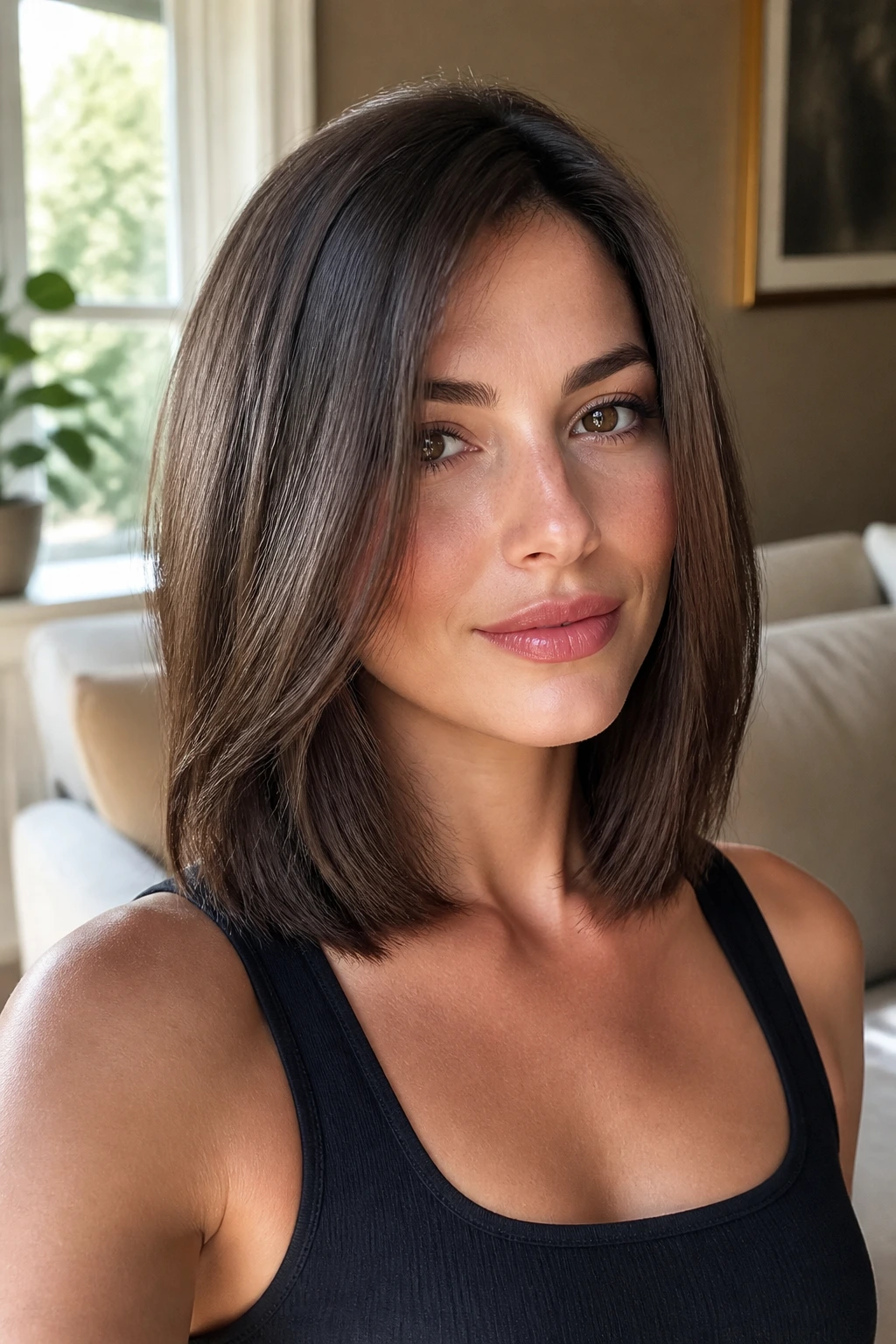
A layered lob with blunt ends is the haircut I reach for when someone wants movement but hates seeing thin-looking tips. The perimeter stays clean and solid, while the layers live inside the shape and add softness without breaking the edge.
That blunt line matters more on straight hair than people think. It keeps the whole haircut from looking stringy, especially if your hair is medium fine or naturally dense but not textured. The layers help it move. The blunt edge keeps it looking like a haircut and not a half-finished grow-out.
What Makes It Different
Unlike a heavily layered long cut, this one protects the outline. You still get lift around the crown and bend around the face, but the bottom stays crisp. If you like a blow-dry that flips under at the ends, this cut makes that easy. If you air-dry, it still looks intentional.
It’s also a good choice if you’re bored of one-length hair but don’t want anything too chopped. Clean. Easy. No fuss.
7. Invisible Layers

Invisible layers are the haircut for people who want movement but do not want to see obvious steps. The layers are tucked inside the shape, so the outer line looks smooth while the inside carries the lift and swing.
That’s a smart move for straight hair because straight strands can make layered cuts look more dramatic than they are. A blunt top layer with hidden internal shaping keeps the ends from separating into obvious bits. The cut feels lighter when you move, but it still reads sleek when you stand still.
What to Tell Your Stylist
Ask for internal layers, point-cut ends, and minimal shortening around the outside.
- Best if you like polished hair
- Good for medium to thick straight hair
- Helps heavy hair fall closer to the head
- Needs a dry finish to show the movement properly
This is the haircut for someone who wants to walk out of the salon looking like they didn’t try very hard. A little smug, honestly. In a good way.
8. Feathered Layers

Feathered layers give straight hair that soft, airy swing you usually see in old salon photos — but when they’re done well, they look fresh, not dated. The idea is to taper the ends so the layers flick lightly instead of hanging in hard lines.
Straight hair is ideal for feathering because the movement shows right away. You can see where the shape opens around the cheekbones and collarbone. You can also see when it’s done badly, which is the downside. Feathering requires restraint. Too much thinning, and the ends start looking dry even when they aren’t.
A round brush blow-dry makes this cut come alive. So does a large Velcro roller at the crown if you want extra lift. I’d avoid overloading it with heavy creams. Light serum, a little heat protectant, and a soft brush usually do more for the finish than anything sticky or oily.
9. Textured Shag for Straight Hair

A shag on straight hair can look either cool or chaotic. The difference is balance. You need enough texture to break up the flatness, but not so much that the shape turns ragged.
That’s why the straight-hair shag should usually keep a stronger perimeter and a controlled amount of layering through the crown and sides. It works best when the hair has some density, because the texture can remove bulk without exposing too much scalp or making the ends feel sparse. Add fringe if you want the full effect. Leave it off if you want the cut to stay a little cleaner.
The Shape You Actually Want
The goal isn’t “messy” for the sake of it. It’s movement. The best straight-hair shag has pieces that fall around the eyes, mouth, and collarbone in a way that looks lived-in but still deliberate.
- Use a texturizing spray at the mid-lengths
- Scrunch lightly with your hands after blow-drying
- Avoid over-thinning the ends
- Keep trims closer together if your hair is prone to splitting
This cut has attitude. That’s the point.
10. Wolf-Inspired Layers

The wolf cut borrows from the shag, but it pushes the crown volume and disconnect a little further. On straight hair, that means more visible structure at the top and more length left hanging underneath.
I like this cut most on people who want something that feels a bit rebellious without going full punk. Straight hair gives the wolf shape a sharper outline, which can be a blessing or a curse depending on how much softness you like. If your hair is fine, go easy with the layering. If it’s thick, you can usually handle more separation.
There’s one practical thing worth knowing: styling matters. A wolf cut on straight hair looks best when the top is lifted at the root and the ends are bent rather than pin-straight. That keeps the cut from looking unfinished. If you want a wash-and-go style, this probably isn’t the one. If you like a little edge, it delivers.
11. Choppy Razored Layers

Choppy razor-cut layers wake up straight hair fast. The razor removes weight in a more broken, airy way than scissors, so the ends feel lighter and the layers look less polished and more undone.
That can be a huge win if your hair hangs heavy and refuses to move. It can also be a mess if your hair is already fragile, dry, or prone to splitting. Razor work is best on healthy straight hair with enough strength to hold the shape. Otherwise, the ends can look wispy in a way that reads as damage, not texture.
What to Watch For
You want movement, not fray.
A good razor cut should still look intentional at the bottom edge. Ask your stylist to keep some density in the perimeter and use the razor mainly where the shape needs softness. It’s a nice fit for medium-length hair, especially if you like a slightly edgy finish with a bit of product and a finger-styled bend.
12. Collarbone-Length Layers

Why is collarbone length such a good spot for straight hair? Because it’s long enough to feel like hair, but short enough to show the cut.
That middle zone tends to be where straight hair gets tricky. Too long, and it lies flat. Too short, and it can puff or flip in odd ways at the shoulders. Collarbone-length layers sit in the sweet spot. They graze the shoulder line, move when you turn your head, and still tuck behind the ears without fighting you.
How It Behaves
The cut usually looks best with soft layers starting below the jaw and building quietly toward the ends. You can wear it sleek, bend the ends out, or add a little wave if you want more texture.
- Good for people who style their hair in under 15 minutes
- Easy to pull into a low ponytail
- Works with both side and center parts
- Holds shape well as it grows
It’s an easy haircut to live with. That’s not a boring thing.
13. Side-Parted Layered Bob

A layered bob with a side part gives straight hair instant lift. The off-center part adds height at the crown, while the layers stop the bob from turning into a helmet.
Straight hair shows bob structure more than almost any other texture. That means the part matters a lot. A deep side part creates a little movement at the roots and lets one side fall heavier, which keeps the cut from feeling too symmetrical or too stiff. It also softens a strong jawline in a way that a flat middle part sometimes doesn’t.
The layers should stay controlled here. Too many of them and the bob starts looking airy in the wrong places. The nice version is polished, slightly swingy, and neat at the nape. If you want something that can be tucked, flipped, or worn with earrings that matter, this is a strong pick.
14. Bottleneck Bangs With Soft Layers
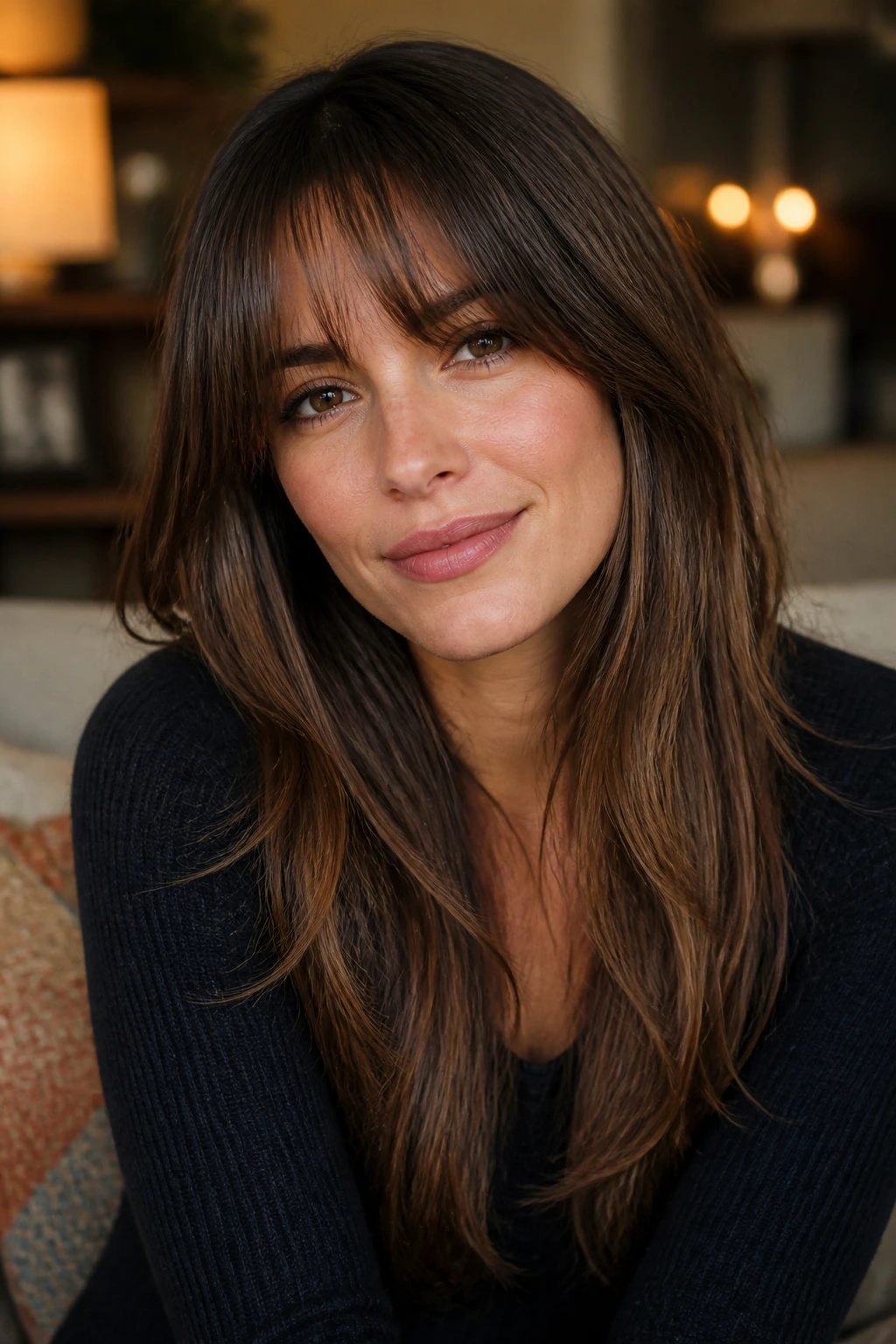
Bottleneck bangs are narrower at the top and a little wider as they curve out beside the eyes, which makes them a gentler version of full fringe. On straight hair, they lie close to the forehead and blend nicely into soft layers without the harsh line that blunt bangs can create.
I like this cut for anyone who wants bangs but worries about regret. That’s a fair fear. Bottleneck bangs are easier to grow out than straight-across fringe, and they still give you shape around the face. The layers behind them should stay loose and blended so the bangs don’t sit on top of a heavy block.
A small round brush helps the fringe open. So does a quick blast of low heat at the roots. Keep the product light. Heavy styling cream on straight bangs turns them oily fast, and nobody needs that.
15. Deep Side-Swept Layers
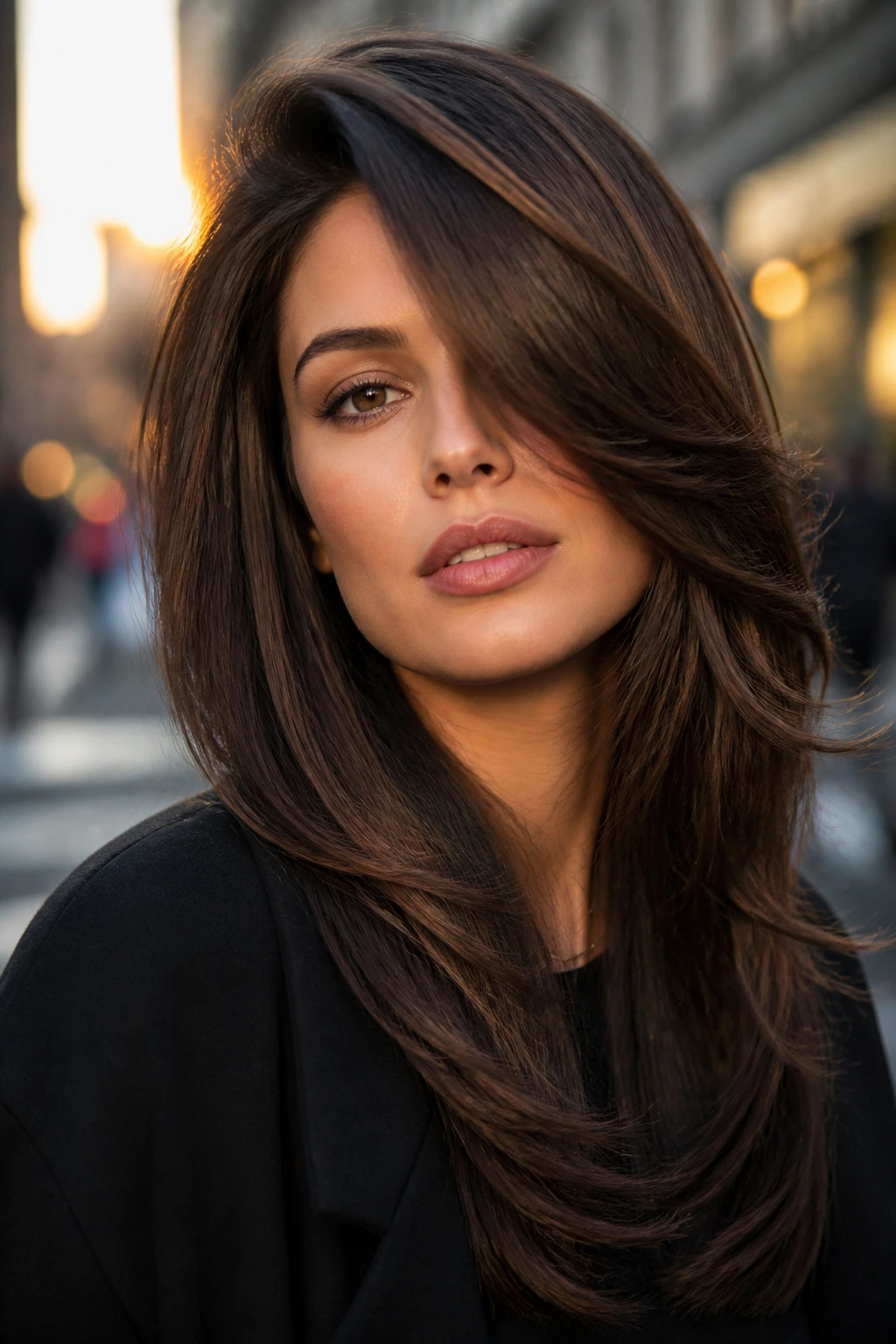
A deep side part paired with sweeping layers gives straight hair a little drama without needing a full haircut overhaul. The asymmetry adds lift near the crown and draws the eye diagonally across the face, which can be useful if your hair tends to fall flat on both sides.
This cut works especially well when the front layers are long enough to curve over the cheek and blend into the rest of the length. The movement feels soft, but the shape still has purpose. It’s one of those styles that looks more expensive than it is because the part does half the work.
If your hair naturally wants to separate in the same place every day, this cut will cooperate. If your roots are stubborn, a root clip while the hair cools after blow-drying helps set the direction. Small thing. Big difference.
16. Internal Layers for Thick Straight Hair

Thick straight hair needs weight removed where the eye can’t always see it. That’s exactly what internal layers do. The outside can stay clean and controlled, while the inside gets thinned just enough to keep the whole head from feeling boxy.
This is the haircut that stops thick straight hair from sitting like a wall. The perimeter stays solid, which matters if you like your ends to look full. The inside loses some bulk, which makes the hair easier to dry and easier to tuck behind the shoulders. If you’ve ever had a dense straight cut that took forever to air-dry, this is one of the fixes that actually helps.
Where the Weight Comes Out
Not everywhere. That’s the point.
- Crown for lift
- Mid-lengths for movement
- Just enough at the sides to soften width
- Leave the bottom edge fuller than you think
A good internal-layer cut should feel lighter when you run your fingers through it, but still look thick at the ends. If the ends start looking thin, too much weight came out. Simple as that.
17. Angled Face-Framing Layers

Angled face-framing layers are more directional than the soft version. They usually start shorter near the chin or cheek and angle down toward the rest of the hair, which gives straight hair a sharper line and a bit more contour.
This is a smart choice if you want the haircut to do some of the face-shaping work for you. The diagonal line can slim the sides visually, sharpen the jaw, and create a nice fall when the hair is tucked behind one ear. Straight hair loves this kind of geometry because the angle stays visible instead of getting swallowed by texture.
The cut does need clean styling. A rushed air-dry can make one side flip weirdly, and that ruins the effect. A quick bend with a brush or flat iron keeps the line readable. If you want your layers to look intentional from every angle, this is one of the stronger options.
18. Airy Layers for Fine Straight Hair

Fine straight hair can turn limp fast, so the layers need to be placed carefully. Too many, and the ends look see-through. Too few, and the whole head falls flat by lunch.
Airy layers fix that by keeping the bottom edge intact while adding soft movement through the mid-lengths. The hair feels lighter, but not shredded. That distinction matters. You want lift and space, not a haircut that looks like it lost a fight with thinning shears.
What Helps Most
A small amount of root lift goes a long way here. A mousse at the crown, a round brush, or even a hot-air styler can give the cut enough body to show its shape. Avoid heavy oils near the top. They make fine straight hair collapse faster than almost anything.
This cut is for someone who wants volume that still looks neat. Not fluffy. Not piecey. Just clean, light, and a little more alive.
19. Step Layers

Step layers show their structure on purpose. Each section lands in a clear, visible tier, which can be a strong choice if you like a haircut that has a little attitude and doesn’t try to hide what it is.
Straight hair makes step layers easy to read, so the cut needs confidence. It’s not the best option if you want something hidden or ultra-soft. It works when the layers are cut cleanly and the transitions are controlled enough to keep the shape from looking accidental.
A style like this can actually be useful on long straight hair that tends to hang in one heavy sheet. The steps break that sheet up and let the hair move more freely. Wear it sleek and the levels show. Add a slight bend and the whole cut gets more dimension. It’s a statement, but a practical one.
20. Flipped-Out Layers

Flipped-out layers bring a little movement to straight hair without requiring curls or waves. The ends turn outward, usually from around the shoulder down, and the layers support that swing so the haircut feels lively instead of stiff.
This style has a retro edge, but it doesn’t have to read costume-y. The trick is keeping the flip soft and slightly uneven, not perfect. Straight hair is good at holding that shape with a round brush or a pass of a flat iron at the ends. A light spray is enough. Heavy hold usually makes it look crunchy, which is not the goal.
The cut works especially well when the hair hits the shoulders or collarbone. That length gives the flip somewhere to land. If your hair is very short, the ends can kick out too much. If it’s very long, the flip can disappear. Middle lengths seem to carry it best.
21. Birkin Bangs With Long Layers

Birkin bangs are soft, full, and slightly separated, which makes them a surprisingly good match for straight hair. They sit low enough to feel relaxed, but not so heavy that they erase the face.
The long layers behind them matter a lot. Without those, the fringe can feel disconnected. With them, the whole cut looks lived-in and balanced. Straight hair helps the bangs fall naturally, so the style doesn’t need as much coaxing as curlier textures sometimes do.
You’ll want to keep the fringe in check with trims. Not obsessive trims. Just regular ones. Bangs on straight hair show every extra millimeter, and once they start poking into the eyes, the whole mood changes. A small brush, a blow-dry from root to tip, and a little patience usually handle the rest.
22. Razor-Cut Long Layers

Razor-cut long layers are for people who want softness with a little edge. The razor creates thinner, more tapered ends than scissors alone, so the layers blend with a lighter, airier finish.
Straight hair shows razor work very clearly. That’s useful if the cut is good and dangerous if it isn’t. You need healthy hair for this style to shine. Dry or brittle ends can look shredded fast, and once that happens, no serum in the bathroom can save it.
What Makes It Different
Scissor layers often look cleaner and more structured. Razor layers feel more broken up and loose. If you want that slight undone effect without losing the length, this is a useful route.
- Best for medium to thick straight hair
- Not ideal if the ends are fragile
- Works well with loose waves or a straight, tucked-behind-the-ear finish
- Needs periodic dusting to keep the taper soft
This cut has a bit of edge, but not the loud kind. More like a quiet scrape of texture.
23. Shoulder-Length Layers With Movement

Shoulder-length hair can be a tricky zone. It flips, catches on coat collars, and sometimes just sits there with all the personality of a clipboard. Layers fix a lot of that by giving the cut room to move around the shoulders instead of landing as one hard line.
Straight hair at this length benefits from soft pieces that lift the outer shape without making the ends too wispy. The most useful version usually keeps the perimeter close to the shoulders and builds layers from the cheekbones down. That way the hair still feels full, but it bends instead of hanging.
This is one of the easiest cuts to style in a hurry. A little smoothing cream, a round brush on the ends, and you’re done. Or nearly done. If your hair likes to flip out at the nape, a quick pass with a flat iron can calm it down. Not glamorous. Effective.
24. Rounded Layers

Rounded layers curve around the head and keep the silhouette soft, which can be a relief if you’re sick of sharp angles. On straight hair, a rounded cut avoids the stiff, triangular look that comes from overbuilt layers or a too-deep V.
The shape matters here. Instead of making the hair point down the back, the layers are distributed so the sides and back flow into each other. That creates fullness near the mid-lengths and a smoother outline around the face. It’s especially useful if your hair is medium dense and you want body without obvious steps.
Why It Beats a Flat Outline
A straight, blunt bottom can look heavy. A rounded shape moves.
It also grows out well. As the layers get longer, the cut doesn’t lose its structure as quickly as a more dramatic style might. If you want something graceful but not fussy, rounded layers sit in that useful middle ground.
25. Layered Pixie Cut

A layered pixie on straight hair can be crisp and sharp in a way longer cuts can’t match. The layers give the short length lift at the crown and texture around the sides, so the cut doesn’t sit like a helmet.
Straight hair makes the structure very visible, which is a plus if the shaping is good. You can see the lifted top, the neat edges, and the way the layers break up the outline. That also means you need a precise cut. A sloppy pixie shows up fast.
The styling routine is short, which is half the appeal. A pea-sized amount of styling cream or wax, worked through the top with fingertips, can define the layers in seconds. If you like a smoother finish, a touch of light serum is enough. It’s not a low-effort haircut in the sense that it needs no thought. It’s low-effort because the thought is over quickly.
26. Sliced Layers

Sliced layers are softer than choppy ones. The cut glides through the hair in a way that creates movement without hard breaks, which is a nice match for straight hair that needs shape but not obvious texture.
That smoothness is the point. Straight hair can make bluntly cut layers look blocky. Sliced layers avoid that by taking out weight in a more subtle way. The result is a haircut that moves when you walk but still looks clean at the ends.
This style is useful if you want a polished finish with a little air around the face and shoulders. It won’t give you the dramatic separation of a shag, and that’s fine. Not every haircut needs to announce itself. Some should just make your hair behave better.
27. Center-Parted Long Layers

A center part with long layers sounds simple, and it is, but straight hair makes the details matter. Without shaping, the middle part can drag the face down and make the length feel heavy. The right layers stop that.
You want the front pieces to start around the cheekbone or lower and then fall gradually into the rest of the hair. That keeps the center part clean while preventing the sides from hanging in one flat sheet. Straight hair handles this well because the line stays smooth, which makes the layers feel almost architectural.
A little shine serum helps this style a lot. Not because it needs gloss — though it does look nice — but because the clean part and long length look better when the strands lie neatly together. If your hair poofs at the ends, this probably isn’t your cut. If it falls sleek and you want it to stay that way, it’s a strong choice.
28. Graduated Layers

Graduated layers are shorter in the back and longer toward the front, which gives the haircut a stacked feeling without turning it into a full stacked bob. On straight hair, that graduation creates lift at the nape and a gentle slope around the face.
This shape is useful when you want the back to feel lighter and the front to keep some drama. It’s a common way to build movement into shorter or medium-length cuts without making the perimeter too frayed. Straight hair shows the transition clearly, so the graduation has to be blended well. Otherwise, the back can look overbuilt.
The nicest version is subtle. You see the lift, but you don’t see a hard shelf. That makes it a good choice if you want a bit more shape behind the head and a clean line around the jaw. It’s tidy in the best way.
29. Seamless Long Layers With Minimal Perimeter

Seamless long layers are for people who want the hair to move but still want the ends to look full and expensive-looking. The layers are blended so carefully that you don’t get that obvious “there are layers here” effect when the hair is down.
Straight hair benefits from this because it can be unforgiving with rough cuts. A clean perimeter keeps the silhouette strong, while the layers remove just enough weight to keep the hair from lying dead against the back. You usually see this shape best when the hair is worn loose and brushed smooth, not shoved into a clip or left to dry in a knot.
Who It Suits
- Long hair that feels heavy at the ends
- Fine hair that loses shape fast
- Thick hair that needs movement without a choppy finish
- People who want to grow their haircut out slowly
This is the haircut version of a good white shirt: quiet, useful, and better than it sounds.
30. Low-Maintenance Grow-Out Layers

A good grow-out cut is usually the one people underestimate. It’s not flashy. It just keeps working after the salon visit has faded from memory.
For straight hair, that means long layers, a soft face frame, and a perimeter that doesn’t depend on perfect styling. The best grow-out versions keep enough shape to look finished at six, eight, even ten weeks, instead of collapsing the second the fresh cut loses its edge. If your schedule is packed or you hate constant trims, this matters more than having the trendiest shape on the block.
The practical ask is simple: keep the longest length, remove weight only where it changes the fall, and leave the ends full. That gives you room to wear it sleek, tuck it behind the ears, tie it back, or let it hang loose without needing a rescue blowout every morning.
Maybe that’s the whole point of great layered haircuts for straight hair. They should make the hair easier to live with, not more dramatic to manage.
