



Medium hair is the length where a haircut either wakes up your whole face or falls flat and sulks against your shoulders. Layers decide which side you land on.
A good layered cut on medium-length hair does three jobs at once: it softens heavy ends, keeps the shape from looking boxy, and gives you movement without turning the whole style into a feathered mess. That last part matters more than people admit. The wrong layer placement can make thick hair poof and fine hair look even thinner.
And yes, placement matters a lot. A layer that starts at the cheekbone does something completely different from one that starts at the collarbone or just below the chin.
The best medium layered haircuts don’t all chase the same vibe. Some build lift around the crown. Some carve out a face frame. Some keep the perimeter long and tidy while sneaking in internal layers you barely notice until the hair swings. The cuts below lean into those differences, because that’s where the useful choices live.
1. Soft Face-Framing Layers That Brighten the Jawline
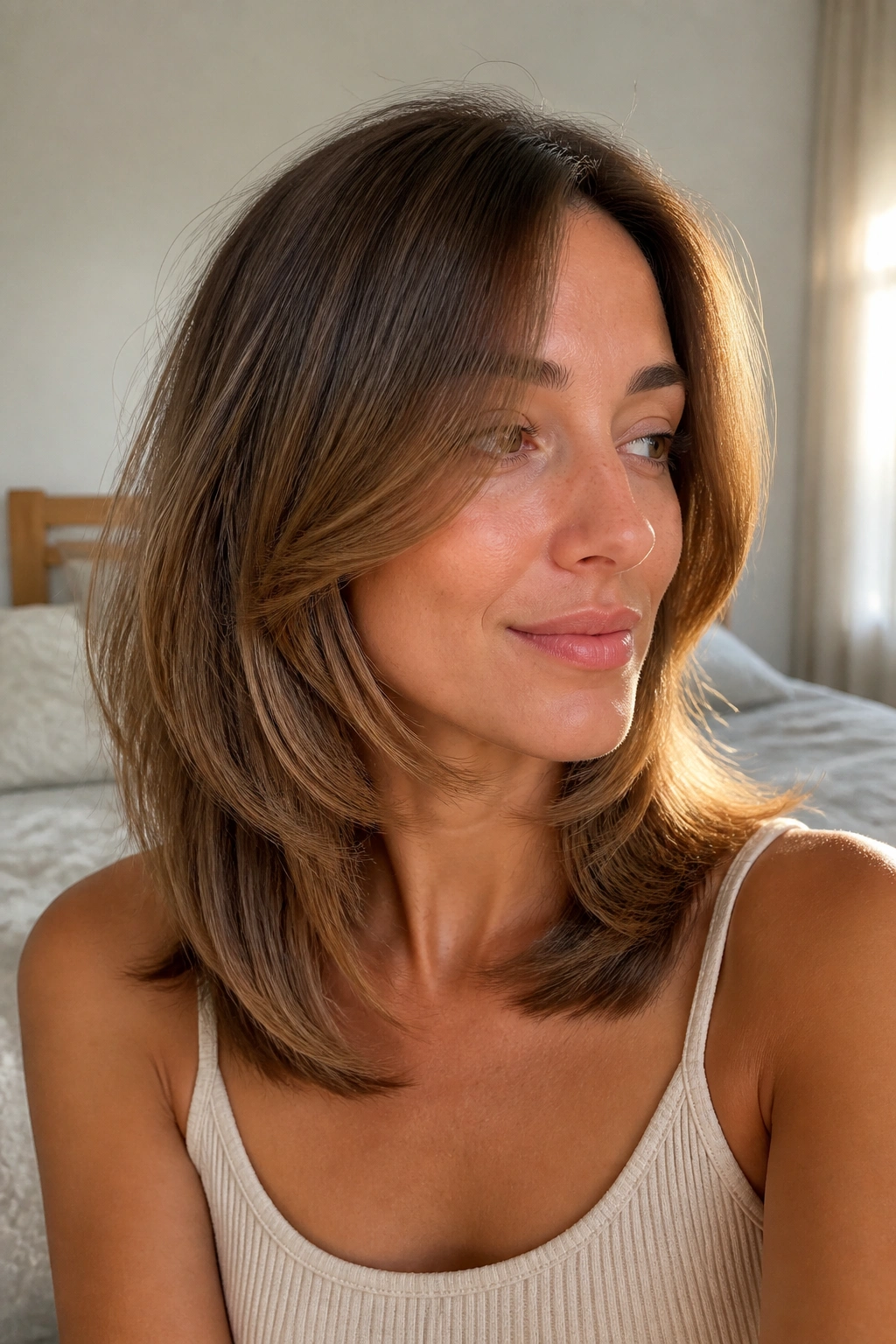
This is the layered haircut I recommend when someone wants a change but doesn’t want to look like they had a dramatic makeover in a mall salon.
The whole point is restraint. The front pieces skim the cheekbones, then fall softly toward the jawline, which makes medium hair look lighter without losing the clean outline at the bottom. It works especially well if your hair sits somewhere between straight and wavy, because the layers move a little even when you do almost nothing to them.
Why It Works
The shortest pieces should usually start around the cheekbone or just below it. That keeps the face frame visible, but not choppy. If your hair is dense, this cut also stops the sides from puffing out like a triangle.
- Ask for soft, blended layers rather than blunt steps.
- Keep the longest front pieces near the collarbone.
- Use a round brush or a large curling iron only on the front sections.
- Finish with a light spray, not a heavy cream.
Best tip: if you wear your hair tucked behind your ears a lot, make sure the front layers are long enough to still fall nicely when released.
2. Butterfly Layers That Give Medium Hair Big Lift
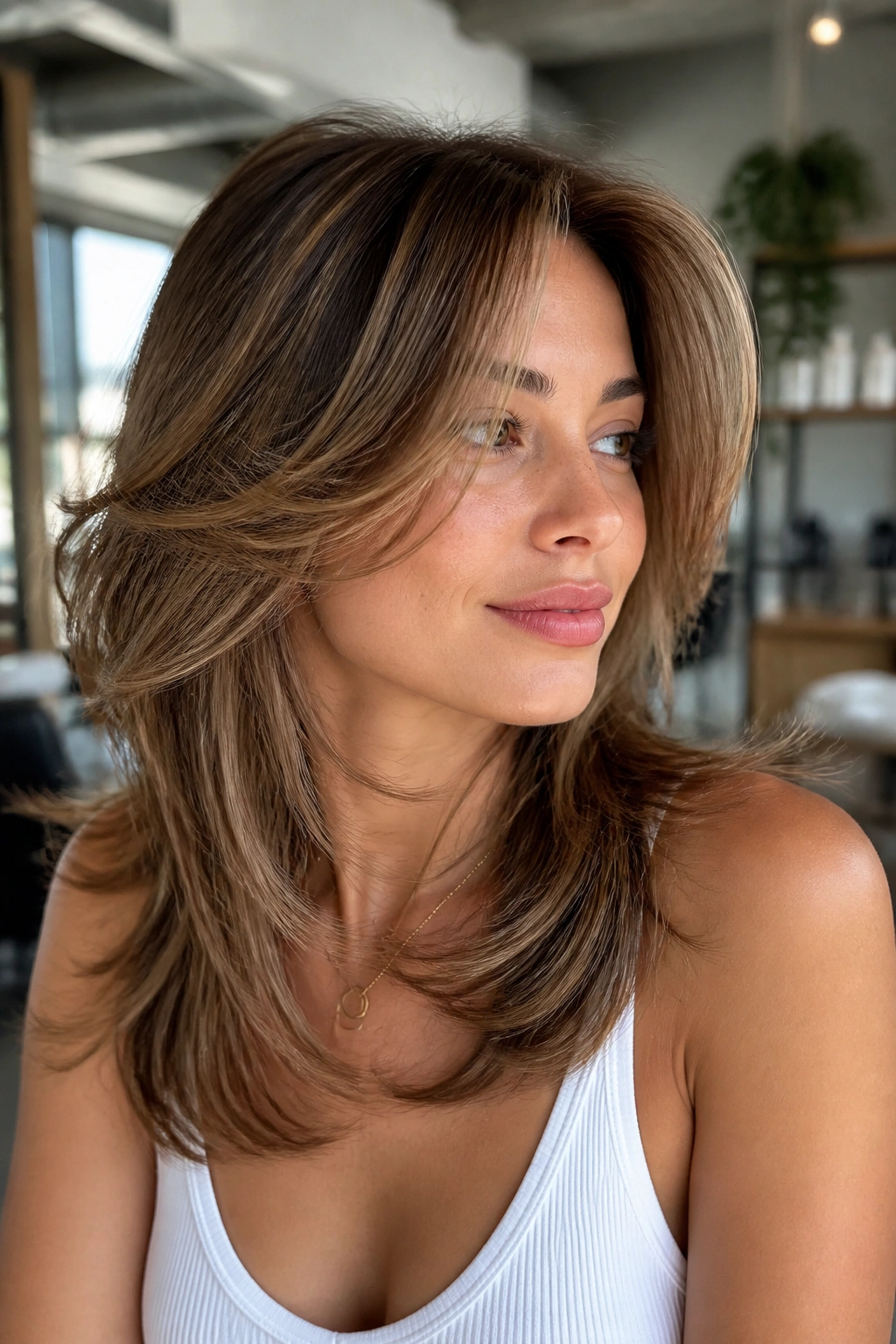
Butterfly layers sound dramatic because they are. In real life, though, they’re surprisingly wearable.
The shape usually combines shorter, face-framing pieces with longer layers underneath, so the hair looks full around the crown and airy through the ends. Medium hair is a sweet spot for this cut because it has enough length to hold the contrast without turning into a shaggy blur. If you like a blowout that looks full on day one and still decent on day two, this one earns its keep.
A lot of people ask for butterfly layers and then leave out the part that matters: the top section needs to be short enough to create lift, but not so short that it sits like a helmet. The transition should feel soft when the hair moves. That’s the whole point.
The style is best when you can see the difference between the top layer and the rest of the hair, but only when the hair swings. Static, it should still look smooth. That balance is the reason this cut keeps showing up in salons.
3. The Modern Shag With Choppy, Airy Ends
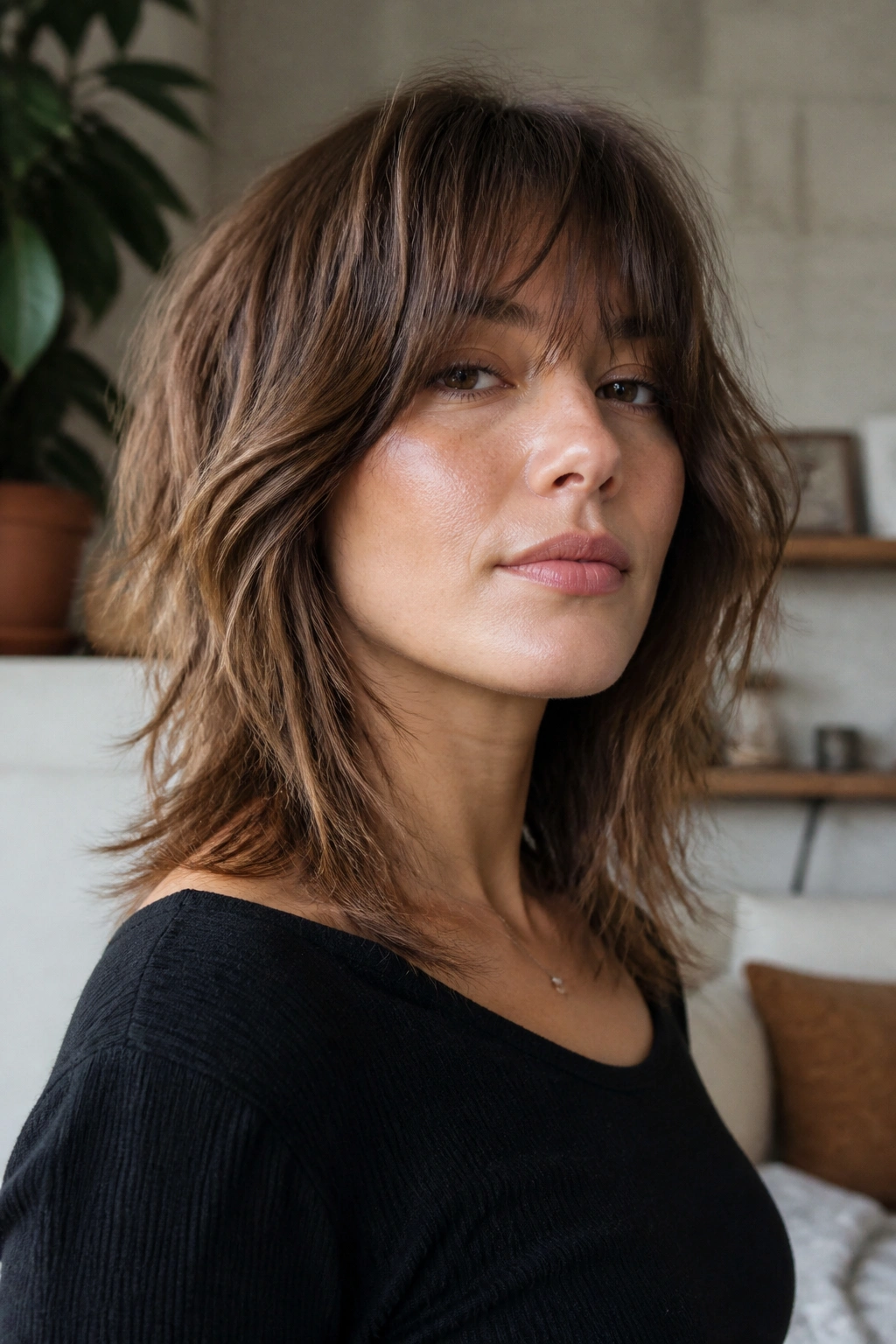
Why does the shag keep coming back? Because it solves one of the most annoying medium-hair problems: hair that looks heavy at the bottom and flat at the top.
A modern shag uses uneven layers, soft texture, and usually some kind of fringe to build shape around the face. The modern version is less gritty than the old-school shag. It’s cleaner at the ends and less explosive at the crown. That matters if you want personality without committing to full punk-rock chaos.
How to Wear It
This cut makes the most sense if your hair has some natural bend. Straight hair can wear it too, but you’ll need texture spray or a quick wave with a 1-inch iron. Thick hair benefits from the movement; fine hair benefits from the illusion of fullness, though you do not want the layers taken too short.
- Ask for razored or point-cut ends.
- Keep the fringe soft, not blunt.
- Use dry shampoo at the roots to keep lift alive.
- Scrunch the mids, not just the ends.
The shag is a good choice when you want the haircut to do half the styling work for you.
4. Collarbone Layers That Flip and Move

There’s a reason collarbone-length cuts keep showing up in good haircuts lists. The length is long enough to feel polished, short enough to avoid dragging the face down, and the layers can actually move instead of disappearing.
This version keeps the perimeter around the collarbone, then adds long internal layers that kick out when you blow-dry. The result is a shape that looks neat from the front and a little more playful when you turn your head. It’s one of those cuts that makes hair look expensive without trying too hard. Not fancy. Just well judged.
If your medium hair tends to sit flat, ask for the shortest layers to begin around the chin or slightly lower. That gives lift without exposing too much scalp at the top. If your hair is thick, this cut also takes weight off the bottom edge, which is where heavy hair gets stubborn.
A collarbone cut can be worn sleek, wavy, or tucked behind one ear. It doesn’t demand a specific styling routine, and that’s part of its appeal.
5. Wispy Internal Layers for Fine Medium Hair
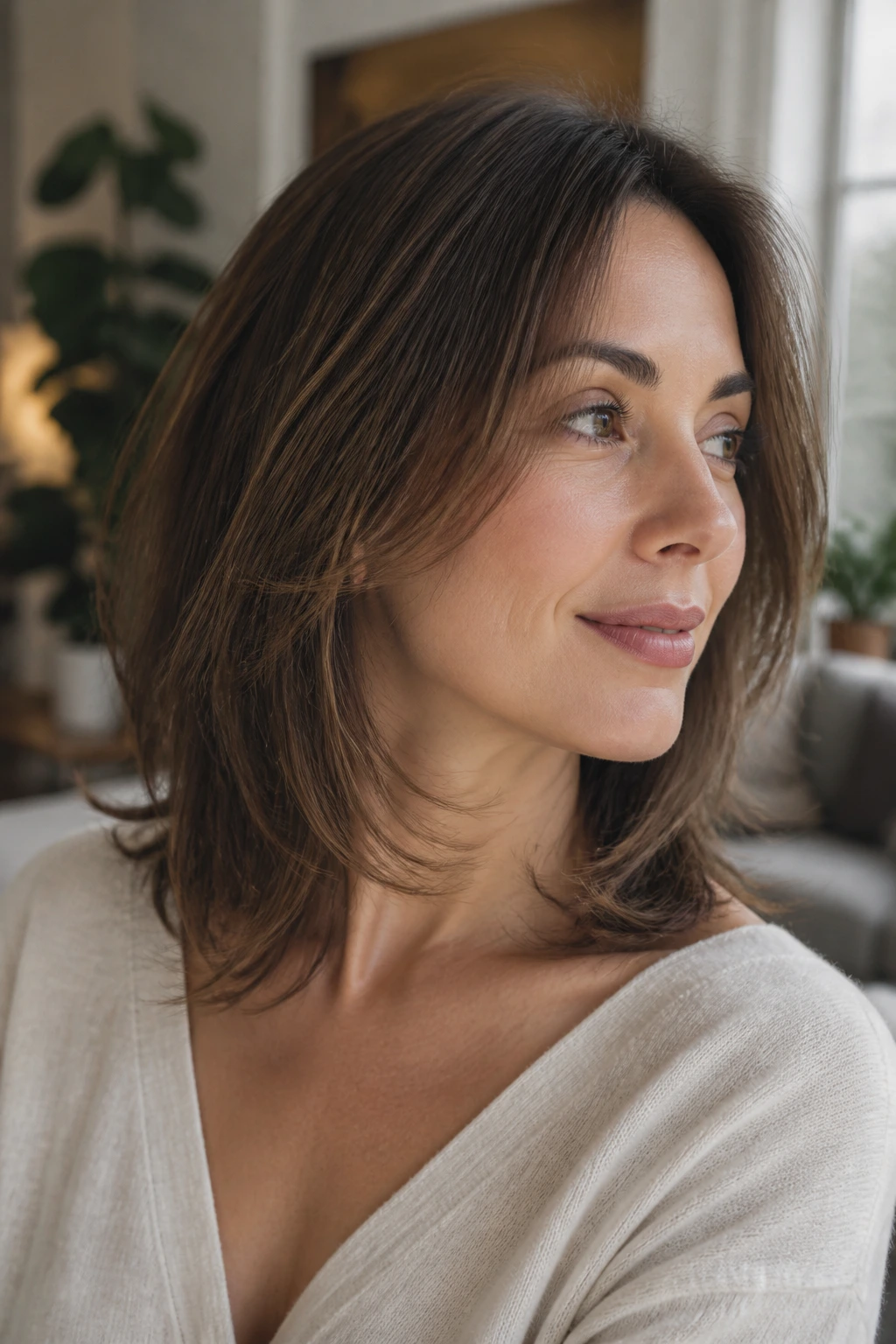
Fine hair usually gets treated like it needs drama to look good. It doesn’t. It needs smarter shape.
Wispy internal layers are a quiet fix for medium hair that falls flat by lunch. Instead of chopping the surface into obvious steps, the stylist removes a little weight from inside the shape, so the outer layer still looks full. The effect is subtle from the outside, which is exactly why it works. You keep the outline. You gain lift.
The main thing to avoid is over-layering. Fine hair can lose its backbone fast if too much is taken out, and then the ends look see-through. Ask for soft, airy layers that begin lower on the head, usually around the chin or lower, and keep the tips blunt enough to hold density.
This is a great cut if you air-dry often. A little mousse at the roots and a light bend through the mid-lengths is usually enough. Heavy oils are the enemy here. They drag everything down.
6. Curtain Bang Layers That Open the Face
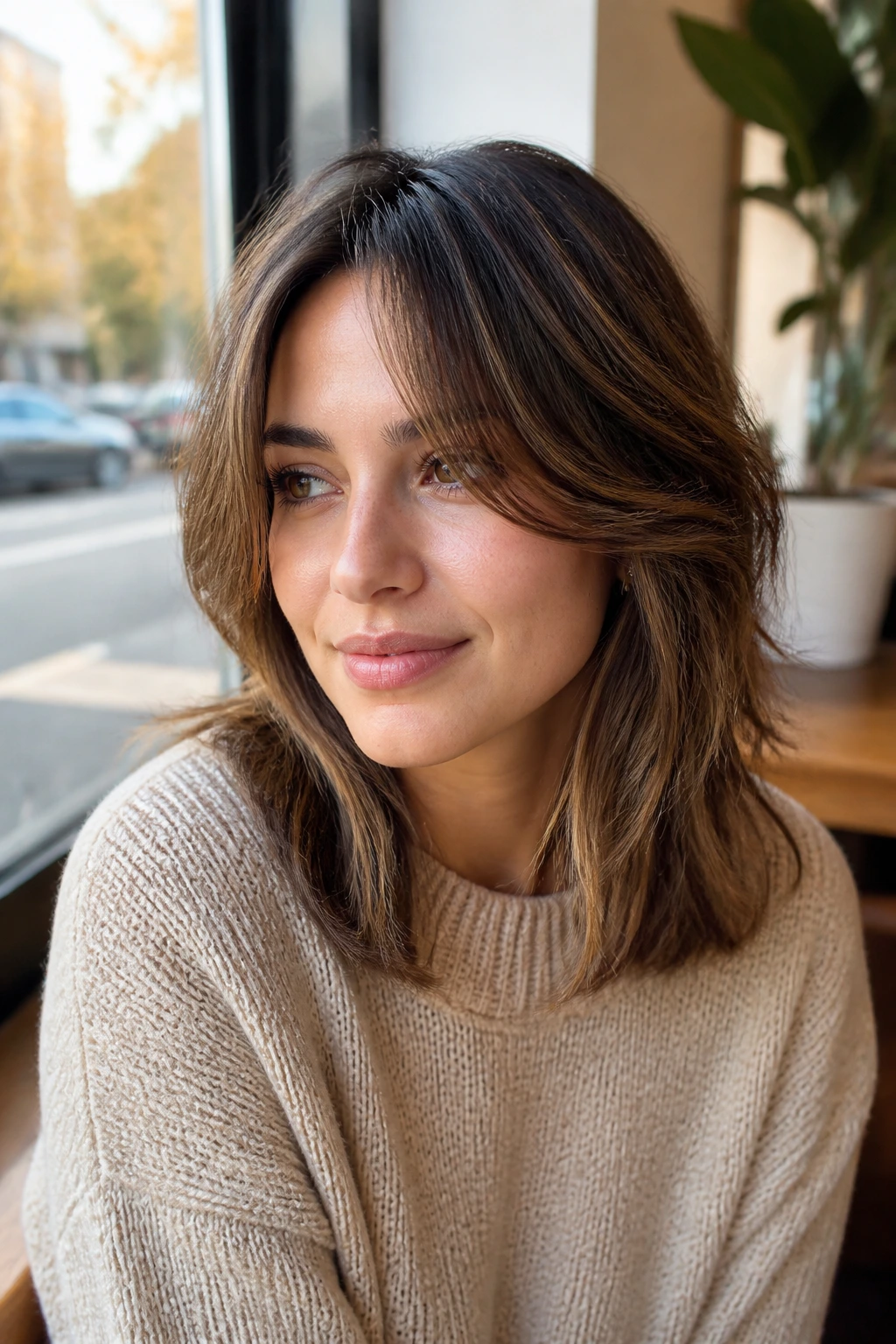
Curtain bangs can change a medium haircut fast, but only if the layers around them are cut with care.
The bangs should blend into the side pieces, not sit there like a separate idea. When the transition is done well, you get a soft center part with face-framing layers that sweep out at the cheekbones and fall into the rest of the haircut. It creates shape without boxing in the forehead, which is why so many people with medium hair keep coming back to it.
What Makes It Different
Unlike heavy bangs, curtain bangs leave room around the face. Unlike a full fringe, they don’t need the same level of upkeep every single morning. They can be air-dried a little messy and still look deliberate.
- Start the bang shape longer than you think.
- Blend the side layers into the front, not under them.
- Blow-dry the bangs away from the face first, then back toward the center.
- Use a small round brush or Velcro rollers if you want a softer bend.
This cut suits people who want movement near the eyes and cheekbones without committing to a blunt fringe that needs constant trimming.
7. Textured Lob Layers for Straight Hair
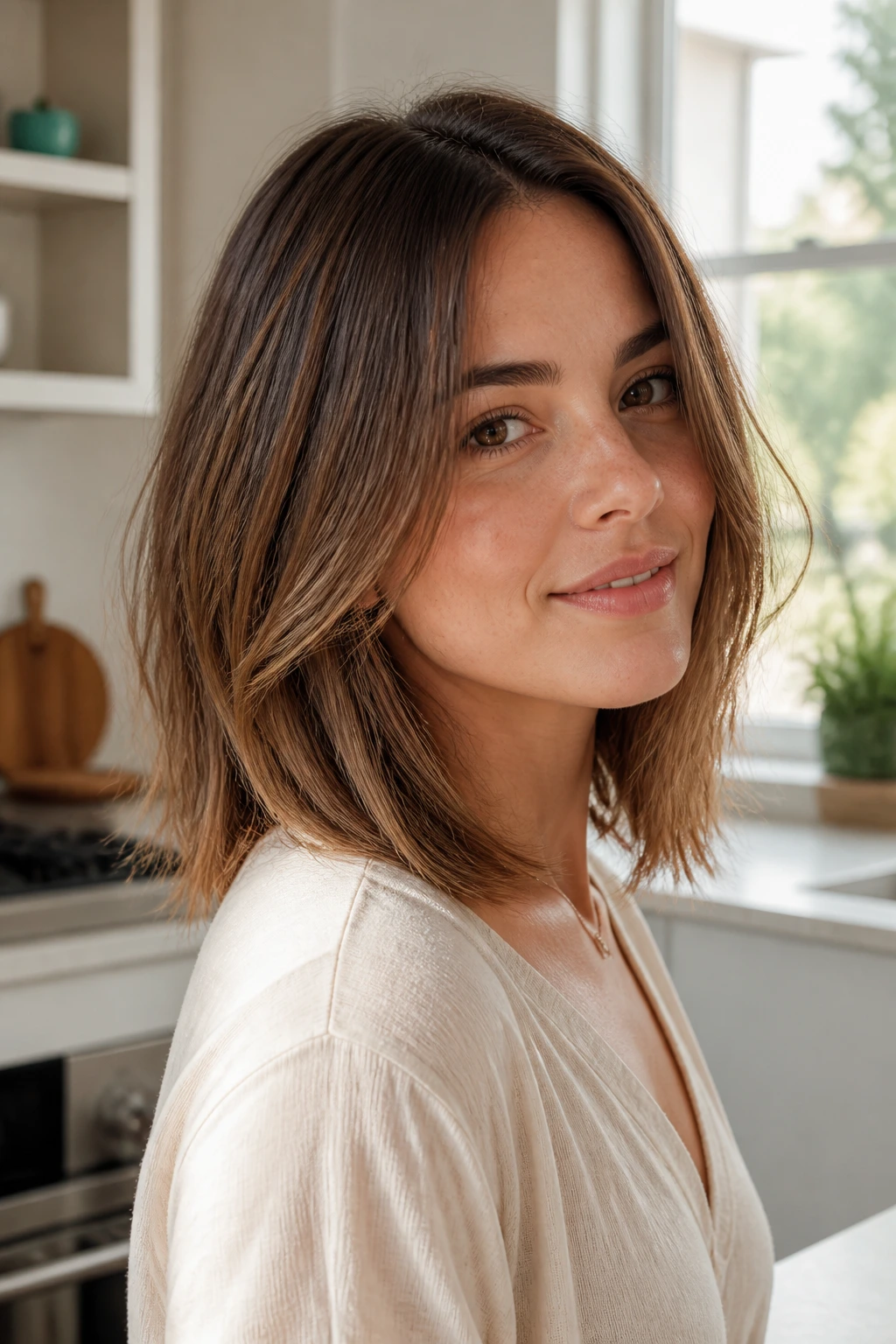
Straight medium hair can look a little too tidy. A textured lob fixes that in the simplest way possible: by breaking up the surface.
The lob, or long bob, usually sits somewhere between the chin and shoulders. Add layers and it stops behaving like a block. Instead of one flat sheet of hair, you get bends, corners, and movement through the ends. The haircut feels lighter, but the length still looks deliberate.
If your hair is pin-straight, ask for soft, uneven layers rather than dramatic graduation. You want motion, not gaps. A few interior cuts around the jaw and collarbone are enough to keep the shape from looking stiff. This is also one of the easiest cuts to style because it works with a flat iron, a wave wand, or just a quick bend at the ends.
The best part? It grows out well. That matters more than people admit. Some layered haircuts look great only for three weeks. A textured lob usually hangs on for much longer.
8. Choppy Razor Layers for Thick Hair
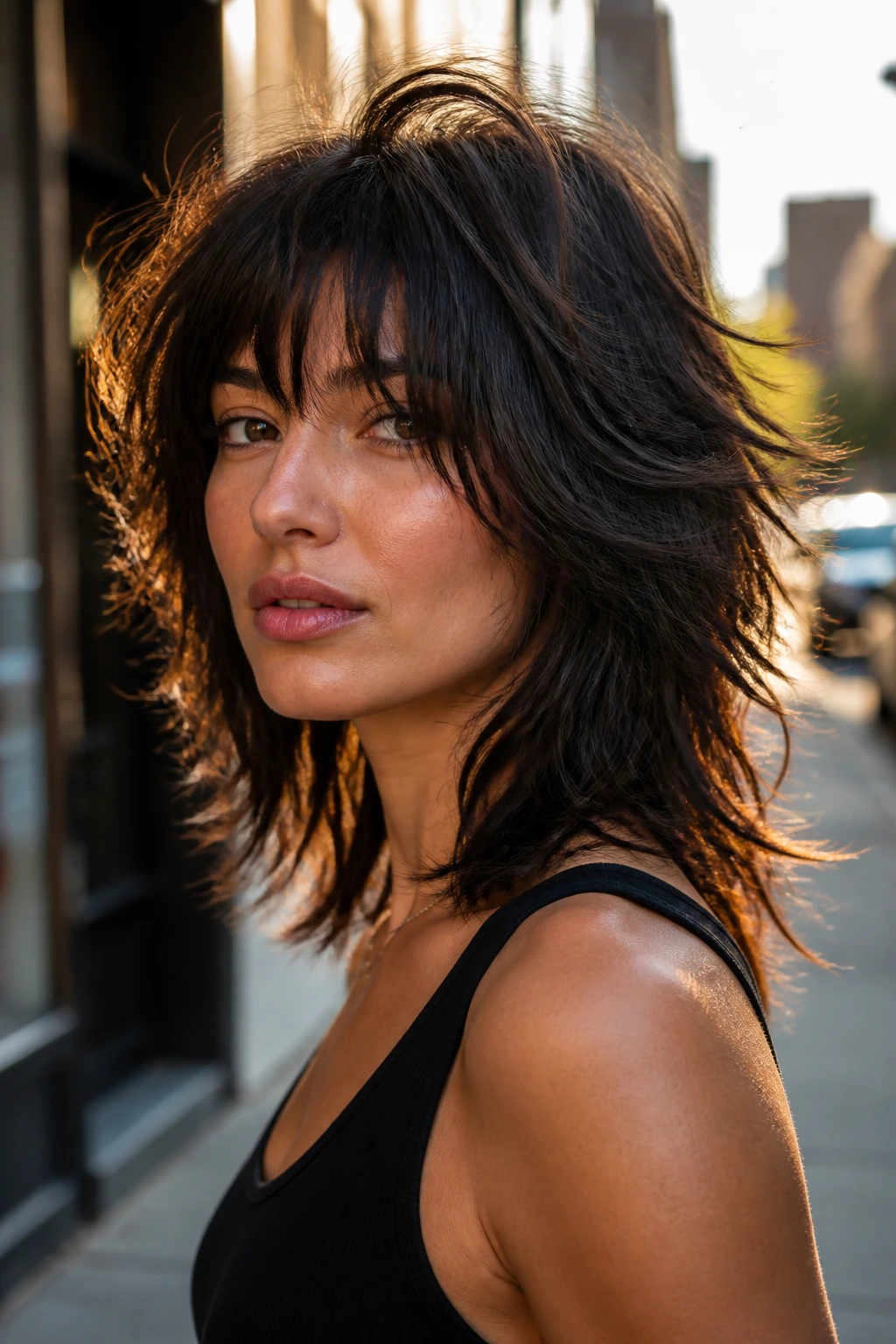
Thick medium hair needs room to breathe, and a razor cut is one of the better ways to give it that room.
A choppy razor layer takes out bulk while keeping movement visible through the lengths. The blade creates softer edges than scissors alone, which helps thick hair fall in a looser way. If you’ve ever had thick hair that looks heavy at the bottom and puffy near the crown, this cut can take the edge off that problem fast.
It’s a little more aggressive than a soft layer cut, so I would not hand it to someone who wants a tidy, polished finish with almost no styling. It shines when the hair has texture. Even better if there’s a wave in it. The layers sit better when the hair has some natural bend to catch the shape.
A good razor cut should look broken up, not shredded. That difference matters. Ask for pointed ends and controlled texture, not random chunks that fly apart.
9. U-Shaped Layers That Keep the Length
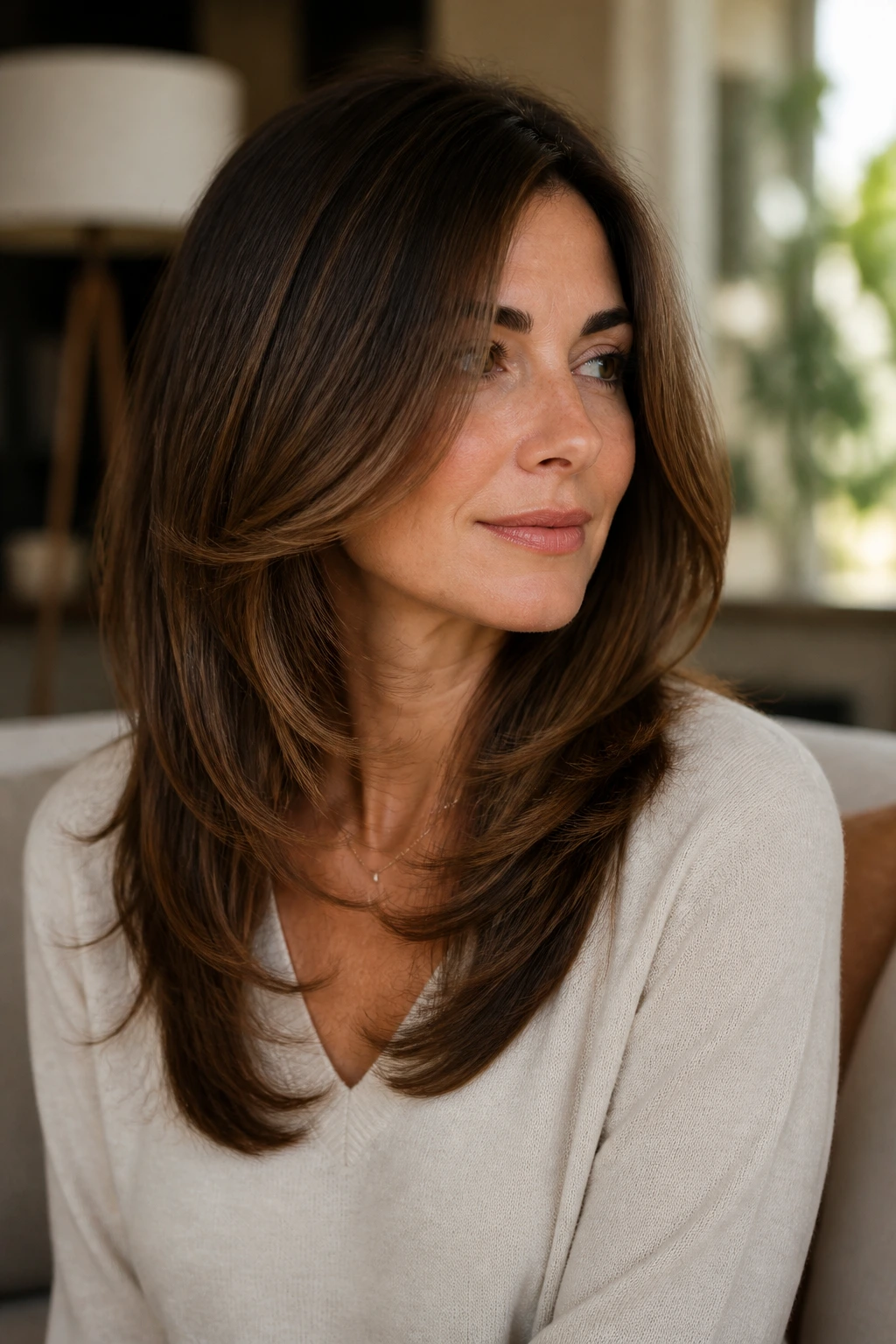
Sometimes you want layers, but you do not want to lose the feeling of length. That’s where the U-shape comes in.
The perimeter curves softly downward at the back, while the layers inside the shape add movement and stop the ends from looking thick and heavy. On medium hair, this works especially well if you like wearing your hair down a lot, because the silhouette stays soft and feminine without feeling childish or overworked.
The U-shape is a smart middle road. It keeps the outline smooth, which helps if your face already has strong angles or if you prefer a more gentle look around the shoulders. The layers can begin lower, around the chin or collarbone, so the length still feels intact.
Not every layered cut needs to look obvious. This one is proof. You may not spot the layering at first glance, but you’ll notice the movement when you run your fingers through it or toss it over one shoulder.
10. C-Cut Layers for Soft, Rounded Shape
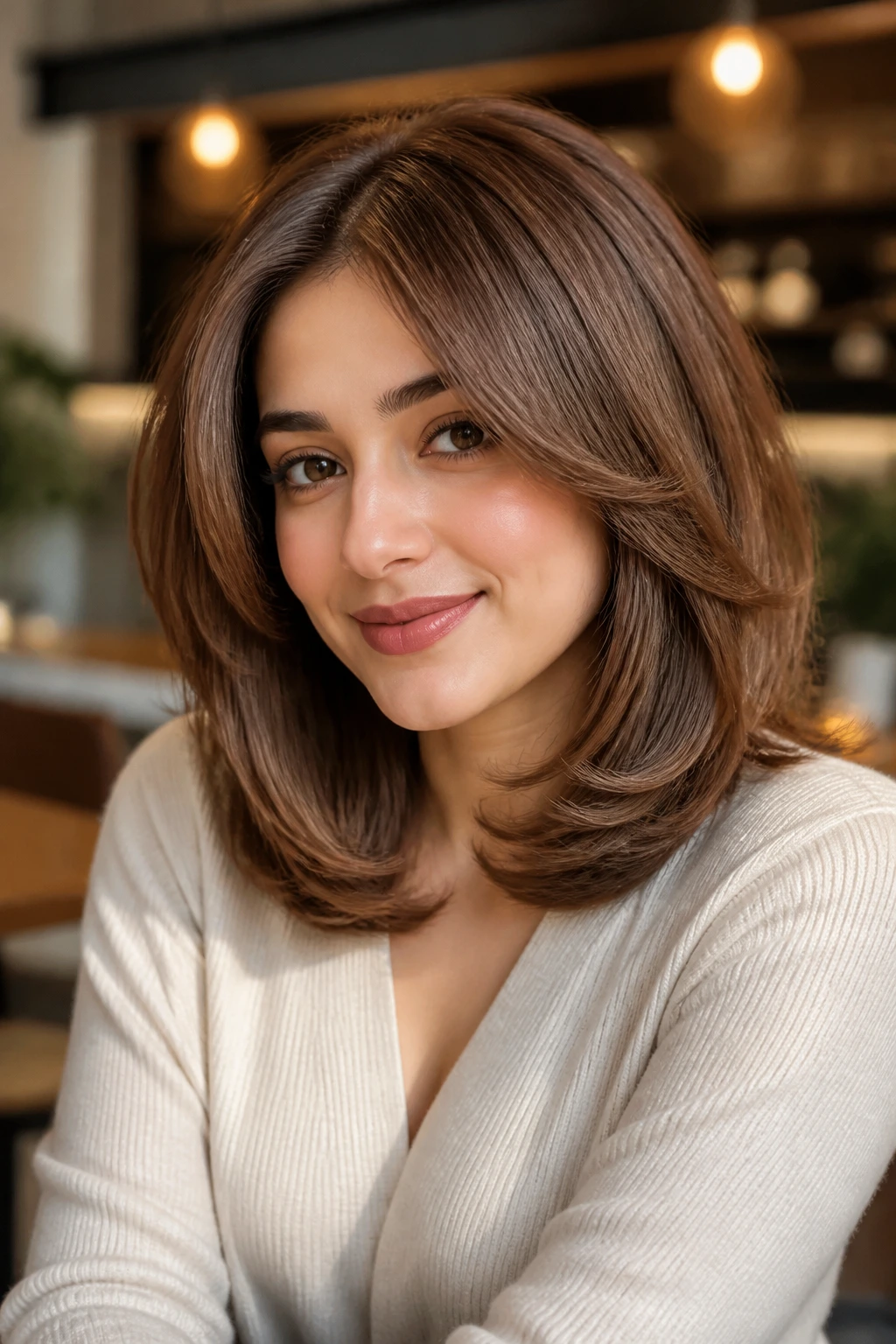
A C-cut is one of those haircuts that sounds technical and ends up being strangely flattering in the mirror.
The shape curves inward around the face and outward toward the ends, creating a soft arc that looks polished even when the styling is a little lazy. Medium hair loves this shape because the layers can frame the face while still holding a clean outline below. It’s especially good if you want movement without the choppiness of a shag or the drama of a butterfly cut.
The Shape in Practice
The longest pieces usually stay around the collarbone, while the inner layers curve in toward the cheeks. That gives the haircut its rounded, almost sculpted feel. It’s a nice option if your hair grows wide at the sides or if you want your face to look a little longer.
- Best on hair with a slight wave or bend.
- Works well with a center part or a soft off-center part.
- Looks especially good with a blowout brush.
- Needs regular dusting at the ends to keep the curve clean.
This is a cut for people who like softness, not drama. Quietly flattering. That’s the whole point.
11. The Modern Rachel Cut for Easy Volume

The Rachel cut still works because the basic idea behind it is solid: shorter layers around the crown, longer layers through the length, and enough face framing to keep the style from feeling boxy.
The modern version is less stacked and less obvious than the old one. That makes it easier to wear on medium hair, especially if you want body without a lot of teasing, spray, or round-brush gymnastics. The layers build lift through the top and sides, which can make even average-density hair look fuller.
What I like about this cut is that it gives a clear shape fast. You can blow it out straight, flip the ends a little, or leave it with a natural bend, and it still reads as intentional. It’s also one of the best layered options if your hair has lost some bounce and you want that back without going short.
A good stylist will soften the transitions a lot. If the layers are too exact, you end up with a dated look. If they’re blended well, the cut feels fresh again.
12. Flipped-Out Layers With a ’90s Edge
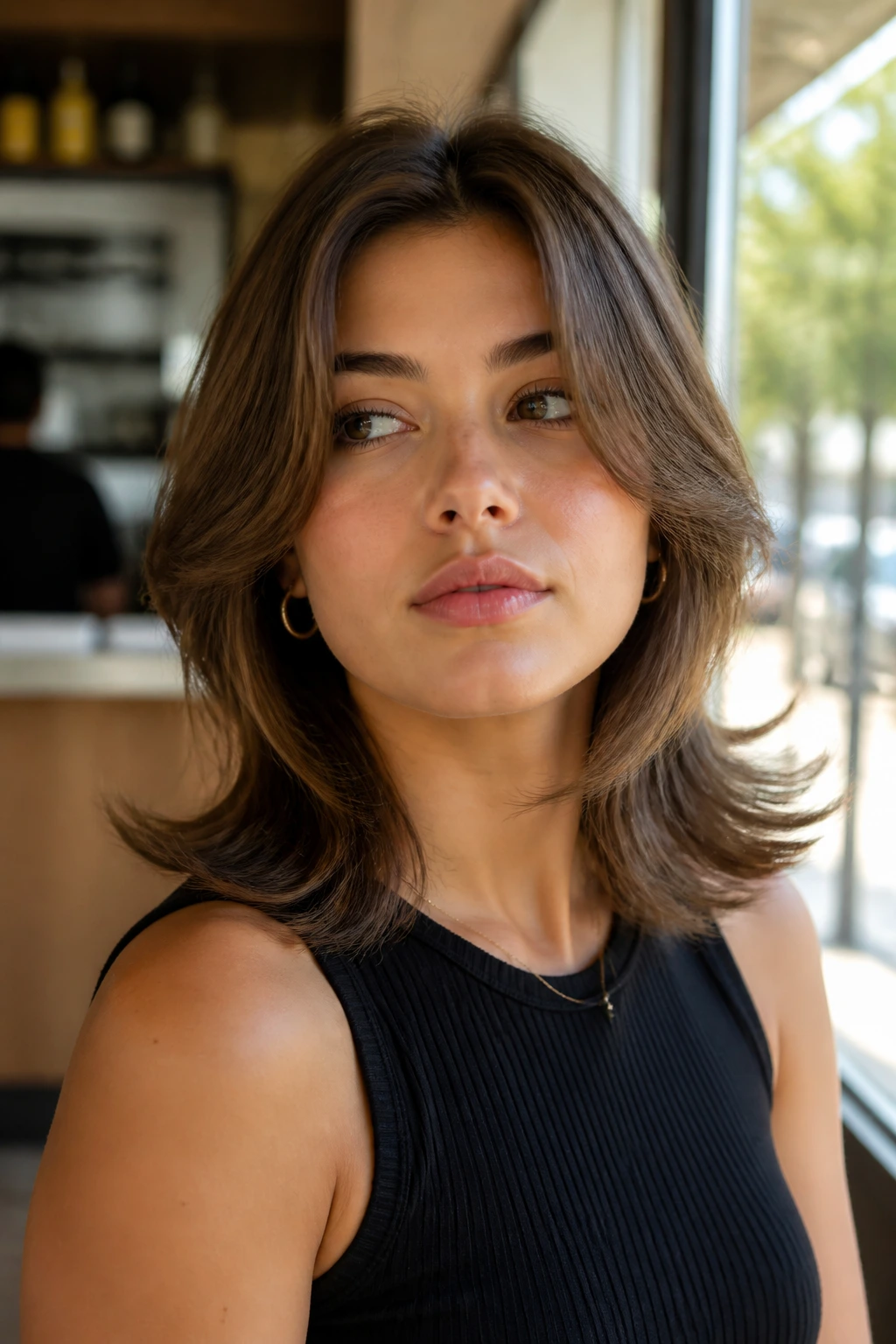
A flipped-out style can sound costume-y, but on medium hair it often looks sharper than people expect.
The magic is in the ends. Instead of curling inward, the layers are styled away from the face and out at the shoulders, which gives the cut a bit of attitude. The layers themselves should be long enough to hold the flip without sticking out like a mistake. Medium hair has enough weight to make the shape look smooth rather than frizzy.
This cut works best when the perimeter sits just above or at the collarbone. Any longer and the flip loses some bounce. Any shorter and it can start to look too much like a bob. You want that middle ground where the ends turn out with purpose.
Use a round brush or a flat iron with a slight wrist turn at the ends. A light mist of heat protectant matters here because repeated flipping can dry the tips faster than you’d expect. Small detail. Big difference.
13. Curly Medium Layers That Cut the Bulk

Curly hair and layers can be a mess if the cut is wrong. Done well, though, they can solve the bulk problem almost immediately.
Medium-length curls usually need space between the layers so the curl pattern can form without stacking into a triangle. The goal is shape, not thinness. A good layered curly cut lifts the curls at the crown, keeps the sides from swelling, and lets the ends spring in a cleaner way. That balance is trickier than it looks.
How to Ask for It
Ask for the haircut on dry curls if possible. Wet curls lie. They shrink differently once they dry, and that can make a layered cut look much shorter than you intended. A stylist who works with curls will usually cut in a way that respects the pattern, not fight it.
- Keep layers long enough to avoid frizz-heavy gaps.
- Build shape around the crown and cheekbones.
- Avoid over-thinning the ends.
- Use a curl cream that defines without weighing down.
A curly medium cut should feel lighter, not stripped bare. There’s a difference.
14. Wavy Wolf Cut for Bold Texture
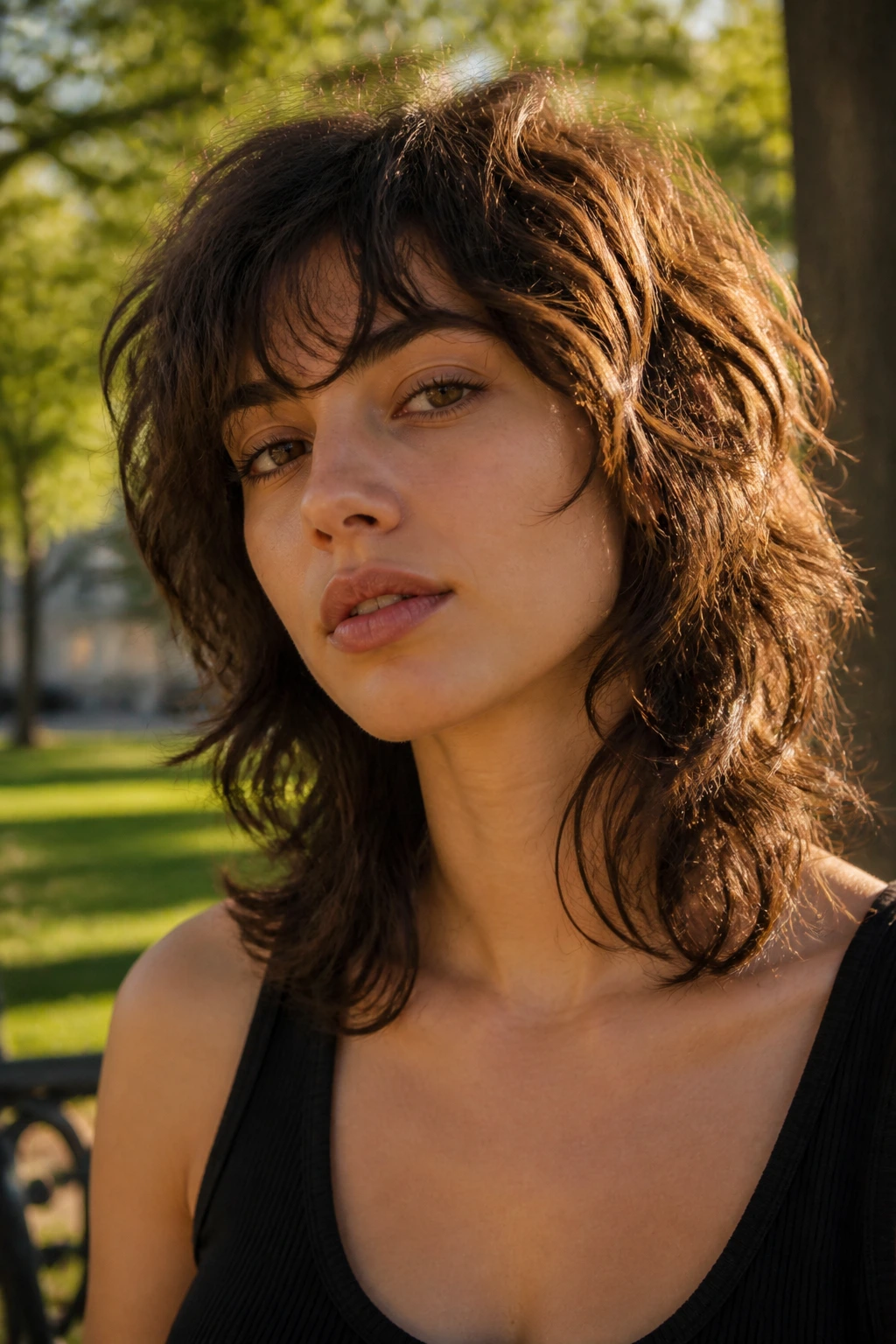
The wolf cut is not subtle, and that’s the appeal.
It mixes shaggy layers with a softer mullet-like outline, which sounds wild and can look wild if it’s overdone. On medium hair, though, it becomes surprisingly wearable when the layers are kept loose and the fringe is not too short. Wavy hair wears this shape especially well because the natural bend keeps the style from looking stiff.
What makes the wolf cut different from a shag is the contrast. The top layers are usually shorter and more lifted, while the bottom keeps some length. That gives the hair a lived-in, rough-around-the-edges look that still feels intentional.
If you want this cut, be honest about how much styling you’ll do. It looks best with texture spray, scrunching, or a quick diffuser pass. Air-drying alone can work, but only if your wave pattern already does half the job. Otherwise, the shape can fall a little flat at the crown.
It’s not for everyone. It is for people who like their hair to have some bite.
15. Invisible Layers for a Polished Finish
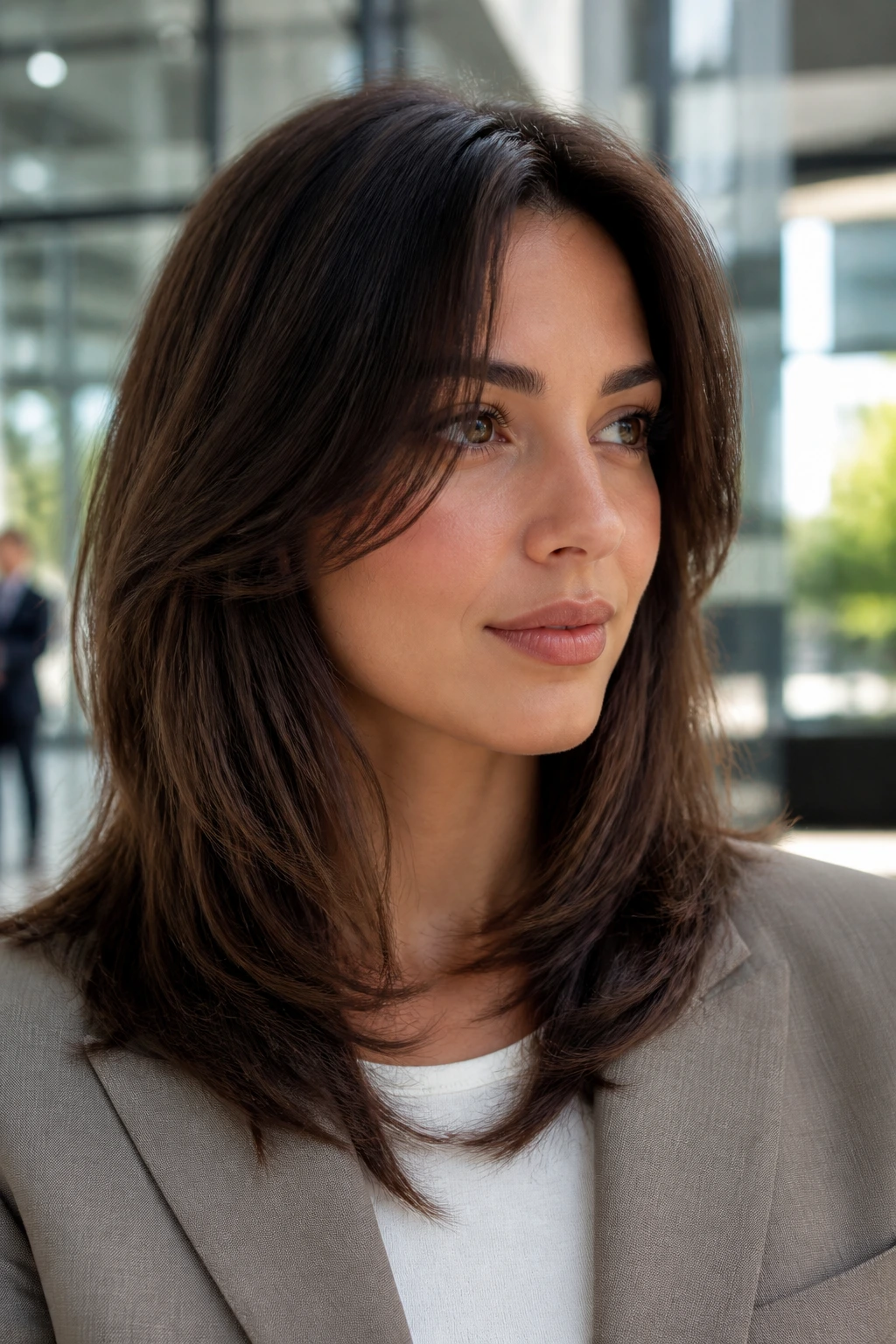
Invisible layers are the haircut people notice without always knowing why the hair looks better.
The layers sit inside the shape instead of shouting from the ends, so the outer line still looks clean and full. Medium hair benefits from this a lot, especially if you want movement but need to keep the cut office-friendly or sleek. It’s one of the smartest options for anyone who hates obvious stair-step layers.
The effect is subtle in the best way. Hair falls more easily, doesn’t feel as heavy, and still keeps a polished outline. This is a good pick for straight to slightly wavy textures because the layering shows up in motion rather than in chunks.
If your stylist takes too much out, the cut loses its point. The whole game is control. You want the hair to move, not look thinned out. That’s why this cut often looks expensive on medium hair: it keeps the good parts of length while making the style easier to live with.
16. Side-Part Layers That Build Lift at the Crown

A side part can change the whole mood of layered medium hair, and I’m still surprised how often it gets ignored.
When the part shifts, the layers fall differently across the face and the crown gets a natural lift from the extra weight on one side. That makes this a very practical cut for people whose hair goes flat on top. It’s not magic. It’s just shape doing useful work.
This style is especially good if your hair is a bit fine or medium-dense and you want volume without teasing. The longer side can sweep along the cheek, while the shorter side gives a slight lift near the temple. That asymmetry adds movement without needing a severe cut.
You can wear this with soft layers, long layers, or even a lob. The part does some of the visual work for you. A round brush at the roots helps, but the cut still needs to be built to hold the bend. Otherwise, the style slips back into the middle and loses its shape by noon.
17. Feathered Layers for Soft, Lightweight Shape
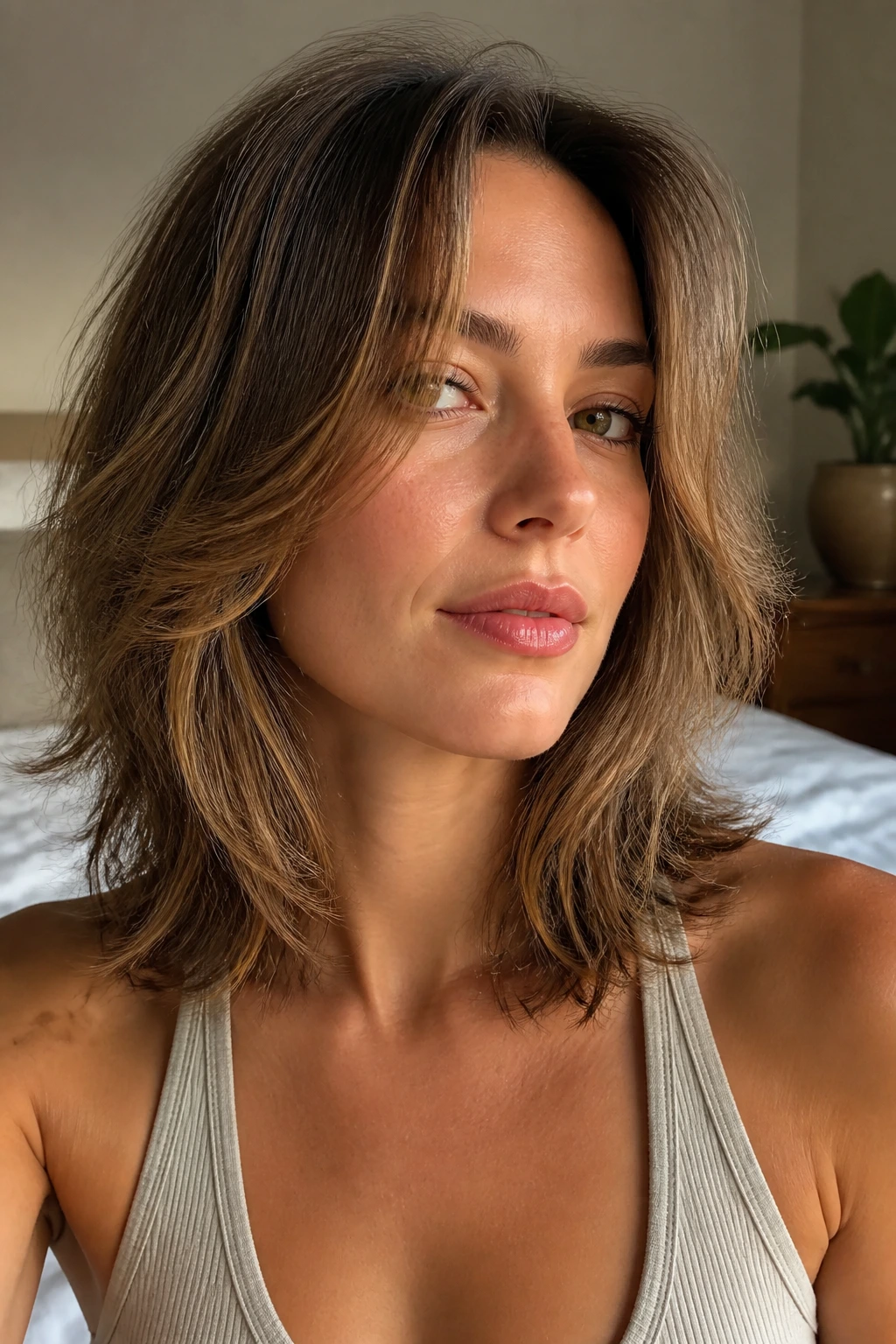
Feathered layers bring back a little old-school softness, but when they’re done well, they look far more current than people expect.
The finish is airy and light, with the ends tapering instead of stopping hard. On medium hair, that creates a gentle movement that doesn’t scream for attention. It’s a good choice if you want your hair to look touchable and smooth rather than edgy or piecey.
The cut works best when the layers are long enough to blend. Too short, and feathering can turn fuzzy. Too blunt, and the whole point disappears. The sweet spot is usually around the jawline through the shoulders, depending on density and face shape.
This is one of my favorite choices for someone who wears their hair blown out or brushed smooth most days. It catches motion without looking fussy. And that matters. Some layered cuts ask for a lot of styling to look decent. Feathered layers usually behave better than that.
18. Money-Piece Layers That Spotlight the Eyes
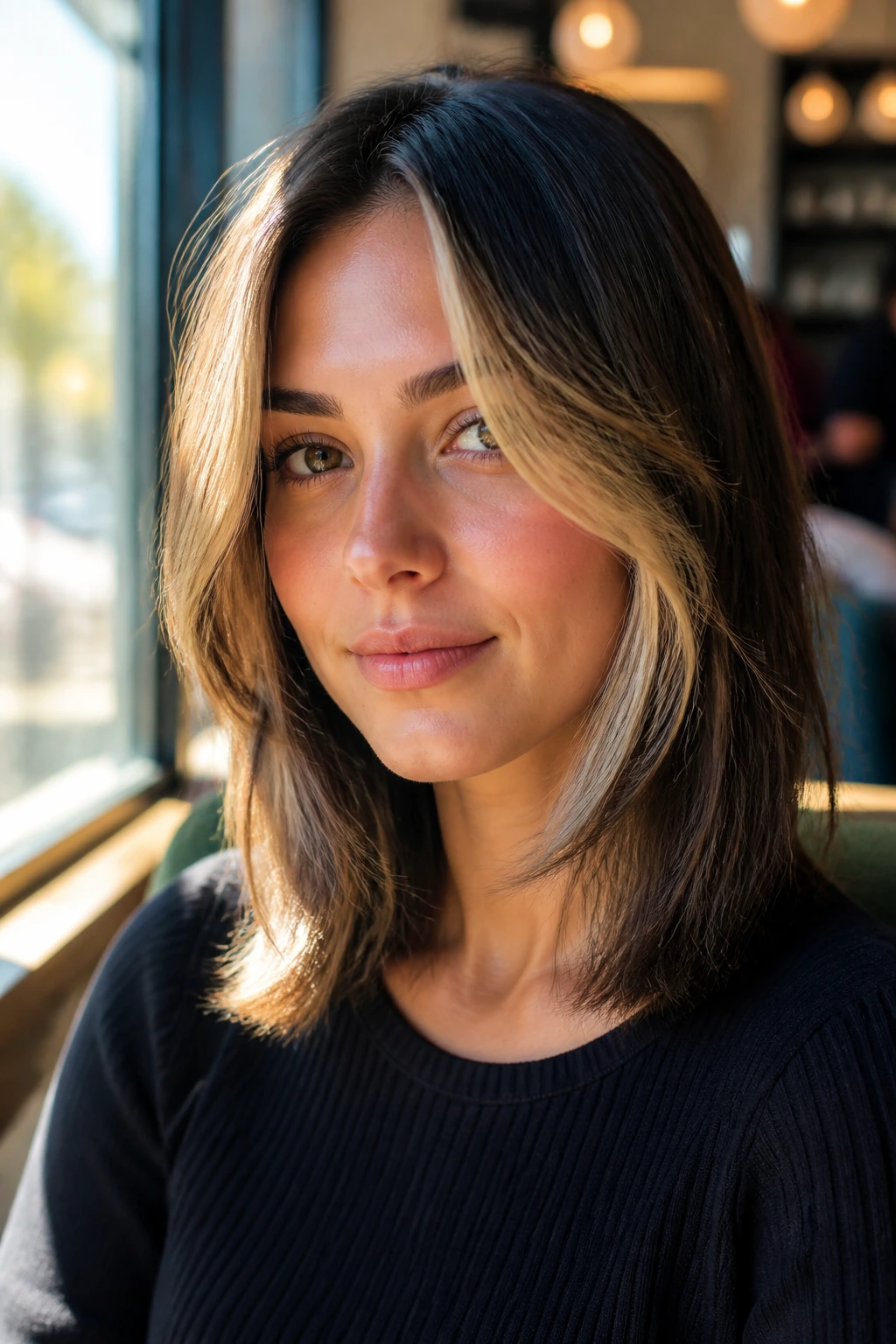
Money-piece layers are all about drawing the eye upward, and they can make medium hair feel sharper without changing the whole haircut.
The front sections are kept a little brighter in shape and sometimes a touch shorter, so they frame the face in a clear way. You get focus around the eyes and cheekbones while the rest of the layers stay longer and softer. It’s a small move with a big visual effect.
What Makes It Different
Unlike a full fringe or a blunt face frame, money-piece layers keep the front open. That makes the cut easier to wear if you like to wear glasses, pull your hair half-up, or part it down the middle some days and off to the side on others.
- Keep the front pieces long enough to tuck behind the ear.
- Blend the color and shape together if you highlight the front.
- Use a curling iron only on the front sections if you want extra lift.
- Trim these pieces more often than the rest of the cut.
This is one of those styles that can make medium hair look more intentional with very little extra effort. Clean, useful, and a little flattering in the best way.
19. Tousled Beach Layers for Easy Movement

Tousled beach layers are not about perfection. They’re about hair that looks like it has already had a good day.
The cut usually keeps the layers loose and long, with a soft perimeter that still feels full. On medium hair, that balance is important because the length needs enough shape to avoid looking limp. The aim is movement through the mids and ends, not chopped texture everywhere.
This style works best when the hair has some wave or can hold one with a quick iron pass. A salt spray or light mousse helps, but don’t drown the hair in product. Too much and the texture gets sticky. Too little and the bend falls out. There’s a narrow line here, and most people cross it in one direction or the other.
What I like about beachy layers is that they forgive a little mess. A piece falls forward? Fine. The ends bend differently on each side? Even better. That relaxed finish is the point, and it suits medium hair because the length still keeps the whole look grounded.
20. Medium Layers With a Long Fringe and Soft Ends
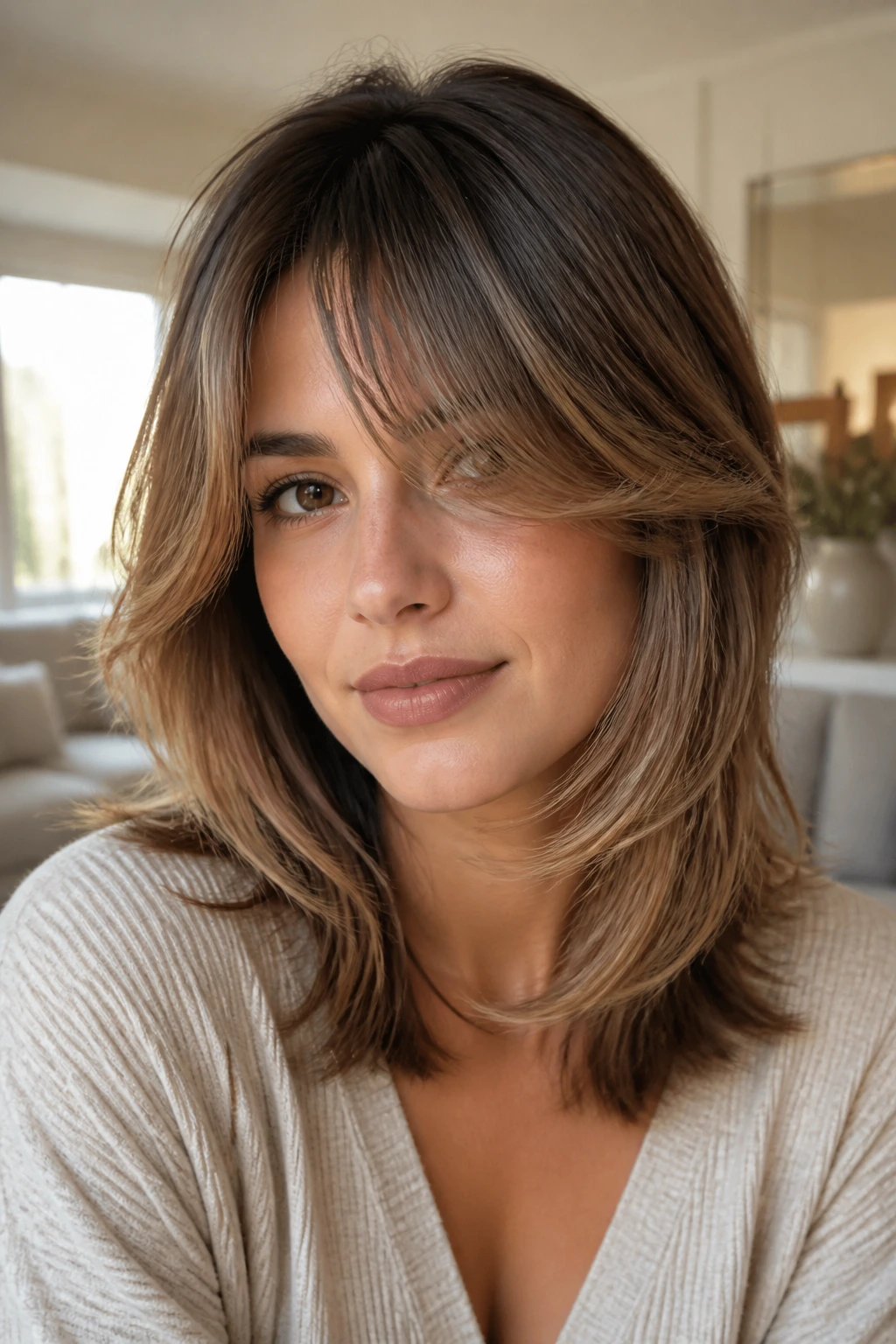
Long fringe plus soft layers is the haircut I’d hand to someone who wants the most versatility from medium hair without boxing themselves into one style.
The fringe sits longer than a curtain bang but shorter than the rest of the front, so it can sweep across the forehead, split down the center, or tuck away completely. The layers through the rest of the cut stay soft and blended, which keeps the hair from looking too fractured. It’s a flexible shape, and that’s worth something.
This cut works especially well if you like changing parts, pinning sections back, or throwing your hair into a low clip. The fringe changes the whole face shape, while the layers keep the rest of the style from feeling heavy. It’s also one of the better choices if you don’t want to commit to a strong bang line but still want something near the eyes.
The real advantage is how it grows out. A long fringe can move into face-framing layers with less fuss than a blunt bang. That means fewer awkward stages and more time enjoying the haircut before the next trim matters.
