



Braided hairstyles for Black women do a lot of heavy lifting. They can protect your hair, cut styling time, frame your face, and still look polished enough for work, church, a wedding, or a random Tuesday when you want to feel put together. The tricky part is not finding a braid style. The tricky part is finding one that fits your hair texture, your routine, your scalp, and your tolerance for sitting in a chair.
A braid can look beautiful and still be a bad fit if it’s too heavy, too tight, or too much maintenance for the life you’re actually living. I care about that part. A style should not make you dread sleep, washing day, or a ponytail. It should work with your hair, not fight it.
The best braided styles also know when to stop. Clean parting, balanced tension, and the right amount of hair added at the root matter more than a flashy finish. A style can be simple and still look expensive. A style can be dramatic and still be practical. Both are worth having.
1. Box Braids
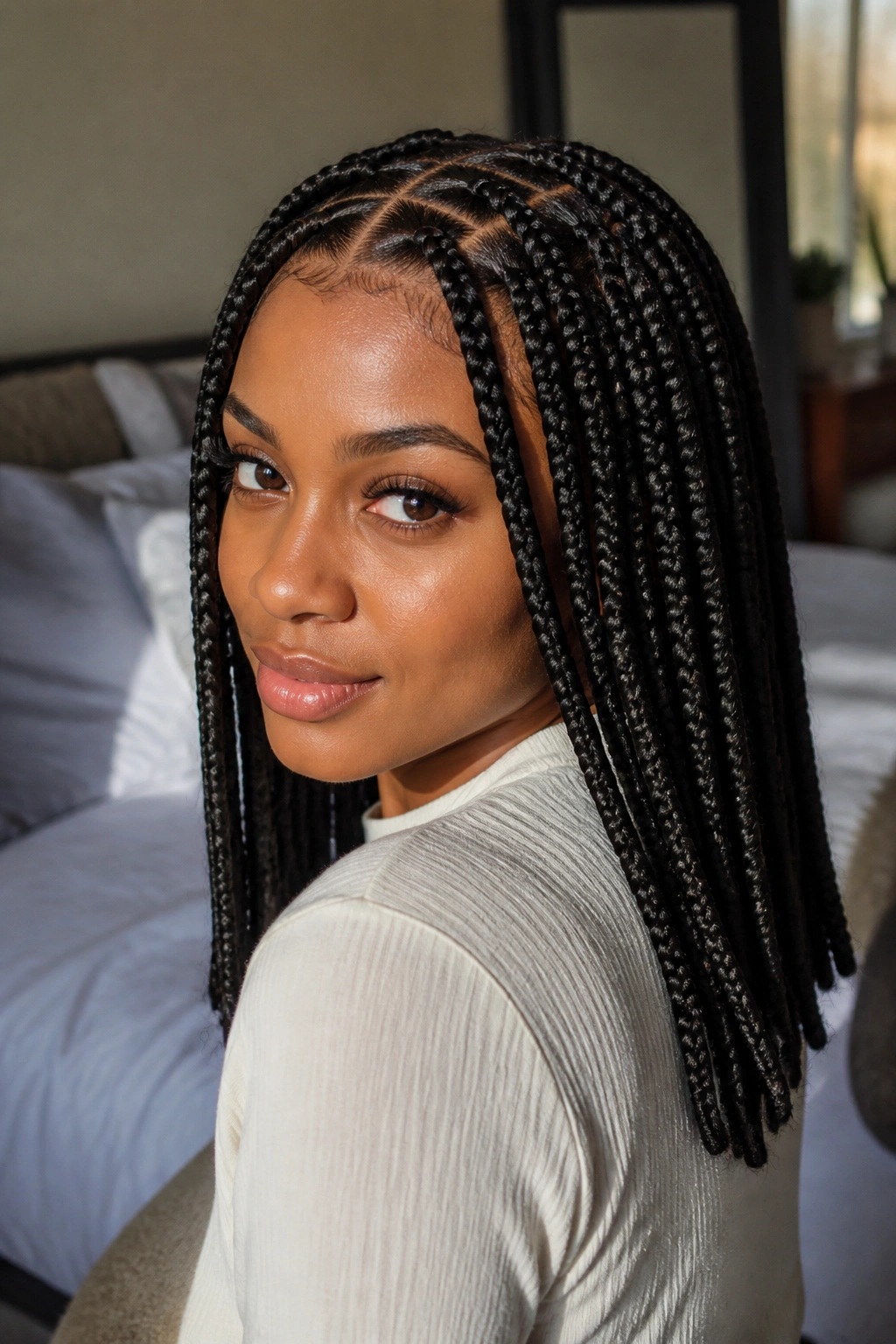
Box braids are the classic for a reason: they give you structure, length, and a shape that holds up well when your week gets messy. The square parting makes the style look neat right away, and you can wear them shoulder-length, waist-length, or somewhere in between depending on how much weight you want.
Why They Stay on the Short List
Box braids are the braid style I’d send a busy person toward first. They’re easy to style into buns, ponytails, half-up looks, and side parts, which means you are not stuck wearing them one way for six weeks.
- Best for medium to long wear
- Works with added hair in small, medium, or jumbo sizes
- Easier to refresh than a lot of other braided looks
- Looks good with cuffs, string, or a simple middle part
Best tip: ask for consistent part sizes. Uneven boxes are the fastest way to make a fresh install look slightly off, even if the braids themselves are clean.
2. Knotless Braids
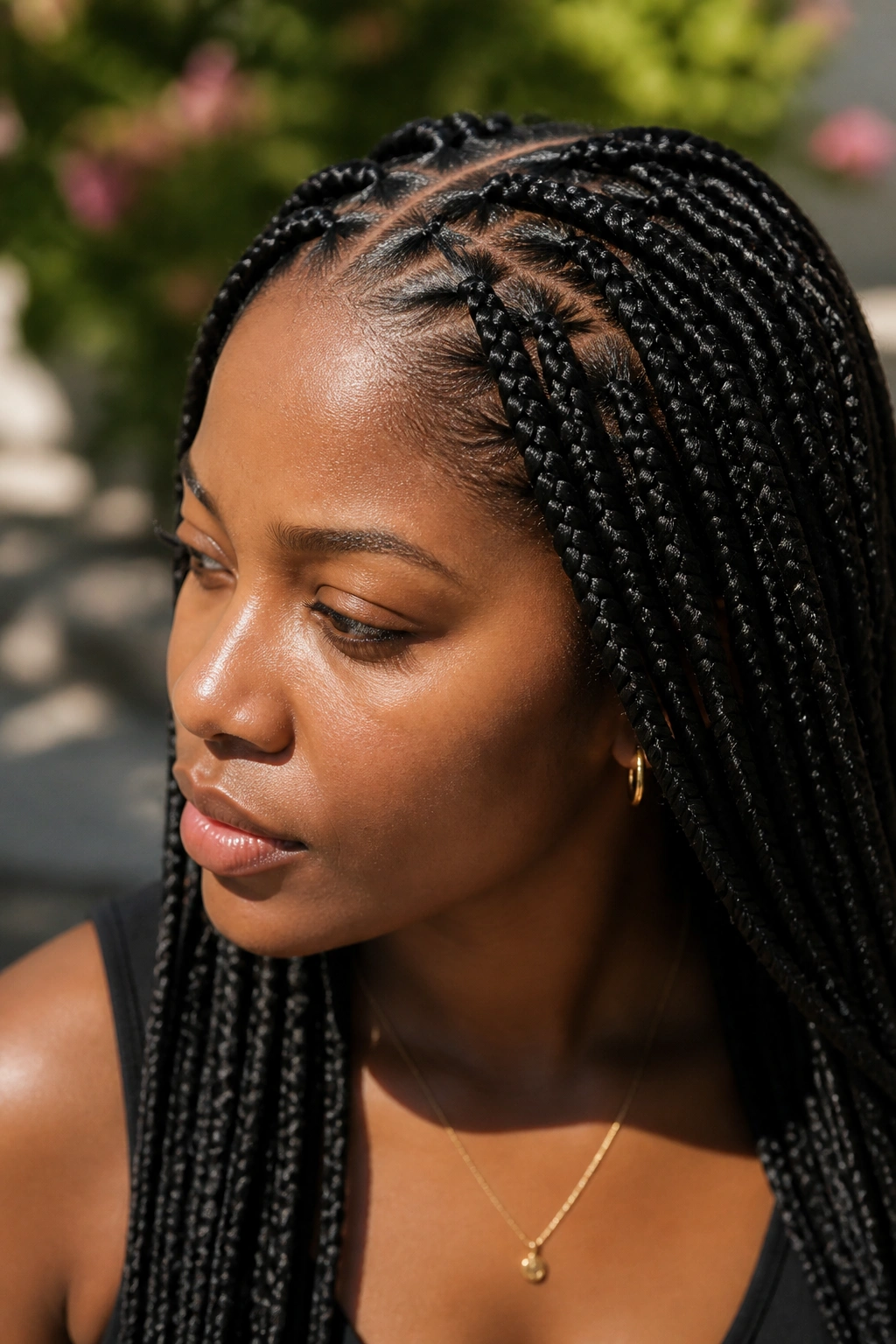
Knotless braids look softer at the root because the braid starts with your own hair and the extension hair gets fed in gradually. That one change matters more than people think. The scalp feels less crowded, and the style tends to sit flatter, which gives the whole look a smoother finish.
They’re a smart choice if you hate that bulky little knot box braids sometimes have at the base. They also move more naturally, which is part of why they photograph so well in motion. If you’ve ever taken your hair down and found sore spots around your hairline, knotless braids are worth considering.
The catch? They take more time to install. Worth it, in my opinion. You trade a longer chair session for a lighter feel once the style is done.
3. Cornrows
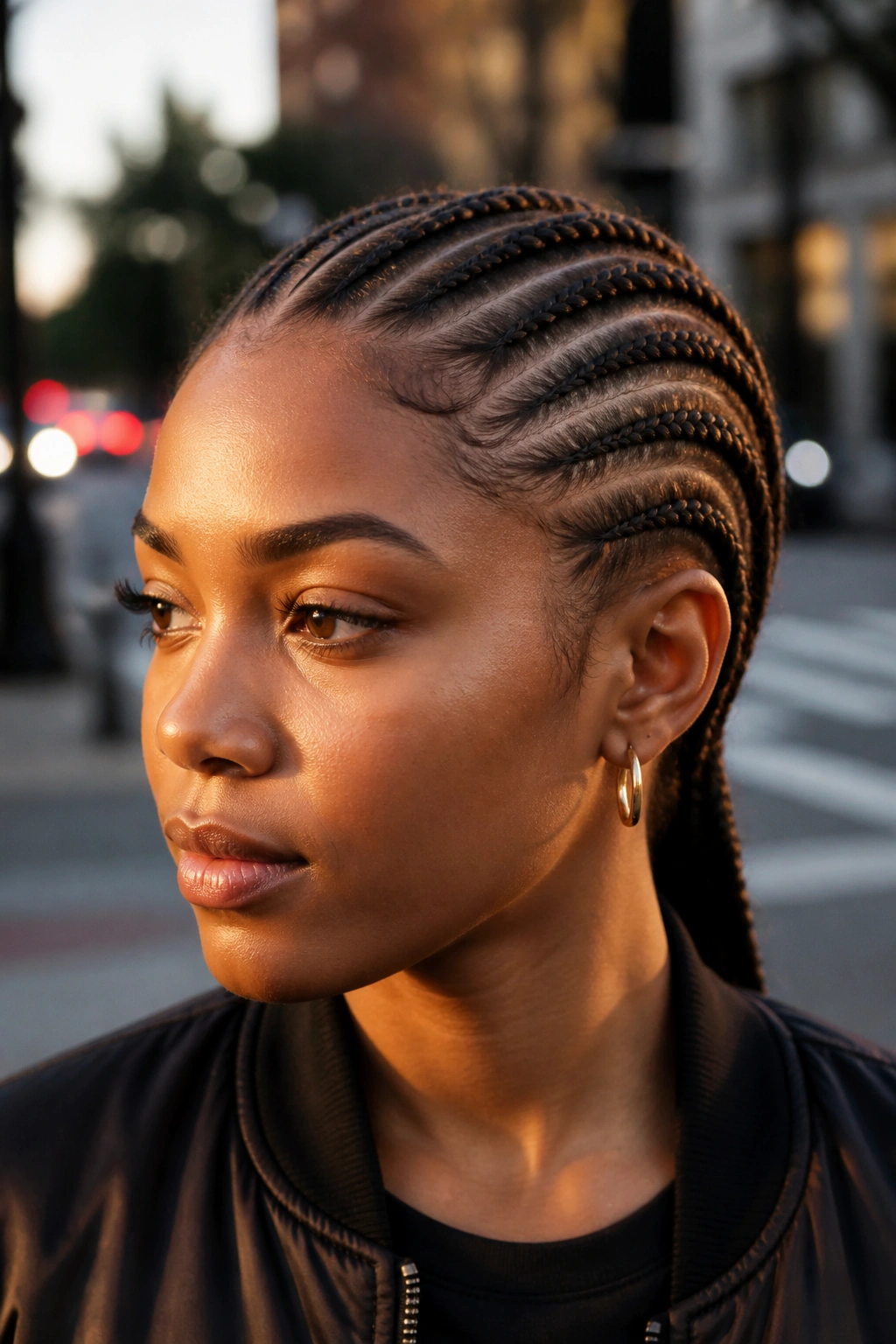
Cornrows are the backbone of so many braided styles, and they deserve respect on their own. Straight-back cornrows are clean and efficient, but cornrows can also curve, zig, swoop, or meet in the center if you want something more styled.
How to Wear Them
The beauty of cornrows is that they sit close to the scalp, so they keep hair off your neck and hold up well under hats, wigs, or scarves. They can be worn alone or used as the base for other looks, which makes them one of the most useful braid patterns around.
- Straight-back styles are the easiest to maintain
- Curved parts create a softer finish around the face
- Smaller rows last longer but take more time
- A satin scarf at night helps the braid pattern stay neat
If you like a style that feels low-drama and looks intentional, cornrows are hard to beat.
4. Goddess Braids
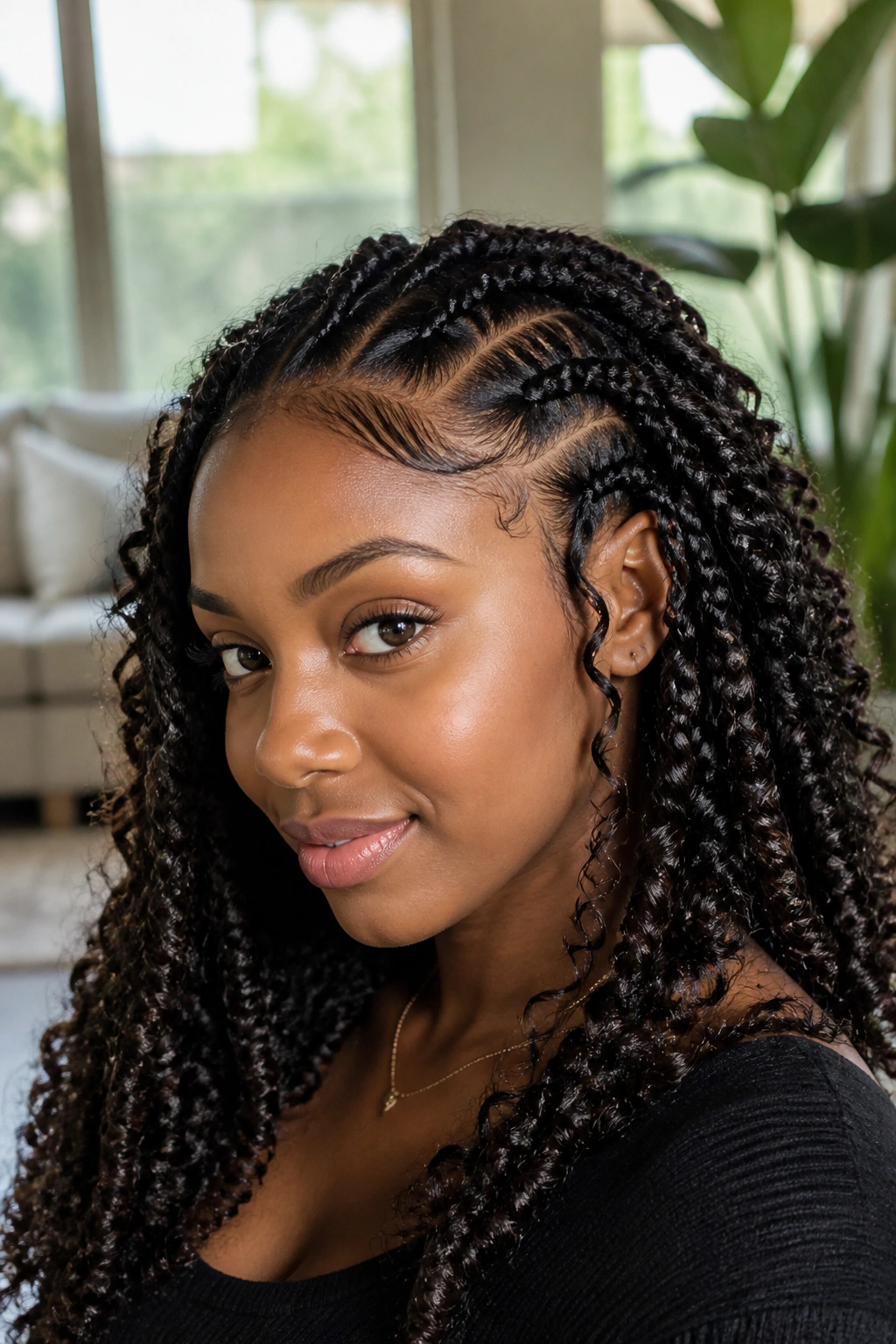
Goddess braids are bigger, softer cornrows with curly pieces or loose texture worked in. They have a gentler look than tight straight-back rows, and they can feel more dressed up without getting fussy. That balance is the whole appeal.
They’re the kind of style I like when someone wants braids but does not want to look like they’re headed to practice. The added curls around the braid give movement, which matters when the hair is pulled close to the head. It keeps the style from feeling too severe.
A little mousse helps the finish stay smooth, and a light touch of edge control can clean up the front without making the hair look hard. Don’t overload it. The style needs softness to work.
5. Fulani Braids
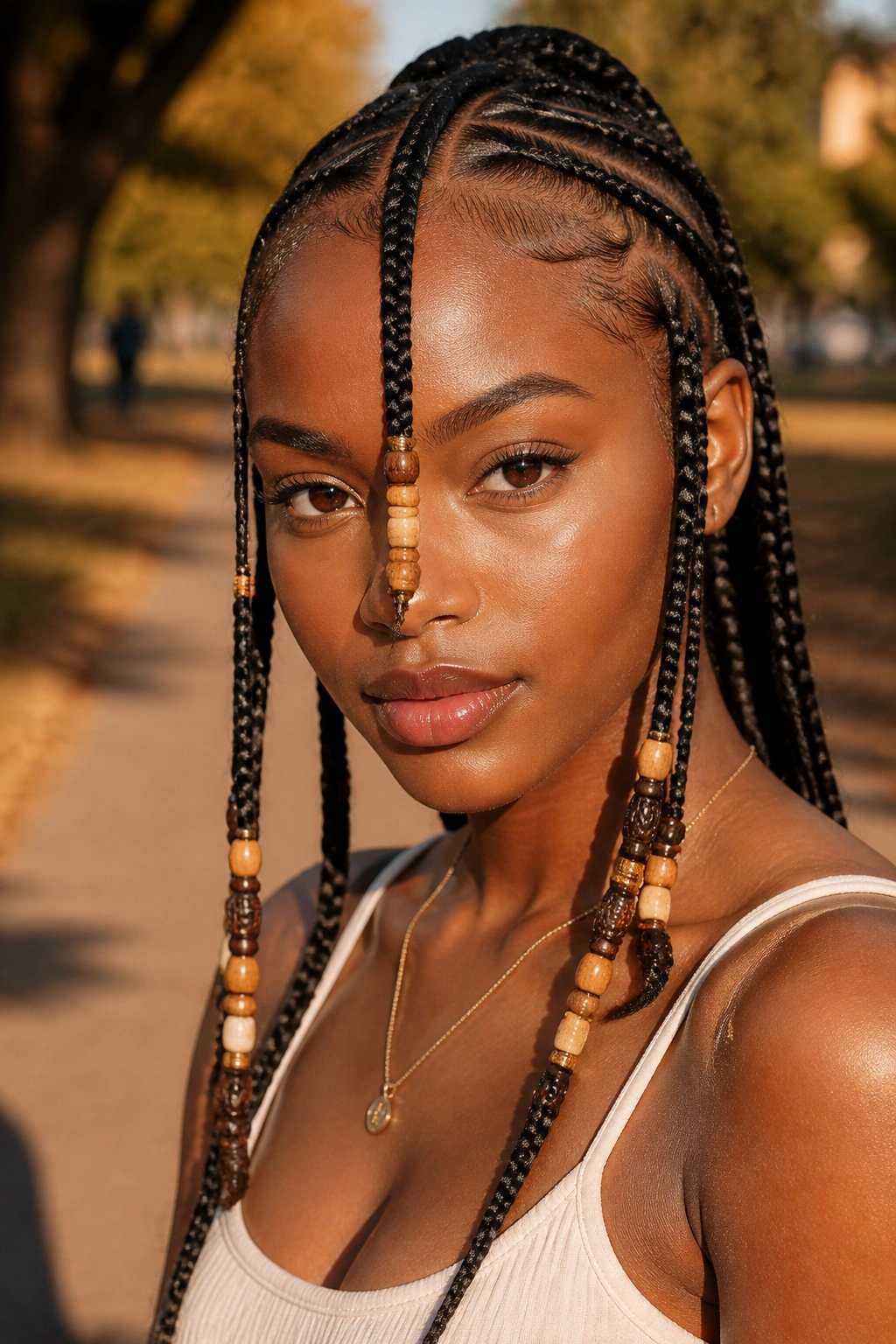
Fulani braids have a very specific shape that makes them stand out right away: a central braid or row in the middle, braids along the sides, and often beads, cuffs, or decorative detail. The pattern draws the eye down the center of the head first, then lets the side pieces frame the face.
What I like about Fulani braids is that they give you a built-in focal point. You do not need a lot of extra styling because the braid layout already does the work. The style can feel regal, but it still wears like a real, everyday braid set if it’s installed well.
Beads are optional, though I think they matter if you want the full effect. Just keep the accessory weight balanced so the front doesn’t pull too much.
6. Lemonade Braids
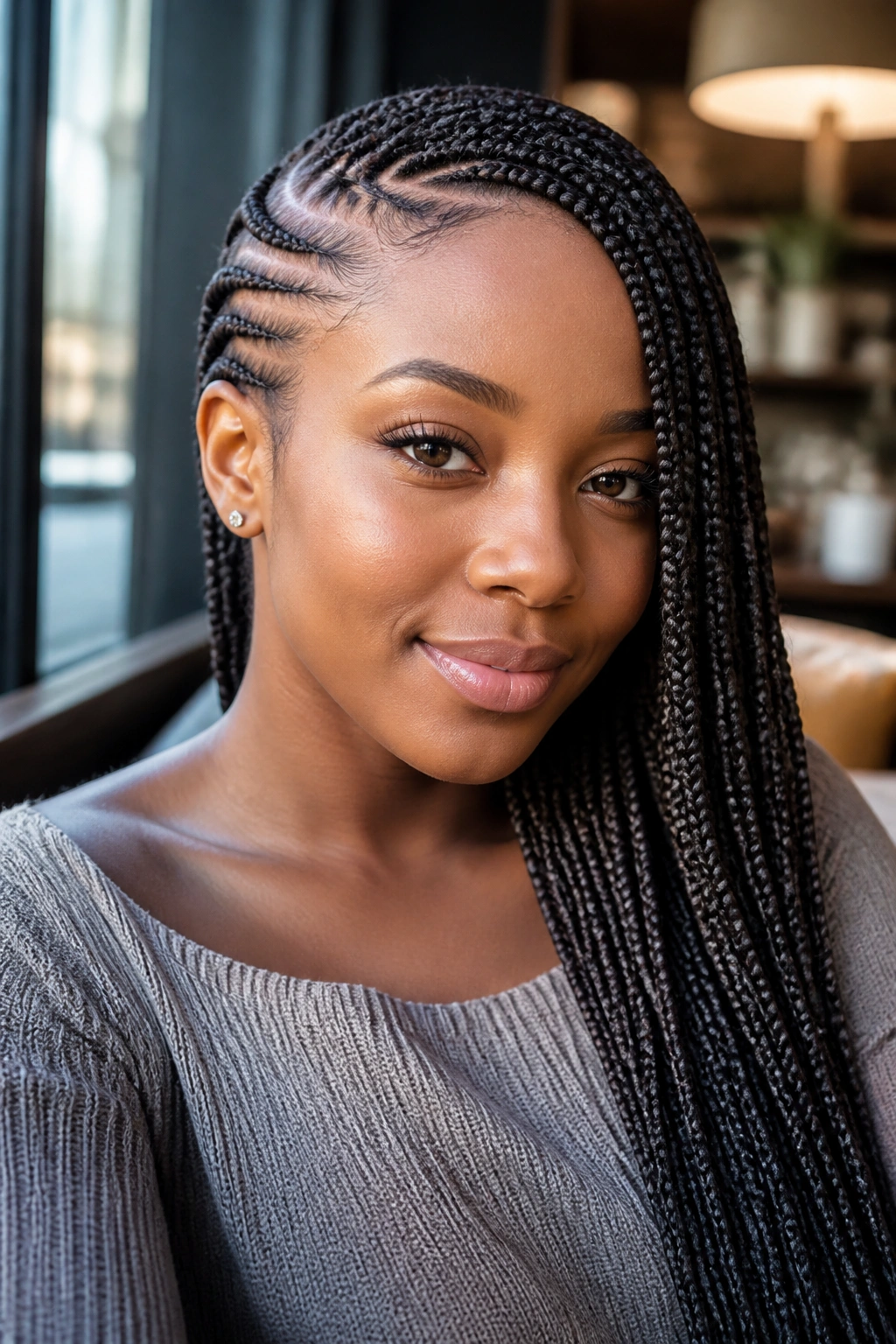
Lemonade braids sweep to one side, and that side-swept direction changes the whole mood of the style. The braids feel sharper than straight-back rows and softer than a center-parted install, which is why they work so well when you want edge without chaos.
Unlike a centered braid pattern, lemonade braids build movement into the shape itself. That means the style looks active even when you’re standing still. It also does a nice job of opening up one side of the face, which can make earrings and jawlines stand out in a way people usually like.
If your hair grows out fast at the temples, this style can still hold up, but only if the first rows are neat. Sloppy parting shows fast here.
7. Stitch Braids
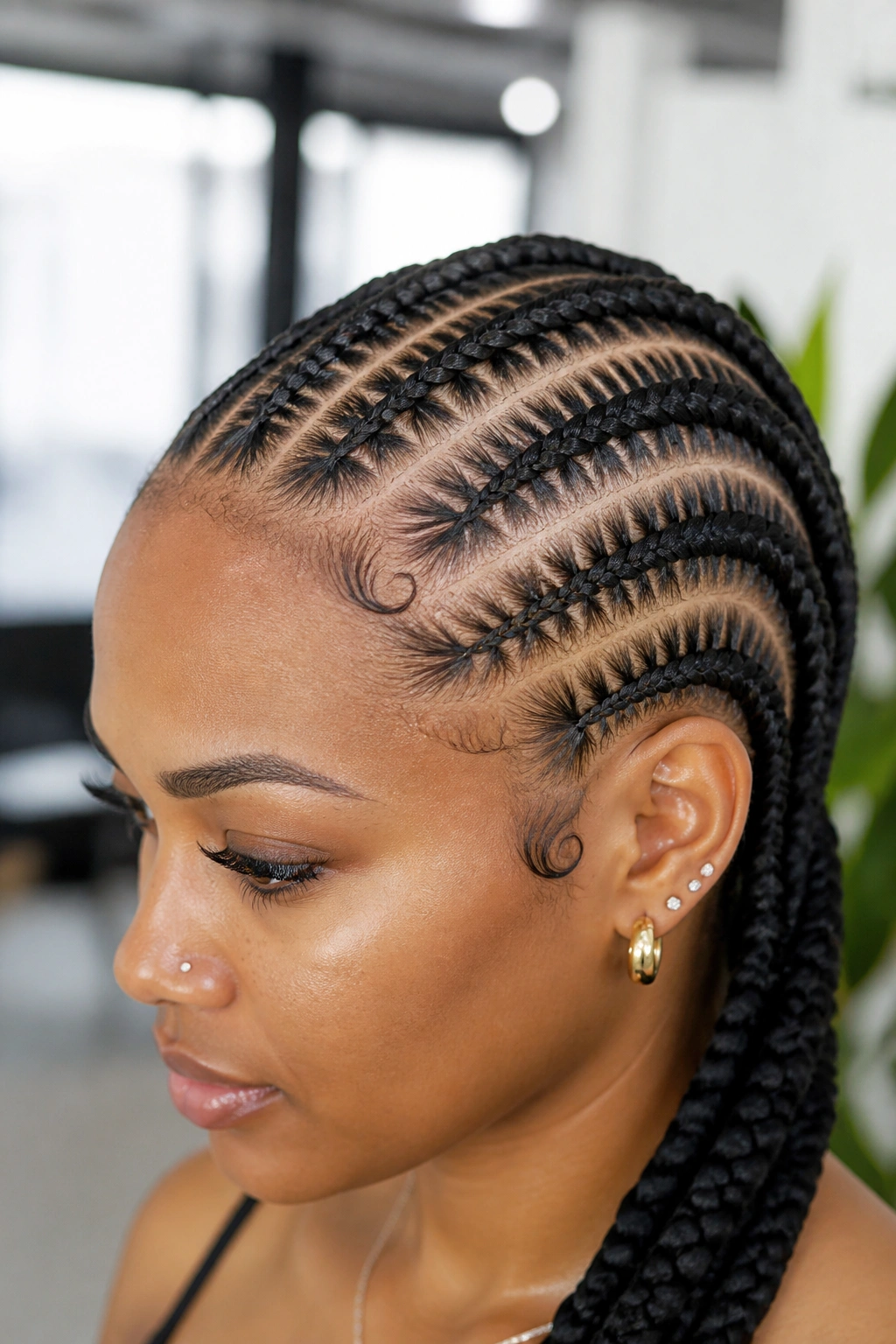
Stitch braids are all about the parting. The braider uses small, clean sections that look almost like a stitched line across the scalp, and that crisp pattern gives the style its name. The result is sleek and deliberate, almost architectural.
What Makes Them Different
The sharper the parting, the more polished the finished style looks. Stitch braids tend to suit people who like a neat, modern finish and do not mind a style that reads a little bolder than basic straight-backs.
They’re also useful when you want a braided style that can be pulled into a ponytail or bun without losing its shape. A clean sectioning pattern makes the whole style look more expensive, even if the hair itself is simple.
A lot of people ruin stitch braids by asking for them too tight. Don’t. Crisp does not mean painful.
8. Tribal Braids
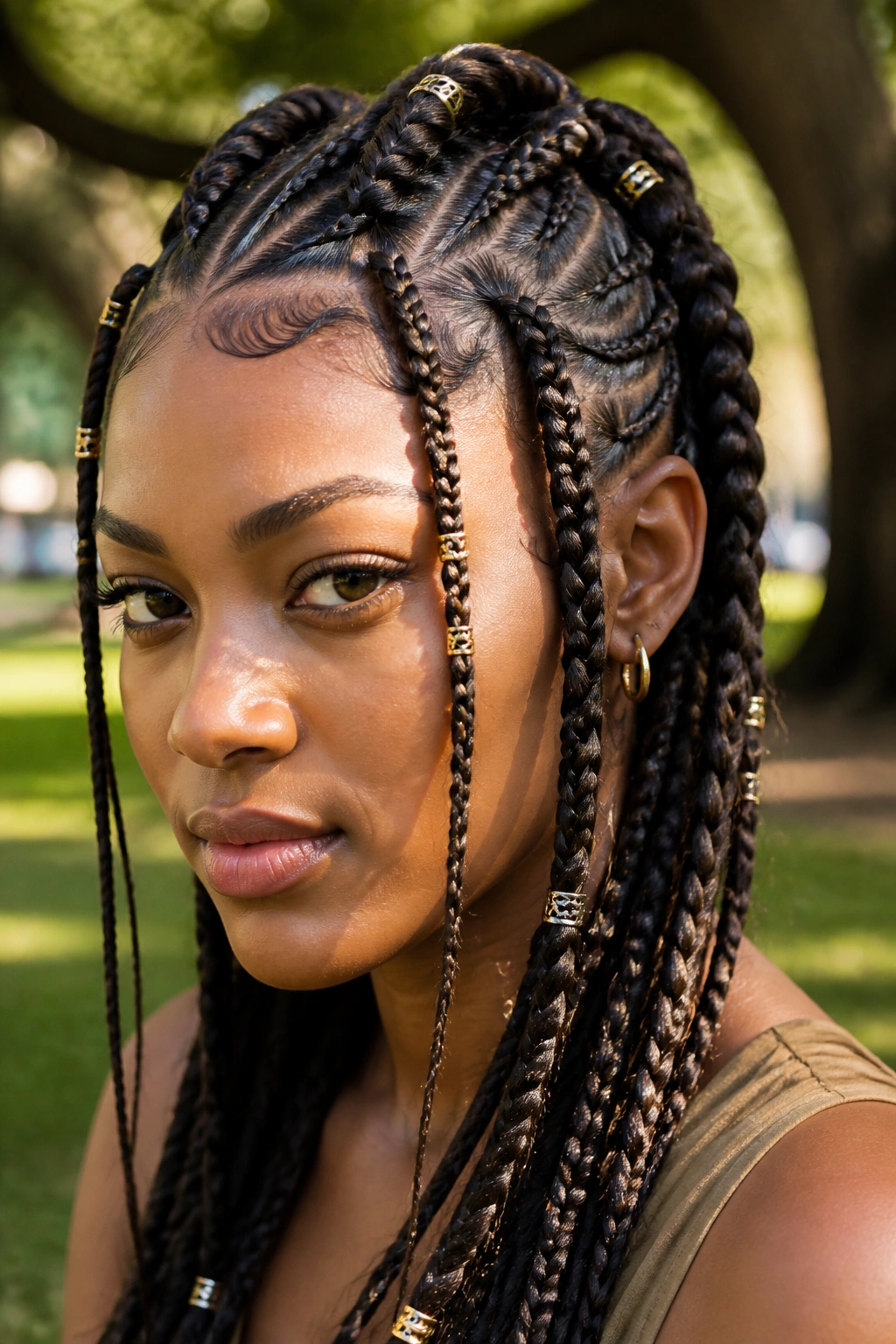
Tribal braids mix braid sizes, patterns, and sometimes textures in one install. That’s the charm. You might see cornrows at the front, longer box braids at the back, and accessories threaded through just enough to give the style some personality.
This is one of those styles that rewards a good plan before the braiding starts. If the front is busy, the back should probably be calmer. If the braids are oversized, the accessories should stay minimal. Too many ideas in one head can turn beautiful fast into noisy.
I like tribal braids for people who want something personal without going full costume. They carry tradition, but they also leave room for a fresh shape, which is a nice sweet spot.
9. Braided Bob
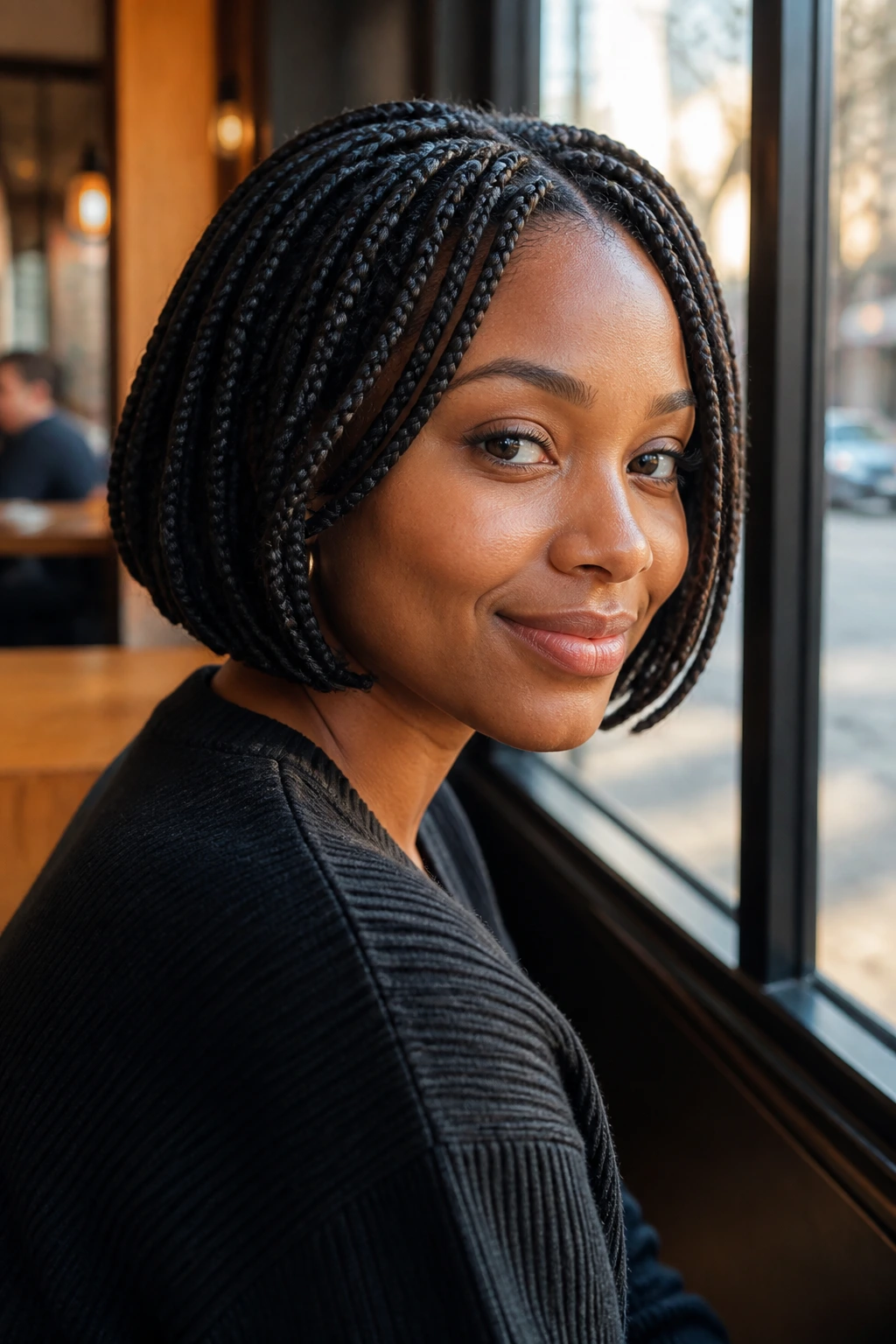
A braided bob is a shorter braid style that usually lands around the chin, jaw, or neck. It gives you braid texture without the weight of long lengths hanging everywhere, and that alone makes it worth considering if you’ve ever had a headache from heavy braids.
The swing of a bob matters. It moves when you walk, flips easily, and keeps the whole style lively. Shorter braids also dry faster after washing, which sounds boring until you’ve spent an hour trying to air-dry waist-length hair.
This style works especially well if you like a sharp neckline or want earrings to stay visible. It’s neat, practical, and a little bit cheeky.
10. Braided Ponytail
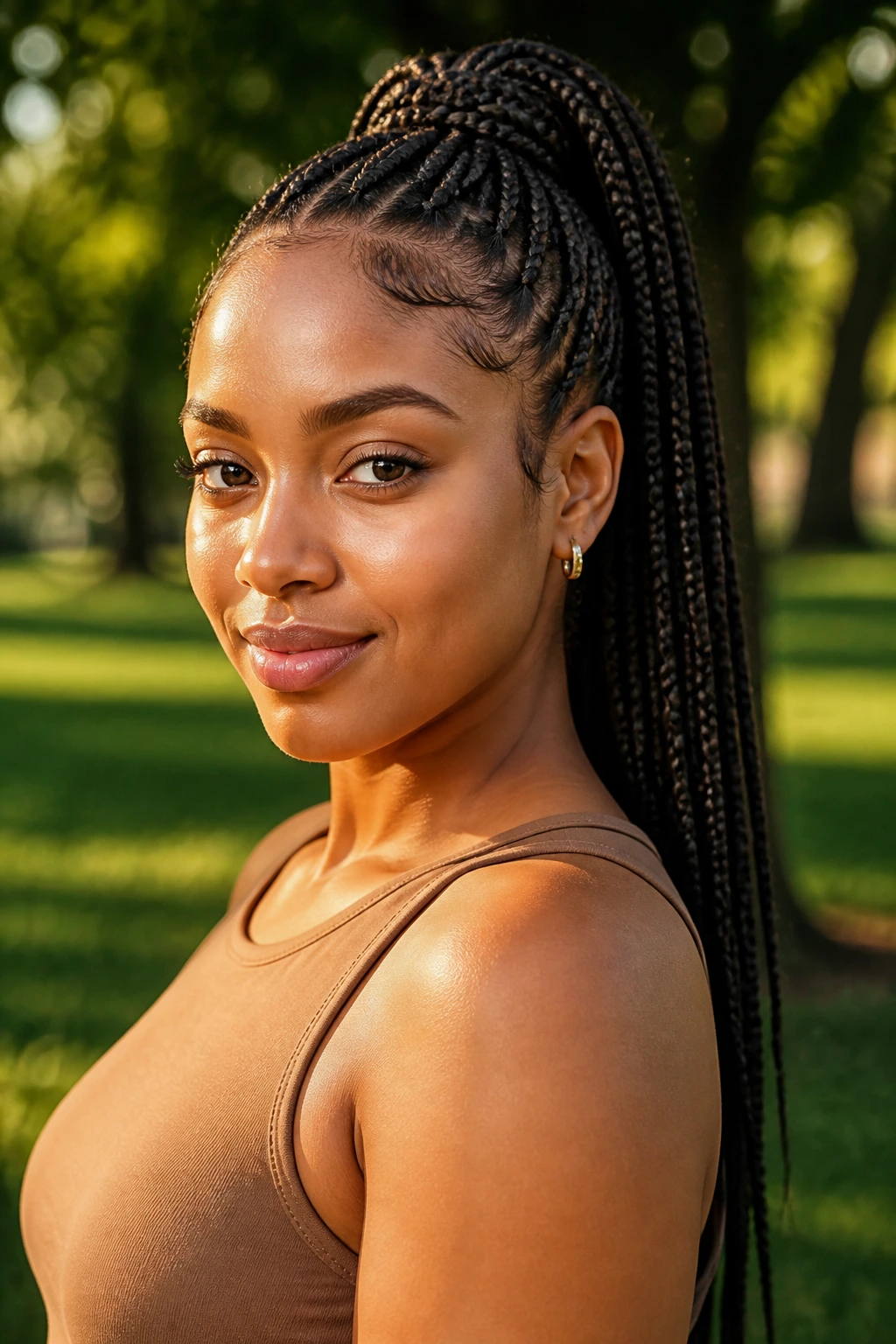
A braided ponytail is one of the easiest ways to make braids feel polished instead of casual. The hair is gathered high, mid, or low, then braided into a tail that can be thick, long, or wrapped for a cleaner finish.
The best thing about this style is the face lift effect. Pulling the braids up opens the face and keeps the hair off the shoulders, which feels good on warm days and busy days. It also works when you want to look styled without adding more parts, more accessories, or more time.
Watch the base. A ponytail that is too tight around the crown will tell on you by the end of the day. The style should feel secure, not pinched.
11. Half-Up, Half-Down Braids
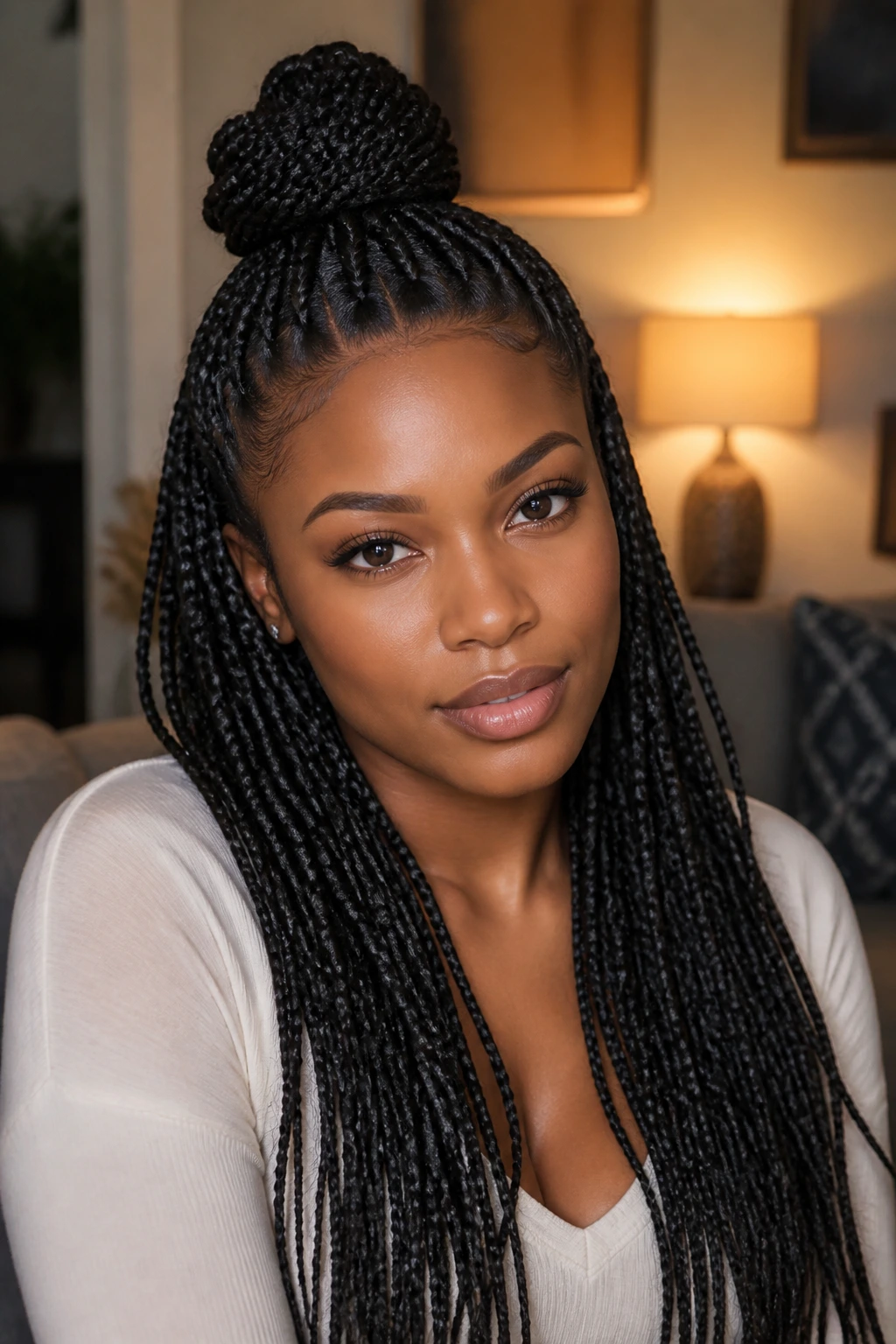
Half-up, half-down braids sit in that easy middle ground between done-up and relaxed. The top section gets pulled back, twisted, braided, or tied into a small bun, while the rest hangs loose. You get structure around the face and movement through the length.
How to Wear It
This style works best when the top section is clean and the bottom section has enough length to drape well. If the top is messy, the whole look loses its shape. If the bottom is too bulky, the style can feel heavy.
- Great for showing off braid length without wearing all of it up
- Good for days when you want your face uncovered
- Easy to dress up with cuffs, a barrette, or a wrapped scrunchie
- Useful when you want less tension than a full ponytail
It is one of the few braid styles that can feel playful and grown at the same time.
12. Jumbo Braids
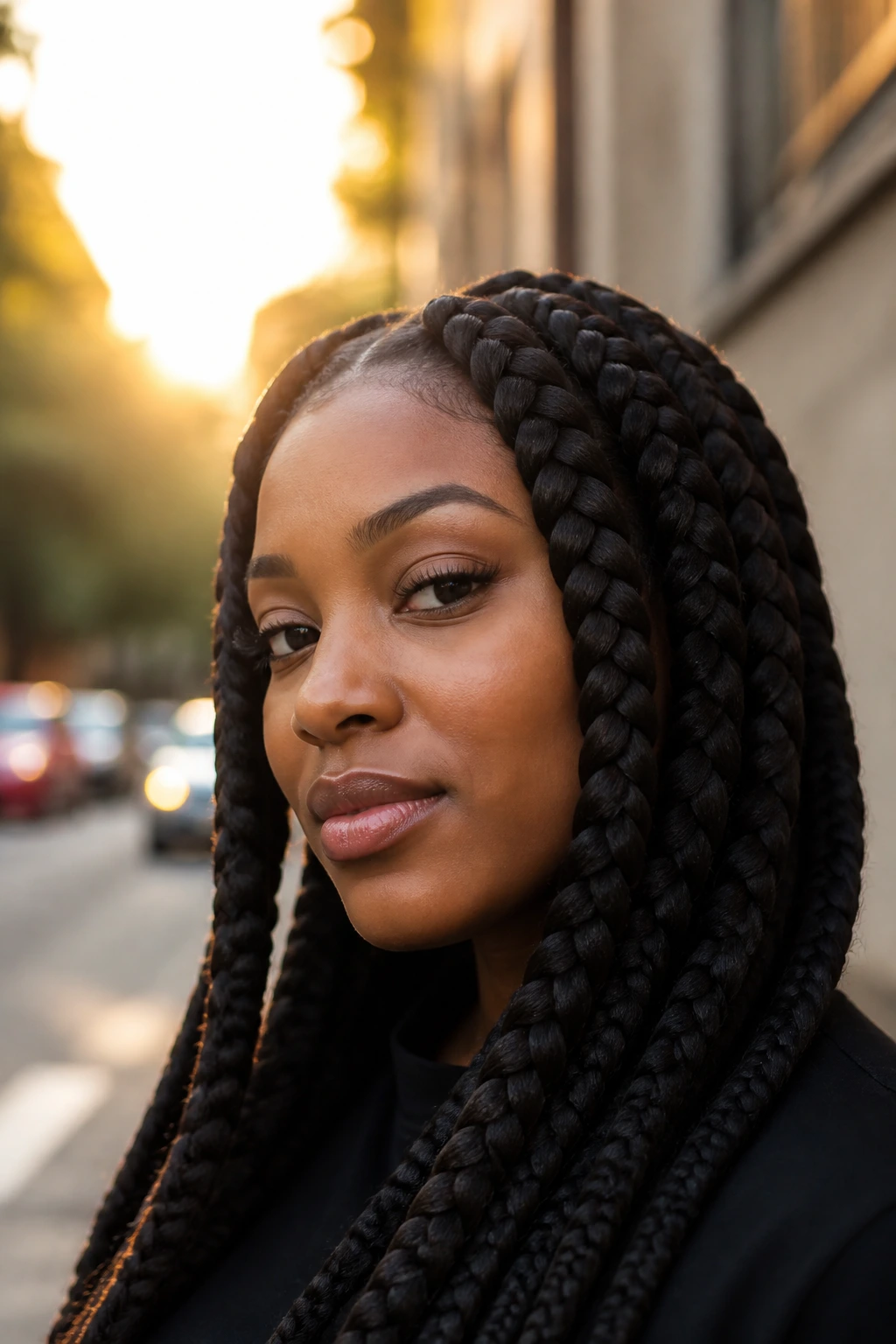
Jumbo braids make a statement without asking for much time. The sections are larger, the install is faster, and the finished look is bold from the first glance. If you like hair that has presence, jumbo braids deliver that with almost no fuss.
The trade-off is balance. Big braids can feel heavier, and they can also limit how many styles you can do later. A handful of large braids is not as versatile as a set of smaller ones. Still, if you want something that looks full and strong, the payoff is immediate.
I think jumbo braids are underrated for people with packed schedules. Less time in the chair matters. So does less daily maintenance.
13. Micro Braids
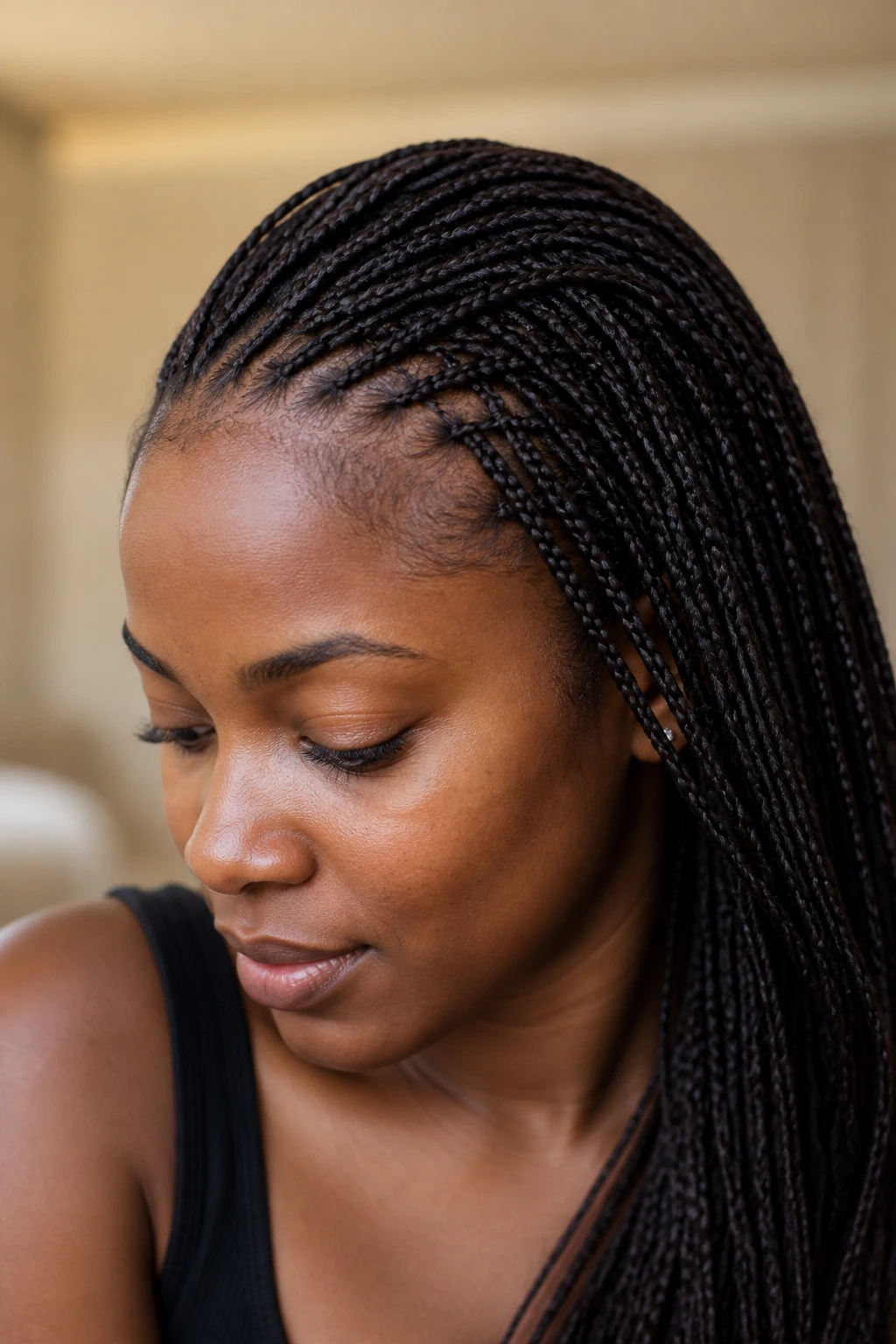
Micro braids are tiny, detailed, and time-hungry. They take longer to install than most braid styles, but they repay the effort with movement and styling flexibility that bigger braids cannot match. You can wear them loose, pin them up, or tuck them away without a lot of bulk.
What to Watch For
Because the sections are small, the install has to be careful. Too much tension around the scalp is a bad idea here, and the style should not feel tight just because the braids are tiny.
- Works well if you want a lighter visual finish
- Needs patience at install
- Can tangle if left untouched too long
- Looks especially good in layered lengths
Micro braids are for someone who likes detail. If you want quick and easy, skip them. If you want subtle movement and fine texture, they have a lot to offer.
14. Triangle Box Braids
Triangle box braids keep the familiar box braid shape but swap the square parts for triangle parts. That small change makes a bigger difference than you’d expect. The whole style feels more playful, and the parting pattern looks intentional right away.
They’re useful if you’re tired of the standard grid. I am. A triangle part gives the scalp a little more visual break, and it stops the style from reading too rigid. It’s a neat upgrade when you want box braids but not the exact same look everyone else is wearing.
The braids themselves can be medium or long. The parting is the star here, so clean sectioning matters even more than usual.
15. Boho Braids
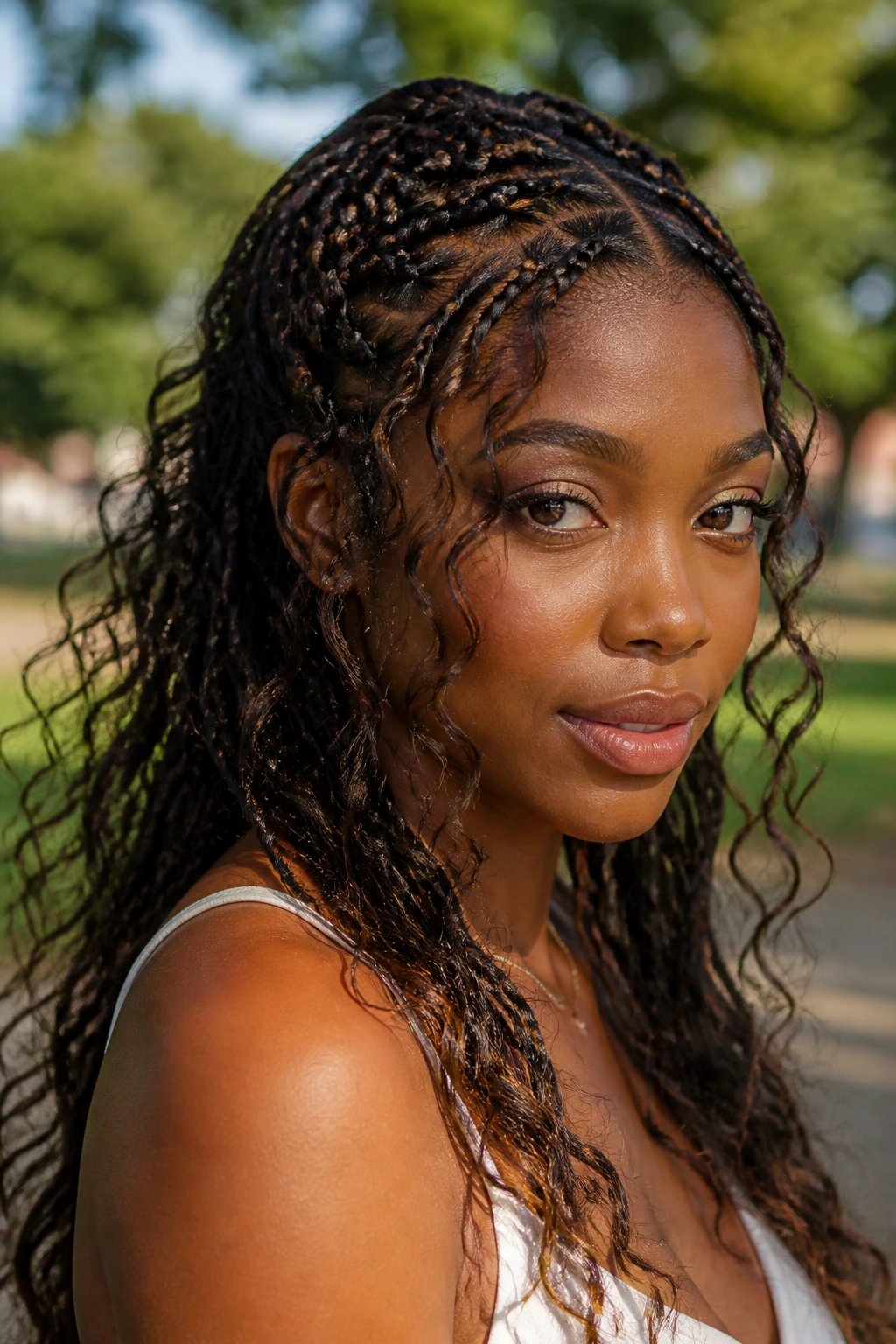
Boho braids mix braided sections with loose curly pieces for a softer, lived-in finish. The loose strands give the style a bit of movement around the face and through the lengths, which keeps it from looking too stiff or too exact.
The reason people love this style is simple: it feels pretty without looking overworked. That said, the curly pieces do need attention. If you ignore them, they can frizz faster than the braids themselves. A light curl refresher or mousse can help, but don’t drown the hair in product.
Boho braids suit people who like texture. They’re also a good choice when you want something romantic without going full updo.
16. Braided Bun
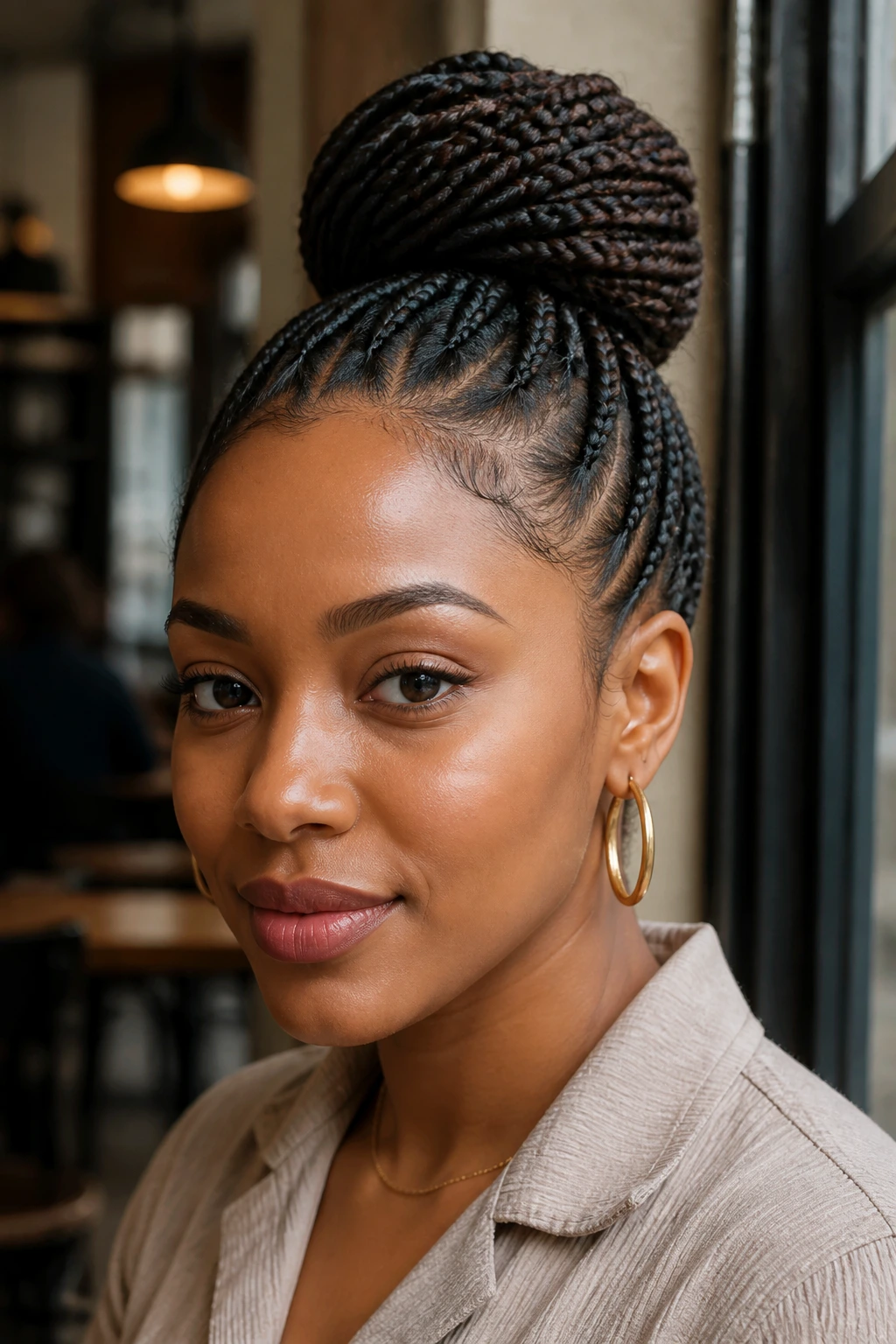
A braided bun is one of the cleanest ways to wear braids when you want everything off your shoulders and out of the way. The bun can sit high, low, or at the crown, and each placement changes the mood a little. High feels sharper. Low feels calmer.
The neat part is how adaptable it is. Long braids can be wrapped into a full bun, while shorter braids can be folded and pinned with a little more structure. A few face-framing pieces can soften the look if you want that.
Why It Works in Real Life
This style is easy to wear to work, dinner, or a formal event because it keeps the profile tidy. It also protects the ends from constant rubbing against clothes and seat backs, which is one of those tiny things that matters more than people admit.
17. Braided Crown
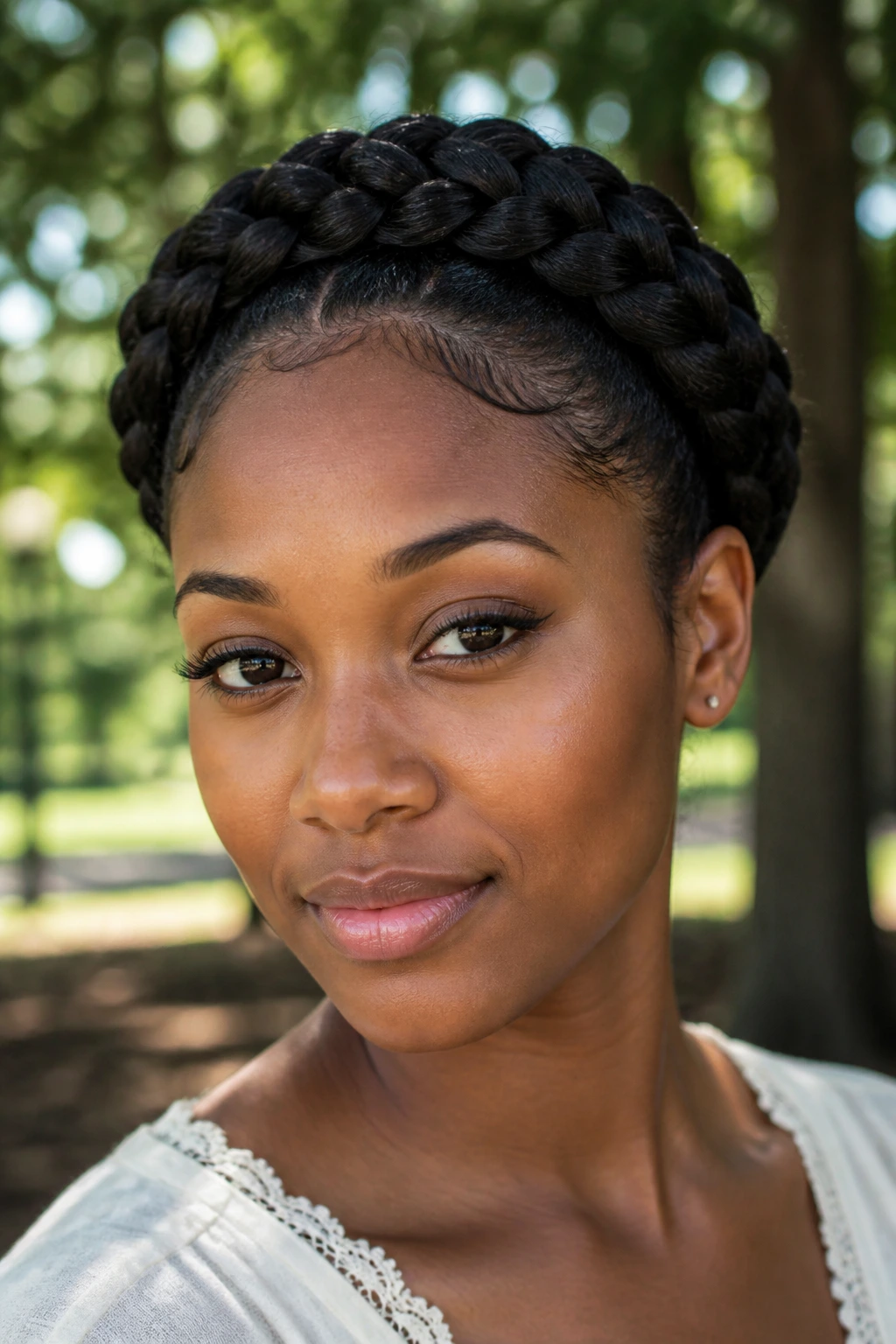
A braided crown wraps around the head and creates a halo effect without needing much else. It is one of those styles that looks calm from far away and detailed up close, which is a good combination if you like elegance without too much drama.
What makes the crown braid appealing is how it changes face shape. It opens the forehead, frames the sides, and keeps the attention near the features instead of the length. That makes it a strong pick for formal events, photos, and any moment where you want the hair to feel deliberate.
If the braid is too loose, it falls flat. If it’s too tight, it pulls. The sweet spot is somewhere in the middle, and a good stylist knows how to find it.
18. Zig-Zag Cornrows
Zig-zag cornrows are for anyone who wants the braid pattern itself to carry some personality. The parting creates a visual rhythm across the scalp, and that alone changes the mood from plain to playful. Kids wear this look well, but adults can pull it off too.
How to Make It Work
The trick is keeping the zig-zag parts clean enough to read from a distance. If the lines wobble, the whole style loses its shape. The braids do not need to be fancy beyond that; the parting already does the work.
- Best on medium to thick hair
- Looks sharp with beads or small cuffs
- Stays interesting even in a simple braid size
- Needs precise parting more than extra styling
I like this style because it proves a braid set does not have to be complicated to be memorable.
19. Ghana Braids
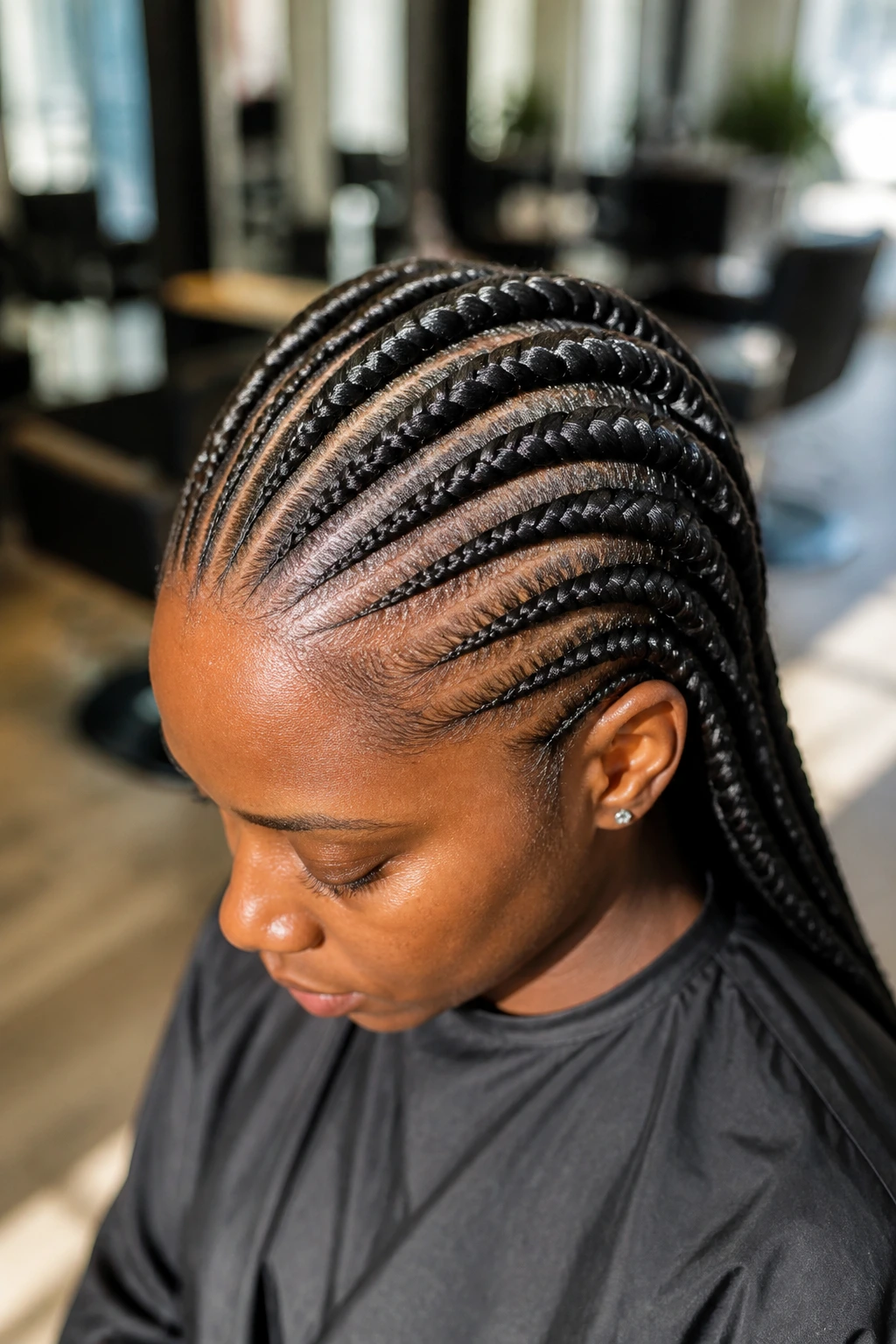
Ghana braids start small and feed into larger braids as they move back, which gives them a sculpted, almost carved look. They’re close to cornrows in spirit, but the gradual thickening makes them stand apart right away.
Unlike flat straight-back rows, Ghana braids carry more volume through the length. That means they can feel bolder without being loose or fluffy. They also hold their shape nicely when installed neatly, which is part of the appeal if you want the style to keep its lines.
They work best when the feed-in is smooth. If the transition from small to large is choppy, you notice it immediately. Clean hands and clean sections matter here.
20. Diagonal Feed-In Braids
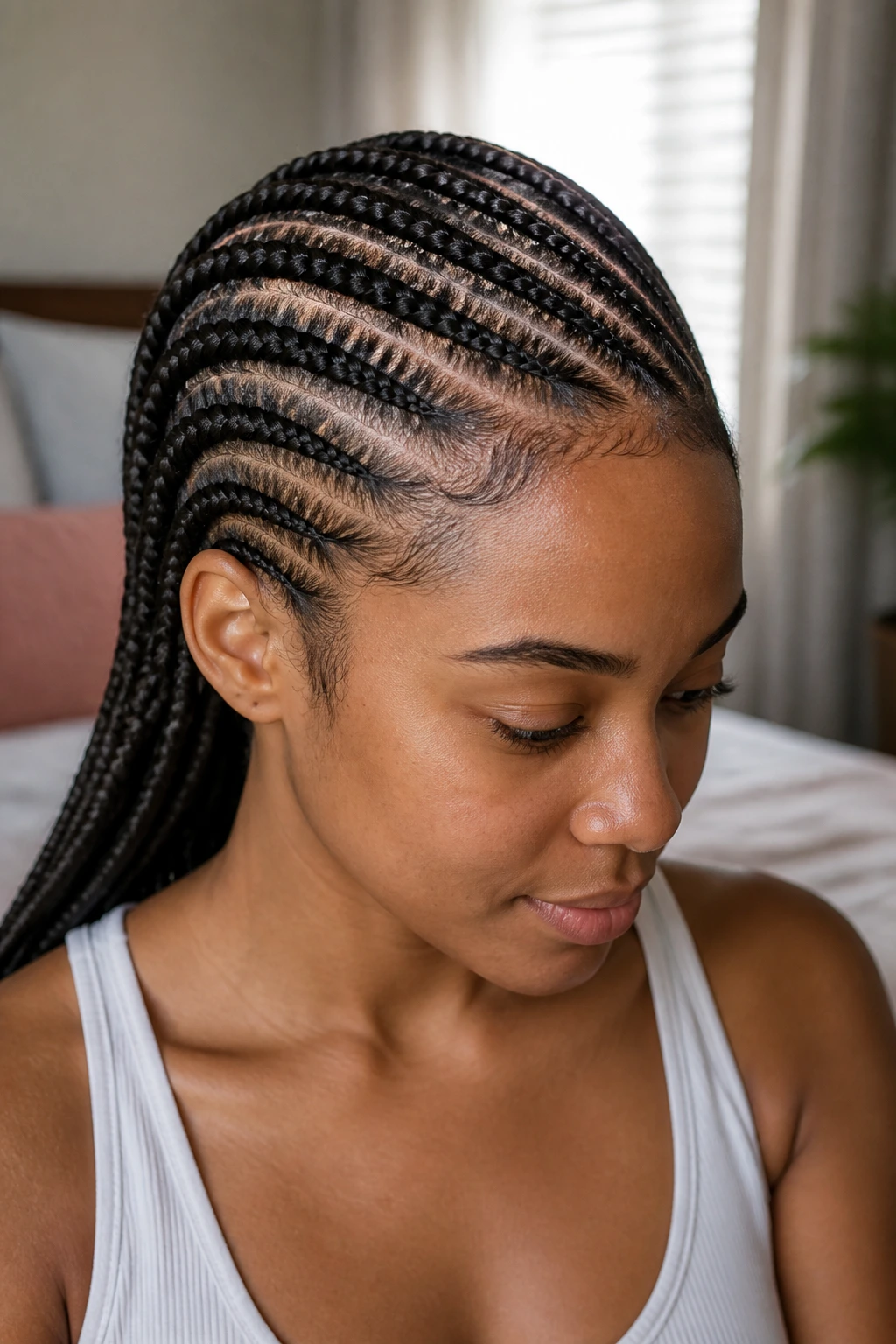
Diagonal feed-in braids move across the head at an angle, which gives the style a bit of motion even before the hair starts swinging. The diagonal direction can flatter the face by breaking up the symmetry of a straight-back layout.
The angle also changes how the braids fall at the nape and shoulders, which sounds small until you see it in the mirror. A braid that sweeps across the head instead of down the back feels more styled, more edited, and a little less expected.
This is a good option if you like feed-in braids but want something less predictable than straight rows. The pattern does the talking. Keep the parts neat, and don’t overcomplicate the ends.
21. Side-Swept Braids
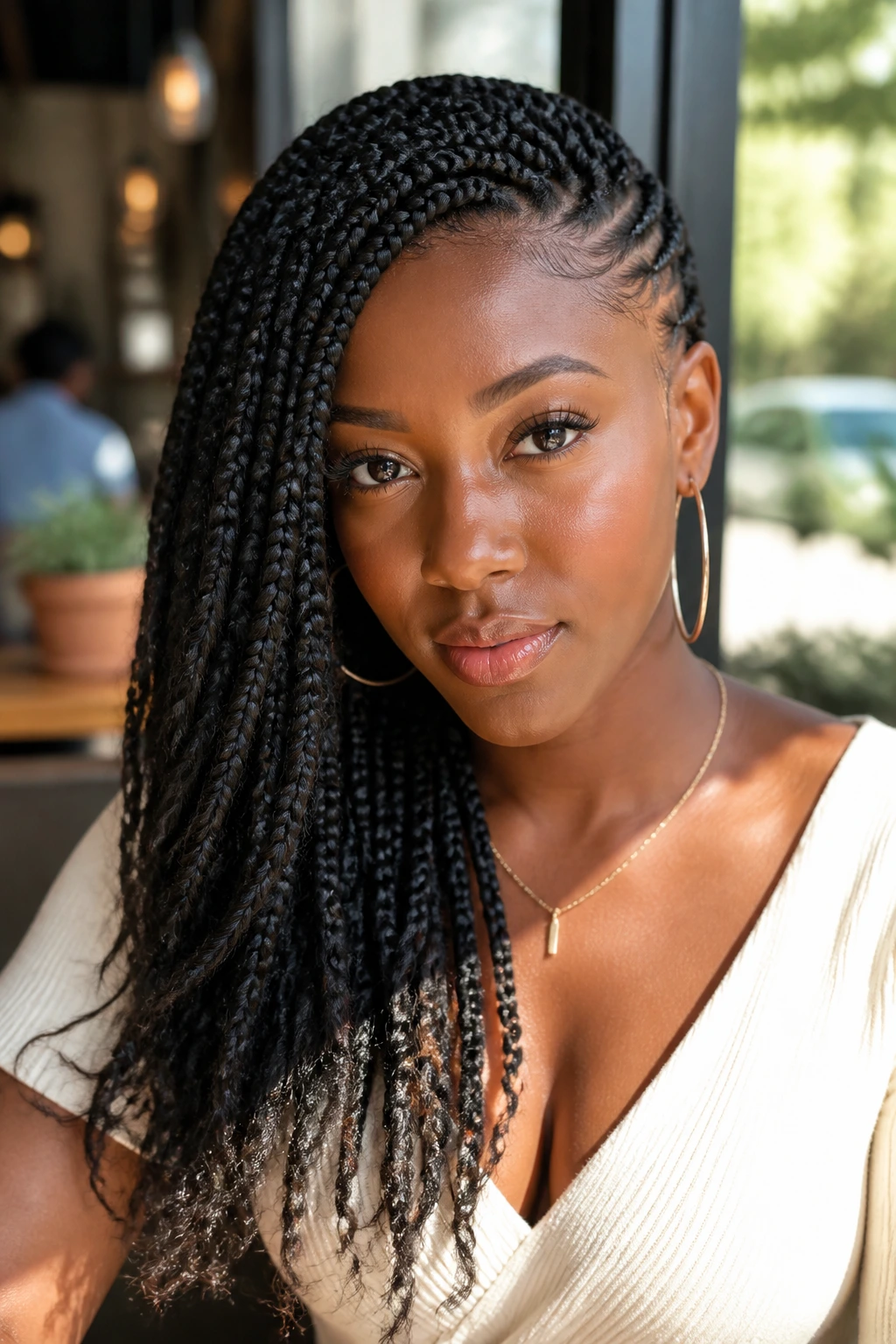
Side-swept braids gather the hair toward one side and leave the other side cleaner, which creates a strong asymmetrical shape. That asymmetry is the whole point. It feels flattering on the face and looks especially good with earrings, off-shoulder tops, or a bare neckline.
The style can be subtle or dramatic depending on braid thickness and length. Smaller braids give you a softer sweep. Larger braids make the shape more obvious. Either way, the visual weight moves sideways instead of straight down, and that changes the energy of the look.
If you want a braid style that feels grown, a little romantic, and not overdone, this is a solid place to land.
22. Waist-Length Braids
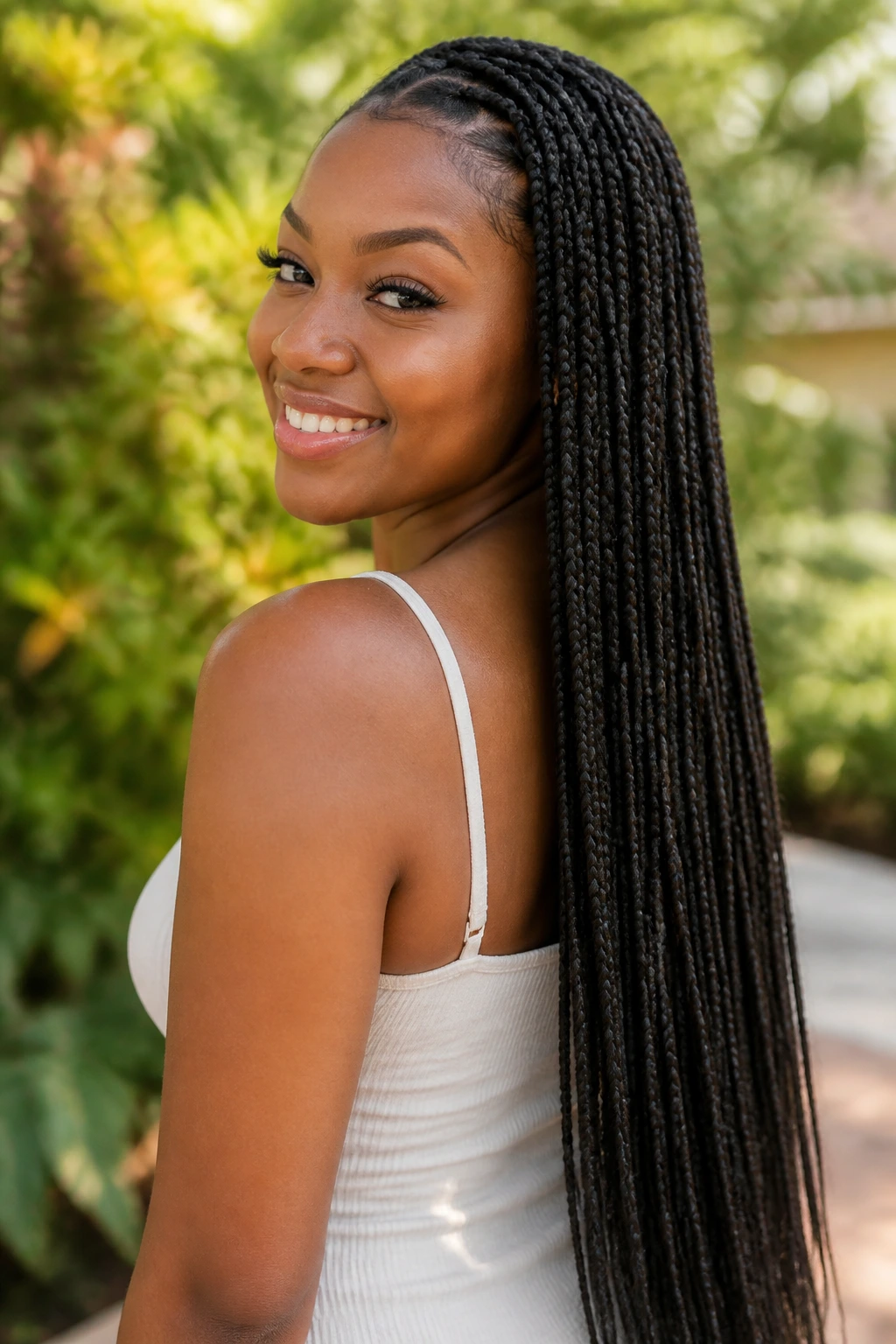
Waist-length braids are a commitment, and I mean that in both the good and annoying sense. They give you dramatic length, plenty of styling options, and that long-line effect people love when the braids move behind the shoulders. They also ask more from your neck, your head, and your patience.
A style this long works best when the braids are light enough to wear comfortably. Heavy extensions can turn beautiful into tiring fast. The ends should also be sealed well so they do not fray before their time.
I think waist-length braids make the most sense for people who actually enjoy long hair, not just the idea of it. If you like braiding them into a ponytail, threading them into a bun, or letting them fall all the way down, they’re worth it.
23. Double Pigtail Braids
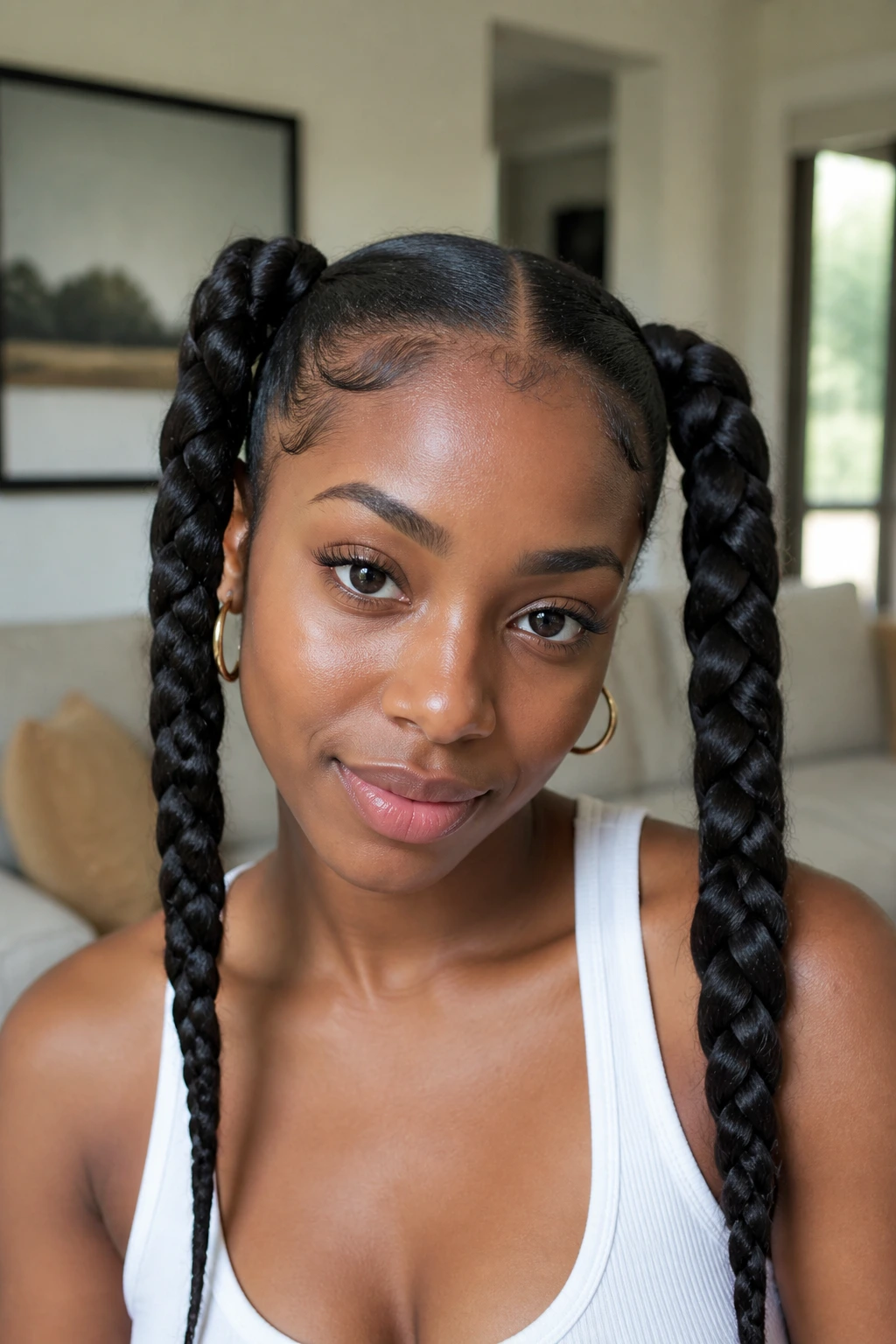
Double pigtail braids can feel playful, but they do not have to look childish. With clean center parting, neat braid size, and maybe a few cuffs or wraps, the style can read fresh and polished instead of school-day sweet.
The shape is useful because it balances the head visually. Two side sections create symmetry, and that can be flattering when you want the hair away from the face without putting everything into one ponytail or bun. It also keeps the style easy to split and secure.
This one is especially nice if you like a lighter feel at the crown. Just keep the base smooth so the pigtails sit evenly. Uneven height is the whole style’s enemy.
24. Space Bun Braids
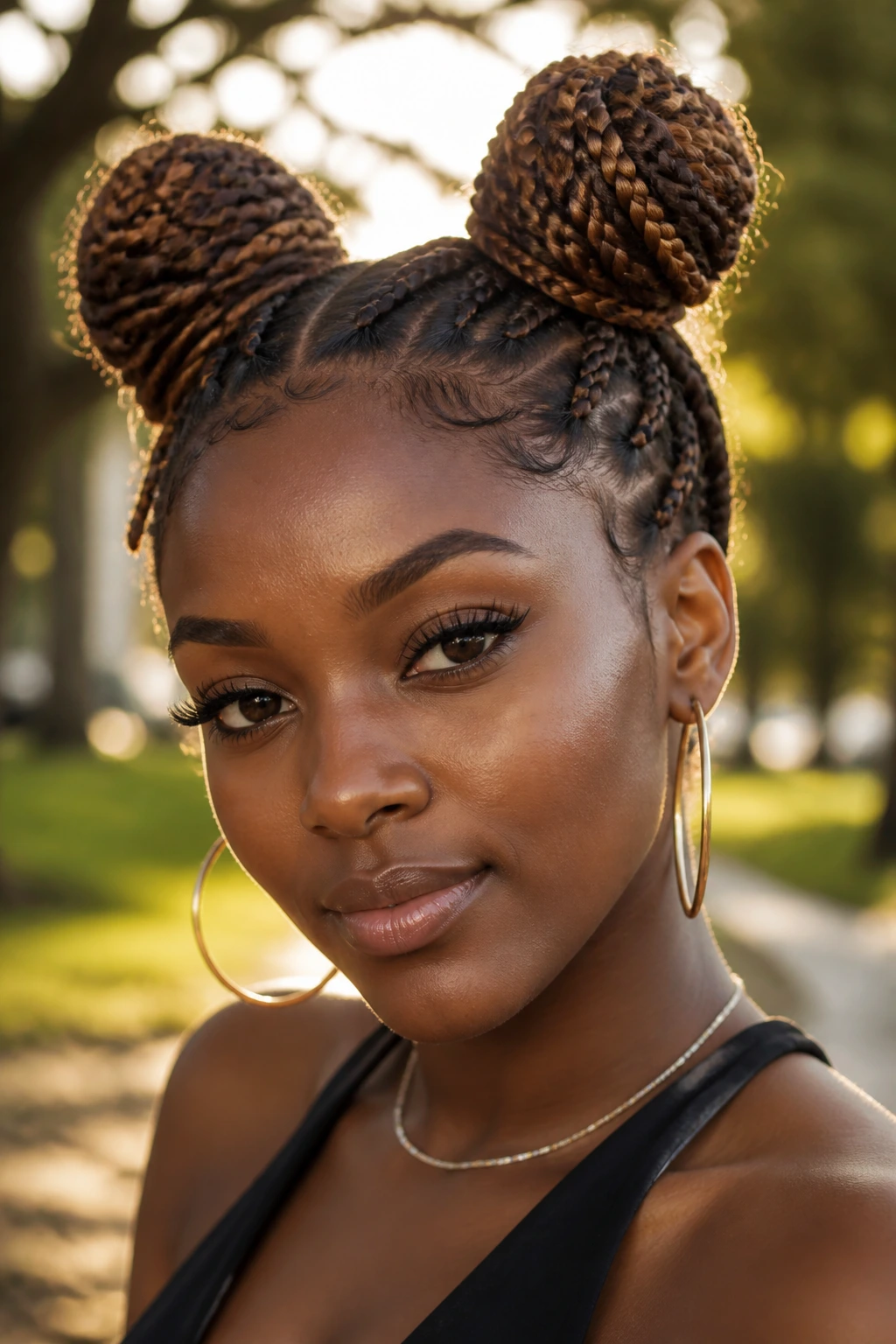
Space bun braids take the energy of braids and lift it into two buns, one on each side of the head. The result is playful, clean, and a little bold, which is a fun mix when you want your hair to do more than sit there.
How to Style Them
The most flattering versions keep the buns balanced but not identical to the point of looking stiff. A tiny bit of asymmetry makes the style feel human. Braids can be wrapped into the buns, left hanging from them, or twisted in before pinning.
- Works well for medium-length braids
- Good for concerts, weekends, and casual dress-up
- Can keep hair off the neck
- Needs secure pins so the buns don’t sag
This style makes sense when you want movement up top and less length hanging down. It is not subtle. That’s the fun of it.
25. Braided Mohawk
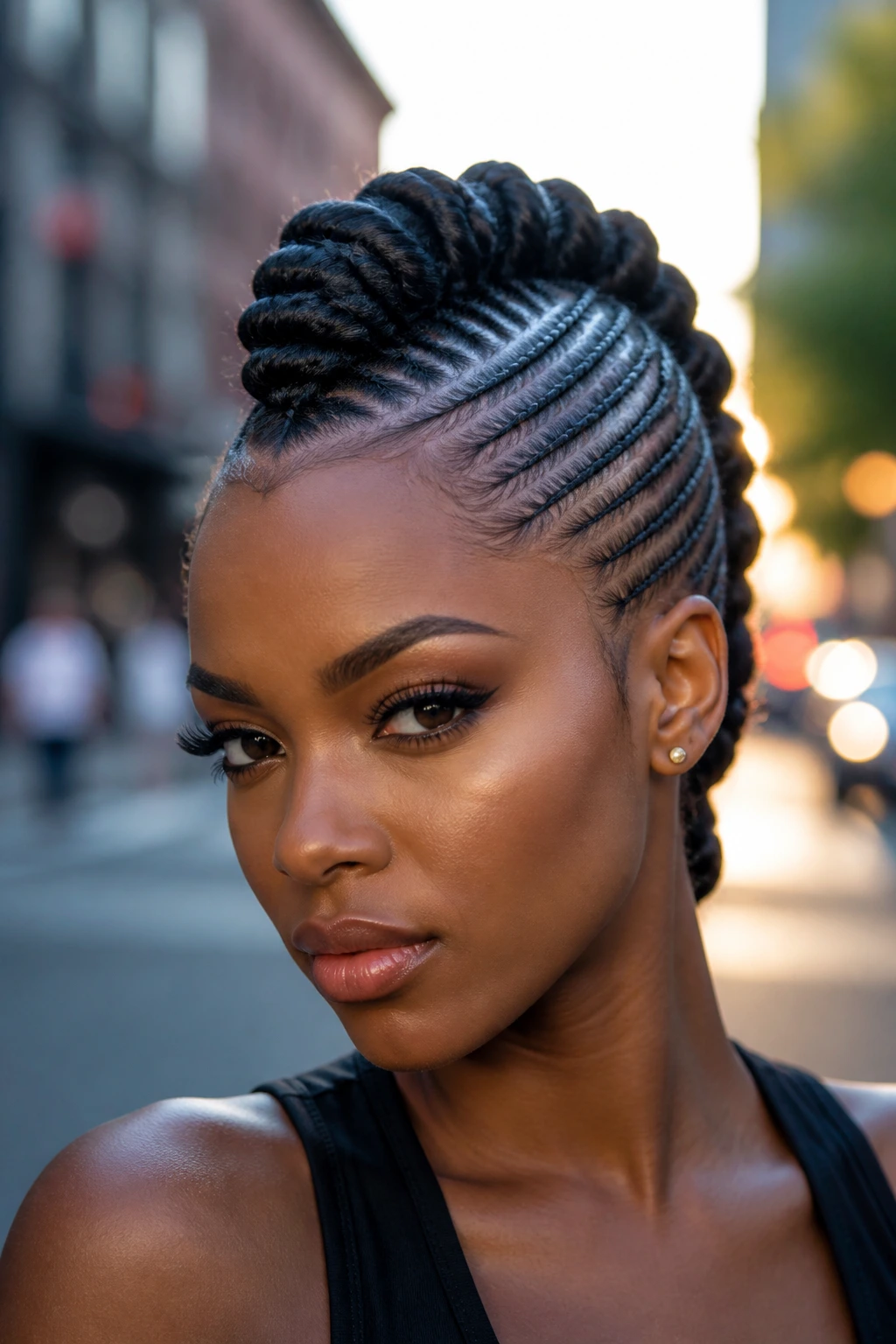
A braided mohawk creates a strong center line and keeps the sides tight or swept down, which gives the style a sharp profile. If you like hair that makes a clear statement, this is one of the most direct ways to do it.
The center section can be cornrowed, braided, twisted, or built into a row of larger braids, depending on how bold you want the final look to be. I prefer it when the shape is crisp and the sides are neat enough to let the middle speak for itself. Too much happening at the edges weakens the effect.
This is the kind of style that works when you want confidence visible from across the room. Strong shape. No apology.
26. Heart-Pattern Braids
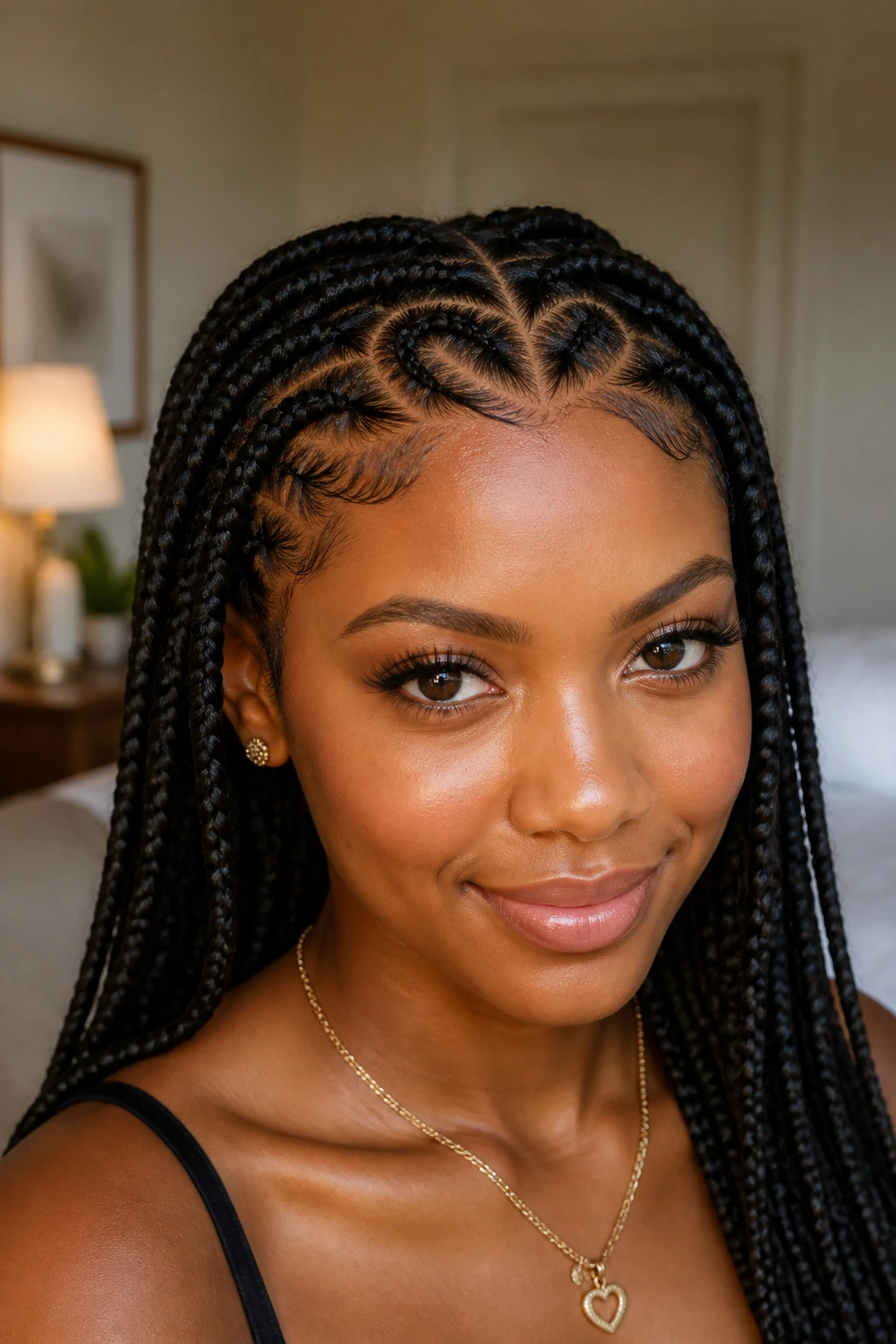
Heart-pattern braids are exactly what they sound like: the parting or braid design forms hearts, usually near the front or sides. It is a playful style, but it takes real skill to make the shape clean enough to read properly. That’s part of the appeal.
The style works best when the heart shape is the main event and the rest of the braids stay simple. If everything is decorative, nothing stands out. A single heart detail can carry the whole look, especially on kids, teens, or adults who like a fun detail without giving up neatness.
What Makes It Stand Out
The pattern is the charm, not the size of the braid. You want enough contrast between the heart and the rest of the style so the shape does not disappear once the hair settles.
27. Braided Lob
A braided lob, or long bob, sits around the shoulders and gives you a softer version of the classic long braid set. It has enough length to feel styled, but not so much that you’re constantly tossing it over your shoulder.
The lob is one of my favorite compromises. It’s easy to manage, light enough for everyday wear, and still long enough for buns, half-up styles, and side sweeps. If you’ve worn super long braids and spent half your time moving them out of the way, this feels like a breath of fresh air.
It also looks clean when it grows out a little, which is useful. Some styles age better than others. This one ages well.
28. Beaded Braids
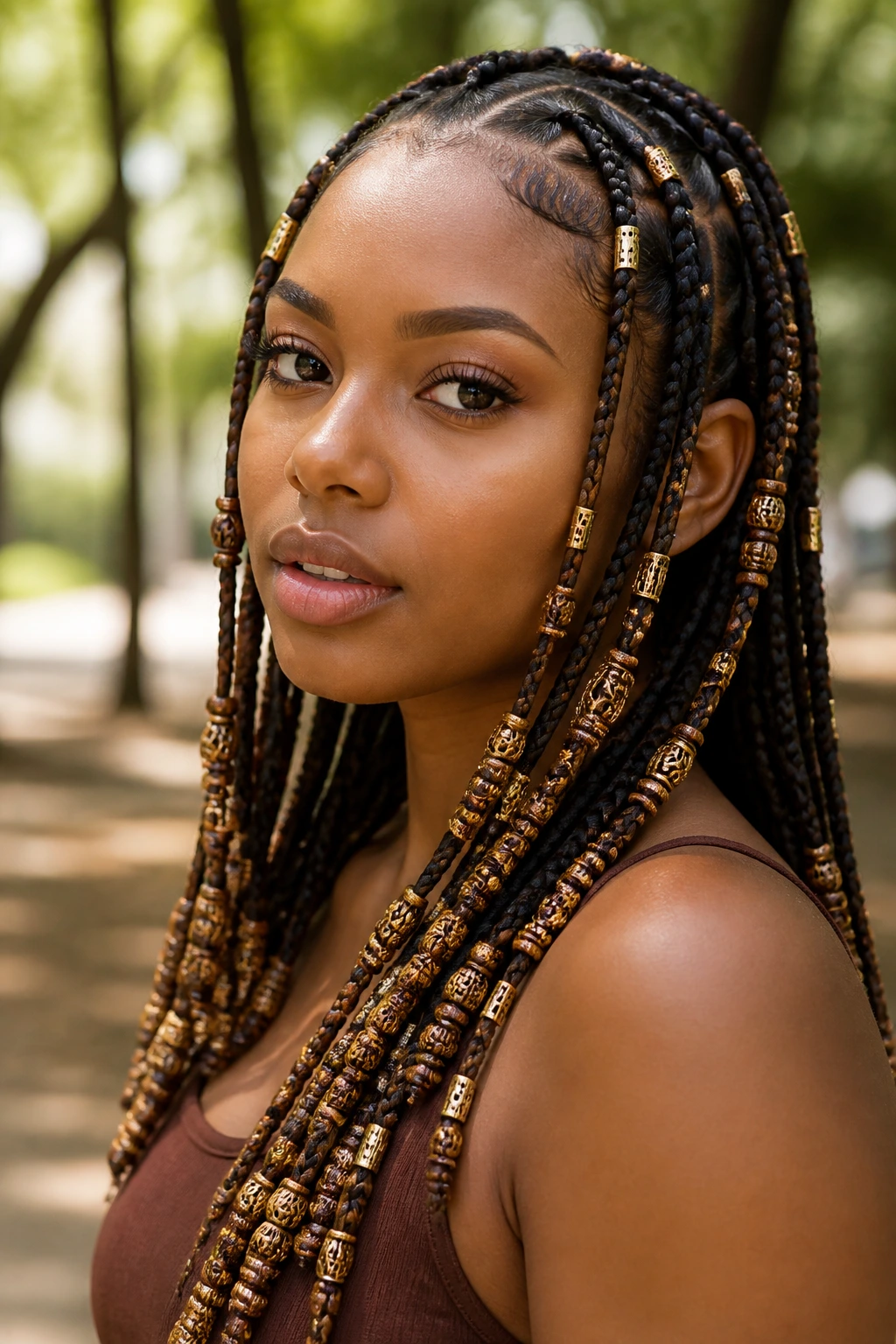
Beaded braids bring sound, weight, and personality into the style. The beads can sit at the ends, line the length, or cluster in small spots for emphasis. They can also change the way a braid moves, which makes the style feel more alive when you walk.
Unlike plain braids, beaded braids rely on the accessory as part of the design. That means the bead shape, color, and size should match the hair rather than fight it. Heavy beads can tug, especially near the front, so placement matters.
I like this style when the accessories feel thoughtful. A few well-placed beads can do more than a whole handful jammed in at random.
29. Short Natural Hair Mini Braids
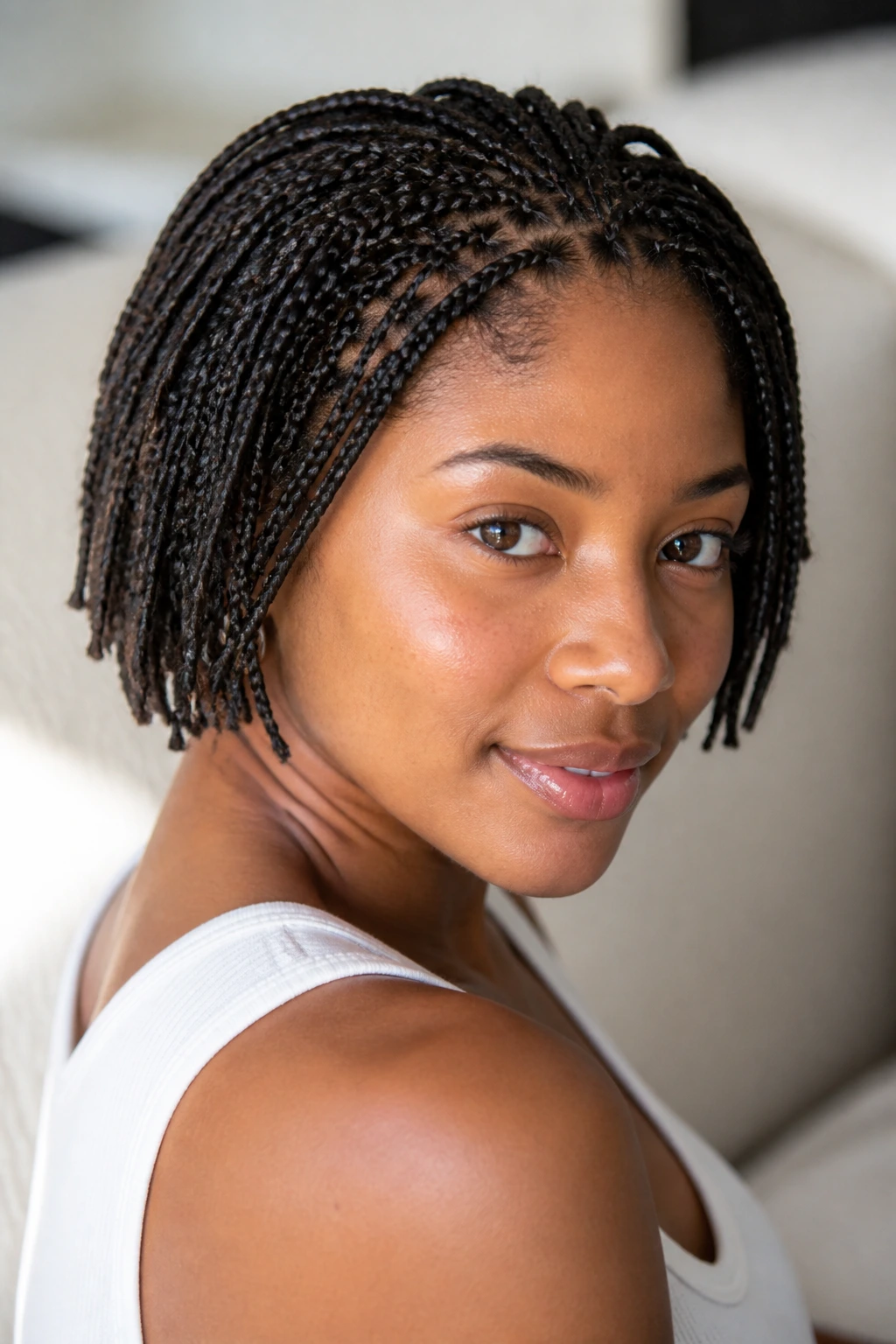
Mini braids on short natural hair prove that you do not need waist-length extensions to wear a braided style. They work beautifully on short lengths because they give the hair a neat, tucked look while still leaving some texture visible. That makes the style feel honest, not forced.
How to Make Short Braids Shine
The shorter the hair, the more important the sectioning becomes. You want even size, clean roots, and a finish that matches the hair’s real length instead of pretending it is something else. Foam or a light setting product can help the braids settle neatly.
- Good for twa lengths and short transitions
- Can be styled with tiny parts or slightly larger sections
- Keeps the hair close and manageable
- Looks best when the ends are neat, not frayed
This style is underrated because it works with the hair you have, not the hair some people wish you had.
30. Braided Updo for Formal Wear
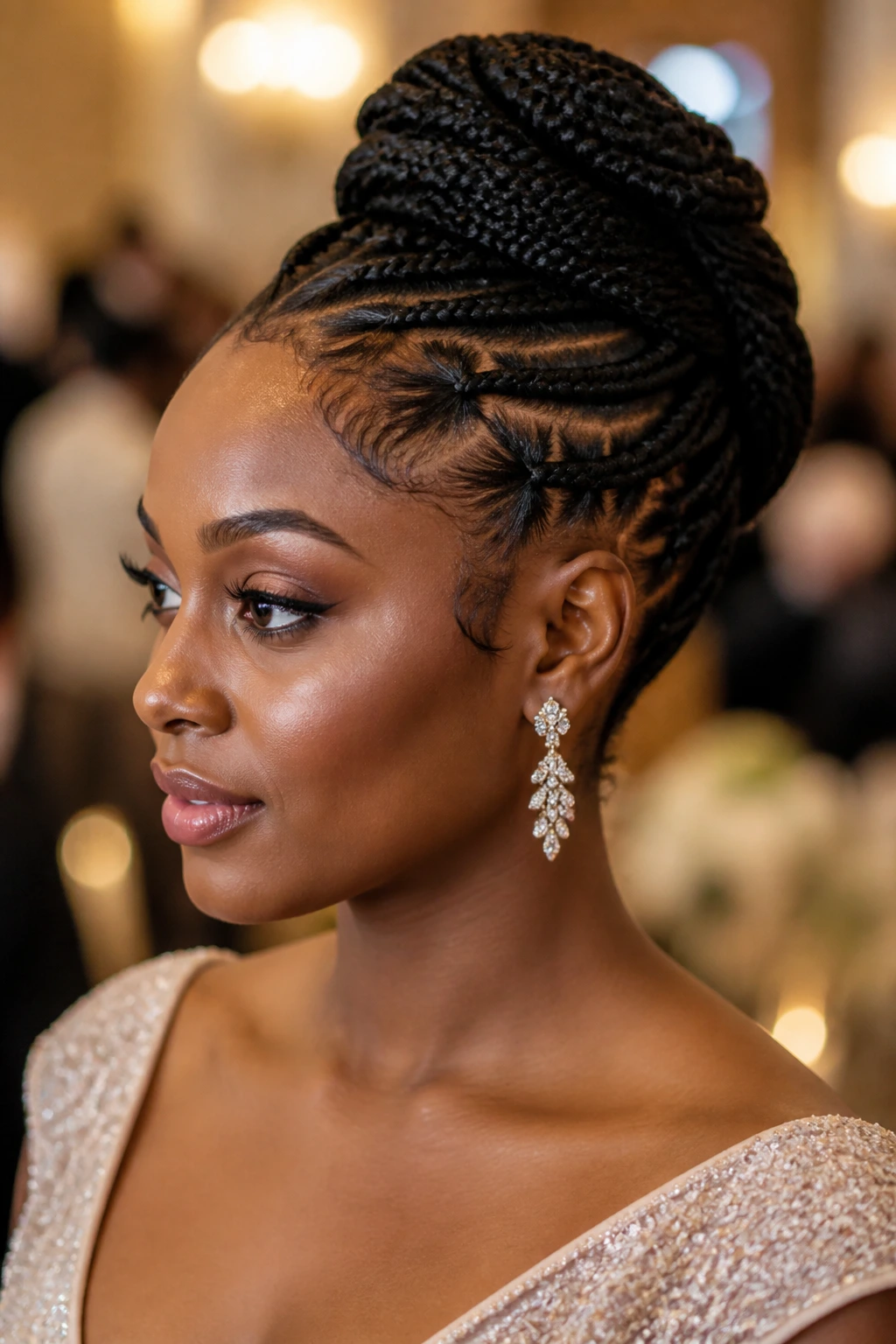
A braided updo pulls the hair upward and pins, twists, or wraps the braids into a shape that feels polished enough for formal events. It can be low and elegant or high and sculptural, and that flexibility is what makes it such a strong final look.
The best updos do not look stuffed. They look arranged. That means the braid lines should curve into the shape instead of being jammed into pins at the last second. A few loose pieces around the face can soften the finish if you want that, but the overall silhouette should still feel clean.
For weddings, graduations, photos, or any event where you want the hair to behave, this is a dependable choice. It keeps the neckline open, shows off earrings, and stays put when the night gets long.
Final Thoughts
The strongest braided hairstyles for Black women usually share the same quiet strengths: clean parting, thoughtful tension, and a shape that fits real life. Fancy is nice. Wearable is better. A style that still feels good on day four matters more than one that only looks good the moment you leave the chair.
I always think the smartest braid choice is the one that matches your routine, not someone else’s mood board. If you want lightness, go knotless or short. If you want drama, go long or beaded. If you want structure, cornrows and feed-ins are hard to beat.
Braids should make your life easier and your hair look better. When they do both, that’s the sweet spot.
