



A few cuffs can change box braids from plain to polished in under a minute. Placement matters more than quantity. Put ten tiny rings in random spots and the style starts looking busy; put three or four where the eye naturally lands and the whole braid pattern suddenly makes sense.
Hair cuffs for box braids work best when they match the braid size, the part pattern, and the shape of your face. Smooth-edged cuffs slide on cleanly. Rough ones snag synthetic hair, which is how a neat style turns frizzy at the opening and starts looking tired by the end of the day.
Box braids already carry a lot of visual weight, so the jewelry should either sharpen that structure or soften it. It should not fight the braid pattern. A single cuff near the temple does one job. A cluster at the ends does another. Once you start thinking in terms of placement instead of decoration, the options open up fast.
1. Classic Gold Cuffs on the Front Rows
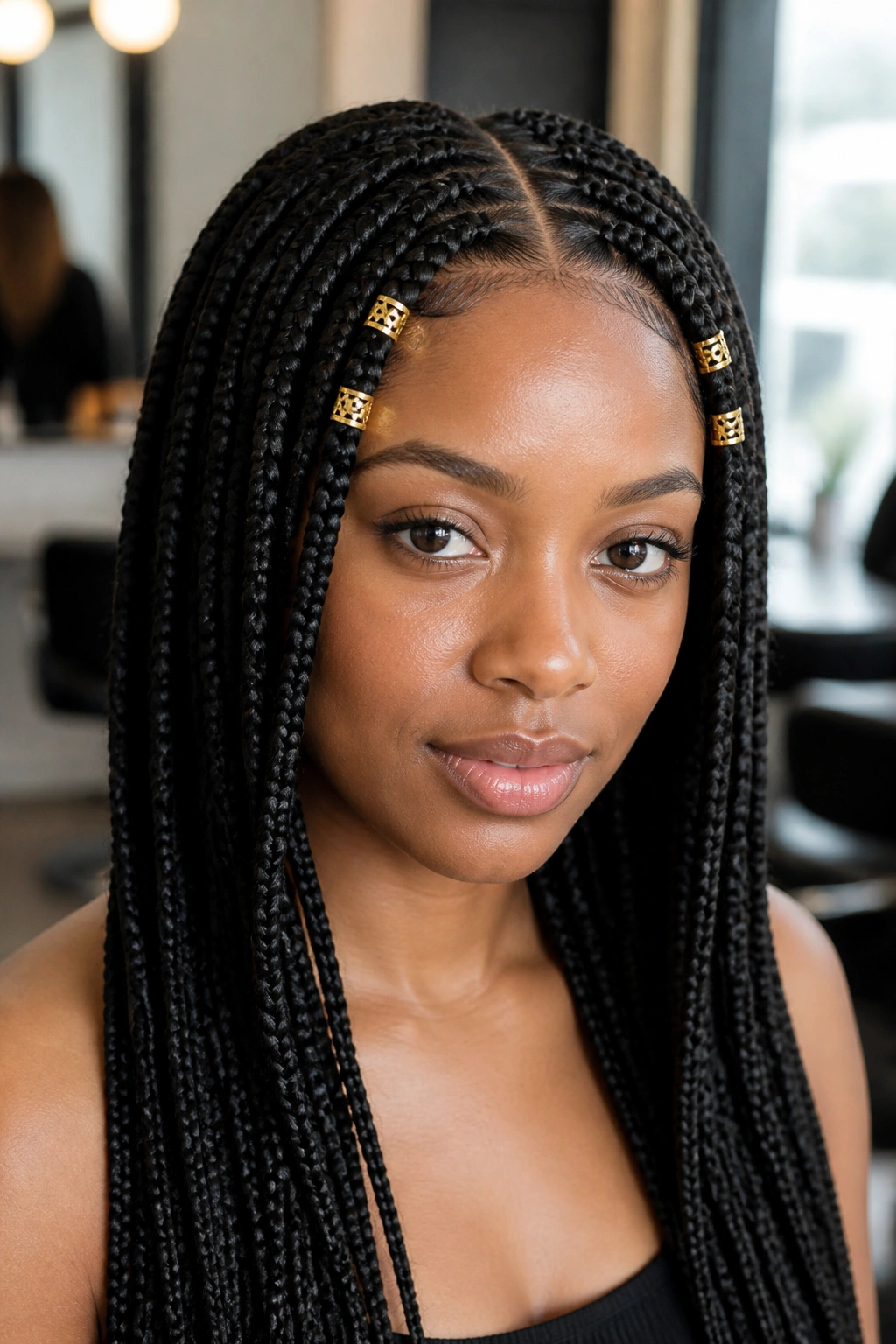
This is the safest, cleanest look for box braids. A few gold cuffs on the front rows give the style a finished edge without making it feel overworked. I like this placement because it frames the face in a way that looks intentional from the first glance.
Why It Works
The front rows are the first thing people see, so a cuff there does more work than the same cuff buried in the back. Keep the spacing loose — about 1 to 2 inches apart along the first two rows is enough. More than that and the front can start to feel crowded, especially if the braids are already thick.
Use 2 to 6 cuffs total for this style. That sounds spare, and that’s the point. A little shine near the part line catches attention without turning the whole head into a metal patchwork.
- Place the first cuff at least 1 inch below the root so it does not pull at the part.
- Repeat the spacing on both sides of the face for balance.
- Choose smooth cuffs with no sharp seams.
- Let the rest of the braids stay bare so the front detail stands out.
My bias: if you are unsure where to start, start here.
2. Mixed-Metal Cuff Stacks

Gold only is fine. It’s also safe. Mixed metals feel sharper and less predictable, especially on black braids, honey-blonde braids, or any color with depth.
The trick is keeping one metal dominant. I usually think in a 70/30 split: mostly gold, with a few silver or bronze cuffs breaking it up. That ratio keeps the style from looking random. It also helps if your jewelry, earrings, or makeup already lean one way or the other.
Mixed-metal stacks look best when the cuffs are not all the same size. One small ring, one medium ring, and one slightly wider ring can sit on the same braid without looking like a hardware store display. The variety makes the braid feel layered, not cluttered.
This style is a good pick when your braids are plain in color and you want the accessories to carry the visual weight. It’s also a smart choice if you wear both gold and silver jewelry in daily life. No need to pick a side.
3. Cuffs at the Braid Ends
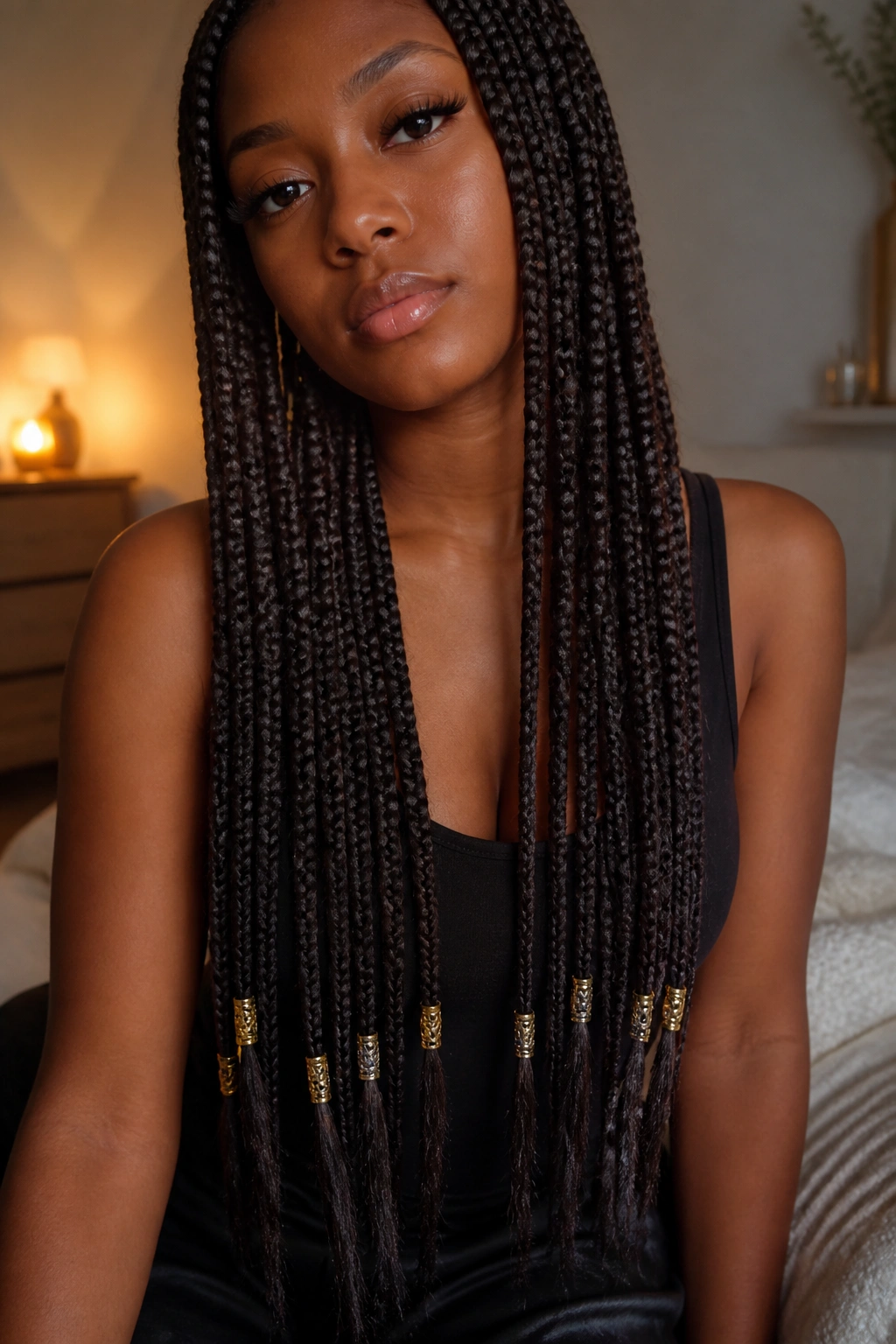
There’s something about a cuff at the end of a braid that makes the whole style look longer and cleaner. The eye follows the shine downward, which is handy on waist-length box braids that can feel heavy if they stop visually at the middle of the back.
This look works best when the braid ends are sealed neatly. If the tips are frayed, the cuff can draw attention to the frizz instead of hiding it. So yes, the base matters. A lot. A clean end lets the metal feel like a deliberate finish, not a fix.
I like this placement on braids that swing when you move. The cuff gives the ends a little weight and a little sound — that tiny soft clink that happens when a few braids brush together. It’s subtle, but it changes the mood of the style.
Keep the cuffs close to the ends, not crammed into the very last half-inch. That gives the braid enough room to hang naturally and keeps the metal from looking like it is about to fall off.
4. Face-Framing Accent Cuffs

A cuff near the cheekbone can change how the whole hairstyle reads. Face-framing accents draw attention upward, which is useful when you want the braids to flatter the eyes, jawline, or part without adding a lot of pieces.
Where to Place Them
The sweet spot is usually on the first braid that sits beside the face, or the second braid if the first one is too close to the hairline. One cuff on each side is often enough. If the braids are tiny, you can sometimes use two per side, but the spacing needs to stay loose.
This style has a softer feel than a full front-row lineup. It works when you want the jewelry to feel a little quieter, a little more deliberate. And it photographs well in a practical sense, not in a fussy sense — the cuff sits where the face naturally opens.
- Use one cuff per side for a clean frame.
- Match the placement to your part so the style looks balanced.
- Keep cuffs slightly below eye level so they do not crowd the forehead.
- Pair with small hoops or simple studs if you want the look to feel finished.
I reach for this one when the braids themselves are already doing enough.
5. Cuff Clusters on One Braid
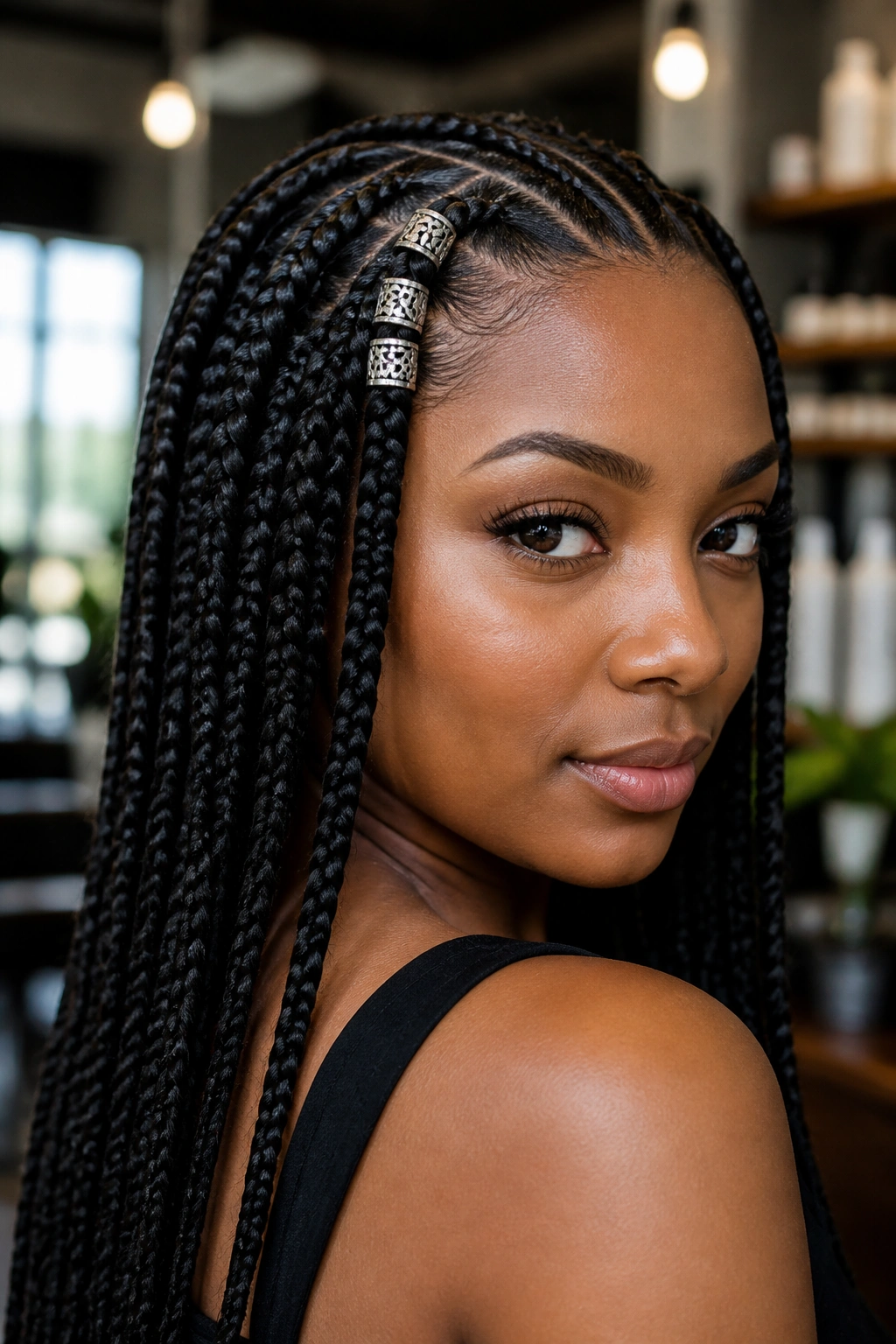
One braid carrying three cuffs is louder than twelve scattered cuffs. That’s why clusters work. They give you a focal point instead of a little shimmer everywhere.
The best version keeps the rest of the braids calm. If three cuffs are going on one braid, let the neighboring braids stay bare. Otherwise the style starts to look like it was assembled from leftovers. Clusters can sit near the top of the braid, run down the middle, or land in a short line near the end.
What Makes a Cluster Look Intentional
The spacing is the whole game. Place the cuffs about 1 inch apart so they read as a sequence rather than one chunky lump of metal. I also think clusters work better on thicker braids, because thin braids can get swallowed by too much hardware.
A cluster is a strong choice for concerts, photos, or any day you want the hair to carry more attitude than usual. It is not the quiet option. That’s fine. Not every style should whisper.
6. Minimal Scattered Cuffs
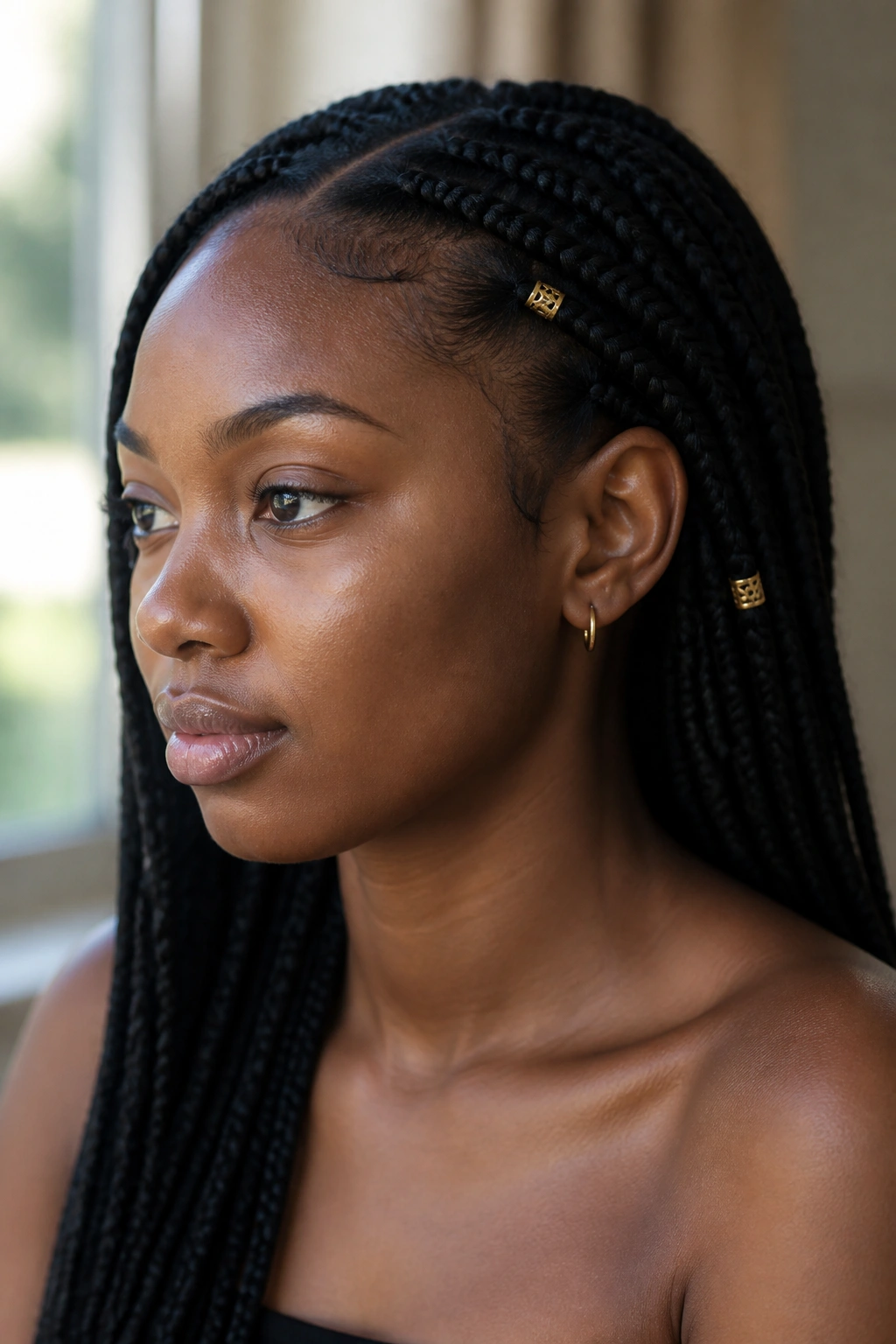
Two or three cuffs. That’s enough. Minimal placement is often the sharpest choice because it lets the braid pattern do the real work.
This style is for people who like the idea of hair jewelry but do not want their head to look decorated from every angle. One cuff on a braid near the temple, one on a braid behind the ear, maybe one near the back — that’s a complete look. It feels tidy, not sparse.
The best part is how easy it is to live with. Fewer cuffs mean fewer spots that can snag on scarves, collars, or hoodie strings. It also means less time fussing in the mirror when you’re getting dressed.
A lot of people try to “fill in” box braids with accessories. I usually think the opposite is smarter. Leave room for the parting, the braids, and your face. The cuffs should punctuate the style, not crowd it.
7. Half-Up Ponytail With a Cuff Trail

Why do cuffs look sharper in a half-up style? Because the hair already has a shape to follow. The ponytail gives the accessories a path, and that makes everything feel cleaner.
How to Place the Line
Gather the top section into a half-up ponytail, then use cuffs on the loose braids that fall beside it or trail underneath it. A small row of cuffs on the topmost braids can echo the line of the ponytail without competing with the elastic. That little echo matters more than people think.
Keep the base of the ponytail simple. Too many cuffs at the tie point can make the style bulky, and bulk at the crown is rarely flattering. Let the top section stay neat, then use the cuffs to guide the eye down.
- Add 2 to 4 cuffs around the upper section.
- Leave the lower layers bare for contrast.
- Use a satin scrunchie or covered elastic if the tie is visible.
- Keep the ponytail a little loose so the braids can move.
This one has a soft, lifted feel. It also keeps the neck clear, which is useful when the braids are long and warm.
8. Cuff-and-Bead Combo
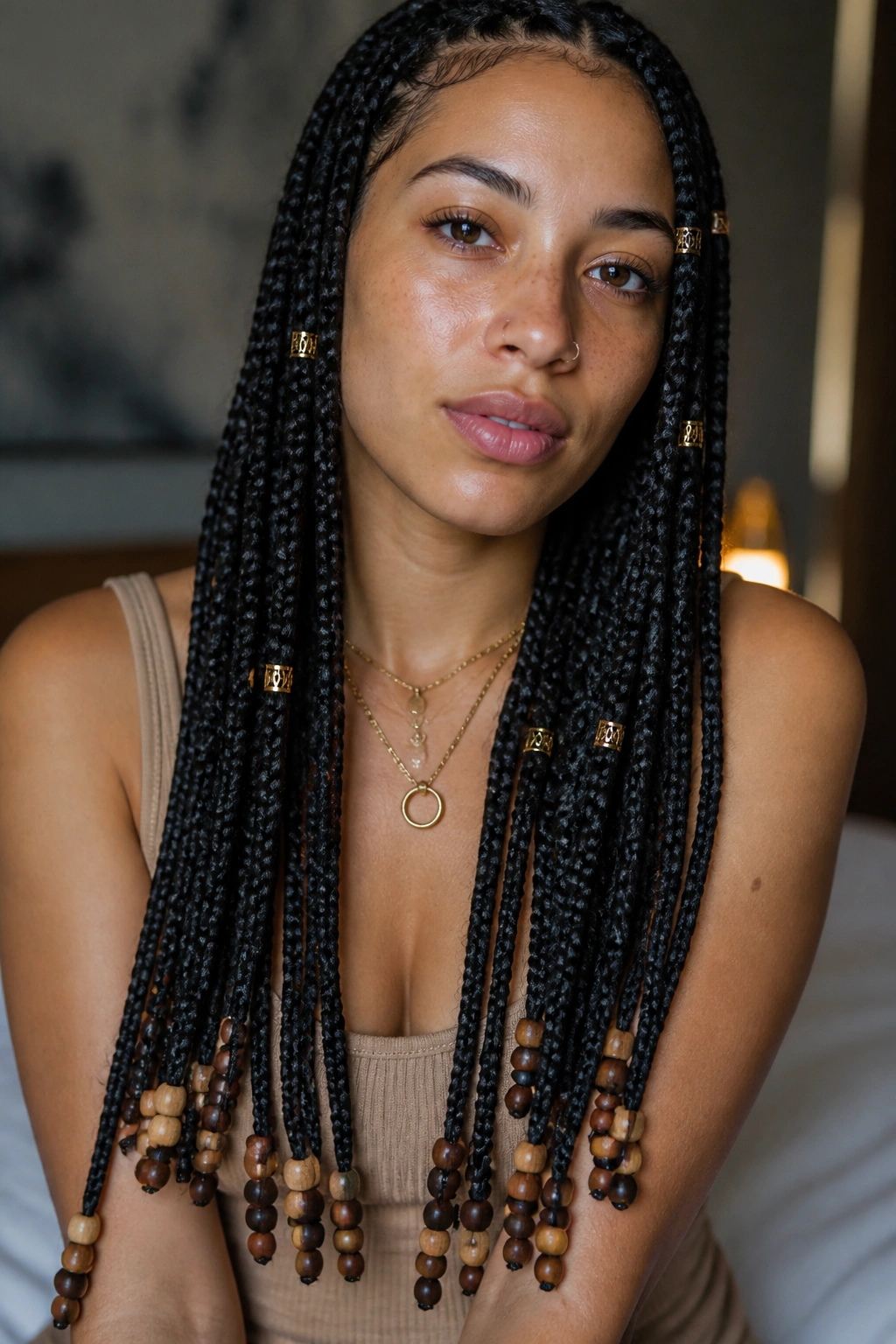
Cuffs and beads can work together if one of them stays in charge. The style falls apart when both accessories fight for attention. Pick a lead element and let the other one support it.
On long box braids, beads near the ends and cuffs closer to the mid-lengths make a nice split. The beads provide movement; the cuffs give structure. That’s a stronger pairing than loading both pieces into the same spot. If everything happens at the ends, the style can feel heavy and a little cramped.
This combo also works well when you want a more personal look. Swap clear beads for wood, matte black, or translucent tones, then keep the cuffs in one metal finish. The result feels collected instead of random.
A small warning: beads add weight, and cuffs can shift that weight around. If your braids are fine or freshly installed, keep the combo modest. One braid with both is enough. Two or three braids with both is enough. You do not need to turn every plait into a hardware project.
9. Spiral Cuffs on Long Braids

Spiral cuffs have a different feel from flat rings. They wrap around the braid like a coil, which gives the style a little texture even when the braid pattern itself is simple.
Long braids are where spiral cuffs make the most sense. A flat cuff can look a little lost on a thick, long plait, but a spiral has enough shape to hold its own. It also sits more securely because the coil grips the braid from more than one point.
This style is especially good when you want movement without a lot of extra shine. Spiral cuffs tend to look a little more dimensional than plain rings, especially when the braid swings past the shoulder. They can also help a long braid feel more finished from a distance.
I like them halfway down the braid or just above the end. Right at the root, they can feel fussy. Right at the tip, they can disappear. Mid-length is the sweet spot.
10. Colored Enamel Cuffs

A black braid with a red cuff or a white cuff can look surprisingly clean. Color does the job that metal does, but with more personality. The best colored cuffs act like a tiny accent stripe instead of a loud statement.
Picking the Right Shade
Dark braids usually look strongest with high-contrast colors like white, cobalt, red, or green. Blonde braids can handle softer tones — blush, cream, pale blue — without the cuff disappearing. If your braids already have highlights or two-tone color, use a cuff that picks up one of those shades.
What I like about enamel cuffs is that they feel controlled. You still get the shape of the jewelry, but the finish reads less like metal and more like a color choice. That gives the hairstyle a tighter link to clothes, nails, or makeup.
Use the colored cuffs in a repeated pattern if you want the style to feel planned. One on each side is enough for a small touch. Three placed evenly through the front rows creates a stronger line. More than that and the color can start to compete with the braid color itself.
11. Oversized Statement Cuffs on Jumbo Box Braids
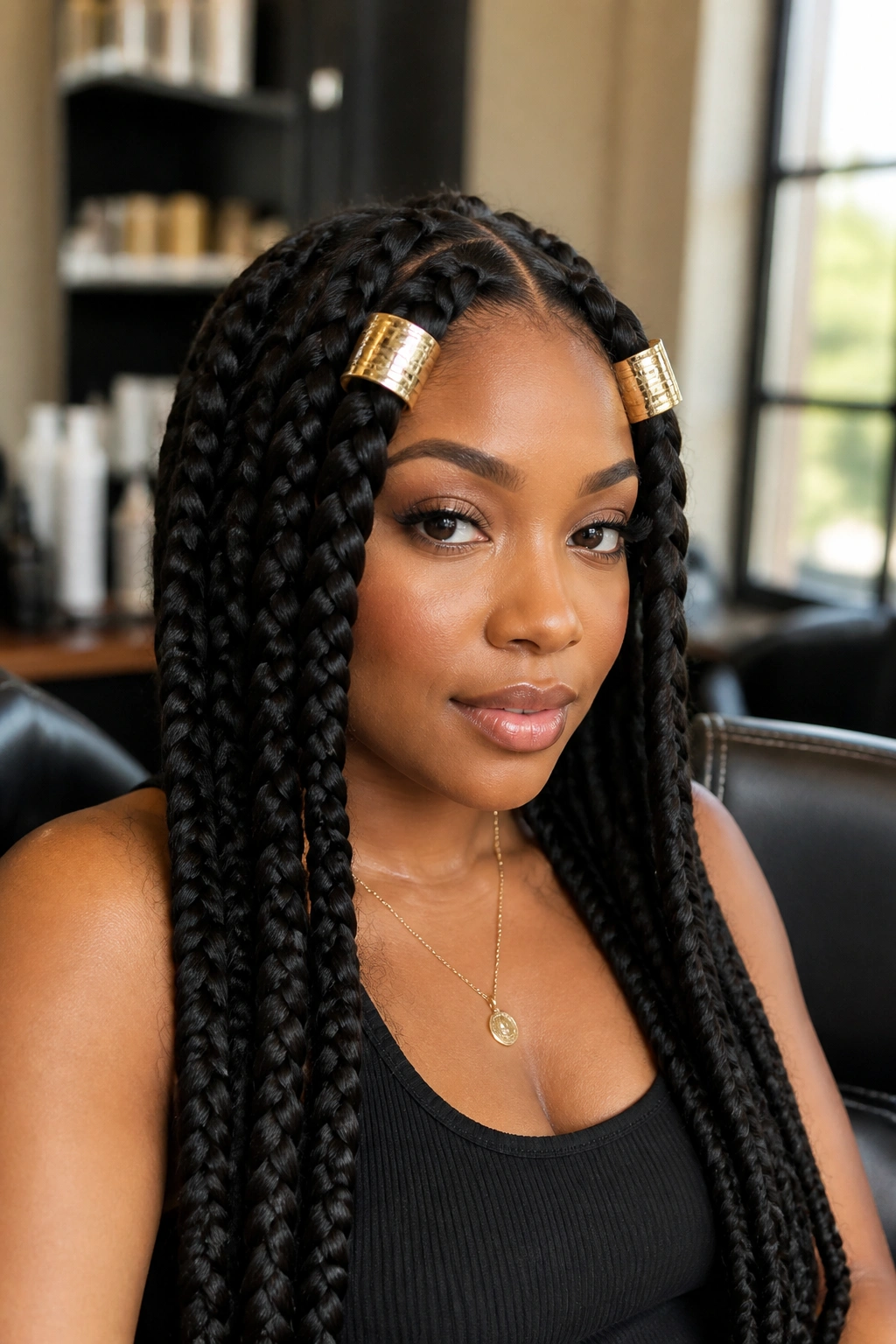
A tiny cuff on a jumbo braid can look like an afterthought. Size should match the braid thickness. That sounds obvious, but people ignore it all the time.
Oversized cuffs work because they hold their ground next to a chunky braid. They have enough visual weight to read from across the room, which is useful when the braids themselves are large, thick, and already taking up space. A small ring can vanish on a braid that big. A wider cuff doesn’t.
This style is good for long weekends, big earrings, and outfits with strong shapes. It pairs well with jumbo box braids because the braid size already feels confident. The cuff just sharpens the outline.
Use them sparingly. One or two oversized cuffs near the front is usually enough. Too many, and the braids can start to feel heavy around the face. That’s not a hair issue so much as a balance issue. Big braids need room to breathe.
12. Tiny Cuffs for Knotless or Small-Part Braids

Tiny cuffs shine when the braids themselves are fine. They sit flat, stay subtle, and do not overwhelm the parting. On knotless braids or small box braids, that smaller scale matters a lot.
The main thing to watch for is the opening of the cuff. It should slide on without forcing the braid through. If you have to pinch or tug hard, the cuff is too narrow or the braid is too thick for that piece. A smooth inner seam helps too, because tiny cuffs can snag faster than larger ones.
What to Watch For
- Choose cuffs with a smooth inside edge.
- Keep the placement a little lower on the braid so the roots stay relaxed.
- Use small pieces in groups of 2 or 3, not a long chain.
- Skip cuffs that feel springy or sharp when you open them.
Tiny cuffs are best when you want detail, not drama. They add a small flash that feels neat from close up, and they are easier to wear with thin braids that already have a delicate line.
13. Side-Swept Braids With Cuffs Following the Curve

A side-swept braid style gets even sharper when the cuffs follow the direction of the sweep. The metal becomes part of the shape, not a separate decoration stuck on top.
This is one of my favorite placements because it respects the braid pattern. If the hair is swept to the left, the cuffs can trace that line on the outer edge of the sweep. The eye follows the curve naturally, and the style looks finished without needing many pieces.
The trick is not to place the cuffs evenly on both sides. That would flatten the whole effect. Keep the cuffs on the visible side, then leave the tucked side cleaner. The contrast makes the sweep stand out more.
It works especially well when you pin or secure part of the braids behind one ear. One or two cuffs near the front, another one halfway down the visible side, and the look has a clear direction. It’s a small styling decision, but it changes the whole mood.
14. Thread-Wrapped Braids With Cuffs
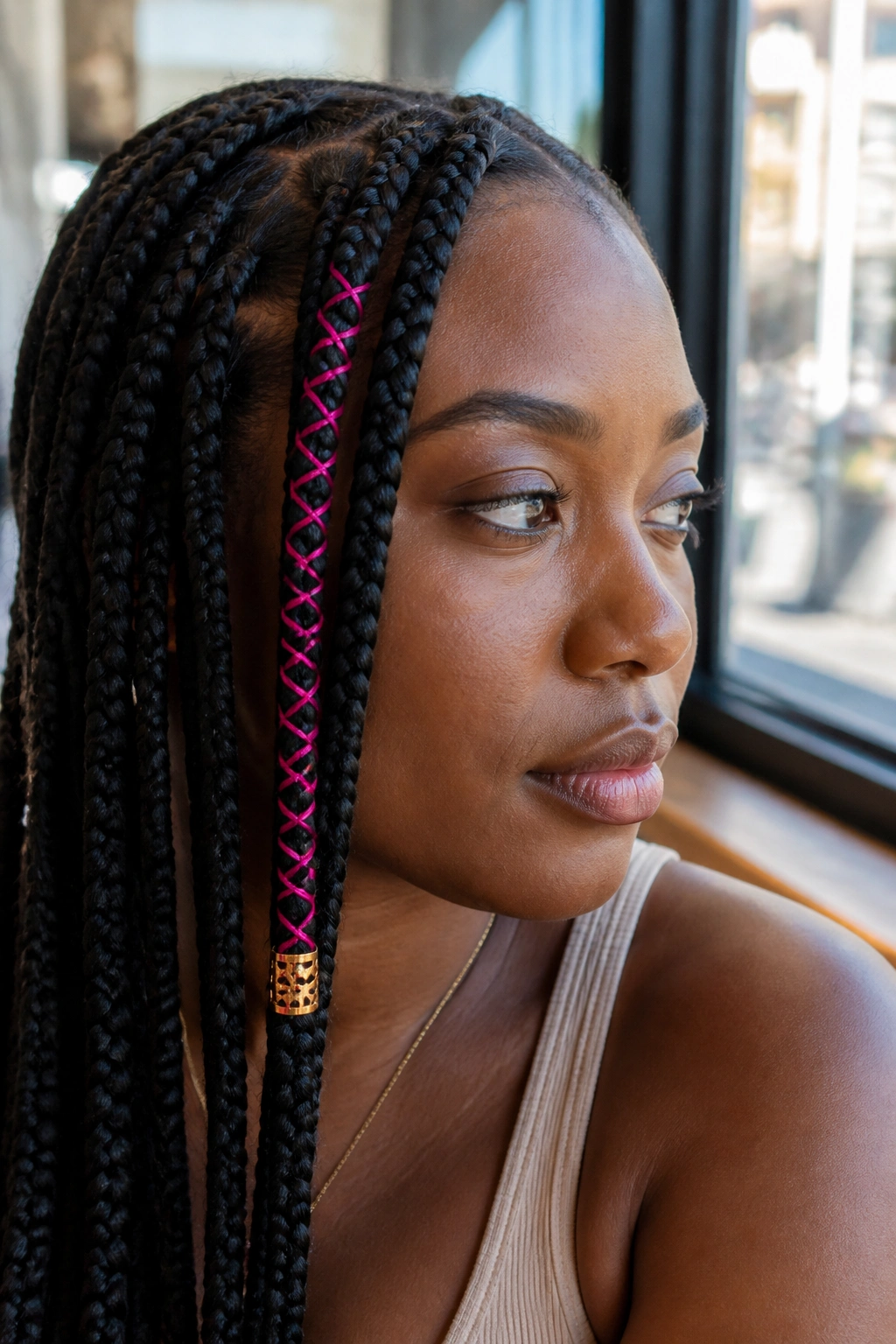
Thread wraps and cuffs can get along, but only if you keep the colors and textures under control. Too many accents in the same braid turn into noise fast.
I like this combo when the thread adds color and the cuff adds shine. The wrap can cover a short stretch of braid, then the cuff sits at the edge of that section like a little punctuation mark. That creates a nice hand-done feel, almost like the style was built in layers instead of dressed up at the end.
The best results come from using one main thread color and one metal finish. If the thread is bright, keep the cuff simple. If the thread is neutral, the cuff can carry more visual weight. Mixing loud thread, colored cuffs, and beads all at once tends to look crowded.
A Simple Rule
Pick one thing to be the star. Let the other piece support it.
That rule saves a lot of styling regret.
15. Three-Point Placement: Roots, Mid-Lengths, and Ends
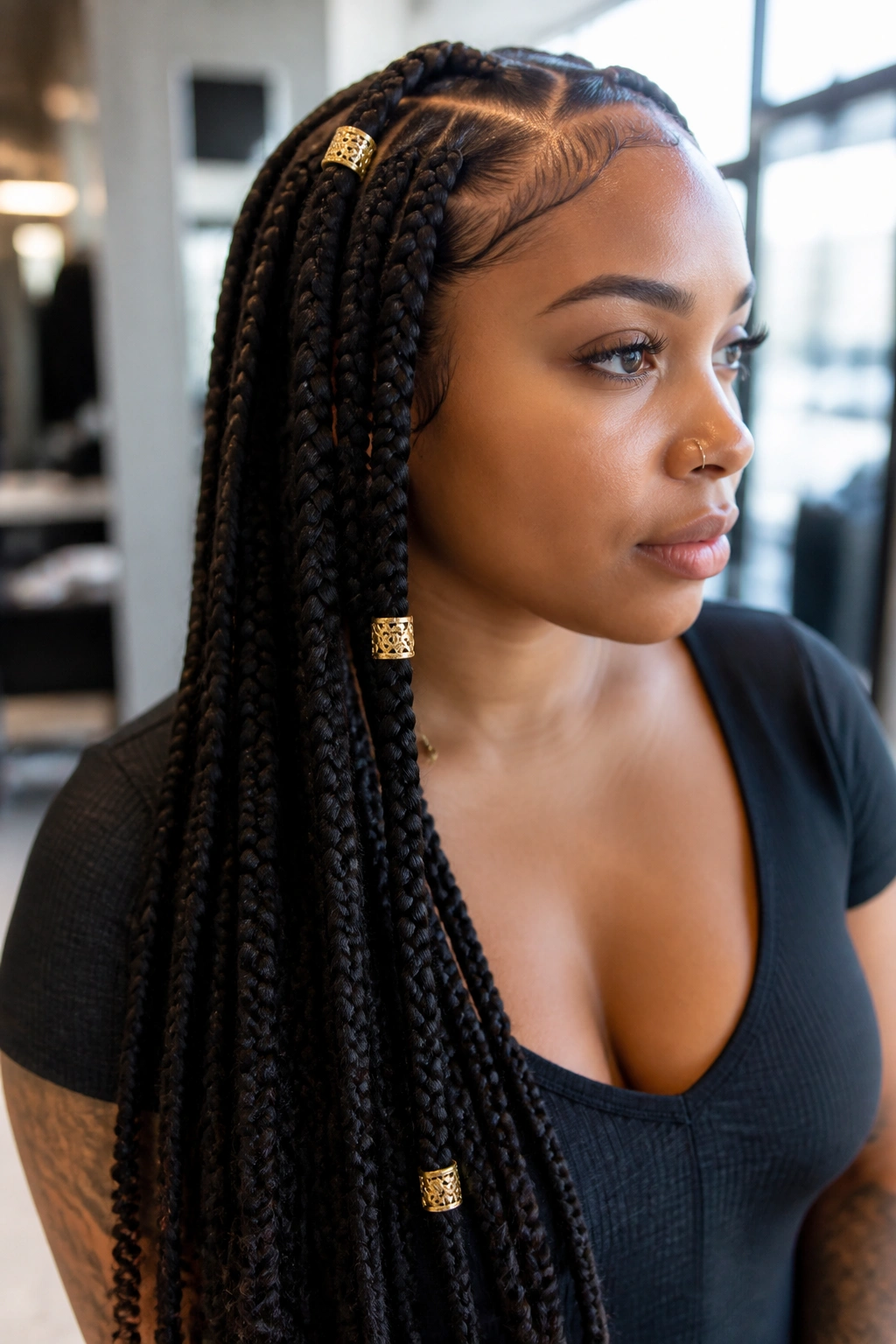
If you want the fullest version of cuff styling without making the braids look overloaded, use a three-point placement plan. One cuff near the upper braid, one at mid-length, one near the end. Simple. Strong. Easy to control.
A Clean Placement Map
Start with the upper section, but stay below the root. A cuff too close to the scalp can tug and make the part feel tight. Place the next cuff around the middle of the braid where it can catch the eye when the hair moves. Finish with a cuff near the end, where it gives the braid a tidy close.
That structure works because each cuff has a job. The top cuff frames. The middle cuff adds rhythm. The end cuff gives closure. You do not need that treatment on every braid — one or two braids with this full pattern are enough to anchor the look.
- Keep the spacing even, not crowded.
- Use the same metal finish for a clean line.
- Leave a few braids bare so the three-point pattern stands out.
- Remove the cuffs before washing so they do not snag or slide around.
A style like this looks good in motion, which is half the reason people wear box braids in the first place. The cuffs move with the hair, not against it. And that’s the whole trick, really.
