



School hair has a funny job. It has to look neat at 7:10 a.m., survive a backpack, a lunch period, gym, windy sidewalks, and maybe one friend who keeps tugging your sleeve to show you something on their phone. That’s why cute braided hairstyles for school days earn their keep: they stay put, they keep hair out of your face, and they usually look better by the end of the day than a pin-straight blowout that surrenders before first period.
The best school braid is not the fanciest one. It’s the one you can do without a full meltdown in front of the bathroom mirror. It should feel secure, not painful. If your scalp hurts by homeroom, the braid is too tight, and that tightness is not a badge of honor.
I keep coming back to braids because they solve a real school-day problem: hair that frizzes, tangles, falls into your eyes, or flattens out by noon. A good braid gives shape, some polish, and a little personality without asking for a complicated routine. Some styles take five minutes. Others need a little practice. All of them can be adjusted to fit straight, wavy, curly, coily, or mixed textures.
1. Double Dutch Braids

Double Dutch braids are the style I reach for when I want hair that looks organized before the first bell and still looks intentional after the last one. They sit close to the scalp, which means they stay put better than loose braids, and they give that clean, sporty shape that works with hoodies, uniforms, and messy backpacks.
Why They Work So Well for School
Dutch braids pop upward instead of sinking into the hair, so even a simple pair feels more defined. That makes them especially good if your hair is thick, layered, or prone to slipping out of regular braids by lunchtime.
- Part the hair down the middle with a tail comb for a cleaner finish.
- Braid each side with steady, medium tension — not tugging, not loose enough to unravel.
- Use a light mist of water or leave-in spray if your strands frizz fast.
- Finish with small clear elastics or snag-free bands.
Pro tip: If your ends puff out, wrap a tiny ribbon or small scrunchie around each braid end instead of over-tightening the elastic.
2. French Braid Ponytail
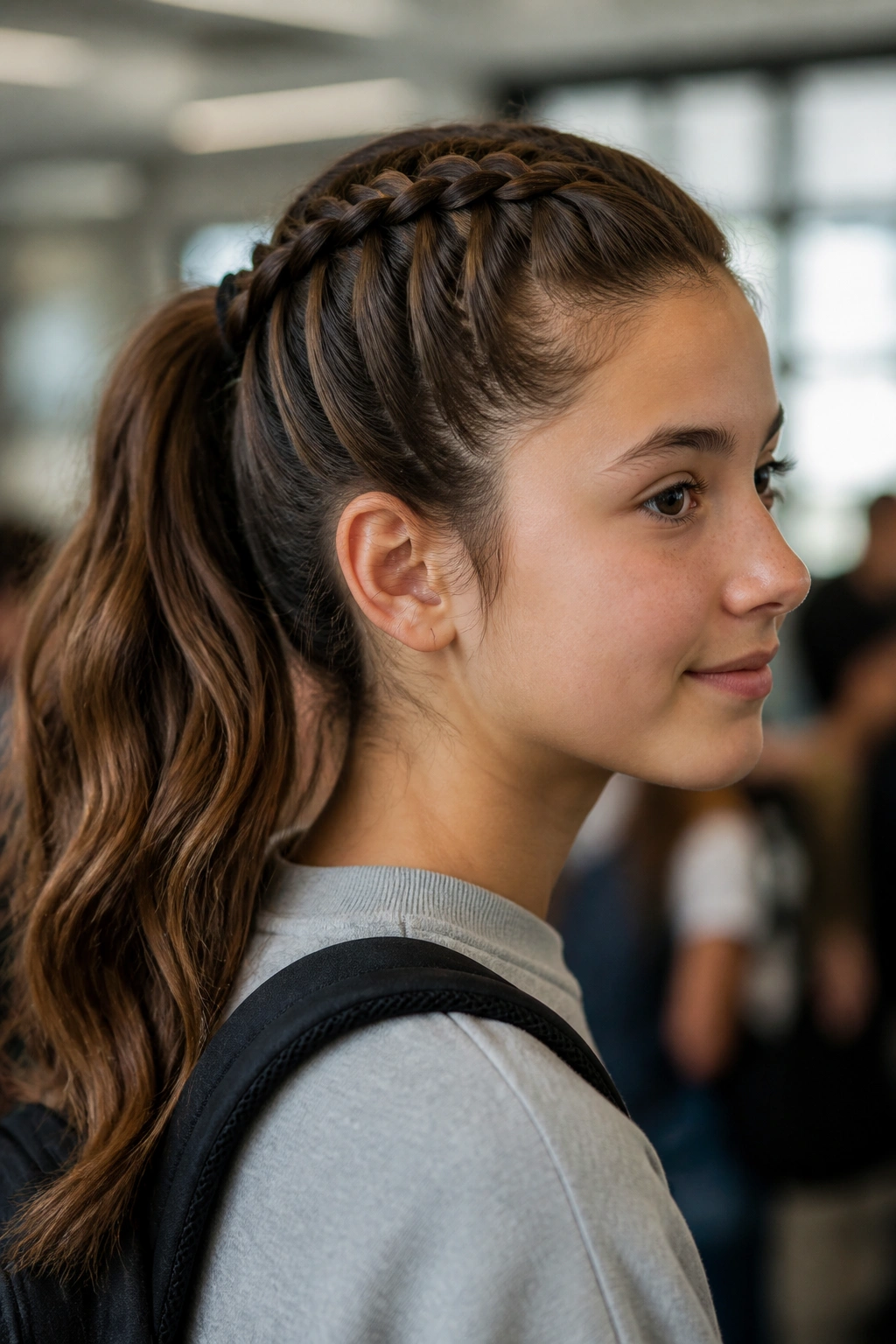
A French braid that turns into a ponytail is one of those styles that looks polished without looking fussy. It keeps the crown smooth, gets the hair off your face, and leaves enough length hanging down to feel softer than a full braid.
What I like about this one is the balance. The braid does the neat work up top, where the parting and flyaways tend to misbehave. The ponytail gives you movement. That matters on a school day, because hair that never moves can start to feel stiff by third period.
Start the braid at the hairline and feed in sections until you reach the nape. Then secure it into a low, mid, or high ponytail, depending on how much bounce you want. A mid ponytail tends to be the sweet spot. It does not pull as hard as a high one, and it sits nicely under a backpack strap.
3. Side Fishtail Braid
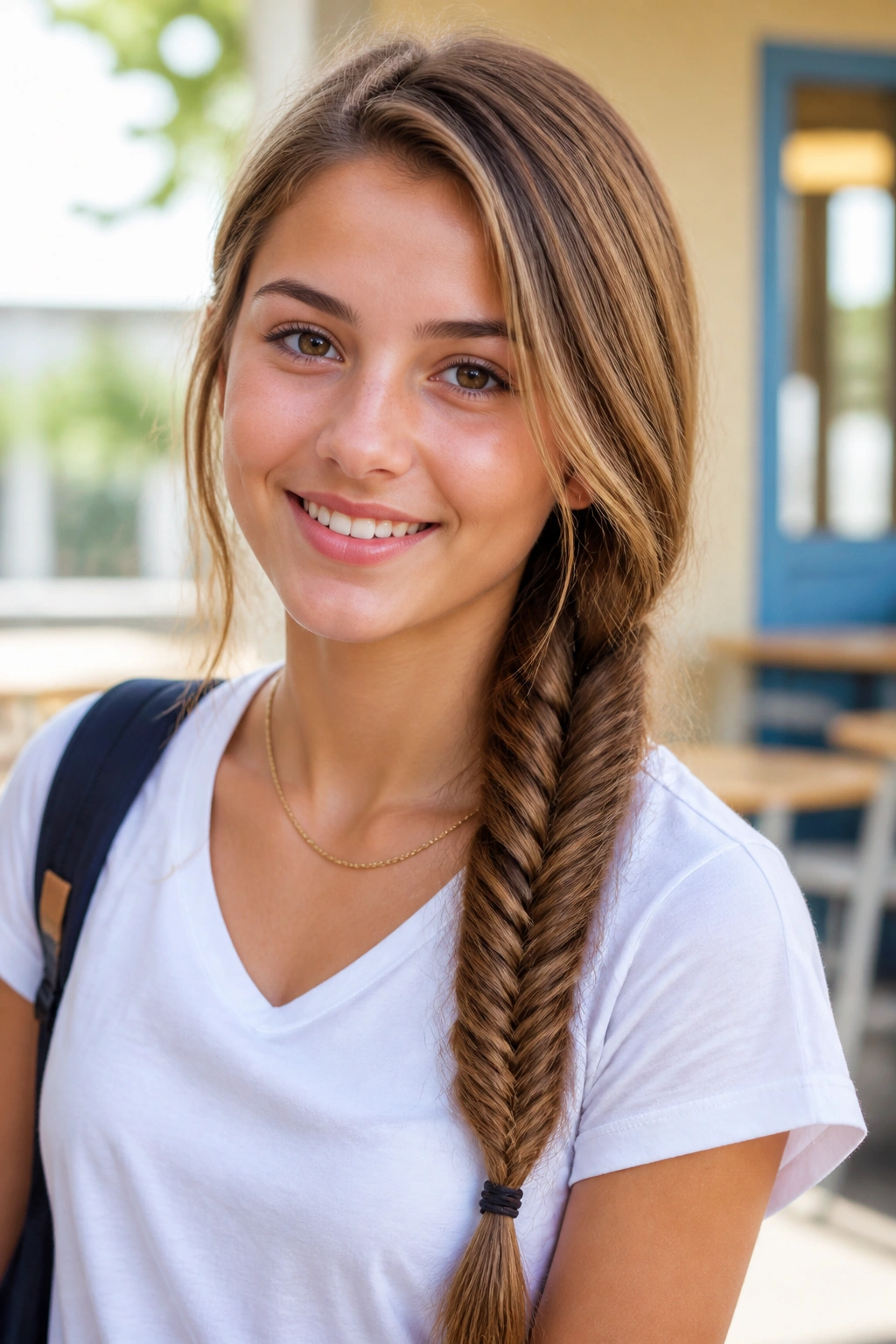
Why does a side fishtail braid look more finished than a regular side braid? Because the smaller woven pieces create a tighter, almost scaled pattern that catches the eye without needing extra accessories.
It’s a nice pick for hair that’s medium to long, and it works especially well when you want something a little different but not loud. I’ve always liked it for days when the outfit is simple and the hair needs to do a little more of the talking.
How to Wear It
Start with a low side part, bring all the hair over one shoulder, and split the length into two sections. Then cross a thin piece from the outside of one section over to the other side, alternating slowly. The trick is to keep the pieces small and even. Big chunks make it look chunky; smaller pieces give that woven finish.
A fishtail braid gets better if you gently tug it wider at the end. Not a lot. Just enough to soften it. That loosened shape makes it feel more casual, which is usually the better school-day move.
4. Half-Up Crown Braid
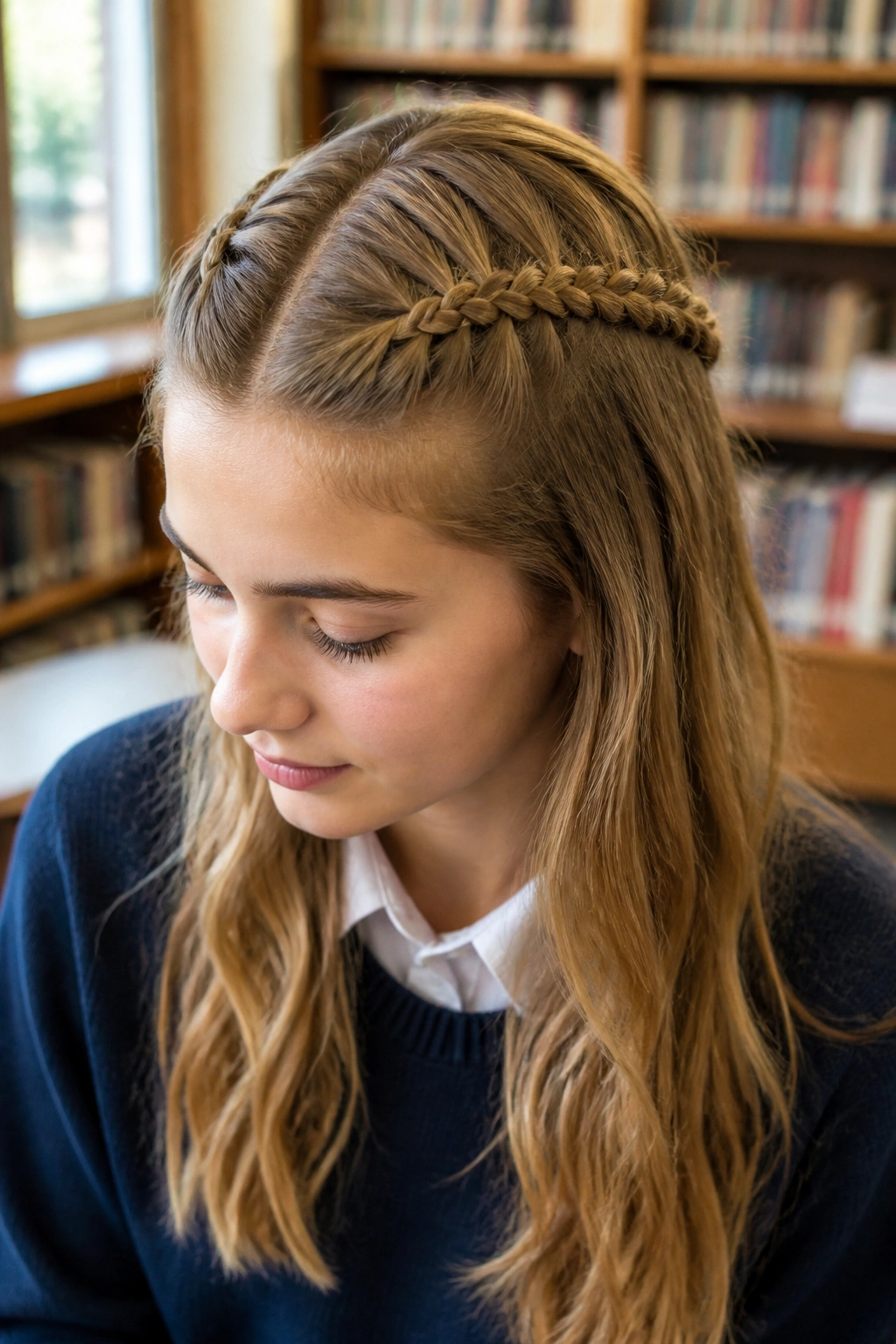
This one has saved more bad hair mornings than I can count. A half-up crown braid pulls the front pieces away from the face, but it leaves the rest of the hair down, so the whole thing feels softer than a full updo.
Picture a day when your roots are a little flat, your ends are doing their own thing, and you still want to look like you made an effort. That’s exactly where this style lives. It hides the most stubborn part of the hair — the front — and lets the rest fall naturally.
- Take two small front sections near the temples.
- Braid each section back toward the crown.
- Pin or tie the braids together at the back of the head.
- Leave the rest loose, curled, waved, or straight.
Small detail that matters: If the pins slide, cross them in an X shape. That holds better than sticking them in parallel.
5. Braided Low Bun
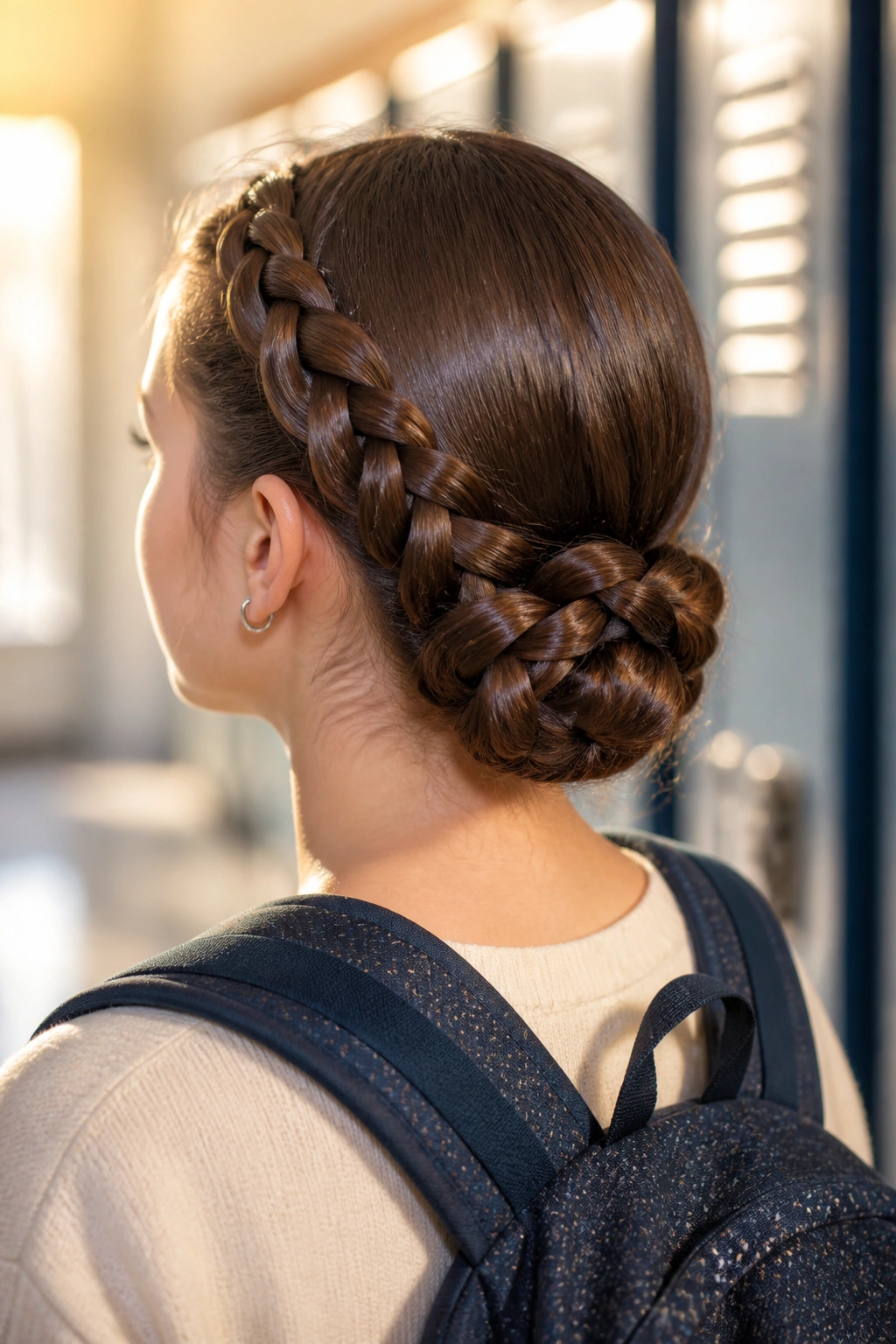
A braided low bun is neat in the best way. It keeps the neck clear, which is a small gift on warm days or during long bus rides, and it has a calm, finished look that works with almost anything a school day throws at you.
I prefer this style when I want something that won’t unravel if I’m running late. It starts as a braid, so the length stays controlled, then it coils into a bun at the base of the neck. The result looks more deliberate than a plain bun, but it takes about the same amount of time once you’ve done it a few times.
The key is not to overthink the braid. A simple three-strand braid is enough. Twist the braid around itself, tuck the ends under, and secure with two pins from opposite directions. If your hair is layered or silky, a little texture spray helps the bun grip instead of sliding around.
6. Rope Braid Pigtails

Rope braid pigtails look clean and a little sporty, and they are a nice switch if you’re bored with regular three-strand braids. Instead of weaving three sections, you twist two sections around each other. That gives a smooth spiral look that stays tidy and dries faster if your hair is damp when you start.
Unlike Dutch braids, rope braids don’t take quite as much finger coordination. That makes them a good choice if mornings are chaotic and you want something you can do without staring at your hands the whole time. They also sit nicely on hair that’s long enough to swing but not so long that it keeps getting caught in zippers and backpack straps.
They’re best for straight or wavy hair that needs a little control. If your hair is very slippery, use a tiny bit of mousse before twisting. A middle part keeps the look balanced, though a side part gives it a softer, more casual feel.
7. Waterfall Braid
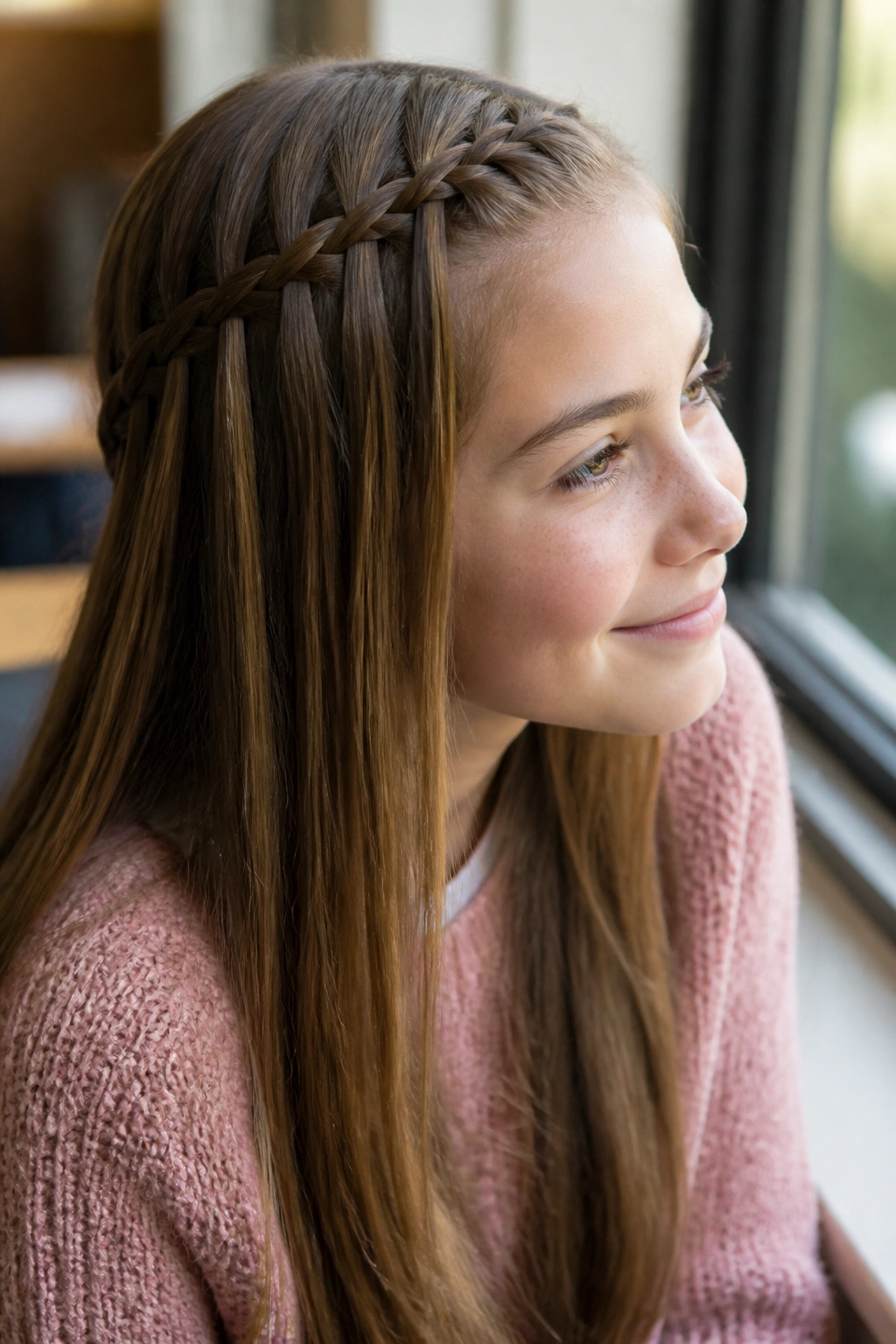
A waterfall braid looks like you spent far more time on your hair than you actually did. That’s the charm. It lets pieces drop through the braid like little ribbons, which gives the style movement and makes it feel lighter than a full braid.
This one works well when you want the front and sides controlled but still want hair down in the back. It’s not the best style for a gym-heavy day, because the loose ends can get fuzzy. Still, for classroom days, it’s a lovely middle ground.
How to Keep It Neat
Start near one temple, braid across the head, and let one strand fall each time you cross in a new section. That falling strand is the “waterfall” part. Keep the braid close to the scalp so it does not sag, and secure the end behind the ear or at the back with a small pin.
The style looks best when the loose hair has a little bend or wave. Pin-straight hair can work too, but a soft curl makes the dropped pieces stand out more.
8. Halo Braid
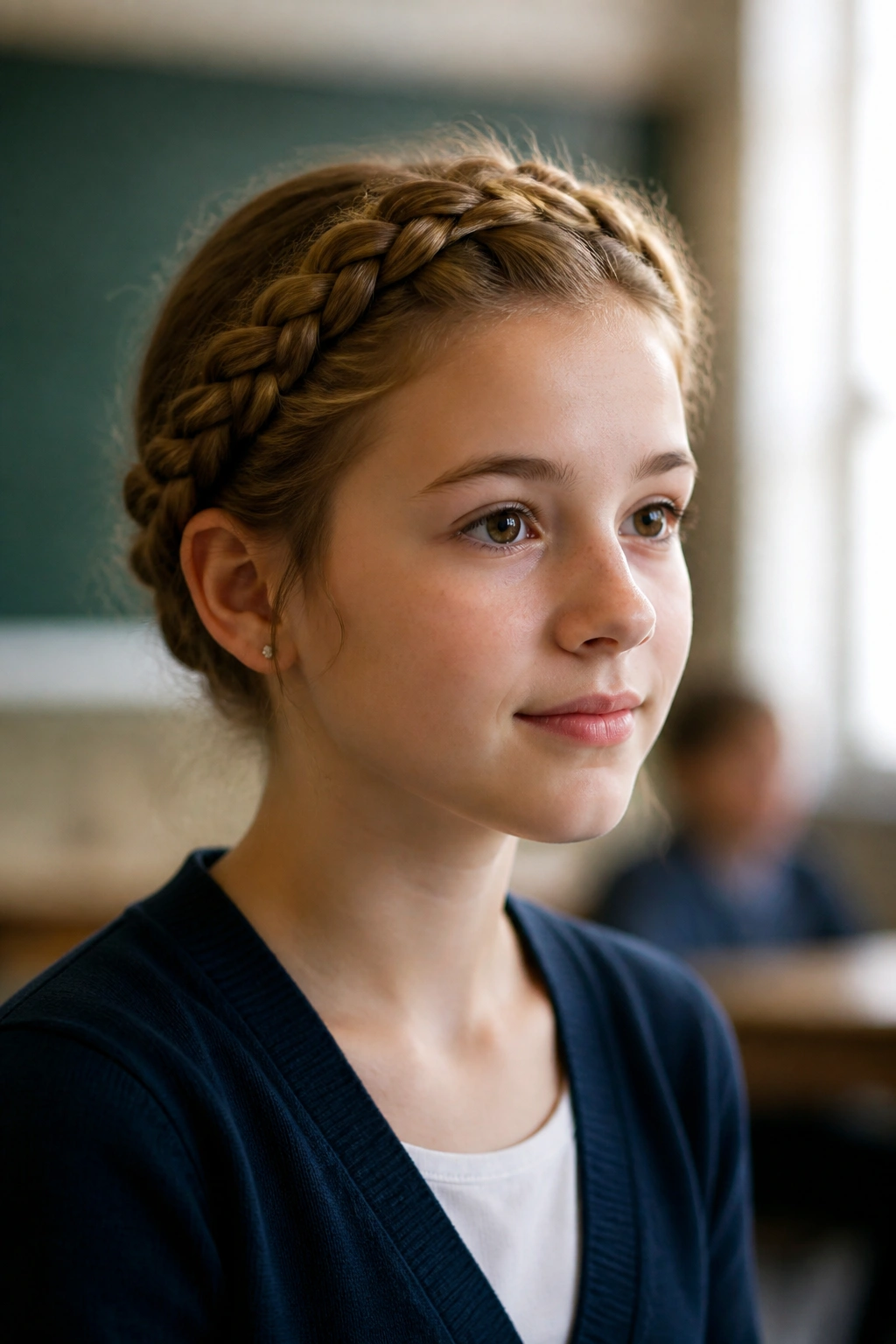
A halo braid solves a very specific school-day problem: hair that gets in your face every five minutes. It wraps around the head like a crown, keeps everything secure, and has enough shape to look dressed up without crossing into fussy territory.
I like halo braids most on days with presentations, photos, or events where you do not want to touch your hair all day. Once it’s pinned well, you can forget about it. That feeling alone is worth a lot before breakfast.
The braid can be made with longer hair wrapped all the way around, or with two side braids pinned into a circle. The second version is easier for beginners and often holds better on layered hair. Use bobby pins that match your hair color if you want a quieter finish. If you want the braid to look softer, tug the outer edges gently once it’s pinned.
9. Pull-Through Braid
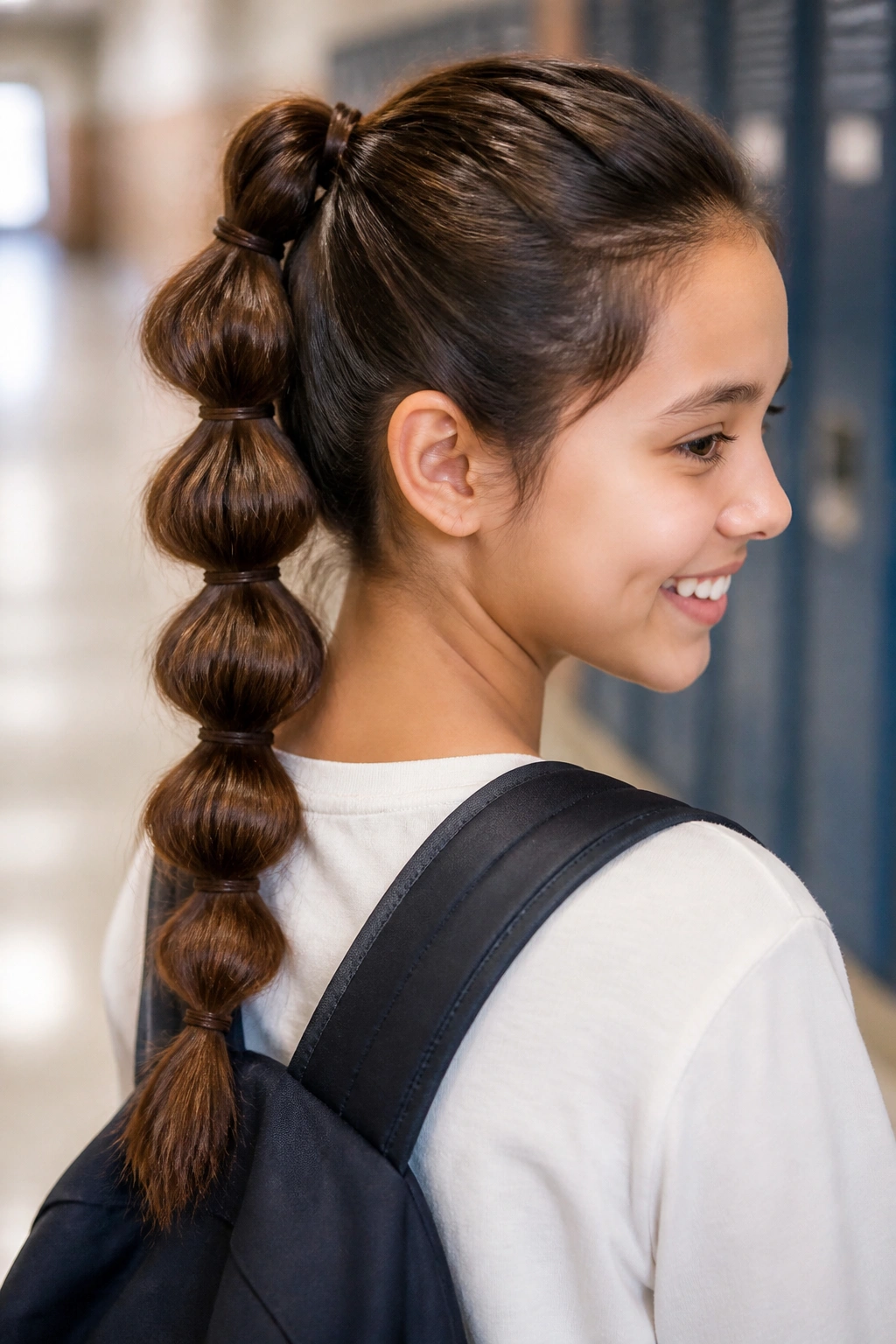
If you have thinner hair, or your hair slips out of regular braids, a pull-through braid is one of the smartest options on the list. It creates the look of a thick braid by stacking ponytail sections one over the next, so the finished style looks fuller than the actual amount of hair you started with.
That fuller shape makes it feel a little fancy, but the technique is built on elastic bands, not complicated weaving. Which is good. School mornings reward styles that look hard and behave easy.
Here’s the part that makes it work: each section should be smoothed before it’s added. A quick pass with a brush between elastics keeps the braid from looking lumpy. It’s also one of the better styles for hair that doesn’t hold a traditional braid well because the bands do the main work.
- Use small clear elastics every 1 to 2 inches.
- Keep each top section evenly puffed.
- Gently pull the sides of the finished braid for volume.
- Hide the last elastic with a ribbon if you want a softer finish.
10. Braided Space Buns
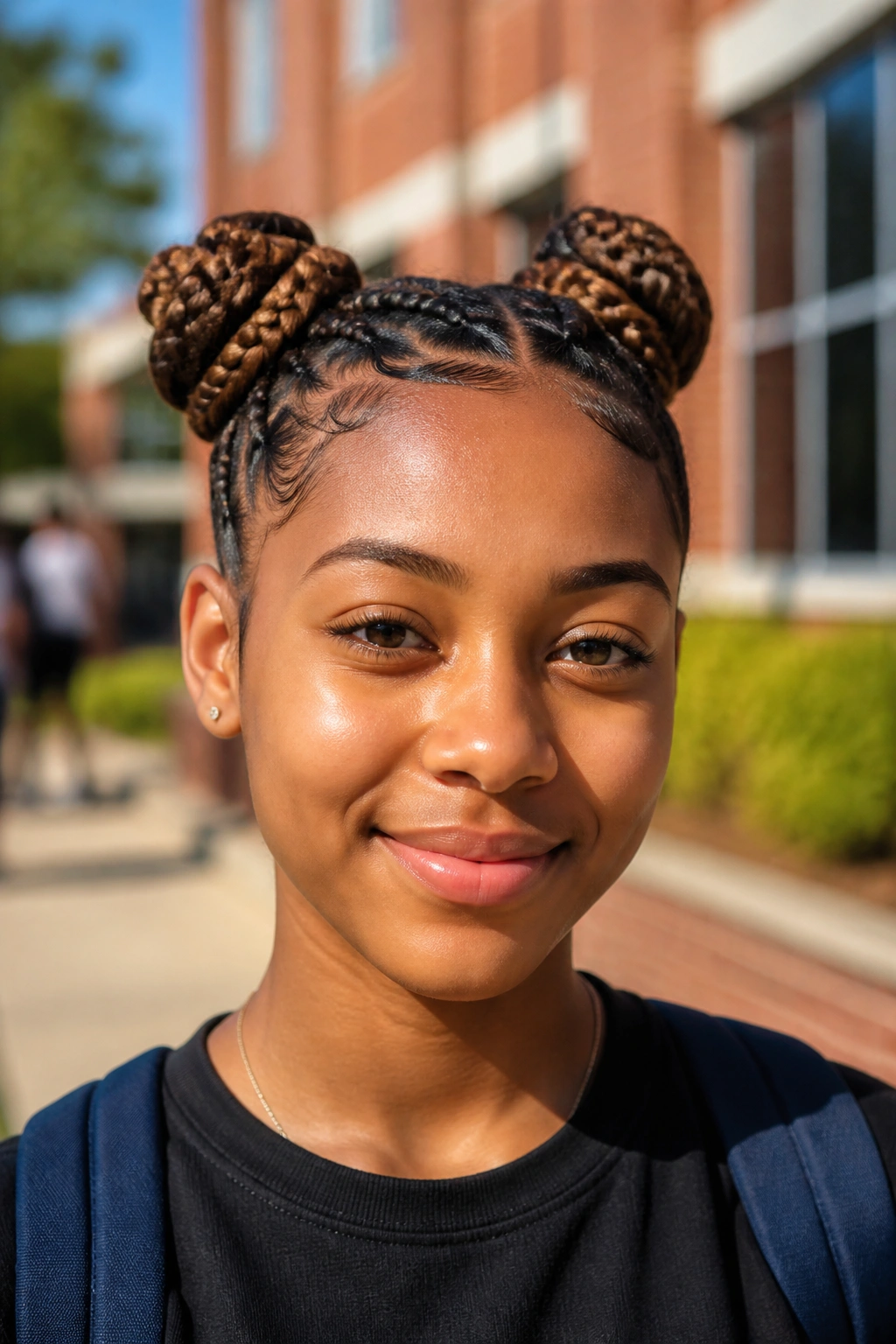
Braided space buns feel playful, but they can still look tidy enough for school if you keep the parts neat and the buns small. They’re one of my favorites for days when you want something with personality but do not want loose hair flying everywhere.
The style works best when each side is braided first, then twisted into a bun. That extra braid detail makes the buns look more finished than plain buns. It also helps the style last longer, because the braid gives the bun a bit of structure.
One useful trick: don’t make the buns too high unless you like pressure at the crown. Slightly lower buns sit more comfortably under headphones, hats, and backpacks. If your hair is very thick, a pair of smaller buns can feel lighter than two giant ones, and they often hold better with fewer pins. Cute, yes. Practical too.
11. Four-Strand Braid
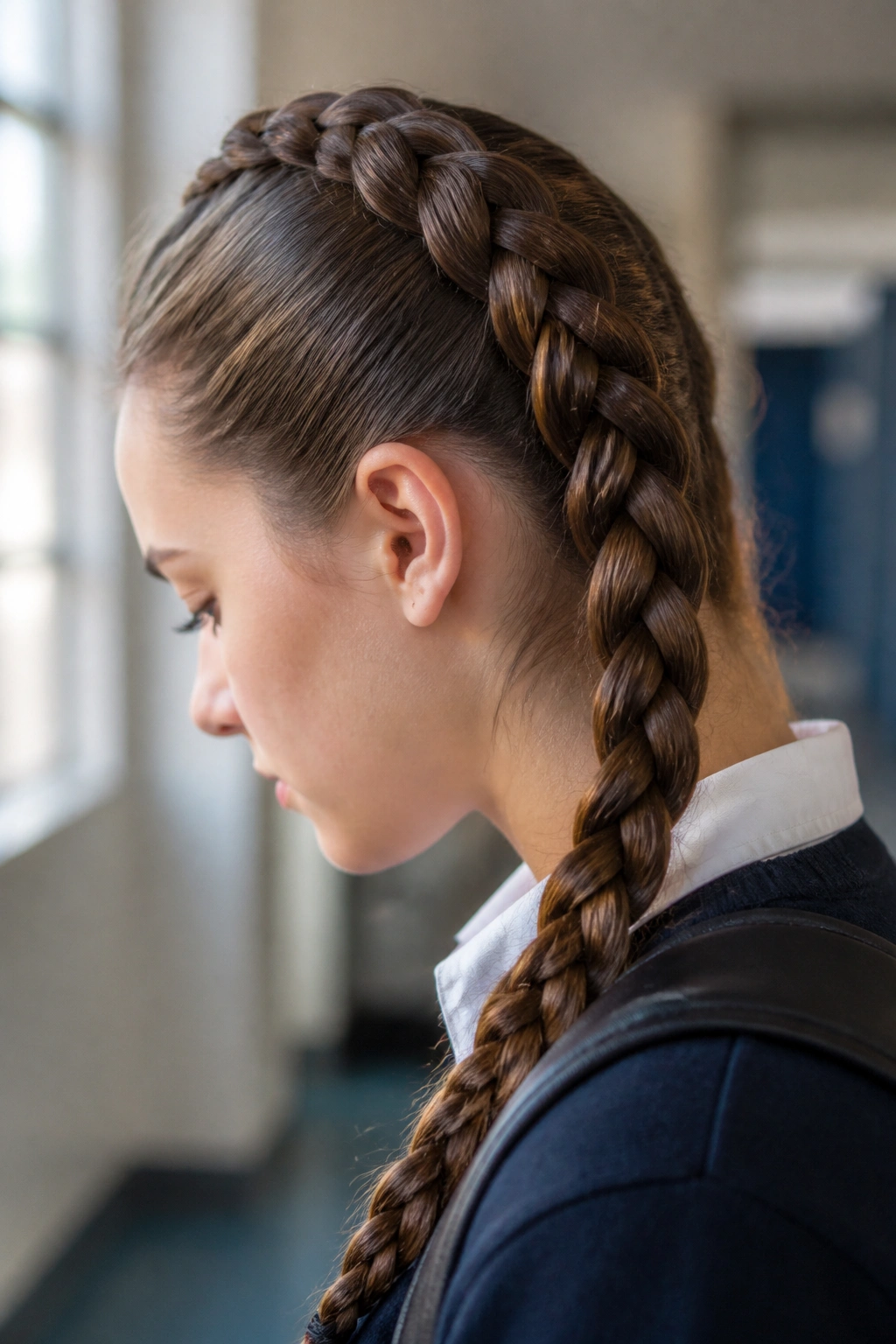
A four-strand braid looks more complicated than a regular braid, and honestly, that’s part of its appeal. It has a flatter, woven look that stands out without needing beads, clips, or a fancy part.
Unlike a three-strand braid, which is familiar and quick, the four-strand version has a little more rhythm to it. That rhythm gives the braid a rope-like finish that feels polished on long hair. It is best for the kind of morning when you can afford two extra minutes and want something that looks a bit different from the usual braid everyone else is wearing.
It does take practice. The first few tries can feel tangled in your hands. Once the pattern clicks, though, it becomes one of those styles you can do while half watching a mirror and half listening for your bus. If you want a cleaner finish, smooth each strand before you start and keep a firm grip at the top.
12. Two Accent Braids into a Ponytail

What if you only have ten minutes and still want your hair to look like you planned it? Two small accent braids pulled into a ponytail are the answer. They’re quick, they frame the face, and they make even a plain ponytail feel more thought-out.
This style works because the braids do the visual work up front. The rest is easy. Pull the hair back into a low or mid ponytail, leaving two slim braids at the temples or hairline. That little bit of texture changes the whole look without asking for a full braid set.
How to Keep It Clean
Use a rat-tail comb to section the front pieces neatly. Braid each piece all the way down or stop halfway, depending on the mood. Then gather everything into one ponytail and wrap a small strand of hair around the elastic if you want a smoother finish.
A flat ironed ponytail is not required. Wavy, curly, and coily hair all work here, and the style often looks better when there’s a little natural texture left in it.
13. Boxer Braids
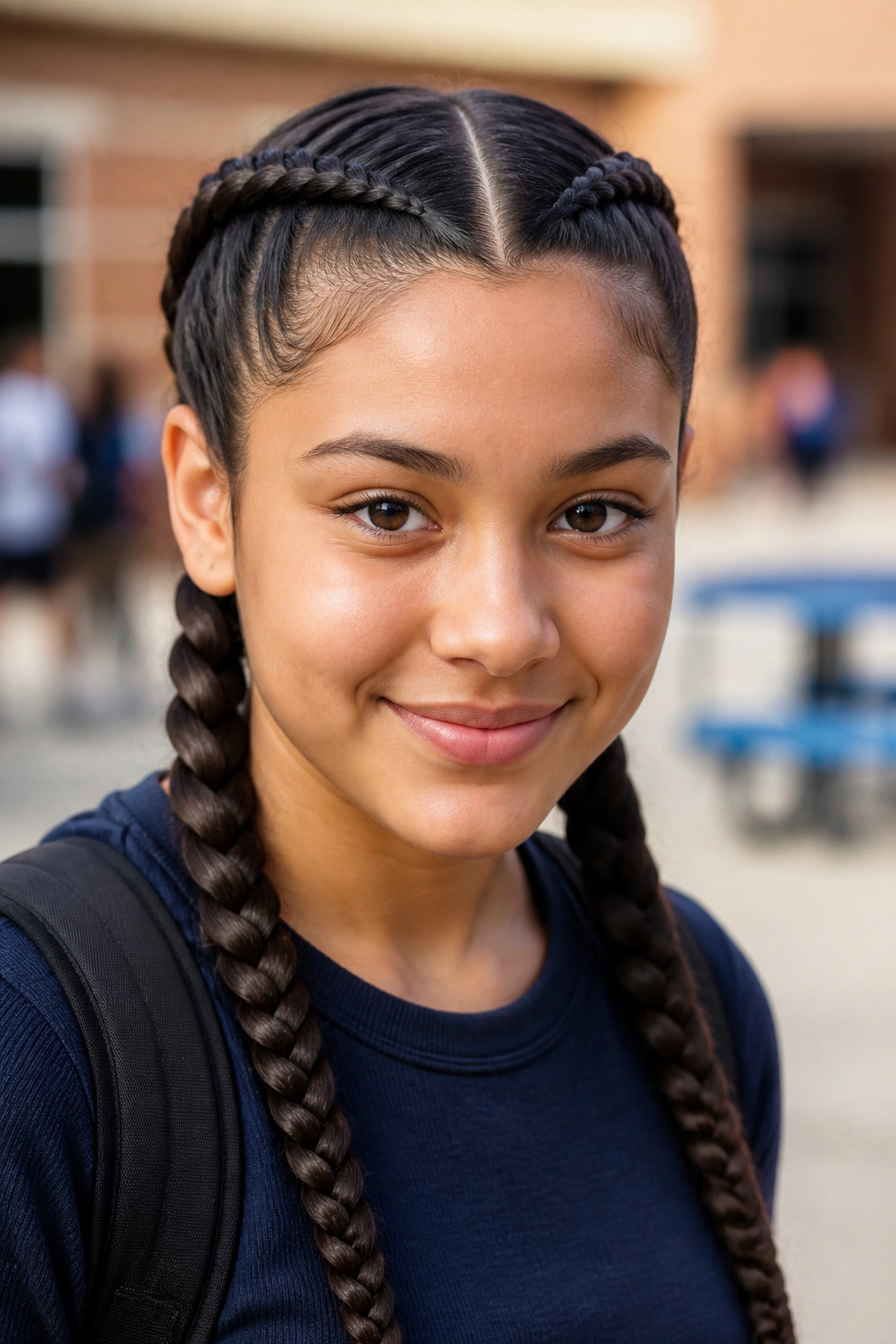
Boxer braids are basically the school-day workhorse. They stay close to the head, keep the hair secure, and hold up well when the day gets active. If there’s PE, a walk home, or a long afternoon that turns everything into a mess, this style earns its spot.
A middle part makes boxer braids look crisp. The braids themselves should be snug at the scalp and continue all the way down past the neck. I’d skip any hard pulling at the temples. The style should feel steady, not tight enough to give you a headache by lunch.
- Part cleanly from forehead to nape.
- Use a light gel at the roots if flyaways are a problem.
- Braid evenly on both sides so the style sits balanced.
- Secure the ends with small elastics that do not snag.
The best thing about boxer braids is that they still look decent once they loosen a little. That’s a useful quality in a school hairstyle. Most styles do not age well under fluorescent lights. These usually do.
14. Lace Braid Headband

Not every braid has to run all the way down the back of your hair. A lace braid headband keeps the front pieces controlled and leaves the rest free, which makes it a nice pick if you want a softer look than a full updo.
This style is especially good when you like wearing your hair down but hate the feeling of strands falling across your face during class. The braid sits across the hairline like a built-in headband, and it can be tucked behind one ear for a casual finish.
It works well on straight hair, but it also looks lovely on textured hair because the front section has some natural lift. If your hair is slippery, use a tiny bit of styling cream before braiding. If you want the braid to stand out more, gently loosen the outer edge once it’s pinned. That little bit of widening makes the braid feel softer and more visible.
15. Mermaid Braid

A mermaid braid has that loose, full look that makes people assume you spent ages on it. You probably didn’t, which is the best part. It uses a larger braid structure and then gets gently pulled apart so it looks thicker and softer.
The style is a good match for long hair, especially if the ends tend to disappear into a standard braid. The mermaid braid keeps the whole length visible. That can be a nice change if you usually wear a low ponytail and want something that feels more styled without being stiff.
What Makes It Look Full
The secret is in the pulling. After you braid, hold the top of the braid with one hand and tug the outer loops with the other. Go slowly. If you yank too hard, the braid turns messy instead of soft.
A little texturizing spray helps if your hair is silky. For curly hair, the braid often looks even better with a few natural pieces left loose around the face.
16. Mini Box Braids with Beads
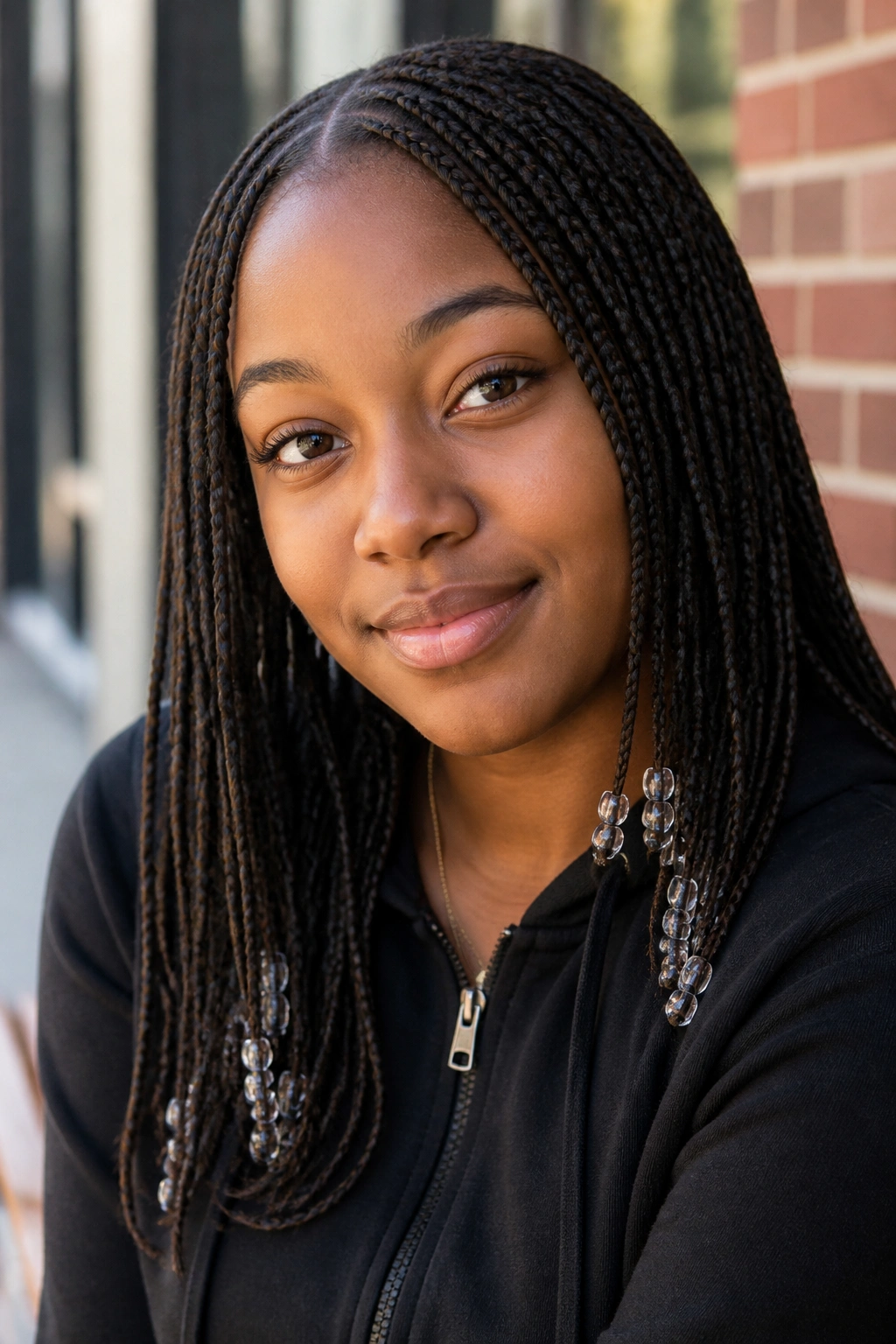
Mini box braids are one of the most school-friendly protective styles if you want something that lasts and gives your hair a break from daily heat and manipulation. They take longer to install than the styles above, so they’re not a quick morning fix, but they repay you with weeks of easy mornings.
The smaller the braid, the neater the overall look tends to be. Beads can add personality, but you do not need many. A few at the ends are enough. Too many can make the braids heavy and noisy, which is not always ideal in a quiet classroom.
- Ask for partings that are clean and even, around 1/2 inch to 3/4 inch wide.
- Keep the braid length practical, especially if you wear backpacks a lot.
- Choose lightweight beads or cuffs if your school has a strict dress code.
- Sleep with a satin bonnet or pillowcase to reduce frizz.
The best part is the low-maintenance payoff. That matters more than people admit.
17. Cornrow Side Part with a Ponytail
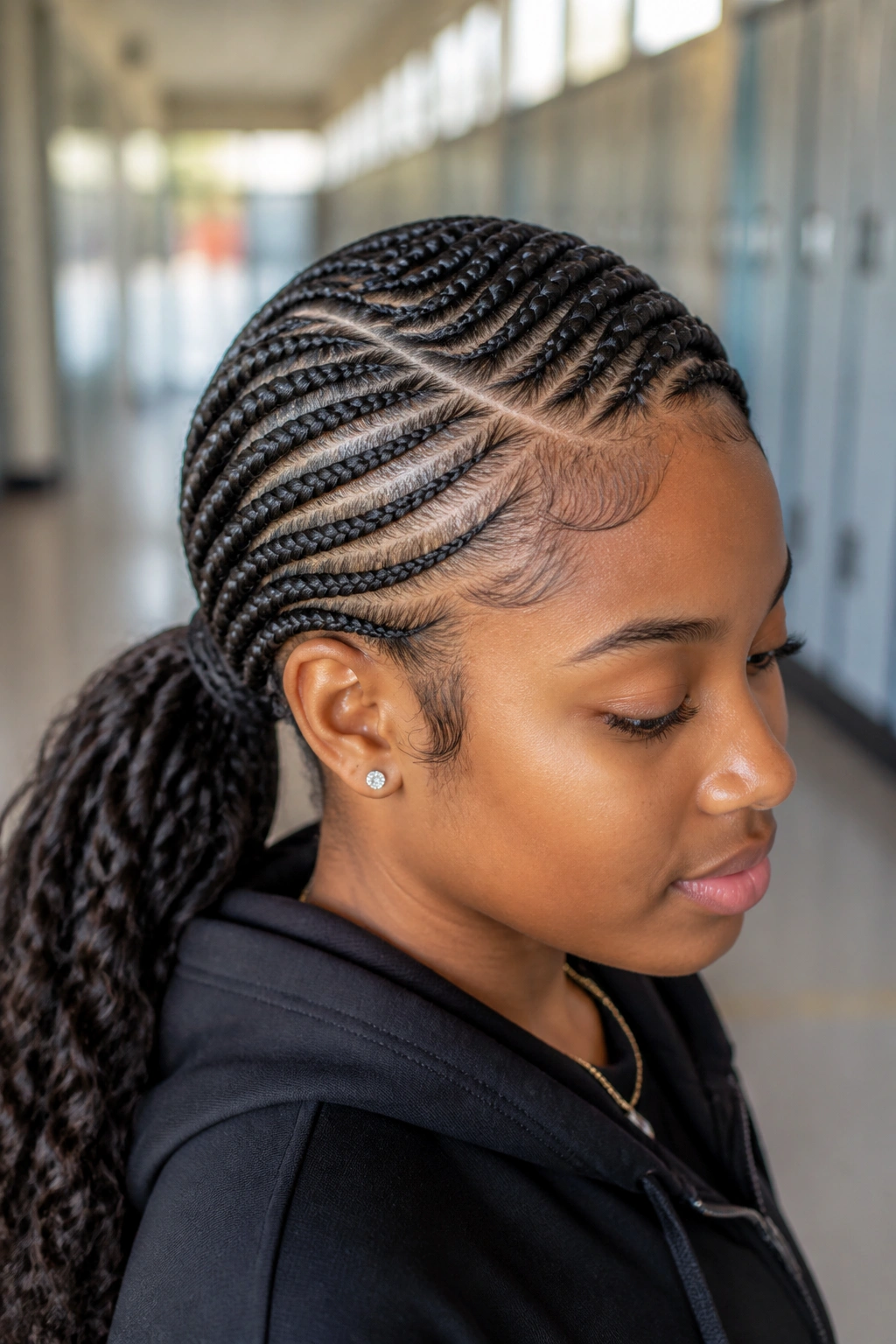
Cornrows with a side part and a ponytail are sharp, neat, and incredibly useful when you want your hair secured from morning to afternoon. The side part softens the look a little, while the ponytail keeps the overall shape simple and school-appropriate.
This is a strong option for textured hair because it keeps the hair close to the scalp and out of the way. It also works well for active days, since the braids do the controlling and the ponytail adds movement. If you’ve ever had a style unravel around the edges by lunch, this one solves that.
Ask for or create a part that suits your face shape, then braid in clean lines toward the ponytail base. The tension should be firm enough to hold but never sharp. A little scalp oil at the part can help if your hair tends to get dry. And if your edges are sensitive, keep the braids a touch looser at the front. That small choice makes a big difference by the end of the day.
18. Braided Top Knot

A braided top knot is what I’d call a practical choice with a little attitude. It gets the hair completely off the neck, keeps the length controlled, and still gives you the texture of a braid instead of a plain bun.
It works best when the braid starts as a high ponytail or a high braid, then coils into a knot at the crown. That placement gives the whole style height, which can make it look polished even if the rest of your hair is not cooperating. If your mornings are rushed, this is a forgiving style because a slightly imperfect braid still looks fine once it’s pinned up.
A few loose pieces around the hairline can soften it, but don’t leave too many or the knot starts to look unfinished. The best version is neat at the base and a little relaxed around the edges. That balance keeps it from feeling too severe, which matters on a long school day.
19. Waterfall Half-Up with a Ribbon

A waterfall half-up braid with a ribbon is one of those styles that feels sweet without looking childish. The ribbon is the small detail that changes the whole mood. A 1/4-inch or 1/2-inch ribbon is enough; anything wider can overwhelm the braid and make it feel bulky.
Unlike a full waterfall braid, this version leaves more hair down, so it’s a good fit if you want movement and softness. It’s especially nice on days when the outfit is simple and you want the hair to do a little more work. The ribbon can match your shirt, your backpack, or just be a plain neutral if you want the braid to stay the focus.
What to Watch For
Tie the ribbon in after the braid is secure so it does not slip while you work. Satin ribbon tends to glide more smoothly than stiff craft ribbon. If your hair is layered, keep the braid close to the scalp so shorter pieces don’t pop free too quickly.
The look is pretty, but it’s also useful. That’s the part I like most.
20. Two Braids Merged into One

Two braids merged into one braid are a smart style for the end of a busy school week, when you want structure but you’re not in the mood for anything too delicate. It starts as two braids near the front or top of the head, then those braids join into one larger braid down the back.
Why does this work so well? Because it gives you the clean shape of a sectioned style at the top and the simplicity of one braid at the bottom. That means less time fussing with the ends, and less chance of ending up with hair that feels split in two.
How to Make It Look Fuller
Keep the first two braids narrow and even, then join them with a clear elastic before continuing into one braid. Once the braid is finished, tug it gently from the sides to widen it. That soft pull makes the whole style look thicker and more relaxed.
It’s a strong choice for medium and long hair, and it’s especially handy when you want something that feels a bit more styled than a single braid but not as involved as a full crown or halo.
Final Thoughts
The best school braid is the one you can wear without thinking about it all day. If a style slips, itches, or gets in the way of your headphones, it will stop feeling cute by second period. That’s why the smartest choices here all have the same quiet quality: they stay put.
I’d keep three things in mind. First, parting matters more than people think. Second, tension should be firm, not painful. Third, a little texture spray, leave-in, or light gel can save you ten minutes of fixing later.
Pick one style for rushed mornings, one for days when you want something a bit prettier, and one protective option for the weeks when your hair needs a break. That small rotation makes school hair feel less like a chore and more like a system that actually works.
