



A double Dutch braid that starts neat at 7:10 a.m. and still looks tidy after the last bell is one of those school hairstyles that earns its keep. It keeps hair off the face, holds up through gym, and doesn’t need a curling iron, a round brush, or a prayer.
That’s why double Dutch braid hairstyles for school stay in heavy rotation. They work on straight hair, wavy hair, curly hair, and coily hair. They can look strict or soft, sporty or polished, plain or dressed up a little, which is why the same braid can survive homeroom, lunch, and the walk home without falling apart into a puff of fuzz.
The trick is not making the braid “fancier.” It’s choosing the version that fits the morning you’re having, the dress code you’re living under, and the texture sitting on your head. A clean part, a few snag-free elastics, and the right amount of tension matter more than a pile of accessories ever will.
Some of these styles take five minutes once your hands know the pattern. Others look more detailed than they are. All of them are the kind of protective styles that let you send hair to school without it turning into a mess by second period.
1. Classic Center-Part Double Dutch Braids
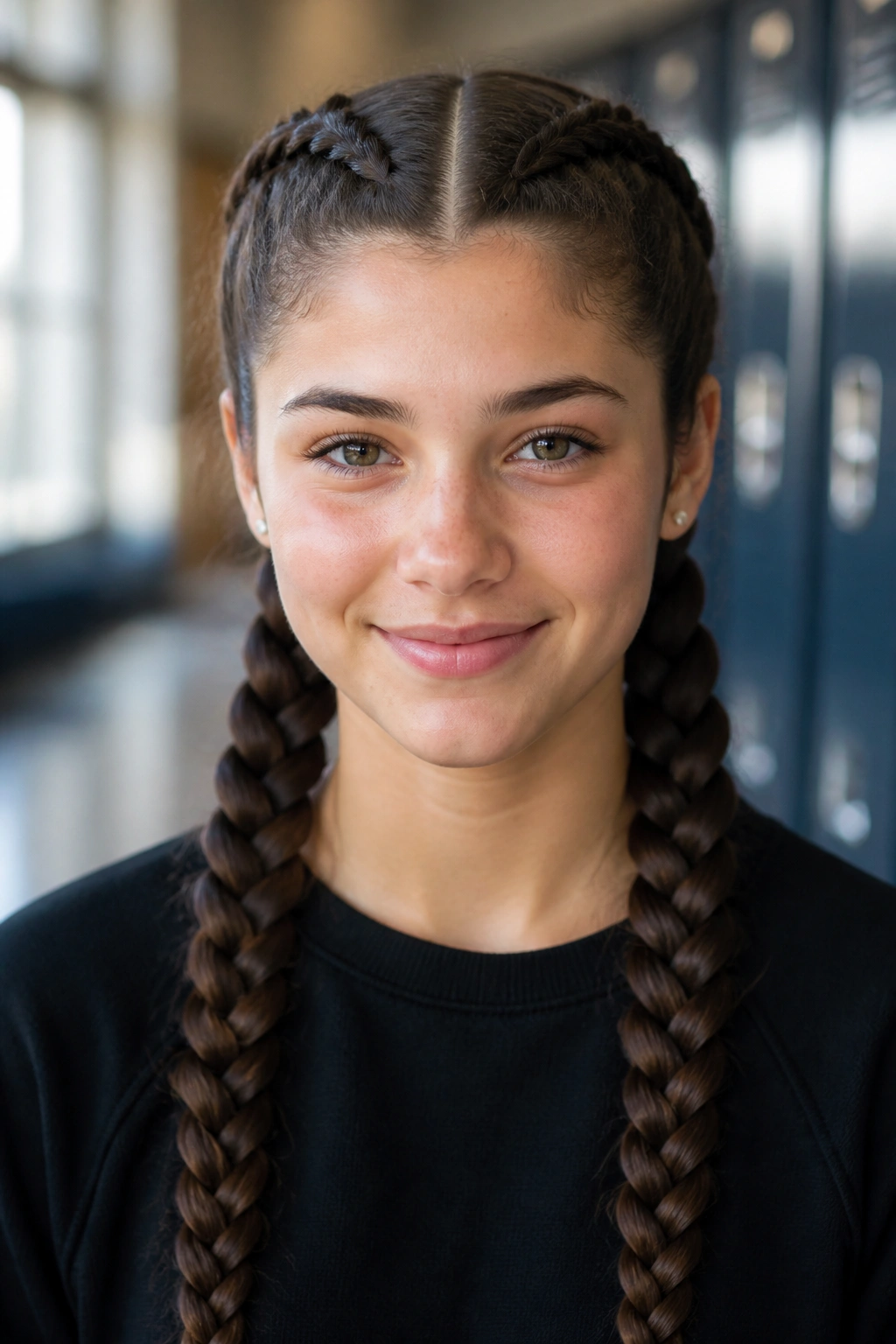
This is the one people picture first, and honestly, that’s for good reason. A clean center part with two even Dutch braids gives you that crisp, tidy look that plays well with uniforms, sports days, and any morning when you need hair out of the way fast.
Why It Still Works
The middle part makes everything look balanced, which is a small thing until you see how much neater it feels. Each braid sits close to the scalp, so there’s less loose movement and fewer flyaways fighting at your temples.
A neat center-part version also grows out gracefully. By afternoon, it still reads as polished even if a few baby hairs have escaped. That’s a nice trade when school starts early and nobody has time for a full redo.
- Best for straight, wavy, curly, or coily hair
- Good when you want a clean, symmetrical look
- Works with short-to-medium layers if the front is pinned well
- Takes about 10 to 15 minutes once your part is straight
Tip: Use a rattail comb to check the part before you braid. A crooked part is the one detail that keeps bothering you all day.
2. Deep Side-Part Double Dutch Braids
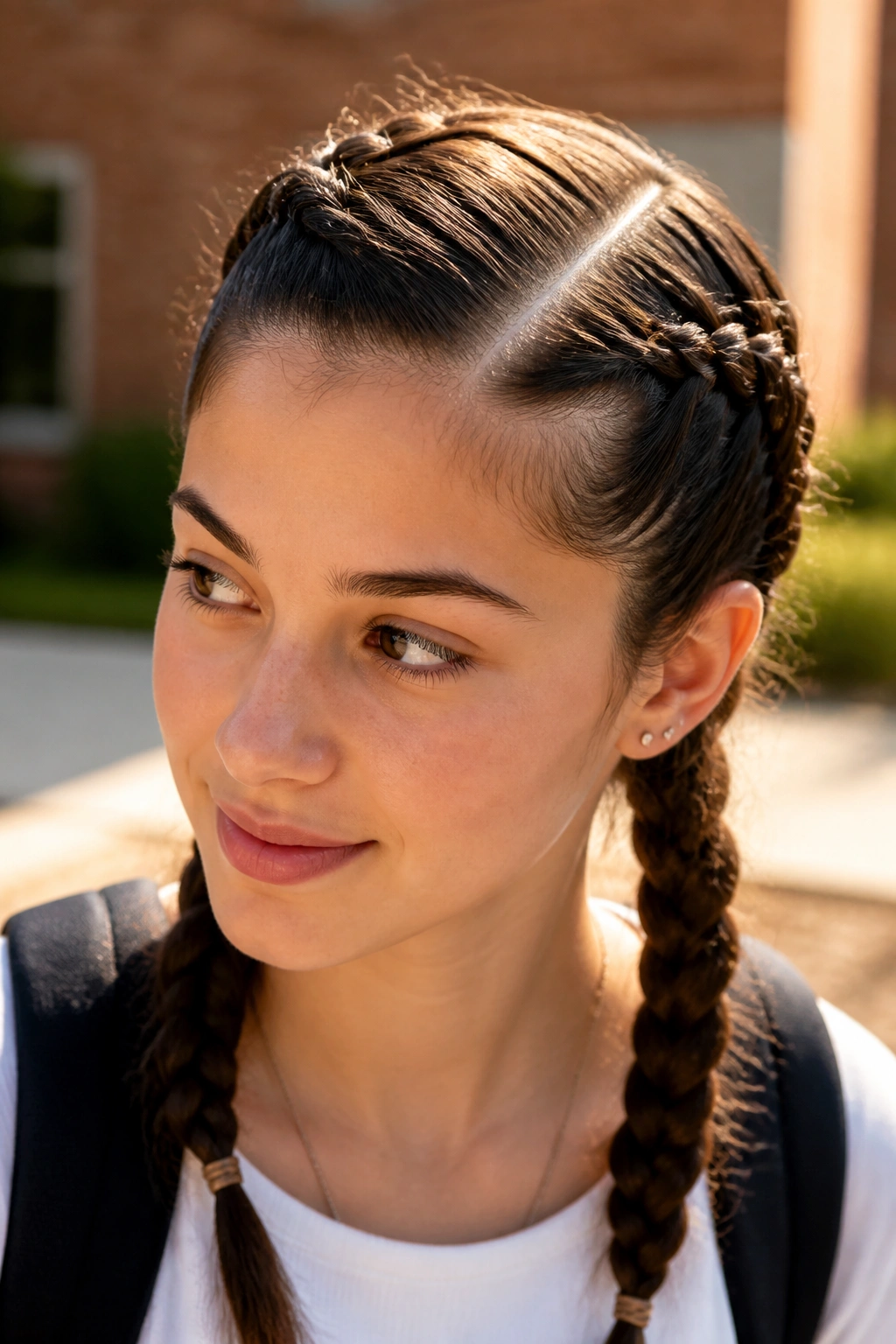
A deep side part changes the whole mood. Same braid, different attitude. One side gets more hair framing the face, and the result feels softer than the center-part version without losing the neat, school-ready shape.
It’s also a smart choice if your hair naturally falls to one side anyway. Fighting that habit usually wastes time. Working with it makes the braid look more relaxed and less stiff, which matters when you want the style to read as intentional rather than overdone.
This version flatters rounder faces especially well because the asymmetry adds a little length near the front. It also helps if you want your braids to sit slightly off-center under a backpack strap or a hoodie.
The braid itself should still be tight at the scalp, but not so tight that your hairline feels sore. Tension should feel secure, not sharp. That line matters more than people admit.
3. Zigzag-Part Double Dutch Braids
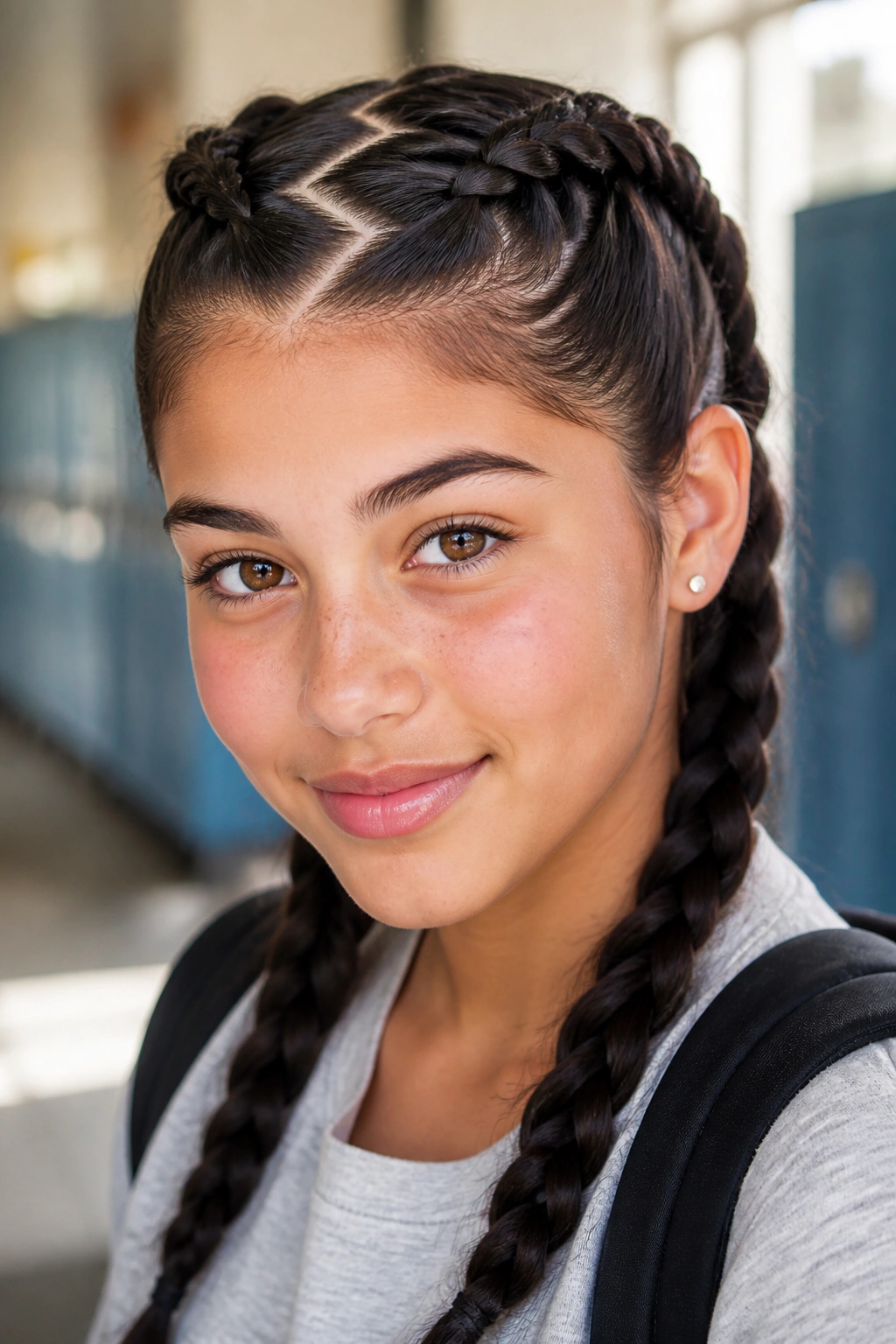
Why settle for a straight part when a zigzag can do the same job with a little personality? This style keeps the actual braid simple, which is useful on school mornings, while the part gives the whole look more energy.
A zigzag part works because it breaks up the heavy line down the middle. That tiny bit of movement at the scalp makes the style feel more playful, and the rest of the hair can stay plain. No need for extra clips, ribbons, or beads unless you want them.
How to Wear It
If you’re doing this on damp hair, keep the sectioning clean first. That part line is the star here, and it shows every wobble. A fine-tooth comb helps, but your fingers can get the job done once the zigzags are mapped out.
- Choose small zigzags if your school prefers quiet styles
- Go wider if you want the part to stand out more
- Keep the braids even so the part doesn’t look accidental
- Use light gel only along the part line, not all over the scalp
This one looks more complicated than it is. That’s half the charm.
4. Half-Up Double Dutch Braids

Half-up double Dutch braids are what I reach for when hair needs to stay off the face but I still want movement down the back. The braids start at the hairline and stop before the ends, leaving the lower section loose and free.
That makes the style feel a little softer than full braids. It also works well when hair is long enough to show off texture but you don’t want it in your collar all day. School pictures, class presentations, and days with only one hour of sleep all seem to like this version.
Picture a student who wants control at the front and bounce at the back. That’s the sweet spot. The top stays neat for recess and the loose length keeps the style from looking too severe.
A small elastic at each braid’s end helps, but you can also leave the tails curled or waved if the hair holds texture well. This one is especially good for medium and long hair.
5. Double Dutch Braids into Low Ponytails
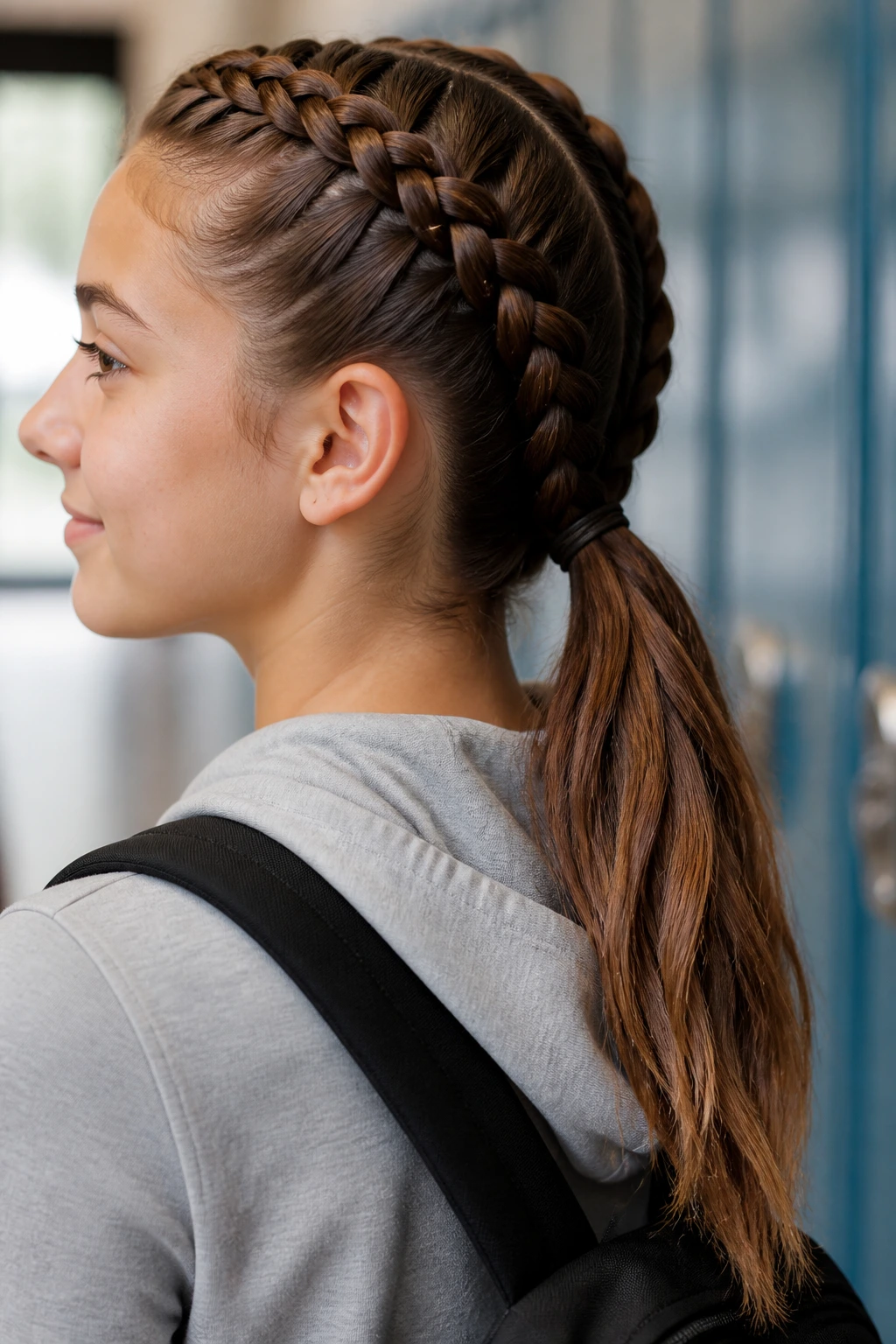
This style keeps the scalp braid neat and then gathers the ends low, near the nape, where they’re easy to manage. It’s a solid choice for school days with sports, labs, or any activity where hair in the face is a nuisance.
The low ponytail finish gives you a bit more movement than braiding all the way down. It also softens the look at the ends, which is useful if the braid section is tight and structured. The contrast makes the style feel finished without trying too hard.
I like this version on long hair that tangles fast. Once the braids are secured low, they tend to stay put under coats and backpacks better than loose ends do. That saves time later, which is the real point.
A satin scrunchie or two small elastics can change the mood here. Keep the base simple if the school dress code is strict. Choose a thicker scrunchie if the goal is comfort over polish.
6. Double Dutch Braids into Twin Buns
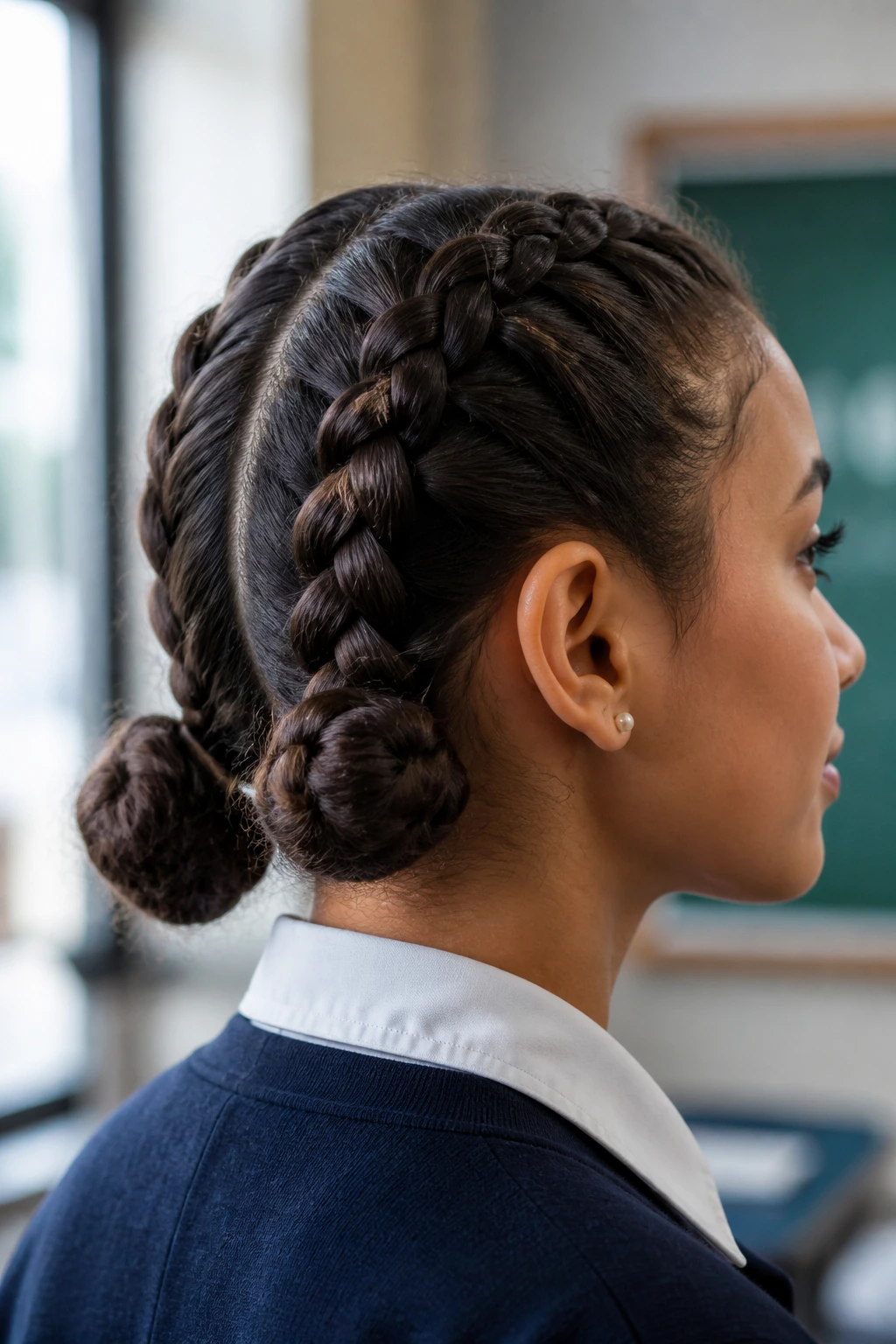
Twin buns give double Dutch braids a slightly more playful finish, but they still work for school when the buns stay low and tidy. The look is cute without being precious. That’s a rare balance.
Unlike high space buns, twin buns sit closer to the head and feel more controlled. They’re easier to tuck under a hood, and they don’t wobble as much when you’re moving between classes. If the day includes PE or a long bus ride, that matters.
This version is a smart pick for thick hair because the buns spread out the volume instead of forcing it into one heavy knot. It also keeps the ends contained, which means less friction on the back of the neck.
Use a few bobby pins to pin each bun flat against the head. The goal is a snug loop, not a giant donut. If the buns feel too heavy, make them smaller. The style reads better when it stays close and compact.
7. Double Dutch Braids with Ribbon Ties
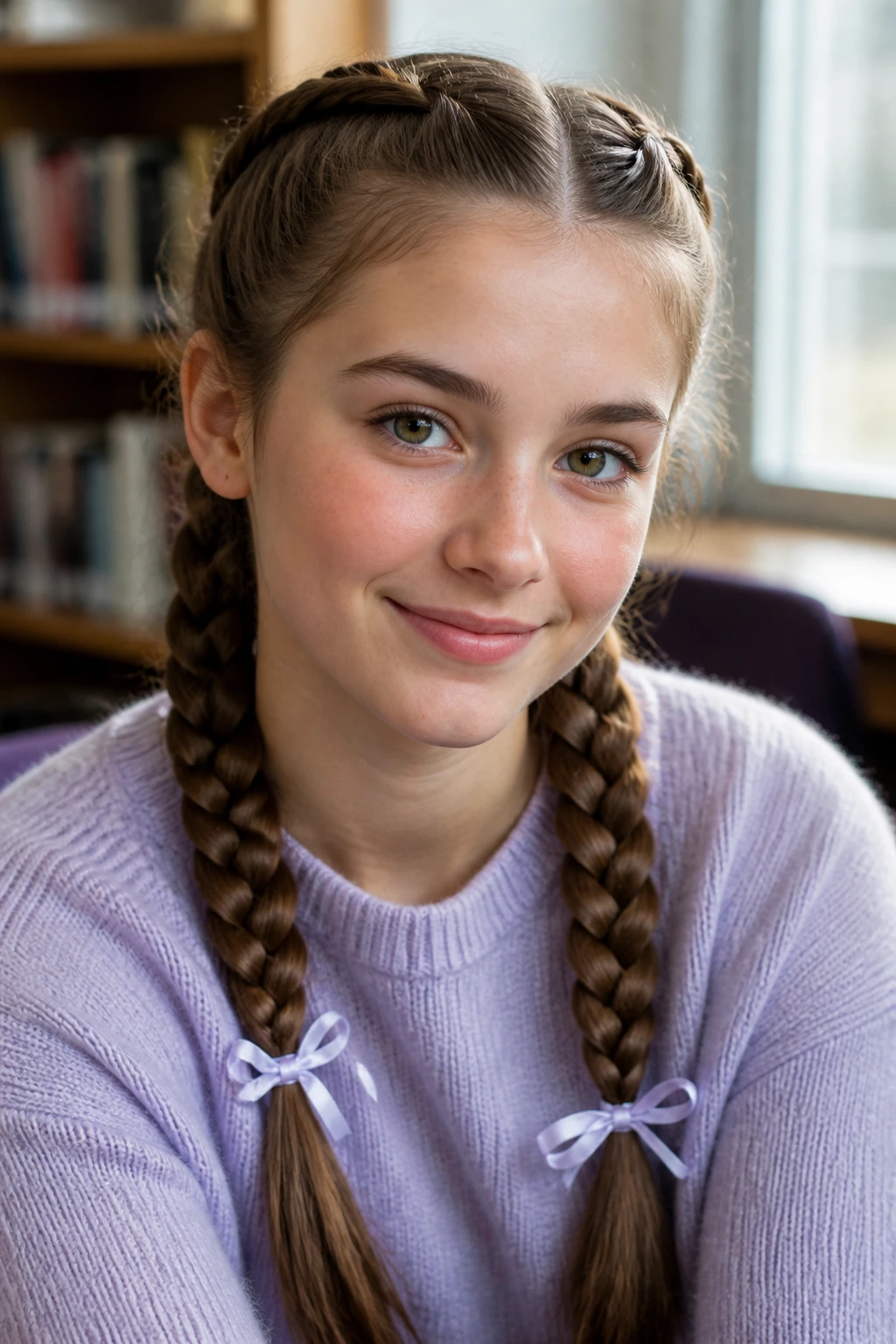
Ribbon changes everything, and not in a fussy way. A narrow ribbon tied at the ends of double Dutch braids gives the style a softer finish and a bit of color without making the hair look dressed up for a party.
School outfits are usually plain enough that one ribbon can do a lot. A navy, black, white, or school-color ribbon feels neat. A satin ribbon about a quarter inch wide sits well in the braid ends and doesn’t crowd the look.
How to Keep It from Slipping
Tie the ribbon around the elastic, not just around the braid itself. That keeps it from sliding loose by lunch. If the hair is very smooth, a tiny clear elastic under the ribbon helps the knot hold.
- Use one ribbon per braid for symmetry
- Choose matte ribbon if the hair is very shiny
- Keep the tails short so they don’t catch on backpack straps
- Match the ribbon color to the uniform if the school is strict
This is one of those details that looks small from a distance and surprisingly polished up close.
8. Double Dutch Braids with Beads

Beads make a braid feel finished in a way that plain elastic ends don’t. They add weight, sound, and a little shine at the ends, which is useful when hair tends to puff out or unravel before the day is over.
This style works especially well on textured hair because the beads help the ends stay controlled. Clear beads look clean and school-friendly. Colored beads feel more playful, and a single row of beads at the bottom is often enough.
The braid itself should stay neat and simple. That way the beads don’t look crowded. I like this look when the front of the hair is kept smooth and the ends carry the personality.
Beads can click a bit when you move, so that’s worth thinking about if your school is quiet in the halls. If sound matters, use fewer beads and keep them closer to the very bottom. A row of four to six beads per braid is usually plenty.
9. Double Dutch Braids with Curly Ends
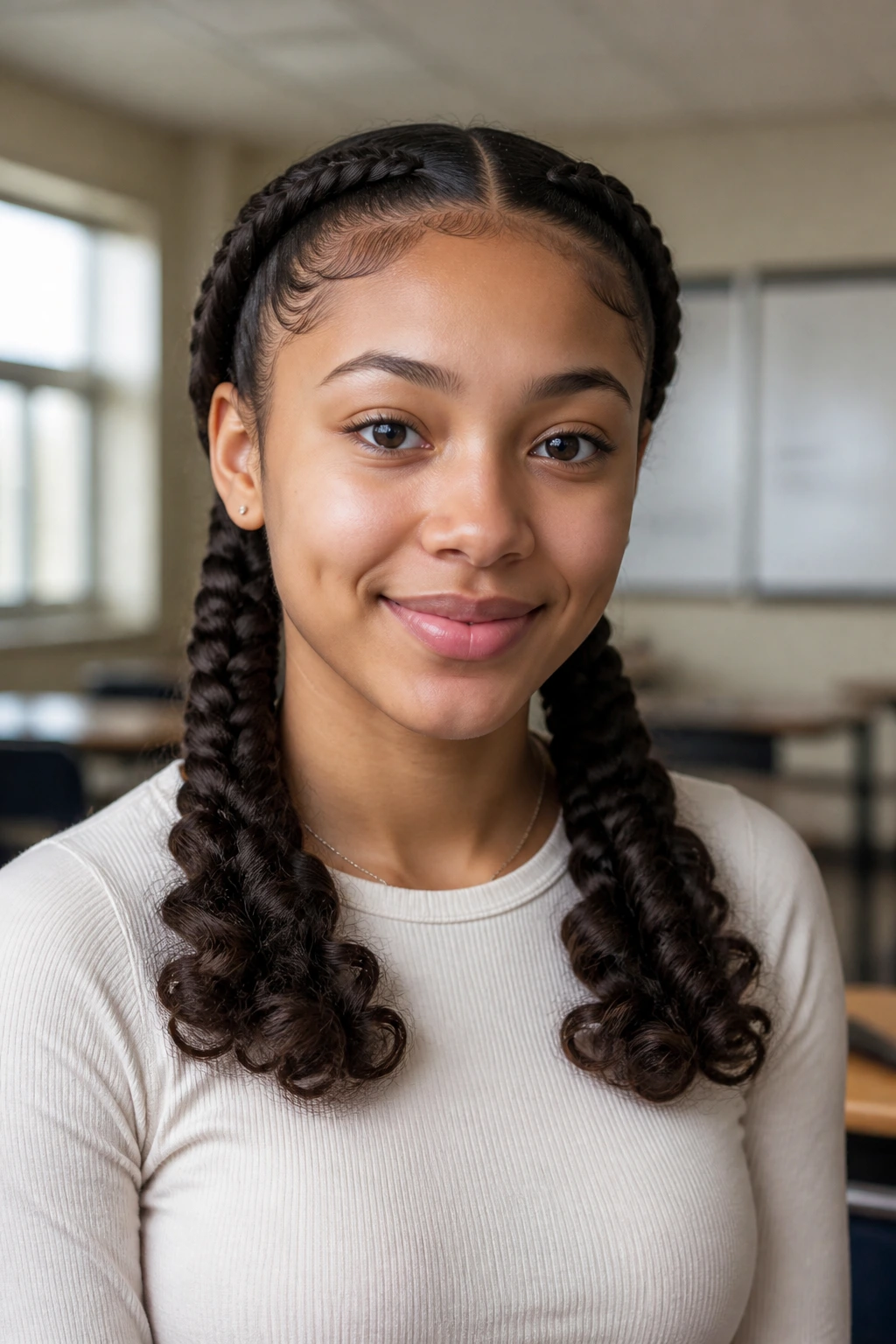
What if you want the control of braids and the softness of curls? This version does both. The scalp stays smooth and secure, then the ends open into curls that move when you walk.
The easiest way to get there is to braid down most of the hair and leave the last few inches loose for curling. Flexi rods, small rollers, or a quick braid-out on the ends all work, depending on the texture you’re starting with. The trick is making the transition look intentional, not half-finished.
The Finish Matters
A little mousse or curl cream on the ends helps the curl hold its shape. Too much product will make the ends droop, so stay light-handed. That’s the whole game here.
This style is good for school pictures, performances, or any day when a plain braid feels too plain. It still keeps hair controlled, but the curly finish makes it feel less rigid.
- Best on medium and long hair
- Works well with natural texture
- Can be done on dry or lightly damp hair
- Looks best when the curled ends are evenly sized
10. Double Dutch Braids into a Crown Bun
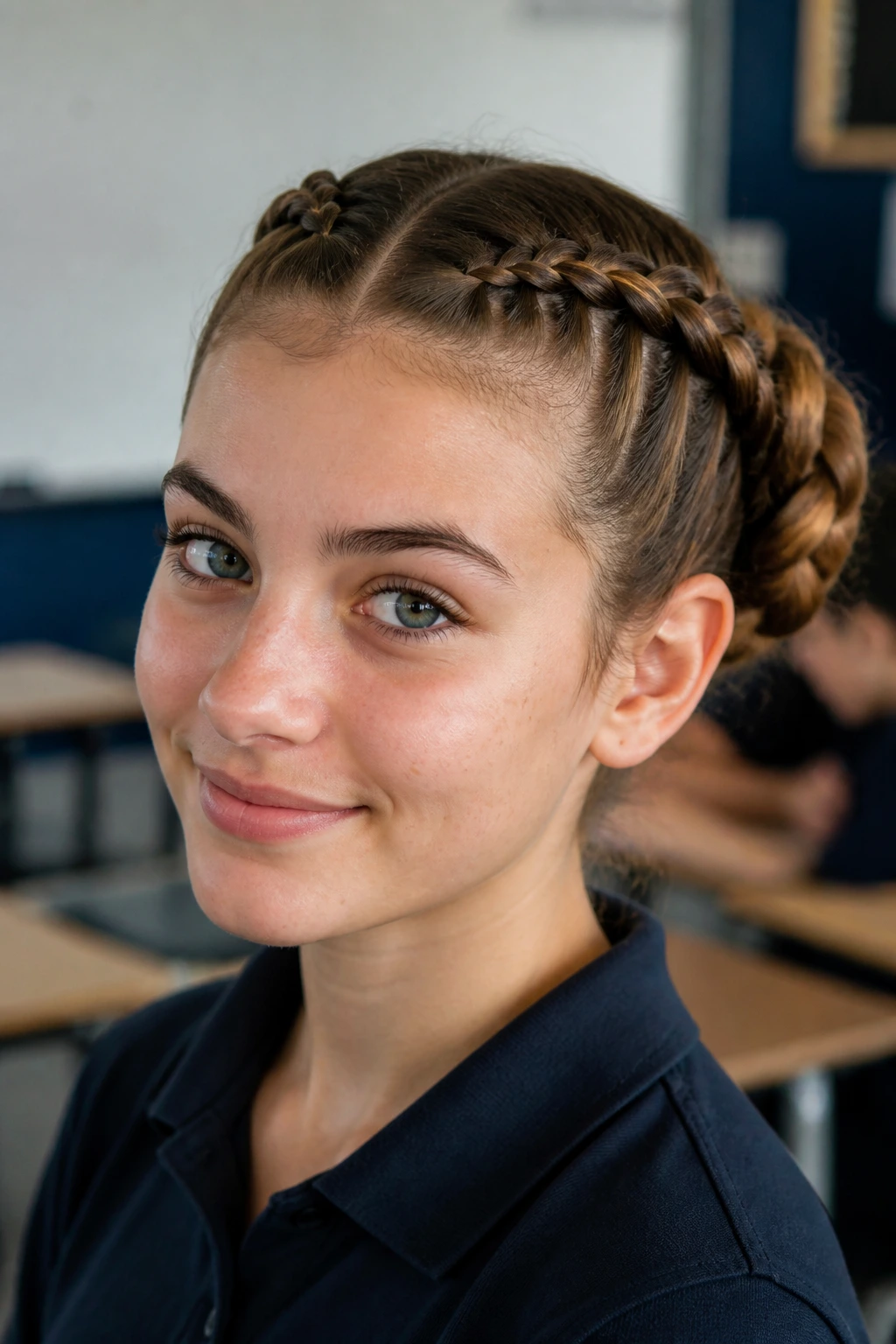
A crown bun finish is what you reach for when the day needs hair that looks a little more dressed up but still stays practical. The braids sweep back from the front and meet near the nape or just above it, where they can be wrapped into a bun.
It has a neat, pulled-in look that plays well with school concerts, presentations, and picture day. The shape keeps the braids visible from the front, which is nice if the parting is especially clean. From behind, the bun keeps everything tucked away.
I like this one because it looks deliberate from every angle. There’s no loose tail waving around, and no chance of the ends rubbing on a backpack strap. It sits flat, which means less fuss during the day.
A few U-pins or bobby pins hold the bun better than one giant clip. If the hair is thick, twist the bun into two smaller loops before pinning. Flat and secure beats big and decorative here.
11. Double Dutch Braids Pulled into a Mid Ponytail
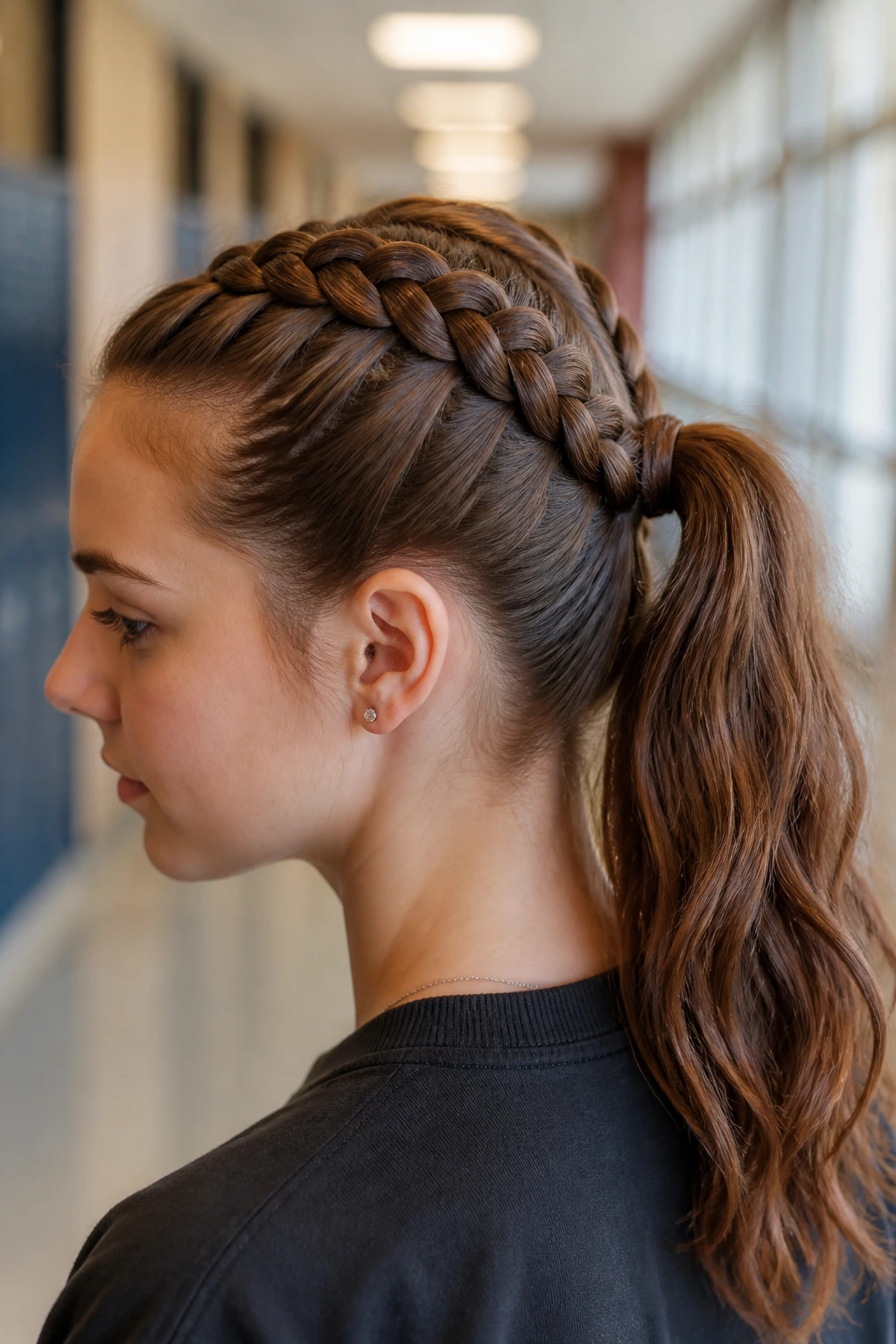
This version sits in the middle of the head rather than at the nape, and that small shift changes the whole feel. The braids lead into one centered ponytail, which gives you a sporty look that still feels neat enough for school.
It’s a good pick when you want hair off the neck but not pinned too tightly at the bottom. The mid-level ponytail keeps the style lifted, so it shows off the braid pattern better than a low finish does. It also works well with longer shirts and jackets because the ponytail doesn’t get buried.
A soft elastic keeps the ponytail comfortable. If the hair is thick, wrap a small strand around the base so the elastic doesn’t show. That’s a tiny detail, but it makes the style look cleaner.
Some people think a ponytail finish makes double Dutch braids less special. I disagree. It gives the braid a stronger shape and a little more bounce, which is handy on long school days.
12. Stitch-Style Double Dutch Braids
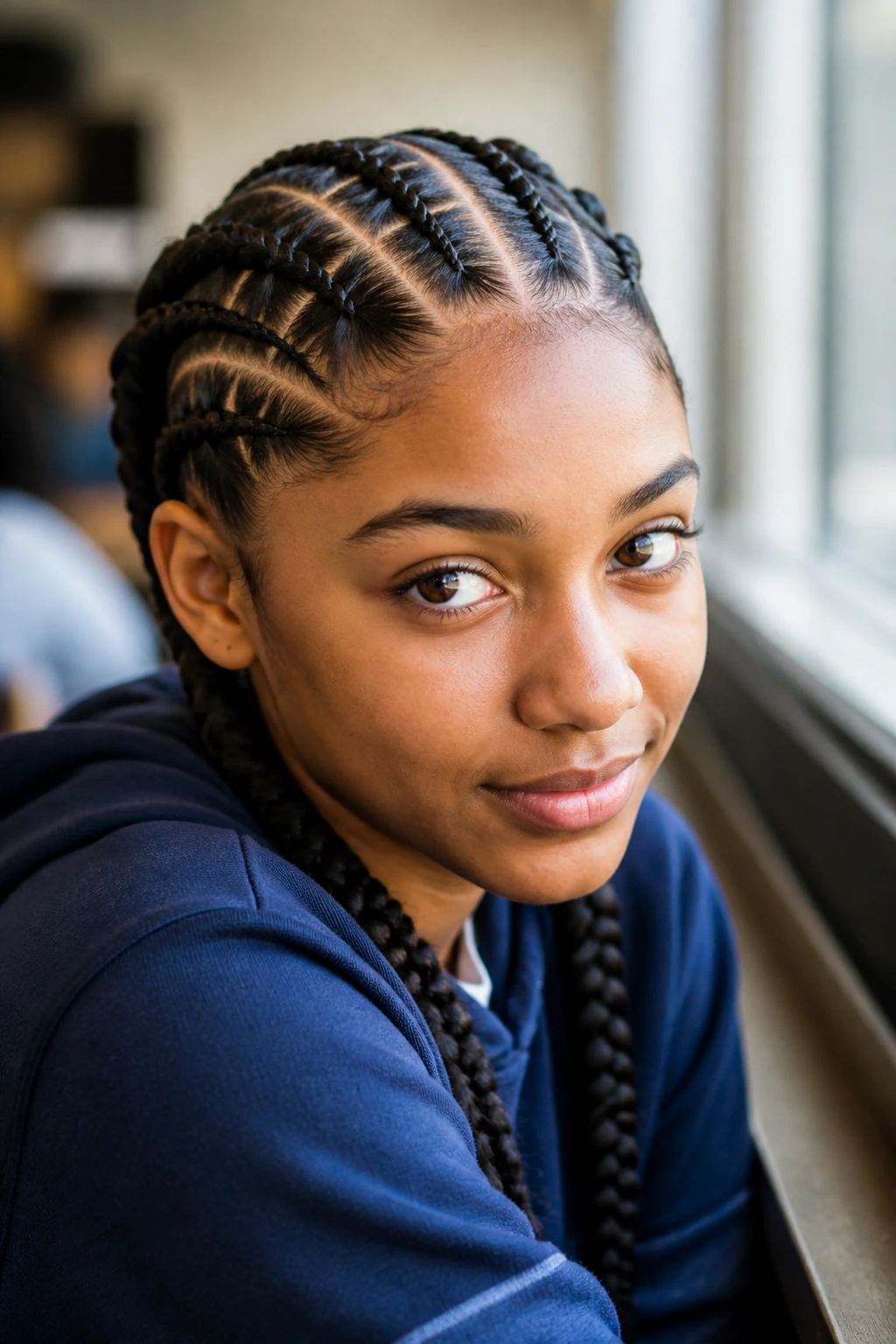
Stitch-style braiding looks precise, almost architectural, because the sections are laid in clear little rows. The braid still sits in the Dutch pattern, but the sectioning is sharper and the result feels more polished.
Unlike a looser braid, this one has a more deliberate line at the scalp. That makes it a strong choice for straight hair or relaxed textures, where each section shows clearly and the braid pattern reads from across the room. It’s neat in the best way.
What Makes It Different
The difference is in the hands, not the tools. Smaller sections, cleaner parting, and even tension give the braid that stitched look. The braid should feel snug against the head without pulling at the scalp.
This is the version I’d pick for a presentation day or a school event where hair needs to look extra tidy. It’s a little more work, yes, but the payoff is a braid that looks intentional from root to end.
If the sections drift, stop and re-part them. Stitch braids only look good when the parting stays honest.
13. Double Dutch Braids into Space Buns
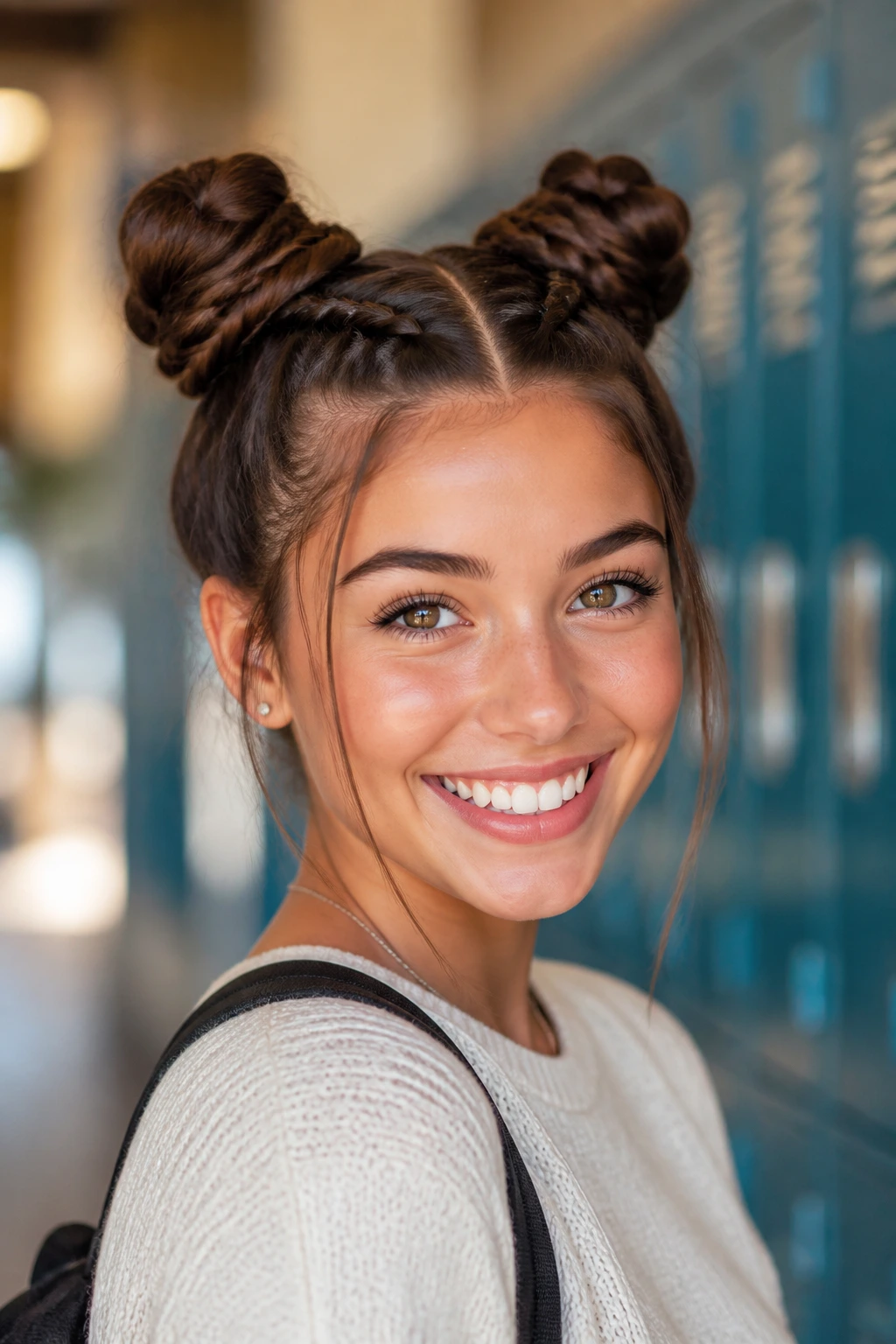
Space buns are the playful cousin in the double Dutch braid family. The braids feed into two buns high on the head, which gives the style a bit of lift and a lot of personality.
It’s a good choice when school rules are relaxed or when you want a style that feels energetic without leaving hair loose. The height can be useful too. High buns keep the ends clear of collars and backpack straps, which is practical in a way that looks cute by accident.
How to Balance the Shape
Keep the buns the same size, or one side will always look like it’s leaning. That symmetry matters more than people think. A small bun on one side and a huge bun on the other can look off even if the braids themselves are perfect.
- Place the buns just above ear level for a balanced look
- Use two elastics if the hair is very thick
- Tuck loose ends under the bun rather than letting them poke out
- Keep the base braid tight so the bun doesn’t sag by lunch
This style does best when the parting is clean and the buns stay compact. Big buns sound fun, but small and tidy usually ages better through the school day.
14. Double Dutch Braids with Sleek Gelled Edges

A sleek finish can make even simple braids look sharp. Smooth edges, clean part lines, and a controlled hairline turn double Dutch braids into something that feels more put together without adding extra work to the braid itself.
The big mistake here is using too much product. A little gel or edge control around the part and hairline goes a long way. Too much makes the scalp look wet, and the style can start to feel crunchy instead of neat.
I prefer a soft toothbrush or edge brush for this part. It lets you smooth the baby hairs without pressing them flat in a way that looks painted on. The goal is control, not shellac.
This version is especially nice for picture day or any school morning when hair has to look polished under bright lights. It also helps frizz-prone hair stay tidy longer, which is a gift when humidity and hallway heat try to ruin everything.
15. Double Dutch Braids with a Side-Swept Finish
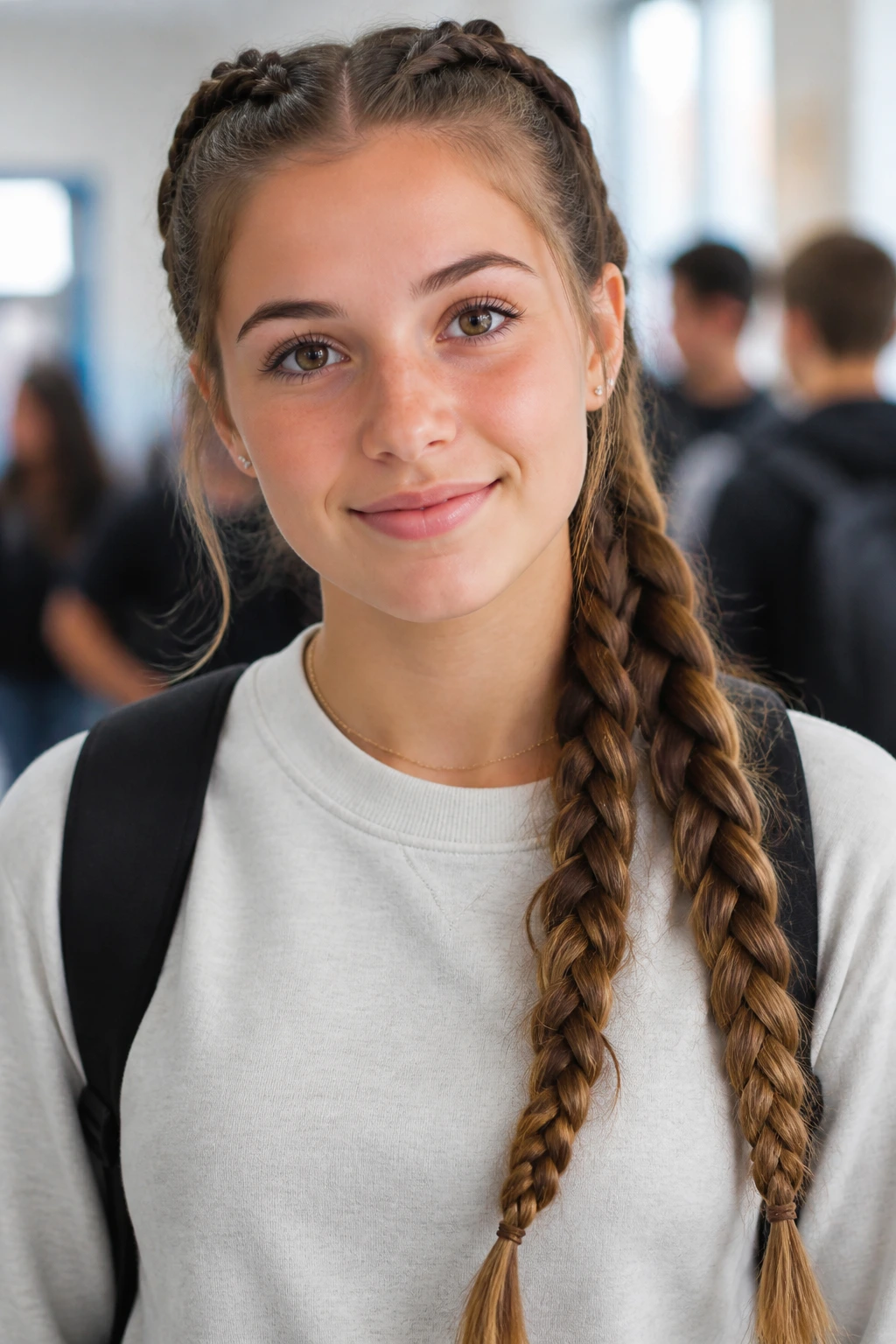
What if you want the security of double Dutch braids but don’t want the whole look to feel strict? A side-swept finish softens the shape and lets the braids fall over one shoulder or connect slightly off-center at the back.
That little shift makes the style feel less rigid. It’s a smart option for short layers around the face, especially if a center part keeps splitting awkwardly. The sweep also gives the braid a more lived-in look, which can be helpful when the morning is rushed and perfection is not happening.
How to Wear It
Sweep both braids toward the same side and secure them low, or let the ends fall over one shoulder. Either way, keep the roots tight enough that the style doesn’t loosen while you’re moving around.
A side-swept finish also works well with scarves, hoodies, and high-neck uniforms because the braid rests away from the collar instead of bunching at the back. That sounds small. It isn’t.
This is one of the easier ways to make double Dutch braids feel less severe without giving up the school-friendly structure.
16. Double Dutch Braids into a Braided Mohawk

A braided mohawk sounds louder than it usually looks. In practice, it’s just double Dutch braids that meet or support a raised center section, which gives the whole style a stronger shape down the middle of the head.
It’s a solid pick for thick hair because the volume becomes part of the look instead of something you fight against. The style also stays put well during sports, which is why so many active kids and teens like it. Hair gets controlled at the sides, but the center still has some lift.
A short anecdote: this is the kind of style that saves a morning when the front hair refuses to lie flat. You braid the sides tight, pin the center up if needed, and suddenly the problem becomes a shape.
- Keep the center section brushed straight before you braid
- Use small elastics where the braids meet
- Add pins under the raised section if the hair is heavy
- Finish with a light mist of setting spray if the hair frizzes easily
Best for thick, coarse, or high-volume hair. It turns volume into structure instead of chaos.
17. Double Dutch Braids with Folded Under Ends

This one is for people who hate loose tails. The braids run down the head, then the ends are tucked under and pinned flat, so the finished style looks compact and neat from every angle.
The result is quietly practical. No swinging ends. No tangling at the neck. No braid tails whipping around during a crowded hallway turn. It’s the kind of style that feels especially good on days with long classes or lots of movement.
The folded-under finish also gives the braids a more finished look than a plain elastic at the bottom. A few bobby pins hidden under the fold will keep it stable all day. Use more pins than you think you need if the hair is thick or slippery.
This version is good for shorter length too, because the ends don’t need to hang long. Once they’re tucked in, the braid reads as deliberate and clean instead of half-done.
18. Double Dutch Braids into a Low Wrapped Bun

A low wrapped bun is the neatest ending of the bunch, and I mean that in the best way. The braids sweep down, then twist into a bun at the nape that looks tidy enough for formal school events but still sturdy enough for an ordinary day.
Compared with twin buns or ponytails, this version feels calmer. Less movement. Less bounce. More control. If your school has a dressier uniform or you want a style that works for assemblies and music recitals, this is a strong choice.
The wrap itself does not need to be fancy. Coil the braid ends around the base, pin them flat, and smooth the outer edge with your fingers. A little styling cream on the ends can help the bun lie flat without frizzing out.
This style looks best when the parting is neat and the bun sits low rather than high. Low, smooth, and pinned well is the whole point. No extra fuss required.
Final Thoughts
Double Dutch braid hairstyles for school work because they solve real problems. They keep hair out of the way, they survive long days better than loose styles, and they still leave room for personality if you want it.
The version you choose depends on time, texture, and how much polish you want to carry into the day. A center part feels crisp. A side part feels softer. Beads, ribbons, buns, and curls change the mood without changing the basic braid structure.
One small detail matters more than all the rest: clean sectioning makes every style look better. A straight part and even tension do more for a braid than a drawer full of accessories ever will.
