



A good hairstyle after 30 has to survive a real week.
For Black women over 30, natural hairstyles often need to do three jobs at once: look polished, protect the ends, and fit a life that may involve work, errands, workouts, family time, and a little breathing room for yourself. The styles that hold up best usually respect your texture instead of fighting it. That sounds simple. It isn’t always.
I have a soft spot for looks that give shape without demanding a full hour at the mirror. Some days that means a sharp twist-out with a clean part. Other days it means braids, puffs, or a tucked-up style that keeps your shoulders free and your scalp calm. The sweet spot is a style that feels grown, not stiff; pretty, not precious.
Hair can also change over time. Texture may feel drier, density can thin at the temples, and tight styles can start to feel like a bad trade. That is not a reason to give up on style. It’s a reason to get more selective.
These 22 looks lean into that idea. They’re practical, polished, and easy to adapt to short hair, long hair, thick hair, and everything between.
1. Tapered Twist-Out with a Side Part
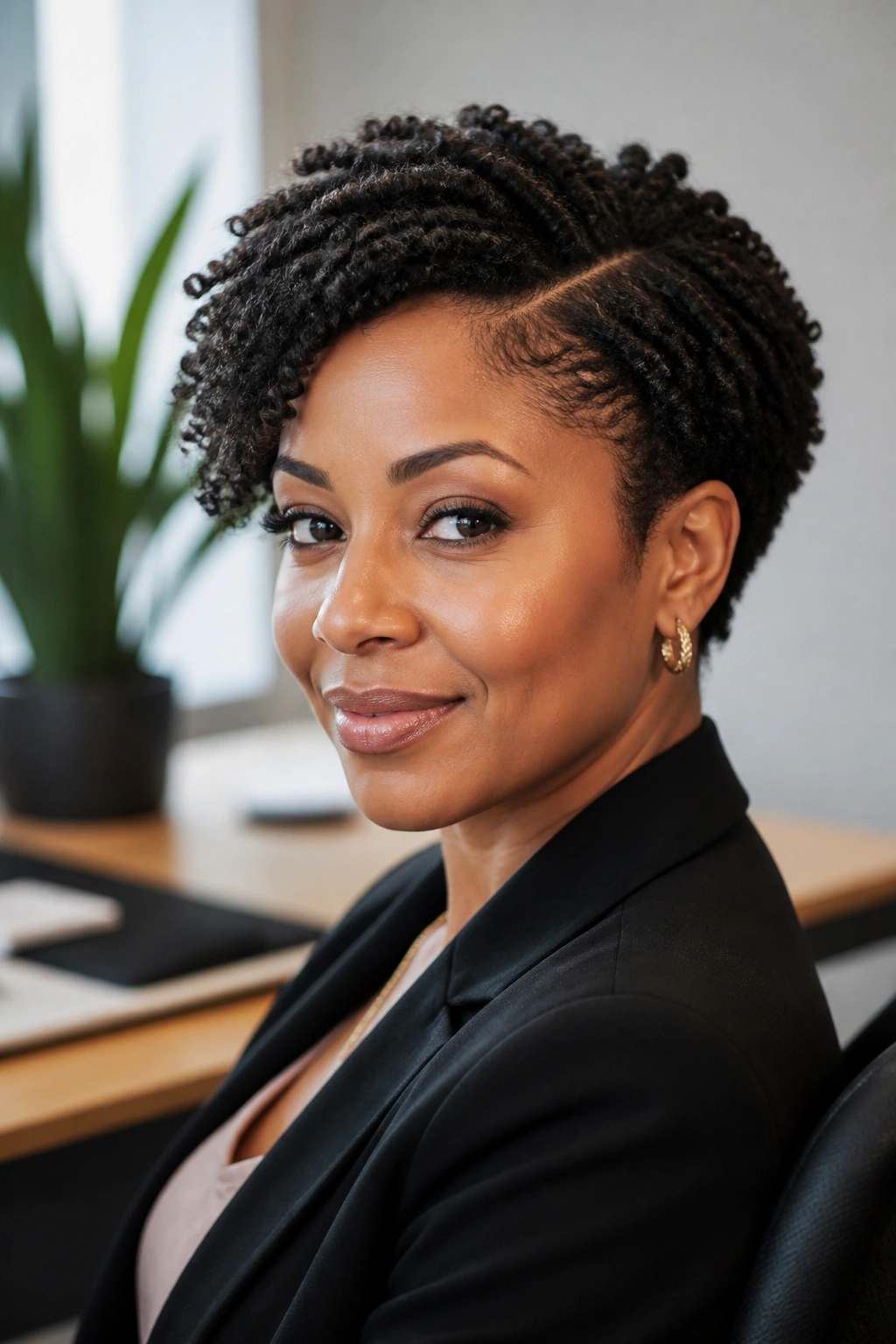
A tapered twist-out is one of those styles that looks more complicated than it is. Shorter sides keep the shape clean, while the top brings softness and movement, which is handy if you want volume without feeling buried in hair.
The side part matters more than people think. It breaks up the silhouette, gives the face a little lift, and keeps the look from turning into a round cloud. On coarser textures, use a medium-hold cream or mousse on damp hair, then unravel only when the twists are fully dry. If the roots stay damp, the style loses its shape fast.
I like this one for women who want something neat for work but still want curl definition on the weekend. It also pairs well with earrings and a bold lip, which sounds small until you notice how much that changes the whole look.
No drama. Just shape.
2. Defined Braid-Out Bob
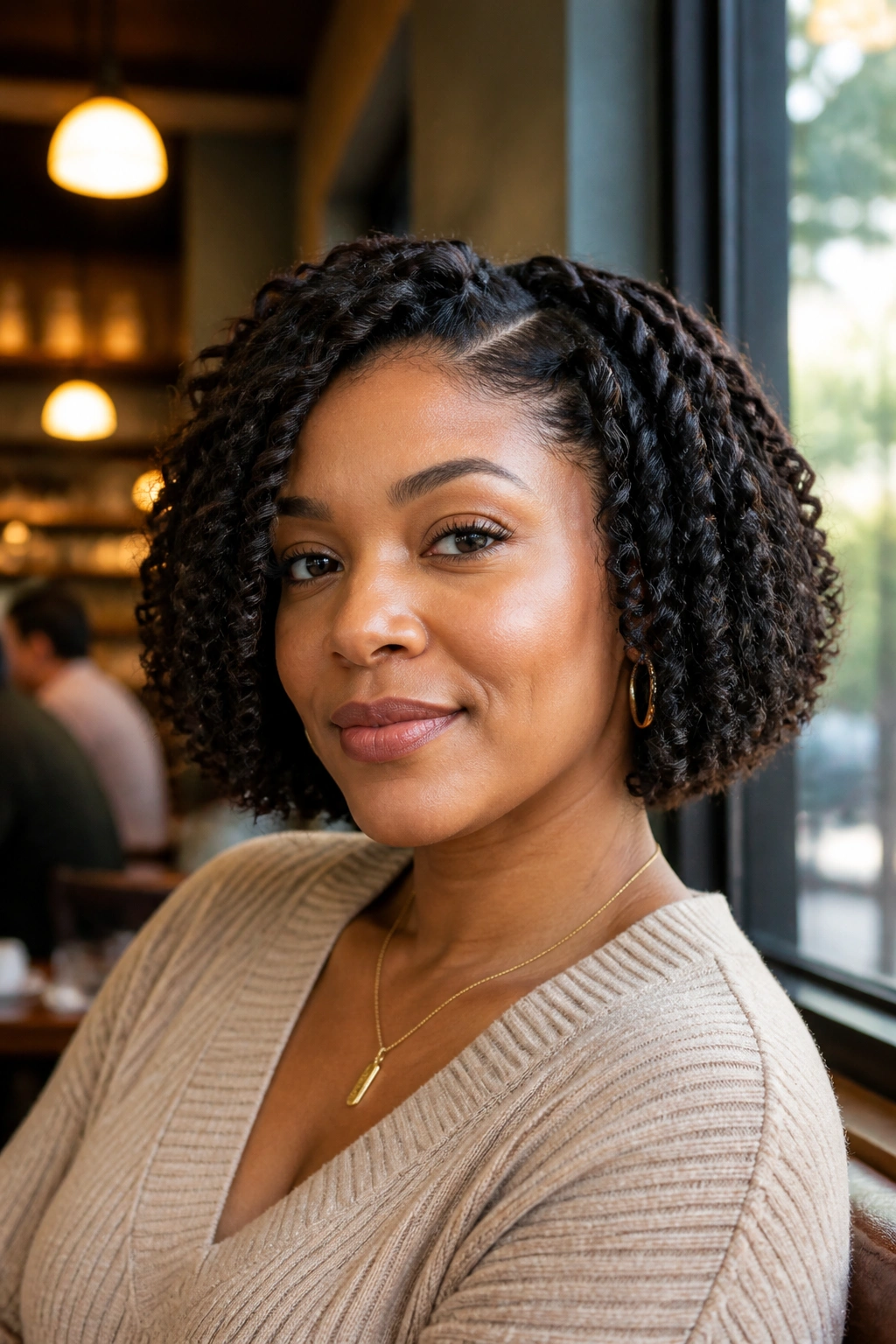
A braid-out bob makes medium-length natural hair look finished without much fuss. The length lands around the chin or just below it, so the style feels tidy, but the texture still does the talking.
Why it works
The braid pattern gives you a tighter, more uniform wave than a twist-out. That’s useful if your hair frizzes fast or if you want a smoother outline around the jaw. I’d braid in sections that are close to the same size—roughly 1/2 inch to 1 inch wide—so the result doesn’t look lumpy when you take it down.
What to watch for
- Let the hair dry all the way before unraveling.
- Use a light oil on your fingertips, not a heavy hand full of oil.
- Sleep in a satin bonnet or on a satin pillowcase.
- Fluff at the roots with a pick, then stop.
A braid-out bob is one of those styles that can look office-ready on Monday and soft enough for dinner on Friday. That balance is the whole point.
3. Low Puff with Sleek Edges
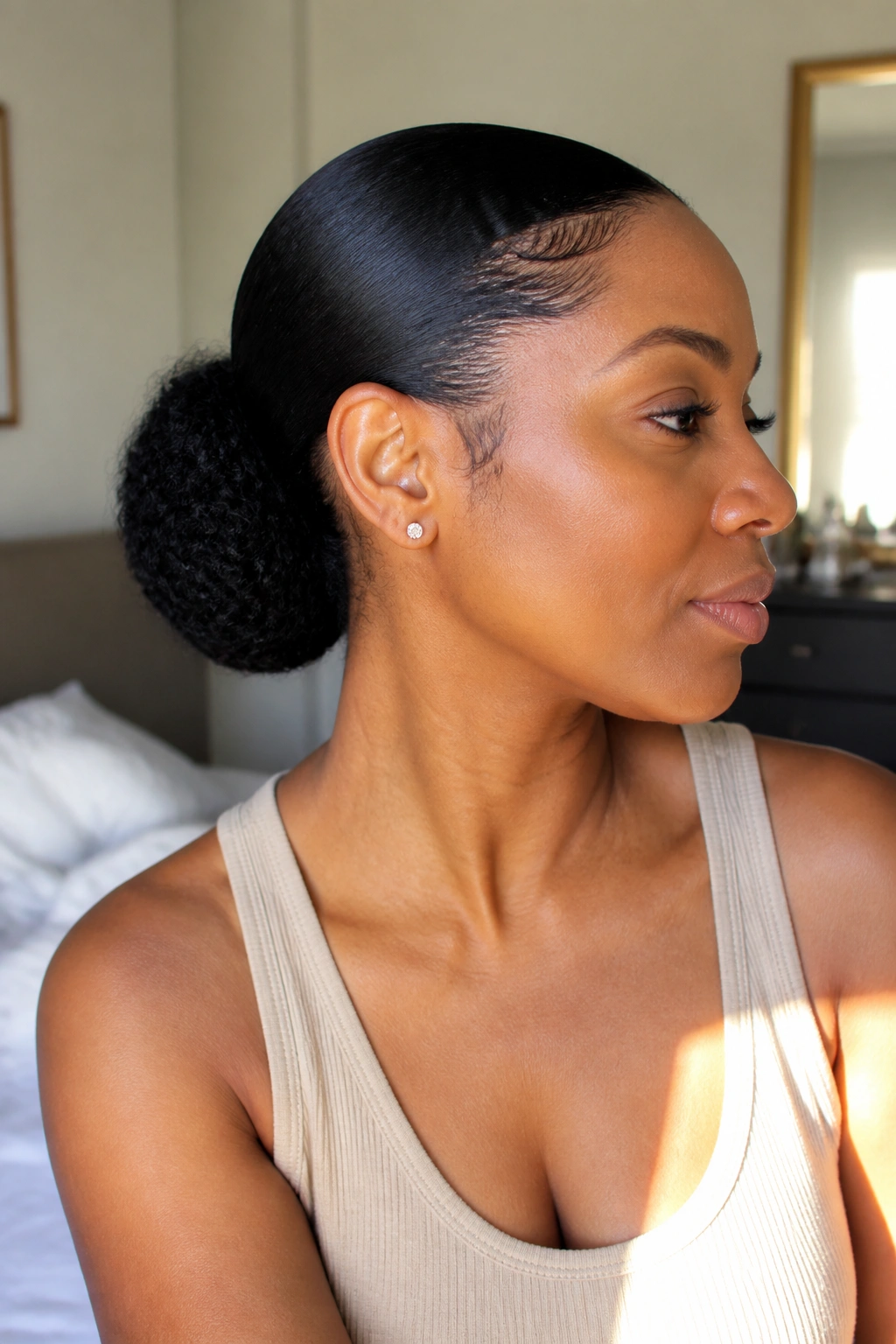
A low puff is the haircut of hairstyles. Fast, neat, and harder to mess up than people think. The trick is keeping the base smooth without pulling the hairline so tight that your scalp complains about it by lunch.
The best version of this style starts with stretched hair. Second-day twist-out hair, banding-stretched curls, or lightly blown-out roots all work better than hair that’s soaking wet and springy. You want the puff to sit low and round, not puff up like a balloon in the wrong place.
How to keep it tidy
Hold the front in place
Use a little gel or edge control on the perimeter, but keep it light. A toothbrush-sized brush helps, though a small styling brush is fine too.
Keep the puff full
Gather the hair at the nape with a soft band or elastic. Pull enough for shape, not so much that the front gets pinched flat.
Make it last
Wrap a silk scarf around the front for 10 minutes after styling. That little pause helps the edges lie down and gives the style a cleaner finish.
This is the style I recommend when you want your hair out of your face without looking like you gave up.
4. High Puff with a Puff Cuff
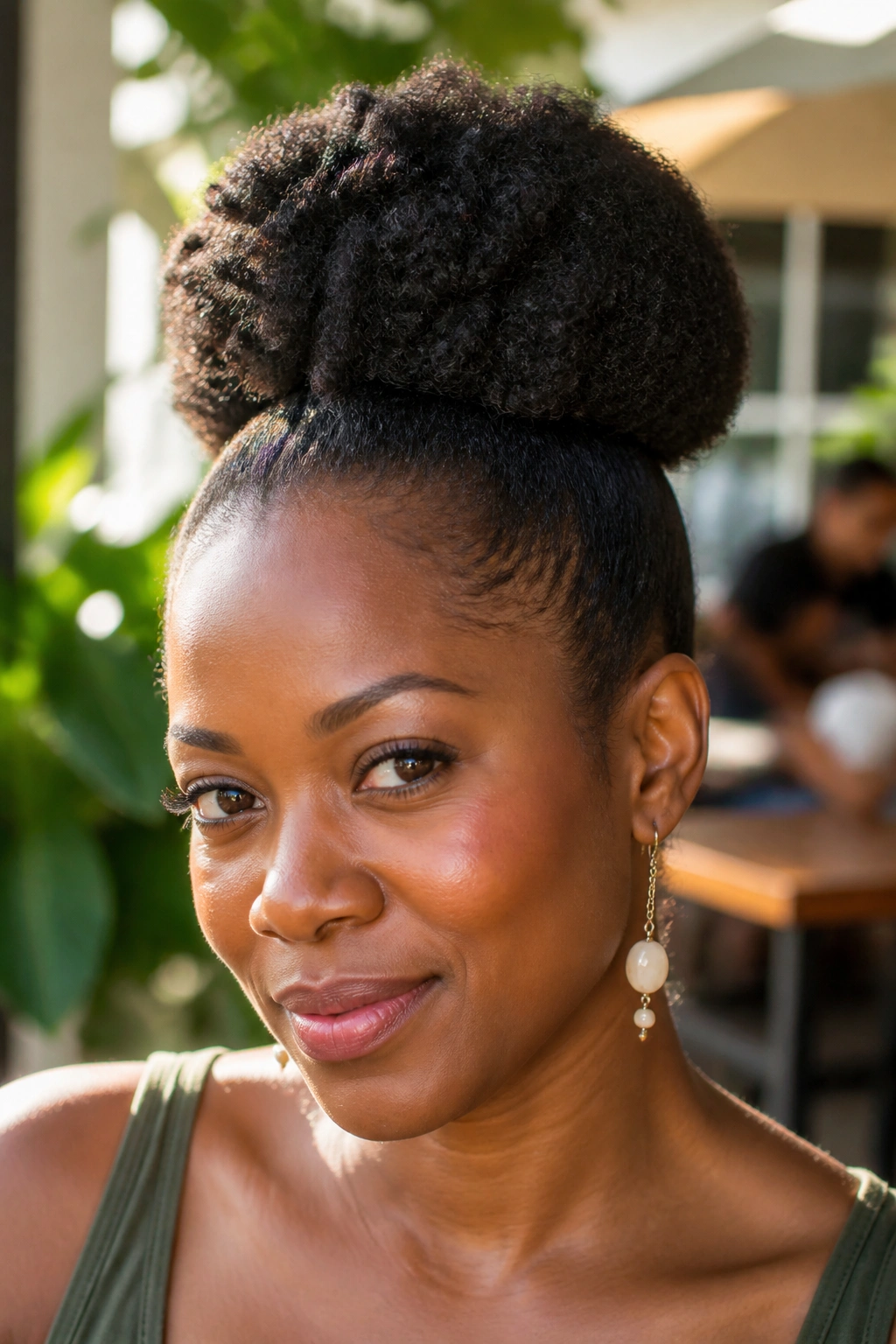
A high puff has energy. Not childish energy—just lift, height, and a little confidence built right into the shape.
This style works best when the hair is stretched enough to collect upward without snagging. A high puff on freshly defined coils can look bigger than planned, and sometimes that’s fine. Other times it eats your entire face. I usually prefer it on hair that’s been banded overnight or stretched with a blow-dryer on low heat.
The puff cuff matters if you want the base to look clean. It gives the style a more finished edge than a regular elastic, and it helps the puff sit up instead of sliding backward. That small detail changes the whole mood. One second it’s a gym-day puff. The next it looks intentional enough for a brunch table.
Wear this when you want volume, quick styling, and a face-framing lift. It’s also a nice choice if your curls are thick and you want to enjoy them instead of wrestling them into submission.
5. Chunky Flat Twists

Chunky flat twists are one of the best low-manipulation styles for natural hair, especially if you need a break from daily detangling. They lie close to the scalp, which keeps the look neat, but they still give you some texture and movement when the sections are undone later.
Best way to wear it for a few days
Start with moisturized hair, then work in parts that aren’t too tiny. Big sections save time and create a fuller look. If you want the style to last through several days, focus on clean parting and gentle tension at the root. Tight twisting is not the goal here. A calm scalp is.
A side part can soften the style, while a center part makes it look more structured. I’d choose a side part if you want the style to feel a little softer around the face. The center part reads sharper and works well if you like symmetry.
Chunky flat twists also tuck into a bun or ponytail later, which makes them useful when you want one style to do more than one job.
6. Crown Braid with Tucked Ends
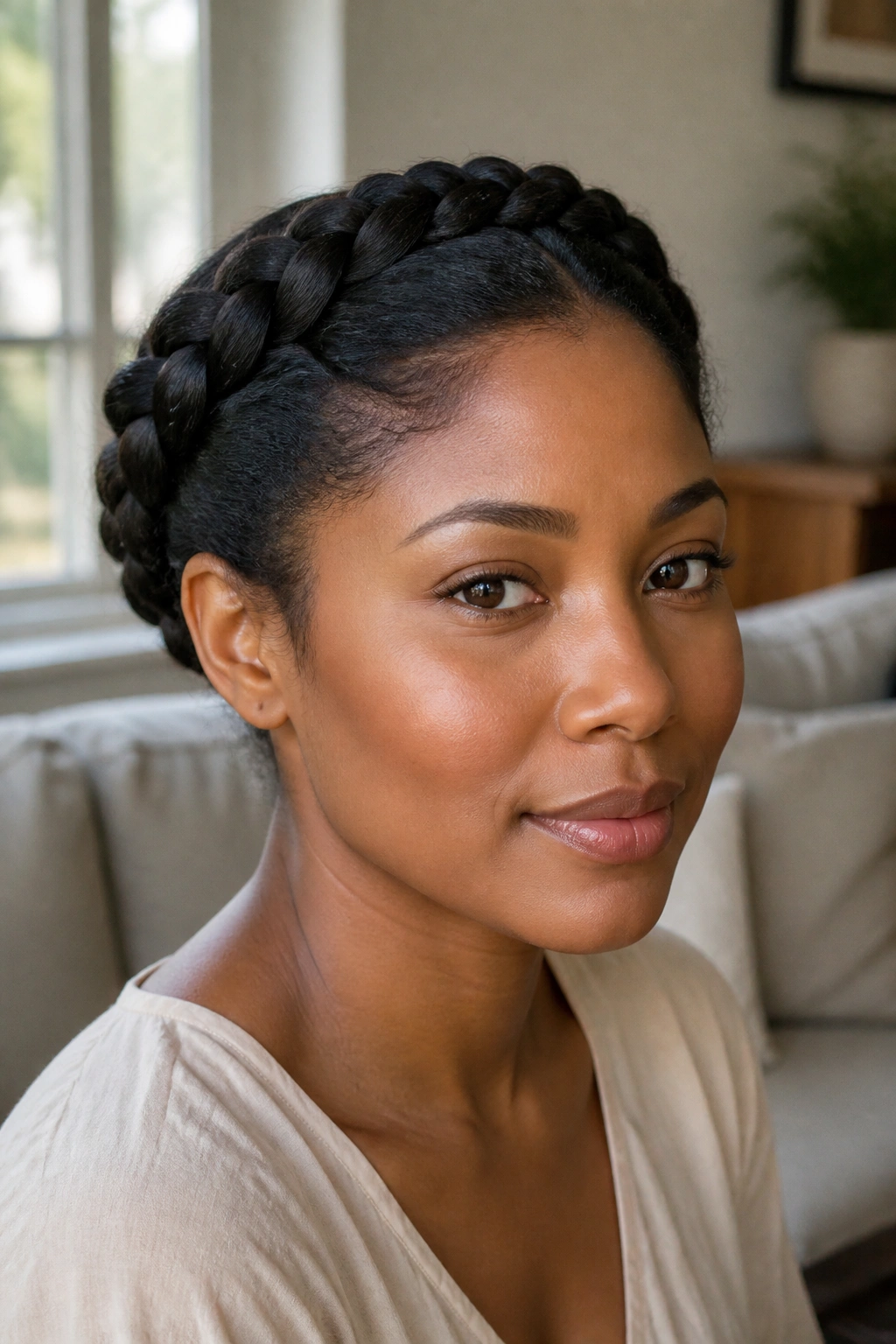
A crown braid has a dressed-up feel without needing a lot of length. The braid wraps around the head like a frame, and tucked ends keep everything neat instead of loose and fussy.
This style shines on hair that’s been stretched first. If the hair is too shrunken, the braid can look bulky in the wrong way. A bit of elongation helps the braid sit close to the scalp and keeps the shape clean. A little gel at the front helps too, though I’d keep it light so the hairline doesn’t look shiny and stiff.
What makes it feel polished
- The braid should sit low enough to frame the face.
- Pins should disappear into the hair, not stick out like little metal flags.
- The tucked ends need to feel secure but not cramped.
- A soft side sweep in the front keeps the style from reading too severe.
I think this is one of the easiest ways to make natural hair look elegant without losing its texture. It’s a smart option for weddings, church, dinners, or any day when you want the top of your head to do the talking.
7. Wash-and-Go on a Tapered Cut
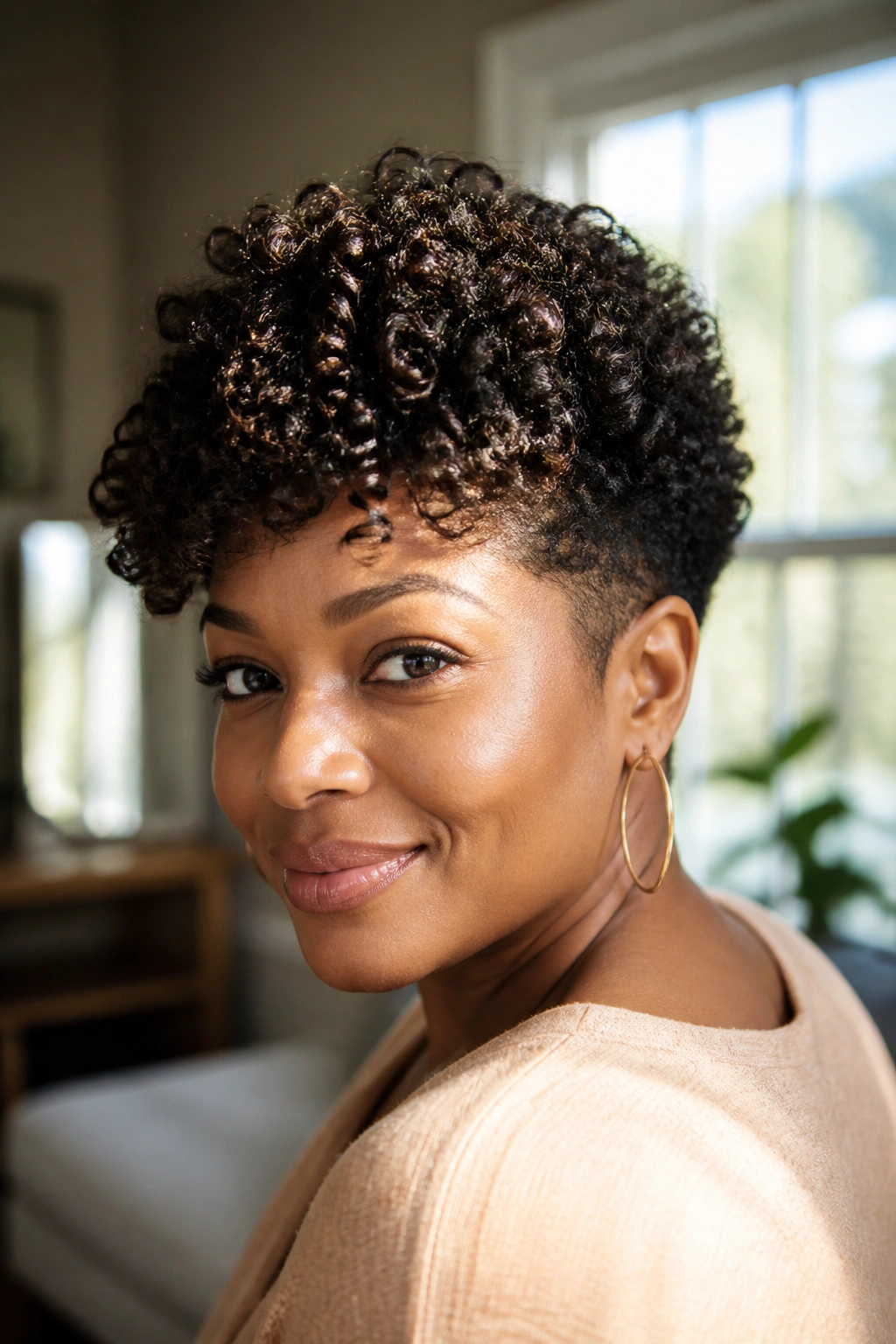
Can a wash-and-go still feel grown and refined? Absolutely—if the cut is doing some of the work for you.
A tapered cut gives curls a place to land. Shorter sides and back keep the shape controlled, while the top can bloom with definition. That makes the wash-and-go less about randomness and more about structure. The right gel matters here, but so does the cut. You can slather on product all day and still get a shape that feels off if the haircut is uneven.
The best wash-and-go starts on clean, soaking-wet hair. I know some people like to apply stylers to damp hair, but if you want strong curl clumps and less frizz, water is your friend. Smooth the product in with your fingers, then use a denman brush or raking motion to encourage the curl pattern. A diffuser helps if you want speed and lift at the roots.
What to get right
Drying matters. A wash-and-go that’s not fully dry can fall flat by midday.
So does restraint. Too much product weighs the curls down and leaves that sticky cast nobody actually enjoys touching.
8. Bantu Knot Set
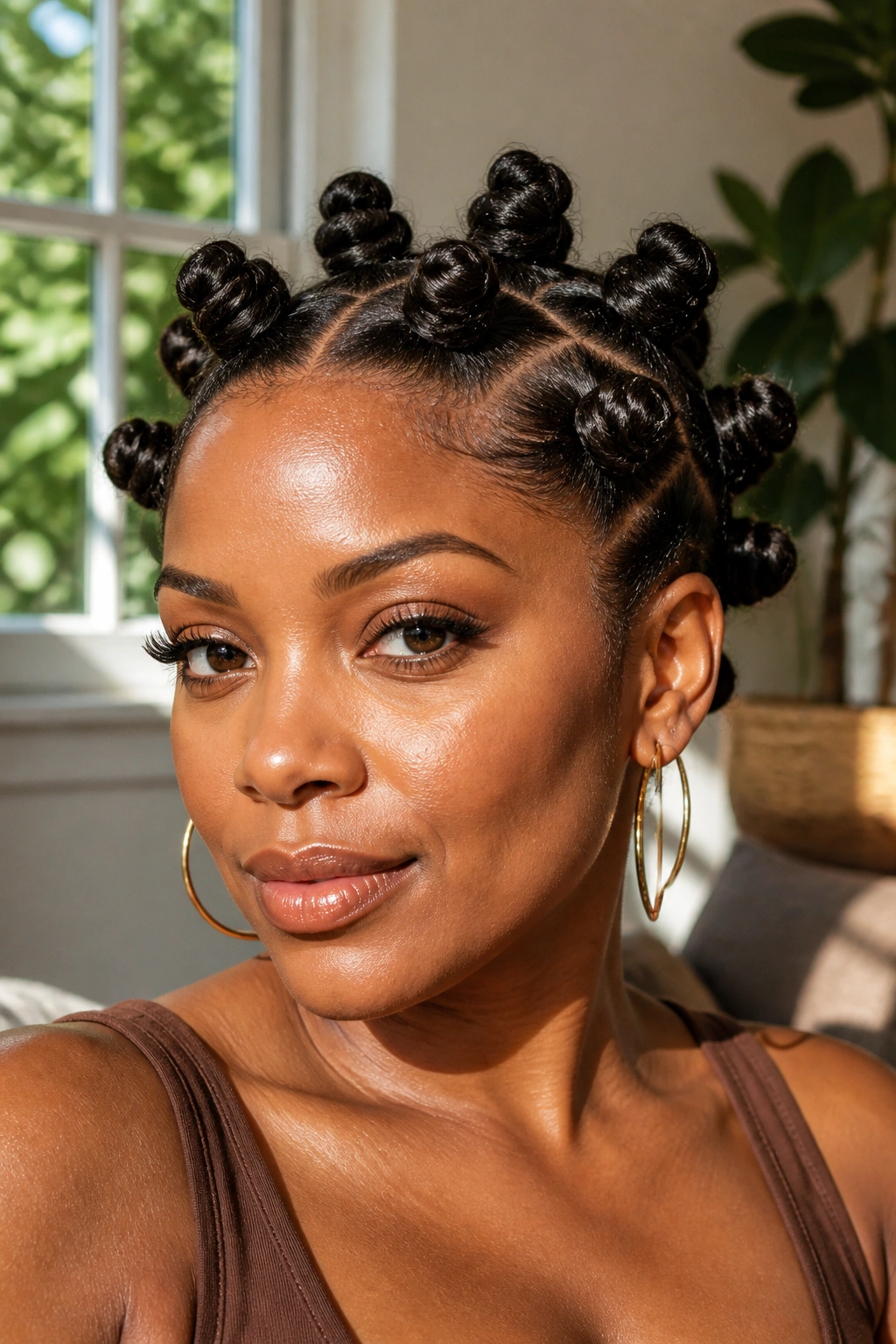
Bantu knots are one of those styles that do two things at once. They look good on their own, and they can turn into a curly set once you take them down.
That dual use makes them smart for natural hair. You get a sculpted style for a day or two, then soft spiral curls after unraveling. Smaller knots create tighter curls. Bigger knots give you looser waves. It’s simple, but the size changes the whole result.
I like Bantu knots for women who enjoy a style with shape and a little edge. They’re not subtle, which is part of the charm. A clean grid of knots can look artful, especially on short to medium-length hair.
Keep them comfortable
- Section the hair with a rat-tail comb so the parts are neat.
- Use enough product to smooth the hair, not enough to make it gummy.
- Twist each section firmly, then coil it into a knot close to the scalp.
- Let the knots dry fully before you touch them.
If you’re taking them down for curls, don’t rush it. Dry hair gives you definition. Damp hair gives you frizz and disappointment.
9. Mini Twists
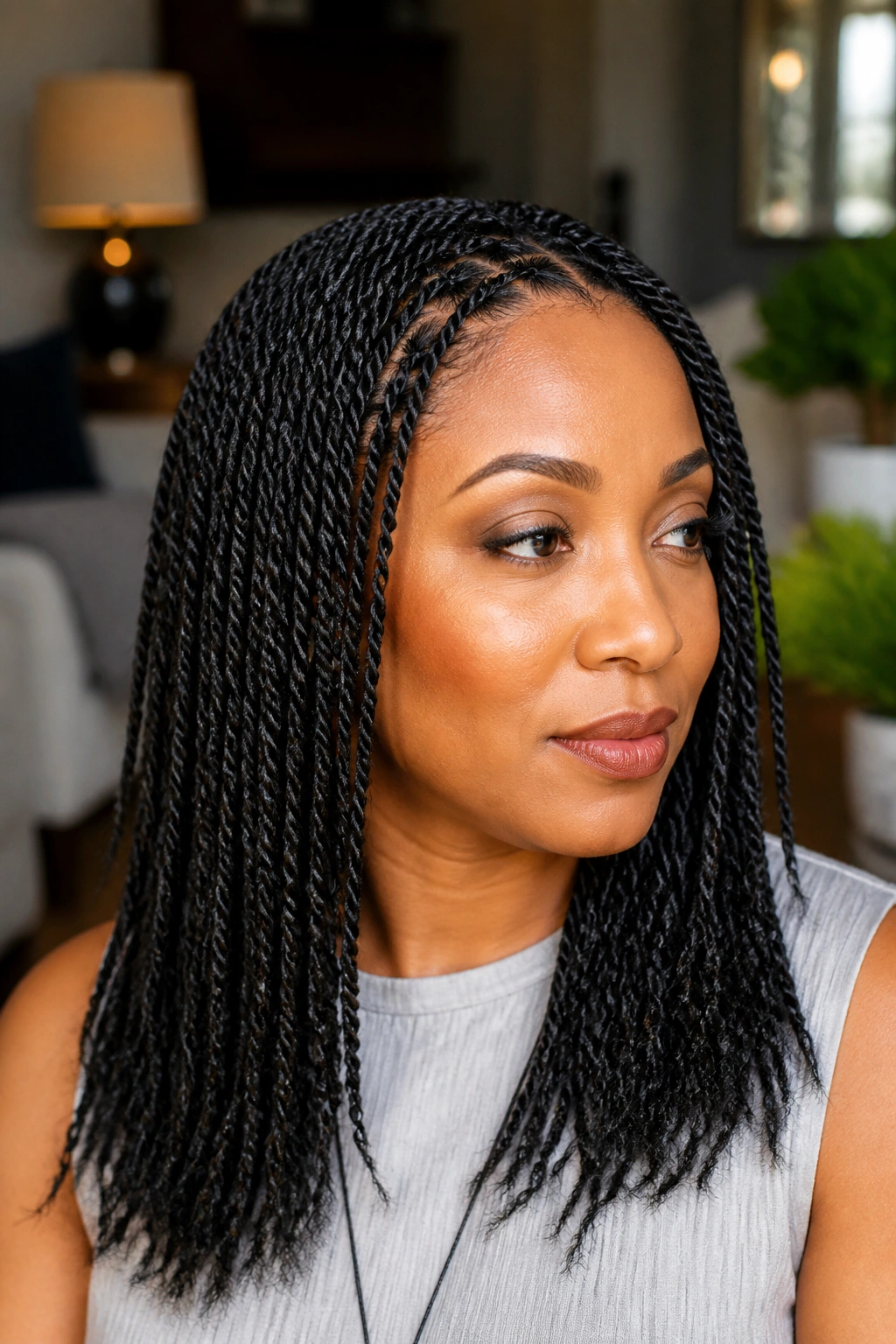
Mini twists are the style I recommend when you want to stop thinking about your hair every morning. They’re small, low-manipulation, and they can stay neat long enough to make life easier without putting a lot of stress on the strands.
The beauty of mini twists is in the detail. They don’t have to be pencil-thin to work. In fact, twists that are too tiny can take forever to install and may snag more than you want. Medium-small sections usually hit the sweet spot: enough movement, enough longevity, less breakage risk than a style that’s pulled too tightly.
This style also gives you options. Wear the twists down, pin them back, tuck them into a low bun, or sweep them to one side. That flexibility is part of why they’ve stayed popular for so long. They’re not flashy. They’re useful.
A satin scarf at night helps a lot. So does a little scalp oil on the parts every few days. Keep it light. Heavy product buildup around the roots will make the style look dull long before the twists themselves are done.
10. Knotless Box Braids
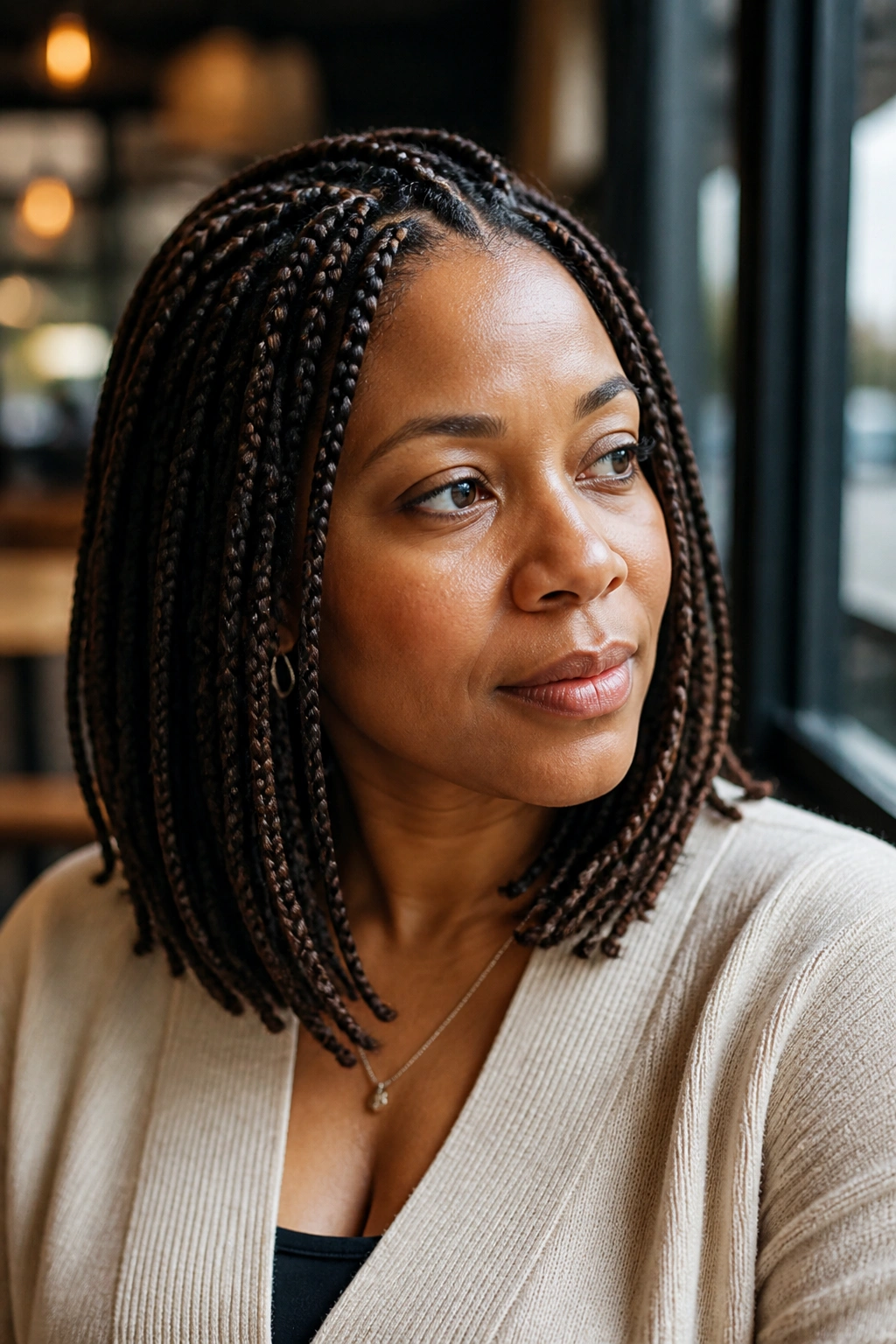
Knotless box braids are a better choice than old-school box braids for a lot of people, mainly because the root is lighter and flatter. The braid starts with your natural hair and the extension is fed in gradually, which reduces the bulky knot at the scalp.
That lighter feel matters more than people expect. You notice it on day one when your head doesn’t feel as loaded, and you notice it again on day ten when your edges are still behaving. Length can be anything from chin to waist, but I like medium lengths on women over 30 because they move well and don’t take over your whole routine.
Why they stay in rotation
- Less tension at the root.
- A cleaner, softer hairline.
- Easier to wear in buns, ponytails, and half-up styles.
- Good coverage for busy weeks when you want low daily styling.
The only real drawback is install time. Knotless braids take patience, and a rushed braider can still make them too tight. If the first few rows feel like they’re pulling your scalp, speak up right away. Your hairline will thank you later.
11. Senegalese Twists
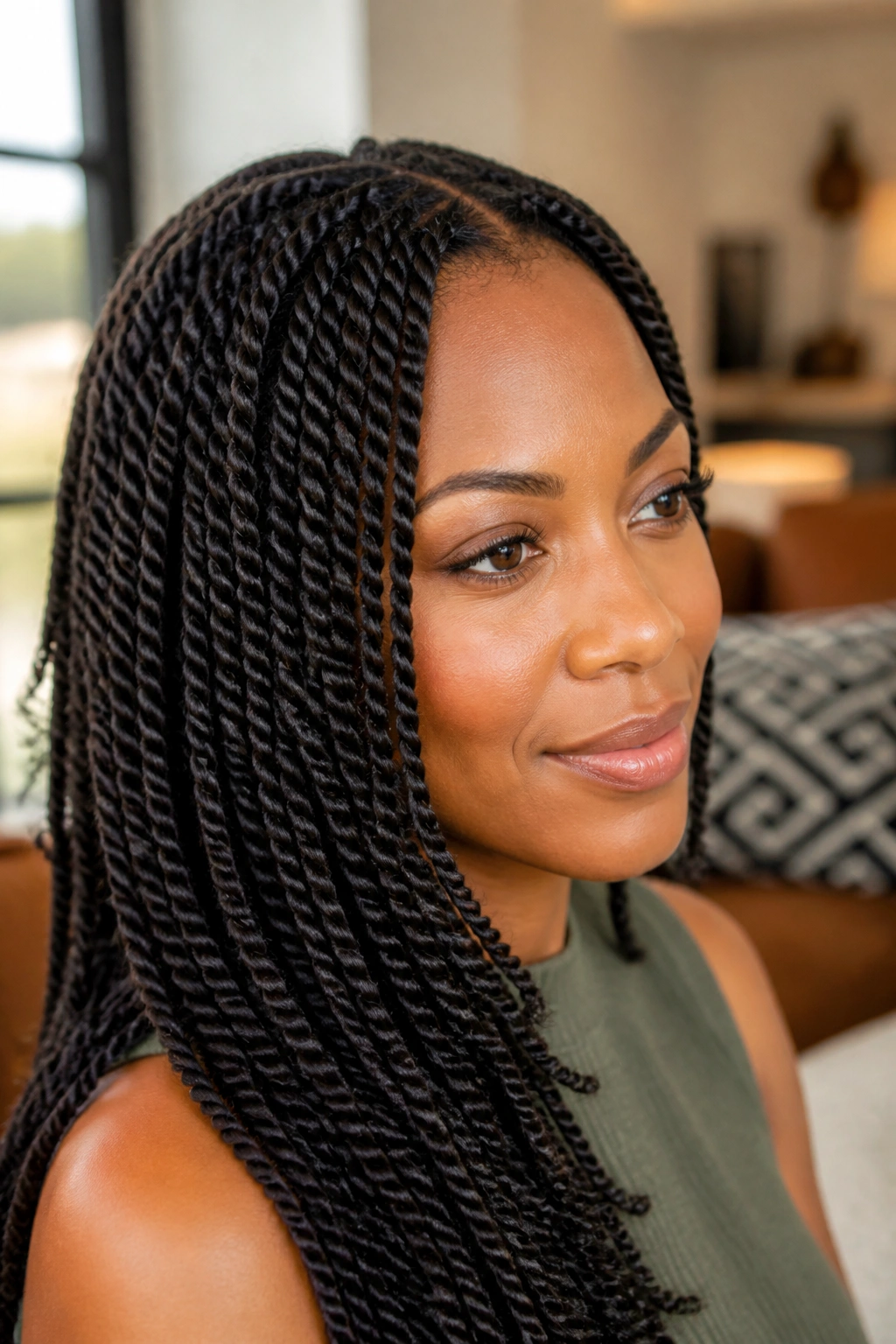
Senegalese twists have a smooth, rope-like look that reads a little sleeker than box braids. They’re a good fit if you want a protective style with shine and movement, not a chunky look.
What I like most is the way they swing. They don’t sit as stiffly as some braid styles, especially when the size is moderate and the install is neat. Medium-sized twists usually wear better than extra-large ones because they don’t feel heavy, and they keep the style from fraying too soon at the ends.
They work well for women who want a style that can go from casual to polished without much effort. Put on hoops, a button-down shirt, and a clean lip color, and the whole look changes. Leave them loose with a denim jacket and they feel easy instead.
One thing to avoid: overloading the hair at the root with too much extension weight. That’s where the style stops being helpful and starts feeling like a chore.
12. Faux Locs
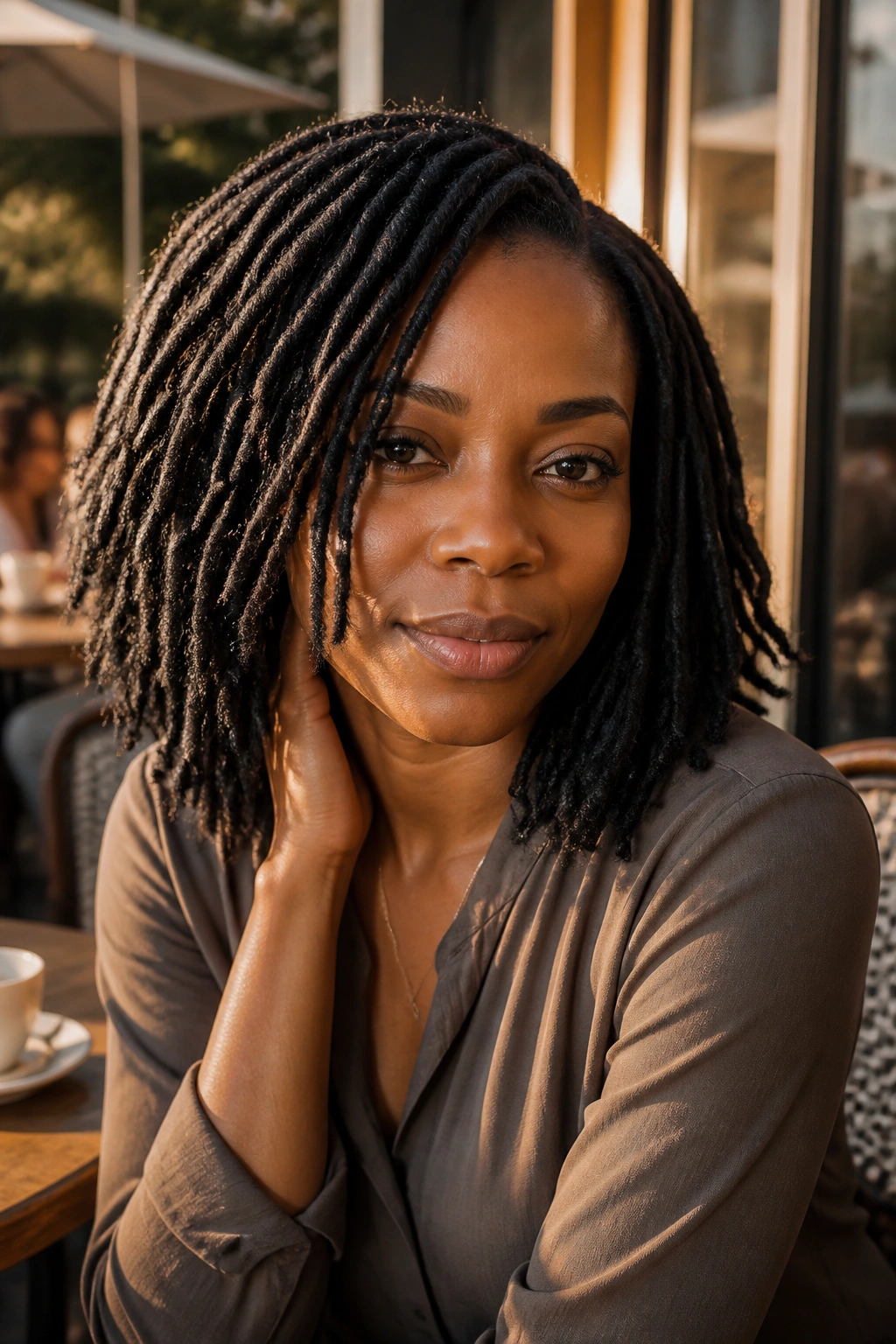
Faux locs bring texture, length, and a bit of drama without the permanence of real locs. That’s the appeal. You get the look of locs with room to switch them out later, which is useful if you like changing your hair often.
There are a few ways to wear them—wrapped, distressed, or smoother at the base—but the thing that matters most is weight. Faux locs that are too long or too heavy can tug on the scalp, especially around the temples and nape. I prefer shoulder-length or collarbone-length versions for everyday wear. They still make a statement, but they’re easier to live with.
Good details to ask for
- A clean base with gentle tension.
- Lightweight wrap hair if your strands are fine.
- A length that matches your neck and shoulder comfort.
- Ends sealed well so they don’t unravel too soon.
Faux locs work best when you want a protective style with personality. They’re not shy. That’s part of the appeal.
13. Side-Swept Cornrows
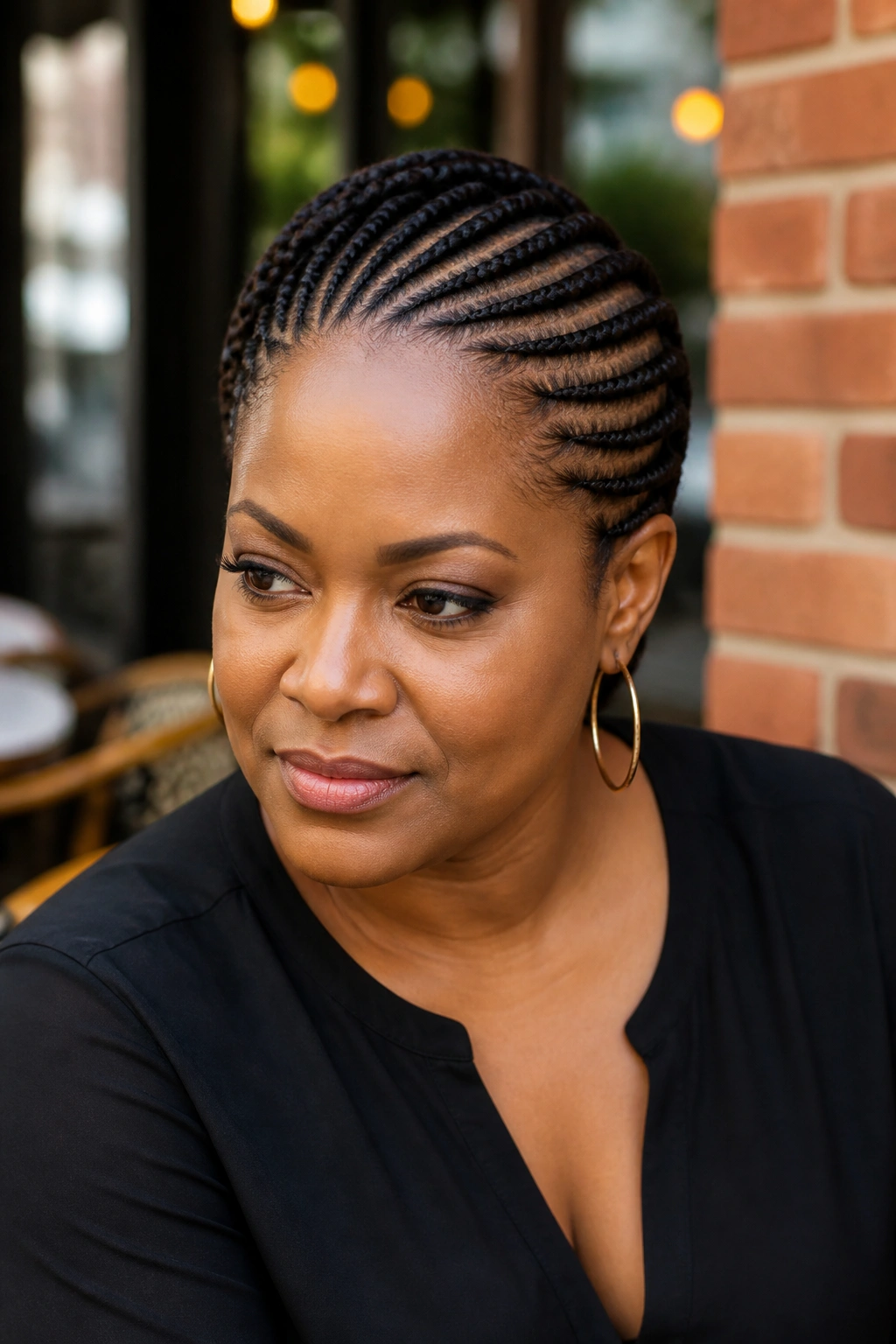
Side-swept cornrows are a strong choice when you want structure with a little softness. Instead of going straight back, the braid pattern angles across the head, which can make short natural hair look more intentional and more dimensional.
The side sweep also gives you room to flatter the face. A row that curves around the forehead or temple can soften strong features, while the rest of the braids keep the style locked in place. It’s a neat option if you like styles that sit close to the scalp but still have movement in the design.
This is one of my favorite styles for someone who wants a protective look that doesn’t feel heavy. It can also work under wigs, under hats, or on its own with the ends tucked or beaded. Just keep the braids close enough to the scalp to hold, but not so tight that they feel hard by the second day.
Small detail, big difference. A clean parting pattern changes the entire look.
14. Halo Braid
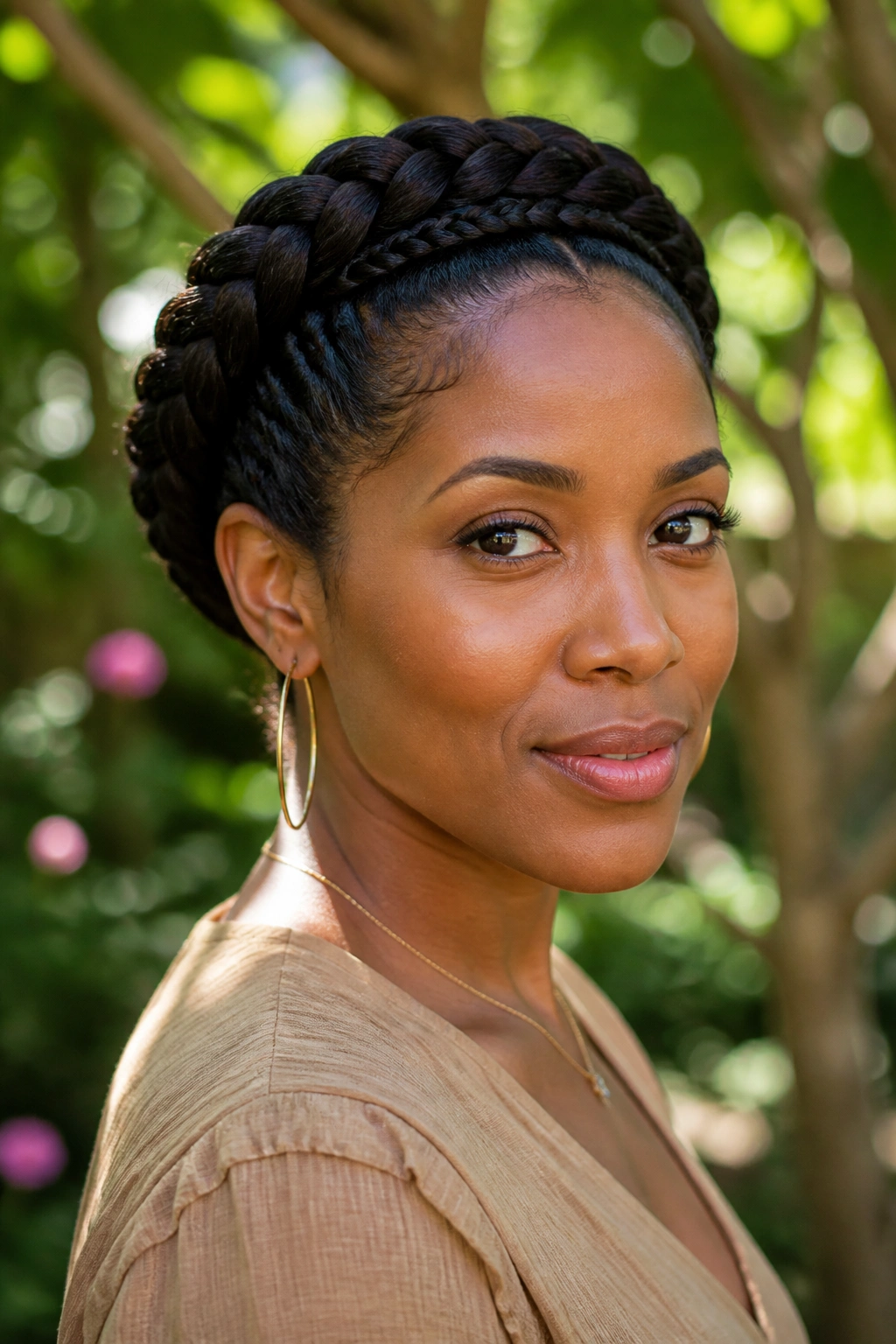
The halo braid has a quiet kind of confidence. It wraps around the head in one smooth circle, almost like a headband made out of your own hair, and it keeps the neck and shoulders clear.
The best halo braids look soft at the front and secure at the back. If the braid is too tight, the style loses its ease and starts to look severe. If it’s too loose, the crown shifts around and you spend the day checking mirrors. The middle ground is what you want.
A few things that help
Start with stretched hair
Slightly stretched hair gives the braid a smoother surface and helps the shape sit close to the head.
Keep the braid direction clean
A braid that changes course too often can look messy in a way that’s hard to fix later.
Tuck the finish well
Pins should disappear under the braid, and the ends should be hidden or wrapped in a way that feels neat.
I like halo braids for formal events, but they also work on a plain Tuesday if you want your hair out of the way and still want to look put together.
15. Flexi-Rod Curls
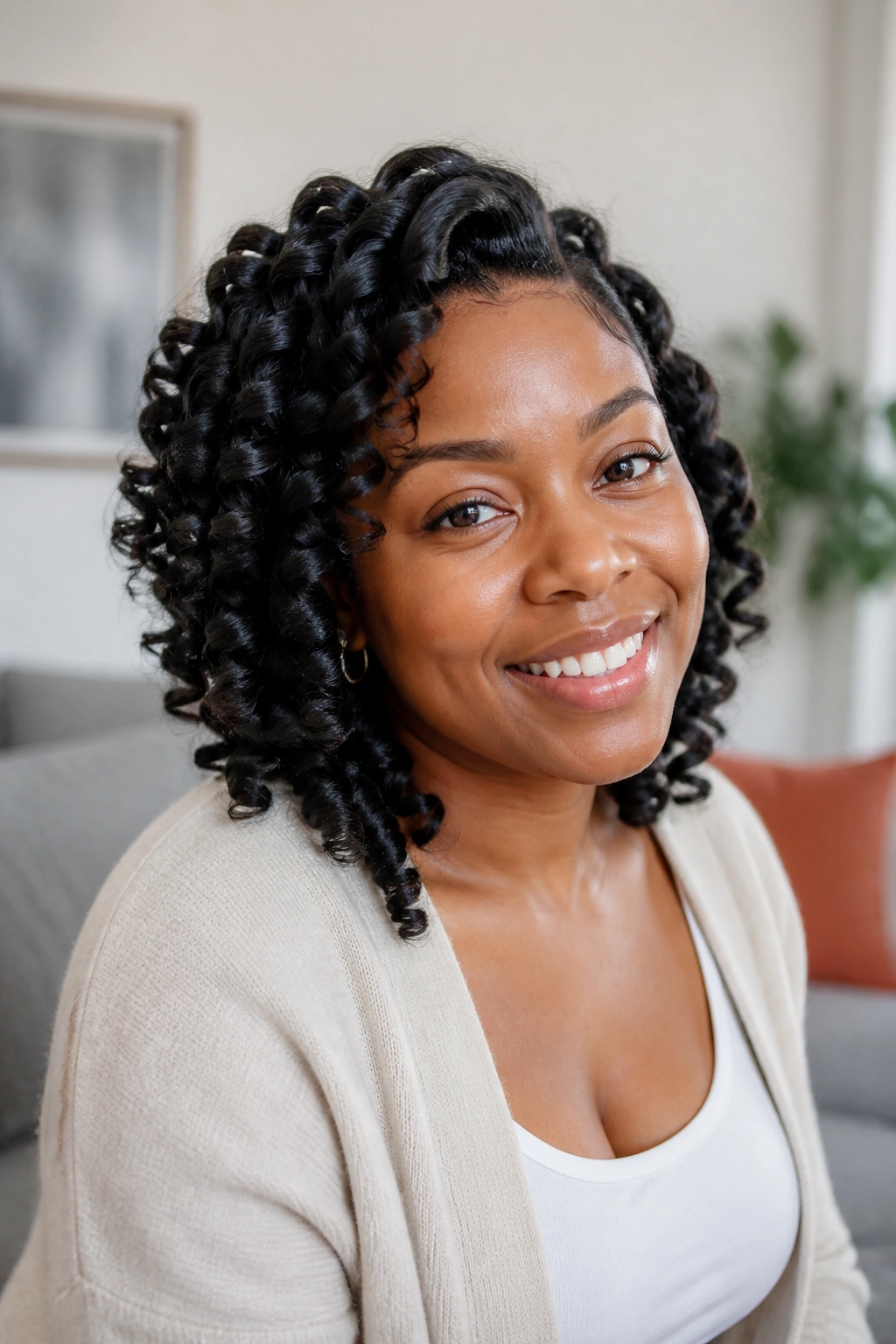
Flexi-rod curls give you soft, springy curls that look more styled than a basic twist-out. They’re a good option when you want a smoother curl pattern with a little bounce.
The set matters more than the rod itself. Hair needs enough product to hold the shape, but not so much that it dries crunchy in the wrong way. I usually think of flexi-rods as a patience style. You set them, you leave them alone, and you wait for full dryness. That last part is non-negotiable. Pull them out too soon and the curl drops before you even leave the house.
How to make them work
- Use even sections so the curls match.
- Roll the hair to the root without creating bumps.
- Let the hair dry all the way under a hooded dryer or overnight.
- Separate the curls lightly after they set.
They’re a beautiful choice for dinner, photos, or any day when you want a softer, more rounded shape than a twist-out gives you. No need to overthink it. The curls do the work.
16. Twist Bob with Ends Curled Under

A twist bob with curled-under ends has polish built right into the shape. It’s neat at the shoulders, easy on the ends, and flattering on most face shapes because it frames the jaw without adding a lot of bulk.
The trick is in the finish. You can do the style with two-strand twists and then set the ends on small rollers or perm rods, or you can curl the ends under with rods right from the start. Either way, the bottom of the style should bend inward a little instead of hanging bluntly. That curve makes the whole bob look more tailored.
I reach for this look when I want something that reads professional without feeling severe. It works with earrings, blazers, bright sweaters, and all the little extras that make a style feel complete.
A twist bob also ages well through the week. Even when it softens, it usually softens in a nice way.
17. TWA Finger Coils
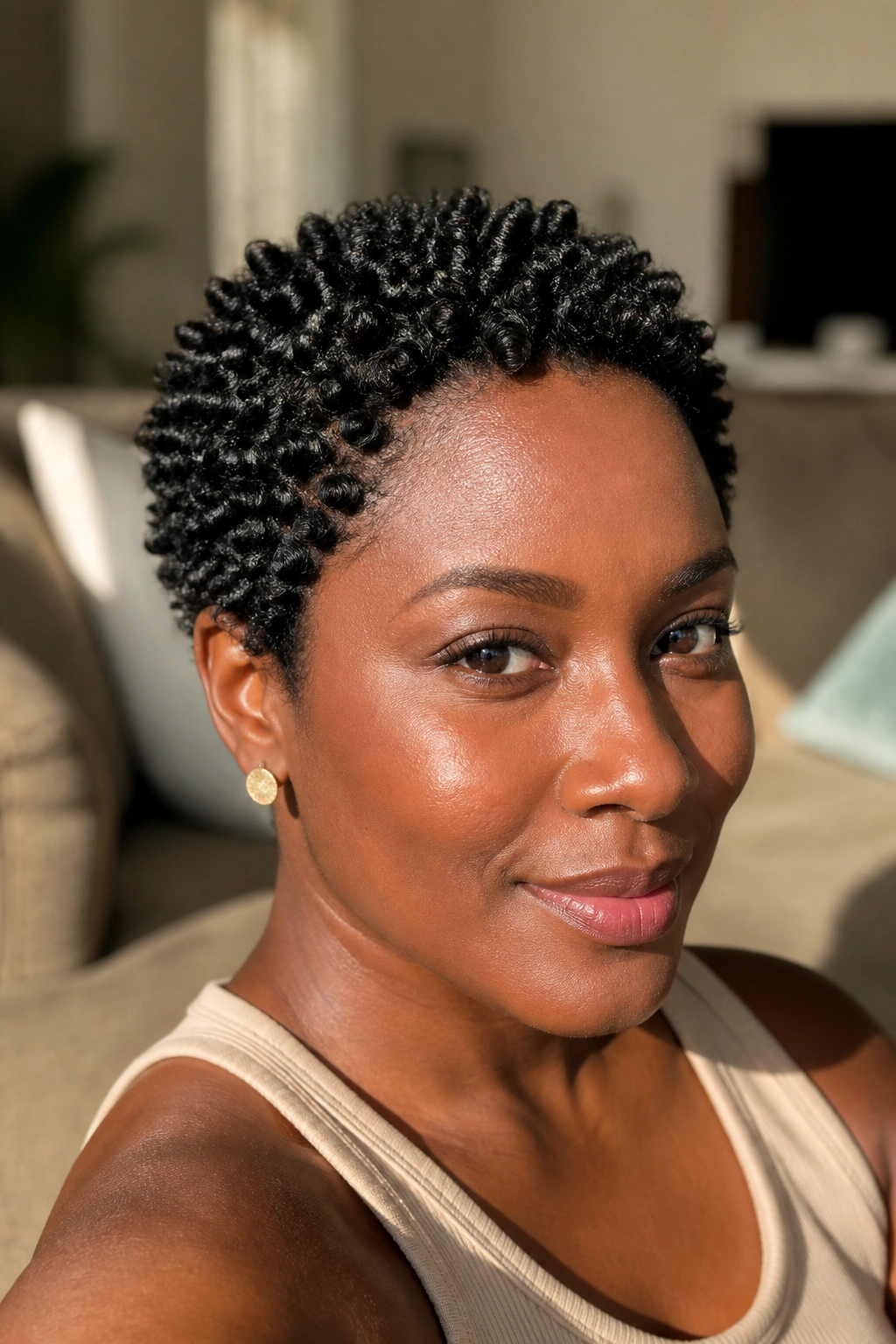
Finger coils are a small-hair style with a lot of payoff. On a TWA—a teeny weeny afro—they create clean little spirals that make the texture look defined instead of fuzzy.
The patience piece is real. Coiling short hair takes time, and the result depends on section size and product choice. Tiny sections give you more visible definition, while larger sections make the style look fuller and less uniform. I prefer a medium size on most TWAs because it gives shape without making the head look too patterned.
What helps most
- Start on freshly washed, moisturized hair.
- Use a curl cream or gel with enough hold to keep the coil together.
- Coil in the same direction so the style looks consistent.
- Let the hair dry completely before fluffing or separating.
Finger coils are a strong pick when you want to show off your texture in a neat way. They’re not loud. They’re precise. That precision is the appeal.
18. Shaped Afro with Tapered Sides
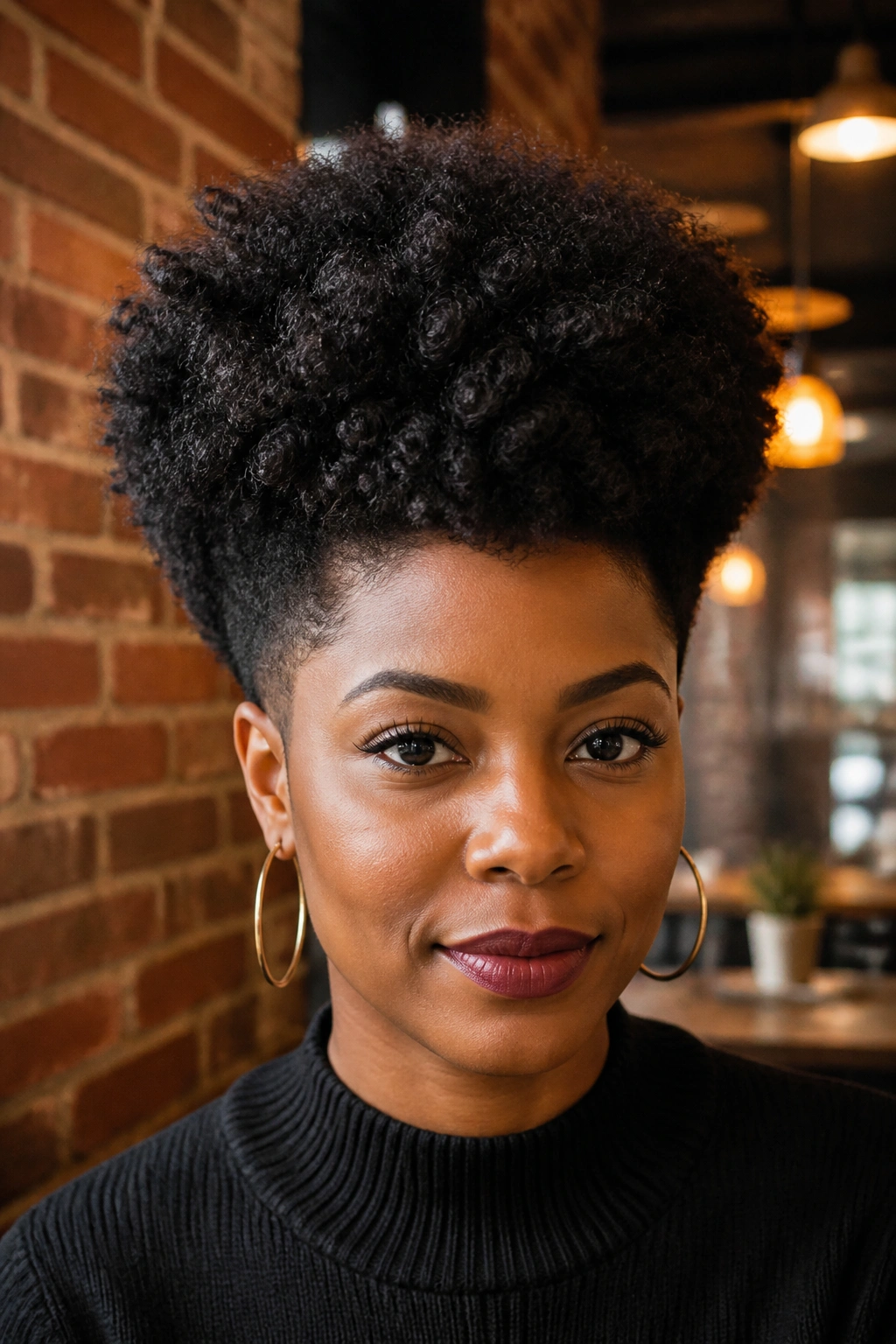
A shaped afro with tapered sides is a power move, plain and simple. It celebrates volume up top while keeping the sides and back controlled, so the silhouette looks deliberate instead of random.
This style works because the shape is doing the heavy lifting. If the sides are too wide, the afro can swallow the face. If the top is too flat, you lose the whole point. A good cut gives the hair a clean outline, and from there the styling is mostly about moisture, a pick at the root, and maybe a little bit of fluffing at the crown.
The beauty of this look is how honest it is. No hiding, no stretching, no pretending the hair wants to be something else. It also looks good with glasses, bold lipstick, and simple clothes, which is handy because the hairstyle already has presence.
Keep it healthy
- Trim the shape before it gets ragged.
- Moisturize the ends so they don’t fray.
- Use a wide-tooth comb or pick only at the roots.
- Sleep with a satin scarf or bonnet to preserve the outline.
19. Pineapple Updo with a Silk Scarf Finish
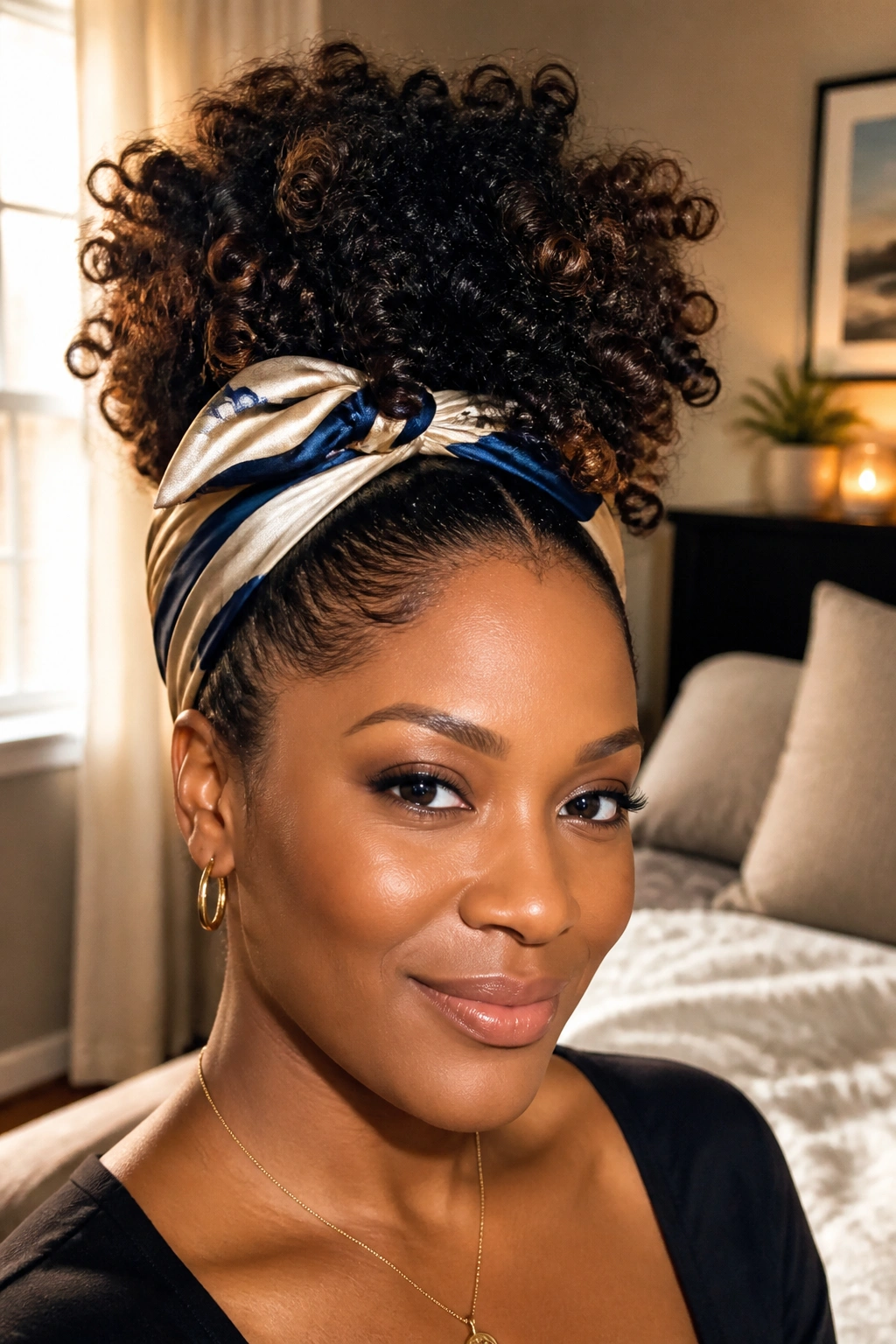
Can a pineapple be a daytime style? Yes, if you treat it like one.
The pineapple updo collects curls high on the head, which keeps the shape soft and protects the curl pattern. On longer natural hair, it can look playful. On mid-length hair, it reads relaxed and pretty. The silk scarf is the part that turns it from “I threw my hair up” into “I meant to look this way.”
A loose elastic or soft scrunchie is the safer choice here. Tight bands leave dents, and dents are annoying if you want to wear the style into the evening. Let a few curls sit around the hairline and temples. That little messiness gives the style life.
How I’d wear it
- Keep the puff high, not pulled all the way to the front.
- Let the curls fan upward instead of crushing them flat.
- Tie a silk scarf around the base or the front for polish.
- Use a little edge control only where it’s needed.
This is a good option when you want your hair up, your curls visible, and your morning routine short.
20. Headband Tuck and Roll
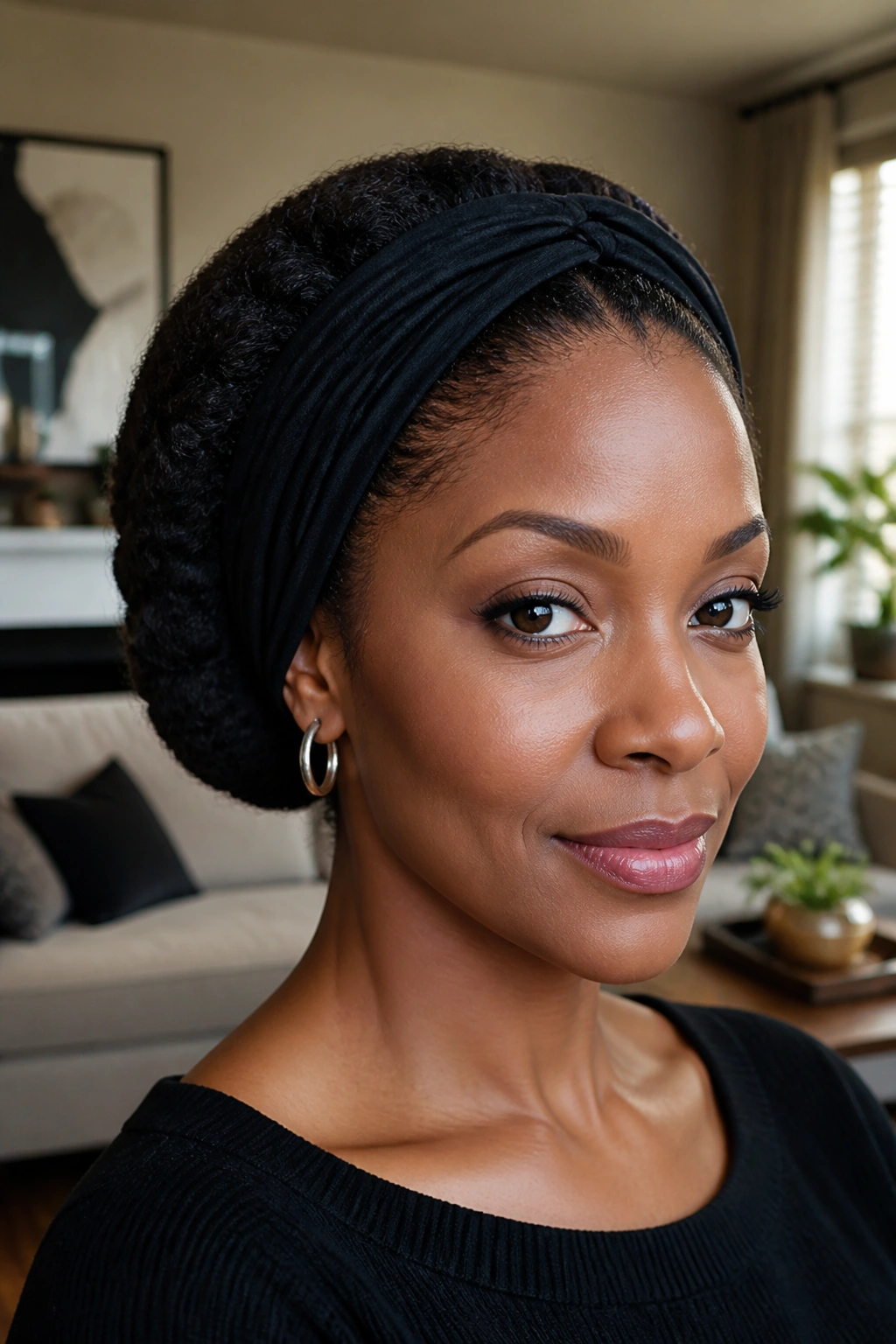
A headband tuck and roll is one of those styles that saves a rough hair day without looking like an emergency fix. You place a stretchy headband around the head, tuck the ends under, and roll the hair in until it forms a soft shape at the back or nape.
It works especially well on stretched hair or an old twist-out that still has enough body. If the hair is too fresh and springy, the tuck can pop loose. If it’s too dry, the ends can look frayed. Somewhere in the middle is the sweet spot. That’s where the style sits best.
The real advantage is speed. You can do this in minutes, but it still looks cared for. Add big earrings or a printed scarf, and it feels like a deliberate look instead of a rescue mission.
A bonus: it keeps your ends tucked away, which is useful on days when you want less manipulation and a calmer scalp.
21. Low Rolled Chignon
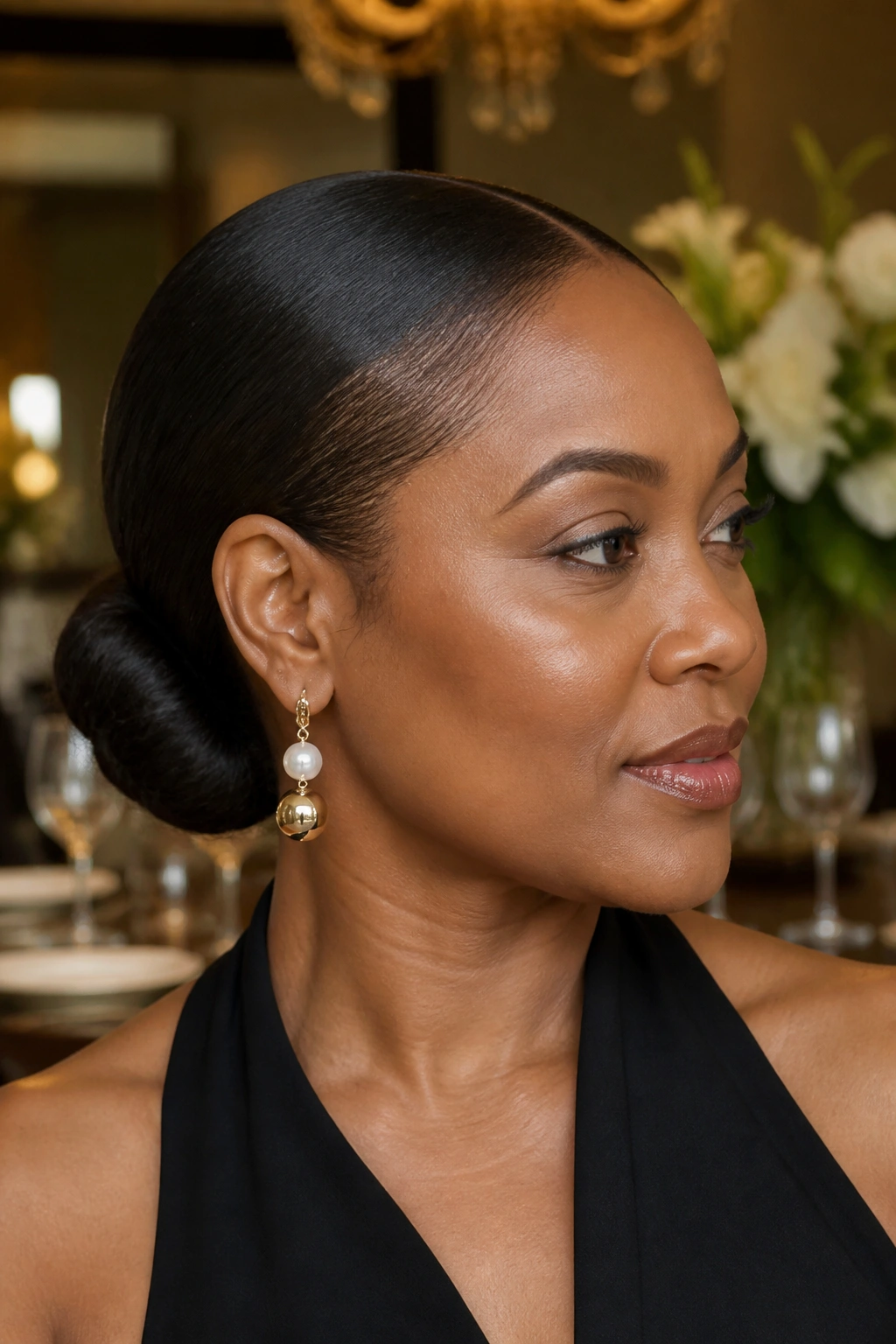
A low rolled chignon is one of the cleanest styles for natural hair when you want something soft and mature without losing texture. It sits at the nape, gathers the hair in a smooth roll or tuck, and keeps the profile neat from every angle.
I like this one because it doesn’t rely on drama. The shape does the work. A few flat twists at the front can feed into the roll, or you can gather the hair into a low puff first and then tuck it into a bun. Either route works, but the finish should feel secure and close to the head.
What makes it hold
- Start with stretched hair or an elongated twist-out.
- Pin the roll in more than one place so it doesn’t slip.
- Keep the front smooth without pulling it taut.
- Hide the ends well so the style looks finished.
This is the hairstyle I’d choose for a formal dinner, a work event, or any day when I want my hair to stay out of my way and still look refined.
22. Braided Updo with Feed-In Detail
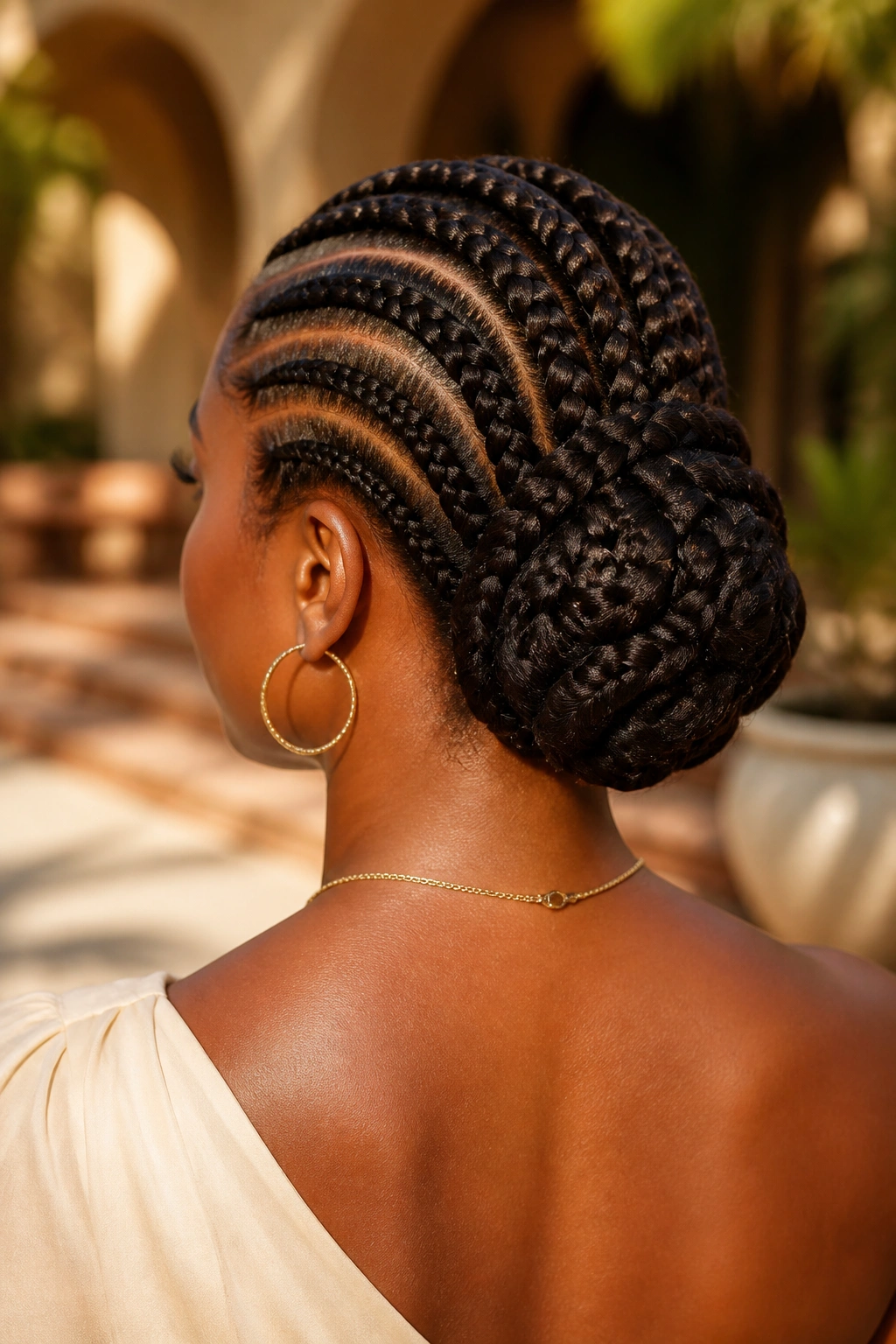
A braided updo with feed-in detail is one of the strongest choices if you want a protective style that still feels dressed up. Feed-in braids start small at the scalp and grow fuller as hair is added, which gives the braids a cleaner base and a smoother look.
The updo part keeps the length off your neck, which is useful when you want comfort as much as style. You can sweep the braids into a bun, wrap them into a crown, or pin them into a sculpted shape that sits right at the back of the head. The style can be subtle or dramatic depending on the braid pattern. I tend to prefer designs that are neat enough for daily wear but still special enough for a wedding guest look.
One thing I always tell people: the finish should feel light at the scalp. If the braid base feels too tight on day one, it will not magically improve on day four. Good feed-in braids should feel secure, not punishing.
For Black women over 30, this is one of those styles that hits a lot of marks at once. It respects the hair, protects the ends, and still looks like you had a plan. That’s the sweet spot, and honestly, it’s the reason styles like this keep earning a place in the rotation.
