



Box braid hairstyles are one of the rare looks that can feel neat, playful, polished, or downright dramatic without asking much from your morning routine. A good set of box braids does more than protect your hair; it changes the shape of your whole face, the line of your neckline, and the way your accessories land.
What people often call “one style” is really a dozen decisions at once: part size, braid size, length, weight, finish, and what you do with the ends. Change any one of those, and the mood shifts fast. A shoulder-length set with clean middle parts feels very different from waist-length braids tossed into a high ponytail. Very different.
The nice part is that you do not need a new braid pattern every time you want a new look. You can keep the same base and still get a fresh result by changing the parting, adding cuffs, tying it up, or letting a few pieces fall loose around the face. That’s the real appeal here: box braids are sturdy enough for daily life, but flexible enough to stop feeling repetitive.
A little planning goes a long way. If you know whether you want sleek or soft, heavy or light, long or cropped, the style choice gets easier fast. And yes, the right box braid look can save you from that weird in-between moment where your hair is done, but not quite doing the thing yet.
1. Classic Waist-Length Box Braids

This is the standard for a reason. Waist-length box braids give you swing, shape, and enough length to style without needing a full reinvention every morning.
The look works best when the parts are clean and the braids are evenly sized from root to end. If you want that smooth, expensive-looking finish people always notice, keep the braid tension firm at the root but not painful. The ends should hang with a little movement, not stick out like stiff rope.
Why it stays popular
- It frames the face without crowding it.
- It gives you room for buns, ponytails, and half-up styles.
- It looks polished even when you wear it plain.
Best for: anyone who wants one install that can do several jobs at once.
2. Shoulder-Grazing Box Braids
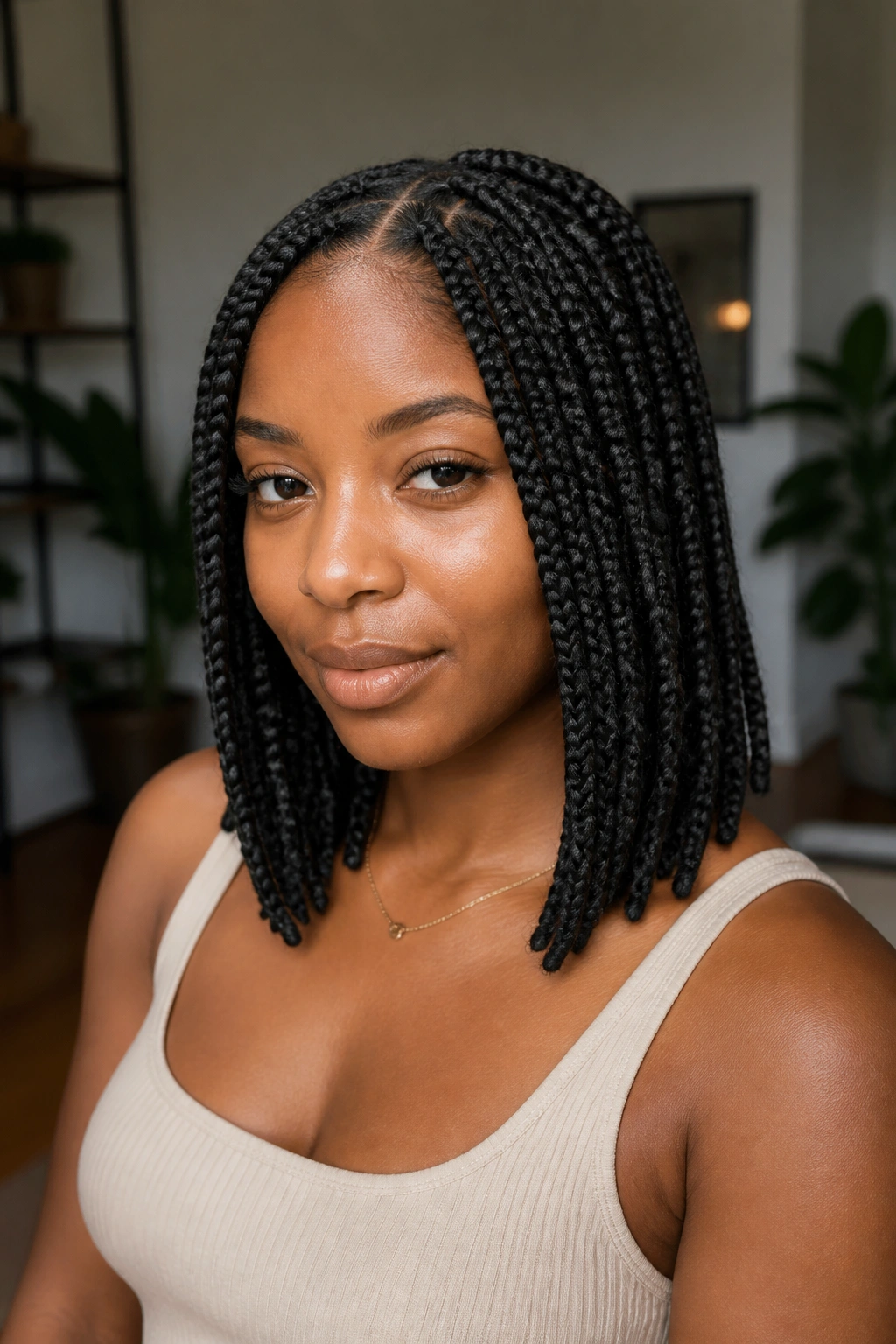
Want the same feel without the weight? Shoulder-grazing box braids are easier to live with, especially if you hate hair brushing your back all day.
They sit in that sweet spot between practical and styled. Enough length to tuck behind your ears, enough movement to feel finished, and less tug on the scalp than longer versions. That matters more than people admit, especially if you wear braids a lot and want your neck to feel free.
A shoulder-length cut also shows off good parting. If the squares are neat and the ends are trimmed evenly, the whole style looks crisp. If the sections are sloppy, there’s nowhere to hide it. Shorter braids are honest like that.
3. Jumbo Box Braids

Jumbo box braids are bold, fast-looking, and never shy. They make a statement before you even touch the outfit.
The size is the point. Big braids give you that thick, graphic look with fewer pieces on the head, which means the style reads strong and intentional. They also tend to be lighter in installation time, though not always lighter in feel. A few chunky braids can still pull if they’re made too tight at the root.
Quick details to keep in mind
- They need clean sectioning or they look messy fast.
- They show off parting lines in a big way.
- They’re easy to style into a high ponytail or bun.
Pro tip: ask for slightly longer parts at the hairline if you want the front to lay flatter.
4. Micro Box Braids

Micro box braids are the opposite of jumbo in every useful way. They look delicate, intricate, and full of movement, but they also take patience from both you and the person installing them.
Because the braids are smaller, the whole style has a softer drape. It can feel almost featherlight in appearance, even if the install time is long. The payoff is detail. You see more of the parting, more of the braid texture, and more of the way the hair falls when you turn your head.
They do ask for a careful scalp. Tiny braids can tempt people to overpack the hair at the root, and that’s where problems start. Keep the tension controlled, and let the finish stay neat instead of forcing extra tightness.
5. Knotless Box Braids

Knotless box braids are the style I reach for when I want the look of braids without that heavy, obvious knot sitting at the base. They blend in more softly at the root, which gives the whole style a smoother start.
That smoother start changes the whole mood. The braids often move more naturally, sit flatter at the hairline, and tend to feel easier for long wear when installed well. They also look especially good in medium and waist-length versions because the root looks cleaner from the first day instead of needing time to settle.
What makes them different
- The braid begins with your natural hair and builds gradually.
- The parting tends to look cleaner at the scalp.
- The front edge can look less bulky.
Best for: people who want a softer, flatter braid line and less root bulk.
6. Triangle-Part Box Braids
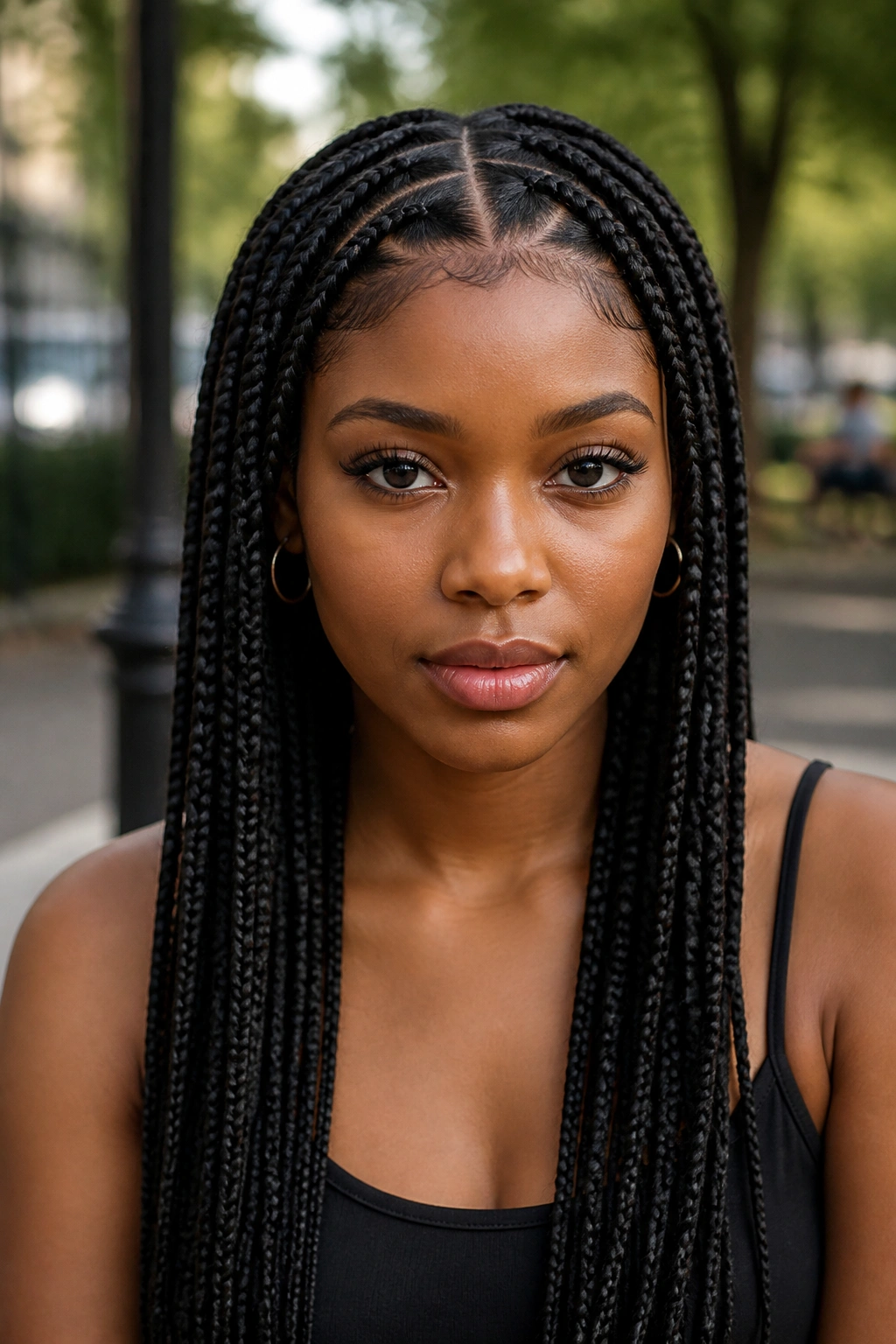
Triangle parts give box braids a little edge without changing the braid itself. The sections at the scalp are shaped into triangles instead of squares, and that small shift makes the whole head look more graphic.
It’s one of those styles that reads instantly in person. The parting creates angles, and those angles catch the eye faster than plain squares. If you like braid styles that feel a little sharper and less expected, this is one of the easiest ways to get there.
The trick is consistency. Make the triangles clean and evenly sized, or the pattern starts looking accidental. Triangle-part box braids are at their best when the scalp design feels deliberate all the way around.
7. Diamond-Part Box Braids

Diamond parts are for people who like a little geometry with their style. The sections are shaped into diamonds, which gives the base of the braids a more decorative feel than standard square parting.
This style looks especially good when the braids are medium-sized, because the shape has room to show. On very large braids, the parting can get lost. On tiny braids, the diamonds can feel busy. Medium is the sweet spot here.
A clean diamond part can make even a simple braid look expensive. That sounds dramatic, but it’s true. The scalp pattern does a lot of the talking before the braid length even comes into play.
8. Side-Part Box Braids
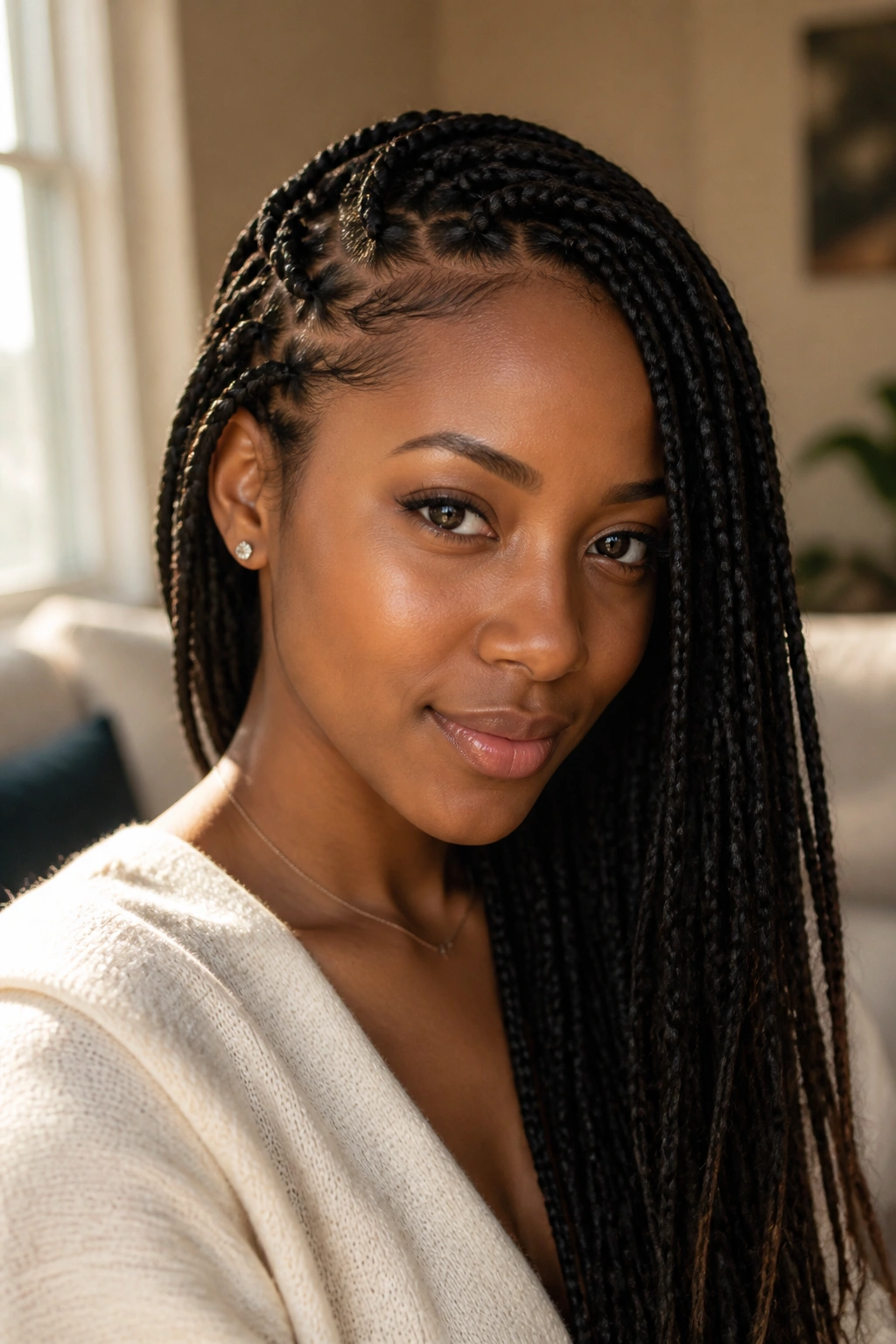
A side part changes the entire face shape of box braids. Side-part box braids bring softness, and they’re a good choice if center parts feel too strict on you.
The look can be deep and dramatic or shallow and subtle. A deep side part creates more lift on one side and lets the braids fall with a little curve across the forehead. A gentler side part feels easier and less formal. Both work, but they say different things.
Side parts are especially useful if you wear your braids down most of the time. They help the style avoid that “straight down the middle” stiffness. Small change, big effect.
9. Center-Part Box Braids

Center-part box braids are clean, balanced, and easy to read from across a room. They give the face a neat frame and make the braid pattern look symmetrical in a way that people either love or avoid completely.
If your goal is sharpness, this is the version. It suits long braids, shoulder-length braids, and bob cuts alike, but it really shines when the parts are straight and the middle line is crisp from the forehead back. A wobbly center part ruins the effect fast. No mercy there.
This style also pairs well with accessories. Gold cuffs, simple beads, or a bare finish all work because the part itself is already doing visual work.
10. High Ponytail Box Braids
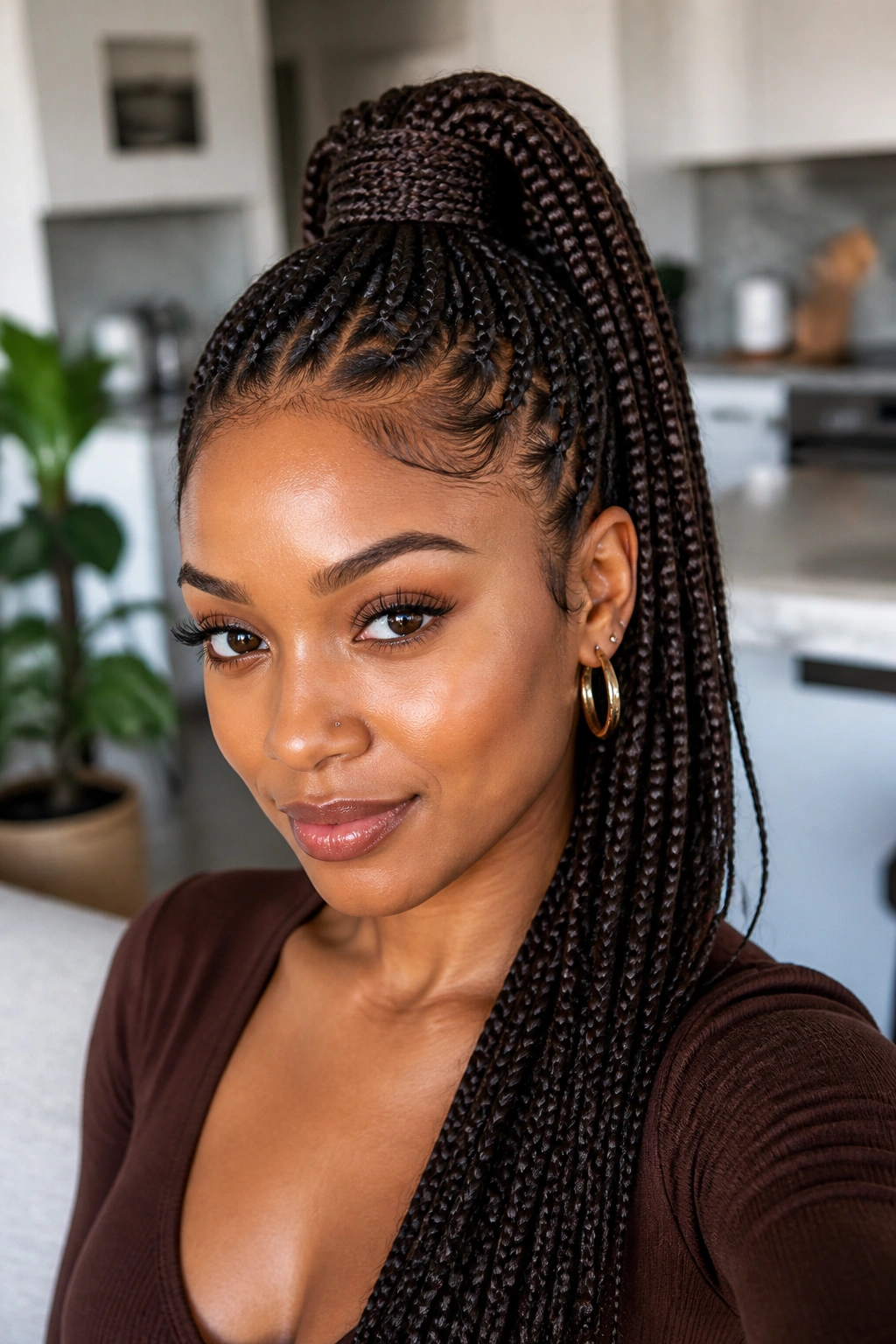
A high ponytail turns braids into something lively in a second. Pulling the braids up and back lifts the face, clears the neck, and gives the ends room to move.
The style feels sporty, but it can also be polished if the base is neat and the wrap around the ponytail is clean. I like this one when the braids are medium or long, because the tail has enough weight to swing instead of sticking out awkwardly. Too short, and it can look stubby. Too heavy, and the ponytail can tug.
A soft edge and a smooth crown matter here. If the front is puffy, the whole thing loses shape. Keep the base tidy and let the length do the rest.
11. Half-Up, Half-Down Box Braids

Half-up, half-down box braids are the easy crowd-pleaser. They show off the length while getting some of the hair off your face, which is exactly why people keep coming back to them.
The top section can be small and neat or big and loose. A tiny top knot feels playful. A larger gathered section feels more styled and can make the whole silhouette look fuller. Either way, the bottom half keeps the movement alive.
This style is especially good when you want your braids visible from the front and the back. That sounds obvious, but it matters. Some braid looks disappear when you tie them up. This one doesn’t.
12. Space Bun Box Braids

Space buns with braids can look cute, sharp, or a little rebellious depending on how high you place them. Two buns split the weight, so the style feels lighter visually than a single full updo.
The best version keeps the buns balanced. If one sits higher than the other, it starts looking like a mistake instead of a choice. A little asymmetry can work, but the line across the back should still feel controlled.
Leave the ends out if you want a softer finish, or tuck them in for something neater. Either way, this is one of the styles that makes box braids feel younger without making them childish. There’s a difference, and it’s a useful one.
13. Braided Top Knot
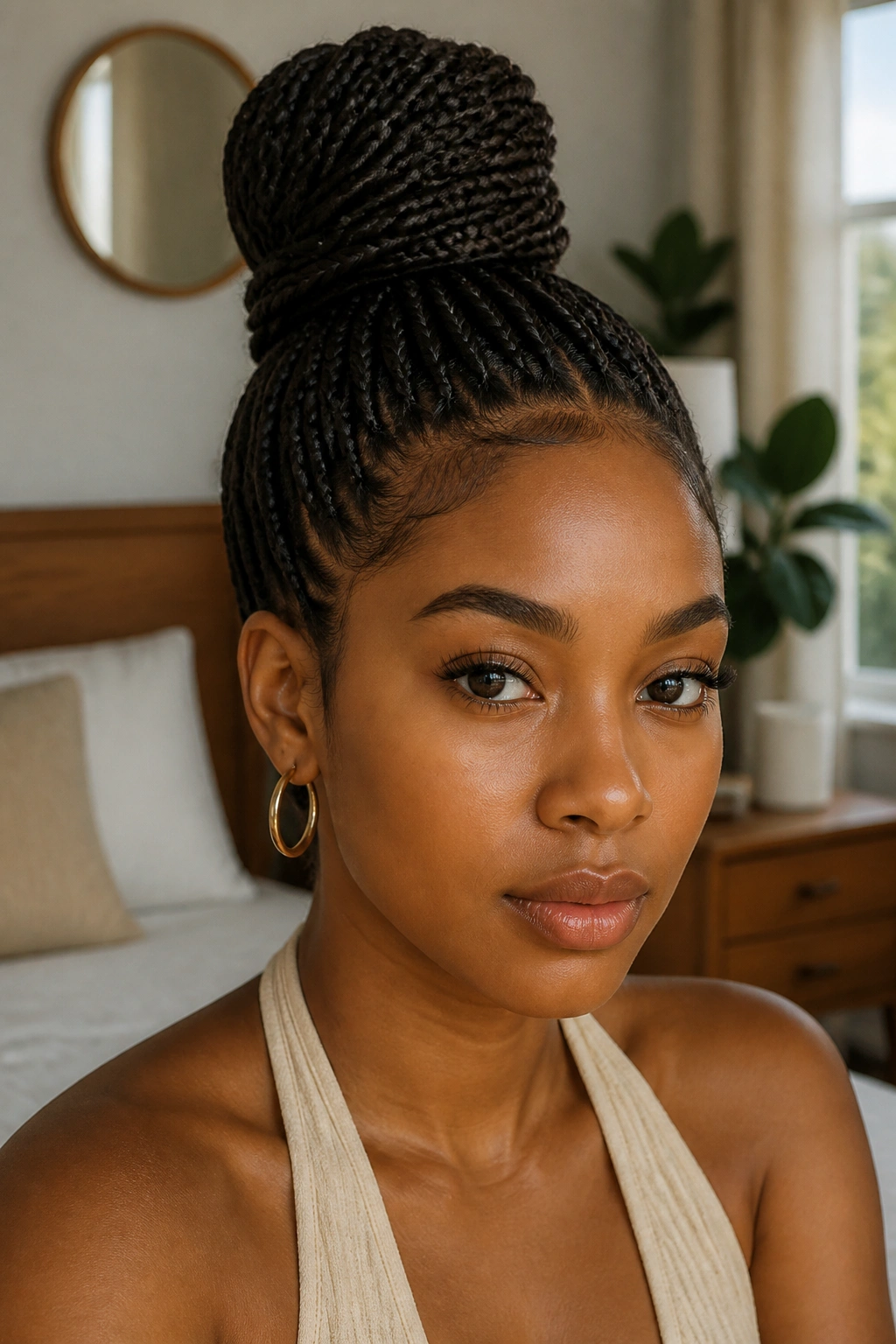
A braided top knot is the polished cousin of the messy bun. Everything goes upward, which means the face gets all the attention and the neck gets a break.
This look works best when the base is smooth and the knot sits at the crown, not too far back. Too low and the shape flattens out. Too high and it can start to feel precarious. The sweet spot is right where the head curves upward naturally.
Good for hot days, formal outfits, and late mornings when you still want to look like you planned ahead. It’s the braid equivalent of putting your earrings on after the outfit is already good.
14. Low Braided Bun

Low braided buns are calm in the best way. They sit close to the nape, so they read elegant without trying too hard.
This style is a strong pick when you want less visual noise. The braids get tucked and gathered, and the face stays open. It also keeps the weight lower, which a lot of people appreciate after wearing longer braids for a while. High styles pull, low styles settle.
A neat low bun works especially well with center parts or side parts because the part line can lead the eye straight down into the shape of the bun. That little bit of structure keeps the whole style from looking like a quick tie-back.
15. Bob-Length Box Braids

Bob-length box braids give you shape without the swing of longer styles. They land around the jaw, chin, or just below the shoulders, depending on how you cut them, and that shorter length can look sharp in a way long braids sometimes don’t.
There’s a clean confidence to a braid bob. It exposes the neck, frames the cheekbones, and makes earrings matter more. It also feels easier to keep neat because the ends aren’t brushing against your coat, your chair, and every zipper in sight.
If you want this look to stay crisp, keep the ends even. A bob cut that’s slightly crooked can lose the whole effect. A good braid bob is all about line.
16. Beaded Box Braids
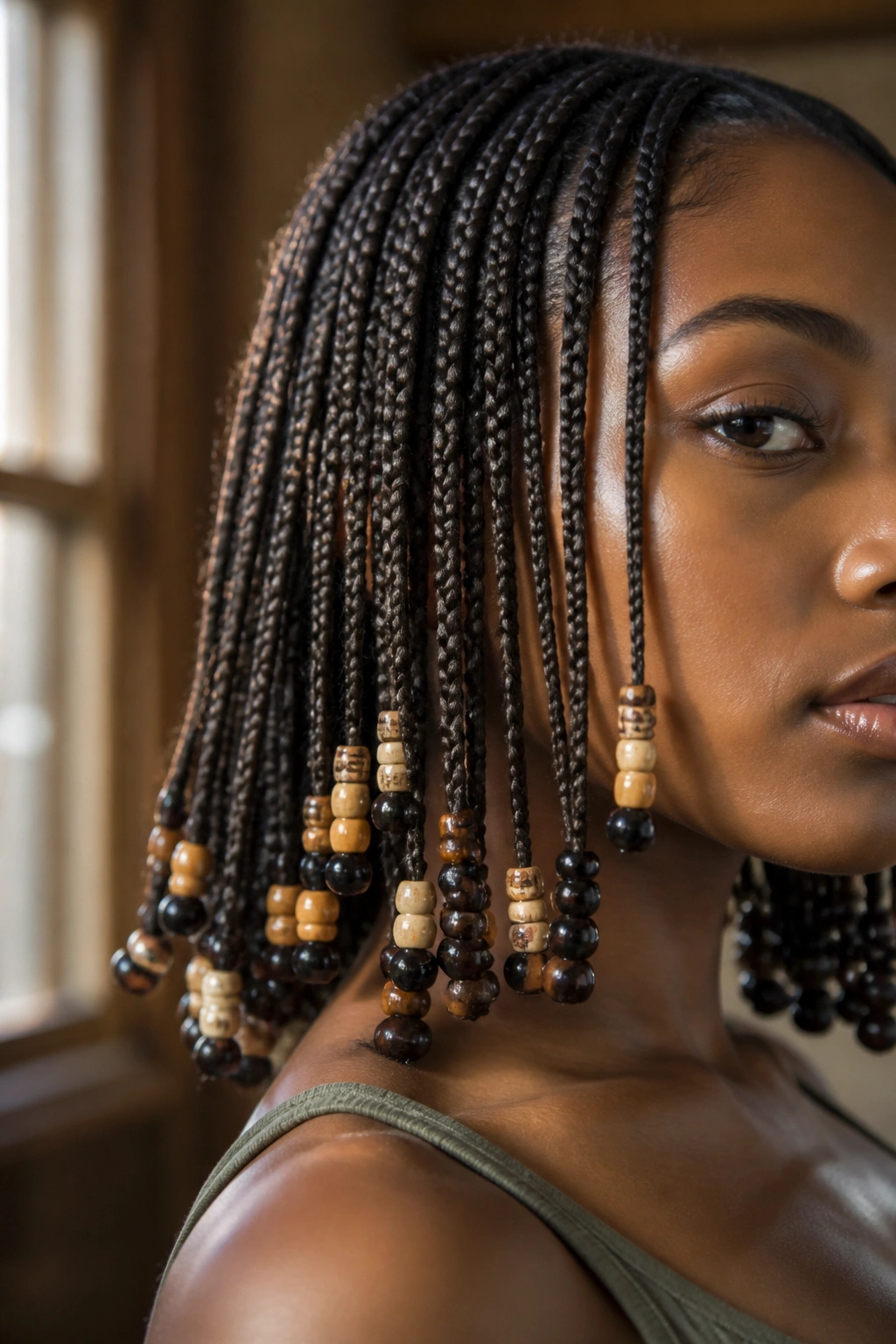
Beads change the sound and the mood of box braids at the same time. One small addition at the ends can make the whole style feel more finished, more playful, or more personal.
I like beads on medium and long braids because they move. You hear them, see them, and the braid ends get a little weight that changes the way they fall. Wooden beads feel earthy and soft. Clear or metal beads feel sharper. The choice matters more than people think.
Small things that help
- Use bead sizes that match the braid size.
- Keep the finish secure so the beads don’t slide.
- Don’t overload the ends unless you want extra weight.
Best paired with: plain outfits, hoop earrings, and clean parting.
17. Cuffed Box Braids
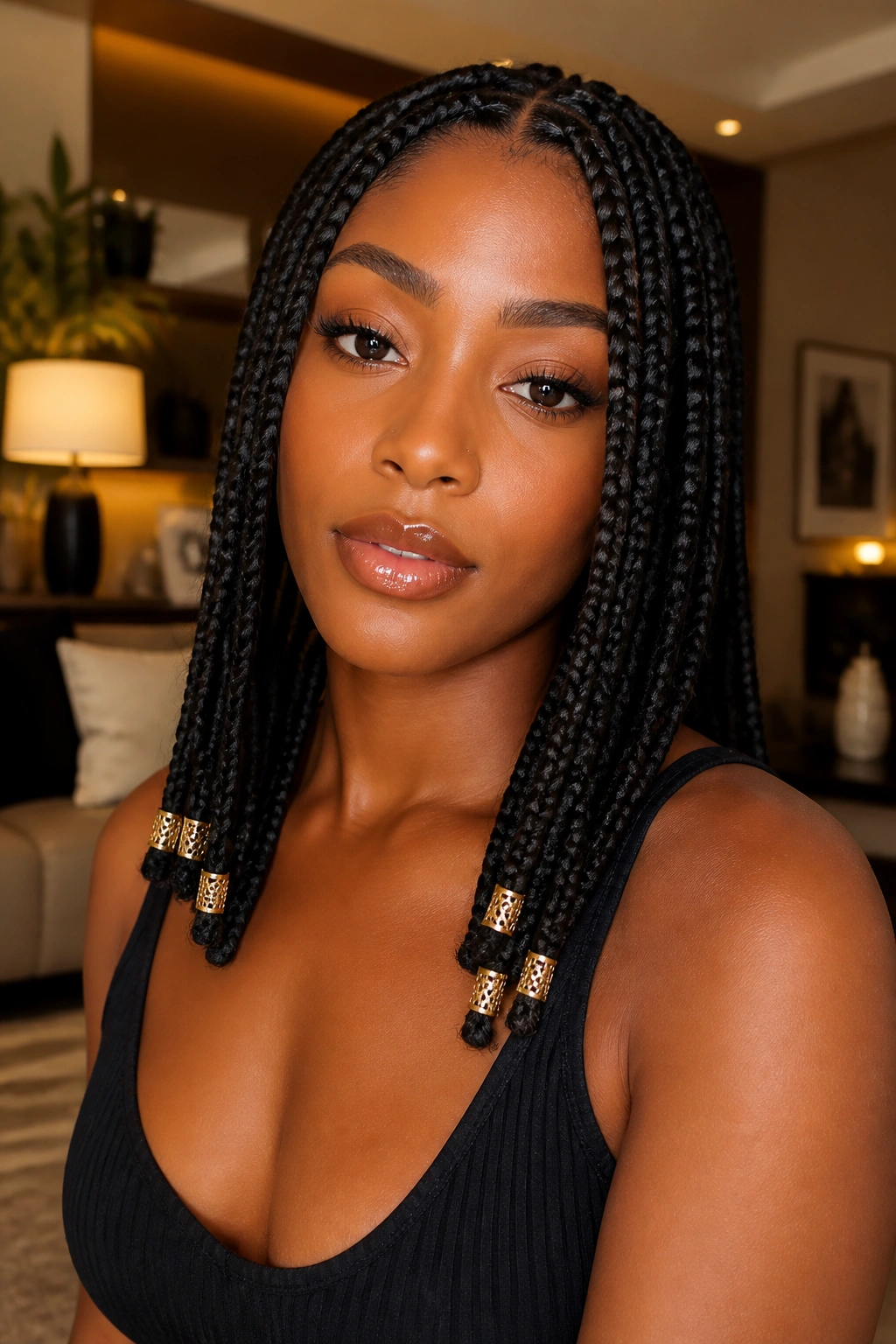
Cuffs are tiny, but they change the whole read of a braid set. A few gold or silver braid cuffs can turn plain box braids into something that feels styled on purpose.
The trick is restraint. Too many cuffs can make the style busy fast, especially on smaller braids. A few placed near the front, the temples, or the ends usually does more than covering the whole head. Less glitter, more shape.
Cuffed braids are useful when you want a dressier finish without changing the install. You’re not committing to color or cutting the hair. You’re just giving the style a little hardware, and that’s often enough.
18. Colored Box Braids

Color gives box braids instant personality. Honey blonde, burgundy, copper, red, and deep brown all bring different energy, and the braid texture makes each shade look richer than it would on loose hair.
What matters most is how bold you want the contrast to be. A few shades lighter than your natural hair gives dimension. A high-contrast color says something louder. Neither is wrong. They just land differently in daylight.
If you’re nervous about color, start with a blended shade near your roots or around the face. That keeps the look wearable while still changing the mood. Color is fun, but it should still feel like you when you catch your reflection in a random window.
19. Ombre Box Braids

Ombre box braids are for anyone who wants color without a hard stop. The darker roots shifting into lighter ends soften the whole look and make the braid length stand out.
The fade does a lot of work here. It draws the eye downward, which can make the braids look longer and more fluid. It also hides a bit of growth at the base more gracefully than a single solid shade, which is one reason people keep choosing it again and again.
A good ombre set should feel gradual. If the color jump is too abrupt, it starts looking patchy instead of blended. The best versions feel like the ends were meant to lighten that way from the start.
20. Curly-End Box Braids
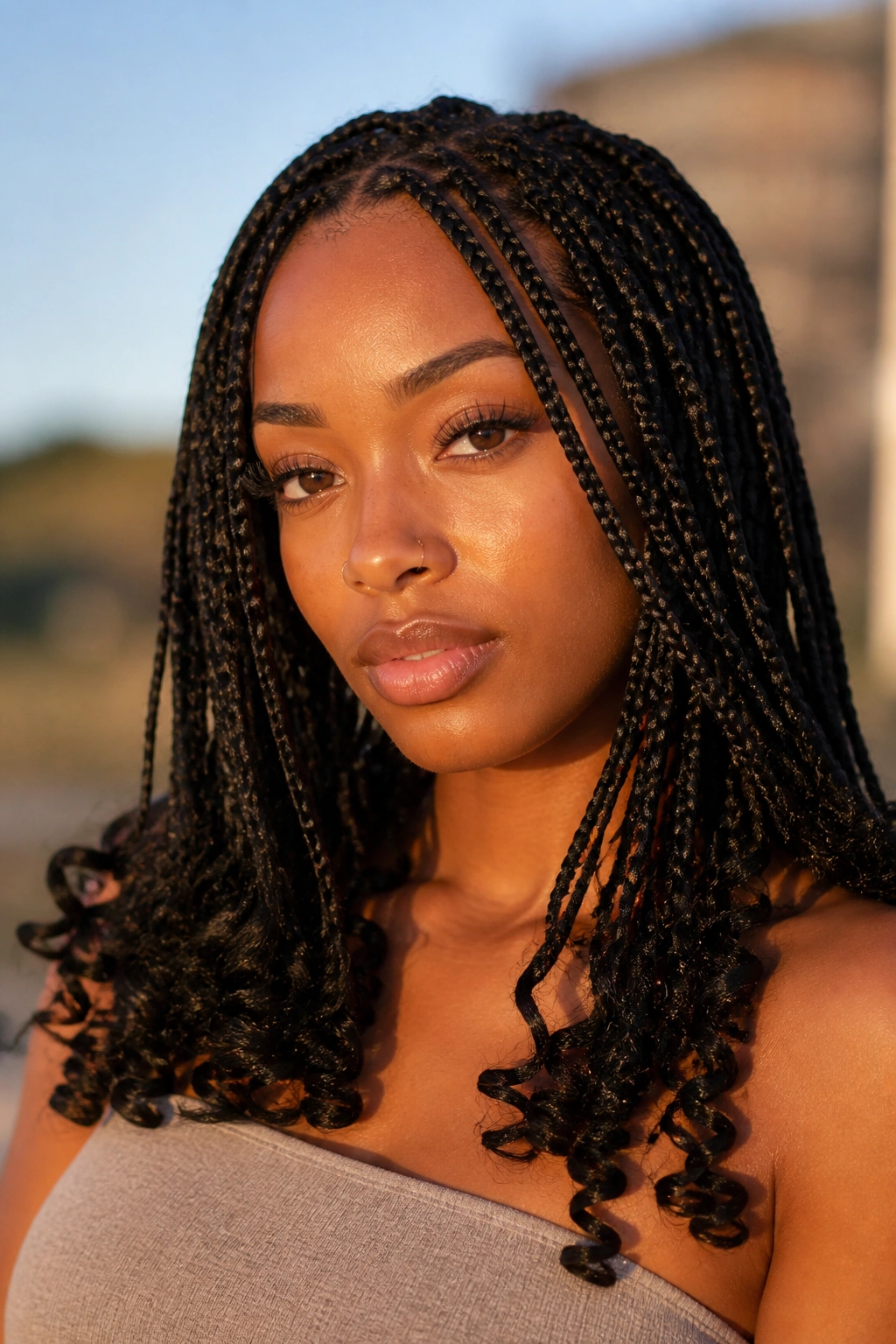
Curly ends bring softness to a style that can sometimes feel too straight and tidy. A braid that finishes in curls suddenly looks lighter, looser, and a little more romantic.
The contrast matters. The braid gives you structure, and the curls give you movement. That means the style reads finished but not stiff, which is a nice place to be if you’re tired of the same straight ends. Small curls, larger curls, or a loose wave pattern all change the feel.
This version also works well for people who want to break up the heaviness of long braids. The curly ends keep the finish from feeling blunt. They move. They breathe a little. That counts.
21. Boho Box Braids

Boho box braids lean soft and undone, but in a planned way. They usually mix box braids with loose curly pieces, giving the style texture that feels more relaxed than a standard install.
The best part is the contrast. The braid sections stay neat, and the loose pieces bring a little mess in the good sense of the word. That mix keeps the style from looking too rigid. If your hair tends to feel too “done” when braided, this is a good fix.
What to look for
- Curly pieces that match the braid color or sit one shade lighter.
- A braid size that still leaves room for the loose texture.
- Enough fullness so the style doesn’t look sparse.
Pro tip: keep the loose curls hydrated so they don’t frizz out too fast.
22. Goddess Box Braids
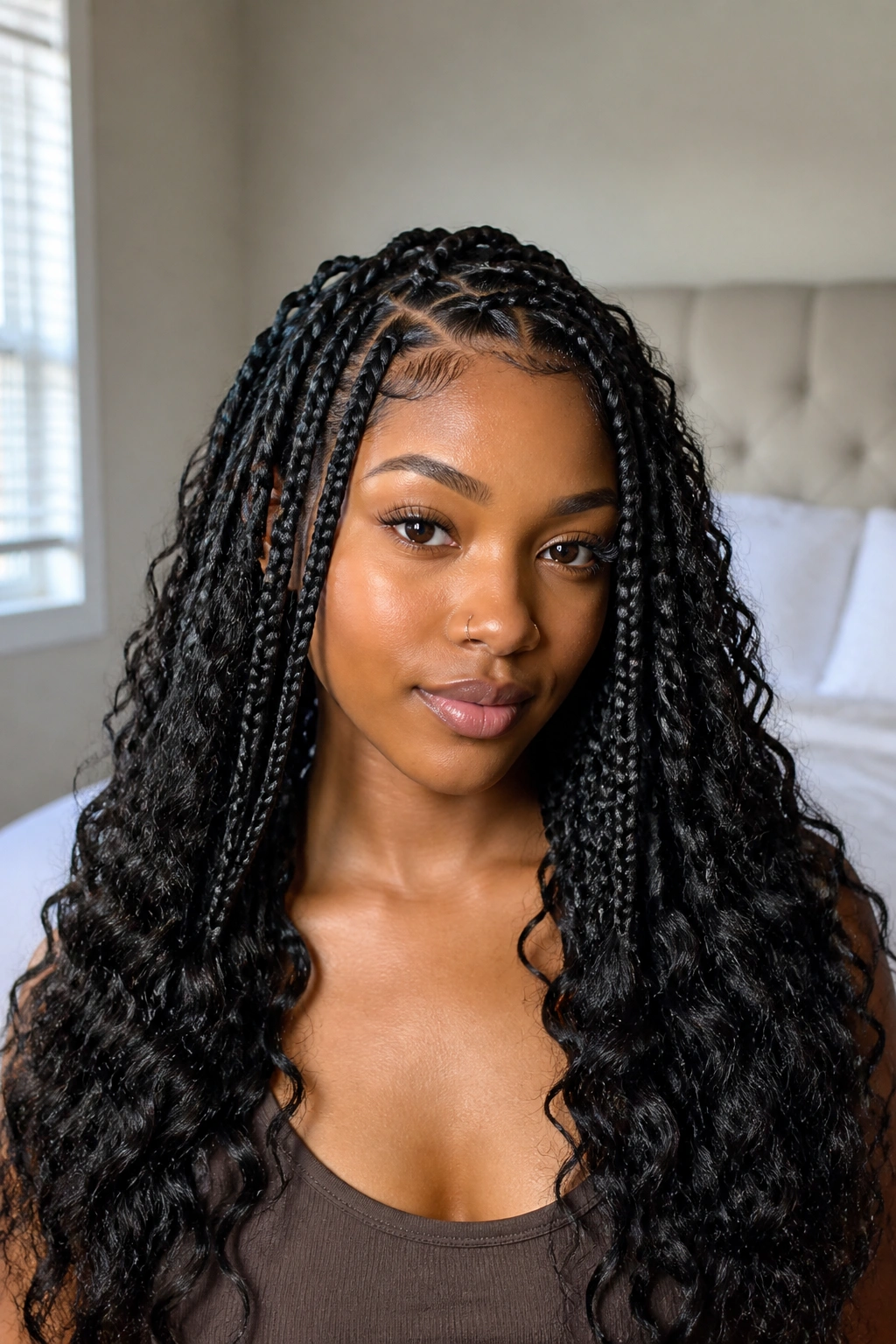
Goddess box braids sit somewhere between classic braids and a softer, more decorated look. They usually include curly pieces worked through the braids or left near the ends, which gives the style a fuller, more textured finish.
The effect is lush without being fussy. You still get the clean parting and the structure of box braids, but the extra curls break the lines up in a way that feels more fluid. They’re especially nice if plain braids feel a little severe on your face.
This style likes volume. Thin, sparse curls can look like an afterthought. Full, intentional curls make the whole set feel richer. That difference is huge.
23. Feed-In Box Braids

Feed-in box braids create a smoother transition from the root, and they’re a smart choice when you want a flatter, more natural-looking base. The braid builds gradually instead of starting with a bulky knot.
That gradual build changes the profile. The scalp looks cleaner, the base lies flatter, and the braid can feel more refined. It also makes the front edge easier to style into ponytails and updos because there’s less bulk sitting at the hairline.
Feed-in styles are not loud, but they are tidy. If you like a braid set that looks engineered rather than just installed, this is one to keep in mind. The shape shows in the first inch of hair, which is where a lot of styles either win or lose.
24. Crisscross Part Box Braids

Crisscross part box braids add pattern before the braiding even starts. The parting crosses over itself in sections, so the scalp becomes part of the design instead of just the base.
This style catches the eye because it breaks the grid. Standard square parts are neat; crisscross parts feel a little more playful and detailed. They’re especially effective on medium braids where the pattern can be seen clearly from the front and sides.
The lines need to be clean. If the crossing sections get fuzzy or uneven, the whole look loses its punch. The braid itself can be simple. The parting does the heavy lifting.
25. Side-Swept Box Braids
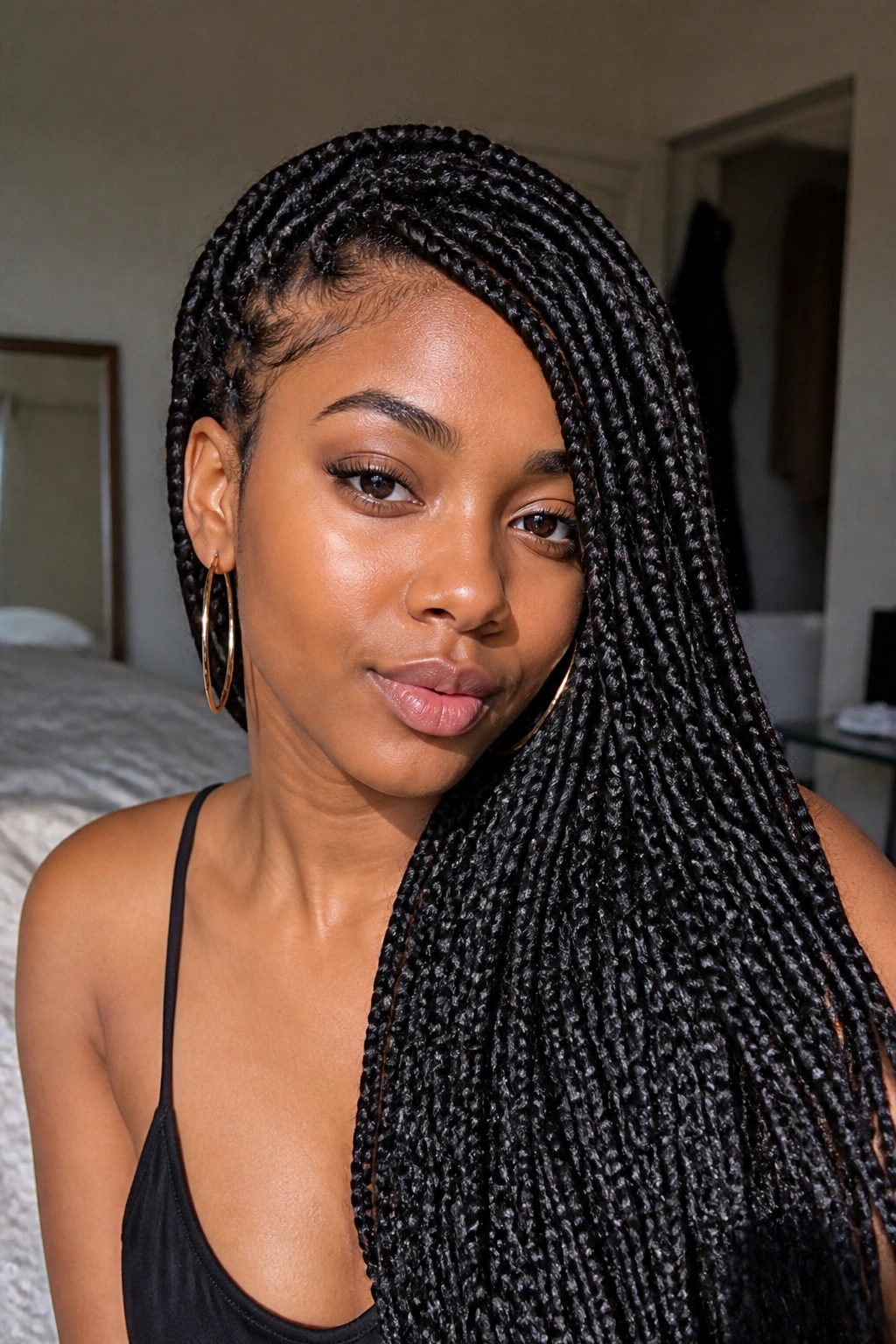
Side-swept braids bring movement without changing the install. Sweep the braids over one shoulder, and the whole face opens up in a softer way.
This look is easy to wear and easy to fix, which is a nice combination. It works with long braids best because the length gives the sweep some weight. Shorter braids can do it too, but the shape is less dramatic. A deep side sweep also plays well with earrings because one ear gets to be the star.
I like this style when a center part feels too severe or when a straight-down look starts to feel heavy. You’re still wearing the braids down. They just have a little direction.
26. Layered Box Braids

Layered box braids are one of the smartest ways to make a familiar style feel more expensive. Instead of all the braids falling at the same length, the ends are cut in layers, which adds shape and movement.
The difference is visible even when the braids are still. Layering keeps the bottom line from looking blunt and helps the face frame more naturally. It also gives the style a lighter feel because the eye doesn’t stop on one flat edge.
Why layering helps
- It breaks up heavy, curtain-like lengths.
- It makes long braids move more easily.
- It can soften strong jawlines or widen narrow face shapes.
Best for: people who want long braids but don’t want them to look heavy.
27. Asymmetrical Box Braids

Asymmetrical box braids are for people who like a little imbalance on purpose. One side can be longer, fuller, or swept differently, and that off-center shape gives the whole style energy.
The appeal is in the contrast. Symmetry feels calm. Asymmetry feels styled. A slightly longer side can sharpen the jawline, while an uneven finish can give the braid set a fashion-forward edge without needing loud color or accessories.
This one works best when the asymmetry looks planned, not accidental. That means the difference in length or placement should be obvious enough to read, but controlled enough to feel intentional. A good asymmetrical set has confidence built into it.
28. Wrapped Ponytail Box Braids

A wrapped ponytail is one of those small braid tricks that makes the entire style look pulled together. You gather the braids into a ponytail, then wrap a few braids or a strip of hair around the base to hide the band.
That clean base matters more than people think. Without it, a ponytail can look slapped on. With it, the style feels deliberate and finished. High, mid-height, or low all work here, but the wrap is what gives the ponytail its polish.
This style is especially useful when you want to look dressed up without building a whole updo. It’s fast, it’s neat, and it still lets the length move.
29. Ribbon-Tied Box Braids

Ribbon-tied braids bring in softness without locking you into beads or cuffs. A ribbon at the end, the base, or woven through sections can change the mood from simple to sweet in one move.
The color choice matters. Black or dark satin feels sleek. Bright satin feels playful. A narrow ribbon looks refined; a wide ribbon feels more obvious and can pull the eye fast. Use the ribbon as a detail, not a costume piece, unless that’s the point.
This style works especially well with long braids because the ribbon has room to hang and move. On shorter braids, it can still work, but the effect is smaller. Sometimes that’s better anyway.
30. Box Braids with Bangs

Box braids with bangs are a strong choice if you want to change the face frame without giving up the structure of the braids. The bangs can be blunt, side-swept, or made of a few loose front pieces that sit across the forehead.
The fringe changes the whole expression. It can soften a high forehead, bring focus to the eyes, or make the style feel more fashion-led. That said, bangs are not for everyone. They need maintenance, and they can get in the way if you dislike hair on your skin. Worth it only if you actually like the look, not just the idea.
A softer, slightly piecey bang tends to age better than a stiff one. It looks more natural, moves more easily, and plays nicer with the rest of the braids.
Final Thoughts
The best box braid hairstyles are the ones that fit your life first and your mood second. If you need low-maintenance mornings, go for cleaner shapes and styles that sit close to the head. If you want more drama, pull the braids up, add accessories, or choose a longer cut with more movement.
Small changes matter more than most people expect. A side part can soften a face. A bob can make the whole style feel sharper. A few cuffs or beads can turn plain braids into something personal without touching the install itself.
The nice thing about box braids is that they do not ask you to stay in one lane. Wear them plain, dress them up, twist them into an updo, then let them swing loose again. That flexibility is the whole point.
