



Medium length hair is the sweet spot for plaits. It’s long enough to braid in more than one way, but not so long that every style turns into a shoulder-dragging marathon. That balance matters. The best plait hairstyles for medium length hair work with the length you have, not against it.
A lot of people think braids need waist-length hair to look interesting. Not true. Collarbone cuts, grown-out lobs, and hair that sits just past the shoulders can hold shape well, show off the braid pattern clearly, and keep the finished style from feeling heavy.
Freshly washed hair can be slippery. If your hair tends to slide apart, a little dry shampoo, mousse, or texturizing spray at the roots gives the plait something to grip. That tiny bit of grit changes everything.
Some of these styles are clean and polished. Some are softer and a little undone. A few are there for busy mornings, a few for weddings, and a few for the days when your hair refuses to behave and you want it pinned, tucked, and out of the way without looking boring.
1. Classic Low Three-Strand Plait for Medium Length Hair
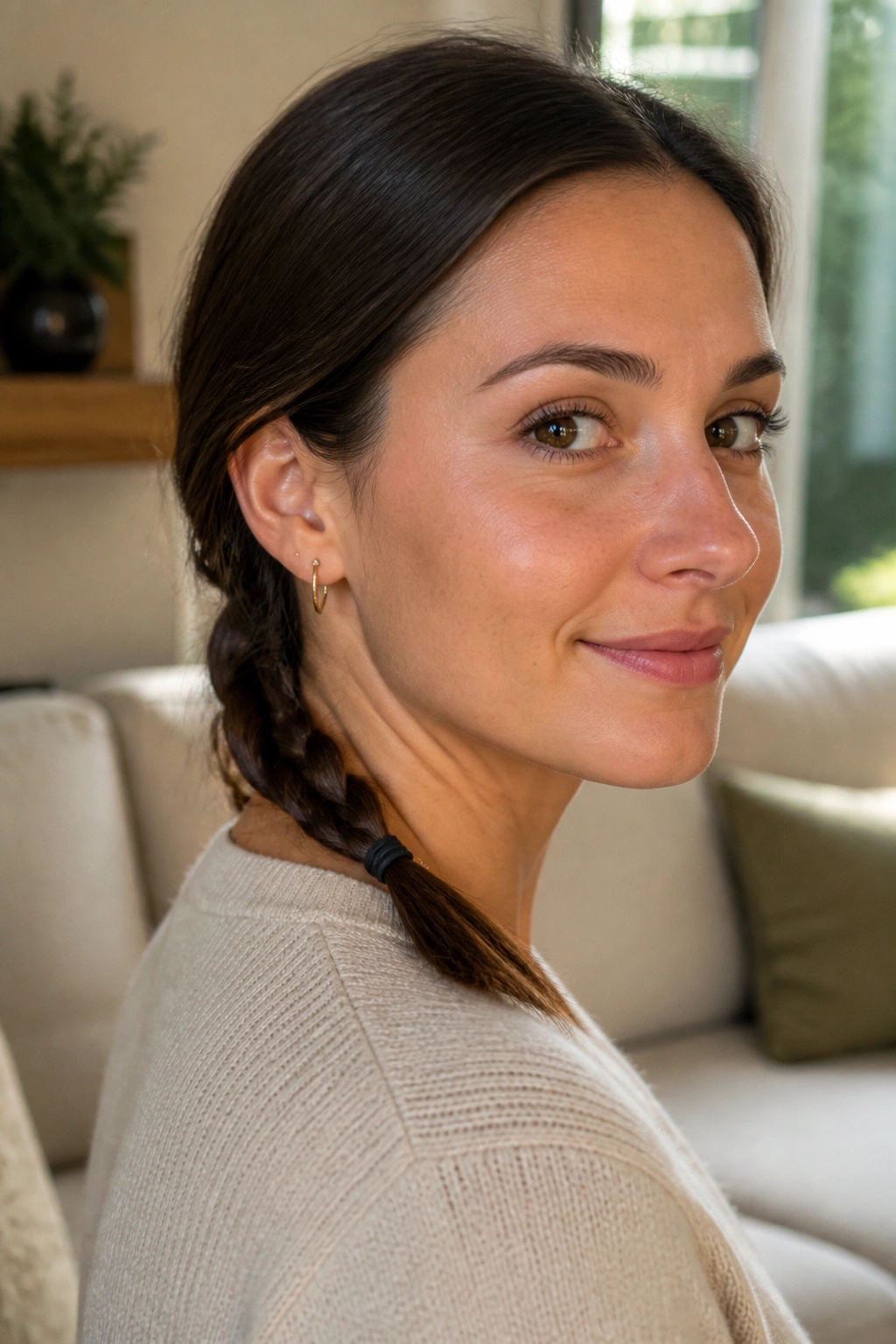
A low three-strand plait is the one I tell people to learn first. It’s simple, it sits neatly at the nape, and it makes medium length hair look intentional even when the rest of your outfit is barely cooperating.
Why It Works on Shoulder-Length Cuts
Medium hair is long enough for a low plait to fall cleanly, but short enough that the end feels neat instead of wispy. That gives the style a tidy finish that long hair sometimes loses. If you have layers, a low braid also keeps the shorter pieces from flying everywhere.
The trick is to keep your hands close to the head while you braid. Don’t yank hard; just keep the sections even and smooth. If the braid starts to puff out midway, give the outer strands a tiny tug after you finish.
- Best on second-day hair or hair with a bit of dry shampoo
- Sits flat under coats, scarves, and jacket collars
- Works with center parts or soft side parts
- Looks polished with a ribbon tied at the end
Tip: If your ends are thin, fold the last inch of the braid under and secure it with a small clear elastic before the final tie. It looks cleaner than leaving the tail to fray.
2. Side-Swept Plait
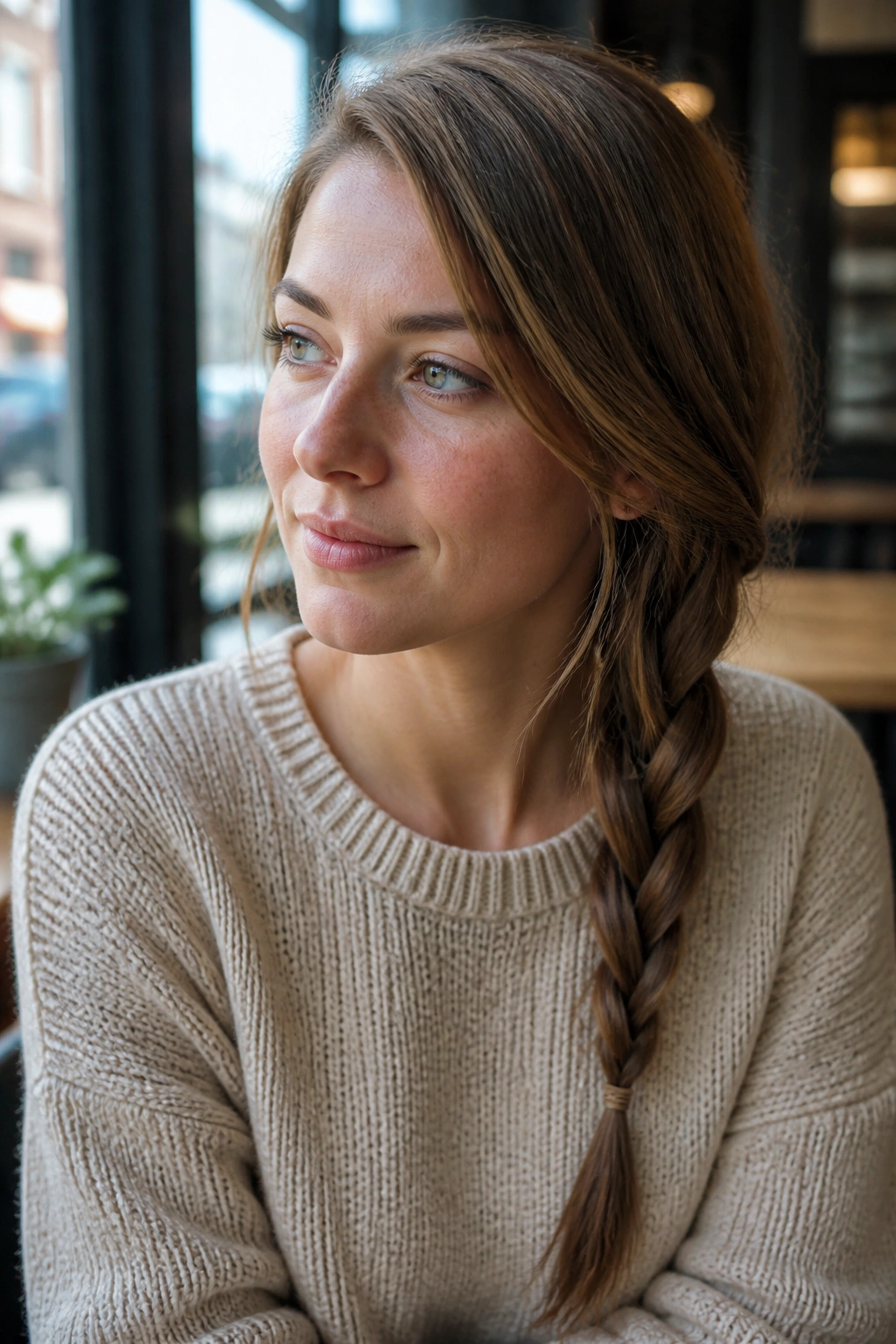
A side plait can make medium hair look longer than it is. The diagonal line across the neck and shoulder changes the whole feel of the style, and that angle does a lot of visual work for you.
Start with a loose side part, then bring all the hair over one shoulder before you braid. Keep the top section a little smoother than the rest so the braid doesn’t collapse into a lump behind the ear. A soft face-framing strand helps too, especially if your cut has layers around the jaw.
This one is good when you want your hair to look styled without looking severe. It has enough shape for dinner, work, or a casual event, but it still feels easy. And that matters. A braid that feels too tight can fight your haircut instead of flattering it.
If your hair is thick, a side plait can sit heavy, so loosen the braid from the middle outward after you finish. If your hair is fine, leave the braid slightly tighter near the crown so it doesn’t sag by lunchtime.
3. French Braid on Medium Length Hair
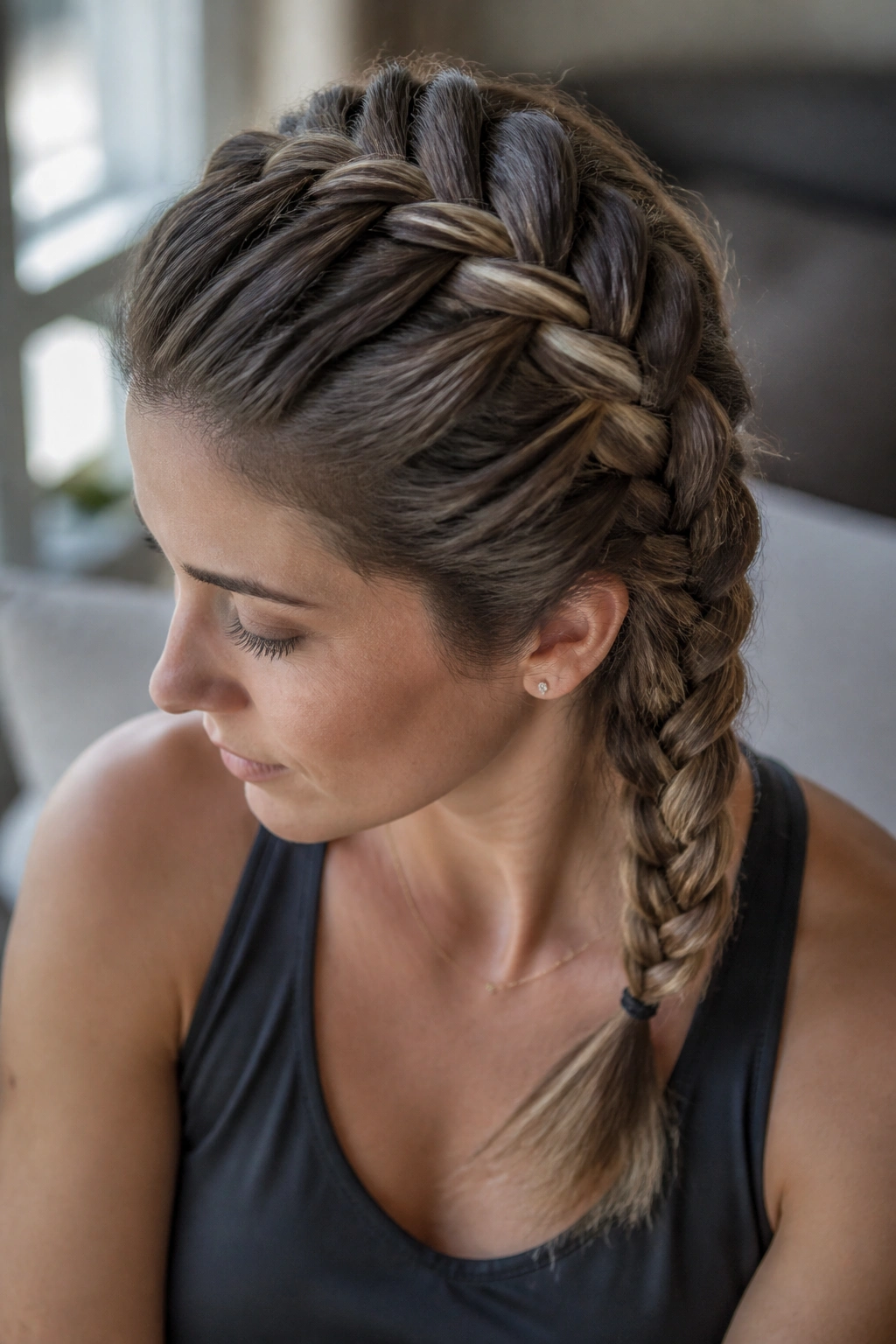
Why does a French braid stay put so well on medium length hair? Because it gathers new sections as it moves down the head, which gives the braid structure right where shorter lengths usually slip out.
That makes it a good choice for days when you need your hair controlled from the hairline to the nape. It’s also one of the few plaits that looks just as good neat as it does a little messy. On medium hair, you do not need a super-long tail for it to work. A braid that ends at the shoulder still reads as finished.
How to Wear It
Start high at the crown if you want a lifted look, or begin lower if you want something softer. Once you reach the nape, finish with a regular three-strand braid and secure it with a small elastic. A tiny bend at the ends keeps the style from looking too rigid.
If your layers are short, mist the roots with light hold spray before you start. That helps the first few passes stay in place while you work. The braid should feel snug, not painful. If your scalp is pulling, it’s too tight.
4. Twin Dutch Braids into Low Tails
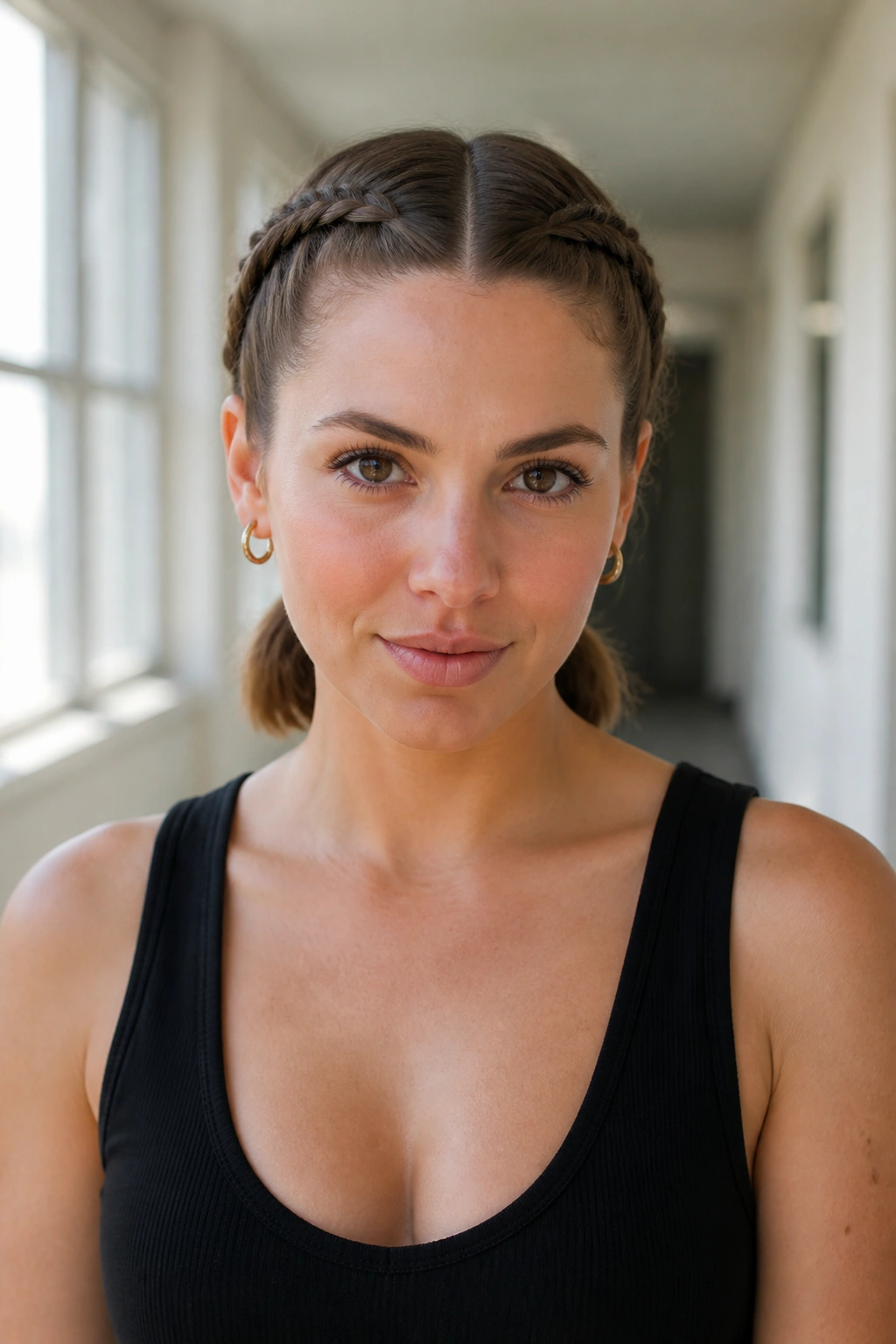
If your hair flips out at the shoulders by noon, twin Dutch braids solve the problem without making you look like you’re headed to the gym and nowhere else. They sit raised off the scalp, which gives medium hair a little more presence than flat braids do.
The underhand weaving in a Dutch braid makes the plait stand up instead of sinking into the head. That detail sounds small. It isn’t. On medium length hair, that extra lift makes the style read from the front, not only from the back.
- Good for busy mornings and travel days
- Keeps shorter layers tucked into the braid
- Looks neat with plain tees or structured jackets
- Finishes well as two small ponytails or one joined tail at the nape
Tip: If the ends feel too short to hang loose, braid each tail to the last inch and tuck it under with a tiny elastic. It looks deliberate, not compromised.
5. Fishtail Plait
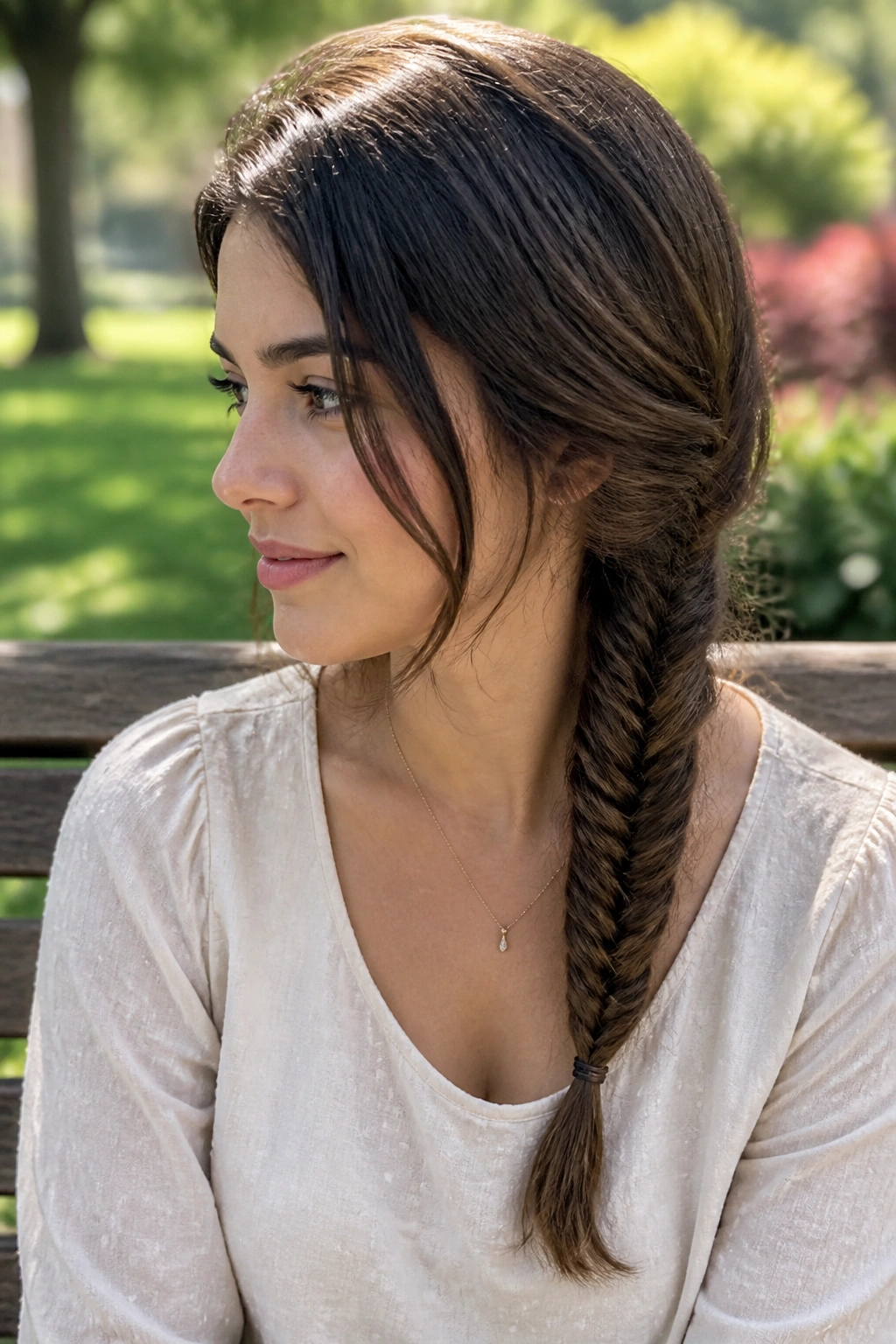
A fishtail plait has a sharper, tighter texture than a regular braid, and medium length hair is often the best canvas for it. The braid pattern stays easy to see because the tail is not overly long, which keeps the whole thing from turning into a ropey blur.
It looks complicated from the outside. It really isn’t. You split the hair into two sections, then keep taking small pieces from the outer edge of each side and crossing them over. The smaller the pieces, the finer the texture. The larger the pieces, the more relaxed and chunky it looks.
What I like most about fishtails on medium hair is the scale. A braid that hits around the shoulder blade looks finished without overwhelming the face or the neckline. If your hair has a few layers, don’t fight them too hard. Let the plait look a little lived-in.
A fishtail gets better after a few minutes of loosening. Pull gently at the edges of the braid with your fingertips, not with a comb. That keeps the shape soft and prevents the whole thing from puffing apart.
6. Crown Braid
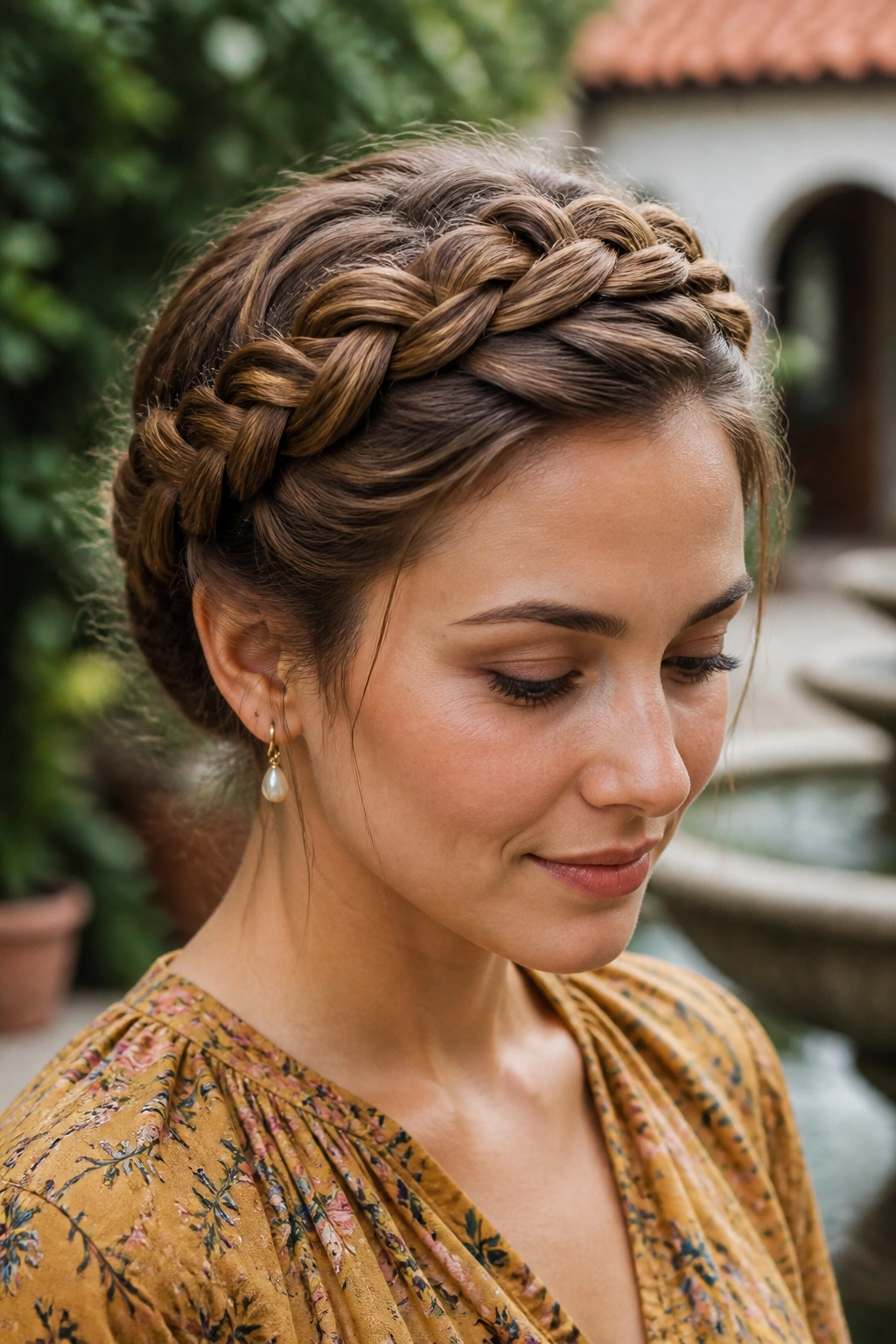
Unlike a low plait that hangs down your back, a crown braid keeps the length lifted and away from your neck. That shift matters more than people think, especially when the hair falls at that in-between medium length where it can feel neither here nor there.
A crown braid works especially well when you want your hair to look dressed up without adding curls, clips, or a lot of heat styling. The braid wraps around the head like a band, and medium length hair is usually just long enough to make the circle without needing extensions. If the ends are short, pin them under the braid and hide them with a few crossed bobby pins.
It suits garden events, dressy dinners, and any situation where you want the face fully open. It also keeps grown-out bangs and shorter face pieces out of your eyes. That part is practical, not glamorous, but I always notice it.
Use a little texturizing spray before you begin. Crown braids on silky hair can slide around, and no one wants to keep re-pinning the same section every fifteen minutes.
7. Half-Up Plait with Loose Waves
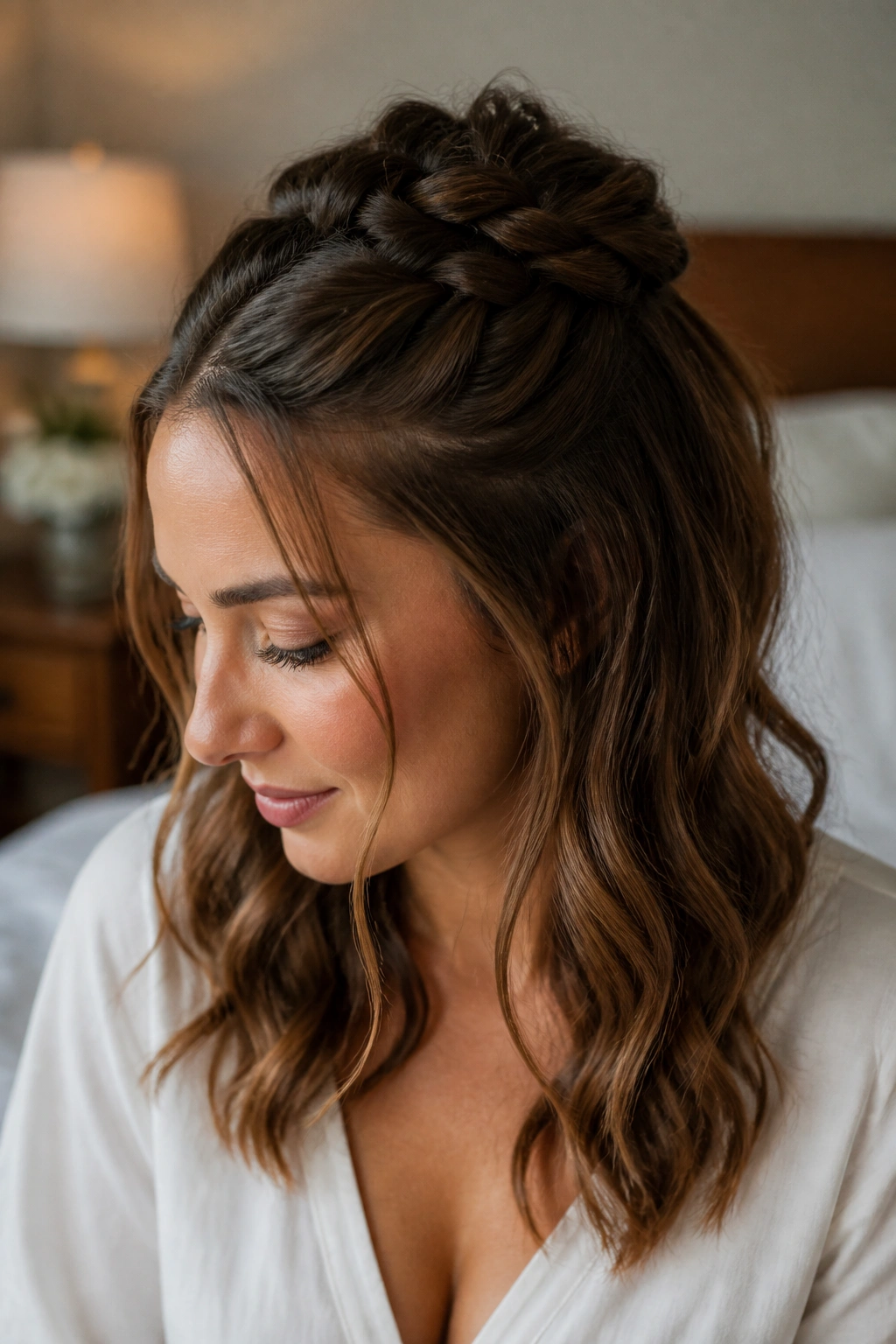
A half-up plait is one of the easiest ways to make medium length hair look finished without giving up all that movement around the shoulders. The braid only gathers the top section, so the lower half stays soft and loose.
Best Face-Framing Pieces
Keep two slim pieces out at the front if your haircut has layers around the cheekbones. Those strands soften the top of the style and stop it from feeling too neat. If your hair is naturally straight, give the loose lengths a bend with a 1-inch iron or a quick overnight wave.
The top braid can be as simple as a small three-strand plait or a tiny Dutch braid that starts at the temples. Either version works. The key is to keep the braid compact so it doesn’t swallow the whole head.
- Best when you want volume at the crown without a full updo
- Good for medium hair with layers
- Easy to dress up with a barrette or ribbon
- Leaves the ends free, which helps fine hair look fuller
Tip: If the braid keeps sliding, anchor it under a small hidden ponytail first, then braid that section. It gives the plait a base and keeps the crown from loosening.
8. Rope Braid Ponytail

A rope braid ponytail is fast, tidy, and a little sleeker than a standard plait. It uses only two sections, so medium length hair doesn’t need extra length to make the shape work.
The move is simple: split the ponytail in two, twist each section in the same direction, then wrap them around each other in the opposite direction. That opposing twist is what keeps the braid from unspooling. If you do both twists the same way, the braid loosens. That mistake happens a lot.
I like this style for smoother hair days because it looks intentional with very little fuss. A small amount of serum on the palms keeps flyaways down, but don’t drench the hair or the twist will slip. A clear elastic at the end keeps the shape clean.
This braid also works well when you want something a touch sharper than a loose ponytail. It has a cleaner edge. Less fluff, more line. And on medium hair, the tail usually lands at a flattering point instead of dragging halfway down your back.
9. Double Dutch Braids into Low Ponytail
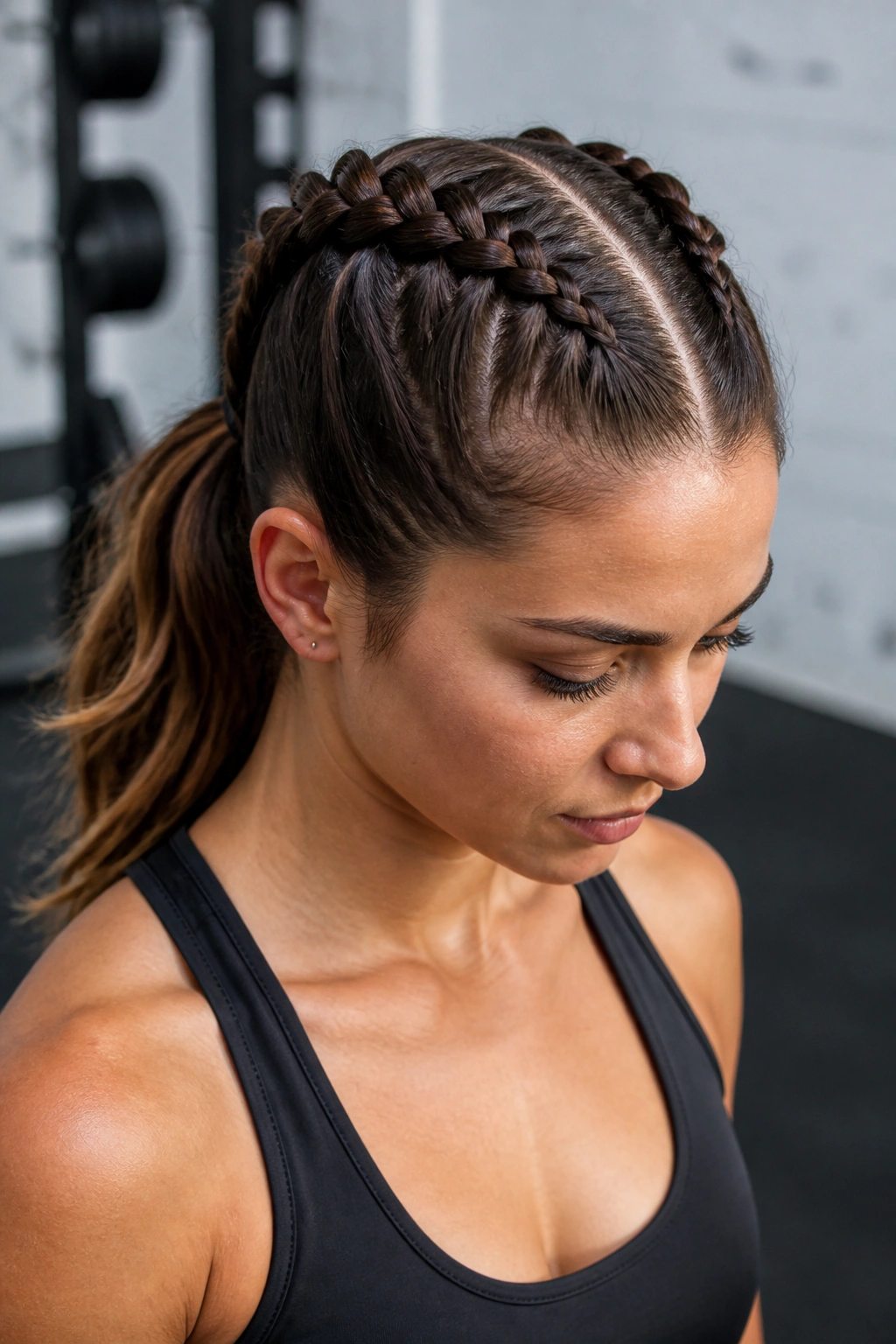
What if you want something sporty, but not sloppy? Double Dutch braids into a low ponytail hit that middle ground nicely.
Start with a center part and braid each side close to the scalp, weaving under instead of over so the braid sits raised. Stop each braid at the nape, then bring both ends together into a low ponytail. That second part matters. It keeps the style from feeling too young or too severe.
How to Finish the Ends
If your medium length hair ends around the shoulders, the ponytail can sit compact and neat. That makes the style good for long errands, workouts, and busy workdays when you do not want your hair brushing your neck every five minutes.
A little gel at the hairline keeps the front clean, especially if you have fine baby hairs. Do not overdo it. You still want the braids to look like hair, not helmet trim. If you want more softness, pull a few tiny strands loose around the temples after the braids are secured.
10. Milkmaid Braids
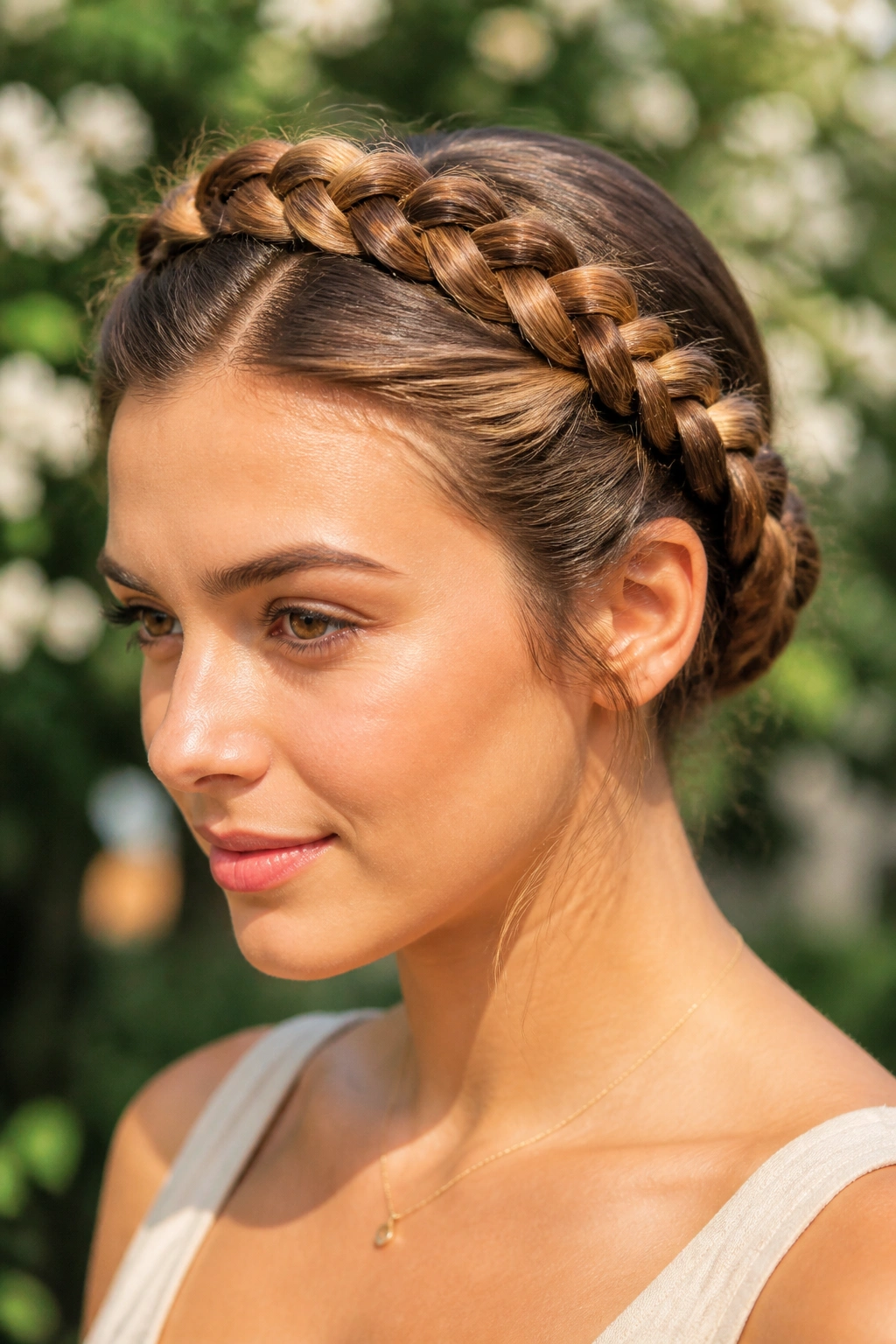
A milkmaid braid has the kind of tidy charm that makes even a plain shirt feel more dressed up. On medium length hair, it often looks lighter and easier than it does on very long hair, which can get bulky when wrapped around the head.
Usually you create two braids, one on each side, then bring them over the crown and pin them in place. The crossing point at the top of the head needs the most support. Use crossed bobby pins there, then tuck the ends under the braid so nothing pokes out.
- Works best when hair has a bit of grip
- Flatters medium hair that sits just below the shoulders
- Good for events where you want the neckline open
- Looks prettier with a soft side part than a dead-center one
There’s a sweet spot here. If the braids are too tight, the style looks stiff. If they’re too loose, the crown loses shape. I usually braid, pin, then go back with my fingers and widen only the outer edges. That gives you shape without making the whole thing fuzzy.
11. Waterfall Braid
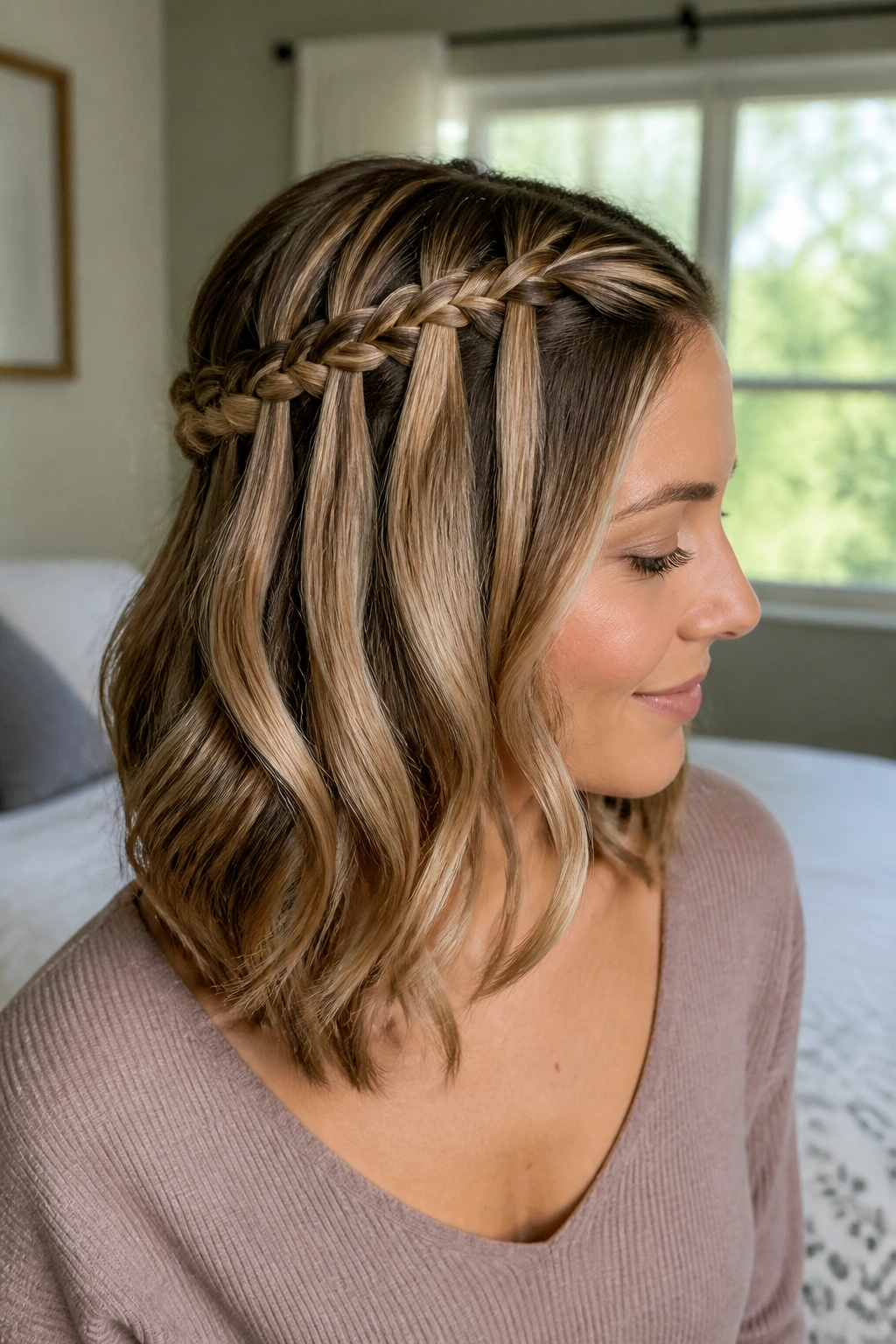
A waterfall braid has a softer look than most plaits because it lets pieces drop through the braid instead of trapping every strand in place. That drop-through effect works especially well on medium length hair, where layers can otherwise look messy or uneven.
The style is good when you want movement around the face and shoulders. It also does a nice job of showing off waves. Straight hair can wear it too, but the braid detail tends to read more clearly if there’s a little bend or texture in the rest of the hair.
It does take more patience than a regular braid. The first few passes can look a bit strange, and that’s normal. Once the line starts to curve around the head, the whole thing settles into place. A small mirror behind you helps if you’re doing it yourself. So does a clip to hold the sections you are not using.
What I like most is that it never looks overbuilt. The braid gives structure, but the falling pieces keep it soft. If your haircut has layers, this is one of the few styles that lets them look purposeful instead of accidental.
12. Pull-Through Braid
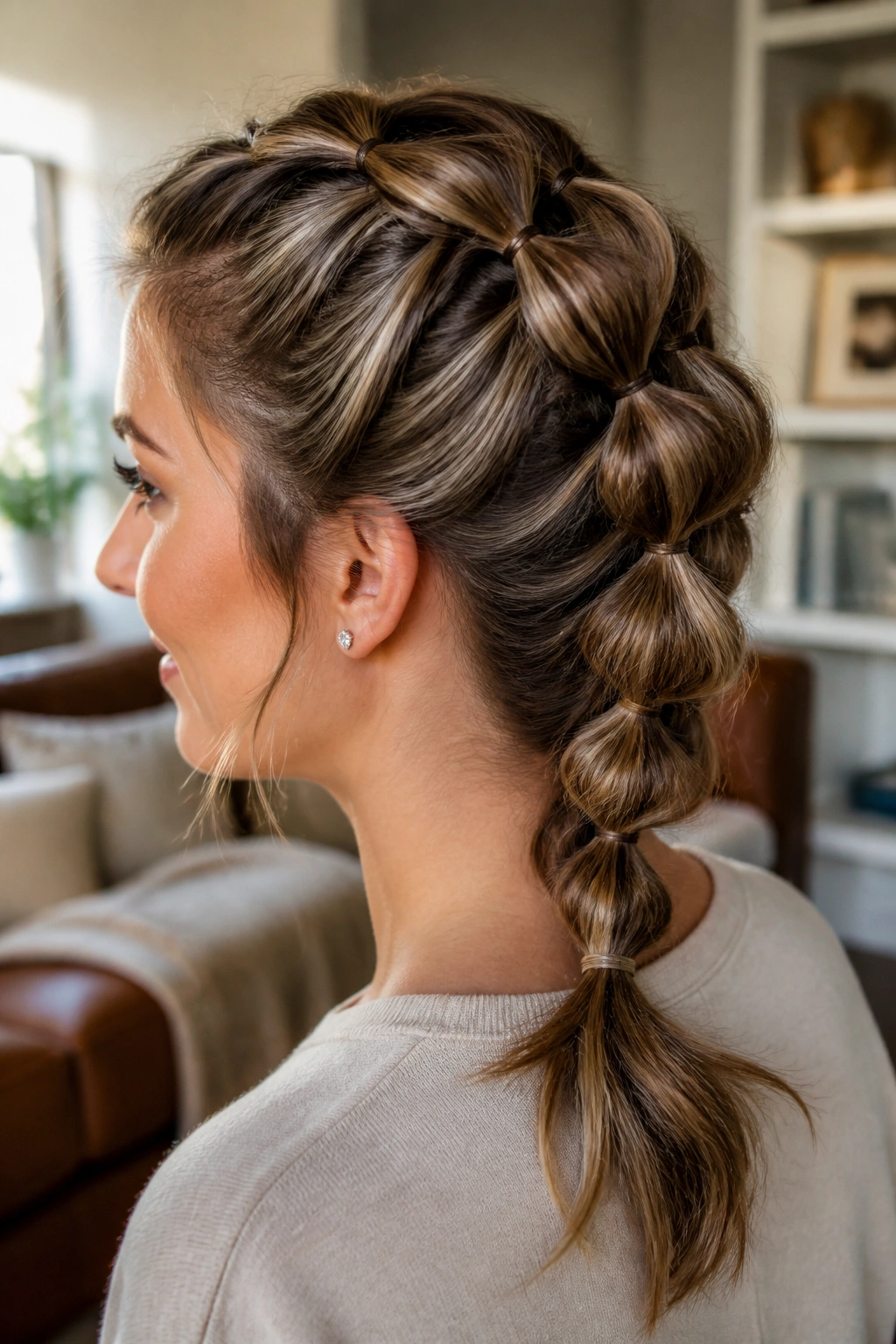
A pull-through braid is not a true plait, and that’s exactly why it works so well on medium length hair. It uses small ponytails and elastic bands to build the look of a thick braid, which means you can fake volume without needing extra inches.
That makes it a smart option for thinner hair. You can build each section into a fuller segment, then gently tug the sides outward after each tie is made. The result looks plump and deliberate instead of flat. Medium hair often holds this style better than longer hair because the segments do not get weighed down.
It’s also a nice choice if your hair is layered and standard braids keep slipping apart. The elastics do the holding for you. No guesswork. No trying to keep three sections equal while your arms get tired.
Use small clear elastics and keep the segments about 2 to 3 inches apart. If you stretch them too far, the shape turns lumpy. If you keep them too close, the braid loses its pattern. That spacing is the whole trick.
13. Braided Low Bun
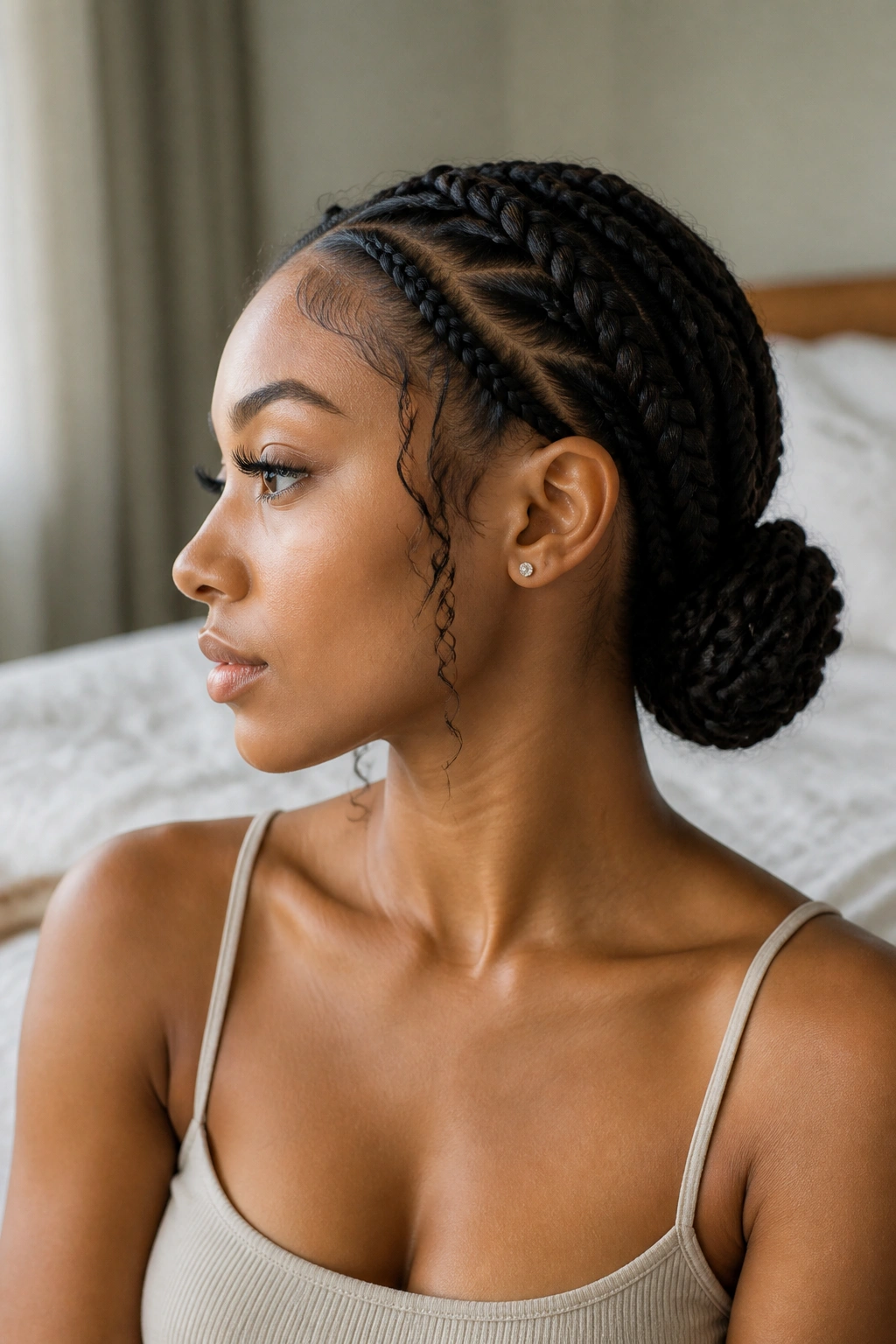
A braided low bun is the kind of style that makes medium length hair look orderly in the best way. It tucks the ends away, keeps the neck clear, and still gives you a little braid detail so it doesn’t feel plain.
Why It Helps on Medium Length Hair
If your hair is long enough to braid but not long enough for a big bun, this style solves the middle-ground problem. You braid the length first, then coil it into a low bun at the nape. That braid adds grip, so the bun usually holds better than a plain twisted knot.
It’s a smart choice for work, dressy dinners, or any day when you want the back of your head to look finished. Fine hair benefits from the added texture. Thick hair benefits from the control.
- Secure with 4 to 6 bobby pins, crossed in opposite directions
- Leave the braid slightly loose before coiling for a softer bun
- Keep the bun low and centered for the cleanest shape
- Add a spritz of flexible hold spray once it’s pinned
Tip: If your hair slips out of buns, braid the last 2 inches tighter than the rest. That gives the knot a firmer base without making the whole style stiff.
14. Braided Headband
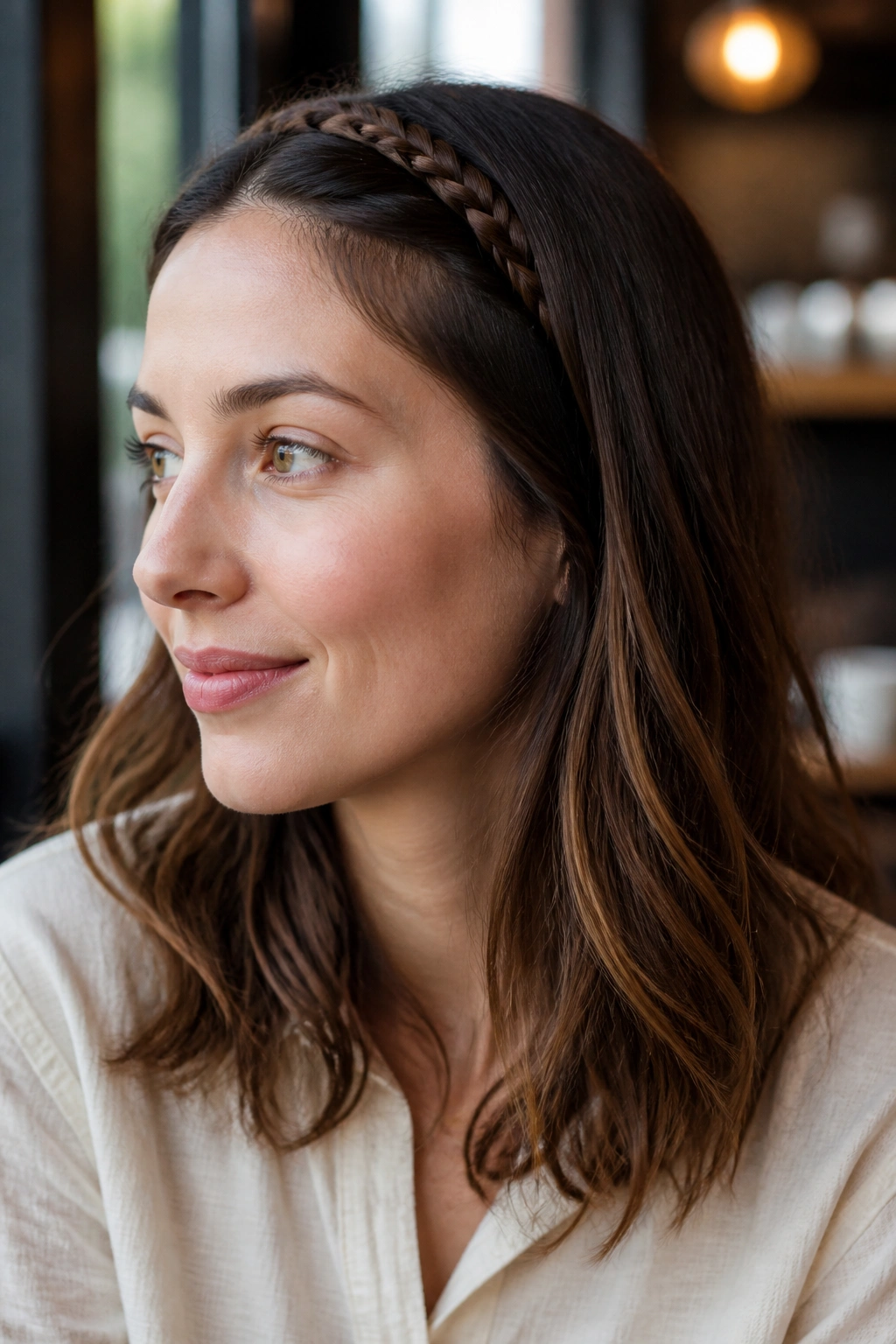
A slim braided headband is the quickest way to make plain medium hair look styled. It frames the face, controls shorter front layers, and gives the haircut a little structure without asking much from the rest of the hair.
You can create it by taking a narrow section from behind one ear, braiding it across the front hairline, then pinning it behind the opposite ear. Or you can braid a small section from the front and sweep it like a band. Either way, the braid acts like an accessory made out of hair, which is part of why it looks so good.
This is the style I reach for when bangs are growing out or the front pieces keep falling into my eyes. It keeps them in check and still leaves the rest of the hair down. That balance is hard to beat.
The braid should be narrow. If it gets too thick, it starts to look heavy and can crowd the face. A tidy band across the hairline is the whole point.
15. Four-Strand Plait
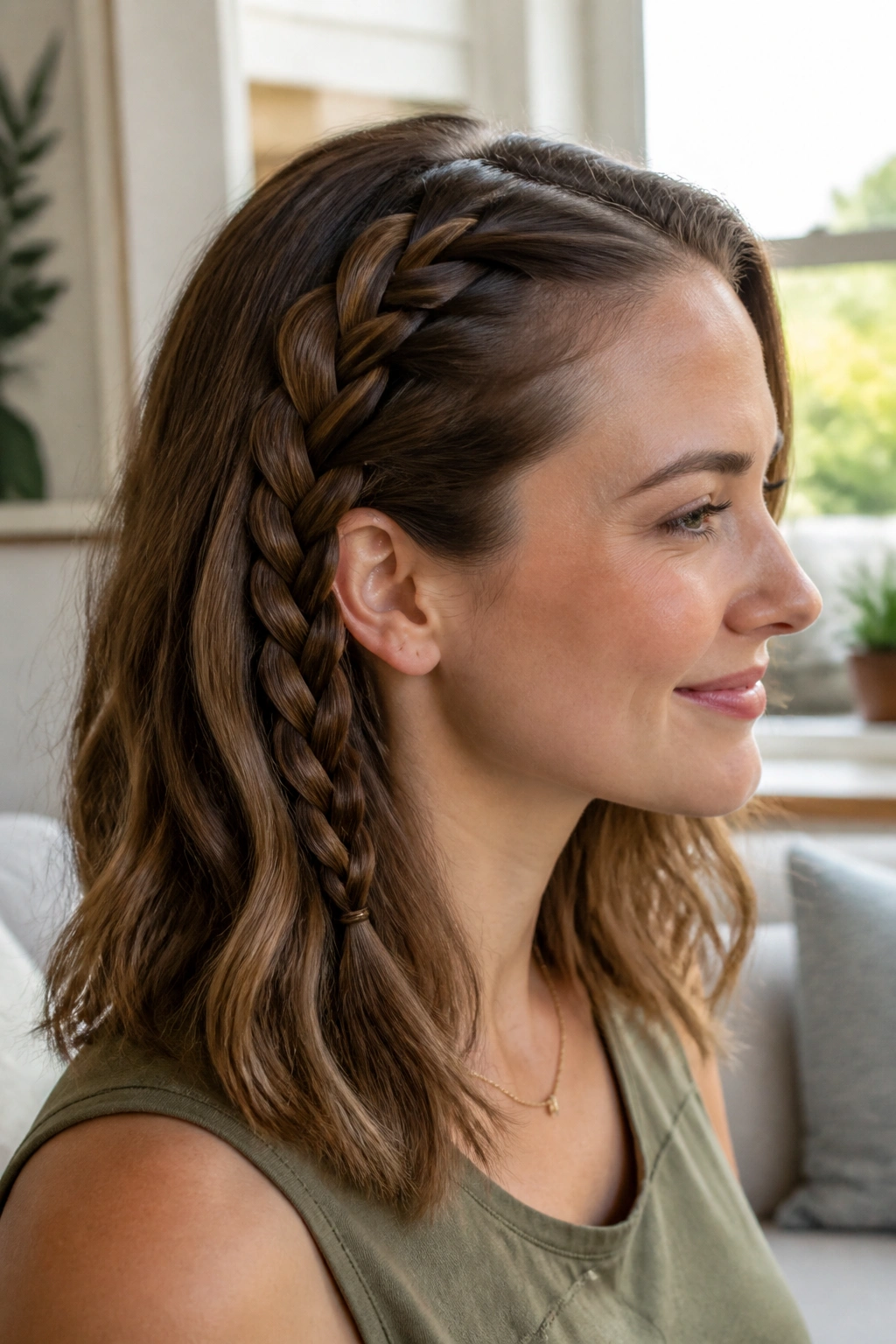
Why bother with four strands when a three-strand braid already works? Because the extra strand gives medium length hair a woven pattern that looks richer without needing more length.
A four-strand plait has a flatter, more ribbed texture than the basic version. That makes the braid pattern easier to see on medium hair, where the tail usually stops before it gets too long and messy. It’s a little more hand-work, yes. Still worth learning if you like braids that stand out from the usual three-strand version.
How to Keep the Weave Even
The biggest mistake is pulling one strand too tight and letting another go slack. Keep your fingers close to the base and move slowly at first. Once you get the rhythm, the braid becomes easier than it looks.
This style works well on hair that’s been lightly prepped with cream or texturizing spray. Too much slip and the sections slide. Too little and the braid frays. You want enough grip that the strands stay where you place them.
If you want the pattern to show, braid just past the shoulders and stop. Medium length hair is long enough for the design to read, but short enough that you do not lose the shape in endless tail length.
16. Accent Braids into Loose Waves
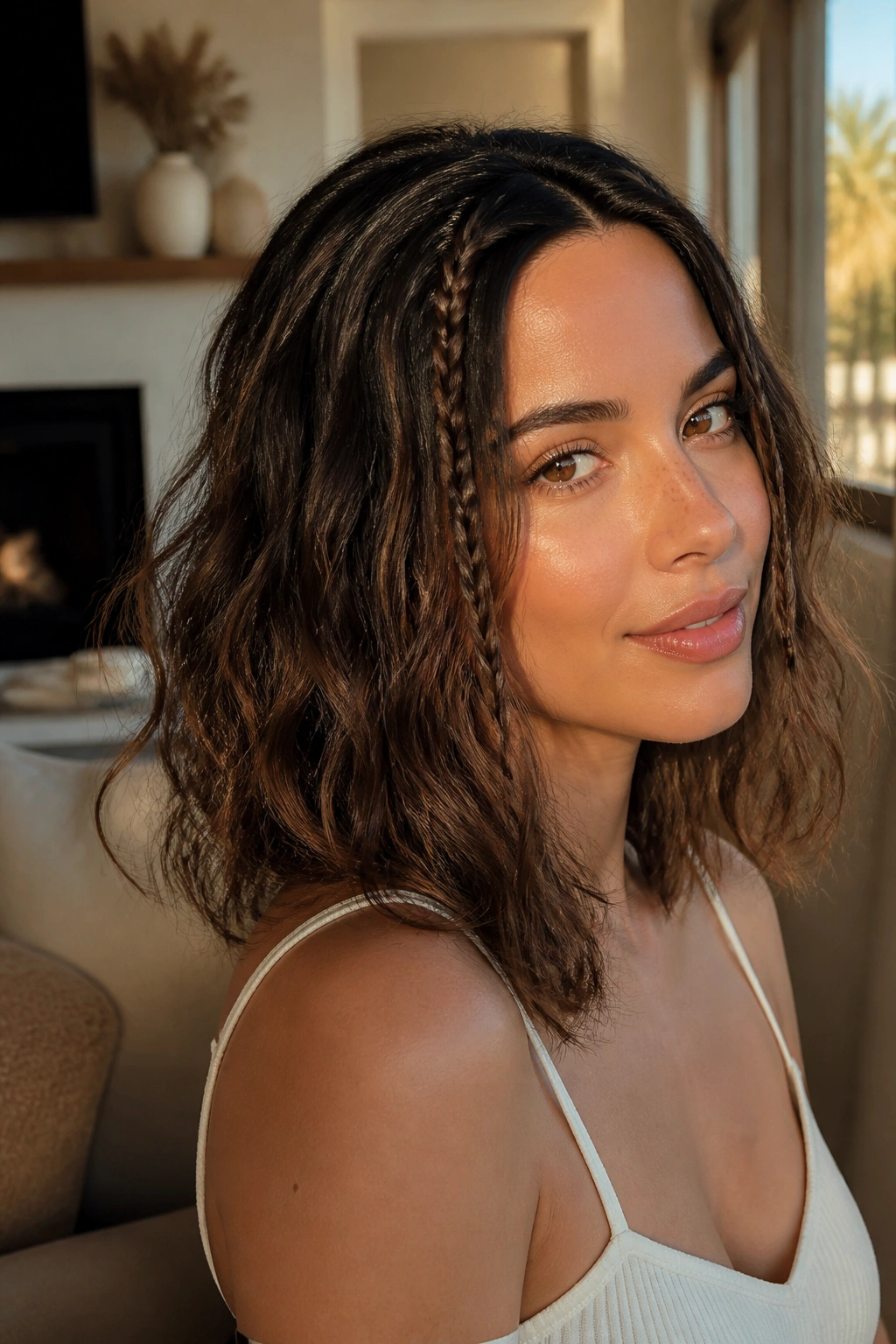
A few tiny accent plaits can change the whole feel of medium length hair. They add detail without taking away the softness of loose waves, which is why this style works for days when you want your hair to look done but not pinned back.
Think of it as a small interruption in a mostly loose style. Two or three narrow braids near one temple, or tucked under a layer near the ear, can make plain waves feel deliberate. The braid pieces should be thin — around the width of a shoelace, not a ribbon. Bigger sections take over the whole style.
- Good for concerts, brunch, and casual evenings
- Works on straight, wavy, or lightly curled hair
- Lets you keep most of the length free
- Takes less time than a full braid set
A little salt spray or wave spray helps the loose hair and the braids feel like they belong together. If the rest of your hair is glassy straight, the braids can look pasted on. A bit of texture solves that.
17. Zigzag Part with Twin Plaits
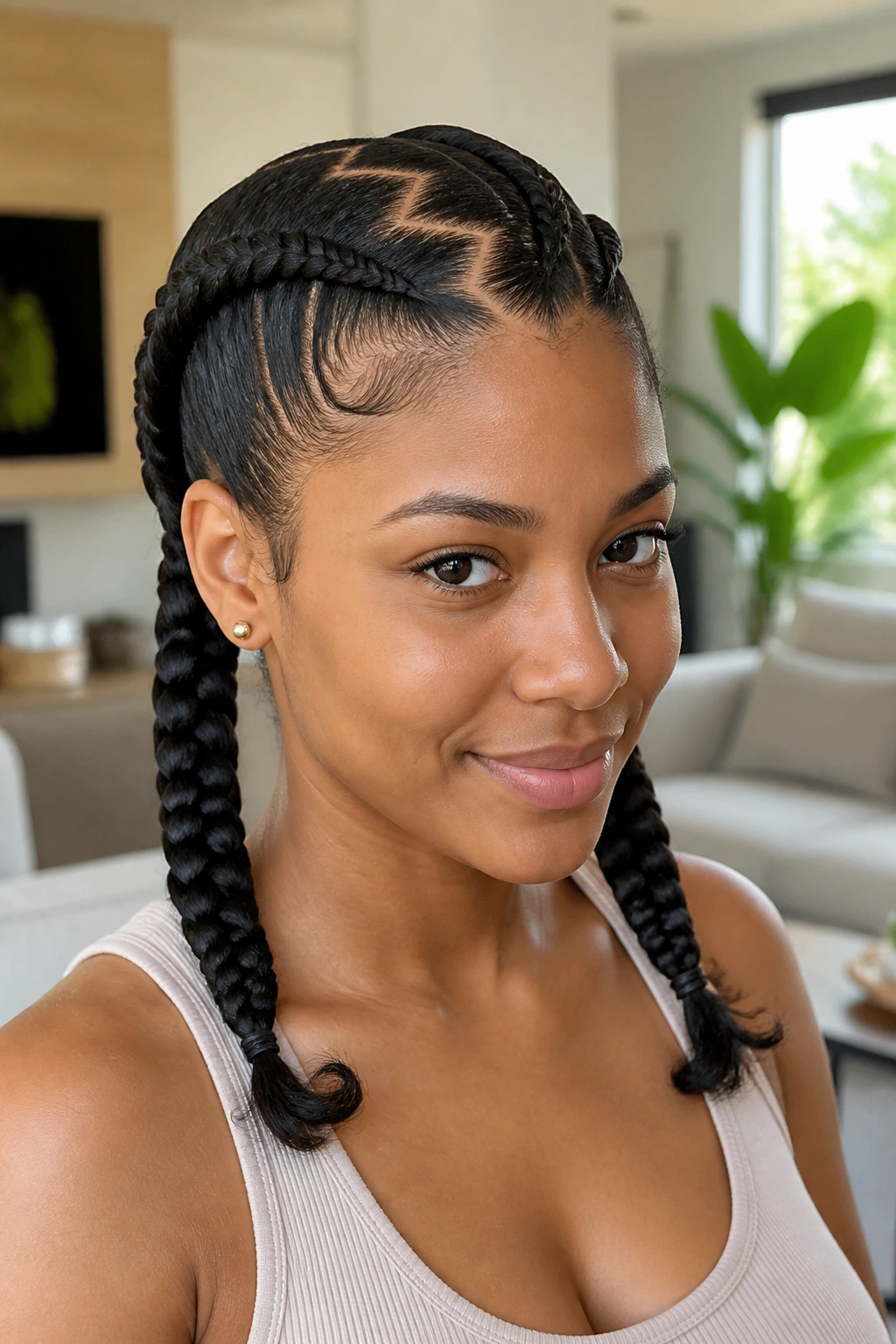
A zigzag part changes everything before the braids even start. It gives twin plaits a sharper, more playful feel, and on medium length hair the parting detail shows up clearly instead of getting lost under too much length.
This style works especially well when you want something different from the standard center part. The zigzag makes the scalp line part of the design, which is a nice bonus on hair that falls around the shoulders. It also helps disguise slightly uneven growth around the hairline, which is handy if your part has been sitting in the same place for months.
The twin plaits can be simple three-strand braids, Dutch braids, or even rope braids if you want a cleaner finish. I’d keep them mid-sized so the part gets the attention. Tiny braids can disappear. Huge braids can make the zigzag feel overbuilt.
It’s a good one for thick hair because the pattern reads clearly from a distance. On finer hair, a little root lift helps the scalp detail stand out more.
18. Side Braid with Tucked Ends

A side braid with tucked ends is the polished cousin of the loose side plait. It stops before the full tail gets fussy, then pins the ends underneath so the whole shape stays compact and neat.
That matters on medium length hair because the ends can sometimes look a little thin once the braid runs out of length. Tucking them away fixes the problem at once. The braid stays the visual focus, and the finish looks deliberate instead of like you ran out of hair halfway down your shoulder.
This is a nice choice for office days, dinner plans, or anything where you need hair that behaves but still has some shape. Use 3 to 5 bobby pins, depending on how thick your braid is, and slide them in where the braid disappears under itself. Cross two pins if the style feels loose.
A side braid with tucked ends also works well with a side part and a blazer or structured top. Clean lines. Easy shape. No extra fluff needed.
19. Braided Space Buns

Braided space buns are playful, but they also pull medium length hair up in a way that feels practical when you want your neck clear and your style to stay put. The braid gives the buns a little more body, which helps medium hair avoid looking skimpy once it’s gathered.
Best Way to Keep Them Balanced
Part the hair down the center, braid each side, then wrap each braid into a small bun near the crown or slightly lower, depending on the mood. If one bun sits higher than the other, the whole style starts looking crooked fast, so check the balance in a mirror before pinning the ends.
- Great for festivals, hot days, and casual weekends
- Works best with some grip at the roots
- Use small elastics to keep the braid tails tidy
- Pin from underneath so the buns don’t flatten out
If you want the buns softer, pull a few tiny strands around the temples. If you want them sharper, smooth the hairline with a little gel before you start. Both versions work. The choice is whether you want neat or a bit cheeky.
20. Braided Ponytail Wrap
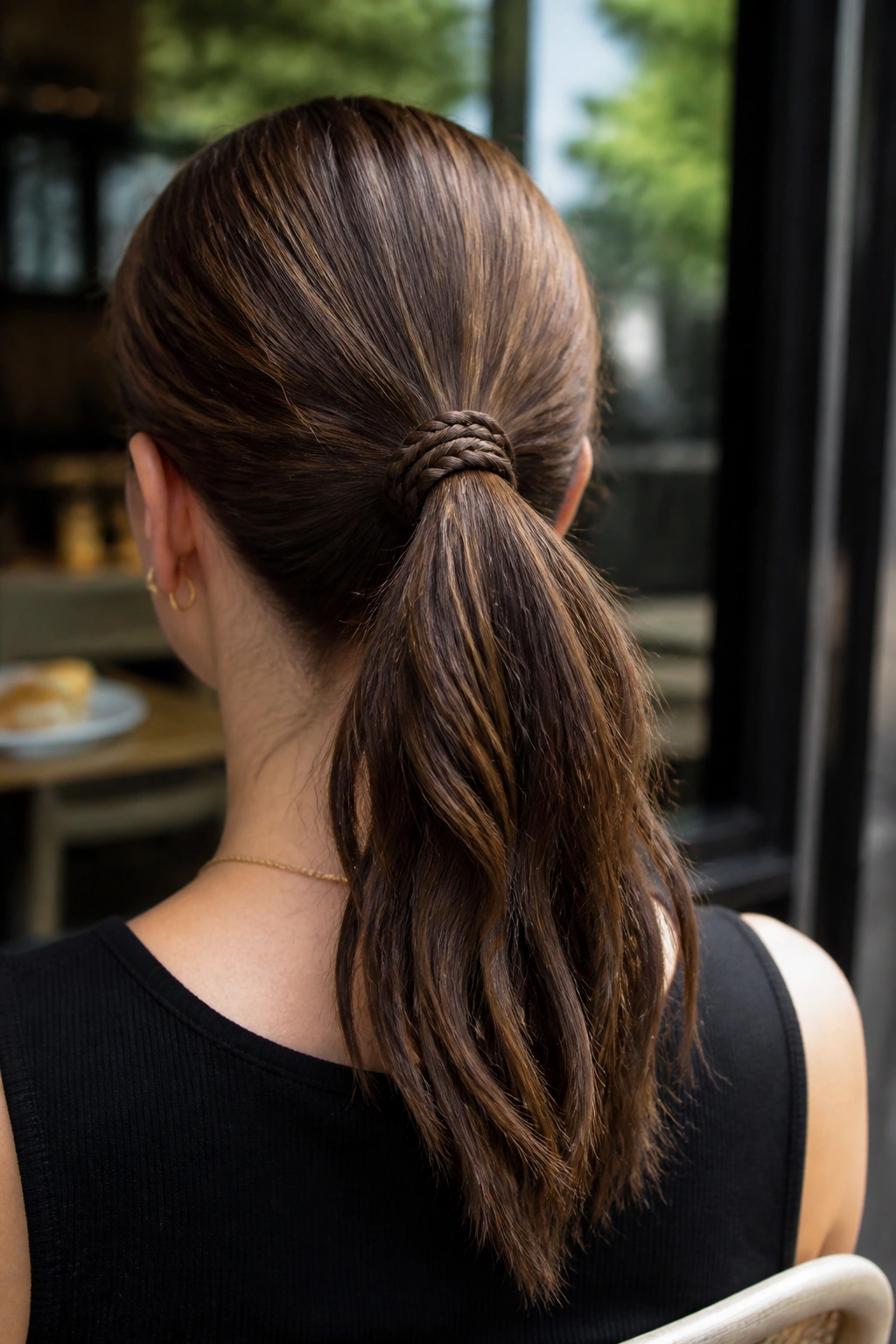
A braided ponytail wrap is the style I reach for when I want tidy hair in under 10 minutes. It keeps medium length hair off the face, adds one clean braid detail, and avoids the overdone feel that some braided styles can pick up.
Here’s the basic move: pull the hair into a ponytail, braid a slim section from the tail, then wrap that braid around the elastic and pin it in place. The rest of the ponytail can stay smooth, waved, or lightly curled. That little wrap at the base makes the ponytail look finished in a way a plain tie never does.
It’s especially useful when your hair is just long enough to feel versatile, but not long enough to disappear into a big, heavy braid. Medium length hair gives you a good amount of tail without making the style droop. That’s the sweet spot.
If you want it to last, use one clear elastic under the braid wrap and slide a bobby pin through the braid from underneath. Hidden support. Clean surface. Little things like that are what keep a style from sagging halfway through the day.
