



A wolf cut can go flat if the color sits on top of it instead of living inside the layers. Wolf haircuts with highlights work because the cut already has movement; the color gives that movement edges, shadows, and little flashes of light that show up every time hair swings.
That is the part a lot of people miss. A wolf haircut is not only about choppy ends and a shaggy crown. It’s about contrast. Without that contrast, the shape can blur together, especially on thick hair or on hair that falls in one heavy curtain.
The right highlights do more than brighten. They can sharpen the cheekbone pieces, soften a strong fringe, or make the crown look fuller without teasing it into a cloud. Put the color in the wrong place and the cut starts looking stripey. Put it in the right place and the layers suddenly make sense.
Some versions are soft and wearable. Some are loud on purpose. A few live in that sweet spot where the color is bold enough to feel fresh but still lets the wolf cut do its messy, flattering thing. The choice starts with the first shade on the list.
1. Soft Caramel Wolf Cut With Feathered Layers
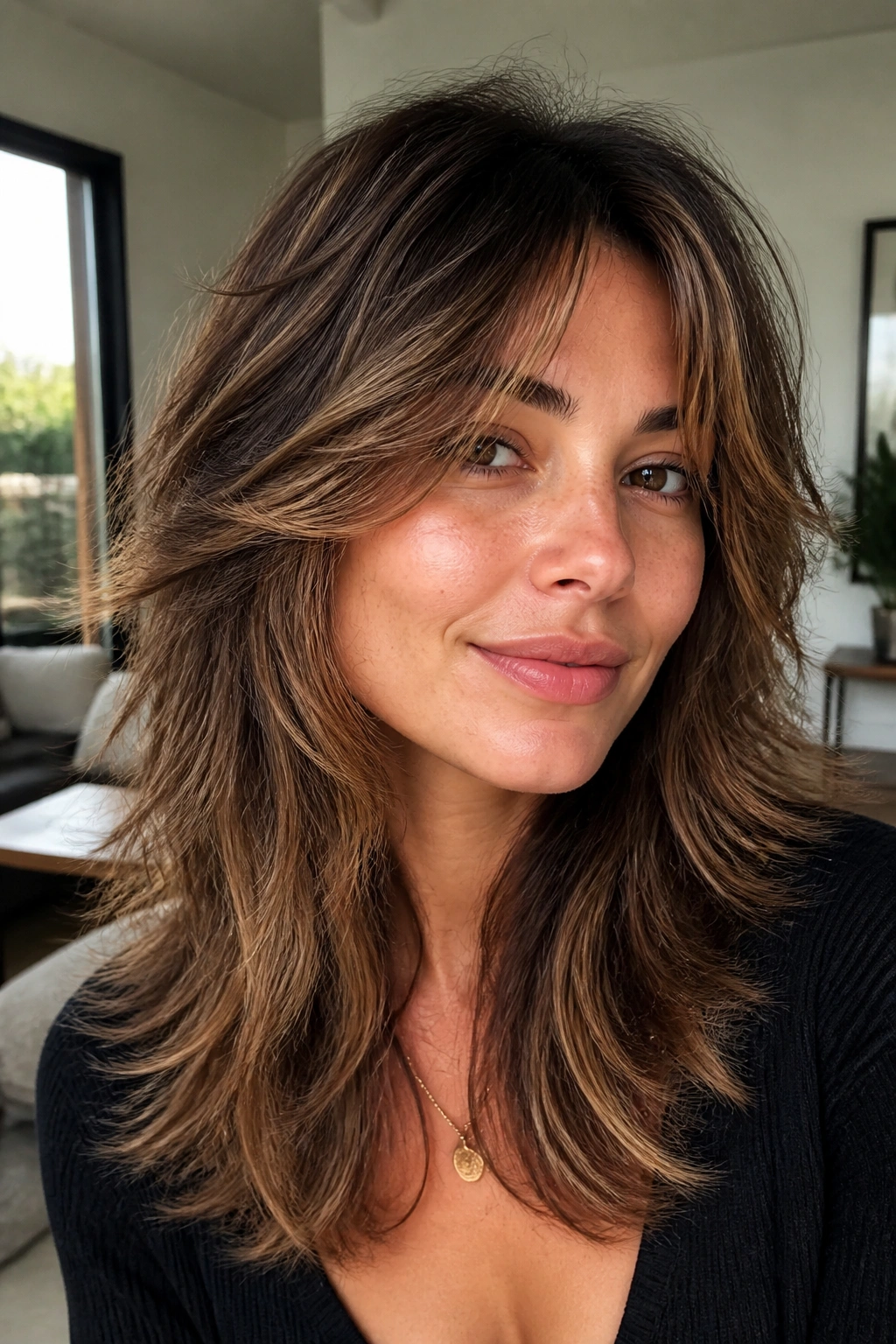
Soft caramel is the easiest place to start, and honestly, that’s a smart move. On a brunette base, caramel highlights give the wolf cut definition without stealing the show from the layers themselves. The result feels warm, glossy, and a little sun-touched, which is exactly where this haircut looks best.
Why It Works
Caramel sits close enough to brown that the grow-out stays forgiving. You get movement around the face and through the ends, but you do not get that harsh stripe effect that can happen when highlights are too light for the base. On wavy hair, the bends catch the caramel in little flashes. On straight hair, the lines are softer, but the layers still read clearly.
A good colorist will place the lighter pieces where the cut naturally flips outward: around the cheekbones, the collarbone, and the outer edges of the shaggy layers. That placement matters more than the exact shade name. If the lightness follows the shape, the haircut looks more expensive.
- Best on medium to dark brown hair
- Ask for balayage or hand-painted ribbons, not chunky strips
- Keep the roots a shade or two deeper for softness
- A gloss in caramel or beige keeps the tone rich, not brassy
Pro tip: Ask for the highlights to be one notch lighter around the face and slightly deeper through the back. That tiny shift keeps the cut dimensional from every angle.
2. Platinum Money-Piece Wolf Cut
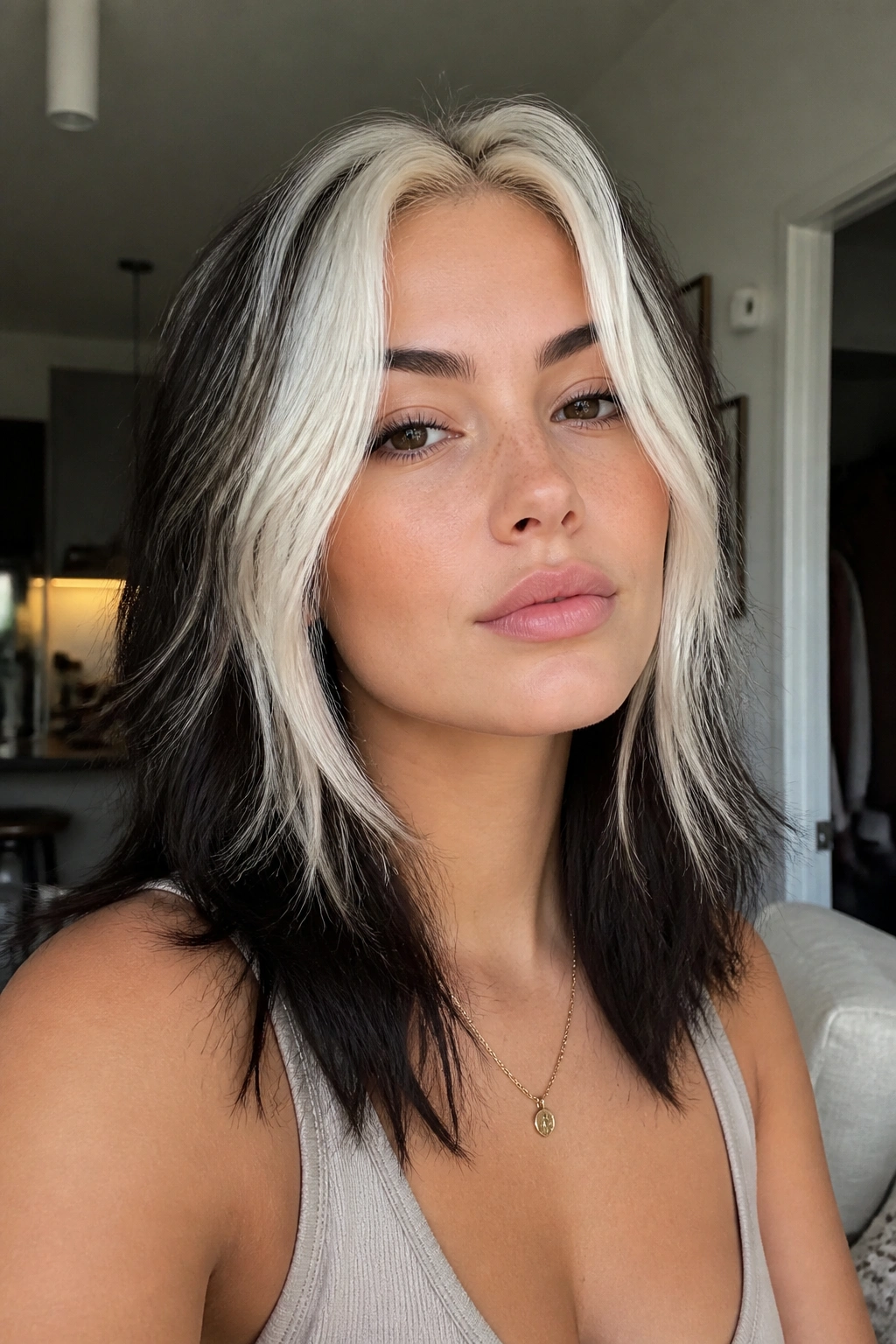
A bright front panel changes the whole haircut. With a platinum money piece, the wolf cut stops whispering and starts talking back. The contrast is sharp, a little rebellious, and very good at making the fringe and top layers look deliberate instead of random.
What makes this version work is restraint in the rest of the hair. Keep the back and underlayers darker, and let the platinum live only where it can frame the face and break up the crown. That way, the highlight pattern feels graphic instead of messy. The cut still has movement, but the eye goes straight to the eyes, the cheekbones, and the texture around the forehead.
This one likes a little maintenance. Platinum needs toner to stay clean, and the front pieces can warm up faster than people expect because they’re exposed to heat, sunlight, and styling products. If your hair is already porous, a pale violet toner can tip things too icy, so a beige-platinum finish often looks nicer in real life.
It’s a strong look. That’s the point.
If you wear a lot of black, leather, clean liner, or sharp tailoring, this version makes sense fast. If your style is softer, you can still wear it — just keep the platinum a touch creamier and avoid pushing every bright piece to the same level. A little unevenness is what keeps it from looking like a helmet stripe.
3. Copper Wolf Cut With Warm Ribbons
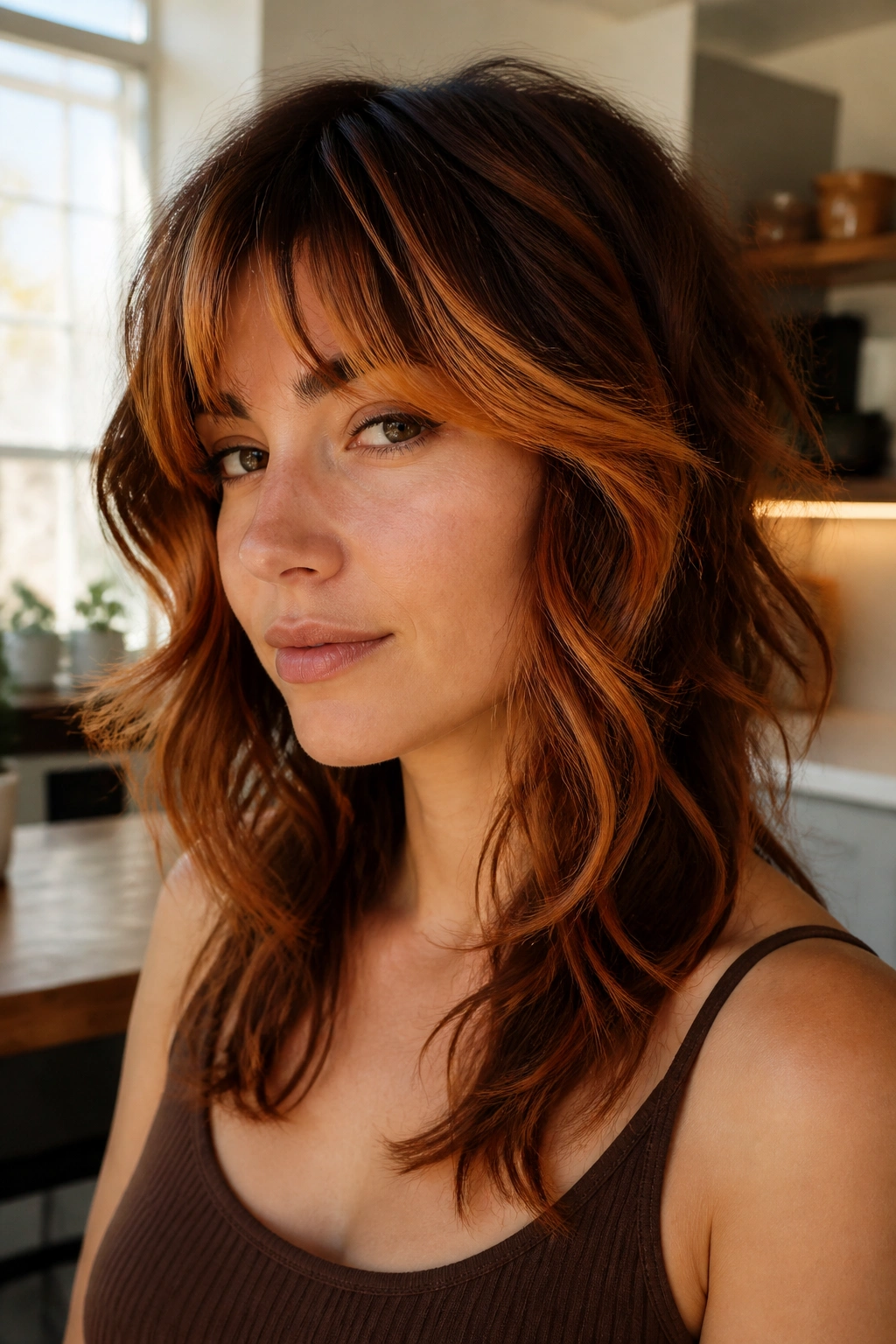
Why does copper work so well on a wolf cut? Because the haircut already has a lot of texture, and copper gives that texture a pulse. On dark brunette or chestnut hair, warm copper ribbons make the layers look thicker and more alive without bleaching everything to the same level.
The Color Logic
Copper is one of those shades that sits right between bold and wearable. It catches light in a way blonde does not, so the cut can look vivid even when the color is not screaming from across the room. On a shaggy wolf shape, that matters. The movement shows first, then the color follows.
The best copper version is rarely a flat orange. Better to think in terms of cinnamon, burnt sienna, and soft auburn. You want variation, not a marker-red block. Ask for a copper glaze over pre-lightened pieces if your base is dark, or for direct-dye tones if your hair is already light enough to hold them.
How to Use It
- Put the brightest copper around the fringe and cheekbones
- Keep the lower lengths a little deeper
- Ask for face-framing ribbons, not full saturation
- Style with a diffuser or loose bend to show the warm shine
If your skin has a lot of warmth, this version can look especially alive. But it can also work on cooler features when the copper is muted enough. The real trick is keeping the roots slightly shadowed so the cut still has that wolf-like edge. Flat roots kill the shape. A softer root melt keeps it moving.
4. Ash Brown Wolf Cut With Beige Ribbons
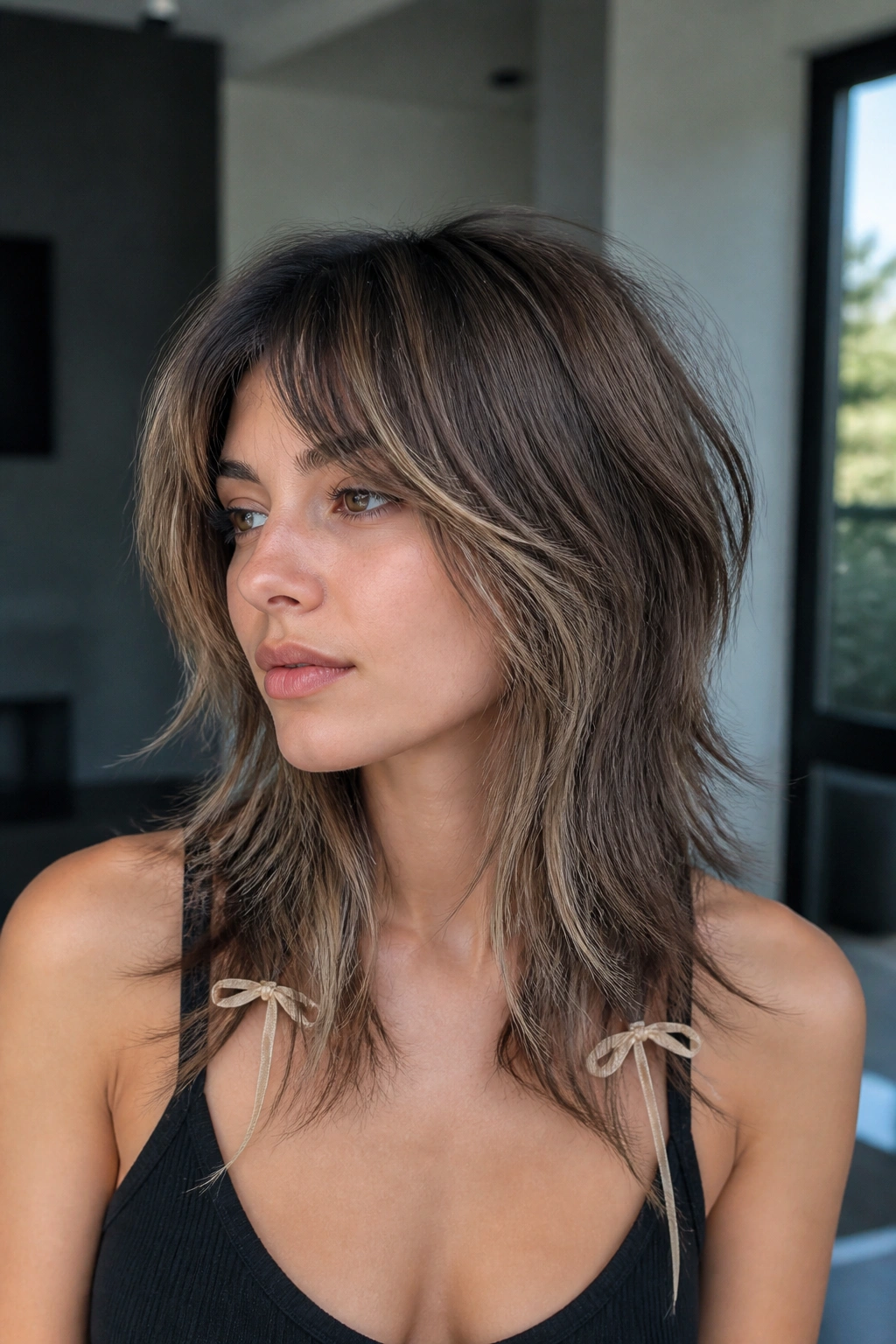
If your hair tends to puff up, ash brown with beige ribbons can be a relief. The cooler tone calms the outline, and the beige pieces stop the whole cut from feeling muddy. It’s one of the best choices for women who want the wolf shape without a lot of color drama.
The reason it works is simple: ash brown gives you depth, beige gives you light, and the wolf cut gives you texture. Put those three together and the layers look clean instead of fluffy in the wrong places. That’s especially useful on thick hair, where too much warmth can make the ends feel heavier than they are.
A lot of people ask for “ash” and then get something that looks flat. That usually happens when the colorist forgets to keep a little variation through the mids and ends. The fix is a soft root shadow with lighter beige pieces only where the cut bends. You still want movement. Just not the brass.
- Good choice for low-maintenance grow-out
- Works well with curtain bangs or a long fringe
- Keep the beige pieces fine, not chunky
- A cool gloss every few months helps preserve the tone
This is not the loudest wolf cut on the list. It doesn’t need to be. Some of the best hair color is the kind people notice only after they lean in a little closer.
5. Honey Blonde Wolf Cut With Curtain Bangs
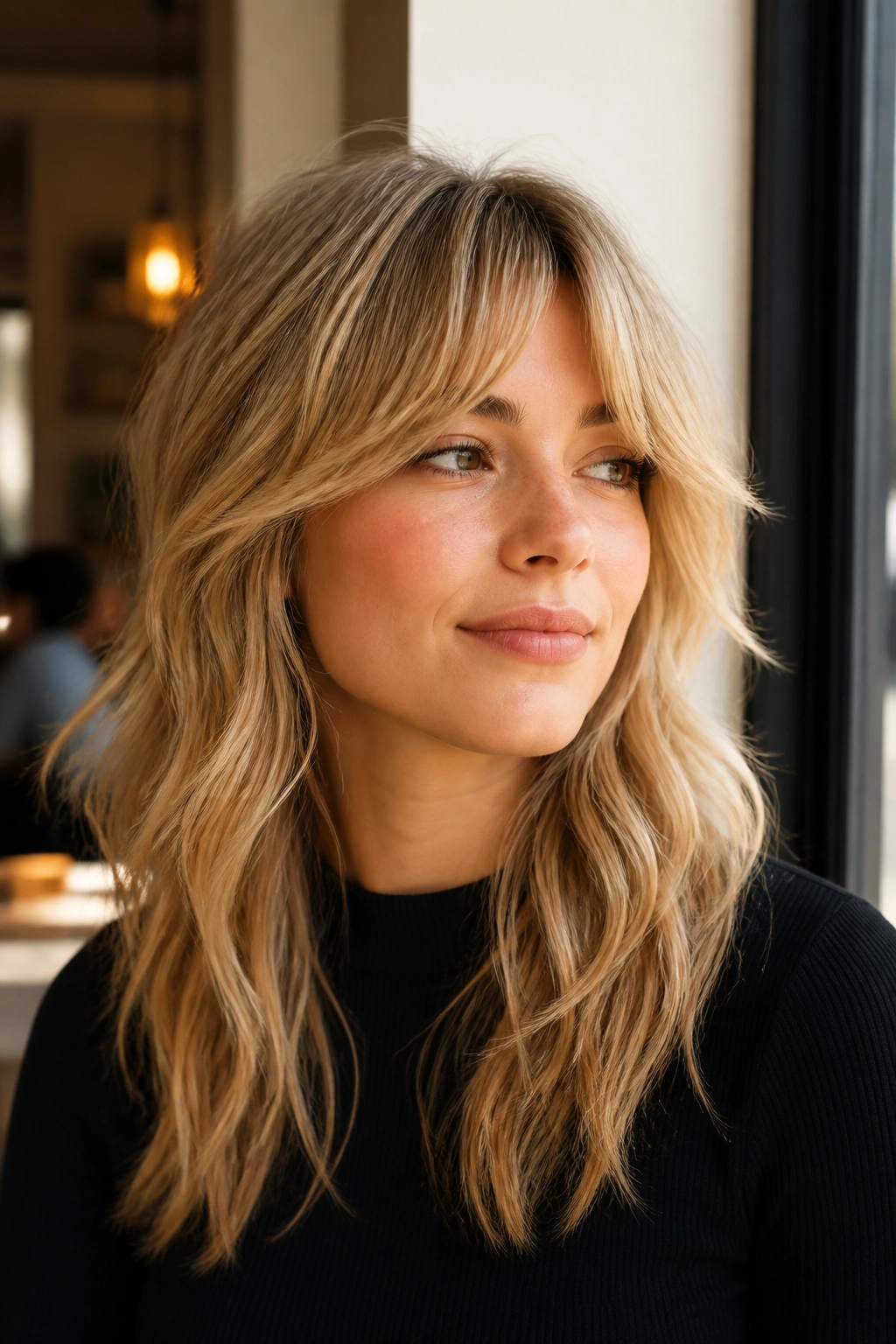
Honey blonde has a way of making a wolf cut feel friendly instead of harsh. That sounds simple, but it matters. The haircut has enough edge on its own, so the color can soften the whole thing without dulling it down. Curtain bangs seal the deal, because they let the lighter pieces fall right where the eye goes first.
The nicest honey-blonde versions usually start with a darker blonde or light brown base. Then the color gets built up through the face-framing layers, the top crown, and the outer ends. That keeps the cut from turning into a solid blonde block. You want warmth in motion, not one big glow.
Honey blonde also plays well with styling that is not too polished. A rough blow-dry, a round brush at the bangs, maybe a few bends with a flat iron — that’s enough. The shade looks richer when the hair has a little separation between the layers. If you curl it too tight, the shape can start feeling pageant-y. Not the vibe.
The maintenance is manageable if you keep the roots softly blended and use a beige or gold gloss instead of chasing a pale blonde every time. Letting a little darkness live at the crown makes the haircut look fuller, not grown out. That’s the part people always underestimate.
6. Silver Smoke Wolf Cut on a Black Base
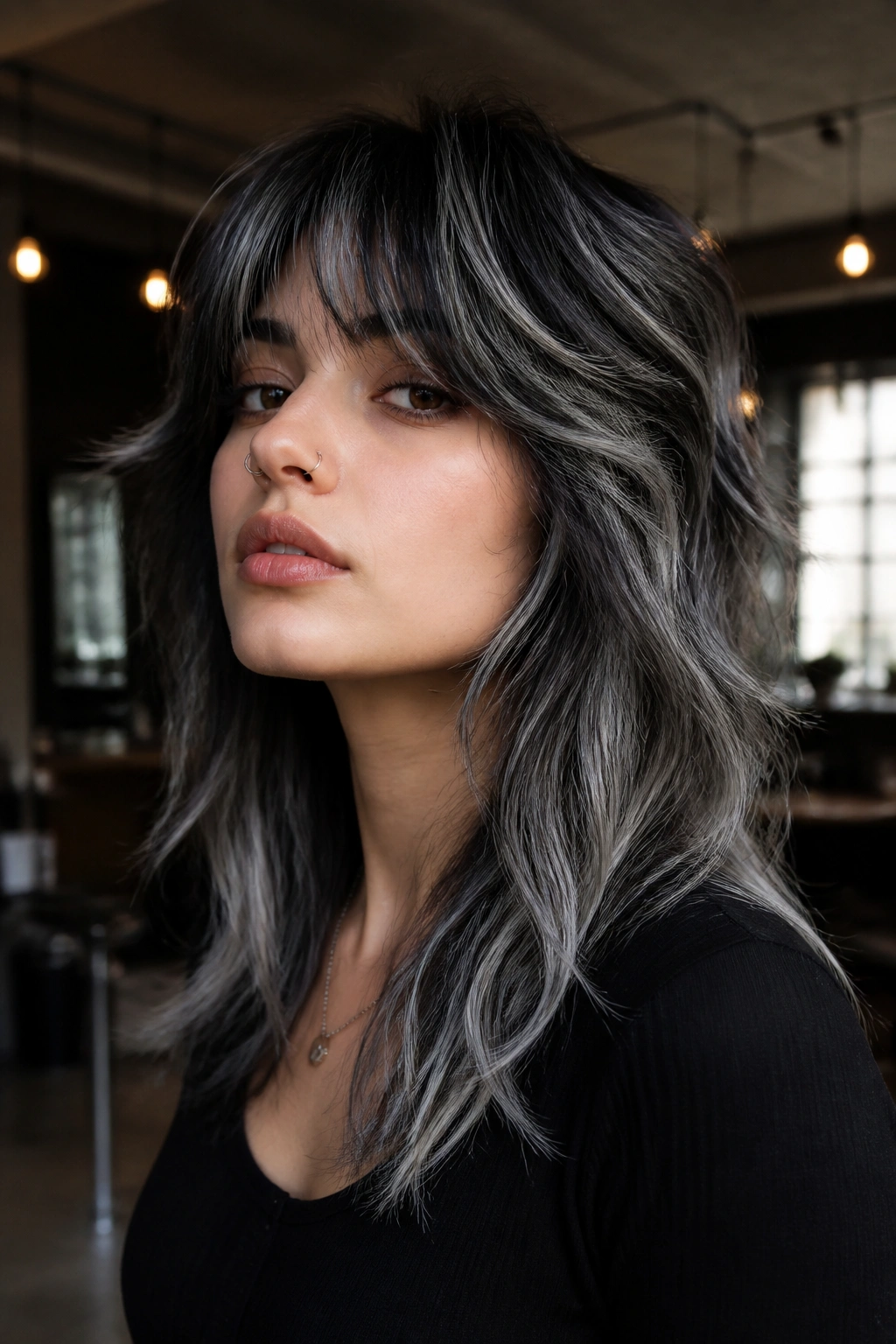
Silver smoke on black hair is a different animal. It’s not soft, and it should not try to be. The whole point is the contrast: deep, inky lengths with cool silver threading through the layers, so the cut shows up like shadow and steel.
Unlike warm blondes, this version puts the texture first and the brightness second. That makes it ideal for women who want the wolf haircut to feel sharp rather than beachy. On straight hair, the silver creates clear lines. On wavy hair, it breaks up into flashes that move with the bends. Either way, the black base keeps the look grounded.
The nicest thing about silver smoke is that it can be placed underneath the top layer. That means you get hidden brightness when the hair moves, which feels a bit more interesting than putting silver everywhere. A few foiled pieces around the face help the whole look read from the front, but the underlayer is where the fun lives.
This one does ask for commitment. Black dye and silver bleach work in very different ways, and the upkeep is more serious than with caramel or bronde. Still, if you like a dramatic cut that looks polished in dim light and sharp in bright light, this is a strong choice.
7. Rose Gold Wolf Cut With Soft Ends
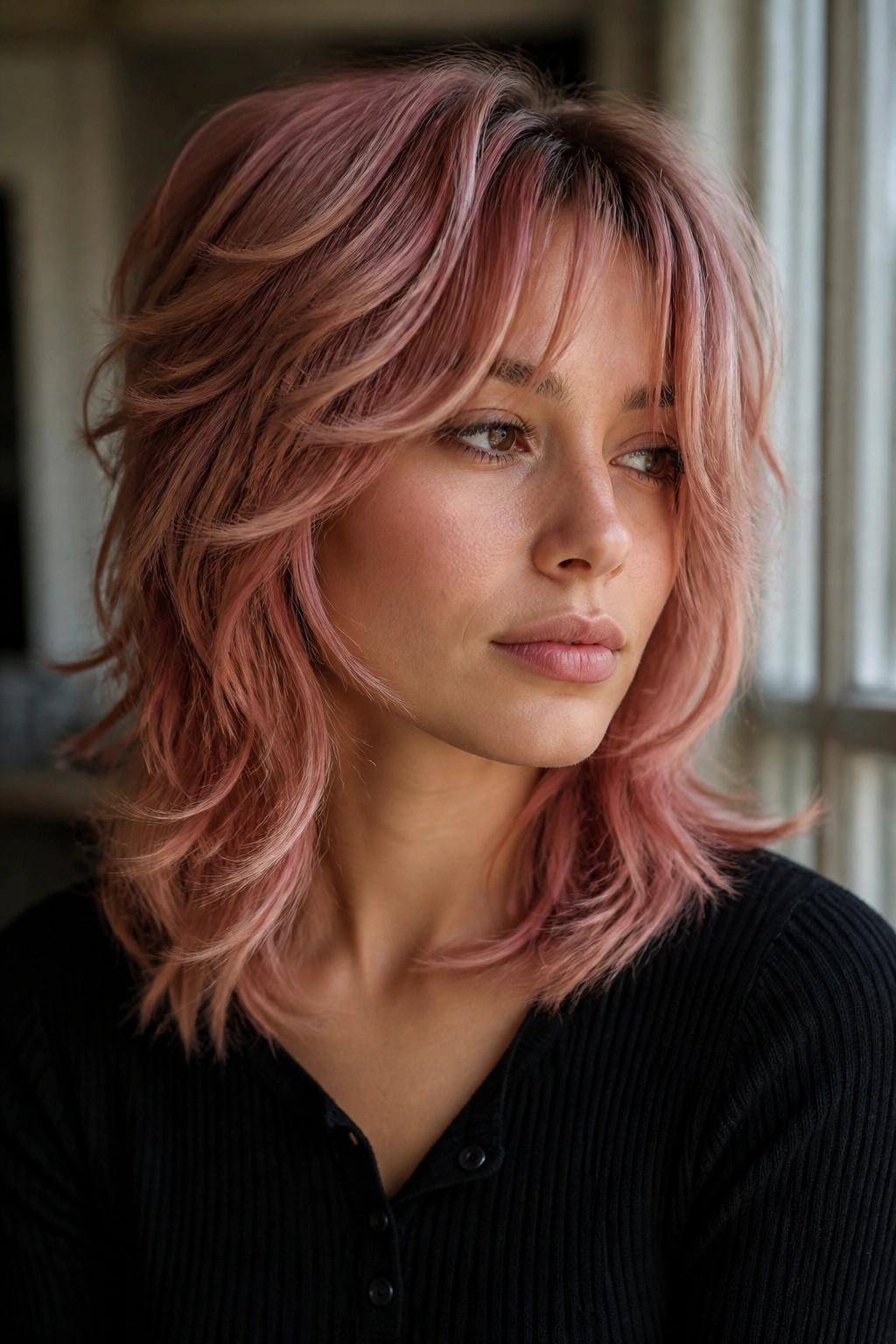
Rose gold can go wrong fast if it turns too bubblegum. The best version keeps the pink faint, the gold warm, and the whole thing a little dusty around the edges. On a wolf cut, that softness keeps the layers from looking too severe, which is useful if you like the shape but not the punkier edge of some other versions.
The color looks especially nice when it sits over a pale blonde or light brunette base. You want enough lift for the rose to show, but not so much that the hair looks chalky. A demi-permanent gloss usually behaves better than a heavy, opaque dye here. It fades in a gentler way, and the fade matters because rose gold can swing from pretty to peachy in a hurry.
Who it flatters most? People who want something playful without going full fantasy color. It also works well if your wardrobe leans soft neutrals, denim, cream, olive, and black. Rose gold reads warm in daylight and a little smokier indoors, which is half the charm.
Keep the ends feathered and the face-framing pieces slightly brighter. That gives the color a place to breathe. If every strand is the same tone, the wolf cut loses its shape. And that would be a waste.
8. Mushroom Brown Wolf Cut With Lived-In Highlights
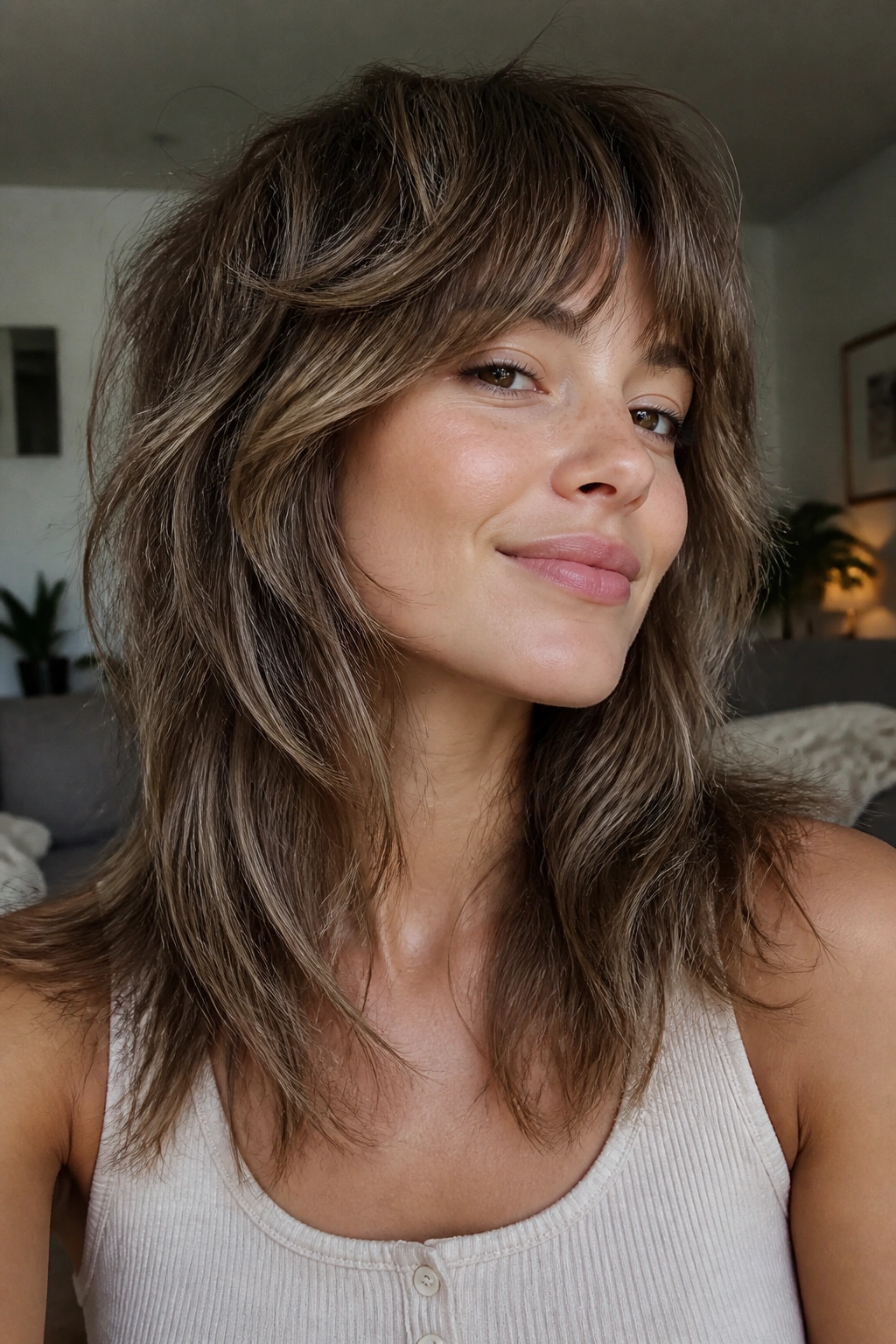
Mushroom brown is the quiet achiever here. It sounds plain, but on a wolf cut it can look expensive in a very low-key way. The color sits in that taupe zone between brown, ash, and beige, and lived-in highlights keep the layers from sinking into one flat mass.
The reason this works is that mushroom brown softens the hair’s outer shape while still showing movement in the inner layers. The highlights are not meant to shout. They’re meant to catch the bend of the cut, which is why this shade is so good on thick hair and medium-density hair alike. It controls the volume without erasing the texture.
I like this one for people who need a haircut that can live in real life. Work meetings, school drop-offs, grocery runs, weekend brunch — it fits all of it without asking for a curling wand every day. A center part or a deep side part both work, though a soft middle part tends to show off the face-framing pieces better.
A root shadow helps. So does a neutral gloss every so often, because mushroom brown can get too green or too flat if the toner is left to do all the work alone. The sweet spot is earthy, not dull. Those are not the same thing.
9. Strawberry Blonde Wolf Cut With Fringe
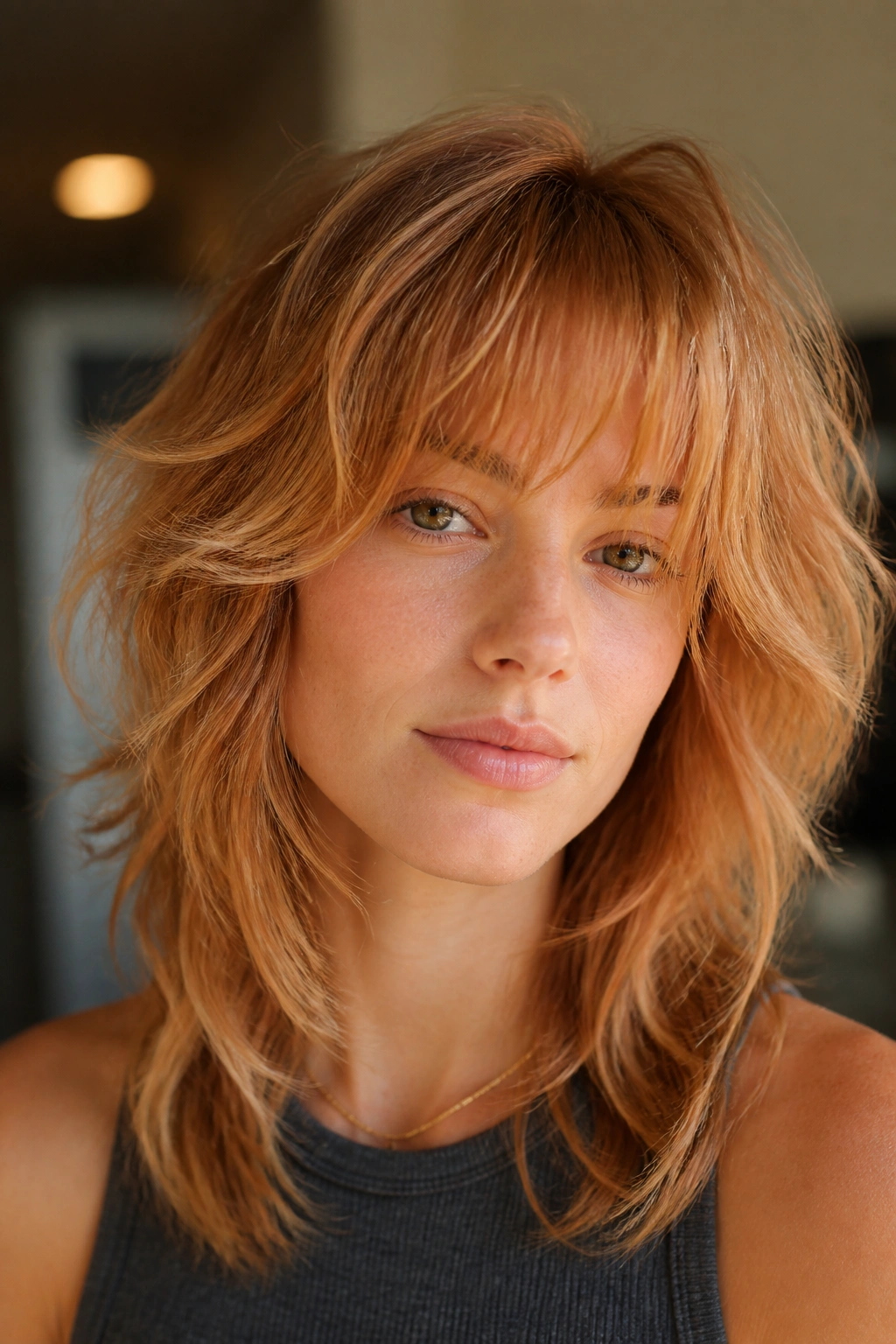
Strawberry blonde is one of those shades that looks different on everyone, which is part of why it works so well on a wolf cut. The haircut gives the color a little grit, and the color keeps the haircut from feeling too rough. When the mix is right, the whole thing reads soft, warm, and a touch mischievous.
Why It Works on This Cut
Strawberry blonde sits between copper and blonde, so it naturally catches both warm and light. That makes the layers look fuller, especially around a fringe or a set of curtain bangs. The front pieces get enough brightness to open the face, while the rest of the cut keeps its depth.
This is a strong choice for natural redheads who want more glow without losing the red base, but it also suits light brunettes who want a warmer blonde without going yellow. The key is keeping the shade translucent enough that the texture still shows through.
How to Wear It
- Ask for a rosy-copper glaze over lightened pieces
- Keep the fringe a half-shade brighter than the back
- Style with loose bends, not tight curls
- Use a color-safe shampoo that does not strip warm pigment too fast
It’s a pretty shade, but not fragile. That is what makes it so good here. The wolf cut stops it from becoming too sweet.
10. Chunky Blonde Wolf Cut With 90s Layers
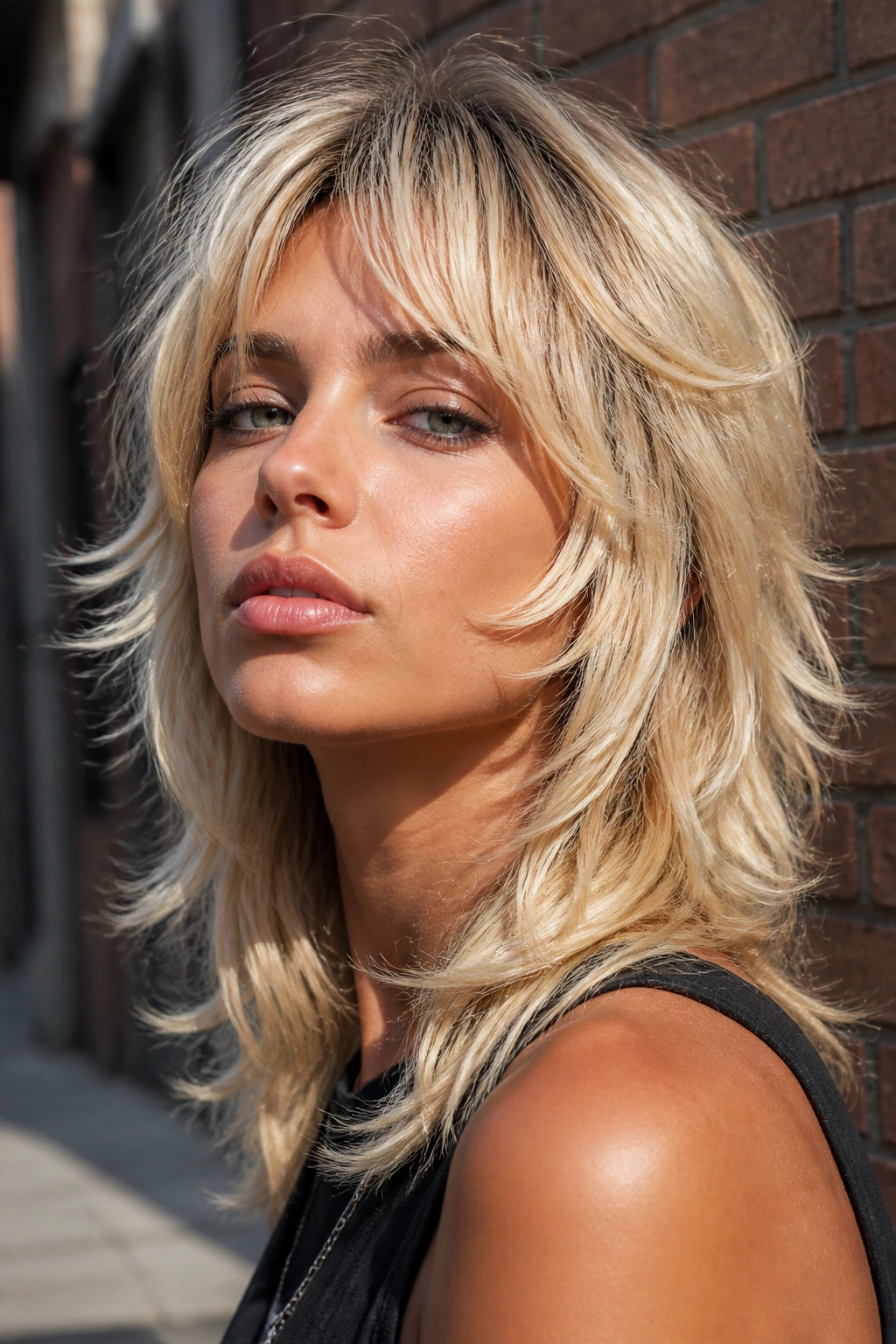
If you want the wolf cut to look louder, chunkier blonde is the move. It gives the haircut a brash, graphic edge that feels straight out of a flash photo, except the layering does the heavy lifting instead of the color alone. The result is bold, but not chaotic.
A chunky version works best when the blonde pieces are intentional and spaced well. You do not want even stripes all over the head. You want wide face-framing panels, lighter tips, and a few scattered pieces through the top layer so the cut has rhythm. That contrast gives the wolf shape its bite.
This version suits people who like a visible style from across the room. It also plays well with heavy eyeliner, strong brows, leather jackets, vintage tees, and the kind of hair that is meant to look a little undone. Clean and minimal is not the main event here.
Keep the roots deeper. That rule matters. If the blonde starts too high, the whole thing can lose depth and the layers blur together. A shadow root or even a root tap helps the cut hold onto its shape longer between appointments.
It’s not subtle. It doesn’t need to be. Some hair looks better when it has an opinion.
11. Midnight Brunette Wolf Cut With Blue-Black Streaks
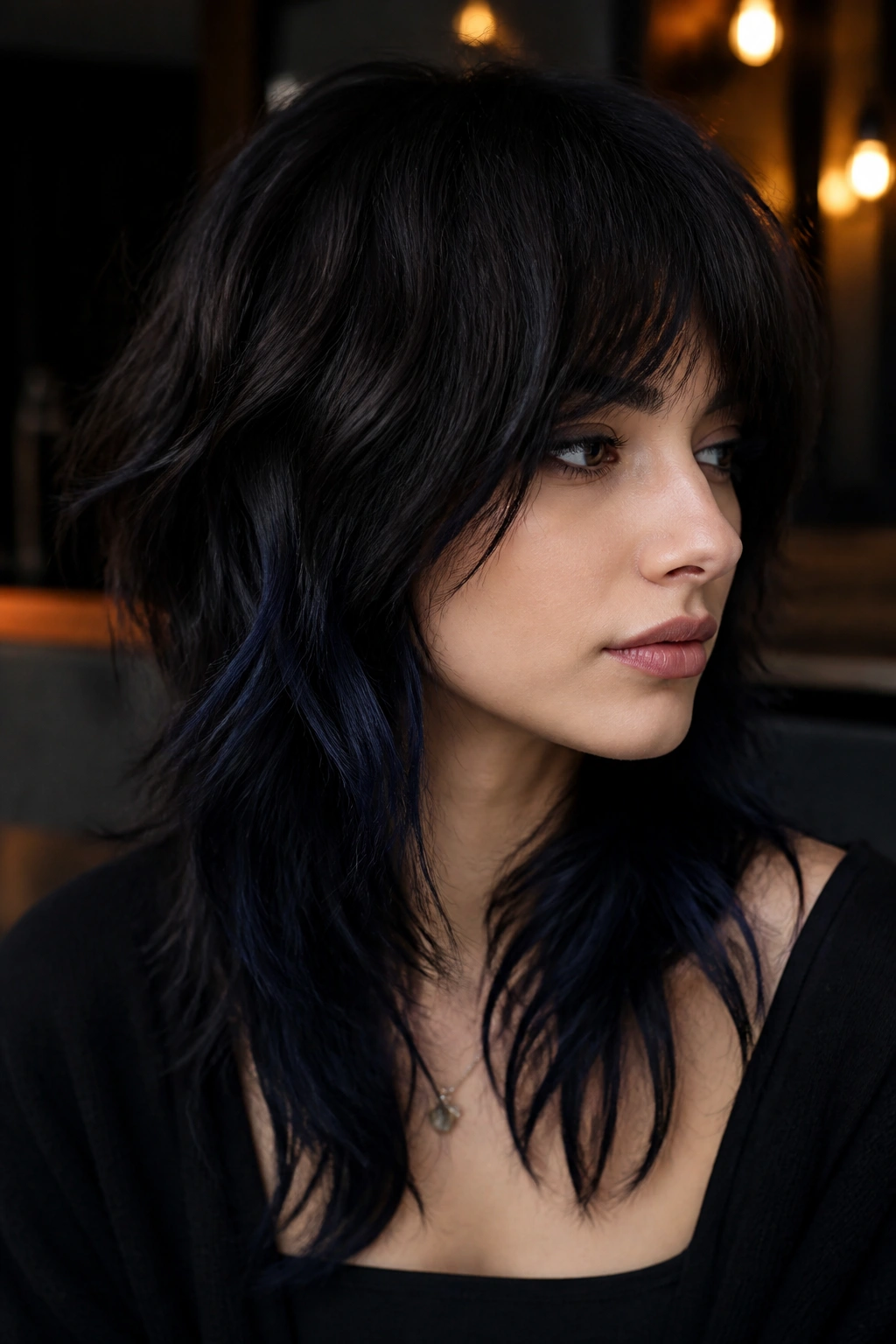
Midnight brunette is a sharp answer for anyone who likes dark hair but wants more than plain brown. Add blue-black streaks through the wolf cut and the texture starts showing up in the light like oil on water. It is moody, polished, and much more interesting than flat black.
The trick is keeping the streaks understated enough that they read as dimension, not dye. Blue-black works best when it lives inside the layers, around the crown and the mid-lengths, rather than sitting on top like a strip. On a shaggy wolf cut, that hidden depth can make the feathered ends look thicker and the fringe look more deliberate.
This color choice also ages well between salon visits. Dark shades fade more softly than pale blondes, and if you keep the finish glossy, the hair can look newly colored longer. A clear or blue-toned gloss helps preserve that cool edge. Heat protectant matters too, because dark shiny hair shows damage fast.
If you like dark clothes, clean lines, or a dramatic brow, this one is easy to wear. It feels sharper than brown, but less severe than a full jet-black block. That little gap is where it gets good.
12. Golden Beige Wolf Cut for Thick Hair
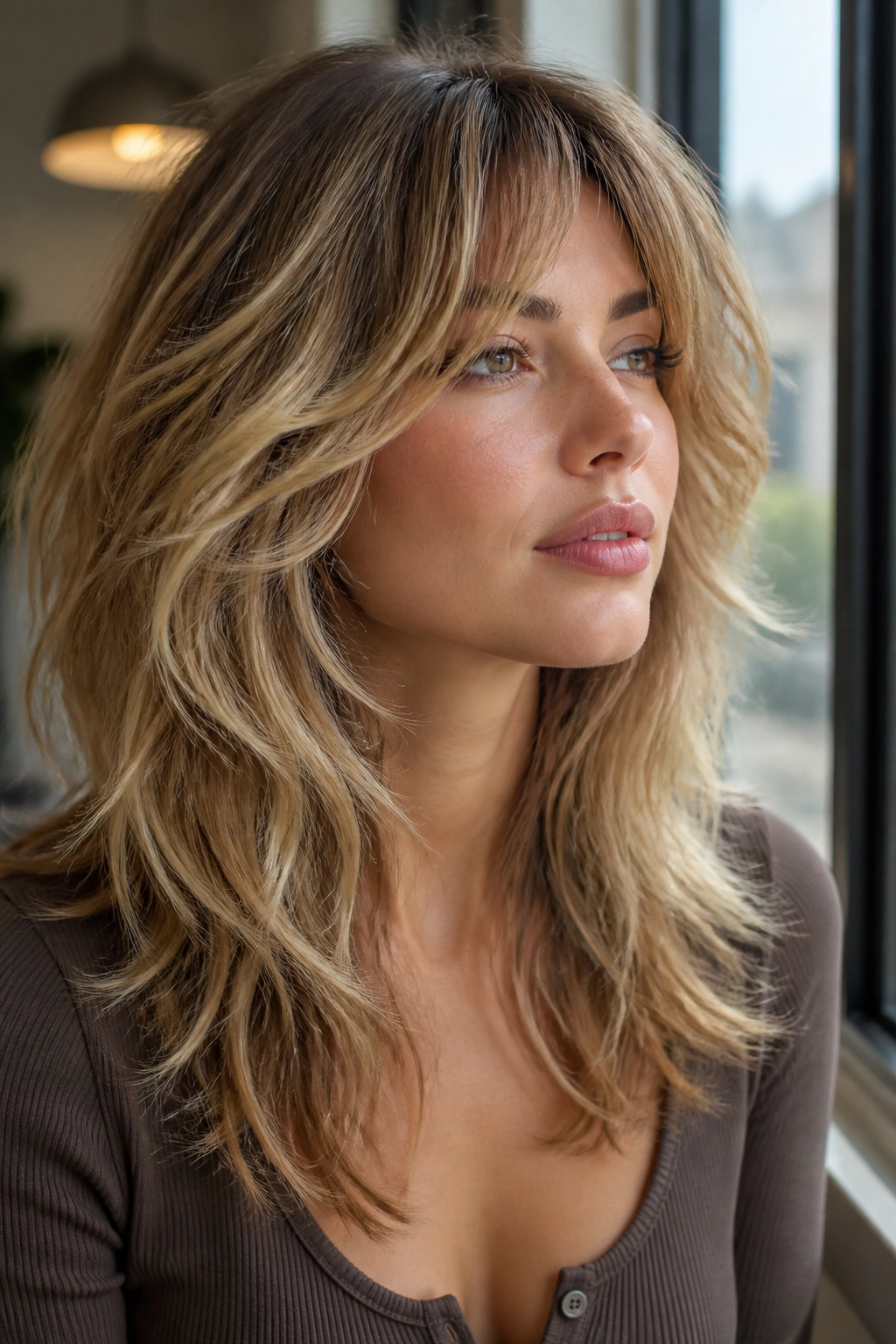
Thick hair can swallow a wolf cut if the color is too close to the base. Golden beige fixes that. It breaks up the density, lightens the visual weight, and makes the whole style move better without forcing you to thin the life out of your hair. That alone makes it worth a serious look.
What makes this version different from honey blonde is the softness of the tone. Golden beige is warmer than ash, but calmer than bright gold. The balance matters on thick hair because strong blonde can sometimes make the texture look puffy. Beige keeps the edges softer while still giving the layers enough light to show.
A colorist should place the lighter pieces in wide, sweeping ribbons, especially through the outer layers and around the jawline. That helps the cut open up as it moves. If the highlights are too fine, they disappear inside all that hair. If they’re too chunky, the thickness starts to look blunt. The middle ground is where this one wins.
This is also one of the best choices if you wear your hair in big air-dried waves. The color keeps the shape from feeling heavy at the bottom, which is a common wolf-cut problem on denser hair. It’s practical. And it looks good, which is the better part.
13. Peekaboo Rainbow Wolf Cut
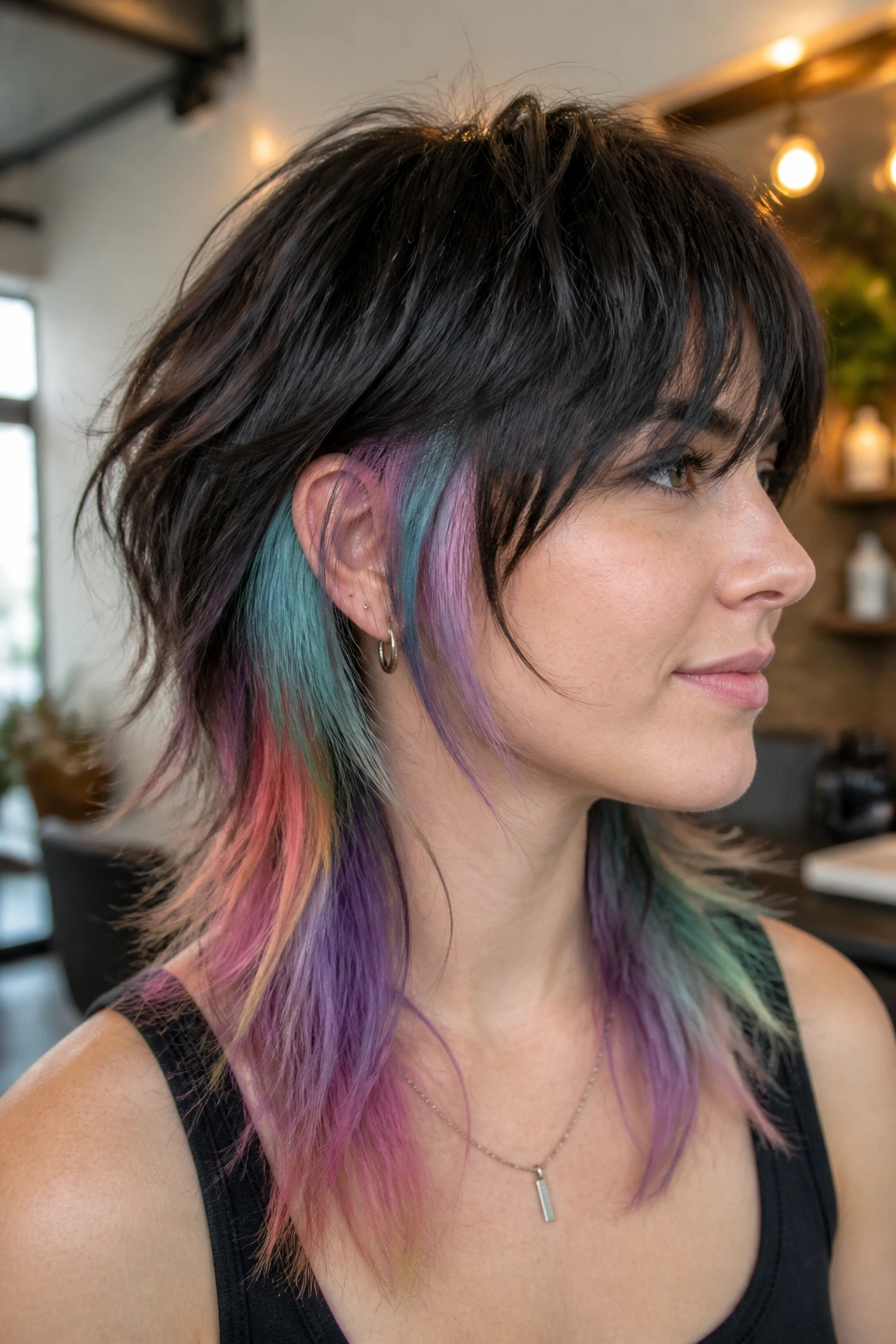
A peekaboo rainbow wolf cut sounds loud, but it can be surprisingly wearable. The bright color lives under the top layers, so you get flashes of teal, lilac, peach, or lime only when the hair moves or gets tucked behind the ear. That hidden placement works beautifully with the wolf cut’s natural layers.
How to Keep It Wearable
This is not about coating the whole head in neon. The better approach is to lighten small sections beneath the crown and around the lower layers, then deposit color in panels that peek through rather than dominate. That keeps the haircut playful without turning it into costume hair.
The top layer should stay close to your natural base or your usual brunette/blonde tone. The contrast is what makes the hidden color fun. If everything is bright, the eye has nowhere to land, and the wolf shape gets lost. A few well-placed panels do more than a full rainbow ever could.
- Best when the top layer is medium or long enough to cover the color
- Works with vivid shades or softened pastels
- Needs a gentler shampoo routine to keep the tones from washing out fast
- Looks strongest when the layers are tousled, not slicked flat
I like this idea for people who want personality without a permanent loud finish. You can keep the office version of the haircut quiet and then let the rainbow show up on your own time.
14. Soft Bronde Wolf Cut for Fine Hair
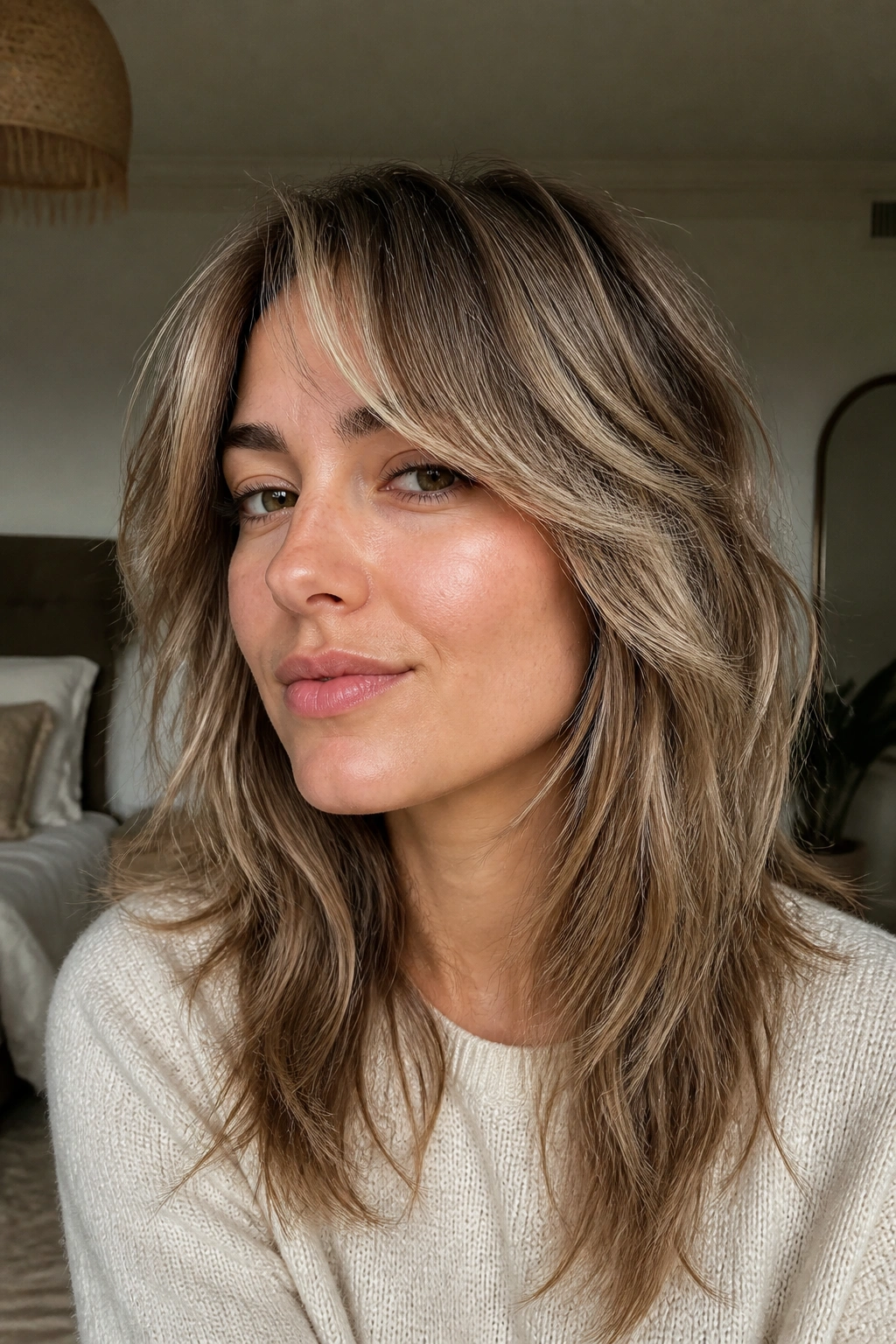
Fine hair needs a little help pretending to be fuller, and soft bronde is one of the easiest ways to do that. The blend of brown and blonde creates a thicker visual line than a single flat shade, so the wolf cut’s layers read as airy instead of sparse.
That matters because a very light blonde on fine hair can sometimes expose the scalp too much or make the ends look wispy in the wrong way. Bronde keeps a bit of depth at the root and around the interior layers, which gives the haircut more body. It also means you can wear the cut without styling it into submission every morning.
The best version uses low-contrast highlights rather than obvious streaks. Think face-framing pieces that are one or two levels lighter, plus a few softer ribbons through the mid-lengths. The point is to give the hair depth when it bends, not to flood it with color.
This look works well with a softer fringe, especially one that splits naturally in the middle. It keeps the forehead area light without drawing a hard line across the face. If your hair is fine, that kind of softness matters more than people think. Too much contrast can make the ends look thinner than they are.
15. High-Contrast Face-Framing Wolf Cut
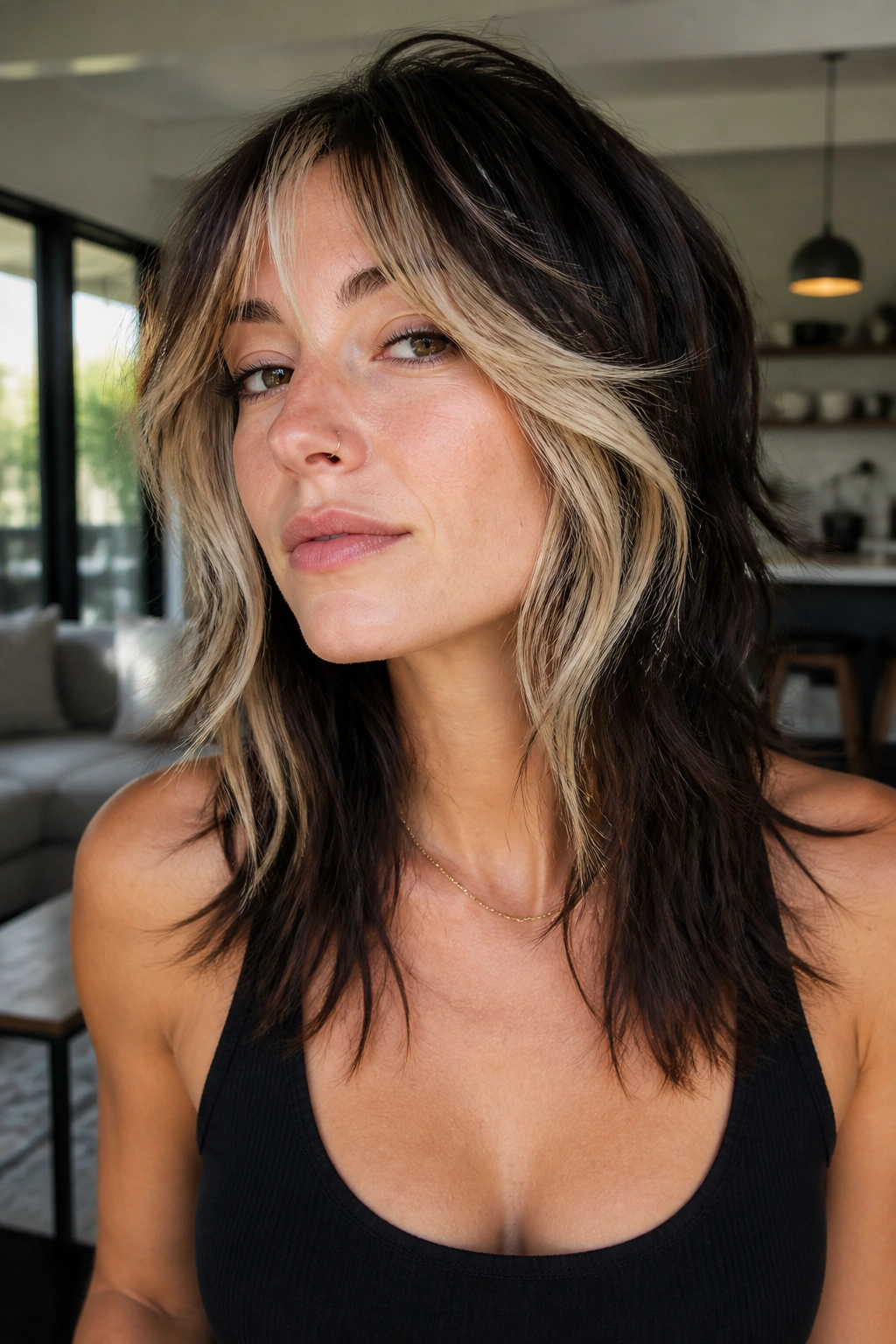
Sometimes the whole haircut can stay fairly dark, and the front does all the talking. That is the appeal of a high-contrast face-framing wolf cut. The money piece is brighter, the fringe is lighter, and the rest of the layers stay deeper so the shape still feels shaggy and cool.
The face frame is where this cut earns its keep. Put the brightest pieces around the cheekbones, the temples, and the front edge of the bangs, and the haircut immediately looks more sculpted. The eye goes there first. That’s useful if you want the wolf shape to lift the face without making the whole head light.
This is one of the most flexible options on the list. It can be smoky brunette with a pale beige front, dark copper with a lighter amber frame, or chestnut with a blonde panel at the cheekbones. The trick is keeping the contrast strong enough to show the cut, but not so strong that it looks pasted on.
If you wear your hair up often, this version still has something to say. The bright front pieces stay visible in a half-up twist, a claw clip, or a loose bun, which is handy. The haircut stays wolf. The front just starts the conversation.
Final Thoughts

The best wolf haircut with highlights is the one that makes the cut easier to read, not busier to look at. That sounds obvious, but it’s the difference between a shape that feels styled and a shape that feels random. Good color should follow the bend of the layers, not fight them.
If you want the lowest-maintenance route, start with caramel, mushroom brown, or soft bronde. If you want contrast, platinum, silver smoke, and a bright money piece will give you that edge fast. And if you want something with personality that still feels wearable, copper, rose gold, and strawberry blonde sit in a nice middle ground.
One last thing people skip too fast: the wolf cut lives or dies by placement. A smart highlight map around the face, crown, and ends will do more for the haircut than chasing the lightest blonde in the room. That is the version that holds up when the hair moves, which is really the whole point.
