



Curly wolf cuts for medium length hair work because they respect the way curls move instead of fighting them. That sounds obvious, but a lot of bad cuts still try to force curly hair into a flat shape at the top and a tidy line at the bottom. The result is usually a triangle, a shelf, or a fringe that sits there like it’s waiting for a different head.
Medium length is the sweet spot for this cut. You have enough length for the layers to fall, but not so much that the whole shape gets heavy and droopy. Shrinkage matters here, too. A curl that lands at the collarbone when wet can bounce to the chin when dry, and if the cut is planned badly, that bounce shows every mistake.
I like wolf cuts on curls when the stylist leaves some weight in the right places. Too much thinning and the ends frizz out. Too little shaping and you lose the whole point. The best versions feel a little wild, a little controlled, and very specific to the person wearing them.
Some of these cuts lean softer and rounder. Others bring in a bit of mullet edge. A few are almost shy about it. Start with the shape that matches your curl density, then decide how much fringe, lift, and attitude you want in the finished look.
1. Crown-Heavy Wolf Cut With Long Face Layers
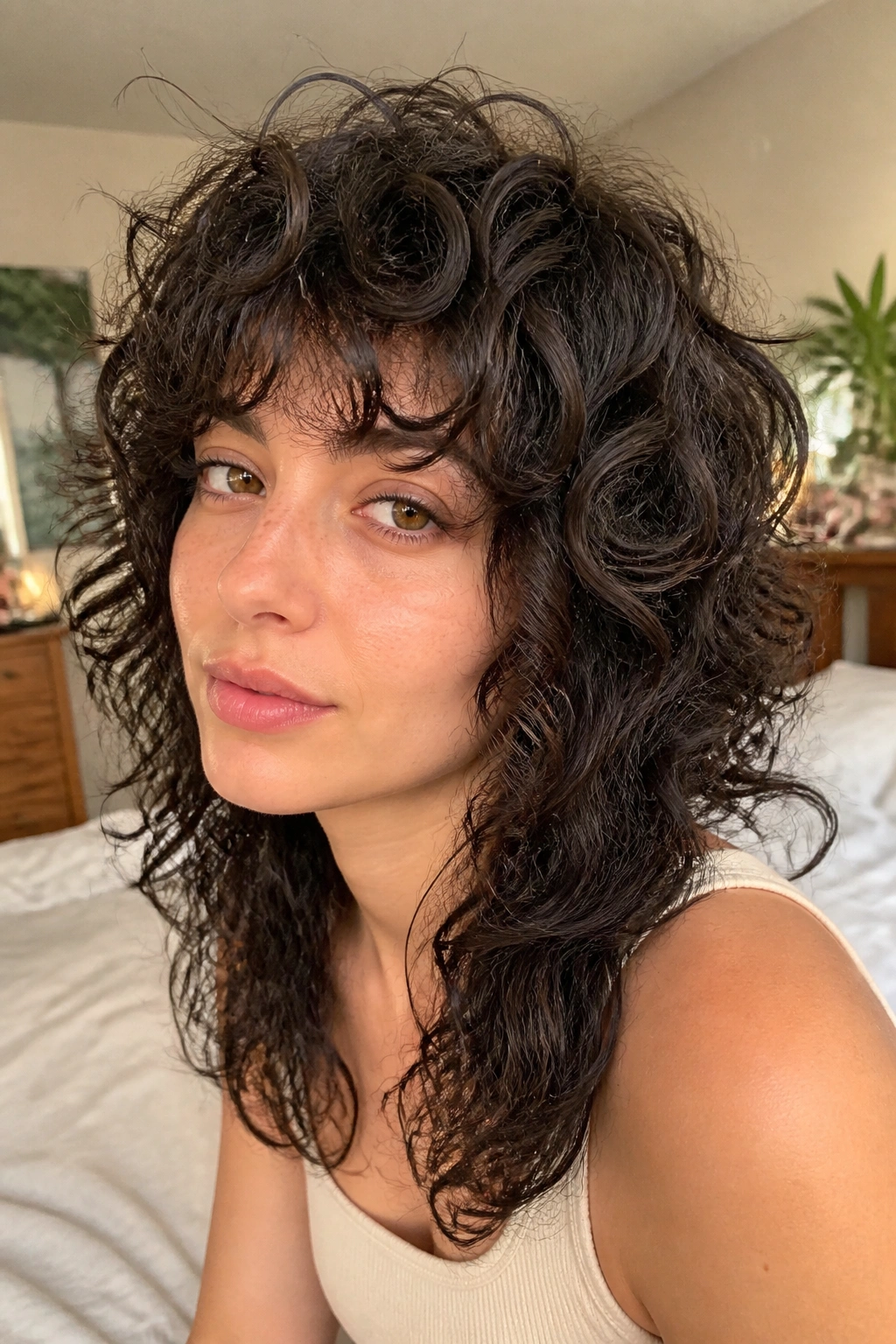
A crown-heavy version is my favorite place to start if you want fullness without the helmet effect. The shortest layers sit high enough to lift the top, but the face framing stays long, so the curls still have room to curl instead of puffing out sideways.
Why It Looks So Full
The trick is keeping the top layers light and the perimeter long enough to anchor the shape. That balance makes medium length curly hair feel airy, not chopped up. The face layers should start somewhere between the cheekbone and jawline, depending on how much swing you want near the front.
A good version of this cut works especially well on 3A and loose 3B curls that need a little help at the crown. It also plays nicely with medium density hair that tends to fall flat after a few hours. The lift stays visible even when the curls settle.
- Ask for dry refinement at the crown if your stylist cuts curly hair that way.
- Keep the longest pieces at or just below the shoulders.
- Avoid tiny, choppy snips near the hairline unless you want a lot of texture there.
- A diffuser set on low heat helps the top keep its shape.
Best tip: don’t over-layer the back. The cut looks richer when the silhouette still has some weight.
2. Rounded Curly Wolf Cut With Airy Fringe

If you hate the hard-edged mullet look, this is the version I’d hand you first. The silhouette stays rounder through the sides, so the curls form a softer halo instead of a sharp “top short, bottom long” split.
The fringe matters here. An airy fringe sits lightly on the forehead and breaks up the face without swallowing it. On medium length hair, that little bit of softness can make the whole cut feel easier to wear. It also keeps the front from looking too crowded when the curls spring up after drying.
This shape works beautifully on curls that naturally cluster together, because the rounded outline gives them a place to land. I especially like it for people who want the wolf cut texture but do not want the look to scream for attention. It reads relaxed. Not lazy. There’s a difference.
The most useful part is how simple it is to style. Scrunch in a curl cream, diffuse until the roots are dry, then leave the fringe alone for a minute before touching it. That pause matters. If you poke at the bangs too early, they separate in odd little hooks.
3. Shoulder-Grazing Wolf Cut With Bottleneck Bangs
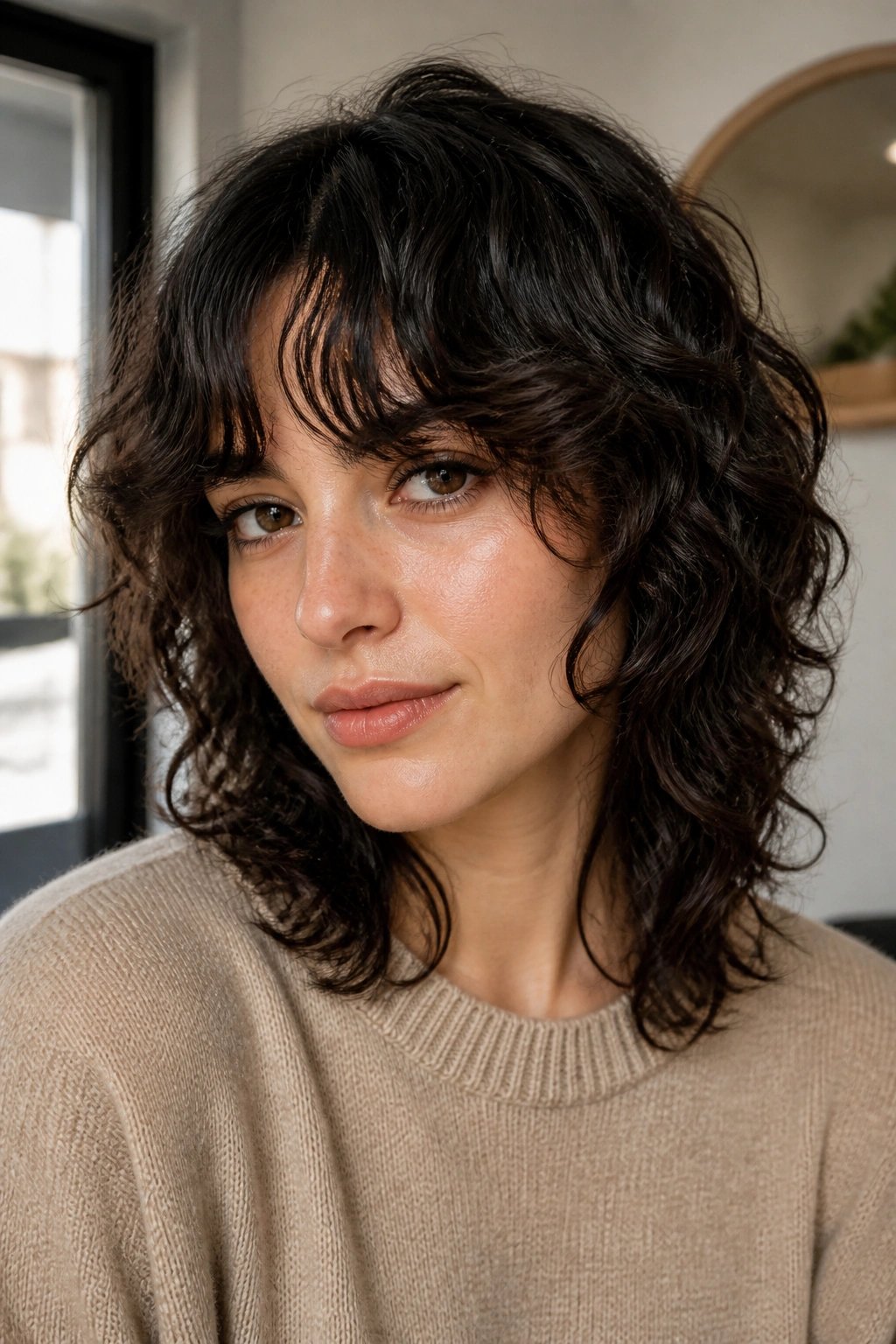
Why do bottleneck bangs work so well on curly medium hair? Because they give you shape at the center of the face and softness at the edges. The middle starts a little shorter, the sides drift longer, and the whole thing looks intentional even when the curls do their own thing.
This version sits right at the shoulder or just above it, which is useful if you want enough length for updos and clips. The cut keeps movement around the cheeks and jaw, then lets the back fall in loose layers. It’s one of the least fussy wolf cuts on this list, and that matters if you wear your curls in a fairly loose pattern.
How to Wear It
- Ask for the bangs to begin around the brow bone in the center.
- Keep the outer bang pieces long enough to tuck behind the ears.
- Let the shortest crown layer stay soft, not chopped.
- Use a light gel on the fringe so it dries with a gentle bend.
The best part is the grow-out. Bottleneck bangs blur into face-framing layers instead of turning into a weird bang shelf. That makes the cut easier to live with, which is half the battle.
4. Shaggy Wolf Cut for Loose 2C Waves
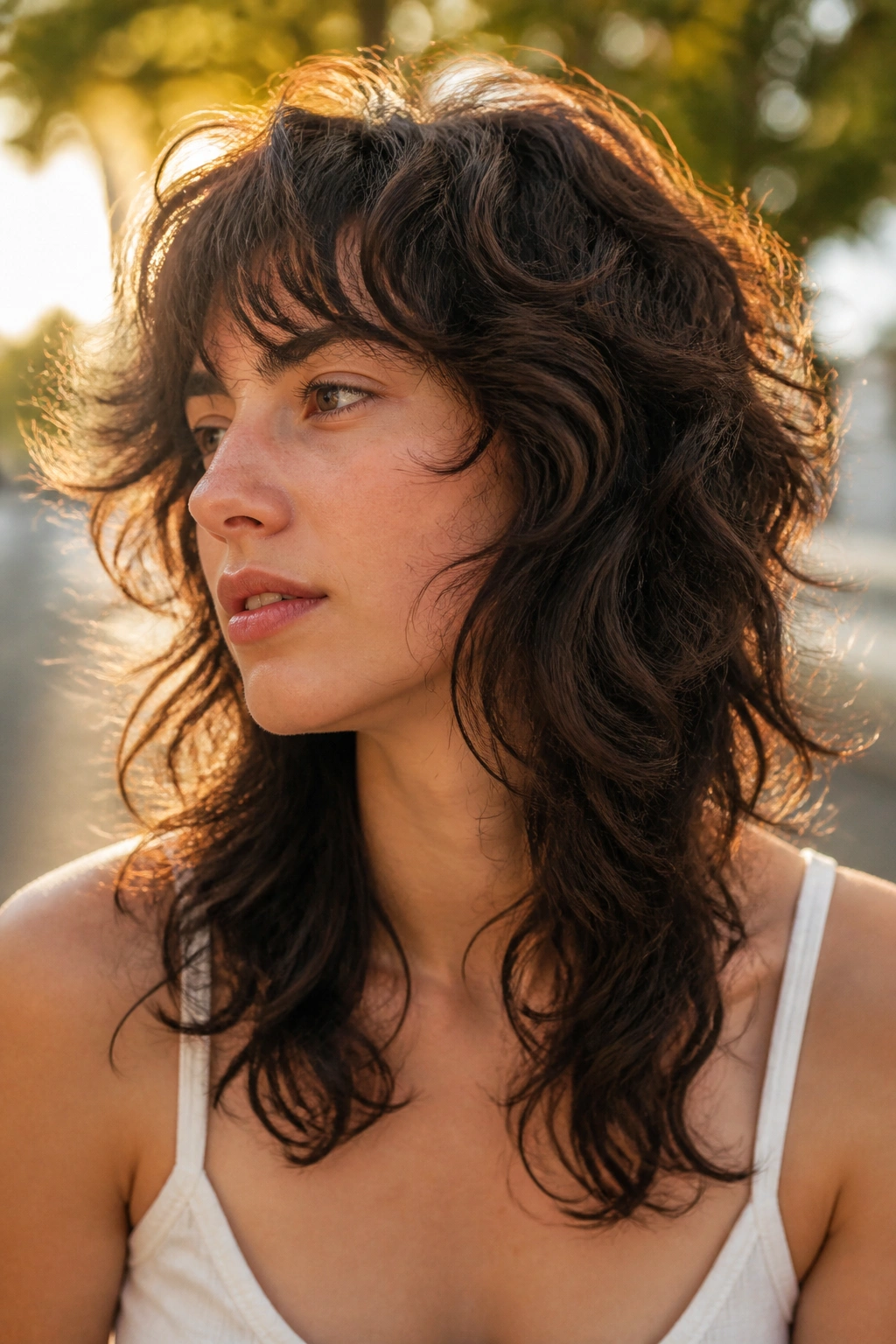
Picture hair that starts with a wave near the roots, then bends harder at the ends, and suddenly the blunt cut you had before looks too neat for its own good. That’s where this shaggy wolf cut lands. It gives those loose 2C waves a messier, more relaxed shape without making them collapse.
The cut lives on texture. The layers are feathered enough to show movement, but not so short that the waves pop up in separate little stacks. On medium length hair, that balance is gold. You get lift at the top and a bit of swing through the ends.
- Best for hair that bends easily but does not curl tightly.
- Works well with side parts and soft middle parts.
- Looks better with a little frizz than with too much smoothing.
- Diffuse only until about 80 percent dry, then let it finish on its own.
A shaggy wolf cut is the one I recommend to people who say, “I want shape, but I don’t want a haircut that feels precious.” Same here. Precious hair is annoying.
5. High-Volume Curly Wolf Cut for Thick Hair
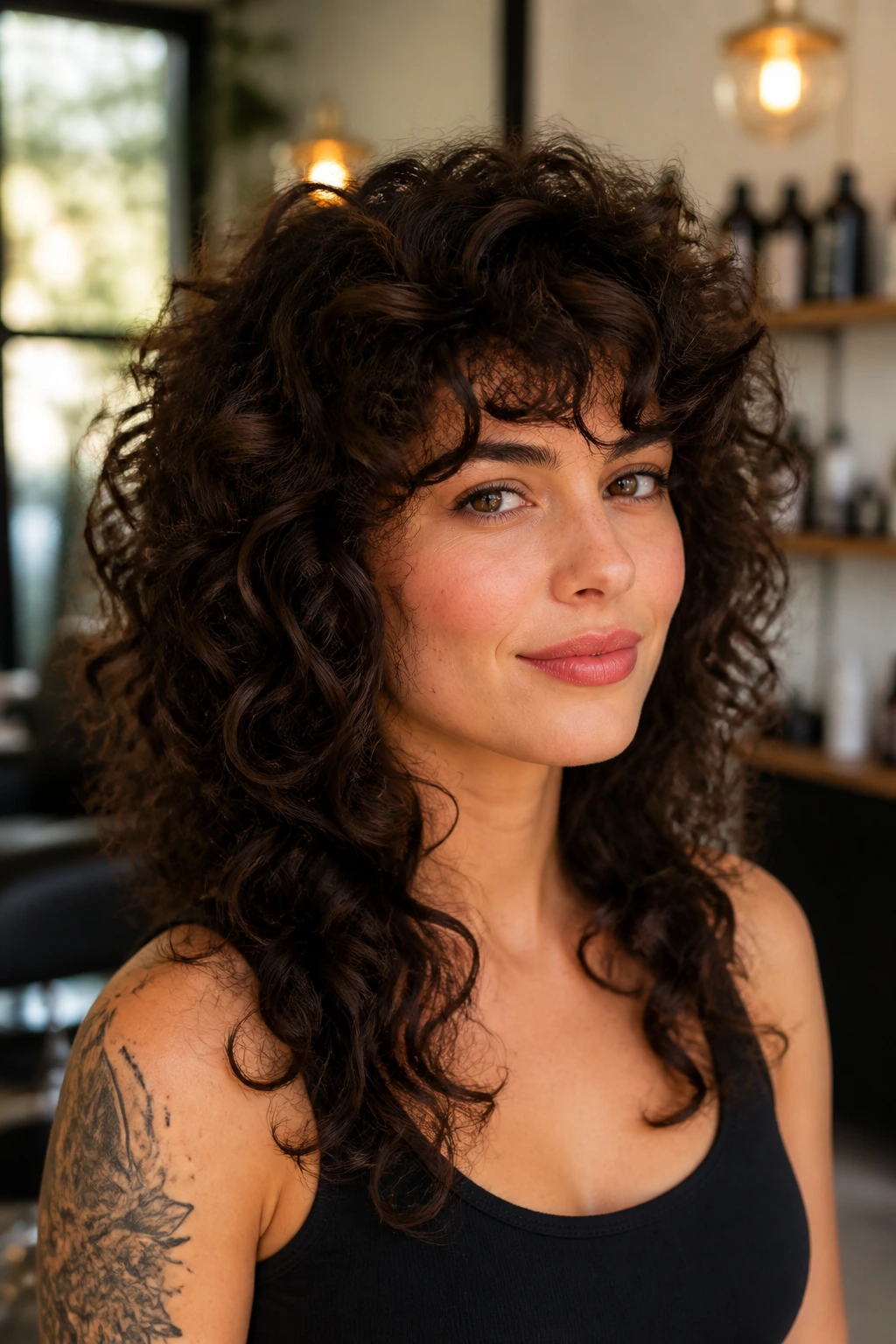
Thick curly hair can handle more structure than people think, but it also punishes sloppy layering. If the cut removes too much weight in the wrong spots, the sides balloon and the ends get thin. If it removes too little, the whole thing sits heavy and puffy at the bottom.
A good high-volume wolf cut does the opposite of what a blunt trim does. It creates space inside the shape so the curls can stack without becoming a block. The top gets lift, the mids get movement, and the ends still look full enough to hold the silhouette together. That last part is the one people skip, and then they wonder why the cut feels unfinished.
I’d ask for long internal layers and careful debulking, not aggressive thinning. Scissors can do a lot here; razors can do too much if the hair is already coarse or dry. Thick curls usually need structure first, texture second.
One more thing. This cut looks best when the hair is styled with enough product to hold the curl clumps together. If you go too light on cream or gel, the bulk comes back fast, and it comes back with opinions.
6. Lightweight Wolf Cut for Fine Curls

Unlike the thick-hair version, this one depends on strategic layers that create the illusion of fullness without leaving the ends see-through. Fine curls need movement, but they also need some density left in the perimeter so the shape doesn’t fray apart.
The cleanest version keeps the shortest layers modest. Think soft lift near the crown, a gentle face frame, and a back that still has enough length to pull the eye downward. That downward line is what stops fine hair from floating away from the head.
This cut is best for 2C to 3A curls that look sparse when they’re over-layered. It also works for anyone who wants a wolf cut but hates the feeling of hair sticking out everywhere. A little weight at the ends helps the curls group together and look richer.
I would not ask for a heavy razor finish here. Fine curls can go stringy fast. Point cutting is usually the safer move, because it breaks up the line without shredding the ends. Small detail. Big difference.
7. Curly Mullet Wolf Cut With a Clean Nape
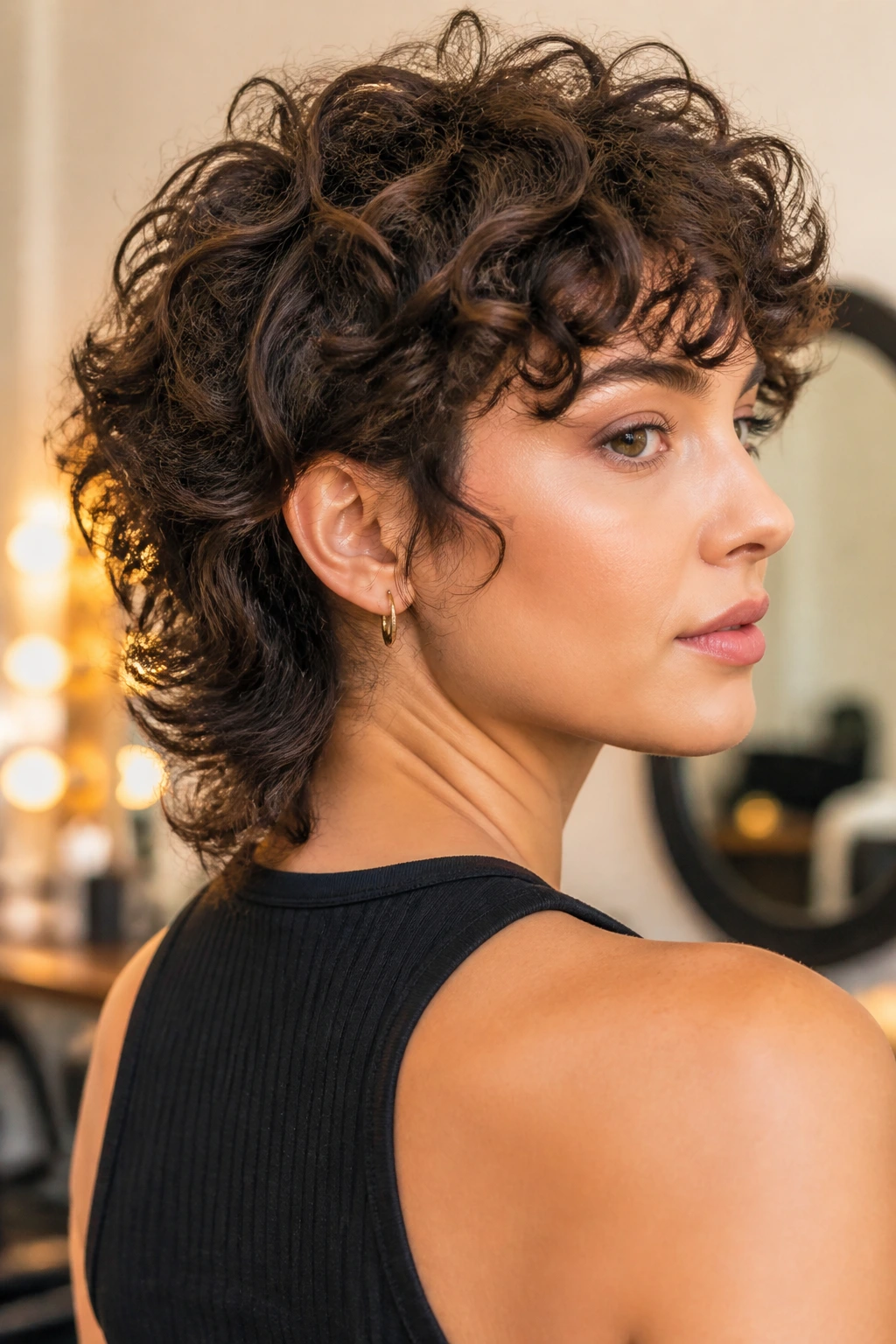
The back of the neck feels lighter right away. That’s the whole appeal here. A curly mullet wolf cut with a clean nape gives you the edge of a mullet, but the curls keep it from looking stiff or costume-like.
What Makes It Wearable
The secret is keeping the nape tidy while leaving the top and sides textured. You want enough length in the back to read as a deliberate shape, not a disconnected clipper-style undercut. On medium length curls, that means the shortest layers live high enough to open the crown, while the lower back keeps a soft drop.
This cut works best when the fringe or front pieces are left a touch longer than you’d expect. That keeps the face from getting swallowed by all the lift at the back. It also helps the profile look balanced when the hair dries and expands.
- Ask for the nape to stay soft, not shaved.
- Keep the back length grazing the neck, not above it.
- Leave the front pieces long enough to bend around the jaw.
- Style with a diffuser, then separate only the biggest clumps by hand.
There’s a bit of attitude here. Good. Hair can have that.
8. Wolf Cut With Curly Curtain Bangs
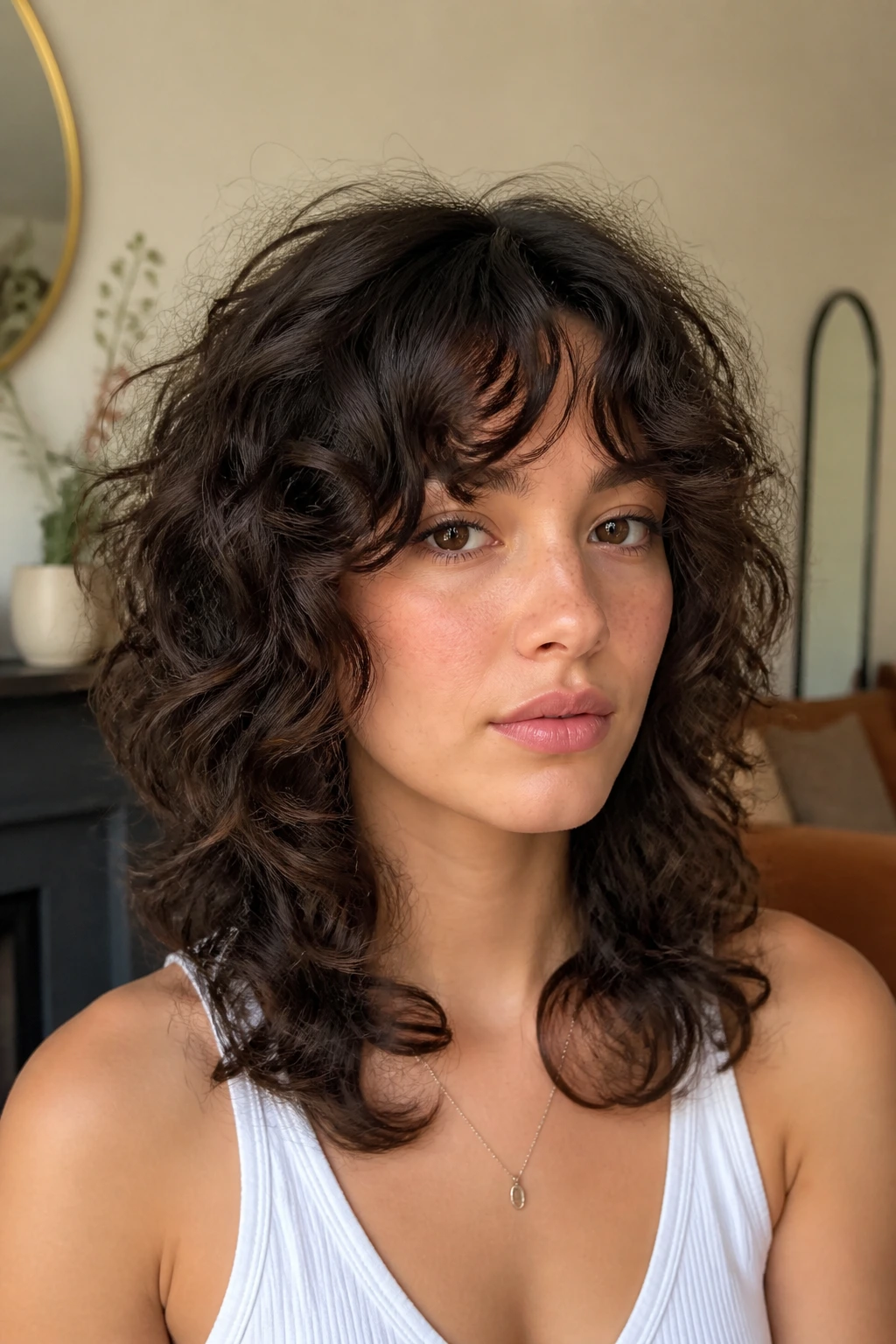
Curtain bangs are the easiest way to make a wolf cut feel wearable on a regular Tuesday. They open the face, soften the forehead, and give curly hair something to do in the front besides sit there and surprise you.
The trick is keeping the center shorter and the sides longer so the bang area can split naturally. On curls, that split is never perfectly neat, and that’s fine. It looks better with a little looseness anyway. The shape lands somewhere between shag and soft mullet, which is why so many medium-length curly cuts lean this way.
I like this style most on people who want movement near the eyes but do not want full blunt bangs. The curtain shape gives you some framing, but it still lets the curls collapse back into the rest of the cut on lazy styling days. That is a useful thing.
A styling cream with a small amount of hold helps the bangs stay from puffing out too wide. Use a clip while they dry if they separate too much. Remove it once the curl pattern starts setting. Do not overthink the symmetry. Curly hair never asked for that life.
9. Face-Framing Wolf Cut for Oval Faces
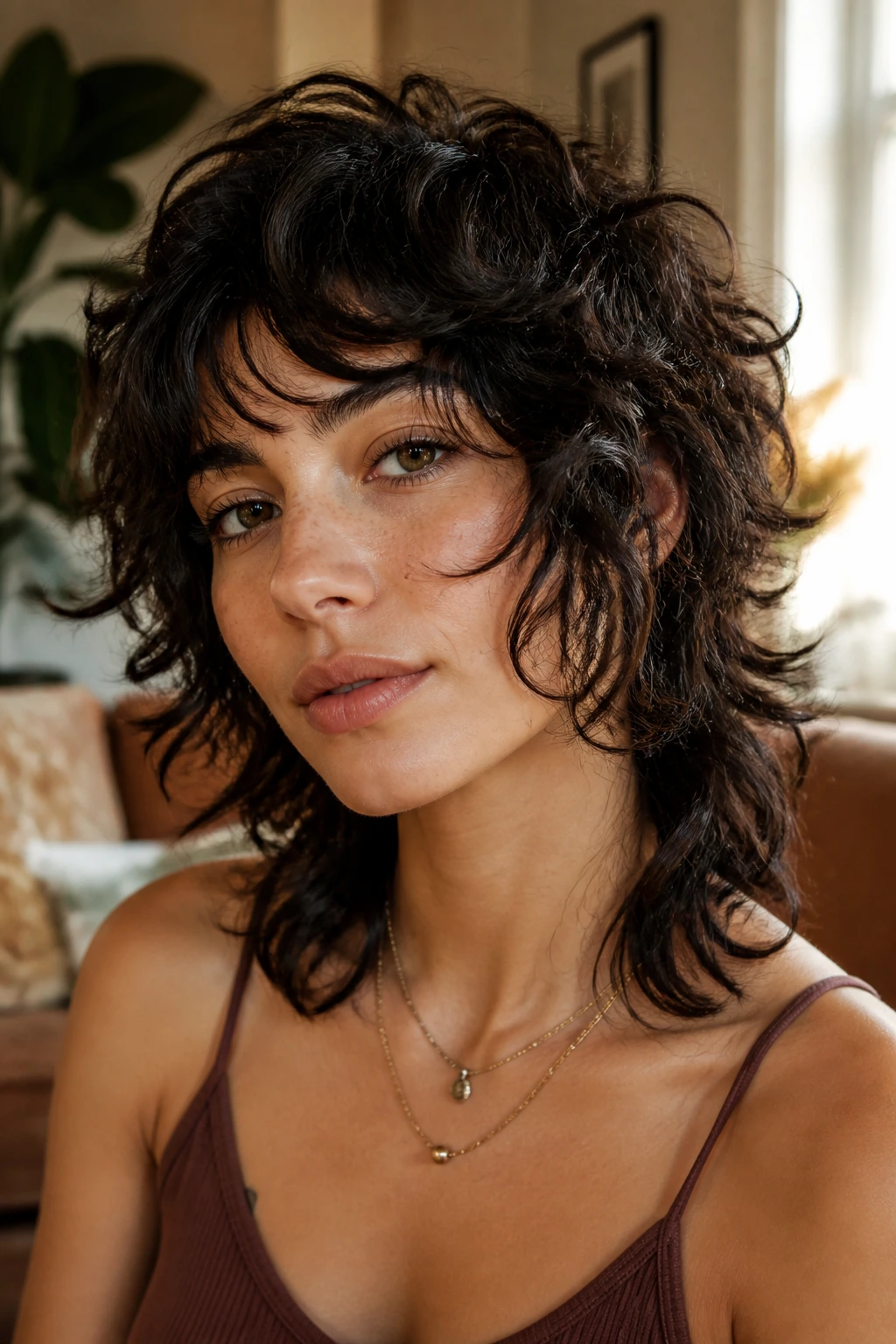
Need a wolf cut that doesn’t crowd the cheekbones? This is the one. The face-framing layers start lower, bend softly inward, and keep the eye moving down the length of the hair instead of stopping right at the widest point.
Oval faces can wear a lot, which is unfair in the nicest way. Still, a carefully placed face frame keeps medium-length curls from looking too top-heavy. The shorter pieces should kiss the jaw or just pass it, while the back keeps enough length to give the outline some weight.
Length Notes That Matter
- Cheekbone-length pieces pull attention upward.
- Jaw-length pieces soften strong angles.
- Collarbone-length pieces keep the style quiet and easy to grow out.
- Anything shorter than that needs a lot of confidence and a very good curl pattern.
This cut is one of those rare shapes that looks polished and a little wild at the same time. The curls sit where they want to sit, but the front still has a clear path around the face. I’d call that a win.
10. Shorter Front, Longer Back Wolf Cut
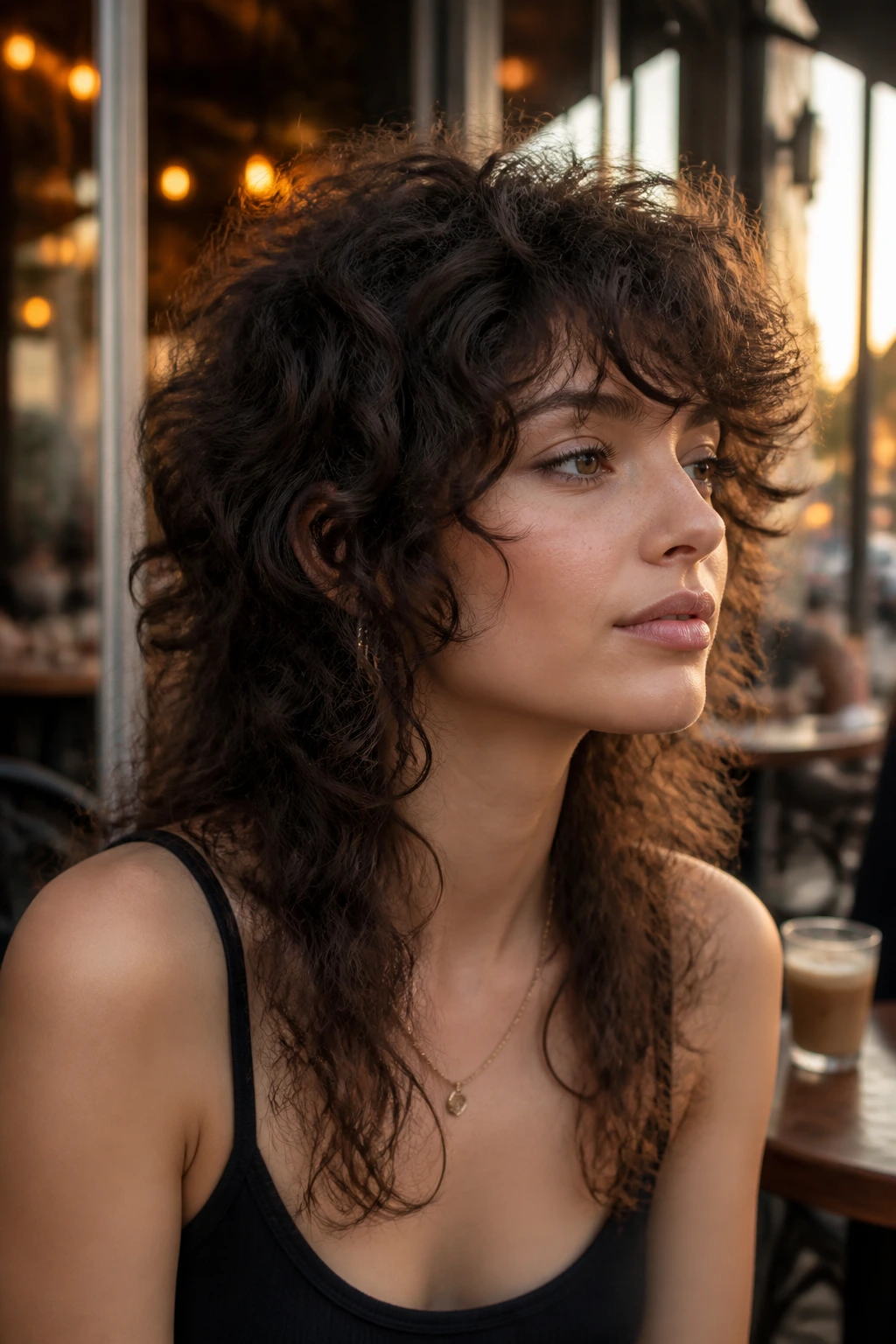
A client who wants a small dose of drama usually lands here. The front sits noticeably shorter, the back hangs longer, and the contrast gives the curls a forward push without making the cut feel severe.
The shape works because the eye reads the front layers first. Those shorter pieces bring energy around the face, while the longer back keeps the silhouette grounded. On medium length curly hair, that contrast can be enough to make the whole cut feel fresh without giving up too much length.
This version is especially good if your curls tend to fall flat around the face but still hold volume in the back. It shifts the weight where you need it. That sounds small. It is not.
I’d pair this cut with a middle or off-center part, depending on how much asymmetry you want. A deeper side part makes the front layer look bolder. A middle part softens the contrast. Either way, keep the ends soft. A hard, blunt finish kills the whole effect.
11. Layered Wolf Cut for Coily Ringlets
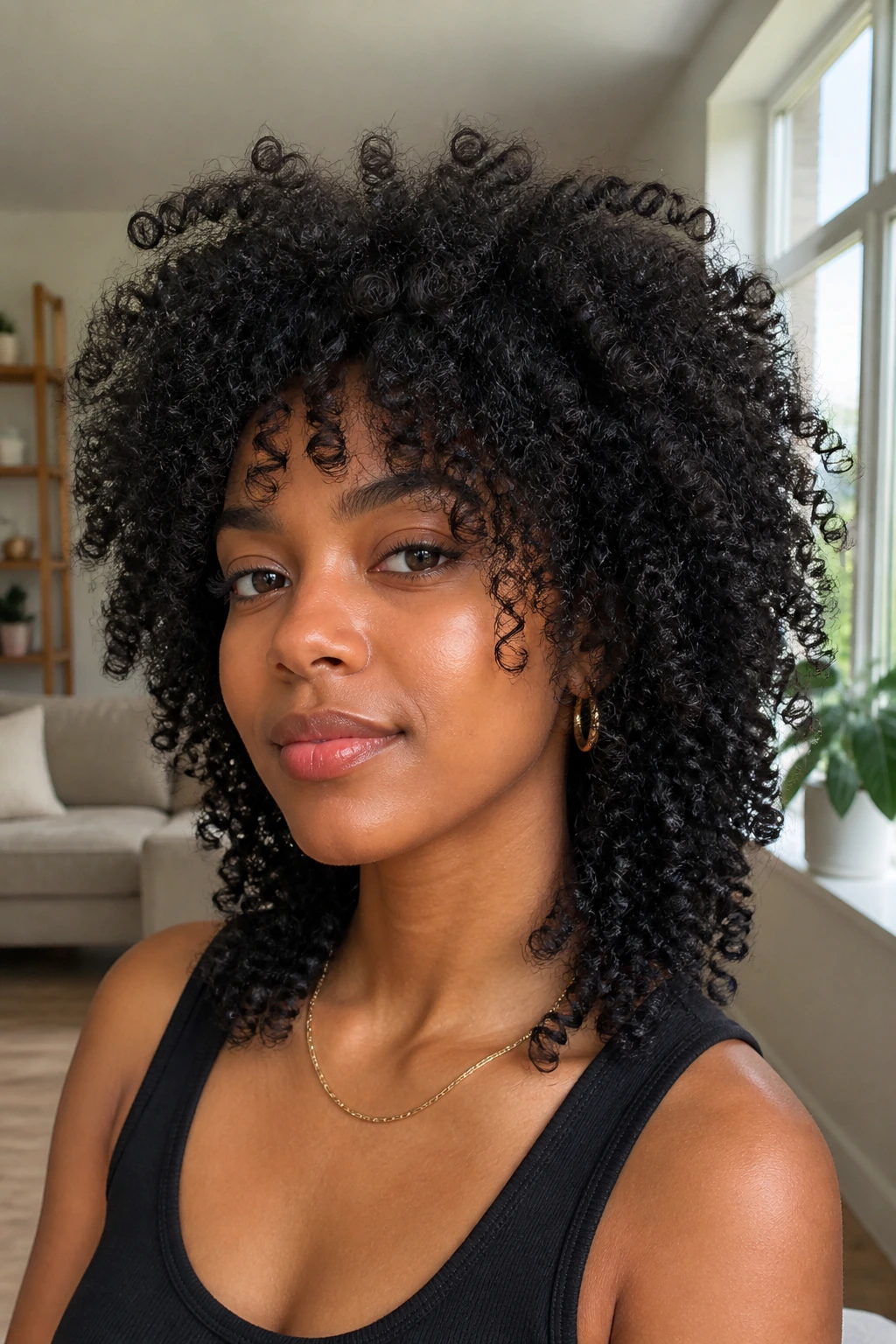
Coily ringlets need room, and I mean actual room, not the kind a rushed haircut pretends to give. When the curl diameter is tight, the layers have to be planned around shrinkage, spring, and how the hair stacks when it dries. Medium length helps, but only if the cut respects the curl pattern.
I prefer this version when the layers are cut with the hair in its natural state or at least observed dry before anything comes off. Coily hair can shrink a lot, so a layer that looks modest when wet can jump higher than expected once it dries. That is why overcutting is such a problem here. There’s no easy way to glue length back on.
A good layered wolf cut gives coily curls a stair-step shape without obvious steps. The curls should sit one into the next, not float in separate tiers. That requires careful control around the crown and sides. It also means the stylist should pay attention to density changes around the temples and nape, because those spots often behave differently.
I like this shape with a rich leave-in and a firm gel cast. Coily curls need hold to keep the layers readable. Without it, the cut can blur into fluff by lunch.
12. Choppy Wolf Cut With Piecey Ends
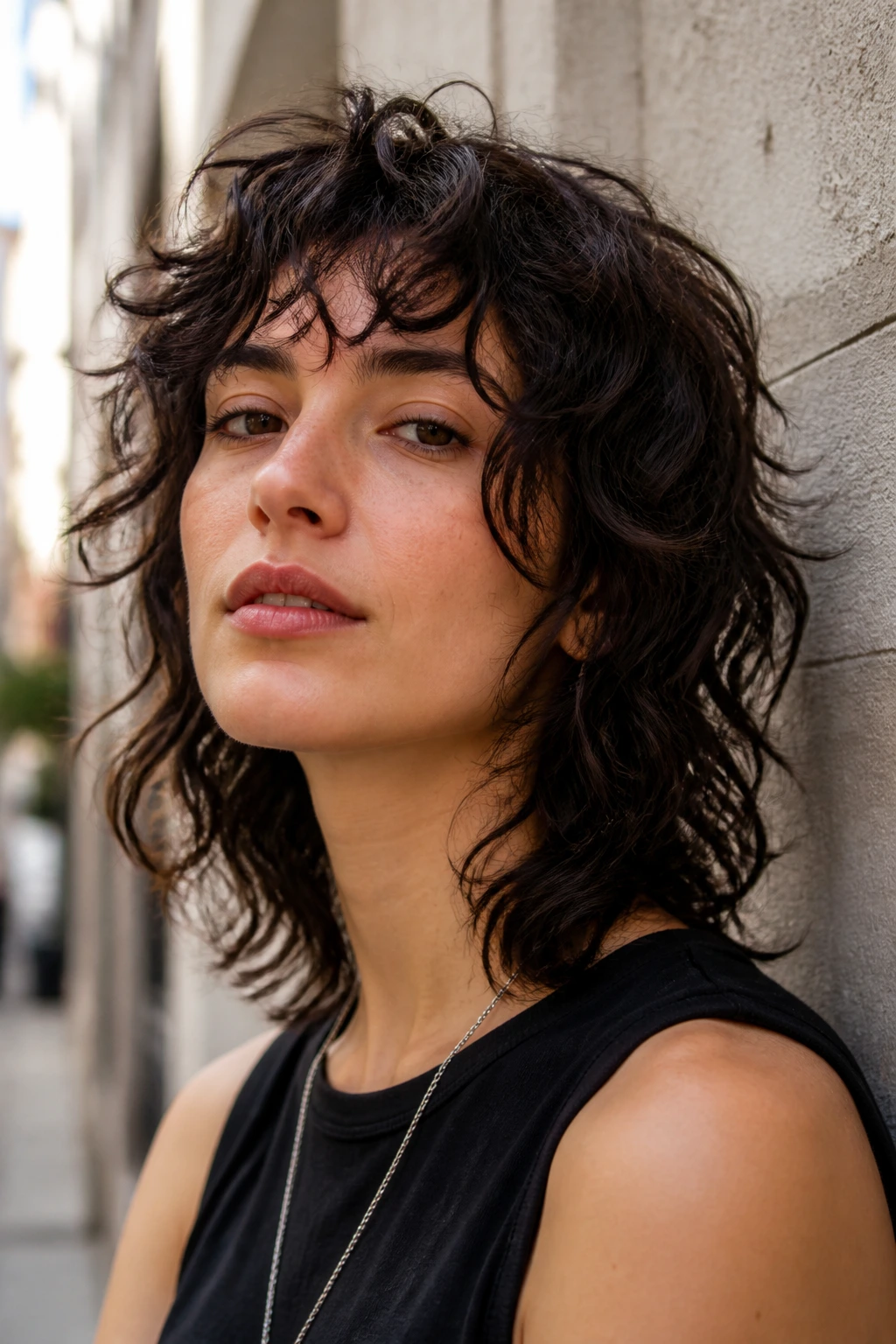
This is the version for people who want the cut to look a little tougher. Not edgy in a try-hard way. Just more broken up, more separated, more obviously layered.
The difference here is in the ends. Instead of soft blending, the perimeter gets enough texture to show individual curl groups. That piecey finish gives medium-length hair a sharper outline, especially if the curls are 3A to 3B and already like to clump into visible sections.
This cut suits someone who wears textured hair with a bit of grit. Think leather jacket energy, not bridal hair energy. It also works well if your curls lose their shape quickly and need a cut that still looks interesting when the styling fades.
I would not choose this if your hair is very fine or very frizzy. Piecey ends can turn ragged fast on the wrong texture. On the right texture, though, they look cool in a way that soft layers never quite do. Use a diffuser and stop before the hair gets too fluffy. That fluffy stage is where the style starts to drift.
13. Low-Maintenance Wolf Cut With Minimal Bangs
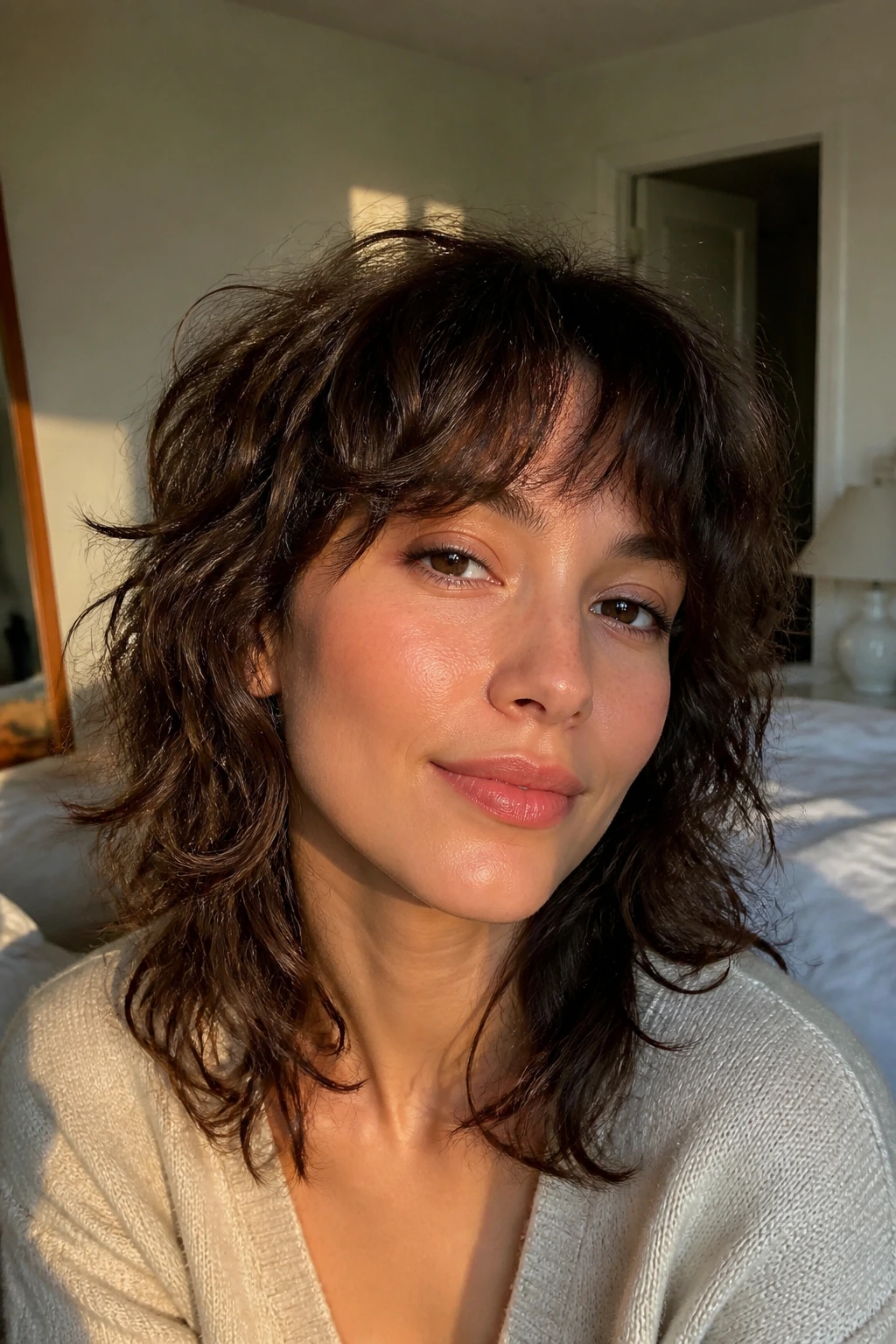
Do you want the wolf cut shape without committing to a bang situation? Then keep the fringe minimal and let the front layers do the work. This is one of the easiest curly wolf cuts to live with because it avoids the daily fight around the forehead.
The cut stays soft around the face, with just enough layering to frame without crowding. Medium length hair benefits from this because the overall shape still moves, but the maintenance drops. You can air-dry it, diffuse it, or throw it into a clip and go about your day. The hair won’t punish you for missing a styling step.
How It Grows Out
- Minimal bangs blend into face-framing layers.
- The crown stays lifted without looking chopped.
- The back keeps enough length to tie up.
- The shape still reads as a wolf cut after several weeks.
I’d recommend this version for people who want texture first and attitude second. It’s a quieter cut. Not boring. Quiet. There’s a difference there too.
14. Wolf Cut With Deep Side Part
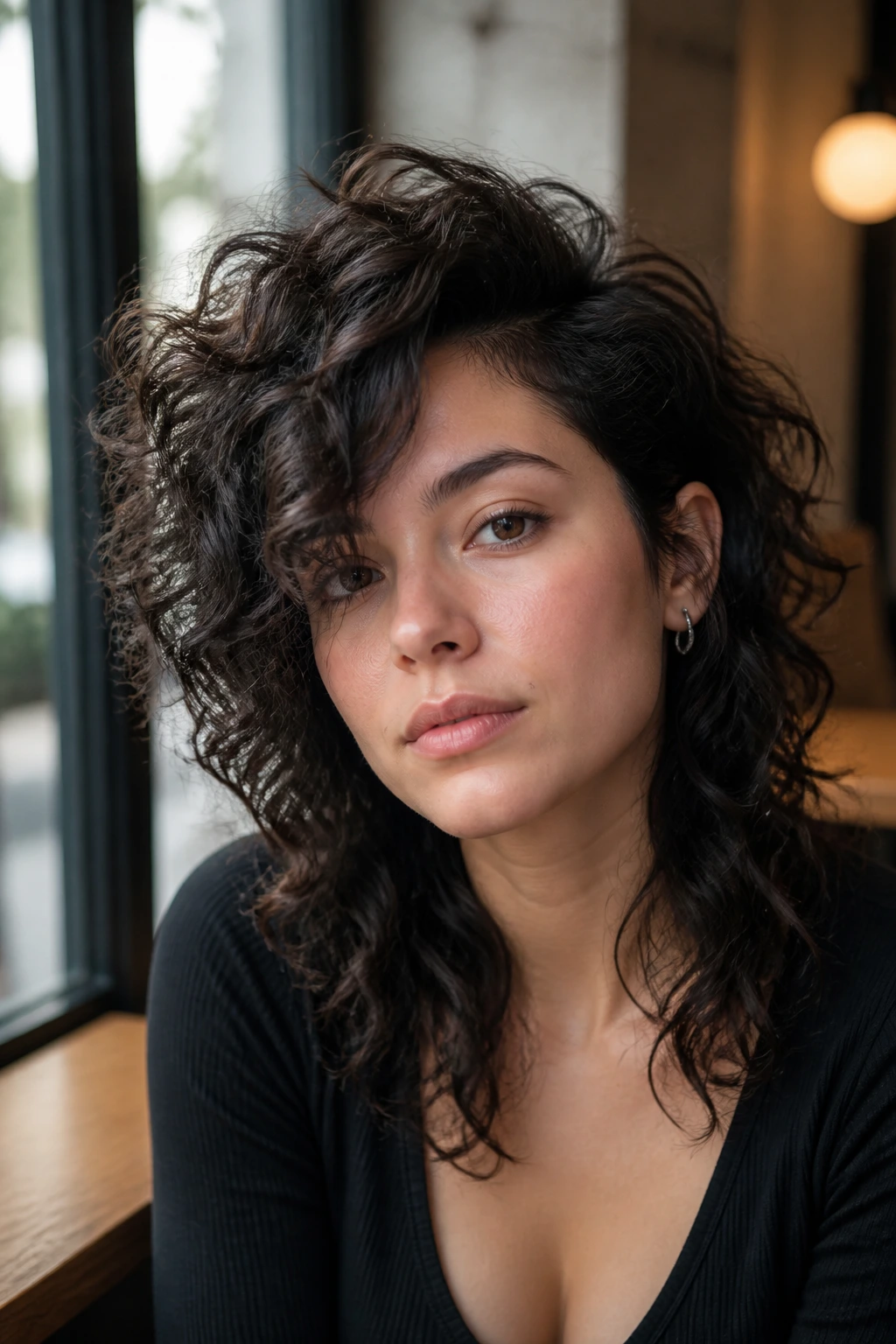
A deep side part can make curly hair look bigger without adding more layers. That is one of those tricks people overlook because it sounds too simple, but on medium length wolf cuts it changes the whole mood.
The part shifts weight to one side and lets the shorter top layers fall in a more dramatic sweep. That creates lift at the root and movement through the crown, which is exactly what a wolf cut is trying to do anyway. The front pieces get a long diagonal line, and that line looks especially good on loose or mixed curls.
I like this shape when the face needs a little asymmetry. A deep side part softens a square jaw, breaks up a round face, and gives an oval face some extra angle. It also helps curls that resist flat parts. Some hair just likes leaning.
Styling is easy enough: set the part while the hair is damp, clip the heavier side up at the root for a few minutes, then diffuse. If you move the part after drying, the lift disappears. Hair is annoyingly literal that way.
15. Soft Razorless Wolf Cut for Sensitive Curls
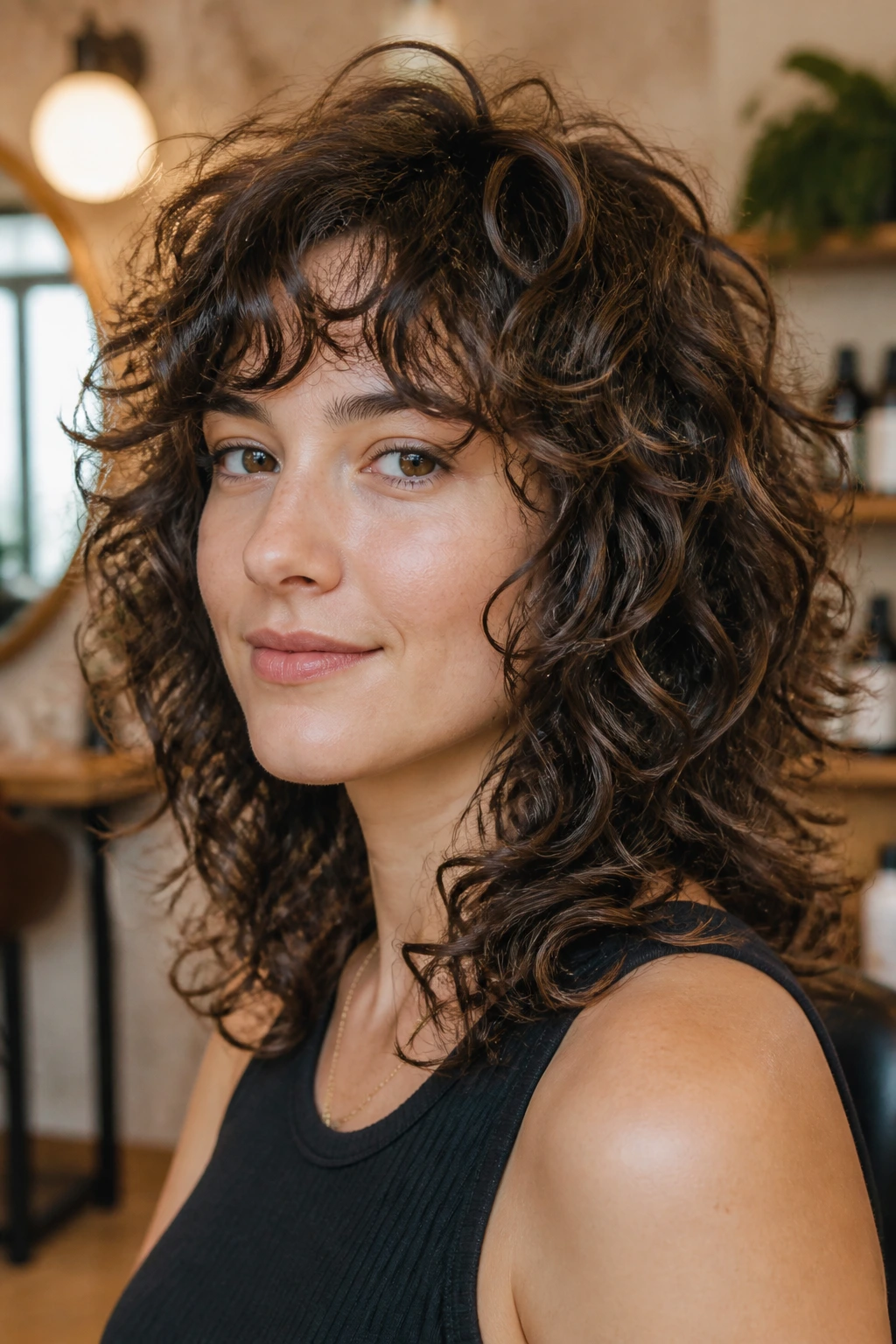
Some curls hate razors. Some scalps hate them too. If the hair feels rough, gets frizzy at the ends, or reacts badly to slicing, a soft razorless wolf cut is the safer answer.
The shape comes from shear work and point cutting, not from ripping through the curl pattern. That leaves the edges cleaner and keeps the curl clumps intact. On medium length hair, this matters a lot because the shape already has enough natural movement. It does not need extra roughness added on top.
This version is ideal for hair that expands fast once dry. The cut still gives you the crown lift and the face frame, but the ends stay smoother, which helps the style last longer between trims. I’ve seen a lot of curly cuts lose their charm because the ends were thinned too hard. That problem shows up fast here.
- Ask for scissors over a razor.
- Keep the layer edges soft, not shredded.
- Avoid aggressive thinning near the ends.
- Finish with a cream that holds moisture, not a sticky paste.
Clean edges. Better curl definition. Less drama.
16. The Messy Diffused Wolf Cut
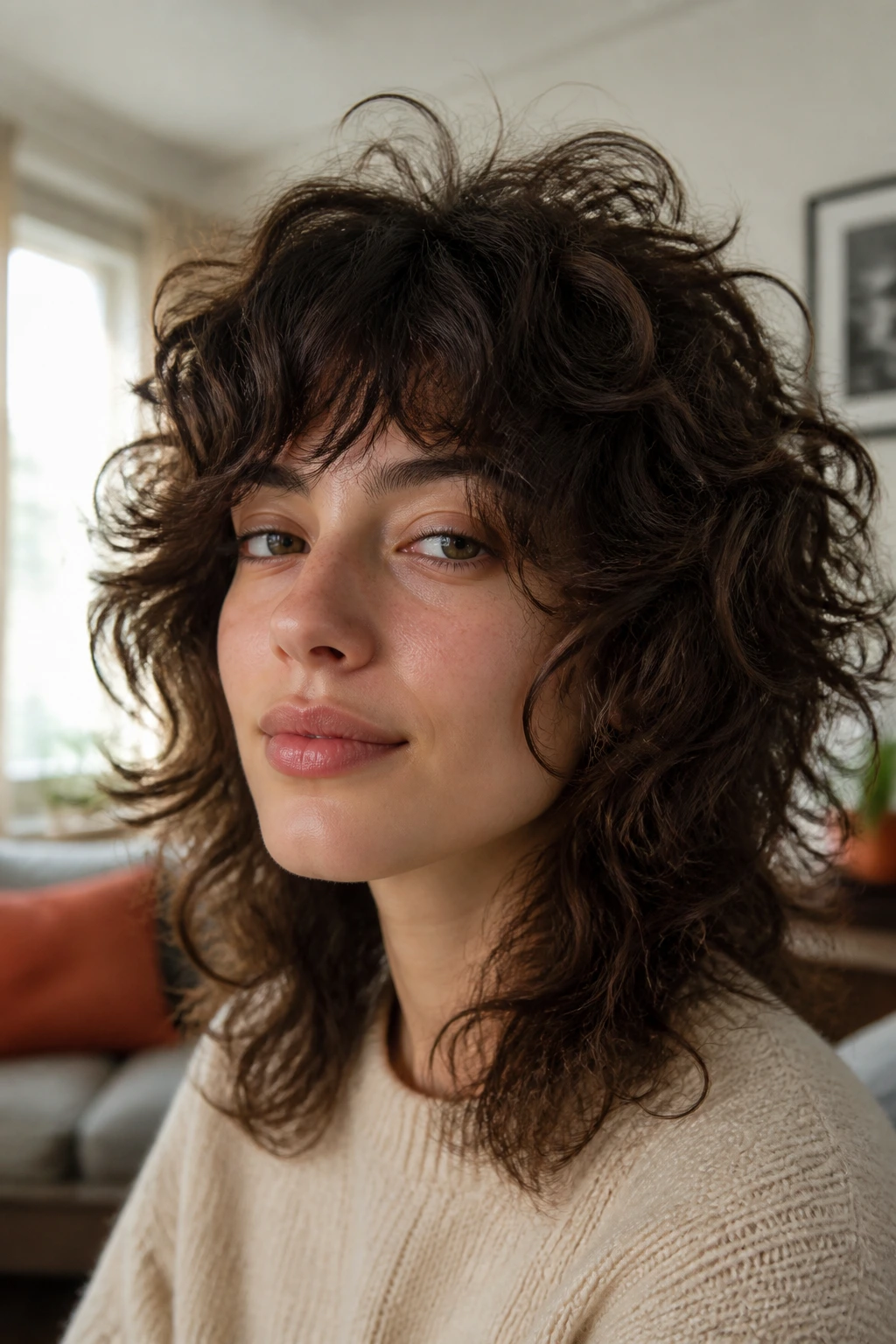
The diffuser can make this cut sing, or it can make it look overworked. There’s a narrow middle ground, and that’s where the best messy wolf cut lives. You want lift, separation, and a little halo around the head, but you do not want the curls blown into a cotton-ball cloud.
I like this cut because it rewards imperfect styling. Scrunch in product, hover-diffuse the roots first, then cup the ends only after the top has some shape. That keeps the crown from collapsing. It also prevents the lower layers from drying in a bent-up mess, which happens more than people admit.
A messy diffused wolf cut looks especially good on medium length hair because the length gives the curls somewhere to land after all that volume at the top. If the hair were shorter, the style would sprawl. If it were longer, the lift might droop. Medium length hits the balance.
There’s a small human truth here: this is the cut that often looks best on days when you do not fuss with it. A little frizz at the edges, a few pieces sticking out, a bang that misbehaves a bit. Fine. That’s the charm.
17. Wolf Cut With a U-Shaped Back
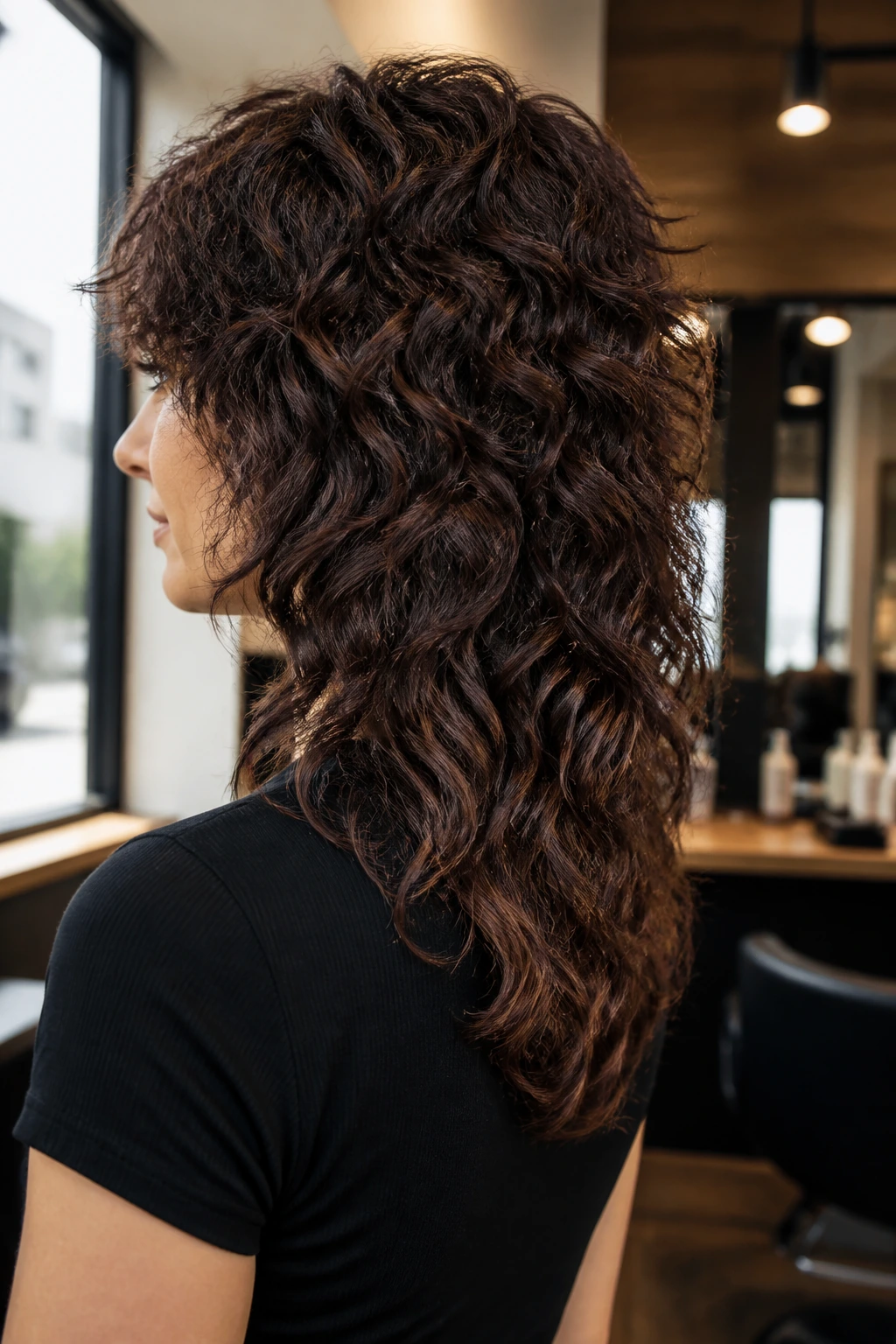
A blunt back can make curly hair look blocky. A U-shaped back solves that by letting the center sit a touch longer than the sides, which softens the outline and gives the curls a nicer fall.
The shape is subtle, but it changes how the whole cut hangs. Instead of a straight wall of hair across the bottom, you get a gentle dip that follows the movement of the curls. On medium length hair, that extra curve keeps the style from feeling heavy at the neck.
Why the Silhouette Matters
The U-shape works because curls rarely dry in a perfectly straight line. If you cut a hard line into them, they will break the line anyway, and not always in a flattering way. The U lets the curls move while still keeping the ends looking full.
This version suits people who want softness more than edge. It also grows out well, which makes it a smart choice if you only trim a couple of times a year. Ask the stylist to keep the center back a bit longer and blend the sides gradually so the curve is visible but not obvious.
A quiet cut. That’s the point.
18. Wolf Cut for Dense, Frizz-Prone Curls
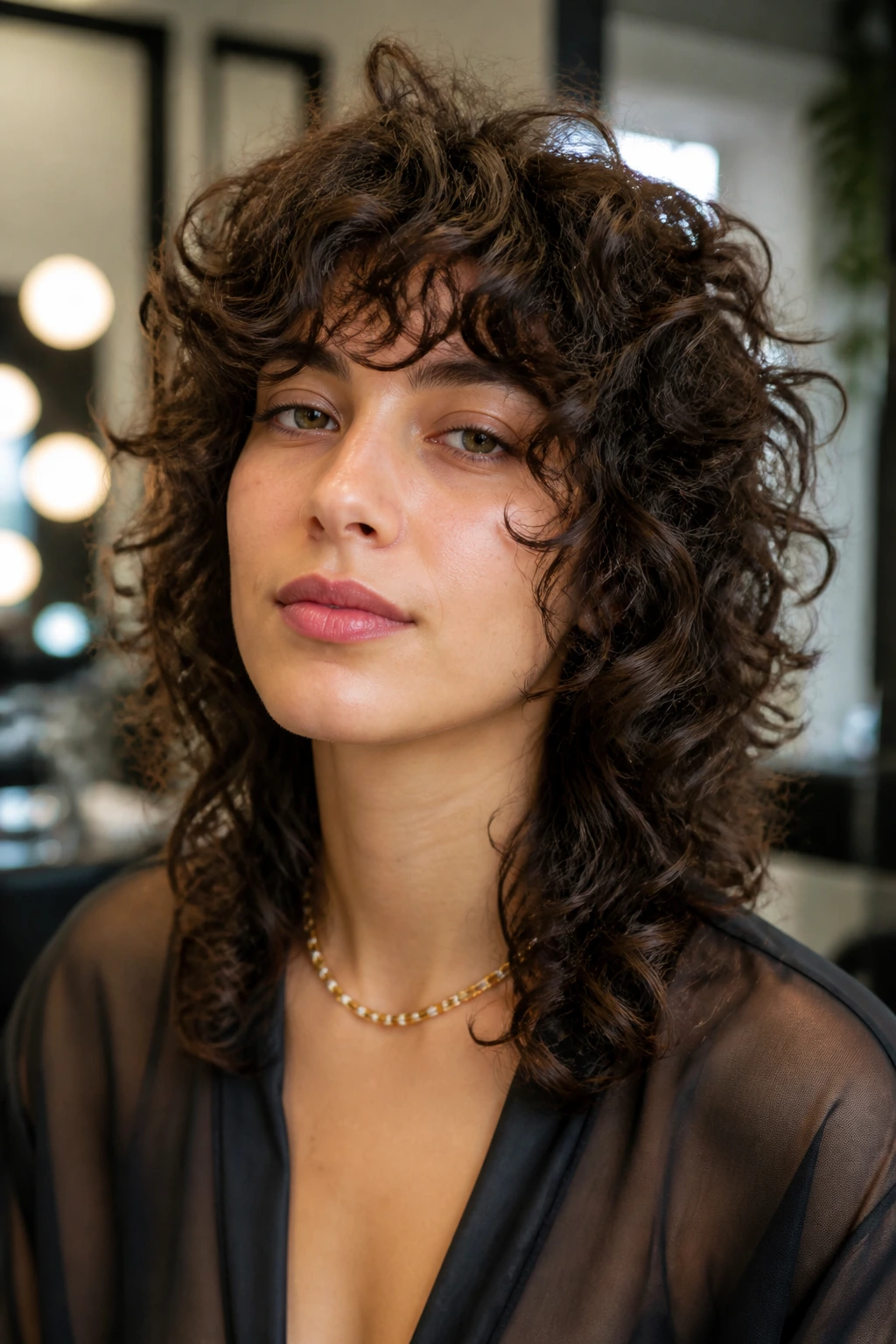
What do you do when the curls are thick, thirsty, and prone to halo frizz? You cut for shape first and hold second. Otherwise the style gets puffy in all the wrong places.
This wolf cut keeps the layers controlled through the crown and mids, then leaves enough length at the ends to prevent the whole head from expanding outward like a mushroom. Dense curls need structure, but they also need a little weight to calm the outline. Take too much weight off and the frizz takes over. Leave too much and the shape disappears.
What to Ask For
- Long internal layers instead of a lot of short ones.
- Soft shaping around the cheeks and chin.
- No aggressive texturizing at the ends.
- A styling plan that includes leave-in plus gel or cream-gel.
The best version of this cut looks expensive in a very unshowy way. The curls are allowed to be big, but not chaotic. That’s a hard line to walk, and it usually comes down to how carefully the stylist handles the midsection of the hair.
19. Wolf Cut for Wavy-Curly Mix
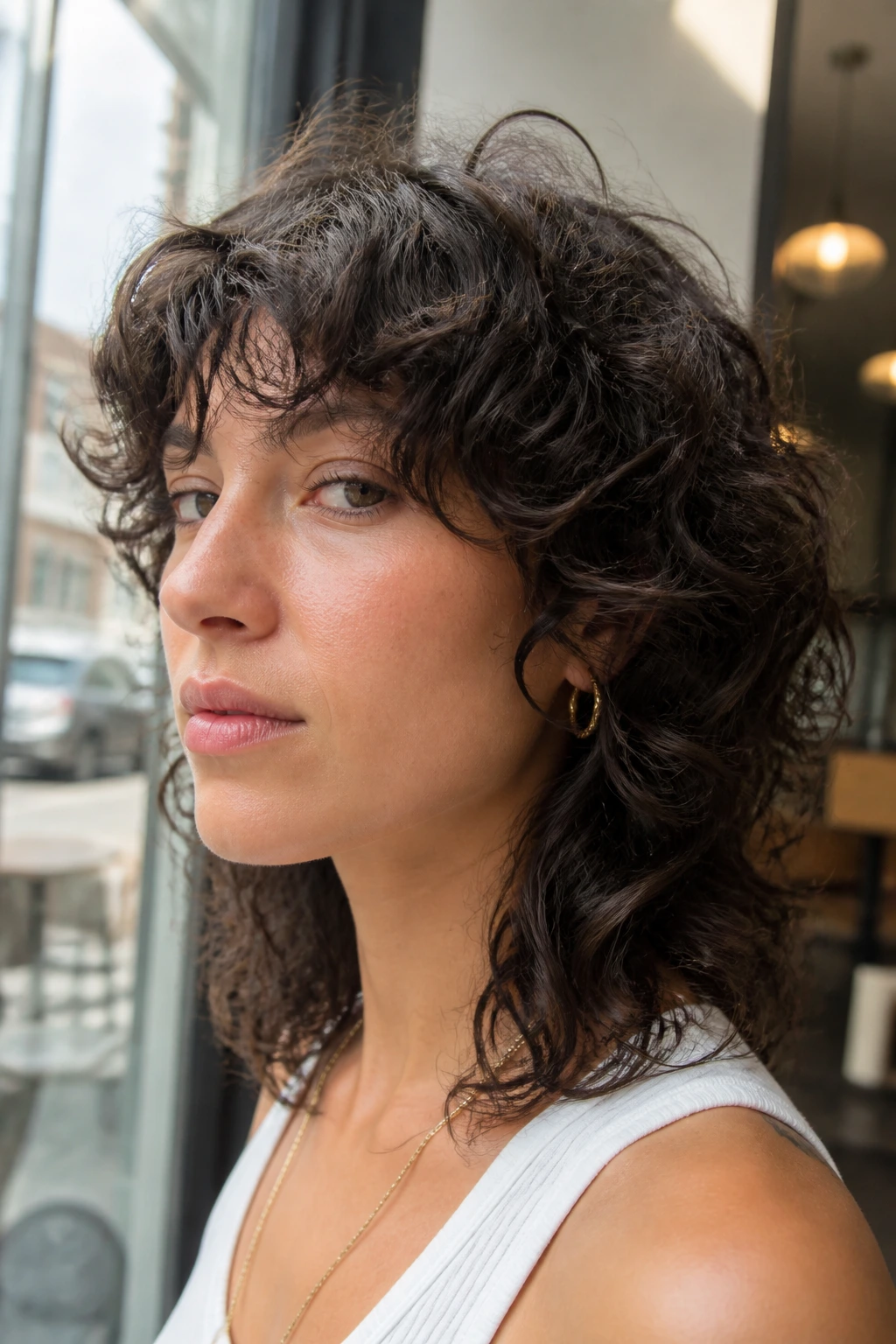
A head of mixed waves and curls can be annoying to cut because the texture changes from section to section. The top may wave, the middle may curl, and the bottom may do both depending on humidity and mood. A wolf cut handles that mix better than a blunt style because the layers give each pattern a place to sit.
The goal here is not perfect uniformity. It is rhythm. You want the wave sections to blend into the curl sections without looking like they were cut by two different people. That usually means keeping the shortest layers modest and letting the lower pieces hold the shape.
This cut works well for people who air-dry most of the time. The mixed texture gets enough help from the layers that you do not need a huge styling routine. A bit of cream, a bit of gel, a scrunch, done. If one section dries flatter than another, a quick finger twirl around the problem pieces usually fixes it.
It is also one of the easiest medium-length wolf cuts to grow out because the variation in texture hides awkward transition stages. Handy. Hair should earn its keep.
20. The Softest Medium-Length Grow-Out Shape
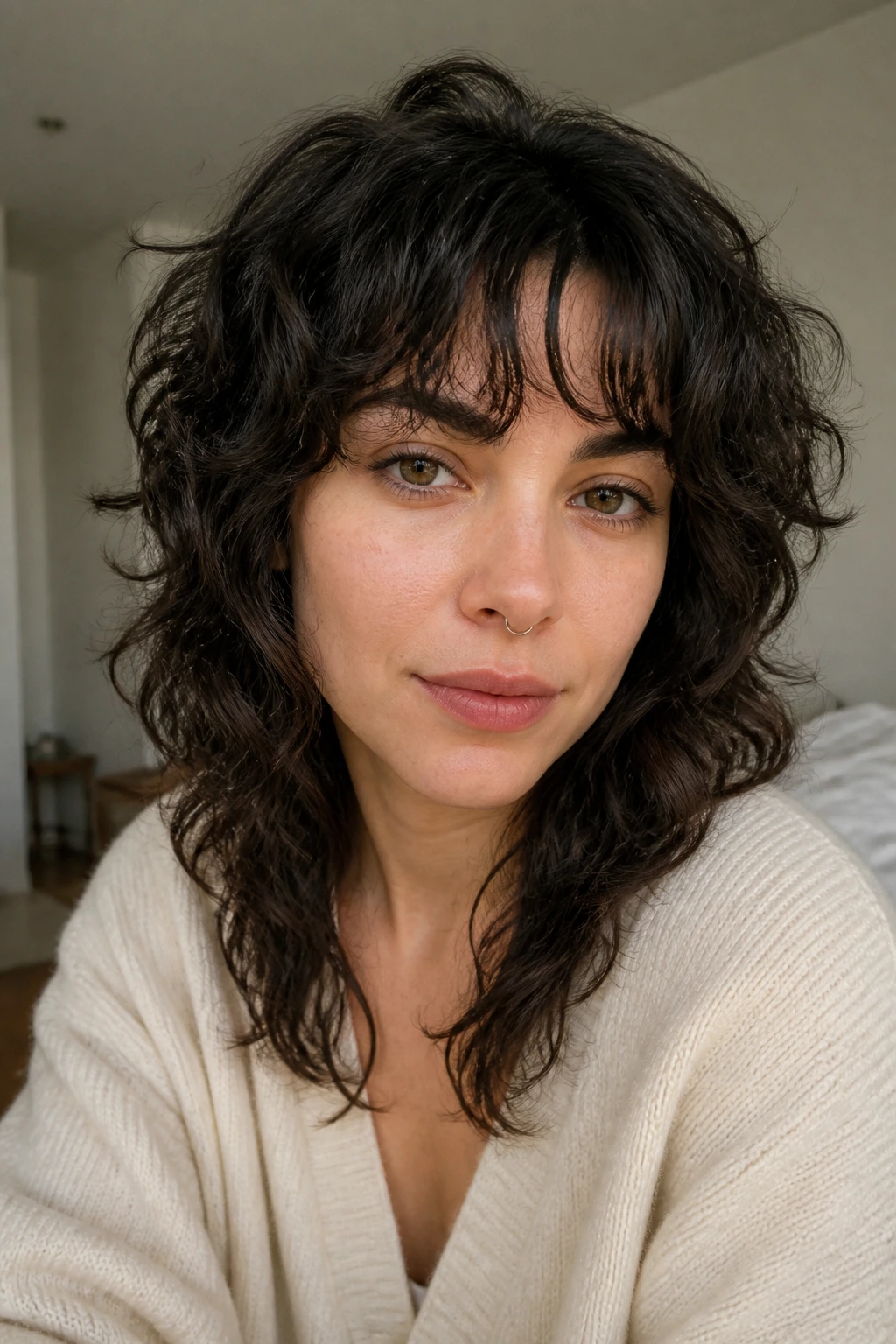
If you want the wolf cut look without a hard edge, this is the one I’d keep in my back pocket. The layers are soft, the face frame is gentle, and the back stays long enough to hold the shape as it grows. It has wolf cut energy, but it does not feel locked into one mood.
The best version avoids sharp disconnects. That means no dramatic shelf under the crown and no sudden drop at the nape. Instead, the layers should slip into one another so the haircut still looks good six weeks later, not only on day one. Medium length hair does a nice job carrying this softer approach because the curls can expand a little without losing the outline.
I’d ask for a shape that follows your curl pattern, not a photo copied too literally from someone with different density. That part matters more than people want to admit. A good curly wolf cut is never a costume. It should sit on your head like it belongs there.
And if you want the least stressful version of all, pick the one that keeps the fringe light, the layers long, and the ends full. That combination is hard to ruin.
