



Medium hair and a shaggy wolf cut get along better than people expect. There’s enough length to show off movement, but not so much that the shape sinks into one heavy curtain by noon. That middle zone is where the wolf cut really wakes up.
The trick is balance. Too many short layers at the crown, and medium hair can kick out in odd places or puff into a triangle. Too little texture, and the whole thing turns into a plain layered cut with a trendy name. The best versions keep the top lifted, the edges broken up, and the fringe soft enough to move when you turn your head.
That’s why this cut has such a following. It can look piecey and cool, feathery and soft, messy in a deliberate way, or even polished if the layering is handled with restraint. Same haircut family. Very different moods.
Some versions lean shaggy and lived-in. Others clean things up with longer fringe, softer ends, or a more controlled crown. The right one depends on your texture, your face shape, and how much you want to style your hair on a normal Tuesday.
1. Soft Curtain Wolf Cut
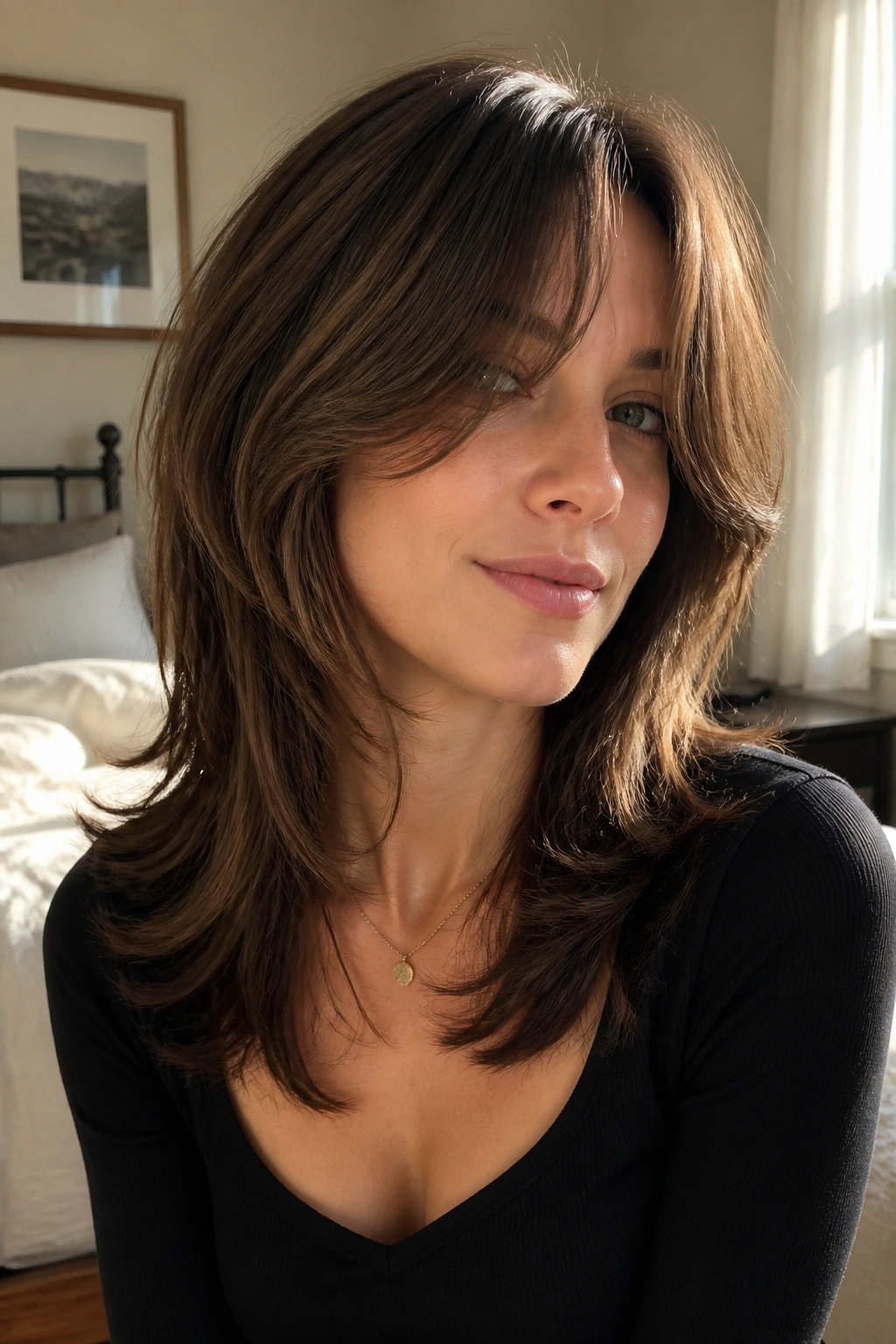
This is the easiest place to start if you want a shaggy wolf cut for medium hair without going full choppy. The curtain bangs do a lot of the work here. They split in the middle, skim the cheekbones, and let the rest of the layers stay relaxed.
Why it works
The shape keeps the top light and the ends soft, which matters on medium-length hair. You get movement around the face without taking so much weight off the bottom that the cut loses its line. That balance makes this version easier to grow out, too.
Ask your stylist for long curtain fringe, soft crown layers, and point-cut ends. Point cutting matters. It breaks the edge instead of leaving it blunt, and that’s what gives the cut its airy feel. On straight hair, this version needs a quick bend with a round brush or a flat iron twist. On wavy hair, a little mousse at the roots is usually enough.
- Best for oval, heart, and square face shapes
- Works well if you want bangs without the constant upkeep of short fringe
- Sits nicely at collarbone to shoulder length
- Easier to style than a shorter, more dramatic wolf cut
One good rule: keep the shortest face-framing layer below the cheekbone if you want the look to stay soft, not severe.
2. Razored Crown Wolf Cut
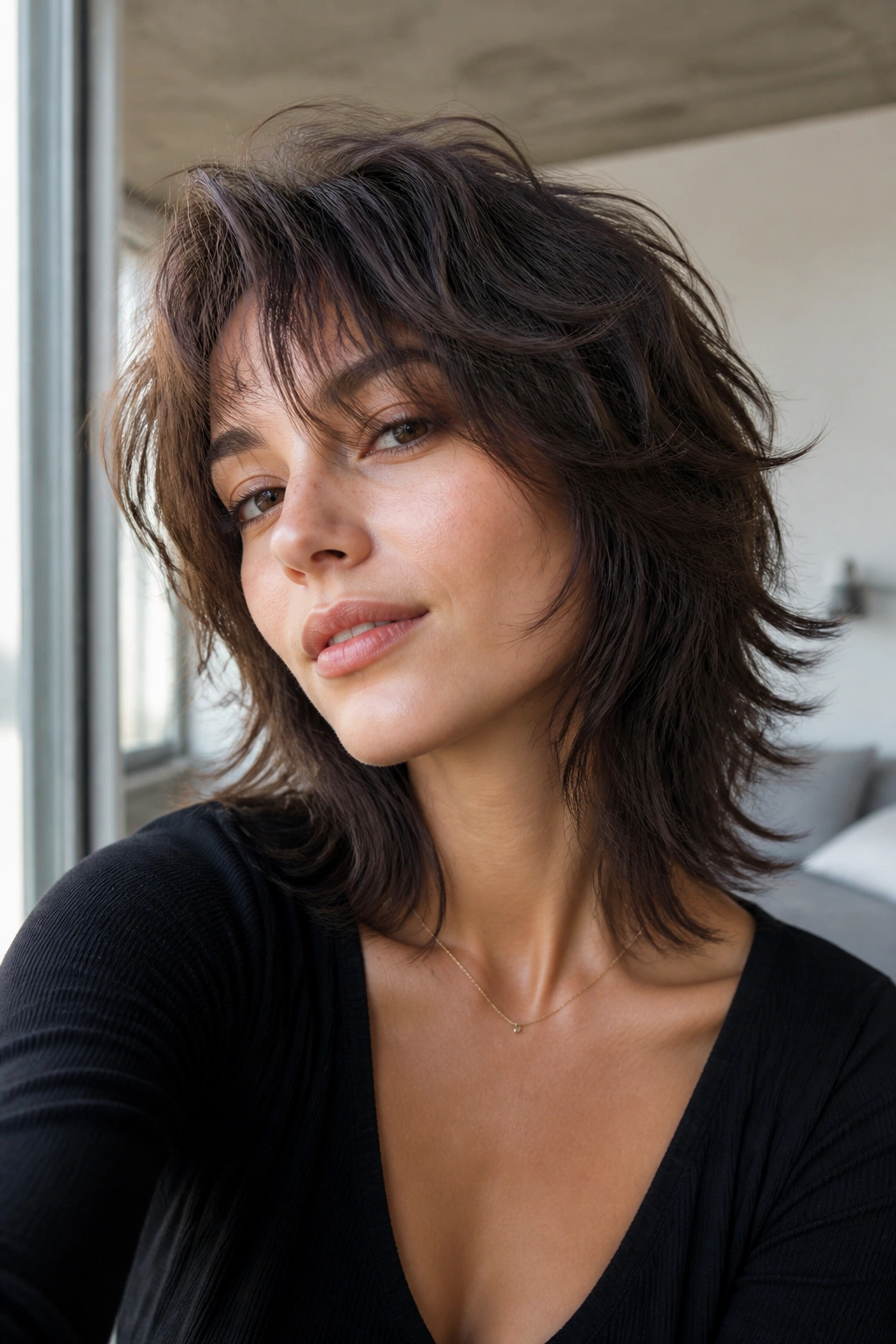
A razor can do things scissors can’t. It takes bulk out of medium hair fast, and that makes the crown lift instead of sit there like a helmet. If your hair tends to collapse at the roots, this version can change the whole silhouette.
The cut feels sharper and more airy than a scissor-heavy shag. The ends taper into little wisps, and the top has enough separation that the layers show even when the hair isn’t freshly styled. That’s the appeal. It looks intentional, but not fussy.
This one is especially useful for thicker medium hair that needs shape without a lot of collapse. Ask for razor texturizing through the upper layers and keep the perimeter slightly longer so the shape doesn’t get too thin at the bottom. Too much razor work near the ends can make the cut fray out in a bad way. That part matters.
A tiny bit of styling cream is usually enough. Too much product drags the movement down, and this cut is all about lift.
3. Feathered Face-Framing Wolf Cut
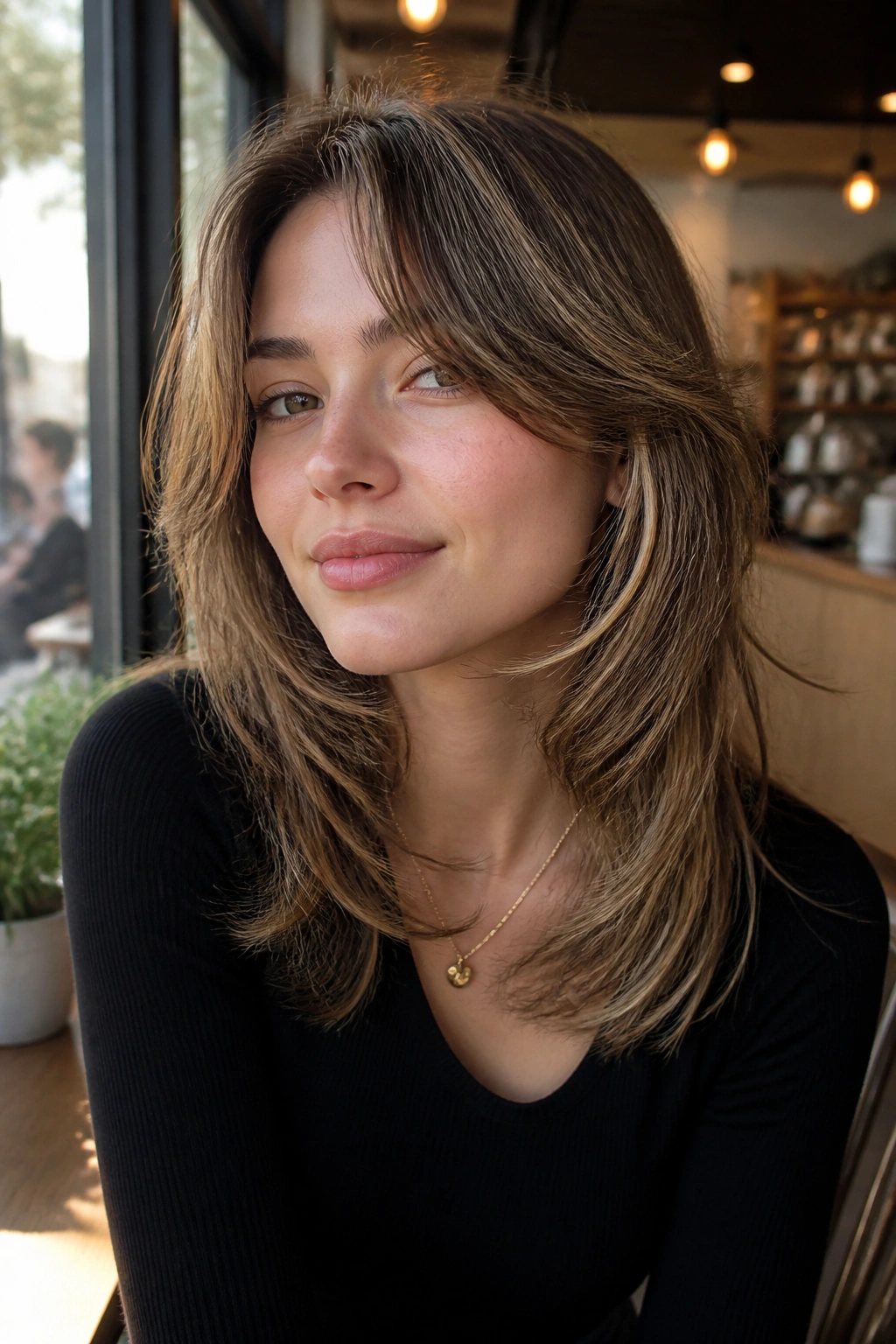
Why does feathering still work so well? Because it solves a real problem: medium hair can look heavy around the cheeks and jaw if the front is cut in blunt slices. Feathered layers break that blocky feeling and give the cut a softer line.
The front pieces are the star here. They should start around the mouth or chin and slide into longer pieces near the collarbone. That creates a gentle swoop instead of a hard step. It also helps if your hair is straight or only slightly wavy, because feathering adds the motion that texture alone may not give you.
What to ask for
- Feathered face-framing layers
- Slight crown lift, not a huge stack at the top
- Soft taper around the neck
- Ends that are texturized, not shredded
This cut suits people who want a wolf cut but do not want the “mullet” part to shout. It’s a quieter version. Still shaggy. Just less feral. A round brush on the front pieces can make the feathering pop, but letting the rest air-dry keeps it from looking too done.
4. Choppy Wolf Cut with Micro Bangs
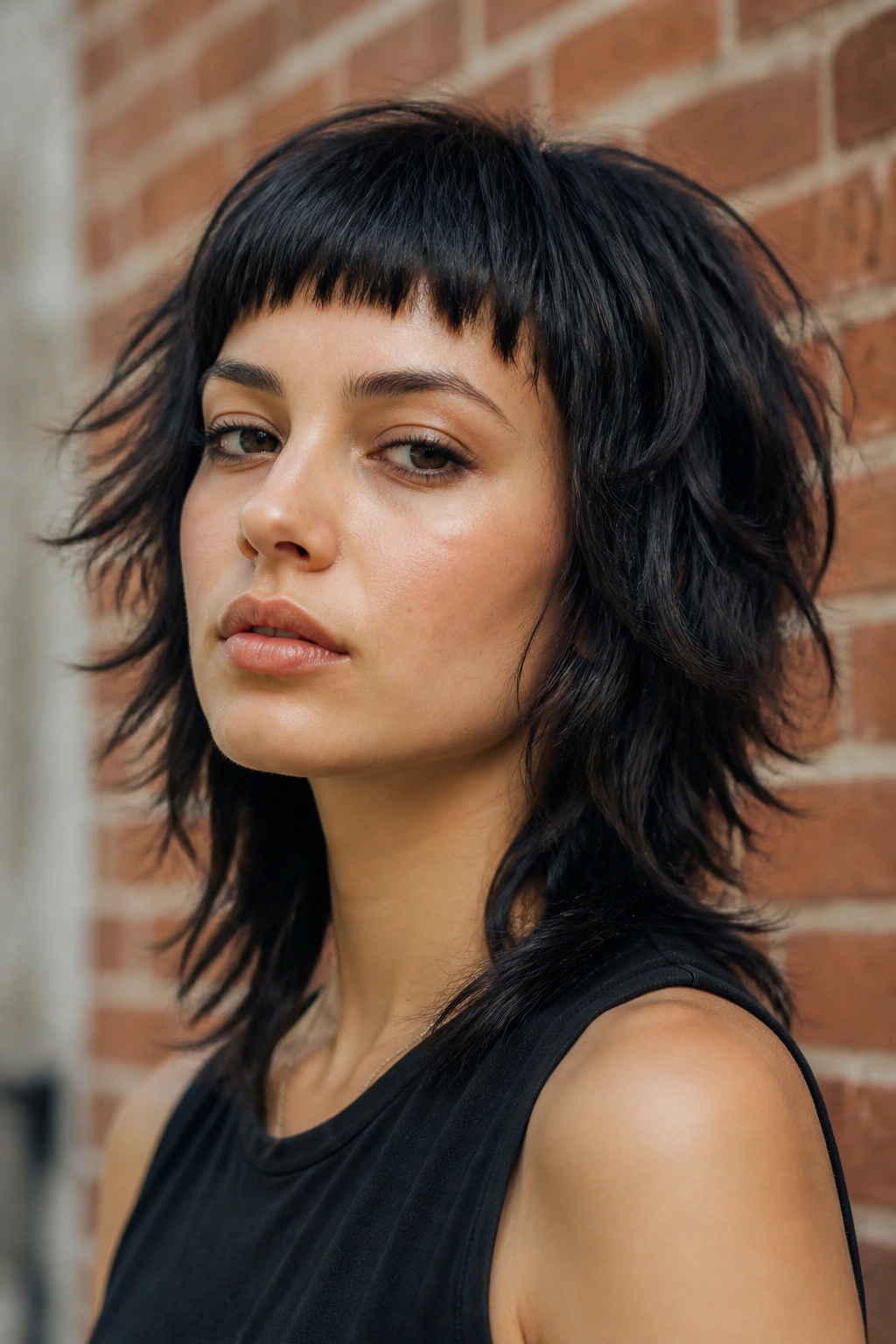
If you like haircuts with a little attitude, this one leans in. Micro bangs change the whole feel of the wolf cut. They put the eyes front and center, and the choppy layers around the head echo that blunt little fringe in a way that feels sharp and playful.
I’ve always thought this version works best when the rest of the hair is kept somewhat loose. If everything is too precise, the cut starts looking costume-y. But when the layers are broken up and the fringe is short and piecey, the whole thing lands in that sweet spot between edgy and easy.
This is a good pick if your medium hair has some natural bend. Straight hair can still wear it, but you’ll probably need a small round brush or flat iron flip to keep the micro fringe from looking flat. On wavy hair, a touch of cream through the mid-lengths is often enough.
- Best with oval and longer face shapes
- Needs regular fringe trims
- Looks strongest when the layers are visibly uneven
- Not the easiest choice if you hate forehead exposure
My blunt opinion: this is not a “safe” cut. It’s a personality cut. If that sounds fun, go for it.
5. Tousled Wolf Cut with Bottleneck Bangs
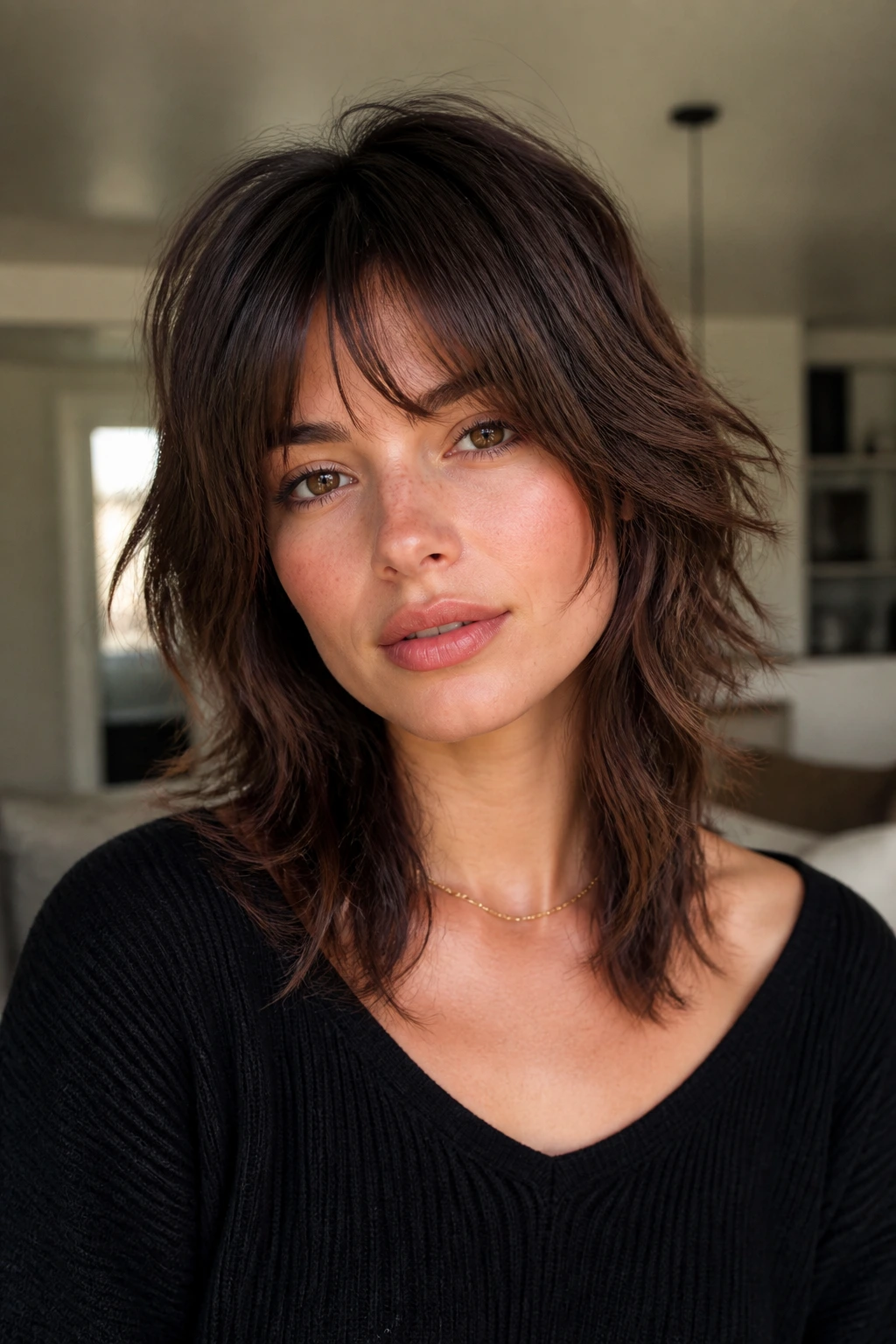
Bottleneck bangs sit in that nice middle ground between curtain bangs and full fringe. They’re shorter in the center, then open out toward the temples. On medium hair, that shape gives the wolf cut a little more polish without killing the messy texture.
The rest of the cut should stay loose and touchable. Think broken-up layers, not crunchy spikes. The crown can be light, but the ends should still hold some weight so the cut doesn’t float away. That’s the secret with tousled styles: you want movement, not chaos.
A sea salt spray can help, but use it with restraint. Too much and the hair gets dry and rough, especially if it’s color-treated. A better move is a light mousse at the roots, scrunching through the mid-lengths, then a quick diffuse or air-dry. Simple.
This style is one of the easiest to live with because it doesn’t need perfect symmetry. If one side flips more than the other, it often looks better. That’s the charm.
6. Heavy Crown, Airy Ends Wolf Cut
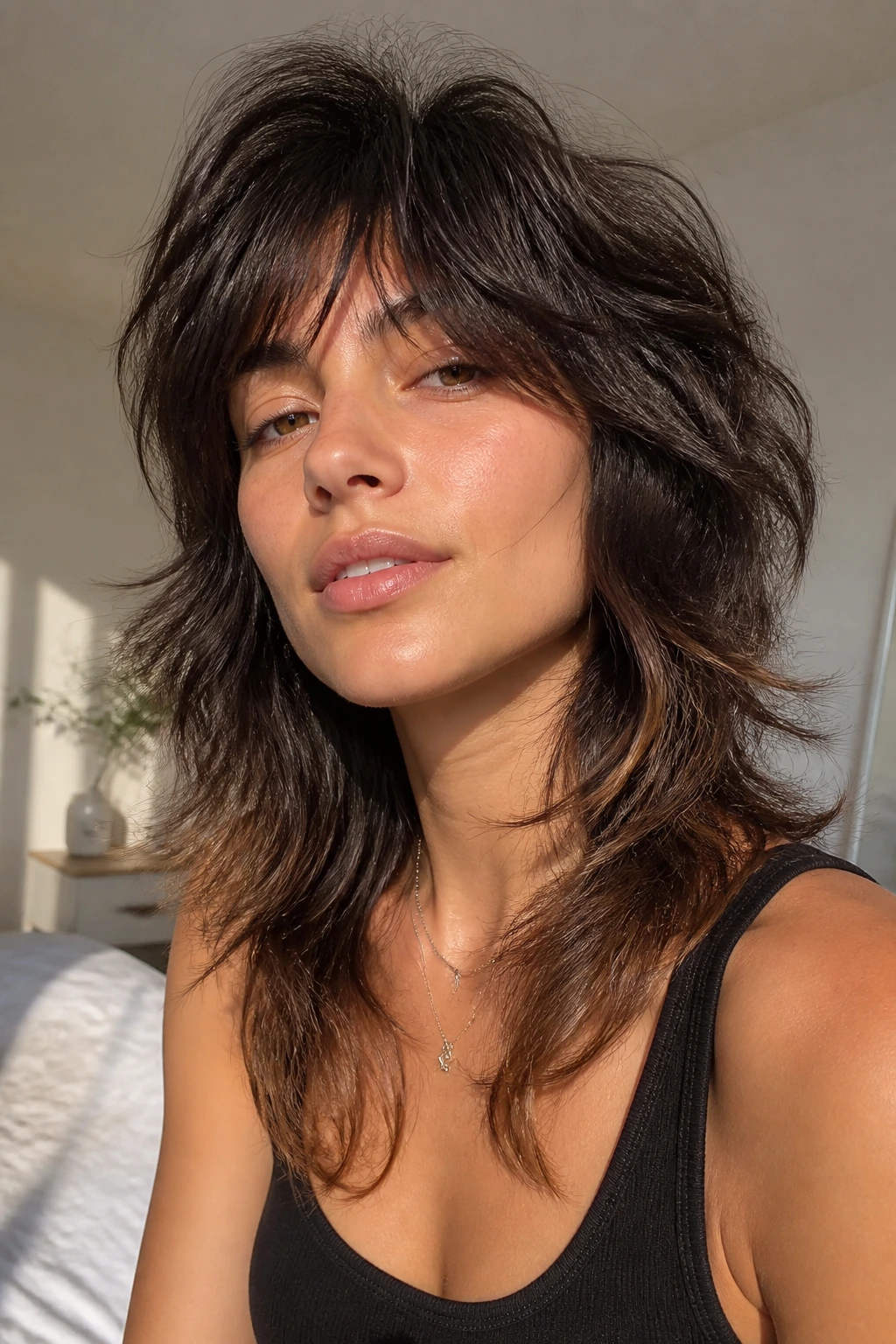
A lot of wolf cuts go too far on the ends and not far enough on the top. This version flips that balance. The crown gets the real lift, while the bottom stays soft and light enough to move without feeling thin.
Unlike a blunt lob, this cut removes weight where the head needs it most. The result is a shape that sits higher and feels more alive around the roots. That makes a big difference on medium hair, which can go flat quickly if the layering is too evenly distributed.
Ask for shorter internal layers at the crown and a longer perimeter that brushes the shoulders. Not too many face-framing pieces. Not too much razoring at the bottom. The goal is shape, not fray. If the stylist knows how to point cut, even better.
This works especially well on medium hair that has some density but not much natural volume at the roots. It gives you that lift without asking for a round-brush blowout every time. A root-lifting spray near the crown is usually enough.
7. Wavy Wolf Cut with Long Fringe
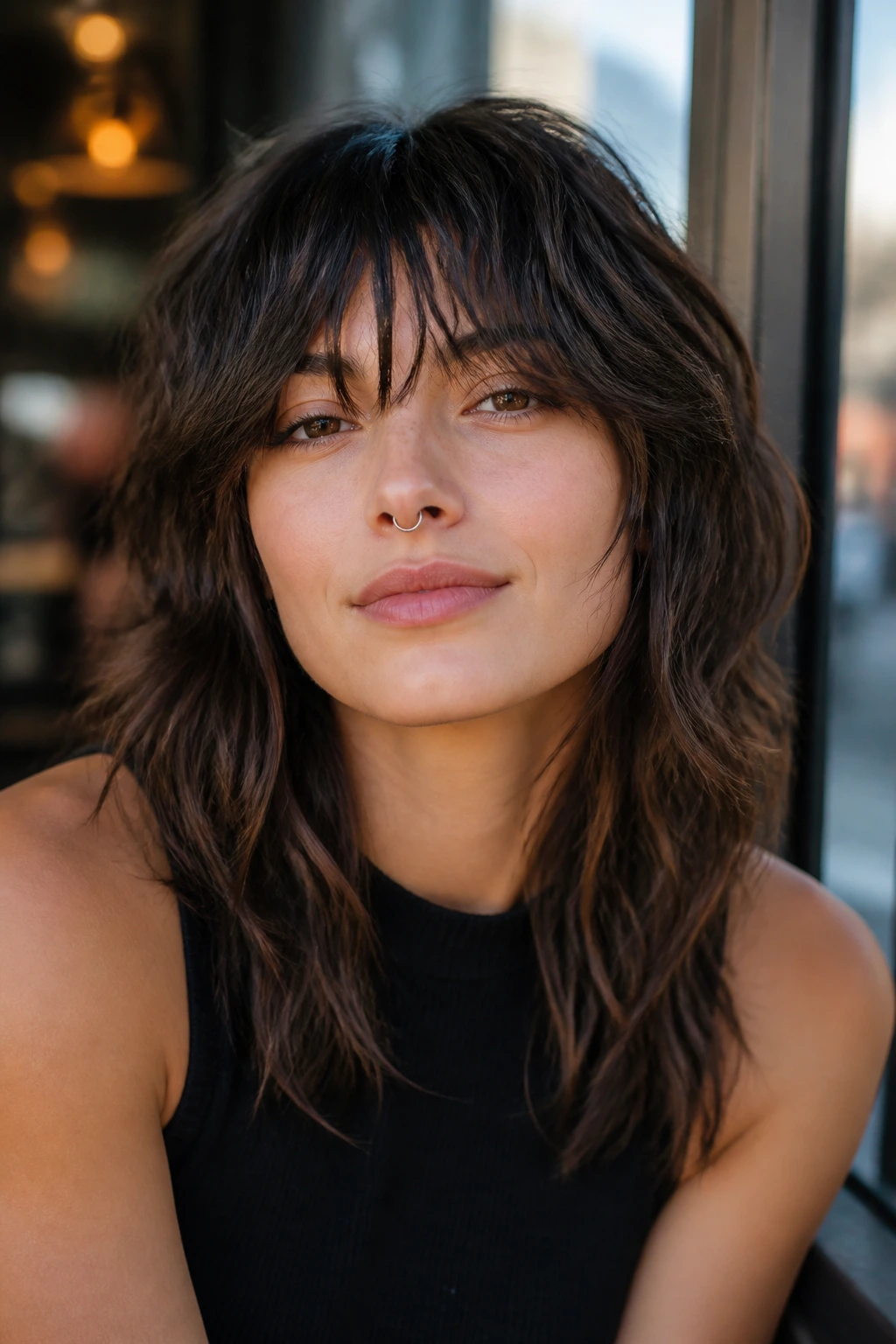
What happens when wavy hair meets a long fringe? Usually, the cut starts doing half the work for you. The waves break up the layers, the fringe falls in soft bends, and medium length keeps everything from getting too heavy.
How to wear it
This version likes a little bit of bend and not much fuss. If your hair already has a wave pattern, let it dry most of the way on its own. If it’s a bit straighter, twist the front sections around your fingers while they’re damp and clip the fringe away from the face for a few minutes. That tiny trick helps the shape settle without a hard curve.
Long fringe matters here because it keeps the cut from looking too chopped. It can brush the brows or sit just below them, then blend into cheekbone layers. That keeps the front soft when the hair is pulled back or tucked behind the ears.
Use this if you want movement and a little romance, but you still want the structure of a wolf cut. It looks good with minimal styling and even better on hair that’s not fighting you every morning.
8. Air-Dried Wolf Cut with Invisible Layers
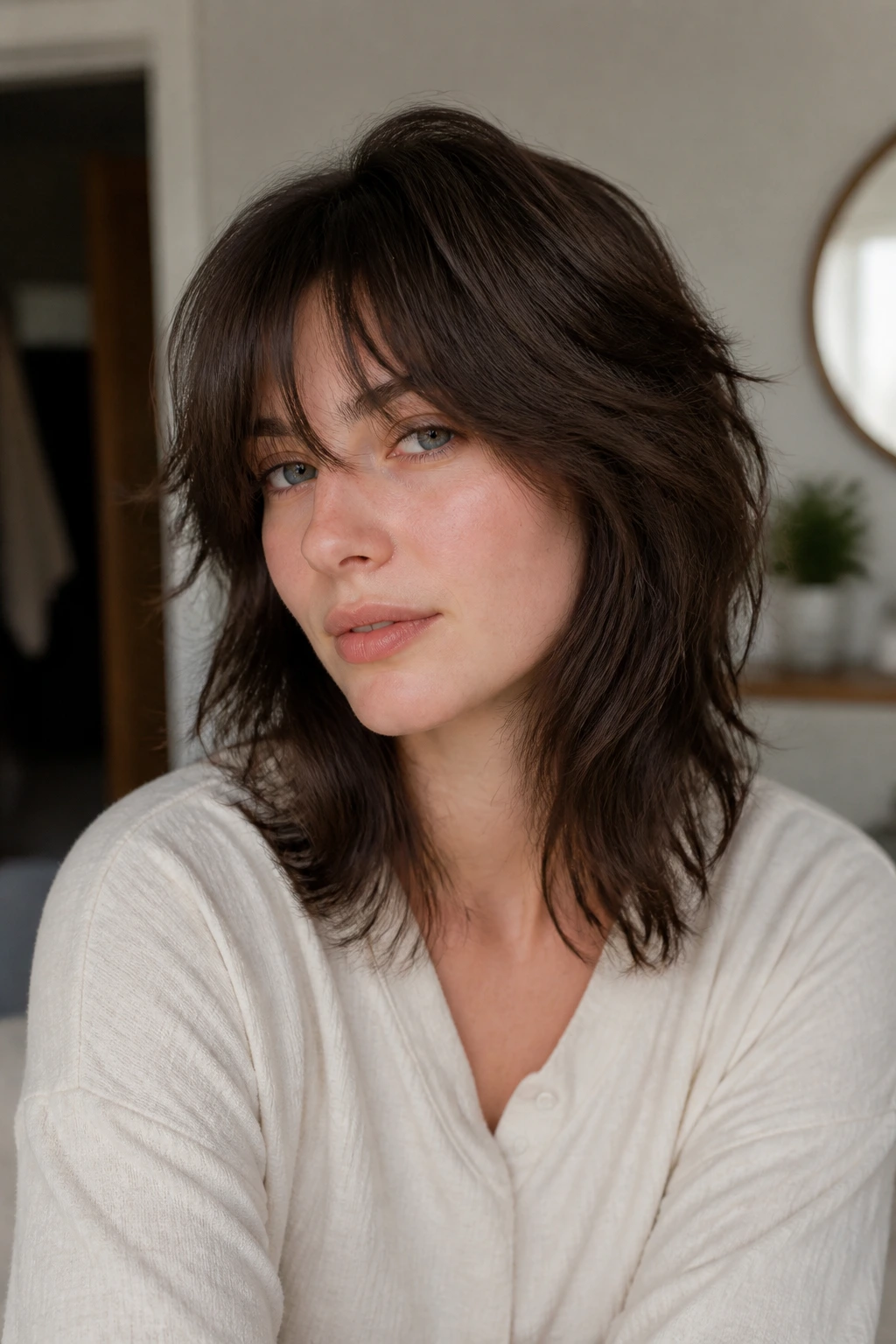
Some cuts need heat. This one does not have to.
The idea is to create a wolf cut that looks full and textured even when you let it dry on its own. The layers are there, but they’re blended more quietly, so they show up as movement rather than obvious steps. Medium hair is a good match for this because the length gives the layers enough room to separate naturally.
Ask for soft internal layering, subtle face framing, and a perimeter that isn’t over-thinned. That last part is the one people forget. If the ends get too see-through, the cut can look stringy once it air-dries. You want separation, not gaps.
A lightweight leave-in conditioner helps, especially if your hair is fine or gets frizzy. Work it through damp hair with your hands, squeeze out the excess water, and leave it alone. Seriously. Touching it too much while it dries ruins the shape.
This style is for people who like a low-effort morning and don’t want to wrestle with a brush.
9. Retro 70s Wolf Cut
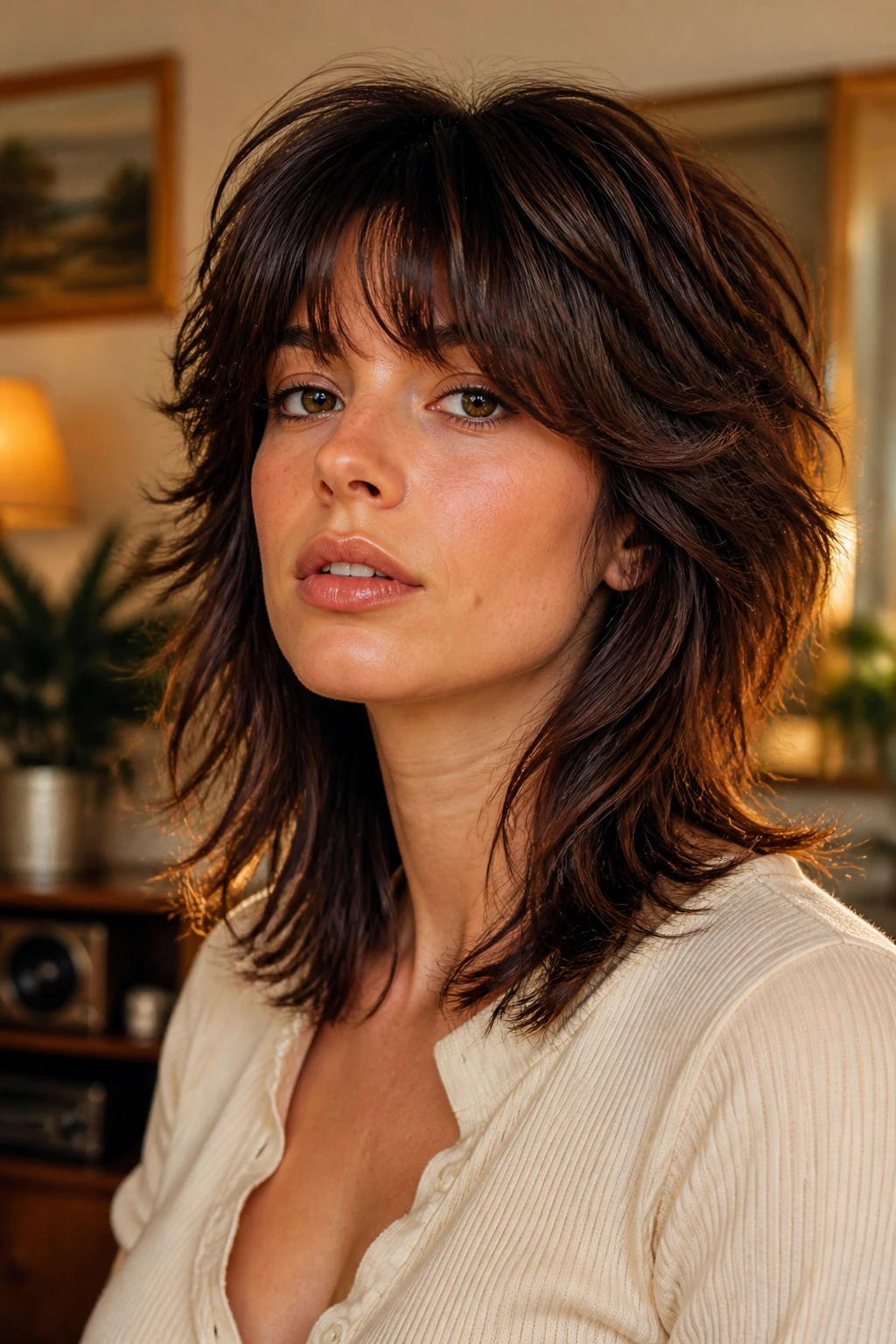
There’s a reason the retro version keeps coming back. It has movement around the face, soft volume at the top, and a bit of bounce through the lengths that feels familiar in the best way. Medium hair is a strong length for this look because it lets the layers swing without dropping straight down.
The shape usually leans into a rounded top, a soft fringe, and flipped or curved ends. It is not as rough-edged as some modern wolf cuts. There’s more polish here. More shape. Less bite.
A round brush blowout helps, but only on the pieces that need it. The front can be blown away from the face, then the rest can be roughed up with fingers so the whole thing doesn’t feel too neat. If your hair is thick, this is where a good debulking job pays off. If it’s fine, keep the layers longer.
- Strong choice if you like a vintage feel without full-on nostalgia hair
- Looks good with side parting or a deep off-center part
- Best when the crown has lift and the ends curve outward slightly
There’s a little glamour in this one. Not much. Enough.
10. Shoulder-Skimming Wolf Cut with Flipped Ends
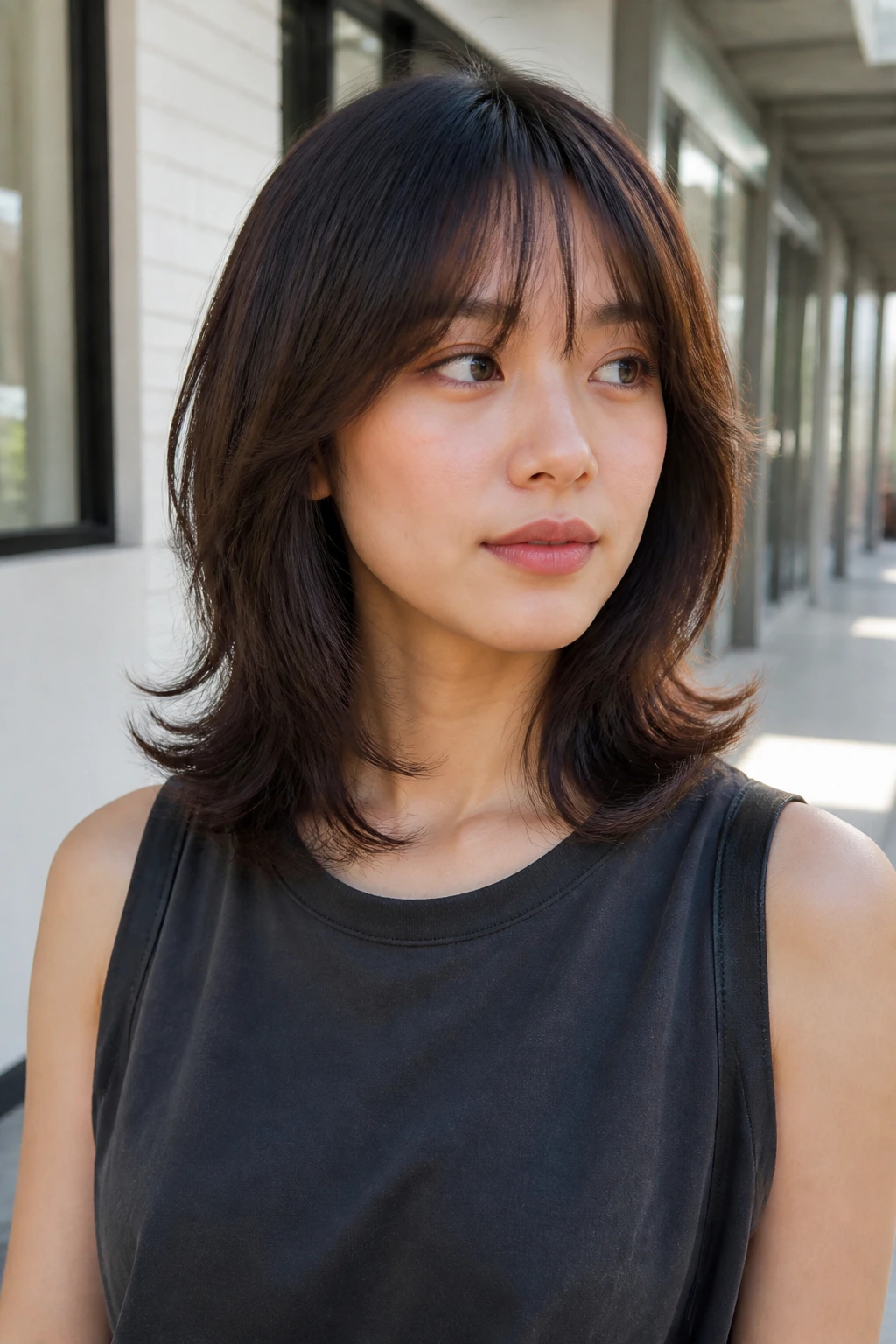
This cut lives right at the shoulder line, which is both useful and tricky. Useful because shoulder length gives the wolf cut a lot of natural swing. Tricky because that same shoulder line can make the ends kick out in awkward ways if the layering is too blunt.
The flipped-end version leans into that movement instead of fighting it. The ends are softened and lightly texturized so they turn out, not puff out. That difference matters. A flip should look airy and deliberate. Puffiness looks like the haircut missed its mark.
Compared with a longer wolf cut, this one feels cleaner and a little more wearable for people who spend time in an office or just want something that doesn’t read as extreme. It still has the shaggy texture, but the silhouette stays closer to the neck and collarbone.
Best bet: ask for shoulder-skimming length, long layers, and softened ends with light point cutting. If your hair hits the top of the shoulders, leave enough weight in the bottom to stop it from sticking out like a triangle. That one detail saves a lot of trouble.
11. Piecey Bangs and Disconnected Layers
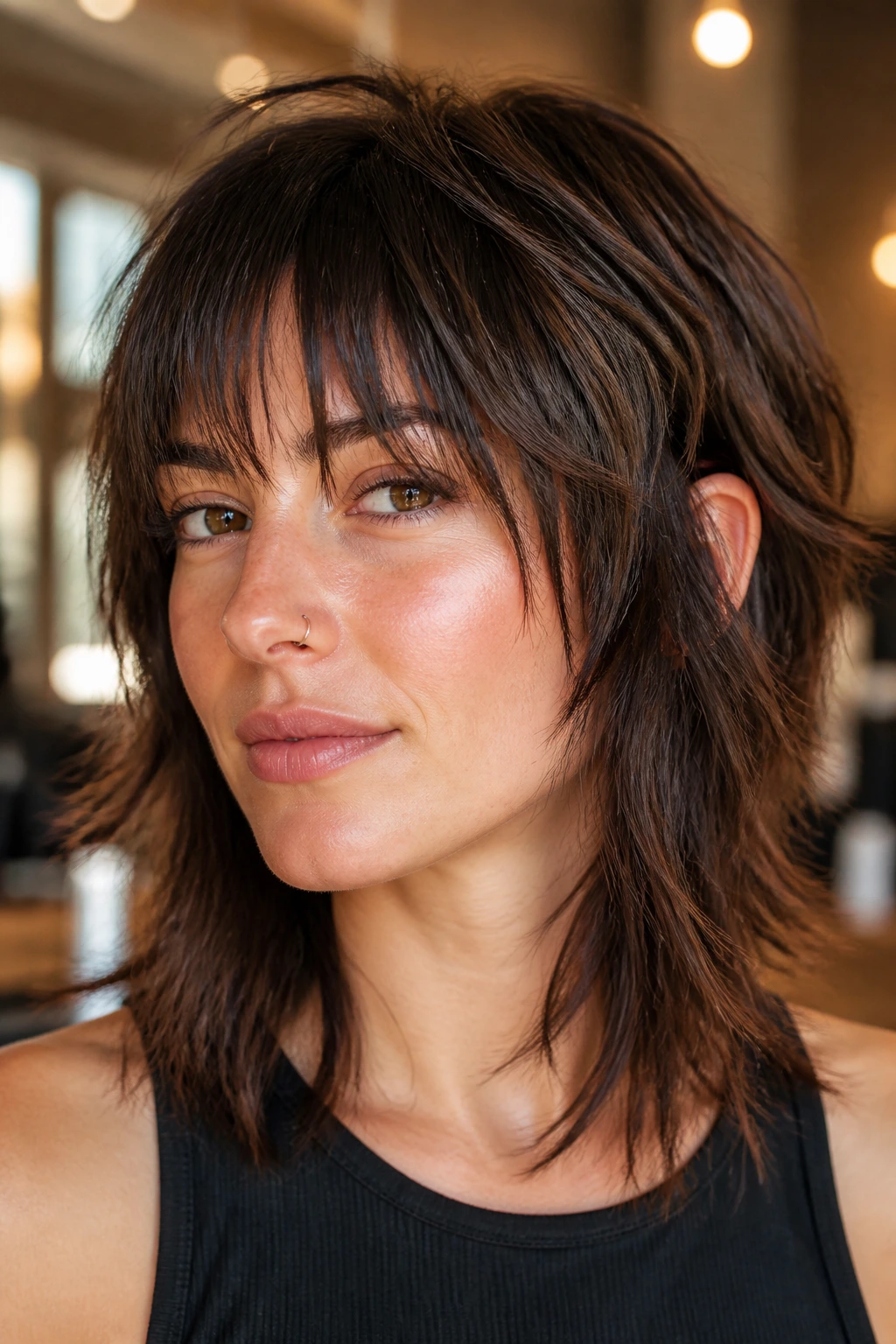
Why does this version look so current without trying too hard? Because the layers do not all blend into one smooth shape. They separate on purpose. The bangs stay piecey, the crown is shorter, and the lengths underneath stay long enough to create contrast.
That disconnected look can sound harsh on paper, but on medium hair it often reads as lively instead of severe. The trick is to keep the bang pieces narrow and textured, not thick and heavy. You want little ribbons of hair across the forehead, not a solid block.
How to get the most from it
- Ask for point cutting through the fringe
- Keep the top layers short enough to lift, but not so short that they stand up
- Use a pea-sized amount of matte cream on dry ends
- Separate the bang pieces with your fingers, not a brush
This is a strong choice for anyone who likes a haircut that changes shape during the day. It will look more undone after a few hours, and that’s the point. If you want everything to stay smooth and polished, this probably is not your cut. If you like texture that shifts a little, it’s a good one.
12. Fine-Hair Wolf Cut with Light Texturizing
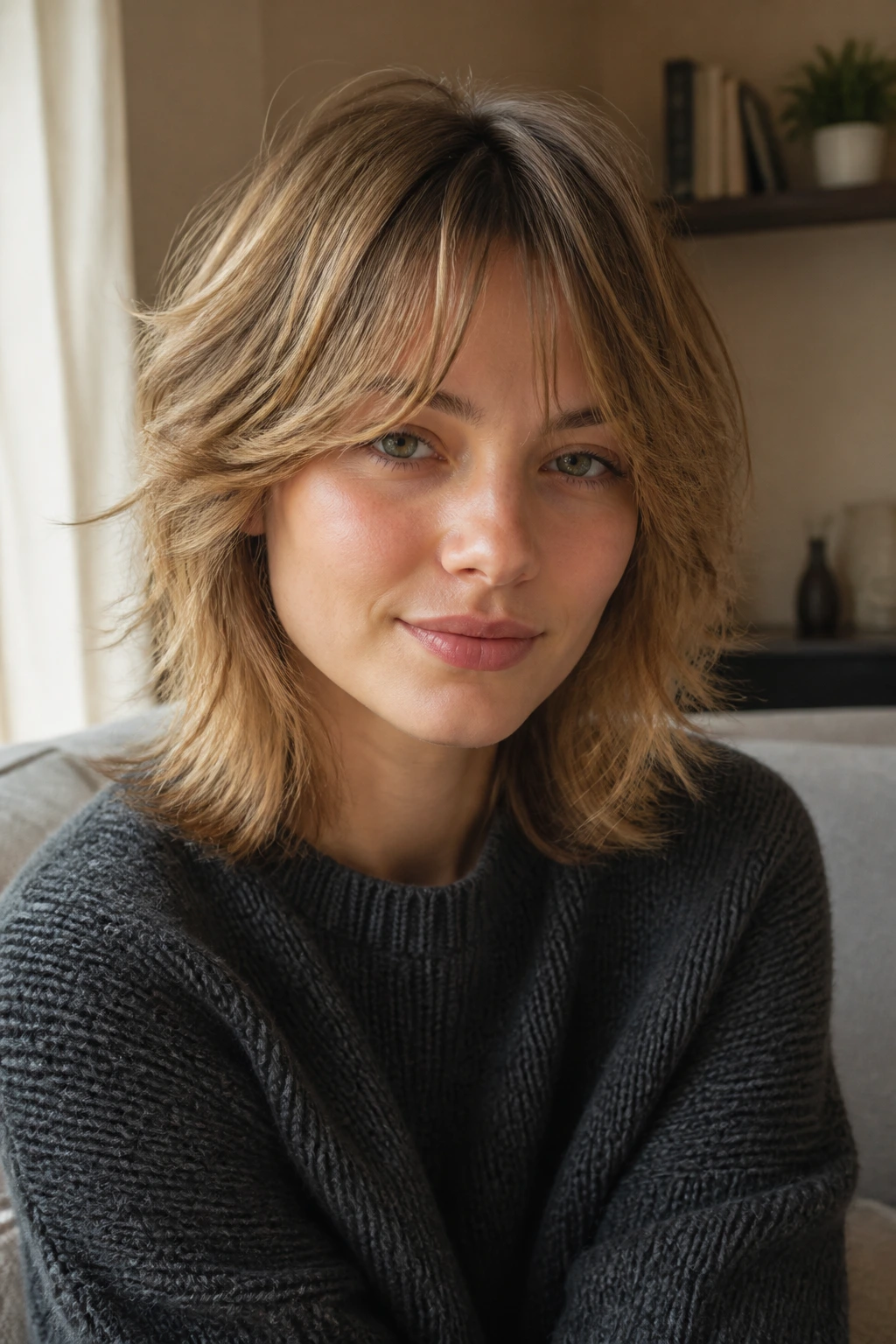
Fine hair can wear a wolf cut, but it needs a light hand. Too much layering and the ends start to disappear. Too much texturizing and the cut goes limp faster than you’d like. The goal is to build movement without stealing the body you already have.
What helps here is restraint. Keep the top layers long enough to support the shape, and use soft, shallow texturizing instead of aggressive thinning shears. A few well-placed layers around the crown can give the impression of volume without leaving the whole head wispy.
A bit of root spray can help, but don’t drown the hair in product. Fine strands get weighed down fast. Better to spray under the crown, flip the hair once while drying, and stop there. If you use a blow dryer, rough-dry until the roots are about 80 percent dry, then switch to a round brush for the front pieces only.
This cut works best when it looks lightly broken up, not shredded. That distinction is small in words and huge in practice.
13. Thick-Hair Wolf Cut with Deep Debulking
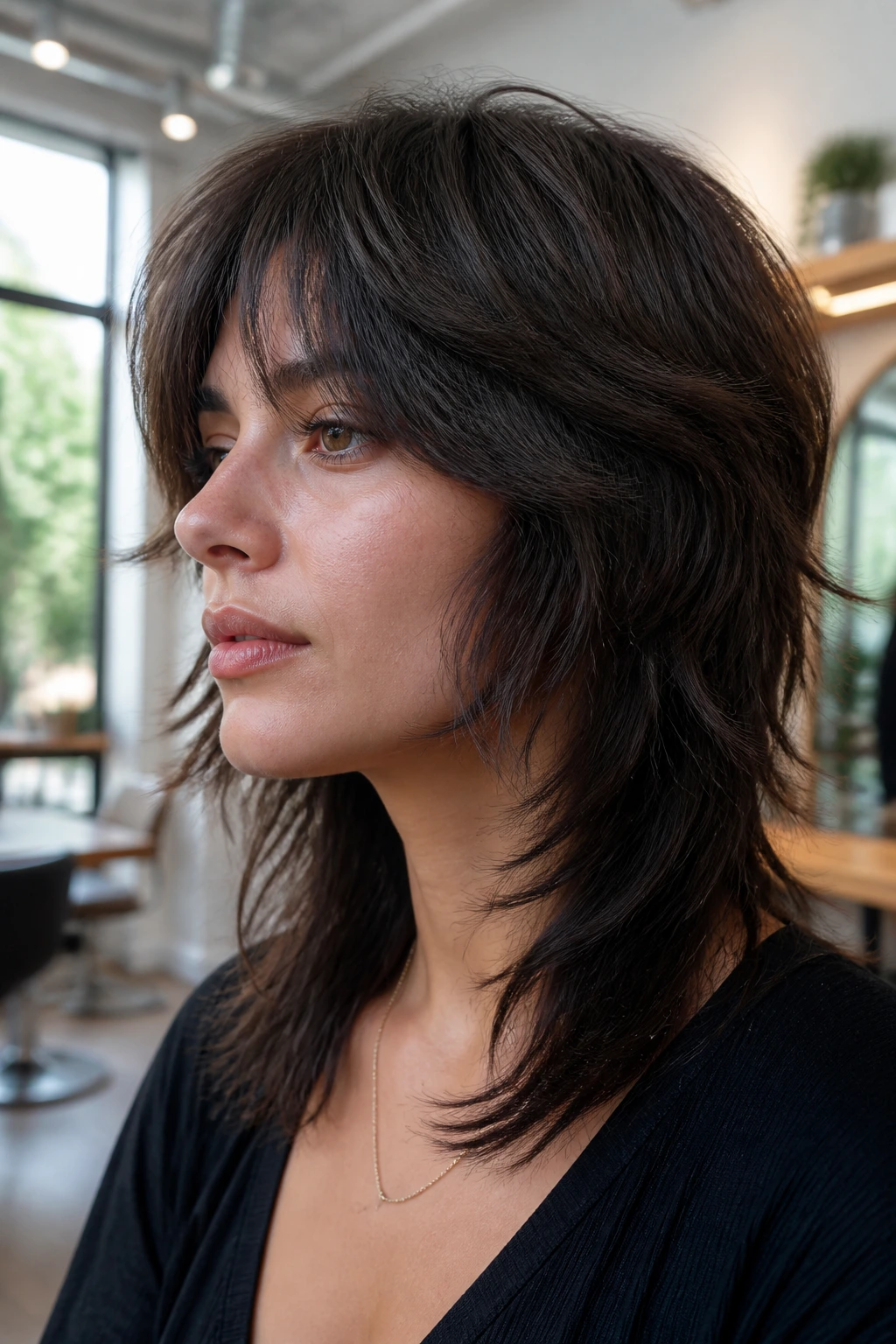
Thick hair and wolf cuts are old friends, but only when the cut is handled with care. Deep debulking can make the shape easier to wear, lighter on the head, and less likely to balloon out at the sides. Done badly, though, it can leave the hair hollow near the ends. That is a mess.
The best version keeps the inside lighter and the outer line strong. In plain terms: remove weight where it builds up, but protect the outline. A stylist may use point cutting, slide cutting, or internal layering to get there. Any of those can work. The important part is not over-thinning the perimeter.
- Good for dense, heavy medium hair
- Helps reduce puff at the sides
- Makes curls and waves sit better instead of spreading out
- Needs a careful hand around the nape and ear area
A deep-debulked wolf cut can feel almost shoulder-relieving if you have a lot of hair. That sounds dramatic, but anyone with thick medium hair knows the feeling. The cut is lighter, yes, but more important, it’s easier to move through with your hands, a brush, or a scrunch of mousse.
14. Curly Wolf Cut for Medium Hair

Curly hair changes the rules a bit. The shape has to respect shrinkage, or the wolf cut can end up shorter than you expected and uneven in the wrong way. For medium curls or strong waves, the right cut gives you lift at the crown and space around the face without breaking the curl pattern apart.
Should it be cut wet or dry? Dry is often safer for curl shape, especially if your pattern is uneven. A stylist can see where the curls sit, where they spring up, and where they need more length left in place. That keeps the layers from looking choppy once the hair dries fully.
What to ask for
- Long internal layers that follow the curl pattern
- Soft fringe or curl-friendly face framing
- No harsh thinning at the ends
- A shape that keeps weight at the bottom for balance
This version shines when you use a diffuser on low heat or let the curls air-dry with a little cream. Too much brushing ruins the definition. Better to rake the product through with your fingers, scrunch once, and leave the curls alone. Medium hair with curls has enough length to show movement, but not so much that the shape gets lost.
15. Polished Wolf Cut with Soft Edges
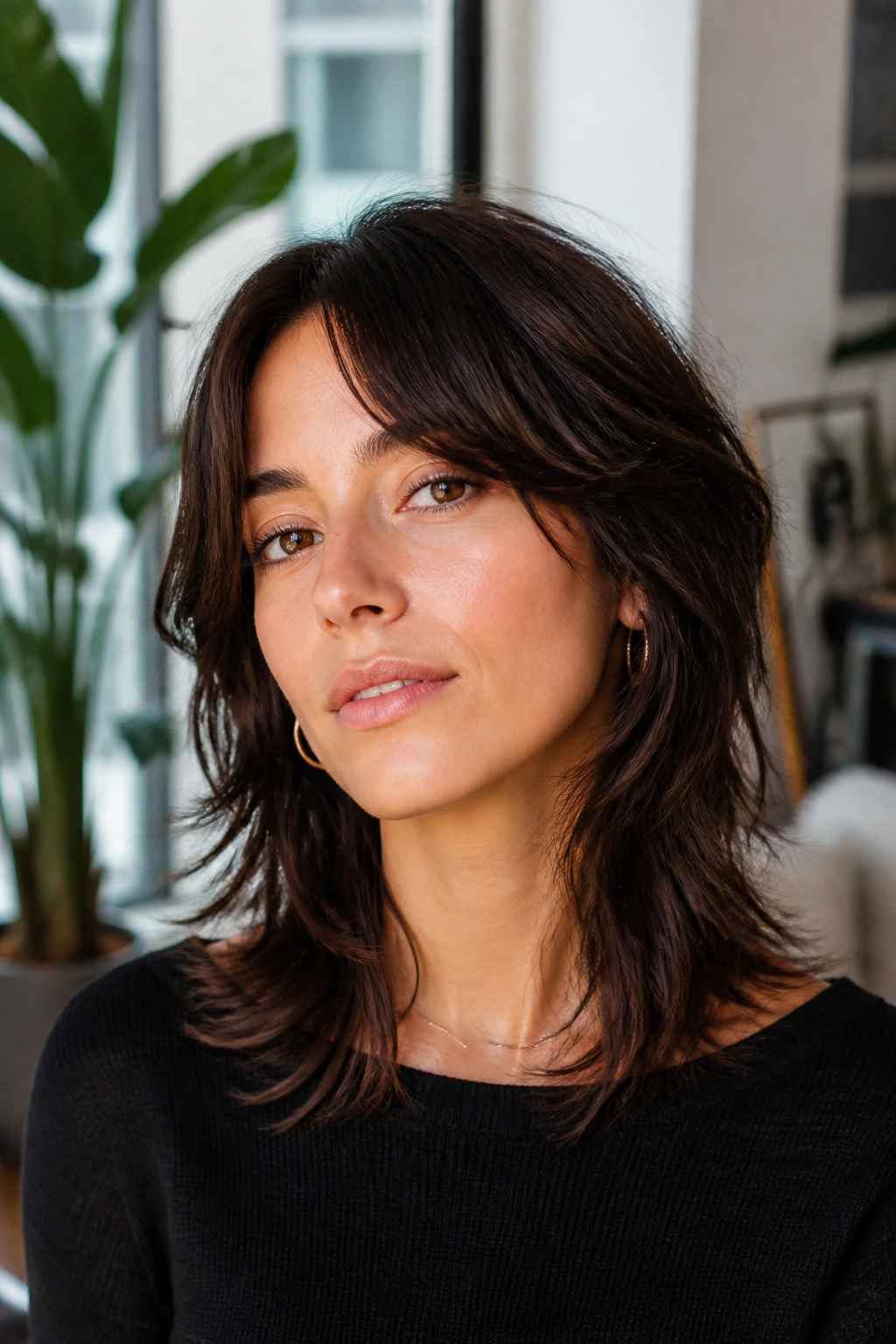
Not every shaggy wolf cut has to look wild. Some of the nicest ones are the quietest. This polished version keeps the layers visible, but softens the edges so the cut reads clean in daylight and a little messy only when you want it to.
The outline matters here. Keep the longest pieces grazing the shoulders and let the internal layers do the texture work. The fringe can sit as a soft curtain or a long side sweep. What you do not want is a harsh shelf anywhere in the haircut. A hard line kills the ease of this look fast.
This is the one I’d point to for someone who likes texture but still needs a haircut that can behave in more formal settings. It can be tucked behind the ears. It can be smoothed with a paddle brush. It can still move when the wind hits it. That flexibility is worth more than flash.
If you are choosing between versions, think about what you want people to notice first: the fringe, the crown, or the ends. Once that’s clear, the rest gets easier. A good wolf cut on medium hair does not need to shout. It just needs enough shape to look alive when you walk out the door.
