



Wolf cuts with curtain bangs can look like they were carved by someone who knows exactly where the head wants movement and where it needs weight left alone. Done right, the shape feels a little wild, a little soft, and a lot more flattering than the flat, one-length cuts people keep trying to rescue with extra styling cream.
The trick is that a wolf cut is never only about the layers. Curtain bangs change the whole read of the haircut. They soften the forehead, pull attention toward the eyes, and keep the cut from tipping too far into mullet territory unless you want that sharper edge. And that little balancing act matters. A lot. Too many stylists chop the crown too high or make the bangs too short, and suddenly the cut looks like it needs a correction, not a compliment.
The versions worth trying all do something slightly different. Some keep the layers soft and wearable. Some go choppier and cooler. Some lean shag, some lean mullet, and some sit in that sweet spot where the fringe falls around the cheekbones and the back keeps a bit of length for swing. If you’ve been staring at wolf cuts with curtain bangs and wondering which one will actually work on your hair, the differences are right here.
1. Feathered Classic Wolf Cut
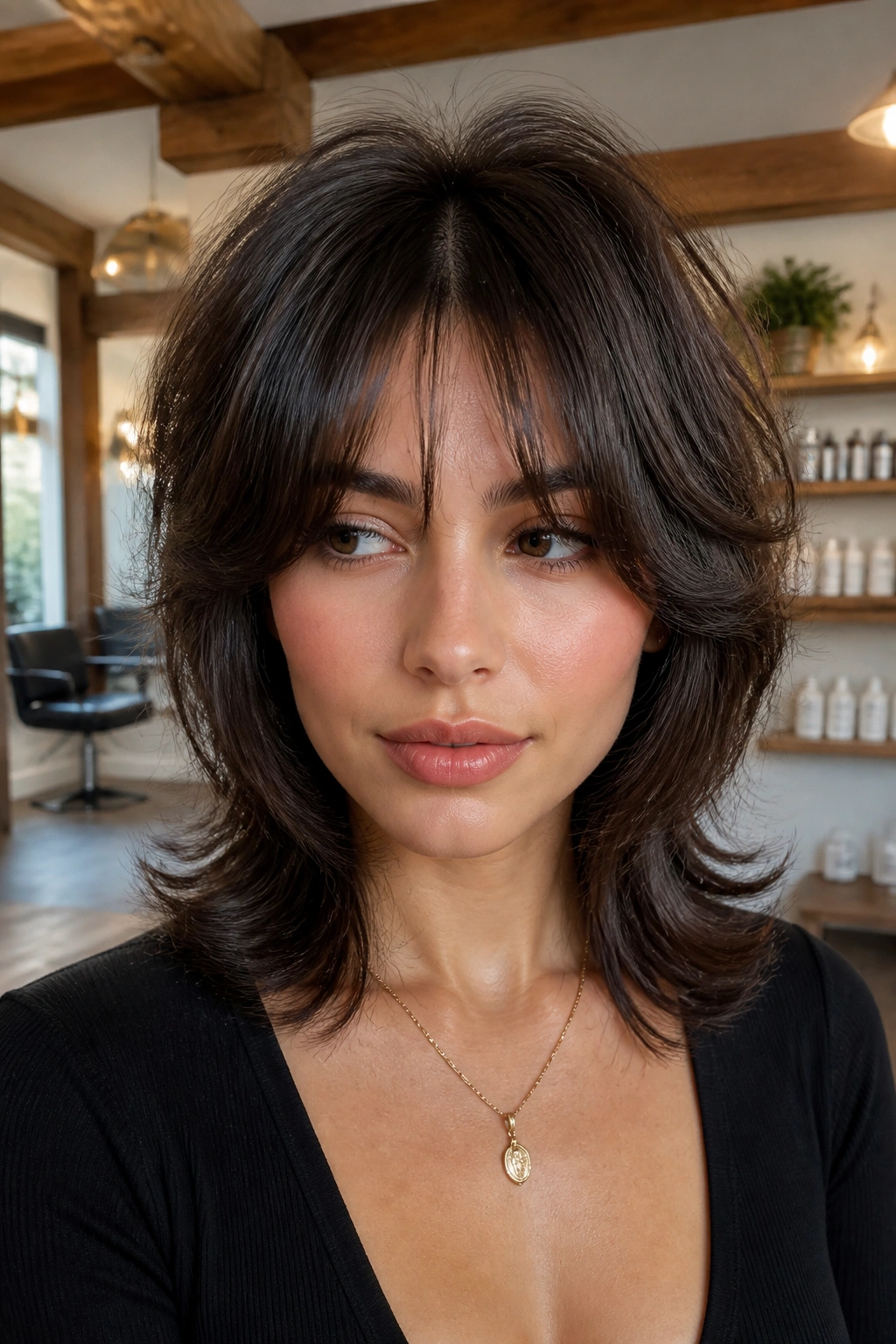
This is the version most people picture first, and honestly, it earns that spot. The feathered classic wolf cut keeps the crown short enough to create lift, then lets the sides and back taper into longer, softer pieces. Curtain bangs sit around the brow-to-cheekbone zone, which gives the front enough shape without boxing your face in.
Why It Works on Medium Hair
Medium hair loves this cut because there’s enough length for the layers to move, but not so much that the shape drags itself down. Ask for shorter crown layers by about 2 to 3 inches compared with the side lengths, then keep the ends softly point-cut so they don’t look blunt. That little bit of feathering matters more than people think.
It also styles fast. A round brush at the fringe, a little lift at the roots, and the whole haircut wakes up. If your hair bends naturally, even better. If it does not, a salt spray or mousse at the roots will still give you enough grit.
- Best for straight to lightly wavy hair
- Ask for point-cut ends instead of a hard line
- Blow-dry the curtain bangs away from the face for a soft split
- Trim the bangs every 6 to 8 weeks if you want the shape to stay open
Tip: Keep the bangs long enough to tuck behind the ears on lazy days. That one detail makes this cut easier to live with.
2. Shoulder-Length Wolf Cut with Soft Curtain Bangs

This version is for people who want movement but do not want to look like they’re trying too hard. The shoulder-length wolf cut keeps the perimeter around the collarbone, so the haircut still feels polished, while the layers build just enough mess to keep it from going limp.
What I like about this shape is the restraint. The curtain bangs are softer here, usually falling from the center part and curving out near the cheekbones instead of exploding into heavy fringe. That makes the cut easier to wear at work, easier to grow out, and less fussy on days when you air-dry and leave the house.
It also works well if your hair has a bit of body but not much natural wave. You do not need extreme texture to make this one look good. You need clean layering, a little bend at the ends, and a stylist who understands that soft does not mean shapeless.
Low drama. Still interesting.
3. Short Wolf Cut with Wispy Curtain Bangs
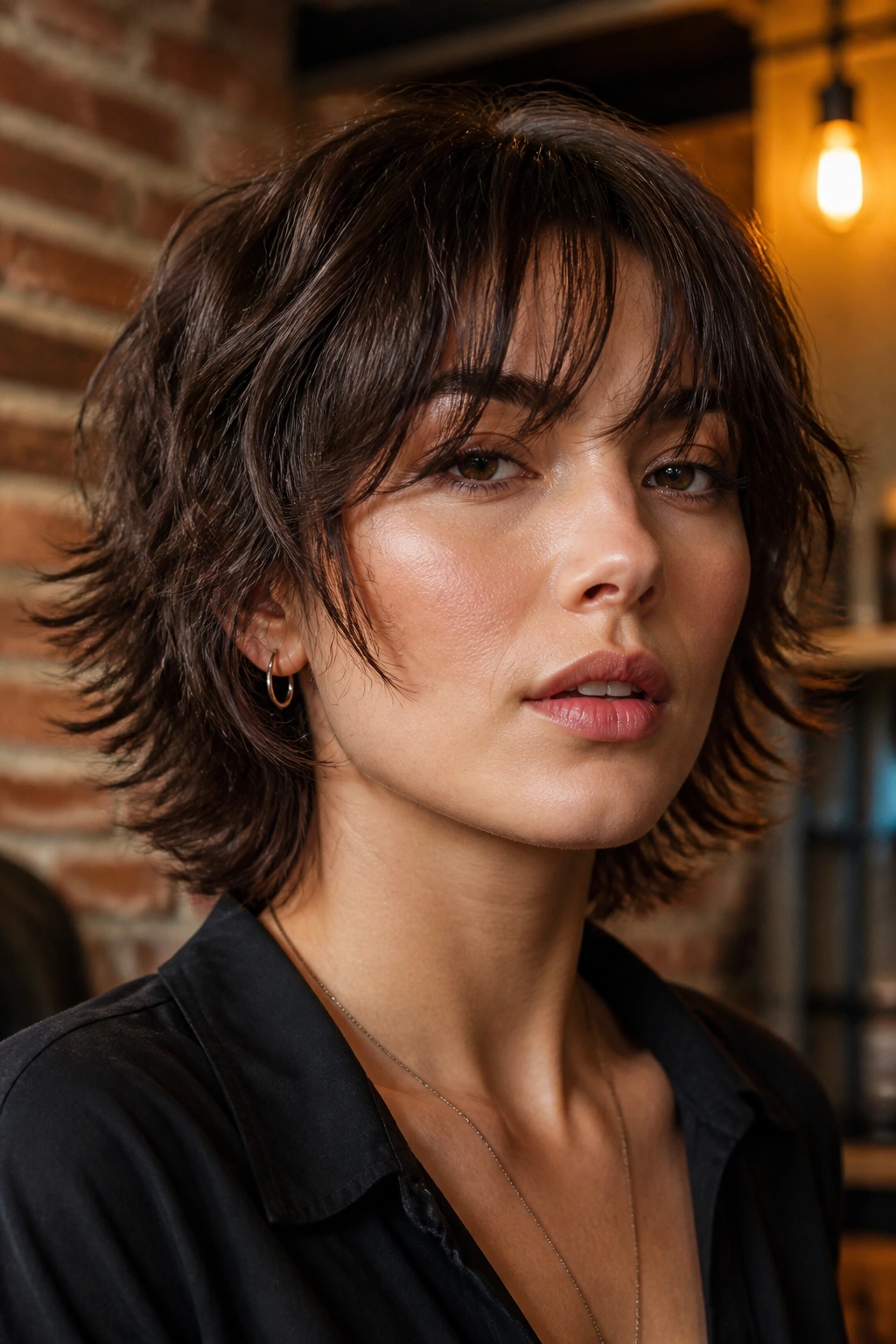
Can a wolf cut be short and still feel airy? Absolutely. The short wolf cut proves it. When the length hits around the jaw or just below it, the haircut gets punchier, and the curtain bangs become the thing that keeps it from feeling severe.
The secret is keeping the bangs wispy instead of heavy. A good short wolf cut should look lightly broken up around the face, with fringe that grazes the brow and opens at the temples. If the stylist leaves too much bulk in the bang, the whole cut starts to feel helmet-like. Nobody wants that.
How to Style It
- Rough-dry the roots first so the crown does not collapse
- Use a small amount of matte paste or texture cream on the ends
- Push the curtain bangs apart with your fingers while the dryer is warm, not scorching hot
- Leave the front a little undone; that softness is part of the point
This cut is especially good if you like a sharper outline but still want some softness around the eyes and cheeks. It has attitude. It also grows fast, so be ready for bang trims if you want the shape to stay crisp.
4. Curly Wolf Cut with Long Curtain Fringe
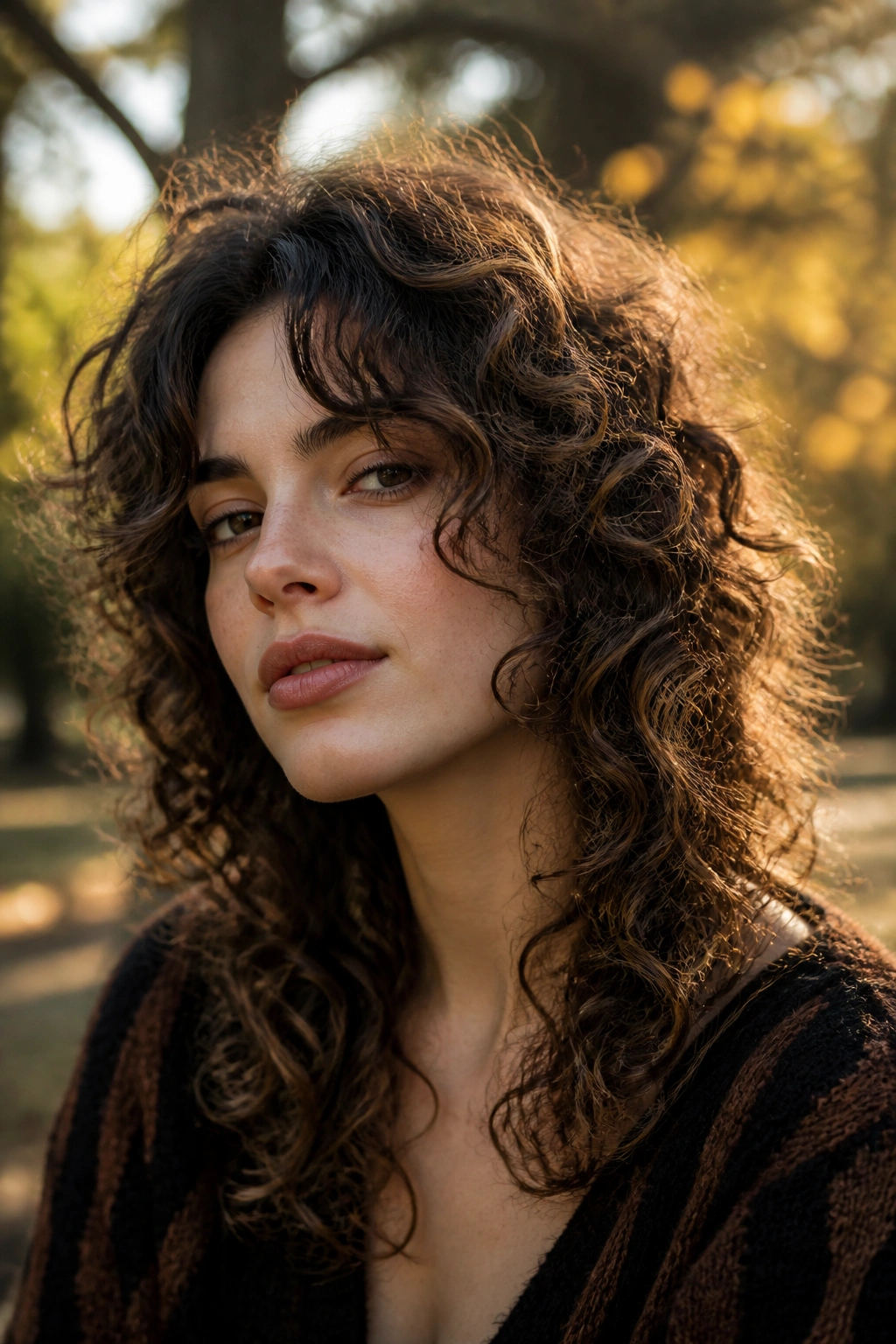
If your curls flatten at the crown and puff everywhere else, this cut can be a lifesaver. A curly wolf cut uses the natural spring of the hair instead of fighting it, and the long curtain fringe keeps the face frame loose enough to avoid that mushroom shape curly cuts can fall into.
I’ve always thought this version works best when the stylist cuts the curls dry or almost dry. Curl shrinkage changes everything. A bang that looks cheekbone-length when wet may jump to brow length once it dries, and that is a rude surprise if nobody planned for it. Longer front pieces give you room to breathe.
What to Watch For
- Curl patterns around 2C to 3B usually take to this shape fast
- The shortest crown layers should still leave some weight, or the cut puffs too much
- Curtain bangs need to be cut longer than you expect
- Diffusing at low heat helps the shape stay bouncy, not frizzy
This cut looks best when the curl pattern is respected, not flattened. Let the curls do the heavy lifting. They know what they’re doing.
5. Razor-Cut Wolf Cut for Fine Hair
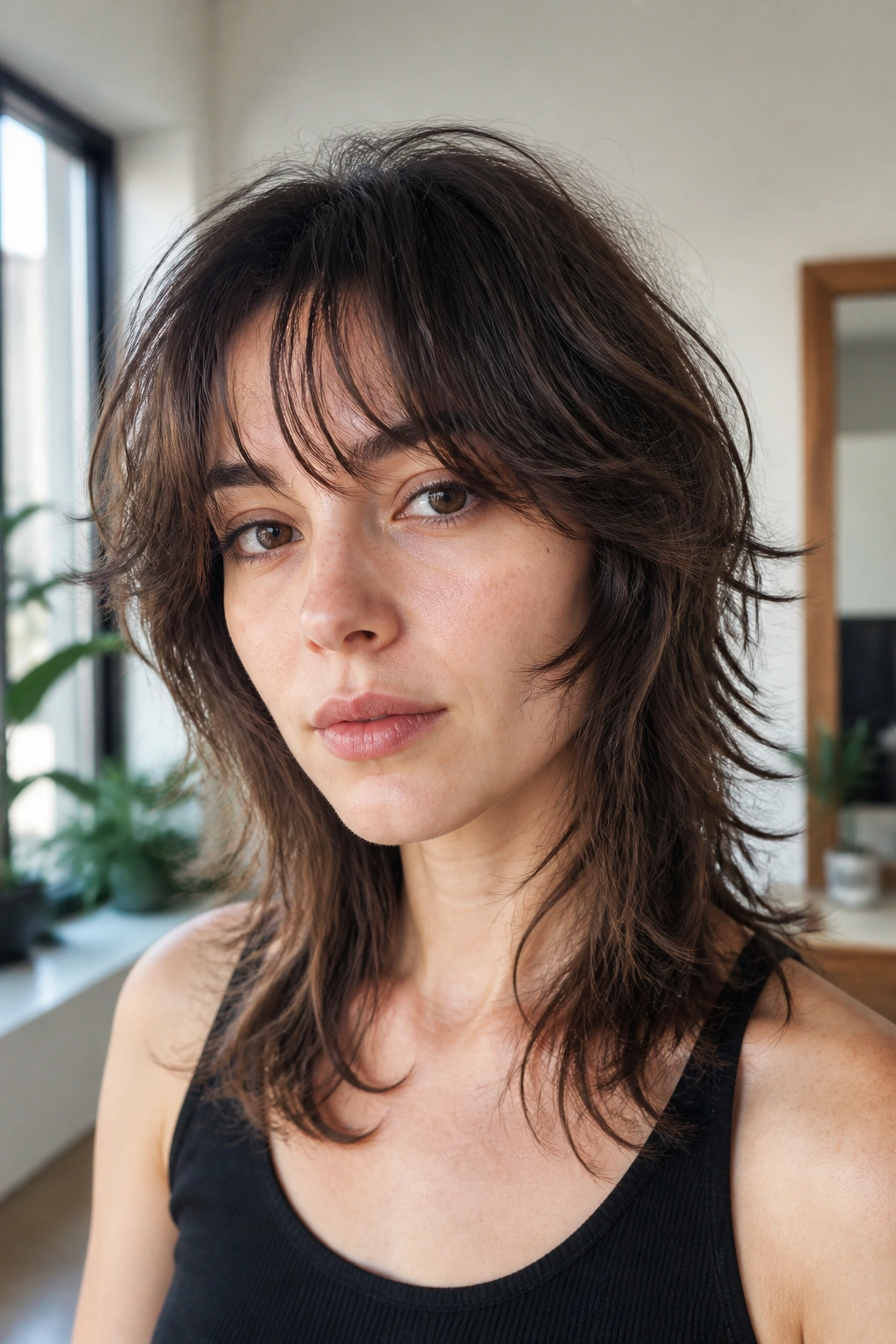
Fine hair can look gorgeous in a wolf cut, but only if the haircut is handled with some restraint. A razor-cut version gives you soft, airy ends and that airy ends-at-the-bottom feel that makes the whole shape move when you turn your head. The wrong version, though, will leave you with too little weight and not enough body. That is the trap.
A good razor-cut wolf cut keeps the top and bang area light while protecting the perimeter from going see-through. The curtain bangs should fall in thin, broken pieces that separate easily, not in a thick curtain that sits on the forehead like a shelf. If your hair is very fragile, ask for a softer razor touch or a point-cut finish instead.
The best part is how easy it is to style. A little root-lift mousse at the crown, a blow-dry with fingers instead of a brush, and a dry texture spray at the ends usually does the job. No need to overwork it. Fine hair shows everything.
One sentence matters here: less cutting beats more cutting.
6. Thick Hair Wolf Cut with Internal Layers
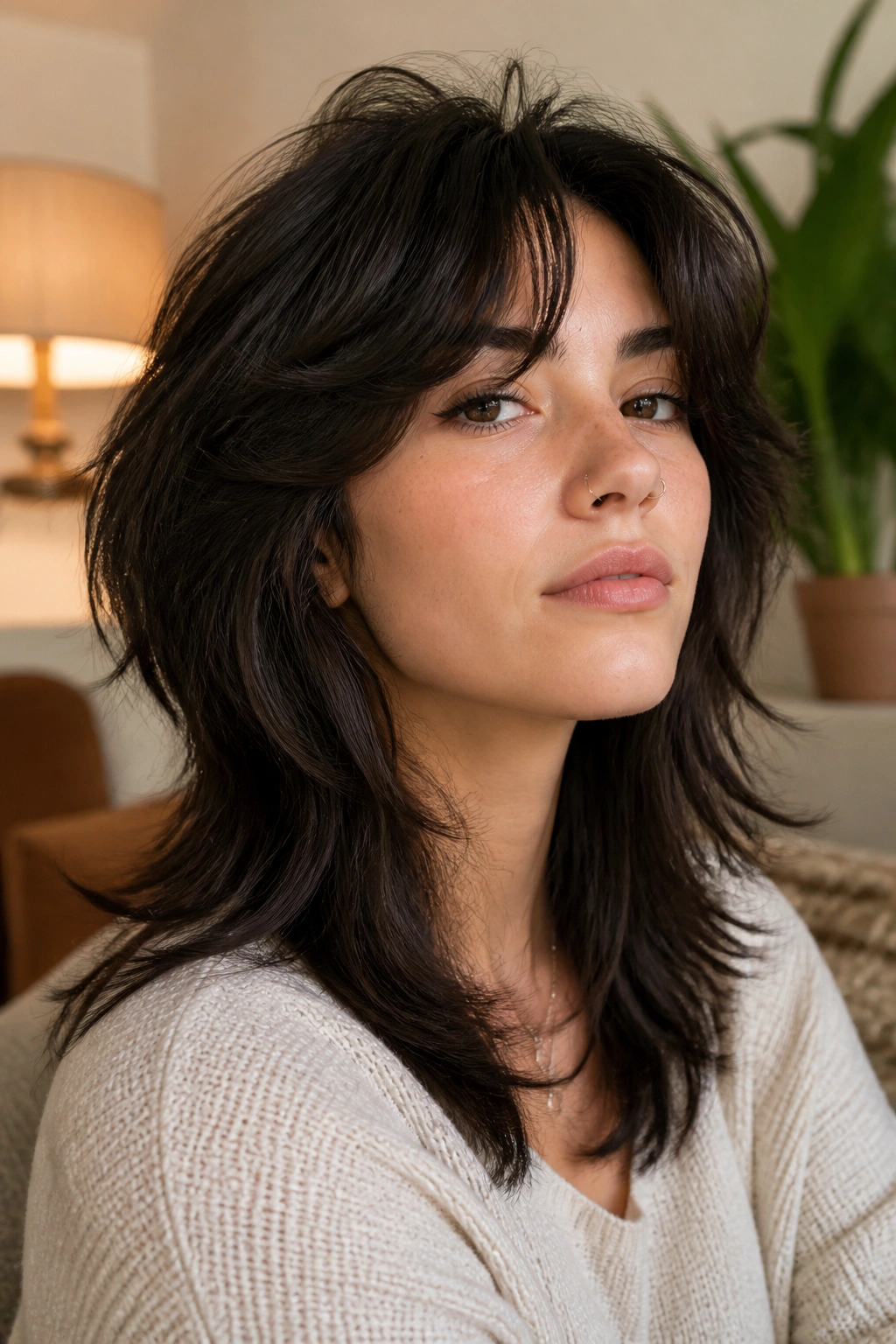
Thick hair and wolf cuts can be a dream combo, but only when the weight gets removed from the inside rather than hacked off the surface. That difference is huge. A thick-head of hair with blunt layers can balloon at the sides and feel like a triangle; a thick-hair wolf cut with internal layering moves instead of swells.
The best stylists usually carve some of the bulk out underneath, then keep the top layers visible enough to show shape without making the ends look sparse. The curtain bangs can be a little fuller here, which is useful because thick hair tends to eat lightweight fringe for breakfast. A more substantial bang helps the front of the haircut stay balanced.
I’d choose this version over aggressive thinning any day. Thinning shears can leave thick hair frayed at the ends if they’re used too freely, and once that happens, the haircut gets fuzzy in a way that’s hard to fix. Internal layers are cleaner. They leave the surface smoother and the grow-out less awkward.
If your hair feels heavy after one day, this is the wolf cut to ask about.
7. Long Wolf Cut with Bottleneck Curtain Bangs
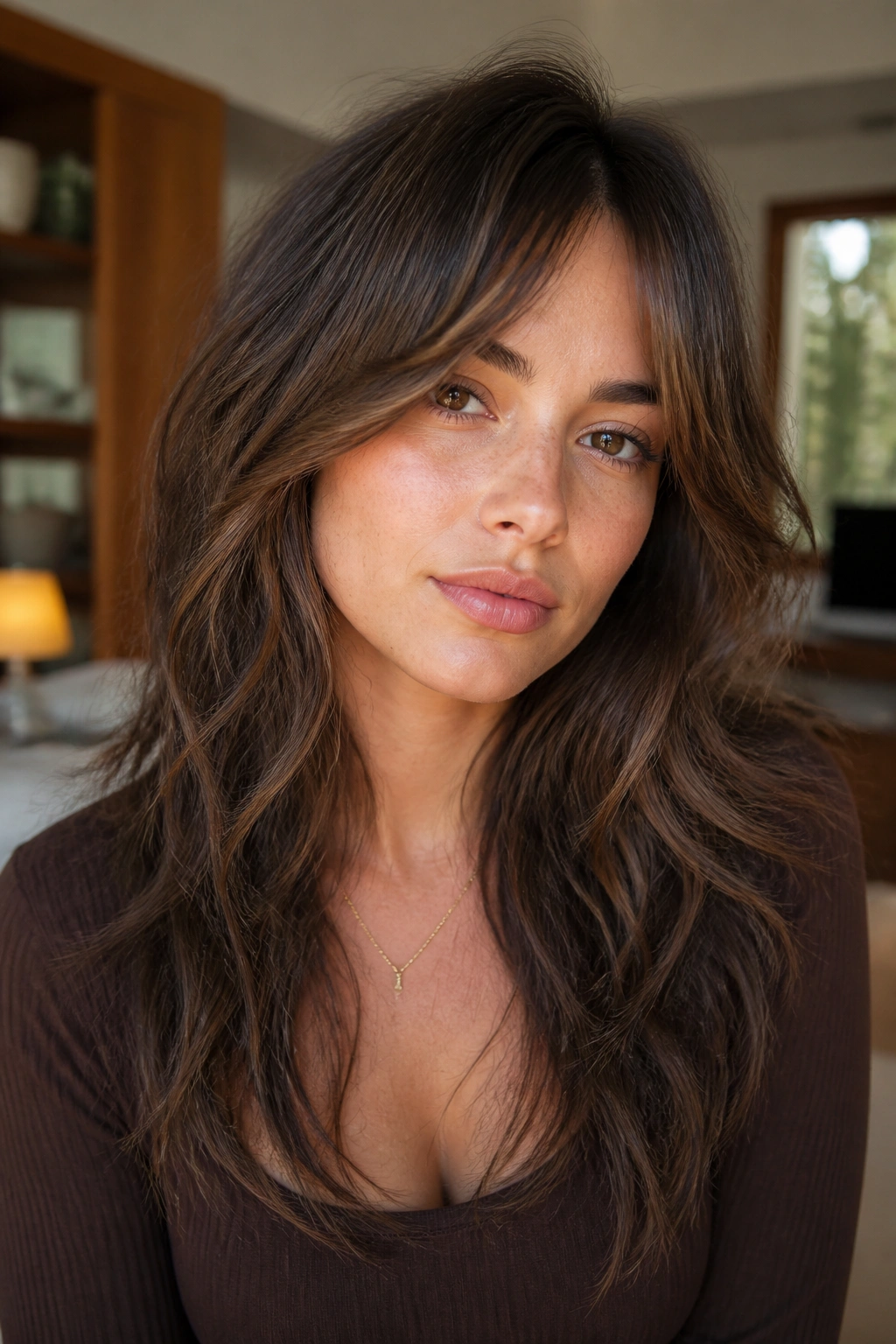
Long hair changes the entire mood of a wolf cut. Instead of looking edgy and cropped, the shape reads softer, more floaty, and a little more intentional. The bottleneck curtain bang is what gives this version its face frame — narrow through the center, then wider near the cheekbones, so it opens the face without swallowing it.
Why Bottleneck Bangs Change the Shape
The beauty of this cut is balance. The longest layers can sit at the chest or even lower, which keeps length lovers happy, while the crown still gets enough removal to create lift. Bottleneck bangs work better than heavier curtain bangs here because they don’t flatten the forehead area. They also blend nicely into face-framing pieces, which helps if you want to wear your hair half-up.
Ask Your Stylist For
- Length that stays below the collarbone
- A shorter crown that still leaves visible movement
- Bangs that begin narrow and widen around the cheekbones
- Soft edges around the front, not a hard chopped line
If you like a cut that looks expensive after a blowout but still decent in a loose air-dry, this is one of the safest picks. It feels polished without losing the wolf-cut attitude.
8. Mullet-Leaning Wolf Cut with Full Curtain Fringe
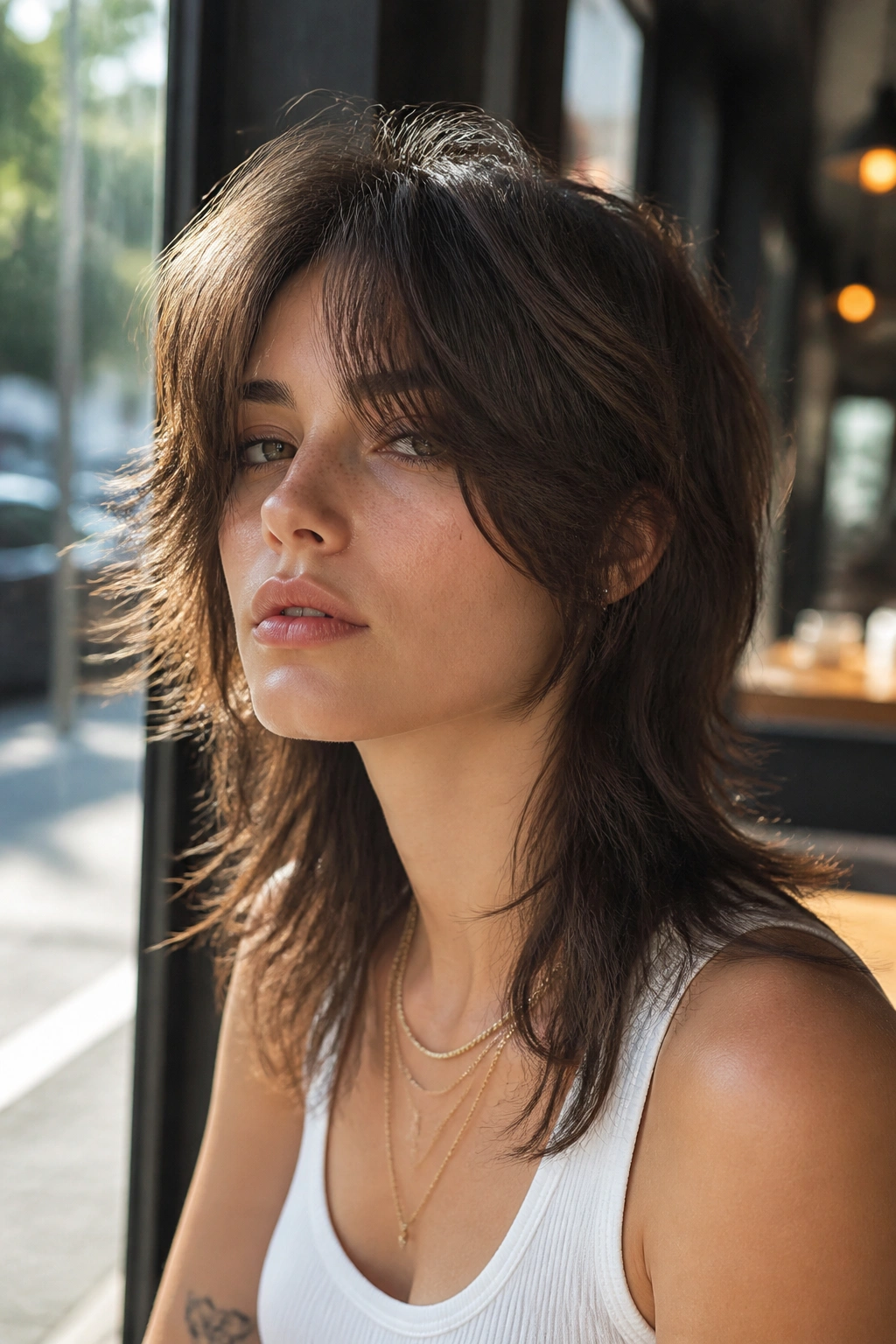
This is the loud one. The mullet-leaning wolf cut pushes the back longer, keeps the crown shorter, and lets the curtain fringe come in fuller so the front has more weight. If you want a haircut with a little bite, this is where you go.
It’s a great choice for people who like clear shape. Not every wolf cut needs to be subtle. Some should look like a decision was made. This one has that feel, especially when the bangs are cut broad enough to split cleanly down the middle and then swing out past the cheekbones.
It does ask for more styling than the softer versions. Straight hair usually needs texture spray or paste to keep the layers separated. Wavy hair does some of the work on its own. Either way, the back needs enough length to keep the mullet influence obvious, or the whole thing just looks like a short shag with commitment issues.
Not for everyone. Very good for the right person.
9. Choppy Wolf Cut for Straight Hair
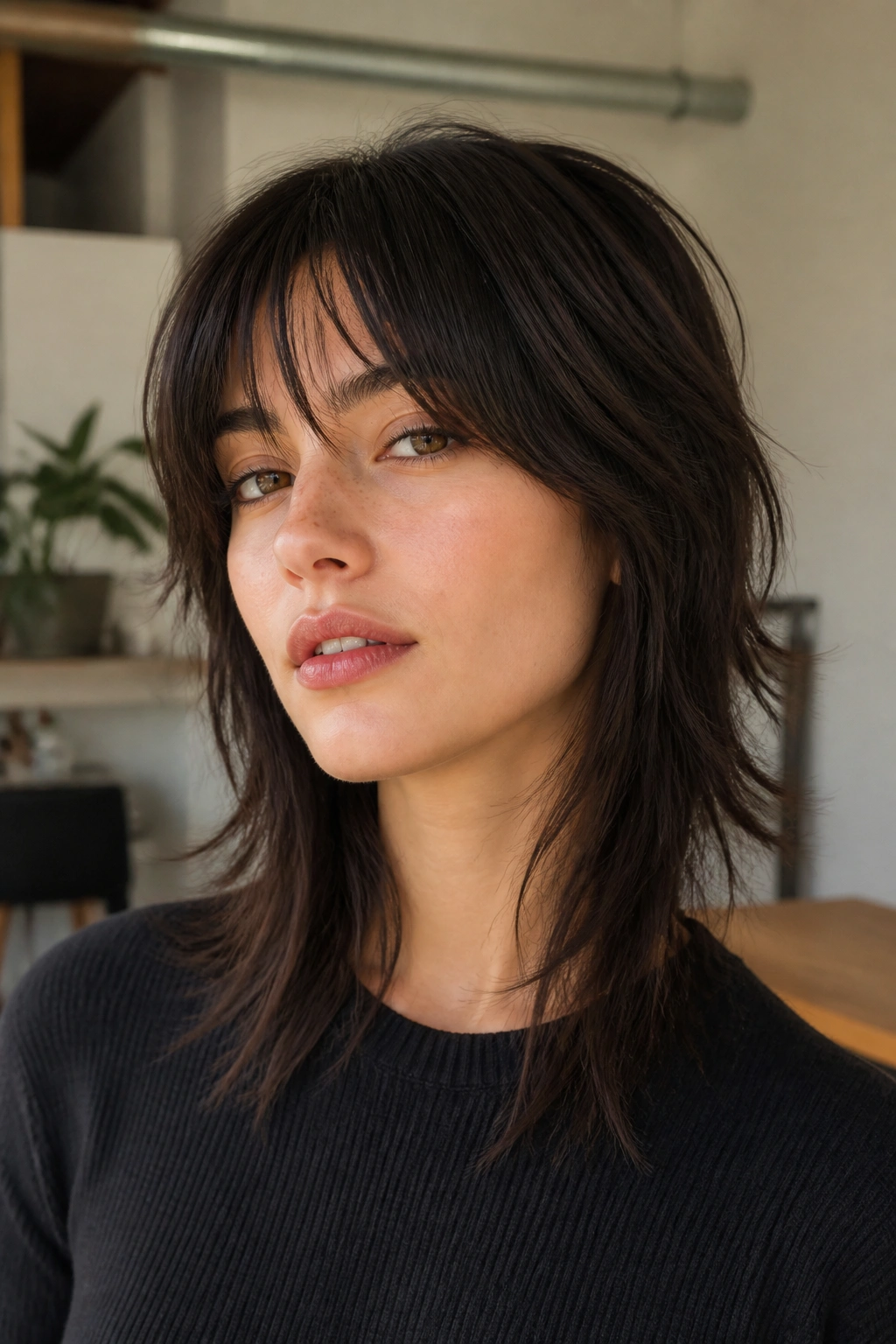
Straight hair can be a pain with layered cuts because it shows every line. That’s exactly why a choppy wolf cut works so well here. The unevenness breaks up the flatness and gives the style some movement even when the hair refuses to bend on its own.
The curtain bangs should not be too thick or too polished in this version. A little pieceiness helps them fall apart in a good way. Ask for soft texturizing through the mid-lengths, but keep the lower lengths defined enough that the haircut still has a shape when it settles. If everything gets shredded, straight hair can look thin fast.
I like this cut with a bit of bend created by a flat iron or round brush, not pin-straight. Just a small turn at the ends changes the whole feel. A single pass with a curling iron on a few front pieces can help too, but don’t overdo it. Straight hair always looks best when the effort stays invisible.
A clean finish with rough edges. That’s the sweet spot.
10. Wavy Wolf Cut with Air-Dried Texture
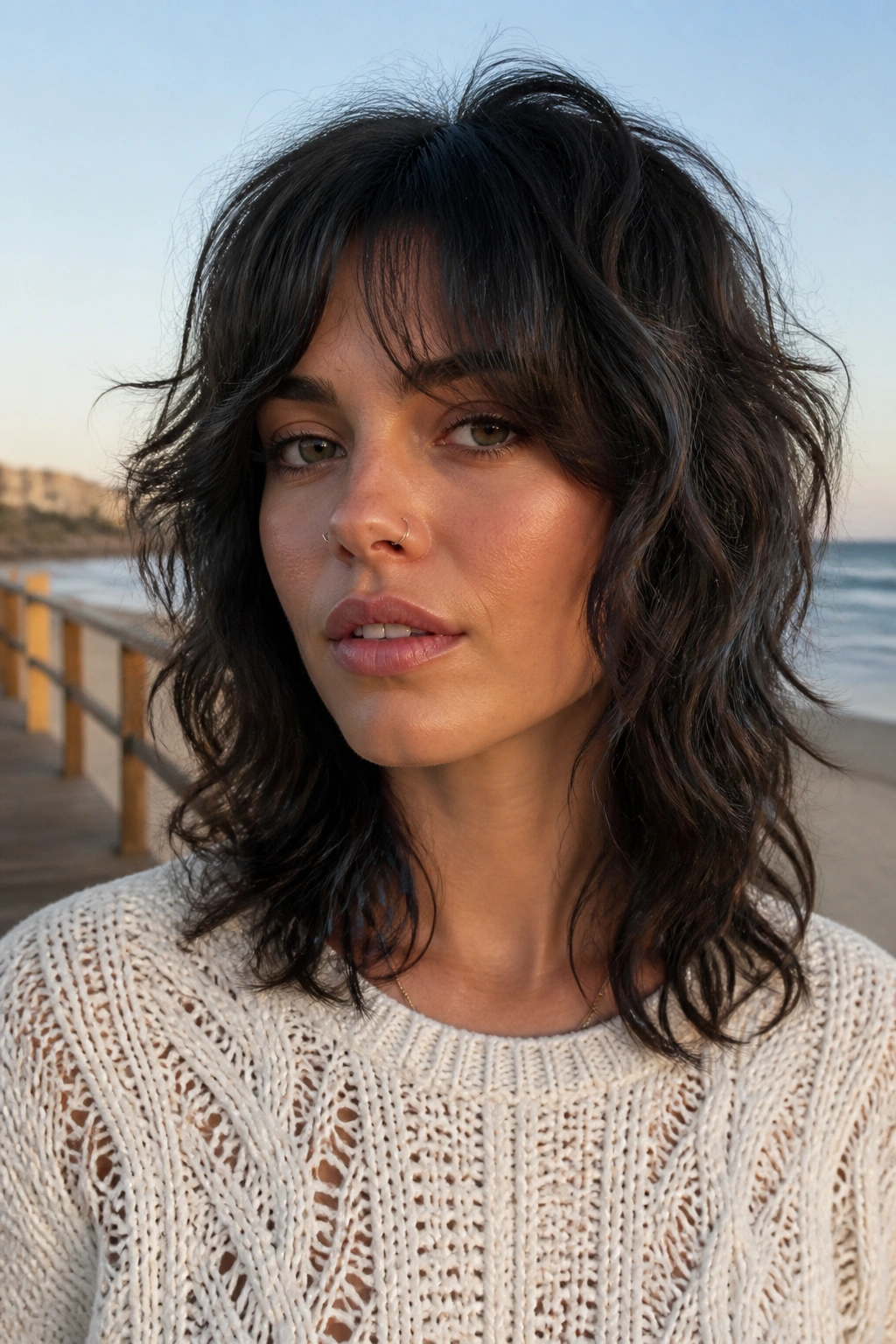
Some cuts fight your texture. This one lets it run the show. A wavy wolf cut works best when the layers are placed to support the natural S-bend in the hair, and the curtain bangs are long enough to fold open instead of sticking straight to the forehead.
If your hair already dries with some wave, you do not need a loud styling routine. You need water, a light leave-in, and a product that keeps frizz from taking over. The haircut should land in a way that makes the wave visible at the cheeks and through the back, not all bunched up in the middle. That means the layers must be cut with the wave pattern in mind, not against it.
How to Air-Dry Without Frizz
- Start with a leave-in conditioner on damp hair
- Add a small amount of curl cream or wave cream from mid-length to ends
- Scrunch once, then leave it alone
- Use a microfiber towel or T-shirt, not a rough bath towel
- Separate the bangs with your fingers while they dry so they don’t clump weirdly
This version is easy to love because it does not ask for perfection. It asks for a good cut and a little patience.
11. Wolf Cut with Face-Framing Highlights
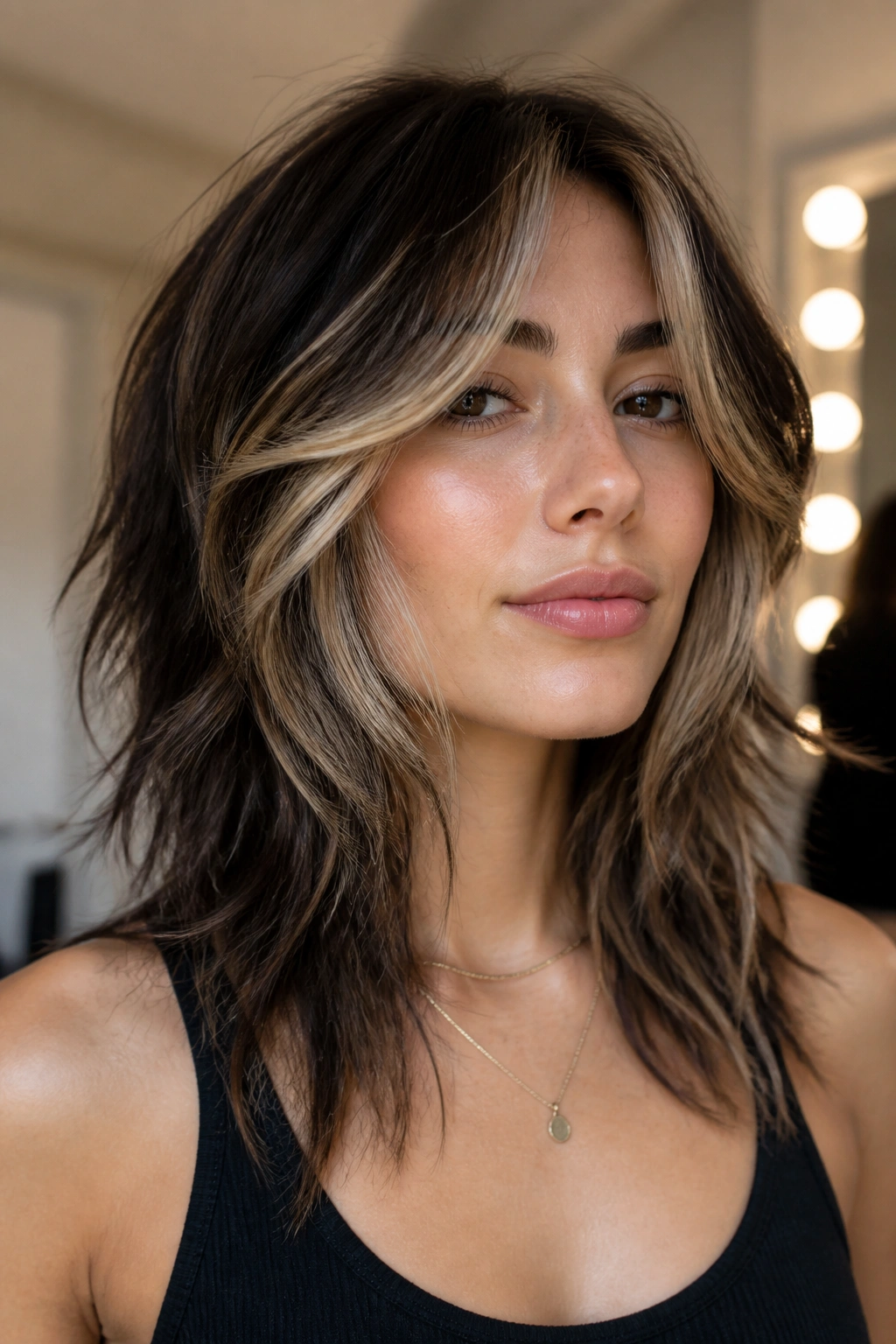
Color changes the whole haircut. A wolf cut with face-framing highlights uses light placement to trace the layers, and that can make curtain bangs look much fuller without adding any real bulk. It’s one of my favorite tricks when someone says the cut feels too invisible on them.
The front pieces matter most here. A few lighter ribbons around the bangs and cheekbones pull the eye forward, while darker underlayers keep the shape grounded. If the placement is done well, the hair looks more dimensional when it moves, and the layer structure becomes obvious even in soft light. That matters for people with dark brown, black, copper, or medium blonde hair who want the cut to show up more.
A small note: too many light pieces everywhere can flatten the point of the cut. Keep the brightest bits around the fringe and the money pieces near the face, and leave the rest quieter. That contrast gives the haircut room to breathe.
This is the version I’d point to if you want the cut to read more clearly in mirrors, photos, and real life.
12. Sleek Wolf Cut with Soft Curtain Bangs
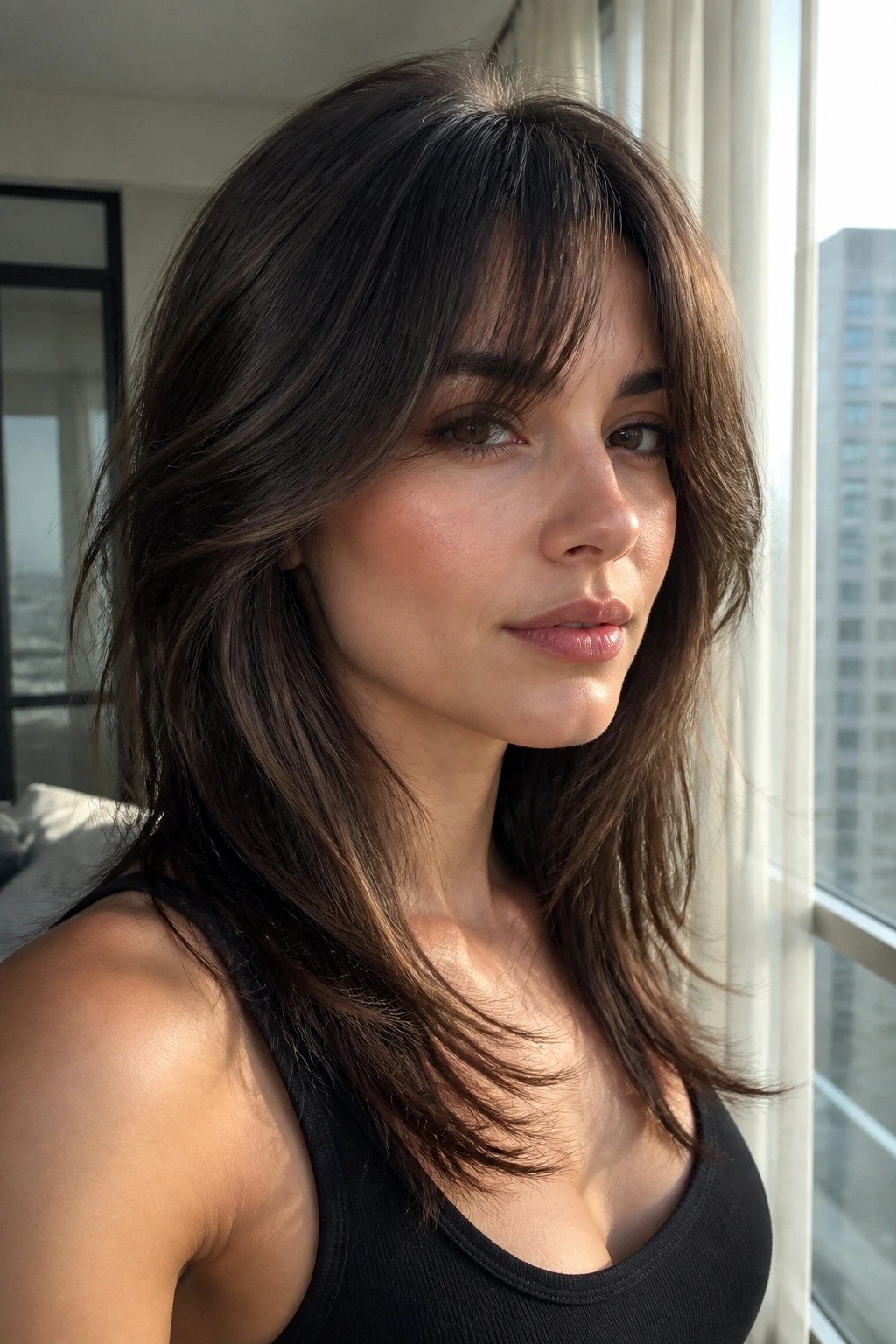
Not every wolf cut needs to look rough. The sleek version keeps the layers longer and cleaner, then lets the curtain bangs soften the front so the haircut still feels approachable. It’s a good choice for people who blow-dry their hair straight or prefer a smoother finish with less obvious choppiness.
What makes this style work is restraint. The ends should move, but they should not look shredded. The layers begin lower, often near the chin or collarbone, and the curtain bangs blend into the face instead of breaking away from it. That means you get the shape of a wolf cut without the full shaggy blast.
A smoothing cream or light heat protectant helps here, especially if your hair frizzes easily. Blow-dry the bangs away from the face first, then sweep them back toward the center part once they cool. That little cool-down moment sets the bend and keeps the front from sticking flat.
Soft does not mean boring. It just means the haircut is doing more with less.
13. Wolf Cut for Round Faces with Long Curtain Bangs
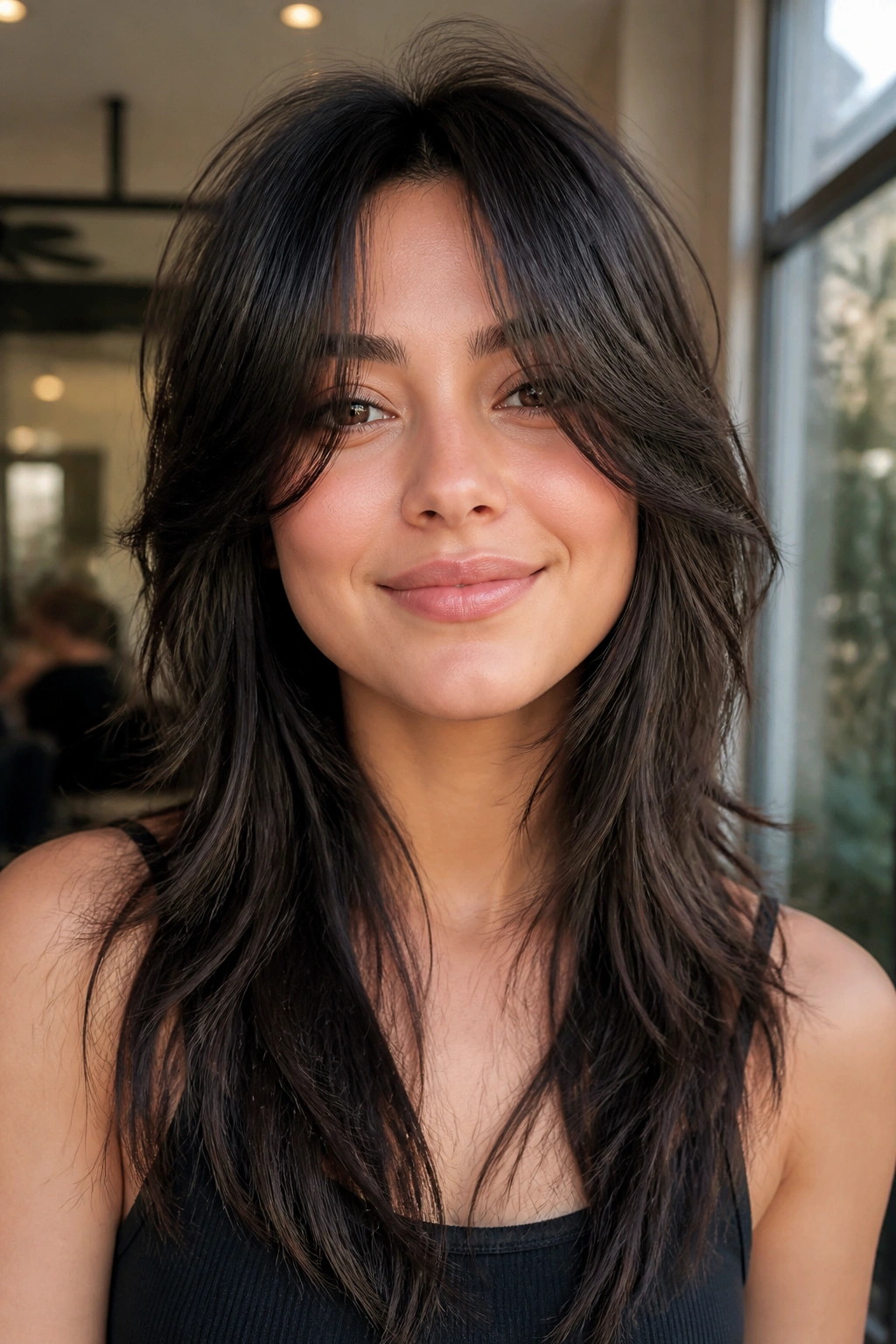
Can a wolf cut flatter a round face? Yes, if the layers are placed with some care. The goal is to create length through the front and a little lift at the crown, not to add more width at the cheeks. That means long curtain bangs are your friend, while short blunt fringe usually is not.
The front pieces should fall below the cheekbones, ideally heading toward the jawline or even lower. That keeps the eye moving downward and gives the face more vertical line. The crown can still have lift, but the volume should stay controlled so it does not balloon outward around the sides. Too much side width is the enemy here.
I like this version with a center part and a soft bend through the longer layers. It gives the face some structure without feeling severe. If your hair is thick, ask the stylist to keep the side pieces slimmer near the cheeks and slightly fuller toward the ends. That shape helps.
A lot of people overthink face shape. They do not need to. They need a few well-placed layers and a bang length that does not cut the face in half.
14. Wolf Cut for Oval Faces with Center-Part Bangs
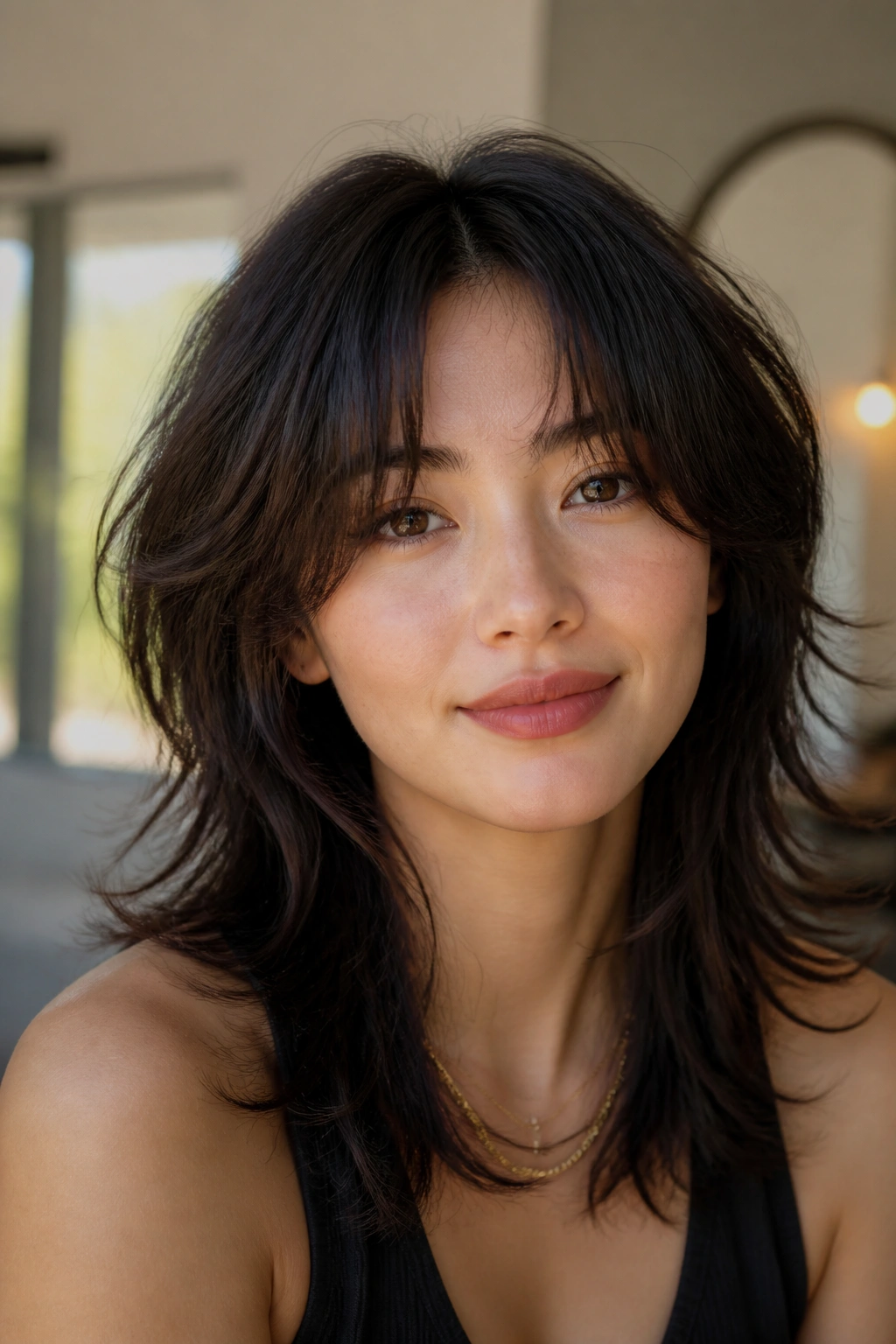
Oval faces get away with a lot, and I mean that in the nicest possible way. The trick is not to hide the face, but to choose a wolf cut that keeps the proportions balanced. A center-part curtain bang usually lands well here because it echoes the natural symmetry of the face and gives the haircut a calm anchor.
What to Ask For
- Layers that start around the cheekbone to jawline range
- A center part that opens cleanly at the forehead
- Face-framing pieces that curve inward slightly at the chin
- A perimeter that keeps enough length for swing
The nice thing about this shape is that it can go softer or sharper depending on how the layers are cut. If you want a more playful look, keep the crown shorter and the ends broken up. If you want something cleaner, ask for longer layers and less texture at the bottom.
Oval faces do not need much correction. They need a haircut with some personality. This one usually delivers that without trying too hard.
15. Wolf Cut with Micro-Layers and Tapered Fringe
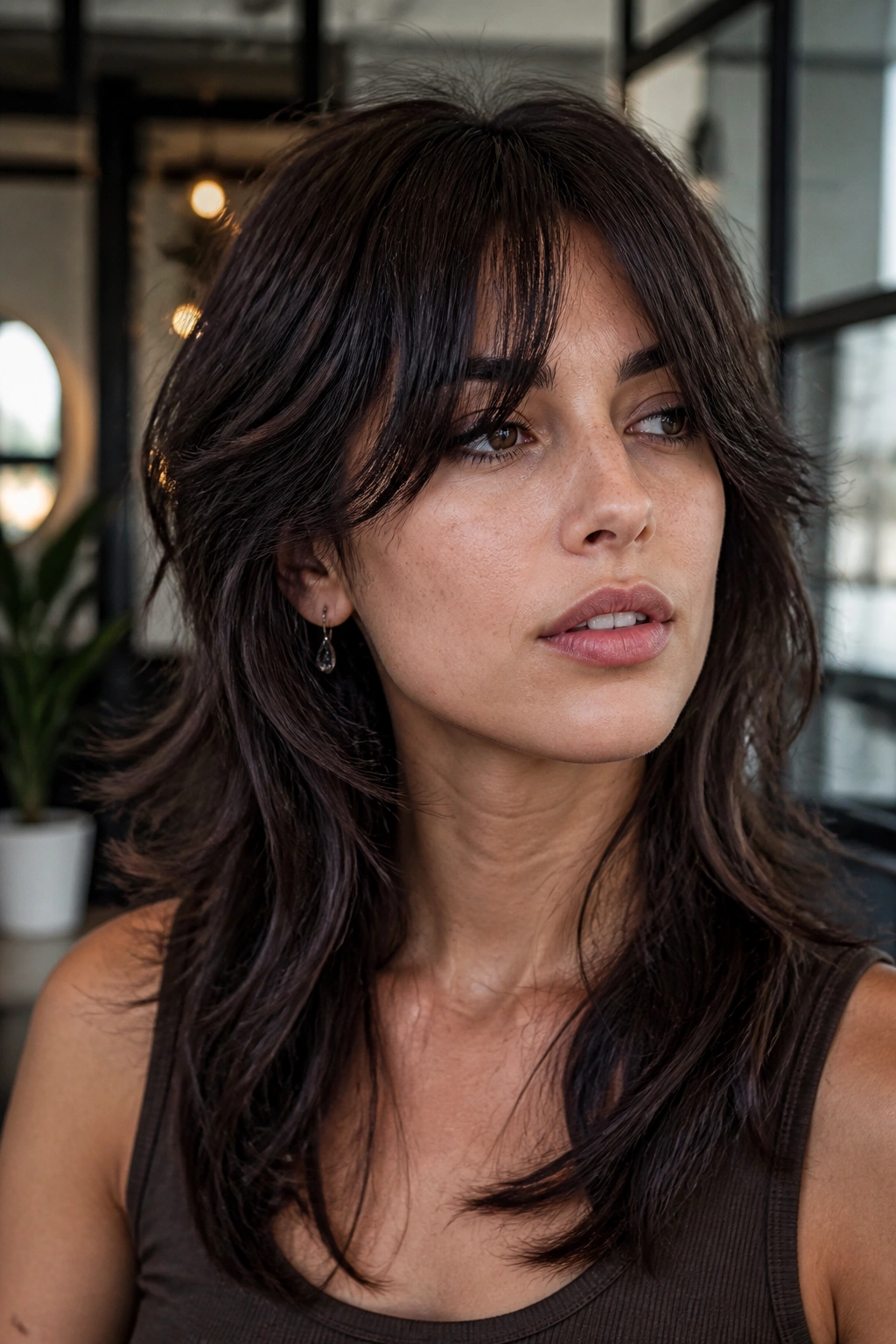
Micro-layers are a sneaky good idea when you want movement without a lot of obvious choppiness. Instead of big visible steps, the stylist builds tiny changes through the interior so the hair shifts when you move but doesn’t look sliced apart. The result is softer than a classic shag and less aggressive than a mullet-leaning wolf cut.
The tapered fringe matters here. Curtain bangs should narrow gently at the center and widen only enough to frame the face, not announce themselves from across the room. That keeps the haircut light around the forehead and lets the rest of the shape do the talking. It’s a smart choice for people with fine-to-medium hair who want texture but hate chunky layers.
One thing I’d avoid: over-texturizing the ends. If the cut gets too thin at the bottom, the micro-layers lose their point and the hair starts to look airy in a bad way. Keep some weight. That’s what makes this version feel expensive rather than flimsy.
Small cuts, big difference.
16. Retro ’70s Wolf Cut with Blowout Curtain Bangs
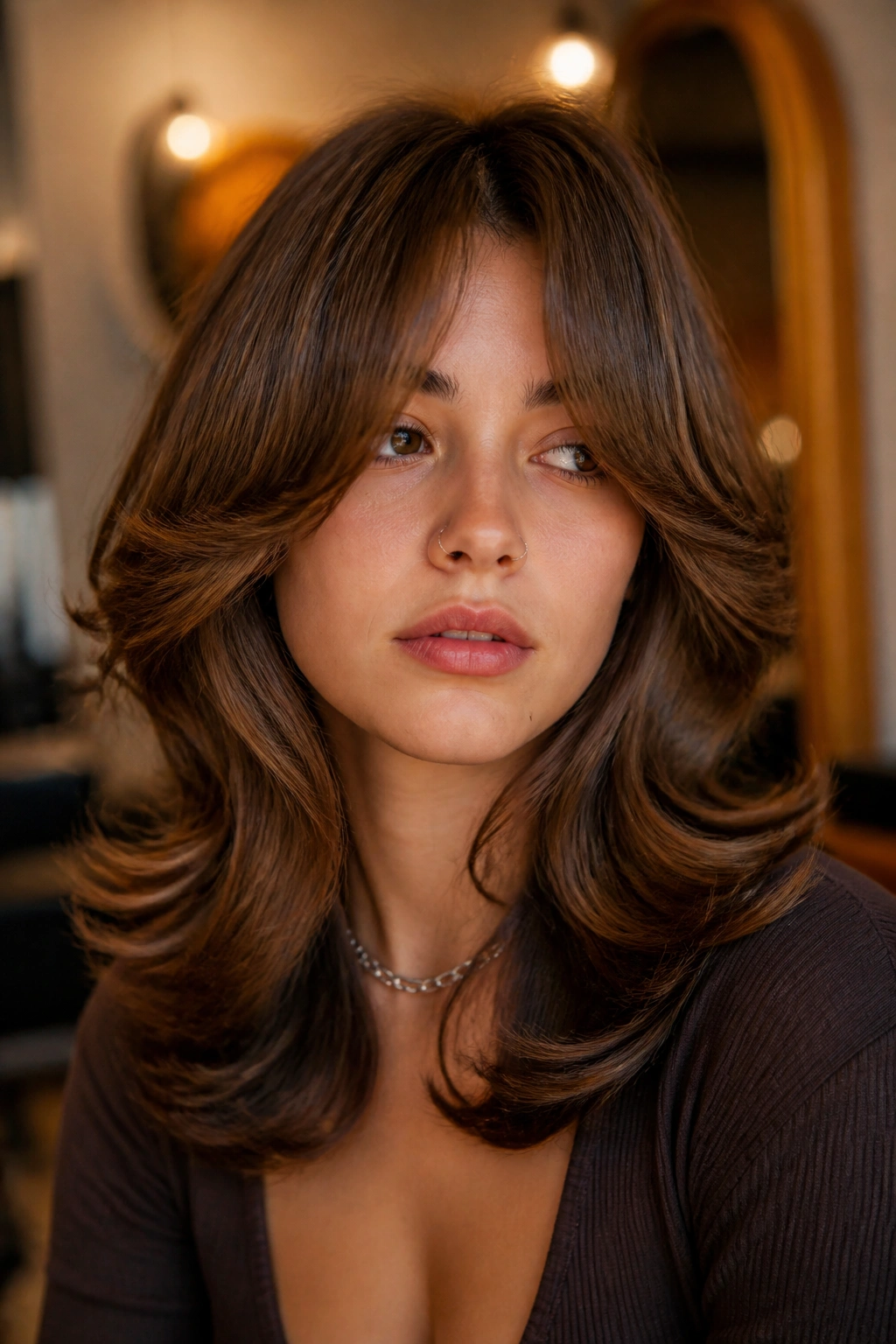
This one leans glamour instead of grunge. The retro ’70s wolf cut takes the shaggy structure and gives it a round-brush blowout finish, so the curtain bangs sweep away from the face with a little flip at the ends. Think movement, shine, and a shape that looks intentional even when it’s touchable and loose.
It’s especially good on hair with some density, because the blowout needs material to hold its shape. The layers should be soft enough to swing but not so short that they puff up. If the curtain bangs are cut with enough length to sit past the cheekbones, they can be brushed back into that soft wing shape that makes the whole haircut feel polished.
This version pairs well with velcro rollers, a medium round brush, or even just a blow dryer and a few careful turns at the front. The ends should bend outward, not curl into tight spirals. That little flare is the whole point.
It’s a dramatic look, but not a loud one. There’s a difference.
17. Indie Wolf Cut with Uneven Lengths
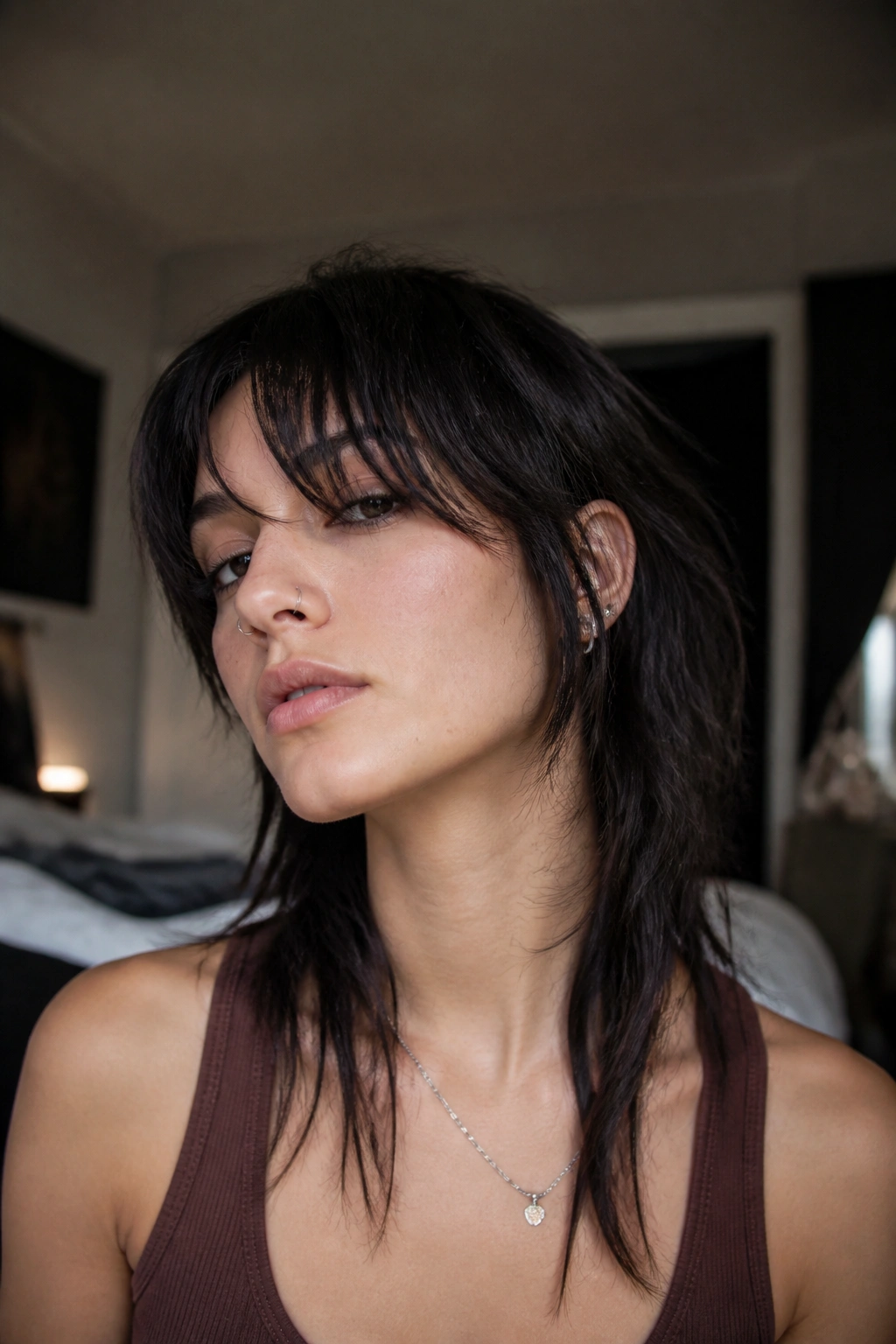
If you like your hair a little offbeat, this is the one. The indie wolf cut leans into uneven lengths on purpose, so the curtain bangs may sit slightly different on each side and the back may fall in a less symmetrical way. It looks casual, but it is not random. The best versions are controlled chaos.
The shape works because the eye keeps moving. Nothing sits too neatly, so the haircut feels alive even when you do almost nothing to it. Wavy and slightly textured hair tends to suit this look best, though straight hair can still wear it if the layers are given enough movement through the ends. The point is not precision. The point is personality.
I would not choose this version if you want a very tidy outline. That would miss the point entirely. But if you like hair that feels like it has a story, this cut has that built in.
A little unevenness can be the whole charm.
18. Low-Maintenance Wolf Cut with Grow-Out Friendly Bangs
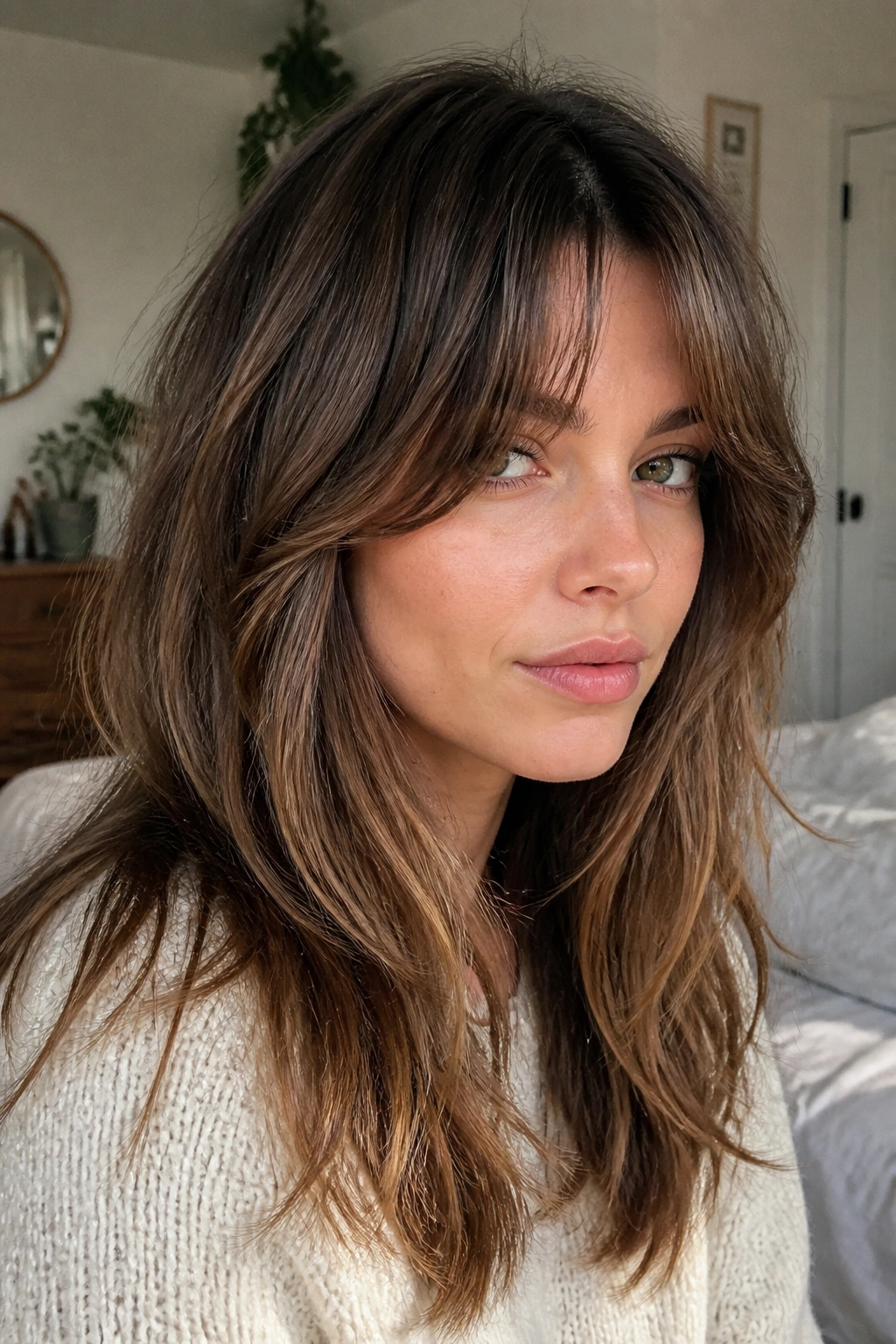
This is the one I keep coming back to for people who say they want the look but not the upkeep. The low-maintenance wolf cut keeps the layers softer, the curtain bangs longer, and the overall shape gentle enough that it still looks decent four or six weeks later when life gets busy.
The Maintenance Sweet Spot
The bangs should be long enough to split and tuck, not so short that they demand constant trimming. Think cheekbone to lip length, with the outer pieces blending into the rest of the cut. That gives you more freedom on bad hair days, and it keeps the grow-out from turning into a strange shelf in the front.
- Bang trims every 8 to 10 weeks usually keep the shape open
- A quick root-dry with a blow dryer adds lift without a full styling session
- Dry shampoo at the crown helps if the top goes flat by midday
- A little texture spray on the ends is usually enough
This is probably the version I’d suggest first if you’re nervous about going too short or too shaggy. It still has wolf-cut energy, just with less punishment.
19. Bold High-Contrast Wolf Cut with Heavy Curtain Bangs
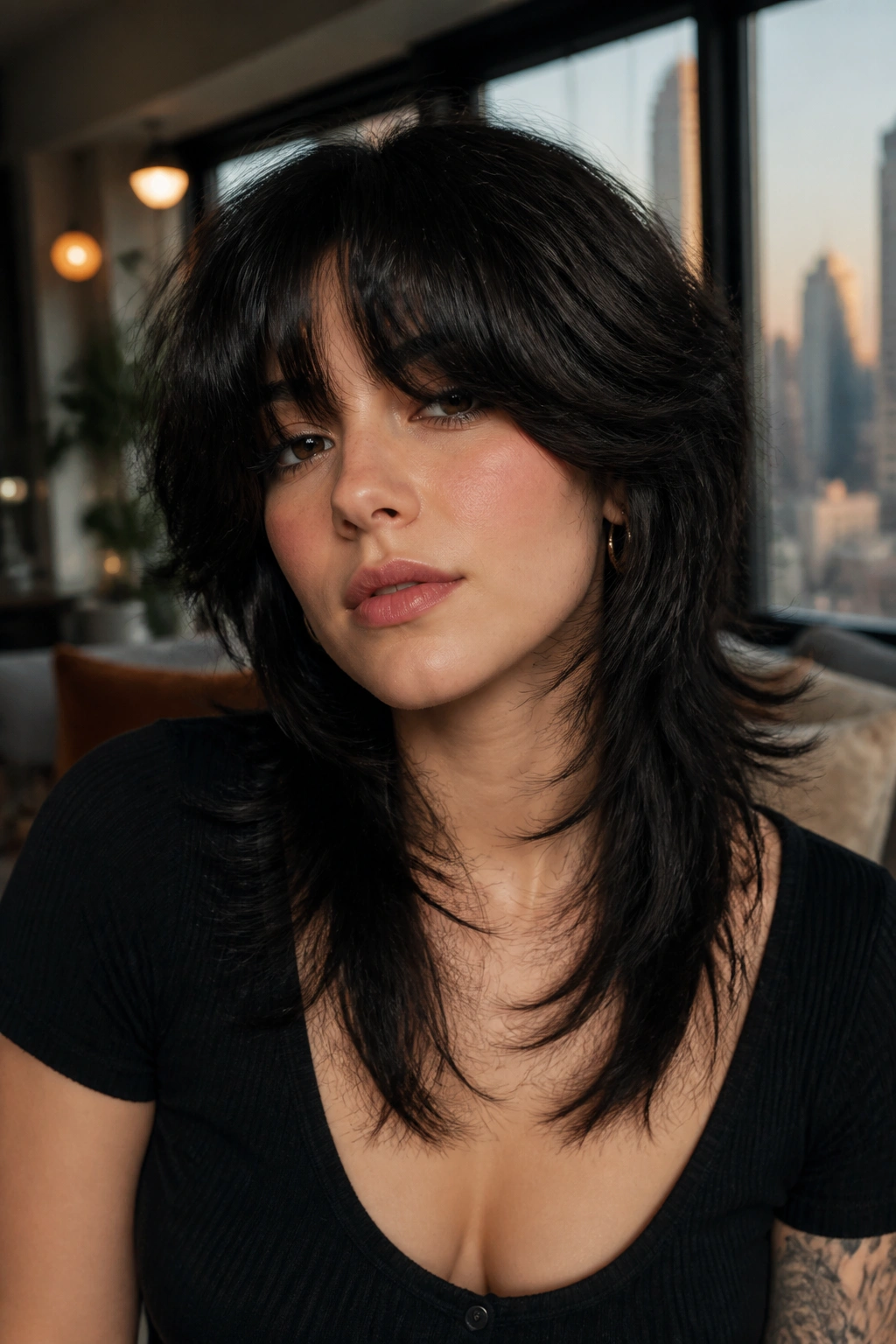
Some wolf cuts whisper. This one talks back. The bold high-contrast version uses a heavier curtain bang up front and lighter, more tapered ends through the body of the hair so the front feels dense and the back feels airy. That contrast creates a sharper silhouette, which can look fantastic on thick or medium-dense hair.
The bang area carries the style here. It should have enough weight to split cleanly and fall with presence, not just float off the forehead in wisps. Then the rest of the cut can get looser and softer underneath, which makes the front feel even stronger. If your hair color is deep or rich — dark brunette, black, auburn — the contrast reads even more clearly.
This is not the best pick if you hate styling bangs. Heavier curtain fringe wants a little attention. It likes a brush, a quick blow-dry, and sometimes a trim sooner than the rest of the haircut. But if you enjoy a strong front frame and a cut that shows up the second you walk into a room, it does the job.
It’s a statement cut. No pretending otherwise.
20. Soft Wolf Cut That Grows Out Gracefully
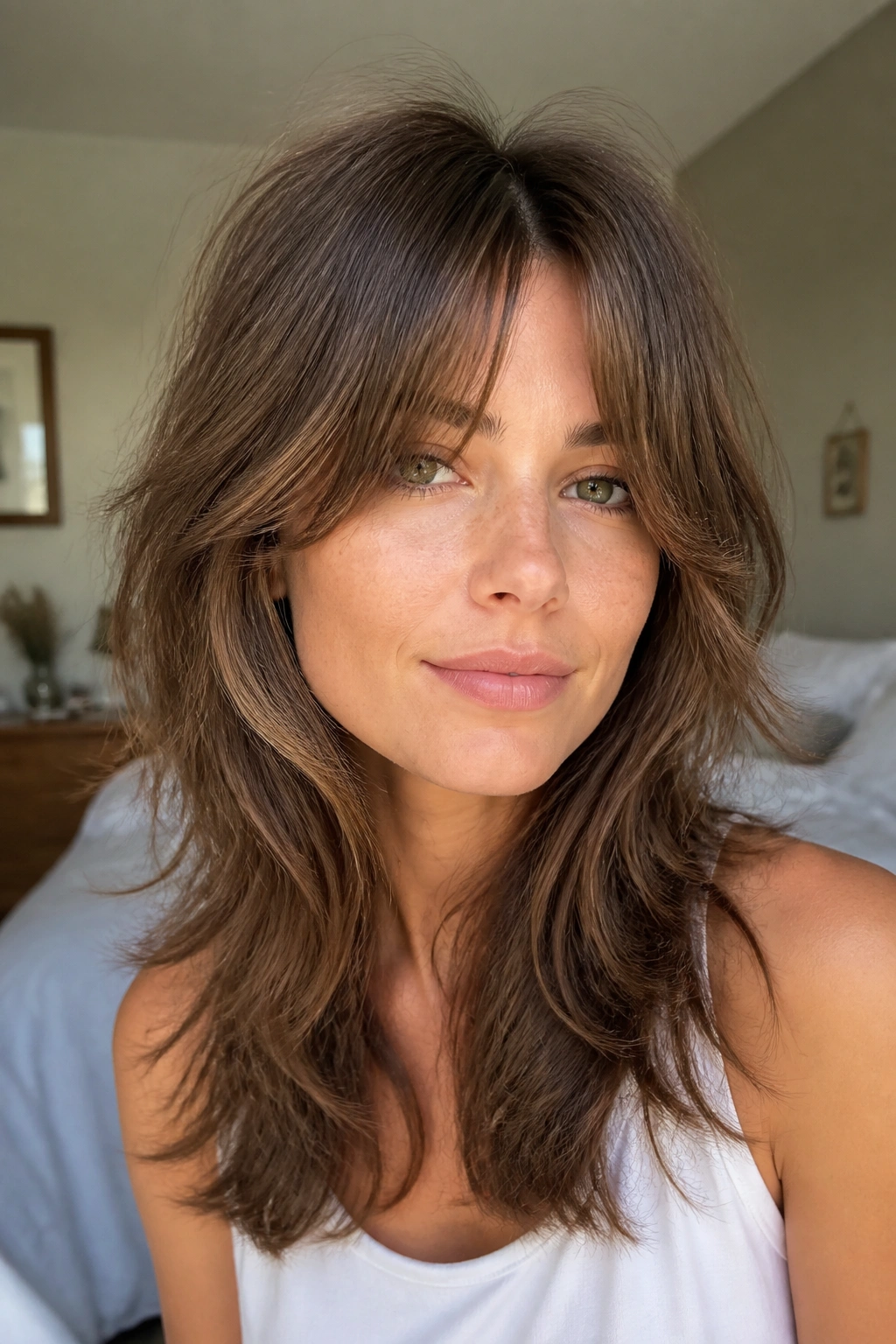
If you want one version that feels friendly on day one and forgiving three months later, this is the one. The soft wolf cut that grows out gracefully keeps the layers lower, the ends cushioned, and the curtain bangs long enough to shift from face-framing fringe into a softer sweep without looking awkward.
What makes this version smart is the spacing. The crown still gets lift, but it doesn’t get hacked to pieces. The front pieces stay blended, so when the bangs lose their shape between trims, they fall into the rest of the haircut instead of sitting there like a separate event. That makes a huge difference if you do not want a high-maintenance routine.
It suits almost everyone who likes movement but not drama. Fine hair gets shape without looking thin. Thick hair gets some relief without too much removal. Wavy hair gets a shape that plays nicely with air-drying. That’s why I’d keep this one near the top of the list for first-timers. It is the rare wolf cut that feels like it can live a normal life.
