



Thick hair can make a wolf cut look rich and alive, or it can make it look like a triangle with opinions. There isn’t much middle ground. That’s why wolf cuts for thick hair women need a little more planning than the fluffy inspo shots usually admit.
The cut works best when the stylist moves weight out of the right places. Not all of them. You want lift at the crown, movement through the mid-lengths, and enough length at the bottom so the whole shape still feels like hair, not a frayed cloud. When those pieces are balanced, thick hair starts to move instead of sitting there like a heavy curtain.
That balance matters even more if your hair is coarse, dense, or naturally wavy. Thick hair has memory. It holds shape, yes, but it also holds bad layering, blunt lines, and over-thinned ends. A good wolf cut respects that. It doesn’t fight the hair so much as redirect it.
So the trick is not “how messy can we make it?” It’s which version gives you movement without giving up the good weight that thick hair already has. The styles below lean in different directions — softer, sharper, longer, shorter, fringe-heavy, curl-friendly — and the best one for you depends on how much edge you want to wear every day.
1. Long Wolf Cut With Airy Curtain Bangs
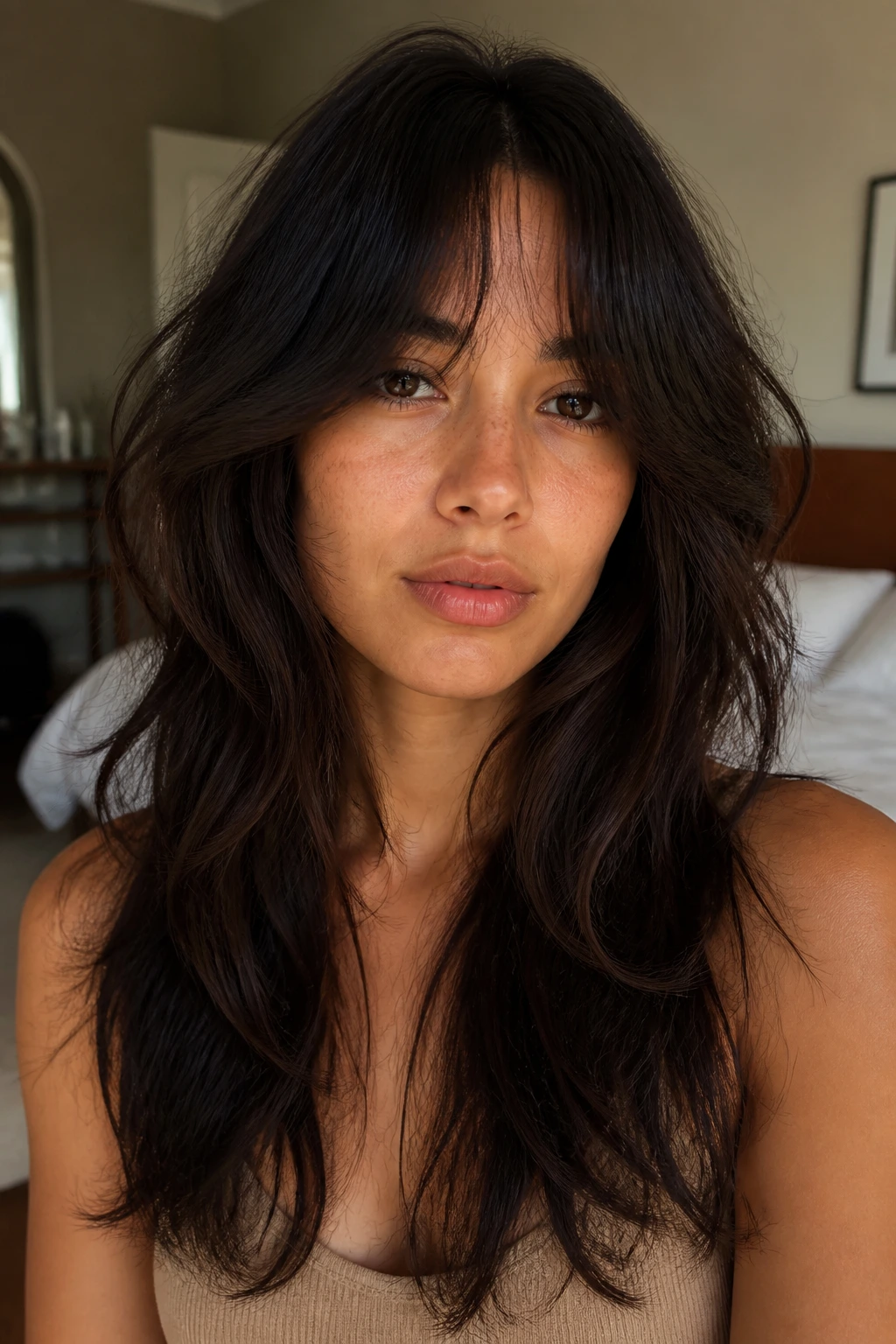
This is the version I reach for when thick hair needs movement without losing its length. Long wolf cuts with airy curtain bangs keep the ends full while opening up the front, which stops dense hair from swallowing your face whole. It’s the least fussy place to start if you want the wolf cut shape without going dramatic.
Why It Works on Dense Hair
The long length gives thick hair room to fall instead of puffing out at the widest point. Curtain bangs split the front weight, so the hair near your cheeks doesn’t sit in one heavy sheet. That tiny shift changes everything.
Ask for layers that begin around the cheekbone or upper lip, not too high up the head. Too-short layers on thick hair can make the crown look wide and the bottom look thin. Nobody wants that.
- Keep the fringe soft, not blunt.
- Leave enough length in the back to keep the cut grounded.
- Let the layers melt into the perimeter instead of chopping them off sharply.
Airy beats heavy here. A quick blow-dry with a round brush on the bangs and a rough dry through the rest of the hair usually gives this cut its best shape.
2. Shoulder-Length Wolf Cut With Feathered Layers
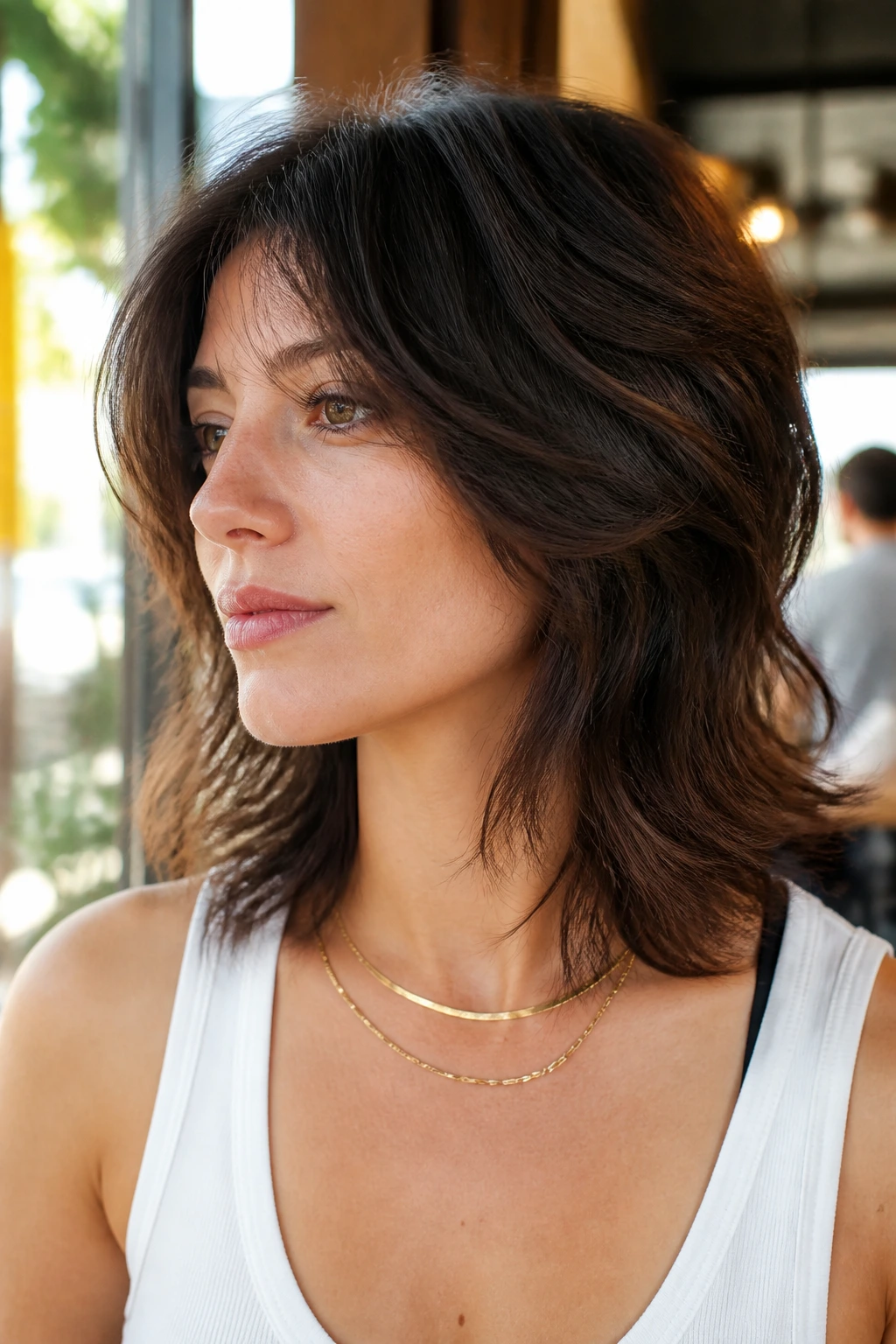
Want something easier to wear every day? Shoulder-length is the sweet spot for a lot of thick-haired women. A shoulder-length wolf cut with feathered layers gives you swing and lift without needing waist-length hair to carry the style.
The reason it works is simple: the length sits where the hair can still move. Once thick hair gets too long, it can start looking dragged down, especially if the ends are blunt. Shoulder length keeps the outline light enough to feel fresh, but not so short that the density turns into a puffball.
Feathering is the part that makes this one feel softer than a classic mullet. The layers should brush away from the face and bend under at the ends, almost like the hair was shaped with a round brush and a little impatience. That little bit of bend matters.
If you like a cut that looks good with a two-minute style, this is a smart pick. Rough-dry it 80%, add a small dab of mousse at the roots, and finish with your fingers instead of a brush. That keeps the texture alive instead of flattening it out.
3. Soft Wolf Cut With Cheekbone-Framing Fringe
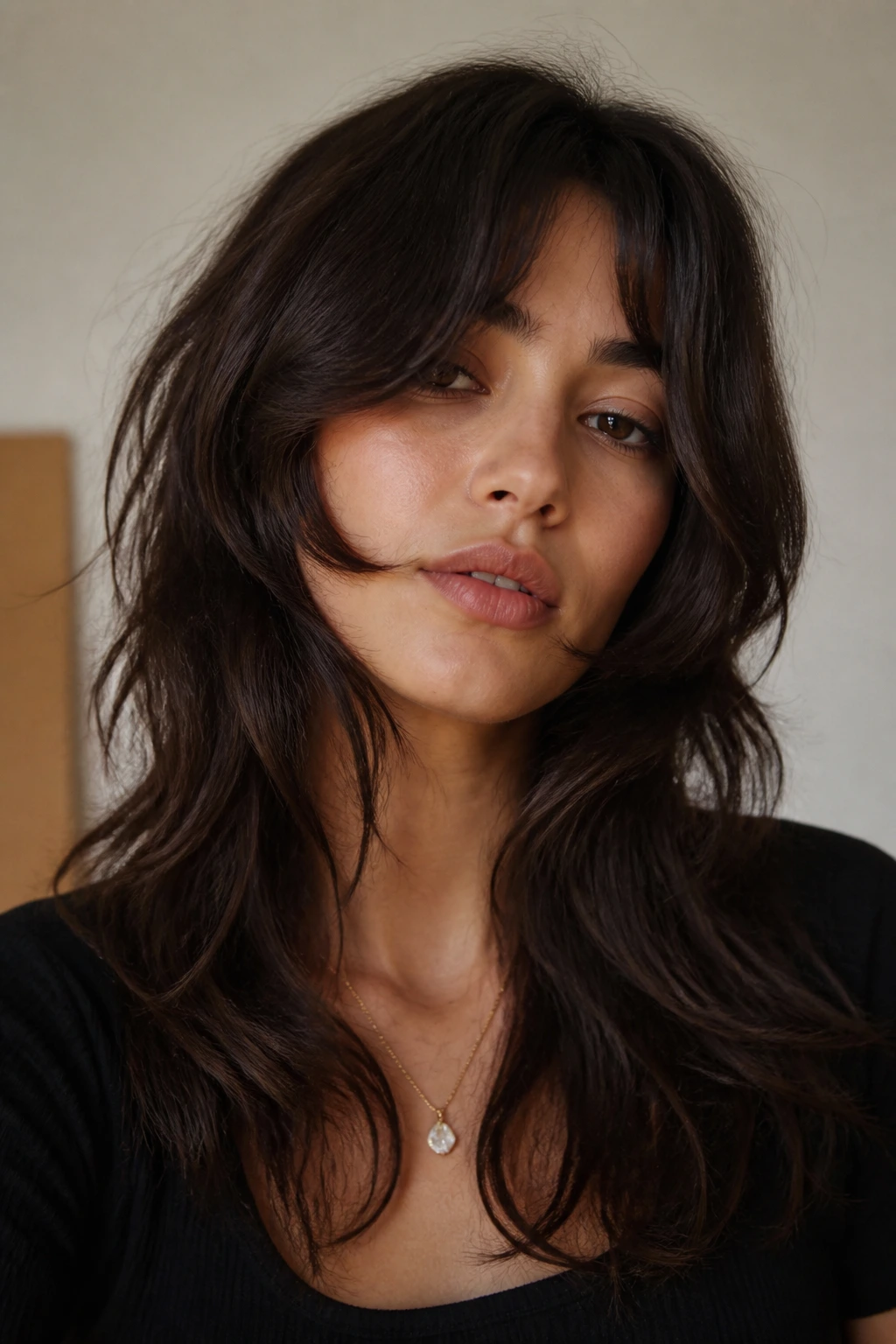
If you’re nervous about going full wolf cut, this is the soft landing. A soft wolf cut with cheekbone-framing fringe keeps the spirit of the cut but tones down the choppy edge, which can be a relief if your hair is already big and textured.
The fringe is the whole story here. Instead of cutting straight across the forehead, the front pieces start shorter near the cheekbones and drift longer as they move down. That shape pulls attention upward without making the front look crowded. On thick hair, that’s gold.
Best Details to Ask For
- Keep the shortest pieces just below the brow or around the cheekbone.
- Ask for soft internal layers, not a shredded surface.
- Leave the perimeter blunt enough to keep the haircut from looking thin.
This version is especially good if you wear your hair parted in the middle or slightly off-center. It also grows out kindly, which matters more than people admit. A cut can look gorgeous on day one and annoying by week six. That gets old fast.
4. Choppy Wolf Cut With Razor-Cut Ends

Razor work can be brilliant on thick hair. It can also go sideways fast. A choppy wolf cut with razor-cut ends gives the haircut a broken-up, airy finish, but it only looks good when the stylist knows where to stop.
On very dense hair, a razor can take out that blunt, heavy line that makes the bottom feel like a shelf. The ends move better, the layers separate, and the whole cut gets a little grit in it. That grit is part of the appeal.
But here’s the catch: over-razoring thick hair can leave the ends fuzzy, see-through, or weirdly frayed. If your hair is coarse and strong, this can work beautifully. If your ends are already dry, a razor can make them look older than they are.
I’d ask for controlled texture, not a full shred. The best version has definition in the front and enough weight in the back to keep the shape honest. If the cut looks too wispy in the salon mirror, it’ll usually look even thinner at home.
5. Curly Wolf Cut That Keeps the Volume Up Top

Why do curls and wolf cuts look so right together? Because both like movement. A curly wolf cut lets the hair stack at the crown while opening the lower half, so the shape feels alive instead of round and heavy.
The big mistake with curly thick hair is cutting it as if it were straight. That’s how you get lopsided layers and a halo that goes nowhere. A better approach is dry cutting, curl by curl, so the stylist can see where the bulk actually sits. Thick curls can hide a lot when they’re wet.
How to Style Without Breaking the Curl
- Use a cream or gel on soaking-wet hair.
- Scrunch upward, then stop touching it.
- Diffuse on low heat until the roots are dry and the curls feel set.
The crown should have the most lift, while the sides stay controlled enough to frame the face. That contrast gives the wolf cut its shape. And no, you do not need to brush it out dry. That route ends badly.
6. Wolf Cut With Bottleneck Bangs
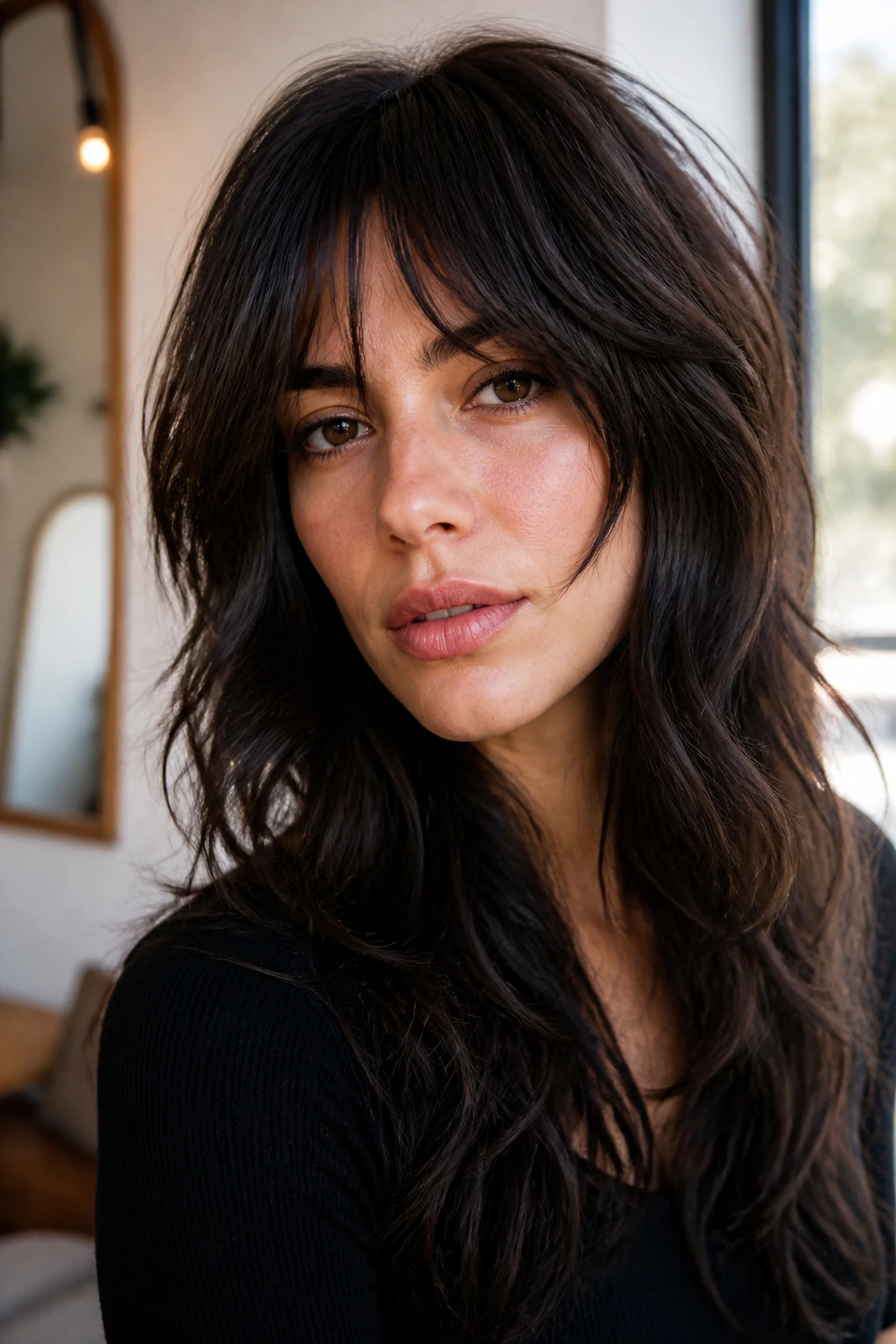
Bottleneck bangs are the cleanest way to pull a wolf cut together on thick hair. They start narrow at the center, open out near the temples, and blend into the rest of the cut without that hard bang line that can feel too heavy.
This fringe choice matters because thick hair around the face can get bulky fast. Bottleneck bangs trim that weight in a way that still looks deliberate. They also keep the forehead area soft, which helps if a full curtain fringe feels too broad on you.
The shape is especially good if your hair is straight or only slightly wavy. The bangs can lie close enough to the face to feel tidy, while the layers around them do the messier work. That contrast keeps the haircut from looking overdone.
A small round brush is your friend here. Dry the center first, then sweep the sides outward as they cool. The bend at the temples is what gives this fringe its easy finish.
7. Bouncy Mid-Length Wolf Cut With a Rounded Crown
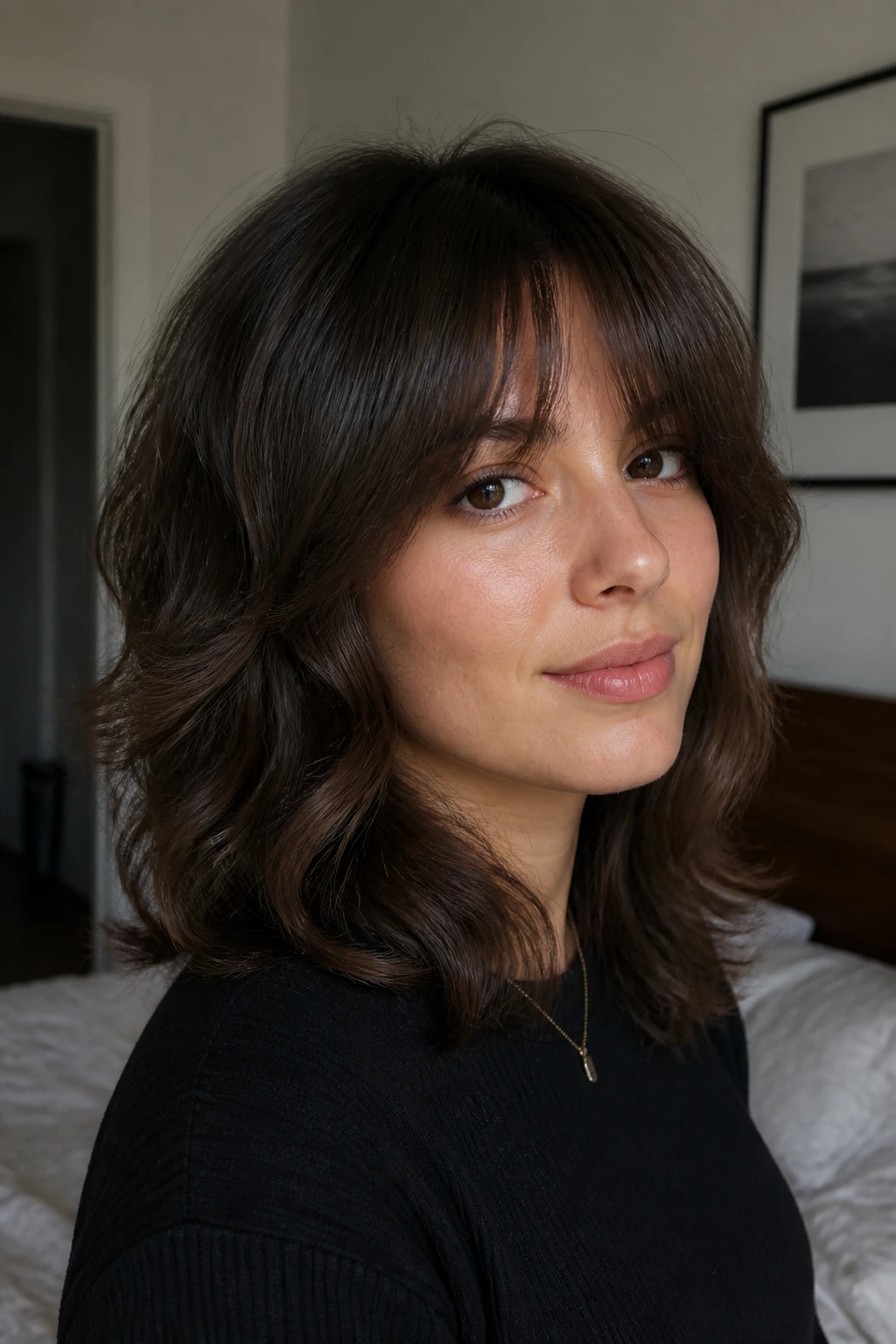
Picture thick hair that sits on the shoulders and refuses to move. That’s the hair this cut was made for. A bouncy mid-length wolf cut with a rounded crown creates lift where dense hair usually collapses.
The crown is the key. If the top sits flat, the whole cut can feel dragged downward, even when the layers are fine. Rounded crown layers give the illusion of height without making the top look short or choppy. It’s a cleaner move than adding more layers everywhere.
The mid-length is what keeps it wearable. You still have enough weight for swing, which matters when thick hair starts to feel too airy after a haircut. The balance between lift and heft is what keeps this style flattering.
The Part People Miss
The lowest layer should stay long enough to anchor everything. If the bottom gets too thin, the haircut turns puffy in the middle and stringy at the ends. That’s the exact opposite of what you want.
8. Shaggy Wolf Cut With Internal Layers

Unlike a classic shag that shows off every cut line, a shaggy wolf cut with internal layers hides some of the heavy lifting inside the hair. That makes it a smart move for thick women’s hair that needs shape but not a visible chop job.
Internal layers take weight out from beneath the surface, so the outer layer still looks full. That matters a lot with dense hair. If you cut every layer too visibly, the hair can start to look broken up in a way that feels accidental rather than stylish.
This version works especially well on hair that is thick from root to ends. The surface keeps its smoothness, but the inside stops fighting your head shape. You get movement when you walk, not just when you stand in front of a mirror and finger-comb it.
I like this one for people who want texture but still want to wear their hair up sometimes. The layers won’t create a tangled mess in a clip, and that’s a small comfort until you live with a haircut for a few months.
9. Heavy Fringe Wolf Cut for Thick Straight Hair
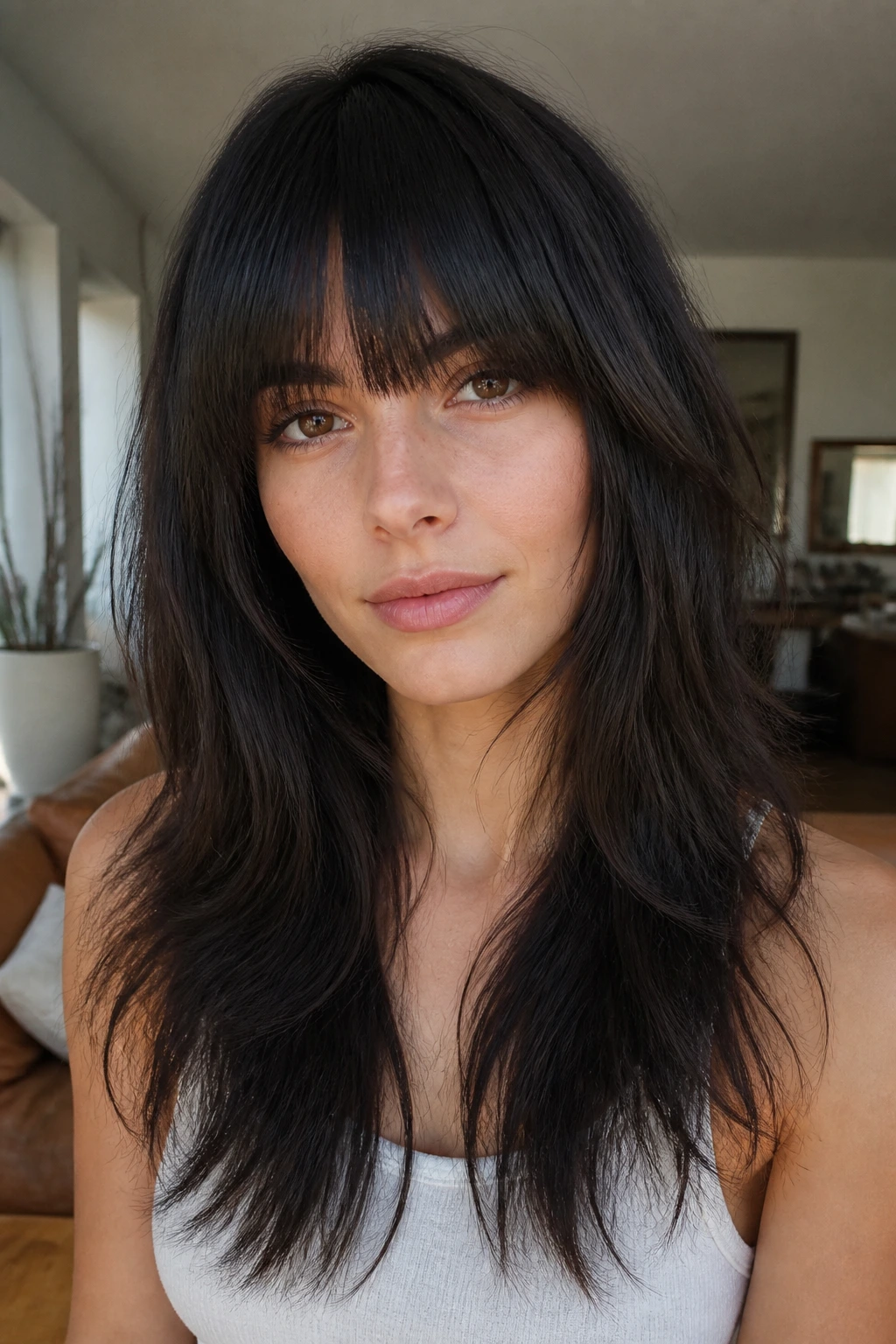
Straight thick hair has a way of sitting flat at the roots and flipping out at the ends, which is charming for about five minutes and then annoying. A heavy fringe wolf cut fixes some of that by putting the emphasis up front, where the hair needs a little drama.
The fringe should be full enough to feel intentional, but not so thick that it blocks the whole forehead. Think dense, not helmet-like. The rest of the cut can stay layered and soft, which gives the face a stronger frame and keeps the back from looking blunt.
This is a cut I like when the hair has natural weight but not a ton of bend. A heavier front keeps the top from disappearing into the rest of the length. It also gives straight hair a focal point, which is useful when the texture itself doesn’t do much for you.
A slight bend in the fringe helps, whether you use a round brush or a flat iron turned just a little at the wrist. The goal is movement, not a perfectly polished line. Too smooth and it loses the wolf cut feel.
10. Collarbone Wolf Cut With Face-Framing Flicks

If you want the safest cut in the bunch, start here. A collarbone wolf cut with face-framing flicks gives thick hair shape without asking it to become too short, too wispy, or too trendy-looking in the bad way.
Collarbone length is friendly to dense hair because it keeps enough weight to stop the ends from exploding outward. The face-framing flicks take the heaviness away from the front, which helps if your hair tends to sit all in one block. You still get that wolf cut softness, just with a calmer outline.
This version is easy to live with. Air dry it if you’re in a hurry, or bend the front pieces with a blow-dryer and let the rest do its own thing. That’s one reason it’s such a strong everyday option.
- Works with natural waves.
- Looks good with a deep side part or center part.
- Grows out without awkward steps.
It’s the haircut I’d suggest to someone who wants movement but doesn’t want strangers to know she changed her hair from across the room.
11. Layered Wolf Mullet With a Stronger Edge

People say the wolf cut has to stay soft. It doesn’t. A layered wolf mullet with a stronger edge keeps the crown shorter and the back longer, which gives thick hair a sharper personality.
The trick is making the difference in length feel intentional. You want contrast, not a mistake. That means the top can be a bit more cut up, the sides a little slimmer, and the back long enough to keep the silhouette sleek. If the transitions are too abrupt, the whole thing can feel costume-y.
This is the version for women who like a haircut with some bite. It looks good with strong brows, a little eyeliner, or big earrings, though none of that is required. The haircut carries itself.
I’d skip this if you want a soft, romantic outline. But if your thick hair tends to look plain when it’s too even, this shape gives it a sharper spine.
12. Soft Copper Wolf Cut With Long Tapered Pieces

Color changes how a wolf cut reads, and soft copper with long tapered pieces is one of my favorite combinations on thick hair. The warm tone shows off the layers without making them look harsh.
Long tapered pieces around the face keep the cut from becoming blocky. They draw the eye downward in a smooth line, which helps thick hair look lighter without losing its body. Copper, auburn, and cinnamon shades tend to catch every little bend, so the haircut looks more detailed even when the styling is simple.
This version is especially nice if your hair is naturally dense and you want movement to show from across the room. Darker colors can hide the layers a little; warm tones make them easier to see. That matters more than people think.
You do not need bold color to make this work. The shape does the real job. But when warm tones meet soft layering, the haircut feels richer and less severe.
13. Wolf Cut With Side-Swept Bangs

What if curtain bangs are not your thing? Then side-swept bangs might be the better move. A wolf cut with side-swept bangs softens thick hair at the front without forcing a center part or a full fringe.
Side-swept bangs are especially useful if you have a cowlick or a forehead pattern that fights middle-part styles. They let the hair fall in one direction, which can be a relief when thick hair wants to spring everywhere at once. The angle also slices through density instead of piling it right on top of your face.
I like this version on women who want a little mystery without the maintenance of a full bang. It plays well with glasses, too. The longer sweep can move around the frame instead of sitting on it.
How to Wear It
Brush the bangs in the direction you want while they’re damp, then pin them for a minute while they cool. That tiny pause helps the shape stay put. A light bend near the cheek is enough; you do not need a perfect swoop.
14. Wavy Wolf Cut With Piecey Ends

Waves love a little mess. A wavy wolf cut with piecey ends gives thick hair separation without killing the natural bend, which is where this style really earns its keep.
The ends should look broken up, not shredded. That’s the difference between piecey and frizzy, and it matters. Thick wavy hair already has texture; the cut should help the waves show themselves instead of turning them into a giant shape with no detail.
A small amount of mousse or cream through damp hair can keep the lower half from poofing out. After that, I’d avoid heavy brushing. Fingers, a wide comb, or a soft diffuser are enough. Too much touching turns the whole thing into fluff.
This is one of the easiest wolf cuts to wear when your hair has a natural wave pattern and a good bit of density. It looks lived-in even when you have not styled it much, which is one reason it stays so popular with people who don’t want to wrestle their hair every morning.
15. Jaw-Length Wolf Cut With a Tapered Nape
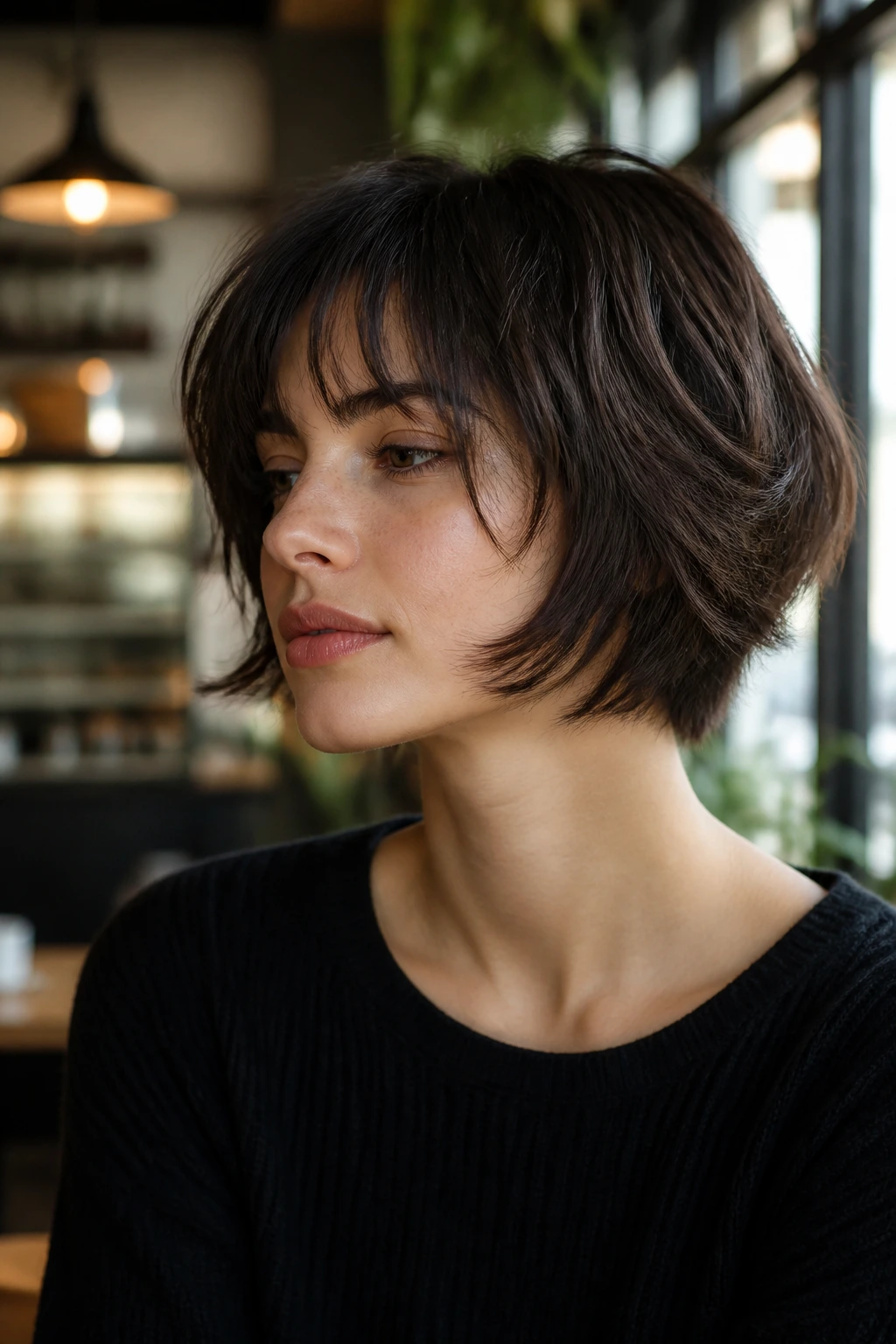
Short wolf cuts can be nerve-wracking on thick hair, but a jaw-length shape with a tapered nape can look sharp in a way longer cuts never do. The tapered nape is the real fix here. It removes bulk where thick hair usually makes the back feel boxy.
The front should stay soft enough to skim the jaw and cheek, not flare out like a bell. That’s the trap with short thick hair: if the bottom line is too blunt, the cut turns square fast. A little taper at the neckline solves that problem.
This cut has personality. It’s not shy, and it’s not trying to be long. It works best when you want your neck and jawline to show, or when you’re tired of hair sitting on your shoulders all day.
Boxy is the enemy.
If you want this shape, ask for softness around the ears and movement through the top, but keep the perimeter clean. That mix is what keeps it looking deliberate.
16. Low-Maintenance Wolf Cut With Grow-Out Friendly Shape

Some haircuts look good only the day you leave the salon. That’s not enough. A low-maintenance wolf cut with a grow-out friendly shape keeps thick hair looking decent even after the first trim starts to blur.
The secret is restraint. You want enough layering to create movement, but not so much that the haircut loses its outline as it grows. Thick hair can hide a lot, which is helpful, but it also means a bad grow-out can stay hidden until the shape feels off around the face.
Three Things to Say Out Loud at the Salon
- Keep the top soft, not choppy.
- Leave the bottom line with some weight.
- Make the front pieces long enough to tuck behind the ears.
That combination usually grows into a shaggy, wearable shape instead of a lopsided one. I’d also ask for a trim plan every 8 to 12 weeks if your hair grows quickly. Not because the cut falls apart, but because thick hair gets blunt fast.
This is the version for people who want the wolf cut look without living in the salon chair.
17. Bold Wolf Cut With Extra Crown Volume and a Clean Finish

If thick hair makes you feel like it owns the room, this is the version that puts it back in shape. A bold wolf cut with extra crown volume and a clean finish gives you height on top and a neater edge around the perimeter, which makes the whole cut feel polished instead of unruly.
The crown volume keeps the silhouette lifted. The cleaner finish at the bottom keeps thick hair from turning into a heavy wall. That contrast is what makes this one feel grown-up, even though the shape still has bite.
I like this on women who want their hair to look full but controlled. It’s strong without being harsh. The layers are visible, yes, but they shouldn’t scream. Think movement first, attitude second.
When I look at the wolf cut options that age well on thick hair, this is one of the top few. It holds its shape, it flatters dense texture, and it doesn’t ask you to flatten yourself into someone else’s idea of “easy” hair. The best version of a wolf cut doesn’t erase thick hair. It gives it a better outline.
