



Curly hair and a wolf cut are a better match than a lot of people expect. Wolf cuts for curly hair work because the shape gives curls room to move without turning the whole head into one big triangle. The crown gets lift, the ends keep some weight, and the face gets softness where it usually needs it most.
The catch is that curly hair does not behave like straight hair in a salon photo. Shrinkage changes everything. So does density, curl pattern, and whether your hair likes to clump into neat spirals or puff into a halo the second humidity shows up.
That is why the best curly wolf cuts are not copy-and-paste jobs. They’re different shapes for different curl problems. Some fix flat roots. Some tame bulk. Some make bangs feel less like a dare and more like a smart choice. A few are bold enough to make a plain T-shirt look intentional without trying too hard.
The styles below each solve a different issue, and that’s the part I love. One of them will feel like a relief the second you see it.
1. The Shoulder-Length Curly Wolf Cut
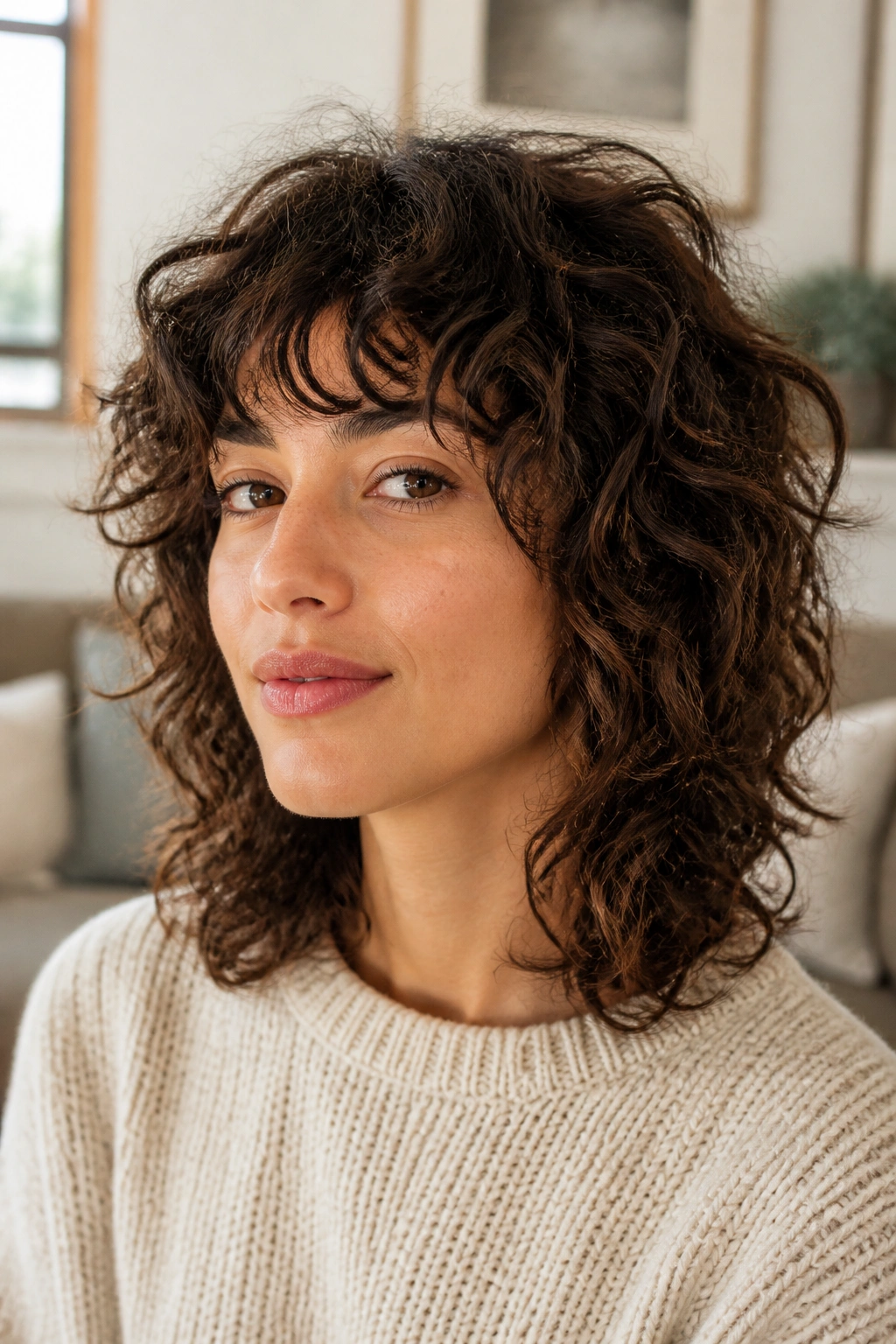
If you want the safest place to start, start here. Shoulder-length wolf cuts on curly hair usually give you enough weight to keep the ends from flaring out while still taking bulk out of the crown and sides.
The shape lands in that sweet spot where curls can bounce but not sprawl. I like this version for medium-density hair because it keeps the silhouette visible even when the curls shrink up after washing. Ask for layers that begin around the cheekbone and continue softly toward the collarbone, not a stack of choppy steps that live at the same height.
Why it works so well
- The perimeter stays strong, so the cut does not puff into a mushroom shape.
- The top layers stay lighter, which helps flat roots lift without teasing or heavy product.
- The length is forgiving, so you can air-dry or diffuse and still get a good shape.
A quick styling note: use a small handful of curl cream, then a light gel over the top half. Too much product on this cut makes the layers cling together in a way that looks heavy.
Best for: women who want a curly haircut that feels cool but still easy to wear on a normal Tuesday.
2. Curly Wolf Cut With Micro Bangs
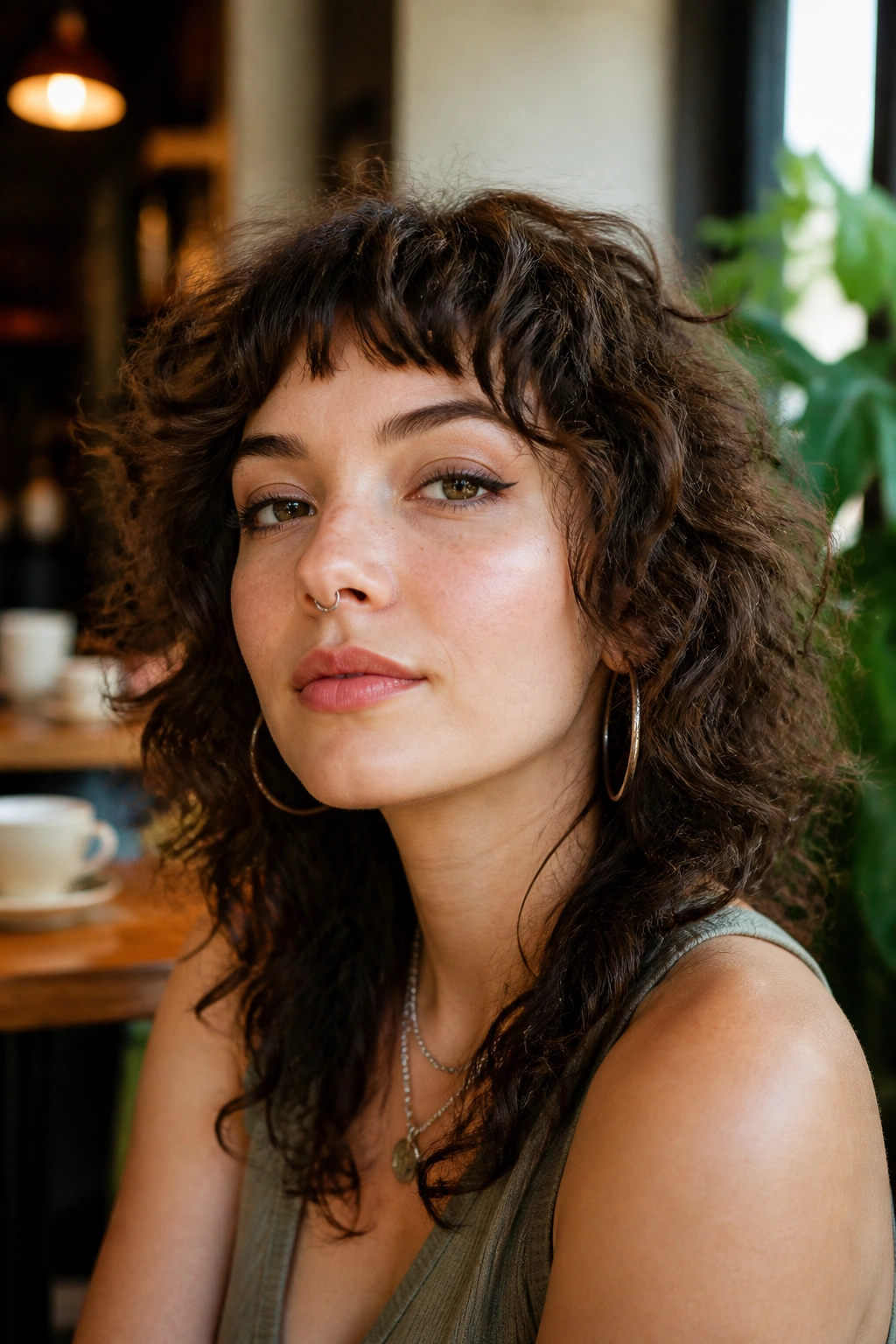
Can curly bangs be brave and wearable at the same time? Yes, but micro bangs ask for a little nerve. The trick is keeping them longer than straight-hair micro bangs, because curls spring up the second they dry.
This version works best when the fringe is cut with shrinkage in mind and the shortest pieces still touch the upper brow area when dry. I would not call it low-commitment. It’s a look. But it is a sharp one, especially on tighter curl patterns that hold a clean edge.
What to tell your stylist
- Keep the fringe softly textured, not blunt across the forehead.
- Leave the shortest pieces a touch longer than you think you need.
- Blend the sides into the front layers so the bangs do not sit like a separate little helmet.
The nice thing here is that the rest of the cut can stay pretty shaggy and relaxed, which keeps the bangs from looking too severe. If you like a little contrast, this is the one that gives it to you.
3. Long Curly Wolf Cut With Curtain Bangs
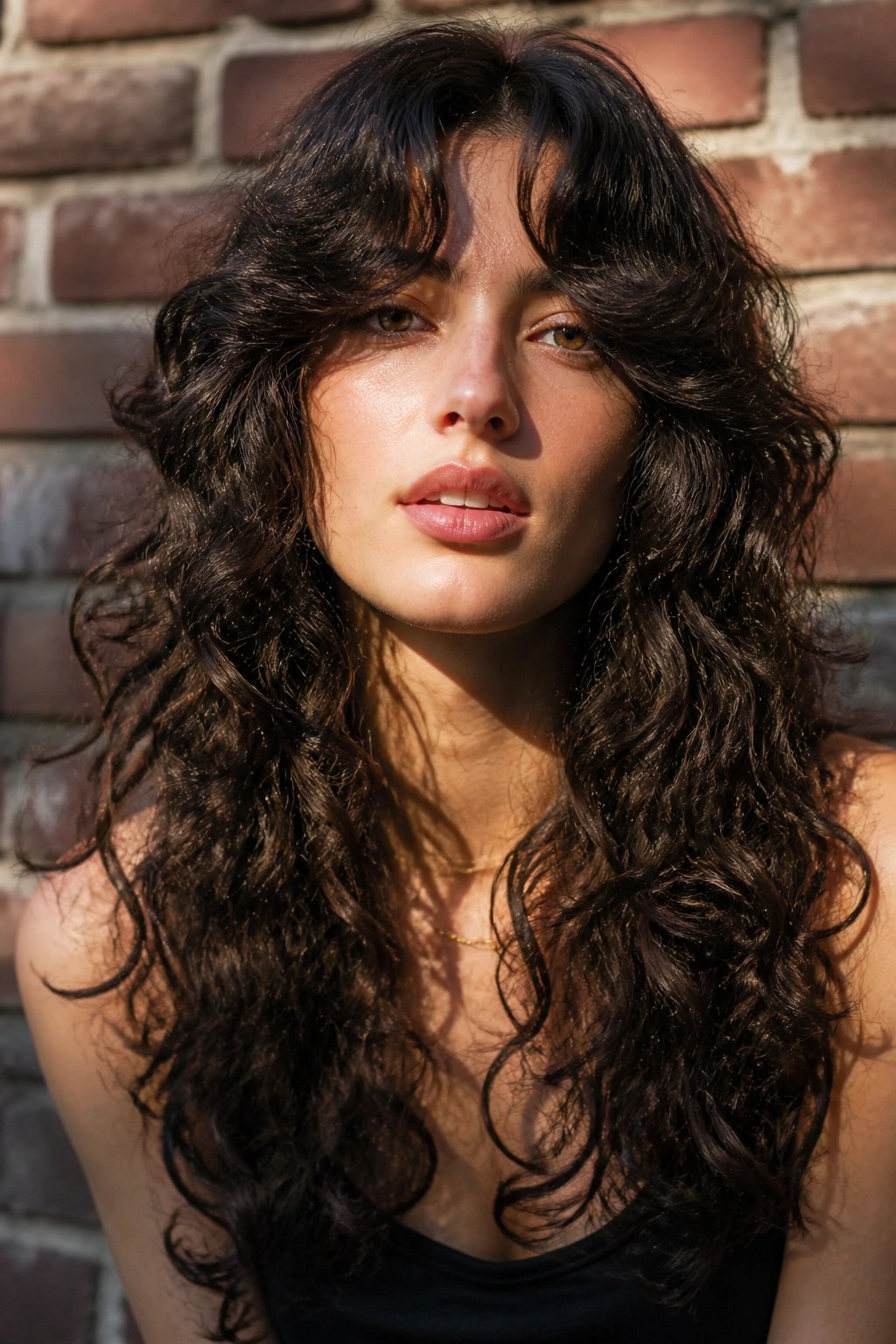
Picture this: you tie your hair into a low clip, let two curly pieces fall out in front, and the whole thing still looks styled. That is the appeal of curtain bangs on a long curly wolf cut.
This is one of the easiest ways to test the wolf-cut shape without giving up length. The front pieces usually start around the cheekbones, then sweep into longer layers that blend into the body of the hair. It’s soft, but not boring. And it grows out with a lot less drama than shorter fringe.
How to get the shape right
Ask for the shortest bangs to sit near the cheekbone and the longest ones to fall around the jaw or neck. That gives the cut a curved frame without cutting too deep into the length. If your curls are loose, curtain bangs can sit almost like a face-framing ribbon. If your curls are tight, they turn into little springy arcs that bring attention to the eyes.
A center part helps, but not everyone needs a perfect one. A slight off-center part can make the whole cut feel less fussy. Nice detail. Easy payoff.
4. Rounded Curly Wolf Cut With A Soft Halo Shape

This is the version for anyone who hates a boxy outline. A rounded wolf cut keeps the silhouette curved instead of angular, which matters a lot when curls naturally expand outward.
Compared with the sharper, more mullet-like versions, this one feels gentler around the cheeks and temples. The sides are still layered, but the layers are blended in a way that lets the hair sit in a loose circle around the head rather than building a hard edge. That matters if your curls already have strong volume on the sides.
I like this cut on people who wear glasses or have a softer jawline. It frames the face without crowding it. The crown gets lift, but the cut does not scream for attention. It just looks balanced, which is harder to get than people think.
If you want the shape to stay round, avoid over-diffusing upside down. That can pull the top too tall and make the sides balloon. A little patience on air-dry days goes a long way here.
5. Chin-Length Wolf Cut For Tight Coils
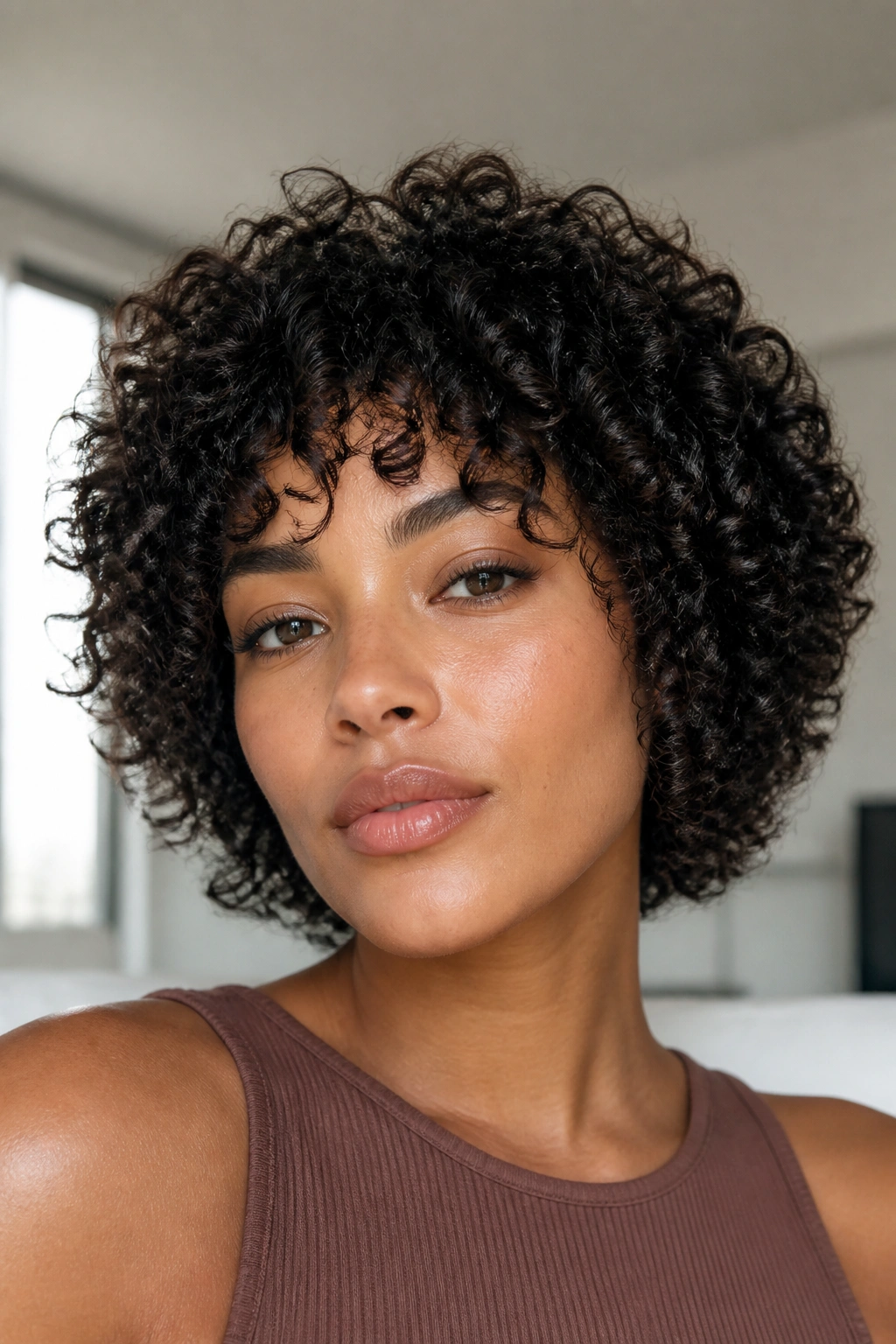
Short curls can be gorgeous in a wolf cut, but they need discipline. A chin-length version for tight coils gives you structure without dumping too much layer removal into the sides.
The reason this works is simple. Tight coils shrink more, so a chin-length cut can land much higher once dry. If the stylist forgets that, you end up with a shape that feels too short in the back and too wide at the temples. Not ideal. Keep the outer line clean, then use a few internal layers to make the crown move.
This is the cut I’d pick for someone who wants a crisp outline and does not want to spend 20 minutes every morning separating curls by hand. It looks good with a side part, a middle part, or a wash-and-go approach. It also shows off earrings better than longer cuts, which is a small thing until it isn’t.
One warning: do not let anyone hack away at the density just because the hair is curly. Tight coils need shape, not a bunch of random thinning.
6. Curly Wolf Cut With A Side-Swept Fringe
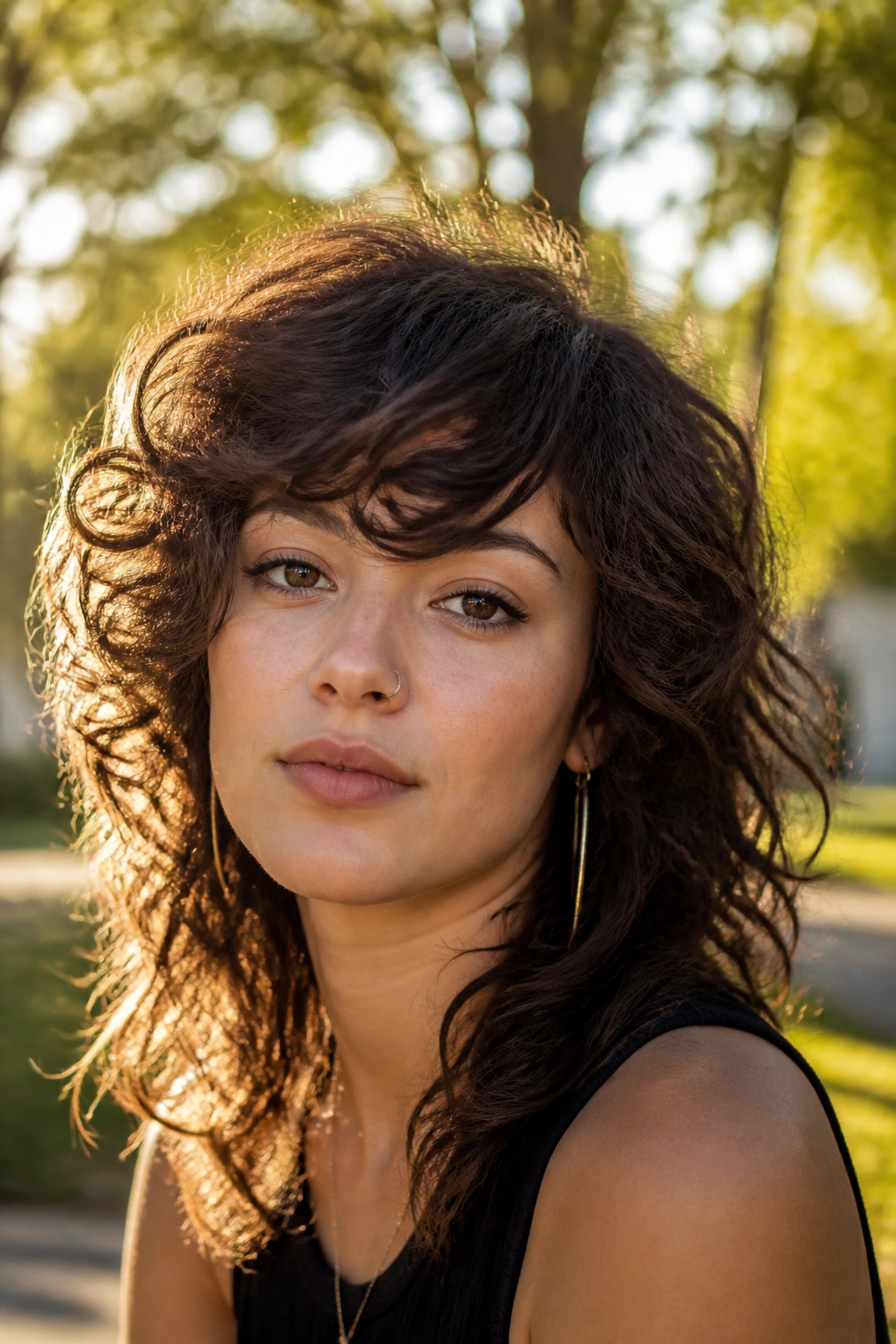
A side-swept fringe can save a curly wolf cut from feeling too symmetrical. It gives the cut motion across the forehead and makes the whole shape feel less sharp.
This is the version for people who want fringe but don’t want their forehead fully covered. The front section starts heavy enough to matter, then sweeps over one brow and melts into the face-framing layers. On curly hair, that side movement looks especially good because the fringe has a bit of bounce instead of lying flat.
How to style it
- Part your hair while it’s still damp.
- Guide the fringe to one side with your fingers, not a brush.
- Scrunch a small amount of gel into the front so the shape holds.
- Diffuse for a few minutes, then leave it alone.
That last part matters. If you keep touching the fringe while it dries, it tends to frizz and split. A side-swept look should feel easy, not fussy. The beauty of this cut is that it gives you a fringe without the full maintenance tax of straight-across bangs.
7. Collarbone Curly Wolf Cut With Face-Framing Layers
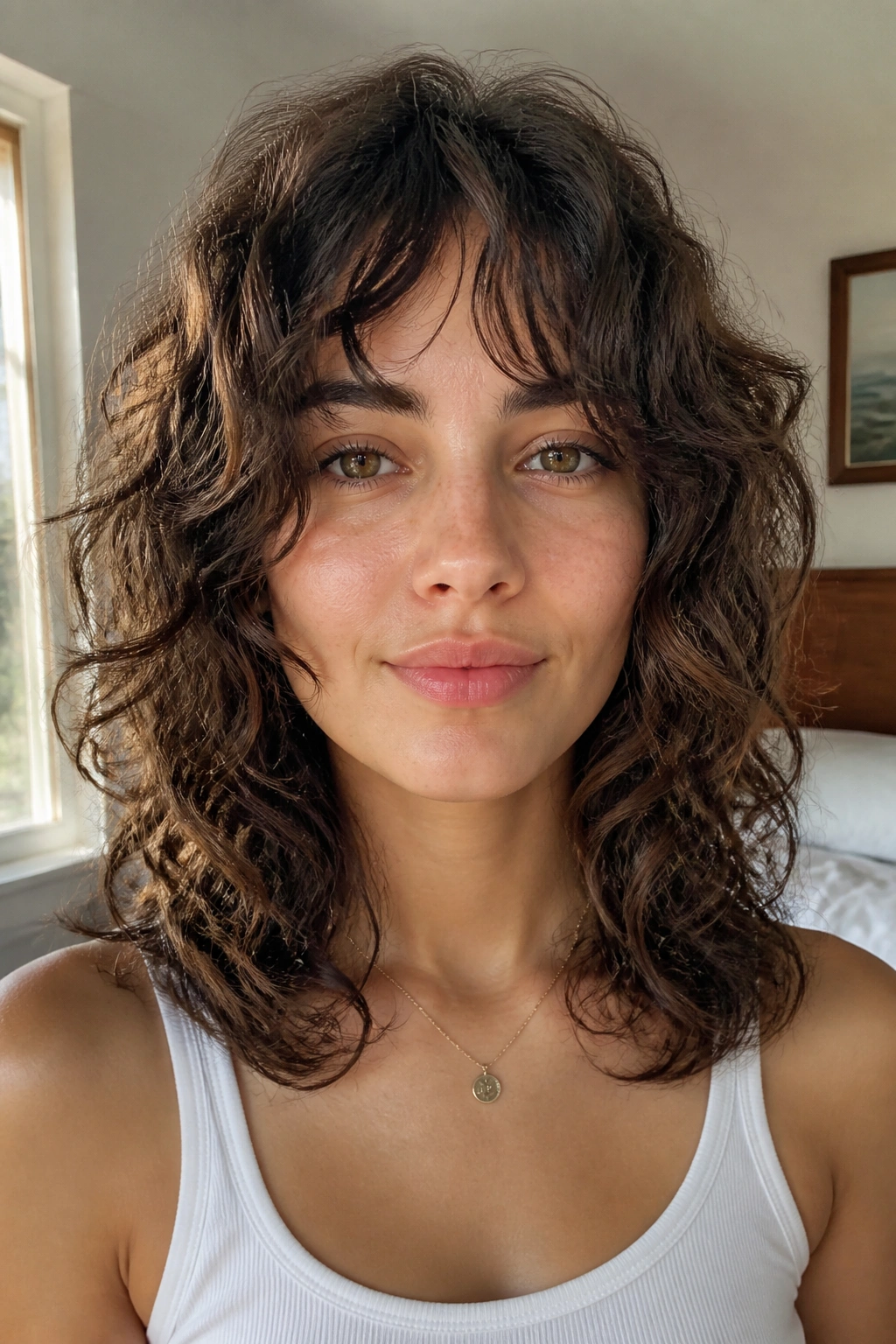
This is the curly wolf cut I recommend most often when someone wants a change but not a dramatic one. The collarbone length is flattering, familiar, and long enough to ponytail if life gets annoying.
The face-framing layers do the heavy lifting here. They usually start around the cheekbone and drop gradually toward the collarbone, which keeps the front pieces soft without turning the whole cut into a shaggy cloud. It works on medium to thick curls especially well because the extra length lets the curl pattern show instead of collapsing into a puff.
The best part is how easy it is to grow out. When the layers settle, the cut still looks deliberate instead of abandoned. That is worth a lot. A haircut that survives six weeks without looking sad is a better haircut than one that looks exciting for three days.
If your hair gets dry at the ends, this version is also kinder than shorter wolf cuts. You are keeping enough length to hold moisture, which matters more with curls than people admit.
8. Curly Mullet Wolf Cut With A Tapered Nape
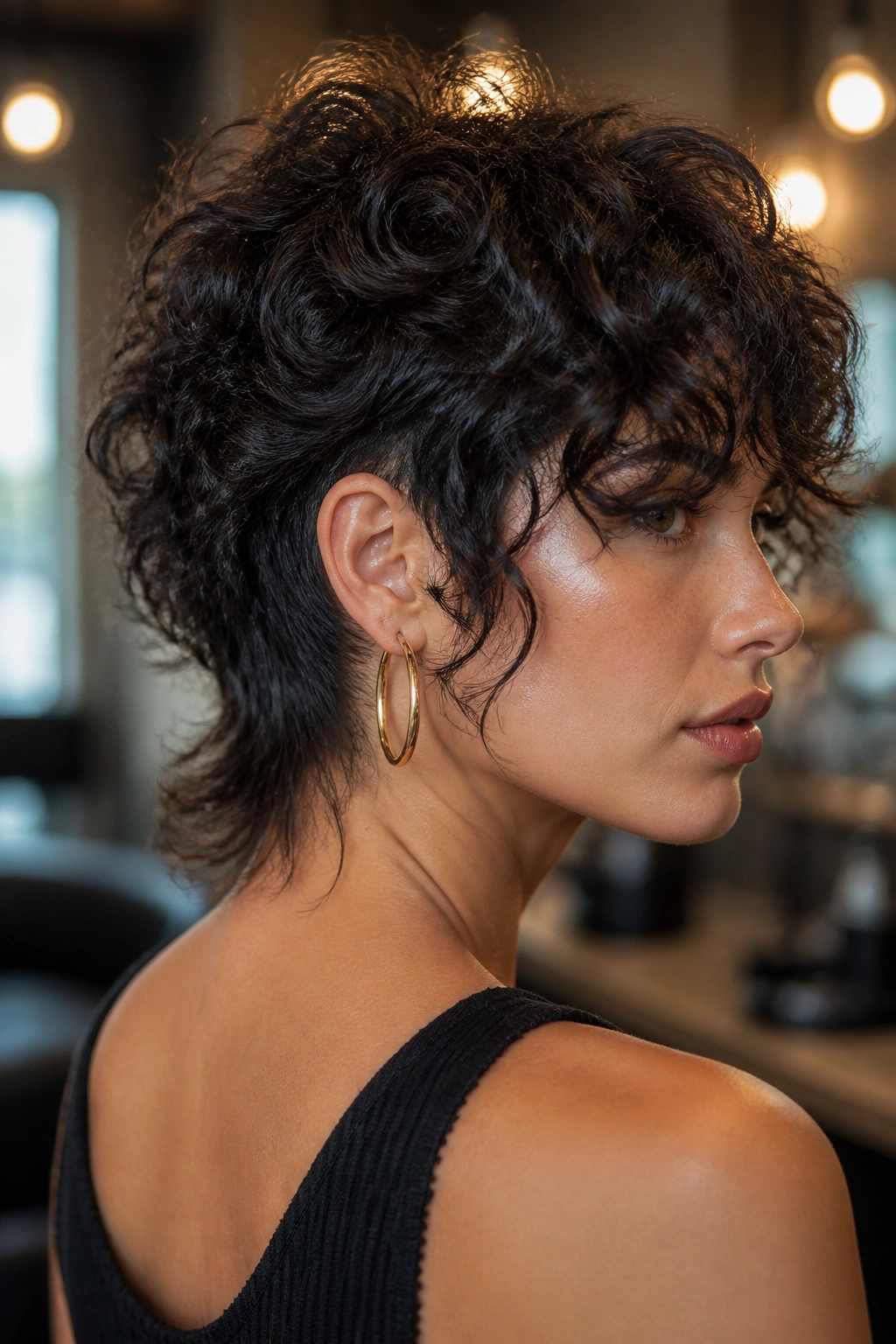
This one has an edge. A tapered nape with longer top layers gives you the wolf cut’s rebellious shape without going full retro mullet.
The back is cut shorter and cleaner near the neck, while the crown and sides stay more textured. That contrast is what makes the shape read as a wolf cut instead of a standard shag. It’s also the reason this version looks best when the curls have movement. Flat, limp curls make the nape look accidental. Springy curls make it look intentional.
I’d call this the “I know what I’m doing” version. It’s not subtle. It’s good for women who like strong outlines and don’t mind a little edge at the neckline. If your hair is thick, the shorter nape can take a surprising amount of weight off your shoulders, which feels great in warmer weather.
The only real downside is upkeep. The nape grows out faster in appearance than the rest of the cut, so this style needs a trim sooner than the softer shapes.
9. Curly Wolf Cut For 3A Curls
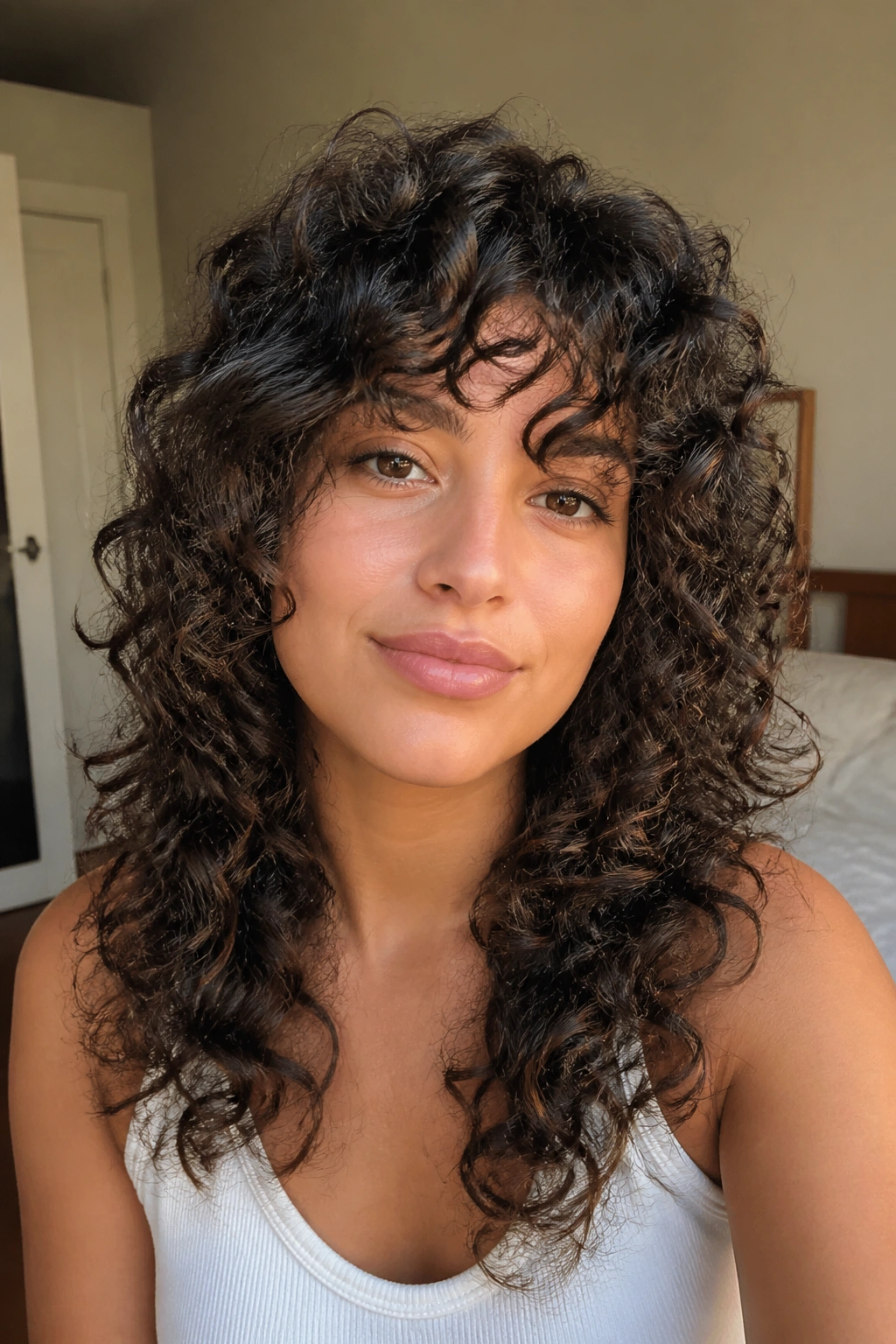
Loose spirals can get droopy if the layers are too aggressive. That is why 3A curls usually need a wolf cut with a lighter hand at the crown and a little more structure through the bottom.
The shape to ask for
- Keep the crown layers soft and spaced out.
- Leave enough length around the perimeter so the curls do not disappear.
- Add movement around the cheekbones instead of carving too high into the top.
- Avoid heavy thinning, which makes 3A curls look stringy.
3A curls usually have enough bounce to show the cut, but not so much density that they can survive a very chopped-up shape. If the stylist removes too much from the interior, the curl pattern starts to separate and the ends look wispy. I hate that look. It feels unfinished.
This version is especially nice if your curls flatten at the roots but keep good shape through the mid-lengths. The wolf cut gives you lift without asking the curls to be something they’re not. That’s the whole point, really.
10. Curly Wolf Cut For 3B Curls
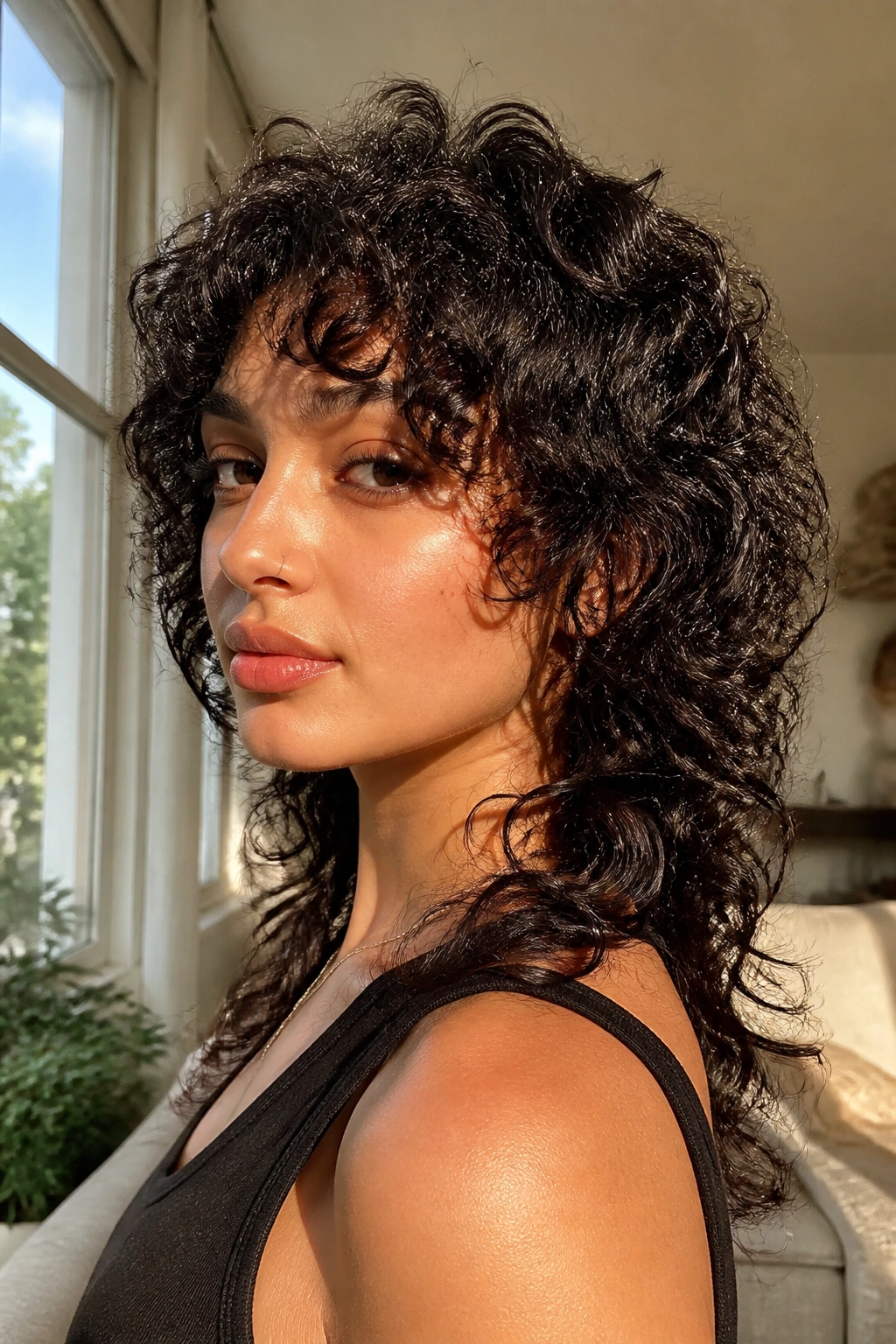
Three-B curls love volume, but they can also tip into triangle territory fast. A 3B wolf cut works when the layers are placed to control width instead of just removing weight wherever the scissors land.
The best 3B version usually has layers that begin around the nose, mouth, and chin, then continue into a fuller lower shape. That lets the curl pattern stack without turning the sides into a giant cone. If the cut is too short at the top, 3B curls tend to spring out with too much energy at the root and not enough direction underneath.
I like this cut because it makes styling easy. A mousse at the roots and a gel through the ends are usually enough. Diffuse for 10 to 15 minutes, or let it air-dry if you have the patience. The hair should feel soft but not fluffy when it’s finished.
This is one of those cuts that can look expensive even on a plain day. Not because it is fussy. Because the curl shape does the work for you.
11. Curly Wolf Cut For 3C Curls
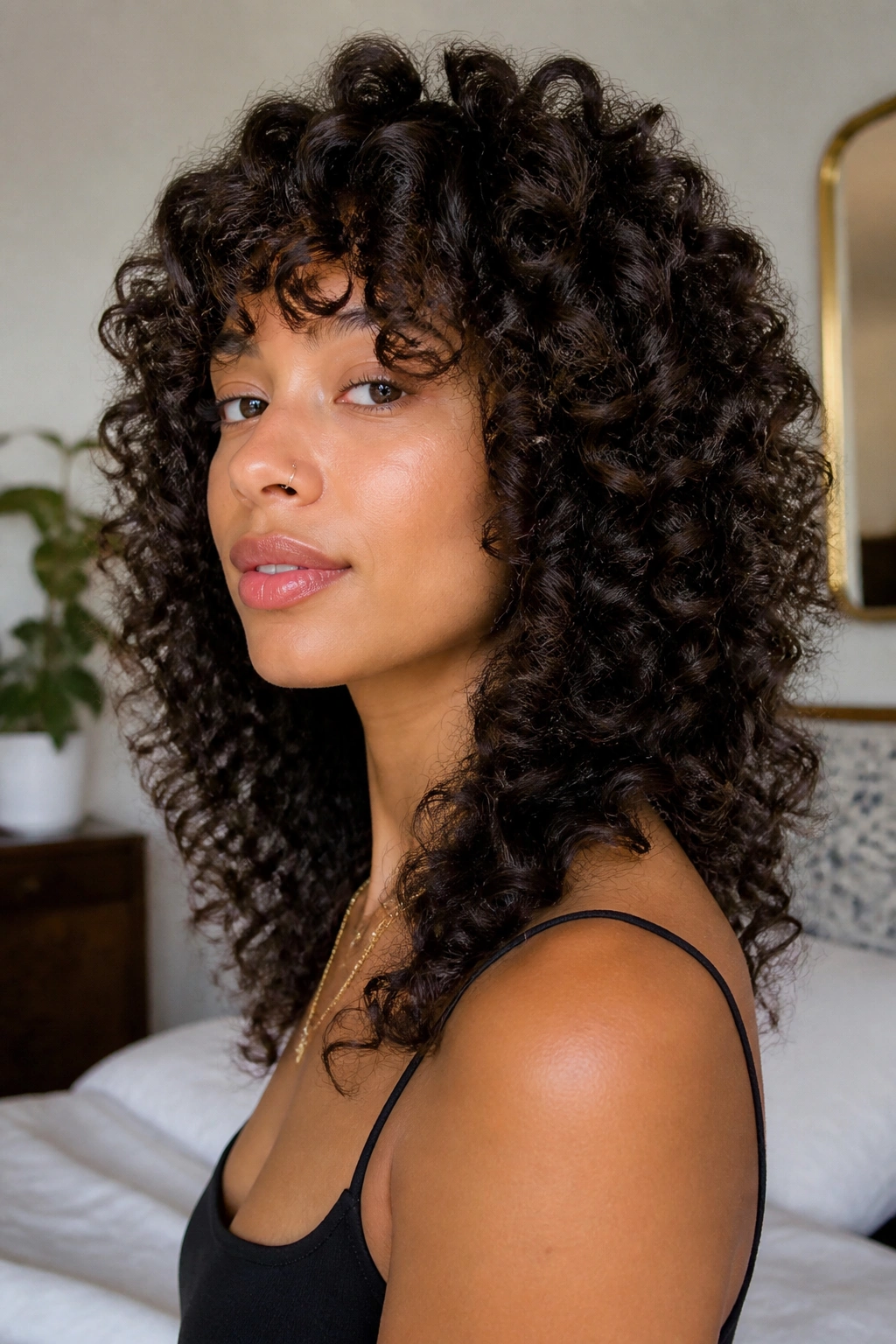
Tighter ringlets need room to clump. That matters. 3C curls look best in a wolf cut when the layers are controlled enough to keep the ringlets together instead of breaking them into little frizzy pieces.
The trick is to keep the interior layers longer than you might expect. That gives the curl families space to form. Then you add shape around the face and a bit of movement at the crown. Too many short layers can make 3C curls stand away from the head in odd places, especially near the temples and sides.
I’d rather see a 3C wolf cut that looks a little heavy on day one than one that has been thinned to death. Coils need weight. They also need moisture, which means the cut and the routine have to play nicely together. A leave-in conditioner, a strong gel, and a diffuser on low heat are a good starting point.
This version is especially good if you like definition. The curl pattern gets to stay visible, and the wolf-cut shape stops the hair from feeling like one solid helmet.
12. Curly Wolf Cut With Full Bangs
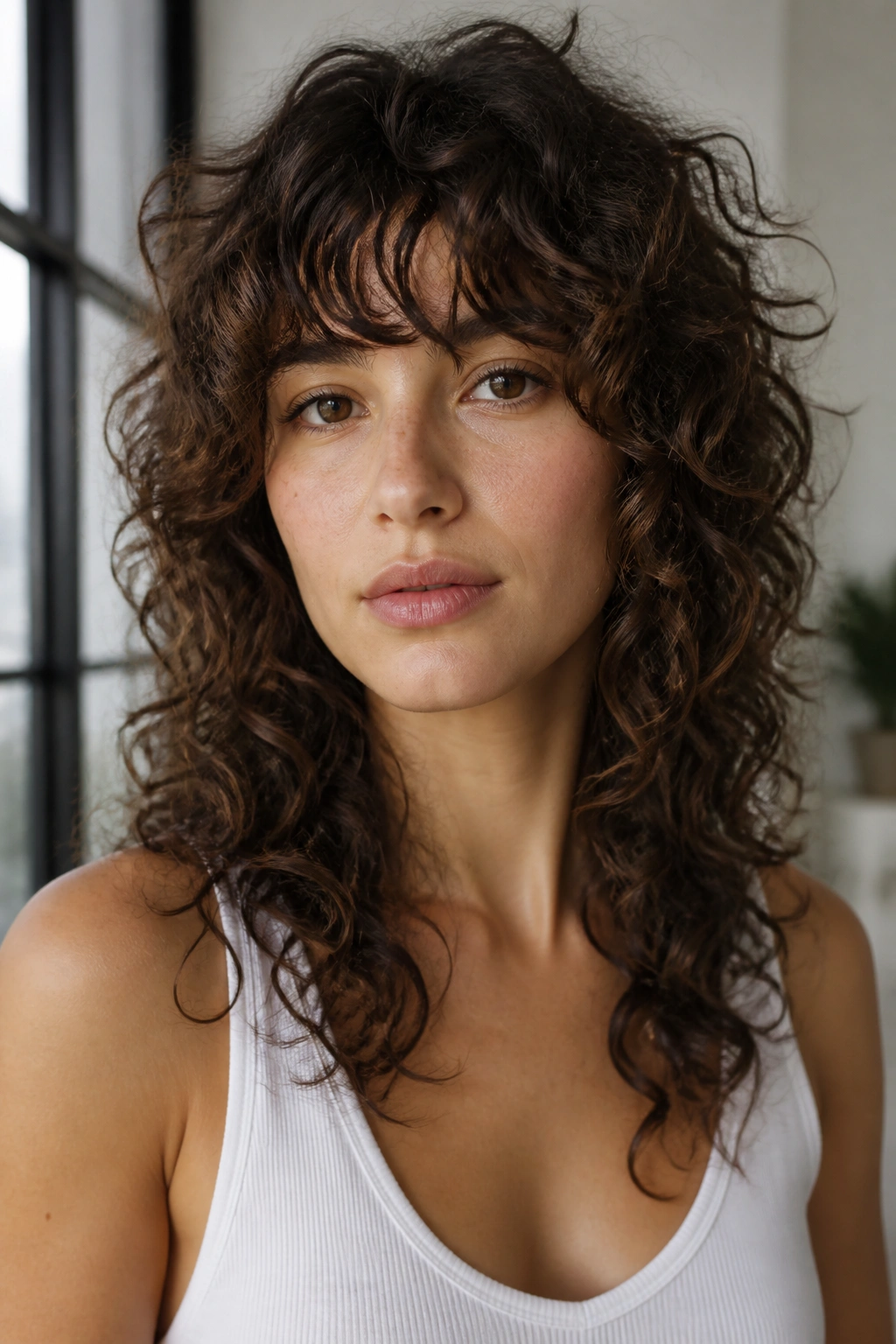
Full curly bangs sound daring because they are. Still, they can look fantastic when the fringe is cut with shrinkage in mind and blended into the rest of the layers.
The fringe should sit a little longer than you expect when wet. Once it dries, it will rise. If you cut it too short, the whole front can feel jumpy and hard to control. That is why I prefer a full bang that just grazes the brow line and has soft corners. It feels bold without becoming a joke in humidity.
How to make them behave
- Dry the fringe separately from the rest of the hair.
- Use a tiny amount of gel or cream — not a palmful.
- Shape the bangs with your fingers while the roots are still damp.
- Let them cool in place after diffusing.
This style looks best when the rest of the wolf cut is a little loose and shaggy. That contrast keeps the bangs from taking over the whole head. If you want a haircut with attitude, this is one of the strongest options.
13. Curly Wolf Cut With A Deep Side Part
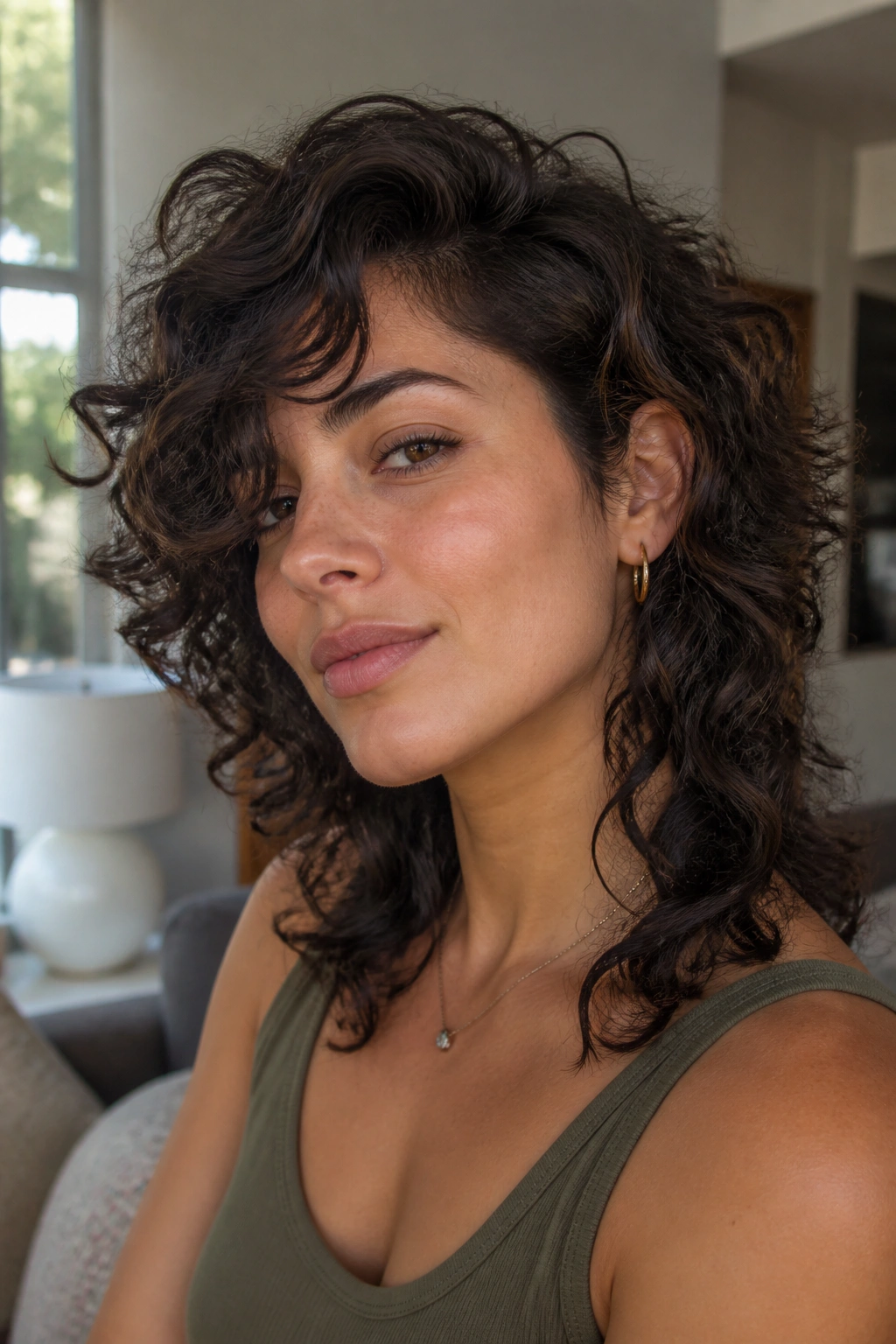
A deep side part can change the whole personality of a curly wolf cut in about five seconds. Suddenly the shape feels taller, leaner, and a little less symmetrical.
It’s one of my favorite fixes for flat crown curls. By moving the part far off-center, you get instant lift at the roots and a heavier sweep through one side of the face. That asymmetry is flattering on almost everyone, but it especially helps if your curls tend to fall in one predictable direction and refuse to budge.
The cut itself does not need to be extreme. The magic is in the parting and the way the front layers fall across the forehead and cheek. The longer side can hit the jaw, while the shorter side lifts higher and exposes more of the cheekbone. It feels styled even when you did almost nothing.
Good day-two hair lives here. A spray bottle, a little curl refresher, and a deep side part can make old curls look deliberate again. No drama required.
14. Curly Wolf Cut With An Undercut Nape
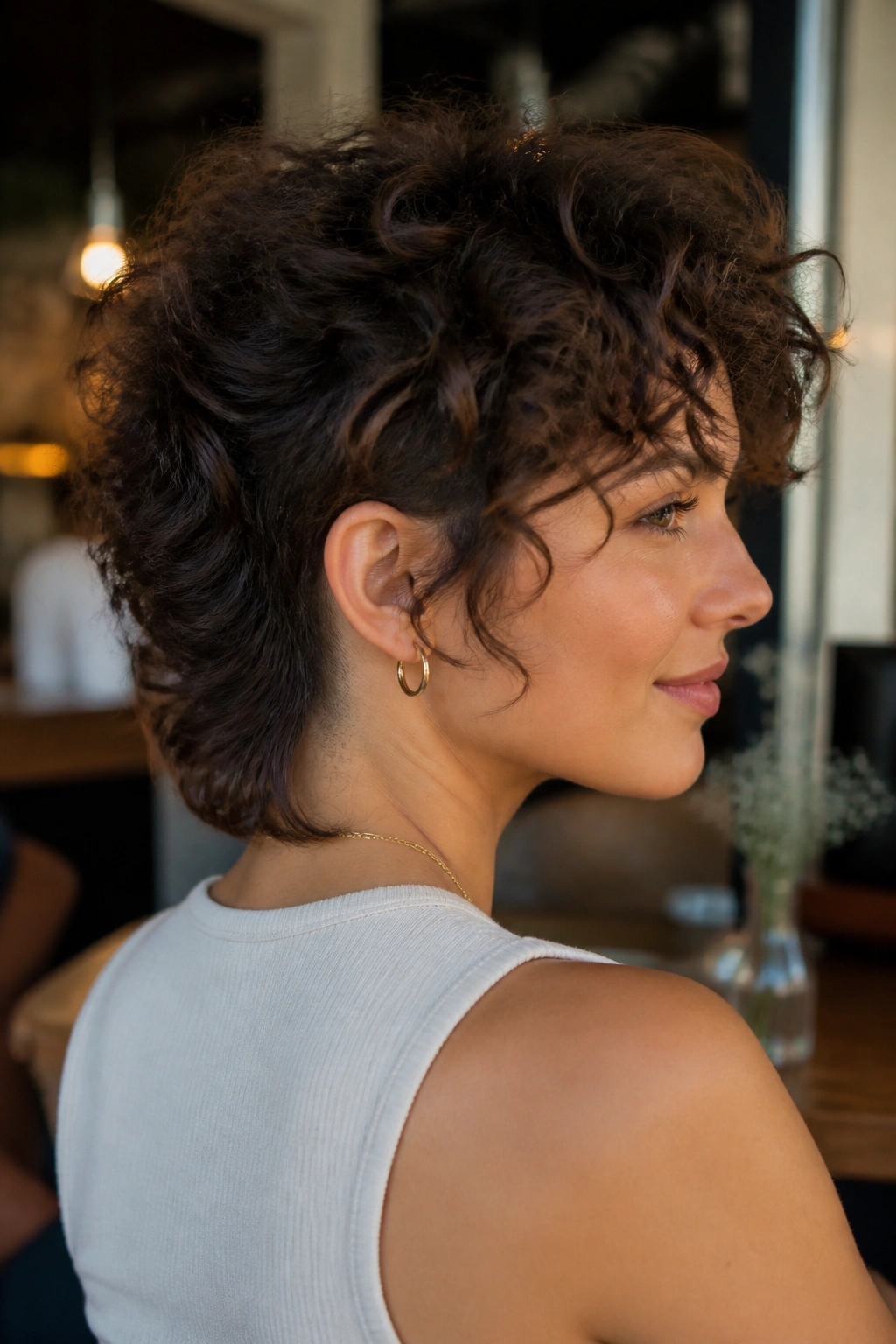
Now we’re into the bolder stuff. An undercut at the nape removes bulk where curls usually pile up the fastest, which can make the whole haircut feel lighter and cleaner.
This is especially useful for very dense hair or for anyone who gets hot easily and hates having hair on the neck. The top layers still carry the wolf-cut shape, but the hidden undercut takes pressure off the lower half. You get movement without the heavy base.
I like this version because it solves a real problem instead of just adding a visual trick. Thick curly hair can feel like a blanket by the end of the day. Shaving or closely trimming the nape changes that in a way you feel, not just see. It also makes the top layers sit better when you wear your hair half up.
It is not for everyone. Fine hair can look sparse with this treatment, and if you hate regular maintenance, the grow-out phase may annoy you. But on the right head of hair, it is excellent.
15. Curly Wolf Cut For Thick Hair
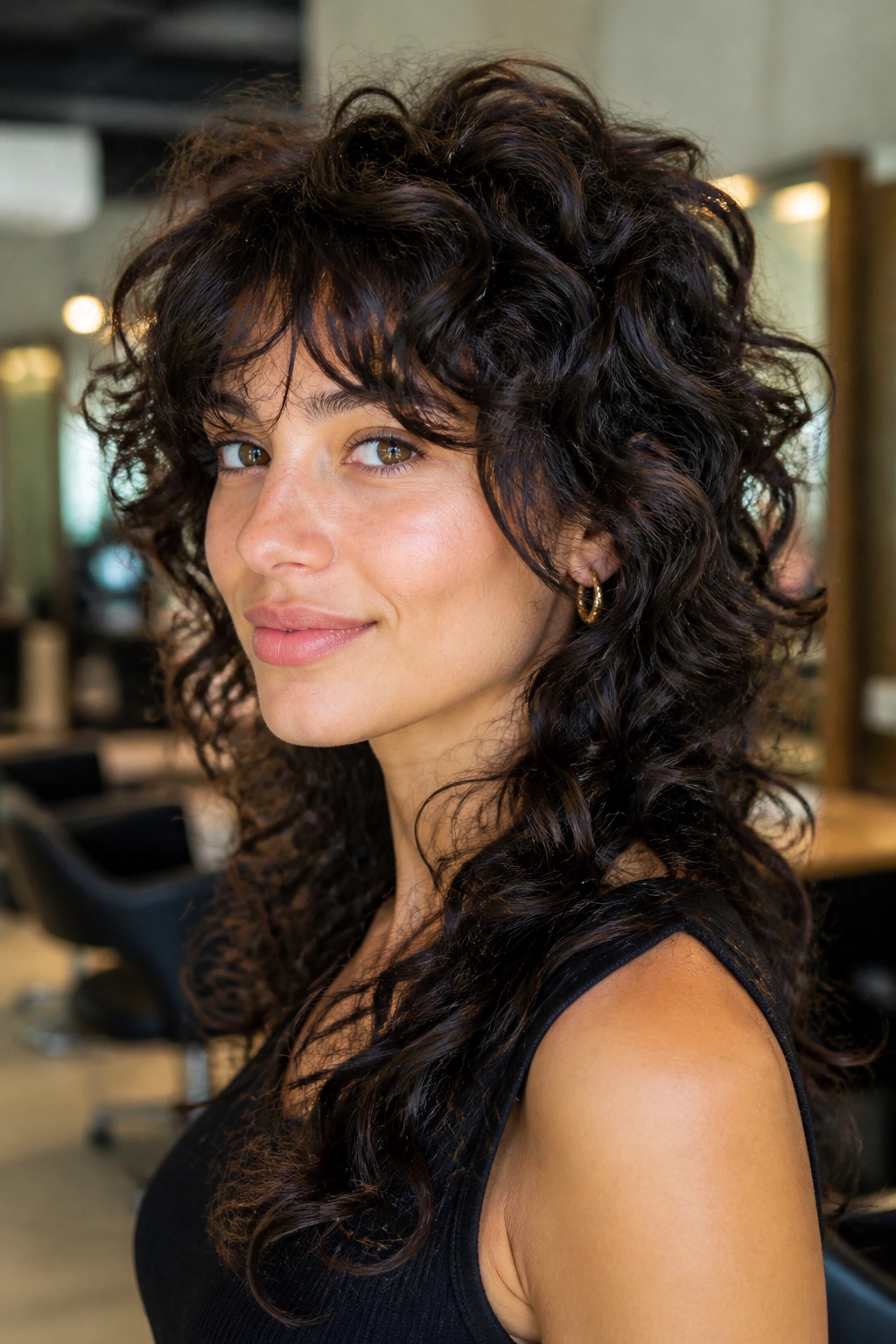
Thick curls need a smarter plan than “take a lot off.” That usually backfires. A wolf cut for thick hair should remove weight in the right zones, not everywhere at once.
What helps most
- Keep the outer line long enough to hold shape.
- Remove bulk from the interior with controlled layering.
- Leave enough length at the ends so the silhouette does not puff out.
- Avoid aggressive razoring, which can make thick curls frizzy and uneven.
The best thick-hair wolf cuts are built like architecture. You want movement at the crown, shape around the face, and a lower body that still feels full. If the stylist gets impatient and over-thins the sides, the haircut can explode in humidity. I’ve seen that happen more times than I’d like.
This version usually looks best with a little structure in styling. A cream plus a gel cast helps thick curls hold the shape the cut gives them. Without that, the weight of the hair can drag the layers down before they dry.
16. Curly Wolf Cut For Fine Hair
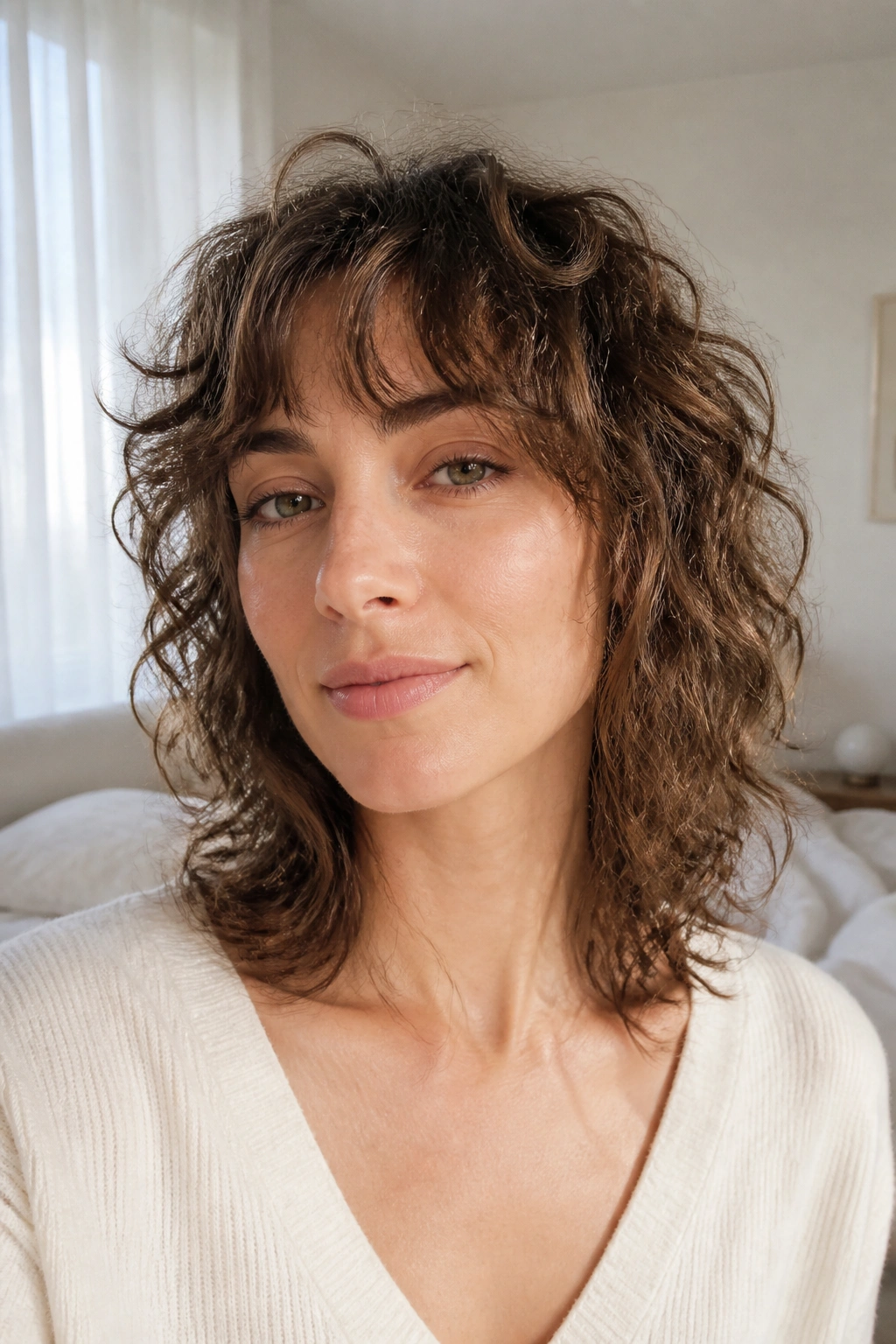
Fine curly hair needs the opposite treatment. Too much layer removal can leave the ends looking see-through, and once that happens, there’s no easy fix until the next cut.
A wolf cut for fine hair should be lighter in spirit, not lighter everywhere. Keep the layers sparse, avoid overtexturizing, and leave enough perimeter density that the hair still looks full when it moves. The point is to create lift at the top without sacrificing the body you already have.
I’d be cautious with super short crown layers on fine curls. They can make the hair look airy for an hour and sad by lunchtime. Better to keep the shape soft, with a few well-placed face-framing pieces and a modest amount of crown layering.
This cut shines when you use a mousse at the roots and a light gel through the mids. Fine curls often need support, not heavy creams that collapse the shape. A diffuser on low heat can help, but you do not need to dry the hair into submission.
Good shape. Not too much fuss. That’s the win here.
17. Air-Dry Curly Wolf Cut

Some haircuts look fine air-dried. Others look built for it. This one should be built for it.
A curly wolf cut designed to air-dry usually keeps the layers long enough to fall naturally, with enough shape around the face that the curls do not need brush work or heat tools to make sense. The key is predicting the shrinkage and leaving the cut slightly longer than the final look you want.
What helps most is a routine that doesn’t fight the curl pattern. Use leave-in conditioner on damp hair, add a curl cream or mousse, then scrunch in a light gel. After that, leave it alone. Seriously. Constant touching is what makes air-dried curls turn fuzzy and lose their clumps.
What to watch for
- If the crown dries flat, pin the roots up for a few minutes.
- If the ends look stringy, the cut may be too layered.
- If the sides balloon, the perimeter may need more weight next time.
This is one of the easier wolf cut styles to live with because it doesn’t depend on a perfect blowout. The hair is allowed to be hair.
18. Curly Wolf Cut For Gray And Silver Hair
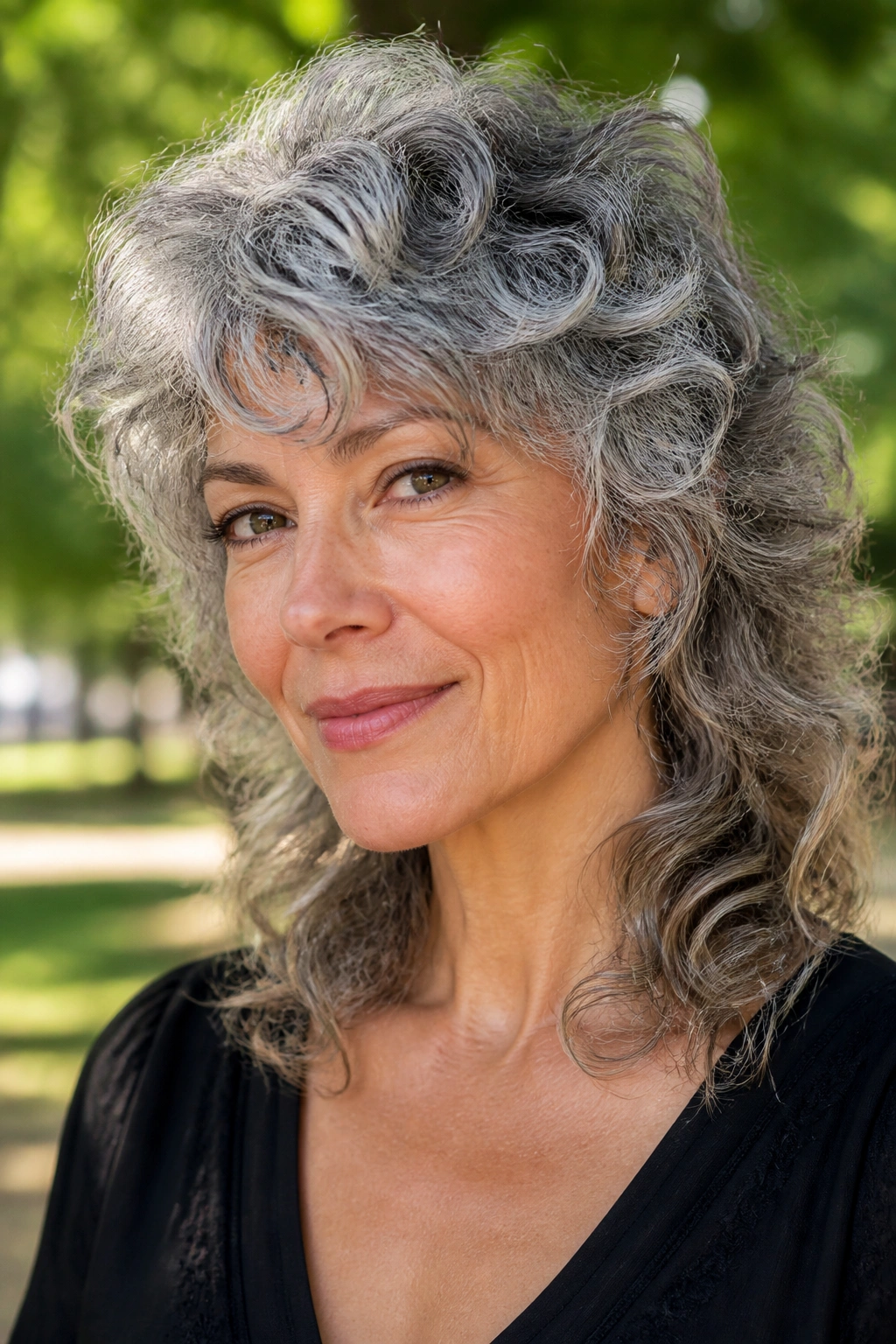
Gray curls deserve better than a generic trim. Silver and gray hair often feels coarser and drier, so the cut needs softness and movement, not overworking.
A wolf cut can be lovely here because it adds shape without making the hair look stiff. Soft layers around the face keep the color bright, and a little crown lift gives the silver strands dimension. The shine tends to show more when the shape is clean, so this is one of those cuts where line and texture matter equally.
I like longer layers on gray curls because too much chopping can make the surface look frayed. The goal is to let the curls sit in clean groups. That way the gray catches the eye for the right reason: movement, not fuzz.
Moisture matters a lot. A richer conditioner, a leave-in, and a gentle styling gel can keep the cut from drying out. If your silver curls tend to puff, a smaller amount of product used consistently works better than piling on a heavy cream once a week and hoping for the best.
19. Shaggy Lob Wolf Cut
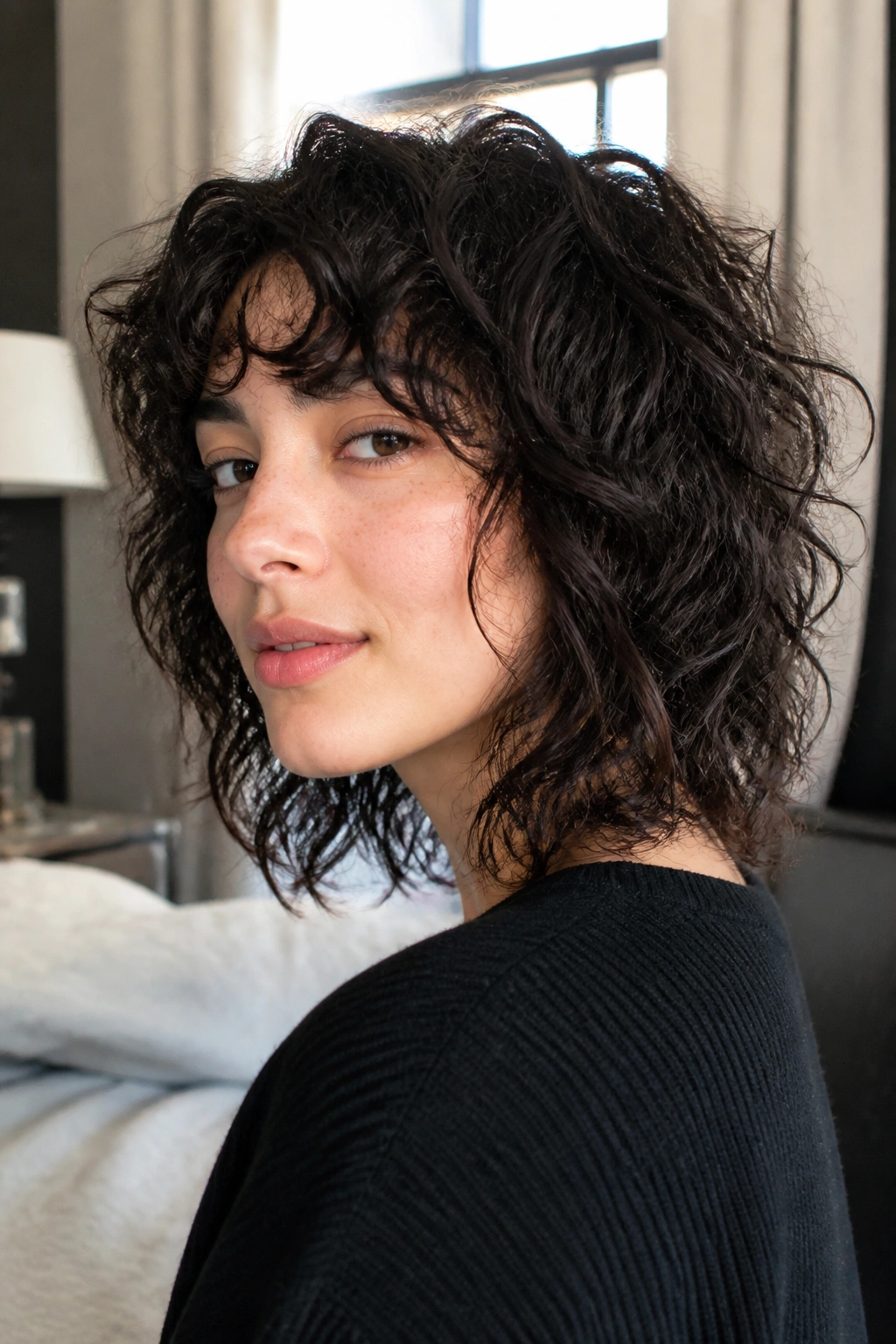
A shaggy lob is the sensible cousin in this family, and I mean that as a compliment. A wolf-cut lob lands around the collarbone or a touch above it, which makes it easy to wear up, down, or half pinned.
This is a good choice if you want the texture of a wolf cut without the sharper mullet edge. The layers give the hair motion, but the length keeps the outline calmer. On curly hair, that matters because a lob can keep the curl pattern visible without taking you into full lion’s-mane territory.
It’s also one of the easiest lengths to refresh at home. A quick scrunch with a spray bottle and a dab of leave-in can bring the shape back. No giant routine needed. No complicated styling either.
If you’re unsure about going shorter, this is where I’d start. It has enough personality to feel current, but not so much that you’ll spend the next month adjusting to your own haircut.
20. Curly Wolf Cut For Oval Faces
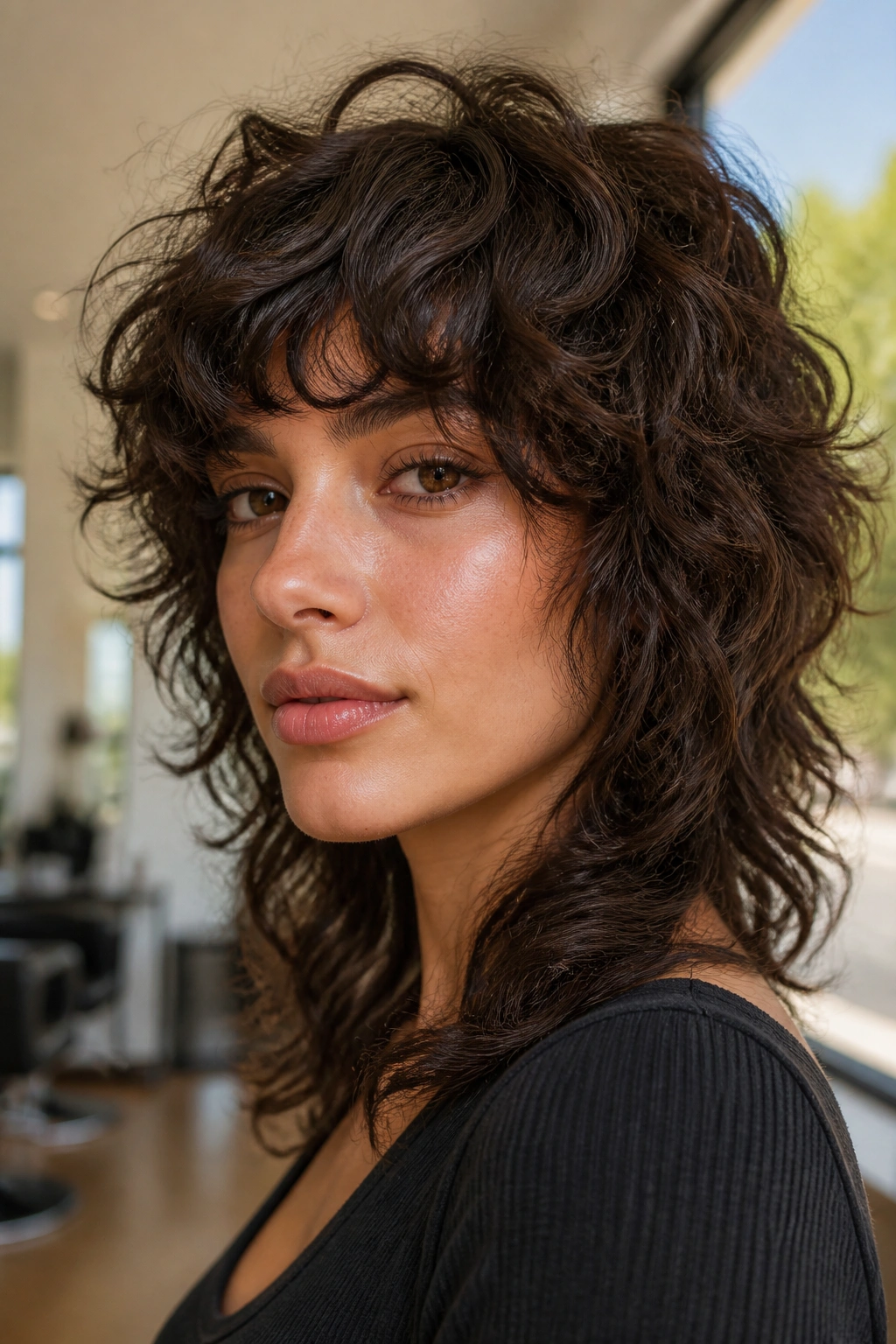
Oval faces can wear a lot of shapes, which is both a blessing and a trap. A curly wolf cut for an oval face works best when you resist the urge to overframe everything.
The most flattering versions usually let the curls fall naturally around the cheeks and jaw while keeping some lift near the crown. Too many face pieces can crowd the features. Too few, and the cut loses the softness that makes it interesting. The balance is in the movement, not in piling layers everywhere.
Best details to ask for
- Soft curtain bangs or cheekbone pieces.
- Moderate crown layers for height.
- A perimeter that stays full enough to support the curl pattern.
- Avoiding a blunt edge right at the jaw.
This is one of the few face shapes that can handle a wider range of wolf-cut personalities. You can go softer, messier, or a bit more dramatic. The thing to avoid is making the cut too tidy. Oval faces usually look better when the hair has some looseness.
21. Curly Wolf Cut For Round Faces
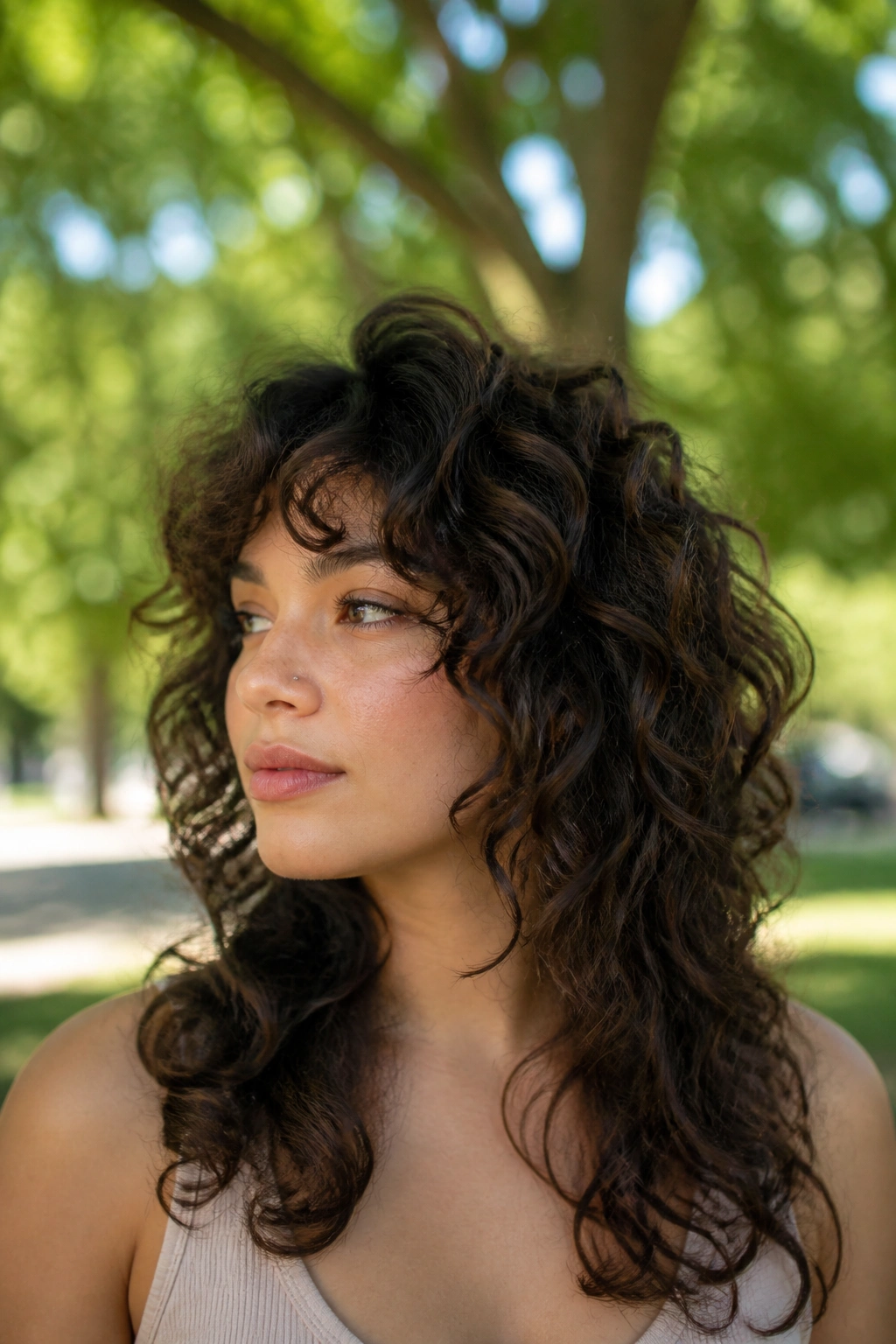
Round faces need length cues. Not fake length. Real ones. A wolf cut for a round face should create vertical movement and avoid widening the cheeks with short side volume.
That usually means keeping the front pieces longer than chin length and starting the shortest layers lower on the face, closer to the jaw or neck. Curtain bangs can work here, but they should open away from the center and fall into the rest of the cut instead of sitting straight across the face. A side part can help too.
What I like about this shape is that it gives the hair interest without turning the whole look into a width contest. The top gets height, the sides stay softer, and the eye moves downward in a good way. That’s the real trick.
If the curls are very full, keep the layers controlled around the temples. Too much volume there can make the face feel wider than it is. The goal is lift, not spread.
22. Curly Wolf Cut For Square Faces
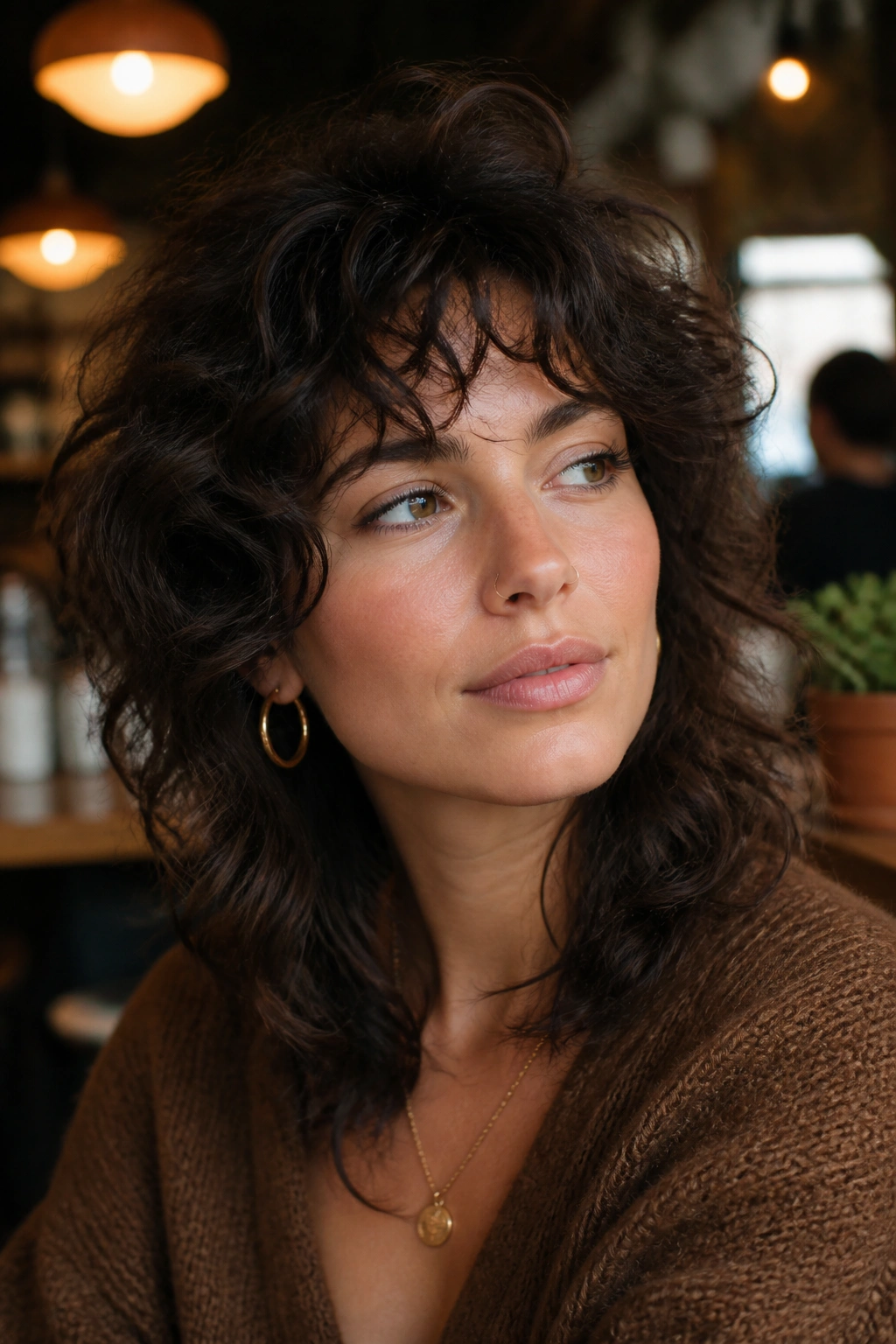
Square faces tend to look best when the hair softens the jaw instead of echoing it. That is why a curly wolf cut for square faces usually works well with curved front pieces and feathered fringe.
The layers should bend around the cheekbones and drop gently toward the chin or collarbone. Harsh, blunt lines can make the jaw look sharper than you want. Softer curls, on the other hand, break up that edge and give the face a little roundness. It’s a simple fix, but it matters a lot.
I’d avoid a super straight fringe here unless you want a more graphic look. A curved curtain bang or a side-swept front usually looks kinder. The same goes for the layers at the sides. They should move, not sit like shelves.
This version can feel a little romantic without going delicate. That’s the sweet spot. Strong face. Soft hair shape. No fuss.
23. Long Curly Wolf Cut With A Tapered Back
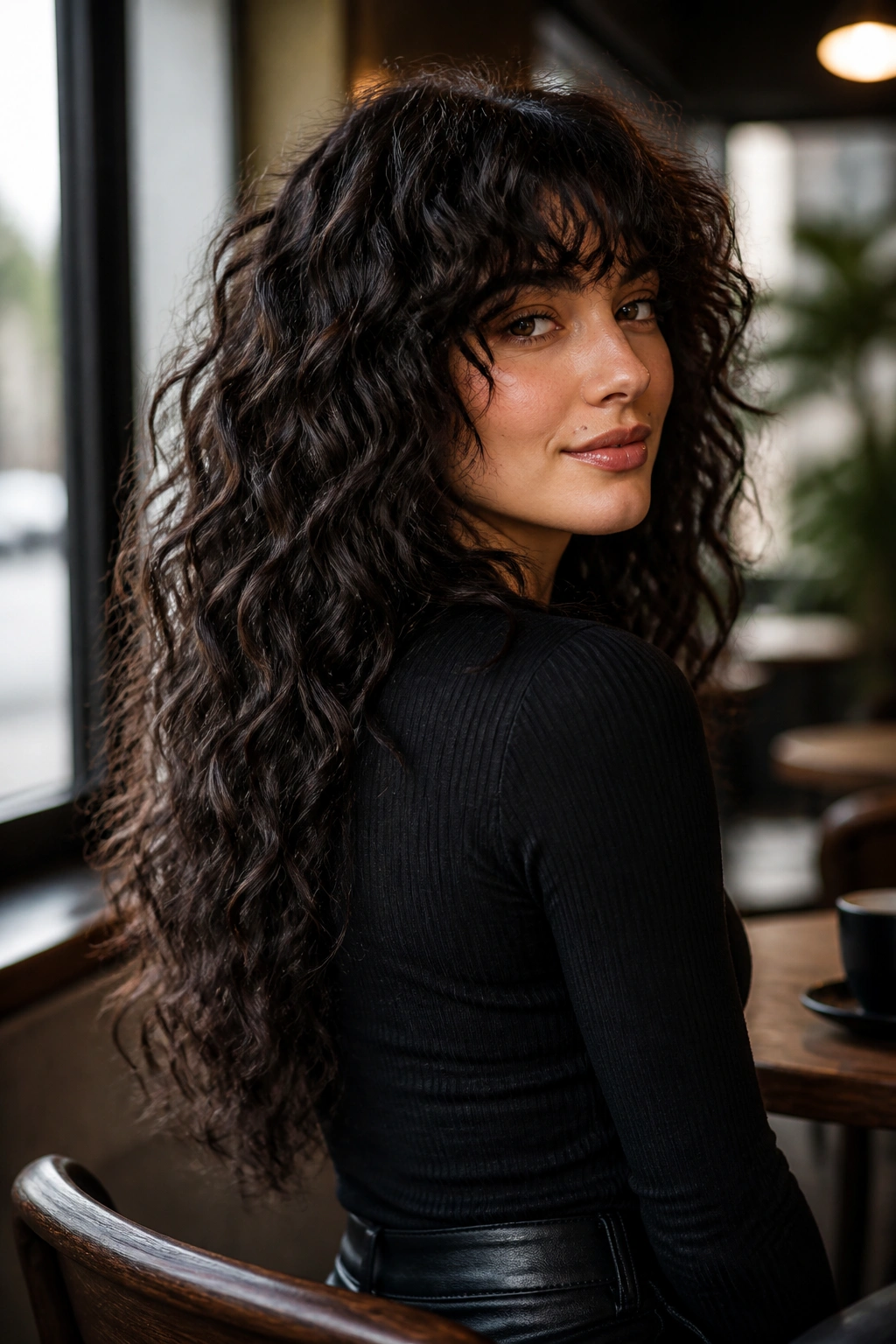
Not every wolf cut needs to be loud. A long, tapered-back version keeps the length while shifting the shape so the back narrows slightly and the top has more life.
This is the one for women who like the idea of a wolf cut but do not want to lose much length. The front gets movement, the crown gets lift, and the back stays long enough to swing. When done well, it has a quiet edge. You notice the shape only after the curls move.
The taper at the back matters because it stops the style from becoming one heavy curtain. A little removal near the lower back lets the upper layers sit on top instead of being dragged down by their own weight. That helps especially with long curls that have been sitting flat for too long.
If you like to wear your hair in a loose half-up or clip it back at work, this shape is a strong choice. It still looks good when partially pinned, which is more useful than people admit.
24. Extra-Short Curly Wolf Cut
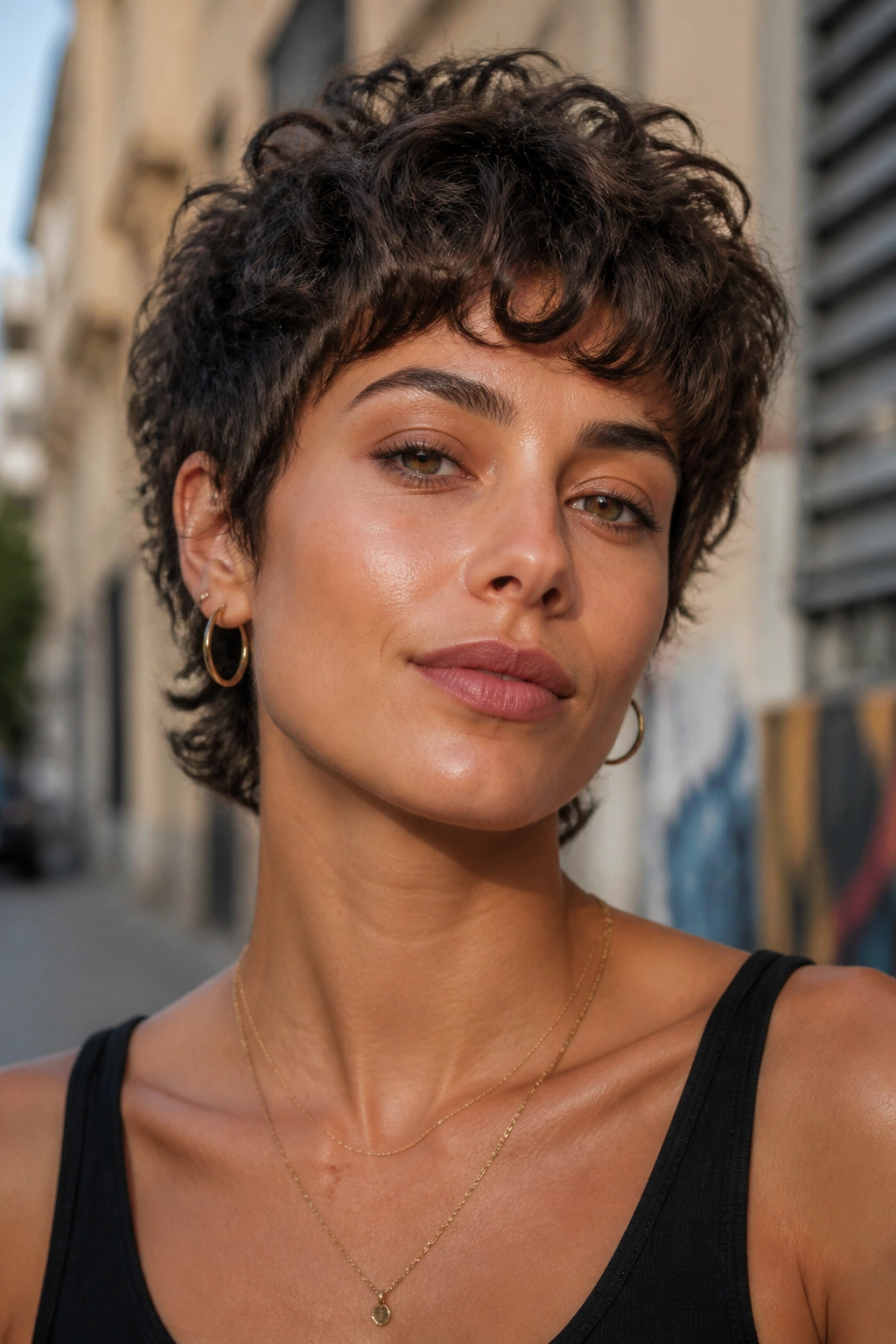
This one is for the brave. An extra-short curly wolf cut takes the crown and sides up high, then leaves enough shape in the back and around the face to keep it from looking like a random crop.
The appeal is obvious once you see it on the right curls. It has energy. It opens up the face. It makes earrings and necklines matter in a good way. But it also asks for confidence, because short curls do not hide much. If the cut is off by half an inch, you’ll notice it every morning.
Why people choose it
- It cuts daily styling time down fast.
- It removes heavy bulk from dense curls.
- It gives strong cheekbone and jaw emphasis.
- It looks especially sharp with a little lift at the front.
I would not choose this version if you want a soft, forgiving haircut. I would choose it if you want shape first and length second. On the right person, it is excellent. On the wrong day, it can feel too exposed. That’s the tradeoff.
25. Grown-Out Curly Wolf Cut
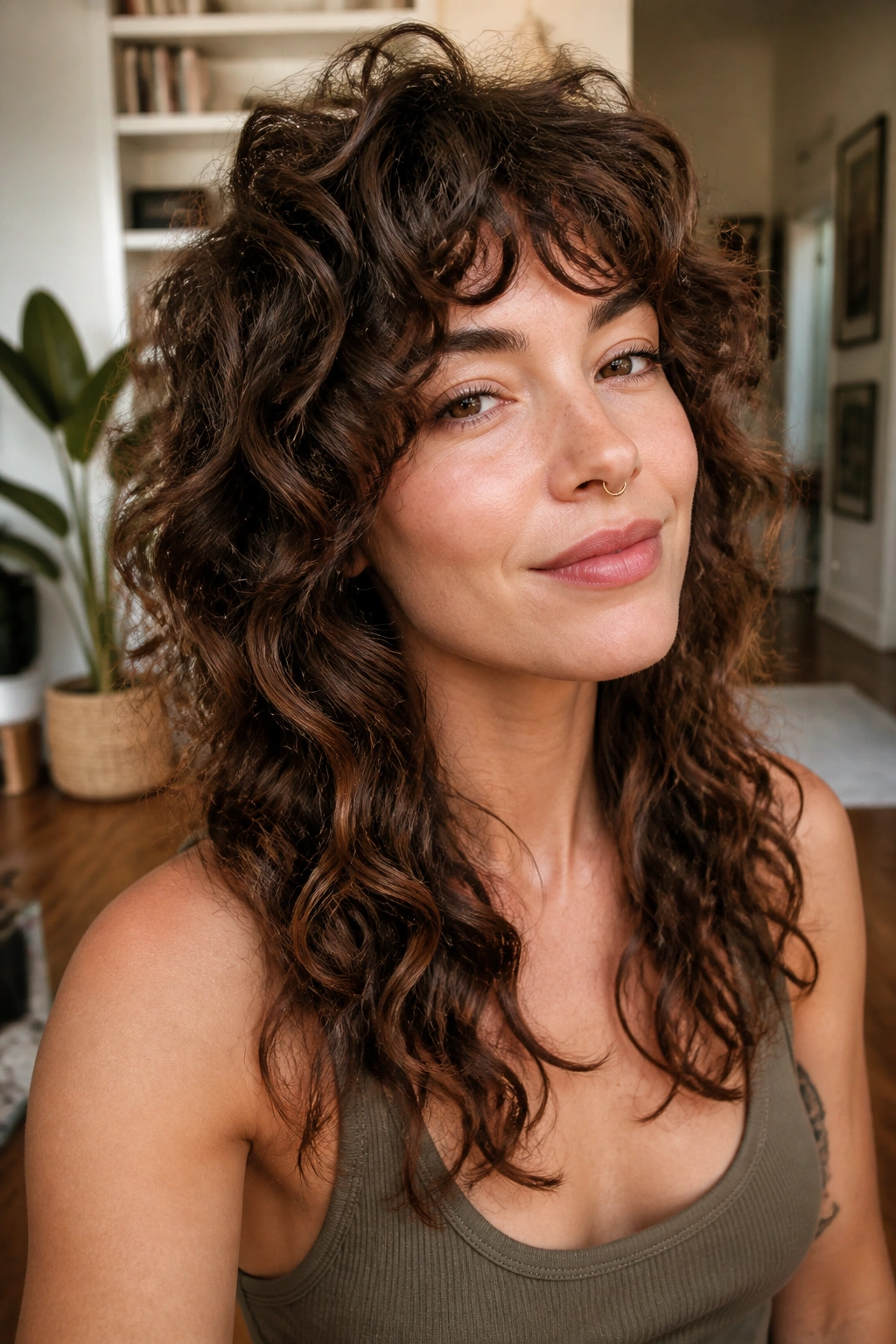
There’s a point in curly hair where a haircut stops looking freshly cut and starts looking lived-in in the best way. A grown-out wolf cut sits right there, and that is why so many women keep coming back to it.
The layers have time to settle, the fringe softens, and the whole shape feels less styled and more natural. That makes this version perfect if you do not want to chase a salon-perfect finish every few weeks. It still has the wolf-cut silhouette — lift at the top, motion at the sides, longer pieces in the back — but the edges blur a little, which actually helps curly hair.
I like this shape for people who want their curls to look interesting without looking overdone. You can throw it up, wear it loose, or let it dry on its own and still see the cut. That’s rare. Most styles either need effort or fall apart. This one tends to age well.
If you’ve been wondering where to start, start with the version that will still make sense when it grows out. That’s usually the one worth keeping.
