



Short hair and a shaggy wolf cut are a better match than most people expect. Shaggy wolf cuts for short hair work because the layers can sit high enough to build shape without swallowing the face, and that makes the whole cut feel sharper, lighter, and a little more alive.
The mistake is chasing too much drama in the wrong places. If the sides get too bulky, you get a puffy triangle. If the crown is left too flat, the style loses its bite and starts looking like a grown-out bob with opinions. Neither is the goal.
The best short wolf cuts borrow just enough from a shag, a mullet, and a pixie to look deliberate. You want movement at the top, broken-up ends, and a neckline that does not sit there like a hard line. A good stylist will usually point cut, slice, or razor the ends in controlled sections so the shape feels messy on purpose, not hacked apart.
Some versions are soft and wearable. Some are loud, choppy, and a little rebellious. The fun part is choosing how far you want to go.
1. Choppy Shaggy Wolf Cut for Short Hair
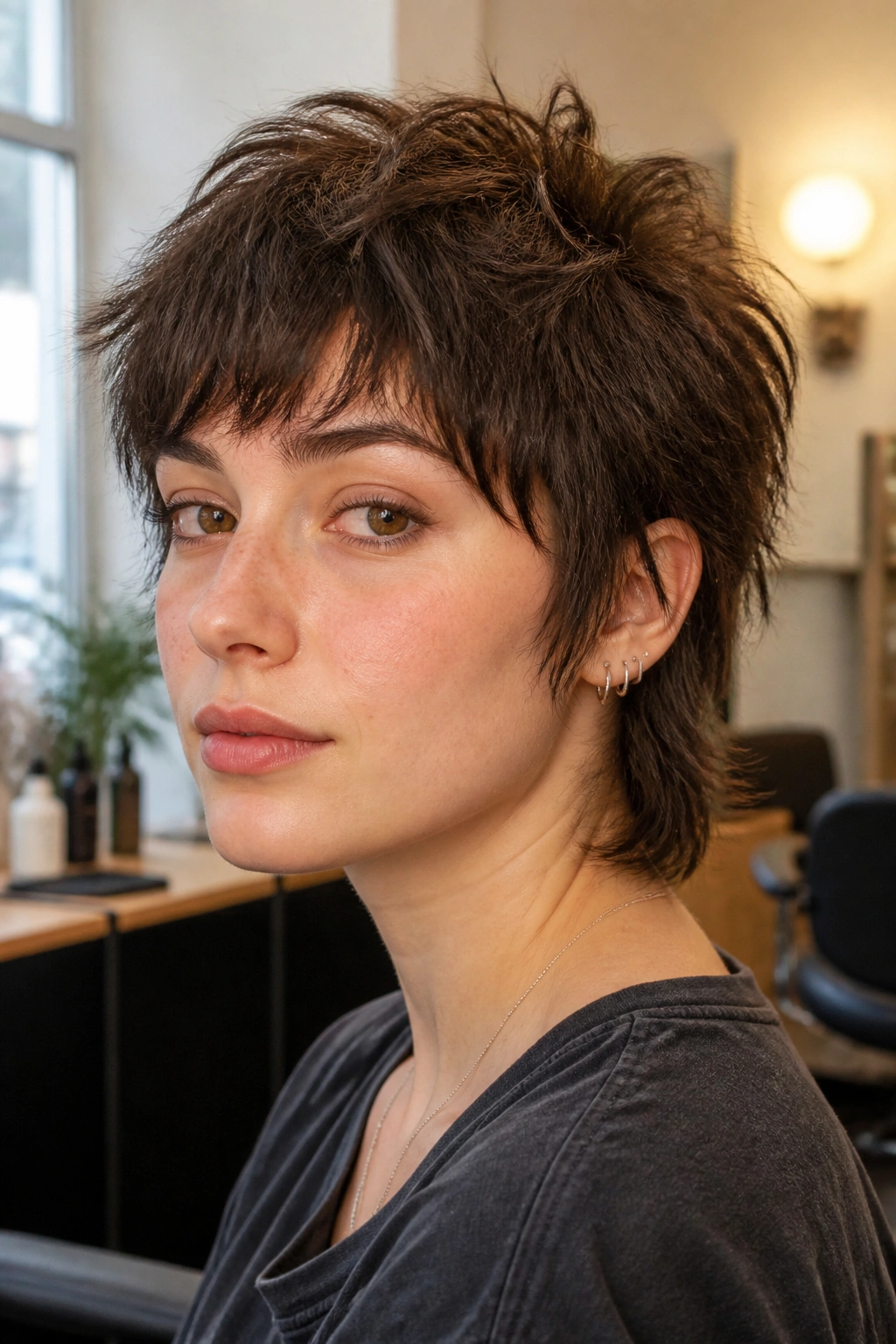
This is the version people picture first, and for good reason. It has the clearest wolf-cut shape: short crown layers, jagged ends, and a slightly tapered nape that keeps the back from feeling heavy. On short hair, that balance matters. Too much weight and the cut collapses; too much layering and it starts sticking out in odd places.
Why It Works
The magic is in the spacing. The layers sit close enough together to create lift, but not so close that you lose all body. That makes it a strong pick for fine to medium hair, especially if your hair usually goes flat by lunchtime. It also gives straight hair some needed grit.
- Ask for point-cut ends instead of one blunt line.
- Keep the top section 1 to 2 inches shorter than the outer length.
- Leave a little length through the fringe so it can break apart instead of sitting like a helmet.
- Style with a pea-sized matte paste and rough-dry with your fingers.
One-sentence truth: this cut looks best when it is not over-styled.
2. Curtain Bang Wolf Bob
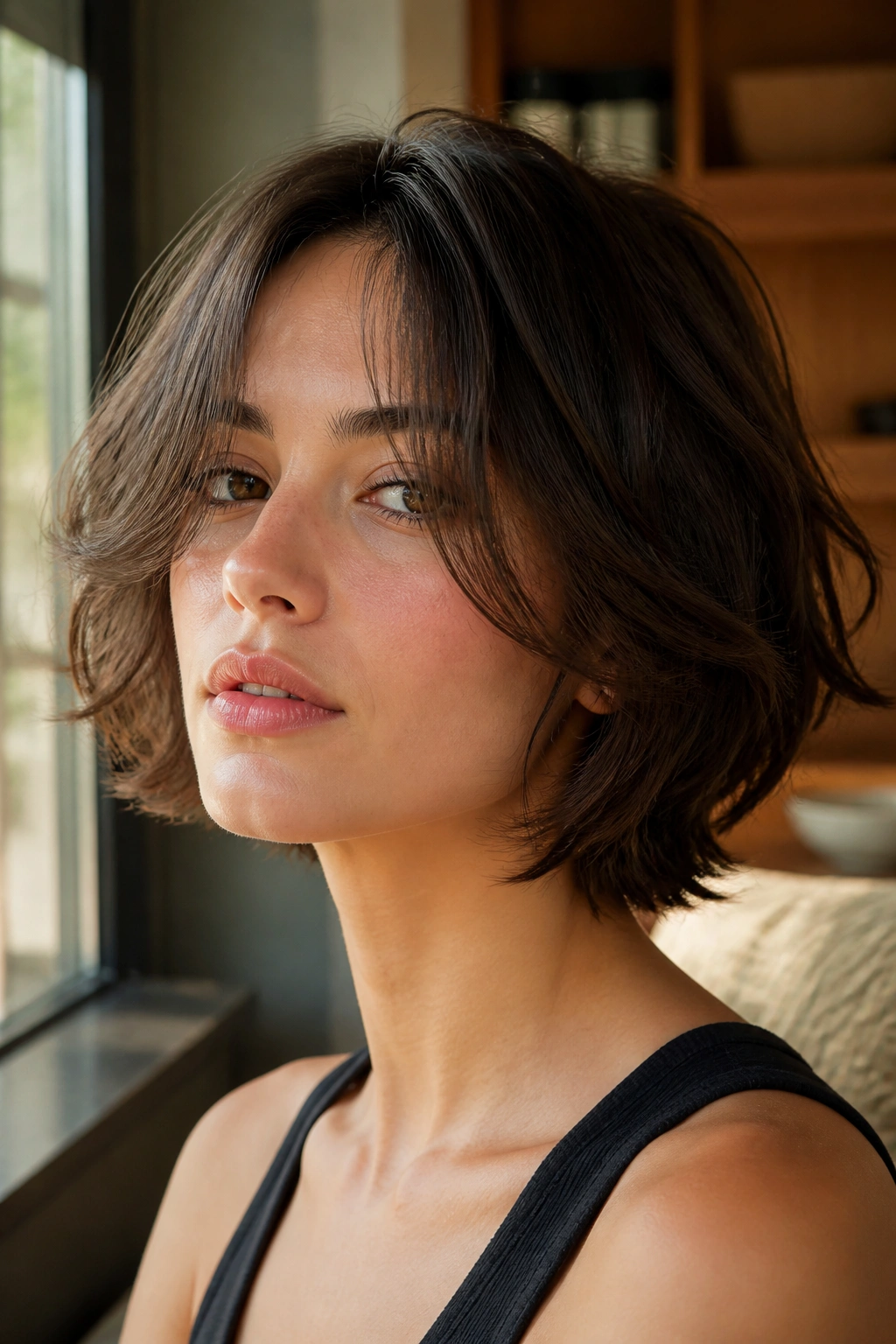
Can a short wolf cut feel soft? Absolutely. A curtain-bang wolf bob keeps the texture, but it pulls the face-framing forward so the cut feels less punk and more lived-in. That makes it a smart choice if you want movement without the sharper mullet edge.
Bangs do a lot of the work here. The middle opens up slightly, the sides fall toward the cheekbones, and the rest of the bob stays airy with broken-up layers. It is especially good if your jawline feels a little wide or if you want the cut to skim past the temples without adding width.
What to Ask for at the Salon
Tell your stylist you want soft curtain bangs that start around the bridge of the nose and blend into the side layers. Keep the perimeter around the chin to jawline zone, not much longer, or the silhouette gets sleepy. A small amount of internal texture near the crown helps the back lift instead of sitting heavy.
For styling, a 1-inch round brush and a touch of lightweight cream are enough. Blow the bangs away from the face, then let them fall back where they want. Do not force them too hard. That trick usually backfires.
3. French Shag Wolf with Soft Fringe

This one has that effortless, slightly undone feel people like to fake but rarely get right. The shape is softer than a classic wolf cut, with a wispy fringe and layers that feather out instead of spiking out. On short hair, that softness stops the style from looking too severe.
Picture hair that bends a little at the ends, moves when you turn your head, and still has enough structure to hold up without constant fixing. That is the sweet spot. It works especially well on thick or slightly wavy hair, because the layers remove bulk without making the head look too narrow.
If your face is narrow or long, this cut can be a gift. The fringe shortens the face visually, and the scattered layers keep the rest from dropping straight down. A tiny bit of mousse at the roots helps the crown stay lifted.
- Best for hair that has some natural bend.
- Good if you want fringe, but not blunt bangs.
- Ask for feathered layers around the cheekbones.
- Skip heavy oils near the front; they flatten the shape fast.
The result feels relaxed, not precious. That matters.
4. Razor-Cut Wolf Crop
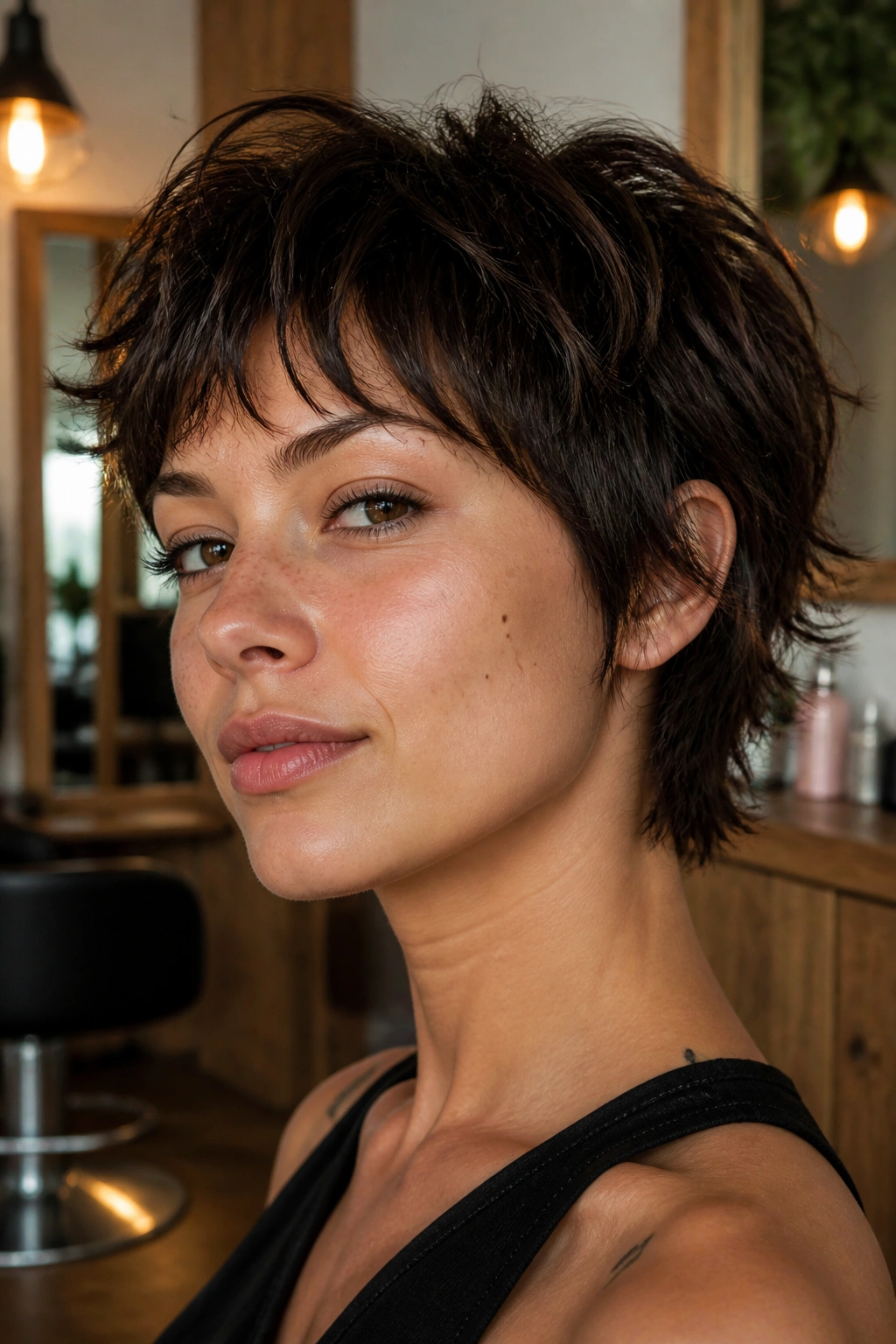
Razor cutting changes everything here. Compared with scissor-only layering, a razor can make the ends look softer, lighter, and a little more broken, which is exactly what short hair needs when you want a wolf cut that does not feel boxy. It is not about making hair thinner just because. It is about shaving off the hard edges.
Where the Texture Sits
The best razor-cut wolf crops keep the texture concentrated in three places: the crown, the temples, and the nape. That creates a cut that moves when you do, but still keeps enough shape to frame the face. On dense hair, this can stop the sides from puffing out like a triangle. On fine hair, it can make the ends look airy instead of stringy.
A couple of caveats. Razor cutting and very fragile hair do not always get along, and a heavy-handed stylist can leave the ends too shredded. That is not the same as texture. It is just damage with better branding.
Ask for a light razor pass, not a full chop through every section. Style with a diffuser on low heat or let it air-dry with a bit of sea salt spray if your hair can handle it. The finish should look piecey, not frayed.
5. Curly Wolf Cut for Short Coils
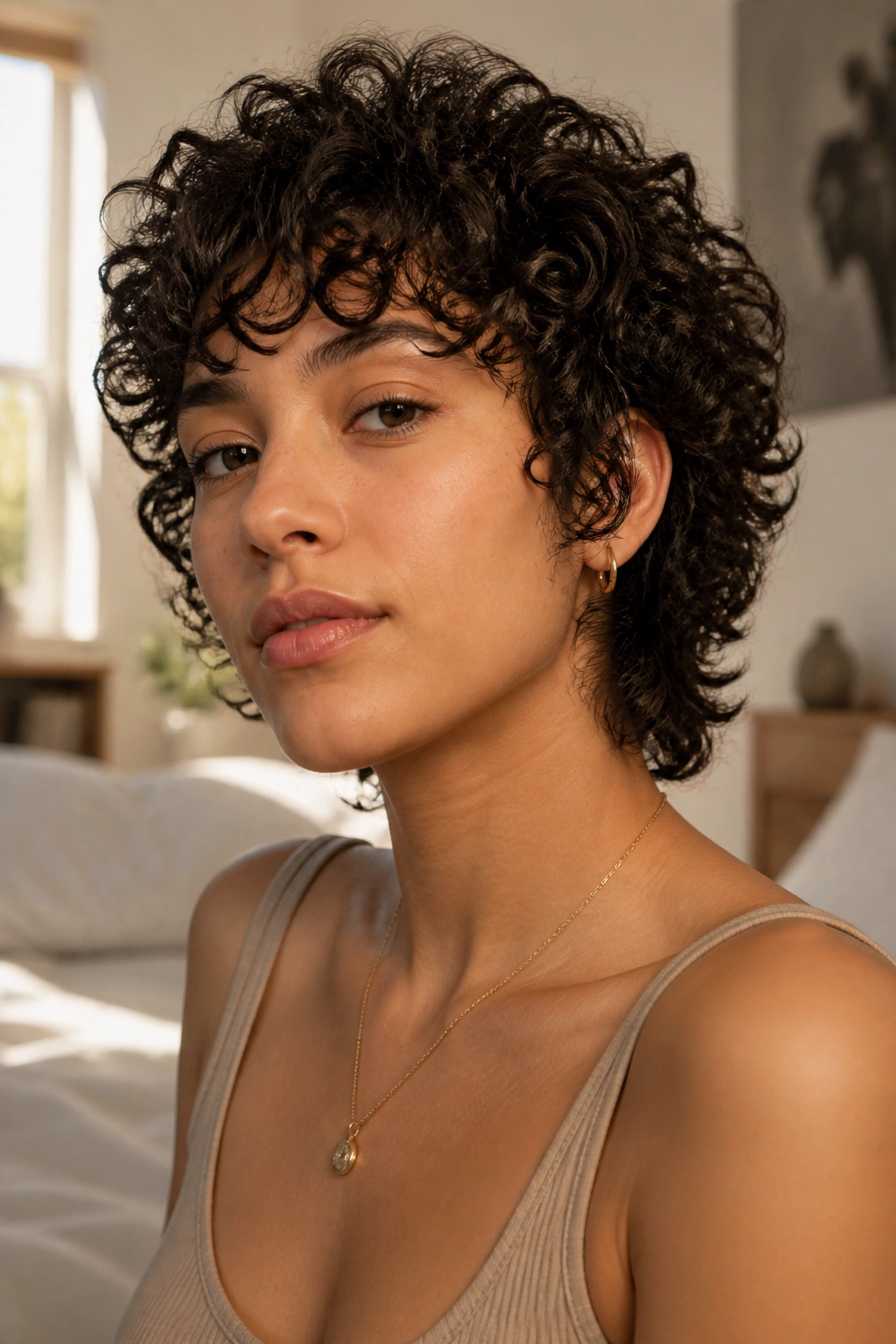
Curly hair gives a wolf cut a built-in pulse. You get bounce, lift, and a shape that changes from room to room, which is part of the fun. The challenge is keeping the cut from turning into a triangle, because curly hair will absolutely do that if the layers are placed without a plan.
The best short curly wolf cuts leave enough length on top to show the curl pattern, then gradually remove weight through the sides and back. That keeps the silhouette rounded and lively instead of wide and puffy. If your curls shrink a lot, the cut should be done with that shrinkage in mind, not against it.
How to Keep Curls from Ballooning
A dry cut or a curl-by-curl approach usually gives the cleanest shape. Wet curls lie to you. They stretch, then spring up in a way that can surprise even experienced stylists. After the cut, use a water-based curl cream and a light gel. Scrunch, diffuse on low, and stop touching it while it sets.
The nicest part is that this cut can look polished with almost no effort. A little root lift and a defined fringe are often enough. No need to fight every curl into submission.
6. Asymmetrical Wolf Bob
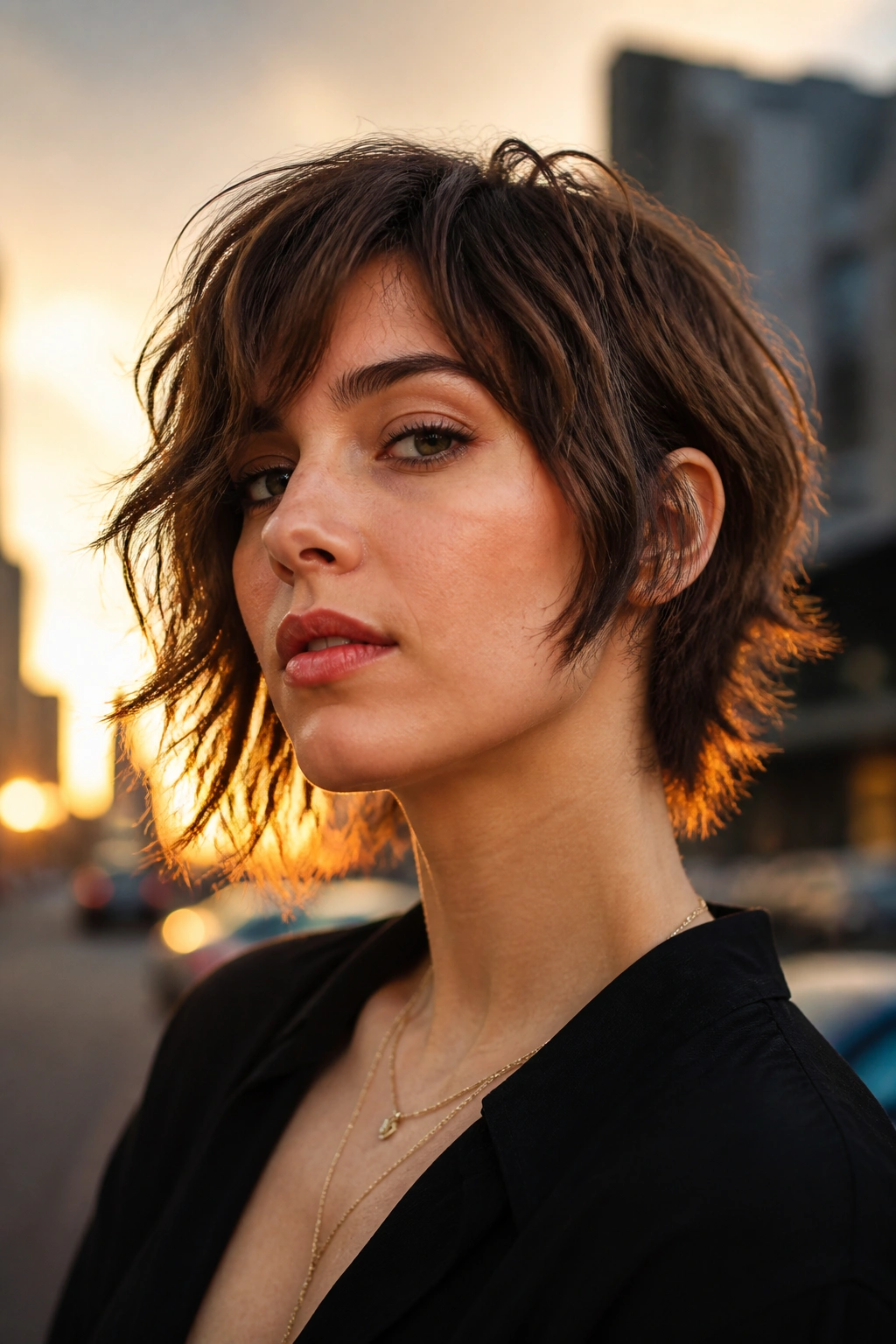
Not every wolf cut needs to sit perfectly even. A slight asymmetry can make short hair look sharper and more modern, especially if your bone structure can carry a stronger line on one side. The trick is to keep it intentional, not lopsided.
This version usually has one side cut a touch longer through the front, while the back stays shorter and layered. The result is movement and a bit of tension. It draws the eye without screaming for attention, which is why it works well on people who want edge but still need the haircut to behave in real life.
- Best for oval, square, and heart-shaped faces.
- Ask for a side difference of about 1/2 to 1 inch, not a dramatic gap.
- Keep the shorter side soft around the cheek, so it does not look clipped off.
- Styling is easy: sweep the longer side forward with a light cream and let the texture do the rest.
If you wear one side tucked behind the ear most days, this cut feels even better. It gives you two looks from one haircut. Nice deal.
7. Feathered Bixie Wolf
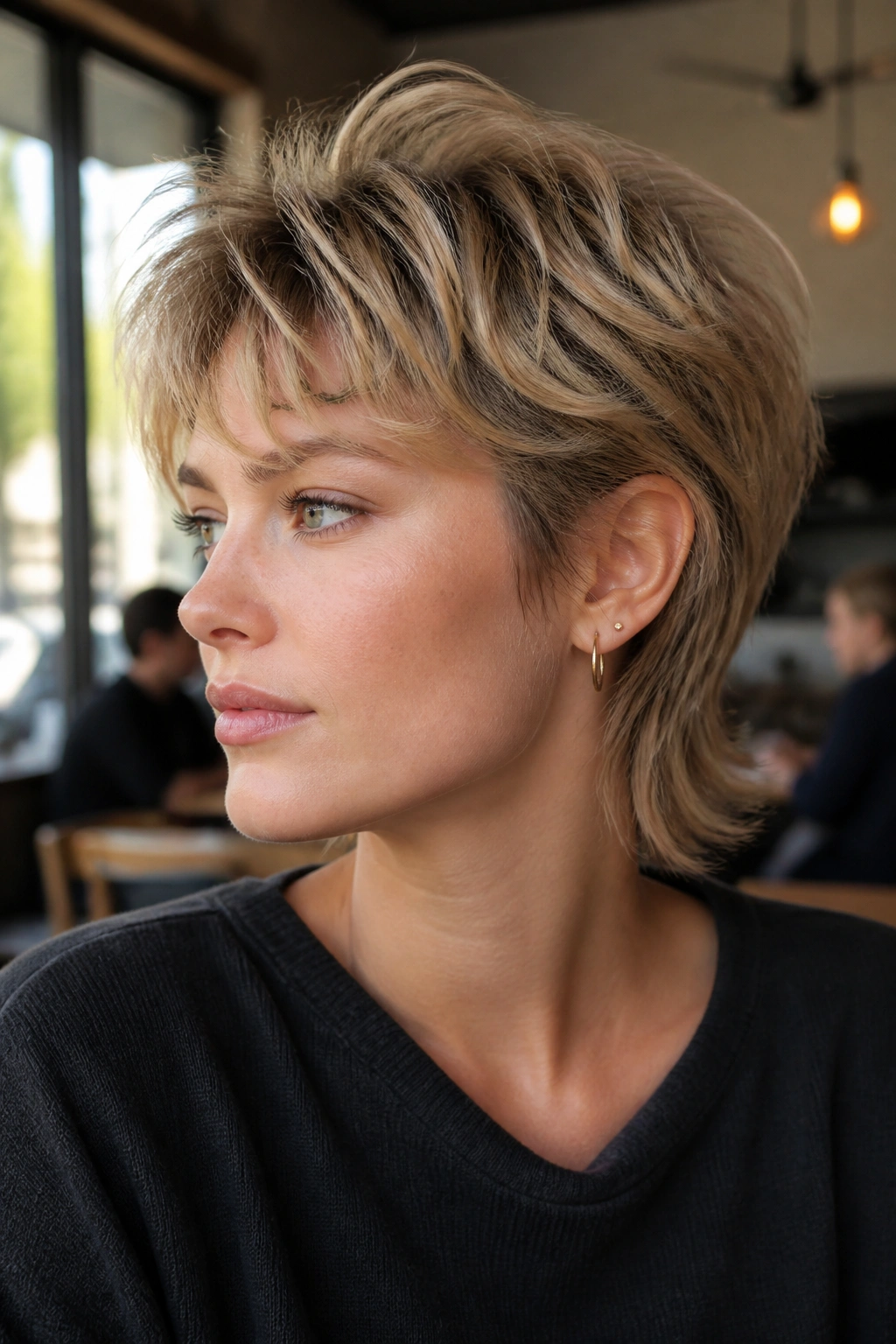
A bixie sits between a bob and a pixie, and this version borrows the wolf cut’s rough texture without losing the neatness that makes a bixie wearable. It is a good choice if you want something short enough to feel fresh, but not so short that it needs a trim every other minute.
The Sweet Spot
The key is feathering. The top and crown stay a little longer, the sides are cut close enough to keep the shape compact, and the back gets soft layering instead of a hard shelf. That gives the cut movement without making it shaggy in a messy way. It works especially well on straight hair that needs a little life.
Ask for longer layers through the top half and a lightly stacked nape. That stack keeps the neck area clean while the crown lifts. If your stylist starts talking about removing bulk everywhere, slow them down. You want shape, not holes.
A small round brush and a tiny bit of styling wax are enough for daily wear. Warm the wax between your fingers first. If you put it on cold, it sits there like glue, and no one wants that.
8. Heavy Fringe Rocker Shag
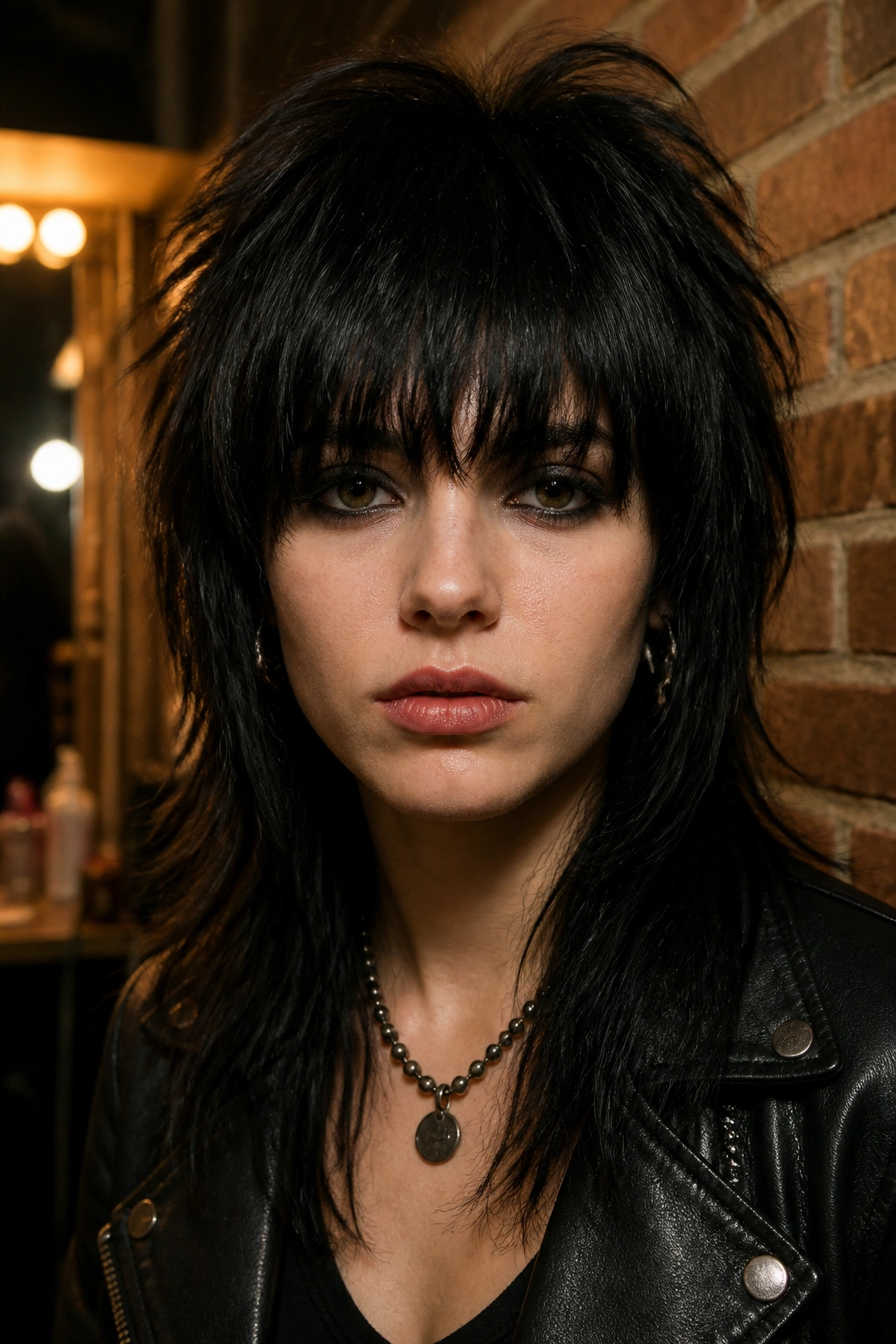
Can a short wolf cut still feel dramatic without going full mullet? Yes, and the answer is a heavy fringe. This version puts the attitude up front. The bangs are fuller, denser, and usually cut just above or grazing the brows, while the rest of the cut stays choppy and loose.
The fringe changes the whole mood. It frames the eyes hard, makes the face look shorter, and gives the haircut a little of that older rock-club energy without needing long lengths at the back. Short hair actually helps here, because the cut reads bold instead of theatrical.
The catch is maintenance. Heavy fringe grows fast in your face, and if you let it get too long, the whole shape goes blurry. Plan on trims more often than you would for a softer shag. It is worth it if you love that punchy front line.
This is one of those cuts that looks better slightly messy than perfectly brushed. A quick shake with your fingers, a mist of light hairspray, and you are done. Overthinking it ruins the charm.
9. Tapered Neck-Length Wolf Cut
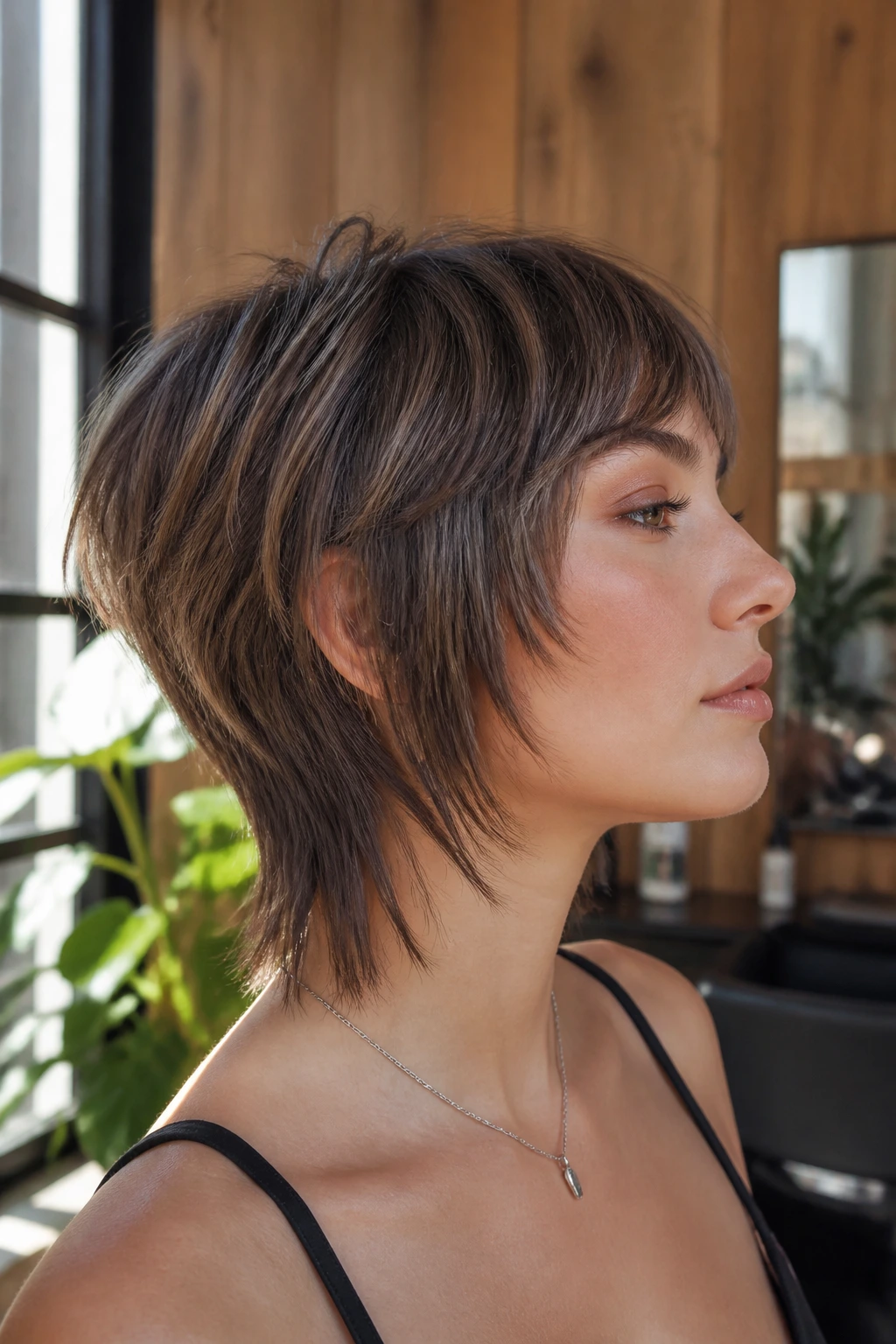
A tapered neck-length wolf cut is for people who want the back of the haircut to feel clean, not bulky. The nape is slimmed down, the layers lift through the crown, and the ends feather out around the jaw and neck. It is one of the easiest short wolf cuts to live with.
Why It Feels So Easy
The taper keeps the neckline neat, which matters if your hair grows out fast or you hate that fuzzy shelf at the back. It also makes glasses, collars, and earrings play nicely with the haircut. Nothing fights for space. The whole thing just sits there comfortably.
This shape is especially good for straight or slightly wavy hair that tends to flip out at the ends. A soft taper gives the hair somewhere to go. Tell your stylist you want the nape clean but not buzzed, because those are very different moods.
- Best if you wear structured shirts or high collars.
- Good for hair that gets bulky at the neckline.
- Ask for a soft square around the jaw, not a round bob.
- Style with a vent brush and a dab of lightweight mousse.
It is not the most rebellious version on the list. It might be the most practical, though.
10. Messy 90s Wolf Crop
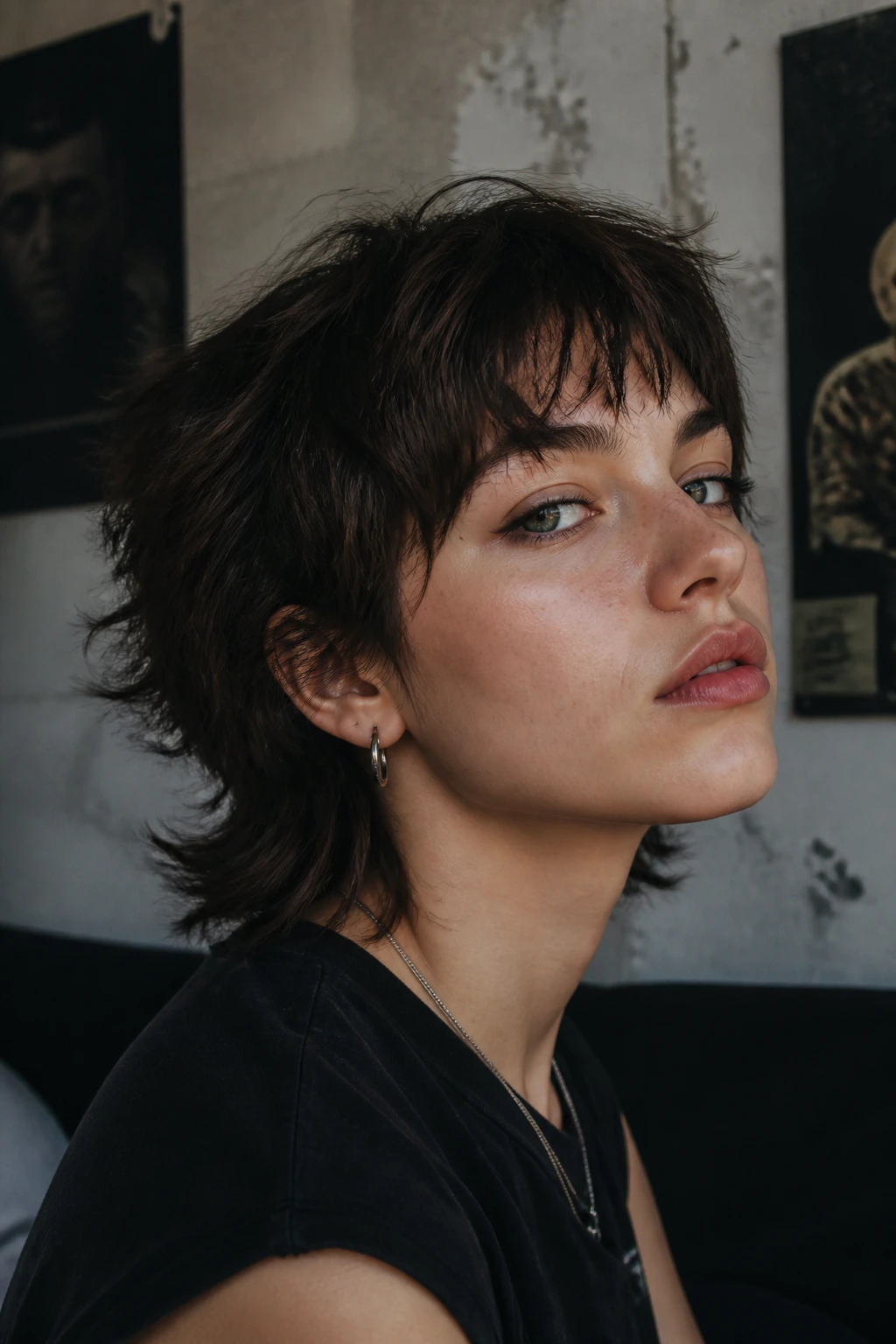
Picture a haircut that looks like it came from a music video, but without the costume closet. That is the vibe here. The layers are short, the crown has lift, the ends kick out a little, and the whole cut leans into that slightly chaotic 90s shape people keep coming back to.
The trick is restraint. Too much hairspray and it goes stiff. Too much product and it collapses. You want touchable texture, not a helmet with attitude. A rough blow-dry with your fingers is usually enough, and a little dry shampoo at the roots can give it that second-day grit.
Keep It from Looking Costume-Y
Leave some softness around the face. That keeps the cut from becoming a theme haircut. A slightly broken fringe helps too, especially if it starts a little shorter in the center and longer at the temples.
The best version of this cut looks best when you stop fussing with it. That is annoying advice, I know, but it is also true. The shape should carry the look.
11. Undercut Wolf Shag
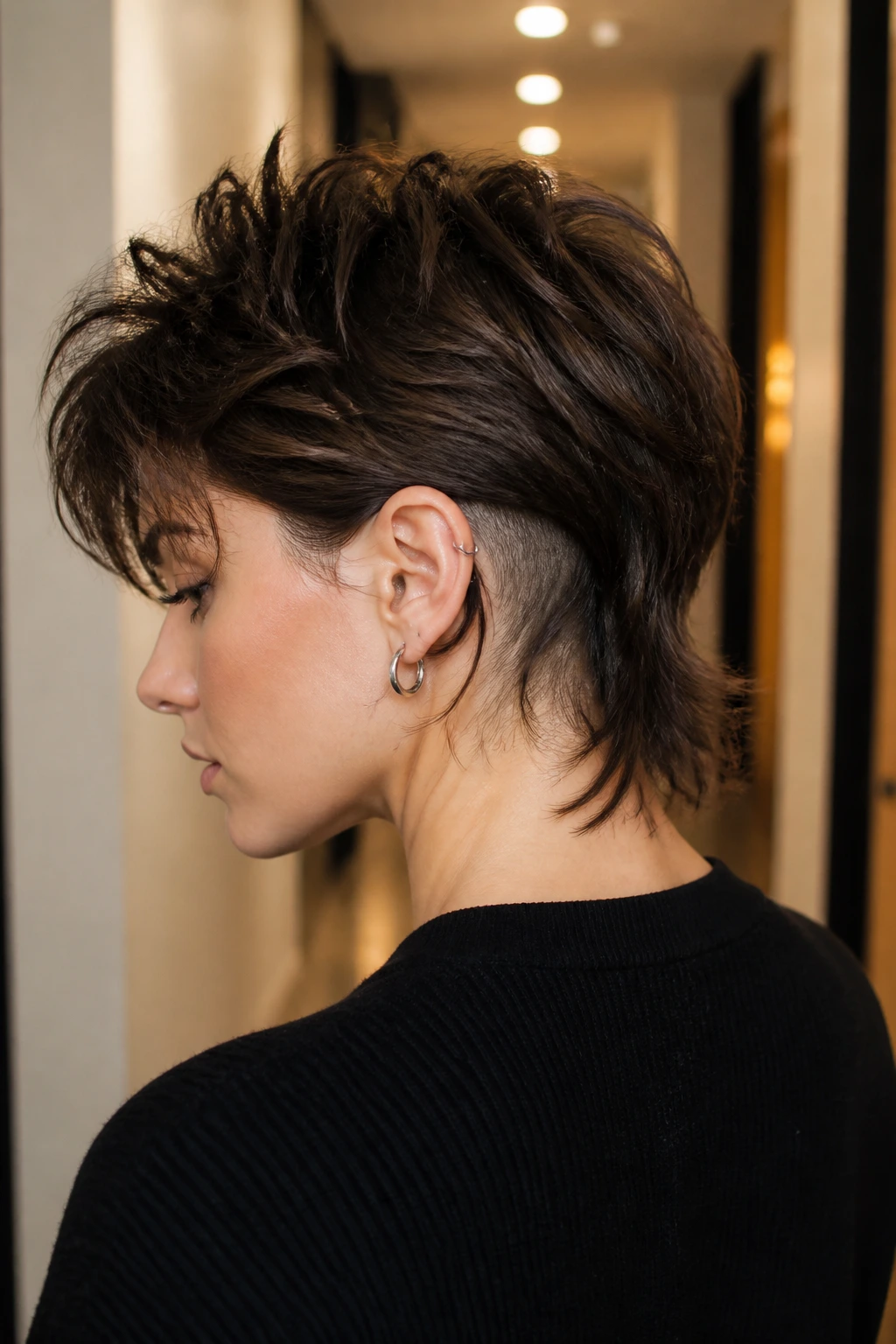
This is the bold one. If you have thick hair that turns puffy the second it dries, an undercut wolf shag can be a relief. By removing weight underneath, the top layers can sit lighter, which gives the haircut cleaner movement and cuts down on the bulk that usually makes short shag cuts feel too wide.
The undercut does not need to be dramatic. It can sit hidden under the top layers and still change the whole shape. That is the part people miss. You do not always need a visible shaved strip to get the benefit. Sometimes a quiet underlayer does more work than a loud one.
The catch is grow-out. Once you commit to an undercut, you need to keep up with it or accept a fuzzy phase as it grows back in. If that sounds irritating, choose one of the softer options instead.
- Best for very thick hair.
- Good if your hair sits heavy at the nape.
- Ask to keep the undercut hidden unless you want it visible.
- Style the top with a cream or mousse; ignore the underlayer.
A little edge goes a long way here. Too much, and the cut starts feeling like a dare.
12. Side-Swept Wolf Bob
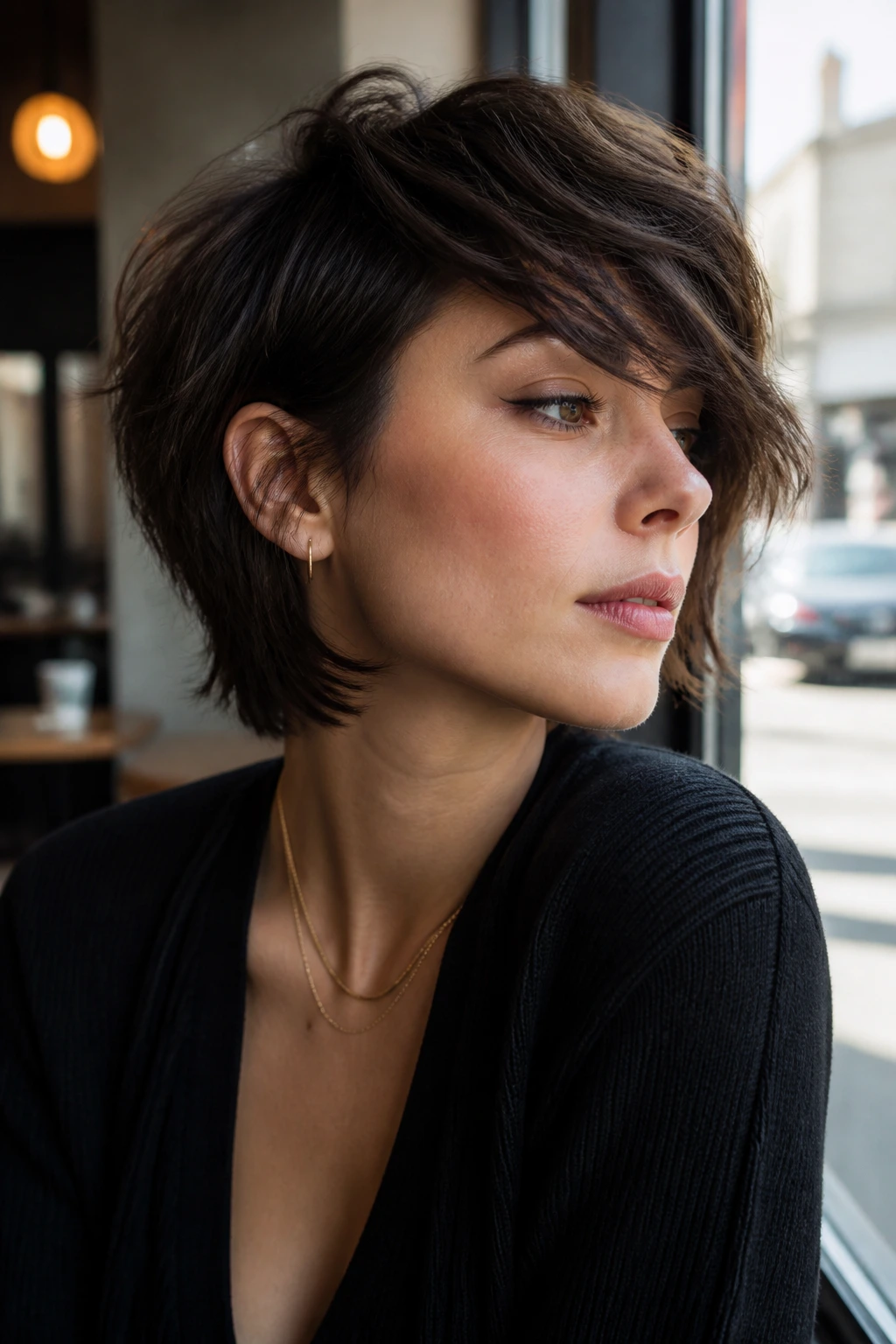
What if you do not want bangs straight across your forehead? A side-swept wolf bob solves that problem cleanly. It keeps the front soft, lets one side fall longer, and gives the haircut that easy, slanted shape that flatters a lot of faces.
The side sweep is especially nice if you wear glasses or if your forehead feels a little exposed with a blunt fringe. The longer front section softens the face without hiding it, and the layered back keeps the overall look from turning into a plain bob. There is movement here, but not too much fuss.
How to Style the Sweep
Blow-dry the front section in the direction you want it to land, using a round brush or even a paddle brush with a small bend at the ends. A light styling lotion keeps it from frizzing out. If your hair is fine, skip heavy cream near the roots. It will drag the shape down fast.
A side part helps this cut settle naturally. A center part can work too, but it changes the mood from soft to sharper, and sometimes that is exactly what you want.
13. Piecey Micro Mullet Wolf
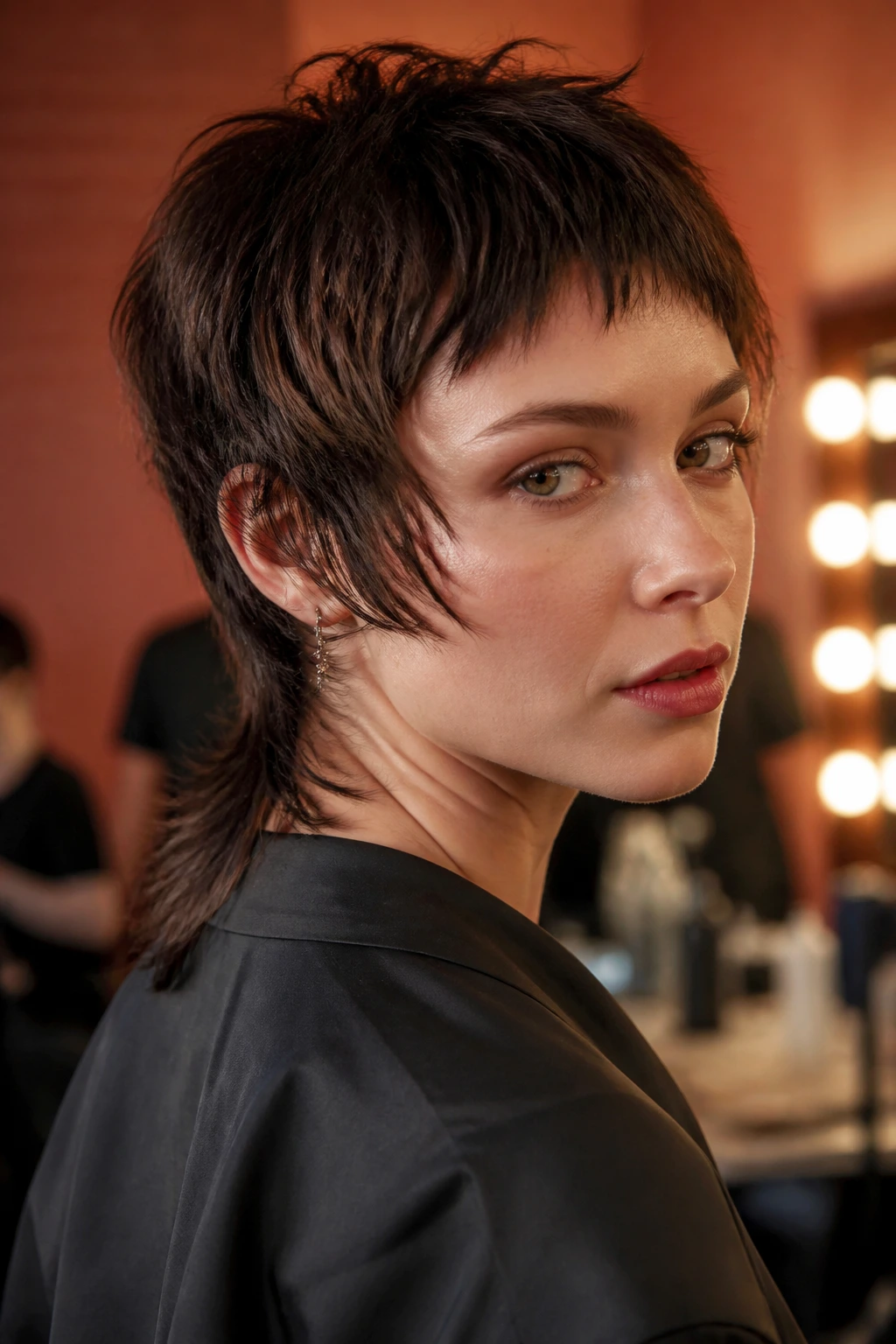
The front looks almost cropped. The back keeps a little tail. That’s the whole charm of the micro mullet wolf cut, and on short hair it can look edgy without going into costume territory if the layers are kept tight and the transition stays soft.
This is the version for someone who likes contrast. Shorter through the front, extra texture through the crown, and a touch more length through the nape gives the haircut that unmistakable wolf silhouette. The important part is subtlety. If the back gets too long, the haircut stops feeling chic and starts feeling unfinished.
The best micro mullet wolves are cut with a bit of softness around the temples and ears. That keeps the shape from looking severe. A tiny fringe or broken bang helps too, especially if you want the cut to feel modern instead of borrowed from a band poster.
It is a good one for people who style their hair with their hands and move on. If you want perfect symmetry, pick something else. This cut likes a little mess.
14. Soft Wavy Wolf Crop
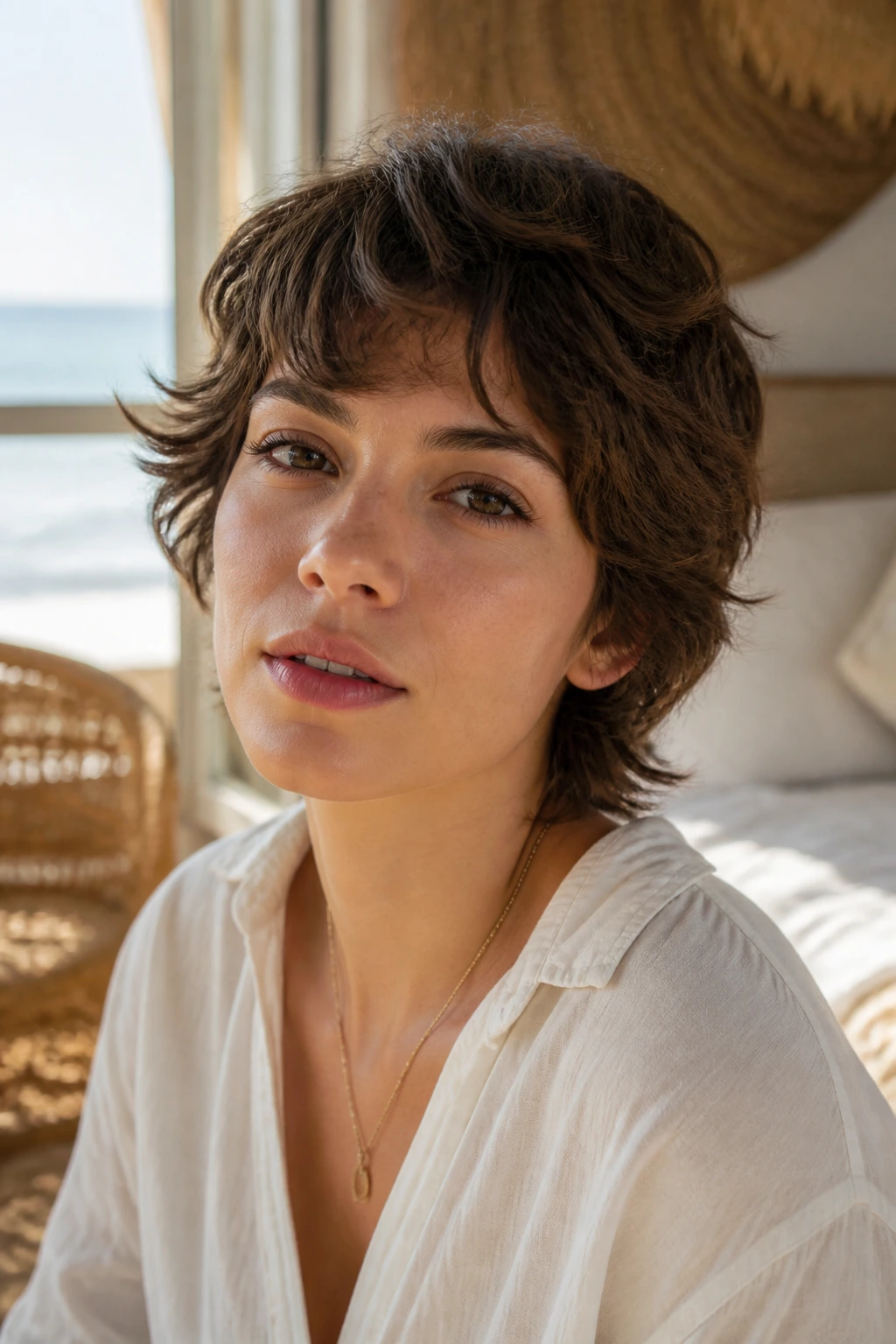
Not everyone wants chopped-up ends that shout from across the room. A soft wavy wolf crop keeps the wolf shape but lets the natural bend do most of the work. The result is airy, loose, and easy to wear on short hair that already has some wave.
This version is kinder to people who do not want to fight their hair every morning. A few longer layers around the crown, some face-framing texture, and a gentle taper through the back are enough. The waves carry the style. You are not building the whole look from scratch.
How to Style Soft Waves
Use a salt-free wave spray or a light mousse on damp hair, then twist small sections with your fingers as it dries. If you like a diffuser, use low heat and stop before the hair gets fully dry. Leaving it a little damp at the roots helps the shape stay airy.
The nice thing about this cut is the grow-out. It stays wearable for a while, which matters if you do not want to be at the salon every four weeks. It is the calm cousin of the sharper wolf cuts, and honestly, I think that is part of its appeal.
15. Soft Crop Wolf Cut for Short Hair with Tucked Ends
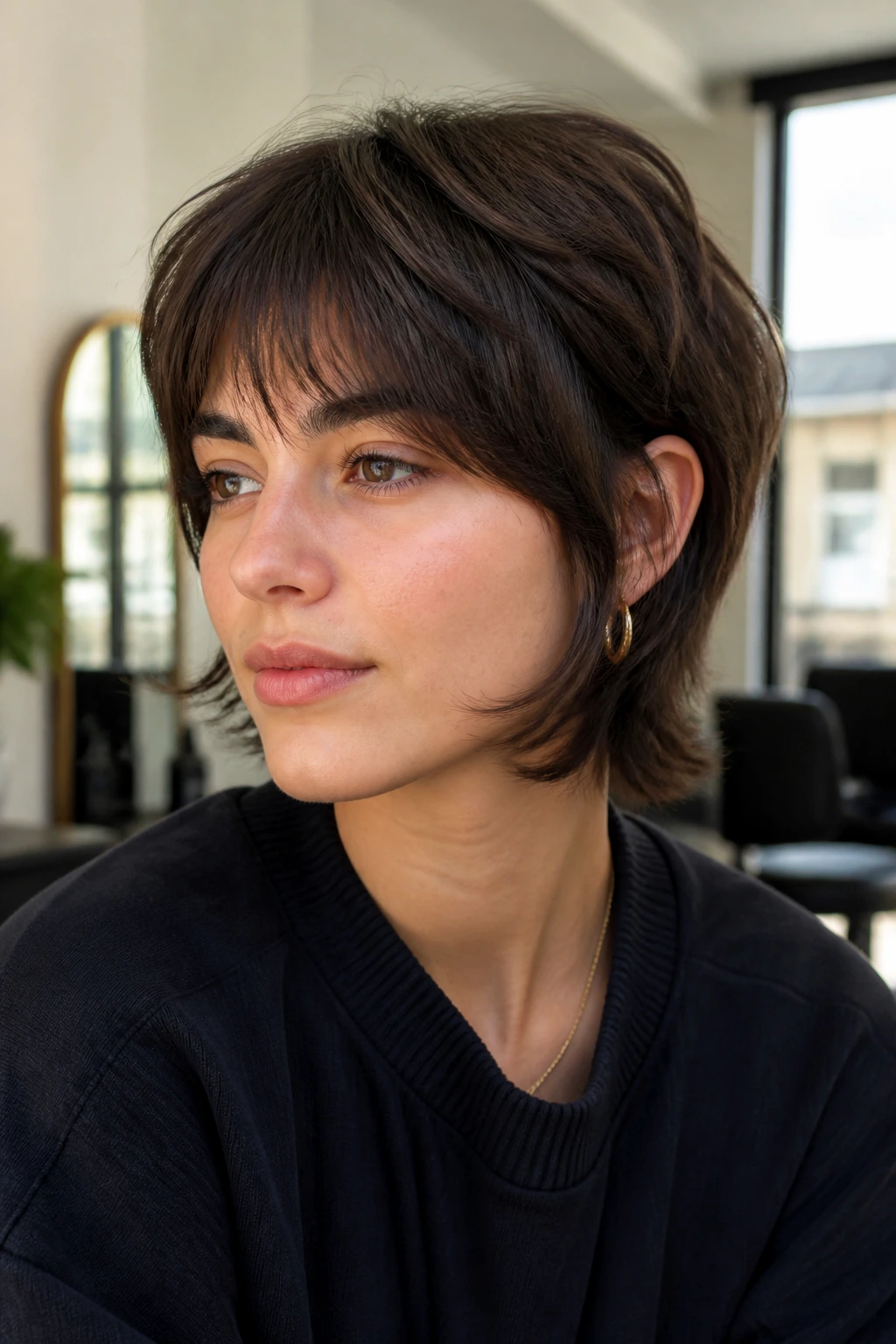
This is the safest short wolf cut on the list, and that is not a bad thing. If you want the texture and lift without a hard mullet edge, a soft crop with tucked ends gives you movement around the face, a clean neckline, and enough shag texture to keep it from feeling plain.
The cut is built on gentle layering rather than extreme disconnection. The ends curve in a little instead of kicking out hard, which makes the shape easier to wear with glasses, collared shirts, or a more polished wardrobe. It is the version I would hand to someone who wants the wolf cut idea, but not the full wolf cut personality.
Who Should Choose It
- People with fine hair that needs root lift without lots of bulk removal.
- Anyone who wants a short cut that can still look neat on a workday.
- People who are nervous about bangs but want some face-framing movement.
- Anyone growing out a pixie or a blunt bob.
A small round brush, a little mousse, and a quick pass with the blow-dryer are enough. Keep the finish soft. Let the ends tuck under instead of forcing them outward.
Short hair does not need to be boring to be easy. That is the part people forget. The right wolf cut can be sharp, airy, and surprisingly low-maintenance all at once, and the best version is usually the one that fits your morning routine instead of fighting it.
