



A long shag haircut with bangs has a way of making hair look like it has a pulse. The cut does half the work for you, which is exactly why people keep coming back to it after trying something sleeker, straighter, or more fussy. It has movement built in. It has edge. And when the bangs are done well, the whole thing looks like you meant to wear your hair this way, even on a rushed morning.
What I like about long shag haircuts with bangs is that they don’t ask for perfect styling. They ask for shape. That’s a different thing. You can wear one with soft waves, a rough blowout, a flat iron bend, or air-dried texture, and the cut still reads as intentional because the layers and fringe do the heavy lifting. A blunt one-length cut often goes limp the second it loses a little polish. A shag has room to breathe.
The catch is that the bangs matter. A lot. The wrong fringe can make the whole haircut feel heavier than it should, or too 1970s in the wrong way, or worse, like it was cut in a hurry and never adjusted. The right bangs, though, can open the face, sharpen the cheekbones, and make long hair feel lighter without sacrificing length. That’s the sweet spot most people are after.
Curtain pieces, bottleneck bangs, wispy fringe, heavy fringe, curly fringe, wolf-cut leanings, softer shag layers, sharper razor cuts — the same basic idea can move in a dozen directions. The fun is picking the version that fits your hair’s actual behavior, not the version that looks best in a salon chair under bright lights.
1. Curtain Bangs on a Soft Long Shag
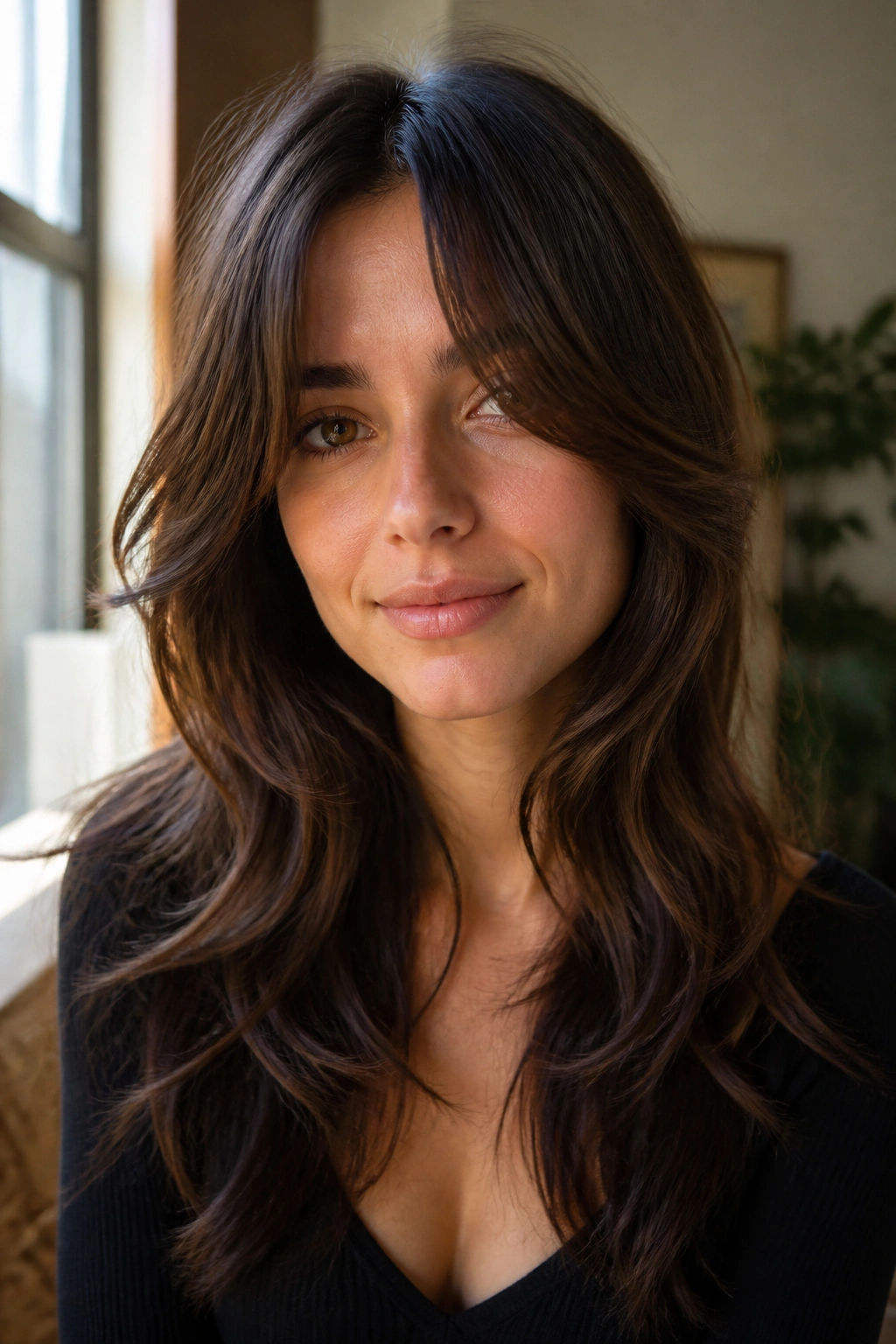
Curtain bangs are the easiest way to ease into a long shag haircut with bangs if you’re nervous about committing to something short across the forehead. They part in the middle, skim the cheekbones, and blend into the front layers without drawing a hard line. That softness matters. It keeps the cut from feeling too sharp, especially on longer hair that still needs some movement around the face.
Why This Version Works So Well
Curtain bangs give you a built-in grow-out story. They can start short at the center and drop longer at the sides, which means they still look good when they’re not freshly trimmed. That’s useful. A lot of bang styles stop looking neat after a few weeks. Curtain bangs usually just look a little more lived-in.
They’re also forgiving on different face shapes. Round faces get more vertical pull. Long faces get softness across the forehead. Square jaws get a little curve to balance the lines. No miracle here, just good geometry.
- Best on straight to wavy hair
- Easy to blend with collarbone or chest-length layers
- Looks good with center parts and slightly off-center parts
- Usually styled with a round brush or a large velcro roller
Tip: Ask for the shortest point to sit around the bridge of the nose or just below the brows, then let the sides fall into the cheekbone area.
2. Bottleneck Bangs With Feathered Ends
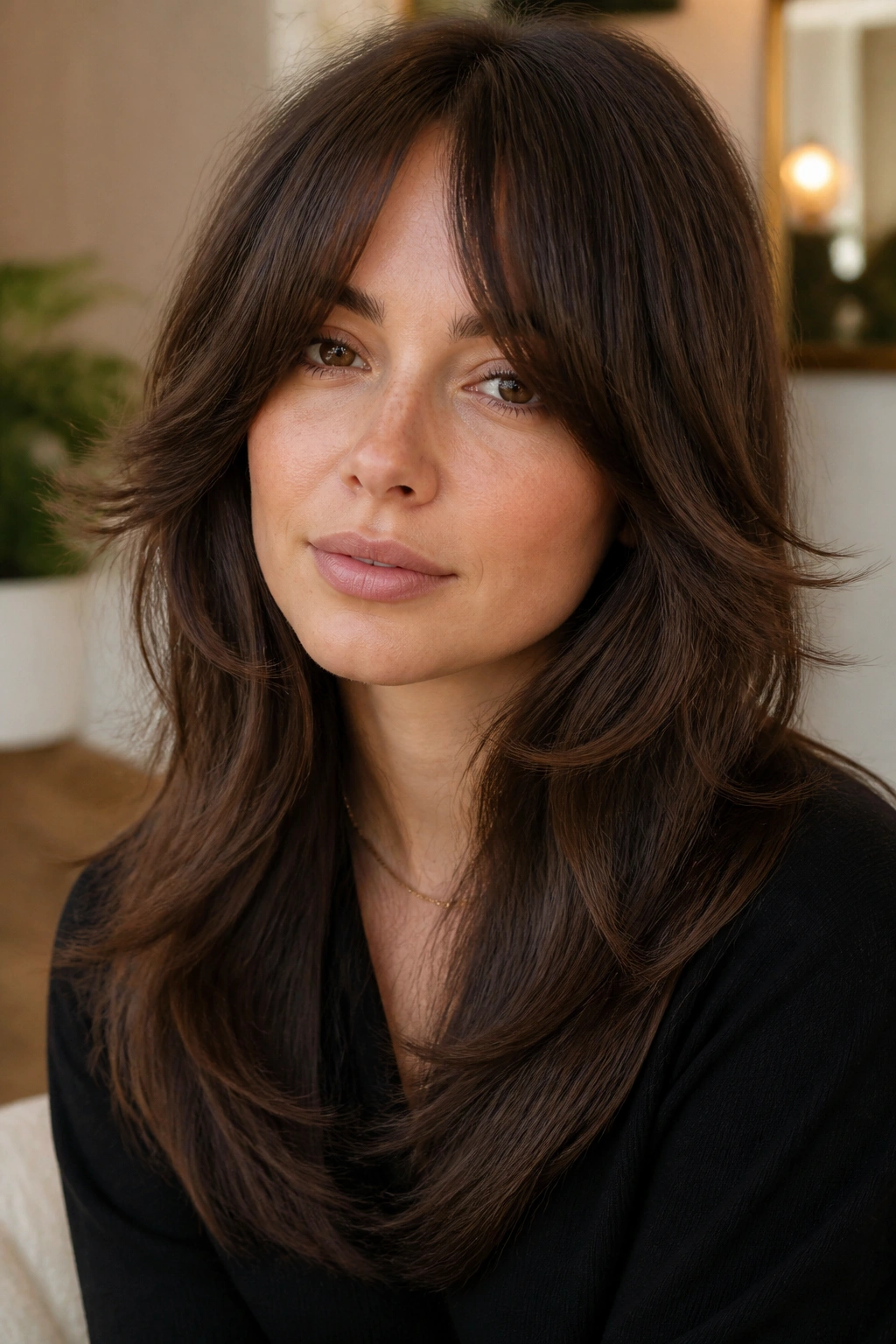
Bottleneck bangs are the quieter cousin of curtain bangs, and I mean that in a good way. They start narrow at the center, open just a bit near the brows, then taper longer toward the temples. On a long shag, that shape feels clean and modern without losing the loose, undone mood people want from shag layers.
The big reason this cut works is control. You get fringe, but not a blunt slab of hair sitting across your forehead. You get softness, but not so much that the bangs disappear. If your hair is medium to thick, bottleneck bangs keep the front from puffing out. If your hair is fine, they stop the cut from looking sparse at the center.
I’d especially point this one toward anyone who likes to tuck hair behind the ears. The longer side pieces fall in a way that still looks deliberate when one side gets pushed back. That little detail matters more than people think.
It also plays well with a messy blowout. The ends can be flipped slightly away from the face, or left a little broken up with texture spray. Both work. Both look lived in.
3. Brow-Grazing Choppy Fringe on Long Layers
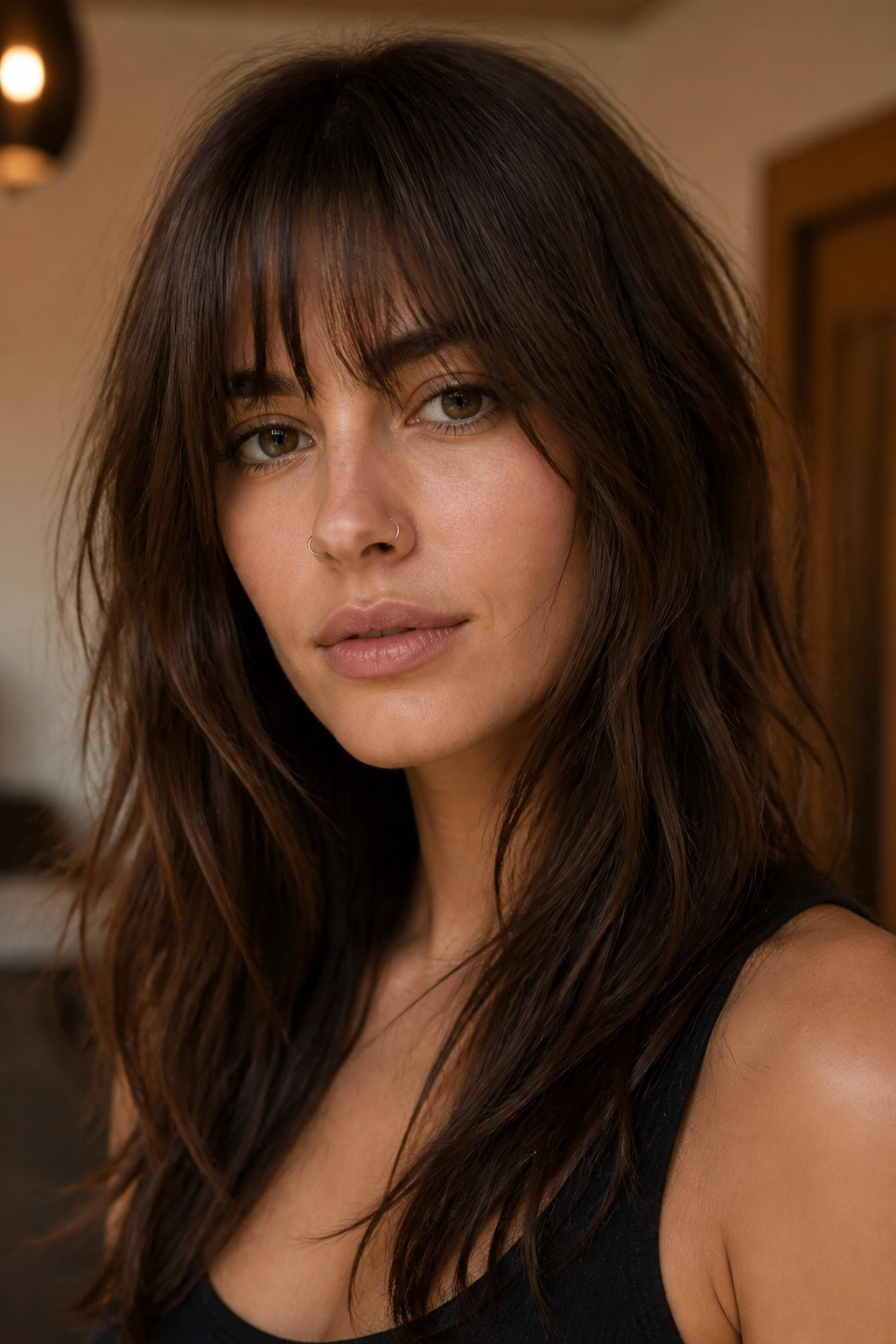
Why does this one keep showing up in good shag cuts? Because brow-grazing bangs sit right in that narrow space between soft and strong. They land near the brows, but the edges are broken up enough that they don’t feel heavy. On a long shag, that little bit of bite gives the whole haircut a sharper outline.
How to Wear It
The trick is not to over-style it. You want the fringe to look piecey, not carved into a straight wall. A light blow-dry with a small round brush is enough. If your hair dries with a natural bend, even better. Let the ends do some of the talking.
This version suits people who like contrast. The length stays long and loose, while the front has enough edge to keep the cut from drifting into plain layered hair. It’s especially good if your hair is straight or only mildly wavy, because the fringe line stays visible instead of collapsing.
- Ask for point-cut ends rather than a blunt line
- Keep the shortest pieces just above the brows
- Use a light texture spray, not a heavy wax
- Trim every 4 to 6 weeks if you want the shape crisp
Do not overflatten it. A little separation is the whole point.
4. Side-Swept Bangs on a Soft Rocker Shag
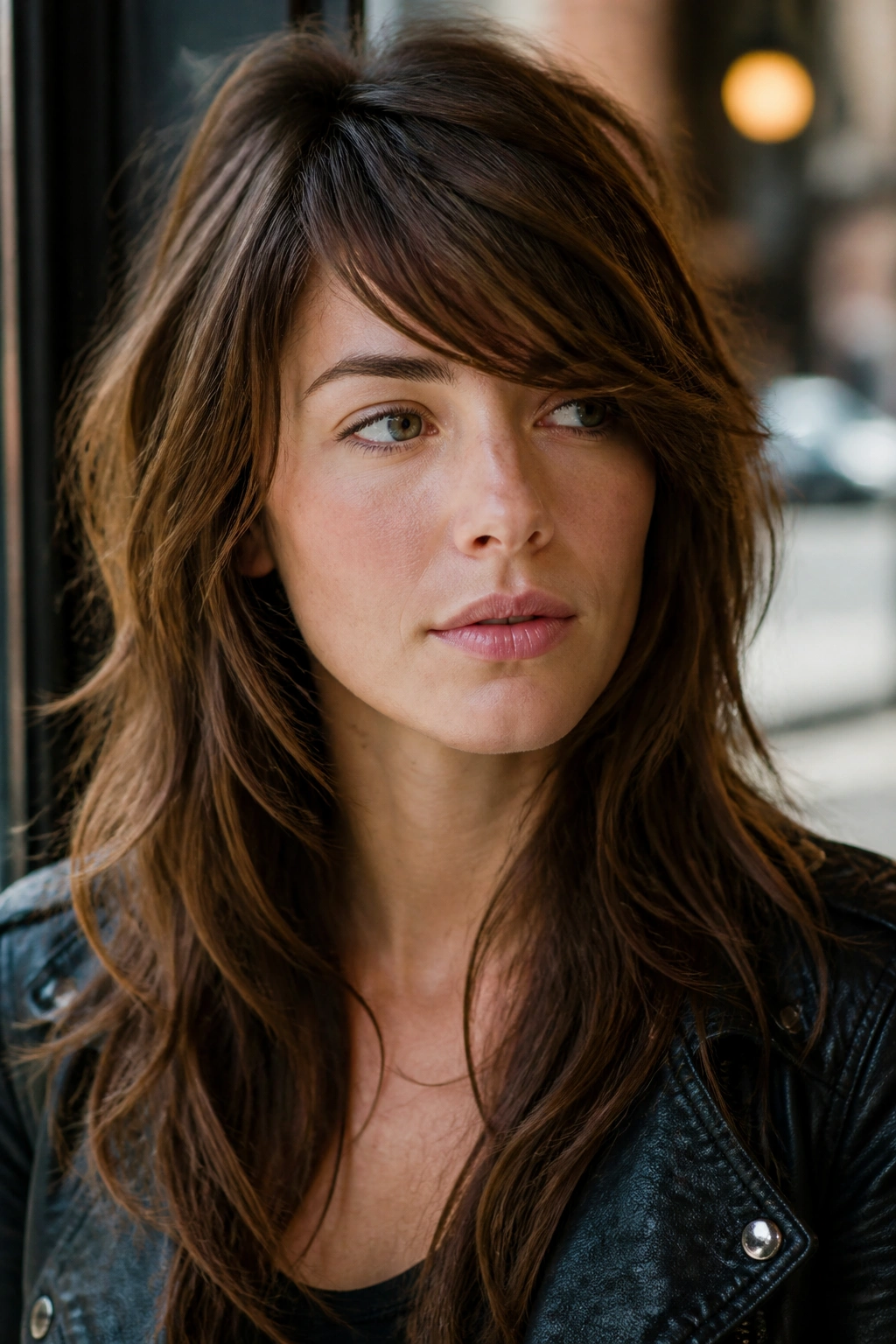
If you ever wanted bangs but hated the feeling of hair sitting squarely on your forehead, side-swept bangs are the escape hatch. On a long shag, they add movement without forcing you into a center part or a full fringe. The cut feels easy, a little rocker, and a little more wearable on the days you can’t be bothered to style every strand.
I’ve always liked this version for people with a strong cowlick or a stubborn front hairline. A side-swept fringe works with that natural push instead of fighting it. You can tuck the front back on one side, let it fall over the eyebrow on the other, or bend it with a flat brush and be done in five minutes.
It’s also a good move if you wear glasses. The bangs can be cut to hover above the frames or sweep away from them, which saves a lot of annoying poking and adjusting.
The rest of the shag should stay light around the face. If the layers are too chunky, the side fringe starts looking disconnected. A good stylist will connect the front and top layers so the whole cut moves as one shape.
5. Wavy Long Shag With a Split Fringe
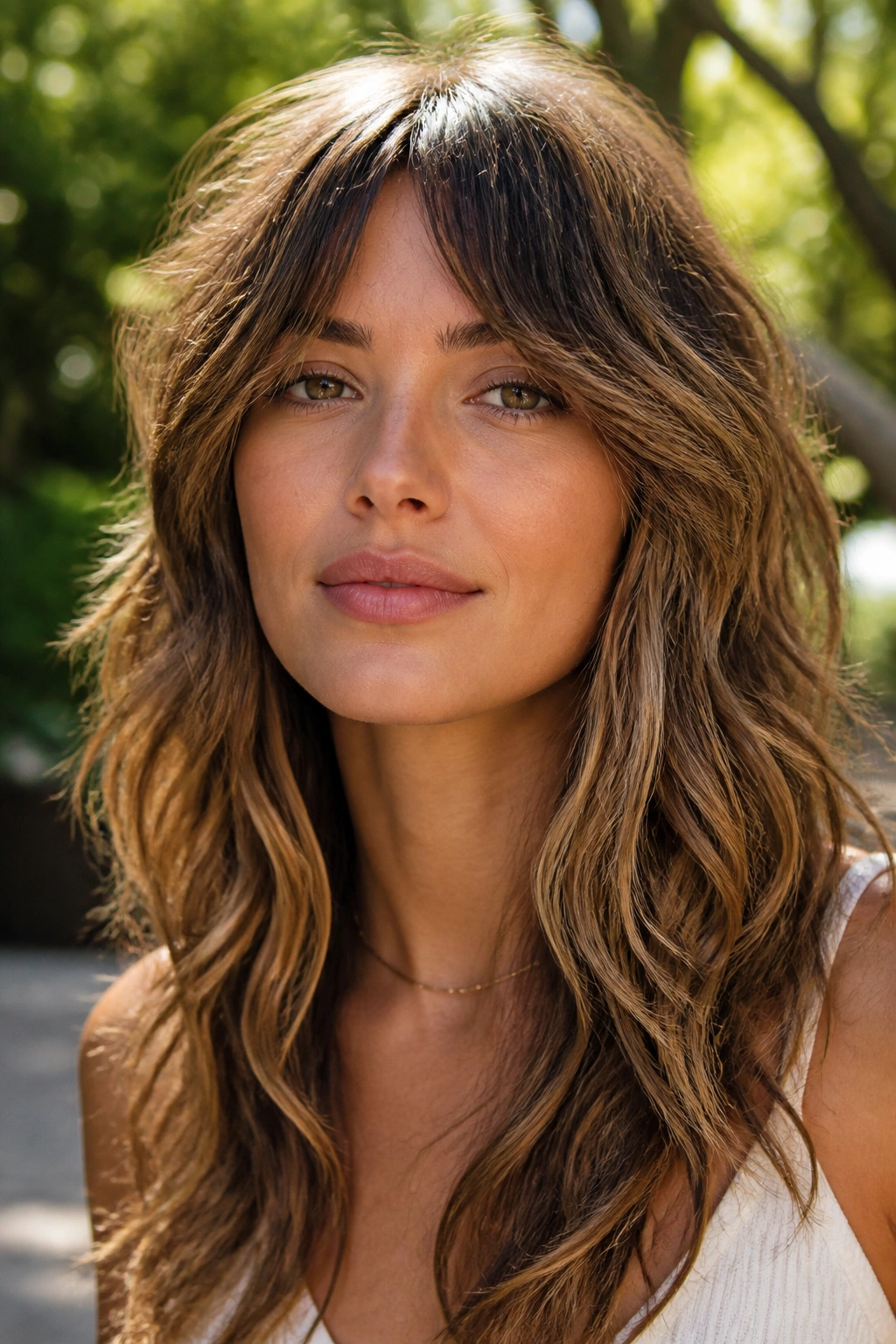
A split fringe on wavy hair has a messy, breezy quality that never feels overworked. The bangs open at the center, fall apart a little naturally, and blend into long layers that are already doing their own thing. That’s the charm. The cut accepts texture instead of pretending hair should sit still.
This version is a favorite of mine for hair that sits somewhere between straight and curly. You don’t need a perfect wave pattern. You need bend. A little twist, a little shape, and some movement around the jawline. The front pieces can be dried with fingers and a diffuser or wrapped loosely around a large brush, then left alone. Too much polish kills the appeal.
Split fringe also helps if your face tends to get buried under too much hair. The open center pulls the eye up, while the longer sides soften the cheeks. It feels airy, not empty.
You’ll want the layers around the crown to stay soft rather than heavily chopped. If the top gets too short, the cut starts shouting. The best version whispers a little and lets the waves do the rest.
6. Curly Long Shag With Rounded Bangs
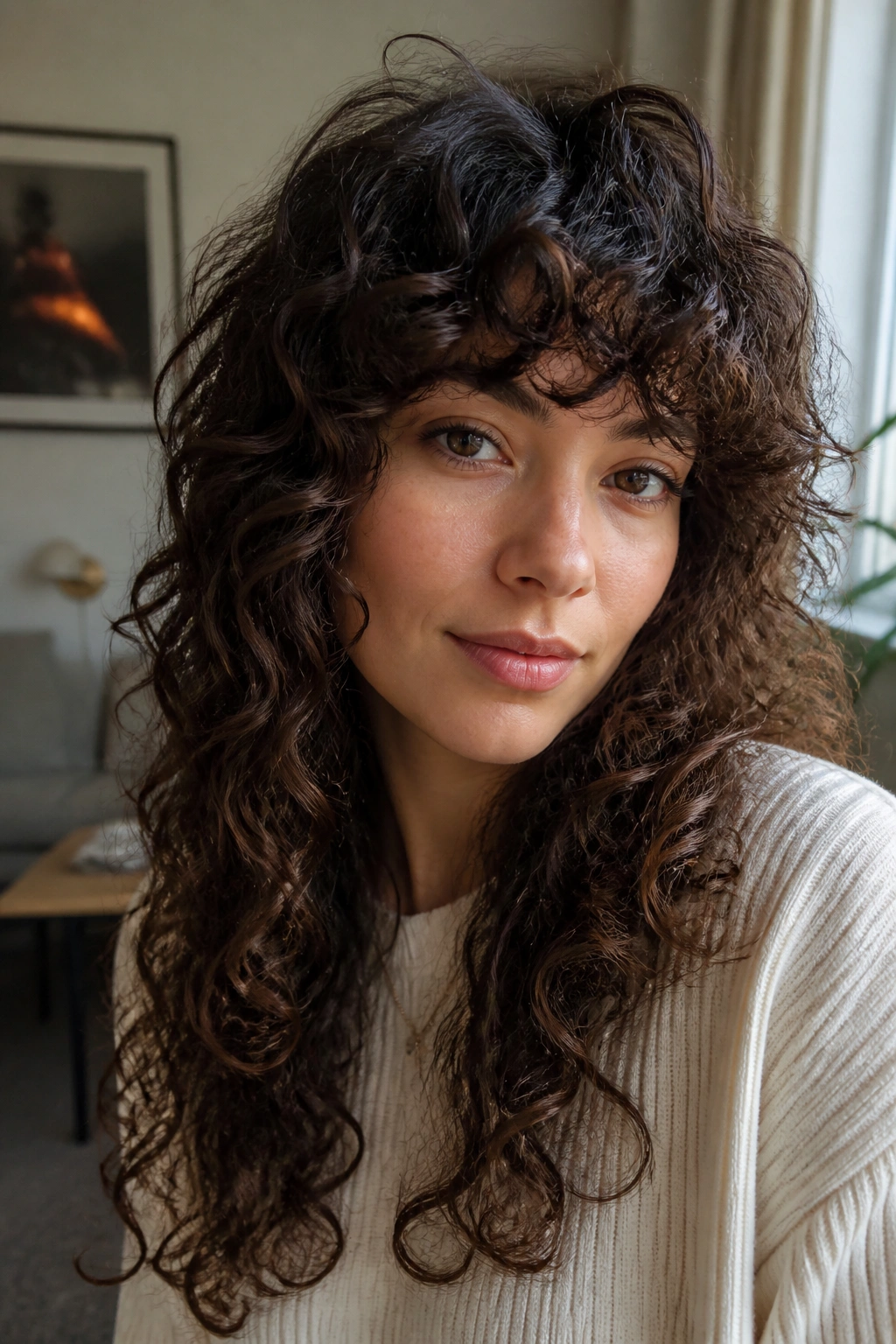
Curly bangs need more respect than people give them. They cannot be cut like straight bangs and expected to behave. On a long shag, rounded curly bangs work because the shape follows the curl pattern instead of boxing it in. That means less frizz, less weird springing, and fewer bangs that look shorter than planned the second they dry.
The Curl Pattern Conversation
This cut is all about shrinkage. A stylist should look at the curls dry or at least nearly dry before deciding where the fringe should land. If they cut curly bangs too short while the hair is wet, you can end up with a tiny fringe that sits way above the brows once it bounces back.
Rounded bangs are usually better than a hard line on curly hair. They soften the front and keep the curl cluster from looking like a shelf. The long shag layers behind them help carry weight down the hair shaft, so the shape stays balanced.
- Best for loose curls through tight ringlets
- Works with shoulder-to-chest-length hair
- Needs leave-in cream or curl gel
- Diffuser drying keeps the bang shape more even
A curly shag with bangs looks best when the curls are allowed to keep their own rhythm. Trying to force every curl into the same place usually backfires.
7. Razored Fringe on a Long Choppy Shag
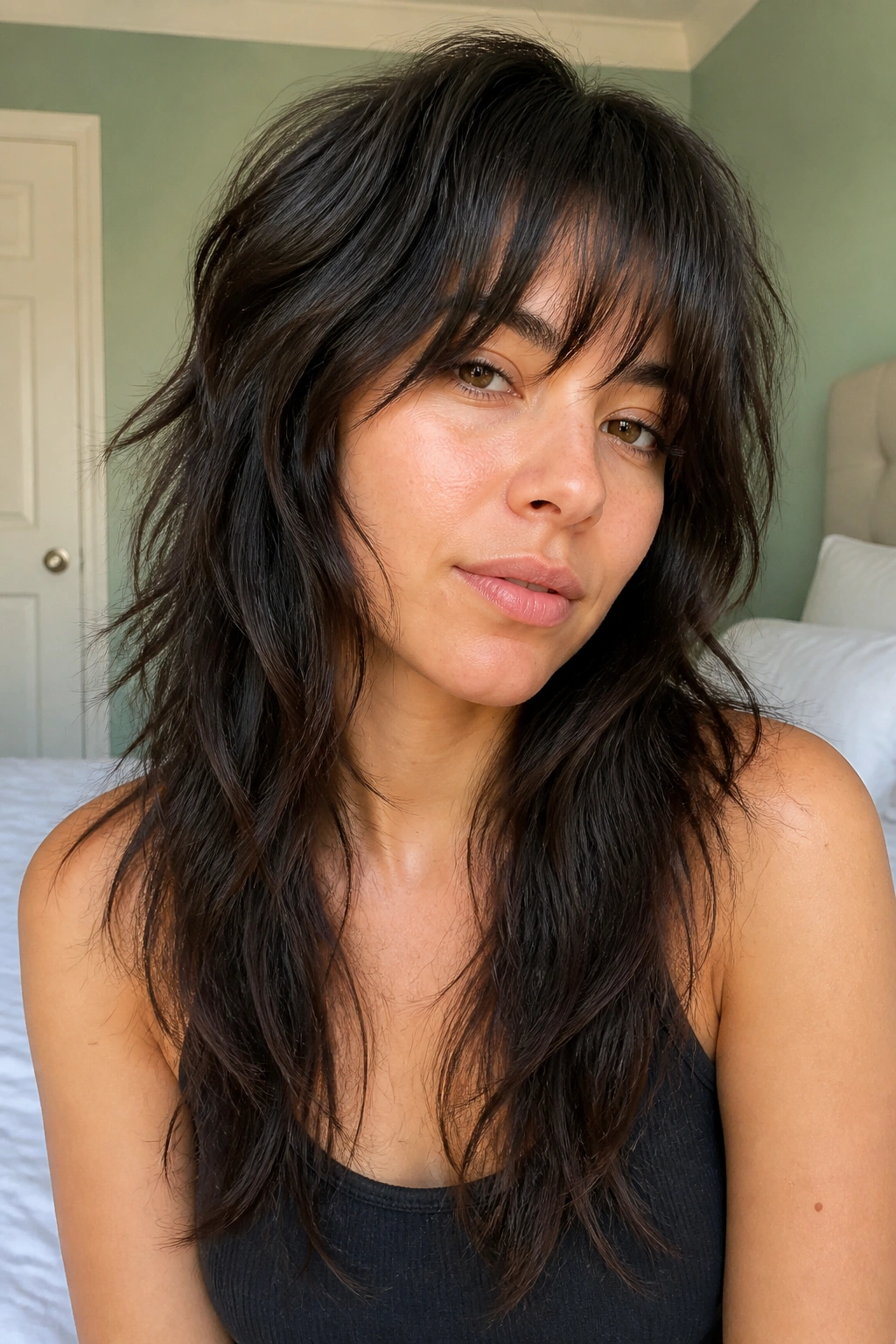
A razor gives this cut its attitude. Not aggression. Attitude. The ends come out softer, thinner, and a little feathered, which makes thick hair easier to wear and keeps the fringe from looking like a heavy curtain. If your hair tends to swell up around the face, a razored shag can take weight out fast.
This is the version I’d point toward if your hair feels bulky by the second day after a wash. The razor work creates separation through the bangs and front layers, so the whole shape moves instead of sitting in one dense block. It also gives the haircut a slightly rebellious edge that a scissor-only cut sometimes misses.
You do need a stylist who knows when to stop. Too much razor work on already fine or fragile hair can leave the ends looking wispy in the wrong way. Good razor cutting creates movement. Bad razor cutting looks like damage.
For styling, use a mousse at the roots and a light cream through the mids. A quick bend with a flat iron is enough. You want the fringe to fall in broken pieces, not curl into neat little loops. That’s the whole appeal.
8. Heavy Bangs on a Rocker-Style Long Shag
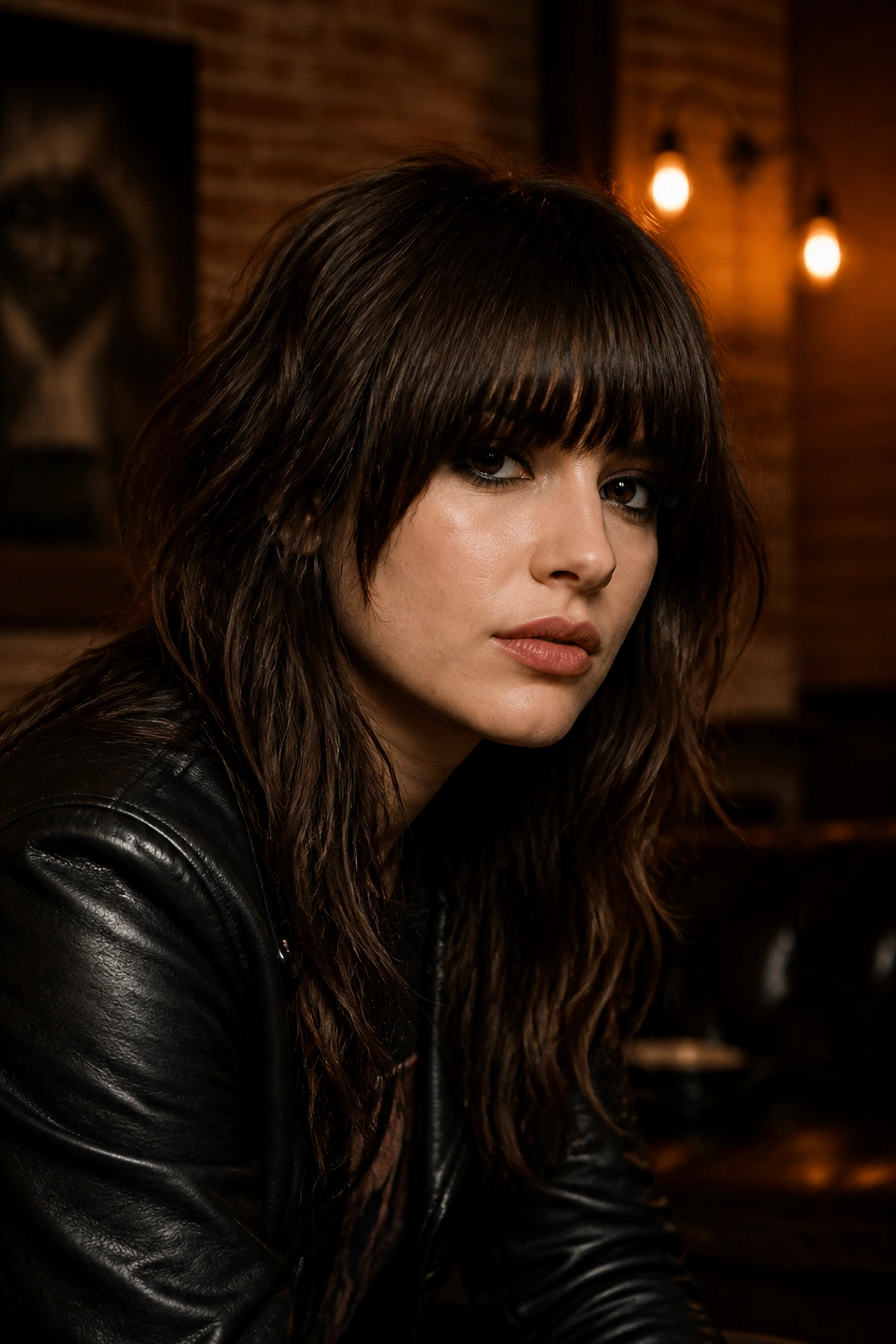
Heavy bangs are not shy, and that’s the point. On a long shag, they give the cut weight up front while the rest of the hair stays long and loose. The contrast can look fantastic on strong brows, larger foreheads, or anyone who wants their hair to have a little more drama around the eyes.
Are they high maintenance? A bit. But not in a precious way. Heavy bangs need regular trims if you want them to stay at brow level, and they need a little styling to stop them from separating awkwardly. Still, they can be worth it if you like the way a denser fringe anchors the face.
Where to Keep the Weight
The length should usually sit just below the brows or skim them directly, depending on how much eye contact you want from the cut. The sides of the fringe can be softened a little, but the center should keep enough fullness to feel solid.
- Good for thicker straight or slightly wavy hair
- Pairs well with longer layers that start below the cheekbones
- Needs a root lift at the front
- Looks strongest when the ends stay piecey, not razor-thin
This is a haircut with presence. It does not disappear.
9. Wispy Bangs and Airy Face-Framing Layers
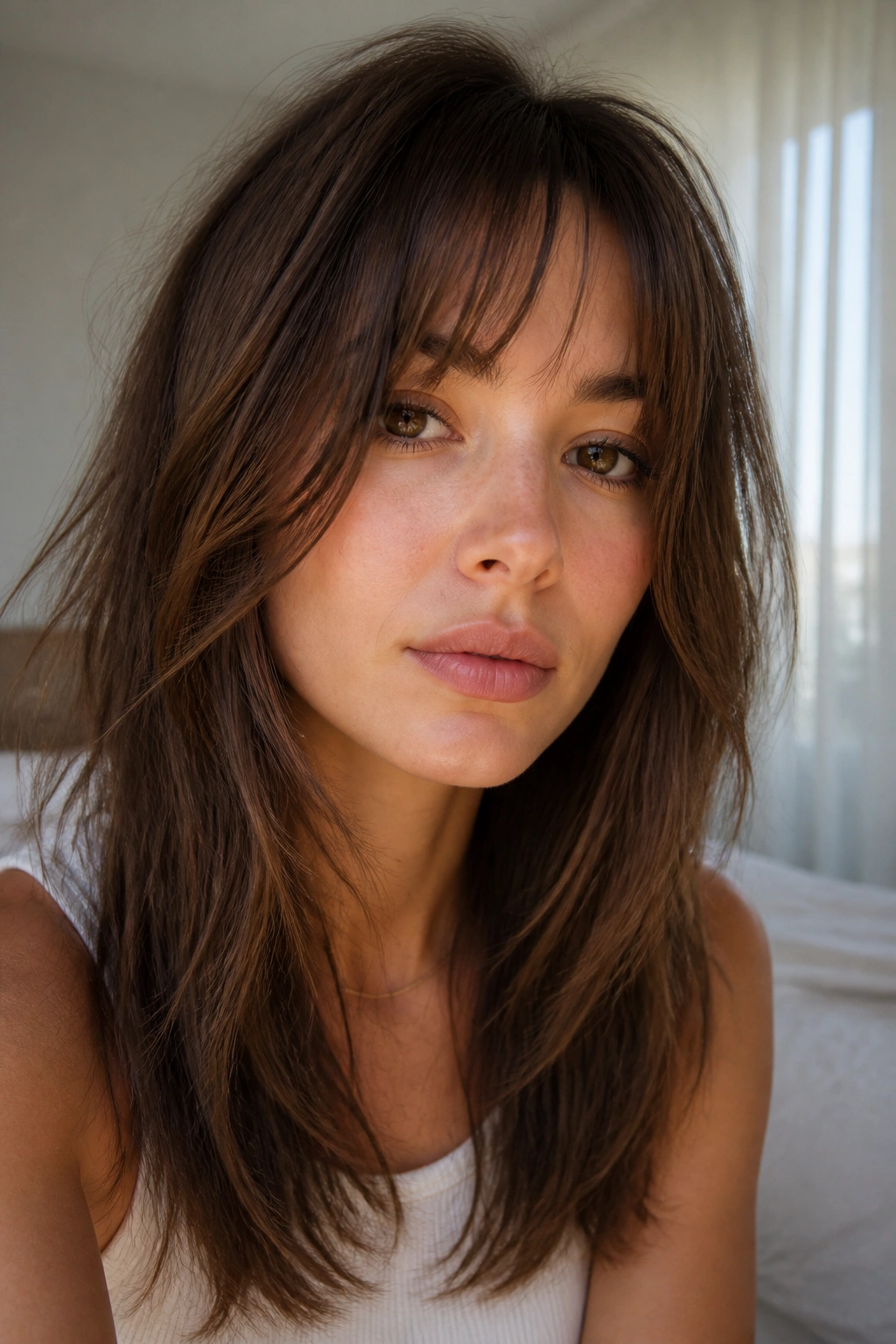
Fine hair can look flat fast, so the wrong bangs can make the whole cut feel smaller than it is. Wispy bangs solve that by keeping the front light and broken up. On a long shag, they let the layers around the face breathe, which gives the hair some lift without making it look like the ends got thinned to death.
A lot of people assume wispy bangs are the easy option. They’re not. They’re subtle, which means the spacing and texture have to be right. Too little hair in the fringe and it vanishes. Too much and it turns into a sad, see-through strip. The sweet spot is a narrow section with soft ends and a little separation.
This cut is especially good if you wear your hair air-dried or loosely blow-dried. You don’t need a perfect finish. A touch of texture mist at the mids, a light sweep of a brush, and maybe one bend from a flat iron is enough. Keep the root area airy.
And yes, this one grows out nicely. That matters more than people admit.
10. Long Wolf Shag With Tapered Bangs
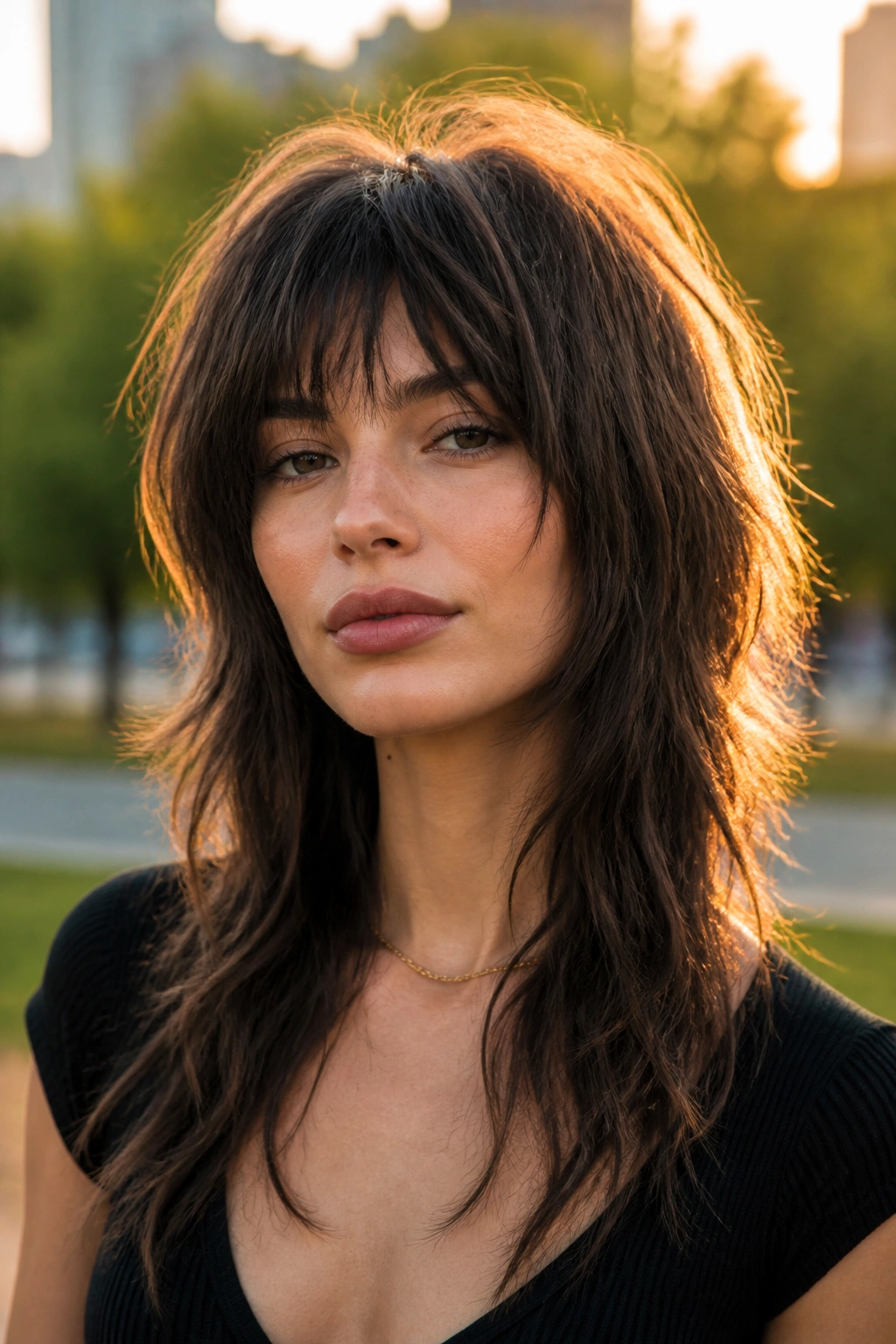
A long wolf shag sits closer to the edgy side of the spectrum. The crown gets more lift, the layers hit with more contrast, and the bang area usually tapers instead of spreading softly across the whole forehead. If you want the shag to lean a little wild, this is the move.
What Makes It Different
The wolf-shag hybrid is shorter and more lifted through the top than a classic long shag. That means the shape reads choppier. The bangs often start fuller in the center and taper into longer side pieces, which keeps the front from looking too polished. It’s a good cut for thick, wavy, or loosely curly hair that already has some texture to spare.
Who It Suits
People who like air-dried texture tend to enjoy this one. If you want your hair to fall into place with minimal fuss, the structure here helps. If you prefer smooth, glossy hair with a soft outline, this version may feel a little too shaggy.
- Ask for strong crown layers
- Keep the back longer than the top
- Use mousse or texture cream, not heavy oil
- Let the bangs dry with movement, not pinned flat
I like this cut on hair that needs a little rebellion. It has one.
11. Arched Bangs on a Thick Long Shag
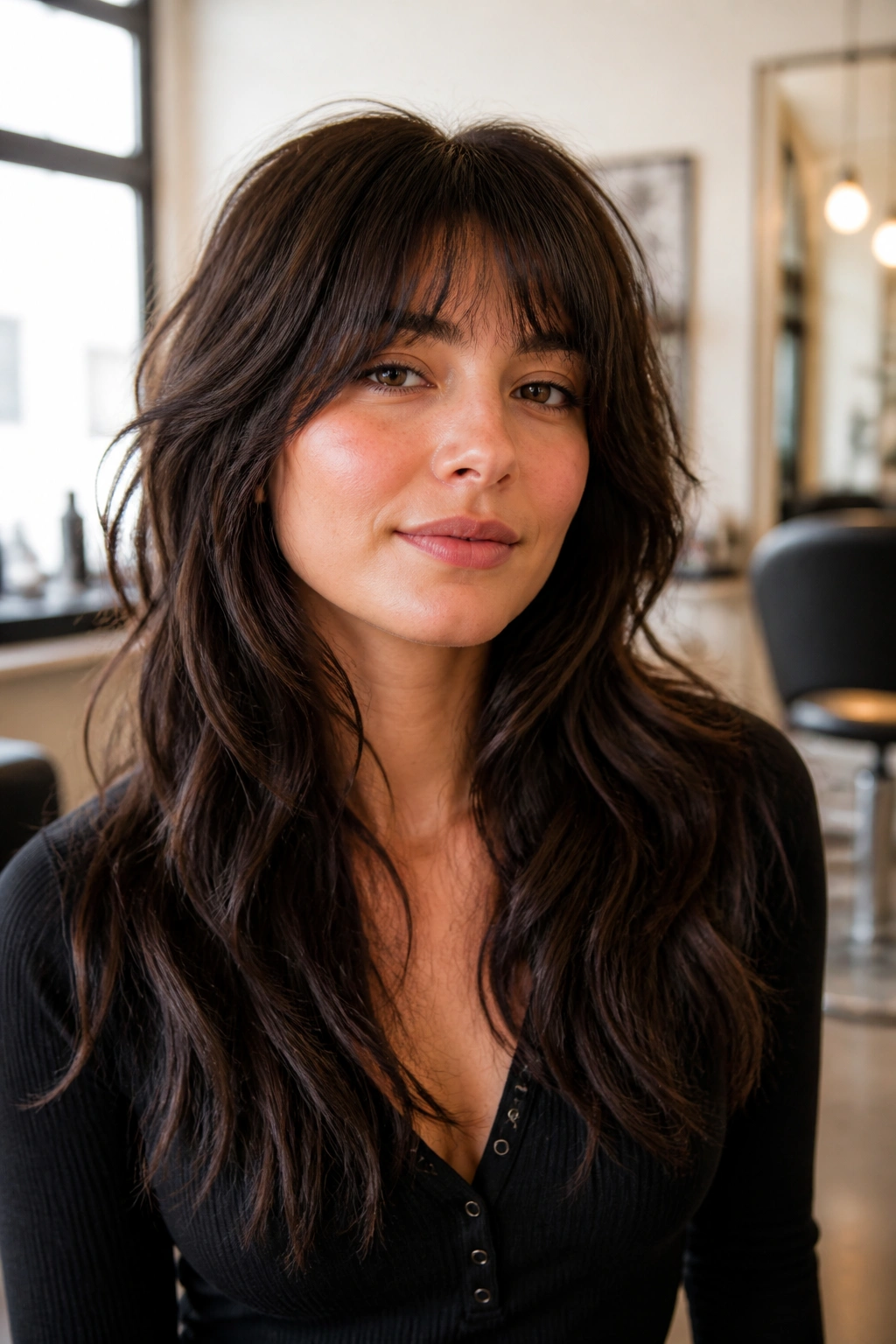
Arched bangs do something flattering without trying too hard. The line curves gently higher in the center and lower at the temples, which opens the eyes and keeps the fringe from sitting like a block. On thick hair, that shape helps the front move instead of swelling.
The key is not making the arch too obvious. You want a soft rise, not a cartoon curve. A good stylist will remove bulk underneath while keeping enough surface hair to make the shape visible. That combination matters. Too much thinning and the bangs lose presence. Too little and they puff out.
This style pairs well with a long shag that has plenty of motion through the ends. The bangs become the focal point while the rest of the cut stays loose and broken up. If your hair is naturally dense, this is one of the cleaner ways to wear bangs without feeling covered up.
A round brush and a quick bend at the front are usually enough. You do not need to chase a perfectly smooth finish. The curve should look soft and touchable, not engineered.
12. Grown-Out Bangs That Still Look Intentional
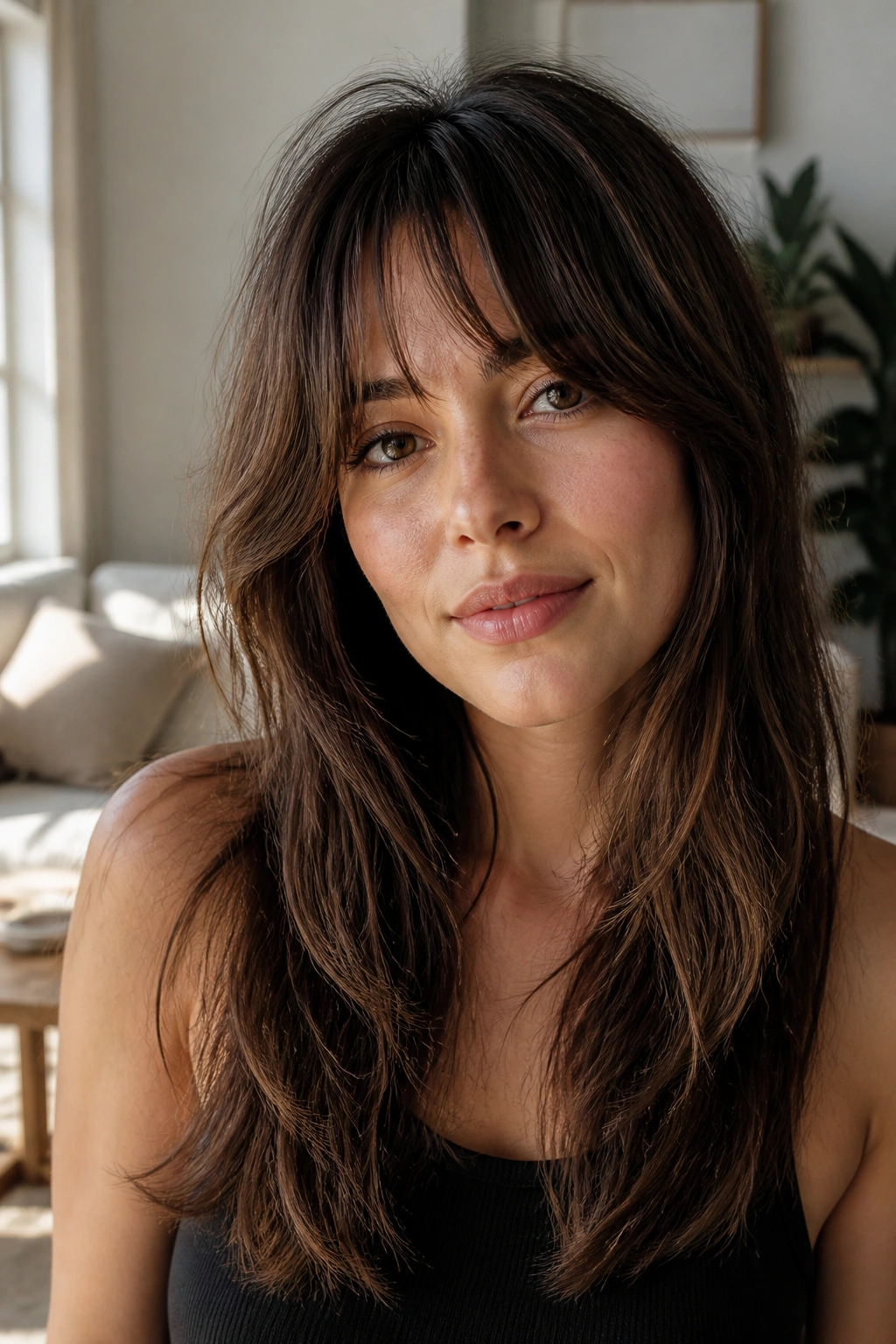
There’s a sweet spot between “freshly cut bangs” and “I forgot I had bangs.” That in-between stage can look messy on a blunt cut, but on a long shag it often looks better than the tidy version. The layers around the face soften the grow-out, and the fringe starts to split naturally into curtain-like pieces.
That’s why this haircut is such a good fit for people who do not want to book trims every few weeks. The shape absorbs the change. Instead of fighting the extra length, it uses it. The bangs become softer, the front pieces get more sway, and the whole cut turns a little more relaxed.
The trick is to keep the original cut light enough at the temples. If the bangs were cut too heavy to begin with, the grow-out can fall in your eyes in a clunky way. A softer starting point grows better. Simple as that.
This version also has a nice side effect: it looks good with messy styling. Second-day hair, a few bends from a flat iron, a low ponytail with pieces left out — all of it works because the cut already knows how to loosen up.
13. Birkin-Inspired Fringe on Long Layered Hair
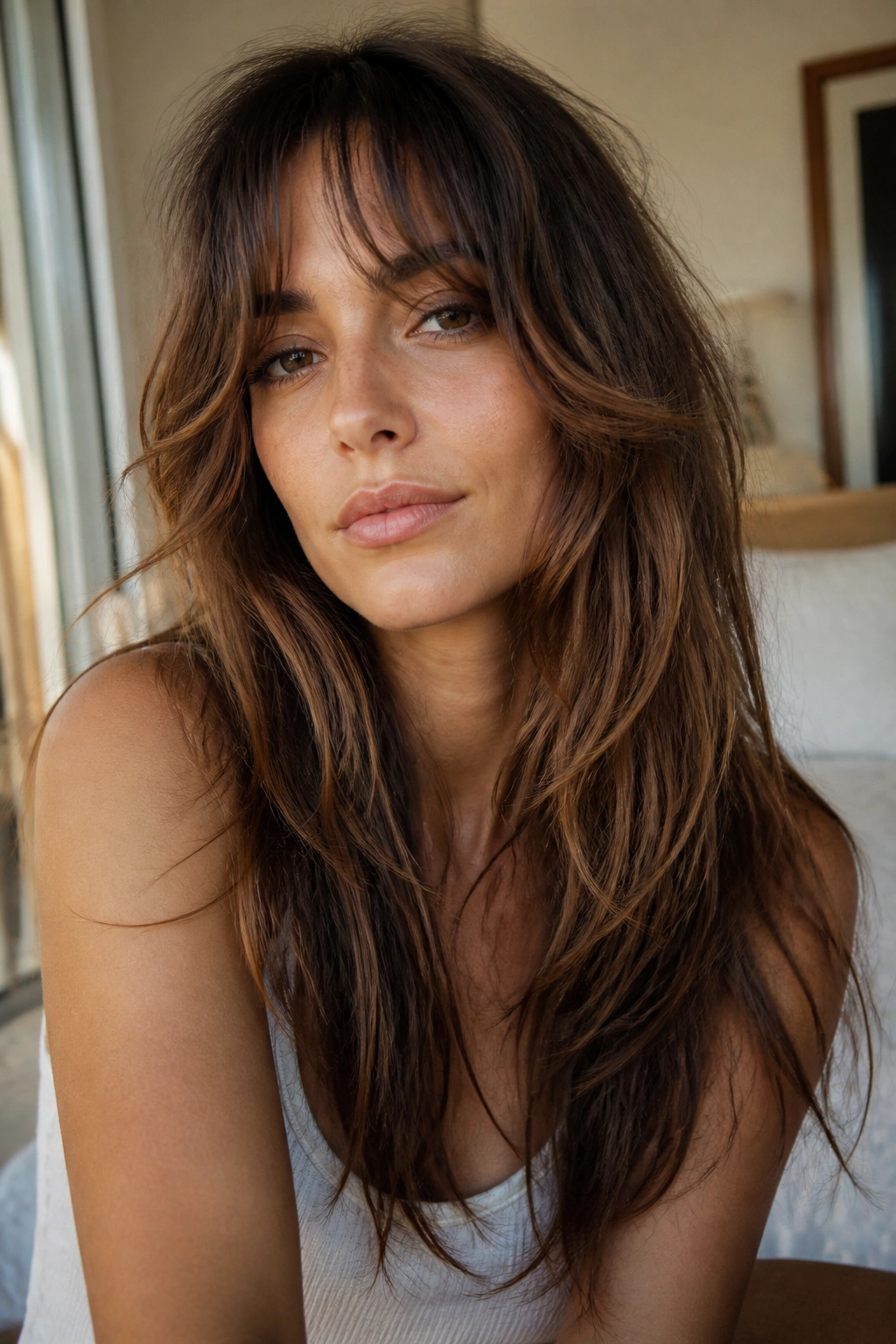
Birkin-inspired fringe sits in that zone where the bangs are full enough to matter but broken up enough to feel relaxed. It’s a little heavier than curtain bangs, less blunt than a straight fringe, and usually worn with a barely-there separation that keeps the line from looking too finished. On a long shag, that gives the haircut a soft, lived-in edge.
What I like here is the contrast. The hair can be long, slippery, and very layered, while the fringe has enough body to frame the eyes. It’s a good choice if you want something with a vintage feel but don’t want your haircut to look like a costume.
How to Wear It
The fringe should sit around the brows, sometimes a touch below, with the ends feathered just enough to avoid a hard edge. Blow-dry it with a flat brush first, then break it up with your fingers. That second step matters. If you skip it, the bangs can look too neat.
This style works well on straight to softly wavy hair. On very curly hair, it needs more planning. On very fine hair, it can look a little sparse unless the stylist leaves enough density through the center.
It’s chic. It’s a little moody. And it likes a middle part.
14. Center-Parted Bangs With Cheekbone Layers
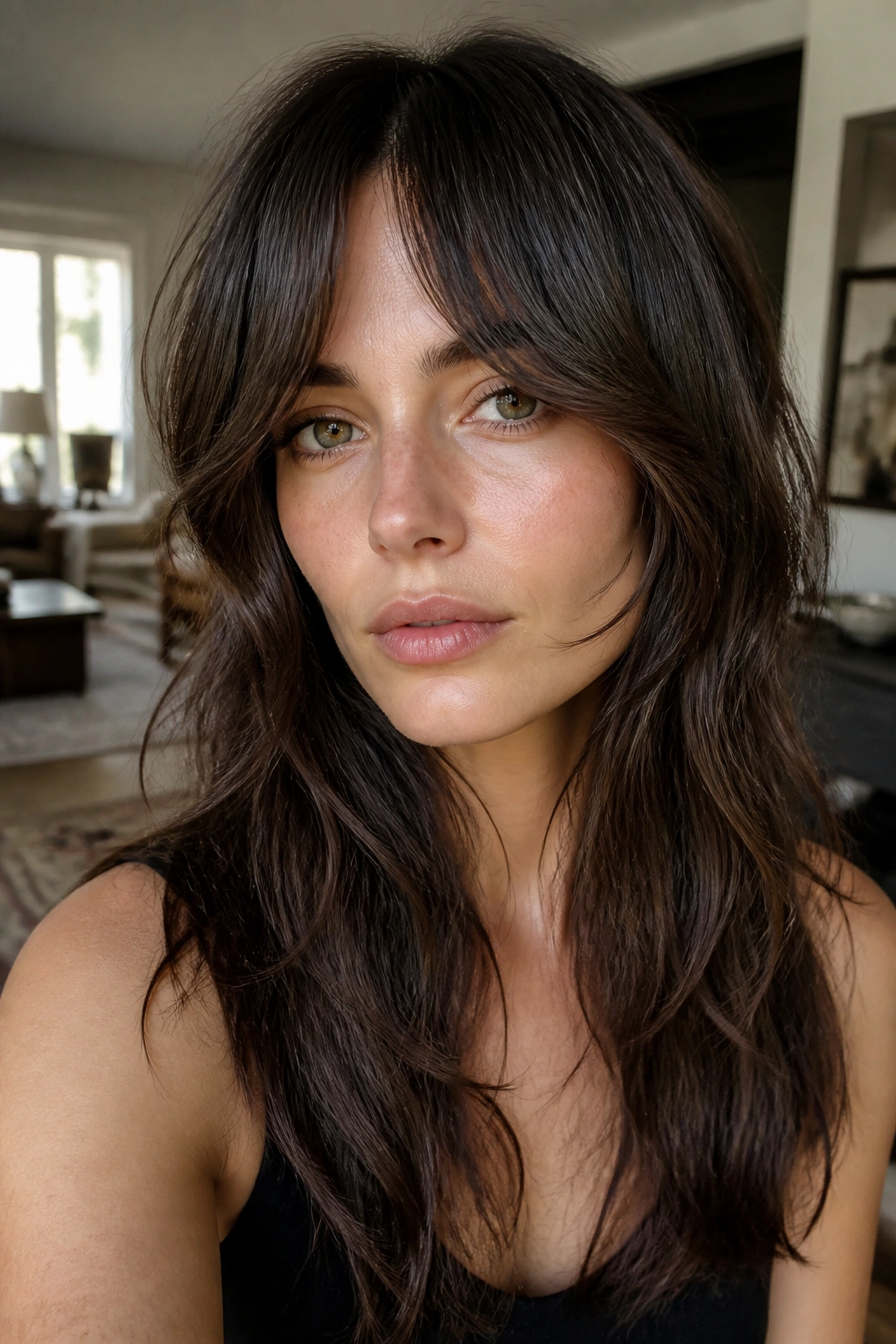
Center-parted bangs are not the same as curtain bangs, even if people lump them together. The difference is in the starting point and the feel. Center-parted bangs can be a little denser, a little more connected to the face-framing layers, and a little less sweepy than the classic curtain version. On a long shag, that gives the haircut more shape right where the cheekbones begin.
This is a strong choice if you want the front of your hair to frame your face without hiding it. The center split keeps things open, while the longer pieces on both sides create a soft border around the eyes and jaw. It’s a smart cut for long hair that sometimes falls flat at the front and hangs too straight.
You can wear this with loose waves, air-dried bends, or a low-effort blowout. I’d avoid overdoing the smoothing serum. The cut needs a little texture to show off the layers. If everything is too sleek, the face-framing pieces collapse into the length and the whole point gets lost.
It’s a middle path cut. Not shy. Not loud either.
15. Blunt Ends With Soft Bangs
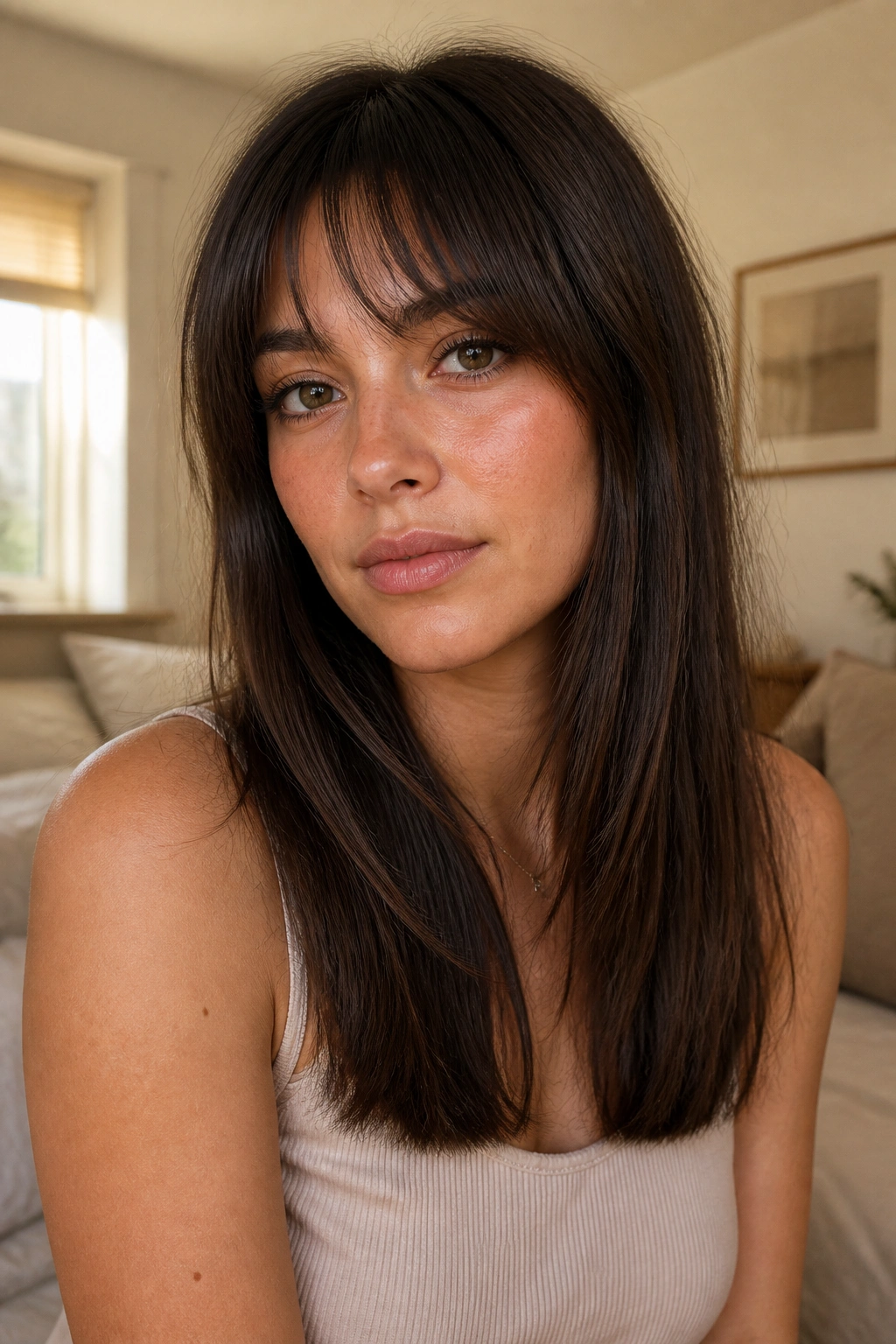
Most shags keep the ends feathery. This version breaks that rule on purpose. The body of the hair stays long and layered, but the very bottom line is kept blunt enough to give the cut some weight. Paired with soft bangs, that blunt edge keeps the style from looking too airy or too fragmented.
It works especially well on hair that gets wispy at the ends. You still get the movement of a shag, but the bottom line gives the hair a fuller finish. That matters if your strands are fine or if you’ve grown out layers that left the perimeter looking thin.
Soft bangs keep the front from feeling boxy. They can be curtain-like, split, or lightly feathered, but they should still feel easy. The point is contrast: strong line below, soft movement above.
This is one of those cuts that can look more expensive in motion than in a photo. The ends swing. The layers bounce. The bangs soften the forehead. Good haircuts often look simple once they’re done right.
16. Feathered Shag for Fine Hair and Light Bangs
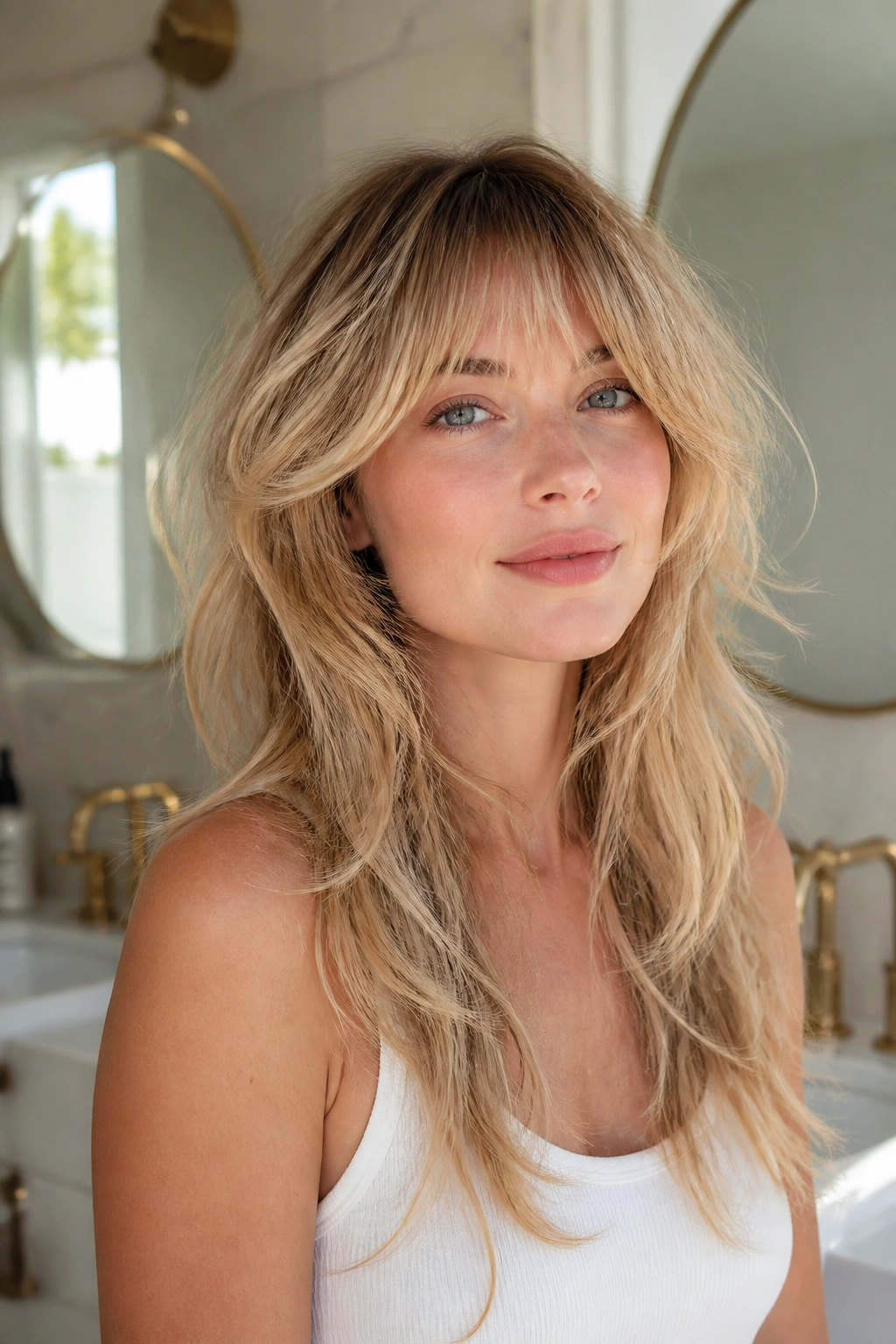
Feathering is one of those old-school haircut techniques that never really left for a reason. On fine hair, it can create the sense of movement without stripping away too much density. A feathered long shag with light bangs keeps the hair from looking stringy while still giving you lift around the face.
The bangs in this version should stay light, not sparse. That’s an important difference. Sparse bangs on fine hair often look accidental. Light bangs, cut with enough intent, look airy and clean. The layers should start a little lower through the front so the ends keep their shape.
A round brush helps, but not in a fussy way. Think quick tension, not a blowout marathon. The goal is to bend the front pieces away from the face and let the feathered layers fall in a soft cascade. Heavy creams can weigh this down fast, so I’d stay with mousse or a root spray if your hair collapses easily.
This cut suits people who want softness first and drama second. It’s graceful without trying to act precious about it.
17. Tousled Long Shag With Sliced Fringe
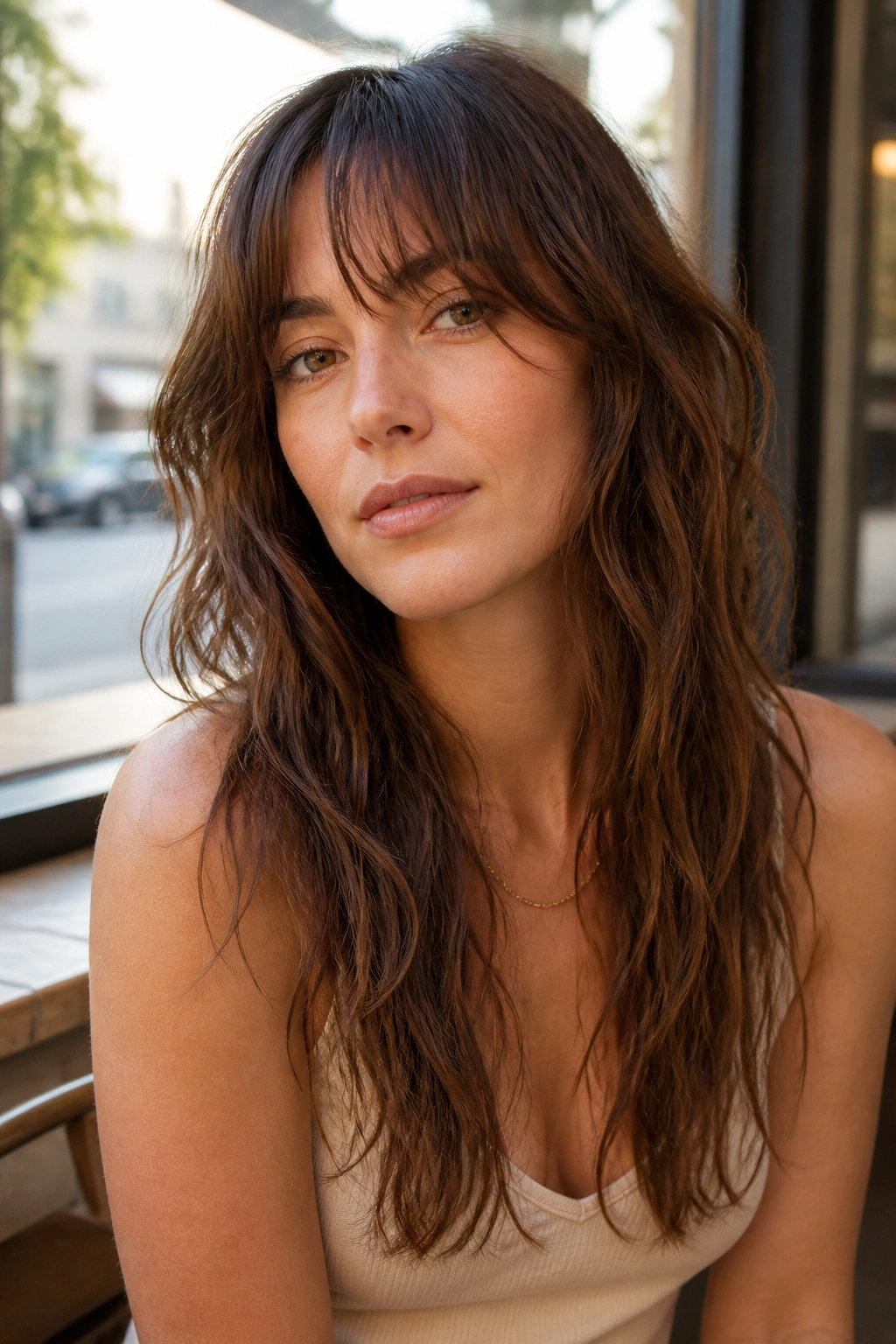
Sliced fringe is for people who want their bangs to look separated, airy, and a little bit undone. Instead of a thick block, the fringe is cut so the ends fall into narrow pieces. On a long shag, that makes the front part of the haircut feel lighter and more modern, especially if your hair has some natural bend.
Why does slicing change the whole mood? Because the hair no longer sits as one flat mass. The pieces move independently. Light hits them differently. The fringe becomes less about hiding the forehead and more about framing it in a broken line. That’s a nice change if heavy bangs have ever felt too controlling.
How to Ask for It
Tell your stylist you want separation through the fringe and front layers, not a blunt line. Ask for point cutting or slicing through the ends rather than a straight chop. Keep the longest pieces around the cheekbone so the shape can blend into the rest of the haircut.
This style is especially good if you wear texture spray or use a wave wand. It likes a little roughness. Too much smoothing and it loses the point.
18. Curly Curtain Bangs on a Long Shag
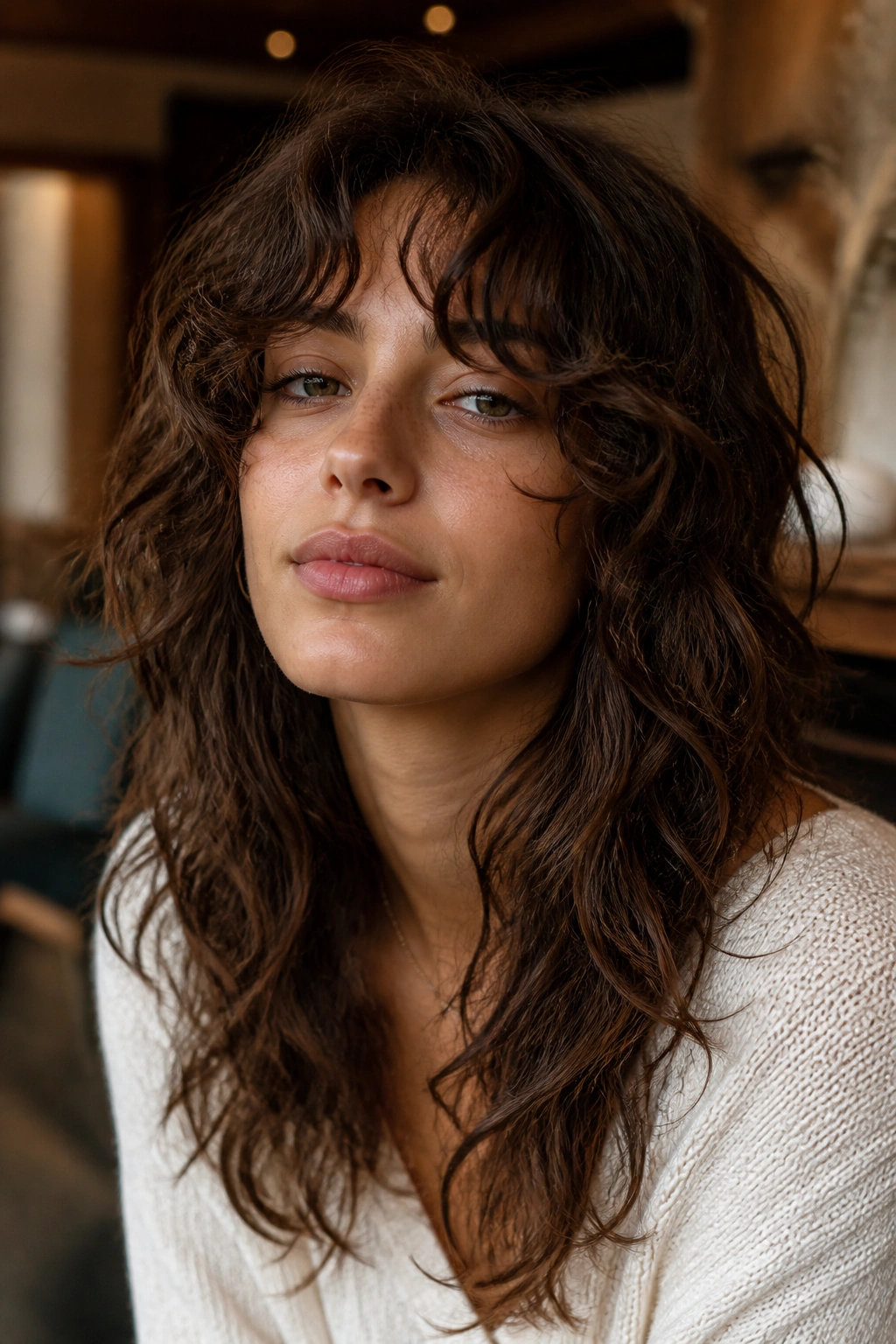
Curly curtain bangs need room. That sounds obvious, but a lot of cuts still forget it. If the bangs are cut too tightly or too short, the curl springs up and the whole thing sits above the face in a way nobody asked for. On a long shag, curly curtain bangs work because the parting and the long side pieces give the curls space to land.
This is a shape that should be judged dry, or close to dry, with the curl pattern visible. A stylist who cuts curly bangs the same way they cut straight bangs is setting you up for trouble. The curl needs a little extra length at the start, because it will rise as it dries.
I like this style for people who want softness around the eyes without committing to a blunt forehead line. The center split keeps the face open, and the curly side pieces can fall naturally into the layers. Use a curl cream with enough slip to reduce frizz, then leave the bangs alone once they’re shaped. Poking at them while they dry usually makes them frizz faster.
This one looks casual, but it depends on careful cutting. That’s the funny part.
19. Long Shag Mullet With Long Bangs
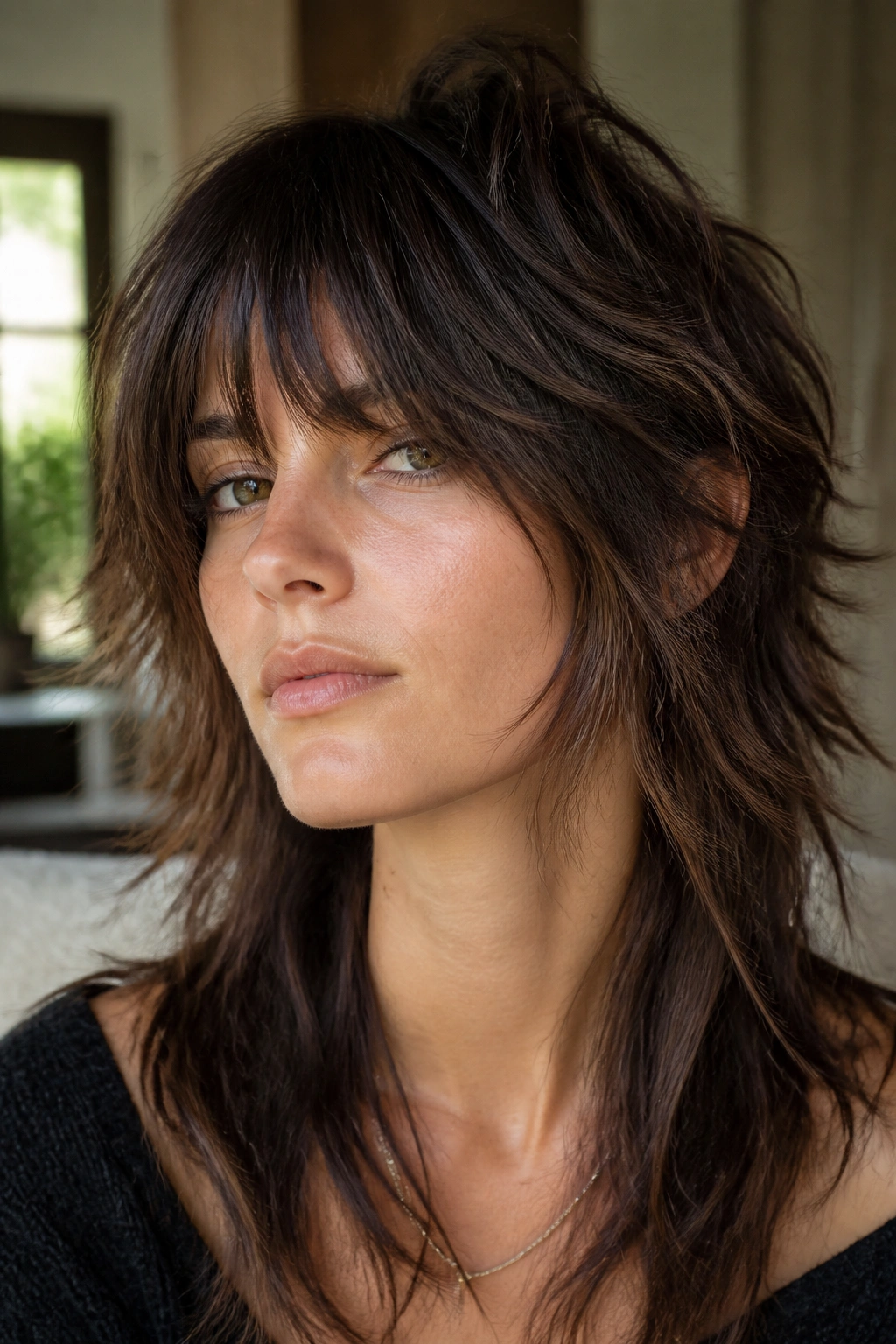
If you like your shag with a little more attitude, this is where the line starts drifting toward a mullet. The crown gets more lift, the back stays longer, and the bangs are long enough to fold into the overall shape instead of acting like a separate piece. It’s not subtle. It also doesn’t need to be.
What sets this apart from a softer shag is the contrast between the top and the length. The layers around the crown are choppier, the nape tends to hold more length, and the front can be cut with long fringe pieces that sweep across the brow or part down the center. The result is sharper, more directional, and a little less polite.
This cut suits thick hair, wavy hair, and anyone who likes a haircut that looks better when it’s not overly finished. Air-dried texture helps. So does a small amount of paste on the ends to keep them separated. If you prefer smooth blowouts and round brushes with lots of shine serum, this probably won’t feel like home.
Still, when it works, it really works. The silhouette has punch.
20. The Soft Long Shag That Grows Out Cleanly
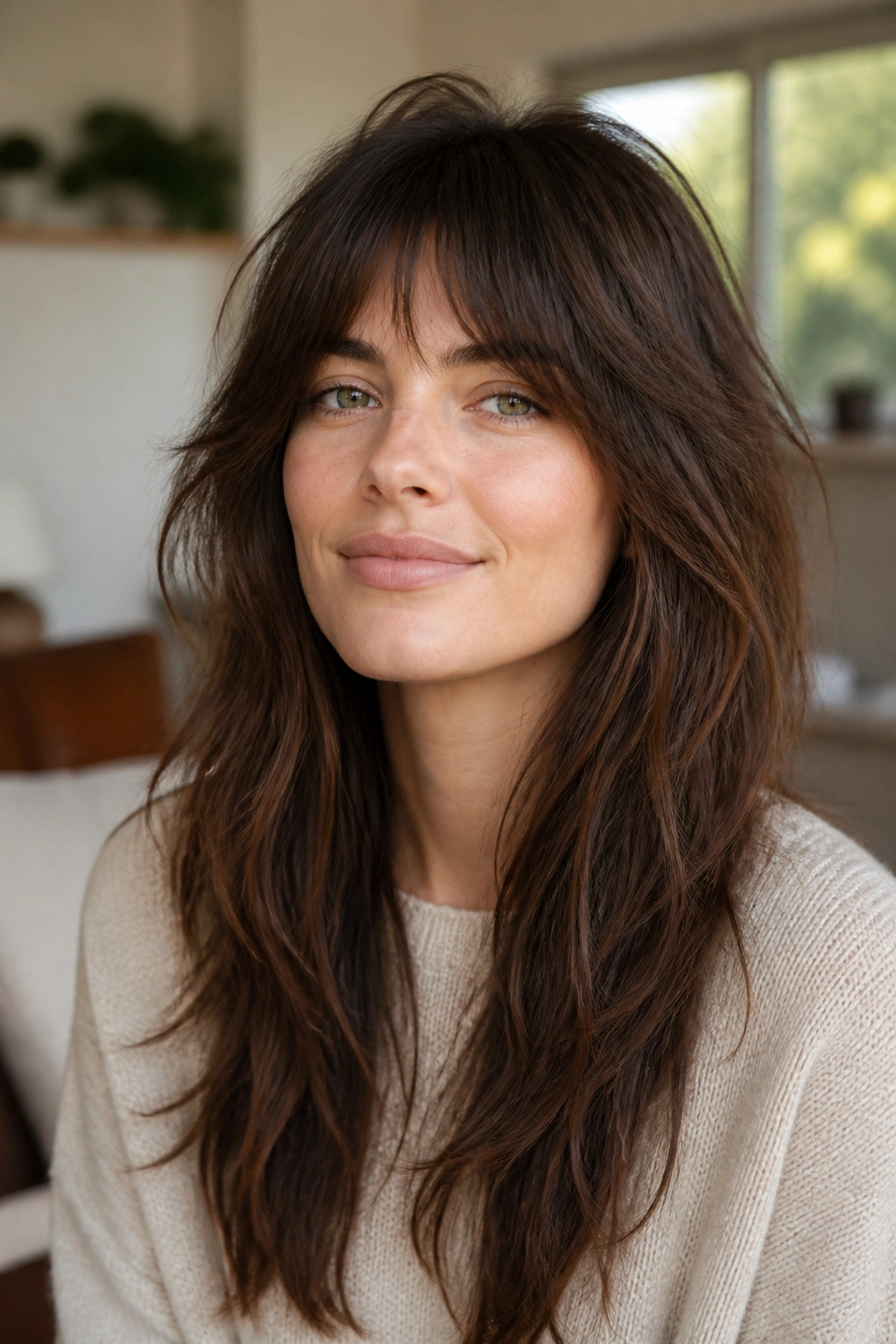
A soft long shag with bangs is the version I point people toward when they want movement but don’t want to live at the salon. The layers start low enough to keep the length, the bangs stay flexible enough to split or sweep, and the shape keeps its sanity as it grows. That matters more than people think. A haircut that falls apart in two weeks is expensive, even if it looked great on day one.
The smartest version of this cut usually keeps the shortest layers away from the crown and lets the front pieces connect into the fringe in a loose way. That gives you a clean grow-out line. You can wear it with a middle part, a soft off-center part, or brushed away from the face when you need your hair out of the way.
If you are trying to decide between two lengths, leave the bangs a little longer. A half inch makes a difference. You can always trim them. You cannot add hair back once it’s gone.
And that’s the real beauty of long shag haircuts with bangs: they give you shape now, then keep giving it back as they soften. No drama required.
