



A pixie mullet cut has a funny sort of power. It can look sharp without trying too hard, and it can grow out without turning into a disaster that sends you straight back to the salon chair in panic. That balance is why the pixie mullet keeps showing up in salons, on red carpets, and on people who want hair with a little bite and a lot of movement.
The shape works because it gives each zone of the head a job. The crown brings texture. The sides stay lighter and shorter. The nape keeps enough length to give that mullet line a little attitude. When those three parts are handled well, the haircut feels alive instead of flat.
A bad pixie mullet usually has one of two problems. It’s either too soft and ends up looking like a plain short cut, or it’s too mullet-heavy and starts shouting before you’ve even styled it. The sweet spot sits in between. And the best versions aren’t all the same — some are choppy and punky, some are feathered, some are curly, and some look almost clean until you notice the texture moving around the edges.
These 20 pixie mullet cuts cover that whole range, from crisp and piecey to soft and airy, so you can find a version that feels like you rather than a haircut costume.
1. Choppy Micro Pixie Mullet
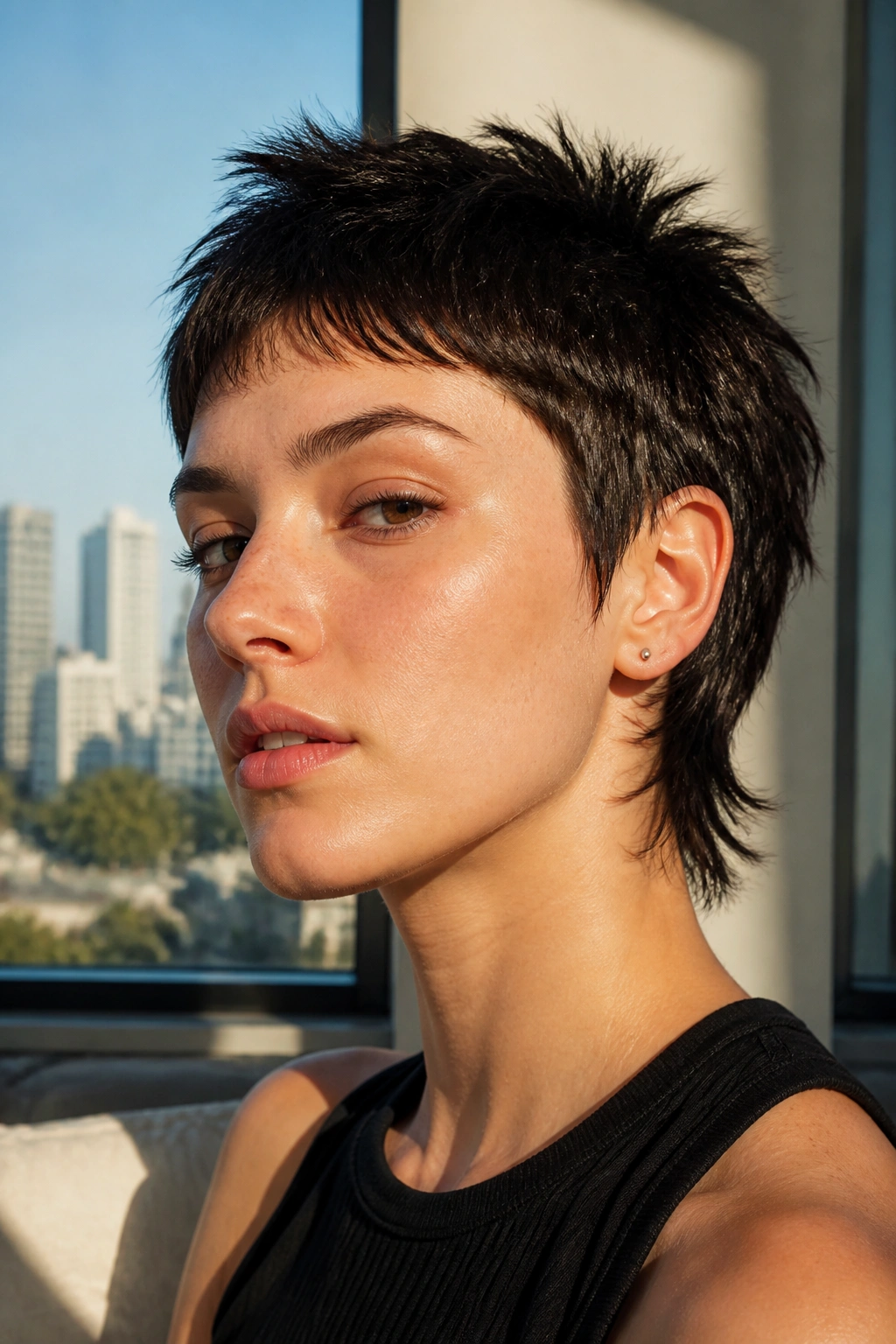
This is the cut I’d hand to someone who wants edge without a lot of length hanging around. The micro pixie mullet keeps the silhouette tiny through the sides and crown, then leaves just enough length at the nape to show the mullet shape without dragging the whole cut downward.
Why It Works
The charm here is all in the separation. Short, jagged layers on top keep the shape from collapsing, while the back sits slightly longer so the cut still has that tail-end attitude. It’s a good fit for straight or slightly wavy hair, especially if you want something that takes one minute of styling instead of twenty.
A pea-size dab of matte paste is usually enough. Work it through the crown with your fingertips, then pinch a few ends so they stand apart instead of lying down in one smooth sheet.
- Top length: about 1.5 to 3 inches
- Nape length: about 2 to 4 inches
- Best styling product: matte paste or texture cream
- Watch out for: heavy wax, which can make the top look greasy and small
Best for: people who like a sharp, short haircut that still has movement around the back.
2. Feathered Pixie Mullet
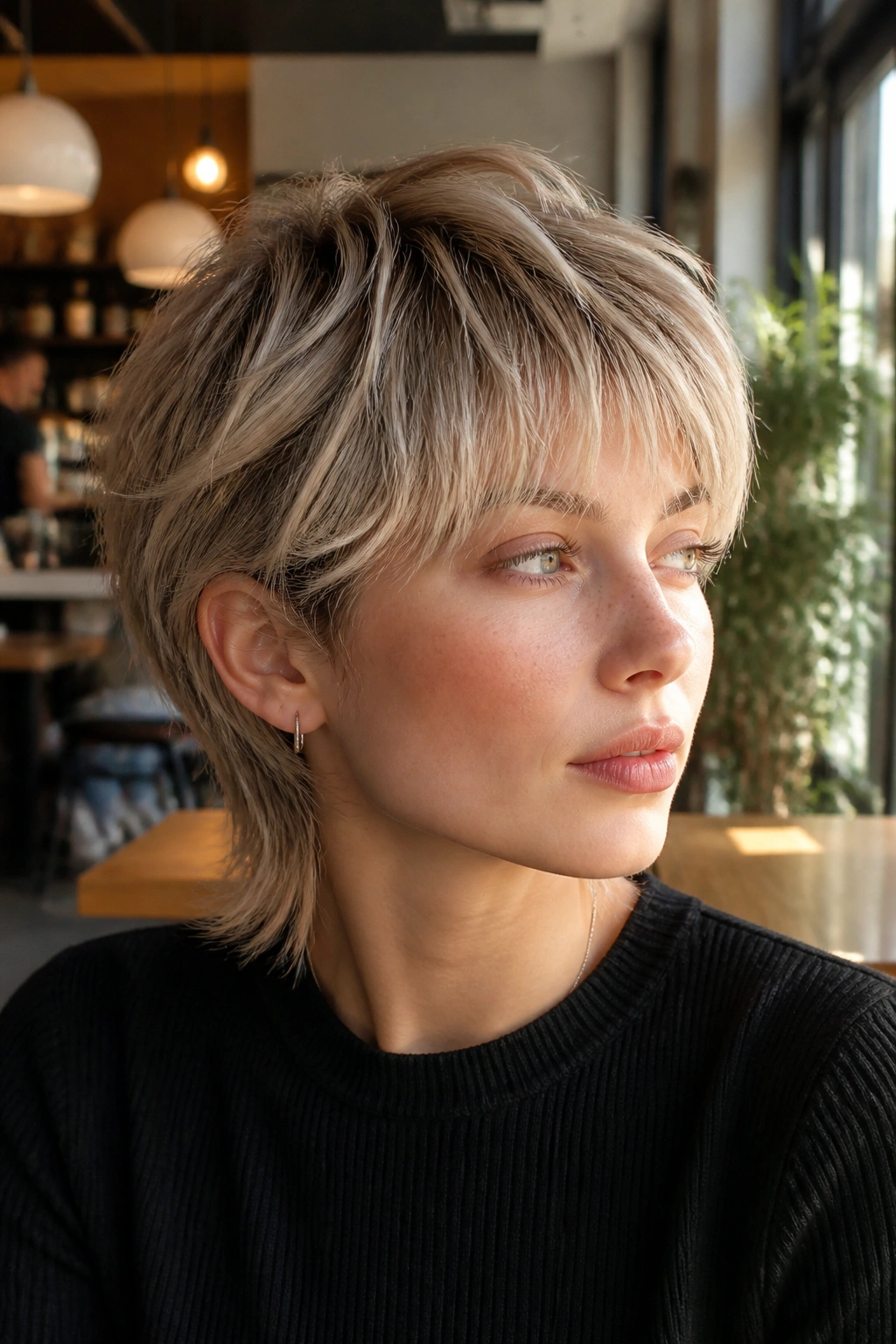
Feathering changes everything here. Instead of hard, chunky ends, the layers get thinned and softened so the cut moves with a lighter, airier feel.
That makes this version easier to wear if you want a pixie mullet that does not look too tough or too punk. The crown lifts, the fringe melts into the sides, and the nape keeps a soft taper instead of a blunt line. It’s one of the nicest options for fine hair because the layers create shape without leaving obvious gaps.
What Makes It Different
The difference between feathered and choppy is the edge finish. Feathering uses softer, sliced ends, so the haircut blends more smoothly and looks less severe when it grows out. That gives you a little more room between trims.
Blow-dry it with your fingers or a small round brush, then finish with a lightweight cream. Skip anything sticky. Sticky product clumps feathered layers together, and that kills the whole point.
If you like short hair that still feels soft around the face, this is the one to keep on your radar.
3. Curly Pixie Mullet
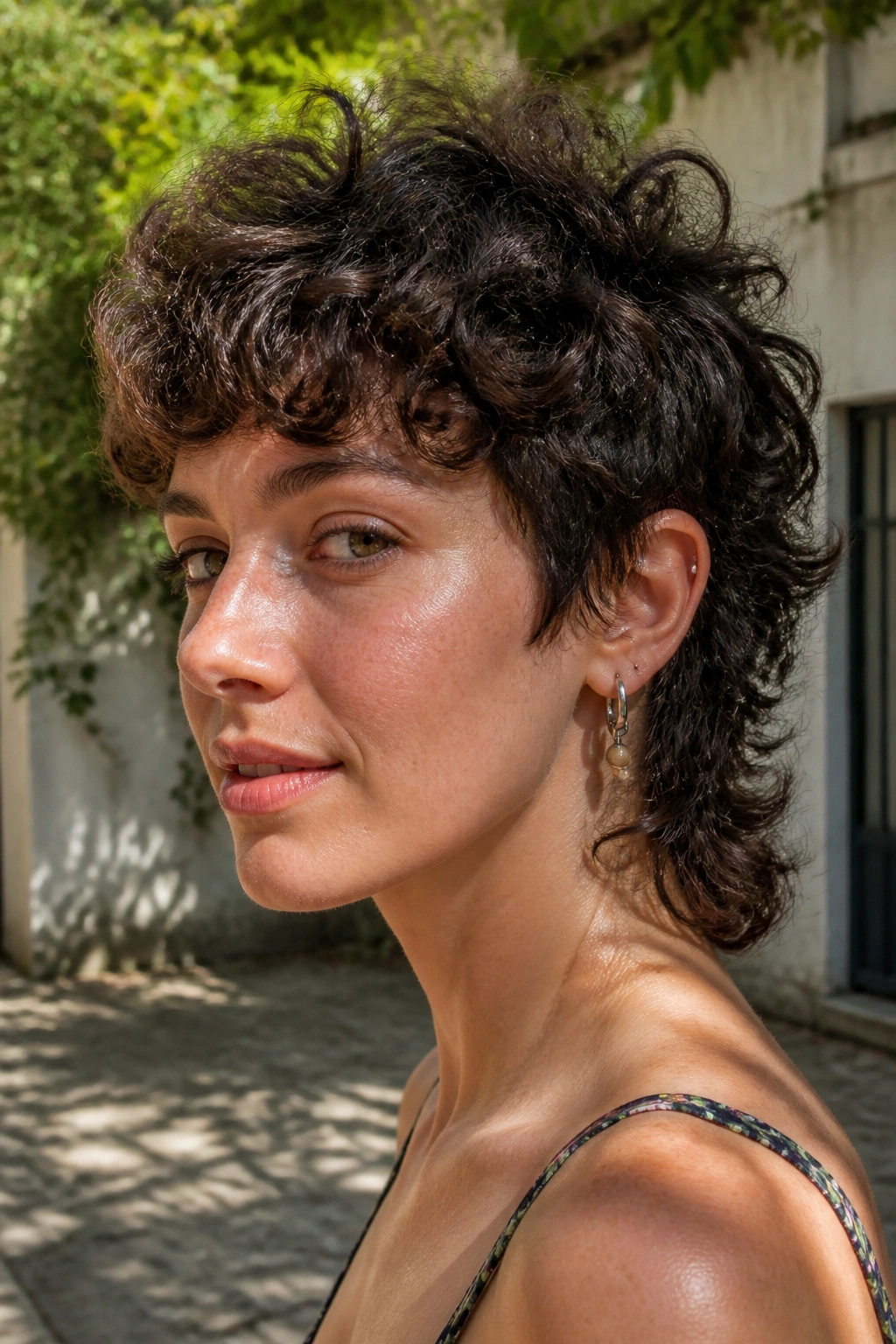
Can curls handle a mullet shape? Absolutely. They usually handle it better than straight hair, because curls bring their own movement and make the short-back, long-top shape look intentional instead of fussy.
The trick is to cut the curls where they live, not where they stretch. A curly pixie mullet should be shaped dry or nearly dry so the stylist can see how each curl springs back. If they cut it the same way they’d cut straight hair, the nape can end up too short and the top can puff in odd places.
How to Style It
Use a curl cream on damp hair, then scrunch it with a microfiber towel. Air-drying keeps the curl pattern soft, but a diffuser works if you want more lift at the crown. Don’t rake through it with a brush after it dries. That’s a fast way to turn tidy curls into frizz.
- Ask for curl-by-curl shaping around the fringe
- Keep enough length at the crown for bounce
- Leave the nape slightly longer so the silhouette reads clearly
- Avoid heavy oils near the roots
This cut looks especially good when a few curls fall forward and a few kick out at the back. Messy in the right way.
4. Razor-Cut Pixie Mullet
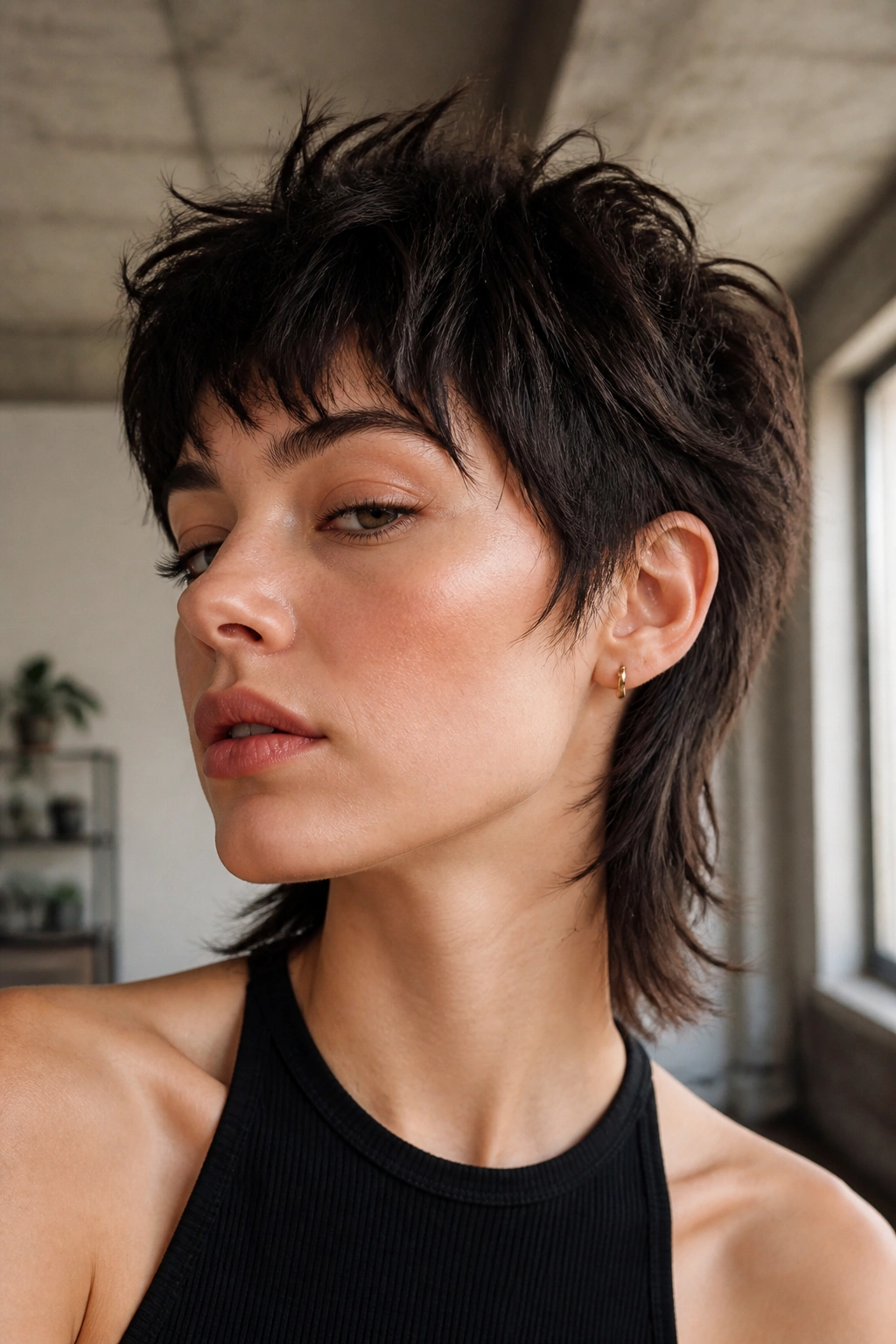
A razor-cut pixie mullet has a sharper feel than a scissor-cut one. The ends come out wispy and sliced, which gives the haircut that slightly frayed, piecey texture people notice from across the room.
It’s a smart move for thick hair, because the razor removes bulk and keeps the shape from sitting like a helmet. You still want structure, though. Too much razoring can make the ends too transparent, especially if your hair is already dry or damaged.
What to Watch For
The best razor-cut versions keep the perimeter soft while preserving a visible shape at the nape. That matters. If the back gets thinned too much, you lose the mullet line and the haircut starts looking unfinished.
A texture spray on dry hair usually works better here than a cream. Mist it lightly at the crown, then use your fingers to scrunch the top forward and upward. The whole point is separation, not smoothness.
If you like that slightly broken-up, artsy look, this is a strong pick. If you prefer tidy edges, pass on it.
5. Tapered Pixie Mullet
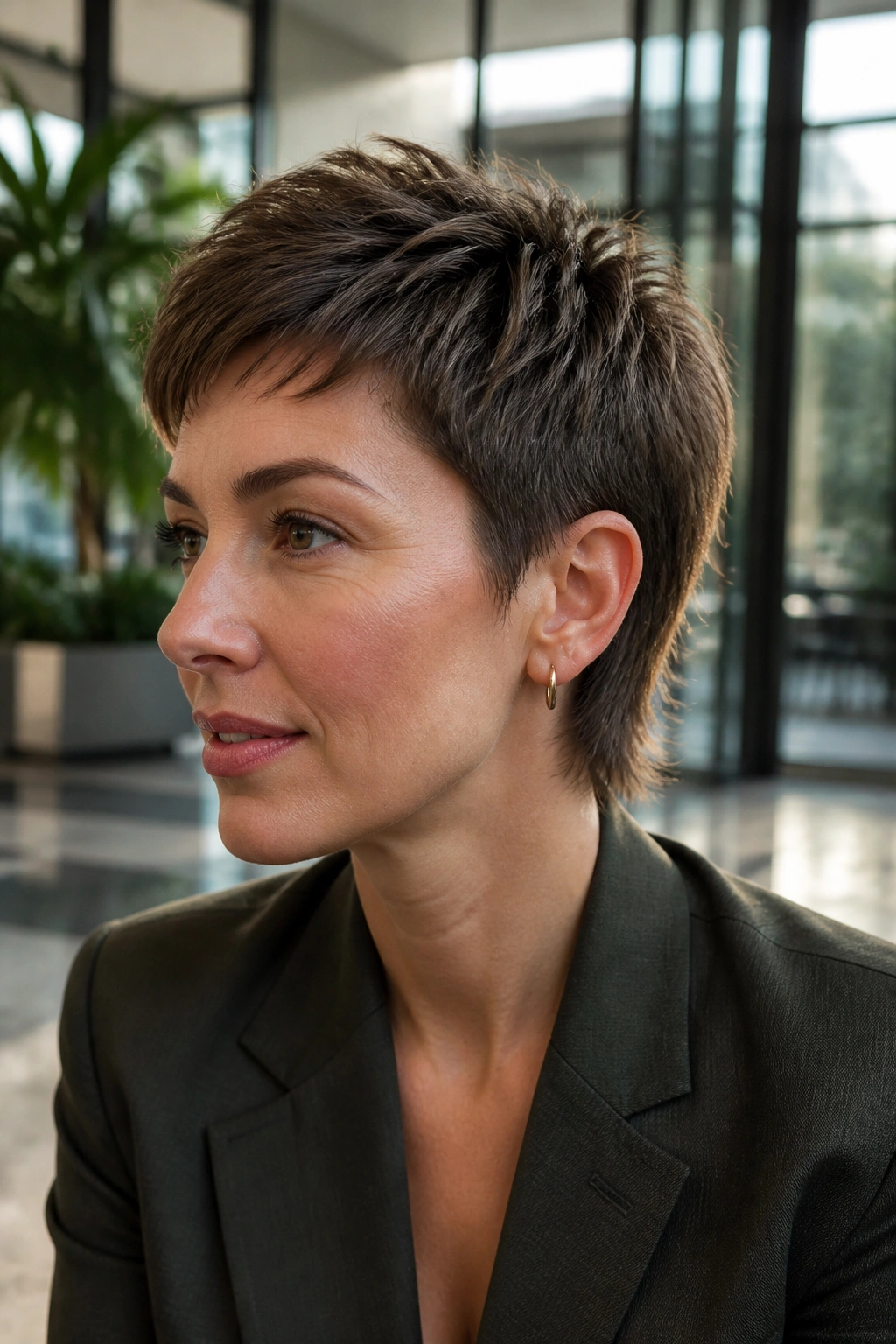
A tapered pixie mullet is for people who want the attitude but not the mess. The sides and back narrow gradually, so the cut stays neat around the ears and neckline while the top keeps enough texture to feel modern.
That taper makes a big difference in real life. It keeps the haircut from ballooning out around the head, which is a common problem with short layered cuts that haven’t been shaped well. The result reads cleaner in a mirror, under office lights, and even on day three when the styling product has worn off a little.
The best thing about this version is how easy it is to dress up. A side part, a light blow-dry, and a dab of smoothing cream can make it look polished fast. Rough it up with paste, and it turns more casual. Same cut. Different mood.
This is the one I’d suggest to someone who wants a mullet edge without going full shag.
6. Asymmetrical Pixie Mullet
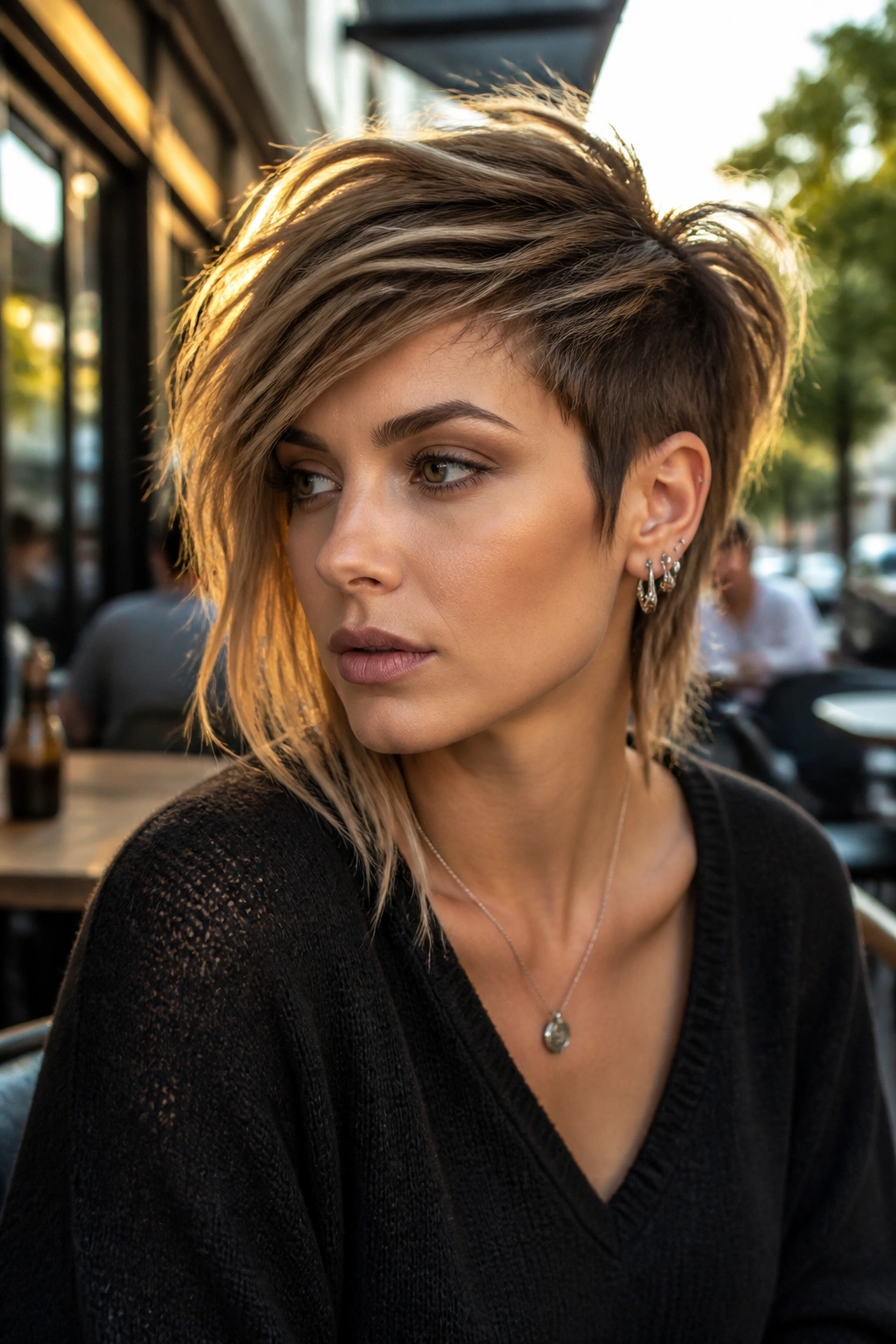
An asymmetrical pixie mullet changes the whole line of the haircut by making one side longer, fuller, or heavier than the other. That slight imbalance gives the cut a little drama without needing a lot of length.
What Makes It Different
The shape usually works best when one temple is cut closer to the head and the other side falls forward in a longer sweep. That creates a clear visual pull, which helps if you want to soften a strong jaw or shift attention away from a wide forehead.
It also gives the cut a built-in styling choice. You can wear the longer side tucked behind the ear for a cleaner look, or let it swing across the cheekbone when you want something more undone.
- One side can sit about 1 to 2 inches longer than the other
- The longer side works well with a deep side part
- Shorter side panels keep the silhouette light
- Best styling finish: soft paste or light wax, not hard gel
This one needs confidence. Not fake confidence. Real confidence. If you like a haircut that looks slightly off-center in a good way, it has a lot going for it.
7. Undercut Pixie Mullet
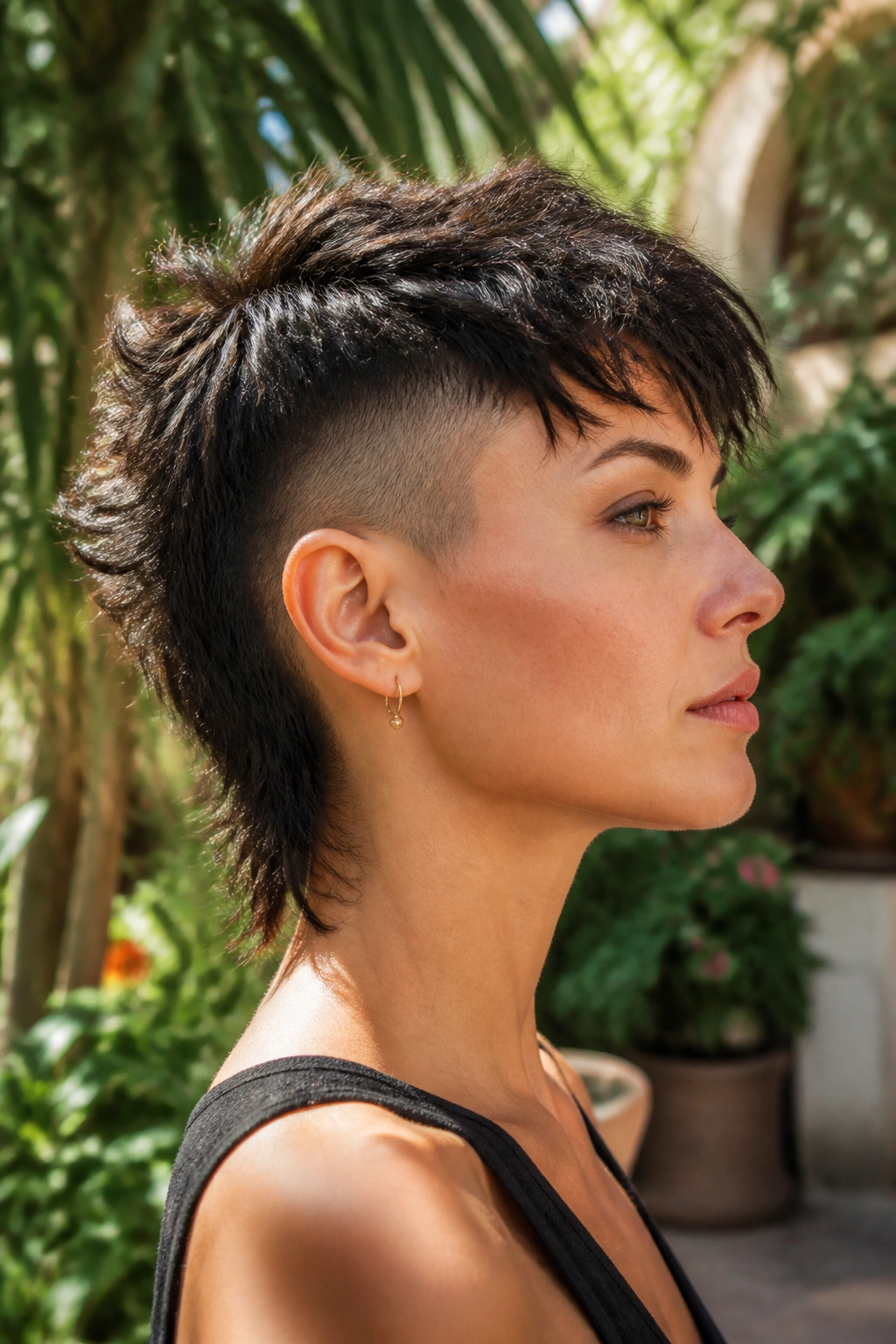
If your hair has too much bulk at the sides, an undercut pixie mullet can save the shape. Shaving or clipping the lower sides and back removes weight fast, which lets the top and nape sit with more control.
That matters more than people think. Dense hair can turn short cuts into rounded blocks if the inside is too heavy. The undercut changes the whole balance and gives the top room to move. It also makes the texture look sharper, because the pieces on top stand away from the head instead of getting swallowed by bulk.
What to Ask Your Stylist
Ask for the undercut to stay low unless you want the shave to show clearly. A high undercut can turn the haircut into a different beast. Sometimes that’s the goal. Sometimes it isn’t.
- Keep the undercut around the lower sides and nape
- Leave the top long enough to cover the shaved section if needed
- Add choppy layers through the crown
- Use a strong texturizing spray for lift
One caution: undercuts need maintenance. The grow-out can feel fuzzy fast if you let it go too long. Still, when the shape is right, it’s one of the cleanest ways to make a pixie mullet feel sharp.
8. Heavy Fringe Pixie Mullet
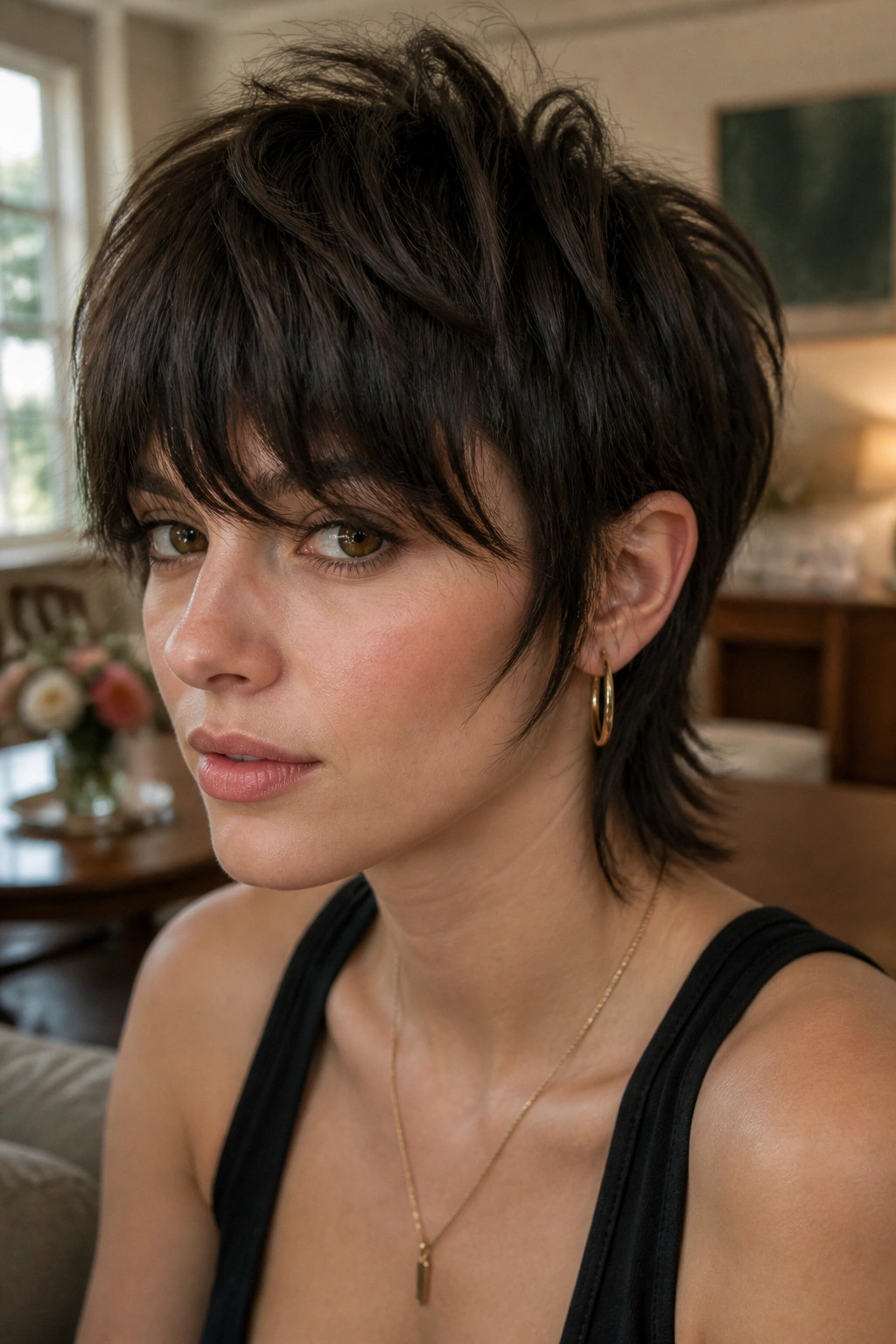
A heavy fringe changes the mood immediately. The front carries more weight, which makes the cut feel bold from the first glance and also gives you a place to build texture without pushing everything to the back.
This version works especially well if you like to hide a forehead, soften a strong hairline, or create a more editorial look. The fringe can sit just above the brows or skim them, depending on how much maintenance you’re willing to take on. Shorter fringe means more edge. Slightly longer fringe means more flexibility.
The trick is keeping the fringe piecey instead of solid. A solid block up front can drag the whole haircut down and make it feel heavy in the wrong way. A soft texturizing spray, then a little finger-drying at the roots, keeps the front from looking flat.
I like this one with a choppy nape and short sideburns. That contrast gives the haircut shape without making it too boxy.
9. Wavy Shag Pixie Mullet
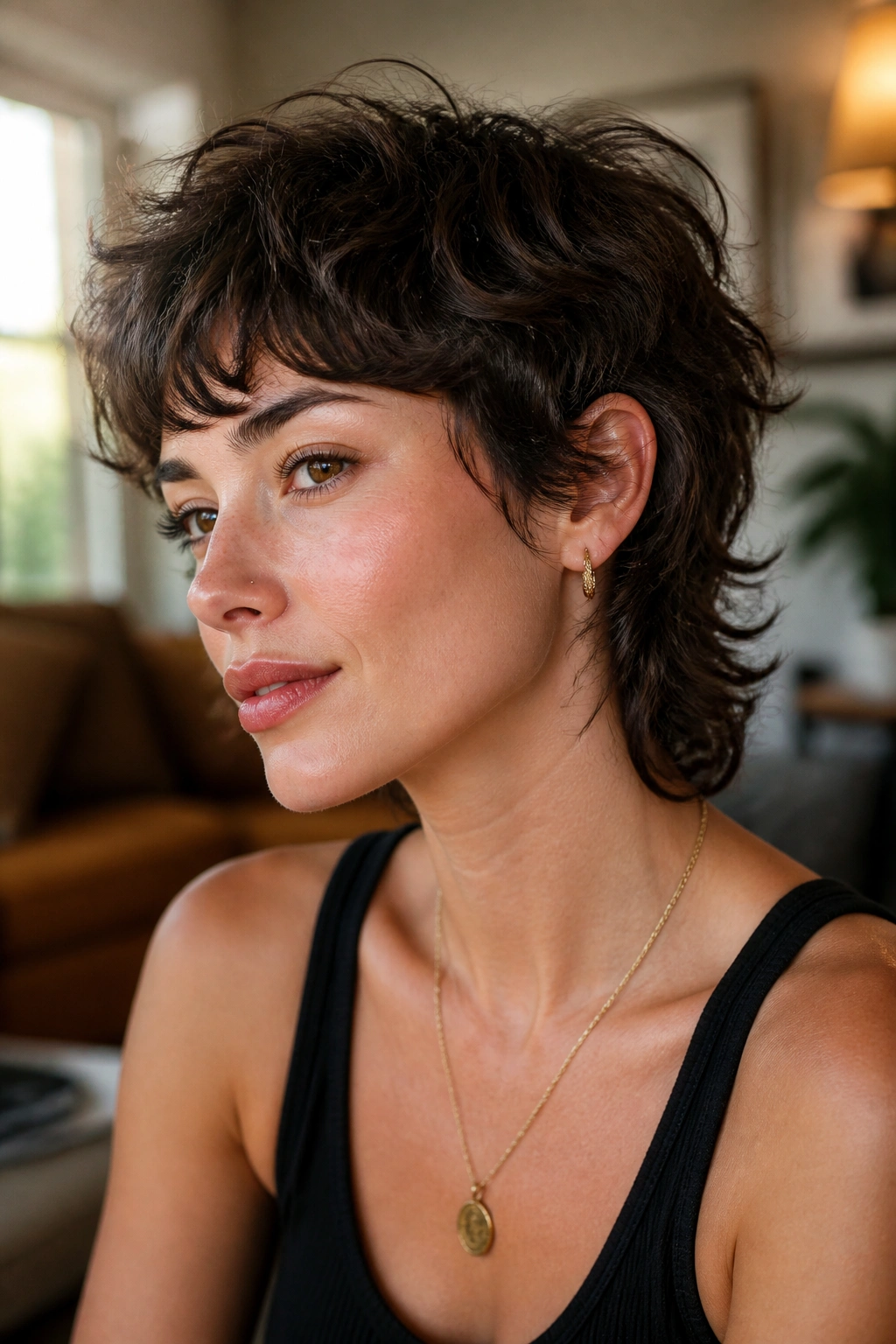
Why do wavy-haired people keep landing on this cut and loving it? Because the wave pattern does half the work for you. The texture creates natural bend, and the layers just nudge it into place.
A wavy shag pixie mullet usually has more movement through the crown and a slightly looser back than a stricter pixie cut. The result feels relaxed, not frozen. That’s a big deal if you hate spending a lot of time fighting your hair into obedience.
How to Use It
A light curl cream or wave foam is enough for most days. Scrunch it into damp hair, then let it dry with as little touching as possible. If the top looks a little flat, lift the roots with your fingers while it’s still damp and clip a few pieces up for 10 minutes.
This cut tends to work well on hair that falls somewhere between straight and curly. Too smooth, and it needs more styling. Too curly, and you may want to shift toward the curly pixie mullet instead.
What I like most is the grow-out. It gets softer, not sloppier. That’s rare.
10. Sleek Pixie Mullet
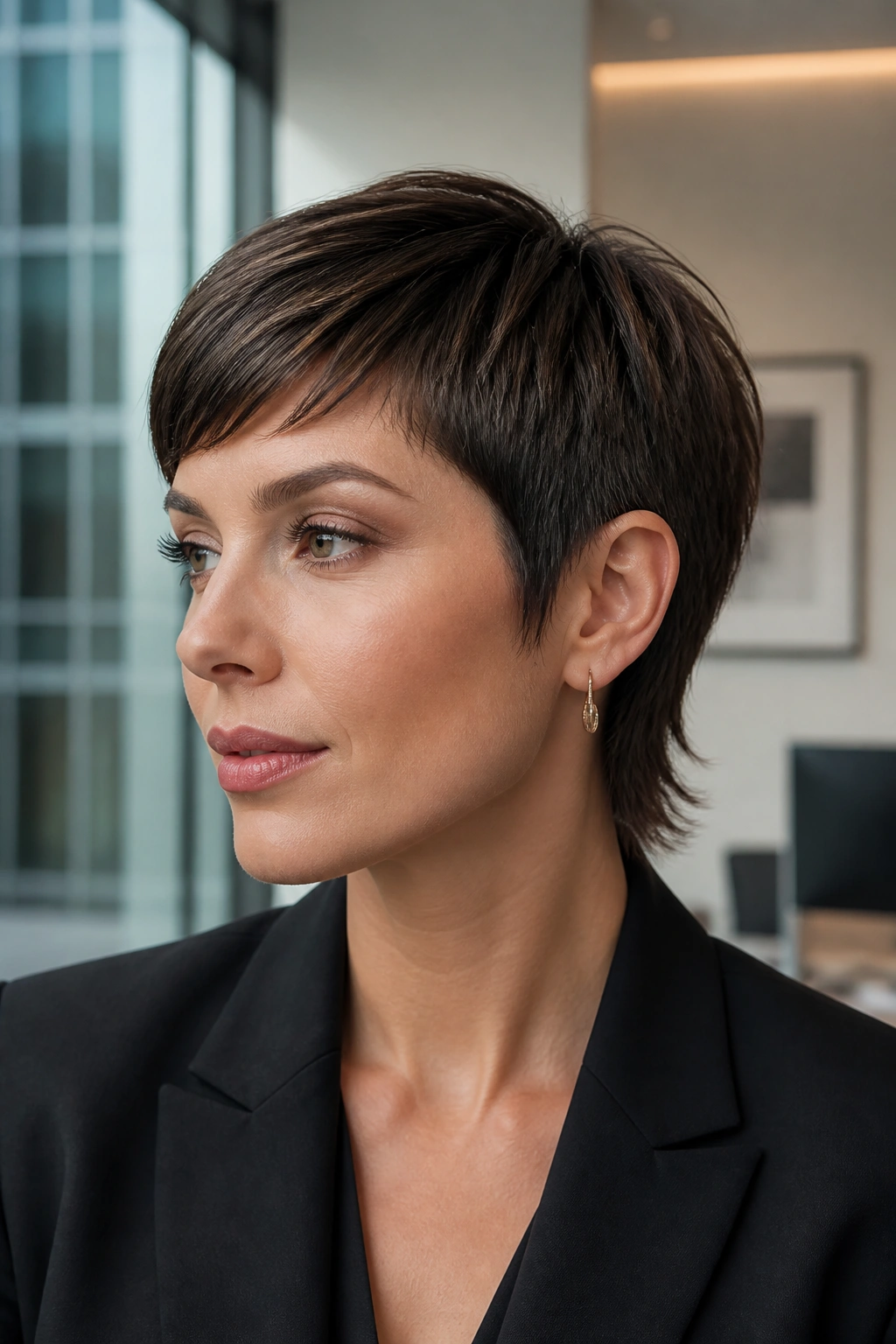
A pixie mullet does not have to look scruffy. A sleek version can be sharp, polished, and almost architectural if the lines are cut clean and the texture stays controlled.
This is the pick for straight hair or for anyone who wants a more dressed-up finish. The sides are tucked close, the top lies flatter, and the nape still gives just enough length to keep the mullet shape alive. It’s the kind of cut that looks intentional under a blazer and still works with a plain white tee.
Product Notes
A smoothing cream on damp hair keeps flyaways down. After that, a small brush or flat paddle brush can direct the top where you want it. If the ends are prone to puffing, a flat iron on low heat can sharpen the finish, but don’t overdo it. Heat damage shows fast on short cuts because every strand is visible.
This is not the best version if you want messy texture every day. It is the one you pick when you want a cleaner, sharper line.
11. Micro-Fringe Pixie Mullet
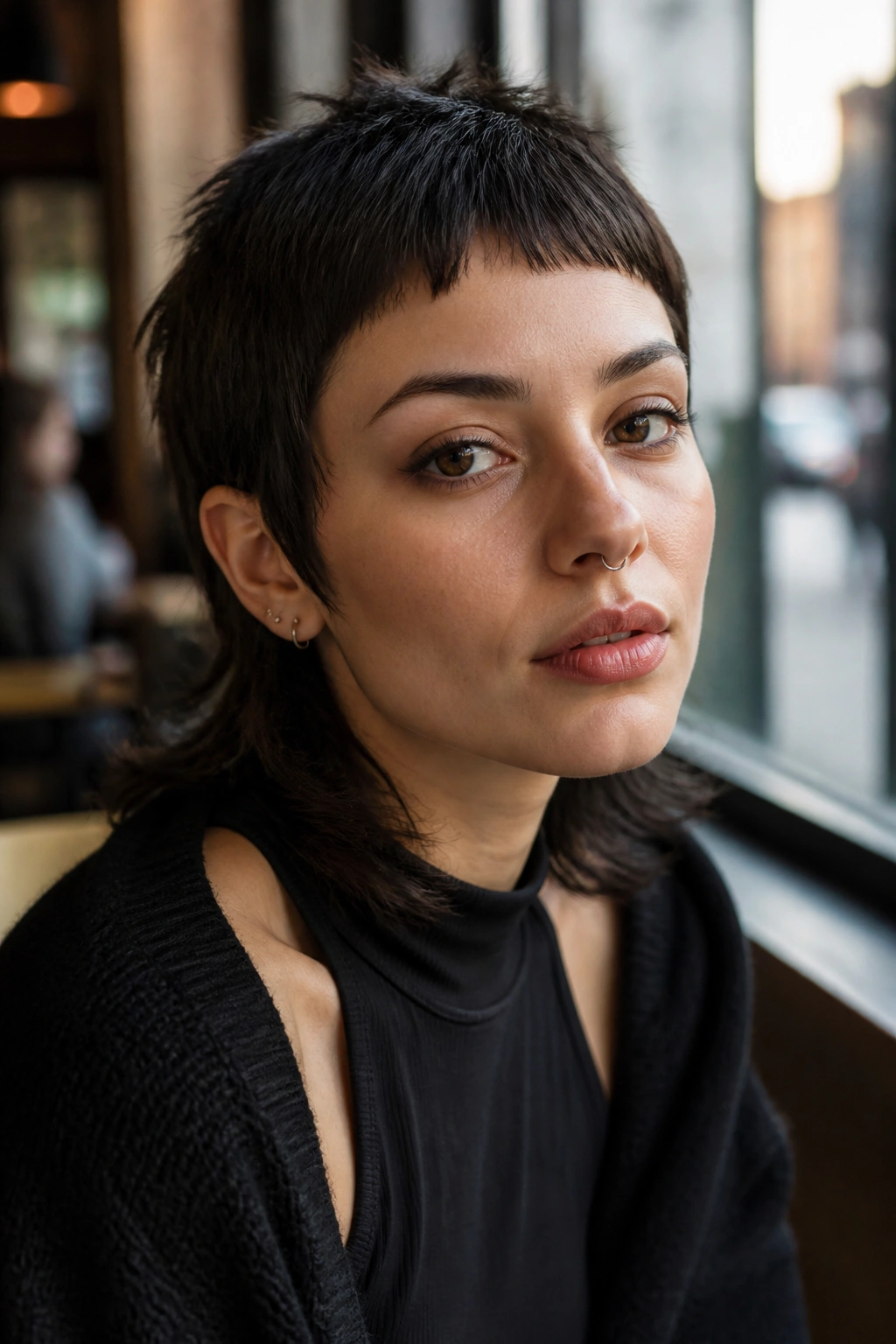
A tiny fringe changes the whole haircut. It pulls the eye right to the face and gives the pixie mullet a sharper, more rebellious edge than a longer bang ever could.
The micro-fringe version is bold, no question. It can be blunt, choppy, or slightly uneven, and that little difference matters because the bangs sit high enough that every millimeter shows. The rest of the haircut usually stays compact, with texture through the crown and a tail at the nape that keeps the mullet shape obvious.
What to Watch For
This cut can make the forehead look shorter, which is great if you want more focus on the eyes. It can also highlight a cowlick if the front hairline wants to split. That’s where styling comes in.
- Dry the fringe first
- Push it side to side with your fingers
- Use only a tiny amount of product
- Keep trims frequent, because short bangs grow out fast
A micro fringe is not low-commitment. It takes upkeep. But if you like your haircut to have a sharp little attitude problem, this one delivers.
12. Layered Crown Pixie Mullet
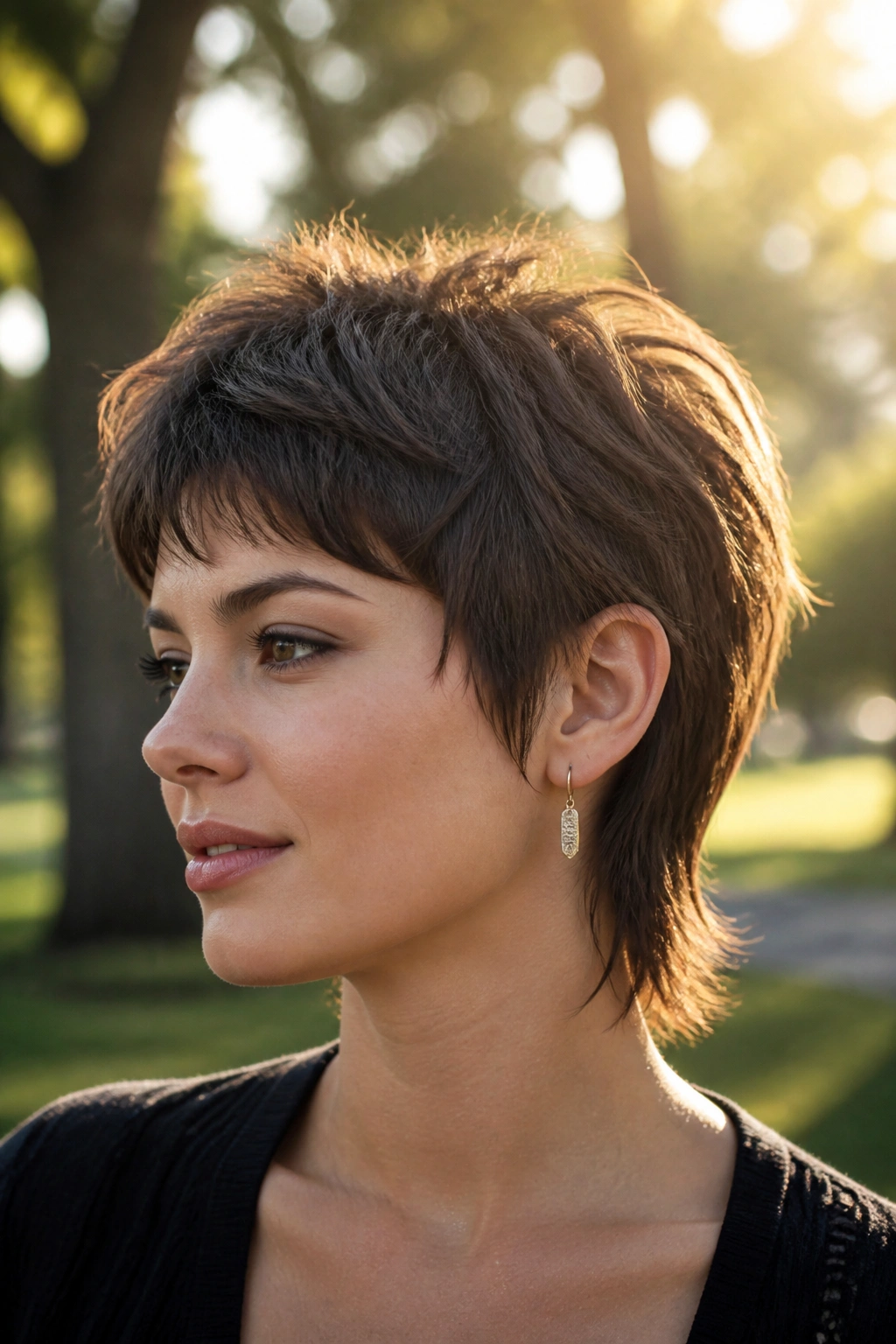
A layered crown changes the height of the whole cut. Instead of sitting flat or helmet-like, the top lifts and bends so the shape feels lighter from above and from the side.
That matters more than the average haircut article admits. The crown is where a pixie mullet either comes alive or falls limp. If the layers are placed well, the head looks slimmer and the texture reads better. If they’re too short or too even, the top can stick up in one stiff clump.
A light mousse at the roots works well here, especially if you blow-dry the crown in small sections with your fingers. You do not need big round-brush drama. You need lift. Small, controlled, and a little messy around the part line.
This version is especially kind to flat hair. It gives the top some shape without forcing the rest of the cut to get bigger than it should.
13. Debulked Thick-Hair Pixie Mullet
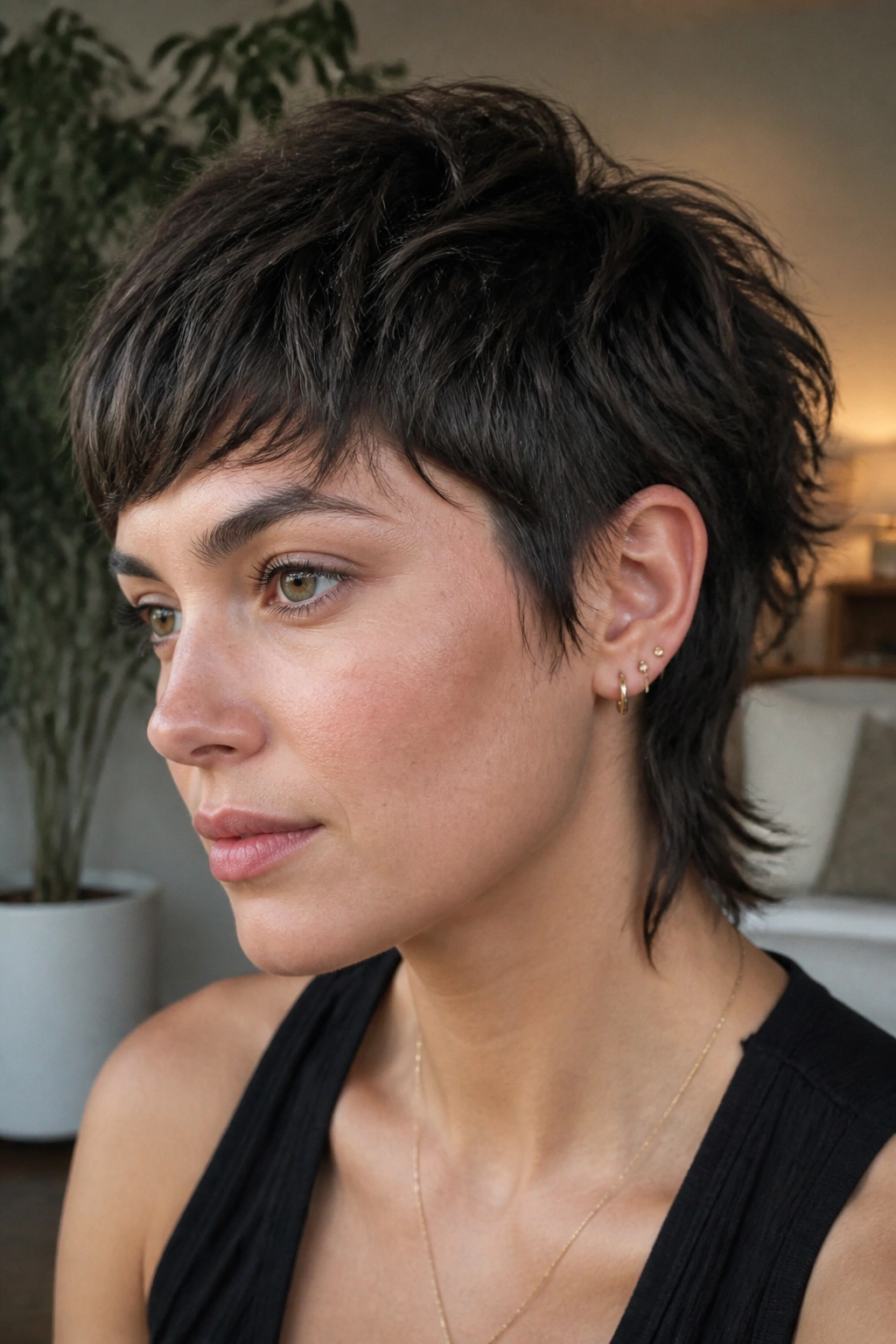
Got thick hair and tired of the triangle effect? This is the pixie mullet that fixes that problem without making the haircut go hollow.
What the Stylist Should Avoid
The goal is to remove weight from the inside, not shave the life out of the ends. A good debulked cut keeps enough density at the perimeter to hold the shape, while the layers underneath take out the puff. That way the top still has body, but it doesn’t sit like a cap.
A stylist can use point cutting, internal layering, or careful slice cutting to make the bulk behave. That’s better than blindly thinning everything with shears, which often leaves thick hair frizzy and uneven at the ends.
- Ask for internal weight removal, not heavy thinning
- Keep the nape long enough to show the tail shape
- Leave some fullness around the temple area
- Use a cream or balm to keep the ends from frizzing
This cut is a relief if thick hair has always fought back. It does need skill, though. Bad debulking is hard to hide.
14. Fine-Hair Volume Pixie Mullet
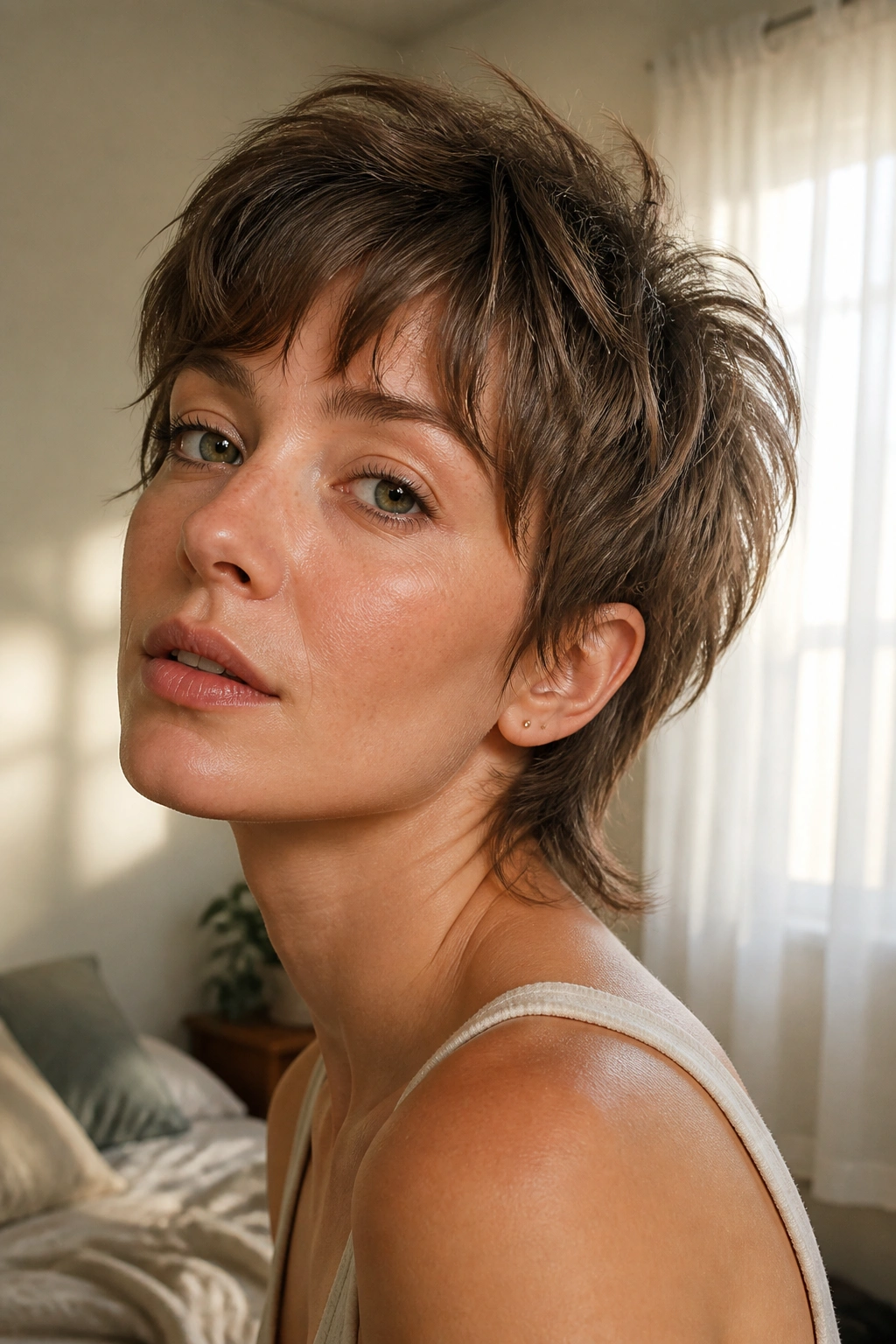
Fine hair can look fuller in a pixie mullet than it does in a longer cut. That’s the part people miss. Short length takes away drag, and the texture at the crown gives the illusion of density where you need it most.
The key is not to over-layer the ends. Fine hair can disappear fast if the stylist gets too aggressive with the thinning shears. You want lift at the top, movement at the back, and enough line around the perimeter to make the shape feel solid.
How to Keep It Plump
A root-lifting spray at the scalp, followed by a quick rough blow-dry, usually does the trick. Flip your head upside down for 20 to 30 seconds if you need extra height at the crown, then set the shape with a light mist of flexible hairspray.
This cut looks best when it is a little imperfect. Too much smoothing makes fine hair look smaller. A bit of texture gives the cut room to breathe.
If your hair tends to lie flat by noon, this is one of the smarter short-cut options.
15. Bowlish Pixie Mullet
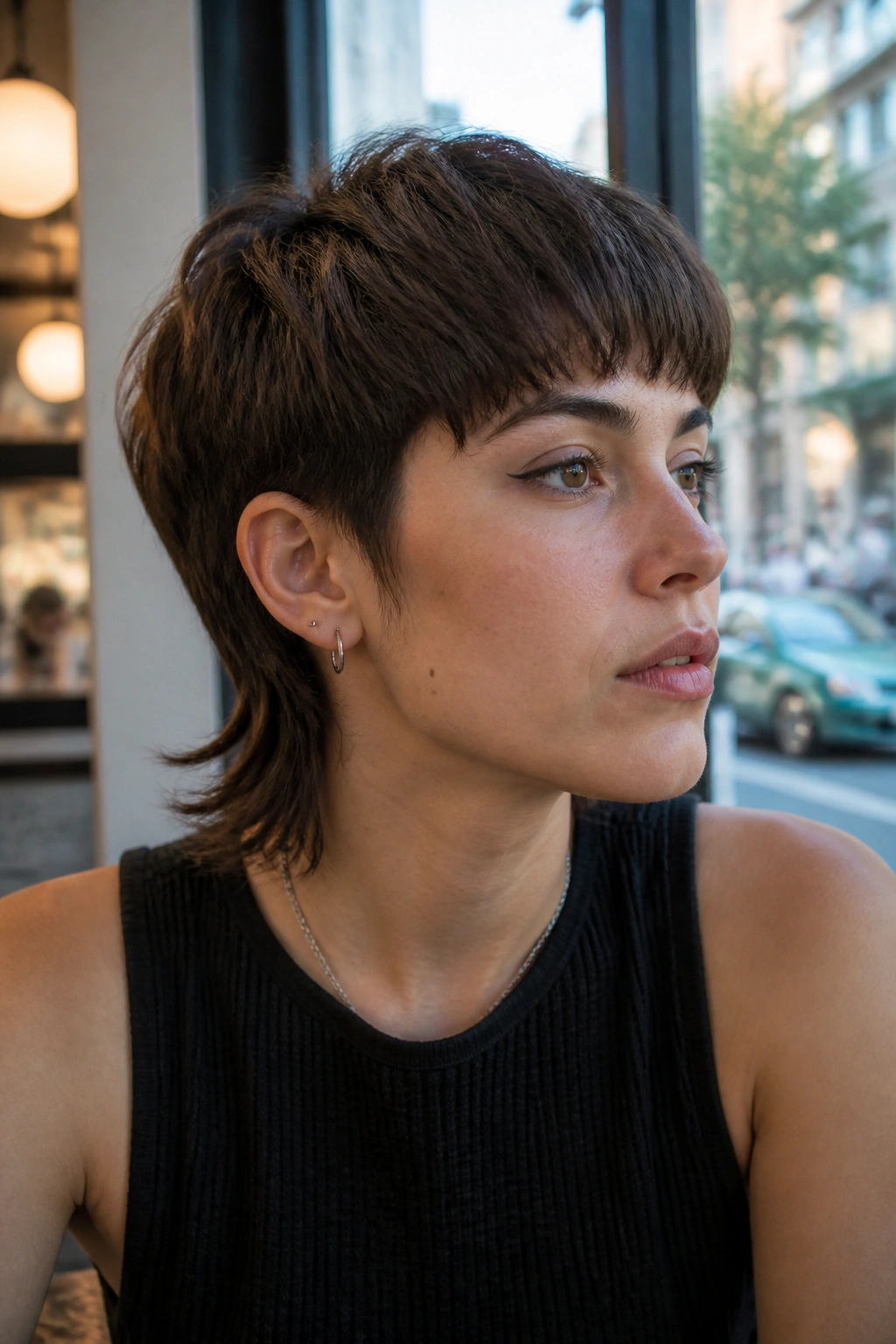
A bowlish pixie mullet sounds odd on paper. On the head, it can look sharp, modern, and a little bit cool in that offbeat, fashion-kid way.
The shape borrows from a soft bowl cut at the top, then breaks away into a mullet tail at the back. That contrast is what makes it interesting. The front can sit fuller and rounder, while the nape gets broken up with choppy layers so the whole thing doesn’t turn into a blunt mushroom.
It works best when the line at the perimeter is clear. You want the shape to read fast, even if the ends are textured. A soft side part or broken fringe can stop it from feeling too neat.
Not everyone will want this cut. That’s fine. It has a specific personality. If you want something a little strange in the best sense, this is a strong one.
16. Wet-Look Pixie Mullet
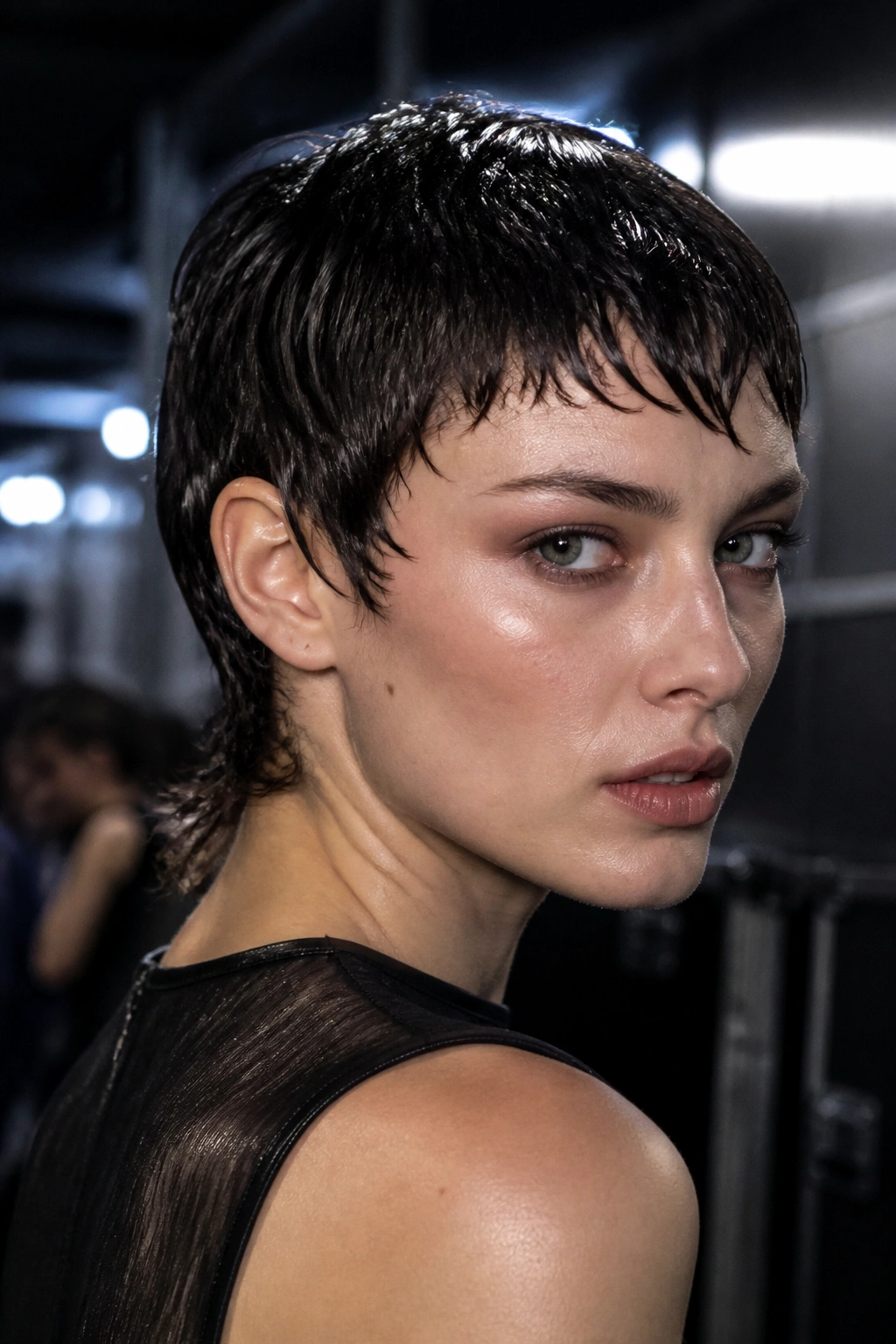
Some cuts are made for matte texture. This one likes shine.
A wet-look pixie mullet uses gel, cream gel, or a shine paste to keep the hair slicked close to the head while still showing the layers underneath. The crown and fringe stay visible, but they’re separated in a smoother, more sculpted way.
How to Style It
Start on damp hair. Not wet enough to drip, not dry enough to fight you. Work a small amount of gel from roots to mid-lengths, then comb or finger-comb the front into place. Push a few pieces forward across the forehead if you want a more undone finish, or tuck the sides tight for a cleaner edge.
- Use less product than you think
- Keep the nape neat so the line stays sharp
- Let the hair dry without touching it too much
- Add a second tiny layer of gel only if the front falls apart
This version is best for nights out, photo days, or whenever you want the haircut to look deliberate and a little glossy. It’s not the most low-maintenance style, but it has presence.
17. Side-Swept Pixie Mullet
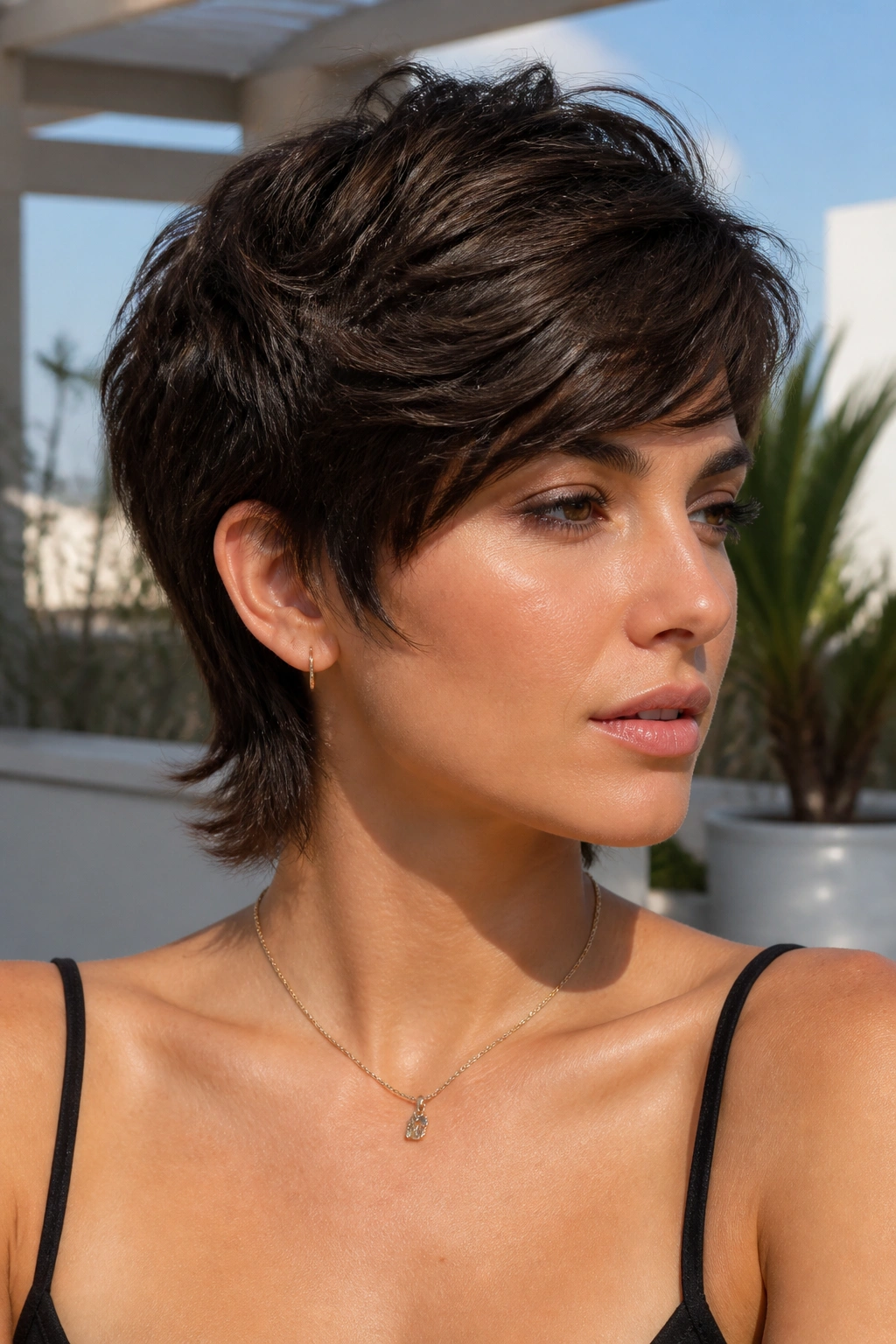
A side-swept shape softens the cut without taking away its attitude. The long sweep across the forehead gives you movement, while the back still keeps that mullet outline alive.
This version is especially good if you do not like a center part or if your face shape looks better with a diagonal line cutting across it. The side sweep can hide a stubborn cowlick, soften a broad forehead, or simply make the haircut feel less severe.
The nice part is flexibility. You can tuck the sweep behind the ear on one side, leave it hanging across the cheek on the other, or push it back for a more open face. That makes it one of the easiest pixie mullet cuts to live with day to day.
A little mousse at the root and a medium-hold spray at the end is enough for most people. Keep it touchable. A stiff side sweep loses the whole point.
18. Punk Spiky Pixie Mullet
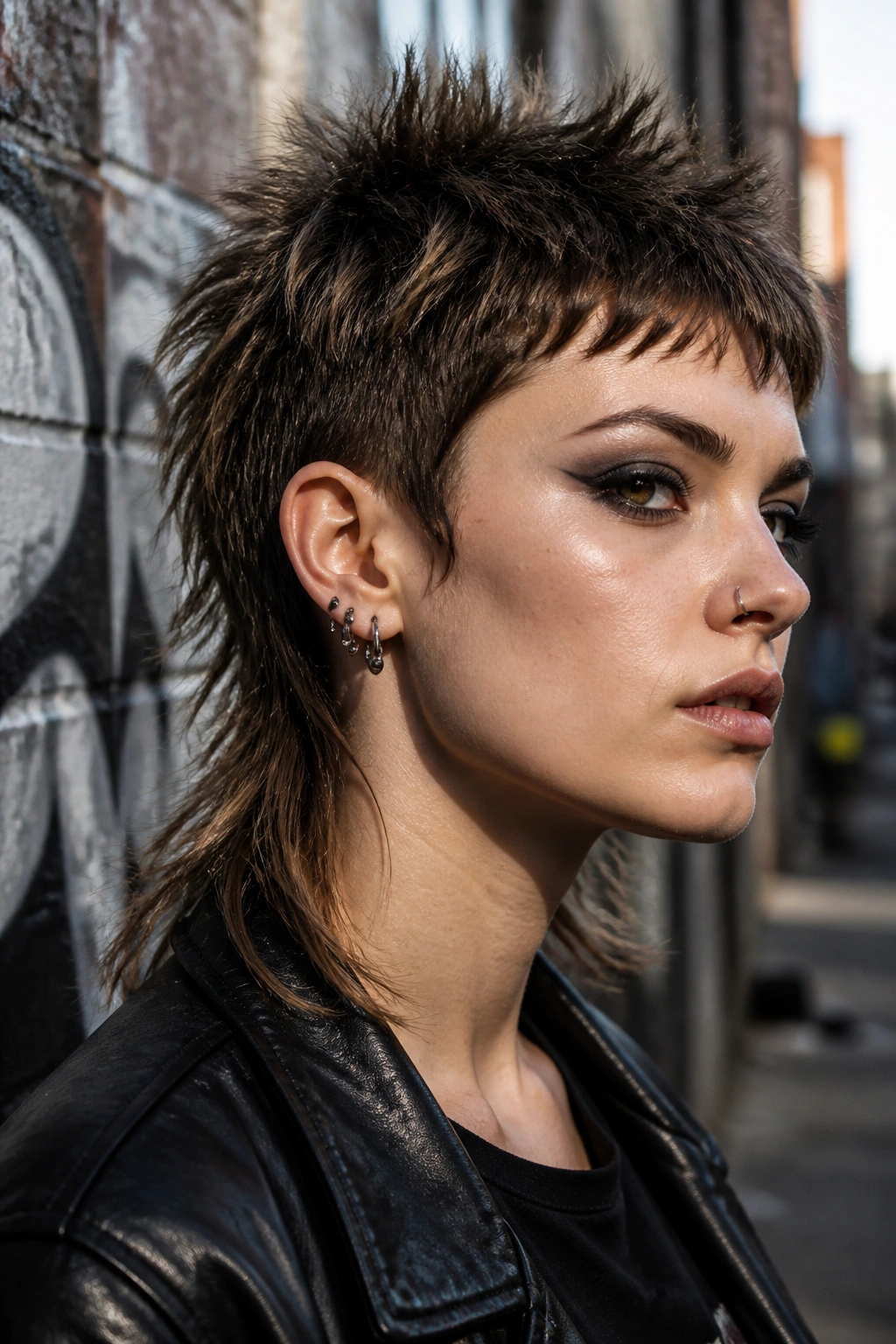
This one has a pulse. The punk spiky pixie mullet is all about lifted ends, piecey separation, and a shape that looks like it’s moving even when you’re standing still.
The cut itself usually stays compact, but the styling makes it aggressive. Short layers on top are pinched upward with paste or clay, while the nape stays longer and broken up so the mullet line keeps its shape. It’s a haircut that wants fingers more than brushes.
Best for a Sharp Finish
If you like a rougher look, this one has range. You can spike just the crown and keep the fringe flatter, or push the whole top straight up for more height. The key is using a tiny amount of product, then adding more only where needed. Too much and the hair turns heavy and stringy.
- Best product: strong paste or fiber cream
- Best drying method: rough-dry with fingers
- Best haircut detail: choppy top layers and a narrow nape
- Best mood: loud, a little messy, and not polished
It’s not subtle. That is the appeal.
19. Soft Nape-Length Pixie Mullet
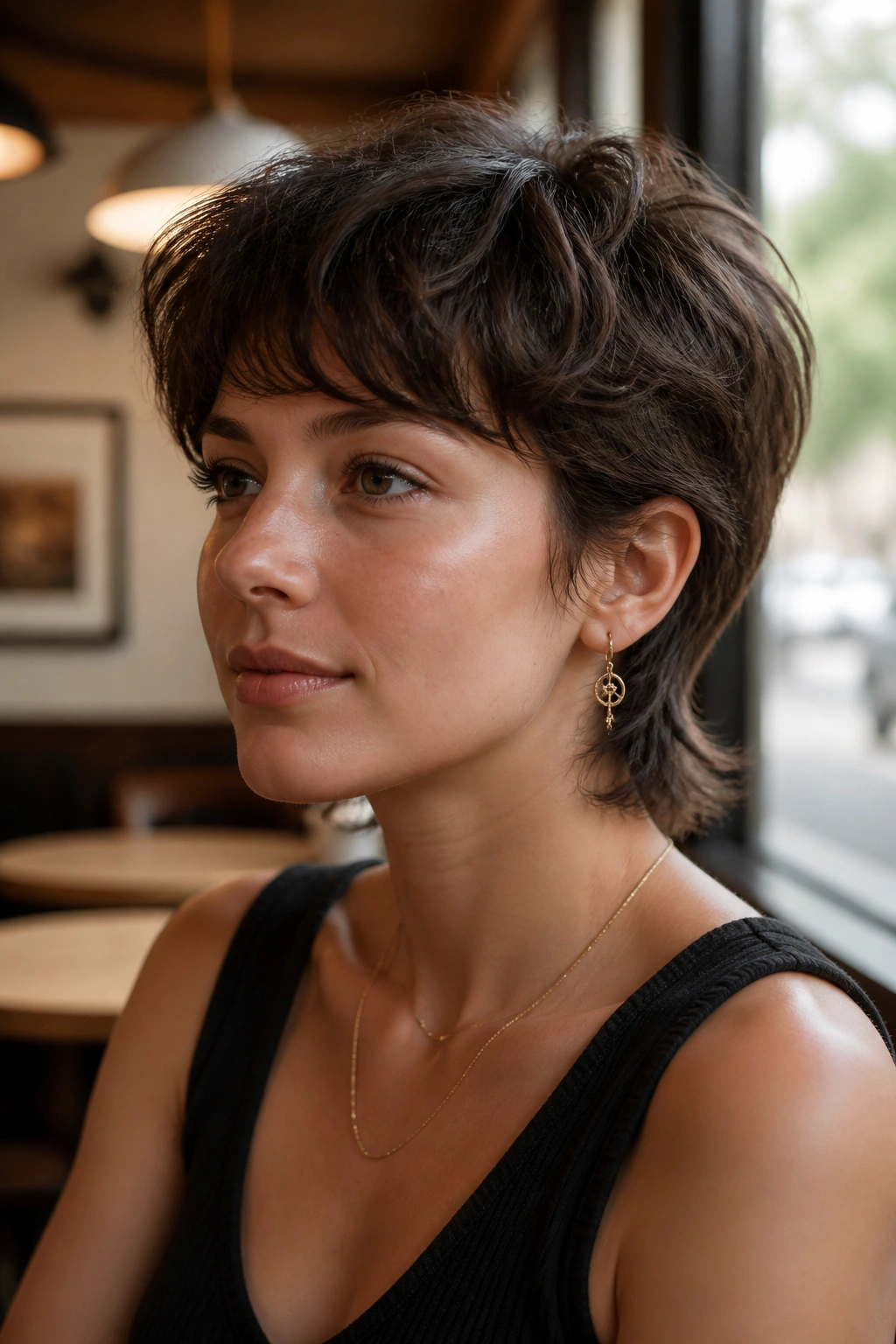
A soft nape-length pixie mullet is the version for people who want the mullet shape but don’t want it to shout from the back of the room. The length sits just long enough at the nape to read as a tail, but the transitions are gentle and wearable.
That softness matters. Instead of a sudden jump from short crown to long back, the layers flow more gradually. The haircut still has edge, but it feels easier around the ears and neckline. It can look good with minimal styling, which is a relief if you want texture without a lot of fuss.
Why It’s Easy to Wear
This shape grows out in a forgiving way. A trim every 6 to 8 weeks keeps the nape from getting shaggy, but even when you stretch that out, the cut usually keeps its line. That’s handy if your life is not built around salon appointments.
A light cream or leave-in spray is often enough. Smooth the ends with your hands, then let the texture do the rest.
20. Grown-Out Pixie Mullet

The best pixie mullet is the one that still looks good when it stops being fresh from the salon. That’s why a grown-out version deserves its own place here.
This shape keeps the edges soft enough that it can stretch a little between trims. The crown gets a bit looser, the fringe lands lower, and the nape grows into a longer tail that reads more relaxed than dramatic. If the original cut is balanced well, the grow-out phase can be one of the nicest stages.
A Smart Way to Maintain It
Ask for the neckline and temples to be cleaned up every 6 to 10 weeks, depending on how fast your hair grows and how precise you want the silhouette to stay. Leave the top a little longer if you want more time between cuts. Keep the product light as the shape lengthens, because heavy styling makes a grown-out pixie mullet look tired fast.
This is the version I’d point to for anyone who wants texture, edge, and a haircut that doesn’t fall apart the second it gains half an inch. It keeps its personality even as it softens. That’s rare. And useful.
