



A wolf haircut can look effortless in a photo and stubborn in the mirror. The difference usually comes down to three things: where the shortest layers start, how much weight you leave at the ends, and whether the fringe matches your face and hair texture.
That’s why so many wolf haircut ideas for women look similar at first glance, then behave completely differently once they’re cut. One version gives you messy volume at the crown and soft movement through the lengths. Another leans harder into the mullet side of the shape. Another almost reads like a shag until you move your head and the layers start shifting.
Hair texture changes everything. Straight hair shows every line. Wavy hair gives you a little built-in help. Curls can make a wolf cut look rich and full, but only if the layers are placed with some restraint. A bluntly cut wolf shape can look heavy; a badly thinned one can turn fuzzy fast.
So the best way to think about this cut is not “Which one is trendy?” It’s “Which version looks good on my hair, in my routine, and on the days when I do not feel like spending 25 minutes with a round brush?” These 20 ideas are where the useful answers live.
1. Soft Wolf Cut With Curtain Bangs
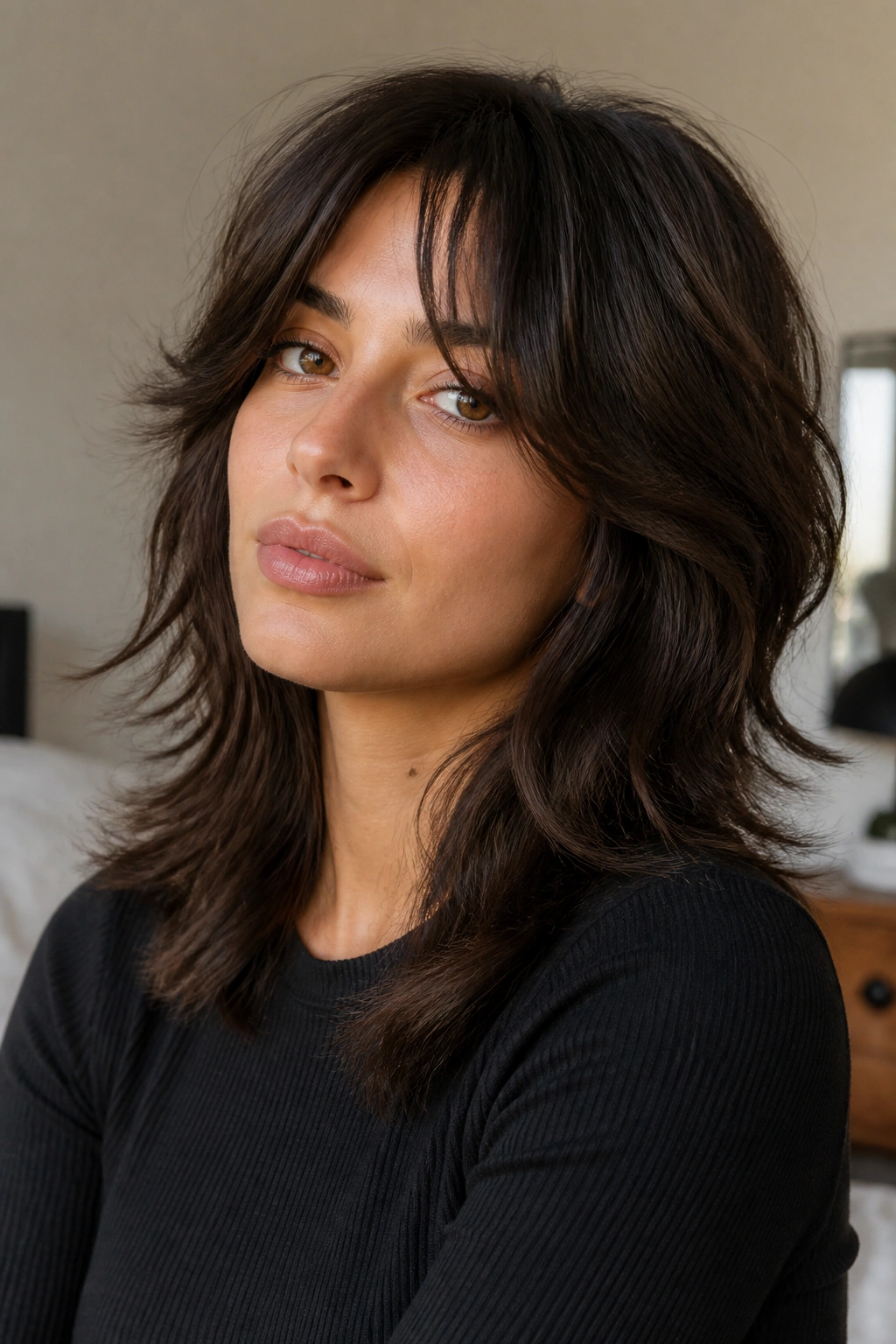
This is the version I’d hand to someone who wants the wolf-cut shape without looking like they raided a garage-band photo shoot. The curtain bang softens the whole thing, and the longer layers keep the finish wearable instead of aggressively choppy.
Why It Flatters So Many Faces
Curtain bangs work because they split the front of the face and draw the eye downward in a gentle line. That helps balance round cheeks, a stronger jaw, or a wider forehead without boxing you in. The rest of the cut should stay airy through the crown and cheekbone area, then loosen out around the collarbone.
Ask for long, blended layers starting around the cheekbones and a fringe that can be swept off-center. If your hair is thick, your stylist can remove a little weight from the interior without turning the ends stringy. That matters. A wolf cut lives or dies on the shape of its ends.
- Best on medium to thick hair
- Works nicely with a 1-inch round brush
- Ask for face-framing pieces that hit the jaw
- Trim the bangs every 4 to 6 weeks
Pro tip: blow-dry the fringe away from the face for 10 seconds, then let it cool in place. That tiny pause keeps the bend instead of letting it collapse.
2. Curly Wolf Cut With Rounded Layers
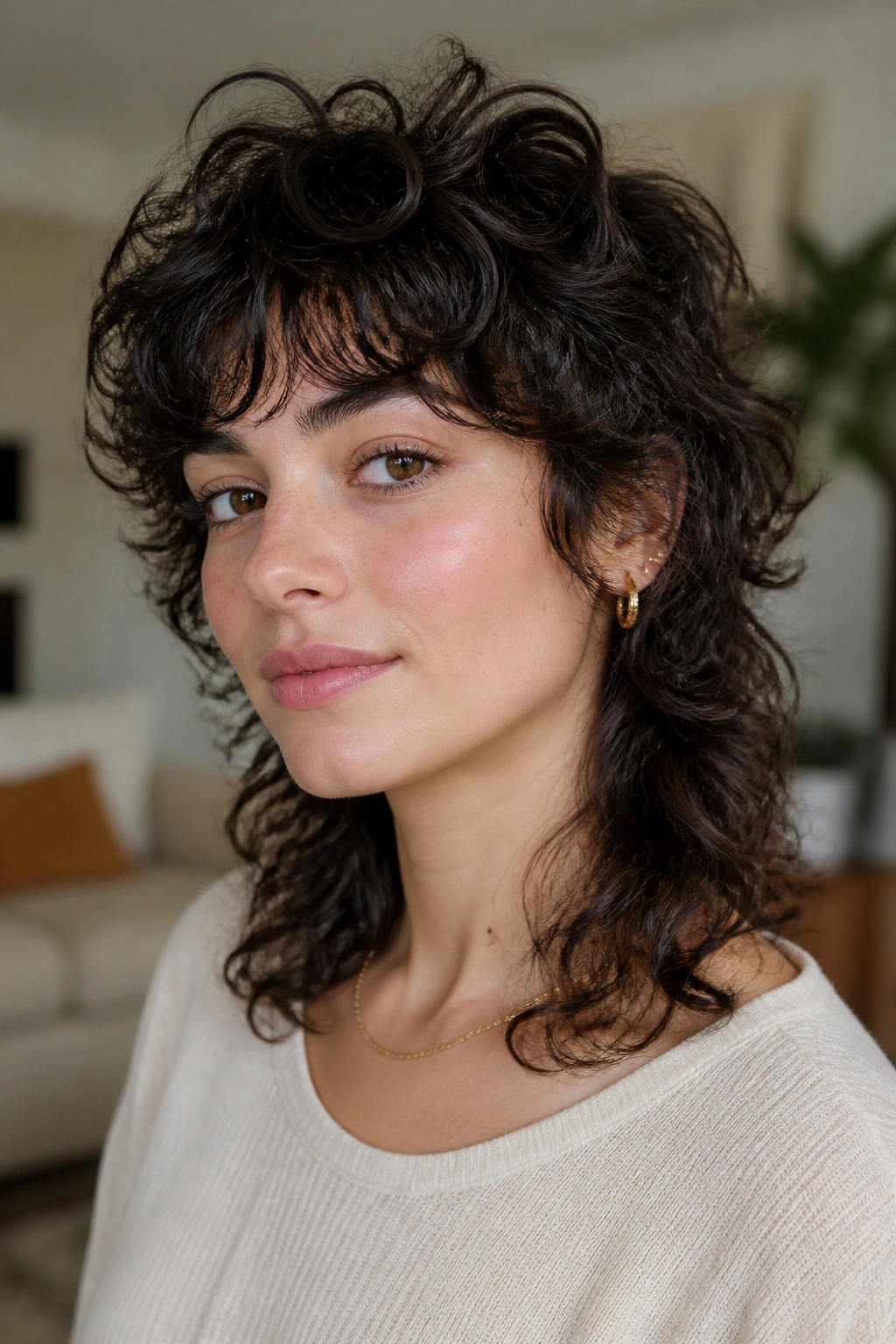
Can a wolf cut work on curls? Absolutely, and when it’s done well, it looks like the hair was born that way. The trick is shape, not chaos. You want rounded layers that respect the curl pattern, not aggressive razoring that makes the ends puff out like a dandelion.
A curl-friendly wolf cut usually starts higher at the crown, then falls in soft tiers through the sides and back. That gives you lift up top and definition at the perimeter. Dry cutting is often the smarter move here, because curls lie to you when they’re wet. A coil that looks short in the sink can spring up two inches once it dries.
I like this version for people who want movement without losing that full, plush feeling curls already give. It works especially well when the fringe is kept a little longer and shaped in a gentle curve. Short curly bangs can be adorable. They can also be a commitment.
Skip heavy thinning shears if your curls frizz easily. The shape should breathe, not fray.
3. Short Wolf Cut With Airy Micro Bangs
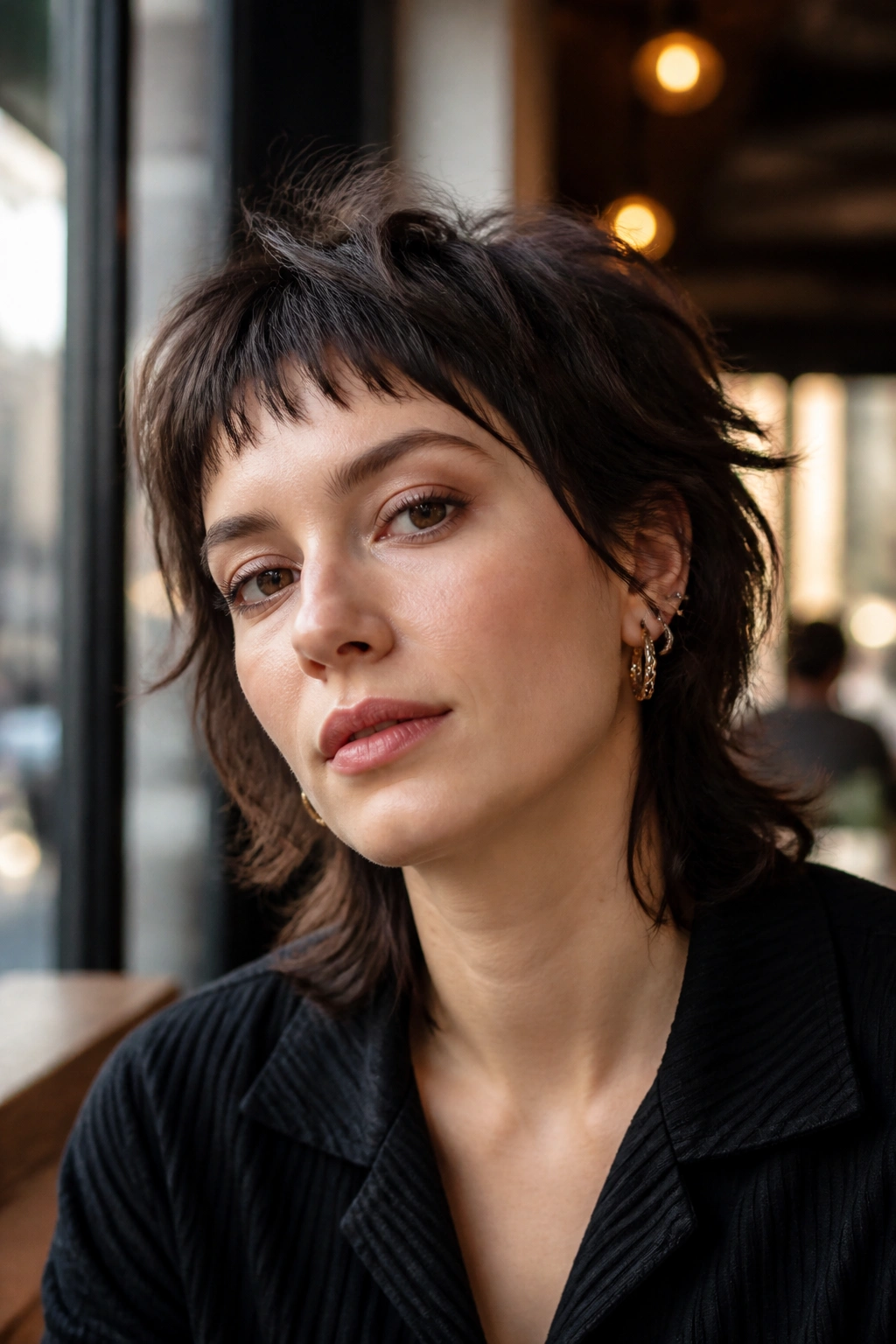
This one has bite. A short wolf cut with micro bangs gives you a sharper, cooler silhouette right away, especially if your hair naturally bends a little around the nape and ears.
What Makes It Different
The short length keeps the whole cut lifted, so the crown stands out more. Micro bangs pull the eye upward and make the face look open, which can be fantastic on fine features or on someone who wants the haircut to feel deliberate rather than soft. It’s a bold look, but not a heavy one.
The catch is maintenance. Micro bangs need trims often, and they will not hide when they grow out. That’s part of the appeal, honestly. The shape looks crisp when the fringe sits just above the brows and the top layers are textured enough to move.
- Good for straight to slightly wavy hair
- Best when the neckline is tidy, not bulky
- Needs frequent fringe trims
- Looks strong with earrings and a clean collar
If your hairline has a stubborn cowlick, talk through the fringe first. A tiny bang can be a dream or a fight, and there is no middle ground for long.
4. Long Wolf Cut With Feathered Ends
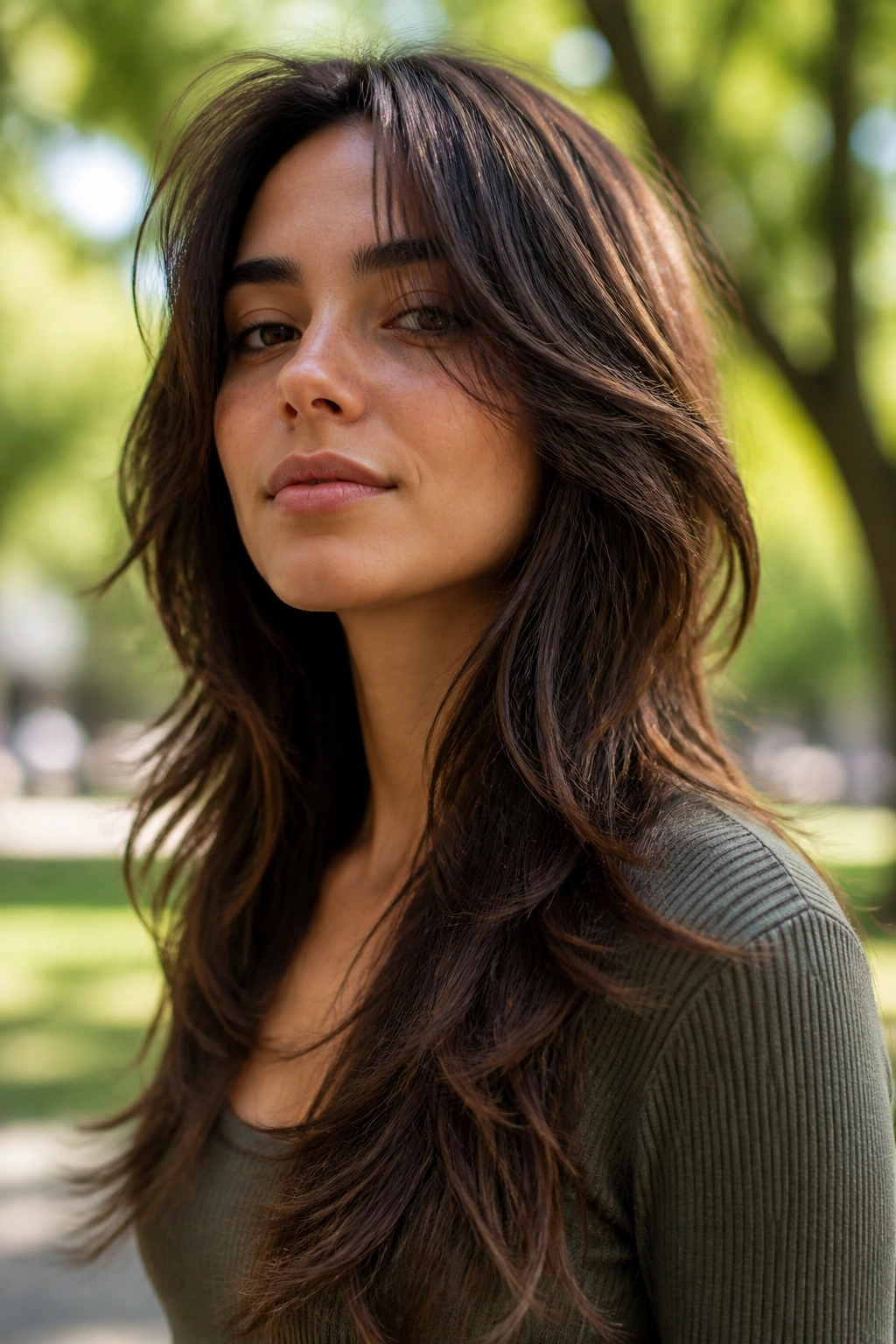
Long hair can carry a wolf cut beautifully if the layers are feathered instead of hacked in. This is the version for people who want movement but are not ready to give up length past the shoulders.
The crown should still come up first. That’s the whole point. But the shape through the body of the hair needs to stay long enough that the cut reads as fluid, not ragged. Feathered ends help the hair fan out when you move, and they keep the final shape from looking heavy at the bottom.
This version is especially nice if your hair tends to lie flat under its own weight. A little lift at the top and a soft taper through the ends can wake it up fast. You do not need a huge amount of texture to get there. A careful cut and a medium-barrel brush usually do more than over-styling.
I’d choose this one for wavy or thick hair that still feels nice when brushed out. It is one of the more forgiving wolf-cut ideas for women who want a softer result.
5. Wolf Cut With Bottleneck Bangs
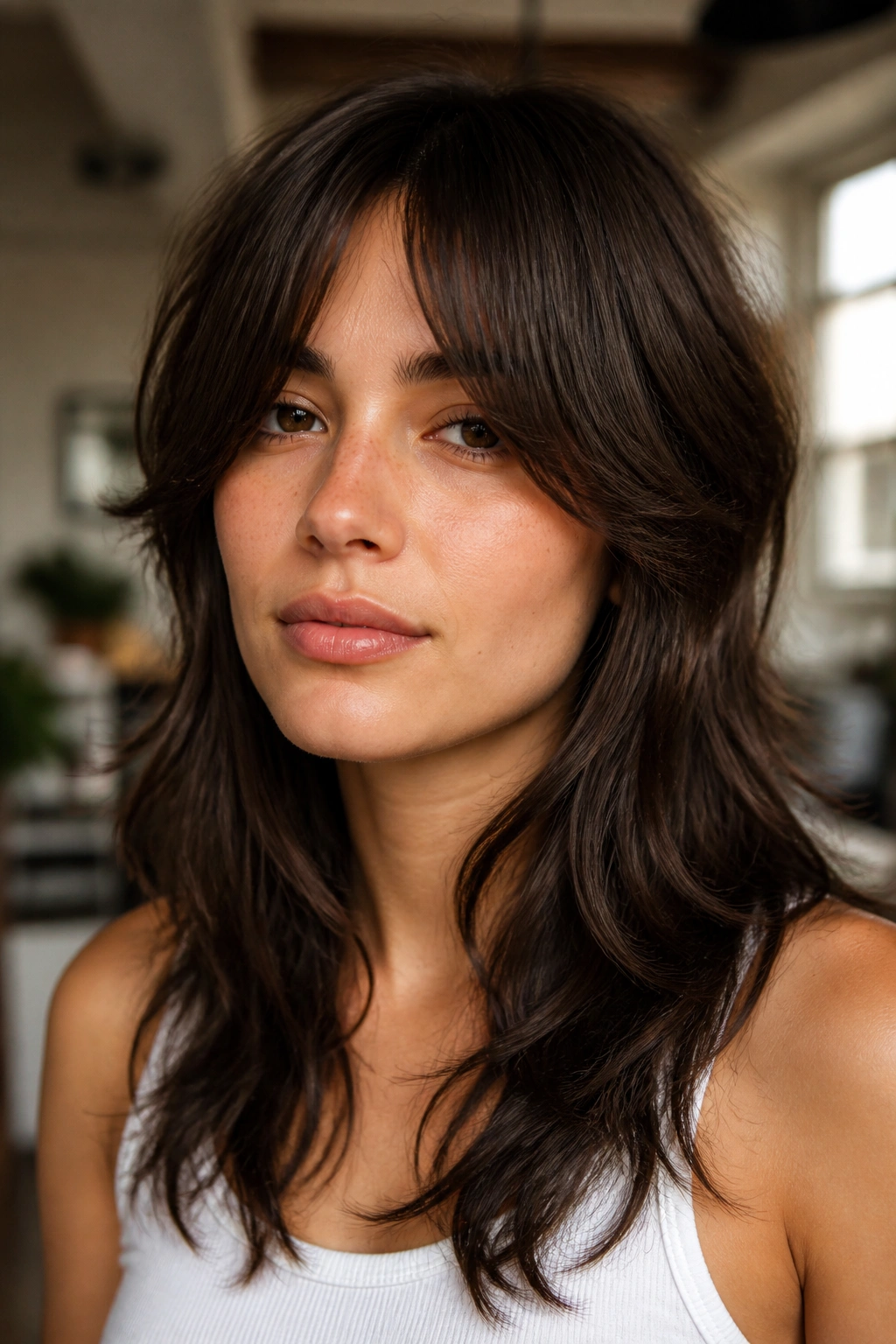
Why do bottleneck bangs keep showing up with wolf cuts? Because the shape solves two problems at once: it gives you a face frame and keeps the front from feeling too blunt. The fringe is narrow in the center, then opens wider as it moves toward the temples. That matters more than people think.
A bottleneck bang works especially well when the rest of the cut has texture but not too much aggression. You get a little lift near the brow, then the bangs melt into the front layers instead of sitting on top of them like a separate piece. The result feels polished without getting stiff.
How to Wear It
Ask for a short center section that just skims the brows, then longer pieces that angle toward the cheekbones. Styling is easier if the bangs are cut to move both down and out. A flat iron can bend the sides away from the face in seconds.
This is a smart choice for square and heart-shaped faces. It softens the middle without hiding everything. And unlike heavier fringe, it can grow out without turning into a helmet.
6. Razor-Cut Wolf Cut For Thick Hair
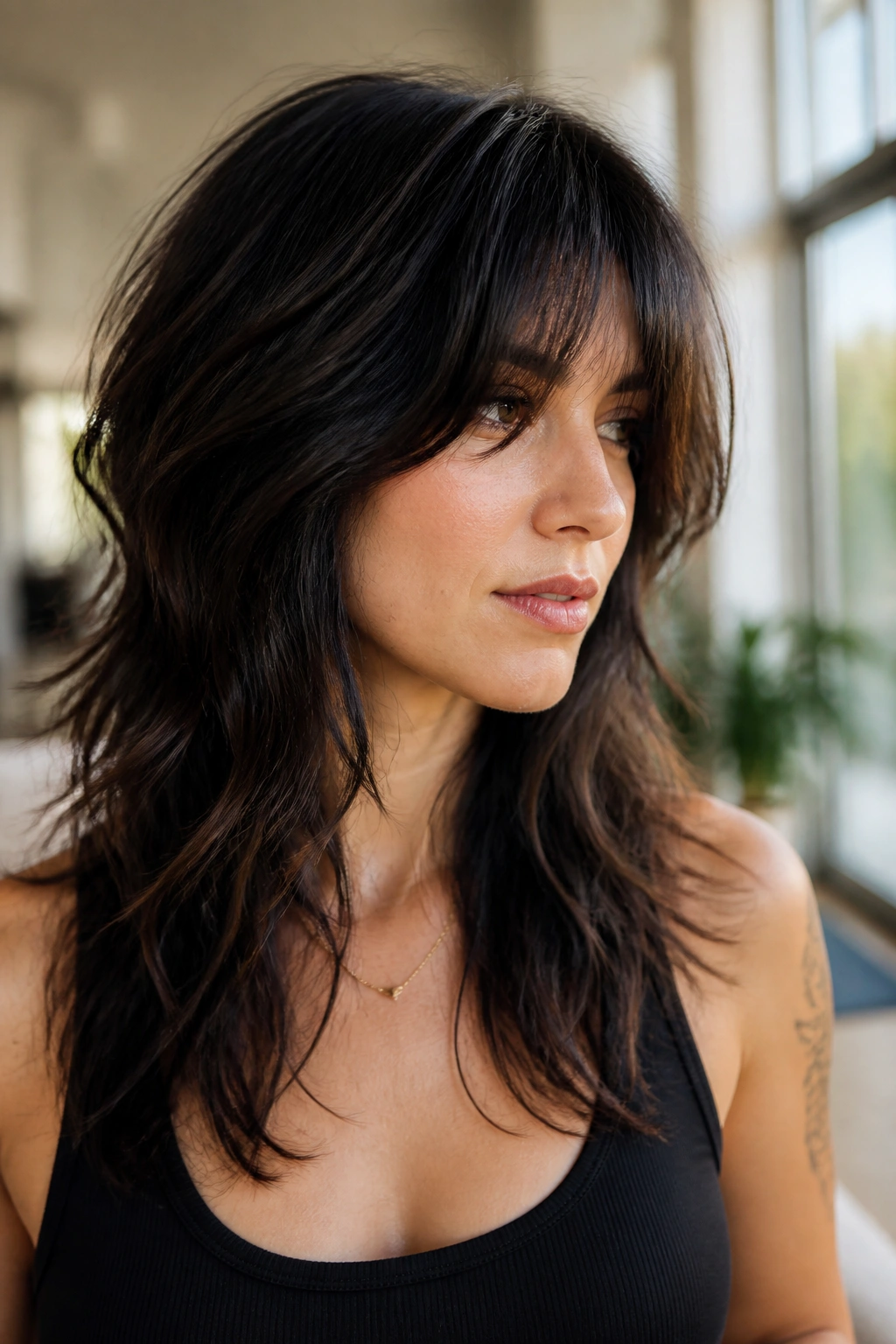
Thick hair needs less bulk, not more drama. That’s why a razor-cut wolf shape can work so well. The razor removes weight in a softer way than blunt shears, which helps the layers fall instead of sitting in a blocky shelf.
You do need a careful hand here. Too much razor work can leave thick hair frizzy at the ends, and that effect is worse if your texture already expands in humidity. The best version keeps the internal layers lighter while leaving enough length at the bottom for the hair to swing. That swing is the whole point.
I like this cut on women who have dense hair and are tired of the triangle shape that some layered cuts create. A well-placed razor wolf cut can bring shape back without making the ends feel sparse. It also speeds up drying a bit, which is a small mercy if you have a lot of hair.
If your hair is coarse, ask for controlled texturizing rather than aggressive thinning. There is a difference. A good stylist knows it.
7. Wolf Cut Mullet With Shaggy Crown
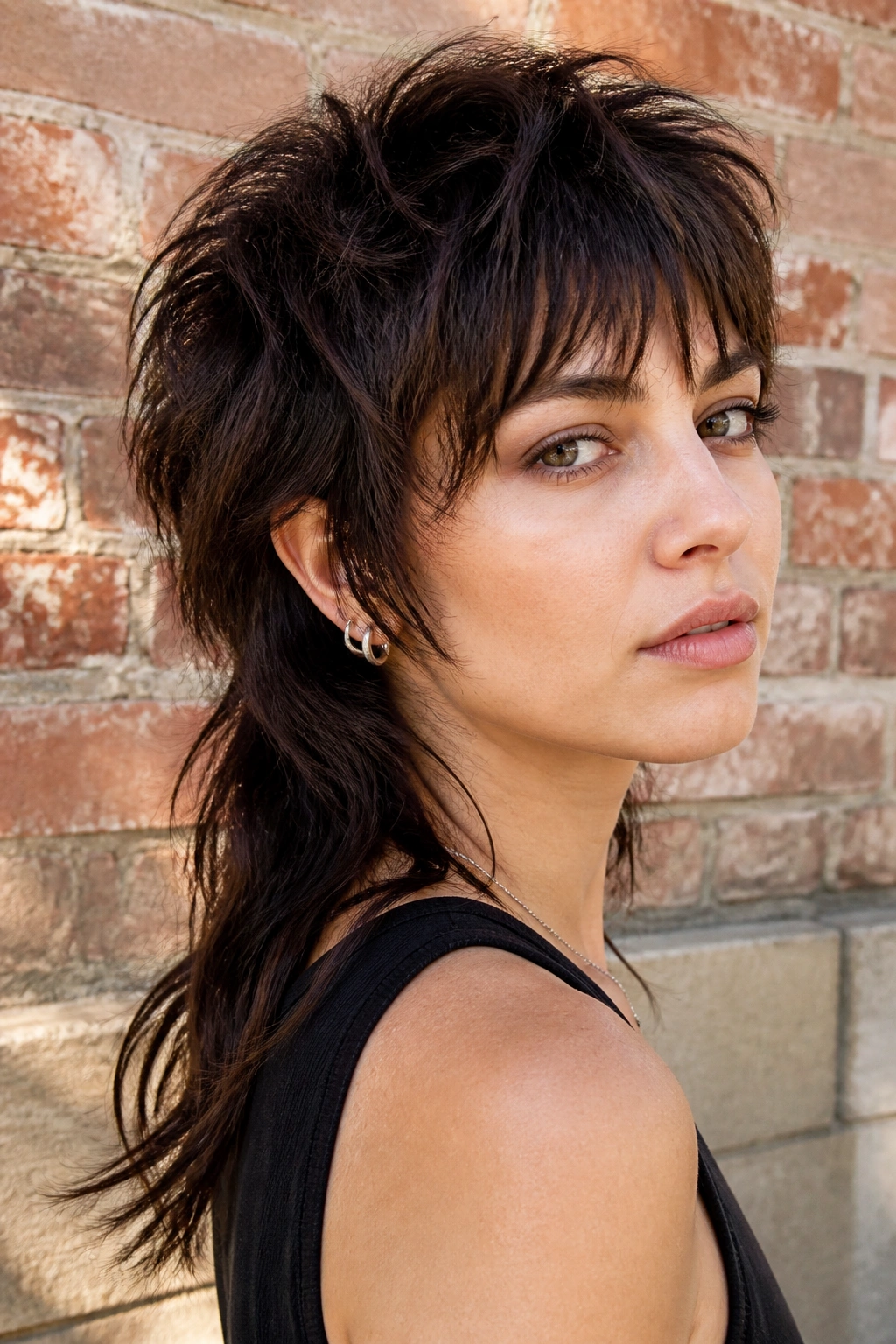
This version leans into the mullet side on purpose, and I mean that as a compliment. It is the wolf cut for women who want the haircut to look a little untamed and a little cool, not neatly tucked in.
The crown stays shaggy and lifted. The back hangs longer. The sides keep some softness, but they do not pretend to be one even length. That contrast is what gives the cut attitude. A classic wolf cut usually softens that transition. This one lets it show.
What to Ask For
Bring a photo that shows the side profile, not just the front. The side is where this shape either sings or falls apart. You want enough disconnect to see the longer back, but not so much that it turns into a hard retro mullet line.
- Shorter top layers
- Longer nape and back
- Soft, broken edges around the ears
- Texture through the crown, not the bottom
I’d pick this cut for someone who wears leather jackets, chunky boots, or just likes hair that has some personality before styling even starts. It is not shy. Good.
8. Chin-Length Wolf Cut For Fine Hair
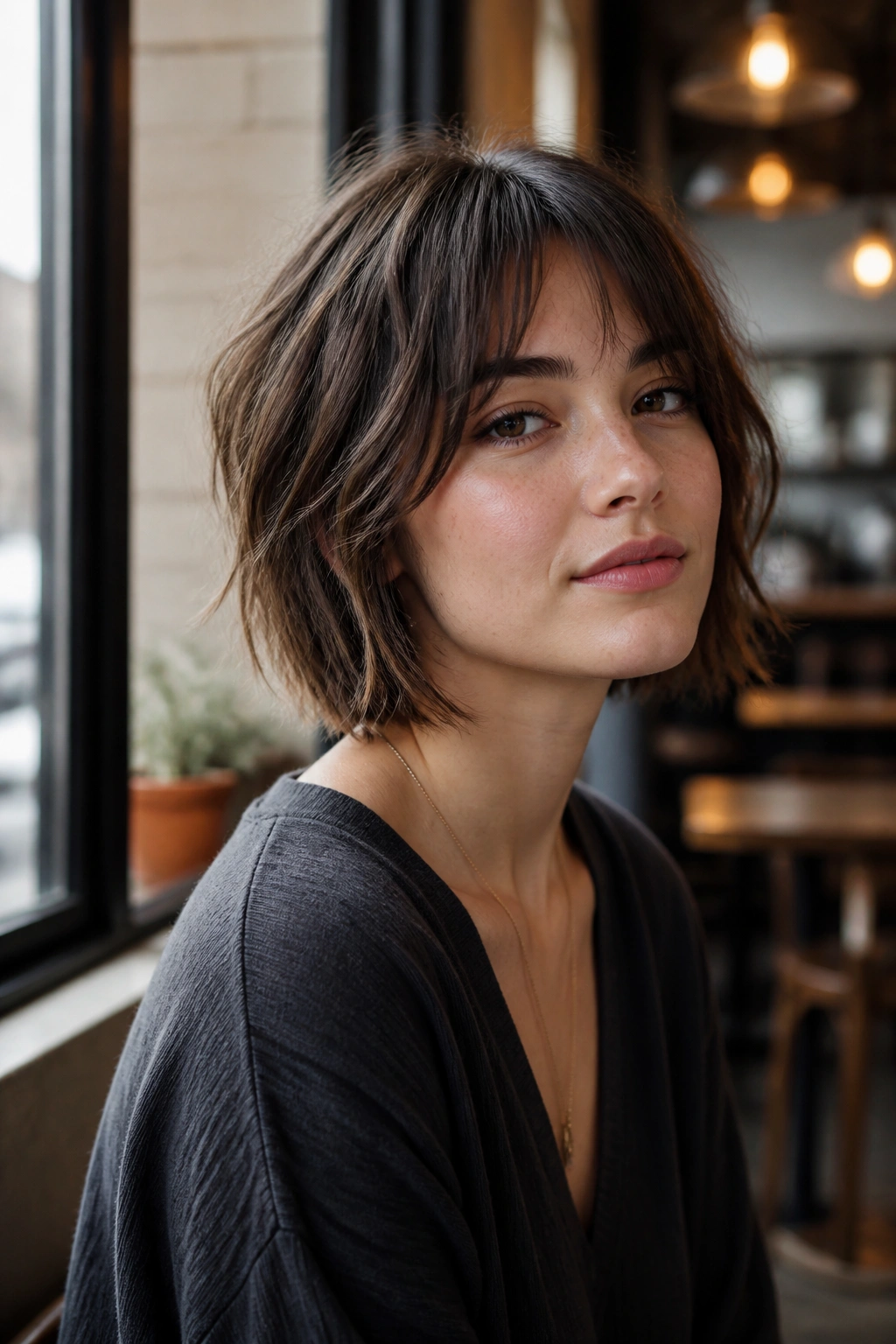
Fine hair can wear a wolf cut, but the length has to be watched carefully. Too much layering too high can leave the ends looking see-through. Chin length helps because it keeps enough body in the perimeter while still creating lift at the crown.
The shape works almost like a grown-out bixie with more movement through the sides. That makes it feel light without making the hair look thin. A little bend near the ends goes a long way here. You do not need a lot of product. You need the right product in the right place.
A root-lifting spray at the crown, a quick blow-dry with a round brush, and a light mist of texture spray through the mid-lengths is usually enough. Heavy cream will flatten this haircut fast. So will overbrushing.
This is one of my favorite wolf haircut ideas for women who want volume and do not want to fight their hair every morning. It feels neat, but not stiff. And it grows out with more grace than a sharper, shorter version.
9. Wavy Wolf Cut With Invisible Layers
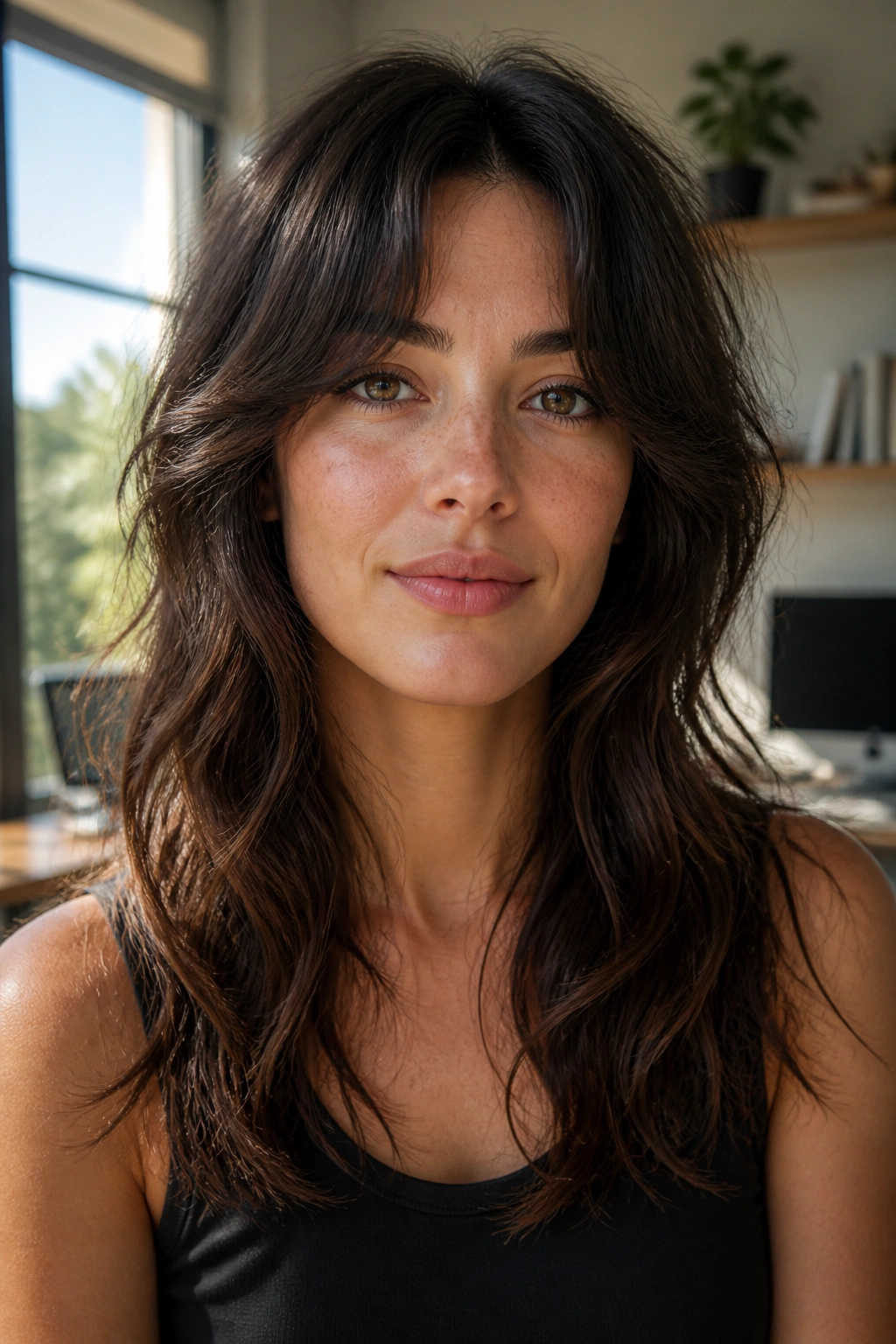
Invisible layers are for people who want movement without the obvious choppiness that some wolf cuts lean on. The layers sit inside the shape, so the hair moves more than it first appears to. That makes the cut look softer, almost brushed-through, even when it has a strong structure underneath.
Compared with a heavily shredded wolf cut, this version is calmer. You still get lift through the crown and face frame, but the ends do not separate into pieces as dramatically. That is a good thing if your wavy hair already has texture and you do not want to push it into frizz territory.
What Makes It Different
The stylist cuts the interior so the outside line stays clean. It is a sneaky trick, and a useful one. The hair swings better, but the surface still looks tidy enough for work, dinner, or a day when you just want your hair to behave.
This is the version I’d choose for someone who likes the wolf-cut idea but hates looking “done” in a loud way. It works, it moves, and it does not shout.
10. Wolf Cut With Heavy Fringe
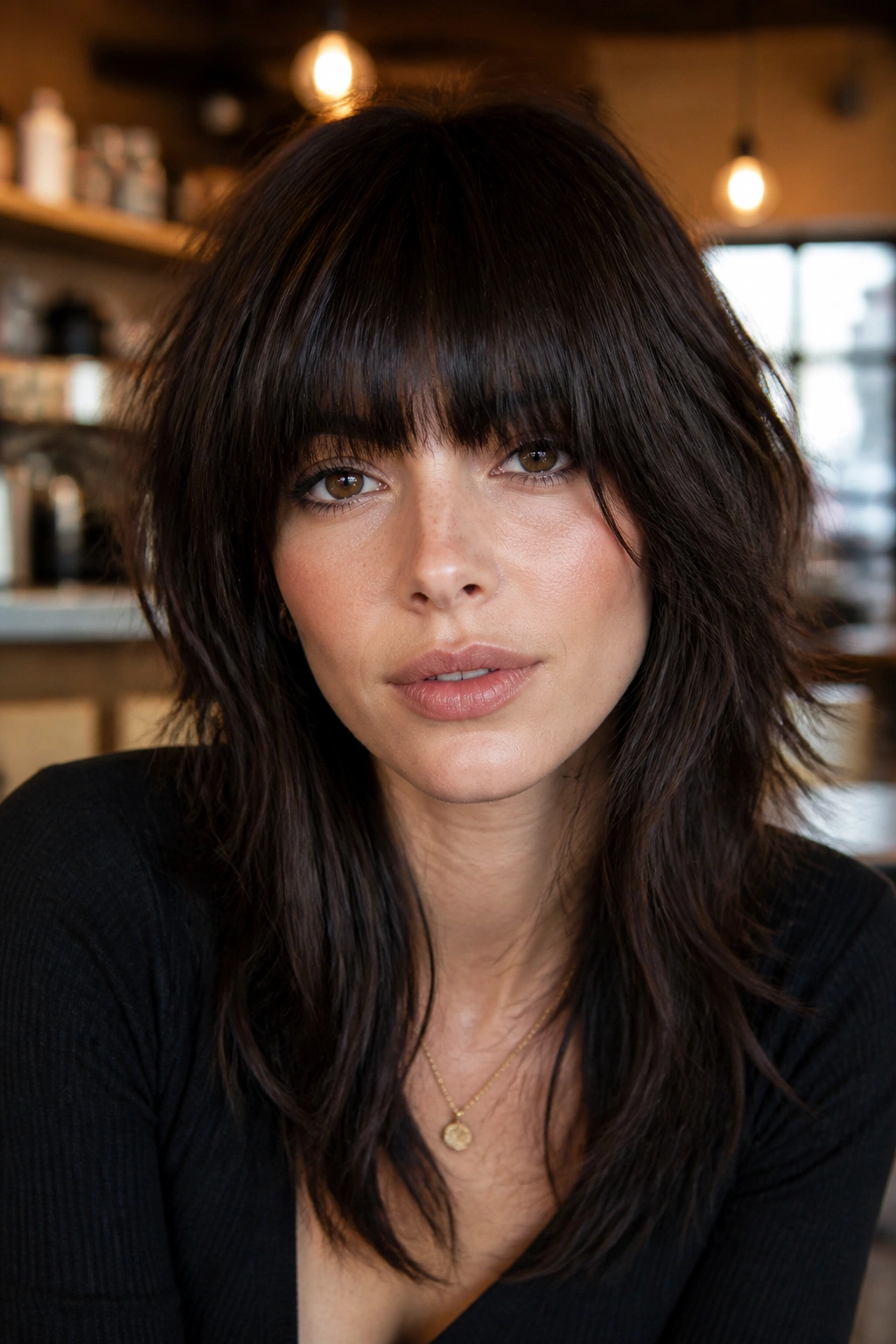
A heavy fringe changes the whole mood of a wolf cut. Fast. Instead of the front melting away into layers, the bangs act like a frame that anchors the face and gives the cut more weight up top.
That sounds small, but it changes the balance. The haircut feels more graphic, less airy. If you like structure at the brow and softness everywhere else, this is a strong choice. A heavy fringe can hide a higher forehead, soften a long face, or simply make the haircut look intentional on days when the rest of the hair is doing its own thing.
How to Keep It From Feeling Too Dense
The fringe should still have some movement at the edges. A perfect block bang can fight the wolf shape. Ask for a dense front section that gets slightly tapered near the temples, so the transition into the side layers feels natural.
This look suits straight or lightly wavy hair best. On very curly hair, a heavy fringe can shrink much shorter than expected. That surprise is not fun when you were aiming for brow-grazing bangs and get a tiny row of curls instead.
11. Softly Undone Wolf Cut For Straight Hair
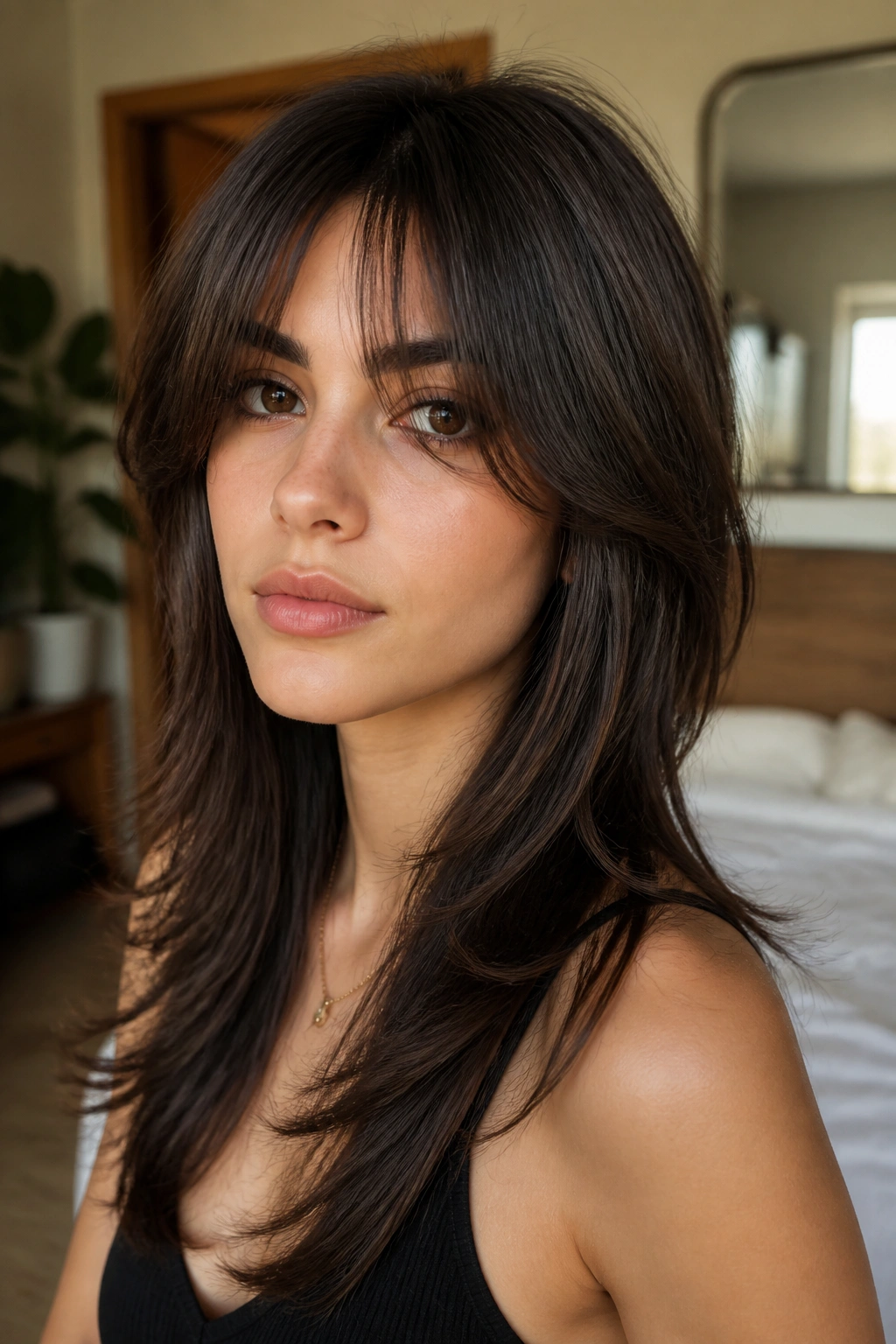
Straight hair can wear a wolf cut beautifully, but it needs a bit more help than textured hair. Without some bend or roughness, the layers can fall flat and show every line. That is why the softly undone version works so well. It gives straight hair shape without forcing it to look messy on purpose.
The cut should be built with a little extra lift at the crown and soft graduation through the sides. Not too much. If the layers are overcut, straight hair can turn wispy at the ends fast, and that rarely looks expensive in real life. A blunt-ish base with broken-up layers over it tends to hold together better.
I’d style this one with a rough dry first, then a few bends made with a flat iron or 1-inch curling iron. Just enough to stop the hair from hanging like ribbons. You are not trying to curl it. You are trying to wake it up.
It is a good pick if you want a wolf haircut that still reads clean from across a room.
12. Wolf Haircut With Face-Framing Money Pieces
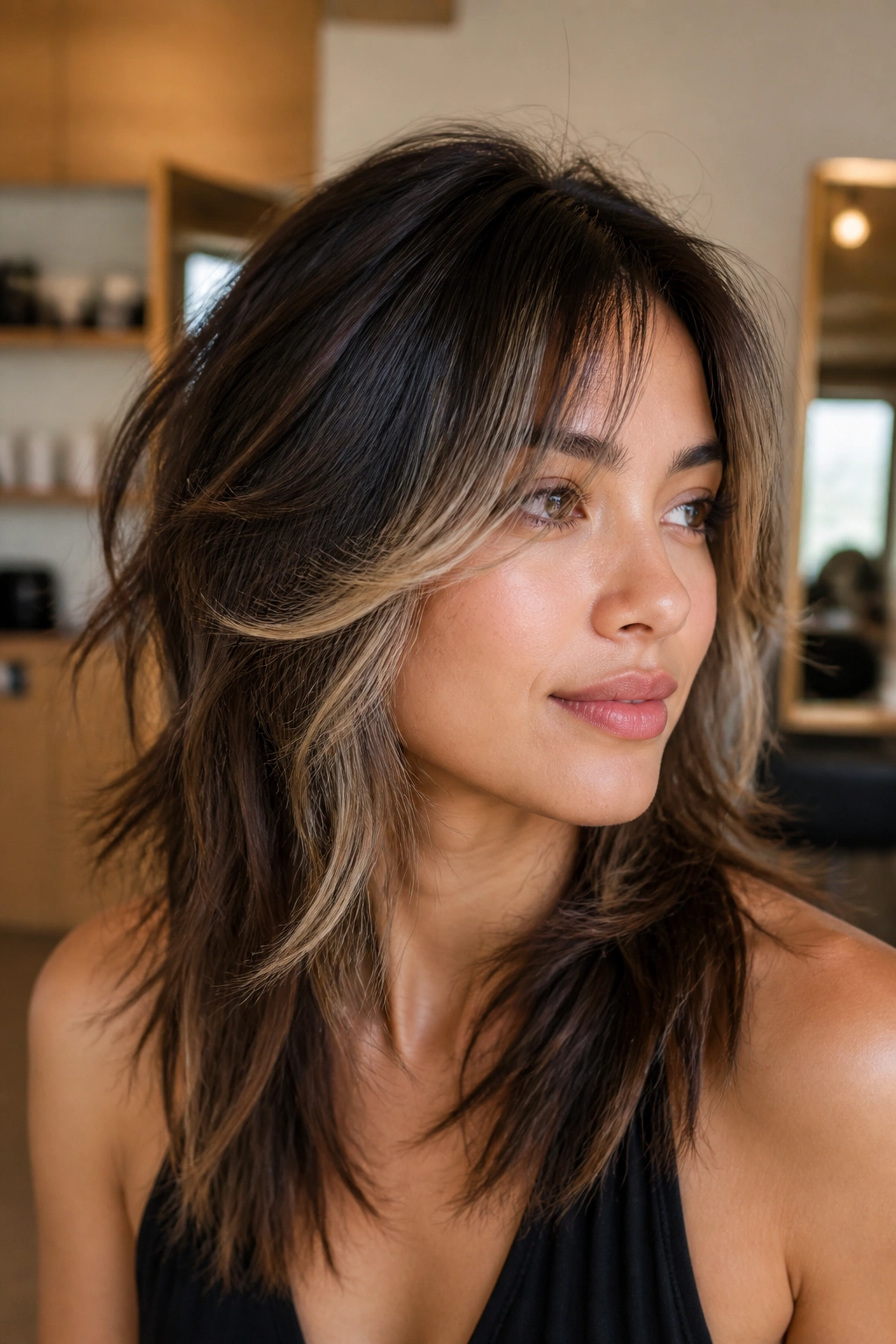
A face-framing wolf haircut gets a lot of mileage from two bright strips near the front. They do not need to be dramatic highlights. Even subtle money pieces can change the way the haircut reads, because the eye goes straight to the face frame first.
The cut itself should stay soft around the cheekbones and jaw. The color then sharpens the shape. That combination works well on medium and longer lengths, especially if the front layers are angled to fall just inside the brightest pieces. You get contrast without a hard stripe effect.
If your hair is dark, a few lighter front pieces can make the layers pop. If your hair is already light, a slightly warmer or cooler face frame can do the same job without making the cut feel busy. The mistake is going too bold too close to the root. That can flatten the whole effect.
This is a nice option for anyone who wants the haircut and the color to work together instead of competing.
13. Wolf Cut With A V-Shaped Back
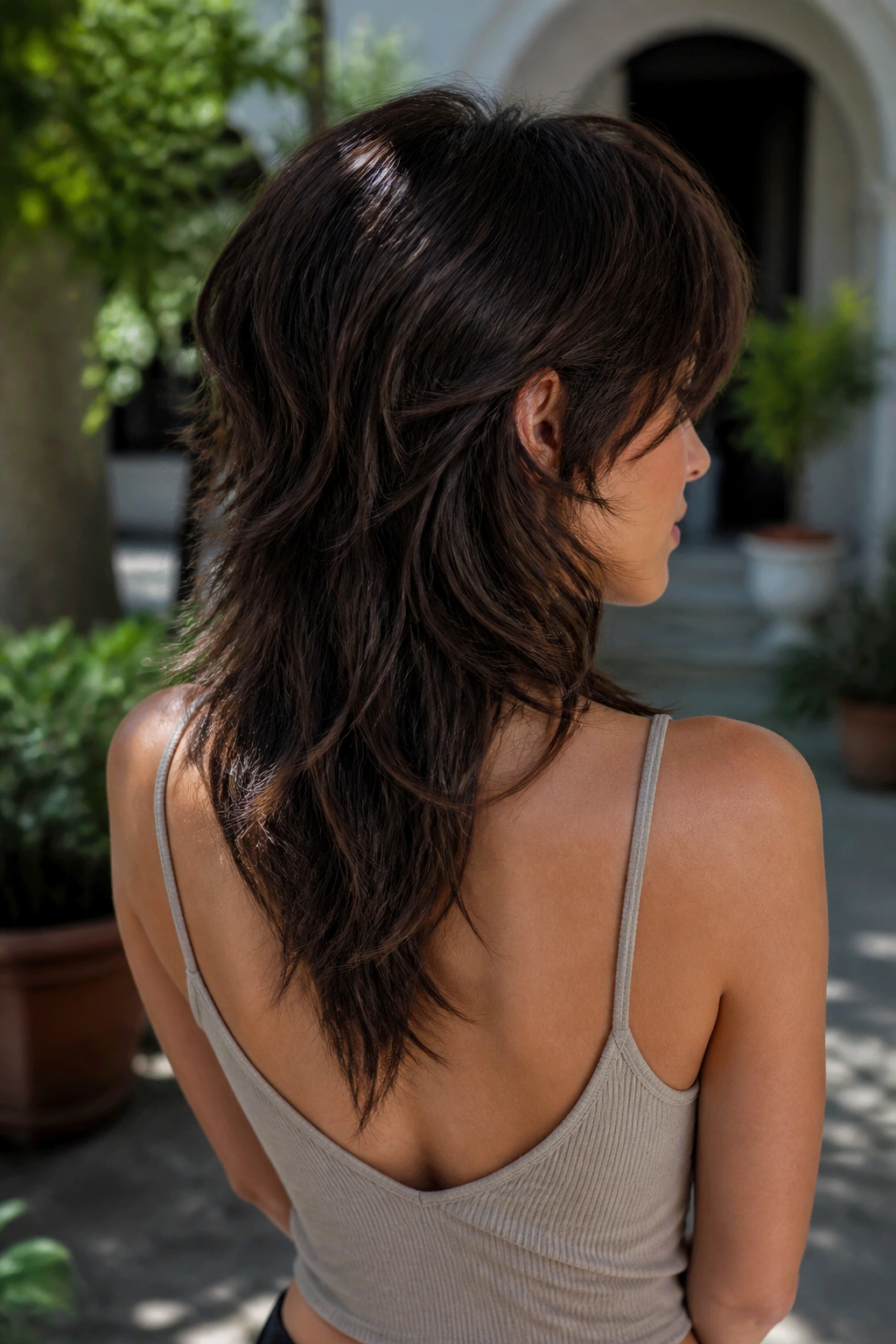
A V-shaped back gives the wolf cut a cleaner finish from behind. The perimeter drops to a point instead of staying blunt across the bottom, which helps long hair move more easily and keeps the shape from getting boxy.
Why It Works On Longer Hair
Long hair can swallow layers if the base is too wide. A V in the back keeps the silhouette narrow enough to show the layers, while the front still gets the wolf-cut lift and face framing. That shape is especially flattering when you wear your hair down a lot, because it keeps the back from looking flat or heavy in photos.
The best version is gradual. You do not want a harsh peak. You want the hair to taper into the center back in a way that looks deliberate when it swings.
- Good for medium to long lengths
- Helps thick hair feel lighter at the hem
- Pairs well with curtain bangs or bottleneck bangs
- Needs regular trims to keep the point clean
If you like seeing movement at the back when you turn your head, this one has that in spades.
14. Layered Wolf Cut With Volume At The Crown
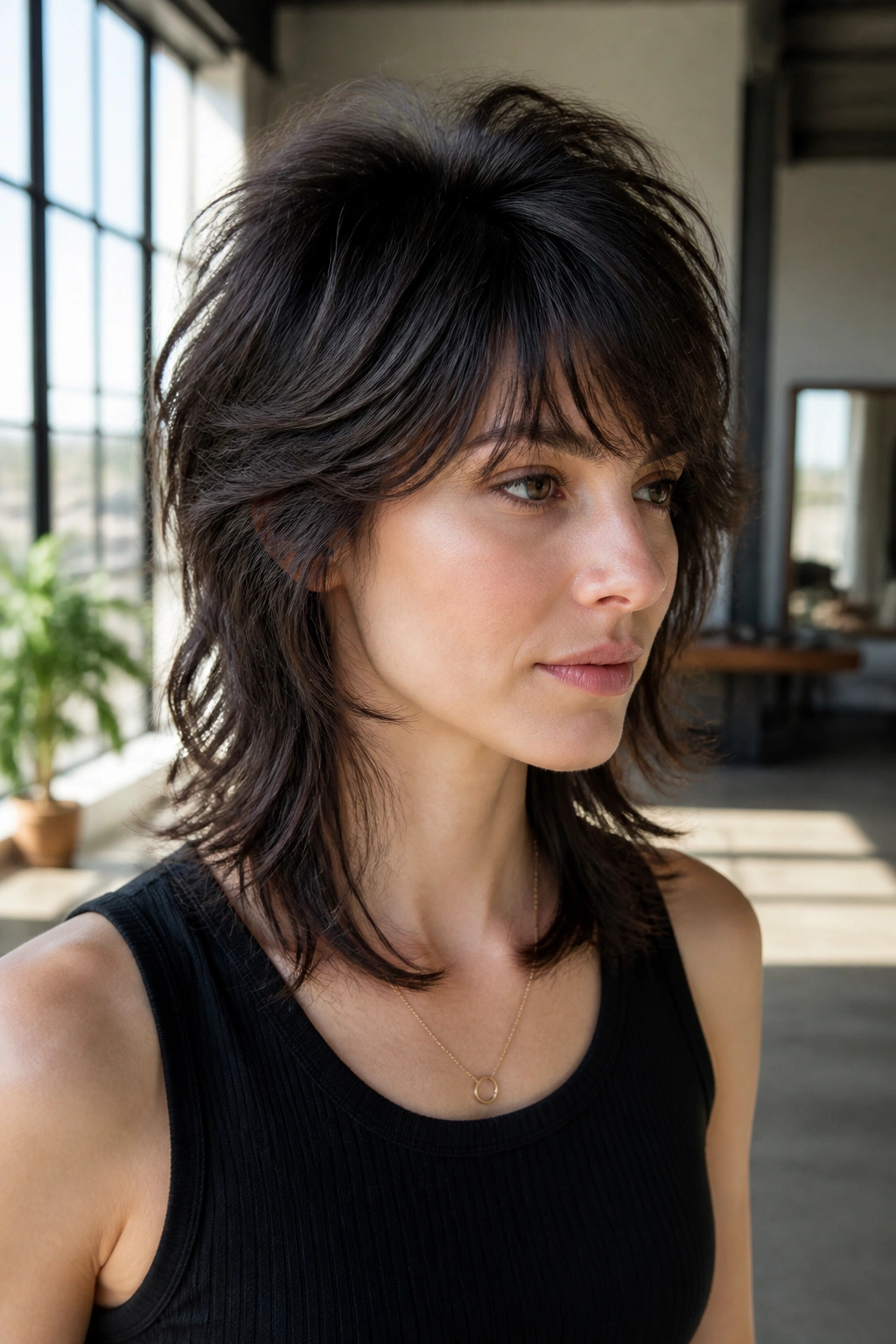
Some wolf cuts are all about texture at the sides. This one is about lift up top. The crown gets the most attention, and that changes the whole attitude of the haircut. It feels bigger, bouncier, and a little more ’90s blowout than grunge shag.
The cut should place shorter layers where the head starts to round, so the roots can stand away from the scalp. That shape helps if your hair lies close to the head or goes limp by lunchtime. A little backcombing at the root will not fix a bad cut. A good cut can, though.
What To Ask For
Tell your stylist you want volume concentrated at the crown, not around the bottom. That distinction matters. Too many layers near the ends can make the haircut float away from the body in a way that looks thin. Crown volume works best when the rest of the hair still has enough weight to anchor it.
Use this if you like that lifted, airy shape and do not mind a bit of styling. It is one of the more flattering wolf haircut ideas for women with flatter roots.
15. Edgy Wolf Cut With Choppy Internal Layers
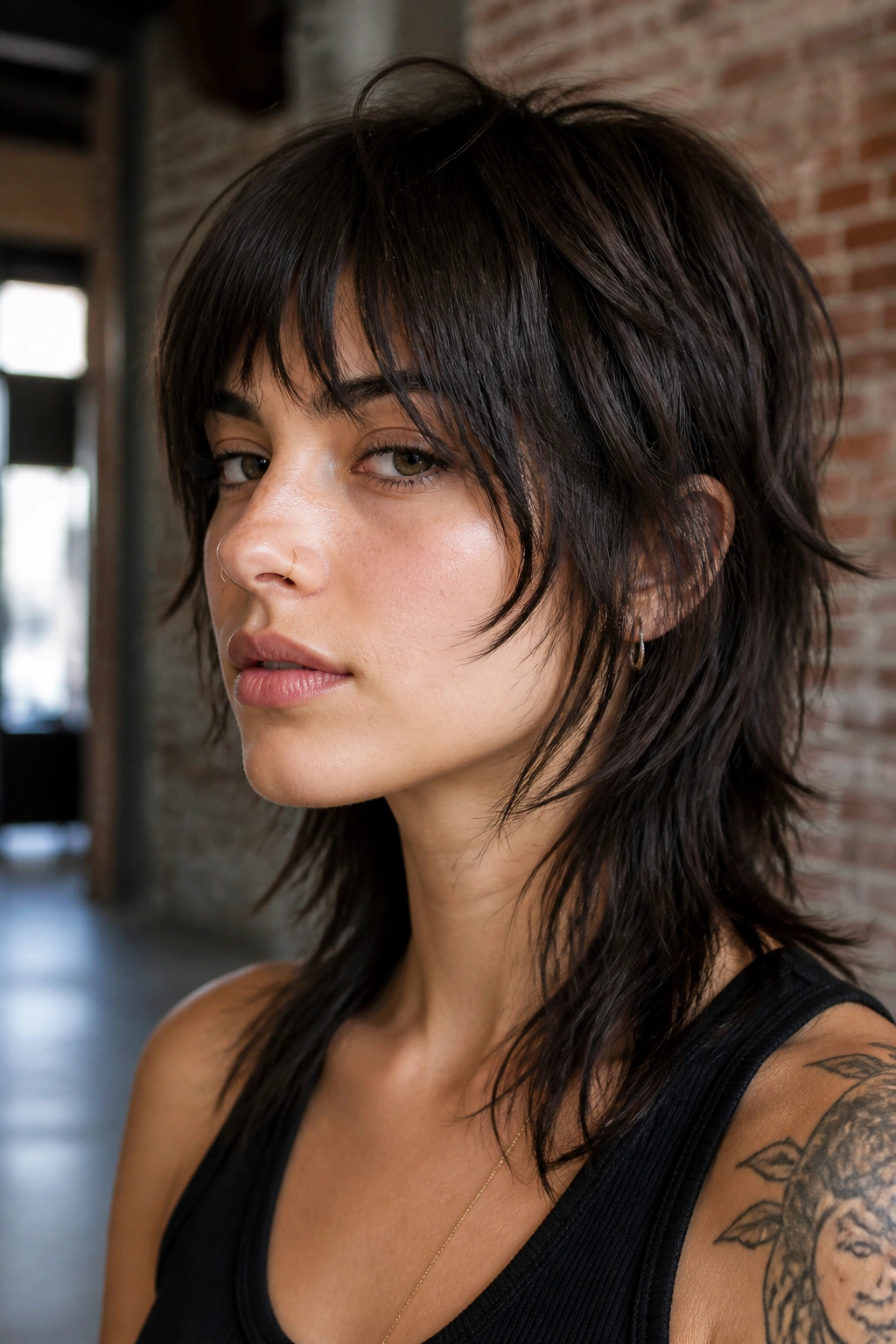
This is the sharpest version on the list. The layers are broken up inside the haircut so the movement looks piecey instead of blended. If you like hair that has visible texture, this is your lane.
A choppy wolf cut works best when the stylist places internal layers with intent. Random thinning is not the same thing. Real choppiness should still preserve shape, which means the top needs enough structure to support the messier pieces beneath it. Otherwise the haircut just looks frayed.
I like this cut on straight hair, thick hair, and anyone who wants the ends to separate a bit when styled with matte paste or texture spray. It looks especially good after a quick rough dry. Not polished. Better than polished, actually, if you like edge.
What To Watch For
Do not let the ends get over-thinned. Choppy is one thing. Scraggly is another. The best versions still have a solid outline when the hair settles.
16. Tousled Wolf Cut With Side-Swept Bangs
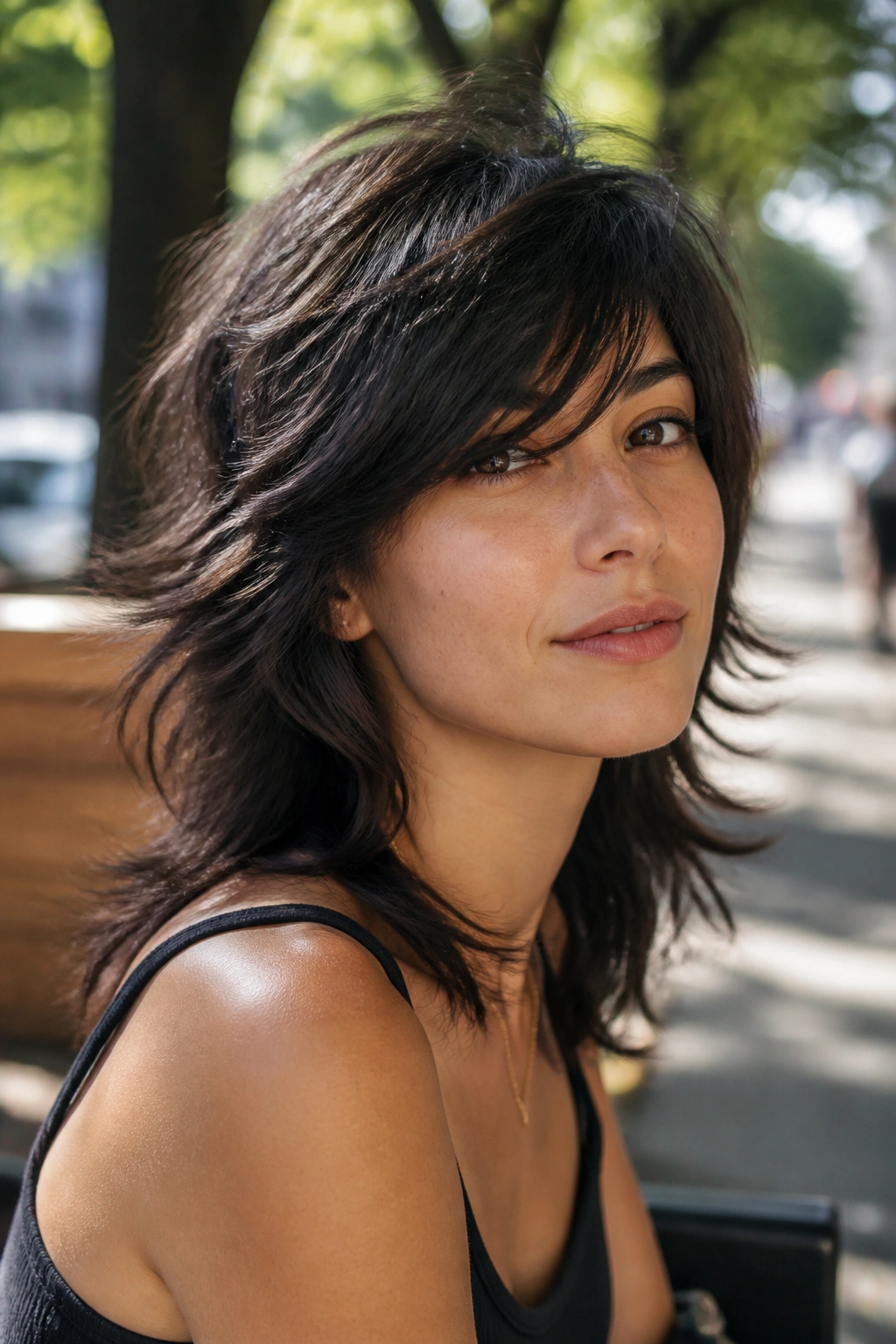
Side-swept bangs are a softer answer to curtain bangs, and they suit a wolf cut more than people give them credit for. They move across the forehead instead of splitting it, which can be useful if you have a strong cowlick or if your hairline refuses to cooperate with a center part.
The feel here is a little more relaxed, a little less symmetrical. The cut can still have all the wolf-cut hallmarks — layered crown, tapered sides, textured ends — but the fringe gives it a more casual mood. I like this on women who want the haircut to feel easy from day one.
It also grows out well. That matters more than style photos admit. A side-swept fringe can slide into the rest of the layers without that awkward middle stage where bangs stop looking like bangs and start looking like a decision you regret.
If curtain bangs feel too fussy, this is the friendlier option.
17. Shoulder-Length Wolf Cut With Flipped Ends
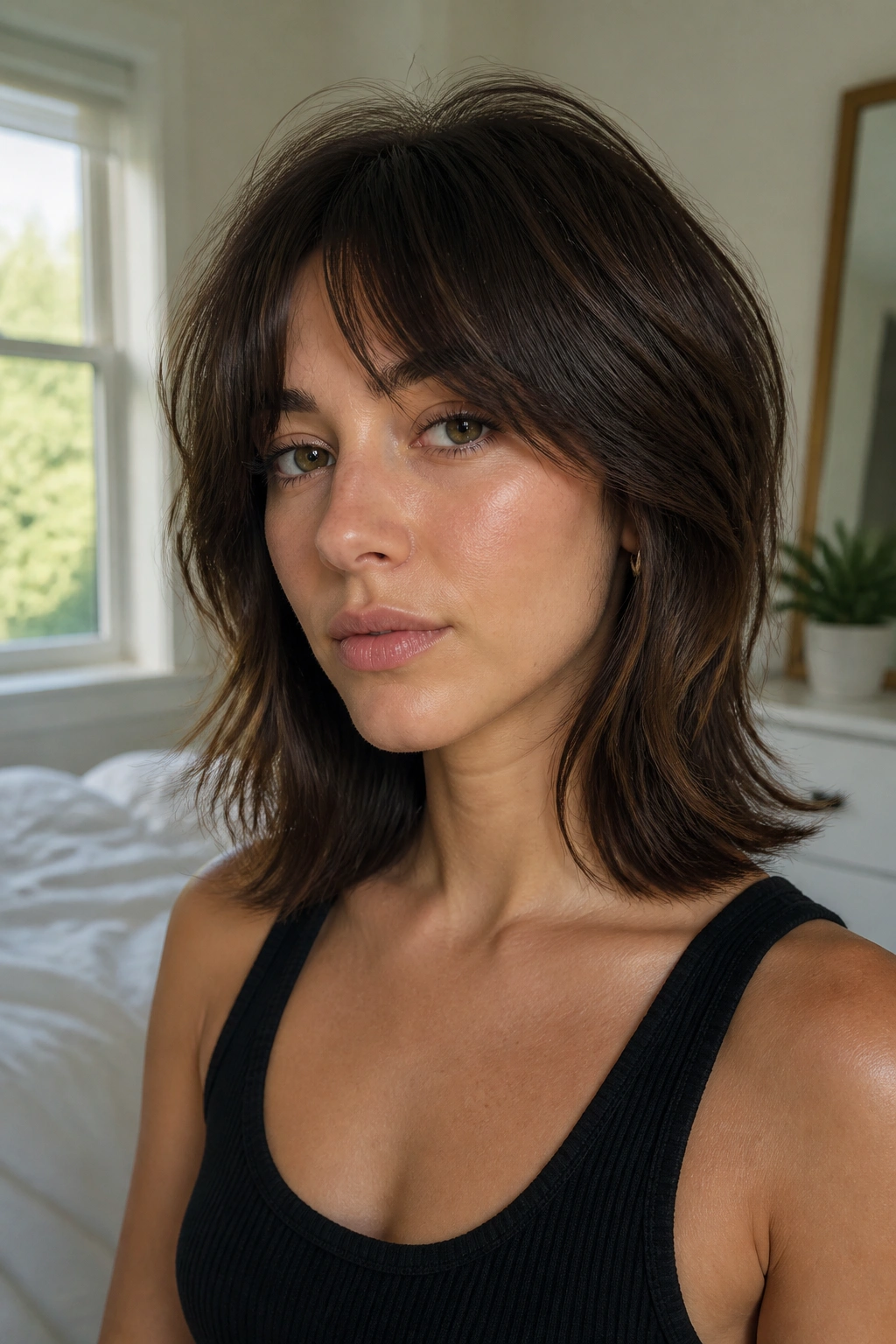
Shoulder length is a sweet spot for a wolf cut because it gives you enough hair to show movement without the weight of long lengths. Add flipped ends, and the shape gets a little swing at the bottom, which keeps the haircut from sitting heavy on the collarbone.
A 1.25-inch curling iron or a round brush can turn the ends outward in a few minutes. You are not aiming for uniform waves. You want that slightly bent, casual finish that looks like the hair decided to cooperate for once. The upper layers should still be textured enough to give the whole cut lift, or the flipped ends will just look isolated.
This version works nicely on straight and wavy hair. It is also a smart bridge cut if you are growing something shorter out or testing a wolf shape without jumping into a dramatic length change.
It feels modern without trying too hard. I know that phrase gets abused, but here it fits.
18. Wolf Haircut For Naturally Coily Hair
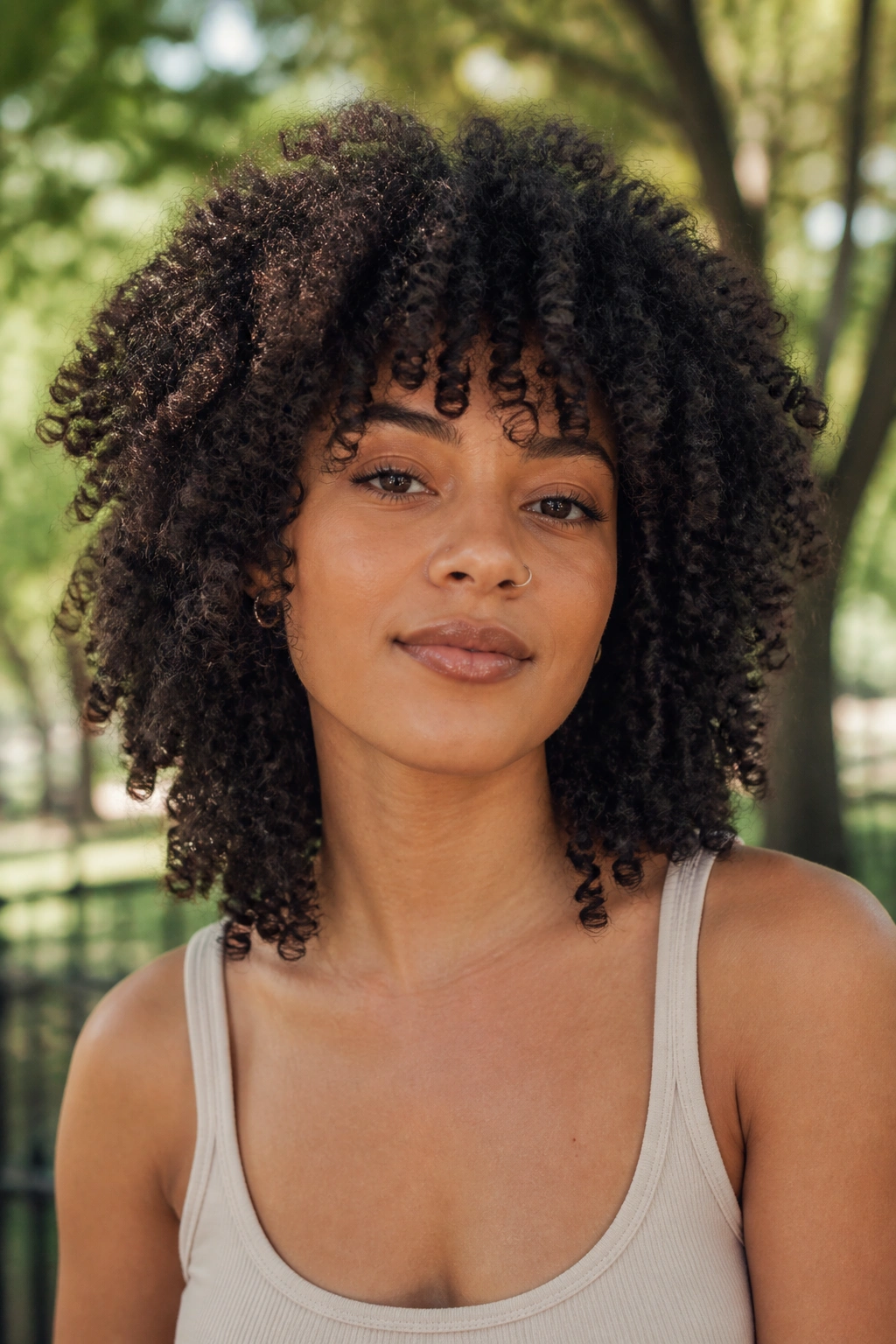
A coily wolf haircut has to protect the curl pattern first and worry about the trend second. That means dry cutting, careful sectioning, and layers placed with shrinkage in mind. If the cut is done wet and heavily stretched, the final shape can end up much shorter and much narrower than planned.
The goal is a rounded silhouette with lift where the hair wants to lift naturally. You are not carving away half the volume. You are shaping the volume so it sits in a way that feels intentional. That usually means fewer, smarter layers rather than a lot of slicing.
How To Keep The Shape Clean
- Cut in the hair’s natural state as much as possible
- Keep the top layers soft enough to avoid halo frizz
- Leave enough weight at the bottom for a clear outline
- Use curl cream or gel in small amounts so the layers stay defined
This version can look stunning on coils because the crown already has life. The haircut just gives it a frame. And when that frame is right, the shape feels rich, not overworked.
19. Wolf Cut With A Soft Mullet Shape
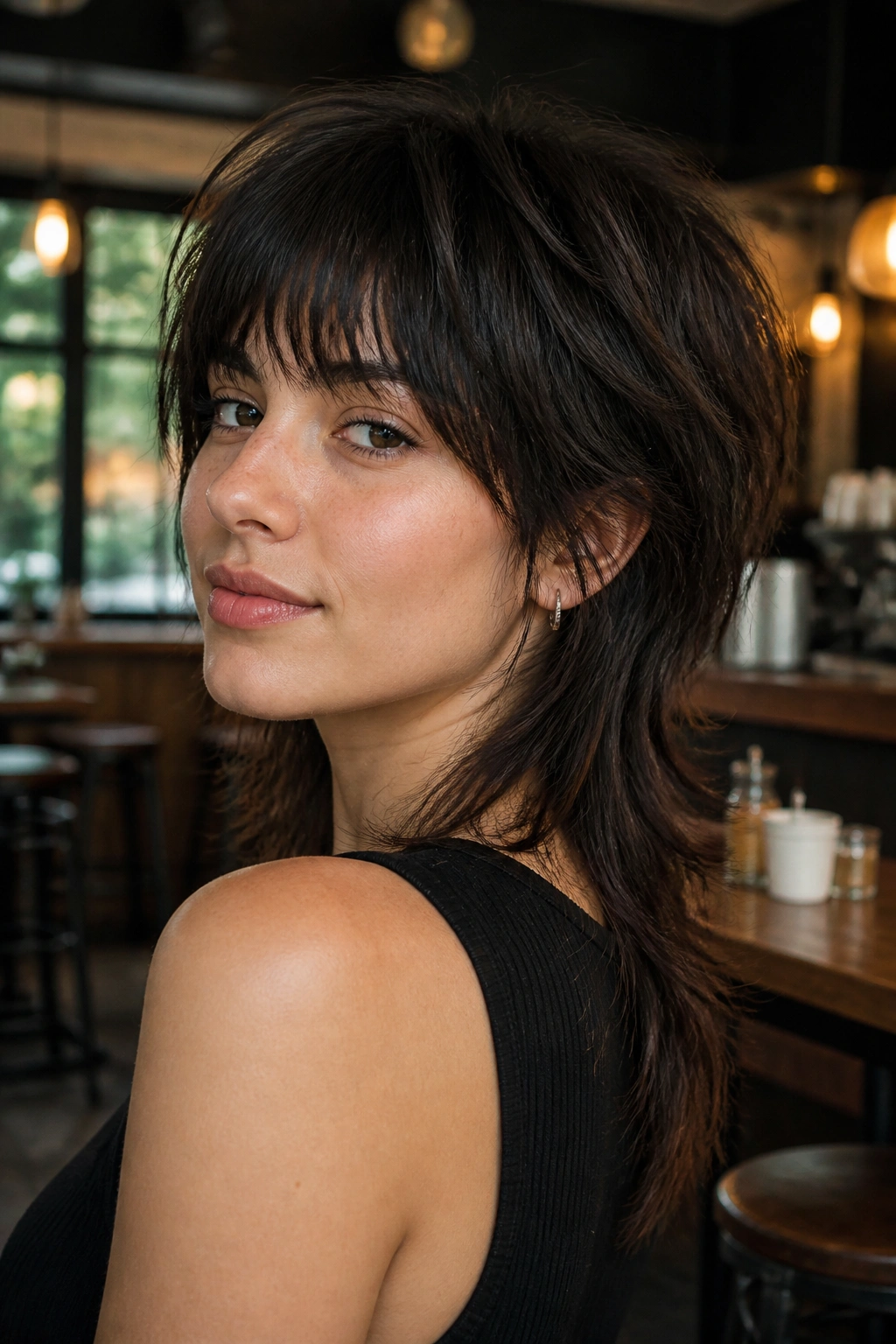
A soft mullet shape pushes the wolf cut a little farther back in the silhouette. The front stays layered and flattering, but the back hangs longer and the transition is more obvious. It is less sweet, more pointed. Still wearable, though.
Who It Suits
This is a good choice if you want edge but do not want a hard, retro mullet line. The soft version keeps the neckline loose and the sides blended enough that the haircut can be tucked behind the ears without looking strange. It also works well if you wear jackets, collars, or scarves a lot, because the back length gives the cut something to do.
Ask for a shorter crown, a longer nape, and a soft taper around the ears. That wording helps the stylist understand that you want separation, not a disconnected barbershop mullet. There is a difference. A big one.
I’d recommend this for someone with some styling patience and a taste for hair that makes a statement before the outfit even gets there. It is not subtle. That is the point.
20. Polished Wolf Cut With Minimal Texture

A wolf haircut does not have to look wild to count. A polished version with minimal texture keeps the layered shape but softens the rough edges, which makes it easy to wear in offices, formal settings, or anywhere you want movement without the mess.
The cut should be cleaner through the ends, with just enough layering at the crown and around the face to stop the hair from lying flat. You still get the wolf-cut outline. You just do not get the choppy finish. That makes this version easier to brush, easier to pin back, and easier to grow out if you decide you want more texture later.
I’d choose this for straight or slightly wavy hair that holds a smooth finish well. It also suits anyone who likes a neat look but is bored stiff by one-length cuts. The shape gives you lift. The minimal texture keeps it civilized.
If I were steering a first-timer toward one wolf haircut idea for women that feels modern without demanding a whole new styling routine, this would be high on the list.
