



Straight hair tells on a haircut.
There’s nowhere to hide. If a layer sits too high, you see it. If the back is too bulky, you feel it every time you tuck your hair behind your ear. And if the cut is too timid, a wolf cut on straight hair can collapse into something that looks half-finished by lunchtime.
That’s why the good versions matter so much. On straight hair, a wolf cut needs shape in the right places: a little lift at the crown, movement around the face, and enough weight left at the ends so the whole thing doesn’t go wispy and sad. The best versions feel lived-in, not sloppy. They move when you walk, but they still look intentional when you stand still.
Straight-hair women can pull off more wolf cut variations than people think. Some are soft and wearable. Some are sharp and almost punk. A few are low-effort if your mornings are chaotic. Others need a round brush, a little nerve, and a stylist who knows when to stop thinning. The difference comes down to where the layers start, how much length stays in the perimeter, and whether the bangs do any real work.
1. Long Wolf Cut with Curtain Bangs
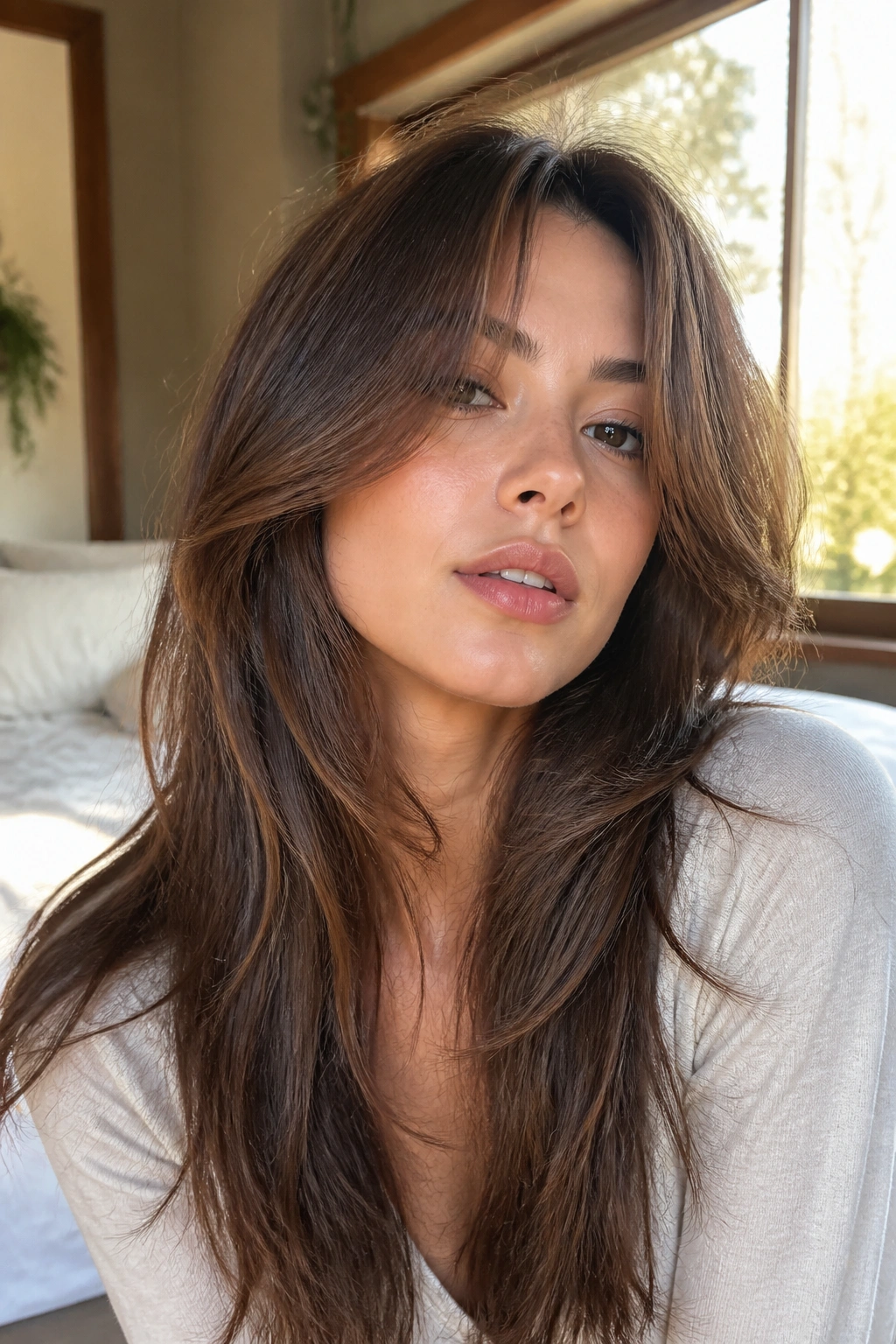
Long hair gives a wolf cut room to breathe, and curtain bangs keep it from hanging there like a blunt sheet. That pairing works especially well on straight hair because the layers show cleanly instead of disappearing into texture. You get movement without giving up the length that makes straight hair feel sleek in the first place.
Why It Flatters Straight Hair
Ask for the shortest face-framing layers to start around the cheekbone, with curtain bangs that open at the bridge of the nose. That gives the front shape without making the top too choppy. Keep the longest layers below the collarbone so the cut still reads as long hair, not a shoulder-length reset.
A good stylist will also point-cut the ends instead of hacking in blunt, thick steps. That keeps the finish softer. A round brush or blow-dry brush is your friend here. Roll the fringe away from your face, then lift the crown with a little mousse and a quick blast at the roots.
- Best for women who want movement without losing length.
- Works on fine or medium straight hair that tends to lie flat at the top.
- Easy to tuck behind the ears and still look styled.
- Grows out cleanly if you don’t love frequent trims.
Pro tip: keep the curtain bangs a little longer than you think at first. Straight hair shrinks less than wavy hair, and bangs that skim the cheekbones are a lot easier to live with than bangs that stop too high.
2. Shoulder-Length Soft Wolf Cut

Shoulder length is the sweet spot if you want the wolf cut shape without the full shaggy drama. Straight hair at this length often looks heavy or blocky, and a soft wolf cut fixes that by breaking up the line around the shoulders while keeping the shape neat enough for everyday life.
The trick is restraint. You want layers that begin around the mouth and chin, not a pile of short pieces near the temples. That keeps the silhouette smooth. On straight hair, too much layering too high up can make the cut feel thin at the ends and bulky at the top. Nobody needs that.
This version is also one of the easiest to style. A pea-sized amount of lightweight cream through the mid-lengths, a quick bend with a large round brush, and you’re done. It looks especially good when the ends curve slightly inward while the front pieces fall forward around the jaw.
If you’re trying a wolf cut for the first time, this is the version I’d point to first. It has attitude, but not in a way that forces you to dress around your haircut every morning.
3. Choppy Mid-Length Wolf Cut
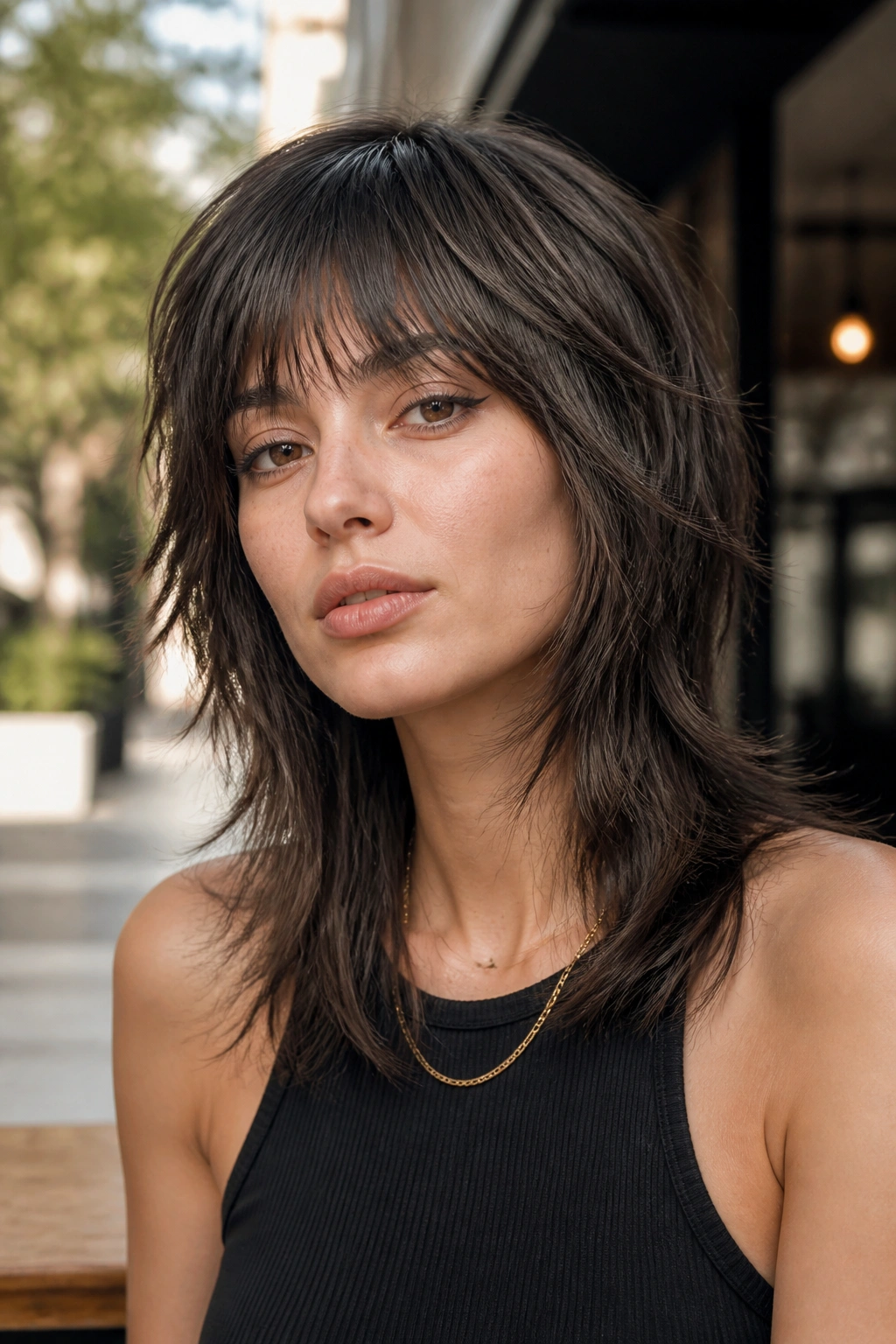
Why do some mid-length wolf cuts look cool while others just look chopped up? Usually it comes down to balance. Straight hair needs enough shape to avoid flatness, but not so many short layers that the whole cut starts floating away from the face.
The Cut Line Matters
This version works best when the length sits between the collarbone and the top of the chest. That gives your stylist room to build texture through the middle without losing the clean outer line. Ask for stronger internal layers, then keep the surface pieces a little softer so the haircut doesn’t scream “razor day” from across the room.
How to Style It
- Use a texturizing spray on dry hair, not soaking wet hair.
- Bend only the ends with a 1-inch iron if you want a rougher finish.
- Keep the crown lifted with mousse or root spray.
- Avoid heavy oils near the top, or the movement disappears by noon.
I like this version on women who want the wolf cut to look a little tougher. It has more edge than the soft shoulder-length option, but it still behaves on straight hair if the layers are cut with a light hand.
4. Short Wolf Cut with Micro Fringe
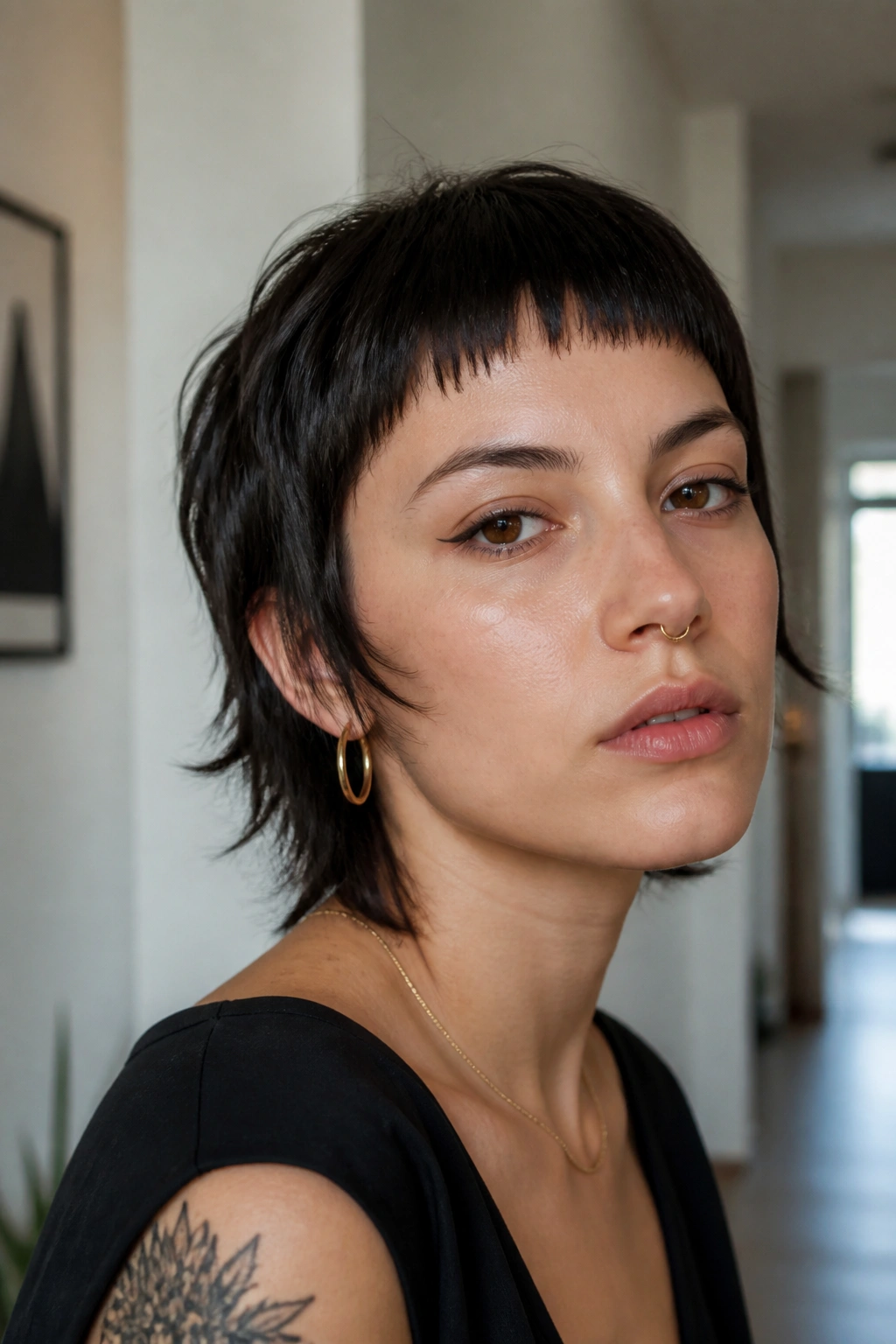
If you want people to notice the haircut before they notice your shoes, this is the one. A short wolf cut with a micro fringe has a sharp, almost editorial feel, and straight hair makes the fringe sit with real clarity. There’s no fuzzy texture to soften it up. What you see is what you get.
The cut usually lands around the jawline or slightly above, with a tapered nape and short crown layers that build height. The micro fringe should stay narrow and blunt enough to feel deliberate, not like an accident that happened in a bathroom mirror. This is one of those cuts that looks strongest when it is a little imperfect around the edges.
It’s not the easiest version to grow out, and I’d say that upfront. You’ll want trims every 4 to 6 weeks if you care about the fringe staying crisp. But if you love a sharp silhouette and you wear simple clothes, it does a lot of the styling work for you.
Short hair, a tiny fringe, and some attitude. That’s the whole appeal.
5. Soft Shag-Wolf Hybrid
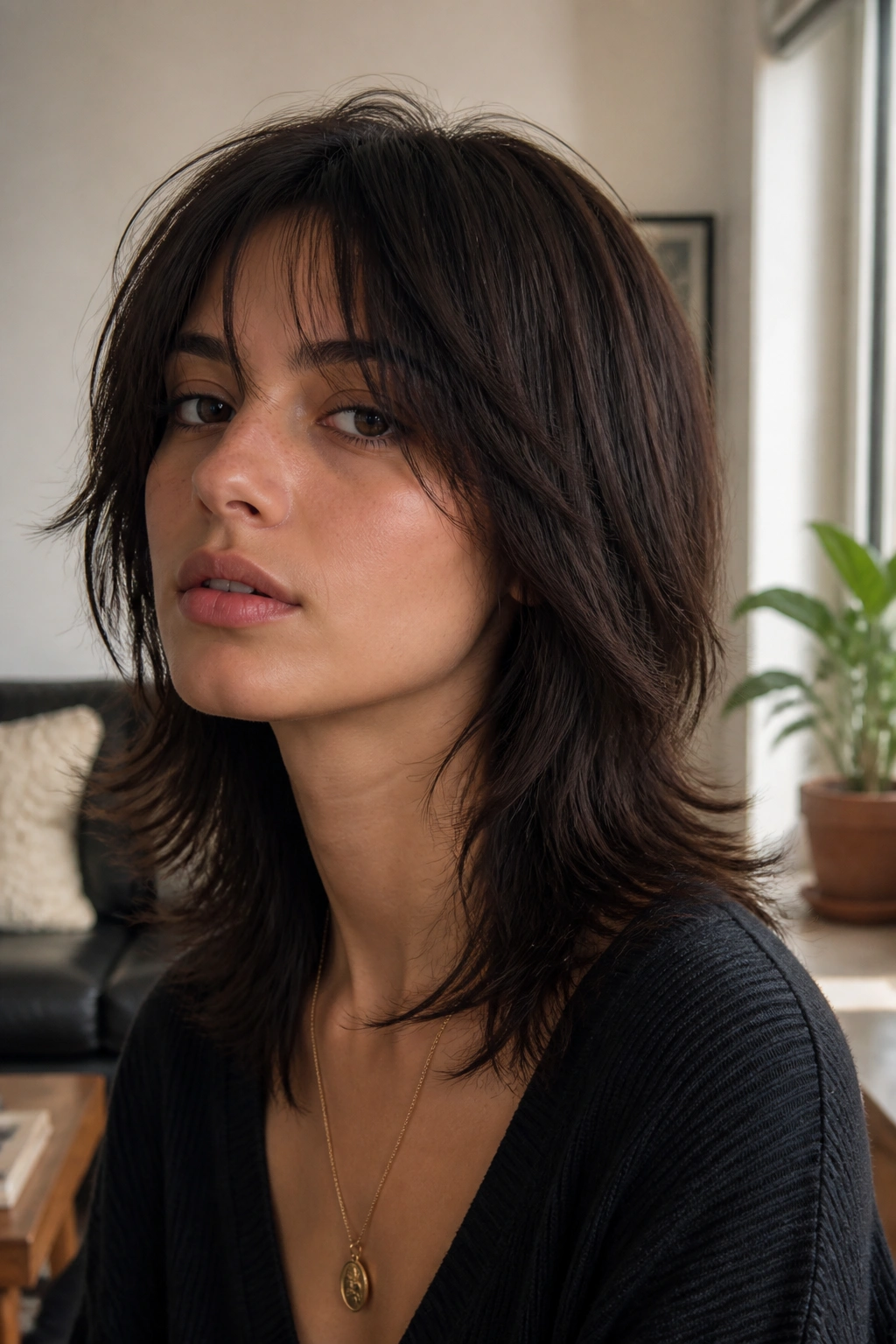
This is the version for women who like the idea of a wolf cut but don’t want the whole thing to feel aggressive. It sits between a shag and a wolf cut, with enough layering to create movement and enough softness that it still looks polished on straight hair.
The better versions keep the perimeter fairly even, then add internal layers around the cheek, jaw, and collarbone. That gives you a shape that feels airy without being choppy. On straight hair, that matters more than people think. If the layers are too disconnected, the cut can go from relaxed to sloppy very fast.
This one works nicely with a small round brush and a bit of styling cream. You do not need beach-wave grit here. In fact, too much texture spray can make the finish look rough for no reason. Keep it smooth at the top, loose through the sides, and let the movement happen in the cut instead of in a pile of products.
It’s a good middle ground. Not too punk. Not too sweet.
6. Butterfly Wolf Cut for Long Straight Hair
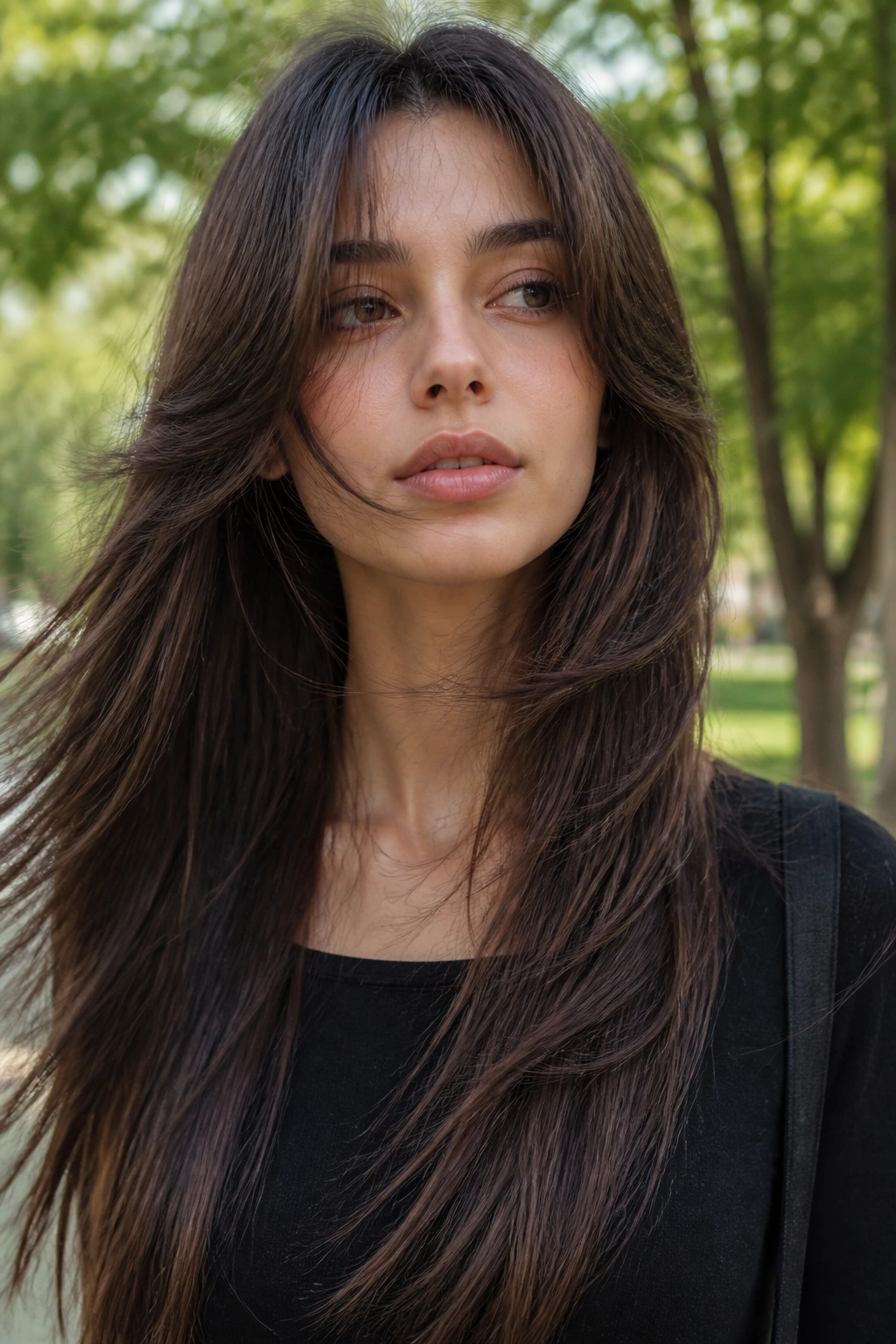
A butterfly wolf cut is what happens when long hair wants drama but still wants to keep its length. It’s a smart choice for straight hair because the front layers give you the lift people usually want from a wolf cut, while the back stays long and full.
Unlike a heavy shag, this version leaves more weight in the lower lengths. That keeps the hair from looking stringy. The shorter face-framing pieces usually start around the cheekbone or lip line, then fall into longer layers that blend back into the length. You get that split effect without the blunt break.
How to Style the Split
Blow-dry the top layers away from the face with a round brush, then keep the bottom lengths straighter so the contrast reads clearly. If your hair is very straight, a single bend at the ends can help the shape show up better. You don’t need curls. You need separation.
This is the cut I’d hand to someone who likes long hair but feels bored by the same old curtain bangs and a few random layers. It has enough shape to feel fresh, and enough length to stay practical.
7. Face-Framing Wolf Cut with Cheekbone Layers
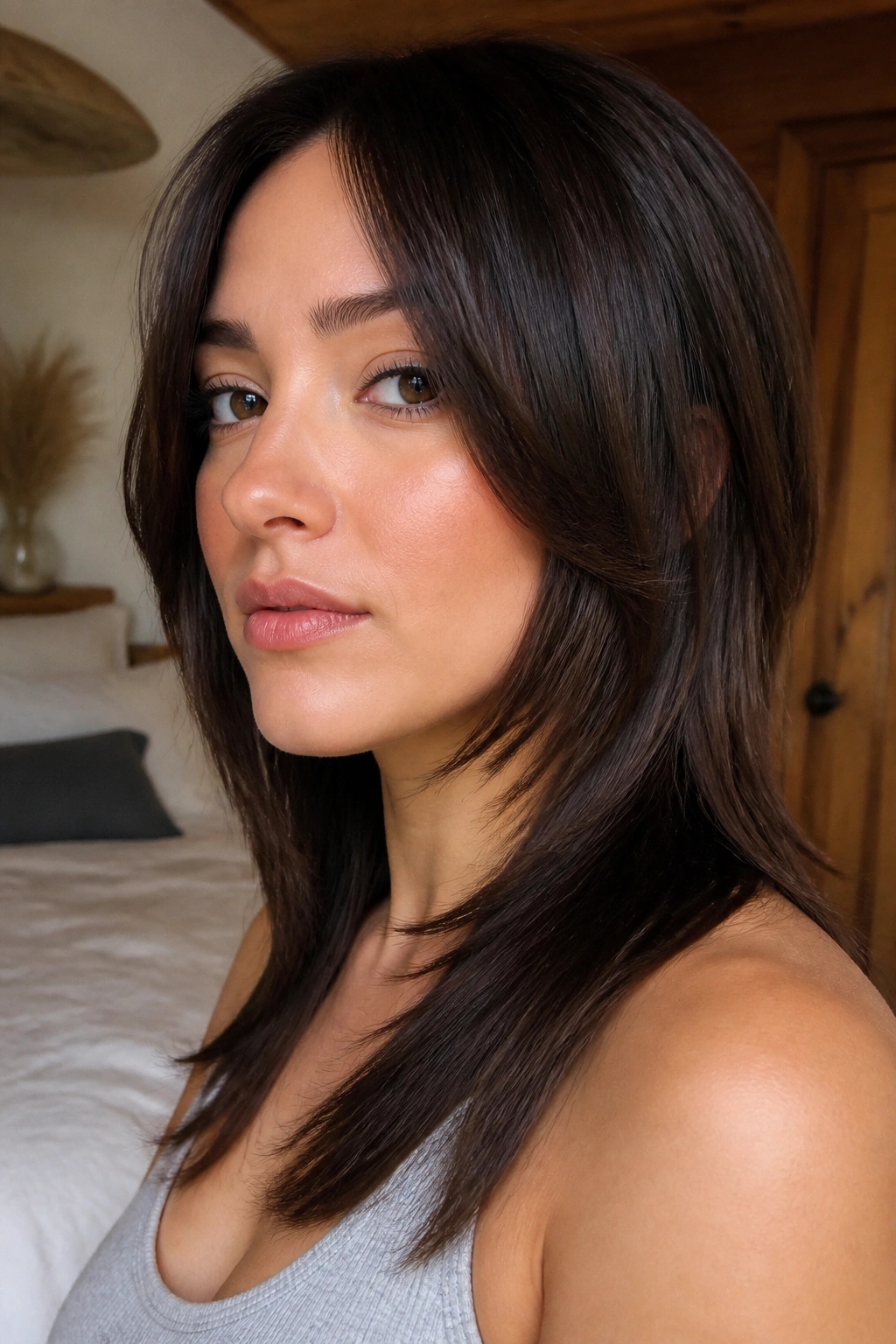
Want the sharpest lift without committing to a full fringe? Go for cheekbone layers. Straight hair shows this style beautifully because the line of the cut is clean, and the front pieces sit exactly where you put them.
The layers should start high enough to hit the cheekbone, then angle down toward the jaw. That opens the face without making the back too short. If your stylist keeps the back more restrained, the cut stays wearable and doesn’t turn into a mullet by accident. That’s a very real risk with straight hair, by the way. Everything looks more obvious.
This is a strong option for round, oval, or heart-shaped faces because the front pieces create a subtle vertical line. It also works well if you wear glasses. The layers sit around the frames instead of fighting them, which sounds minor until you live with it every day.
A quick blow-dry with the front sections clipped away from the face while they cool can make the shape last longer. Small trick. Big payoff.
8. Wolf Cut with Bottleneck Bangs
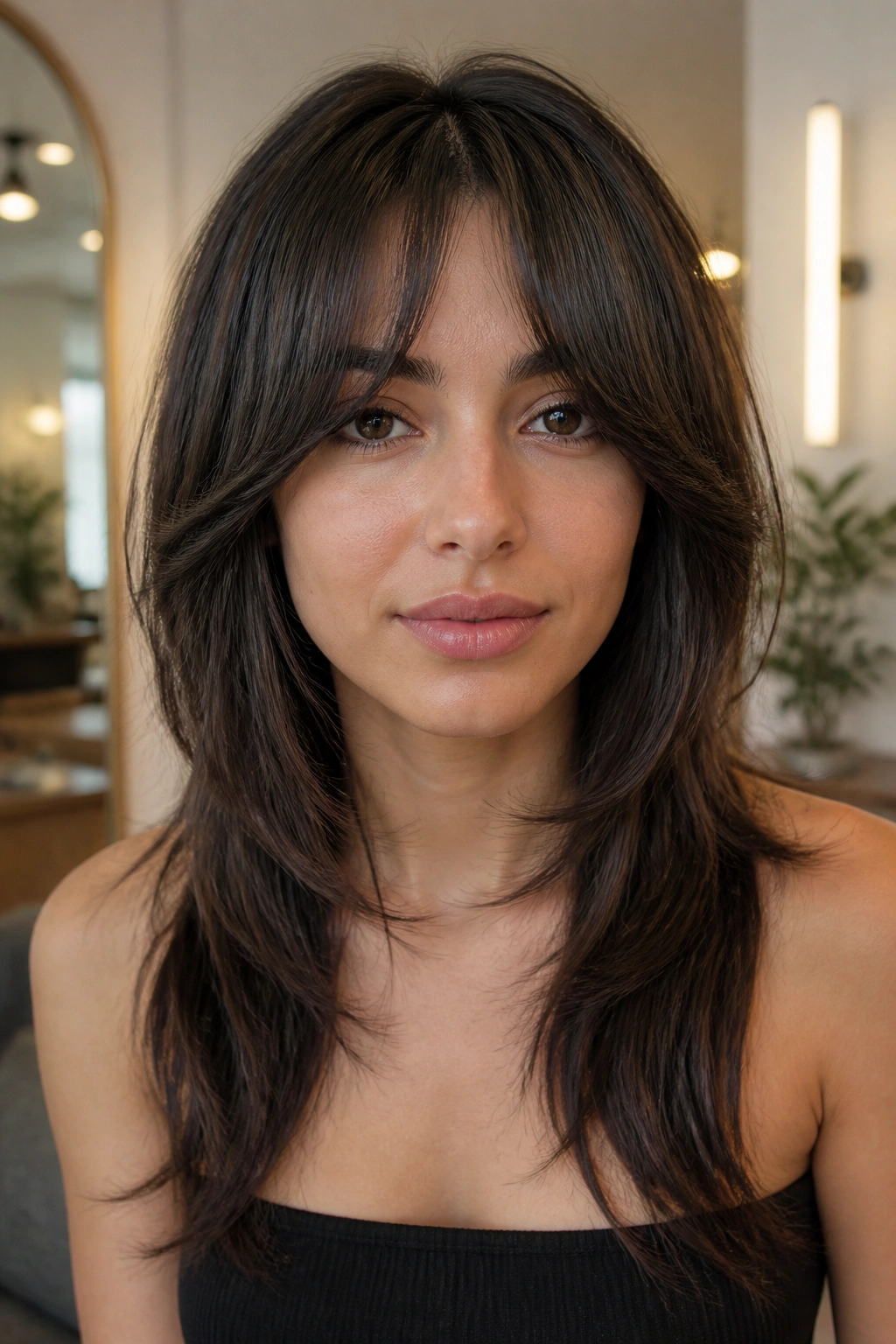
A lot of women want bangs, but they do not want a heavy wall across the forehead. Bottleneck bangs solve that problem without making the haircut feel soft in a boring way. The center stays narrow, then the pieces widen as they fall toward the temples.
On straight hair, this shape looks clean and deliberate because the fringe doesn’t need wave to show its curve. It sits neatly, which is the whole point. If you want to keep the rest of the wolf cut moving, ask for short crown layers and longer sides so the bangs have something to frame.
- Keep the center of the fringe a touch shorter than the outer pieces.
- Blow-dry with a small round brush, rolling the bangs away from the face.
- Use a light setting lotion or mousse before drying if your fringe splits.
- Trim often; long bottleneck bangs lose their shape fast.
This cut feels a little more styled than curtain bangs, but it’s less blunt than a full fringe. That middle ground is the reason it keeps showing up in good salons.
9. Razor-Cut Wolf Cut for Pin-Straight Hair
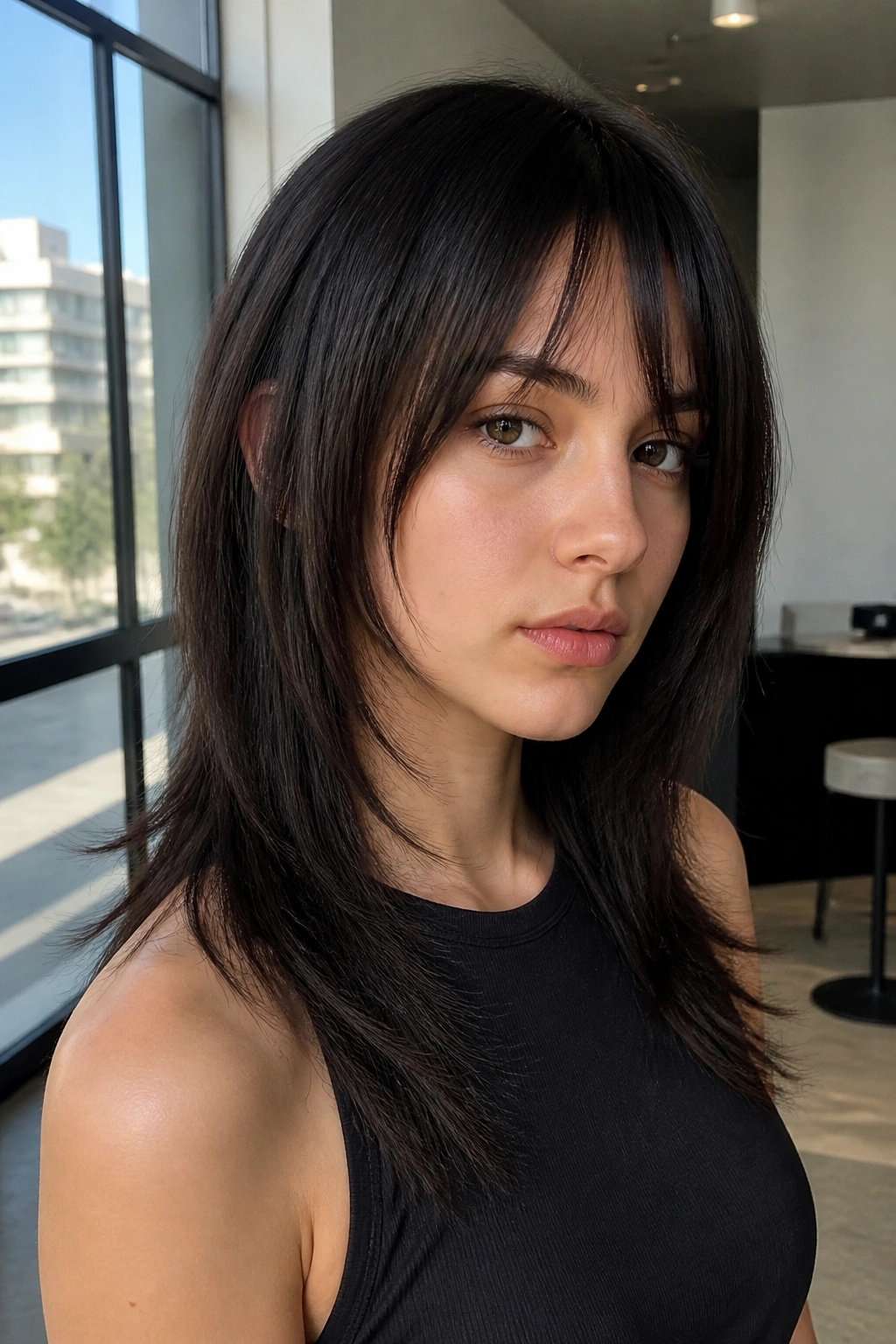
Razor cutting can be magic on pin-straight hair, but only when the hair is healthy enough to handle it. The blade creates soft, airy ends that move instead of sitting like a solid block. On a wolf cut, that can make the whole shape feel lighter and more fluid.
But here’s the catch: damaged hair and razor cutting are not friends. If your ends are already frayed, a razor can make them look thinner and rougher than you planned. In that case, scissors and point cutting are safer. I’d much rather see a slightly softer edge than ends that look chewed up.
This version usually works best with a clean perimeter, shorter face layers, and a little bend at the ends from a flat iron or round brush. Keep the heat low enough that you’re shaping, not frying. A heat protectant is not optional here.
Razor-cut wolf cuts tend to look best on women who like a little edge and don’t mind a haircut that shows every millimeter of its structure. They’re crisp. They’re intentional. And they can look expensive in a very understated way when done well.
10. U-Shaped Wolf Cut with Soft Layers
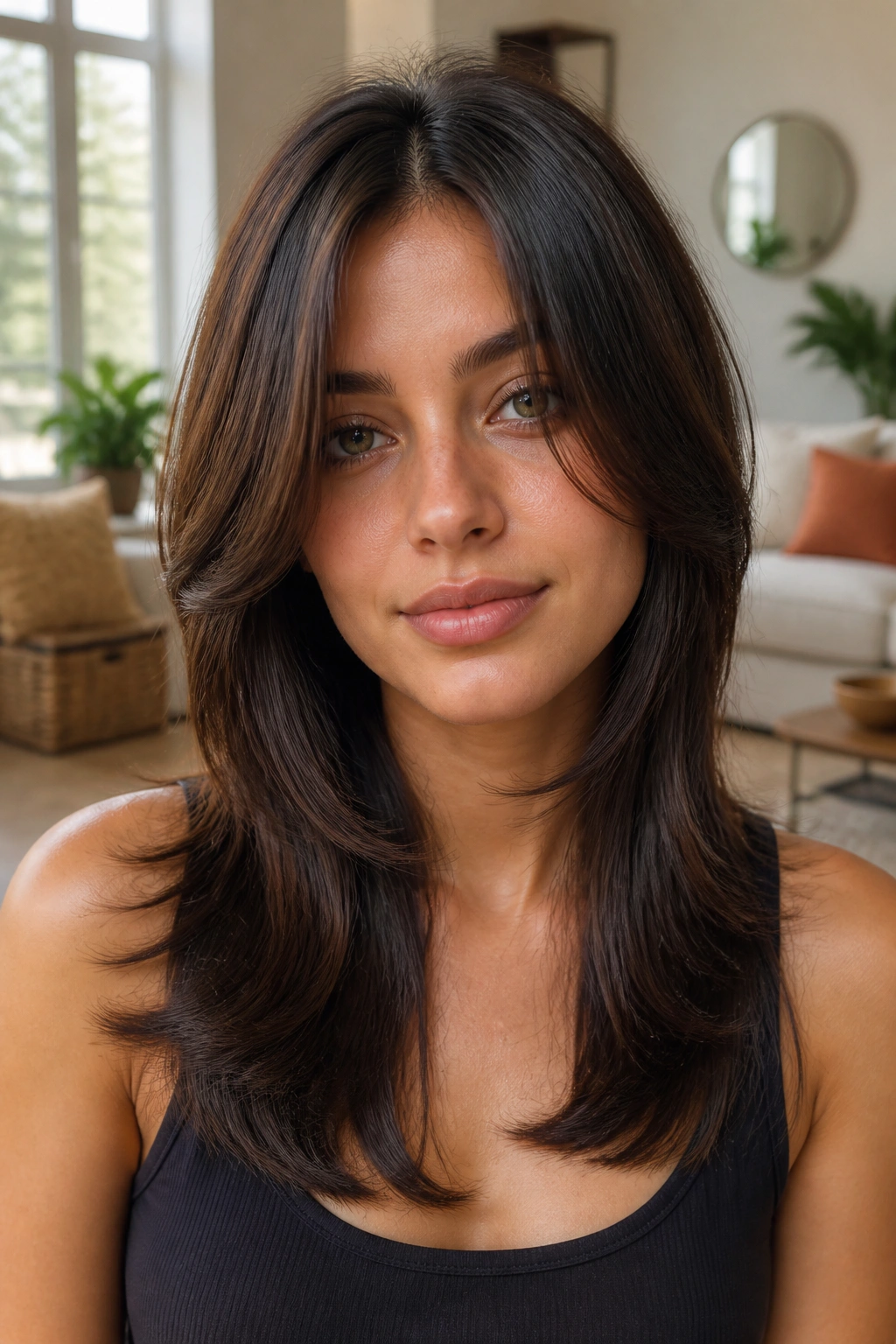
A U-shaped perimeter gives straight hair a nicer fall than a blunt line in many cases. The center stays slightly longer, the sides taper gently, and the whole cut keeps a fuller shape through the back. Then the soft layers do the wolf-cut work on top of that.
This is one of my favorite versions for dense straight hair. Dense hair can go boxy fast, especially if the ends are cut too straight. A U shape keeps the weight where you want it and avoids that helmet effect that nobody asked for. The layers should stay controlled, though. If they’re too aggressive, the U shape gets lost.
A stylist usually needs to preserve enough bulk at the ends while still building lift around the crown and face. That balance matters. Straight hair needs the illusion of movement more than it needs actual frizz-like texture, and this cut understands that.
If you like long hair but hate when it falls flat against your back, this is a smart place to start. It’s polished, but not stiff.
11. Flipped-Out Ends Wolf Cut
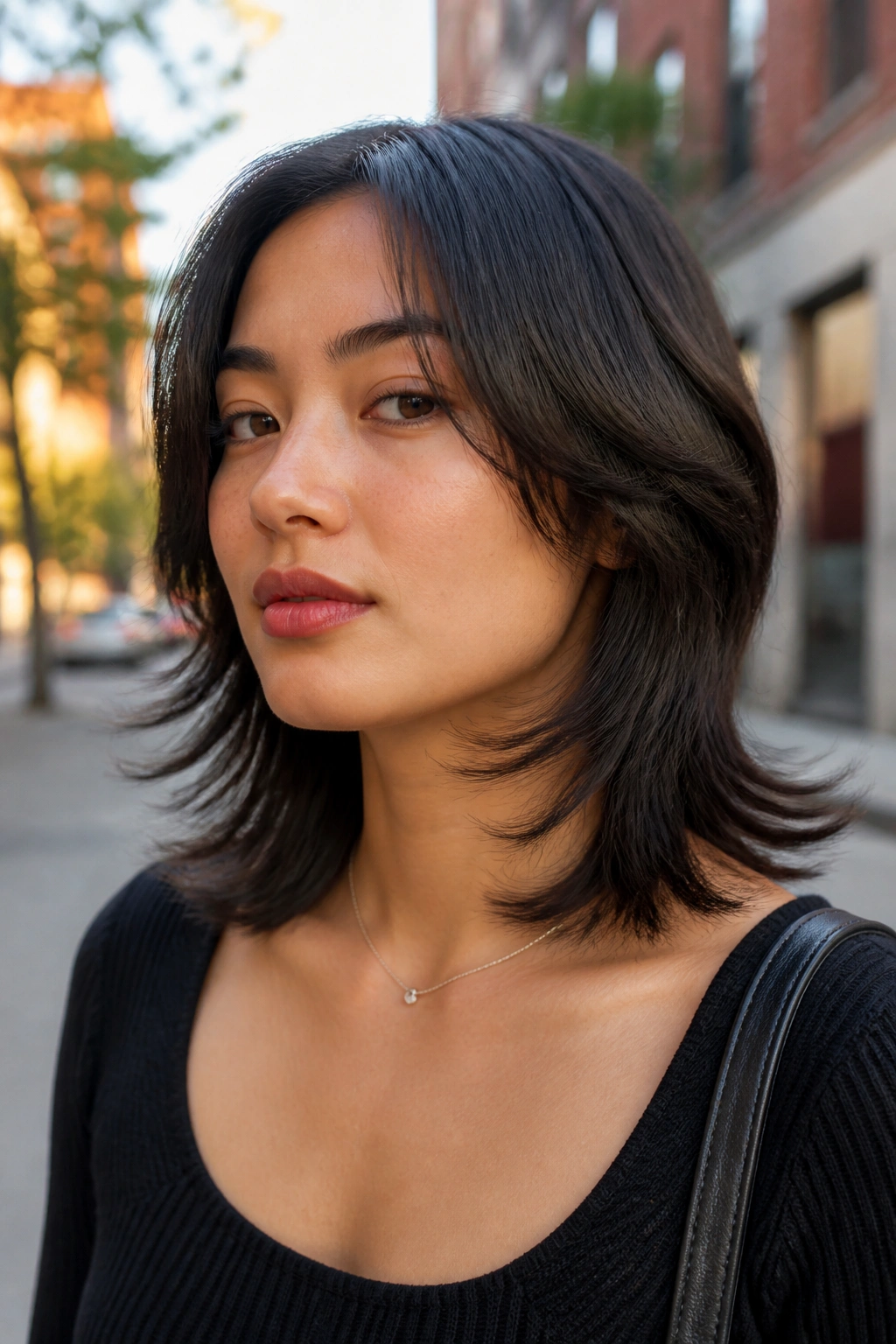
Flipped-out ends give a wolf cut a little 1990s energy without making it look costume-y. Straight hair is ideal for this because the ends hold a soft bend so easily. You’re not fighting the texture. You’re just nudging it in the right direction.
This version looks best when the cut has medium-length layers and a face frame that does not sit too high. The flip should happen at the bottom, not all over the head. That keeps the shape easy to read. Use a 1.25-inch curling iron or a round brush, twist the ends away from the face, and leave the rest sleek.
It’s a good choice if you like your hair to look styled even when the outfit is simple. White tee, lip balm, a good jacket, and a flipped-out wolf cut can carry the whole look. Strange how that works.
The downside is obvious: if you hate heat styling, this is not your lazy-day haircut. It wants a small amount of effort. Not a lot. Just enough.
12. Collarbone Wolf Cut with Hidden Layers
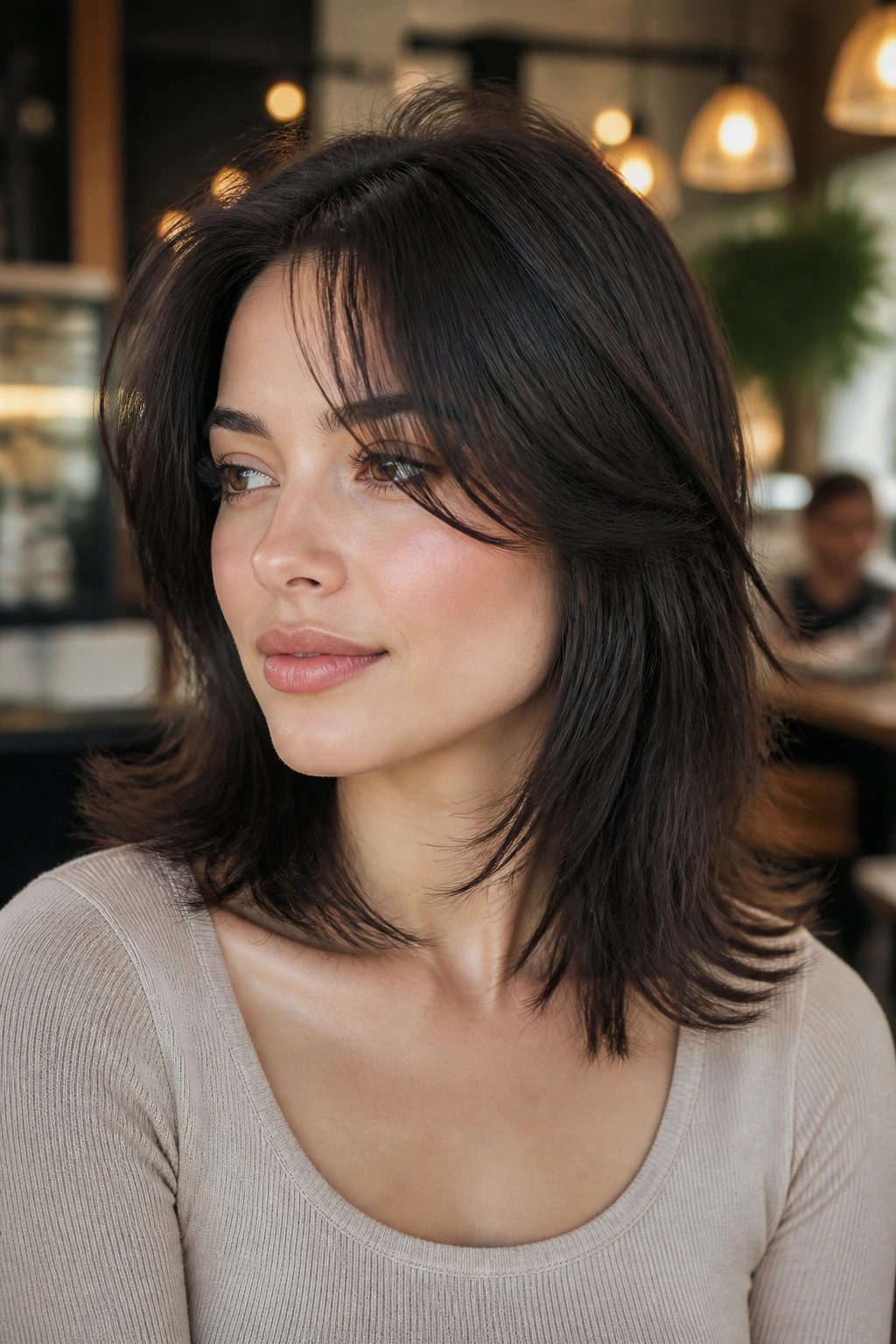
This is the stealth version. The surface looks smooth, the ends stay clean, and the movement lives mostly inside the haircut instead of sitting on top like obvious steps. On straight hair, that can be the smartest choice if you want a wolf-cut feel without the visible choppiness.
What to Ask for at the Salon
- Collarbone-length perimeter with a soft, slightly tapered finish.
- Internal layers in the crown and upper sides.
- Gentle face framing that starts below the cheekbone.
- Minimal thinning near the ends so the hair still feels full.
That last part matters. Too much thinning on straight hair makes the cut look thin before it ever looks cool. Hidden layers are better when the stylist works inside the shape instead of eating away at the edge.
This cut is especially nice if your workplace leans conservative or if you just prefer a cleaner look. You still get lift and movement, but you do not have to explain your haircut to anyone. And honestly, sometimes that’s the whole appeal.
13. Heavy Fringe Wolf Cut
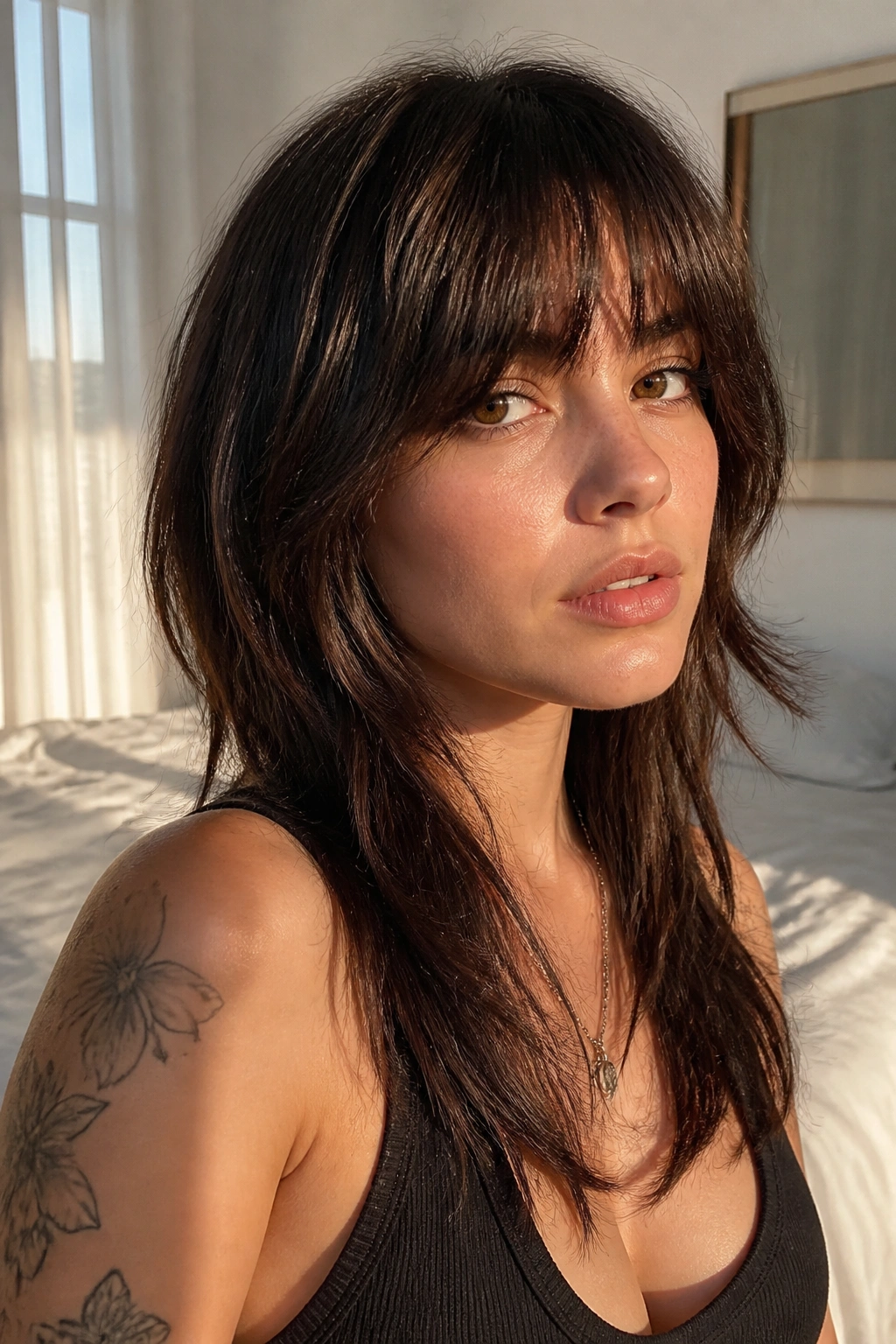
Why does a heavy fringe change the whole mood of a wolf cut? Because bangs take the eye straight to the top of the face, which is exactly where straight hair can look a little flat. A fuller fringe fixes that in one shot.
The fringe should sit around brow level or just below it, depending on how much forehead you want to cover. Keep the rest of the wolf cut softer so the bangs stay the star. If the layers around the face get too wild, the cut can feel overworked. Straight hair doesn’t need that much drama to make a point.
This version is especially nice for women with long foreheads or anyone who wants the hair to look denser at the front. It’s also forgiving on days when the rest of the cut goes a little flat. The bangs still hold the shape.
- Blow-dry the fringe side to side so it doesn’t split down the middle.
- Use a tiny bit of dry shampoo at the roots to keep it from sitting oily.
- Trim the bangs before they hit your lashes, not after.
Strong fringe. Softer layers. Good contrast.
14. Piece-Y Wolf Cut with Money Pieces
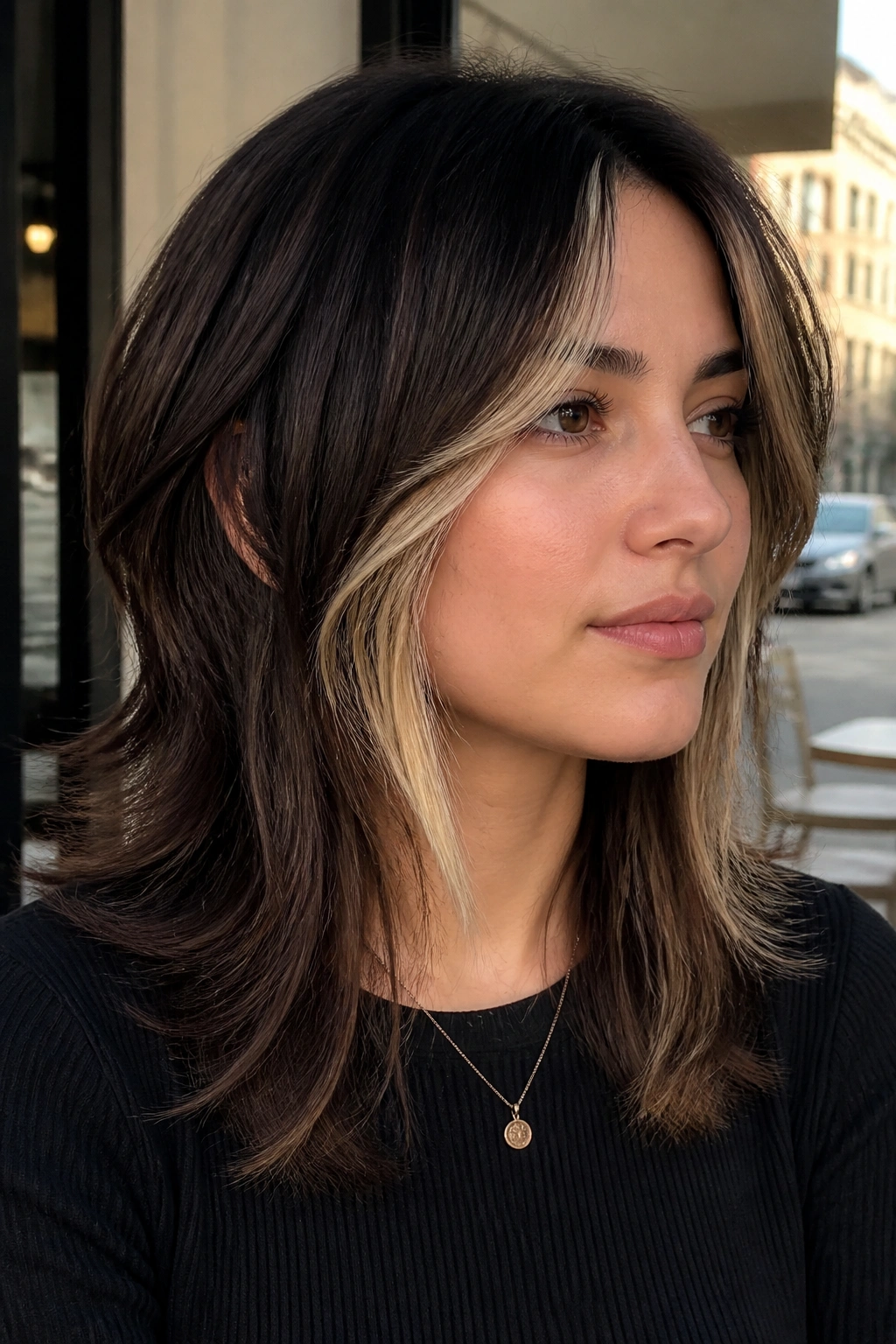
A piece-y wolf cut gets its punch from contrast. The haircut itself can be soft or sharp, but the front sections are emphasized so the face frame stands out. Money pieces — those brighter front strands — are optional, but they make the layers easier to read on straight hair.
This is a good choice if you like a bit of contouring around the face. The brighter pieces catch the eye first, then the layers underneath create the shape. Without that contrast, straight hair can sometimes hide the cut in plain sight. With it, the haircut looks more deliberate.
The key is not to overdo the lightening. A stark stripe at the front can make the style feel dated fast. Softer, thinner face-framing pieces usually work better because they blend into the haircut instead of sitting on top of it like an announcement.
If you want a wolf cut that feels modern without being too severe, this is a nice middle path. It has a little brightness, a little texture, and enough shape to keep the front from disappearing into the rest of your hair.
15. Mullet-Leaning Wolf Cut
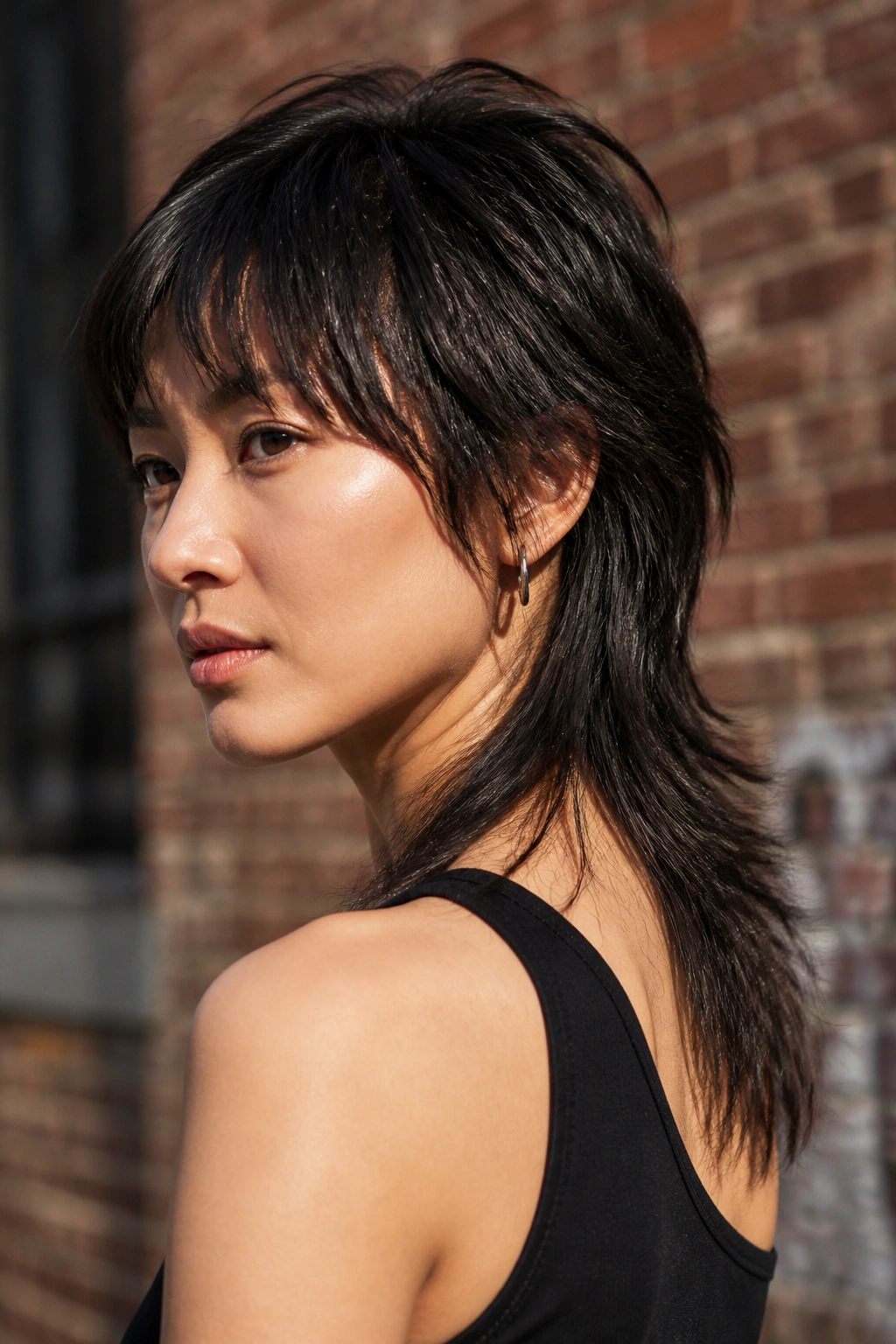
This is the version for women who want the wolf cut to lean into its rougher side. Shorter at the crown, longer at the back, a little more visible transition through the layers — yes, this one has attitude. On straight hair, the difference between cool and awkward is all in the blend.
You want the nape tapered enough that the back doesn’t sit like a shelf. The crown should have lift, but not so much that it disconnects from the rest of the head. And the sides need a soft transition so the cut feels fashion-driven instead of accidental. That’s the line. Miss it, and the whole haircut starts looking like a grow-out.
This is not the safest choice, and I mean that kindly. It’s for someone who knows she likes edge and doesn’t need a haircut that disappears into the background. If you wear structured clothes, boots, or sharp eyeliner, it makes a lot of sense. If you live in oversized cardigans and never heat-style your hair, maybe not.
Still. When it works, it really works.
16. Sleek Wolf Cut with Minimal Texture
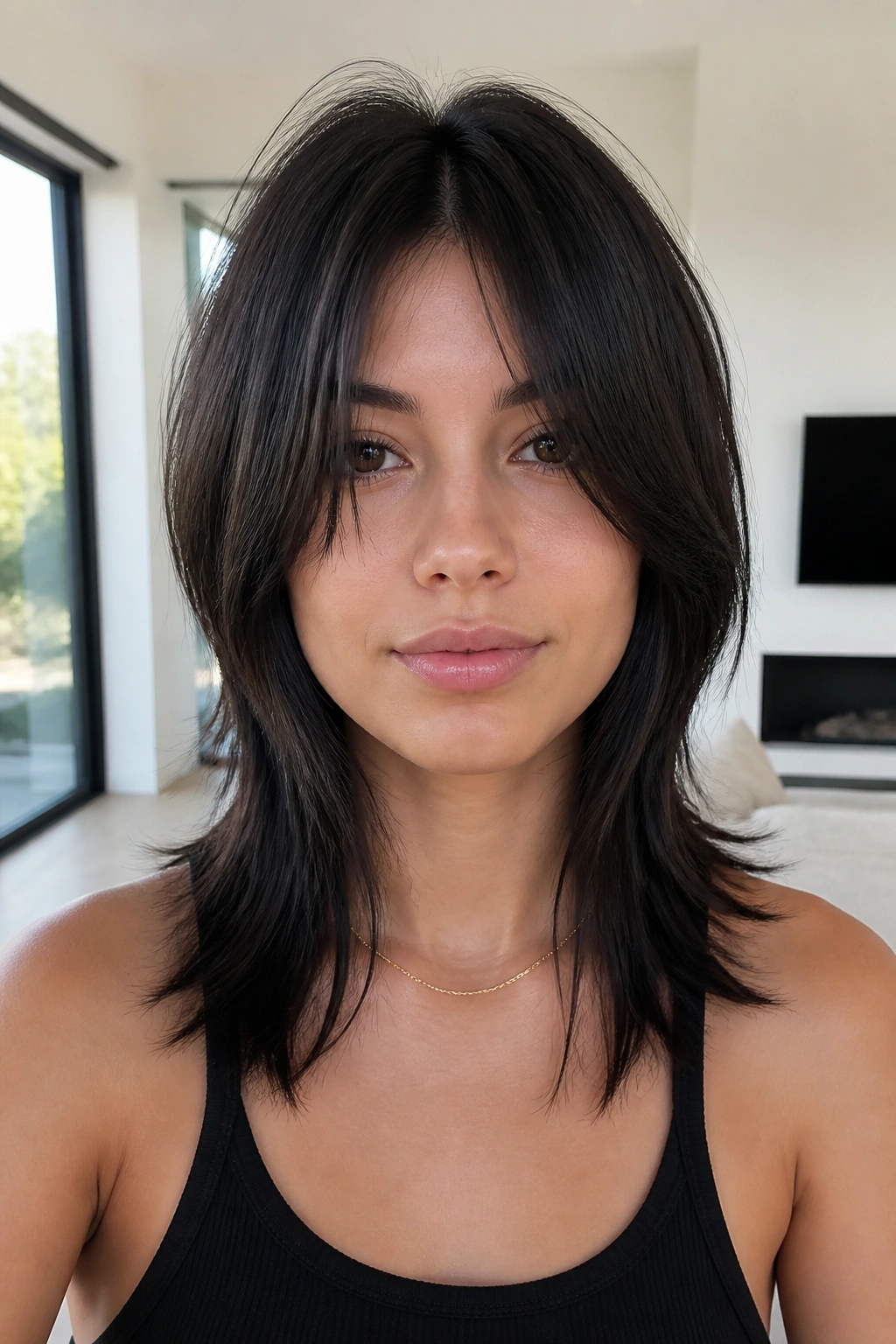
Straight hair does not have to pretend to be wavy to wear a wolf cut. A sleek version keeps the surface smooth and uses shape, not mess, to make the haircut interesting. That’s my kind of version for people who like clean lines.
The cut should avoid extreme choppiness. Keep the layers soft and controlled, with enough framing around the face to show movement when the hair swings. The rest stays glossy and calm. A little anti-frizz serum on the ends and a flat brush during blow-drying are usually enough.
This style is especially good for women with fine to medium hair who hate when texturizing makes the ends look see-through. You can still get a wolf-cut silhouette without tearing up the density. That matters more than people admit.
It also grows out nicely. As the layers soften, the haircut just looks more relaxed, not worse. That’s rare enough to be worth mentioning.
17. Bedhead Wolf Cut with Root Lift
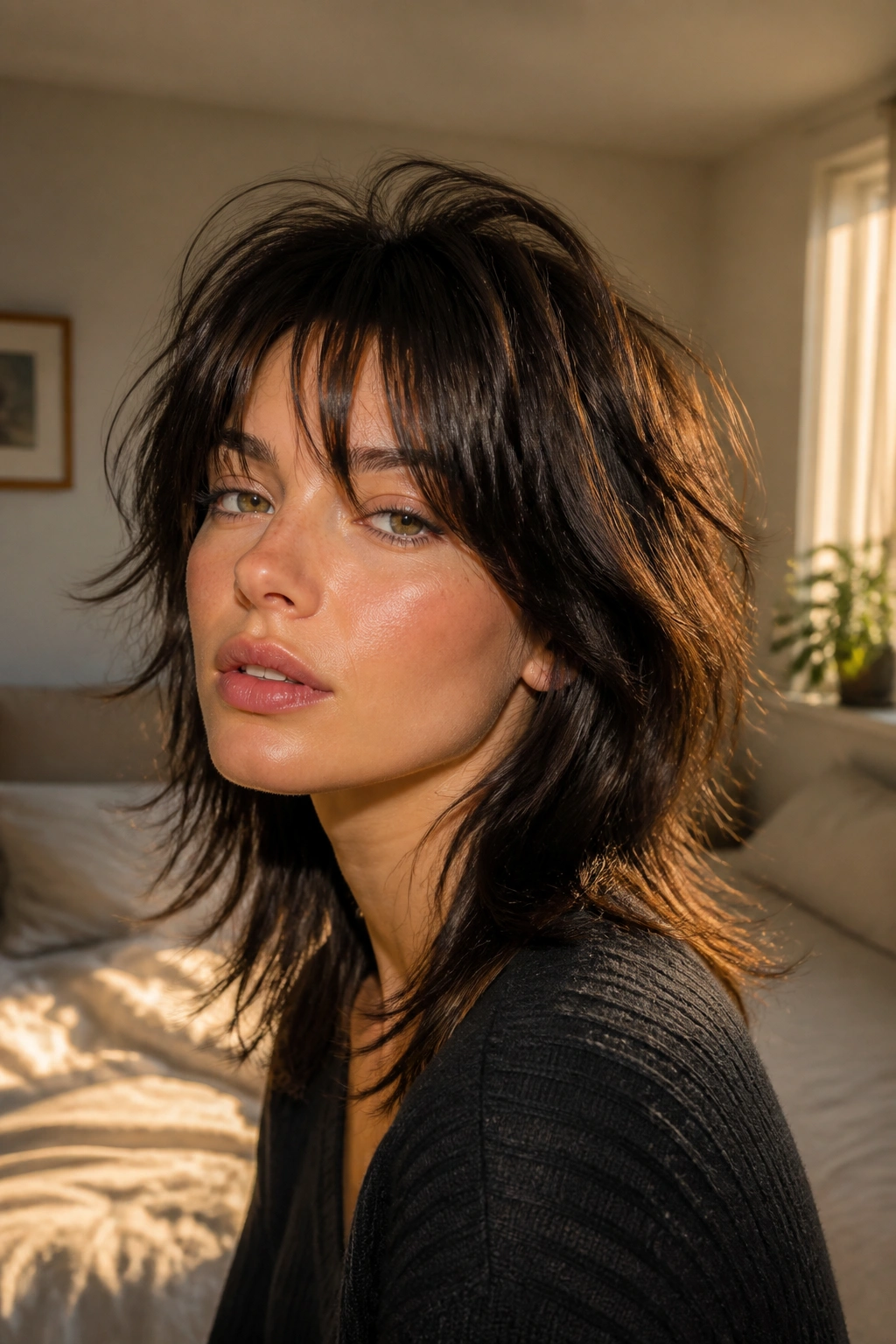
A bedhead wolf cut is the easiest way to make straight hair look like it has personality before coffee. The crown gets lift, the ends stay a little undone, and the whole cut feels casual in a way that still looks planned.
What Keeps It from Looking Messy
Root lift is the whole game. Start with mousse at the roots, blow-dry the hair upside down or with a round brush at the crown, and finish with a light dry shampoo once the hair is cool. If you skip the root support, straight hair tends to fall flat and the “bedhead” part just turns into “forgot to style it.”
The layers in this version should not be too severe. You want movement, not shredded ends. That makes it easier to wear on lazy days because the haircut already has some shape built in. A small bend at the front pieces can help, but it’s not required.
This is the kind of wolf cut I’d recommend to someone who wants to look like she tried a little, not a lot. Very useful distinction.
18. Asymmetrical Wolf Cut
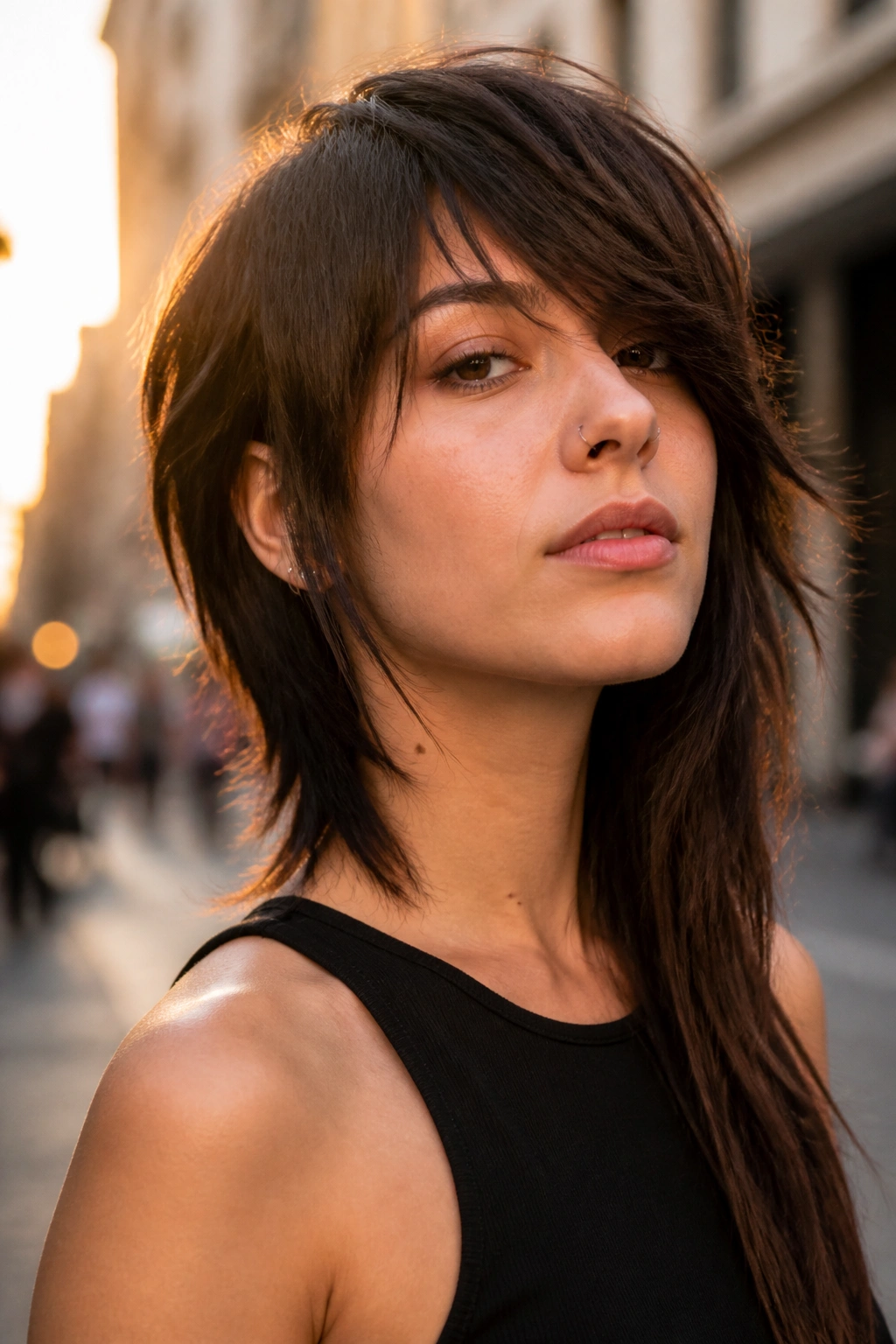
A small asymmetry can make a wolf cut look sharper without making it loud. One side may fall a touch longer, or the front layers may angle more deeply on one side than the other. Straight hair is great for this because the unevenness shows clearly, which is the point.
The trick is control. If the shape is too uneven, it looks like a mistake. If it’s too subtle, the asymmetry disappears. I like it best when the difference is visible but not cartoonish — maybe a longer face-framing piece on one side, or a slightly deeper part that sends the layers in a new direction.
- Best for women who like angular, fashion-forward hair.
- Works well with a side tuck behind one ear.
- Looks especially good with a sharp jawline or strong brows.
- Needs a stylist who can cut by eye, not by habit.
This version is not for someone who wants symmetry and calm. It’s for someone who likes a little tilt to the whole look. Very different energy.
19. Thick-Hair Wolf Cut with Weight Removal
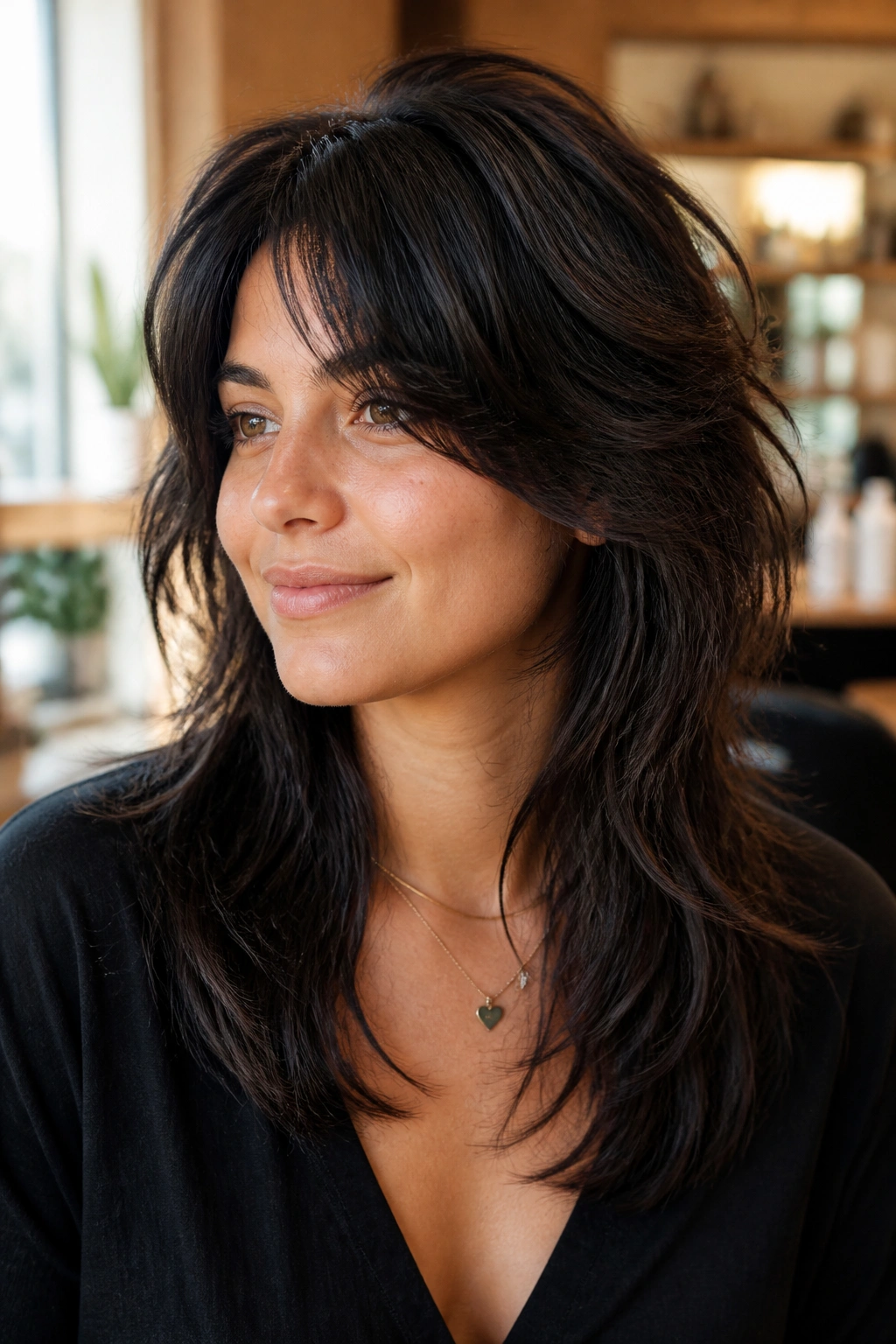
Thick straight hair can wear a wolf cut beautifully, but only if the weight is removed in the right places. If all that density stays in the bottom half, the cut goes triangular fast. If too much is removed, the ends get stringy. So yes, there’s a middle line, and it matters.
The best approach is internal debulking through the mid-lengths and crown, with enough length left at the perimeter to keep the hair from puffing out. Slide cutting or controlled point cutting can help, but I’d avoid overusing a razor on thick hair unless the stylist really knows how your strands behave. Thick hair can take a lot. It can also hold a bad cut for months.
This version is a win for women who want movement and air around the face without losing the heft that makes thick hair feel luxurious. The haircut should still feel substantial at the ends. Just less bulky. Less boxy. Less “helmet with layers.”
If your hair has a lot of natural volume, this may be the most useful wolf cut of the bunch. It solves the problems thick hair actually has.
20. Fine-Hair Wolf Cut with Airy Crown Lift
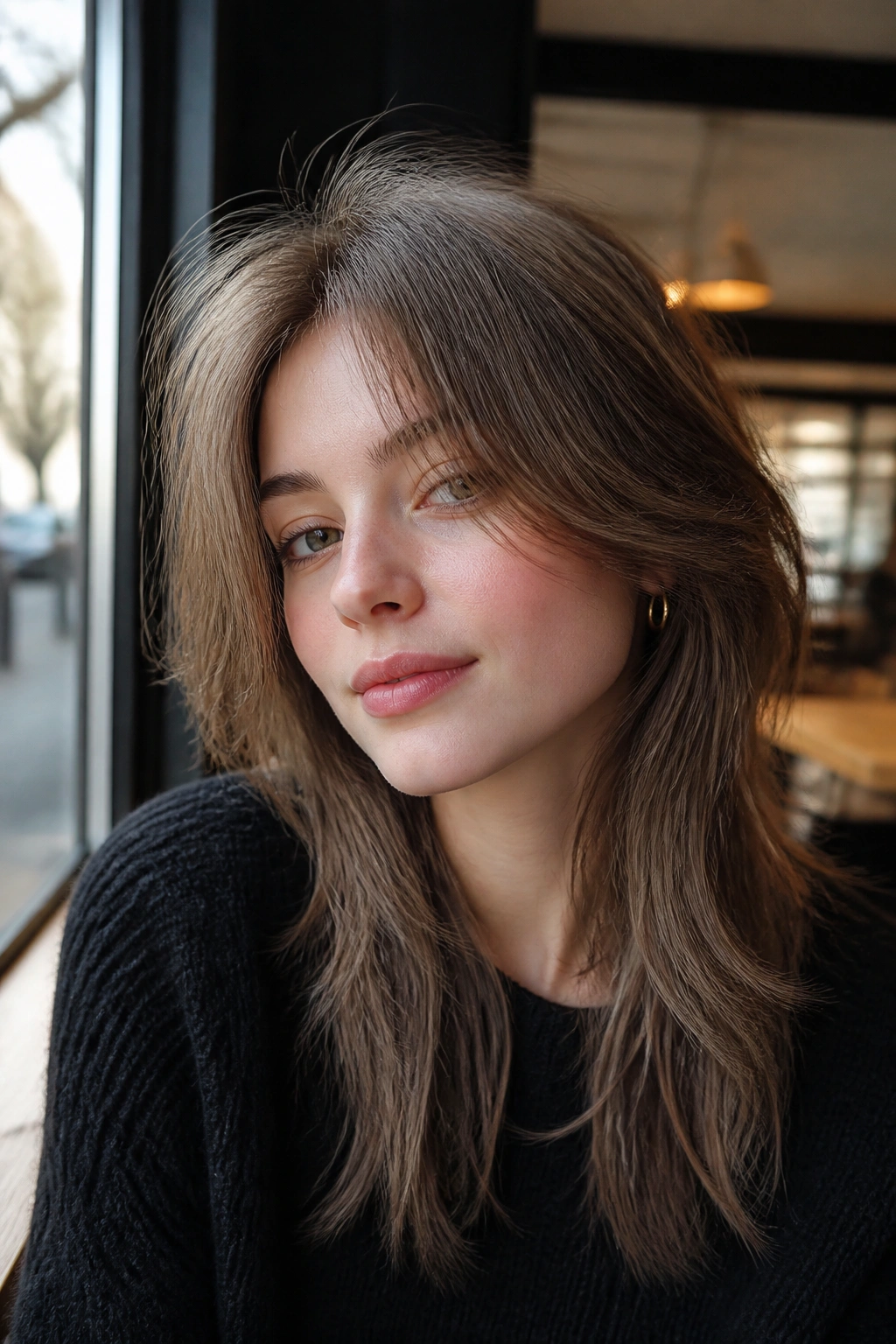
Fine straight hair needs a careful wolf cut, not a reckless one. Too many short layers can make the hair look thinner than it is. Too much thinning near the ends can leave the perimeter wispy. So the safest version keeps the base a little stronger and puts the movement higher up, where it helps most.
Ask for airy crown layers, soft face framing, and a perimeter that still has enough weight to look full. The shortest pieces can start around the cheekbone or just below, depending on how much shape you want around the face. That gives the haircut lift without exposing the scalp line or making the ends disappear.
This is the version I’d choose for someone who wants a wolf cut but worries about limp hair. Style it with root spray, a round brush, and a little lift at the crown while the hair cools. If you like, add velcro rollers for 10 to 15 minutes after blow-drying. Old-school trick. Still works.
For straight-haired women who want movement first and drama second, this is the safest place to land. It’s soft, modern, and easy to wear without making your hair feel fragile.
