



Wispy bangs are the haircut version of air itself: soft at the brow, light on the face, and far less fussy than a blunt fringe that sits there demanding attention. When they’re cut well, they make the eyes look brighter and the whole haircut feel looser.
That is the appeal.
Not “more hair.” Less heaviness.
A lot of people ask for wispy bangs and end up with something too thin, too shredded, or too short to behave. The sweet spot depends on hair density, face shape, and how much styling you’re willing to do on a weekday morning. A tiny bend at the end can look charming on one person and messy on another, which is why the same fringe photo does not work for everyone.
Some versions are barely there. Others are more feathered and face-framing, with the bang blending into the cheekbones instead of sitting like a separate little curtain. The ideas below lean into both moods, so you can pick the version that feels light instead of bulky.
1. Feathered Curtain Wispy Bangs

Feathered curtain bangs are the easiest place to start if you want wispy bangs that look relaxed instead of precious. The center opens softly, then the lengths drift wider as they hit the temples, which keeps the forehead visible and gives the whole style movement.
Why They Work
This shape flatters a lot of hair types because it does not ask the fringe to do all the work. The center can skim the brows, while the outer pieces slide into the rest of the haircut. That little blend matters. It makes the bangs feel like part of the cut, not a bolt-on feature.
- Keep the middle short enough to show the eyes.
- Let the sides reach the cheekbone area.
- Ask for soft point-cut ends, not a blunt edge.
- Style with a round brush or a quick bend from a flat iron.
Best tip: ask your stylist to leave the longest pieces soft enough to tuck behind your ears on day two.
2. Bottleneck Wispy Bangs
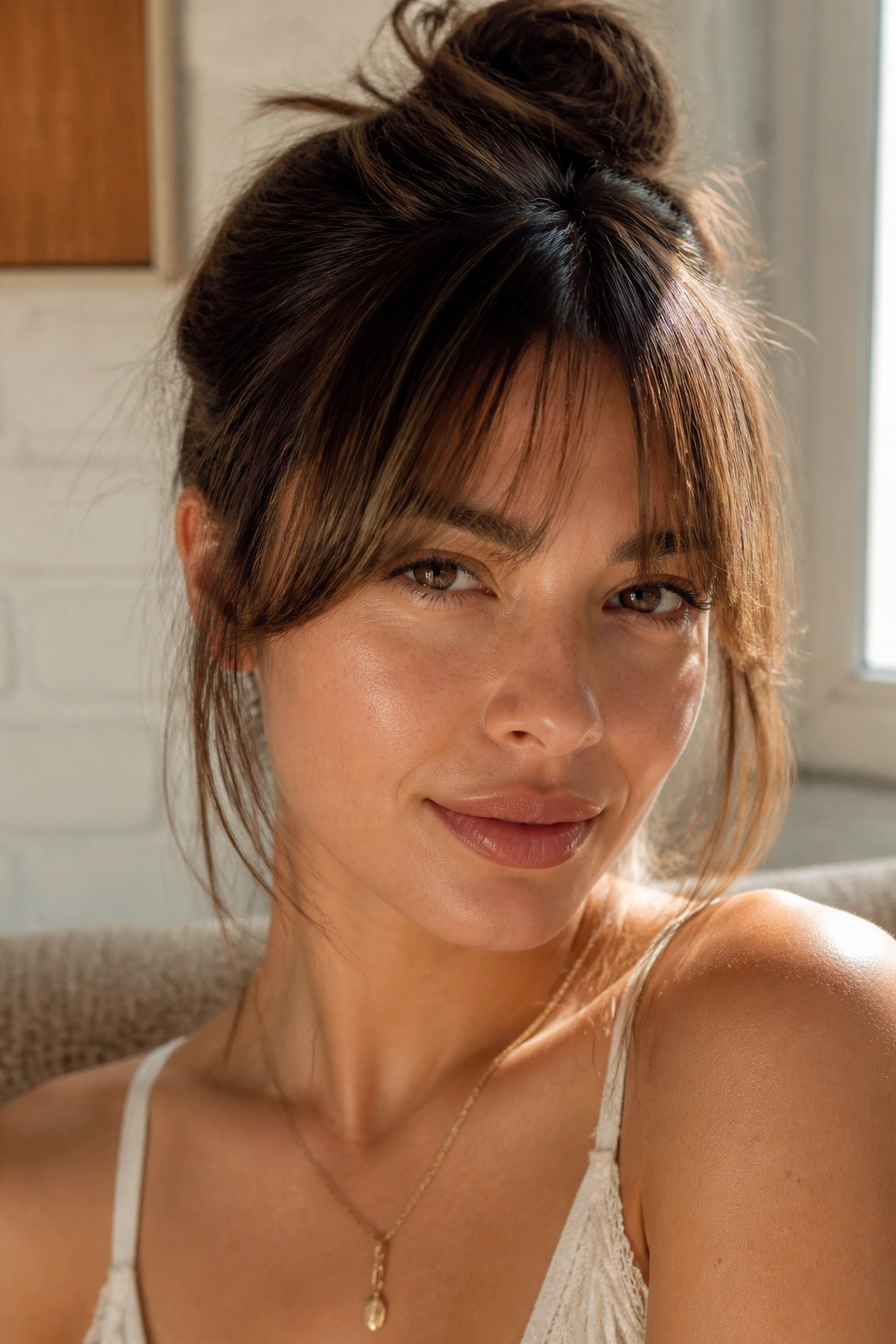
Bottleneck bangs are the most forgiving version of a wispy fringe if you hate the feeling of too much hair on your face. The center sits narrow and light, then the shape widens as it moves outward, like the neck of a bottle opening into a fuller shape.
That structure gives you coverage where you want it, but not that heavy wall of hair some fringes create. It also helps the bangs fall in a more natural way when you wear your hair down, half-up, or clipped back.
I like this shape on hair that already has some bend. Straight hair can wear it, too, but it usually looks best with a little rough texture instead of a glassy blowout. If your forehead is on the larger side, this style gives a softer frame without closing things in. If your hair is very fine, keep the ends airy and avoid over-thinning the center.
3. Side-Swept Wispy Bangs
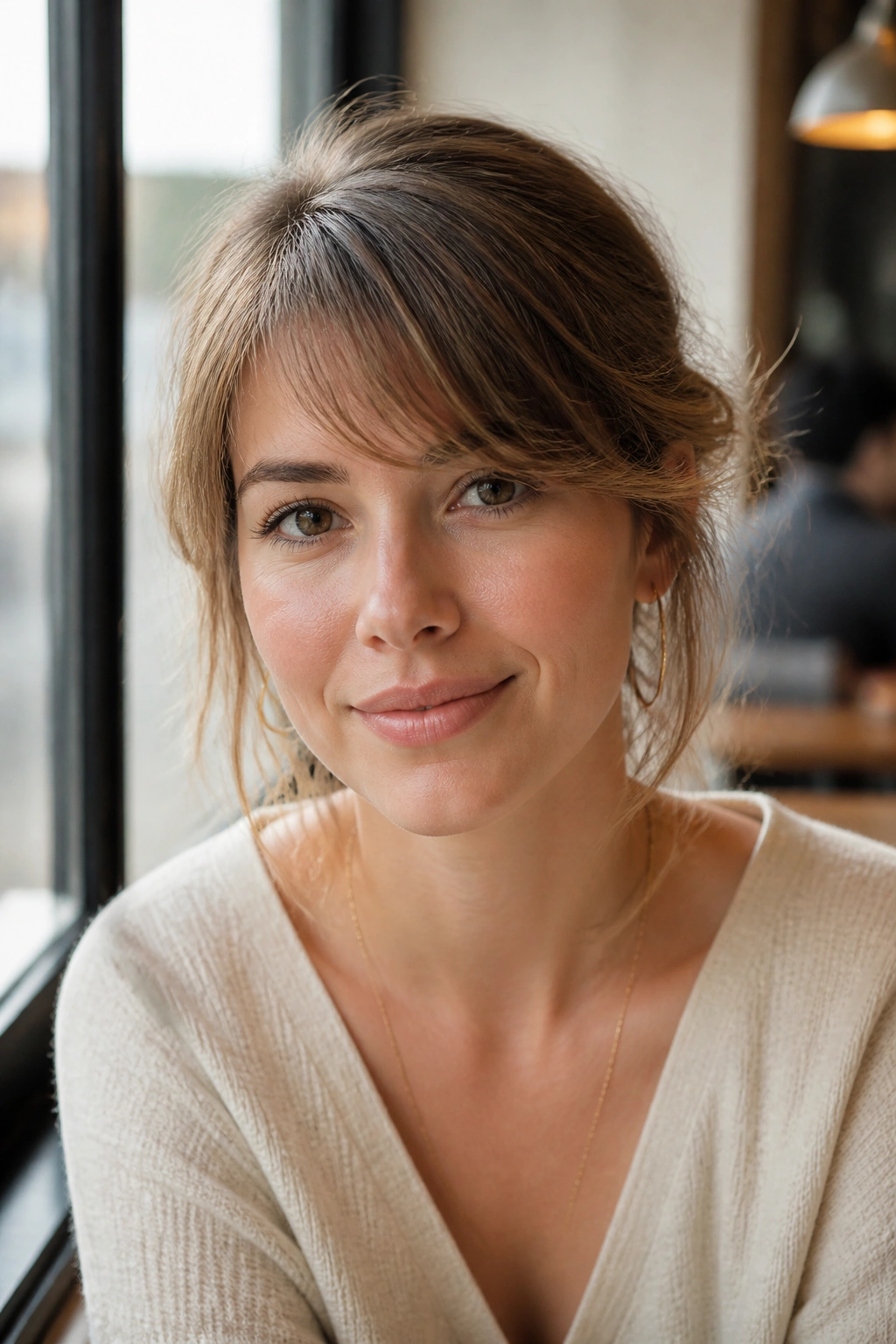
Why do side-swept wispy bangs still look good after a long day, a wind gust, and a little sweat at the roots? Because they work with the part your hair already wants to make. That makes them easier to live with than a fringe that insists on perfect symmetry.
The sweep softens the face without cutting a hard line across it. It also gives you a built-in escape route on days when you want the bangs out of the way. They can fall across one brow, then slide back without leaving a weird gap.
How to Style Them
Use a brush or fingers to push the bangs in the direction of the side part while they dry. A pea-sized bit of light cream on the ends is enough. Too much product makes them collapse fast, and the whole point here is movement.
4. Brow-Grazing See-Through Bangs
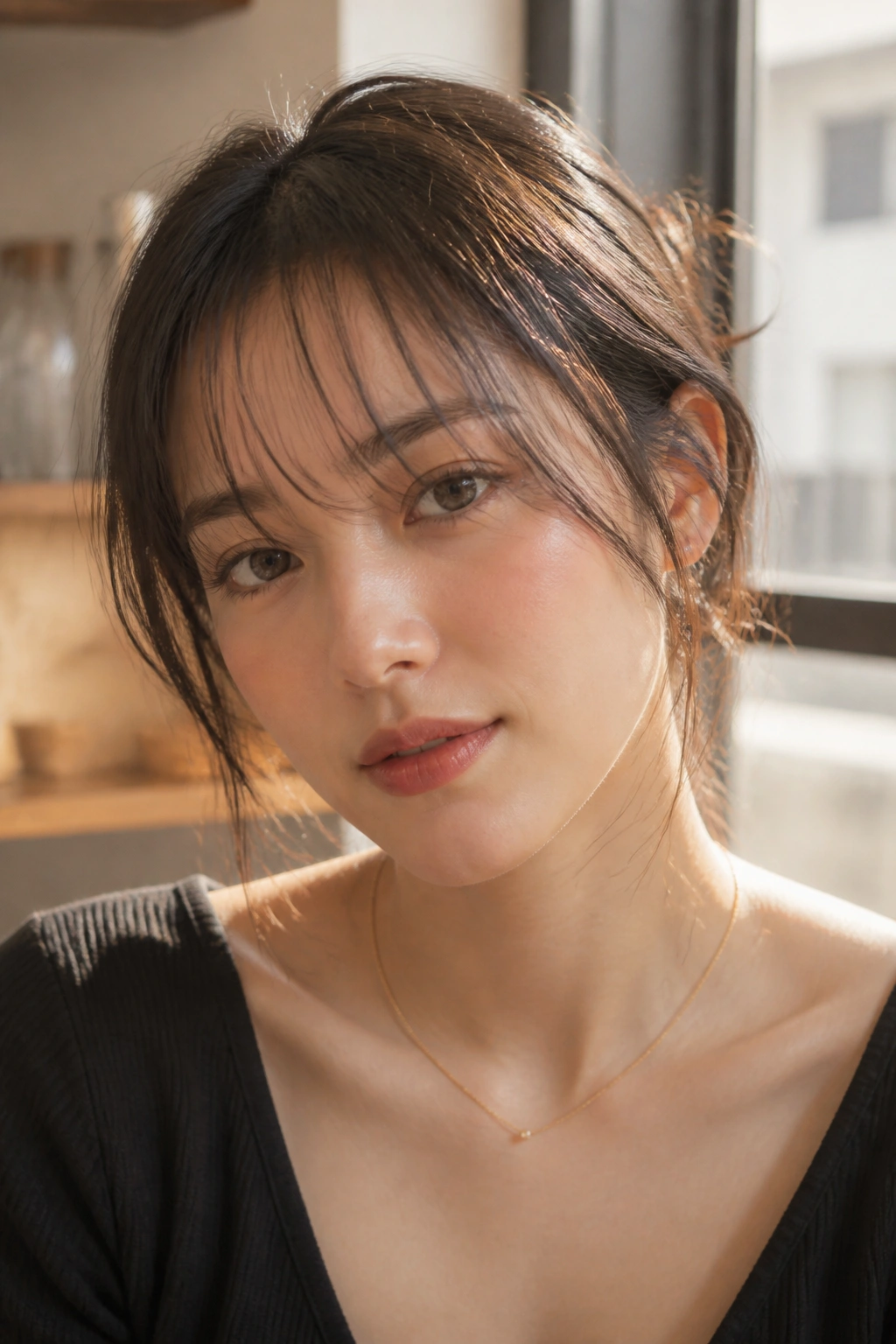
A lot of people call these “see-through” bangs, and the name fits. You get the idea right away: enough hair to frame the eyes, not enough to block the forehead. Brow-grazing pieces can look airy in a way that heavier fringe never will.
The trick is spacing. The hair is cut and styled so a little skin shows through between the strands, which keeps the shape soft. It’s a smart choice if you want wispy bangs that feel neat, light, and a little delicate without drifting into baby-bang territory.
- Best on straight or lightly wavy hair.
- Works well with a soft brush instead of heavy styling cream.
- Needs trims often, usually every 4 to 6 weeks.
- Looks best when the ends sit right at the brow line, not below the lashes.
My honest take: this is one of the prettiest fringe ideas, but it does not forgive a lazy cut.
5. Wispy Bangs with Long Layers

Long hair can handle more fringe than people think. In fact, wispy bangs often look better with long layers because the rest of the haircut gives the fringe somewhere to go. Without that balance, bangs can feel like they’re sitting on top of the head instead of belonging there.
The best version starts with soft layers around the face, then lets the bangs fade into those pieces. You want the eye to travel from the brow into the cheekbone area and then down through the length. That kind of flow is what stops long hair from looking flat at the front.
A lot of stylists cut too little into the sides and too much into the center. I prefer the opposite: a light center, then enough side length to soften the profile. It looks more natural when you tuck your hair back, and it grows out in a friendlier way. Small detail. Big difference.
Long layers also make styling easier. A quick bend with a large round brush gives the bangs a little lift, but air-drying works too if your natural texture has enough shape.
6. Wispy Bangs with a Blunt Bob
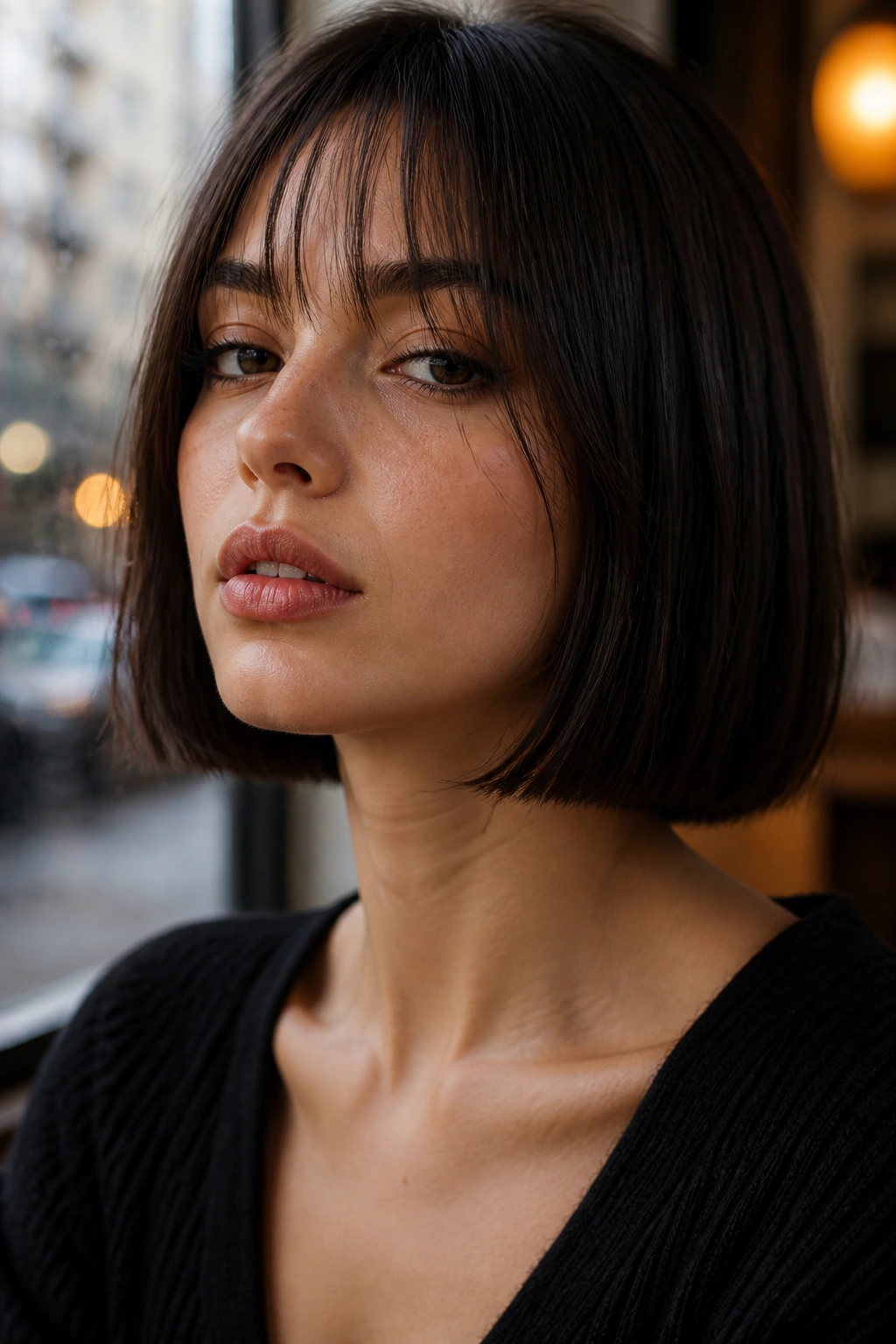
A blunt bob gets softer the second you add airy bangs. That contrast is the whole point. The bob gives structure. The fringe keeps it from feeling boxy.
This pairing works because the bob’s edge is crisp and the bangs are not. One part of the haircut is clean and grounded; the other part is feathered and loose. That mix looks sharp without feeling stern, which is why I reach for it when someone wants a polished cut that still has movement.
It’s especially good if your hair sits flat around the cheeks. The wisps break up the line and pull attention upward toward the eyes. If you wear glasses, this combo can be excellent, but the bangs need to stay slightly longer so the frames do not crowd them.
7. Soft Shag with Wispy Fringe
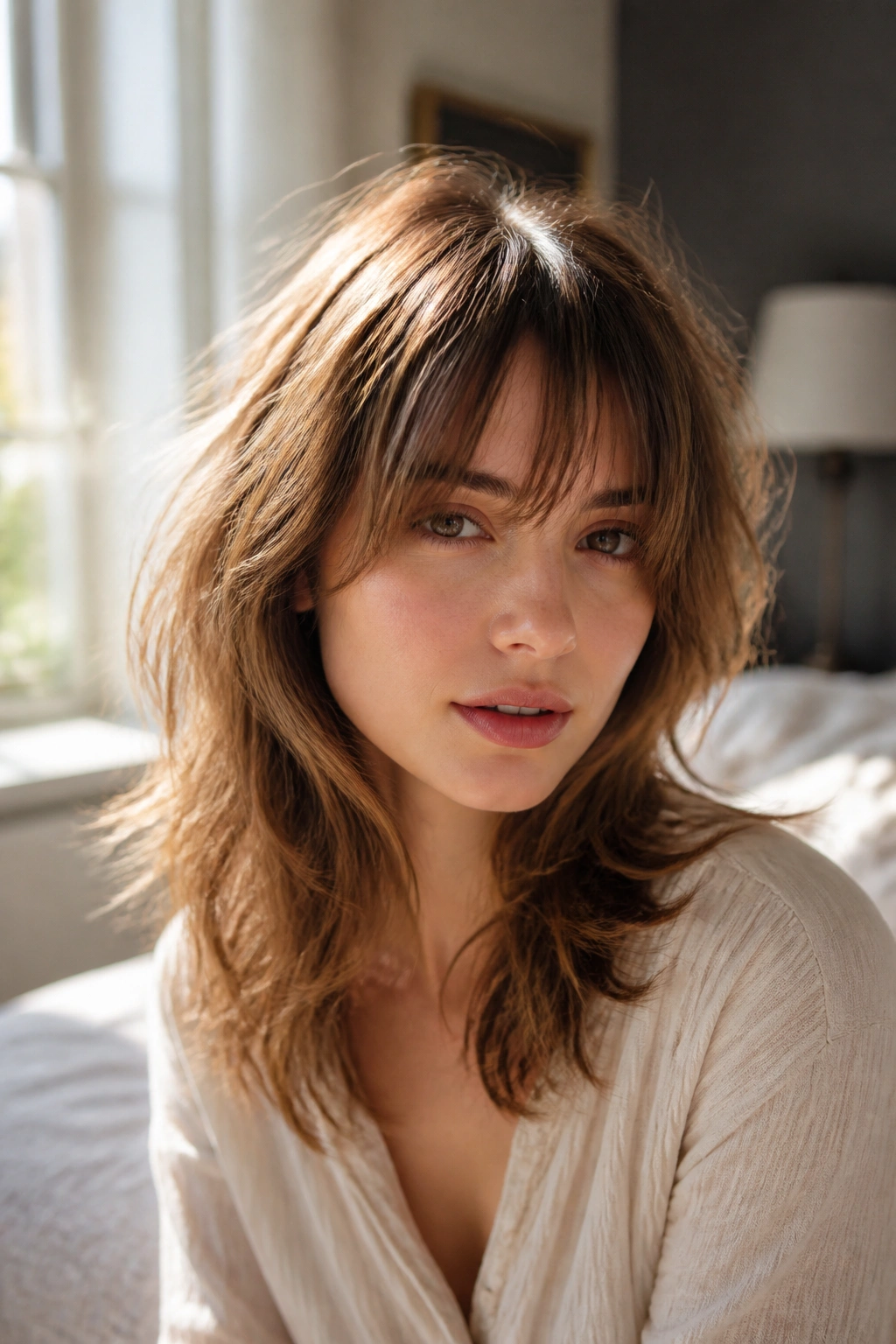
If your hair already likes texture, this is one of the easiest wispy bang pairings to wear. A soft shag and a wispy fringe want the same thing: pieces that move, separate, and never sit too stiff.
The fringe should not look like one solid strip across the forehead. It needs tiny breaks in it. That’s what keeps the shag from feeling too retro or too heavy. When the cut is right, the bangs seem to melt into the crown layers and the face-framing pieces around the jaw.
Use mousse at the roots and a touch of cream at the ends. Then rough dry the fringe with your fingers. A brush can help, but don’t polish it to death. A shag wants a little grit. Clean but not overworked.
8. Curly Wispy Bangs

Can curly hair do wispy bangs? Absolutely. It just needs a different cut plan. Curls shrink, spring, and shift, so the fringe has to be left longer than you think it should be when it’s wet.
What to Ask for in the Chair
Ask for the bangs to be cut in their natural curl pattern, ideally dry or mostly dry. That lets the stylist see where each curl lands instead of guessing and hoping. You want scattered lightness, not a triangle of overcut pieces that pop up too high.
A good curly wispy fringe usually lands somewhere between the brow and the upper lash line when dry, but the exact spot depends on the curl size. Keep the sides soft so the fringe can blend into the curls near the temples. That keeps the shape from looking chopped off.
One more thing: do not overload them with heavy cream. A little curl gel or light leave-in is enough.
9. Wispy Bangs for Fine Hair
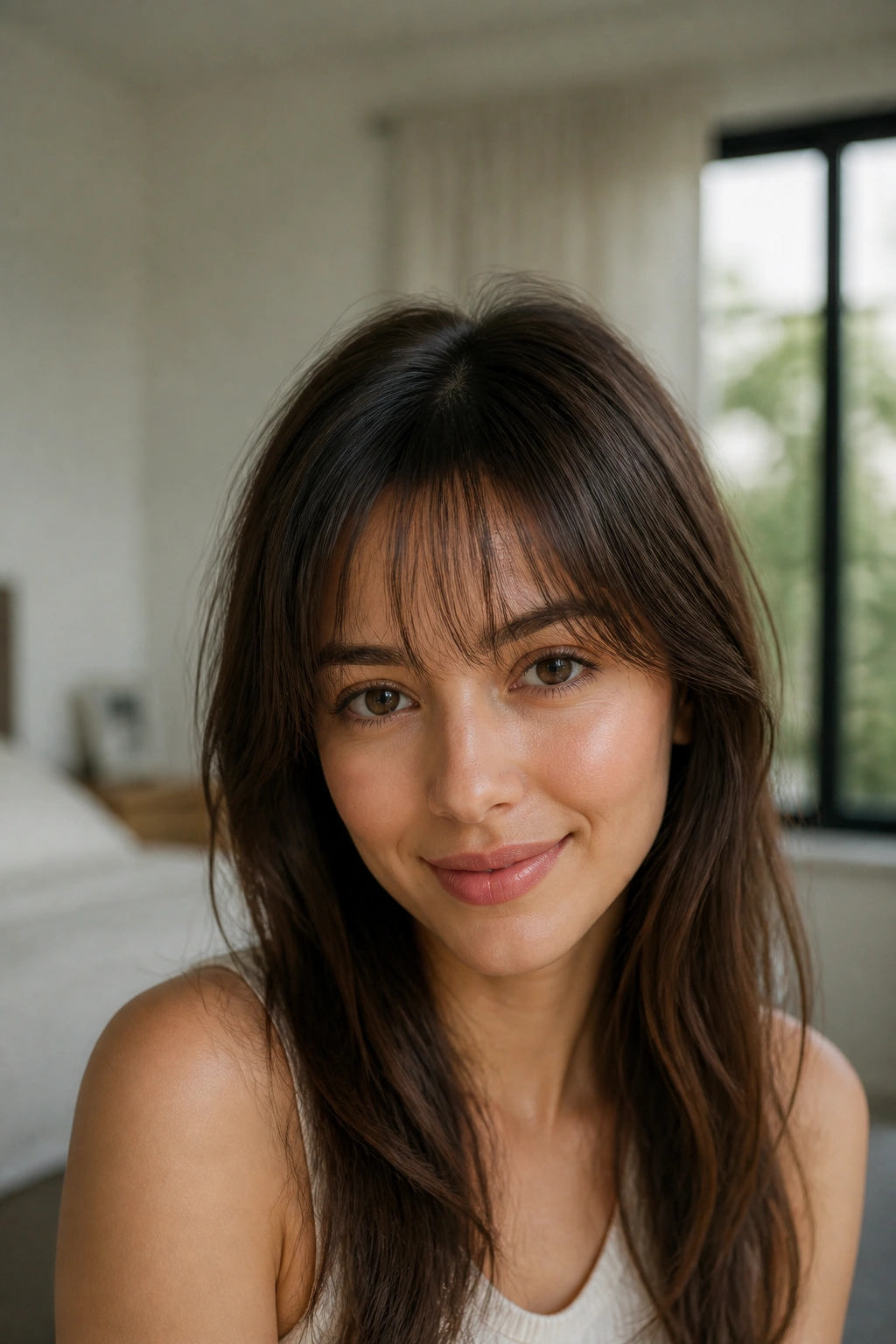
Fine hair can look lovely in wispy bangs if the cut stays narrow and the ends are kept soft. The mistake people make is asking for a fringe that is too wide. That can make the front feel sparse, which is the exact opposite of the airy effect they wanted.
The better move is to keep the section small and slightly layered. You want enough hair to frame the eyes, but not enough to drag the whole front section down. A root lift spray at the base helps, too. Heavy oils are usually a bad idea here.
- Ask for a narrower bang section.
- Keep the center a touch shorter than the sides.
- Use a light volumizing spray, not thick cream.
- Dry the roots forward first, then split the fringe with your fingers.
One blunt warning: if your stylist over-texturizes fine hair, the bangs can start to look wispy in the wrong way.
10. Wispy Bangs for Thick Hair

Thick hair can wear wispy bangs beautifully, but the cut has to remove bulk in the right places. The goal is not to thin the fringe until it disappears. The goal is to stop it from sitting like a heavy block across the forehead.
Point cutting helps here. So does a little internal layering near the top of the bang section. That gives the hair some bend and prevents the fringe from puffing out at the root. If the bangs are cut straight and left too dense, they can feel heavy by noon and start to separate in awkward chunks.
A good thick-hair wispy bang often looks best when it is slightly longer at the sides. That length gives the weight somewhere to land. It also helps if you use a blow-dryer nozzle and direct the air down the hair shaft first, then soften the bend at the end.
11. Wispy Bangs for Round Faces
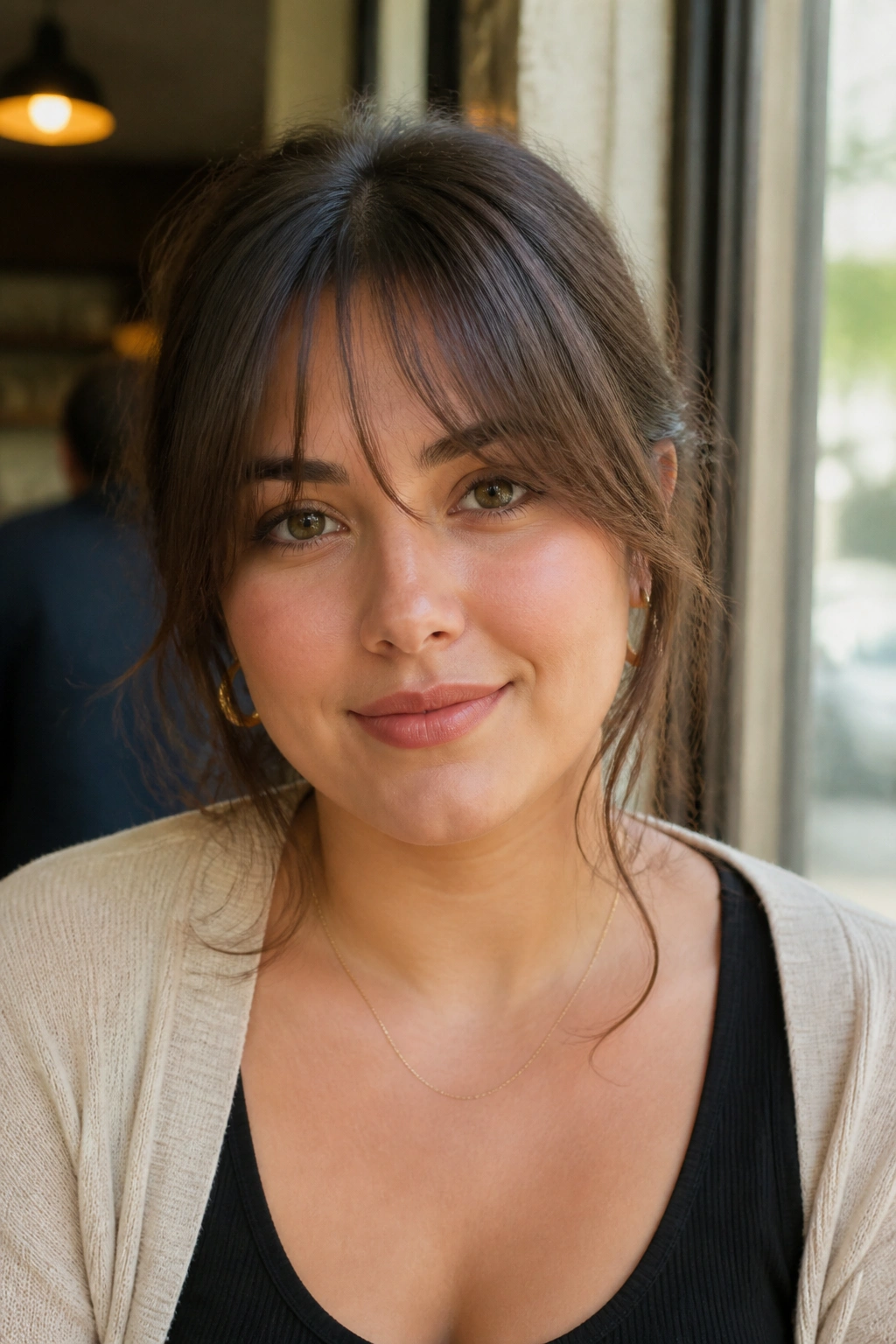
Wispy bangs can be especially flattering on round faces when they create a little vertical line at the center and soft length at the sides. That shape helps draw the eye upward instead of outward, which keeps the face from feeling wider than it is.
I prefer longer wisps here, not tiny baby pieces. Short bangs can sit too high and make the forehead feel crowded. A fringe that starts softly at the brow and then tapers toward the temples works better because it adds shape without cutting the face in half.
The smartest pairing is often a bit of length around the cheekbones. That extra hair helps guide the eye downward. You do not need a dramatic curtain, just enough side softness to keep the face balanced. If the bang line feels too straight, it will fight the rest of the haircut.
12. Wispy Bangs for Square Faces
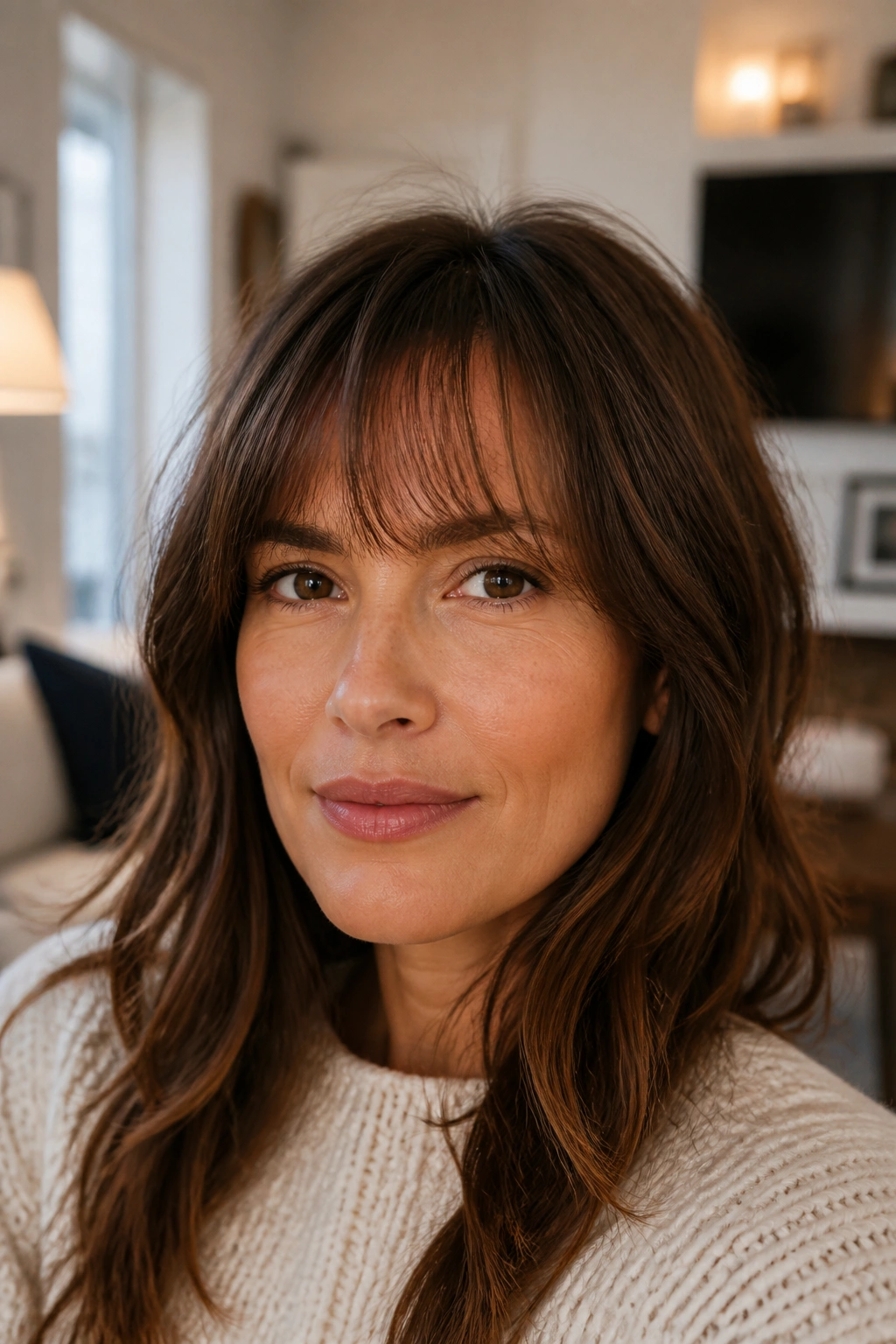
Do wispy bangs soften strong angles? Yes, if the shape is curved instead of rigid. Square faces usually look best when the fringe breaks up the straight line of the forehead and lets some softness spill toward the temples.
Where the Softness Should Sit
The best place for it is not in the center alone. It should live in the transition from center to side. That gentle curve keeps the bangs from echoing a sharp jawline. I like a fringe that starts a touch shorter in the middle, then gradually lengthens as it moves outward. That tiny slope matters more than people think.
Avoid a hard, flat edge. It can make the haircut feel boxy. If you wear your hair straight, a soft bend at the ends keeps the shape from stiffening up. If your hair is wavy, let the texture do the work and only tidy the front section with a brush.
13. Center-Parted Wispy Bangs
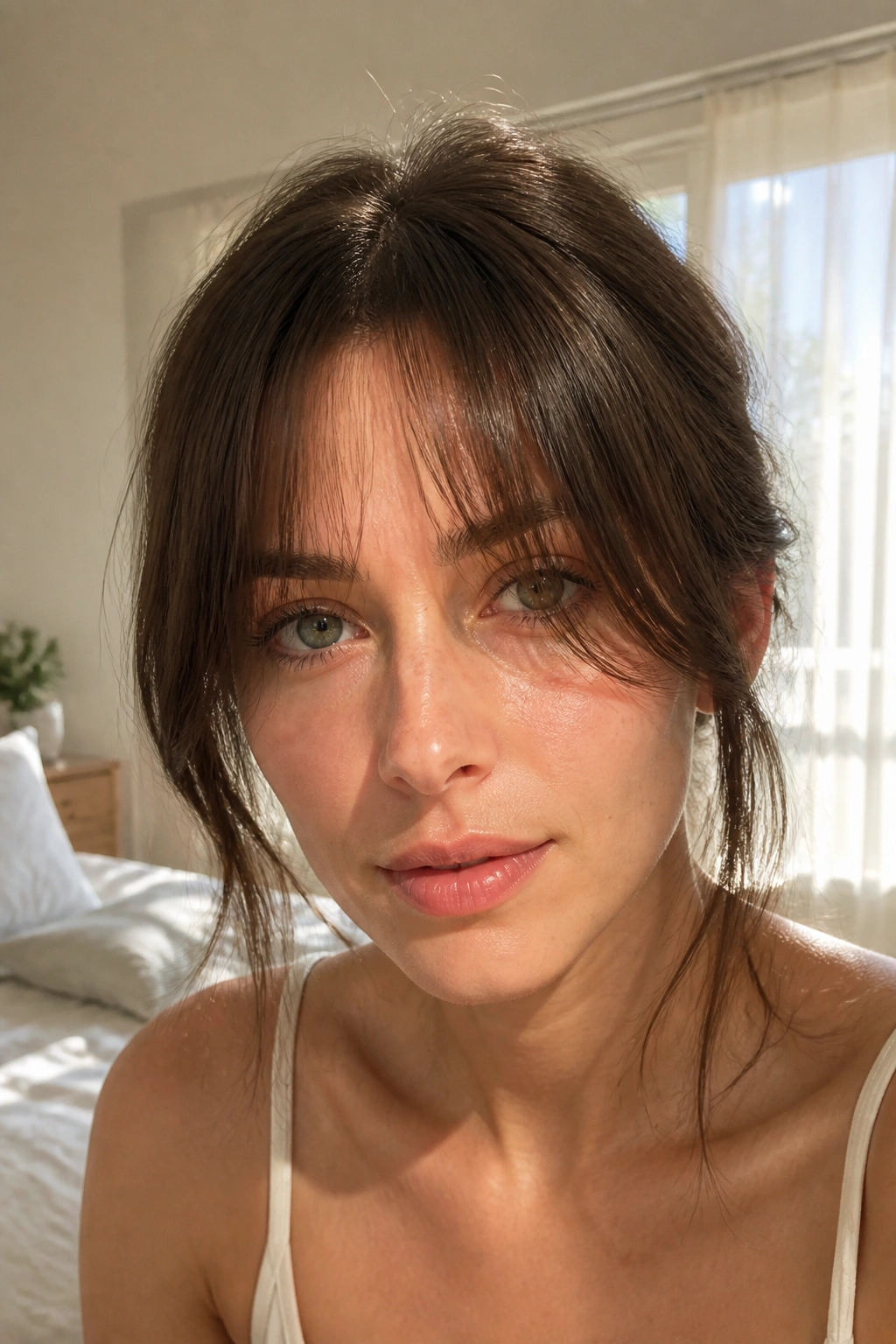
Center-parted wispy bangs look best when they are a little imperfect. A clean, exact split can make the style feel stiff. A softer center part gives the fringe room to fall differently on each side, and that slight unevenness is what makes it feel human.
This style suits people who like an open forehead but still want some framing around the eyes. It also works well with longer face-framing layers because the middle section can stay light while the side pieces carry more of the shape. You are not building a wall of hair here. You are opening a window.
A little dry texture at the roots helps the part stay visible without flattening. If you smooth it too much, the bangs can stick to the forehead and lose the airy effect. Better to keep some bend and let the center gap breathe.
14. Side-Parted Wispy Bangs
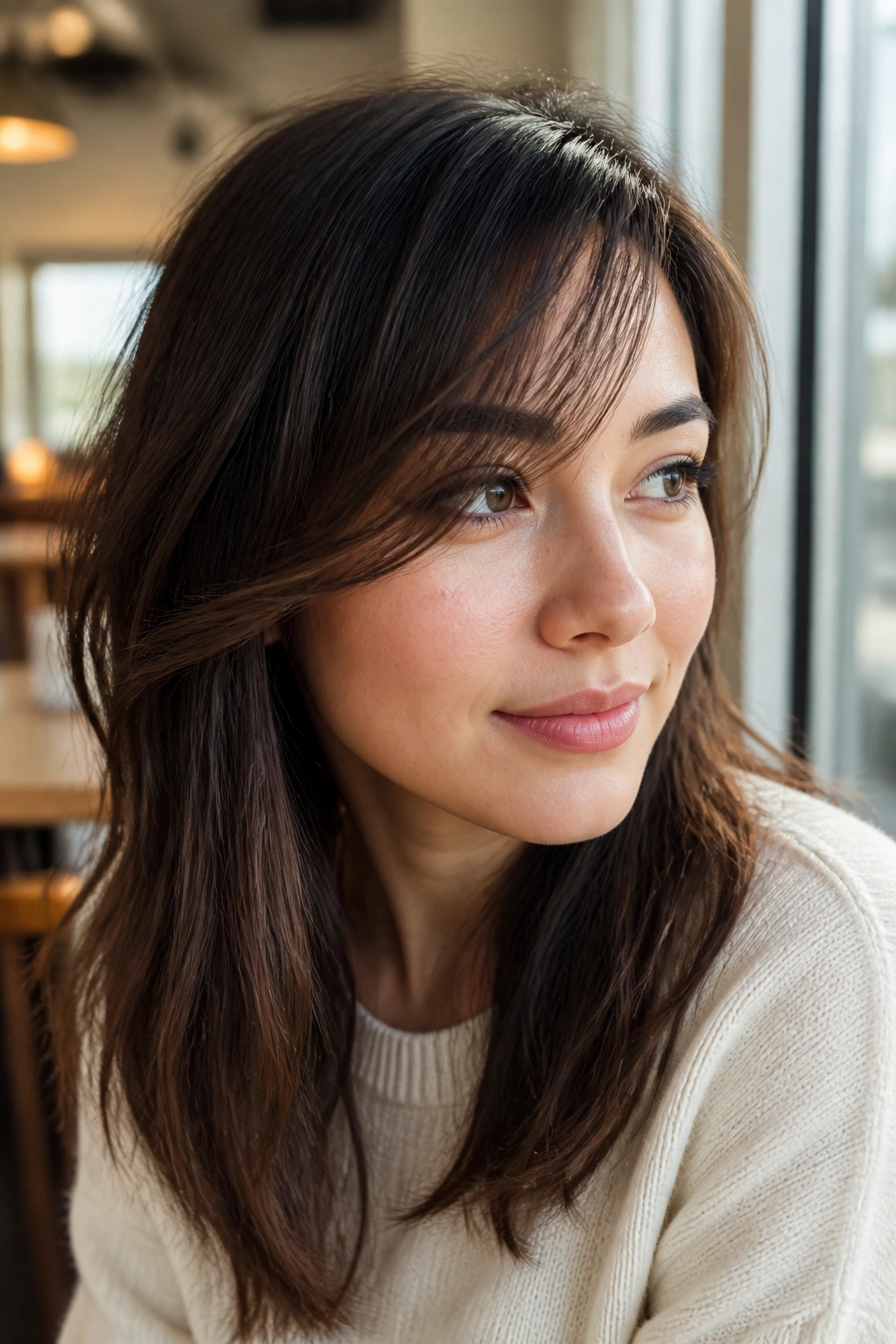
If you already push your hair to one side every morning, side-parted wispy bangs are the obvious move. Why fight a habit your hair has already chosen? Lean into it.
The side part gives the fringe a long diagonal line, which can be very flattering when you want movement without fullness. It also helps the bangs settle more easily on second-day hair, which is a huge practical win. A lot of the time, that matters more than the haircut photo does.
- Start the part near the arch of one brow.
- Keep the bang section lighter on the heavy side.
- Use a small round brush to guide the front away from the face.
- Tuck one side behind the ear if you want a cleaner line.
The style feels a little softer than a center part and a little less deliberate than a curtain bang. That middle ground is useful.
15. Piecey Micro-Wispy Fringe
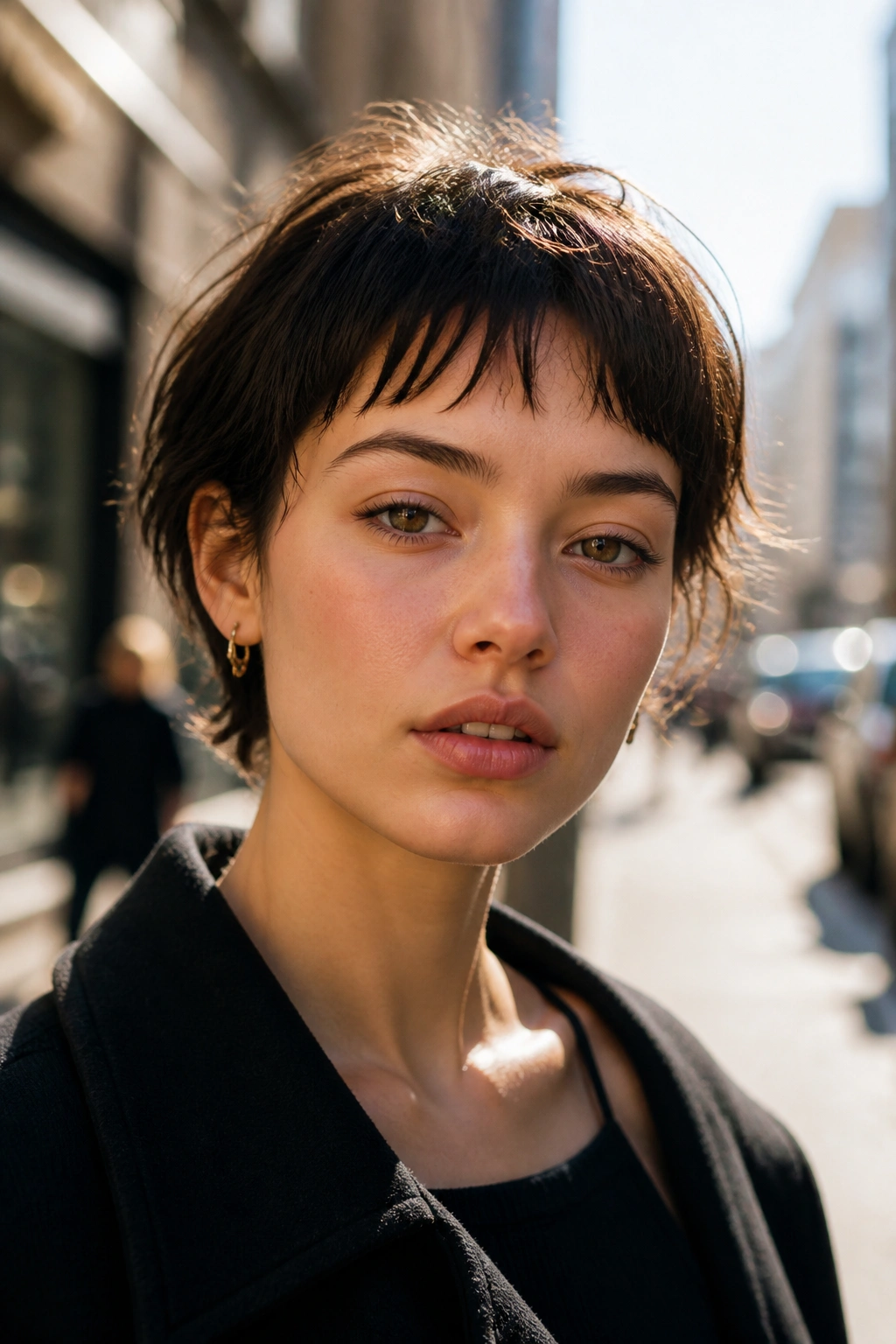
Piecey micro-wispy fringe is for people who want a little attitude without a heavy bang. It’s shorter than most wispy styles, but it still needs softness at the ends so it doesn’t turn harsh. The effect is airy, but also a bit sharper.
This cut looks best when the hair itself has some texture. Flat, straight hair can make it look too severe unless you bend the fringe slightly with heat. A touch of separation at the ends is what keeps it from reading like a straight line across the face.
The Catch
You do need confidence for this one. It draws attention to the eyes and brows fast. That is the fun part, but it also means the cut has to be precise. If the fringe sits too high, it can feel accidental. If it’s too sparse, it can look like you got halfway through a haircut and stopped.
16. Wispy Bangs That Are Already Growing Out
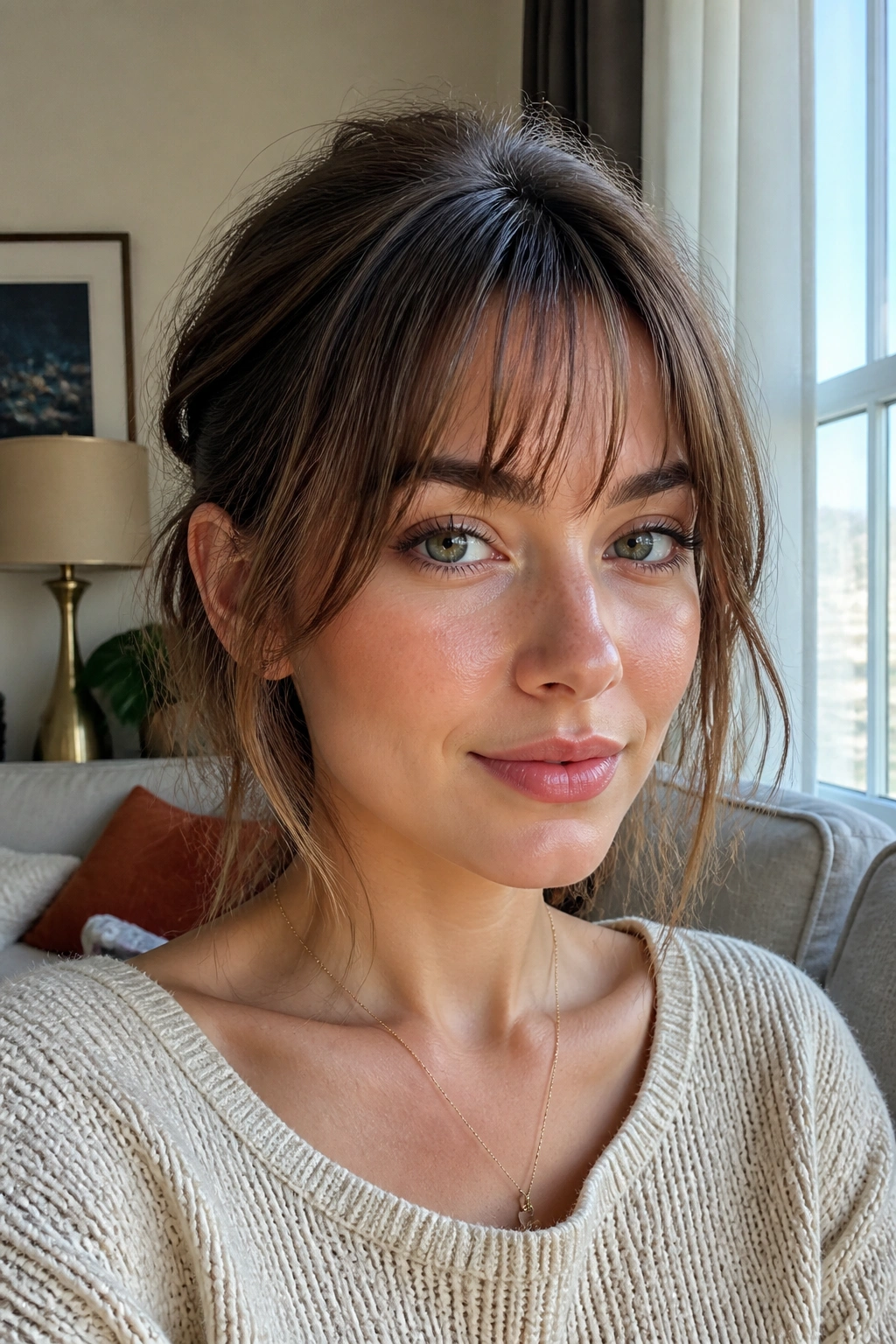
Some of the prettiest wispy bangs are the ones that have lost their strict shape. Once they start growing, they soften around the temples and look more relaxed. That is not a flaw. That is often the point.
The grown-out stage works especially well when the corners are long enough to blend into the face-framing layers. You get movement without needing to restyle everything every morning. It’s also easier to pin them back, which is helpful when you are sick of a full fringe but not ready to commit to a different cut.
This version is smart for people who like the idea of bangs but do not want a hard maintenance schedule. It gives you the softness of wispy bangs with a little more flexibility. The only real catch is that the shape has to be designed to grow well, not just survive.
17. Wispy Bangs with a Ponytail

Can a ponytail look finished with bangs? Yes. In fact, wispy bangs are one of the easiest ways to keep a ponytail from feeling too bare around the face.
The Small Styling Trick That Makes It Work
Leave a little softness at the temples when you pull the hair back. That tiny detail keeps the style from looking severe. The bangs can fall forward, or they can sweep gently to one side if you want more openness.
A high ponytail gives the fringe a sharper, cleaner contrast. A low ponytail feels softer and more casual. Both work, but the bangs need to be the same level of airy. If they’re too heavy, they fight the pulled-back hair and the whole look feels tense.
This is a smart option for busy mornings, workouts, and hot days when you want your face clear but not stripped bare.
18. Wispy Bangs with a Messy Bun
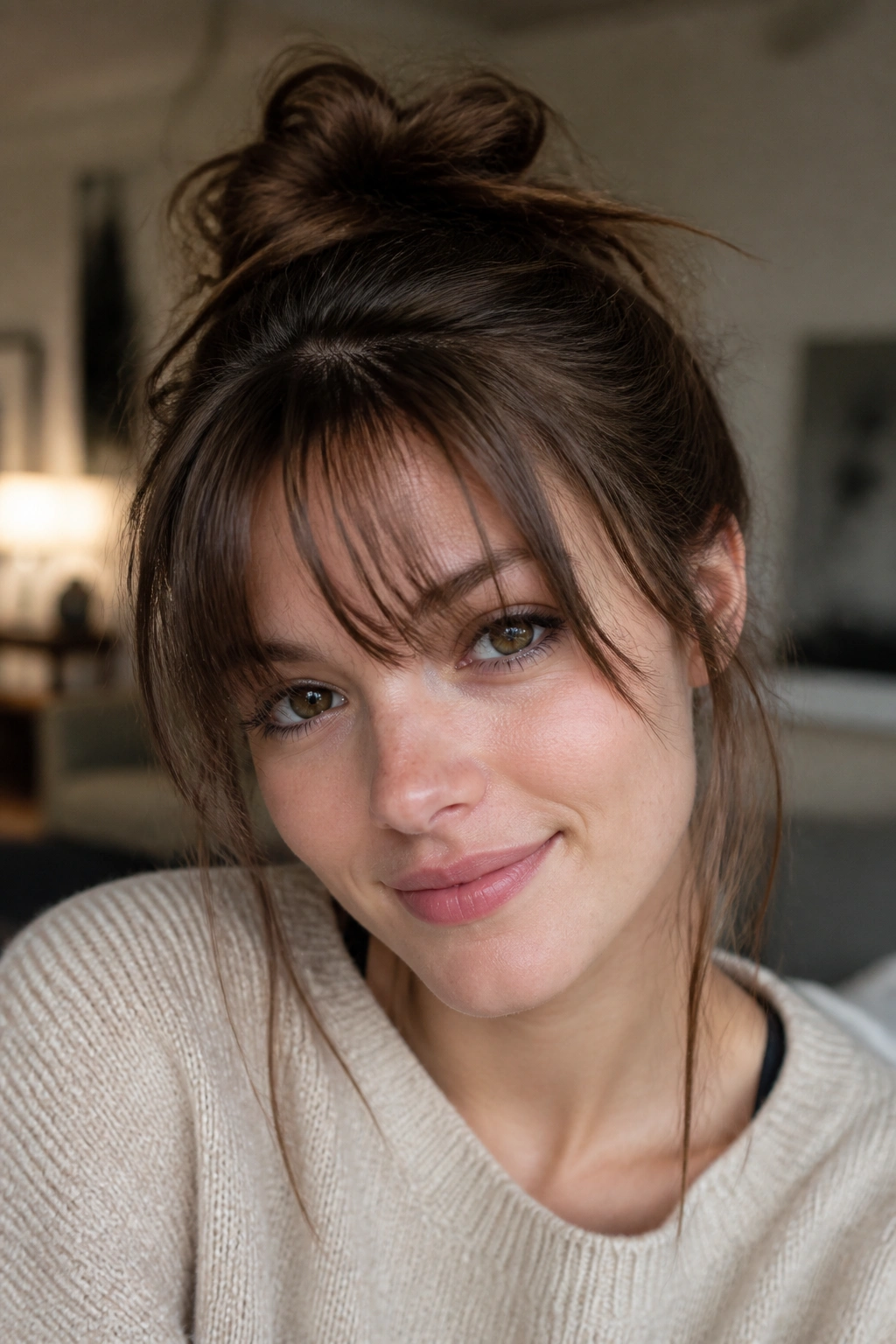
A messy bun makes wispy bangs look intentional fast. That is the magic of this pairing. The bun gives the style a rough, lived-in base, and the fringe brings the softness back to the front of the face.
The bun does not need to be perfect. If anything, too much polish can make the bangs seem random. Leave a few pieces loose near the ears, keep the bun a little off-center if you like, and let the fringe fall with some separation. That contrast is what keeps the look from becoming too sweet.
I like this combo when the hair has a little grit from dry shampoo or second-day texture. It makes the bangs sit better and stops them from clinging to the forehead. If you want a fast style that still looks thought-through, this is a solid one.
19. Air-Dried Wavy Wispy Bangs
Air-dried wispy bangs can look soft in a way that a blowout sometimes cannot. The wave sits a little irregularly, which gives the fringe a natural break at the ends. That unevenness can be lovely.
The trick is not to touch them too much while they dry. If you keep running your fingers through them, they separate in weird places and can frizz at the root. A gentle twist or two while damp is enough. After that, leave them alone.
- Part the bangs while they are still damp.
- Clip the sides away from the face if they fall into the eyes.
- Let the roots dry first so the fringe does not sit flat.
- Scrunch only the ends if the wave needs encouragement.
If your hair has a loose bend, this style can look more relaxed than a brushed-out bang and take less effort in the morning.
20. Feathered Arch Bangs
Feathered arch bangs follow the line of the brow in a soft curve, which gives them a polished look without making them hard. The center stays a little shorter, then the sides float down in a gentle arc. That shape is easy on the eyes. Literally.
This style works well if you wear glasses or like a more shaped front section. The arch keeps the bangs from getting lost under frames, and the feathered ends stop the look from feeling stiff. It also suits hair that naturally bends forward at the front, because the cut can work with the movement instead of fighting it.
The key is balance. Too much arch and the fringe starts to look formal. Too little and it loses the shape that makes it interesting. A soft curve, a few broken ends, and a little space at the forehead are enough.
21. Textured Lob with Wispy Bangs
A textured lob and wispy bangs make sense together because both are doing the same job: removing heaviness without losing shape. The lob keeps the length useful. The fringe keeps the front from looking flat.
This pairing is especially good if you want a haircut that moves from work to dinner without much effort. The layers around the ends can be subtle, almost invisible, while the bangs carry the softness around the face. That balance feels clean. Not fussy. Not overdone.
I’d choose this for straight hair that needs motion or wavy hair that gets bulky at the ends. A few bent pieces around the cheekbones help the bang line melt into the cut. If the lob is one solid length with no texture, the fringe has to work harder. A little piece-y detail in the ends makes everything easier.
22. 70s Shag Wispy Bangs
The 70s shag and wispy bangs belong together because both cuts like movement, bend, and a little bit of mess. A heavy bang would fight the shag. A soft fringe lets the layers do their thing.
What Makes This Pairing Click
The crown needs texture, the sides need lift, and the fringe needs to be broken up enough that it does not sit like a flat bar across the forehead. That kind of cut looks best when it moves as you walk. You can see it. You can feel it.
A diffuser helps if your hair is wavy or curly. If it is straighter, a round brush at the front and fingers everywhere else usually does the job. The best part is that the shag gives the fringe somewhere to disappear into, so the bangs do not feel separate from the haircut.
This is not the most conservative option. It is, however, one of the most alive-looking.
23. Soft Wolf Cut with Wispy Fringe
If you want edge without a heavy fringe, a soft wolf cut with wispy bangs is the move. The wolf cut brings layers through the crown and around the face, and the airy bangs keep the front from feeling too dense.
This works best when the fringe is short enough to show shape but long enough to stay soft. A straight-across bang would fight the whole idea. The cut should feel broken up, with the bangs melting into the shorter front layers and the longer pieces below.
It is a strong choice for thick or wavy hair. Fine hair can wear it, but the layering has to stay light or the ends start to look thin fast. I like this look when someone wants a haircut that feels a little wild but still wearable on a normal Tuesday.
24. Cheekbone-Skimming Wispy Bangs
Cheekbone-skimming bangs are one of the most flattering fringe lengths because they guide the eye right where the face starts to open up. They are long enough to feel soft, short enough to matter, and light enough that they do not crowd the forehead.
- Ask for the longest pieces to land around the upper cheekbone when pulled straight.
- Keep the center light so the eyes stay visible.
- Use a small flat iron bend only if the hair flips too sharply.
- Great for first-time bang wearers who want room to grow.
This shape also plays nicely with updos and half-up styles. When the hair is down, the bangs frame the face. When it is pulled back, those same pieces still do a little work. That flexibility is the whole reason this cut has staying power.
25. Wispy Bangs That Tuck Back Easily
A fringe that can tuck behind the ears or slip into a clip is worth its weight in gold on busy mornings. Heavy bangs do not give you that option. Wispy bangs do.
This idea works best when the center is narrow and the sides are left slightly longer. That gives the front enough softness when worn down, but enough length to stay useful when you need the hair off your face. It is a smart choice for office days, humid weather, and anyone who hates feeling locked into one style.
The nicest part is how quickly it changes mood. Left loose, it feels soft and face-framing. Pushed back, it reads cleaner and a little more grown-up. That flexibility is why I think the best wispy bangs are the ones that behave even when you do not feel like styling them.
