



Thin hair can make bangs feel risky. A blunt fringe can look heavy for an hour, then split apart, then cling to your forehead in the one spot you did not want it to cling to. Feathered bangs for thin hair solve that problem better than most people expect, because they build softness with movement instead of asking a sparse fringe to carry a solid line.
There’s also a useful distinction that gets ignored far too often: fine hair and thin hair are not the same thing. Fine hair refers to the diameter of each strand. Thin hair usually means less density overall. Feathering helps both, but in different ways. Fine hair benefits from less weight at the ends, while low-density hair benefits from a shape that doesn’t expose every gap across the forehead.
The best feathered fringe cuts do not try to fake thickness. They work with what’s there. That usually means a softer perimeter, a bit of face-framing around the temples, and enough length to sweep rather than stick up like a little shelf. A good stylist can make a fringe look airy without making it look see-through. That balance matters.
1. Soft Center-Part Curtain Bangs
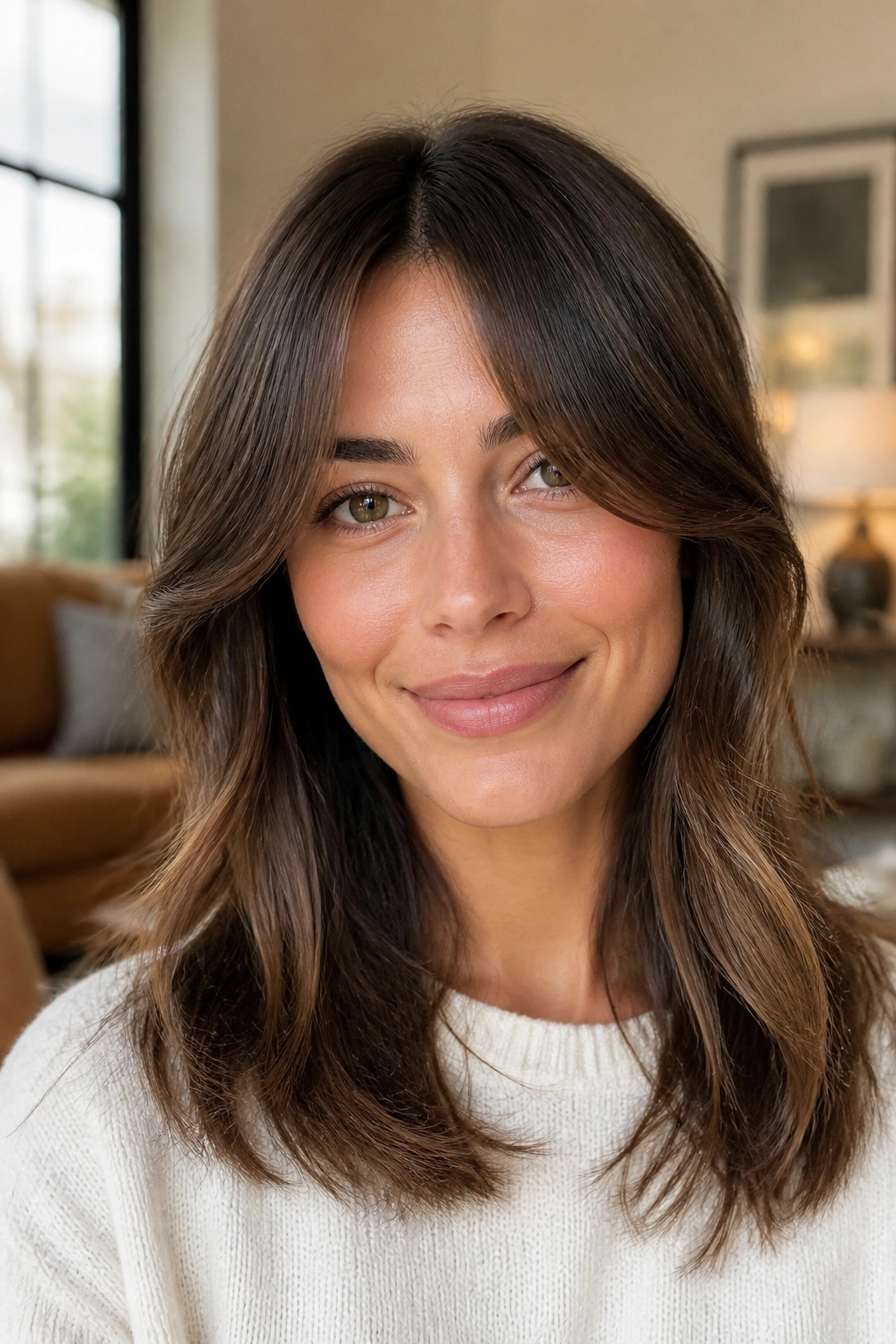
Curtain bangs are still one of the easiest wins for thin hair, and the feathered version is the one I’d steer most people toward first. The center part breaks up the forehead in a way that feels light, while the longer sides create the illusion of more hair where you actually want it.
What makes this cut work is the shape. The shortest point sits around the bridge of the nose or a little higher, then the fringe drifts longer toward the cheekbones. That diagonal line is flattering on nearly everyone, and it keeps thin hair from looking like it’s trying too hard to be dense.
Why it helps thin hair
- The part at the center prevents one heavy block of hair from sitting flat.
- The longer side pieces add width around the face, which makes the fringe feel fuller.
- Feathered ends soften the outline so gaps are less obvious.
Ask for soft point-cutting at the ends, not aggressive thinning near the roots. That last part matters. Too much root texturizing can make the fringe collapse faster than you’d like.
2. Side-Swept Feathered Bangs

Side-swept bangs are the safest option if you want movement without a dramatic forehead change. They’re also a gift for thin hair because the hair travels diagonally instead of falling in one straight curtain, and that diagonal line naturally reads as fuller.
A side-swept feathered fringe is especially good if you have a cowlick or a part that refuses to stay put. Let the bangs flow in the direction your hair already wants to go. Fighting that pattern is where a lot of bad fringe haircuts go wrong. People blame the bangs, when the real issue is the part.
How to style them
Blow-dry the roots in the opposite direction first, then sweep them over with a round brush. Use a pea-sized amount of lightweight mousse or spray foam at the roots, not a heavy cream. Heavy cream is the enemy here. It drags the whole shape down.
A side-swept fringe is also easy to grow out. That’s part of the appeal. You can shift it into a curtain shape later without needing a full haircut rescue.
3. Eyebrow-Grazing Wispy Fringe
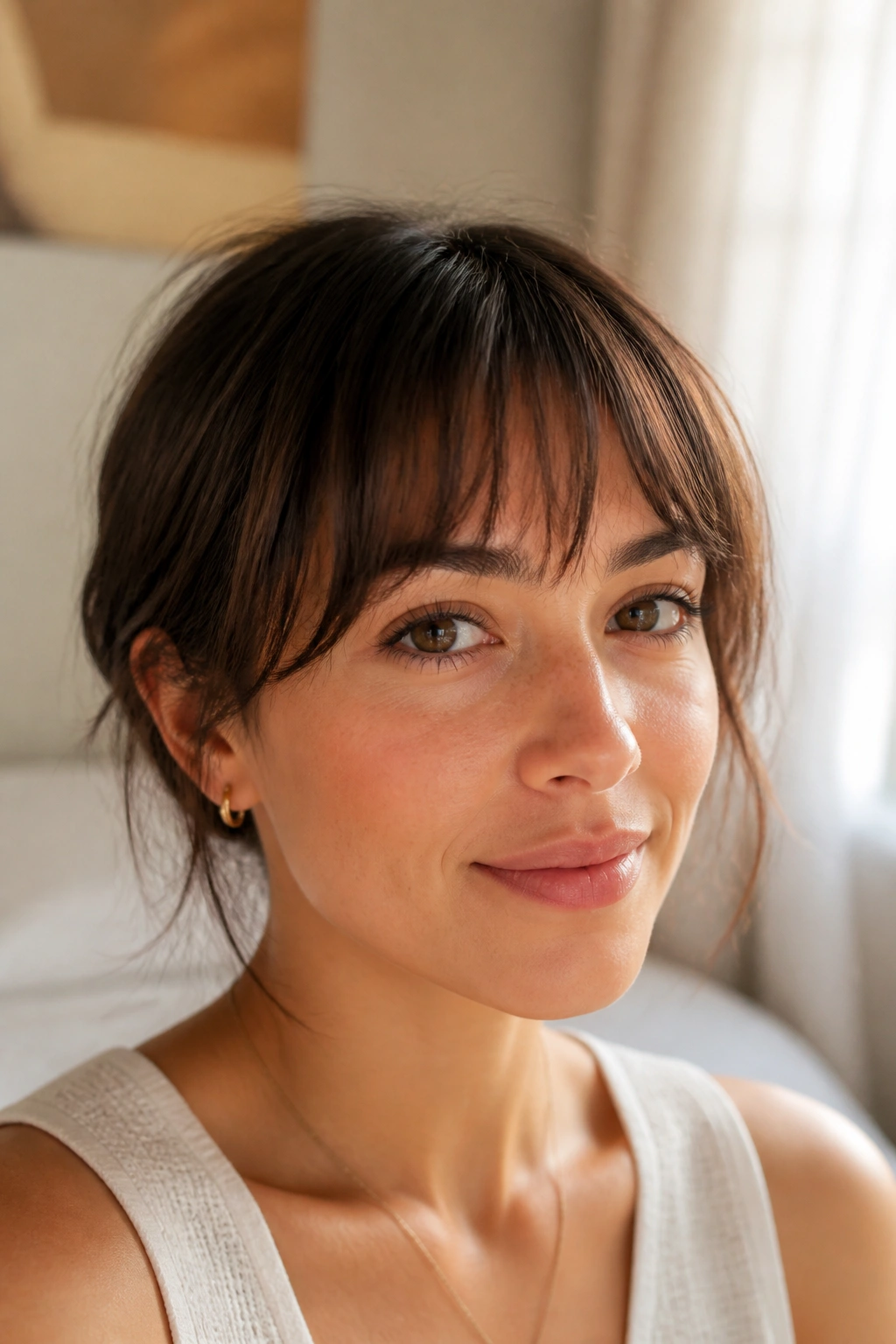
If you want bangs that are visible but not bulky, eyebrow-grazing wispy fringe is the sweet spot. It gives you the feeling of a fringe without asking thin hair to fill a wide, solid band across the forehead. That alone makes a big difference.
The trick is leaving the line soft, almost imperfect on purpose. A tiny bit of separation between strands can be flattering here, because it stops the bangs from looking like a pasted-on strip. Thin hair looks best when it seems airy, not overworked.
What to ask for
- Keep the center just above or right at the brows.
- Let the edges taper slightly longer toward the temples.
- Use point-cutting instead of a blunt horizontal cut.
One-sentence truth: these bangs need restraint. If a stylist takes out too much bulk with razors or thinning shears, they can end up looking patchy instead of wispy. That’s a difference you feel immediately when you run your fingers through them.
4. Bottleneck Bangs With Light Ends
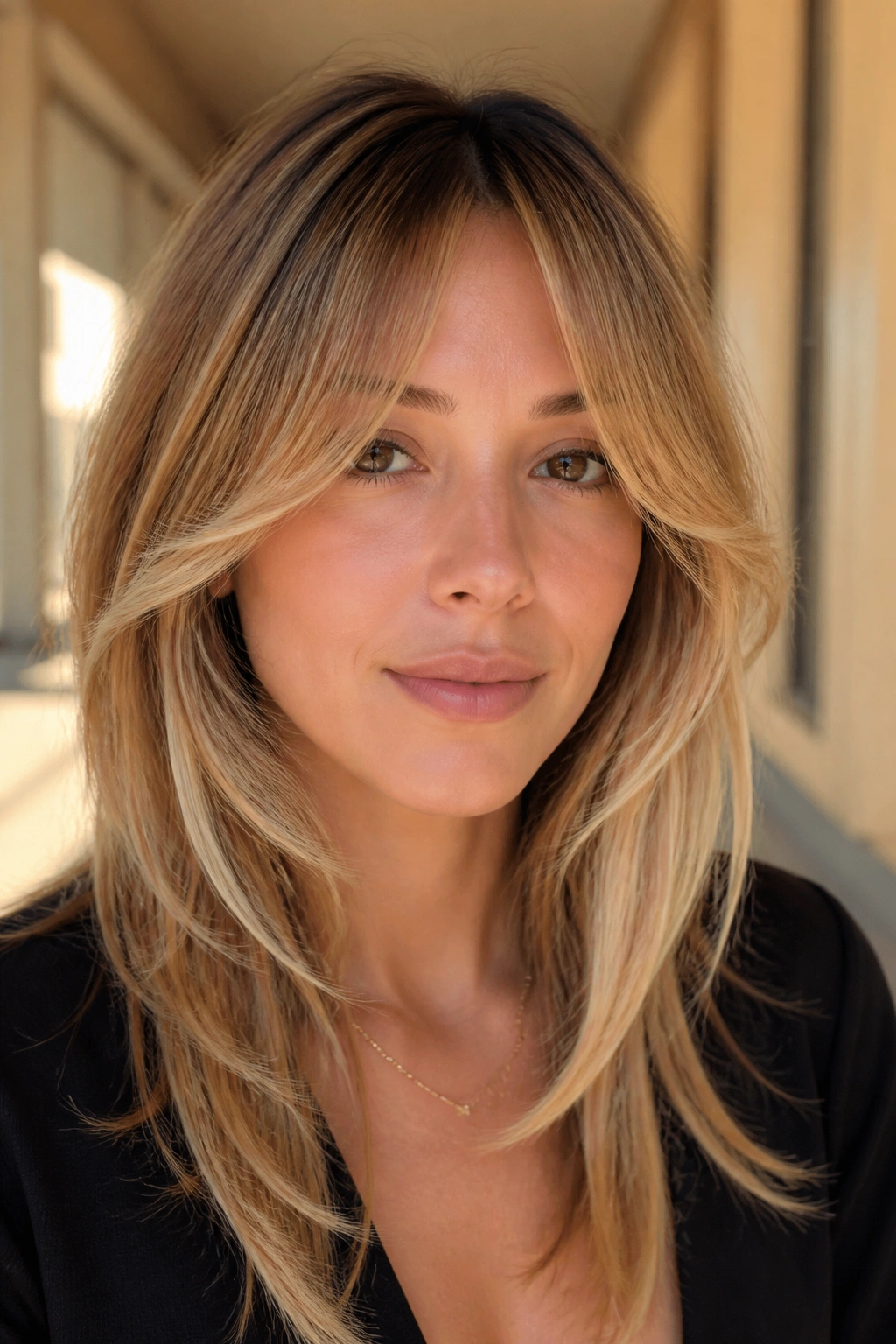
Bottleneck bangs are a clever shape for thin hair because the center stays narrow and the sides open out softly, almost like a little hourglass around the eyes. It gives you fringe without demanding a full thick bang line, which is usually where thin hair gets into trouble.
I like this shape on longer faces and softer jawlines, but it works in more places than people assume. The feathered finish keeps the curve from feeling severe. It looks intentional, not fussy. And because the widest part of the shape lands closer to the temples, you get a nicer frame around the face than you would with a straight-across bang.
If you want this done well, ask for a short center that blends into longer side pieces at the cheekbone level. The ends should be soft enough to move when you turn your head. If they feel chunky or carved, the whole point gets lost.
5. Face-Framing Feathered Bangs That Melt Into Layers
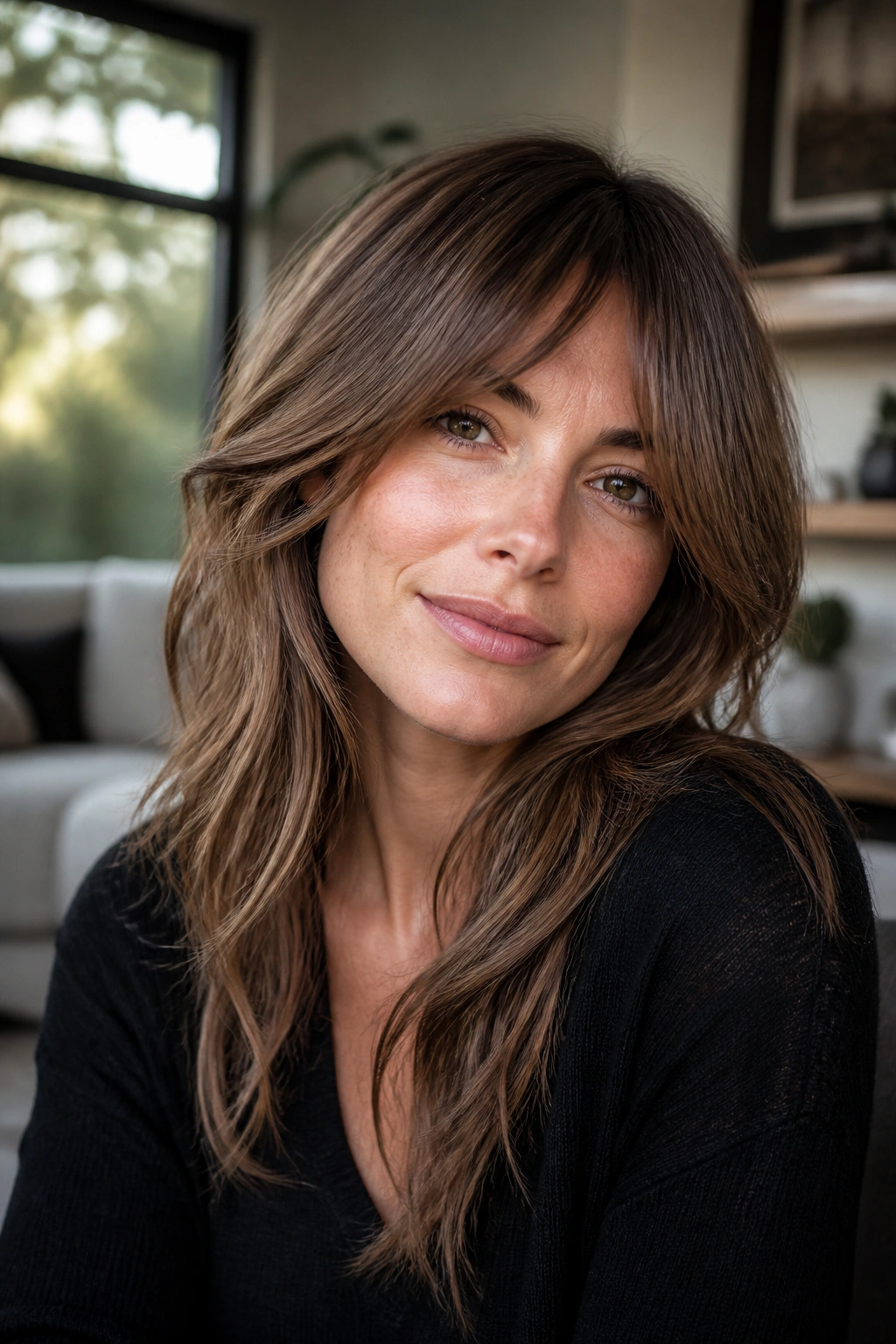
This is the choice for anyone who says they “like bangs” but don’t actually want a hard fringe. The bangs begin as short face-framing pieces and melt into longer layers, so there’s no obvious line where the bangs stop and the haircut starts. For thin hair, that seamless shift is gold.
You get movement around the eyes and cheeks without concentrating too much hair in one place. That helps the front of the haircut feel lighter, which matters if your hair tends to flatten by midday. It also means the grow-out phase is kinder. Nothing about it screams “I need a trim tomorrow.”
Best for people who want:
- A softer look than blunt bangs
- Easy grow-out
- A haircut that works with ponytails and clips
- Less forehead coverage, more cheekbone framing
This is one of those cuts that looks better in motion than in a still photo. The pieces slide into the rest of the haircut instead of sitting there like a separate feature.
6. Piecey Feathered Fringe
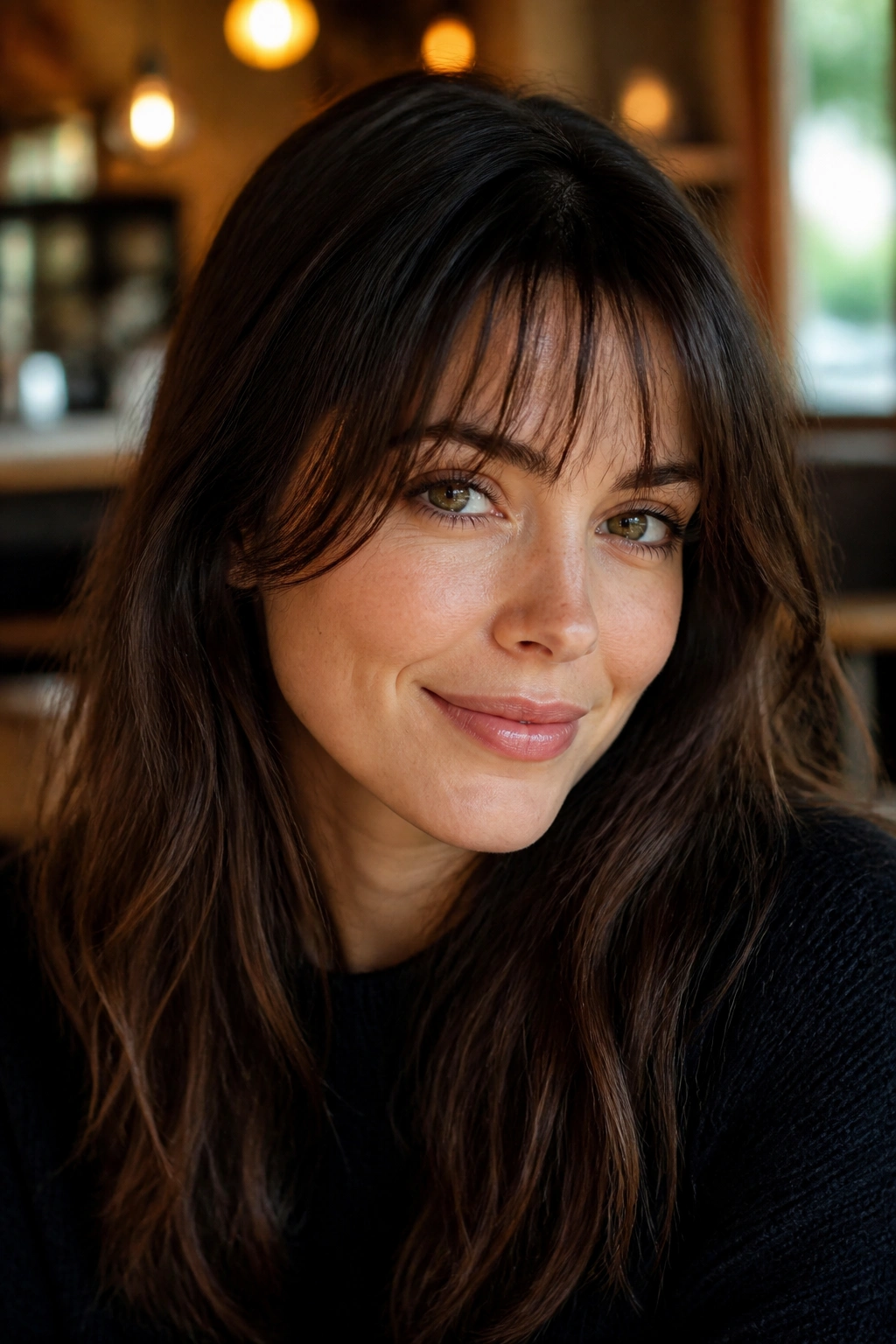
Piecey bangs are not the same as thin bangs, and that distinction matters. Piecey means separated into a few soft sections, not sparse in a sad way. Done right, this style gives thin hair texture and definition without making it look overcut.
The important thing is to keep the pieces soft enough to move. You want little lanes of hair, not a stringy mess. A tiny amount of lightweight wax on the fingertips can help, but use less than you think. A dot. Maybe two, if your hair is coarse and stubborn. Fine hair gets greasy fast, and bangs show oil first.
This style works especially well if your hair has a bit of natural bend or if you like a lived-in finish. It can look a little undone in the best way. Not sloppy. Just relaxed. That’s a fine line, but a good stylist will know it when they see it.
7. Arched Feathered Bangs That Follow the Brow
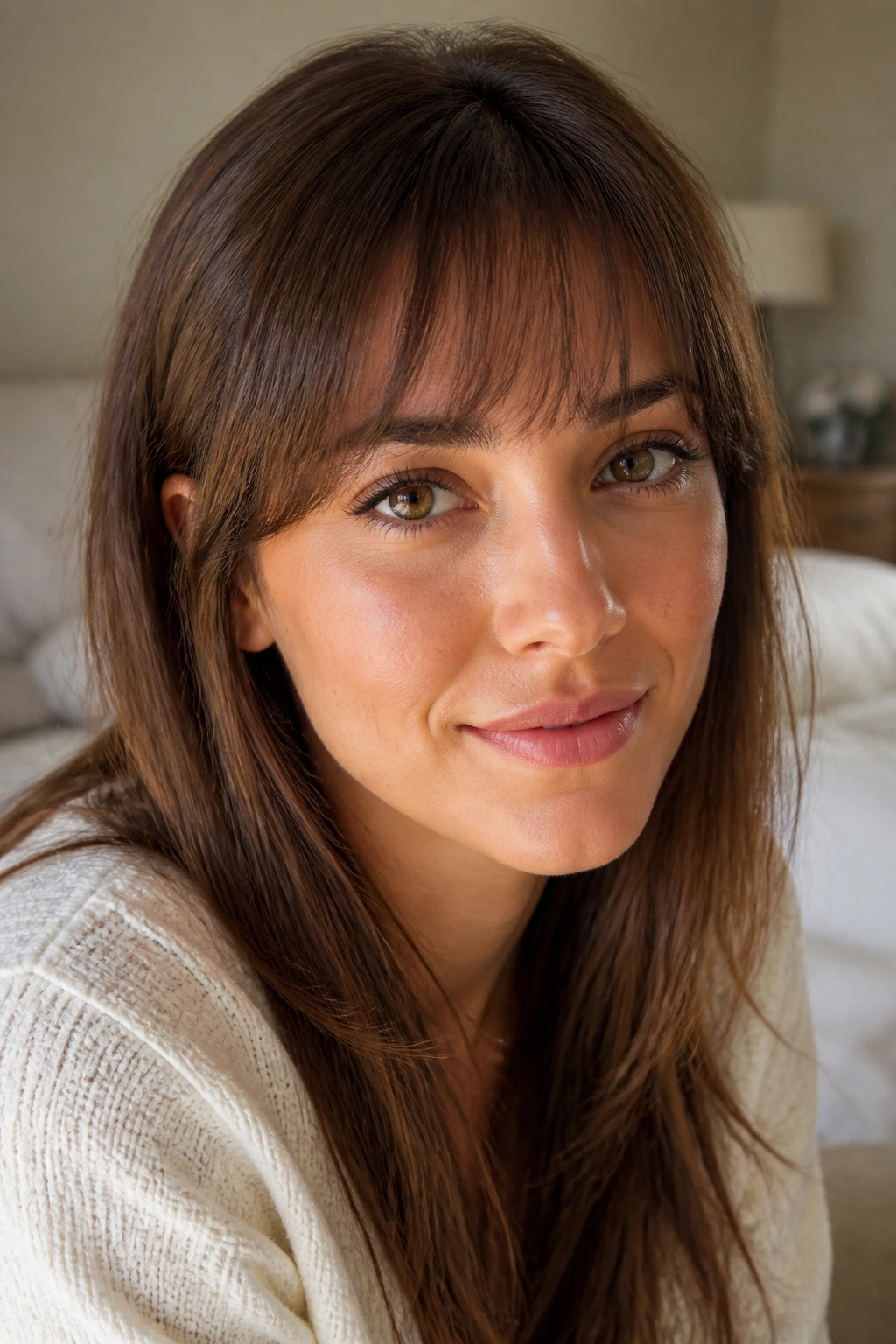
A softly arched fringe gives thin hair a shape to hold onto. Instead of cutting straight across, the bangs curve gently to echo the brow line. That curve helps the fringe look fuller because the eye reads a shape, not a flat strip.
It’s a smart option for glasses wearers, too. The arch keeps the fringe from fighting the frame, and that alone saves you from a lot of daily annoyance. Thin hair around the temples can disappear fast if the cut is too short or too blunt. An arch avoids that problem.
Why this shape feels fuller
The curve creates a wider visual base, which makes the hair seem denser than it is. It also helps the bangs settle into place with less effort. You are not forcing them into a box. They already want to lie that way.
How to style it
Use a small round brush and direct the hair slightly forward, then curve the ends under just enough to follow the brow. Keep the roots lifted for a second while they cool. That little pause matters more than people think.
8. Long Feathered Bangs for Cowlicks

Cowlicks and thin bangs can be a rude combination. Short fringe often splits, sticks up, or swings the wrong way the second you step away from the mirror. Long feathered bangs are a better answer because the extra length gives the hair some weight.
That weight does not need to be heavy-looking. It just needs to be enough to calm the cowlick. Feathered ends keep the whole thing from feeling clumpy, so you get control without losing softness. If your hairline pushes bangs to one side no matter what you do, this is a cut worth asking about.
Blow-dry from side to side while the hair is damp, then pin the fringe in the direction you want it to land until it cools. Old trick. Still works. A nozzle attachment helps too, because it gives you more direction and less puff. Thin hair can look wispy in a good way or just frizzy. The difference usually lives in the blow-dry.
9. Soft Full Fringe With Feathered Edges

A full fringe can work on thin hair, but only if the edges are feathered enough to keep it from feeling like a sheet. The trick is density at the center with softness at the perimeter. You need enough hair to cover the forehead, yet not so much that it turns flat and heavy.
This style suits people with a bit more front density than they realize. Plenty of hair is thin overall but still has a decent amount near the hairline. If that’s you, a soft full fringe can look polished without looking dense in the wrong way.
The edges matter most. If they’re too blunt, the cut can drag the face down. If they’re too aggressively textured, the bangs start to look fragmented. The sweet spot sits between those extremes. It’s a calmer, more controlled version of a classic fringe.
10. Razor-Light Feathered Bangs

Razor-cut bangs can be beautiful on the right hair, and I’d use the word carefully there on purpose. For thin hair, a razor can remove bulk and create soft movement, but only if the strands can handle it. Healthy straight hair often does well. Fragile ends or overly dry hair usually do not.
The appeal is the airiness. Razor work creates softer edges than scissors, which can make a fringe feel almost weightless. That can be excellent when you want shape without bulk. The downside is obvious if the hand is too heavy: the ends can look frayed instead of feathered.
This is the one I’d pair with a stylist who knows how your hair behaves when it dries. If the hair already leans fine and delicate, a point-cut finish with scissors may be safer. Same effect, less risk. No prize for using the sharpest tool if the result falls apart by lunch.
11. French Blowout Fringe
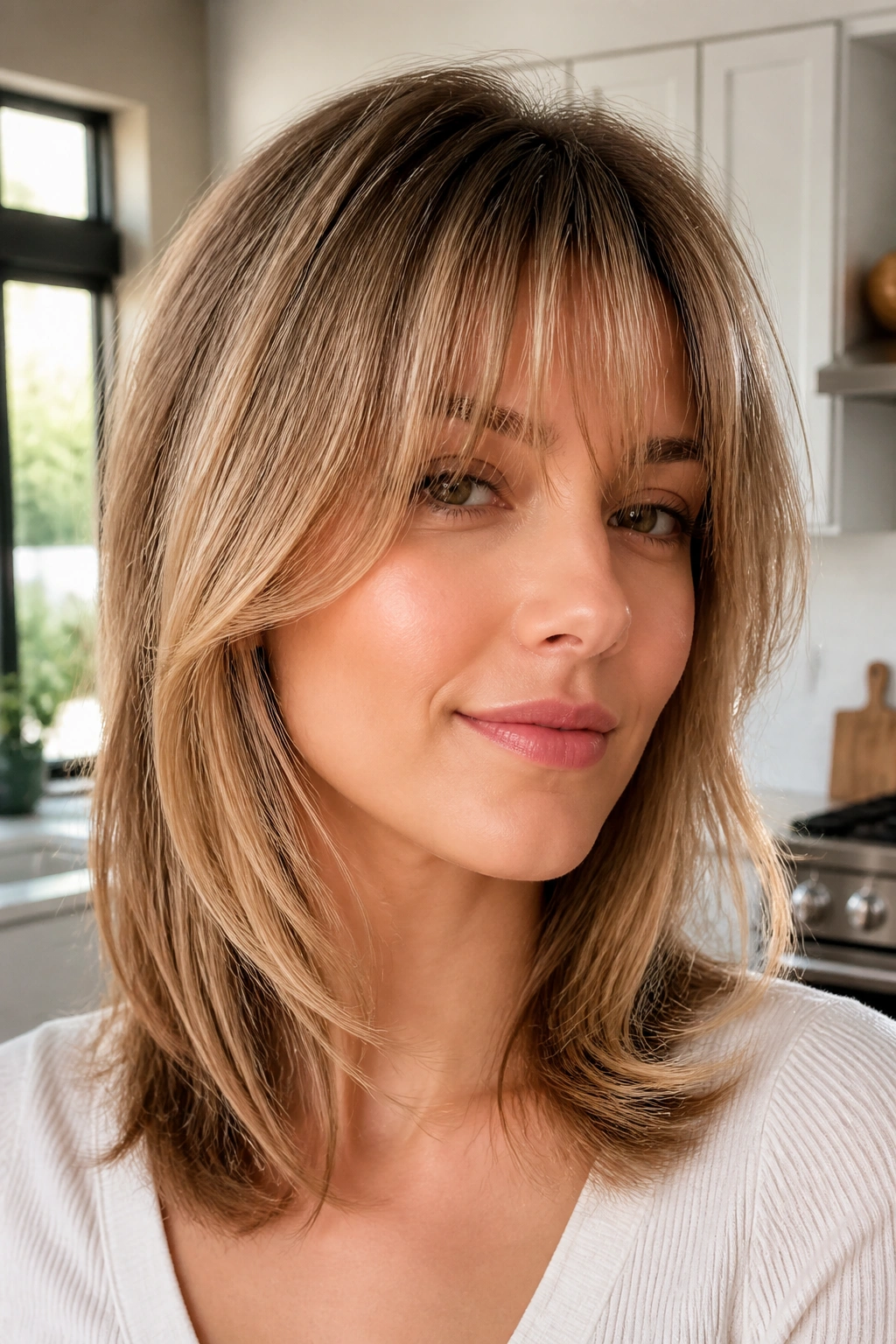
A French blowout fringe is all about movement at the root and a soft bend through the ends. It’s that airy, brushed-out look that keeps thin hair from lying too close to the scalp. The style works because the fringe is shaped to lift, not sit.
The center is usually a touch shorter, with the sides grazing the outer brow or cheekbone. That gives you a lift in the middle and a frame on the sides. When you blow-dry it with a round brush, the shape fills out enough to look intentional, which is half the battle with thin hair. Flat bangs can feel apologetic. This version does not.
A medium round brush, a little heat protectant, and a quick cool-down are enough. You do not need to overstyle it. In fact, the more you fuss, the more likely it is to lose that light, brushed softness that makes the whole thing work.
12. Shaggy Feathered Bangs

If your hair has natural wave, a shaggy feathered fringe can be a smart match. The cut borrows from the shag: layers, movement, and a little controlled mess. Thin hair often looks better when it is allowed to move, and the shag shape helps with that.
These bangs are not sleek. They are not supposed to be. They sit best when they have a bit of bend and separation, which makes them easier to wear if your morning routine is short. A little mousse, a quick scrunch, air-dry or diffuse. That’s enough.
The catch is precision. Shaggy does not mean careless. The bangs still need a clear plan so they do not vanish into the rest of the haircut. If the fringe is too short or too thinned out, the shape disappears. If it’s done well, though, it gives thin hair a much fuller look because the eye follows the layers instead of the density.
13. Invisible Feathering for Very Sparse Hair

Sometimes the best bangs for thin hair are barely bangs at all. If the front is very sparse, a soft invisible fringe can be the most flattering move, because it gives you a hint of shape without exposing a weak line across the forehead.
This is usually a mix of tiny face-framing pieces, a soft central section, and longer layers that sit just beside the eyes. The goal is to suggest a fringe rather than announce one. That can sound cautious, but it’s often the most practical answer when density is limited.
What makes it work
- No hard horizontal edge
- More length at the temples than in the center
- Feathered ends that blend into the haircut
- Light layering, not heavy thinning
It’s a quiet haircut, and I mean that in a good way. The whole look feels softer because it never forces the front section to do more than it can.
14. Off-Center Feathered Bangs

A slightly off-center part is underrated. It gives you the softness of a fringe without the symmetrical feel that can expose gaps in thin hair. The eye reads the shift as natural, and the hair usually sits better because it is not split perfectly down the middle.
This is a handy option if you like the idea of curtain bangs but don’t want the full center-part look. It also works beautifully with a stubborn part that never truly behaves. Meeting the hair halfway is usually smarter than trying to bully it into submission.
An off-center fringe can be brushed forward and then eased to one side with your fingers. That looseness is part of the charm. It should feel casual, not messy. If the pieces are too short, the offset part looks accidental. If they’re long enough to sweep, the whole style gets softer and more flattering.
15. Split Fringe With Long Tails

A split fringe is like curtain bangs that have been opened a little wider. The center separation gives the forehead air, while the long side pieces create a frame that keeps thin hair from disappearing. I like this version for people who want softness but also want to see some of their face.
The “long tails” are the important part. They keep the haircut from feeling flimsy. If the fringe ends too high on the cheek, the shape can look unfinished. If it lands around the cheekbone or just below, it feels balanced and easy to wear.
This is a strong choice if you wear your hair up a lot. The split fringe can fall around the temples, and that gives even a simple bun a more deliberate finish. No big styling effort required. Just enough shape to make the haircut look considered.
16. Feathered Bangs With Cheekbone-Length Sides
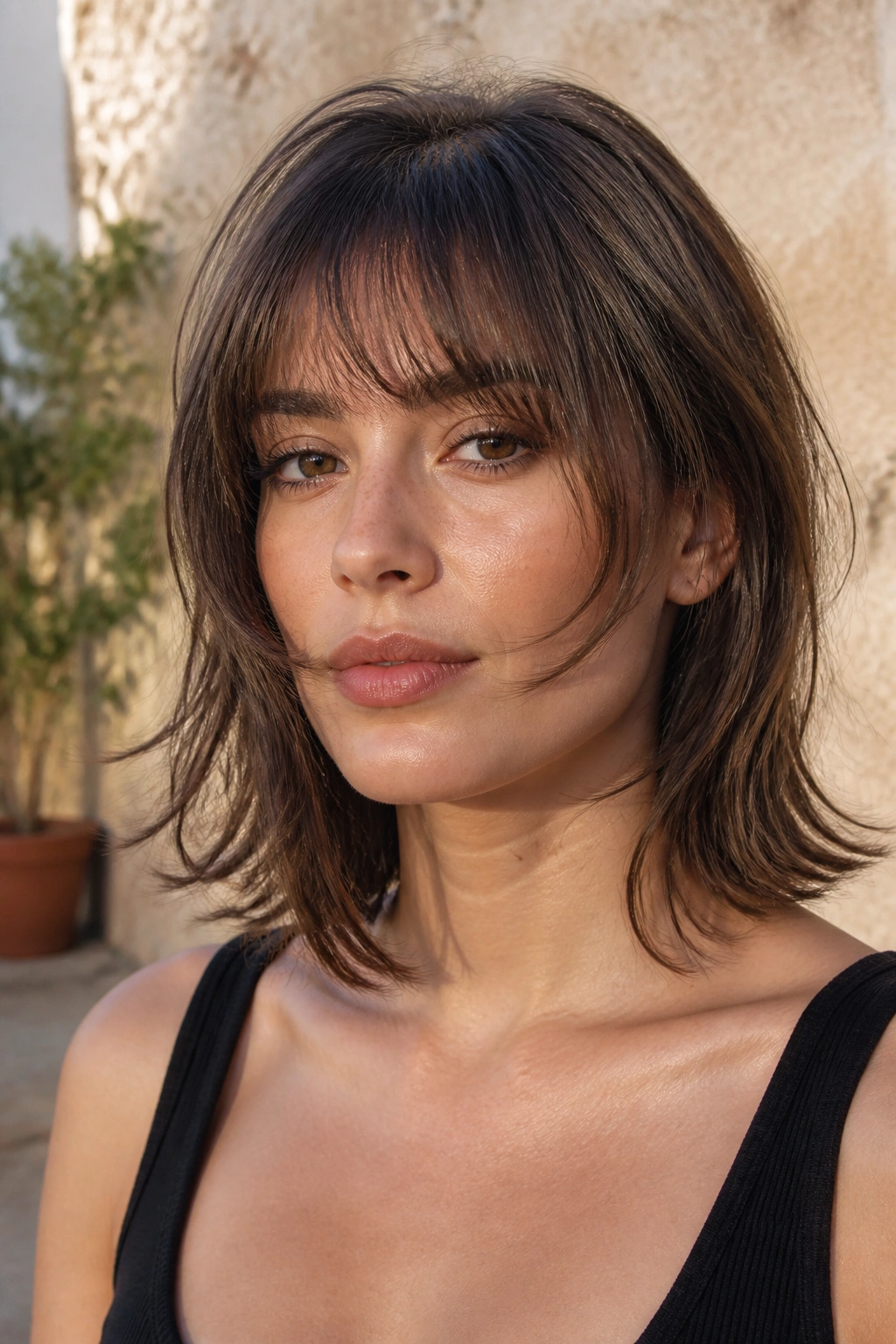
If you want your fringe to do more face-framing than forehead-covering, this is the cut. The bang area stays short enough to matter, but the sides drop to cheekbone length and feather out there. Thin hair benefits from that extra length because it creates a fuller visual line on the face.
The cut also shifts attention upward and outward. That can be useful if your bangs tend to separate at the center or if your temples are less dense than the rest of the front section. Long side pieces soften that issue fast. They hide little gaps better than a blunt, eyebrow-length cut ever could.
This style is especially nice with ponytails, half-up styles, and loose waves. It has range. That’s what I like about it. It does not live and die by one exact blow-dry.
17. Rounded Feathered Bangs
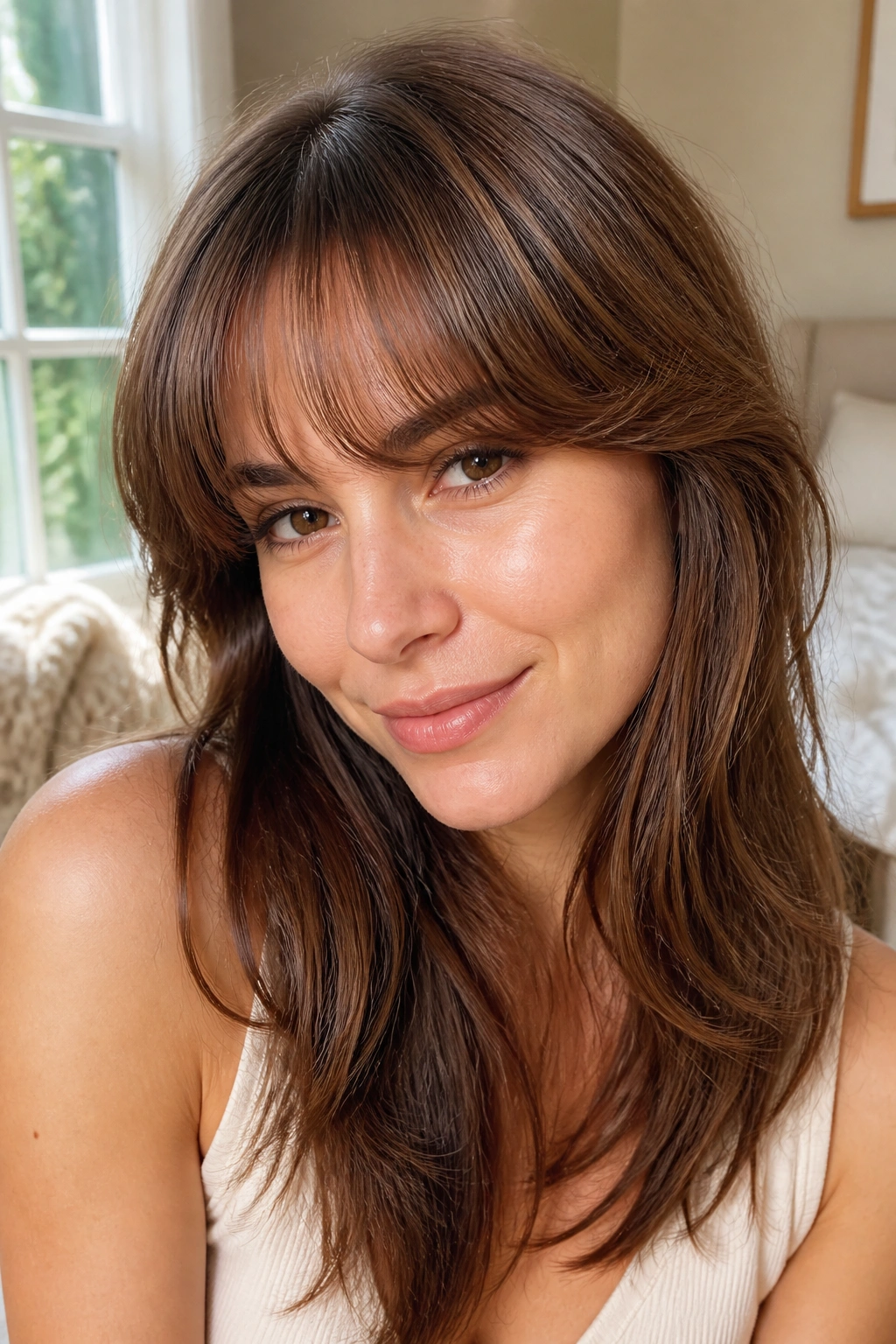
Rounded bangs curve gently across the forehead, which gives thin hair a more filled-in look than a straight line often can. The shape follows the natural arc of the face instead of drawing a hard shelf across it. That makes the fringe feel softer and less obvious in the best sense.
This works well if your hair is straight or lightly wavy and tends to fall flat on the sides. The rounded shape builds a little center weight while the feathered edges keep the outline from turning severe. It’s a nice middle ground between a full fringe and a curtain bang.
The key is not to overcut the corners. If the sides get too short, the roundness turns choppy. If they’re kept a touch longer, the shape looks fuller and the hair moves better. That slight length difference matters more than most people realize.
18. Choppy Feathered Fringe
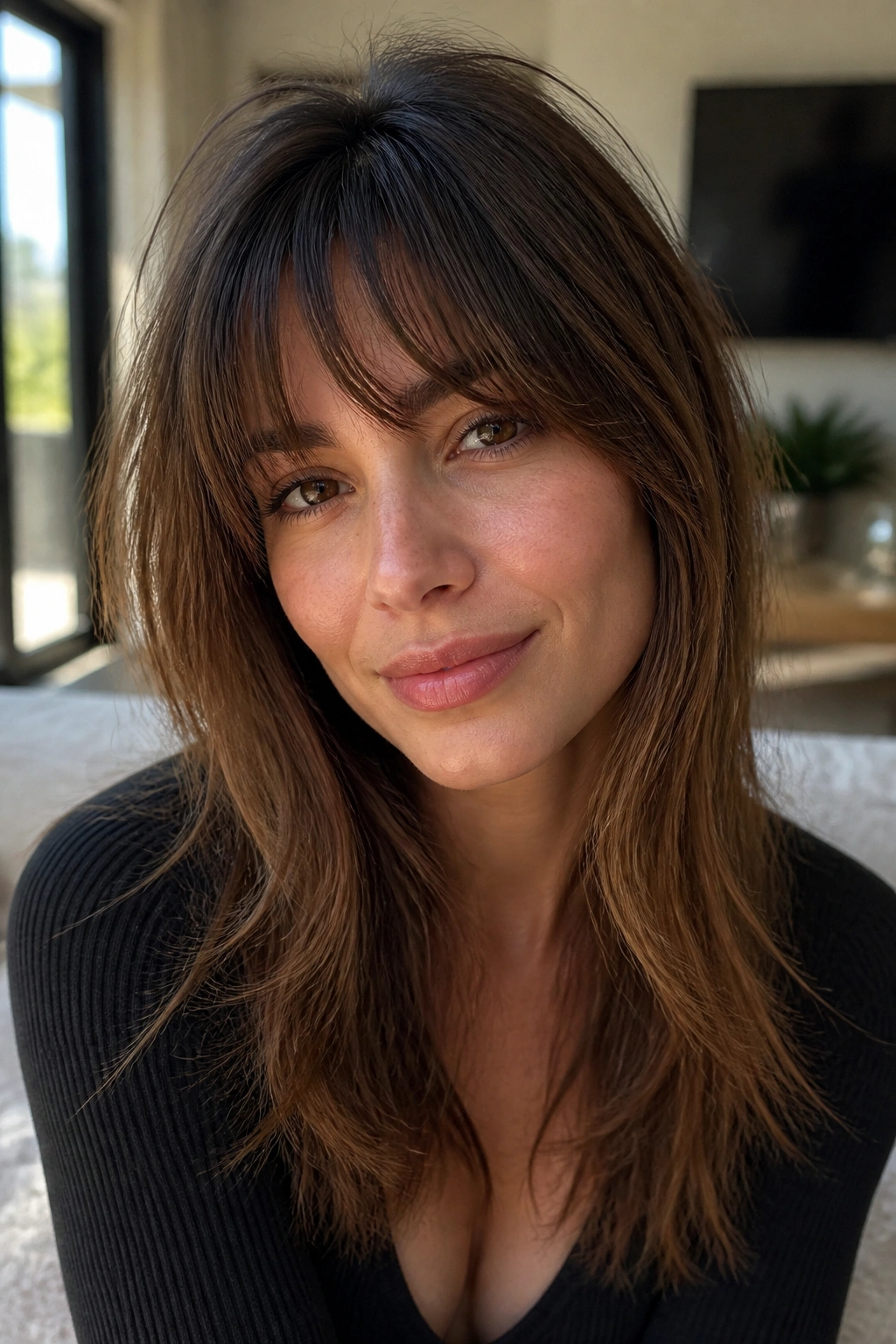
Choppy bangs can be a smart move when thin hair needs a little texture to stop looking flat. The word choppy scares people because it sounds harsh, but it does not have to be. In this case, it means the lengths are slightly irregular, which helps the fringe feel lived-in and a little fuller.
The style is best when the hair has some texture already. Straight, slippery hair can make choppy bangs look separated in a bad way if the cut goes too far. Wavy hair usually takes this shape more easily. Either way, the feathered finish keeps the edges soft enough that the chop reads as movement, not damage.
A texturizing spray can help, but a light hand is everything. Too much product and the bangs clump. Too much cutting and the fringe loses shape. You want the eye to see texture, not struggle.
19. Layered Bangs That Match a Lob
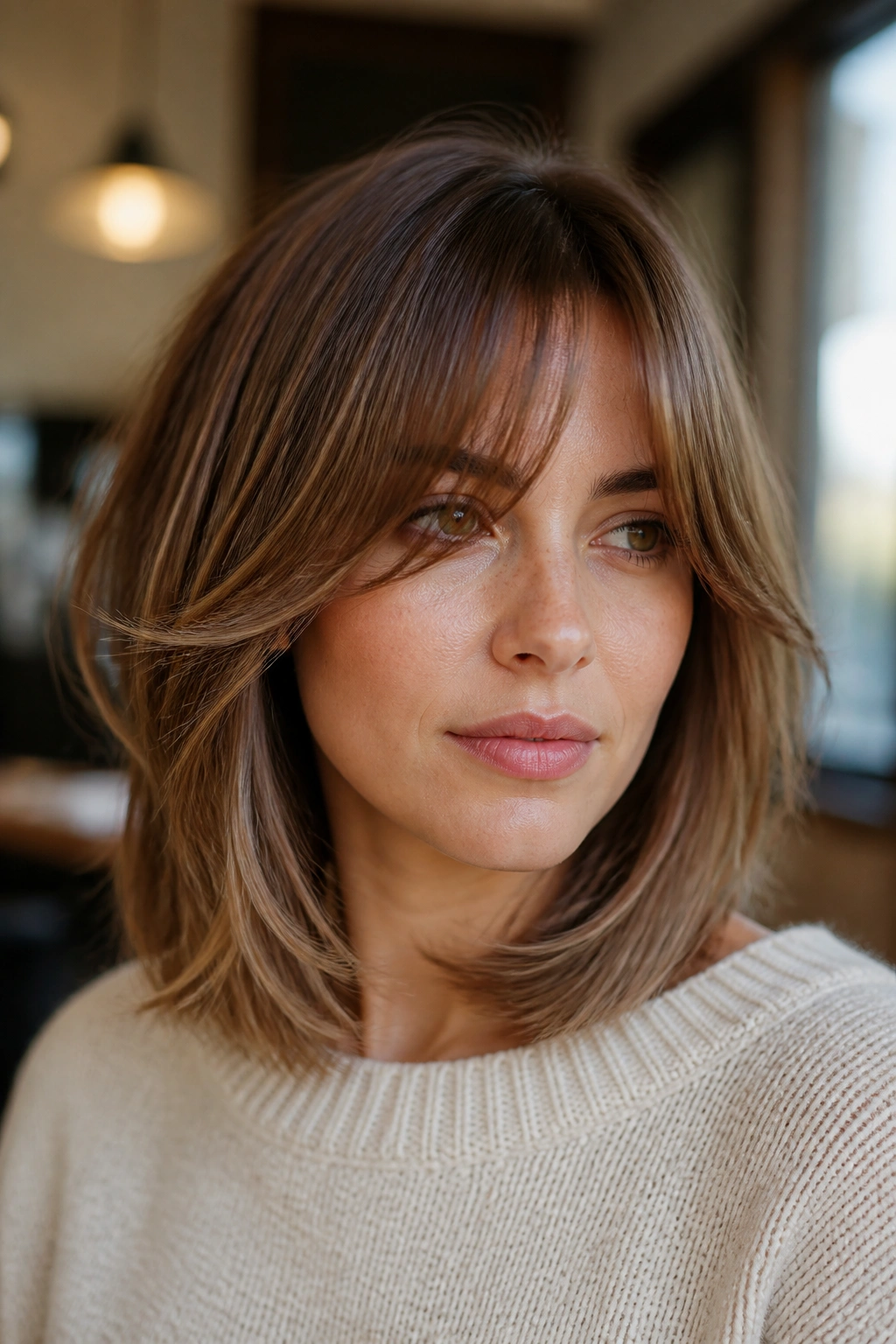
A lob changes the whole equation. Thin hair often looks fuller at collarbone length than it does when it’s too long, and layered bangs can echo that shape nicely. The result feels cohesive: the fringe and the haircut move the same way, instead of fighting each other.
This is a good route if you want a face frame but dislike high-maintenance bangs. The layers around the face can start at the brow or cheekbone and gradually blend into the lob. That creates a soft transition and keeps the front from collapsing into a single flat curtain.
Good reasons to choose this pairing
- The haircut and bangs support each other
- The overall shape looks thicker than a one-length cut
- Styling can stay simple, especially with a round brush
- Grow-out looks cleaner than a blunt fringe
I’d call this one practical chic, for lack of a better phrase. It works because it respects the limits of thin hair instead of pretending those limits don’t exist.
20. Feathered Bangs That Sit Well With Glasses

Glasses change where bangs need to land. If the fringe sits too low, it catches on frames and splits. Too short, and it can expose more forehead than you want. Feathered bangs with glasses-friendly length sit in the narrow sweet spot between those two problems.
The best versions usually skim just above the frame line or move softly around it. A little curve at the center keeps the bangs visible, while feathered sides stop the shape from feeling bulky near the temples. That matters because frames already put visual weight on the face. The bangs should help, not compete.
How to keep them from crowding your frames
Use a small round brush and lift at the roots, then guide the ends away from the glasses with your fingers while they cool. A light mist of flexible hairspray is enough. Heavy spray turns the fringe stiff, and stiff bangs look especially awkward near lenses.
21. Airy Grown-Out Fringe
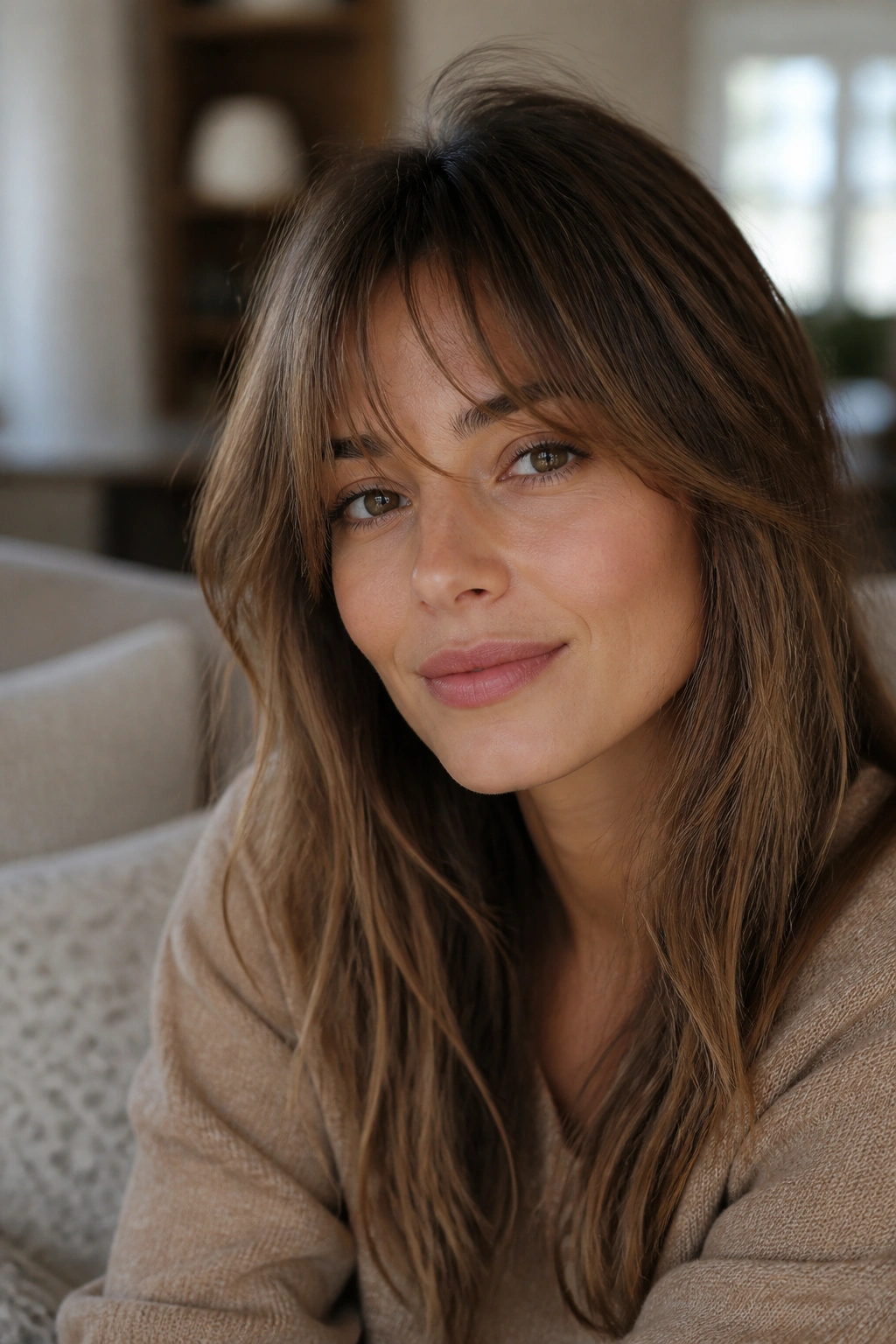
Not everyone wants bangs that need constant babysitting. An airy grown-out fringe is cut to look good at a longer length, which makes it a relief for thin hair. The shape stays soft even as it gets a little shaggy between trims.
This is the fringe for people who like the idea of bangs but hate the sharp weekly upkeep. The hair can fall into a curtain-like shape, sweep to one side, or split down the middle depending on how you style it that day. That flexibility is the whole draw.
I also like this option because it forgives thin spots. When a bang is intentionally longer and feathered, the eye reads it as movement rather than as lack. That is a useful trick, and not a fake one. The haircut genuinely gives you more room to work with.
22. Low-Maintenance Feathered Bangs That Still Hold Shape
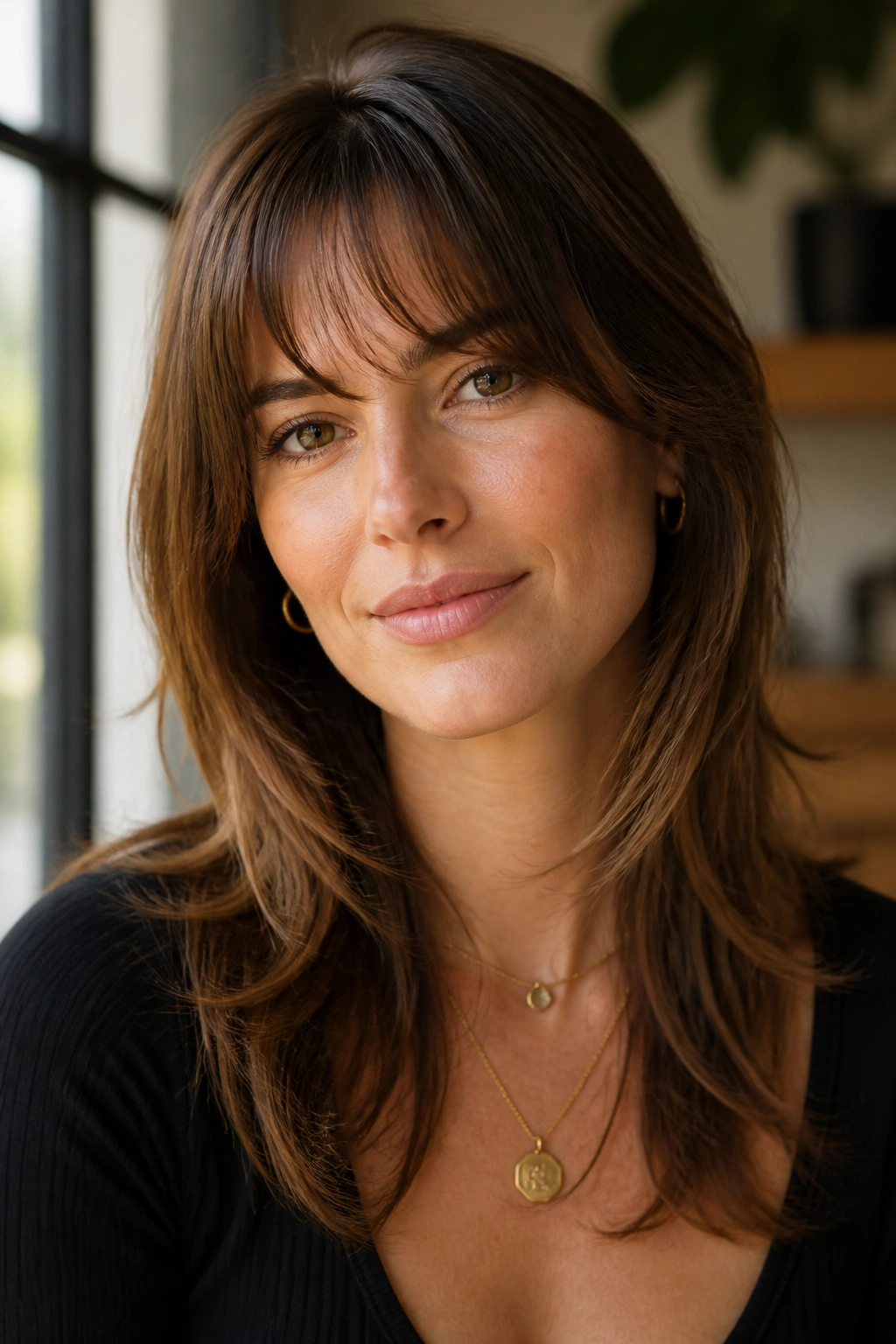
Some bangs look lovely in the chair and terrible at 4 p.m. These are not those bangs. The best low-maintenance feathered fringe for thin hair is the one that keeps its shape without constant re-blowing, which usually means enough length to sweep, soft layering at the edges, and no over-thinning at the crown.
This is where the haircut logic gets simple. Thin hair needs support, not drama. Give it a shape that can fall forward without collapsing, and it will usually behave. A slightly off-center part, a little face-framing on the sides, and soft feathering at the ends can do more than a fancy, overcut fringe ever will.
If you are choosing only one version from this list, choose the one that matches how you actually live. Not how your hair looks for ten minutes after styling. Real life counts here. Rain, sweat, glasses, clips, dry shampoo, late mornings — all of it. The right feathered bangs for thin hair should survive those things with a little grace, and that is the whole point.
A final thought worth keeping close: thin hair looks best when the front is shaped to move, not forced to behave like a dense curtain. Softness is not a downgrade. It is often the smartest cut in the room.
