



Bangs for high foreheads can look polished or awkward fast, and the difference is often only a few millimeters of haircut. That sounds fussy, but hair is fussy. A fringe that starts too high can make the forehead look even taller; one that sits too heavy can swallow the eyes and harden the whole face.
A good cut doesn’t just “cover” skin. It changes the frame around your face. That means thinking about the starting point, the thickness of the fringe, where it lands when dry, and whether the edge is blunt, broken, curved, or feathered.
A stylist who knows what they’re doing will usually cut bangs a touch longer first, then refine them after they dry. Hair shrinks, curls, and springs in ways that look small in the chair and obvious an hour later. Straight hair, wavy hair, and curly hair each behave differently, and a high forehead needs a style that works with your texture instead of fighting it.
Some bangs make a forehead look shorter in a crisp way. Others do it softly, which is often smarter. The styles below cover both moods, because a high forehead can handle a lot more than people think.
1. Curtain Bangs That Split Cleanly at the Center
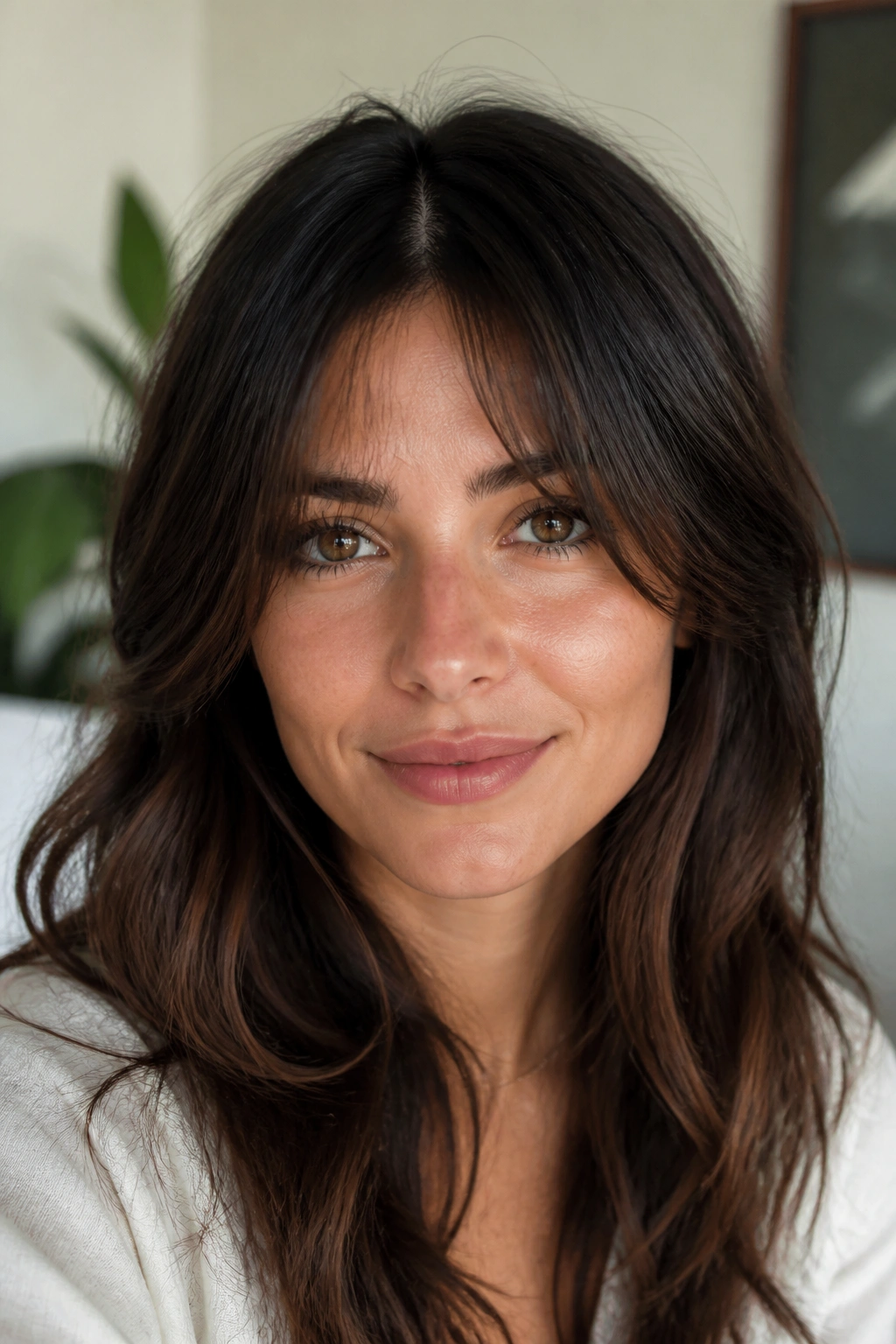
Curtain bangs are the easy first stop for a high forehead, and there’s a reason they’re everywhere in good salons. They break up forehead space without making you feel boxed in. The center is usually shorter, then the pieces taper longer toward the cheekbones, which gives the face a softer shape instead of a hard line.
Why they flatter a high forehead
The middle part opens the face, but the fringe still sits across the upper half enough to visually shorten it. That’s the trick. You get coverage without the heavy, helmet-like look that some straight-across bangs create.
For a high forehead, the sweet spot is usually brow-to-lash length in the center with longer pieces that graze the cheekbone or jaw. If the shortest pieces are too short, the forehead starts showing again in a way that feels abrupt. Too long, and you lose the frame.
- Ask for soft face-framing angles from the first cut.
- Keep the center piece light, not thick.
- Style with a round brush away from the face, then let the ends fall naturally.
- Works well with straight, wavy, and loose curly textures.
Best part: they grow out cleanly, so you’re not trapped in a strict trim schedule.
2. Bottleneck Bangs That Start Narrow and Fan Out

Bottleneck bangs are what happens when curtain bangs get a little more tailored. The center sits narrow and soft, then the fringe widens out over the temples and cheekbones. On a high forehead, that shape is gold because it draws the eye downward in a gentle arc instead of cutting the face in half.
They also tend to feel less “stylistic” in a costume-y way than blunt bangs. That matters. If a fringe looks too planned, you can start feeling like you’re wearing it instead of living in it.
The cut is usually a touch fuller near the middle than wispy curtains, but not so dense that it looks heavy when air-dried. It’s a good choice if your forehead is high and your hair has enough density to hold a little shape. Fine hair can wear bottleneck bangs too, though the effect will be softer and less dramatic.
A small blowout makes a big difference here. Blow the center forward first, then bend the sides away from the face. Don’t flatten them. The lifted shape is the whole point.
3. Side-Swept Bangs That Run Diagonally Across the Face
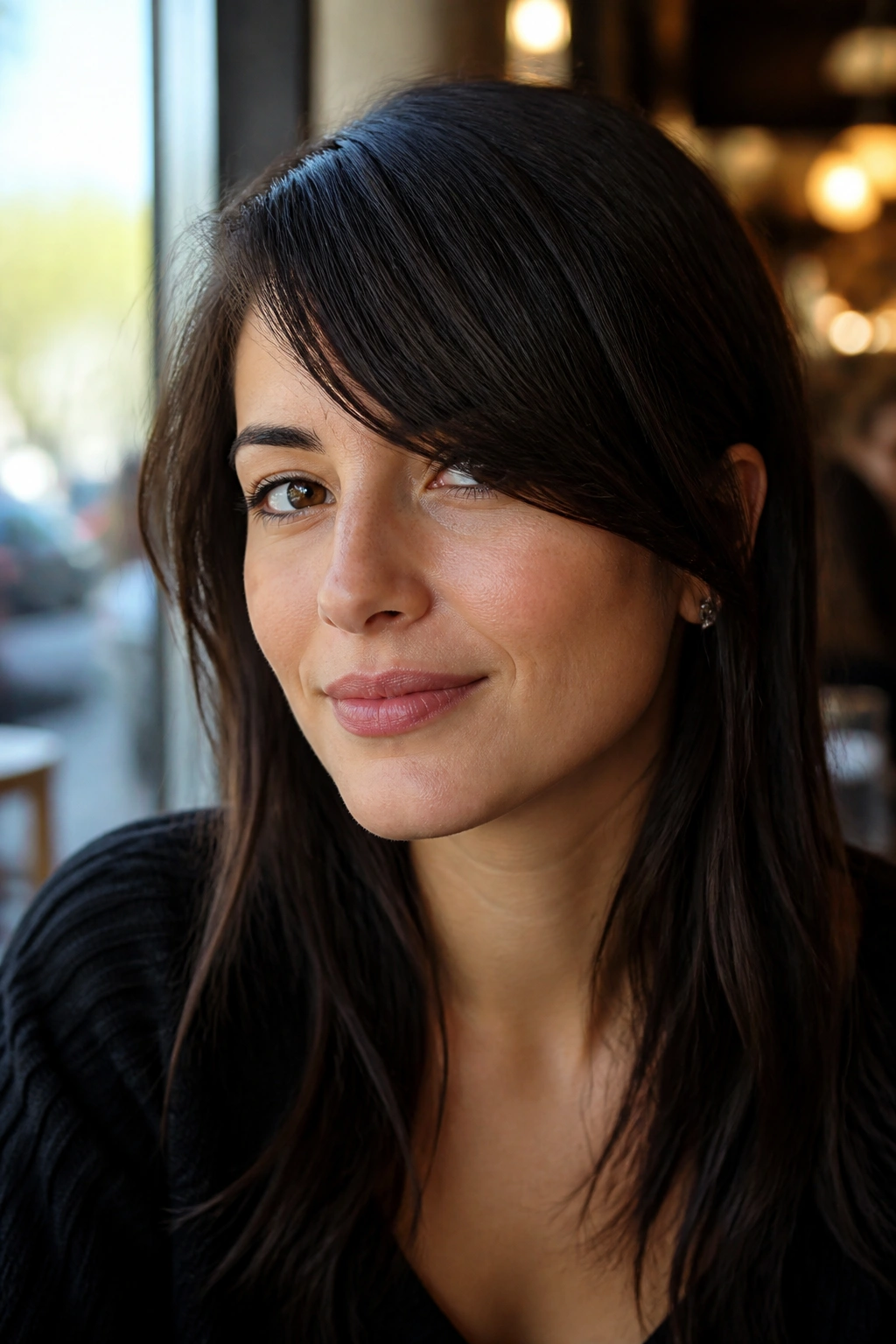
Need something that feels less committed than a full fringe? Side-swept bangs are the old reliable for a reason.
They cut a diagonal line across the forehead, and diagonals are flattering on high foreheads because they break up all that vertical space. A straight line can feel severe. A diagonal line feels like movement. That’s a useful distinction when your face already has strong height.
How to wear them well
The mistake people make is cutting side bangs too short at the shortest edge. Then they spring up and sit in the middle of the forehead, which defeats the whole point. The shorter side should still reach at least the eyebrow, and the longer side often looks best skimming the outer eye or cheekbone.
A side part helps, but it does not need to be dramatic. A deep side part gives more sweep and more forehead coverage. A softer side part looks modern and easier to maintain.
- Best for medium to thick hair.
- Good if you like tucking one side behind the ear.
- Easier to grow out than blunt bangs.
- Needs a quick brush and maybe a small amount of cream or spray.
This is the style for people who want a little polish without having to babysit their hair all day.
4. Blunt Bangs That Draw a Firm Line

Blunt bangs are the most direct answer to a high forehead. They make a statement. No softness, no fade, no pretending. Just a clean horizontal line that shortens the upper face fast.
That line can look fantastic on the right head of hair. It gives structure to long faces, balances strong brows, and makes the forehead feel visually smaller in one shot. The catch is that blunt bangs need weight. Thin, see-through fringe will not give you the same effect. It can end up looking like a mistake instead of a style.
What to ask for in the chair
- Cut just below the brow line if you want coverage without constant trimming.
- Ask for a dense perimeter, not wispy ends.
- If you have a cowlick, mention it early. Seriously. Blunt bangs can separate at the worst spot if the growth pattern fights back.
- Keep the sides slightly longer if you want the cut to blend into the rest of your hair.
Blunt bangs work best on straight or mostly straight hair, though a stylist can shape them for waves. They are not low-effort, and they do ask for regular trims. Still, when they’re right, they make a high forehead look intentional instead of just long.
5. Wispy Bangs That Let Skin Show Through

Wispy bangs are the gentler answer. They do not erase the forehead, and that’s partly why they work so well. You still see skin. You still get air around the eyes. But the fringe breaks up the height of the forehead enough to change the overall proportion.
This style is a good fit if you hate heavy bangs or if your hair is fine and tends to lie flat. A wispy fringe can give the impression of coverage without needing a lot of density, which is a sneaky advantage. It also grows out softly, so the awkward stage is less annoying than it is with blunt cuts.
The danger is over-thinning. Too much removal, and the bangs turn stringy. They stop framing the face and start looking like leftovers. That is where a lot of bad bangs live.
A cleaner version usually sits around eyebrow level, with a few pieces that graze slightly lower. The ends should look soft, not chopped to bits. If you want movement, a light point-cut at the edge is better than slicing away half the hair.
This is the fringe for someone who wants the forehead softened, not hidden.
6. Choppy Bangs With Broken Edges
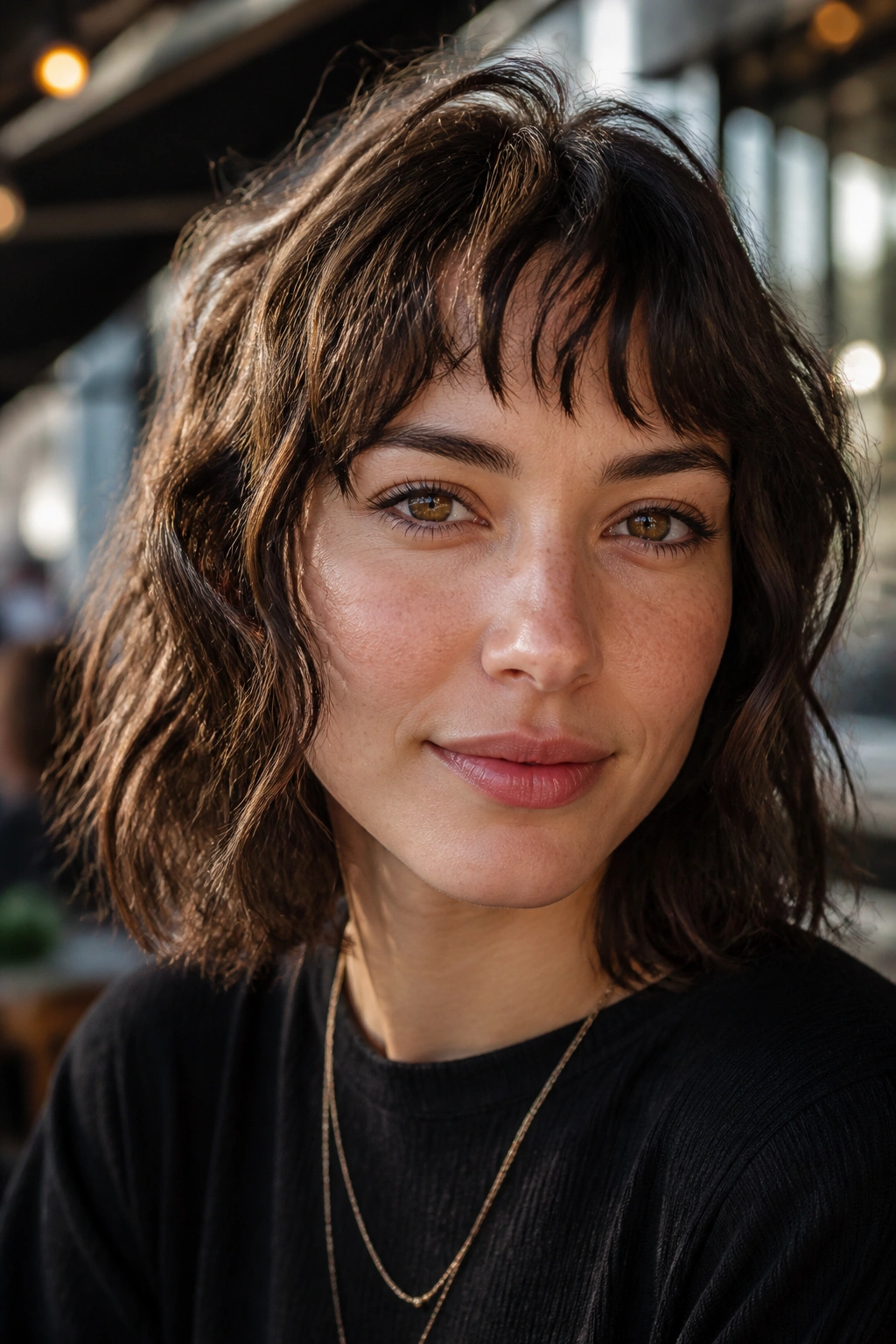
Choppy bangs work because the edge is irregular. That might sound like a flaw, but on a high forehead it’s often the right call. A broken line stops the eye from reading the forehead as one long uninterrupted space.
Unlike wispy bangs, which rely on lightness, choppy bangs rely on texture. The pieces are cut with a little more bite, sometimes with a razor, sometimes with point-cutting, so the fringe looks piecey and lived-in. That makes them easier to pair with layered cuts, shags, and longer face-framing styles.
What makes them different
The shape is less polished and more deliberate. You want the ends to move. You do not want a hard shelf across the forehead.
Choppy bangs are especially good if your hair is thick or if you usually wear it with a little bend. Pin-straight hair can wear them, too, but you’ll need a texture spray or a quick pass with a flat iron to keep the pieces separated. A dab of wax on the very tips can help, but use almost nothing. Heavy product kills the effect.
These bangs are for people who like a fringe with some grit. Clean, but not stiff. Soft, but not sleepy.
7. Arched Bangs That Follow the Brow Line
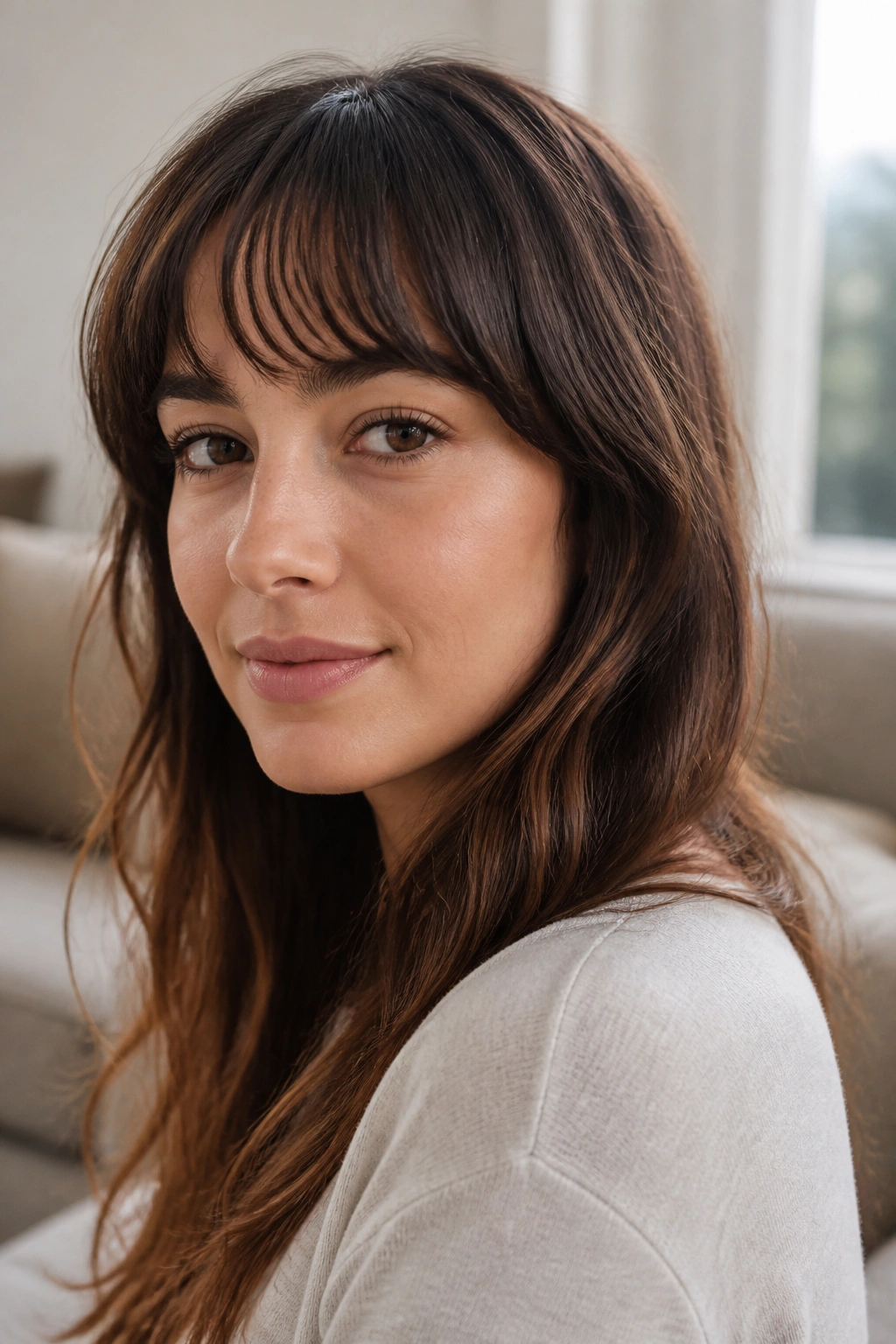
Arched bangs are underrated. They curve gently in the middle and soften toward the temples, almost like the bangs are following the line of the eyebrows. On a high forehead, that curve helps because it creates a shape the eye can follow instead of a flat bar across the top of the face.
The style can look feminine, dramatic, or even a little retro, depending on how thick the fringe is. A fuller arch feels more glamorous. A lighter arch feels airy and modern. Either way, the curve does useful work.
Why the curve matters
A straight fringe can chop the face. An arched fringe mirrors the natural structure around the eyes and brow, which makes the forehead look less dominant. It also plays nicely with strong brows, since the cut sits in conversation with them rather than fighting for attention.
Ask for the center to land near the brows and the sides to taper softly. If your hair grows with a slight wave, that wave can help the arch hold shape. Straight hair may need a round brush and a little root lift at the center.
- Good for medium-density hair.
- Better than blunt bangs if you want softness.
- Works with both long hair and shoulder-length cuts.
- Needs a trim before it gets too heavy.
This one feels elegant without getting precious.
8. Shag Bangs That Melt Into Layers

Shag bangs are built for movement, and high foreheads often look better when the hair around them doesn’t sit stiffly in place. The shag cuts the fringe into the haircut itself, so the bangs never feel separate from the rest of the hair. That blending is the whole appeal.
A good shag fringe usually has a piecey middle, longer sides, and plenty of texture through the rest of the cut. It can soften a high forehead without creating a hard boundary. If your face is long and your hair has some wave, this is one of those styles that just makes sense. It gives shape near the forehead, then keeps going with layers that move around the cheeks and neck.
The cut also hides a little grow-out. That matters more than people admit. A fringe that turns annoying after ten days is not a practical fringe.
Shag bangs are not the right choice if you want a crisp, neat line. They’re messy in a good way. A little dry shampoo at the roots and a rough blow-dry usually do more for them than a fussy round-brush routine ever will.
9. Birkin Bangs With Soft Density

Birkin bangs sit in that lovely middle zone between heavy and airy. They’re fuller than wispy fringe, but softer than a blunt cut, with a lived-in shape that usually skims the brows. For a high forehead, that balance is useful because it gives coverage without making the face feel boxed in.
The look is named for the kind of fringe that feels slightly undone, not overworked. The ends are softened, the line is relaxed, and there’s enough density to make the forehead feel shorter without flattening the whole top of the face.
What I like about Birkin bangs is that they look expensive without trying too hard. That sounds vague, so let me say it another way: they look like someone brushed them once, not fifteen times. That looseness helps. A fringe that’s too polished can sit on the forehead like a lid.
How to wear them
They work best when the hair is cut just a little longer than the brows and then styled with a soft bend. You can blow-dry them forward with a round brush, then separate the ends with your fingers once they cool. A tiny bit of texture spray keeps them from clumping.
This is a smart option if you want forehead coverage with a quieter finish.
10. Feathered Bangs That Move With the Blow Dryer
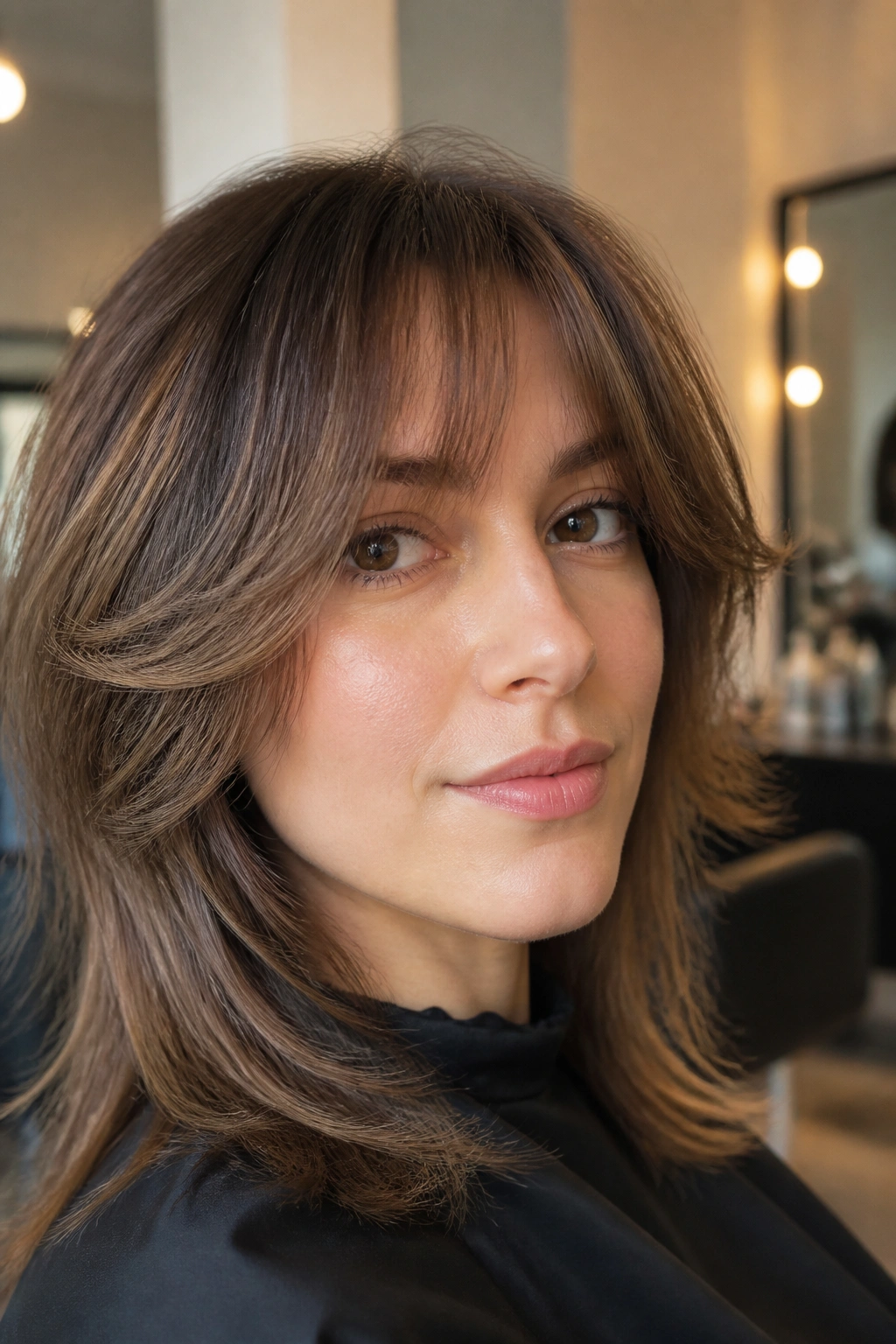
Feathered bangs have an old-school word attached to them, but the look itself is not stuck in the past. Feathering is about softness at the edge and movement through the strand, so the fringe never feels blocky. On a high forehead, that softness helps a lot.
A feathered fringe usually starts with enough density to matter, then gets thinned in a controlled way so the ends taper and flick. The result is light around the eyes and temples, which keeps the forehead from looking like the only thing in the frame. It’s a good cut for people who want shape but hate heavy styling.
This style loves a round brush. Lift at the root. Bend the ends slightly under or away from the face. Don’t overdo it. Feathered bangs lose their charm if they’re blown into a stiff helmet.
They’re especially nice on medium-length hair and layered cuts, because the fringe can slide into the rest of the style without a hard stop. If your forehead is high and your hairline is a little uneven, feathering can also hide that better than a blunt edge. Not perfectly. Just enough.
11. Long Face-Framing Fringe That Starts at the Temples

Not every high forehead needs hair plastered across it. Sometimes the smartest move is to leave the center lighter and use long face-framing fringe from the temples down. That gives you the visual shortening effect without putting a wall of hair over your brows.
This is especially good if you hate the feeling of bangs in your eyes. You still get that forehead-balancing effect because the sides of the face are pulled forward. The eye reads the new shape and stops focusing only on the vertical length of the forehead.
Why this is a solid compromise
It behaves more like a shape than a traditional bang. You can tuck it, curl it, or let it blend into layers. If your forehead is high but your hairline is uneven, this is often more forgiving than a strict fringe.
- Great for people growing out bangs.
- Works well with mid-length or long hair.
- Lets you wear hair up without losing the frame.
- Needs some layering around the cheekbones to feel intentional.
The key is placement. Start the shortest pieces near the outer brows or temples, not deep in the center. If those pieces are too far back, the effect disappears. If they’re too thick, it turns into a regular curtain bang. The sweet spot is right between the two.
12. Curly Bangs Cut for Shrinkage

Curly bangs can be gorgeous on a high forehead, but they need a different kind of respect. Curl shrinkage is real. A fringe that looks eyebrow-length when wet can spring up a full inch or more as it dries, and that changes everything.
A good curly bang is usually cut dry or mostly dry, in the shape the curl actually lives in. The stylist should watch where the curls land naturally, then trim around that pattern instead of forcing the hair into a straight line it will never hold. That is where most bad curly bangs come from.
The payoff is worth it. A curly fringe can soften a high forehead, frame the eyes, and add a playful edge without feeling heavy. It works especially well when the bangs blend into curly layers around the cheeks.
A diffuser helps, but I would not over-handle them. Scrunching too much can make the bangs puff out wider than you want. Better to dry gently, then separate a few curls with clean fingers once they’re set.
- Ask for the bangs to be cut with shrinkage in mind.
- Bring your hair styled the way you wear it most.
- Avoid straight-across harsh lines.
- Let the curl pattern decide the final shape.
13. Micro Bangs for a Sharp, Intentional Look
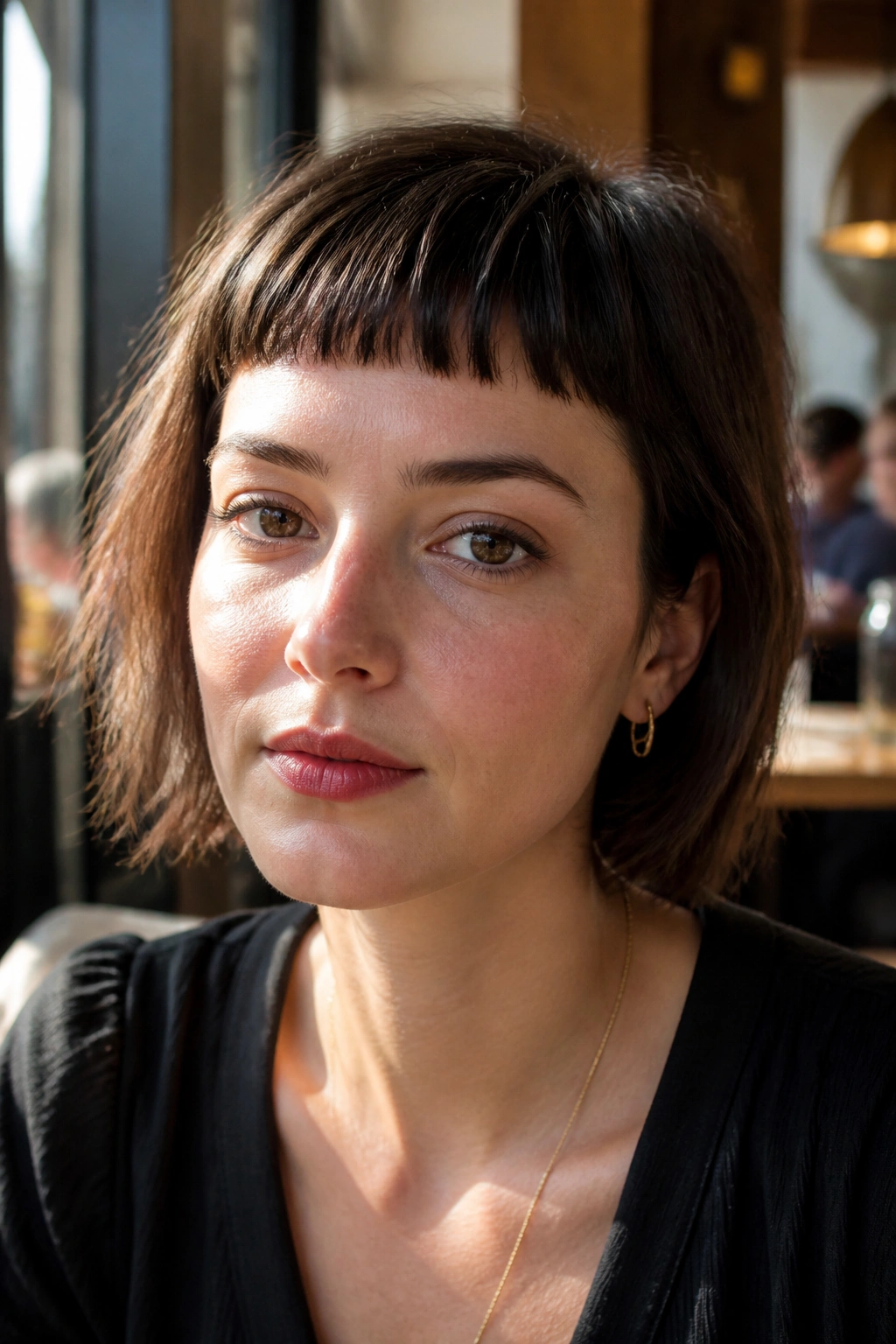
Micro bangs are the boldest choice on this list, and they’re not for everyone. They do not hide a high forehead; they interrupt it. That difference matters. Instead of trying to make the forehead disappear, micro bangs make the face look graphic and deliberate.
When they work, they work hard. The short fringe pulls attention to the eyes, brows, and bone structure. A high forehead can actually support the look because there’s room above the fringe, which keeps the cut from feeling cramped. On a short forehead, micro bangs can feel crowded fast.
The downside is obvious. They show more skin, and they ask for confidence. They also need maintenance, because even a quarter-inch of grow-out changes the shape fast. If you do not want regular trims, walk away.
But if you like strong lines and a little edge, they’re worth considering. A slightly textured micro fringe is easier to live with than a blunt, razor-straight one. It softens the look just enough to keep it wearable.
This is the style I’d call high risk, high personality. Not subtle. Not boring.
14. Layered Swoop Bangs With a Deep Side Part
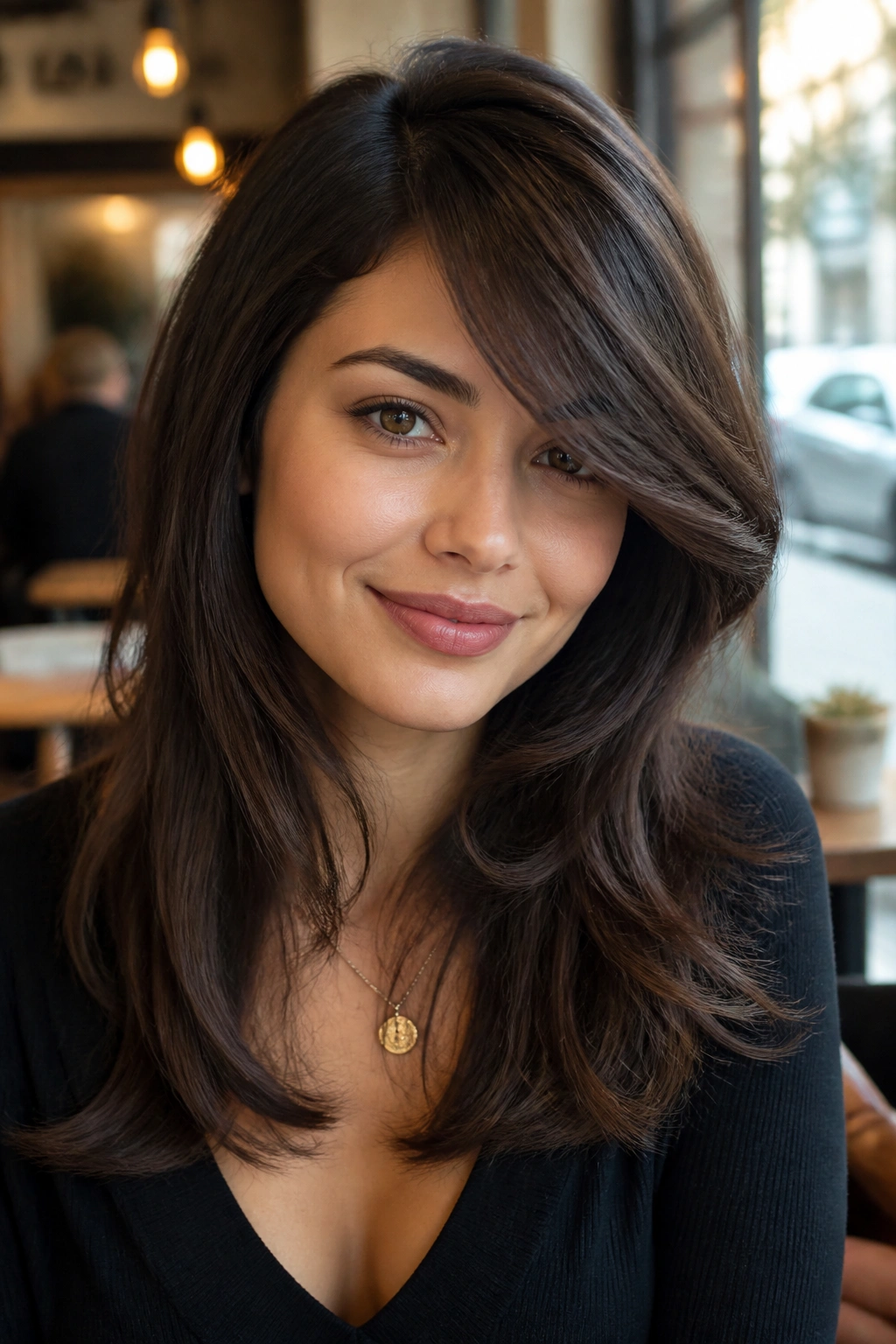
Layered swoop bangs are the answer for anyone who wants movement and control at the same time. The hair is cut to sweep across the forehead on a diagonal, but the layers keep it from sitting flat. For a high forehead, that diagonal does a lot of visual work.
The style usually starts with a side part that helps the fringe fall in one direction. Then the bangs are blended into the front layers so they don’t look like a separate piece. That blend is what makes the cut feel easy. The fringe can cover a good portion of the forehead when styled, but it can also be tucked or pinned when you want less coverage.
How to keep the swoop from collapsing
Use a round brush or a large roller at the root while the hair is still warm. Clip it in place for a few minutes if your hair forgets shapes quickly. A little root spray helps, but you do not need much. Heavy spray makes the front crunchy, and crunchy hair never looks expensive.
This style suits people who wear their hair to work, out to dinner, and everywhere in between. It’s adaptable. That matters more than people think.
15. Crescent Bangs That Curve Like a Gentle U

Crescent bangs are one of the prettiest answers for a high forehead, mostly because the shape feels soft but still intentional. The center is shorter, the sides grow longer, and the whole fringe bends into a shallow U. It’s a little more structured than curtain bangs, but not as blunt as a straight fringe.
That curve shortens the forehead without making the cut look boxy. It also gives the brow area a nice frame, which can be especially flattering if you have strong cheekbones or a long face. The shape looks calm. Not flat, not severe. Calm.
What to ask for
- Keep the center around eyebrow to upper-brow height.
- Let the sides taper into the front layers.
- Ask for soft point-cutting so the edge doesn’t read as heavy.
- Style with a little bend, not a stiff blowout.
Crescent bangs work when you want forehead coverage but still want the rest of your hair to move. They’re a good finishing style, too, if you’ve worn your bangs out and want something cleaner without starting from zero. If you’re torn between curtain bangs and blunt bangs, this is the middle path that usually feels the least annoying in real life.
Final Thoughts
A high forehead does not need to be treated like a problem. It just needs the right frame. Some people look best with a soft curtain fringe, some with a blunt line, and some with barely-there movement at the temples. The point is not to copy a trend. It’s to change the shape of the face in a way that still feels like you.
The smartest move is usually the one that matches your hair texture and your patience level. A style that needs daily blow-drying will look great for ten minutes and then become a chore if you hate styling. A softer fringe may seem less exciting on paper, but it can be the cut you keep reaching for because it behaves.
Bring photos to a stylist, yes. But bring the useful details too: how your hair dries, where it parts, whether you want to hide the forehead or just soften it, and how much trimming you’ll actually tolerate. That conversation is worth more than a hundred saved screenshots.
