



Round faces can wear bangs. They just need the right cut.
A fringe that sits straight across the widest part of the face can make things feel shorter and wider than you want. The better move is to create length, angles, or a little opening at the forehead so the eye travels up and down instead of side to side. That can mean curtain bangs, a side sweep, a broken edge, or a fuller fringe that is softened in the right places.
The biggest mistake I see is treating bangs like one fixed shape. They are not. Hair density, cowlicks, forehead length, curl pattern, and how much time you want to spend with a round brush all matter. A flattering fringe on a round face is rarely about hiding the face; it is about shaping it.
So the options are wider than people think. Some are soft and easy, some are sharper, some are playful, and a few are only worth trying if you like drama and do not mind a little upkeep. The point is to pick a bang that works with your bone structure, not against it.
1. Curtain Bangs That Split at the Cheekbones
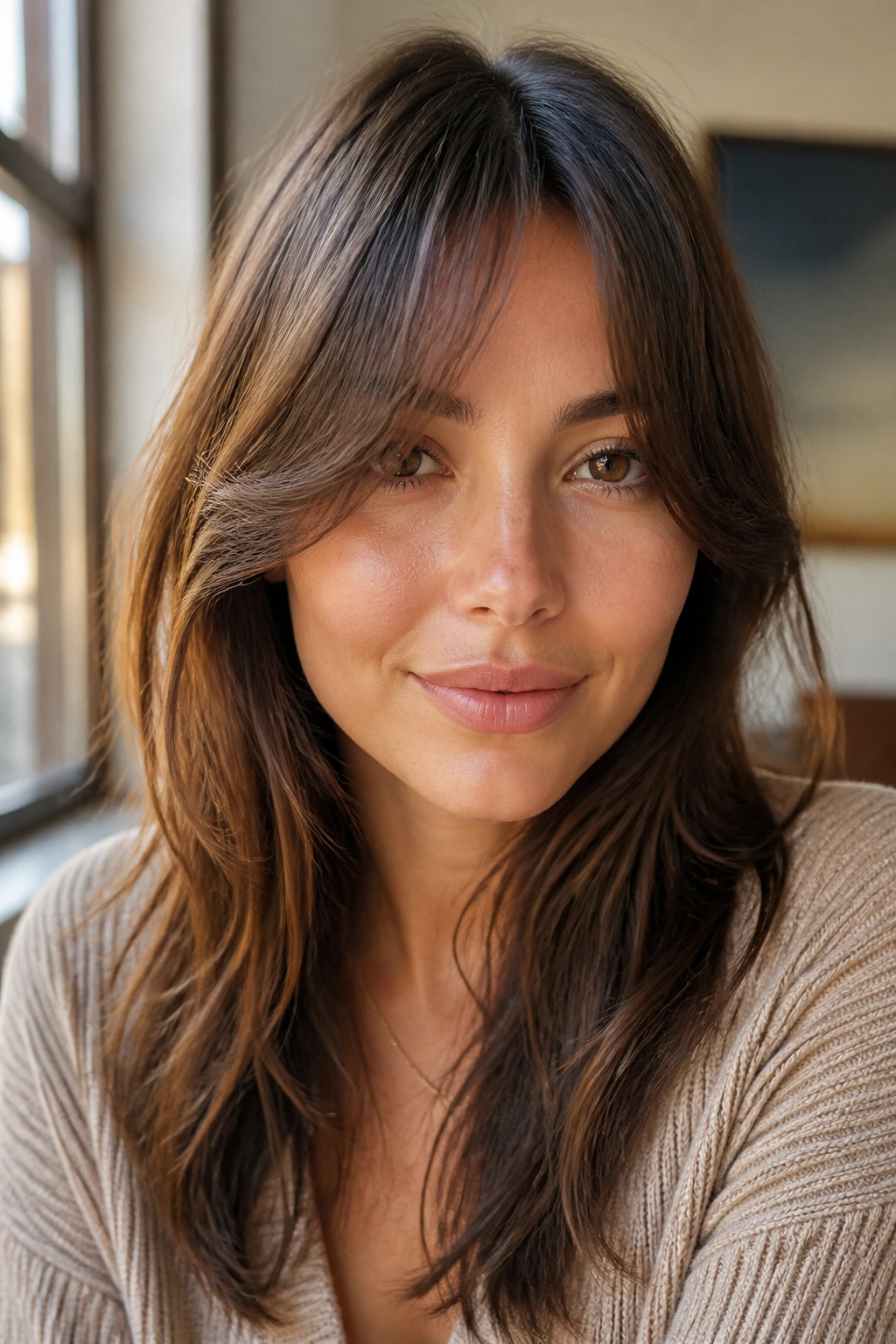
Curtain bangs are the safest place to start if you want movement without locking yourself into one rigid shape. The split opens the forehead, and the longer edges sweep down near the cheekbones, which helps a round face feel a little longer and less boxy. They also grow out gracefully, which is a relief if you do not live at the salon.
Ask For This Shape
Ask your stylist for a soft center part, a narrow middle section, and longer side pieces that land around the top of the cheek. Keep the shortest point a little below the brow so the fringe does not sit like a shelf. If your hair is thick, this shape can be lightly thinned through the middle so it moves instead of puffing up.
A quick blow-dry with a round brush makes a big difference here. Bend the two sides away from the face, not toward it, or you lose the open shape that makes this cut work.
2. Side-Swept Fringe That Lands Just Above One Brow
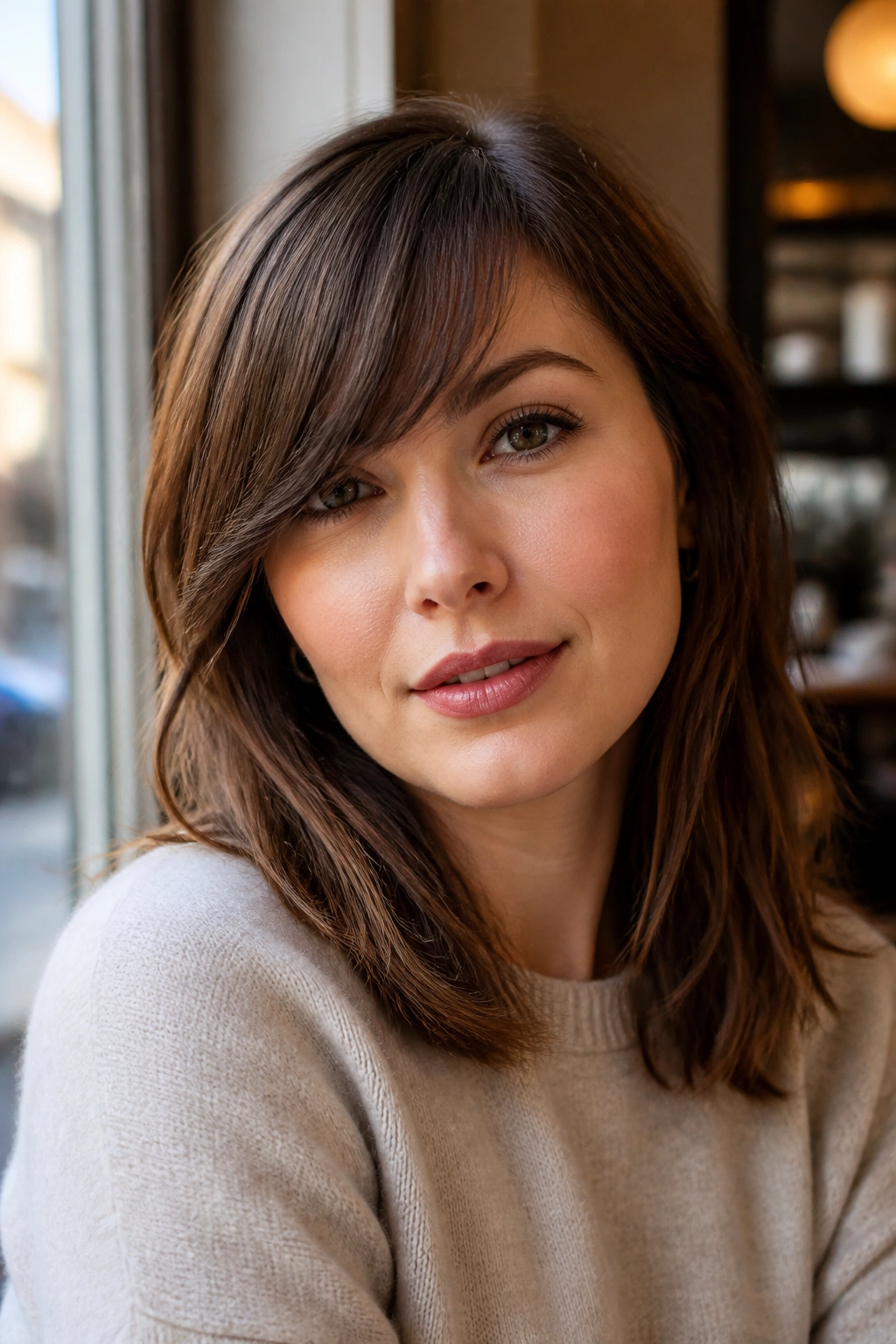
A deep side sweep can do a lot of quiet work. It breaks the symmetry of a round face and gives the eye a strong diagonal line to follow, which is exactly what you want when you are trying to add length. The fringe should skim one brow and sweep toward the opposite temple without feeling stiff.
This is a good pick if you want bangs but hate the idea of hair in your eyes all day. It also works well on busy mornings, because a side sweep can look intentional even when it is not blown out perfectly.
Best for: medium-density hair, straight or wavy textures, and anyone who wears a side part already.
Watch for: a stubborn cowlick at the front. If the root keeps flipping the wrong way, clip the bangs flat while they cool after blow-drying.
3. Bottleneck Bangs With a Narrow Center Opening
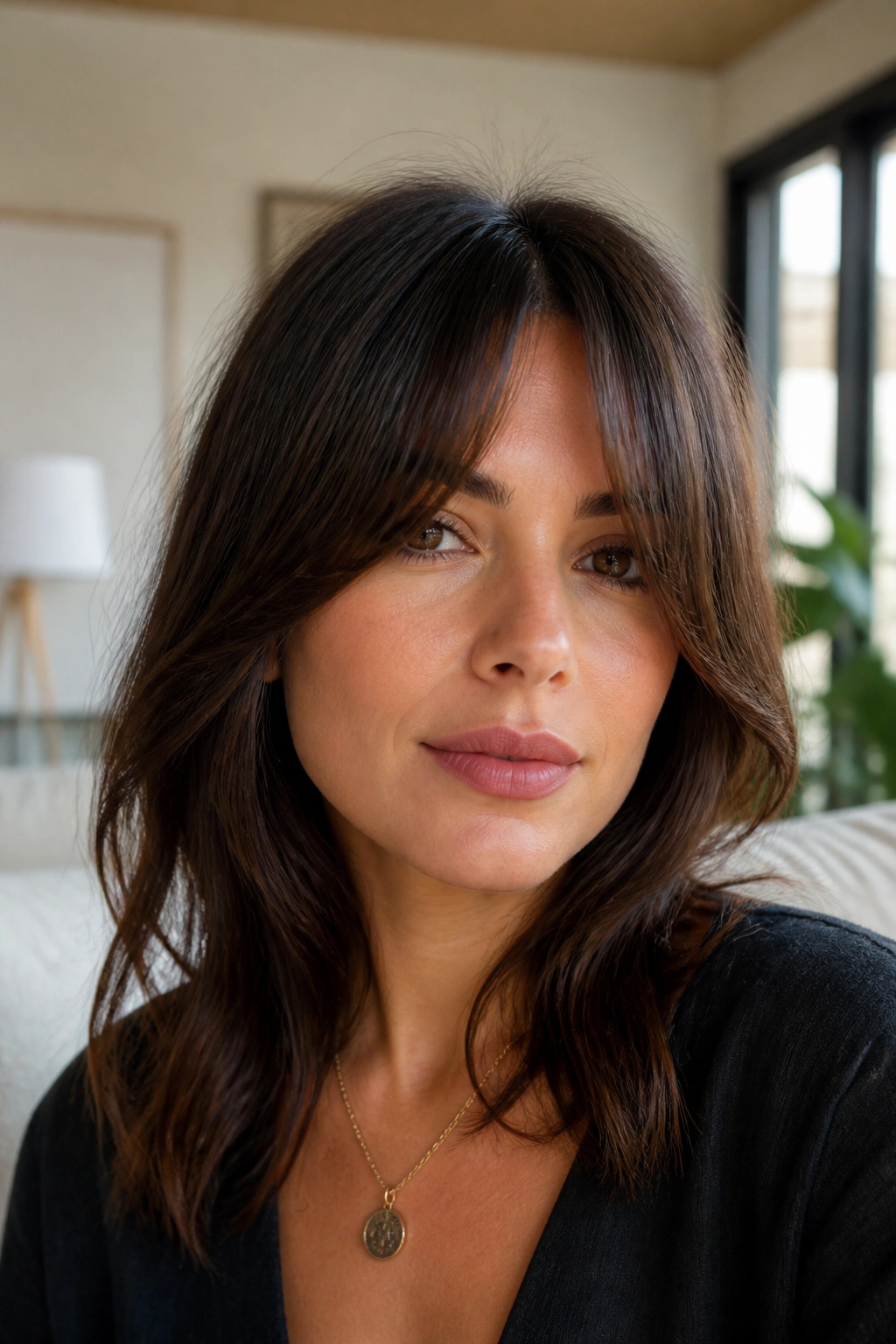
Bottleneck bangs have a little bit of theater, but not too much. They start narrow in the middle, then widen as they move toward the sides, so the center of the forehead stays a touch open. On round faces, that opening matters. It keeps the fringe from cutting the face in half.
The shape is especially good if you like curtain bangs but want something a little more defined. There is a cleaner curve through the center and a softer fall at the edges, which gives the whole cut a more tailored look.
Why They Work
The middle length draws the eye downward, while the longer sides point toward the cheeks and jaw. That combination gives the face more vertical movement. It is subtle, and that is why it works.
Ask for a center section that starts around the brows and lengthens toward the temples by about 1 to 2 inches. That small difference in length is the whole trick.
4. Wispy See-Through Bangs That Barely Graze the Forehead
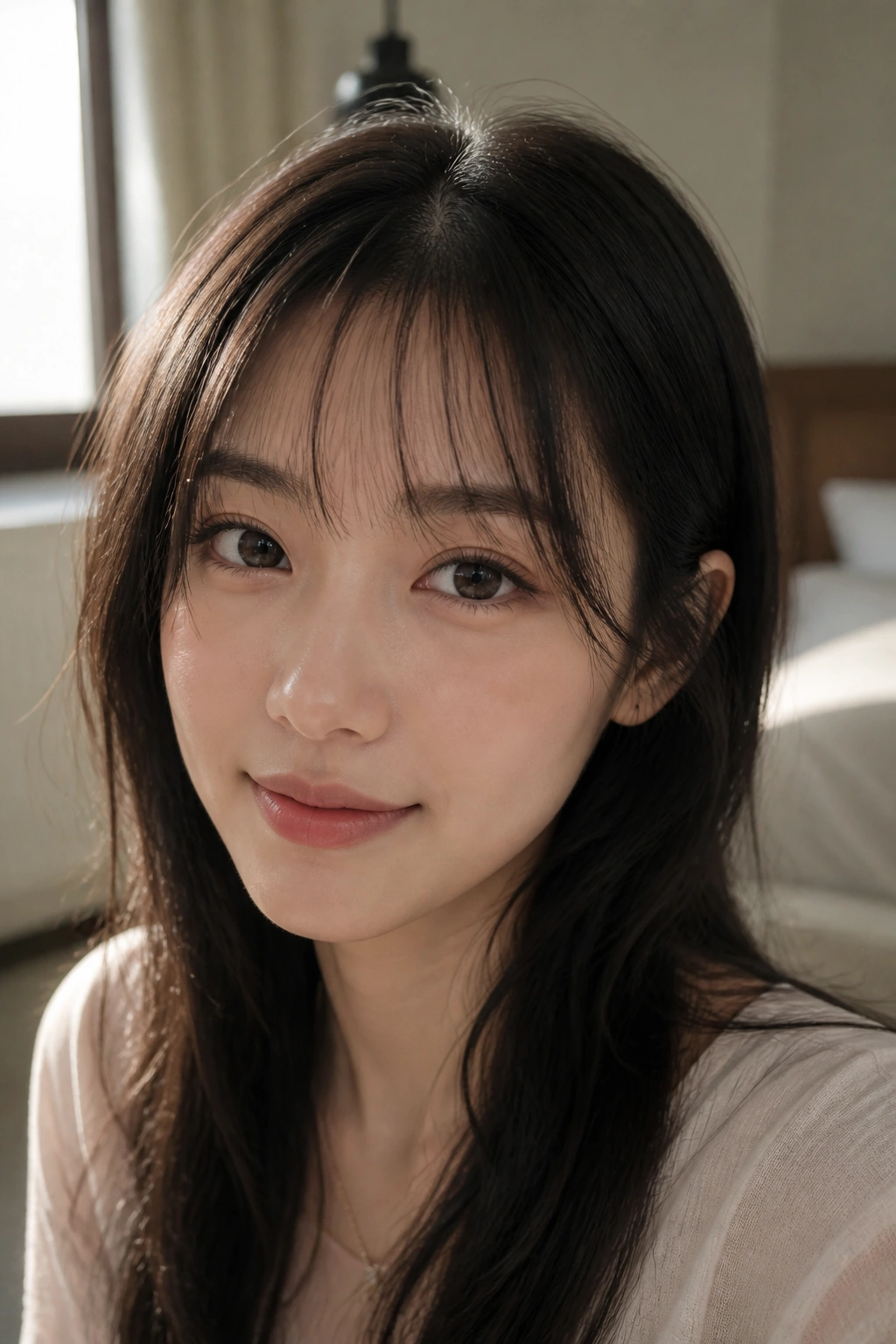
Wispy bangs are not trying to take over the face. That is the appeal. Their light density means you still see skin through the fringe, so the forehead does not vanish under one heavy block of hair. For round faces, that softness keeps the upper half of the face from feeling crowded.
They are especially nice if your hair is fine or medium-fine, because too much bulk can make the fringe sit flat and wide. A small amount of movement is enough here. Too much product is a mistake.
A tiny bit of lightweight cream or mousse on damp hair is enough. Skip heavy waxes and oily serums unless you want the bangs to separate into limp strings by lunchtime.
5. Long Center-Parted Fringe That Tucks Behind the Ears
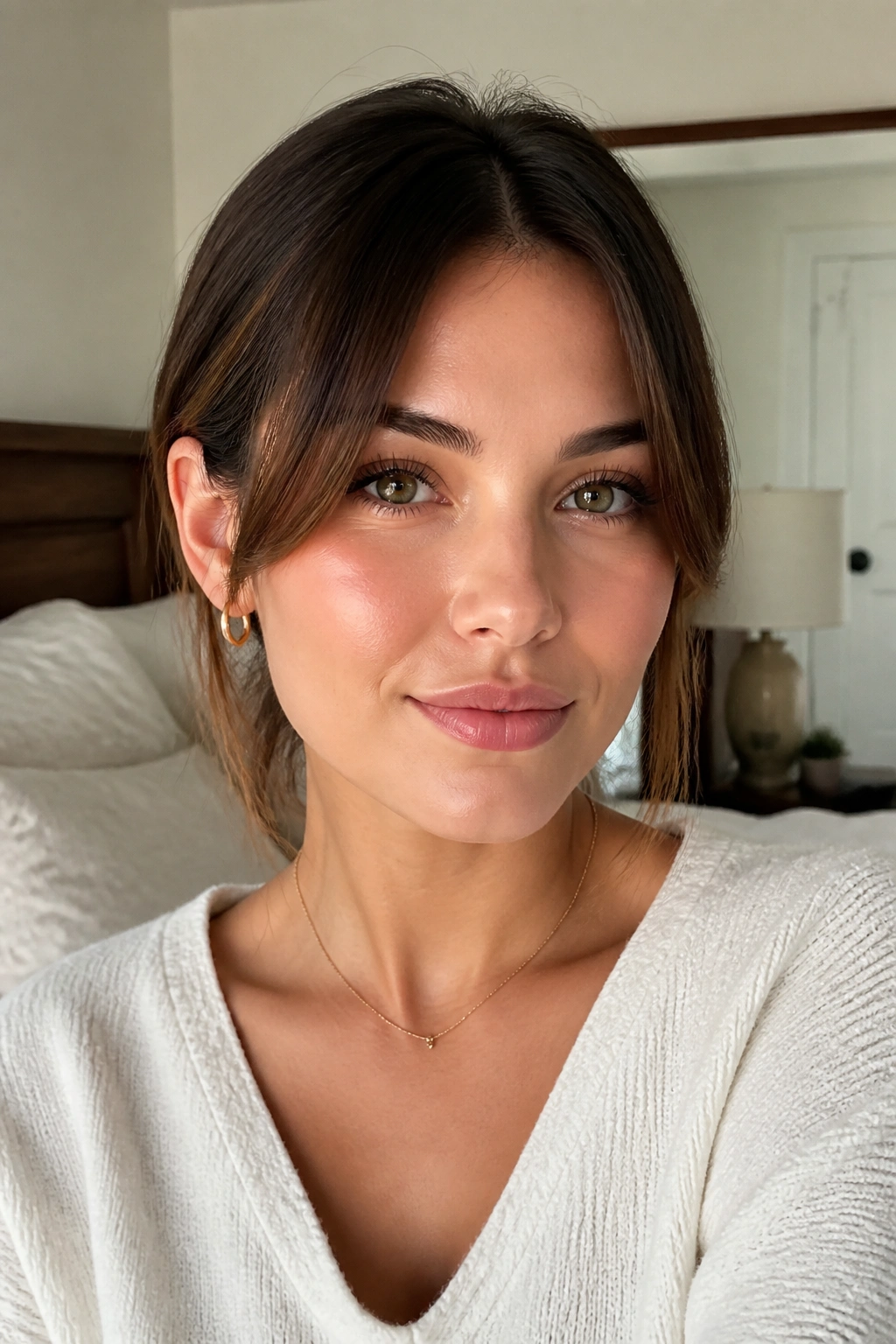
This is the low-commitment, high-payoff version of bangs. The fringe sits long enough to part in the middle and blend with the rest of the hair, and when you tuck the sides behind your ears, the face opens up in a clean, flattering way. It works because the hair frames the face instead of sitting squarely across it.
Round faces often do well with this shape when the front pieces are left below cheekbone level. That extra length gives the face a bit more vertical line, which keeps the look from feeling puffy or short.
If you are nervous about bangs, start here. You can wear them forward on some days and tucked away on others. Easy. No drama.
6. Cheekbone-Skimming Fringe That Bends Inward

Cheekbone-skimming bangs are one of those cuts that looks casual but is doing precise work. The ends bend inward just enough to point toward the highest part of the face, which gives round cheeks a sharper outline. The fringe should not stop too high. Let it land where the cheek begins to turn toward the jaw.
This style is good when you want the front to matter without calling too much attention to the forehead. It is a little less obvious than curtain bangs, and that can be a nice thing if you like hair that looks shaped but not fussy.
A flat iron or a medium round brush can create the inward bend. Keep the curve soft. If it curls too tightly, you lose the lengthening effect.
7. Arched Full Fringe That Follows the Brow Line
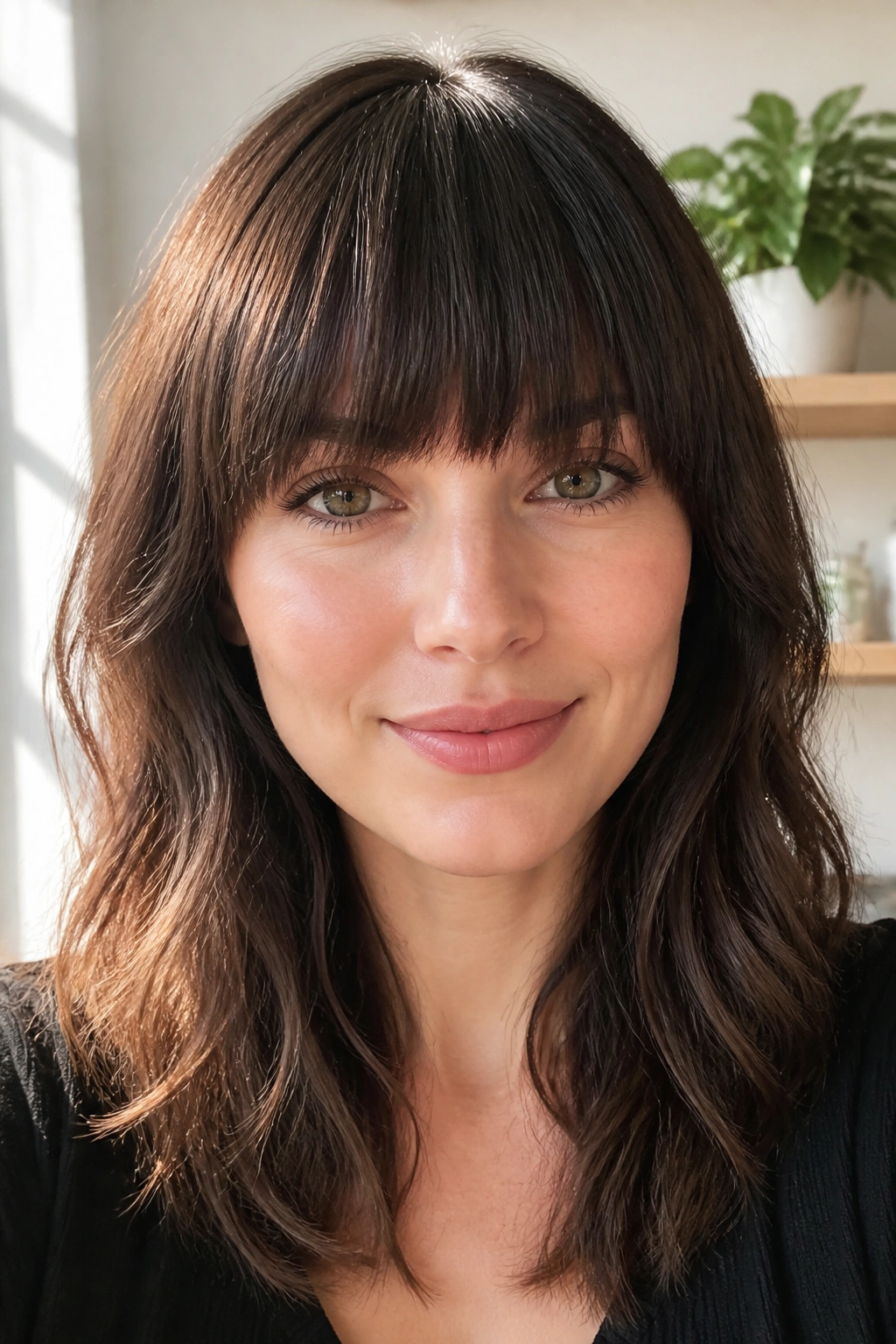
A full fringe can work on a round face if it is shaped with an arch instead of cut into one blunt bar. The center can sit slightly shorter, then the sides should lengthen just enough to follow the brow line. That curve keeps the cut from feeling heavy.
Styling Notes
Blow-dry the roots straight down first, then bend the ends under with a round brush. You want a smooth arch, not a helmet. Heavy bangs that sit flat across the forehead can make a round face feel wider, so the shape needs movement.
This one suits thicker hair best. Fine hair can do it too, but the fringe needs a little help from a root lift spray or a very light volumizing mousse. Keep the product off the ends or they will stick together.
8. Choppy Textured Bangs With Broken Ends
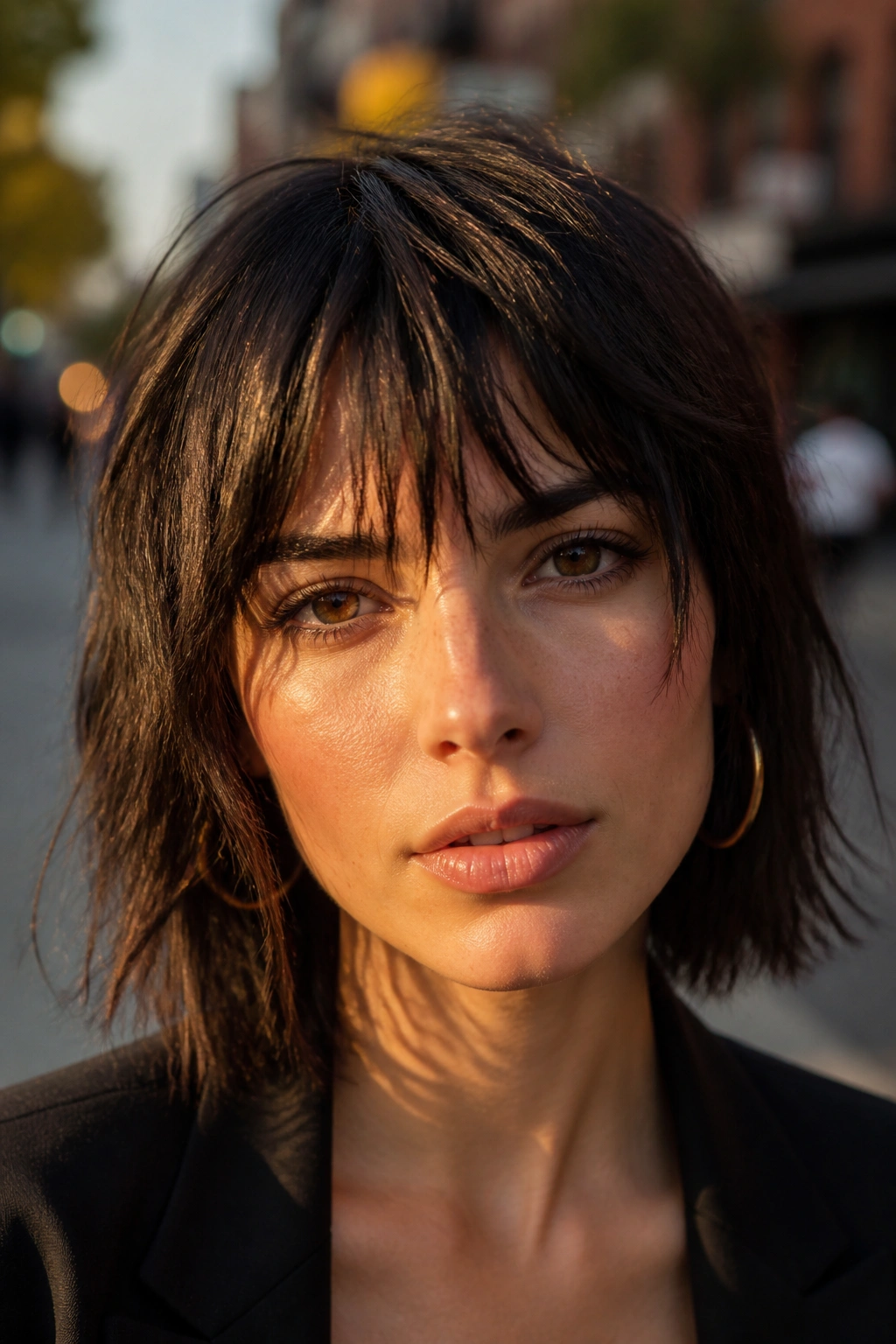
Choppy bangs bring edge to a round face because they refuse to sit as one smooth line. The broken ends create little spaces between the pieces, and that separation makes the forehead feel less broad. It also keeps the fringe from looking too perfect, which is useful if your face already has soft curves.
I like this option when someone wants bangs but does not want them to feel sweet or polished. It has more bite. The shape pairs well with layers, shags, and hair that has a bit of natural movement.
Ask for point-cutting rather than a blunt cut. That tiny difference in technique changes everything. The ends should look feathered, not chopped to pieces.
9. Feathered Bangs With a Blown-Out Finish
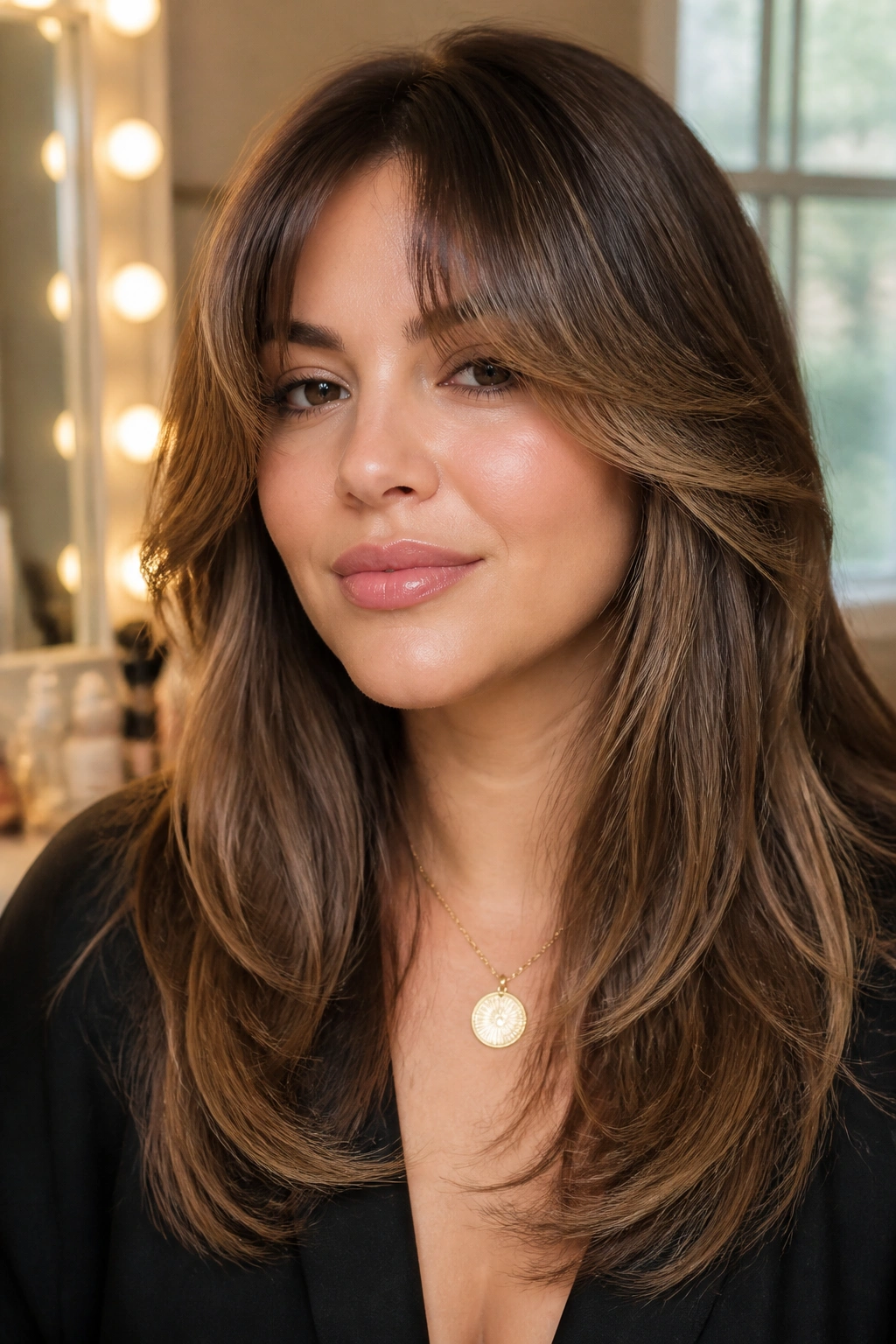
Feathered bangs are softer than choppy bangs, but they still keep the front of the face from looking heavy. The ends are light and swept, which gives a round face a longer outline. The style has a little bit of that old-school blowout feel, and I mean that as a compliment.
This fringe works best when the hair is brushed away from the center and rolled just enough at the ends to make the shape float. It is a good choice if you like bangs that move when you walk instead of sitting in one fixed spot.
The main thing here is air and lift. If the bangs are pressed flat, they lose the feathered effect. A round brush and a cool shot of air are your friends.
10. Micro Bangs Paired With Height at the Crown
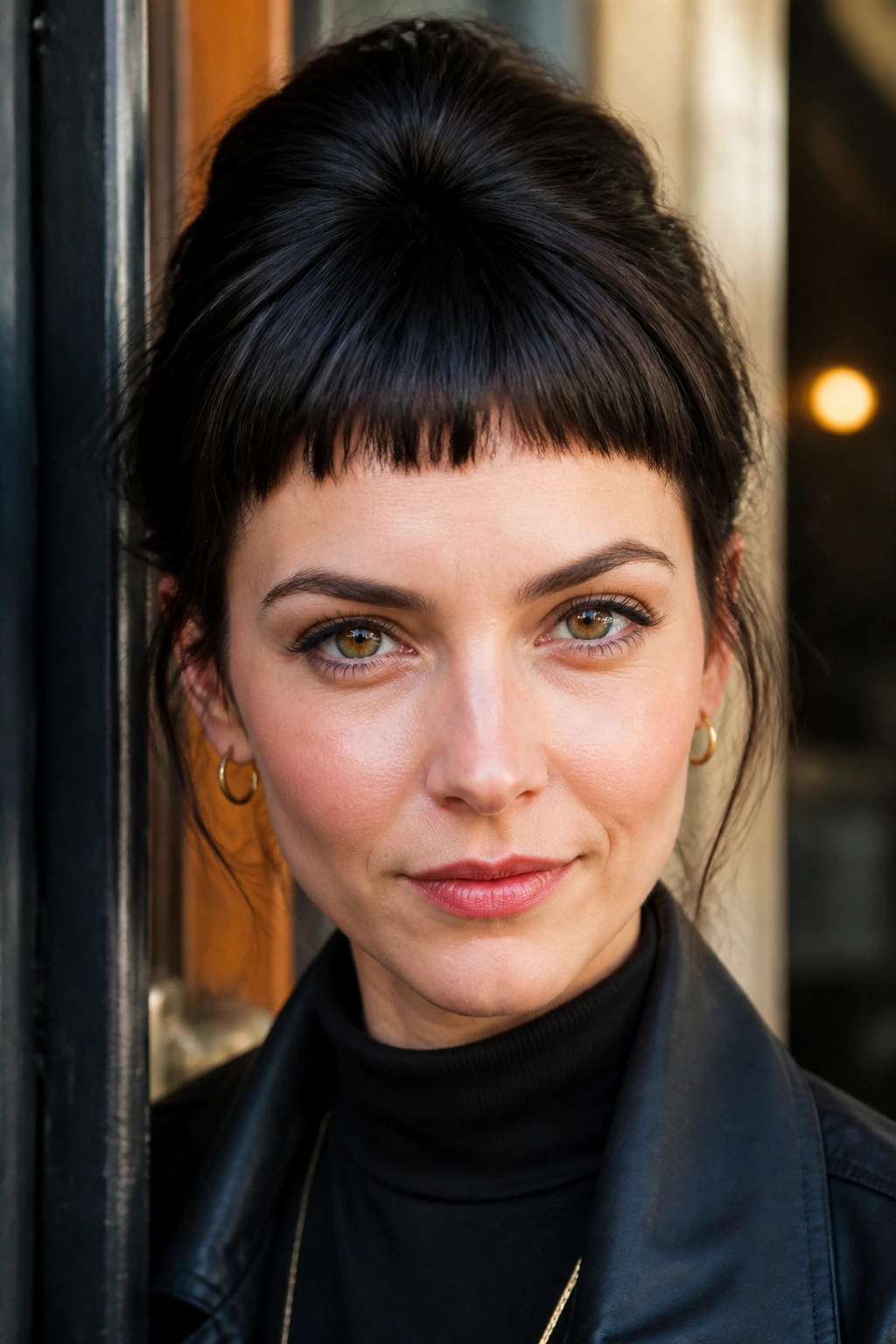
Micro bangs are bold, and they are not for everyone. On a round face, they can work if the rest of the hairstyle adds height at the crown and enough softness around the cheeks. That balance matters. Without it, the fringe can make the face look shorter than it is.
The trick is contrast. The bangs stay short and sharp, while the top and sides keep volume or length. That vertical lift pulls the eye upward, which helps offset the roundness.
Best if: you like edgy hair and can commit to regular trims.
Avoid if: you have a very low forehead and no interest in styling the crown. This cut needs structure to look intentional.
11. Curly Curtain Bangs That Dry Into Soft Arcs
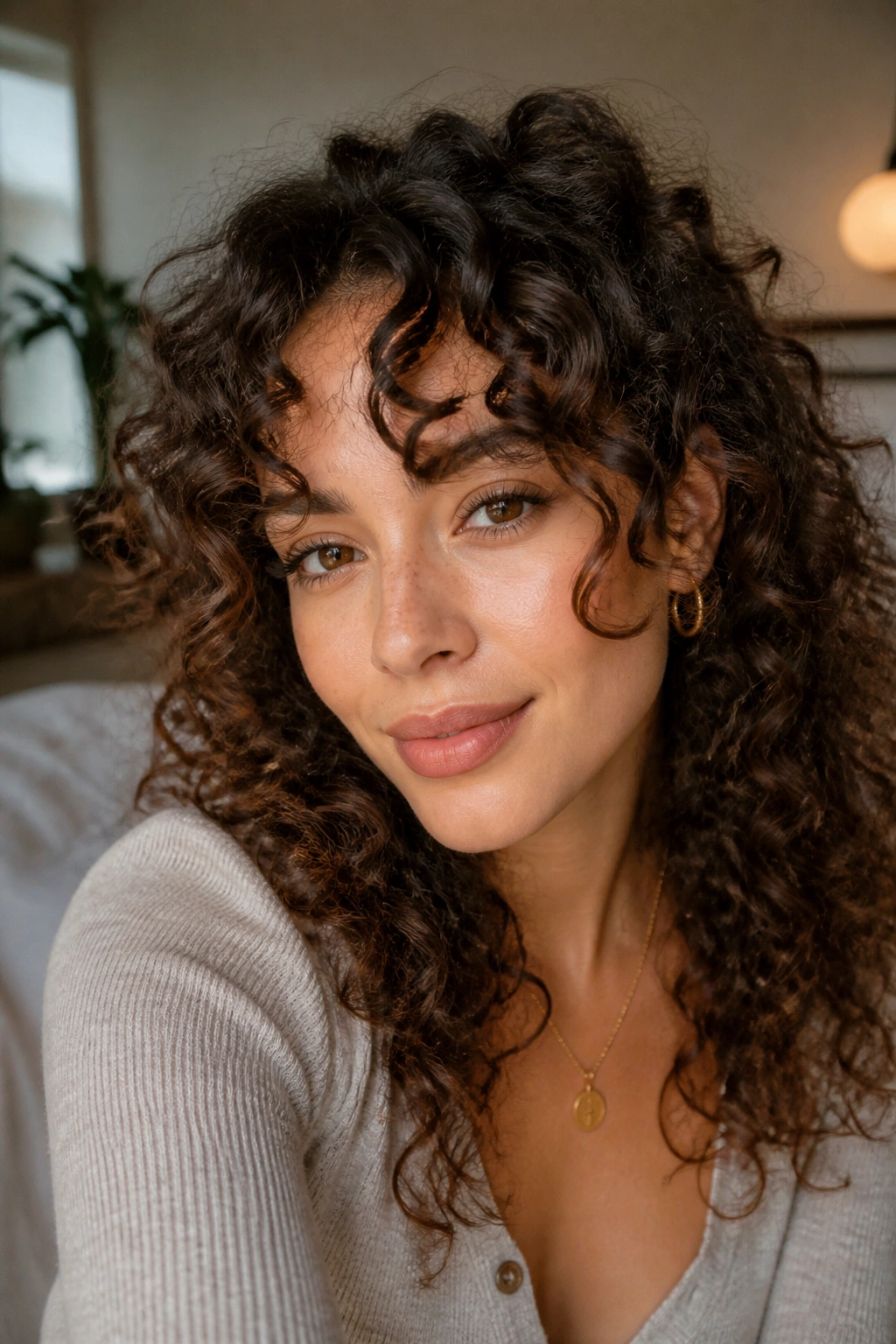
Curly curtain bangs are one of the better options for round faces, and people with curls often overlook them because they worry the fringe will balloon out. It does not have to. If the shape is cut to respect shrinkage, the curls fall in soft arcs that frame the face instead of widening it.
The length should usually be set a little longer than you think, especially if your curls spring up. A fringe that lands at cheek level when wet may bounce up higher after drying. That is normal. Plan for it.
Let them dry in their natural pattern, then separate lightly with a drop of serum if they need it. Brushing curls too hard destroys the shape and makes the front frizzy. That never helps.
12. Shag Haircut With Fringe That Lives in the Top Layer
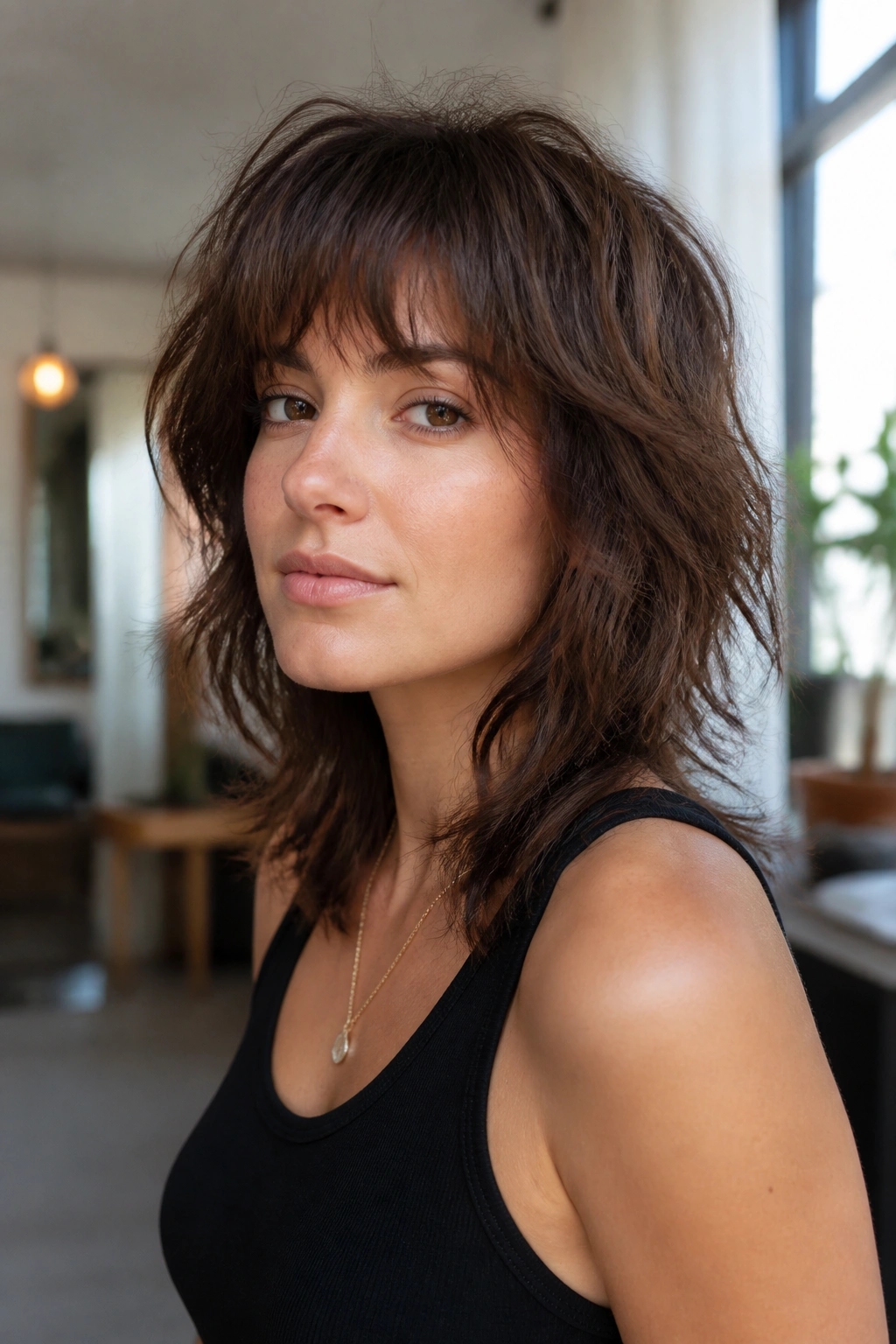
A shag is a good answer if you want bangs and movement all over, not just at the forehead. The fringe blends into short layers through the crown and sides, which stops the hair from forming one thick block around a round face. The overall effect is messy in a flattering way.
Why This Cut Helps
The crown layers give height, and the fringe breaks up width. Together, they make the face feel longer. That is why shags often work so well on round shapes.
This is a smart pick if your hair has natural wave. It can also save straight hair from looking too flat, though you may need a texturizing spray to wake the layers up. Keep the shortest bangs piece light, or the top can feel bulky.
13. Face-Framing Bangs Blended Into Long Layers
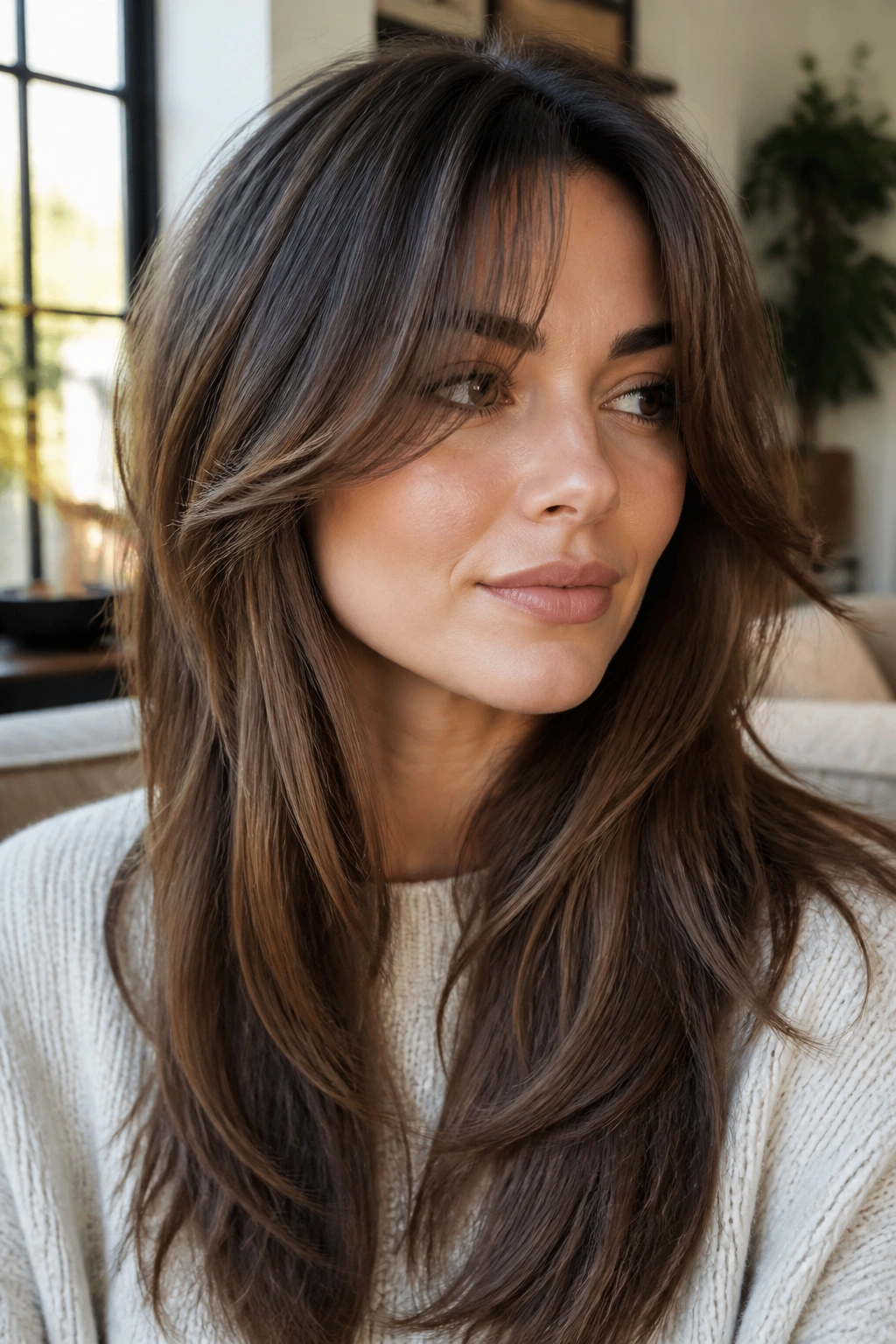
These are bangs for someone who wants to stay close to long hair. The front pieces start near the brow or cheekbone and melt into longer layers, so the front of the face gets shape without a hard line. For round faces, that softness matters because it avoids a hard horizontal break.
This style is especially useful if you wear your hair down a lot. It gives the impression of bangs from the front, but when you tuck the pieces back, the face opens up again.
A small note: the transition from bang to layer needs to be smooth. If the step is too abrupt, the front can look chopped. You want a gradual slope, not a shelf.
14. Deep Side-Swept Fringe With Diagonal Movement
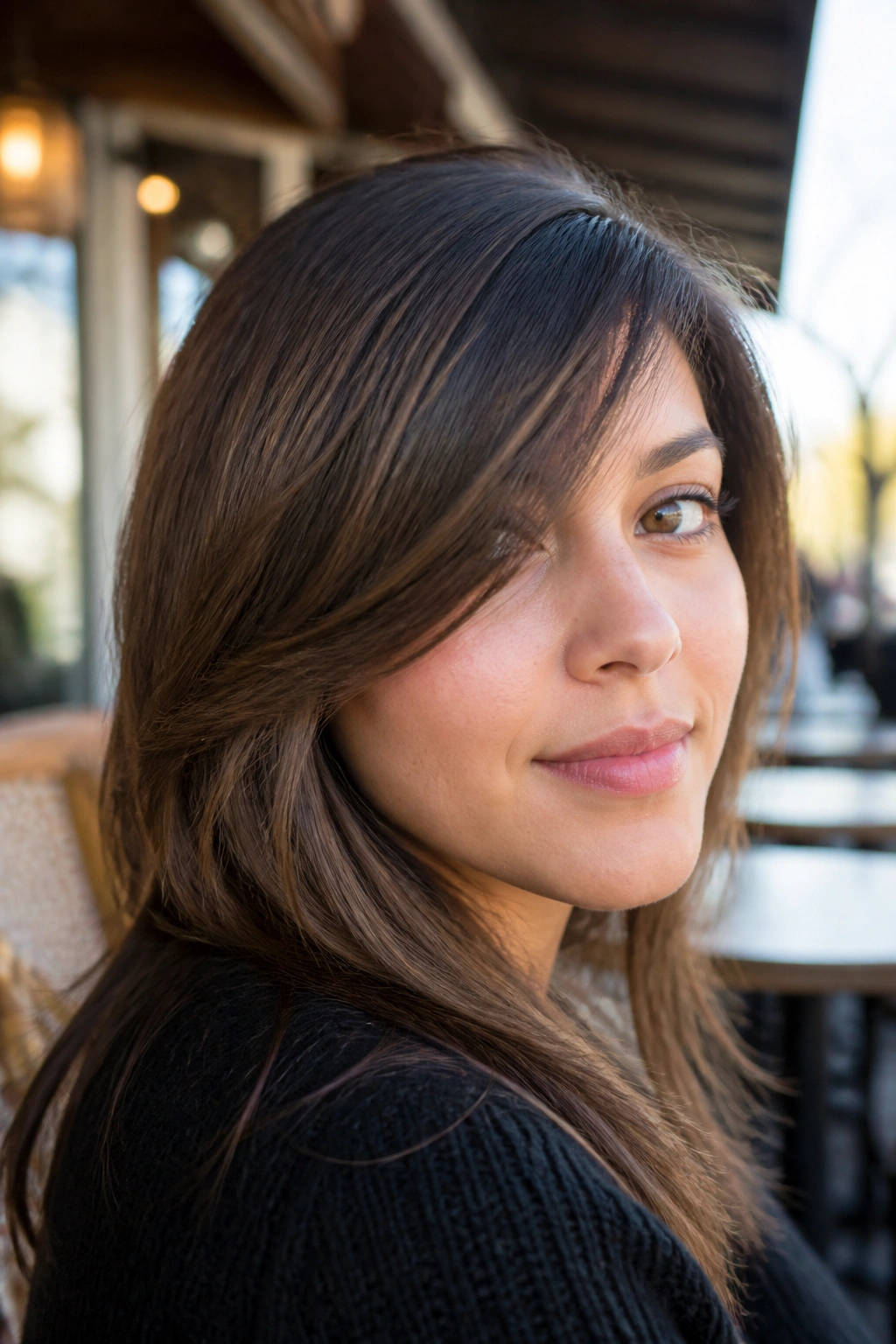
Diagonals are your friend. A deep side-swept fringe cuts across the face in one long line, which helps roundness feel less circular. It is one of the most face-shaping options on this list because it creates direction instead of width.
Here’s the catch: the line has to be long enough to matter. If the bangs are too short, the diagonal disappears and you are left with a lopsided fringe that needs constant fixing. Aim for a sweep that starts near the crown and ends around the cheekbone.
Quick Styling Cues
- Blow-dry the root against the natural direction first.
- Redirect the ends across the forehead with a round brush.
- Use a lightweight spray, not a sticky gel.
- Clip the bang while it cools if it wants to fall apart.
15. Baby Bangs With Longer Side Pieces

Baby bangs can work on a round face when they are paired with longer pieces near the temples. That contrast keeps the forehead from feeling boxed in. Short bangs alone can be tricky, but short center pieces plus longer sides create a frame that gives the face more structure.
I like this version better than a blunt micro fringe because it gives you options. The long side pieces can soften the look, and they help balance out fullness in the cheeks.
This is a style with attitude. It is not subtle, and it should not be. If you want something quiet, skip it. If you want a little sharpness and a clear shape, this is one to keep on the list.
16. Piecey Brow-Grazing Fringe Separated With Wax

Piecey bangs are a nice compromise between full and wispy. The strands sit near the brows, but they are separated enough that the forehead still shows through in spots. That broken texture helps a round face look less broad because there is no solid wall of hair across the top.
The styling part matters. A pea-sized amount of wax or paste, warmed between your fingers, can define the pieces without making them stiff. Use too much, and the fringe turns greasy fast.
This style does well on straight and slightly wavy hair. Very curly hair can do it too, but the texture needs more deliberate shaping, or the pieces get lost. Keep the ends light and moveable.
17. Bardot Bangs With a Soft Split and Long Edges
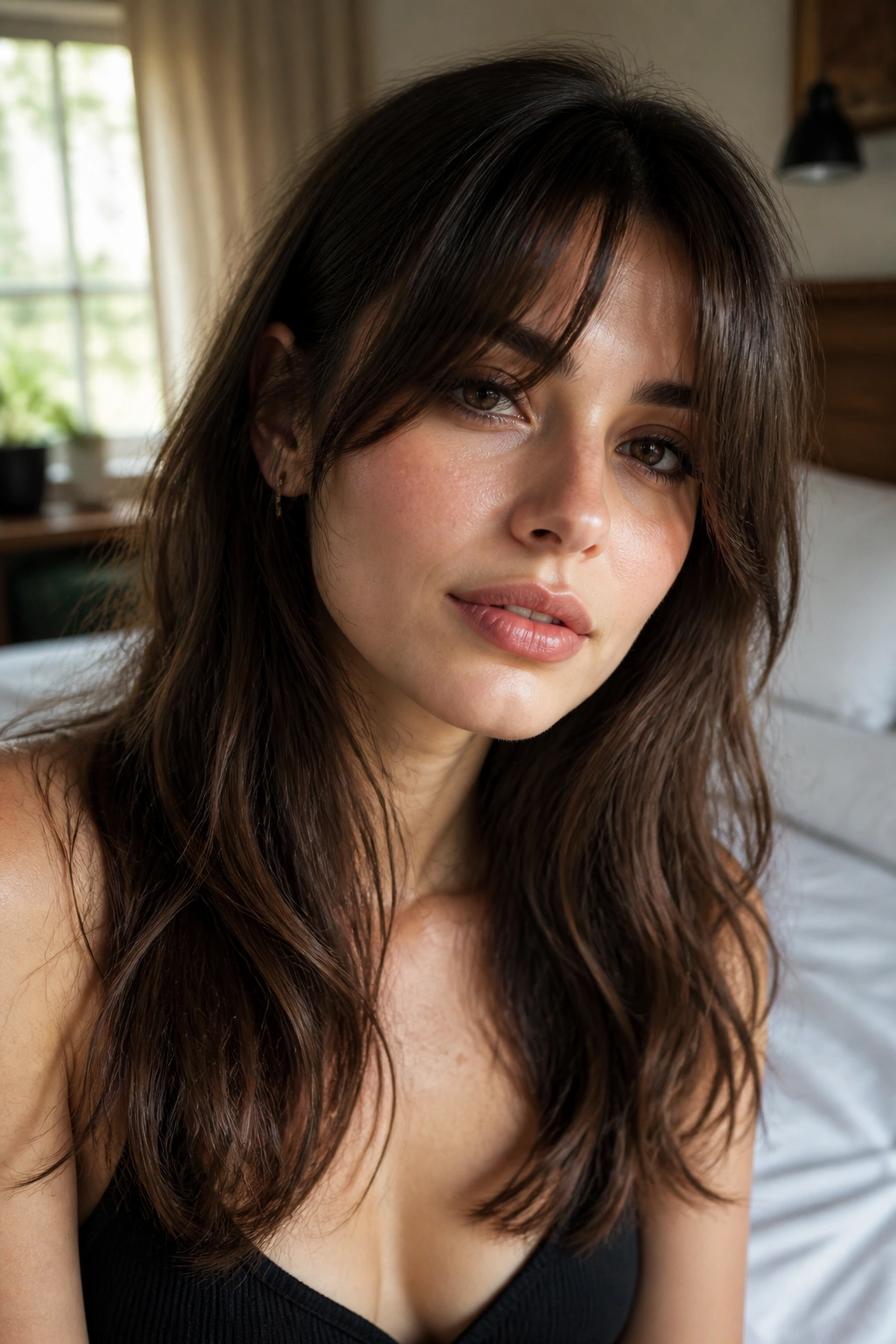
Bardot bangs sit somewhere between curtain bangs and side-swept fringe. They split in the middle or slightly off-center, then drift out toward the sides with longer edges. That shape gives a round face a little drama without dragging the whole look downward.
What Makes Them Different
They are softer at the center than a blunt fringe and fuller than a wispy bang. That middle ground is what makes them so easy to live with. They feel feminine, but not fragile.
If your hair is medium to thick, this is a very friendly cut. Ask for the shortest point to stay near the brows and the longest pieces to graze the cheekbones. The farther the sides travel, the more length you create in the face.
18. Crescent Fringe That Curves Shorter in the Middle
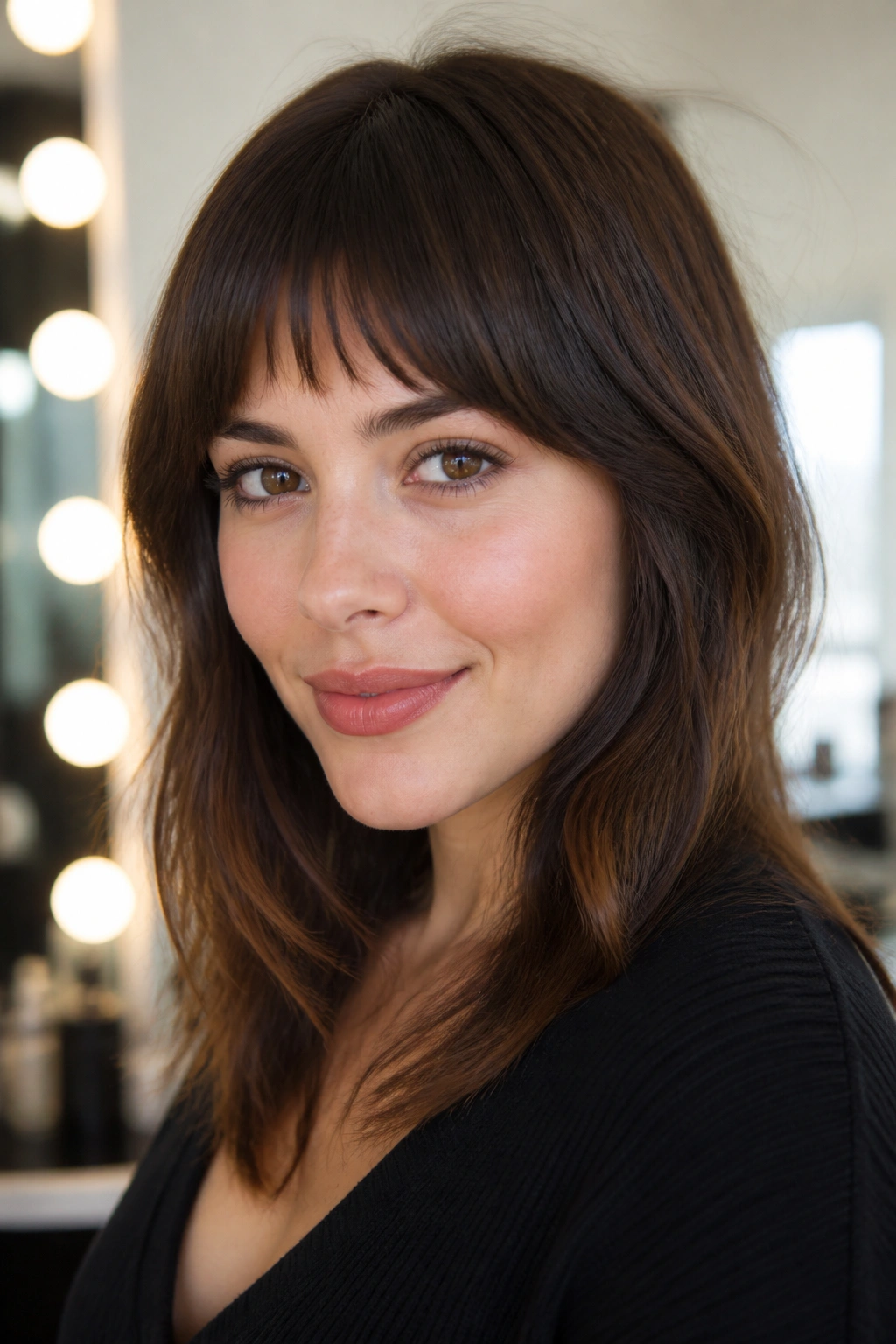
A crescent fringe is shaped like a shallow smile: shorter in the center, longer at the edges. On round faces, that curve can be a smart choice because it keeps the eye moving. The line is rounded, but not so round that it mirrors the face shape too closely.
The cut works best when the middle stays light and the sides are allowed to travel. If the sides stop too early, the crescent loses its shape and starts acting like a blunt bang in disguise. That is not the goal.
Try this if: you want something more polished than curtain bangs.
Skip it if: your forehead is very short and you do not want any center lift. The shape needs a little breathing room to look good.
19. Long Blended Fringe That Disappears Into a Lob

Long blended bangs are for people who want the front to feel present but not obvious. The fringe melts into a lob or shoulder-length cut, so nothing feels cut off abruptly. That long line is useful on round faces because it creates length along the sides of the face.
This is one of the easiest styles to grow out, which is a practical advantage people ignore too often. A fringe that can become layers is a gift. It gives you a haircut that keeps working even when the trim appointment gets delayed.
The key is blending. If the bang line ends too cleanly, the face can feel framed too tightly. Soft graduation is what keeps it flattering.
20. Korean Air Bangs With a Translucent Finish
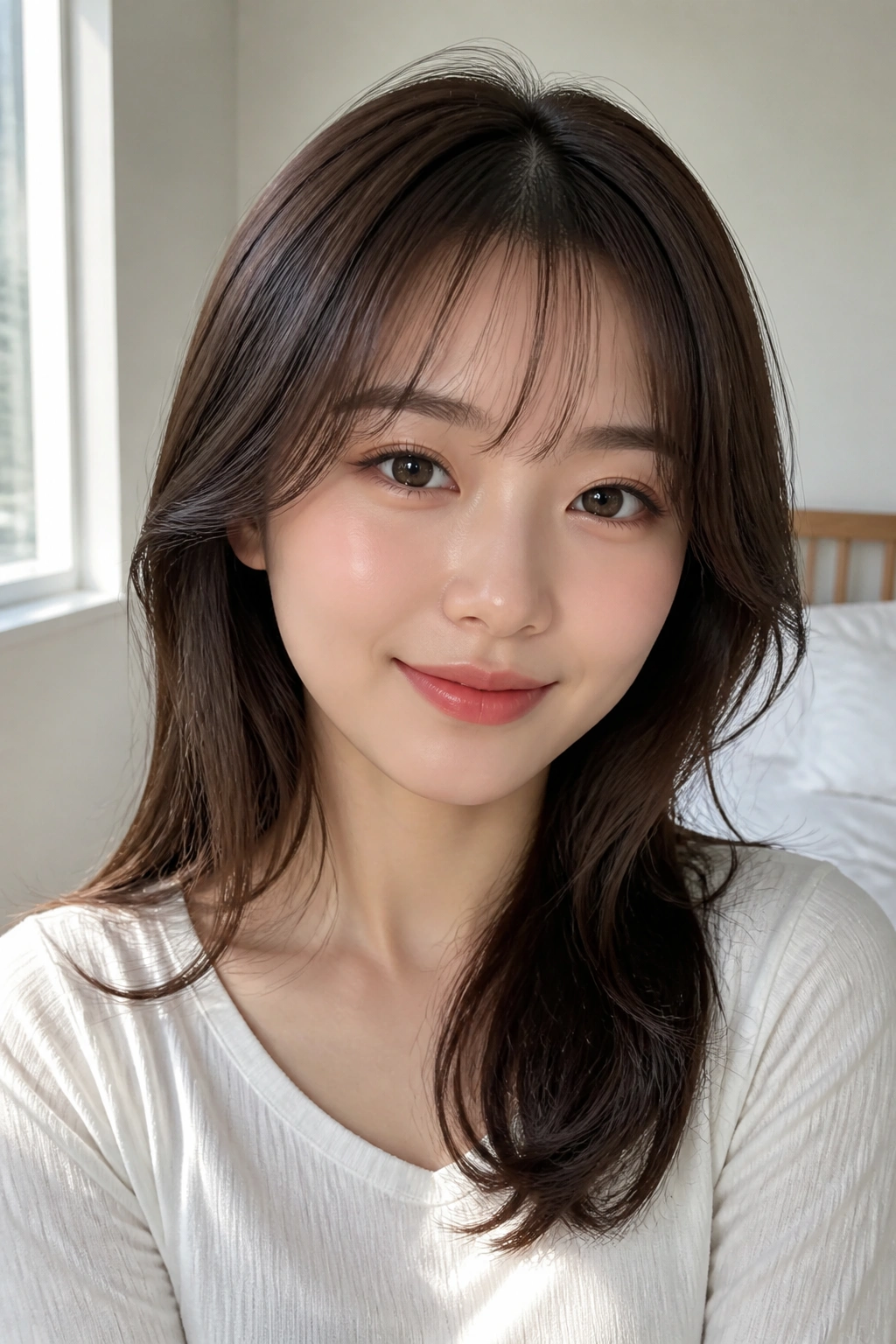
Air bangs are so light they almost hover. They sit thin across the forehead, with enough separation that you can see skin and a little movement underneath. For a round face, that translucence keeps the front from feeling heavy or wide.
These bangs are especially good when you want a delicate look and do not want much day-to-day maintenance. They can be brushed forward and shaped with almost nothing more than a cool blow-dry.
The danger is overloading them. Too much product kills the airy effect. Keep them clean, light, and a little imperfect. That is the point.
21. U-Shaped Fringe That Opens in the Center
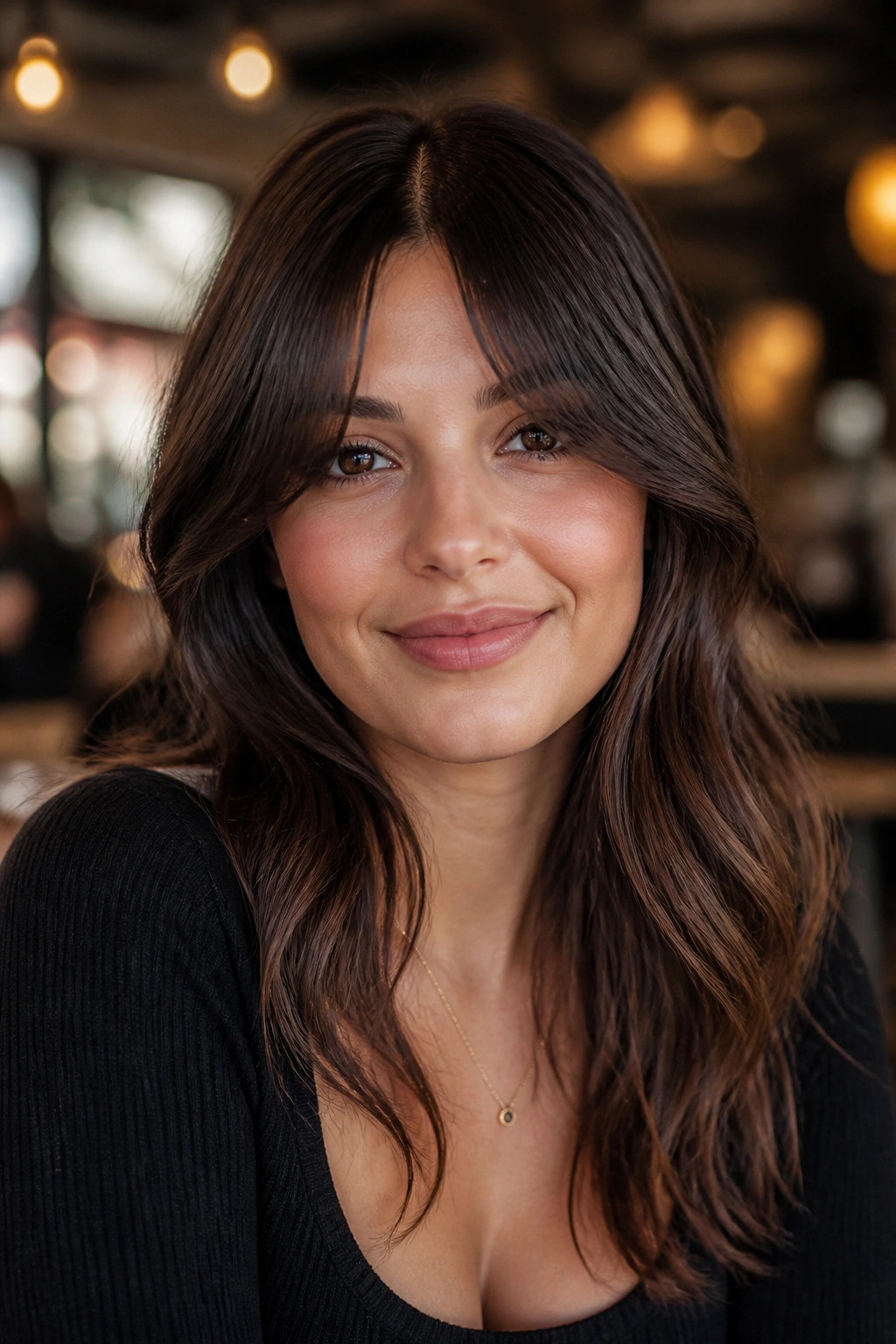
A U-shaped fringe has a slightly lower center and longer sides, which creates a soft opening at the forehead without committing to a full curtain effect. On a round face, that little dip helps because it draws the eye toward the middle and then outward along the cheek line.
Ask Your Stylist For
Tell them you want a center that sits near the brows, with longer sides that fall toward the outer eye corners. The curve should be smooth, not sharp. If it looks too pointed, the cut can feel harsh against softer features.
This shape is a nice option if you want something more controlled than wispy bangs but less split than a true curtain fringe. It sits in a useful middle ground.
22. Deep Side Part With a Narrow Fringe

This is not a heavy bang moment. The fringe is narrow, and most of the weight sits on one side because of the deep part. That imbalance is good on round faces, where straight-on symmetry can emphasize width. The side part breaks the shape and gives the front more direction.
I like this choice for people with fine hair, because a narrow fringe is easier to control and less likely to collapse flat. It also works if your hair tends to separate on its own and fight you all morning. Sometimes the best style is the one your roots are already trying to make.
Keep the front long enough to tuck behind one ear if needed. That little bit of length gives you an escape hatch.
23. Bottleneck Bangs Paired With a Shag
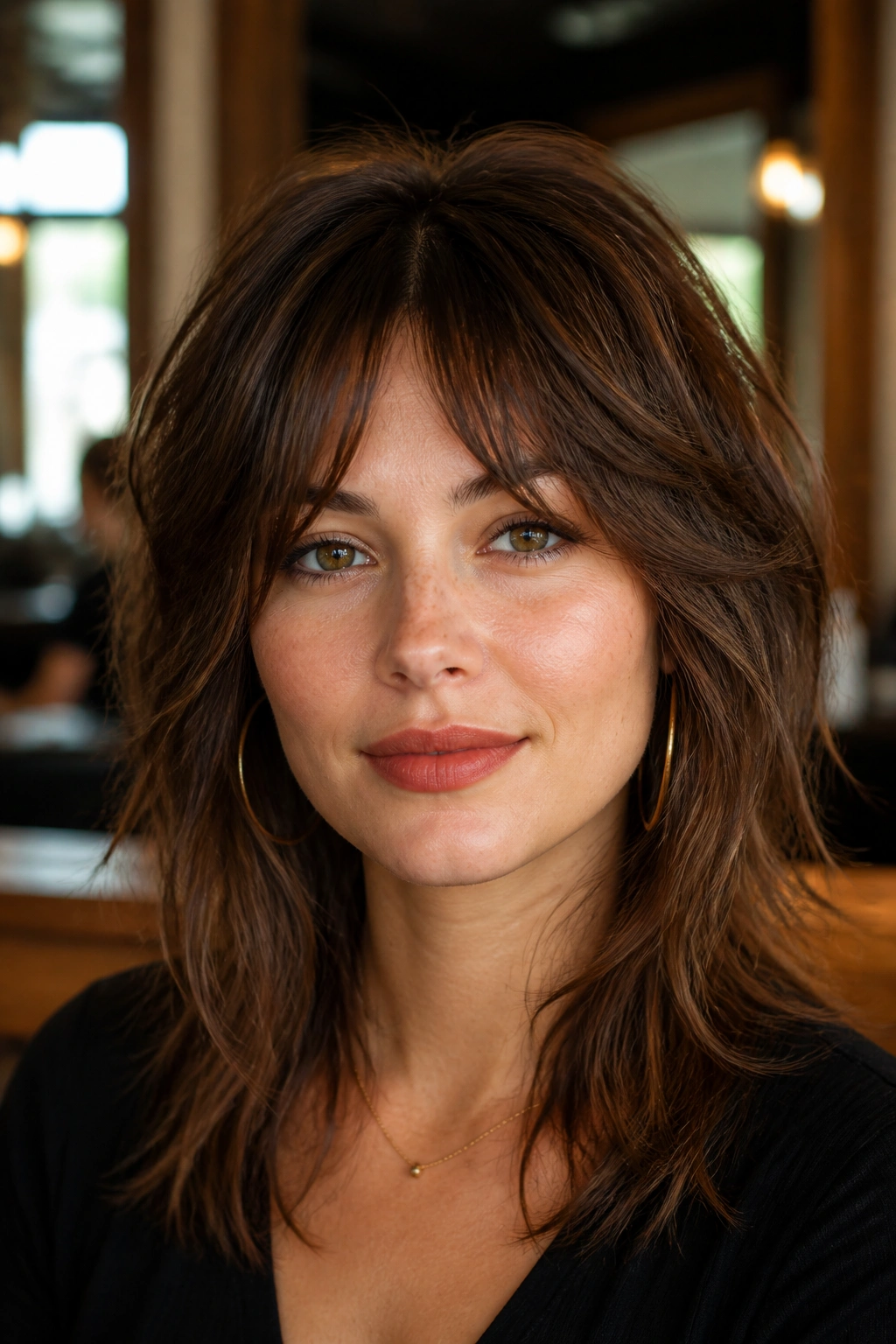
Put bottleneck bangs on top of a shag, and you get movement for days. The fringe opens in the middle, then the layers around it keep the face from looking too full on the sides. On round faces, this combination can be one of the most flattering because it adds lift at the crown and breaks up the width at the cheeks.
The shag does the heavy lifting here. The bangs just point the eye in the right direction. That is why this combo feels so balanced.
If you want a low-key edge without going full retro, this is a strong option. It is not neat. It is not precious. It has shape, texture, and a little attitude, which is often the sweet spot.
24. Curly Wispy Fringe Cut Dry
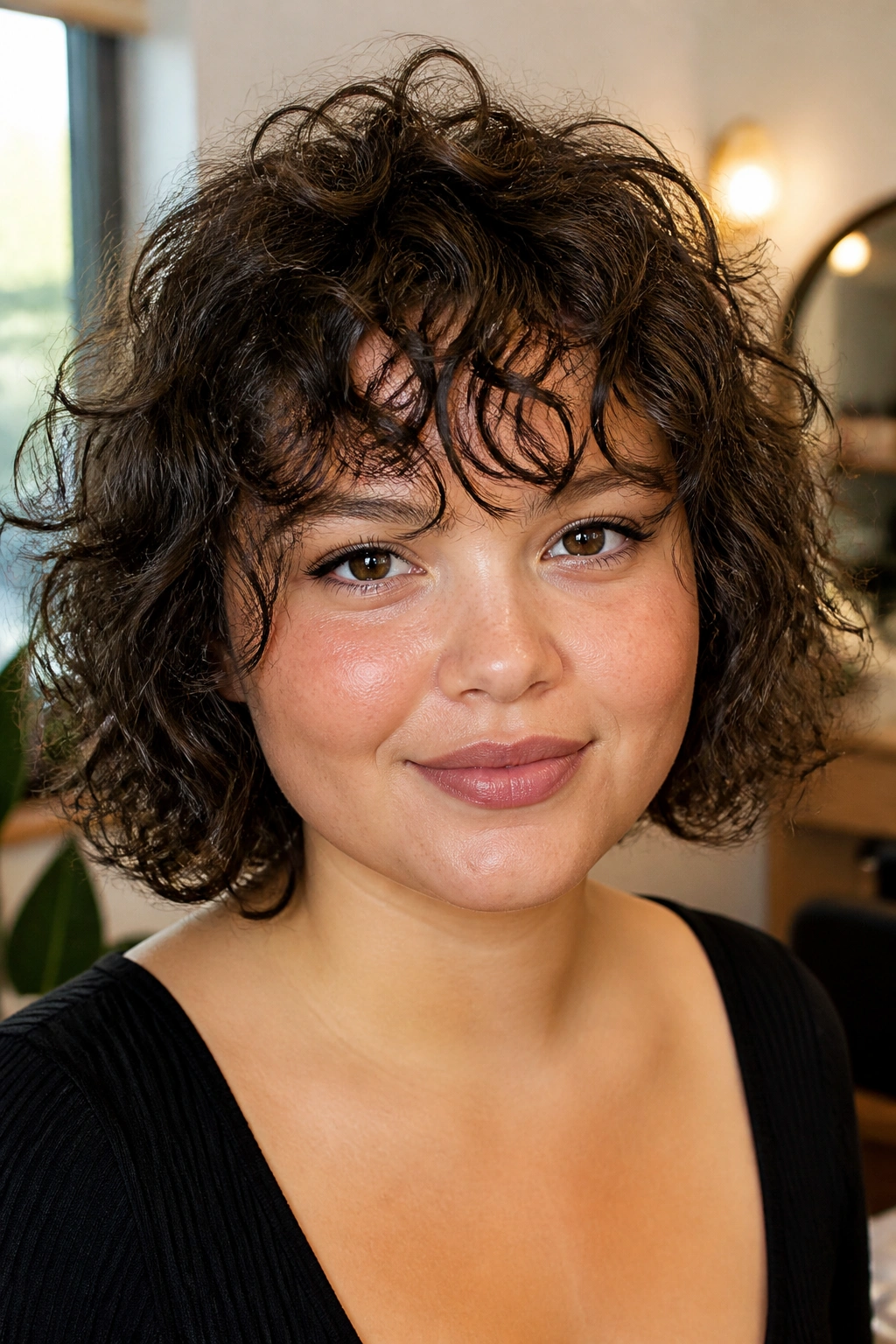
Curly bangs need different rules. Cutting them dry, or nearly dry, helps the stylist see the real shape instead of guessing where the curl will land after shrinkage. For round faces, wispy curly fringe can be lovely because it softens the forehead without making it look wider.
Dry-Cut It
A dry cut lets the stylist carve around the curl pattern instead of fighting it. That matters when the hair springs up more on one side than the other.
Keep the ends light and avoid over-layering the front. Too many short pieces can make the fringe puff out. A gentle, tapered shape is usually the better move.
25. Collarbone-Length Cut With Fringe

A collarbone cut gives a round face one of its best visual helpers: length. Add fringe, and the look becomes more interesting without losing that vertical line. The bangs can be curtain-shaped, side-swept, or lightly piecey, depending on how much forehead you want to show.
This length is practical too. Hair that hits around the collarbone tends to swing well and tuck behind the shoulders without feeling too short. That movement helps the fringe feel part of a bigger shape instead of the only thing people notice.
If you are unsure about bangs, pairing them with a collarbone cut keeps the whole style from feeling abrupt. It gives you room to adjust.
26. Soft Blunt Bangs Lightened With Point-Cutting
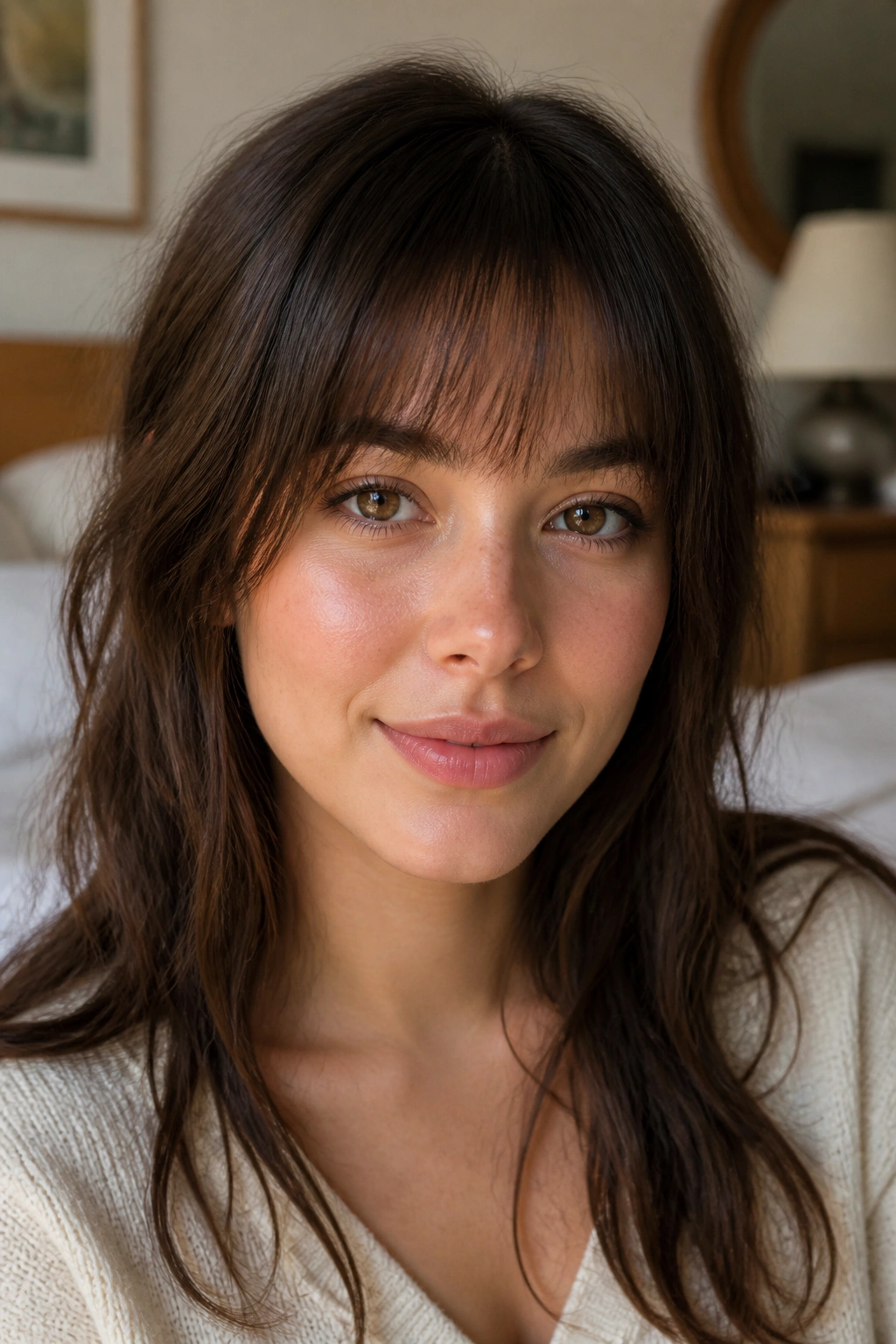
Blunt bangs get a bad reputation on round faces, and I get why. A hard, dense line can make the face feel wider. But soften the edge with point-cutting, and the result changes a lot. The line stays present, yet the ends are light enough not to feel like a wall.
The Important Part
Do not let the fringe get too thick. A heavy blunt bang is a different thing altogether, and it can overwhelm softer features. The goal here is density with movement, not one heavy strip.
This style works best when the rest of the hair has some length or lift. A sleek bob, lob, or shoulder-length cut gives the bangs somewhere to land visually.
27. Razored Fringe With a Light, Airy Edge

A razor cut can take weight out of a fringe fast, which makes it useful for round faces that need the forehead area to stay open and light. The edges look softer than scissor-cut bangs, and that softness breaks up width.
This is a good choice if your hair is thick or coarse and tends to mushroom when cut blunt. A razor can remove some of that bulk and help the bangs sit flatter against the head. Not flatter in a limp way. In a controlled way.
The one catch is maintenance. A razor cut can go fuzzy if your hair frizzes easily, so this is better for hair that already behaves a bit.
28. Swoopy Diagonal Bangs That Travel Across the Forehead
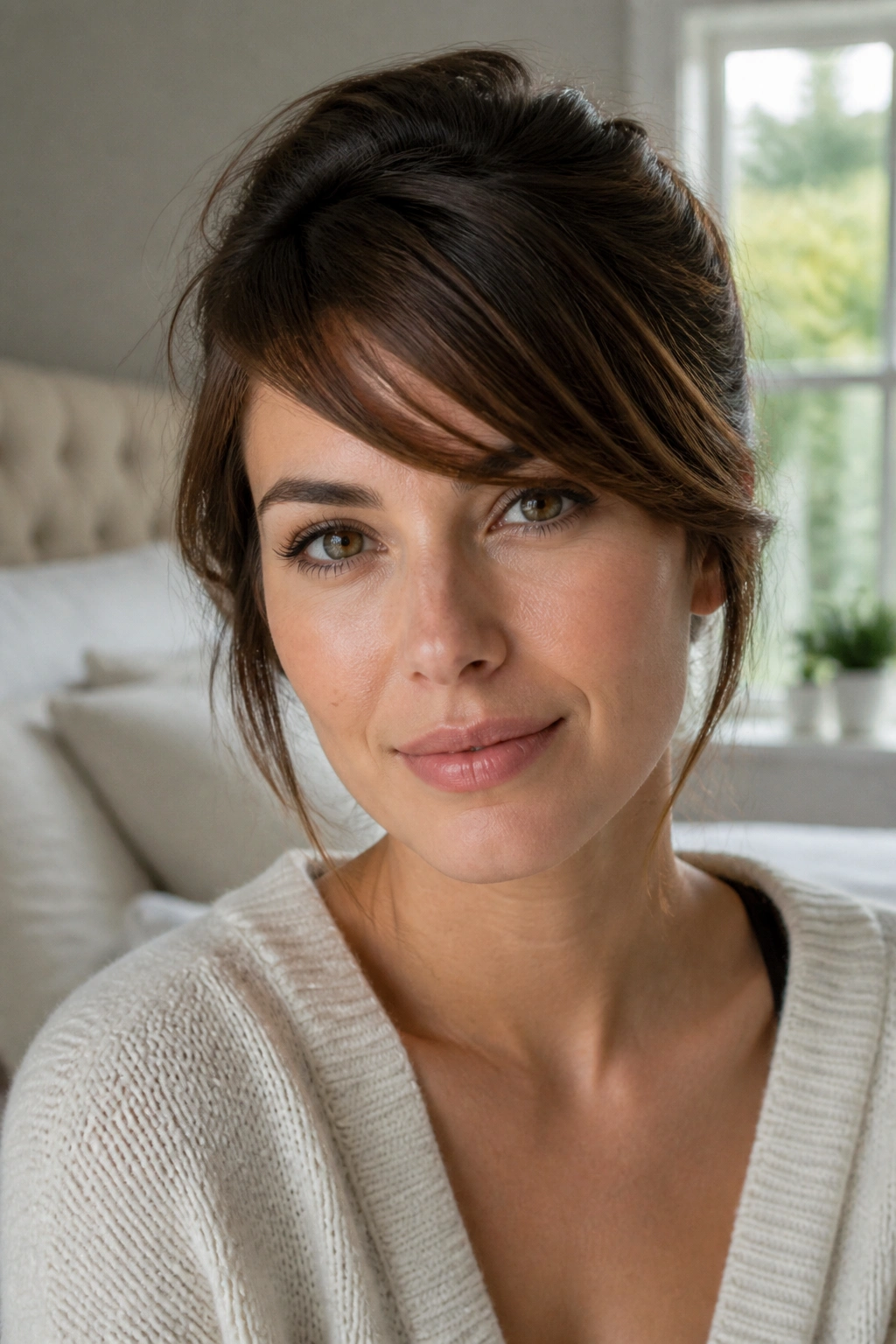
Swoopy bangs are all about motion. They travel from one side of the forehead toward the other in one smooth diagonal line, which gives round faces a more elongated shape. The line is long enough to be flattering and soft enough not to feel severe.
I like this cut when someone wants visible bangs but not a full front fringe. It gives a face some shape without taking away the openness around the brow area.
A medium round brush and a side-directed blow-dry help keep the swoop in place. If you let it dry on its own, the shape may split in the wrong spot and lose that clean diagonal line.
29. Two-Way Curtain Bangs That Can Flip Either Direction
Two-way curtain bangs are the flexible cousin of the classic curtain fringe. They are cut so the center can be worn parted in the middle, but the pieces are long enough to sweep to either side when you want a change. That flexibility is useful on round faces because you can adjust the angle depending on how you want the face to read that day.
The face-framing effect is gentle, not rigid. You can open the center wider for more forehead show or close it a little when you want more coverage. That gives you control, which is half the battle with bangs.
If you like options and hate being trapped by one styling choice, this is a smart pick.
30. Layered Shaggy Fringe With Extra Movement
A layered shaggy fringe has more breakup than a standard curtain bang and less polish than a Bardot shape. That messier edge helps round faces by keeping the front from feeling too neat or wide. The layers around the fringe also create a kind of visual lift, especially when the crown has volume.
What to Ask For
Ask for soft layers through the top and a fringe that is not all one length. The shortest pieces should still leave room for movement. If the front is too chunky, the shag loses its lightness.
This style loves texture spray. A few quick sprays at the roots and through the ends can make the whole cut look lived-in without turning crunchy.
31. Flip-Out Bangs That Turn Away From the Face
Flip-out bangs are playful, and they bring a little old-school energy without feeling costume-like. The ends turn outward instead of hugging the face, which is useful on a round shape because the movement pushes the eye outward and upward at the same time.
A subtle flip works better than a big one. You do not want the bangs to flare out like a fan. You want the ends to lift enough to avoid hugging the cheeks.
This style is nicest on hair that already has some bend. If your hair is pin-straight, you can still do it, but it will take a round brush and a bit of patience. Not terrible. Just a little fussy.
32. Half-Moon Fringe With a Rounded Arch
Half-moon bangs curve gently across the forehead in a way that looks polished without being severe. The center is shorter, the sides are longer, and the whole line resembles a shallow arc. On round faces, that shape gives structure while still leaving enough softness around the edges.
The arch works because it does not create a hard straight edge. Straight edges can feel blunt on softer face shapes. A curve gives the eye somewhere to travel.
If your brows are one of your favorite features, this style is worth a look. It frames them instead of hiding them. That alone can change the whole mood of the cut.
33. Grown-Out Fringe That Starts Below the Brow
A grown-out fringe is underrated. People often treat it as an awkward stage, but on a round face it can be the prettiest version of bangs because the length is enough to shape the face without crowding it. The fringe starts below the brow, then slides into the sides in one long line.
This is also one of the easiest styles to live with. You do not need a perfect blowout every day, and the grow-out still looks intentional.
If you are on the fence about bangs, this is a smart bridge. It gives you the feeling of fringe without the strict maintenance of a short cut. Sometimes that matters more than the photo.
34. Tapered Temple Fringe That Narrows Toward the Sides
A tapered temple fringe is one of the more unusual options, but it can be very flattering. The bang is fuller near the center and narrows as it moves toward the temples, which helps the face feel less wide at the sides. On round faces, that taper can be a subtle fix that changes the whole balance.
Quick Shape Notes
- Keep the center soft, not bulky.
- Let the side pieces thin out gradually.
- Aim for a length that skims the brow rather than sitting above it.
- Use a round brush to bend the sides slightly inward.
This is a cut for someone who likes controlled shape and does not mind a slightly less common look. It is tidy, but not boring.
35. Split Fringe With a Longer Center Gap
A split fringe is almost a cheat code for round faces when you want bangs but also want space at the forehead. The center gap opens the face, and the longer pieces on each side frame the cheeks without adding width across the middle. It is a clean way to get fringe without crowding the top half of the face.
The style works especially well with medium to long hair, because the length around it gives the whole look some breathing room. If the rest of the haircut is too short and too full, the split can lose its shape.
If I had to pick one fringe pattern that gives you the most control, this would be near the top. You can wear it soft, tucked, swept, or a little messy, and it still reads as intentional.
Final Thoughts
Round faces do not need to avoid bangs. They need bangs with shape. That shape can be a center split, a diagonal sweep, a light texture, or a longer edge that frames the cheeks instead of cutting straight across them.
The safest starting points are still the most useful ones: curtain bangs, bottleneck bangs, and a side-swept fringe that lands near the cheekbone. Those styles give you room to style, room to grow out, and room to adjust if your first trim is not perfect.
And if you want something bolder, fine. Just make sure the cut does some kind of visual work — opening the forehead, lifting the crown, or breaking up the width through the sides. That small bit of intention is what separates a fringe that fights your face from one that makes it look sharper, longer, and more balanced.
