



Colored bangs can do a lot of work with very little hair. That’s the appeal, really: you can keep the rest of your cut calm and still get a hit of color right where people look first.
Bang color is also sneaky. A strip of copper, teal, or lilac around the eyes changes the whole face, even if the rest of your hair stays natural. And because bangs sit against the forehead, they pick up skin oil, sweat, dry shampoo, and heat from styling tools faster than the lengths do. That means the shade you choose has to look good on day one and hold up after a few wash cycles.
The best colored bangs ideas don’t all chase the same mood. Some look soft and expensive. Some are loud in the best possible way. Some are almost hidden until you tilt your head, which is my favorite kind of hair trick because it feels a little sly.
What matters most is placement. A blunt fringe turns a color into a clean block. Curtain bangs let a shade melt and fade out at the edges. Micro bangs make even one bold color feel graphic. Keep that in mind as you scroll, because the same dye job can read polished, punk, romantic, or playful depending on the cut.
1. Copper Curtain Bangs
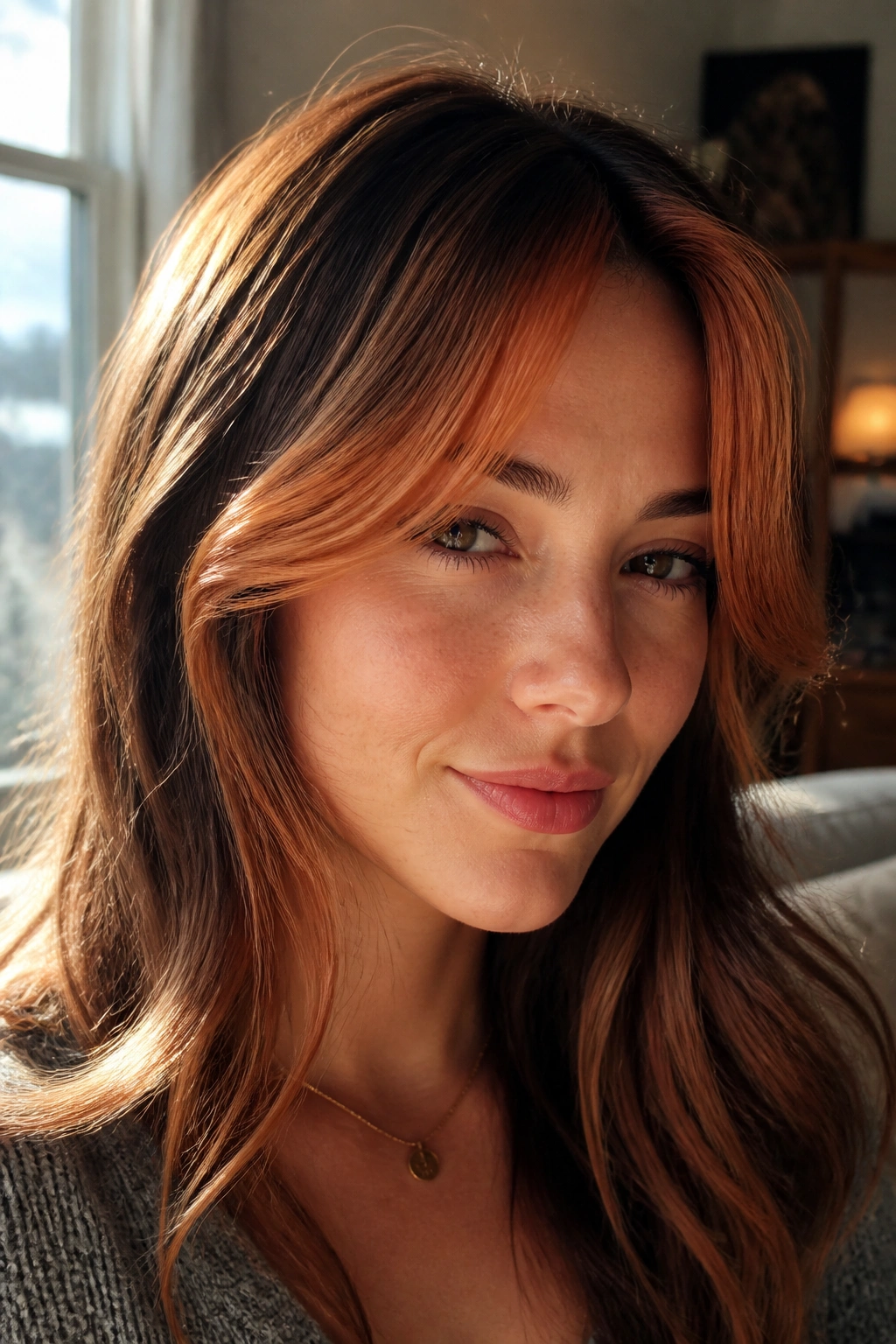
Copper is the easy favorite for a reason. It has warmth, shine, and just enough punch to wake up a haircut without turning the whole thing into a costume.
Why Copper Works So Well
On curtain bangs, copper looks especially flattering because the color opens up as the hair parts away from the face. You get that soft frame around the eyes, but the shade still has movement instead of looking like a flat strip. It’s a color that seems to glow when the hair swings.
Copper also ages well as it fades. Instead of going dull and muddy, it usually softens into a warm peachy or strawberry tone, which is far easier to live with than a faded neon.
- Best on: brunette bases, auburn hair, and dark blondes who want warmth
- Cut it suits: curtain bangs, bottleneck bangs, and face-framing fringe
- Maintenance: refresh every 4 to 6 weeks with a gloss or color-depositing conditioner
- Styling tip: blow-dry away from the face with a round brush so the color shows in the bend, not only in the roots
My favorite part: copper gives you a visible change without forcing you into high-contrast upkeep. It’s bold, but it doesn’t scream every minute of the day.
2. Cherry Red Blunt Bangs
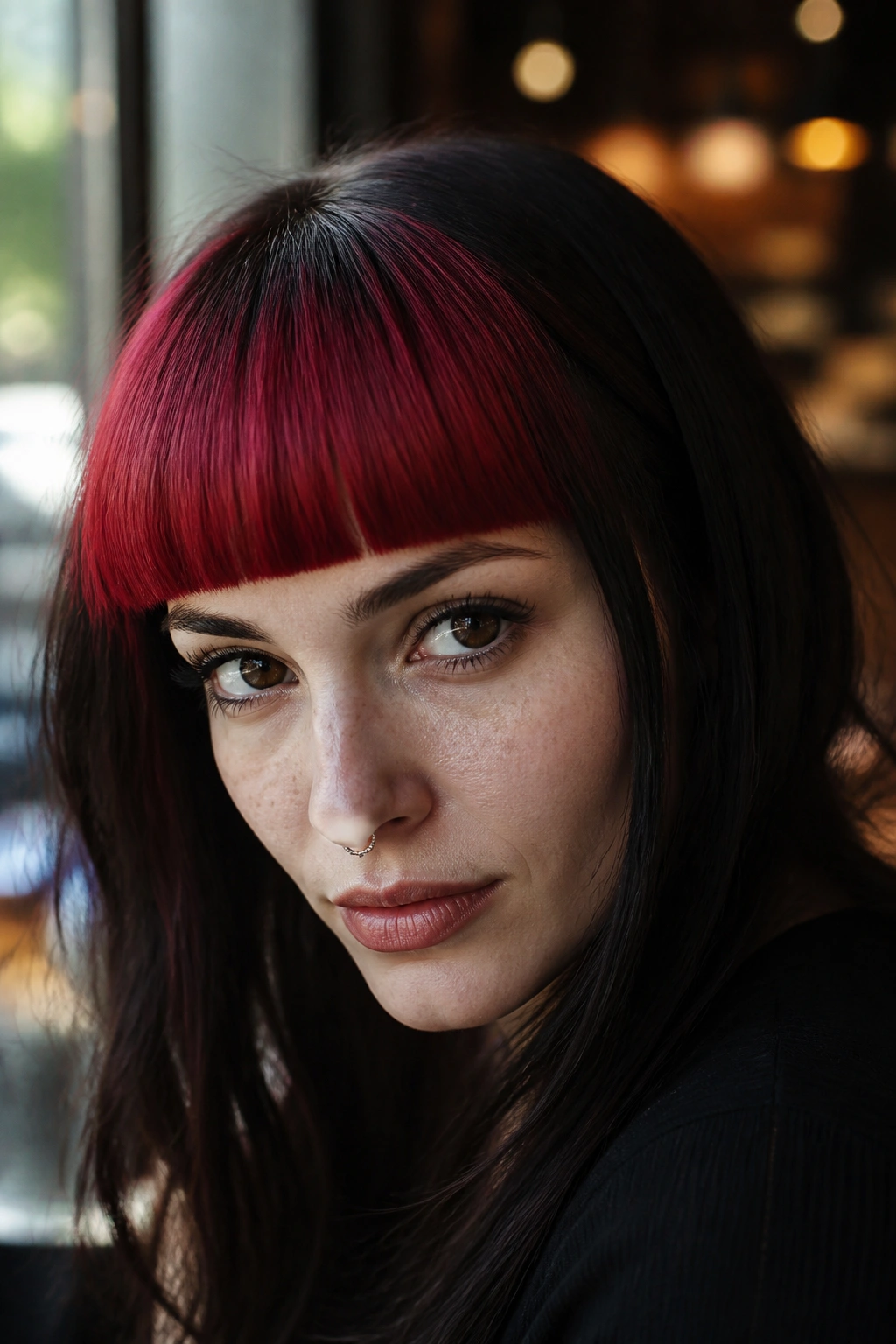
Cherry red bangs are not subtle. That is the whole point. On a blunt fringe, the color lands like a straight line across the forehead, and that shape makes the red look cleaner and sharper.
The thing people miss is how much the cut matters here. Cherry red on wispy bangs can look scattered, but cherry red on a thick, blunt fringe feels deliberate. A little heavy. A little glossy. Very good.
If you want the color to stay bright, use a sulfate-free shampoo and keep heat under control. Red pigments fade fast, and bangs get more heat from flat irons and blow-dryers than the rest of your hair does. A color mask once a week helps, especially if your base is light enough that the red has nowhere to hide.
This is the shade for someone who likes a crisp outline. Clean ends. Strong lip color. A little attitude. It’s one of those colored bangs ideas that can carry an entire haircut.
3. Rose Gold Wispy Bangs

Why does rose gold keep showing up in face-framing color? Because it softens the whole face without losing personality. On wispy bangs, it reads more like a sheen than a block of dye.
What Makes It Work
Rose gold sits in a sweet spot between pink and warm blonde. That means it flatters light bases without needing a hard contrast, and it’s gentle on layered cuts where the ends are supposed to move. Wispy bangs are a good match because they break the color up into thin strands instead of one solid stripe.
The shade is also one of the easier fashion colors to wear if you’re nervous. It looks pretty in daylight, a little dressier under indoor lights, and it does not come off as too harsh when it fades. That’s a rare combination.
How to Wear It
A soft wave helps. So does a side part or a loose middle part that lets the color open up at the center and taper at the edges. Keep the rest of the hair close to blonde, beige, or soft brown, and the rose gold will feel intentional instead of random.
If you want a color that sits between playful and polished, this one does the job with almost no drama.
4. Teal Peekaboo Fringe
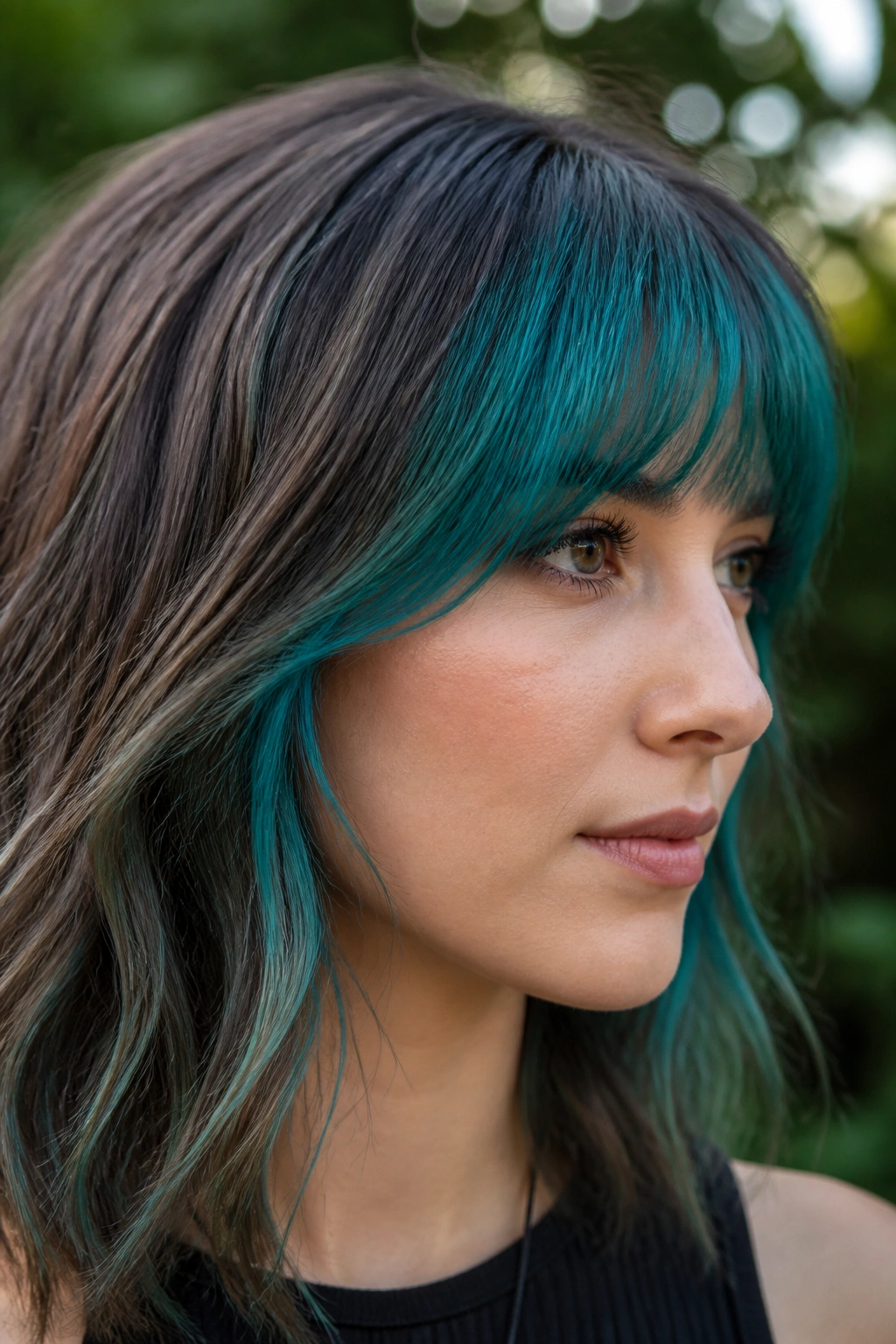
Picture this: the top layer of your bangs looks neutral, then you move your hair and a strip of teal flashes underneath. That’s the appeal of peekaboo fringe. It gives you color with a little bit of mischief.
The mechanics are simple. Teal sits well on darker hair because it has depth, not just brightness. Hidden placement means you can keep the top of the fringe more wearable while the underside carries the fun. It’s a smart choice if you work somewhere conservative but still want your hair to feel like yours.
- Best for: shag cuts, layered bobs, and wavy fringe
- Color effect: visible when the bangs move or separate
- Upkeep: every 6 to 8 weeks for a clean hidden panel
- Best base: dark blonde, brown, or pre-lightened hair
I like teal here more than electric blue because it feels richer. Blue can go flat if the tone is off by a hair; teal tends to hold more dimension.
A hidden panel also makes the grow-out less annoying. You are not staring at a color line every morning. You only get the reveal when the hair falls the right way.
5. Lavender Bottleneck Bangs

Lavender on bottleneck bangs has a softer mood than most people expect. The shape of the fringe matters here: shorter in the center, longer at the sides, with a gentle taper that lets the color breathe.
It is a pretty good choice if you want pastel hair but do not want your bangs to look frosted or chalky. Lavender usually works best on hair that has been lifted to a pale blonde, and that lighter base gives the shade that airy look people want from pastel color. Too yellow a base, and the lavender drifts muddy. Too silver, and it can look cold.
The nice thing about bottleneck bangs is that they have built-in softness. The color doesn’t need to do all the work. A small bend at the ends and a little piecey texture are enough to keep the shade from feeling flat.
Lavender is also kinder than some pastels when it fades. It can drift into lilac, smoky mauve, or a pale silver-pink, which means the grow-out still looks thought-out. That matters more than people admit.
6. Cobalt Blue Micro Bangs

Cobalt blue micro bangs are a strong opinion in haircut form. They say you like contrast, you like shape, and you’re fine with a look that gets noticed from across the room.
Unlike pastel colors, cobalt does not need to whisper. It works because the pigment has enough depth to stay vivid even when the bangs are short. Micro bangs make the color feel graphic, almost like a painted line. That edge is the whole point.
This style works best with precise cuts. A shaggy outline can muddle the effect, but a short fringe with clean edges makes the blue look expensive instead of accidental. It also plays well with dark eyeliner, slicked-back lengths, or a blunt bob.
If you want low-fuss drama, this is it. The color is loud, but the haircut is small, which keeps the overall look manageable.
7. Emerald Side-Swept Bangs
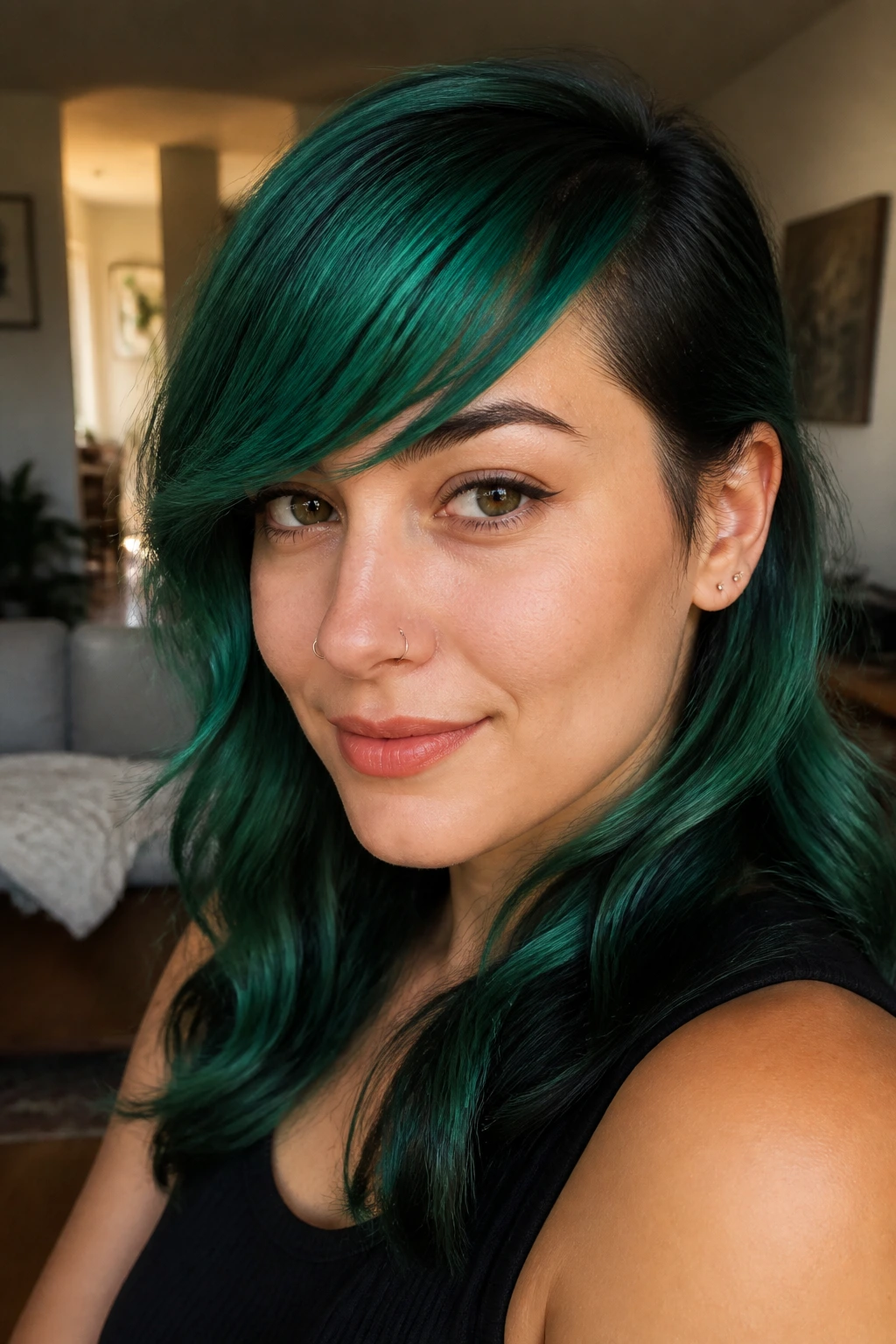
Emerald side-swept bangs are for people who want jewel-tone color with a little softness around the edges. The angle of the fringe matters a lot here. Side-swept hair gives emerald room to move, so the color shifts from deep forest to bright green depending on the light.
Why It Feels More Wearable Than It Sounds
Green hair sounds bold. It is. But emerald is one of the easier greens to wear because it carries blue and gold in the same shade. That keeps it from looking too neon or too muddy. On a side-swept bang, the color gets a graceful line instead of a hard block.
Best Ways to Style It
- Blow-dry the fringe across the forehead with a medium round brush
- Keep the roots slightly shadowed so the green has depth
- Wear it with loose waves, not stiff curls
- Pair it with darker brows or a strong lash line if you want the shade to stand out more
The real payoff is how rich it looks against neutral clothes. Black, cream, charcoal, and denim all let emerald do the talking. No fuss.
8. Neon Lime Shag Bangs

Neon lime bangs are not the haircut equivalent of background music. They’re a statement, and they work best when the cut has enough texture to support that kind of energy.
A shag is the obvious match. Those feathered layers keep the color from sitting like a neon bar across the forehead. Instead, the lime breaks up over the bends and pieces, which is a lot easier on the eye and honestly a lot cooler in motion.
Neon shades need confidence, but they also need upkeep. Fading can go from sharp to dull fast, so color-safe washing matters more here than it does with darker fashion colors. Dry shampoo can help extend the look between washes, though too much buildup will kill the brightness.
I’d call this one a good choice for anyone who wears simple clothes and wants the hair to do the talking. Plain T-shirt. Big shade. Done.
9. Peach Soft Fringe

Why does peach work so well on bangs? Because it gives warmth without turning the fringe into a neon sign. Peach sits close to the skin-tone colors many people already wear well, so it feels easy even when the color is obviously not natural.
On a soft fringe, peach has a lovely haze to it. The color sits lightly on the strands, which makes it a smart option for people who want color but don’t want a harsh block at the front of the face. It reads sweeter than copper and less sugary than pink.
How to Make It Look Intentional
Keep the base of the hair in the same family: golden blonde, apricot, light brown, or warm brunette with a gloss. Peach hates fighting with cool ash tones. If the rest of the hair is too muted, the bangs can look pasted on.
A loose blowout helps the most. You want the strands to move and separate a little, because peach looks richest when the light can pass through it. Static, weirdly enough, is the enemy here.
This is a very good “first fashion color” choice. Soft enough to live with. Distinct enough to matter.
10. Sunset Orange Curtain Bangs
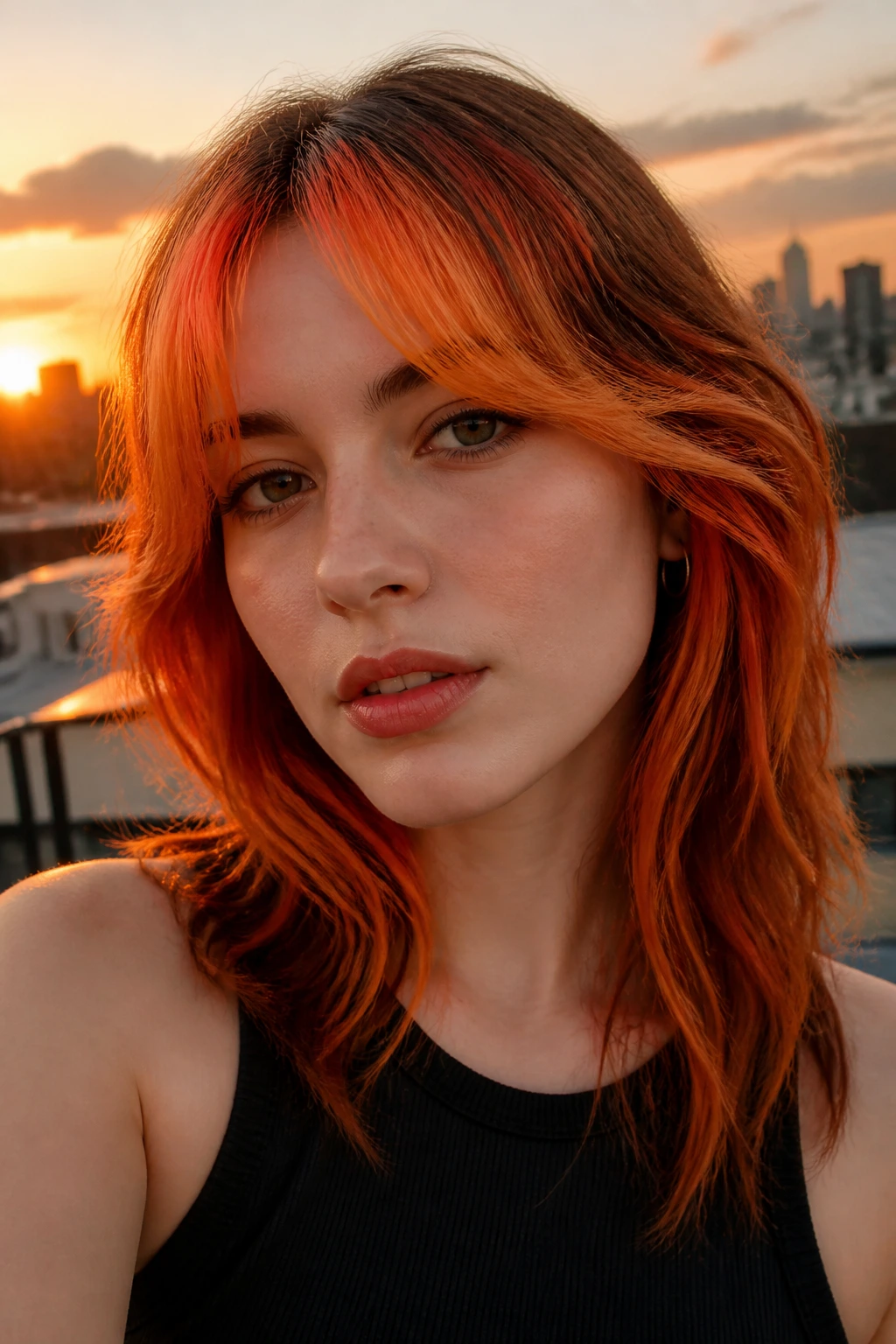
Sunset orange curtain bangs bring a little heat to the face without going full flame-red. The color usually mixes orange, coral, and a touch of gold, which makes it easier to wear than a flat orange.
I like this shade on curtain bangs because the parting gives the color room to breathe. The front pieces can be brighter, while the longer edges taper into something softer. That keeps the look from turning cartoonish, which is a real risk with orange if the tone is too pure.
The style works especially well with texture. Waves, bends, and airy layers all help the shade feel dimensional. Straight, flat bangs can make orange look harsher than it is. Slight movement does the opposite.
A glaze or semi-permanent color keeps sunset orange glossy. If the ends get dry, the color gets dusty fast. That’s the boring truth, but it matters.
11. Plum Wine Full Fringe
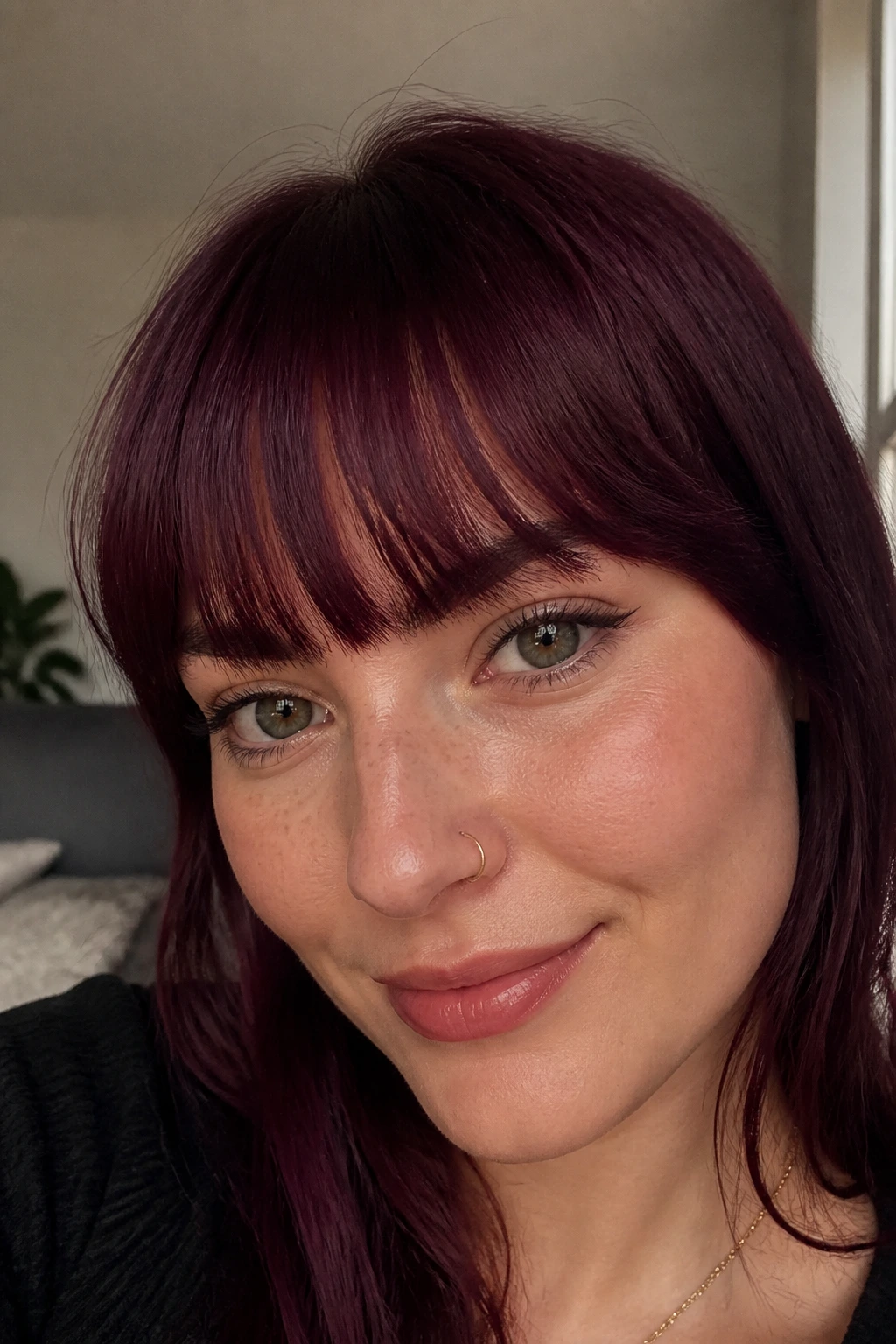
Plum wine bangs have a deep, moody richness that feels expensive without trying too hard. On a full fringe, the color reads almost like velvet. Dark, but not dead. Saturated, but not bright.
This shade is a good move if you want color that looks strong in daylight and even stronger under indoor lighting. The purple-red balance keeps it from leaning gothic unless you want it to. A straight fringe makes the color look sharp, while a slightly beveled cut gives it more softness.
One thing I love here is how well it plays with dark brows and berry makeup. You do not need to match anything exactly. That’s the trap people fall into. Plum wine has enough complexity that it carries the look on its own.
If your hair is naturally dark, this shade can often be done with less lightening than pastels need. That lowers the upkeep and keeps the fringe healthier, which matters more than people realize.
12. Split-Dye Bangs

Split-dye bangs are for the person who likes contrast and does not want to apologize for it. One side can be black and red. Blonde and blue. Pink and purple. The key is the clean vertical divide, because that line is what makes the whole thing feel intentional.
Unlike single-tone color, split bangs turn the fringe into a small design element. The shape of the part matters a lot. Straight hair shows the split most clearly, but a slight bend can make it look even more striking because the two shades catch light differently.
This style is best when the rest of the hair stays quiet. If everything is loud, the effect gets muddy. If the lengths are neutral, the fringe gets all the attention it deserves.
My recommendation: choose two colors with enough contrast to read from a few feet away. Too-close shades just blur together, and then you’ve lost the whole point.
13. Rainbow Underlayer Fringe

Rainbow underlayer bangs are the cousin of peekaboo color, just busier and more playful. Instead of one hidden stripe, you get multiple shades stacked under the top layer: pink, blue, yellow, maybe a little green if you like chaos with a plan.
What Makes It Different
The top of the fringe can stay natural or softly toned, while the underside holds the color story. That means the bangs can look normal when pinned or tucked, then shift into a little burst of color when they fall forward. It’s a nice trick for people who want variety in one haircut.
How to Wear It
- Works best on layered shags or longer fringe
- Looks sharp on straight hair, but wavy hair gives it more movement
- Needs careful sectioning so the colors don’t bleed together
- Tucks well behind one ear if you want the color to disappear for a while
The best part is the surprise. You get a rainbow moment without painting the whole head. That’s a lot easier to live with than a full fantasy color job.
14. Silver-Lilac Bangs

Silver-lilac bangs have a cool, almost frosted feel, but the lilac keeps them from looking severe. That mix matters. Pure silver can sometimes wash the face out. A trace of lavender brings life back into it.
On a straight or lightly curved fringe, the shade looks clean and polished. It suits blunt shapes especially well because the color creates a smooth surface effect. The strands almost look woven together.
This is a shade that wants a pale base. If the hair underneath is uneven or too yellow, the whole thing can go patchy in a way that is hard to ignore. A good tone session makes all the difference. So does using a gentle shampoo and skipping heavy oils on the fringe, because both can make the silver look greasy or flat.
I think silver-lilac is underrated for people who want fashion color without a candy-bright finish. It feels cooler, a little quieter, and more grown-up than a lot of pastel options.
15. Auburn-to-Gold Color Melt Bangs

Why do color melts work so well in bangs? Because the fringe is short enough that a smooth fade looks intentional instead of overdone. Auburn at the roots, gold toward the ends, and suddenly the color has a story.
This works especially well on warm brunettes. The auburn keeps the front soft and connected to the base, while the gold lightens the look near the face. That gives you brightness without a hard bleach line across the hairline, which is a small mercy on a part of the scalp that gets a lot of heat and friction.
How to Style It
A round brush can help the shade show its gradient. Pull the bangs forward and slightly under, then let the ends curve away from the face. The movement exposes both tones at once.
It’s a good pick if you want something warmer than blonde but softer than copper. Also, it grows out in a friendlier way than a flat block of color. That alone makes it worth a look.
16. Coral Baby Bangs
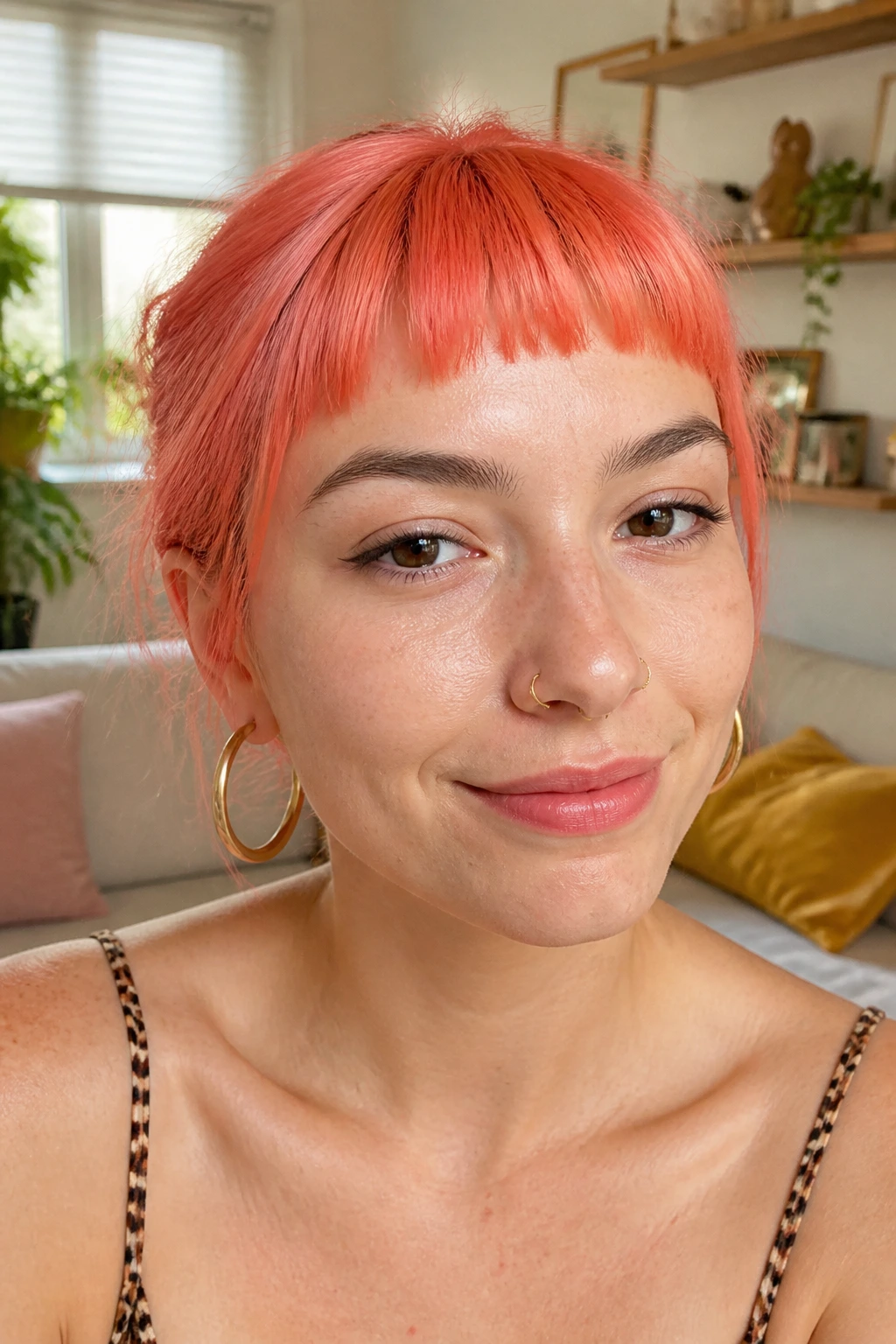
Coral baby bangs have a retro edge, but the color keeps them from feeling costume-y. Short fringe can be tricky. Short fringe in coral is a little easier because the shade softens the severity of the cut.
The key is proportion. Baby bangs already put the focus high on the face, so the color needs to support that shape instead of fighting it. Coral does that nicely. It feels bright, warm, and energetic, but not hard.
- Best on: oval, heart, and long face shapes
- Haircuts that help: pixies, mini shags, and cropped bobs
- Finish: matte or lightly textured so the bangs don’t look too slick
- Color note: coral fades into peach, which can be a nice second life if you’re patient
I like coral here because it’s one of the few bright shades that still feels friendly. It doesn’t carry the same intensity as red or magenta, so the tiny fringe can be playful instead of severe.
17. Midnight Blue Choppy Bangs

Midnight blue is one of those shades that people miss at first glance, and then they notice it. That’s the charm. In choppy bangs, the color shows up in pieces rather than one solid band, which gives the haircut texture.
The shade is especially good if you want color that reads dark in low light and blue in daylight. That dual effect is useful. It means the bangs can stay wearable in more settings while still giving you a visible color shift when you move.
A choppy cut helps because the ends are uneven on purpose. That breaks the pigment into layers and keeps the blue from looking flat. It’s also kinder to grow-out, since soft ends hide the line better than blunt ones do.
If you usually wear black clothing, this one has a quiet kind of drama. It’s not flashy, but it is absolutely noticeable once someone gets close enough to see the blue depth.
18. Mint Green Feathered Bangs

Mint green bangs have a fresh, almost airy look that works better than people expect. The trick is the feathered shape. Mint can go overly sweet if the fringe is heavy, but a softer cut keeps it light.
Unlike deeper greens, mint needs a pale base to stay clean. On yellow hair, it can drift weird and candy-like. On platinum or very light blonde, it looks crisp and cool. The feathering helps because it breaks up the color so it doesn’t sit like frosting.
This is a good shade for people who like softer fashion colors and want something that feels a little offbeat without being aggressive. It pairs nicely with minimalist makeup, pale denim, silver jewelry, and shaggy layers.
Mint also looks good when the hair is a bit messy. That matters. A perfect, polished blowout can make it feel too precious. A few bends and flyaways make it feel easier.
19. Magenta Statement Fringe

Magenta bangs are the loudest option on this list, and I mean that in the best way. The color is saturated enough to stand alone, so the fringe becomes the main event even if the rest of the hair is plain.
Why It Hits So Hard
Magenta sits between pink and purple, which gives it more depth than hot pink. On a full fringe, that depth matters because the color fills the whole front of the face. A flat shade would look harsh. Magenta has enough richness to stay interesting.
Best Uses for It
- Full blunt bangs if you want the strongest effect
- Layered fringe if you want the color to move
- Dark clothing if you want the shade to pop harder
- Color-safe shampoo and cooler water if you want the pink-purple tone to stay rich
I’d choose this shade for someone who likes a strong lip, a little shine, and a haircut that makes a statement before they even say hello. It’s not shy. Good.
20. Smoky Indigo Curtain Bangs

Smoky indigo is my pick for anyone who wants color that feels moody rather than flashy. It has blue, violet, and a muted gray cast, which keeps it from looking like a toy color. On curtain bangs, that mix is especially pretty because the center part opens up the shade and lets the sides soften the edges.
This is one of the easiest fashion colors to wear if you like darker hair but still want something visible. Indoors, it can read almost navy. Outside, the violet comes through more. That shift keeps the color from feeling flat or one-note.
The best part is how well it grows out. A smoky shade hides root lines better than bright blue or pink, and the curtain shape makes the regrowth feel softer anyway. If you want a colored fringe that can handle a few lazy styling days, this is a solid choice.
It’s also the one I’d point to if someone said, “I want color, but I don’t want my bangs to shout.” Fair request. This shade listens.
