



Feathered bangs are the rare fringe that can make a haircut look lighter the second it lands on your forehead. They don’t sit there like a blunt shelf. They split, bend, and move when you turn your head, which is exactly why they can make hair feel softer, airier, and a little less precious.
That movement matters more than people think. A heavy bang can look gorgeous in a salon mirror and then feel bossy at home, especially if your hair grows fast or fights your cowlicks. Feathering solves part of that by removing weight from the ends, so the fringe doesn’t fall in one hard line.
The nice part is that feathered bangs are not one single cut. They can be long and curtain-like, short and cheeky, side-swept, shaggy, rounded, sleek, or barely there. The right version depends on your face shape, your hair texture, and how much time you want to spend with a round brush before coffee.
If you want movement, you need to choose the right kind of movement. A soft, piecey fringe on thick hair behaves very differently from a wispy fringe on fine hair, and that difference is where the good cuts live.
1. Classic Brow-Grazing Feathered Bangs

These are the feathered bangs that most people picture first: soft at the edges, light at the center, and sitting right around the brows. They give you fringe without that solid wall of hair across the forehead. The ends are usually point-cut or lightly sliced so they don’t feel blunt.
Why They Work So Well
The brow line is a sweet spot because it frames the eyes without cutting off the face. You get movement every time the bangs separate a little, which makes the whole cut feel less static. On straight hair, that separation is subtle. On wavy hair, it looks even softer.
Ask for a fringe that skims the brows when dry, not wet. That detail matters. Hair springs up more than people expect, and feathered bangs look best when they sit a touch longer rather than too short. A tiny bit of length buys you a lot of flexibility.
Best for: oval, heart, and square faces.
2. Soft Curtain Feathered Bangs
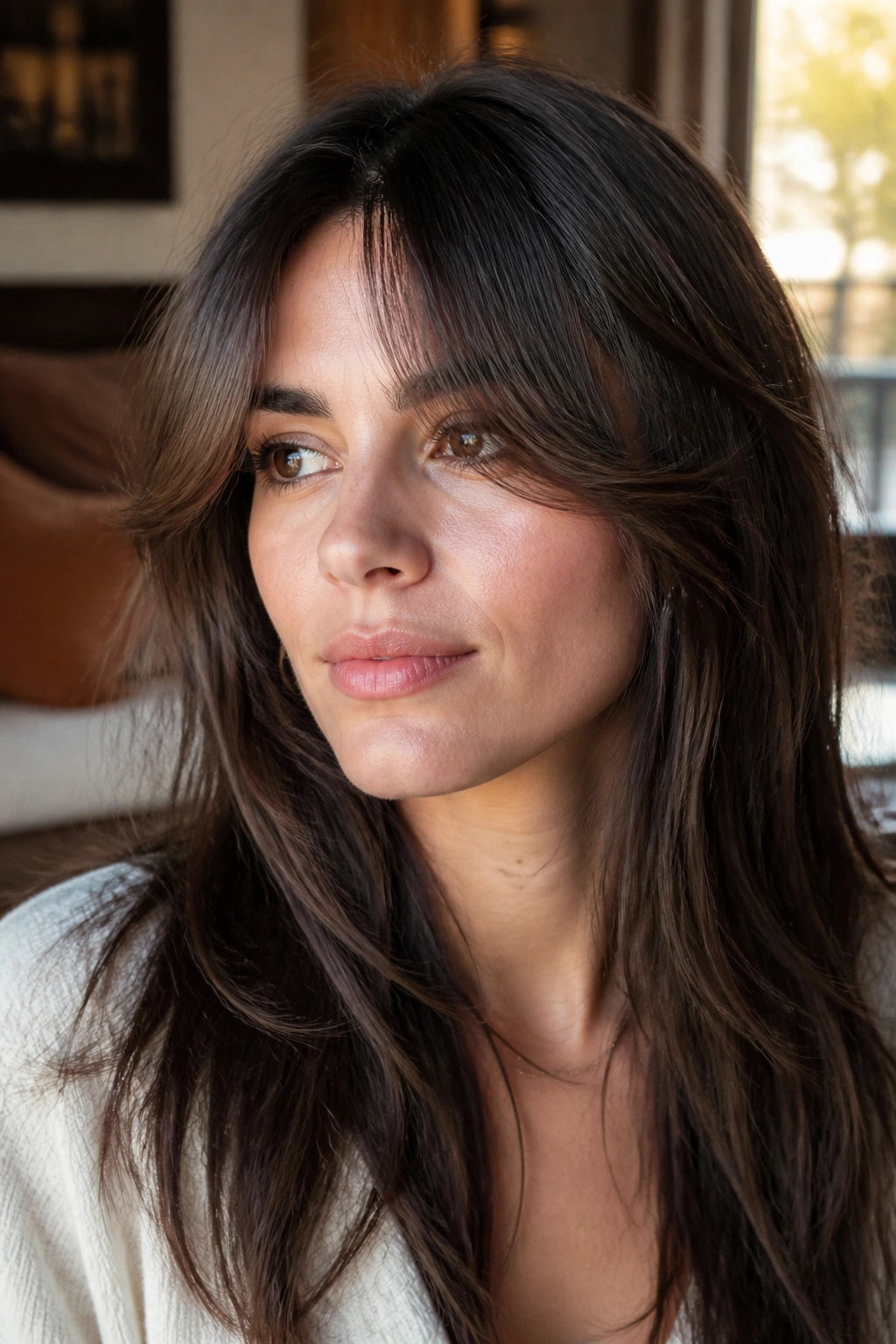
Curtain bangs and feathering get along almost too well. The fringe opens in the middle, falls away from the face, and creates that easy swing that makes a haircut feel lived-in instead of stiff. This version works best when the shortest pieces hit somewhere between the brows and the cheekbones.
The middle part keeps things relaxed, but the feathering keeps it from looking flat. That’s the part people miss. Without the soft edges, curtain bangs can look heavy and triangular. With the edges broken up, they move. A lot.
If you like air-dried texture, this is one of the easiest feathered bang styles to wear. A little mousse, a quick twist with your fingers, and you’re done.
3. Side-Swept Feathered Bangs

Side-swept feathered bangs are the answer for anyone who wants fringe but hates the feeling of hair falling straight into the eyes. They sweep across the forehead, open up one side of the face, and keep the look soft instead of severe.
Why they’re so forgiving: the diagonal line creates motion even when the rest of your hair is simple. There’s a little bit of drama, but not the theatrical kind. More like a quiet shift that makes the whole haircut look intentional.
How to wear them
- Blow-dry them toward the opposite side first.
- Brush them back with a round brush to keep the bend soft.
- Use a pea-sized amount of cream or light wax if the ends split too far apart.
Good choice if: your hair parts naturally to one side and fights a middle part.
4. Long Feathered Fringe

Long feathered fringe sits below the brows and usually grazes the top of the cheeks. It gives you more styling room, which is handy if you want bangs that can be tucked, swept, or split. There’s less commitment here, and that’s part of the charm.
I like this version on people who are nervous about shortening the front too much. You can still get the face-framing effect, but the grow-out is softer and less awkward. The ends blend into longer layers instead of stopping abruptly.
It also moves beautifully when you wear hair up. That little bit of length drops around the face instead of disappearing into the ponytail. Small thing. Big difference.
5. Short Feathered Bangs With Airy Ends

Short feathered bangs are for people who want the forehead partly visible and the eyes fully in play. They sit above the brows, but the feathering keeps them from looking stiff or babyish. The ends should feel broken up, not blunt.
This cut works best when the stylist leaves a little softness at the outer corners. If the line is too clean, it loses the movement that makes feathered bangs flattering in the first place. You want a fringe that looks like it can shift, not one that behaves like a ruler.
One warning: short feathered bangs need a bit more maintenance. They grow fast. Not a deal breaker, just reality. If you like the shape, book trims before they start poking into your eyes.
6. Bottleneck Feathered Bangs
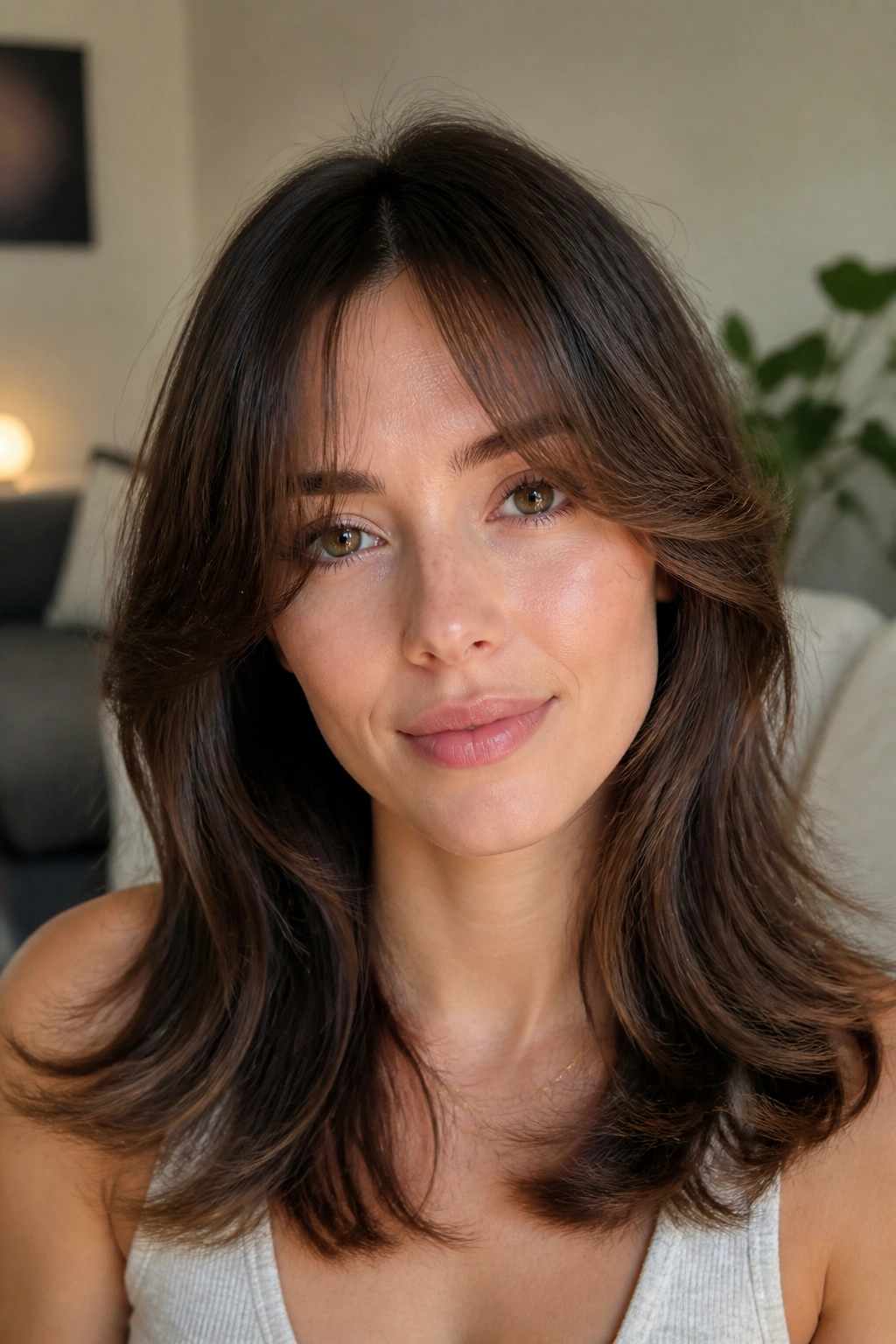
Bottleneck bangs get their name from the shape: narrow in the middle, a little wider as they move outward, and softly blended into the sides. Feathering keeps the whole thing from looking engineered. It feels looser, more face-friendly, and less severe than a hard bottleneck line.
What Makes It Different
The shortest section usually sits just under the center of the forehead, then the pieces angle down to the cheekbones. That gives you movement in the middle and a soft frame around the face. It’s a smart choice if you like curtain bangs but want a little more structure.
This style is especially nice if your forehead feels long and you want a fringe that breaks that up without hiding everything. It also behaves well with waves. Straight hair can wear it too, but a little bend in the ends makes it better.
7. Feathered Bangs for Fine Hair
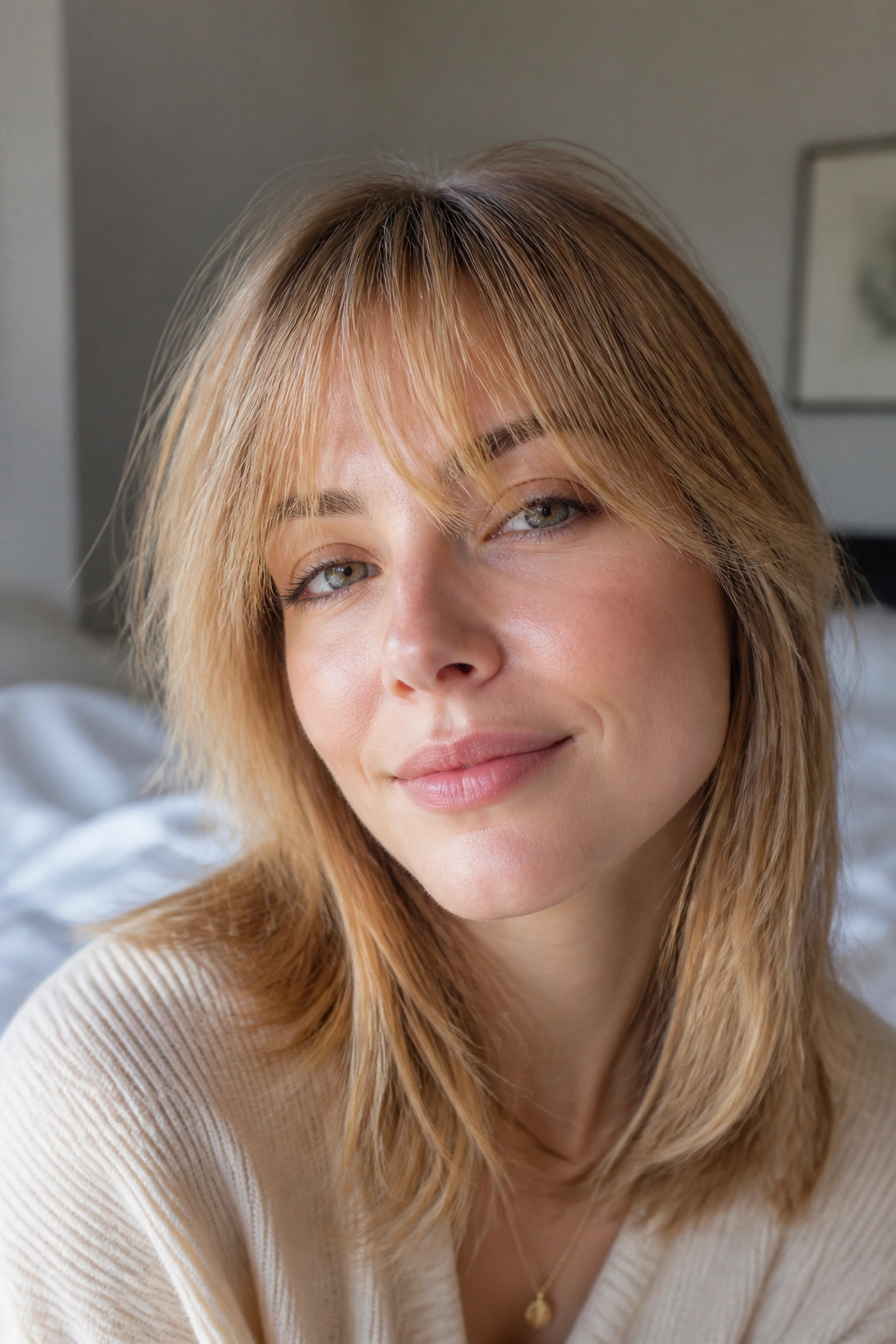
Fine hair can look flat fast, so feathered bangs need to do a little extra work here. The goal is not to pile on fringe. It’s to create the illusion of more texture with less weight. A soft, wispy shape usually works better than a dense one.
Why It’s a Smart Cut
When fine hair is cut too bluntly, it can separate in weird ways or hang in one thin curtain. Feathering takes some of that pressure off the ends and makes the fringe move instead of collapse. A mist of volumizing spray at the roots helps, but the cut matters more than the product.
Ask for light point-cutting and a little length left in the center. That keeps the bangs from looking stringy.
A few quick styling rules help too:
- Blow-dry from side to side to build lift.
- Keep heavy creams away from the fringe.
- Use dry shampoo before the bangs look oily, not after.
8. Feathered Bangs for Thick Hair

Thick hair and bangs can be a mess if the cut holds too much weight. Feathered bangs solve that by removing bulk in the right places, so the fringe doesn’t sit like a helmet. The shape still feels full, but it breathes.
What you want here is control without stiffness. Thick hair usually needs more internal thinning and more careful direction in the cut, or the bangs puff out at the corners. Feathering lets the front move while the rest stays substantial.
I’ve always thought thick hair looks best when the fringe is slightly longer than expected. Too short and it can spring up. Too compact and it feels dense. Keep the ends airy, and the whole cut calms down.
9. Feathered Bangs on Curly Hair
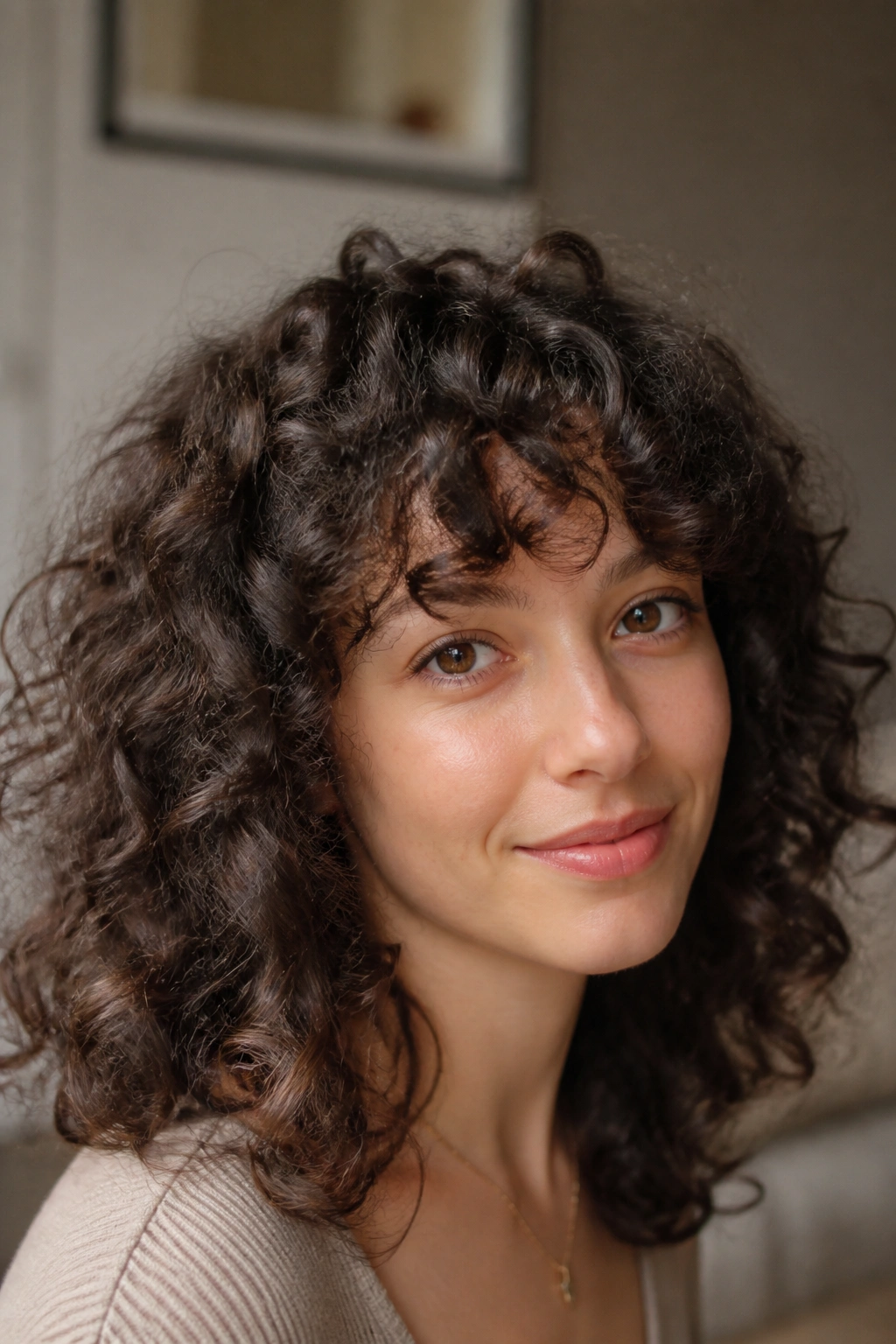
Curly feathered bangs are not a compromise. They’re one of the best ways to wear fringe if you have curls, because the feathering respects the curl pattern instead of forcing it into a straight line. The cut should follow the curl in its dry state, not fight it.
The key is shape. Curly bangs need room to bounce. If they’re cut too short or too blunt, they can shrink unevenly and sit in a weird zigzag. Feathering softens that edge and gives the curls a little freedom to sit where they want.
Use a diffuser on low heat and stop touching them while they dry. That part is boring, but it matters. Curly fringe that gets handled too much turns fuzzy fast.
10. Feathered Bangs on Wavy Hair

Wavy hair is where feathered bangs start to look almost effortless, even when they’re not. The natural bend in the hair does half the job for you, and the feathering keeps the fringe from clumping into one heavy curtain.
What to Ask Your Stylist
Ask for a dry cut if your waves are inconsistent. Wet hair lies. It always does. A dry cut lets the stylist see where the wave lands and where the bang needs weight removed.
A little sea-salt spray or curl cream can help, but don’t overdo it. Feathered bangs look best when the waves separate into soft pieces, not when they’re soaked in product.
A quick rule:
- Less product than you think.
- More scrunching than brushing.
- Stop once the fringe still feels touchable.
11. Feathered Bangs With a Shag Haircut

A shag and feathered bangs are natural partners. The whole haircut is built on movement, so the fringe should feel broken up and airy rather than polished to death. If the bangs are too neat, they fight the rest of the cut.
Why It Works
The shag gives you layers everywhere, which means the bangs do not have to carry the whole look alone. They can be piecey, textured, and a little uneven in the best way. That messier finish is what makes the style feel alive.
This is a good cut if you like hair that doesn’t need to sit in one perfect shape. A shaggy fringe will fall apart a bit during the day, and honestly, that’s part of the appeal. A mist of texture spray at the roots usually gives enough lift.
12. Feathered Bangs With a Wolf Cut
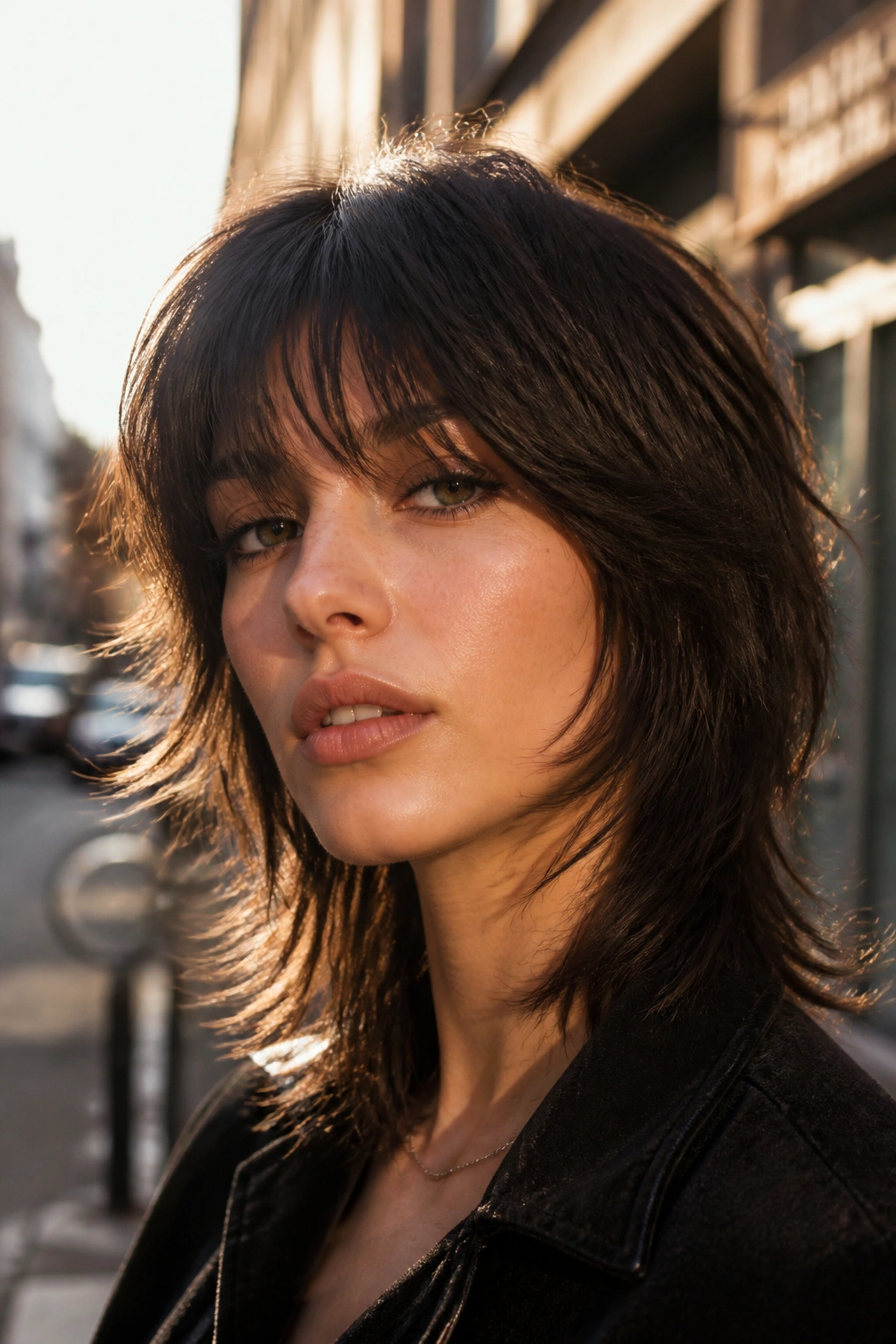
Wolf cuts already have that rough-edged, layered energy, so feathered bangs fit right in. The front should be soft enough to blend into the top layers, but not so soft that it disappears. You want contrast.
What makes this combo interesting is the shift between messy and controlled. The bangs break up the forehead area, while the longer layers around the sides keep the haircut from getting too heavy. It’s a little wild, but not unruly if the cut is balanced.
Best approach: let the bangs stay a touch longer on the outer corners. That helps them connect to the rest of the haircut instead of looking pasted on.
13. Feathered Bangs With a Bob

A bob with feathered bangs can look sharp or soft depending on where you put the weight. I prefer the softer version. The fringe adds movement at the face, which keeps a neat bob from feeling boxy or too polished.
If your bob is chin-length, the bangs can make the whole cut feel less rigid. The trick is to keep the ends of the fringe light enough that they don’t compete with the clean line of the bob. You want a little flutter, not a second haircut fighting the first one.
This pairing works especially well when the bob has a slight bend under the jaw. Straight, heavy bobs and blunt bangs can read severe. Feathered bangs loosen that up fast.
14. Feathered Bangs With a Lob
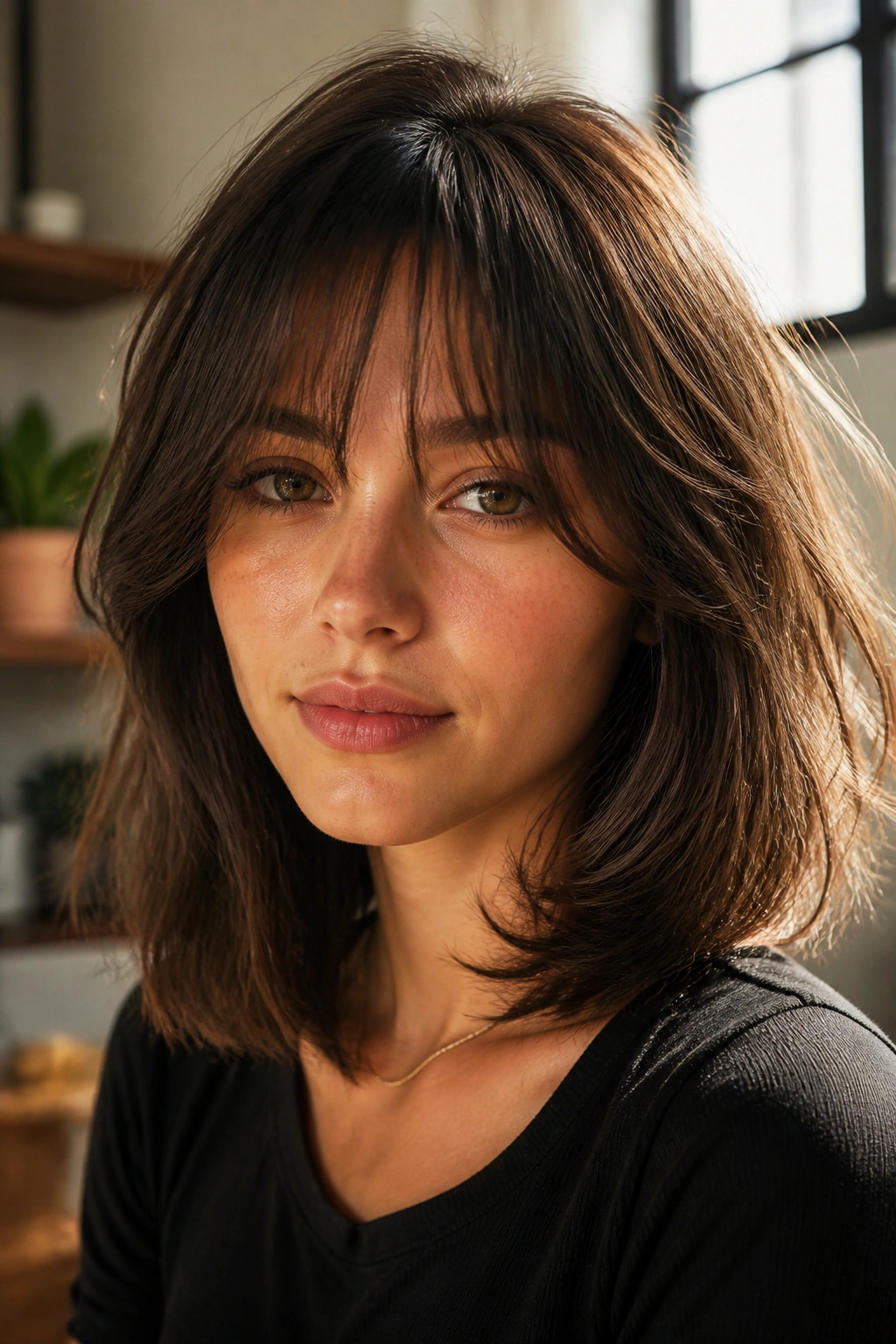
Lobs love feathered bangs because both pieces of the cut have breathing room. The longer length keeps the shape modern and easy, while the fringe gives the face a point of focus. It’s one of the least fussy combinations on this list.
The best lob-and-bang pairing usually includes some face-framing layers. Without them, the bangs can feel like they’re sitting on top of the haircut instead of belonging to it. With them, everything starts to flow.
If you want a haircut that looks good with a quick bend from a flat iron or a rough blow-dry, this is it. The movement is built in. You don’t have to coax it very hard.
15. Feathered Bangs on a Pixie Cut
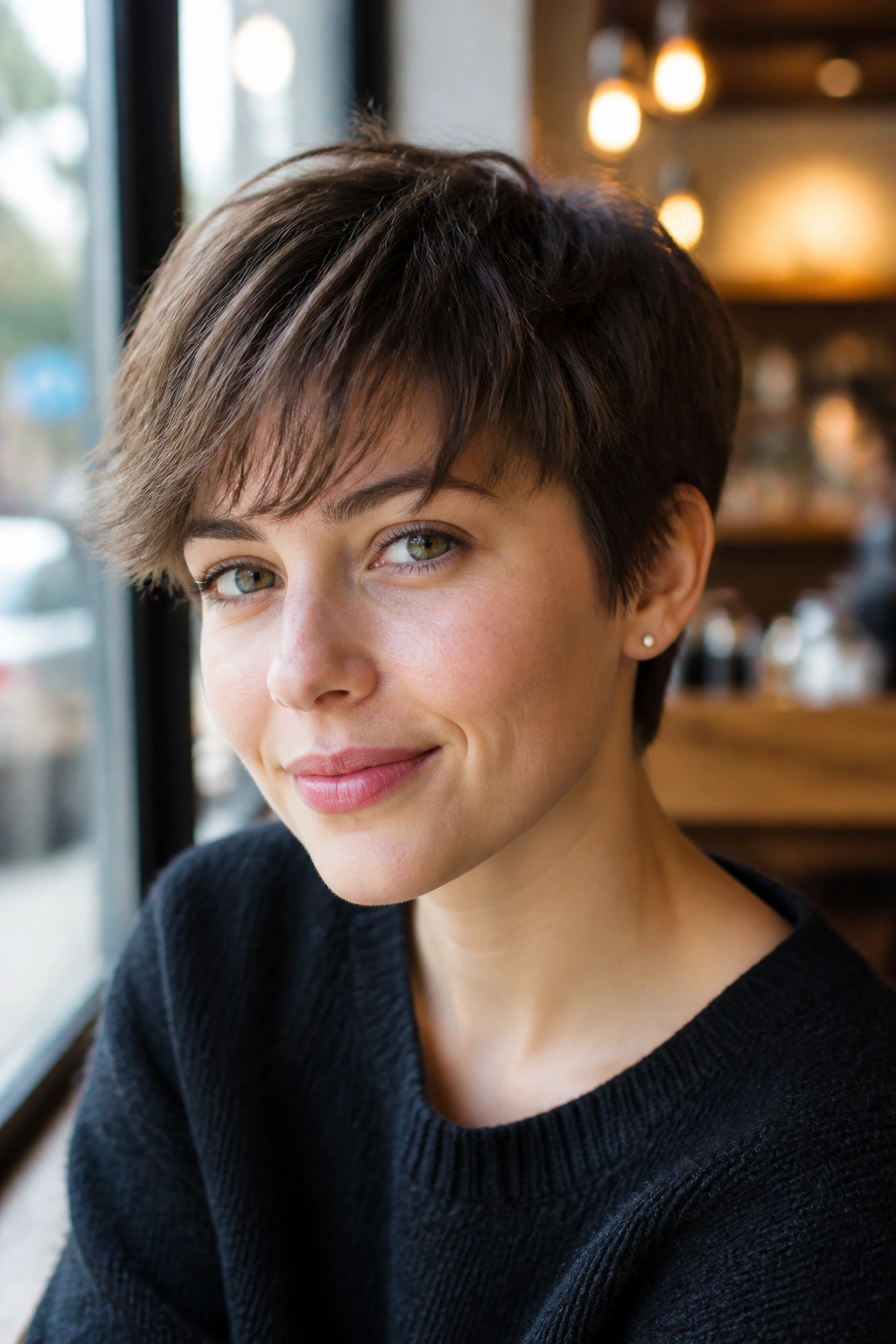
Pixies with feathered bangs need a light hand. Too much fringe and the front overwhelms the cut. The right version keeps the front soft, lifted, and slightly longer than the shortest crop, so the bangs act like movement rather than coverage.
How It Changes the Shape
A pixie can sometimes look a little rigid if the front is chopped too cleanly. Feathering loosens the hairline and makes the face open up. That makes the whole cut feel less helmet-like, which is a common problem with short hair.
This is a strong choice if you want short hair but still want something around the eyes. It’s also easier to grow out than a blunt micro-fringe. Short hair is unforgiving. Soft edges help.
16. Feathered Bangs With Long Layers

Long layers and feathered bangs speak the same language. Both are about movement, lightness, and keeping hair from collapsing into one shape. If your length feels heavy, the fringe can wake it up fast.
The bangs should connect to the layers around the cheekbones. If they stop too abruptly, the haircut feels chopped up in a bad way. But when the shortest pieces blend into the longer front layers, the whole style starts to swing together.
This is one of those cuts that looks better when you tuck one side behind your ear. That small shift lets the feathering show. Straight down is fine. Off to the side is better.
17. Feathered Bangs With Face-Framing Pieces
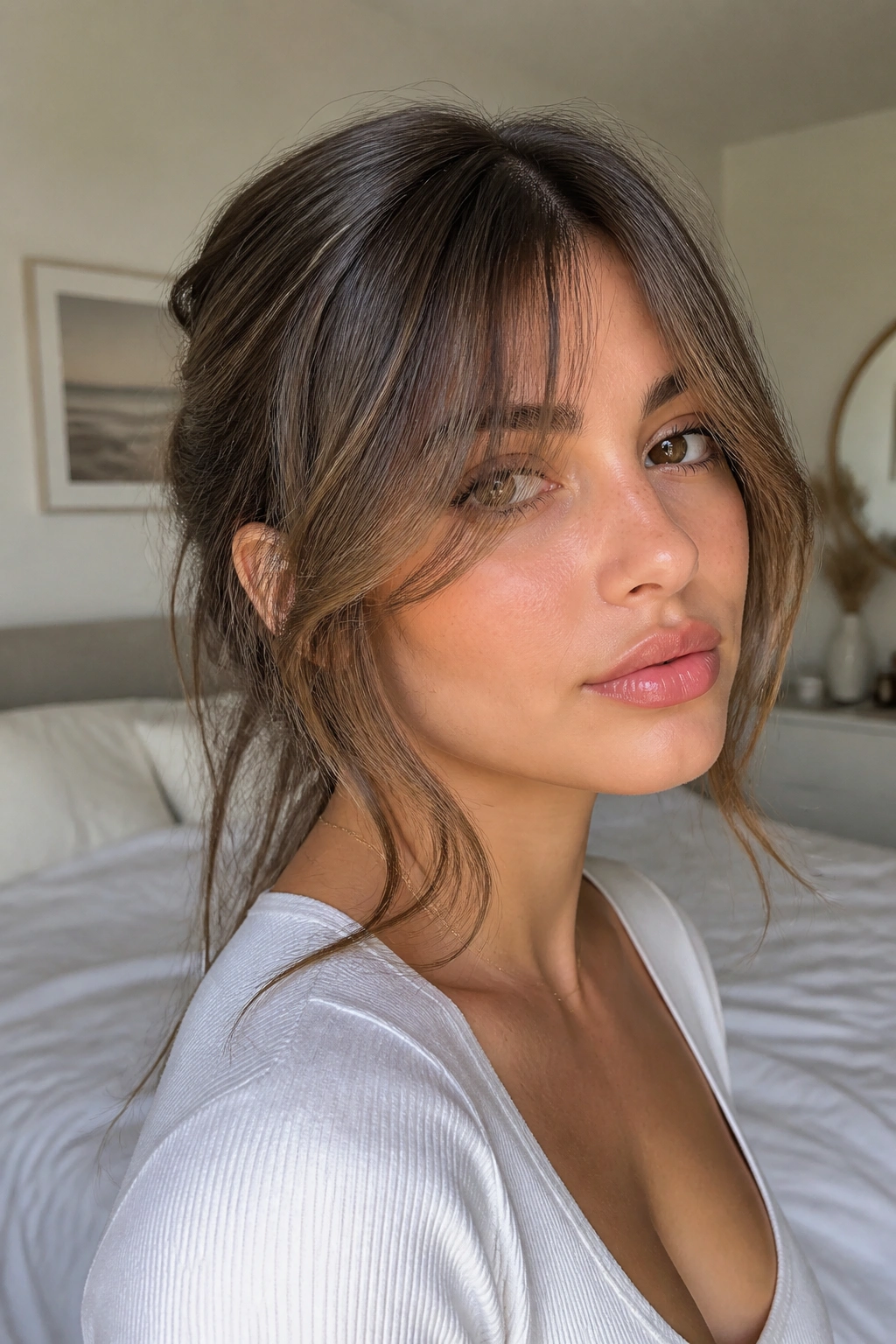
Face-framing pieces give feathered bangs a place to land. The fringe starts at the forehead, then melts into those softer front sections near the cheekbones and jaw. It’s a smart move if you want movement that extends beyond the bangs themselves.
The Shape Trick
The shortest point in the fringe should not be isolated. It needs a path into the rest of the haircut. That path is usually a few graduated pieces around the temples and cheeks. Without them, the bangs can feel separate from the cut.
This style flatters people who want the eyes highlighted but don’t want the forehead fully covered. It also photographs well in motion, though I hate that phrase and won’t pretend the camera is the point. In real life, the better detail is how the pieces shift when you turn your head.
18. Feathered Bangs With a Center Part

Center-part feathered bangs can look soft instead of severe if the ends are broken up well. The part opens the face, and the feathering keeps the fringe from sitting flat and heavy on either side. You get a clean shape with some air around it.
The secret is not making the shortest center point too short. If you do, the middle can pop up awkwardly and leave the sides dragging behind. A little extra length in the middle keeps everything moving together.
This version works especially well on medium to long hair, where the fringe can blend into the rest of the cut. It’s neat without feeling locked in. That’s a good thing.
19. Feathered Bangs With a Deep Side Part
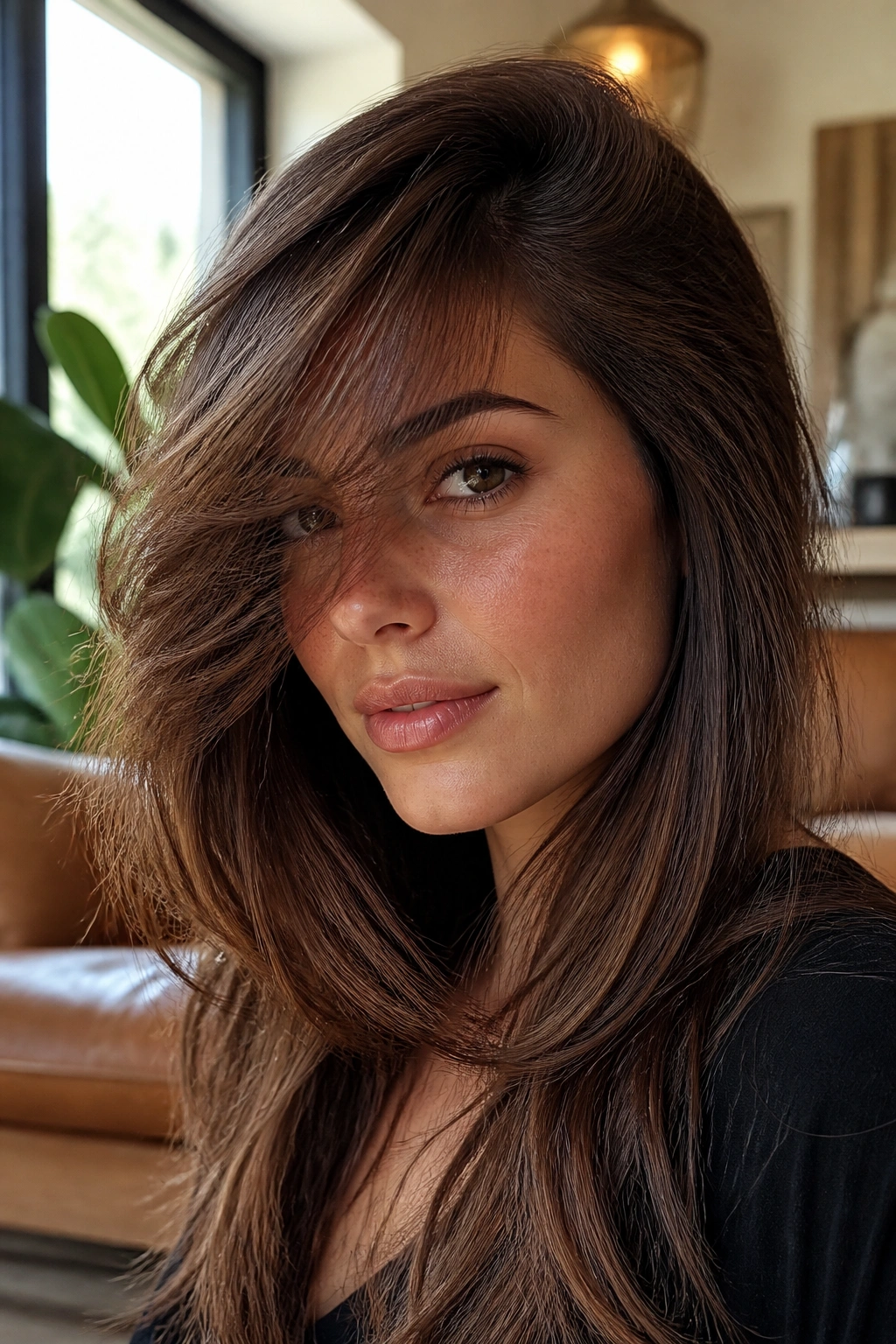
A deep side part can make feathered bangs feel dramatic without making them stiff. The movement comes from the way the fringe falls across the forehead and sweeps into the larger part of the hair. It has shape, but not hard edges.
If your hair naturally resists center parts, this is a friendly option. The fringe can follow the part instead of fighting it, which makes daily styling easier. A round brush helps, but so does a decent blow-dry angle and a little patience around the crown.
One detail that matters: keep the shorter side soft near the temple. That’s where the cut can start to look abrupt if the feathering isn’t balanced. Small adjustment. Big payoff.
20. Rounded Feathered Bangs
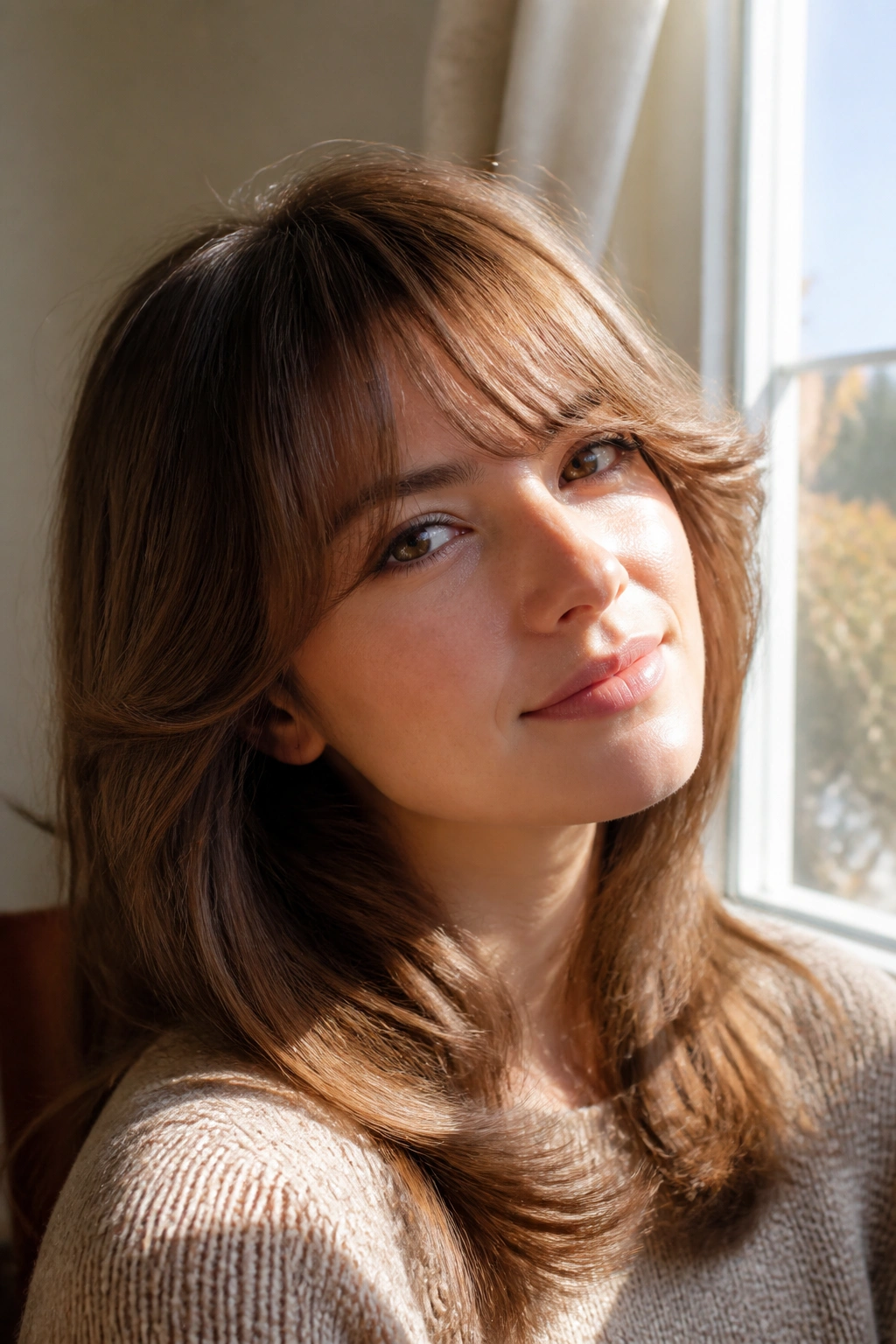
Rounded feathered bangs arc gently across the forehead instead of sitting in a straight line. The curve makes them feel softer and a bit more romantic, but the feathering keeps them from turning into a solid dome of hair. Nobody wants that.
Why the Curve Matters
A rounded fringe follows the shape of the brow and cheek area, which can make the face feel more open. It’s especially useful if you like a more polished cut but still want movement. The roundness gives structure; the feathering keeps it from looking heavy.
This style tends to work best when the outer corners are just a touch longer. That lets them melt into the rest of the haircut instead of stopping short at the temples. If you have a swirl or cowlick near the forehead, a rounded shape can sometimes behave better than a straight one.
21. Choppy Feathered Bangs
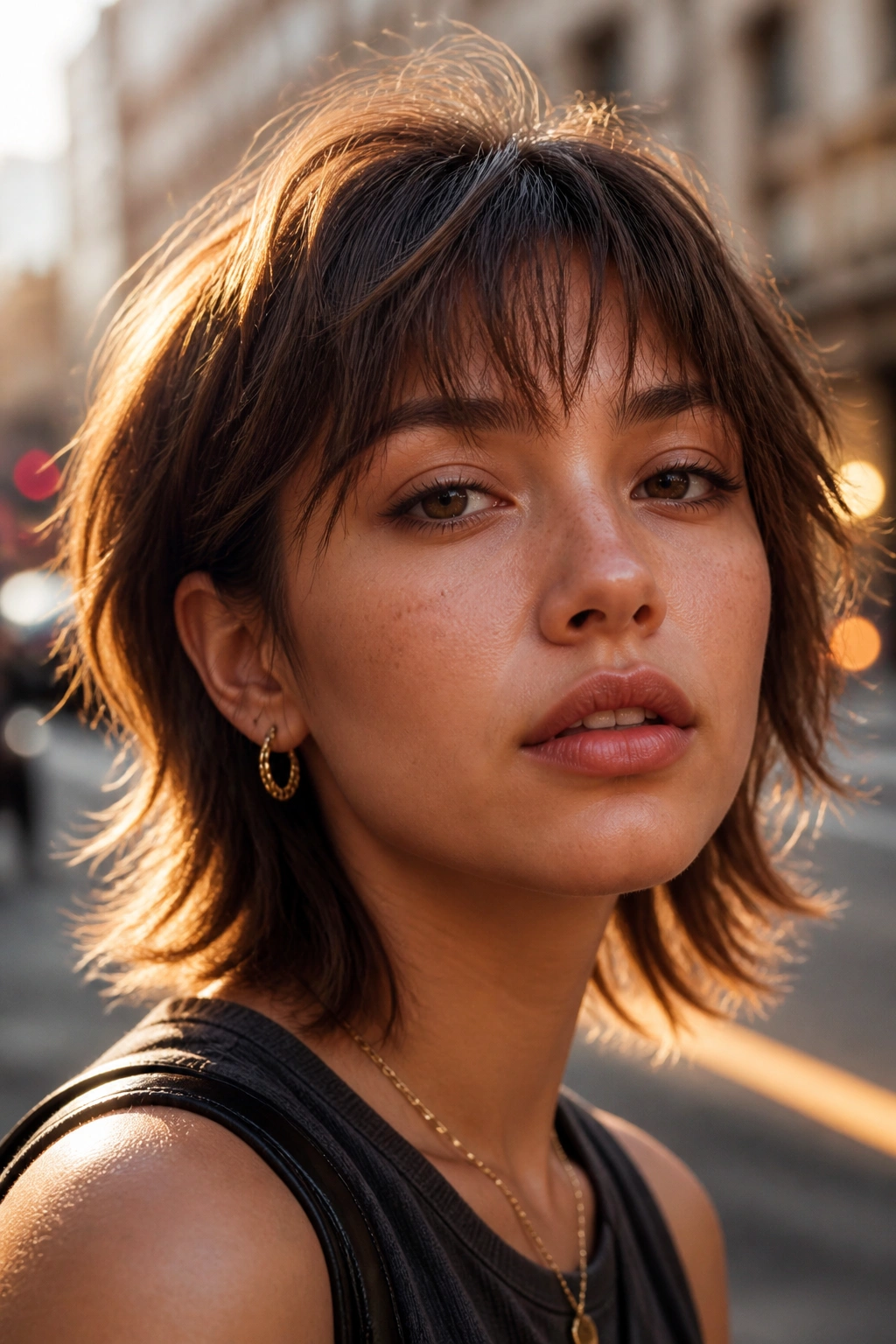
Choppy feathered bangs have more texture and less sweetness. The ends are deliberately broken up, so the fringe feels airy but a little edgy. It’s not a neat little curtain. It’s a fringe with teeth, in a good way.
This look works when you want movement plus attitude. The short irregular pieces keep the bangs from lying too smoothly, which gives them more visible separation. That’s useful if your hair tends to go flat by noon.
The risk? Too much choppiness can start to look thin. A good stylist will keep the density balanced so the cut feels textured, not accidental. There’s a difference, and it’s a big one.
22. Feathered Bangs for Oval Faces
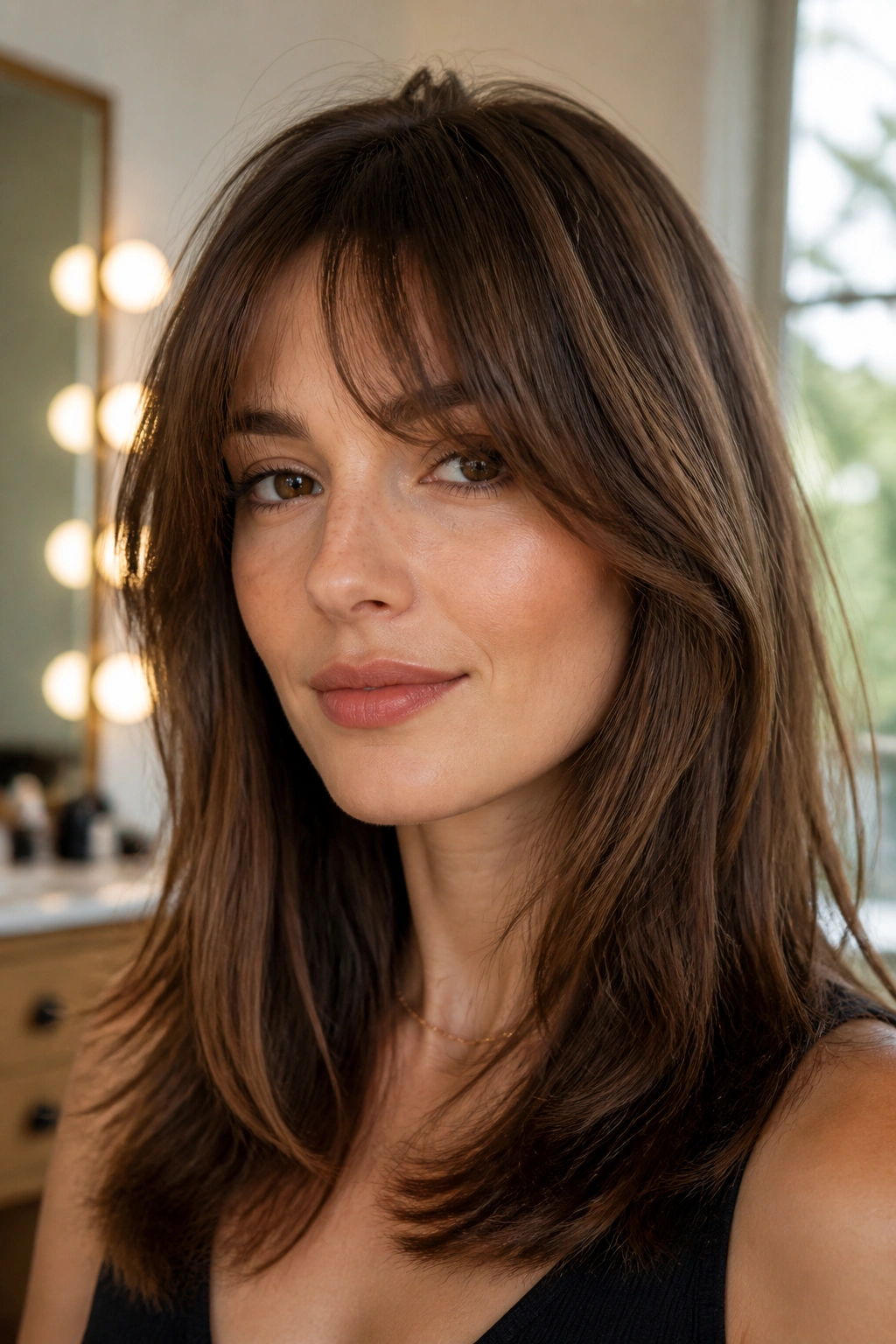
Oval faces can wear a lot of fringe shapes, which is a bit annoying for anyone looking for a single answer. Feathered bangs are a safe place to start because they can be short, long, curtain-like, or side-swept without throwing off the face proportions.
The most flattering version usually depends on the rest of the haircut. If your hair is long, a longer feathered fringe keeps things balanced. If your cut is shorter, a brow-skimming version brings the face forward. The point is movement, not hiding.
Oval faces do well with bangs that show a little forehead. That keeps the face from feeling closed in. Feathering helps with that because the bangs never read as one heavy block.
23. Feathered Bangs for Round Faces
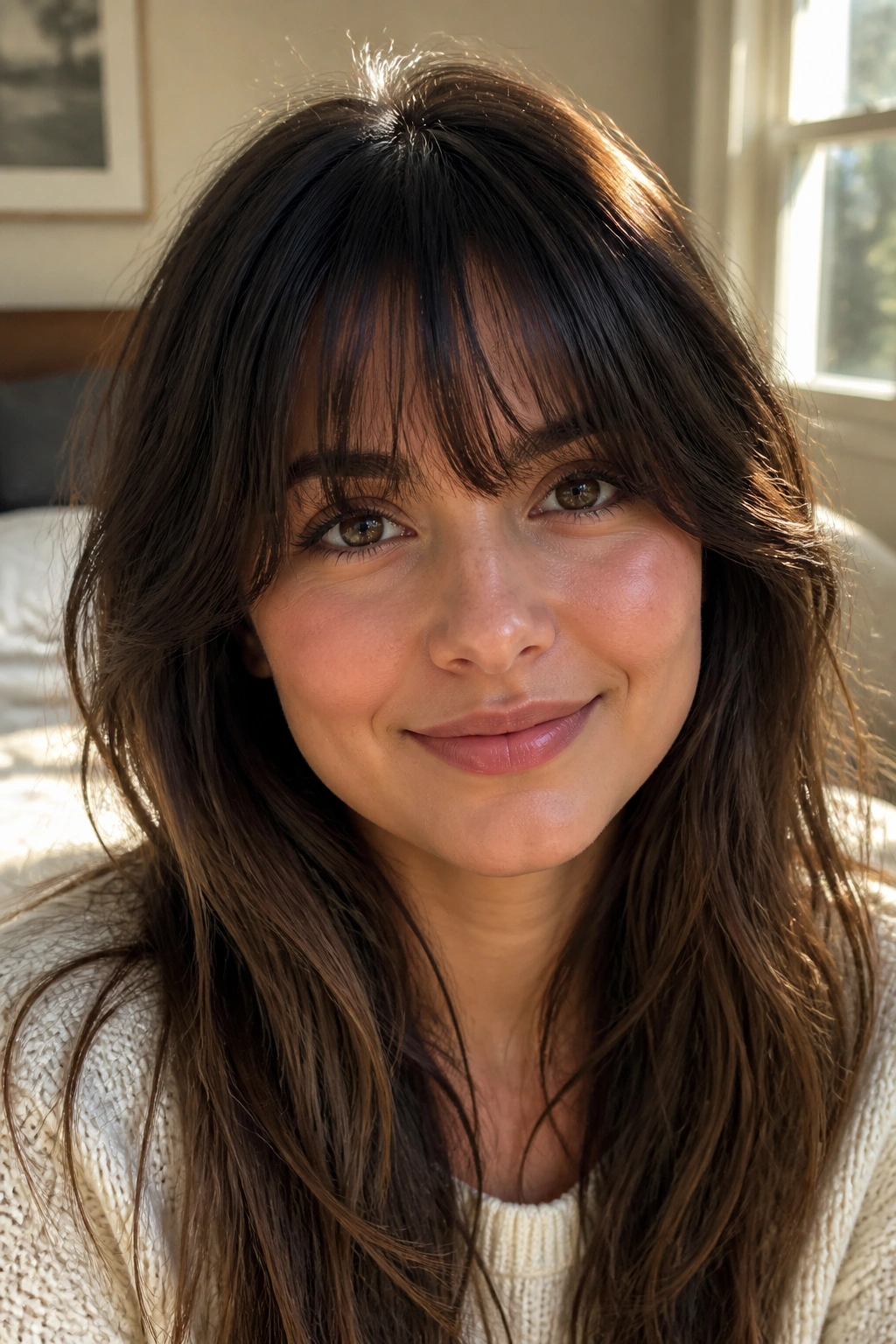
Round faces usually benefit from fringe that adds vertical lines or side movement. Feathered bangs can do that if they’re cut with a little length in the center and softness at the sides. A middle that’s too short can widen the face. Better to keep some space.
What to Ask For
- Length that skims the brows or cheekbones.
- Soft side pieces that taper toward the jaw.
- Texture removal at the ends, not at the roots.
The goal is gentle shape, not camouflage. You do not need to hide your face. You just need bangs that create a little lift and break up the widest part of the cheeks. Feathering helps the fringe move instead of sitting like a flat line across the forehead.
24. Feathered Bangs for Square Faces
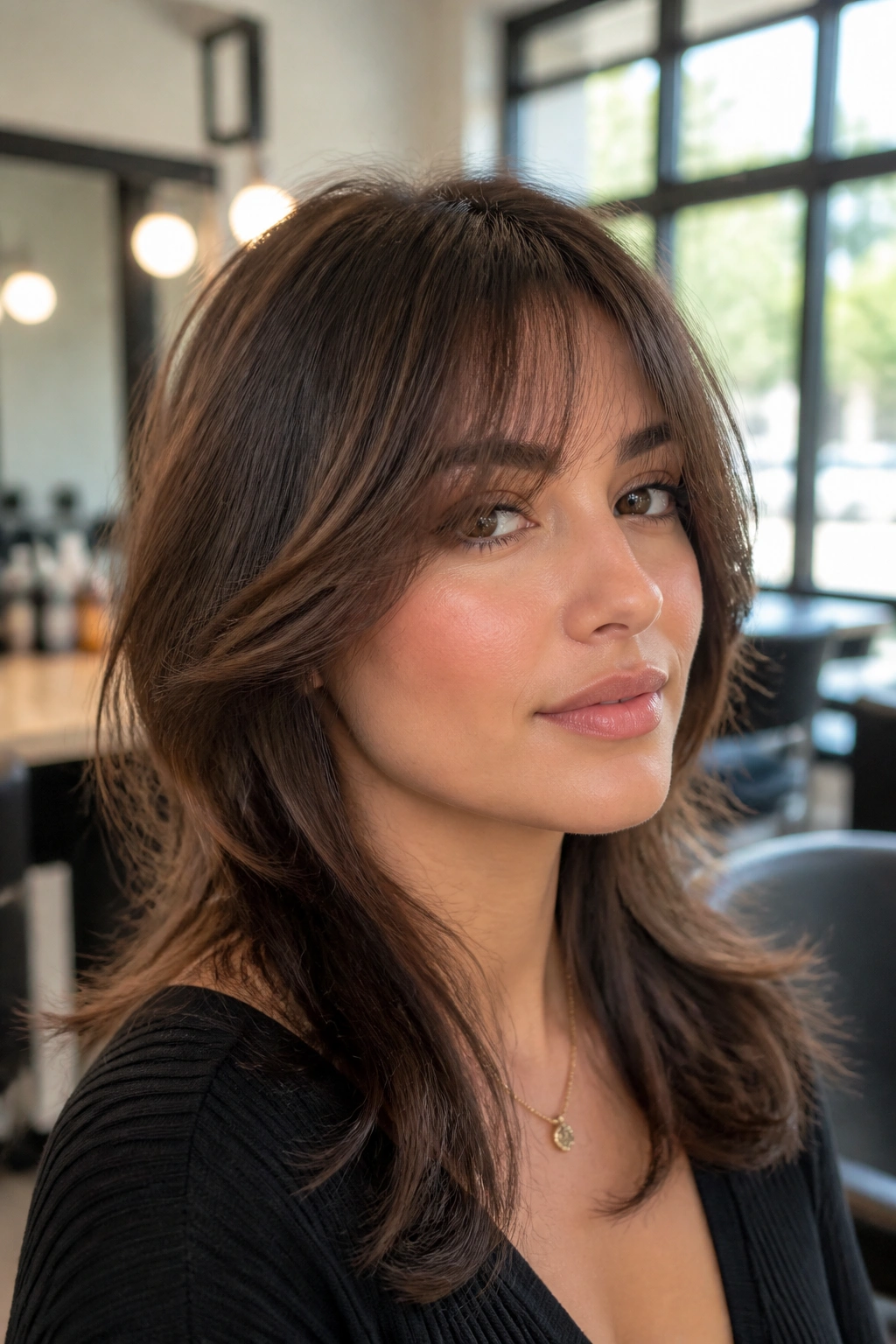
Square faces usually look good with softness at the edges, and feathered bangs are built for that. The fringe can soften a strong jaw by drawing the eye upward and keeping the front from feeling boxy. A blunt fringe would fight that. A feathered one plays along.
Why It Helps
The tiny breaks in the bang line keep the forehead from feeling too hard or architectural. That matters because square faces already have structure. You don’t need more of it stacked on top.
I like this shape best when the fringe is slightly curved at the ends. The center can stay a bit fuller, but the corners should loosen. That keeps the whole cut from feeling severe, which is the main thing to avoid here.
25. Feathered Bangs for Heart-Shaped Faces

Heart-shaped faces often have a wider forehead and a narrower chin, so feathered bangs can help balance the top half without swallowing it. The right fringe should feel soft, a little open, and not too dense in the center.
A curtain-like version works especially well because it breaks up the width at the forehead and lets the cheekbones show. If the bangs are too short or too thick, they can make the forehead look wider. Feathering keeps the line lighter.
This is one of those cuts that looks best with some bend. Straight, flat bangs can make a heart shape feel top-heavy. Add motion, and everything settles down.
26. Feathered Bangs for Long Faces

Long faces usually need a fringe that shortens the visual length a bit, and feathered bangs can do that without looking harsh. A brow-grazing or slightly shorter version works better than one that hangs too far down.
What you want is width, not weight. A fringe with soft side pieces can open the face horizontally while still moving. That keeps the haircut from making the face look even longer, which is the mistake people make when they go too wispy.
If your face is long and you wear glasses, this can be a tricky combo. Leave a little space between the fringe and the frames so everything doesn’t crowd together. Breathing room helps.
27. Feathered Bangs With Blunt Ends
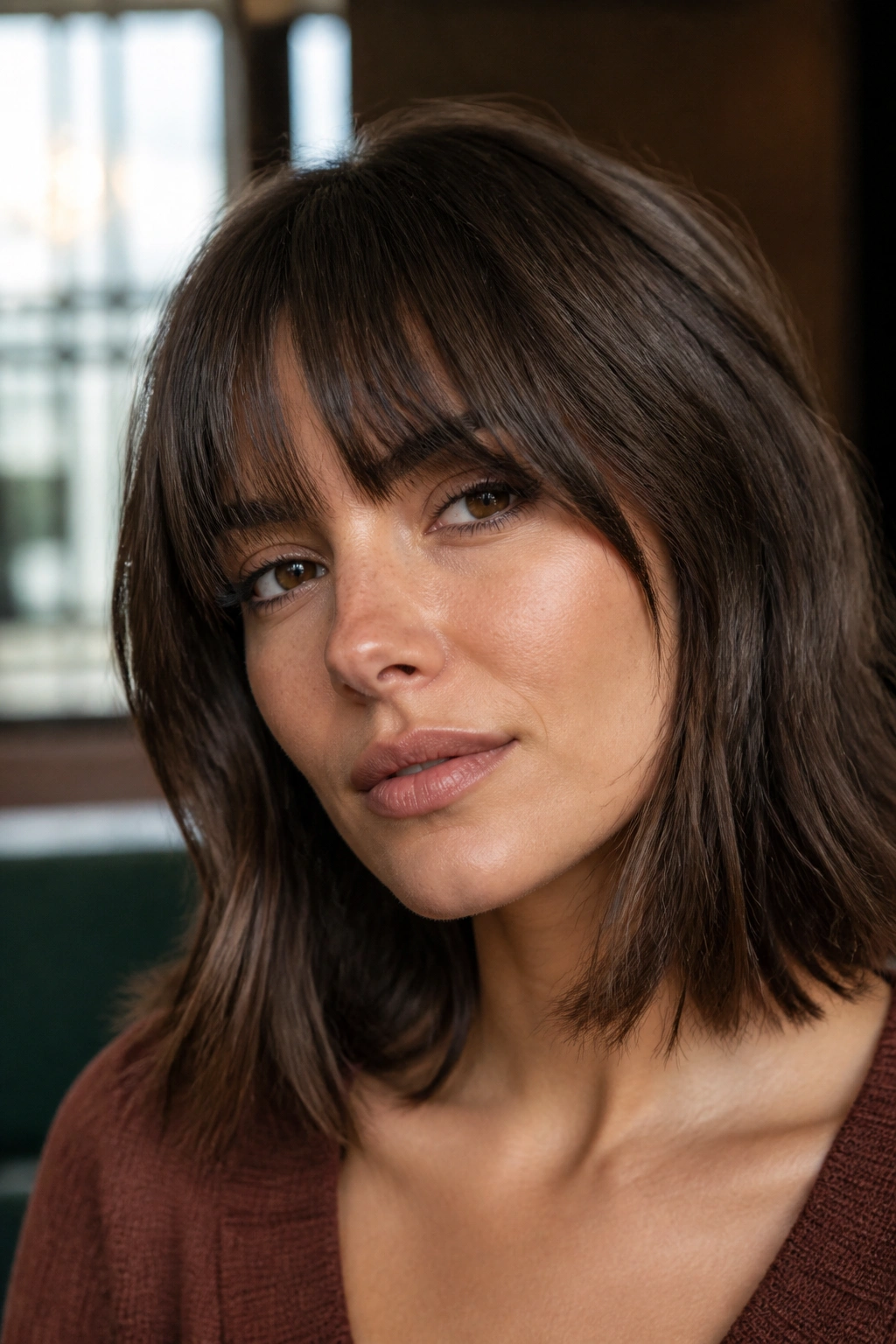
This is a strange but useful mix: a mostly soft fringe with slightly blunt ends. The contrast gives the bangs more definition, so they still move but don’t disappear into the rest of the hair. It’s a good choice if you like a little edge.
The key is restraint. You are not creating a hard line. You’re just keeping the ends from being over-thinned. That means the bangs hold their shape longer and don’t separate into tiny flyaways right away.
Best use case: hair that needs some presence in the front, but not a full wall of fringe. The bluntness gives the shape weight. The feathering keeps it wearable.
28. Feathered Bangs on Sleek Straight Hair

Straight hair can make feathered bangs look crisp and clean, which is a nice contrast to all that softness. The movement comes from the cut itself rather than natural texture, so the shaping has to be more deliberate.
A flat iron bend at the ends can help, but don’t overcurve the fringe. You want a light turn, not a pageant curl. A touch of smoothing cream keeps frizz down while still letting the hair separate into pieces.
This version is good if you prefer a polished finish during the week and a softer one on weekends. It’s flexible. And straight hair, when cut well, can show every little feather without trying hard.
29. Feathered Bangs With Beachy Waves

Beachy waves and feathered bangs make a haircut feel casual fast. The fringe doesn’t need to be perfect because the movement in the rest of the hair carries the look. That’s a gift on busy mornings.
Styling Notes
Start with damp hair and a light wave cream. Twist the bangs away from the face while drying, then let them break apart on their own. The goal is a soft separation, not a curl set. If the bangs get too round, they stop matching the rest of the cut.
This look is one of the easiest to grow out. The waves blur the line between bang and layer, which makes the whole haircut more forgiving. That’s useful if you’re not married to upkeep.
30. Feathered Bangs With a Retro Flip

A retro flip in the bangs adds a little swing and a little cheek. The ends turn outward just enough to echo the old-school blowout shape, but feathering keeps it from feeling costume-y. That balance is the whole point.
What Makes It Different
The lift usually starts near the roots and finishes with a soft bend at the ends. The shape looks polished, but not stiff. It also works well with shoulder-length cuts, where the fringe can echo the movement in the rest of the hair.
Use a medium round brush and set the bangs away from the face, then let them cool before touching them. If you brush too soon, the flip falls flat. It’s a small annoyance, but a real one.
31. Feathered Bangs With a French Bob

A French bob already has personality, so the bangs shouldn’t fight for attention. Feathered bangs soften the bluntness of the bob and keep the shape from getting too boxed in around the face. It’s chic, sure, but the more useful word is balanced.
The fringe usually works best when it sits a little above the brow or just grazes it. Too long and it can cover the nice line of the bob. Too short and the whole thing can feel severe. The sweet spot is a soft edge with some movement.
This is one of my favorite combinations for someone who wants short hair that still feels feminine without being fussy. There’s structure here, but not stiffness.
32. Feathered Bangs With a Soft Mullet

A soft mullet needs fringe that can move without turning the whole cut into a costume. Feathered bangs make the front feel lighter, while the longer back keeps the shape from looking too sweet. That contrast is what gives the cut its edge.
This style works best when the bangs blend into the shorter crown layers. If they sit too separately, the haircut starts to look like three different ideas at once. The feathering should connect the front to the top and the sides.
It’s not for everyone. Let’s be honest. But if you like hair that feels a little rebellious without being heavy, the combo has real energy.
33. Feathered Bangs That Play Well With Glasses

Glasses change the whole game. Feathered bangs can be a smart choice because they let the frames breathe instead of crowding them. The fringe should stop a touch above or below the frame line, not smack right into it.
That tiny gap matters more than people think. If the bangs hit the top of the lenses, they can make everything look crowded. If they’re feathered and slightly longer, they move around the frames instead of sitting on top of them.
Ask for soft corners and avoid over-thinning in the middle. You still want enough presence to frame the eyes, especially if your glasses are bold. The goal is harmony, not a fight between hair and hardware.
34. Feathered Bangs With Highlights
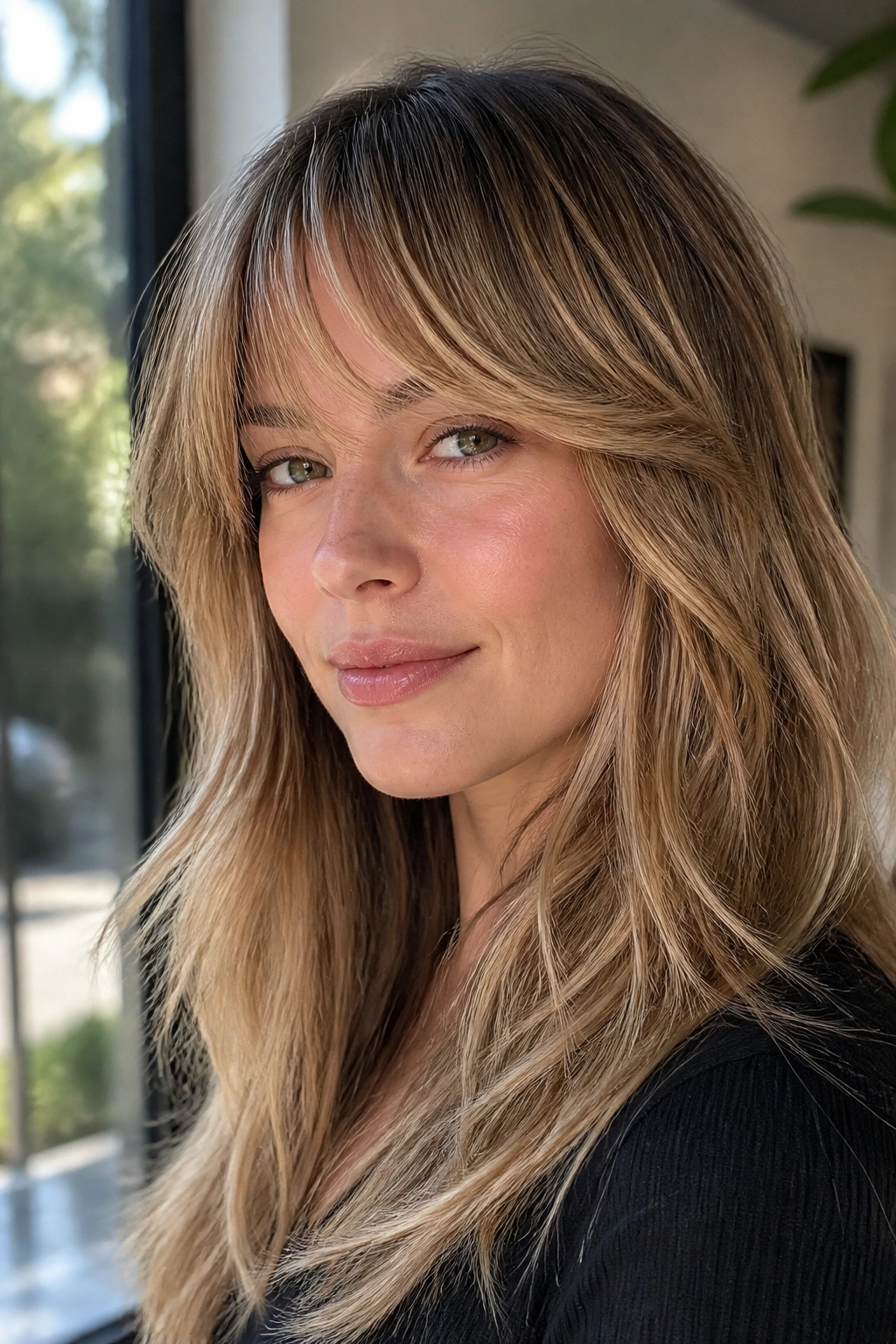
Highlights make feathered bangs look even lighter because the color catches in the separated pieces. The cut does the motion work, and the color makes that motion visible. That combination is why this pairing looks so good in soft daylight.
Chunky highlights can be too much here. Fine ribbons of color usually work better because they show movement without turning the fringe noisy. If the bangs already have a lot of texture, subtle placement is enough.
A few lighter strands near the cheekbones can also help the bang area blend into the rest of the haircut. That keeps the front from feeling like one solid block. Hair color can make the feathering read sharper, even when the cut itself stays soft.
35. Feathered Bangs With Shadow Roots
Shadow roots give feathered bangs a bit of depth right where the hair grows out. That can be useful if you want fringe that doesn’t scream for a trim every few weeks. The darker root softens the transition and makes the cut feel lived-in.
Why This Pairing Helps
A strong contrast between roots and ends can make bangs look chunkier than they are. Shadowing reduces that sharp line, so the feathered texture shows more clearly. It’s especially handy on lighter hair where every edge tends to pop.
This is also a practical choice if you color your hair often. The bangs can grow a bit without looking messy. That’s not glamorous advice, but it’s the sort that saves time and money.
36. Grow-Out-Friendly Feathered Bangs
Some bangs are a commitment. These are not. Grow-out-friendly feathered bangs start a little longer, blend into the sides, and keep the corners soft so you can push them aside when they get too long. That flexibility is the whole point.
A stylist should leave enough length to tuck the fringe behind one ear or split it in the middle. If the bang is too short from the start, the grow-out phase becomes annoying fast. Longer feathered bangs move through that awkward stage with fewer problems.
I think this is the most underrated version for anyone who has never worn fringe before. You get the shape, the movement, and the chance to change your mind.
37. Feathered Bangs With Tapered Temples
Tapered temples make feathered bangs feel like they’re melting into the haircut instead of stopping at the forehead. The side sections narrow gently near the temples, which keeps the front soft and easy on the eyes.
This matters more on dense hair, where the temples can get bulky fast. Tapering removes that heaviness and gives the face a cleaner frame. The fringe becomes part of the whole cut, not a separate panel.
If you tuck your hair behind your ears often, this is a very good option. The bangs still have shape from the front, but the sides look smooth when the hair is pulled back. Practical and pretty. That’s a rare combo.
38. Feathered Bangs for a Messy Bun
A messy bun and feathered bangs sound casual for a reason. The fringe keeps the front intentional while the rest of the hair can do whatever it wants. That contrast is why the style works so well on low-effort days.
The bangs should be soft enough to move when the bun shifts. If they’re too structured, the whole look can feel like two separate ideas jammed together. The easier route is a fringe that already wants to fall apart a little.
A few face-framing pieces help too. They stop the bun from making the face look too bare, and they let the feathering show even when the hair is pinned up.
39. Feathered Bangs for a Ponytail
Ponytails can look a bit plain if the front is pulled back too tightly. Feathered bangs fix that fast. They leave movement around the forehead and eyes, which softens the whole style and keeps it from feeling like gym hair.
The best version usually has enough length to sweep slightly to the side or split in the center. That way, the bangs still move when the ponytail swings. A slick pony and stiff fringe rarely make friends.
This is a nice everyday option if you wear your hair up a lot but still want some shape around the face. It’s easy, but not boring. That’s the appeal.
40. Wispy Feathered Bangs That Blend Into Layers
Wispy feathered bangs are the closest thing to a soft blur in haircut form. They barely announce themselves, which is exactly why they can add so much motion. The fringe slides into the front layers and makes the haircut feel lighter from the start.
How to Get the Softest Finish
Ask for the ends to be point-cut and kept slightly longer at the temples. The center should still frame the face, but the sides need to dissolve into the layers. If the bangs are cut too short or too dense, you lose the whole point.
This is the version I’d hand to someone who likes movement but hates obvious bangs. It works with long hair, mid-length cuts, and even a short lob if the layering is done well. The shape is subtle, but the effect is not.
A good feathered fringe should move when you move. That’s the whole charm.
