



Hard bangs can be chic, but they can also feel bossy. Textured bangs solve that problem better than blunt fringe ever does, because they break up the line just enough to let the hair move.
A soft look usually comes from three things: a little air at the ends, some length variation through the middle, and a shape that follows your face instead of sitting like a straight ruler across it. Point cutting, light razor work, and face-framing pieces do most of that work. Heavy thinning? That often goes too far. You end up with bangs that look wispy in a sad way, not a pretty one.
I’ve always liked textured fringe on people who want bangs but don’t want their hair to shout first and speak later. The best versions feel touched, not chopped. They skim the eyebrows, bend near the cheekbones, and make a ponytail look more finished even on days when the rest of the hair is behaving badly.
If your hair is fine, thick, straight, wavy, or curly, there’s a soft fringe shape that can work. The trick is matching the cut to the hair you actually have, not the hair you wish would show up after one quick blow-dry. Some shapes need a round brush. Some need almost no styling at all. A few need a stylist who knows when to stop.
1. Long Curtain Bangs That Brush the Cheekbones

Long curtain bangs are the easiest place to start if you want softness without a big commitment. They part in the middle or just off-center, fall past the brows, and taper into the cheekbones instead of cutting across the forehead like a hard line. That little bit of length gives them room to swing, which is why they feel gentler than most fringe shapes.
Why They Read Soft
The softness comes from the angle. Shorter pieces sit near the center of the face, while the outer pieces stay longer and blend into layers. That creates a frame, not a wall.
- Ask for the shortest point to sit around brow level.
- Keep the side pieces at cheekbone or lip length.
- Style with a 1- to 1.5-inch round brush for a loose bend.
- Use a light mist of flexible-hold spray, not crunchy hairspray.
My favorite part: they grow out cleanly. You can skip a trim for a while and they still look intentional.
They work especially well if you tie your hair back a lot. Even a plain bun looks polished when the bangs drape around the face instead of disappearing into the elastic.
2. Feathered Brow-Skimming Bangs

Feathered bangs can look almost old-school in the best way, but only when they’re cut with restraint. The point is not to make them fluffy all over. The point is to let the ends split a little so the fringe never feels heavy on the forehead.
A brow-skimming length is the sweet spot here. Shorter than that, and you risk a choppy look that feels sharp. Longer than that, and the bangs start blending into the rest of the haircut so much that you lose the frame. I like this shape on straight and slightly wavy hair, where the movement shows up without much effort.
The styling is simple. Blow-dry the bangs side to side with a flat brush, then finish with your fingers. That back-and-forth motion keeps them from sitting in one stiff sheet. If your hair clings to your forehead, a tiny amount of volumizing mousse at the roots helps more than piling on product at the ends.
This is the fringe I’d suggest to someone who wants bangs but hates anything fussy. It looks soft on purpose. Not accidental. That matters.
3. Bottleneck Bangs With a Narrow Center

Why do bottleneck bangs flatter so many faces? Because they start slim in the center and widen out near the temples, which gives the forehead room to breathe while still keeping a fringe in view. They feel a little modern, but not stiff. A little undone, but not messy.
The shortest pieces usually sit just below the center of the brows, then the shape drops longer toward the sides. That taper is the whole trick. It softens the face without making the fringe disappear, and it works especially well if you want to hide a high forehead or soften a square hairline.
How to Wear the Shortest Point
Keep the middle narrow and the side pieces longer. That’s the part people skip when they ask for this cut, and it changes everything.
- Ask for a center section that’s trimmed first.
- Let the stylist leave the temple pieces at cheekbone length.
- Blow-dry with a nozzle and a small round brush.
- Bend the ends inward just 10 to 15 degrees, not a full curl.
I like this shape because it gives you options. Wear it down and loose. Sweep it apart. Pin it back on one side when you’re over it. It behaves.
4. Piecey Shag Bangs

Picture this: the rest of the haircut has a little grit, the bangs fall in separated ribbons, and nothing sits too flat. That’s the appeal of piecey shag bangs. They belong with a shag, obviously, but they also soften softer cuts that need a bit more air around the face.
The mechanism is simple. Instead of cutting one dense line, the stylist removes weight in small sections so the fringe breaks into visible pieces. That creates movement, and movement makes hair look less severe. It also helps if your hair has a natural wave. The bend does half the styling for you.
What to Ask For
- Shorter interior pieces.
- Longer outer pieces near the temples.
- A point-cut finish, not a blunt edge.
- Texture that starts at the middle, not just the tips.
Skip this cut if you want precision. It’s a little wild by design.
I love this one for people who wear denim jackets, oversize tees, messy buns, and generally dislike anything that feels overdone. It has edge, but not the hard kind. The soft look comes from the gaps between the pieces. Weirdly, that space is what makes it feel relaxed.
5. Side-Swept Bangs With a Soft Bend
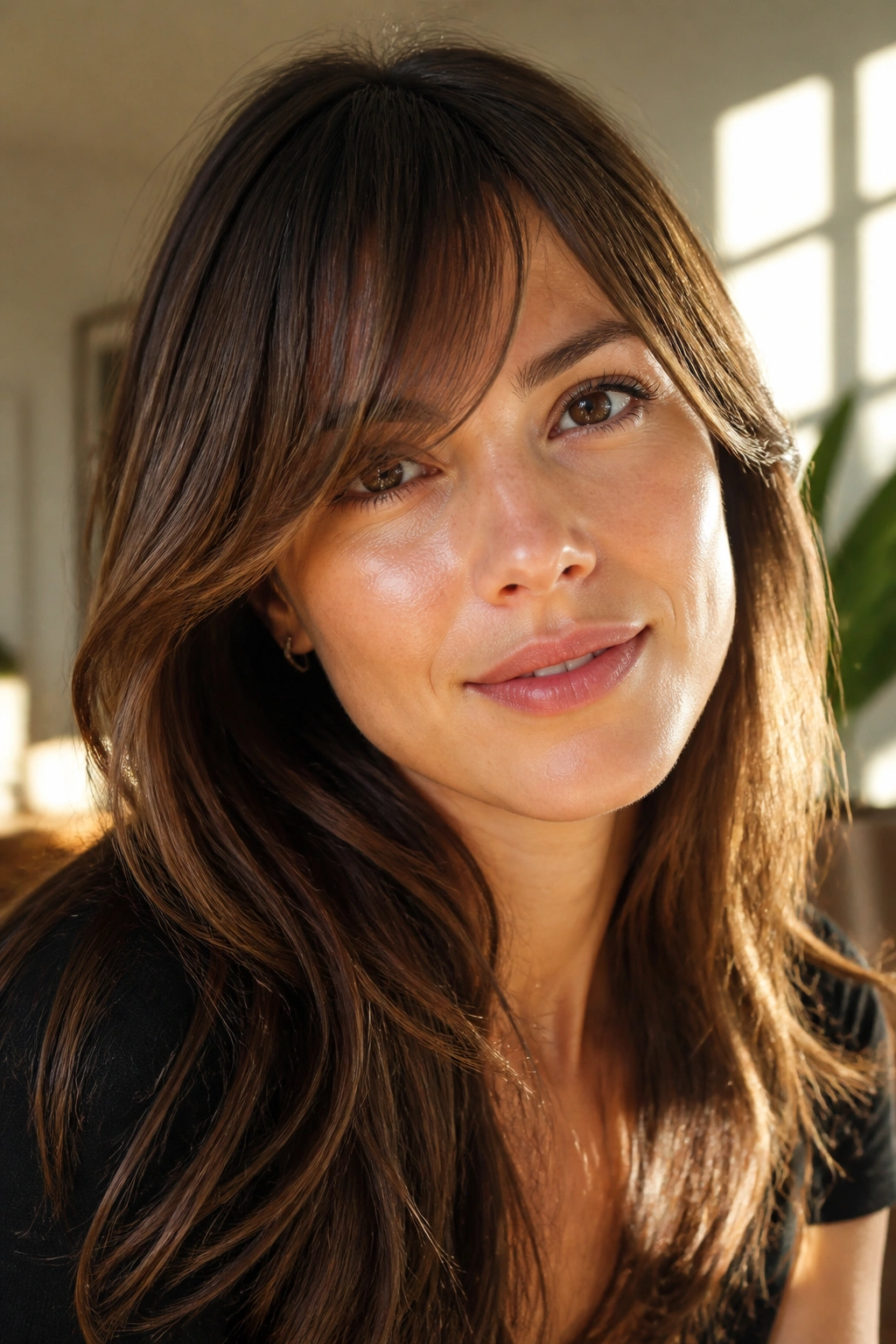
Side-swept bangs still work because they don’t ask the forehead to do all the visual work. One side stays fuller, the other melts into the rest of the haircut, and the result is gentle in a way blunt fringe rarely is. They’re also forgiving on days when your roots are oily or your sleep schedule was rude.
The best version has a bend, not a curl. Think of it as a long diagonal line that brushes across the brow and curves just enough to frame the eye. If the bang is too thick, it starts feeling dated. Too thin, and it falls apart by noon. The middle ground is where it lives.
This is one of the better choices if your face is round or heart-shaped, because the diagonal line pulls the eye downward and away from width in the cheek area. I’ve seen it work especially well on shoulder-length cuts where the rest of the hair has some layering but not much drama.
The styling note is tiny but matters: dry the bangs in the direction you want them to land, then let them cool there before touching them. Warm hair moves. Cool hair remembers.
6. French-Girl Bangs With Airy Ends
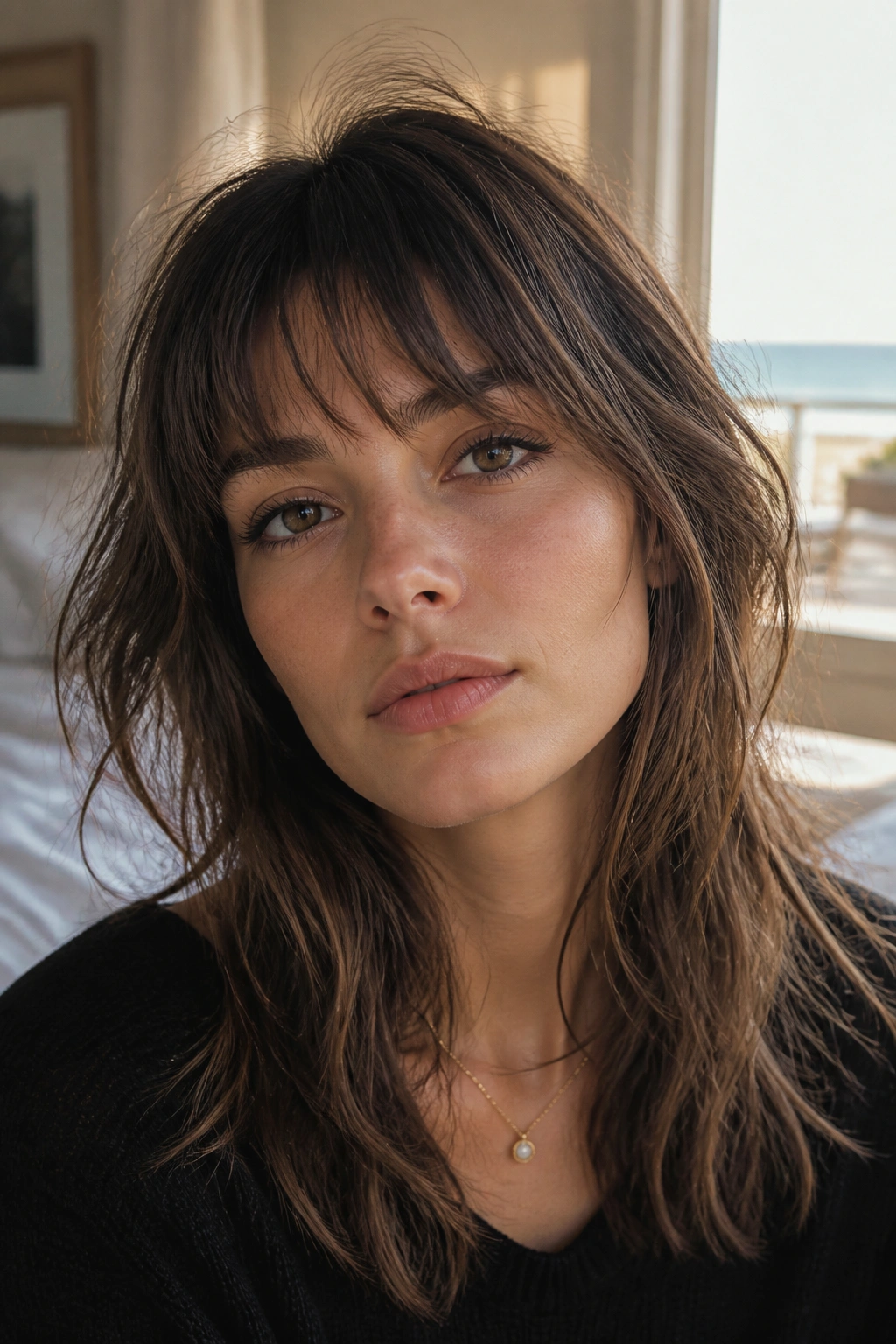
French-girl bangs get copied badly all the time. People see a soft, tousled fringe and assume it means “do less.” No. It means the cut has been shaped so the hair can fall loose without collapsing into a heavy block.
Unlike blunt baby bangs, this version keeps the ends airy and the center a little fuller. The line still exists, but it’s blurred. That’s why it feels soft instead of sharp. It suits straight, wavy, and even slightly curly hair if the length is left long enough to settle after styling.
The look is strongest when the fringe sits just above or right at the brows, then gets a light sweep with fingers or a flat brush. I would not use a heavy wax here. It kills the movement fast. A pea-size bit of styling cream, warmed in the palms, is enough for most hair types.
Best for someone who likes a relaxed, lived-in finish and doesn’t mind a little maintenance in the morning. If you want a fringe that looks neat after a five-minute blow-dry, this is the one to save.
7. Razored See-Through Bangs
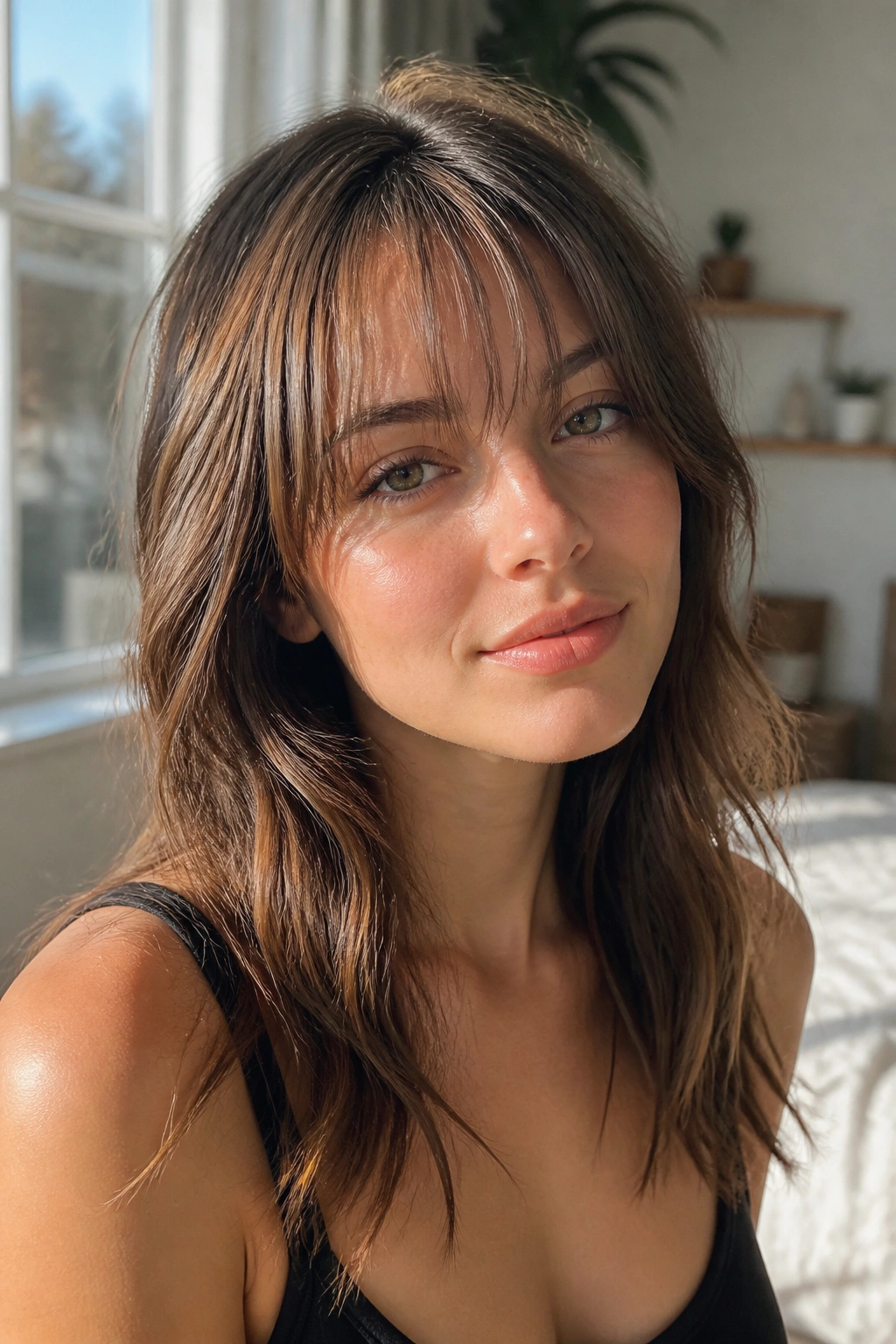
Razored bangs can be soft, but only when the razor is used with a light hand. Done right, the line looks translucent instead of dense, which is where that airy, almost feather-fan effect comes from. Done wrong, and the ends look chewed up. There’s a big difference.
When a Razor Makes Sense
A razor works best on medium to thick hair that can take some removal without going stringy. On finer hair, it can be a gamble unless the stylist is careful.
The cut usually leaves a little gap between pieces, so the forehead shows through just enough to keep the fringe from feeling heavy. That’s the whole point of “see-through” bangs. They don’t hide everything. They hint.
Styling is quick. Mist the bangs with water, brush them down, then blow-dry with your fingers first and a small brush second. You want separation, not a helmet. If the ends start to look frayed, they probably were over-razored, and no serum in the world will fix that cleanly.
I like this look on people who want something softer than a solid fringe but still want that bang moment in photos and mirrors and all the other places hair has to perform. It’s delicate without being fussy.
8. Curly Textured Bangs
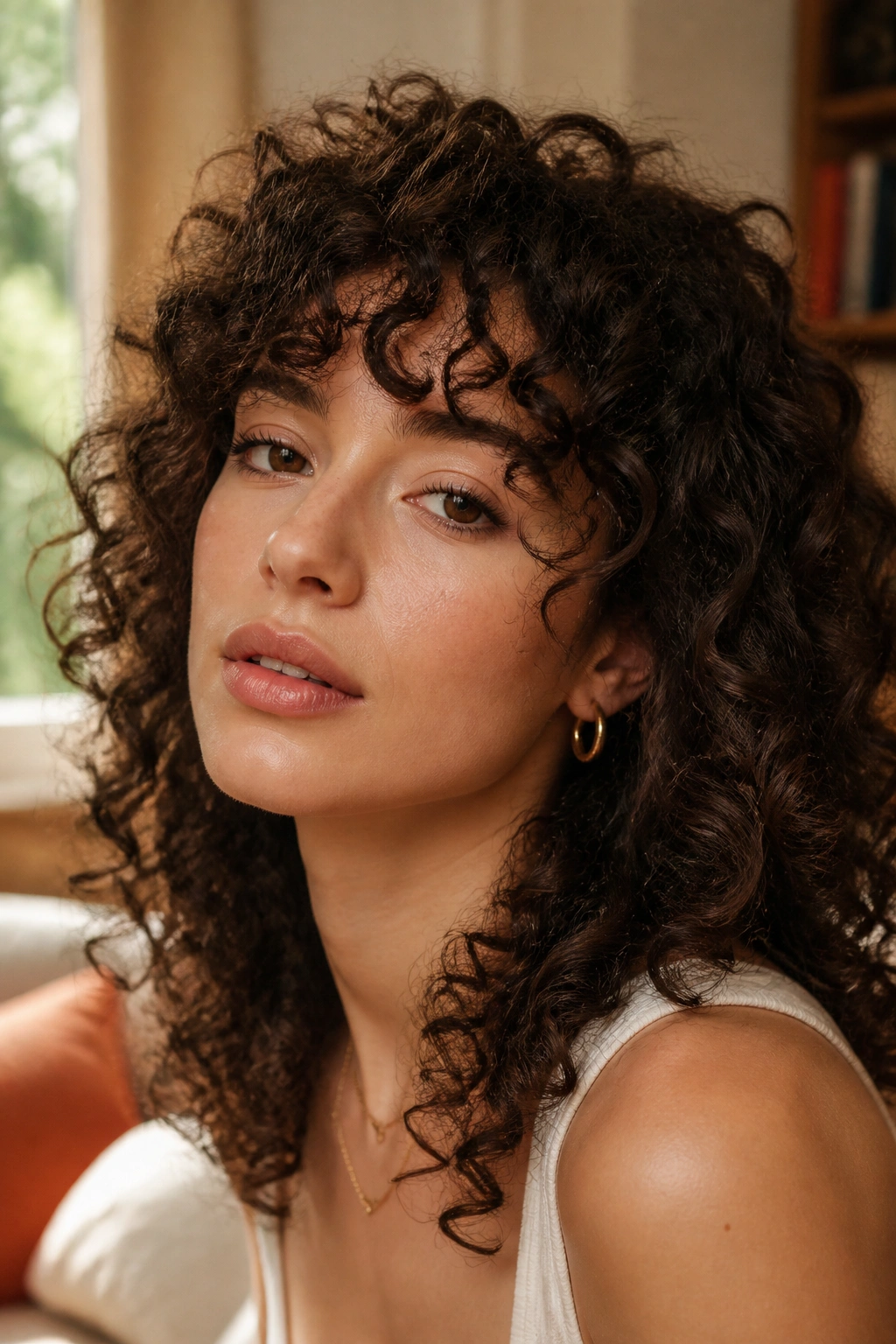
Can curly bangs look soft? Absolutely. In fact, they often look softer than straight bangs because the curl pattern already breaks up the line for you. The key is cutting them long enough to spring, not so short that they bounce up and sit on the forehead like a tiny hedge.
Curly textured bangs should be shaped dry, or at least mostly dry, because curl shrinks when it dries. A stylist who understands that will leave more length in the center and taper the edges so the fringe blends into the sides without a hard edge. If you have looser waves, the same idea still applies, just with less shrinkage to account for.
How to Wear It
- Use a leave-in conditioner first.
- Scrunch with a curl cream, not a thick gel.
- Diffuse on low heat, low airflow.
- Stop drying while the hair is still slightly damp so it doesn’t turn puffy.
The result is lovely when the curls are soft and touchable, not crispy. That’s the real win. Curly bangs can look romantic, casual, and a little bit expensive-looking without trying too hard. Not everything on the forehead needs to be polished to the bone.
9. Wavy Bangs With Point-Cut Ends
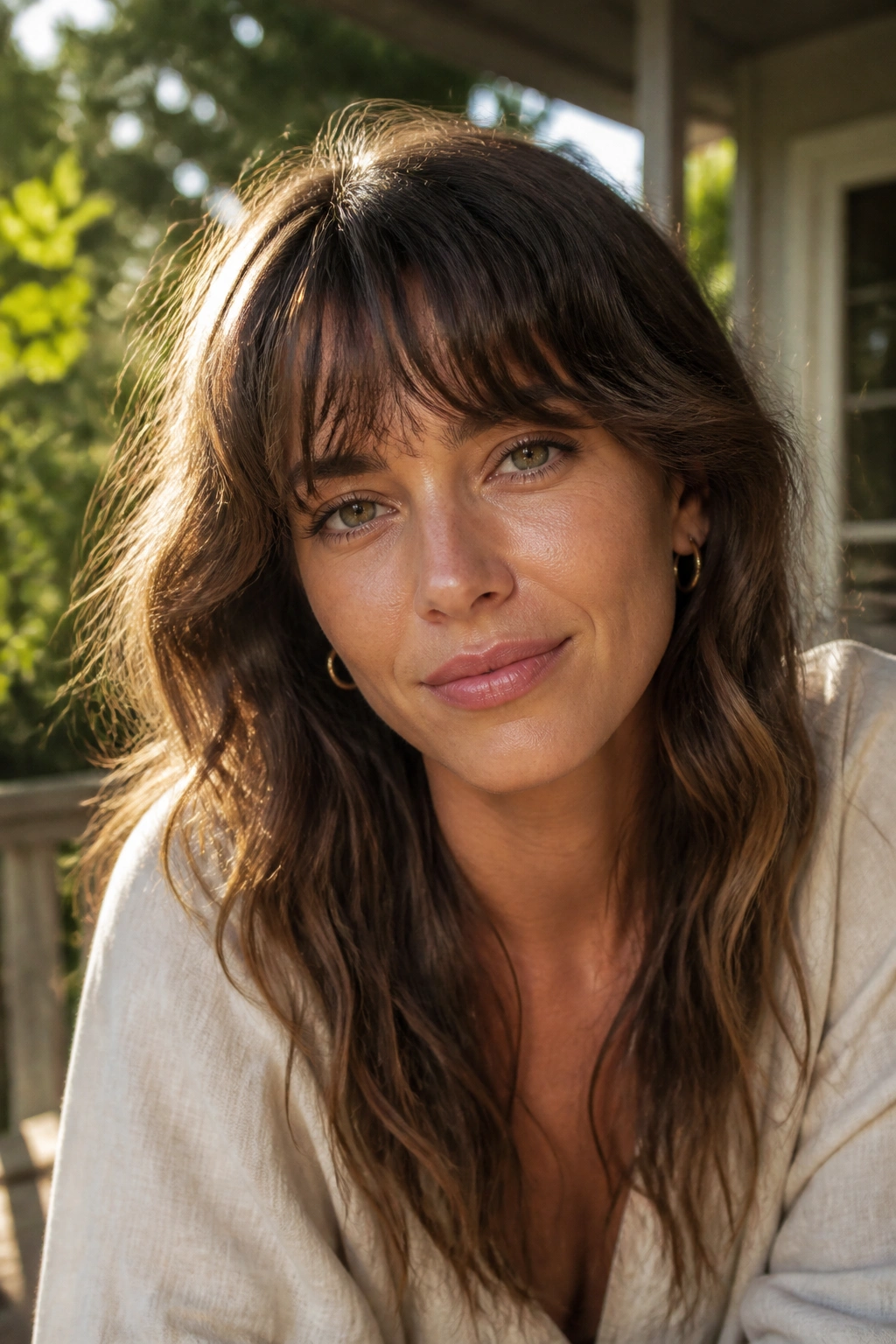
Wavy bangs need a cut that respects the wave pattern, or they turn into a weird triangle by lunchtime. Point-cut ends fix that. They soften the edge by cutting small notches into the fringe, which keeps the shape from sitting like a solid block across the face.
This style works especially well when the bangs are long enough to follow the natural wave, usually somewhere between brow length and the upper cheek. Shorter than that, and the wave can spring too much. Longer than that, and the bangs start living in the same space as your face-framing layers, which is fine if you want a barely-there fringe but not if you want a real shape.
The practical part is easy. Let the bangs air-dry about 70 percent, then twist a few pieces around your fingers while they’re still damp. That tiny twist helps the wave land where you want it instead of flaring out. I’d use a lightweight cream rather than a spray in humid weather. Cream keeps the strands a little quieter.
This cut has a soft, unfussy feel that works on a lot of hair textures. It’s not precious. I like that.
10. Layered Bangs for Thick Hair
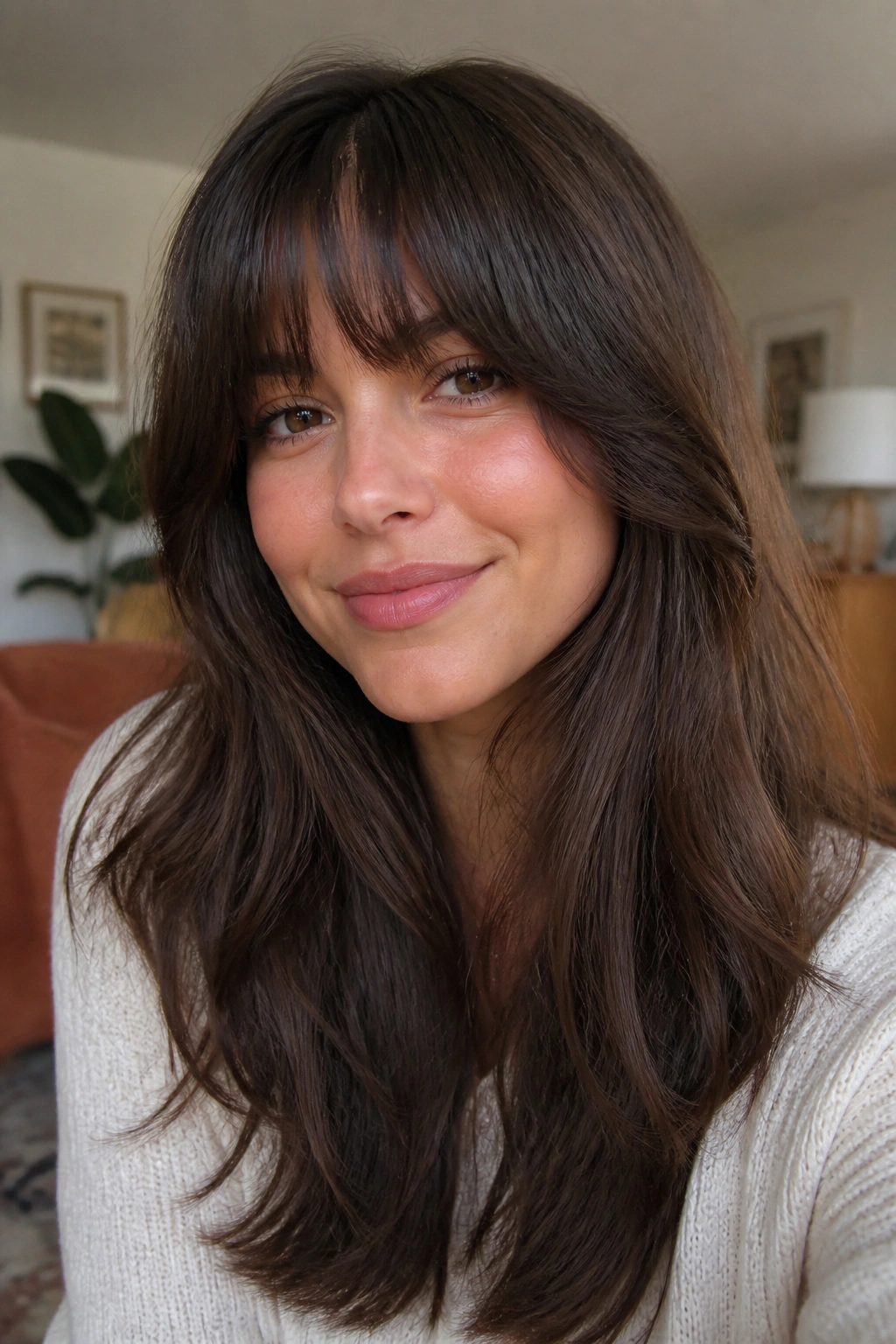
Thick hair can wear bangs beautifully, but only if the weight is removed in the right places. Otherwise the fringe sits like a heavy curtain and swallows your eyes. Layered bangs fix that by reducing bulk near the center and keeping the outer pieces slightly longer so the whole thing bends instead of bracing.
A good layered fringe should feel controlled, not sparse. That’s the mistake I see most often. People ask for “texture” and leave with too little hair left in the bang. A better request is weight removal through the middle third, with soft edges and enough density to keep the shape visible.
This style usually benefits from a round brush and a quick root lift. Thick hair tends to hold its own shape, which sounds nice until the bangs puff up in the wrong direction. A little tension while drying helps them lie flatter and softer.
It’s one of my favorite options if your hair has body and you don’t want to fight it. Work with the density. Don’t punish it. The fringe ends up looking plush instead of heavy, and that’s a better place to be.
11. Choppy Bangs With Long Temple Pieces
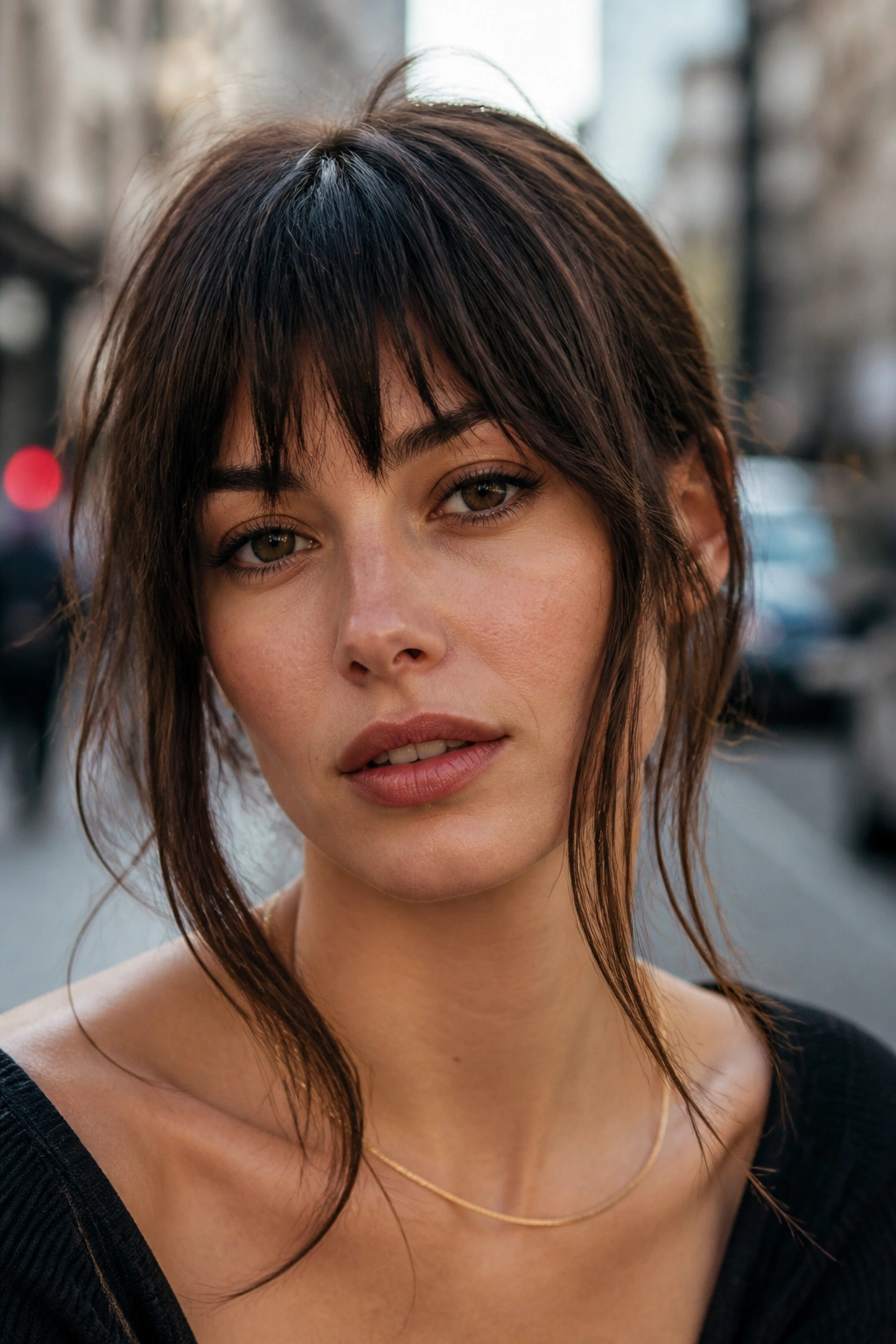
Choppy bangs can look soft when the chop is concentrated in the middle and the temple pieces are left long enough to melt into the rest of the haircut. That contrast matters. Without the longer sides, the cut starts to feel abrupt. With them, the fringe gets a nicer frame.
Unlike a full micro fringe, this version doesn’t sit as a single short line. It shifts. You get little broken sections at the center, and then the lengths stretch outward so the face isn’t boxed in. That makes it a smart choice for oval and long faces, where a little width near the temples helps balance the shape.
I’d ask for a point-cut finish and a very light bend at the ends. No stiff flat ironing here. The softness comes from the movement between the pieces, not from making every strand identical. That’s a boring kind of perfection, and it usually looks less flattering in real life than in a salon photo.
Best worn with textured layers around the rest of the haircut. If the sides are smooth and the fringe is choppy, the contrast can look a bit harsh. If the whole cut has some lived-in movement, it clicks.
12. C-Curl Bangs for Straight Hair

Straight hair often needs just a little shape at the ends to stop bangs from lying flat and hard. A C-curl bang does exactly that. The fringe bends inward in a loose curve, almost like the letter itself, and the curve softens the forehead without turning the whole thing into a heavy swoop.
This works well when the bangs are cut a touch longer than brow length. That extra room gives the hair a place to fold. If they’re cut too short, the curve can pop up in a way that looks awkward. Too long, and they turn into face-framing pieces instead of bangs.
The styling routine is one brush, one pass, and done. Wrap the ends around a round brush for a few seconds, release, and let them cool before touching them again. If your hair is stubbornly straight, a tiny bend with a flat iron at the very end can help. Use the iron on a low setting and keep the movement smooth. Don’t clamp and crease.
I like this option for people who want a polished finish that still feels gentle. It’s neat. Not severe. There’s a real difference.
13. Soft Micro Bangs
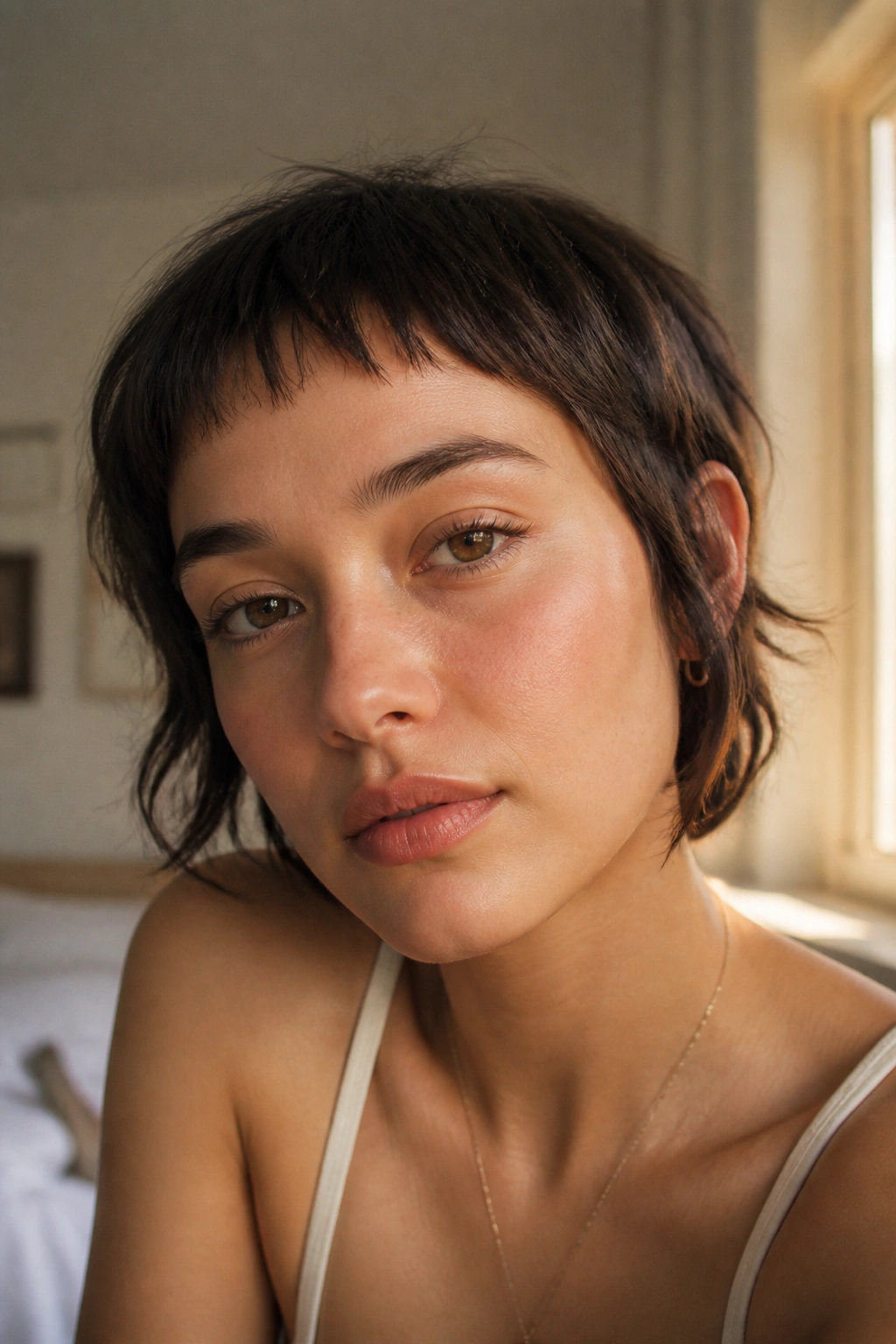
Micro bangs do not have to be sharp or severe. That surprises people. If they’re cut with texture and left a little irregular at the edge, they can feel airy and playful instead of severe or punk-heavy. The trick is to keep the shortest point soft and the sides slightly longer so the line doesn’t look boxed in.
This style needs confidence, yes, but it also needs restraint. A good soft micro fringe should leave a little space between the brows and the cut line. That gap keeps the forehead from feeling crowded. It also helps if the rest of the haircut has movement, because tiny bangs next to a stiff bob can look harsh in a way nobody wants.
How to Keep It Soft
- Ask for point cutting, not a blunt snip.
- Leave some length at the outer corners.
- Use a tiny amount of matte cream only on the ends.
- Style with fingers first, brush second.
I like soft micro bangs on short haircuts with personality. They’re not for everyone. Fine. But if you want a fringe that reads light and a little unexpected, this is one of the most interesting ways to do it.
14. Grown-Out Bangs With Face-Framing Pieces
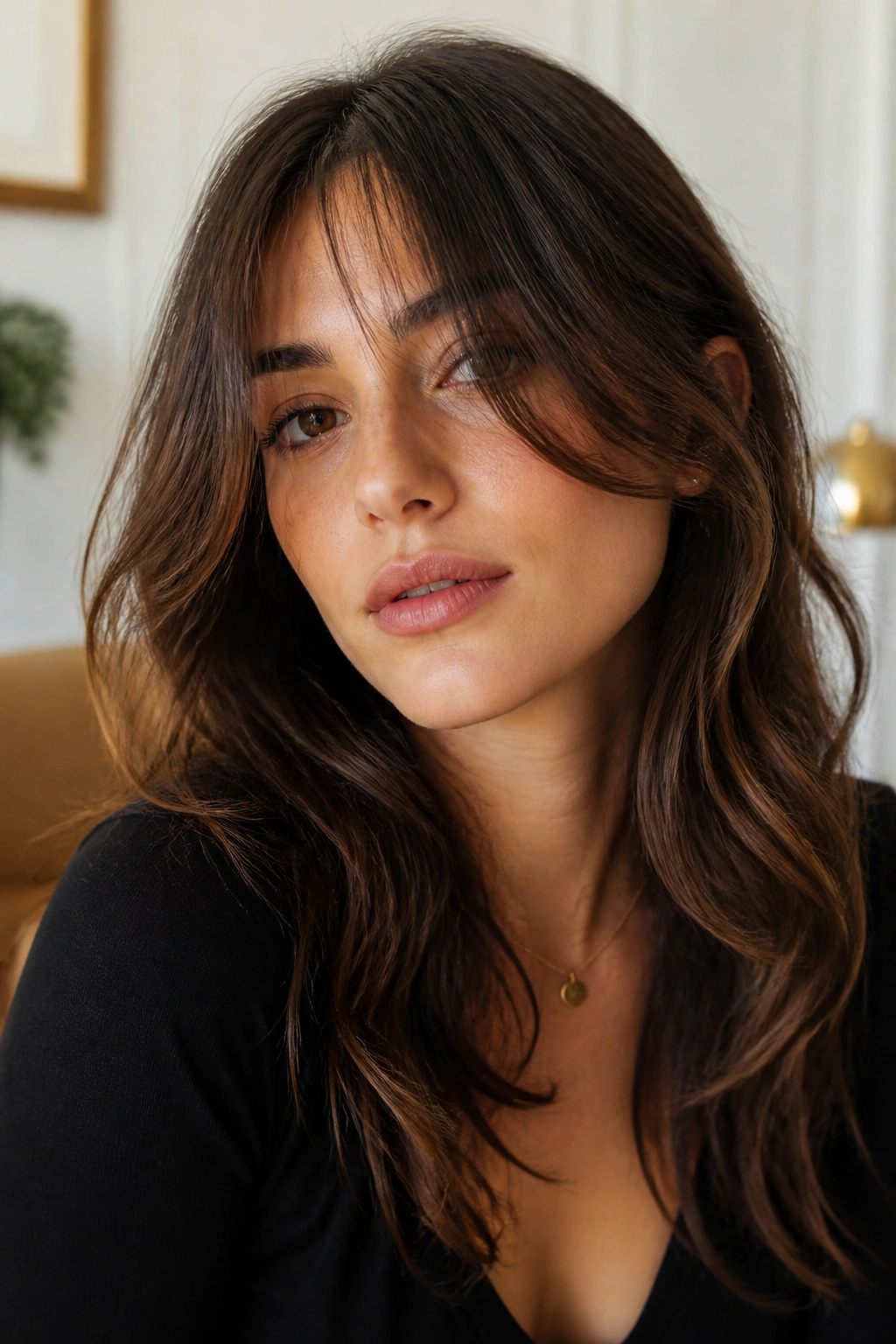
Grown-out bangs get overlooked because people think they’re a compromise. I don’t see it that way. When the length is right, grown-out fringe can look softer than almost anything else, especially if the front pieces fall into the cheekbones and jaw instead of ending at the brows.
A grown-out bang is basically a calm bang. It gives you fringe energy without the daily maintenance. The center can land around the nose bridge or upper cheek, while the outer pieces get blended into layers. That keeps the face open and the overall cut from feeling too intentional, which is often where softness lives anyway.
This is a smart option if you’re between appointments, trying bangs for the first time, or just tired of styling your fringe every morning. A blow-dry brush, a quick bend at the front, and a little dry shampoo at the roots are often enough.
Some haircuts look better after they grow out. This is one of them. The shape relaxes. The edges soften. And you stop fighting your forehead, which sounds silly until you’ve spent months doing it.
15. Deep Side-Part Bangs With a Loose Sweep

Deep side-part bangs have an old-school elegance to them, but the soft versions avoid anything stiff or shellacked. The sweep starts with more weight on one side, then trails across the forehead and opens up near the opposite temple. That movement makes the whole face look gentler, especially if you want to soften a strong brow or draw attention to the eyes.
I like this shape most on medium-length cuts with a little bend through the rest of the hair. If the lengths are pin-straight and the bangs are the only thing with motion, the contrast can feel awkward. Give the rest of the haircut a bit of life and the side sweep feels natural instead of posed.
The styling is straightforward. Set the roots in the opposite direction first, then flip the bangs into place and let them cool there. That tiny trick gives the fringe lift without turning it puffy. Use a flexible spray at the end. Heavy spray makes the sweep sit too hard, and nobody needs that.
Soft bangs rarely happen by accident. They need a shape that can move, a little restraint from the scissors, and enough length to fold rather than fight. If a fringe has all three, it tends to age well too, which is really the part people care about after the first week of admiring it in the mirror.
