



Haircuts for women can do a lot of work with very little effort. A good cut changes how hair falls when it’s clean, how it behaves on day three, and whether you spend ten minutes or forty fighting it in the bathroom mirror.
That’s why the haircuts people keep asking for tend to have the same trait: they look polished without needing a heroic blowout. The shape does the heavy lifting. A blunt edge can make fine hair look fuller. Soft layers can keep thick hair from feeling like a blanket. A smart fringe can change the whole face without taking off much length. Small things. Big difference.
The tricky part is that not every haircut behaves the same way once it leaves the salon chair. Some look gorgeous for twenty minutes and then collapse. Others grow out in a way that still looks deliberate six weeks later. The ones below are the styles worth paying attention to because they work on real hair, not just in a perfectly lit photo.
1. French Bob
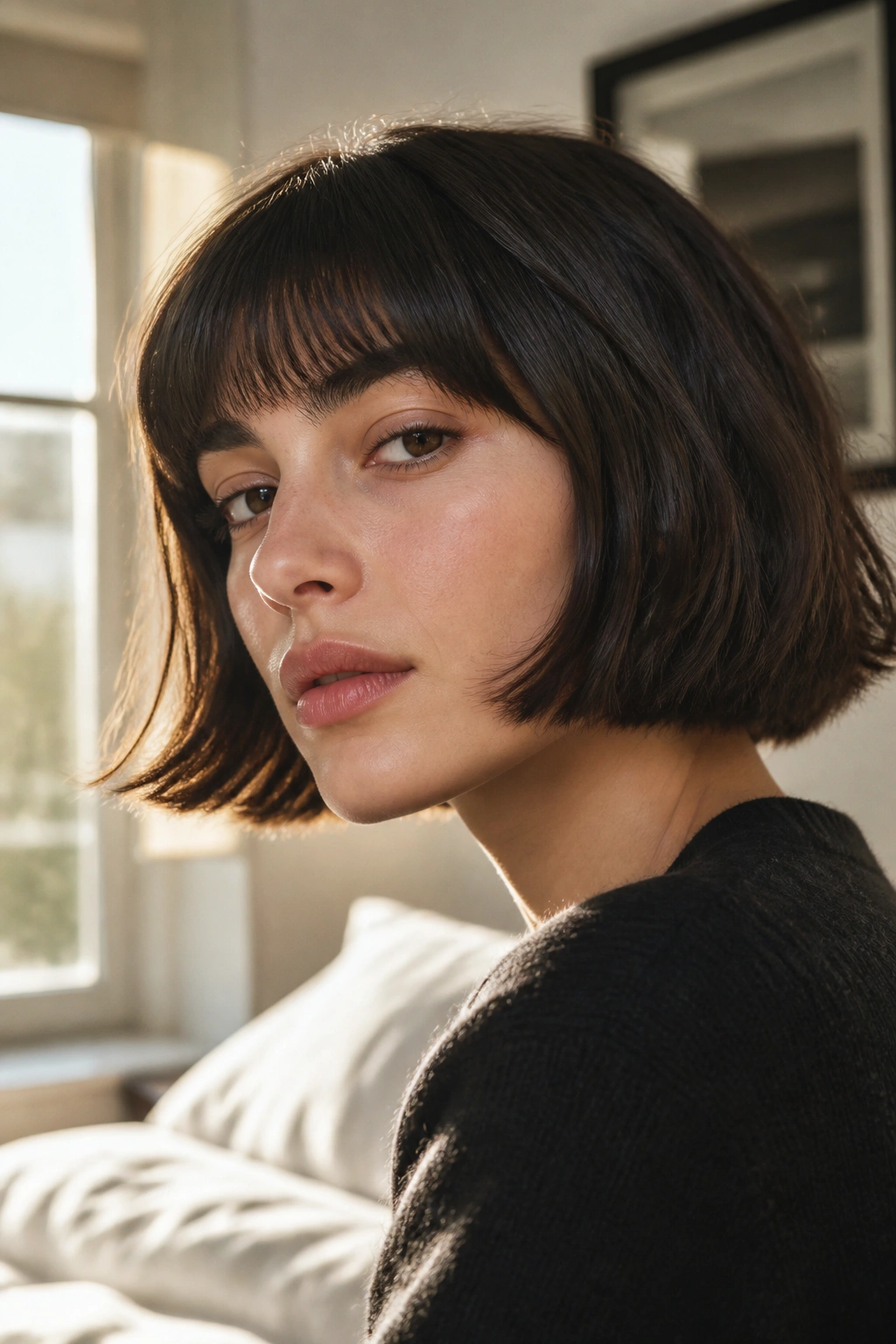
The French bob has a kind of confidence that doesn’t try too hard. It usually lands around the lip, cheekbone, or just under the jaw, with a blunt perimeter and a little movement at the ends. Short. Sharp. Easy to recognize.
Why It Works
A French bob is one of those haircuts for women that can make the face feel instantly cleaner and more open. It suits straight, wavy, and slightly bendy hair best because the cut already has shape; you are not depending on styling tricks to fake it.
- Ask for the length to hit between the cheekbone and jawline.
- Keep the edge blunt, but not helmet-stiff.
- Add a soft bend with a 1-inch curling iron or let it air-dry with a light cream.
- Works well with or without bangs.
Best tip: leave a little fullness around the ends. If the bottom gets too thinned out, the whole cut loses its charm.
2. Italian Bob
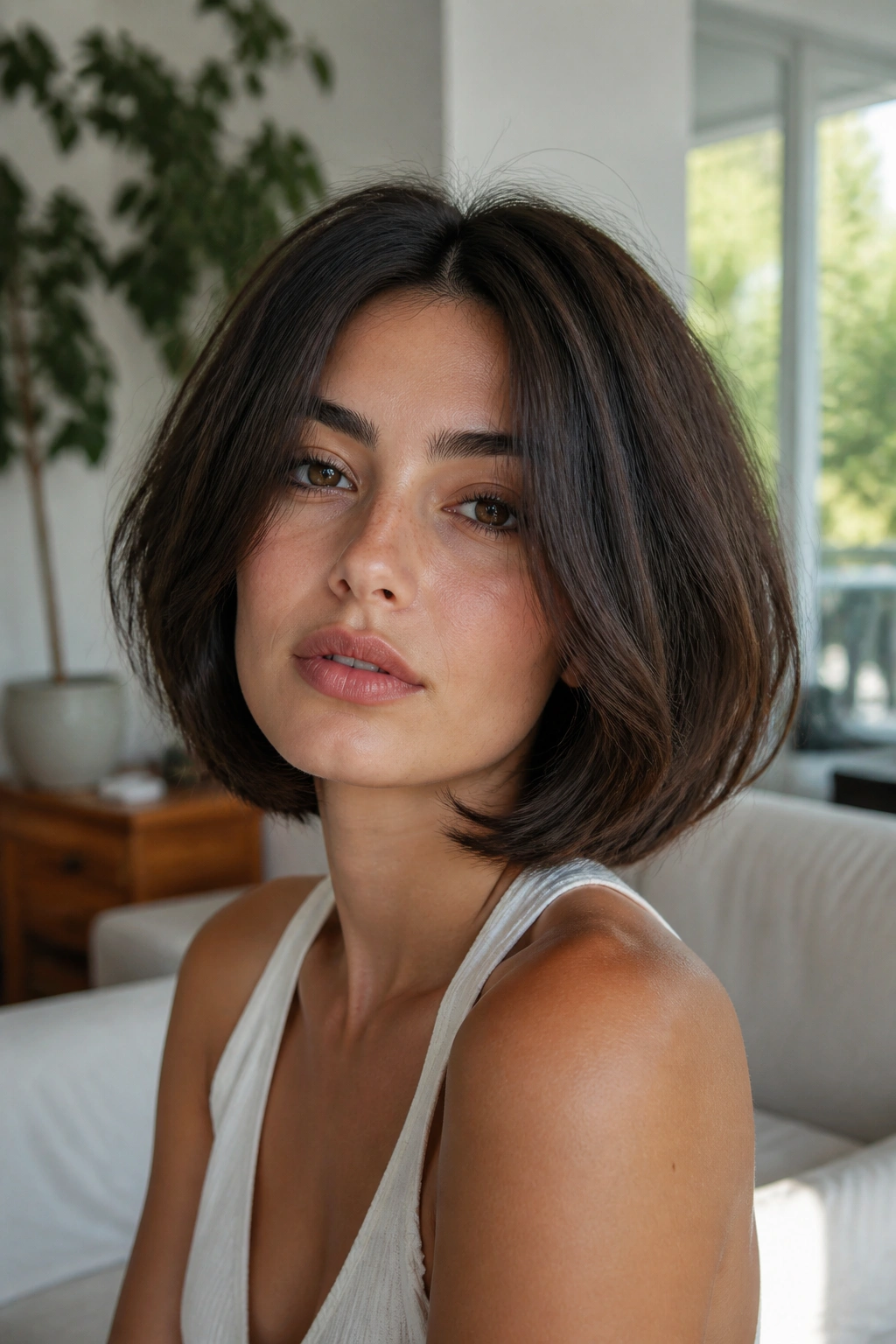
Why does the Italian bob feel a little richer than a classic chin-length cut? Because it usually has more body in the shape. The line sits slightly longer, the ends are plush, and the overall effect is fuller, almost like the hair was built to move.
This is a strong choice if you want a bob that doesn’t feel severe. It likes a round brush, a dryer, and a few minutes of tension at the ends. Not much more. The cut works especially well when the hair has medium density, since the silhouette looks lush without needing heavy layers.
The trick is keeping the perimeter dense while softening just enough to avoid a blocky finish. Too many layers and you lose the Italian feel. Too little shaping and it can sit heavy. Somewhere in the middle is where it sings.
3. Blunt Chin-Length Bob
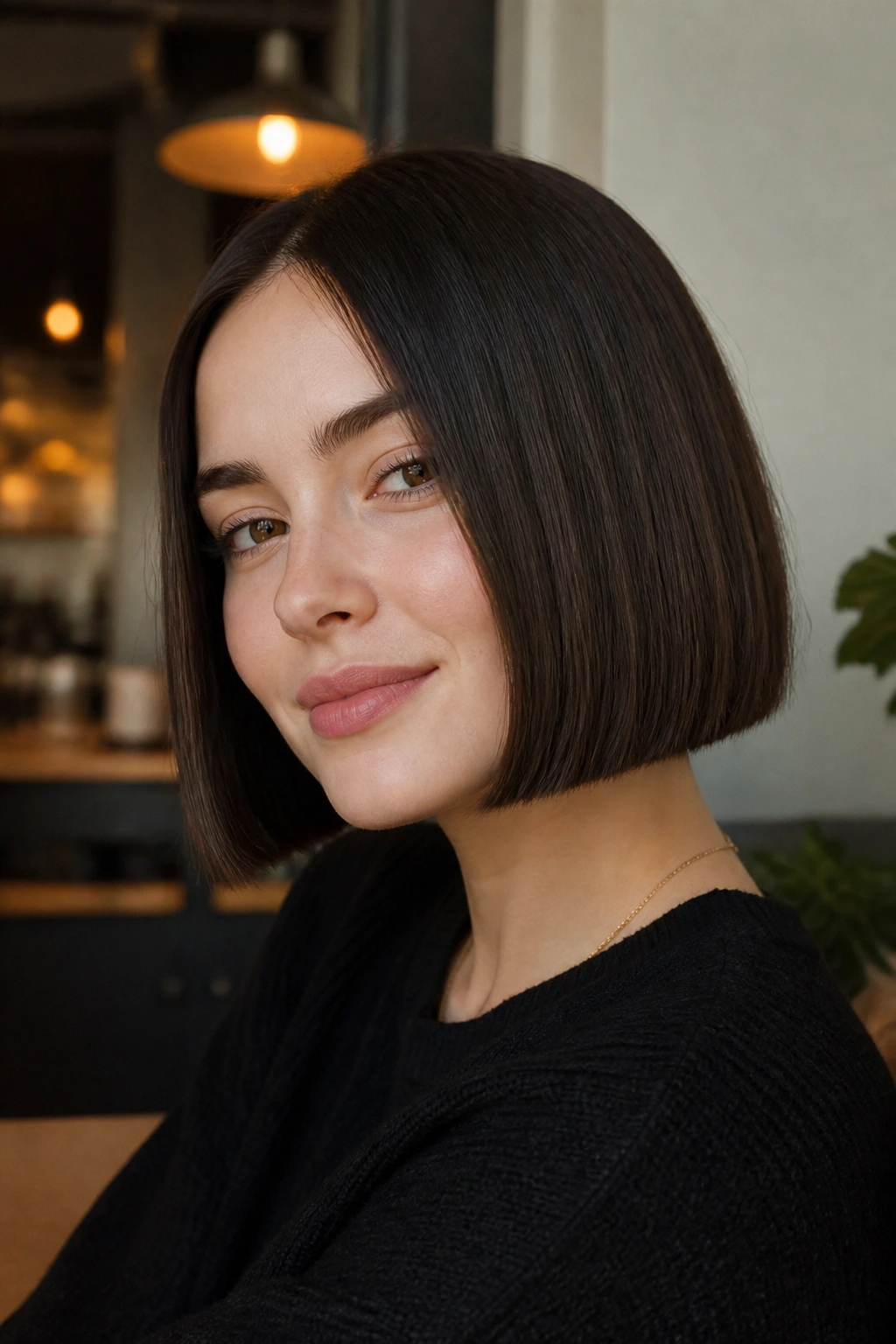
Picture straight hair that falls like a sheet. That is the blunt bob’s whole personality.
It’s one of the cleanest haircuts for women who want structure more than texture. The cut stops near the chin, the edge is crisp, and the shape makes fine hair look thicker than it really is. On dense hair, it can look expensive in the best sense of the word — neat, polished, and almost architectural.
What to Watch For
A blunt bob needs healthy ends. Split ends ruin the line fast. It also needs regular trims, usually every 6 to 8 weeks, if you want that sharp edge to stay clean.
- Best for straight or mildly wavy hair.
- Less ideal for very tight curls unless you want extra length and shape work.
- Looks best when tucked behind one ear or worn with a deep side part.
If your hair is fine, don’t over-layer it. That’s the fastest way to make the ends look wispy.
4. Scandi Bob
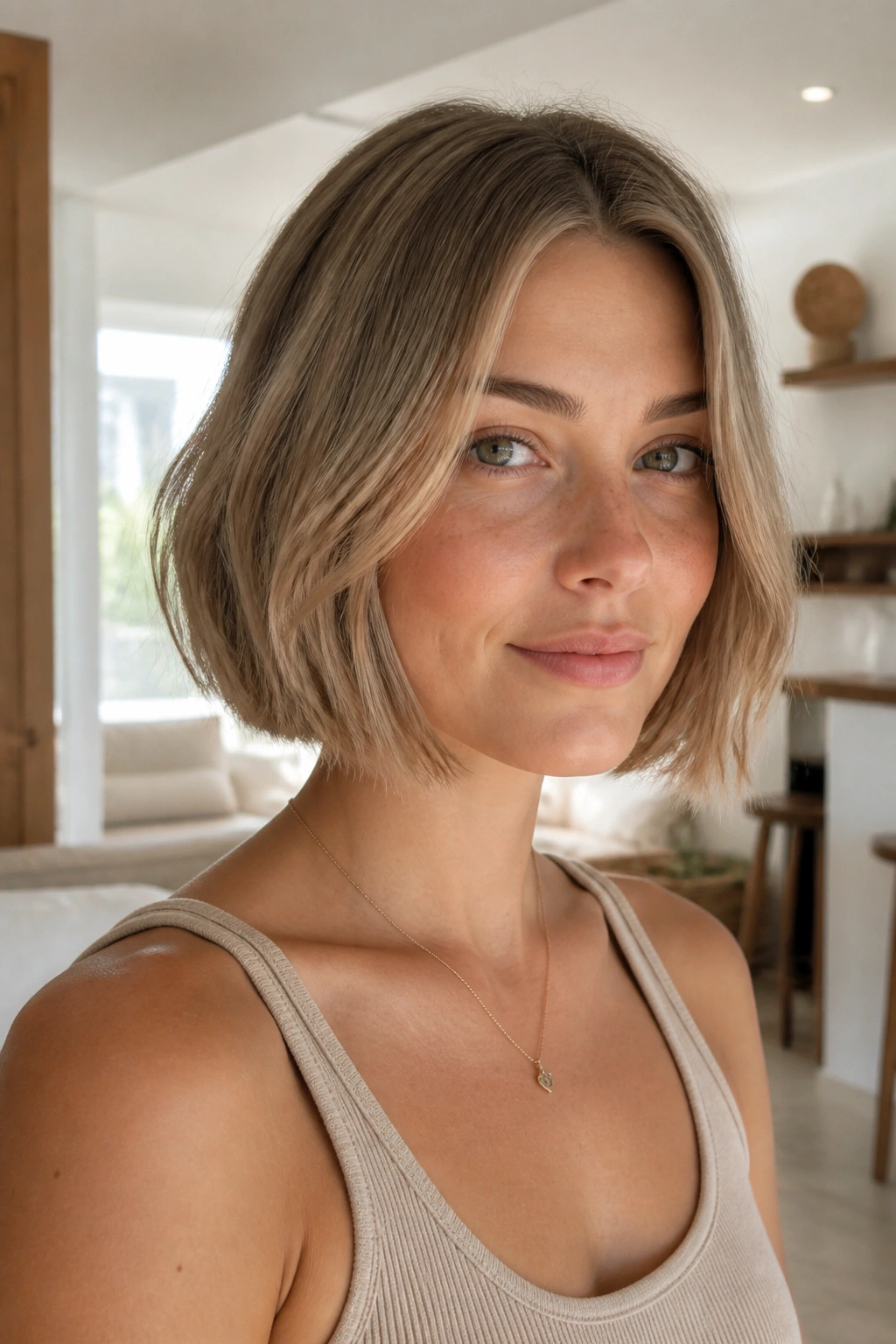
The Scandi bob has that cool, almost undone look that feels easy but is never accidental. It tends to sit at the jaw or just below it, with a soft undercurve and a less rigid finish than a blunt bob. The edges still matter. They just don’t shout.
This cut works beautifully on hair that likes a little natural bend. If your hair flips at the ends, even better. A center part makes it feel clean and modern, while a slightly off-center part gives it a more relaxed shape. The key is keeping the cut light at the corners so it doesn’t turn boxy.
A lot of people ask for “effortless” hair and then want a cut that needs constant fixing. This is the opposite. It looks good when it’s air-dried and slightly imperfect. That’s the point.
5. Micro Bob
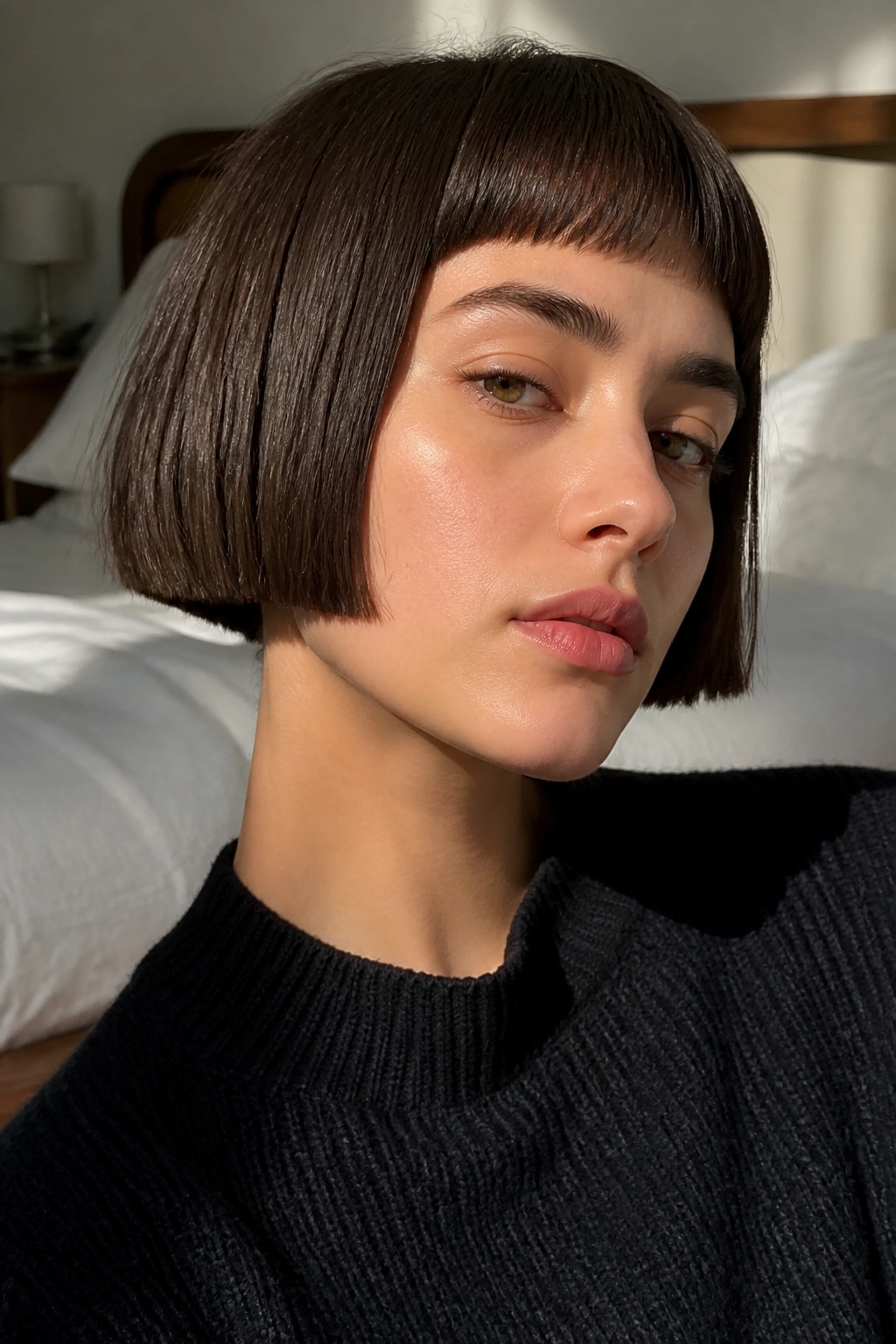
Unlike a chin-length bob, the micro bob stops higher and makes your neck do the talking. It usually lands somewhere around the mouth or just below the ears, which sounds dramatic because it is. That’s the appeal.
This cut suits strong bone structure, statement glasses, and anyone who wants a short shape without going full pixie. The shorter line pulls attention upward and can make the face look lifted, especially when the ends are kept blunt and clean. It’s also a smart choice if you hate hair brushing your collar.
Who It’s Best For
- People with straight or softly wavy hair.
- Anyone comfortable with regular trims.
- Readers who want a cut that looks deliberate from every angle.
Ask for the perimeter to stay solid. If the top gets too choppy, the whole thing can lose its edge.
6. Collarbone Lob
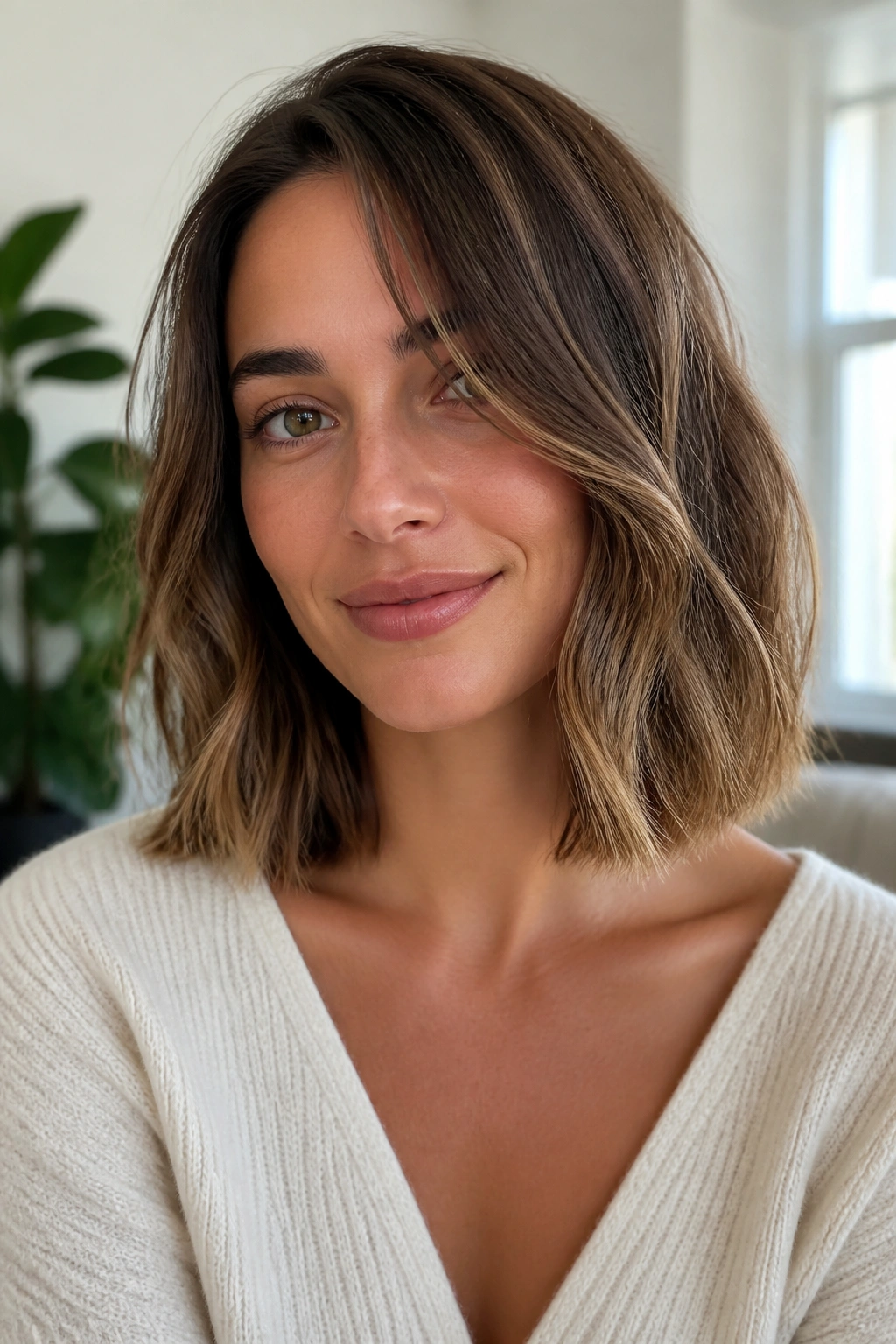
A collarbone lob is one of those cuts that feels better the longer you wear it. It grazes the collarbone, flips easily, and can be worn down, tucked, clipped, or shoved into a low ponytail without much fuss. That matters more than people admit.
This cut is especially good if you want movement but are not ready to lose much length. It has enough body to look styled, yet enough hair left to tie back on a busy day. On straight hair, it can look sleek. On wavy hair, it gets that soft swing that makes people think you spent longer on it than you did.
How to Style It
A large round brush, a dry texture spray, or even a flat iron bend at the ends can change the whole feel. Keep the ends a little soft, not stick-straight. That tiny bit of curve is what keeps it from feeling flat.
7. Butterfly Cut
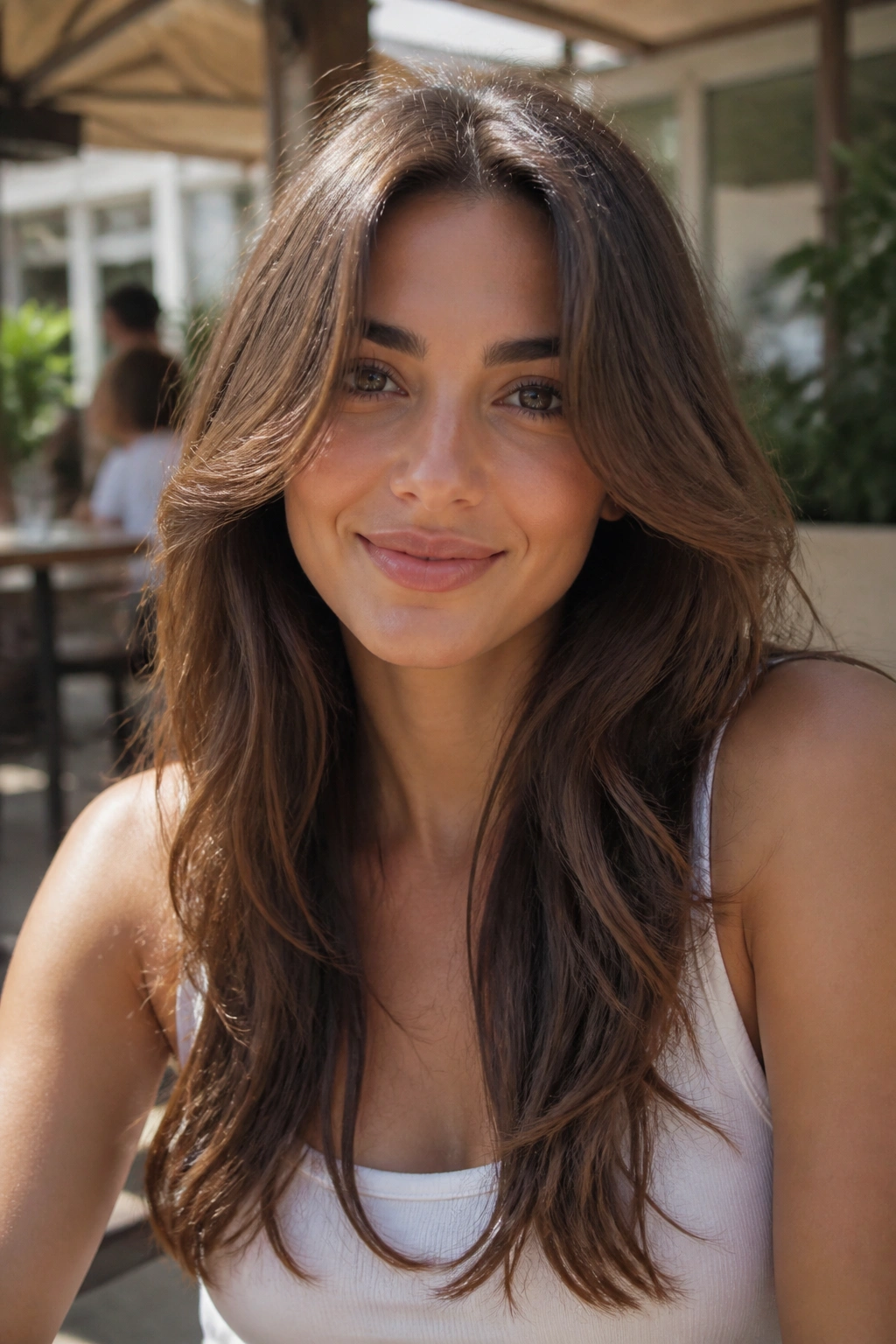
The butterfly cut is built for people who want long hair to feel lighter without chopping off the length. The top layers are shorter and fuller around the face, while the bottom layers stay long. When styled out, it almost creates two haircuts in one.
That shape gives you lift around the crown and movement near the cheeks, which is why it shows up so often in women’s hairstyle ideas for longer hair. It gives the illusion of big, bouncy volume without forcing every strand into the same place.
How to Ask for It
Tell the stylist you want shorter face-framing layers and long lengths preserved in back. The shortest layers usually sit around the cheekbone or chin, depending on density. If you have fine hair, keep the top layers a touch longer so they do not disappear.
It looks best when blown out with a round brush, but the cut still holds up if you just rough-dry it and add a little cream at the ends.
8. Hush Cut
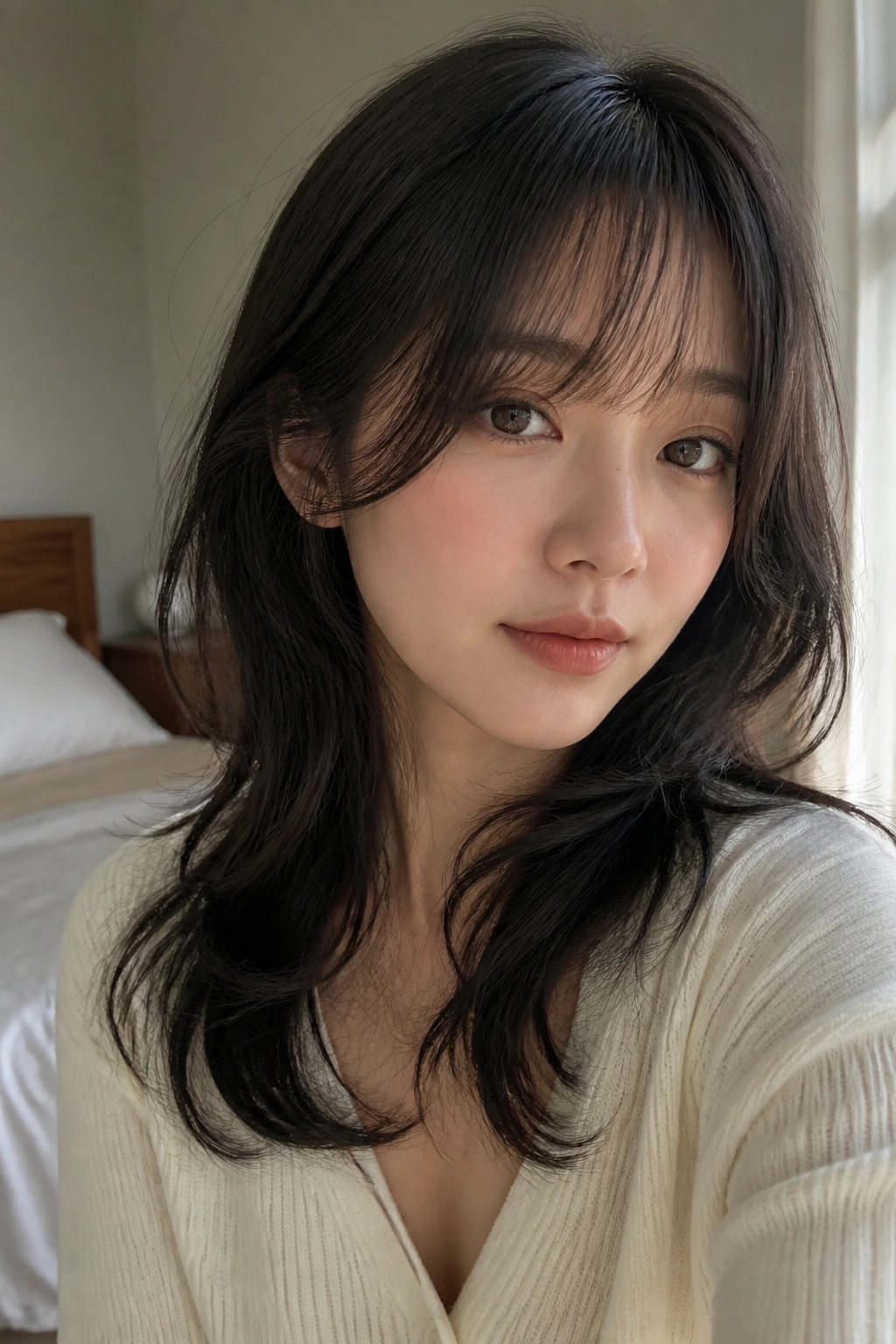
The hush cut is soft-spoken hair, and I mean that in a good way. It’s airy, lightly layered, and usually paired with wispy fringe or pieces that skim the cheekbones. Nothing about it feels heavy.
This is a strong option if you like movement but dislike obvious choppy layers. The shape is subtle enough to grow out without looking messy, which is a small miracle. It’s also friendly to straight and wavy hair because the layers sit inside the shape instead of floating too far away from it.
A hush cut can look expensive without being fussy. That sounds vague, but here it means the hair has shape, bounce, and a little swing when you turn your head. No stiff ends. No chunkiness. Just soft motion.
9. Shag
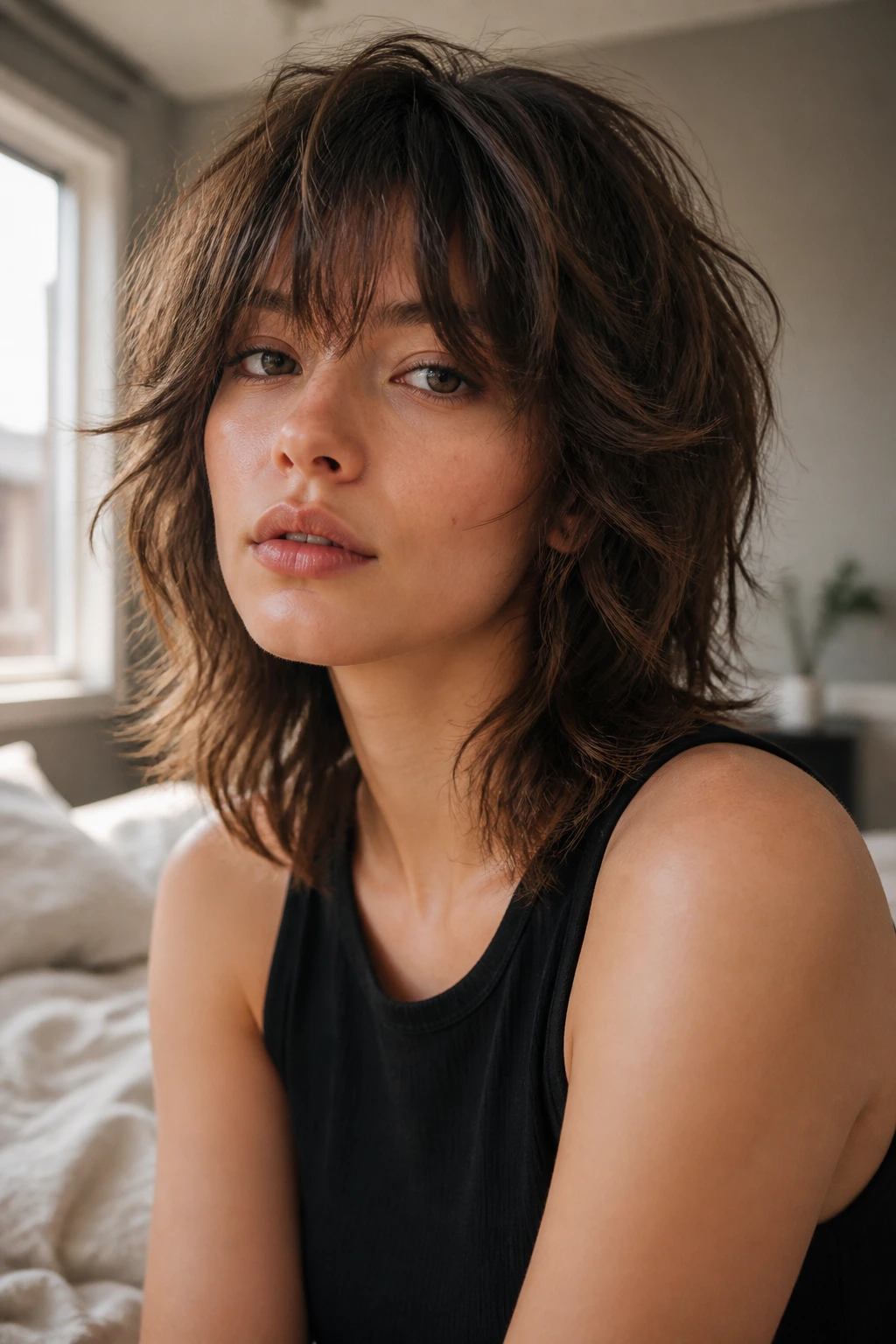
The shag is still hanging around for a reason: it makes imperfect hair look intentional. The crown gets lift, the ends stay broken up, and the whole cut has a lived-in edge that works especially well on wavy and textured hair.
What people get wrong is asking for too much thinning. A good shag needs structure, not random razor work. The layers should build shape through the crown and around the face, then taper out so the length still feels present. If everything gets shredded, the cut can go fuzzy fast.
It’s a haircut that likes second-day hair. Sometimes third-day hair, too. A little dry shampoo at the roots, a bit of scrunching, and you are done. Not every women’s haircut needs to look polished from the first second. This one is happier with a little roughness.
10. Wolf Cut
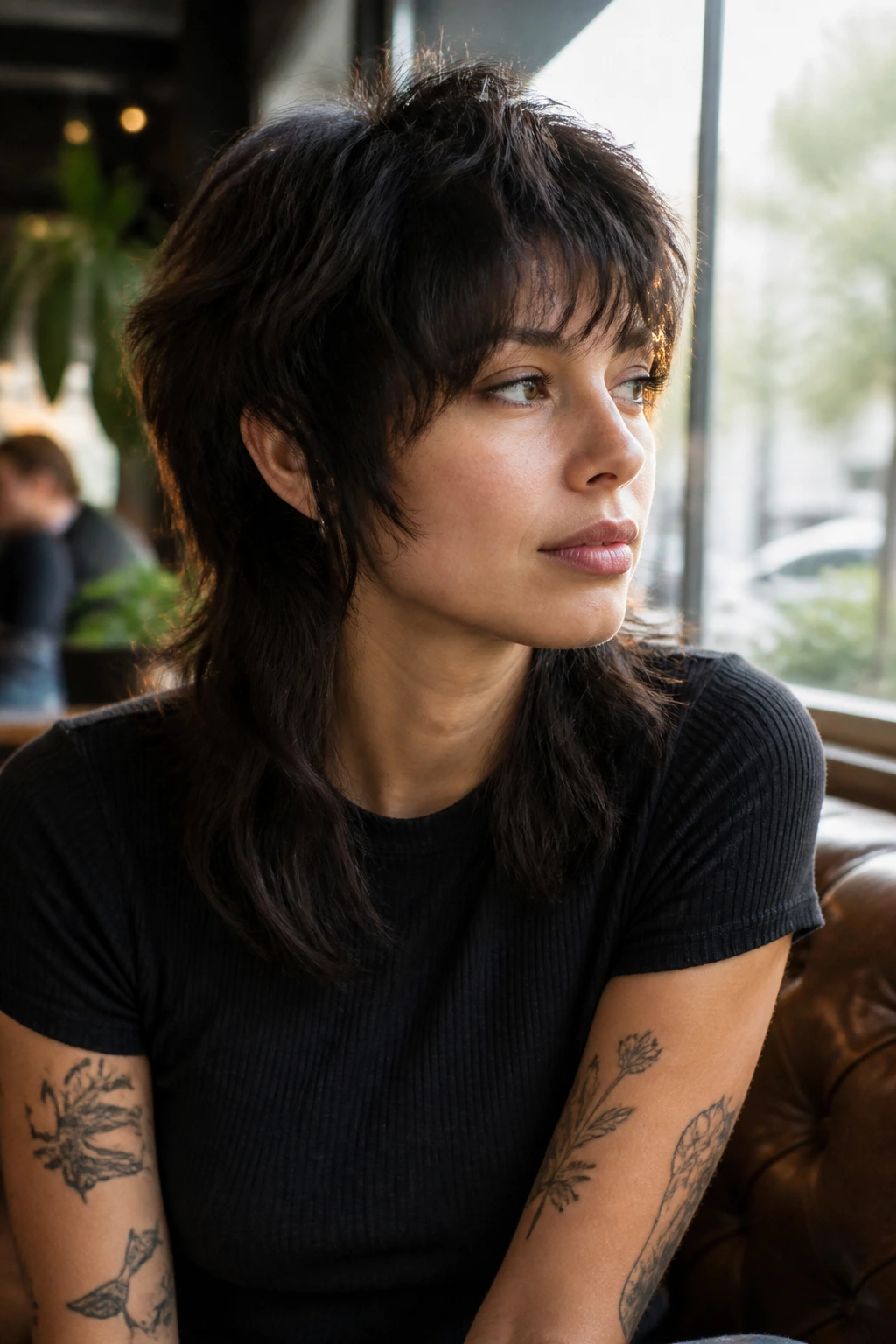
The wolf cut is the shag’s louder cousin. Shorter up top, longer in back, and a little wild around the edges. People either love that or they don’t, which is fine. It’s a haircut with opinions.
What makes it different is the contrast between the crown and the lengths. The top can be airy and piecey while the bottom hangs longer, giving the shape a rough, undone swing. It’s especially good on hair with some natural texture because the layers can separate without needing much help.
If you want this cut to look good grown out, the layers need to be placed on purpose. Random chopping is not the same thing. Ask for movement around the crown, softness near the cheeks, and a longer back that keeps the shape from looking too abrupt. That balance is what keeps it wearable.
11. Curtain Bangs With Layers
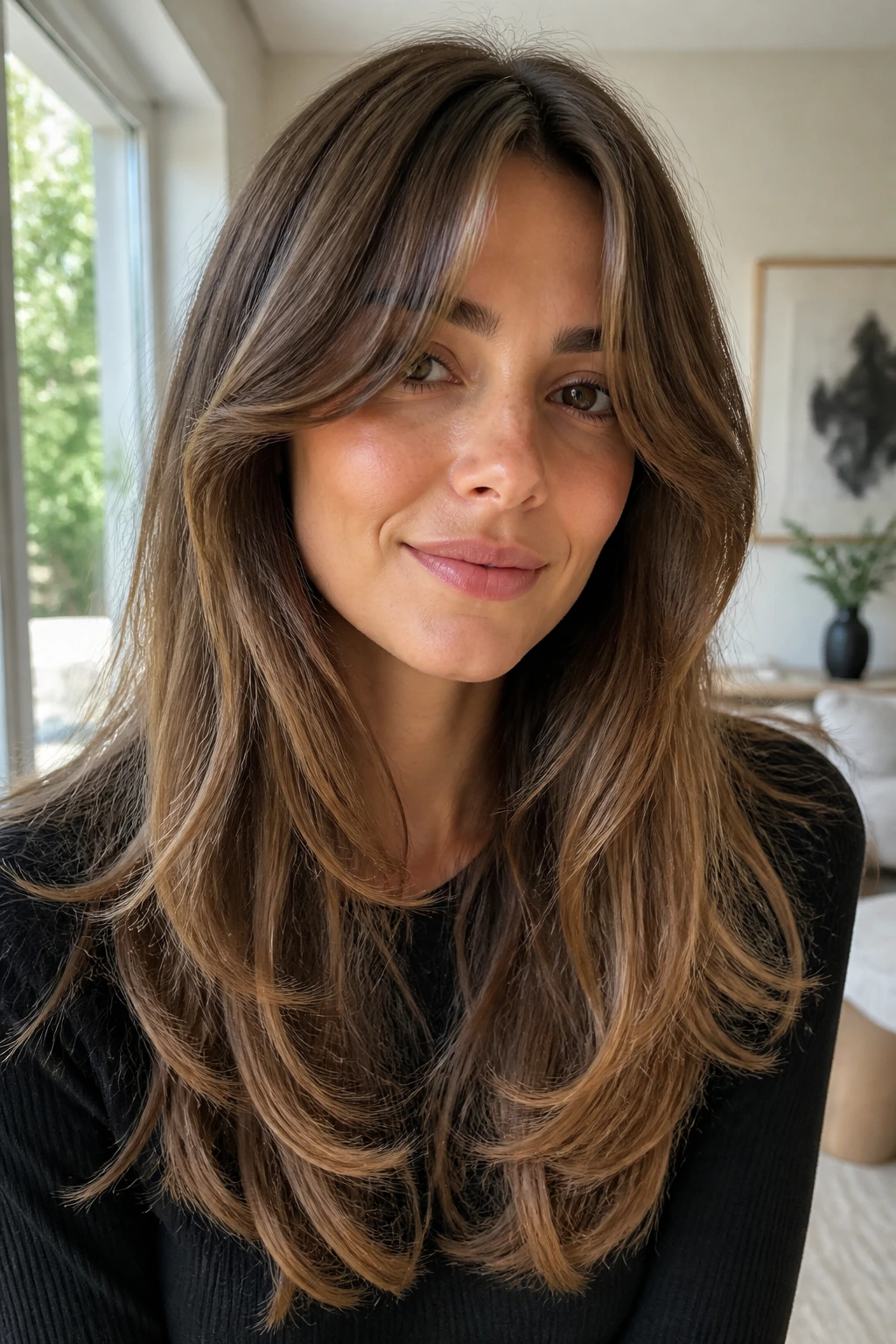
Curtain bangs are still one of the easiest ways to change your face without changing your whole haircut. They split down the center, curve away from the eyes, and blend into longer layers so they never feel like a hard fringe wall.
Why do people keep asking for them? Because they play nicely with almost everything. Long hair, lobs, shags, even a blunt bob with enough length to support them. They soften the forehead area, make a center part feel less plain, and grow out in a way that usually stays flattering for a while.
How to Ask for It
Ask for the shortest point to hit around the bridge of the nose or cheekbone, then have the sides slide into the rest of the cut. That’s the part people skip, and then the bangs sit awkwardly instead of blending.
They need a quick round-brush style or a bend with a flat iron. Nothing elaborate.
12. Face-Framing Layers
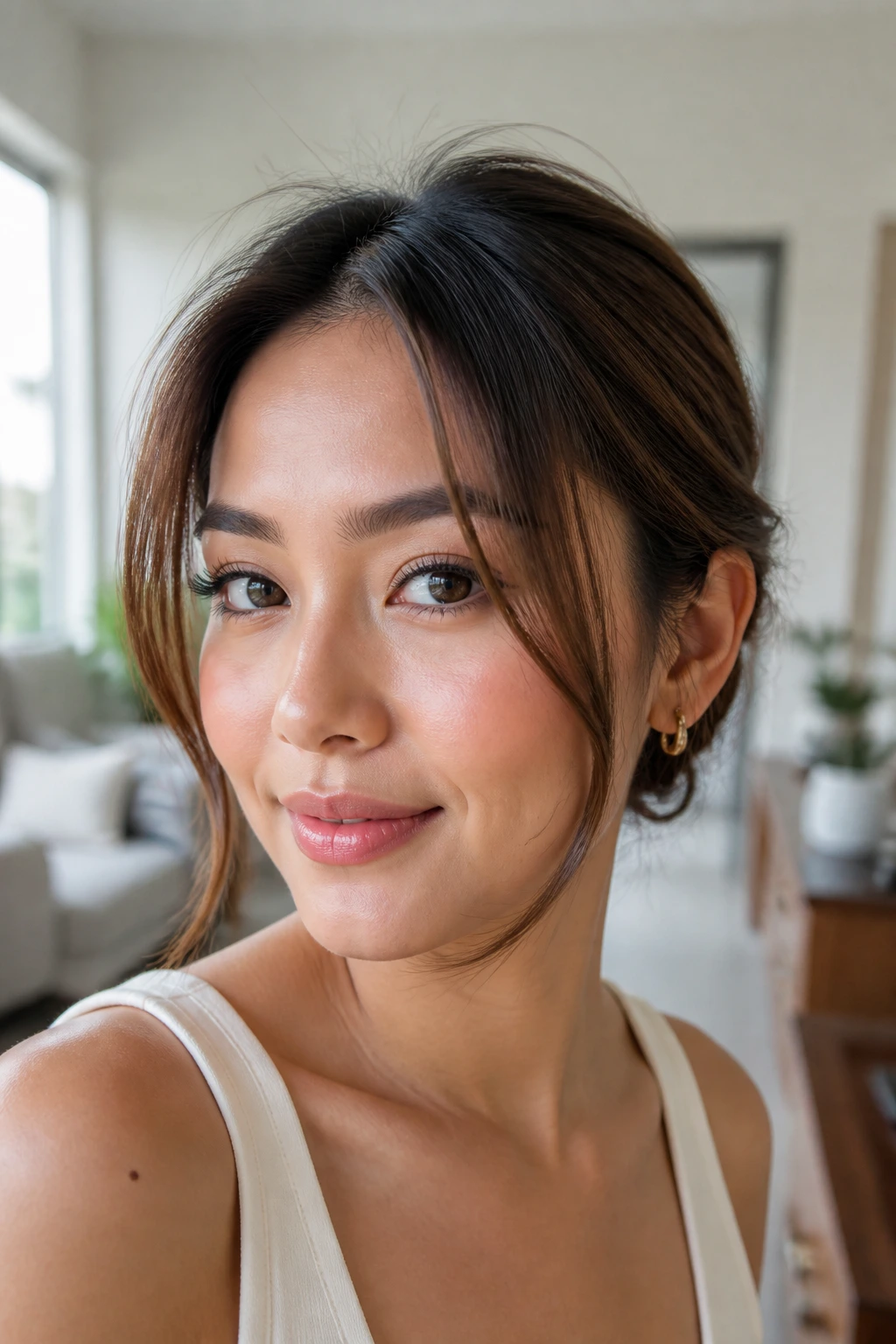
Face-framing layers are not dramatic, and that is exactly why they work. They sit lower than curtain bangs, open up the face, and keep the length intact. If you want shape without losing inches, this is the move.
Unlike a full fringe, these layers start around the chin, cheekbone, or collarbone and fall into the rest of the hair. The effect is softer than a blunt cut and less committed than bangs. It’s the kind of change you notice when you tuck your hair behind your ears or pull it into a loose ponytail.
Best on medium to long hair, and especially nice on thick hair that needs a little release around the front. Keep the layers long enough that they still tuck back. Too short, and they turn into annoying little face pieces that never cooperate. Nobody needs that.
13. C-Shaped Layers
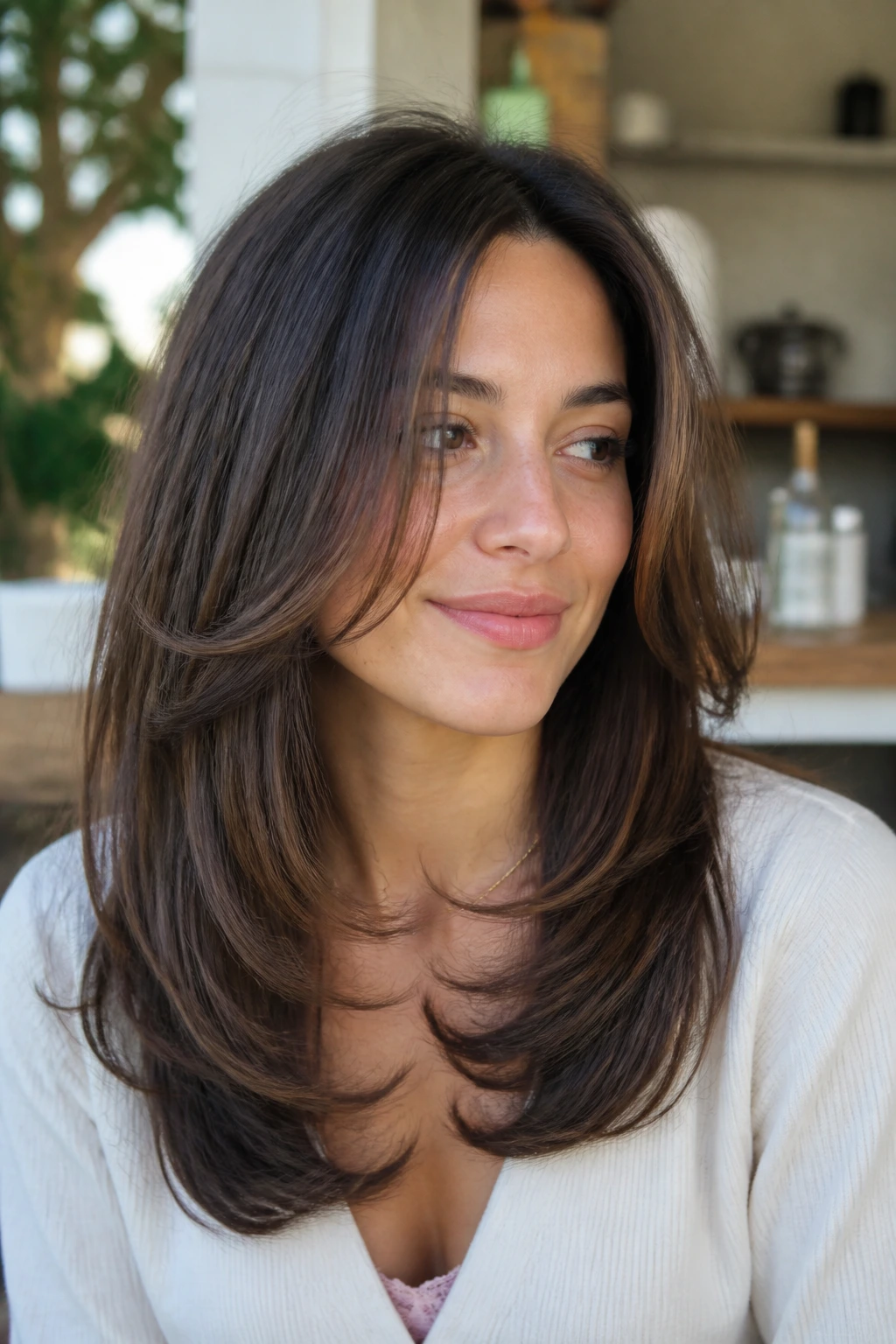
A C-shaped cut curves inward around the face and then sweeps back out at the ends, which is why it feels so good in a blowout. The silhouette has softness, but it still looks intentional.
This is one of those styles that flatters without making a big fuss. It can give medium and long hair a polished shape, especially if your ends tend to kick out or hang limply. The curve helps the hair sit near the collarbone and cheekbones instead of dropping straight down.
Key Details
- Best when the shortest pieces begin around the chin or cheekbone.
- Works well with round-brush styling.
- Needs enough length to show the curve.
- Can look flat if over-layered near the ends.
If you like a smooth, rounded finish rather than sharp angles, this cut is a strong pick.
14. Rounded Layered Cut
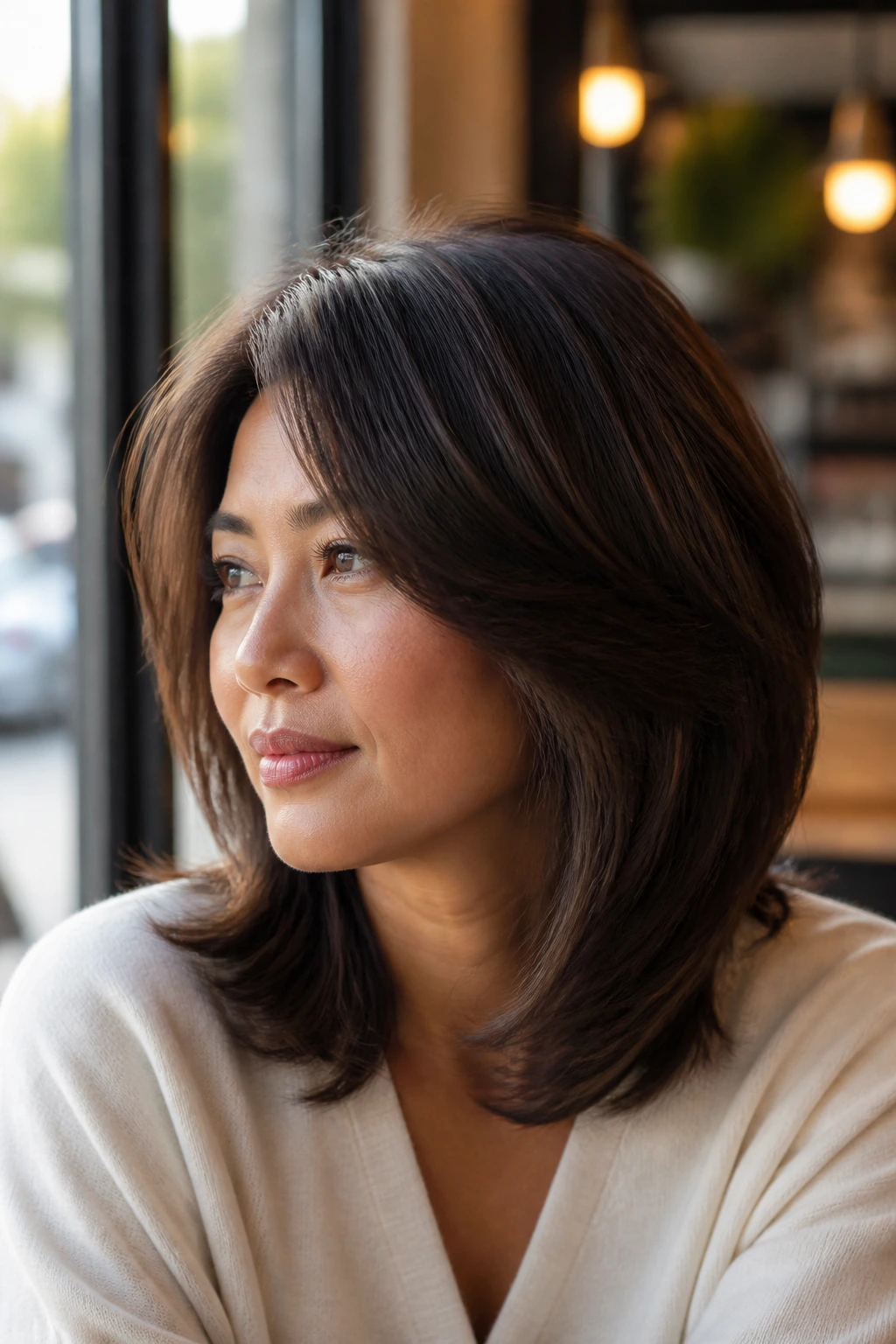
A rounded layered cut has one job: make the hair fall in a softer dome shape instead of hanging flat or triangle-shaped. It builds fullness through the sides and back while keeping the outline smooth.
This is a favorite for people with medium-density hair that needs a little structure. The crown gets some lift, the ends stay soft, and the shape looks neat even on days when the styling is half-hearted. That matters. A lot.
The cut is especially kind to hair that puffs out at the bottom when left one length. Rounded layering removes that shelf effect. It also sits well with a side part, which can make the face look a touch longer and less boxy. If you’ve ever stared at your reflection and thought, “Why does this feel too square?”, this shape is worth a serious look.
15. Soft Shoulder-Length Layers
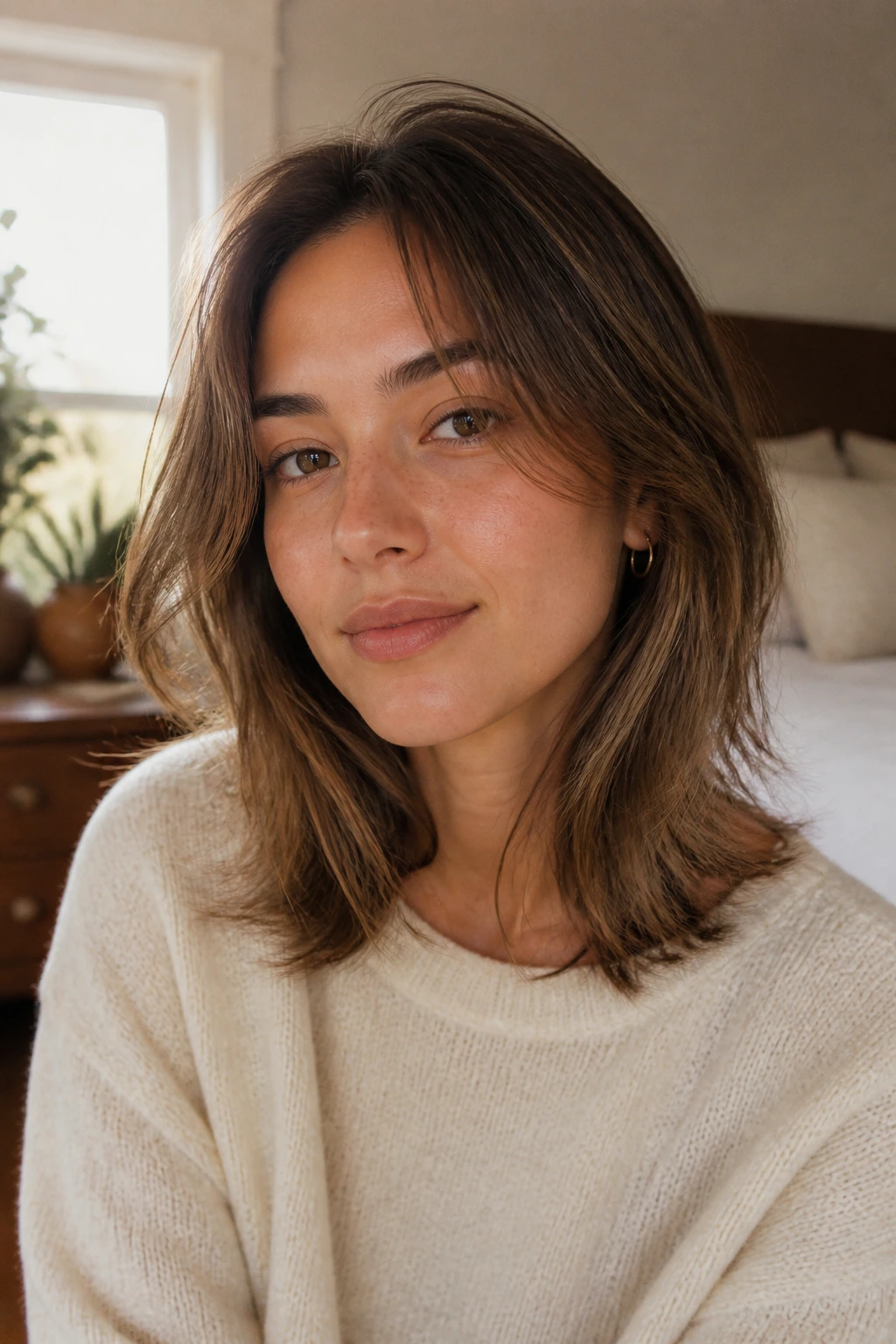
Shoulder-length hair that swishes instead of flipping hard at the ends has a charm of its own. Soft layers give that movement without making the cut look broken up or choppy.
This length is practical, and I do not say that as a boring compliment. It stays out of your face better than longer hair, works in a clip, and still gives you enough material to curl, braid, or pin up. The layers should be light enough that the perimeter still feels full. Too much cutting here and the whole style can start to look thin at the shoulders, which is not flattering on anyone.
A few loose bends through the mid-lengths are enough. No need to over-style it. In some cases, a simple blow-dry with a paddle brush makes it look cleaner than a curling iron ever will.
16. Pixie Cut
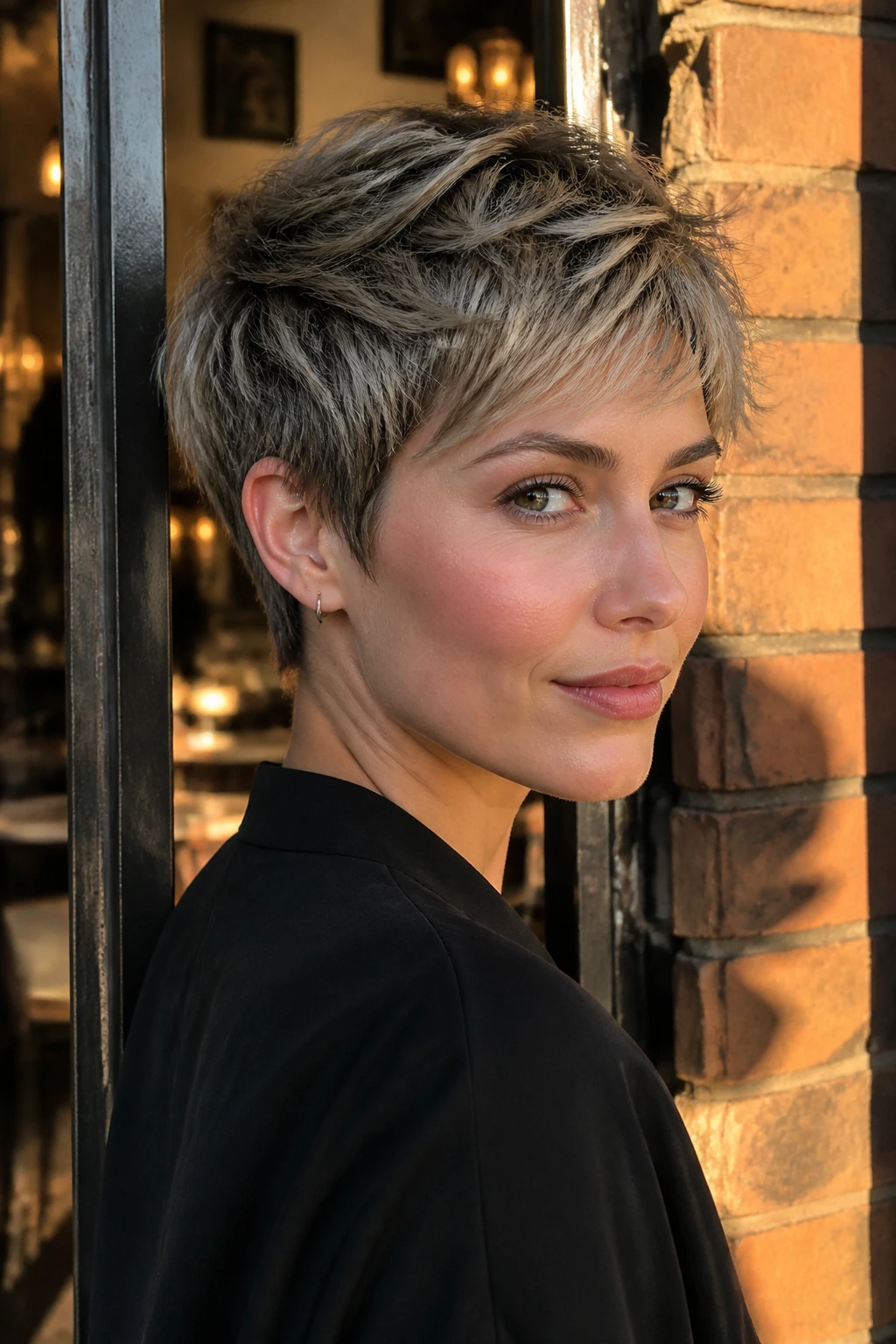
A pixie cut can be soft, sharp, messy, polished, or all four in one week. That’s why it lasts. The short length puts the face front and center, which is either freeing or terrifying, depending on the person.
The best pixies usually keep a little length on top and around the fringe so the cut can move. If everything is clipped down too close, the shape can feel harsh. With a longer top, you can push it forward, sweep it to the side, or rough it up with a small dab of styling paste.
How to Keep It From Feeling Severe
Ask for some softness around the ears and neckline. That little detail keeps the haircut from looking too hard. A side-swept fringe can also make the transition easier if you are nervous about going short.
Pixies need trims more often than bobs. There is no pretending otherwise.
17. Bixie Cut
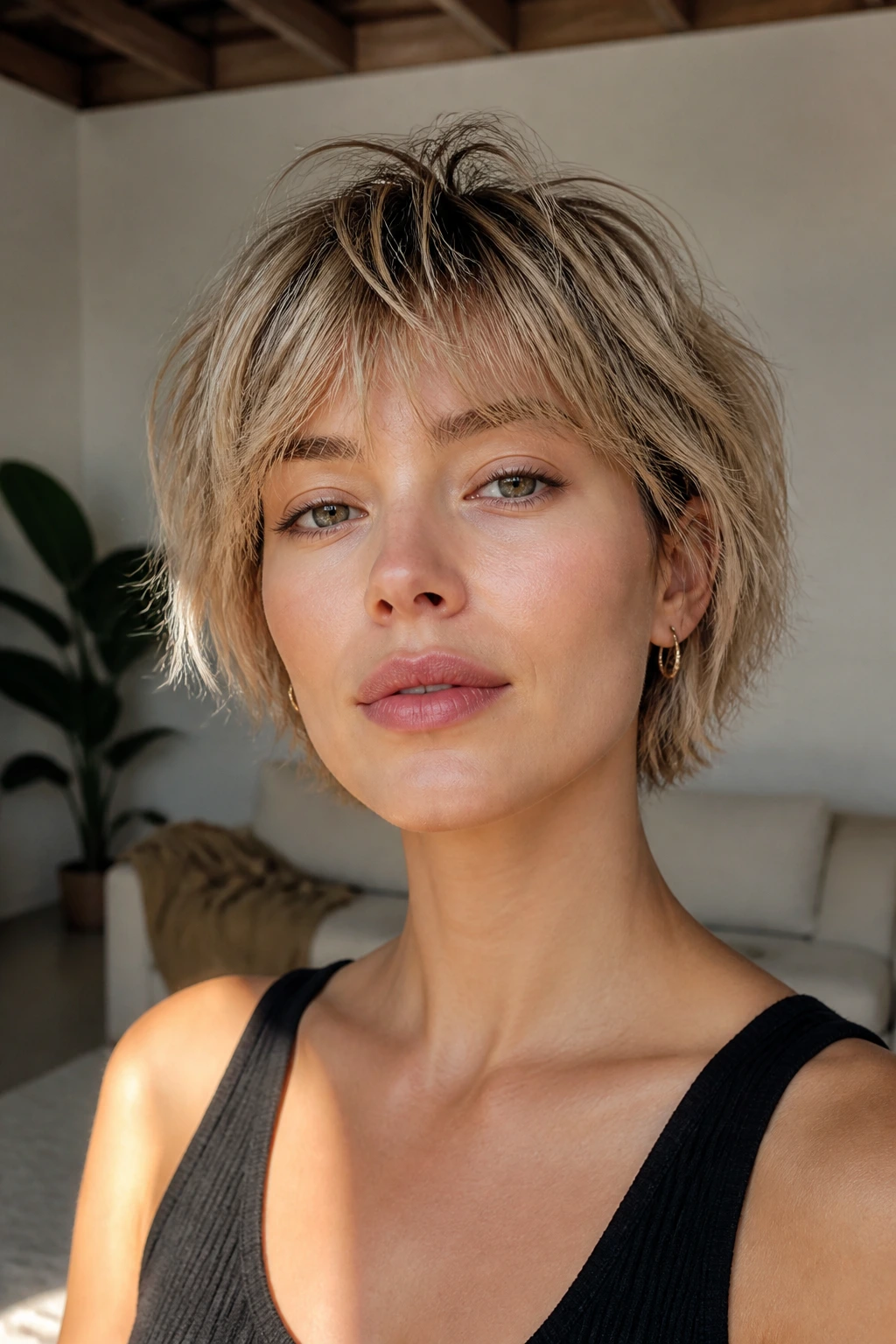
The bixie sits between a bob and a pixie, which sounds like a compromise but often reads as the cool part of the whole short-hair family. It has more length than a classic pixie and more edge than a bob.
This cut works because it keeps a little swing around the jaw while still feeling short and light. The crown can have texture, the nape can stay neat, and the front can carry a soft fringe or longer side pieces. That mix gives the haircut movement from every angle.
What Makes It Different
- Short enough to feel breezy.
- Long enough to tuck behind the ear.
- Good for fine hair that needs lift.
- Better with texture than with a stiff finish.
If you like short hair but don’t want the maintenance of a full pixie, the bixie is an easy place to land.
18. Mixie Cut
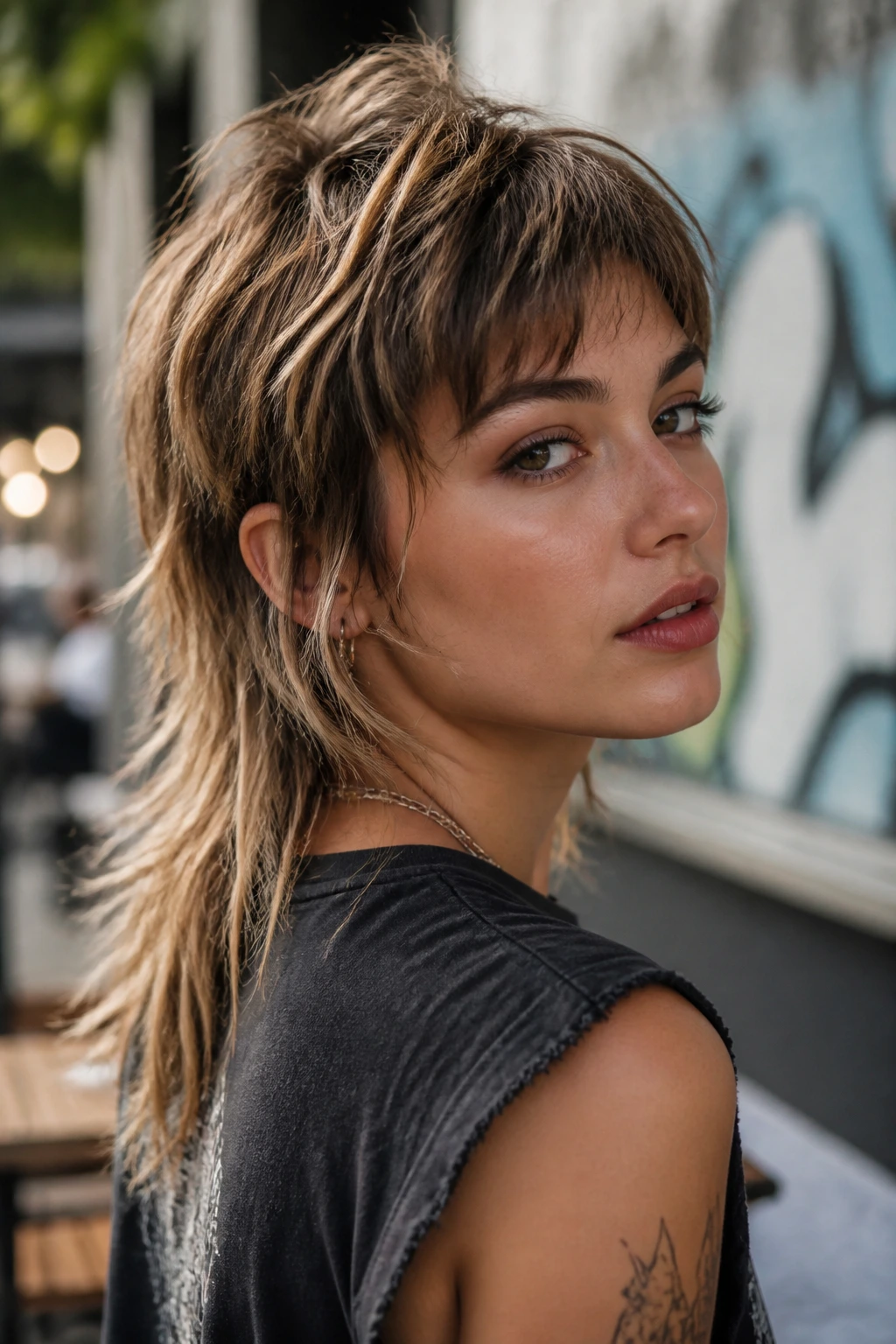
The mixie takes the bixie and adds more attitude in the back. There’s often a bit of mullet energy here, but softened so it feels wearable rather than costume-y. Short on top, a little longer at the nape, and piecey around the face. That’s the formula.
It suits people who want a cut that looks styled even when it’s not. The mixie has enough structure to feel intentional, but enough roughness to avoid looking too neat. On straight hair, it can read punkish. On wavy hair, it gets a cool, lived-in shape without trying too hard.
This is not a shy haircut. But it is a smart one if you want a short style with a little extra edge and a grow-out that doesn’t go flat right away.
19. Graduated Bob
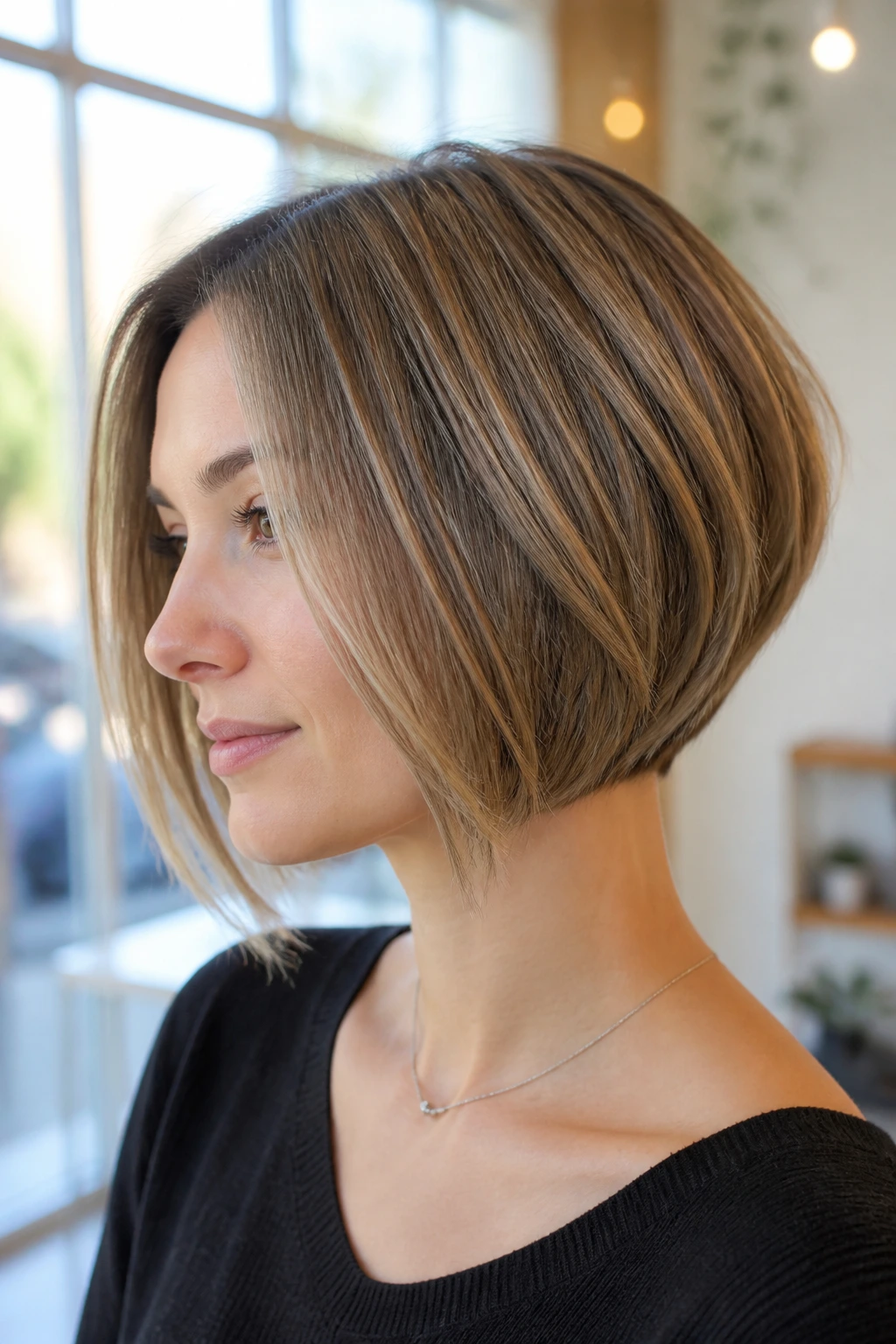
A graduated bob is the one with the stacked back — shorter at the nape, longer toward the front, and shaped to build lift where the head curves. It is clean, structured, and quietly dramatic.
The angle gives the hair a neat profile. From the side, you get that nice slope from back to front. From the front, the cut can still feel soft if the front pieces are left long enough to graze the jaw or neck. It’s a good fix for hair that falls flat at the back or looks too heavy in a one-length bob.
Maintenance matters here. The shape depends on precision, and precision fades when the cut grows out. That does not mean it is high drama. It just means the silhouette works best when it’s kept in shape.
20. Side-Swept Bob

A side-swept bob feels a little more relaxed than a center-parted one. The deep side part gives the cut movement right away, and the longer front pieces create a soft line across the cheek and jaw.
This is a useful choice if you want a bob that flatters the face without going too severe. It can make the whole haircut look fuller on one side and easier to tuck behind the ear on the other. The asymmetry is gentle, not flashy.
The best version has enough weight to swing but not so much that it collapses. A little root lift at the front helps, and a quick round-brush bend through the ends keeps the shape from feeling stiff. Honestly, that small bend does more than people expect. One pass. Two if your hair is stubborn.
21. Curly Shag
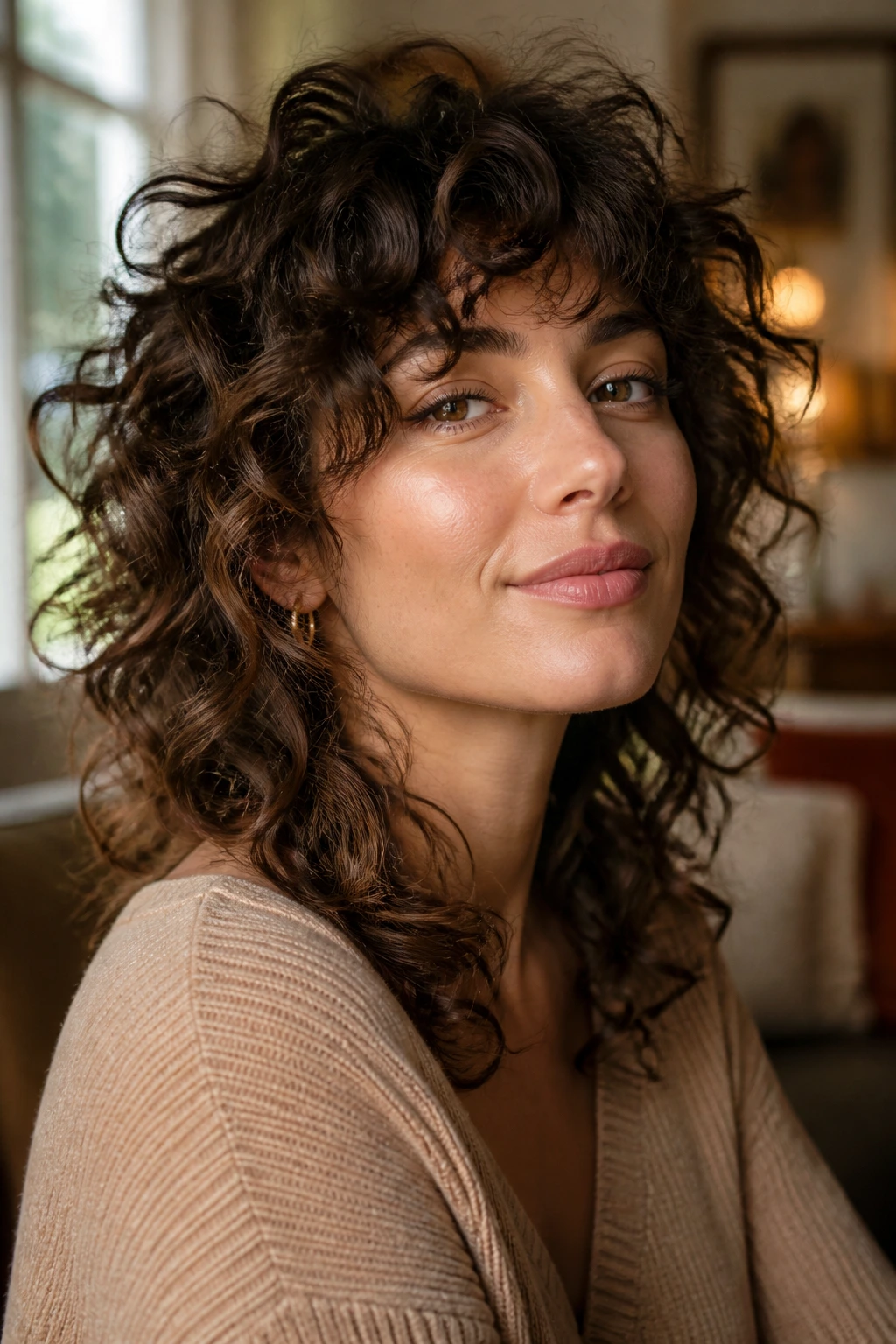
Curly hair and the shag are natural friends when the cut is done with care. The layers help curls stack instead of forming a heavy triangle, and the face-framing pieces keep the shape lively.
The big mistake here is cutting curls the same way you cut straight hair. That’s how you lose spring and end up with strange shelves. A proper curly shag is often cut dry or with the curl pattern in mind, so each layer lands where the curl actually sits. Small difference. Huge payoff.
It works especially well if your curls shrink a lot once dry. The best shag keeps enough length that the cut still reads after the curl springs up. Too short at the crown and it can become a halo you didn’t ask for.
22. Curly Bob

A curly bob can look soft and full in a way straight hair can’t quite fake. The length usually hits the jaw or slightly below it, with the shape tailored to the curl pattern rather than forced into a straight line.
What makes this cut useful is how it respects shrinkage. A stylist who understands curls will cut the bob so it lands evenly when dry, not when wet. That matters more than people realize. Wet hair lies.
Quick Notes
- Ask for the cut to be shaped dry or curl-by-curl if possible.
- Keep the interior light, but not stripped.
- Let the curls rest where they naturally want to sit.
- Trim regularly so the shape does not balloon out.
A curly bob is one of those haircuts for women that looks playful without losing polish. It’s tidy, but never stiff.
23. Tapered Afro
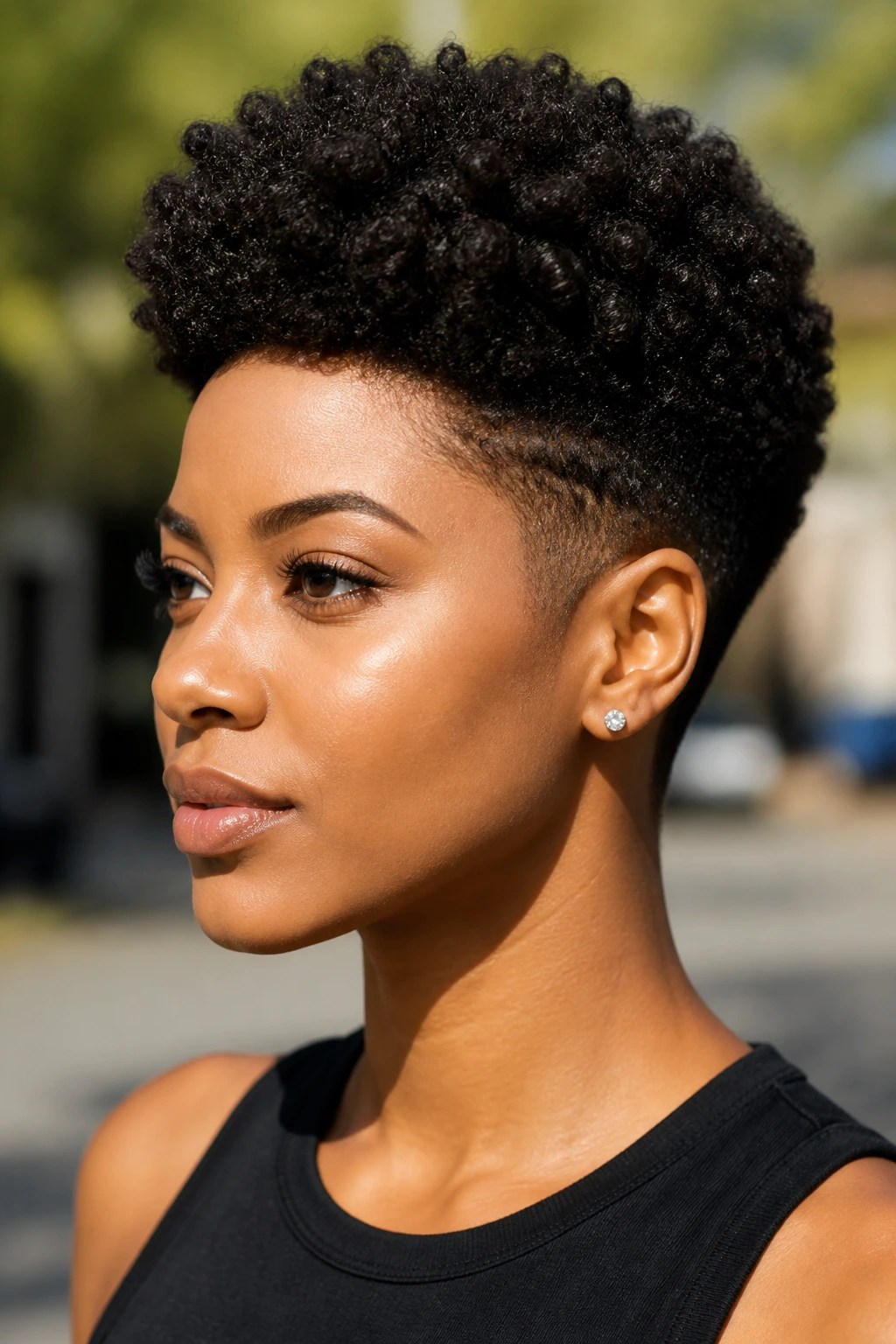
A tapered afro is all about shape. The sides and back are trimmed closer to the head while the top keeps more height and fullness, which creates a clean outline around the face.
This cut can look sharp, elegant, and low-fuss when the shape is maintained properly. It also works well because it respects natural texture instead of flattening it. Moisture matters here, as does line maintenance around the neckline and temples. A little edge-up can change the whole look.
The best tapered afros have a clear silhouette from every angle. They do not need to be huge to make a statement. In fact, the shape is often stronger when it is controlled. If your curls or coils have a lot of volume, the taper keeps the sides neat and lets the top breathe. That balance is the real win.
24. Modern Mullet
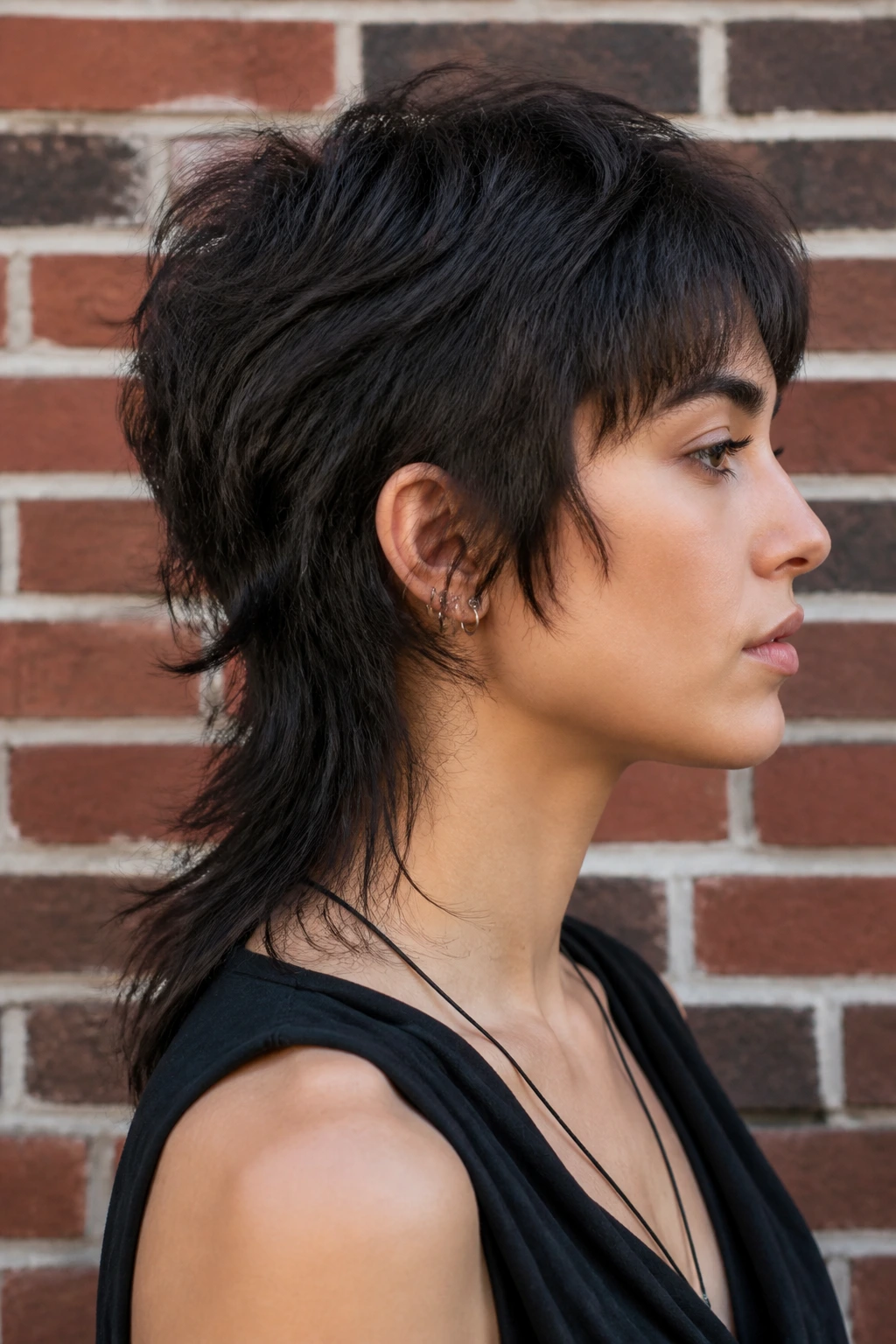
The modern mullet has stopped pretending to be tame, which is part of the appeal. It keeps length in the back, shorter layers up top, and soft framing around the face so the whole thing feels more wearable than the older version.
Why are people drawn to it? Because it brings shape and movement without needing perfect styling. The crown can be textured, the sides can stay a little wispy, and the back can carry enough length to make the cut feel intentional. On wavy hair, it gets even better.
This is not the haircut for someone who wants everything tucked neatly out of the way. It is for someone who likes a little edge and does not mind hair with personality. A good modern mullet looks like the cut made a choice. That’s what makes it work.
25. Feathered Midi Cut
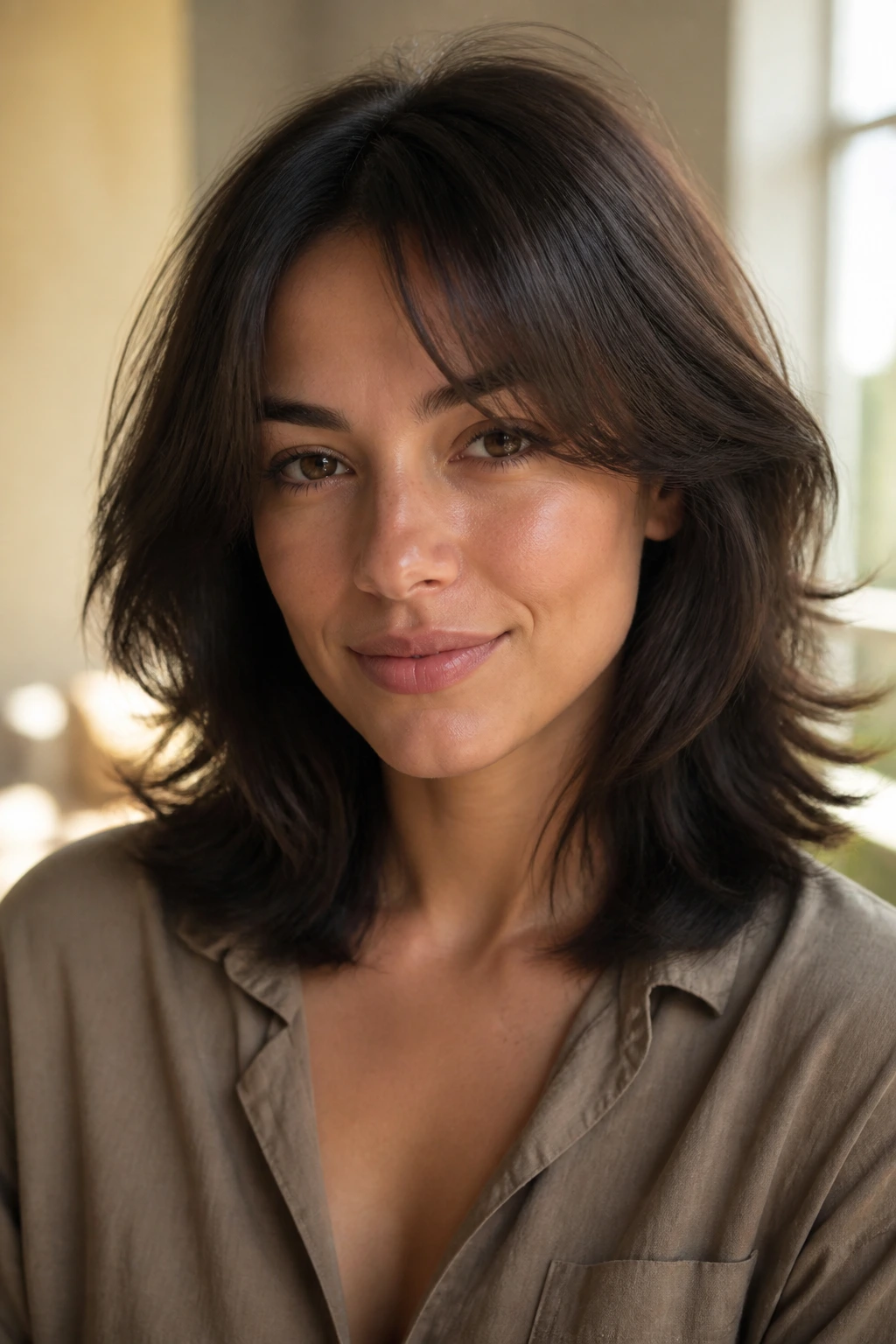
A feathered midi cut sits in that sweet middle ground between long and shoulder-length, with soft feathering around the face and ends that move instead of hanging like one heavy curtain. It’s one of the easiest ways to get shape without committing to a big chop.
The feathering matters more than people think. Done right, it keeps the hair light around the cheeks and collarbone while preserving enough length for buns, clips, and low ponytails. It’s a smart pick for medium to thick hair that tends to feel bulky when it’s all one length.
This cut also ages well as it grows out. That’s a word people use loosely, but here I mean the shape stays useful for months, not days. The ends still flick, the layers still soften the face, and you are not trapped in a weird in-between stage. Good hair should not demand a whole life schedule.
