



A good haircut does not need to shout.
It just needs to sit right when you air-dry it, tuck it behind one ear, and walk out the door with half the drama of a full styling routine. That is why the chic haircut ideas women are loving tend to have one thing in common: they make the hair look deliberate even when you have done very little to it.
Shape matters more than hype. A blunt line can make fine hair look fuller. A few well-placed layers can take the weight off thick hair without making it frizzy. A fringe changes the whole mood of a cut faster than almost anything else. The salon photo is only half the story; the request you make matters just as much.
If you have ever left a salon with a cut that looked great for three days and then turned into a flat, awkward helmet, you already know the difference. The right haircut should work with your texture, your part, and your usual morning routine. That is where the good stuff lives.
1. The Jawline Blunt Bob
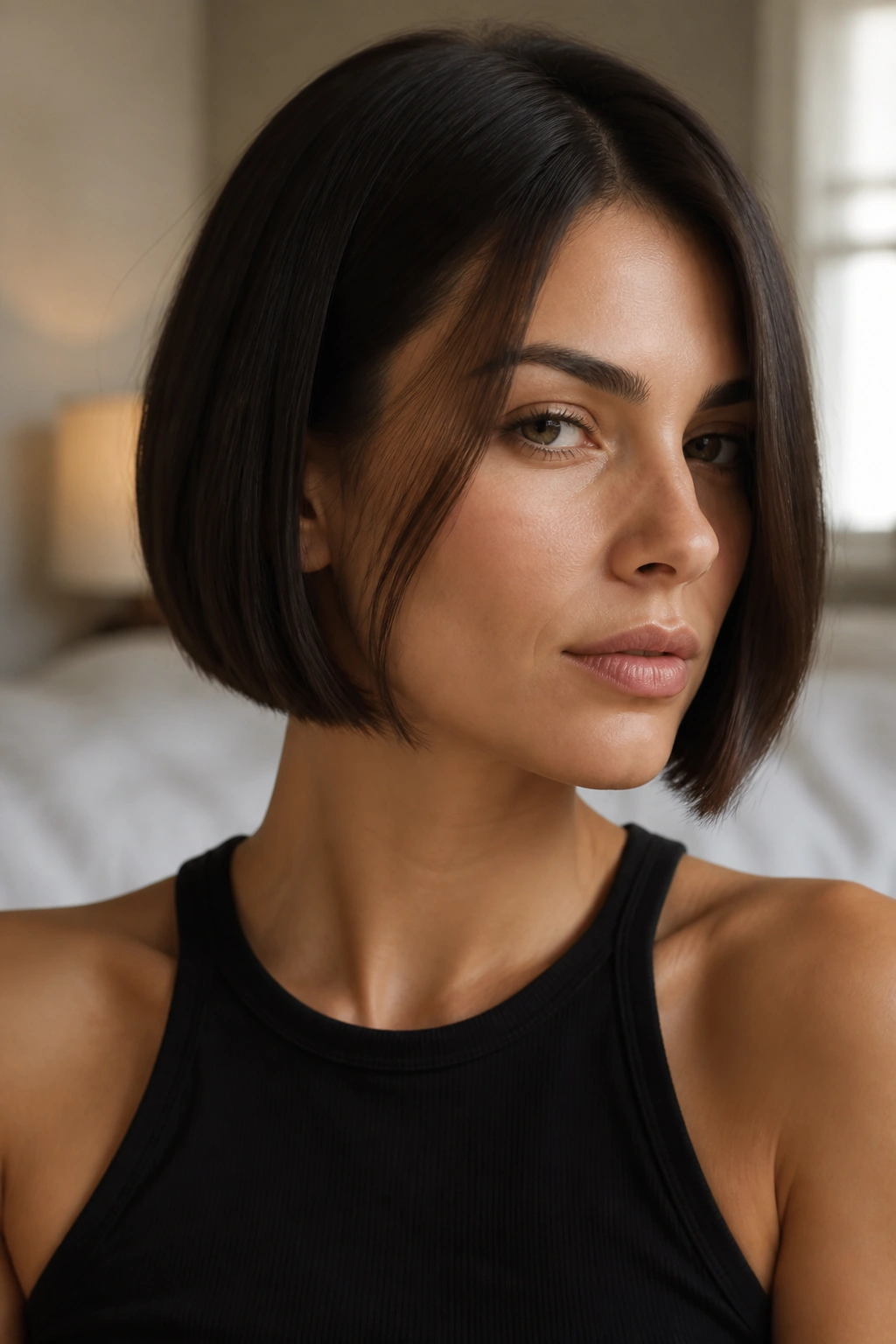
A jawline blunt bob is one of those cuts that looks stricter on paper than it feels in real life. The clean edge gives the hair a dense, full look, which is why I keep seeing it work so well on fine or medium hair that needs more presence.
Why It Works
The blunt edge lands right around the jaw, so the eye goes straight to the cheekbones and mouth. That little shift changes the whole face shape.
It is also a smart choice if your hair tends to disappear at the ends. A one-length line makes the perimeter look thicker, and that matters more than people admit. The cut looks sharp with a flat brush, but it can also be worn a little tousled if you want it softer.
- Best for hair that needs weight at the ends.
- Looks crisp with a side part or a center part.
- Grows out cleanly if your stylist keeps the line even.
- Needs trims about every 6 to 8 weeks if you want to keep that sharp edge.
Tip: Ask for the ends to be cut blunt, not razor-thinned. That tiny difference keeps the bob looking expensive instead of wispy.
2. The Soft French Bob
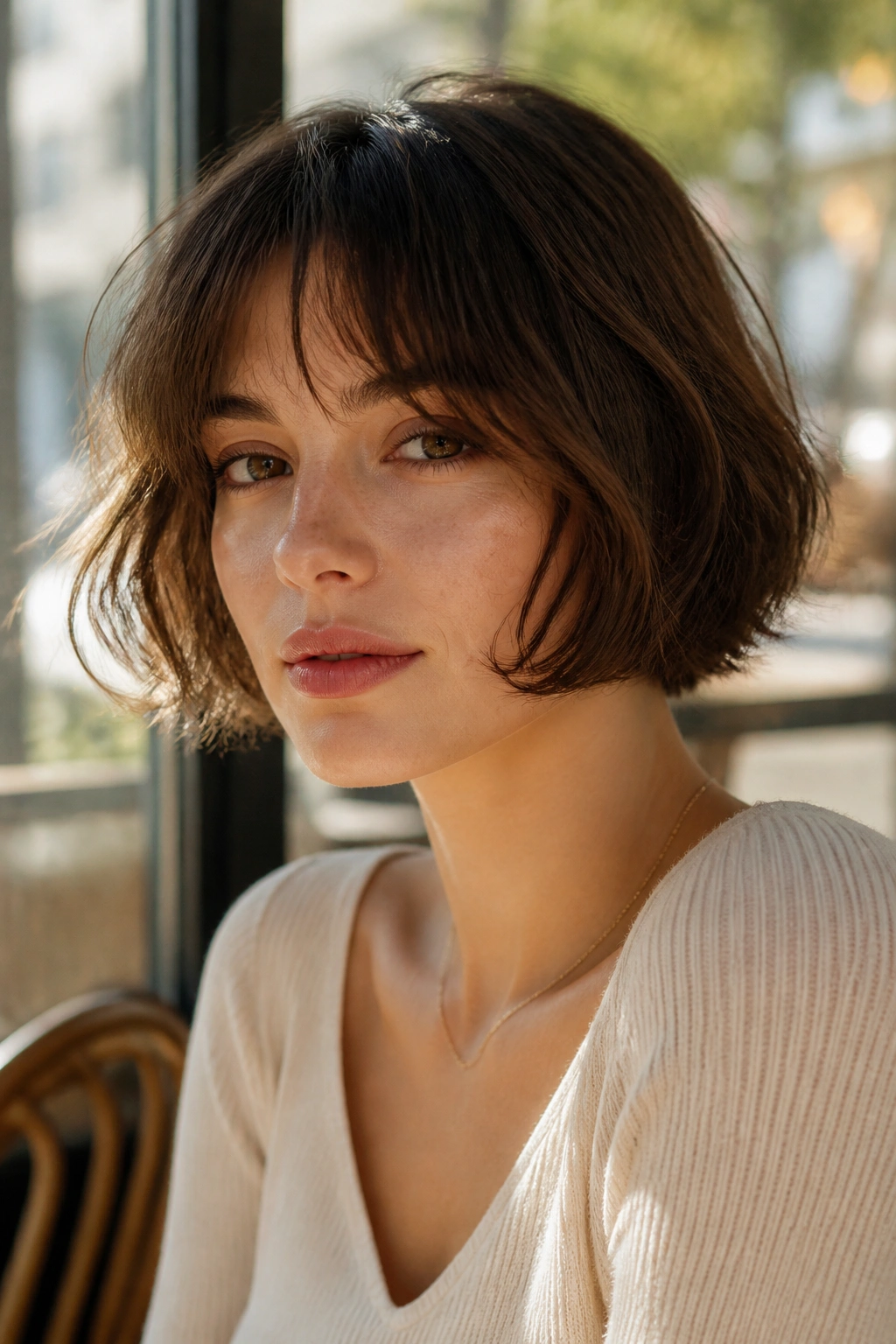
If you want a haircut that makes a plain T-shirt look intentional, the soft French bob does that job without much fuss. It sits a little shorter than a classic bob, usually near the cheekbone or jaw, and the fringe is soft enough to move rather than sit like a hard line.
The charm here is in the looseness. This is not a stiff, shellacked shape. It looks better when a few pieces fall forward and the fringe breaks slightly across the forehead. That is why it works so well with natural wave and a bit of bend from sleeping on it.
A French bob can be tricky if you hate styling your bangs. I’m not going to pretend otherwise. The fringe needs a quick round-brush pass or a finger-dry to keep it from separating in odd places. But if you like a cut that feels a little arty and not too polished, it has a lot of character for such a short shape.
3. The Collarbone Lob

Why does the collarbone lob keep winning? Because it is the rare cut that works with a ponytail and still looks finished when you wear it down. That’s a big deal if you want something practical without sliding into boring.
How to Wear It
The length hits right at the collarbone, so the hair has enough weight to lie nicely, but not so much that it drags the face down. It gives you room to tuck one side back, curl the ends, or let the shape stay straight and neat. A lob at this length also grows out better than a shorter bob, which is a relief if you do not want to live in the salon chair.
- Ask for the front pieces to graze the collarbone.
- Keep the ends blunt if your hair is fine.
- Add soft internal layers only if your hair is thick and bulky.
- Wear it with a center part for a clean look, or a deep side part for more lift.
The best part is the flexibility. It never feels too committed.
4. Curtain Bangs With Long Layers
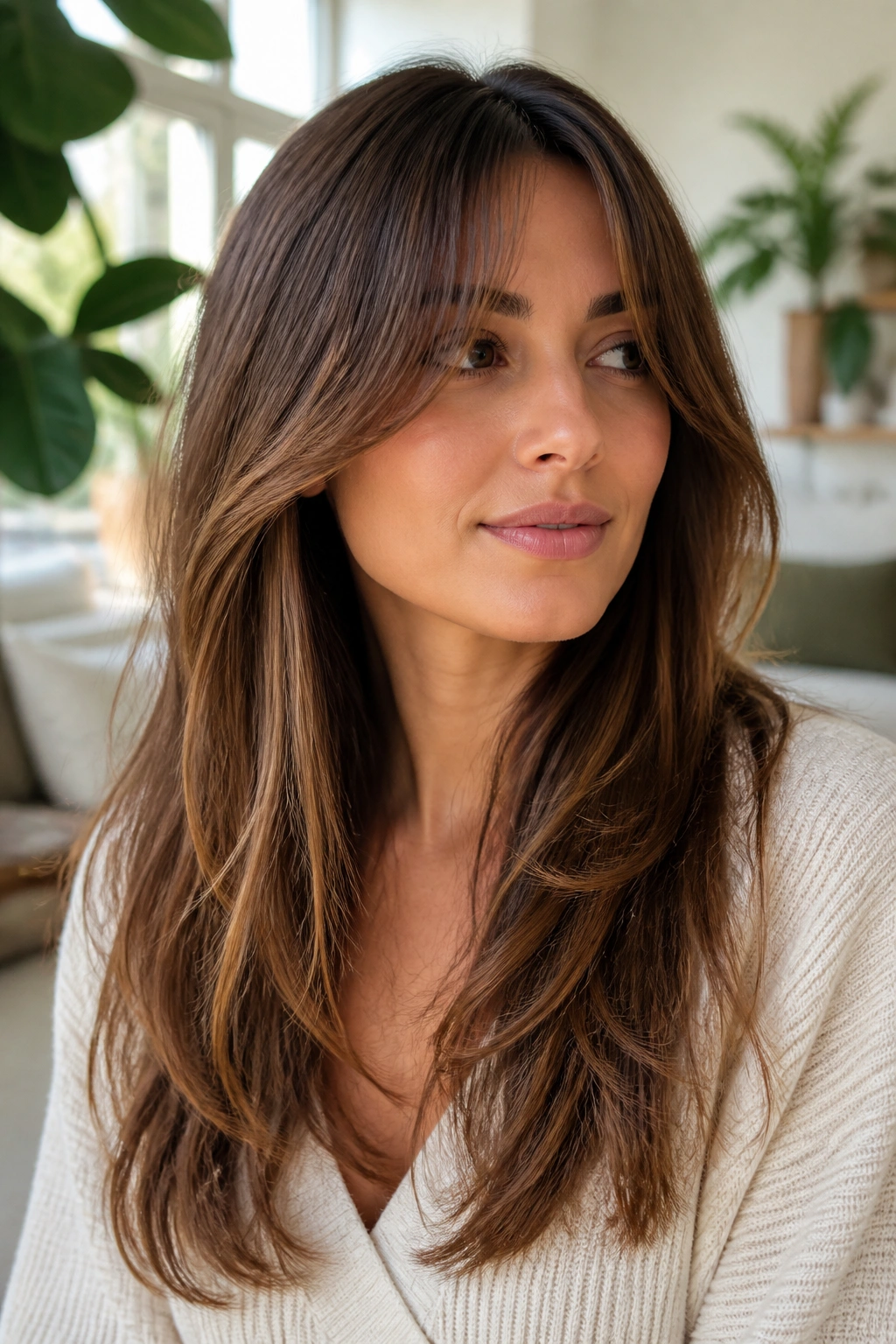
A woman I know once asked for “something softer” and walked out with curtain bangs and long layers. That was the right answer. The cut opened her face, gave her hair swing, and made the whole thing look lighter without losing length.
Curtain bangs work because they break up the front of the haircut in a gentle way. They part in the middle, sweep out toward the cheekbones, and blend into the rest of the layers instead of stopping abruptly. If you wear your hair up half the time, this cut still gives you shape around the face.
Where the Shortest Pieces Should Start
The shortest part of the bang usually lands somewhere between the eyebrow and cheekbone, depending on how much face opening you want. Shorter pieces bring more lift; longer ones feel softer and easier to grow out.
A few details matter here:
- Keep the center of the fringe longer than the sides.
- Ask for the side pieces to blend into the front layers.
- Use a round brush or a large Velcro roller if you want the classic sweep.
- Let the bangs air-dry a bit before styling, so they do not split awkwardly.
This cut looks especially good when the rest of the hair has movement, not just length.
5. The Italian Bob

The Italian bob has a swing to it. That is the first thing I notice every time. It sits somewhere between the jaw and the top of the shoulders, and the ends usually curve a little so the shape feels full, not chopped.
This is the cut for someone who wants polished hair without a sharp, severe line. The Italian bob tends to look fuller than a very airy bob because it keeps a bit more weight through the middle. On thick hair, that can be a blessing. On finer hair, it can look plush and glossy if the ends are kept clean.
I like this one with a side part and a bend through the ends. It feels rich in a low-key way, which sounds vague until you see it on real hair. The key is restraint. Too many layers and it loses that neat, rounded shape. Too much texture and it starts looking like an ordinary bob that lost focus.
If you want a bob that holds up in both casual and dressy settings, this is one of the smartest picks.
6. The Bixie Cut

A bixie is what happens when a bob and a pixie meet halfway and decide to get along. It keeps more length than a classic pixie, but it is shorter and lighter than a bob, which gives it a playful shape without pushing into overly edgy territory.
What Makes It Different
Unlike a full pixie, the bixie leaves a little softness around the ears and nape. That extra length matters. It frames the face instead of exposing everything at once, and it gives the hair a chance to move when you turn your head. The crown often has a bit of lift, too, so the cut feels airy rather than flat.
This is a good cut if you want short hair but do not want to commit to a hard crop. It also works well on hair with a natural wave, since the texture helps define the shape. Straight hair can wear it too, but it needs a touch of styling cream or mousse to keep the top from falling too close to the head.
The bixie is not the most hands-off haircut in the group. It needs trims and a little shape. Still, it has that cool, easy look that makes people think you did more than you did.
7. The Long-Top Pixie
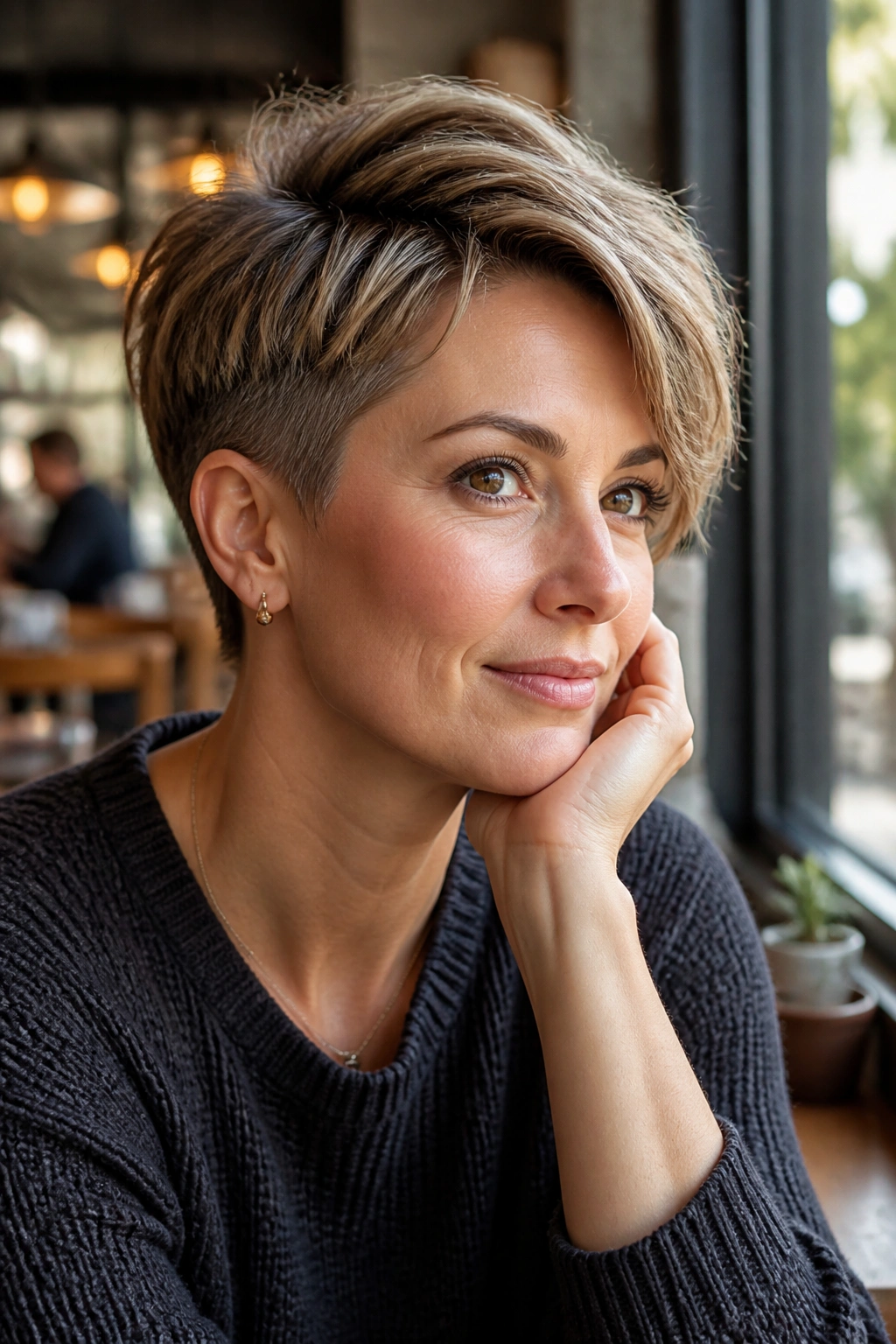
Does a pixie have to feel severe? Not if you keep the top longer. A long-top pixie gives you the clean sides of a short cut but leaves enough length on top to play with shape, direction, and texture.
How to Ask for It
The simplest request is also the best one: short around the ears and nape, longer through the crown and fringe. A little length on top lets you sweep the hair forward, spike it up, or push it to one side depending on your mood.
- Ask for 2 to 3 inches on top if you want styling room.
- Keep the sides tapered, not buzzed, if you want softness.
- Leave a touch of fringe near the forehead to avoid a boxy look.
- Use a pea-sized amount of paste or cream, not a heavy wax.
This cut can look incredible on strong features. It can also expose cowlicks fast, so a good stylist will pay attention to your growth pattern before taking the scissors too far. Short hair is honest like that. No hiding.
8. The Shoulder-Length Shag
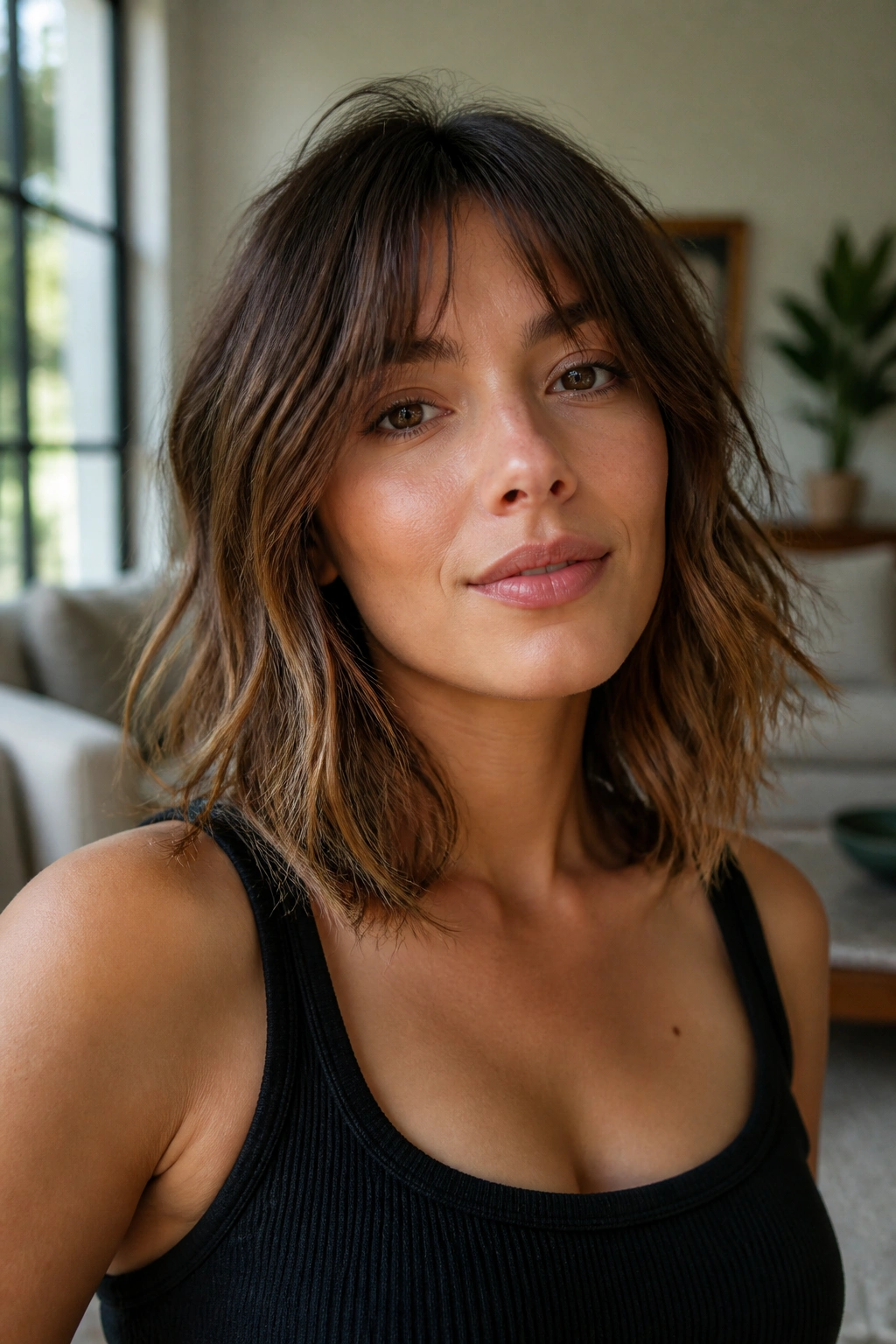
The shoulder-length shag has a kind of lived-in energy that works better than a lot of polished cuts when your hair has natural texture. The layers are choppy enough to create movement, but not so broken up that the shape falls apart by noon.
What I like most about this cut is how forgiving it is. Air-dry it, diffuse it, twist it into clips, sleep on it badly — it still tends to look like it has a point of view. That does not happen by accident. The layers need to be cut with the texture in mind, especially around the crown and the face.
A shag at this length can be a gift for heavy hair. It takes some bulk out and gives the ends a little bounce. On straight hair, it needs a bit more help from a blow-dryer or salt-free texturizing spray, because otherwise the layers can flatten into each other.
The trick is to keep the shape soft. A shag that is too chopped up loses the easy, wearable feel that makes this cut so good.
9. The Butterfly Cut

The butterfly cut is the best option for someone who wants long hair that actually moves. The shortest layers sit around the face and upper chest, while the longer layers stay down through the back. That difference creates lift without sacrificing length.
Where the Shortest Layer Should Land
The shortest pieces usually fall near the cheekbone or collarbone, depending on how dramatic you want the front to feel. Those front sections can be blown out away from the face for that big, airy shape people love, or left softer for an easier look.
This cut works because it creates two visual zones. The front looks bouncy and light, and the back still gives you length, braids, and ponytail options. That split is the whole point. You get movement where you see it most, and you keep the long-hair feeling that so many people are reluctant to lose.
It does need a bit of styling if you want the full effect. A round brush, a large curling iron, or a blowout brush all help. If you air-dry it with no product, the shape can fall a little flat. Still, when it is cut well, the butterfly shape has a flattering softness that does a lot of work for the face.
10. The Textured Lob
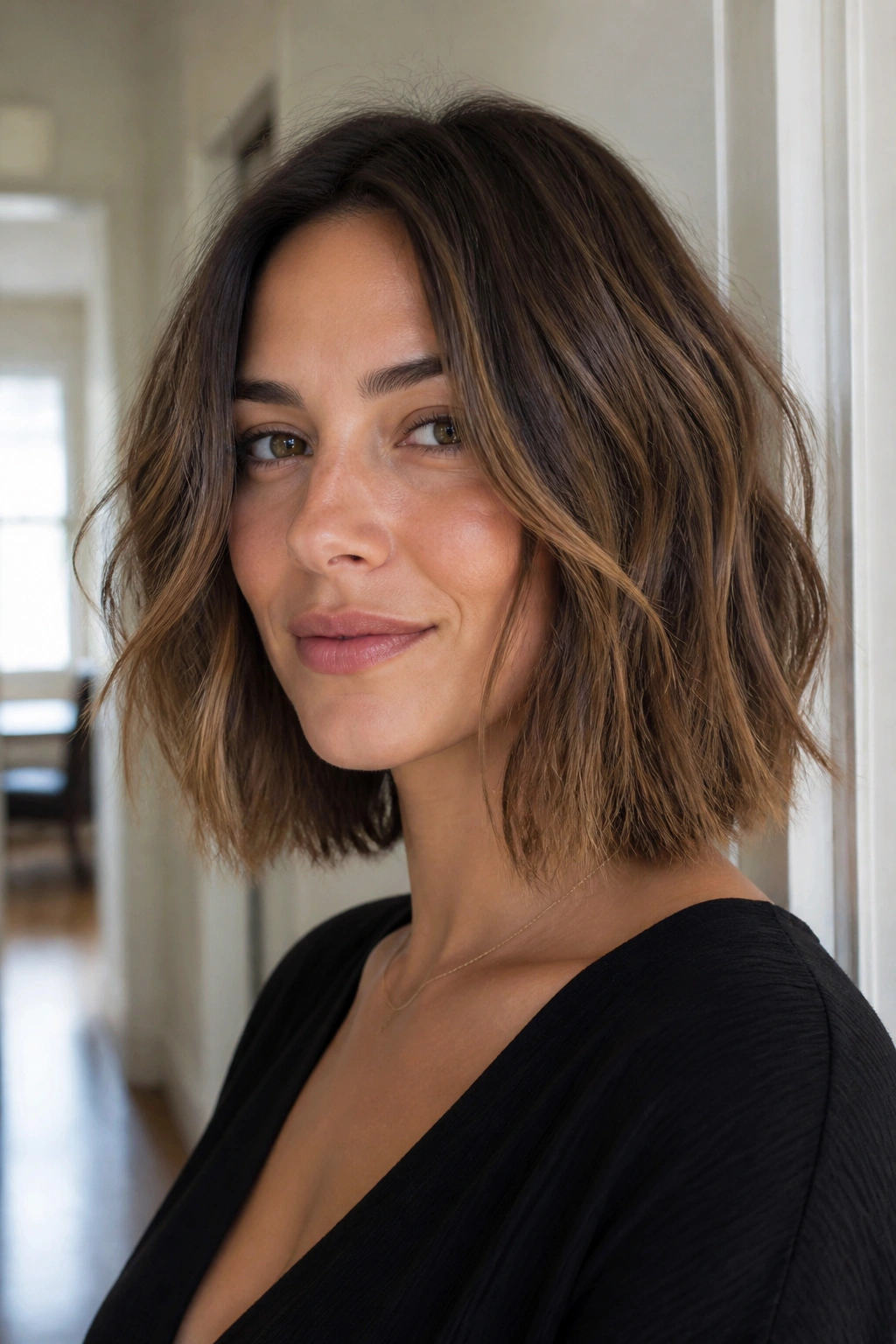
A textured lob is what you ask for when you want the bob family but hate hard edges. The length usually sits between the chin and collarbone, and the ends are softened with point cutting or light layering so the hair does not look boxy.
That little bit of texture changes the whole feel. The cut moves more. It can be worn sleek, but it also looks good when it dries with a bit of bend. For women who do not want to spend 20 minutes making every strand behave, that matters.
I think this cut is especially good for anyone whose hair goes flat at the roots but puffs at the ends. The texture reduces that blunt shelf effect. It also helps if you like to tuck one side behind the ear, because the haircut still has shape once one side is out of the way.
A textured lob can turn sloppy fast if it is over-layered. You want softness, not holes. That’s the line to hold onto.
11. The Deep Side-Part Bob

Slide a bob over to a deep side part and the haircut changes shape almost instantly. One side gets more lift, the other side falls into a clean curve, and the whole thing feels sharper without needing extra length.
This cut is a quiet fix for hair that sits too flat at the front. The side part creates volume where the hair wants to collapse, and that can be a small miracle if your crown is stubborn. It also softens strong jawlines because the eye follows the diagonal line instead of a straight horizontal edge.
A deep side-part bob looks especially nice when the ends are kept neat and the front has a little bend. You do not need big curls. A bend at the bottom is enough. If the hair is too curly, the shape can start to lose that crisp side-swept line, so a stylist may need to adjust the length a bit.
I like this cut for people who want something polished but not stiff. It feels grown-up in a good way.
12. The Long U-Cut
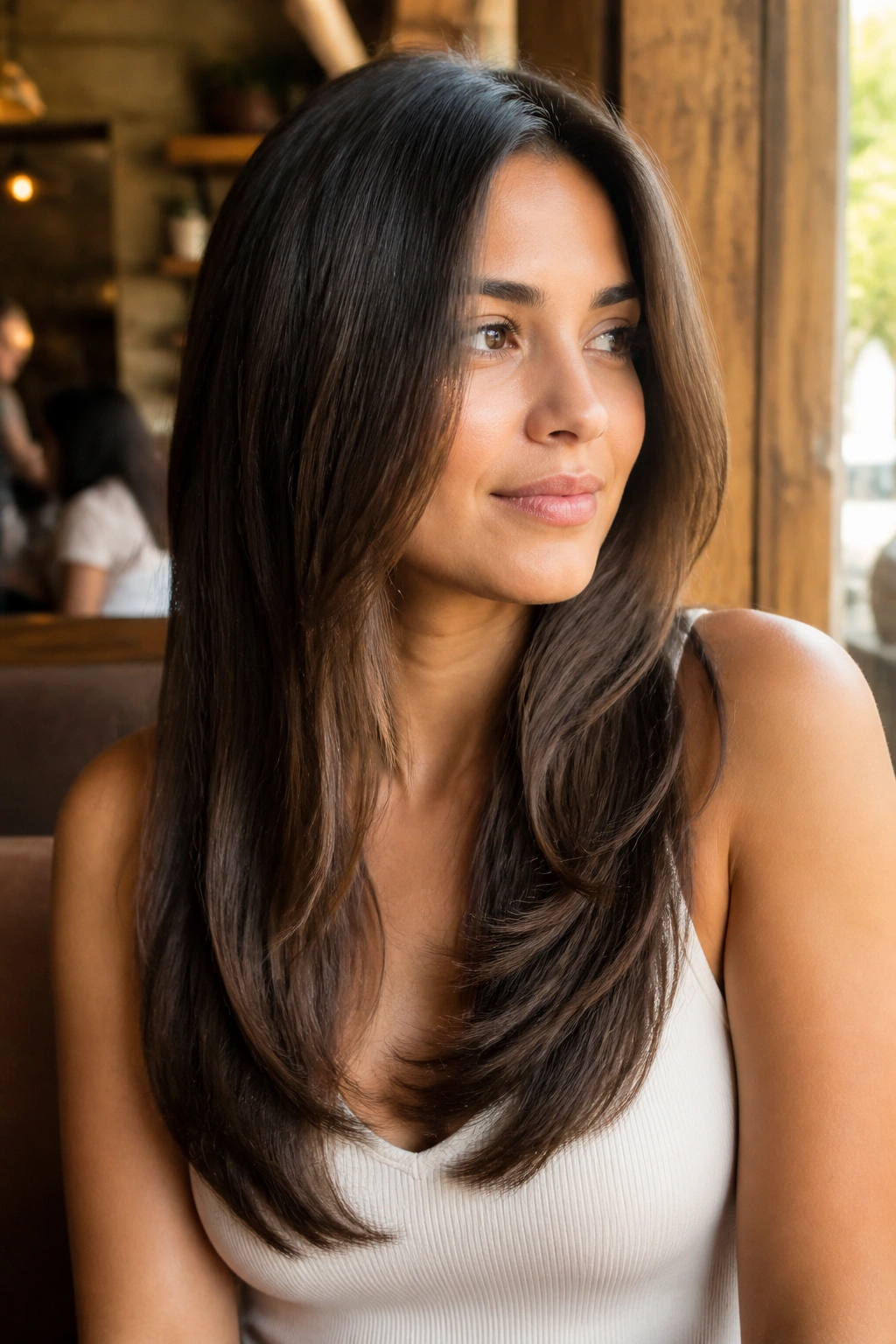
The long U-cut is one of those haircuts that does a lot without announcing itself. The hair falls longer at the sides and slightly shorter in the middle, so the outline forms a soft U instead of a straight line across the bottom.
That shape gives long hair movement while keeping most of the length intact. It is useful if your ends feel heavy, especially on thick hair, because the curve removes some visual bulk. At the same time, it keeps the back from looking choppy or over-layered.
- Good for thick hair that needs a little release at the bottom.
- Nice if you like to wear hair down most days.
- Easier to grow out than a sharp layered cut.
- Looks soft in a braid or low ponytail because the side lengths frame the face.
The U-cut is one of my favorites for people who want long hair to keep its length but not its weight. Small change. Big difference.
13. Face-Framing Layers
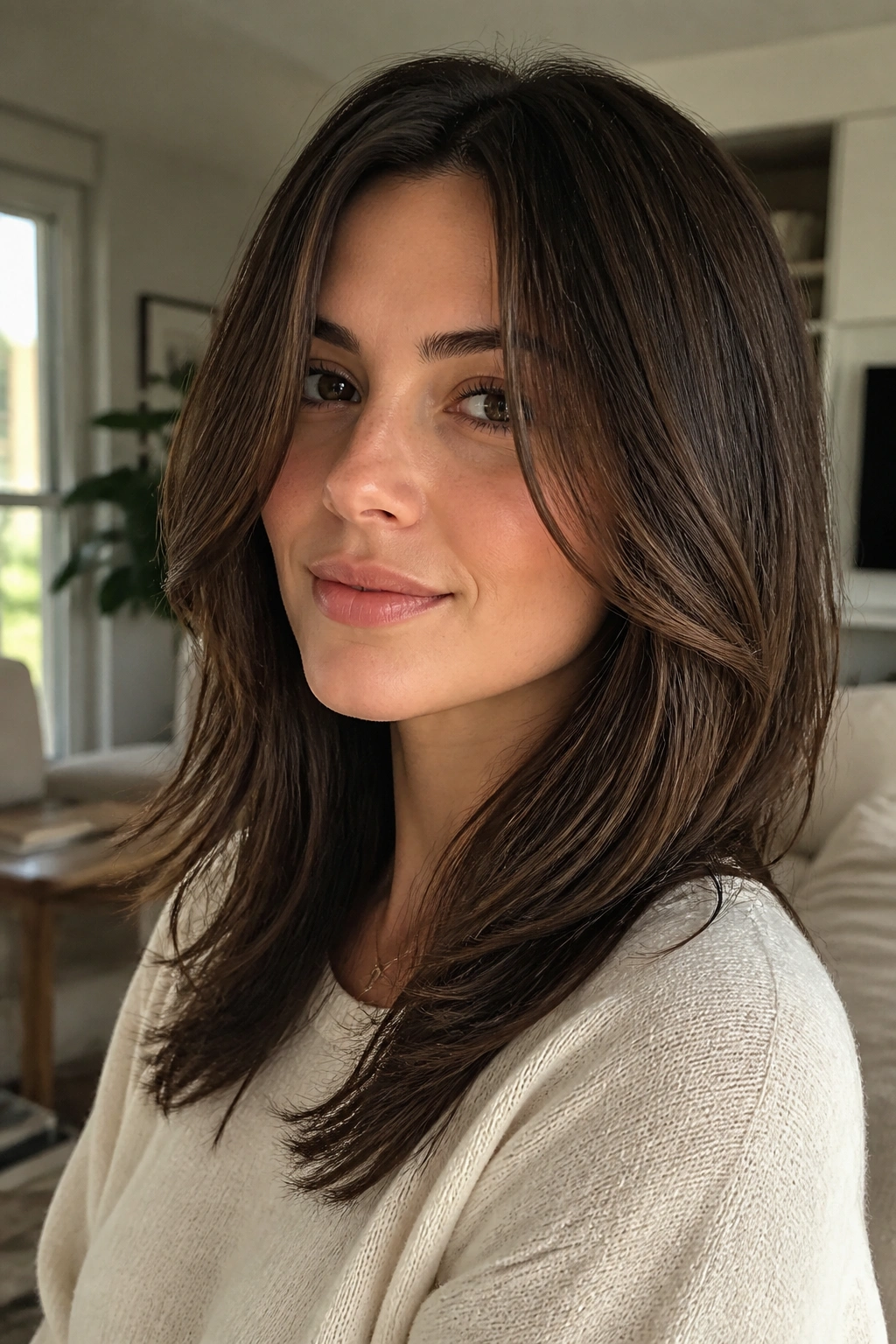
Can one small cut change your whole look? Yes. Face-framing layers are proof. They are not a full haircut overhaul; they are the pieces that sit around the cheeks, jaw, and collarbone and change how the rest of the hair falls.
If You Want a Small Change
This is the safest move on the list if you like your length but want more shape. The layers can start high for more drama or lower for a softer, grown-out feel. The best part is that they work on long hair, mid-length hair, and even a lob that needs a little lift around the face.
A few details make a difference:
- Cheekbone-length layers give the face more lift.
- Chin-length pieces soften a strong jaw.
- Collarbone-length pieces blend best into longer cuts.
- Keep the layers subtle if your hair is fine and tends to lose density.
This is not the place for choppy, disconnected pieces unless that is the look you want on purpose. The whole point is to shape the face without making the haircut feel busy. When done well, the effect is easy to miss in the mirror and obvious in motion. That is usually a good sign.
14. The Soft Wolf Cut
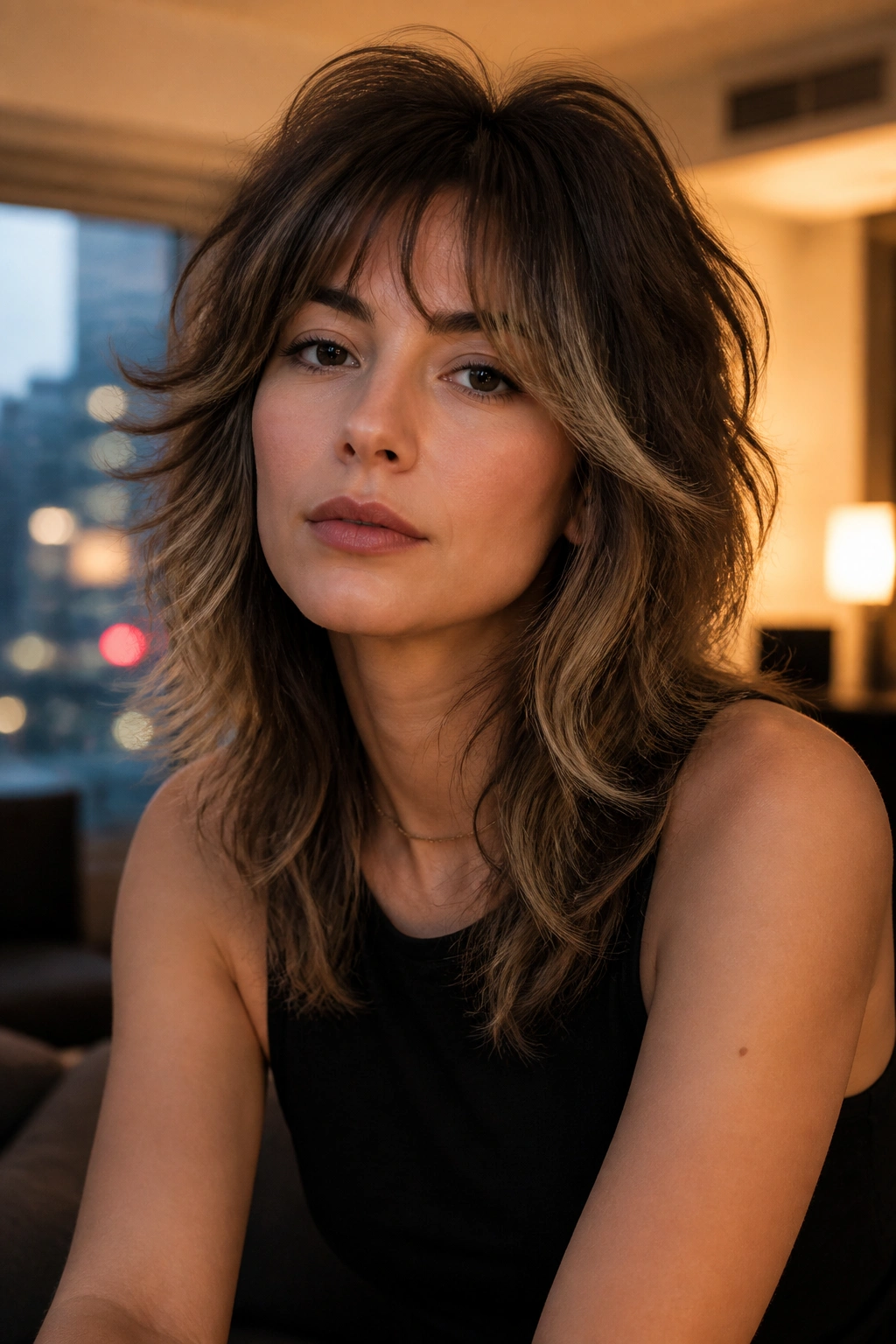
The soft wolf cut is less rebellious than people think. It keeps the layered, slightly shaggy feel of a wolf cut, but the edges are blended enough to make it wearable for regular life, not just for an editorial photo.
What makes it work is the balance between height at the crown and softness at the ends. The top layers create lift, the front pieces give movement, and the lower lengths keep the cut from feeling too choppy. It looks best when the texture is allowed to do some of the work.
This is a smart choice if your hair has wave or bend and you want to lean into it. It can also work on straight hair, but the styling matters more there. A light mousse or texture spray helps the layers separate instead of collapsing into one flat shape.
I would not send someone into a hard wolf cut if they already struggle with frizz or a lot of bulk at the sides. The softer version keeps the idea without the headache. That’s the one I’d pick.
15. The Curly Shag
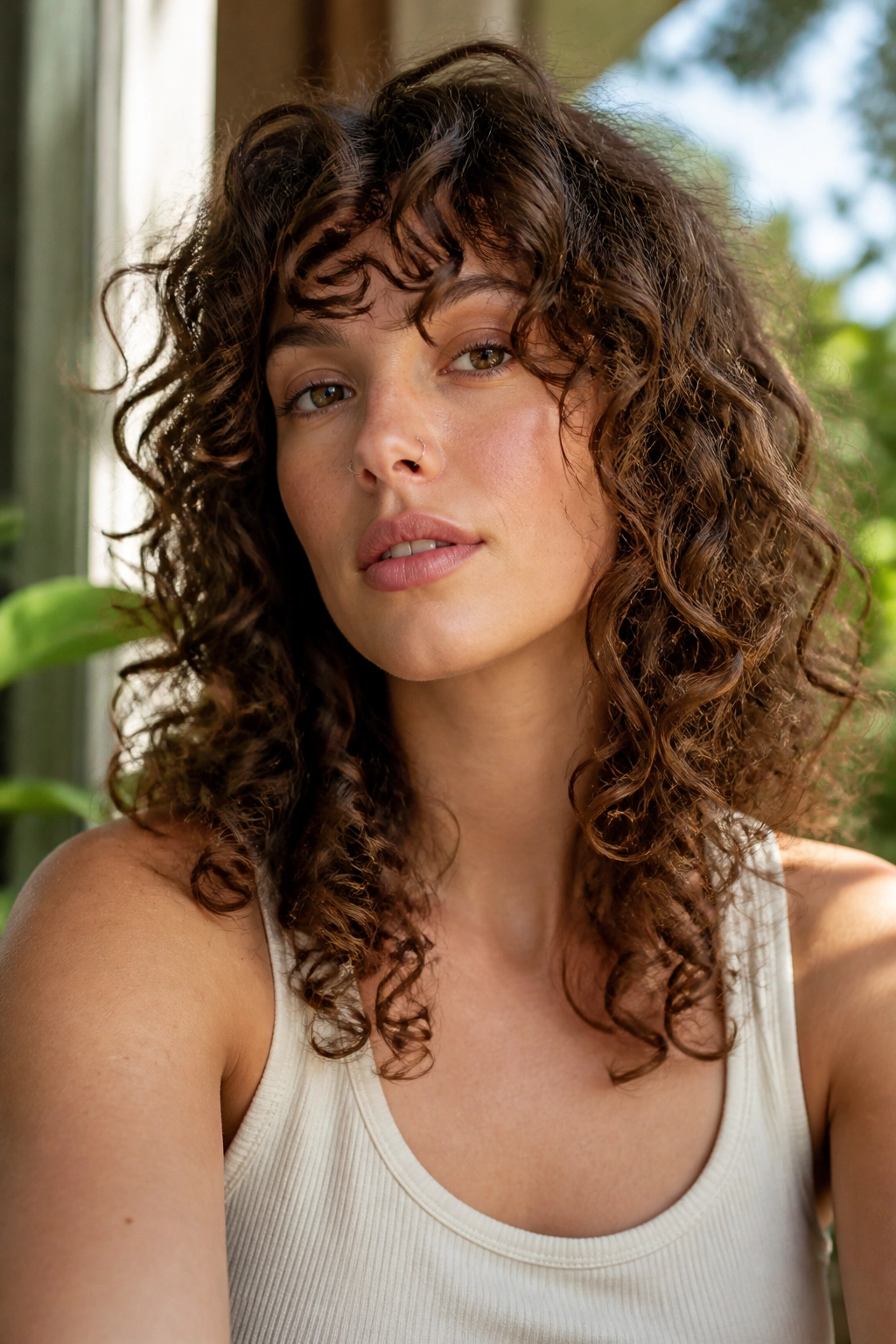
Curly hair and shag cuts have a real friendship when the layers are done properly. The curls spring up, the bulk comes down, and the whole shape gets more room to breathe.
A curly shag should be cut curl by curl, or at least curl pattern by curl pattern. That part matters. If the stylist treats it like straight hair and just chops in random layers, the shape can puff out in all the wrong places. Good curly layering is about removing weight where the curls stack and keeping enough length so the curl pattern still has room to form.
What to Ask For
Ask for soft layers through the crown and around the face, with enough length left in the lower sections to stop the triangle shape that curly hair can get when it is too heavy at the bottom.
A few things help a lot:
- Dry-cutting can show the curl pattern more clearly.
- Diffusing on low heat keeps the shape from stretching out.
- A light gel or curl cream helps the layers hold their separation.
- Trims matter, because curls can hide split ends until they suddenly cannot.
This haircut can be fantastic on the right curls. It just needs someone who knows how curls actually sit.
16. The Asymmetrical Bob
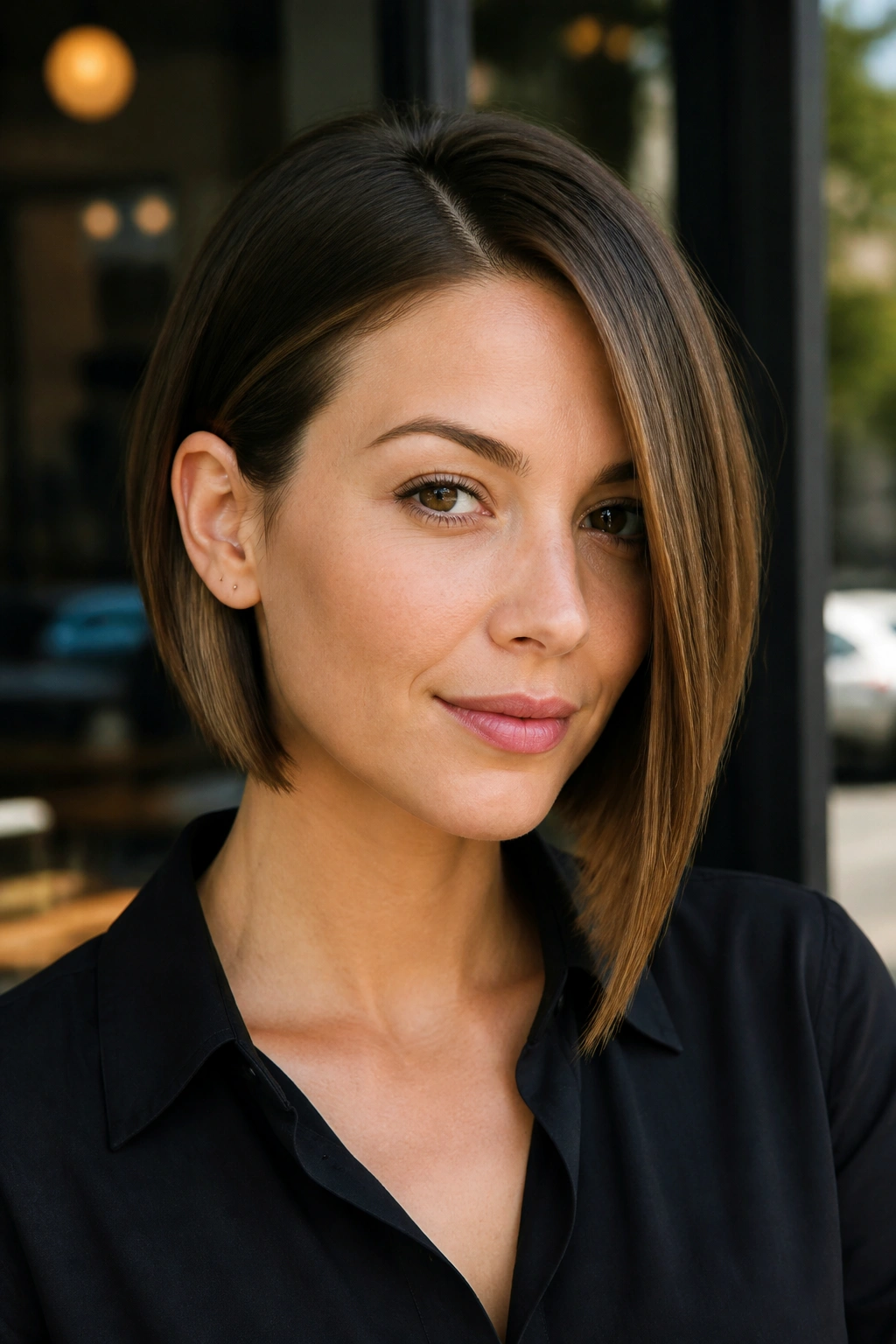
A slight asymmetrical bob gives you more edge than a standard bob, but less fuss than a dramatic undercut. One side sits a touch longer than the other, and that small shift is enough to make the haircut feel intentional and modern.
The good version of this cut is subtle. You do not need a huge length difference to get the effect. Even half an inch to an inch can create a clean line that catches the eye without turning the haircut into a statement piece. That makes it wearable for work, dinners, and everything else that happens in between.
It is especially flattering on straight or lightly wavy hair because the line stays visible. The front can be tucked behind one ear or left loose to show the angle. If the hair is very curly, the asymmetry can get lost unless the stylist shapes it carefully.
This is a cut for someone who likes a little structure. It looks neat, sharp, and a bit cooler than a plain bob.
17. The Mixie Cut

What happens when a pixie grows out with a little attitude? You get the mixie. It borrows the short sides and crown movement of a pixie, then leaves a bit more length at the nape and around the back so the shape feels softer and less strict.
How to Keep It From Looking Shaggy
The mixie can go wrong if the layers are left too random. Then it just looks like a haircut that missed a trim. The fix is simple: keep the top textured, the sides close, and the back tapered so the whole cut still has shape.
This cut suits people who like easy styling and do not mind a little edge. It can be excellent on thick hair because the shape removes weight fast. It can also work on wavy hair, where the natural texture adds movement and keeps the style from looking too severe.
If you want a short cut that does not feel like a helmet, this is worth a look. It has personality, but it still behaves. Mostly.
18. The Mid-Length Blunt Cut
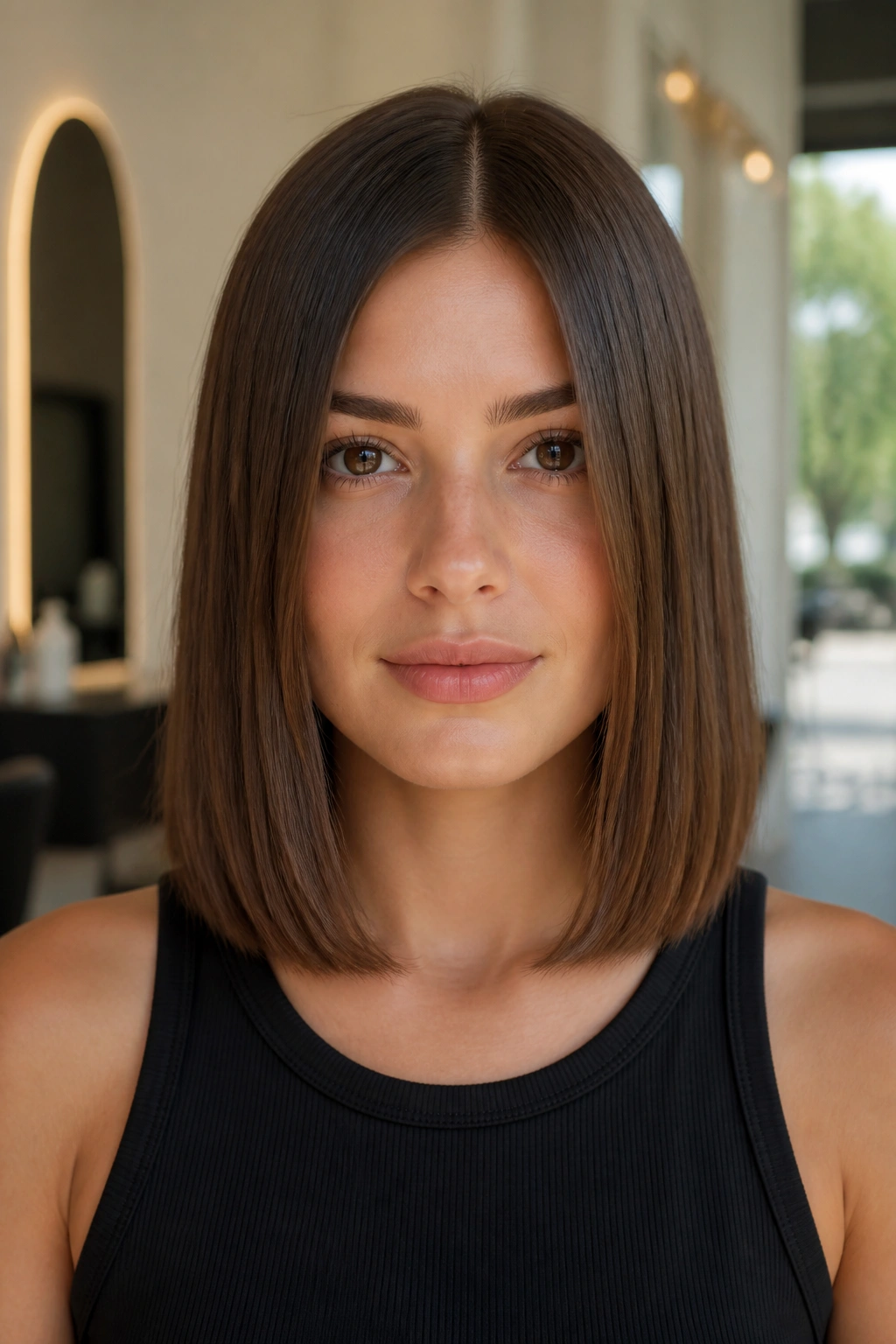
The mid-length blunt cut is one of the cleanest, smartest haircut ideas women can choose if they want hair that looks thick and neat with very little drama. The line is one-length, the ends are tidy, and the whole shape lands somewhere between the collarbone and the shoulders.
This cut has a nice honesty to it. There is nowhere for bad layering to hide. If the line is good, the haircut looks good. That is a big reason it flatters straight hair so well. It also gives fine hair a denser look because the ends are not thinned out into nothing.
I like this one for women who want polish without a lot of shaping around the face. It can be worn sleek, tucked, pinned, or worn with a slight bend at the ends. A center part makes it feel clean and modern. A side part softens it a bit.
The only real downside is that blunt cuts need regular upkeep if you want the line to stay fresh. Skip too many trims and the whole effect fades.
19. The Tapered Crop for Fine Hair
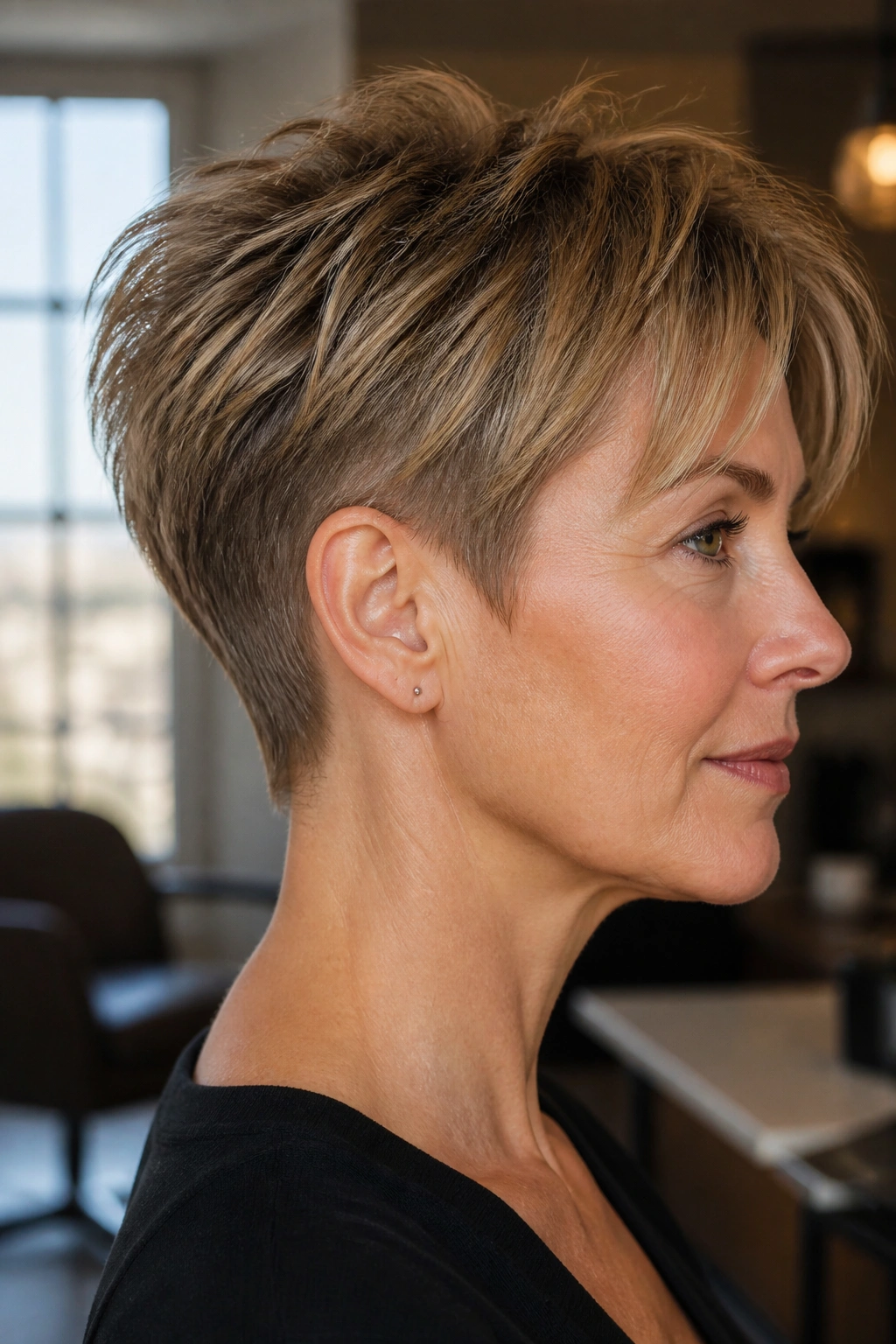
If your hair goes flat by noon, a tapered crop is worth a serious look. The cut stays short around the nape and ears, then leaves a little more length and lift on top so the crown does not collapse.
Quick Facts
- Best when the crown needs height and the sides need to stay close.
- Works well with a small amount of mousse or root spray.
- Looks fuller if the top is cut with soft texture, not heavy layers.
- Needs regular shaping, because fine hair shows grow-out fast.
This cut can be really flattering because it gives the illusion of density without asking the hair to be something it is not. It does not fight fine hair. It frames it. That is the difference.
A tapered crop is not a lazy haircut, though. It needs a little styling at the top so the shape does not flatten against the head. Still, the daily routine is usually faster than with longer cuts. A quick blow-dry and a dab of paste can do a lot here.
20. The Soft Mullet
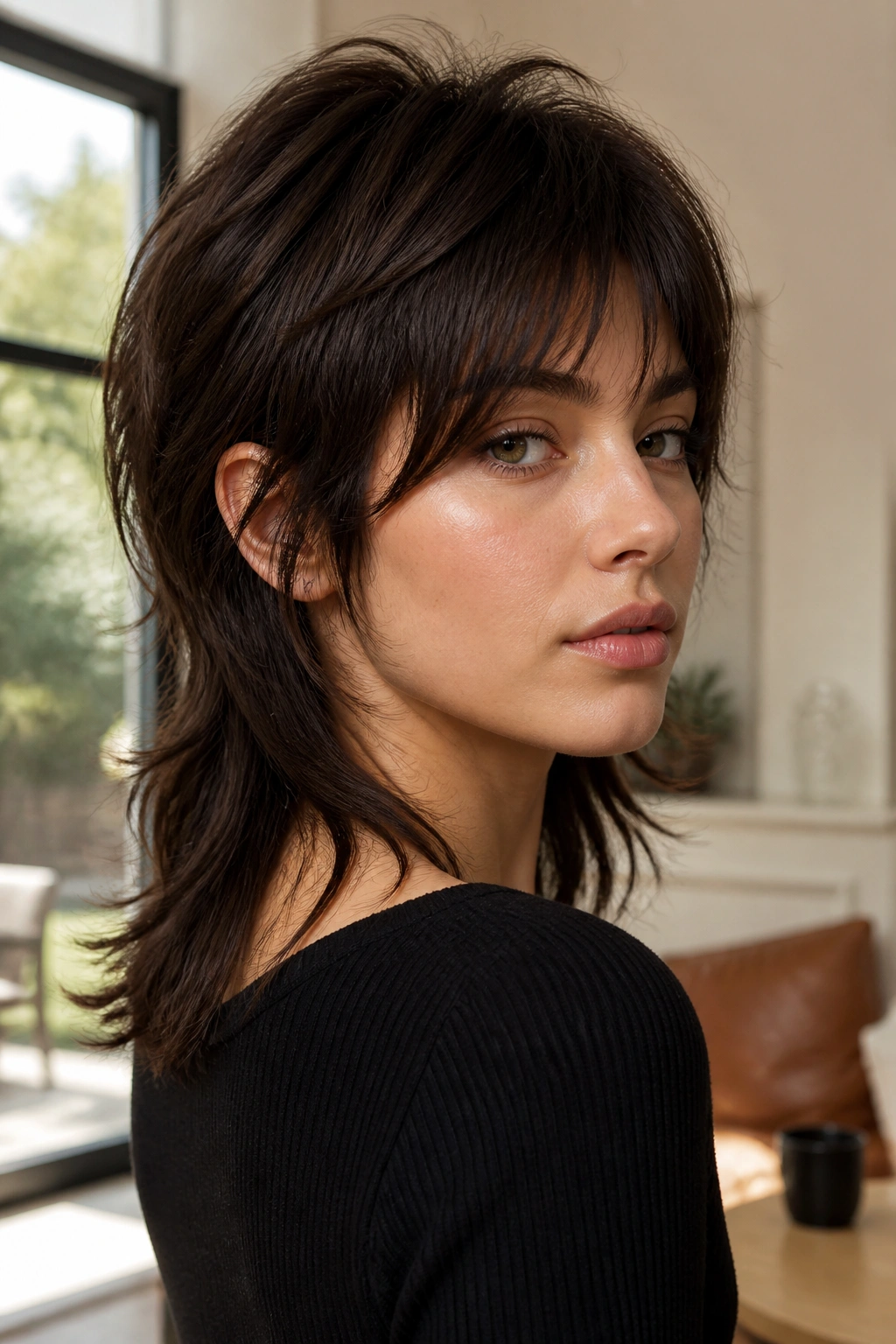
The soft mullet is the cut people think they understand before they see the good version. A modern version keeps the crown shorter, lets the back stay a little longer, and blurs the line between the two so the shape feels cool instead of costume-like.
It works better than most people expect because the soft version keeps the layers blended. The front is usually face-framing, the top has lift, and the back drops just enough to give movement. On wavy or curly hair, that can look especially good because the texture helps connect everything. On straight hair, the cut needs better shaping and more styling, or it can fall flat in the wrong places.
I like this cut for someone who wants a little edge but still needs a haircut that functions in daily life. It can be pinned back, tucked, or worn messy. It also grows out in a way that can look intentional if the layers were cut well in the first place.
The mullet has a bad reputation for a reason. The soft version earns its keep by being wearable.
Some cuts are louder than others, and that is fine. The better question is whether the shape makes your hair easier to live with on an ordinary Tuesday. That is usually where the good choices reveal themselves.
Bring 2 or 3 photos to the salon, not 12. Pick the one that shows the length, the one that shows the front, and the one that shows the texture. Then talk about your part, your styling habits, and how much time you actually spend on your hair. That conversation matters more than chasing a famous cut name.
