



Having hair that feels like a thick, heavy curtain is often framed as a blessing, but if you actually live with it every day, you know the reality is quite different. It takes forever to dry. It feels like wearing a wool sweater on your head in the middle of summer. And don’t get me started on the “triangle head” effect—where your hair is flat at the crown and poofy at the bottom. You are not looking for more volume. You are looking for a way to distribute that weight so your head feels lighter and your style actually has some movement.
The secret to managing excessive density isn’t just chopping it all off. It is about strategic weight removal. Many people think the answer is just thinning shears, but a heavy-handed approach with those can lead to frizzy, broken layers that look worse as they grow out. Instead, you need cuts that physically remove mass from the interior of the hair, allow for more airflow, and create a shape that holds itself together without needing a gallon of product.
Getting your haircut to work for you rather than against you requires a conversation with your stylist about internal structure and weight distribution. It is about understanding that your hair has its own gravity. When you change the cut, you change the way that gravity pulls on your strands. Here are twenty haircuts that specifically target and reduce volume, focusing on technique and shape to give you the relief you are looking for.
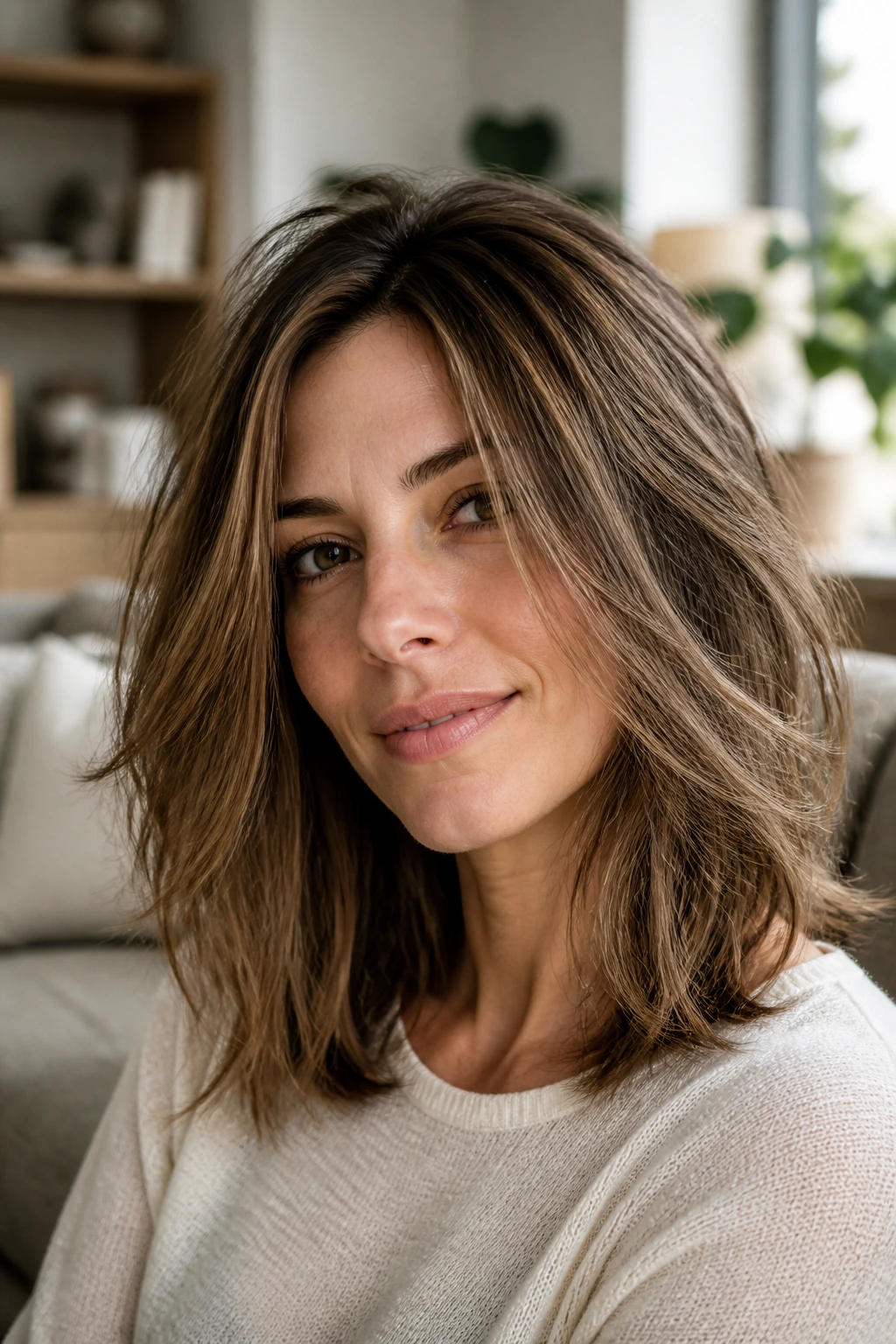
1. Long Layers with Internal Weight Removal
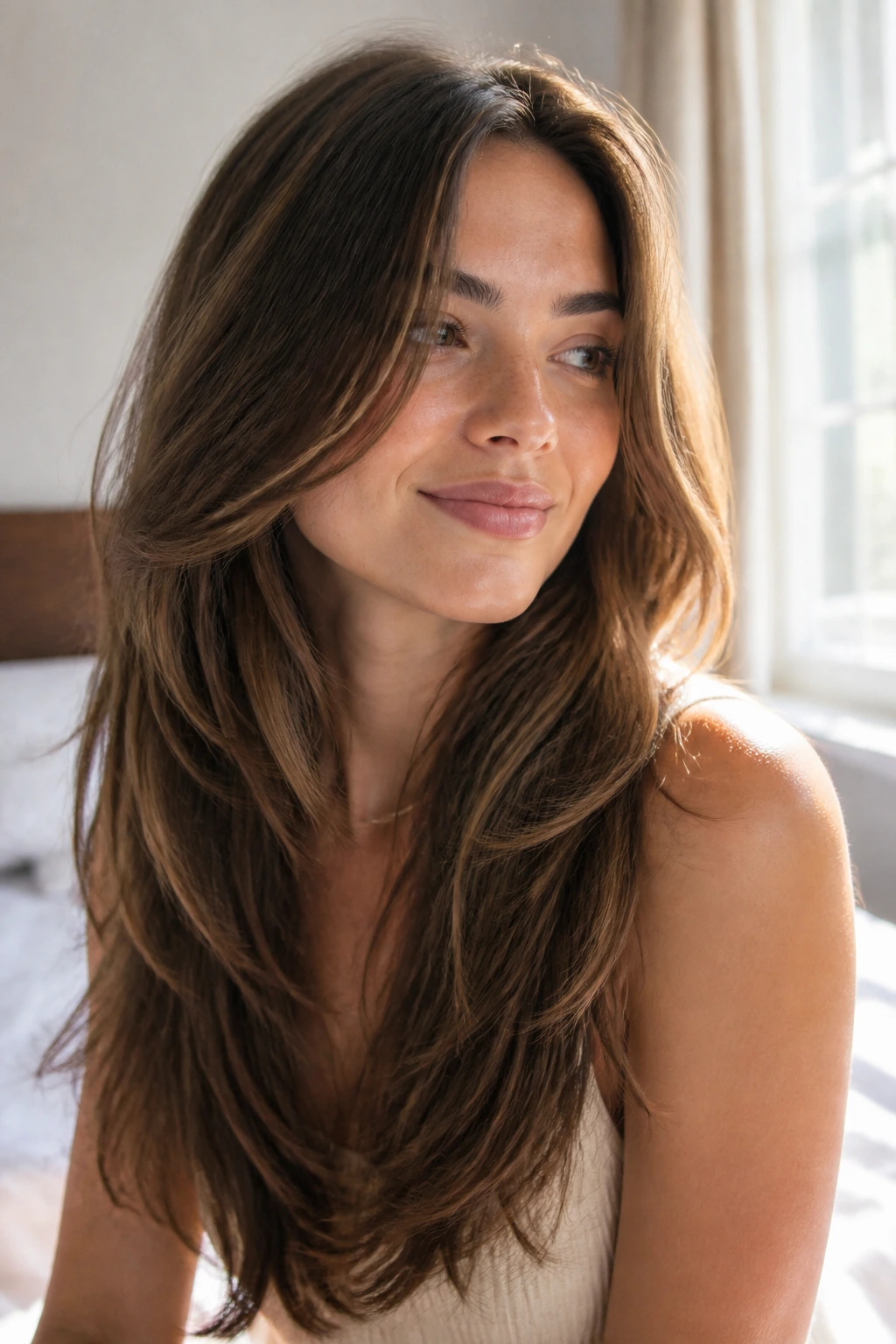
This is the classic, reliable starting point for anyone who refuses to sacrifice length but cannot stand the heaviness. The key here is not just surface layers, which can sometimes make thick hair look stringy. You need internal, or “invisible,” layers cut into the mid-lengths.
Why It Reduces Volume
By removing small sections of hair from the underside of the canopy, you essentially hollow out the density without changing the perimeter shape. It allows the top layer to sit closer to the head, removing that bulky, triangular look.
How to Ask for It
Tell your stylist you want “internal weight removal.” Ask for layers that start mid-shaft to create movement, but specify that you want the ends kept blunt or texturized only slightly. This keeps the look healthy while removing the bulk that makes your hair feel like a damp carpet.
2. The Modern Shag

The shag has moved well beyond its rock-and-roll origins. It is effectively a masterclass in volume reduction through aggressive texturing. This style is characterized by heavy layering around the crown and shorter, choppier pieces framing the face, which helps pull the weight away from the bottom.
The Mechanics of the Cut
A true shag relies on a razor or deep point cutting to create tapered ends. Thick hair tends to have “blunt ends,” which act like a shelf, holding volume out and away from the body. Tapering these ends turns them into “feathers” that stack much closer together, instantly reducing the diameter of your ponytail.
Styling Tip
Because this cut is meant to be messy, it actually works better when it is not perfectly sleek. A bit of sea salt spray or texture paste will help separate the layers, allowing air to pass through them rather than letting them clump into a heavy, monolithic block.
3. The Textured Lob
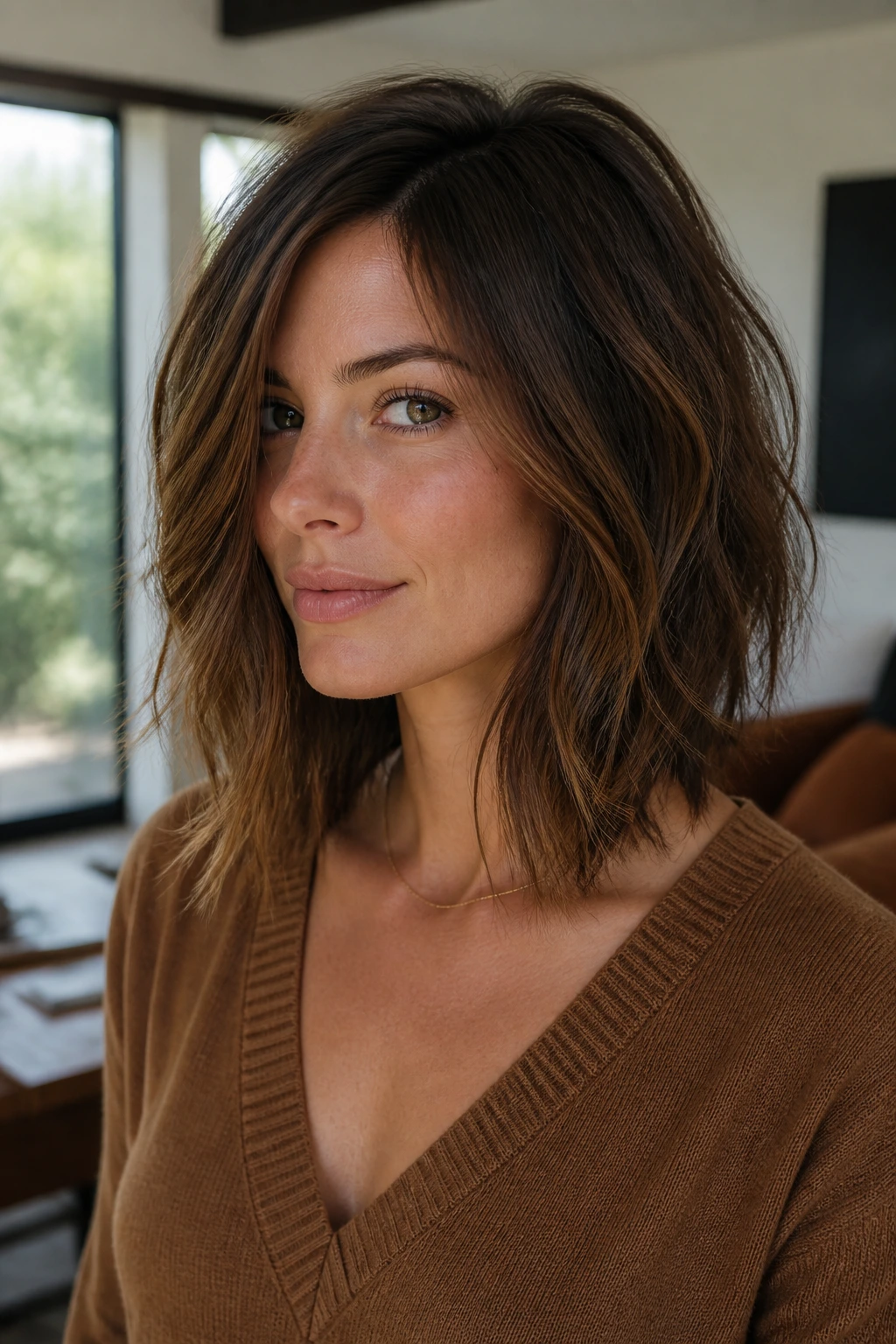
A “lob,” or long bob, is often feared by those with thick hair because of the potential for the dreaded triangle shape. However, if it is cut with a focus on texture rather than a straight, blunt line, it becomes one of the most manageable styles you can have.
Why Texture Is Your Friend
When you cut a bob on thick hair, that blunt edge creates a straight, heavy line that forces the hair to flare out. By incorporating deep point cutting—where the stylist cuts vertically into the ends of the hair—you break up that solid edge. This creates an uneven, soft perimeter that allows the hair to lay flat.
Maintenance Note
This style needs to be trimmed more frequently than longer cuts. As thick hair grows, it tends to regain its weight quickly at the ends, which will push the style back into that triangular shape. A quick “dusting” of the ends every six to eight weeks is non-negotiable here.
4. Invisible Layers

This is not a specific shape, but a technique that can be applied to almost any haircut. If you love your current length but the density is driving you crazy, invisible layers are the professional solution. They are hidden underneath the top layer of hair, meaning nobody can see the layering, but you definitely feel the difference.
How It Works
Your stylist will section off the top layer—the “canopy”—and work on the hair underneath. By removing small, strategic chunks of hair near the scalp or mid-shaft using thinning shears or specific point-cutting techniques, they take the pressure off the bottom of the cut.
The Benefit
You keep the appearance of a solid, healthy, thick head of hair, but the total mass is significantly reduced. It is the best of both worlds for someone who is attached to their length but tired of the neck strain.
5. The Butterfly Cut
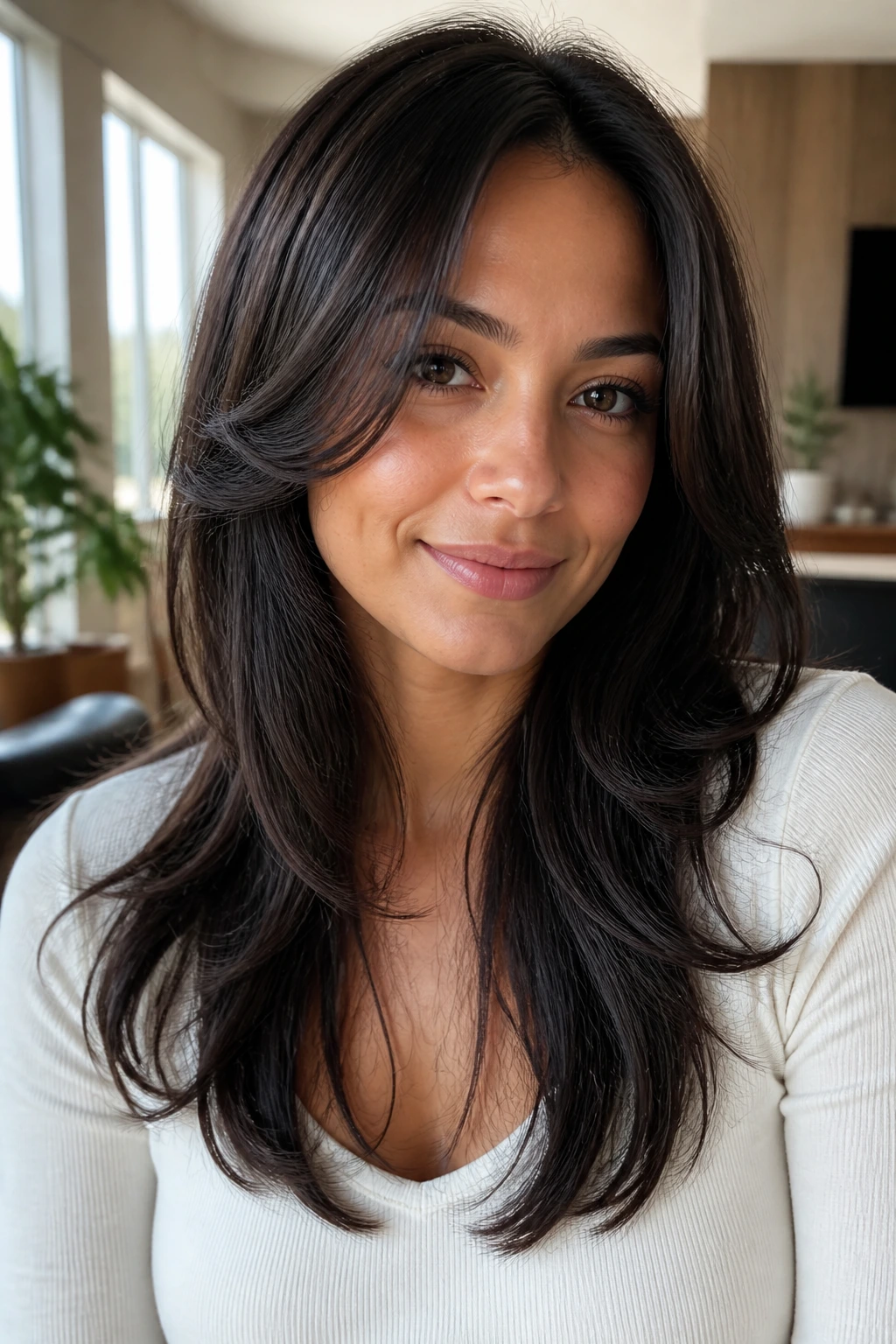
The butterfly cut is a combination of short, face-framing layers and longer, wispy ends. It is designed to create the illusion of layers without actually cutting your hair short. It mimics the look of a shag but with a much more polished, bouncy finish.
Removing Bulk from the Front
A huge portion of the weight in thick hair sits around the face. The butterfly cut brings the shortest layers up high, effectively removing a large chunk of hair from the area that usually feels heaviest. This allows the hair to drape around your shoulders rather than puffing out at the chin.
Who Should Avoid This
If your hair is extremely coarse or prone to frizz, this cut can require a bit more effort to style. Because the layers are very distinct, you might need a round brush and a blow-dryer to get them to lay smooth. If you are a “wash-and-go” person, be prepared for a bit of air-drying time to settle the texture.
6. Nape Undercut
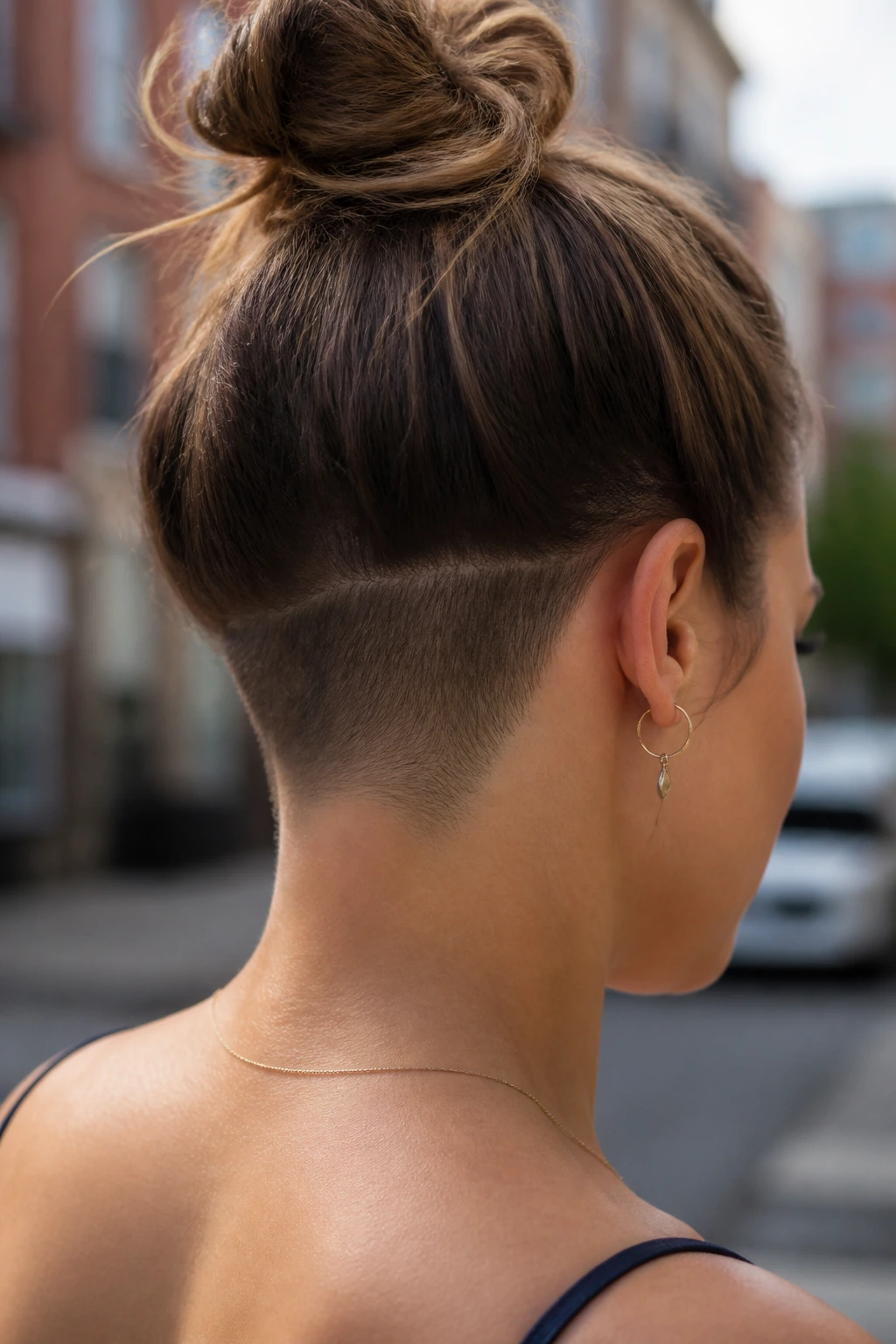
This is the boldest move on the list, but for many, it is life-changing. An undercut involves shaving a section of hair at the base of the skull, right at the nape of the neck. It is completely hidden when your hair is down, but when you pull it up, you have a sleek, clean line.
Instant Relief
The hair at the nape of your neck is often the thickest, coarsest, and hardest to dry. Removing it entirely reduces the volume of your ponytail by at least 25% to 30%. It also keeps your neck cooler in hot weather and stops hair from matting up against your collar.
The Commitment
You have to keep up with the maintenance. If you don’t go to the salon to have it shaved every few weeks, the grow-out phase can be a bit awkward. It becomes a short, coarse patch of stubble that might feel itchy against your shirt. If you can handle the upkeep, the weight relief is unmatched.
7. The Soft Bob with Thinning Shears

Thinning shears often get a bad rap because they can cause frizz if used improperly. However, when used by a stylist who knows how to control the density without compromising the shape, they are the ultimate tool for a thick-haired bob.
Technique Matters
The stylist should never use thinning shears too close to the roots, or you will end up with short, spiky hairs that stick straight out, creating a halo of frizz. The shears should only be used mid-way down the hair shaft or near the ends to soften the perimeter.
Styling for Softness
A bob with thinned ends will behave differently than a blunt bob. It will be softer, more pliable, and less likely to “poof” out like a mushroom. It is a great way to make a sophisticated cut look lighter and more effortless.
8. Feathered Curtain Bangs
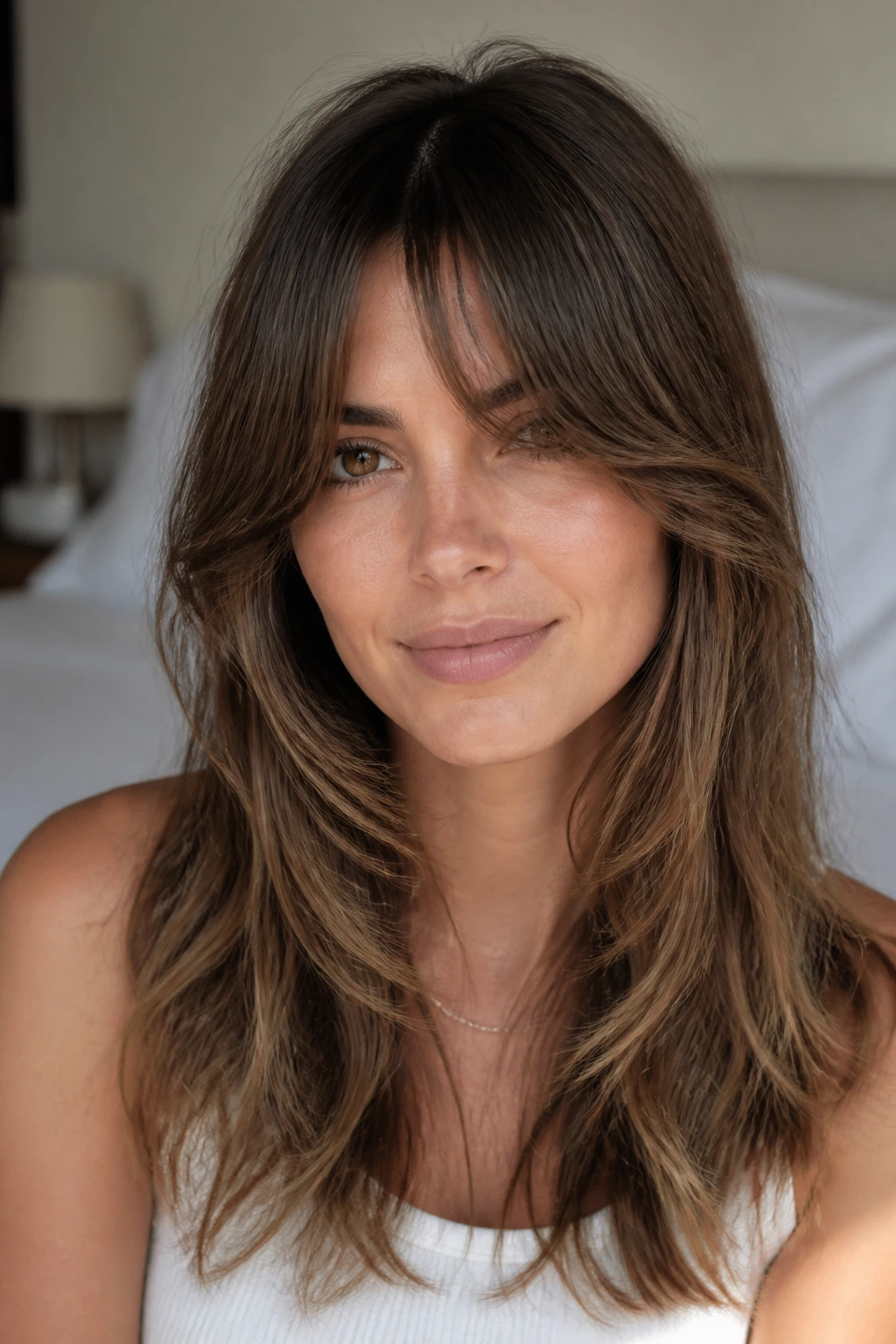
If your thick hair is all concentrated in the front, framing your face, it can feel like a heavy veil. Curtain bangs are fantastic for this because they break up the density of the front sections and draw the eye toward your eyes and cheekbones, rather than just the mass of your hair.
The Lightweight Effect
Feathering the bangs means the hair is cut in a way that allows it to taper towards the ends. This removes the “wall” of hair that often sits on the forehead. Even if the rest of your hair remains thick, thinning out the front sections makes a massive difference in how light the cut feels on your face.
Styling Note
You really need to style these. If you let them air dry, they might look a bit flat or stick to your forehead. A quick wrap-dry with a round brush or a large Velcro roller will give them that airy, feathered lift that makes this look so popular.
9. Graduated Bob

A graduated bob, sometimes called a stacked bob, is cut shorter at the back and longer in the front. The “stacking” in the back is achieved by cutting multiple short, internal layers. This inherently removes the bulk that normally hangs at the nape of your neck.
Why It Works for Thickness
Thick hair often bunches up at the occipital bone (the bump on the back of your head), creating an unflattering, heavy profile. A graduated bob cuts that weight away, replacing it with a clean, tapered shape that hugs the nape of the neck.
The Aesthetic
This is a very structured, purposeful haircut. It looks intentional and sleek. It requires a stylist with strong technical skills, as the lines need to be precise for it to look right. If you want a style that looks polished from the moment you wake up, this is a strong contender.
10. Point-Cut Shaggy Layers

Point cutting is the technique of holding your hair sections out and cutting into them vertically with the tips of the scissors, rather than cutting straight across. This creates a serrated edge that isn’t perfectly even. When applied to layers throughout the hair, it creates a “shaggy” effect that is much lighter than blunt-layered hair.
Breaking the Density
Blunt layers can sometimes stack on top of each other, creating a new “shelf” of volume midway down your hair. Point-cut layers, by contrast, weave together. One piece of hair sits slightly higher than the next, allowing them to interlock rather than push each other out.
Visual Appeal
This style looks fantastic on wavy or curly hair, as it encourages the natural texture to pop while preventing the dreaded triangular bulk. Even on straight hair, it adds a modern, effortless edge that feels less “done” and more natural.
11. Blunt Cut with Internal Undercutting

You might think a blunt cut is the worst idea for thick hair, but that is only true if the interior isn’t addressed. A blunt cut provides a clean, healthy-looking line at the bottom, which many people with thick hair crave because it makes the ends look robust.
Hiding the Weight Removal
The trick here is to keep the perimeter blunt for the visual benefit, while performing heavy internal texturizing or “undercutting” the bulkier sections. This means the hair looks thick and healthy from the outside, but it feels like it has been cut in half from the inside.
Who Is This For?
This is perfect for someone who loves the look of a solid, heavy-bottomed cut but hates the actual weight of it. It requires an honest conversation with your stylist about leaving the ends alone while attacking the mid-lengths.
12. Tapered Pixie
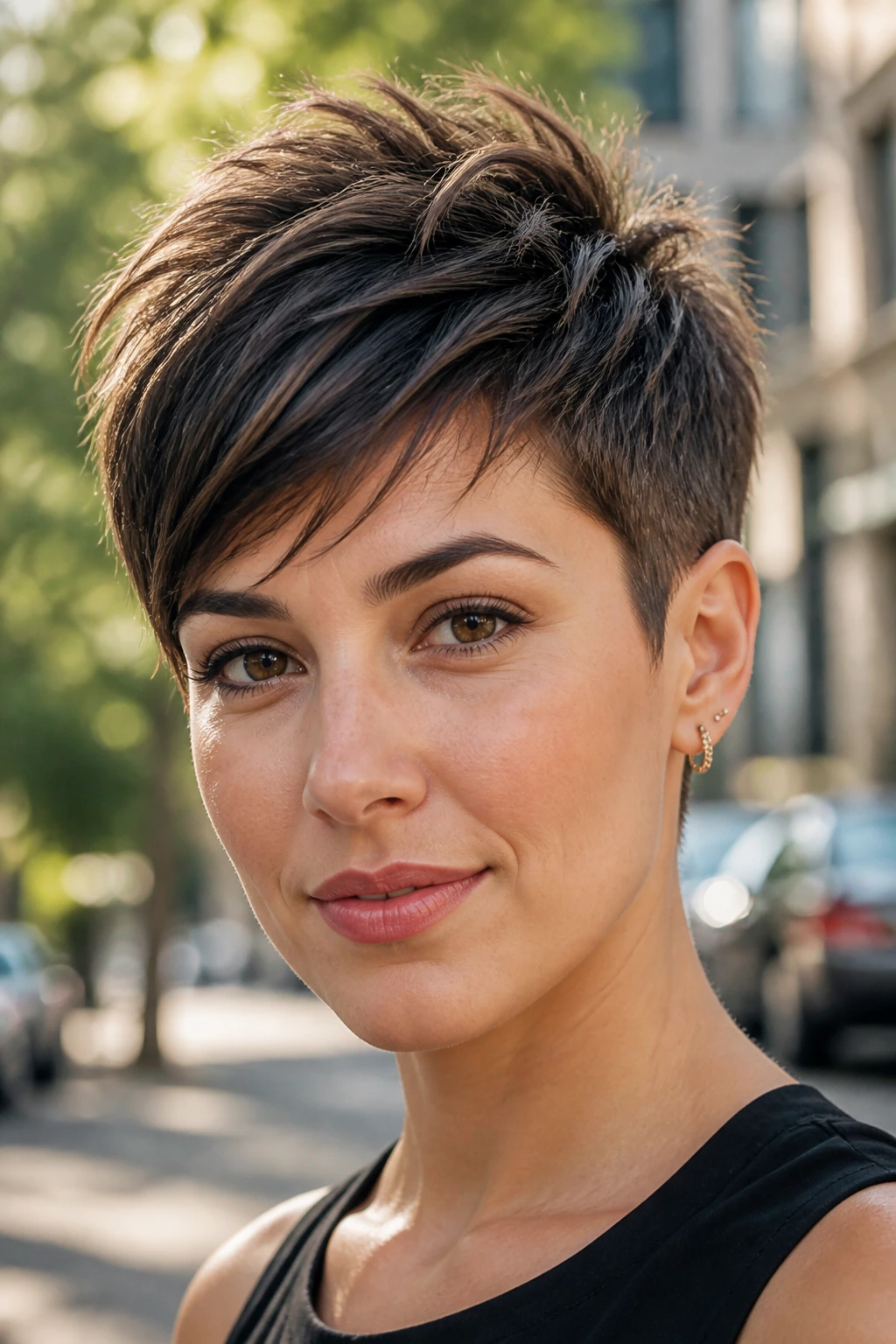
Sometimes the best way to handle thick, unmanageable volume is to simply remove the length. A tapered pixie is cut very short at the nape and sides, getting slightly longer at the crown. It is the ultimate “weight removal” haircut.
The Shape
Because it is tapered, it avoids the “helmet head” look that some short haircuts get on thick hair. By keeping the nape tight and the sides short, you remove the hair that usually causes the most trouble. The remaining length on top can be styled to have texture and height without the weight.
The Commitment
This is a big change. If you have been living with long, heavy hair for years, the sudden lightness will feel bizarre—almost like you are missing something. But for day-to-day management, it is arguably the easiest, most volume-controlled style available.
13. The Mid-Length Wolf Cut

The wolf cut is essentially a marriage between a mullet and a shag. It features short, choppy layers on top and longer, thinner layers at the bottom. The reason it works for thick hair is that it removes a massive amount of volume from the crown and the sides, leaving only the “tail” of the hair at the bottom.
Creating Space
The layers on top are very short, which allows the hair to lift away from the scalp. This creates “air space” in the cut. Instead of hair just sitting on hair, there is room for movement and separation.
Styling
This cut is all about texture. It is not meant to be smooth or polished. You will likely want to use a volumizing mousse or a grit-based spray to emphasize the choppiness. If you try to blow-dry this smooth, you lose the whole point of the cut, which is the cool, airy, shaggy aesthetic.
14. Asymmetrical Pixie
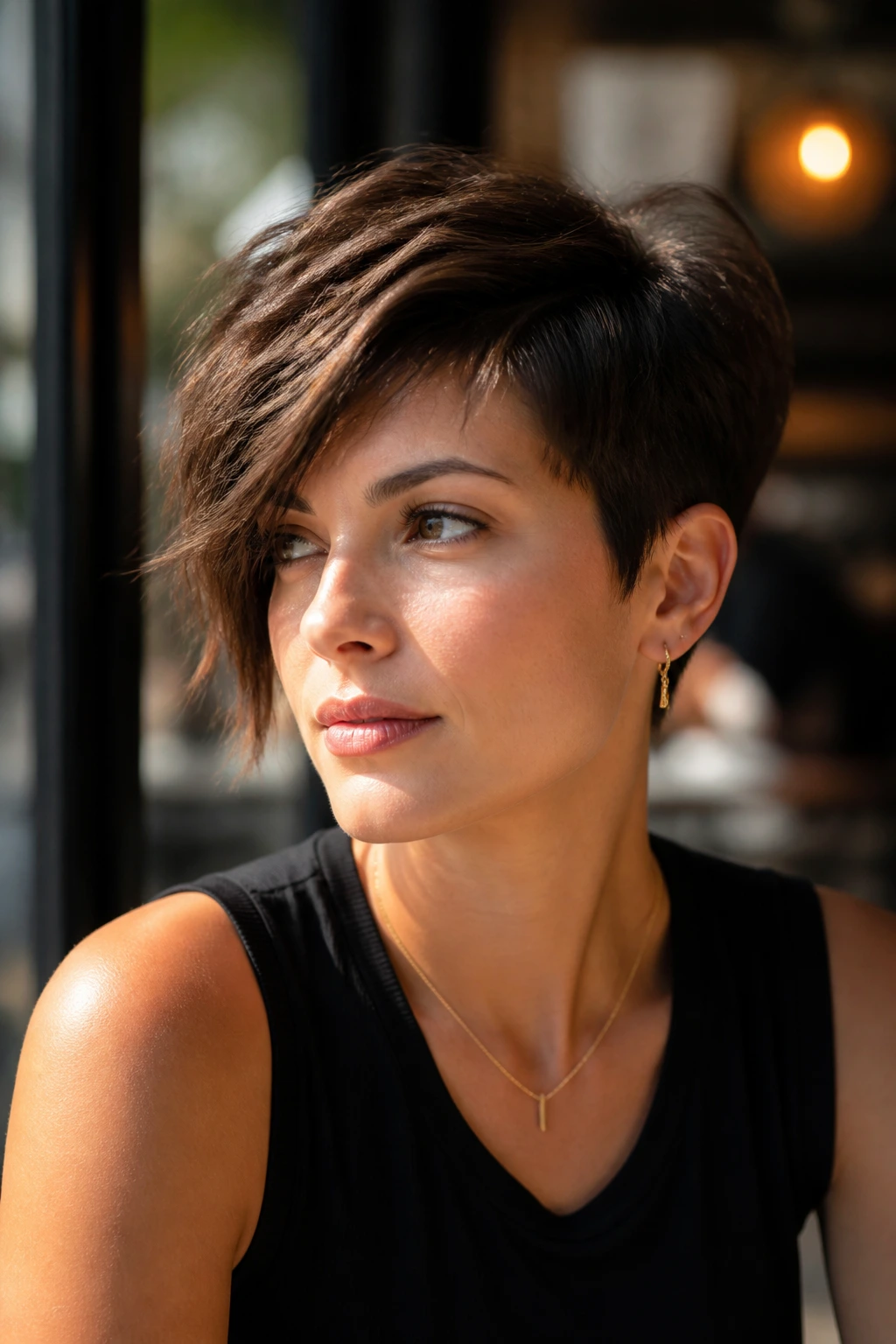
Asymmetry is a fantastic tool for managing thick hair. By cutting one side shorter than the other, you naturally force the hair to hang in a specific way. It prevents the hair from just falling forward or poofing out on both sides equally.
Weight Distribution
By keeping one side tighter to the head, you are removing a significant amount of surface area from that side. The longer side then has room to fall naturally. This breaks up the overall shape of the head, making the hair look intentionally sleek rather than just heavy and thick.
Who Should Try This
If you have a face shape that works well with side-swept styles, an asymmetrical pixie can be incredibly flattering. It shifts the focus from the mass of the hair to the cut itself. It also looks great with a bold color, if you are the type who likes to experiment.
15. Face-Framing Layers

If you cannot bear to cut your hair short, face-framing layers are the best way to lighten the front without losing your length. By cutting layers that start around the chin or collarbone, you are removing a significant amount of weight from the area that frames your face.
Why It Helps
Thick hair often feels most suffocating right around the neck and cheeks. When you cut that length away, your face feels open and your hair feels instantly lighter. It is a subtle change, but one you will notice every time you move your head.
The Visual
It creates a beautiful, cascading effect. If you have any natural wave to your hair, these layers will turn into soft curls that frame your face perfectly. It is a low-maintenance way to get a style update without the drama of a major chop.
16. The “Invisible” Hidden Undercut

Not to be confused with the nape undercut mentioned earlier, a hidden undercut can be placed anywhere that needs thinning out. Some people have a specific “patch” of extremely thick hair—often right at the crown or just above the ears.
Selective Removal
A skilled stylist can lift a section of hair, shave a small rectangle underneath, and lay the top hair back down. It is completely invisible to the eye. It is like an insurance policy for your hair thickness.
Precision is Key
This is a technique for a professional. Do not try this at home with a set of clippers. If you miscalculate where to shave, you will have a visible bald spot when you move your hair, or worse, a patch of hair that sticks up through the top. Use this only if you have a stylist you trust completely.
17. Choppy Beach Waves Cut

This is less about the cut and more about the technique applied to it. A “beach waves” cut focuses on removing weight through internal texture, specifically designed to be worn with a bit of a bend in the hair.
Texturizing Techniques
The stylist should use a mix of point cutting and slide cutting to create “channels” of shorter hair throughout the length. These channels break up the density, preventing the hair from being a solid wall. When you add a bit of wave, the hair separates and creates space.
The Result
It looks light, airy, and effortless. It avoids the heaviness of blunt, straight hair and embraces a looser, more natural vibe. It is perfect if you like your hair to have some movement while you are walking or turning your head.
18. The “V” Shape Cut

For very long, thick hair, a “V” shape cut (or U-shape) can be much more manageable than a blunt cut. A blunt cut forces all the weight to end at the same place, which creates a heavy bottom-heavy look. A V-shape, however, distributes the length.
Distribution of Length
The hair at the back is the longest, while the hair on the sides gets progressively shorter. This naturally tapers the bottom of your hair. You still get the length, but the volume is significantly reduced because you have fewer strands at the widest part of your back.
The Silhouette
It looks classic and elegant. It is a timeless shape that works well on almost everyone. If you have thick hair and want to keep it long, this is often the most flattering and least “heavy-feeling” perimeter shape you can choose.
19. Layered Midi Cut

The “midi” cut refers to hair that hits somewhere between the collarbone and the bra line. It is the sweet spot of length—long enough to pull back, but short enough to manage. When you add layers to this length, you get a very balanced, easy-to-live-with haircut.
Weight Control
At this length, you have enough hair to remove weight from the top, middle, and ends. You can add heavy layers without making the hair look thin because the length isn’t so excessive that it pulls everything down.
Why This Is Practical
It dries significantly faster than waist-length hair. It doesn’t get caught in your jacket or purse as often. And it’s long enough to put up in a messy bun, which is the ultimate thick-hair solution for those days when you just cannot be bothered.
20. Razor-Cut Pixie
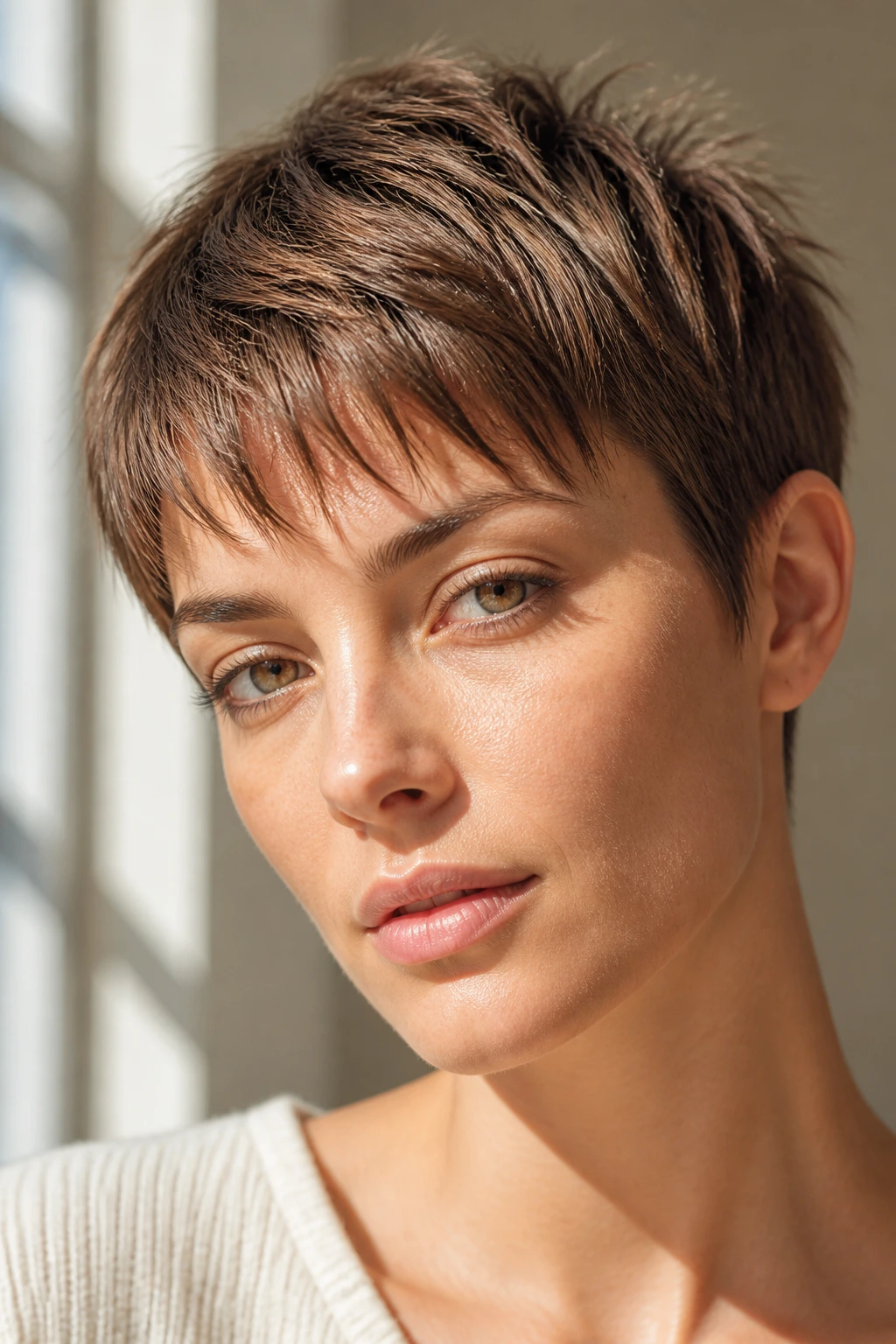
The razor is a polarizing tool. Some stylists hate it because if the blade is dull, it causes split ends. However, if your stylist uses a sharp, high-quality razor correctly, it is the best way to remove weight from thick hair.
The Razor Advantage
Scissors cut a clean line; razors cut a tapered edge. This taper is the definition of “less volume.” Every single strand of hair ends up with a soft, wispy tip rather than a hard, blunt end. This allows the hair to lay incredibly flat and close to the head.
The Look
A razor-cut pixie has a soft, feathery texture that looks very modern and edgy. It doesn’t look “sculpted” or “rigid”—it looks soft and lived-in. If you want a short style that feels light as air, this is the one to ask for.
The Bottom Line on Debulking
If there is one thing to take away from this, it is that you should never be afraid to advocate for the weight of your hair. Stylists are often trained to leave as much hair as possible because, generally, people want thick hair. You have to communicate clearly that for you, density is a burden, not a goal.
Do not be shy about asking for thinning, debulking, or layering. If you feel like your head is heavy, your hair is holding too much water after a shower, or it feels like you are wearing a hat made of hair all day, you are not alone. These cuts, when performed by a professional who understands internal structure, will change your experience.
Finally, remember that the best haircut in the world can be undone by the wrong products. If your hair is naturally dense, skip the “moisturizing” shampoos that are loaded with heavy oils and butters. You do not need to add weight. Instead, look for lightweight, volumizing, or clarifying formulas that remove buildup and keep your hair feeling clean and airy. Your hair is an asset, but it is one that needs to be properly managed to be truly enjoyable.
