



Fine flat hair has a way of telling on the wrong haircut. The crown settles fast, the ends split into little see-through strands, and a style that looked airy in the chair can feel limp by lunchtime. More product helps only so much. The cut does the heavy lifting.
The best haircuts for fine flat hair usually do one of two things: they keep a clean edge so the ends look thicker, or they build shape in the right places without stealing too much density. That second part matters more than people think. Too many short layers can leave the perimeter wispy, and once that happens, no amount of teasing spray makes the hair look full.
Fine hair is not the same thing as thin hair. Fine means each strand is small in diameter; thin means there are fewer strands overall. You can have a lot of fine hair and still need careful shaping, because a bad cut can make even decent density look sparse. The difference shows up most at the ends and around the crown.
Length matters, but it is not the whole story. A jaw-length bob can look richer than chest-length hair. A soft pixie can look fuller than a layered midlength cut. What matters is where the weight sits, how the perimeter is handled, and how much styling you want to do before coffee.
1. Blunt Jaw-Length Bob for Fine Flat Hair
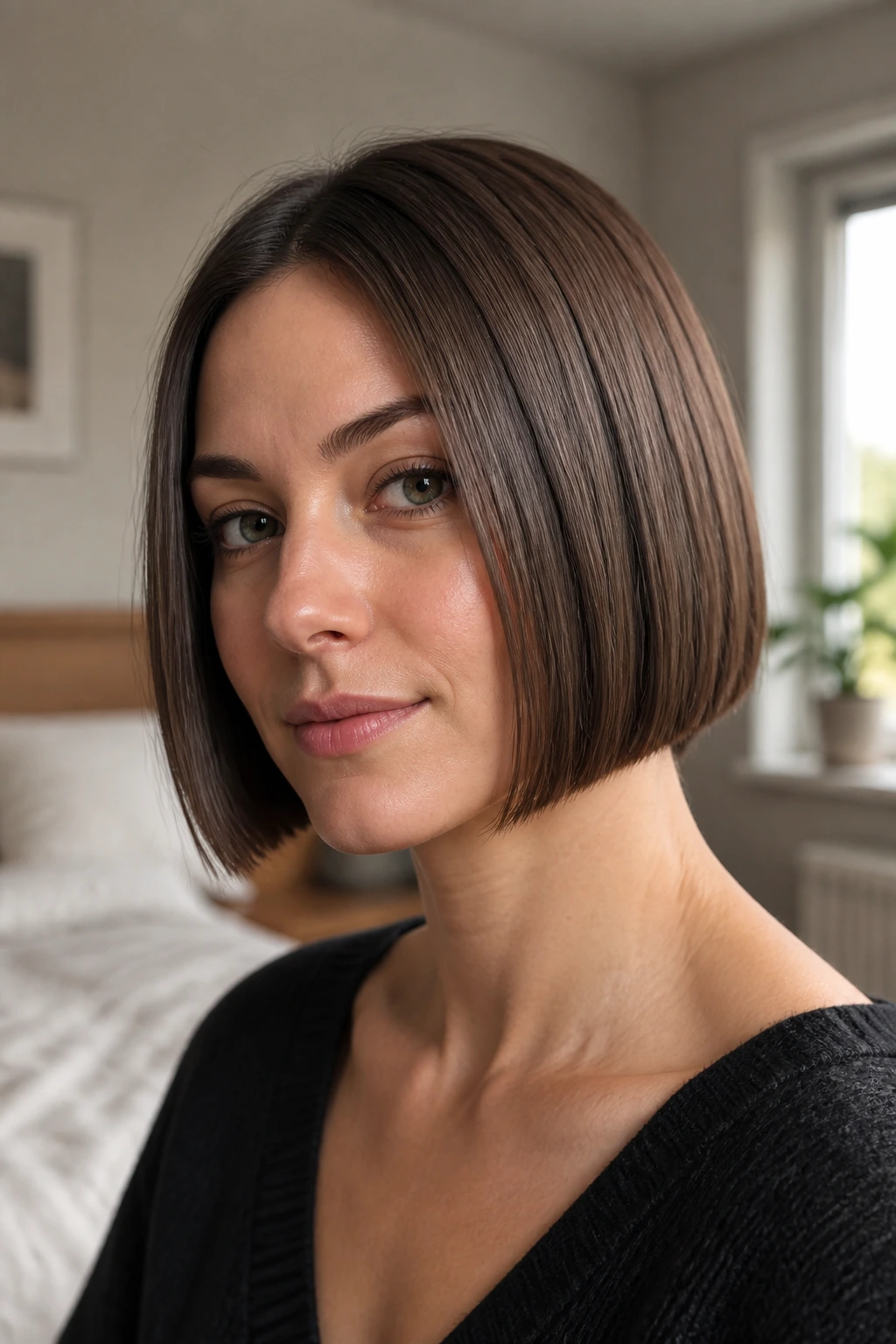
A blunt jaw-length bob is one of the fastest ways to make fine hair look denser. The clean edge gives the eye a solid line to follow, so the ends stop breaking apart into wisps. On fine hair, that matters a lot. The bluntness does the illusion work.
The sweet spot is usually right at the jaw or just below it. Go too long and the hair starts to drag; go too short and the head shape can take over in a way that feels harsh. A tiny bit of bevel at the ends helps the bob sit close to the neck instead of flipping out like a shelf.
Why It Works
A hard perimeter gives the haircut a visible body line, which is exactly what fine flat hair needs. You are not trying to create more hair. You are trying to make the hair you already have look like it occupies more space.
Ask for minimal texturizing at the bottom. A razor can be useful higher up, but heavy razor work at the ends is the quickest way to make the whole shape look hungry. If your hair bends under easily, even better; if it flips out, your stylist can leave a touch more weight in the corners.
- Best for straight to slightly wavy hair.
- Ask for the line to hit the jawbone or just below it.
- Keep the interior light, not choppy.
- Style with a round brush or flat brush and a pea-size cream.
Tip: If the ends kick out, ask for a small amount of graduation, not more layers.
2. Collarbone Lob With Internal Layers
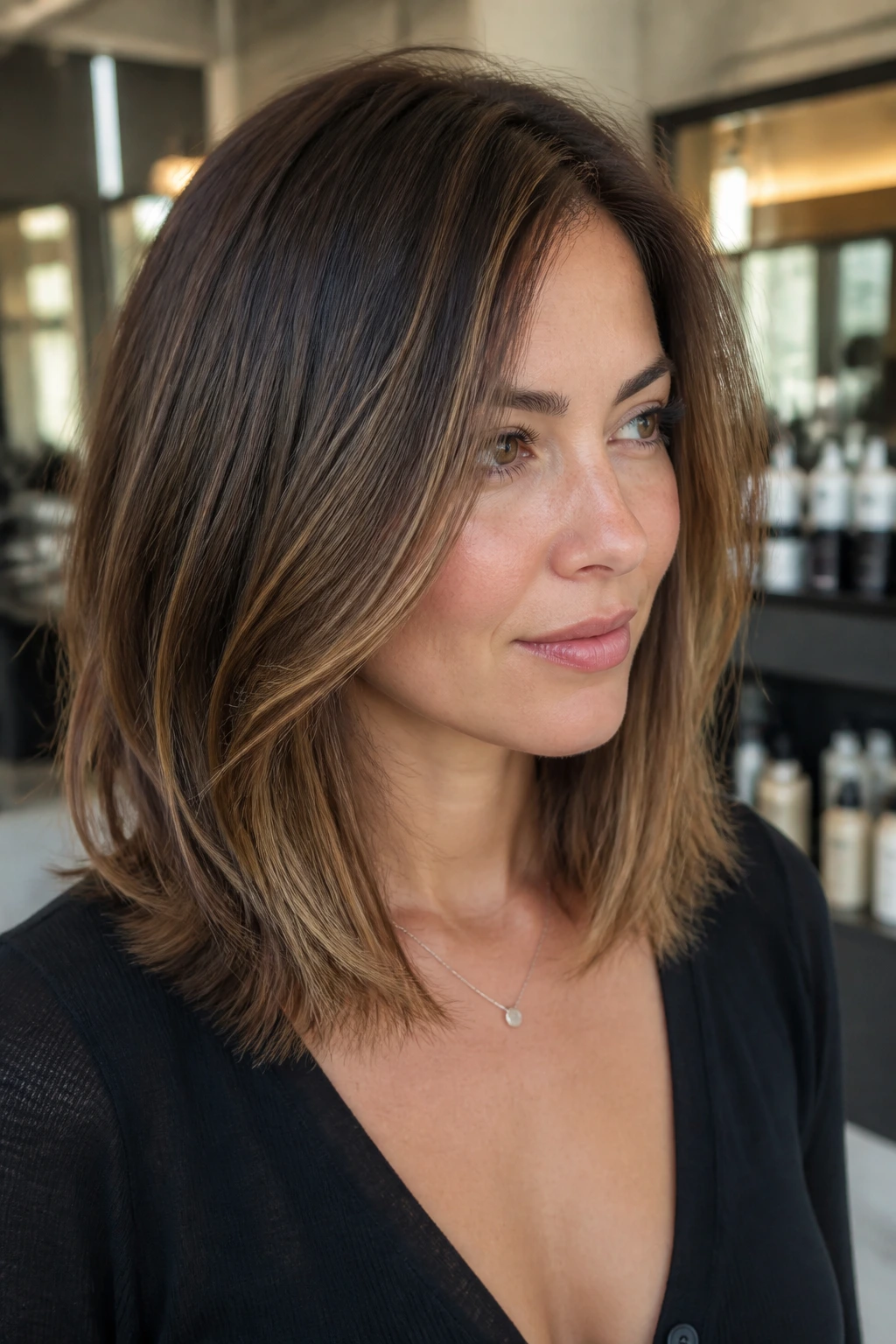
Why does the collarbone length work so well? Because it gives you room to move without letting the hair get too long and heavy. A collarbone lob lands in a useful middle zone: long enough to tuck behind the ears, short enough to keep some lift near the shoulders. On fine flat hair, that balance matters.
The hidden trick is the layering. Keep the layers long and subtle — the kind you feel more than you see. If the shortest pieces begin too high, the ends lose weight and the style starts to string out. If the layers sit lower, the lob keeps its body line and still gets a little swing.
How to Keep It from Collapsing
A side part gives this cut an easier lift at the roots than a dead-center part on many people. Not always, but often enough that it is worth trying. A half-inch shift can wake the whole shape up.
Blow-dry the roots first with a medium brush, then turn the ends under only in the last 2 inches. That little bend keeps the cut looking polished instead of flat and stringy. If you like air-drying, a lightweight leave-in and a tiny bit of mousse at the crown can hold the root without turning the hair crunchy.
This is one of those haircuts that looks calm, not fussy. Nice. Easy to live with.
3. Longer Pixie With a Soft Top

There’s a specific kind of short-hair failure that happens with fine hair: the top gets cut too short, the sides are too soft, and after one wash the shape lies down like paper. A longer-top pixie avoids that mess. It keeps enough length on top to create lift while trimming the back and sides close enough to show the shape.
The top is the whole game here. Leave about 2.5 to 4 inches on the crown and front if your hair can take it, then taper the sides and nape so the cut hugs the head. That contrast is what gives a pixie some life. Without it, you just get a close crop that needs constant pushing around with your fingers.
What to Ask For in the Chair
- Keep extra length on top so the hair can be swept up, forward, or slightly to the side.
- Ask for a soft taper at the nape and around the ears.
- Use point cutting on the top rather than aggressive thinning.
- Leave the fringe area a touch longer if you have a cowlick.
A tiny bit of paste or cream is enough. Not a lot. Fine hair gets weighed down fast, and the point of this cut is light movement, not helmet hair.
If you have ever wanted short hair but feared losing all your volume, this is the one that usually feels least brutal to grow into.
4. Italian Bob With a Gentle Bend

A severe bob is not the point here. The Italian bob has more body, more curve, and more life at the ends, which is exactly why it suits fine flat hair so well. It usually sits around the chin to collarbone range and gets its shape from a soft bend rather than a stiff, straight line.
Unlike a razor-thin bob that hangs flat, this one keeps a little weight in the perimeter. The result is a cut that looks fuller when the hair tucks inward slightly at the ends. It has presence. It also holds up better when the hair is a bit dirty, which is one reason people keep coming back to it.
This cut loves a side or off-center part, especially if your hairline is softer on one side. Blow-dry it with a round brush or a large thermal brush and stop just before the ends start to flip. You want a gentle curve, not a curl.
It is a strong choice if you like hair that looks done without looking stiff. Straight, blunt, severe — that is not the mood here. A little bend goes a long way.
5. Shoulder-Length Shag With Airy Layers

A shag can be a disaster on fine hair. Or it can be the one cut that gives the hair some air. The difference is in the layer placement. On fine flat hair, the layers need to stay longer and softer, especially near the crown and the lower lengths. If the shortest pieces are hacked too high, the bottom starts to look see-through and the whole thing loses its shape.
What you want is a shoulder-length shag that keeps weight at the perimeter but lets the top move. The fringe pieces can sit around the cheekbones, and the internal layers can kick in below that. That gives the cut a little lift without stripping out the density that fine hair depends on.
A bit of wave helps this one, but straight hair can wear it too if you are willing to use mousse and a diffuser or a rough dry. The goal is not neatness. It is movement with enough structure that the hair does not just fray apart.
I like this cut most on people who want their hair to look lived in, not polished. It has a bit of attitude. It also grows out fairly well, which matters because fine hair can look patchy if the trim schedule gets too long.
6. Bixie Cut
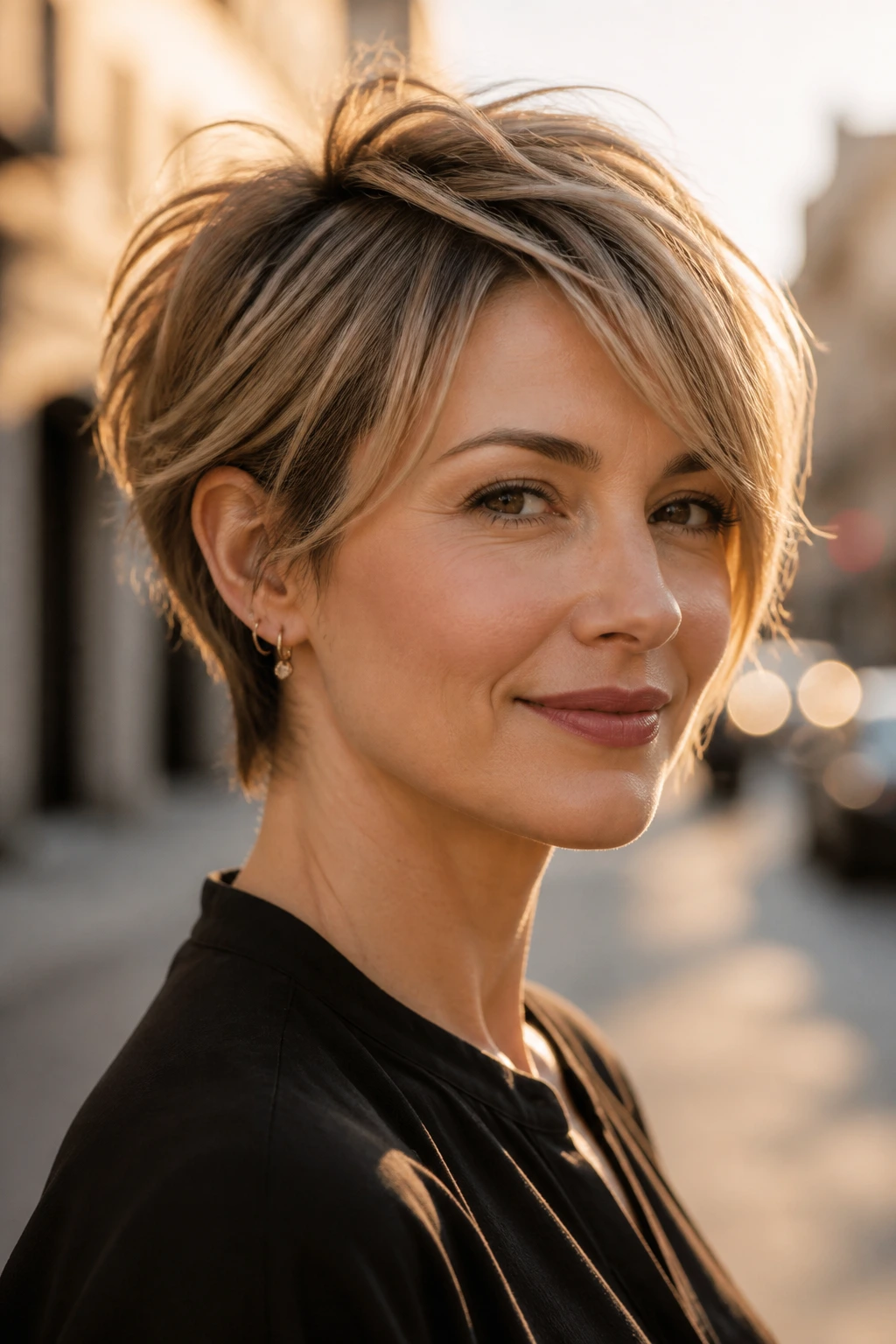
Is it a bob? Is it a pixie? That’s the whole appeal. A bixie sits between the two, which makes it useful for fine hair that wants lift but does not want to go fully short. The back is shorter, the front keeps more softness, and the crown usually has enough length to create a little push upward.
The Sweet Spot
The bixie works because it removes weight where fine hair tends to sag while keeping enough length in the front to avoid the harshness of a cropped pixie. You get movement near the face and a cleaner neck line, which can make the whole head look lighter and more open.
If your hair falls flat at the crown, ask for a slightly longer top and a soft, piecey fringe area. That gives you options. You can sweep it forward, tuck it back, or let it fall a little messy. The cut should be able to do more than one thing.
A little texturizing cream helps, but again, not too much. Fine hair can go from airy to greasy in a blink if you pile product on. This is a cut that wants fingers, not a ton of spray.
The bixie is especially good if you keep saying you want short hair, then back out at the last minute. Fair. This is the middle ground.
7. Curtain Bangs With Long Layers for Fine Flat Hair

Flat at the crown but not ready to lose length? Curtain bangs can change the whole feel of the haircut without asking you to cut off half your hair. They draw attention forward, break up the flat line across the forehead, and make the top of the head feel less heavy.
The key is keeping the bangs light. Heavy, blunt fringe on fine hair can sit like a curtain in the wrong way — thick at the front, thin everywhere else. Curtain bangs should split cleanly in the middle and graze the cheekbones or just below them. The surrounding layers need to be long enough to flow into the rest of the cut.
How to Ask for the Cut
- Ask for the shortest point to hit around the cheekbone.
- Keep the longest pieces blending into the jaw or collarbone.
- Tell the stylist you want movement, not a dense front panel.
- Avoid short, choppy layers high on the head if the crown is sparse.
A round brush or a Velcro roller at the front makes a real difference. Five minutes. Sometimes less. That little lift at the bang area changes the whole balance of the face, especially when the rest of the hair is kept simple.
This is one of my favorite haircuts for fine flat hair because it works even when the lengths are not doing much. The front does enough on its own.
8. French Bob
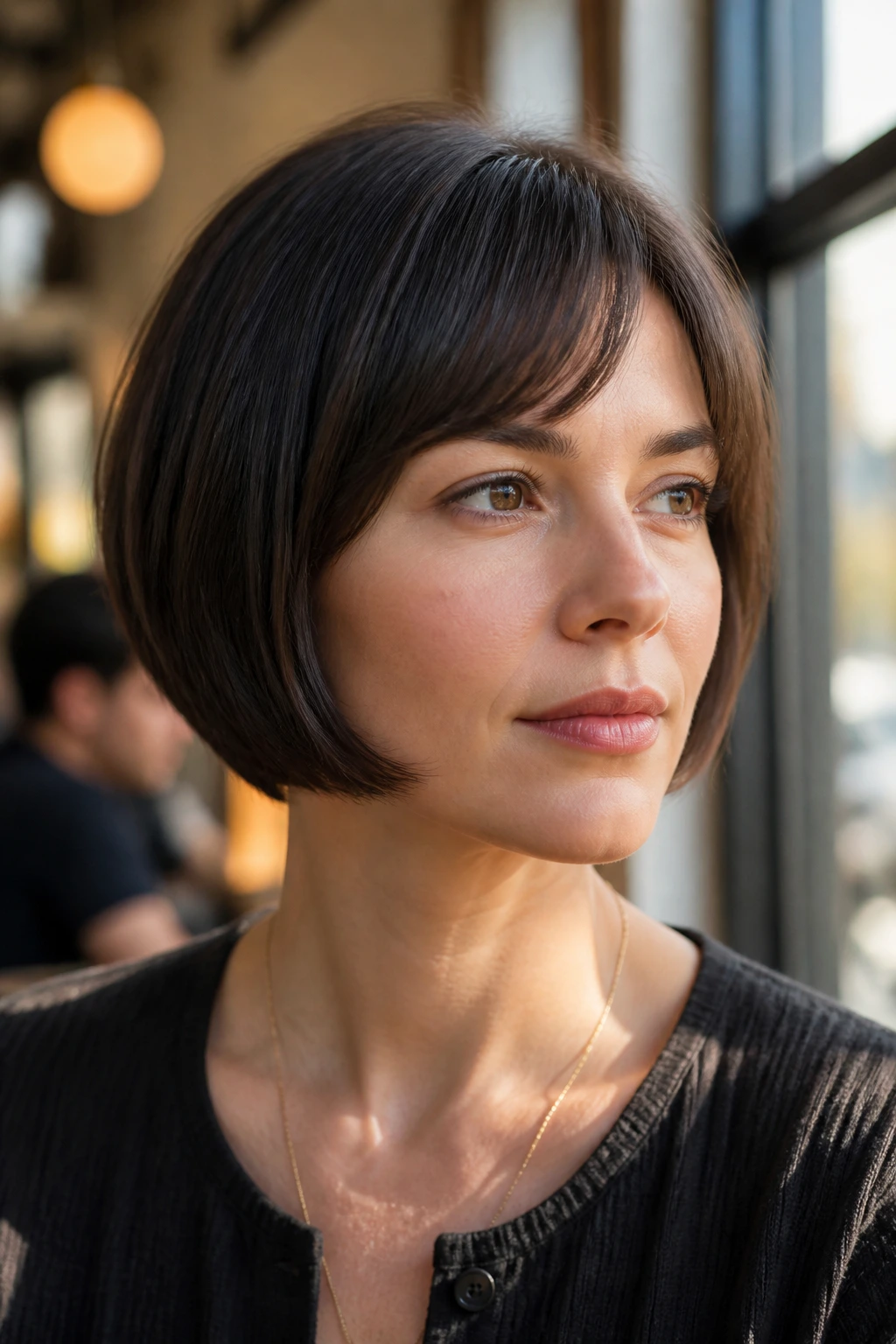
Not every fine-hair cut needs to look airy and undone. Some need to look exact. The French bob is one of those. It sits at or above the chin, usually with a clean line and a slight inward curve, and it can look fuller than longer hair simply because it does not have much room to collapse.
The shorter length is part of the magic. Fine hair often looks best when it is not dragging itself down. A French bob removes that problem at the root. Add a subtle fringe or a side sweep, and the cut starts reading as intentional instead of severe.
This shape is happiest on straight or lightly wavy hair. If your texture is very curly or wildly bent, you may need more shaping than this name usually suggests. That is fine. The principle still holds: keep the perimeter crisp, keep the layers restrained, and do not over-thin the ends.
A French bob also makes a good argument for less styling. A quick blow-dry, a small brush, a touch of light hold spray, and you are done. That kind of low drama is rare. Worth keeping.
9. U-Shaped Midlength Cut

Look at the back of the head and you’ll see why the U shape matters. A U-shaped midlength cut keeps a little more length in the front and tapers subtly toward the back, which helps preserve movement without making the hair look boxy. On fine flat hair, that perimeter weight can be the difference between full and flimsy.
The cut gives the eye a soft curve to follow, so the bottom does not read as a hard shelf. That is useful if your hair tends to lie close to the shoulders and go flat fast. The shape also keeps the front pieces from feeling too abrupt, which helps if you want some face-framing without losing too much density.
What to Watch For
- The curve should be subtle, not dramatic.
- The back should not be overly thinned.
- The longest front pieces can sit near the collarbone.
- Ends need regular trimming so the shape stays clean.
This cut does not need fancy styling. A blow-dry with a paddle brush or a quick bend with a large curling iron can be enough. If you leave it too long between trims, though, the U can lose its shape and start looking like a tired layer cake. Nobody wants that.
It is a smart choice when you want medium length but do not want the hair to hang in a dead straight curtain.
10. One-Length Midlength Cut for Fine Flat Hair

When hair is sparse or especially fine, the cleanest-looking move is often to remove less hair, not more. A one-length midlength cut keeps the perimeter solid and lets the eye see a fuller body line from top to bottom. It sounds plain. It is, a little. And that is why it works.
Why Fewer Layers Help
Layers can be useful, but on fine flat hair they can also reduce the visual mass that makes the hair look rich. A one-length cut keeps the ends thick-looking and gives you the strongest possible outline. That outline matters more when the hair is straight, because straight hair shows every weak spot.
This cut usually lands between the collarbone and upper chest. That range gives enough length to pull it back when needed, while still letting the hair behave like one solid sheet. If you want movement, you can create it with styling, not with a bunch of chopped layers.
A soft bend from a round brush or a wide curling iron works well here. So does air-drying with a lightweight cream if your texture has a little wave. The line should stay visible, not frayed.
- Best for straight to softly wavy hair.
- Ask for blunt ends and very little internal layering.
- Trim every 8 to 10 weeks to keep the line crisp.
- Use only a small amount of product so the hair does not collapse.
This is a quietly strong haircut. Not flashy. Very effective.
11. Soft Wolf Cut With Controlled Layers

A wolf cut only helps fine hair when it is softened. The hard version, with short crown layers and dramatic collapse through the lengths, can leave fine strands looking threadbare. A softer wolf cut keeps the attitude but lowers the risk. The layers begin later, the crown stays less chopped up, and the perimeter keeps enough weight to look like hair rather than wisps.
That controlled shape is what makes the cut usable. Fine flat hair needs a little lift at the top, yes, but it also needs enough thickness at the bottom to look finished. A good soft wolf cut respects both. It gives you that piecey, airy feel around the face without eating away at the body of the cut.
This one works best on hair that has some wave or bend already. If your hair is pin-straight and very soft, the cut can slide flat unless you are willing to rough dry it or use a diffuser. That is the honest downside. It is not a set-it-and-forget-it haircut.
Still, when it works, it works. The texture looks cool without trying too hard, and the grow-out is usually less awkward than a sharper layered cut. Not bad at all.
12. Rounded Bob

Why does a rounded bob feel fuller than a flat line? Because the curve follows the shape of the head instead of fighting it. The back gets a little lift, the sides soften toward the jaw, and the whole haircut looks more padded, which is useful when the strands themselves are fine.
A rounded bob can be chin length or a touch longer. The real point is the shape: slightly lifted through the back, softly tucked at the sides, and not too severe at the corners. That roundness creates the sense of body where fine hair often needs it most, right around the crown and upper nape.
Where the Curve Sits
Ask for a little graduation in the back, but not the kind that turns into a stacked triangle. That old-school shape can be too obvious and can make the cut feel dated fast. You want a soft curve, not a helmet.
A side part can help, especially if your crown tends to collapse toward one side. A little root lift spray at the back and a quick blow-dry with tension at the brush will give the bob more shape than heavy product ever will.
This cut is a good fit for someone who wants fullness without looking like they are trying to fake volume. It has structure. That matters.
13. Long Layers With Face-Framing Pieces
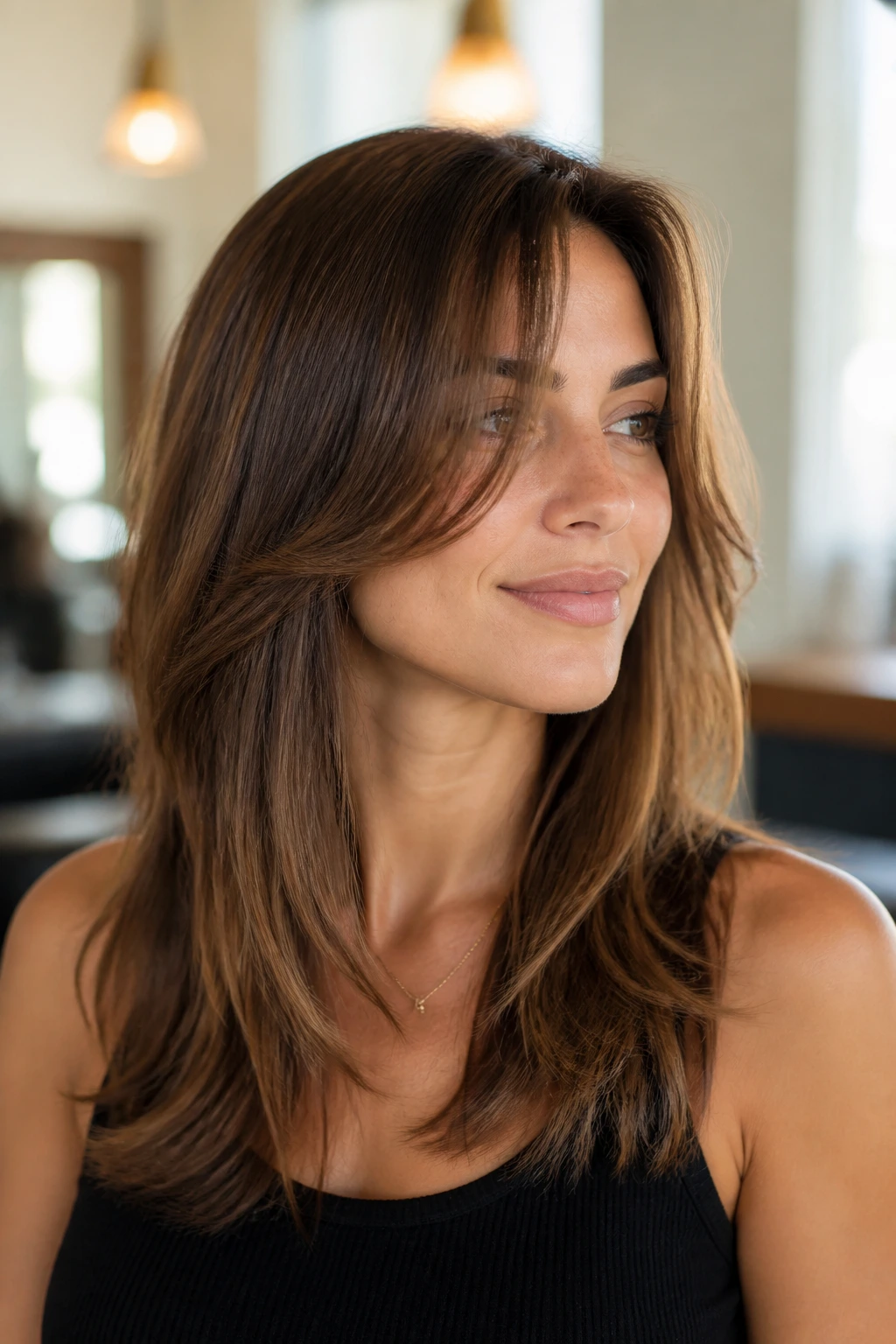
If you are not ready to go short, long layers can still work for fine flat hair — but only if they are handled carefully. The mistake is starting them too high. Once that happens, the lengths lose weight and the ends begin to look see-through. Keep the layers long, and keep the face-framing pieces controlled.
The best version usually starts below the chin and melts into the collarbone or chest area. That lets the hair move around the face without shredding the overall shape. You get some softness near the front, but the back still holds enough density to look full in a ponytail or half-up style.
This is a strong choice if you like blowouts. A large round brush, a medium barrel brush, or hot rollers at the face can bring the layers to life without making the hair look overworked. You can also air-dry it with a light cream if your texture has a touch of bend.
One thing I would avoid: too many little short pieces around the nape. Fine hair does not need extra holes cut into it. It needs the right weight in the right places, and this cut gives you that if it is done with restraint.
14. Tapered Pixie Bob
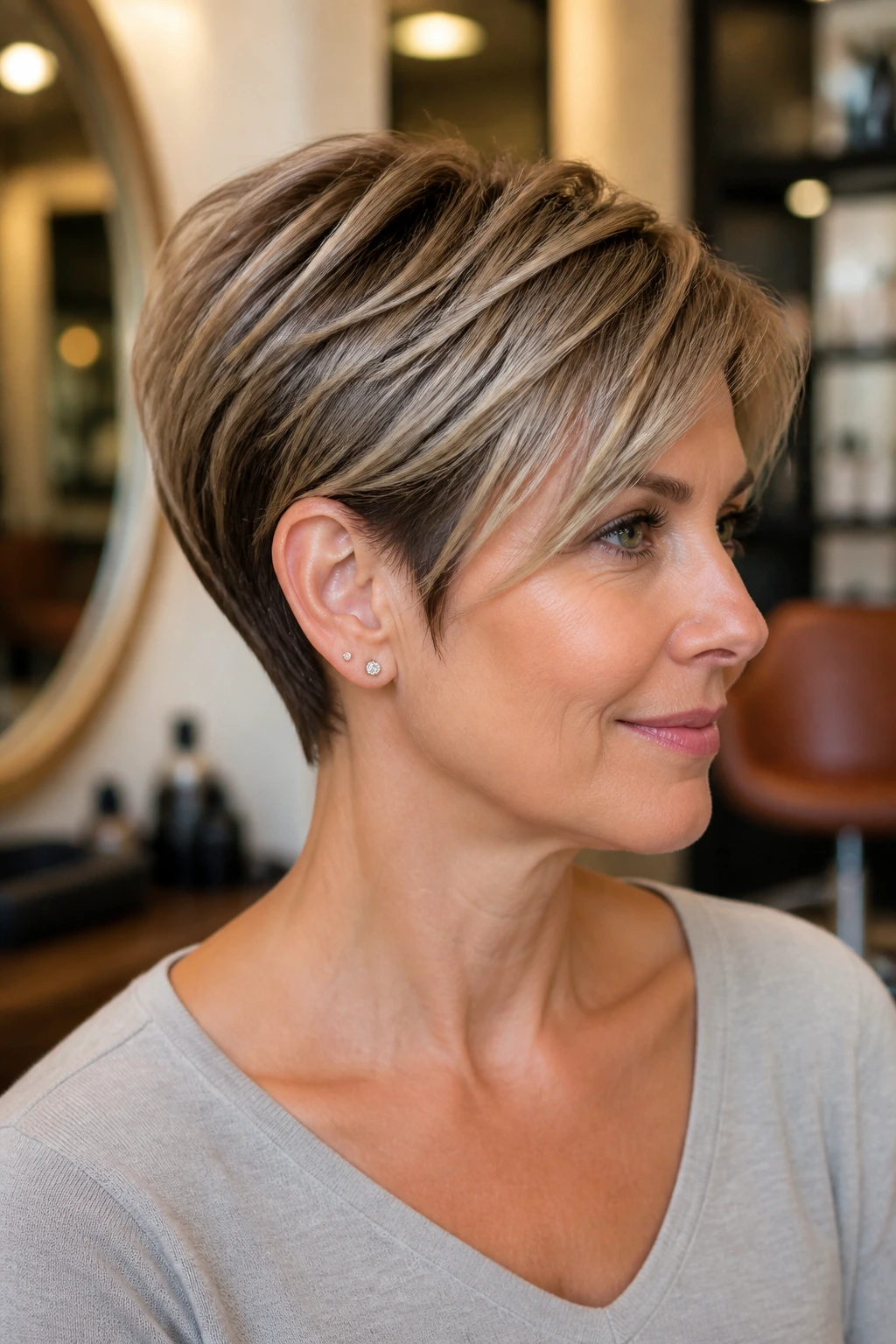
If you like short hair but hate how a pixie can expose every cowlick, a tapered pixie bob is a useful middle ground. The back is shorter and snug to the neck, the sides are softly shaped, and the top carries enough length to give fine hair a bit of lift. It reads as neat, but not severe.
The taper matters more than people think. By removing bulk at the nape and underneath the crown, the haircut avoids that flat shelf effect fine hair can get when it is all one length in a short style. At the same time, the bob-like front keeps some softness around the face. That blend makes the cut feel more forgiving.
Styling Rules
- Blow-dry the crown first so the top does not lie glued to the head.
- Use a small dab of paste or cream, not a full palm.
- Push the front slightly forward or to the side for extra shape.
- Keep the sides smooth, but do not iron them flat.
This is a good haircut for someone who wants polish without too much effort. It can look sleek on a workday and slightly undone on the weekend. That flexibility is part of the appeal. So is the fact that it does not ask you to fight your hair every morning.
15. Chin-Length Crop With Side-Swept Fringe

Short hair can still feel soft. A chin-length crop with a side-swept fringe is proof. The length keeps the perimeter strong, while the fringe breaks up the flat line across the forehead and gives the cut a little motion right where the eye lands first. For fine flat hair, that front activity helps a lot.
This cut is especially good if your hairline is sparse, your forehead feels a bit too open in a blunt center part, or you just want something that looks finished with very little styling. The side-swept fringe creates a diagonal line, which naturally adds movement. Keep the rest of the cut clean and the result feels fresh without looking fussy.
A flat brush and a quick blast from the dryer usually do the job. If you want more lift, wrap the fringe around a small round brush for a few seconds and let it cool before touching it. That cool-down matters. Hair remembers the shape better when it sets.
If you want the shortest, easiest, least needy haircut on this list, this is the one I would put at the top of the appointment note. Crisp enough to look intentional. Soft enough to wear every day.
