



Thinning hair changes the way a haircut behaves. A little too much layering, and the ends start to look see-through. A clean line, and the whole head reads fuller.
The best haircuts for thinning hair women usually do one boring-looking thing extremely well: they keep a strong outline. That can mean a blunt bob, a tidy pixie, or a lob that stops right at the collarbone and doesn’t fray into wisps. It is not about pretending the hair is thick. It is about giving the eye a shape to trust.
Length is not the enemy. Weak shape is. A shoulder-length cut with the wrong layers can look flatter than a shorter style with a hard edge, and that catches a lot of people off guard.
So the real question is not “short or long?” It is “where should the weight sit so the hair looks denser, moves well, and doesn’t expose the scalp every time you turn your head?”
1. The Chin-Length Blunt Bob That Makes Ends Look Thicker

A chin-length blunt bob is one of the easiest ways to make fine or thinning hair read fuller. The reason is plain: every strand ends in the same place, so the outline looks solid instead of frayed. When the hair is thinning through the mids and ends, that straight perimeter does more work than a pile of soft layers ever will.
Why the blunt edge matters
A bob that stops around the chin pulls the eye to the jawline and away from sparse ends. That little bit of structure makes the whole haircut feel denser. It also gives you enough length to tuck one side behind the ear, which is useful on days when the part line looks wider than you want.
What to ask for at the salon
- A blunt perimeter with minimal texturizing at the ends
- Length that lands at the chin or just below it
- Soft internal shaping only if your hair needs a little bend
- No razor cutting through the bottom edge if your hair is already fine
Best tip: blow-dry this cut with a small round brush and lift the roots first. If the root area is flat, the bob can start to look boxy fast.
2. The Collarbone Lob That Keeps Movement Without Losing Density
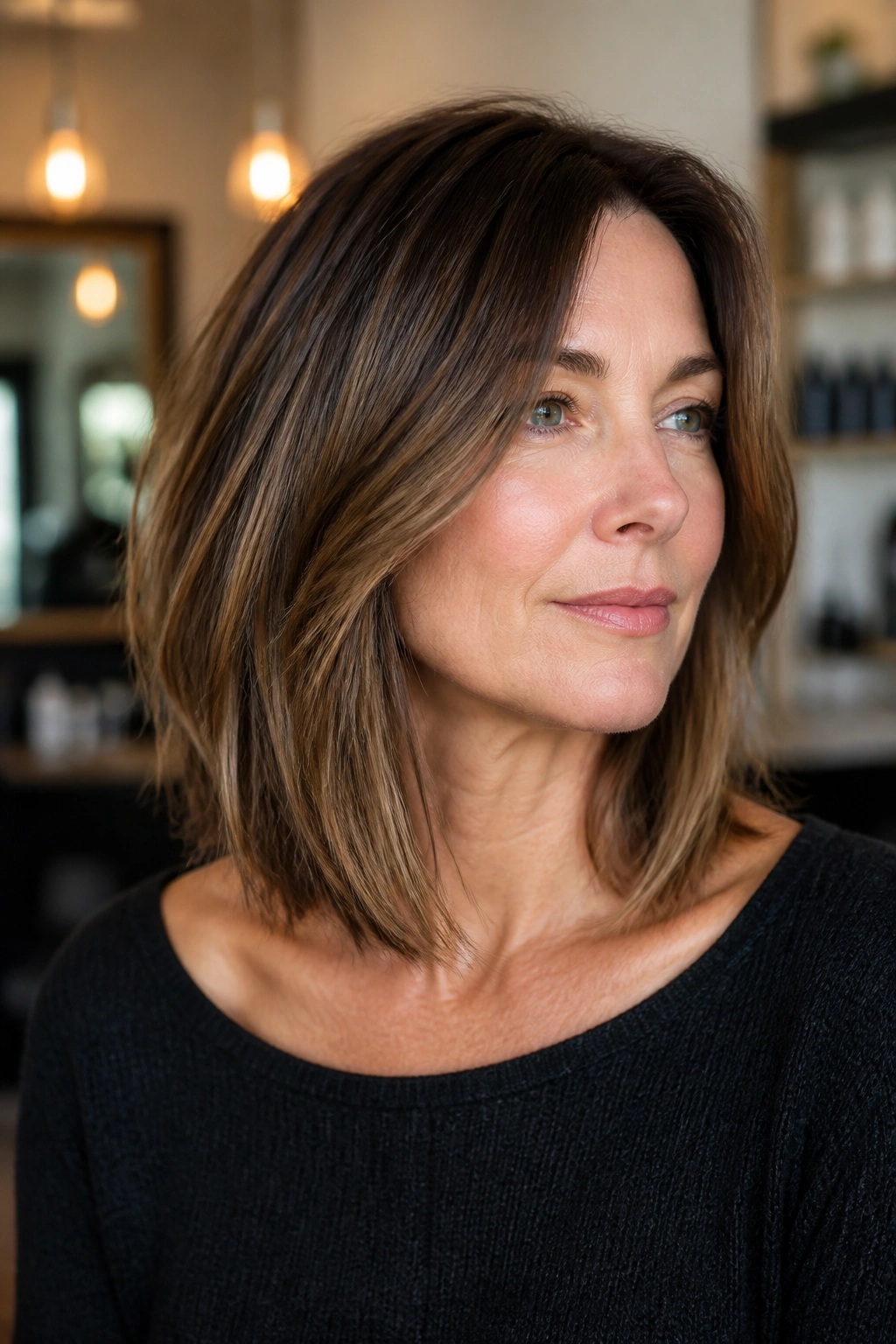
Why does a collarbone lob work so well? Because it gives you enough length to feel feminine and flexible, but not so much that the ends start separating into thin tails. The hair moves when you turn your head, and that movement helps disguise sparse areas near the mid-lengths.
A lob that sits right at the collarbone also plays nicely with a side part. That is not a small thing. A side part can cover a bit of scalp at the crown and make the top look lifted without any dramatic styling tricks.
Keep the ends blunt or only slightly beveled. Too many layers at this length can make the shape collapse right onto the shoulders, which is exactly what you do not want. I like this cut for women who want something easy to grow into, because it still looks neat while it grows out.
A flat iron bend at the ends is enough. You do not need loose curls every day.
3. The French Bob and Soft Fringe Combo

A French bob can be a smart move when thinning hair shows first at the temples or along the front hairline. The short length gives the hair body, and the soft fringe fills in the front in a way that feels deliberate, not cover-up-y. The trick is keeping the fringe light enough to move.
What makes the fringe work
The fringe should skim the brows or stop just above them, not sit in a heavy curtain across the whole forehead. Heavy bangs on fine hair can separate into little see-through pieces by lunchtime, and that is a miserable look to keep fixing. Softness matters here. So does density at the root.
How to keep the shape strong
- Ask for a blunt bob line at the jaw
- Keep the fringe piecey, not shredded
- Let the bangs blend slightly into the side sections
- Style with a round brush or a quick bend from a flat iron
This cut feels especially good if your hair has a little natural wave. Straight, slippery hair can do it too, but it usually wants a bit of root spray and a fast blow-dry to stop the fringe from clinging to the forehead.
4. The Pixie Cut That Lifts the Crown
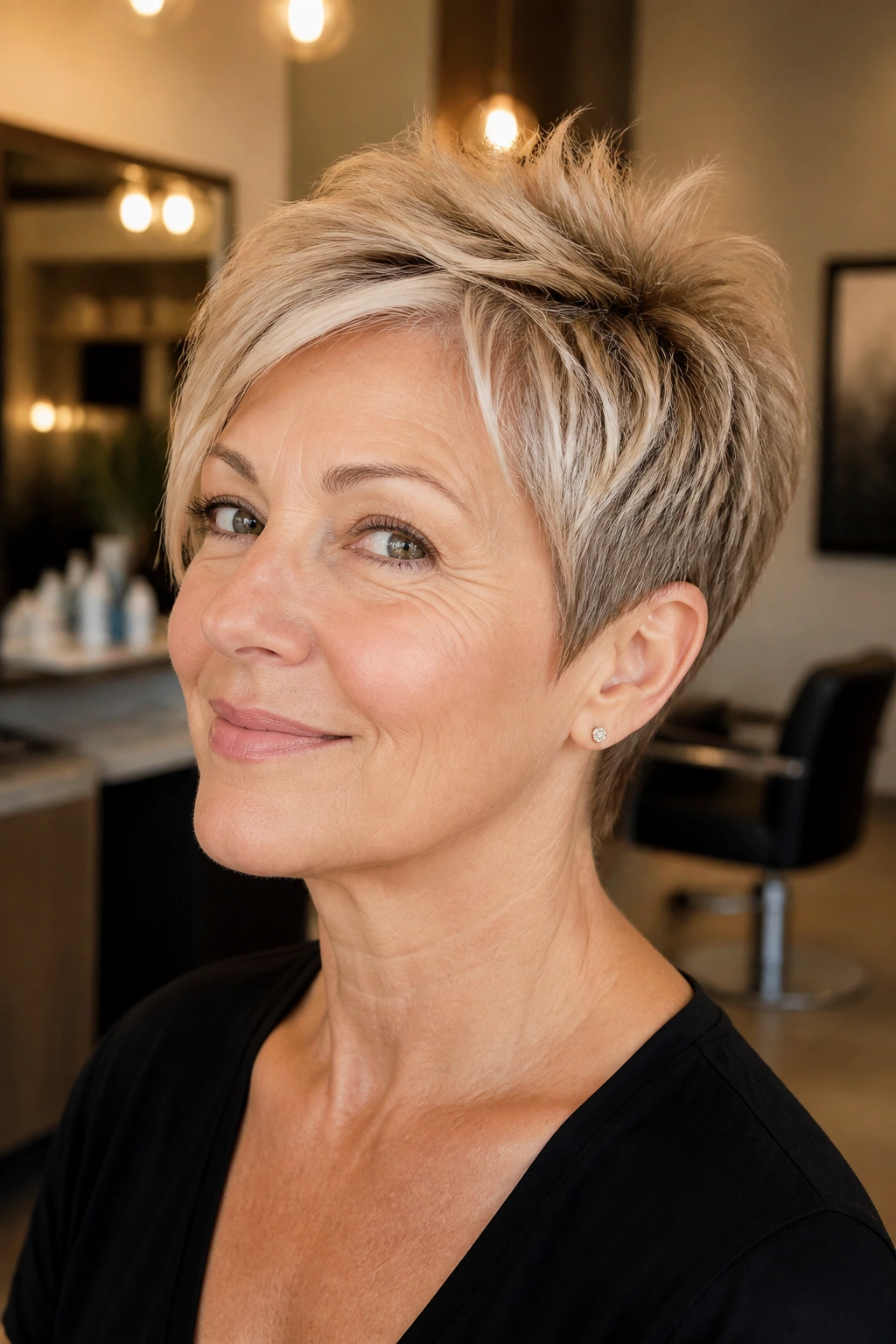
Picture a pixie that feels light but never flat. That is the goal. A good pixie for thinning hair is short on the sides and back, with enough length on top to create lift at the crown. The top should not be so short that the scalp shows every time the hair dries. And it should not be so long that it drops right back down.
A pixie works because it moves the attention upward. The eye goes to the texture, the shape, and the cheekbones instead of the thinner areas at the bottom. It is also one of the fastest cuts to style, which matters more than people admit.
The cut details that make it hold
- Keep the top around 2 to 3 inches if you want room to style
- Taper the nape and around the ears
- Leave a little weight through the crown
- Use mousse or root spray while the hair is damp
One caution: a pixie needs maintenance. Let it grow too far past the neat stage, and the back can start to look shaggy in a way that reads as thin rather than relaxed.
5. The Long Pixie for a Softer Grow-Out
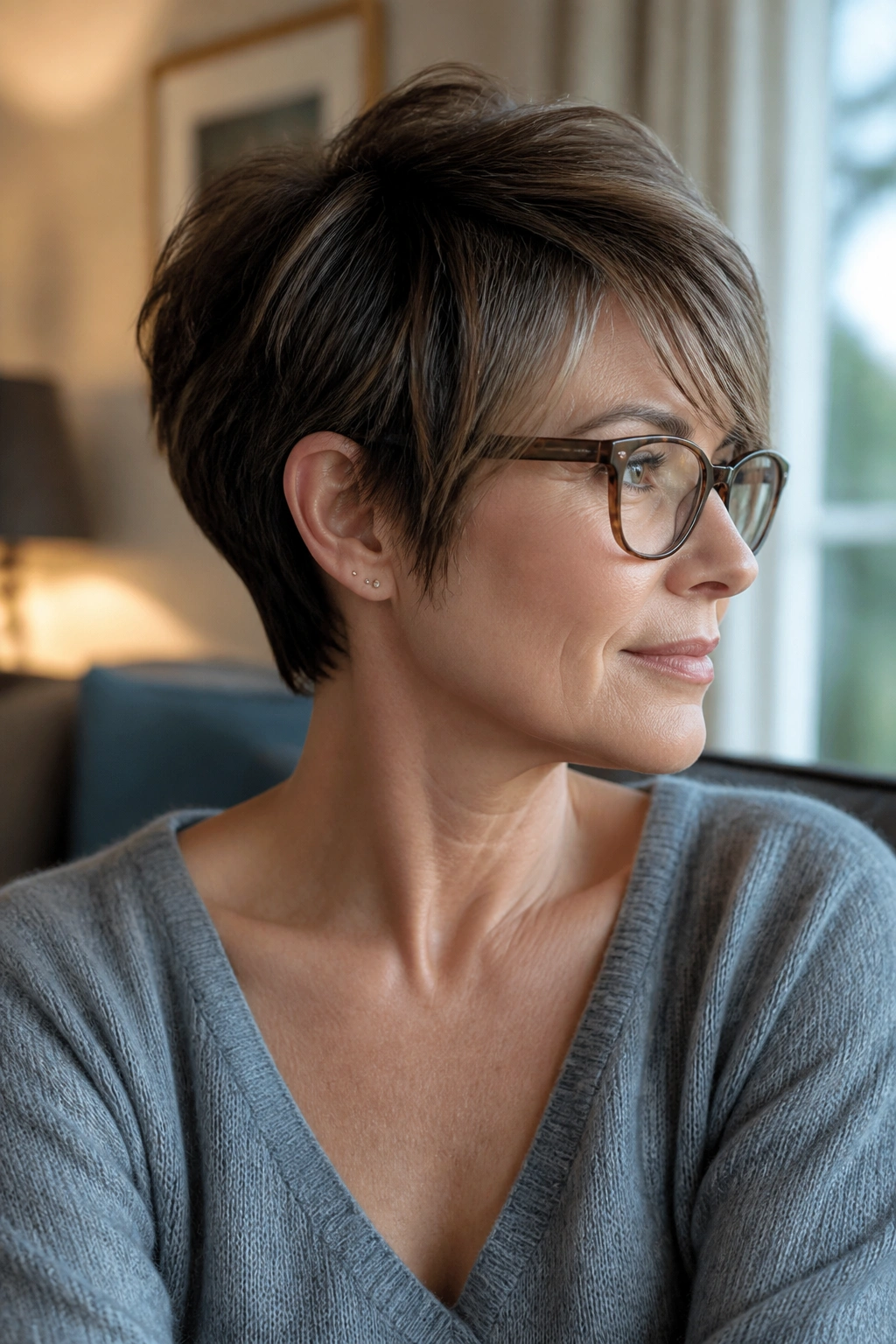
A long pixie is the safer cousin of the shorter version. It keeps the nape neat, gives the crown some body, and leaves enough length around the fringe and sides to tuck, sweep, or finger-style. If you like short hair but hate the feeling of being too exposed, this is the cut that usually lands well.
It also grows out better than a very tight pixie. That matters. A haircut that looks good for six weeks and then turns awkward is a headache nobody needs. The longer top gives you more wiggle room between salon visits, and the shape stays readable even when the ends start to soften.
I especially like this on women who wear glasses. The longer top and side pieces make room for frames, and the haircut does not disappear behind them. The hair still looks intentional.
Keep the texture light. Heavy pomade can make fine hair clump together, and clumping is not the same as fullness.
6. The Soft Shag for Hair That Still Has Some Bend

A shag can be brilliant on thinning hair when the hair already has some wave or a bit of body. The key word is soft. You want movement, not strips of disconnected layers that leave the ends wispy and sad. That mistake happens all the time, and it is why people blame the shag when the real problem was the layering plan.
Think of this cut as controlled texture. The layers should remove bulk from the right places, usually around the face and crown, while keeping enough weight at the perimeter to hold a shape. On wavy hair, that balance can look full and easy. On very fine, pin-straight hair, it can look sparse if the layers are too aggressive.
What to watch for
- Layers should be long enough to connect, not float apart
- The perimeter should still feel solid
- The face frame should start below the cheekbones if the hair is very thin
- A light wave spray can help the shape stay separated in a good way
My take: this is a cut for texture, not for rescue. If the hair has no natural bend at all, there are safer choices.
7. The One-Length Shoulder Cut for Fine Hair
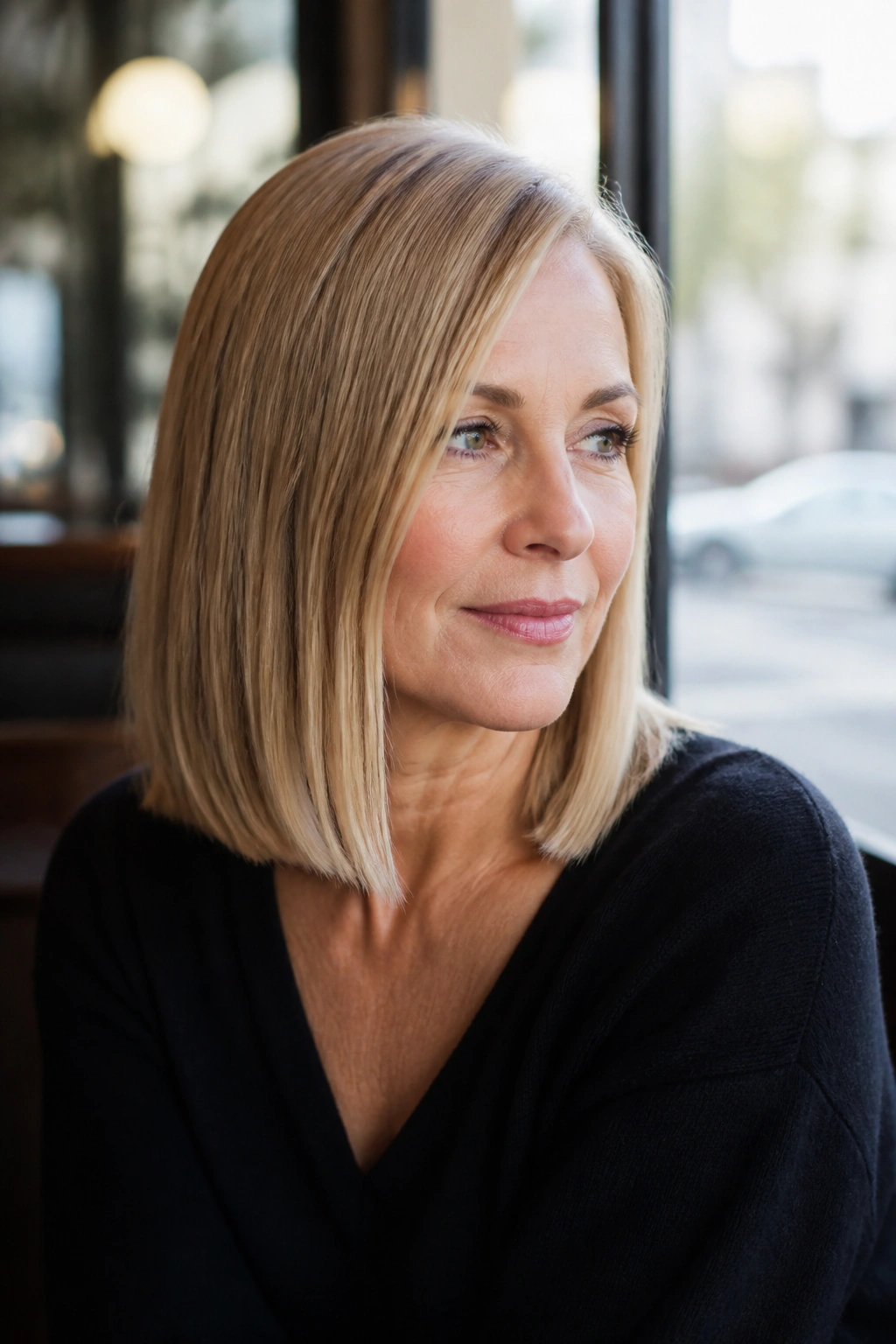
A one-length shoulder cut looks plain on a hanger. On the right head, it is quietly excellent. Hair that falls all in one length tends to look denser because the ends land together and create a fuller edge. If the hair is thin through the mids, this cut can hide that faster than a lot of layered styles.
The shoulder is a useful stopping point. It is long enough to still feel like hair you can tie back, but short enough that the ends don’t disappear into stringy bits. A deep side part makes it even better, because the heavier side gets a little natural lift.
No need for fancy carving or heavy face-framing. Those pieces often break apart first. Keep the line clean, add a small inward bend if you want polish, and let the hair sit where it wants to sit.
This is the cut I would hand to someone who says, “I want something simple, but I don’t want it to look limp.”
8. The Inverted Bob with a Lifted Back
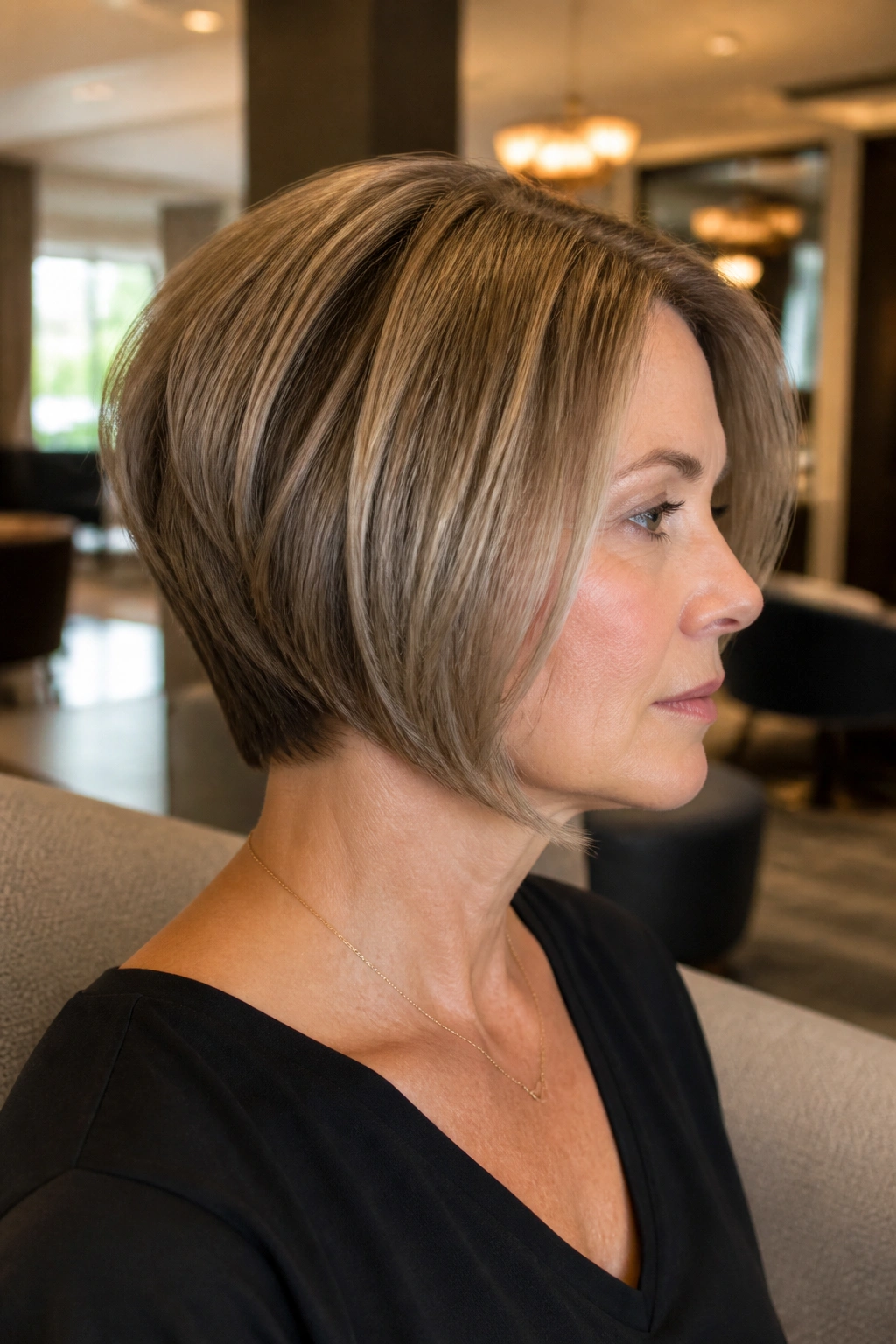
An inverted bob gives you the lift a boxy cut won’t. The back sits a little shorter, the front stays longer, and that angle creates a line that pulls the eye forward. It can make the crown feel more lifted without asking you to load the top with tons of product.
What makes it useful
- The shorter back adds shape at the nape
- The longer front keeps the haircut from looking too severe
- The angle helps fine hair feel less heavy at the bottom
- A slight stack can build volume without making the head look round and puffy
The part many people miss is the transition. If the angle is too sharp, the haircut can look dated and a little stiff. If it is too soft, you lose the shape that gives this cut its strength. The sweet spot is a clean diagonal that still feels modern.
I like this one for hair that tends to lie flat at the back of the head. It creates a lift where the hair usually collapses first.
9. The Side-Swept Bang Bob for Temple Thinning
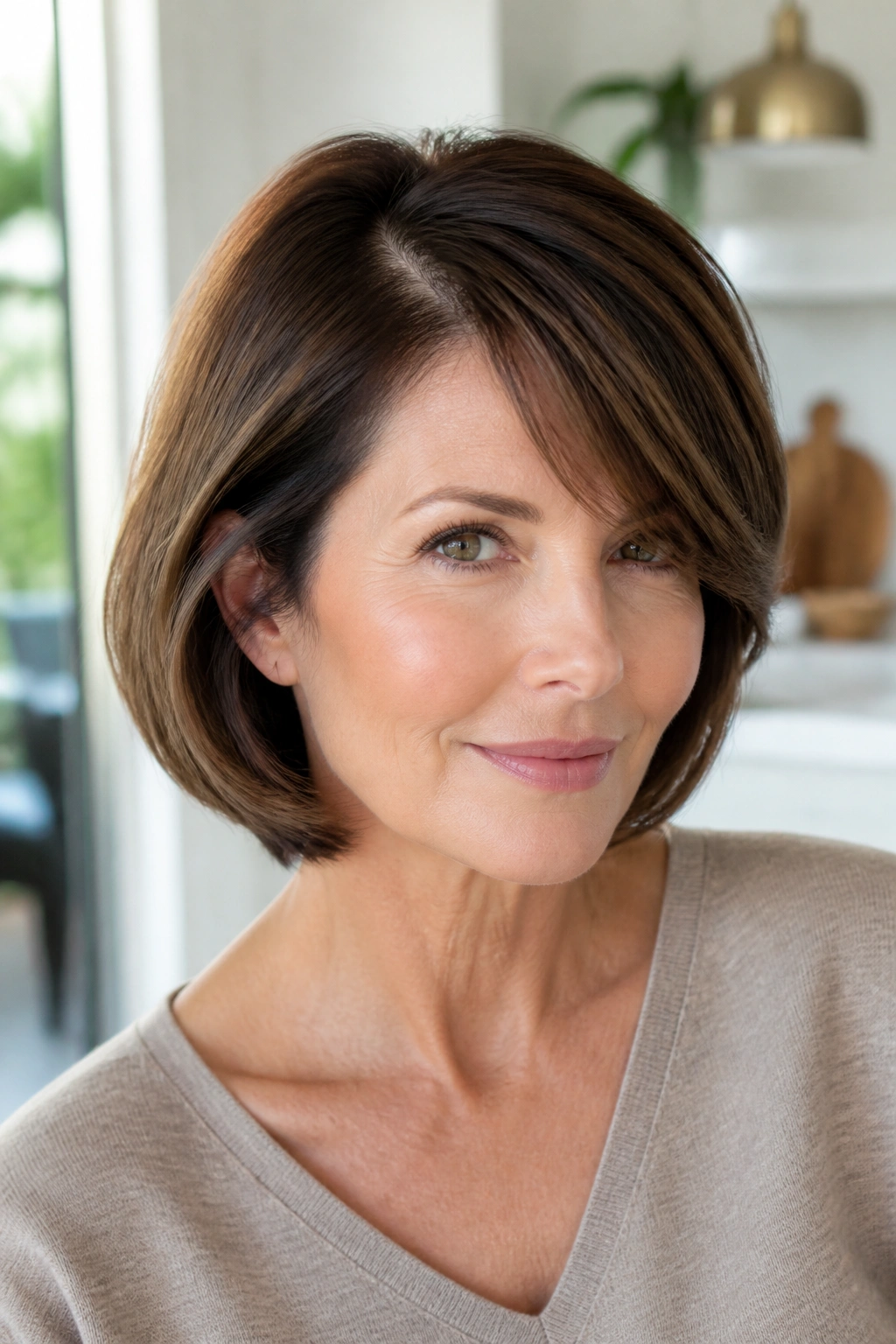
Temple thinning changes the whole face line. A bob with side-swept bangs can soften that area without pretending the hairline is something it isn’t. The fringe should sweep across the forehead in a gentle diagonal, not sit as a heavy curtain. That diagonal line is doing real work. It shifts the eye away from the temples and breaks up a narrow top section.
A deeper side part helps too. It gives one side more body and makes the haircut look fuller at the root. The bob underneath can stay at jaw length or just below. Either way, the bangs should blend into the side hair rather than sit on top of it like a separate piece.
Best part: this cut still feels grown-up. It is not trying to look cute for the sake of it. It just solves a problem quietly.
If your hair is fine, keep the bangs long enough to tuck behind the ear on off days. That little flexibility matters more than people expect.
10. The Curly Bob That Lets Texture Do the Work

How do curls hide thinning and still look shaped? By staying away from a long, heavy length that drags the curl pattern down. A curly bob gives the curls room to spring up, which makes the hair look fuller from root to end. The shape also keeps the weight from collecting at the bottom, where it can stretch out and show gaps.
How to shape it well
- Cut curls dry or mostly dry so the shape follows the pattern
- Stop the length around the chin or jaw
- Remove bulk where the curls bunch, not all over the head
- Use a light gel or cream so the curl clumps stay defined
This cut can look gorgeous on fine curls, but it needs restraint. Too much thinning shears work and the curl groups fall apart. Too little shaping and the bottom turns into a triangular bell shape. Neither is flattering.
A curly bob rewards patience. When it is done right, the hair looks lively instead of like it is hanging on.
11. The Bixie: Part Bob, Part Pixie
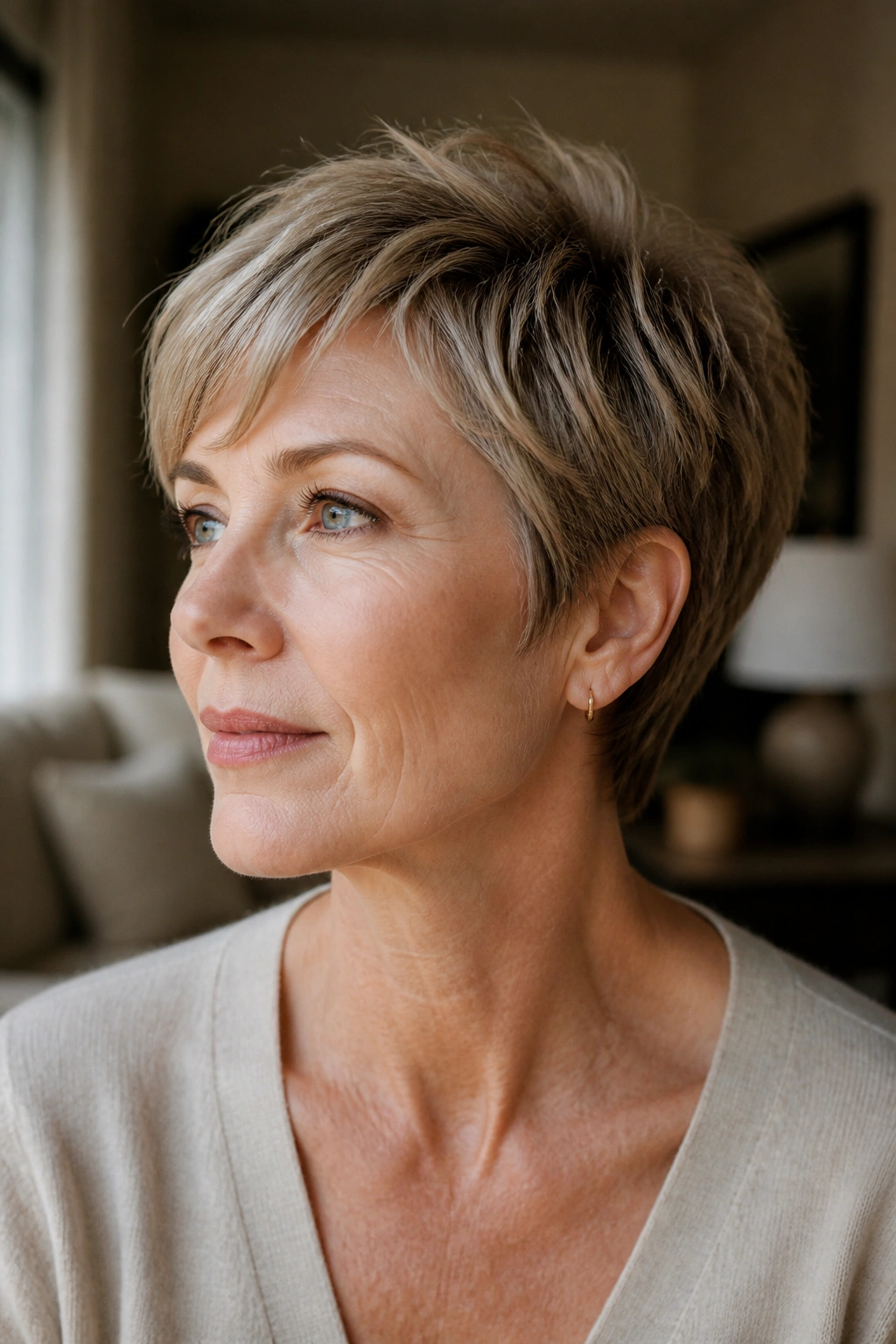
The bixie is the easiest short cut to live with if you want some softness around the face. It keeps a little more length than a pixie, but it is shorter and lighter than a bob. That in-between shape can be a gift for thinning hair because it gives you movement without the weight that drags fine hair down.
Why it feels different
A pixie can sometimes feel too cropped. A bob can sometimes feel too neat. The bixie lands between those moods. The top has piecey texture, the sides stay tidy, and the nape is usually close enough to look clean. That mix makes the hair appear thicker because nothing hangs in sad little strands.
- Best for straight to slightly wavy hair
- Good if you want volume without daily blow-drying
- Easy to refresh with a bit of texture spray
- Works well with side-swept fringe or a soft fringe
If you want a short cut that doesn’t feel severe, this is one of the smartest options on the list.
12. The Feathered Shoulder Cut with Airy Movement
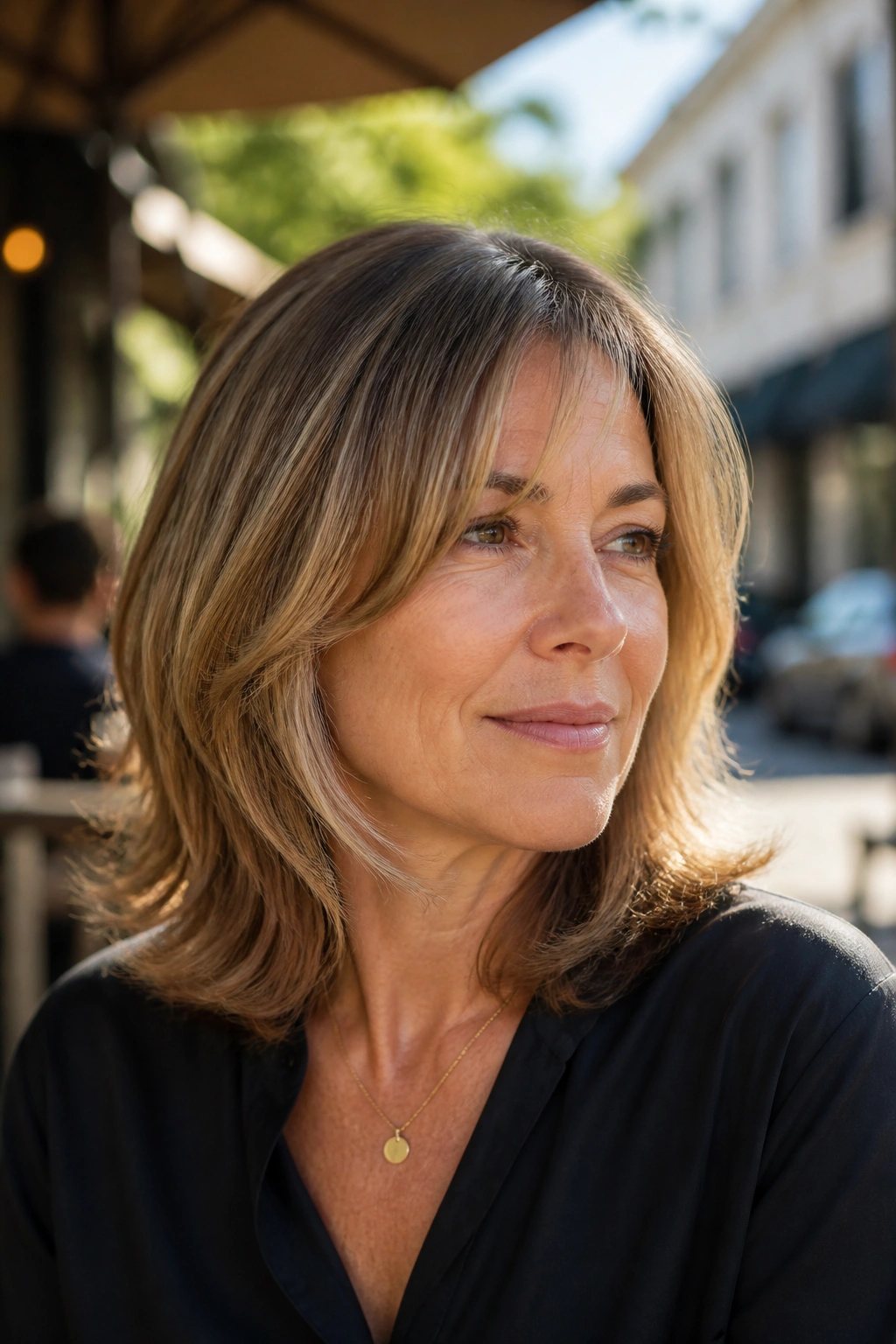
Feathering is useful only when the ends stay heavy enough to support it. That is the whole trick. A feathered shoulder cut adds movement around the face and through the outer layers, but the line at the bottom should still have enough body to hold the shape together. When the layers get too choppy, the haircut starts to look thin instead of airy.
This style works best on hair that has a little natural swing. It can soften a square face, lift the cheek area, and make the neck look longer. It also gives you some motion when you wear the hair loose, which helps the style feel less flat on days when your roots are tired.
I would not ask for extreme feathering through the crown if your hair is already sparse there. Keep the lightness around the front and outer edges. That keeps the haircut balanced.
A round brush and a quick bend at the ends usually finish it nicely.
13. The Asymmetrical Lob That Breaks Up the Eye Line

An asymmetrical lob can pull the eye away from a sparse part in a way that feels almost sneaky. One side is a bit longer than the other, so the whole shape stops looking symmetrical and predictable. That change in line can make the hair feel fuller because the viewer stops scanning straight across the head.
The cut does not need a huge difference from one side to the other. Even a subtle inch or two creates enough movement to matter. The longer side can skim the collarbone while the shorter side sits a touch higher. That uneven line gives the hair some attitude without turning it into a novelty cut.
This is a smart choice if your hair is thinning more on one side than the other. It also plays well with a side part, since the longer side naturally carries more weight.
Keep the ends blunt. The angle itself already gives you movement. You do not need extra slicing.
14. The Curtain-Bang Lob That Softens the Forehead

Can curtain bangs help if the front is getting thin? Yes, if they are cut with enough length to split and move. A curtain-bang lob softens the forehead, frames the eyes, and takes some pressure off the hairline. It works best when the bangs are long enough to blend into the sides instead of sitting like a short fringe that separates and shows scalp.
What to ask for
- Bangs that part in the center or slightly off-center
- Face-framing pieces that start around the cheekbones
- A lob that still has a strong bottom line
- Enough length in the bangs to tuck or sweep back on day two
This cut has one nice advantage: it grows out gracefully. If the bangs get a little longer, they just become face-framing layers. That is much easier than being stuck with a fringe that needs exact trim timing to look right.
If your hair is very fine, keep the curtain bangs long. Short bangs on thin hair can split too quickly, and then the whole effect falls apart.
15. The Tapered Crop with a Longer Top

A tapered crop is one of the cleanest answers to crown thinning. The sides and nape sit close to the head, while the top keeps enough length to create lift and texture. That contrast makes the hair look more intentional and less dragged down by the areas that have lost density.
The shape is neat, but it is not boring. A little lift through the top keeps the cut lively, and a side sweep can soften the face if you want less exposure around the hairline. It is also a strong option for coarse hair that has started to thin, because the taper removes bulk where you do not need it and leaves fullness where you do.
This cut can look excellent on salt-and-pepper hair too. The contrast between silver and darker strands often gives the top even more dimension.
A small round brush, a dab of cream, and a quick lift at the roots are usually enough. No drama.
16. The Italian Bob with Plush, Clean Ends
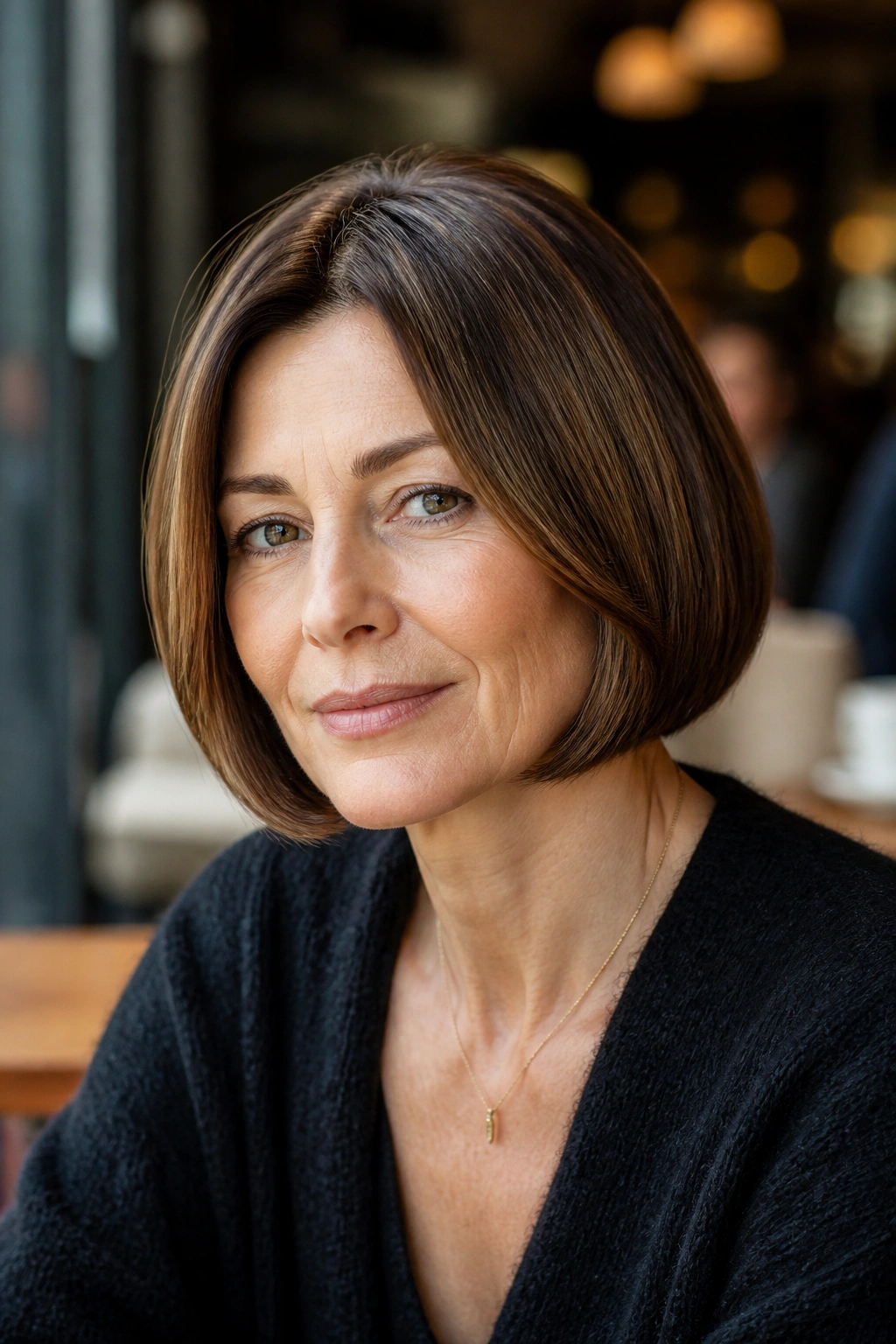
The Italian bob sits in a sweet spot between polished and full. It is softer than a hard box bob, but the ends still keep enough weight to look plush. That matters on thinning hair. You want the edges to feel deliberate, not airy in the wrong places.
A gentle curve under at the ends gives this cut its shape. The line hugs the jaw or sits just below it, which makes the hair feel thicker right where the eye lands first. It also looks good with a slight bend rather than tight curls, so styling stays simple.
I prefer this style when the hair has some density at the root but looks thin at the tips. The heavier perimeter helps hide that mismatch. It is a straightforward fix, and sometimes straightforward is exactly what the hair needs.
If you like a little movement, add it at the mid-lengths only. Leave the ends clean.
17. The Gentle Wolf Cut for Wavy Hair
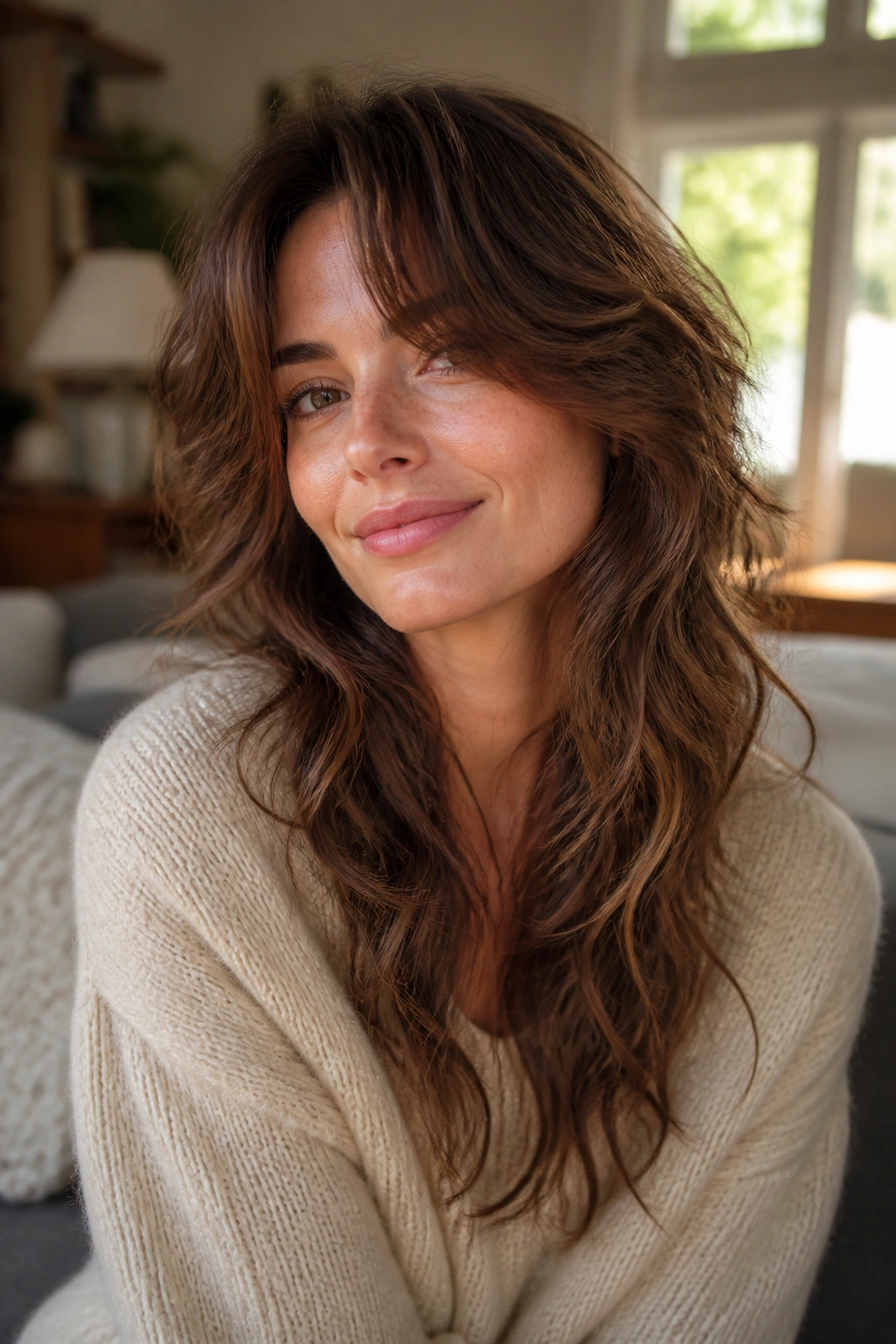
A wolf cut can go wrong fast on thin hair, so the word gentle matters here. The shape should keep the perimeter long enough to look full while adding soft, lifted layers around the crown and face. If the layers get too short or too numerous, the whole cut turns wispy and loses the very fullness it was meant to create.
This version works best on wavy hair with some natural body. The waves carry the texture, and the cut just helps them sit in a more flattering way. It can also make the top of the head look less flat, which is useful when the crown is the problem spot.
Keep the wolf cut soft
- Ask for long layers only
- Keep the bottom line intact
- Avoid razor-heavy ends
- Let the fringe stay loose and piecey, not choppy
A gentle wolf cut is not for everyone. Straight, very fine hair usually needs a firmer outline. But on the right texture, it has a nice, lived-in shape that feels modern without trying too hard.
18. The Midi Cut with Hidden Layers

What makes hidden layers different from regular layers? They sit inside the haircut instead of stealing density from the outer edge. That means you get some movement and lift, but the eye still sees a strong perimeter. For thinning hair, that is a smart trade.
Where the layers should live
- Inside the haircut, not at the surface
- Around the crown, if you need lift there
- Slightly through the front for shape
- Not so high that the ends start to split apart
This is a good choice for someone who wants medium length but refuses to give up fullness. The hair can still go into a low ponytail, still swing at the shoulders, and still read as thick enough to feel like a real style. It is a quieter haircut than a shag or a bixie, and that’s the appeal.
A hidden-layer midi also behaves well on blowouts. The surface stays smooth, so the style looks finished even if the styling is simple.
19. The Micro Bob for a Strong Jawline Shape

A micro bob is not a timid haircut. It lands close to the jaw, sometimes a little above it, and that short length can make thinning hair look sharper and denser at once. The hair ends are clustered in a tight shape, which gives the whole cut more visual weight.
This style works especially well when the hairline is good but the ends are weak. It pulls attention to the face, the neck, and the jaw, not the sparse bits below. It is also one of the fastest styles to dry.
The cut does ask for confidence. There is nowhere to hide if you dislike short hair. But if you want something crisp, modern, and easy to keep neat, the micro bob delivers. Pair it with a slight bend at the ends or wear it sleek. Either way, the strong outline does the heavy lifting.
If you wear it too textured, the effect gets lost. Clean is better here.
20. The Rounded Bob That Curves In at the Ends
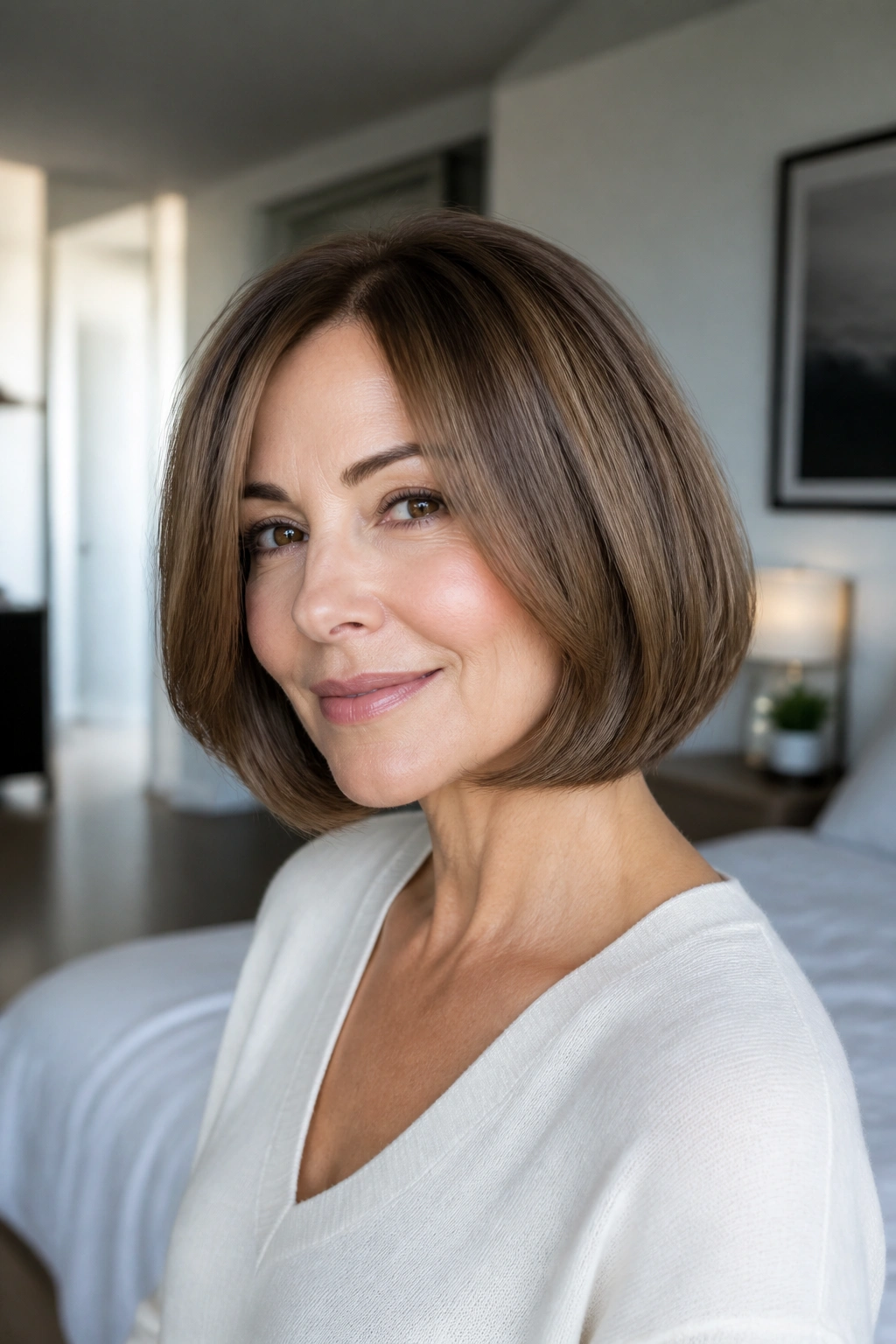
A rounded bob brings back the full, curved silhouette people usually miss in fine hair. Instead of dropping straight down or flicking out at the ends, the shape turns inward slightly and follows the contour of the head. That small curve makes the haircut look denser and more finished.
Small shape details that matter
- Keep the perimeter blunt, then soften the bend
- Ask for a little fullness through the crown
- Make the ends sit just under the jaw or at the chin
- Use a round brush only to nudge the curve, not to puff the hair up
This cut works on a lot of women because it feels polished without looking severe. It can soften a long face, balance a narrow chin, and make thinning ends look healthier than they are. It is one of those styles that gets better when the blow-dry is not perfect. A little movement helps.
If you want a haircut that looks calm, tidy, and quietly full, this one is hard to beat.
Pick the cut that fixes the place where your hair looks weakest first. That is usually the crown, the temples, or the ends — sometimes all three, which is annoying, but manageable with the right shape.
Bring a photo to the salon that shows the finish you want, not just the length. A good stylist can read that much faster than a vague description, and you’ll get a haircut that works with your hair instead of fighting it.
