



Very short haircuts do not hide anything.
They show the jaw, the neck, the ears, the hairline, and the way your head actually sits on your shoulders. That is the appeal. A short crop can look sharp, soft, polished, rebellious, or a little bit dangerous, and the difference usually comes down to three things: where the weight sits, how clean the outline is, and whether the finish is smooth or broken up.
Bold women tend to understand that fast. Long hair can be beautiful, sure, but it also lets you disappear into it. A very short cut does the opposite. It puts your face in the frame and lets your features do the talking. That can feel freeing on one person and terrifying on another. Both reactions make sense.
A good short cut also has a practical side people ignore. Some styles need a trim every three weeks because the shape starts to puff out. Others grow out with a nice, soft edge and still look decent after a month. A really good stylist will talk about your cowlicks, your density, and whether your hair bends forward or sticks out at the nape. Those details matter more than most salon photos ever admit.
1. Buzz Cut
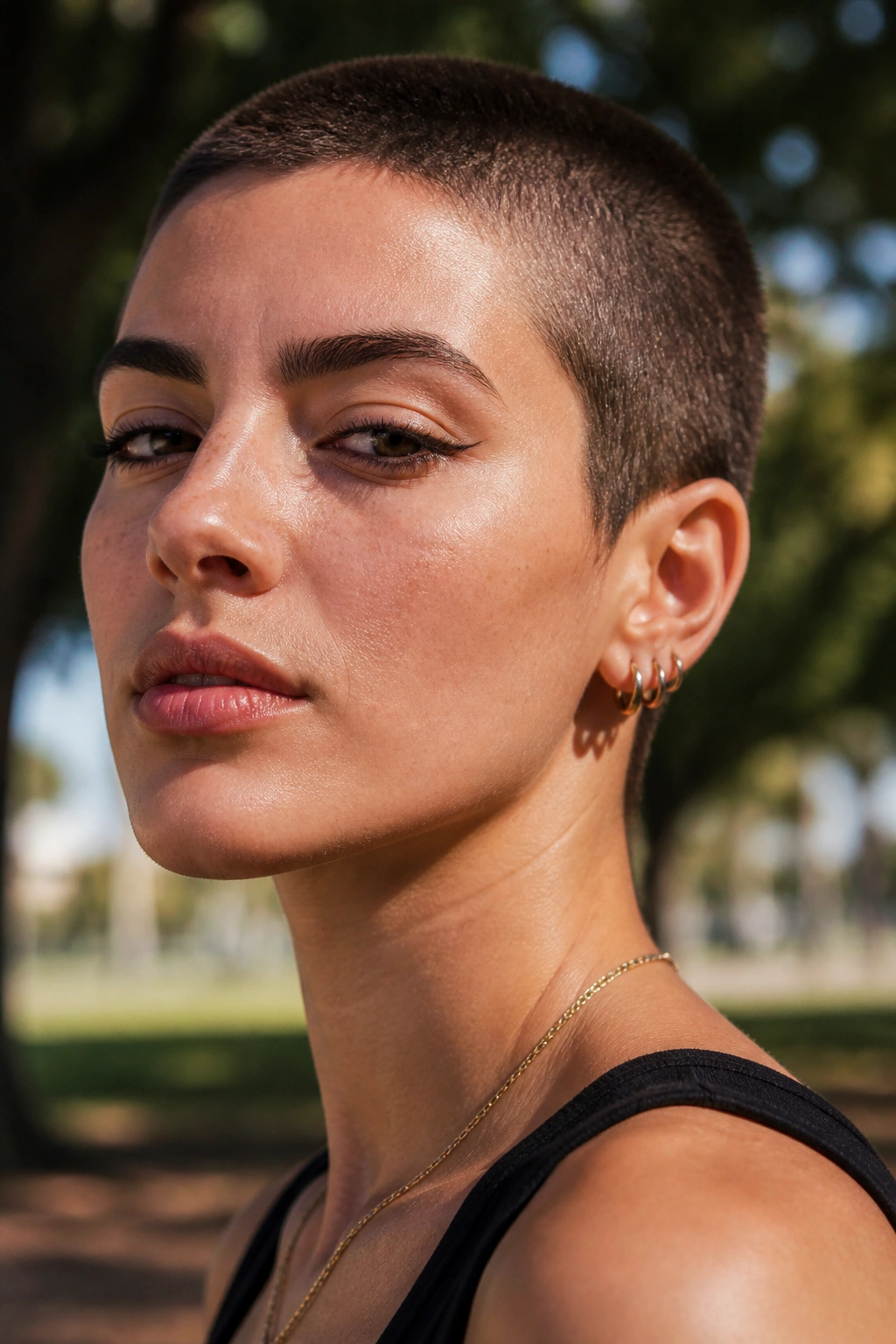
A buzz cut is the bluntest possible answer to hair indecision, and I mean that as a compliment. There is nowhere to hide, which is exactly why it looks so strong when it suits the person wearing it. The line of the head becomes the style. The result can feel clean, severe, sporty, or elegant depending on how sharp you keep the edges.
Why It Hits So Hard
A buzz cut works best when the clipper length is chosen on purpose instead of by habit. A #1 or #2 guard leaves enough texture to keep the scalp from looking bare, while a shorter pass gives you that hard-edged, almost graphic finish. If your hair is thick, the cut can look plush instead of flat. If it is fine, the texture reads softer and more delicate.
Quick facts
- Guard lengths usually sit around 1/8 inch to 1/4 inch.
- Most people need a touch-up every 2 to 4 weeks to keep the shape crisp.
- The scalp becomes part of the look, so sunscreen and moisture matter.
- Works with straight, wavy, curly, and coily hair, but the vibe changes a lot.
Best for: women who like low-fuss styling and do not mind showing every line of the face.
Pro tip: ask your barber or stylist to follow your natural growth pattern at the crown. Fighting a strong cowlick is a waste of time.
2. Buzz Cut with a Skin Fade
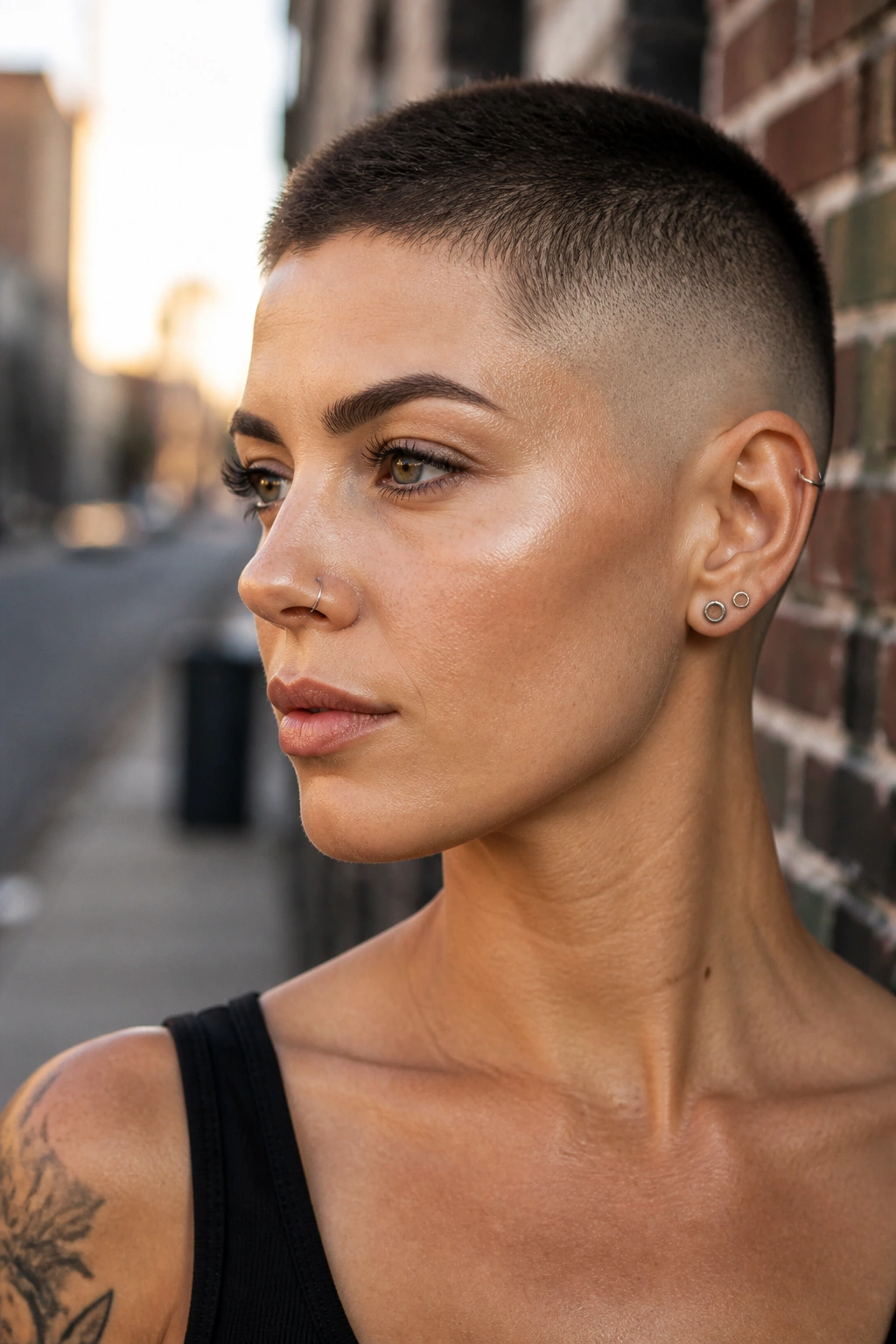
A skin fade changes the whole mood of a buzz cut. Instead of one even length all over, the sides melt down to bare skin and the top stays a shade longer, which gives the head shape and movement. It looks more engineered, less like you just ran a clipper over everything in a rush.
This cut is the cleaner cousin of the plain buzz. The fade pulls attention upward, so it can flatter strong cheekbones and a neat brow line. It also keeps the nape and sideburns from getting bulky, which is a real problem on short cuts when the grow-out starts to blur the outline.
Compared with an all-over buzz, a skin fade asks for a steadier hand from the stylist. The fade should feel gradual, not striped. If the transition is too harsh, the head can look chopped in half. If it is done well, the whole cut feels fresh for longer because the sides stay tidy even when the top is growing.
Best for women who want something crisp and modern without losing the no-nonsense ease of a clipper cut. It is also a smart pick if your hair gets puffy fast at the ears.
3. Classic Pixie Cut
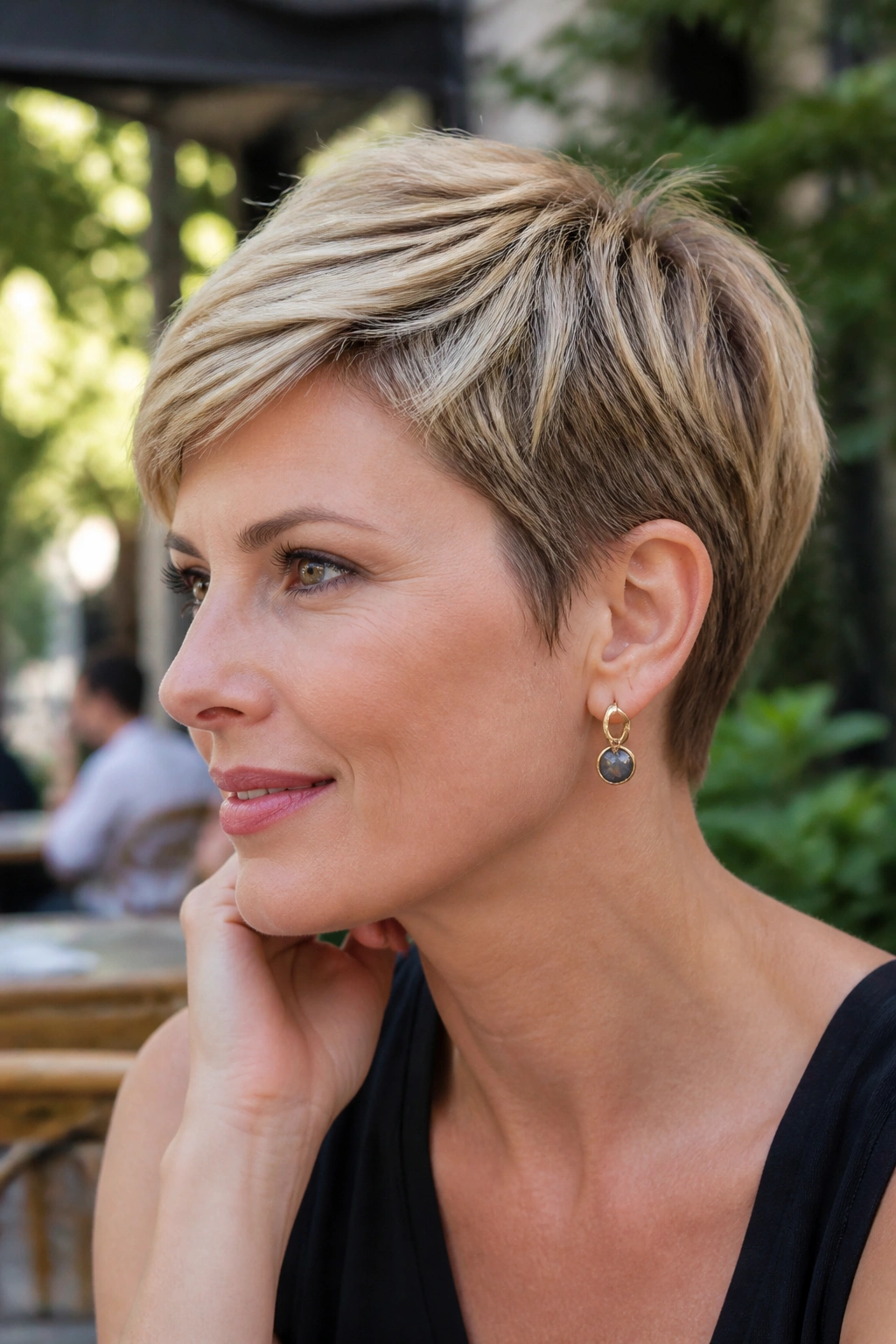
A classic pixie is one of those cuts that looks simple until you try to describe why it works. The answer is balance. The top has enough length to move, the sides stay close, and the nape is trimmed short enough that the neck looks clean. Nothing is fighting anything else.
What Makes It Work
The classic pixie usually leaves 1.5 to 3 inches on top and less on the sides. That gives you room to tuck, sweep, or flatten the fringe depending on your mood. It can feel neat for work and still have enough softness to avoid looking too severe.
- Side-swept or forward bangs keep the cut from feeling harsh.
- A little height at the crown helps if your face is round or square.
- A satin-finish cream keeps it from turning puffy in humid weather.
- Trims every 4 to 6 weeks hold the shape better than waiting too long.
The cut shines when the texture is precise but not overdone. A flat iron or small round brush can smooth the front in under five minutes. Then you stop. That is the beauty of it. More hands-on styling usually makes it worse, not better.
4. Textured Pixie with Choppy Layers
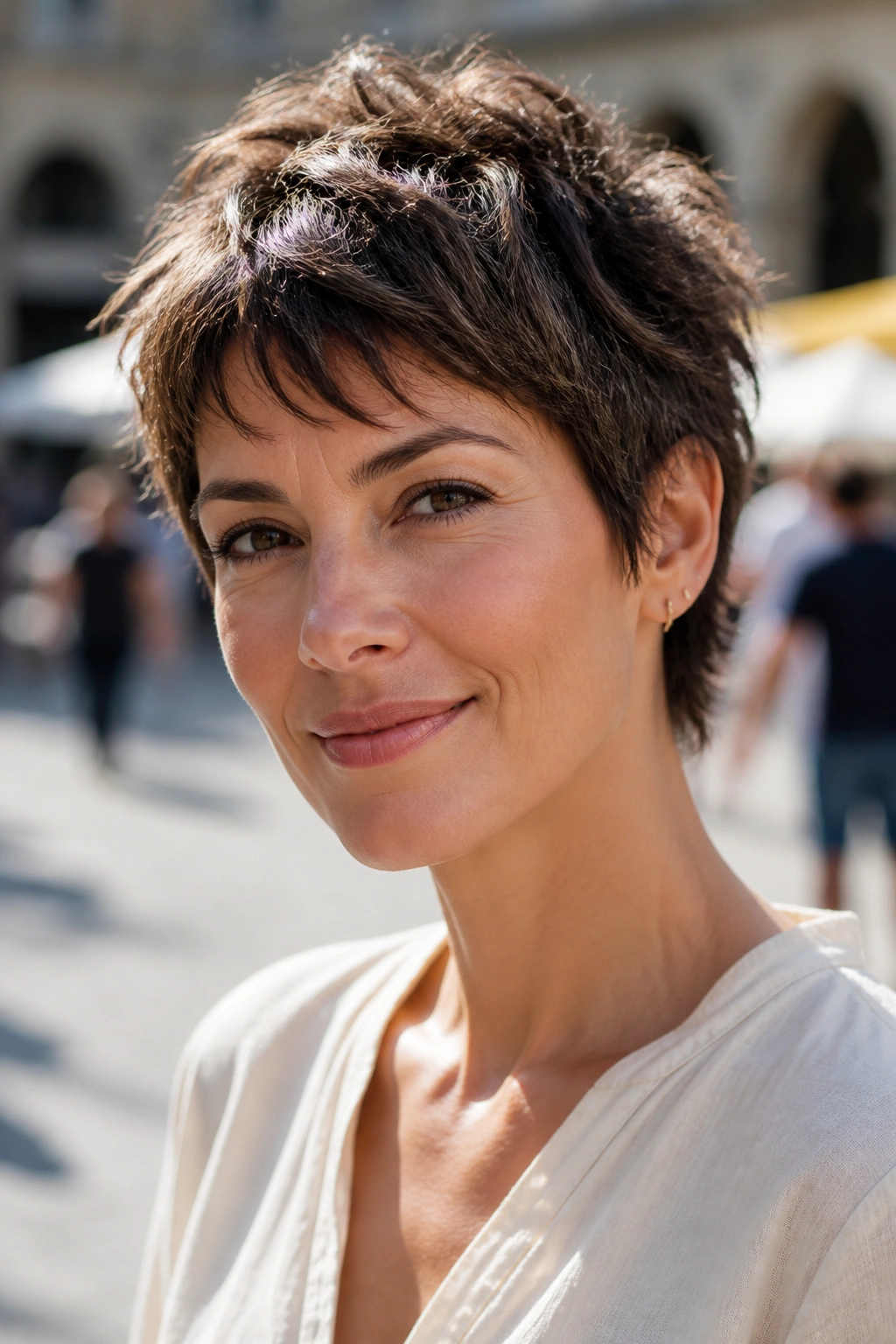
If your hair has a mind of its own, this is the cut that stops arguing with it. The choppy pixie uses short, broken layers to create movement, so the hair does not sit in one solid block around the head. It looks a little undone in the best possible way.
The trick is weight removal, but not too much. Ask for piecey ends, not a razored mess. The difference is huge. Good texture gives you separation and lift. Too much thinning can leave the top wispy and the ends frayed, which is a fast road to that overcut, fuzzy look nobody wants.
A pea-size dab of matte paste is usually enough for styling. Rub it between your palms, press it into the top, and pinch a few sections around the fringe. Do not coat every strand. That is how the cut goes from airy to greasy in about ten minutes.
This one is best for women who want the feel of a short crop without a helmet-like silhouette. It is forgiving, a little messy, and easy to refresh with dry shampoo the next morning.
5. Side-Swept Pixie with Long Bangs
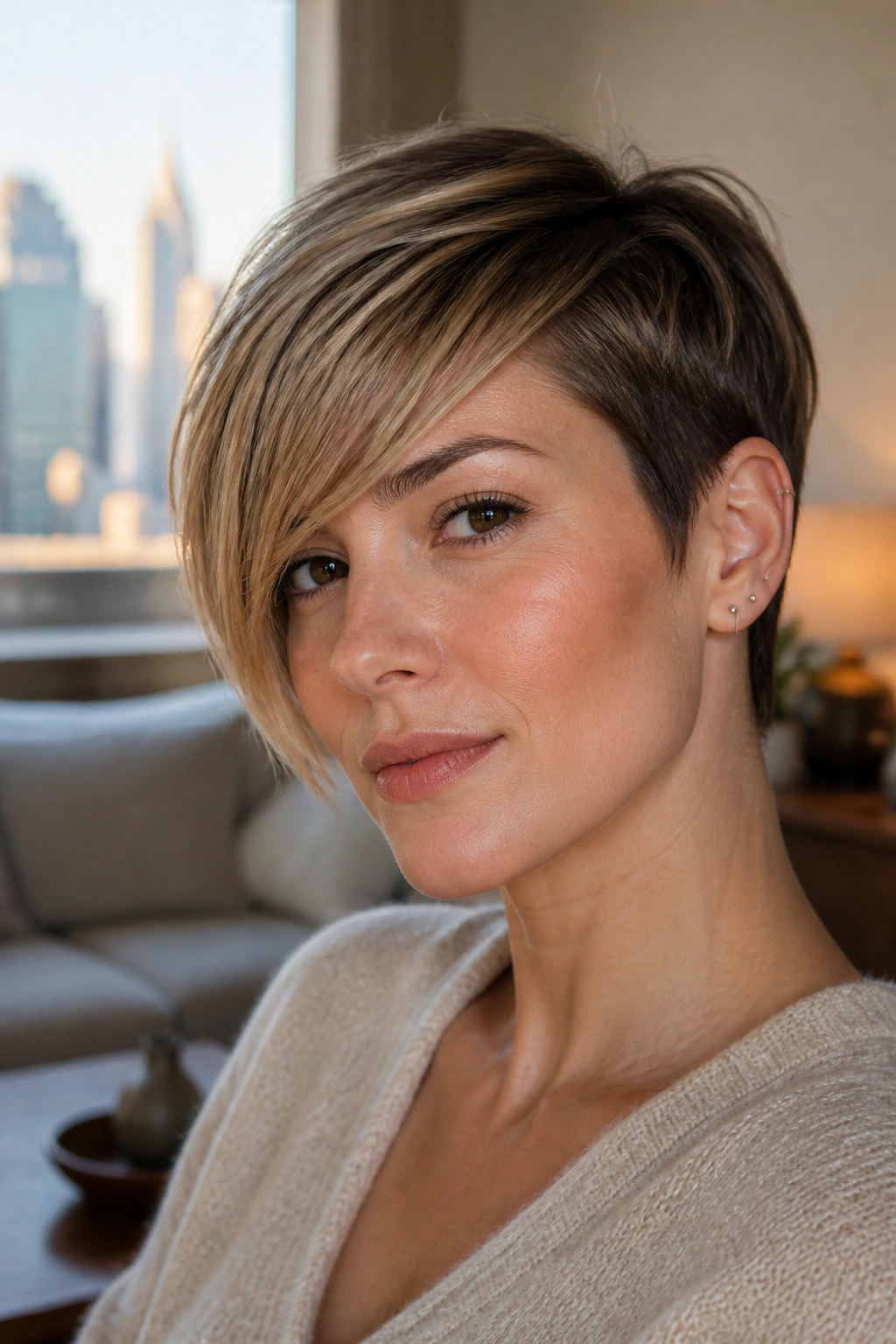
The side-swept pixie has a softer edge than the sharper short cuts, and that is why so many women return to it. The longer fringe gives the face a little curtain of movement. It can slim a broad forehead, soften a strong jaw, or pull attention straight to the eyes.
I like this cut most when the bangs are long enough to bend across the forehead without falling into the lashes all day. That usually means keeping the front around 3 to 4 inches, with shorter sides and a trimmed nape. It sounds tiny on paper. On the head, it changes everything.
A side part helps the whole shape settle. Blow-dry the fringe in the direction you want it to live, not the direction it fights against. That one habit saves a surprising amount of time. And if your hair has a stubborn cowlick at the front, this cut can still work, but the bangs need a little more length to behave.
It suits women who want short hair with a softer finish. Not precious. Just easy on the eyes.
6. Asymmetrical Pixie Cut
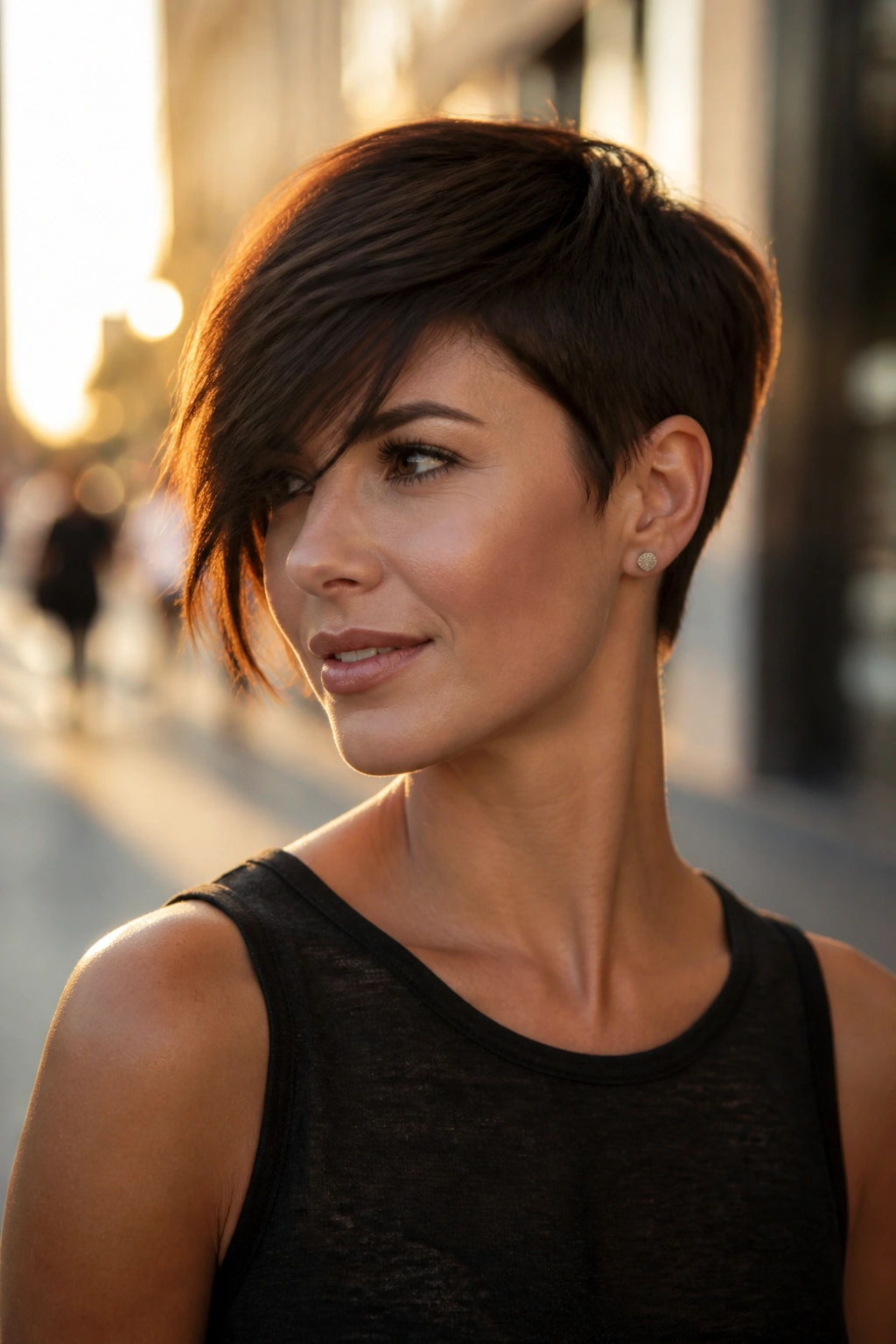
Why does one longer side change the entire haircut? Because asymmetry gives the eye something to follow. A straight, balanced pixie looks neat. An asymmetrical pixie looks deliberate, a little sharper, and often more interesting in motion.
How to Wear It
Usually one side stays close to the head while the other side keeps extra length through the fringe or temple. That longer side can be an inch or two longer, sometimes more if you want drama. The shape works especially well if your hair naturally parts off-center, because the cut can lean into that instead of pretending otherwise.
The best version feels controlled, not lopsided. That means the shorter side still needs a clean edge, and the longer side should fall with some movement instead of hanging like a curtain. If the line is too extreme, the cut can look like a mistake. If it is balanced well, it looks cool without trying too hard.
A flat brush or a quick pass with a mini straightener keeps the longer side polished. This is a good choice for women who want their haircut to say something without crossing into costume.
7. Undercut Pixie
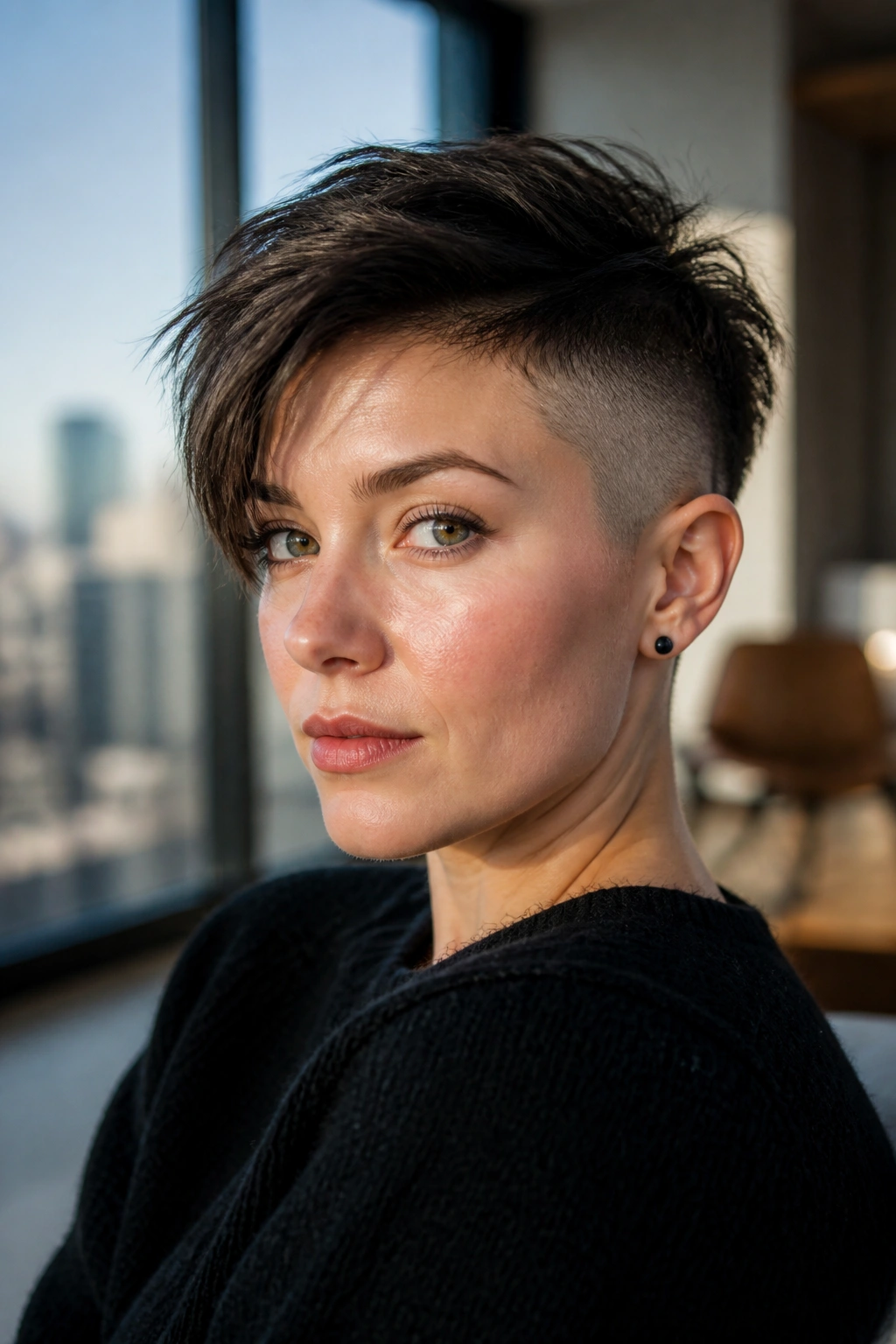
A pixie with an undercut is one of the easiest ways to make short hair feel bolder without going fully shaved. The hidden or visible undercut removes bulk from the sides or nape, while the top stays long enough to sweep, spike, or tuck. The contrast is the whole point.
Why It Works
The undercut gives you shape where a regular pixie can go puffy. That matters if your hair is dense or heavy around the ears. It also makes the top look longer than it is, which is useful if you want the option to slick it back one day and wear it messy the next.
Best details to ask for
- Undercut length around 1/8 inch to 1/4 inch on the shaved sections.
- Top layers left at 2 to 4 inches for styling flexibility.
- A clean neckline so the grow-out stays neat.
- Soft blending above the ears if you do not want a hard disconnect.
Watch out: if the top is too short, you lose the whole point of the contrast. The cut needs enough length up top to show off the shaved part.
This one suits women who like edge but still want options.
8. French Crop
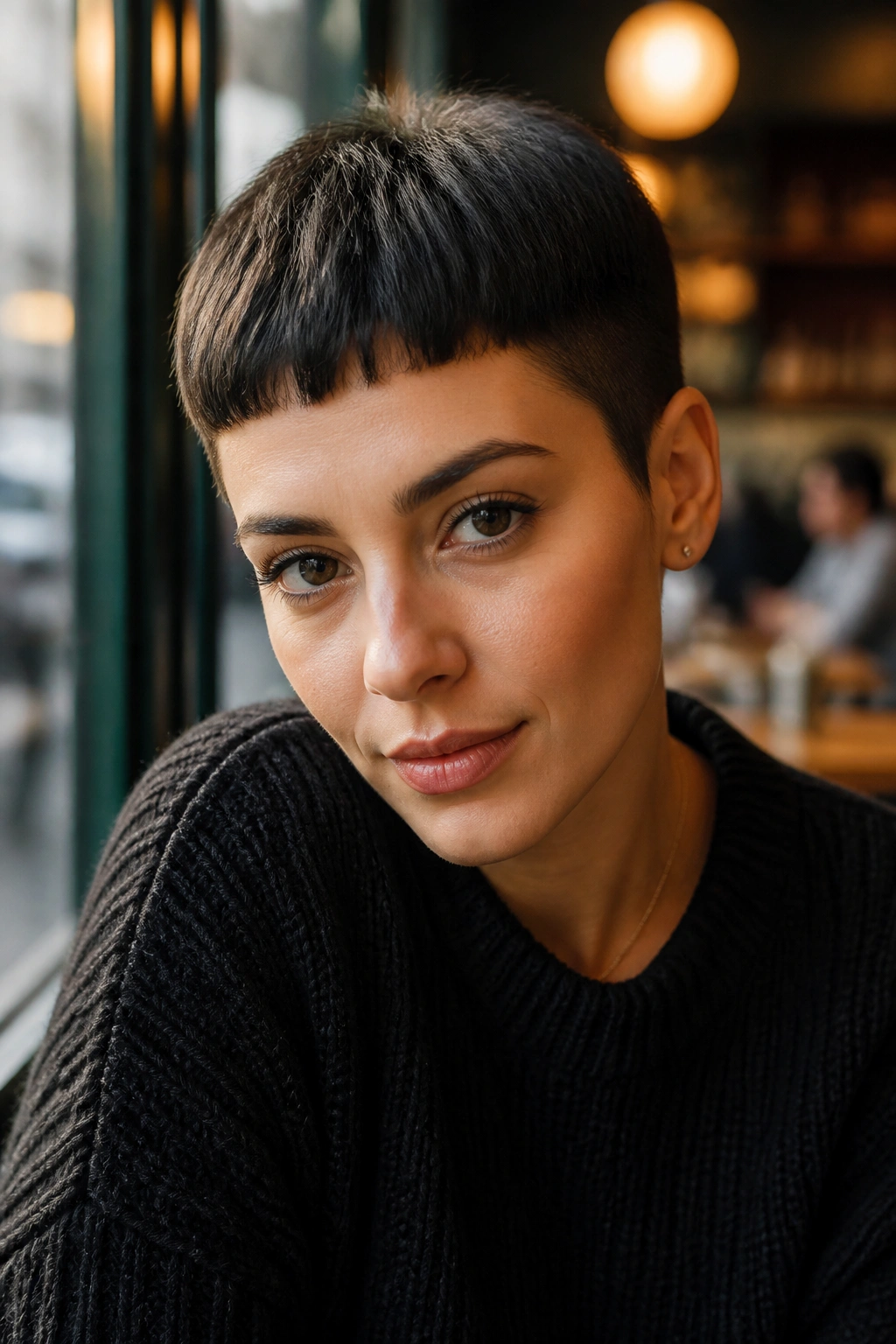
The French crop has a straight, compact feel that makes it stand out from softer pixies. The fringe usually sits forward, sometimes blunt, and the sides stay tight. It reads confident, neat, and a little bit architectural.
Unlike a classic pixie, the French crop keeps more visual weight in the front. That can be a smart move if you like strong bangs or want to reduce the look of a high forehead. The shape also works well when your hairline has cowlicks at the temples, because the short sides keep those areas from puffing outward.
This cut is best on women who like precision. It does not rely on lots of texture or spray. A light cream or matte balm and a finger comb is often enough. If you want movement, you can rough up the fringe a little, but the line across the front should still look intentional.
I think of this as a short haircut for people who enjoy structure. It is neat, but not boring.
9. Tapered Crop with a Soft Neckline
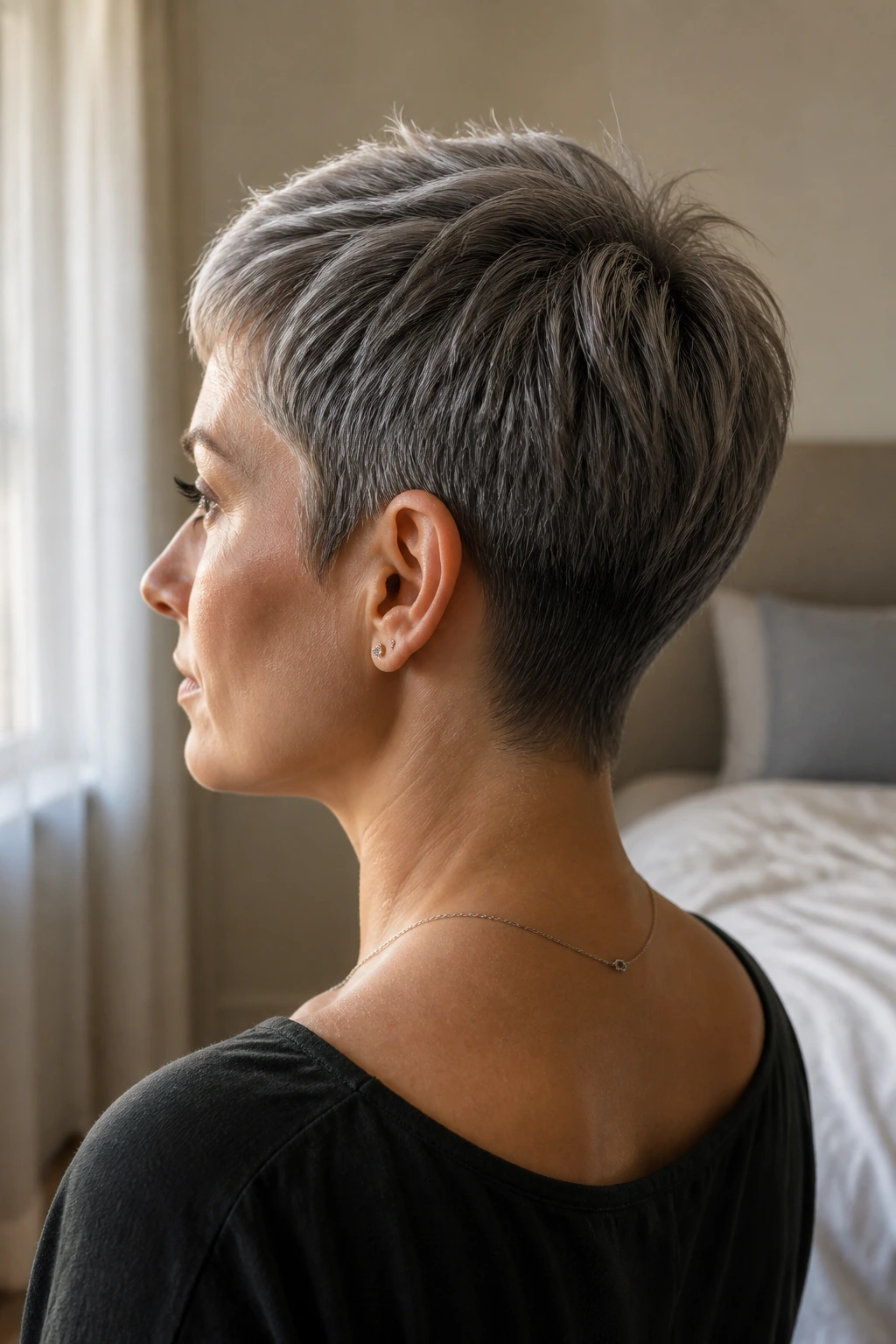
A tapered crop is one of the smartest short haircuts for grow-out, and that is not a glamorous thing to say, but it matters. The nape narrows down gradually instead of ending in a blunt block, so the haircut keeps its shape longer. That alone can save you a week or two of awkward fluff.
I once watched a stylist spend nearly as much time on the neckline as on the top, and it made sense the moment the client turned around. The back looked clean from every angle, not just the front mirror view. That is the quiet difference between a decent crop and a really good one.
Key details
- Keep the taper soft around the ears so the shape does not look boxy.
- Leave a little length at the crown for lift.
- Use a lightweight cream if your hair tends to stick straight out at the nape.
- Ask for the neckline to follow your natural hairline, not cut into it too hard.
It is a strong choice for women who want short hair that grows out with grace instead of drama.
10. Spiky Crop
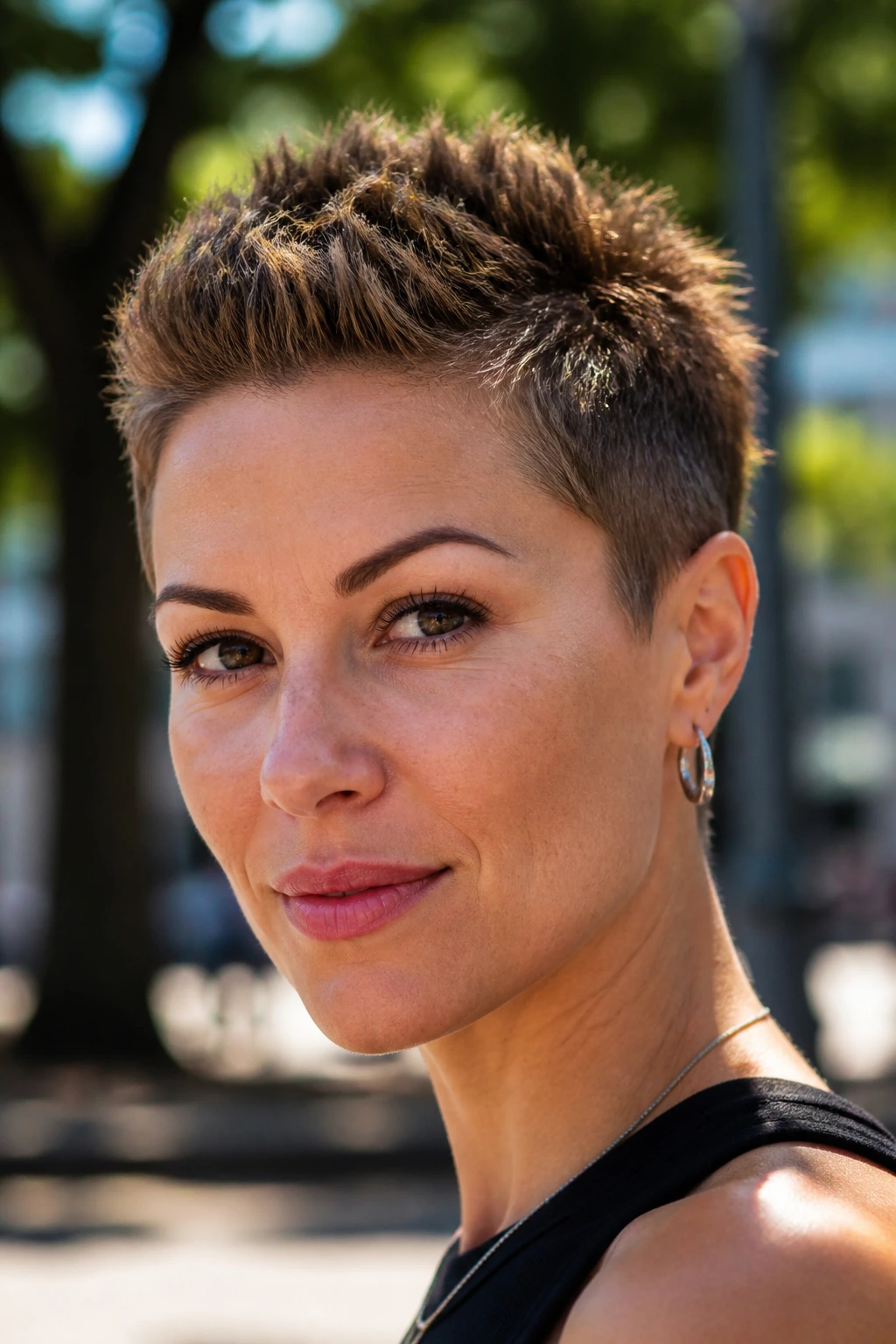
A spiky crop does not have to look punk or dated. In the right hands, it can feel crisp, modern, and almost playful. The trick is to keep the spikes small and controlled, not cartoonish. Short sections lifted with a matte product are enough.
The best version starts with hair that is cut unevenly on purpose, but only in tiny shifts of length. Those shifts give you texture when you finger-style the top. If every strand is the same length, the cut can go flat. If the ends are too soft, the spikes collapse before lunch.
Use a dry paste or wax, not a glossy gel. Work it through the top in your hands first, then pinch small sections upward. A quarter-size amount is often too much. Honestly, that much product turns most short cuts into a sticky mess.
This is a good look for women who want energy and movement. It looks especially sharp on dense hair because the texture holds its shape instead of disappearing.
11. Caesar Crop for Women
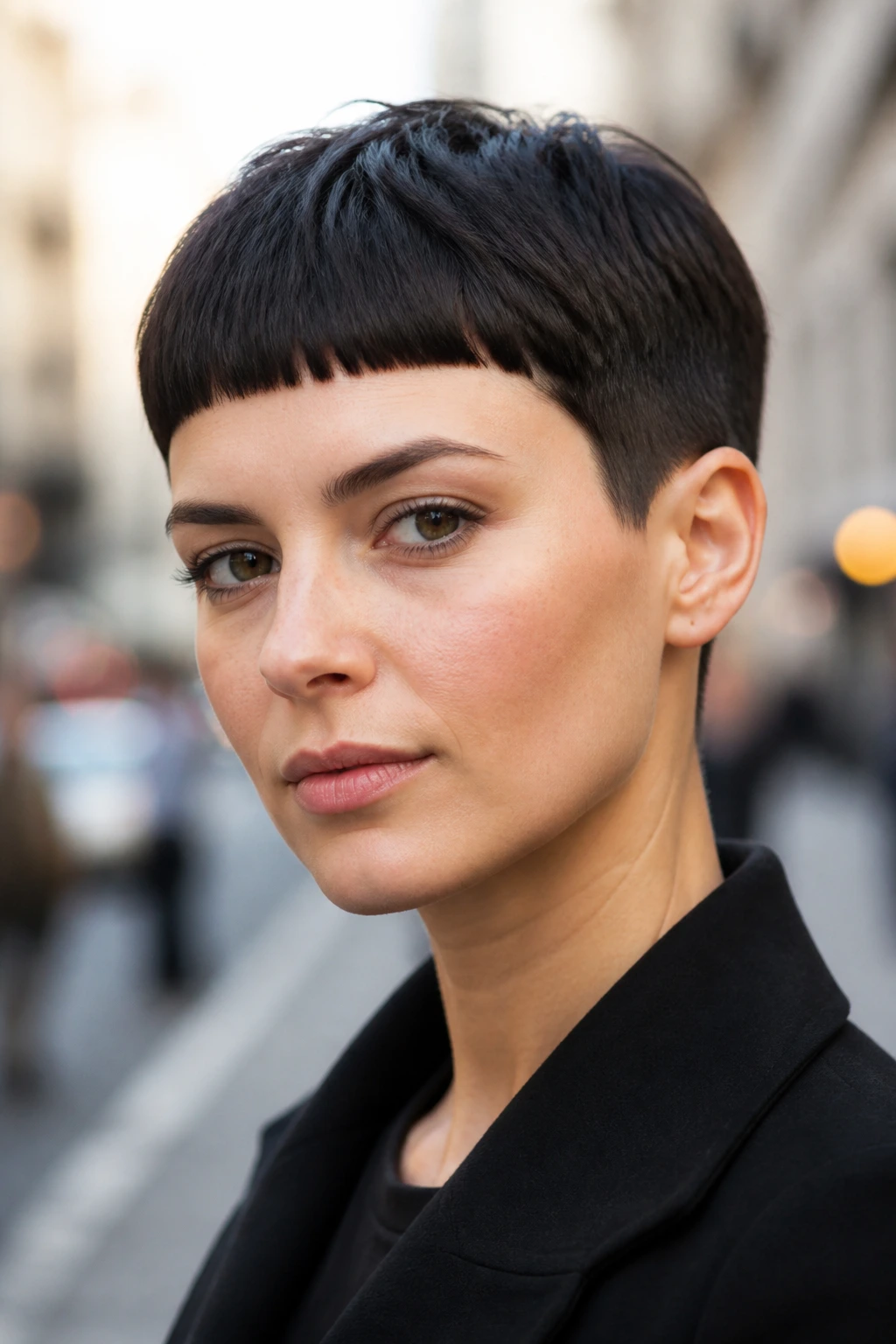
The Caesar crop has a very specific mood: short, blunt, forward, and calm in the face of the world. The fringe sits across the forehead, the sides stay close, and the crown stays neat rather than fluffy. It is not flashy, which is part of its charm.
What I like about it is the honesty. The haircut puts the focus on the eyes and brows, and that can be striking on women who like strong facial framing. It also keeps the silhouette compact, which means the style holds up well on windy days, sweaty commutes, and all the other things that make soft layers misbehave.
The cut can look severe if the fringe is too heavy. A good version leaves enough softness at the front so the line does not press the face downward. If your hair is thick, ask for slight point cutting at the edge of the fringe. That tiny adjustment makes the line less blocky.
A Caesar crop suits women who want a short haircut with a serious edge. It is plain in the best sense of the word.
12. Crew Cut
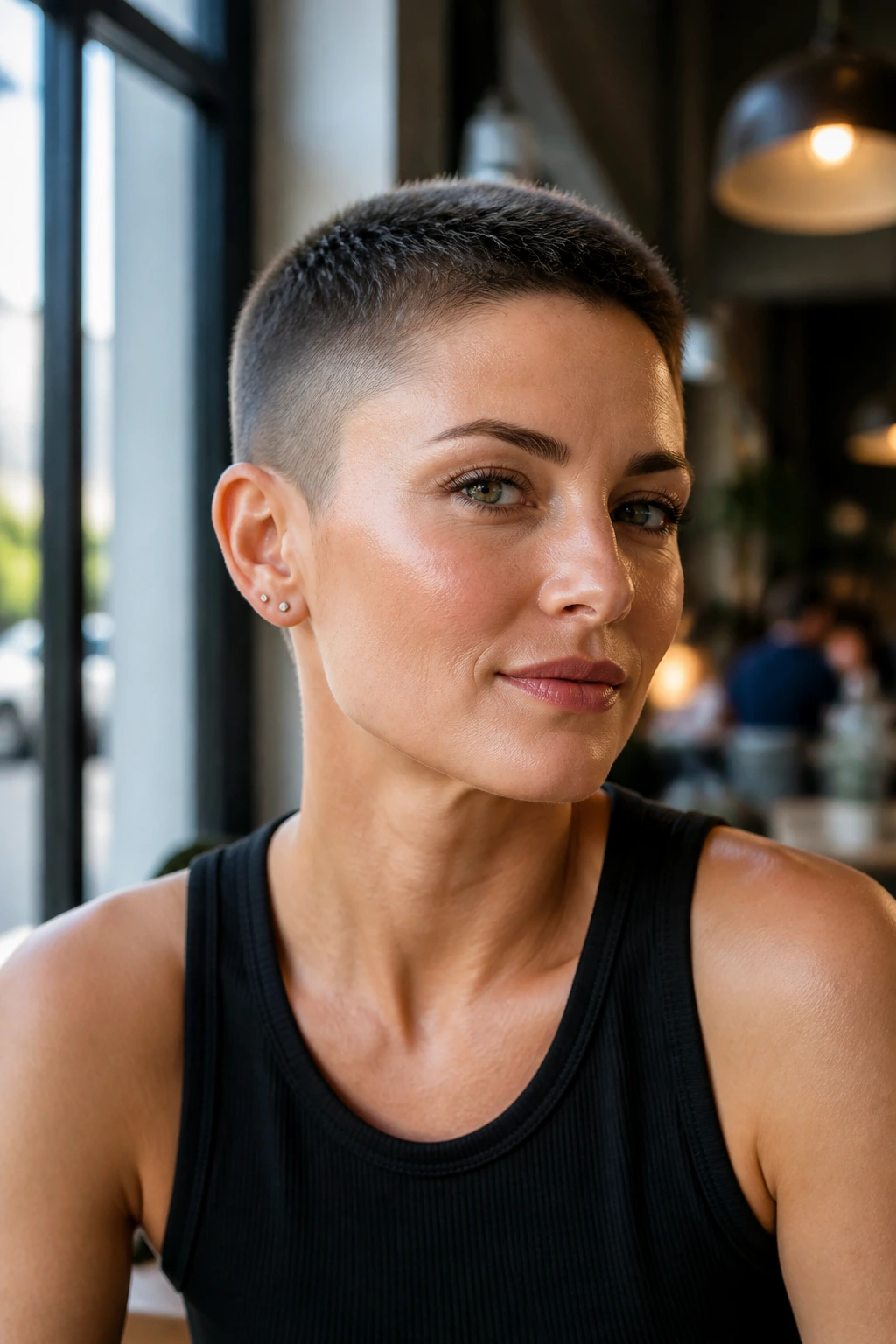
A crew cut sounds severe until you see it on the right woman. Then it reads as clean, athletic, and quietly confident. The top stays slightly longer than the sides, but the difference is small. There is no fluff, no extra drama, and no pretending the hair is longer than it is.
How to Style It
The practical part is almost laughably easy. A little styling cream on damp hair, a quick finger comb, and you are done. If you want texture, blow-dry the top forward or slightly up for less than two minutes. The shape should still look tidy even when you skip product.
- Top length usually sits around 1 to 1.5 inches.
- Sides are clipped shorter to keep the outline crisp.
- A matte finish works better than shine.
- Trims every 3 to 5 weeks keep the silhouette from blurring.
The crew cut is one of those styles people call simple when they mean precise. It does not forgive sloppy blending, and that is exactly why a good one looks so strong.
13. Soft Bowl Cut
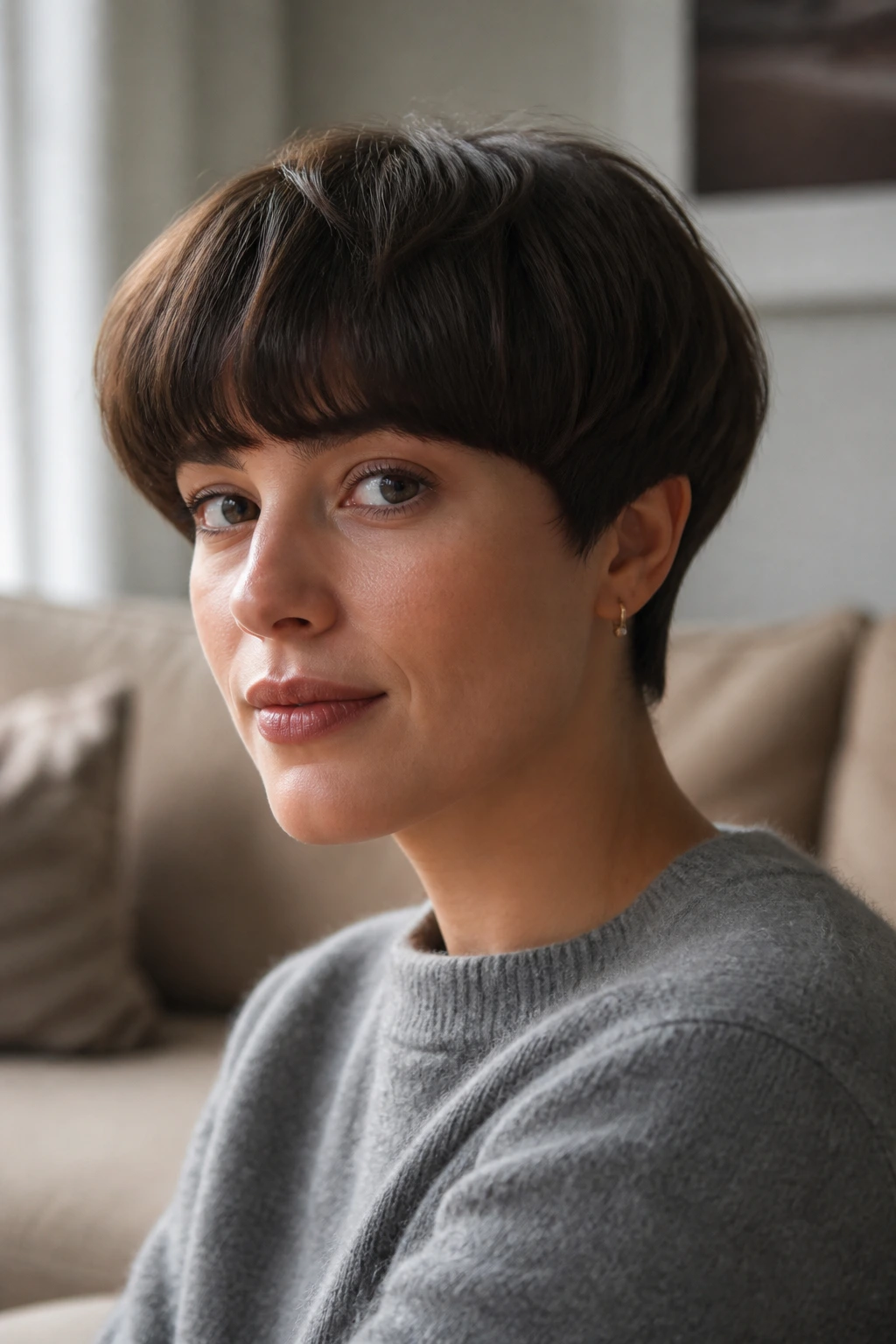
The modern bowl cut is a far cry from the awkward childhood version people remember. On the right head, it can look sleek, dense, and slightly sculptural. The key is softness around the perimeter so it frames the face instead of sitting like a helmet.
Why This Version Feels Different
A softer bowl cut uses curved weight rather than a hard shelf. That means the fringe can brush the forehead, the sides can tuck around the cheekbones, and the back can stay snug without looking stiff. On straight hair, the line looks graphic. On wavy hair, it loosens up a bit and feels more lived-in.
Good details to ask for
- A rounded outline that follows the head shape.
- Light texturizing at the ends so the line moves.
- A fringe that lands just above or at the brows.
- Slightly shorter nape length to keep the shape compact.
This is one of those haircuts that either feels like a mistake or a statement. There is not much middle ground. But when it works, it looks very deliberate.
Best for women who like clean design and are not scared of a strong silhouette.
14. Micro Bob
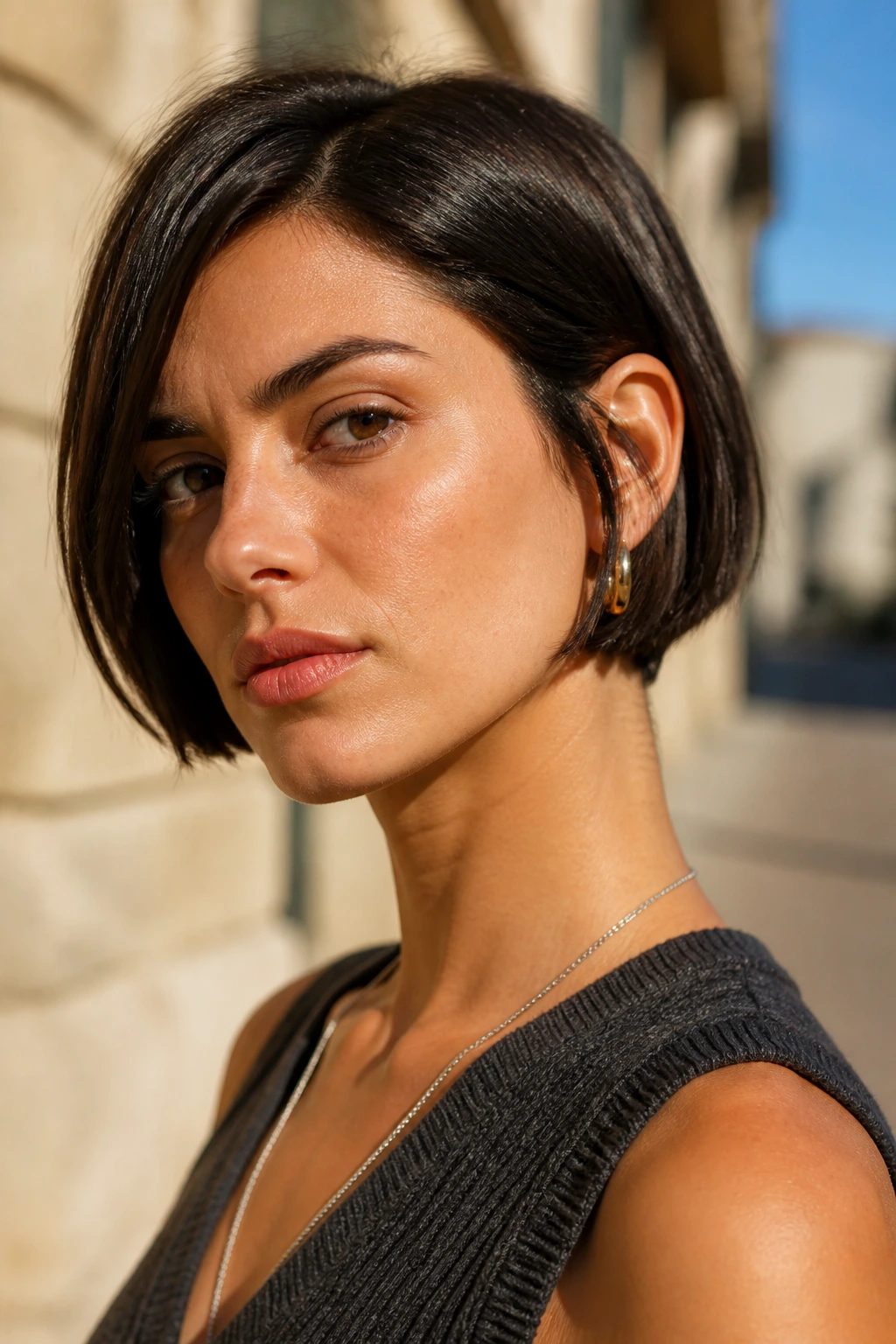
A micro bob sits right on the edge of very short and very sharp. It is shorter than the classic chin bob and often lands around the cheekbone or just below the ear. The shape gives you bob energy without the weight that usually comes with it.
Compared with a pixie, the micro bob keeps more line through the ends. That means it can feel sleeker and more polished, especially on straight hair. Compared with a longer bob, it is much easier to tuck behind the ear and much less likely to drag your features down.
I like this cut when the ends are blunt and the interior is lightly layered, not thinned to death. That keeps the bob from puffing up at the sides. A flat iron pass through the front can sharpen the line, but the cut should still look good air-dried. If it only works after twenty minutes of heat, the shape is off.
It suits women who want short hair with a touch of structure. Clean lines, no extra fuss.
15. Ear-Length Blunt Bob
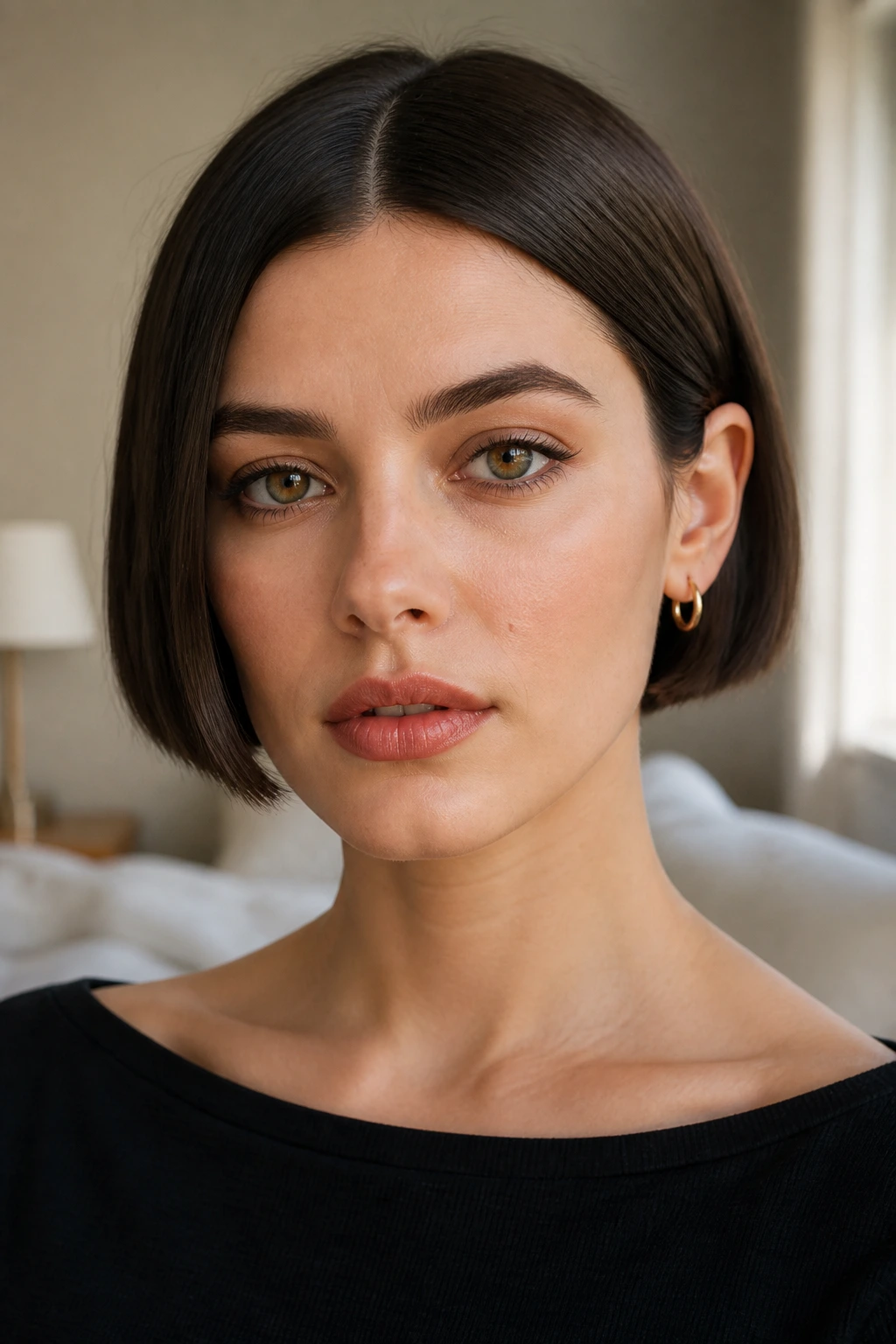
An ear-length blunt bob is tiny, neat, and a little bit fearless. The bottom line usually sits around the earlobe or just below it, which makes the haircut feel compact and deliberate. There is no softness hiding the edge. That is the appeal.
I have always thought this cut looks best when the line is cut with real care. A blunt edge on short hair can turn expensive-looking fast, but it can also turn clumsy fast if the ends are uneven. You want the perimeter to feel level, heavy enough to hold its shape, and polished enough that the bob does not puff out by noon.
Quick shape notes
- Keep the ends blunt, not wispy.
- Let the nape sit tight so the back does not stick out.
- Use a smoothing cream if your hair bends at the ends.
- A center part gives it a sharper feel, while a side part softens it.
It is a strong pick for women who want short hair with clear geometry. The line does the work.
16. Bixie Cut
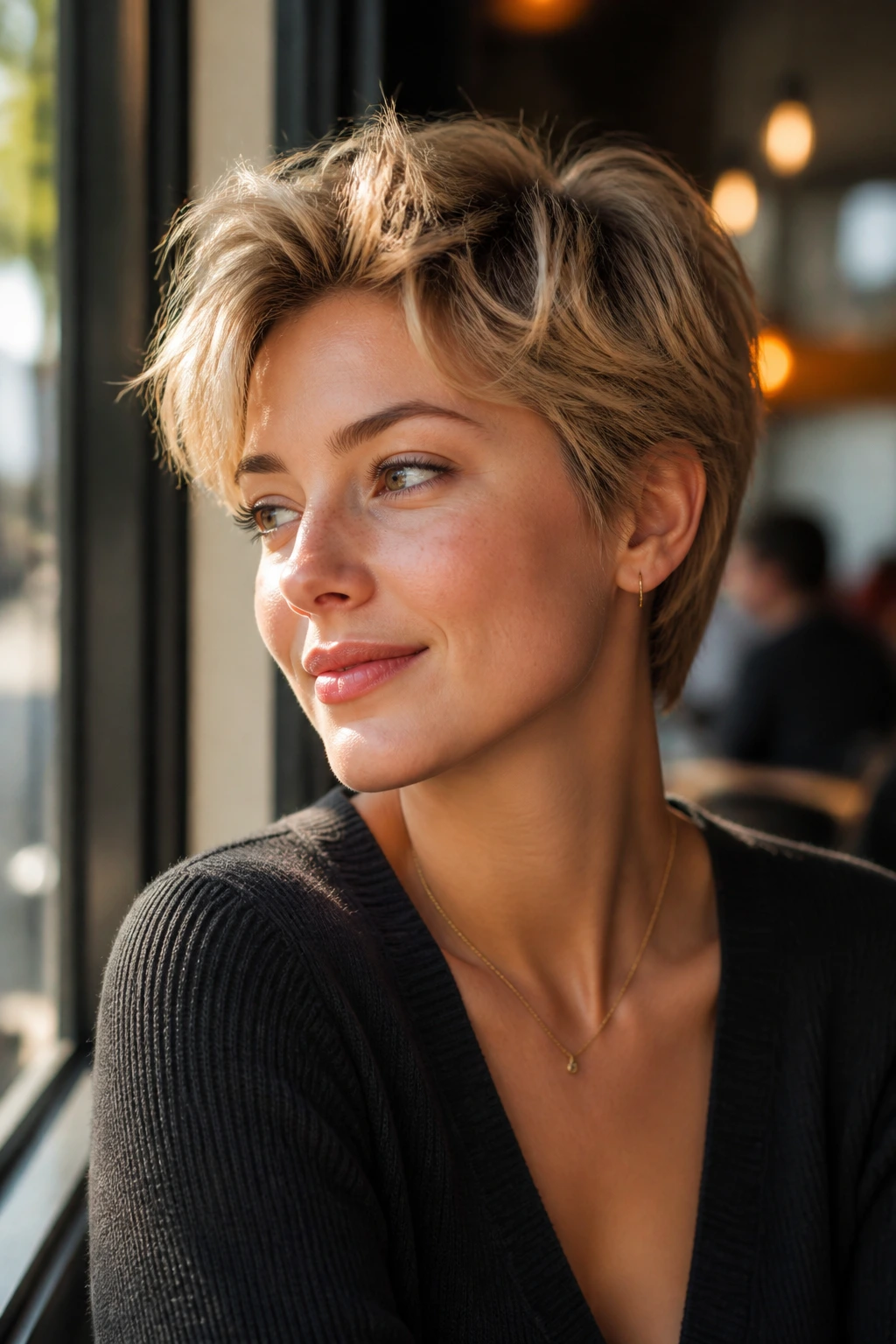
The bixie sits between a pixie and a bob, which sounds like a compromise until you see how useful it is. You get the openness of a pixie through the nape and sides, but the top and fringe keep enough length to give the face some shape. It is one of the easiest short cuts to wear if you are not ready for a full crop.
What makes the bixie so appealing is the movement. The crown can be layered lightly, the front can sweep or flip, and the back stays short enough to avoid bob heaviness. That mix creates a cut that feels breezy instead of strict. It is also forgiving if your hair texture changes through the week, because a little bend or frizz often helps rather than hurts.
Use a light texturizing cream, not a heavy balm. You want the layers to separate a little, not glue together. If you prefer a neater look, a round brush at the root gives the top some lift without making the cut puff out.
This one suits women who want short hair with a softer landing.
17. Curly Pixie
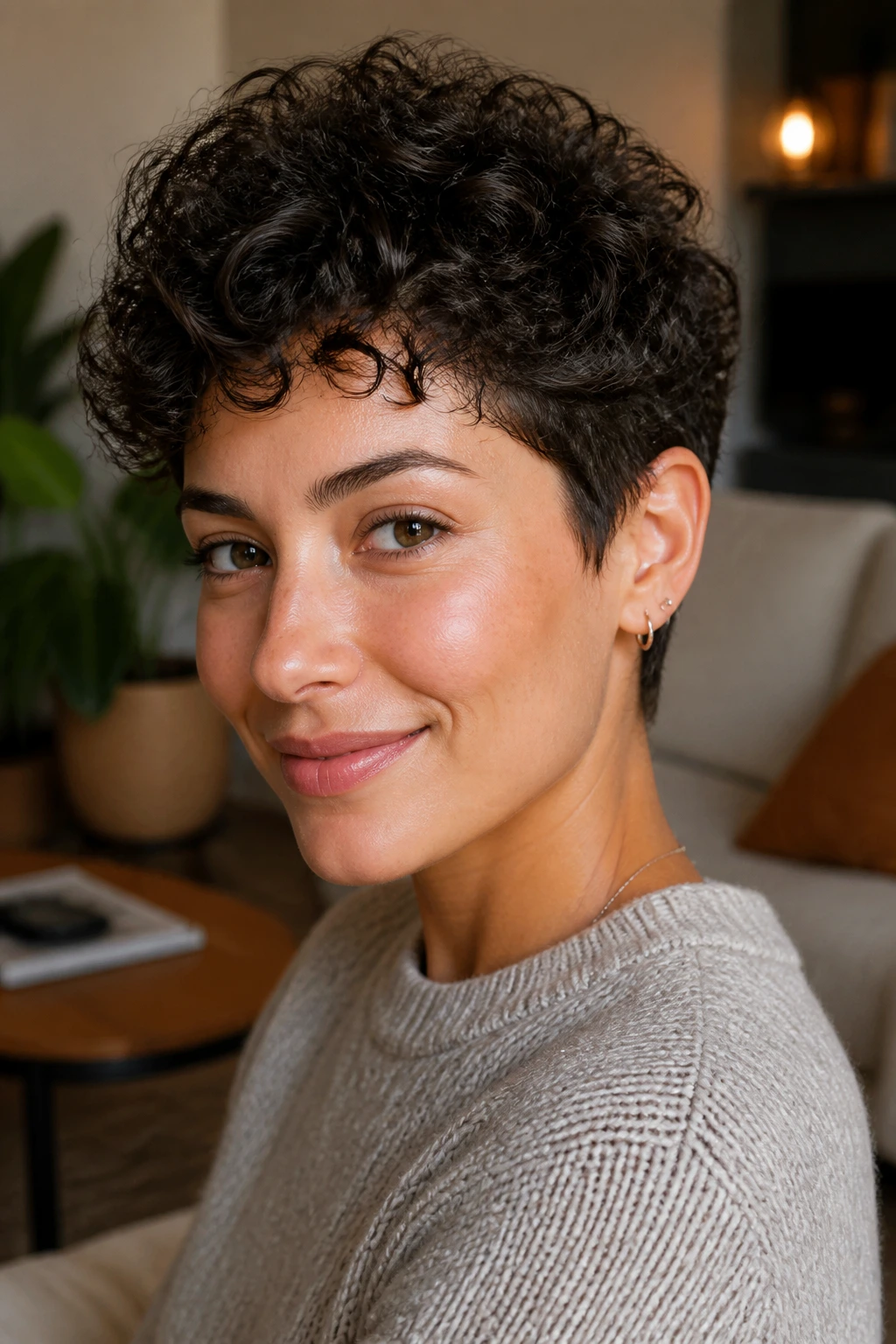
A curly pixie has to respect curl pattern first and haircut second. If the cut is too short in the wrong places, the curls spring up unevenly and the head shape can get boxy. A good curly pixie keeps enough length on top for curl formation while trimming the sides and nape close enough to stay neat.
What Makes It Work
Drying method matters here. A curl that looks tame when wet can shrink a full inch or more once it dries. That is why stylists who know curls often cut on dry or mostly dry hair. They can see where the curl actually lands, not where the water pulls it.
The fringe should be left long enough to curl rather than stand straight. The same goes for the crown. If you thin out a curly pixie too much, the top can lose its shape and start to frizz instead of frame the face. That is a common mistake, and it is expensive to fix.
A curl cream and a diffuser on low heat are usually enough. Let the cut do the work. It should look lively, not overmanaged.
18. Wavy Crop
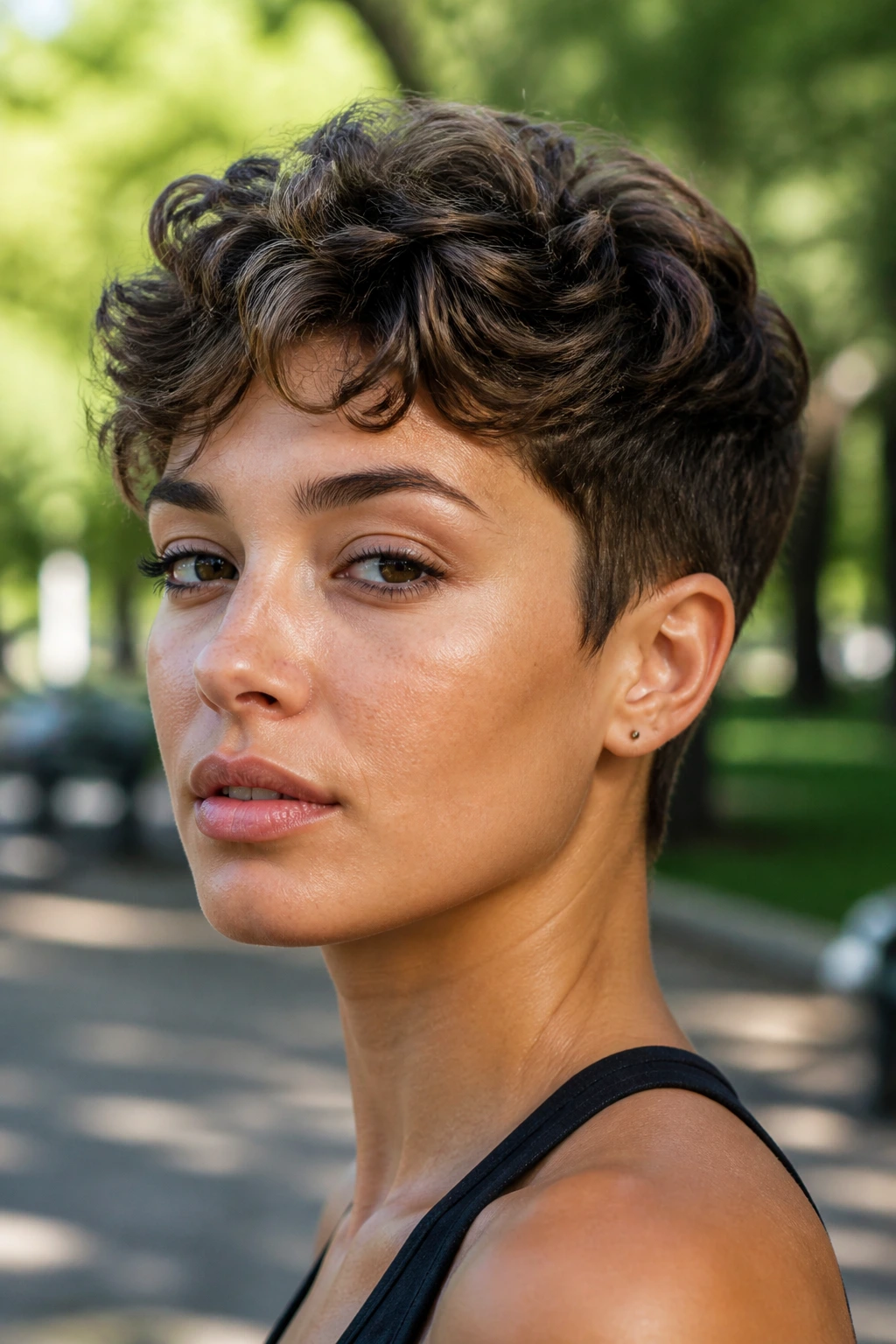
Why does a wavy crop look so easy? Because the wave breaks up the outline before the haircut ever gets boring. A little bend through the top and fringe gives a short cut movement that straight hair often has to fake with product.
The best wavy crop leaves enough length on top for the wave to show, usually around 2 to 3 inches, while the sides stay shorter and cleaner. That contrast keeps the shape from ballooning. If the cut is too short all over, the waves can turn into a puffy halo. If the top is too long, the crop starts reading like a grown-out bob.
How to Wear It
A sea salt spray or a light curl cream on damp hair is usually enough. Scrunch it once or twice, then let it dry without touching it too much. A diffuser can help if your wave pattern is loose and lazy.
This cut works best on women who want something relaxed but still clearly styled. It looks good when it is a little imperfect, which is a relief for anyone tired of chasing perfect hair.
19. Shaved-Side Mohawk Pixie
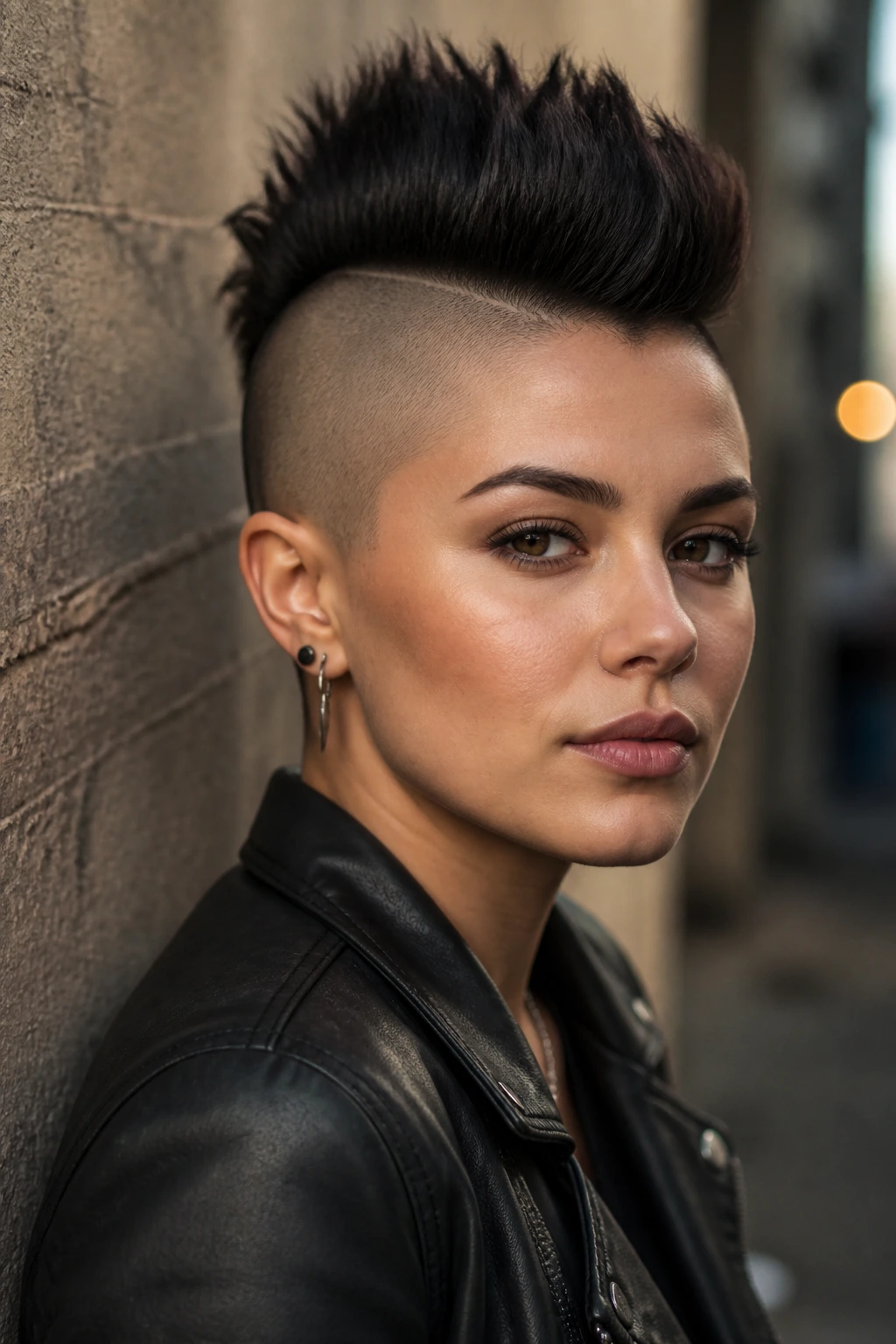
A shaved-side mohawk pixie is not shy. The sides go close to the scalp, while the center strip keeps enough length to stand up, sweep back, or fall forward in a dramatic line. It has edge, but it also has structure, which keeps it from looking messy.
The Shape Matters
The center ridge should be long enough to create a visual line, usually around 3 to 5 inches depending on your hair density. Too short, and the style loses its punch. Too long, and it starts behaving like a different haircut altogether. The shaved sides need to be clean and even because any roughness shows immediately.
- Keep the side length near 1/8 inch if you want a true shaved feel.
- Ask for the top to be point-cut for movement, not all one blunt length.
- Use a strong-hold paste if you want the ridge to stay lifted.
- A slicked-back finish gives a cleaner, sharper mood.
Do not choose this cut unless you like attention. It is not subtle, and that is the point.
20. Short Shag Crop
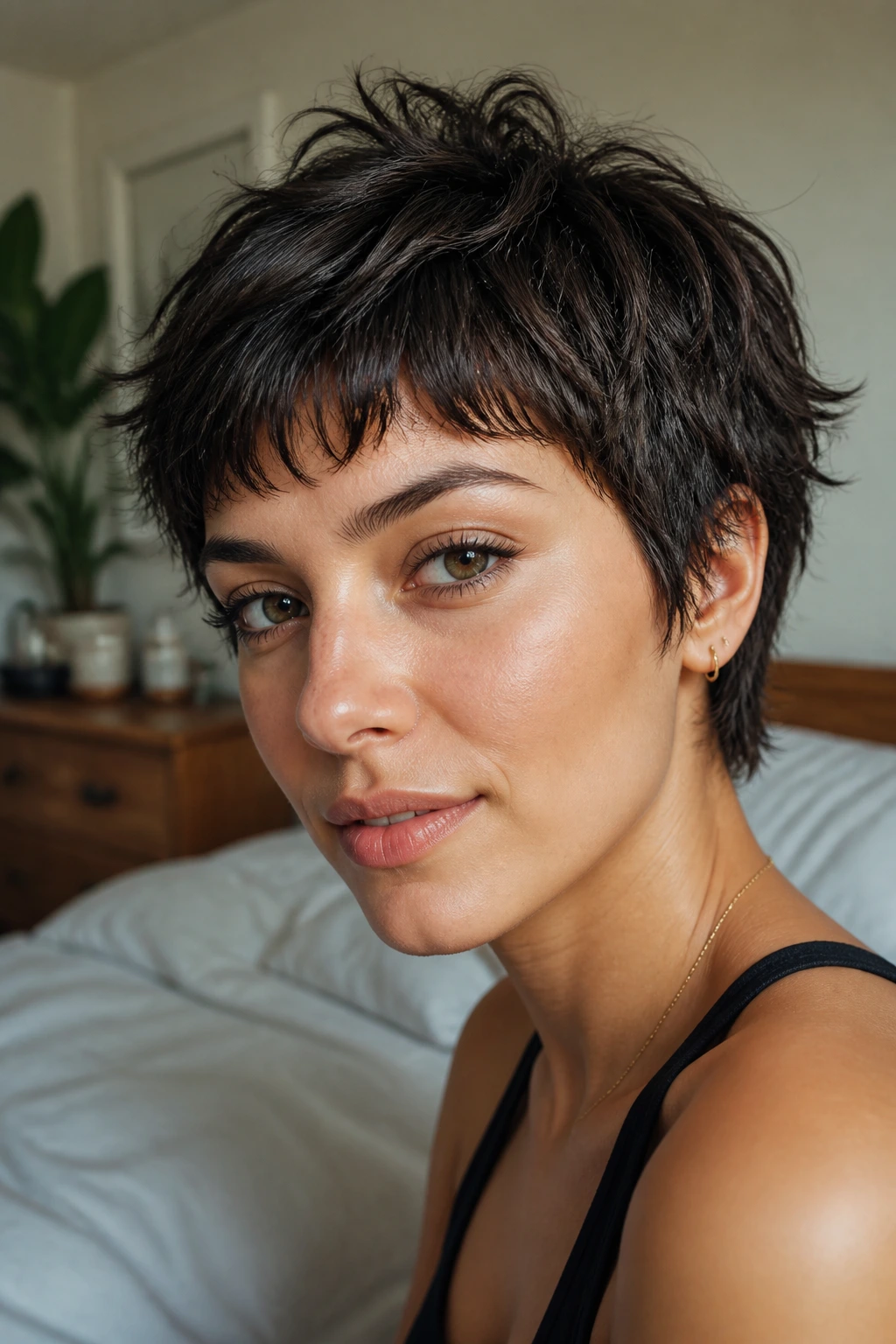
The short shag crop is the one I’d hand to a woman who wants short hair that can look better a little messy. The layers are choppy, the fringe is soft, and the ends are broken up just enough to stop the shape from feeling stiff. It has movement without too much sweetness.
Unlike a blunt bob, the shag crop does not rely on a hard edge. Unlike a classic pixie, it does not need to sit perfectly smooth. That makes it a good choice for hair that likes to bend, flip, or puff a bit. The cut can absorb texture instead of fighting it, which is a nice change if your hair has a stubborn streak.
A styling cream, a tiny amount of mousse, or even air-drying with your fingers is often enough. The goal is separation, not perfection. If the fringe lands a little unevenly, that is fine. If the crown lifts and the nape stays neat, even better.
This is the kind of short haircut that looks confident on busy days and even better after a few weeks of lived-in wear.
Final Thoughts
Very short haircuts work best when they match your daily life, not a fantasy version of it. If you want clean and sharp, go toward clippers, tapering, and blunt edges. If you want movement, choose texture, fringe, or a little asymmetry.
The smartest short cuts have shape even when you have barely touched them. That is the real test. Not the salon mirror. Not the first day out. The third day, the windy day, the rushed morning. That is where a good crop earns its keep.
And if one of these styles keeps pulling your eye back, trust that pull. Short hair is honest in a way long hair rarely is. That honesty can be a little nerve-wracking. It can also be addictive.
