



A bold haircut can change how you walk into a room before you’ve even touched makeup, earrings, or clothes. That’s the part people underestimate. A sharp cut doesn’t just remove length; it changes the outline of your face, the way light hits your hairline, and the little habits you’ve built around styling.
The best bold haircuts are not all loud in the same way. Some are crisp and clean. Some feel edgy because they strip away bulk. Some are dramatic because they expose the neck, the jaw, or the cheekbones. And some are bold because they make texture the main event instead of something you try to tame every morning.
What matters most is fit. A haircut can look brilliant on a screen and feel miserable in real life if it fights your cowlicks, your density, or your patience level. The sweet spot is a cut that changes the mood of your whole look while still matching how you actually live. The first shape below sets that tone fast.
1. Blunt Chin-Length Bob

A blunt chin-length bob has a way of making everything else look more intentional. The line sits near the jaw, which gives the face a crisp frame and makes the haircut feel polished even when you’ve barely styled it. It’s one of those bold haircuts that looks simple until you realize how much attitude comes from a clean edge.
Why It Hits So Hard
The magic is in the weight. A blunt perimeter makes hair look fuller, especially if the ends have been wispy or over-layered for years. Fine hair usually gets a boost from this shape, while thicker hair gets a neater, more controlled finish.
What to Ask For
- Keep the length at the chin or just below it.
- Ask for a blunt perimeter with minimal layering.
- Tuck in the front slightly if you want a softer line around the jaw.
- Style with a paddle brush and a light smoothing cream, then finish with a flat iron only if needed.
Best for: straight to slightly wavy hair, oval and heart-shaped faces, and anyone who wants a cleaner outline without losing too much length.
Watch the upkeep: this cut loses its edge when it grows out past the jawline. A trim every 6 to 8 weeks keeps the shape sharp.
2. Pixie Cut with Choppy Texture
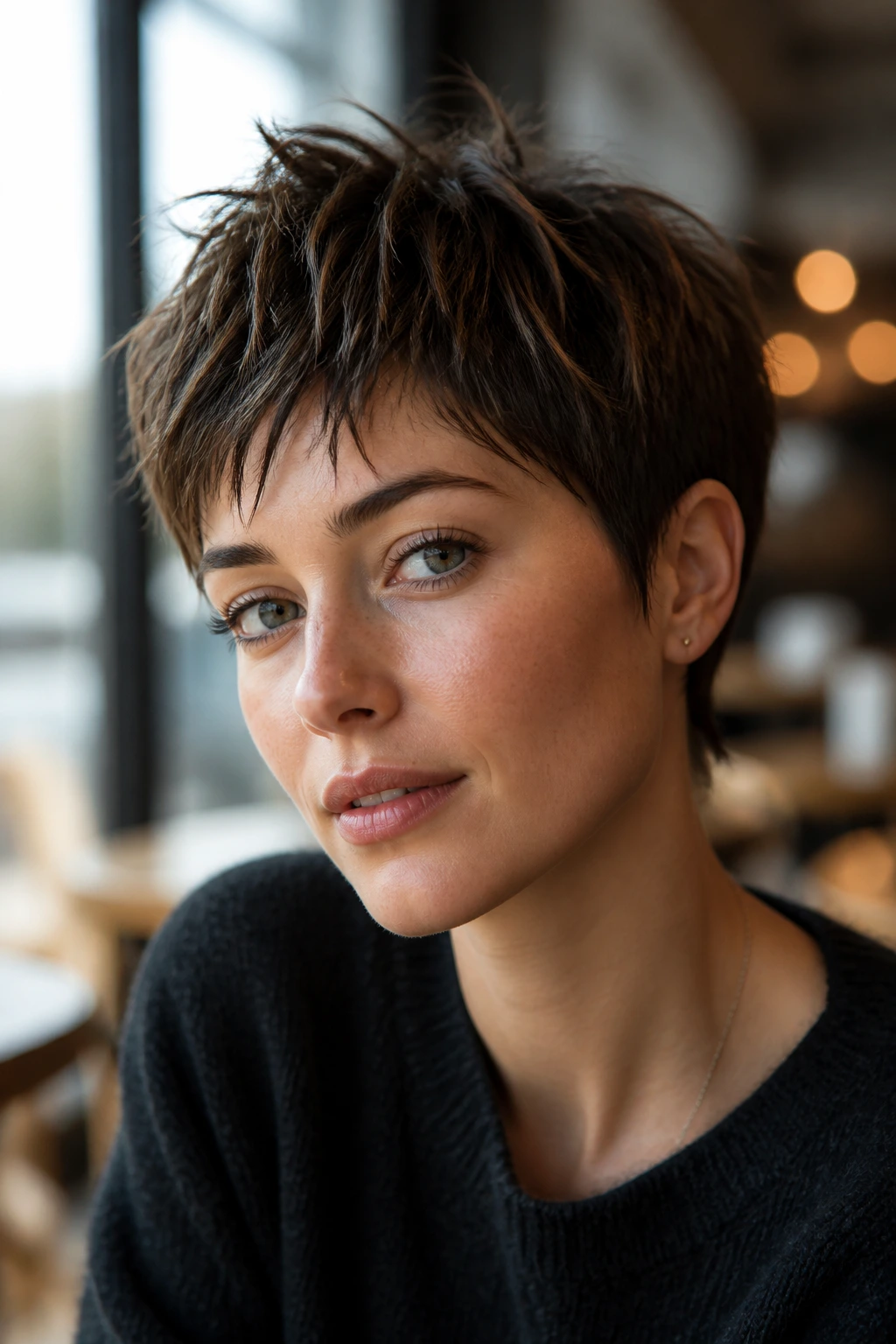
Why does a pixie cut feel so dramatic? Because it clears the face completely and puts the focus on your eyes, brows, and bone structure. A choppy pixie is even bolder than a neat one. The jagged texture keeps it from looking too neat or too sweet.
This version works best when the top has enough length to move, not sit like a helmet. Ask for short sides, a little height at the crown, and piecey ends through the top. A tiny bit of paste rubbed between your palms is usually enough. Too much product and the whole thing goes limp. Too little and it can look unfinished.
I like this cut on people who want a real change but don’t want to spend 20 minutes fighting a blow dryer. It’s quick, a little daring, and honest. There’s no hiding behind it.
The catch? You’ll need regular trims, because a pixie turns awkward fast once the neckline starts fuzzing out. Every 4 to 6 weeks is the sweet spot if you want the shape to stay clean.
3. Wolf Cut with Heavy Layers

The wolf cut has that rough, feathered movement that feels alive the second you shake your head. It’s a mash-up of shag and mullet, but the modern version is softer around the face and fuller through the crown. On wavy hair, it can look almost effortless. On straight hair, it brings in a little rebellion. Either way, it’s one of the bolder haircut choices if you want texture to do the talking.
Why the Shape Works
The layers lift the top while letting the length stay moody and loose at the bottom. That uneven balance is the point. It keeps the cut from feeling precious.
How to Wear It Well
- Ask for shorter layers at the crown and longer pieces through the back.
- Keep the front pieces around cheekbone to lip level if you want a frame.
- Use mousse on damp hair, then scrunch or diffuse.
- Finish with a dry texture spray at the ends for separation.
This cut shines when hair has a little natural bend. If your hair is pin-straight, you’ll need more styling time. If your hair is very thick, ask your stylist not to over-thin the ends or the shape can go puffy in the wrong places.
4. Asymmetrical Lob

An asymmetrical lob is not subtle, which is exactly why it works. One side sits a little longer than the other, and that small shift changes the whole feeling of the haircut. It creates movement even when the hair is still, and it gives straight hair a stronger edge than a classic shoulder-length cut.
This is a nice option if you want bold haircuts that still feel wearable in an office or at dinner with people who don’t want a full punk moment. The trick is keeping the difference visible enough to matter. One inch won’t read from across the room. Two to three inches usually does the job better.
It looks especially good with a side part, because the asymmetry gets a little extra drama from the sweep of the front. Blow it out smooth for a polished finish, or add loose bends with a 1-inch iron if you want the contrast to stand out.
The big advantage is that it grows out fairly gracefully. It loses some edge, sure, but it doesn’t collapse the way a micro cut can. That makes it a smart choice if you want impact without signing up for constant salon visits.
5. Buzz Cut
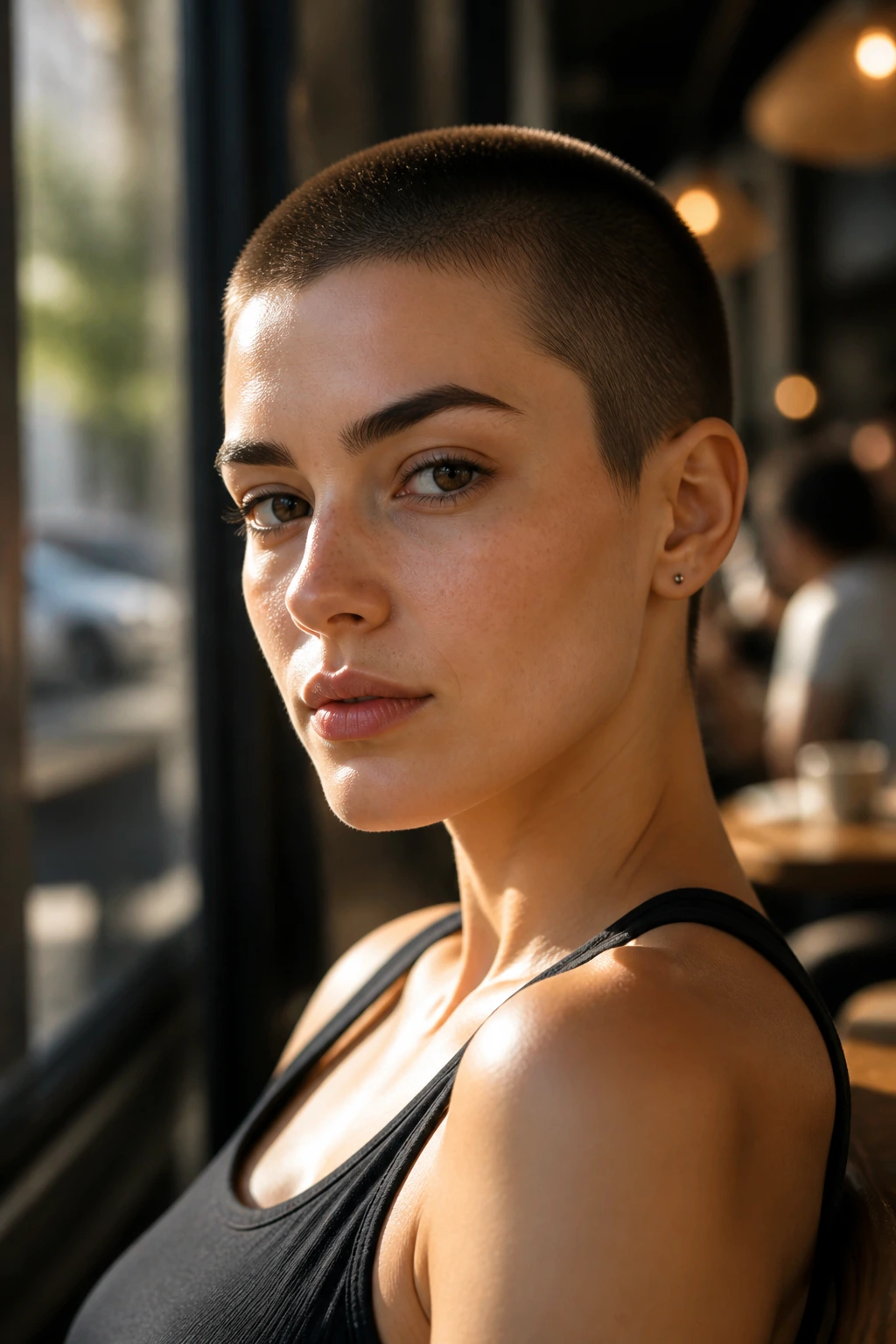
A buzz cut sounds extreme until you see how much face it clears. Then it starts to make sense. The hair is gone, the jawline shows up, and all the little details you usually don’t notice become the focal point. It’s a strong move. No way around that.
What to Know Before You Clip
- Start with a #2 or #3 guard if you want a softer first pass.
- Go shorter only after you’ve seen how your head shape reads in the mirror.
- The scalp will need sunscreen, moisturizer, and probably more care than you expect.
- Earrings, brow shape, and even lip color suddenly matter more.
A buzz cut is one of the most freeing haircuts out there, but it also asks for confidence because there’s nowhere to hide. If your crown has a swirl or your hairline is uneven, that’s not a reason to avoid it. It just means you need a barber who knows how to balance the shape instead of forcing it into a perfect mold.
If you’ve ever wanted a haircut that feels almost architectural, this is it. It’s bare, clean, and plain in the best possible way.
6. Bixie Cut

The bixie sits in that useful middle space between a bob and a pixie. It keeps more softness than a full crop, but it still has enough shape to feel like a real change. That makes it a strong pick if you want something fresh without going all the way short.
What makes the bixie work is the mix of lengths. The nape is short, the sides graze the cheekbones, and the top has a little lift. That uneven balance gives it motion. A good bixie should move when you turn your head. If it lies flat, it loses its charm fast.
I like this cut for people growing out a pixie or cutting down a bob that started feeling heavy. It bridges both worlds without looking like a compromise. Style it with a round brush for a softer finish, or rough-dry it with a little cream if you want it more playful.
The maintenance is easier than a pixie and less fussy than a bob, which is why it has such broad appeal. It looks styled even on rushed mornings.
7. Modern Mullet
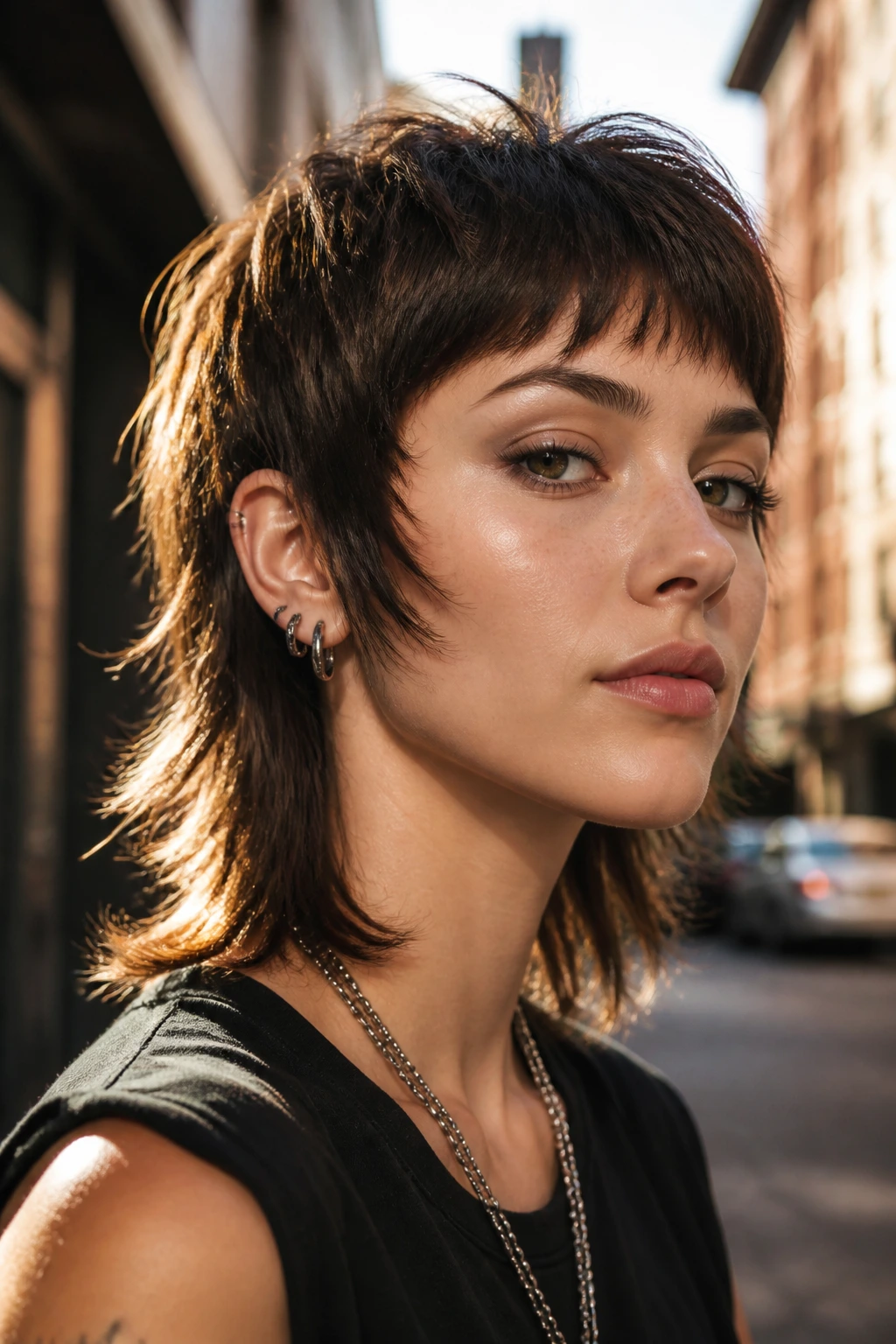
People keep calling the modern mullet a comeback haircut, but the better word is transformation. The old version was a joke on purpose. The new one is more sculpted, more flattering, and a lot more deliberate. Shorter in front, longer in back, yes — but with cleaner blending and a better sense of proportion.
The Parts That Matter
- Keep the front around chin or cheek level.
- Leave enough length at the back for movement, not mullet cosplay.
- Ask for softened edges around the ears.
- Use texture spray or a light wax, not a heavy cream.
This cut works especially well on wavy or curly hair because the shape gets built into the texture itself. Straight hair can wear it too, but the layers need to be cut with more precision or the whole thing can look flat on top and stringy underneath.
A modern mullet is a strong choice if you want a haircut that looks current without feeling delicate. It has edge, but it also has a sense of ease. Weirdly enough, that’s why it works.
8. Shag Cut with Curtain Fringe
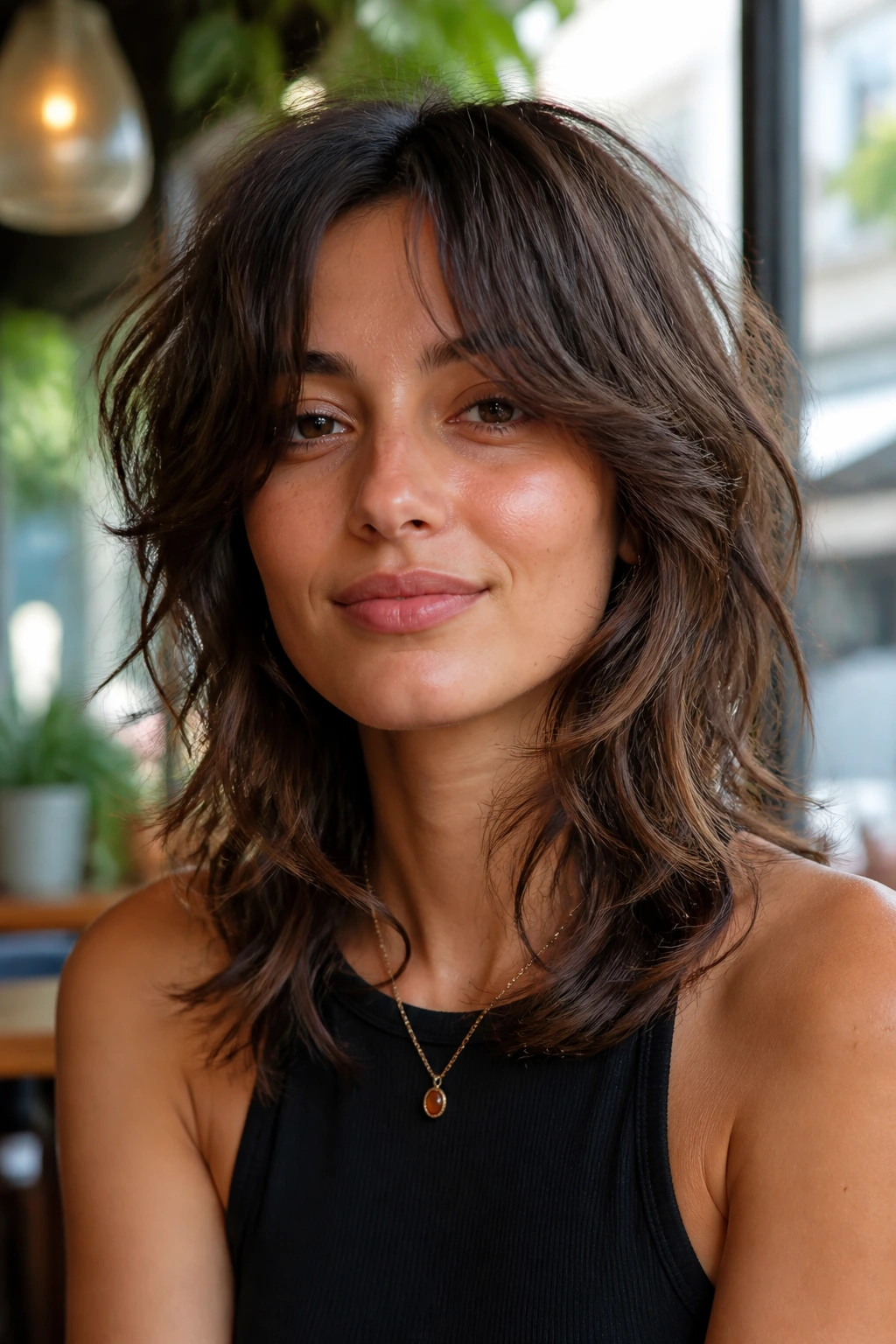
A shag with curtain fringe changes the shape of the face before you even style it. The fringe breaks up the forehead, the layers lift the crown, and the rest of the cut falls with a slightly messy charm that feels easy rather than accidental. It’s one of the best bold haircuts if you want movement instead of a hard line.
This shape is especially kind to medium-length hair that needs more life. The layers should start high enough to make the top airy, but not so high that the ends lose weight. If the cut is done well, the hair moves when you walk. That sounds small. It isn’t.
The fringe matters a lot. Curtain bangs should open around the cheekbones, not sit like a heavy curtain across the brow. I’d ask for them to be cut a little longer than you think you need; that gives you room to style them away from the face or let them fall straight.
A shag is one of those cuts that looks better with a bit of chaos. If you’re too neat with it, you’ll flatten the whole thing.
9. Undercut with Long Top
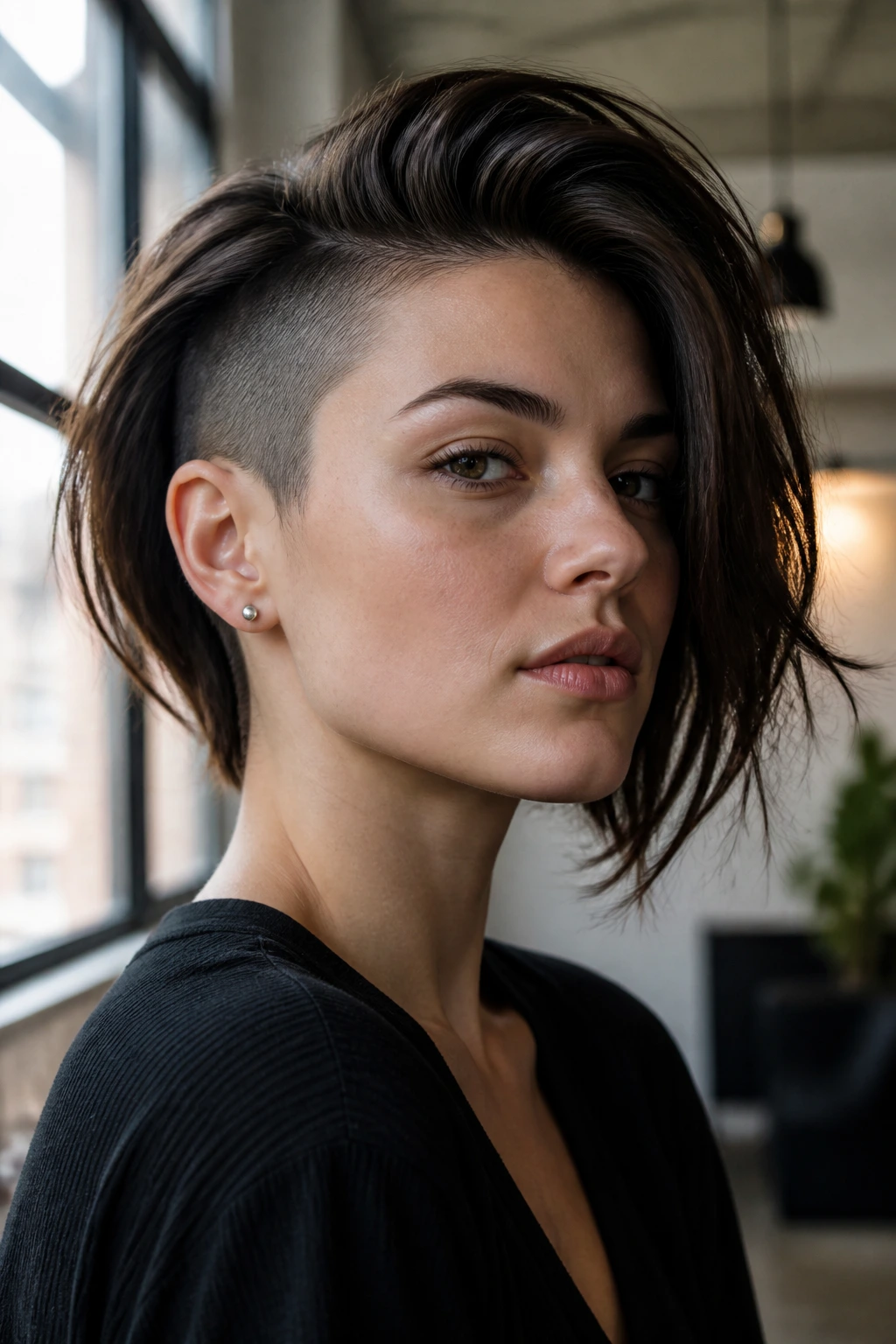
An undercut with long top layers is a smart answer to thick, stubborn hair. You keep the length you want on top, but the sides and back are trimmed much shorter, so the bulk disappears. The result can feel dramatic without being flashy. You know the difference the minute you run your hand through it.
Why People Keep Choosing It
- It removes weight where hair tends to puff.
- It makes ponytails feel lighter.
- It lets the top layer fall in a clean, controlled way.
- It can be hidden easily if the undercut sits low enough.
This is a good move if you get hot easily, wear your hair up often, or just hate the triangle shape that thick hair can create. A hidden undercut can be especially useful because it keeps the front looking ordinary until you tuck the hair up and reveal the shorter section.
Maintenance is the trade-off. The undercut grows out faster than the top, and the contrast starts looking fuzzy once the edges lose their line. Still, if you want a serious shape change with less daily weight, it’s a strong option.
10. Micro Bob

A micro bob lands with a kind of clean, sharp confidence. It usually sits somewhere between the jaw and cheekbone, and the shorter length makes the face look more open. There’s no extra hair to hide behind. That’s the point.
This cut is especially striking on straight or slightly wavy hair because the outline stays visible. If you add a deep side part, the whole style shifts from severe to chic in a second. If you tuck one side behind the ear, the asymmetry becomes part of the look. Small move. Big effect.
What I like most is the honesty of it. A micro bob doesn’t pretend to be soft and romantic. It’s compact, neat, and a little daring. It can also make fine hair look denser, which is not a small bonus.
The downside is that it asks for precision. If the cut is even a little off, you’ll see it immediately. It also needs regular shaping, because once it slips too far past the cheekbone, it stops reading as a micro bob and starts looking like you simply skipped a trim.
11. Tapered Afro

What makes a tapered afro so strong is the silhouette. The sides are shaped closer to the head, while the top keeps its natural height and softness. That contrast gives the cut structure without flattening the texture, and it frames the face in a way that feels clean and powerful.
What to Ask Your Barber or Stylist
- Keep the sides and nape closely tapered.
- Leave enough length on top for your curl pattern to breathe.
- Shape the outline around the temples instead of forcing a square box.
- Moisturize first, then pick or shape once the hair is dry enough to hold.
This cut works because it respects the curl pattern instead of fighting it. If the top is cut too short, the shape can shrink up more than expected. If the sides are left too heavy, the whole cut loses the tapered effect and starts looking bulky.
A good tapered afro can feel polished for work and bold on a night out without changing the cut at all. That flexibility matters. It’s not just a hairstyle; it’s a shape that moves with you.
12. Side-Swept Pixie
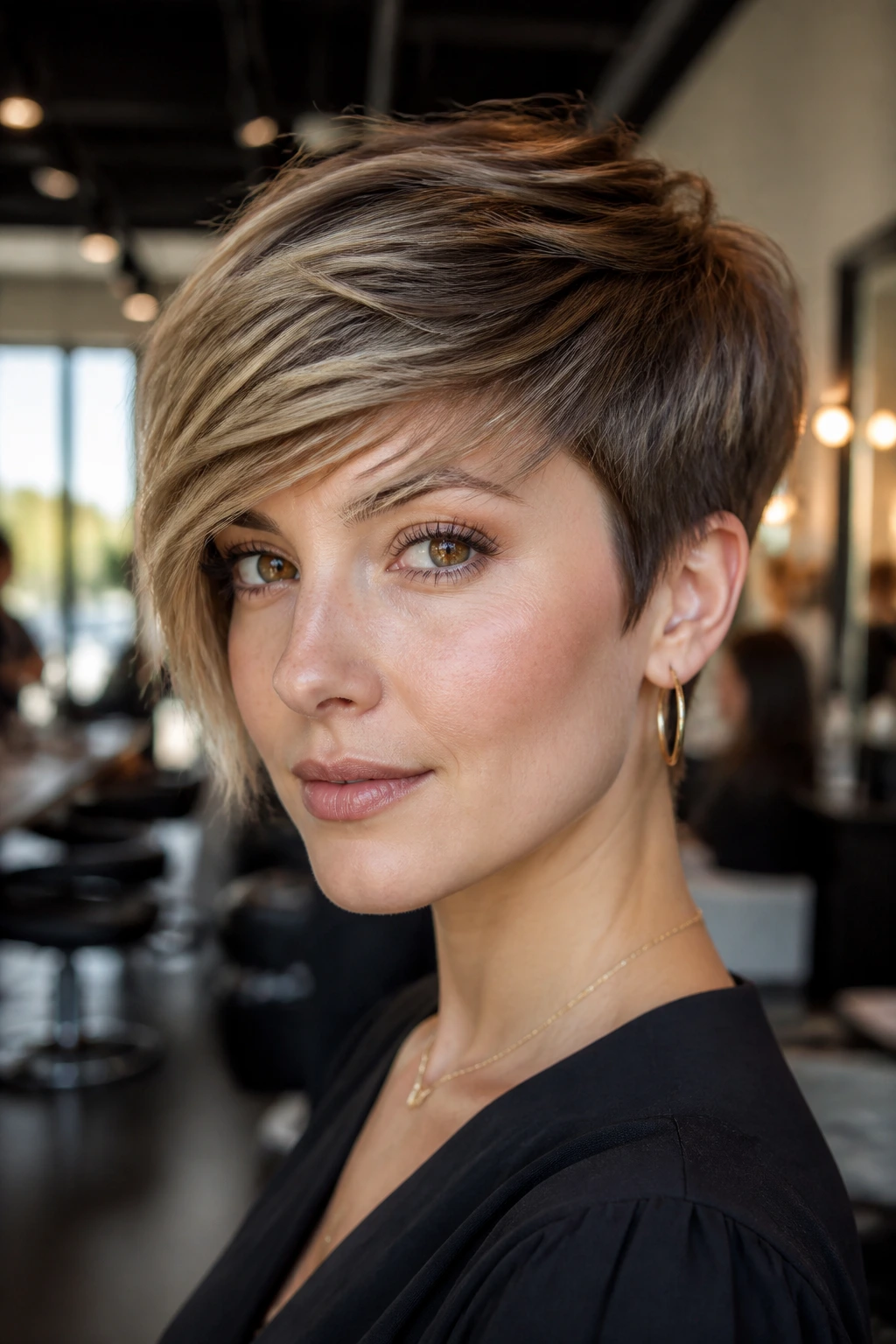
A side-swept pixie softens sharp features fast. The long fringe drapes across the forehead, which keeps the cut from feeling too severe, while the cropped back gives it that crisp, short-hair energy. It’s a nice middle ground if you like the idea of short hair but want a little softness around the face.
This version is especially flattering when the fringe starts near the brow and slopes down toward the cheekbone. That diagonal line creates movement, and movement is what keeps a pixie from looking static. A little wax at the ends can help separate the top pieces so they don’t fall into one flat sheet.
It’s also a good cut for people who want a style that can be slicked down, pushed forward, or fluffed up depending on the day. That range makes it feel less rigid than a classic pixie.
There’s one catch. The fringe has to be kept in shape, or it starts hanging in the eyes and taking over the whole cut. Trim it before it becomes annoying. That sounds obvious, but people wait too long all the time.
13. Hime Cut
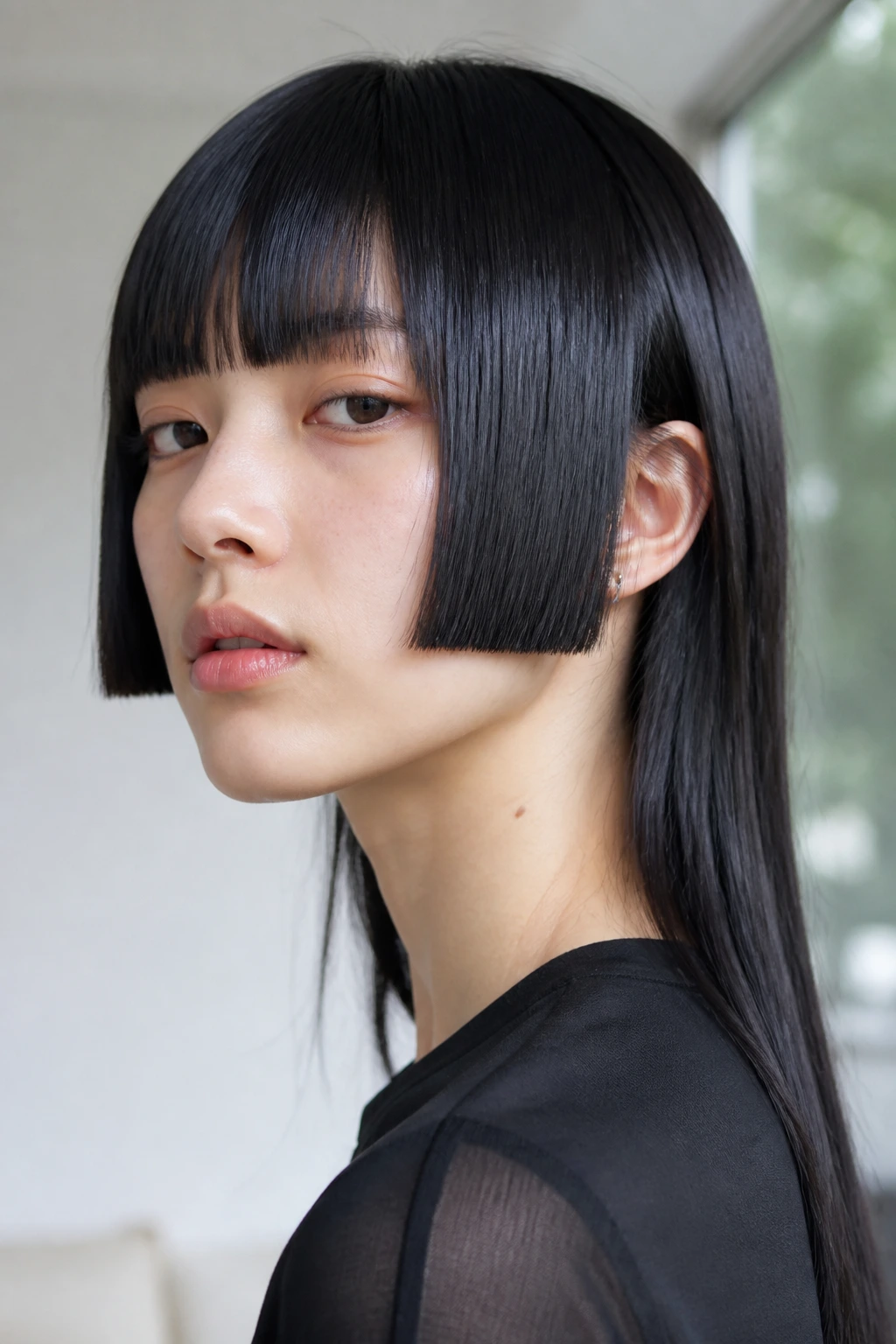
The hime cut is all geometry. Short, sharp face-framing pieces sit near the jaw or cheekbone, while the rest of the hair stays longer and smoother behind them. It has a deliberate, almost architectural look that stands out even when the styling is minimal.
Why It Feels So Distinct
- The front sections are cut as clear panels.
- The back stays long and clean.
- The contrast between the two lengths is the whole point.
- It looks strongest when the lines are kept crisp.
This is not a haircut for people who want invisible details. It announces itself right away. On straight hair, the shape reads clearly. On wavy hair, you may need more flat-ironing if you want the front pieces to sit in a defined way.
What I appreciate about the hime cut is that it makes ordinary length feel strange in a good way. You keep the hair you already have, but the silhouette becomes unusual enough to feel fresh. That makes it a bold choice without needing a huge chop.
It does need regular upkeep because those front panels show every millimeter of growth. If you like a neat outline, you’ll stay busy with trims.
14. Shaved-Nape Bob
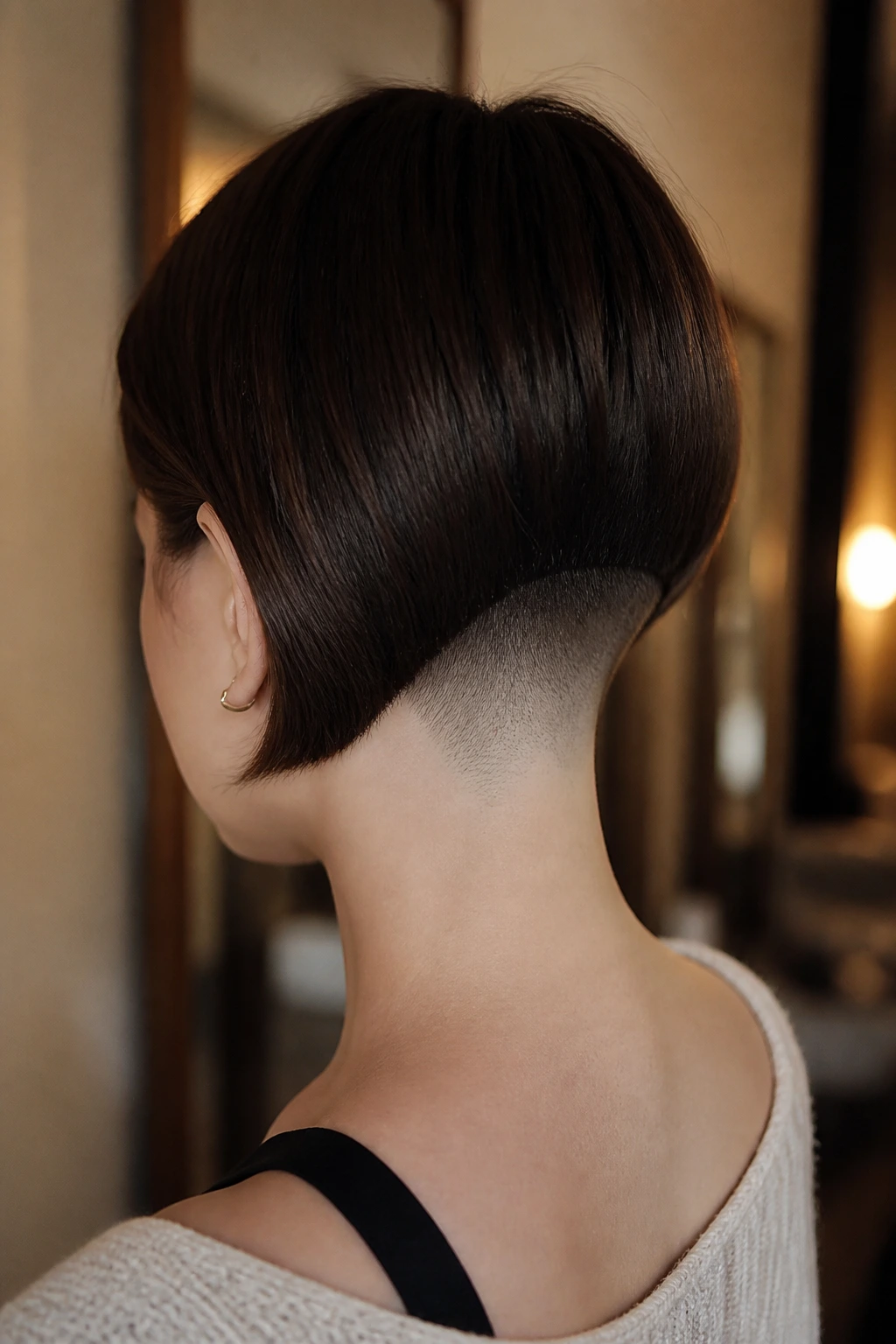
A shaved-nape bob keeps the front calm and the back sneaky. From the front, it can look like a classic bob with a neat line and enough length to tuck behind the ears. Turn around, though, and the nape is clipped close, which changes everything.
That hidden contrast is what makes the cut interesting. It removes weight where hair often bunches up, which is useful if your neck gets hot or your hair fluffs out underneath. It also makes styling easier because the back lies flatter and dries faster.
The best part is the surprise. You can wear it sleek for one mood and then pin it up to show the underlayer the next. It gives you two looks without growing two heads of hair.
If you’re considering this cut, ask your stylist to blend the transition carefully. A harsh line can look accidental. A soft taper is cleaner and much easier to grow out. This one works best when the detail is there but not sloppy.
15. Blunt Collarbone Lob

A blunt collarbone lob looks simple, then moves and catches you off guard. The length lands right around the collarbone, which is long enough to pull back and short enough to feel lifted off the shoulders. Add a blunt edge and the cut suddenly has weight.
Why It’s So Useful
- It gives you a clean outline without going short.
- It works with straight blowouts and loose bends.
- It keeps enough length for clips, buns, and half-up styles.
- It can make finer hair look thicker at the ends.
I like this cut when someone wants change but does not want to commit to a very short shape. There’s something satisfying about the line hitting the collarbone, especially when the ends are trimmed blunt instead of chipped away into layers.
Style it with a center part for a modern feel, or switch to a deep side part if you want more drama. A flat brush and a smoothing blow-dry cream are enough for most days. If the hair has a slight bend, even better. The shape picks up movement without needing much help.
This is a quietly bold haircut. Not loud. Just sharp.
16. Curly Shag with Rounded Shape
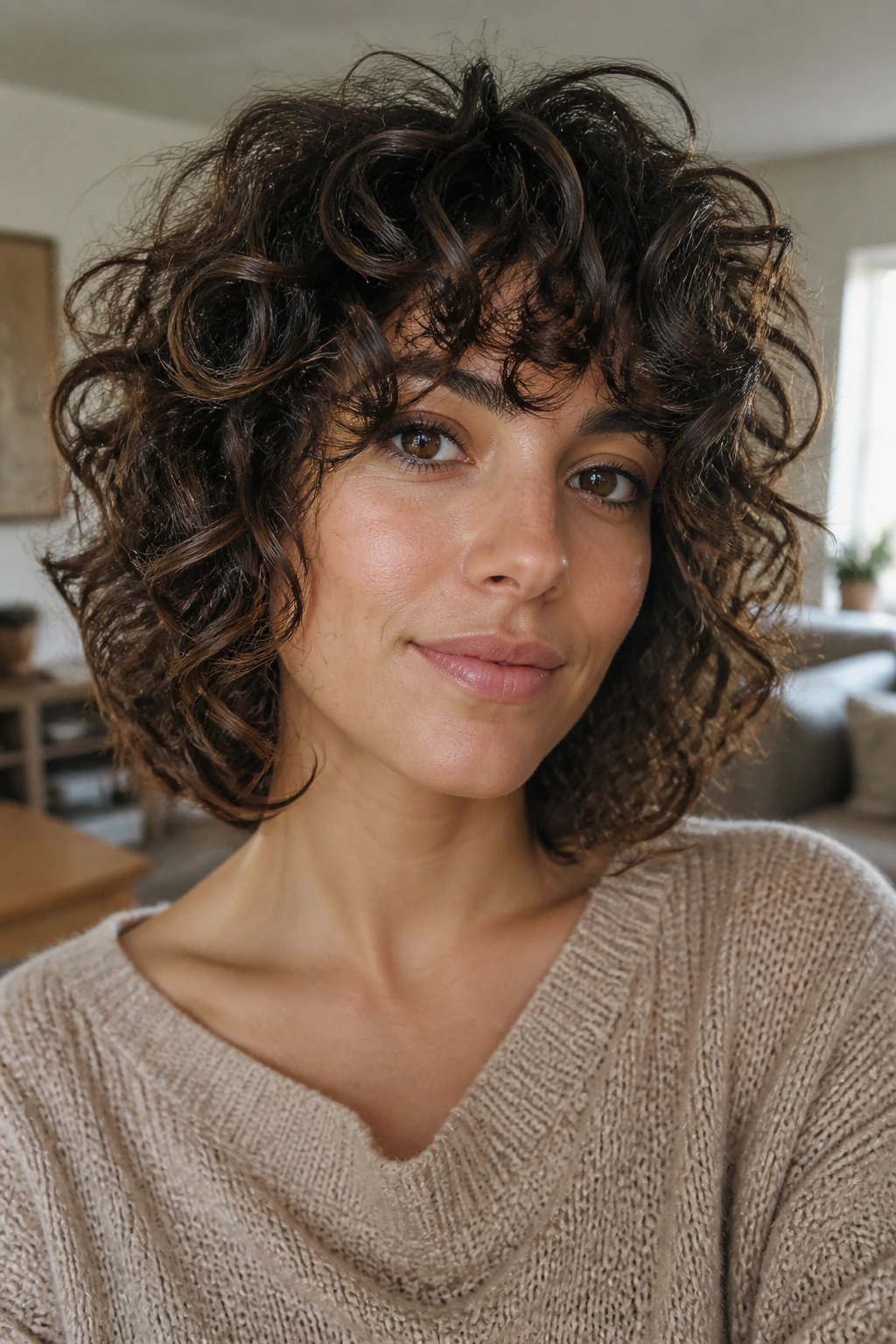
Does curly hair have to be big to make a statement? Not at all. A curly shag with a rounded shape proves that texture can look intentional when the cut is built around it instead of chopped at random. The layers should support the curl pattern, not break it apart.
The key is shape. A good curly shag has lift at the crown, room around the face, and enough length in the lower sections to keep the silhouette from ballooning. If the layers are too short, the whole thing can go fuzzy. If they’re too long, it loses the movement that makes the cut interesting.
I’d ask for the curls to be cut in a way that follows how they naturally clump. That usually means dry-cutting or working on hair that has some of its natural pattern already visible. A diffuser helps, but so does patience. Curl cuts are never fully about the scissors. Half the result comes from how the hair dries.
This shape feels relaxed, yet it still has a point of view. That’s a rare combination.
17. Soft Bowl Cut
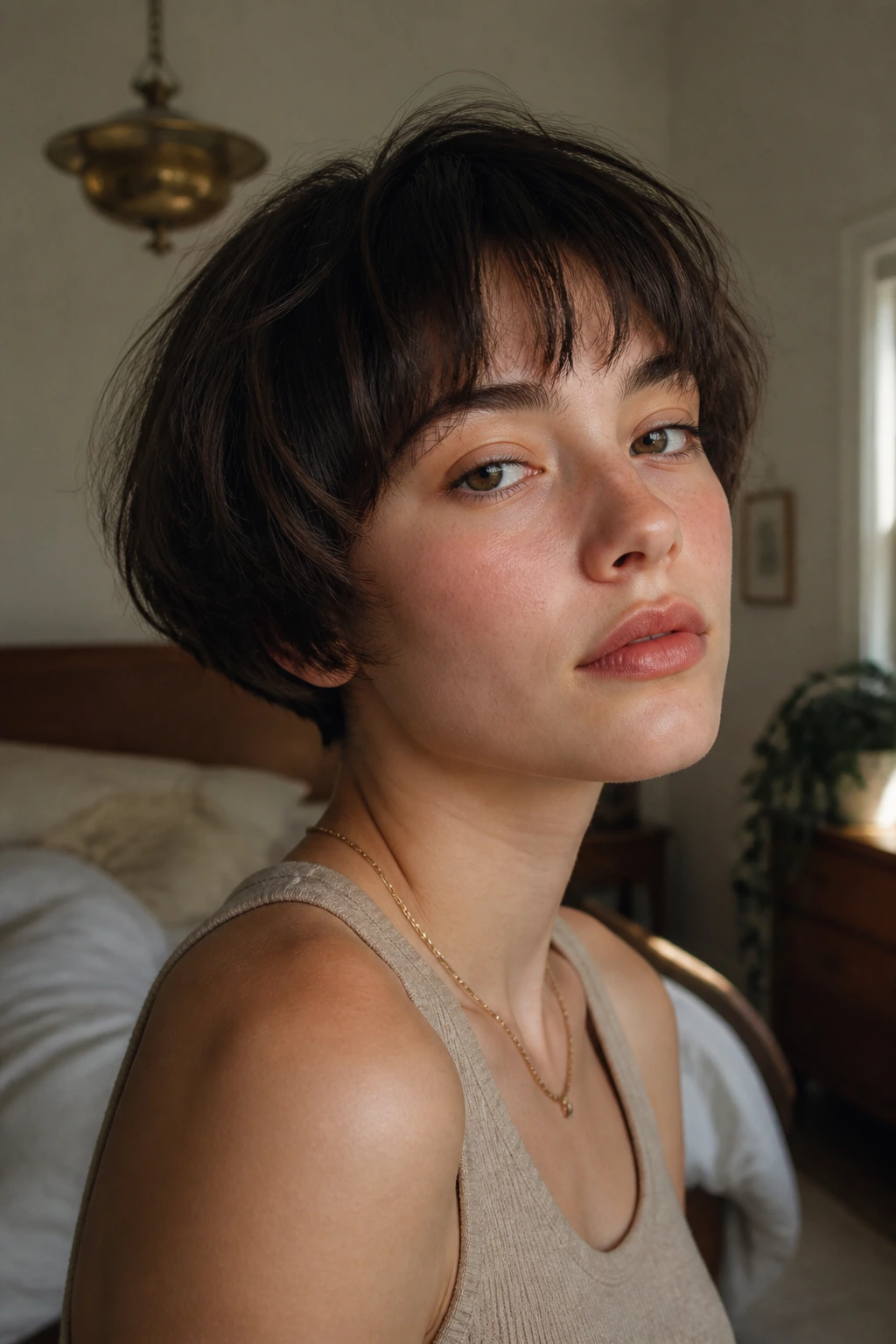
A soft bowl cut works because the shape does the talking. The old version of this haircut could feel stiff or childish. The modern one keeps the rounded outline but softens the edges, often with texture around the perimeter and a little movement through the top.
What Makes It Feel Modern
- The perimeter stays rounded, not hard.
- The fringe can be slightly broken up so it doesn’t sit like a helmet.
- The ends are texturized enough to move.
- A slight undercurve makes the cut sit closer to the head.
This shape is strong on straight hair, especially if you like a clean line and don’t mind something a little unusual. On thick hair, the bowl shape can hold beautifully if the weight is removed carefully. On very curly hair, it becomes more of a rounded crop than a traditional bowl, which can still look great if the shape is balanced.
It’s a bold choice because people notice it immediately. There’s no pretending it’s background hair. If you want a haircut that feels graphic and deliberate, this one earns its place.
18. Fade with Textured Curls
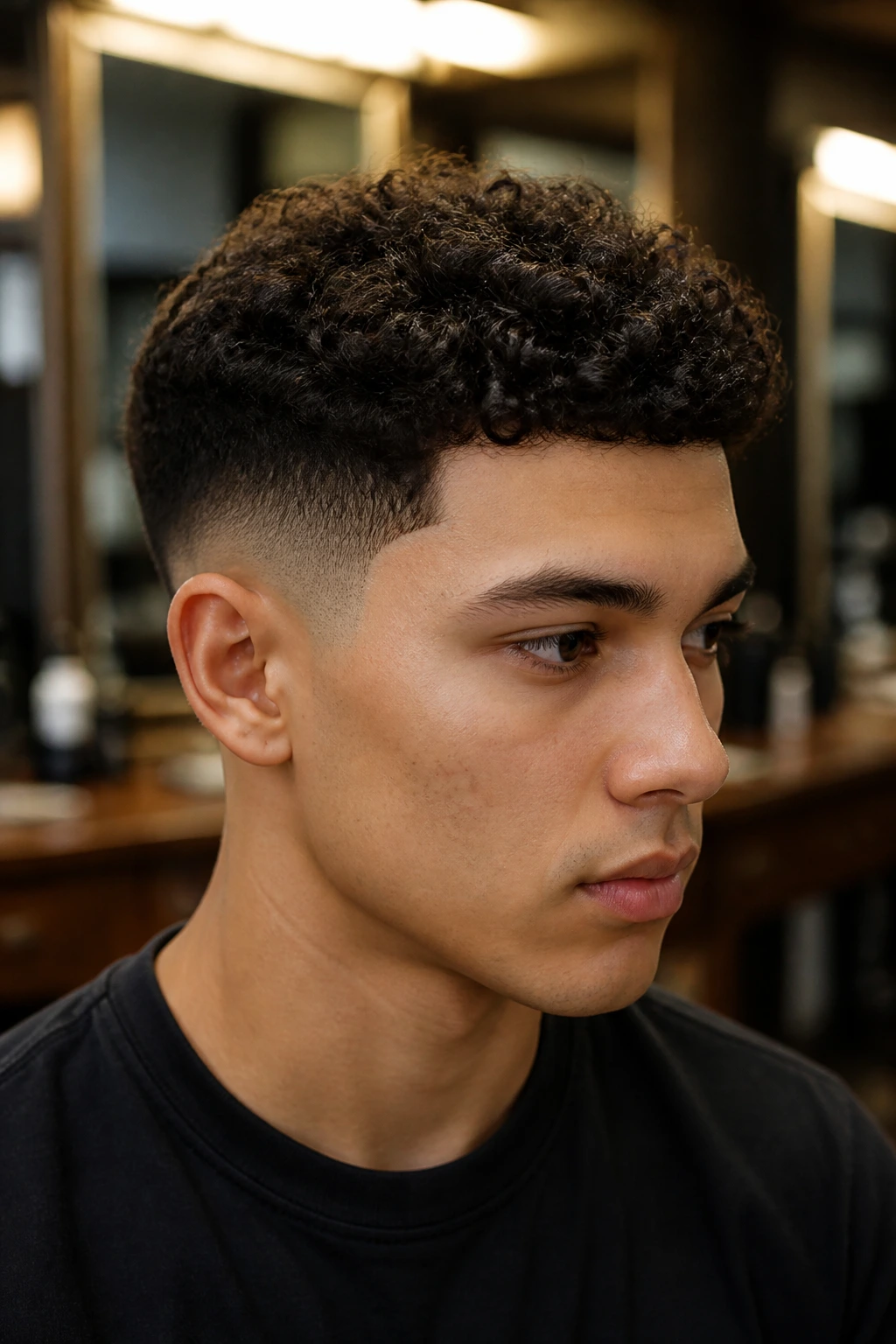
A fade with textured curls is part haircut, part frame. The sides are taken down tightly, often with a low or mid fade, while the curls on top stay defined and lifted. That contrast makes the top look fuller and the overall shape feel sharper.
This cut is great when you want your curls to look clean instead of bulky. The fade gives the hairline structure, and the top gives it personality. It also keeps the back and sides easier to manage, which matters if you’re tired of shape drifting out around the ears and neckline.
What I’d watch for is the blend. A fade that’s too high can overpower the curls on top. A fade that’s too low can lose the contrast and feel vague. The sweet spot depends on your head shape and curl density, so the barbering matters.
This is one of the more practical bold haircuts in the bunch. It gives shape, control, and texture without asking you to flatten what your hair already wants to do.
19. Long Wolf Cut with Curtain Bangs

Long hair can still feel radical when the layering is this aggressive. A long wolf cut keeps the length, but it breaks up the bulk with shaggy layers and a fringe that opens around the face. Curtain bangs give it movement up front; the layers keep the bottom from sitting like one heavy block.
How It Changes the Shape
- The crown gets lifted.
- The mid-lengths lose weight.
- The face framing makes long hair feel lighter.
- Curtain bangs keep the front from disappearing into the rest of the cut.
This is a useful option if you love long hair but feel bored by all one-length styles. It can also help if your hair gets flat on top and too thick at the ends. The layers bring a bit of lift without taking away the length you’ve been growing out.
You do need styling time. A round brush or a quick bend with a large iron helps the bangs sit properly, and a little mousse at the roots can keep the top from collapsing. Still, for a long cut, it has a lot of attitude.
20. Disconnected Crop with Long Fringe
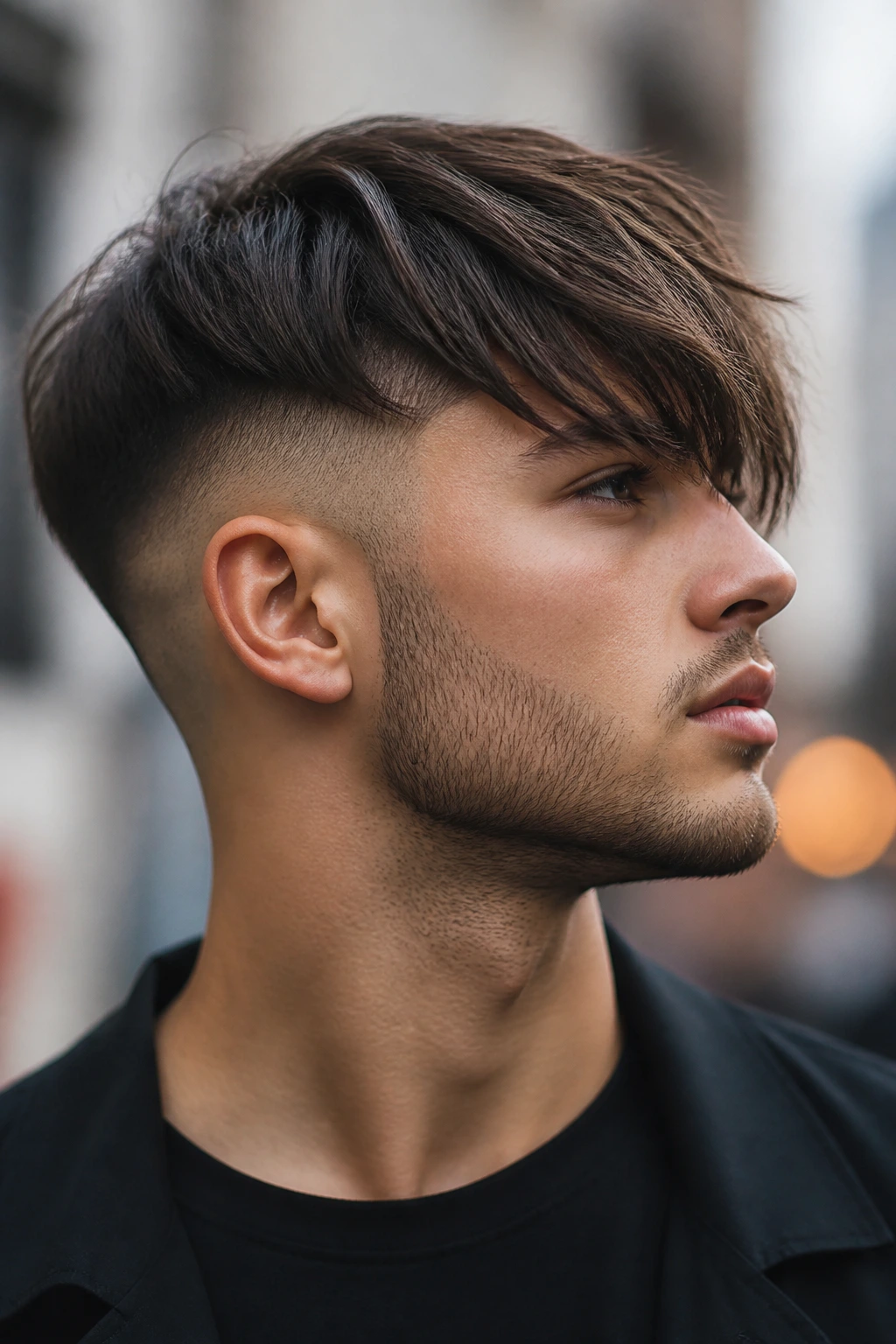
A disconnected crop with a long fringe gives you choices. The sides and back are short enough to feel sharp, while the top and fringe stay much longer, which creates a visible break between lengths. That split is what makes the haircut feel bold instead of blended.
It suits people who like flexibility. Push the fringe forward for edge. Sweep it across the forehead for softness. Slick it up for a cleaner line. Because the top stays longer, you can change the mood without changing the cut itself.
The best versions keep the disconnect obvious but not sloppy. The top should look intentionally left long, not like the haircut got interrupted halfway through. That takes a careful hand with the clippers and scissors. If you’re asking for this style, bring a photo with the ratio you want, because “short sides, long top” can mean wildly different things to different stylists.
This is the haircut I’d point to if someone wants a real shift without going all the way to a buzz cut. It has shape, movement, and enough contrast to feel fresh every time you catch it in the mirror.
