



Thick hair can be a blessing right up until it refuses to move. One blunt cut and the whole head turns into a helmet; one wrong layer and the ends spring out like they’ve got opinions of their own. Short shag haircuts for thick hair solve that problem better than most cuts because they remove weight where it matters and keep enough shape to stop the hair from going fuzzy or puffy.
The trick is not “more layers” in the lazy sense. It’s placement. A good shag on dense hair uses internal layering, point cutting, and a perimeter that still has some strength. That balance matters. If the layers are hacked too high or the ends are over-thinned, thick hair can balloon instead of falling nicely, and nobody wants to spend 20 minutes styling a cut that was supposed to make life easier.
What makes these cuts so useful is that they work with movement instead of fighting it. Some lean rock-and-roll, some feel softer and feathered, and some flirt with a mullet or pixie shape without crossing into costume territory. The best ones give you shape around the face, keep the crown from looking flat, and let the back sit light enough that your hair doesn’t wear you.
1. Classic Choppy Shag With Brow-Grazing Bangs
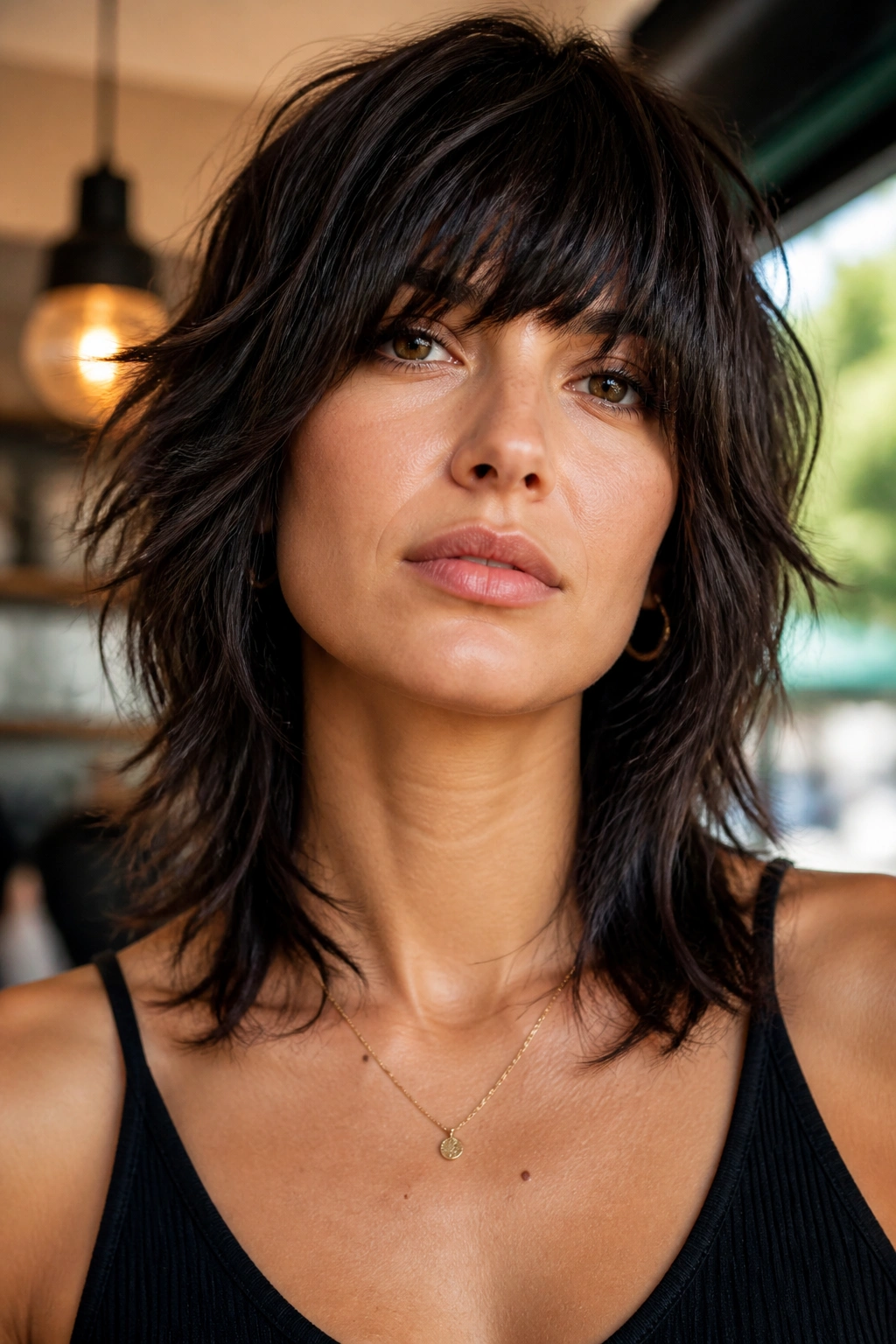
A classic choppy shag is the safest place to start if you want texture without chaos. The bangs skim the brows, the layers hit around the cheekbones, and the whole cut stays short enough to feel fresh while still leaving room for styling.
Why It Works on Thick Hair
Dense hair likes structure, not excess thinning. This version keeps the bulk under control by taking weight out through the middle, so the ends don’t mushroom out at the bottom.
- Brow-grazing bangs soften a strong forehead line.
- Choppy layers create movement without making the shape flimsy.
- A slightly rounded outline keeps the cut from looking boxy.
- Works well with a quick blow-dry or a loose air-dry.
Ask for point cutting at the ends and around the fringe. That one detail makes the whole cut look softer and less blunt.
2. Curly Short Shag With Rounded Fringe
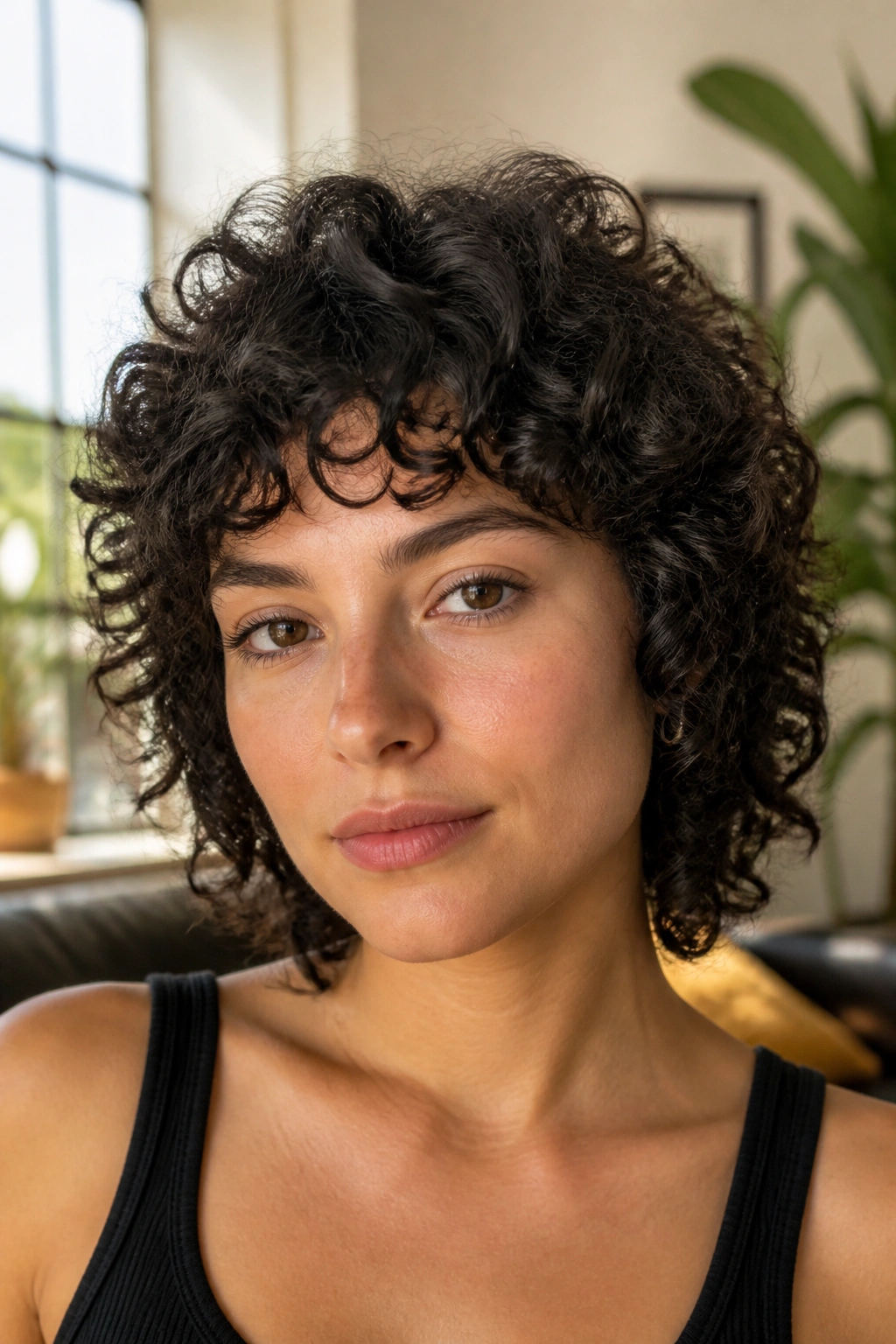
Curly thick hair and a shag are a very good pair when the fringe is shaped with care. A rounded fringe keeps the front from splitting too hard while the shorter layers stop the curls from stacking into a pyramid.
The important thing here is shrinkage. Curly hair bounces up more than people expect, so a stylist who cuts this dry, or nearly dry, has a much better chance of placing the layers correctly. Wet curls can hide their real length. Dry curls tell the truth.
Wear this cut with a light gel or curl cream, then scrunch from the ends upward. If the curls need a reset, mist them, twist a few front pieces around your fingers, and let them dry again. Simple. Effective.
How to Use It
The rounded fringe looks best when the curls are allowed to fall where they want, not brushed into submission. A wide-tooth comb is fine in the shower. Outside of that, hands do the work.
3. Wolf-Cut Shag With a Tapered Nape
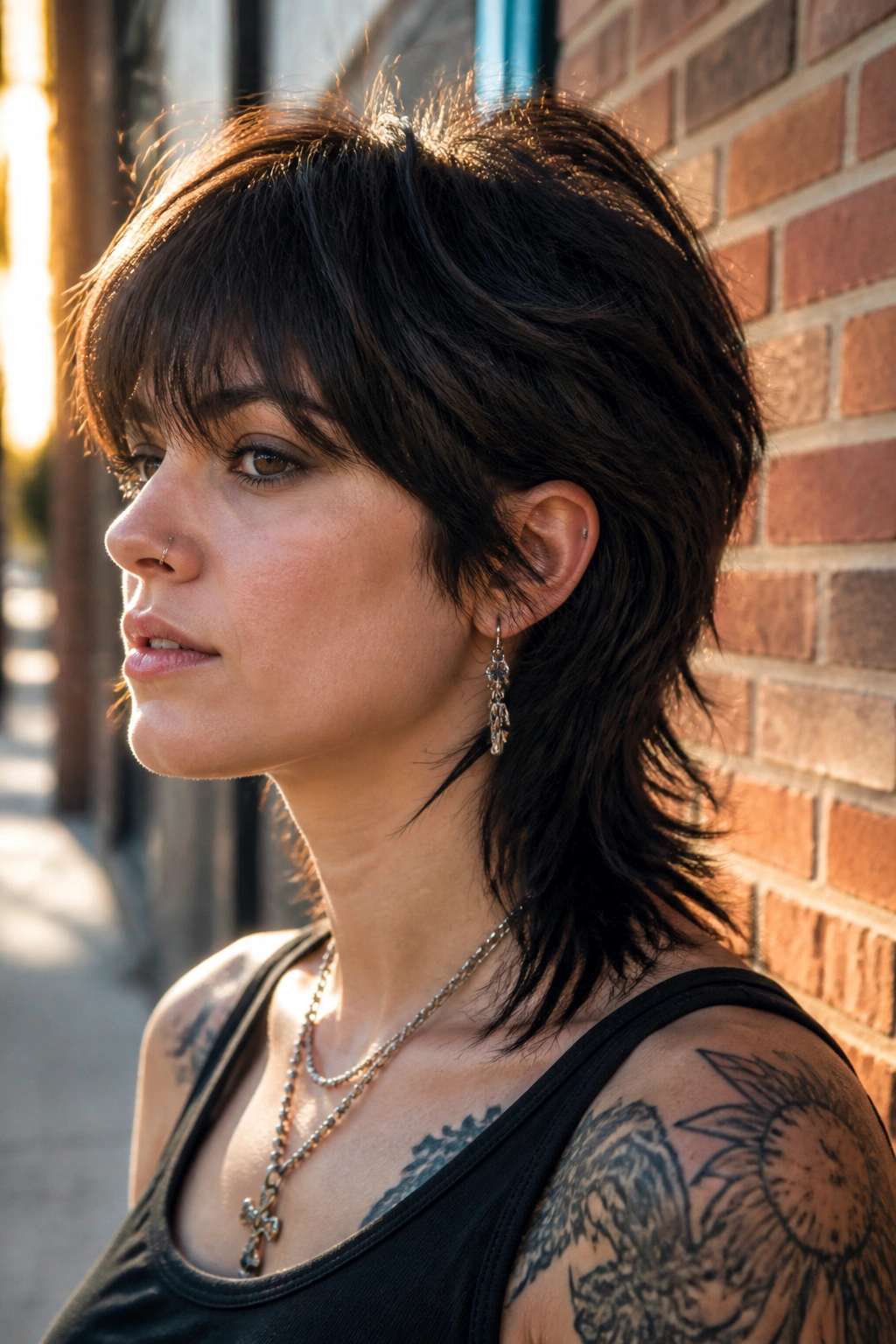
Why do wolf cuts flatter thick hair so often? Because they leave the top shaggy and the back longer, which creates a leaner line through the neck without flattening the crown. It’s a good move if your hair grows out with a lot of volume at the back.
The tapered nape is the key. It takes the heaviness off the neck, which helps the cut feel lighter the second you dry it. Without that taper, thick hair can sit like a shelf. With it, the shape feels deliberate, a little wild, and much easier to wear under collars or jackets.
What to Tell Your Stylist
- Keep the crown short enough to lift.
- Leave length in the back, but soften the line.
- Use internal layers, not aggressive thinning.
- Let the front fall slightly longer toward the jaw.
This cut suits people who like a messier finish and don’t mind a little grow-out attitude.
4. Feathered Shag With Soft Curtain Bangs
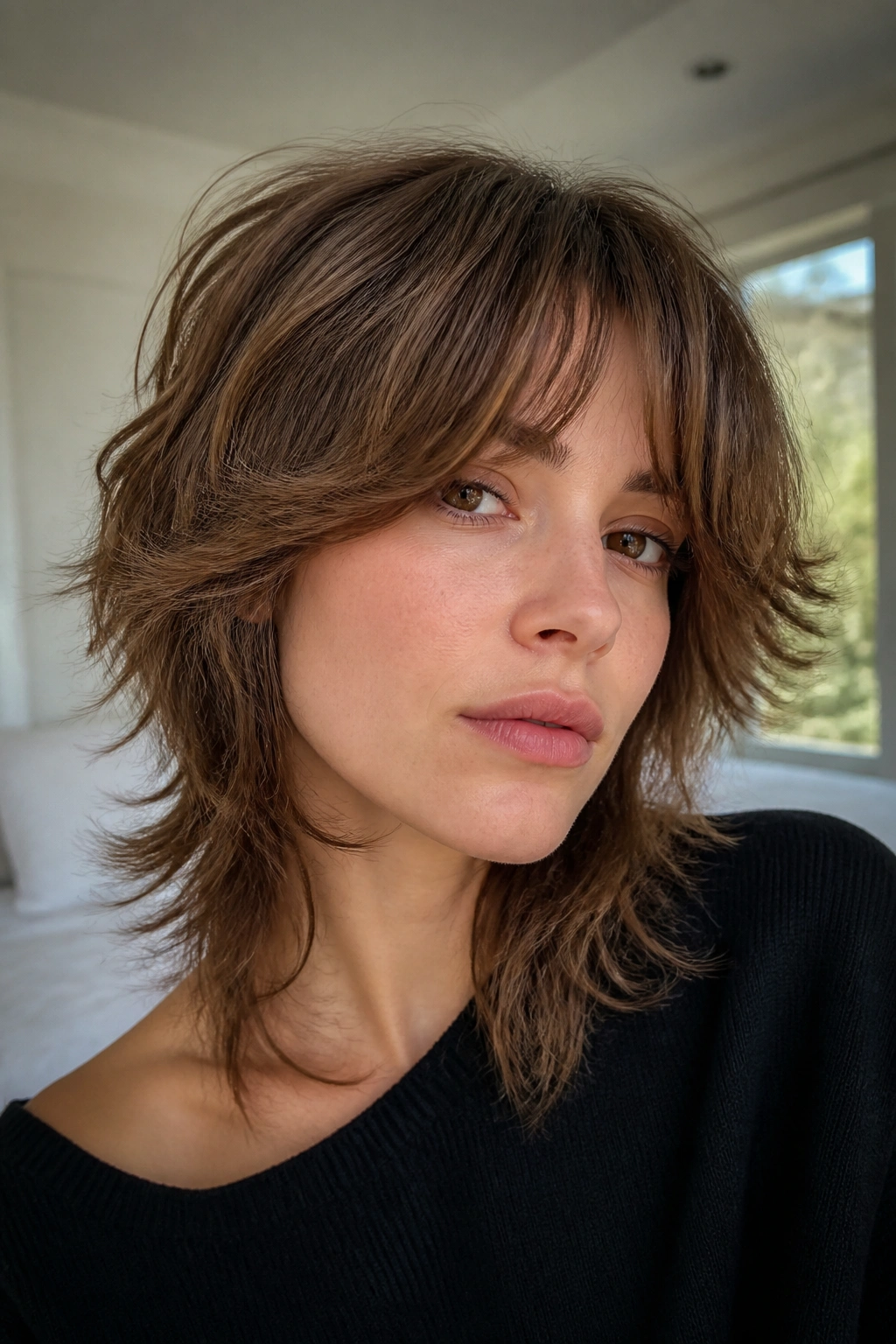
A feathered shag is what happens when you want movement but don’t want the haircut to shout at people. The layers are sliced or feathered so they bend away from the face, and the curtain bangs split softly down the center.
Thick hair loves this shape because feathering breaks up bulk without leaving hard shelves. You get lift around the crown, swing at the ends, and a front section that opens the face instead of crowding it. It’s one of those cuts that looks like you’ve done more styling than you actually have.
A round brush helps if you blow-dry, but you do not need a salon-level finish every morning. A big metal brush, a dab of heat protectant, and a quick bend through the bang area is usually enough.
This one is especially good if your hair tends to flip out at the ends. Feathering calms that down.
5. Razored Bixie Shag
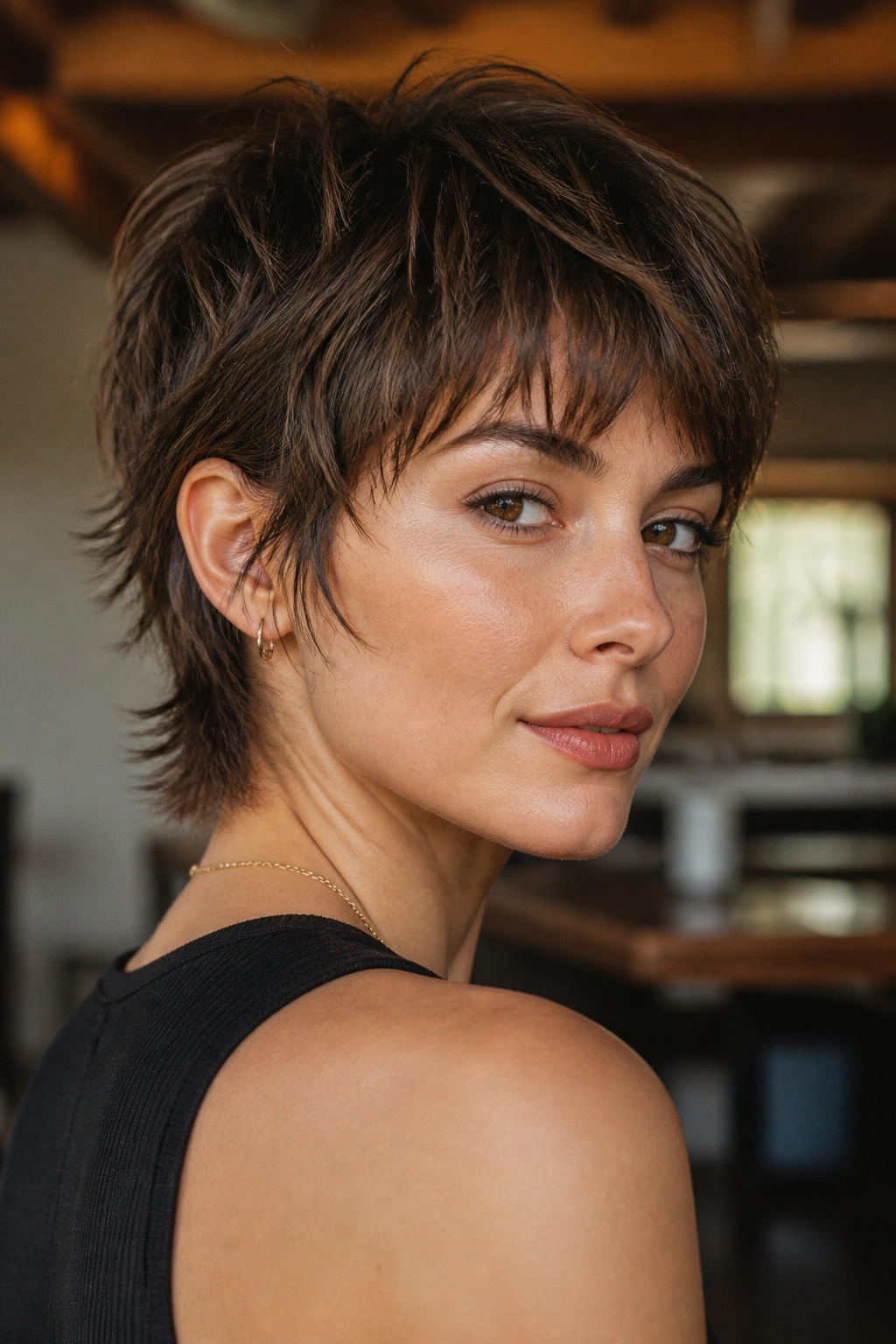
A bixie shag sits between a bob and a pixie, which is useful if you want short hair but do not want a full cropped cut. On thick hair, the extra texture on top keeps it from feeling severe, and the shaggy ends stop the shape from reading too neat.
What I like about this version is the energy. It has edge without trying too hard. The top stays piecey, the sides hug the face, and the back is short enough to dry fast. If your hair is dense and you’re tired of spending forever with a dryer, this is the kind of cut that gives back some time.
Styling is quick. Work in a small amount of matte paste or cream, pinch the ends into little sections, and leave some separation. The whole point is to avoid a helmet finish.
A bixie shag suits fine-thick hair especially well, because it gets the airy movement of a pixie without sacrificing the fullness thick hair naturally gives you.
6. French-Girl Shag With Cheekbone Layers
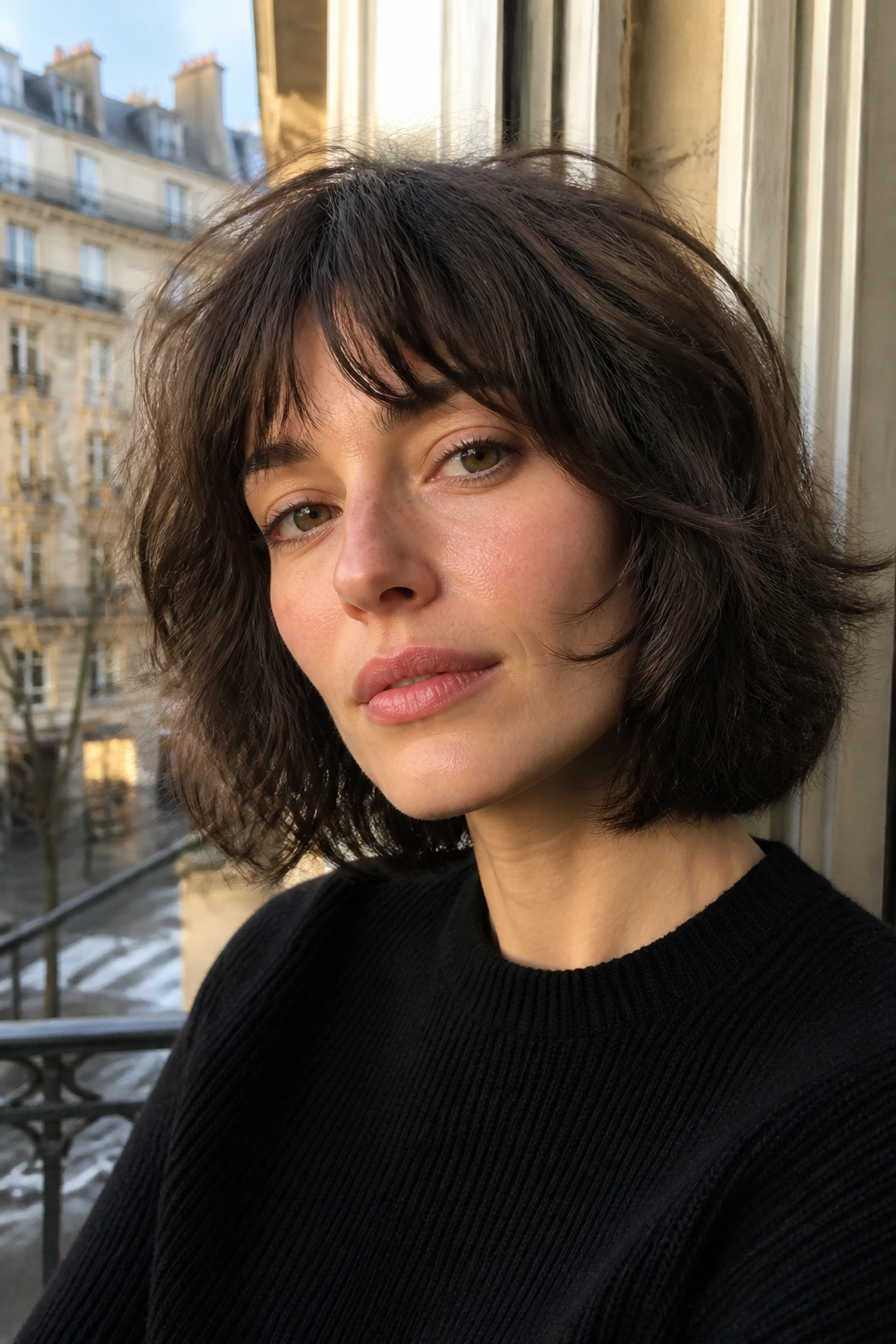
Compared with a straight bob, this cut feels looser from the start. The length usually sits around the chin or just below, the layers begin near the cheekbones, and the fringe stays soft enough to fall into place without perfect styling.
That shape matters on thick hair because it keeps the front from collapsing into one heavy block. The cheekbone layers pull attention upward, which is useful if your hair tends to widen at the jaw. It’s also one of the easiest short shags to grow out, because the layers are not so choppy that they turn into odd little bits after a few weeks.
Best for readers who want texture but still like a polished edge. Best not for anyone who wants a very edgy, mullet-leaning shape. This one stays chic, a little messy, and much more Paris-apartment than skate-ramp.
7. Layered Pixie Shag for Dense Hair
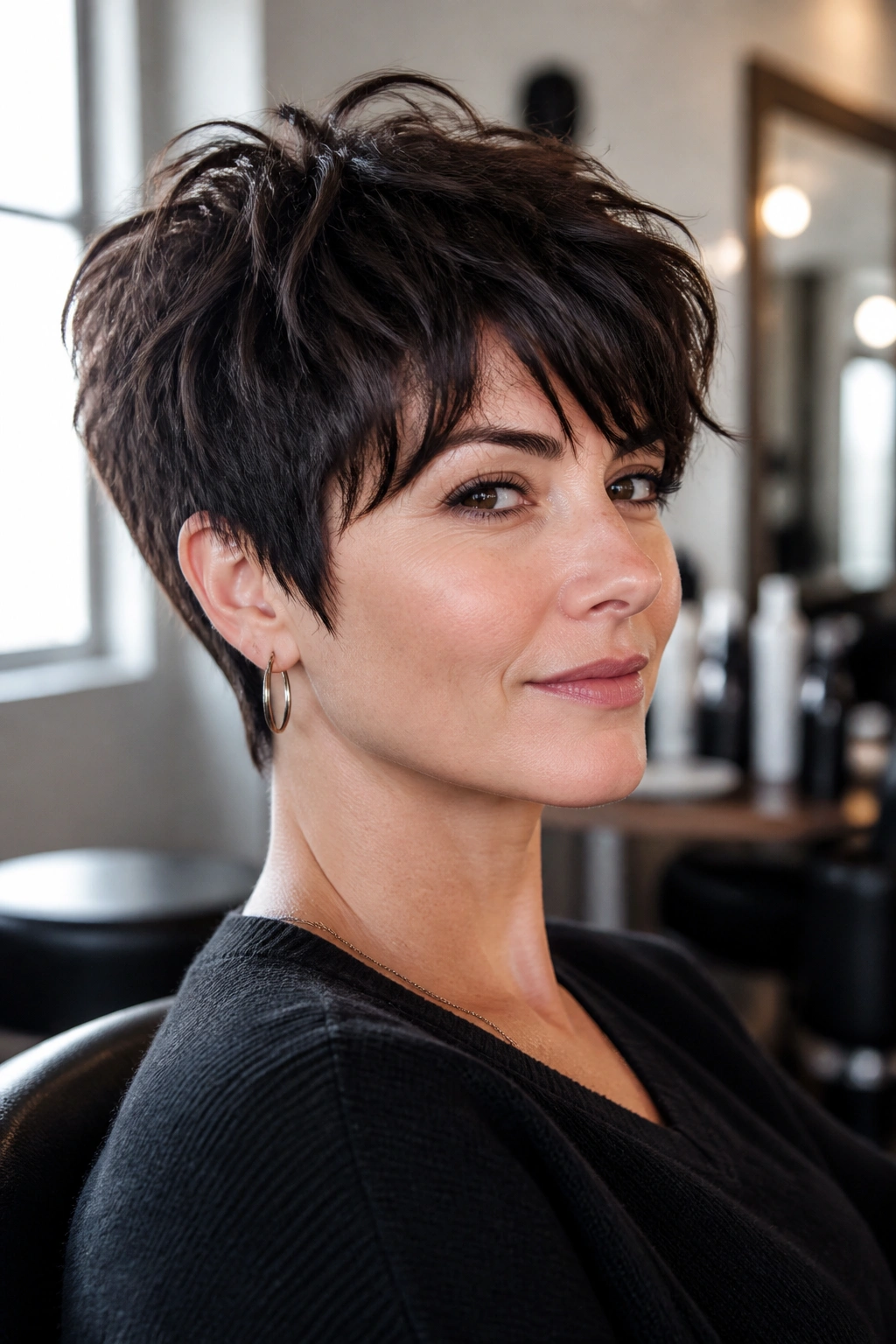
The layered pixie shag is short enough to feel bold but not so short that thick hair loses all personality. The top stays longer, the sides are tapered, and the back is cut close enough to remove weight where thick hair usually poofs out.
Why It Feels Lighter
That lifted top creates shape immediately. You are not waiting for the cut to “settle down” because the weight has already been taken out in the right zones.
- Shorter sides keep the outline clean.
- Longer top layers give you styling room.
- Tapering at the nape stops bulk from collecting there.
- A touch of mousse is usually enough.
Tell your stylist you want texture, not see-through ends. Those are different things, and on dense hair the difference matters a lot.
This cut works best if you like running your fingers through your hair and being done with it.
8. Piecey Shag Bob With a Deep Side Part
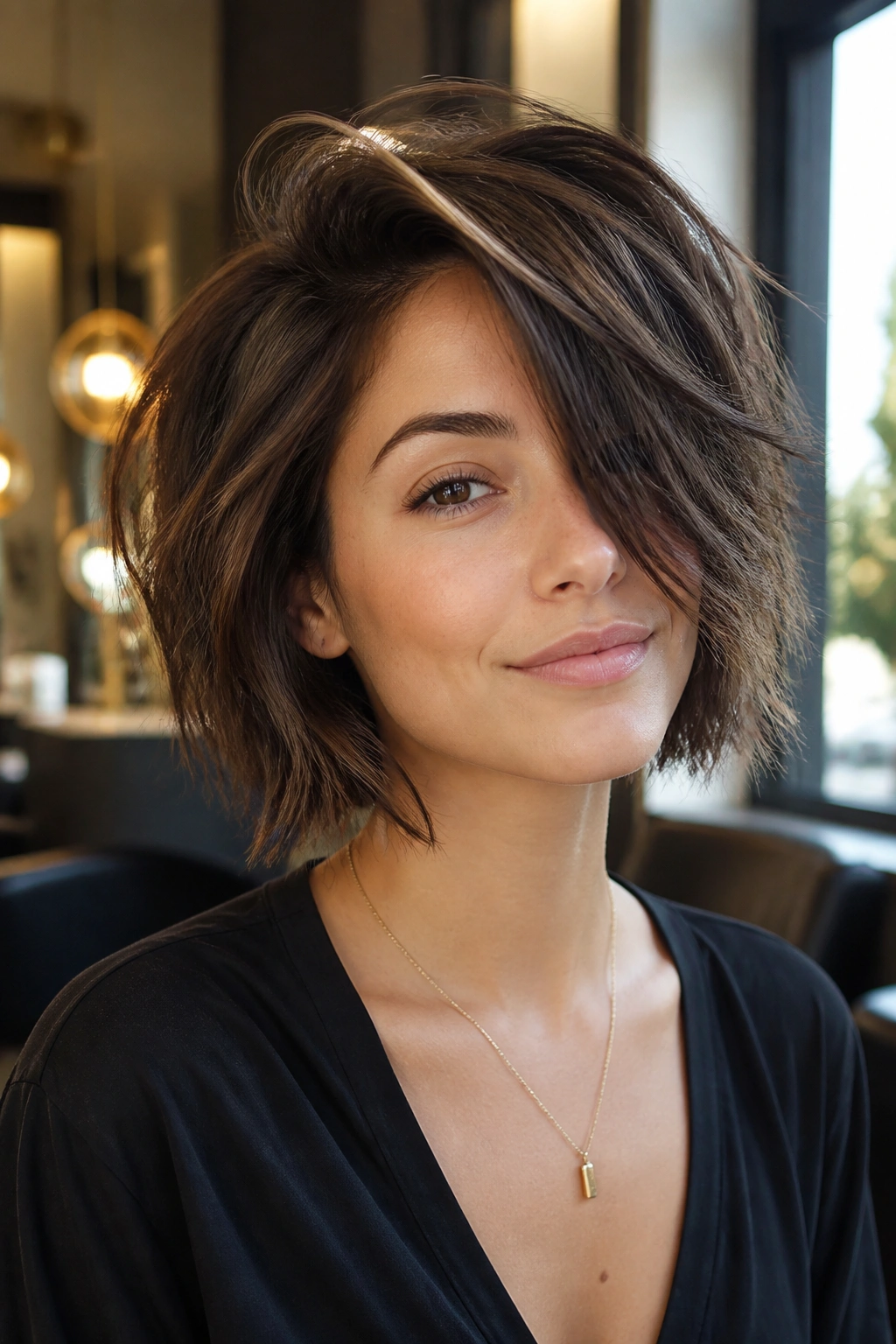
A deep side part changes everything on thick hair. It creates lift at the roots, steals some bulk from the center, and lets a shaggy bob fall in a more controlled way on the heavier side.
The cut itself is less about drama and more about balance. If your hair naturally wants to sit wide, a side part gives it a direction to go. The pieces around the face stay soft, the back keeps enough length to anchor the shape, and the overall look feels cool without needing a lot of product.
I like this cut for someone who wants a shag but still needs the word “bob” in there somewhere. It has enough polish for work, but the side part and choppy texture keep it from looking stiff. A little dry shampoo at the roots helps a lot.
And yes, thick hair loves a side part when the layering is done with restraint.
9. Collarbone Shag With Wispy Fringe
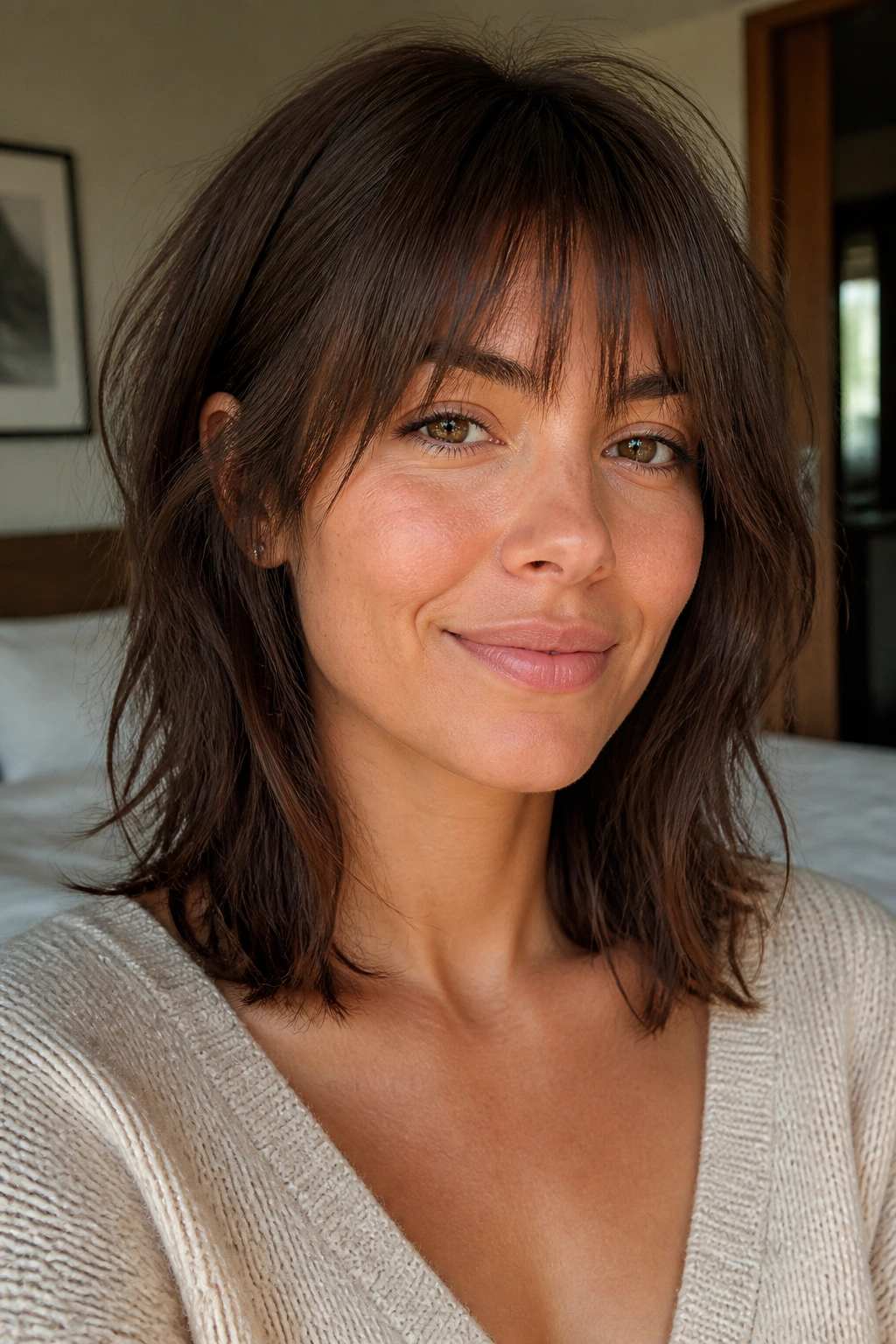
Why include collarbone length in a short-shag roundup? Because thick hair often behaves better when you leave it just a touch longer. This cut lands at that sweet spot: short enough to move, long enough to keep the shape from exploding.
The wispy fringe is what softens the whole look. It doesn’t sit as a heavy wall across the forehead, so the front can breathe. On dense hair, that breathing room matters. A fringe that is too full can make the face feel boxed in, and nobody wants that.
How to Wear It
- Air-dry the fringe first so it does not split weirdly.
- Use a round brush only at the front if needed.
- Keep the ends softly textured, not razor-fried.
- Add a light mist of texture spray for separation.
This cut is a smart choice if you like your hair to look done even when it’s slightly messy.
10. Mullet Shag With a Longer Back
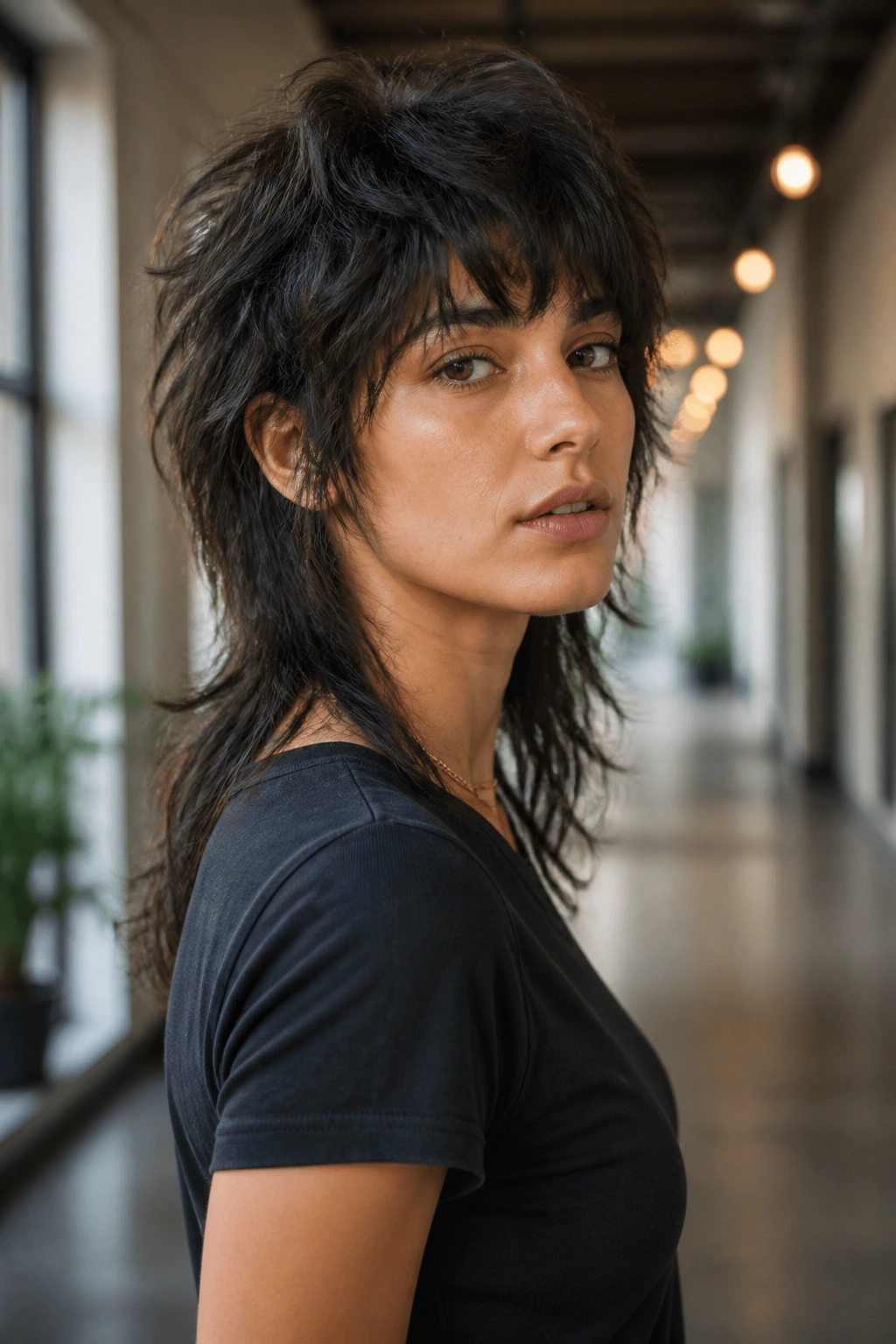
A mullet shag is for someone who doesn’t want their haircut to apologize. The front stays shorter and choppier, the crown has lift, and the back keeps enough length to give the whole cut that unmistakable shape.
The reason it works on thick hair is simple: the longer back helps distribute the bulk instead of piling it at the sides. If your hair gets wide fast, this shape can feel more controlled than a regular shag. It also photographs in a very honest way. Sharp. A little rebellious. No smoothing cream necessary unless you want it.
Key Details to Ask For
- Shorter crown layers with movement.
- Tapered sides around the ears.
- A back that drops slightly below the nape.
- Texture through the fringe and temples.
If you like hair that gets better when it is not overstyled, this is worth a serious look.
11. Heavy Fringe Shag With Cheek-Skimming Sides
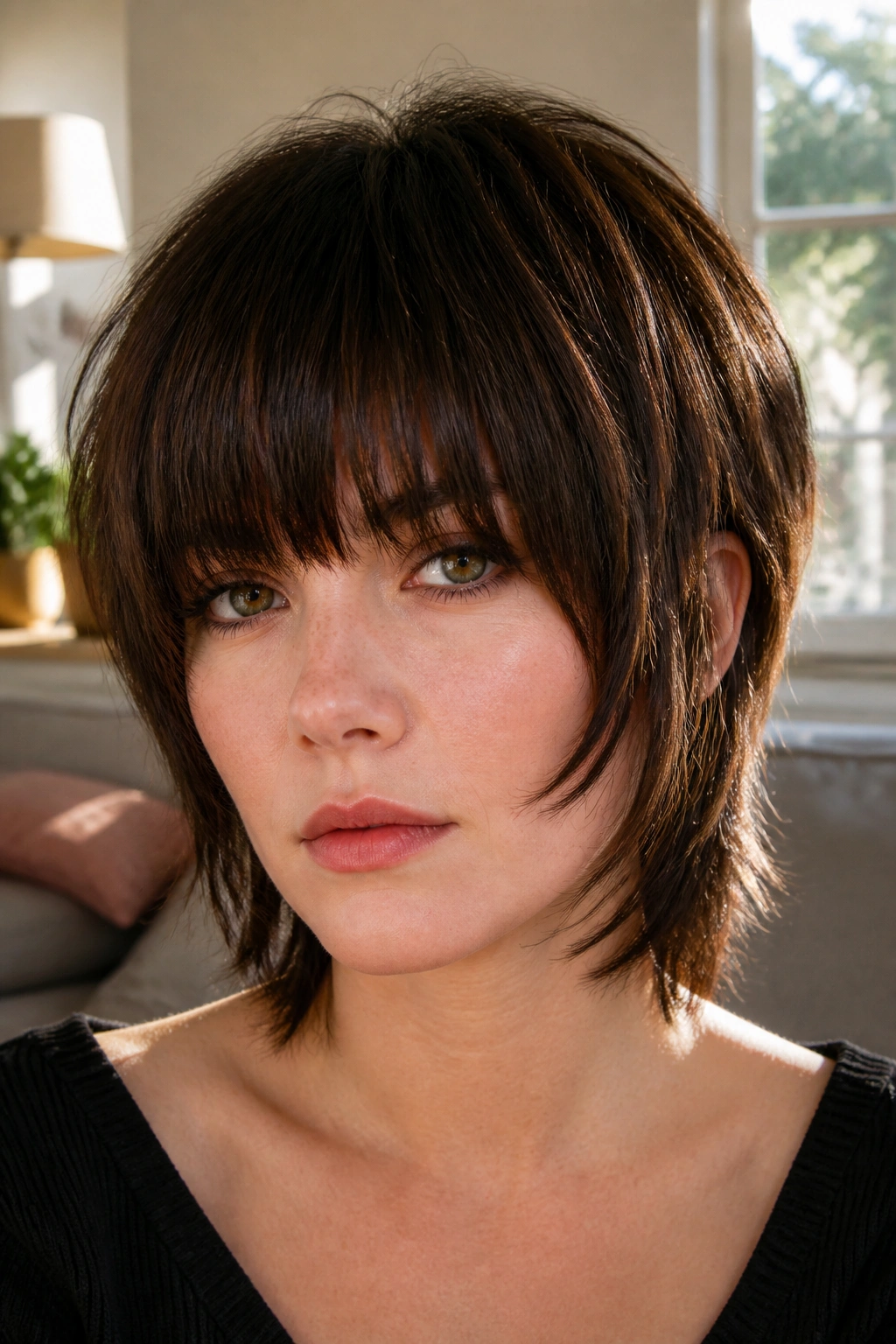
A heavy fringe changes the whole mood of a shag. It pulls focus to the eyes, gives thick hair a strong front shape, and keeps the sides short enough that the cut does not spread outward.
The fringe should feel solid, not wispy. That is the point. Thick hair can carry a stronger bang line than fine hair can, and this cut takes advantage of that. The cheek-skimming side pieces keep the fringe from feeling boxed in, which matters more than people think. Too much fringe and the face disappears. Too little and the haircut loses its punch.
This style needs regular trims because bangs grow fast and thick bangs show every millimeter. Still, the payoff is big. You can keep the rest of the hair rough and undone while the front stays sharp.
A little styling cream in the fringe goes a long way. Too much, and it collapses.
12. Rounded Shag for Natural Waves
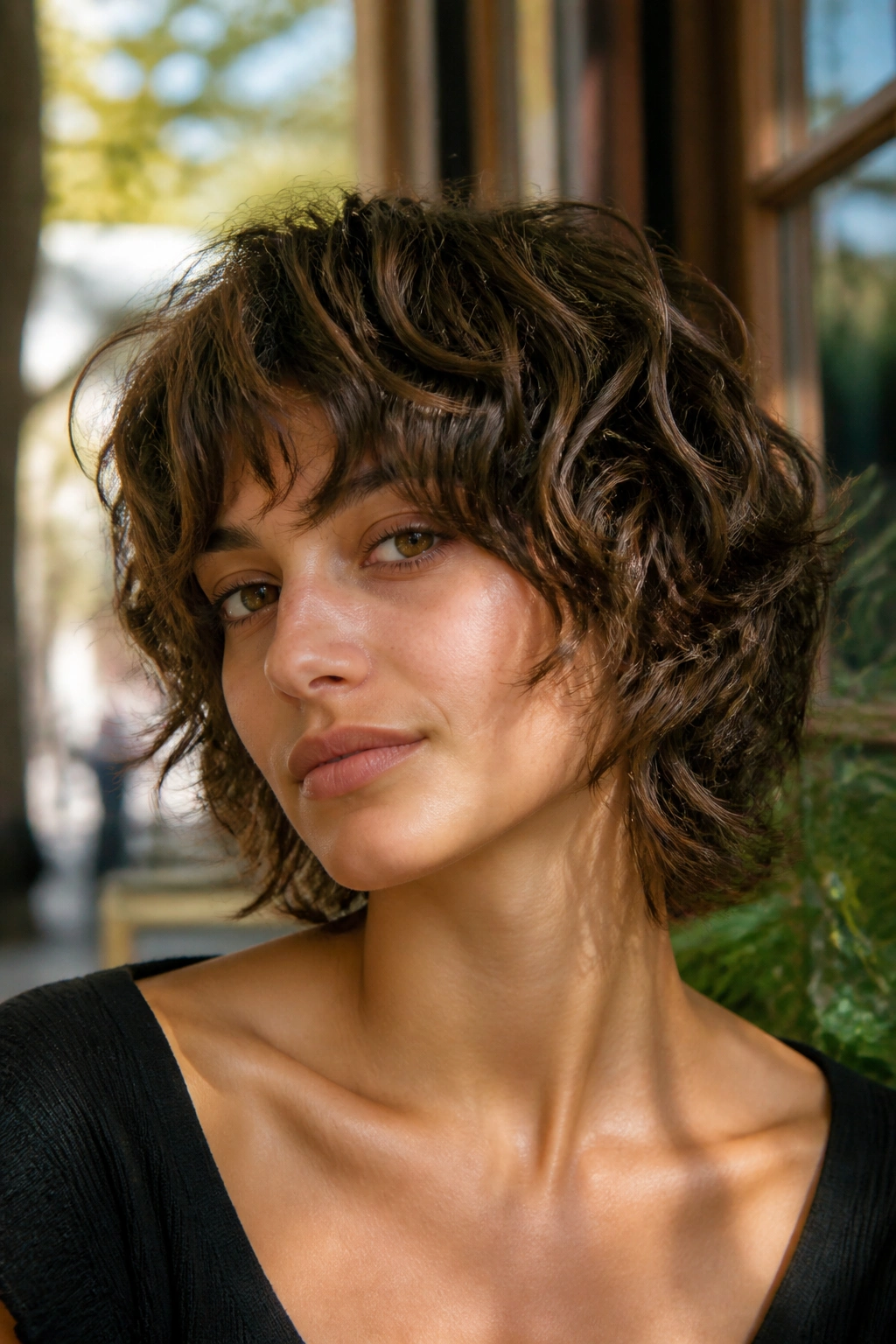
Unlike a wolf cut, this shag stays softer and more circular. The shape follows the head rather than hanging in long points, which makes it useful for thick hair that already has plenty of body.
Waves love this geometry. The layers sit where the wave wants to bend, so the hair looks lively instead of overworked. A rounded shag also keeps the silhouette friendly around the jaw and neck, which can be useful if your hair has a tendency to flare out at the bottom. It feels less edgy than a mullet and less airy than a razor cut.
Best for people who want texture but still prefer hair that looks presentable after a rough dry. If you want something fierce and punk, this is not it. If you want movement without a battle, it’s a strong pick.
A diffuser helps, but you can also air-dry and scrunch a little sea salt spray through the mid-lengths.
13. Tapered Short Shag With a Hidden Undercut
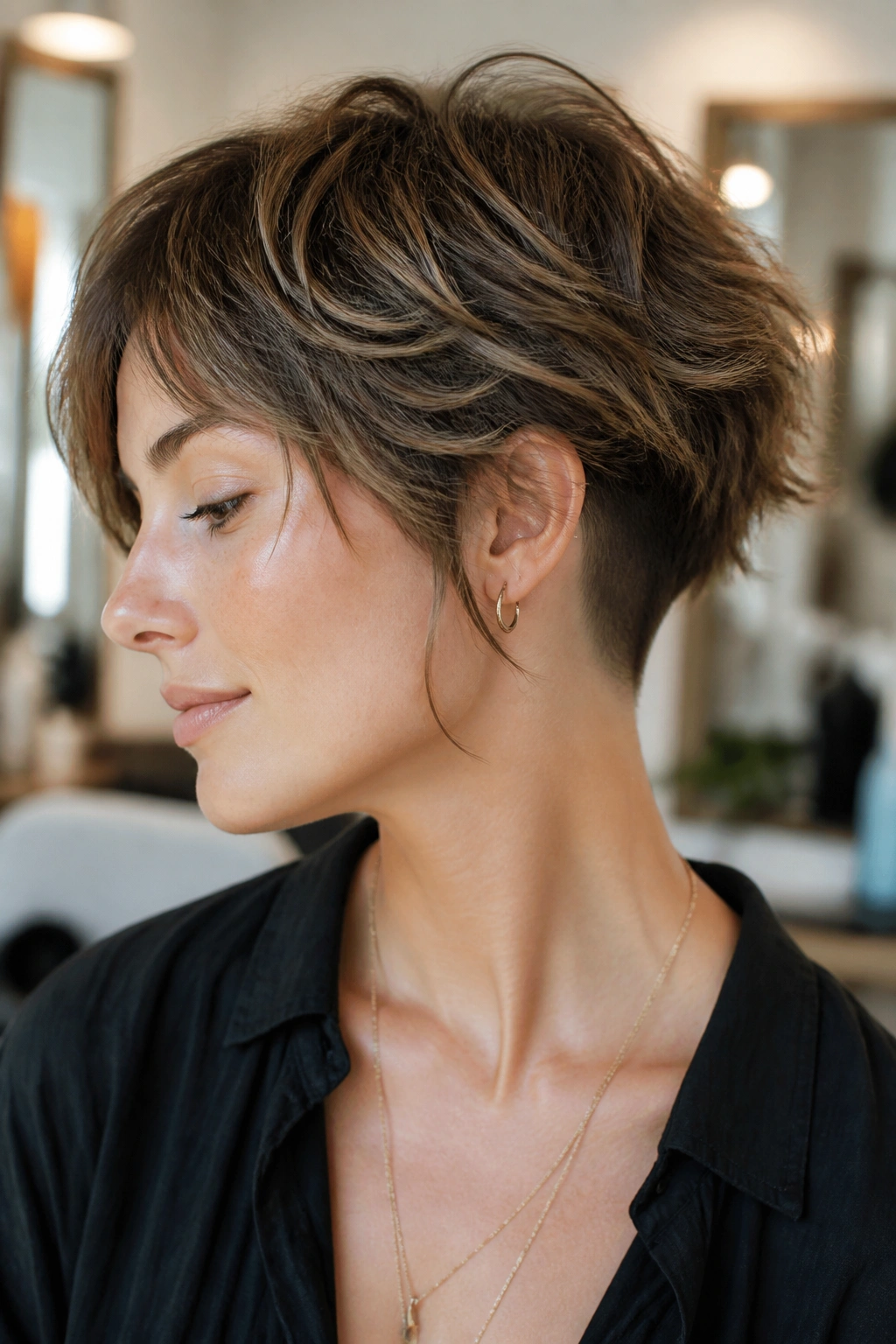
A hidden undercut sounds dramatic, and sometimes it is, but on thick hair it can be a quiet miracle. The outer layers still read like a shag, yet the nape has less bulk, so the cut lies closer to the head and dries faster.
Why Salons Use It
A lot of thick hair problems start at the back of the neck. That is where the weight piles up, especially if the hair grows straight and dense. Removing a small amount underneath changes the whole feel without making the haircut look shaved.
- Keeps the back from puffing out under collars.
- Lets the top layers fall more cleanly.
- Reduces drying time.
- Helps the shape stay neater on humid days.
Tell the stylist you want the undercut hidden, not exposed. If it’s too high, the cut can look patchy when you put your hair up.
This is the sort of haircut that rewards people who hate spending time with a blow-dryer.
14. Airy Razor Shag With Flipped Ends
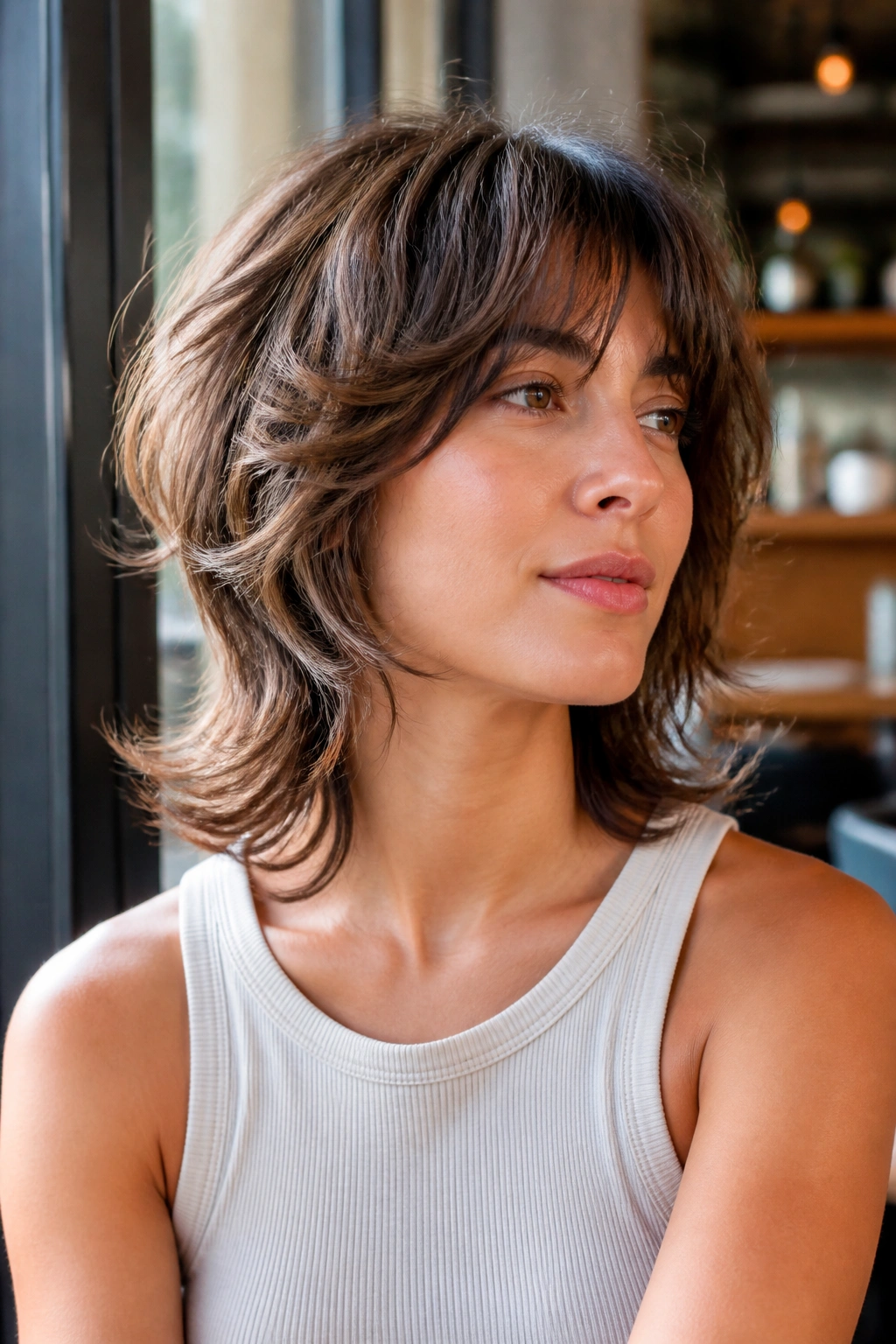
Razor cutting can be beautiful on the right thick hair. It removes bulk fast and creates those soft, flicky ends that make a shag feel light. On the wrong hair, though, it can fray the edges and leave the ends looking dry. So the cut matters.
This version works best when the hair has some natural bend or softness. The flipped ends keep the shape playful, and the short layers around the crown create movement that looks almost windblown. You do not need a heavy styling routine here. A little mousse at the roots, a diffuser, and a finger twist through the front pieces usually does the job.
If your hair is coarse or very prone to frizz, go slower with the razor. Sometimes scissors are the better call. No haircut is worth turning the ends into straw.
The best versions of this cut look undone in a good way, not unfinished.
15. Face-Framing Shag With Long Side Bangs
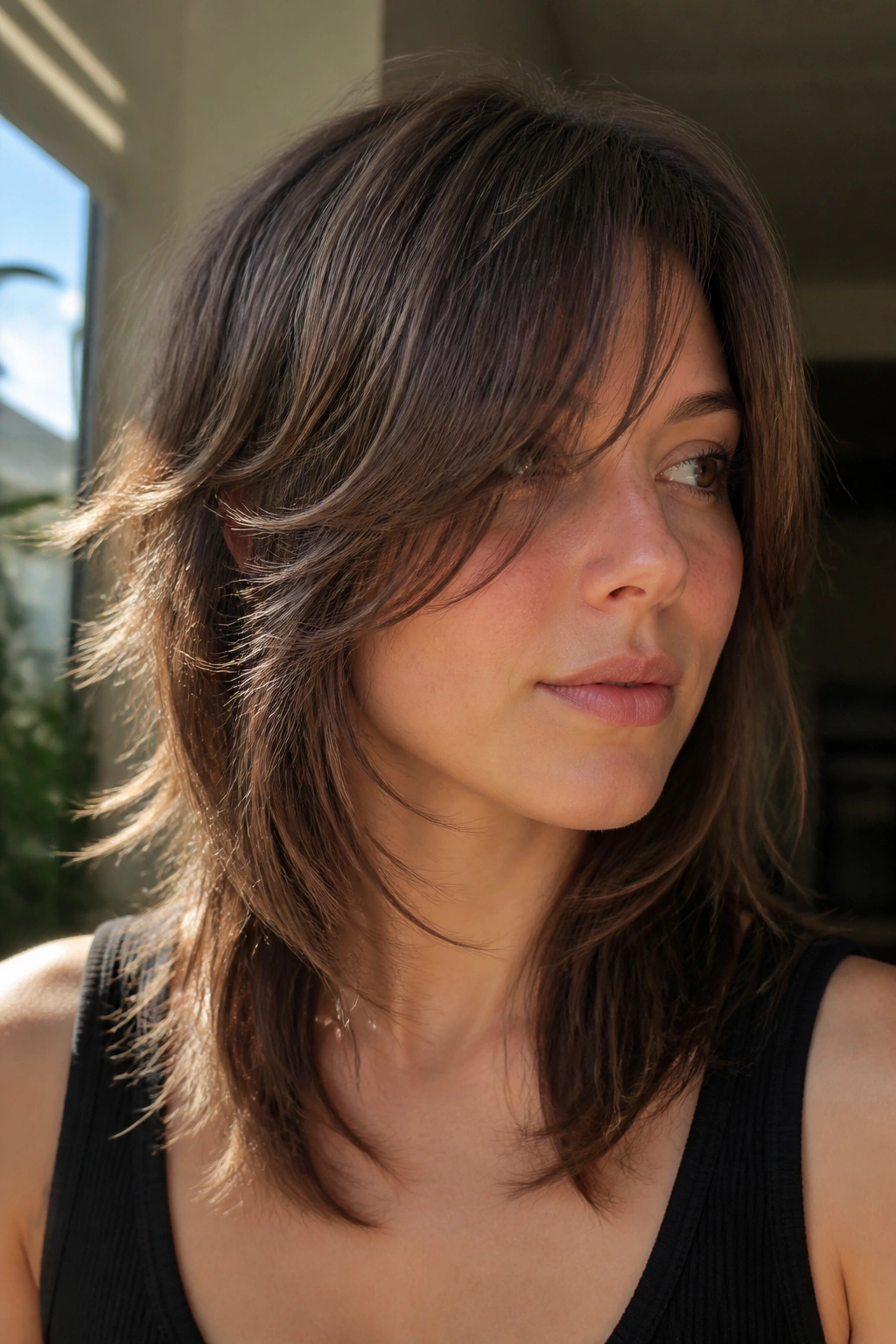
Why does this shape work so well on thick hair? Because long side bangs break up the front without stealing all the fullness. They give the face a soft edge, and the side sweep keeps the cut from feeling too busy.
Think of this as a forgiving shag. You still get layers and movement, but the front pieces remain long enough to tuck behind the ear or sweep across the cheek. That makes the cut easier on busy mornings, and it also helps if you’re not ready for a big fringe commitment.
How to Ask for the Front Pieces
- Keep the bangs long enough to reach the cheekbone.
- Blend them into the front layers.
- Leave some weight near the jaw.
- Avoid a harsh, straight line across the forehead.
This one suits people who like the idea of a shag more than they like looking shaggy all the time.
16. Short Shag With a Micro Fringe
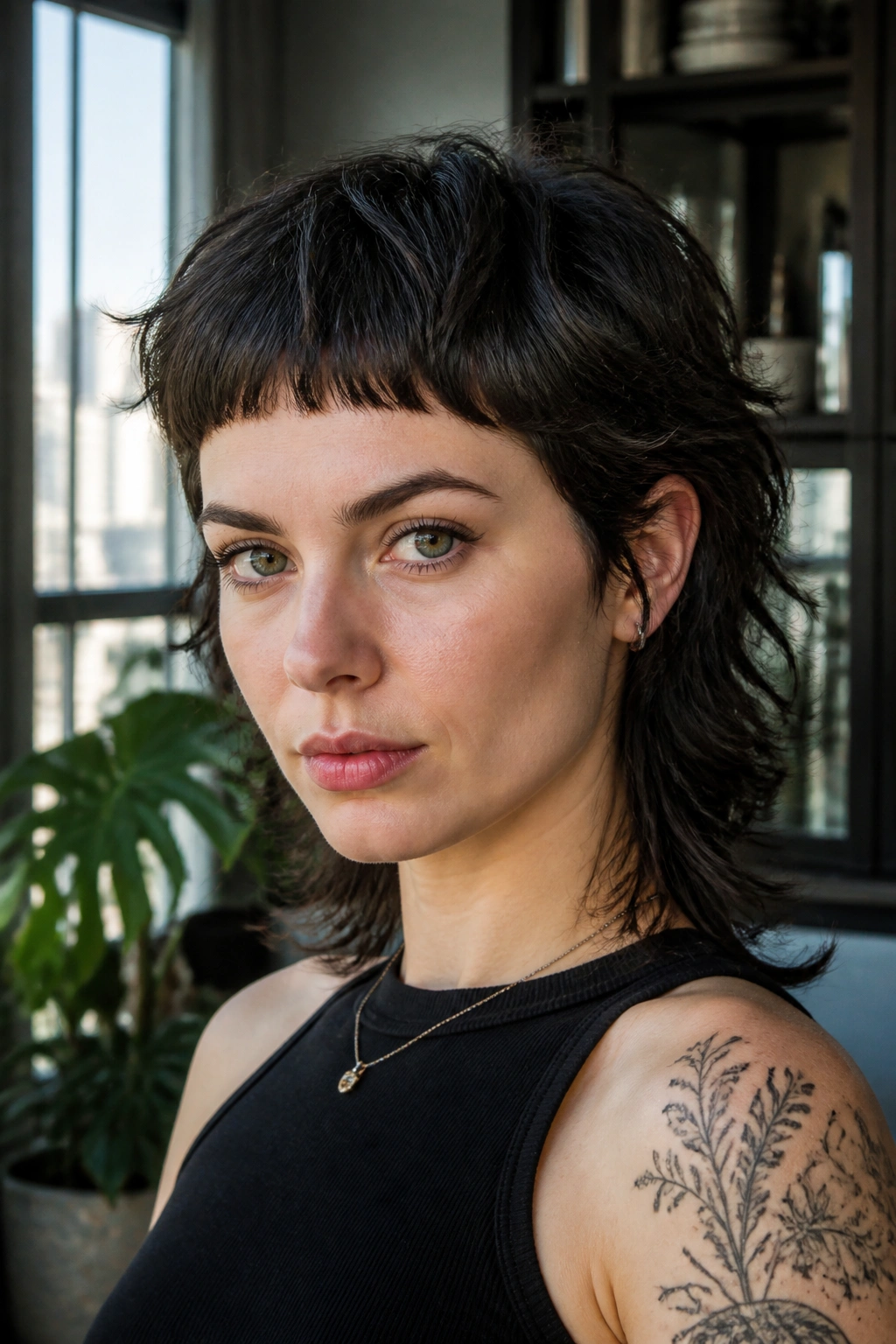
A micro fringe changes the whole personality of a haircut. It exposes the forehead, brings attention to the eyes, and adds a sharp note that thick hair can carry without getting lost.
There’s a reason this looks so good on dense hair. The short bang line gives the haircut a clear edge, while the layered body keeps the rest from feeling severe. If you have thick hair that tends to read heavy around the face, a micro fringe can break that up fast.
Where It Feels Most Natural
- On strong brows.
- With slightly wavy texture.
- When you like a little attitude in the cut.
- If you don’t mind trims every few weeks.
This is not the softest option in the bunch. It has bite. That is the charm. Pair it with matte paste or a dry texture spray, and keep the fringe clean so it doesn’t turn frizzy.
17. Tousled Shaggy Bob With a Blunt Perimeter
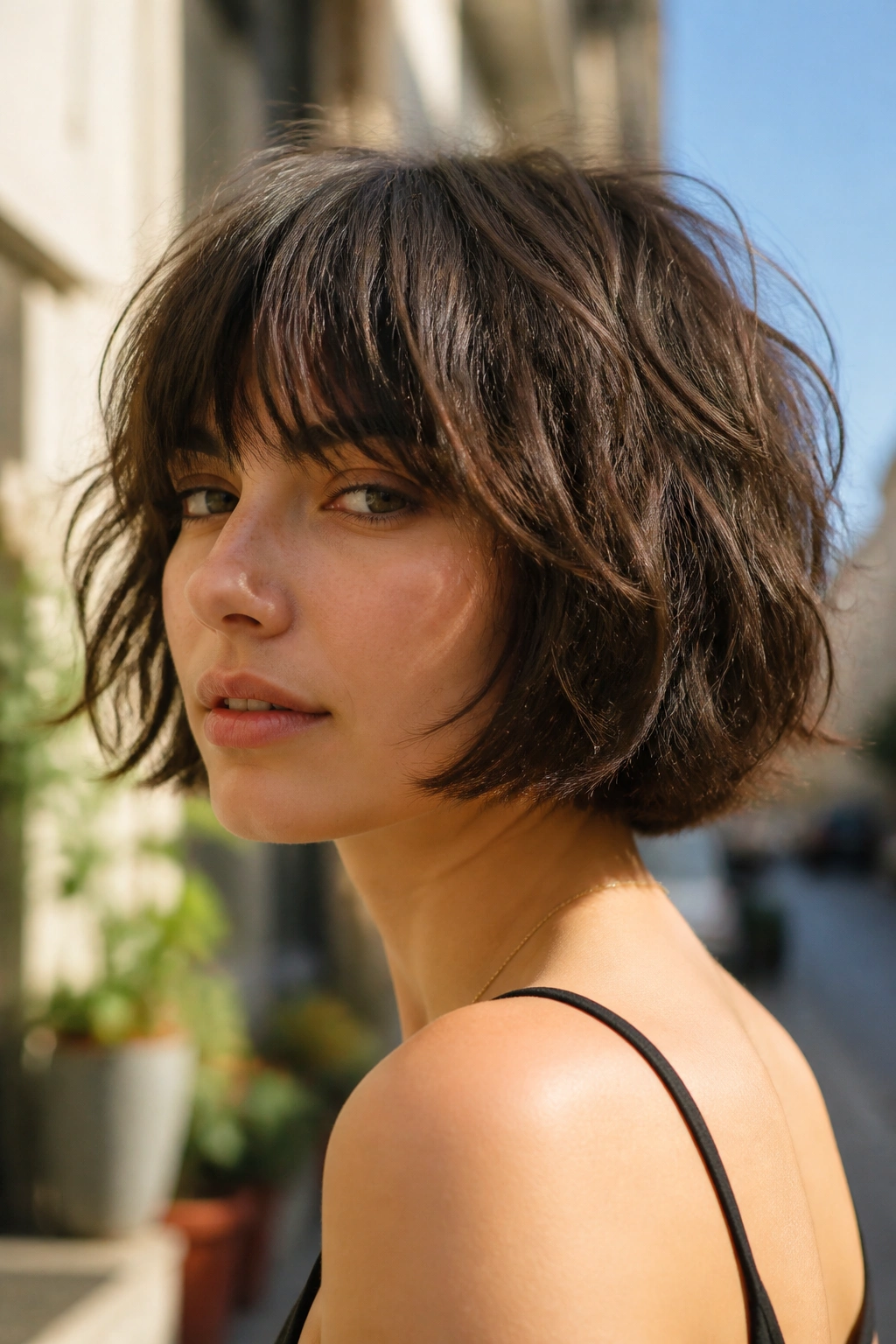
A blunt perimeter sounds like the opposite of a shag, but that contrast is the whole point. Thick hair needs an anchor, and a clean edge at the bottom keeps the cut from flying away in too many directions.
The interior layers bring movement; the blunt line holds the shape together. That balance is especially useful if your hair is dense and straight or only slightly wavy. You get the texture of a shag without sacrificing the feeling of a proper bob. It also grows out in a kinder way than a highly razored cut, which is worth something if you are not in the salon every month.
I like this one for people who want a little swing but still need the haircut to look intentional at work, in photos, and on days when they do not style it much. It’s practical. Not boring. That’s a decent place to land.
A light texture spray is enough most days.
18. Deconstructed Wedge Shag
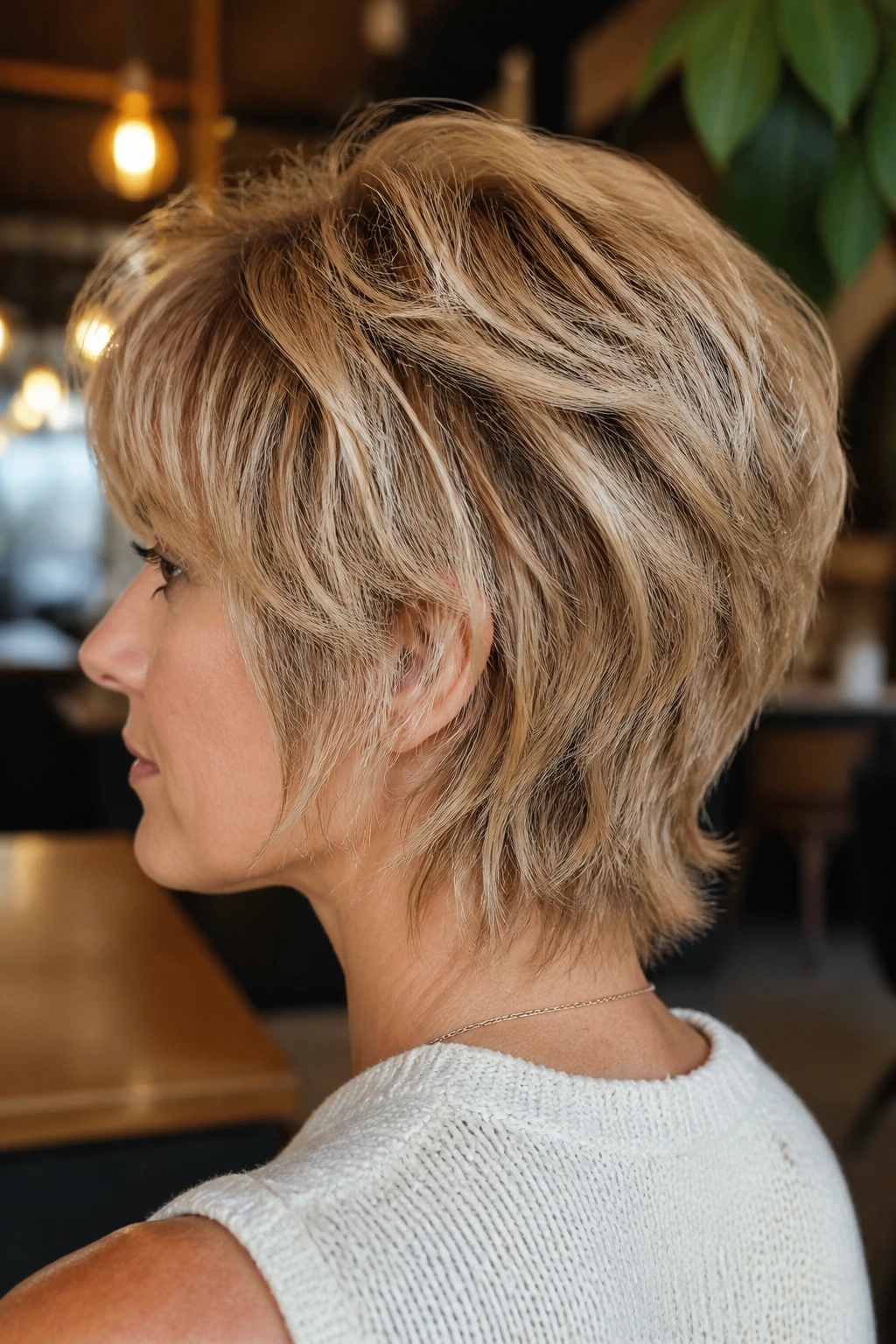
Unlike a classic wedge, this version keeps the shape looser and messier around the crown. The back still has that stacked feeling, but the layers are broken up so thick hair does not sit like a hard triangle.
That makes it a smart choice if you want structure without a retro helmet effect. The deconstructed shape gives the back lift and the sides a little swing, while the shaggy texture softens the edges. It’s a haircut that can read polished with a round brush or casual with a quick rough dry.
Best for someone who likes a shape with memory. Once the hair has been dried into place a couple of times, it tends to fall into the same general pattern without much effort. If you hate constantly fixing your hair, that helps.
Ask for a softer stack at the back and textured layers through the top.
19. Rounded Crop Shag With Crown Layers
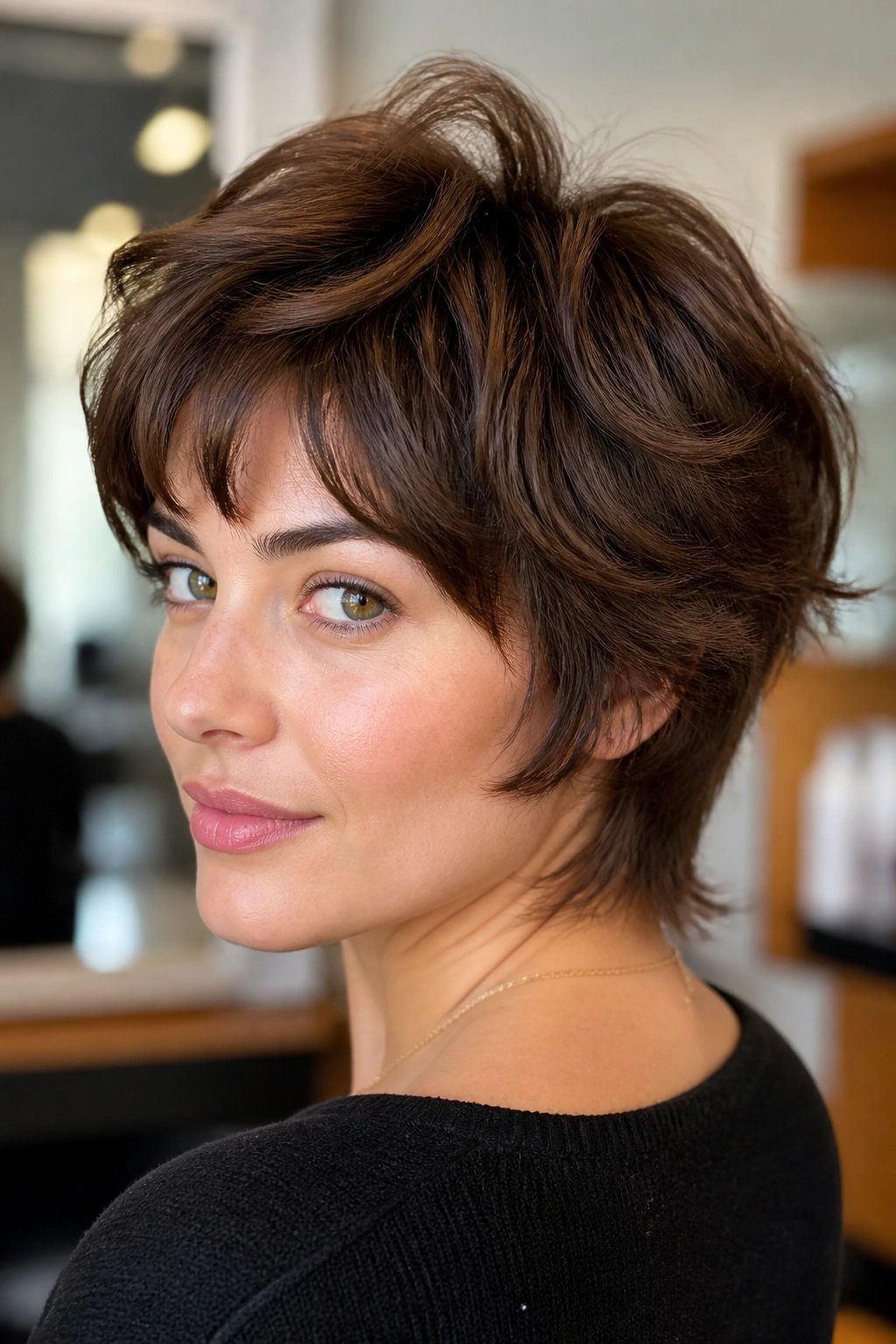
A rounded crop shag puts the spotlight on the crown, which is a good move when thick hair tends to collapse at the top and puff at the sides. The crown layers lift the roots, and the rounded shape keeps the overall outline compact.
Why the Crown Matters
A lot of dense haircuts fail because they remove weight everywhere except the place that needs it most. The crown is where the silhouette starts. If it sits flat, the haircut feels heavy even when the ends are short.
- Short crown layers create height.
- A rounded outline stops the sides from jutting out.
- Shorter back layers help the neck area stay neat.
- Texture cream gives the top separation without crunch.
Keep the crown soft, not spiky. Too much texturizing there can make thick hair stand up in a bad way.
This cut has a sporty, slightly undone feel that works well if you like easy styling.
20. Messy Shag With Curtain Fringe and Neck Length

This may be the easiest shag grow-out on the list. The curtain fringe opens the face, the neck-length layers keep the cut light, and the overall shape stays forgiving when you skip a wash day.
Thick hair benefits from this kind of looseness because the shape does not depend on perfect styling. Let it air-dry with a little mousse, then rough up the roots with your fingers once it’s mostly dry. The curtain fringe falls into that soft split without much help, which is half the reason people keep coming back to it.
The cut also works if you want something that sits between short and medium. It is short enough to feel fresh, but not so short that you panic six weeks later when it starts growing.
A little dry shampoo at the roots and a light bend through the front pieces is often enough.
21. Asymmetrical Shag With One Longer Side
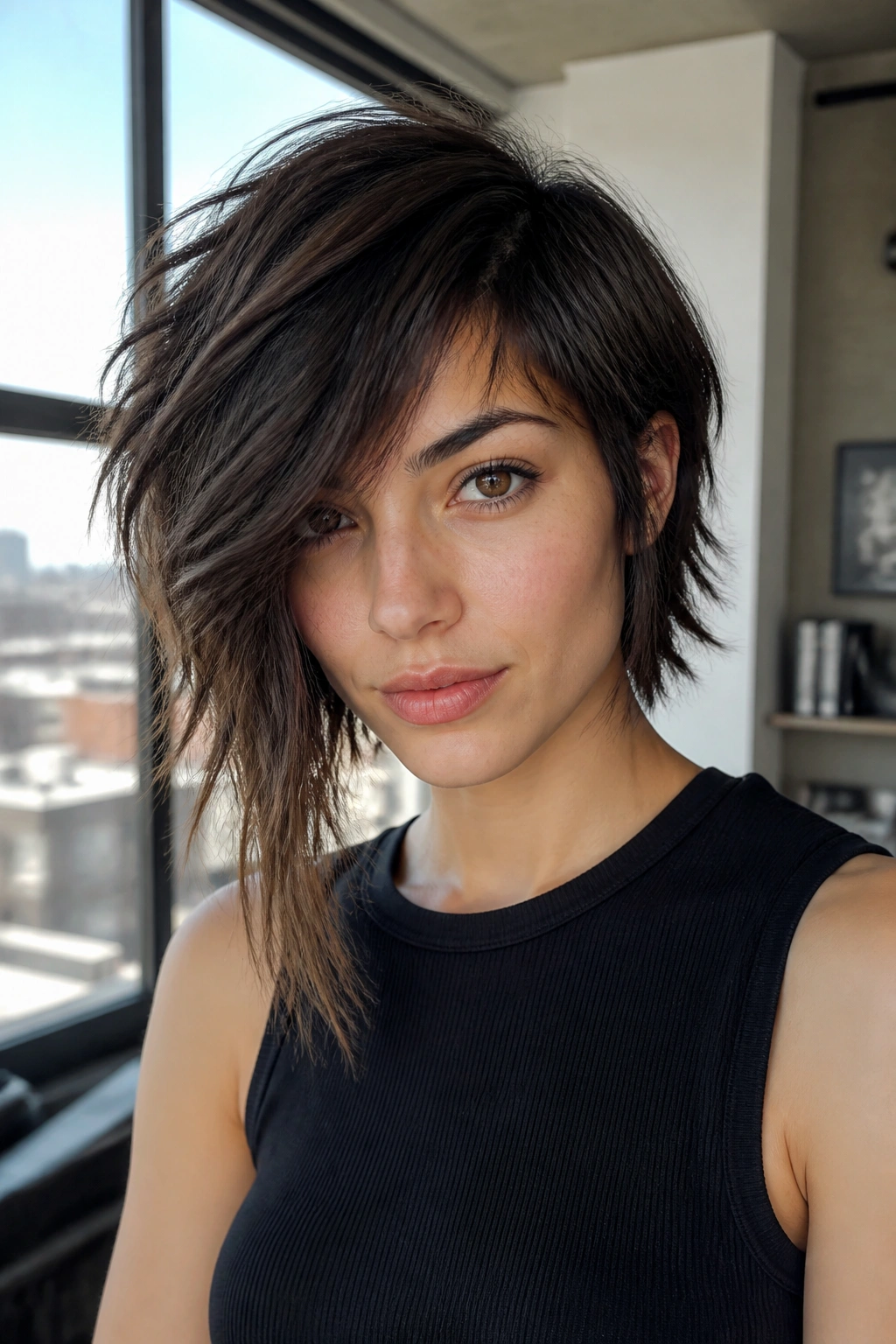
Why choose asymmetry on thick hair? Because a one-sided shape gives the eye a place to rest. If both sides are equally bulky, dense hair can feel wider than you want. A longer side breaks that up fast.
The cut should not look accidental. One side is kept a little longer, the opposite side is more compact, and the front layers blend across the forehead in a way that feels deliberate. It’s a strong choice if you like a haircut with some drama but do not want a full mullet or a super-short pixie.
How to Wear the Part
A side part usually makes this cut easier to style, but a soft off-center part can work too. The point is to create some lift where the hair naturally collapses and some movement where it usually sits too flat.
This is one of those cuts that looks best when it is slightly imperfect. Too polished, and it loses the edge.
22. Short Shag for Curly Coils
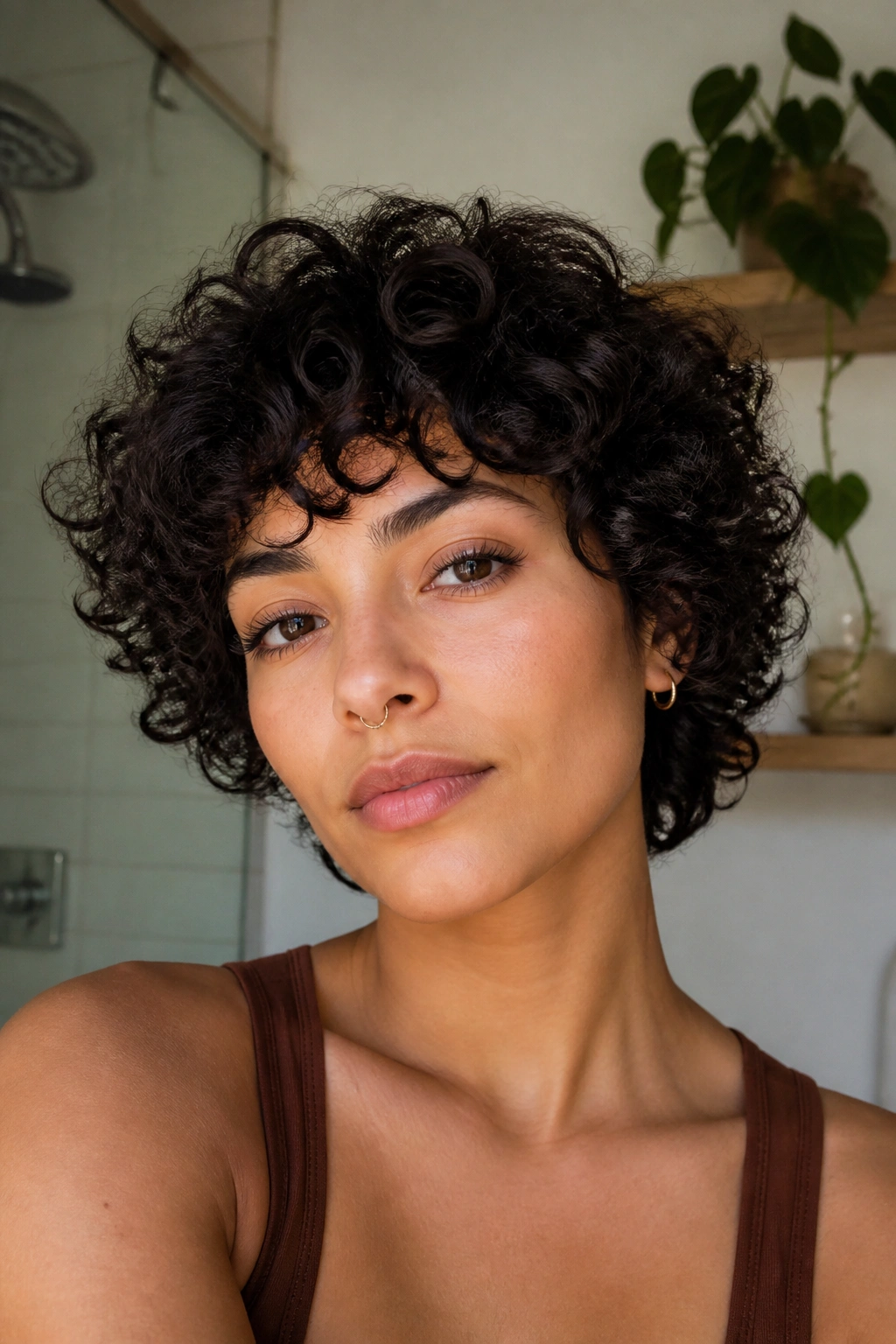
Short curly coils need a different kind of shagging. The layers have to respect shrinkage, and the shape has to be carved so the hair does not balloon into a round mass. Cut it wrong and you get width everywhere. Cut it well and the curls stack in a gorgeous, intentional way.
The best version usually keeps the top a little longer than you’d expect, then removes bulk through the sides and back in small, controlled sections. Dry cutting helps a lot because coils behave differently once they spring up. You want the stylist to watch the curl pattern, not guess at it.
What Helps Most
- Cut the hair in its natural curl state when possible.
- Leave enough length for the coil to form.
- Use lightweight cream, not heavy butter.
- Avoid over-thinning, which can make frizz worse.
This cut has real personality. It is one of the liveliest short shags for thick hair, and it earns that energy.
23. Overgrown Pixie Shag With Bangs
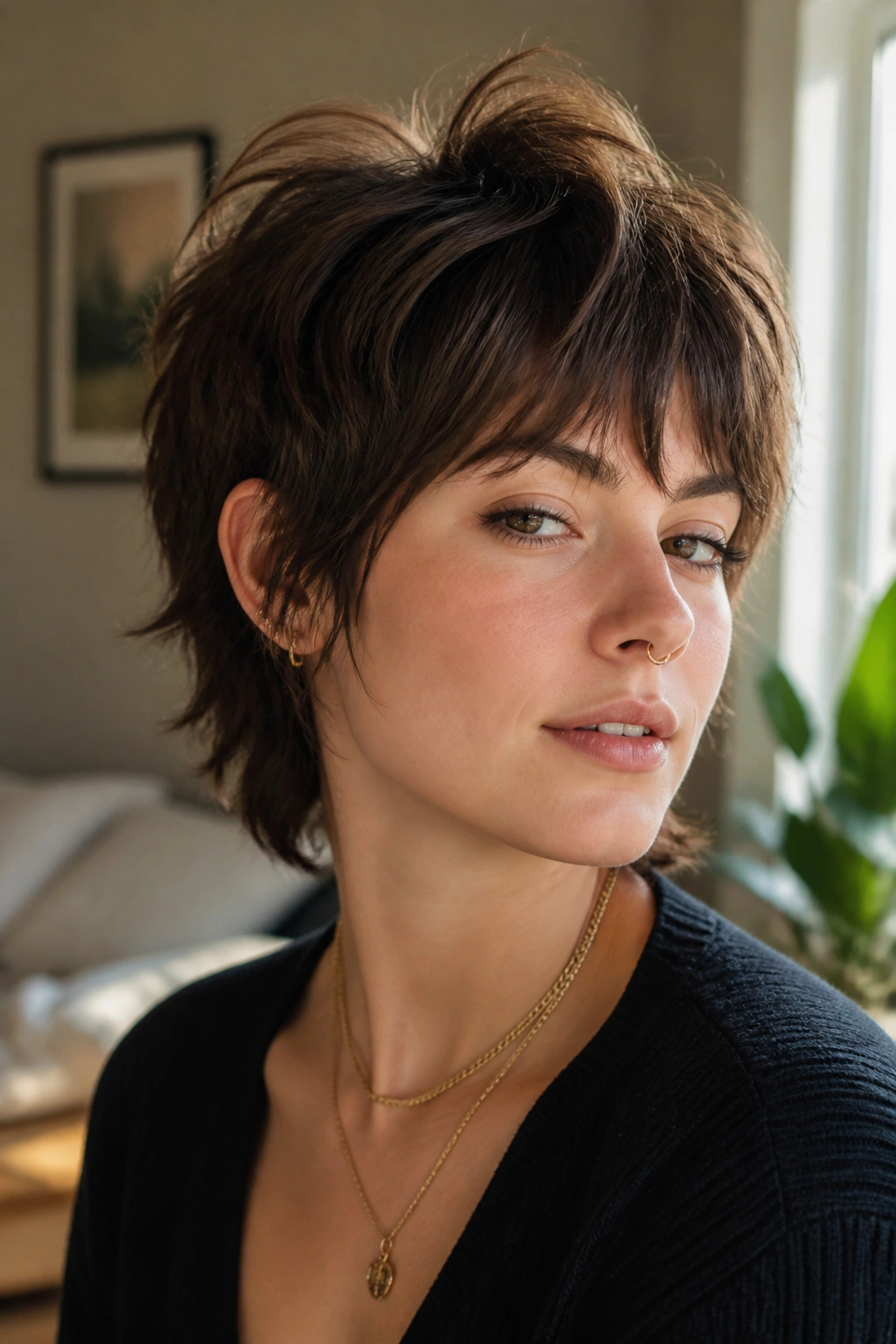
An overgrown pixie shag sits in the sweet spot between fresh and lived-in. The top has enough length to play with, the bangs soften the forehead, and the sides stay close enough to keep the cut from getting bulky.
What makes this one interesting is how easily it moves through the grow-out stage. Instead of turning into an awkward in-between cut, it keeps looking like a style on purpose. Thick hair helps here because it supports the texture rather than going limp.
I like this cut for people who want to style their hair with their hands and move on. A pea-sized amount of paste at the crown, a bit of separation through the fringe, and you’re done. If you want more polish, a quick blow-dry with a small round brush lifts the top just enough.
It’s casual, but not sloppy. There’s a difference.
24. Layered Shag With Bottleneck Bangs
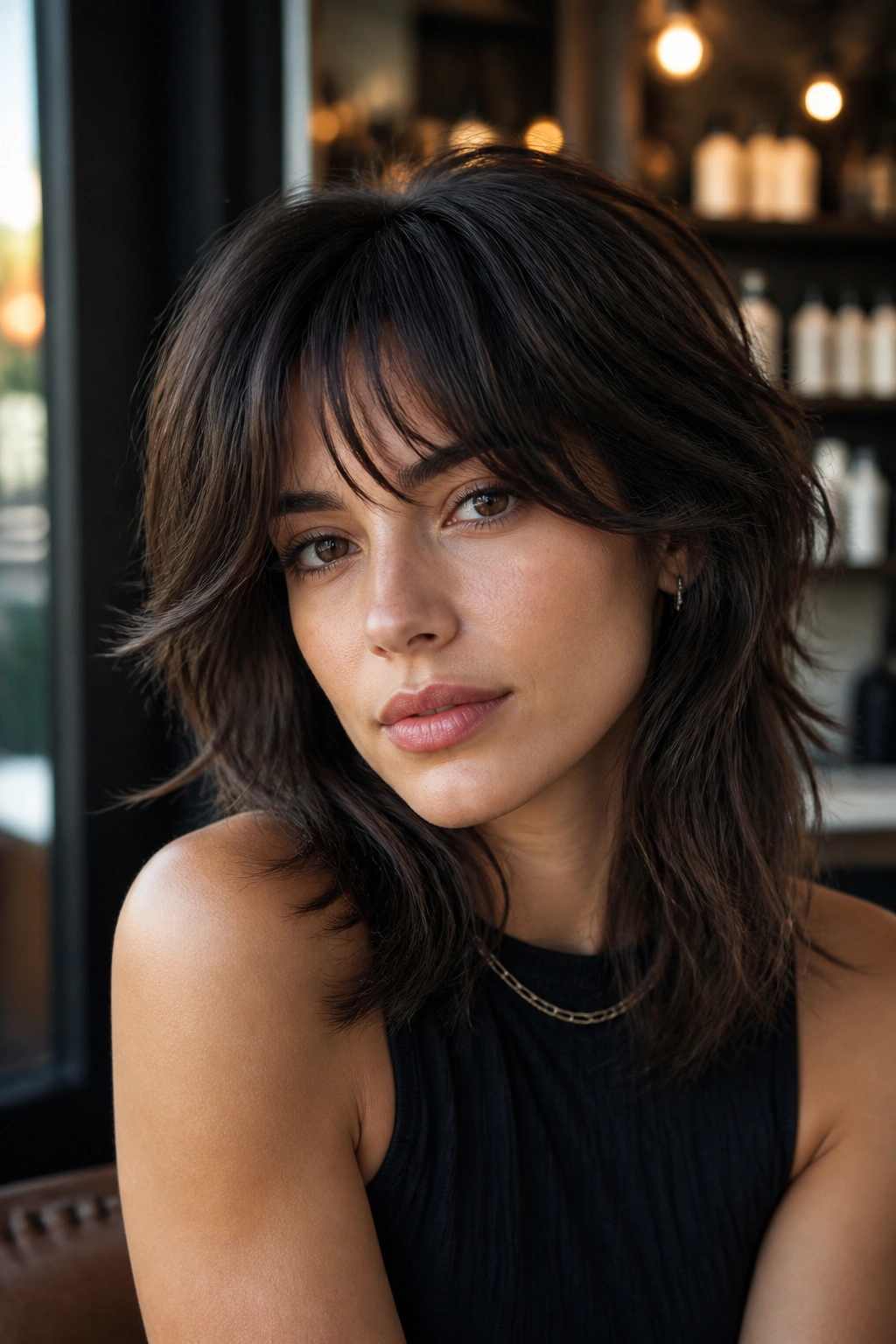
Bottleneck bangs are a smart move on thick hair because they narrow in the center and widen toward the cheekbones. That shape breaks up a heavy front without cutting too much off the forehead.
Compared with curtain bangs, bottleneck bangs stay a little more contained at the root. That matters when your hair is dense and the front section wants to swell up. The rest of the cut can stay shaggy and textured while the fringe gives the face a neater frame. It is one of the cleaner-looking options in the shag family, even when the layers are rough.
Best Uses
- If your forehead feels long and you want balance.
- If you like fringe, but not full bangs.
- If your hair has body that needs a controlled front.
- If you want a shape that photographs cleanly without looking stiff.
A quick bend with a round brush is enough for most people. Do not overwork it.
25. Soft Grow-Out Shag With Feathered Ends
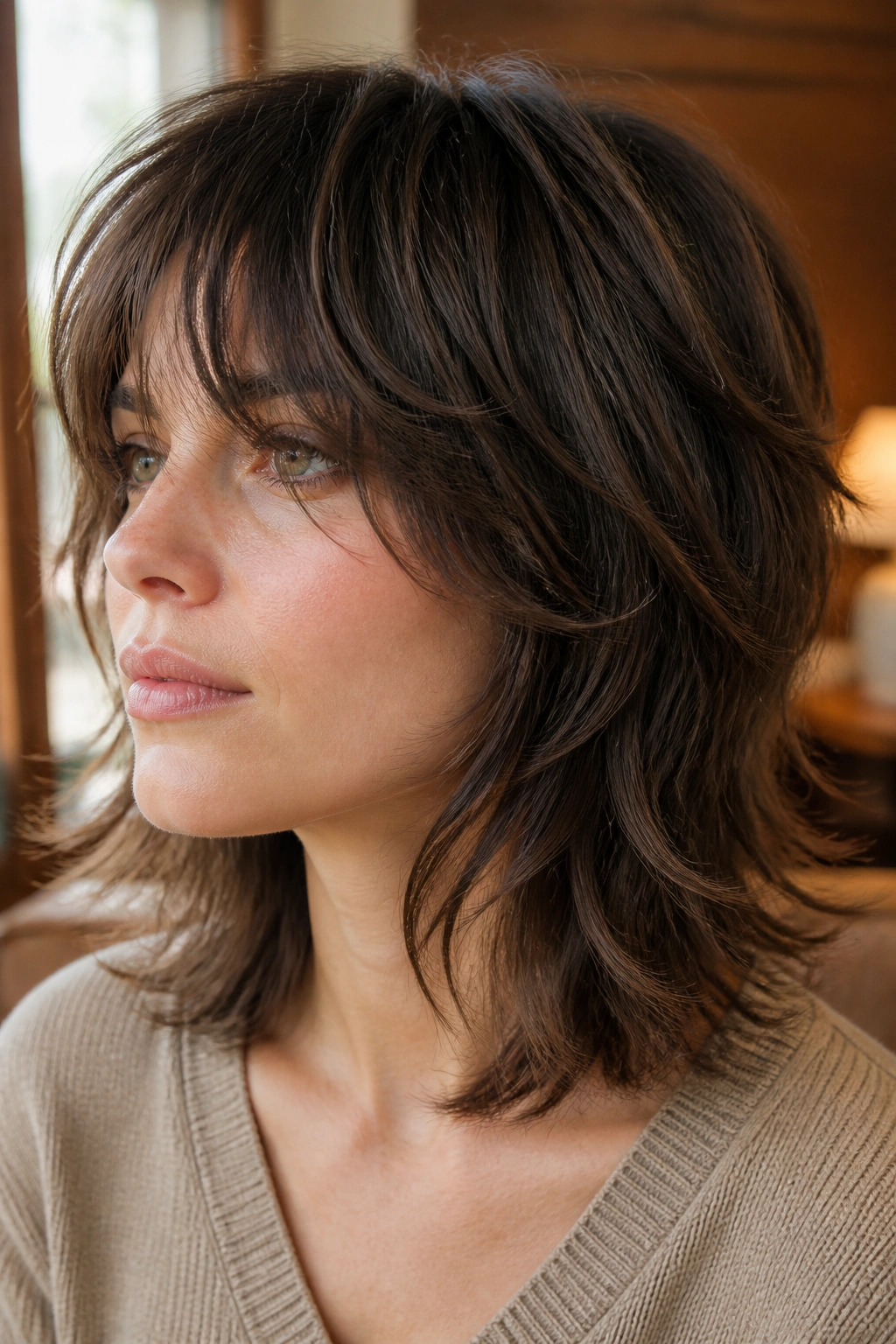
The soft grow-out shag is what I recommend when someone wants a short cut but hates getting trapped by maintenance. The feathered ends keep the shape light, the layers stay soft enough to settle naturally, and the whole thing looks better when it is not freshly cut to a razor edge.
This is the friendliest version of the shag on thick hair. It still has movement, still has edge, and still handles bulk, but it avoids the sharper corners that can make some shag cuts feel high-maintenance. If you wear your hair tucked into coats, under hats, or pinned back a lot, this shape behaves well through all of that.
Why It Stays Easy
- The outline is soft, so grow-out looks intentional.
- Feathered ends move instead of sticking out.
- The layers are short enough to feel airy, long enough to stay useful.
- A tiny amount of mousse or cream keeps it from puffing.
If you want one shag that can survive a busy week without drama, this is the one I’d start with. It is not the loudest cut here, but it might be the smartest.
