



Thick wavy hair and a wolf cut can be a dream pairing—or a complete mess—depending on where the layers land. Put the shortest pieces too high, and the crown fluffs out while the ends lose weight. Leave too much bulk at the sides, and the whole shape sits flat at the top and wide at the bottom.
The haircut works because waves already bring movement. You do not need to manufacture texture from scratch; you need to stop the bulk from fighting it. That usually means internal layers, a softer perimeter, and enough length left in the back so the shape does not collapse after a few hours.
I like wolf cuts on dense waves when the stylist respects how the hair behaves when dry. Wet hair hides a lot, and thick wavy hair can spring up more than expected once it dries, so a small shift in where the layers start matters more than people think. The styles below lean in different directions—softer, choppier, longer, edgier, more face-framing—but every one can work when the weight is handled with a bit of care.
1. Classic Layered Wolf Cut for Thick Wavy Hair
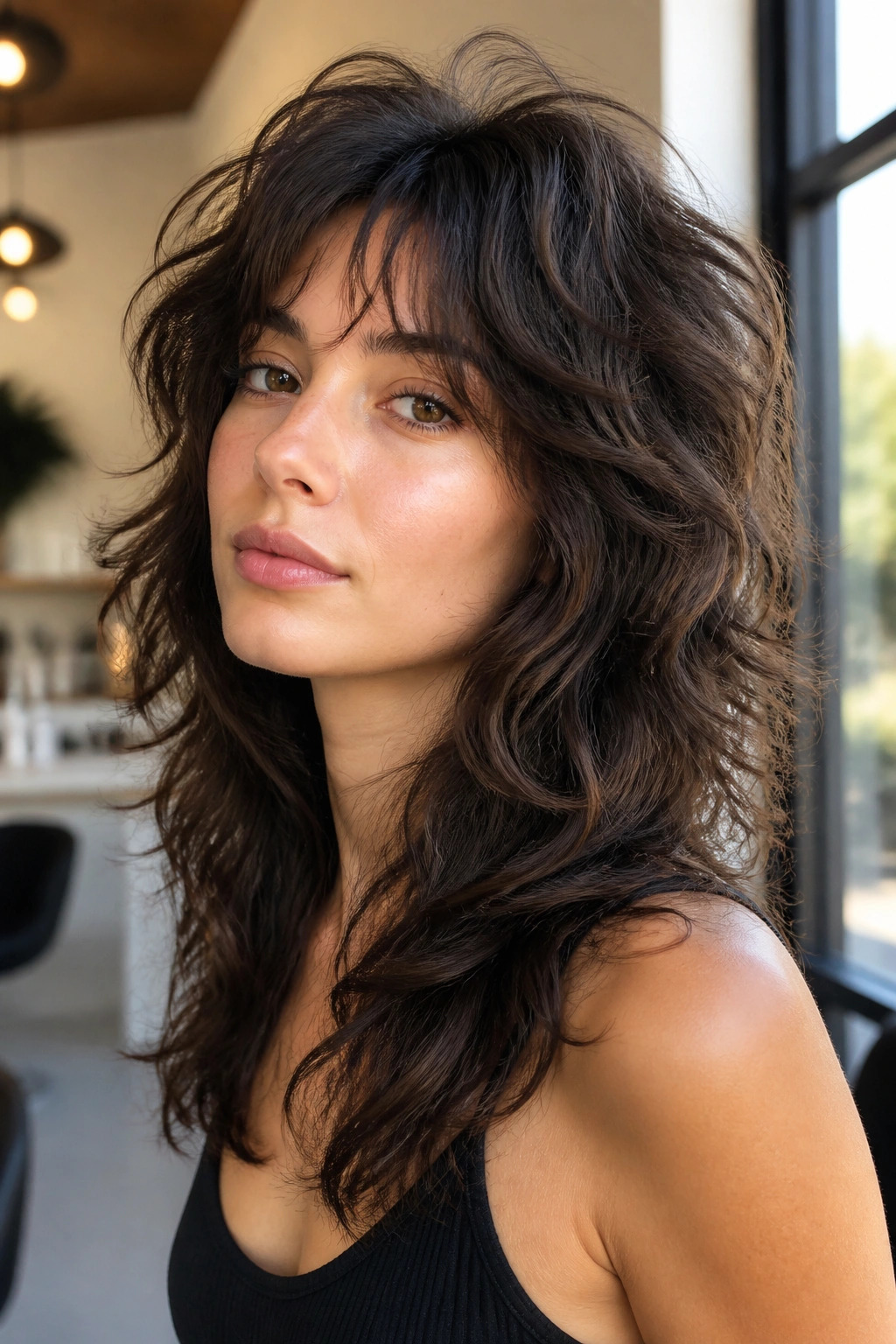
This is the easiest place to start if your hair feels heavy and shapeless. The classic layered wolf cut trims the bulk in the middle without stripping the ends bare, which is exactly why thick waves usually like it. You keep the wild movement up top, but the outline still looks intentional when you turn your head.
What makes this version work is balance. The crown gets enough lift to stop that mushroom shape, the sides get softened so they do not puff out like a triangle, and the back keeps enough length to swing. That last part matters more than people admit. If you chop the length away too quickly, thick waves can turn boxy fast.
Ask for internal layers, not aggressive thinning. A stylist who understands wave pattern will remove weight where it lives, not just take random chunks out of the surface. Dry cutting helps here, because a wavy strand can look tame when wet and land somewhere else when it dries.
What to ask for
- Keep the shortest layers around the upper crown, not right at the scalp.
- Leave the perimeter at collarbone length or longer if you want swing.
- Use point cutting on the ends so the line stays soft.
- Avoid heavy texturizing near the bottom if your waves frizz easily.
My blunt take: if you only try one wolf cut, start here. It has the least drama and the most room to grow out well.
2. Curtain Bang Wolf Cut for Thick Waves
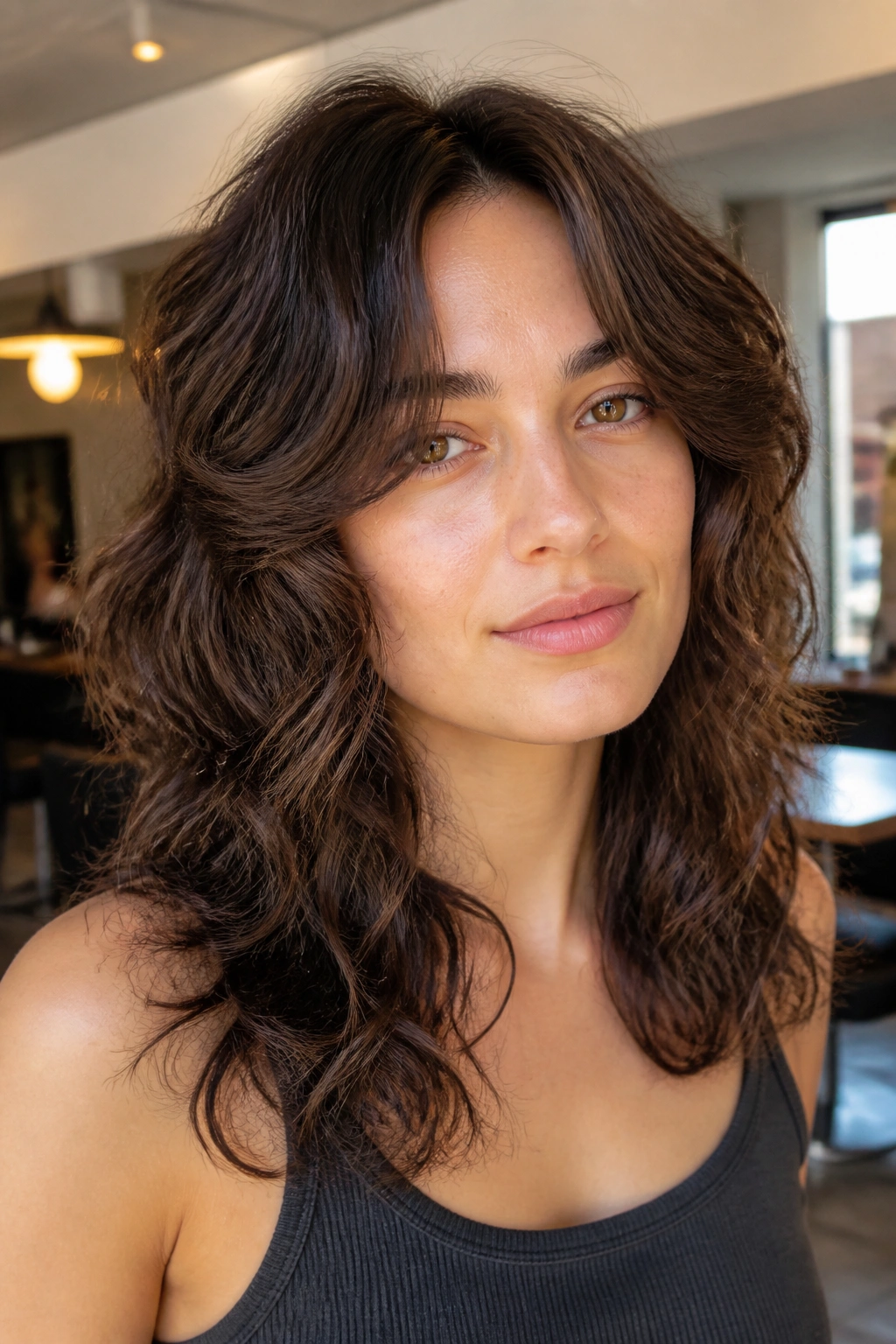
Why do curtain bangs work so well on dense waves? Because they break up the front without stealing too much mass from the rest of the cut. Thick hair can make straight-across bangs feel dense and boxy, but a parted fringe opens the face and lets the waves fold naturally to either side.
The best version of this cut keeps the bangs longer than people expect. Think cheekbone to lip length when dry, not a tiny fringe that sits high and stiff. That extra length lets the curl pattern settle, so the bangs do not spring up into a short curtain that needs fixing every hour.
A curtain bang wolf cut also gives you a nice escape hatch. If you are nervous about committing to a full fringe, this is gentler. It still gives you face framing and that slightly undone wolf-cut feel, but it does not lock you into one look. You can tuck it back, part it deeper, or let it fall forward on tired hair days.
How to style it
- Blow-dry the fringe away from the face for the first minute.
- Switch to fingers or a small round brush for the last pass.
- Keep a light mousse at the roots and a cream only on the ends.
- Trim the fringe before it gets into your lashes; once it starts poking your eyes, it will separate in awkward chunks.
The charm here is movement without fuss. Nothing stiff. Nothing too neat.
3. Soft Shaggy Wolf Cut

A soft shaggy wolf cut is what I’d hand someone who likes the shape of a wolf cut but hates looking overly styled. It keeps the layered backbone, yet the texture is blurred enough that the haircut reads more lived-in than choppy. Thick wavy hair does well here because the waves fill in the gaps, so you do not need harsh lines to create interest.
This version leans on softer ends and a little less disconnect between the top and the bottom. You still get that lifted crown and the bit of rebel energy around the face, but the silhouette feels less angular. If your hair already has a lot of natural bend, this can be a relief. You are working with the wave, not fighting it.
One thing I like about the soft shaggy version: it grows out in a civilized way. The shape does not fall apart the second you miss a trim. It just gets a little longer and a little more relaxed.
Salon notes
- Ask for feathered layers, not razor-heavy shredding.
- Keep the face frame long enough to tuck behind the ear.
- Let the ends stay slightly blunt so the hair keeps weight.
- Skip intense texture near the crown if your waves already puff up there.
A small warning: if your hair is very coarse and you over-texturize it, the ends can start to look see-through. That is not the look.
4. Crown-Heavy Wolf Cut

More volume at the crown is not a problem. In the right wolf cut, it is the point.
A crown-heavy version gives thick wavy hair a little lift where it usually collapses, which keeps the shape from sitting low and wide. The trick is to push the weight upward without letting the sides explode. That sounds simple. It is not. Too much height can make the cut look like a helmet with attitude, and nobody wants that.
What you want is a lifted top, a curved side profile, and a back that still feels full. This cut tends to look especially good on people whose hair gets flat at the root but puffs around the jaw. The extra lift pulls the eye up, and the rest of the cut can stay softer.
I prefer this version when someone likes drying their hair with a diffuser or clips the roots while the hair sets. If you air-dry with no help at the crown, the shape can sink a little. That is not a flaw. It just means the haircut is asking for a bit of root support.
You do not need to tease it. Good layers will do most of the work.
5. Chin-Length Face Frame Wolf Cut

If your hair falls heavy around the jaw, this one changes the whole outline. The chin-length face frame wolf cut keeps the main length intact but brings the shortest visible pieces right where the cheek and jaw need movement. Thick waves love that because the front stops acting like a curtain and starts acting like a shape.
The cut can do different things depending on where the chin-length pieces start. Slightly shorter around the cheekbones, and the cut lifts the face. A touch lower, and it softens a square jaw. Either way, the front stops hanging straight and starts bending around your features.
This style is a good one if you like your hair to look full but not bulky. It gives you a bit of edge up front while leaving enough weight through the back to keep the silhouette grounded. That’s the useful part. You get movement near your face without losing the strong base that thick wavy hair often needs.
Best for
- Hair that feels dense at the sides.
- Waves that need a softer front line.
- Anyone who wants face framing without a true bang.
- Hair that looks flat when the front is all one length.
If you want this cut to behave, keep the front pieces long enough to bend. Shorter than the chin can get fussy fast, especially if your wave pattern has a lot of spring.
6. Long Tail Wolf Cut
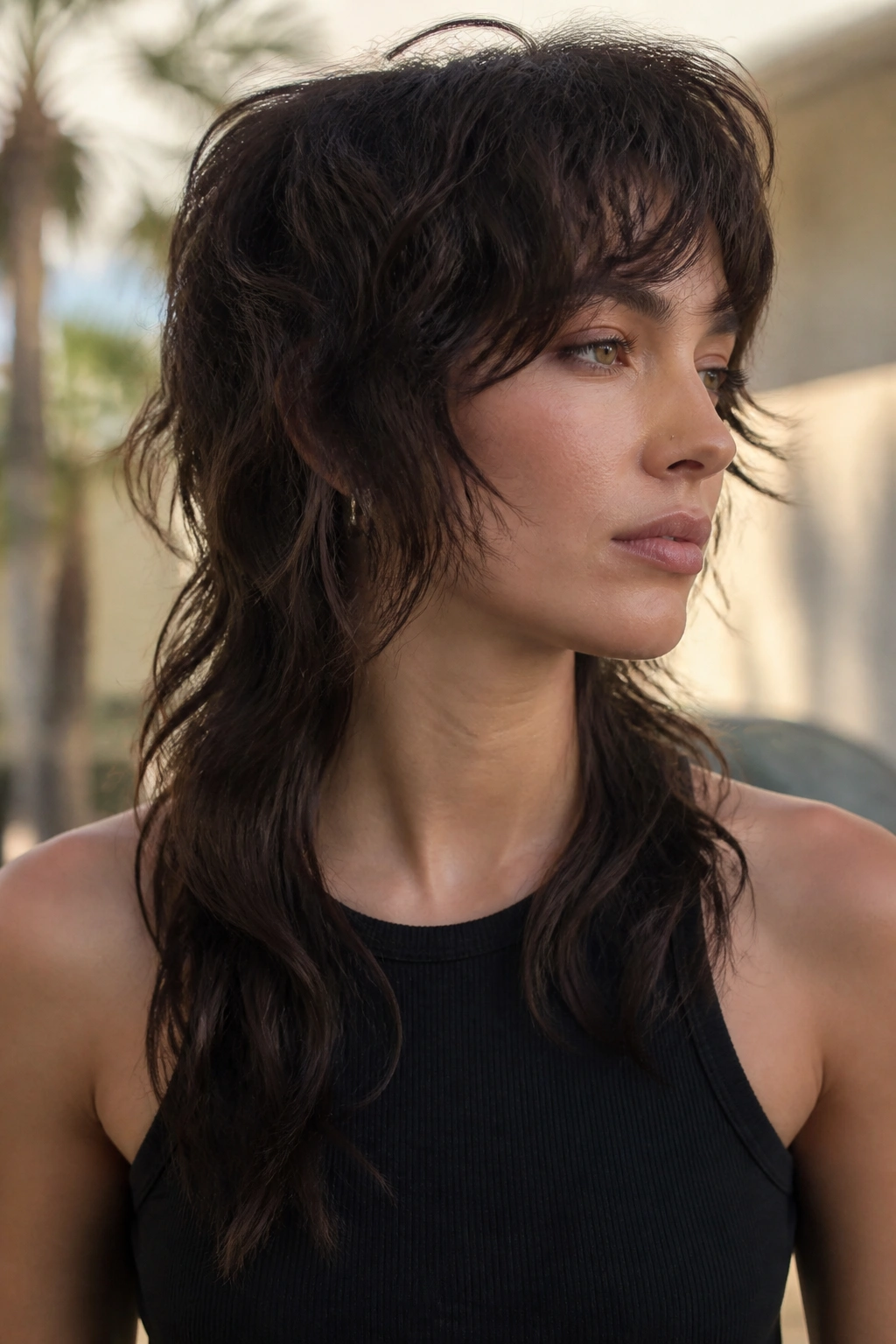
This version keeps the drama in the back. The long tail wolf cut leaves more length on the bottom while building the layers higher up, so thick wavy hair still has swing without losing the comfort of long hair. It is a smart choice for people who love the idea of a wolf cut but are not ready to give up the safety net of length.
Unlike a full chop, this shape lets the top and middle do the talking while the back hangs on. That makes the haircut feel a little more wearable in professional settings, and a little easier for people who tie their hair back half the week. When you pull it into a clip or low ponytail, the layers still show.
This cut can look messy in a good way, but only if the tail stays clean enough to anchor the rest of the hair. If the bottom is thinned to death, the whole shape turns wispy and loses its weight. Keep the tail dense. That is the point.
A long tail wolf cut suits thick waves that stretch out a bit at the ends and need help moving. If your hair is already short and buoyant, it may be too much shape in too little space. But on shoulder-blade length hair? It can look excellent.
7. Razored Wolf Cut
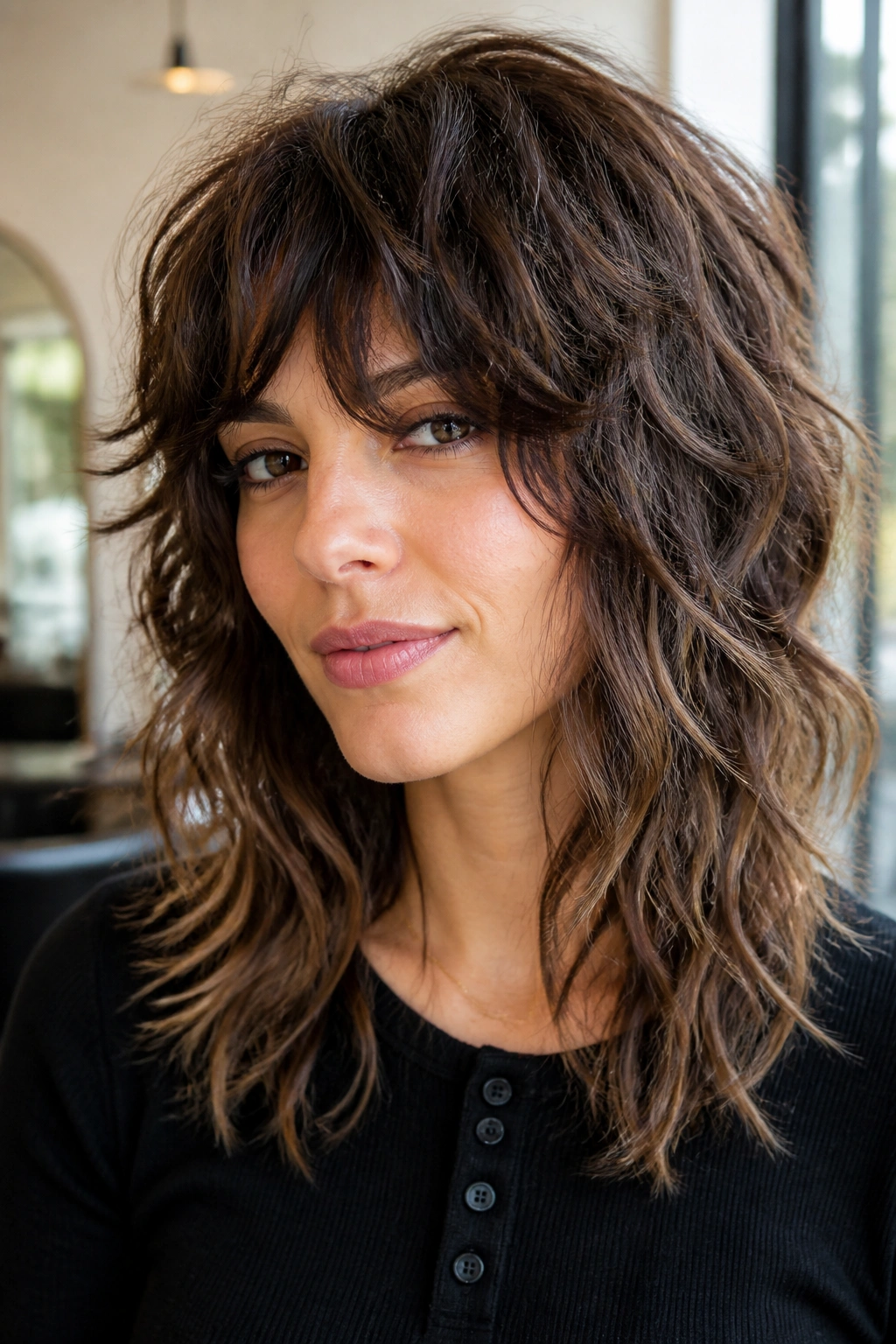
A razor can make thick waves move like they owe it money. It can also chew the ends if the stylist gets heavy-handed. So this one lives and dies by technique. Done well, the razored wolf cut gives dense hair a broken, airy finish that looks light without looking sparse.
I like this cut for hair that feels stiff or stubborn. The razor softens the line more than scissors do, which helps waves bend instead of sitting in a block. The movement can look almost piecey, especially around the face and the crown. That piecey look is useful if your hair tends to form one big sheet.
The catch is obvious. If your ends are already dry or your waves frizz when they’re overhandled, too much razor work can leave them frayed. I would not ask for razor-heavy ends on hair that needs moisture and polish more than texture.
What to watch for
- The razor should be used in controlled sections, not all over.
- The longest lengths need to keep some bluntness.
- Mid-lengths and face frame usually take the texture better than the very tips.
- A smoothing cream can help the finish hold together.
This cut has a little edge. Good edge. Not chaos.
8. Micro-Bang Wolf Cut

Micro-bangs change everything. Short fringe pulls the eye up and makes a wolf cut feel sharper, stranger, and a little more deliberate, which is a nice trick on thick wavy hair that already has plenty of body. If you want the haircut to read bold the second you walk in, this is one of the fastest ways to get there.
The reason it can work on waves is contrast. Thick lengths and a tiny fringe create two different textures in one haircut. That split keeps the style from looking too soft or too expected. A micro-bang wolf cut can be sleek around the fringe and wild through the rest, or the other way around. Either way, it has personality.
Do not treat this fringe casually. Cowlicks near the hairline can push the bang apart, and a strong wave pattern can make the short pieces spring up faster than you expect. Leave a little extra length on the first cut. You can always go shorter later. Going the other direction is harder.
What to ask your stylist
- Keep the fringe slightly longer on the first visit.
- Cut the bang dry if your wave pattern is strong at the front.
- Blend the sides enough so the fringe does not look pasted on.
- Use a tiny amount of pomade or wax, not a heavy cream.
This one is not shy. That’s the appeal.
9. Rounded Wolf Cut
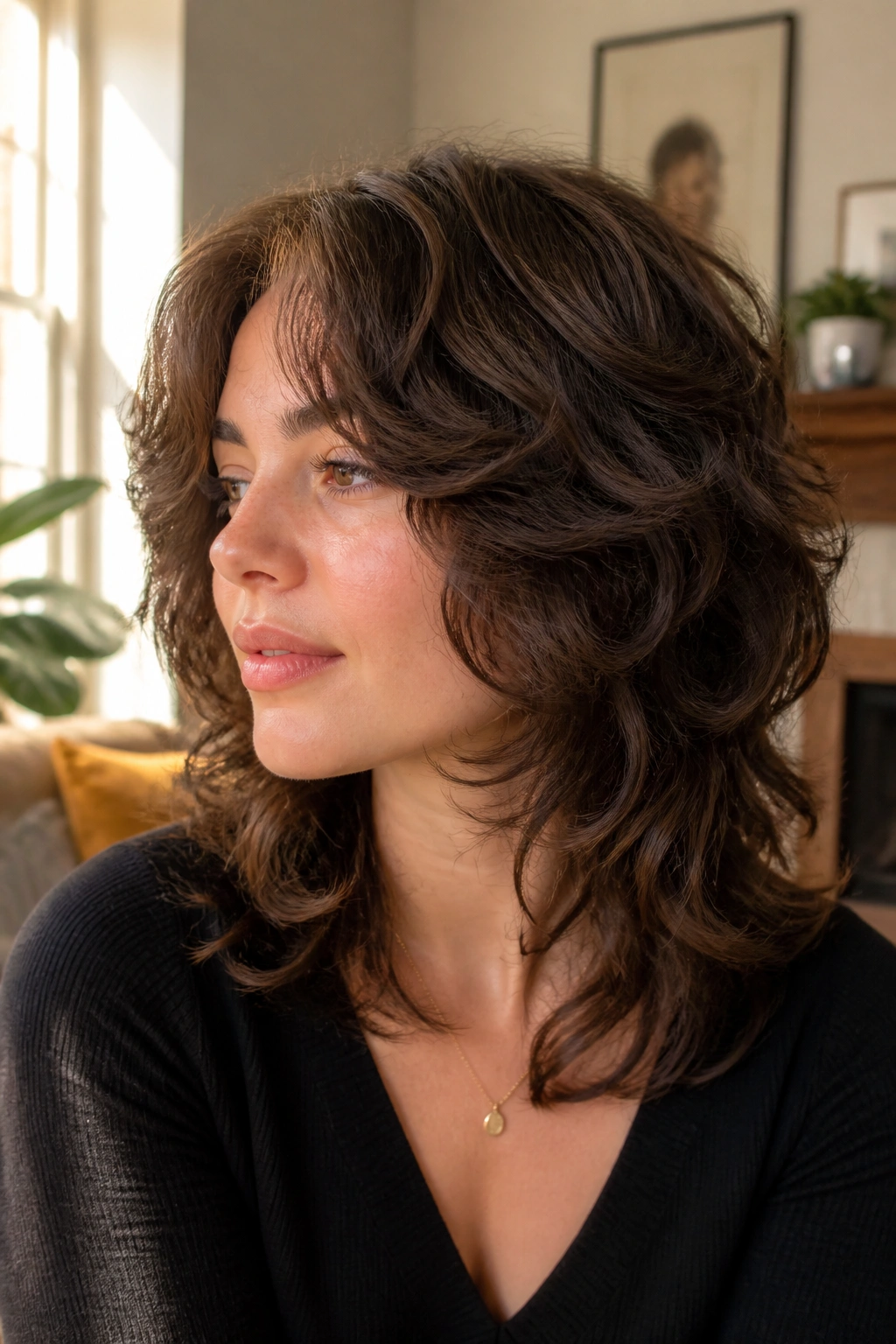
If your thick wavy hair turns into a triangle by noon, a rounded wolf cut is worth a serious look. The whole shape is built to curve instead of spike, which makes the haircut feel softer around the head and less puffy at the corners. It is still a wolf cut. It just avoids that jagged, over-chopped look that can make dense waves feel bigger than they are.
The rounded outline matters because thick hair often needs shape control more than extra texture. A lot of bad cuts on wavy hair chase movement and forget geometry. Geometry matters. When the sides curve in a little and the back stays balanced, the result looks cleaner from the front and the side.
This style tends to flatter anyone who wants their hair to feel full but not wide. It softens sharp cheekbones, takes the edge off square jawlines, and keeps the ends from kicking out too hard. It’s one of those cuts that looks subtle in a mirror and better in motion.
A good rounded wolf cut never feels flat. It feels contained. That is a much nicer thing.
10. Collarbone Wolf Cut

Collarbone length is a sweet spot for thick waves. Short enough to move, long enough to keep weight. That is why a collarbone wolf cut can feel so easy to live with. The layers open up the top and the face, but the bottom still has enough length to stop the whole thing from puffing out.
This version is good if you want a wolf cut that reads wearable rather than extreme. It works for people who spend time in offices, classrooms, or anywhere a super-choppy cut might feel like too much. The shape still has teeth. It just keeps them tucked in.
I like this one most when the ends are left a little soft and the interior layers are used to take out bulk. Thick wavy hair at collarbone length can either float or mushroom, and the difference usually comes down to where the weight is removed. If the layers are placed with care, the hair moves with you instead of around you.
Styling on air-dry days
A little leave-in, a small dollop of curl cream, and a scrunch from the ends upward are enough for many heads. If you use too much product, the haircut loses its airy shape and starts looking heavy again. A light hand wins here.
11. U-Shaped Wolf Cut

A U-shaped wolf cut keeps the bottom edge curved instead of pointed, and that tiny change makes a big difference on thick wavy hair. A V-shape can look too sharp if the ends are dense; a U-shape keeps the outline fuller at the sides and softer through the back. It feels less severe, and the waves settle into it more naturally.
This shape is useful when you want your hair to look thick on purpose, not bulky by accident. The U keeps enough width at the bottom so the cut feels lush, while the layers above it stop the whole style from becoming a block. That balance is what makes it flattering on dense hair.
It also behaves well when you wear your hair half up. The lower edge stays visible and the layering around the face still does its job. If you spend a lot of time twisting your hair into clips or claw clips, this is a practical one.
What to tell your stylist
- Ask for a soft U perimeter, not a blunt edge.
- Build the shortest layers around the cheekbone area.
- Keep the back weighty enough to preserve fullness.
- Avoid a steep point unless you want a more dramatic shape.
This is one of the calmer wolf cuts. Not boring. Calmer.
12. Messy Mullet Wolf Cut

This one has opinions.
The messy mullet wolf cut pushes the front shorter and the back looser, which gives thick wavy hair a sharper, more rebellious silhouette. If your hair already has a lot of body, the shape can look daring instead of cartoonish. That’s the difference. Dense waves can carry a mullet-inspired cut in a way finer hair often cannot, because the texture gives the haircut structure.
The best messy mullet versions are not about looking unkempt. They are about controlled imbalance. You want a little more length in the back, a little more lift at the crown, and enough texture around the ears to break the outline. If the sides are left too full, the cut loses the whole point. If the back is chopped too short, it turns into a mistake with volume.
This cut rewards people who like to rough-dry their hair, use texture spray, and avoid overthinking it. It does not like over-smoothing. It also does not need a perfect finish. A piece falling the wrong way can help the shape.
My honest take: if you enjoy a haircut with attitude, this is one of the most fun wolf-cut versions for dense waves.
13. Hidden Internal Layers Wolf Cut
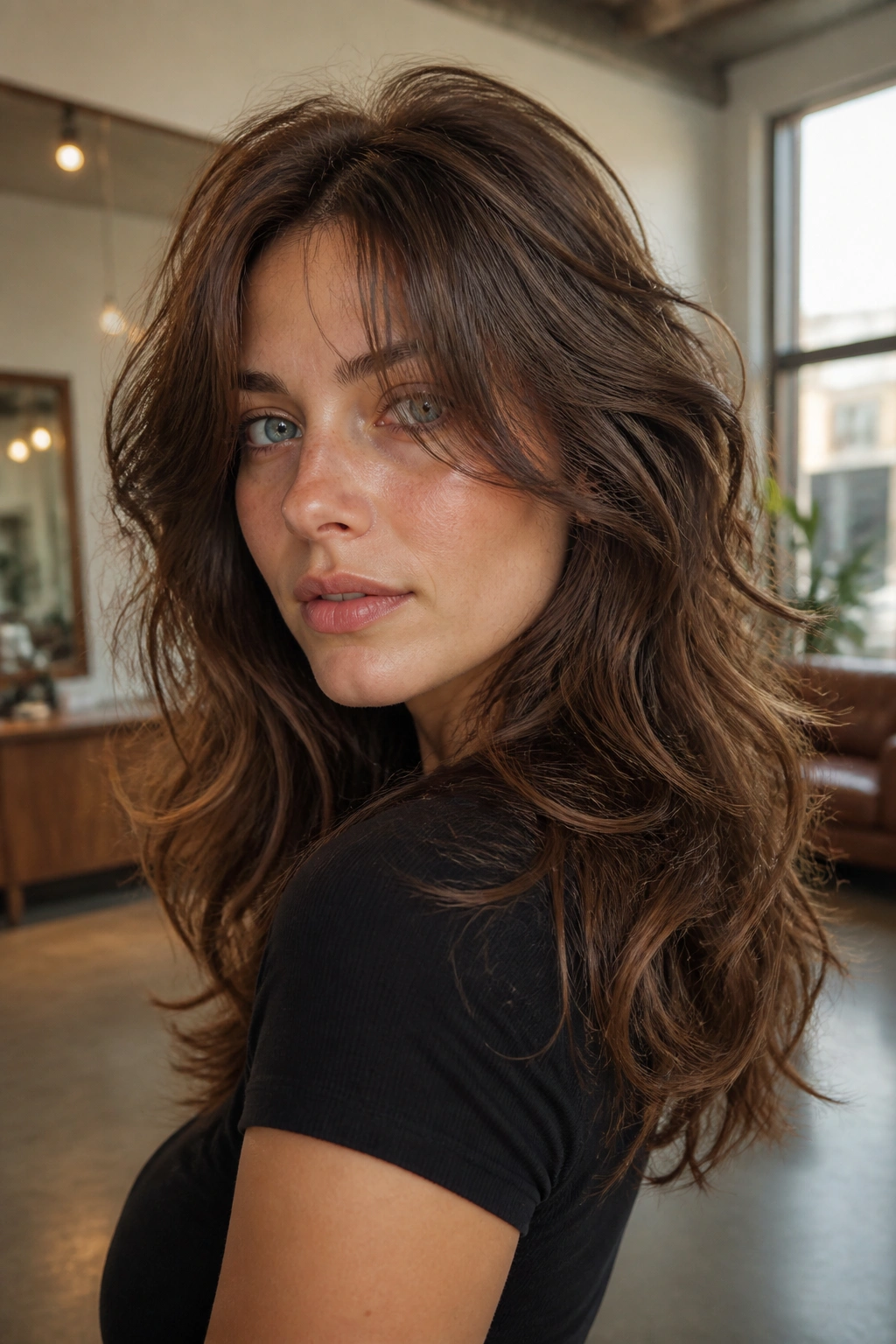
Do you want movement without broadcasting every layer from across the room? This is the one.
Hidden internal layers keep the outside of the haircut looking relatively clean while carving out weight underneath. On thick wavy hair, that can be a lifesaver. You get the lighter feel, the bend, and the swing, but the outer surface still looks polished enough for days when you want less chaos and more control.
The trick is that the layers live inside the haircut, not all over the outside. That means the shape changes when you move, not when you stand still. A lot of people with dense waves like this because it reduces bulk without making the haircut look overly chopped. It is especially good if your hair has a coarse feel and grows wide at the sides.
Why it matters
- The top keeps a smoother outline.
- The inside loses weight where the hair feels heavy.
- The cut looks less jagged as it grows out.
- It gives waves room to separate without frizzing into a halo.
Ask for this if you want a wolf cut that behaves at work and loosens up on weekends. It’s the quiet version. Not bland. Quiet.
14. Side-Swept Fringe Wolf Cut

A side-swept fringe can soften a wolf cut in a way straight-across bangs cannot. It gives thick wavy hair a diagonal line through the front, which breaks up the width around the forehead and draws the eye across the face instead of straight down. If your waves are dense near the front, that angle can be a relief.
This version is nice for people who want something face-framing but not full-on bang territory. The fringe can blend into the layers or sit a little more distinctly, depending on how much contrast you want. It usually needs less daily maintenance than a blunt fringe, which is why it suits people who do not want to spend 15 minutes wrangling the front section every morning.
The style also helps if you have a deeper side part already. Thick wavy hair often settles into one side naturally, and this cut works with that habit instead of fighting it. A quick blow-dry at the roots and a small round brush through the fringe are usually enough.
If you like soft drama, this is a good lane.
15. Low-Maintenance Air-Dry Wolf Cut for Thick Wavy Hair
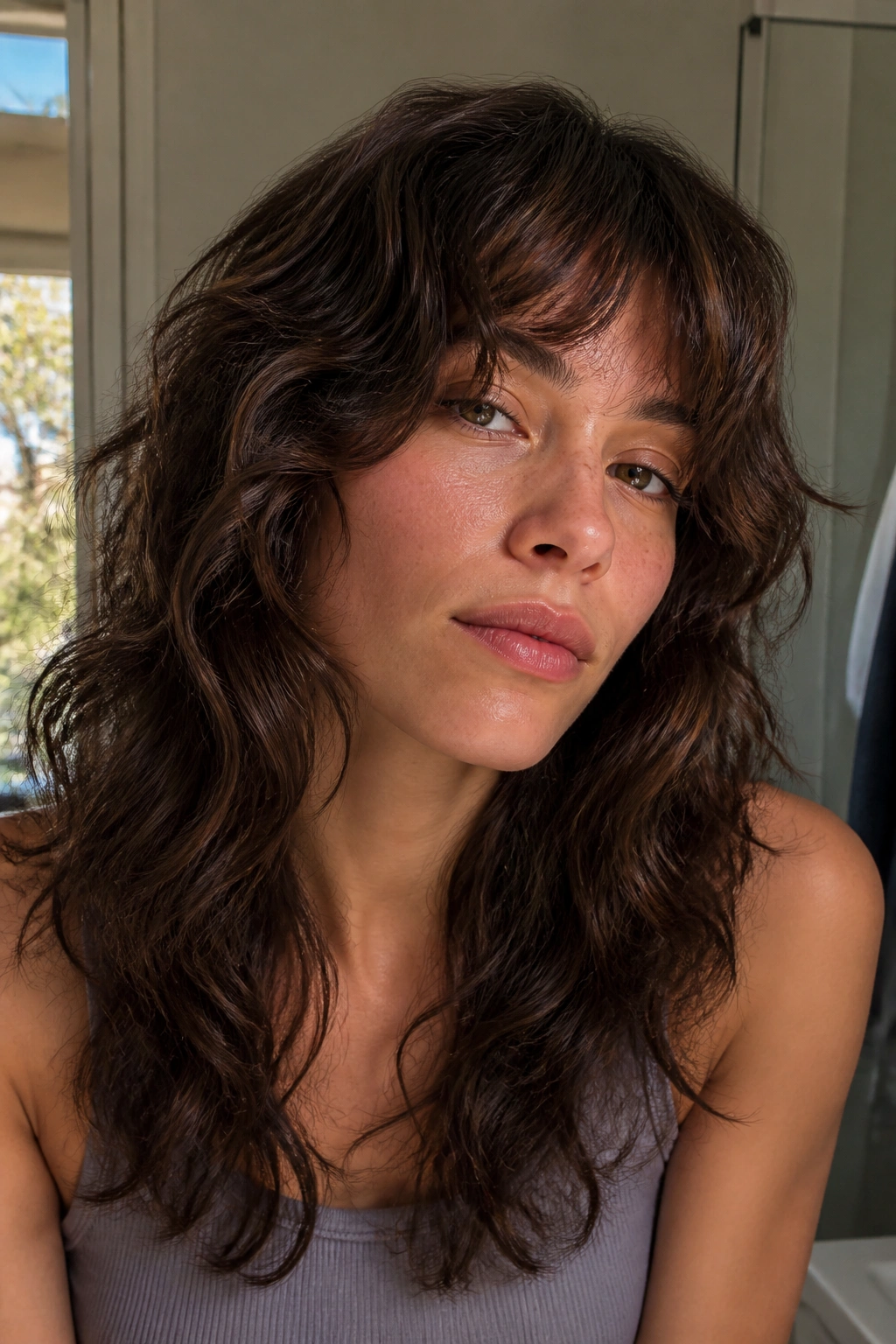
This is the version I’d choose for someone who wants the haircut to do most of the work. A low-maintenance air-dry wolf cut for thick wavy hair relies on smart layers, a soft perimeter, and enough length in the right places that the waves can settle on their own. No elaborate styling. No daily battle with hot tools.
What makes it low-maintenance is restraint. The layers need to release weight, not erase it. The face frame should move, not fray. The back should keep enough body to hold the silhouette while the top gets the lift. If all of those pieces are in place, you can wash, scrunch, and leave the house without looking like you gave up halfway through getting ready.
This is also the version I’d recommend to people who hate a haircut that only looks good on salon day. The best air-dry wolf cuts can look a little messy in the morning and better by lunch, which is about as honest as a haircut gets.
A few things help:
- A light leave-in on damp ends.
- A small amount of mousse at the root.
- Scrunching with a microfiber towel, not rough cotton.
- Leaving the hair alone while it dries.
If you want one haircut that can lean soft, edgy, messy, or neat depending on how you style it, this is the shape that gives you the most room to move.
