



Curly hair and bangs do not always get along, and that is exactly why curly shag haircuts without bangs can be such a smart fix. When the front stays open and the layers do the heavy lifting, curls get shape without fighting a fringe that splits, shrinks, or sits in your eyes by noon.
The trick is not just “more layers.” That’s the sloppy advice people repeat when they do not know how curls actually behave. A good shag removes weight in the right spots, keeps enough length in the perimeter to stop the shape from puffing out, and lets the curl pattern fall where it wants to fall. The difference between airy and awkward is often just a couple of inches.
There are a lot of ways to wear the idea. Some versions sit right at the chin and give the curls a playful bounce. Others keep the length, then carve movement through the mid-lengths so the haircut still has swing on day three. If you have ever wanted texture, body, and a little edge without a fringe, the right shape is probably already here.
1. Chin-Length Curly Shag With No Fringe
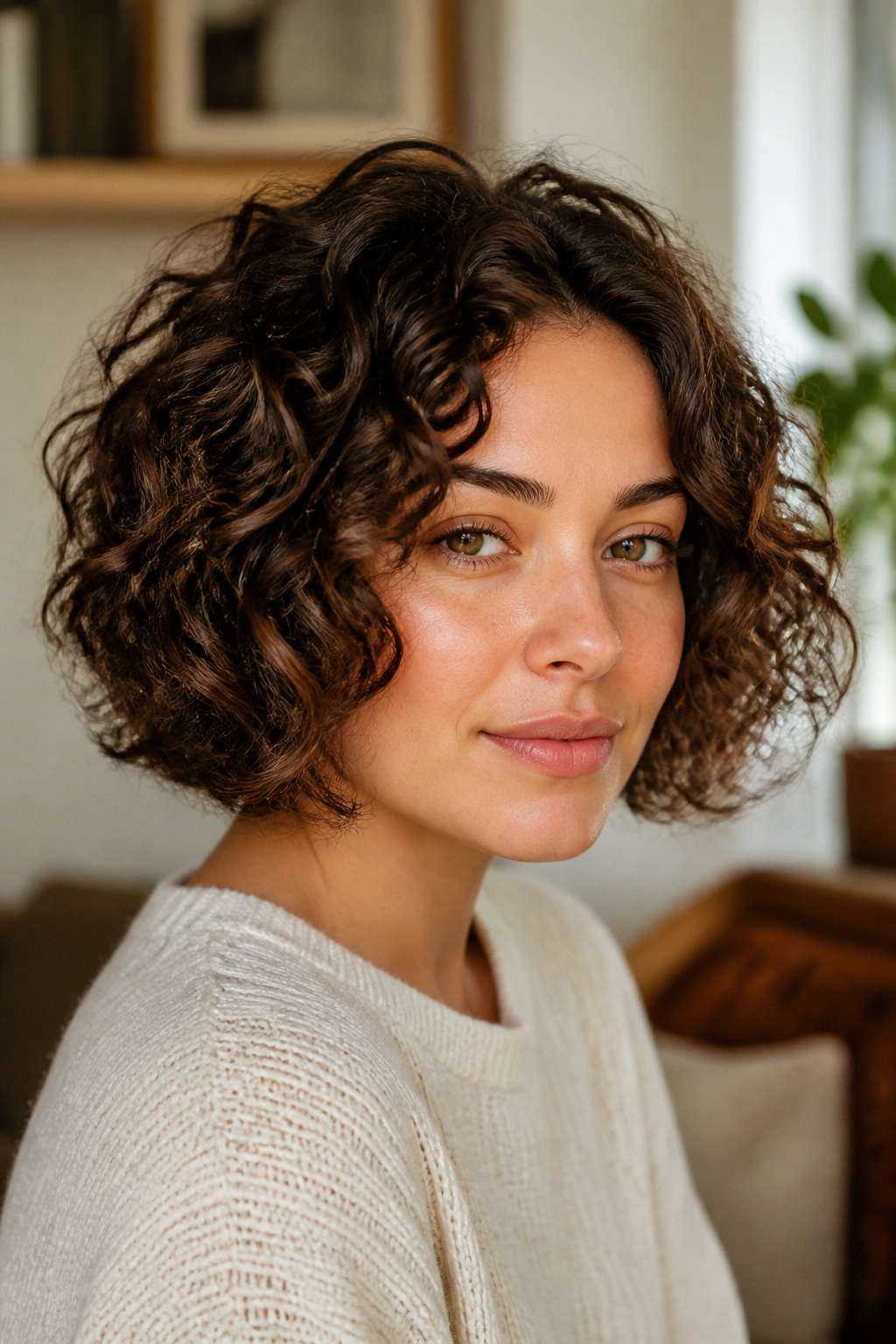
Short curls can look boxy fast. This cut avoids that by keeping the perimeter around the chin and letting the first internal layers start just below the cheekbone, where they can open the face without turning into bangs.
Why the shape works
The chin-length base gives the curl some weight, which matters if your pattern is springy and wants to stand up. Shorter layers through the sides stop the outline from ballooning, and the open front keeps the whole cut from feeling heavy.
I like this shape on oval and heart faces because it shows the cheekbones instead of hiding them. It also plays well with looser spirals that need a little structure but do not want a full stacked bob.
- Ask for the shortest layer to land about 1 to 2 inches below the cheekbone.
- Keep the back a touch longer than the front so the cut does not collapse when dry.
- Finish with a light mousse or foam, then scrunch once and leave it alone.
- If your ends look fuzzy, point-cut the bottom edge instead of razor-cutting it.
One good rule: if you can picture a chin-length bob with movement, you are close; if you picture a mushroom, the sides need less weight removed.
2. Shoulder-Length Curly Shag With Soft Face Framing
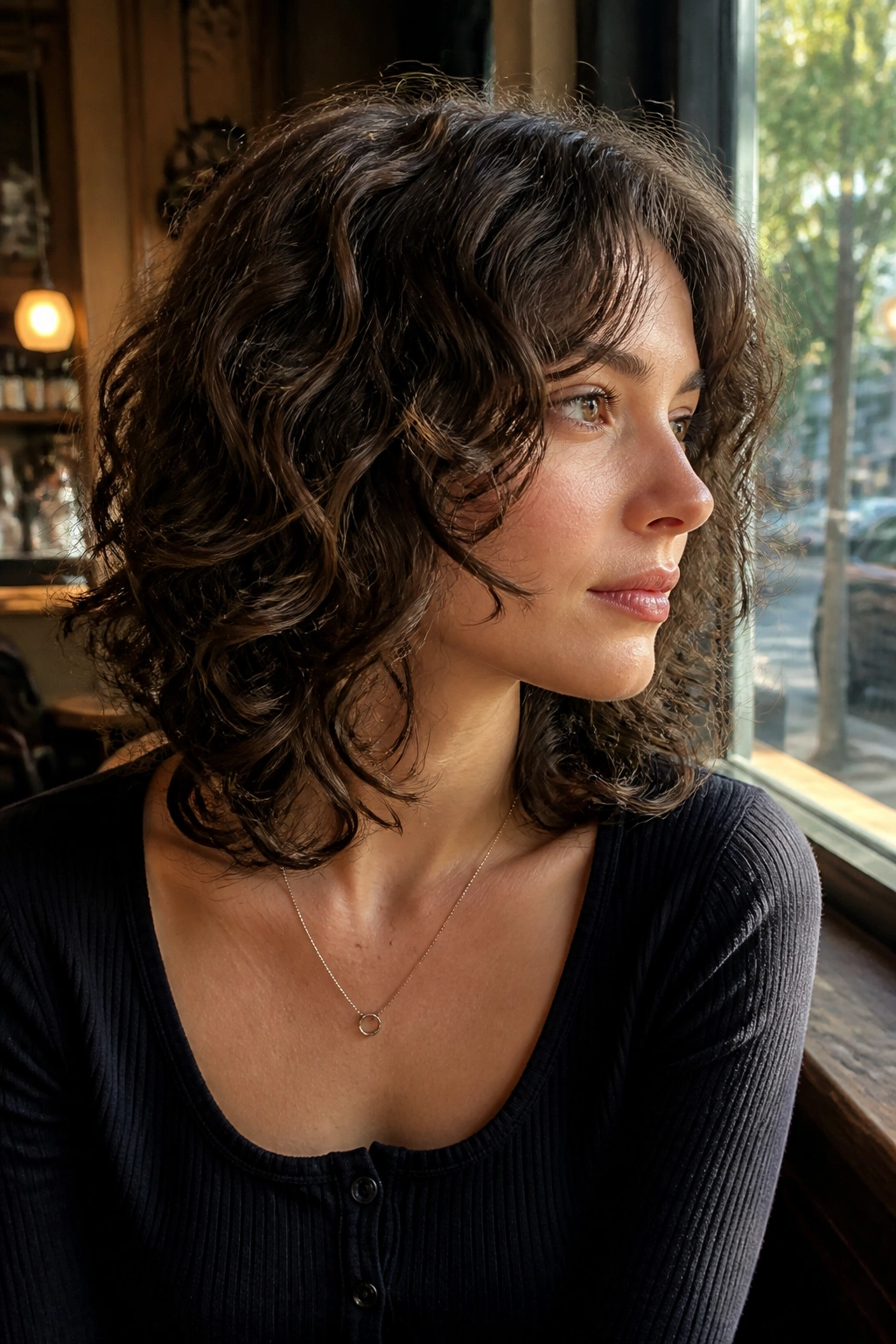
Why does shoulder length work so often for curls? Because it gives the curl room to swing without eating up too much density. That balance matters. Shoulder-skimming hair is long enough to feel soft, but short enough that the layer pattern still shows up when the hair dries and expands.
The face-framing pieces should start lower than most people expect. Around the jaw or upper neck is usually enough. If you cut them too high, the front starts acting like a fringe by accident, and the whole point of this cut gets lost.
What to ask for at the salon
Tell your stylist you want a shag shape that keeps the front open, not a heavy curtain over the face. Say you want the layers to move from the cheekbone down into the collarbone area, with the perimeter kept soft rather than blunt.
A shoulder-length curly shag is a safe middle ground for anyone who is tired of triangle hair but not ready for a big chop. It also grows out without turning ugly overnight, which is more useful than people admit. A cut that behaves for six months is worth more than one that looks good for three days.
3. Long Wolf Cut for Curly Hair
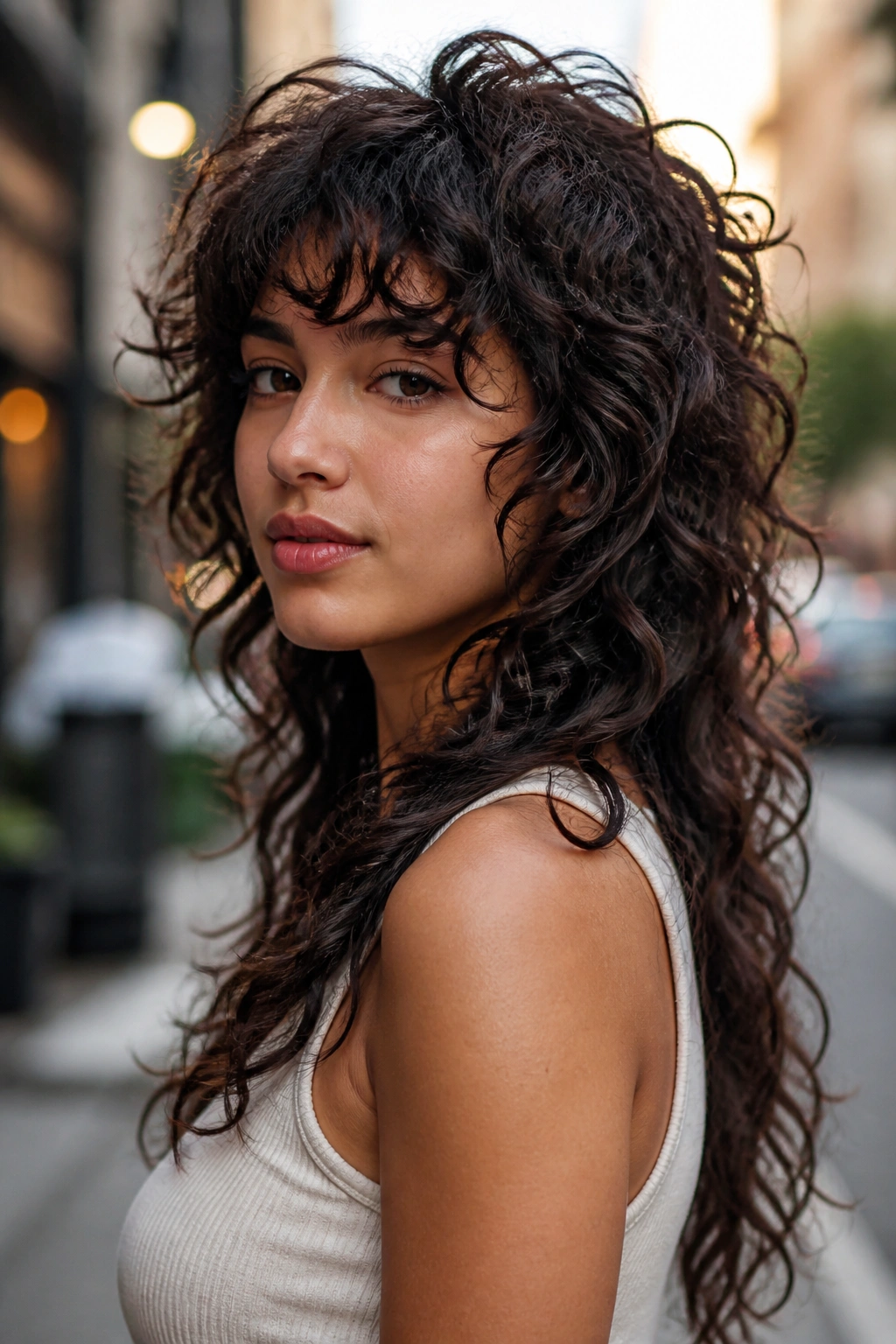
I keep coming back to the long wolf cut when someone wants a little edge but cannot give up length. The crown gets lifted, the ends stay long, and the result looks messy in a good way instead of sloppy in a haircut-regret way.
The reason this works on curls is simple: the shorter top layers create movement while the longer bottom section keeps weight where curls need it. Without that bottom length, the cut can spring out and lose shape. With it, you get that slightly wild silhouette people love, but the curl still has something to hang from.
- Shortest layers: around the temples or upper cheek, never straight across the forehead.
- Longest layers: mid-back or lower, depending on how much length you want to keep.
- Best styling move: diffuse until about 80 percent dry, then let the rest air-dry.
- Watch for over-thinning at the ends; curly hair can go see-through fast.
This cut is strongest on medium to thick curls, especially when the hair has some natural bend. It also looks better a little imperfect. Too polished, and it loses the point. A wolf cut needs a little bite.
4. Curly Shag Bob With Jaw-Grazing Layers
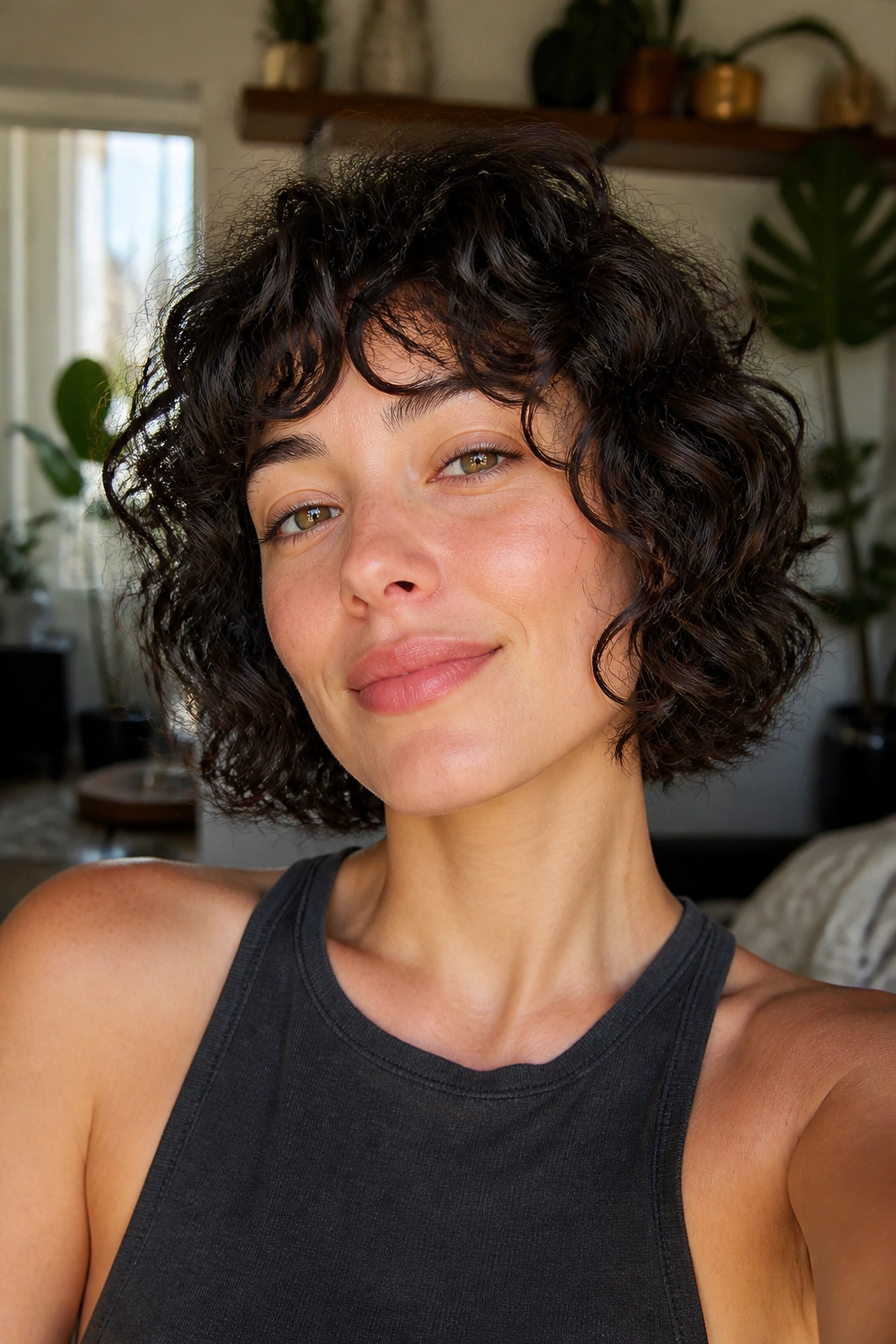
A bob can be shaggy without looking choppy. That is the whole game here. The base sits near the jaw, but the inside is cut in soft, staggered layers so the hair does not sit like one solid helmet.
This version is useful if you want shorter hair but not a strict, tidy shape. The jaw-grazing length opens the neck and shows off the curl pattern, while the hidden layers stop the bulk from stacking up around the cheeks. On curls with a lot of spring, that matters more than people think.
Keep the perimeter a little softer than a classic bob. A hard, blunt line can fight the texture and make the ends flare. A shag bob feels better when the bottom edge has some irregularity, almost like the hair was cut to move instead of sit still. It is a small difference. It changes everything.
5. Mid-Length Dense-Curl Shag

Can thick curls carry a shag without turning into a triangle? Yes, but only if the weight is removed in the right places. Dense hair needs shape carved through the interior, not just layers slapped on top.
The best mid-length shag on dense curls usually sits somewhere between the collarbone and the top of the chest. That length gives the curl room to bounce, and it keeps enough weight in the bottom section so the hair does not puff out at the sides. If the layers start too high, the cut can get fluffy fast.
The salon words that help
Say you want internal layering, not just surface layers. Ask for the ends to keep enough bulk to feel full, while the crown and mid-lengths are softened so the hair can move. That tells the stylist you want shape, not just thinning.
- Ask for a dry check before the final snip.
- Avoid aggressive thinning shears if your curls frizz easily.
- Keep the front layers long enough to blend into the rest of the cut.
- Let the stylist cut around your densest spots first, then balance the rest.
This is the kind of cut that gets better when the person holding the scissors knows curly hair. Good dense-curl shaping looks calm. Bad dense-curl shaping looks hacked apart.
6. Rounded Halo Shag for Curls
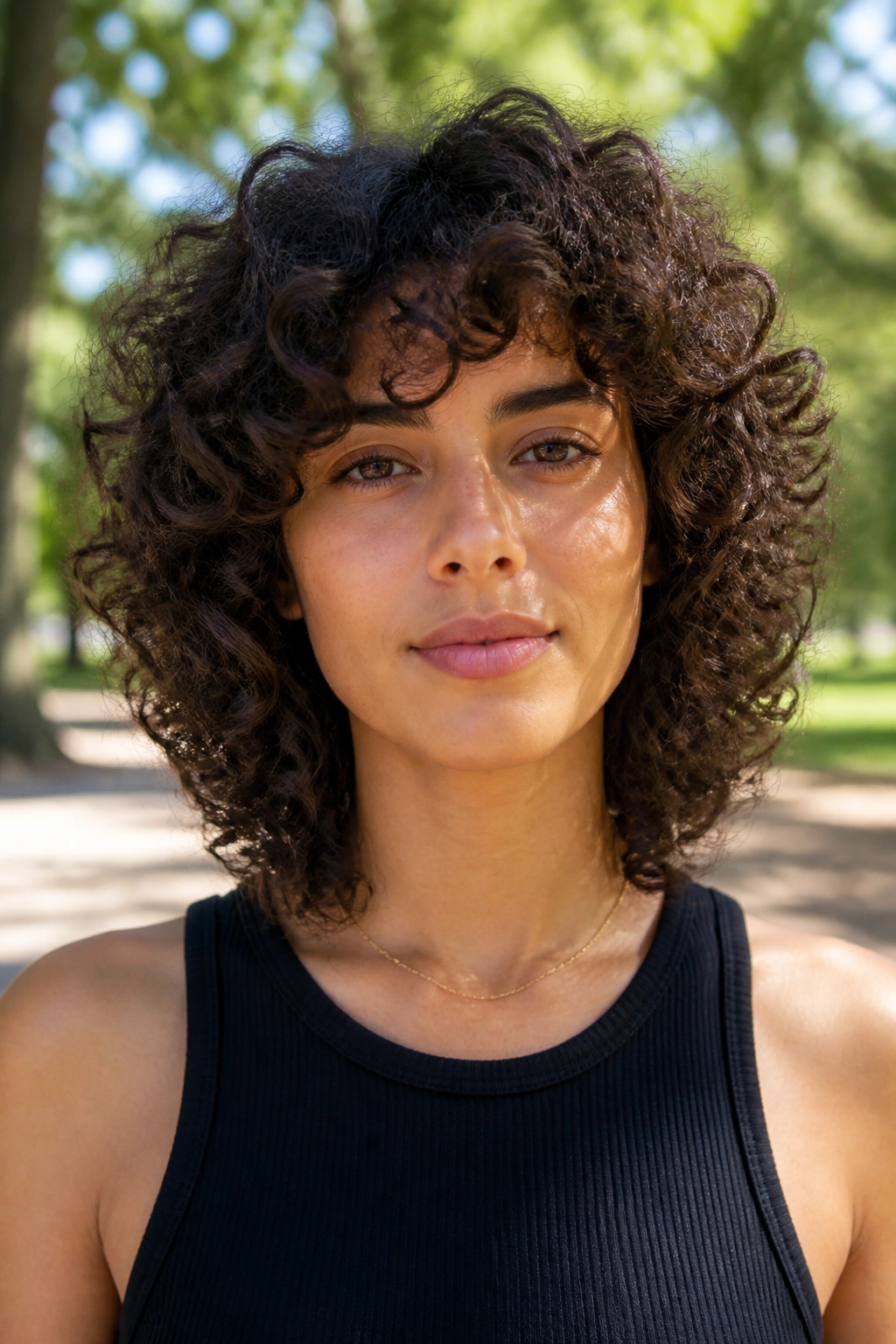
Unlike a wolf cut, which usually leaves a more dramatic front-to-back difference, the rounded halo shag wraps the head in a softer circle. The layers still create lift, but the silhouette stays close and balanced.
That shape is a gift for people who want texture without the obvious mullet feel. It is also easier to grow out, because the layers blend into one another instead of dropping off in a sharp step. The whole cut reads as soft movement rather than a statement cut, which is useful if your wardrobe already does enough talking.
The front should stay open, not crowded. Shorter pieces can sit at the temples or just below the cheekbones, then melt into longer layers around the neck and shoulders. On curls that like to spread wide, this keeps the shape from getting too broad. On curls that fall tight, it keeps the cut from looking flat. Nice trick, that one.
7. Long Layered Boho Shag
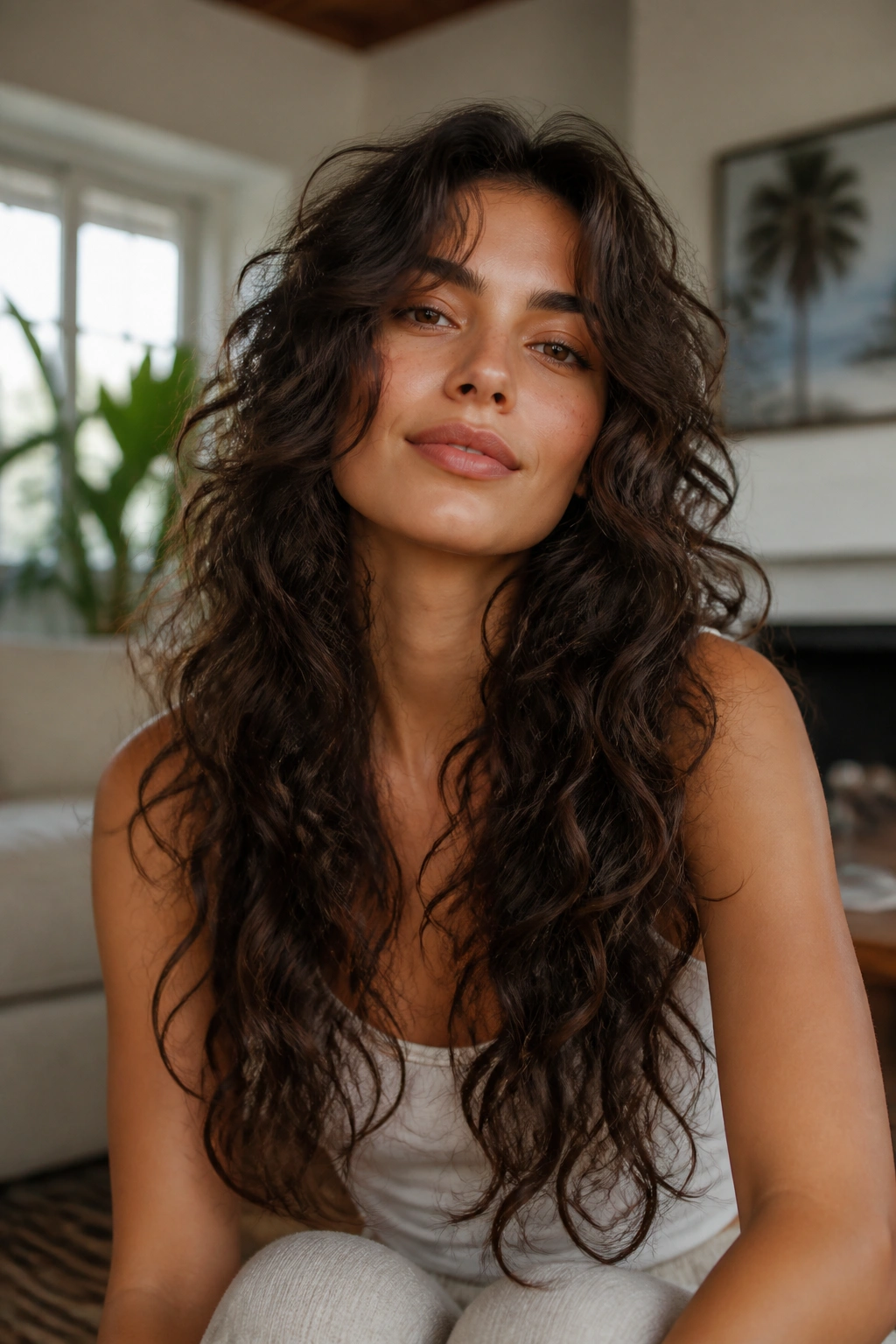
I love this version for anyone who keeps saying they want to “keep the length” but also wants their curls to do something interesting. Long layers take out the drag without making the haircut feel choppy.
The boho shag works best when the top layers are soft and the bottom still has enough substance to hold the shape. If the layers are too short, the cut starts behaving like a mullet. If they are too long and timid, the hair turns into one heavy curtain. The sweet spot sits somewhere in the middle, usually starting below the chin and moving down through the ribs or longer.
What to ask for
- Keep the shortest visible layers around the cheekbone-to-jaw zone.
- Blend the mids with point cutting so the layers do not look sliced.
- Leave the ends full enough to show the curl pattern.
- Use a cream or gel that gives slip, then scrunch out the cast once the hair is dry.
This cut has a lived-in feel that works well with second-day curls. It does not need to look polished to look good. In fact, that would be the wrong mood entirely.
8. Fine-Curl Shag With Crown Lift
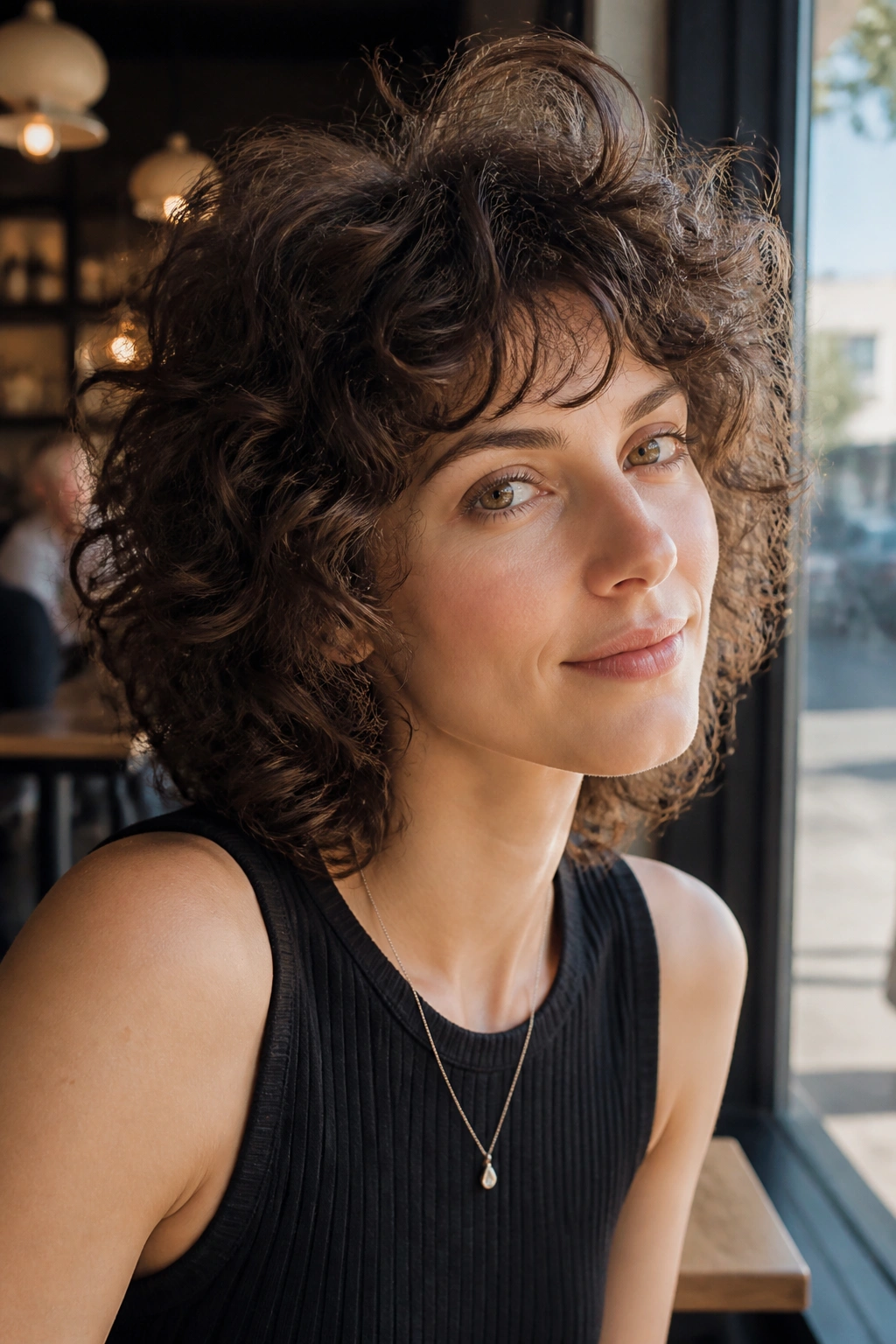
Fine curls need lift more than they need drama. That is the part people miss when they try to copy a shag meant for thick hair and end up with wispy ends that look tired by lunchtime.
The best fine-curl shag keeps the crown light and the perimeter a little fuller. You want movement at the top, not a pile of tiny layers that steal all the density. If the hair is too heavily layered, the ends lose body and the whole cut starts looking stringy. Not cute. Not even a little.
A good stylist will usually leave enough length in the bottom third to keep the shape grounded. Then they will add just enough layering near the crown and sides to create lift when the curls dry. On this cut, mousse matters. So does root clipping if your hair collapses at the top. That tiny bit of support changes the whole line of the haircut.
9. Dry-Cut Curly Lob Shag
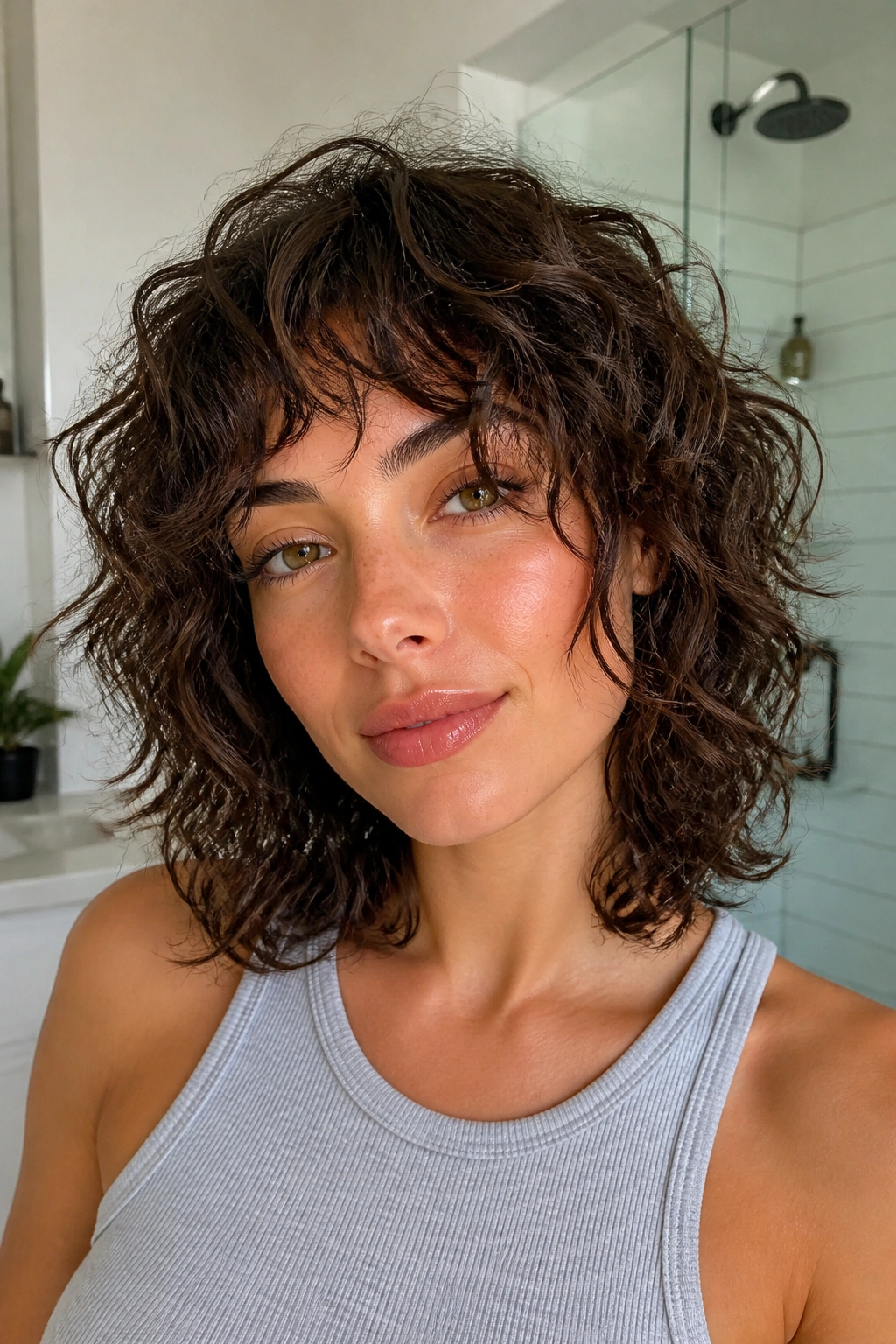
Why do so many curly cuts look better when they are dry-cut? Because curls lie. Wet hair stretches, hides volume, and makes the shape look longer than it will really be once it springs back.
A dry-cut curly lob shag lets the stylist see the real pattern before the scissors go in. The curl can be balanced based on how it lives, not on how it behaves when it is soaked and heavy. That matters most if your curls have different personalities in different zones — one side tighter, one side looser, the crown flatter, the nape fuller.
How to use it
Ask for the cut to keep lob length — usually around the collarbone — with layers that are checked and refined dry. Tell the stylist you want enough movement to stop the lob from feeling bulky, but not so much that the ends go thin.
This is a smart choice if you style with a diffuser and prefer a shape that still looks good after a messy sleep. It has enough length to tuck behind the ears, enough layering to move, and enough curl left intact to look like hair instead of a project.
10. Tapered Sides Curly Mullet Shag
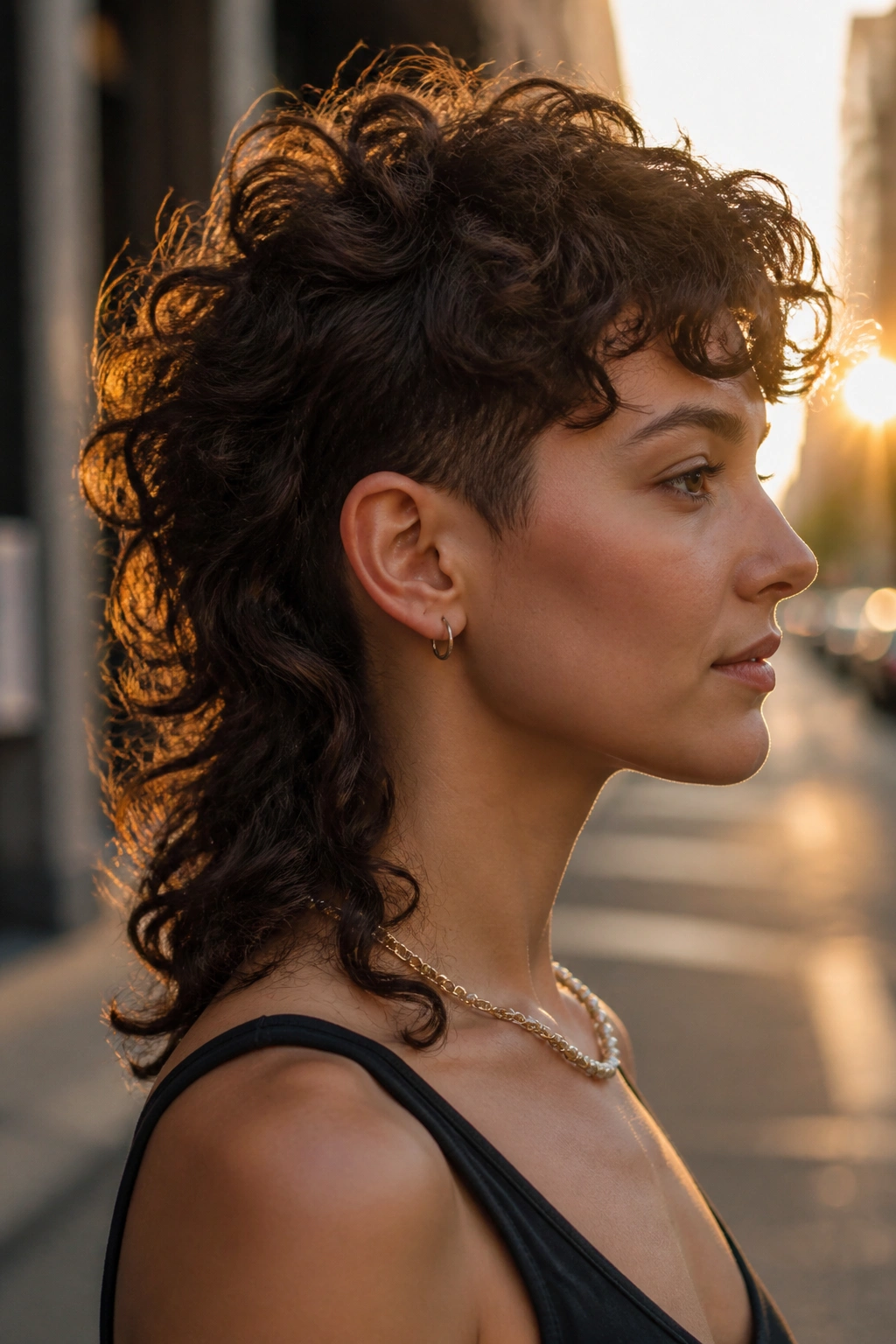
If you like a little edge but do not want a full punk haircut, this is the one. The tapered sides curly mullet shag keeps the front and crown shorter, then leaves more length in the back so the silhouette has attitude without turning costume-y.
The key is balance. The nape should stay long enough to read as intentional, not accidental. The sides should be soft, not shaved or boxed. On curly hair, that taper creates a nice shape around the ears and jaw, especially when the curl pattern has a bit of spring.
- Side layers should sit around the cheekbone or just below.
- The back can drop to the collar or a little past it.
- Keep the transition from crown to nape gradual.
- Use a diffuser on low heat to keep the top from frizzing out.
This cut suits people who want motion every time they turn their head. It is a little daring, but not difficult to wear. The best part is how easy it makes second-day hair look. A sleep squish and a mist of water often bring it right back.
11. Soft Deconstructed Shag for Loose Curls
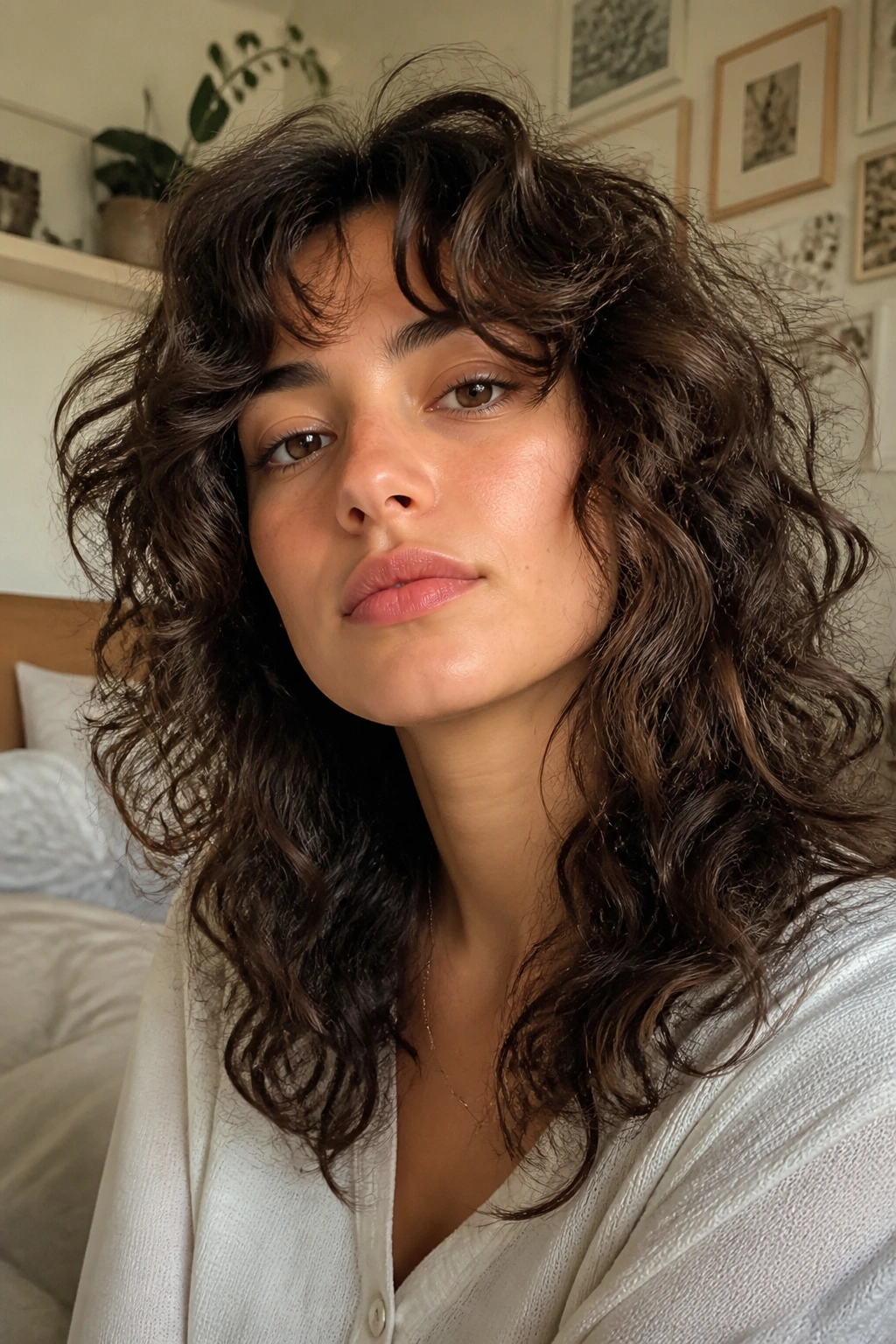
Loose curls can get swallowed by heavy layers, which is why this softer version works so well. The deconstructed shag keeps the shape loose and irregular, but it does not chop the hair into obvious steps.
The goal is movement that feels natural, not carved. Think of it as a haircut with pauses in the shape. Some pieces are a little shorter, some are left long, and the edge is softened so the curl pattern can do most of the work. That is a nice fit for hair that sits between waves and curls, because it needs guidance more than control.
This cut also grows out well. That is not a small thing. When the layers are subtle, you are less likely to hit that awkward stage where the front is too short and the back has already gone flat. Instead, the cut just relaxes a little over time, which is a much easier life for both you and your stylist. A little messiness is the point here.
12. Heavy-Density Curly Shag
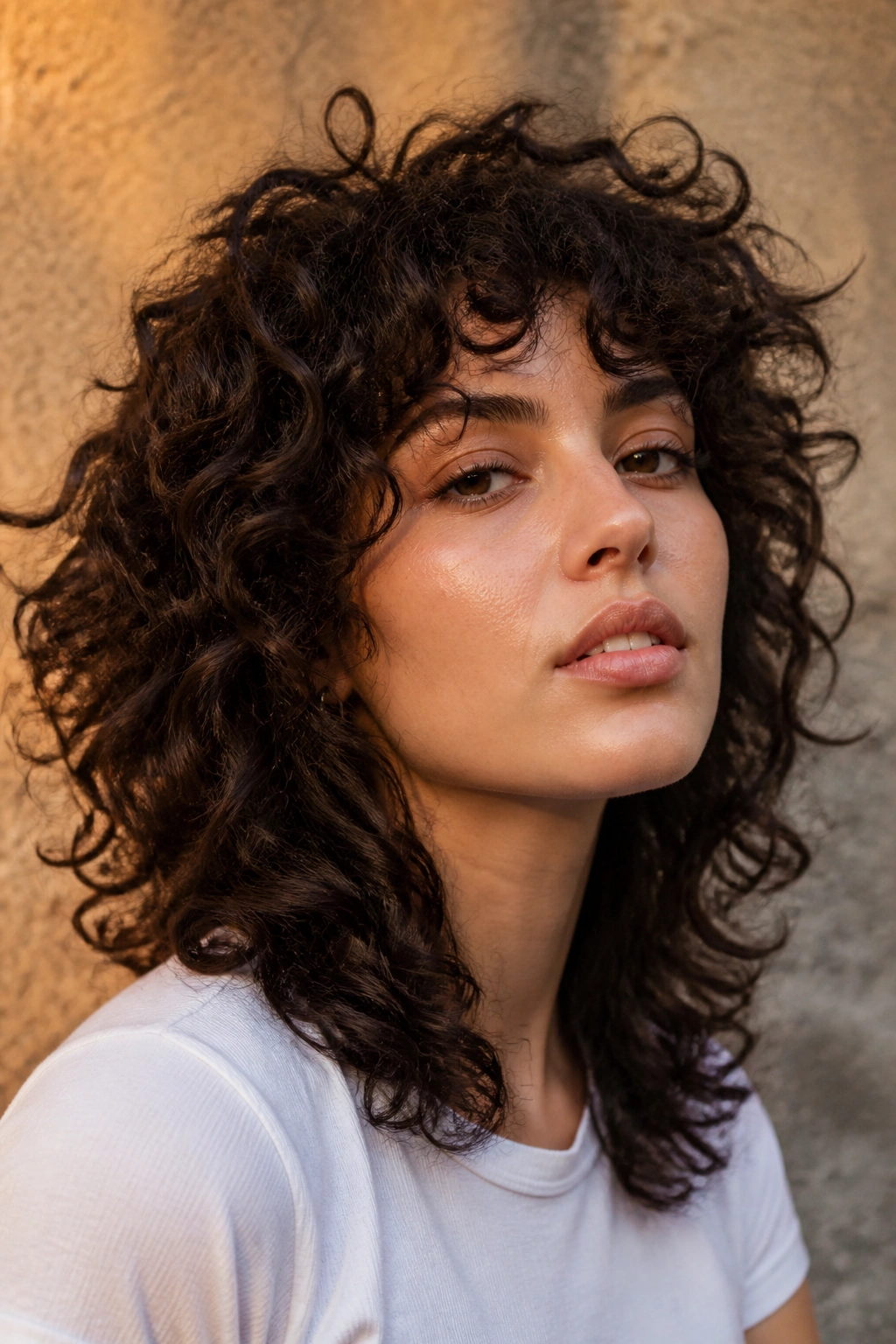
A dense head of curls can swallow a haircut if the shape is too timid. This is where the heavy-density shag comes in. It is built to remove bulk in a controlled way, so the hair stops sitting like a single thick block.
Unlike the fine-hair shag, this one can handle deeper internal carving. The crown usually needs the most attention, followed by the widest parts of the mid-lengths. The ends should still feel full. If they get thinned too much, the haircut loses its base and the whole shape turns fuzzy.
Where the weight comes out
Ask for three zones: crown, midsection, and ends. The crown gets lift, the midsection gets movement, and the bottom keeps enough density to hold the outline. That order matters. If the bottom is thinned first, the haircut gets wide and unpredictable. If the crown is ignored, it sits flat on top and the rest of the hair looks heavy.
This version is especially good for anyone who hates the triangle effect and wants a cleaner outline without sacrificing thickness. It is a solid option if your hair takes forever to dry, too. Less bulk means less drying time. Small mercy, but a real one.
13. Short Curly Shag With Cheekbone Layers
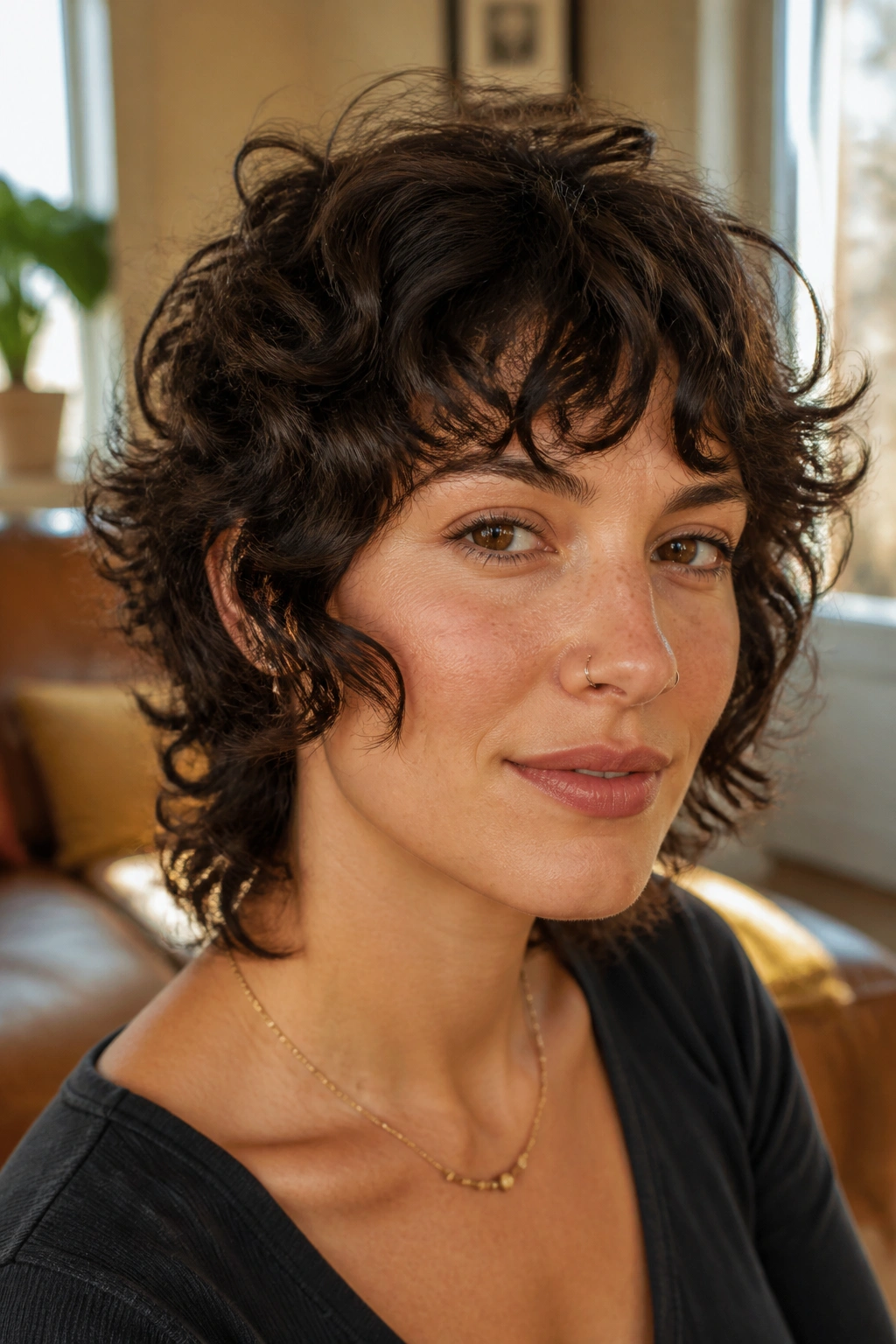
Short and curly can be a little bit dangerous. Cut it wrong, and you get a shape that flares out in all the wrong places. Cut it well, and the cheekbone layers give you a lively, lifted outline that looks fresh instead of fussy.
Why the shape works
The shortest pieces sit around the cheekbones, which keeps the front open without sliding into actual bangs. The back stays short enough to keep the neck clear, but not so short that the curl pattern loses room to bounce. That balance makes the cut feel light without making it flimsy.
What to ask for at the salon
- Keep the top soft and layered, not flat.
- Let the side layers curve into the face instead of stopping straight.
- Preserve enough length at the nape to stop the back from popping out.
- Use point cutting at the ends so the shape stays soft.
This cut is a strong pick if you want something playful and low-fuss. It works especially well with curls that tighten up a lot as they dry, because the cheekbone layers still show up after shrinkage. Short curls have personality. This cut lets them keep it.
14. Wash-and-Go Curly Shag
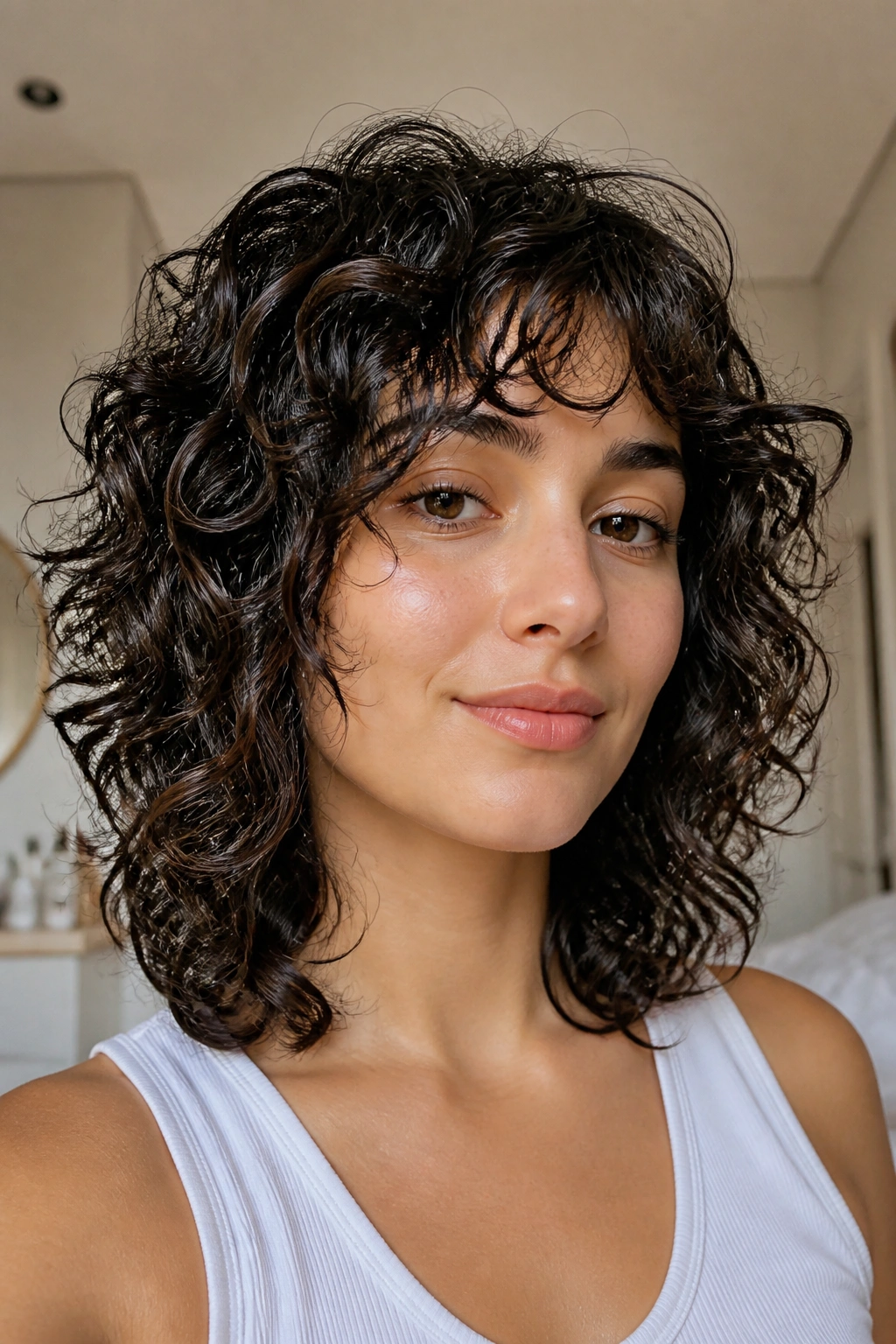
A wash-and-go curly shag is built for the days when you do not want a long styling session hanging over your head. The layers are placed so the curl falls into shape with a little leave-in and a decent gel, then mostly minds its own business.
The haircut matters more than the product here. If the layers are wrong, no cream in the world will rescue the silhouette. But when the shape is right, the curls dry with space between them, which helps them look more defined and less clumped together. That is the whole point of a low-effort shape that still looks styled.
A cut like this usually sits between chin and shoulder length, with soft interior layers and a face line that stays open. It is a good fit for people who air-dry often, diffuse only when they feel like it, and do not want to baby their hair every morning. Lazy hair. Smart haircut.
15. Everyday Soft Curly Shag
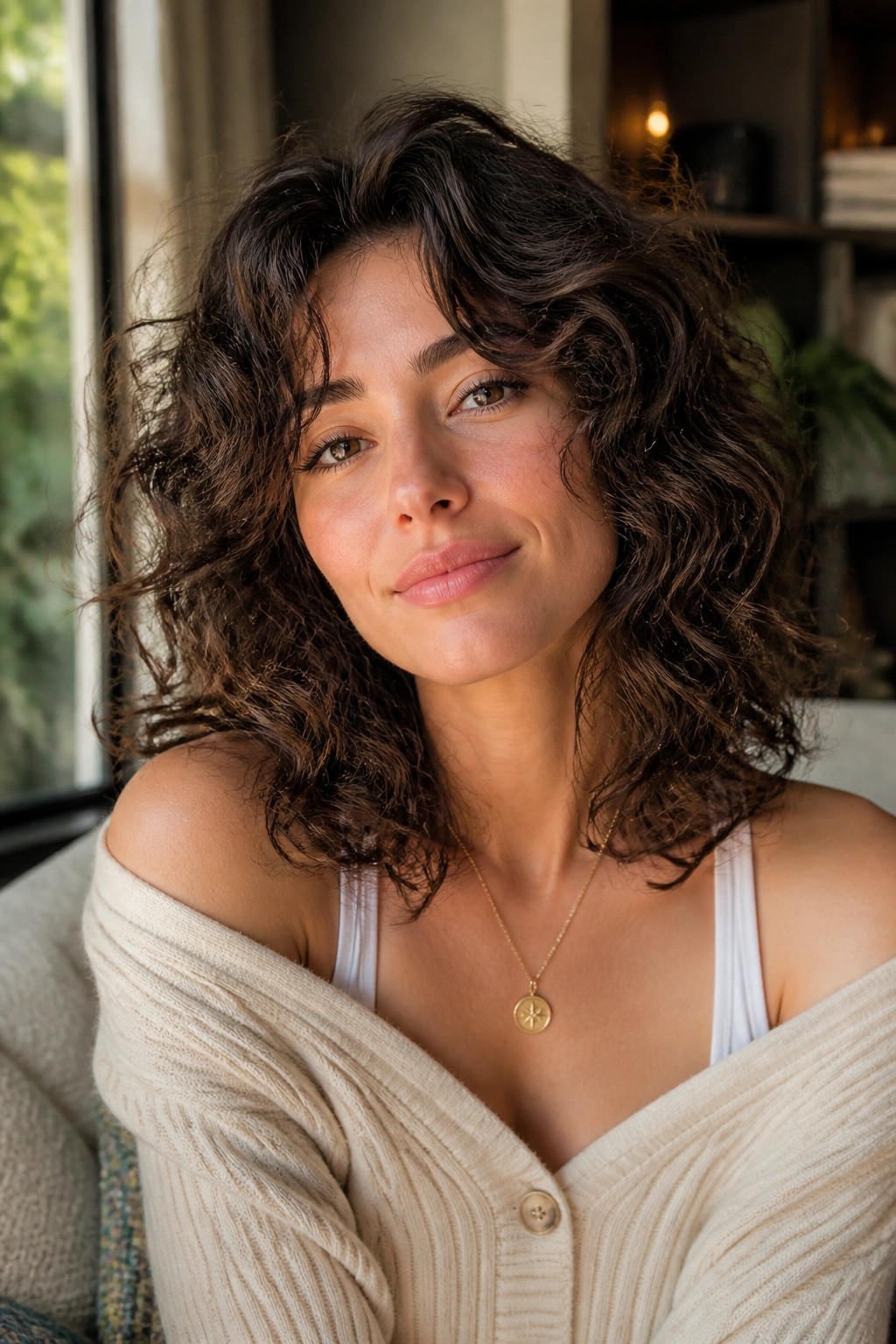
If you want one fringe-free shag that sits in the middle of all these ideas, this is the one I would point to first. It is soft enough to wear every day, structured enough to keep curls from spreading out, and flexible enough to move between polished and messy without much effort.
The shape usually lands around the collarbone or a little shorter, with layers that start low and stay blended. The front stays open, the crown gets just enough lift, and the ends keep enough fullness to feel healthy. Nothing about it is extreme. That is the charm. A lot of curly cuts either go too hard or play it too safe. This one does neither.
A good stylist will ask how much shrinkage you get, how much density sits in the crown, and whether you like to wear your curls diffused, air-dried, or both. Those answers matter more than a picture of a model with different hair and a different curl pattern. Bring the photo anyway. Bring three if you need to. Then point to the part you actually like — the length, the volume, the way the front opens up — instead of asking for the whole thing to be copied. That usually leads to a better cut, and a much happier mirror.
