



A good shag on a woman over 50 does a few jobs at once. It softens the face, adds lift where hair starts to lie flat, and keeps styling from turning into a daily wrestling match with a round brush.
Shag hairstyles for women over 50 work because the cut is built around movement, not stiffness. The right layers can make fine hair look fuller, tame thick hair without turning it into a helmet, and bring life back to curls that have gone a little limp over time.
A bad shag shows itself fast. Too much razor work at the crown can leave hair fuzzy instead of airy. Bangs cut at the wrong length can drag the face down. The sweet spot is a cut with shape — enough edge to feel modern, enough softness to flatter mature features without shouting for attention.
The versions worth keeping are the ones that respect your hair’s natural behavior. Start there, and the first cut to look at is the collarbone-skimming shape that gives movement without sacrificing length.
1. Feathered Collarbone Shag
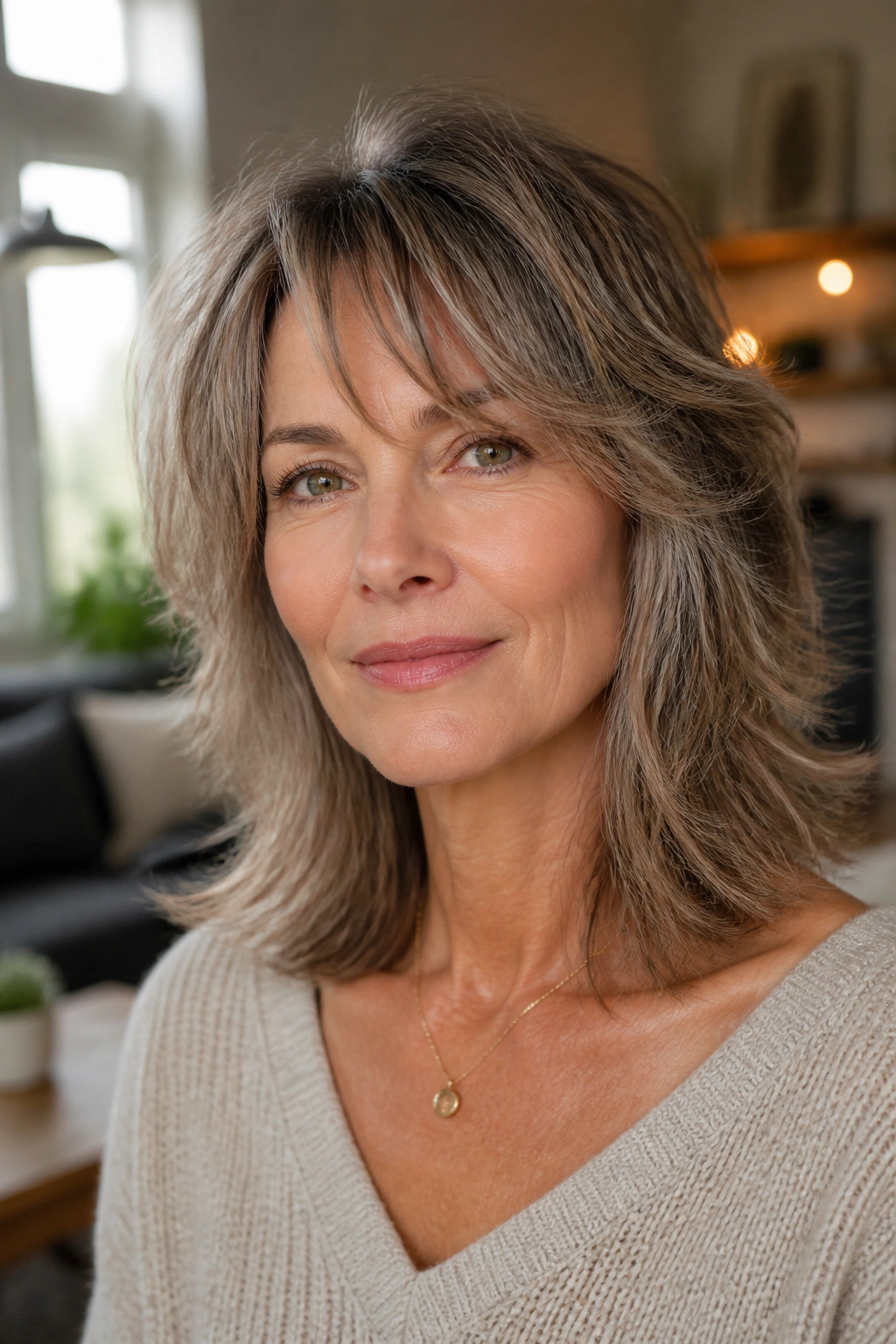
A collarbone shag is the safest place to begin if you want movement without a dramatic chop. The length still feels familiar, but the feathered layers around the cheekbones and jaw keep the cut from hanging heavy. It gives straight, wavy, and slightly textured hair a little lift where it counts.
The best versions are soft at the ends and slightly shorter around the face. That matters more than people think. Hair that brushes the collarbone tends to swing nicely when you walk, and that small bit of motion keeps the whole style from looking flat or dated.
If your hair has started to feel thinner at the ends, this cut can help because it leaves enough weight to look full while still breaking up the outline. I like this shape for women who want a shag hairstyle for women over 50 that does not need constant fussing. It looks finished even with a quick blow-dry and a touch of mousse.
2. Short Choppy Shag with Wispy Bangs
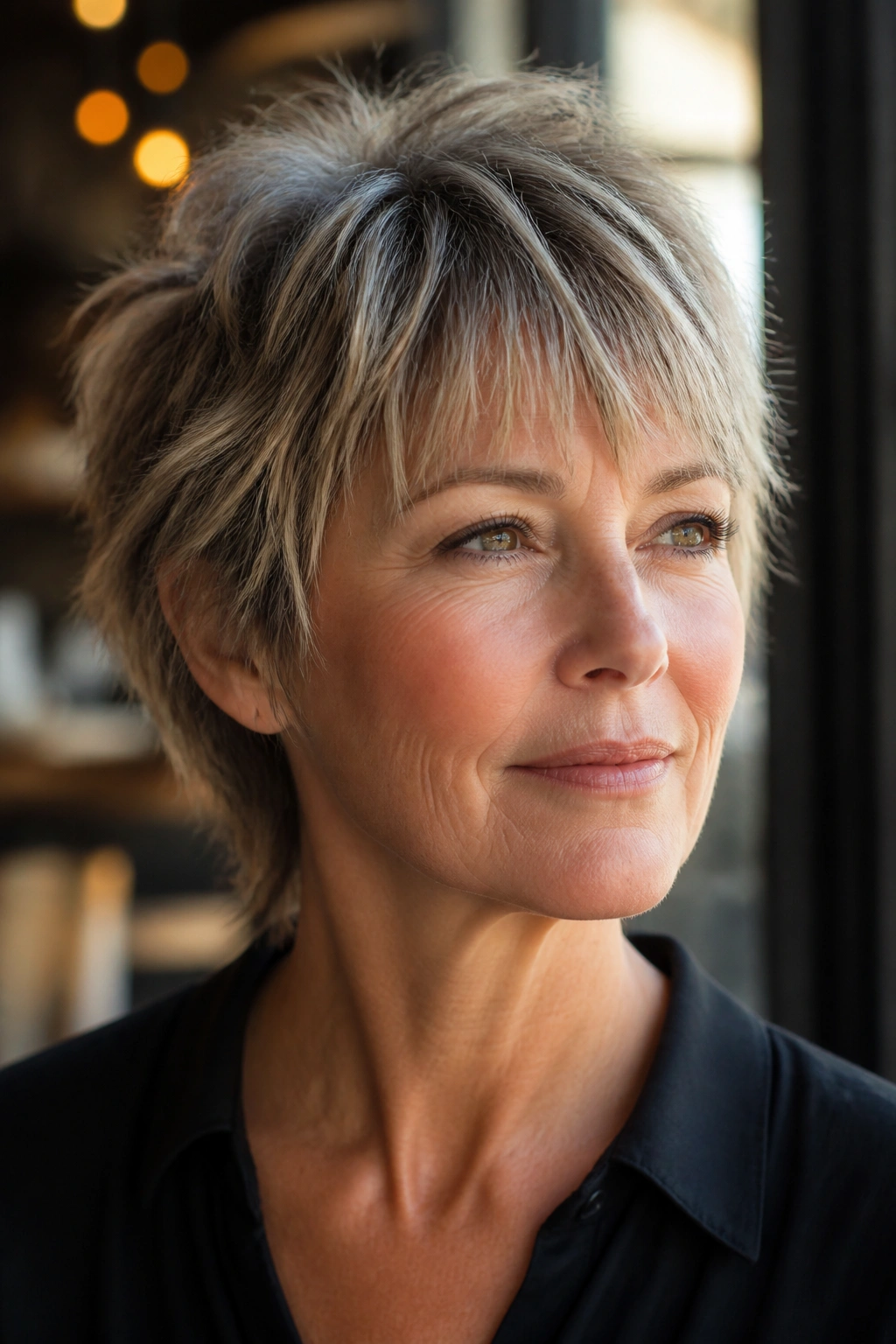
This is the cut that wakes up the face fast. Short choppy layers around the crown give height, while wispy bangs soften the forehead instead of covering it like a curtain. The result feels light and lively, not stiff or overworked.
What Makes It Work
- The layers should start high enough to create lift, but not so high that the cut turns puffy.
- Wispy bangs sit best when they graze the brow or sit just below it.
- A little separation at the ends keeps the fringe from looking heavy.
- This shape is especially good for thicker hair that needs movement without bulk.
Ask for softness, not chunks. A shag can go wrong when the stylist leaves too many hard lines, and the whole thing starts to feel jagged instead of flattering. The better version has a bit of swing around the temples and a clean taper through the neck.
3. Shoulder-Length Shag with Curtain Bangs
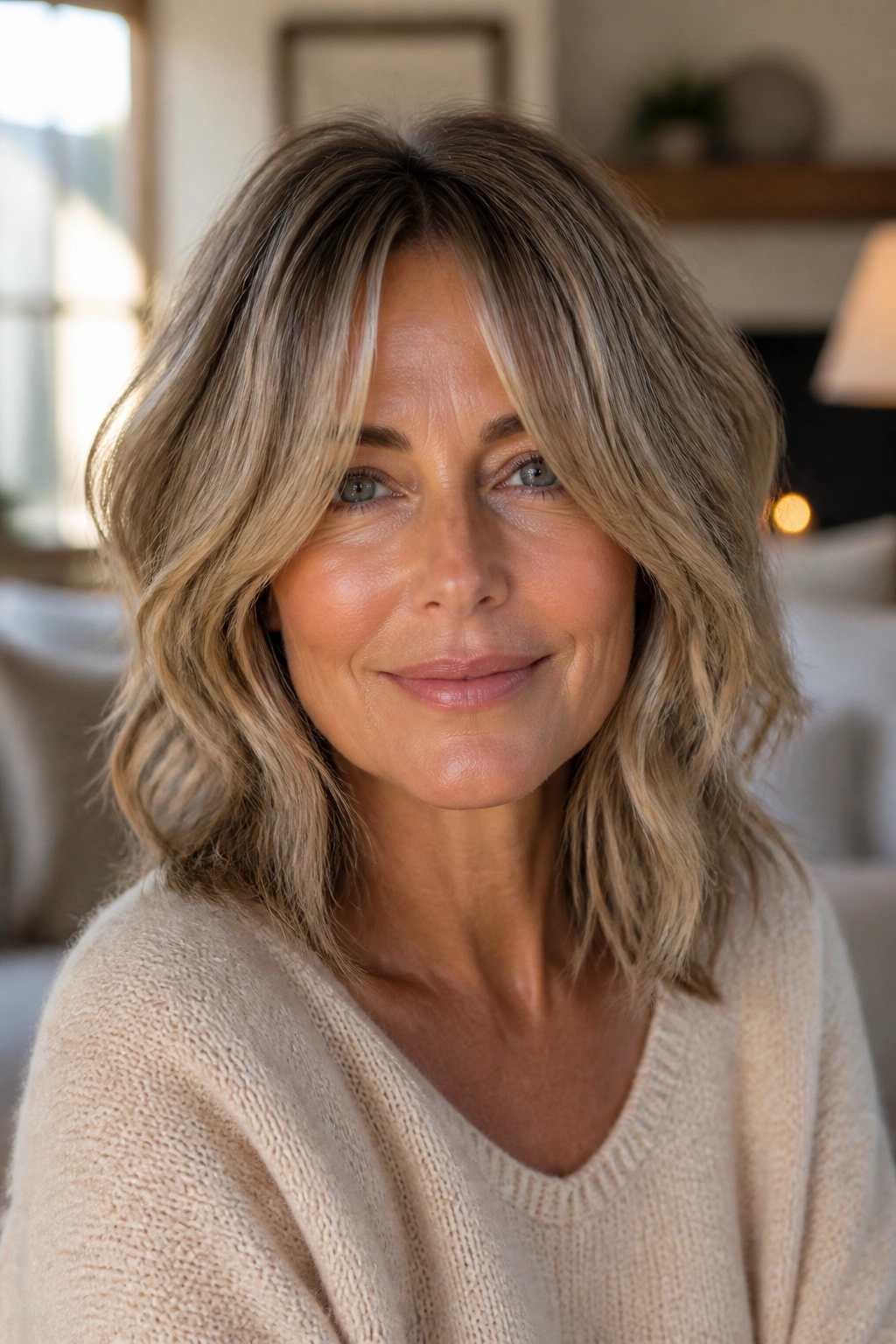
Why do curtain bangs keep showing up with shag cuts? Because they split the difference between face-framing and maintenance. They open in the middle, skim the cheeks, and make shoulder-length hair look a little more alive without asking for a full fringe commitment.
Why It Flatters So Many Faces
Curtain bangs are useful on women over 50 because they soften the front of the face without hiding it. That matters if you wear glasses, have a longer forehead, or want to draw attention to the eyes. The rest of the cut can stay airy and layered, with the longest pieces sitting at the shoulders.
How to Wear It
A center part usually feels best here, though a slight off-center part can add height at the crown. Blow-dry the bangs forward first, then sweep them aside while they’re still warm. That little trick keeps them from separating in odd directions later.
4. Silver Fox Shag with Airy Layers
Silver hair takes a shag beautifully when the layers are soft enough to let the color shine through. Gray and white strands can look stunning, but only when the cut gives them space. A blunt shape tends to make silver hair look dense in the wrong way. Airy layers fix that.
There’s also a practical side. Mature hair often loses some moisture and flexibility, so heavy ends can sit there looking tired. Light layers around the crown and sides keep the style from collapsing into one flat shape. The shine does the rest.
I’d pair this cut with a light glossing cream, not a greasy serum. Too much product can make silver hair look weighed down and dull. A pea-sized amount is usually enough. Seriously. Less is better here.
5. Curly Shag with Rounded Shape
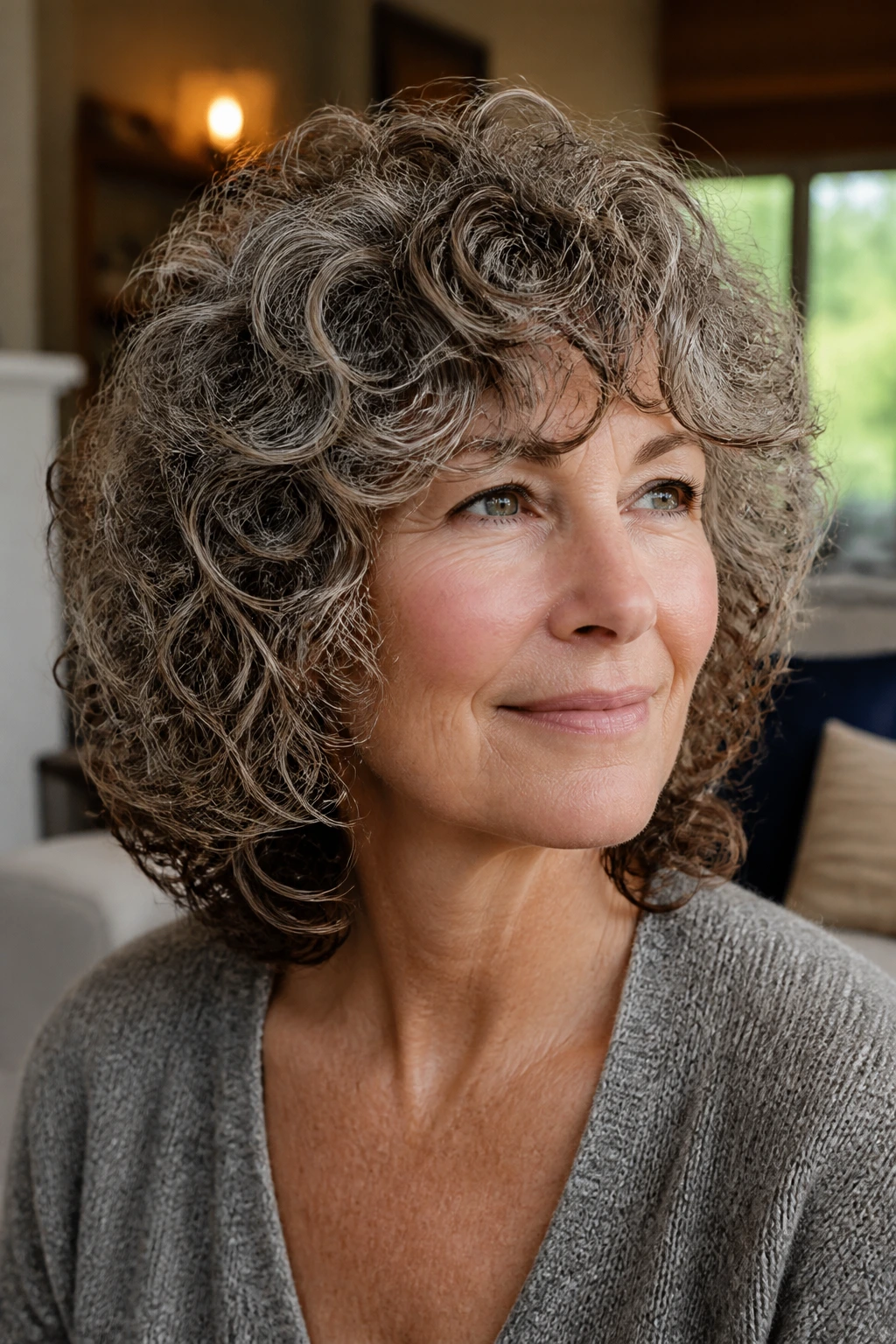
Curly hair needs a different kind of shag. If the layers are cut too aggressively, the curl pattern can spring up in odd places and leave the top too wide or the bottom too thin. A rounded shape keeps the silhouette balanced and stops the cut from looking ragged.
What the Shape Should Do
A good curly shag lets the curls stack naturally. The crown should have lift, the sides should soften around the cheekbones, and the bottom should keep enough length to hold the shape together. Dry cutting is often the smarter move because curls shrink in ways that wet hair hides.
If your curls lean loose, this cut gives them more definition. If they’re tighter, it can keep them from building too much width at the sides. That’s the whole game. Not more volume everywhere — volume in the right spots.
6. Wavy Shag with Deep Side Part
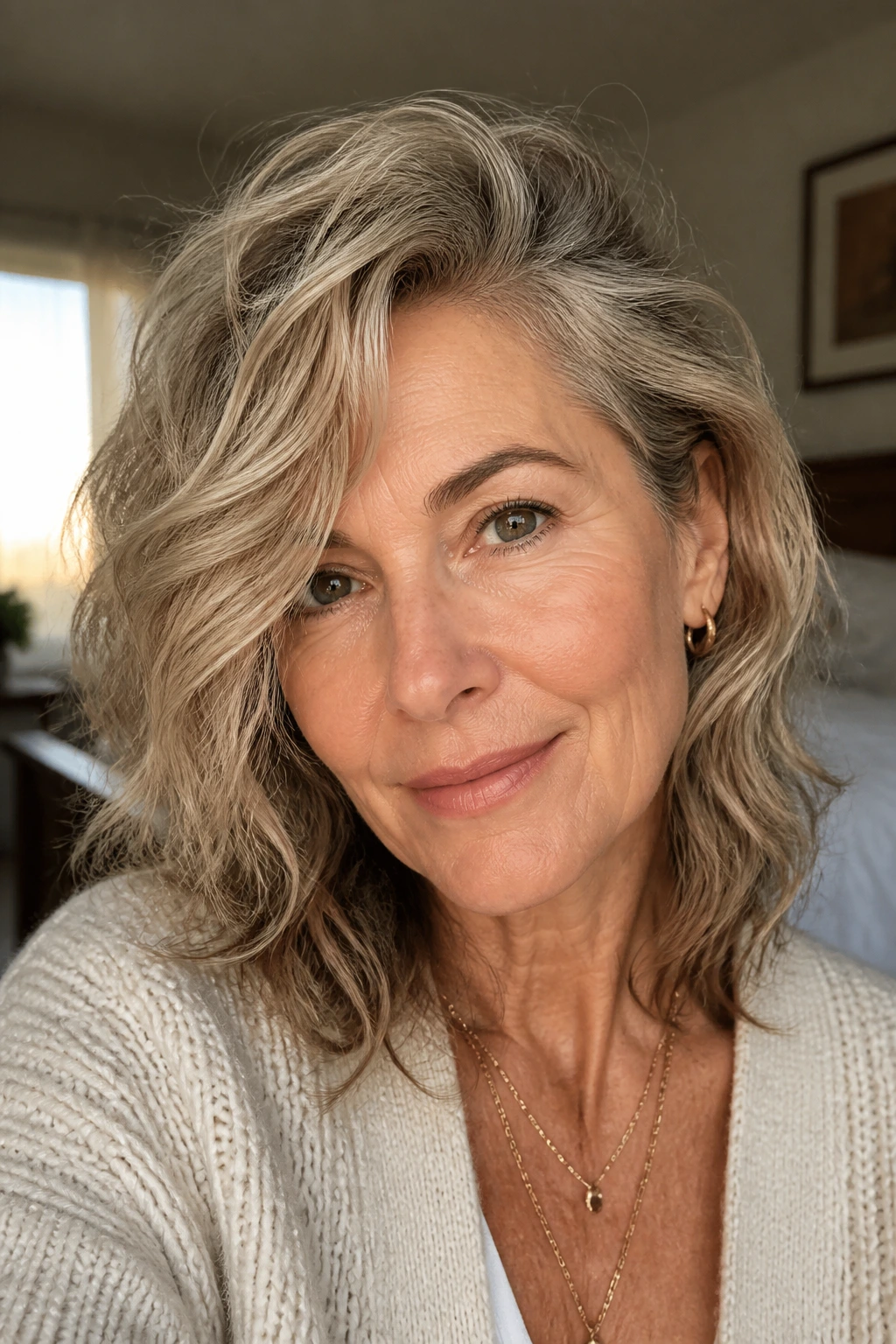
A deep side part can rescue a wavy shag that feels too flat on top. One side gets instant lift, the other side falls across the cheek in a softer line, and the whole cut looks fuller without asking for extra length. It’s a small change with a big payoff.
- Use a root-lifting spray at the part, not all over the head.
- Blow-dry the top section in the opposite direction first for extra lift.
- Let the waves keep some frizz and separation; too much polish kills the texture.
- Tuck the heavier side behind one ear if you want to show off the jawline.
This is one of those shag hairstyles for women over 50 that works because it doesn’t fight the wave pattern. It uses it. That is the difference between hair that looks styled and hair that looks overmanaged.
7. Long Shag with Face-Framing Layers
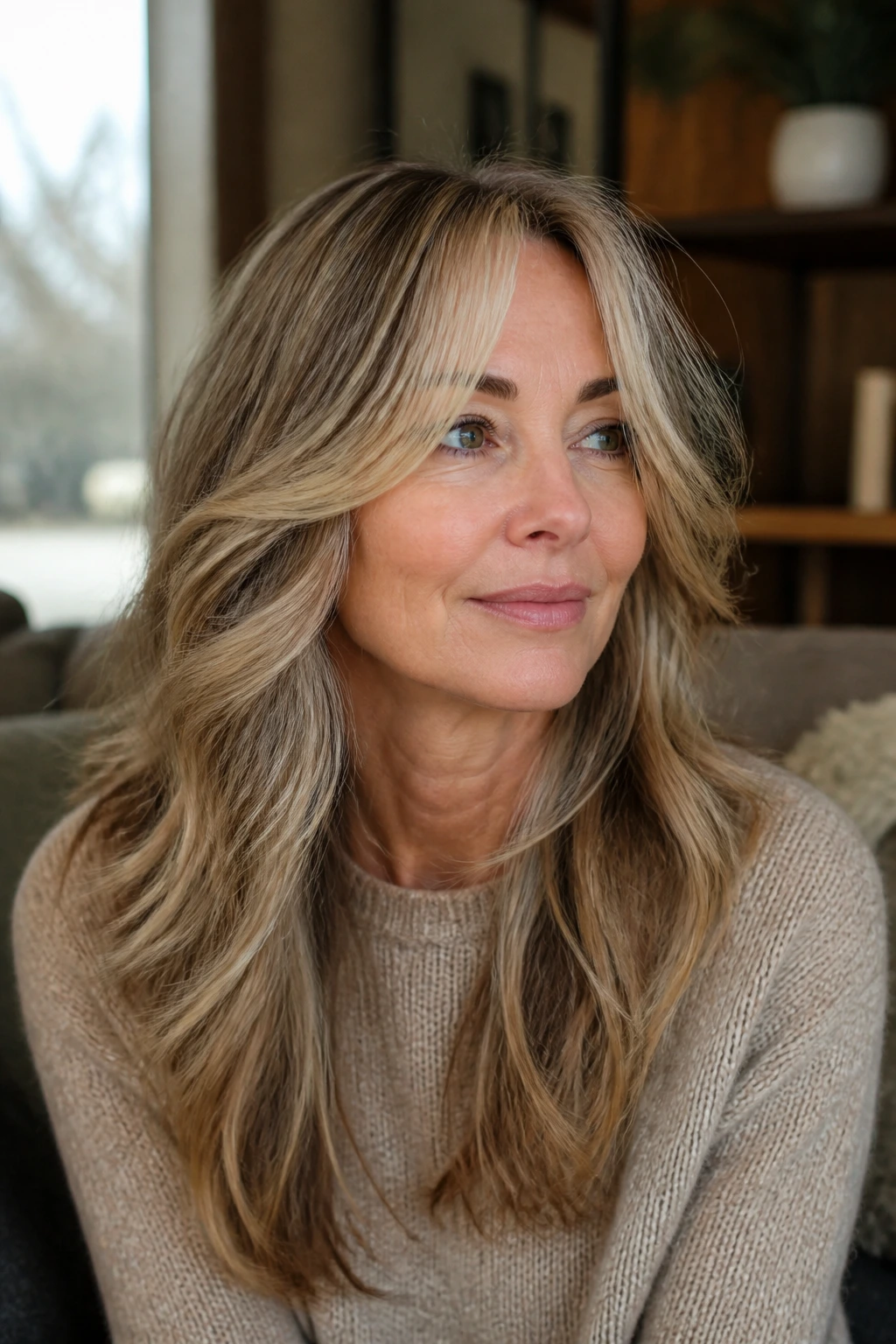
A long shag keeps the comfort of length but takes away the heaviness that can age hair fast. The face-framing pieces should start around the cheekbone or jawline, then fall gradually into longer layers through the back. That keeps the cut soft without making it shapeless.
This version is especially kind to women who still want to pull their hair back. The layers stay interesting in a ponytail, which matters more than people admit. Nobody wants a cut that looks good only when every strand is down and freshly styled.
The best long shags have movement in the front and a clean line at the back. Not blunt. Not shaggy to the point of chaos. Just enough variation to keep the length from feeling heavy around the shoulders and chest.
8. Pixie Shag Hybrid
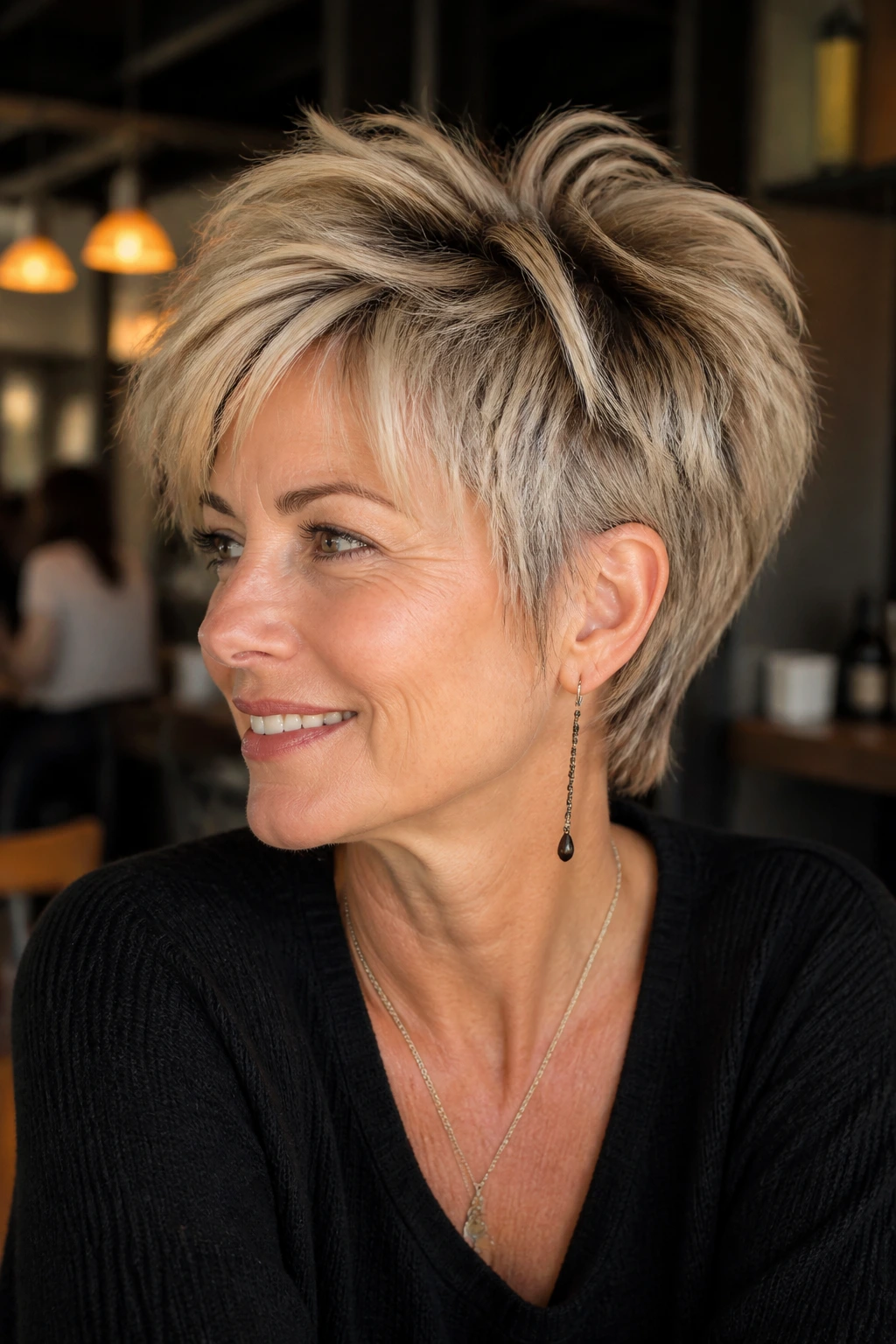
Short hair can still have shag energy. A pixie shag hybrid keeps the neck and ears open, but leaves enough texture on top to avoid that neat, helmet-like finish some short cuts get after 50. It’s playful, yes, but it also reads as sharp and deliberate.
Where the Shape Matters Most
The crown needs height, the sides need softness, and the nape should taper cleanly. If the top is left too long and the sides are too tight, the cut starts to look disconnected. The trick is balance. You want movement, not a spiky afterthought.
This cut suits women who like quick styling. A dab of paste or mousse, a five-minute ruffle with the fingers, and you’re done. It’s also good for showing off earrings, necklines, and strong eyebrows. Small hair, big attitude.
9. Modern Wolf Cut for Mature Hair
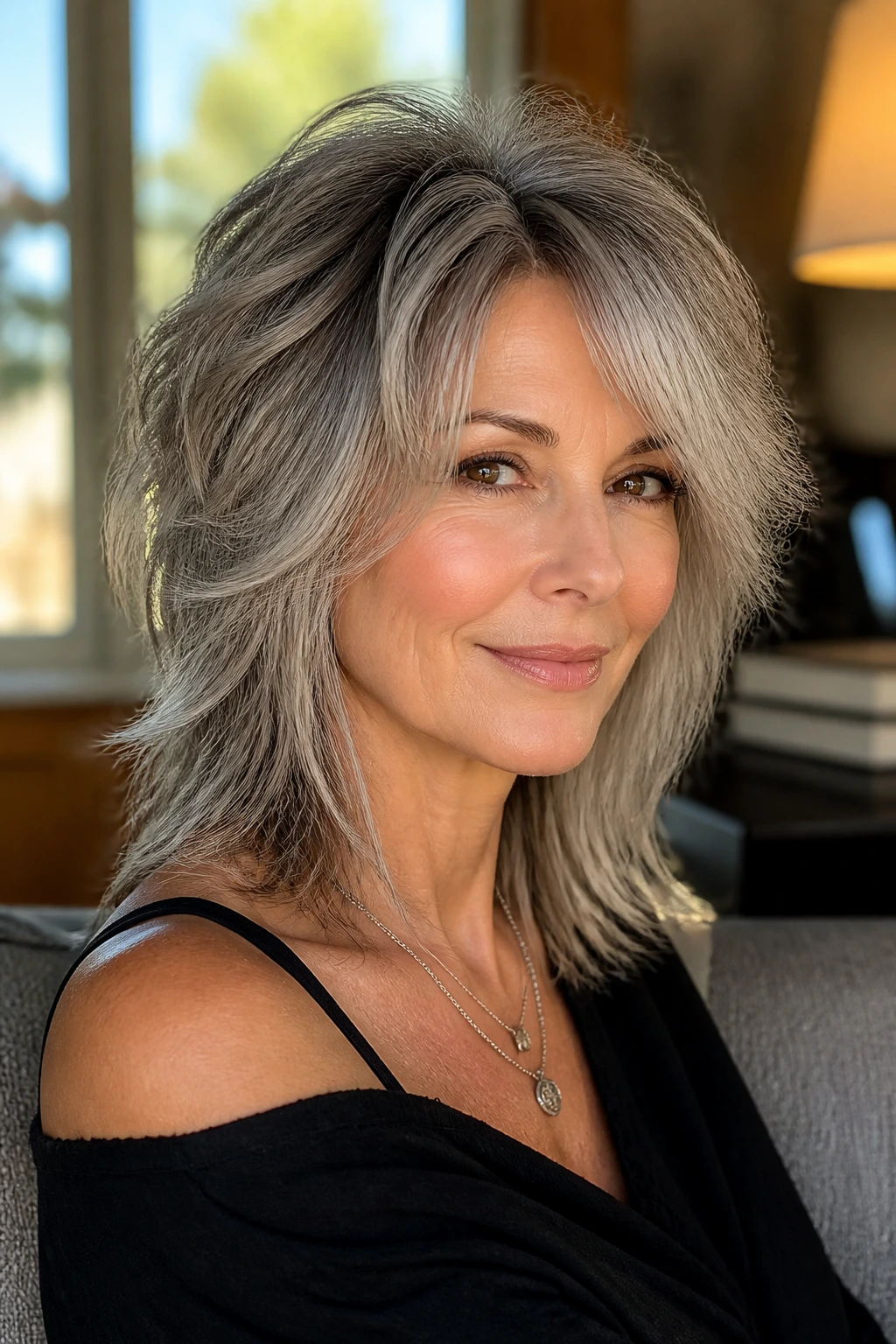
The modern wolf cut works best when it behaves like a shag, not a costume. Too much contrast between the crown and the length can look severe. Softer layering gives you the same lift and edge without making the haircut feel like it belongs to a different decade.
What I like here is the looseness. The crown has shape, the middle has movement, and the ends stay a little longer and rougher. That mix gives straight hair some grit and lets wavy hair look fuller without puffing out everywhere.
For women over 50, the softer wolf cut is often better than the harder, high-contrast version. It keeps the spirit of the style while staying flattering around the jaw and neck. That’s the version I’d ask for first.
10. Soft Mullet Shag
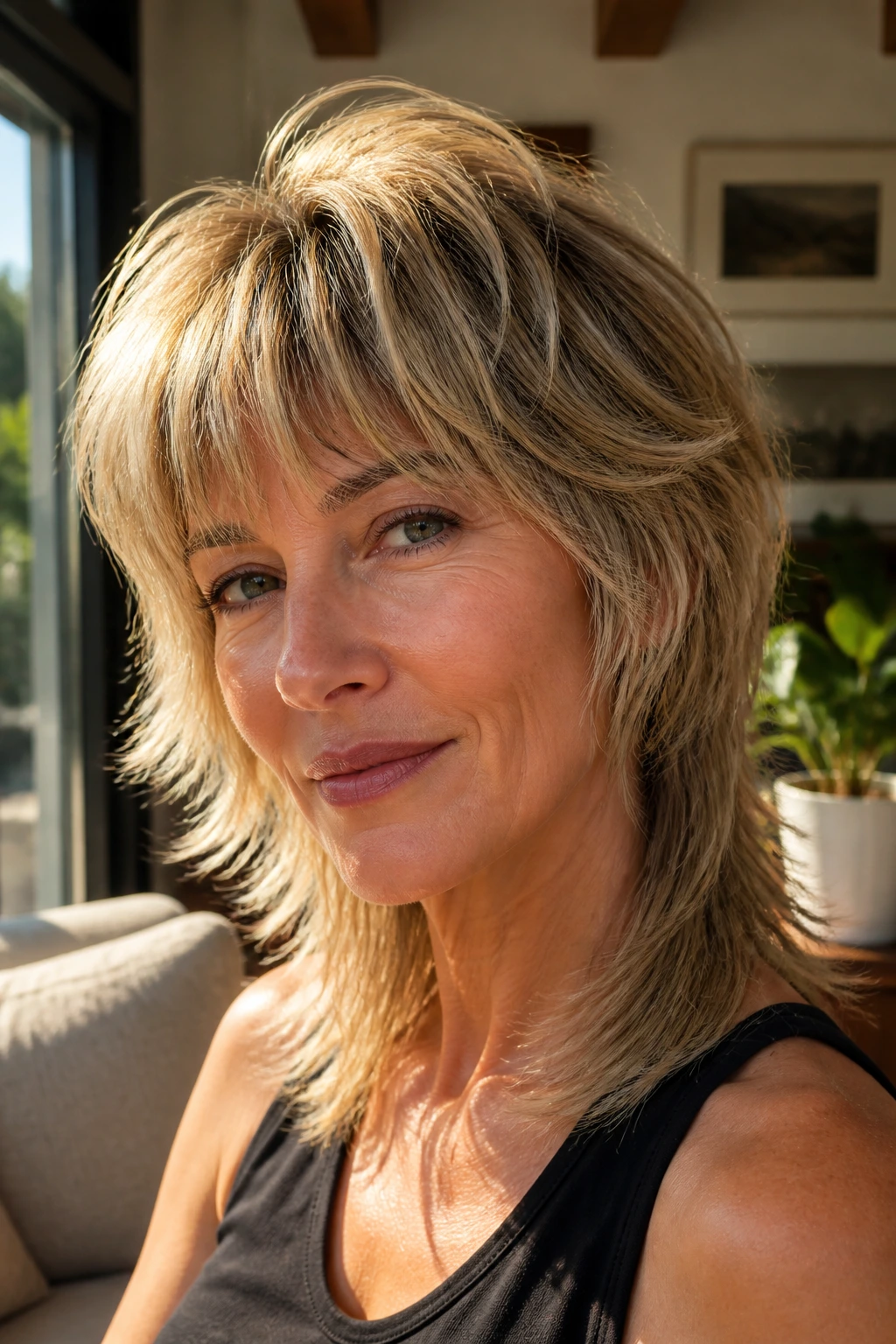
A soft mullet shag sounds bold, but it does not have to look theatrical. The front and sides stay layered and face-framing, while the back hangs a little longer for shape. Done well, it has movement and edge without the old-school “business in front, party in back” joke hanging over it.
I’ve always liked this cut on wavy hair because the texture helps blur the lines. The layers at the crown lift the top, and the longer back keeps the outline from becoming too top-heavy. It’s a good choice if you want personality in your haircut and you’re not trying to blend into the wallpaper.
The key is keeping the transition soft. Hard contrast can make the whole thing feel unfinished. Soft contrast makes it look intentional.
11. Layered Bob Shag
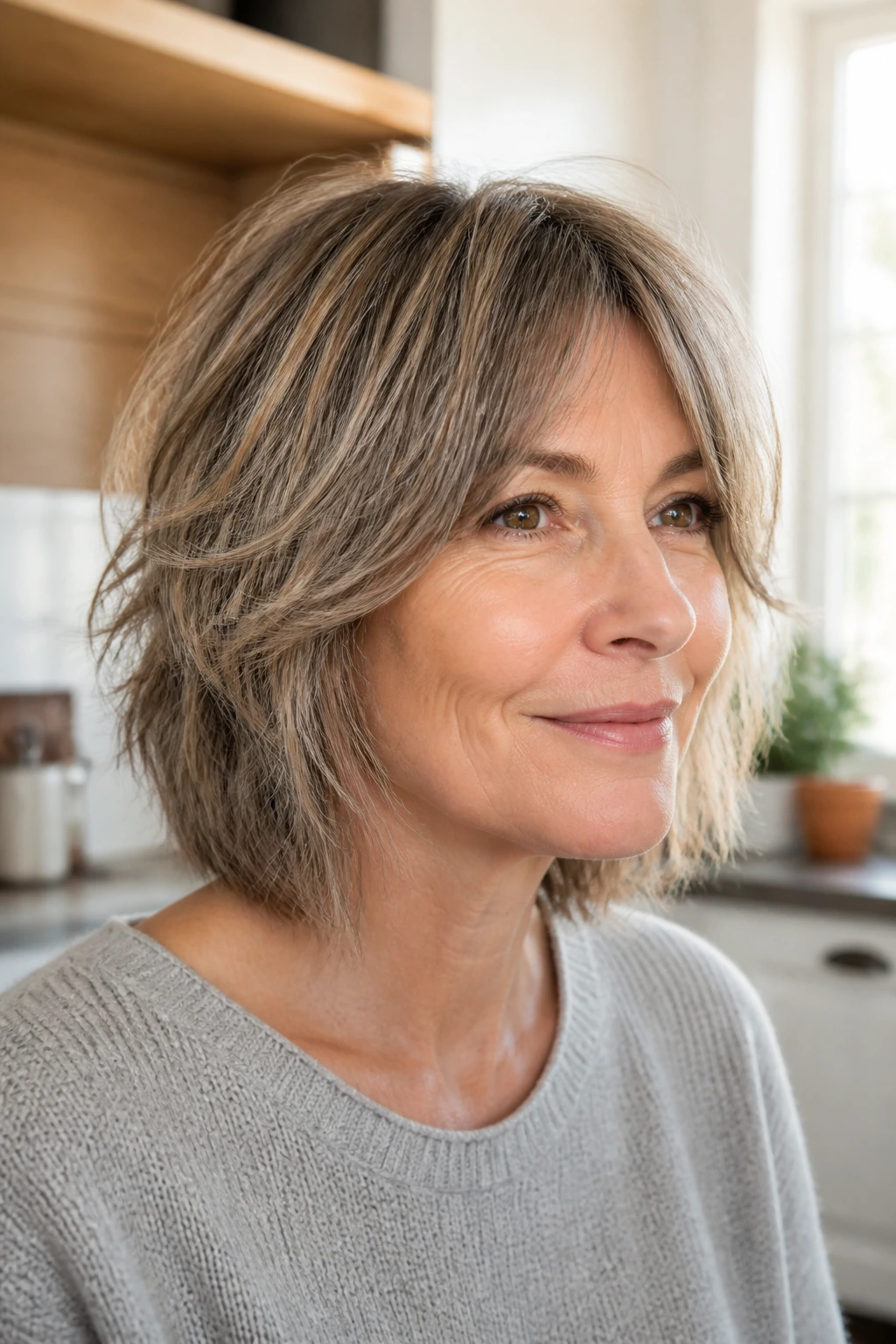
A bob and a shag can live in the same haircut, and that’s useful if you want structure with a little movement. The length usually sits between the jaw and the top of the shoulders, while the ends are broken up just enough to keep the bob from looking stiff.
This is the haircut I’d pick for anyone who likes a clean silhouette but hates a blunt line. It flatters fine hair because the layers add texture without sacrificing the shape. It also works nicely if your hair flips out at the ends on its own. The cut won’t fight that.
Wear it with a side part, a center part, or a messy tuck behind one ear. It holds up all three ways, which is more than I can say for some trendier cuts.
12. Chin-Length Shag with Side-Swept Fringe
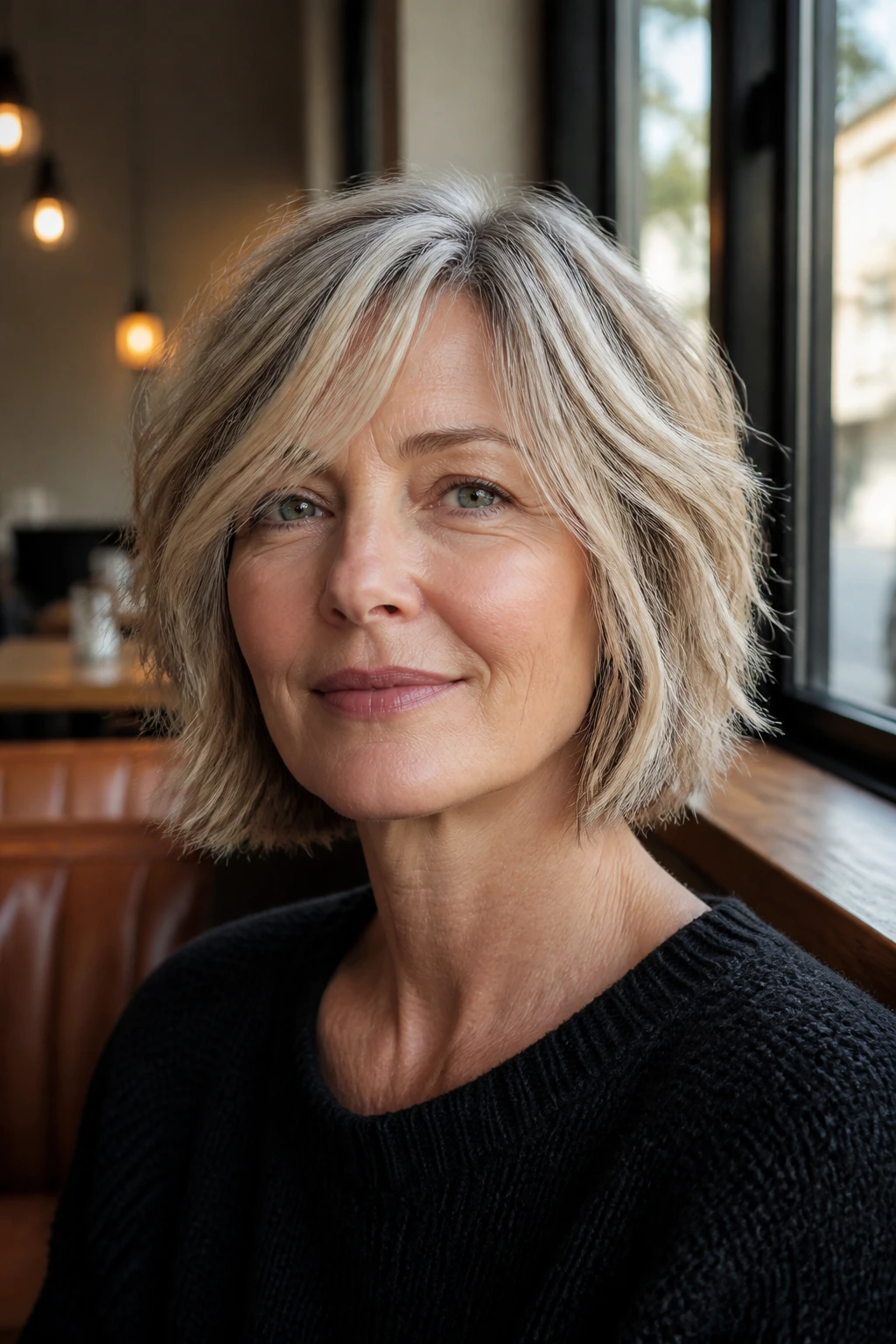
Want something shorter without the hard edge of a classic bob? A chin-length shag with a side-swept fringe is a smart answer. The length opens the neck, the fringe softens the forehead, and the layers around the chin keep the face from looking boxy.
The side-swept fringe is the quiet hero here. It doesn’t ask for the daily precision of straight-across bangs, and it grows out more gracefully. That alone makes life easier. A quick blow-dry with a round brush is enough to bend the fringe away from the face and give the whole style a little lift.
This cut works well for women who want shape without a lot of surface fuss. It looks polished with very little help.
13. Razored Shag for Thick Hair
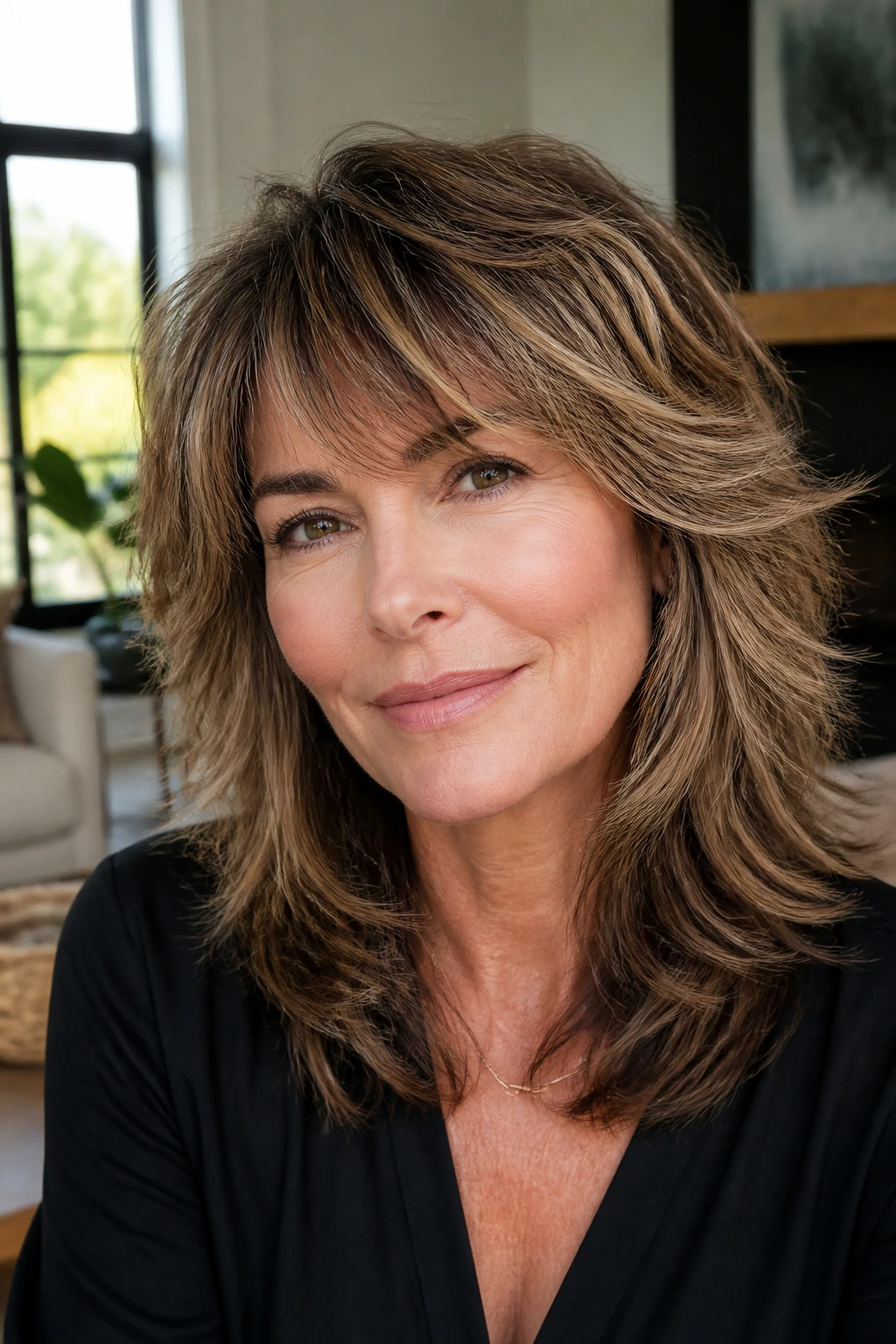
Thick hair loves a razor, but only in careful hands. The right razor work removes bulk and lets the layers sit with more air between them. The wrong kind can make the ends look shredded, so this is one where the stylist’s eye matters.
Ask for These Details
- Keep the interior layers light, not choppy from root to tip.
- Use the razor mostly on the ends and mid-lengths.
- Leave enough weight around the perimeter so the cut still has shape.
- Pair the layers with a face frame that starts below the cheekbone if your hair is dense.
Thick hair can handle a little drama. It just needs release points. Without them, the cut swells in the wrong places and feels heavier than it should. A razored shag solves that when it’s done with restraint.
14. Piecey Shag for Fine Hair
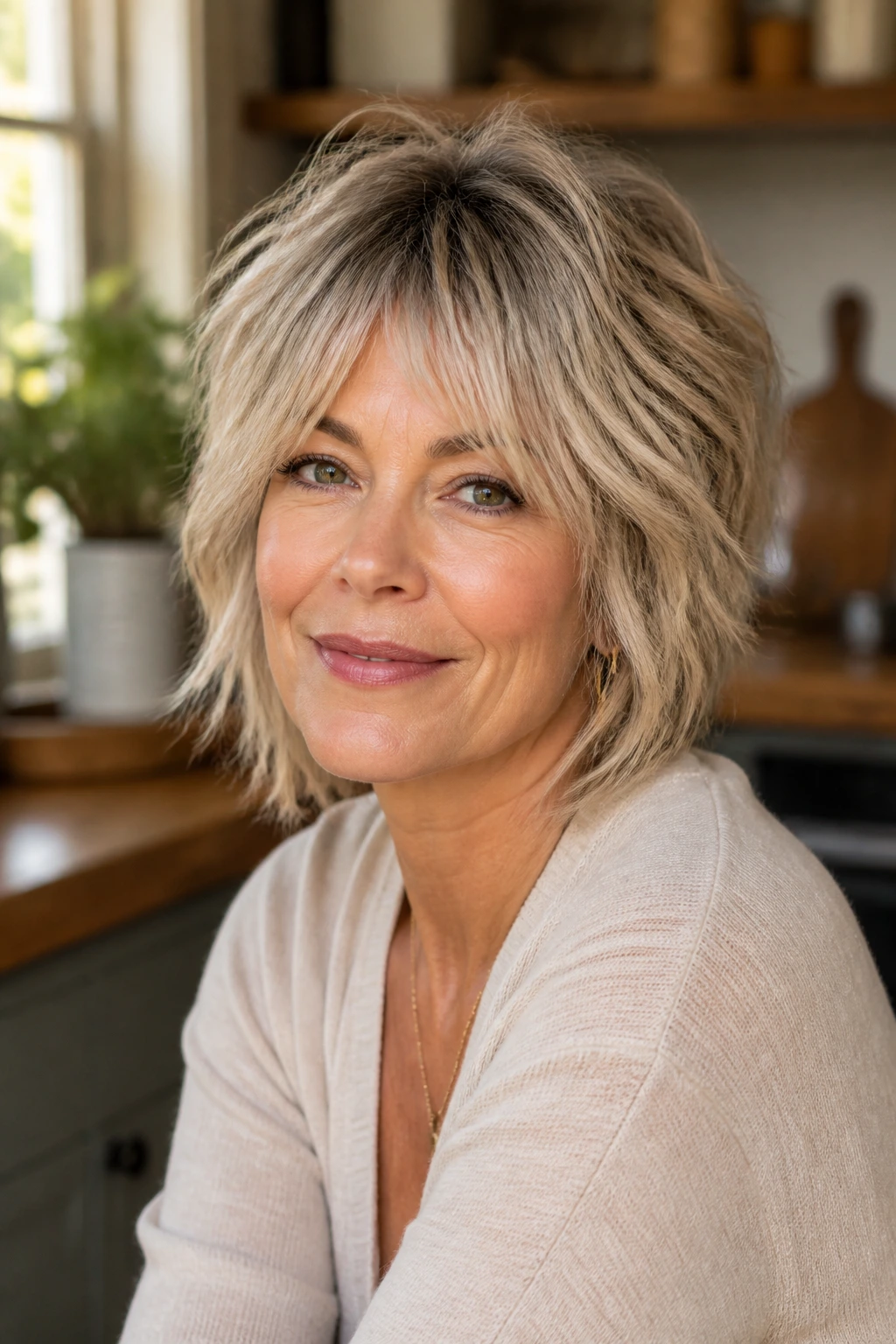
Fine hair does not need a lot of layer count. It needs smart layer placement. A piecey shag gives the illusion of thickness by breaking the hair into visible sections instead of leaving it hanging in one flat sheet.
Where the Lift Comes From
The crown should stay slightly shorter, but not so short that the top goes fluffy. The sides need a few longer pieces to keep the outline from disappearing. Texturizing spray helps, though I’d keep it light. Too much product can make fine hair separate into skinny strings, and that is not the same thing as texture.
A piecey finish also looks better when the ends are not too blunt. A tiny bit of softness at the bottom helps the cut move. Fine hair can look limp when the ends are too clean, and this is one of those odd little haircut truths that shows up every time in the mirror.
15. Salt-and-Pepper Shag with Micro Bangs
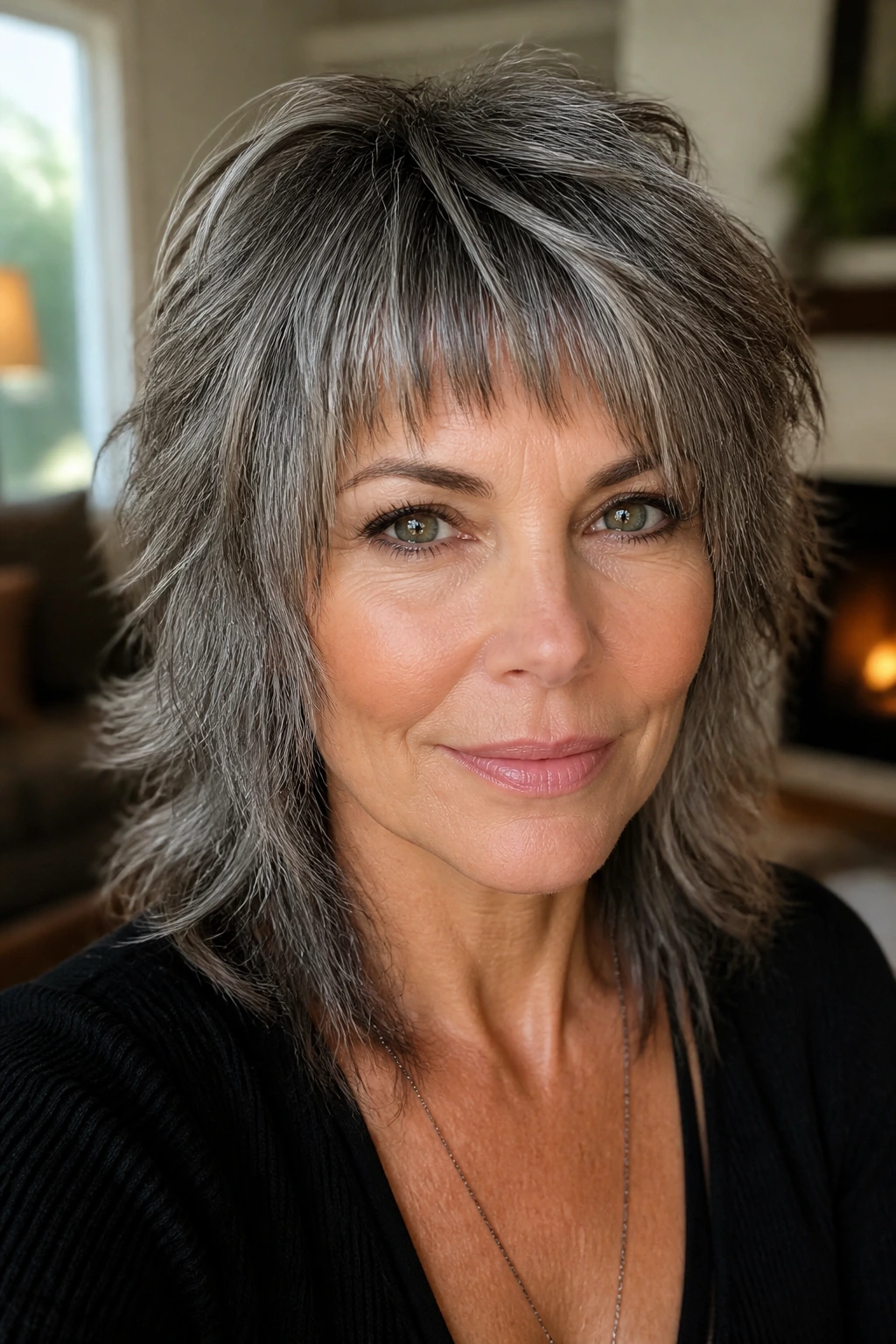
Salt-and-pepper hair gives a shag extra dimension on its own. Add micro bangs, and the result turns sharp and graphic in a way that can feel fresh if you like a little edge. This is not the softest cut on the list, and that is the point.
The bangs sit high on the forehead, which opens the eyes and puts the focus on the upper face. The shag layers below keep the style from feeling severe. Without those layers, micro bangs can look too stark. With them, the whole cut feels deliberate.
This one rewards confidence and good brow maintenance. It also looks strong with silver roots, because the contrast between the short fringe and the textured length gives the color room to show off.
16. Glam Shag with Blowout Layers
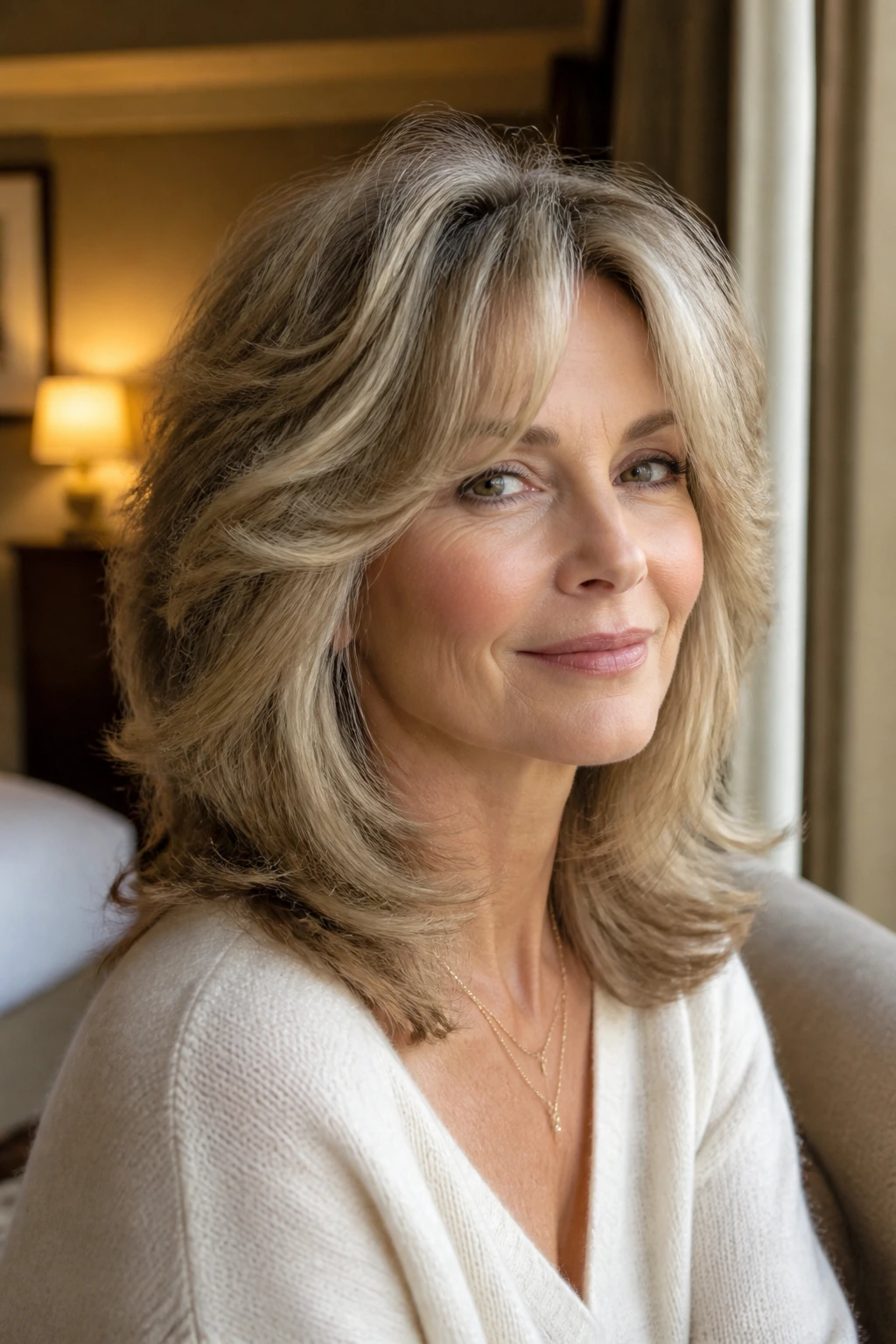
Can a shag look polished? Absolutely. A blowout shag keeps the layered shape but smooths the ends so the cut feels fuller and more dressed up. Think round brush, warm air, and a little bend at the face instead of big, wild texture.
The appeal here is obvious if you prefer a softer, more finished look. The layers still move, but they move in a controlled way. That makes this version good for dinners, events, or any day when you want your hair to look intentional without being stiff.
A large round brush and a medium-hold spray usually do the job. Don’t overdo the curl at the ends. A slight turn under or away from the face is enough. Too much curl and it starts to look dated fast.
17. Low-Maintenance Air-Dry Shag
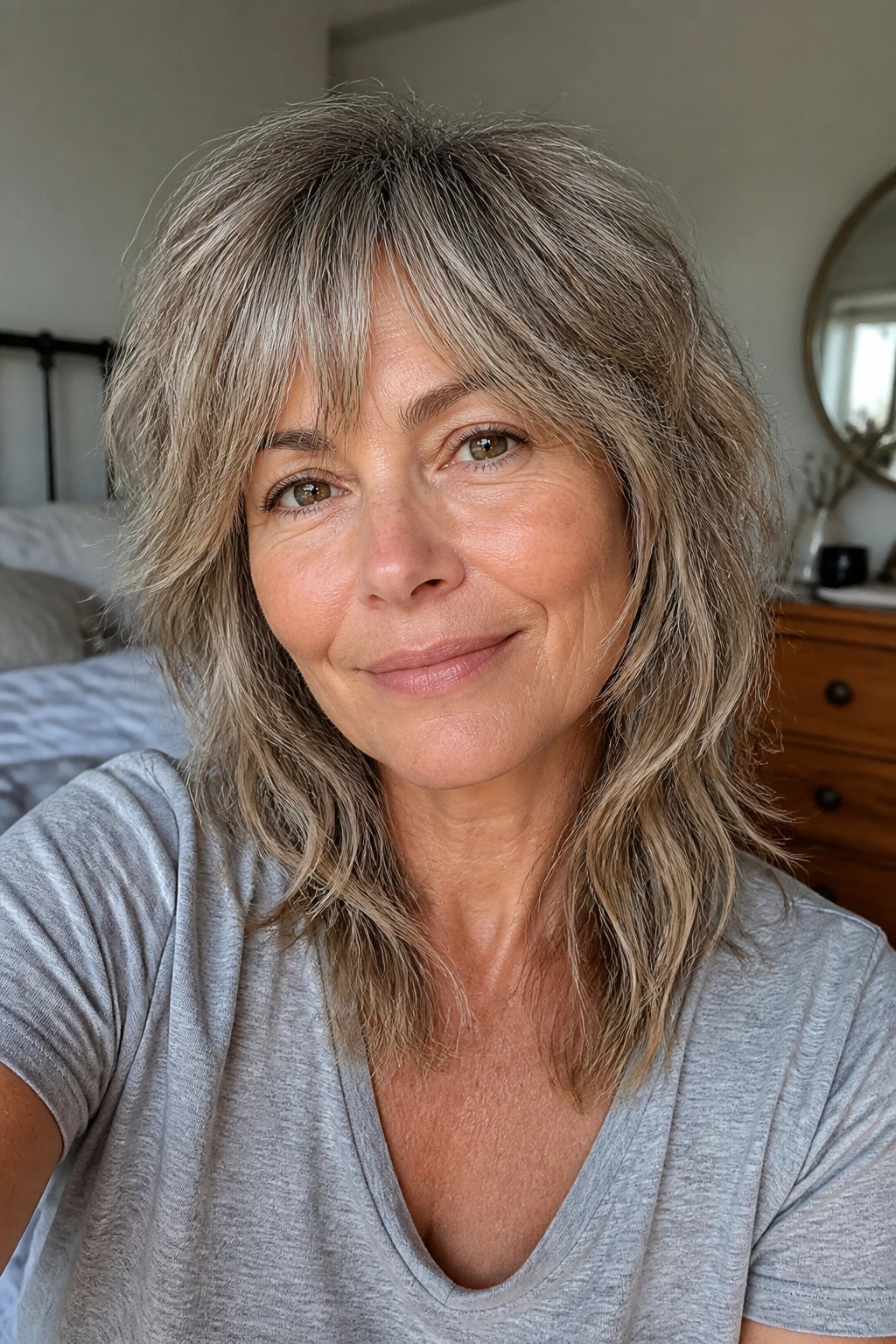
A lot of women over 50 want hair that behaves well after washing, and fair enough. Not every cut should demand a full styling session. An air-dry shag is built for that kind of life, with layers that settle into shape on their own as they dry.
- Work in a light mousse from roots to mid-lengths while hair is damp.
- Scrunch wavy or curly hair with your hands, then leave it alone.
- For straighter hair, tuck the front behind the ears while it dries to get a little bend.
- Sleep on a silk pillowcase if your layers tend to puff up overnight.
The trick is not trying to force perfection. Air-dry shags look best with a bit of texture and movement, not mirror-smooth ends. That tiny bit of mess is what makes the cut feel alive.
18. Shag with Long Curtain Fringe
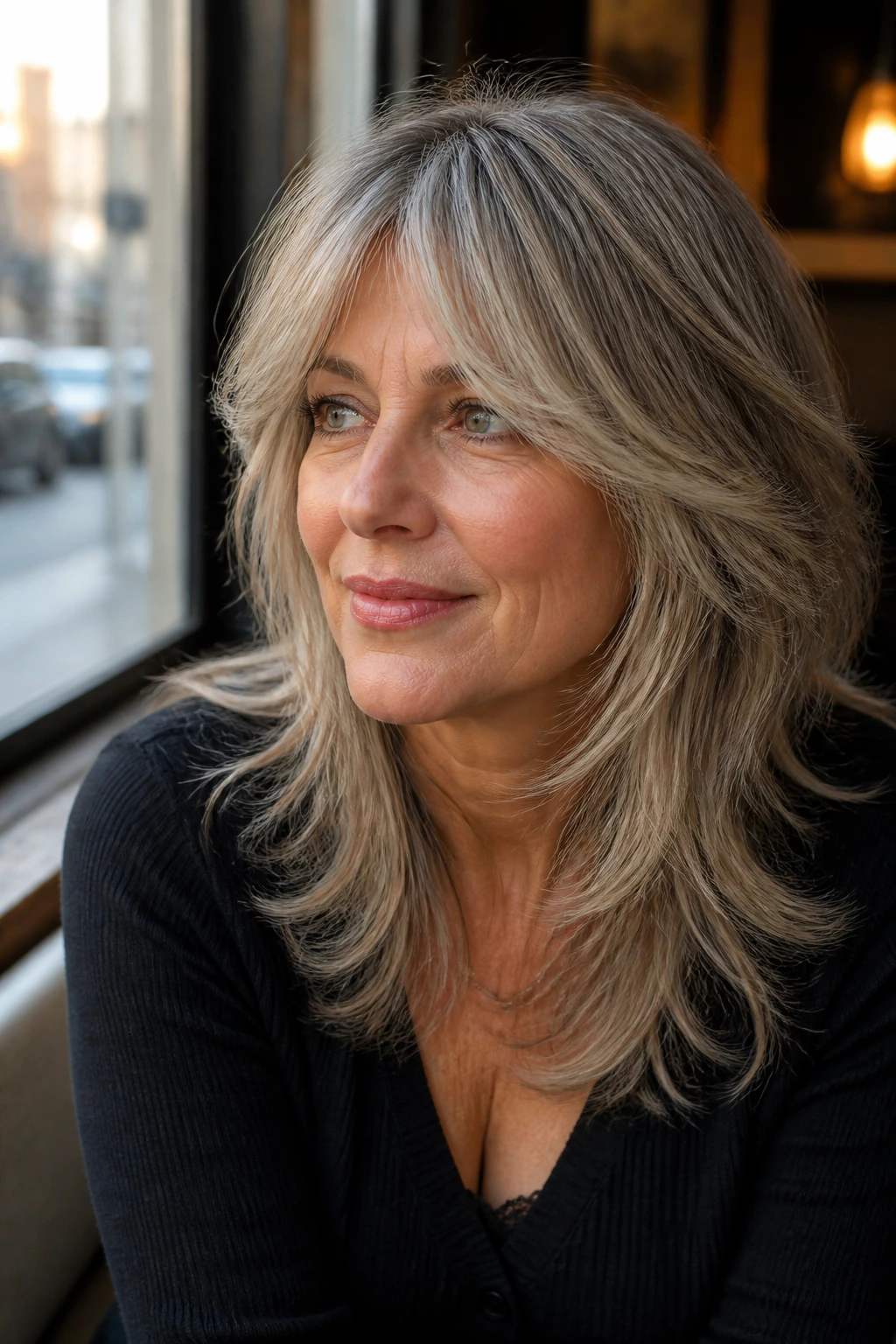
A long curtain fringe gives you the face-framing effect without the upkeep of shorter bangs. It can part in the middle, sweep to either side, and blend into the rest of the shag so the cut feels connected instead of chopped into separate pieces.
I like this shape for women who want softness around the eyes and cheekbones but do not want to trim bangs every three weeks. The fringe grows out gracefully, which matters more than people realize. Haircuts that age well are often the ones that still look decent when they’ve grown a bit.
The rest of the cut can stay medium or long. That flexibility makes the curtain fringe one of the easier ways to bring shag energy into an everyday style.
19. Shoulder-Grazing Shag with Flipped Ends
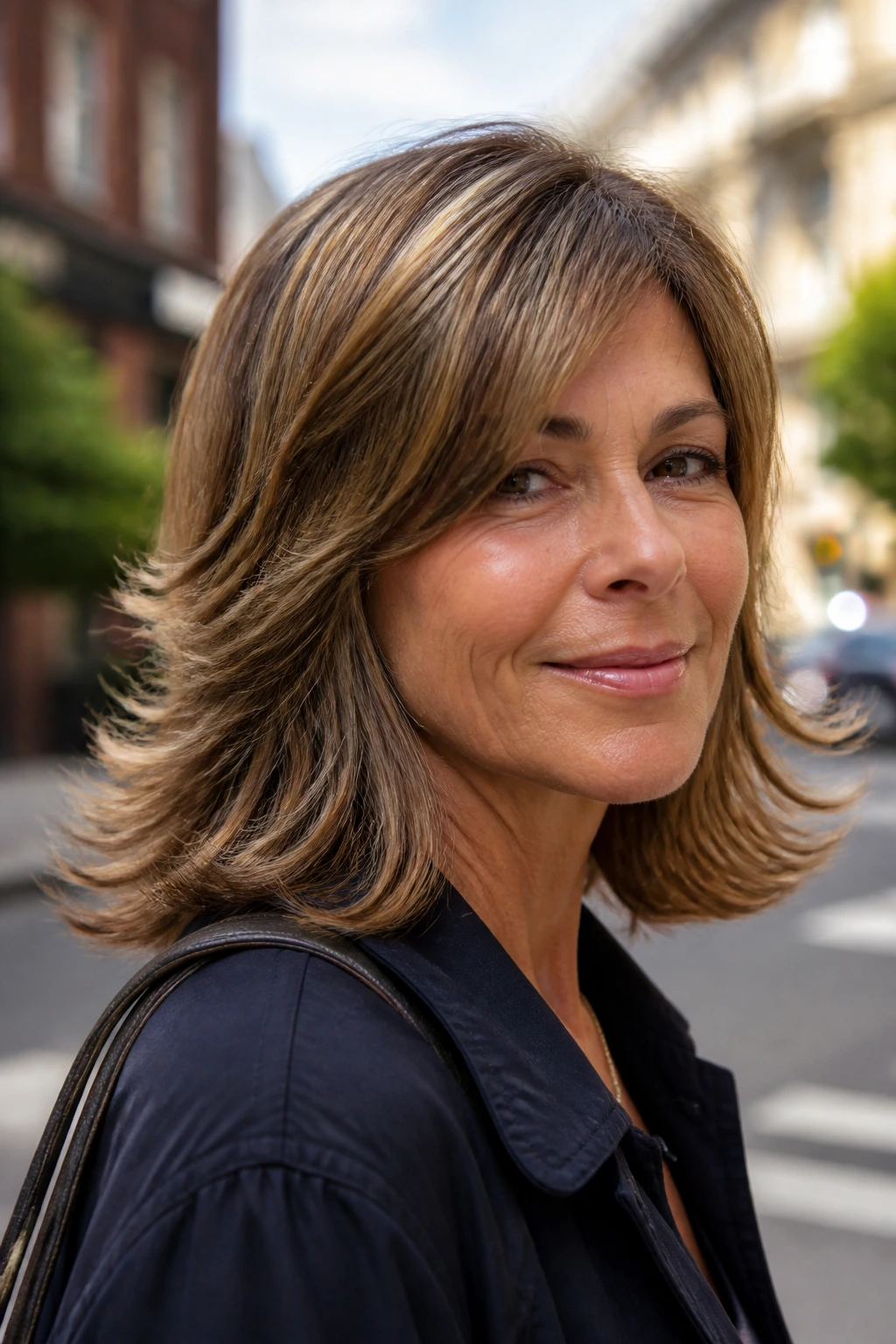
There’s something charming about a shag that flips at the ends instead of falling straight. It brings a little retro motion to the haircut, and on shoulder-grazing length, that movement can feel lively without getting loud.
Picture the side pieces brushing the collarbone and curling outward just enough to show the shape. That’s the effect. It works especially well on hair that naturally bends at the ends, because the cut seems to encourage what the hair already wants to do.
A hot brush or medium round brush can give you that flip in minutes. You do not need a dramatic curl. Just a small curve. That tiny shape change is often what keeps shoulder-length hair from looking tired.
20. Textured Shag for Straight Hair
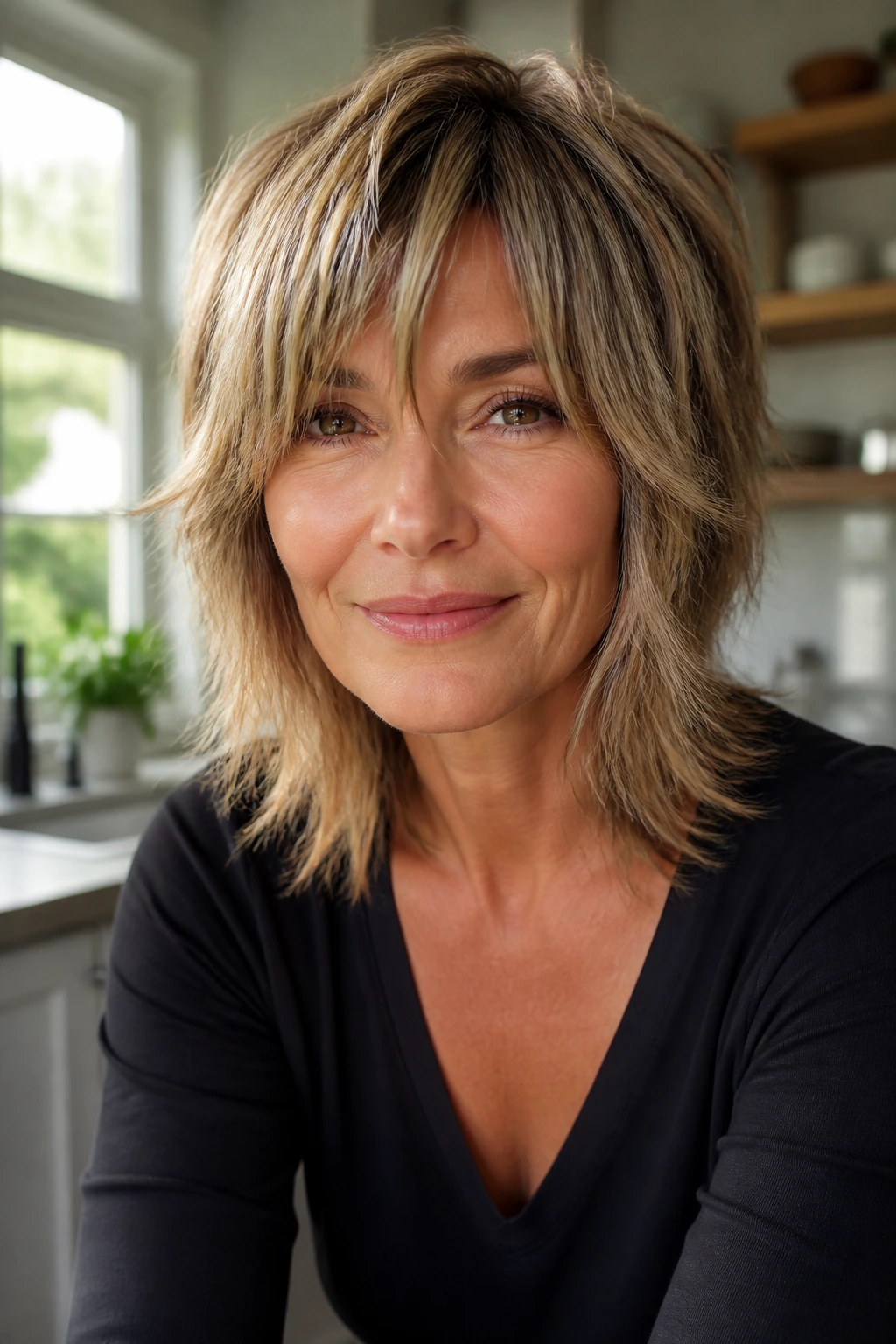
Straight hair can be the hardest to shag well because it shows every line. A textured shag fixes that by building choppiness in the mid-lengths and softness through the ends, so the cut has movement even when the hair wants to lie flat.
The important part is restraint. Too many layers can make straight hair look see-through. Too few, and the whole thing turns into a plain cut with some random pieces around the face. The sweet spot is in the middle, where the texture gives the impression of body without removing all the weight.
A little dry texture spray goes a long way here. Use it at the roots and lightly through the ends, then shake the hair out with your fingers. That’s usually enough.
21. Tousled Shag for Naturally Wavy Hair
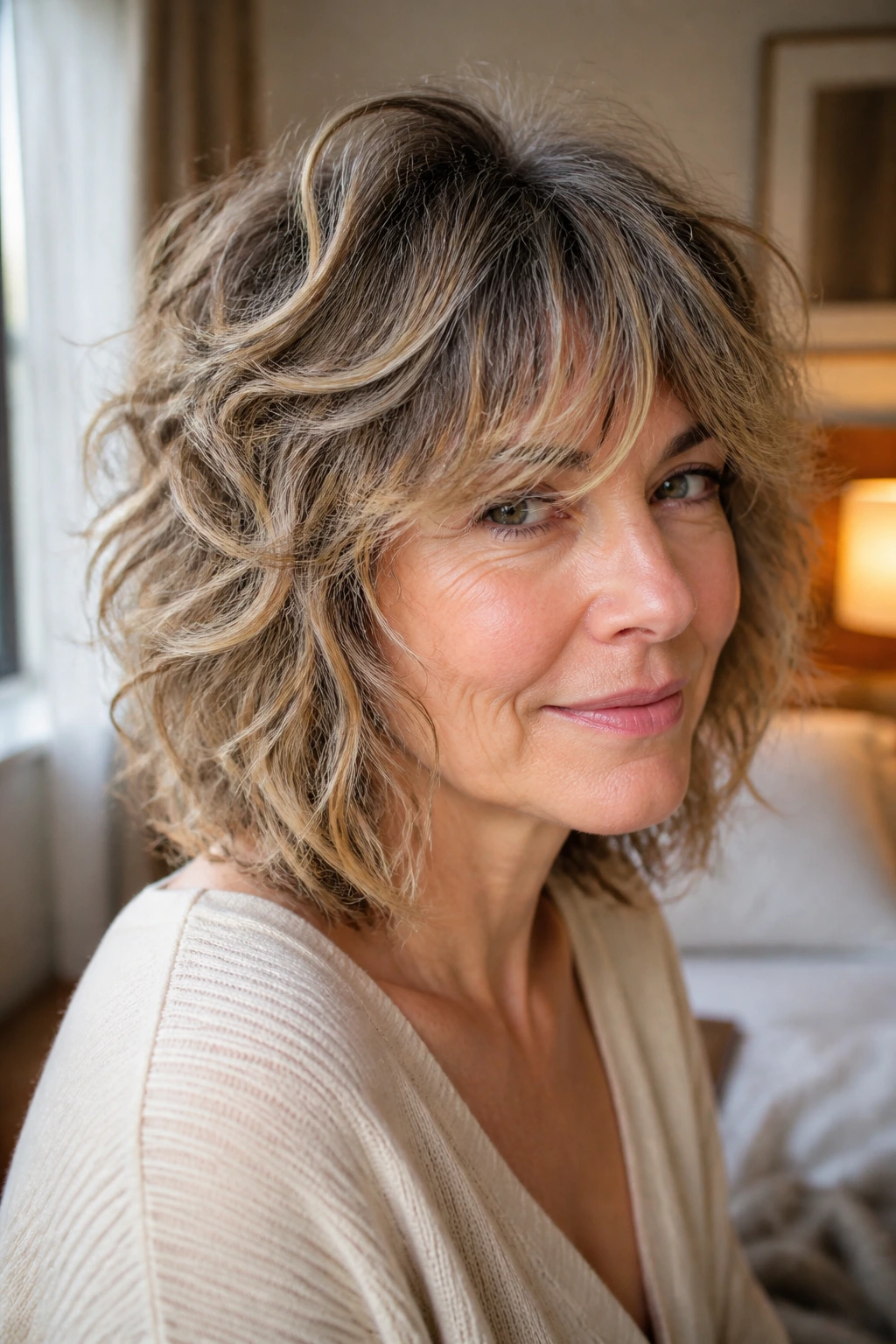
Wavy hair and a shag are a natural pair. The waves give the cut movement, and the layers stop the shape from becoming bottom-heavy. If your hair already has a bend in it, you can let the cut do half the work for you.
How to Keep It Soft
Use a cream or foam that supports the wave without turning it crunchy. Then scrunch the hair and let a diffuser do the rest if you want more definition. If you prefer a looser finish, air-drying with a bit of leave-in conditioner can be enough.
The point is to keep the texture airy. Wavy hair can get puffy when too much product sits on it, so start small. You can always add more later. Taking it away is a different story.
22. Layered Shag with Subtle Undercut
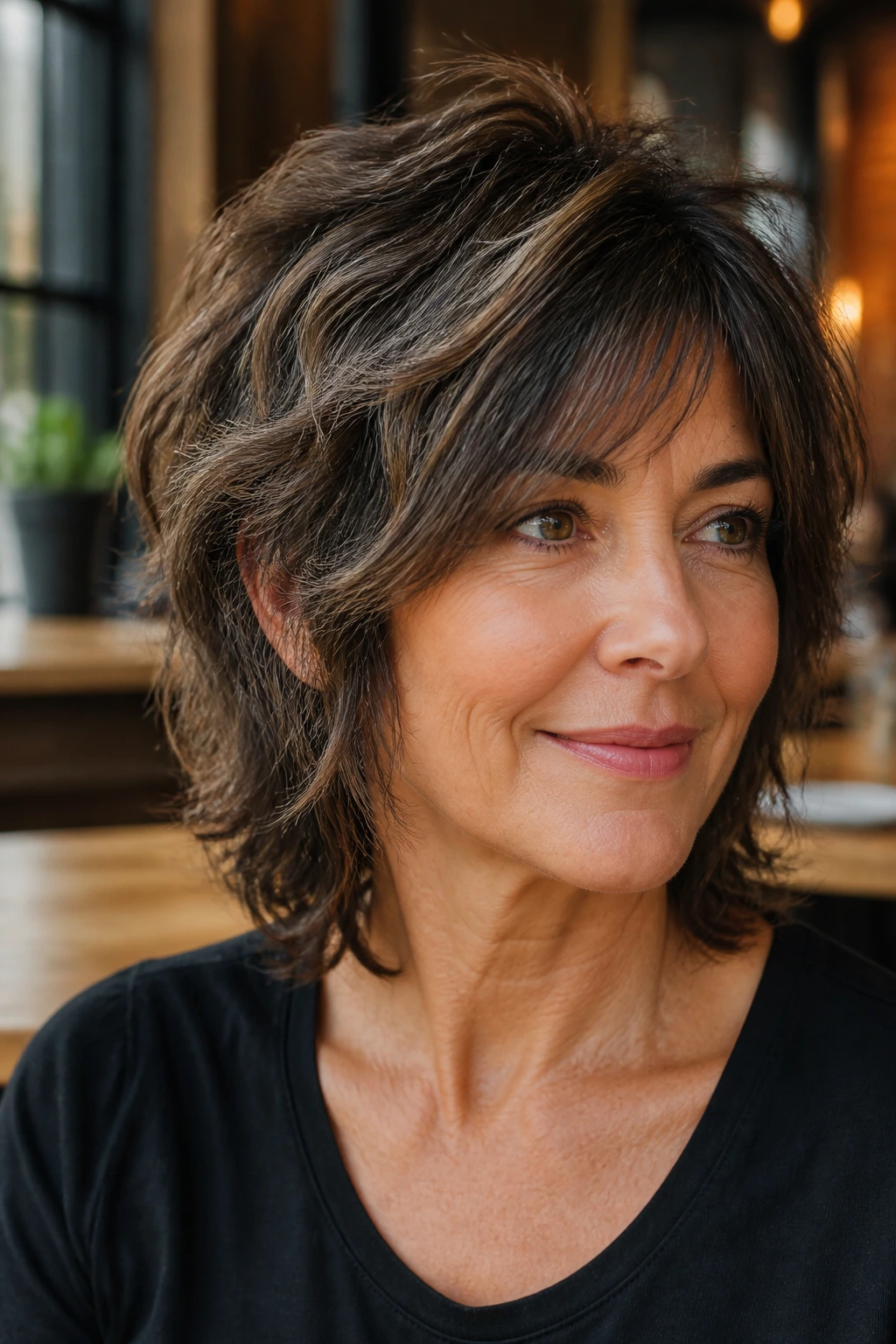
A subtle undercut is for women who want weight removed without advertising it. Hidden under the top layers, it can lighten thick hair around the nape or behind the ears, which helps the whole cut sit better and dry faster.
That hidden detail matters more than it sounds. Thick hair often expands in the wrong places, especially around the neck. Removing a little bulk underneath lets the shag layers above fall more cleanly. The top still looks full, but the shape no longer feels bulky or helmet-like.
This version is a good fit if you like a little edge and you also like practical haircuts. The undercut stays discreet. The payoff shows up every time you blow-dry.
23. Mid-Length Shag with Beveled Ends
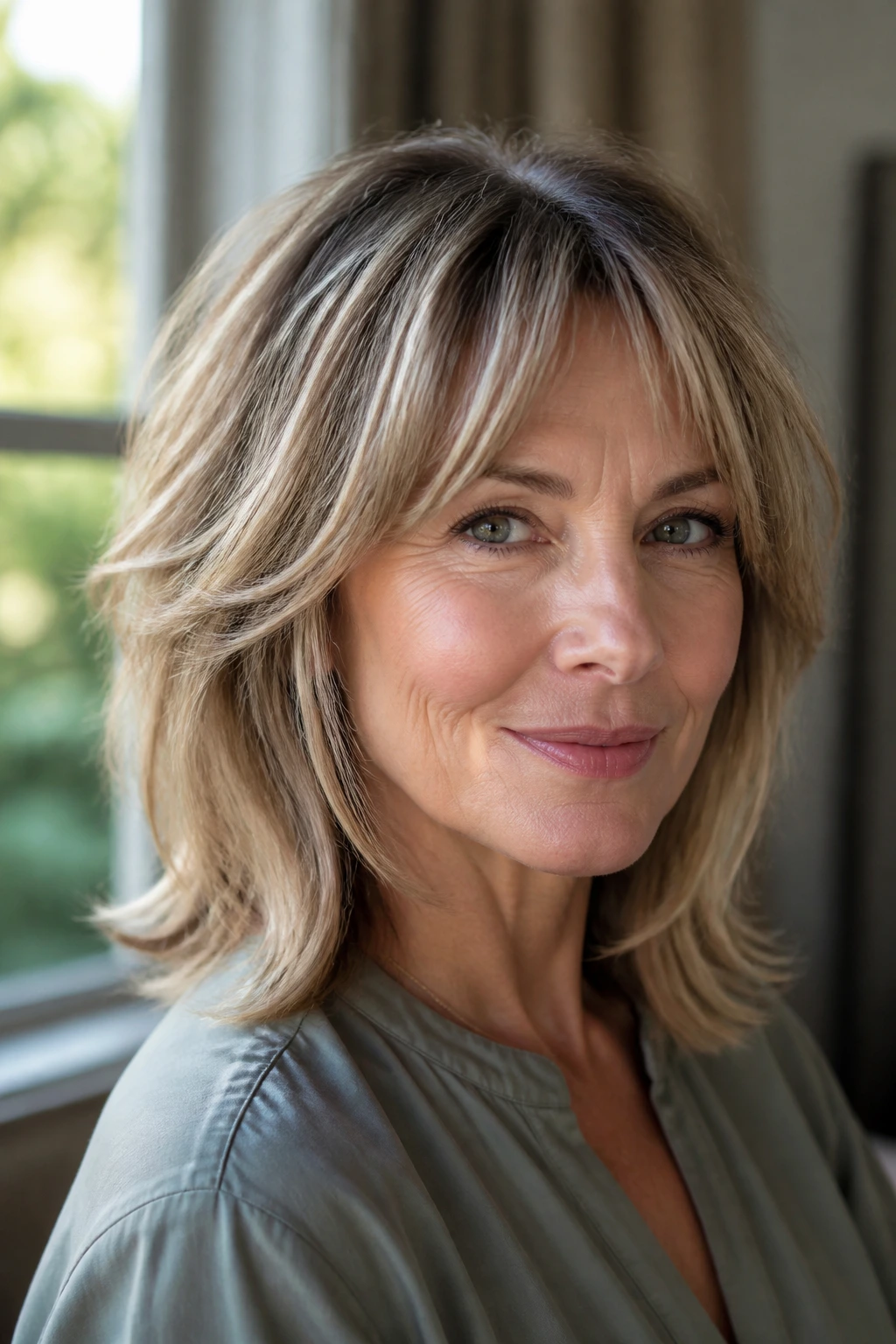
Beveled ends give a shag a softer finish than blunt ends do. Instead of stopping in a hard line, the hair curves gently under or away from the face, which helps mid-length hair feel smoother and more tailored.
This is a good pick if you want your shag to read as elegant rather than wild. The layers still create movement, but the perimeter stays neat enough for work, dinners, or any setting where you do not want your hair to look like it was cut with a wild hand.
A medium round brush, a little heat, and a light-hold spray are enough to keep the beveled shape in place. I’d keep the texture controlled, not crunchy. The polish is the point here.
24. Shag with Bottleneck Bangs
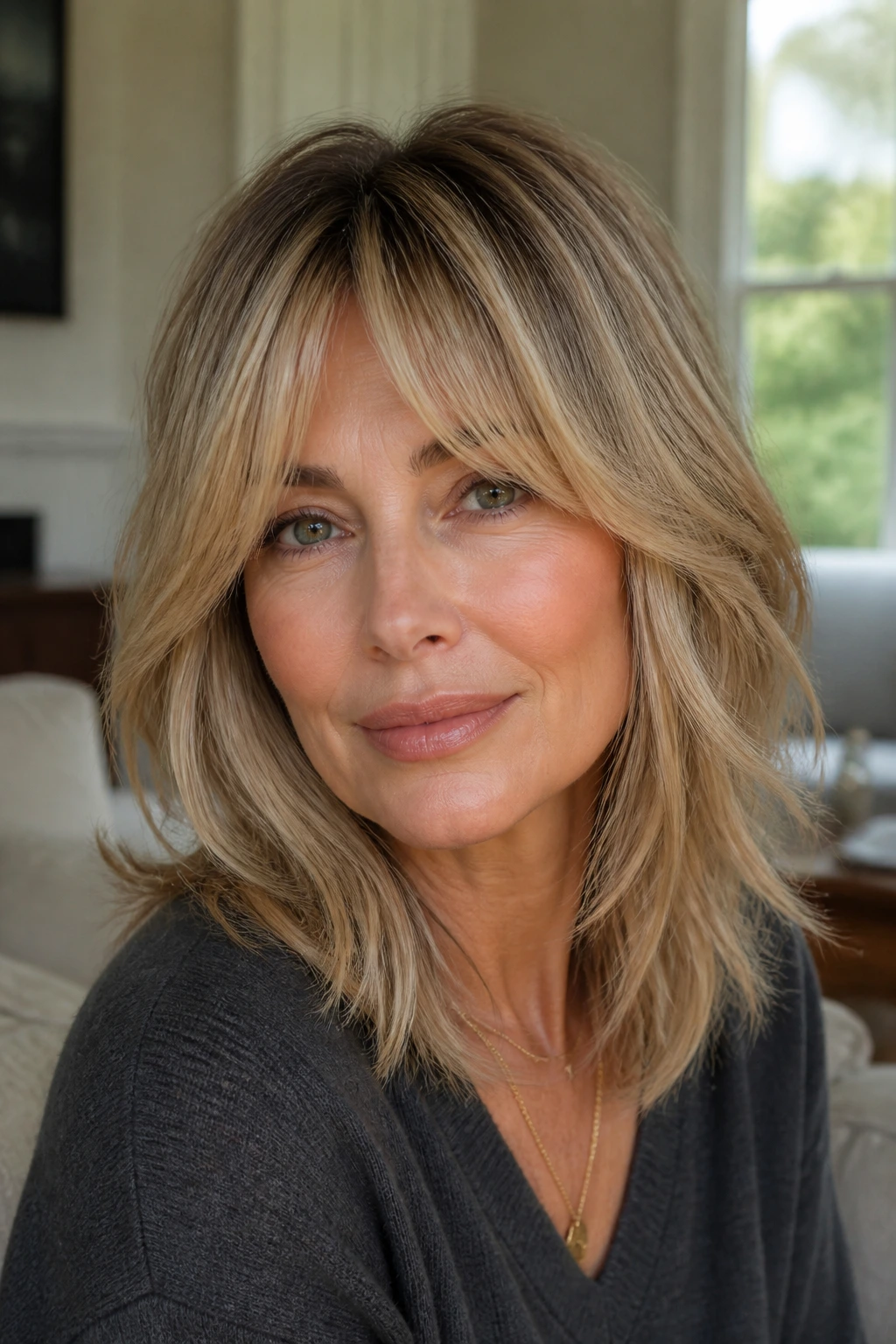
Bottleneck bangs are the softer cousin of blunt fringe. They sit narrow at the center, then widen as they move toward the temples, which makes them blend nicely into shag layers. That shape flatters the forehead without boxing it in.
Why They’re Clever
- The center stays short enough to create interest.
- The sides grow longer and frame the face.
- They work with center parts and slight off-center parts.
- They grow out into curtain bangs if you decide to change course.
This fringe has a nice way of balancing a shag that might otherwise feel too layered. It gives the eye a starting point. Then the rest of the cut can do its thing around the cheeks and neck. That mix feels smart, not fussy.
25. Rounded Shag for Soft Features
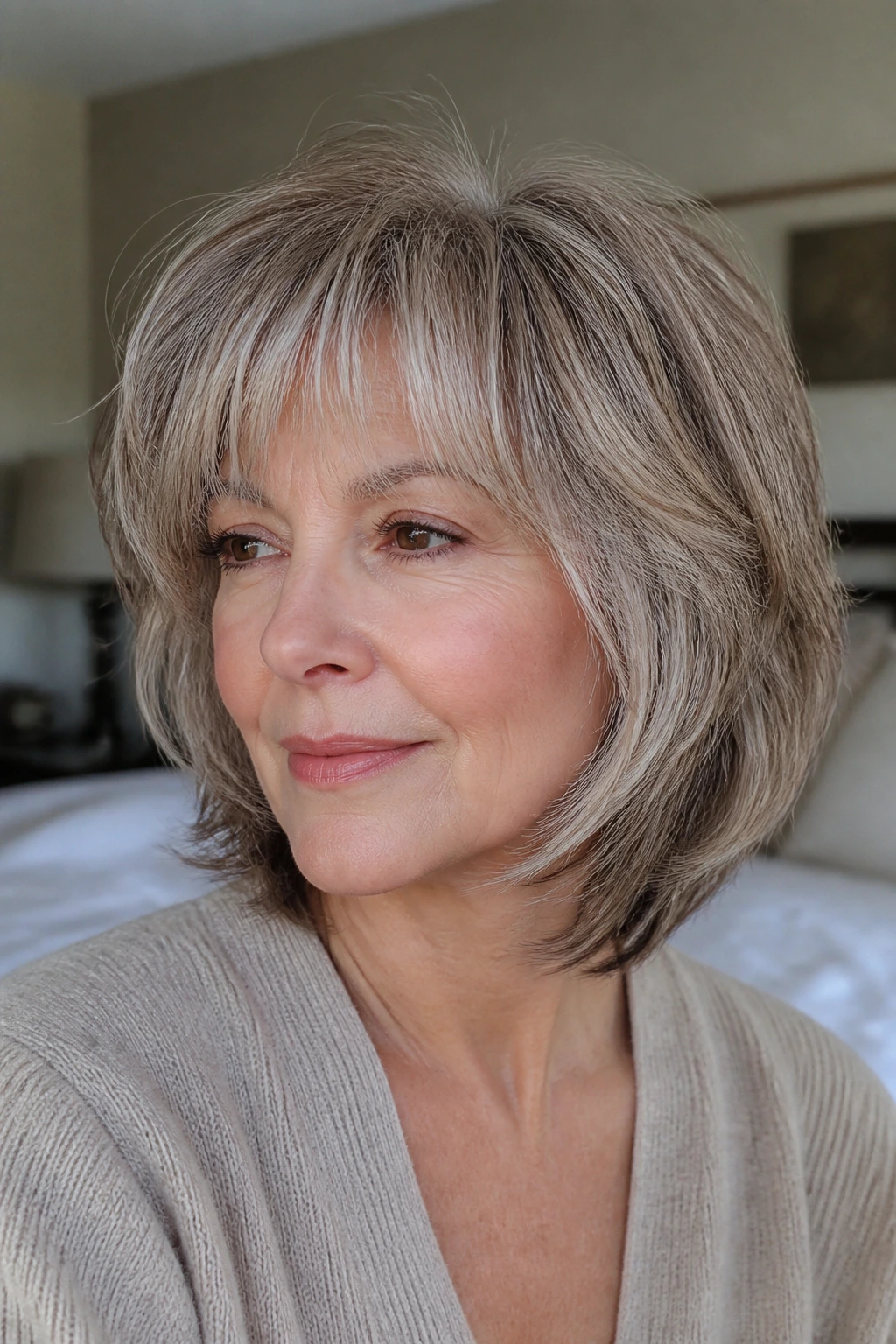
What happens when a face already has soft curves? You build shape with the haircut, not against it. A rounded shag keeps the outline gentle while still adding enough lift at the crown to avoid a flat, washed-out look.
The layers should follow the head’s curve instead of sticking out at odd angles. That keeps the cut flattering on round, heart-shaped, or softly oval faces. A little height at the top helps lengthen the profile, and longer face-framing pieces can narrow the sides without making the style harsh.
This is one of the quieter shag hairstyles for women over 50, and I mean that as a compliment. Not every good haircut needs to announce itself from across the room.
26. Neck-Grazing Shag with Nape Layers
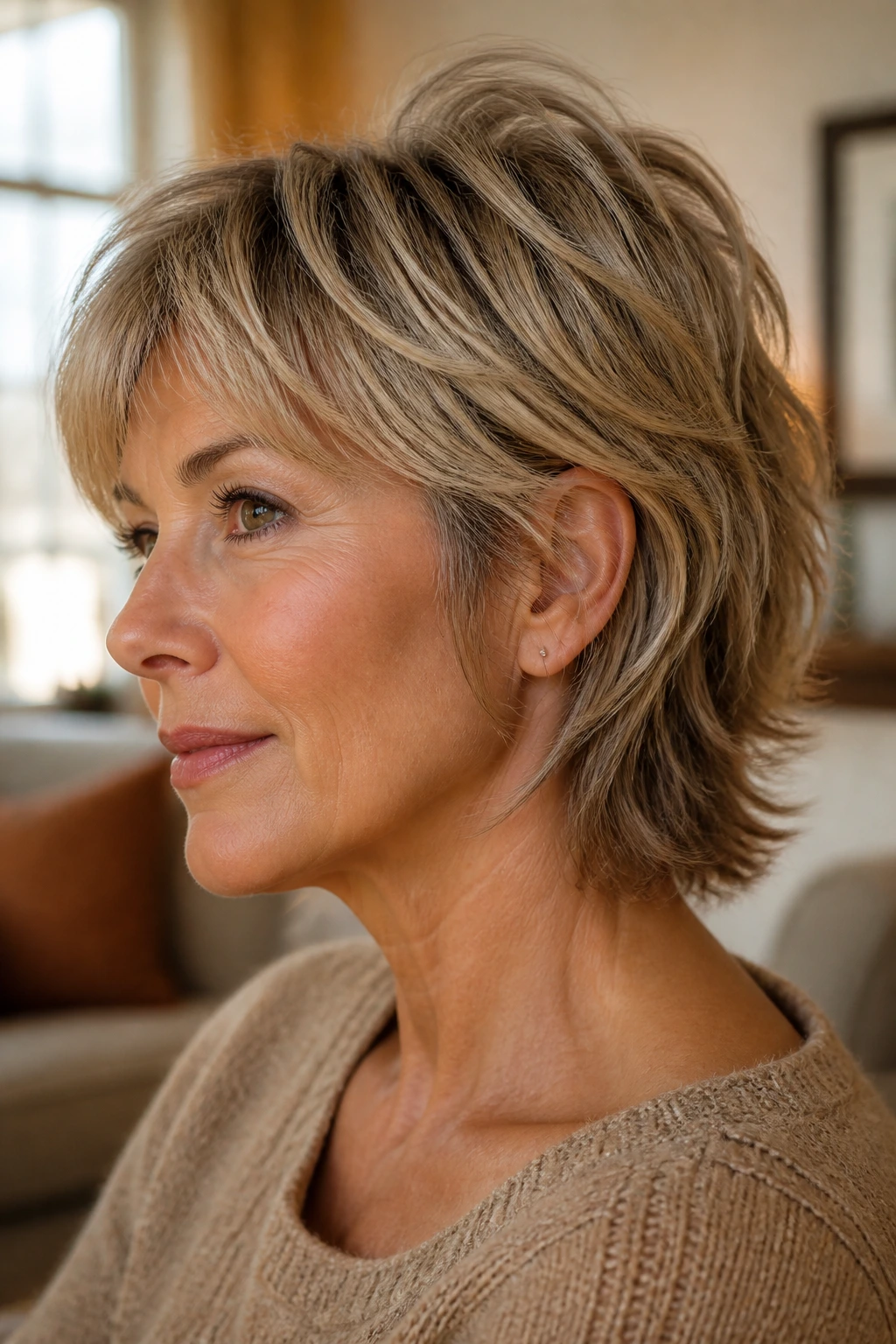
A neck-grazing shag feels clean and breezy, especially when the nape is cut with a little extra layering. That detail keeps the back from puffing out and gives the neckline a softer, slimmer shape.
The cut works especially well if you like hair that tucks behind the ears easily. It also grows out in a forgiving way, which is useful when you want a cut that stays attractive between salon visits. The nape layers stop the back from becoming one solid block, and that’s where the shape comes from.
There’s a nice sense of movement here. Not a lot. Just enough. And honestly, that’s often the smartest place to land.
27. Voluminous Shag for Thinning Hair
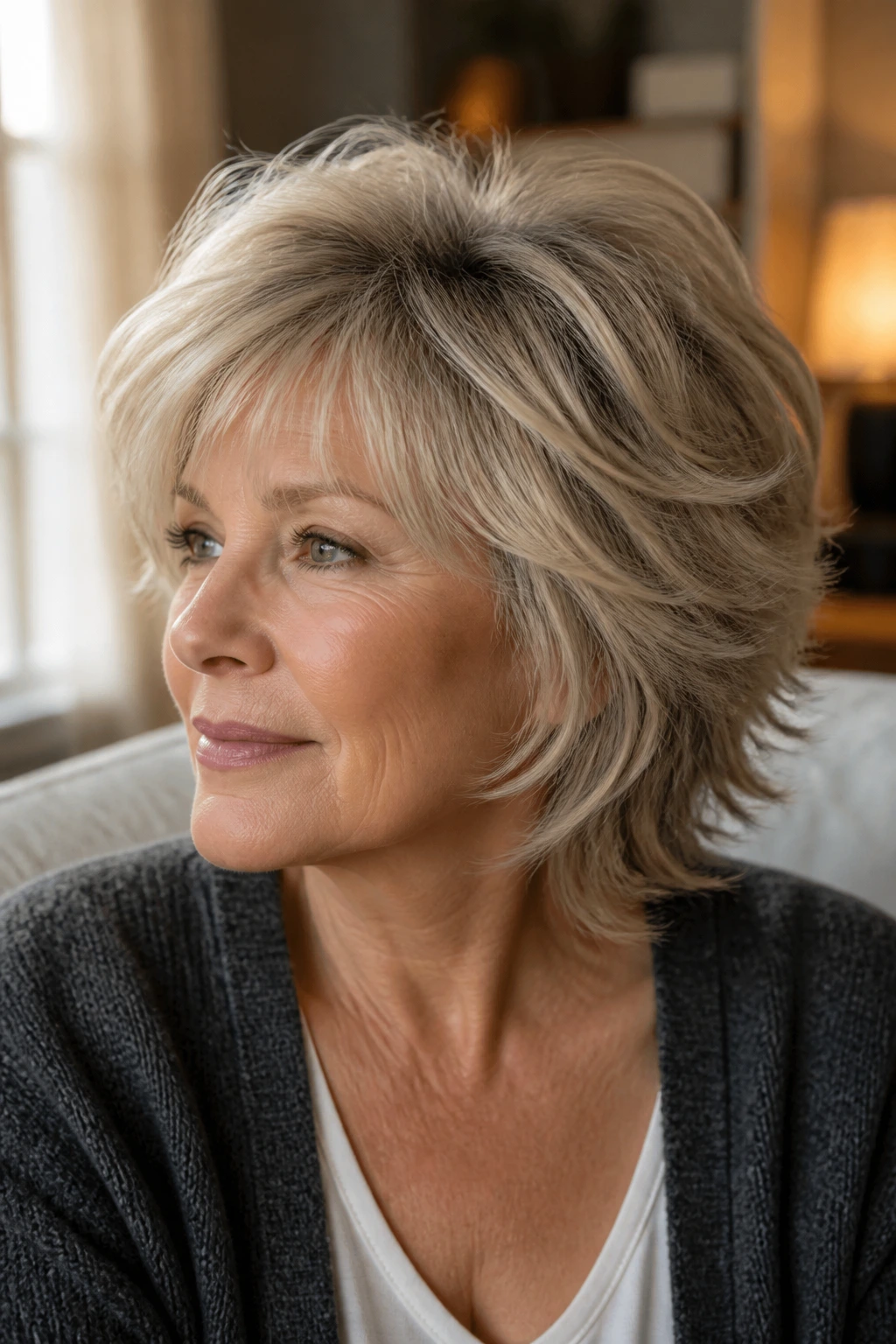
Thinning hair needs lift at the roots, not endless layers everywhere. A voluminous shag can help by keeping the crown slightly shorter, adding controlled movement around the sides, and leaving enough length through the ends to preserve density.
Where the Volume Actually Comes From
Root mousse, a round brush, and a quick flip of the head while drying can do more than heavy styling products ever will. The layers should be placed to encourage lift near the crown and around the temples, where hair often flattens first. Too many short layers through the bottom can make thinning hair look sparse, so this is a cut that rewards restraint.
The goal is body with shape. Not fluff. If the hair looks lifted but still has weight at the edges, you’re in the right zone.
28. Dimensional Highlighted Shag
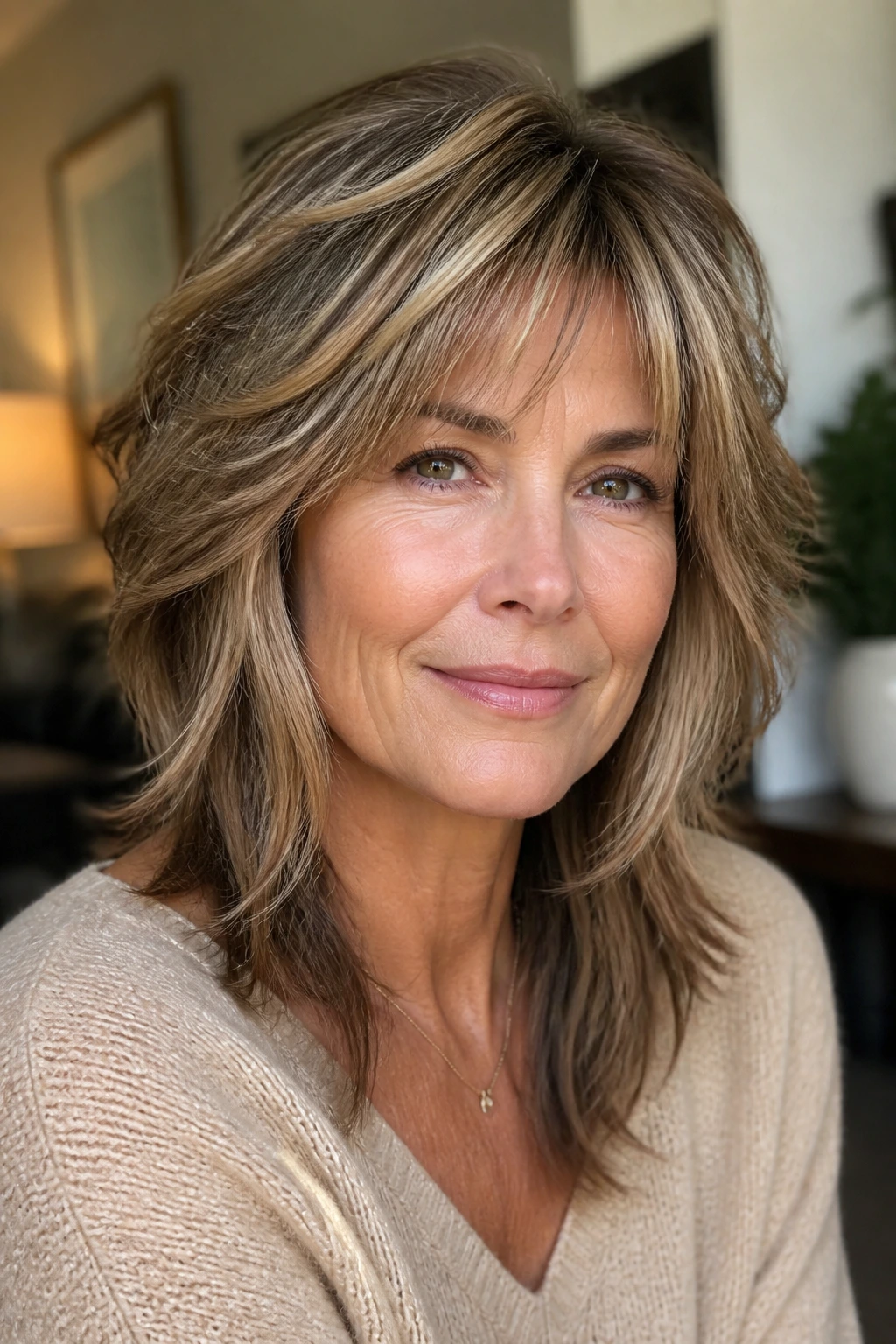
Color can make a shag look richer without changing the cut at all. Dimensional highlights placed through the layers create depth, especially when lighter pieces sit around the face and crown while slightly darker tones hold the underside together.
This matters on women over 50 because hair color often shifts as the natural pigment changes. Mixing tones can keep the shag from looking one-note. A few brighter pieces near the front lift the face, and lowlights underneath add the illusion of thickness.
The cut and color should work together. If the layers are all the same tone, the shape can disappear. If the color varies in the right spots, every piece seems to do more work.
29. Sleek Shag with Polished Ends
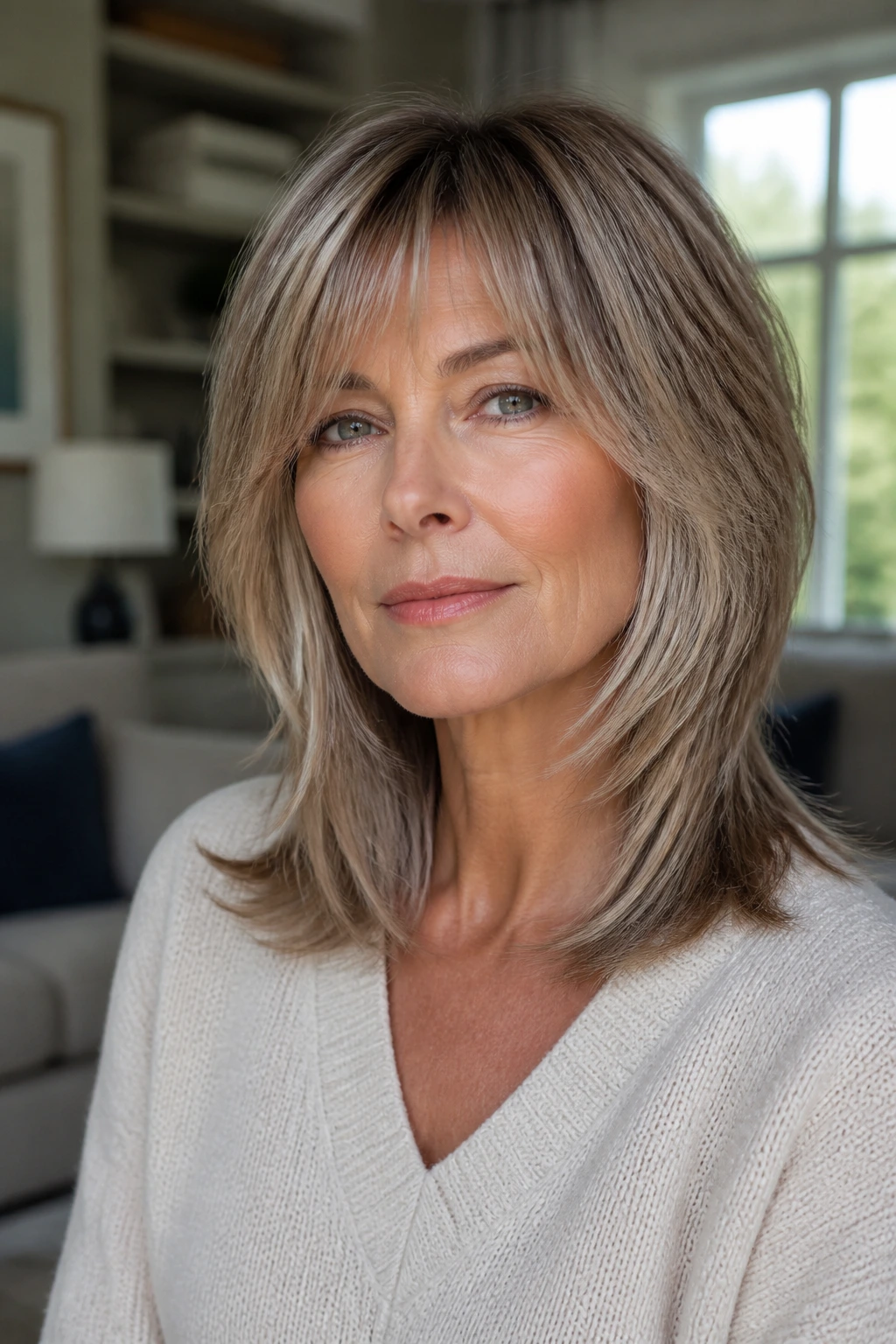
A shag does not have to be wild to be good. The sleek version keeps the layers, trims the texture down, and smooths the ends so the haircut feels modern in a quieter way. I think this one is underrated.
The shape still matters. You still want face-framing layers, a little crown lift, and some movement through the middle. But the finish is neater. That makes it a good fit for women who like structure and do not want a lot of separation or frizz in their hair.
This cut works best with a smoothing cream and a careful blow-dry. It’s the shag for someone who likes the idea of texture but prefers a cleaner result.
30. Statement Shag with Bold Movement
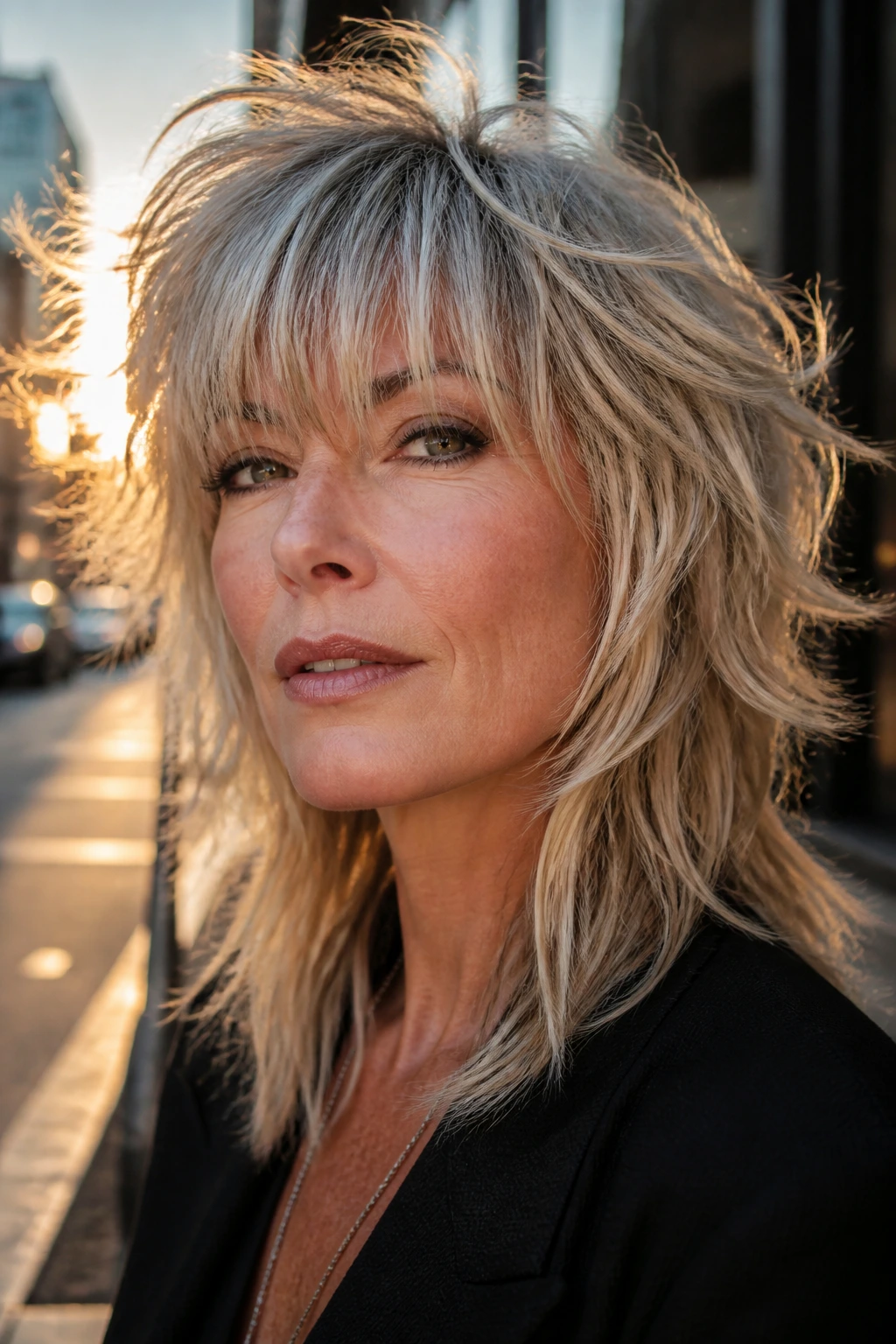
A statement shag is for the woman who wants the haircut to have a real point of view. Strong fringe, airy crown layers, and a lot of movement through the sides give it personality without turning it into a costume. It’s the cut that says you know exactly what you want.
The trick is to keep the structure soft enough that the haircut still flatters the face. Bold does not have to mean harsh. A strong outline with feathered edges can feel fresh, especially on hair that needs shape and a little attitude.
If you’ve been wearing safe, tidy cuts for years, this is the version that feels like a small reset. Not reckless. Just more alive.
Final Thoughts

The best shag hairstyles for women over 50 are the ones that suit the hair you actually have. Fine hair needs smart layers. Thick hair needs bulk removed in the right places. Curly and wavy hair need room to move without turning puffy.
A shag works when the cut brings out motion instead of forcing a shape that fights your texture. That’s why the same haircut can look soft, sharp, polished, or a little wild, depending on the length and the way the layers are placed.
If you’re taking one thing to the salon, bring photos that show the fringe, the length, and the amount of texture you want. Those three details matter more than the name of the cut.
