



A shaggy pixie cut can sharpen a round face fast — if the shape is built in the right places.
Round faces usually do better with height at the crown, movement through the fringe, and soft sides that do not puff out at the cheeks. That sounds fussy because it is. The wrong pixie can turn into a little helmet. The right one gives lift, edge, and a face-framing shape that feels lighter the second you see it in the mirror.
What makes the shaggy version so useful is that it gives you room to cheat the geometry a bit. A half-inch more length on top, a deeper side part, a choppier fringe, a tapered nape, or a razor-soft edge can change the whole read of the cut. Tiny tweaks. Big payoff.
The 15 shaggy pixie cuts for round faces below all solve that same problem in different ways — some lean polished, some messy, some curly, some wolfish, some grown-out and easy. Pick the one that fits your hair texture and your patience level, because those two things matter more than any trend talk ever will.
1. Crown-Heavy Shaggy Pixie for Round Faces
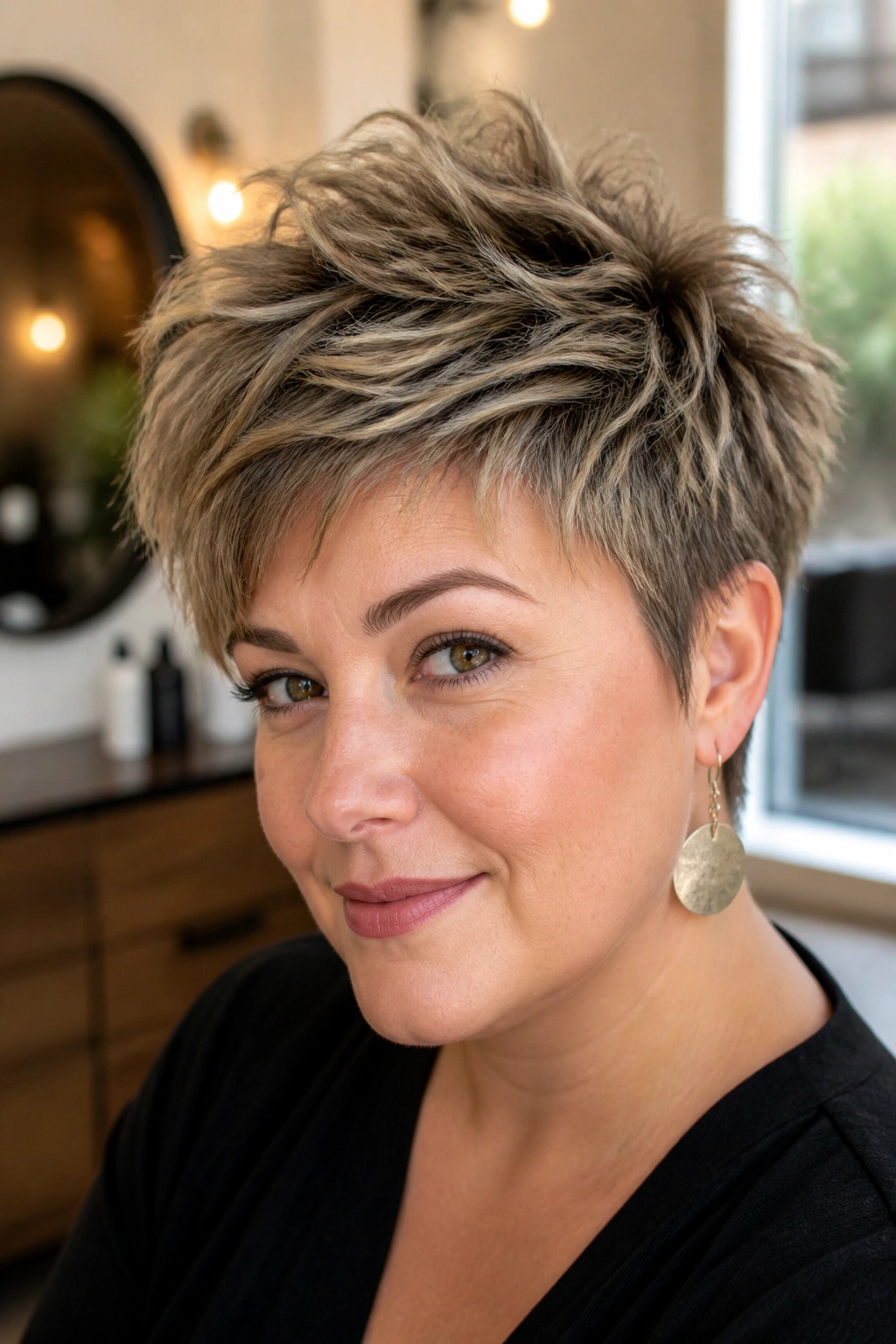
If you want the face to look a little longer immediately, this is the move. The crown-heavy shaggy pixie puts the tallest point of the cut where it does the most work: up top. That vertical lift pulls the eye upward and keeps the shape from spreading out across the cheeks.
Why the Height Matters
A round face gets wider-looking when the hair sits flat at the top and full at the sides. This cut does the opposite. The top stays airy and textured, while the sides are kept close enough to the head to leave the cheek area alone.
A little bit of lift is enough. You do not need a giant bouffant. A root-lifting spray at the crown, a quick blast with a vent brush, and a light paste on the ends usually do the job.
- Ask for short, broken layers at the crown.
- Keep the nape tapered so the back does not look bulky.
- Leave the fringe soft and piecey, not blunt.
- Use a small round brush or fingers to push the top up while drying.
My favorite part: this cut still looks good when it gets messy. That matters.
2. Asymmetrical Side-Swept Shaggy Pixie
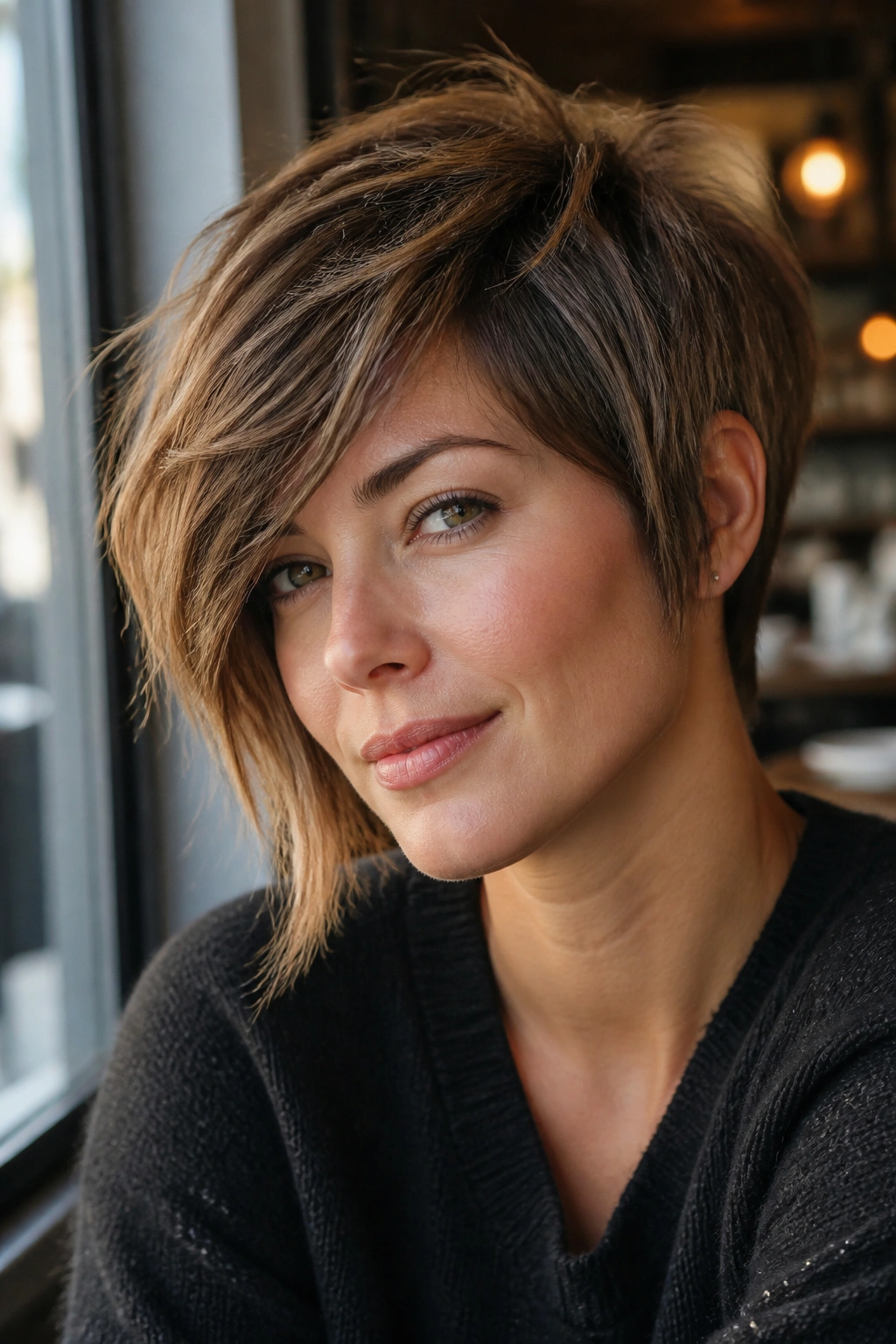
This is the pixie that quietly works the hardest. One side falls a touch longer, the part sits off-center, and the whole cut draws a diagonal line across the face instead of a wide horizontal one. That diagonal is doing a lot of flattering work.
A round face can look fuller when everything sits evenly. Asymmetry breaks that up. The longer side skims past the cheekbone, the shorter side keeps the cut from looking heavy, and the top still has enough texture to keep it from feeling severe.
I like this version most on people who want short hair but do not want the full “big chop” feeling. It has attitude, but it does not scream. The shape also wears well with earrings, which sounds minor until you see it in real life. Suddenly the cut has a frame.
The trick is to keep the long side soft, not stringy. If the ends are too wispy, the whole thing looks thin. If they’re too blunt, you lose the easy movement that makes this version work.
3. Cropped Shaggy Pixie With Choppy Fringe
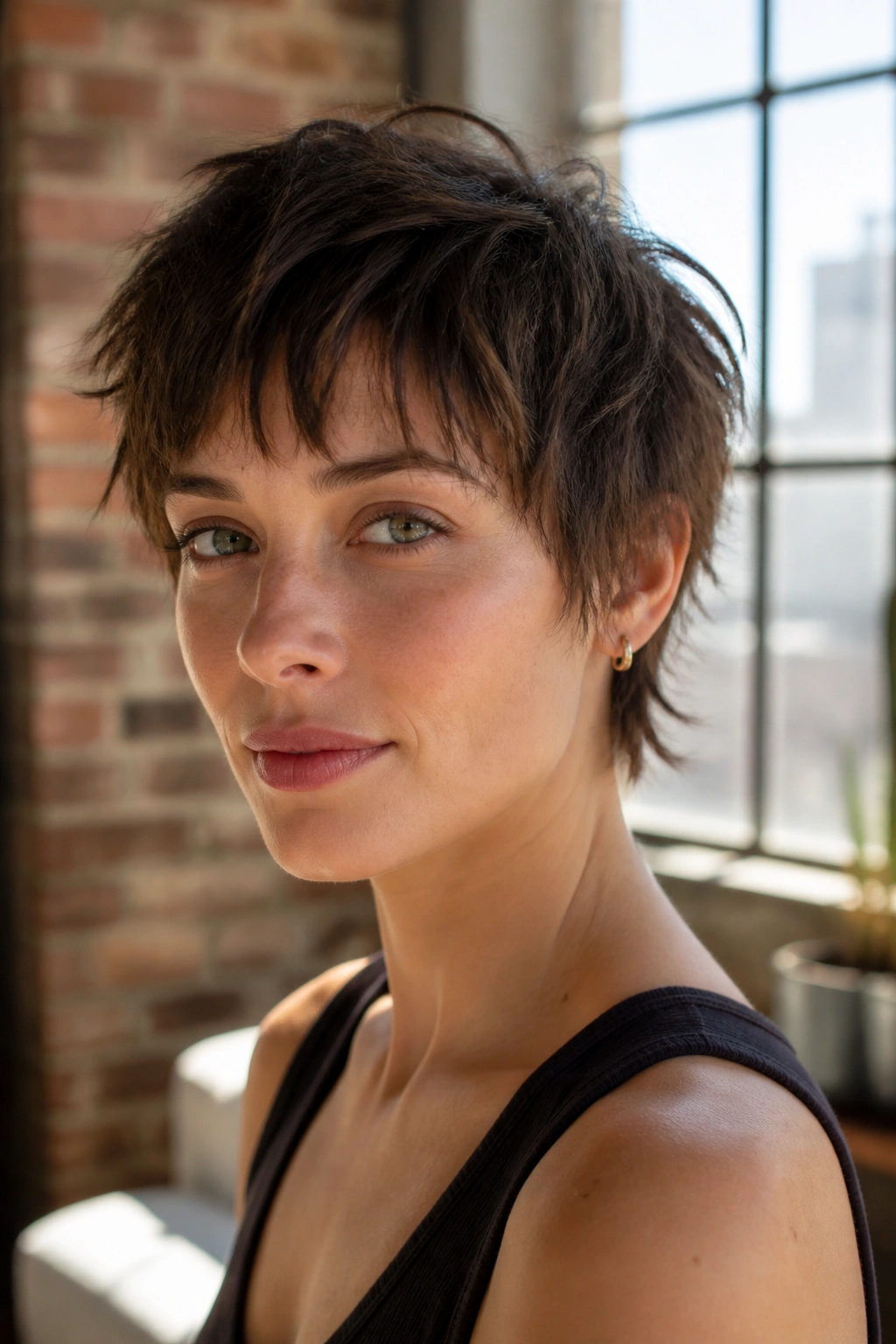
Why does a choppy fringe help so much on a round face? Because it breaks the smooth line across the forehead. That sounds simple, and it is, but simple is not the same as unimportant.
A heavy straight fringe can box a face in. A choppy one leaves tiny gaps of forehead showing through the texture, which keeps the cut from reading as one solid block. The result feels lighter, a little cheekier, and far less sweet in the sugary sense.
How to Ask for It at the Salon
Bring up three things: short length through the ears, broken fringe pieces, and texture that is cut in rather than thinned out. That last part matters. Thinning shears can make the fringe frizzy if your hair is fine.
A good stylist will usually point cut the ends so they fall in uneven little pieces. That gives movement without taking away shape.
- Keep the fringe between the brow and the upper lash line.
- Ask for piecey ends, not a blunt edge.
- Let the sides hug the face instead of puffing out.
- Style with a pea-sized amount of matte paste so the fringe stays separated.
This one has a little punk in it. I like that.
4. Layered Pixie Mullet Hybrid
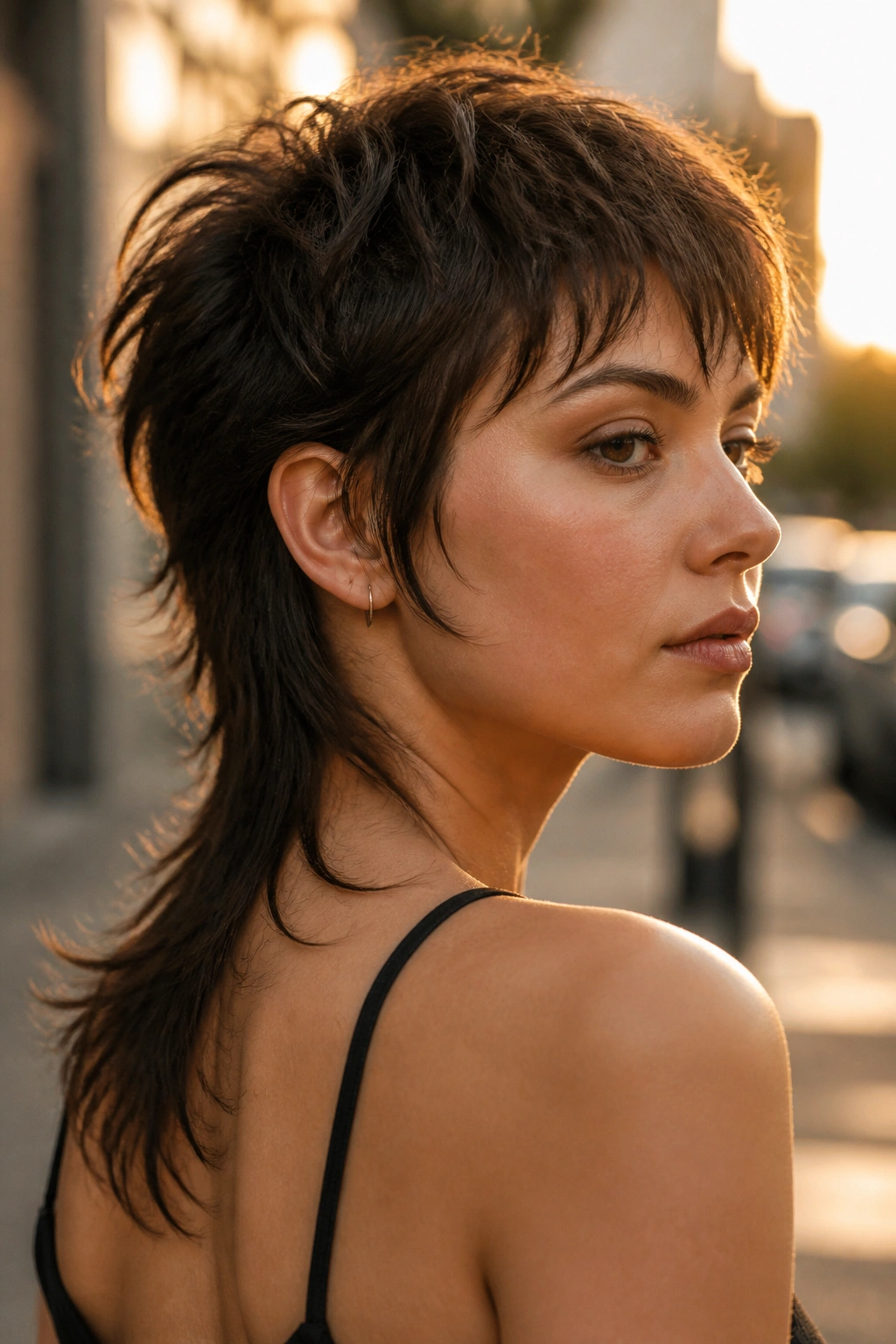
A lot of people are flirting with the mullet shape without wanting the full throwback drama. This is the compromise, and honestly, it’s a good one. The front stays pixie-short, the crown is shaggy, and the back keeps a touch more length so the cut has a tail instead of a cap.
That extra bit in the nape helps a round face because it pulls the silhouette downward. The eye follows the length instead of bouncing straight across the widest part of the face. You still get texture and mess, but the shape feels longer.
This version is for people who like their hair a little rough around the edges. It works especially well if your hair has a natural bend or if it grows out in a way that never looks neatly polished anyway. Some cuts fight that. This one uses it.
Watch the balance. If the back gets too full, it can drag the shape down. Keep the nape soft and tapered, then leave the crown and fringe as the stars.
- Best for wavy or thick hair.
- Needs regular neck cleanup to keep the shape sharp.
- Looks strongest with textured styling cream or a dry wax spray.
5. Tapered Shaggy Pixie With a Deep Side Part
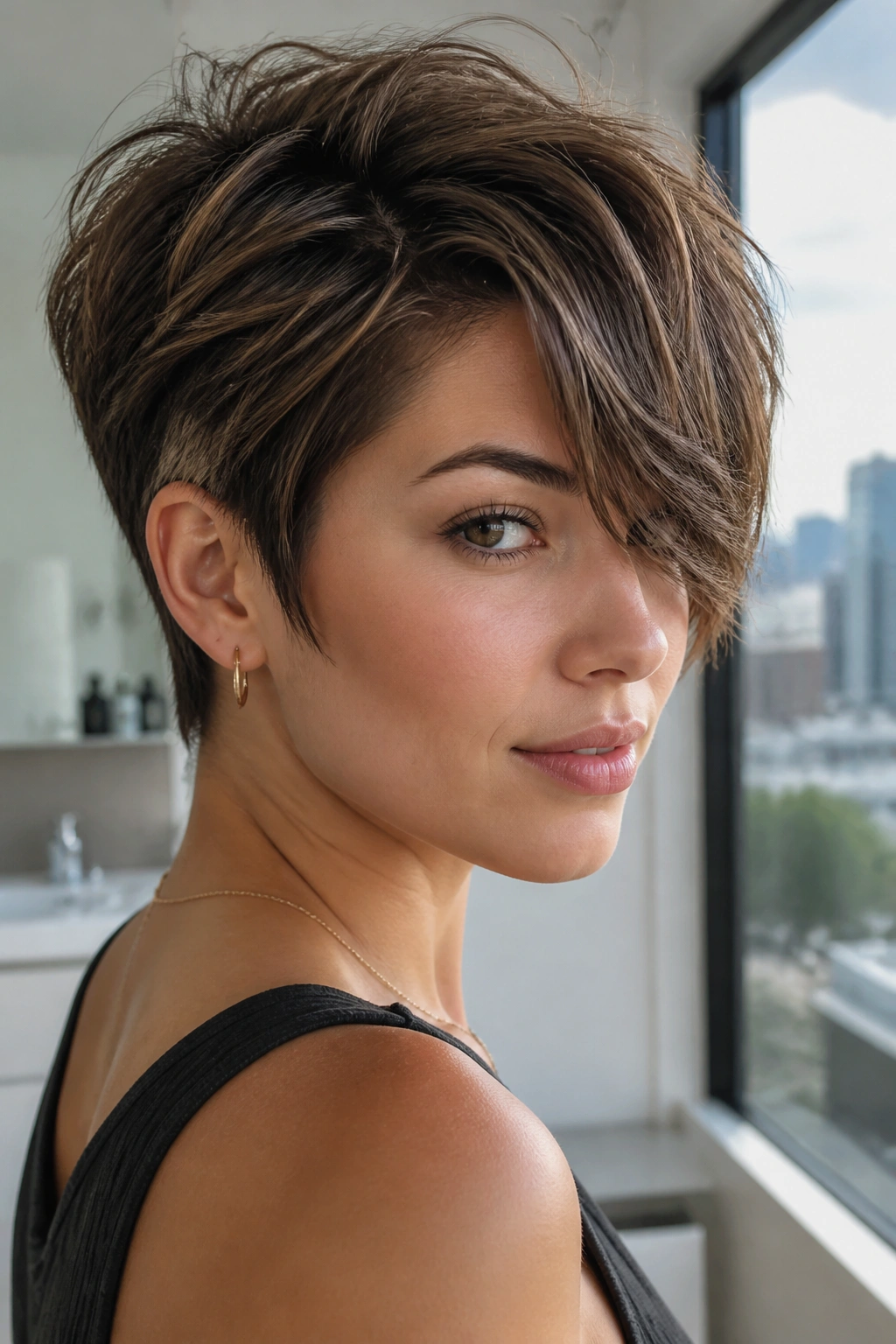
A deep side part is one of the simplest ways to make a round face look a little less circular, and I never get tired of that trick. It creates a long diagonal line right away, which is exactly what a fuller face shape usually benefits from.
The taper is the other half of the equation. When the back and sides are cut close, the cut sits neatly around the head instead of expanding outward. That lets the top keep its shaggy energy without making the overall shape too wide. The result feels clean, but not stiff.
This version is a good choice if you like a haircut that can move between polished and rough in about three minutes. Comb it over with a blow dryer for work. Rough it up with your fingers for the weekend. The haircut behaves either way.
I also like this on thicker hair because the deep part gives the weight somewhere to go. Without that, a thick pixie can balloon out around the temples. Not cute. Not the vibe.
If your hair is fine, ask for internal texture rather than a lot of thinning. You want the ends to move, not disappear.
6. Curly Shaggy Pixie
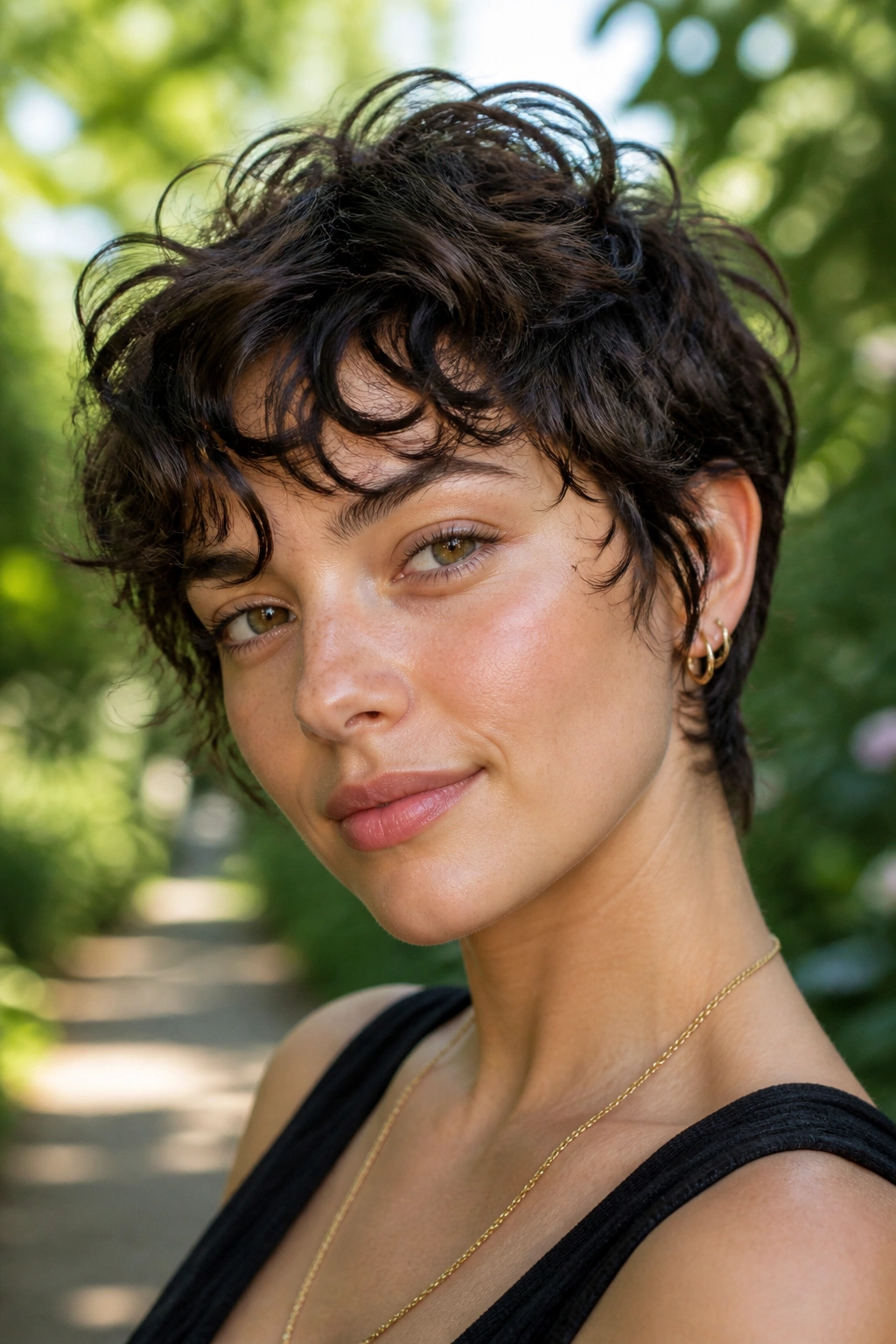
Curly hair and round faces can get along beautifully when the shape is cut with restraint. The mistake people make is letting the curls build a little halo at cheek level. That adds width fast. The better version keeps the bulk either above the cheekbone or below it.
A curly shaggy pixie works because the layers remove weight inside the shape. The curls then spring a bit higher and sit with more space between them. You get definition, not puff.
What Makes It Different From a Standard Curly Pixie
A standard curly pixie can be neat, even sculpted. This version wants a little more movement and a little more irregularity. It is less about tidiness and more about making the curl pattern visible in little broken sections.
That matters on a round face because straight lines across curls can look harsh. Broken texture softens the cut and keeps the eye moving.
- Diffuse on low heat until the curls are about 80% dry.
- Scrunch in a light mousse or curl cream, not both in heavy amounts.
- Ask for layers that start above the cheekbone.
- Keep the fringe long enough to bend sideways instead of standing straight up.
If your curls are tight, leave more length on top. If they are loose, you can go shorter without losing the shape.
7. Feathered Micro Shag
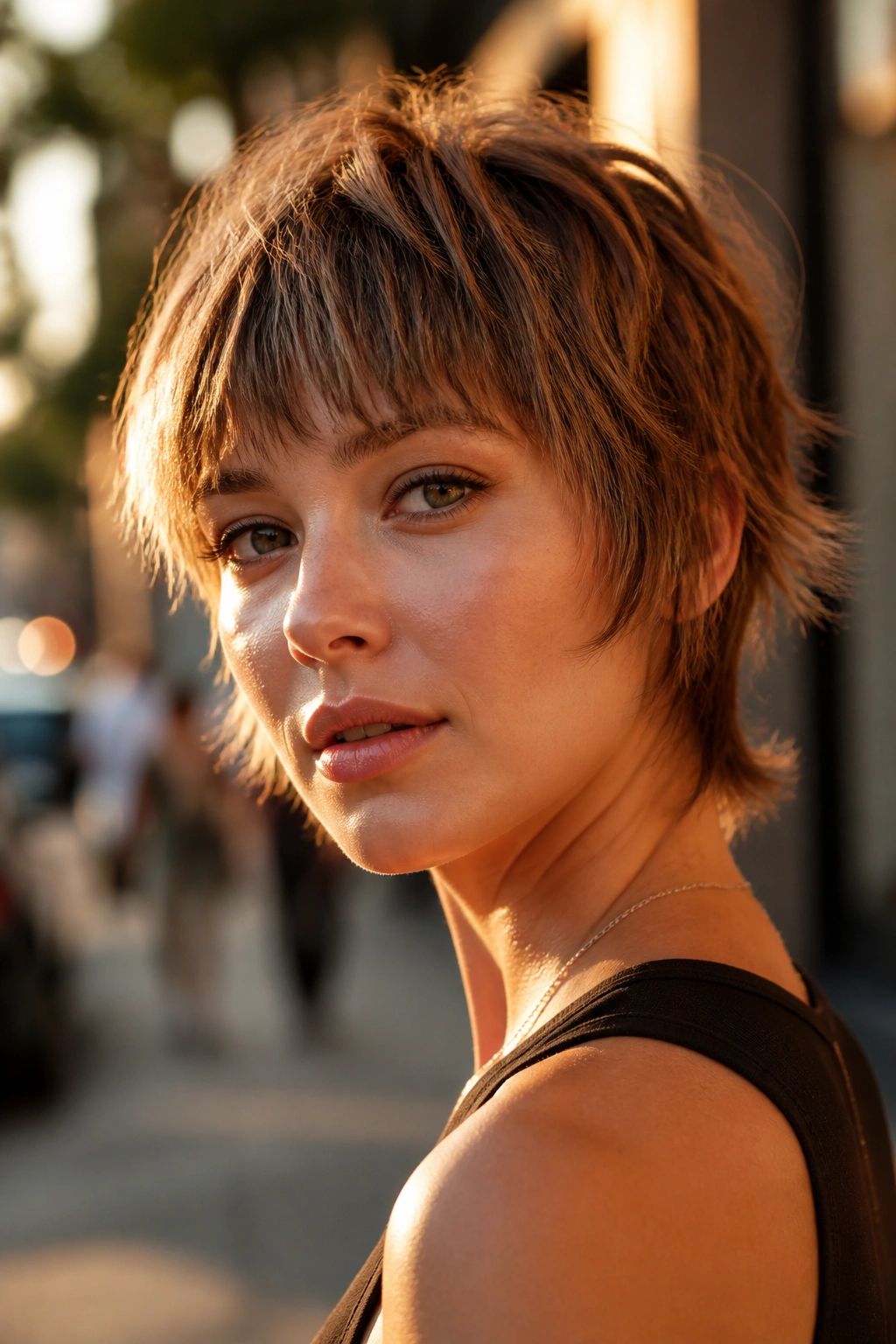
I’ve seen this cut rescue people who swore they “couldn’t do short hair.” Usually the problem wasn’t short hair. It was blunt short hair. The feathered micro shag solves that by taking the hard edge out of the equation.
The ends are cut in a soft, sliced way so they sit like little wisps instead of one solid line. That gives the face breathing room. On a round face, breathing room matters more than a dramatic shape.
This style is especially good if your hair is fine and you hate the look of dense, blocky ends. A feathered finish keeps the pixie from turning heavy at the bottom. It also makes second-day hair look better, which is one of the small joys of life.
- Dry with fingers instead of a brush for a rougher finish.
- Use a texturizing spray at the roots only.
- Keep the fringe light and broken.
- Avoid over-oiling the ends; they should move, not clump.
A feathered cut can look soft, but it should never look sleepy. That’s the line.
8. Wispy Bang Pixie
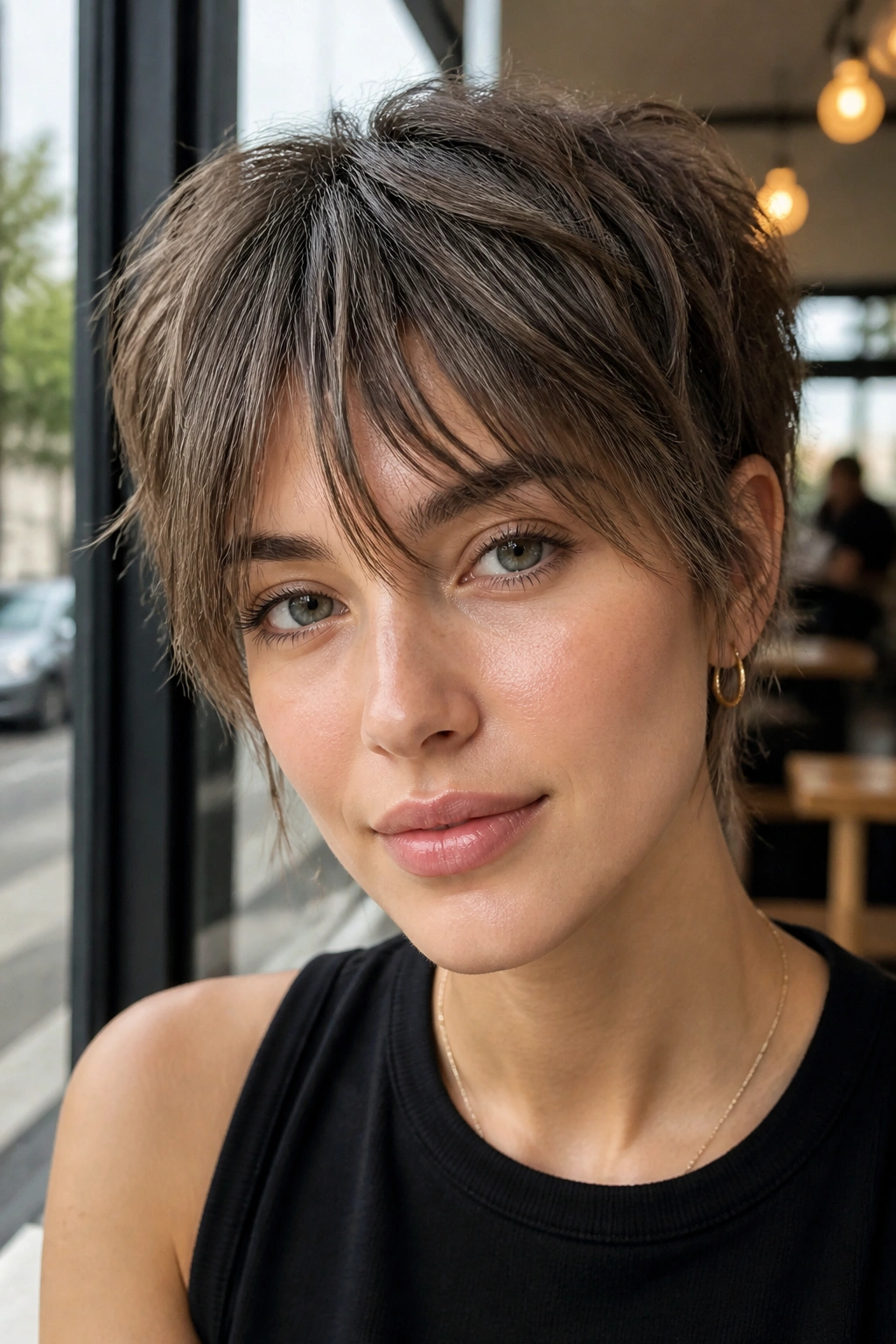
Heavy bangs on a round face can feel like they’re closing the whole thing in. Wispy bangs do the opposite. They leave little bits of forehead visible, which keeps the cut open and fresh.
The main thing to watch is length. If the bangs stop too high, they can make the face look shorter. If they sit too low and heavy, they can swallow the eyes. The sweet spot is usually somewhere between the brow and just below it, with pieces that separate instead of sitting like one curtain.
What to Keep Soft
The fringe should be airy at the center and slightly longer at the temples. That tiny bit of taper matters. It helps the bang blend into the sides instead of cutting the face in half.
A lot of stylists over-thin wispy bangs. Bad idea. You want movement, not see-through scraps. Ask for point-cut texture and keep some density near the root so the bangs still read as actual bangs.
This is a nice option if you want the cut to feel youthful without looking cute in a cartoonish way. There’s a difference. A good wispy fringe keeps the pixie sharp enough to feel intentional.
9. Undercut Shaggy Pixie
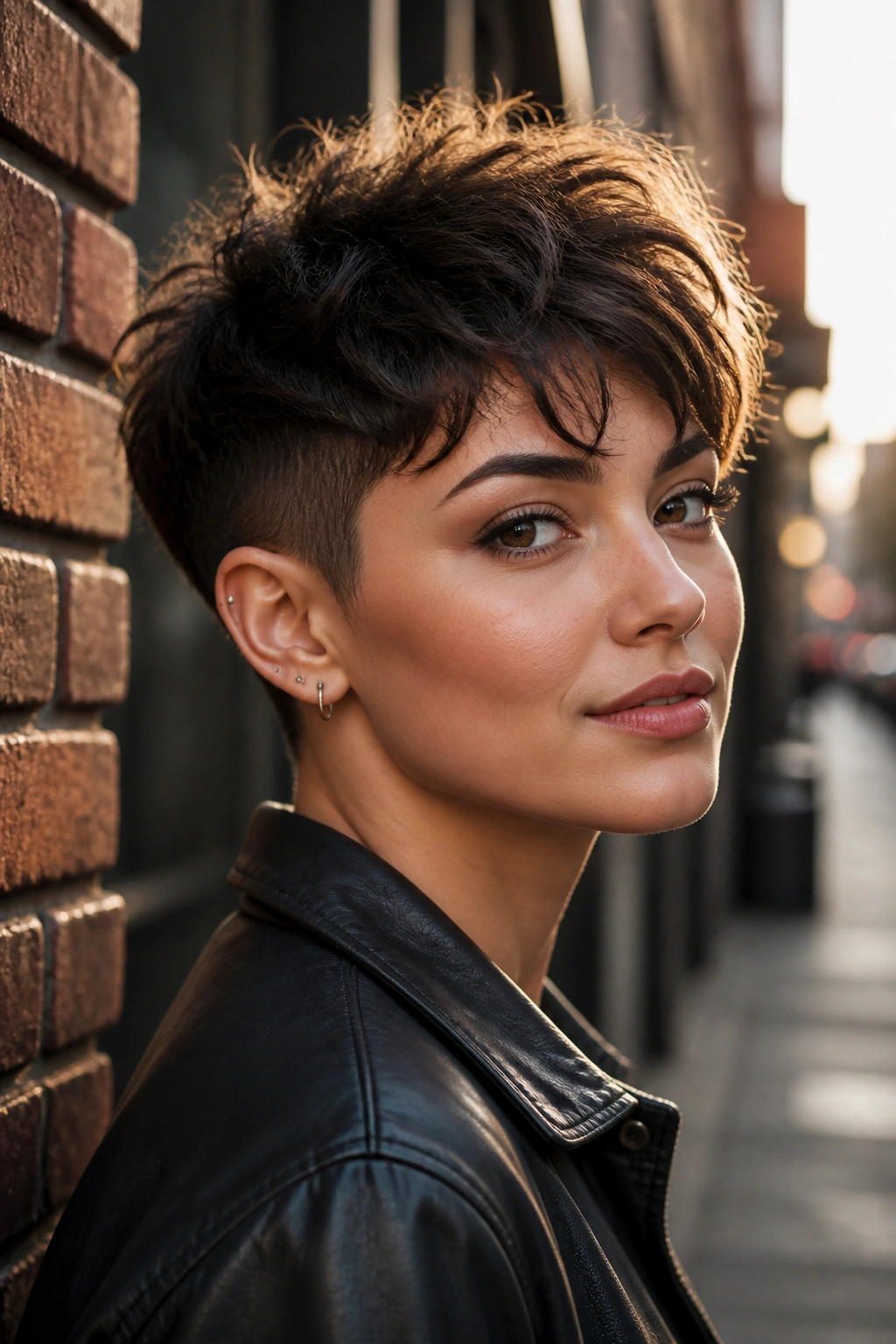
The undercut is the cleanest way to stop a shaggy pixie from ballooning around a round face. That’s the blunt truth. If your hair is thick, coarse, or naturally puffy, the hidden shorter layer underneath can save the whole shape.
The top stays shaggy and movable. The sides and nape stay controlled. That contrast keeps the cut from widening at the exact places that make a round face look broader.
I like this cut for people who want texture but do not want to spend 20 minutes fighting their hair every morning. Once the bulk underneath is removed, the top is easier to ruffle into shape with a little paste or mousse. Less hair. Less fight.
If you want a harder edge, you can make the undercut visible at the temples or just at the nape. If you want it subtler, keep it tucked inside the shape. Either way, the silhouette gets cleaner.
- Best for dense or coarse hair.
- Needs regular maintenance every 4 to 6 weeks.
- Pairs well with a longer fringe.
- Can be worn smooth on top or roughed up for more texture.
10. Tousled Salt-and-Pepper Shaggy Pixie
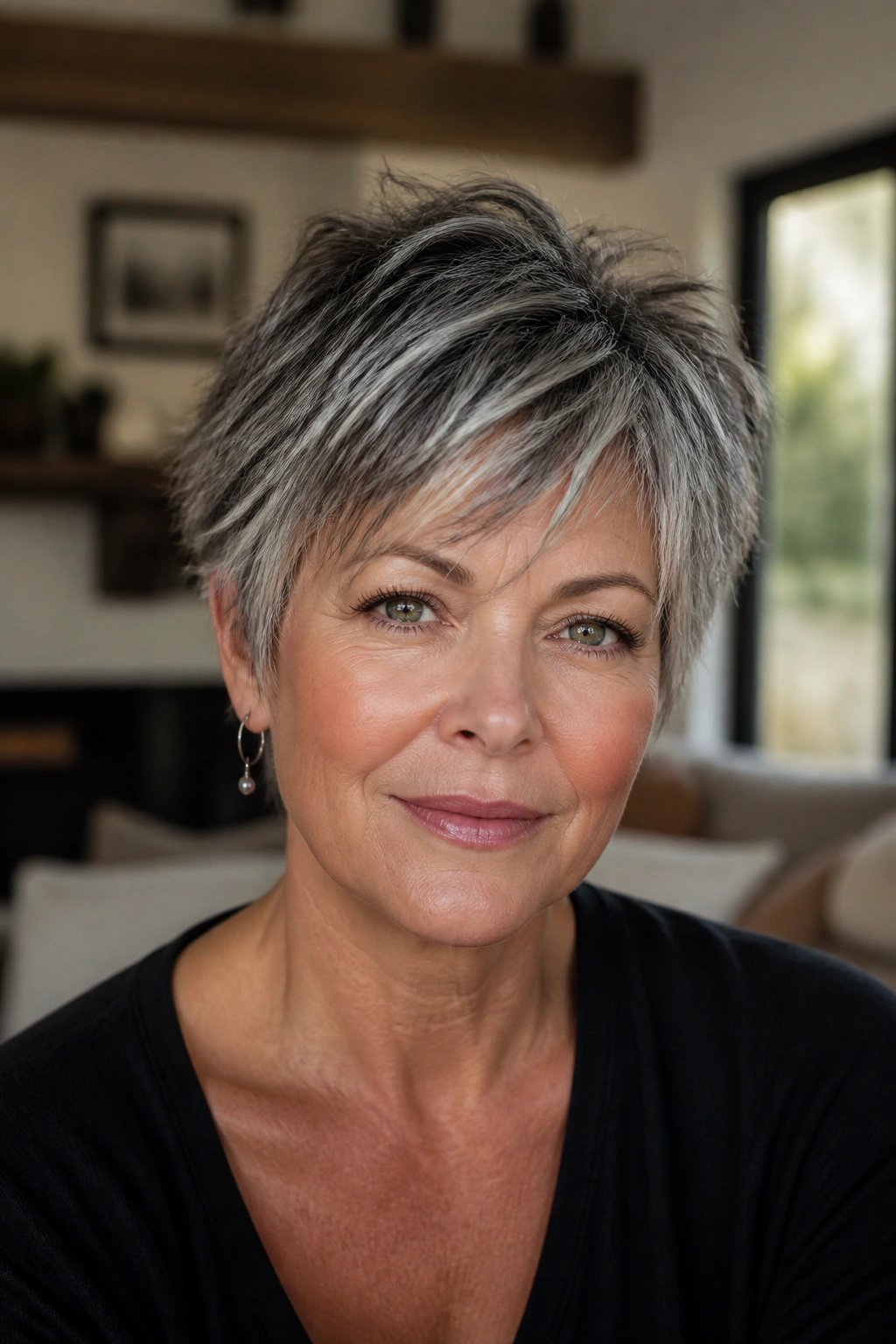
Can gray hair make a shaggy pixie look too severe? Not if the cut has enough softness in it. In fact, salt-and-pepper hair often makes the texture look richer because the lighter and darker strands show the layers better.
This version is especially good for round faces because the mixed color gives the cut movement even when you do not do much styling. A little bend here, a little separation there, and the whole shape wakes up.
How to Wear It
The goal is not perfection. The goal is a controlled mess. Blow-dry the crown first, then pinch a small amount of styling cream through the ends while the hair is still warm. That keeps the piecey look without making it greasy.
If your hair is naturally silver or peppered with gray, skip heavy shine products. They can make the texture collapse and pull the cut flat. A matte finish usually looks better here.
A salt-and-pepper shaggy pixie also has a nice side effect: it can make the face look sharper without trying too hard. The contrast around the temples and fringe does the work for you.
11. Ear-Tucked Shaggy Pixie With a Long Crown
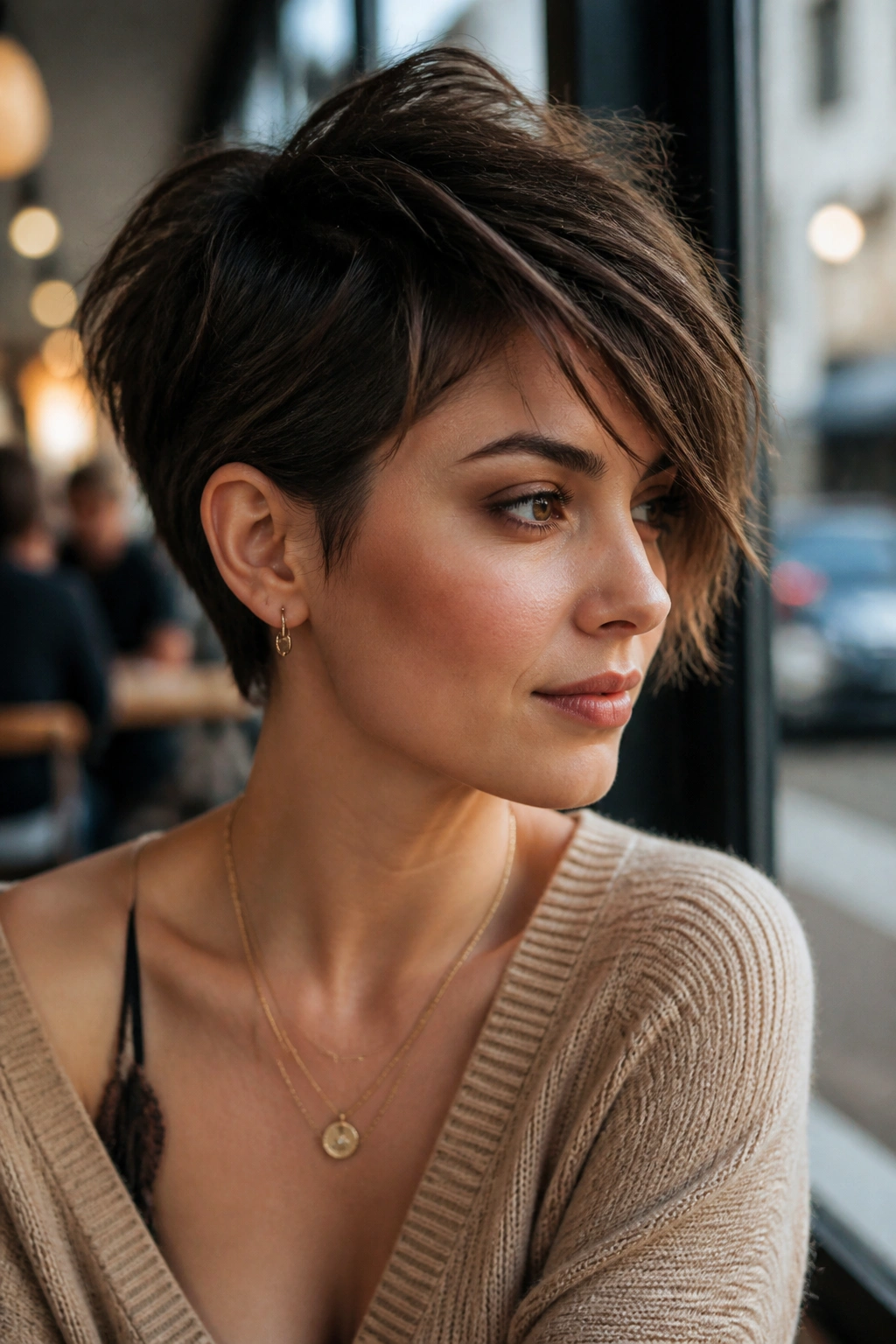
This one looks casual, but the shape is doing a lot of work. One side is tucked behind the ear, the other side stays loose, and the crown gets enough length to lift the eye upward. That asymmetry is what flatters a round face.
Tucking one side behind the ear opens the cheek and jawline right where you want a little more definition. The longer crown keeps the top from collapsing. The result feels relaxed, not finished-to-death.
A lot of people underestimate how useful this cut is for everyday wear. It works when you are dressed up. It works with a T-shirt. It works when the hair has gone slightly flat because the tucked side creates shape on purpose.
- Keep one side just long enough to tuck cleanly.
- Leave the crown longer and choppier than the sides.
- Use a light mist of hairspray only where needed.
- Tuck the side while the hair is still warm from the dryer for a cleaner bend.
I like this version for people who want a short cut that still feels a little changeable.
12. Pixie Shag With Curtain Bangs
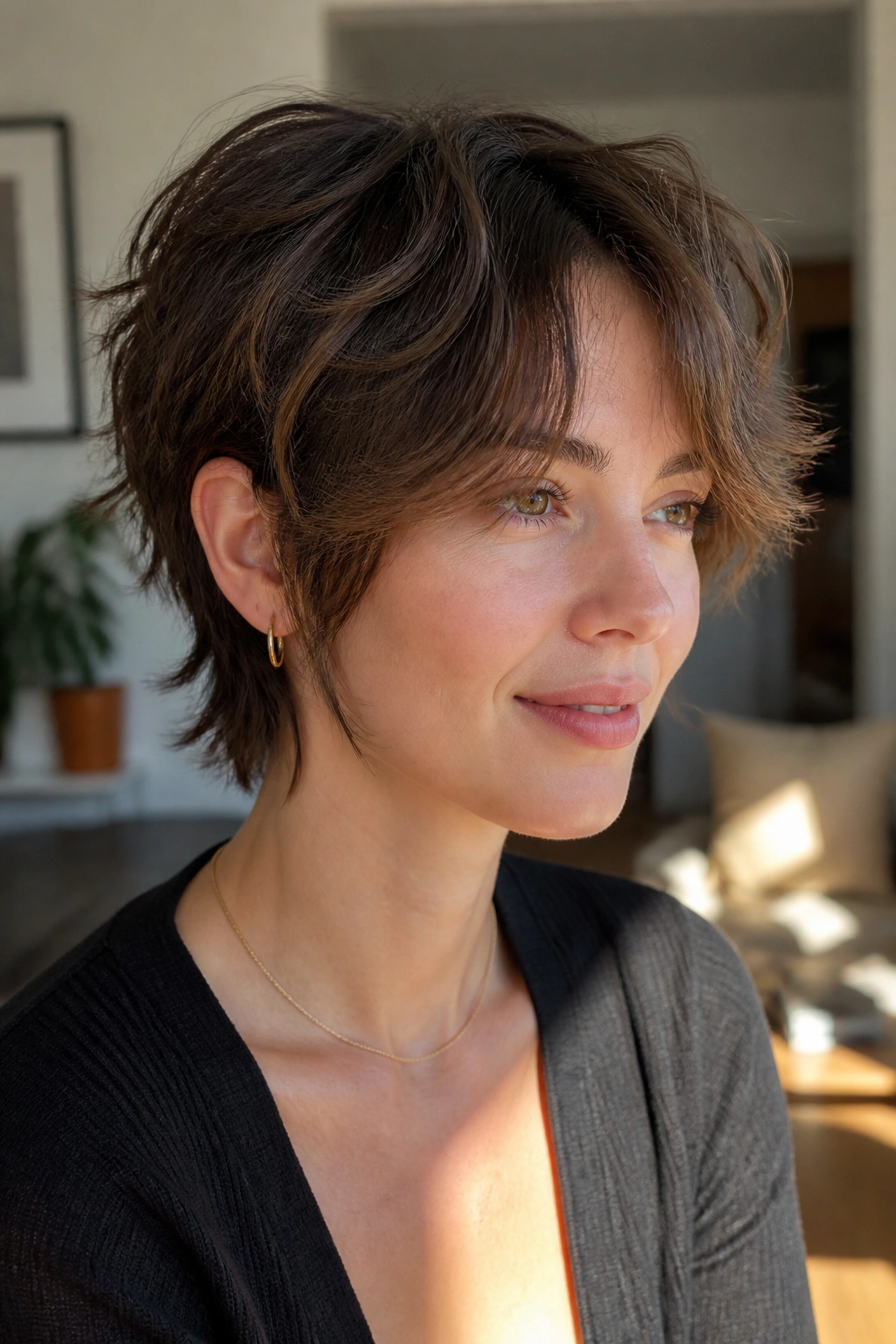
Curtain bangs are one of the smartest tools for round faces because they split the forehead line and fall away from the cheeks at an angle. A shaggy pixie with curtain bangs uses that trick on a smaller scale, and the effect is tidy in the best sense.
The center stays open. The sides graze the temples or cheekbones. That draws the face out rather than across. If the bangs are cut too short, the effect disappears. If they are too full, they start acting like a blunt fringe. The shape needs air.
This cut also works when you want the pixie to feel a little softer than the punkier versions above. Curtain bangs make the haircut easier to grow out too, which matters more than people admit. A lot of short cuts look great for three weeks and awkward for the next eight. This one has a longer runway.
Use a small round brush only at the fringe if you want a gentle bend. The rest can be finger-dried. That keeps the shaggy texture alive instead of turning everything into one polished helmet.
A good curtain bang on a pixie should look like it belongs there, not like it was pasted on.
13. Razor-Cut Shaggy Pixie
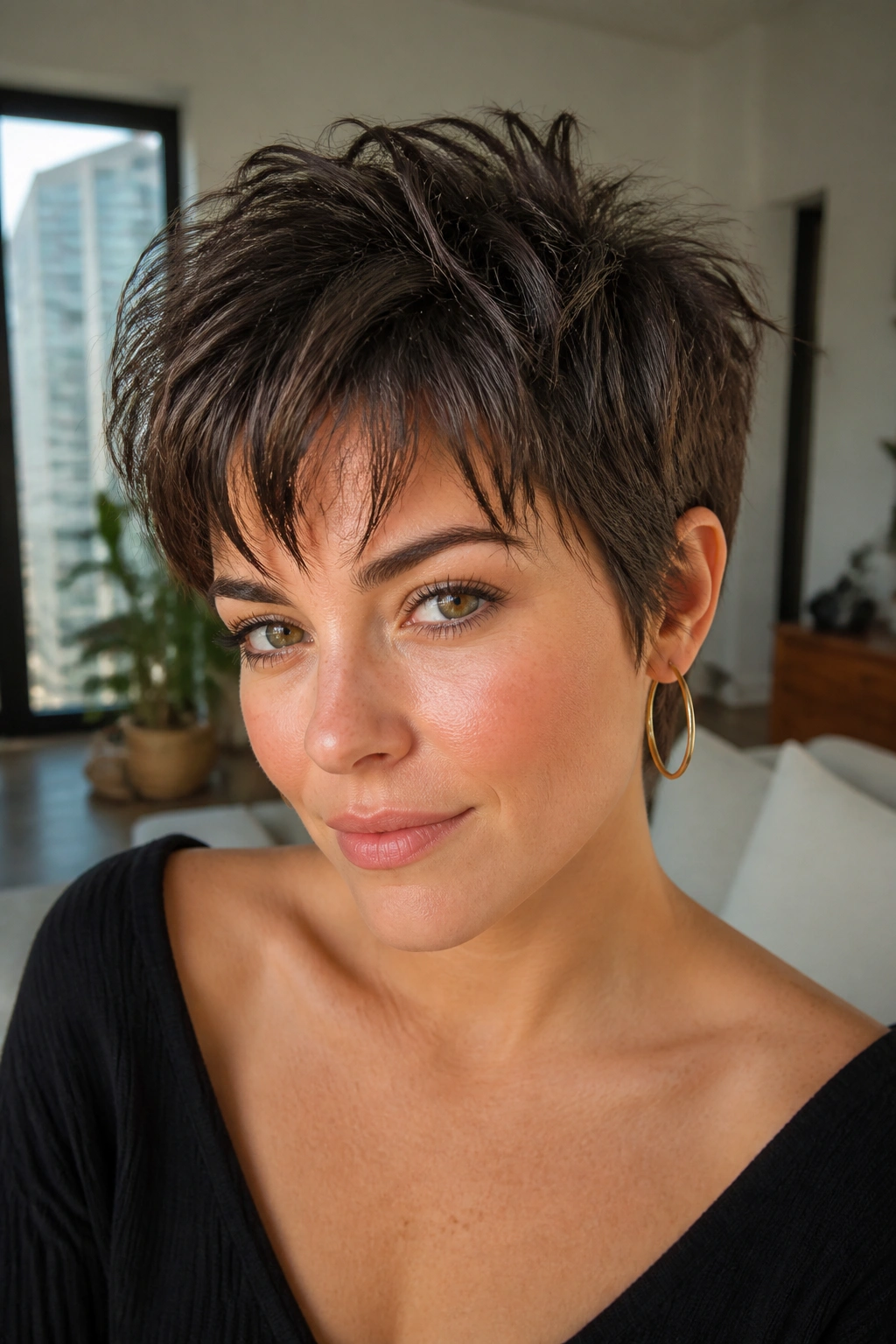
Razor cutting gives the shaggy pixie a softer, airier edge than blunt scissors usually do. That softness helps round faces because the ends break up the outline instead of drawing a hard circle around it.
The catch is texture. Razor cuts can frizz on very dry or very coarse hair if the stylist gets too aggressive. On straight or slightly wavy hair, though, the finish can look light and modern without feeling precious.
I prefer this version when the goal is movement more than volume. The layers fall in little slices, and the fringe can be carved just enough to avoid heaviness. It’s one of those cuts that looks better the second day, which tells you something.
Who Should Skip the Razor
- Anyone with very porous hair that frays easily.
- Anyone who wants a highly polished finish every day.
- Anyone who hates styling products and wants hair to sit perfectly on its own.
For the right hair type, the razor-cut shaggy pixie gives the face a softer outline and keeps the whole cut from feeling boxy. That boxy shape is the enemy here.
14. Air-Dried Natural Texture Pixie
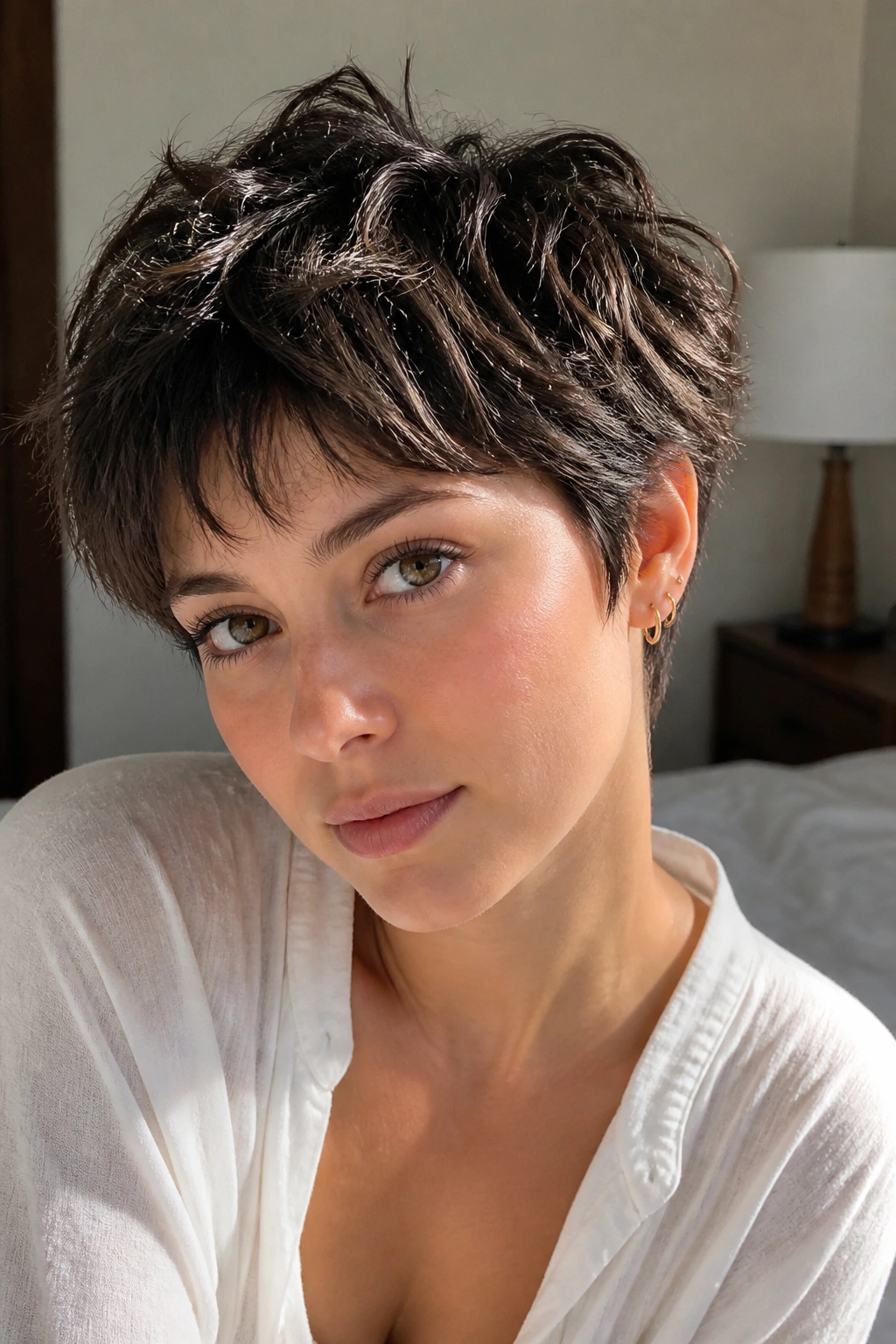
Some hair wants a fight. Some hair does not. If yours already has bend, wave, or a little roughness in the surface, an air-dried shaggy pixie can be the most flattering option of the whole bunch.
The trick is not to overwork it. Too much combing stretches the texture out and makes the cut lose its shape. A small amount of mousse or cream, scrunched through damp hair, usually gives enough control. Then you leave it alone. Really.
That little bit of controlled chaos is flattering on round faces because it keeps the silhouette from looking too round itself. Air-dried texture tends to stack in irregular places — a piece flips out here, a fringe bends there — and those irregular lines help break up the face.
I like this version for people who want a shaggy pixie without the daily styling ritual. It does need a decent cut underneath, though. If the layers are not placed well, natural texture can go from casual to mushroom-shaped fast.
A diffuser can help, but it is not required. Fingers and patience usually do more.
15. Soft Grown-Out Shaggy Pixie for Round Faces
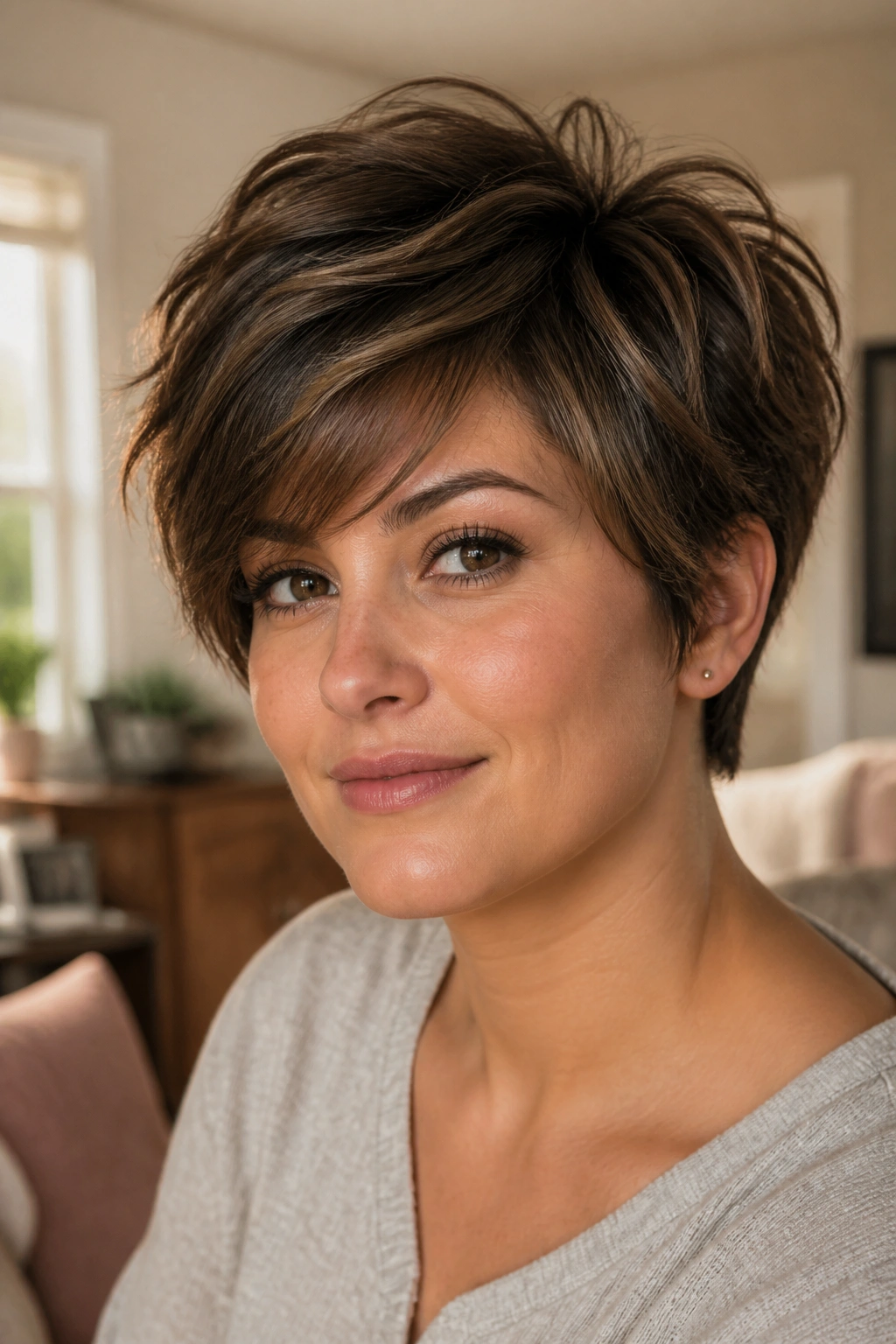
This is the one I’d hand to someone who wants the shortest version of a shaggy cut without locking themselves into a strict maintenance schedule. It has the easy edge of a pixie, but the longer top and softer nape let it grow out in a way that still looks deliberate.
The shape usually sits somewhere between a pixie and a tiny shag. The ears may be partly visible, the crown stays full enough to add height, and the fringe can sweep across the forehead or break into little pieces. That mix helps a round face by keeping the center line active while the sides stay light.
It also buys you time. A hard-edged short cut can start looking messy in two weeks if your hair grows fast. A grown-out shaggy pixie often looks better after a little time because the texture relaxes and the pieces fall in a more interesting way.
Why It Grows Out Well
- The top stays longer, so there is still shape when the sides soften.
- The nape stays tapered, which prevents the back from puffing out.
- The fringe can be pushed to either side as it gets longer.
- It is easy to refresh with dry shampoo and a touch of paste.
If you want one shaggy pixie that stays useful long after the salon finish fades, this is the one I’d put at the top of the stack.
