



The “big chop” is more than just a haircut. For those of us with coily, type 4 hair, shearing off the length often feels like a declaration of independence from the endless cycle of detangling, deep conditioning, and protective styling. There is an undeniable power in stripping away the excess. You aren’t just saving time in the mornings; you are forcing your hair to stand on its own merits, revealing your bone structure and highlighting your features in ways that longer styles often mask.
Short, coily cuts require a different kind of relationship with your mirror. You cannot hide behind a ponytail or a messy bun when your hair is buzzed or tapered. Every curl pattern, every coil definition, and the very shape of your head becomes the focal point. This creates a unique opportunity to refine your look and embrace your natural texture with a precision that long hair simply does not allow. Whether you are aiming for something professional and sharp or bold and artistic, the right cut changes your entire demeanor.
Most people assume that shorter hair equals less maintenance, but that is a dangerous half-truth. While you spend significantly less time on wash day, you spend much more time in the barber’s chair. A crisp taper or a clean fade is a commitment. It requires upkeep to maintain that perfect silhouette. If you are ready to stop managing your hair and start styling it, these options provide a blueprint for moving forward.
1. Tapered Fade with Finger Coils
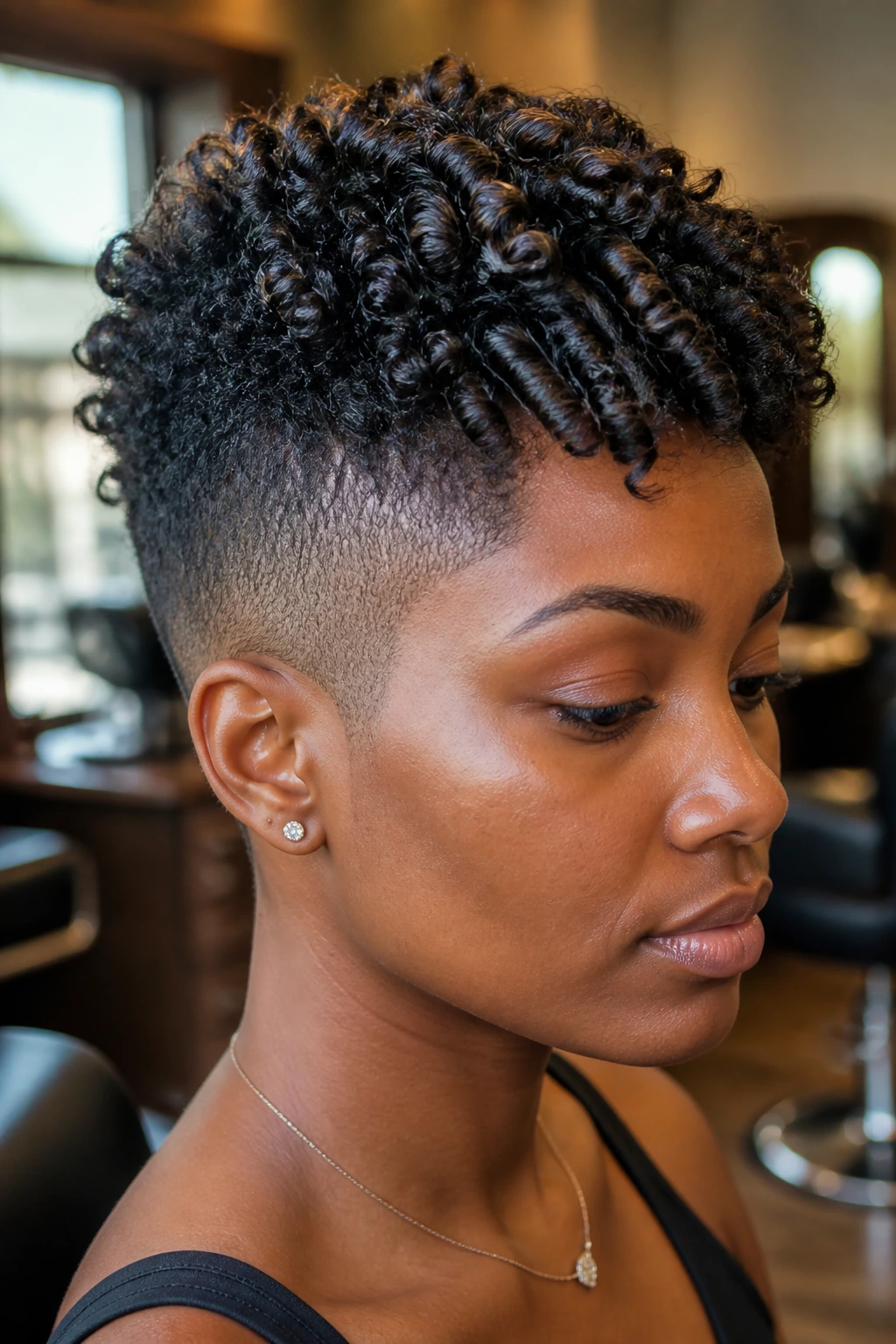
This style sits at the intersection of structure and playfulness. The back and sides are kept ultra-short—often faded down to the skin or a low-gauge clipper setting—while the crown is left long enough to form distinct, defined coils. By using a light styling cream or a curling custard on damp hair, you can manually coil sections around your index finger to create a uniform, bouncy texture that holds its shape for days.
Why It Works for Type 4 Hair
The extreme contrast between the close-cropped sides and the high volume on top elongates the face. It is an excellent choice for those who struggle with uneven curl patterns, as the tight coils on top mask inconsistencies. You get the polish of a barbered cut with the softness of a natural curl.
Maintenance Tips
- Visit your barber every two weeks to keep the fade sharp.
- Use a water-based moisturizer daily to keep the coils from becoming brittle.
- Sleep with a silk bonnet to protect the coils from frizzing against your pillowcase.
2. Precision Tapered Pixie
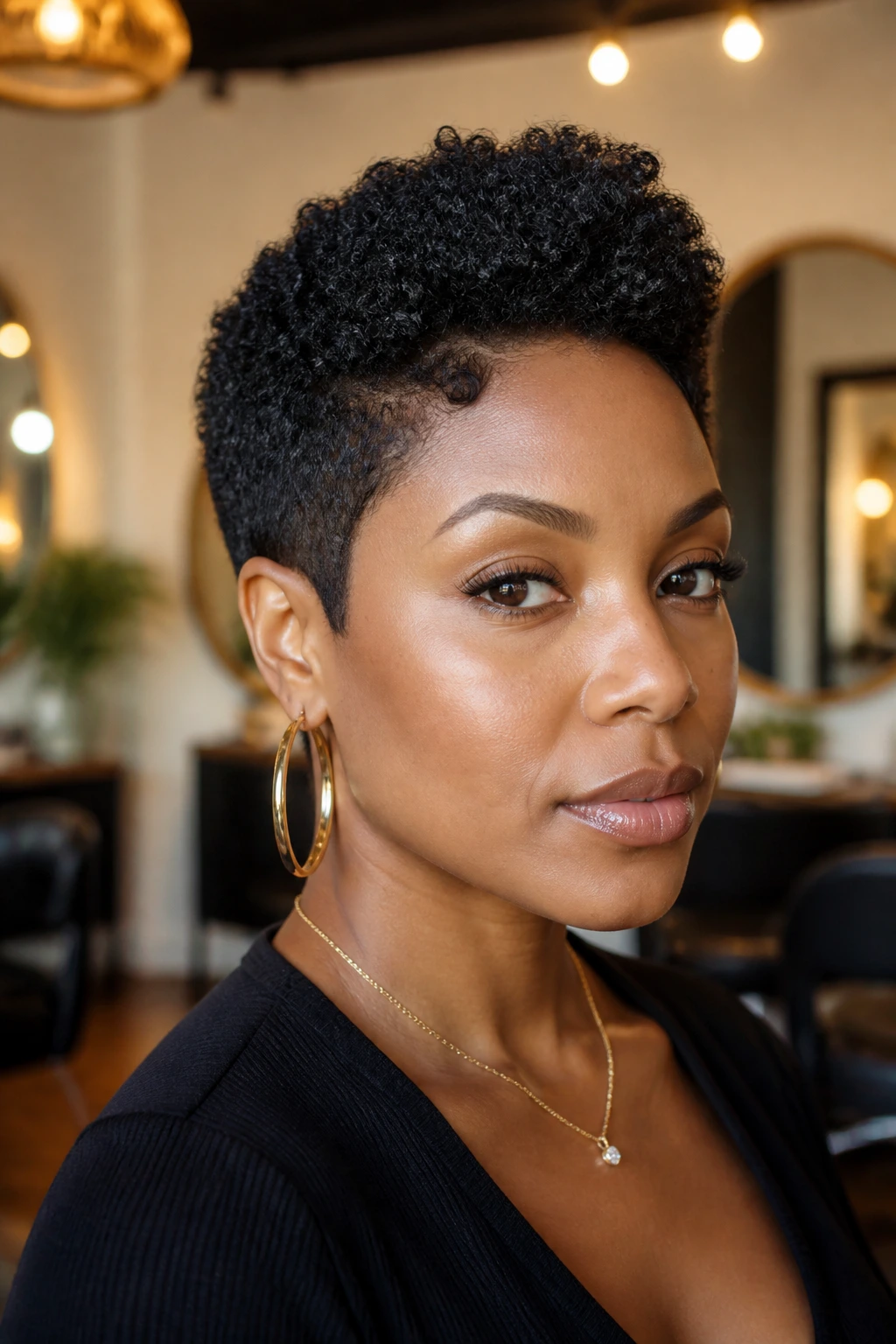
Think of this as the tailored suit of haircuts. A precision pixie for coily hair is not about just hacking the hair off; it is about sculpting it to follow the natural lines of your skull and neck. The stylist will taper the edges along the hairline with meticulous detail, leaving just enough length on top to show off your natural shrinkage.
How to Style It
Apply a leave-in conditioner while your hair is soaking wet in the shower. Use a wide-tooth comb to gently distribute the product, then follow up with a light-hold gel. Let it air dry without touching it. The goal is to avoid disturbing the coils once they start to set. If you mess with it while it is drying, you will invite the frizz you are trying to avoid.
A Note on Texture
If your hair is extremely tightly coiled, ask for a “texturized” pixie. This doesn’t mean chemical texturizing, but rather a point-cutting technique where the stylist snips into the ends to soften the silhouette and prevent a bulky, mushroom-like appearance.
3. Rounded Afro

There is an iconic, timeless quality to a perfectly rounded afro. It is the ultimate expression of volume and health. To achieve this, your stylist needs to shape the hair so that it grows out evenly in a sphere. This isn’t a cut you get and forget; it is a cut that requires consistent, strategic trimming to maintain that circular geometry.
The Power of the Pick
You cannot achieve a perfect round shape with a brush. You need a metal or plastic hair pick. Start at the roots and gently lift the hair outward. Do not pull all the way through to the ends, as this will destroy your curl pattern. Work from the bottom up, building volume gradually.
Common Pitfalls
- Over-picking: This leads to breakage and excessive frizz.
- Ignoring the ends: Even in a rounded afro, split ends will ruin the shape. You need a trim every six to eight weeks, no matter how much you want to keep the length.
- Using heavy oils: Heavy products will weigh the hair down, turning your round afro into a flat, triangular shape. Stick to lightweight mists or foams.
4. Undercut with Design
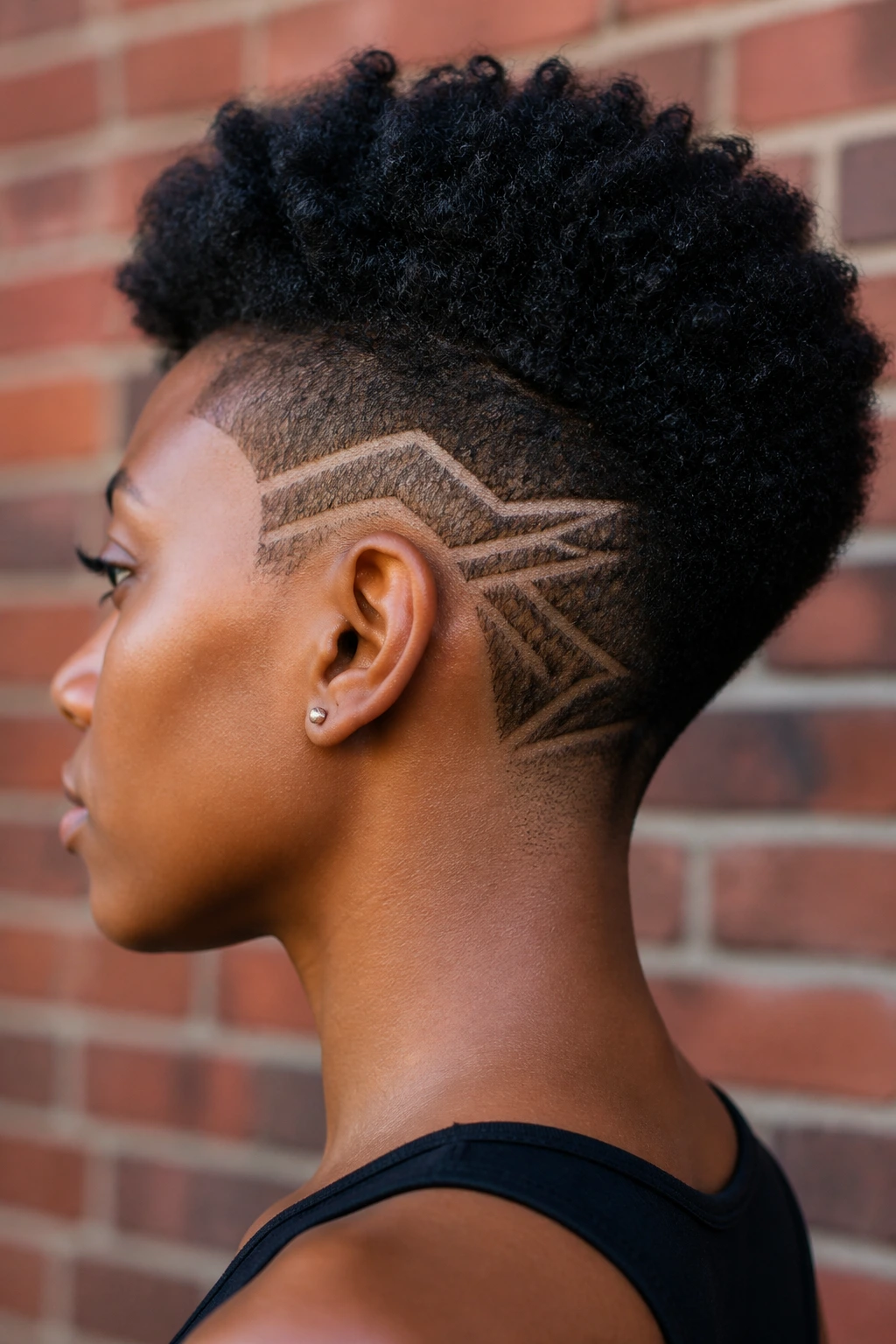
If you want to move beyond the traditional and venture into something edgier, an undercut with a shaved design is your best bet. You can keep the top longer—styled as a puff, a twist-out, or just loose coils—while the shaved portion at the nape of the neck or the side features geometric lines, stars, or abstract patterns.
Why This Style Lasts
The undercut is practical. It reduces the overall bulk of the hair, making it much easier to manage if you have extremely thick, dense coils. It also provides a cooling effect during warmer weather, as it eliminates hair from the areas where we usually sweat the most.
Stylist Communication
When getting a design, bring a reference photo. Hair art is visual. Explaining a design with words is difficult, and your barber will appreciate seeing exactly what you want before they start the first line. Ask for a design that complements your natural hairline rather than fighting against it.
5. Sculpted Mohawk
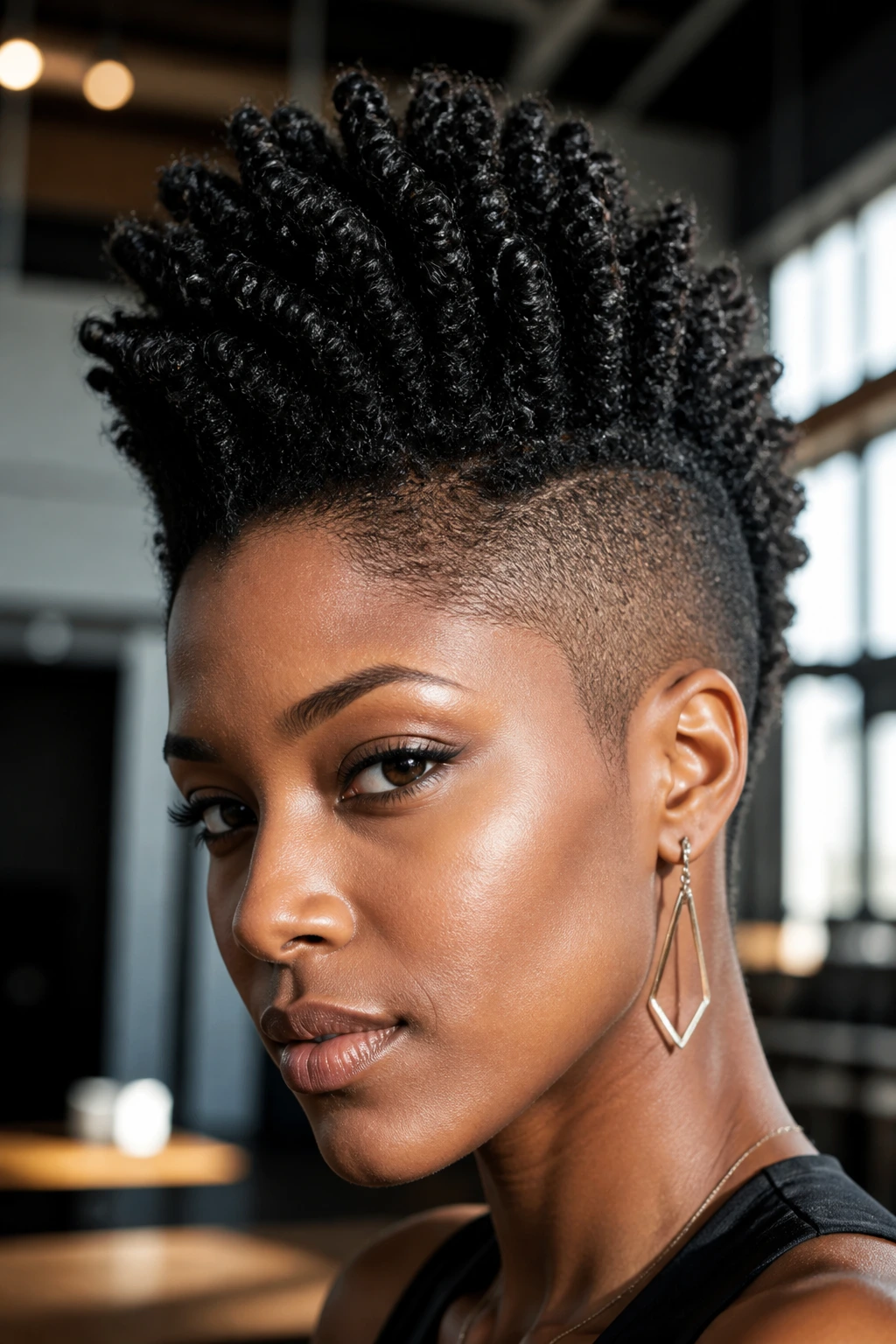
The mohawk is a classic for a reason. For coily hair, it doesn’t have to look like a punk-rock relic from the eighties. A modern, sculpted mohawk features tapered sides that lead up to a ridge of height in the center. You can keep the center section tightly coiled or let it grow out into a more freeform, wild texture.
Styling the Ridge
The secret to a good mohawk is edge control. Use a firm-hold styling pomade to slick the sides up toward the center. If you want the center to stand tall, use a volumizing root spray or a light dusting of hair powder before styling. This creates the structural support your coils need to defy gravity.
Face Shape Considerations
This style is particularly flattering for round or square face shapes. The vertical height of the mohawk acts as an elongating force, adding balance to your features. It is a bold look, but the maintenance is actually lower than you might think since you only really need to focus on styling that central section.
6. Asymmetrical Taper
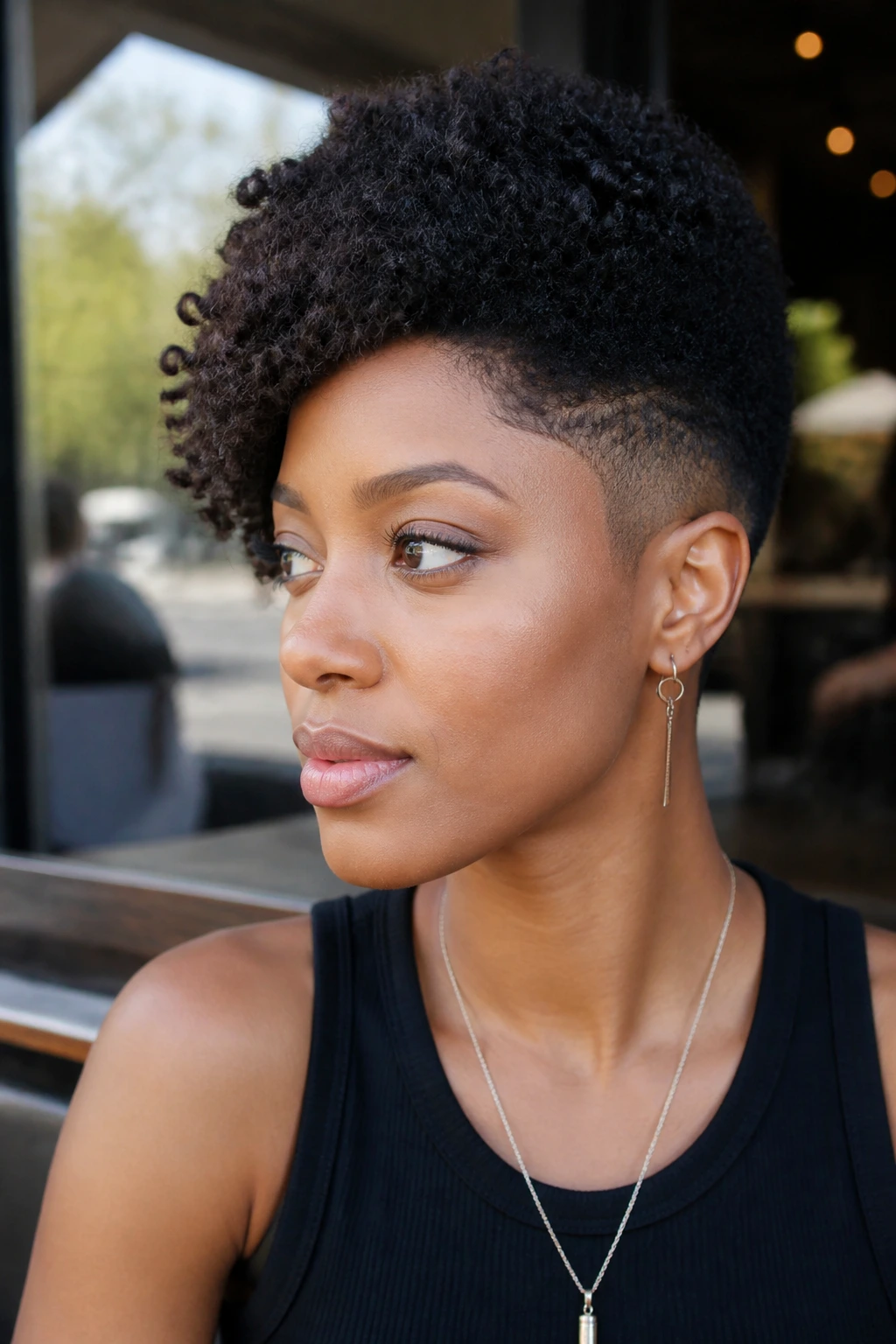
An asymmetrical cut adds a layer of mystery and sophistication. By leaving one side slightly longer or having the taper angle downward toward one ear, you create movement in a hairstyle that is otherwise static. This cut works beautifully with natural coils because the asymmetry draws the eye and highlights the varying angles of your face.
The Role of Direction
When your stylist cuts the hair, they need to know which side you prefer to part your hair on. The asymmetry is built into the graduation of the length. If you change your part later, the cut may not look as intended. Make sure to discuss your preferred parting style with the stylist before they make the first cut.
Texture and Flow
Because one side is shorter, the coils will behave differently on that side. Embrace the discrepancy. The beauty of this look is the visual imbalance. You don’t want it to look too perfect; a little bit of “messy” adds to the cool factor of the asymmetrical shape.
7. The “Big Chop” Buzz Cut
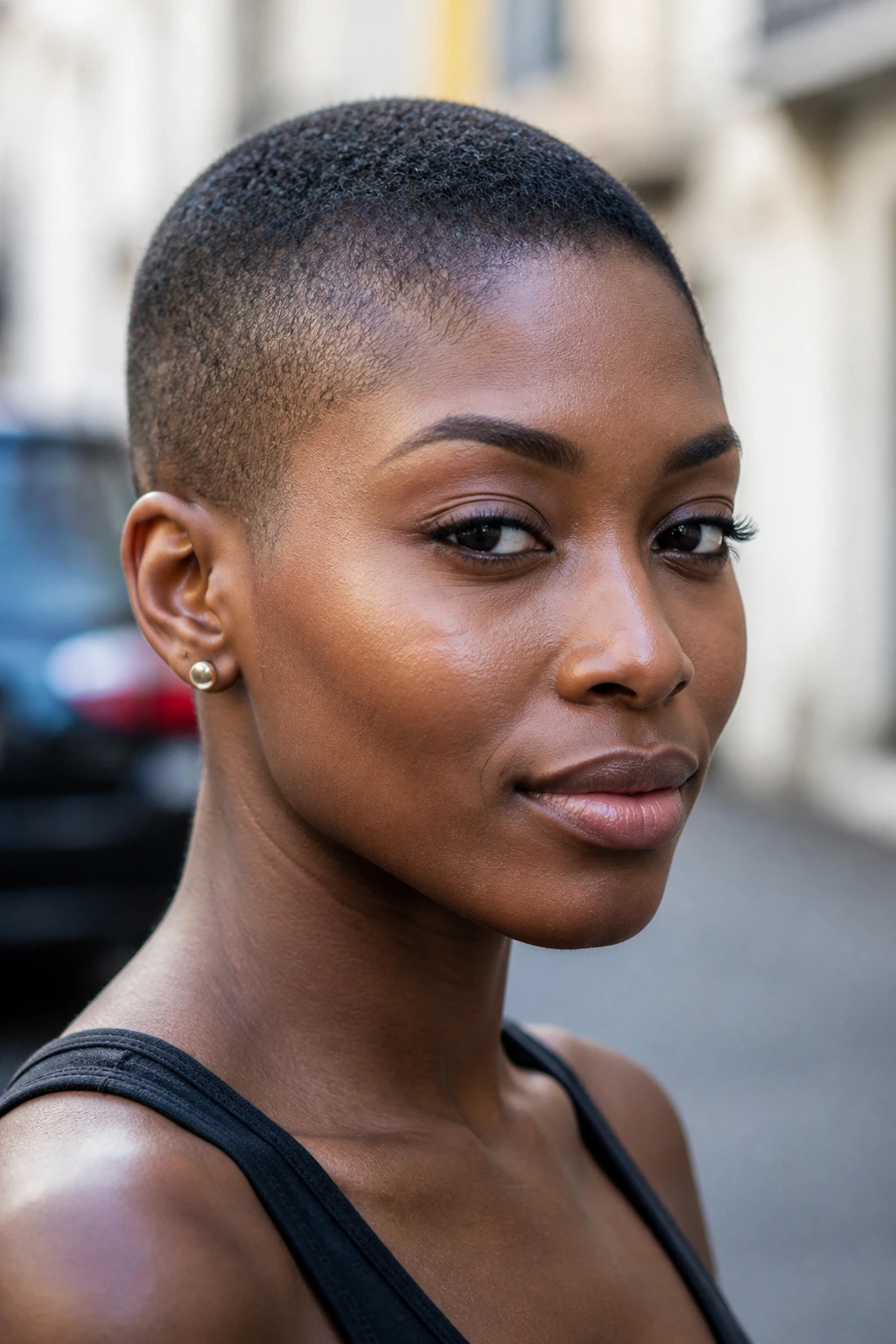
Sometimes, the most dramatic statement is the simplest one. Taking your hair down to a buzz cut—whether a uniform length all over or a subtle fade—is the ultimate way to reset your relationship with your hair. It’s an exercise in confidence. You cannot hide behind anything; it is just you.
Preparing for the Buzz
Before you go to the chair, consider the shape of your head. If you haven’t seen your scalp in years, you might be surprised by lumps or bumps you never knew were there. That is normal. A buzz cut is a bold, clean aesthetic that draws total attention to your eyes, cheekbones, and lips.
Post-Cut Care
Your scalp is exposed. You need to treat it like skin, not hair. If you have a dry scalp, use a lightweight, non-comedogenic oil to keep the skin hydrated. If you are going out in the sun, wear a hat or use a scalp-safe sunscreen. Your hair will grow back, but until then, your scalp is the star.
8. Curly Taper with Side Part
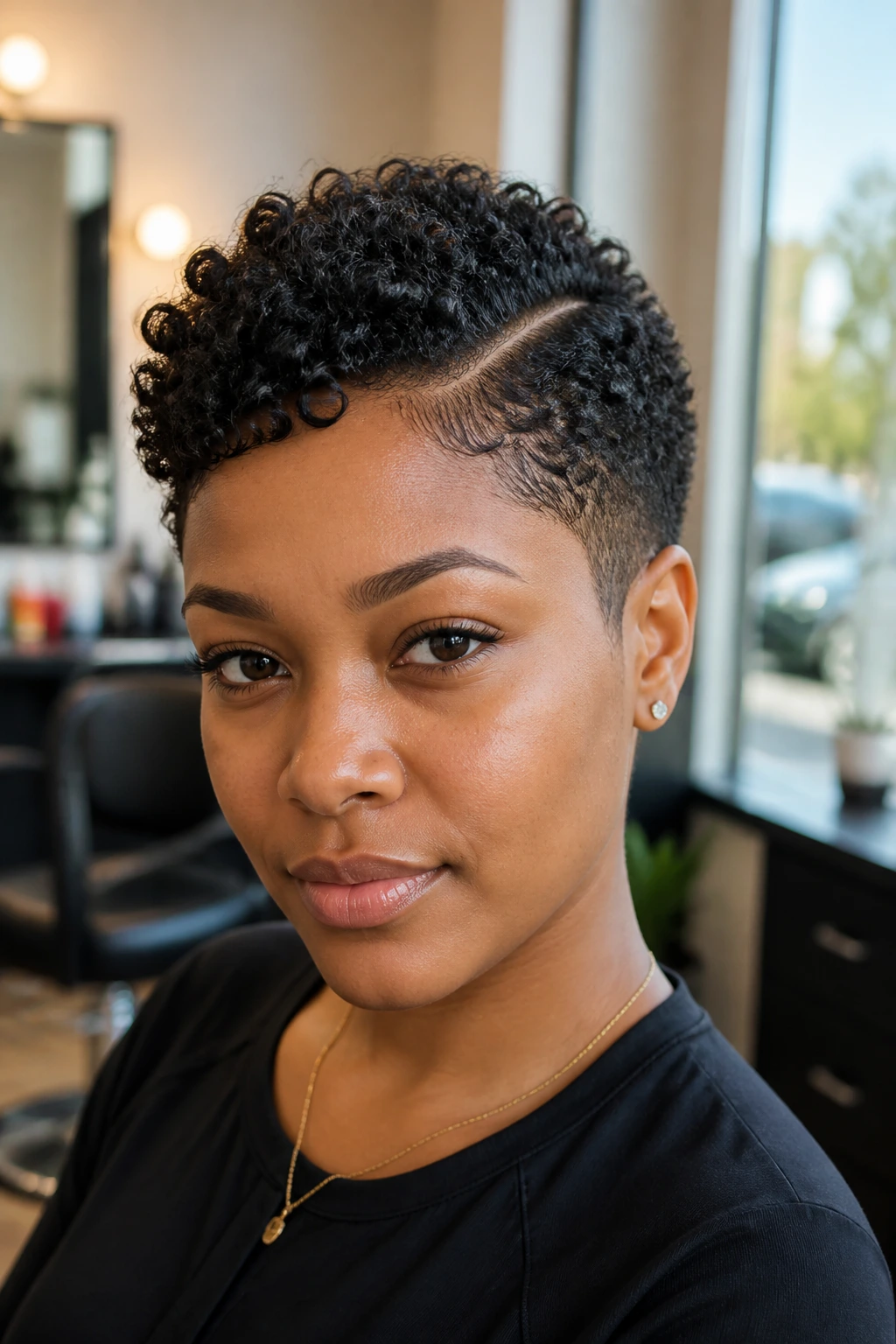
A side part instantly changes the geometry of your hair. By tapering the sides and back, you provide a clean canvas, and the deep, structured side part adds a level of intentionality and polish. This is a fantastic “office-appropriate” cut that still maintains the integrity and beauty of your natural coil pattern.
Creating the Part
Don’t rely on the hair to “just fall” into a part. Use the end of a rat-tail comb to carve a clean line while the hair is damp. Once the hair is set, the part will remain sharp. If you find the part is disappearing, a tiny dab of edge control or styling gel along the line will lock it in place.
Texture Balance
Keep the hair on the “short” side of the part tighter to the head with a bit of gel, and let the hair on the “long” side remain fluffy and voluminous. This contrast is what makes the side part effective. It creates a frame for your face that feels purposeful and well-groomed.
9. Fade with Defined Twist-Out
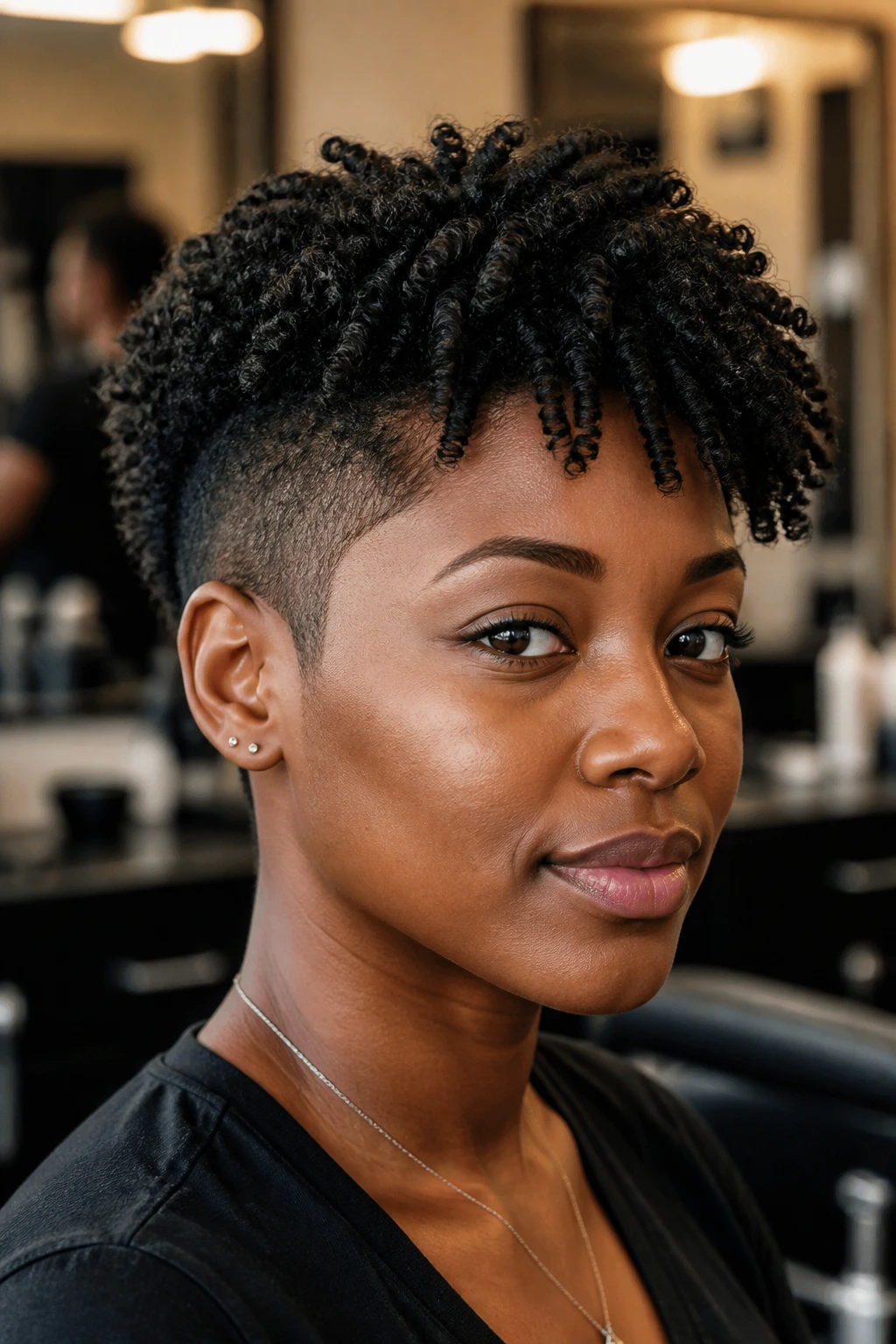
You don’t have to give up on styling techniques just because your hair is short. A fade with a twist-out on top gives you the best of both worlds: a sharp, professional barbered edge and the intricate, defined texture of a twist-out.
Twist-Out Mechanics
- Section the damp hair into small, manageable squares.
- Apply a twist-defining cream to each section.
- Twist the hair tightly from root to tip.
- Let it dry completely (use a hooded dryer if you are in a rush).
- Unravel the twists gently, using a bit of oil on your fingers to prevent frizz.
The Longevity Factor
Since the sides are faded, your twist-out will look fresh for longer. Usually, twist-outs start looking tired when the hair near the neck and ears gets frizzy or shrinks up. By removing that hair with a fade, you eliminate the primary source of early twist-out decay.
10. Graduated Bob (Short)
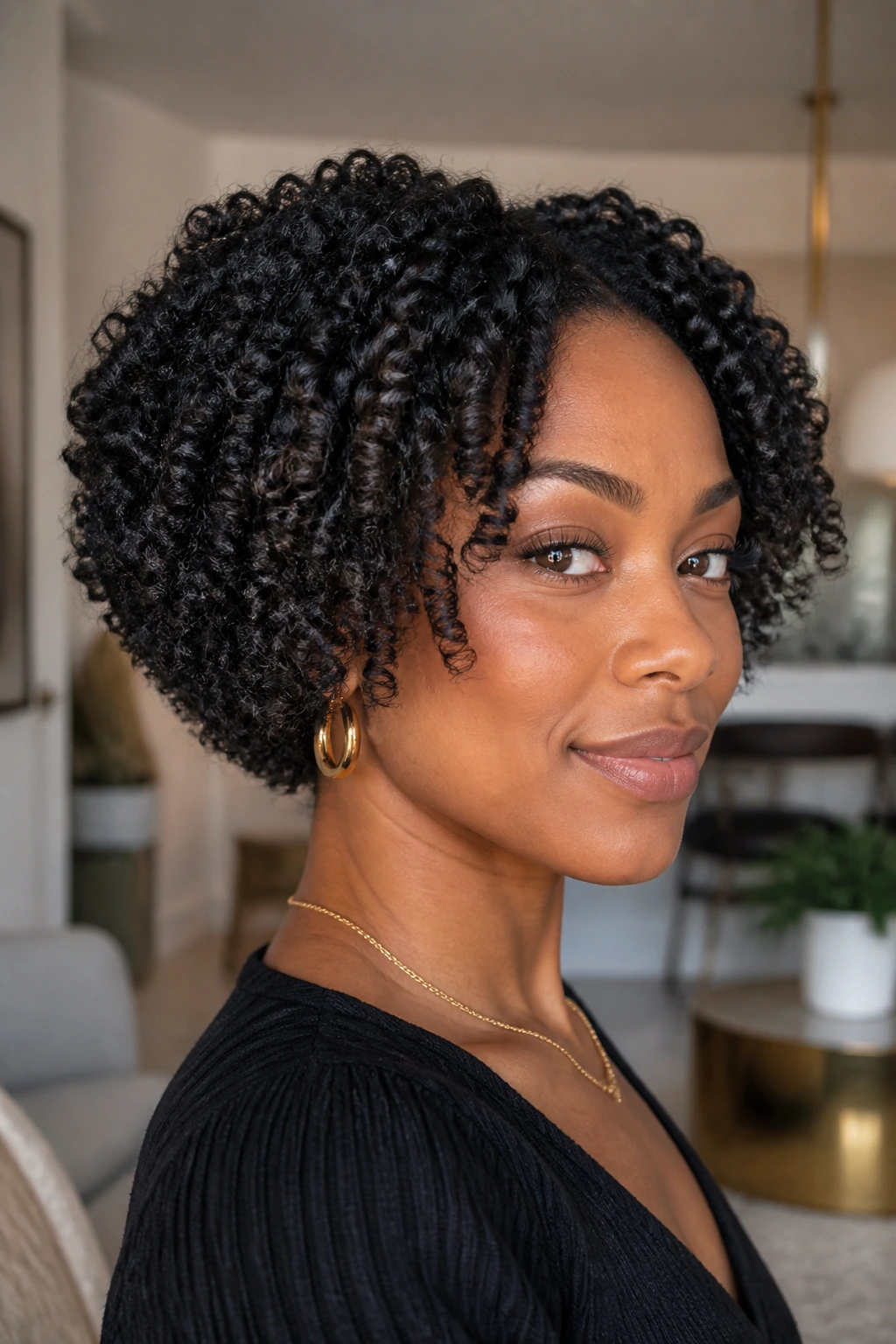
A short bob doesn’t have to be straight or wavy. A graduated bob—shorter at the back and slightly longer at the front—can look incredible on coily hair. It creates a lovely, rounded silhouette that frames the jawline. The trick is to ensure the stylist cuts the coils dry so they can see how much shrinkage occurs.
Understanding Shrinkage
If your stylist cuts your hair while it’s wet, they will inevitably cut it too short. Coily hair can shrink by up to 75%. Always insist on a dry cut if you are going for a precise shape like a bob. This allows the stylist to see the “spring” of your coils and cut accordingly.
Daily Styling
A short bob for coils thrives on moisture. Because the hair is shorter, it’s easier for natural oils from your scalp to travel down the shaft, but you still need to supplement with a daily leave-in conditioner. Focus the product on the ends to keep them from tangling or matting.
11. High-Top Fade with Curls
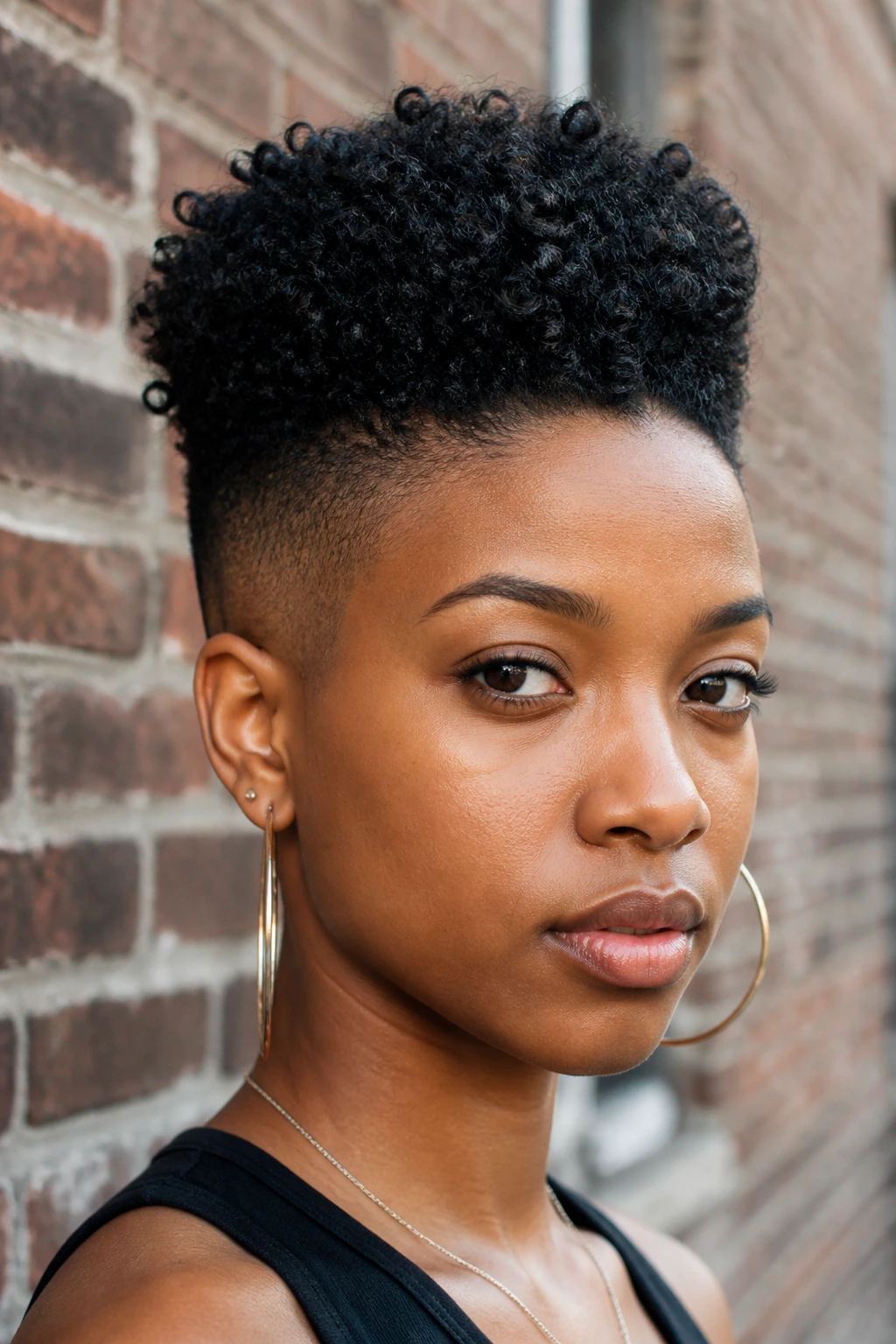
This is a nod to a classic 90s aesthetic that has made a massive comeback. A high-top fade keeps the sides and back extremely low, but leaves the hair on the crown long and tall. The key difference here is the texture. Instead of a flat-top, you are letting the coils create a natural, sponge-like structure on top.
Maintaining the Height
You need a good volumizing mousse to keep the hair on top from collapsing. Work the mousse through the hair, then use a pick to lift the coils up and out. Avoid gels here; they are too heavy and will make the high-top look sparse and stringy. You want airy, voluminous coils.
When to Trim
The “high” part of the high-top needs to be shaped regularly. If it grows out unevenly, the boxy structure loses its impact. Every three to four weeks, have your barber tidy up the perimeter and trim the stray ends on top to maintain the structural integrity.
12. Shaved Sides with Curly Frohawk
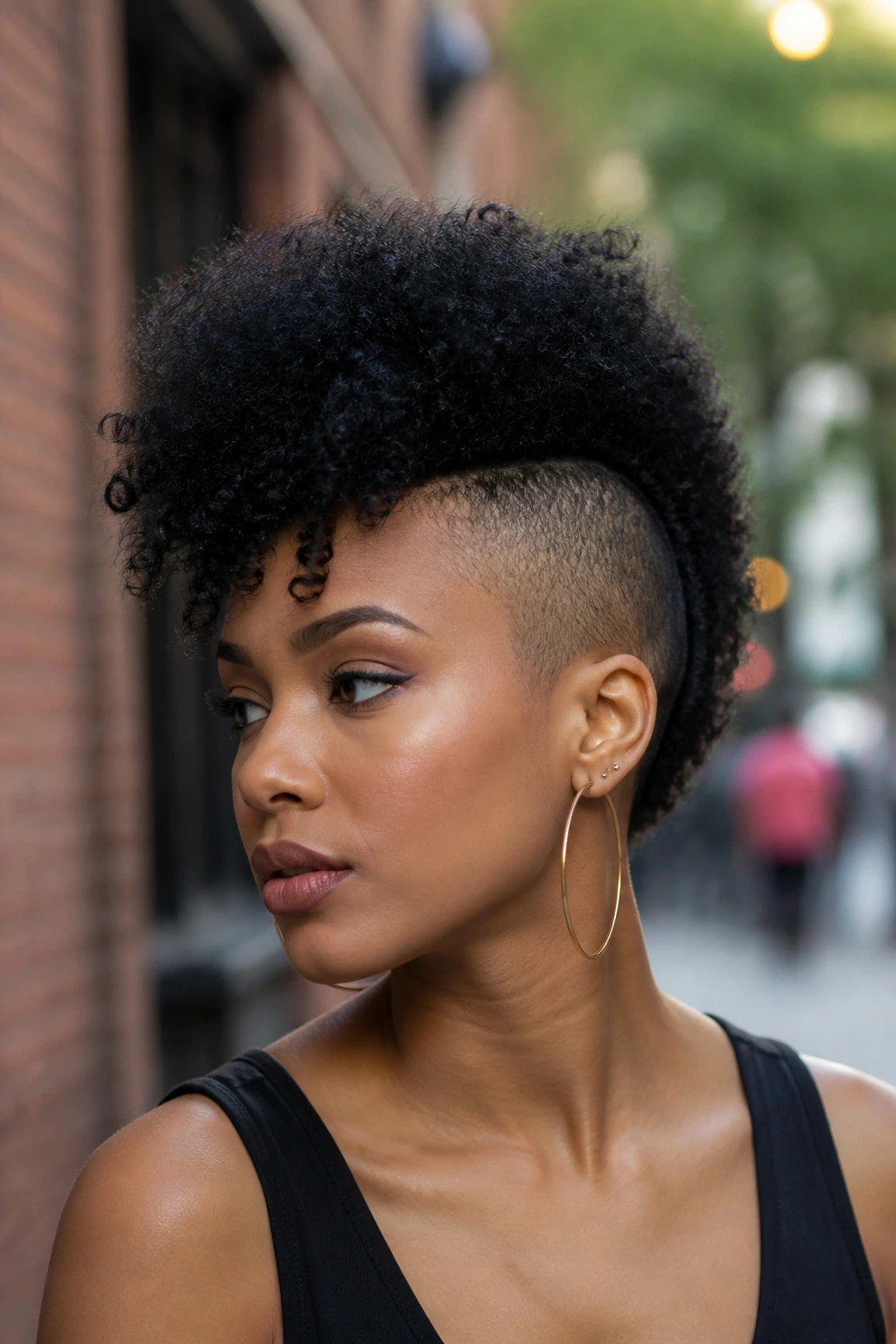
Similar to the mohawk, but with a more deliberate “fro” texture in the center. The sides are shaved down to a zero or one, creating a clean frame for the central island of coils. This look is bold, confident, and very easy to maintain on a day-to-day basis.
Product Selection
Since your sides are shaved, you really only have to worry about the hair in the center. Invest in one high-quality curl-defining custard. You don’t need a massive product arsenal. Apply the custard, let it air dry, and you are done. The contrast of the shaved skin against the natural volume of your coils creates a striking visual.
Styling for Occasions
For a night out, you can push the coils forward to create a faux-bang effect, or brush them backward to reveal your forehead. The versatility of the central strip is a major benefit of this cut. It’s one of the few short styles that allows for actual “hair play” despite the dramatic undercut.
13. Pixie with Longer Crown
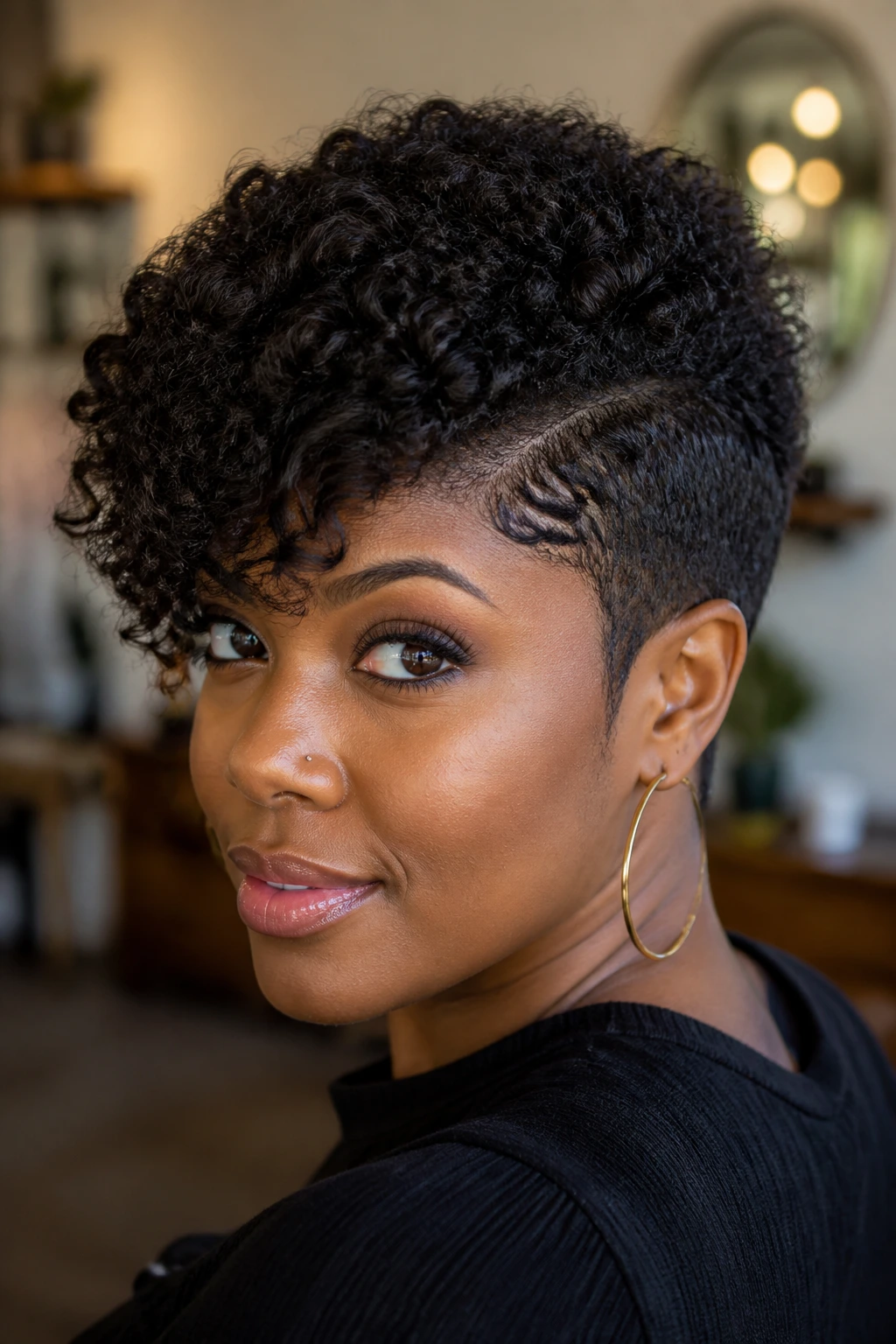
A pixie cut is usually uniform, but by leaving the hair at the crown significantly longer, you gain a massive amount of styling potential. You can sweep it to the side, let it fall over your forehead, or pull it up into a small, tight knot.
The “Swoop” Technique
Use a fine-tooth comb to sweep the longer hair across your forehead while it is still damp. Apply a flexible-hold gel to lock the shape. This creates a soft, feminine contrast to the shorter, tighter hair at the nape and sides. It’s a sophisticated look that transitions perfectly from work to a social event.
Refreshing the Look
If the coils on top get flattened while you sleep, don’t re-wash your whole head. Mist the hair with a water-and-conditioner mix, shake the curls with your fingers to revive the pattern, and use a tiny bit of gel to smooth the edges. It takes less than two minutes.
14. The “Short and Curly” Crop
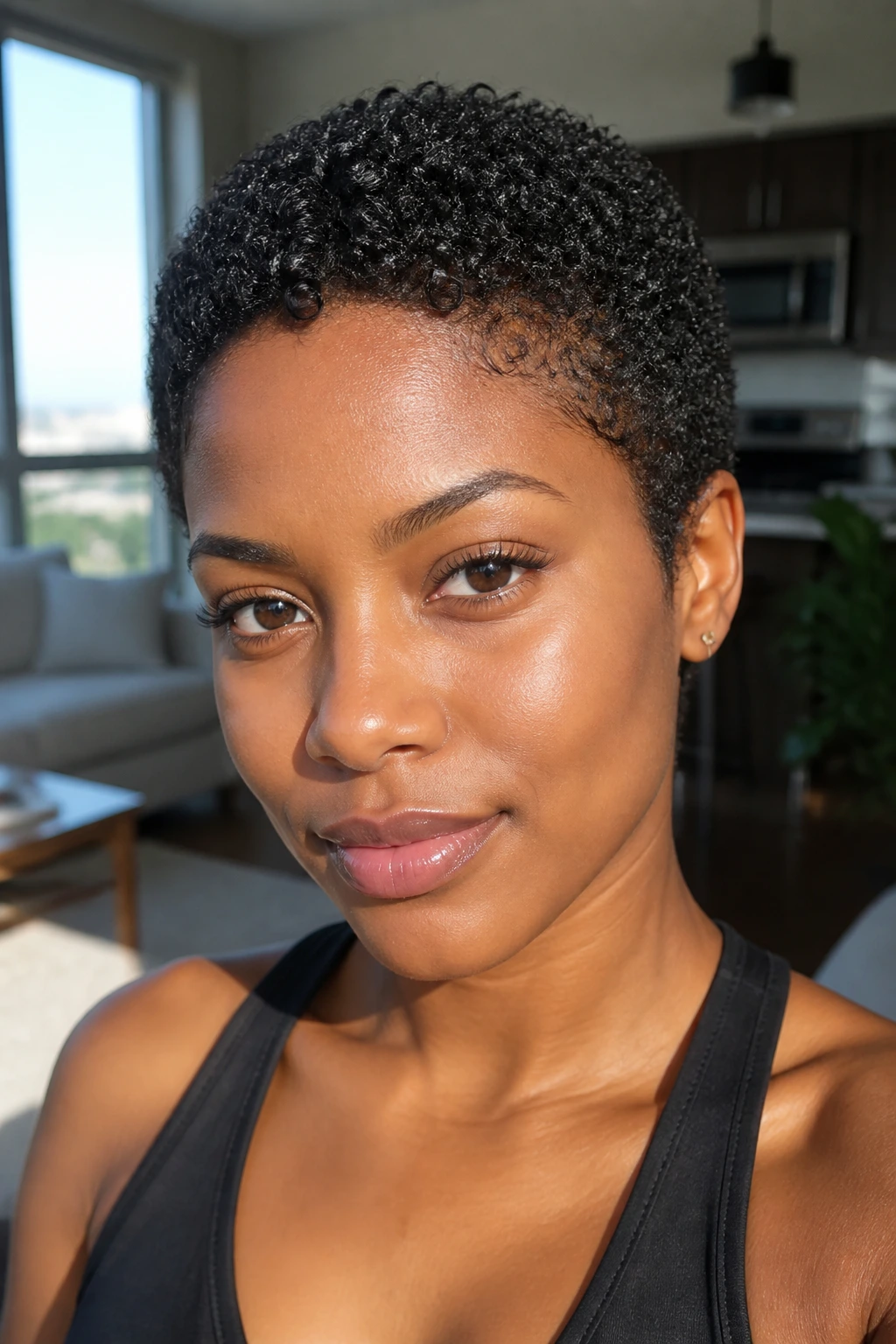
This is a low-maintenance, wash-and-go style. The hair is cut to a uniform, short length all over the head—about one to two inches. It’s not a fade; it’s more of a cropped, rounded shape that follows the head. It is incredibly practical for active lifestyles.
Why It’s Often Overlooked
Many people think they need “more hair” to look stylish. But a short, well-cut crop highlights your facial features—your eyes, your smile, the shape of your ears—better than almost any other cut. It is a humble, understated style that exudes self-assurance.
Daily Maintenance
You can literally wake up, shake your head, and leave. If you want a bit more definition, a quick finger-rake with a lightweight curling cream is all you need. Because the hair is so short, you won’t have to deal with tangles or knots. It is the ultimate “low-effort, high-impact” hairstyle.
15. Tapered Fade with Bleached Tips
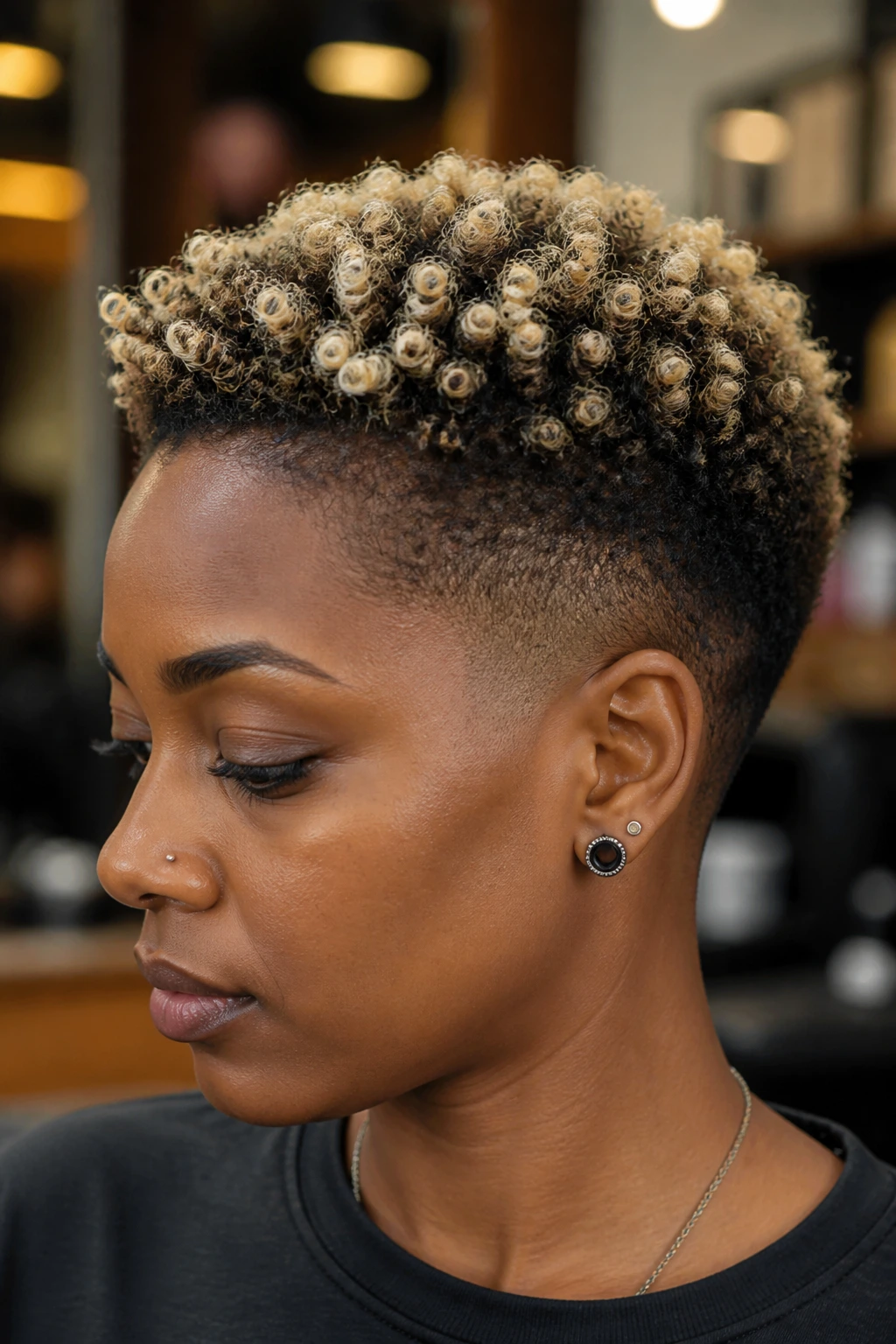
If you want to play with color without risking the health of your entire head of hair, try bleaching just the tips of the coils in a short, tapered cut. Because the hair is short, the bleached ends will eventually be trimmed away, so you don’t have to worry about long-term damage or breakage.
Managing Bleached Hair
Bleach dries out coily hair instantly. You must, must, must use a deep conditioning mask at least once a week. Even on short hair, the protein structure of your coils has been altered by the bleach. A good bond-building treatment is worth the investment to keep the tips from turning into straw.
Choosing the Color
Platinum blonde, honey gold, or even a soft pastel can look amazing on dark, coily hair. Because you are only bleaching the tips, the contrast against your natural hair color at the roots creates a beautiful, multidimensional effect that makes the curl pattern pop.
16. Defined Coils with Natural Shape
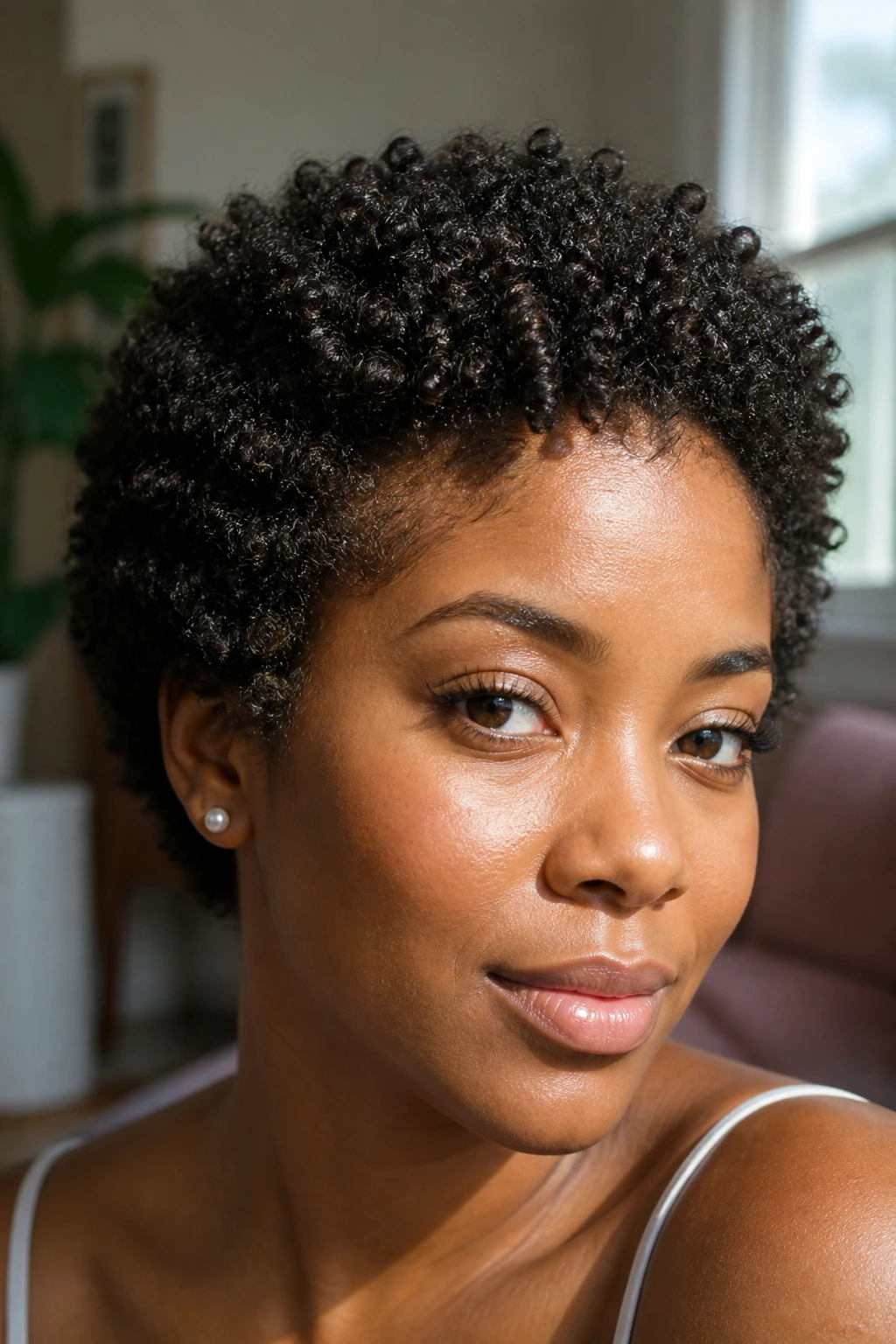
Sometimes, you don’t need a fancy fade or a geometric shape. Sometimes, you just need a great cut that allows your hair to grow in its natural, beautiful, curly shape. This involves a technique called “shaping,” where the stylist cuts the hair to encourage it to grow out in a flattering, rounded form without being perfectly circular.
The “Wash-and-Go” Foundation
The success of this cut depends entirely on the health of your coils. If your hair is dry and damaged, it won’t clump into defined coils; it will just fluff up. Invest in a high-quality co-wash and a hydrating leave-in conditioner. Your goal is clumped, hydrated coils that move independently.
Growing it Out
As this cut grows out, it doesn’t get awkward. Because the stylist shaped it to follow your natural growth pattern, it simply gets longer while maintaining a similar aesthetic. This is the best cut for someone who wants to embrace their natural length but hates the “awkward phase” of growing hair out.
17. Short Shag for Coily Hair
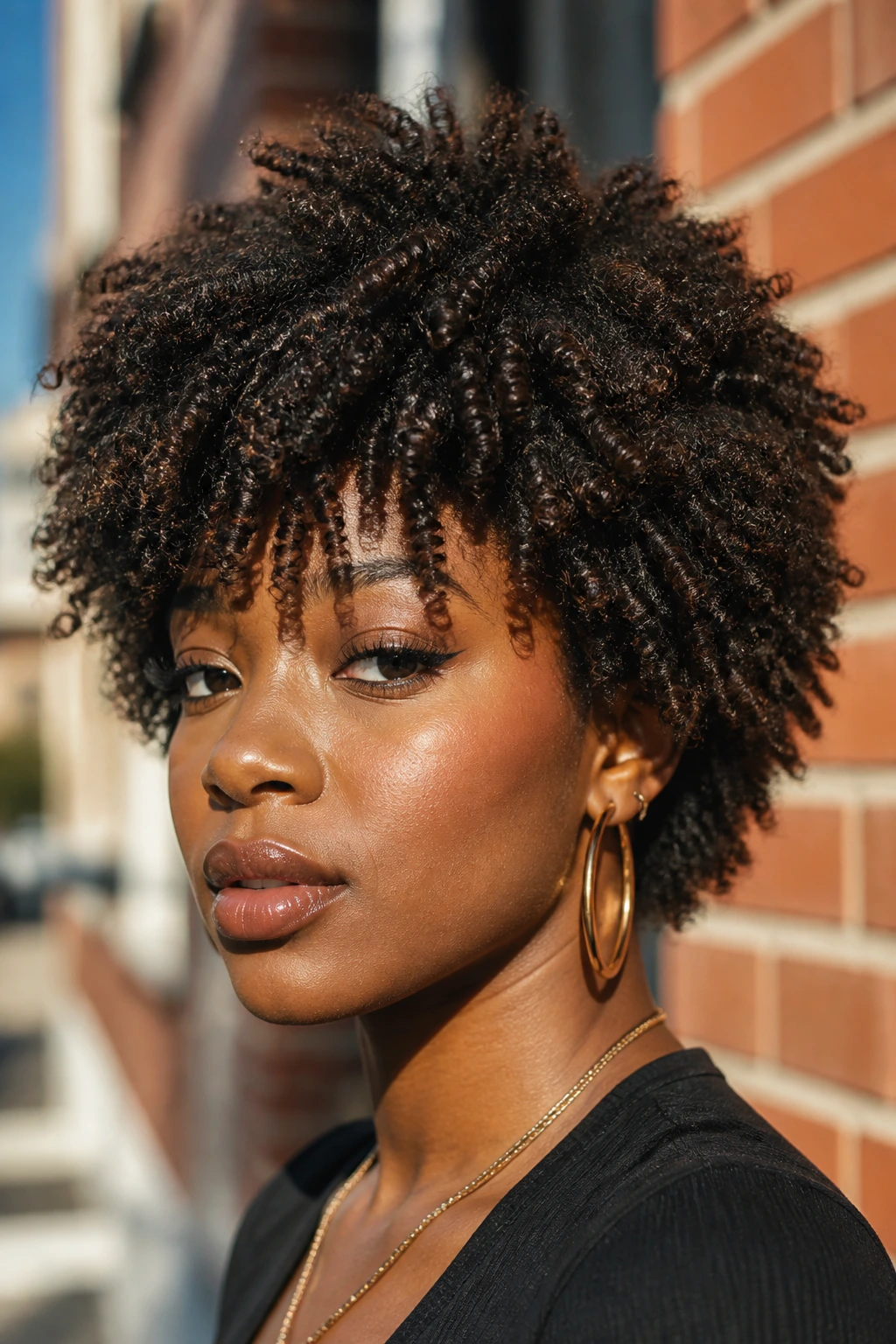
The shag is typically associated with straight or wavy hair, but it works wonders for coils. It involves choppy, layered sections that create movement and volume. It feels a bit rock-and-roll, a bit messy, and very intentional.
Layering Logic
Your stylist needs to cut layers that vary in length throughout the head. This prevents the “triangle” shape where the hair gets wider and wider toward the bottom. By keeping the layers shorter near the top and progressively longer toward the ends, you maintain a shape that is narrow at the top and full throughout.
Stylist Tip
Ask for “internal layering.” This removes weight from the interior of the hair without changing the external silhouette. It’s perfect if your hair is thick and dense, as it reduces the “heavy” feeling that coily hair can sometimes have.
18. The “Teeny Weeny Afro” (TWA)
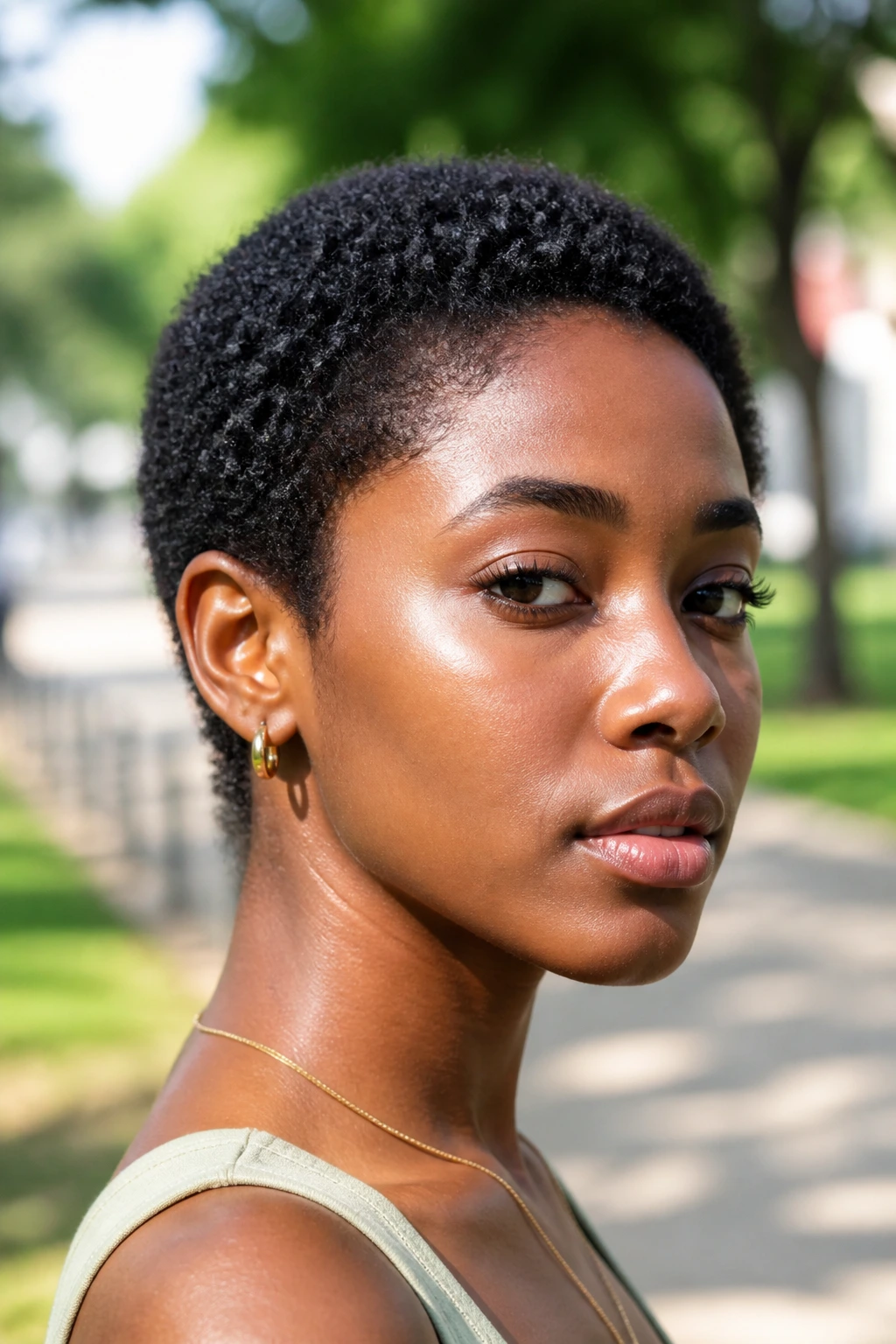
The TWA is the classic beginner cut for natural hair enthusiasts. It’s an inch or two of hair all over. It’s cute, it’s simple, and it’s the best way to monitor the health of your new growth.
Why Everyone Should Try It
There is something incredibly liberating about the TWA. It forces you to focus on scalp health. You can see everything. If your scalp is dry, you know it. If you have product buildup, you know it. It is the perfect training ground for learning how to care for your specific hair needs.
Accessorizing
Don’t feel like you can’t wear accessories just because your hair is short. Big, bold earrings look incredible with a TWA. A headwrap or a statement headband can also change the entire vibe of the cut in seconds. It’s a blank canvas for your personal style.
19. Undercut Pixie with Curls on Top
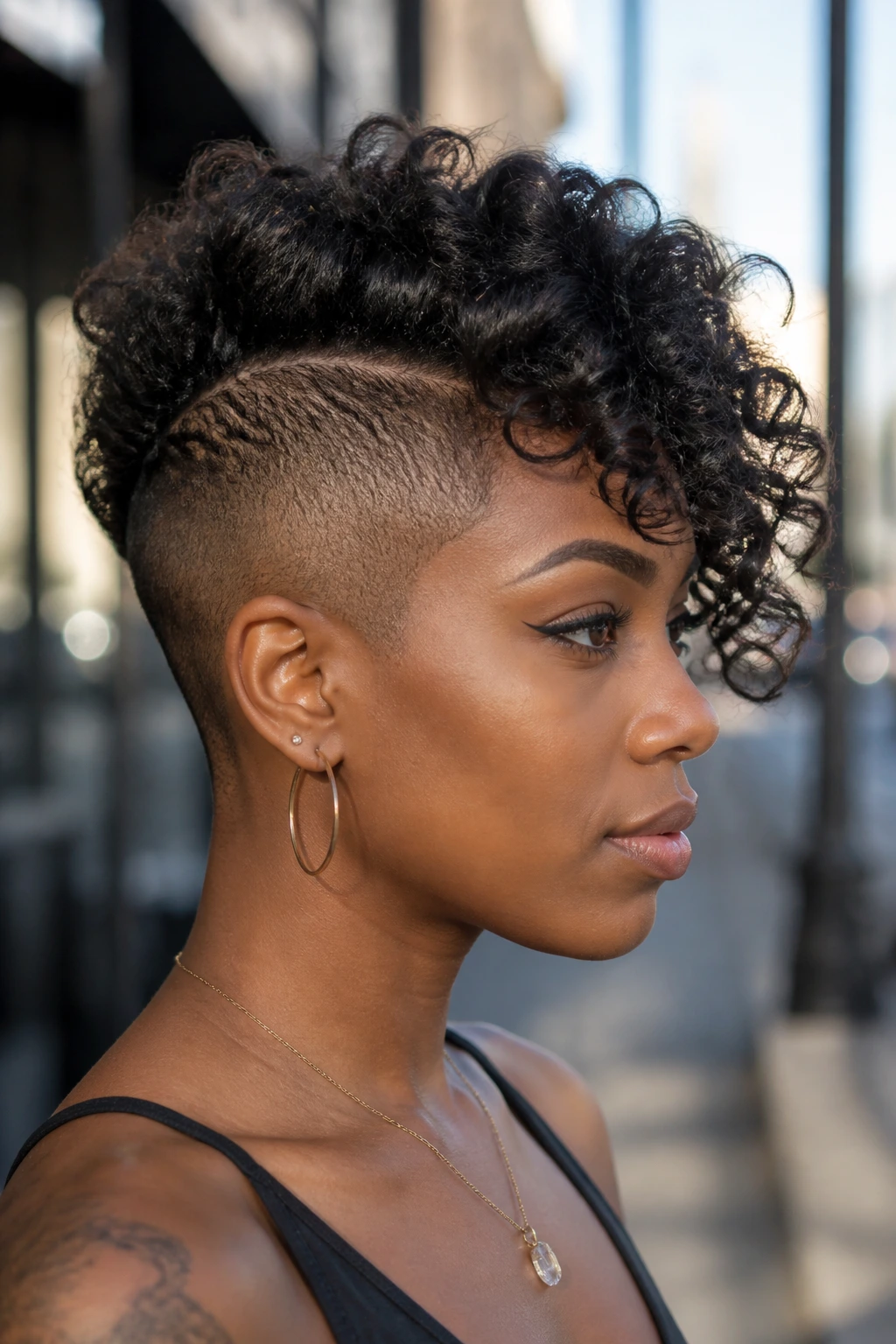
This is a more dramatic version of the pixie. The sides are buzzed very close, sometimes in a gradient, while the top is left long and layered to create a cascading effect of curls. It’s high-fashion and very sharp.
Styling the Top
Use a styling foam. Foam is lighter than cream or gel, which means it won’t weigh down the curls on top. When your hair is damp, apply the foam and rake your fingers through the top section to encourage the curls to clump. Let it dry, and you’ll have a soft, defined, and bouncy crown.
Why This Style Persists
It is incredibly low maintenance. The shaved sides mean you don’t have to worry about frizz or matting around the edges, and the top section only takes a few minutes to style. It’s a favorite for people with busy mornings who still want to look put-together.
20. Layered Short Cut
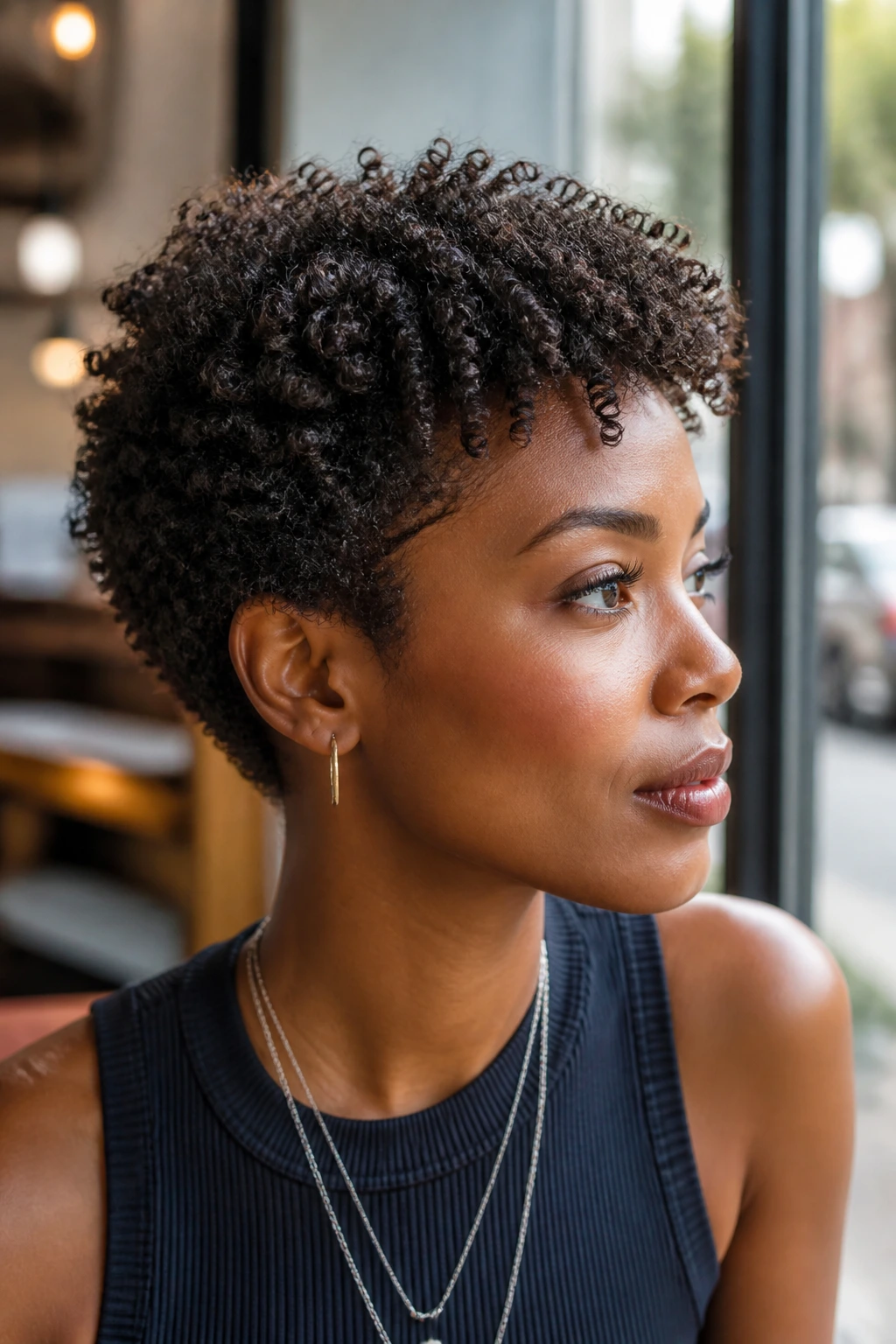
Layers are the secret weapon for managing volume. If you feel like your short hair always turns into a giant, uncontrollable puffball, you need more layers. Layers distribute the volume and allow your curls to stack on top of each other, creating a more defined, compact shape.
The “Stacking” Effect
When you cut layers into coily hair, the curls “stack” vertically. This prevents the hair from spreading horizontally, which is usually what causes that dreaded, uneven puffiness. It makes your hair look denser and more intentional.
Daily Care
Use a light detangling spray before you start your day. Even with short hair, coils can tangle at the roots. A quick spray will help you separate the curls gently without causing breakage. Never try to detangle dry, thirsty coils—it is a recipe for disaster.
21. Side-Swept Coily Bangs
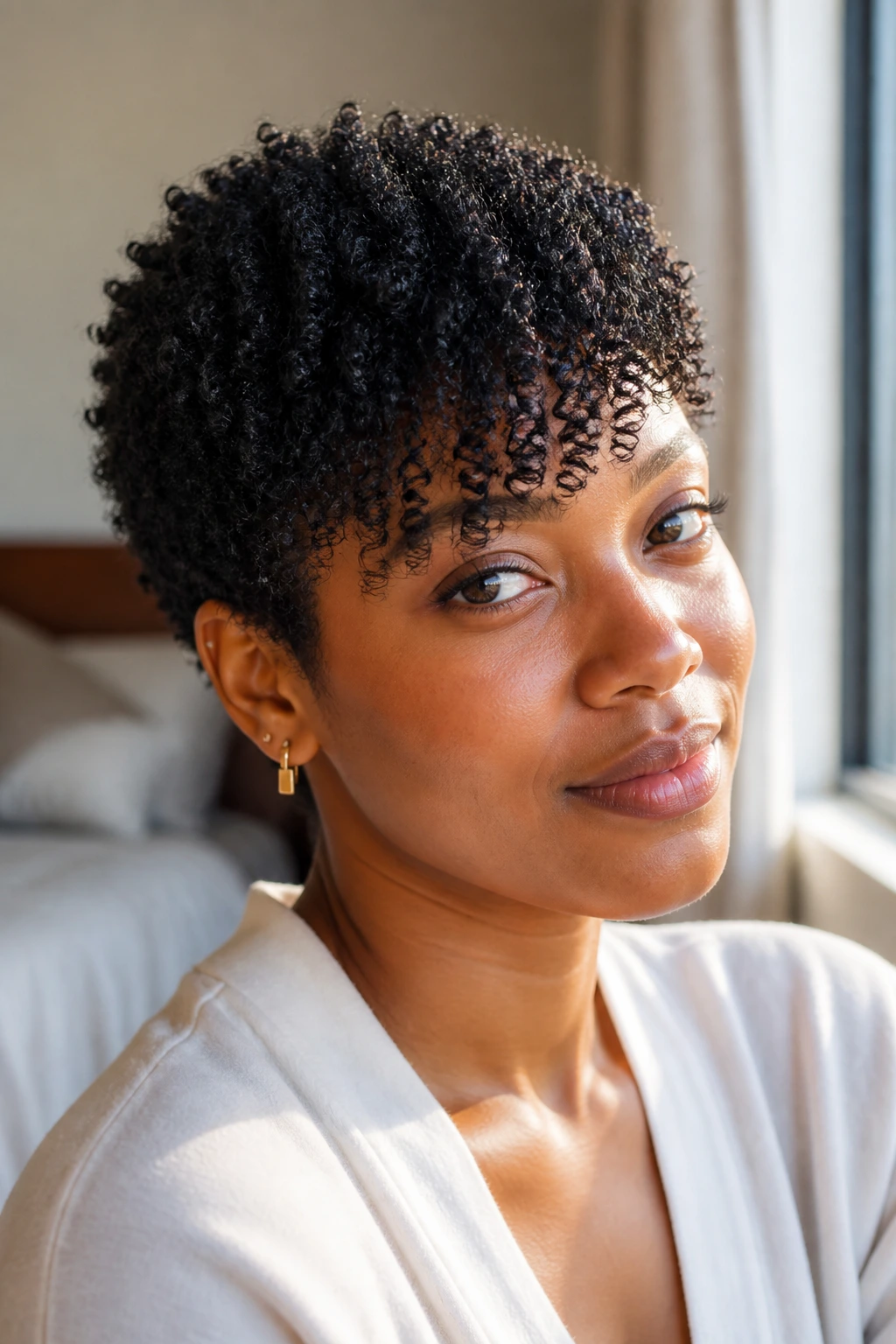
Bangs on coily hair are often feared, but they can be stunning. A short, side-swept bang that hits just above the eyebrow creates a soft, romantic frame for the eyes. The rest of the hair is kept tapered or short to ensure the bangs remain the focal point.
Dealing with Shrinkage
If you want bangs, the length you cut when wet will not be the length you have when dry. Your stylist must cut them much longer than you think they need to be. It is better to have bangs that are a bit too long initially than bangs that shrink up into your hairline.
Maintenance of the Bang
You have to style your bangs every morning. There is no “waking up like this” with bangs. A tiny bit of moisturizing cream and a quick twist or coil-set at night can help them hold their shape. It’s a small commitment for a high-impact, face-framing style.
22. The “Boxy” Tapered Cut
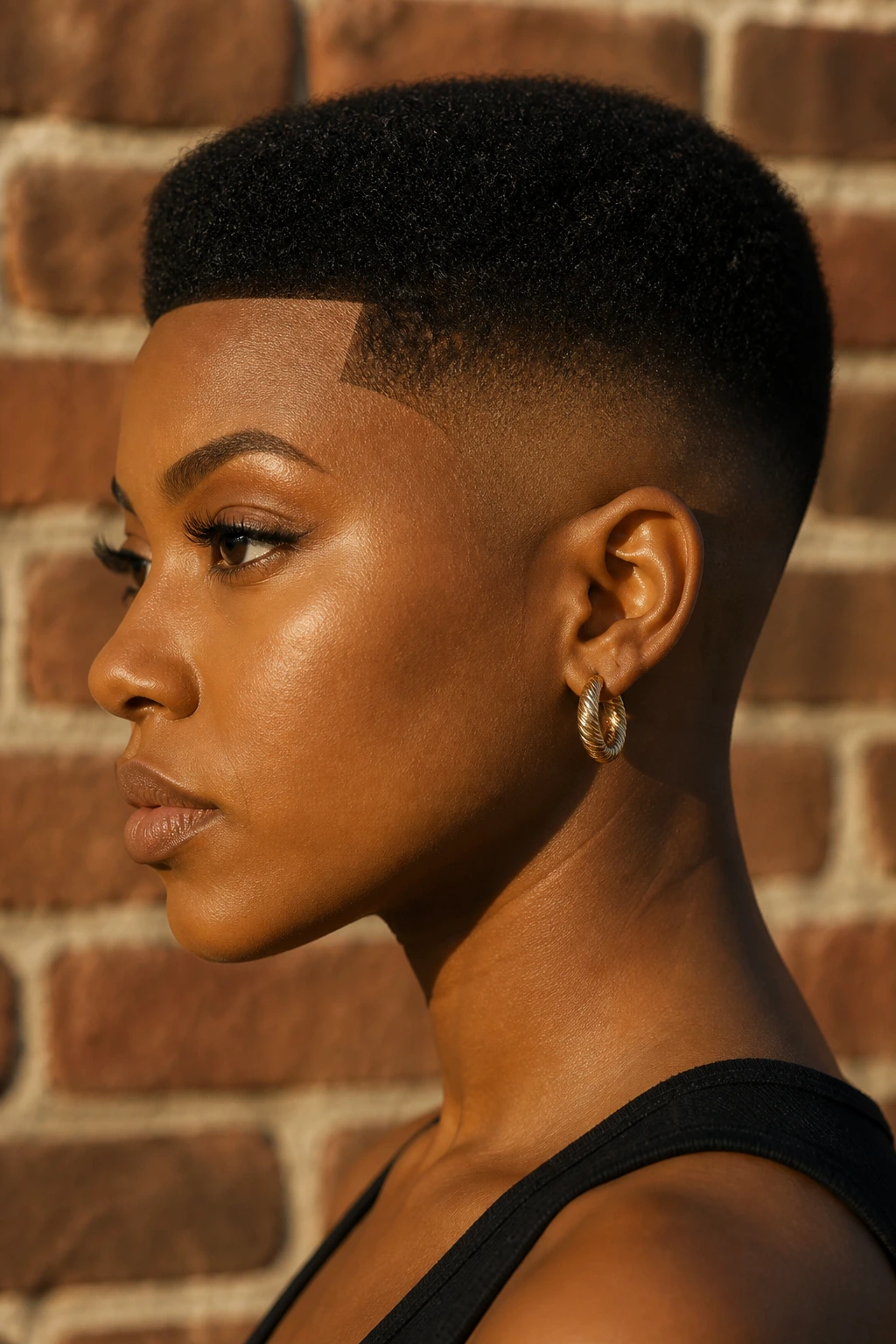
Think of this as a cross between a fade and a precision-cut afro. The lines are very sharp, and the boxy shape creates a masculine, geometric aesthetic that is surprisingly versatile. It emphasizes the structure of the face and jawline.
The Importance of the Barber
This is not a cut for a general stylist. You need a barber who is skilled in clipper work and line-ups. The “boxy” look relies on precise lines around the temples and the nape of the neck. If the lines are soft or fuzzy, the style loses its structure.
Edge Care
Keep your edges moisturized. Because the hair is so short, the skin around your hairline is visible. Dry, flaky skin will stand out. Use a drop of jojoba or almond oil on your hairline every night to keep the skin healthy and the hair line looking clean.
23. Soft Pixie with Tapered Neck
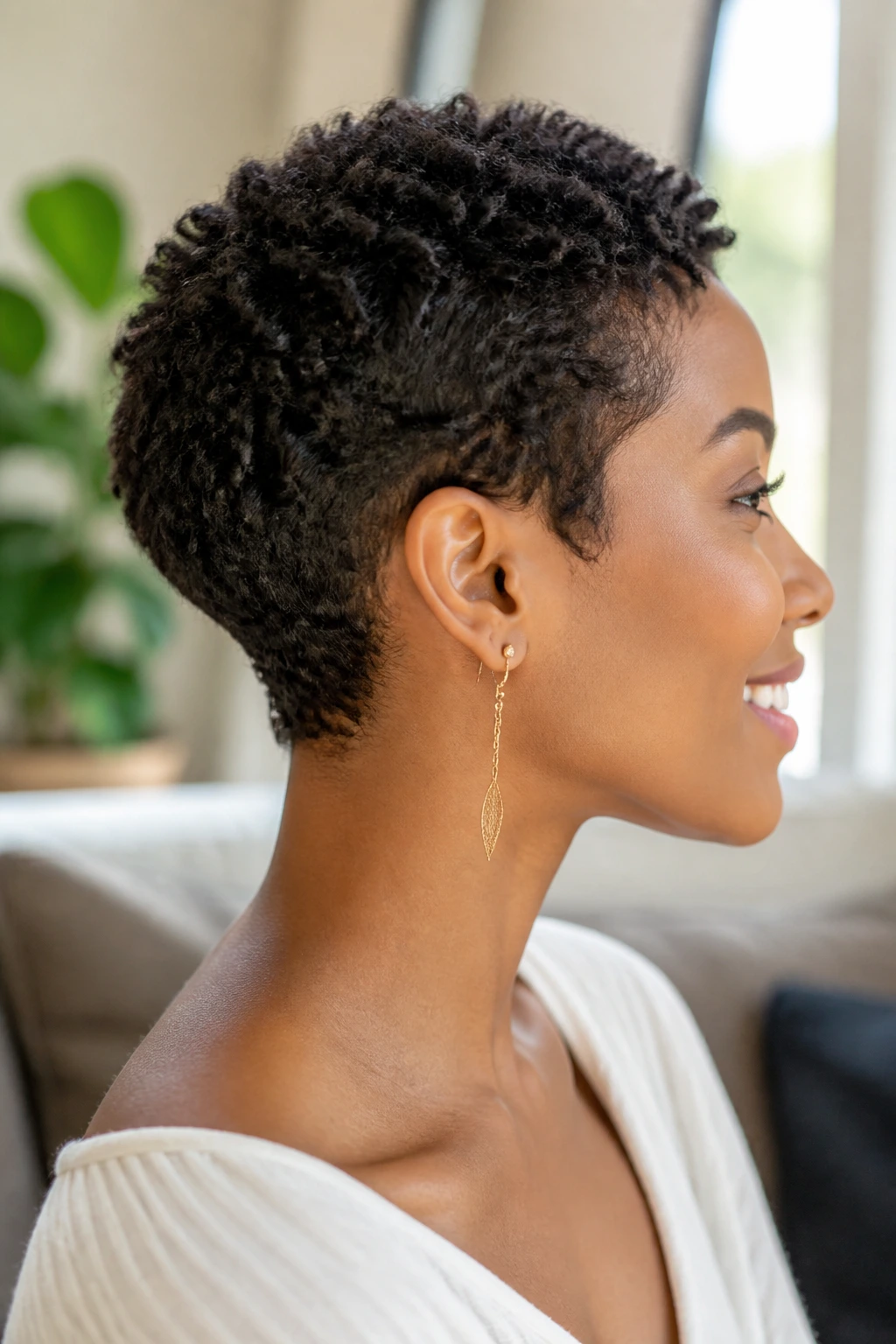
This is a gentler, more feminine version of the short cut. The edges are tapered, but not buzzed to the skin. The neckline is soft, and the hair flows into the crown in a way that feels organic and fluid.
Styling for Softness
Avoid heavy gels. Instead, look for moisturizing styling milks. You want your hair to feel soft to the touch, not crunchy or stiff. This cut is about elegance and movement, not rigid structure.
The “Messy” Aesthetic
This style thrives when it’s a little bit tousled. You don’t need a perfect curl pattern for this to look good. In fact, a bit of frizz and volume actually adds to the “soft” vibe. It is the perfect cut if you are tired of chasing the “perfect” curl definition and just want to enjoy the texture you were born with.
24. Tapered Cut with Natural Texture
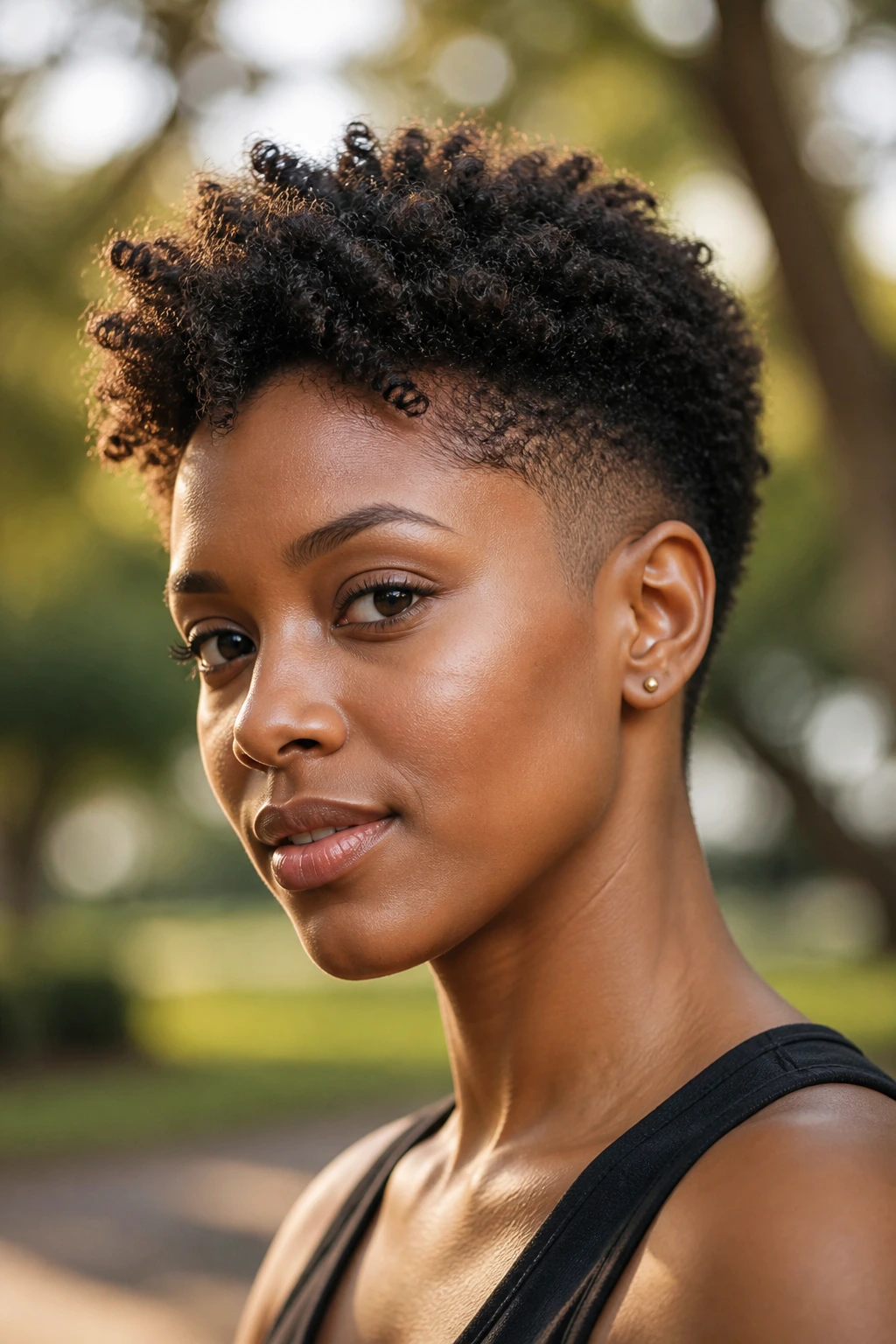
This style leaves the top section entirely natural, uncut, and free-flowing, while the sides are tapered down. It showcases the full extent of your hair’s potential. It is great if you love the idea of short hair but aren’t ready to sacrifice the ability to play with your natural texture.
Why It’s Popular
It celebrates your hair exactly as it is. There is no forcing it into a shape or trying to make it behave. You are letting your natural coils dictate the aesthetic, with the taper acting as a supportive frame.
Humidity Management
Since your hair on top is uncut, it will be susceptible to humidity. Keep a small anti-humidity spray in your bag. If you find yourself in a humid environment and your hair starts to expand, a quick mist will help keep the coils from becoming overly frizzy.
25. Curly Crew Cut
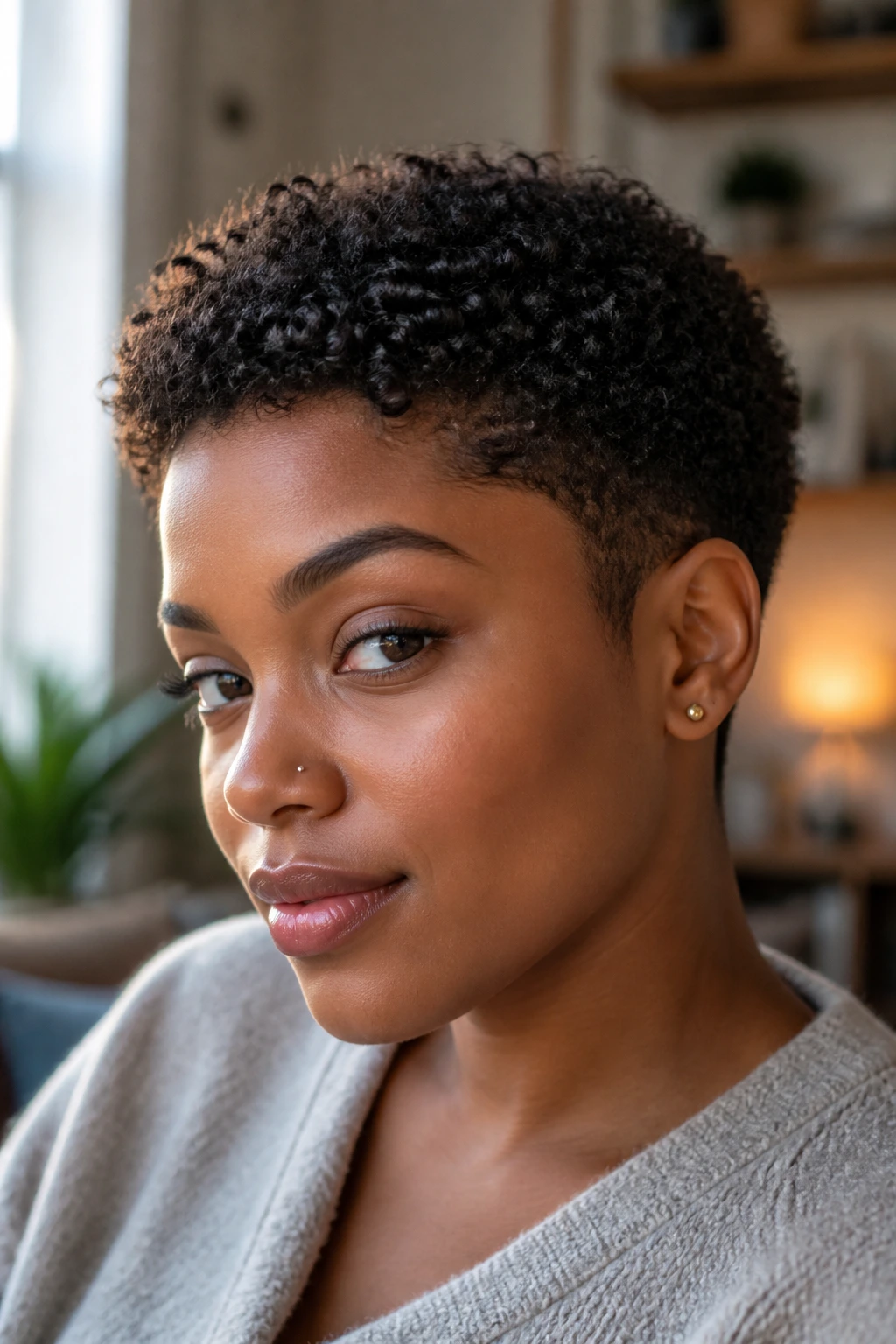
The curly crew cut is a classic, but with a twist—the curls are allowed to breathe. It’s shorter than a TWA, but longer than a buzz cut. It’s a sophisticated, professional look that requires almost zero daily effort.
The Daily Routine
Wash, apply a leave-in, shake it out, and go. That is the entire routine. If you are someone who values their time and wants a haircut that looks good in the morning, at the gym, and at the office, this is the one for you.
Confidence in Simplicity
This cut does not hide anything. It puts your features front and center. If you want a style that feels like an extension of your own identity rather than an accessory, a curly crew cut is the best way to get there. It is minimal, functional, and undeniably bold.
Final Thoughts
Choosing a short, coily haircut is a process of refinement. You are stripping away the weight, the time-consuming maintenance, and the physical distraction of long hair. What you are left with is a look that puts your face and your natural texture at the forefront. Whether you go for a sharp, barbered fade or a soft, feminine pixie, the most important element of any of these cuts is the upkeep.
Short hair is not “low maintenance” in the way people think. It is just different maintenance. You have to be consistent with your trims, diligent with your scalp care, and realistic about how your hair behaves when it’s shorn of its length. Find a barber or a stylist who understands coily hair—not someone who just knows how to cut hair, but someone who understands shrinkage, texture, and the specific needs of type 4 hair. Once you find that person and settle into the rhythm of a cut that works for your lifestyle, you might find that you never want to grow it out again.
