

Straight back cornrow styles for natural hair can look crisp, soft, sporty, or dressed up, and that range is the whole appeal. Same braid direction. Totally different mood.
A good set of straight backs can pull your hair off your face, calm a busy wash-day routine, and buy you a little breathing room when you do not feel like thinking about your hair every morning. The tricky part is choosing the version that fits your density, your length, and how much scalp you want exposed.
The difference between a style that sits neatly for two weeks and one that starts fuzzing up after a few days is usually small. Part size matters. So does tension. So does whether the braider respects your hairline instead of yanking it into obedience.
And yes, a clean scalp helps more than a mountain of product ever will. Clean, stretched hair, tidy sections, and a light hand at the edges go a long way.
1. Classic Six Straight Back Cornrows
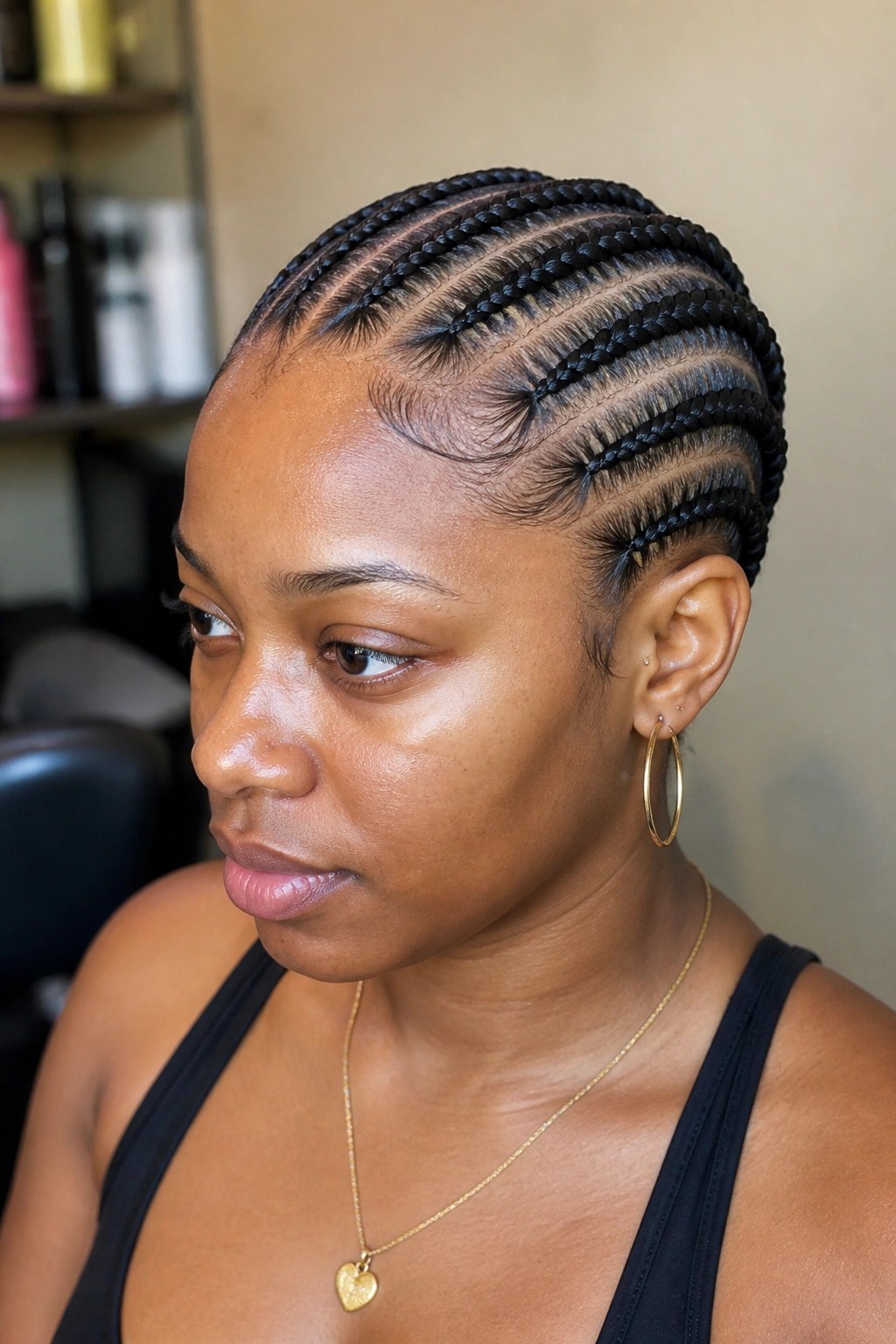
Six braids is the style a lot of people come back to, because it rarely feels fussy. The rows are even, the look is easy to read, and the whole style sits close to the head without looking severe.
Why It Still Gets Chosen
This version works well when you want your face open but still want enough braid count to make the style feel deliberate. Six rows also give the braider room to keep the parts clean without making each braid too tiny to maintain. That matters if your hair is thick, soft, or prone to puffing at the roots.
Best for: medium-to-thick natural hair, school, work, and low-maintenance weeks.
Ask for: a center part or no part at all, six equal rows, and slightly tapered ends if you want the style to lie flatter at the back.
Watch for: braids that are too tight at the front. That neat, fresh look should not come with a headache.
Small tip: if your hair is layered or has shorter pieces around the crown, a little setting foam before braiding helps those ends stay tucked instead of poking out on day three.
2. Two Jumbo Straight Back Cornrows
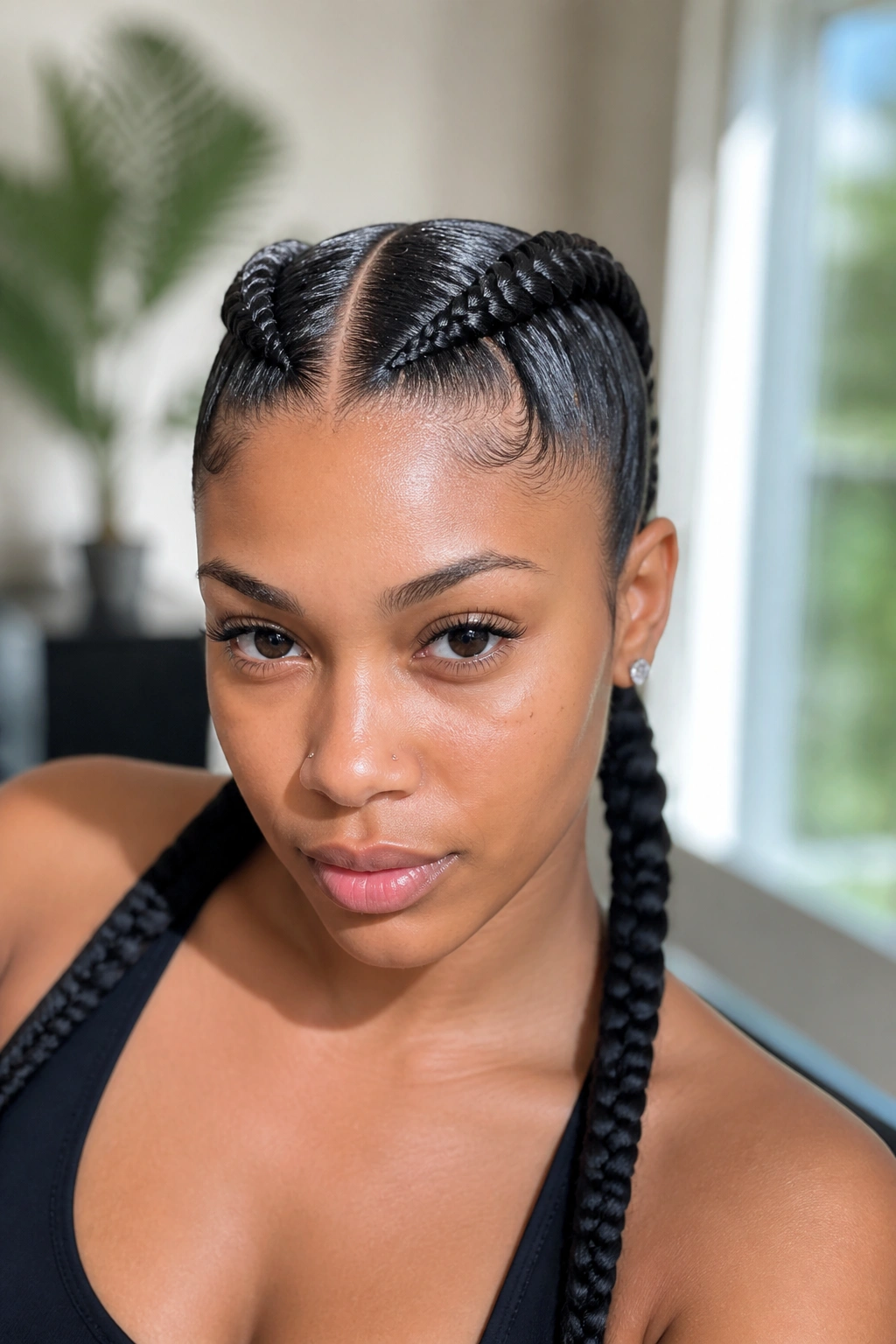
Two big straight backs are blunt in the best way. No extra noise. No little rows crowding the scalp. Just two thick braids running straight back, which makes the style fast, bold, and oddly elegant on the right head shape.
They’re especially good when you want a low-install style that still reads as intentional. Fewer parts mean less time in the chair, and that is not nothing if your schedule is packed or your scalp gets irritated by too many small sections. The style also gives you a nice base for wigs, hats, or a low bun if you want to change it up later.
A clean middle part is the main event here, so ask for it to be measured before the braiding starts. If the part drifts even a little, you’ll notice it every time you look in the mirror.
This one tends to shine on thicker hair, because the braids look full without needing a lot of added hair. Thin sections can still work. They just need a braider who knows how to keep the rows from looking stringy.
3. Tiny Straight Backs Across the Scalp
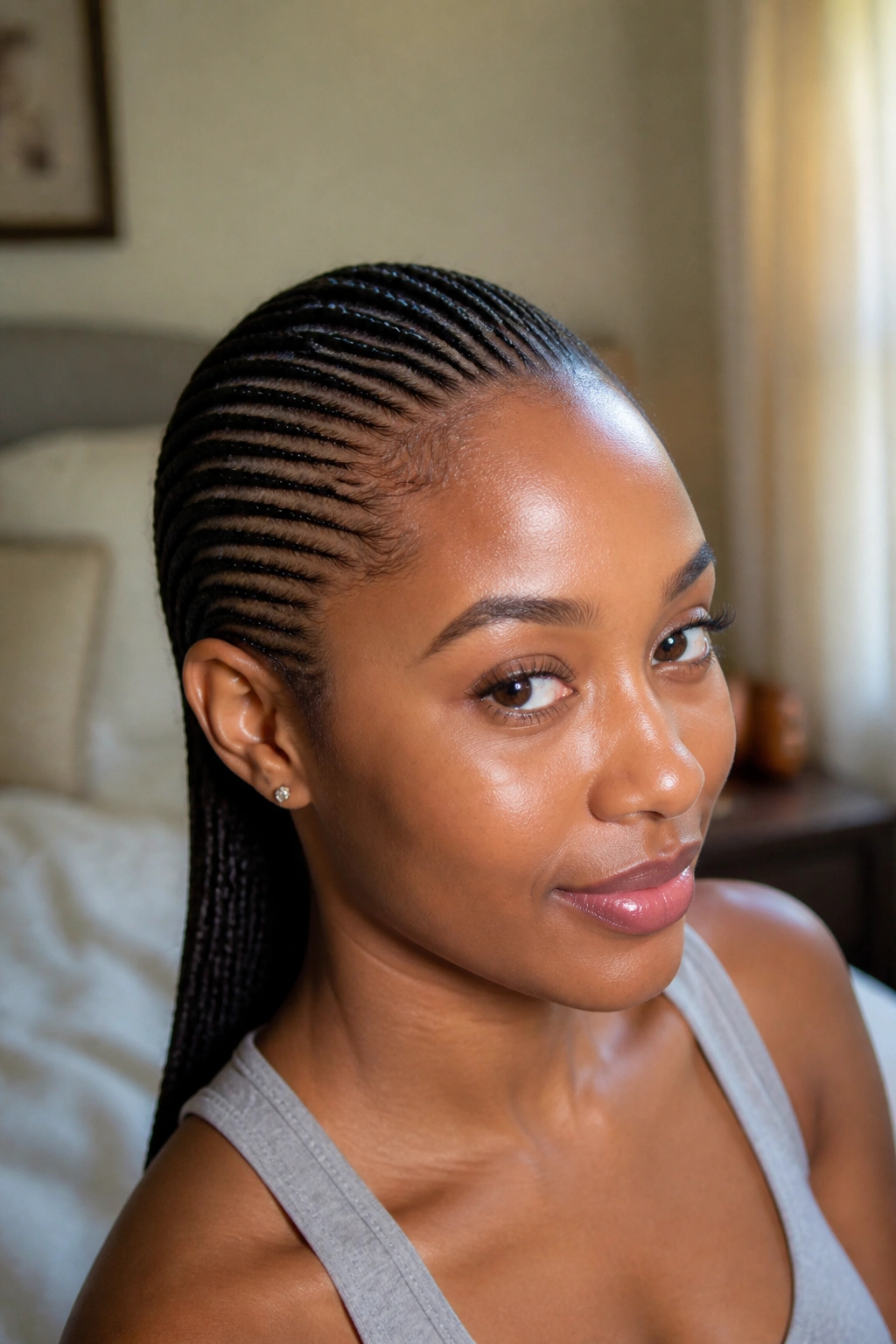
Why do tiny straight backs look so polished? Because the smaller the sections, the flatter the braid sits against the scalp, and the cleaner the whole pattern looks from a distance. It is a detail-heavy style, though, so it takes more time and more patience than the bigger versions.
Tiny rows are the move when you want something that feels neat for longer and you do not mind sitting through the install. The braid count can climb fast — ten, twelve, sometimes more depending on your head size and hair density — so the braider needs steady hands and a good eye for symmetry. Rushing this style is a bad idea. You will see it.
How to Wear It
Keep the finish light. A little mousse at the end, a satin scarf at night, and a scalp oil used sparingly along the parts are enough.
- Best for finer parting work and a very tidy finish
- Good on medium-length natural hair that has been stretched first
- Works well when you want to tuck the ends into a bun or leave them hanging
- Needs careful nighttime wrapping so the tiny rows do not frizz up fast
Tiny straight backs are not the quickest choice, but they reward the extra time.
4. Side-Part Straight Backs
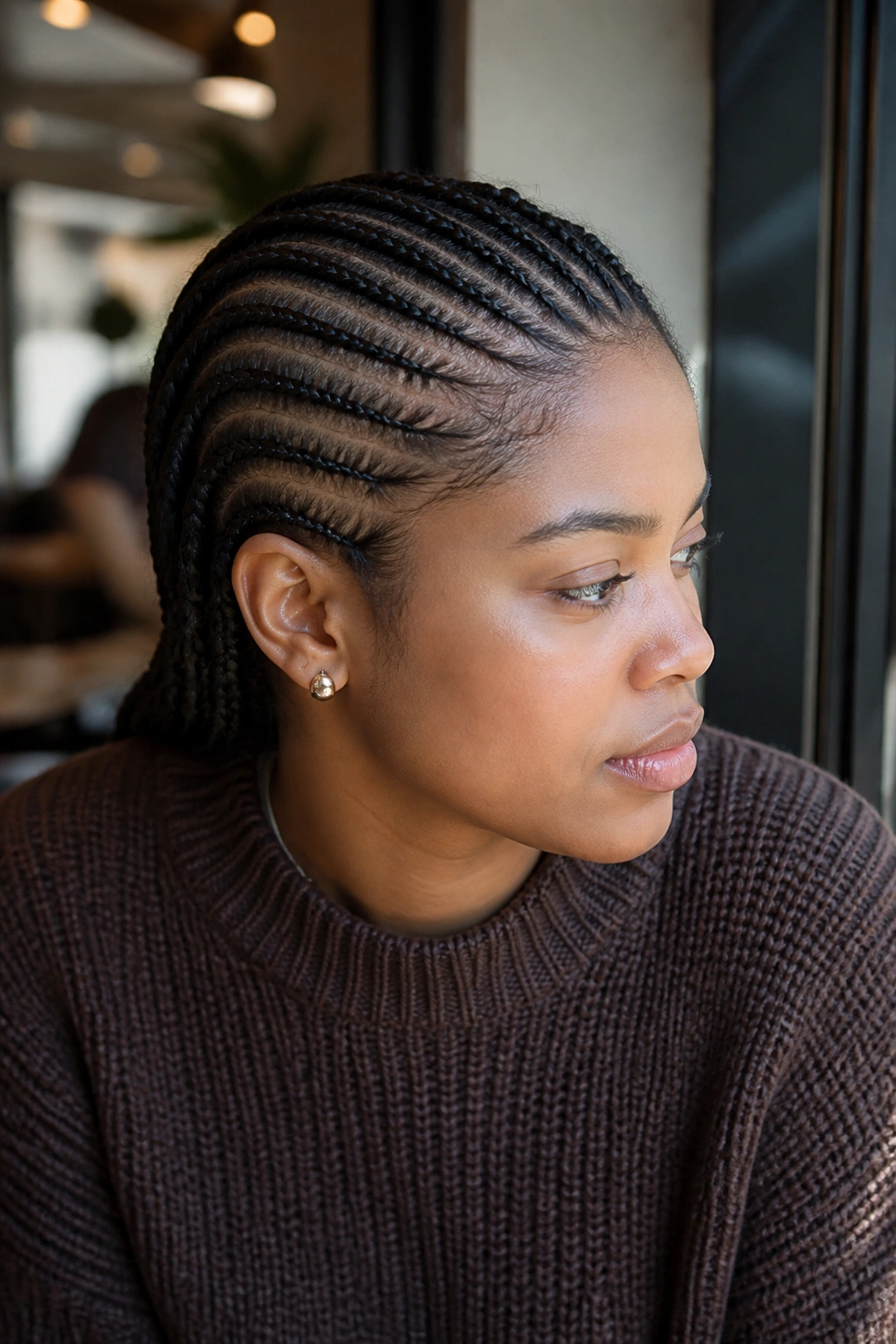
A side part changes the whole attitude of straight back cornrows. Same braid direction. Different frame.
I like this version for people who feel a center part makes their face look too symmetrical or too stern. A side part softens that immediately, and the front rows can angle just enough to create a little movement without turning the style into something complicated. It also helps when one side of your hairline is a bit fuller than the other, because the part can work with that instead of fighting it.
Tell your braider this: the part should sit about 1 to 2 inches off center, not way over near your ear unless you want a stronger sweep.
You can keep the braid count equal on both sides or let one side carry a slightly fuller braid near the part. Either way, the style has a natural rhythm to it. It feels less formal than a center-part version and a little more lived-in, which is often exactly what people want.
A small edge of gel on the front parts helps, but don’t drown the hair in product. Clean sectioning matters more than greasy shine.
5. Straight Backs into a Low Bun
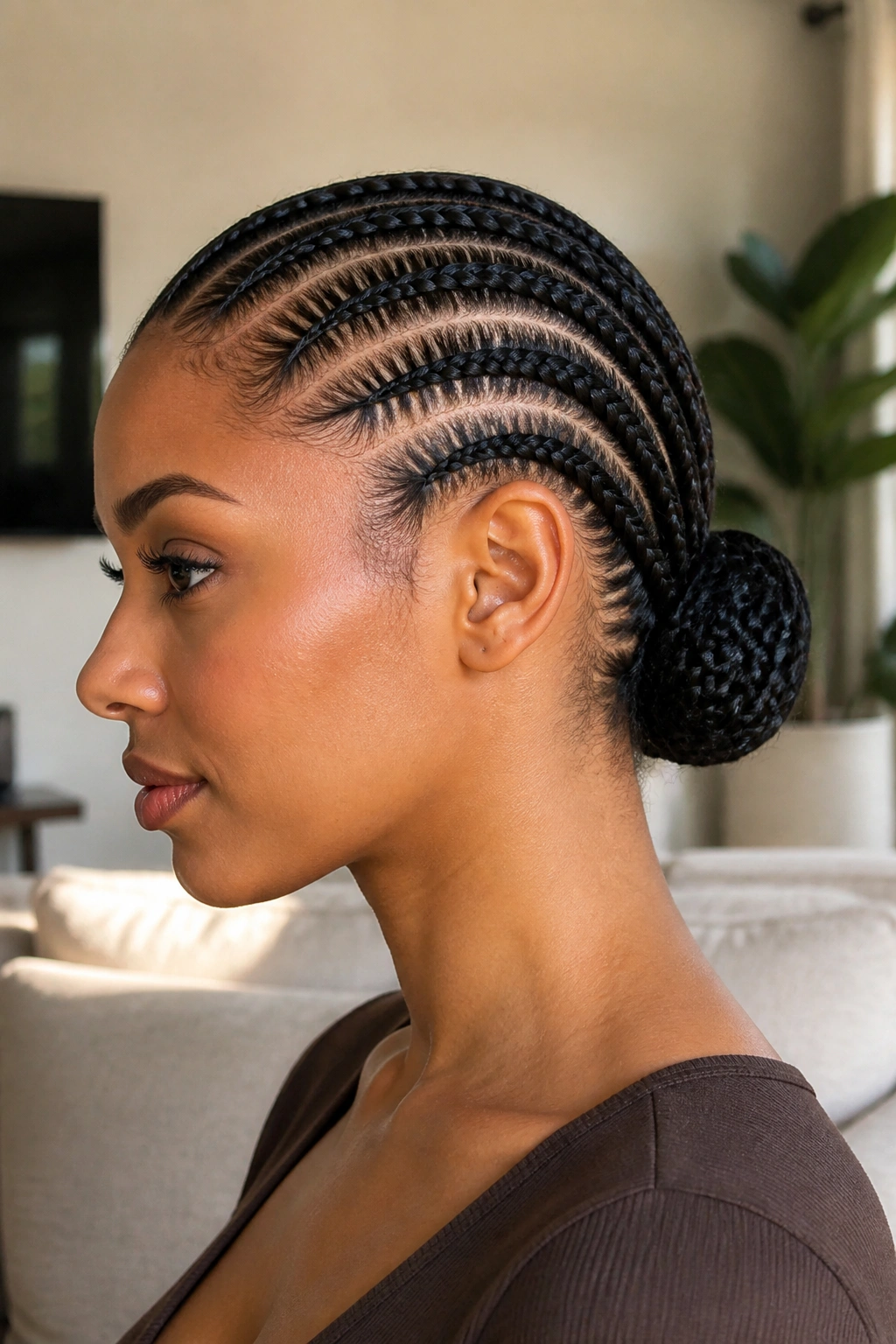
Straight backs feeding into a low bun are the style I reach for when I want the hair off my shoulders but still want the braids to be doing something visible. It’s neat, practical, and easy to dress up with a simple pair of earrings or a clean neckline.
The bun itself can be as smooth or as full as you like. If your hair is long enough, the braid ends can be wrapped into a compact knot at the nape. If not, a small bun extension or a tucked-under finish gives you the same shape without adding bulk.
A low bun also keeps the style from fraying at the ends as fast, which is one of those small practical perks people only appreciate after living with braids for a while. The back of the neck stays cooler. Sleeping is easier. Collars do not catch as much.
The one thing to watch is tension where the braids gather into the bun. That spot can get sore if the style is pulled too tightly. Firm is fine. Pain is not.
6. Feed-In Straight Back Cornrows
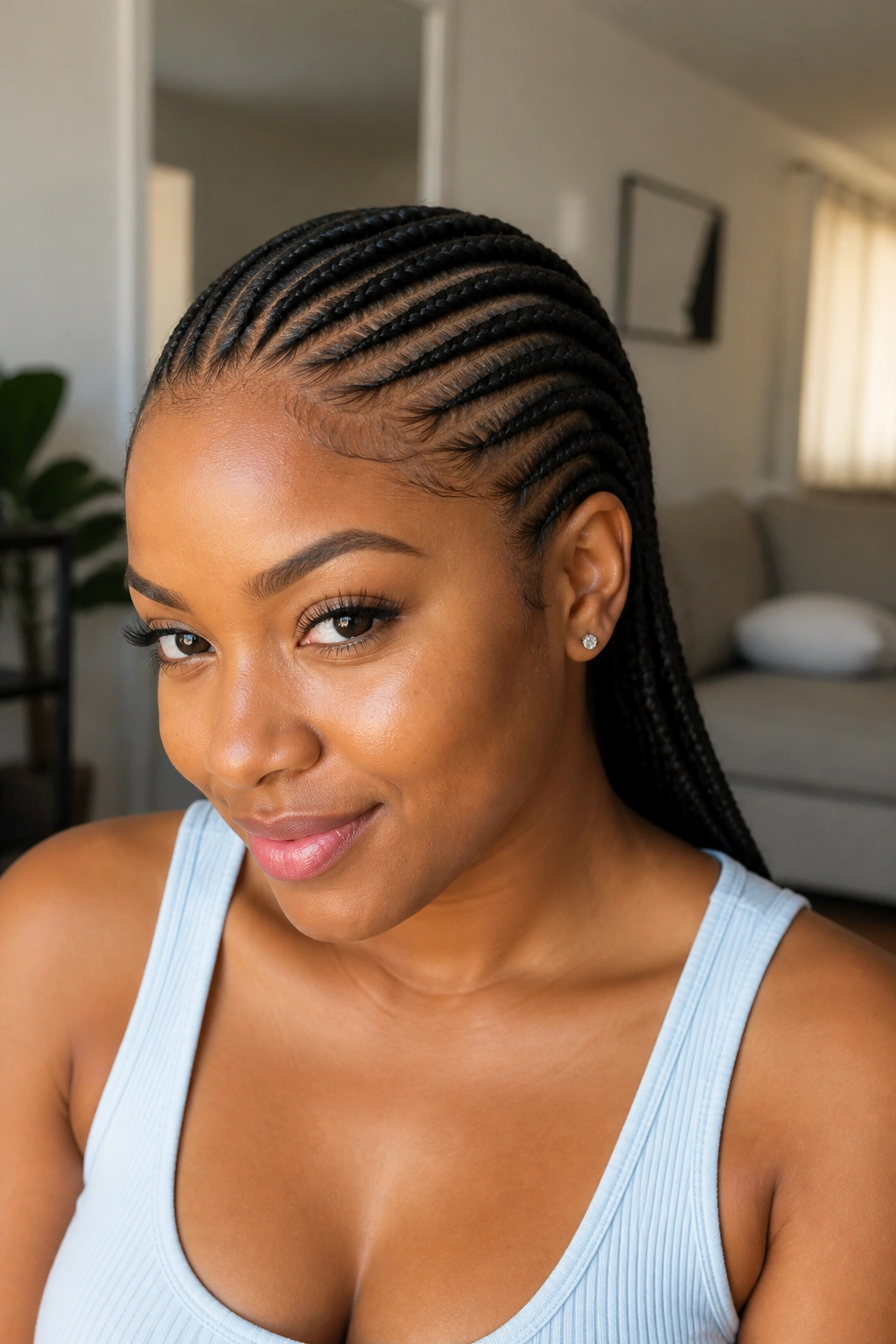
Feed-in straight backs look sleeker at the front than traditional cornrows, and that is the big reason people ask for them. The braiding hair gets added gradually, so the braid starts small at the hairline and grows fuller as it moves back. The result feels smoother, lighter, and less bulky near the edges.
That gradual build matters if you dislike the chunky ridge that some braid styles can create near the front. It also helps spread tension out a bit more evenly, which is nice for natural hair that gets tender after long installs. Still, feed-ins depend on a braider who knows how to add hair without making the braid puff unevenly or leaving little lumps where the added hair starts.
Unlike traditional straight backs, feed-in braids usually need a bit more prep because the braiding hair has to be ready and stretched. They’re worth the extra setup if you want a cleaner profile and a more polished finish.
Best for: people who want a lighter-looking front, longer wear, and a braid style that can sit flat under hats or scarves.
7. Straight Backs with Curly Ends
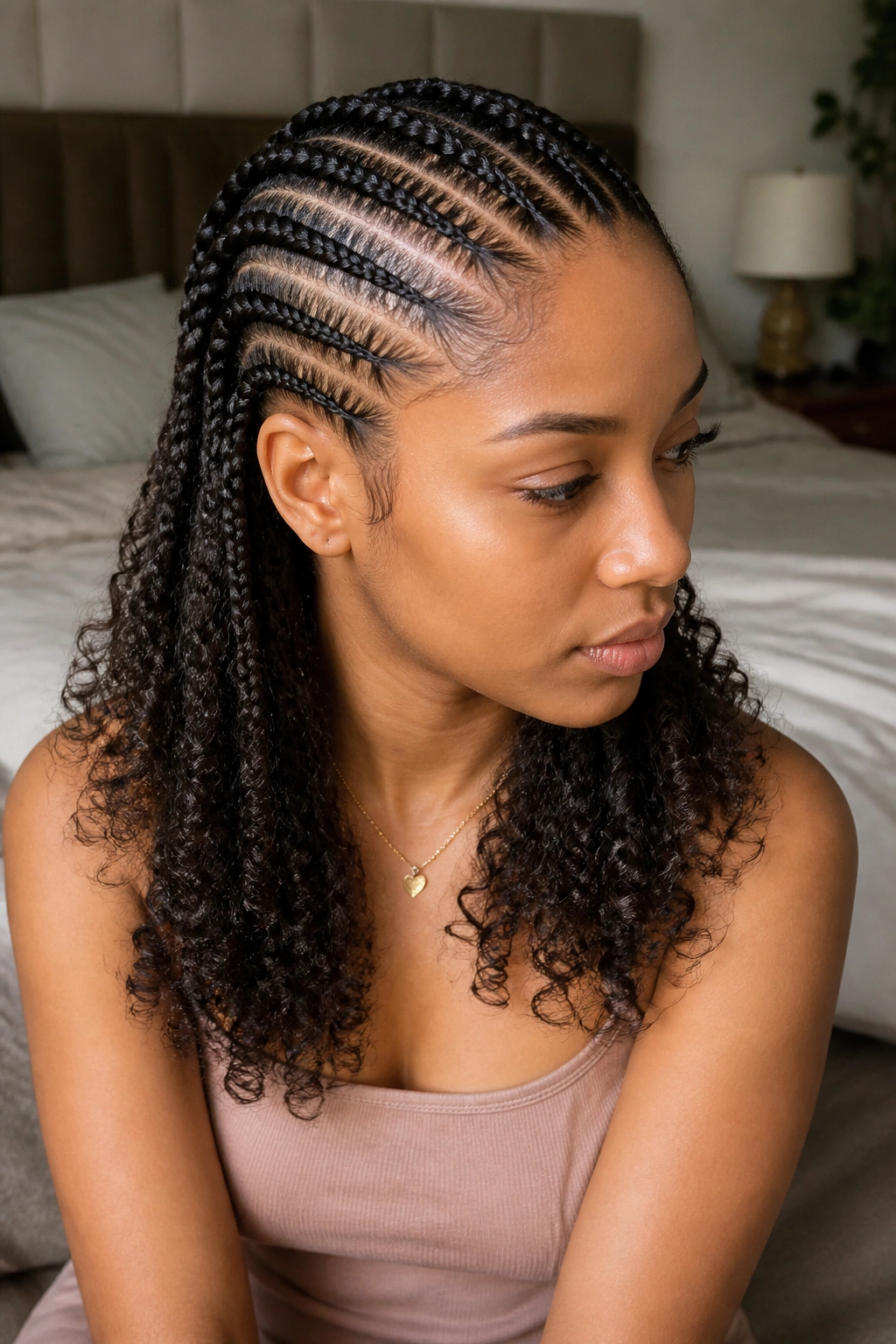
The neat rows are the point, but the curly ends bring in the softness. That contrast is what makes this style feel a little more playful than a plain straight-back set.
You can get the curly finish a few ways. Some people leave the natural ends out and set them on flexi rods. Others add curly braiding hair at the ends so the rows stop cleanly and the curls spill out from there. Either way, the style works because the scalp stays tidy while the ends move around a bit.
There is also a practical side here. Curly ends can hide growth better than blunt ends, which is useful if you plan to keep the style on the longer side. They do need more night care, though. A satin bonnet, a loose pineapple-style wrap, or a silk scarf tied low can keep the curls from getting flattened into fuzz.
This version is one of my favorites for weekends, photo days, or any time you want the braid pattern to feel a little softer at the finish. Clean at the roots. Loose at the ends. Nice contrast.
8. Straight Backs with Beads on the Ends
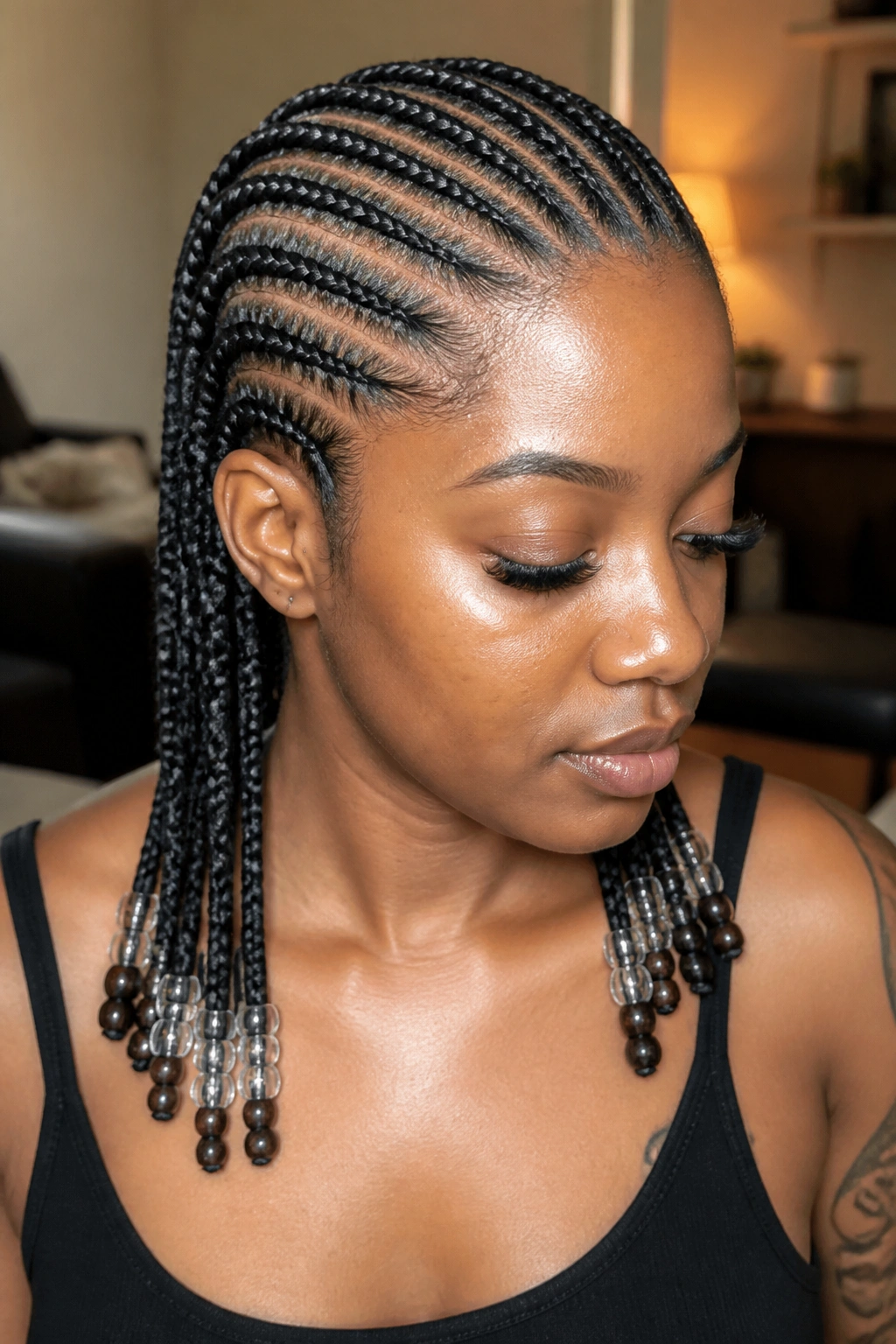
Beads change the whole sound and feel of the style. A row that looked quiet suddenly has a little movement, a little weight, a little personality.
Why do beads work so well on straight backs? Because the braid pattern is already orderly. The beads give you a place to add character without messing up the shape. You can keep them clear, black, wooden, gold, or mixed, depending on how much you want the braids to stand out. A few beads at the ends is often enough. You do not need to load every braid like a craft project.
What to Watch For
- Secure the ends first with a small knot, rubber band, or wrapped finish before adding beads
- Keep the bead weight light if the braids are fine or the hair is short
- Avoid placing heavy beads too close to the scalp
- Sleep with a scarf or bonnet so the beads do not rub and snag
This style tends to work best for kids, teens, or adults who want the look to feel a bit more personal. It is not the lowest-maintenance version on the list, but it does bring a little life to a very clean braid pattern.
9. Heart Part Straight Backs
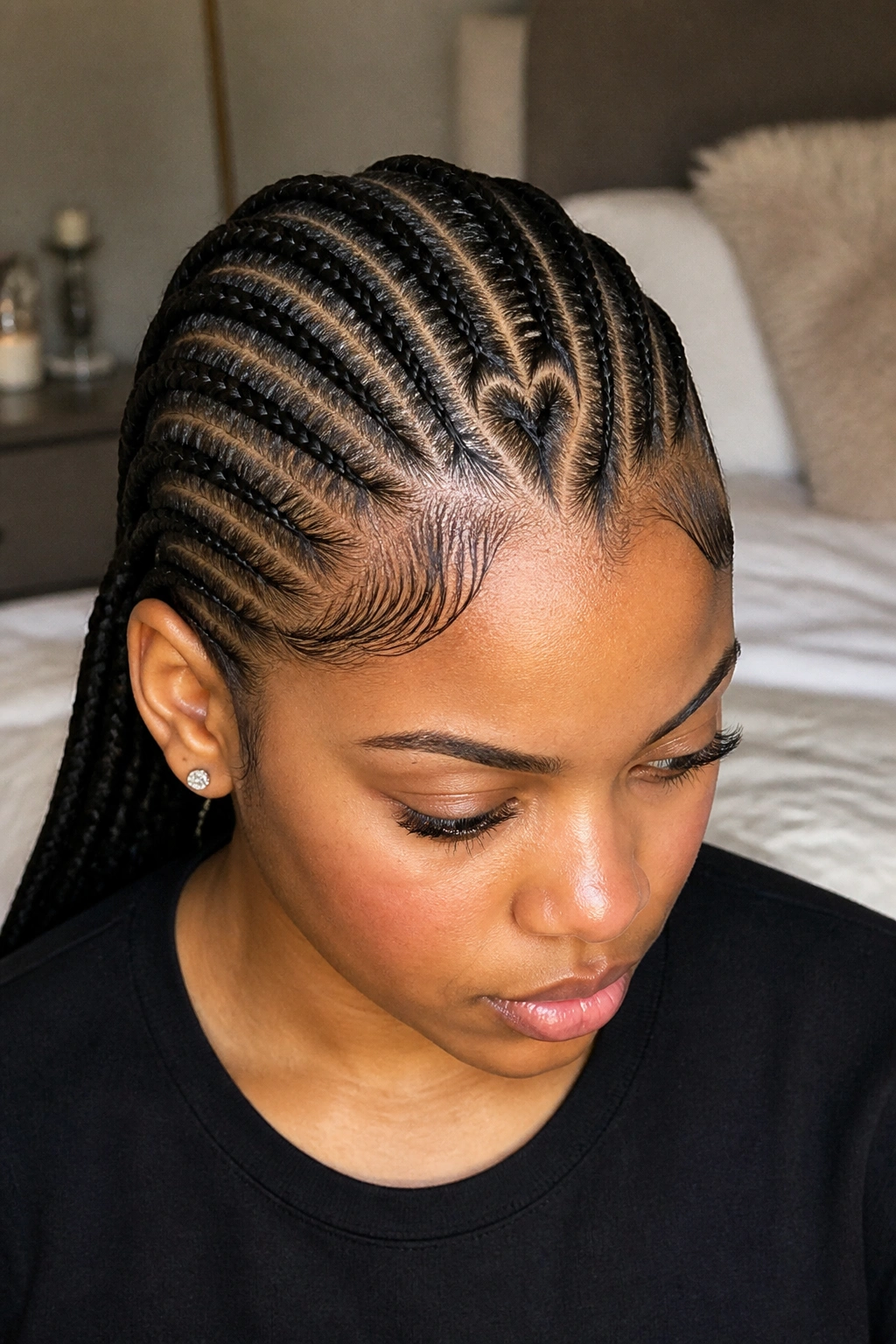
A heart part is one of those small details that changes how the whole style lands. The braids still run straight back, but the center or front section gets a heart-shaped part that gives the style a bit of charm without making it busy.
What I like about this one is that it lets you keep the actual braids simple. The part does the decorating. You do not need extra color, a pile of accessories, or a fancy finish. Just a clean little heart placed where people can see it. That keeps the style wearable, not costume-like.
The trick is scale. A heart that is too large can start swallowing the front of the style. A smaller one, usually around 2 to 3 inches wide, sits better and looks cleaner once the rest of the braids are in place. It’s also easier for the braider to keep balanced if your hair density is uneven at the crown.
This style is good for birthdays, photos, or any day you want one detail to carry the mood. Cute. Clean. Straightforward.
10. Straight Backs into a Sleek Ponytail
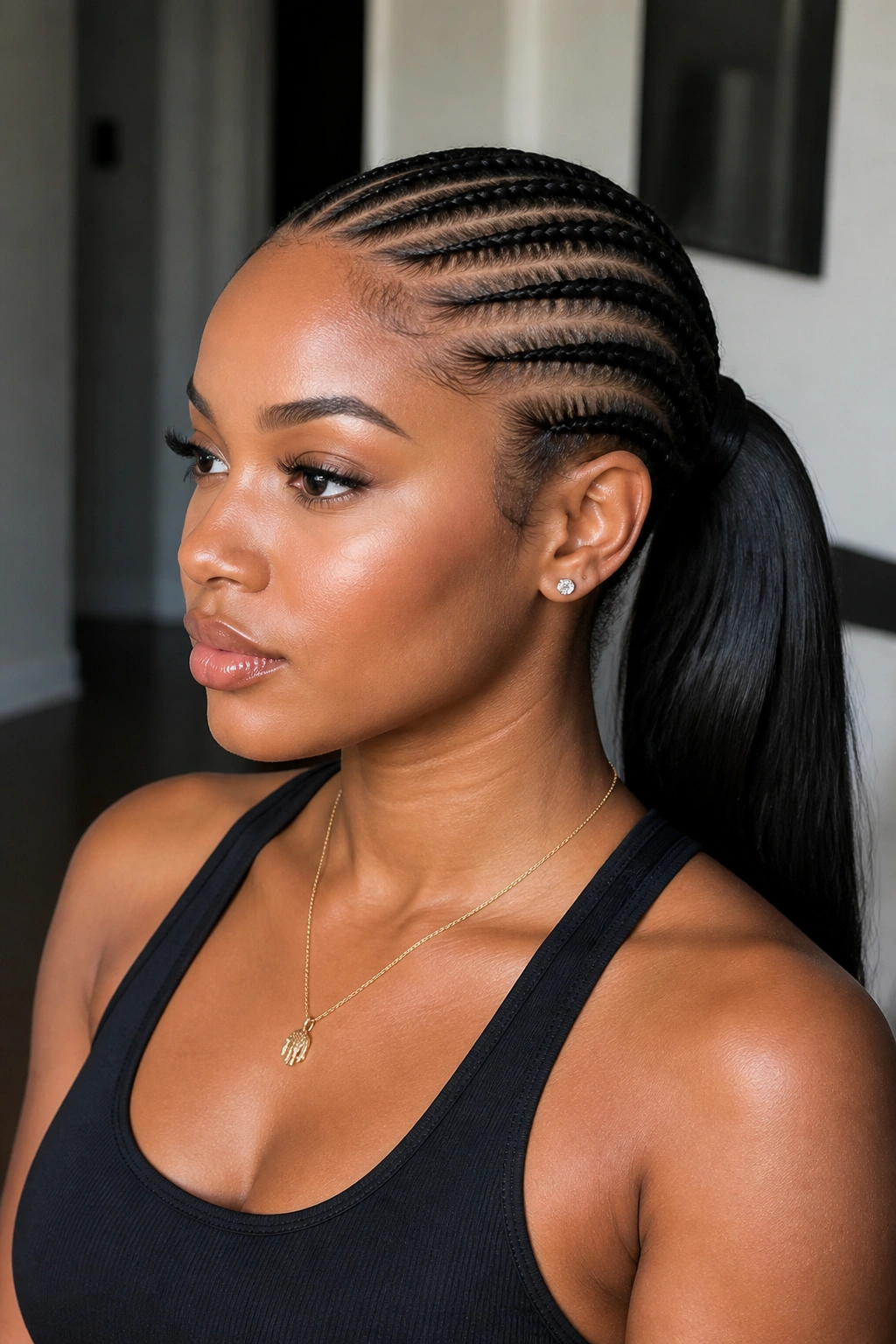
Straight backs feeding into a ponytail give you a sharp profile without making the style feel rigid. The braids draw the eye back, and the ponytail adds lift at the nape or crown, depending on where you want it to sit.
A low ponytail feels calmer. A mid-height ponytail feels sportier. A high ponytail can look very polished, but only if the braids are neat enough at the base to carry that much pull. I tend to prefer lower versions on natural hair because they’re gentler on the edges and easier to sleep on.
The braid ends can be wrapped into the ponytail itself, or you can add a ponytail piece for fullness if your own hair is short. If you do that, keep the texture close to your own so the finish does not look disconnected. A shiny synthetic ponytail tied onto matte natural hair usually looks obvious in the wrong way.
This style is a strong pick for days when you want your face fully visible. It also works well with hoop earrings, a clean neckline, and strong brows. Nothing extra needed.
11. Jumbo Straight Backs for Busy Weeks

Jumbo straight backs are for the days when you want the braid look without spending half your life in the chair. Fewer rows. Bigger sections. Faster install. That’s the appeal, and it’s a fair one.
Why They Make Sense
The larger braid size means the style can be done more quickly, and that alone is enough to make it a smart choice for plenty of people. It also makes scalp access easier, which helps if you like to cleanse along the parts with a nozzle bottle or a diluted shampoo mix. The tradeoff is simple: jumbo braids do not stay as tidy as long as tiny ones, especially around the hairline.
Best For
- Thick natural hair that can hold a larger section
- People who want a style finished in less time
- Anyone who likes a bold braid silhouette
- Quick switch-ups before work, travel, or events
Jumbo rows are not the style I’d choose if I wanted maximum wear time, but they’re excellent when speed matters. Just keep the front tension gentle. Bigger braids can still tug hard if the stylist gets heavy-handed at the roots, and that’s the part you feel first.
12. Triangle-Part Straight Backs
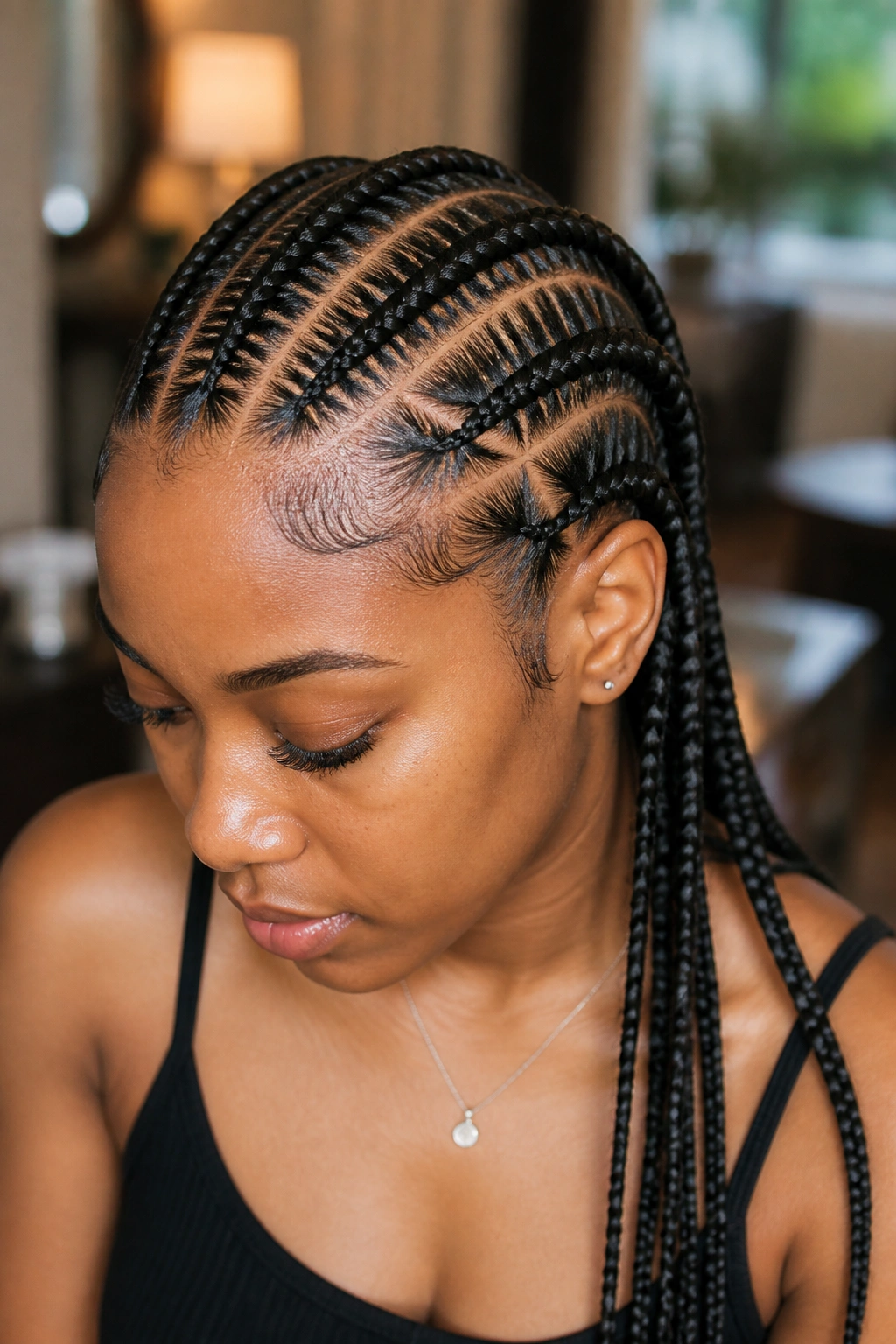
Triangle parts give straight back cornrows a sharper edge. The braids themselves may still run in clean rows, but the sectioning breaks away from the usual square grid and gives the whole style a more designed feel.
Compared with standard parts, triangle sections make the scalp pattern look a little less rigid. Not wild. Just more interesting. That geometric shift is enough to make the style stand out when the braids are worn down, especially if the hair is a deep black or has a touch of color at the ends.
This version takes a steadier hand because triangle parts have to be even from row to row or the pattern starts looking accidental. If you’re asking for it, be specific. Small triangles near the front, slightly larger ones toward the back, and clean symmetry on both sides of the part line.
It’s a good pick if you like detail but do not want extra accessories. The shape itself does the work. Simple idea. Sharp result.
13. Straight Backs with a Middle Scalp Design
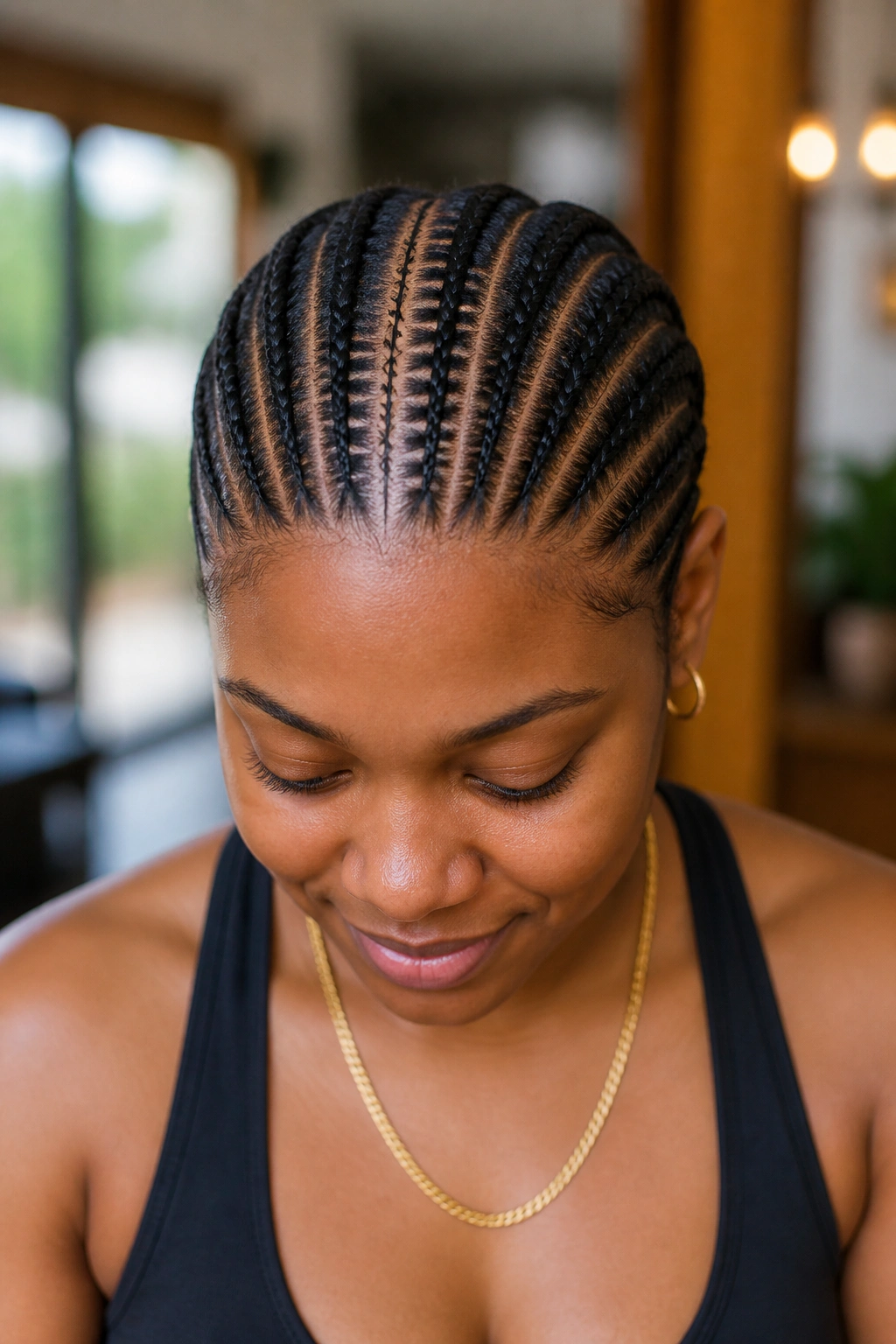
A plain middle part is neat, but a small design running down the center can give straight backs a little attitude. Think of a stitched part, a tiny zigzag, a diamond shape, or a short curved section placed between the rows so the style has one focal point.
Why does this matter? Because the straight rows do all the structural work already. Once that’s in place, the center design becomes the accent. It draws the eye without crowding the whole head with extra shapes. I like this approach when someone wants a braid style that feels personal but not loud.
The design should stay tight and clean. A center feature that sprawls too wide can make the style look busy, and then the straight backs stop being the star of the show. Usually, a narrow design around the crown or top third of the head is enough.
This is one of those styles that looks more deliberate the closer you get to it. From across the room, it reads as a classic straight-back set. Up close, the parting tells a little more story.
14. Straight Backs for Short Natural Hair

Can short natural hair do straight backs? Yes, if there is enough length to grip cleanly and the sections are handled with care. The myth that you need long hair for cornrows has scared off a lot of people for no good reason.
Shorter hair usually needs smaller rows and a braider who knows how to anchor the roots without overloading them with gel. Stretching the hair first helps a lot. A low-heat blow-dry or banding method can make the strands easier to part and keep the rows from popping loose before they even settle.
What Helps Most
- Keep the parts small so the hair has something to hold onto
- Use a light braid gel, not a heavy paste that flakes
- Ask for rows that start close to the scalp and stay close
- Avoid oversized braids if the hair is only a few inches long
This style is not about forcing the hair into something it cannot do. It’s about working with the length you have and choosing a braid size that supports it. Short hair can look fantastic in straight backs when the row count is right.
15. Straight Backs for Kids
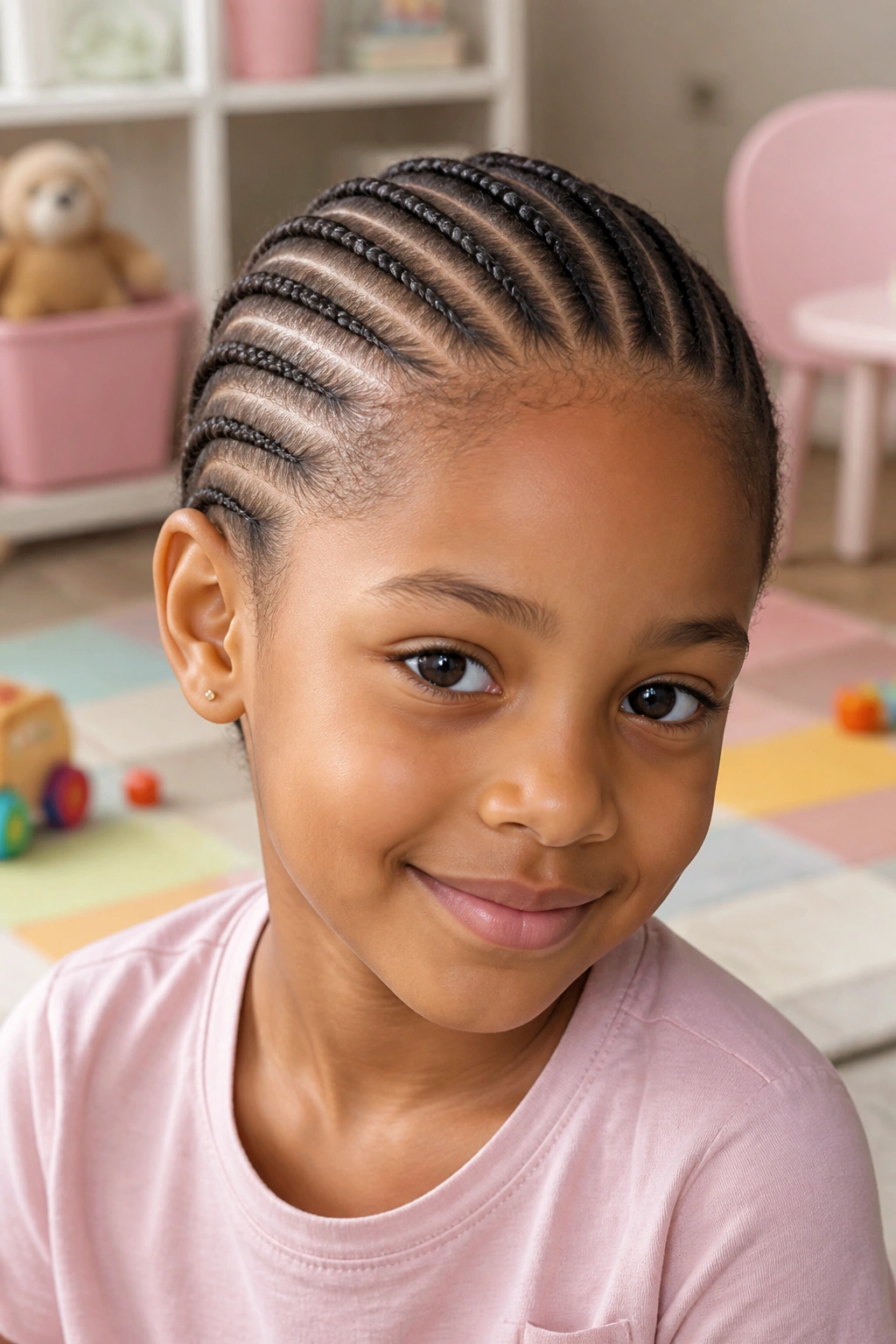
Kids’ straight back cornrows need to look neat, but comfort matters more than perfection. That sounds obvious, and yet people forget it all the time. A style that is tugging at the temples or pulling on the crown is not a good style, no matter how clean the parts look in the mirror.
For children, smaller to medium rows often make more sense than super tiny braids. The style stays neat, but the install time stays reasonable, which is a blessing for everybody in the room. Accessories can be fun here — barrettes, soft beads, or colorful ties — but they should stay light.
Morning routines get easier when the braids are not fighting the pillow. A satin bonnet or a smooth pillowcase helps the edges last longer, and a little leave-in spray on the lengths can keep the hair from feeling dry. That said, avoid heavy creams on the scalp. They build up fast and make the parts look dull.
This is the kind of style that can handle school, play, and repeat washing without collapsing instantly. That’s the real win.
16. Straight Backs with Gold Cuffs
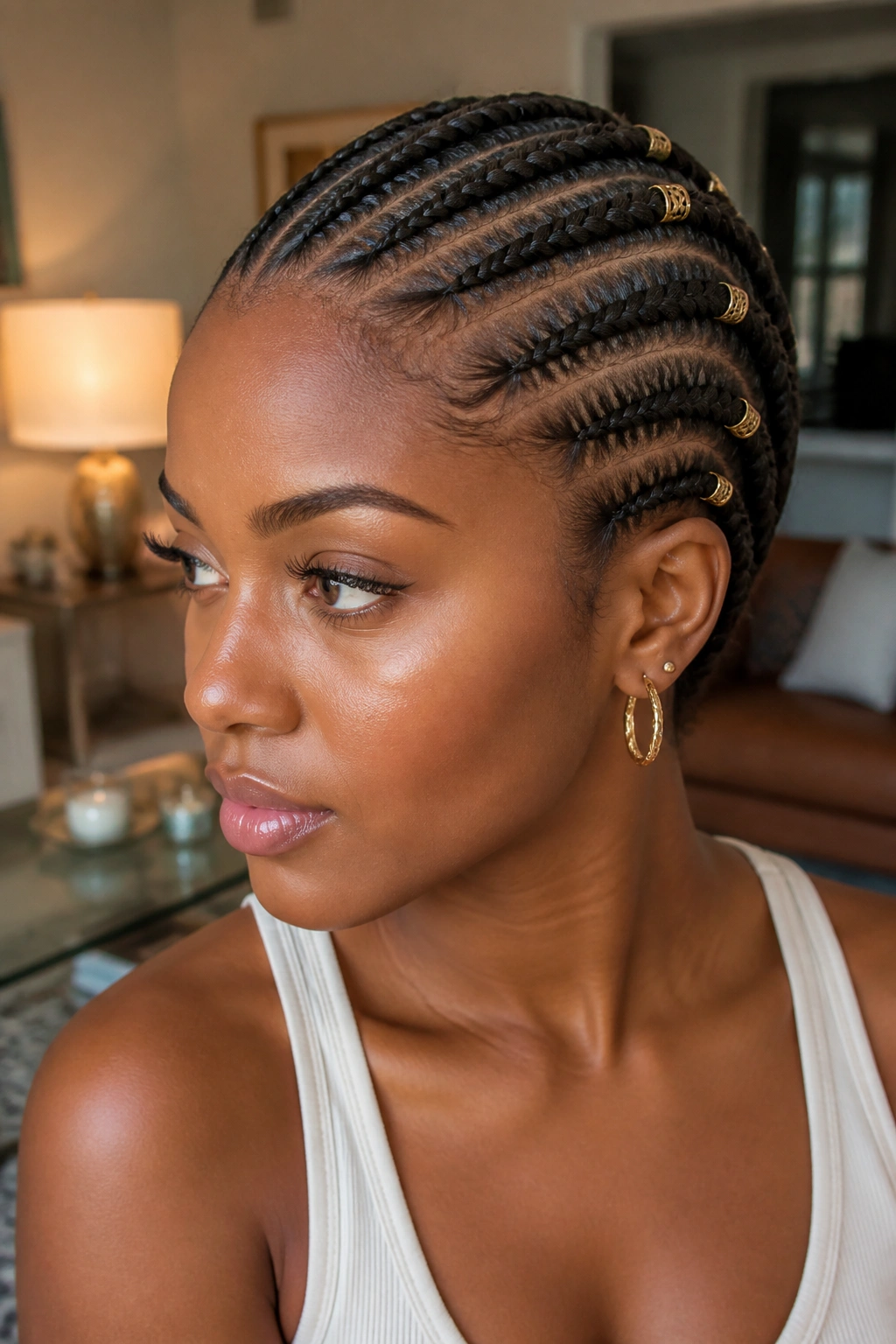
Gold cuffs are small, but they change the tone of the whole braid set. A plain row of straight backs reads clean and simple. Add a few cuffs, and the braids start to feel dressed up without needing color or extra length.
The nice part is that cuffs do not require a dramatic style to work. You can place one near the front, cluster two or three along a side row, or keep them near the ends so they catch the eye when the braids move. I prefer restraint here. Too many cuffs start to look noisy.
How to Place Them
- Put them on dry braids so they slide less
- Space them out by about 2 to 3 inches
- Match the metal tone to your jewelry if you want a cleaner finish
- Keep them off any braid that already feels tight near the root
This style is a good answer when you want plain straight backs but still want a little shine. No color change. No extra braid pattern. Just a few pieces of metal doing their job.
17. Straight Backs Under a Wig or Scarf
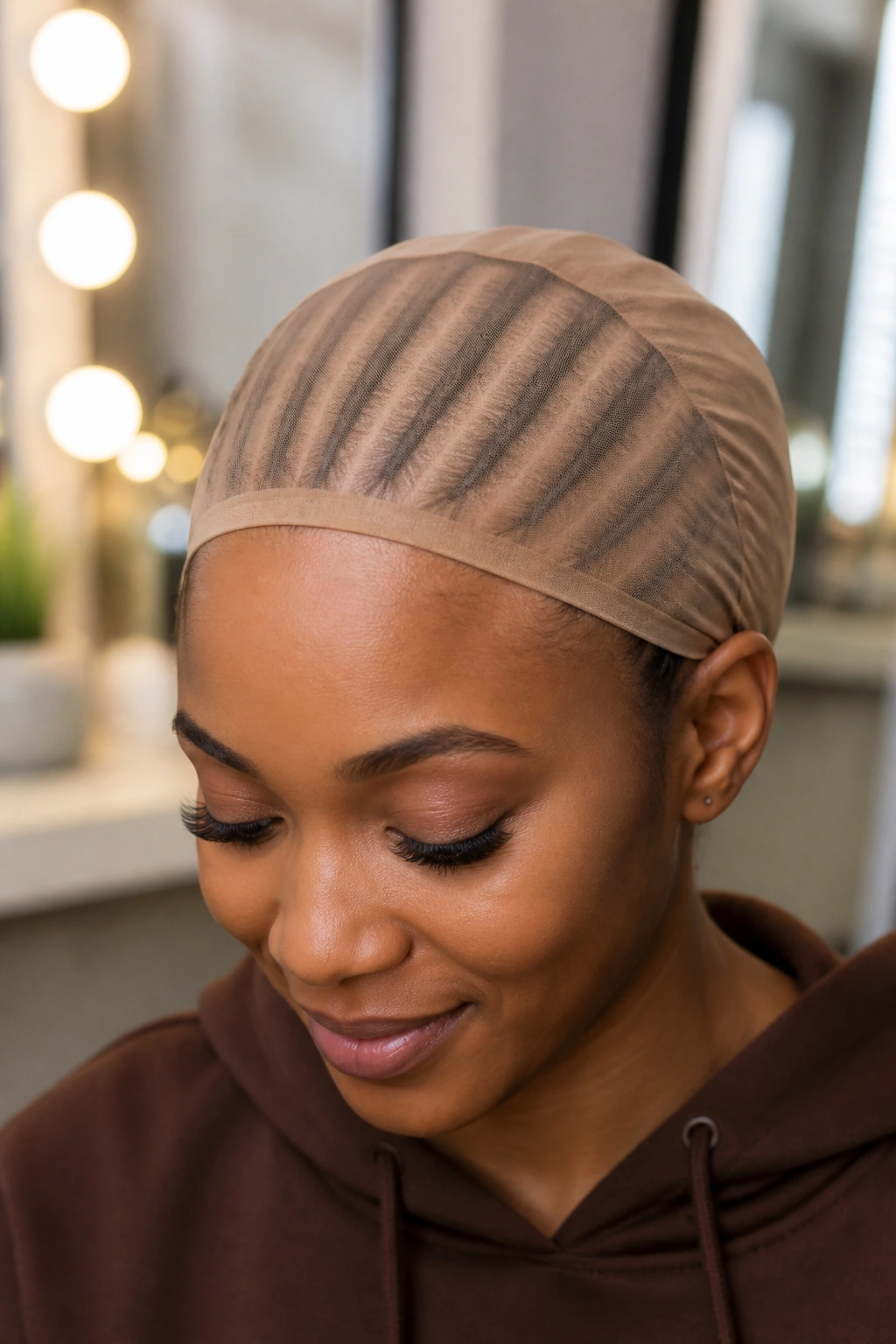
Some braid styles are made to be shown off. Others are made to disappear under something else. Straight backs under a wig or scarf belong to that second group, and they do the job better than loose plaits or bulky twists.
The reason is flatness. Straight backs create a smoother base, which helps wigs sit closer to the scalp and keeps scarves from bunching up in the wrong places. If the rows are too thick, you’ll feel that ridge under the cap every time you move. Smaller, flatter braids solve most of that problem.
I also like this style for people who wear protective coverings often but still want their own hair organized underneath. The hair stays contained, the scalp is easier to reach for cleaning, and the style can be refreshed without starting from scratch every time.
This is not the flashy version of straight backs. It is the practical one. Still worth loving. Probably more worth loving, if I’m honest, because good base braids save so much trouble later.
18. Half-Up Top Knot Straight Backs
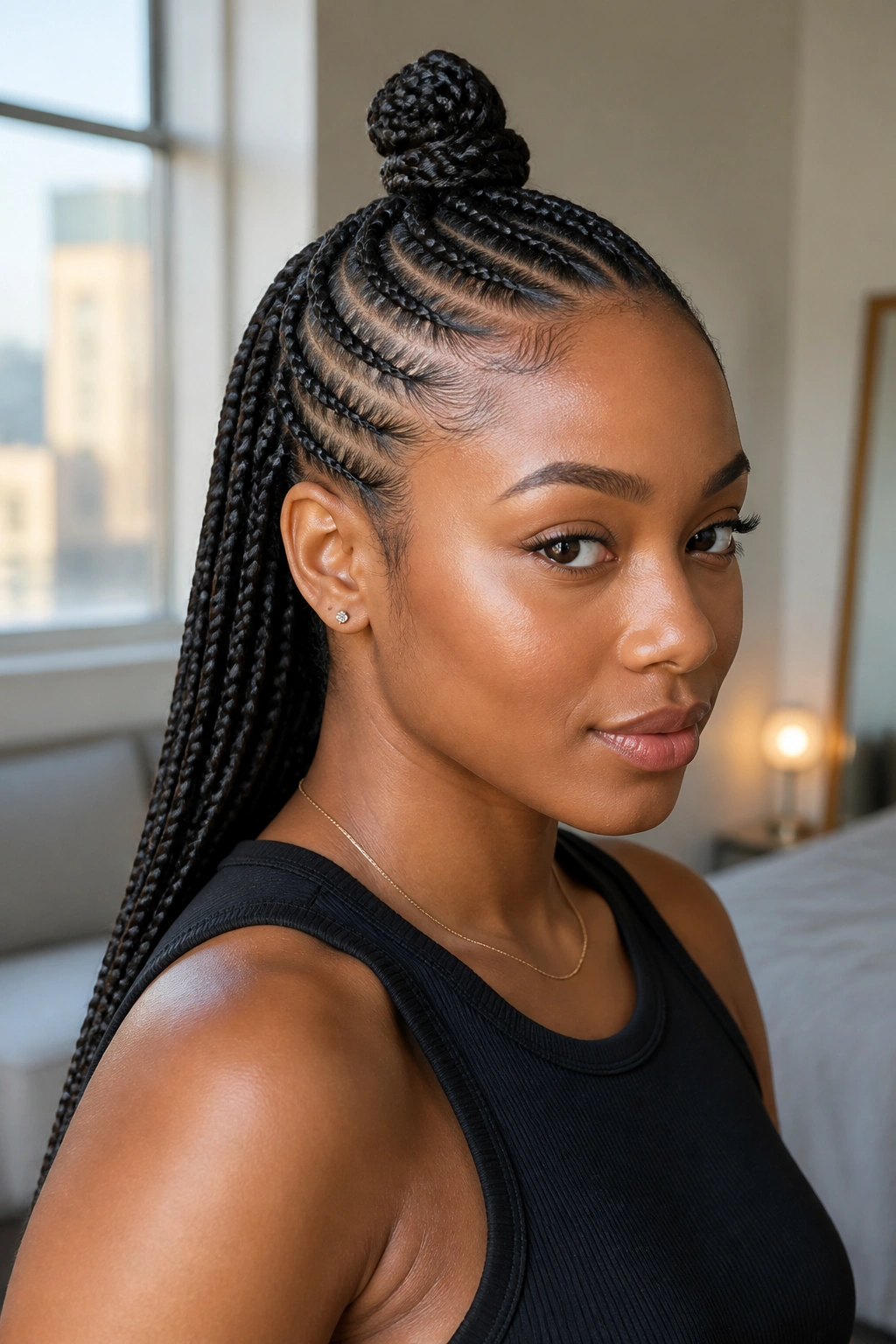
Half-up top knot straight backs sit in that nice middle ground between tidy and relaxed. The braids are still running straight back, but the front or top section is gathered into a knot, leaving the lower rows down.
That split gives you shape without committing to a full bun or a full-down look. It also helps if you want your face open but do not want all the braids hanging in one direction. The top knot can be tiny and neat or a bit fuller if the hair is thick enough to support it.
This style works especially well when the rows are even and the top section is not too bulky. If the knot sits too high and too heavy, the whole look starts to feel top-loaded. Keep the knot anchored close to the crown, and use pins if needed so it does not drift around during the day.
A polished half-up version can handle earrings, glasses, or a bold lip without competing for attention. That balance is the real charm. It feels easy. Not lazy. Easy.
Final Thoughts
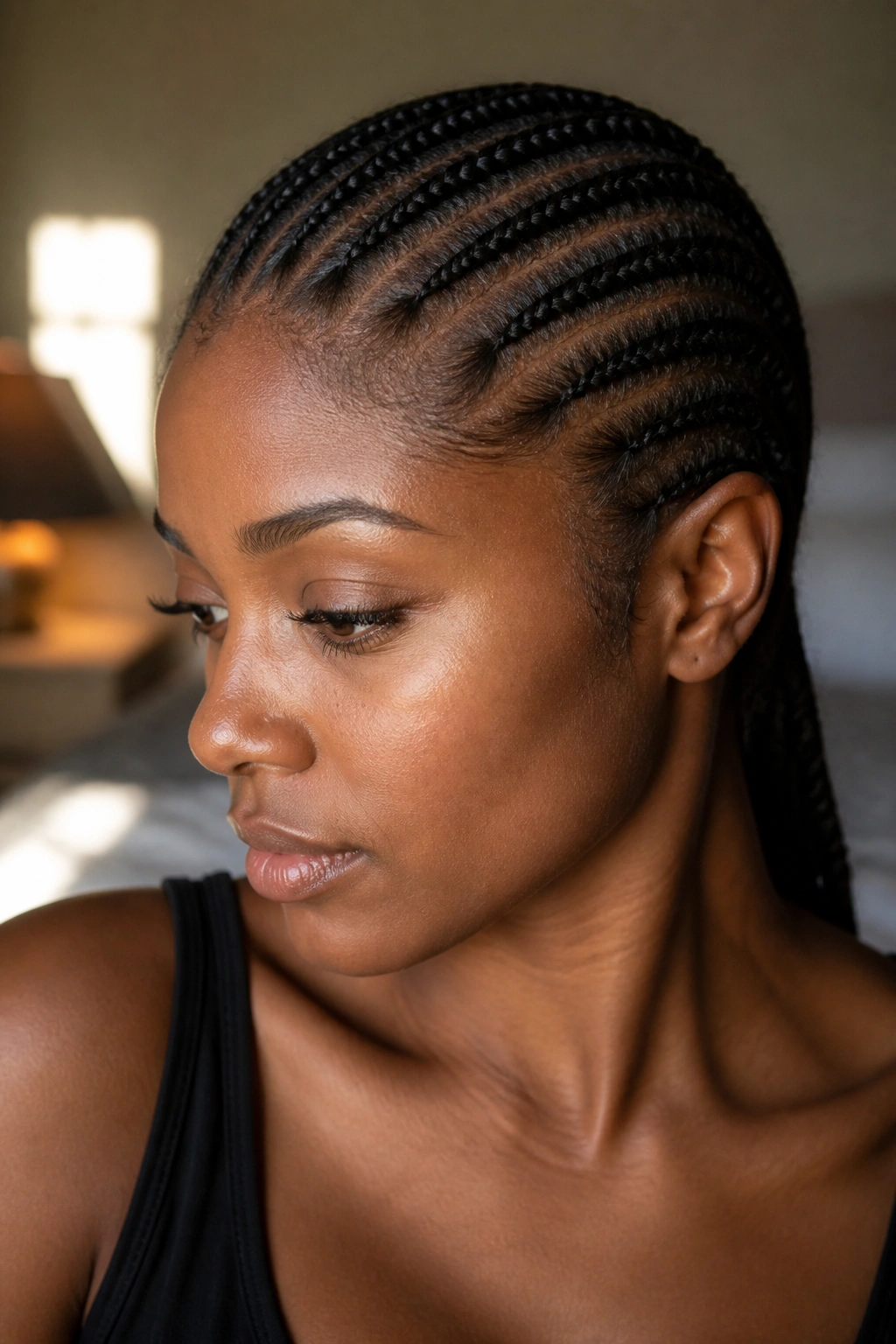
Straight back cornrows give you a lot more room to play than people think. Row count, part shape, braid size, finish, and accessories all change the mood, even when the core structure stays the same.
If you want the style to last, ask for clean parts and firm, not painful tension. That single detail saves more headaches than any fancy product ever will. And if you are choosing between two versions, pick the one that fits your daily life, not the one that looks hardest to do.
One last thing. Take a photo of the front and the back once the braids are finished. Straight backs can look one way in a mirror and another way in real life, and that photo is the quickest way to know whether the style is sitting exactly where you want it.