



Braided ponytail hairstyles for long hair solve a problem that plain ponytails never quite manage: they keep the length under control without making you look like you gave up. Long hair can be heavy, slippery, and a little dramatic when the weather shifts or your day gets busy. A braid changes the whole mood. It gives the ponytail structure, keeps the ends from tangling into a sad knot, and makes the style look intentional even when you did it in ten minutes.
What I like about this category is how much room it gives you to play. A braid at the crown can make hair look fuller. A braid through the tail can make a simple ponytail feel dressed up. Tight, sleek styles are great when you want polish, while softer braids lean romantic and easy. And if you wear long hair as a protective style, the difference between “protective” and “too tight” matters more than people admit. A good braided ponytail should hold hair in place without yanking at the hairline.
A messy elastic ruins everything.
So does a braid that’s too tight at the temples, especially if your hair is already heavy or textured. The best versions keep the base secure, spread tension out across the head, and let the length do the pretty work at the end. Some of these styles are fast. Some need a little patience and a rat-tail comb. All of them look better when the parting is clean and the braid is anchored before you start tugging on the tail.
1. Classic Three-Strand Braided Ponytail for Long Hair
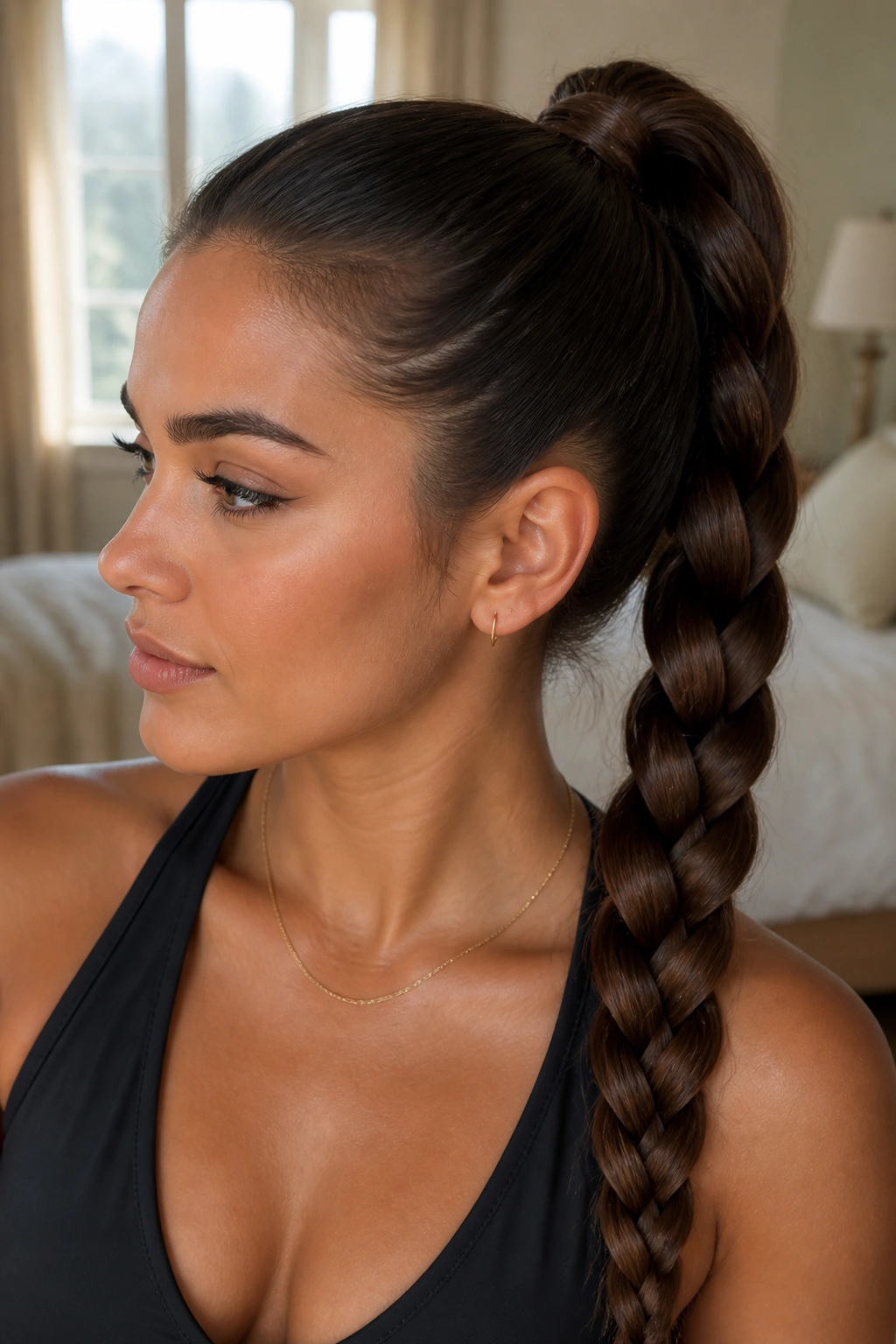
This is the style I always tell people to learn first. It looks simple because it is simple, and that’s the whole point. Pull your hair into a ponytail at the height you like, then braid the length with a basic three-strand plait. On long hair, that braid has enough weight to hang beautifully without needing extra tricks.
Why It Works
The three-strand braid holds shape better than a loose ponytail, and it keeps the ends from fraying into a puff by midday. If your hair is layered, it helps to secure the tail with a clear elastic before you braid, especially if the ends feel thin. That tiny extra step keeps shorter pieces from slipping out one by one.
This is the version that works when you want something clean but not stiff. Wear it high for a sharper look, or low at the nape if you want something softer. A little serum on the tail smooths flyaways. Too much product makes the braid look greasy, so go light.
Quick Styling Notes
- Best on hair that is medium to thick, because the braid reads fuller.
- Works with straight, wavy, or stretched curly hair.
- Looks neat with a middle part or a side part.
- A satin scrunchie helps if you want less crease at the base.
My honest take: if you only learn one braided ponytail, make it this one.
2. High Dutch Braid Ponytail
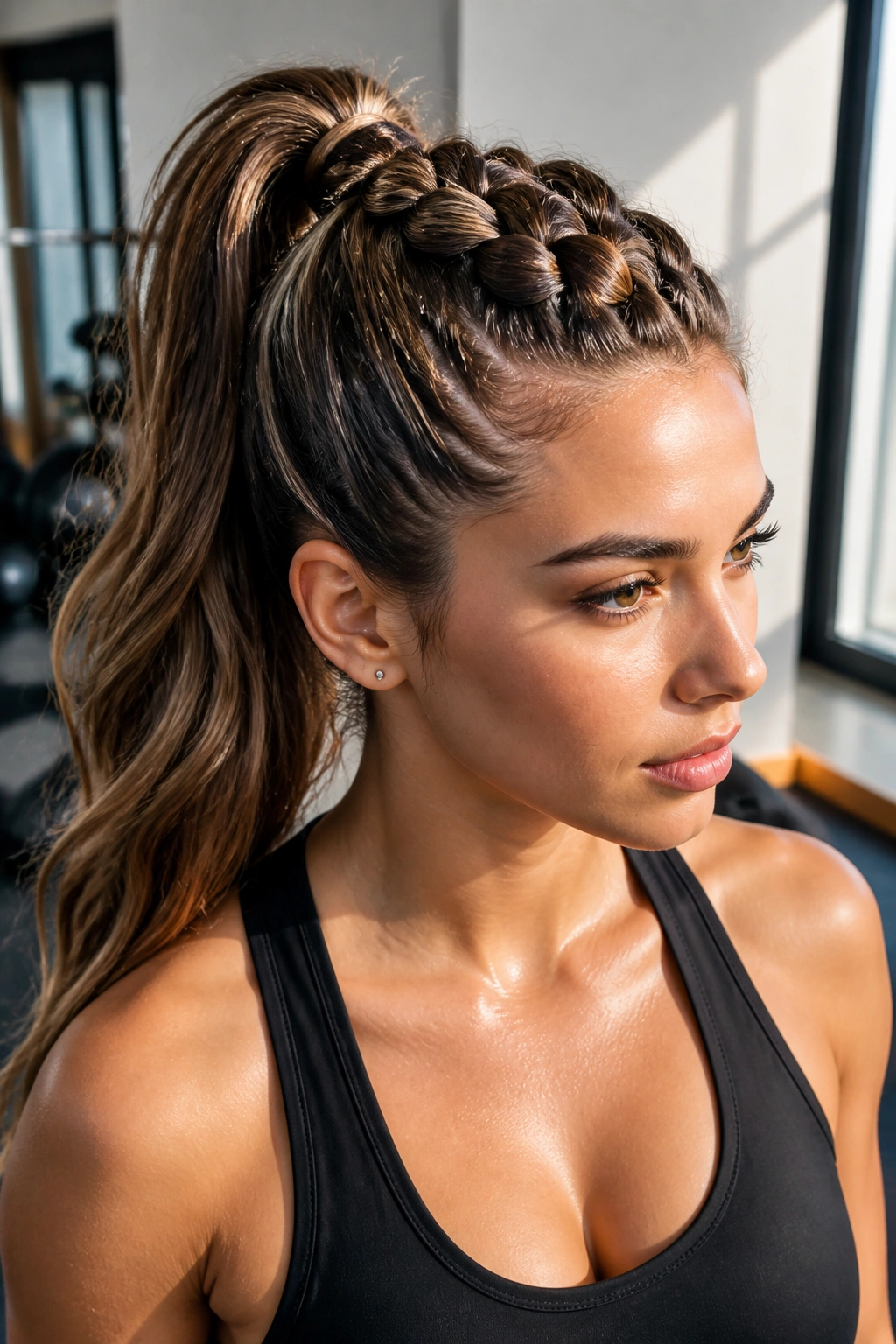
A high Dutch braid ponytail gives instant lift at the crown, and that matters more than people think. Dutch braids sit on top of the hair instead of sinking into it, so the braid has that raised, rope-like look right away. When the braid feeds into a high ponytail, the whole style feels energetic and structured.
What Makes It Different
The crown gets all the visual work here. A regular high ponytail can collapse if your hair is heavy, but a Dutch braid helps hold the front section in place before the tail even starts. That makes this a solid choice for long hair that tends to slide flat by noon.
The braid should be snug, not painful. That’s a real distinction. If you can feel every tug, it’s too tight. Use a little mousse or styling cream before braiding if your hair slips out of your fingers. Then pancake the braid very gently by pulling the outer loops apart once it’s finished. Not yanking. Just widening.
How to Wear It
- Great for workout days, errands, and casual nights out.
- Pairs well with a wrapped pony base if you want a cleaner finish.
- Looks especially good on thick hair because the braid can handle the volume.
- Use a strong elastic under the braid if your hair is heavy.
Best detail: leave the ponytail itself straight for contrast, or curl the tail lightly if you want more movement.
3. Low French Braid Ponytail
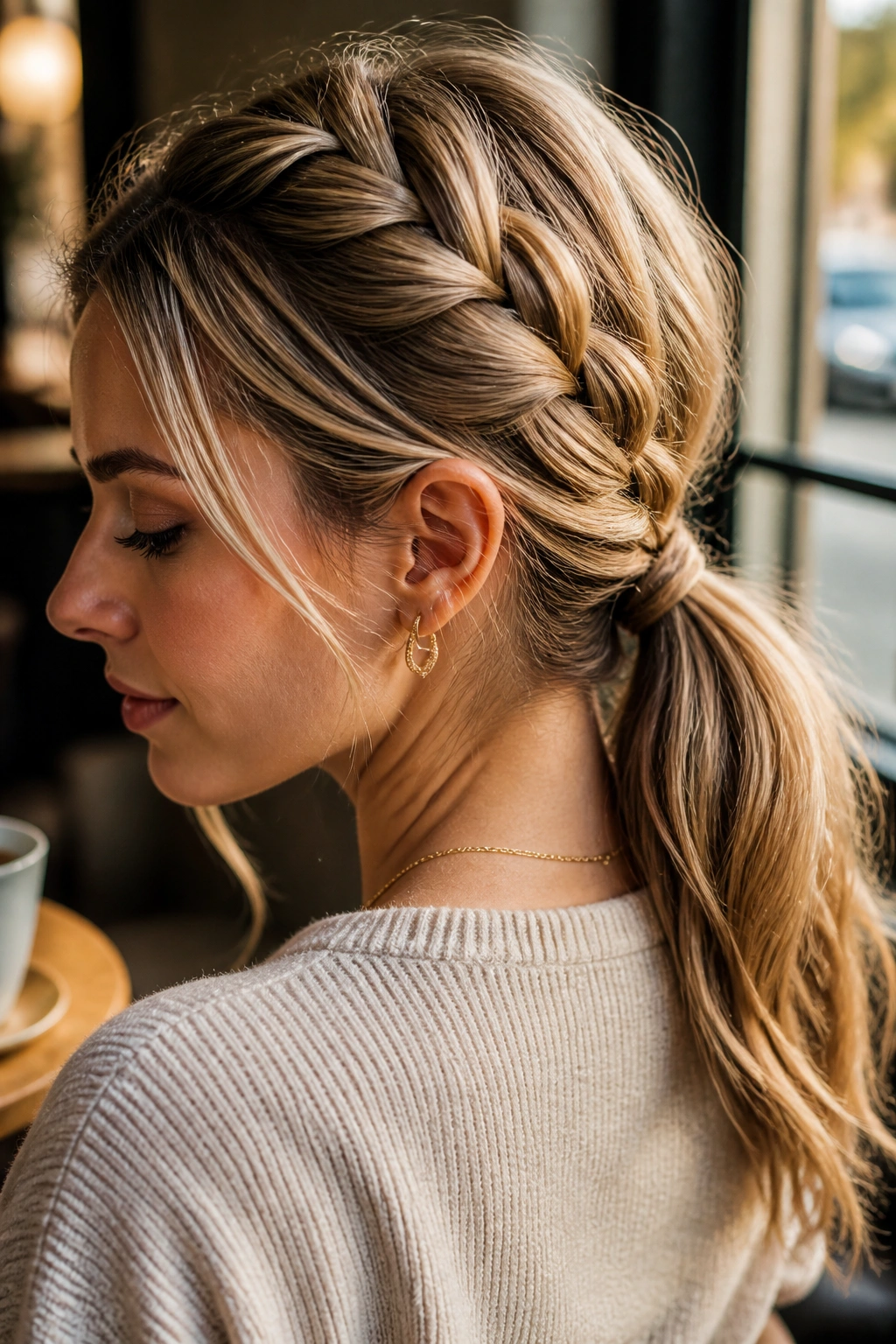
Want something a little softer? A low French braid ponytail sits at the nape and has a calmer feel than the high versions. The braid starts near the crown, gathers hair as it moves down, then ends in a ponytail or braid at the back. It’s one of those styles that looks polished without trying too hard.
The low placement changes everything. Hair feels lighter at the neck, and the braid follows the head shape in a way that flatters long layers. I like this version for work, dinner, or any day when you need hair off your face but still want it to look finished. It also behaves well under a coat collar, which sounds small until winter hair starts knotting against wool.
What to Watch For
- Keep the braid centered if you want a clean, formal line.
- Start slightly looser at the crown if you want softness around the face.
- A tiny bit of texture spray helps if your hair is too silky.
- If the tail is very long, secure the end with a clear elastic before the final tie.
A low French braid ponytail has one advantage I never get tired of: it can look dressed up with zero accessories.
4. Fishtail Braid Ponytail

A fishtail braid is one of the prettiest ways to show off long hair because it breaks the tail into tiny woven sections that look more detailed than a standard braid. The effect is delicate, but the braid itself can be sturdy if you take your time. On extra-long hair, the pattern really stretches out and gives the ponytail a long, elegant line.
Why People Keep Coming Back to It
The fishtail braid looks more complicated than it is. You split the tail into two sections, then move small pieces from the outside of each side into the middle, over and over. That’s it. The trick is keeping the pieces small and even. If they’re too chunky, the braid loses that fine woven look.
I like fishtails when the hair is mostly one length or only lightly layered. Very short layers can poke out and make the braid fuzzy faster. A little smoothing cream goes a long way here. So does patience. This is not the style to rush through while your coffee is still too hot to drink.
Tiny Details That Matter
- Use a clear elastic first so the base does not loosen.
- Mist the tail with light-hold hairspray before starting.
- Pull the braid apart slightly at the end if you want more width.
- Wrap a tiny strand of hair around the elastic for a cleaner finish.
One note: fishtails love long hair. The longer the tail, the better the payoff.
5. Rope-Braid Ponytail
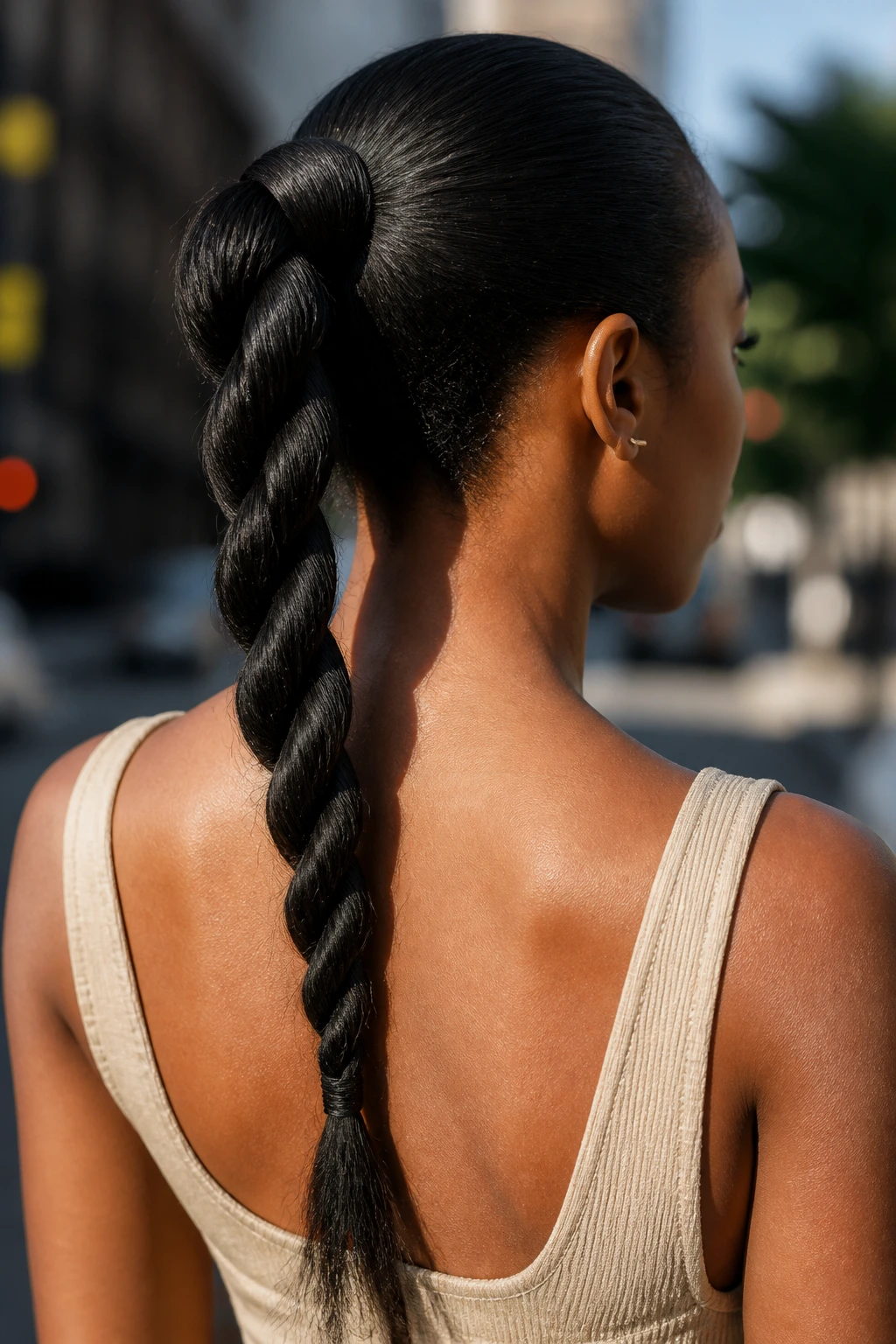
The rope braid is the fast one. Two sections, a twist, and suddenly your ponytail looks intentional instead of tossed together. It has a clean, almost polished twist pattern that works especially well on long hair because the length gives the rope braid room to show off.
Here’s the part people miss: both sections need to twist in the same direction before you wrap them around each other in the opposite direction. If you skip that, the braid loosens fast. That little rule keeps the style from falling apart by lunch. I’ve seen plenty of rope braids that looked great in the mirror and then unraveled into a sad spiral an hour later. Usually it’s a direction problem.
This style works beautifully when the hair is sleek and controlled. A drop of styling oil on the mid-lengths helps, but don’t overdo it. Too much slip and the twist won’t hold. If your hair is textured, stretch it first or blow-dry it smooth. Otherwise the rope braid can get lumpy in a hurry.
It’s especially handy for days when you want a neat braid without spending forever on sections. Fast. Clean. Useful.
6. Bubble Braid Ponytail with Braided Base
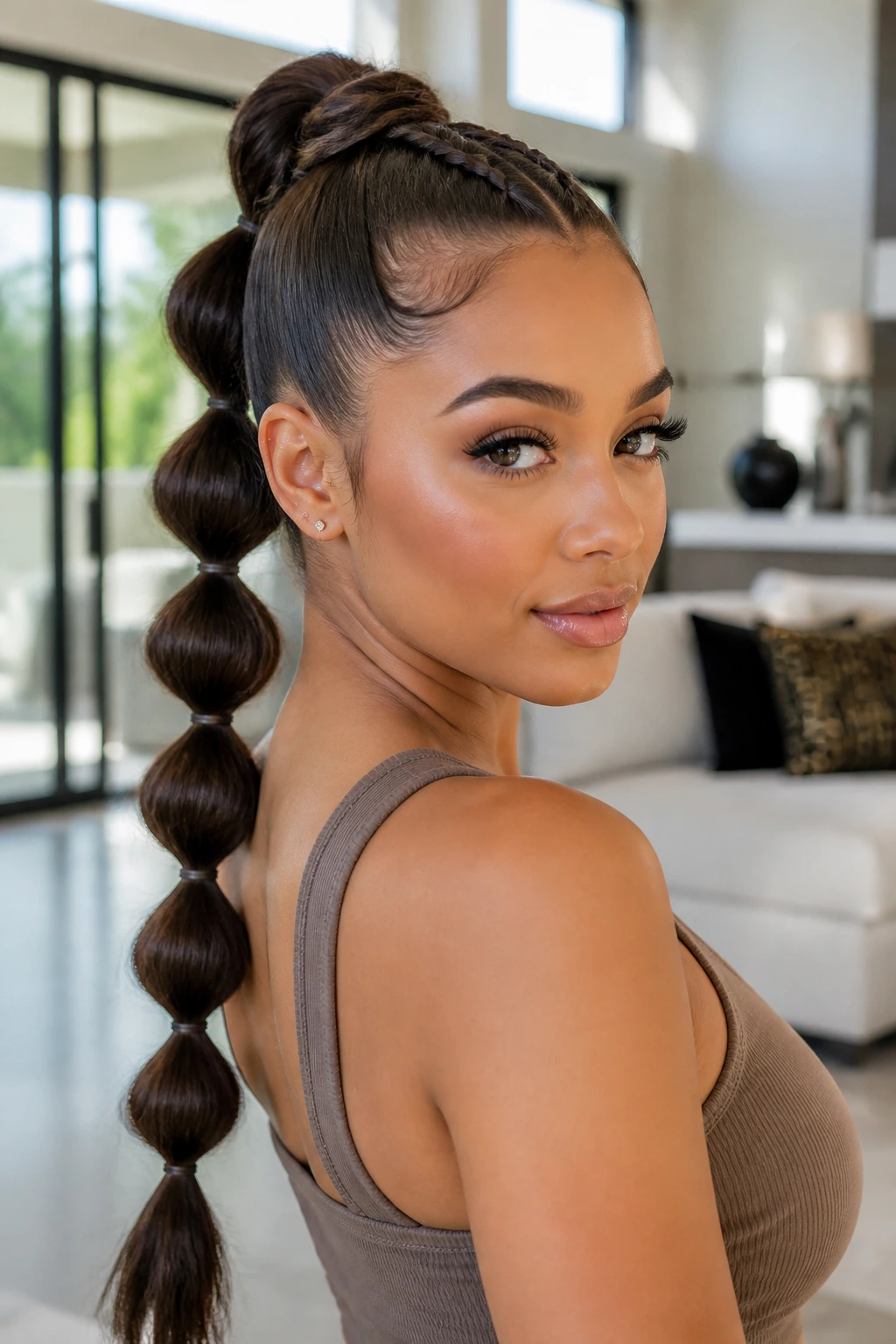
A bubble braid ponytail is playful, but on long hair it can also look sharp and modern if you keep the base neat. I like starting with a small braid at the top or along the first few inches of the ponytail, then building the bubbles down the length with evenly spaced elastics. The braid at the top anchors the style so the bubbles feel like part of the design, not an afterthought.
Where the Bubbles Should Sit
Spacing matters here. If the elastics are too close together, the bubbles collapse into little lumps. If they’re too far apart, the shape gets messy and the ponytail loses rhythm. About 2 to 4 inches between ties works well on most long hair, though very thick hair may need a little more room.
This style is one of the best ways to make long length look even longer. Each section puffs out, then narrows again, so the eye keeps moving down the hair. That creates a dramatic line without needing heat tools or a curling iron.
Good Product Pairing
- Light gel for the front braid.
- Small clear elastics for the bubbles.
- A smoothing brush to keep the base tidy.
- A drop of shine serum on the ends if the hair looks dry.
My opinion: this is a smart choice when you want something fun that still holds up well in real life.
7. Feed-In Cornrow Ponytail

Feed-in cornrow ponytails live in a different lane. They’re sleek, structured, and built for staying power. The feed-in method adds hair gradually to each braid, which helps the style sit flatter against the scalp and keeps the base from looking bulky. When the braids gather into a ponytail, the result is clean and secure.
You need patience and a good parting comb for this one. The sections should be even, and the tension should stay consistent from root to end. That consistency is what gives the style its polished look. It’s also what makes it feel like a true protective style when it’s done well. Too much pulling at the hairline is a bad trade, so keep the tension firm but not tight.
Best For
- Long natural hair that needs a low-manipulation style.
- People who want the hairline to stay neat for several days.
- Thick or coily textures that hold braided styles well.
- High ponytails or low ponytails, depending on the look you want.
A little styling gel at the roots helps with neat parts, and a satin scarf at night keeps the braids smoother. The finish can be simple or extra-long, depending on how much hair you gather at the back.
8. Double Dutch Braids into One Ponytail
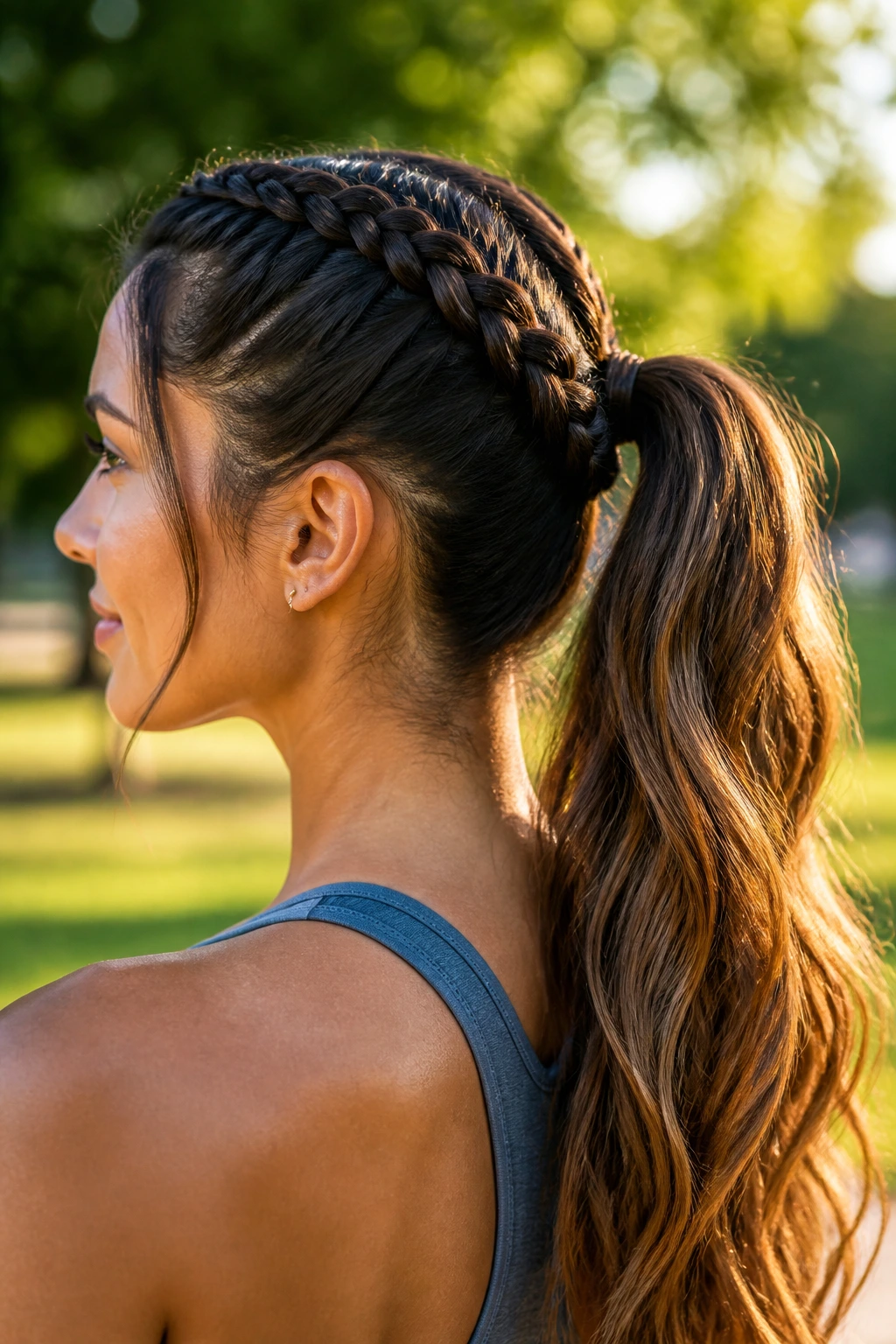
Two Dutch braids meeting in one ponytail give you that strong, athletic look without making the style feel plain. The braids start near the front or temples, travel toward the back, and join into a single tail. On long hair, the combined ponytail has a lot of visual weight, which makes the style look full even before you add volume.
Why It Stands Out
Unlike one braid that runs straight down the center, this style frames the face from both sides and keeps the front sections controlled. It’s neat, but not severe. I like it on days when hair needs to stay put but I still want it to look like I made a decision, not an apology.
The middle section where the braids meet can get bulky if you overpack it with hair. Keep the sections clean and don’t be afraid to tuck the ends under the ponytail base before securing it. That keeps the knot hidden and the back smoother.
A Few Details That Help
- Use a light edge gel if your hairline likes to frizz.
- Braid both sides at the same angle so the ponytail meets evenly.
- Secure the tails with one strong elastic before joining them.
- If the braids feel too chunky, loosen them slightly after finishing.
This style has staying power. It also makes long hair feel much lighter on the neck, which is half the appeal.
9. Side-Braid Ponytail
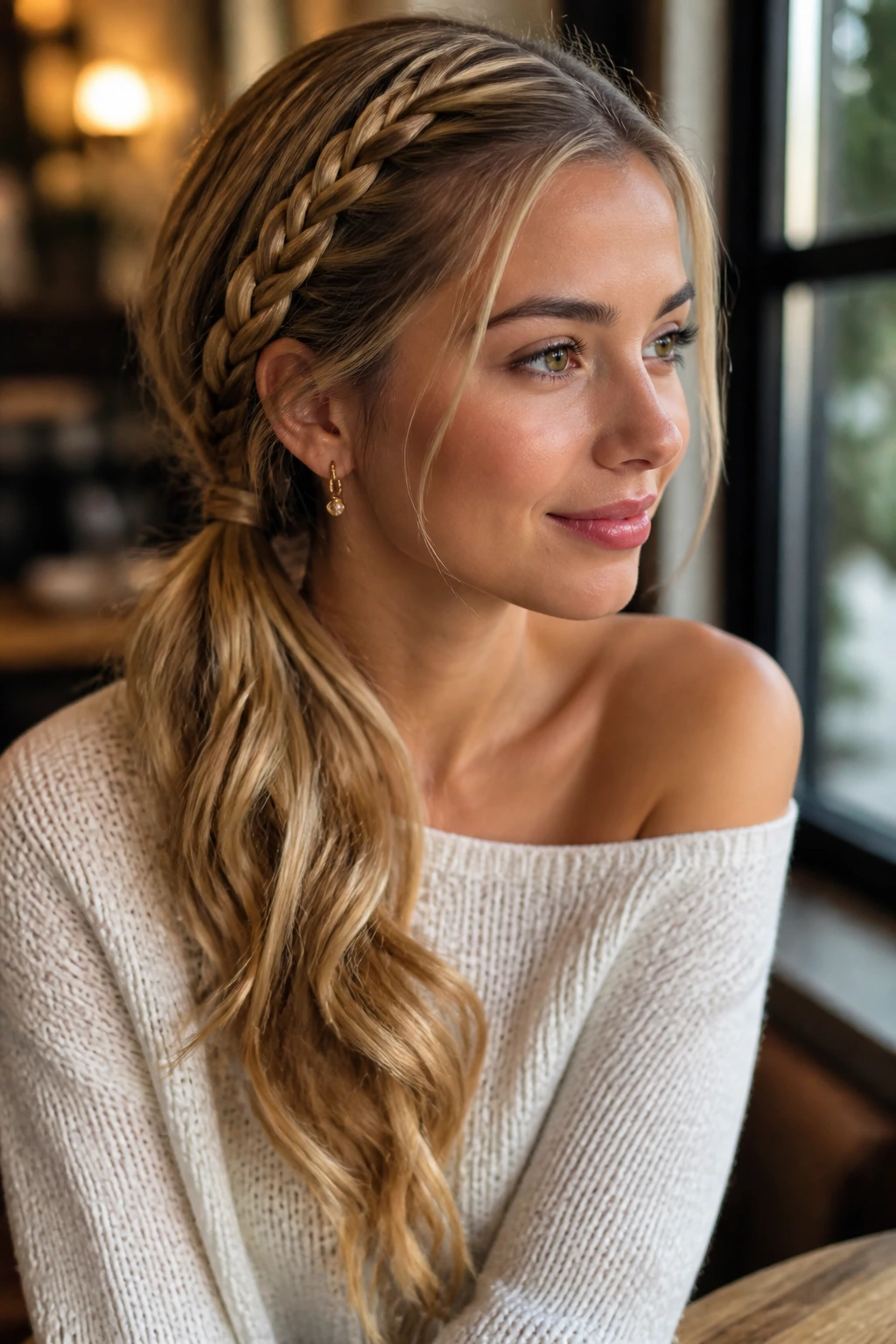
A side-braid ponytail is softer than the centered versions, and that slight shift changes the whole mood. The braid can start at one temple, travel behind the ear, and merge into a ponytail at the side or back. The result feels a little romantic, a little casual, and a lot easier to wear than people expect.
If your hair has waves, this style loves that texture. The side angle lets the braid sit with the hair’s natural movement instead of fighting it. Straight hair works too, but a tiny bit of bend in the ends makes the ponytail look less stiff. That’s the part I’d never skip if I had time.
What to Notice
The braid should follow the head, not float above it. If it starts too far back, the style loses that sweeping effect. If it starts too close to the ear, it can look heavy on one side. A clean part helps, but a perfectly straight line isn’t required. This one can handle a little softness.
A side-braid ponytail is a good bridge between everyday and dressed up. It works with a blazer. It works with a tank top. It works when you’re in a hurry and still want to look like you weren’t.
10. Braided Wrap-Around Ponytail
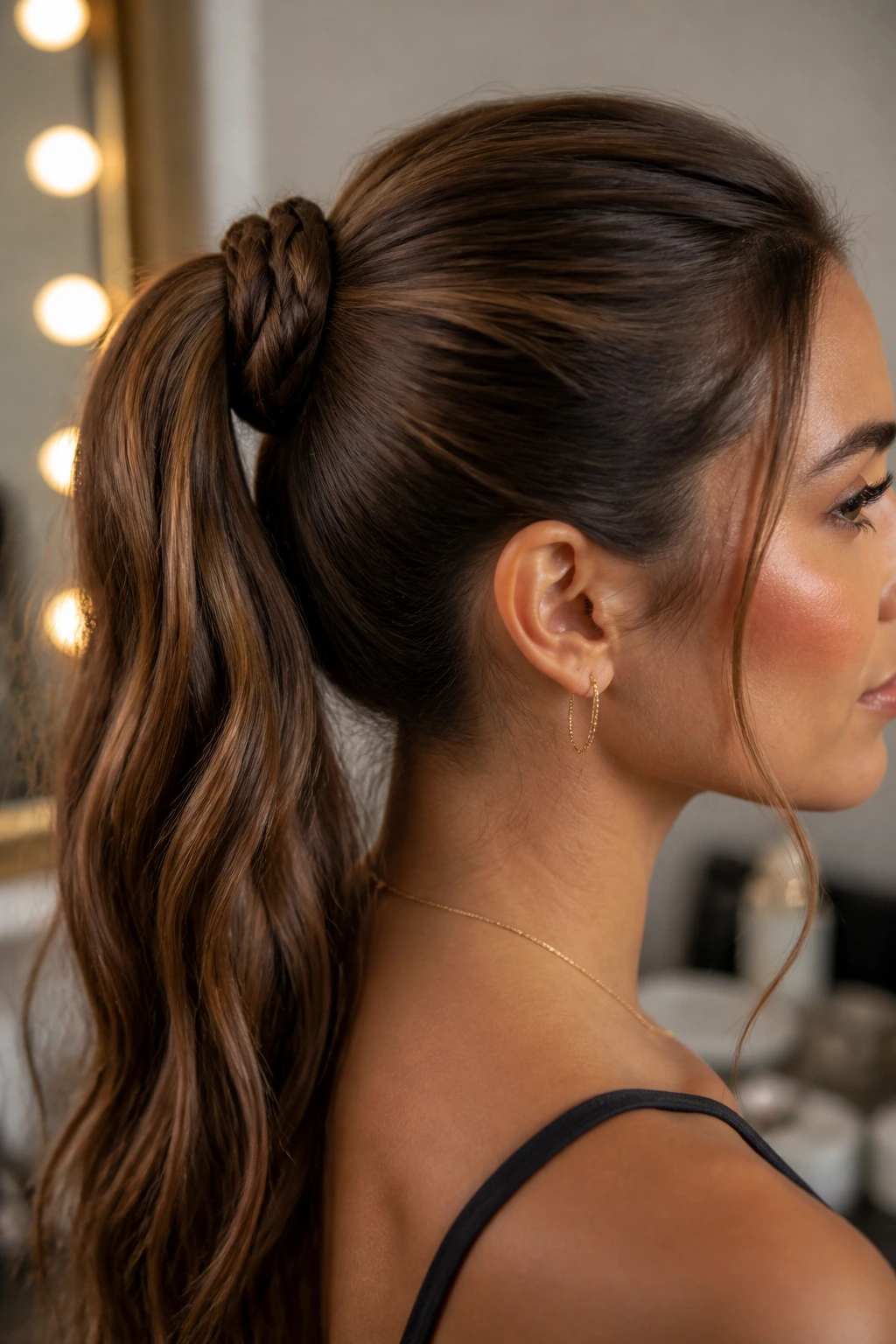
This is the kind of detail that changes a ponytail from basic to finished. A braided wrap-around ponytail uses a small braid, usually from a thin section of hair near the base, to hide the elastic and give the whole style a cleaner edge. You can keep the rest of the ponytail loose, braid the tail too, or curl it if you want a softer finish.
The Neat Little Trick
The wrap braid should be narrow enough to look like trim, not another main feature. That’s where people sometimes go wrong. If the strand is too thick, it takes over the ponytail and the style starts looking busy. A small three-strand braid is enough. Pin or tuck the end underneath the elastic and hide it with a bobby pin.
This is one of my favorite choices for events because it photographs well without feeling fussy. The base looks polished, the ponytail stays controlled, and the braid gives you something more interesting than a plain tie. It’s also a nice fix when the elastic itself is not pretty and you want that little thing out of sight.
A clean wrap around the base can do more than a bigger braid elsewhere. Strange but true.
11. Boxer Braid Ponytail

Boxer braid ponytails are built for hold. The braids usually start near the front and move straight back in two sections, then the lengths are pulled into a ponytail or braided tail at the back. The look is bold, practical, and not afraid of a little structure. If your hair gets in your face all day, this style is a relief.
When to Choose It
Use this one when you want the hairline locked down and the rest of the length controlled. That’s the selling point. It’s not the softest braid ponytail on this list, but it is one of the most dependable. For long hair, it also creates a nice sense of line, since the braids guide the eye straight to the ponytail.
The only real catch is tension. Boxer braids can be too tight if you pull hard while sectioning. That may look neat for a few hours and feel awful by the end of the day. Aim for secure, not strained. If your scalp feels tender before you leave the house, loosen it.
Best Pairings
- Athletic wear.
- Structured outfits that need a sharper hairstyle.
- Thick hair that tends to puff up at the sides.
- A low ponytail finish if you want less bulk at the back.
It’s a strong style. Not delicate. That’s the appeal.
12. Half-Braid Ponytail Hybrid

Sometimes you want hair up, but not all the way up. The half-braid ponytail hybrid gives you that middle ground. The front or top sections are braided into a ponytail, while the rest of the length stays loose or only partially gathered. On very long hair, that balance is useful because you still get shape without losing all the movement.
This style works especially well when your hair is too heavy for a full updo but you want the front secured. A braid along the crown keeps things neat, and the remaining length keeps it from feeling overdone. I like it on layered hair, because the loose portion softens the strong braid line and makes the style feel more relaxed.
Options Worth Trying
- Braid both sides halfway, then tie them together.
- Use one chunky braid across the top and leave the tail loose.
- Curl the loose length for more bounce.
- Keep the lower half straight for a cleaner line.
The best thing about this hybrid is flexibility. You can dress it up or down fast, and it usually takes less time than a full braided ponytail.
13. Curly Ponytail with Braided Crown
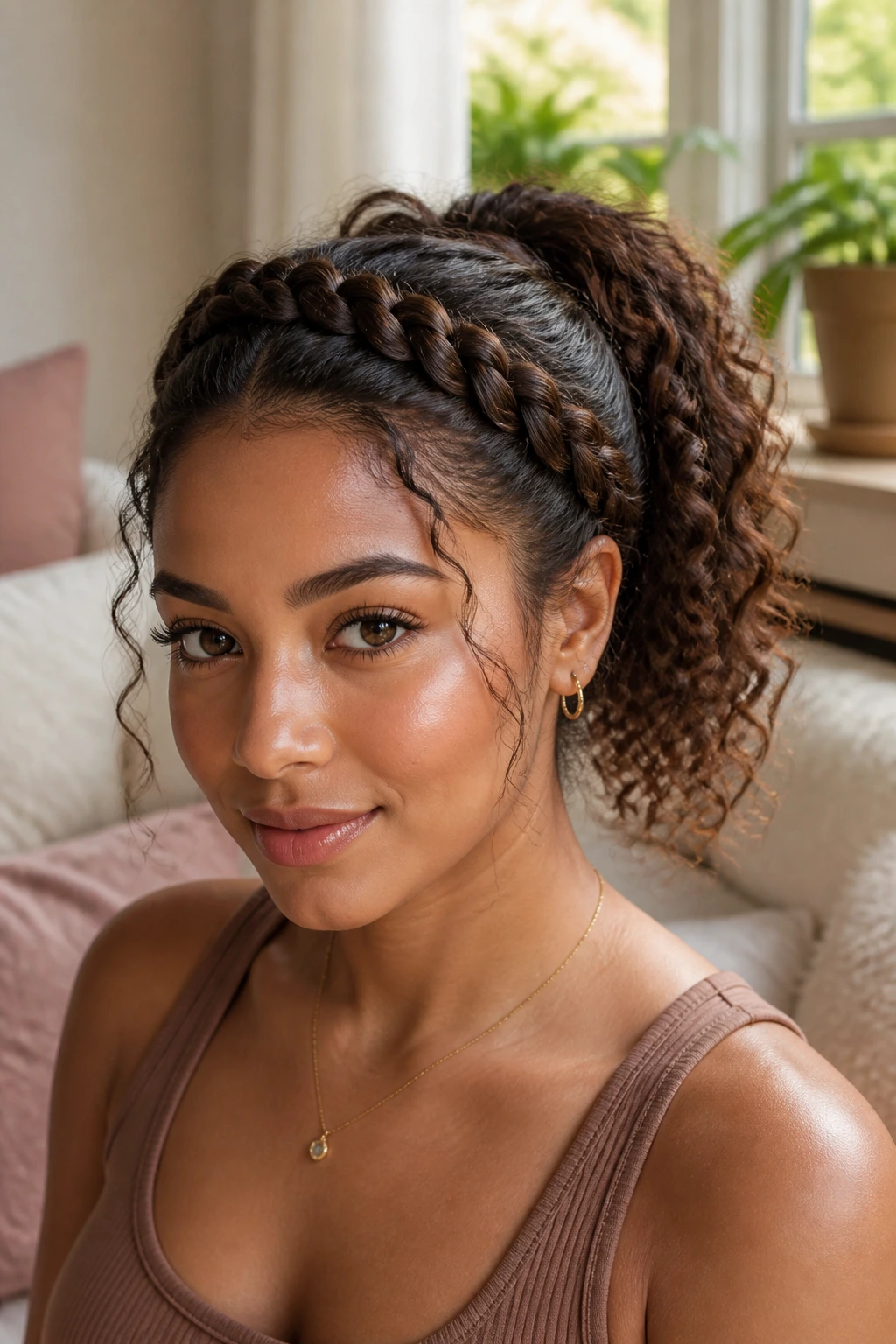
A curly ponytail with a braided crown is one of those styles that lets texture do half the work. The braid across the front or around the crown keeps the hairline neat, while the ponytail shows off the curls, coils, or waves at the back. It’s a strong choice when you want shape up top and movement at the ends.
How to Keep the Crown Smooth Without Flattening Curls
Start with defined curls, not brushed-out frizz. That matters. A curl cream or leave-in before styling helps the loose sections keep their shape, and a small amount of gel at the roots keeps the crown braid tidy. You do not need to slick everything flat. That usually kills the look.
The braid can be a single crown braid, a side braid that wraps back, or two smaller braids meeting at the ponytail. I prefer a softer finish here, because the curls already bring enough energy. If the crown is too tight, the whole style gets stiff. If it’s too loose, the front frizzes up. There’s a middle ground, and it’s worth finding.
This is the kind of braid ponytail that looks especially good when the curl pattern is defined enough to create its own shape in the tail. The braid frames the face. The curls do the rest.
14. Low Ponytail with Scarf and Braid Detail

A scarf can turn a low braided ponytail into something much more interesting with almost no extra effort. I like this style because it solves two problems at once: it hides the hair elastic and adds color or texture without needing more braids. A small braid near the base, then a silk or satin scarf tied around the ponytail, gives the whole look a softer finish.
The braid detail should stay small. If it gets too thick, the scarf can sit awkwardly and the base starts feeling crowded. A narrow braid tucked near the side or wrapped around the elastic works best. Then the scarf can trail or knot at the nape, depending on the mood. A matte cotton scarf gives a different feel than a glossy silk one, and both are useful in different ways.
This is one of the better braid ponytail options when you want a casual style that still looks considered. It works for brunch, travel, or a day when your hair needs to stay down and out of the way. Also, the scarf helps cut down on friction at the base, which your ends may appreciate.
Simple idea. Good payoff.
15. Bubble Ponytail with Micro-Braids

Bubble ponytails get a little more interesting when you thread micro-braids into the sections. The bubbles give you shape, and the tiny braids add texture without overwhelming the style. On long hair, the length gives you enough room to create 4, 5, or even more bubbles, which makes the ponytail look intentional from top to bottom.
How to Build the Shape
Start with a sleek ponytail and add a few small braids near the base or along the sides. Then place elastics at even intervals down the length. Gently pull each section outward so the bubbles round out. That rounding step is where the style comes alive, but don’t tug so hard that the sections start looking uneven.
The micro-braids can run beside the bubbles or weave into the first few sections of the ponytail. Keep them thin. Thick accent braids compete with the bubble shape and make the style feel crowded. Small braids read as detail. Big ones read as clutter.
Best Uses
- Long straight or stretched hair.
- Festival looks.
- Dressy casual outfits that need more than a regular ponytail.
- Hair that holds elastics well without slipping.
This style is playful, but it still has structure. That’s a nice balance.
16. Ghanian Braid Ponytail
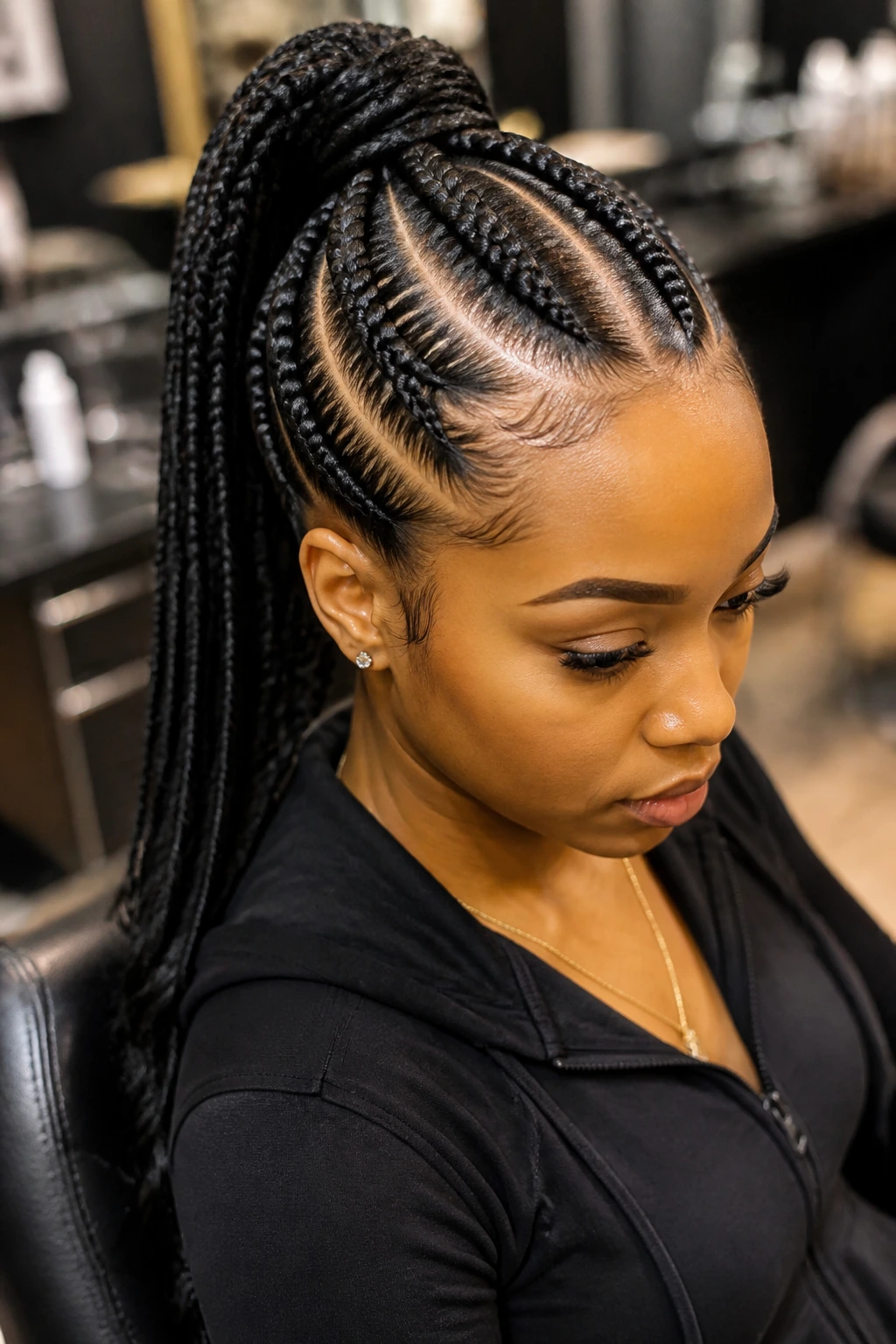
A Ghanian braid ponytail has presence. The braids are usually thicker, often built with feed-in hair, and the result is a ponytail that feels sleek at the scalp and full through the back. It’s one of the strongest protective styles in this group if you want neat parts, a clean finish, and a style that stays put.
What Makes It Worth Trying
The biggest advantage is control. Ghanian braids keep the hair smoothed close to the head while still giving the ponytail volume and drama. They can be styled high, low, or slightly off-center, depending on how the braids are laid before they’re gathered. On long hair, the tail can be left braided or finished with added hair for extra length.
The downside is also part of the appeal: this is a heavier style, so it needs careful tension at the root. No one should leave the chair with sore edges and call that normal. A gentle hand matters here. A clean part, steady sectioning, and a balanced braid pattern make a big difference.
Good Match For
- People who want a long-wear protective style.
- Natural hair textures that hold cornrow patterns well.
- Long hair that benefits from less daily manipulation.
- A polished look that still has some body at the back.
I like this style when I want the scalp to look neat and the ponytail to carry the drama.
17. Braided Ponytail with Extensions and Tendrils

If you want fullness, extensions can make a braided ponytail on long hair look thicker and longer without forcing your natural hair to do all the work. The braid can be built with added hair from the start, then finished with soft tendrils around the face if you want a little looseness. That contrast — sleek base, soft pieces near the cheeks — keeps the style from feeling too severe.
How to Keep Extensions Looking Like Your Hair
Match the texture first. That matters more than shade in many cases. If the extension hair is too shiny or too coarse, it will stand out in a bad way. Once the braid starts, blend the added hair slowly so the thickness looks even from root to end. Fast additions make the braid lumpy.
The tendrils should be deliberate. Leave only a few small pieces, usually near the temples or cheekbones, and shape them with a curling iron or finger coils depending on your texture. Too many loose pieces can make the braid look unfinished. A few soft strands are enough.
This style works well for special events, but it also makes sense when your natural ponytail is a little too thin for the look you want. That’s not cheating. It’s styling.
18. Crown Braid into Ponytail
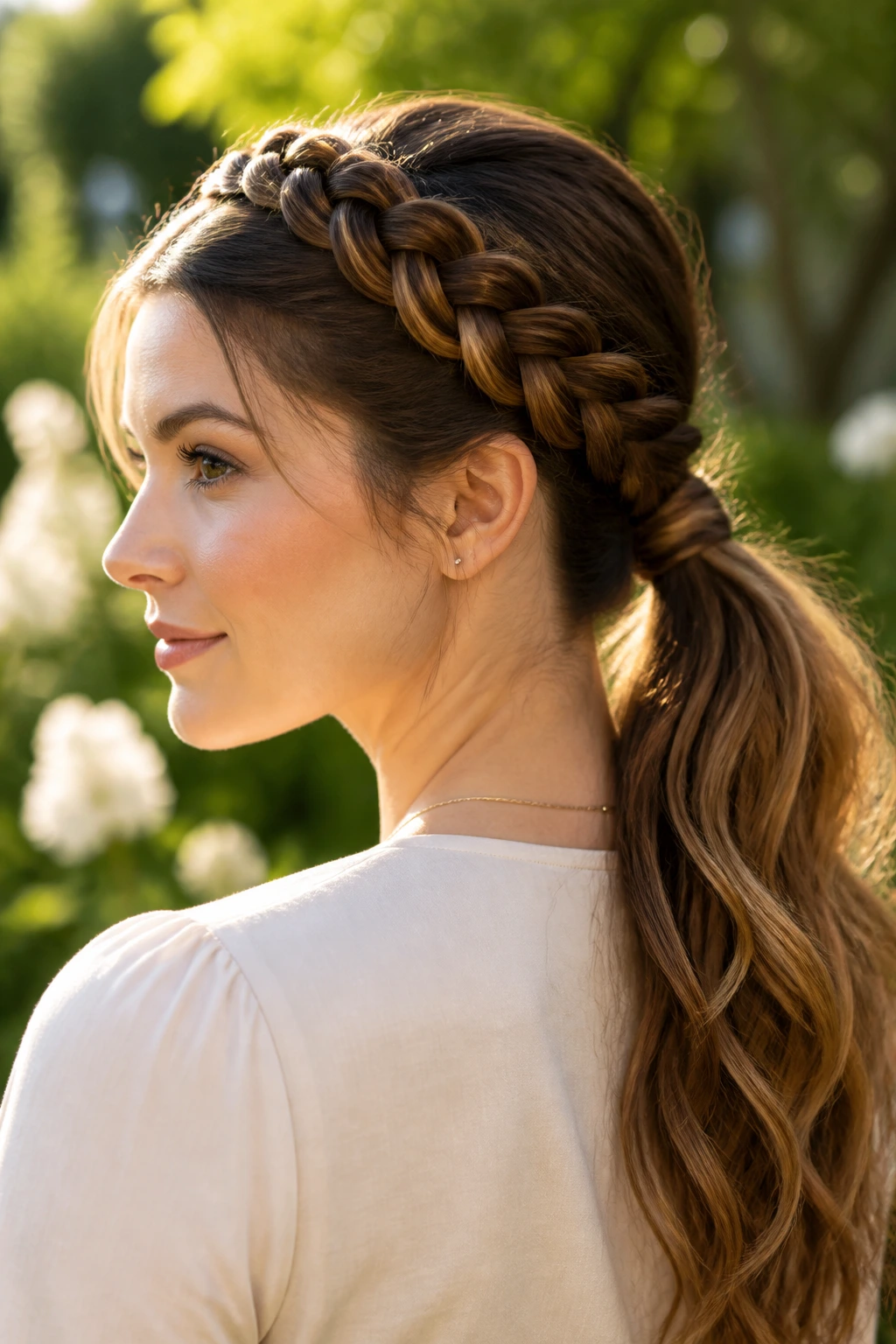
A crown braid into ponytail has a more formal feel than most ponytail styles because the braid travels around the head before meeting the back. It keeps the front and sides tidy, and it gives the whole style a framed, almost halo-like shape. I reach for this one when I want hair off my face but still want softness around the head.
The crown should sit close enough to the hairline to look intentional, but not so close that it feels tight. That balance matters. Once the braid reaches the back, you can secure it into a low or mid ponytail and leave the tail loose, braided, or curled. The braid-to-pony transition is what gives the style its polish, so don’t rush that part.
This is a smart choice for longer hair because the braid adds interest before the ponytail even starts. If the tail is very thick, let the braid stay sleek and let the ponytail handle the volume. That contrast is part of what makes the style work. It looks composed without feeling fussy.
A little texture at the ends keeps the whole thing from going flat.
19. Slicked-Back Braid Ponytail with Statement Braid
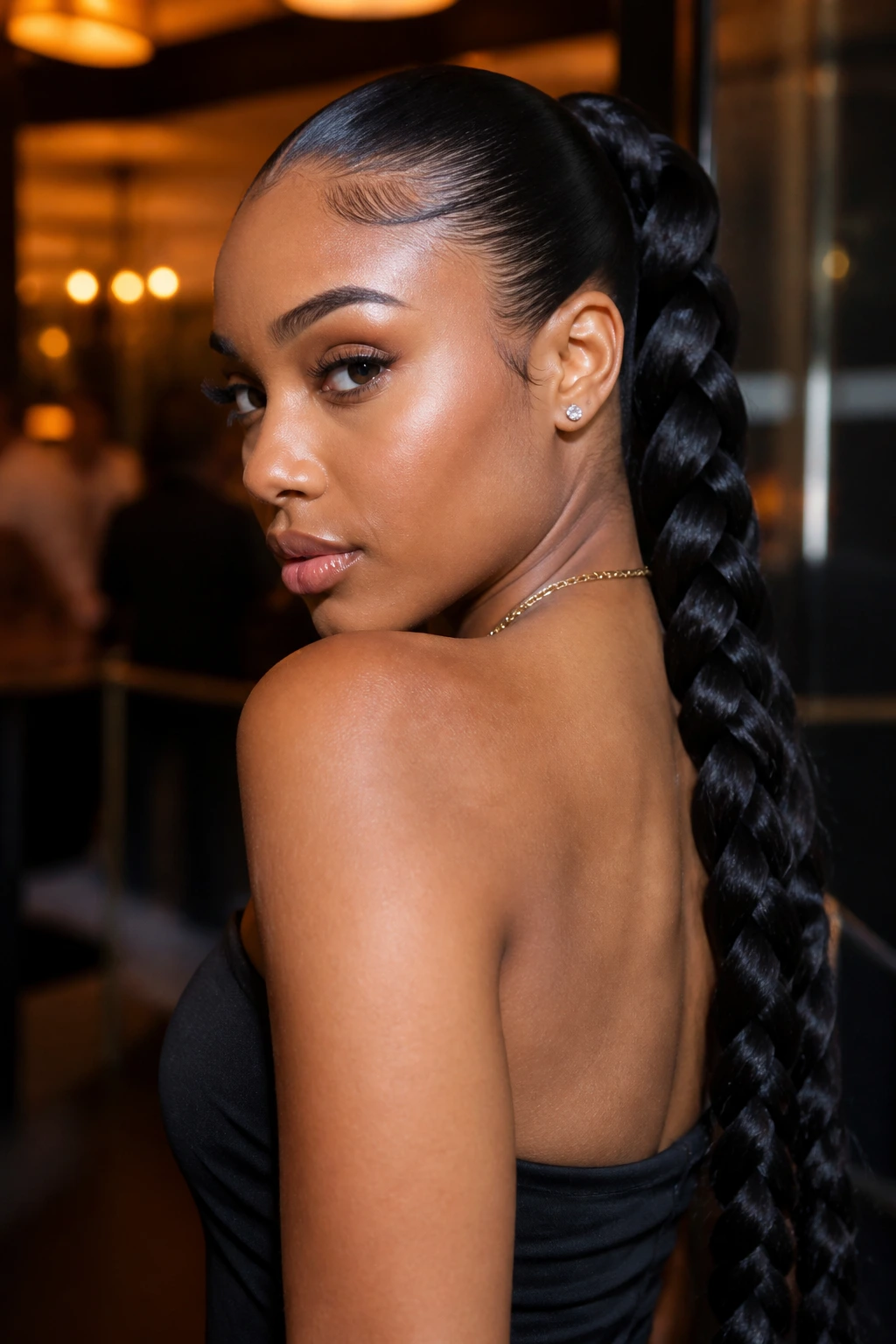
A slicked-back braid ponytail is the sharpest look on this list, and I mean that in a good way. The hair is brushed smooth, the front is controlled with gel or edge control, and the braid itself becomes the main feature. On long hair, that sleek base makes the tail look longer and the braid look more deliberate.
What Gives It That Clean Finish
You need a brush that can actually smooth the hair, not just move it around. A boar-bristle brush helps, though a firm paddle brush can work too. Apply gel at the roots in a thin layer, then brush everything back while the product is still workable. If you wait too long, the front starts to set in clumps and the braid shows it.
The statement braid can be a thick three-strand braid, a pull-through braid, or even a rope braid if you want a twist instead of a plait. I prefer a braid with a little width here because it balances the slick base. Thin braids can disappear against all that smoothness.
Best For
- Evenings out.
- Sharp outfits.
- Hair that needs to stay off the face for hours.
- Long length that you want to show off cleanly.
This is not a soft, sleepy style. It has edge. And sometimes that’s exactly what you want.
20. Crisscross Braided Ponytail for Long Hair

A crisscross braided ponytail is the one I’d hand to someone who wants the hair to look more complex than the effort required. Small sections are crossed or braided over one another at the crown before they feed into the ponytail, and the result has a woven, paneled look that stands out on long hair. It feels polished, but not stiff.
The trick is keeping the sections tidy before they join the base. Once the front pieces are set, the rest is easy. You can leave the tail straight, braid it down, or finish it with a few wrapped elastics for a cleaner shape. Long hair gives this style a nice runway of length, which is part of why it works so well. Shorter hair can look choppy here. Long hair lets the design breathe.
I like this one because it sits between decorative and practical. It keeps hair under control, but it still has a little visual surprise when someone looks closer. That is usually the sweet spot for a braided ponytail. Not too plain. Not trying too hard. Just enough detail to make the style feel thoughtful, which is usually the part people notice first.
A good braided ponytail on long hair doesn’t need much else. The braid pattern does the talking, and the length gives it somewhere worth going.
