



There is a certain unspoken code to office hair. You need styles that command respect, don’t require constant adjustment, and won’t make you look like you just spent an hour trying too hard. Most of us have been there—staring at the bathroom mirror at 7:30 AM, hair half-dry, wondering if a messy bun will fly or if it will simply signal to your boss that you’ve given up on the day. The trick isn’t necessarily having complicated skills; it’s about having a repertoire of styles that look intentional.
I’ve spent years observing what actually works in a professional setting. The styles that last through back-to-back Zoom calls, humid commutes, and the inevitable mid-afternoon slouch are almost always the ones that rely on structure and hold, rather than volume and chaos. You want hair that stays put, keeps your face clear so you can focus, and offers that crisp, clean aesthetic which telegraphs professionalism.
It comes down to preparation. If your hair is clean, manageable, and treated with the right product before you start styling, the actual process takes half the time. Stop trying to fight your hair’s natural texture every morning. Instead, work with it. Whether you’re dealing with pin-straight strands, unruly curls, or that awkward mid-length grow-out, the key is mastering a few reliable techniques that you can execute in under ten minutes.
1. The Classic Sleek Low Bun

This is the ultimate professional workhorse. It works for every hair texture, stays secure for ten hours, and manages to look expensive even if you put it together in thirty seconds. The secret here isn’t the bun itself; it’s the prep work at the crown.
Why It Works for the Office
You want to pull the hair back tight enough to be polished but not so tight that you get a tension headache by lunchtime. The low placement hits that sweet spot between “functional” and “sophisticated.” It pairs perfectly with high collars, blazers, and statement earrings if you need to add a bit of personality.
How to Get the Look
Start by applying a small amount of smoothing cream or a light-hold gel to your roots. Use a boar-bristle brush to pull everything back toward the nape of your neck; the bristles are key because they distribute your natural oils and flatten those annoying flyaways better than any plastic comb. Secure it with a clear snag-free elastic. Twist the remaining ponytail and wrap it around the base, pinning it in place with U-shaped hairpins rather than bobby pins. U-pins hold the weight better and don’t slide out.
2. The Polished French Twist
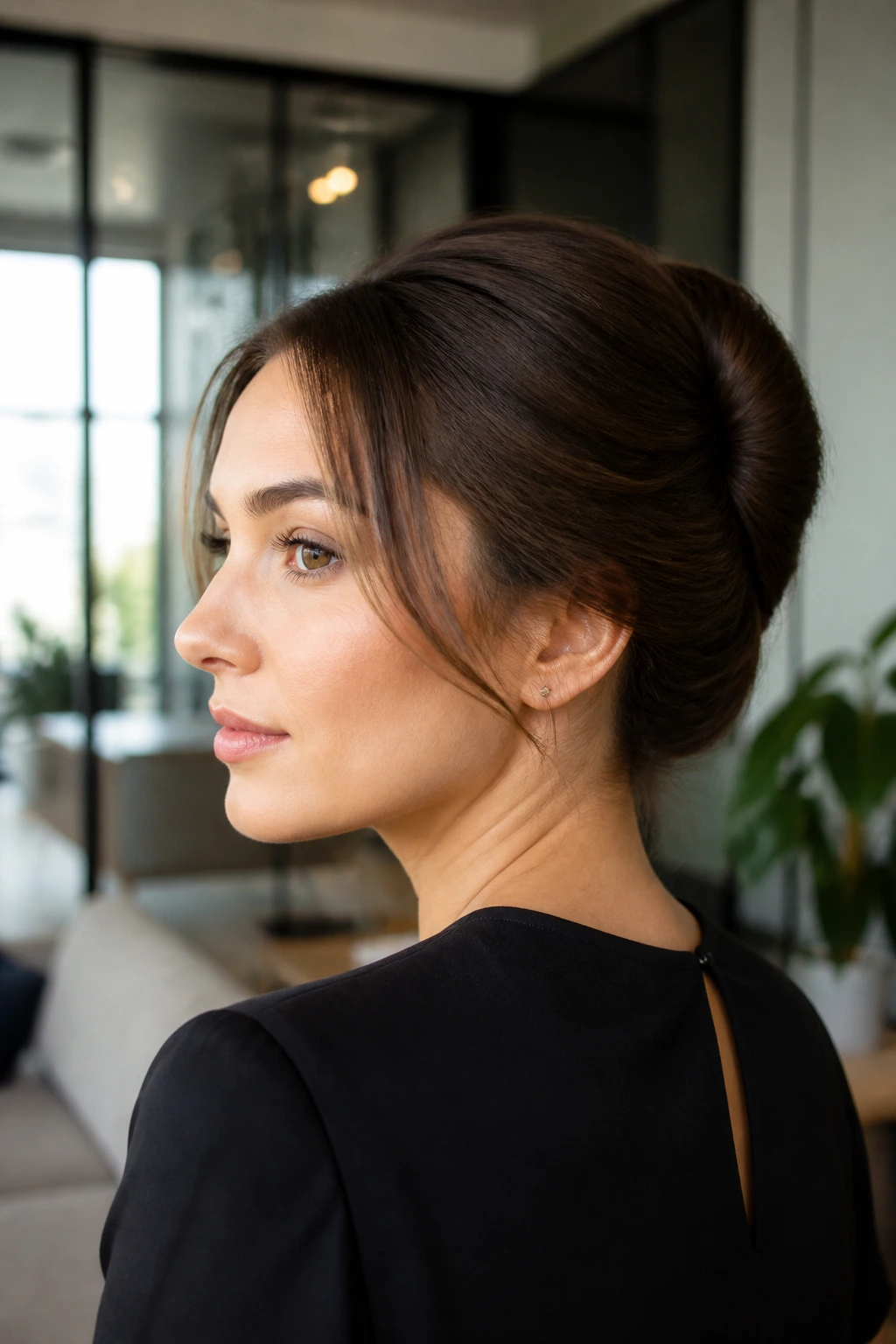
There’s a misconception that the French Twist belongs exclusively in formal ballrooms or weddings. That’s nonsense. A simplified, slightly looser version is one of the most efficient ways to look put-together on a Tuesday morning. It gets your hair completely off your neck, which is a blessing in offices with questionable climate control.
The Modern Approach
Don’t aim for the rigid, hairsprayed statues of the nineties. You want a “soft” French twist. After you’ve gathered your hair at the back, start twisting it upward, but tuck the ends underneath the roll rather than letting them fan out at the top. This gives a much more modern, minimalist silhouette.
Necessary Tools for Success
- A sturdy claw clip or a set of strong U-pins.
- Texturizing spray (apply this before you start to give your hair some grip).
- A fine-tooth comb for smoothing out the surface once the twist is anchored.
Pro tip: If you find the hair keeps slipping, do a quick, loose braid before you start the twist. The texture of the braid provides instant anchor points for your pins.
3. Low Chignon with a Side Part

A side part instantly changes the geometry of your face, making a standard bun look significantly more styled. It’s an easy, low-effort tweak that signals you put a little bit of thought into your presentation. This is particularly flattering if you have a rounder face shape, as the diagonal line breaks up the symmetry.
Styling for Longevity
You need a firm base for this. Start with dry shampoo even if your hair is clean; it adds that essential grit. When you create the side part, don’t just use your fingers. Use the tail end of a comb to get a razor-sharp line. A crisp part is the hallmark of a polished style.
The Finishing Touch
Once the chignon is secured, take a tiny bit of hair serum—no more than a pea-sized amount—and run it over the top of your head to flatten any static. You want the top section to be mirror-smooth. Leave it tight. The contrast between the sleek, controlled top and the soft, textured bun at the base is what makes this look work for the office.
4. Half-Up, Half-Down with a Twist
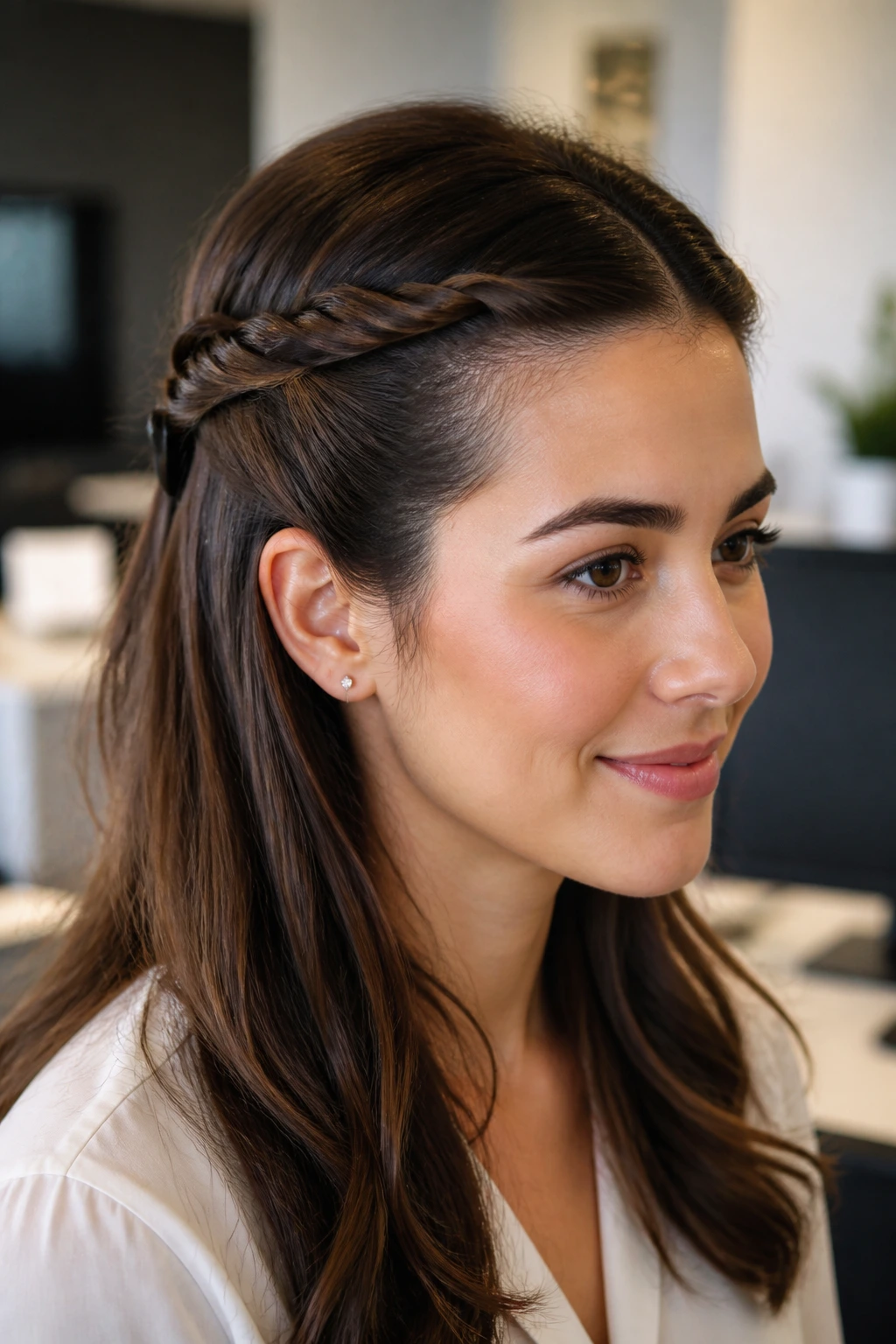
Sometimes you want your hair down, but you need it out of your eyes so you can actually get work done. The half-up style is the perfect compromise. The trick to keeping it from looking like you’re heading to a casual weekend brunch is to keep the “up” section structured.
Elevating the Look
Instead of just pulling hair back and using a hair tie, create two small twists from the temples. Bring them back to the center of the head and secure them with a discreet barrette or a small, matte-finish claw clip. Matte finishes look much more professional than glossy, cheap plastic.
Handling Texture
If your hair is naturally wavy or curly, let it be. Just make sure the front sections are smooth. If your hair is straight, a slight bend with a flat iron at the ends prevents the style from looking limp.
5. The Professional High Ponytail

There is a difference between a “gym ponytail” and a “professional ponytail.” The difference is in the height and the finish. A high, swingy ponytail is confident and clean, but it needs to be perfectly smooth to avoid looking athletic.
Mastering the Base
To get that lift, flip your head upside down when you gather your hair. Smooth out any bumps with your brush while you’re in that position. Secure the elastic tightly. If you want to take it up a notch, take a thin section of hair from the underside of the ponytail, wrap it around the elastic to hide it, and pin it underneath. It’s a five-second step that completely changes the look.
Why It Works
It keeps hair away from your collar entirely. This is crucial if you wear blazers, high-neck sweaters, or scarves, as hair friction against fabric often leads to breakage and tangles by the end of the day.
6. Low Ponytail with Wrapped Hair Detail

Think of this as the elevated version of the ponytail. It’s simple, it’s fast, and it looks like you spent time on it even though you didn’t. The key here is the wrap.
The Mechanics
Pull your hair into a low ponytail. Take a small section of hair—about half an inch wide—from the bottom of the ponytail. Wrap it around the elastic until the hair tie is completely hidden. Secure the end of that small section with a tiny bobby pin pushed upward into the ponytail so it’s hidden from view.
The “Sleek” Factor
Don’t use a thick scrunchie for this. Use a thin elastic that matches your hair color as closely as possible. The goal is to make it look like your hair is holding itself up. If you have layers, spray a bit of hairspray onto your finger and smooth those short pieces back into the ponytail.
7. The Textured Lob (Long Bob)
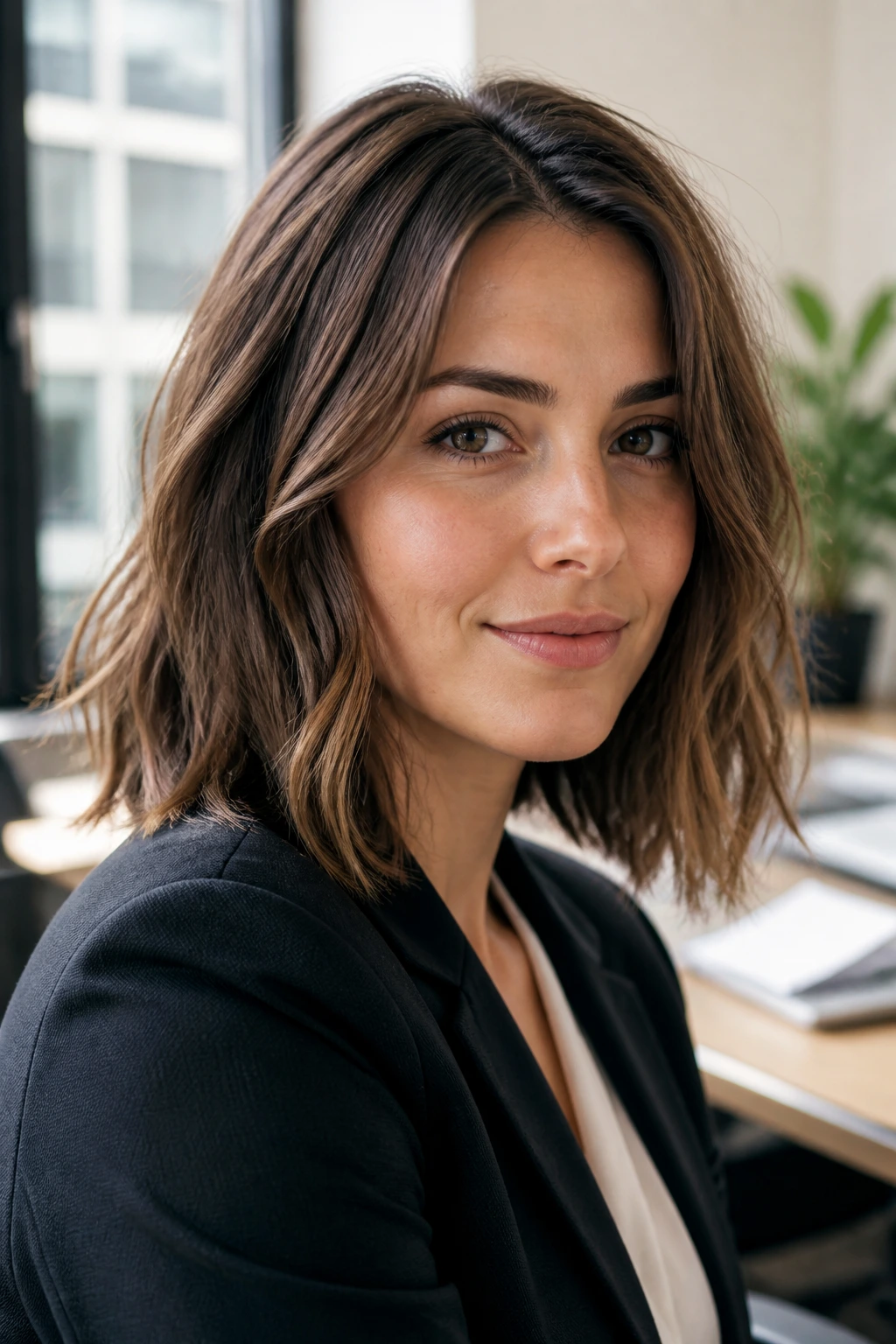
If you have a lob—that collarbone-length cut—you don’t always need to tie it up. But “wearing it down” doesn’t mean “letting it hang.” You need to add a bit of structure so it doesn’t just look like bedhead.
The Technique
Use a 1.5-inch curling iron to add a slight bend to the mid-lengths. Don’t curl the ends; leave them straight. This gives you that “undone but polished” look. Then, use a salt spray or a light texturizing mousse to give the hair some body.
Daily Maintenance
The lob is high-maintenance in that it requires regular trims to keep that sharp perimeter. In the office, tuck one side behind your ear and let the other fall forward. It’s an effortless, slightly editorial style that looks great with tailored separates and classic office attire.
8. Braided Headband Updo
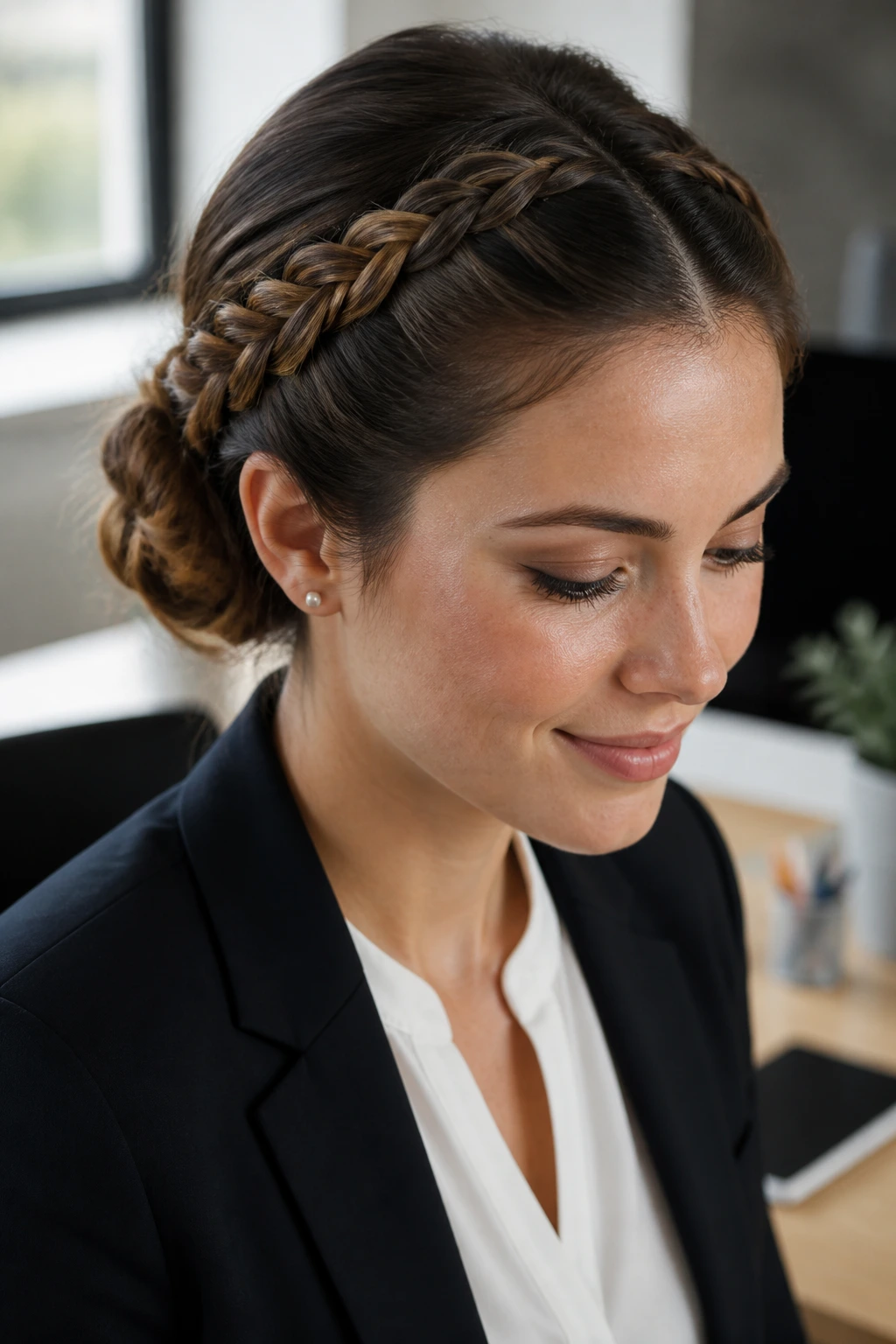
This is the style you choose when you have a morning meeting and you need to look like you have your life together. It’s essentially a crown braid, but simplified. It keeps every single stray hair off your face, which is vital for maintaining that “serious” aesthetic during high-stakes presentations.
Getting the Braids Right
You don’t need to be a braid master for this. Dutch braid two small sections at the front, starting at your part and working toward your ears. Once you have the braids, secure them at the back with an elastic and pin them into a low bun or a chignon. The braids effectively function as a headband, keeping your hair secured without the need for clips that might slide out.
Why This Style Wins
It is immovable. You can commute, run for the train, and spend three hours in a board meeting, and your hair will look exactly the same at 5:00 PM as it did at 8:00 AM. That reliability is priceless.
9. The Sophisticated Top Knot

The “top knot” often gets a bad rap as the messy, lazy-day style. That’s because people do them haphazardly. For the office, your top knot needs to be smooth.
The “Smooth” Technique
Flip your hair forward, gather it at the crown, and smooth the sides with a brush before securing. Twist the length, coil it around the base, and pin it securely. Use a fine-tooth comb to gently pull at the roots—just a tiny bit—to give it some volume, but keep the knot itself tight and compact.
Finishing the Look
Don’t leave a tail sticking out. If you have layers that won’t stay, use a bit of pomade to smooth them down. A sleek top knot is remarkably elegant and elongates the neck, which is a flattering silhouette for anyone wearing a collared blouse.
10. Sleek Straight Locks with Minimal Layers

Sometimes the best style is the most straightforward one. If you have healthy, straight hair, embrace it. The key to making this work for the office is the health aspect. Split ends and dull, dry hair look messy when left down.
The Prep
You must use a heat protectant. Always. Then, use a flat iron on small sections. Pass it through slowly—once. Multiple passes on the same section will fry your hair. After you’ve straightened everything, finish with a drop of shine oil on the ends. It reflects light and makes your hair look incredibly healthy and intentional.
When to Avoid This
If your office environment is extremely humid or if you have a very long commute on public transit, hair worn down tends to frizz or lose its shape. Keep this style for days when you aren’t fighting the elements.
11. The Side-Swept Tuck
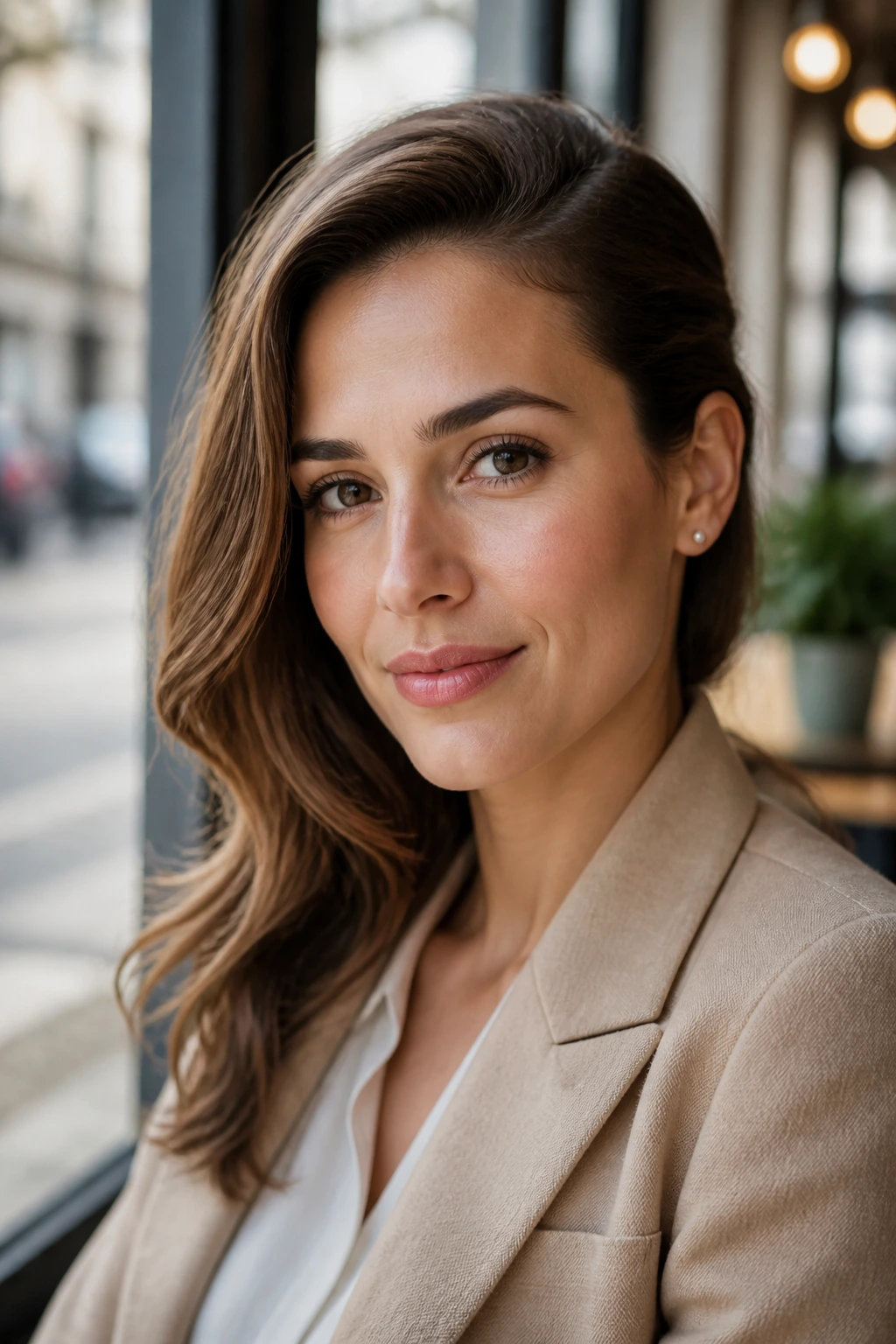
This is a great style for when your bangs are growing out or when you just want a bit of softness around the face. It’s a very feminine, slightly romantic look that still feels entirely appropriate for a professional setting.
How to Execute
Part your hair on the side. Gather the section from the side with more hair and pull it back behind your ear. Secure it with two bobby pins—place them in an “X” shape so they interlock and provide more grip. The rest of your hair can be worn straight or with a slight wave.
The “Professional” Difference
The “X” pin placement is actually a trend in itself, so don’t be afraid to use decorative metallic bobby pins. It turns a functional necessity into a subtle accessory. It keeps your hair out of your face, but it doesn’t pull it back so severely that you look like you’re ready for a workout.
12. Low Braided Bun
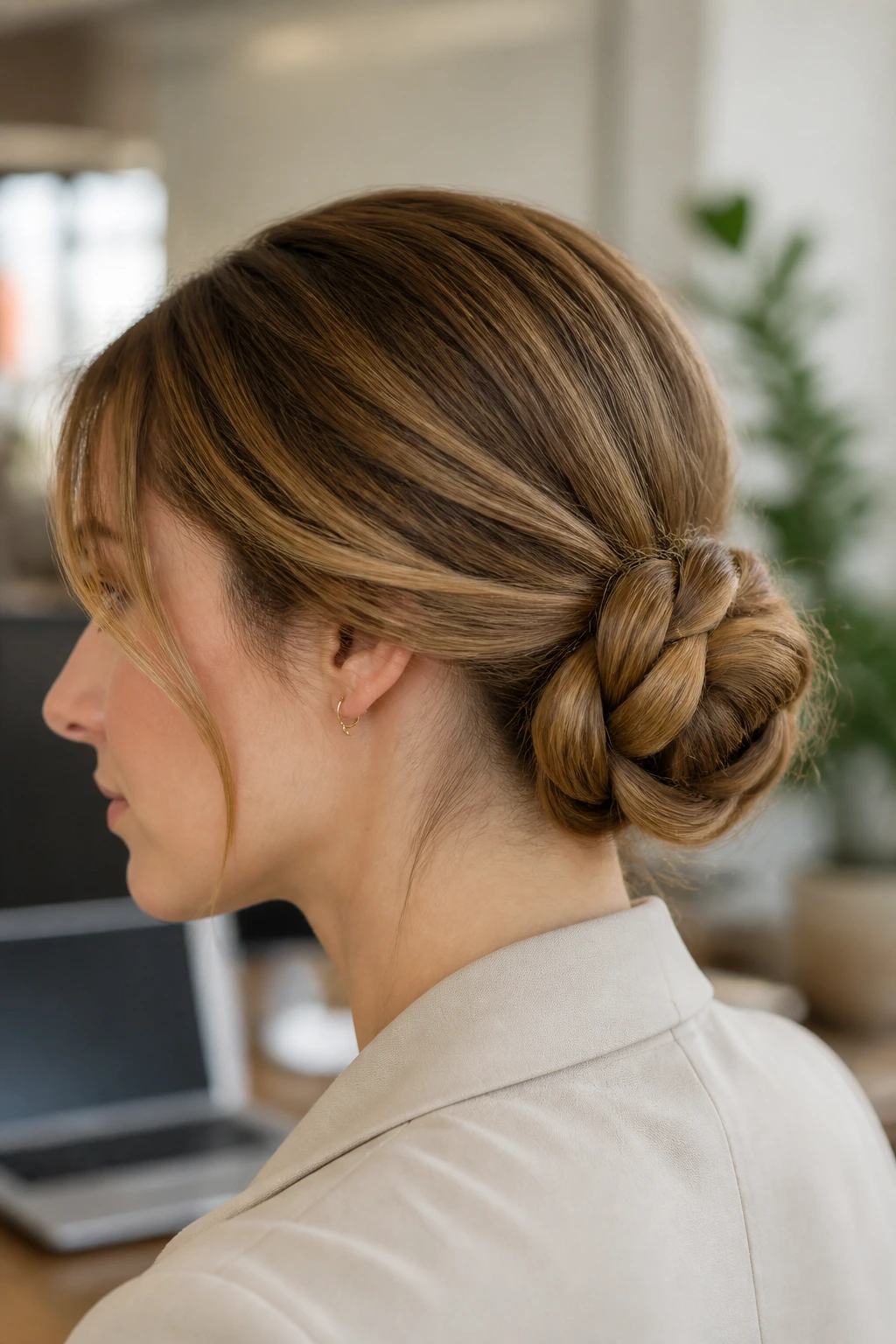
This is essentially a low bun with a textured base. It adds a layer of interest to a plain chignon. If your hair is fine, this is a great way to make your bun look fuller than it actually is.
The Steps
Pull your hair into a low ponytail. Braid the ponytail loosely, then pull at the edges of the braid to fluff it up (the pancake method). Wrap the braid around the base of the ponytail and pin it. It looks like you spent ten minutes on it, but once you get the hang of it, you can do this in two minutes flat.
Why It’s Great
It’s incredibly secure. The structure of the braid helps hold the bun together much better than loose hair would. Plus, if you have highlights or balayage, the braid makes the color variation look stunning as it coils around itself.
13. Soft Waves with a Barrette

Waves are fine for the office, but they need to be “soft” rather than “beachy.” Beachy waves are too casual. Soft waves are controlled. Use a large-barrel curling iron and only curl the mid-lengths, leaving the ends straight.
The Accessory
The barrette is the hero here. Choose something geometric, perhaps gold or silver, or a neutral tortoise-shell finish. Pull back one side of your hair—the side that tends to get in your face—and pin it back with the barrette. It’s an instant fix that makes “hair down” feel styled rather than neglected.
Avoiding the “Party” Look
Keep the waves subtle. You don’t want ringlets. You want a slight bend. If you end up with too much volume, run your fingers through your hair to break up the curl pattern.
14. The Minimalist Claw Clip Style
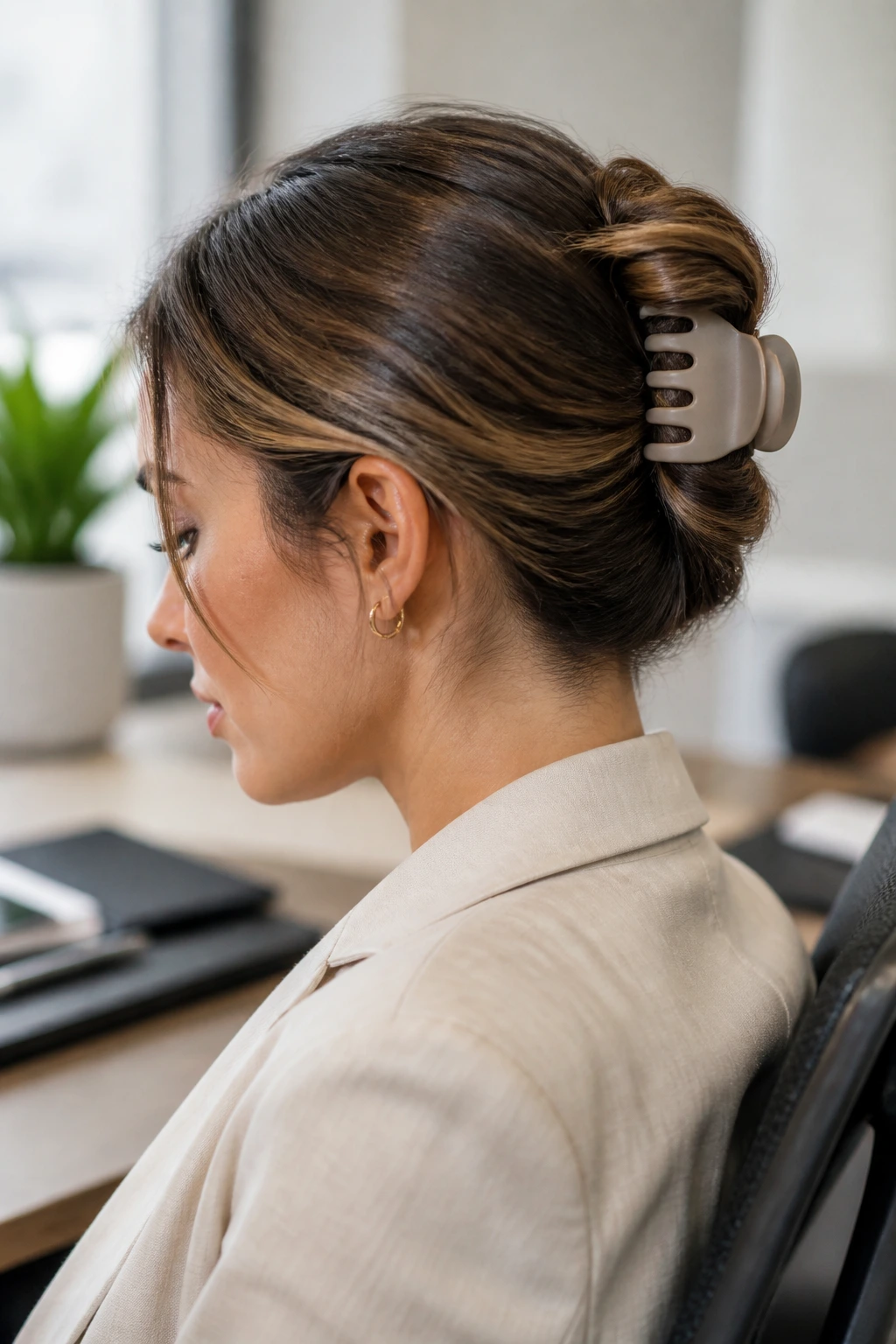
The claw clip has made a massive comeback, and for good reason. It’s arguably the kindest way to style your hair—no tight elastics to cause breakage. But for the office, you have to be careful about the clip choice.
Choosing the Right Clip
Avoid the neon plastic clips you’d use to wash your face. Look for matte metal or high-quality resin clips in neutral tones like cream, black, or navy.
The Professional Twist
Don’t just do the standard “twist and clip” where the ends fan out. That’s for lounging at home. Instead, fold the ends of your hair underneath the twist before you clip, so the style is compact and neat. It keeps the silhouette tight to the head.
15. Sleek Center Part with Tucked Sides

There is a powerful minimalism to a sharp center part. It’s clean, it’s modern, and it works exceptionally well if you have a sharp, blunt haircut. It frames the face and highlights your features.
The Execution
Start with damp hair. Apply a smoothing gel at the roots and use a fine-tooth comb to part your hair exactly down the middle. Blow-dry the hair down, keeping it close to your head. Tuck both sides behind your ears. If they won’t stay, use a tiny amount of clear styling wax behind the ear to hold the hair in place.
Why It Stands Out
It’s a bold look. It says you are confident. It doesn’t hide anything. Because it’s so stark, make sure your roots are clean. This style is not forgiving of oily hair, so dry shampoo is mandatory if you’re on second-day hair.
16. The Modern Gibson Tuck

This is a vintage-inspired style that has been updated for the modern workplace. It’s essentially a low, rolled-under bun that sits at the nape of the neck. It’s very structured and looks extremely formal.
How to Get It
Tie your hair in a low ponytail. Make a small gap in the hair just above the elastic. Loop the entire ponytail down and through that gap, pulling the ends out the bottom. Keep tucking the ends back up into that gap until all the hair is concealed. Pin it in place.
The Result
It creates a beautiful, smooth roll at the nape of your neck that looks like a high-end chignon. It’s sophisticated, elegant, and keeps the hair completely off your collar.
17. Polished Dutch Braid into a Ponytail

If you have a commute that involves a lot of wind or if you work in an environment where you are constantly looking down at papers or screens, your hair is going to fall into your face. This style prevents that entirely.
The Technique
Create a Dutch braid—or a regular French braid—starting at the hairline and stopping at the crown. Secure it with a small elastic. Then, gather the braid and the rest of your loose hair into a mid-height ponytail. The braid adds a layer of intricate detail that makes a simple ponytail look intentional and complex.
Managing Flyaways
Because this style involves tight tension at the roots, it’s prone to showing flyaways. Use a toothbrush sprayed with hairspray to smooth down the baby hairs along your hairline. It’s a trick that professional stylists use constantly.
18. The Rolled Chignon
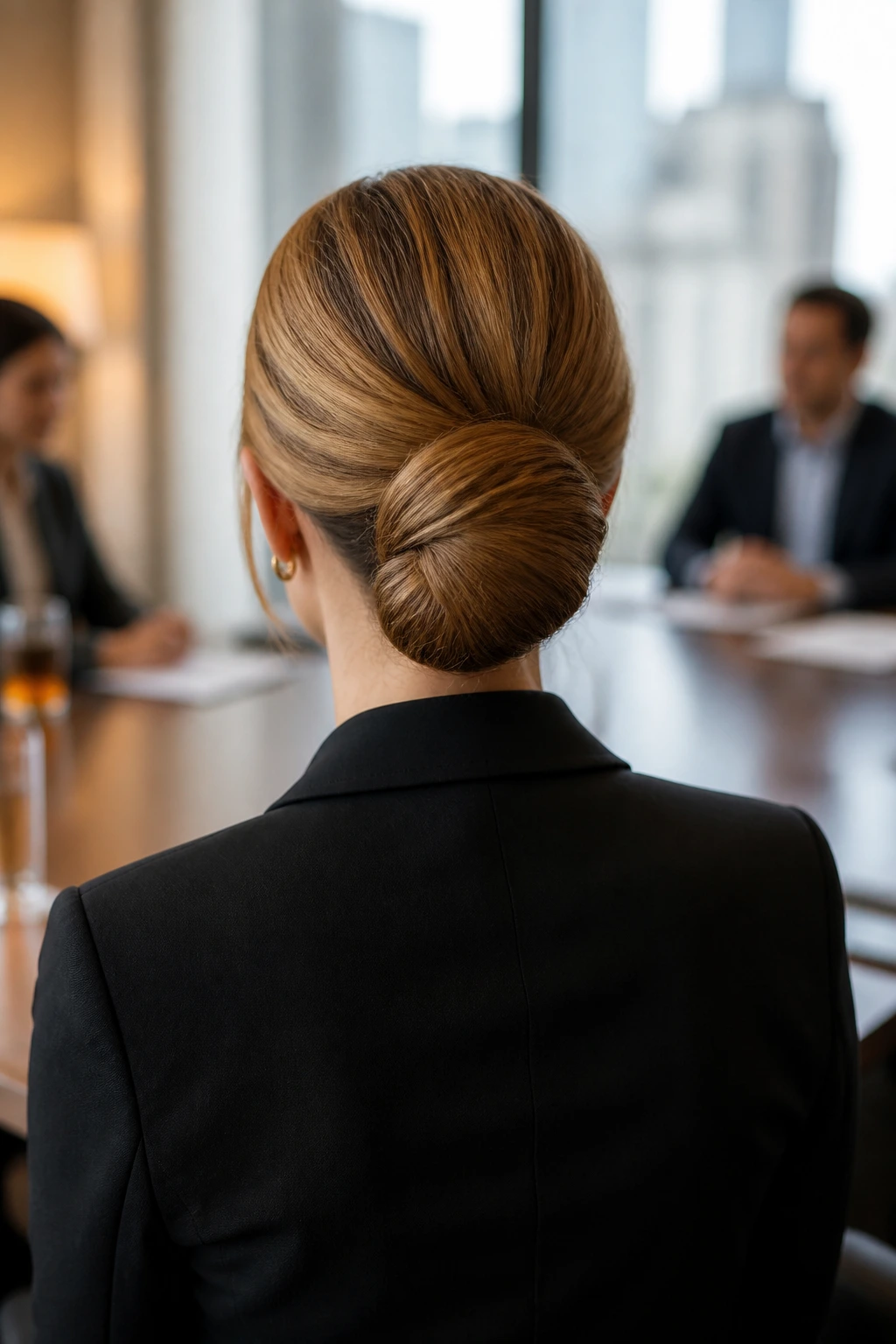
If the Gibson Tuck feels too intricate, the rolled chignon is your go-to. It’s the ultimate “I’m in charge” hairstyle. It’s compact, tight, and stays in place through anything.
The Process
Gather your hair into a ponytail. Take the end of the ponytail and fold it into a small loop. Tuck the ends under the base of the ponytail and pin the loop flat against your head. It’s a very compressed style that looks like a structured knot.
Why It Works
It removes all volume from the sides of the head. If you have thick hair that tends to get frizzy or poofy, this style tames it completely. It’s a clean, sculptural look that works beautifully with minimal jewelry and crisp professional attire.
Finding Your Signature Office Look
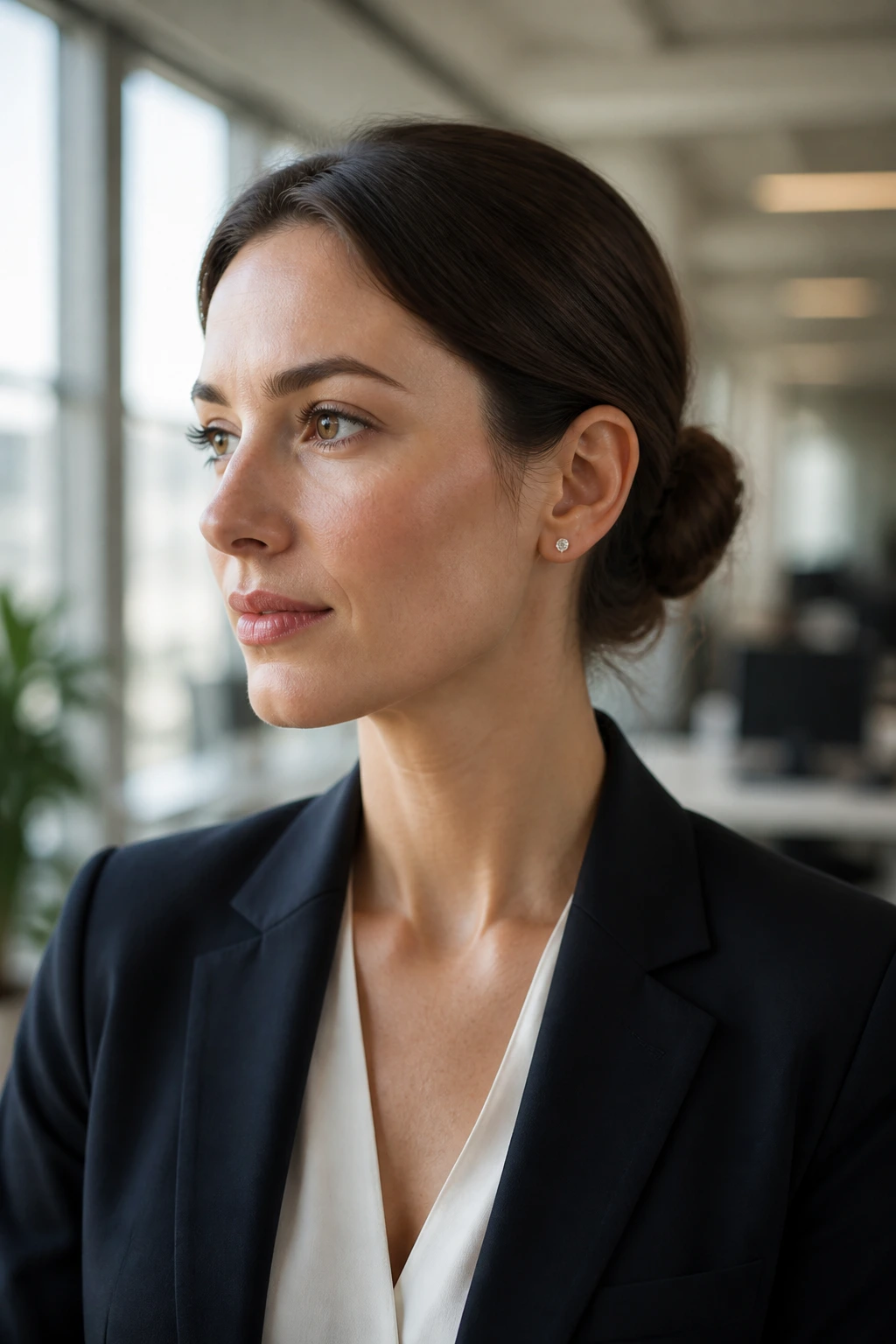
Ultimately, the best office hairstyle is the one that allows you to stop thinking about your hair. If you’re constantly tucking a strand behind your ear or smoothing down frizz in the reflection of your computer screen, your focus is split. That’s the opposite of what you want when you’re trying to tackle a project or lead a meeting.
Experiment with these styles on the weekend. Don’t try a new, complex braid for the first time at 7:00 AM on a Monday—that’s a recipe for frustration. Take the time to figure out which of these works for your hair length, texture, and the specific needs of your workday. Once you have two or three that you can do with your eyes closed, you’ll find that your morning routine becomes significantly less stressful.
You don’t need a drawer full of styling tools to look polished. You just need a brush, a few reliable pins, a good elastic, and a bit of practice. The most professional look isn’t the most complicated one; it’s the one that stays consistent from the first cup of coffee until you finally shut down your laptop for the evening. Find the ones that make you feel like the most capable version of yourself, and stick with them.
